Author of Saxon historical fiction and non-fiction, 20th-century historical mysteries, and Norse-inspired historical romantasy. Book reviewer and blog host.
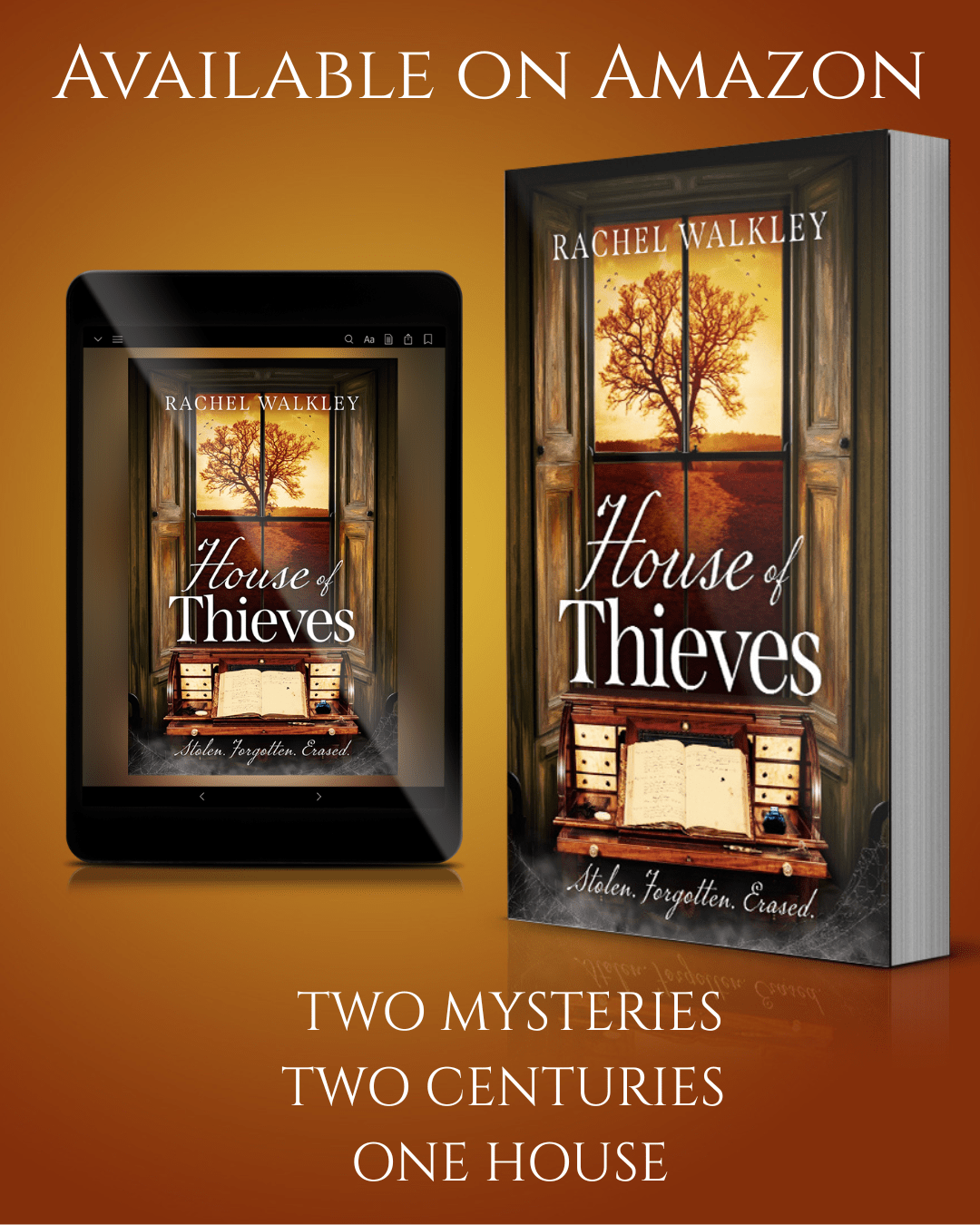
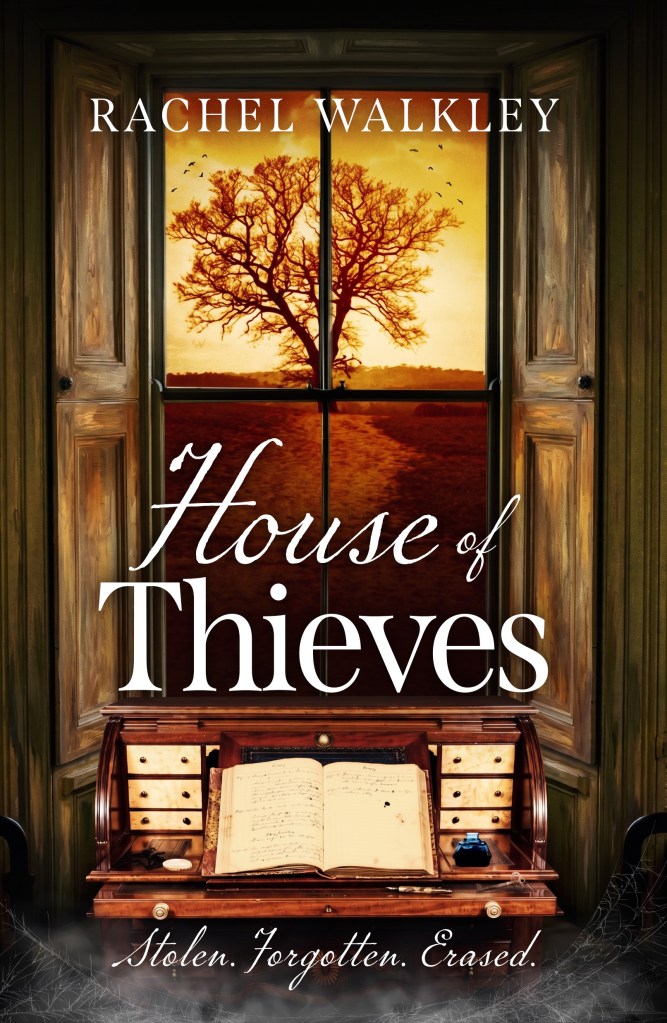
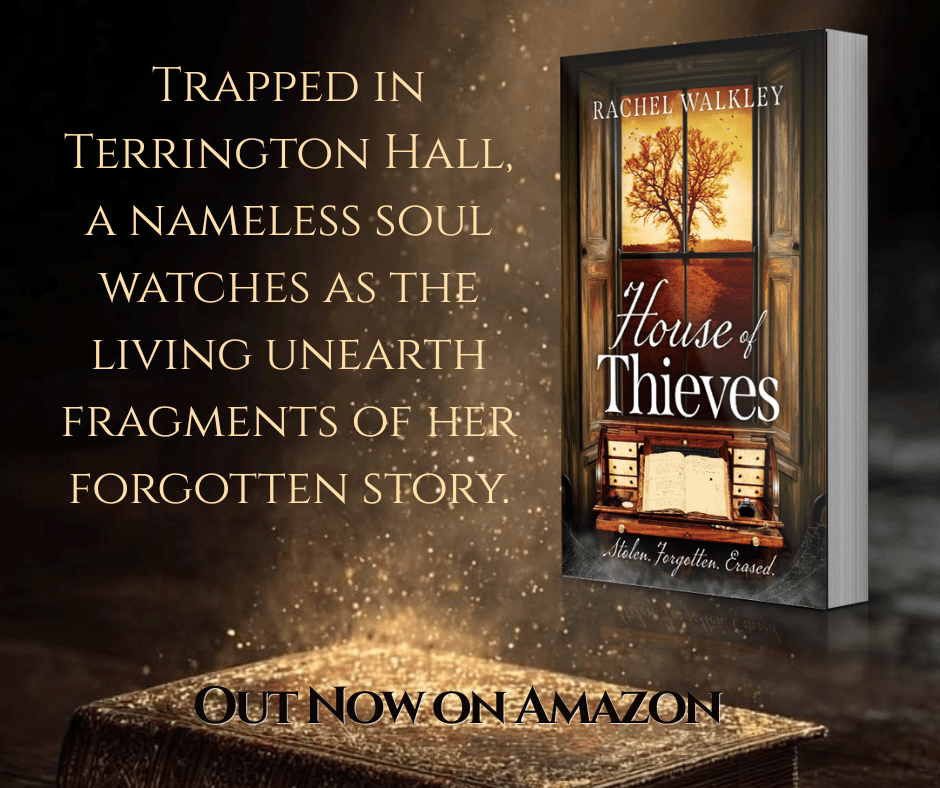
Check out my review for House of Thieves by Rachel Walkley #historicalmystery #blogtour #countryhousemystery @rararesources @raejcreations
Check out my review for House of Thieves by Rachel Walkley #historicalmystery #blogtour
Here’s the blurb
At Terrington Hall, objects are treasured while people are forgotten.
Chief conservator Amy is restoring the Hurly family’s guilt-stained hoard when a theft forces her to hire Harrison, a security adviser on a personal quest to uncover his own history.
Unknown to anyone, an invisible presence woven into the fabric of the house watches their every move.
When Harrison uncovers a room sealed for decades, the investigation shifts from simple theft to the resurrection of murderous secrets. In a house where the past is too heavy to escape, the dead don’t need bodies to tell their stories — they just need someone to listen.
House of Thieves is an intriguing novel that follows the modern conservation of an old country house under the guidance of Amy. Into the midst comes Harrison, connected to the house through a long and tangled family history, and employed to discover how certain thefts have been occurring. There are also other modern characters, each with their own stories to tell, alongside the house, which seems to have largely discarded elements of its history.
Our narrator is (for much of the time) an otherworldly presence who says very little but offers hints about why she continues to haunt the property. The storyline slips back in time, and so we have two timelines: the present day and the early 1800s.
Because of all this, the storyline seems to move a little slowly in places. It takes a long time to discover exactly what’s happening, and why the thefts are even relevant. It takes even longer to begin to learn the ghost’s secrets, and when they do reveal themselves, they’re quite horrifying. This is where the novel is at its strongest, bringing together all these threads, which seem unconnected but aren’t.
It’s definitely a slow burn, but it rewards the reader as the pacing increases, and we almost don’t want to know what happened to our ghostly narrator.
House of Thieves is stuffed with delightful little details, just like Terrington Hall, and it’s almost as reluctant to give them up as the house is, but give them up to the reader it does.
Meet the author
Rachel Walkley is a former librarian and scientist who lives in the North West of England, where she spends her spare time making music and writing. Her debut novel, The Women of Heachley Hall, was a bestseller in the UK and Australia. Known for weaving together family secrets, magical mysteries, old houses and inspirational women, Rachel also writes gripping female-led crime novels under the pen name Rae Shaw.
I’m reviewing the new book in the Armstrong and Oscar Cozy Italian Mysteries, Murder at Christmas by TA Williams #BookReview #BlogTour #CosyCrime #ContemporaryCrime
I’m reviewing the new book in the Armstrong and Oscar Cozy Italian Mysteries, Murder at Christmas by TA Williams #BookReview #BlogTour #CosyCrime #ContemporaryCrime
Here’s the blurb
BRAND NEW instalment in the page-turning Armstrong & Oscar cozy mystery series, this time in the snowy Italian Alps.
A festive gathering…
Private investigator Dan Armstrong, accompanied by his wife and his canine sidekick, Oscar, are spending the days before Christmas in a luxurious Alpine chalet tucked away in a hidden valley. It should be the perfect escape, except the owner is in fear for his life.
A house full of secrets…
Amid perfect winter wonderland scenery, the more Dan discovers about his host and the other guests, he realises that all is not as it seems. What should be a happy family party is riddled with rancour, mistrust and hatred.
A killer in the snow?
Then the snow falls – fast and heavy – and within moments, someone is dead. Accident, suicide, or murder? As the snow closes in, Dan has to work out if he’s looking for a killer, or whether he and Oscar are barking up the wrong tree.
Murder in Rome is somehow the 16th book in the Armstrong and Oscar mysteries.
This latest outing sees Dan and his wife venturing into the Alps to meet a friend from an earlier mystery, and of course, there’s an ulterior motive as well. Is someone trying to kill their host, or is he simply paranoid?
Against the backdrop of a winter storm, Dan (and Oscar) feel their noses twitch and decide to find out exactly what is happening – if they can manage to do so between the meals being prepared for them. And, if it is murder on the mind, there are any number of potential suspects.
Murder at Christmas is a distinctly chilly mystery and the resolution, when it comes, is a little more nuanced than we readers might expect, but no less satisfying.
Check out my reviews for earlier books in the series, and be sure to start at book 1, Murder in Tuscany.
Meet the author
I’m a man. And a pretty old man as well. I studied languages at Nottingham University a long time ago and then lived and worked in France and Switzerland before going to work in Italy for seven years. My Italian wife and I then came back to the UK with our little daughter (now long-since grown up) where I ran a big English language school for many years. We now live in a sleepy little village in Devonshire. I’ve been writing almost all my life but it was only thirteen years ago that I finally managed to find a publisher who liked my work enough to offer me my first contract.
I started off writing romances but after 28 of them, I knew I wanted to try something different, and so the first of the Armstrong and Oscar cozy mysteries, Murder in Tuscany, was born three years ago. I’ve been having a lot of fun ever since getting to know the dynamic duo (and introducing them to people all over the world). These books are cosy crime [a genre I didn’t even know existed when I started writing them). They are murder mysteries, but not gory, over-violent stuff, but stories designed to exercise the brain of the reader and to put a smile on their face. Maybe it’s because there are so many horrible things happening in the world today that I feel I need to do my best to provide something to cheer my readers up. My books provide escapism to some gorgeous locations all over my beloved Italy.
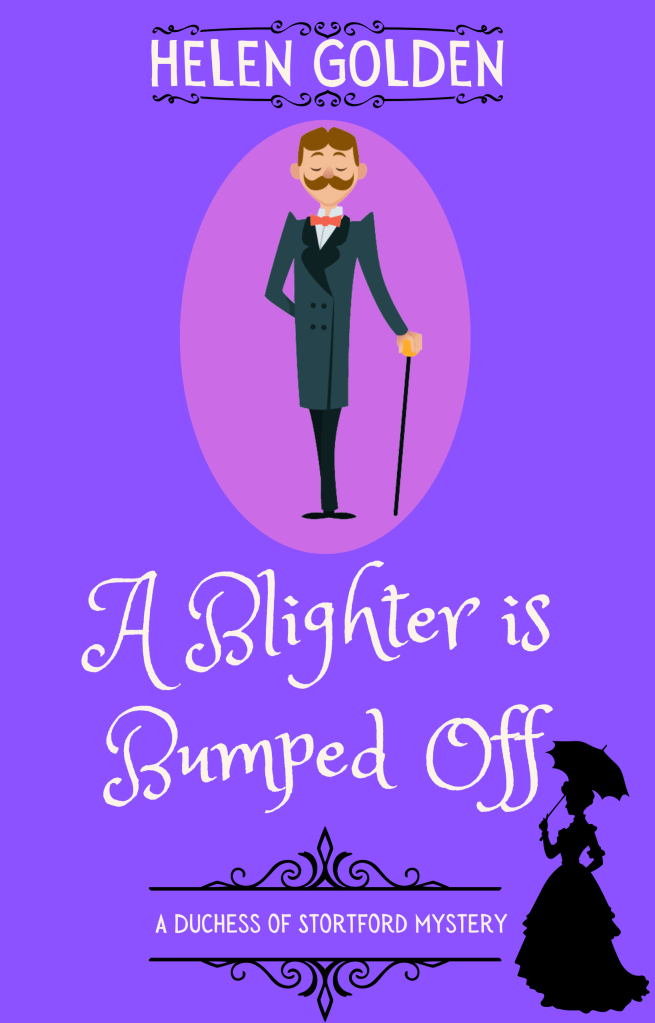
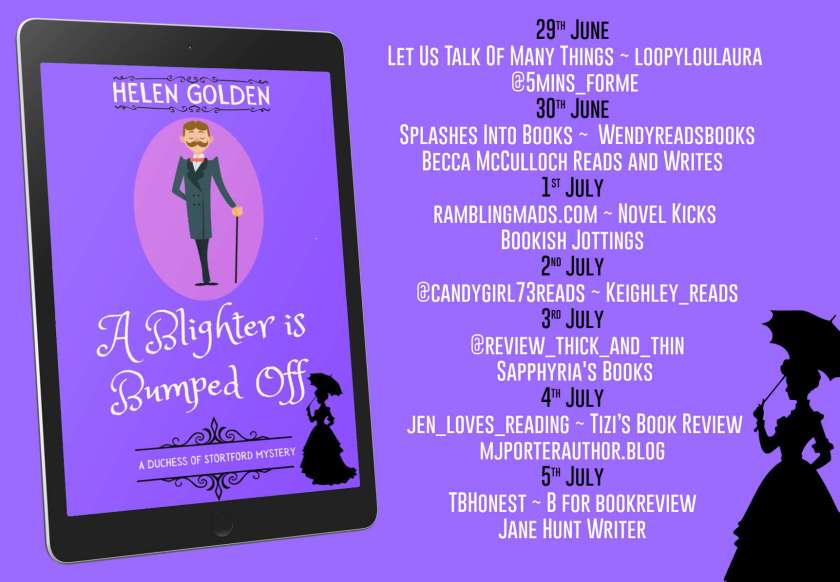
I’m delighted to welcome a returning Helen Golden to the blog with her new book, A Blighter is Bumped Off-#bookreview #historicalmystery #blogtour #avidreader @rararesources
I’m delighted to welcome a returning Helen Golden to the blog with her new book, A Blighter is Bumped Off #bookreview #historicalmystery #blogtour #avidreader
Here’s the blurb
The only thing worse than a persistent suitor? A dead one on your lawn.
London, 1892. Alice, Duchess of Stortford, has returned to town determined to enjoy her first Season as a wealthy widow. But instead of balls, flirtation, and whispered gossip, she finds herself besieged by ambitious bachelors—none more persistent than the insufferably smooth-talking Miles Fonthill. When Alice firmly refuses his sudden proposal, she assumes the matter is settled.
Instead, he turns up dead in her garden.
The police are happy to call it a tragic accident. Alice is less convinced.
Why was Miles climbing over her garden wall in the middle of the night? Why had he become so determined to win her favour? And what did he really want?
As Alice begins to dig into Miles’ final days, her search leads her into the glittering heart of London society, where old loyalties run deep, secrets are guarded fiercely, and reputation matters more than truth. But when whispers of the mysterious Order of the Golden Key begin circling dangerously close to her own late husband’s name, Alice realises this death may be far more complicated than one unwelcome suitor meeting an unfortunate end.
And if someone is willing to kill to keep their secrets…this Season may prove positively deadly.
Perfect for fans of feisty female sleuths, Victorian High Society, and secret scandals, all served with a dash of humour and a cup of tea.
A Blighter is Bumped Off is the third full-length novel in the Duchess of Stortford cosy historical mystery series. I’ve read them all.
It’s good to be back with Lady Alice, and this time she has a right old pickle on her hands. Her reputation is at stake, and ladies of the Ton do not like having their reputation imperilled.
With the aid of her trusty allies, Lady Alice determines to get to the bottom of the puzzling mystery of how the body of her ex-suitor came to be found in her garden and very enjoyable it is too. She uncovers some delightfully dodgy dealings as she hunts down the truth with the aid of her trusty servants, and te aid of her PI and none other than Sherlock Holmes.
Another fun, historical story with a good dash of cosy, and just the sort of mystery I like to read.
Check out my reviews for the books in Helen Golden’s Right Royal Mystery series, featuring one of Lady Alice’s descendants.
Helen Golden spins mysteries that are charmingly British, delightfully deadly, and served with a twist of humour.
With quirky characters, clever red herrings, and plots that keep the pages turning, she’s the author of the much-loved A Right Royal Cozy Investigation series, following Lady Beatrice and her friends—including one clever little dog—as they uncover secrets hidden in country houses and royal palaces. Her new historical mystery series, The Duchess of Stortford Mysteries, is set in Victorian England and introduces an equally curious sleuth from Lady Beatrice’s own family tree—where murders are solved over cups of tea, whispered gossip, and overheard conversations in drawing rooms and grand estates.
Helen lives in a quintessential English village in Lincolnshire with her husband, stepdaughter, and a menagerie of pets—including a dog, several cats, a tortoise, and far too many fish.
If you love clever puzzles, charming settings, and sleuths with spark, her books are waiting for you.
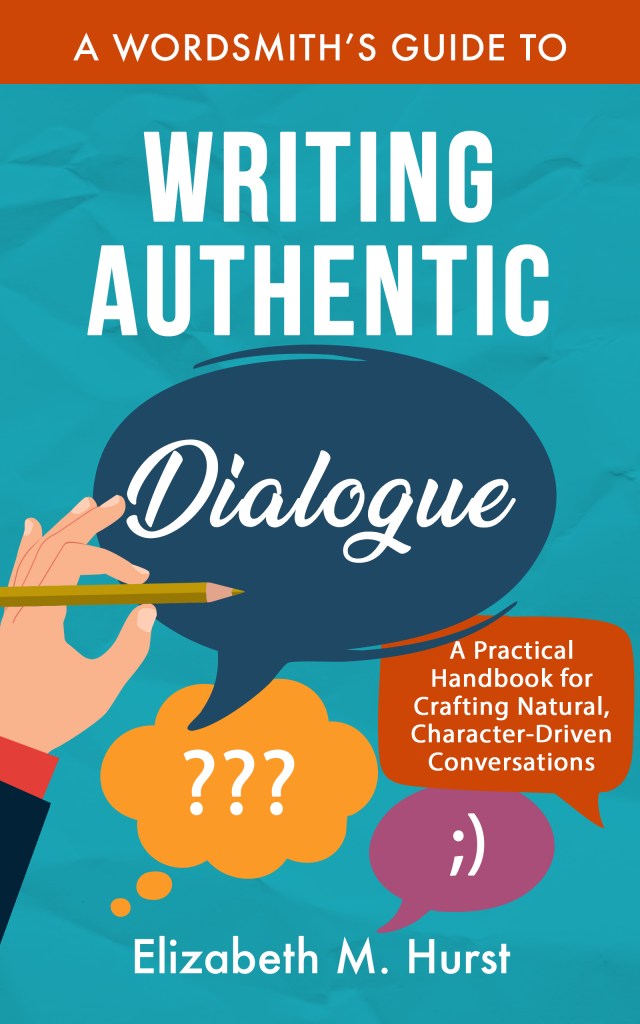
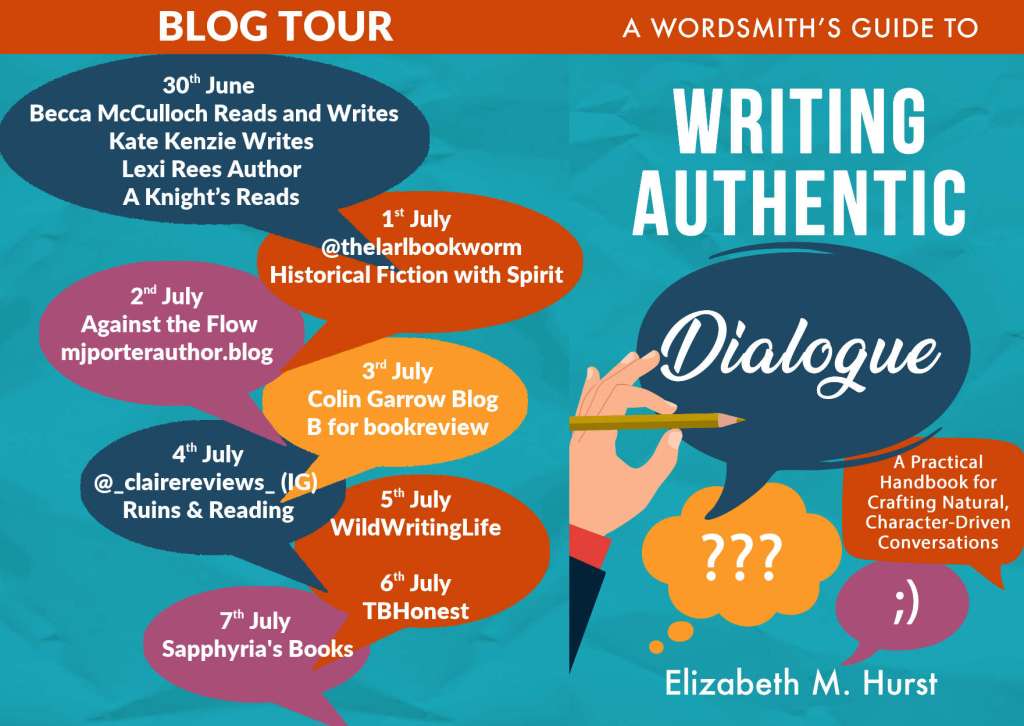
I’m welcoming the Wordsmith’s Guide to Writing Authentic Dialogue by Elizabeth M Hurst to the blog #blogtour #nonfiction #writingadvice
I’m welcoming the Wordsmith’s Guide to Writing Authentic Dialogue by Elizabeth M Hurst to the blog #blogtour #nonfiction #writingadvice
Why I Wrote A Wordsmith’s Guide to Writing Authentic Dialogue
I’ve been asked a few times why I chose to write A Wordsmith’s Guide to Writing Authentic Dialogue. The succinct answer is this: I asked my readers what they wanted me to cover next, and they told me they wanted something about character dialogue.
That made immediate sense to me. Dialogue is one of those areas of writing that looks deceptively simple. After all, we all talk. We all listen to conversations. We all know what speech sounds like – or at least we think we do. But putting convincing dialogue on the page is a very different skill from reproducing everyday speech exactly as it happens.
In real life, conversations are messy, repetitive, unfinished, and full of filler. People interrupt themselves, lose their train of thought, circle back, contradict themselves, and say “um” or “you know” far more often than any reader would willingly tolerate in a novel. If we wrote dialogue exactly as people speak, it would be tedious. Fictional dialogue has to have a purpose: it has to sound real while still being readable.
That is one of the reasons dialogue can be so challenging for writers. It has to feel natural, but also has to earn its place in the story. A good exchange between characters might reveal personality, create tension, deepen a relationship, move the plot forward, suggest conflict, or show us something the character does not want to admit. Often, the best dialogue does several of these at once.
I also think dialogue matters because it is one of the quickest ways readers decide whether they believe in a character. Description can tell us what someone looks like. Action can show us what they do. But dialogue lets us hear them. It gives us rhythm, attitude, hesitation, confidence, defensiveness, humour, fear, tenderness, and all the other subtle signals that make a fictional person feel alive.
One of the most useful lessons I’ve learned, both as a writer and an editor, is that dialogue is rarely only about the words being spoken. It is also about what is not said. People dodge difficult subjects. They hide behind jokes. They answer a different question from the one they were asked. They say “I’m fine” when they are anything but fine. That gap between what is said and what is meant is where the emotional energy of a scene lives and breathes.
Character voice is another important part of the puzzle. When every character speaks in the same rhythm, with the same vocabulary and the same level of confidence, the reader may struggle to tell them apart. But distinctive dialogue does not have to mean exaggerated slang, heavy dialect, or a string of catchphrases. It can be much more subtle than that. One character may speak in short, guarded sentences. Another may over-explain. One may use humour to deflect. Another may become very formal when upset. These choices tell us who people are, especially when they are under pressure.
That is why I wanted this book to be practical. Dialogue is not just decoration. It is one of the main ways writers create character, conflict, and connection. When it works well, readers believe in the people on the page.
And perhaps that is the real goal of authentic dialogue. Not to copy real speech word for word, but to create the illusion of it. To make readers feel that these characters existed before the scene began and will continue existing after it ends. To make every line sound as though it could only have been spoken by that person, in that moment, for that reason.
So when my readers asked for a guide to dialogue, I understood why. It is a subject that touches almost every part of storytelling. Whether you are writing a quiet emotional exchange, a heated argument, a romantic confession, a comic misunderstanding, or a scene full of things left unsaid, dialogue can transform the way readers experience your characters.
Used well, dialogue does not simply fill the silence. It brings the story to life.
Here’s the blurb
A Wordsmith’s Guide to Writing Authentic Dialogue
Do you lack confidence when writing dialogue for your fictional characters? Do you want to learn how to make each person have a distinctive voice?
Real conversations wander. Fictional dialogue can’t afford to.
A Wordsmith’s Guide to Writing Authentic Dialogue is a practical, encouraging craft book for fiction writers who want dialogue that does more than fill the page. You’ll learn how to make every exchange purposeful, character-specific, and charged with subtext—without gimmicks, melodrama, or the dreaded “As you know…” exposition.
You will learn how to:
build distinct voices through rhythm, worldview, and verbal habits (not quirky spelling);
show status and power through questions, interruptions, silence, and topic control;
handle tags, beats, and action cleanly so dialogue moves instead of clogs;
write conflict that escalates and changes shape (without repeating itself);
approach trauma, consent, and emotionally heavy scenes without voyeurism or melodrama.
You’ll also find:
short, generic examples you can learn from immediately;
focused exercises you can complete in 10–20 minutes;
diagnose-and-rewrite case studies (where relevant);
checklists: quick bullet points to use while drafting and revising.
If your characters explain too much, sound the same, circle the point, or talk in a void—this guide will give you clear tools to diagnose the problem and rewrite with confidence.
Have the confidence to write dialogue that reflects the best of your characters, and the best of your writing. Pick up your copy today.
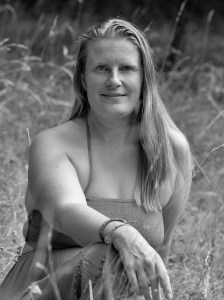
Elizabeth was born and bred in the picturesque harbour town of Whitehaven in the northwest of England, where the long, wet winters moulded her into a voracious reader of fiction to escape the dismal weather.
In 2016, Elizabeth set up her freelance editing and proofreading business, EMH Editorial Services. In 2018, she quit the corporate world and concentrated her energy full-time towards her love of the written word.
Elizabeth has published timeslip novellas (the Lost Souls series) and a stand-alone novel, A Light Shines in Darkness, based on Blessed Angelina of Marsciano. She is also the author of The Wordsmith’s Guides, a series of nonfiction books on the craft of writing.
Elizabeth now lives with her husband in the warm and sunny south of France, where the wine is cheaper than the water, and the cats spend their days hunting lizards and dreaming of the birds that roost on the roof.
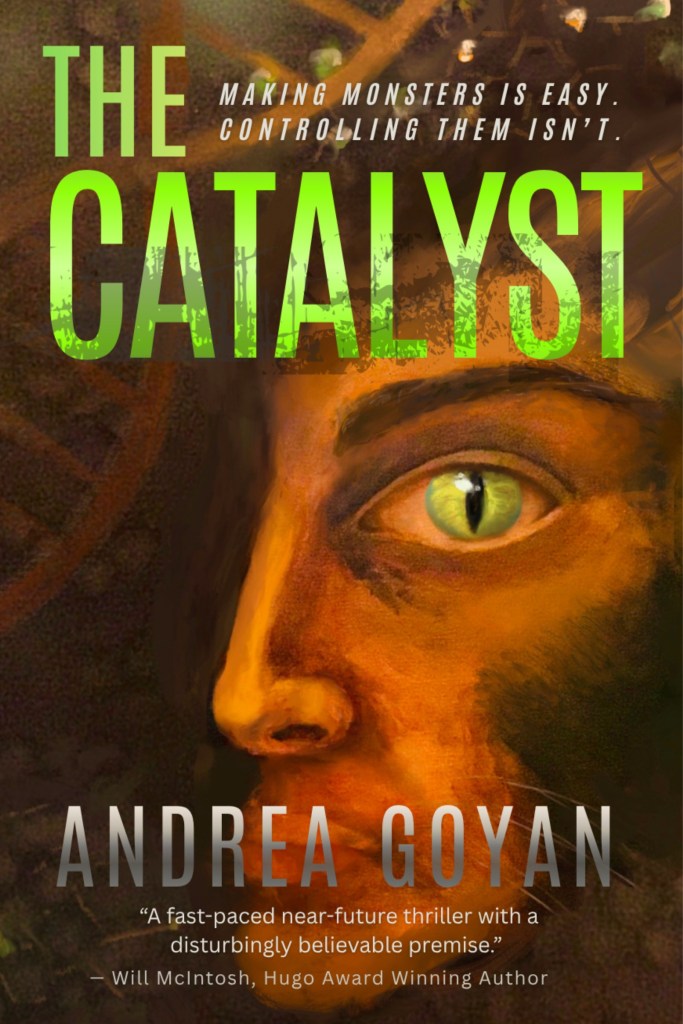
I’m welcoming Andrea Goyan and her new book, The Catalyst, to the blog, with an inspiring post for all those writers out there #blogtour #scifi #writersadvice
I’m welcoming Andrea Goyan and her new book, The Catalyst, to the blog, with an inspiring post for all those writers out there #blogtour #scifi #writersadvice
Thank you for inviting me to write a guest blog. I’m delighted to be here with you and your readers.
My post today directly relates to writers, but I think anyone who navigates risks, rejections, or affirmations will relate on some level because I we all face similar angels and demons.
“Thank You for Sharing Your Work with Us. Unfortunately…”
—Random Editor
Ouch. These or similar words of rejection litter every writer’s email inbox. If you’re submitting work, receiving lots of them is part of the deal.
I want to recognize that sending stories (or anything) out into the world is an act of courage. Opening ourselves up for criticism or rejection risks bruising souls and fragile egos. It is not easy. But the need to be seen and heard—read—keeps most of us in the game.
“Thank You for Sharing Your Work with Us. We’d be delighted to publish…”
—Favorite Random Editor
Yes! These are the emails we live for. But as fabulous as those acceptances, encouragement, and love are, those joyful feelings are fleeting. Fairy dust that blows away with the first breeze. The need for more, more, more feels akin to an addiction.
“Can you help us out?”
—Magazine Editor
When I started submitting short stories to small markets seriously, I was thrilled that the online process was loads easier than the old-fashioned, snail-mail way. Faster, easier, less wasteful, but as nerve-wracking as ever. And rejections…ugh. Each one stung like a blade slipped between my ribs, touching my heart. I commiserated with other fiction writers, weeping onto my keyboard. Wondered why or if I should continue. The game seemed impossible. But I did continue, and a funny thing happened. I met a ton of other writers, and my writing community grew.
I watched how other writers managed their submissions, and found that the more I submitted, the less precious any one submission became, and its rejection hurt less when I had other pieces out for consideration. Every successful writer I know submits all the time. They look like they’re accepted and published by everyone, but they still get tons of rejections. It’s a numbers game. The more pieces out, the more potential, the more noes, and the more yeses.
More visibility led editors to ask for my help. I accepted, and I learned some surprising things along the way. Some of my most valuable insights came from being a slush reader for a magazine and serving as a judge for a few contests. The positions were different, but the similarities showed me how random a lot of editorial decisions are. They aren’t only about if the story is good, tons of great stories are rejected—I’ve rejected some. There are ineffable lists of criteria beyond any writer’s control. I found a lot of peace in that knowledge, and it made the rejections less personal—of course, they’d never been personal. They simply felt that way.
“Your work is more important than how you feel about it.”
—Claudette Sutherland, Mentor
She’s retired now, but those words were like a mantra for Claudette. Her students oohed and ahhed whenever she said them, while I secretly wondered what the hell she meant. What I felt mattered to me and still does. It took me years to understand she wasn’t attacking my feelings. I believe she wanted us to get out of our own way. Stop whining about all the reasons we didn’t do and just do. Stop editing our work and push forward. Tell our egos to take a back seat for a while and set our creativity free.
“I can do this.”
—Me, circa 2025-26
This past year, while I’ve been continually working on The Catalyst, I’ve been too busy to worry about rejections. Too busy to send out many submissions either. The novel’s deadlines were fast and unrelenting, and they forced me to move. To do. Always stepping forward and outside of my comfort zone.
I met the challenges and learned that what really matters, what really heals my bruised ego and feeds my soul, is the work itself. Not how other people receive it. It’s the act of creating, the spark, the fire that burns until it’s consumed at its source, leading to words on the page. Creating the thing, whatever that thing is. That’s the only thing I can hold onto and call my own. What anyone else feels about it belongs to them.
Thank you for sharing such a fab post:)And yes, rejection is part of the game, but the act of creating, and the joy it brings, is why we keep on keeping on!
Here’s the blurb
When human bodies are found with scales and tails, DNA specialist Kat Crocker is assigned to uncover the cause of the mutations and stop them before they spread. But her growing visibility makes her a target. As attacks escalate, the trail leads her to a newly released VR game powered by impossible genetics—and to one man: the mentor who taught her everything, the father she buried years ago.
Andrea Goyan is an award-winning author and an avid animal person who grew up being called Goat-Girl and Raccoon-Mama. She is a grateful part of a flock of collaborative Magpie Poets whose first collection, An Illegal Feast, was released in 2025. Andrea also co-hosts MetaStellar Magazine’s “Long-Lost Friends” and “Storytime.” In her spare time, she walks her dogs and loves to paint, especially animal portraits.
Many of her stories are available for free on her website.
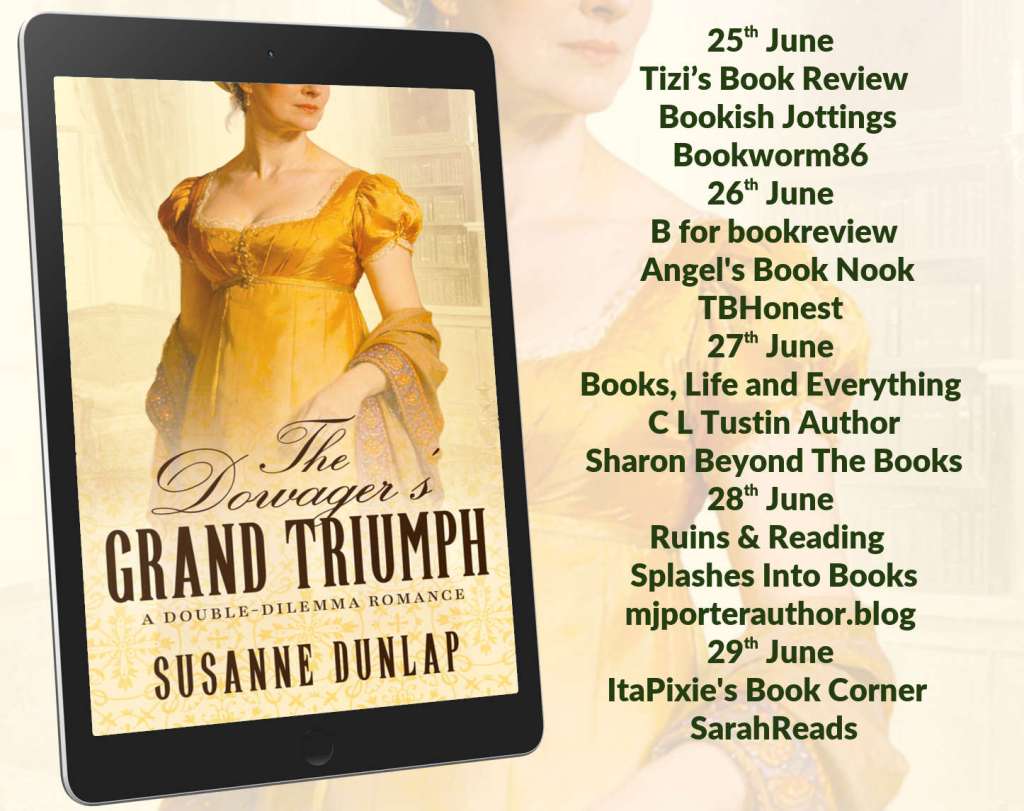
I’m welcoming The Dowager’s Grand Triumph by Susanne Dunlap to the blog #blogtour #RegencyRomance @rararesources
I’m welcoming The Dowager’s Grand Triumph by Susanne Dunlap to the blog #blogtour #RegencyRomance
Here’s the blurb
Caroline, Dowager Marchioness of Lewiston, has long since made peace with the life she was given: a grand title, a comfortable house, and a heart carefully trained not to want what it cannot have.
Then Thomas Ashcombe returns.
Years ago, Thomas was the man she loved—and lost. Now he is a wealthy merchant newly arrived from India, bringing with him not only a fortune, but a daughter, Anjali, whose place in English society is as uncertain as her father’s safety. Thomas has come home with dangerous evidence of corruption connected to the East India Company, and powerful men will do anything to silence him.
When Thomas is falsely imprisoned under suspicion of treason, Caroline must decide whether she is willing to risk her reputation, her family, and her carefully ordered world for the man she never forgot.
Sir Julian Meredith has always preferred legal arguments to drawing-room conversation. Awkward, red-haired, and far too honest for his own comfort, he is no one’s idea of a romantic hero—least of all his own. But when Anjali Ashcombe’s courage draws him into a web of secrets, forged loyalties, and political danger, Julian discovers that love may require a bravery no courtroom ever demanded of him.
As Caroline and Thomas fight for a second chance, and Julian and Anjali reach for a future neither of them expected, one question remains: can love survive when truth itself has become a crime?
Susanne Dunlap started out a historian, became an award-winning historical novelist with fourteen published novels for adults and teens, and is now the author of the Regency romance series, Double-Dilemma Romance. She lives and writes in a converted textile mill in Biddeford, Maine.
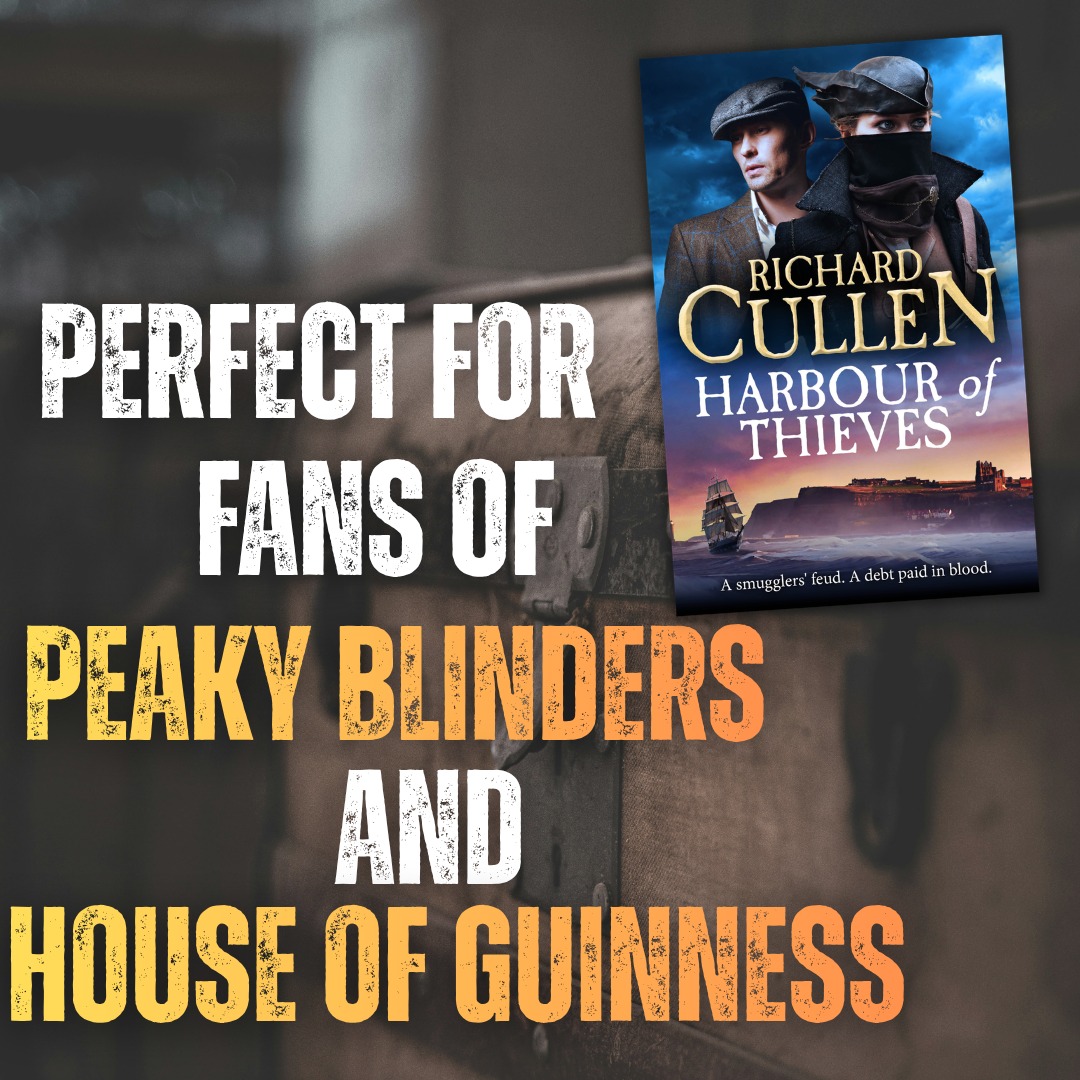
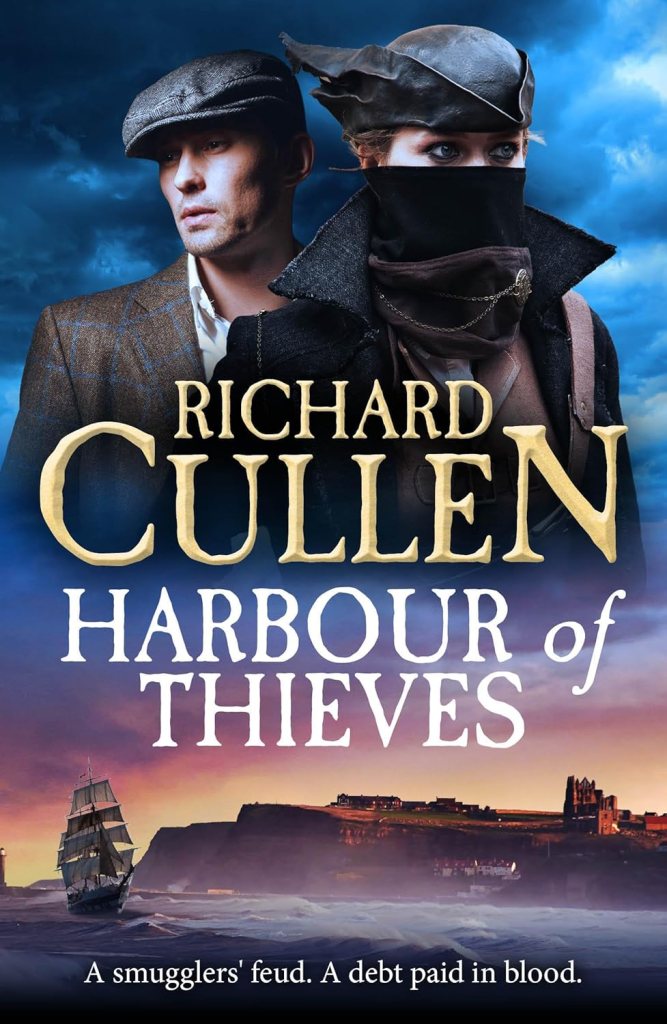
I’m reviewing Harbour of Thieves by Richard Cullen, a brand new 19th century tale of smugglers and North Yorkshire #historicalfiction #bookreview @boldwoodbooks @wordhog
Here’s the blurb
An epic NEW historical crime story of treachery and bitter rivalry between Yorkshire’s tough smuggling gangs 💥 Perfect for the fans of Bernard Cornwell’s Sharpe series, House of Guinness and Peaky Blinders 🩸⚔️
Can one man forget his past, or will he be dragged back into the world of violence he worked hard to leave behind?
Yorkshire, 1840
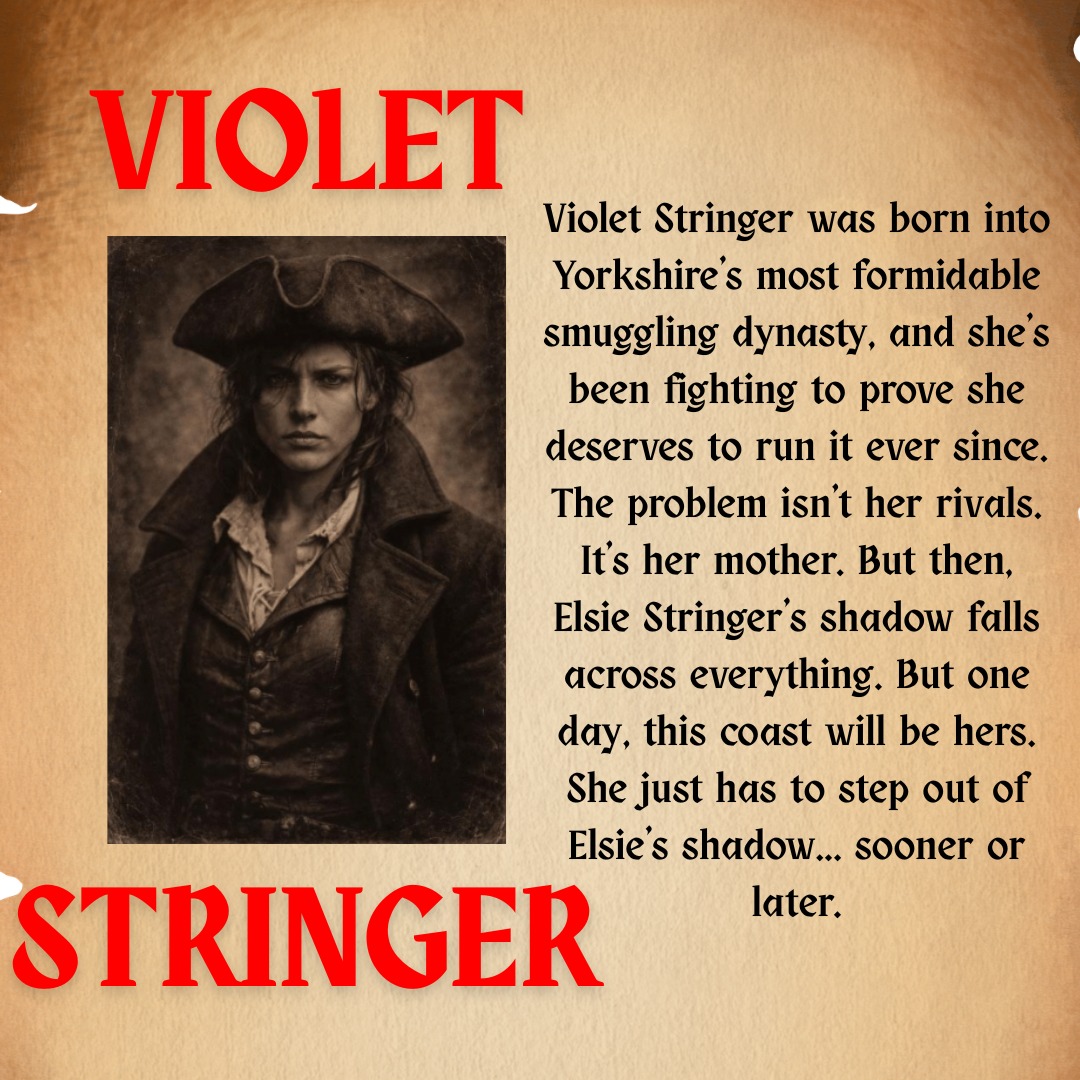
Along this treacherous Yorkshire coastline, the cutthroat industry of smuggling thrives, and two rival gangs rule the night… the Stringers of Bay Town and the Lambs of Ravenscar. Waging a war for control of the contraband that flows through England’s northern cities.
After a lifetime of violence and bloodshed, Jim Hood returns to his hometown of Whitby with his friend Samuel Comus, their pockets heavy with prize money from their exploits along the African coast. They dream of respectability, of turning their backs on their past, but old friends and enemies await, and old habits die hard…
When tragedy strikes, and Jim’s well-laid plans turn to ash, Jim is forced to return to the brutal world he’d sworn to leave behind.
Now he must navigate the deadly currents that flow between rival smuggling empires, where childhood loyalties war with newfound enemies, and where the price of survival might be the very soul he’d fought so hard to reclaim.
Perfect for the fans of Bernard Cornwell, Ken Follett and Dan Jones.
Harbour of Thieves is a rollicking good read set in the 1840s, in and around the coastline of Whitby and Scarborough (North Yorkshire) and focuses on the underbelly of smuggling as two rival bands face not one, but two enemies, and are riven with discord between each other as well.
We have multiple characters in this thrilling, fast-paced tale, and we also need to give a shout-out to the Yorkshire weather! There are many characters we simply despise, a few we quite like, and others we can perhaps admire, while being grateful never to be faced with the decisions they have to make. We have strong women, even stronger women and those we think we should pity but who, in their own way, are perhaps the strongest of all. We have villains aplenty, from the excise man to the leader of the Lambs, who is a nasty piece of work.
The story is fast and satisfying, as events wrap around our would-be heroes, forcing them to make hard decisions to survive. This is a thrilling adventure of high stakes and high seas, and I devoured it in only 24 hours!
Check out my review for Rebellion, the first book in the Chronicles of the Black Lion series.
Meet the author
Richard Cullen is a writer of historical adventure and epic fantasy. Previously published by Head of Zeus and Orbit Books, his new historical adventure series for Boldwood, Chronicles of the Black Lion, set in thirteenth-century England, will launch in October 2024.
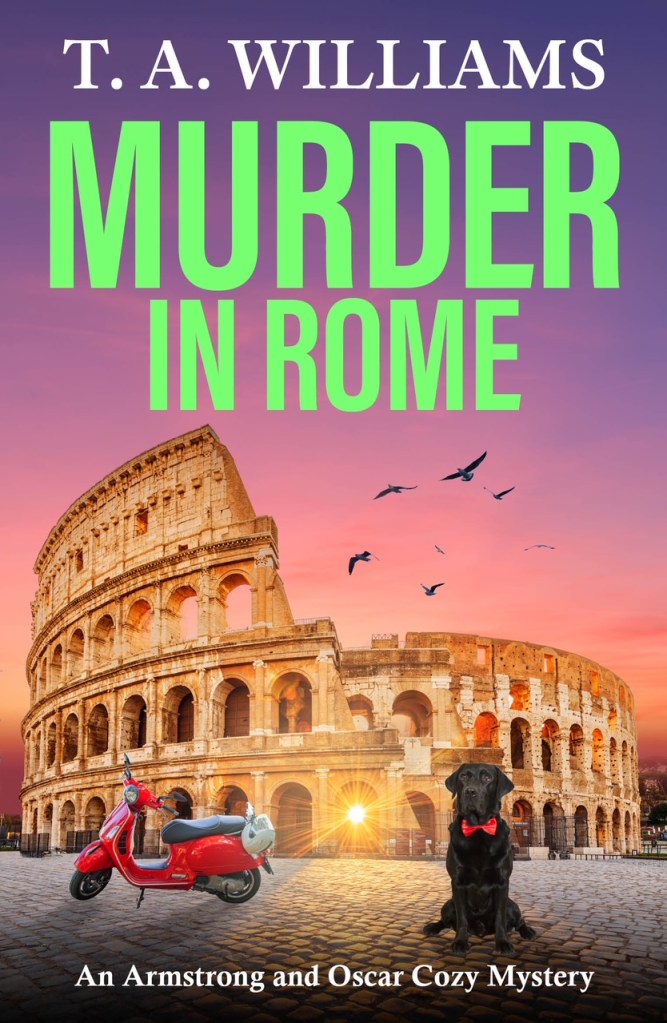
I’m reviewing the new book in the Armstrong and Oscar Cozy Italian Mysteries, Murder in Rome by TA Williams #BookReview #BlogTour #CosyCrime #ContemporaryCrime
I’m reviewing the new book in the Armstrong and Oscar Cozy Italian Mysteries, Murder in Rome by TA Williams #BookReview #BlogTour #CosyCrime #ContemporaryCrime
Here’s the blurb
The BRAND NEW instalment in the bestselling, beloved Armstrong & Oscar Cozy Mystery series!
A road leading to Rome
Former DCI Dan Armstrong has been living and working in Florence for nearly three years—yet somehow, Rome has always eluded him. That is, until glamorous TV celebrity Tamsin Goodfaith turns up with a request he can’t refuse: investigate her uncle’s suspicious death in the Eternal City.
Murder at the castle
Philip Hastings was a billionaire financier, found dead at his magnificent—if slightly spooky—medieval castle in the Roman hills. Dan and his faithful canine companion, Oscar, soon find themselves surrounded by luxury, secrets and more suspects than sightseeing opportunities.
This time it’s personal. But when a second murder follows close behind, the case turns dangerously personal. With whispers of ghosts and crumbling alibis, Dan and Oscar must sniff out the truth before he becomes the next victim. Harder to crack than castle walls—and harder still than stopping Oscar from stealing snacks—this Roman holiday is anything but relaxing. .
Murder in Rome is somehow the 15th book in the Armstrong and Oscar mysteries, and I’ve read them all (apart from 1, which I seem to have missed).
This latest outing sees Dan taking a trip to Rome, somewhere he’s not been before, with Oscar at his side. What he encounters is a palatial residence that seems to be hiding its own secrets, but his remit is simple, determine if Philip was murdered, or whether he really did commit suicide. As Dan begins to investigate there are strange goings-on in the dysfunctional, wealthy family.
Murder in Rome unfolds as earlier books in the series. The reader genuinely doesn’t know who can and can’t be trusted until there is a huge breakthrough. For this one, I loved the historical elements as it’s passed time Anna was able to help Dan solve his cases. Of course, Oscar has a starring role once more too.
Always a guaranteed good read, I didn’t guess who did it! I do love this series.
Check out my reviews for earlier books in the series, and be sure to start at book 1, Murder in Tuscany.
Meet the author
I’m a man. And a pretty old man as well. I studied languages at Nottingham University a long time ago and then lived and worked in France and Switzerland before going to work in Italy for seven years. My Italian wife and I then came back to the UK with our little daughter (now long-since grown up) where I ran a big English language school for many years. We now live in a sleepy little village in Devonshire. I’ve been writing almost all my life but it was only thirteen years ago that I finally managed to find a publisher who liked my work enough to offer me my first contract.
I started off writing romances but after 28 of them, I knew I wanted to try something different, and so the first of the Armstrong and Oscar cozy mysteries, Murder in Tuscany, was born three years ago. I’ve been having a lot of fun ever since getting to know the dynamic duo (and introducing them to people all over the world). These books are cosy crime [a genre I didn’t even know existed when I started writing them). They are murder mysteries, but not gory, over-violent stuff, but stories designed to exercise the brain of the reader and to put a smile on their face. Maybe it’s because there are so many horrible things happening in the world today that I feel I need to do my best to provide something to cheer my readers up. My books provide escapism to some gorgeous locations all over my beloved Italy.
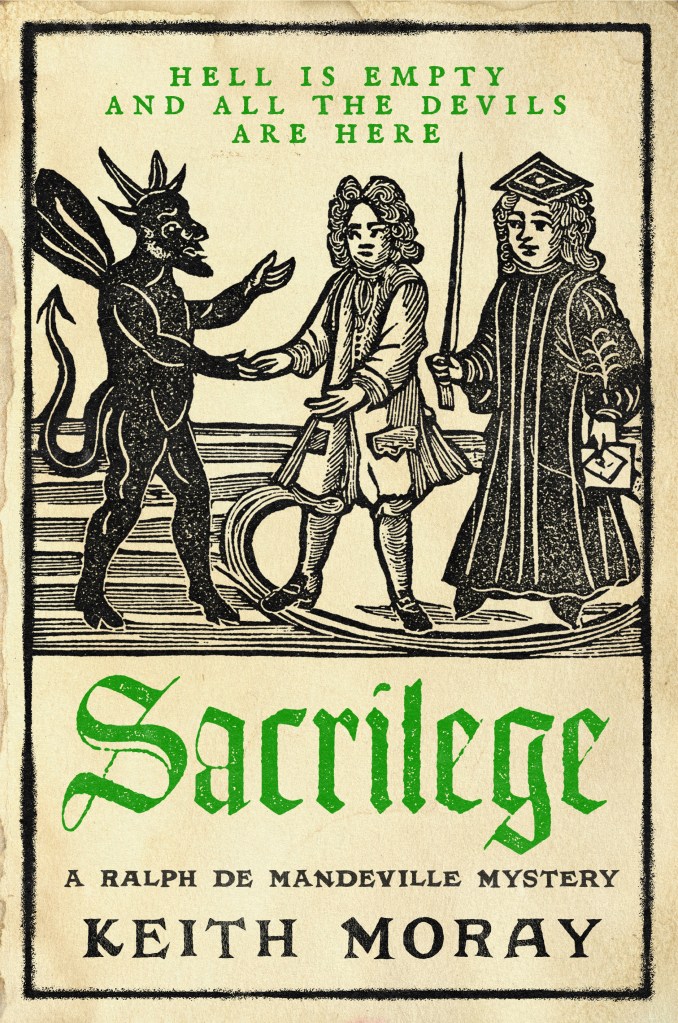
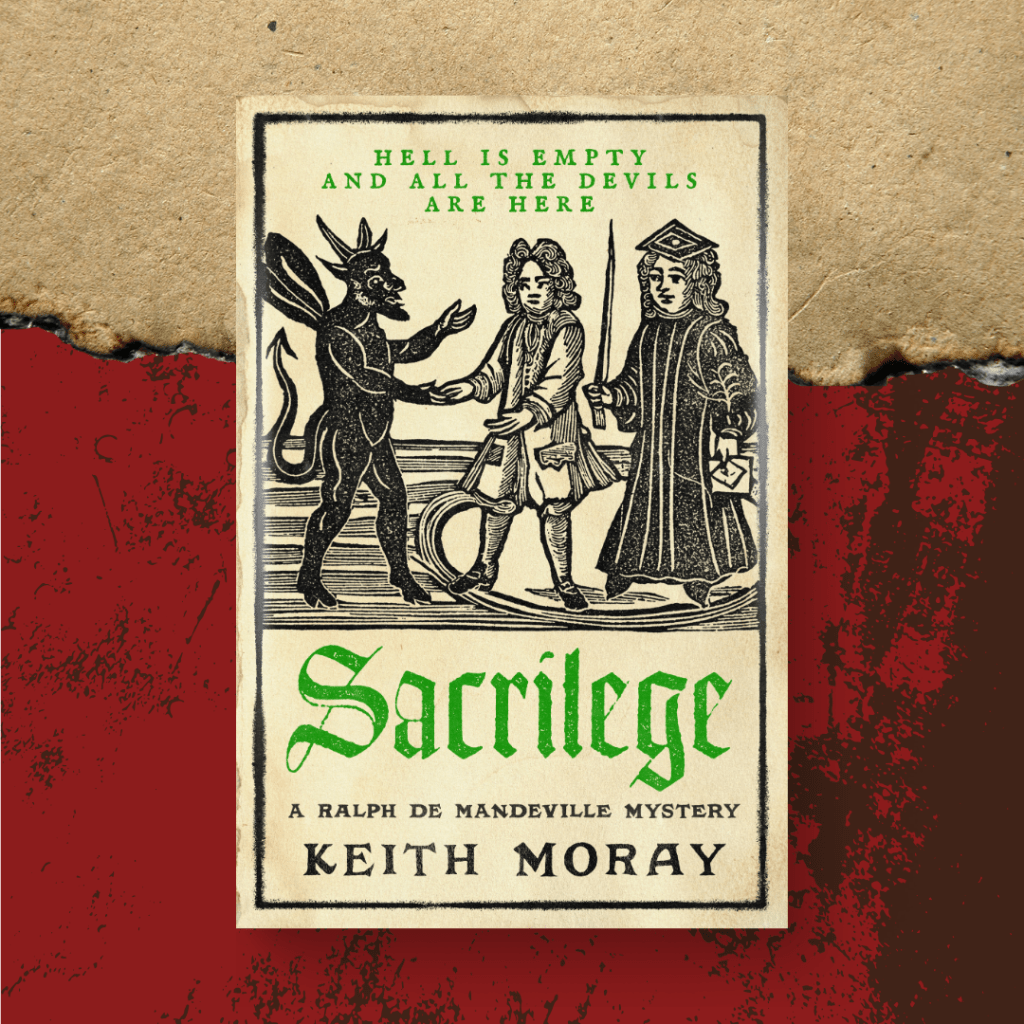
I’m sharing my review for Sacrilege by Keith Moray, a brand new historical mystery set in 1361 #bookreview #blogtour #newrelease #boldwoodbloggers @BoldwoodBooks @KeithMorayTales @rararesources #Sacrilege
I’m sharing my review for Sacrilege by Keith Moray, a brand new historical mystery #bookreview #blogtour #newrelease
Here’s the blurb
A nun is found dead.
A priest is horribly attacked.
An evil older than sin is loose in Yorkshire…
Marske, 1361. Sir Ralph de Mandeville with his assistants Peter and Merek have recently come from Reeth to hold a court session in Marske but are pulled away at the news of a most heinous crime having been discovered further down the River Swale.
A boat has been found, floating down the river. Inside is a truly horrifying scene – the body of a nun, her wrists cut and her hands fixed in the sign of benediction… As Ralph uses his astute skills of inspection, his mind asks a most difficult question – is this self-murder or murder most foul? Were her last moments spent in benediction prayer… or malediction warning? With both Marrick Priory and Easby Abbey within a stone’s throw of Marske, it appears something is not quite right in the house of God…
When the body of a priest is found mutilated as if by a wild animal, the villagers fear the nun’s body has opened the gates and let loose a monster from Hell… but Ralph starts to wonder if something much more human is at the root of these evils.
As he follows the grim clues, he fears he knows where this miserable sacrilegious journey will end. The question is, can he catch the murderer and prevent more grisly deaths – his own included?
Sacrilege is the second book in the Ralph de Mandeville historical mysteries. I’ve read the first book, so you can check out my review down at the bottom.
Sacrilege starts quicker than the first book, and our first encounter is with Ralph and his two assistants, Merek and Peter, as Ralph holds court in Marske, but the day quickly takes a turn when the body of a nun is found on the river. And so begins another very grizzly, high-body-count mystery that involves both a priory and an abbey, a nobleman, a queen, and the local villages, and is deeply rooted in the area, with its iron smelting and fast-flowing river.
The mystery is tightly plotted and filled with increasing tension as Ralph finds himself butting heads with an uptight nobility who don’t want his interference, as well as a few jobs-worths along the way. And there are many people with secrets they don’t want Ralph to uncover, as well as a brief appearance from Queen Phillipa.
This is an engaging, if sometimes slightly gruesome, read, with no end of peril for our main characters. It is written in such a way that it feels ye-olde-worldly, and the characters embody the thoughts of the day. You can tell Keith has a great deal of medical knowledge! It will certainly appeal to fans of the genre (me), and I do think it can be easily read as a standalone for anyone keen to jump right in with this second book in the series.
Check out my review for Desolation, the first book in the series.
Meet the author
I was born in St Andrews and studied medicine at the University of Dundee in Scotland. I lived and worked in Wakefield in Yorkshire for 40 years, within arrow-shot of the ruins of a medieval castle, the base for a series of historical novels.
I am a retired GP, medical journalist and novelist, writing in several genres. As Keith Moray I write historical crime fiction in the medieval era and in ancient Egypt, The Inspector Torquil McKinnon crime novels set on the Outer Hebridean island of West Uist, and as Clay More I write westerns. Curiously, my medical background finds its way into most of my fiction writing.
In my spare time I enjoy the movies, theatre and making bread. I play golf and I run at carthorse speed. As a frustrated actor I have found occasional solace as a supporting artist, but enough said about that!
I now live in Stratford-upon with my wife Rachel and whichever of our children and grandchildren who happen to pop in.
I’m sharing my review for Operation Berlin by Michael Ridpath #blogtour #bookreview #OperationBerlin #boldwoodbloggers @BoldwoodBooks @rararesources @michaelridpathauthor
I’m sharing my review for Operation Berlin by Michael Ridpath #blogtour #bookreview
Here’s the blurb
In a city rebuilding from war, truth can be the most dangerous weapon of all.
Berlin, 1930.
Historian Archie Laverick, scarred mentally and physically by the Great War, travels to Berlin to research a famed Prussian general. His quiet study is shattered when he crosses paths with Esme Carmichael, a spirited young American intent on making her name as a foreign correspondent. When a shooting at a Saxon castle leaves a young Jewish woman accused of murder, Archie and Esme are drawn into a perilous hunt for the truth.
Their investigation cuts through the glittering façades and lingering scars of a nation still reeling from war – where resentment simmers, political alliances shift, and the first shadows of a new conflict fall across Europe. Amid whispers of blackmail and betrayal, the pair must navigate intrigue and danger to unmask a killer hiding in plain sight.
A tense, atmospheric mystery set in a world between wars – perfect for fans of Philip Kerr’s Berlin Trilogy, Robert Harris’s Fatherland, and Alan Furst’s spy novels.
Operation Berlin wasn’t quite what I was expecting, but if anything, that’s a good thing. I was expecting a somewhat taut thriller, but instead was pleasantly surprised to read something with more of a cosy crime feel, though deeply steeped in the era’s events.
Archie and Esme are entertaining characters, both with their own backstories, and while the storyline engages with the social mores of the time, it is far from shocking in this day and age. I also enjoyed the addition of Moses and hope he might appear in future books. I very much enjoyed Archie’s quest to track down information on the general he’s researching, as it meant I was educated on more than just 1930s Berlin.
Overall, a very pleasant surprise. I imagine I will try more of Michael’s books in the future.
Meet the author
Michael Ridpath is the bestselling author of over 20 crime novels and thrillers. His first novel, after a career in finance, was Free to Trade, a No 2 bestseller about the murky world of bond trading which was translated into over thirty languages. He is currently writing the Foreign Correspondent series of murder mysteries set in the capitals of Europe in the 1930s. He splits his time between London and Massachusetts.