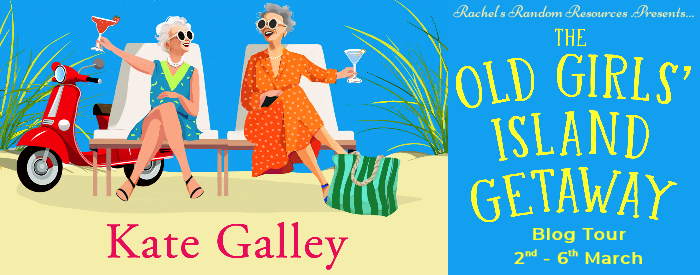
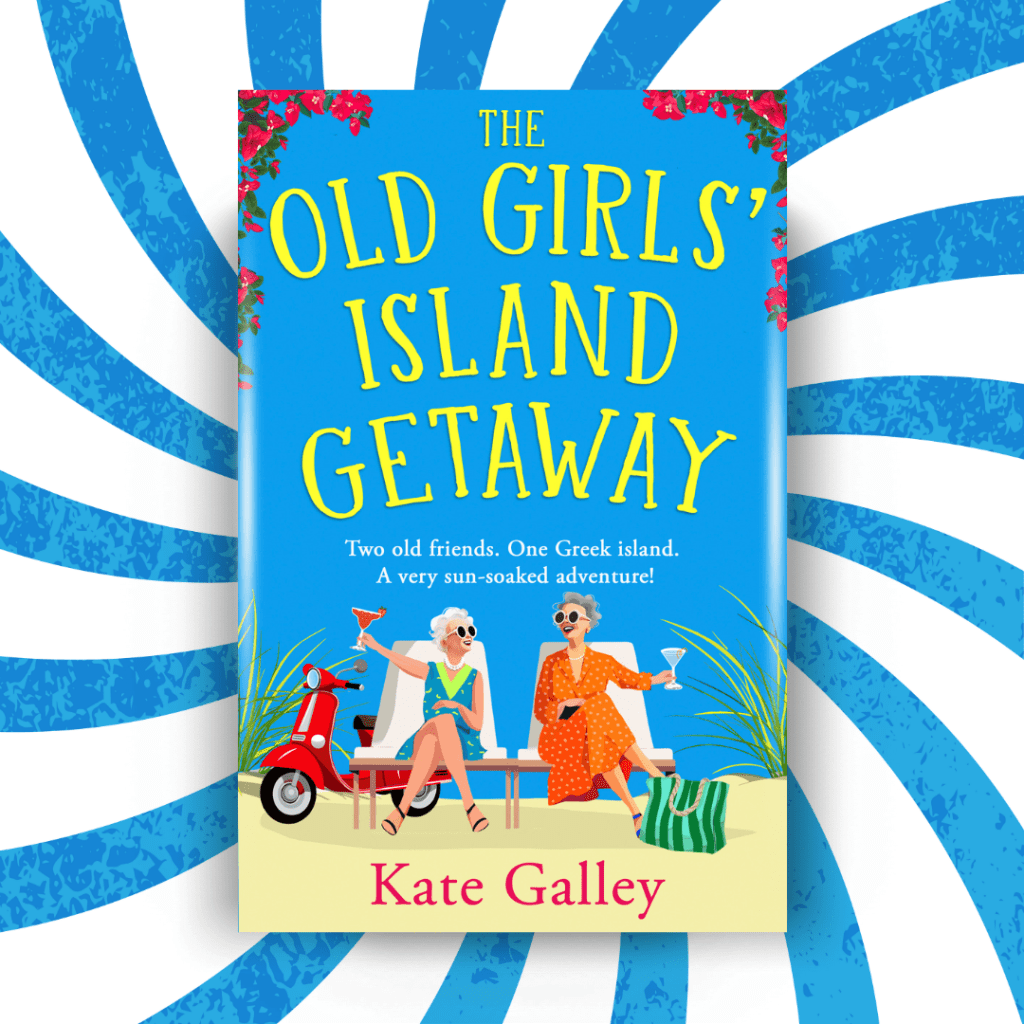
I’m delighted to be sharing my review for The Old Girls’ Island Getaway by Kate Galley #blogtour #newrelease #comedy
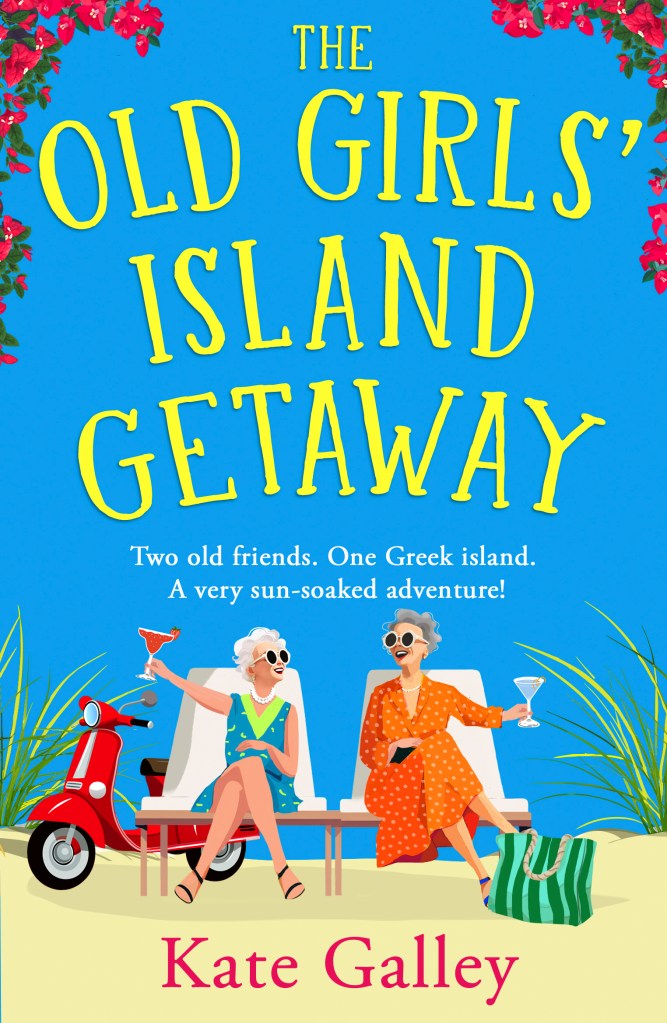
I’m delighted to be sharing my review for The Old Girls’ Island Getaway by Kate Galley
Here’s the blurb
Two old friends. One sun-soaked adventure.
Dorothy and Gina may be separated by twenty years, but their friendship is timeless. At seventy-one and nearly ninety, life’s too short not to have a little fun – especially in Corfu.
When Dorothy is invited to visit an old friend at his villa, she insists Gina comes along. They’re looking forward to sunshine, sea breezes, and perhaps a dash of ouzo. But their plans are upended by an unexpected guest: glamorous actress Florence Quinn, who’s taken up residence in the pool house.
Florence may sparkle on the surface, but she’s hiding something – and someone – from her past. Determined to help, Dorothy and Gina embark on a quest across the island, only to find that Corfu holds more secrets, scandals, and surprises than they ever imagined.
A warm, witty, and adventurous tale of friendship, mischief, and unexpected discoveries.
We’re back with the joyful ‘Old Girls,’ Gina and Dorothy as they jet off for yet another holiday, in the company of Dorothy’s granddaughter. This time, there’s a film star in their midst, threatening to disturb what Dorothy had hoped would be a reunion with a friend at the end of his life. But there are two minor mysteries for our ‘Old Girls’ and Dorothy’s granddaughter to solve – did Rupert play a part in stealing the priceless diamond decades ago – and why is Florence so determined on finding her holiday romance from thirty years ago?
These two mysteries provide the intrigue for the story as Gina is prevailed upon to drive a car around the twisty roads of Corfu and even hops onto a scooter, all in order to aid Florence. Juliet, Dorothy’s granddaughter, provides a welcome boost of humour with her cutting, if mostly true, comments.
As with the previous two books in the series, The Old Girls’ Island Getaway is a charming read, with some funny moments thrown in to remind us all that life doesn’t stop just because the birthdays start to rack up.
Kate Galley is the author of uplifting golden years fiction, including The Second Chance Holiday Club. She lives with her family in Buckinghamshire and works part time as a mobile hairdresser
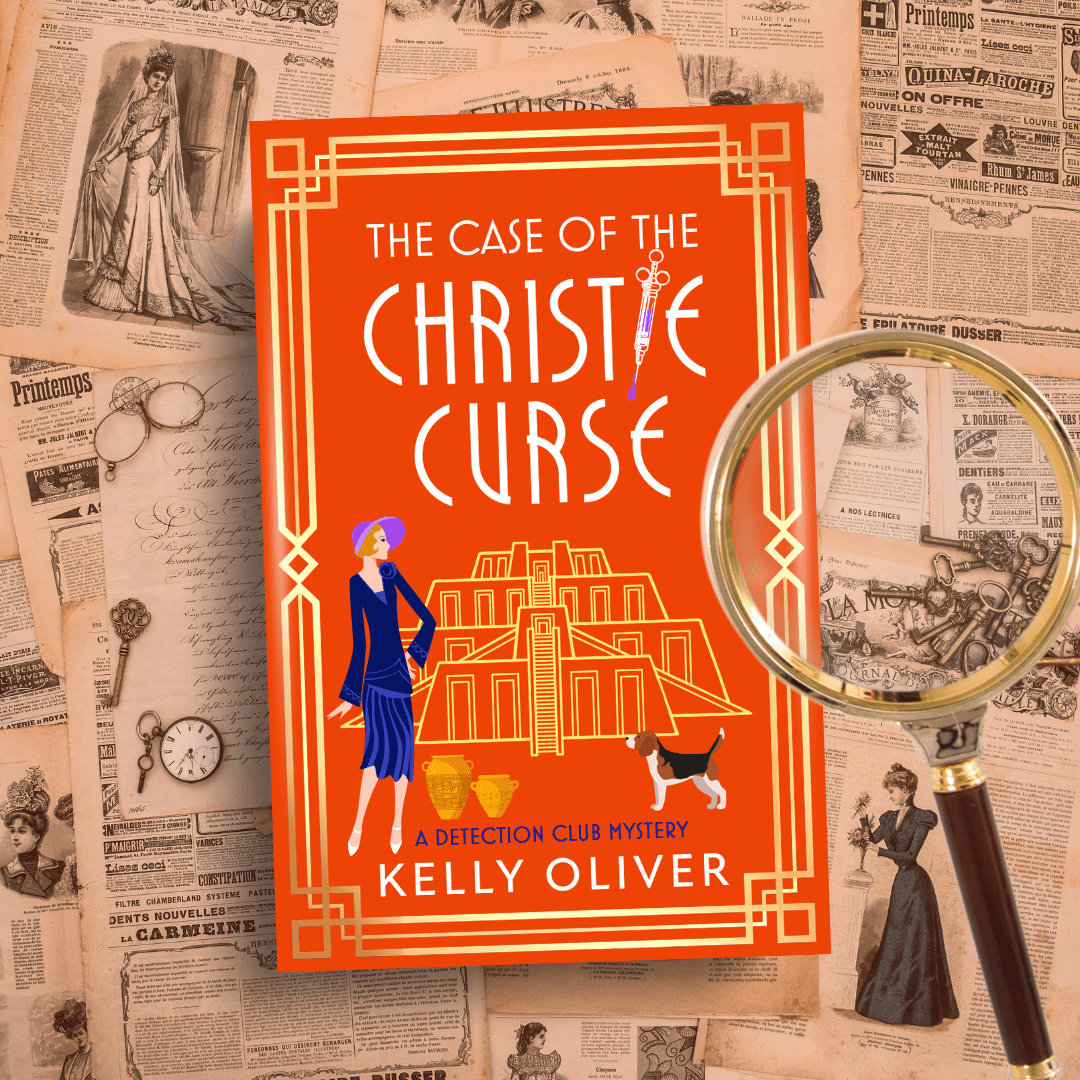
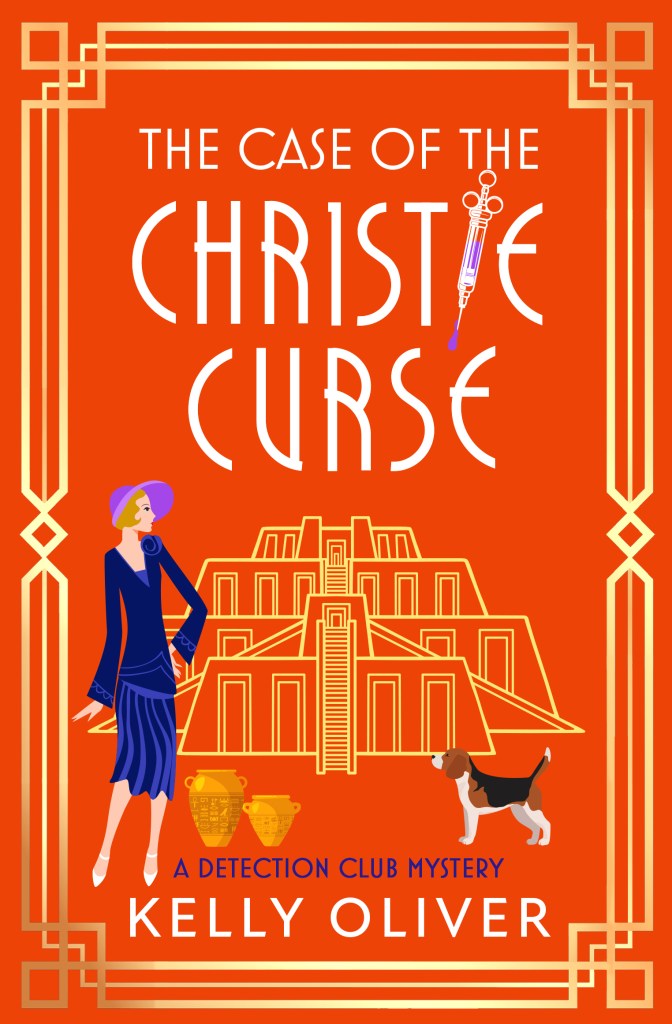
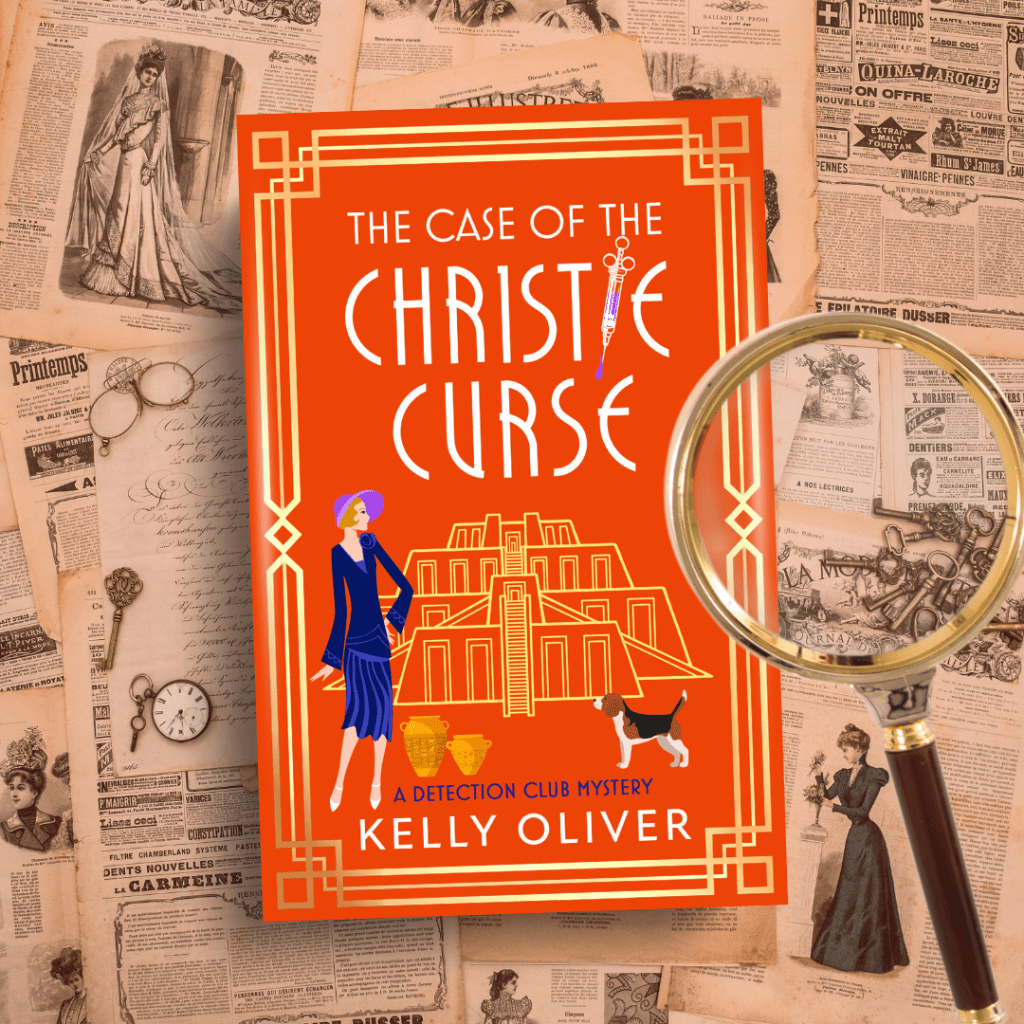
Today I’m reviewing Kelly Oliver’s fabulous new Golden-Age crime mystery, The Case of the Christie Curse #newrelease #cosycrime #blogtour #boldwoodbloggers @BoldwoodBooks #TheCaseofTheChristieCurse @KellyOliverBook @rararesources @theboldbookclub
Today I’m reviewing Kelly Oliver’s fabulous new Golden-Age crime mystery, The Case of the Christie Curse #newrelease #cosycrime #blogtour
Here’s the blurb
The BRAND NEW page-turning, historical cozy mystery series from Kelly Oliver 🏝️🏺☠️
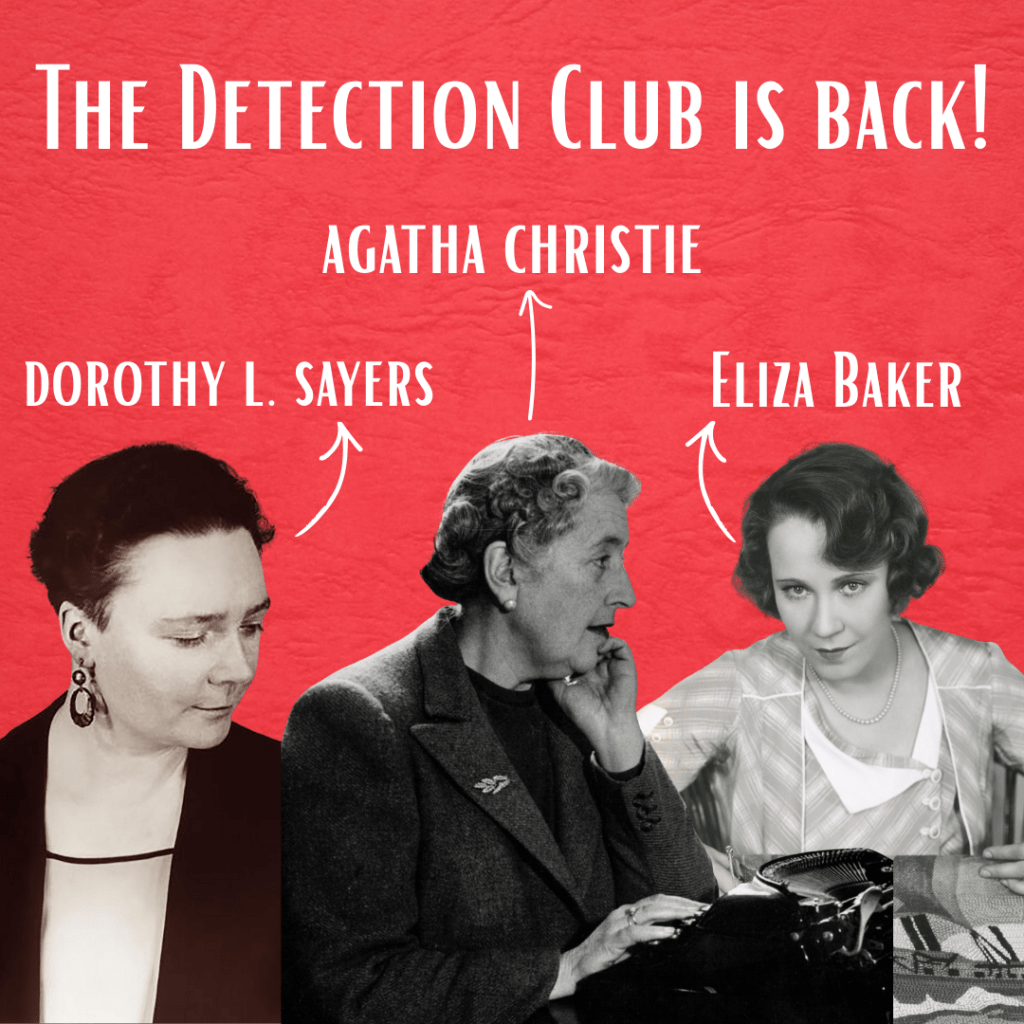
Mesopotamia, 1930: When Agatha Christie invites fellow members of the Detection Club to witness the famous excavations at the ruins of Ur, Dorothy L. Sayers, her quick-witted assistant Eliza Baker, and Theo Sharp expect ancient wonders – not fresh corpses.
But when an archaeologist is found dead in the sand, whispers of a deadly curse sweep through the camp. Eliza suspects something far more dangerous than superstition. Amid glittering artifacts and fragile alliances, every guest harbors the Woolleys, whose marriage is shadowed by tragedy; a journalist hungry for scandal; even academic Max Mallowan, whose loyalties are not what they seem.
As theft, forgery, and coded messages surface, the line between archaeology and espionage blurs. And when Eliza and Theo find themselves in danger, they must face not only the truth about the murder – but also the truths they’ve long denied about each other. Can they uncover the killer before the desert claims another victim? Or will this dig unearth secrets too dangerous to survive?
The Case of the Christie Curse is the third book in the Detection Club series of cosy historical crime novels, in which our beloved crime writers from the 1920s and 1930s feature as characters.
This time, we’re off to Mesopotamia to discover why Agatha Christie has summoned Dorothy, Eliza and Theo to assist her. And what they discover when they arrive is a tangled web of lies and conspiracy, which some suspect is really the Queen’s Curse from the excavation site.
I thought the mystery was trundling along at a reasonable rate to begin with, and I was enjoying it, but then, suddenly, the storyline really escalated in the second half of the book, and I just had to sit and read it until its conclusion.
The author often writes slightly flippant characters, but in this book, we do start to see something deeper from Theo and Eliza, which is a great change, and I do hope it might mean we get a little less ‘will they, won’t they’ and a whole lot more thrilling mystery to solve in future books.
A thrilling new addition to the series of historical, cosy mysteries. (I’ve also been rewatching all of the David Suchet Poirot series, and I must say, this reads very close to the episodes set in exotic locations – huzzah.)
Kelly Oliver is the award-winning, bestselling author of three mysteries series: The Jessica James Mysteries, The Pet Detective Mysteries, and the historical cozies The Fiona Figg Mysteries, set in WW1. She is also the Distinguished Professor of Philosophy at Vanderbilt University and lives in Nashville, Tennessee
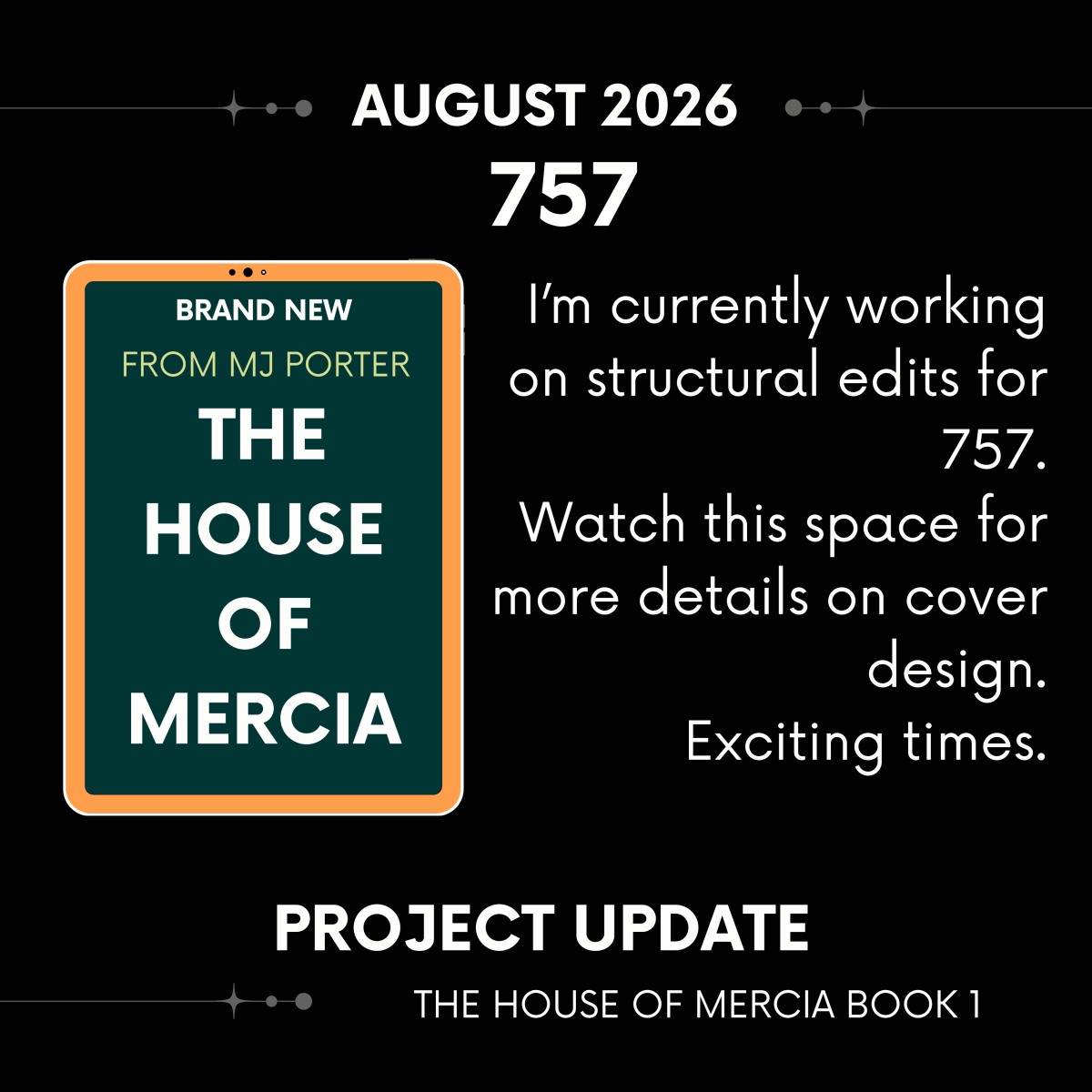
Introducing 757, the first book in the brand new series, The House of Mercia #fiction #nonfiction #Mercia
Here’s the blurb for 757
This is Mercia. The year is 757. A king will fall. A king will rise. But first, civil war will rage.
King Æthelbald’s forty-year vice-like rule over Mercia has been rigid. But he lacks a legitimate heir despite his insatiable bedchamber antics.
Offa must stand hostage to his family’s good behaviour, when his father missteps in removing his mother from Æthelbald’s bed. Shockingly, his younger sister now replaces her.
But the king isn’t finished with his denigration of Offa’s noble House. When his parents are traitorously killed, Offa’s resentment grows, compounded by the ridicule heaped on him by King Æthelbald’s oathsworn warriors.
With the king’s health deteriorating, the matter of the succession becomes paramount. There are plenty who share a claim to the kingship.
Discord threatens to fracture the mighty realm, and those with sword and shield, seax and spear are prepared to risk it all to be the future king of Mercia.
The background to the House of Mercia – AKA what happens after the Gods and Kings trilogy
If you’ve been with me for a while, you’ll know I’ve written about Mercia in many of the centuries of its existence. Until now, I haven’t ventured into the eighth century and many of you might not have read the Gods and Kings Trilogy (there is still time to get it read before House of Mercia hits the shelves), and even if you have, there’s a century between the final events of Warrior King (655) and the beginning of 757, the first book in The House of Mercia series. So, I thought it was time to add some flavour to this century.
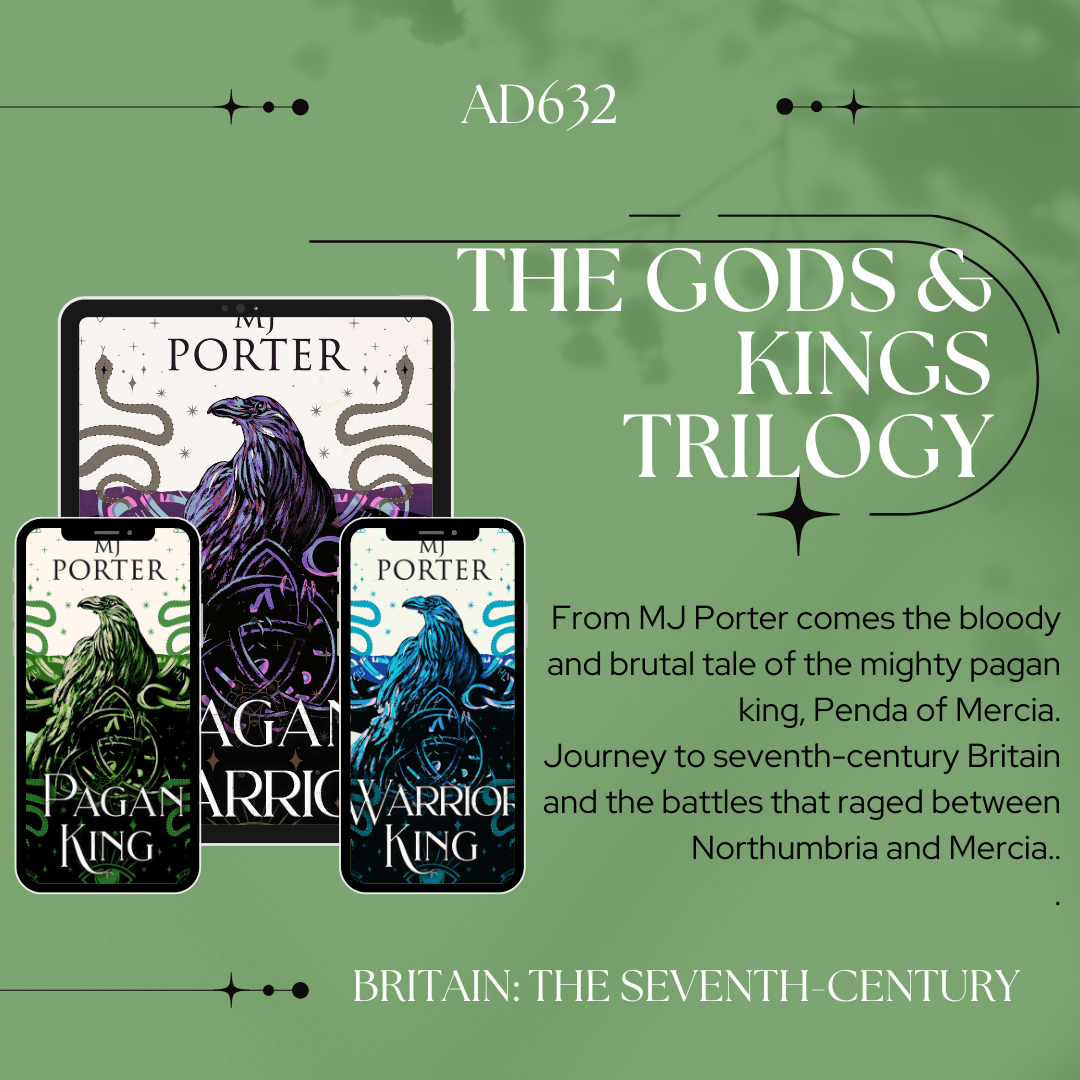
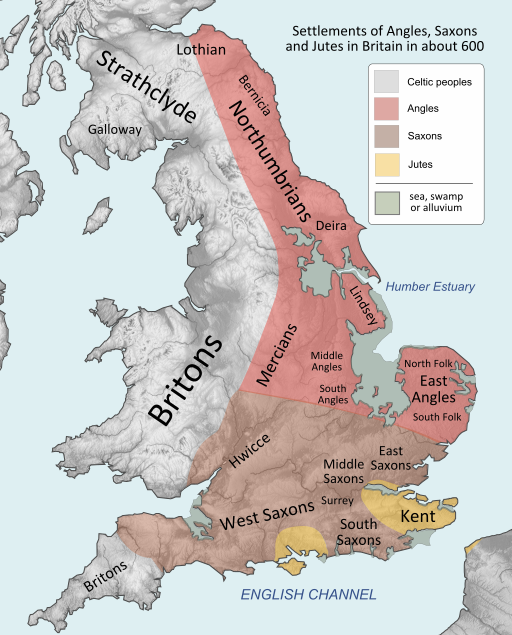
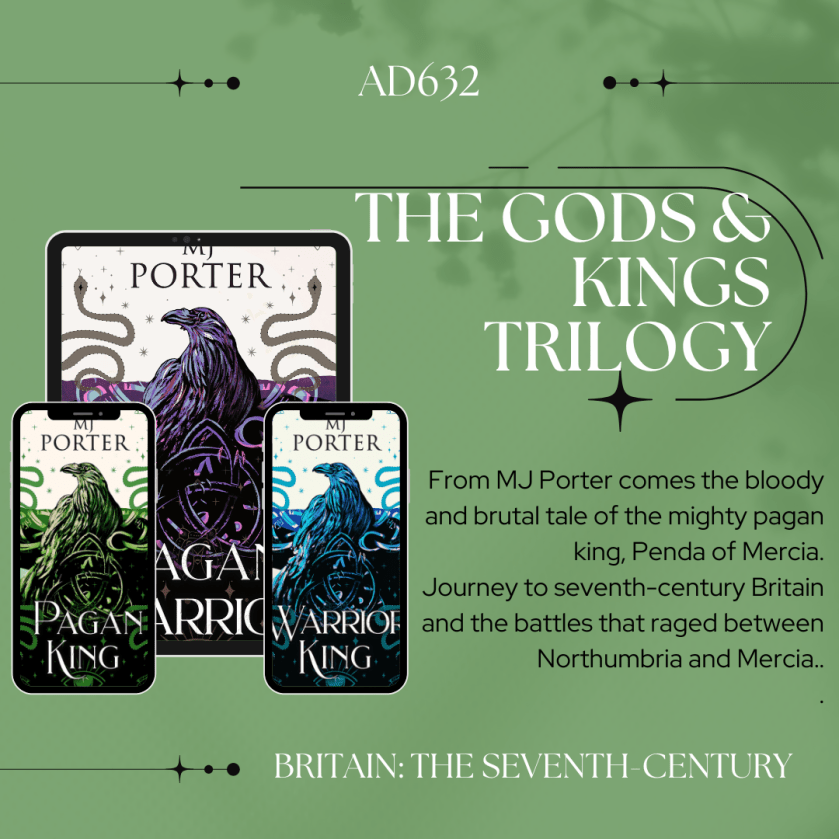
The Gods and Kings trilogy follows a collection of mighty warrior kings in Saxon England from the 620s to the 650s, as the ‘larger’ Saxon kingdoms were forming – (Northumbria from Bernicia and Deira) (Mercia from the heartland of Mercia centred around the area of the Tomsæte (yep, they get a mention in the Dark Age Chronicles) to include the kingdoms of the Hwicce, the Magonsæte, Lindsey and Elmet). Of these, it’s the brother kings Eowa and Penda that most concern us, as they were both kings of Mercia, claiming descent through Pybba (and it’s this genealogy that leads us back to Wærmund (from the Dark Age Chronicles), and even mentions an Icel (do you see what I did there?)
Whatever the exact relationship between the two brothers (as explored in the Gods and Kings trilogy), they ruled one after another, Eowa falling at the battle of Maserfeld in 642, against the Northumbrians and Penda outliving him to rule until his death in 655. (There’s also another shadowy brother, possibly sharing a father but not a mother, Cuthwalh, who is important. He was never a king of Mercia, but his existence (if he existed) is very relevant to events in the eighth and indeed, ninth century.)
Eowa had children when he died. Penda also had children. As the brother who ruled second, the kingdom of Mercia was bequeathed to Penda’s children, first Pæda (his son, who didn’t rule for very long), then Wulfhere (Penda’s son 658-675), Æthelred (Penda’s son, who abdicated in 704 and died in 716), Ceonred (Wulfhere’s son, who ruled from 704-709 and abdicated to travel to Rome), Ceolred (Æthelred’s son, from 709-716) and then Coelwald, who briefly succeeds and is assumed to be another son of Æthelred, until the line passes to that descended from Eowa, through his son or daughter (I think in the Gods and Kings trilogy I’ve made Alweo a daughter), Alweo, in the figure of Æthelbald, while Offa’s line descended through the other brother, Osmod. (Looking at this, I can’t help thinking that a little less religious fervour might have been to the advantage of the ruling line of Mercia – but of course, this was the time of conversion – Wulfhere is said to have been the first Christian king of Mercia (although Pæda also converted, but sadly, met a sticky end). The relationship between Mercia and Northumbria at the time was, I think ‘messy.’
So, that all seems quite complicated. At this time, Mercia was very often in conflict with the kingdom of Northumbria, and indeed, a number of assassinations occur. Pæda is killed by his wife (a Northumbrian). A daughter of Penda also marries one of Oswiu’s sons, Alhfrith. The Northumbrian king, Oswiu (the cheek of it), then briefly rules Mercia, until he’s driven from Mercia by Wulfhere (Penda’s son), who then becomes king. Wulfhere endeavoured to defeat the Northumbrians, then being ruled by Ecgfrith (half-brother of Alhfrith), the son of Oswiu, but failed, whereas Wulfhere’s brother, Æthelred, was later successful. These two battles fascinate me, and if you’ve read my short story, A Father’s Son, which you can download here and join my mailing list) it’s the very beginning of a project where I hoped to tell the story of these two battles, the one where Northumbria is triumphant, the other where Mercia sets the record straight, but I’ve never quite found the time.
This succinct account then brings us to Æthelbald, an old man by the time The House of Mercia takes place, but one who evidently ruled well throughout his 41 years – quite an astonishing feat at the time. It’s believed he lived for some time in exile before becoming king, perhaps in the kingdom of the East Angles, when her king, Ælfwald, ruled. It seems evident, therefore, that there was some discord in Mercia at the time between the potential ruling houses. While Eowa’s son hadn’t endeavoured to claim the kingship of Mercia (I think he died, but maybe that was what I had happen in the Gods and Kings trilogy), his descendants were more ambitious. So, this brings us to the events of 757, the first book in the House of Mercia series. What comes next will form the narrative.
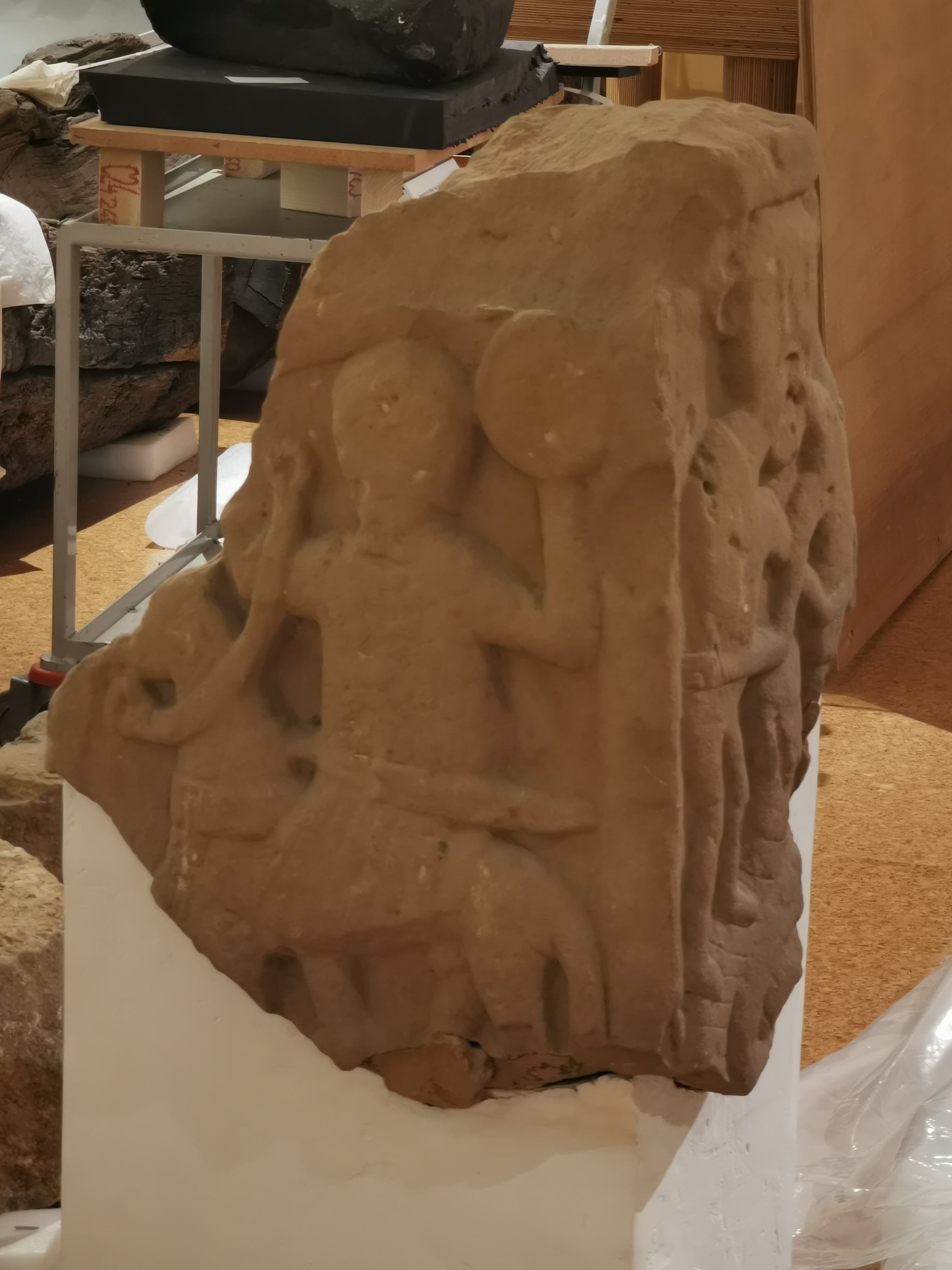
The Repton Stone at Derby Museum, believed to be a depiction of King Æthelbald riding a horse (please note, the museum was being renovated when I visited. It’s not usually displayed like this).
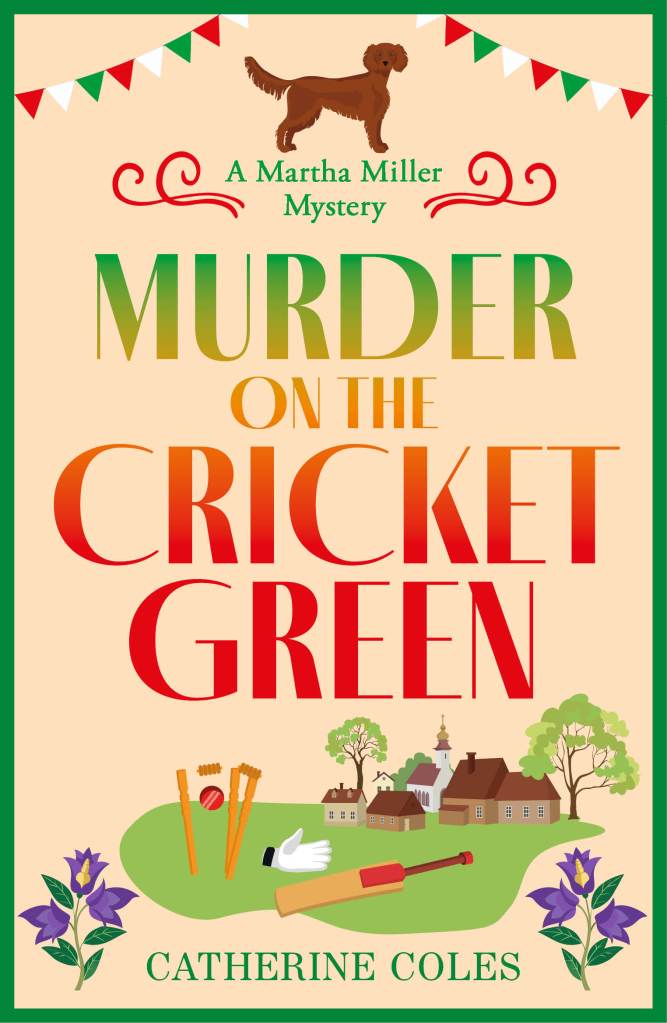
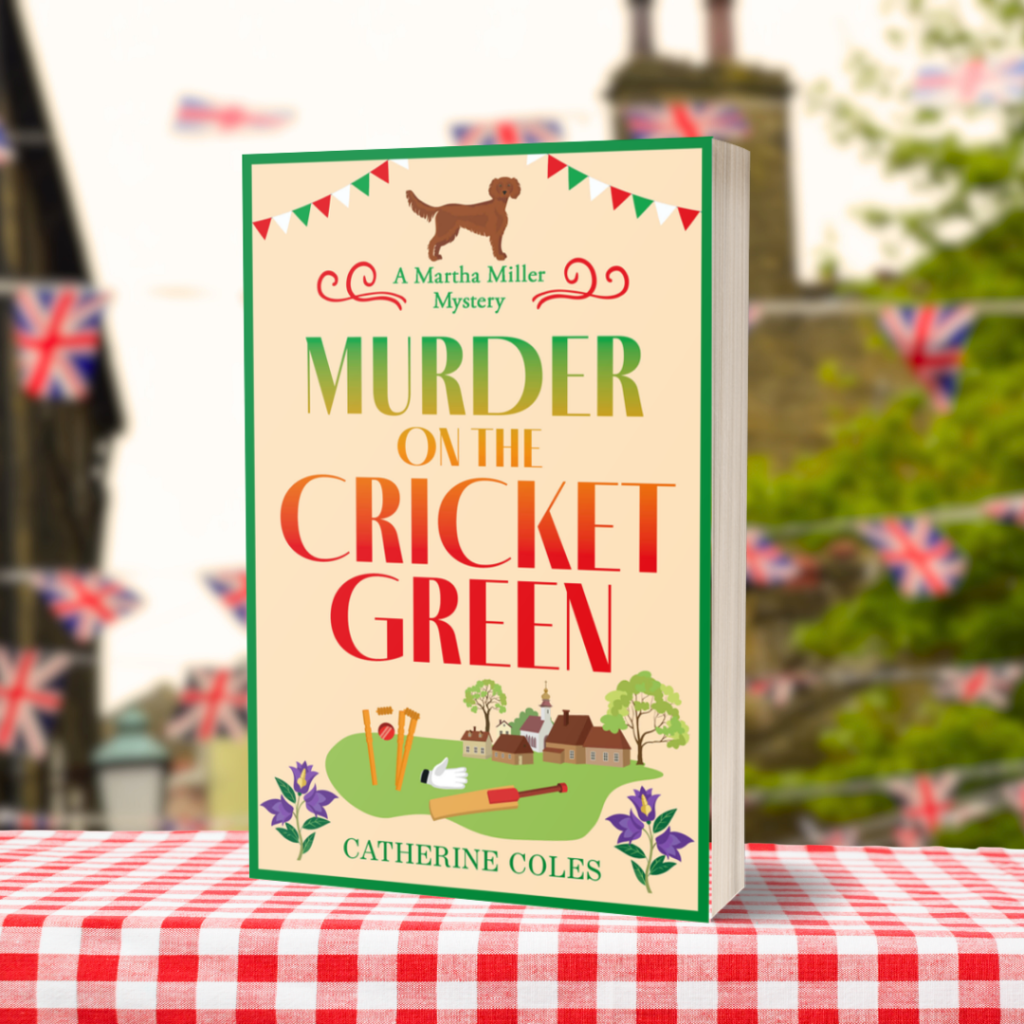
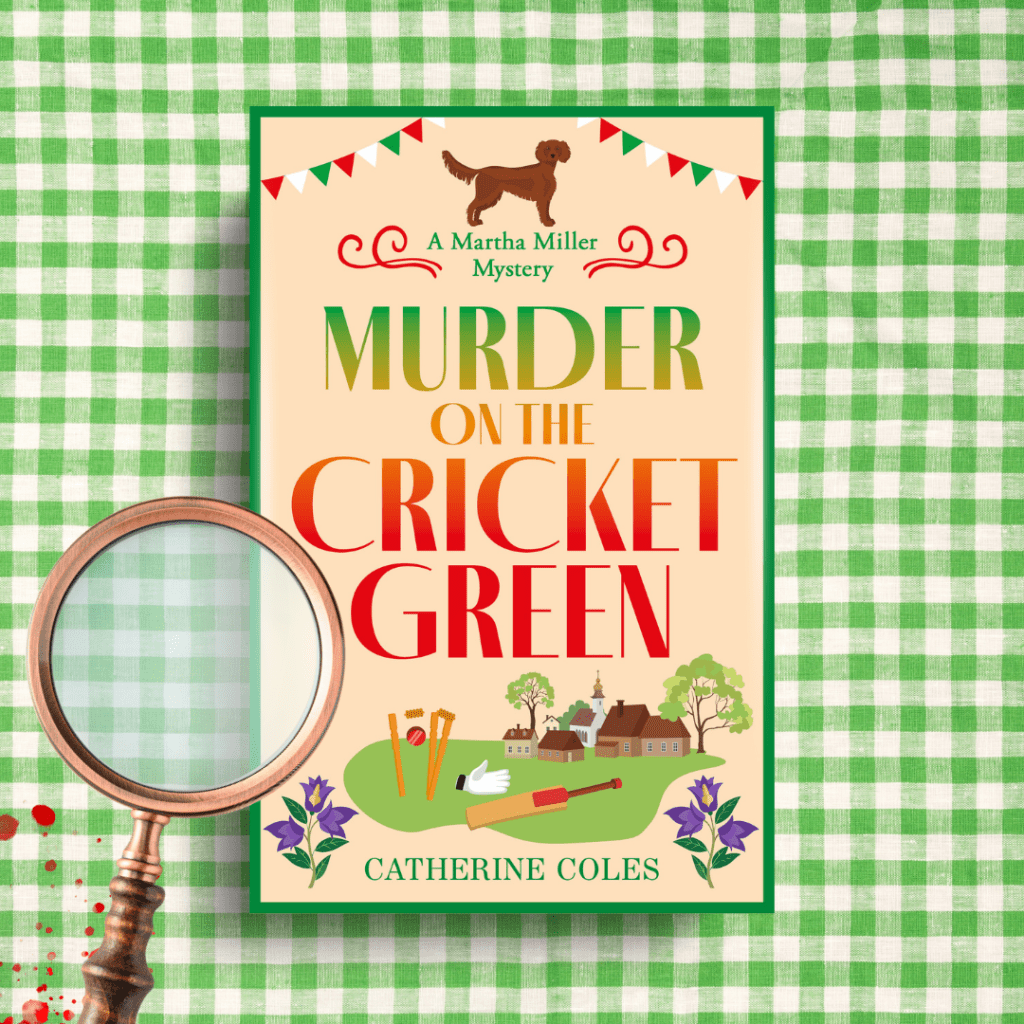
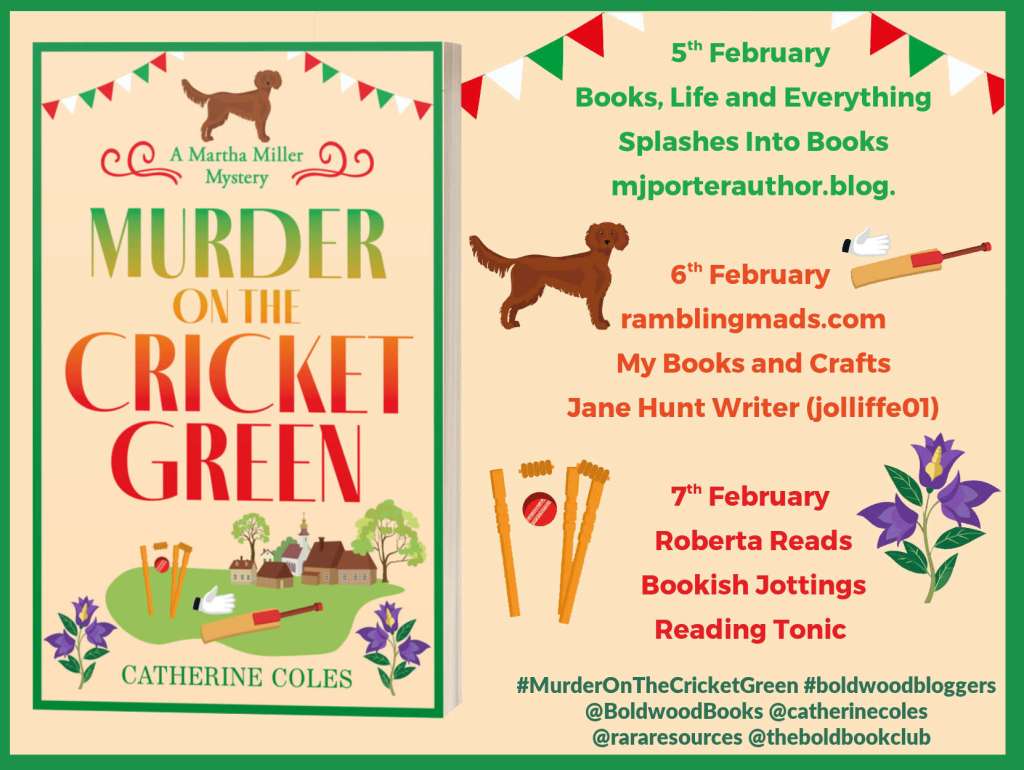
Today, I’m excited to share my review for Murder on the Cricket Green, the fourth book in Catherine Coles delightful 1940s cozy crime series #blogtour #MarthaMillerMystery
Here’s the blurb
Westleham Village, May 1948
The villagers of Westleham are excited for the first village cricket match since the end of the war. But Martha Miller has more pressing concerns – namely, the sudden reappearance of her husband, Stan, missing for two years and acting as though nothing has happened.
Martha doesn’t know what to feel, especially now that his return threatens her growing fondness for the kind-hearted village vicar, Luke. Yet she’s not the only one unsettled by Stan’s return…
As the match begins and the crowd cheers, Stan suddenly collapses – dead before he hits the ground. And all eyes turn to Martha.
To clear her name, she must uncover the truth about Stan’s missing years and his sudden reappearance. But in a village this small, everyone has something to hide. Will Martha’s amateur sleuthing find the real killer or will she pay the price for someone else’s deadly deed?
Let the investigation commence!
Find out if Martha and Luke can catch the killer in a brand new Martha Miller mystery from bestselling author Catherine Coles, perfect for fans of Lee Strauss and Beth Byers!
Murder on the Cricket Green is the fourth book in the Martha Miller historical cosy mystery series. I’ve read the previous books in this series, but I don’t hink it’s necessarily necessary for those looking for a lovely cosy mystery to read (there will be some elements that might not be understood, but they will be quickly picked up).
It’s always lovely to spend time with Martha and her allies (and enemies) in this quaint village. This latest book is a delightful, quick read, where we can all play ‘guess the murderer’ as there are any number of suspects.
Always a sure hit, this story is a light-hearted, fun, quick read. Let’s hope it’s not too long until we’re back with Martha.
Catherine Coles writes bestselling cosy mysteries set in the English countryside. Her extremely popular Tommy & Evelyn Christie series is based in North Yorkshire in the 1920’s and Catherine herself lives in Hull with her family and two spoiled dogs.
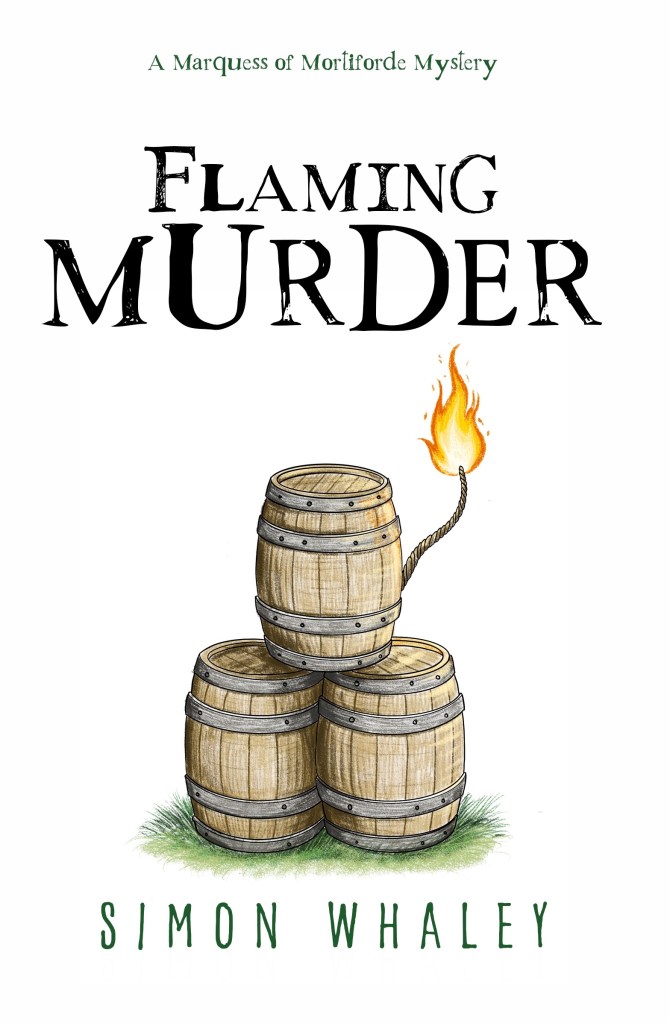
Today, I’m so excited to share my review for Flaming Murder by Simon Whaley (I loved this book) #cosycrime #humour #bookreview #blogtour
Here’s the blurb
Three dead bodies. Two murders. One missing Bonfire Night effigy.
With Bonfire Night looming, Aldermaston, the Eighth Marquess of Mortiforde, is feeling the heat.
Not only has someone stolen Mortiforde Millie—the town’s beloved fifteen-foot Bonfire Night effigy—just days before the town’s annual firework celebrations, but developer Rupert Rinde wants to torch Mortiforde’s heritage by building a waste incinerator on the historic Mortiforde Meadows. The locals are outraged, as is Rupert’s father, Sir Hugo, who owns the meadows. So when Sir Hugo is found dead, skewered by a medieval dagger, his widow begs Aldermaston to investigate.
Meanwhile, Sir Hugo had promised Aldermaston’s wife and her Ladies’ Legion the meadows for their new eco-friendly burial scheme. Now they’re desperate to plant their first body in the ground before the deal goes up in smoke.
So, when Aldermaston uncovers who stole Mortiforde Millie and why, he realises the waste incinerator project is designed to ignite some explosive repercussions.Can Aldermaston unmask a killer and save the Mortiforde Meadows before Bonfire Night erupts into chaos? Will the Ladies’ Legion bury a body before their dreams go up in flames? And can
Check out my review for Foraging for Murder (the second book in the series).
This review might be short and sweet. Don’t let that make you think I didn’t adore this book (and the previous two in the series as well).
Oh, how I love this series. I was very excited to discover the new release, and it doesn’t disappoint. Filled with the same delightful and irreverent humour and with a damn fine mystery to unravel in the background, it is joyful to spend time with these characters. It’s impossible to wax too lyrical about this series. The books are told with just the right amount of humour, the situations our characters find themselves in are hilarious without being stupid, and I simply love these books. Go read them. Now. (If you don’t snort at one particular element, then I don’t think you have my sense of humour. I’m just going to say it’s related to the burial.)
Meet the Author
Simon Whaley lives in rural Shropshire, having escaped from Greater London in the late 1990s. His first published piece was a word search puzzle, aged 17, and he’s since written over 1000 articles in publications as varied as BBC Countryfile, Country Walking, Cheshire Life, The People’s Friend, The Daily Express, The Observer, Outdoor Photography, Coast, The Simple Things and Writing Magazine. His first book, One Hundred Ways For A Dog To Train Its Human, was published by Hodder & Stoughton in September 2003, and spent three weeks on the UK’s Top Ten Non-Fiction paperback bestseller lists. (Lifetime sales now exceed over a quarter of a million copies.) He became a full-time writer in January 2004. He’s since written over a dozen non-fiction books, and recently published the third novel in his Marquess of Mortiforde cosy crime series.
It’s time to go back to the beginning of the year and work out exactly how I’ve been spending my time. 2025 has been a pretty decent year in terms of writing, but I have largely missed out on writing for three months this year. Let’s find out why.
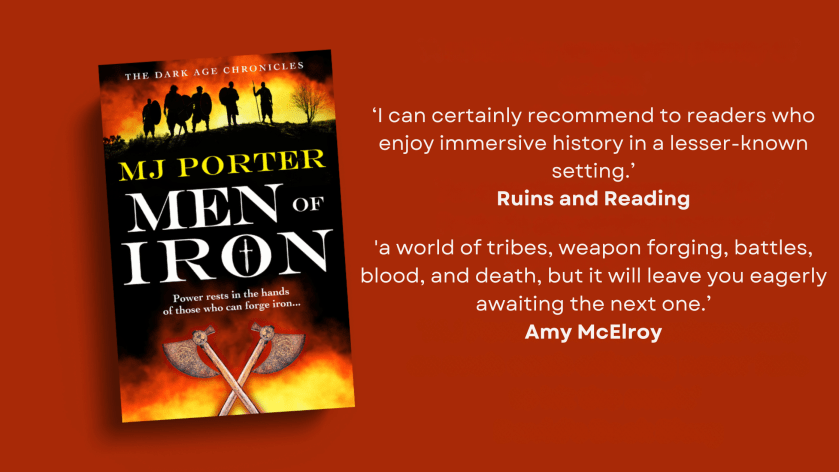
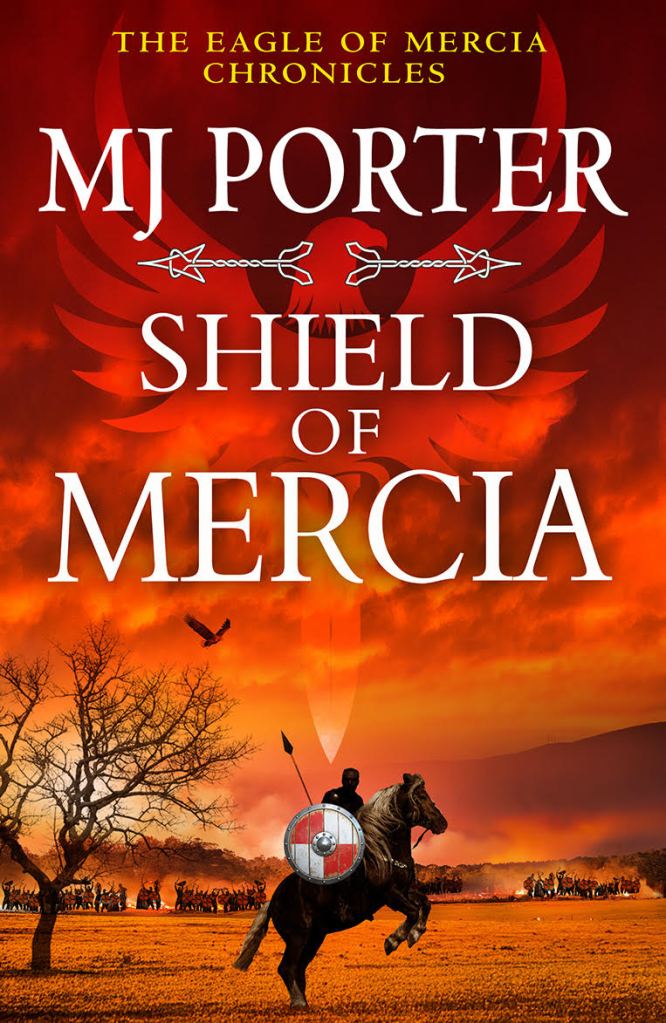
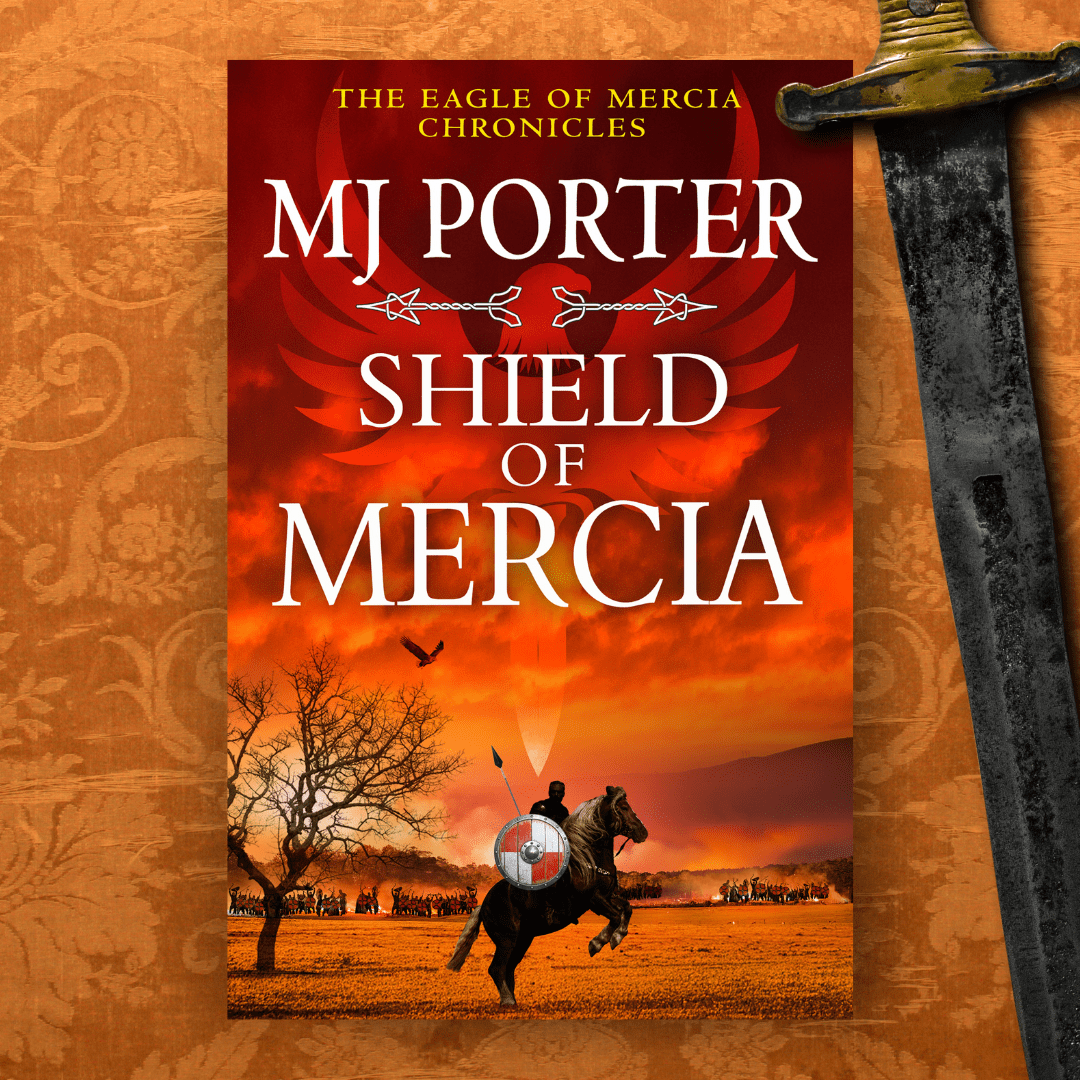
In January, I was busy working on what would become Shield of Mercia. In my notes, it’s simply called Icel 8. I started it in December 2024 and finished it in January 2025. It looks like my writing was pretty consistent for this one, and quite often, I was able to write about 4000 words a day, which makes me wonder whether I was maybe a bit behind at this point. I can’t quite remember. I’ve checked, and yes, I was running late with this one. That explains why I was so busy tapping away throughout January. I also completed the proofreading for Men of Iron and was working on some other stuff in the background, for my ‘other’ writing name. January was my most productive writing month in terms of word count gained. It was a good start to the year, but it didn’t continue.
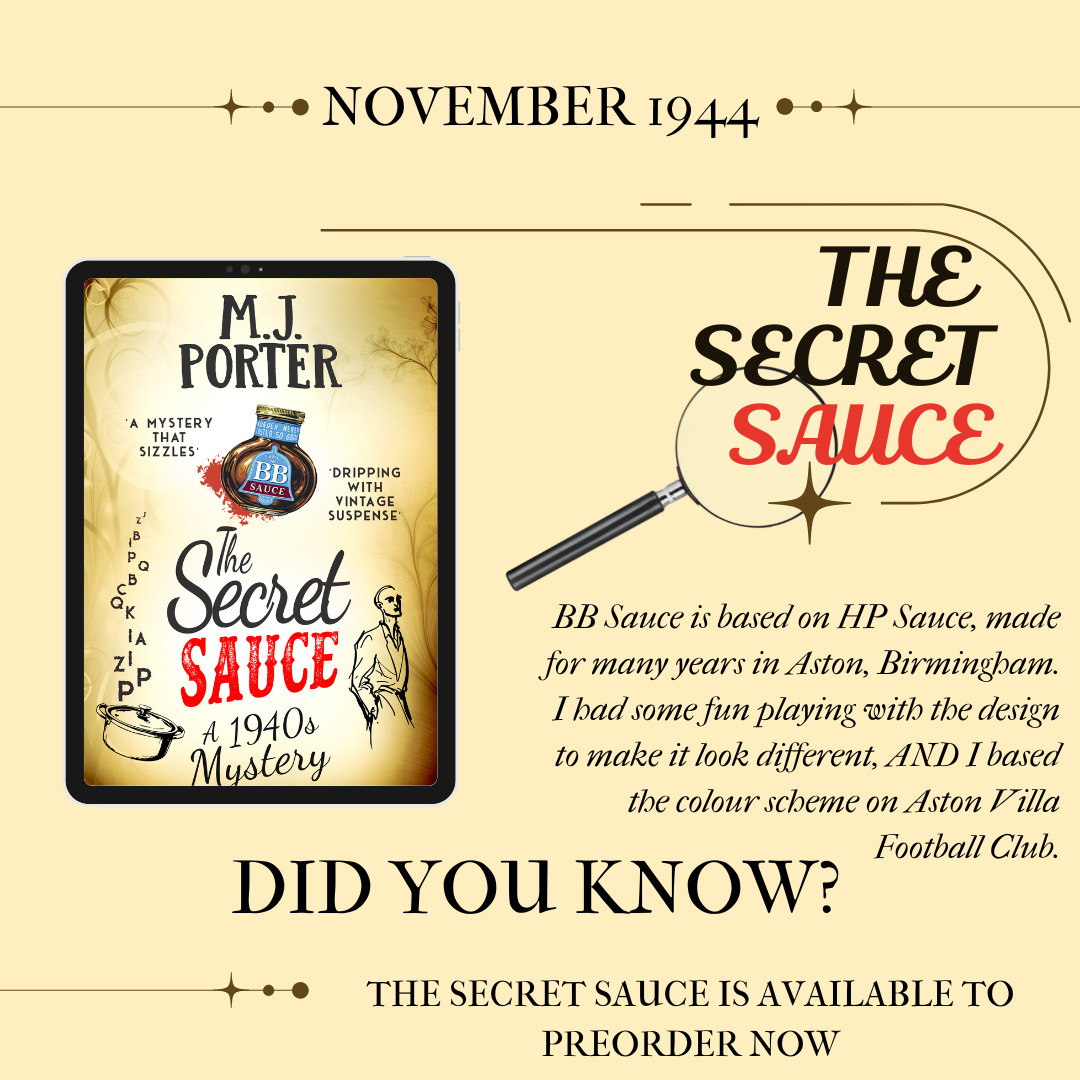
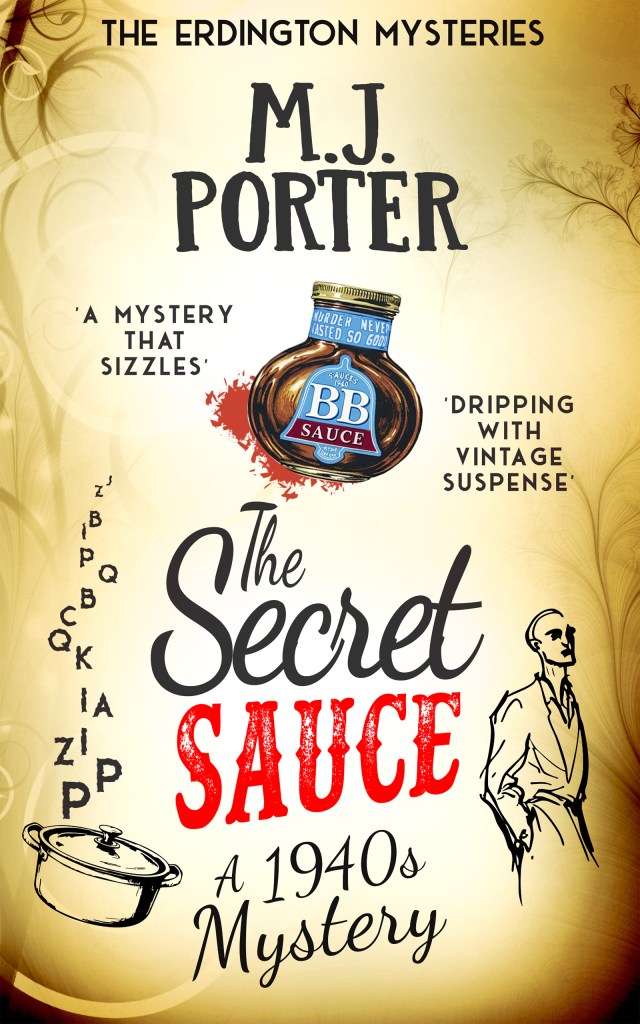
In February, I seem to have been working on a few projects at the same time – one of my fantasy titles, as well as copyedits for Warriors of Iron, and some finessing for Shield of Mercia (I have a feeling this is the point I realised I needed some locations for Icel’s journey through Wessex and hightailed it to the uni library for some research books – somewhat amusingly the one I found was written in 1978). I also started work on what would become The Secret Sauce. It was not one of my most productive months in terms of word count achieved, but I evidently spent a lot of time editing and rewriting things. Sadly, it wasn’t my least productive month, which has ended up being December.
March was a tough month as I lost my Dad, and all writing plans, understandably, went out the window. I had structural edits to work on for Shield of Mercia, and it was very hard going. For a few weeks, I worried I wouldn’t get back into writing, but I did. It just took a while. My writing process is very creative. I pop on some music, ‘transport’ myself to where my characters are, and tap away. It can be hard to achieve when there’s too much going on in my head besides writing. I also managed a bit more work on The Secret Sauce.
April was also very messy – I pressed on with The Secret Sauce, and then after all the stress of March, completely relaxed on holiday in Orkney for two weeks. I definitely needed it.
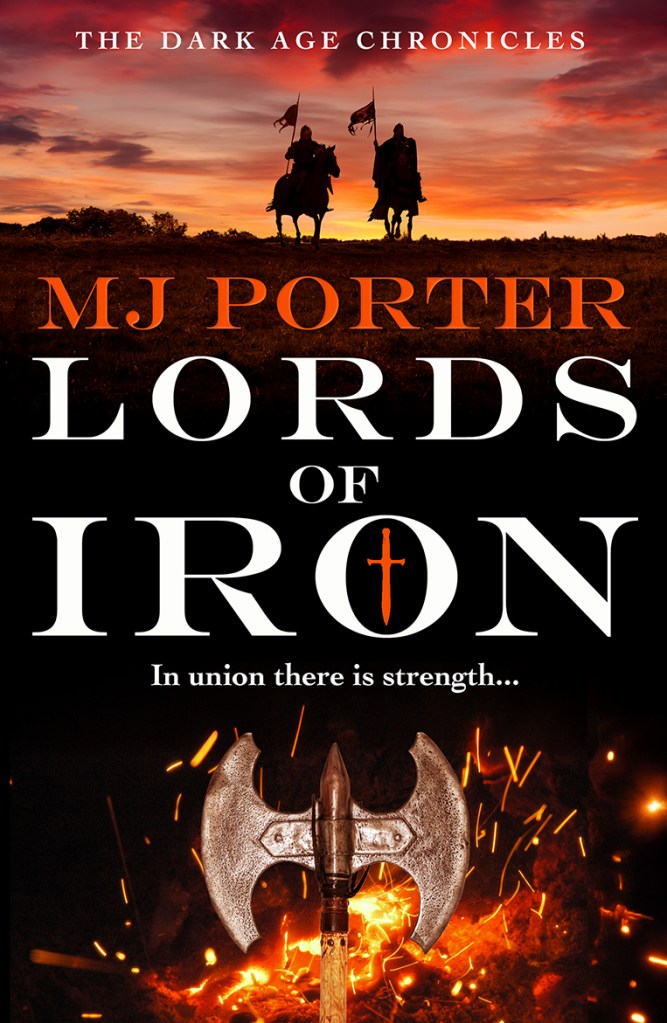
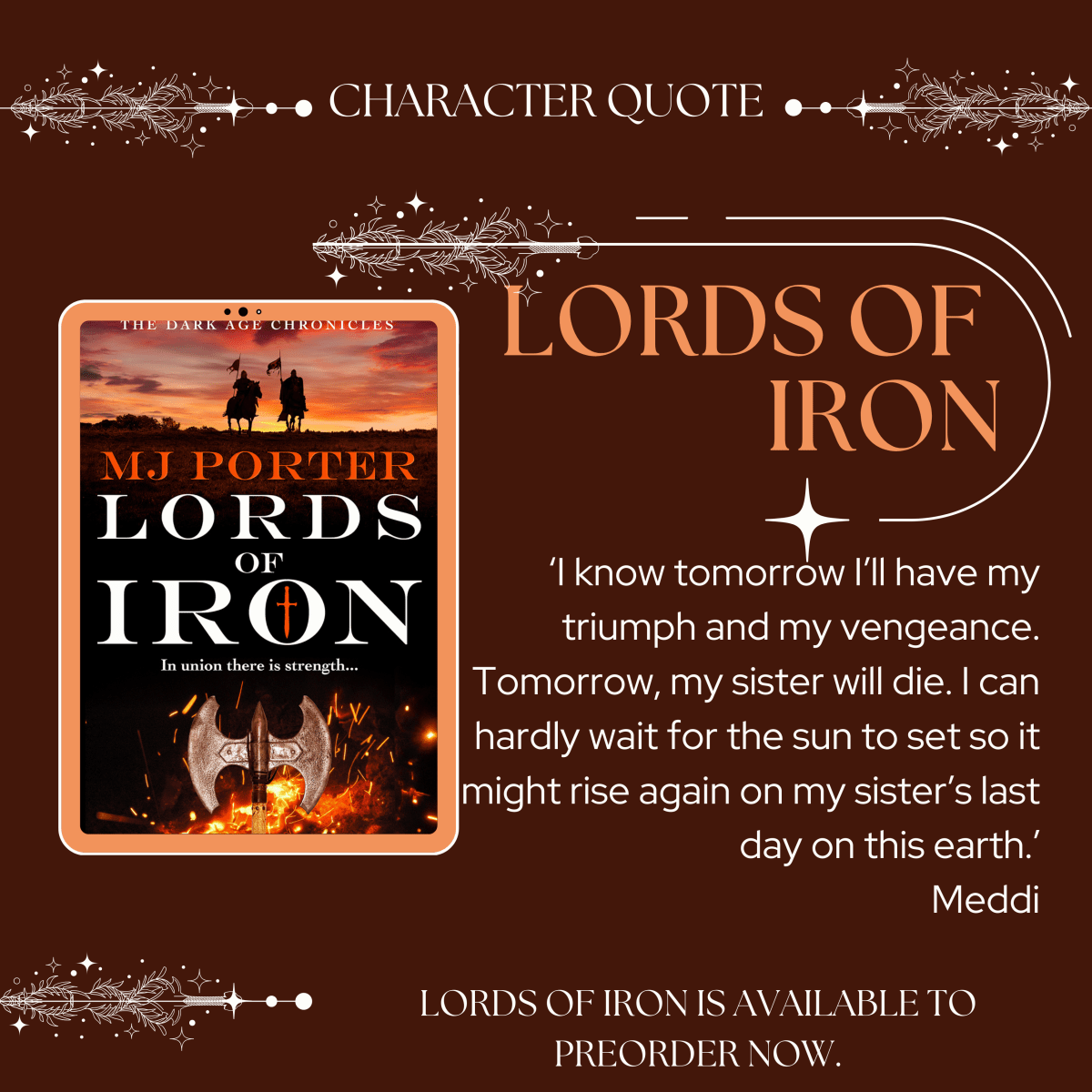
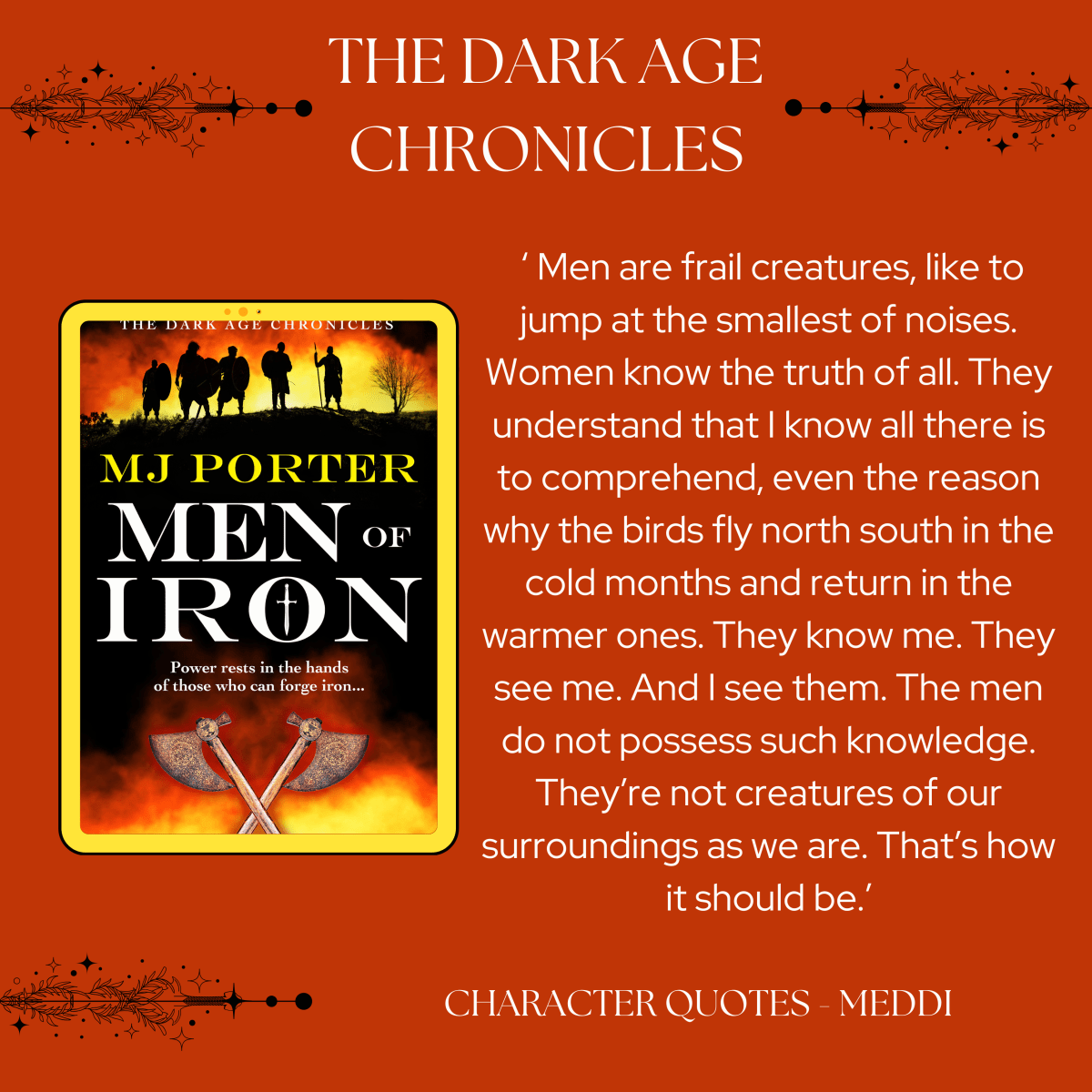
May marks the start of the exam season at school. But, with everything going on, I was very behind with Lords of Iron (like so behind that there was barely anything there). But I trusted myself to get it done and spent the half-term holiday (9 days in total) writing. I wrote over half of the first draft for Lords of Iron in just those 9 days. It sounds crazy, but it was the final part in the trilogy, and I knew my characters. It was very much a return to my old writing style (you can listen to me talk about my writing process over on my Patreon). I enjoyed it, and I also think it helped me ensure the book (due out on 5th January 2026) flowed really well, with no let-up in tension during the second half of the novel.
I continued work on Lords of Iron throughout June (this was the first, and I hope, only time, I had to ask my editor for an extension). I was also back with The Secret Sauce and had completed copy edits for Shield of Mercia. 26th June was my most productive writing day all year. Away from The Secret Sauce for such a long time with everything that had happened, I bashed out 8989 words in one day (that doesn’t happen very often any more – my most productive day ever saw me clock in over 17000 words over an 18-hour period – crazy).
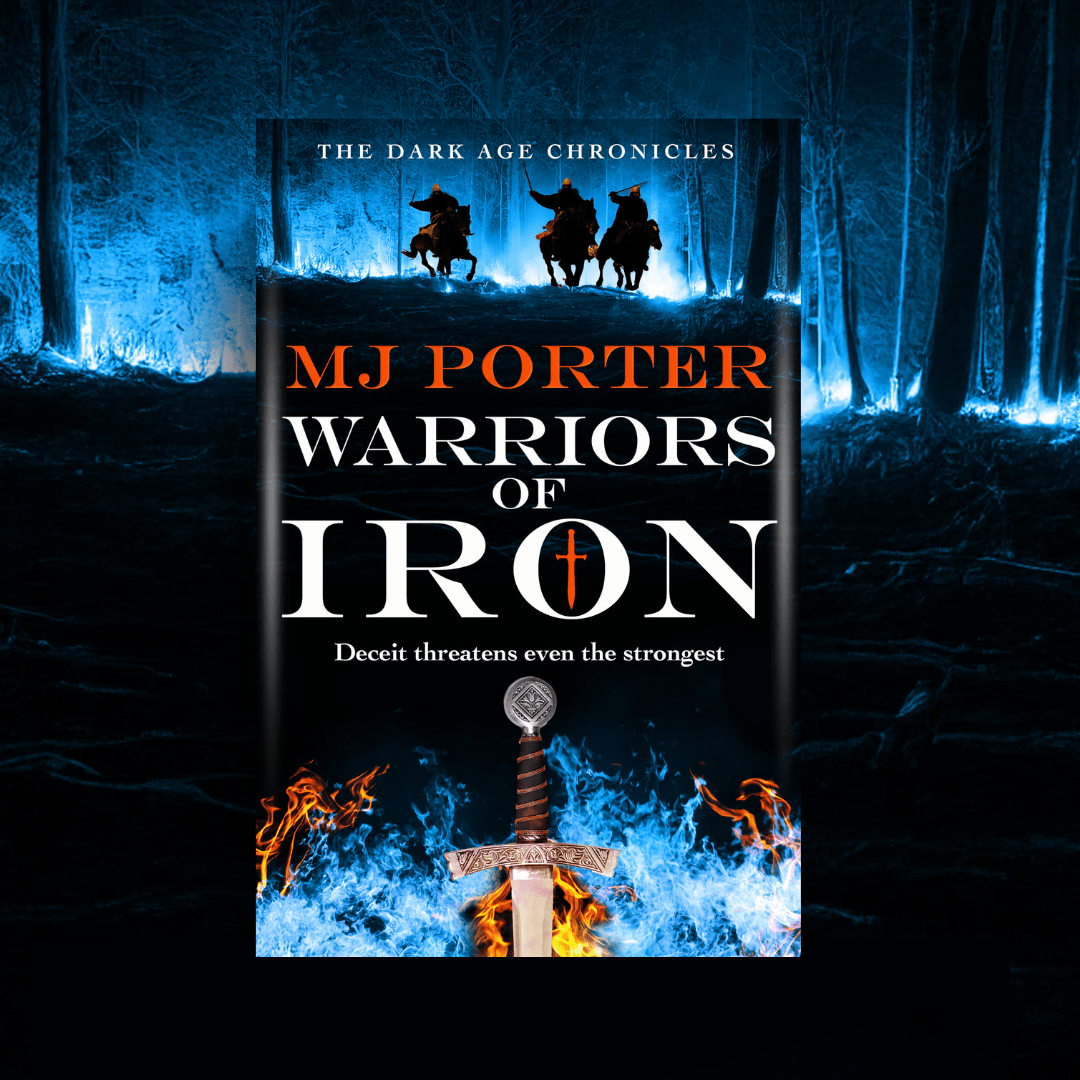
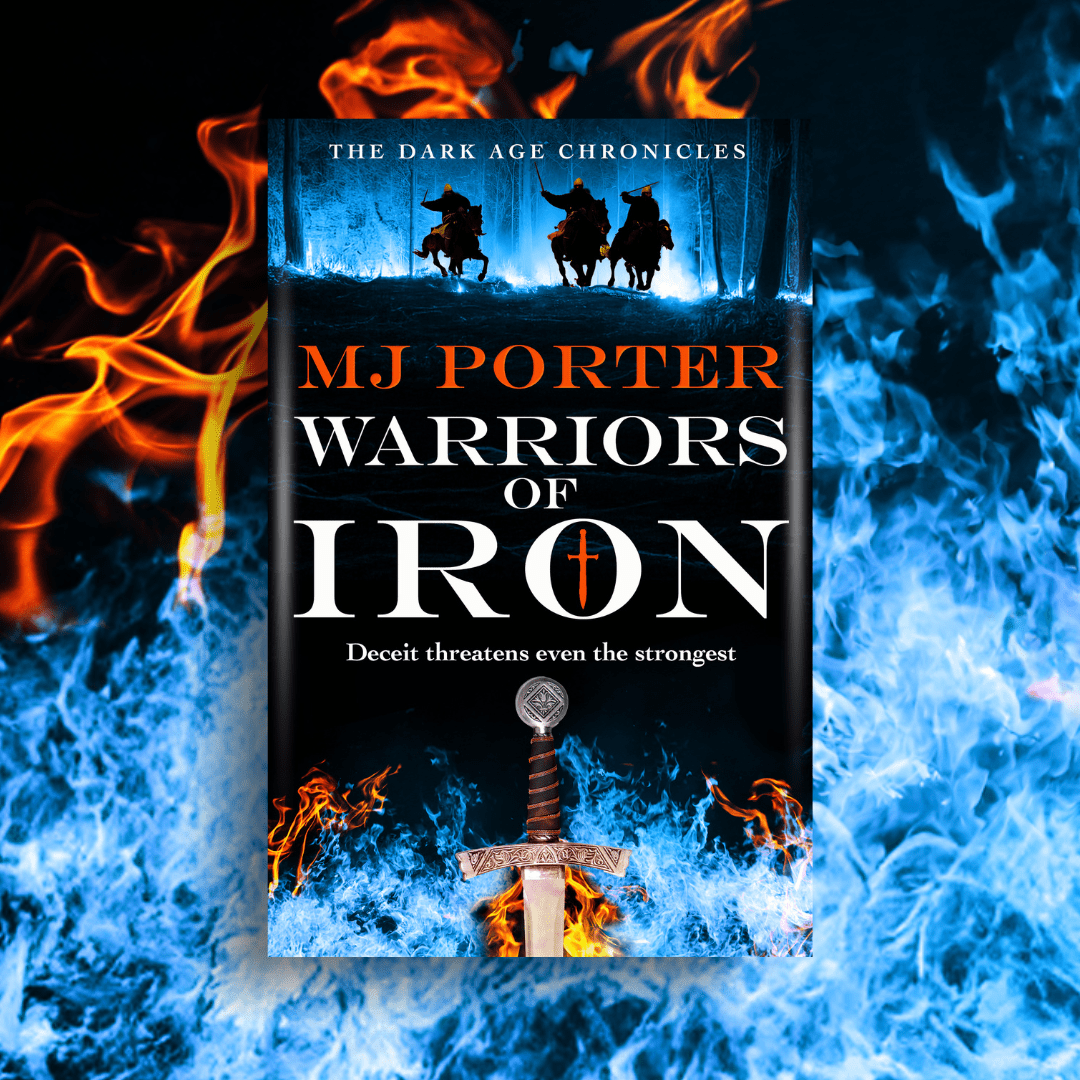
July saw me concentrating on finishing The Secret Sauce, and also starting work on Icel 9. I completed my proofreading for Shield of Mercia. I do like it when I’m editing the previous book while writing the next one. It ensures I don’t miss any huge details – for instance, when someone has been badly wounded. July was my fourth most productive month in terms of added word count. It also saw the release of Warriors of Iron, the second book in the Dark Age Chronicles.
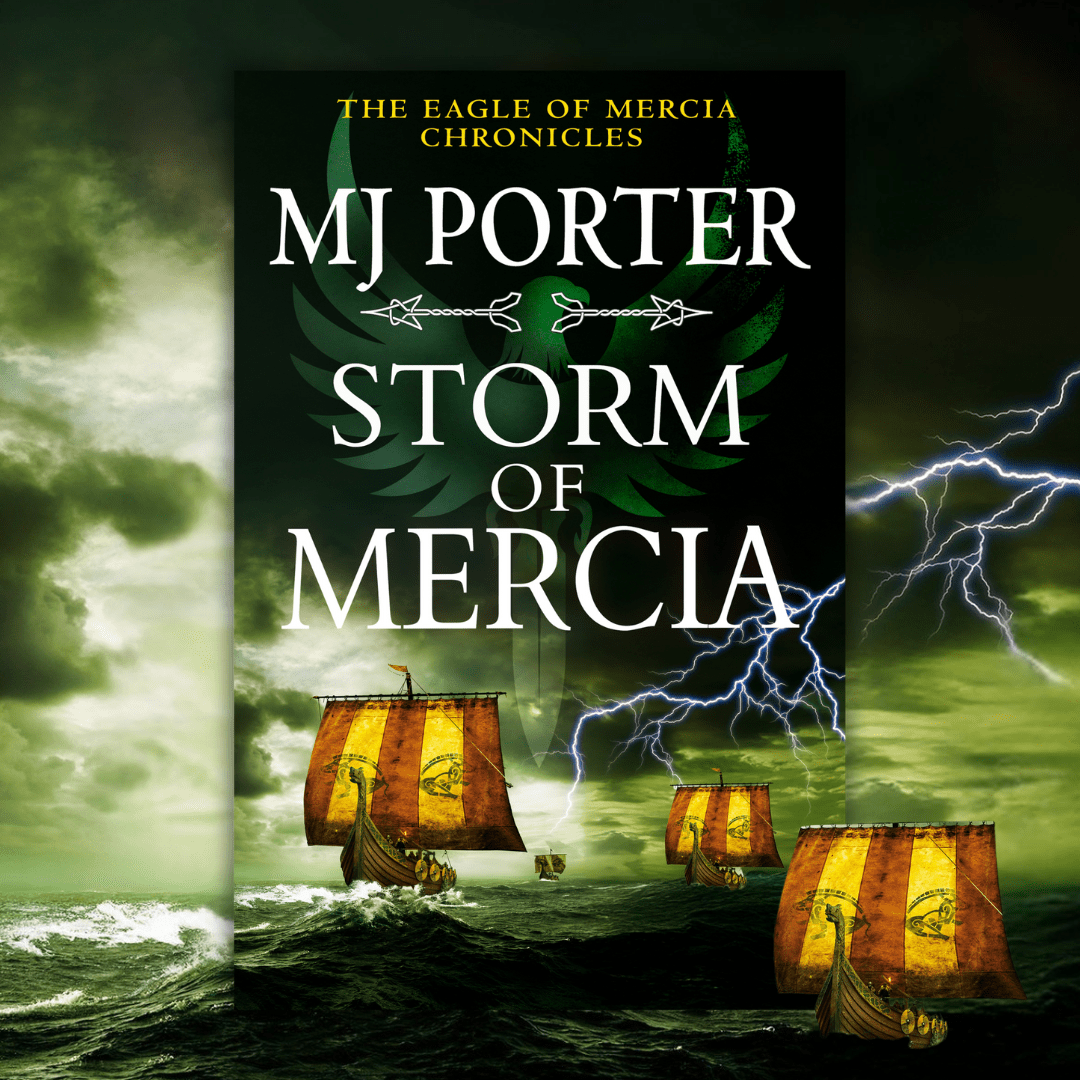
August saw me working properly on Icel 9 (Storm of Mercia). I also started work on The Barrage Body (another mystery), completed the proofreading for The Secret Sauce (released at the end of the month), and found some time to start playing around with ideas for a new series. I also completed proofreading Lords of Iron and spent a bit of time messing with one of my fantasy titles.
September was a good month. I was working on three projects, the main one being The Barrage Body. I completed the copy edit for Lords of Iron at the start of the month, and structural edits for Storm of Mercia at the end. It was my third most productive month in terms of word count gained. Yay.
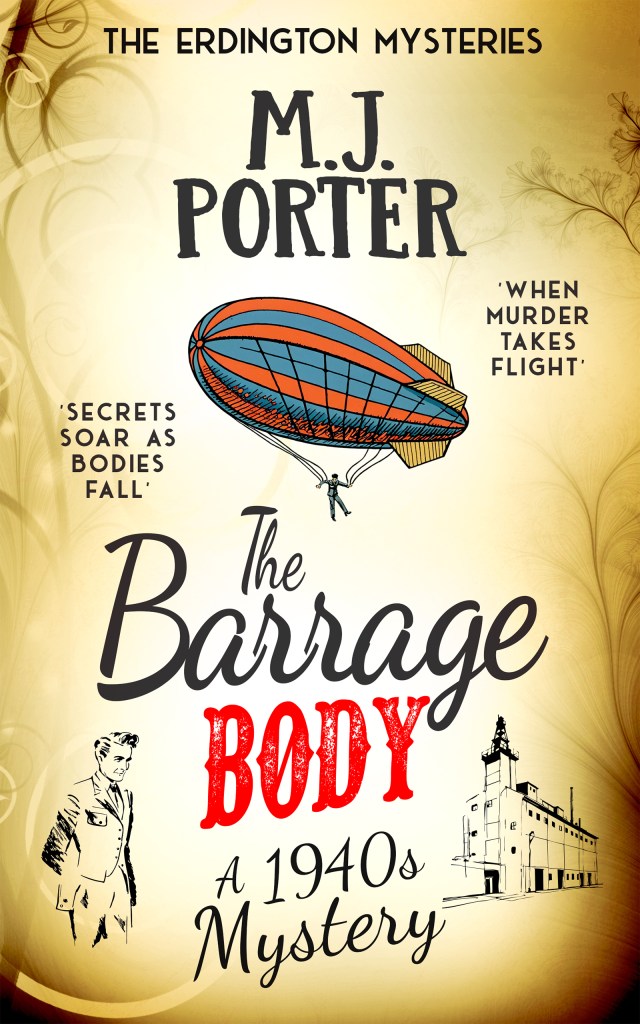
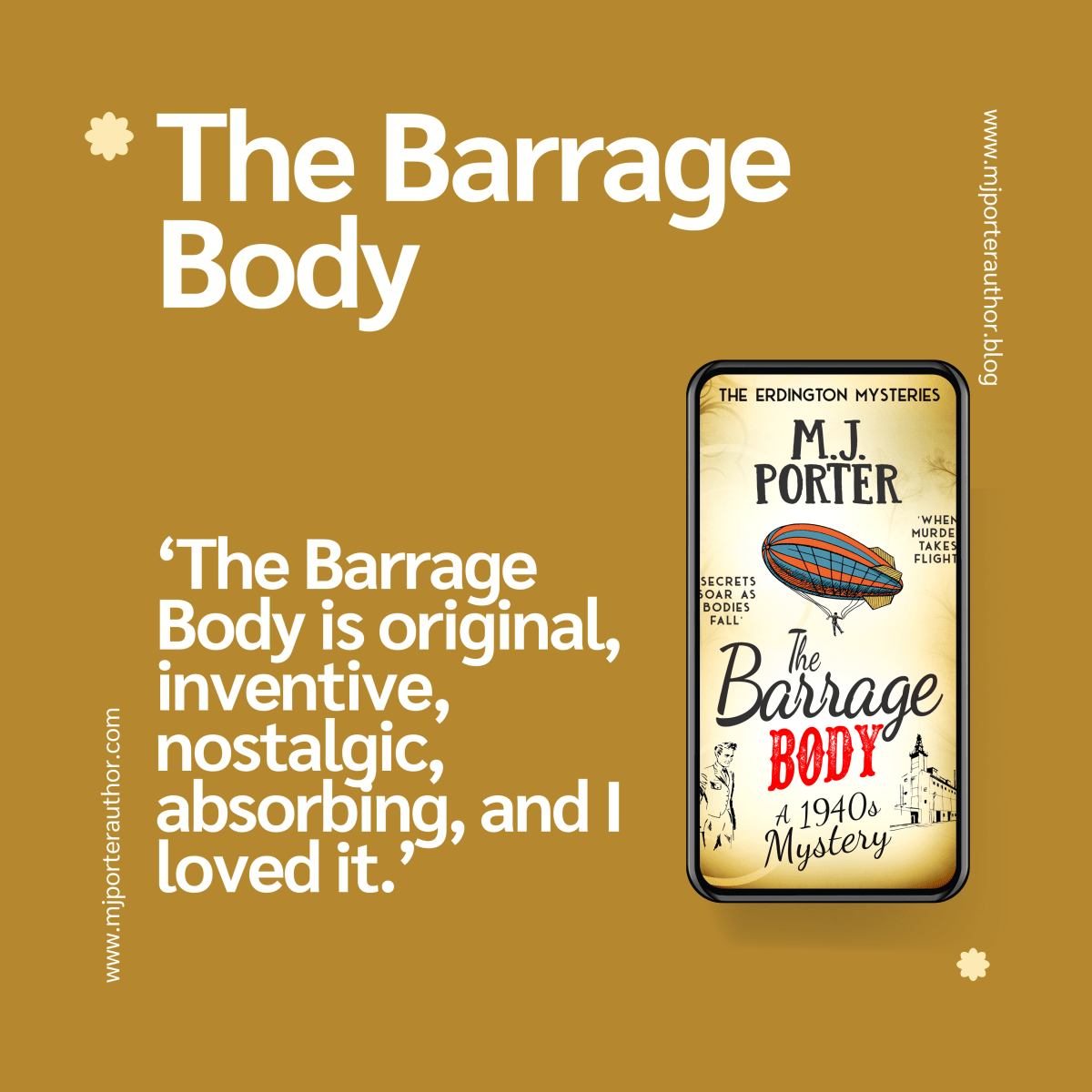
October was the month when I had to ignore the draft for The Barrage Body, which should have been complete, but wasn’t, because I’d made it so complicated, I couldn’t solve my own mystery (the curse of being a pantser rarely rears its head these days, (I don’t think it has since I wrote Lady Estrid) but this time it was a real pain). I distracted myself by working on the first book in the next series, the House of Mercia. It was a good writing month, even though I was very frustrated about The Barrage Body.
Since 2012, November has been the month I write whatever I want as part of a writing challenge. But the writing challenge as I used to follow it, is no more, and while I intended to try and do it anyway, that’s not what happened. I did manage to bash out about 20k for one project, but mostly spent the month solving The Barrage Body (which I managed, and could then release at the end of the month) and working on The House of Mercia.
For December, I was once more in school, and have since spent much of the time being unwell, so my writing count is woeful. I need to finish the first book in the House of Mercia, but I have a whole month to go, so I’m not worried. Right now, the biggest problem is not writing too much for this story. I’ve also been toying with a new mystery and trying to get back to my other new project. Hopefully, January 2026 will be as productive as January 2025, and it will be a breeze to get everything done.
So, I’ve not written a new Coelwulf in 2025, but I’m working on something related. I’ve also not written a new Earls of Mercia book, but I will try to get to it in 2026 (we’ve reached the point where events are very complicated). I also need to finish my fantasy title, which I’d hoped to have done months ago, after all, it is half written.
In terms of words written this year, it comes in at about 520k. Considering the three ‘missing’ months where I’ve hardly written anything, I’m pleased with that.
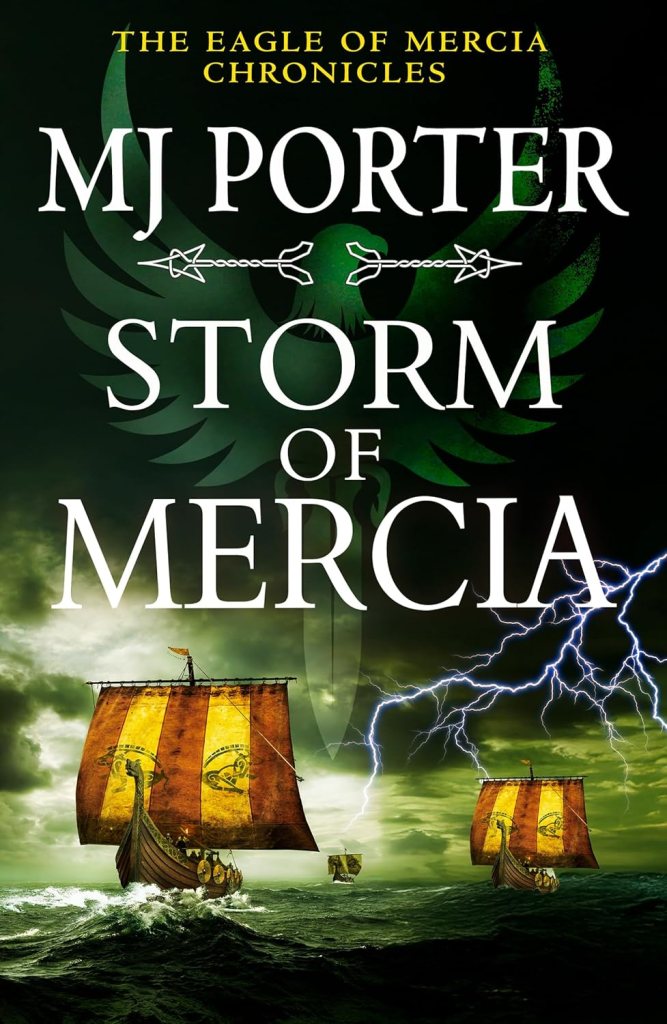
Forthcoming releases for 2026 will be Lords of Iron, Storm of Merica, the new House of Mercia in August, and the second one later in the year. I also hope to write a mystery or two, and I want to finish my November 2025 project about events after The Last King.
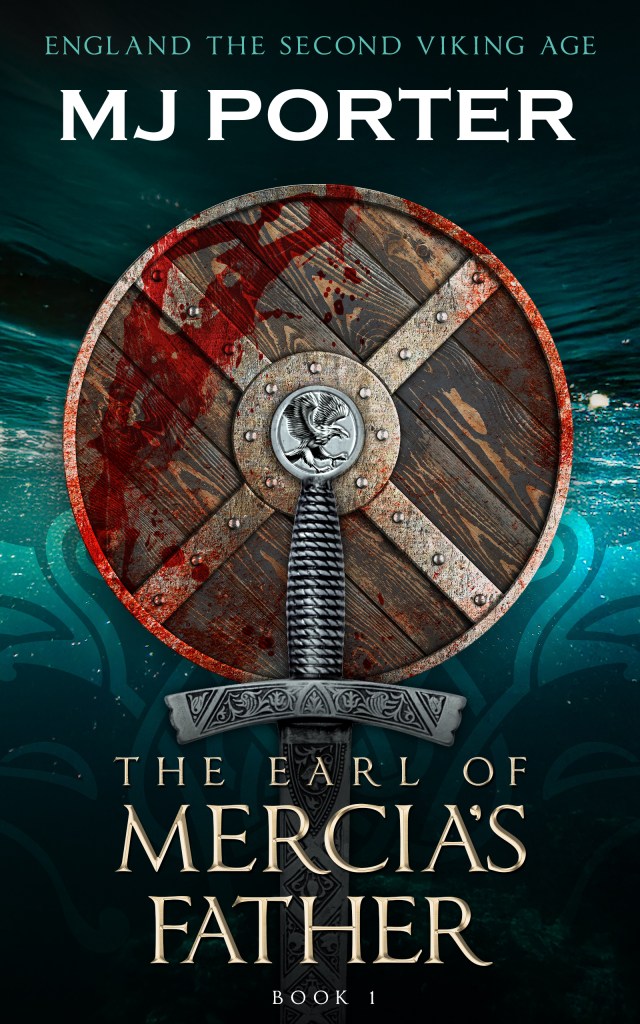
So, in 2025, I wrote five novels, give or take 20k or so on some of them, Shield of Mercia, Lords of Iron, Storm of Mercia, The Secret Sauce and The Barrage Body (I’m not counting the House of Mercia book, although perhaps I should, as it is over 70k). (Click the book covers for links to purchase/preorder).
As ever, a huge thank you to all my wonderful readers who allow me to spend my time with my characters. It is a privilege. That said, 2025 has been a tough year in terms of sales (as well as other life related items). Do support your favourite authors in anyway you can. It’s not nice in the publishing world right now and lots of people are worried about the future.
I’ve also been getting new covers for some of my older books throughout 2025, and some titles are now available from platforms other than Amazon. Enjoy.
If you want to follow my writing journey, join my newsletter. I update readers each month on what I’m doing, and it also gives you access to my Exclusive Subscriber page on the blog. And, you will also be able to download a copy of my title, Mercia, a compendium of all things related to the Tales of Mercia. There might be some short stories in there, too (as well as a sneak peek at my new project). And if you’d like a signed copy of one of my books, then visit my online store.
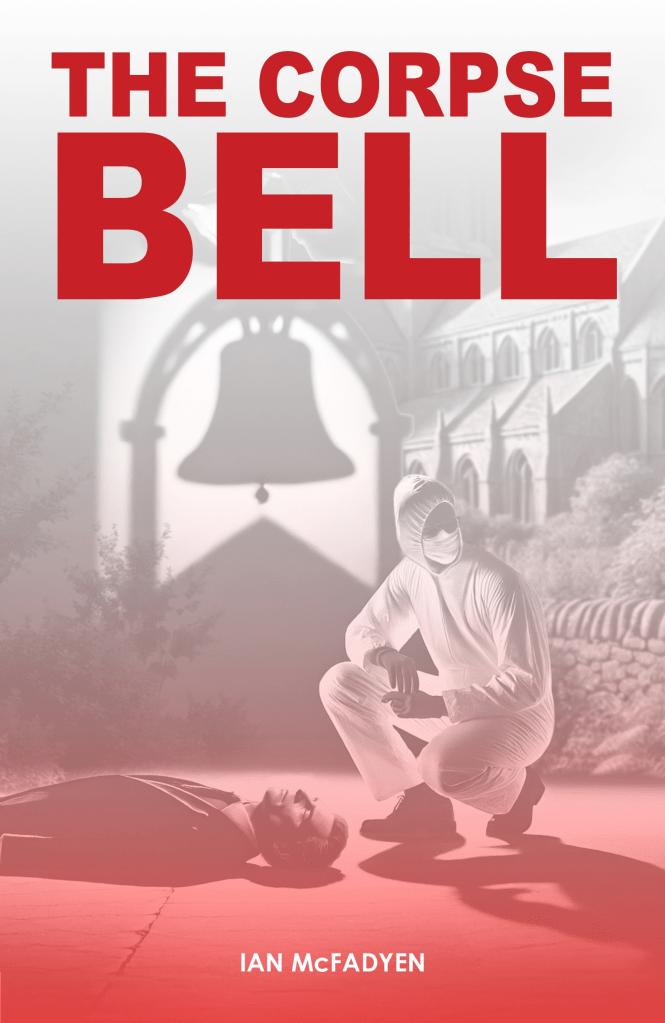
I’m sharing a fab post from crime novelist Ian McFadyen about writing ‘The Twist’ to celebrate the release of The Corpse Bell #blogtour #newrelease #mystery
The Twist
Having a clever and enticing plot and introducing a range of vivid, life-like and interesting characters are paramount for any successful murder story. However, in my view, the kernel of all the best and most memorable whodunits has to be the twist.
I read once that ‘plot twists can be a thrill for the reader, but they’re overwhelming for the writer’. I’d agree with that.
If the novel is constructed in such a way that the reader has absolutely no inkling it’s coming, and when it’s revealed to the audience it is as plausible to them as it is surprising, then the twist will elevate the story to a new level.
And why just have one twist, if the book has sub-plots or a series of red herrings, why not introduce a little twist with those, to add even more intrigue and, dare I say, confusion in the reader’s mind – particularly if your twist reveals that a character high on the reader’s list of suspects is, in fact, innocent of the main crime and there’s a credible reason why they have been behaving in a way you ( the reader) thought was suspicious.
If you don’t agree with me, I’d ask you to just think of your favourite murder mystery books. I’m sure they all will have many, many truly wonderful elements – the setting, the use of language, the plot, the characters for example. However, I’d wager it’s the twist that you remember.
When thinking about a new Carmichael book it’s the twist that almost always comes first. Whether it’s a character who isn’t all they seem to be, a misunderstanding which only comes to light late on in the story, or a lie that’s not unearthed at first, the twist is my starting point.
For my books, it’s only once the twist is fleshed out in my head that I feel I can then create a storyline. A plot that builds up to that twist being revealed to the reader. Then using my team of ever-present detectives and introducing new characters, I attempt to take the reader on a journey that leads to the twist.
One of my favourite twists is in ‘The Death of Roger Ackroyd’ by Agatha Christie. I’ll not share the details here, for obvious reasons, but if you’ve not read that particular book, I’d recommend you give it a whirl.
However, if pushed, I’d say my favourite twist was in the TV programme, Tales of the Unexpected in 1979. In an episode written by Roald DahI, called ‘Lamb to the Slaughter’; the twist is delicious! If you haven’t seen it, look it up on YouTube.
I’ll obviously not be sharing the twist in my latest book, ‘The Corpse Bell’, but I hope you enjoy it when it arrives.
Here’s the blurb
The last thing Penny Carmichael expected when she joined the local bellringing group was for her debut to be thwarted by the discovery of a body just yards from the belfry door. As her husband and his loyal team painstakingly sift through the evidence and delve deep into the dead man’s past, it’s clear that solving Peter Mackenzie’s murder may prove a challenge, even for someone with DCI Carmichael’s renowned detective prowess.
What was a man who’d lived for decades in North London doing in Moulton Bank? Was his chequered past a factor?
And what about the other members of Penny’s bellringing group. Did any of them have a reason to do Peter harm?
As the case unfolds, DCI Carmicheal and his trusty team seek answers to a complex puzzle which leads them along various paths and, at times, way outside the comfort zone of their rural Lancashire surroundings.
This fast-paced, cleverly crafted whodunit is the eleventh murder mystery in the gripping Carmichael series from the pen of Ian McFadyen.
IIan McFadyen was born in Liverpool and enjoyed a successful career in marketing before becoming a writer. Ian’s titles are available in Italian and Czech and, although the author isn’t totally convinced it’s true, he’s been favourably compared with Wilkie Collins and Colin Dexter. He lives in Hertfordshire with his wife but spends a great deal of his time writing in his bolthole retreat on the Norfolk / Suffolk border. The Corpse Bell is the eleventh in his series featuring DCI Carmichael.
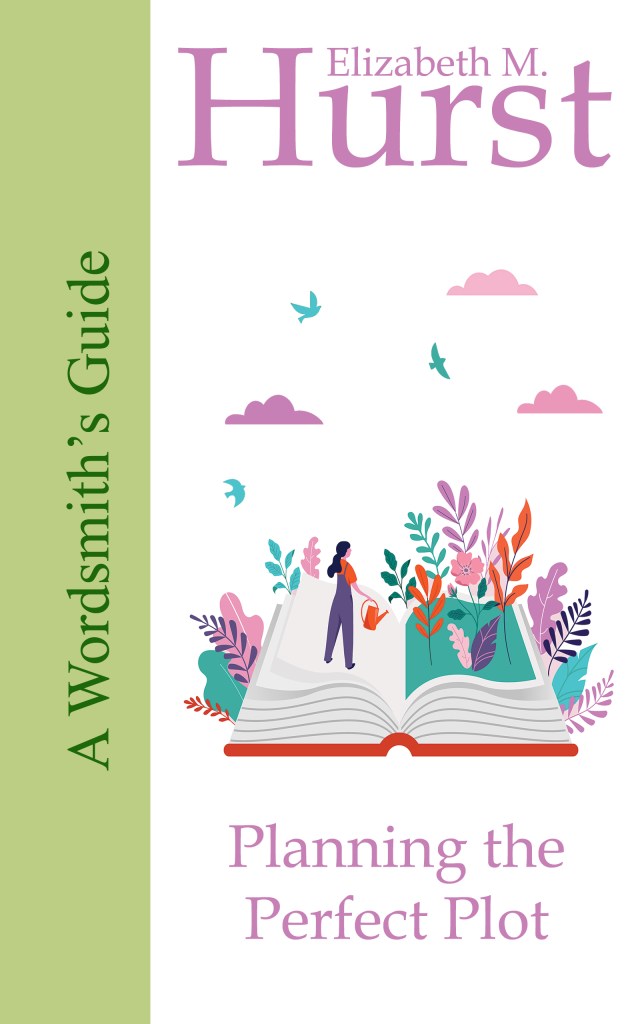
I’m sharing my review The Wordsmith’s Guide to Planning the Perfect Plot by Elizabeth M Hurst #blogtour #nonfiction #writingadvice
The Wordsmith’s Guide to Planning the Perfect Plot
* DO YOU STRUGGLE TO FINISH WRITING A NOVEL? * DO YOU RUN OUT OF MOMENTUM BECAUSE YOU DON’T KNOW WHERE YOUR STORY IS GOING?
The Wordsmith’s Guide to Planning the Perfect Plot is your trusted companion for turning story ideas into structured, compelling narratives. In this fourth instalment of the Wordsmith’s Guides series, Elizabeth M. Hurst takes you through popular plotting methods—including the Snowflake Method, Save the Cat Beat Sheet, and The Inside Outline—helping you choose the right approach for your writing style. You’ll also find practical advice on troubleshooting common pitfalls, crafting satisfying endings, and keeping your plan adaptable as your story evolves.
Inside, you’ll discover:
Clear explanations of proven plotting methods
Guidance on choosing the right structure for your novel
Tips for overcoming plot issues and staying on track
Advice on writing satisfying, well-rounded endings
A practical appendix full of tools and templates to support your planning process
Whether you’re a planner, a pantser, or somewhere in between, Planning the Perfect Plot will help you shape your novel with clarity and confidence.
Planning isn’t something I really do as a writer. But I was certainly curious to see how others might go about writing their stories. Elizabeth M Hurst gathers together many different techniques for planning a novel, and it is interesting to discover how I could be writing a novel, if my mind worked in that way. Mine, alas, does not. It thrives on the chaos. But, I do think the book is an excellent resource for those who plan before writing, and perhaps worry too much about sticking to their plan and the plot they thought they’d be writing when it goes awry and things starts to misbehave. I found it intriguing to read how people use ‘beats’ to craft their story as well as arcs and other techniques. I’m in awe of anyone who can think that far ahead:) I’m not a planner because I ‘feel’ my way through a story – but the author certainly nails my writing style in her explanations.
The author readily acknowledges that most people will use a variety of these techniques, and I was pleased to see that through it all, the delightful chaos of characters and plot misbehaving was never far from her thoughts.
The idea behind writing the novel, was, the author says, to encourage writers to finish their drafts using whatever techniques work for them. This is a worthy endeavour. Many people start writing a story and falter when things start to feel ‘off.’ This should provide opportunities to get writers writing again by thinking of their plot in different ways. I suspect it could be used as an effective diagnostic tool to discover where a plot is faltering, and once that’s been done, writers will learn what works and doesn’t work for them and in future, potentially, avoid the traps waiting to choke off the creativity.
A concise and interesting summary of the way writers write, providing suggestions for breaking free from processes that might not be working. I’m sure all writers will find their ‘type’ in the explanations.
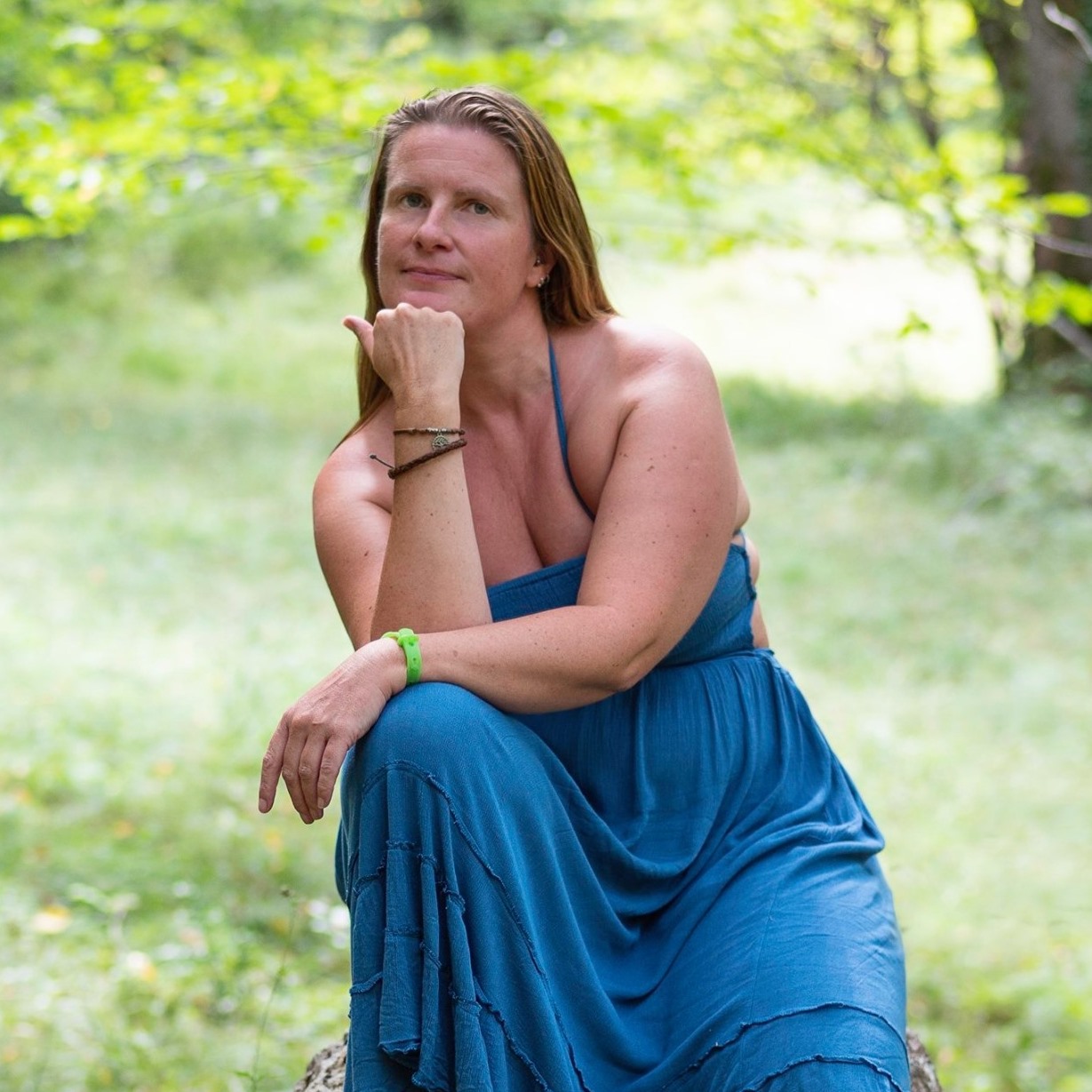
Meet the author
Elizabeth was born and bred in the picturesque harbour town of Whitehaven in the northwest of England, where the long, wet winters moulded her into a voracious reader of fiction to escape the dismal weather.
She graduated with a degree in Business Studies and a string of jobs followed, after which she finally settled in the automotive industry, where she spent twelve happy years.
Having already started writing around the age of 40, she had begun to dream of a more creative lifestyle and set about creating her freelance editing and proofreading business, EMH Editorial Services. In 2018, she quit the corporate world and concentrated her energy full-time towards her love of the written word.
Elizabeth now lives with her husband in the warm and sunny south of France, where the wine is cheaper than the water, and the cats spend their days hunting lizards and dreaming of the birds that roost on the roof.
On this day in history, The Battle of Hædfeld #nonfiction #histfic #Saxon
The Battle of Hædfeld, 12th October AD632 or 633
Not to give too many spoilers, but below is an account of the battle of Hædfeld on 12th October AD632 or 633 (there is a little bit of confusion surrounding the year and indeed the date due to a belief Bede may not have started the years as we would do).
The Words of Bede from ‘The Ecclesiastical History of the English People’
“EDWIN reigned most gloriously seventeen years over the nations of the English and the Britons, six whereof, as has been said, he also was a servant in the kingdom of Christ. Cadwalla; king of the Britons, rebelled against him, being supported by Penda, a most warlike man of the royal race of the Mercians, and who from that time governed that nation twenty-two years with various success. A great battle being fought in the plain that is called Heathfield, Edwin was killed on the 12th of October, in the year of our Lord 633, being then forty-seven years of age, and all his army was either slain or dispersed. In the same war also, before him, fell Osfrid, one of his sons, a warlike youth; Eanfrid, another of them, compelled by necessity, went over to King Penda, and was by him afterwards, in the reign of Oswald, slain, contrary to his oath.”
Bede, a Northumbrian monk writing a hundred years after the events, was no doubt dismayed that his holy (but only recently converted to Christianity) king, Edwin, was killed by a coalition raised against him, one of whom, Penda, was a pagan. Penda was to cause no end of problems for the Northumbrian kingdom, and its two constituent parts, Bernicia (roughly what we now think of as Northumberland) and Deira (centred around York). It is quite astounding to realise how many people Edwin upset, for it wasn’t just Penda and Cadwallon (believed to have been Edwin’s foster-brother and now king of one of the Welsh kingdoms) who joined the battle. There were many, many people with an axe to grind against Edwin, from the furthest reaches of Britain (check out this post about politics in the seventh century). Yet, victory never seems to have been assured. The two coalitions were almost perfectly poised against one another.
I find the date of the battle quite fascinating. October. Somewhere near Doncaster, on the banks of the River Don (or so it’s been believed for a long time – this might be being reappraised even as I type this). It would, undoubtedly, have been far past what we consider the ‘prime’ time to be battling. Not yet winter, but summer would undoubtedly have been behind them. It was also a long way from home for the alliance arranged against Edwin, in territory belonging to Edwin. I can’t help thinking he should have had the advantage. But that was most certainly not the case at the end of the day.
I’ve said before, and I’ll repeat it again, as much as we look at this period and see bloody warfare, what we’re really looking at is family politics played out with sword, seax, shield and spear. Edwin was Cadwallon’s foster-brother. Edwin’s son turned on his father and allied with the ‘enemy.’ One of those who joined the alliance against him was his nephew (Edwin’s sister’s son). Edwin had killed his father to become king and he was living in exile. The coming decades saw constant unease between Mercia and Northumbria, which erupted into full-blown war on two subsequent occasions, at Maserfeld in 641/2 (close to the Welsh border) and Winwæd in 655 (again, believed to be somewhere vaguely in the ‘north’ of England, and this time in November!). The ebb and flow of battle undoubtedly categorised these men (and women). While Bede portrays events with religious connotations (for he is writing an eccelsiastical history) it is much more likely family dynamics were at play with their attendent treachery, betrayal and sometimes, more rarely, loyalty.
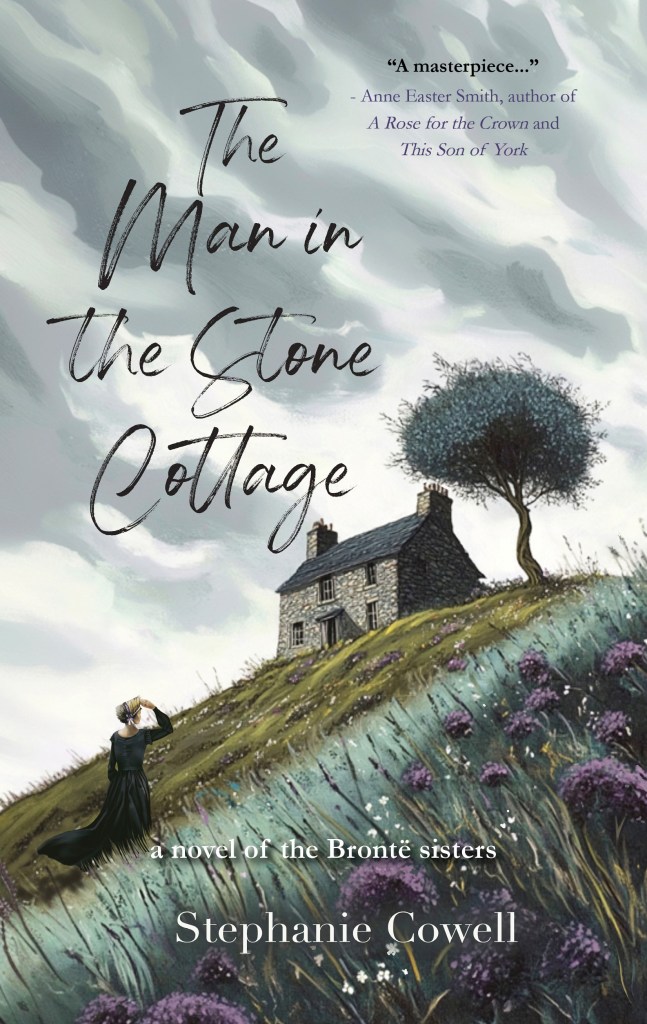
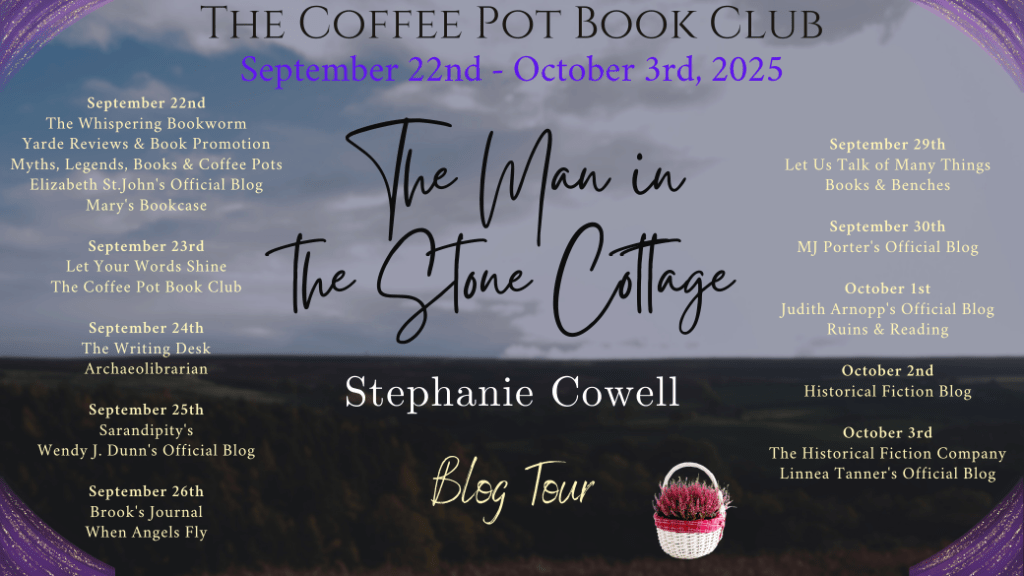
I’m welcoming Stephanie Cowell to the blog with a fascinating post about research for her new novel, The Man in the Stone Cottage: a novel of the Brontë sisters #Brontë #Yorkshire #Victorian #EnglishLiterature #WomenWriters #HistoricalFiction @cathiedunn
@cowell.stephanie @thecoffeepotbookclub
Researching My Novel on the Brontë Sisters by Stephanie Cowell
I simply love research. The opportunity to know more about my beloved historical characters and their surroundings and daily world is thrilling. Researching Charlotte, Anne and Emily Brontë, I had a chance to go to their village in Yorkshire (Haworth) and to the Parsonage where they lived with their clergyman father and wrote their books and what is more thrilling than that? I travelled there three times over many years.
In curated display cases, I could see the needles with which they sewed, the cup they drank from (imagine seeing Emily’s cup and knowing she might have paused in writing bits of Heathcliff to drink a sip of tea!), their clothing, their hand-written childhood magazines. I could walk around the house, climbing the steps they climbed every day. In the parlor/dining room, I marveled at the table where they wrote their books. (After a century or more of searching by scholars, the actual table was found in private hands and in 2015 it was brought back to the Parsonage. Someone has scratched “E” in the wood. Was it our Emily?)
So, my first research was going to the Parsonage, but a great deal of research of course was from biographies and household advice books and letters which describes event and feelings and hopes and fears. They describe loneliness.
Letters are the best! Charlotte wrote the most. She wrote hundreds to her best friend Ellen, pouring out her frustration about working in a teaching job at a boarding school until exhausted. She wrote about her family. She wrote to her publisher’s reader about her sadness over her alcoholic brother who could not keep a job. She wrote her married Belgium professor of her adoration of him. We have these letters almost two hundred years. They are from the writer who penned Jane Eyre’s passionate words, “Do you think, because I am poor, obscure, plain and little, I am soulless and heartless?”
Research! I have two bookshelves of biographies, literary analysis, life in Victorian England, books about the town of Haworth and the house, even a biography of the rather obscure man Charlotte eventually married. I just remembered that at one time my novel was not from the point of view of the two sisters, but only from his point of view. And like the larger part of stories I begin, it was not finished but eventually morphed into the final novel THE MAN IN THE STONE COTTAGE.
I try to keep my research books together also in certain shelves but some wander over the house. When I was a beginning writer and rather poor, I used the library for everything. Now I am afraid I mostly use the internet to buy obscure second-hand books.
It was however in an actual bookshop one day that I glanced at a shelf and found THE book I wanted, THE book I must have. This was in the days before the internet. I gasped so that I am fortunate the salesperson did not come rushing over to see if I was okay. Perhaps he was used to having people gasp over discovered books.
There is a problem with biographies. I went to a bookshop reading of one of Charlotte’s biographers, and someone asked her, “Have you written the definitive biography?” and she replied, “Oh no, I hope not. Every biographer sees her in a different way!” And that is true. Charlotte’s first biographer Mrs. Gaskell made Charlotte into a near saint. Others have emphasized the prickly side of her personality. Who would not be prickly with all her losses and griefs and hardships?
Emily and Anne have several biographies each, but less is known about them. These two sisters were more private and did not pour their heart out on paper, or perhaps fewer paper were kept.
Even when a novel is long finished and gone into the hands of readers, I love and long for the worlds where my beloved characters have walked. So, I go to wander in the streets of York or Paris or Florence, and if I wait, I will see one of my characters coming toward me. And likely he or she will smile and say, “There you are! Welcome back! We’ve been waiting for you!”
Here’s the blurb
“A haunting and atmospheric historical novel.” – Library Journal
In 1846 Yorkshire, the Brontë sisters— Charlotte, Anne, and Emily— navigate precarious lives marked by heartbreak and struggle.
Charlotte faces rejection from the man she loves, while their blind father and troubled brother add to their burdens. Despite their immense talent, no one will publish their poetry or novels.
Amidst this turmoil, Emily encounters a charming shepherd during her solitary walks on the moors, yet he remains unseen by anyone else.
After Emily’ s untimely death, Charlotte— now a successful author with Jane Eyre— stumbles upon hidden letters and a mysterious map. As she stands on the brink of her own marriage, Charlotte is determined to uncover the truth about her sister’ s secret relationship.
The Man in the Stone Cottage is a poignant exploration of sisterly bonds and the complexities of perception, asking whether what feels real to one person can truly be real to another.
Praise for The Man in the Stone Cottage:
“A mesmerizing and heartrending novel of sisterhood, love, and loss in Victorian England.” – Heather Webb, USA Today bestselling author of Queens of London
“Stephanie Cowell has written a masterpiece.” – Anne Easter Smith, author of This Son of York
“With The Man in the Stone Cottage, Stephanie Cowell asks what is real and what is imagined and then masterfully guides her readers on a journey of deciding for themselves.” – Cathy Marie Buchanan, author of The Painted Girls
“The Brontës come alive in this beautiful, poignant, elegant and so very readable tale. Just exquisite.” – NYT bestseller, M.J. Rose
“Cowell’s ability to take readers to time and place is truly wonderful and absorbing.” – Stephanie H. (Netgalley)
“Such a lovely, lovely book!” – Books by Dorothea (Netgalley)
Stephanie Cowell has been an opera singer, balladeer, founder of Strawberry Opera and other arts venues including a Renaissance festival in NYC.
She is the author of seven novels including Marrying Mozart, Claude & Camille: a novel of Monet, The Boy in the Rain and The Man in the Stone Cottage. Her work has been translated into several languages and adapted into an opera. Stephanie is the recipient of an American Book Award.














 MJ Porter
