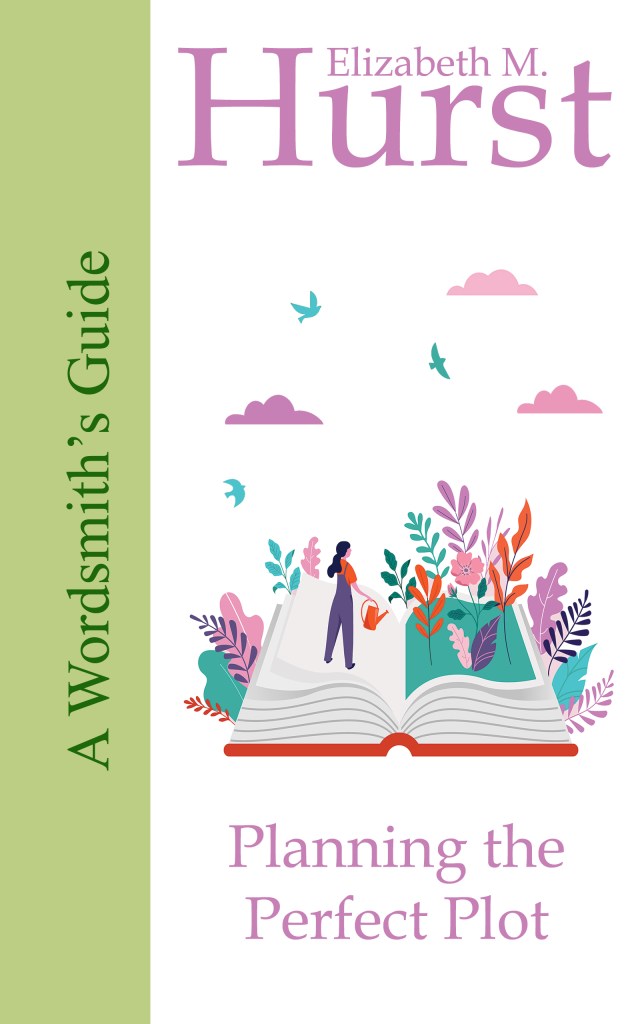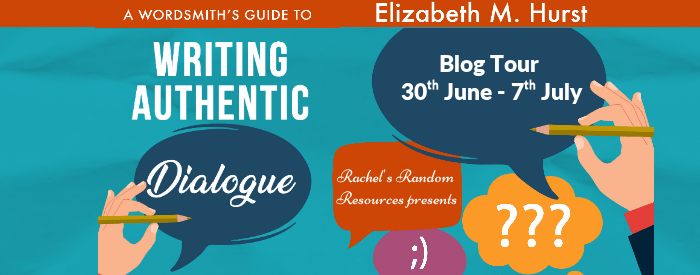
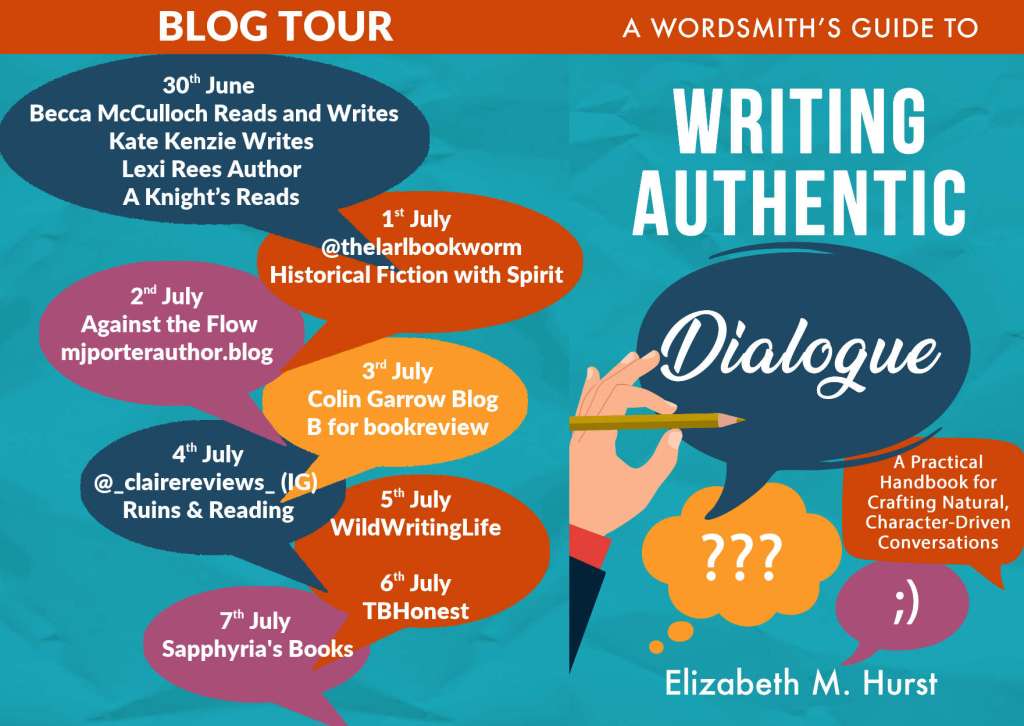
I’m welcoming the Wordsmith’s Guide to Writing Authentic Dialogue by Elizabeth M Hurst to the blog #blogtour #nonfiction #writingadvice
Why I Wrote A Wordsmith’s Guide to Writing Authentic Dialogue
I’ve been asked a few times why I chose to write A Wordsmith’s Guide to Writing Authentic Dialogue. The succinct answer is this: I asked my readers what they wanted me to cover next, and they told me they wanted something about character dialogue.
That made immediate sense to me. Dialogue is one of those areas of writing that looks deceptively simple. After all, we all talk. We all listen to conversations. We all know what speech sounds like – or at least we think we do. But putting convincing dialogue on the page is a very different skill from reproducing everyday speech exactly as it happens.
In real life, conversations are messy, repetitive, unfinished, and full of filler. People interrupt themselves, lose their train of thought, circle back, contradict themselves, and say “um” or “you know” far more often than any reader would willingly tolerate in a novel. If we wrote dialogue exactly as people speak, it would be tedious. Fictional dialogue has to have a purpose: it has to sound real while still being readable.
That is one of the reasons dialogue can be so challenging for writers. It has to feel natural, but also has to earn its place in the story. A good exchange between characters might reveal personality, create tension, deepen a relationship, move the plot forward, suggest conflict, or show us something the character does not want to admit. Often, the best dialogue does several of these at once.
I also think dialogue matters because it is one of the quickest ways readers decide whether they believe in a character. Description can tell us what someone looks like. Action can show us what they do. But dialogue lets us hear them. It gives us rhythm, attitude, hesitation, confidence, defensiveness, humour, fear, tenderness, and all the other subtle signals that make a fictional person feel alive.
One of the most useful lessons I’ve learned, both as a writer and an editor, is that dialogue is rarely only about the words being spoken. It is also about what is not said. People dodge difficult subjects. They hide behind jokes. They answer a different question from the one they were asked. They say “I’m fine” when they are anything but fine. That gap between what is said and what is meant is where the emotional energy of a scene lives and breathes.
Character voice is another important part of the puzzle. When every character speaks in the same rhythm, with the same vocabulary and the same level of confidence, the reader may struggle to tell them apart. But distinctive dialogue does not have to mean exaggerated slang, heavy dialect, or a string of catchphrases. It can be much more subtle than that. One character may speak in short, guarded sentences. Another may over-explain. One may use humour to deflect. Another may become very formal when upset. These choices tell us who people are, especially when they are under pressure.
That is why I wanted this book to be practical. Dialogue is not just decoration. It is one of the main ways writers create character, conflict, and connection. When it works well, readers believe in the people on the page.
And perhaps that is the real goal of authentic dialogue. Not to copy real speech word for word, but to create the illusion of it. To make readers feel that these characters existed before the scene began and will continue existing after it ends. To make every line sound as though it could only have been spoken by that person, in that moment, for that reason.
So when my readers asked for a guide to dialogue, I understood why. It is a subject that touches almost every part of storytelling. Whether you are writing a quiet emotional exchange, a heated argument, a romantic confession, a comic misunderstanding, or a scene full of things left unsaid, dialogue can transform the way readers experience your characters.
Used well, dialogue does not simply fill the silence. It brings the story to life.
Here’s the blurb
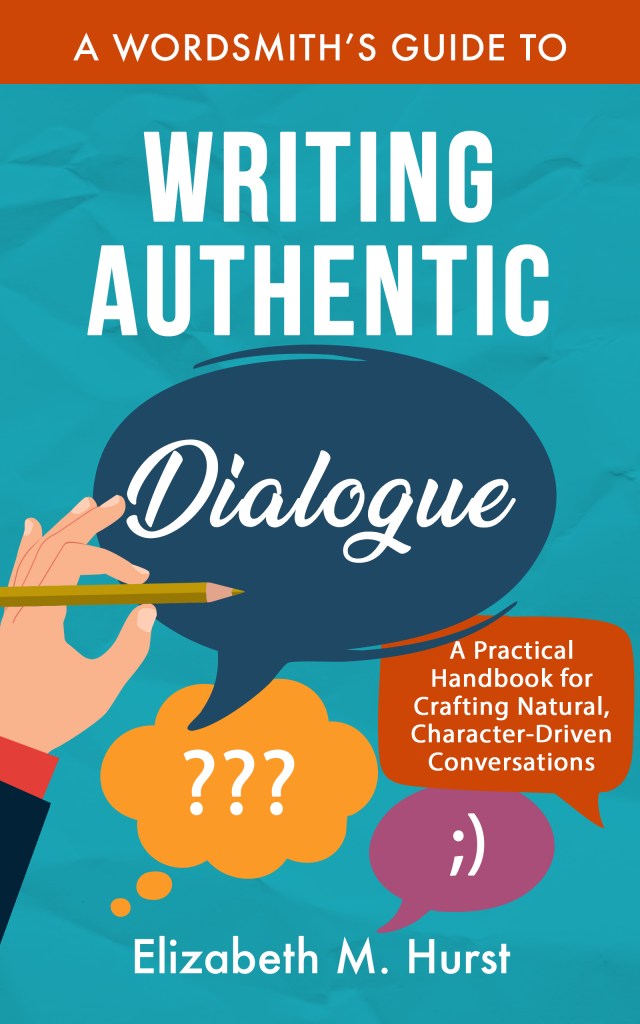
A Wordsmith’s Guide to Writing Authentic Dialogue
Do you lack confidence when writing dialogue for your fictional characters?
Do you want to learn how to make each person have a distinctive voice?
Real conversations wander. Fictional dialogue can’t afford to.
A Wordsmith’s Guide to Writing Authentic Dialogue is a practical, encouraging craft book for fiction writers who want dialogue that does more than fill the page. You’ll learn how to make every exchange purposeful, character-specific, and charged with subtext—without gimmicks, melodrama, or the dreaded “As you know…” exposition.
You will learn how to:
- build distinct voices through rhythm, worldview, and verbal habits (not quirky spelling);
- show status and power through questions, interruptions, silence, and topic control;
- handle tags, beats, and action cleanly so dialogue moves instead of clogs;
- write conflict that escalates and changes shape (without repeating itself);
- approach trauma, consent, and emotionally heavy scenes without voyeurism or melodrama.
You’ll also find:
- short, generic examples you can learn from immediately;
- focused exercises you can complete in 10–20 minutes;
- diagnose-and-rewrite case studies (where relevant);
- checklists: quick bullet points to use while drafting and revising.
If your characters explain too much, sound the same, circle the point, or talk in a void—this guide will give you clear tools to diagnose the problem and rewrite with confidence.
Have the confidence to write dialogue that reflects the best of your characters, and the best of your writing. Pick up your copy today.
Purchase Link
https://geni.us/AuthenticDialogue
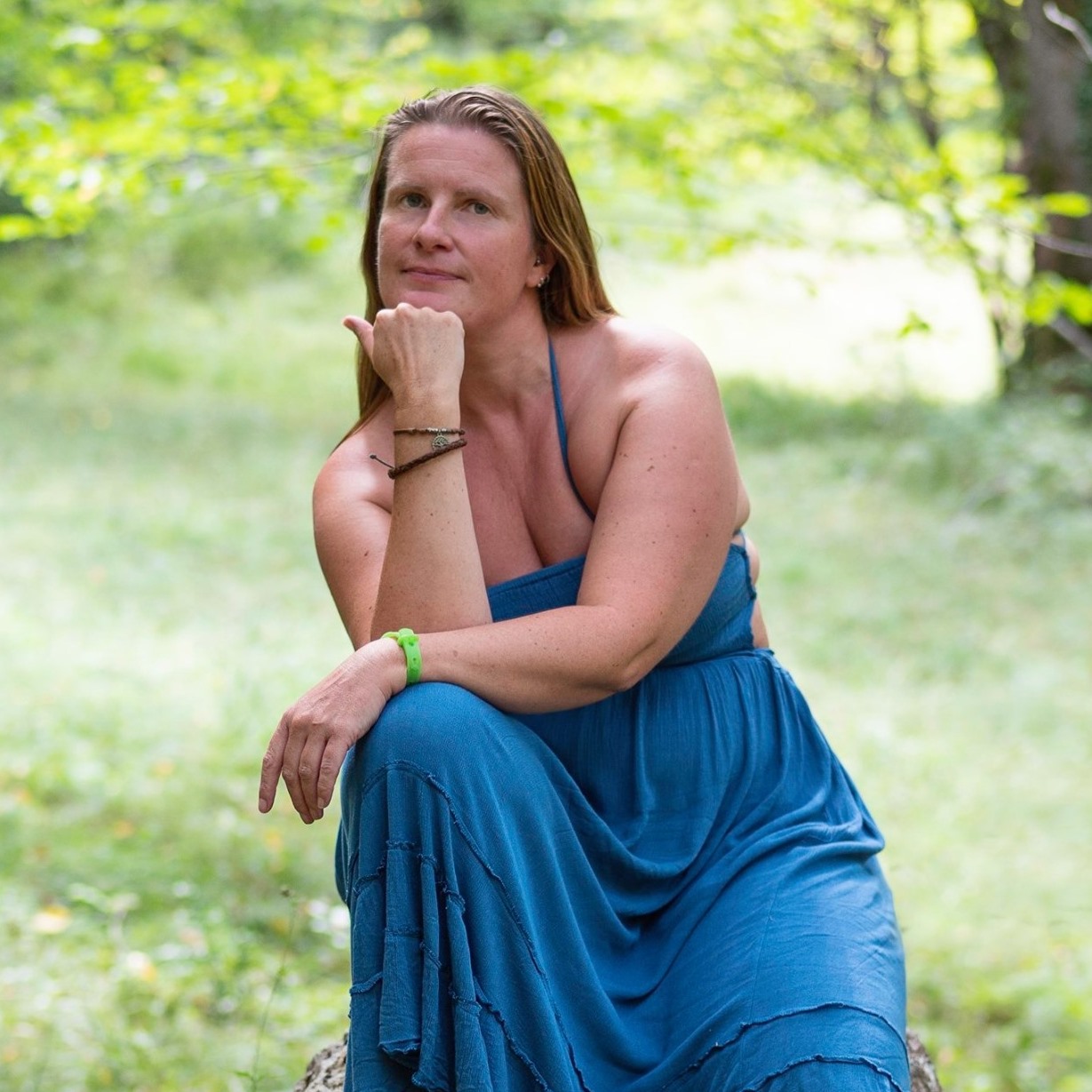
Meet the author
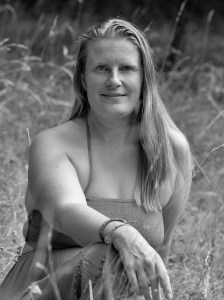
Elizabeth was born and bred in the picturesque harbour town of Whitehaven in the northwest of England, where the long, wet winters moulded her into a voracious reader of fiction to escape the dismal weather.
In 2016, Elizabeth set up her freelance editing and proofreading business, EMH Editorial Services. In 2018, she quit the corporate world and concentrated her energy full-time towards her love of the written word.
Elizabeth has published timeslip novellas (the Lost Souls series) and a stand-alone novel, A Light Shines in Darkness, based on Blessed Angelina of Marsciano. She is also the author of The Wordsmith’s Guides, a series of nonfiction books on the craft of writing.
Elizabeth now lives with her husband in the warm and sunny south of France, where the wine is cheaper than the water, and the cats spend their days hunting lizards and dreaming of the birds that roost on the roof.
Connect with the author
https://elizabethhurstauthor.com/
Posts
Stay up to date with the latest from the blog.