On This Day In History 1066 – The Battle of Gate Fulford (well, yesterday. I’m a day late)

On This Day In History 1066 – The Battle of Gate Fulford (well, yesterday. I’m a day late)

What was the battle of Gate Fulford,or Fulford Gate?

The battle took place on 20th September 1066, between the Norwegian forces led by Harald Hardrada and the English forces commanded by the two brother earls, and was the first of three battles in 1066, which eventually ended Saxon England, and brought about the beginning of the Norman era (Boo).

Having arrived near York two days earlier, Harald Hardrada had his first encounter with the forces of the English, led by two young earls, Morcar and Edwin (Eadwine) of the House of Mercia, at Gate Fulford. Morcar was earl of Northumbria, replacing the disgraced Tostig Godwineson (who had enticed Hardrada to England), while Edwin was the earl of Mercia, succeeding to the position after the death of his father Ælfgar, who’d held Mercia after his father Leofric. (Fans of the Earls of Mercia series will so far have only encountered Morcar and Eadwine as children).

Their youth, their inexperience, and the perceived defeat in this terrible battle are all that people know about Edwin and Morcar. What’s so often overlooked is that they marched into battle determined to counter the might of what many believe was the last great Viking warrior, and they were also the king’s brothers by marriage; their sister now married to Harold Godwineson. They also survived the battle and probably fought at Stamford Bridge and Hastings.

So, who was Harald Hardrada?

Hardrada was king of Norway, half-brother to St Olaf, who was killed at the battle of Stiklestad in 1030 by forces loyal to King Cnut, who’d claimed Norway as part of his determination to rule much of Scandinavia. Harald was forced to flee and spent many years fighting in the Varangian guard until he decided to advance his claims to the kingship once more (in 1045), initially forging an alliance with Sweyn of Denmark (nephew of King Cnut) until allying with King Magnus of Norway, who was his nephew, and somewhat conveniently, died only the next year, making Harald the sole king of Norway. (You will find some of this story told in my Earls of Mercia series, and also in Lady Estrid, the story of Sweyn of Denmark’s mother).
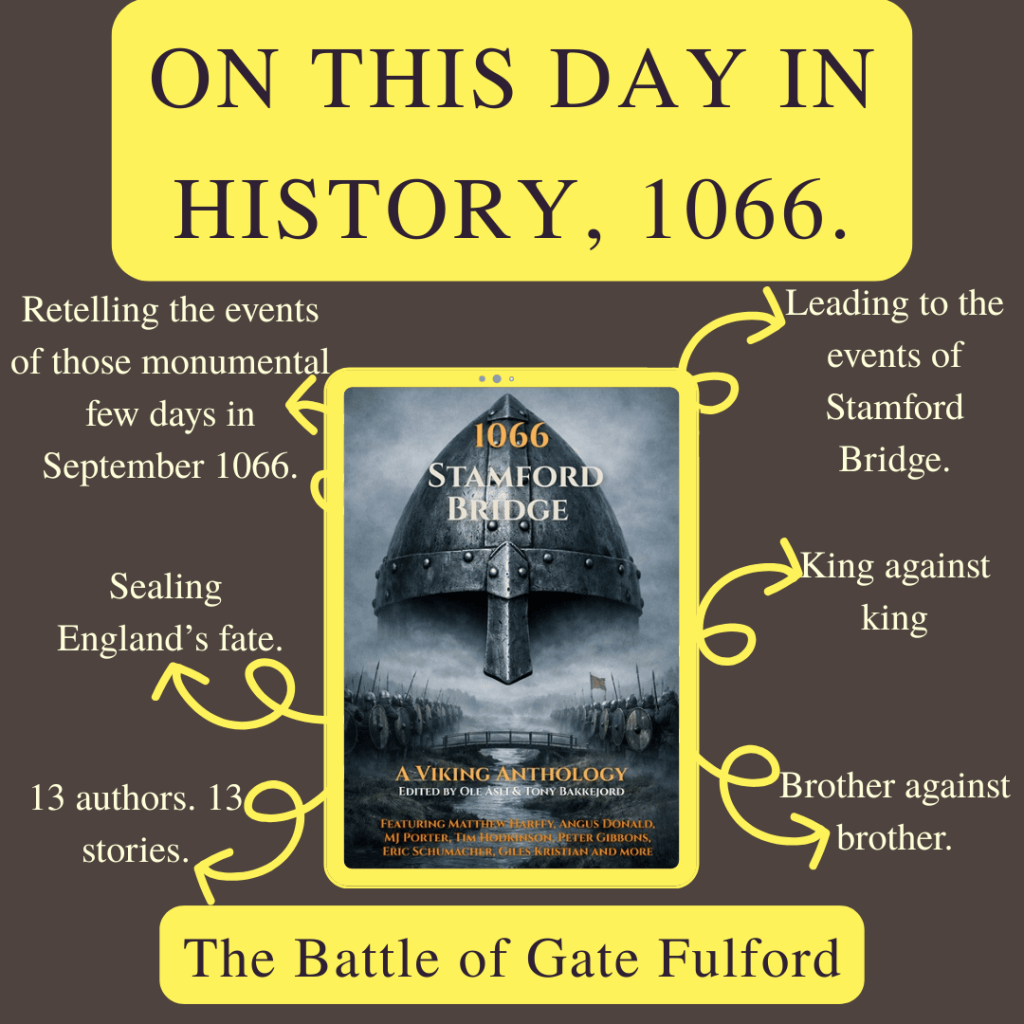
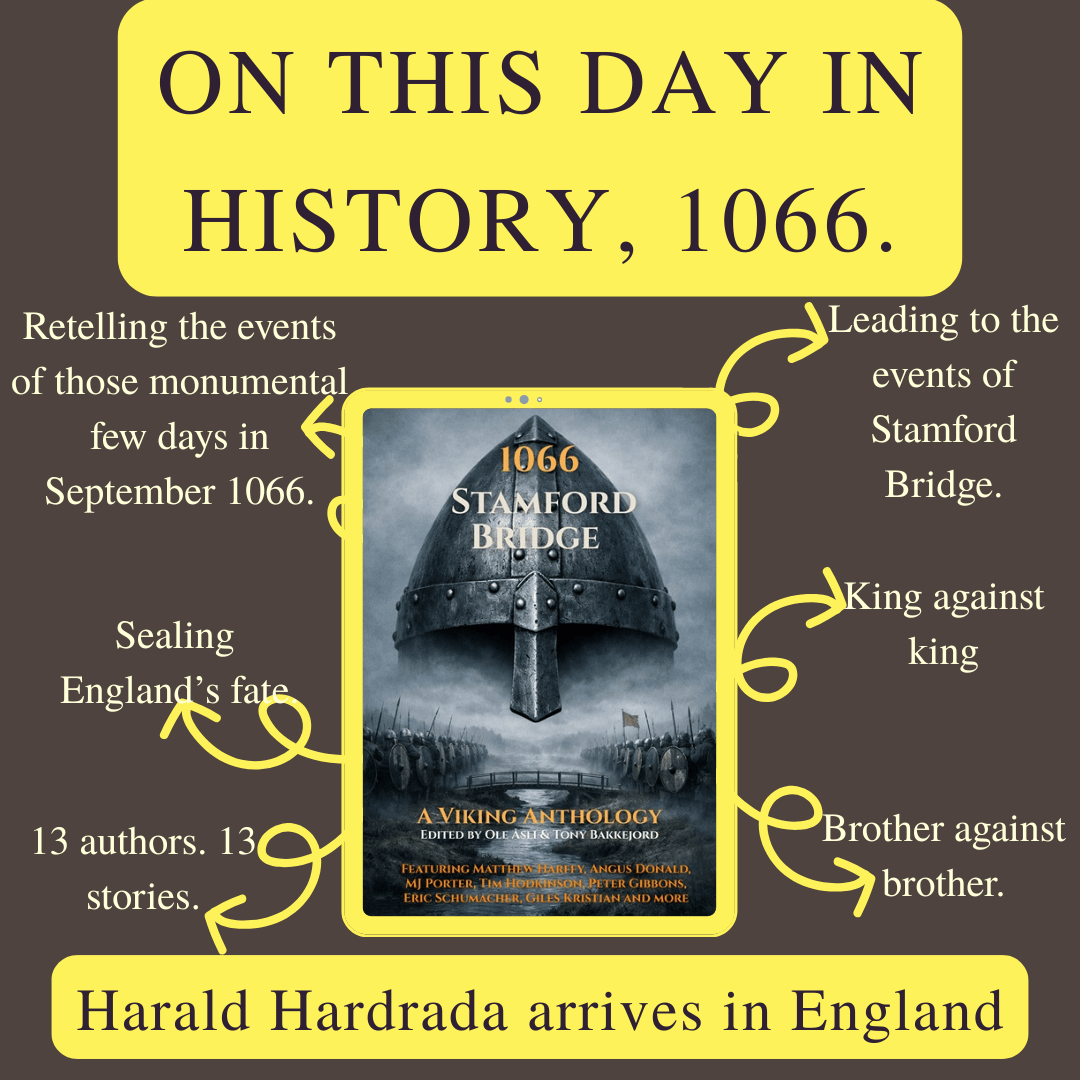
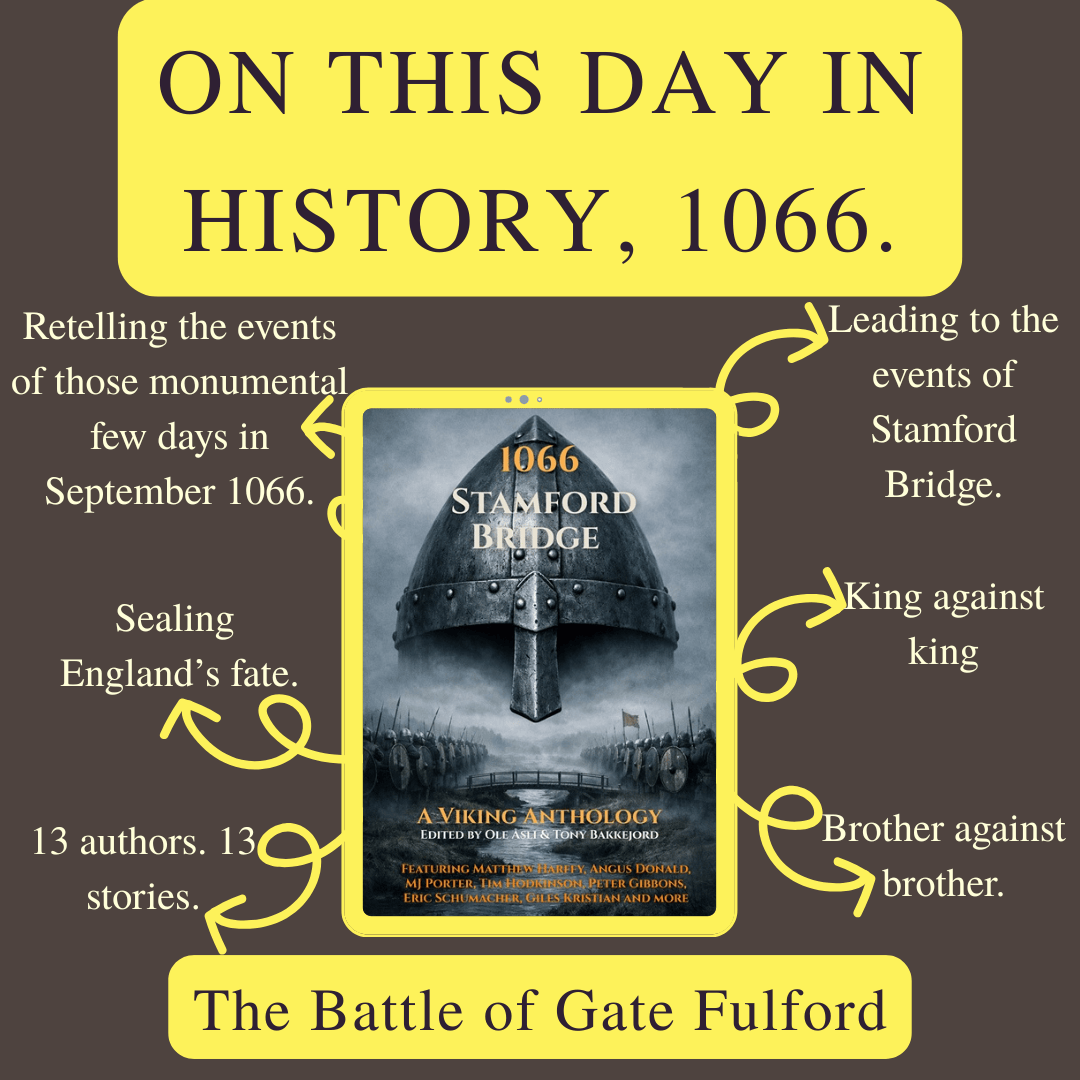
An infographic titled 'On This Day in History, 1066' discussing the events leading up to the Battle of Stamford Bridge, featuring a central image of a Viking helmet and mentioning 13 authors and stories related to the events.

Why did he invade England in 1066?

It is from the alliance with King Magnus that Harald Hardrada exerted his right to rule England, as Magnus stated he had a claim, having earlier agreed it with King Harthacnut of England (Cnut’s son), that he (Magnus) would rule England after Harthacnut’s death and equally that Harthacnut would rule Norway after Magnus’ death.

Harald adopted the claim as he did the kingdom of Norway after Magnus’ death. Admittedly, the intervention of the disgruntled Tostig Godwineson probably also encouraged him. (To read about Harald’s life, check out JC Duncan’s fab five-part series covering his life).

And so, the man lauded as the last great Viking made his way to England, and on this day, he first encountered the English resistance. And while most say the brother earls were defeated, I wonder if the narrative should be a little different. After all, their brother by marriage, their king, was already on his way north to counter the threat. Did they do what needed to be done? Did they temporarily halt the Norwegian invasion and buy Harald time to bring his warriors to the battle…
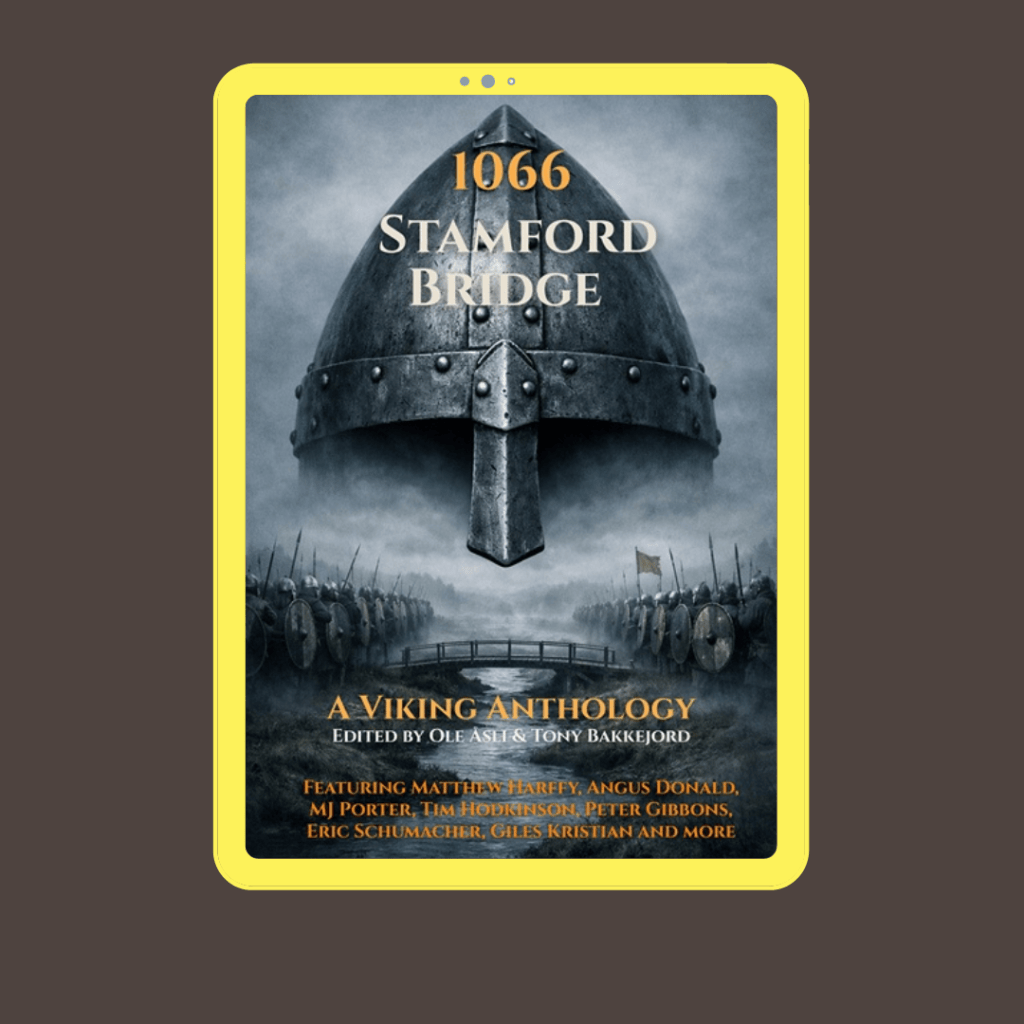
Book cover for '1066 Stamford Bridge: A Viking Anthology' featuring a Viking helmet at the top, with the title prominently displayed and a backdrop of an army with shields in the background.

The Stamford Bridge Anthology

Thirteen writers. One battle. The same afternoon, told from both sides of the bridge.

Giles Kristian · Matthew Harffy · Angus Donald · Tim Hodkinson · Peter Gibbons · MJ Porter · Justin Hill · Theodore Brun · Eric Schumacher · Will Dowling · M. Thomas Kingsley · Mark Oxbrow · Åsli & Bakkejord

On 25 September 1066, a Norwegian army lay resting on both banks of the Derwent, seven miles from York. They had beaten one English army five days earlier and taken the city’s surrender, and the fighting was done. Most of them had left their mail at the ships.

They were not expecting Harold Godwinson.

The battle that followed ended the Viking age in England. Three weeks later it helped decide a second one, on a hill near Hastings, that everyone remembers instead.

A king who has spent his life outrunning the end of an age. A skald asked to praise a man he no longer believes in. A priest tends the wounded on the eve of a battle nobody knows is coming. A lone axeman on the bridge, and the Englishman in the water beneath him. Afterwards, a farmer walks the field looking for his son, and twenty years later an old earl sits in a Norman prison, still deciding what to tell his gaoler.

The man who holds the bridge in one story is watched from the water in another. Thirteen stories, one day.

Over 100,000 words of Viking historical fiction, published on the 960th anniversary of the battle.

Releasing 25th September 2026 – preorder now in ebook. Paperback available now.
Text from a creative writing piece discussing historical fiction, featuring themes of storytelling between characters like a Norwegian king and an English reeve.

On This Day In History 1066 – Harald Hardrada, king of Norway, arrives near York, England to advance his claims to be England’s king

On This Day In History 1066 – Harald Hardrada, king of Norway, arrives near York, England to advance his claims to be England’s king

Who was Harald Hardrada?

Hardrada was king of Norway, half-brother to St Olaf, who was killed at the battle of Stiklestad in 1030 by forces loyal to King Cnut, who’d claimed Norway as part of his determination to rule much of Scandinavia. Harald was forced to flee and spent many years fighting in the Varangian guard until he decided to advance his claims to the kingship once more (in 1045), initially forging an alliance with Sweyn of Denmark (nephew of King Cnut) until allying with King Magnus of Norway, who was his nephew, and somewhat conveniently, died only the next year, making Harald the sole king of Norway. (You will find some of this story told in my Earls of Mercia series, and also in Lady Estrid, the story of Sweyn of Denmark’s mother).

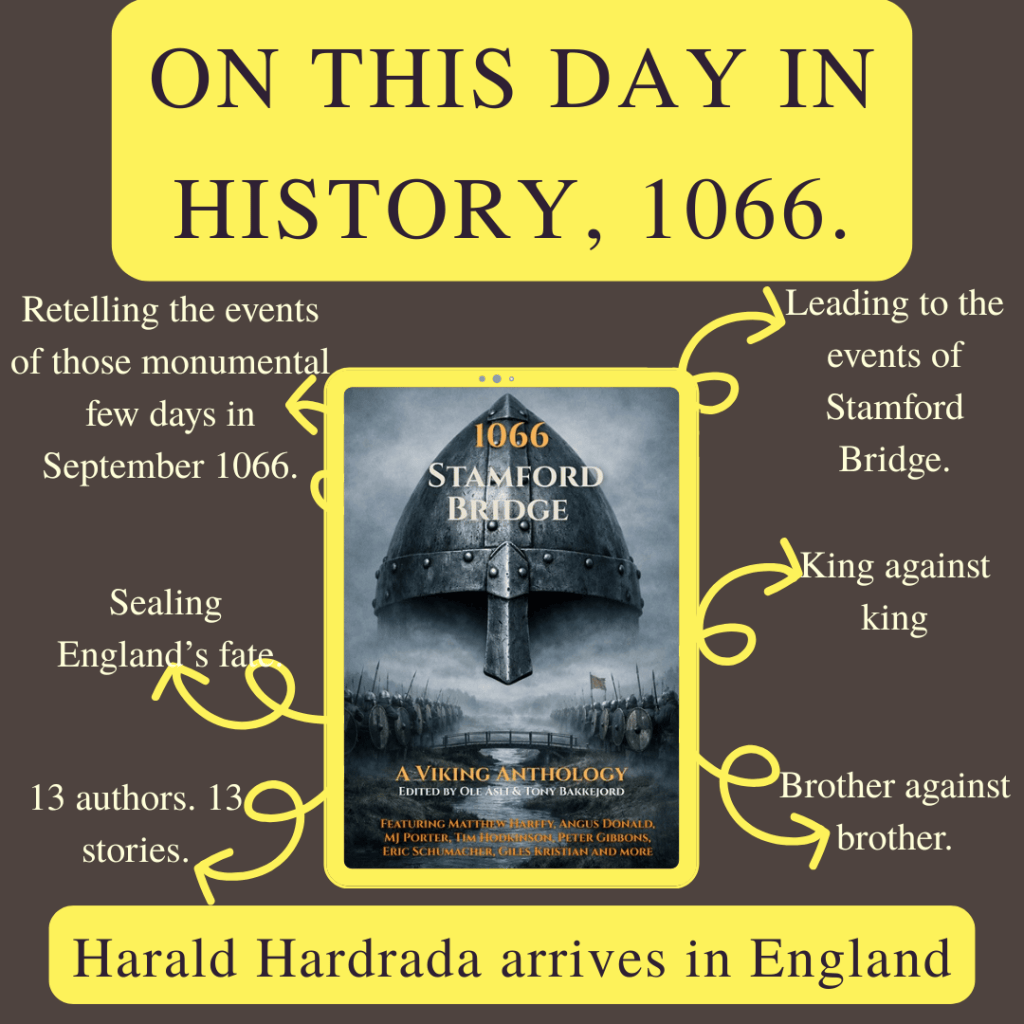
Graphic highlighting significant events from September 1066, including the arrival of Harald Hardrada in England and the Battle of Stamford Bridge.

Why did he invade England in 1066?

It is from the alliance with King Magnus that Harald Hardrada exerted his right to rule England, as Magnus stated he had a claim, having earlier agreed it with King Harthacnut of England (Cnut’s son), that he (Magnus) would rule England after Harthacnut’s death and equally that Harthacnut would rule Norway after Magnus’ death.

Harald adopted the claim as he did the kingdom of Norway after Magnus’ death. Admittedly, the intervention of the disgruntled Tostig Godwineson probably also encouraged him. (To read about Harald’s life, check out JC Duncan’s fab five-part series covering his life).

And so, the man lauded as the last great Viking made his way to England and arrived on this day, 1066. And the rest can be discovered in…

Book cover for '1066 Stamford Bridge: A Viking Anthology' featuring a Viking helmet at the top, with the title prominently displayed and a backdrop of an army with shields in the background.

The Stamford Bridge Anthology

Thirteen writers. One battle. The same afternoon, told from both sides of the bridge.

Giles Kristian · Matthew Harffy · Angus Donald · Tim Hodkinson · Peter Gibbons · MJ Porter · Justin Hill · Theodore Brun · Eric Schumacher · Will Dowling · M. Thomas Kingsley · Mark Oxbrow · Åsli & Bakkejord

On 25 September 1066, a Norwegian army lay resting on both banks of the Derwent, seven miles from York. They had beaten one English army five days earlier and taken the city’s surrender, and the fighting was done. Most of them had left their mail at the ships.

They were not expecting Harold Godwinson.

The battle that followed ended the Viking age in England. Three weeks later it helped decide a second one, on a hill near Hastings, that everyone remembers instead.

A king who has spent his life outrunning the end of an age. A skald asked to praise a man he no longer believes in. A priest tends the wounded on the eve of a battle nobody knows is coming. A lone axeman on the bridge, and the Englishman in the water beneath him. Afterwards, a farmer walks the field looking for his son, and twenty years later an old earl sits in a Norman prison, still deciding what to tell his gaoler.

The man who holds the bridge in one story is watched from the water in another. Thirteen stories, one day.

Over 100,000 words of Viking historical fiction, published on the 960th anniversary of the battle.

Releasing 25th September 2026 – preorder now in ebook. Paperback coming soon.

Text from a creative writing piece discussing historical fiction, featuring themes of storytelling between characters like a Norwegian king and an English reeve.

It’s time… 757, the first book in the brand-new series, The House of Mercia, is now available. Listen to me talking about the new book #fiction #TalesOfMercia

It’s time… 757, the first book in the brand-new series, The House of Mercia, is now available. Listen to me talking about the new book #fiction #TalesOfMercia #fiction #nonfiction #Mercia #MJPorter #HistoricalFiction #SaxonEngland #VikingAge #AngloSaxonHistory #BernardCornwell #LastKingdom #HistFic #ReadingCommunity #BookTok #Vikings

It’s time… 757, the first book in the brand-new series, The House of Mercia, is now available. Listen to me talking about the new book #fiction #TalesOfMercia

I recorded this when 757 was complete

Here’s the blurb for 757

This is Mercia. The year is 757. 
A king will fall. A king will rise. 
But first, civil war will rage.

King Æthelbald’s forty-year vice-like rule over Mercia has been rigid. But he lacks a legitimate heir despite his insatiable bedchamber antics.

Offa must stand hostage to his family’s good behaviour, when his father missteps in removing his mother from Æthelbald’s bed. Shockingly, his younger sister now replaces her.

But the king isn’t finished with his denigration of Offa’s noble House. When his parents are traitorously killed, Offa’s resentment grows, compounded by the ridicule heaped on him by King Æthelbald’s oathsworn warriors.

With the king’s health deteriorating, the matter of the succession becomes paramount. There are plenty who share a claim to the kingship.

Discord threatens to fracture the mighty realm, and those with sword and shield, seax and spear are prepared to risk it all to be the future king of Mercia.

books2read.com/757

Or buy a signed copy direct from me

Join my Boldwood newsletter to receive a free prequel short story, written exclusively for the the release of The House of Mercia series. https://BookHip.com/MKSKVRX

757, the first book in the brand-new series, The House of Mercia. Listen to me talking about the new book #fiction #TalesOfMercia

It’s nearly time… 757, the first book in the brand new series, The House of Mercia, will be with readers in July 2026. Listen to me talking about the new book #fiction #TalesOfMercia #fiction #nonfiction #Mercia #MJPorter #HistoricalFiction #SaxonEngland #VikingAge #AngloSaxonHistory #BernardCornwell #LastKingdom #HistFic #ReadingCommunity #BookTok #Vikings

I recorded this after completing the strutural edits for 757

Here’s the blurb for 757

This is Mercia. The year is 757. 
A king will fall. A king will rise. 
But first, civil war will rage.

King Æthelbald’s forty-year vice-like rule over Mercia has been rigid. But he lacks a legitimate heir despite his insatiable bedchamber antics.

Offa must stand hostage to his family’s good behaviour, when his father missteps in removing his mother from Æthelbald’s bed. Shockingly, his younger sister now replaces her.

But the king isn’t finished with his denigration of Offa’s noble House. When his parents are traitorously killed, Offa’s resentment grows, compounded by the ridicule heaped on him by King Æthelbald’s oathsworn warriors.

With the king’s health deteriorating, the matter of the succession becomes paramount. There are plenty who share a claim to the kingship.

Discord threatens to fracture the mighty realm, and those with sword and shield, seax and spear are prepared to risk it all to be the future king of Mercia.

books2read.com/757

Or buy a signed copy direct from me

Join my Boldwood newsletter to receive a free prequel short story, written exclusively for the the release of The House of Mercia series. https://BookHip.com/MKSKVRX

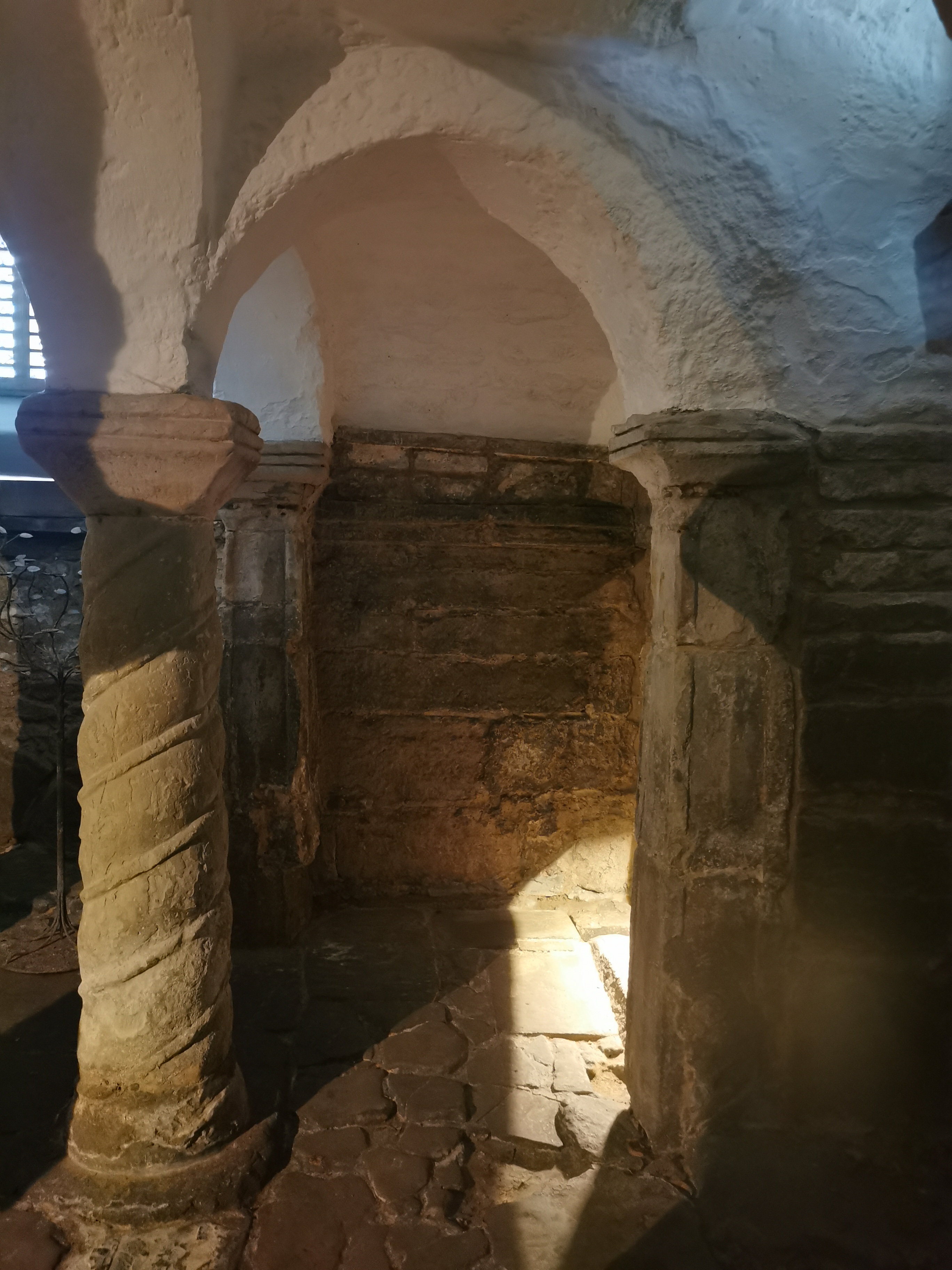
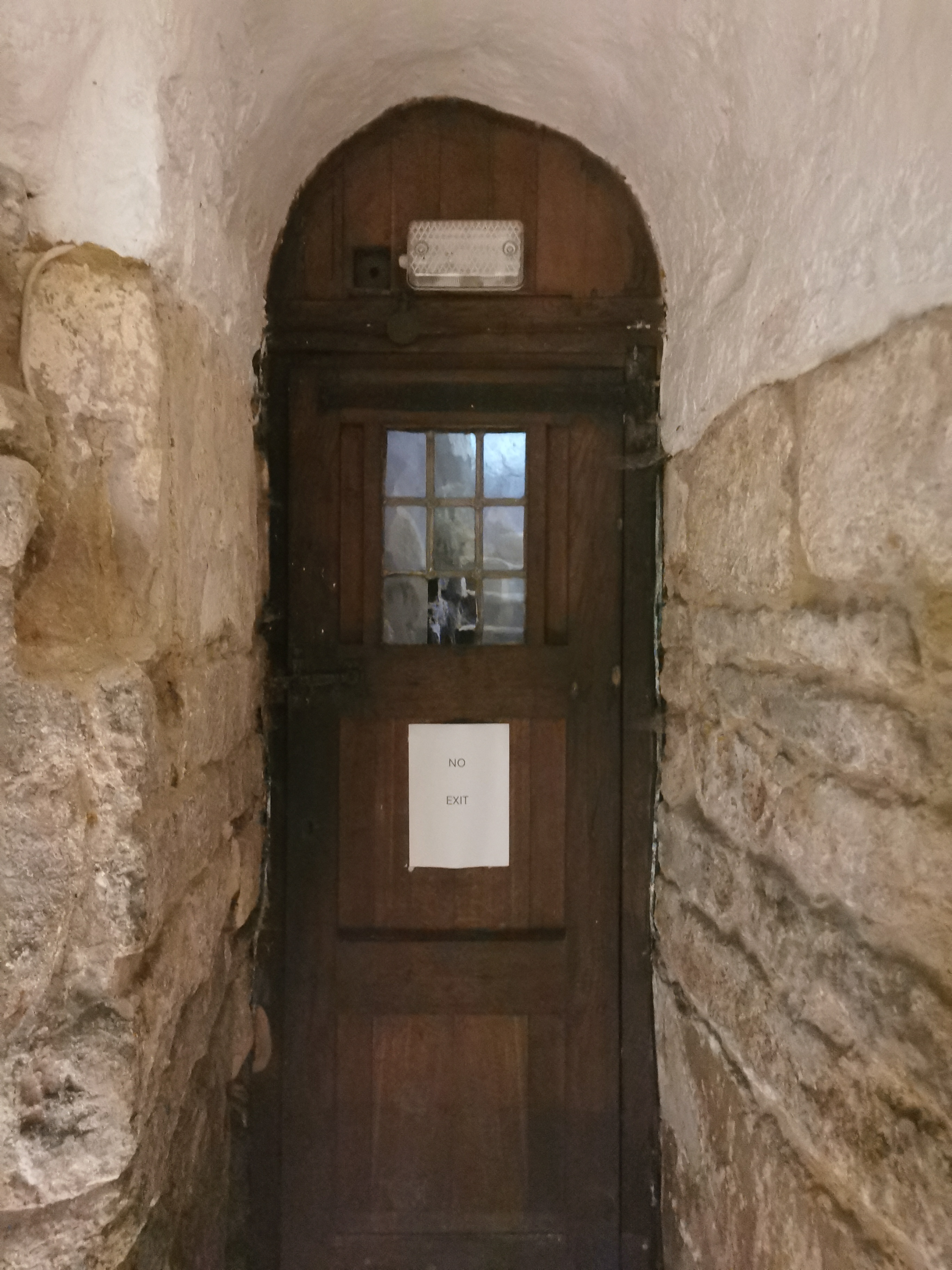
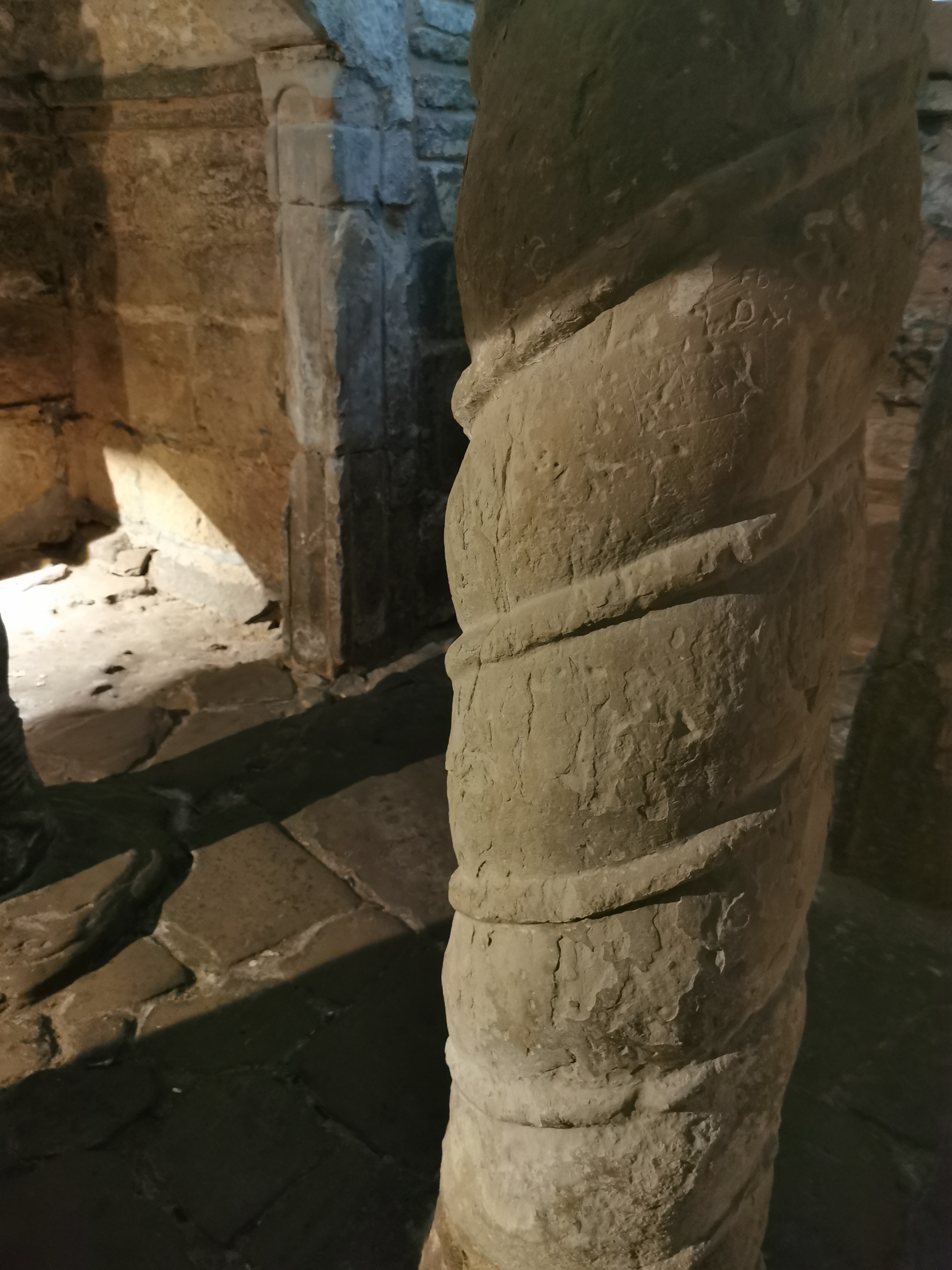
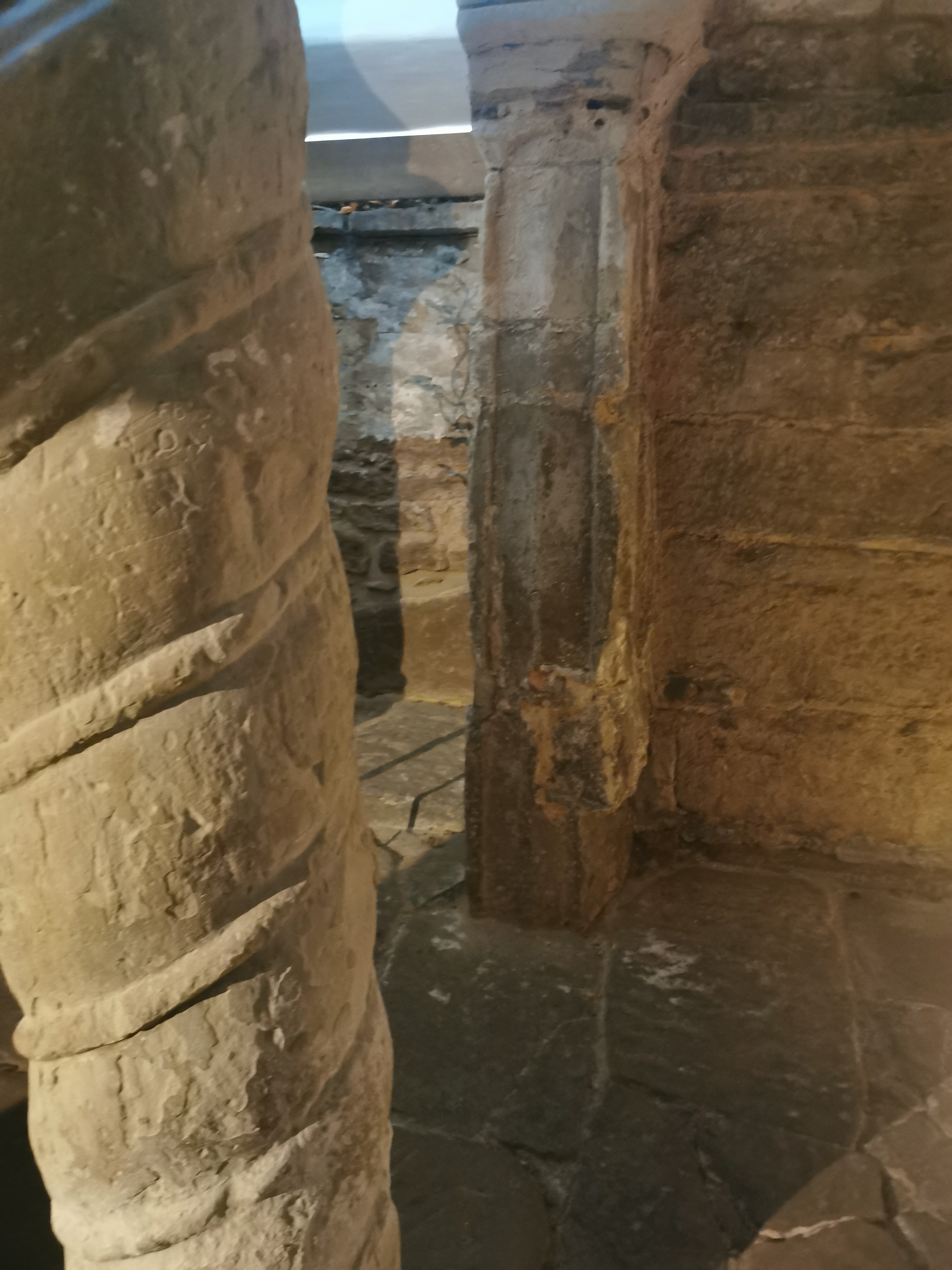
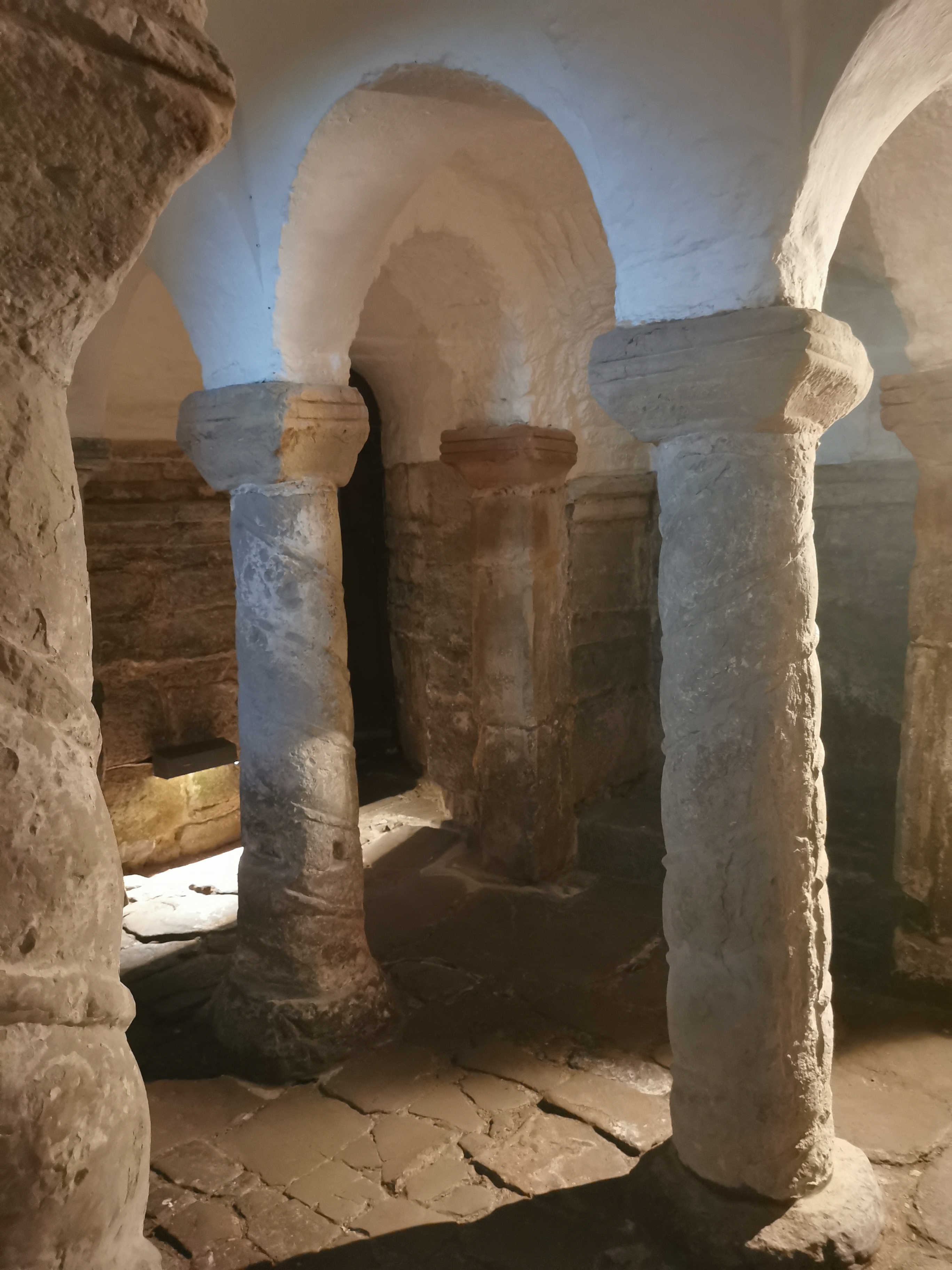
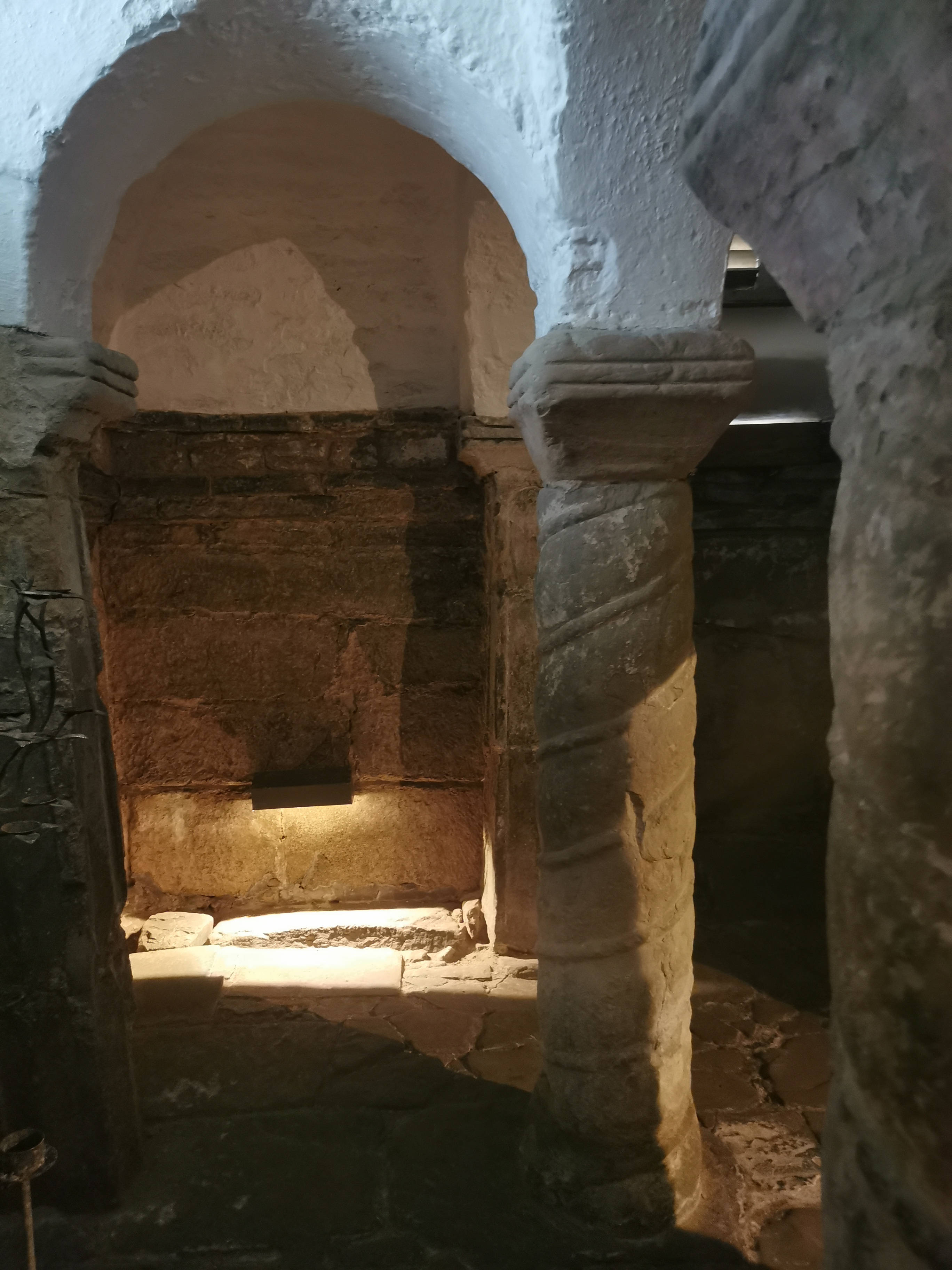
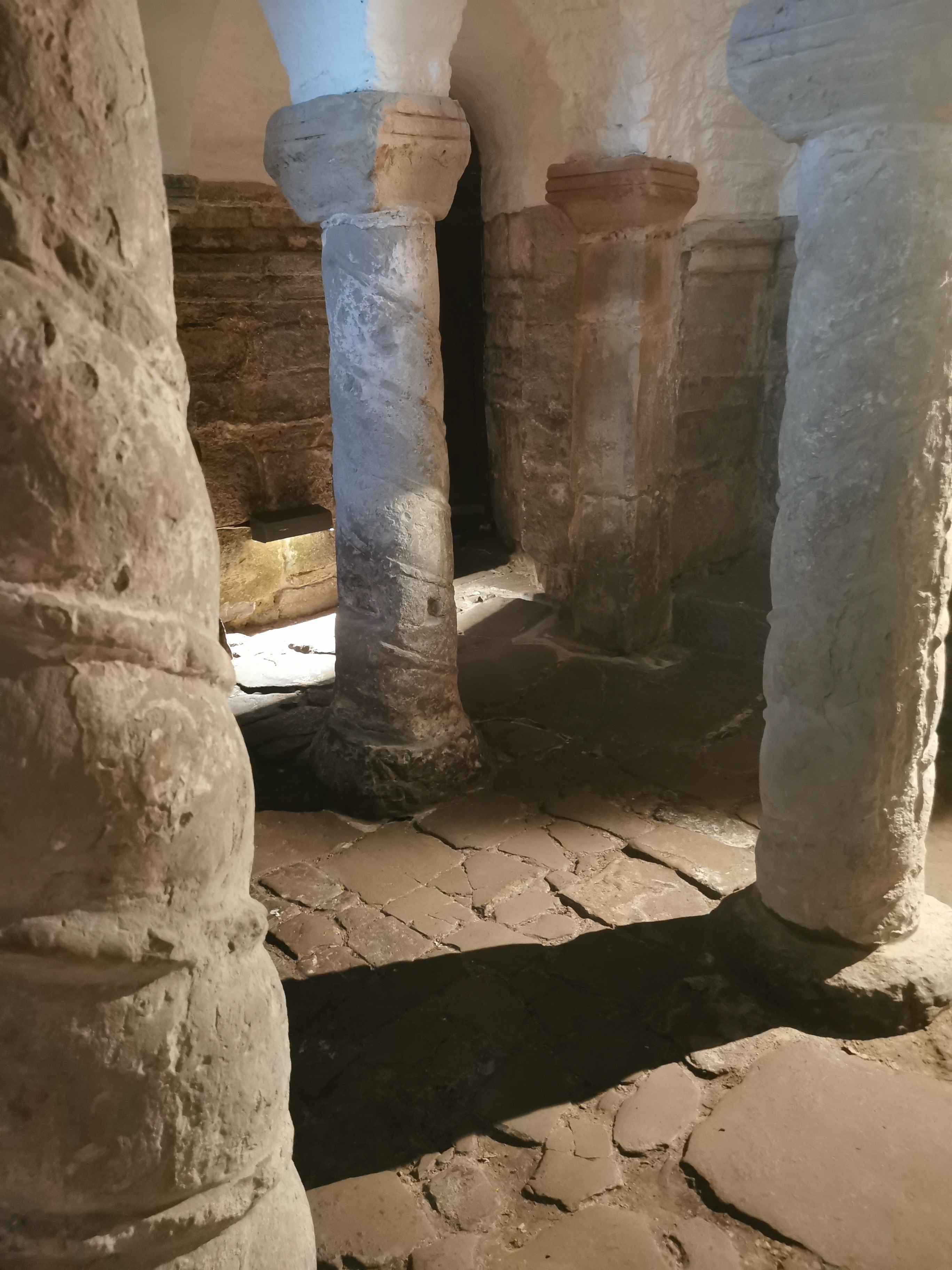
757, the first book in the brand new series, The House of Mercia. Here are some photos from my visit to Repton’s Saxon crypt #fiction #TalesOfMercia

Introducing 757, the first book in the brand new series, The House of Mercia #fiction #nonfiction #Mercia #MJPorter #HistoricalFiction #SaxonEngland #VikingAge #AngloSaxonHistory #BernardCornwell #LastKingdom #HistFic #ReadingCommunity #BookTok #Vikings

Here’s the blurb for 757

This is Mercia. The year is 757. 
A king will fall. A king will rise. 
But first, civil war will rage.

King Æthelbald’s forty-year vice-like rule over Mercia has been rigid. But he lacks a legitimate heir despite his insatiable bedchamber antics.

Offa must stand hostage to his family’s good behaviour, when his father missteps in removing his mother from Æthelbald’s bed. Shockingly, his younger sister now replaces her.

But the king isn’t finished with his denigration of Offa’s noble House. When his parents are traitorously killed, Offa’s resentment grows, compounded by the ridicule heaped on him by King Æthelbald’s oathsworn warriors.

With the king’s health deteriorating, the matter of the succession becomes paramount. There are plenty who share a claim to the kingship.

Discord threatens to fracture the mighty realm, and those with sword and shield, seax and spear are prepared to risk it all to be the future king of Mercia.

books2read.com/757

Or buy a signed copy direct from me

Join my Boldwood newsletter to receive a free prequel short story, written exclusively for the the release of The House of Mercia series. https://BookHip.com/MKSKVRX

The Eagle Will Rise, the first book in The Sundered Kingdom Series. Listen to me talk about why I wrote this book #historicalfiction #Mercia

It’s happy release day to The Eagle Will Rise, the first book in The Sundered Kingdom Series. Listen to me talk about why I wrote this book #newbook #historicalfiction #Mercia

I’m introducing The Eagle Will Rise and reading the first chapter. Enjoy.

Here’s the blurb

The king is dead; for Mercia to survive, another must take his place.

Coelwulf, Mercia’s last king, is dead. His legacy and right to rule Western Mercia have been claimed by Alfred of Wessex, but all know Alfred was never to have Mercia. Neither were the Viking raiders, who now command the eastern-most parts of Mercia and the former kingdom of the East Angles.

Icel, the bastion of Mercia’s wars against Wessex and the Viking raiders, lies dying, but he refuses to abandon his beloved kingdom to her long-standing enemies.

Rudolf, the once-young ally of King Coelwulf the second, is summoned by Icel to attend upon him. Grudgingly, he arrives at Budworth, the task laid before him, audacious to say the least; rescue Coelwulf’s acknowledged heir, Æthelred, from Wessex, where he’s held prisoner by King Alfred. To do so, Rudolf must prevail upon the dispersed oath-sworn warrior band of King Coelwulf, and all of them, aside from him, have ignored Icel’s increasingly furious demands to attend upon him. If they won’t obey Icel, then why should they listen to Rudolf?

The fate of Mercia’s survival rests in the hands of a man who should long have been in his grave, and Rudolf, a boy who’s become a man in the most trying of circumstances. They must forge Æthelred into the emblem of Mercian survival. Or die trying. But first, they must rescue Æthelred from someone who’s always pretended to be Mercia’s ally, and is anything but.

https://amzn.to/3PqbUGb (Kindle – it will be in KU as soon as I tick the correct button).

Also available in paperback, large print and hardback.

If you’re in the UK/US you can buy direct from IngramSpark below.

The Eagle Will Rise: A new action packed historica ….
Porter, MJ

Check out The Sundered Kingdom Series Page on the blog

Posts

Introducing Mercia: A Companion Guide to the Tales of Mercia

Introducing Mercia: A Companion Guide to the Tales of Mercia #ShortStories #Nonfiction #MJPorter #TalesOfMercia

I’ve been working on this for a while

I’m very excited to share with readers that I have FINALLY finished (for now) compiling all my short stories, blog posts, articles and some deleted and alternative scenes from my books set in Mercia. I call the eight series combined The Tales of Mercia, and now you can enjoy all these little extras too, and all in one place (see the list below).

Now, some of these stories have been shared before (in Coelwulf’s Company, and as newsletter subscriber exclusives, and newsletter subscribers have also received an earlier version of the ebook before I’d quite compiled everything). The blog posts should also have appeared here, on the blog, but I thought it was high time they were more readily accessible to readers (and to me). (I did intend to include a character name list as well, but it is a HUGE task, so that’s not yet completed.)

Although some of these stories are only currently available on Amazon or in print/audio copy, I’ve decided to share this collection on Kobo, Apple and maybe some other platforms too, as well as Amazon. This is so readers of those stories available everywhere can also enjoy the short stories.

Check out the details and find the purchase link (or click the image above).

Mercia: A Companion Guide to the Tales of Mercia brings together, for the first time, the short stories, alternative scenes, deleted scenes, and blog posts written about the eight series by MJ Porter set in the ancient Saxon kingdom of Mercia, (The Dark Age Chronicles, The Gods and Kings Trilogy, The House of Mercia, The Eagle of Mercia Chronicles, The Mercian Ninth Century, The Sundered Kingdom, The Lady of Mercia’s Daughter and the Earls of Mercia Series.)

Many of these have been published elsewhere, but never in one collection. The companion guide also includes pieces detailing the inspiration behind the many series and characters, as well as the history of the stories.

Includes:

Short Story: Transitions

Short Story: Elen (from the Dark Age Chronicles)

Short Story: A Father’s Son (from after the events of the Gods and Kings Trilogy)

Short Story: from the original Son of Mercia draft

Short Story: Cenfrith (Icel’s Uncle) (The Eagle of Mercia Chronicles)

Short Story: Wynflæd (The Eagle of Mercia Chronicles)

Short Story: A Meeting of Equals (the inspiration for The Last King)

Short Story: Ealdorman Coenwulf (from before The Last King)

Short Story: Lovers (from before The Last King)

Short Story: Icel – AD864 (originally in Coelwulf’s Company)

Short Story: Coelwulf – AD864 (originally in Coelwulf’s Company)

Short Story: Edmund – AD864 (originally in Coelwulf’s Company)

Short Story: Pybba – AD865 (originally in Coelwulf’s Company)

Short Story: Rudolf – AD871 (originally in Coelwulf’s Company)

Short Story: Gardulf – originally in The Last Alliance

Short Story: To Be A King (the Earls of Mercia series)

Short Story: The Prisoner (from after the Earls of Mercia Series)

Deleted Scene from Storm of Mercia (The Eagle of Mercia Chronicles)

Deleted Scene from The Last Shield (The Mercian Ninth Century)

Deleted Scene from The Eagle Will Rise (The Sundered Kingdom)

An Alternative Scene from A Conspiracy of Kings (The Lady of Mercia’s Daughter Duology)

Purchase Link

https://books2read.com/Mercia

If you want to stay up to date with new short stories, join my monthly newsletter.

Introducing 757, the first book in the brand new series, The House of Mercia #fiction #nonfiction #Mercia

Introducing 757, the first book in the brand new series, The House of Mercia #fiction #nonfiction #Mercia #MJPorter #HistoricalFiction #SaxonEngland #VikingAge #AngloSaxonHistory #BernardCornwell #LastKingdom #HistFic #ReadingCommunity #BookTok #Vikings

Here’s the blurb for 757

This is Mercia. The year is 757. 
A king will fall. A king will rise. 
But first, civil war will rage.

King Æthelbald’s forty-year vice-like rule over Mercia has been rigid. But he lacks a legitimate heir despite his insatiable bedchamber antics.

Offa must stand hostage to his family’s good behaviour, when his father missteps in removing his mother from Æthelbald’s bed. Shockingly, his younger sister now replaces her.

But the king isn’t finished with his denigration of Offa’s noble House. When his parents are traitorously killed, Offa’s resentment grows, compounded by the ridicule heaped on him by King Æthelbald’s oathsworn warriors.

With the king’s health deteriorating, the matter of the succession becomes paramount. There are plenty who share a claim to the kingship.

Discord threatens to fracture the mighty realm, and those with sword and shield, seax and spear are prepared to risk it all to be the future king of Mercia.

books2read.com/757

The background to the House of Mercia – AKA what happens after the Gods and Kings trilogy

If you’ve been with me for a while, you’ll know I’ve written about Mercia in many of the centuries of its existence. Until now, I haven’t ventured into the eighth century and many of you might not have read the Gods and Kings Trilogy (there is still time to get it read before House of Mercia hits the shelves), and even if you have, there’s a century between the final events of Warrior King (655) and the beginning of 757, the first book in The House of Mercia series. So, I thought it was time to add some flavour to this century.

The Gods and Kings trilogy follows a collection of mighty warrior kings in Saxon England from the 620s to the 650s, as the ‘larger’ Saxon kingdoms were forming – (Northumbria from Bernicia and Deira) (Mercia from the heartland of Mercia centred around the area of the Tomsæte (yep, they get a mention in the Dark Age Chronicles) to include the kingdoms of the Hwicce, the Magonsæte, Lindsey and Elmet). Of these, it’s the brother kings Eowa and Penda that most concern us, as they were both kings of Mercia, claiming descent through Pybba (and it’s this genealogy that leads us back to Wærmund (from the Dark Age Chronicles), and even mentions an Icel (do you see what I did there?)

Whatever the exact relationship between the two brothers (as explored in the Gods and Kings trilogy), they ruled one after another, Eowa falling at the battle of Maserfeld in 642, against the Northumbrians and Penda outliving him to rule until his death in 655. (There’s also another shadowy brother, possibly sharing a father but not a mother, Cuthwalh, who is important. He was never a king of Mercia, but his existence (if he existed) is very relevant to events in the eighth and indeed, ninth century.)

Eowa had children when he died. Penda also had children. As the brother who ruled second, the kingdom of Mercia was bequeathed to Penda’s children, first Pæda (his son, who didn’t rule for very long), then Wulfhere (Penda’s son 658-675), Æthelred (Penda’s son, who abdicated in 704 and died in 716), Ceonred (Wulfhere’s son, who ruled from 704-709 and abdicated to travel to Rome), Ceolred (Æthelred’s son, from 709-716) and then Coelwald, who briefly succeeds and is assumed to be another son of Æthelred, until the line passes to that descended from Eowa, through his son or daughter (I think in the Gods and Kings trilogy I’ve made Alweo a daughter), Alweo, in the figure of Æthelbald, while Offa’s line descended through the other brother, Osmod. (Looking at this, I can’t help thinking that a little less religious fervour might have been to the advantage of the ruling line of Mercia – but of course, this was the time of conversion – Wulfhere is said to have been the first Christian king of Mercia (although Pæda also converted, but sadly, met a sticky end). The relationship between Mercia and Northumbria at the time was, I think ‘messy.’ 

So, that all seems quite complicated. At this time, Mercia was very often in conflict with the kingdom of Northumbria, and indeed, a number of assassinations occur. Pæda is killed by his wife (a Northumbrian). A daughter of Penda also marries one of Oswiu’s sons, Alhfrith. The Northumbrian king, Oswiu (the cheek of it), then briefly rules Mercia, until he’s driven from Mercia by Wulfhere (Penda’s son), who then becomes king. Wulfhere endeavoured to defeat the Northumbrians, then being ruled by Ecgfrith (half-brother of Alhfrith), the son of Oswiu, but failed, whereas Wulfhere’s brother, Æthelred, was later successful. These two battles fascinate me, and if you’ve read my short story, A Father’s Son, which you can download here and join my mailing list) it’s the very beginning of a project where I hoped to tell the story of these two battles, the one where Northumbria is triumphant, the other where Mercia sets the record straight, but I’ve never quite found the time. 

This succinct account then brings us to Æthelbald, an old man by the time The House of Mercia takes place, but one who evidently ruled well throughout his 41 years – quite an astonishing feat at the time. It’s believed he lived for some time in exile before becoming king, perhaps in the kingdom of the East Angles, when her king, Ælfwald, ruled. It seems evident, therefore, that there was some discord in Mercia at the time between the potential ruling houses. While Eowa’s son hadn’t endeavoured to claim the kingship of Mercia (I think he died, but maybe that was what I had happen in the Gods and Kings trilogy), his descendants were more ambitious. So, this brings us to the events of 757, the first book in the House of Mercia series. What comes next will form the narrative.

Join my Boldwood newsletter to receive a free prequel short story, written exclusively for the the release of The House of Mercia series. https://BookHip.com/MKSKVRX

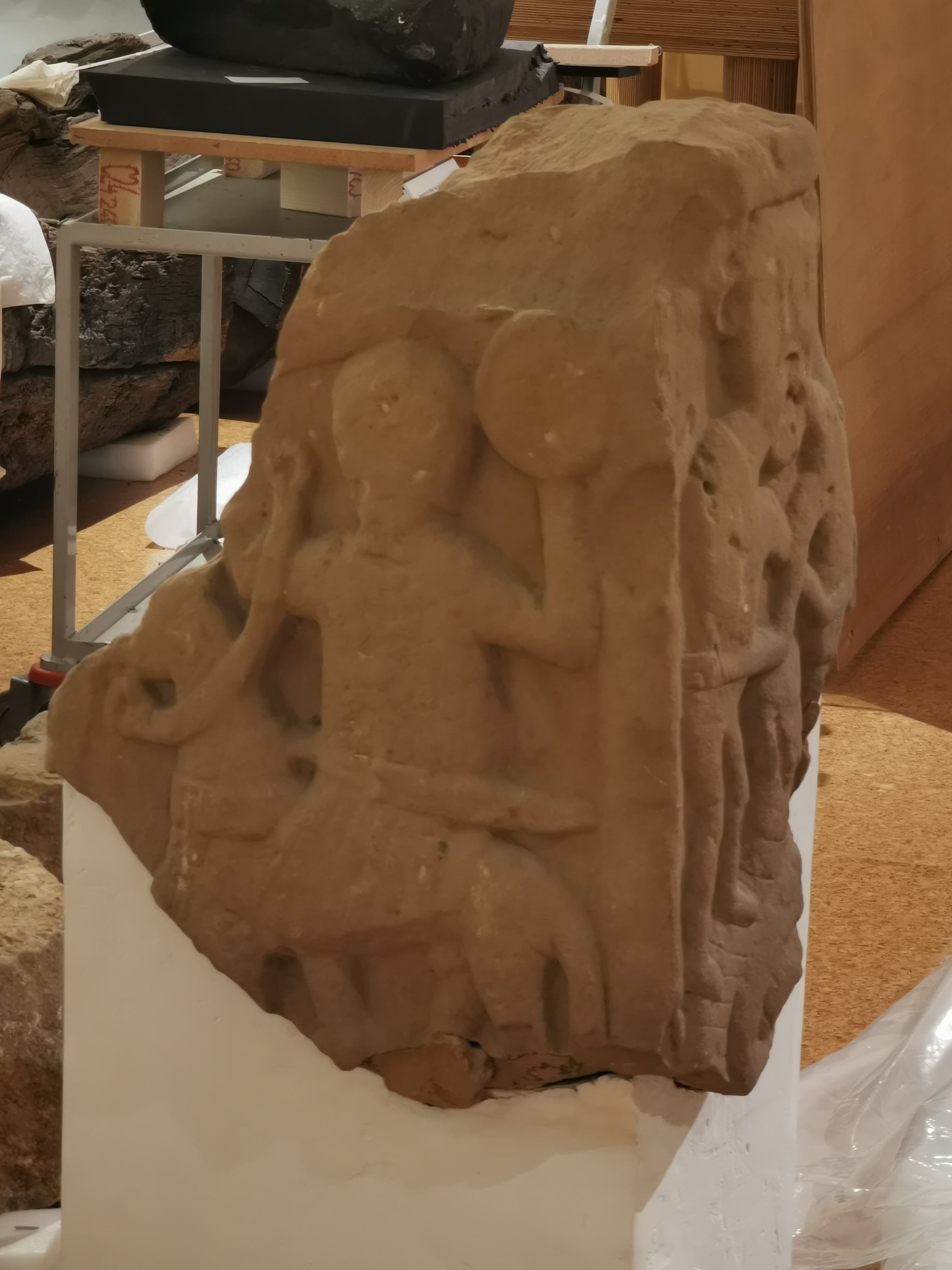
The Repton Stone displayed at Derby Museum. The image shows a carbed image of a mounted warrior, believed to be King Æthelbald of Mercia.
The Repton Stone at Derby Museum, believed to be a depiction of King Æthelbald riding a horse (please note, the museum was being renovated when I visited. It’s not usually displayed like this).