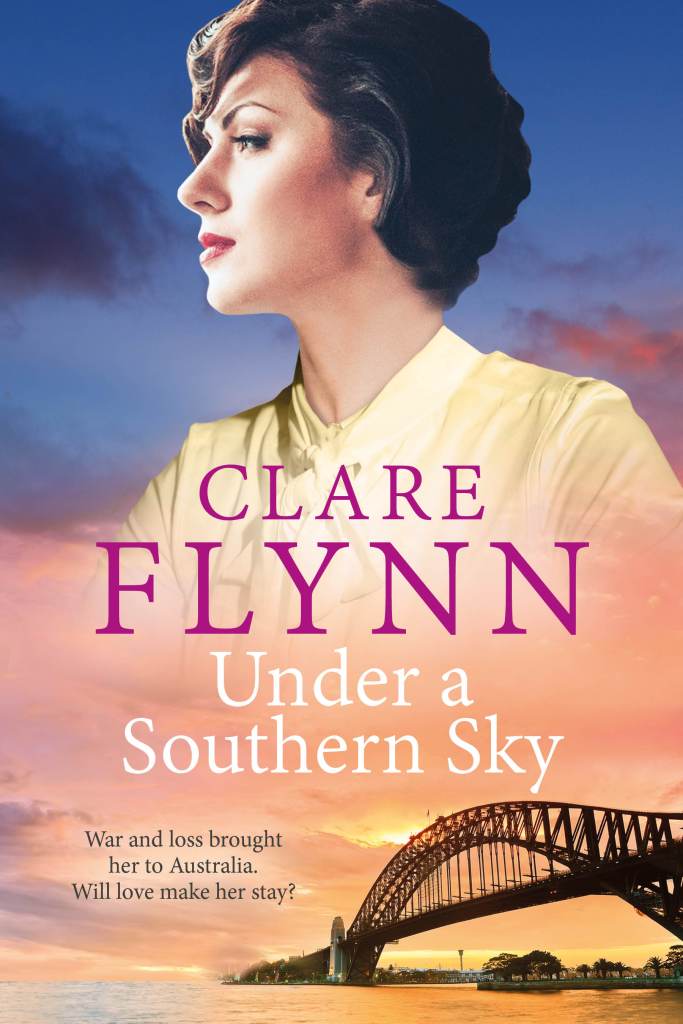
I’m delighted to welcome Clare Flynn and Under a Southern Sky to the blog #NewReleaseBook #BookCompetition #HistoricalFictionBook
I’m delighted to welcome Clare Flynn and Under a Southern Sky to the blog
Here’s the blurb
After a German fighter sinks her husband’s ship in the icy Atlantic, grief-stricken Hannah Kidd flees the rubble and ration queues of wartime Liverpool for a new life on the other side of the world. In sun-soaked Sydney, she discovers more than just refuge from nightly bombing raids—she finds unexpected family connections, meaningful work, and the handsome Eddie Greenbank.
As Hannah explores the golden beaches of Sydney’s eastern shores, the misty valleys of the Blue Mountains, and the rolling scenery of the Hunter Valley, she begins to believe that happiness isn’t lost forever. But even in Australia, the war’s long shadow threatens everything she’s begun to rebuild. Hannah must decide: will she let grief define her, or will she fight for the future she never thought she’d have?
A sweeping story of resilience and renewal set against the dramatic backdrop of wartime Australia, Under a Southern Sky explores how far we must sometimes travel—both in miles and in spirit—to find our way home.
Clare Flynn is the award-winning author of nineteen historical novels. She is the 2020 Selfies Adult Fiction prize winner for The Pearl of Penang and the 2022 Indie Champion for the Romantic Novelists Association. Clare is a Fellow of the Royal Society of Arts and a member of the Historical Writers’ Association and the Romantic Novelists Association. She lives in Eastbourne on the south coast of England.
*Terms and Conditions –UK entries welcome. Please enter using the Gleam box below. The winner will be selected at random via Gleam from all valid entries and will be notified by Twitter and/or email. If no response is received within 7 days then Rachel’s Random Resources reserves the right to select an alternative winner. Open to all entrants aged 18 or over. Any personal data given as part of the competition entry is used for this purpose only and will not be shared with third parties, with the exception of the winners’ information. This will passed to the giveaway organiser and used only for fulfilment of the prize, after which time Rachel’s Random Resources will delete the data. I am not responsible for despatch or delivery of the prize.
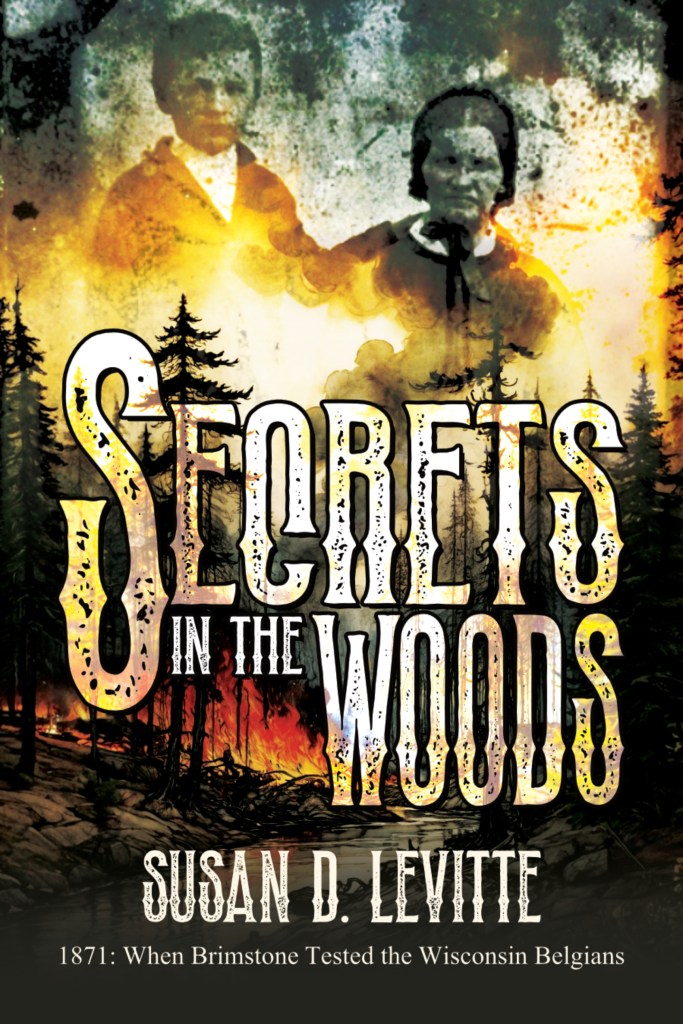
I’m welcoming Susan D Levitte to the blog with an excerpt from her new book, The Secrets in the Woods, 1871Fire #PeshtigoFire #WIHistory #BlogTour #TheCoffeePotBookClub
I’m welcoming Susan D Levitte to the blog with an excerpt from her new book, The Secrets in the Woods
Here’s a snippet
The assignment was going to mark the anniversary of a tragic period in the region’s history. The Peshtigo Fire, or the Great Fire as those on this side of the bay often referred to it, killed at least fifteen hundred white people and countless American Indians in a few hours.
Because it had happened sixty years ago, there were not many people left to tell their stories. Many of those still alive had just been small children at the time, with memories dimmed and shaded by stories they had heard in hushed tones during their lives.
When Edna Mae was told she would be interviewing a woman who had been fifteen when the fire happened…
Here’s the blurb
On October 8, 1871, fire turned night into a living hell.
While Chicago’s blaze claimed the headlines, a fiercer and more devastating inferno swept across Wisconsin’s Green Bay peninsula-obliterating farms, forests, and families in its path.
Here, among immigrant settlers carving new lives from the wilderness, survival came down to split-second choices: to run, to hide, to fight the flames. Mothers shielded children with their bodies, fathers vanished into smoke, and neighbors faced the firestorm with nothing but faith and will.
Inspired by forgotten accounts and newspaper fragments, Secrets in the Woods brings to life the untold human drama of one of America’s most harrowing nights-a story of resilience, loss, and the fragile hope that rises from the ashes.
Triggers: Corporal punishment, spousal abuse, deaths by natural disaster, death in childbirth.
Susan was born and raised as the fifth generation to live on the family land in Northeast North Dakota (nearly Canada). She moved to Wisconsin in 1997, living in Door and Manitowoc County and now resides in the pastoral Kewaunee County. Married to Quentin, they share their home with Olive and Penny, their silly Labrador retrievers, and Gil, their ever-lazy cat.
As a devoted reader of historical fiction and nonfiction, she brings her passion for history and desire to educate readers into her work. With twenty-five years of experience in global advertising and marketing, she holds a master’s degree in communications and currently contributes her expertise to the Green Bay Austin Straubel International Airport.
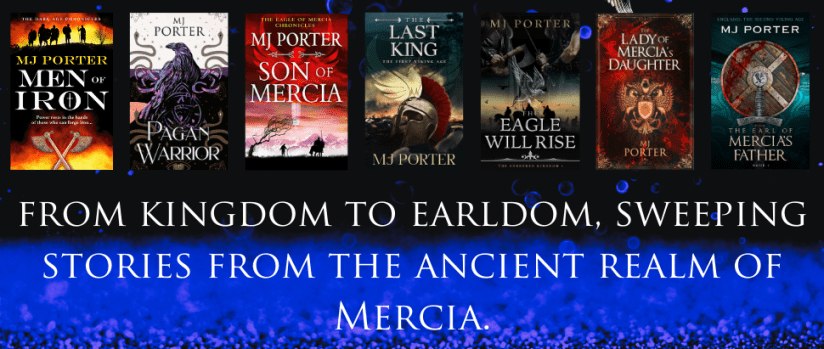
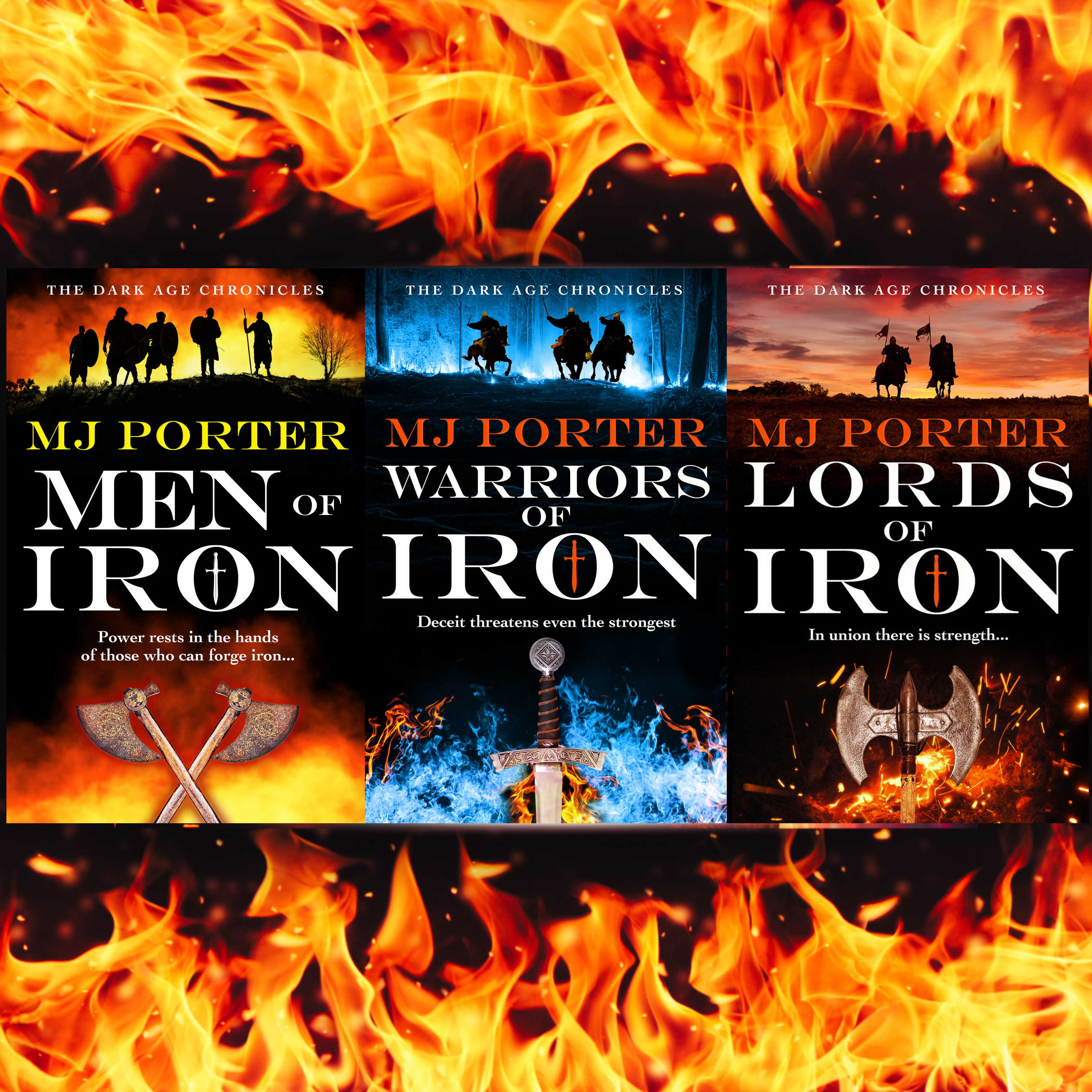
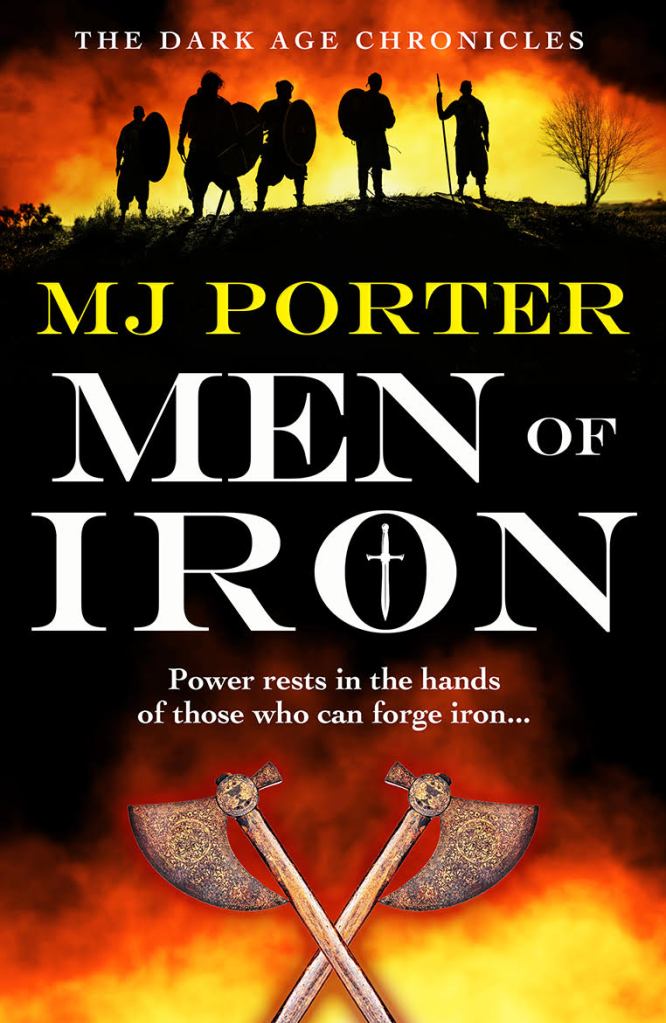
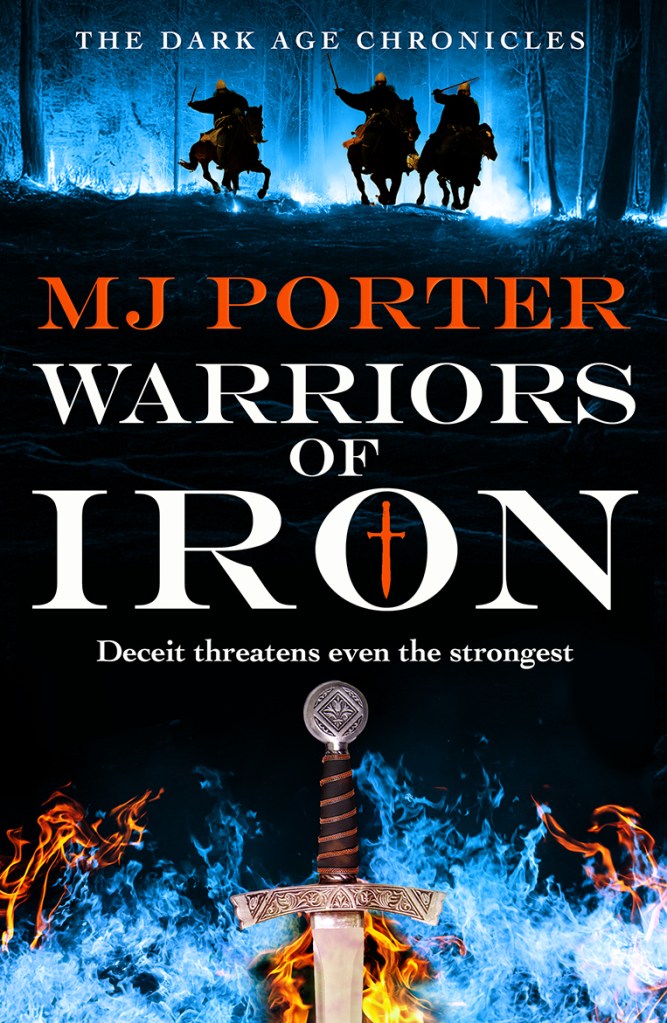
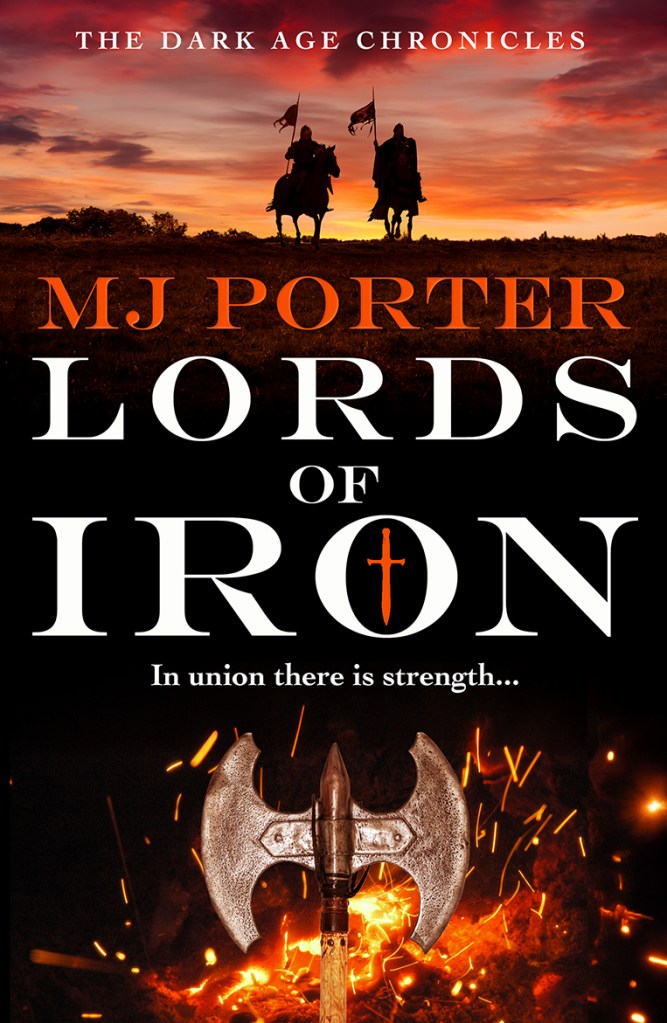
It’s happy release day to Lords of Iron, the third and concluding book in the Dark Age Chronicles Trilogy. Let’s talk about battle standards #newrelease #MenOfIron #WarriorsOfIron #LordsofIron #histfic
What comes after the events of the Dark Age Chronicles (as well as before)
In deciding on a date to set the Dark Age Chronicles, I was quite careful. I wanted it to be after the era of the legendary Arthur (the battle of Camlann is dated to 537 in the Annals Cambriae (the Welsh Annals)), but also before written sources start to make some references to what was happening in what would become Saxon England in the later 500s anywhere that wasn’t in the south/south-east.
In the A version of the ASC there are 26 entries for the 500s. Eight are dated before AD540. These are mostly concerned with events in the south, Kent, the Isle of Wight, and Portsmouth, and their legendary Saxon founders. After 540, we’re treated to the genealogies for what would become Northumbria (547 and 560), Wessex (552 and 597) as well as having references to the religions in Britain at the time, through accounts of Columba and the missionary activities in Kent from Pope Gregory. There are any number of battles between those forging a foothold in their newly forming kingdoms and the native Britons.
Our first real reference for anything happening in what would become the kingdom of Mercia is under the year 577 when we’re told Gloucester, Cirencester and Bath were taken from the ‘Britons’ by Cuthwine and Ceawlin (of Wessex). Gloucester would certainly be within the later kingdom of Mercia. Cirencester and Bath weren’t.
While I’ll repeat that the Anglo-Saxon Chronicle wasn’t begun until the 890s (so over 300 years later) and Bede, which much of the ASC is based on at this time, was writing in the 730s (so nearly two hundred years later), I still wanted almost a clean slate for my characters to inhabit. There was also the matter of plague to try and avoid, as well as a series of bad harvests, that are referenced but don’t form more than a background detail in the books.
I felt that to truly gain a ‘feel’ and an ‘understanding’ for what might have been happening at this time, it was necessary to step aside from any historical account and to rely on the archaeological record. The years 540 and 541 felt as though they provided a good opportunity to do just that. However, it’s always important to have an eye to what was going to happen, as well as what had happened before. And, as I wrote, a number of elements seemed to become very clear to me. While there are reports of battles amongst the Saxon invaders and the native populations (six of them in those eight entries before 540, although some of them are quite small), and while they feel quite overwhelming when simply listed because they form so much of the narrative, there aren’t a lot of them mentioned before AD540. The impetus certainly seems to gather pace after that date (of the remaining 18 entries, eight reference what seem to be quite large battles). Why this might have been, began to make sense as I explored the idea of no new iron production after the end of Roman Britain, until the skill was ‘rediscovered.’ Without the ability to easily overwhelm an enemy through new blades that weren’t made from recycled metals, would people who’d endured famine and plague, really want to risk it all when there was no chance of success? It felt unlikely. Would you? The need to fight isn’t always taken when you know you’ll succeed, sometimes it’s also desperation, but if these settlements were doing reasonably well, why take the chance? Surely, they needed to rebuild and form alliances to survive.
And so, as I’ve written the trilogy, what would come after – the increasing battles, the desire of the invaders to establish ‘kingships’ in Wessex, Kent, Northumbria, Mercia and the kingdom of the East Angles, began to make a lot more sense – with the rediscovery of how to forge sharpened blades (or indeed, to import them when the ‘invaders’ arrived (whether to intermarry or to make war), because unlike in Britannia, the ability to forge blades didn’t become lost in the homelands of the Saxon invaders) there were suddenly people who could start to dominate, and who would want to dominate.
And yet, the archaeology couldn’t be forgotten either. There aren’t many battle sites known from this era. What can be said with more surety, is that there was a co-mingling – all sorts of crossovers are found in the burial record – and indeed, the burial rites of many changed during this undocumented sixth century. There was undoubtedly discord between peoples, but there was also accord. Until there wasn’t. So, something had to change to bring about the formation of the Saxon kingdoms. I’m not saying my ideas are correct, but they are intriguing, especially when played out in a fictional environment where I can endeavour to explain what might have been happening – both in terms of war, and peace. (And, some would argue not all iron production was lost – it certainly wasn’t – but it becomes much more difficult to ‘find’ – i.e. no nails to secure coffins in the burial record in the heartland of England – what was happening in Wales/Devon and Cornwall is very different).
After the Dark Age Chronicles, we move into a period where identifiable kingships and kingdoms are forming – we’re moving into what would become Saxon England, and towards the events of the seventh century, which would be dominated by discord between Mercia and Northumbria, Wessex and the other kingdoms, and the reigns of the alleged ‘bretwaldas’ (wide rulers.) We’re moving towards what’s more immediately understood and known, but the sixth century is where these developments have their routes, as twisted, tangled, unexplainable and often, as baffling as they are. (And we don’t really need a legendary figure to explain what’s happening, do we, although the prevalence of Excalibur does perhaps answer to these questions as well?). We’re moving towards The Gods and Kings Trilogy.
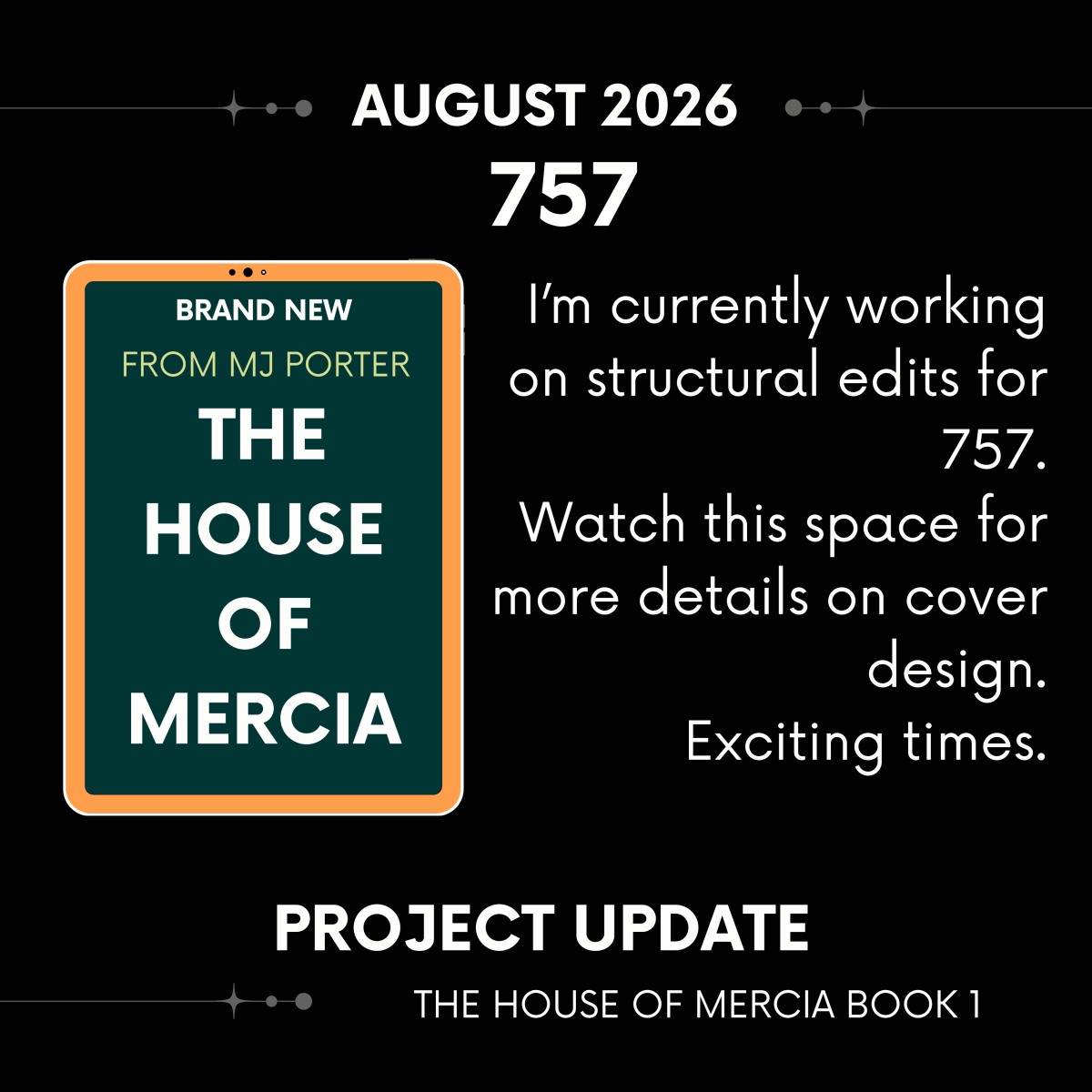
Introducing 757, the first book in the brand new series, The House of Mercia #fiction #nonfiction #Mercia
Here’s the blurb for 757
This is Mercia. The year is 757. A king will fall. A king will rise. But first, civil war will rage.
King Æthelbald’s forty-year vice-like rule over Mercia has been rigid. But he lacks a legitimate heir despite his insatiable bedchamber antics.
Offa must stand hostage to his family’s good behaviour, when his father missteps in removing his mother from Æthelbald’s bed. Shockingly, his younger sister now replaces her.
But the king isn’t finished with his denigration of Offa’s noble House. When his parents are traitorously killed, Offa’s resentment grows, compounded by the ridicule heaped on him by King Æthelbald’s oathsworn warriors.
With the king’s health deteriorating, the matter of the succession becomes paramount. There are plenty who share a claim to the kingship.
Discord threatens to fracture the mighty realm, and those with sword and shield, seax and spear are prepared to risk it all to be the future king of Mercia.
The background to the House of Mercia – AKA what happens after the Gods and Kings trilogy
If you’ve been with me for a while, you’ll know I’ve written about Mercia in many of the centuries of its existence. Until now, I haven’t ventured into the eighth century and many of you might not have read the Gods and Kings Trilogy (there is still time to get it read before House of Mercia hits the shelves), and even if you have, there’s a century between the final events of Warrior King (655) and the beginning of 757, the first book in The House of Mercia series. So, I thought it was time to add some flavour to this century.
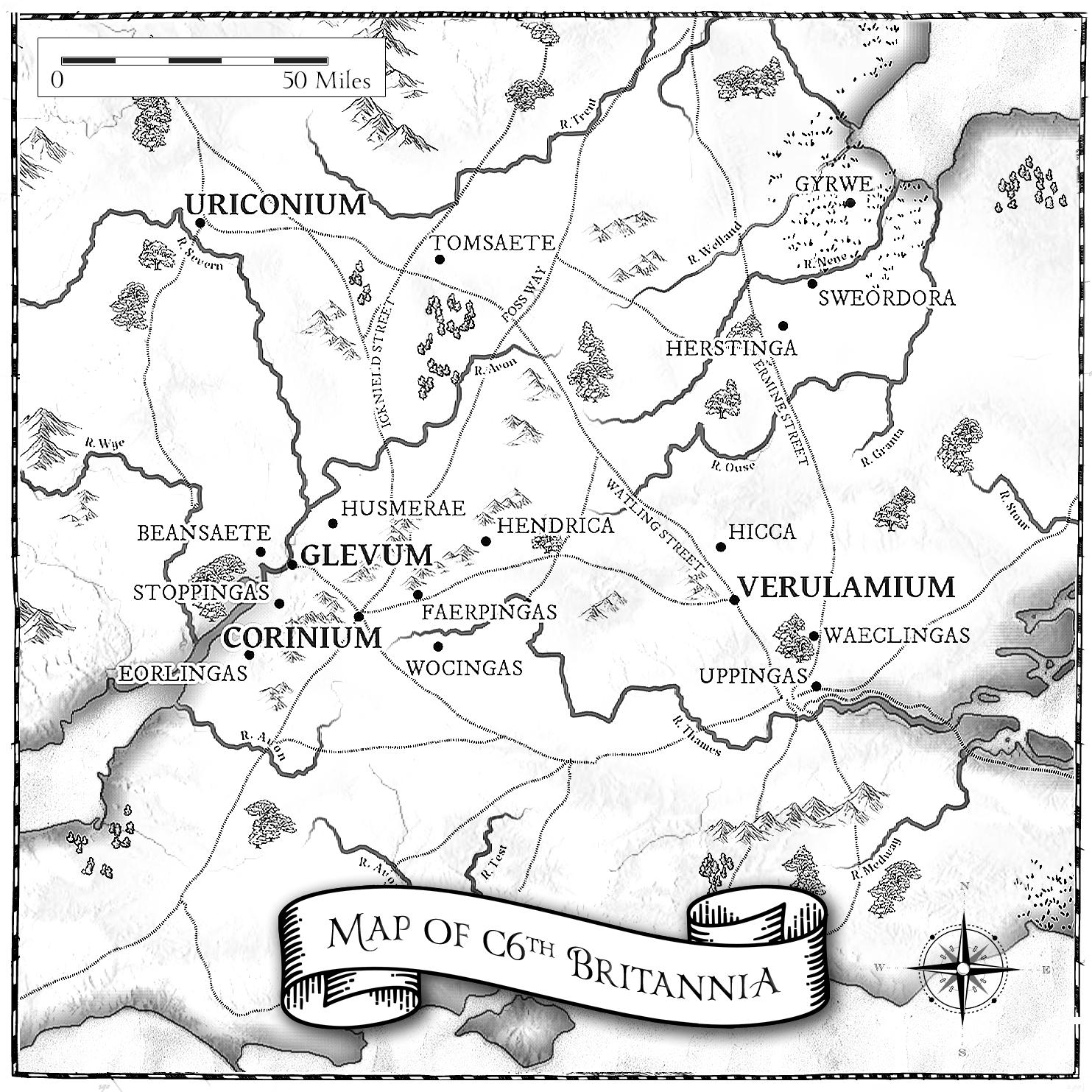
The Gods and Kings trilogy follows a collection of mighty warrior kings in Saxon England from the 620s to the 650s, as the ‘larger’ Saxon kingdoms were forming – (Northumbria from Bernicia and Deira) (Mercia from the heartland of Mercia centred around the area of the Tomsæte (yep, they get a mention in the Dark Age Chronicles) to include the kingdoms of the Hwicce, the Magonsæte, Lindsey and Elmet). Of these, it’s the brother kings Eowa and Penda that most concern us, as they were both kings of Mercia, claiming descent through Pybba (and it’s this genealogy that leads us back to Wærmund (from the Dark Age Chronicles), and even mentions an Icel (do you see what I did there?)
Whatever the exact relationship between the two brothers (as explored in the Gods and Kings trilogy), they ruled one after another, Eowa falling at the battle of Maserfeld in 642, against the Northumbrians and Penda outliving him to rule until his death in 655. (There’s also another shadowy brother, possibly sharing a father but not a mother, Cuthwalh, who is important. He was never a king of Mercia, but his existence (if he existed) is very relevant to events in the eighth and indeed, ninth century.)
Eowa had children when he died. Penda also had children. As the brother who ruled second, the kingdom of Mercia was bequeathed to Penda’s children, first Pæda (his son, who didn’t rule for very long), then Wulfhere (Penda’s son 658-675), Æthelred (Penda’s son, who abdicated in 704 and died in 716), Ceonred (Wulfhere’s son, who ruled from 704-709 and abdicated to travel to Rome), Ceolred (Æthelred’s son, from 709-716) and then Coelwald, who briefly succeeds and is assumed to be another son of Æthelred, until the line passes to that descended from Eowa, through his son or daughter (I think in the Gods and Kings trilogy I’ve made Alweo a daughter), Alweo, in the figure of Æthelbald, while Offa’s line descended through the other brother, Osmod. (Looking at this, I can’t help thinking that a little less religious fervour might have been to the advantage of the ruling line of Mercia – but of course, this was the time of conversion – Wulfhere is said to have been the first Christian king of Mercia (although Pæda also converted, but sadly, met a sticky end). The relationship between Mercia and Northumbria at the time was, I think ‘messy.’
So, that all seems quite complicated. At this time, Mercia was very often in conflict with the kingdom of Northumbria, and indeed, a number of assassinations occur. Pæda is killed by his wife (a Northumbrian). A daughter of Penda also marries one of Oswiu’s sons, Alhfrith. The Northumbrian king, Oswiu (the cheek of it), then briefly rules Mercia, until he’s driven from Mercia by Wulfhere (Penda’s son), who then becomes king. Wulfhere endeavoured to defeat the Northumbrians, then being ruled by Ecgfrith (half-brother of Alhfrith), the son of Oswiu, but failed, whereas Wulfhere’s brother, Æthelred, was later successful. These two battles fascinate me, and if you’ve read my short story, A Father’s Son, which you can download here and join my mailing list) it’s the very beginning of a project where I hoped to tell the story of these two battles, the one where Northumbria is triumphant, the other where Mercia sets the record straight, but I’ve never quite found the time.
This succinct account then brings us to Æthelbald, an old man by the time The House of Mercia takes place, but one who evidently ruled well throughout his 41 years – quite an astonishing feat at the time. It’s believed he lived for some time in exile before becoming king, perhaps in the kingdom of the East Angles, when her king, Ælfwald, ruled. It seems evident, therefore, that there was some discord in Mercia at the time between the potential ruling houses. While Eowa’s son hadn’t endeavoured to claim the kingship of Mercia (I think he died, but maybe that was what I had happen in the Gods and Kings trilogy), his descendants were more ambitious. So, this brings us to the events of 757, the first book in the House of Mercia series. What comes next will form the narrative.
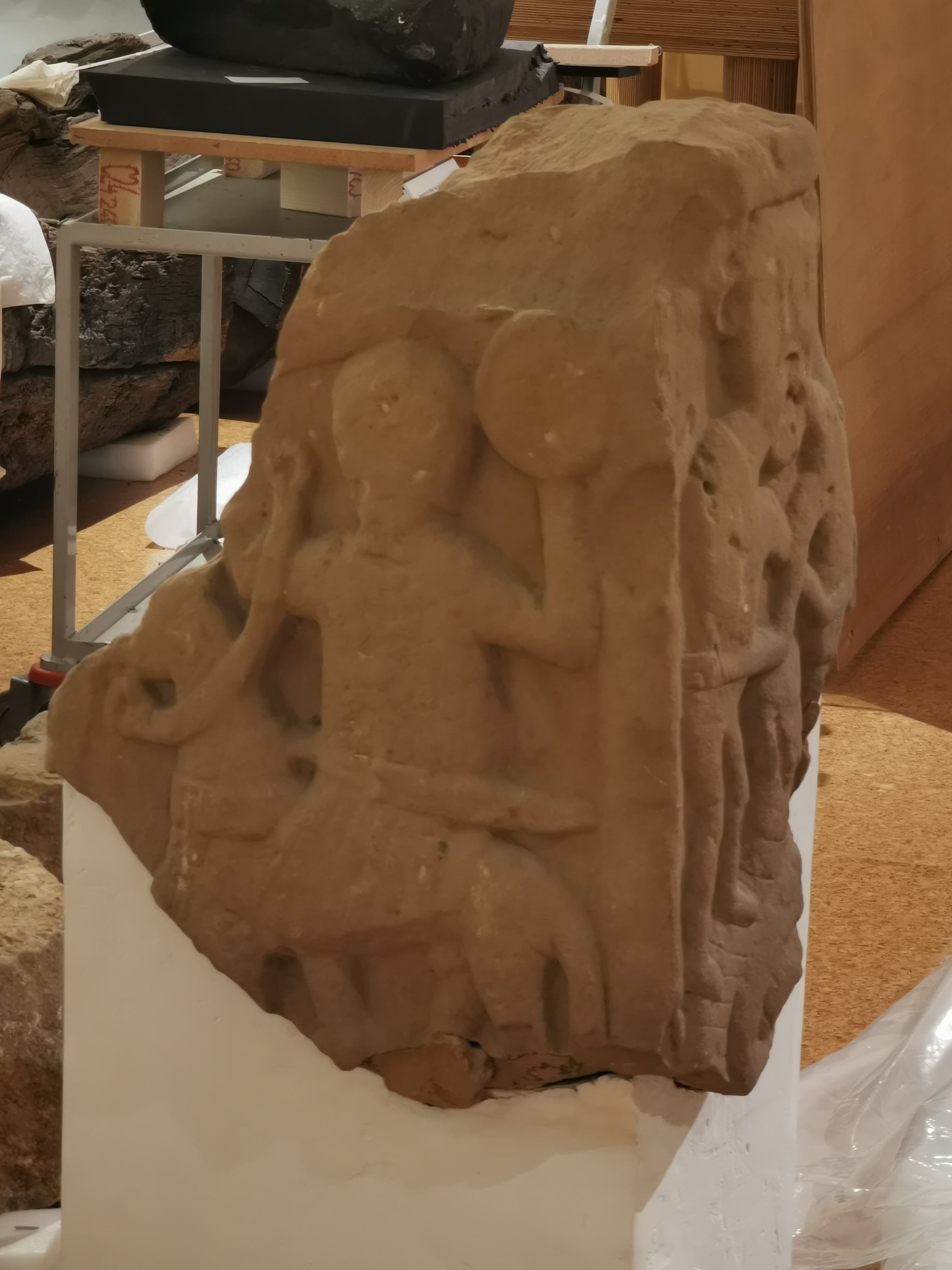
The Repton Stone at Derby Museum, believed to be a depiction of King Æthelbald riding a horse (please note, the museum was being renovated when I visited. It’s not usually displayed like this).
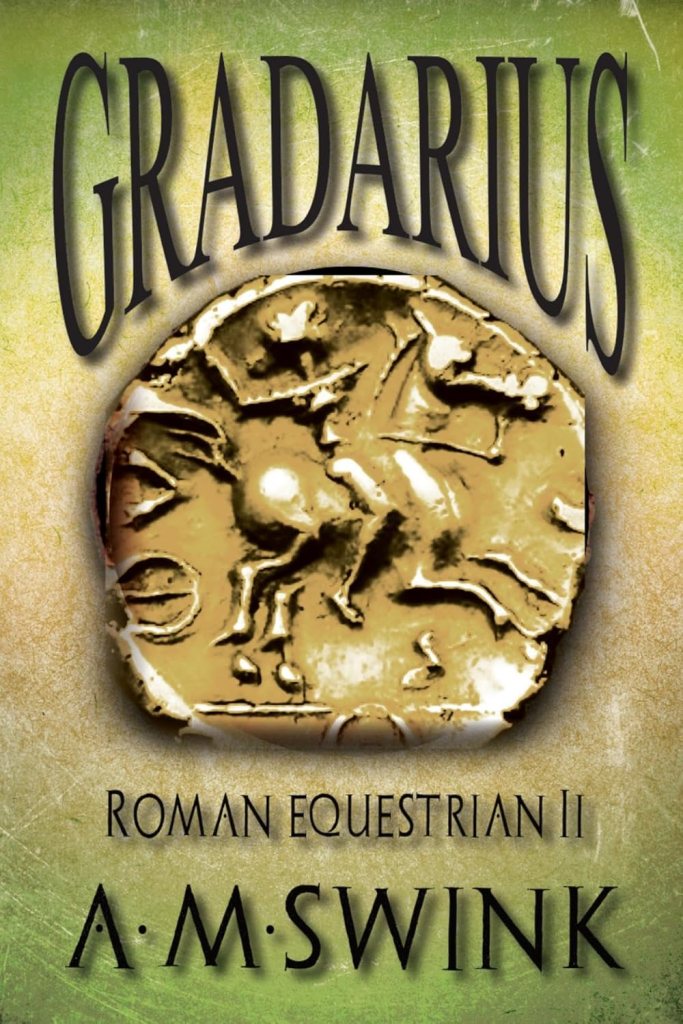
I’m delighted to welcome A.M.Swink and her new book, Gradarius, to the blog with a fab excerpt #romanequestrian #romanequestrianseries #gradarius #ancienthistoricalfiction #romanfiction #equestrianfiction #boudicca
I’m delighted to welcome A.M.Swink and her new book, Gradarius, to the blog with a fab excerpt
Excerpt from Gradarius
The fresh air did little to improve Decimus’s brooding humour. He stalked down the dim street, forcing Luciana to hasten to keep pace. She skirted around a timber drain dividing the roughly cobbled path and followed the centurion’s hulking shadow towards the quay. He turned to avoid the singing and laughter emanating from one of the nearby warehouses and made his way to the bridge spanning the Tamesis. Luciana, catching her breath, halted alongside him.
She gazed at him curiously. Decimus’s flinty blue-green eyes took in the collection of homes and businesses built up on the islands dotting the river’s far side. She touched his arm and felt him stiffen. She lowered her eyes to the bridge and took in the dark waves lapping beneath them.
‘Strange place to build a town,’ he murmured, shaking his head. ‘It’s nothing but a swamp.’
‘The waters here are sacred. Their boundary between the living and the dead is thin.’ Luciana folded her arms, shuddering within the folds of her wolfskin cloak. ‘It is too powerful for any one tribe to claim. But of course, you Romans have the hubris to believe you can.’
Decimus ruefully shook his head. ‘It was just a ford and an earthen fort when I visited last.’
She cocked her head at him. ‘I didn’t know you’d visited Londinium before.’
His expression hardened. ‘During the invasion.’
She heard finality in his tone and let the matter drop. She picked up one of his broad palms in both her own, twining her fingers through his. ‘Has the air cleared your head?’
He didn’t answer, eyes still locked upon the far side of the bridge. His grasp tightened as he squeezed her hands.
She felt the cool breeze whipping up from the quay and rested her head on his shoulder. A few pins fell free of her tresses, dropping into the inky waters below.
‘I’m sure you’d celebrate…if we were to withdraw from Britannia and leave you be,’ he finally said.
She clung tighter to his side and sighed. ‘I wouldn’t be unhappy, if that’s what you mean. Though I wouldn’t have any freedom to enjoy.’ She glanced up at him. ‘I’m your property, remember? I go where you bid me.’
He wound his free arm about her, drawing her into his chest. ‘You know I want nothing more than to go back to Rome.’ A lump rose in his throat. ‘But I can’t go yet. The legions can’t go yet. Not after everything…everything that’s been done.’
She gazed up at him. ‘You realise that everything that’s been done is precisely why we want you to leave?’
He lowered his head, brushing his whiskers against her brow. ‘Do you?’
‘Oh, Decimus.’ She closed her eyes. ‘I don’t know what I want anymore.’
She tore herself away and shuffled along the pier, tightly clasping her cloak to her. The thought of her mother and the Cornovii women huddled in their prison cell sprang to her mind and she shuddered. I have failed them. I’ve already turned traitor…and for what?
The wheel of Taranis burned against her skin. She squeezed her eyes shut. This is Gaius Nerfinius all over again. You’ve learned nothing, Luciana. Nothing. Do you think he loves you? Do you really love him so much that you would throw your freedom away? He is a Roman, after all…
The wind whipped about her, freeing the rest of her locks. They tumbled across her shoulders in a golden cascade, ends pulled like a flag by the gust.
‘Luciana.’
She turned to see Decimus still rooted to his spot, gazing after her. The moon peeked from behind the heavy clouds darkening the sky, illuminating all the emotion in his eyes that his stern face belied. Her pulse quickened, renewing the bond that drew her irresistibly to him. She tucked a fluttering strand behind her ear and smiled. I suppose many have turned traitor for worse.
She took a step towards him, though he stayed her with a hand. ‘Let me watch you a moment longer.’
Luciana straightened, tossing her head. She gazed at the water, letting the wind buffet her about. Decimus slowly walked to her. She glowed under the admiration shining from his eyes.
He tentatively reached out and brushed her cheek. ‘How can you be real?’
She warmed at his touch and stepped into his embrace. She took his grizzled cheeks in her hands and kissed him. Her thumb brushed the angry scar curving out of his beard, ignoring the way he winced and shifted away from her touch. Luciana recaptured his lips, savouring his hot breath and the aroma of spiced stew that clung to him. Decimus responded warmly, pressing her to him and cradling her slim form as it melded into his.
When they finally broke off to catch their breath, Luciana met his eyes. ‘It matters not what policy your emperor decides. For as long as I am yours, I go wherever you go.’
Here’s the blurb
WAR IS ON THE HORIZON
Sworn enemies turned lovers, Decimus and Luciana face new challenges that put their love to the test. Decimus, haunted by his past, struggles with his feelings in the present. Luciana, when confronted with her old friend Boudicca’s struggles, questions which of her loyalties is more important: her loyalty to Decimus, or her loyalty to her people? When sent to investigate a Roman traitor in Decimus’s legion, both will have to decide which side of the coming battle they’ll be on.
Rome and Britannia are hurtling toward a reckoning. Will Decimus and Luciana find a way forward together before war tears them apart?
A.M. Swink, the author of the award-winning Roman Equestrian series, grew up in Dayton, Ohio, obsessed with two things: books and horses. After a childhood of reading, writing, showing, and riding, she moved to Lexington, Kentucky to complete three degrees and work as a college professor of reading and writing.
She’s travelled extensively around Europe, exploring ancient sites and artefacts relating to the Iron Age and Roman era. She is fascinated by our connection to the past and the ancestral tether that draws us back into the mists of time.
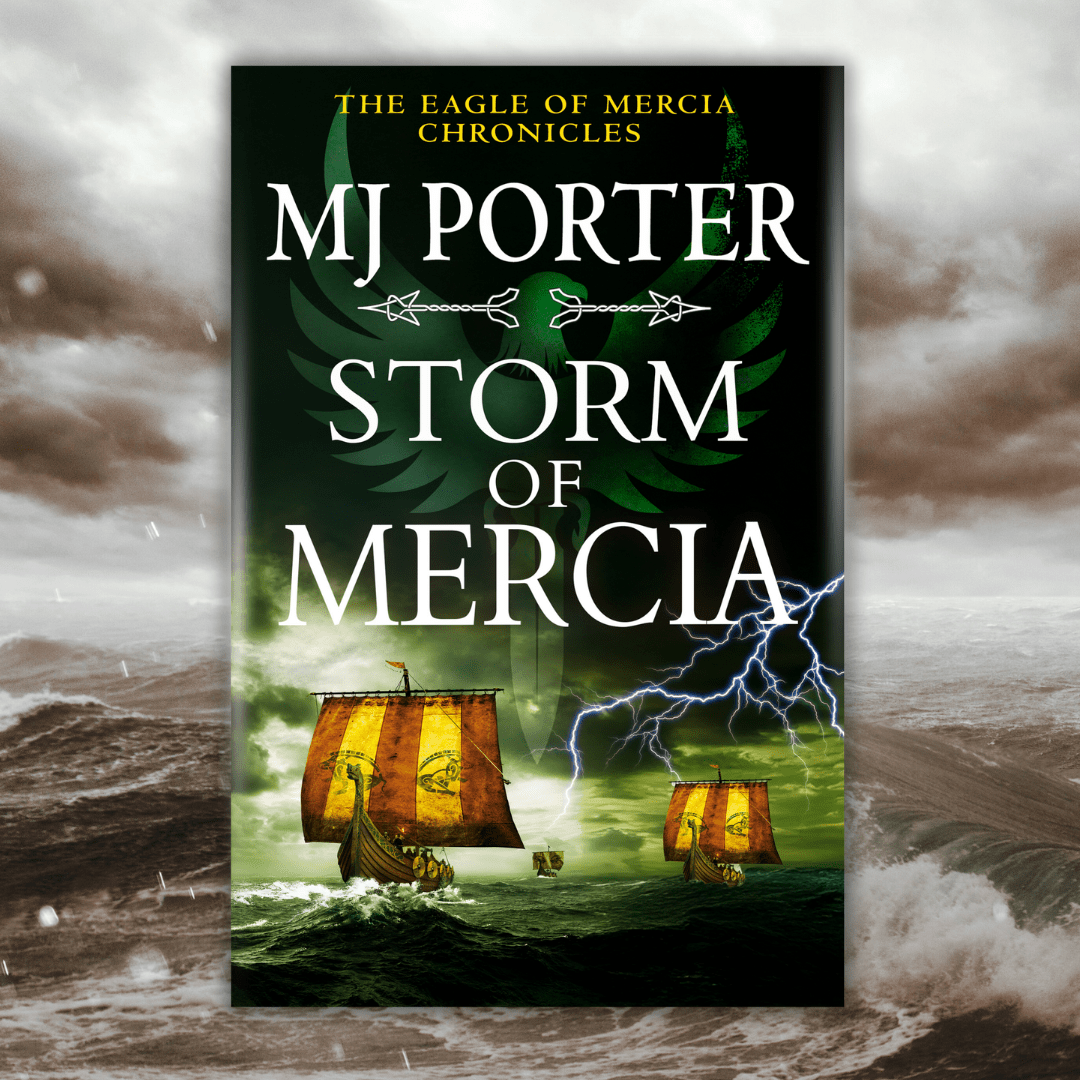
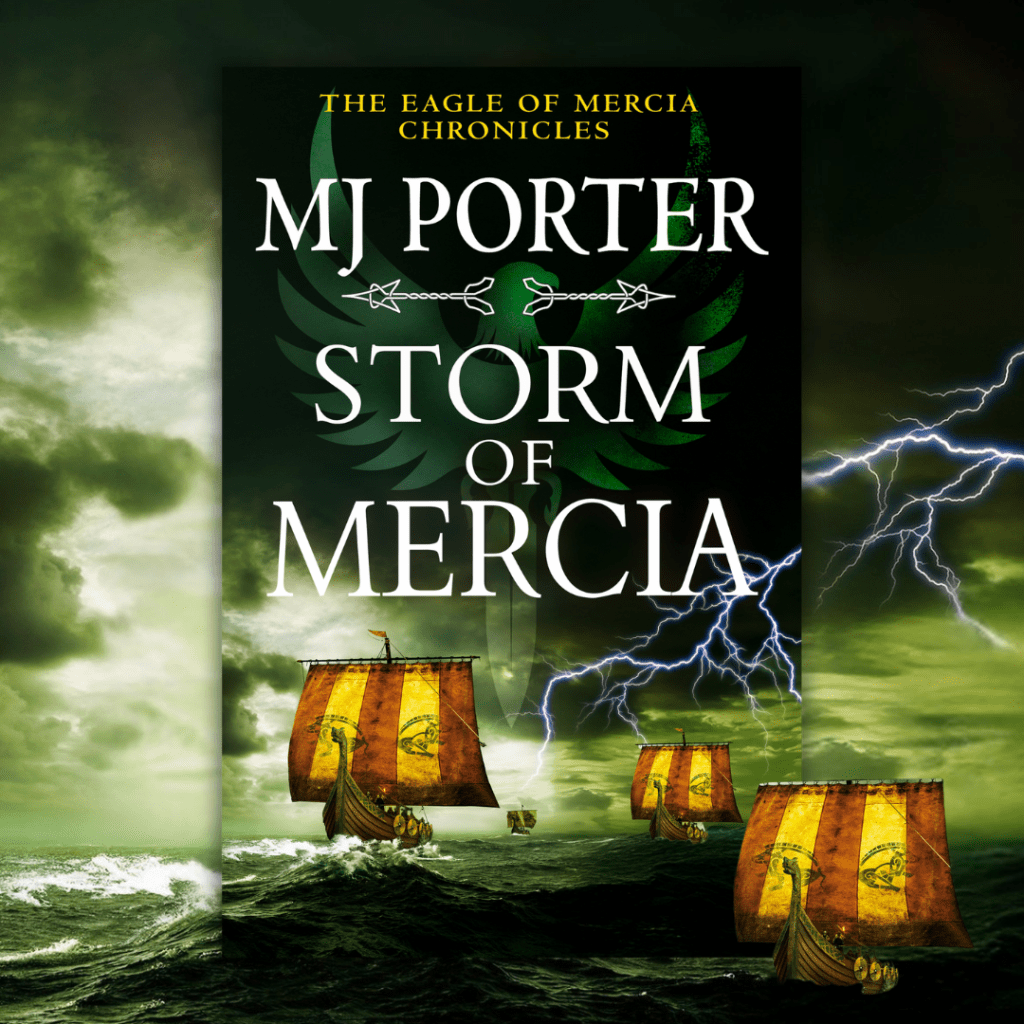
It’s cover reveal time for Storm of Mercia. Return to the world of young Icel in the ninth book in the Eagle of Mercia Series. #coverreveal #preorder #histficbook
Wessex has never been Mercia’s ally, neither has it been her only enemy.
Wessex, AD836
The Viking raiders’ devastation has been halted once more by the shields of Mercia as opposed to Wessex. But their whereabouts are unknown.
King Wiglaf of Mercia is keen to ensure the Viking raiders are swept from his shared border with Wessex but these Viking ships are quick and difficult to track and Icel is once more deployed with Ealdorman Ælfstan warriors to do his King’s bidding. However, Icel’s quest is beset with many more obstacles and it’s not all about the seax and shield.
Worrying news from home overshadows Icel’s every deadly encounter. Will the storms of war keep him away or has he time to make one more desperate journey back to Tamworth?
With raging seas driving him ever further from Mercia’s shores, and the threat of a new conspiracy against the Mercian kingship will Icel overpower the sands of time, or will he be defeated by his deadliest nemesis yet?
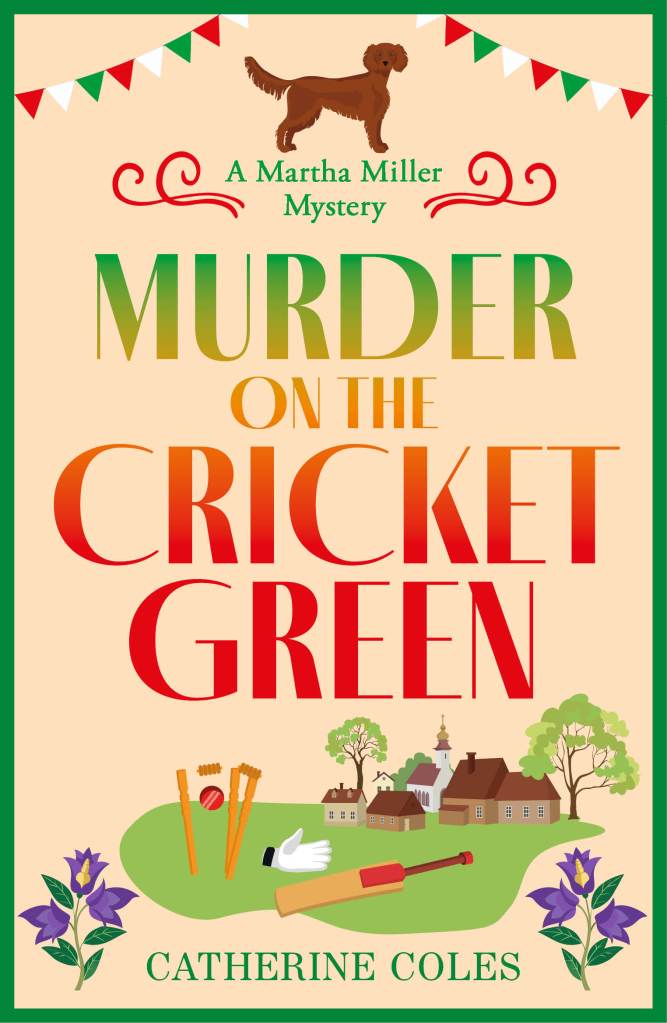
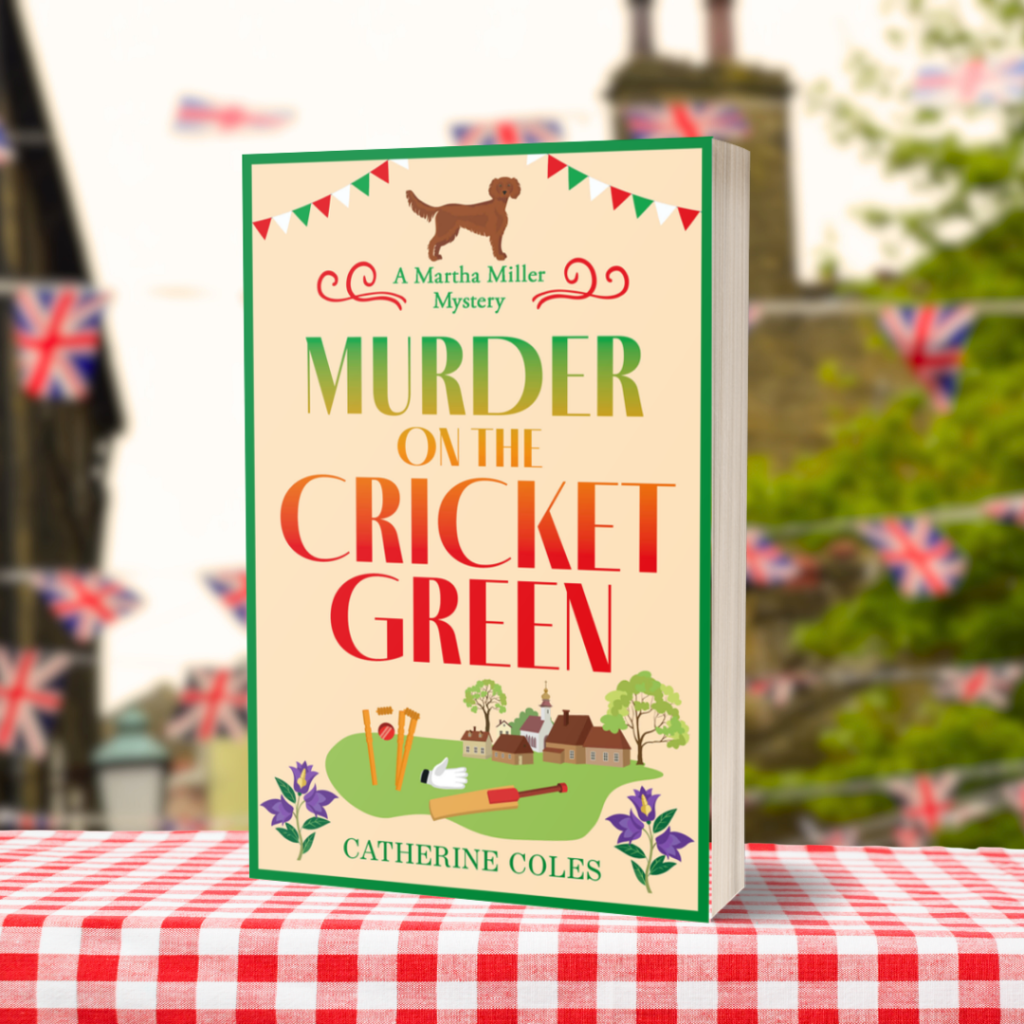
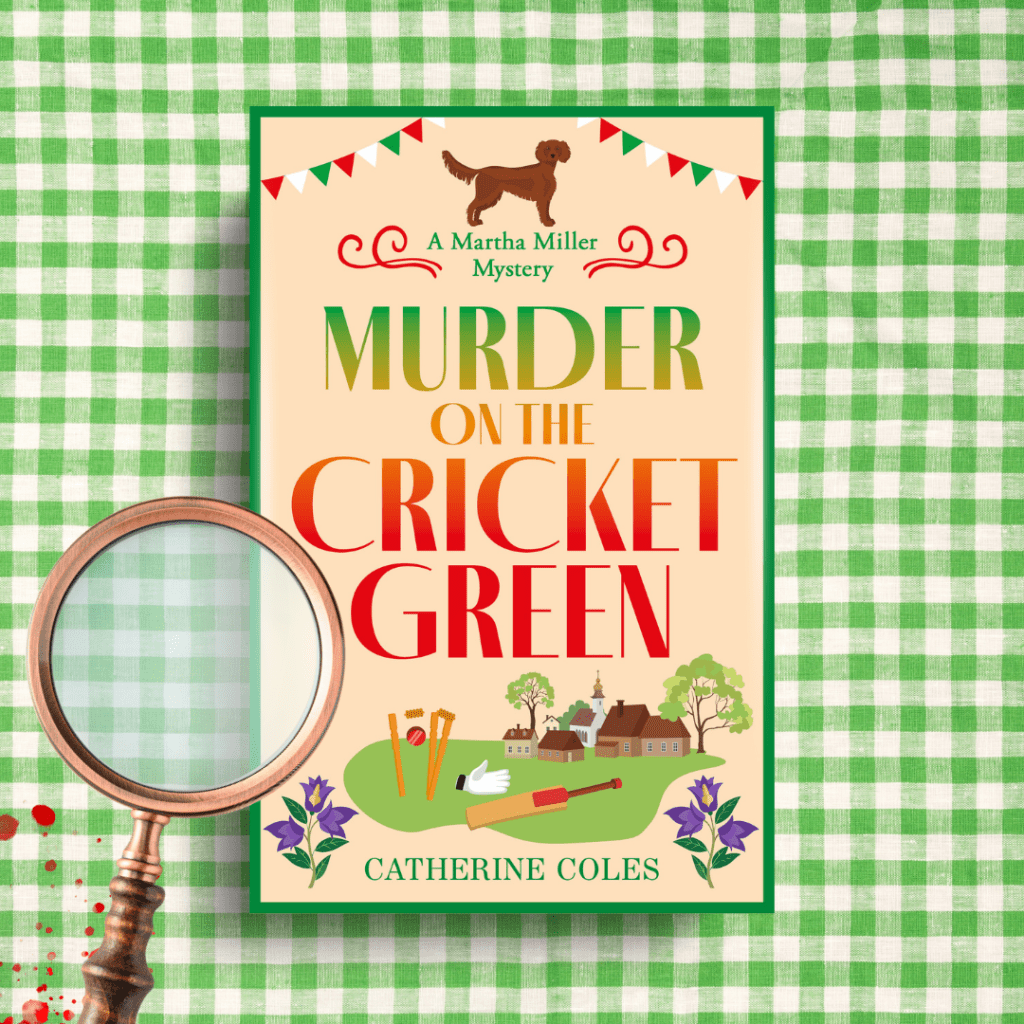
Today, I’m excited to share my review for Murder on the Cricket Green, the fourth book in Catherine Coles delightful 1940s cozy crime series #blogtour #MarthaMillerMystery
Here’s the blurb
Westleham Village, May 1948
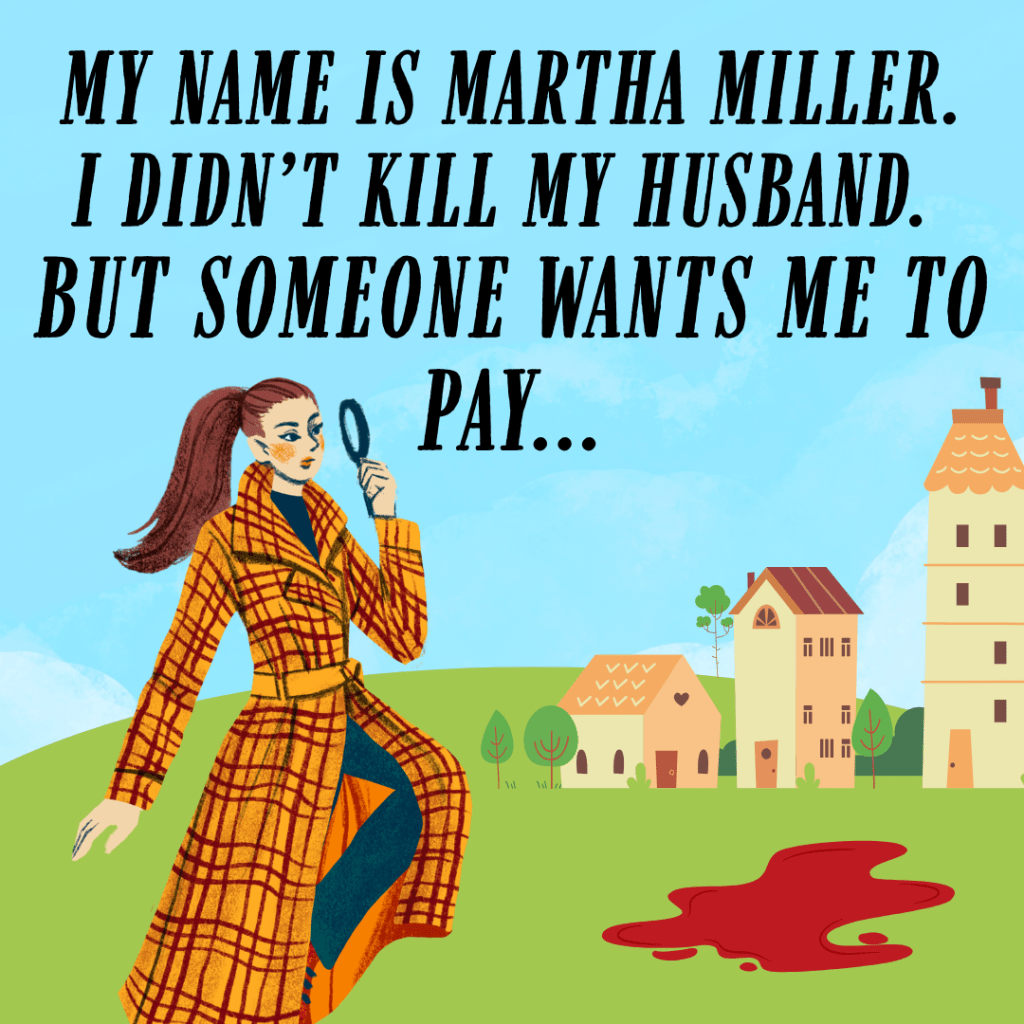
The villagers of Westleham are excited for the first village cricket match since the end of the war. But Martha Miller has more pressing concerns – namely, the sudden reappearance of her husband, Stan, missing for two years and acting as though nothing has happened.
Martha doesn’t know what to feel, especially now that his return threatens her growing fondness for the kind-hearted village vicar, Luke. Yet she’s not the only one unsettled by Stan’s return…
As the match begins and the crowd cheers, Stan suddenly collapses – dead before he hits the ground. And all eyes turn to Martha.
To clear her name, she must uncover the truth about Stan’s missing years and his sudden reappearance. But in a village this small, everyone has something to hide. Will Martha’s amateur sleuthing find the real killer or will she pay the price for someone else’s deadly deed?
Let the investigation commence!
Find out if Martha and Luke can catch the killer in a brand new Martha Miller mystery from bestselling author Catherine Coles, perfect for fans of Lee Strauss and Beth Byers!
Murder on the Cricket Green is the fourth book in the Martha Miller historical cosy mystery series. I’ve read the previous books in this series, but I don’t hink it’s necessarily necessary for those looking for a lovely cosy mystery to read (there will be some elements that might not be understood, but they will be quickly picked up).
It’s always lovely to spend time with Martha and her allies (and enemies) in this quaint village. This latest book is a delightful, quick read, where we can all play ‘guess the murderer’ as there are any number of suspects.
Always a sure hit, this story is a light-hearted, fun, quick read. Let’s hope it’s not too long until we’re back with Martha.
Catherine Coles writes bestselling cosy mysteries set in the English countryside. Her extremely popular Tommy & Evelyn Christie series is based in North Yorkshire in the 1920’s and Catherine herself lives in Hull with her family and two spoiled dogs.
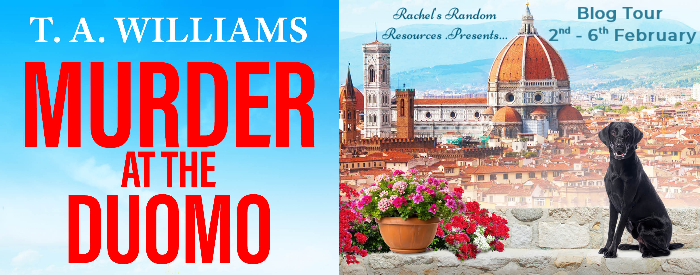
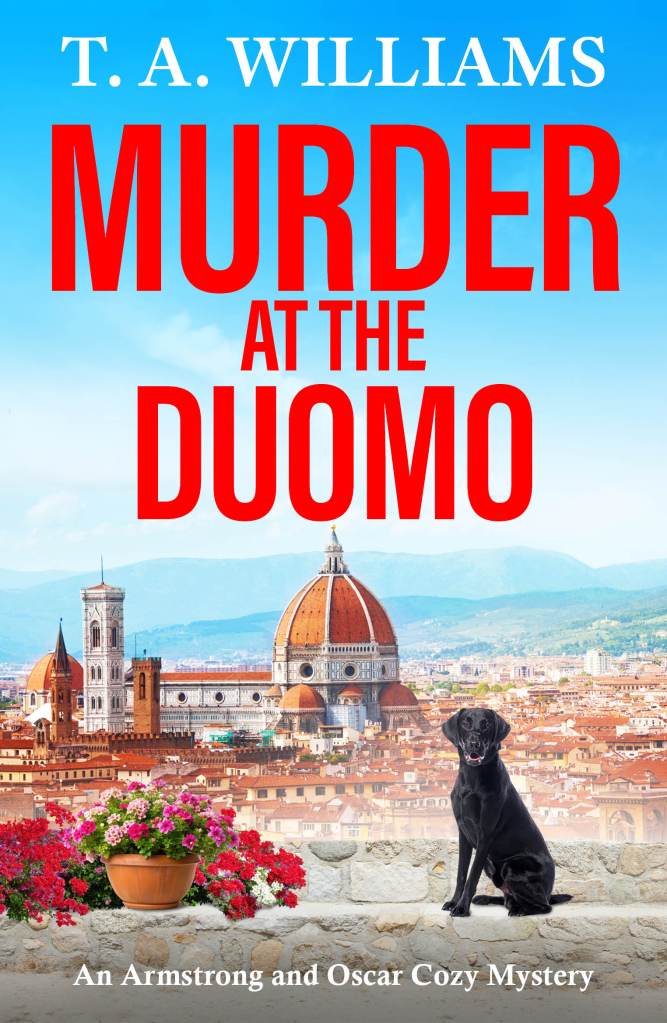
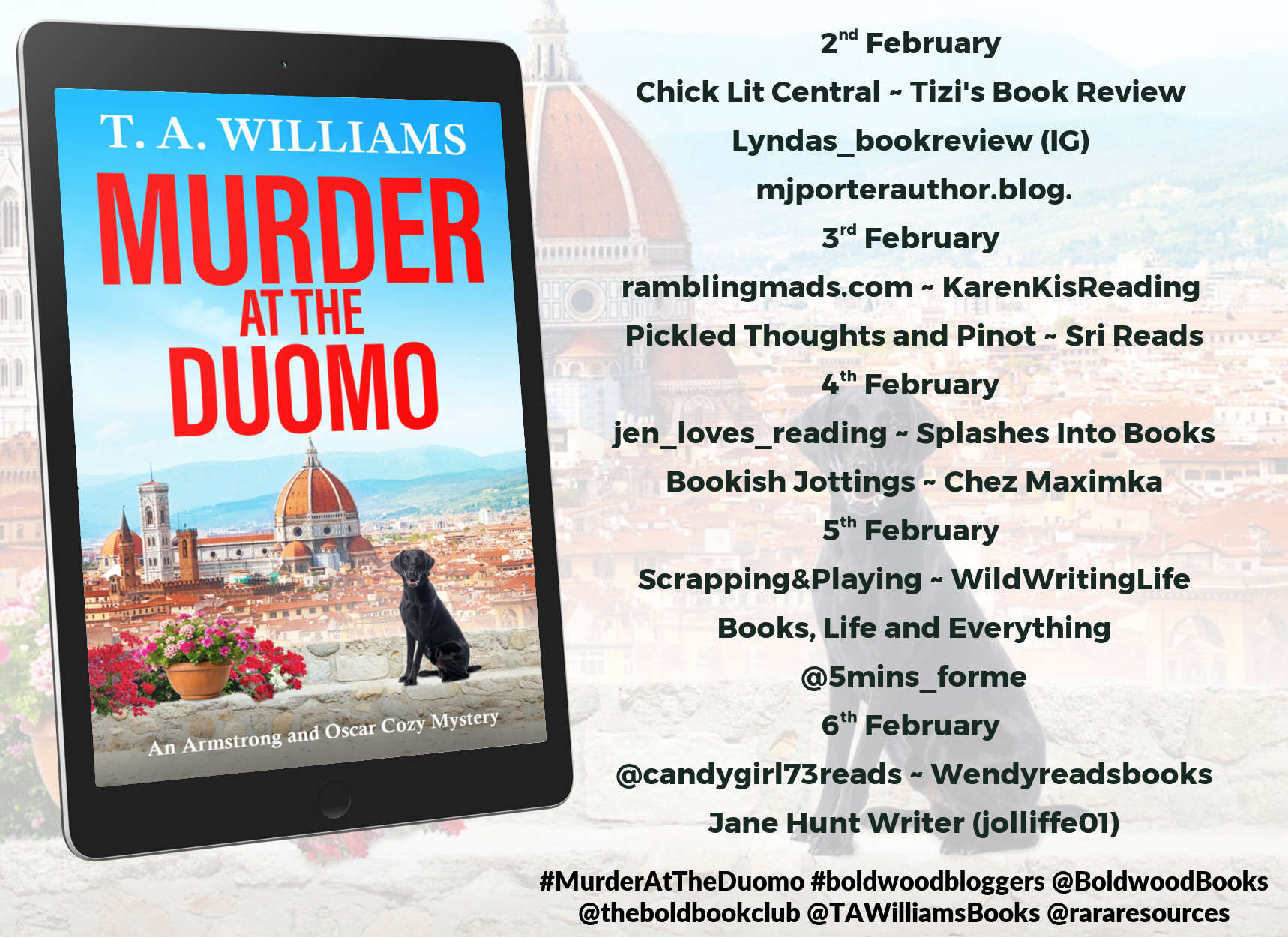
I’m reviewing the new book in the Armstrong and Oscar Cozy Italian Mysteries, Murder at the Duomo by TA Williams #BookReview #BlogTour #CosyCrime #ContemporaryCrime
Here’s the blurb
Even angels can have a dark side…
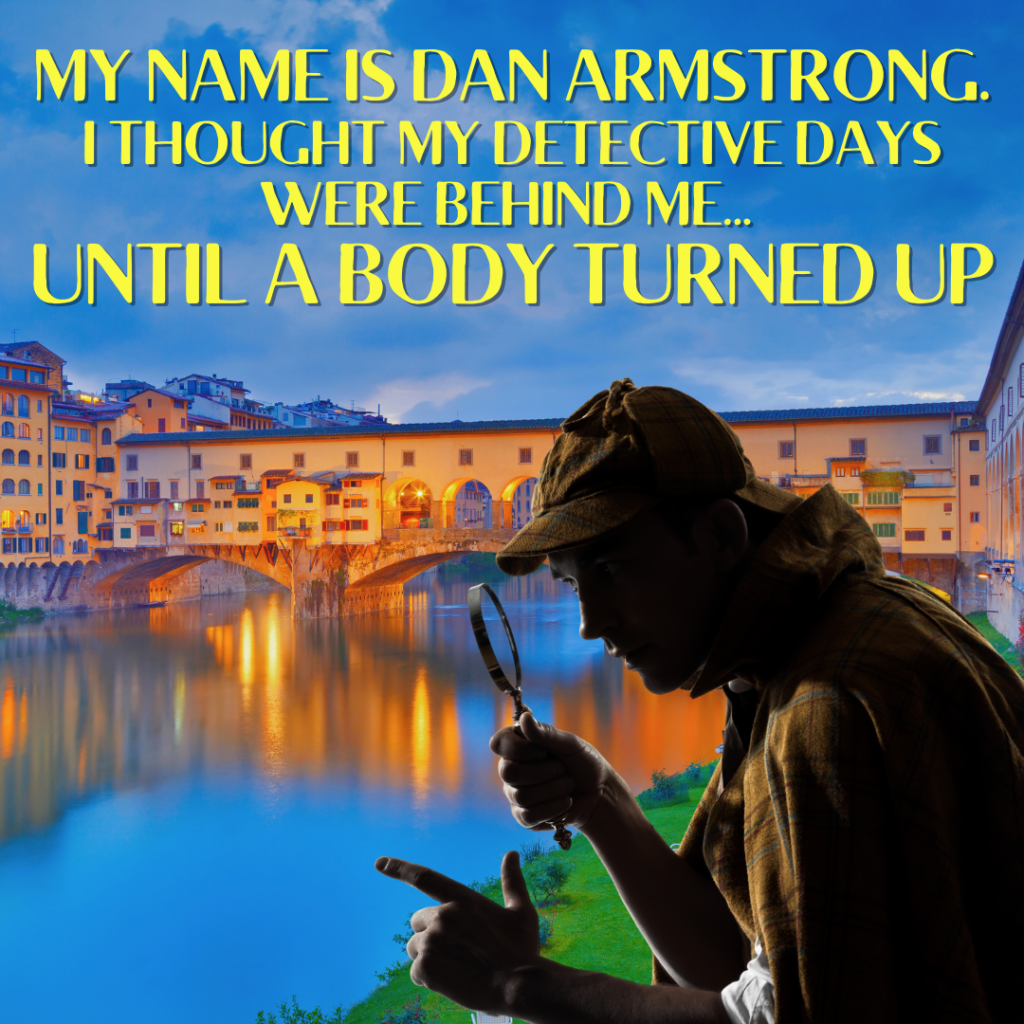
As the sticky heat of August settles over Florence, Dan Armstrong is ready for a well-earned break—sightseeing with fiancée Anna, daughter Tricia and her fiancé Shaun. But when a British man is found dead inside the city’s magnificent Duomo, Dan’s plans quickly change.
The victim, Tristan Angel, is a super-wealthy arms dealer with a saintly name and a devilish reputation. But what was he doing in the cathedral, and who decided to make it his final confession?
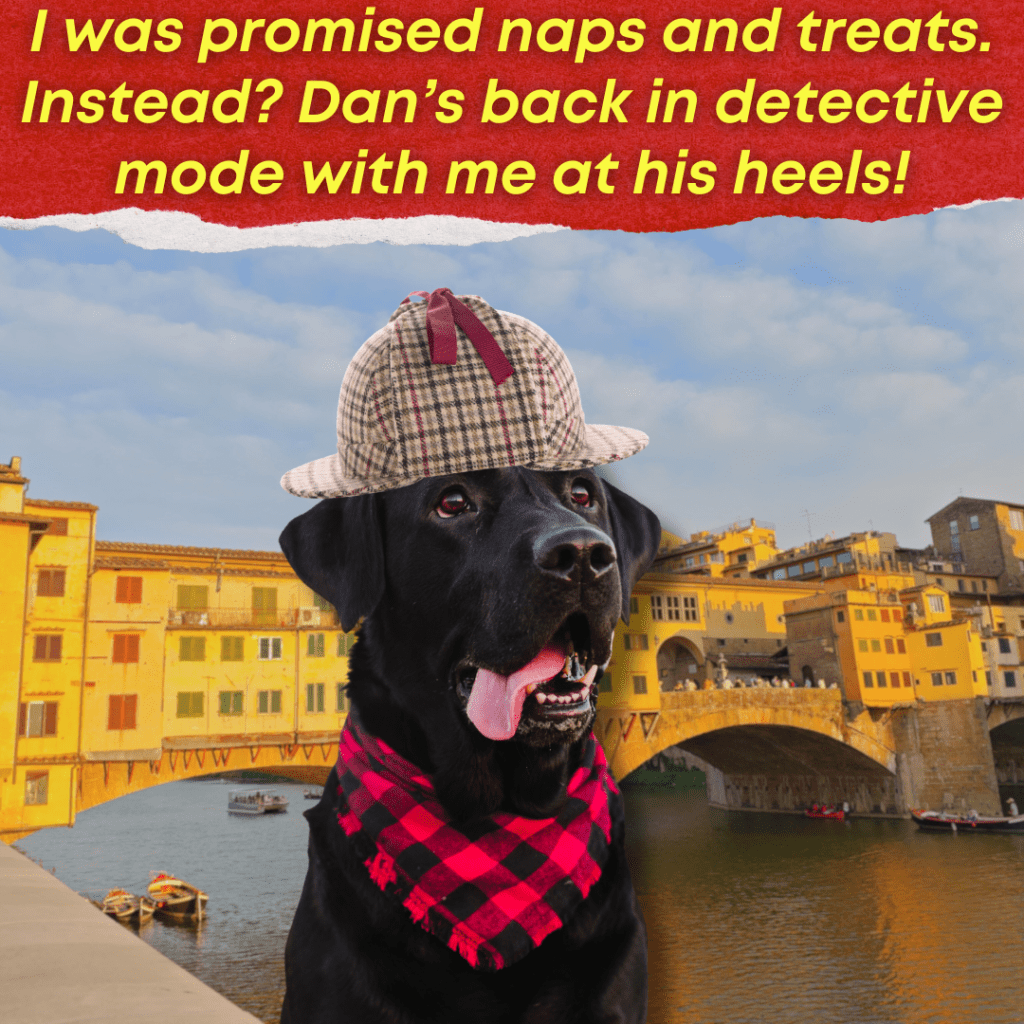
At Angel’s opulent villa in the hills of Fiesole, Dan and Commissario Virgilio encounter a colourful cast of suspects—each one hiding secrets and none too eager to talk. As tempers rise and the heat outside grows ever more intense, Dan and his four-legged sidekick, Oscar, must sniff out the truth before the killer strikes again.
Murder at the Duomo is somehow the 14th book in the Armstrong and Oscar mysteries, and I’ve read them all (apart from 1, which I seem to have missed).
This time, Dan and his friends in the Italian police force are faced with their most impossible case so far. Who killed Angel in the confessional at the Duomo, and how did they do it?
Often, these cases are very hard to solve until something becomes obvious to Dan or Oscar, and then they become quite clear-cut, but that’s not the case this time. It does make some aspects feel a little repetitive with such a small collection of suspects. However, when the solution finally becomes evident, the ending is quite exciting.
I do love these mysteries, even if they entirely put me off ever going to Tuscany, which is evidently too hot and too busy for my liking. I think I’ll let Dan and Oscar continue to enjoy it (or endure it) on my behalf.
Check out my reviews for earlier books in the series, and be sure to start at book 1, Murder in Tuscany.
Meet the author
T. A. Williams is the bestselling author of the Armstrong and Oscar cozy mystery series. Trevor studied languages at University and lived and worked in Italy for eight years, returning to England with his wife in 1972. Trevor and his wife now live in Devon.
I’m welcoming The Vision Board by Siobhan Murphy to the blog #romance #blogtour @rararesources @rachelsrandomresources
Here’s the blurb
Two best friends. Two one-way tickets. And a future that might just surprise them. Bex and Amy are best friends and total opposites. Bex is cynical, Amy is romantic. Bex is chaotic, Amy is organised. With the prospect of turning 34 just around the corner, neither is where they expected to be at this point in their lives. Bex is exploring her sexuality and has a string of failed relationships, while Amy is newly single and desperate to fall in love. Armed with a photographic vision board of the future, Bex and Amy put their trust in ‘The Universe’ and fly from London to Bali, then on to Australia in search of adventure, cocktails on the beach and maybe even love. Almost immediately, Amy finds someone who is the perfect fit for her dream life. While Bex is stuck playing double dates with his best friend, the most pompous man she has ever met, but also one of the hottest. Travelling via white sand beaches, lush rainforests and road trips through idyllic scenery, the images on their vision board begin to transform into reality. However, people are not always what they seem, and first impressions are not always accurate. Add in a queer, charismatic love interest and a vindictive ex-girlfriend, and the path of true love begins to get a little more complex. When ‘The Universe’ has its own agenda, is it possible to manifest a happy ever after? An Enemies to Lovers destination romance with a sprinkling of Pride and Prejudice vibes.
Siobhan Murphy is a writer and photographer based in the UK. She writes (and reads) both light-hearted romantic comedies and contemporary women’s fiction/Bookclub fiction.
Her writing hours are sponsored by Earl Grey tea, chocolate bars several glasses of wine. When she is not writing, reading, or working in her photography day job, her hobbies are eating haribo sweets, talking nonsense and walking into rooms wondering why she is there.
She loves to travel, laugh at the absurdity of life, and enjoy a glass of wine with good friends. She loves a good TV binge session, especially shows like Grey’s Anatomy, Virgin River, Emily in Paris, or This is Us. She can be an emotional wreck who often runs out of tissues and when she was a child, her dad had to constantly reassure her that programmes on the TV weren’t real. The upside of this is that she can legitimately class her habit of binge-watching RomCom films as ‘research.’
Siobhan loves to escape into books and live in other worlds. Like most writers, she has been an avid reader from the second she hurtled into the world (well perhaps a little bit after that). Over the years she’s drifted around the world in search of adventure, hoping to figure out what to do with her life. She is not sure if she has the answer yet but writing certainly comes close. Though she suspects her long-suffering family, and her liver might not agree.
She’s impulsive and easily bored, so she’s turned her hand to many jobs over the years. She’s worked in places as diverse as the High Commission in Nairobi; a market stall selling cheese in the UK and an 80ft racing yacht in Australia. Been a secondary school English teacher and a Barista with no discernible talent for making coffee. She’s done admin work for a number of businesses but discovered that offices aren’t really for her. Her favourite job was as a bookseller for Waterstones, she loved recommending books to customers and applying those 3 for 2 stickers that people find so hard to remove. For the last 19 years she’s been a professional photographer, taking portraits of humans – often the really, really small ones.
I’m delighted to welcome Heidi Eljarbo and her new book, Whispers in the Snow, Heartwarming Christmas Series, to the blog.
Here’s the Blurb
Of course, a young woman in Norway during the late nineteenth century can be a successful amateur sleuth, and goodness knows, Cornelia’s days are always more exciting when she can devote her time to resolving a local mystery.
Cornelia Gran is a dedicated daughter, friendly and kind; although, she has an exorbitant amount of curiosity. She devours Arthur Conan Doyle’s magazine articles and tries to follow the fictitious Sherlock Holmes’s investigative examples, but her fascination with solving puzzles always gets her into mischief.
Each morning, Cornelia reads the newspaper, looking for a conundrum to solve. Searching for clues—and then chronicling her discoveries—thrills her. She certainly finds those activities more entertaining than taking her grandmother’s advice and attending one Christmas ball after another in search of a husband.
But chaos and danger turn Cornelia’s quiet days upside down when her attempt to find information about the owner of a nearby abandoned cottage takes her into dangerous territory. As winter winds rattle the windows and swirl snowdrifts against the doors, she faces off with a ghost, gets in trouble with the police, and finds herself staring down danger without thinking of the consequences. In the middle of it all, she meets Simon and is captivated by his charm, good looks, and personality.
Meanwhile, a real killer is after her, and he won’t stop until he gets information she doesn’t have! Christmas, with all its cheery festivities, hygge, and family traditions, has never been more threatened. Cornelia must call on all her investigative skills, not only to stop the ruination of her family’s holiday, but also to make certain Simon and his aunt keep what belongs to them. And maybe, just maybe, the amateur sleuth will discover the meaning of true love.
Set in a fictitious town in Norway in 1891, this cozy historical mystery is perfect for those who enjoy curious and determined women sleuths, clean and wholesome romance, and the discovery of buried secrets in an abandoned house.
This title is available to read on #KindleUnlimited
Meet the Author
HEIDI ELJARBO grew up in a home full of books, artwork, and happy creativity. She is the author of historical novels filled with courage, hope, mystery, adventure, and sweet romance during challenging times. She’s been named a master of dual timelines and often writes about strong-willed women of past centuries.
After living in Canada, six US states, Japan, Switzerland, and Austria, Heidi now calls Norway home. She lives with her husband on a charming island and enjoys walking in any kind of weather, hugging her grandchildren, and has a passion for art and history.
Her family’s chosen retreat is a mountain cabin, where they hike in the summer and ski the vast white terrain during winter.
Heidi’s favorites are her family, God’s beautiful nature, and the word whimsical.











































 MJ Porter