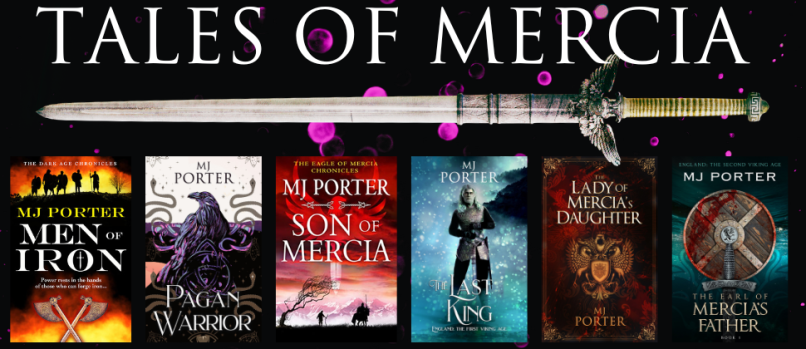
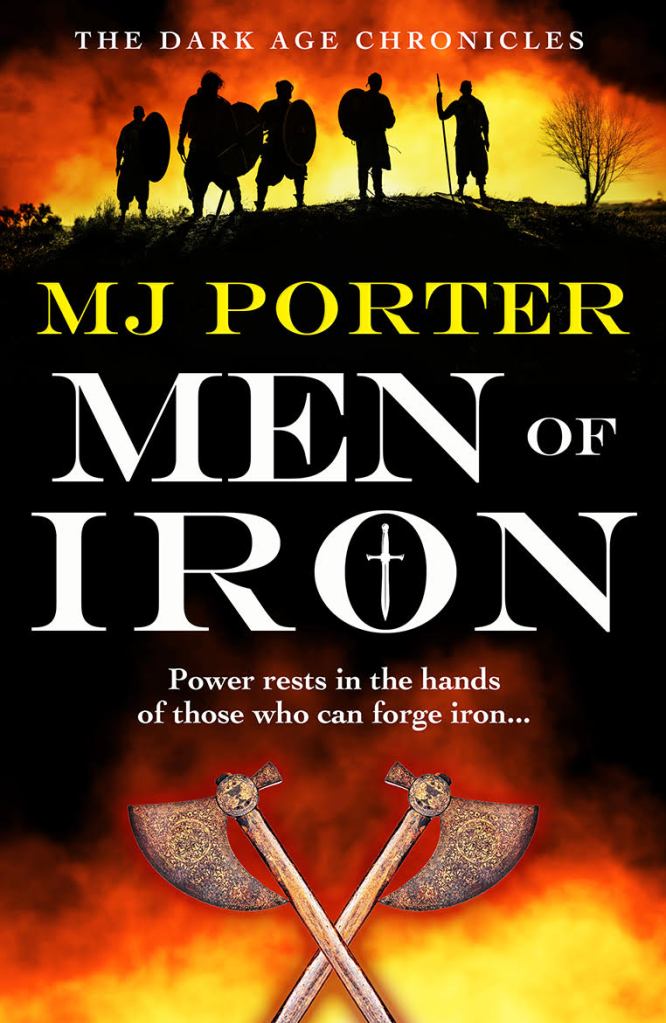
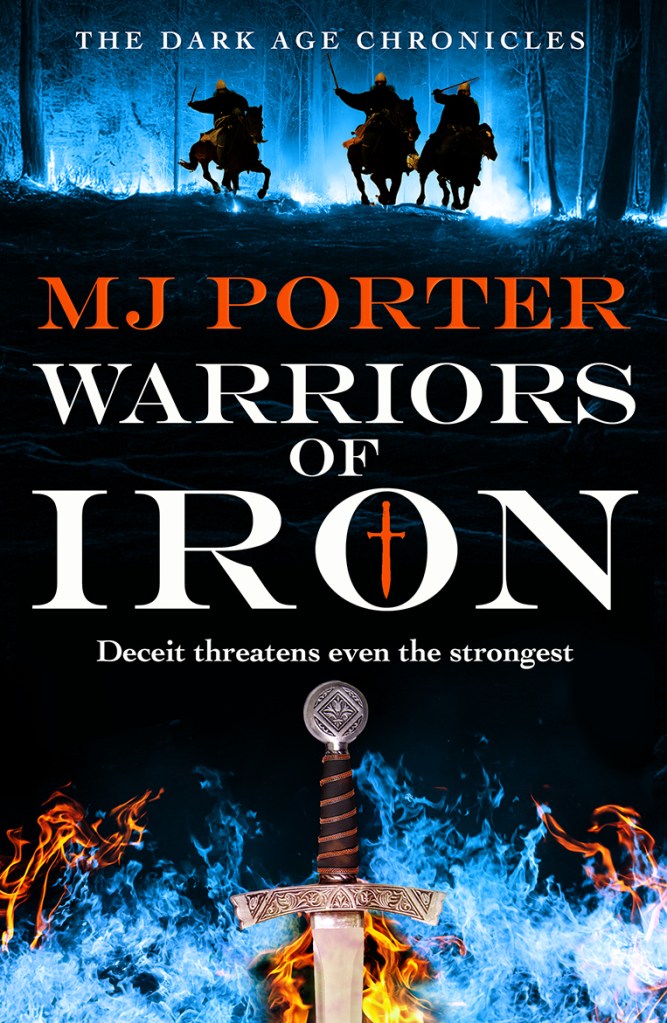
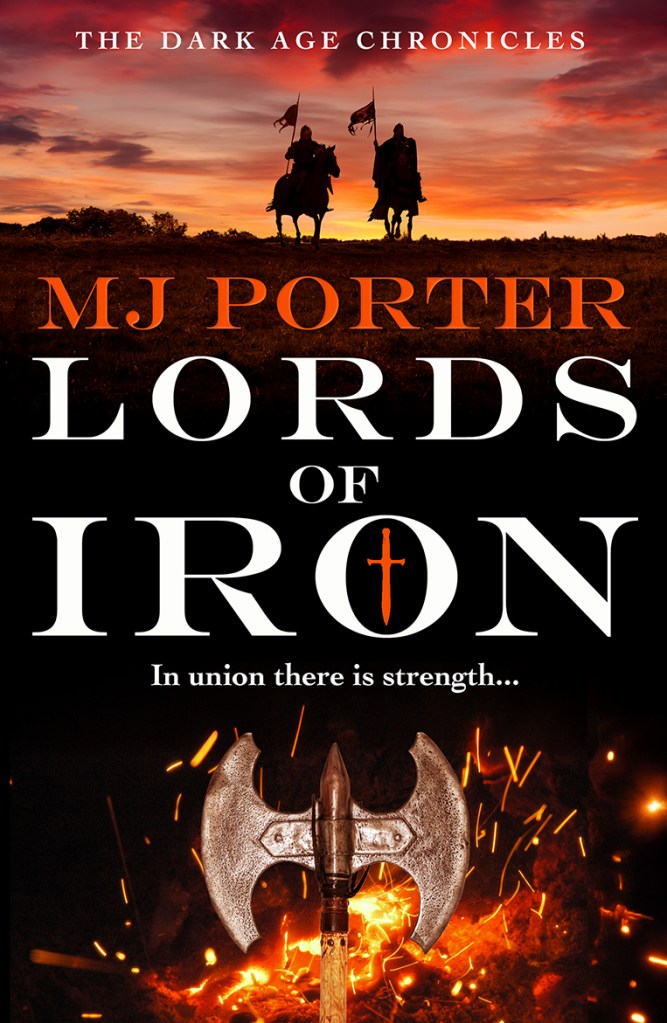
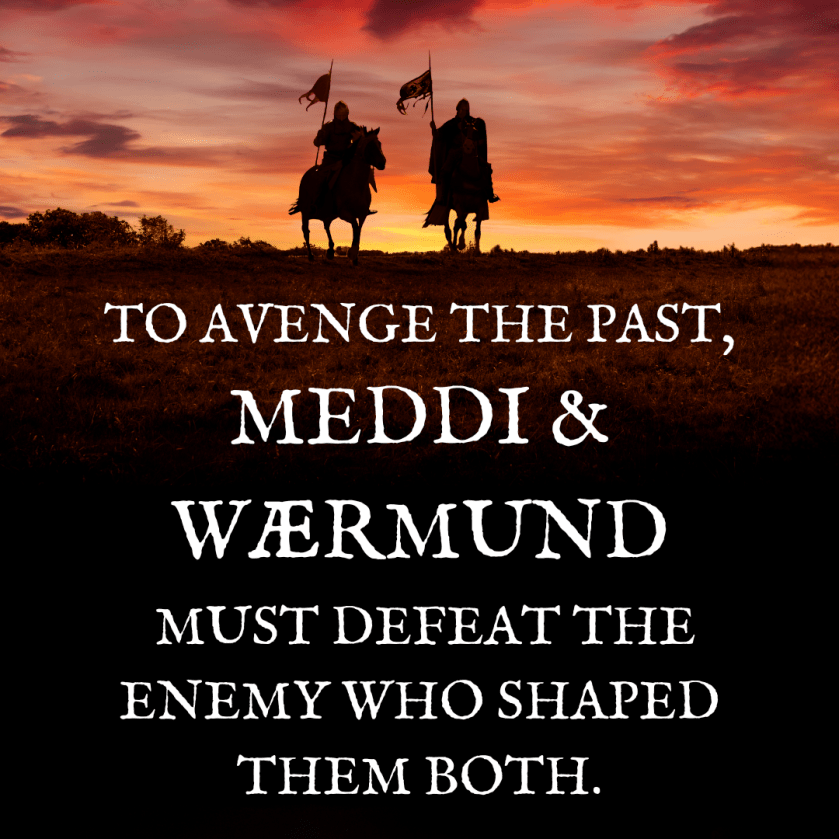
It’s nearly happy release day to Lords of Iron, the third and concluding book in the Dark Age Chronicles Trilogy. Let’s talk about Wærmund, warrior of the Gyrwe #newrelease #MenOfIron #WarriorsOfIron #LordsofIron #histfic
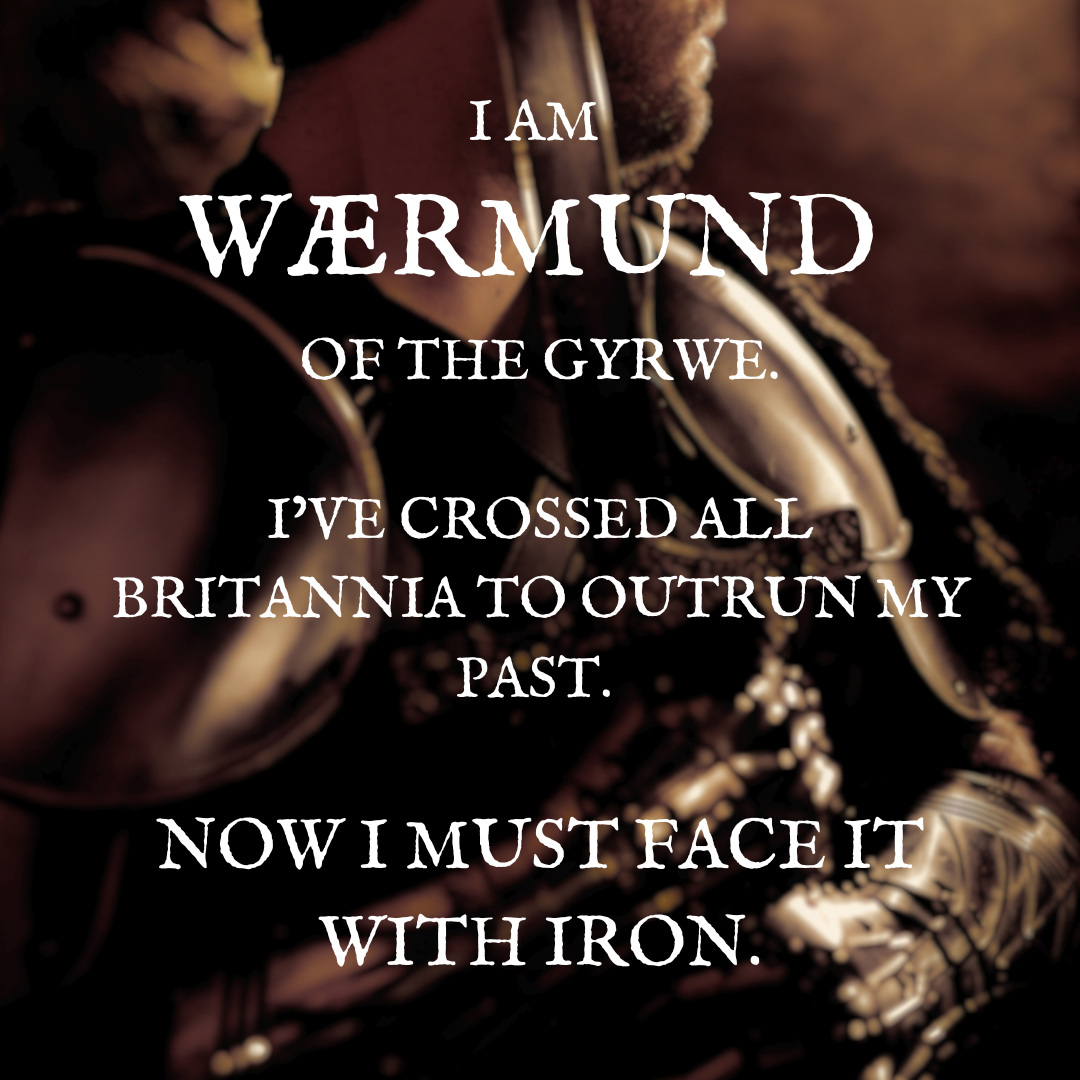
Wærmund, warrior of the Gyre
Wærmund, the lead male point of view in the Dark Age Chronicles, has come a long way since our first encounter with him, when he was young, angry, reckless and unable to assure himself of the loyalty of others. (I’m not saying he didn’t have cause to be angry).
While I’ve written novels in this era where the main male lead is strong and fiercesome (as well as treating everyone to young Icel), I’ve not really written a character like Wærmund before. One early reviewer complained he was ‘annoying’ and that was intentional. For him to become the character I needed him to become, he couldn’t start the novels ‘fully formed.’ I needed him to learn, grow, and become someone more thoughtful than his angry young self allowed.
Along the way, he’s had much cause to doubt himself, and really, it was Heafoc, his loyal warrior, who was the most fully formed of the warriors who pledged their often dubious loyalty to Wærmund. Heafoc, perhaps very much cast in the shadow of the rather wonderful Wulfstan from the Earls of Mercia series, and potentially, also the older Icel from The Last King books, was the epitome of a Saxon warrior, whereas Wærmund wasn’t. Indeed, in deciding to run away from his home, Wærmund hoped to outrun his past, which was never really going to be possible for him.
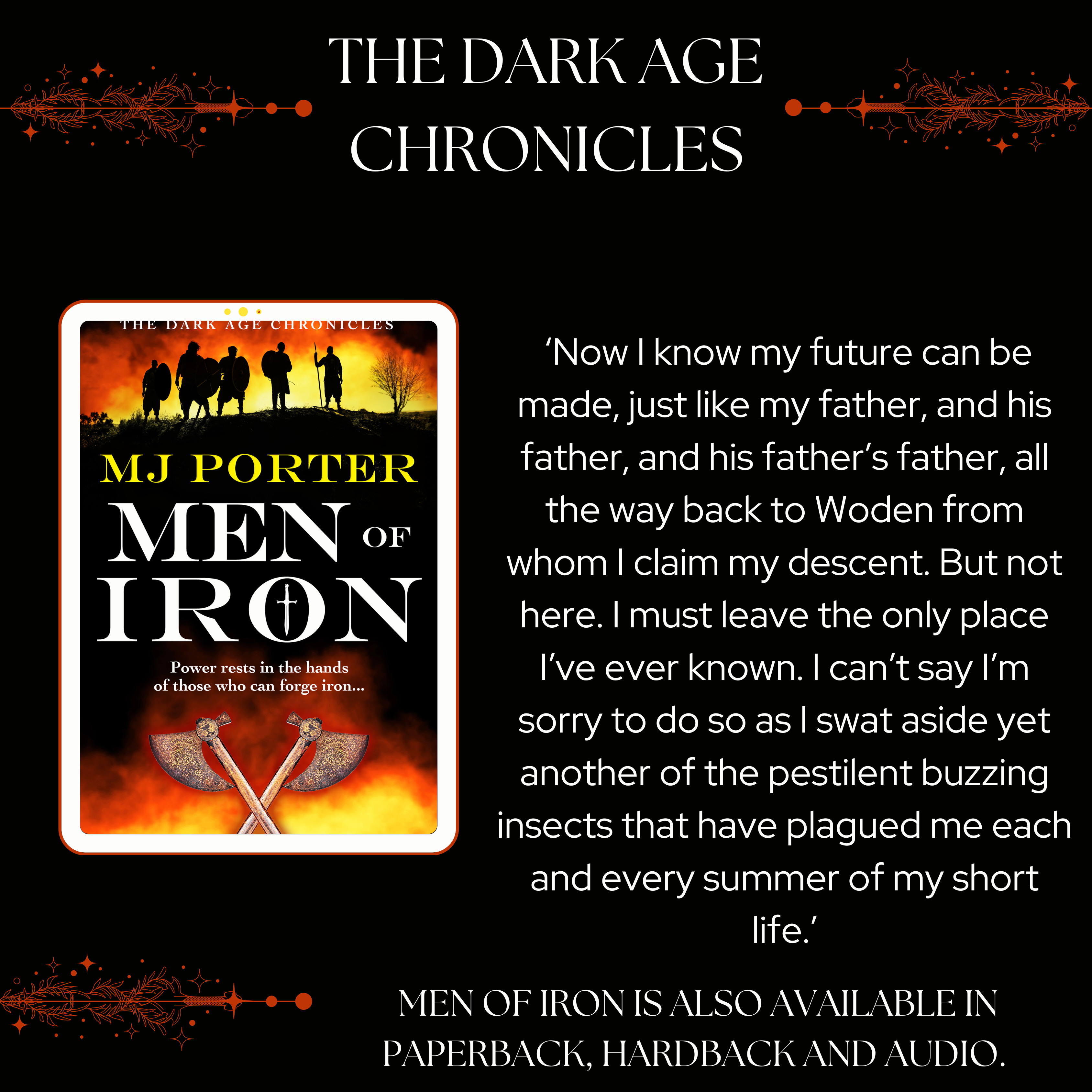
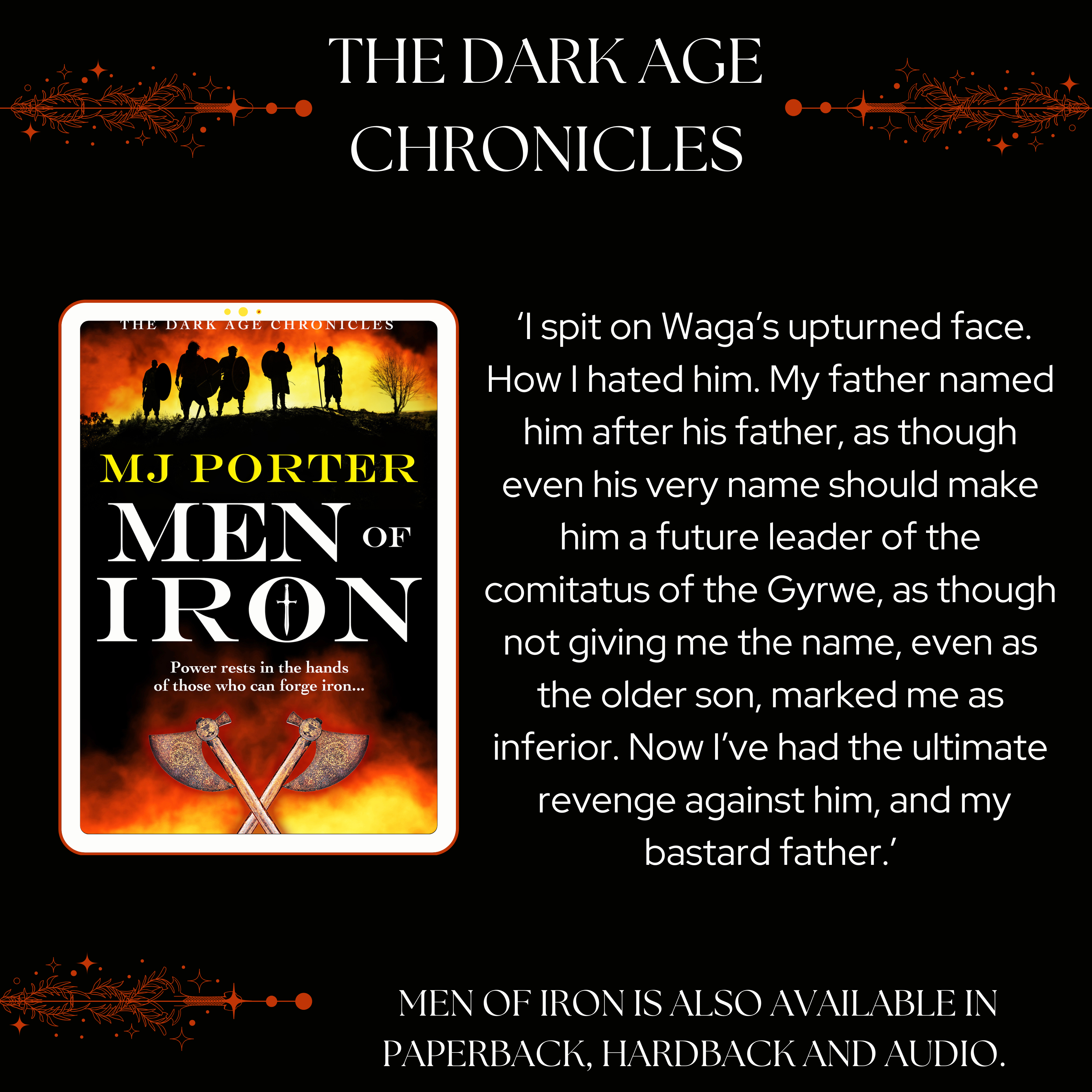
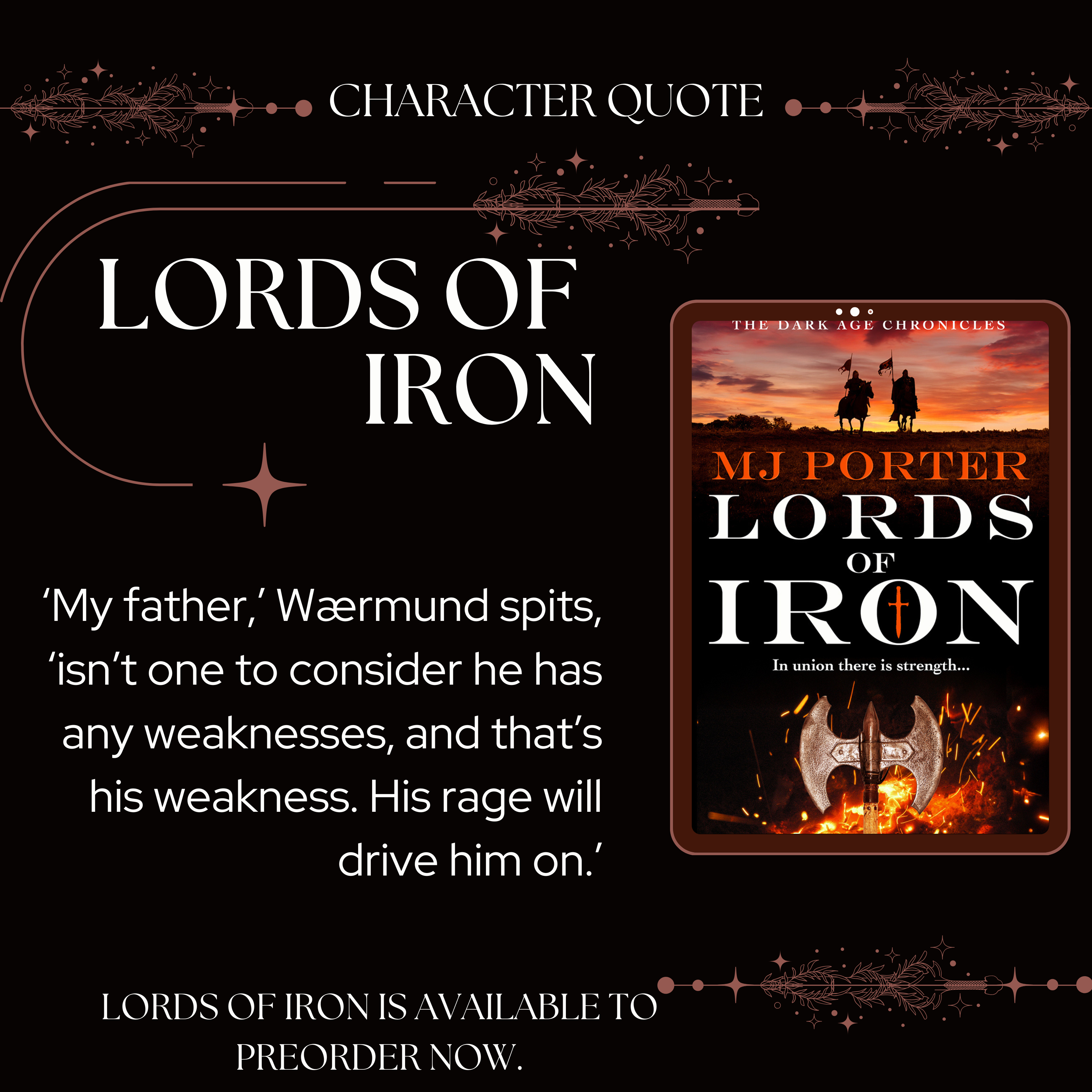
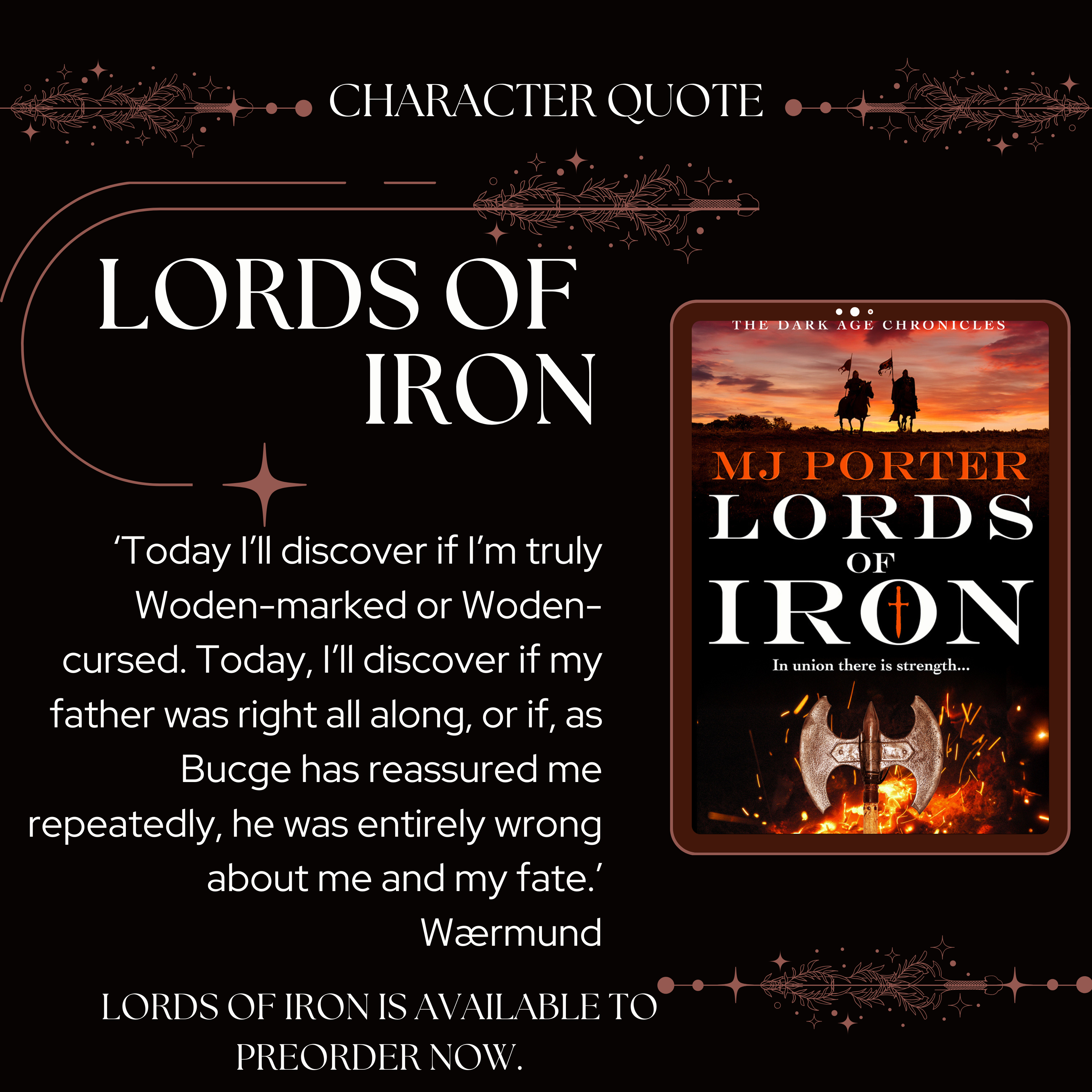
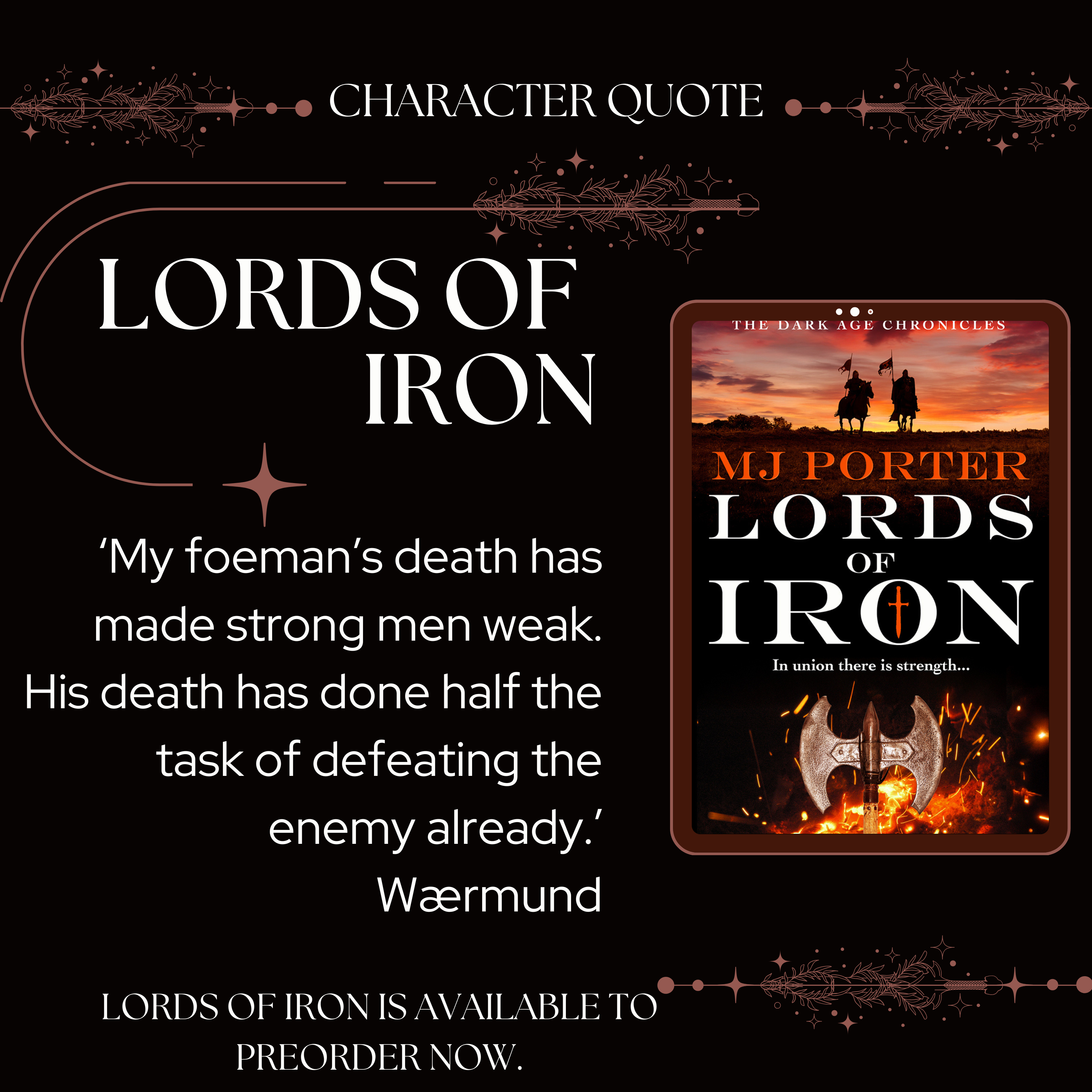
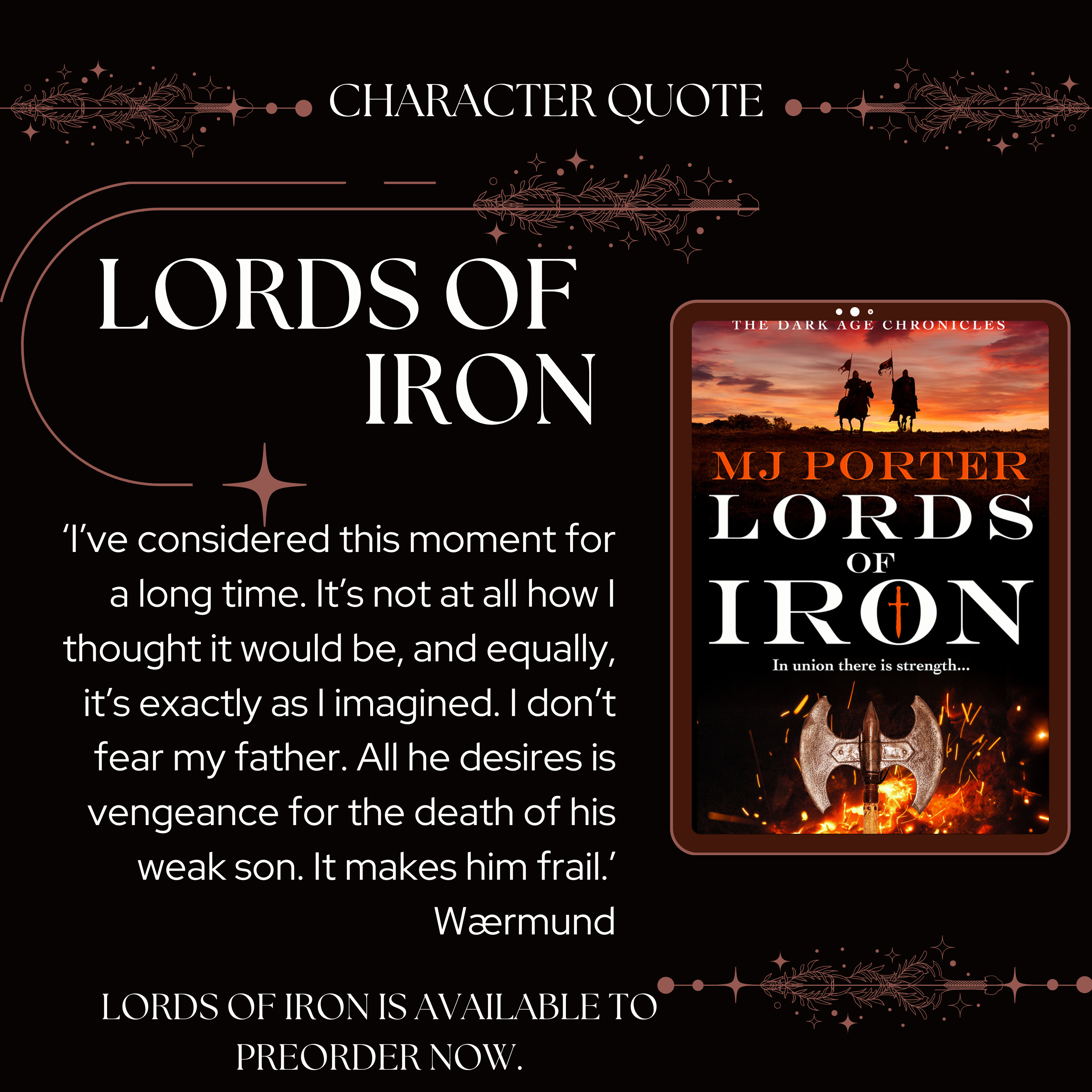
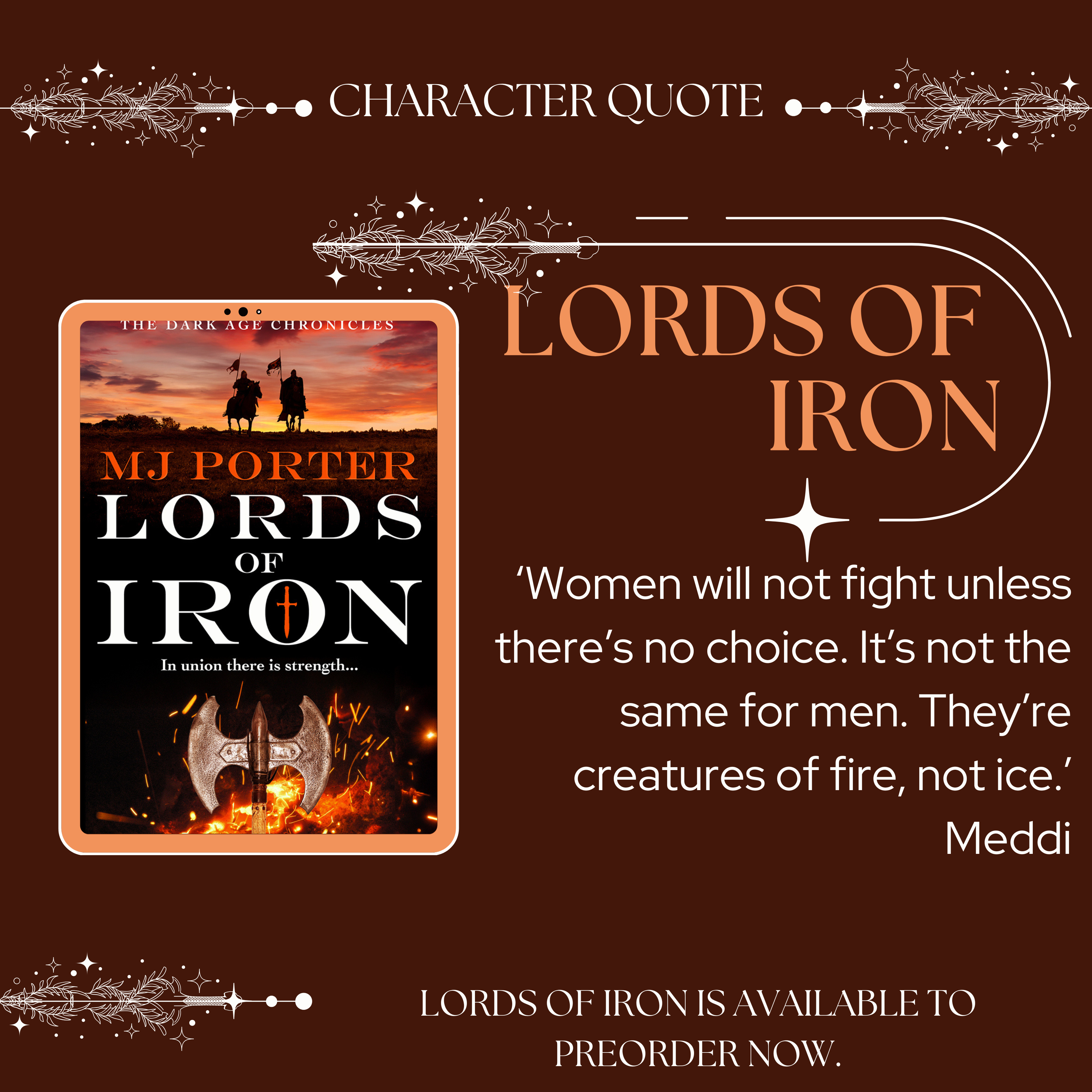
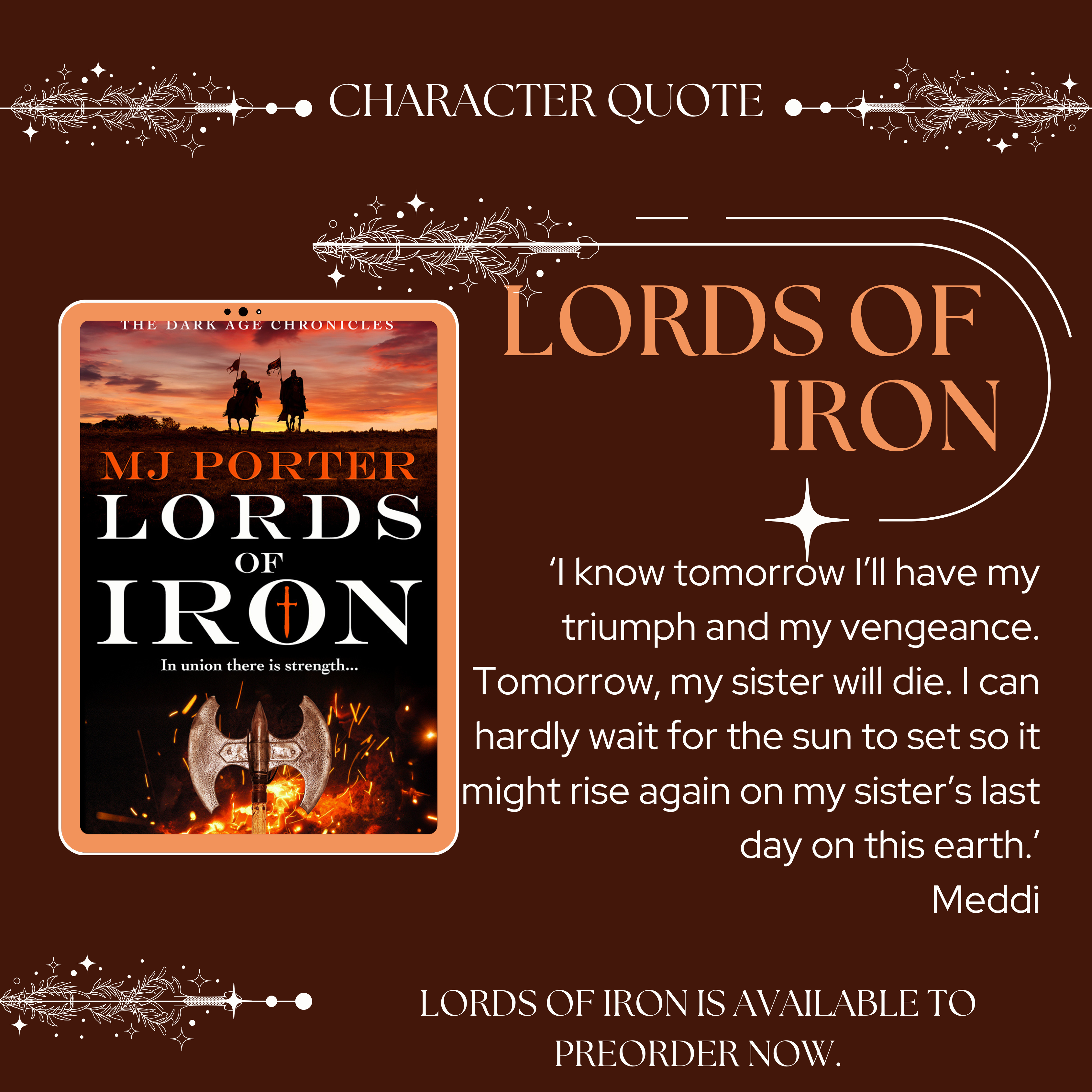
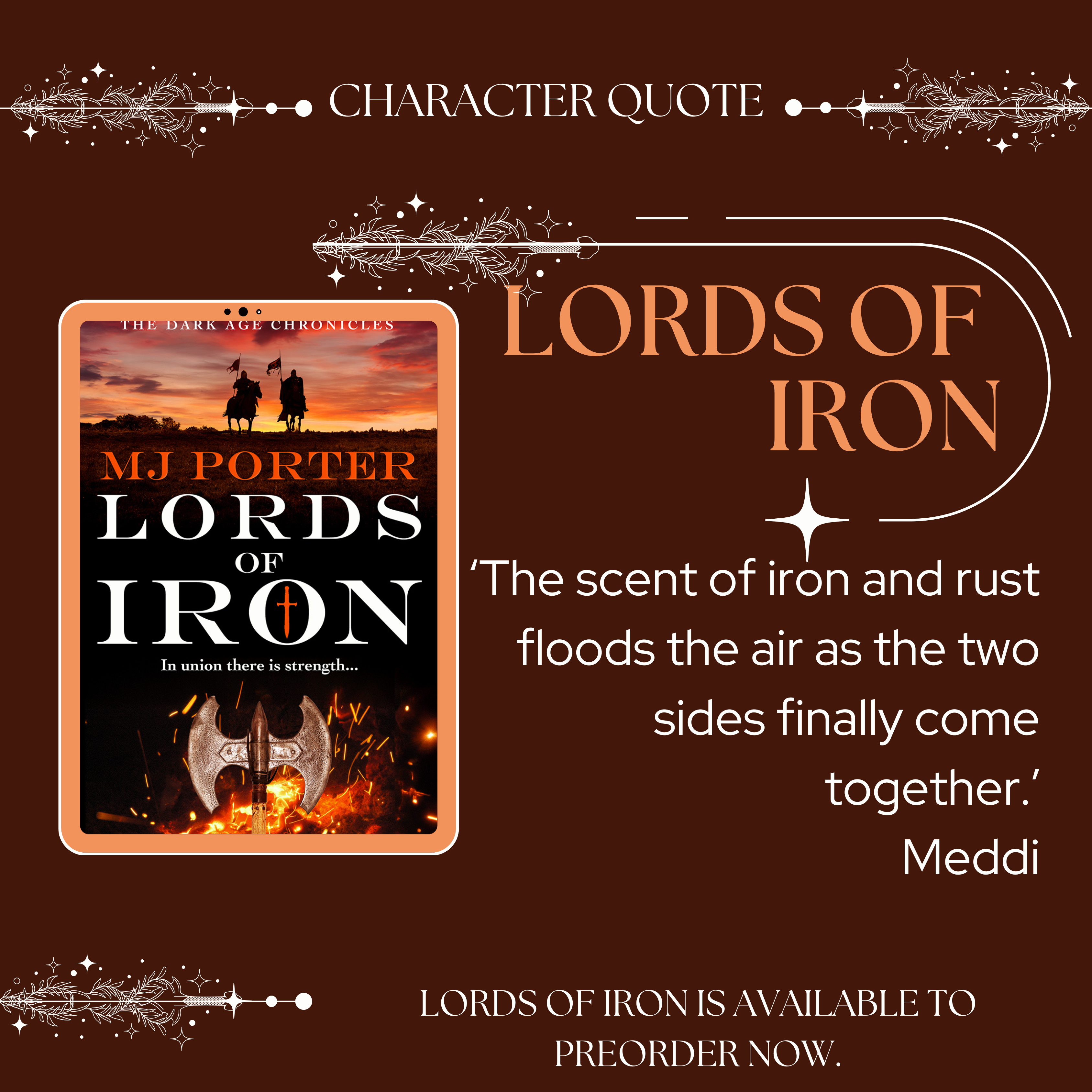
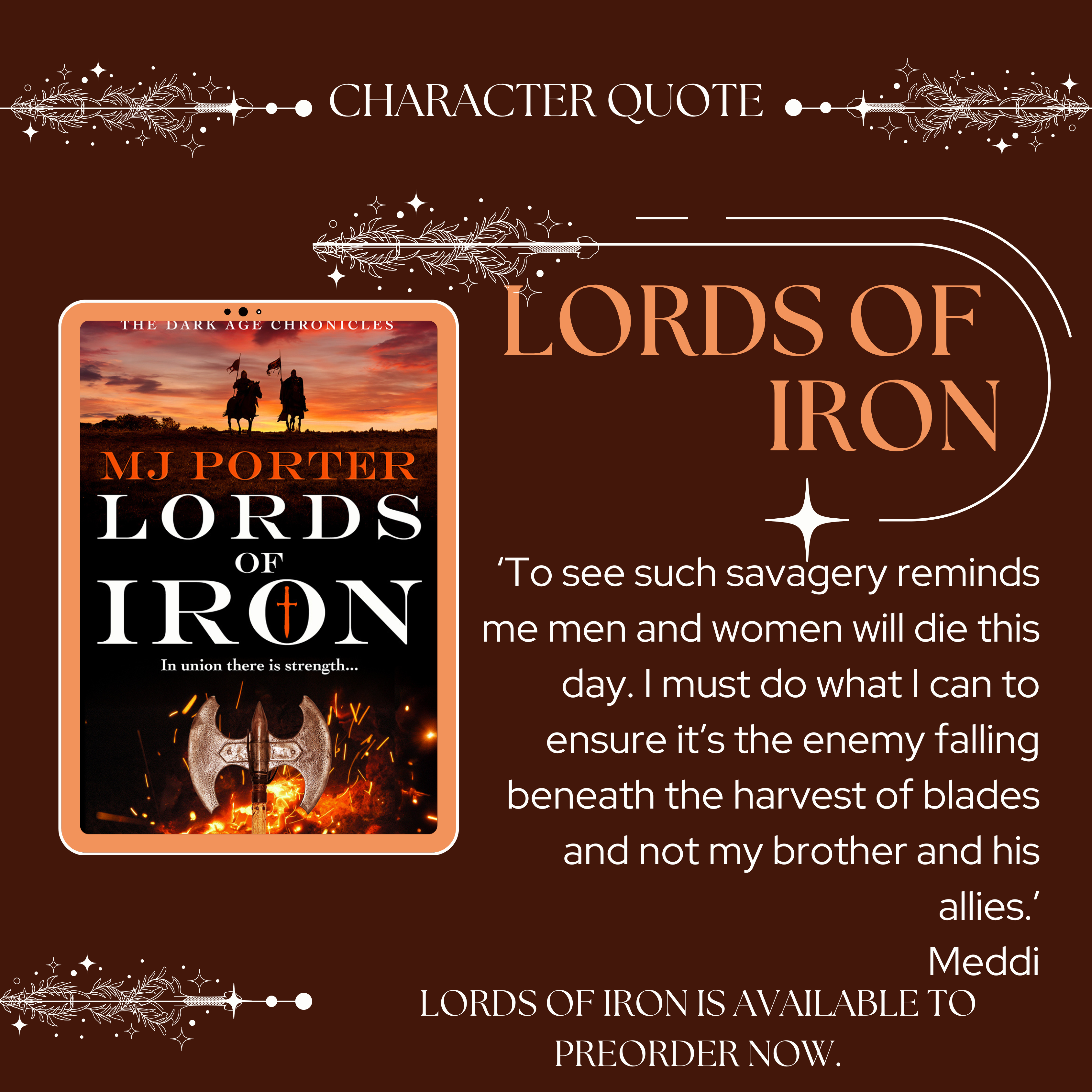
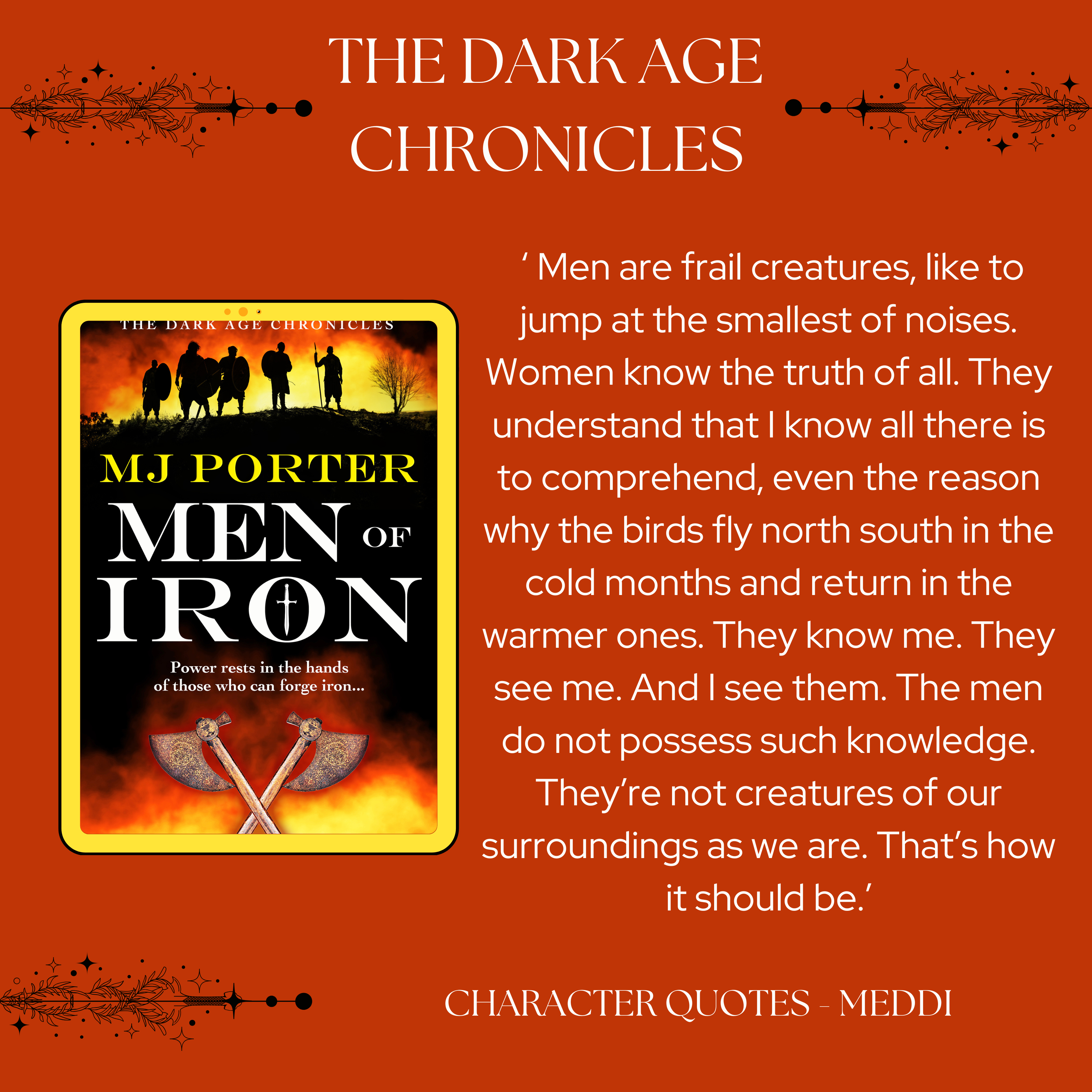
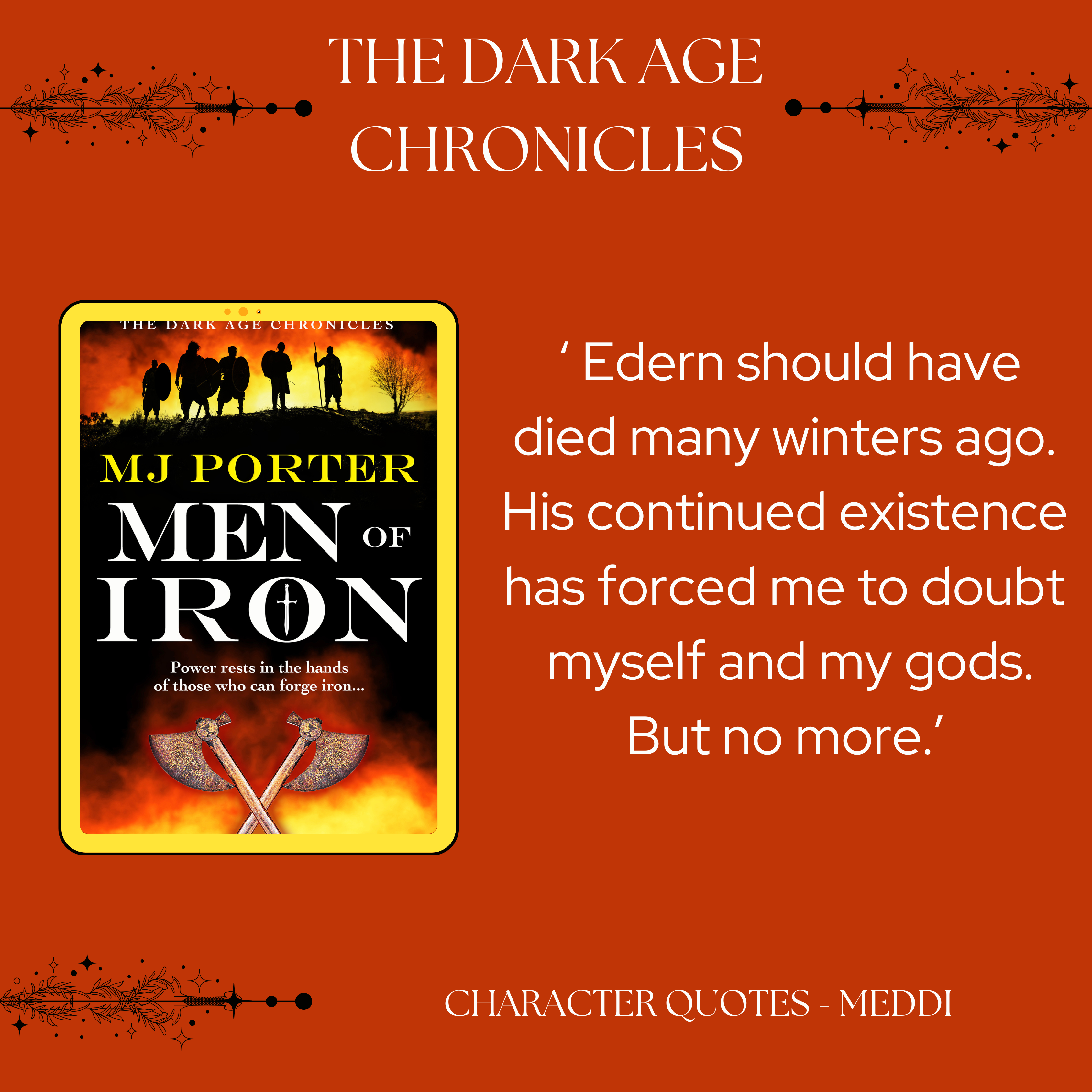
Now, as we turn to the concluding book in the trilogy, I feel Wærmund has come full circle. Is he, perhaps, now a better man than his father? Or, is he still driven by the desire to show his father he is the ‘better’ man? These are some of my favourite quotes from Wærmund in the final book.
You will need to read Lords of Iron (available from 5th January 2026) to discover whether Wærmund enacts his vengeance against his father. Enjoy.
Join my newsletter to follow my writing journey, get access to my exclusive Subscriber area on the blog, and receive a copy of Mercia – A Companion Guide to the Tales of Mercia.
It’s nearly happy release day to Lords of Iron, the third and concluding book in the Dark Age Chronicles Trilogy. Here are the original (very long) historical notes for Men of Iron #newrelease #MenOfIron #WarriorsOfIron #LordsofIron #histfic
The original historical notes for Men of Iron (they were so long I rewrote them)
This is not really a story of historical fiction, but rather archaeological fiction. Pick up any non-fiction history book on Britain at this time, and you’ll find very little written about what was happening, because we do not know what was going on, other than perhaps in the south and south-west (where there was more continuity from the earlier ‘Roman’ period). If it’s a book about Mercia, there’ll be even less until the seventh century. It’s impossible to write about the history of a kingdom when there are no written records. And so we must rely on archaeology.
The decision to write about these formative years in what would become Mercia has been a long time coming for me (and it is set mostly in what would become Mercia although the name never appears in the books).
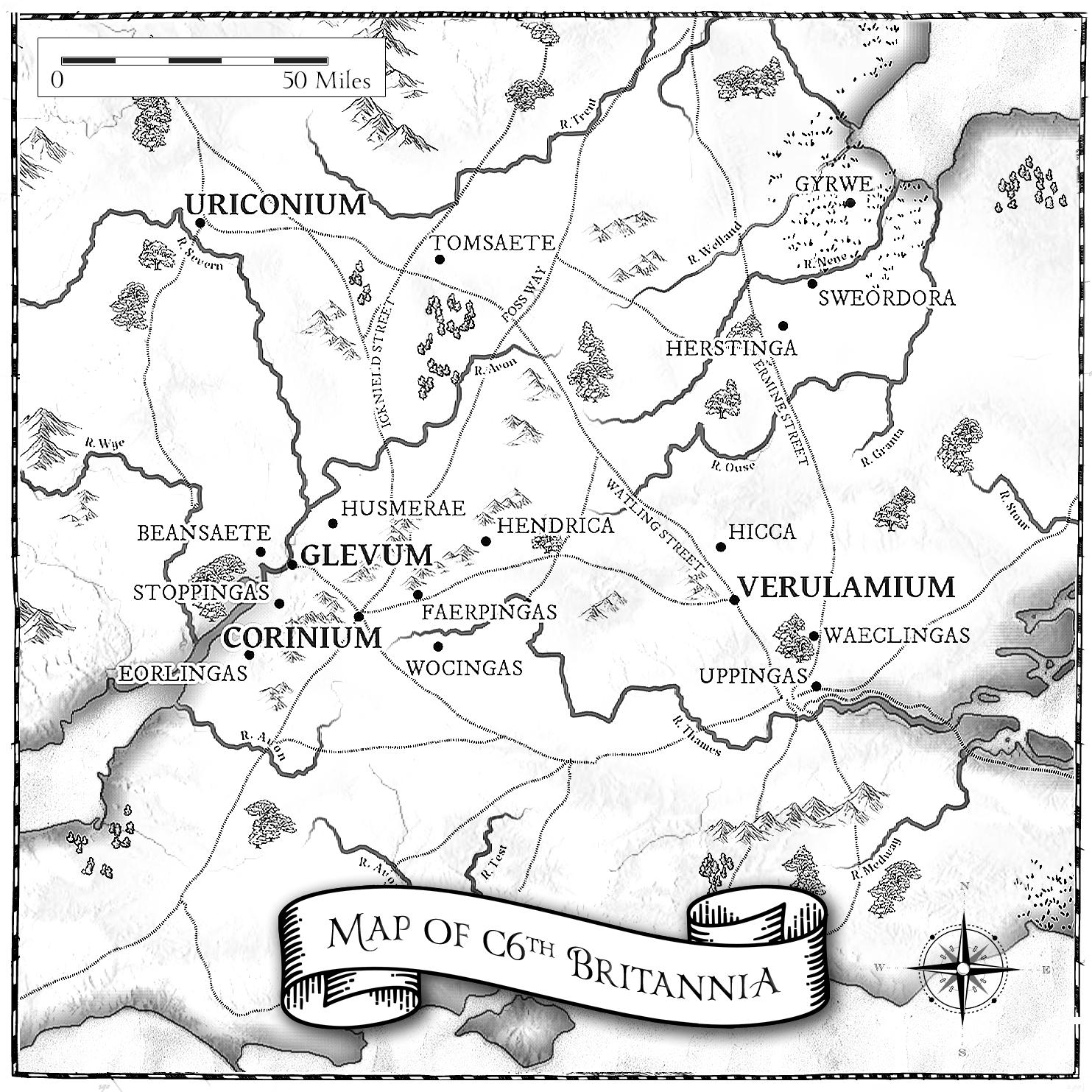
All that can be said with any certainty about Mercia is that a narrative had formed by the eighth century which was an attempt by the rulers of that time to explain how they came to be in control of the heartland of Mercia. It also attempt to explain how they ruled the wider Mercian kingdom (which included many other tribal affiliations: from the North Mercians, South Mercians and Middle Mercians to the outlying areas – the kingdom of the Hwicce, alongside that of the Magonsæte, being two of the best known tribal areas which people have heard about, and the Hwicce the region where I’ve based the Eorlingas). Bede, writing his Ecclesiastical History of the English People, finished by 734, knew some of these details, although he really did not like Penda the pagan – one of the most powerful Mercians in the seventh century (who it’s believed may have been from the Hwiccan kingdom) – but did grudgingly admit that his contemporary ruler of Mercia, Æthelbald, was a powerful individual, eclipsing the kings in his homeland of Northumbria by the eighth century.
Barbara Yorke has written:
The surviving sources allow us to say with confidence little more than that the kingdom of Mercia was in existence by the end of the sixth century. p. 102, Kings and Kingdoms of Early Anglo-Saxon England
How that kingdom came about, we do not know. I’ve chosen the date of this series carefully. It falls between the Battle of Camlann, said to have taken place in 537 according to the Welsh Annals, a later written source, and a later battle between ‘kings’ which occurred in the 570s and is mentioned in the Anglo-Saxon Chronicle, written 300 years after these events.
It’s difficult to determine any cohesive narrative from what is truly the Dark Ages for the whole of Britain. Others might look to the stories of the legendary Arthur (no, I don’t believe he existed), and Hengist and Horsa and think that’s enough, but having read K. R. Dark’s fascinating look at Britain at this period, Civitas to Kingdom, many years ago, I realised that what happened elsewhere might not have happened in Mercia, and equally, that generalisations shouldn’t be used about what would become the Saxon kingdoms in any single part of it. It was an island of petty tribal chieftains. It was not a country or a kingdom. This is an attempt to make some sense of what archaeological findings have been made and devise something that ‘could’ have happened. These people did not exist as I have named them, although I have adopted tribal names that are recorded in a later document (see below).
Wærmund is a name taken from a Mercian genealogy found in the Welsh Annals. There are a number of different variants of a Mercian genealogy. This is the one I’ve used, below.
Woden begot Watholgeot, begot Waga, begot Wihtlæd begot Wæround, begot Offa, begot Angen[geot], begot Eomer, [begot Icel,begot Cnebba, begot Cynewald, begot Creoda], begot Pybba. Pybba had twelve sons, two of whom are better known to me than the others, namely Penda and Eobba. Aethelred was the son of Penda; Penda was the son of Pybba. Aethebald was son of Alweo, son of Eobba, [brother] of Penda, son of Pybba. Egferht son of Offa, son of Thingrith, son of Eanwulf, son of Osmond, son of Eobba, son of Pybba.
Other versions of a Mercian genealogy are found in the Anglo-Saxon Chronicle entry for the year 626 (A2 Version, also known as the G version) when discussing the later reign of Penda which lists many of the same names, but has Wihtlæd as the son of Woden. David Dumville has noted that this represents a West Saxon interpretation of Mercia (the ASC was conceived of and begun in Wessex) – as such, he stresses the ‘Anglian’ tradition of this source, i.e. possibly Mercians writing about Mercians.
I’ve chosen Wærmund’s name somewhat randomly, but with the idea that he wasn’t the first of his family – and that, indeed, he is originally from one of the Wash tribes for which we have details from the Tribal Hidage. Every time I write a new series, something clicks for me, and in this case it’s that whatever the genealogies represent, it needn’t be those who ruled Mercia as a kingdom as we recognise it, but those who ruled the ‘tribe’ beforehand. Yes, they did claim descent from the god, Woden, but most of the Saxon kingdoms did.
It’s believed that the kingdom of the Hwicce was perhaps a native British one and that they came to merge with the Saxons, or rather at this time, Anglian invaders, and then fell under the sway of the wider Mercian kingdom. (The terminology is complex to get right.)
The names of the tribes come from the problematic and difficult-to-date Tribal Hidage, which survives in an eleventh-century document, but is believed to be a copy of an eighth-century document. It lists thirty-five kingdoms, which comprise ninety-five different tribal names believed to have amalgamated to form these thirty-five kingdoms, which were then further merged to form the six main Saxon kingdoms of the Heptarchy (the seventh, Northumbria, is not included in the Tribal Hidage). Feel free to go and try and make sense of the Tribal Hidage. Every non-fiction writers seems to use slightly different spellings and because some are so similar, it is incredibly confusing. Some of my tribes changed names repeatedly as I endeavoured to make them ‘fit’ the narrative and the journey my characters make. All mistakes are mine.
There are a wealth of Roman villas surviving in Gloucestershire, perhaps most famously Chedworth Roman Villa, and also many Roman mosaics, some of which are not available for public viewing as they have been covered up beneath the soil that has preserved them to ensure that continues. The tribe of the Eorlingas is associated with Arlingham, just below Gloucester, to the east of the River Severn. As far as I can tell, Frocester is the closest Roman villa ruin to have been discovered from nearby to where I wanted to base the Eorlingas, but with so many of them, it almost feels as though they might have been falling over them – there are fifty-two known Roman villas in Gloucestershire alone.
The idea of an economy dependent on iron had not really resonated with me before, but Robin Fleming’s comment that mining, metallurgy and smithing stood at the heart of the Roman economy made me reconsider this. She points out that from the late fourth century (which is traditionally deemed to be the end of Roman Britain – well, 410 is) there is a scarcity of traditional, crucial and once common everyday items – nails, evident in the lack of hobnail books and also coffins. She does, however, stress that the Romans had a successful ‘recycling’ scheme and that forging iron objects from these recycled elements may well have continued. However, pattern-wielded blades (which had largely come to dominate what we believe early Saxon/Anglian kings wielded in their battles) could not be made from recycled iron or from a single type of iron alloy, with at least four different iron alloys needed. Therefore, an age ‘without’ iron almost ensued. It is possible that these skills were lost and then needed to be rediscovered. Equally, it is possible that the evidence for such occupations as smelting have disappeared from the archaeological record in many places because of the transient nature of the process. I find the lack of nails in the archaeological record, however, very intriguing. It certainly points to something being lacking.
Languages in this era are, of course, impossible to reconstruct. It’s believed that English, Latin, British, Pictish and Irish would have been spoken. It must also be assumed that those coming to this island from Scandinavia and Germany would also have brought their languages with them. I’ve decided to use the terms Latin, Saxon, British and Brythonic in the text. (I had to make myself a chart to ensure I didn’t have people speaking to other people who didn’t share a language – it wasn’t pretty). There would potentially have been a vast number of local dialects as well, just as there are today.
The small iron-cast horse which Meddi has is based on a bronze object uncovered at Frocester. It is a fabulous piece, described in the site report as ‘crudely designed, with wide open mouth and large upstanding ears’. It is quite small, less than two inches in length, if I’ve understood the dimensions correctly, and shows the horse having reins but no stirrups. The horse was controlled by a bridle alone, and the horses were smaller, at twelve to fourteen hands, the equivalent of a hackney pony, or forty-eight to fifty-six inches tall (according to the internet). Stirrups were introduced by the Saxons.
I have struggled to find references to the religions at this time. Ronald Hutton’s Pagan Britain contains some useful passages. This somewhat leads into burial rites, which are often much of what we know of our ancestors. It does appear confusing – the magnificent ship burials at Sutton Hoo were preceded by burials beneath what is now the visitor centre (and which I think are more fascinating than the ship burials – or rather, the process of how they went from the one to the other within a generation.) Cremation and interment were somewhat haphazardly applied throughout Britain. My own distinctions between peoples are merely an attempt to highlight the differences between them. The depiction of the burial of Meddi’s daughter beneath inhabited buildings is a known phenomenon from this period, and written about by Robin Fleming in her chapter Living with Little Corpses in The Material Fall of Roman Britain 300-525CE.
For anyone affected by this storyline, or concerned by it, as someone who has experienced the loss of a child, I’m perhaps too comfortable including such story elements. To those who have also endured it, I extend my heartfelt sympathies and assure you, it does get easier. Eventually. (what follows below has been added at the end of the proofread for Lords of Iron).
This passage leads somewhat well to a thought by Meddi as she nears the end of book three.
‘I’m Meddi, seeress of the Eorlingas. It’s been a long and troubled journey to reach this moment in my life when hatred has bled away to nothing but a dull ache where the life I thought I’d have has a child has failed to come to fruition. But I would change nothing, aside from the loss of my daughter.’
I think this is perhaps the most ‘me’ I’ve included in a novel (not that I’ve spent my lifetime filled with hatred, but I hope you understand the sentiment).
Perhaps, in the end, this trilogy has been as much for me, as it has been for my readers. Thank you.
Join my newsletter to follow my writing journey, get access to my exclusive Subscriber area on the blog, and receive a copy of Mercia – A Companion Guide to the Tales of Mercia.
It’s nearly happy release day to Lords of Iron, the third and concluding book in the Dark Age Chronicles Trilogy. Let’s talk about Meddi , the seeress of the Eorlingas #newrelease #MenOfIron #WarriorsOfIron #LordsofIron #histfic
Meddi, the seeress of the Eorlingas
When I was thinking about writing this trilogy, set in the undocumented and little-understood ‘true’ Dark Ages, it was Meddi’s character that came to me most forcefully. I had thought she appeared pretty fully formed, but I’ve actually found a very early attempt which doesn’t mention her (it was only about 250 words, admittedly). After that, she evidently developed quite quickly in my mind. Of the two main points of view characters, Meddi and Wærmund, she is the one who was the most different to what I’ve written before, so I was surprised by how strongly she manifested and became ‘real’ to me. I ran a few elements of her character passed a number of trusted early readers. I wanted her to be strong and determined, but also broken and healing from a terrible trauma, a terrible trauma even I can only imagine. But I also didn’t want her to be stereotypical. I needed to make her realistic and both a product of what had happened to her, and also not. Don’t worry, it was a confusing mix for me, too.
Making her a seeress allowed me to give her an influential position amongst her people. But of course, it brought some problems. What sort of seeress should she be? What magiks should she possess? And how to make those more ‘fantastical’ elements work in what was intended as a piece of archaeological fiction (yes, historical, but so much is based on archaeological finds, it seems wrong to misname it).
I am, and no doubt, will always be a ‘pantser’ (someone who doesn’t plan their stories but just writes them – perhaps in many wats somewhat similar to Meddi when she reaches out to communicate with her ‘god’ only I’m reaching out for my muse and a story that plays out on the page). As such, some elements of Meddi’s personality just appeared for me, and others had to be worked at. I was also conscious of not making her too similar to the wonderful Wynflæd in The Eagle of Mercia Chronicles, or indeed, the Wolf Lady, who also features (both of them healers). Yet, a seeress would possess the abilities to tend to the sick. It was tricky to get it just right. It was really only when I heard her words brought to life by her fabulous narrator, Antonia Breamish, that I truly appreciated that Meddi was a creation I could be very satisfied with (you can listen to her below). I believe, and I hope my readers will agree, that she’s fully rounded, entirely understandable, and if she does things we wouldn’t, then we can be sympathetic to what drives her.
The symbolic adorning of her face and hair with chalk or charcoal as she conducts her magiks was based on little more than my imagination, and yet the imagery is stark. She is sometimes cast from shadow, and sometimes from light. She is a character who loves and hates with equal fierceness, and sometimes, her love shows itself in ways that are perhaps more akin to hatred. But she is certainly most critical of herself. She is driven by ambition, and in this final book, I think we see her at her most vulnerable and also at her strongest. Enjoy.
Join my newsletter to follow my writing journey, get access to my exclusive Subscriber area on the blog, and receive a copy of Mercia – A Companion Guide to the Tales of Mercia.
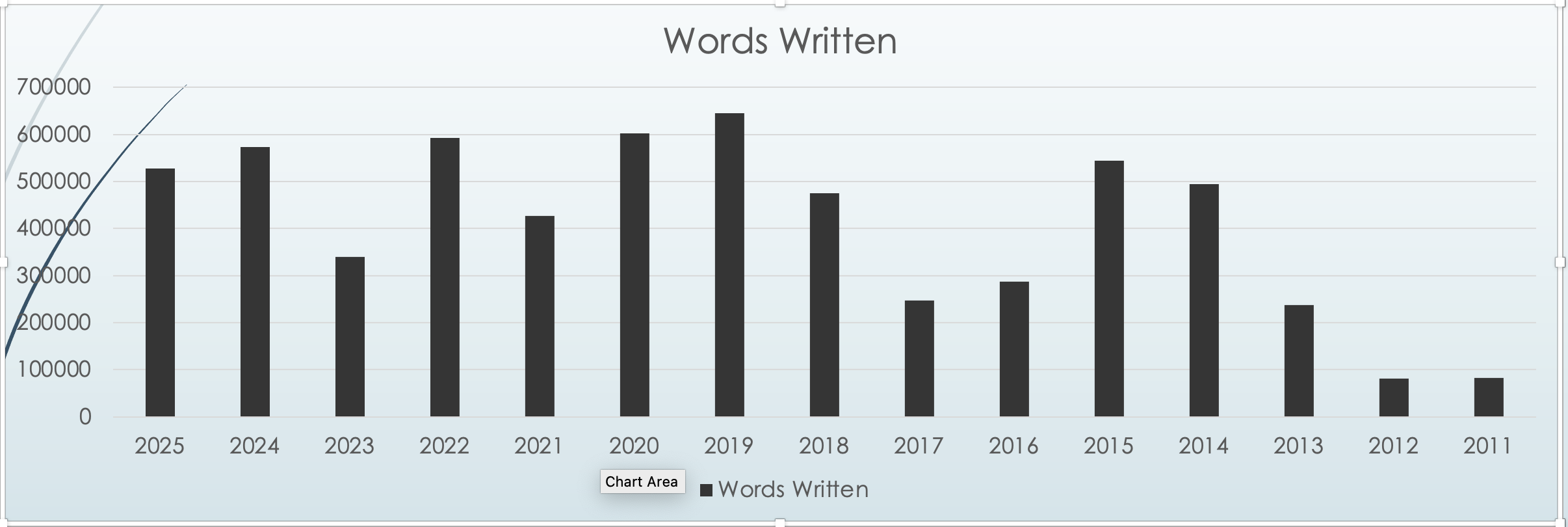
It’s time to go back to the beginning of the year and work out exactly how I’ve been spending my time. 2025 has been a pretty decent year in terms of writing, but I have largely missed out on writing for three months this year. Let’s find out why.
In January, I was busy working on what would become Shield of Mercia. In my notes, it’s simply called Icel 8. I started it in December 2024 and finished it in January 2025. It looks like my writing was pretty consistent for this one, and quite often, I was able to write about 4000 words a day, which makes me wonder whether I was maybe a bit behind at this point. I can’t quite remember. I’ve checked, and yes, I was running late with this one. That explains why I was so busy tapping away throughout January. I also completed the proofreading for Men of Iron and was working on some other stuff in the background, for my ‘other’ writing name. January was my most productive writing month in terms of word count gained. It was a good start to the year, but it didn’t continue.
In February, I seem to have been working on a few projects at the same time – one of my fantasy titles, as well as copyedits for Warriors of Iron, and some finessing for Shield of Mercia (I have a feeling this is the point I realised I needed some locations for Icel’s journey through Wessex and hightailed it to the uni library for some research books – somewhat amusingly the one I found was written in 1978). I also started work on what would become The Secret Sauce. It was not one of my most productive months in terms of word count achieved, but I evidently spent a lot of time editing and rewriting things. Sadly, it wasn’t my least productive month, which has ended up being December.
March was a tough month as I lost my Dad, and all writing plans, understandably, went out the window. I had structural edits to work on for Shield of Mercia, and it was very hard going. For a few weeks, I worried I wouldn’t get back into writing, but I did. It just took a while. My writing process is very creative. I pop on some music, ‘transport’ myself to where my characters are, and tap away. It can be hard to achieve when there’s too much going on in my head besides writing. I also managed a bit more work on The Secret Sauce.
April was also very messy – I pressed on with The Secret Sauce, and then after all the stress of March, completely relaxed on holiday in Orkney for two weeks. I definitely needed it.
May marks the start of the exam season at school. But, with everything going on, I was very behind with Lords of Iron (like so behind that there was barely anything there). But I trusted myself to get it done and spent the half-term holiday (9 days in total) writing. I wrote over half of the first draft for Lords of Iron in just those 9 days. It sounds crazy, but it was the final part in the trilogy, and I knew my characters. It was very much a return to my old writing style (you can listen to me talk about my writing process over on my Patreon). I enjoyed it, and I also think it helped me ensure the book (due out on 5th January 2026) flowed really well, with no let-up in tension during the second half of the novel.
I continued work on Lords of Iron throughout June (this was the first, and I hope, only time, I had to ask my editor for an extension). I was also back with The Secret Sauce and had completed copy edits for Shield of Mercia. 26th June was my most productive writing day all year. Away from The Secret Sauce for such a long time with everything that had happened, I bashed out 8989 words in one day (that doesn’t happen very often any more – my most productive day ever saw me clock in over 17000 words over an 18-hour period – crazy).
July saw me concentrating on finishing The Secret Sauce, and also starting work on Icel 9. I completed my proofreading for Shield of Mercia. I do like it when I’m editing the previous book while writing the next one. It ensures I don’t miss any huge details – for instance, when someone has been badly wounded. July was my fourth most productive month in terms of added word count. It also saw the release of Warriors of Iron, the second book in the Dark Age Chronicles.
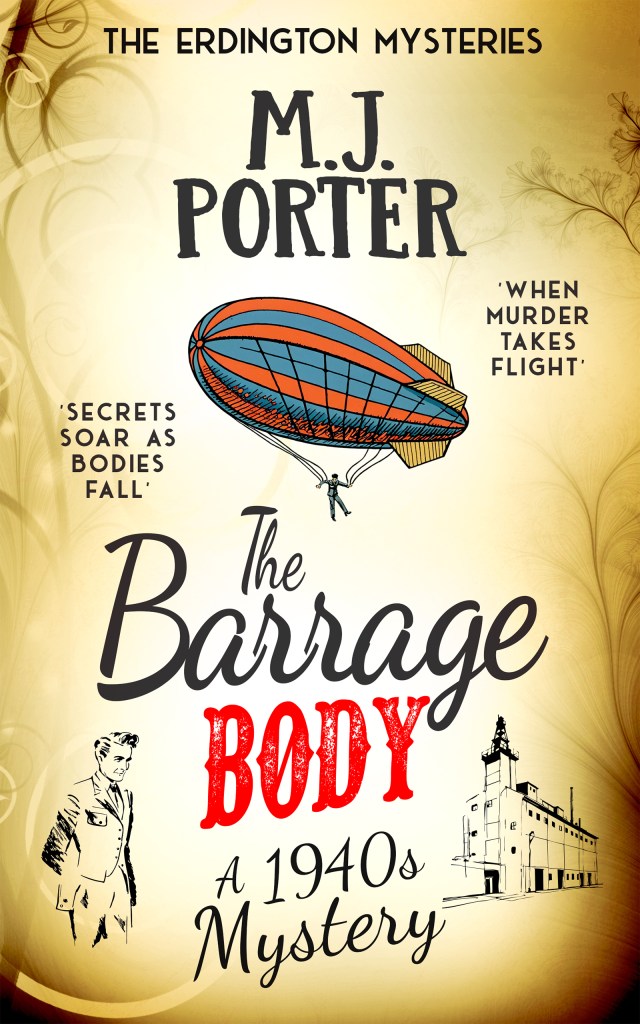
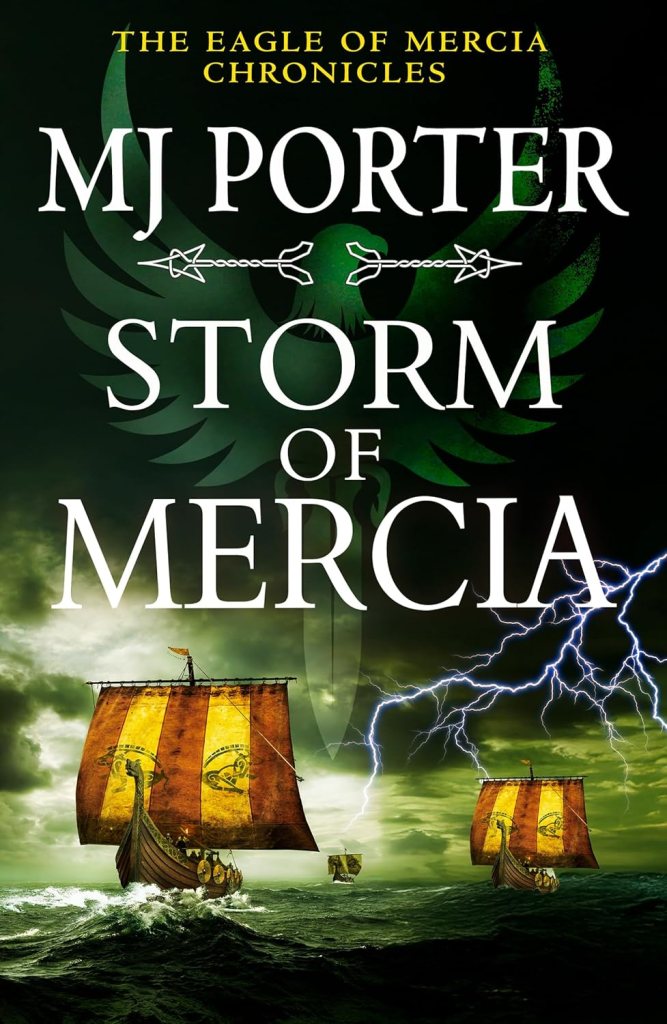
August saw me working properly on Icel 9 (Storm of Mercia). I also started work on The Barrage Body (another mystery), completed the proofreading for The Secret Sauce (released at the end of the month), and found some time to start playing around with ideas for a new series. I also completed proofreading Lords of Iron and spent a bit of time messing with one of my fantasy titles.
September was a good month. I was working on three projects, the main one being The Barrage Body. I completed the copy edit for Lords of Iron at the start of the month, and structural edits for Storm of Mercia at the end. It was my third most productive month in terms of word count gained. Yay.
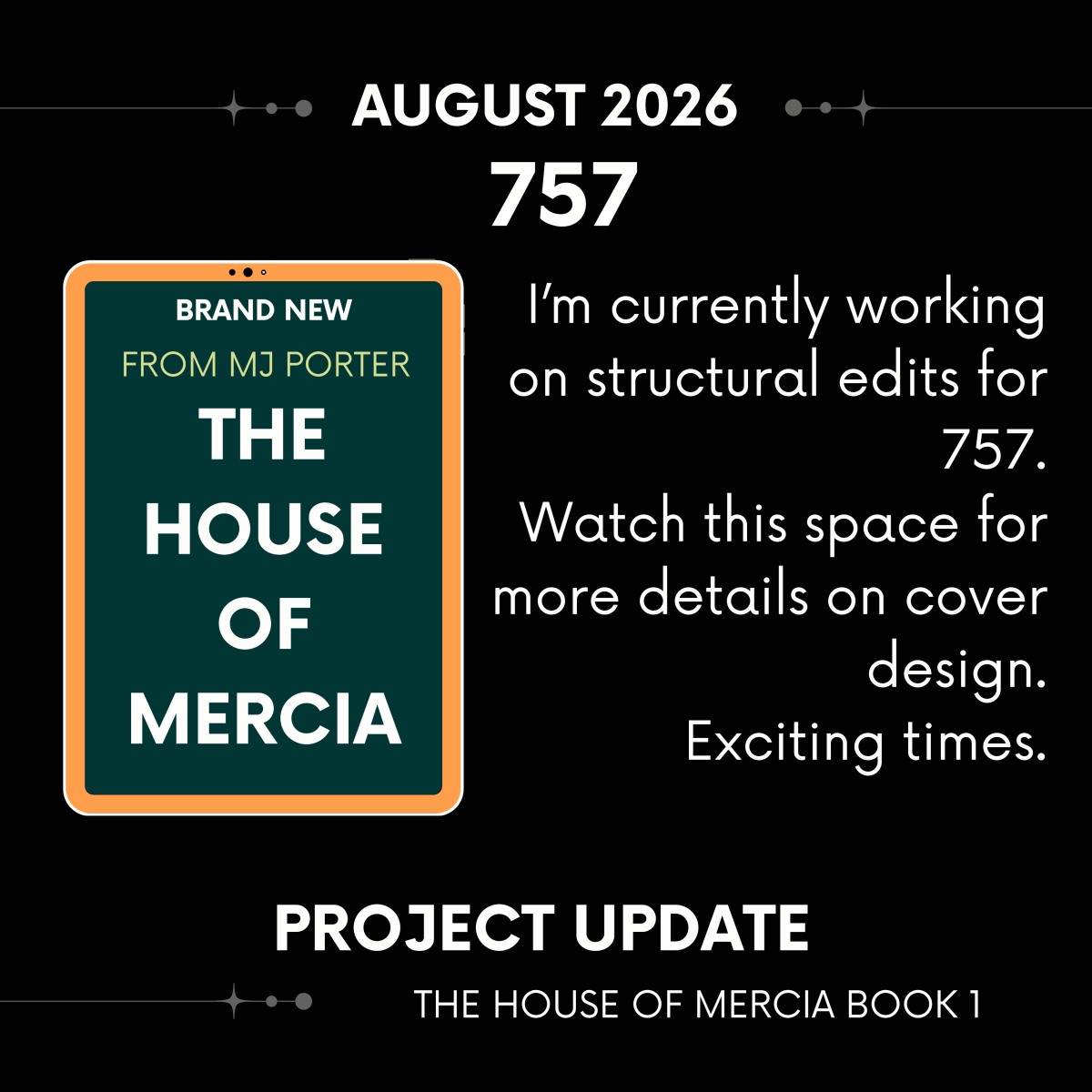
October was the month when I had to ignore the draft for The Barrage Body, which should have been complete, but wasn’t, because I’d made it so complicated, I couldn’t solve my own mystery (the curse of being a pantser rarely rears its head these days, (I don’t think it has since I wrote Lady Estrid) but this time it was a real pain). I distracted myself by working on the first book in the next series, the House of Mercia. It was a good writing month, even though I was very frustrated about The Barrage Body.
Since 2012, November has been the month I write whatever I want as part of a writing challenge. But the writing challenge as I used to follow it, is no more, and while I intended to try and do it anyway, that’s not what happened. I did manage to bash out about 20k for one project, but mostly spent the month solving The Barrage Body (which I managed, and could then release at the end of the month) and working on The House of Mercia.
For December, I was once more in school, and have since spent much of the time being unwell, so my writing count is woeful. I need to finish the first book in the House of Mercia, but I have a whole month to go, so I’m not worried. Right now, the biggest problem is not writing too much for this story. I’ve also been toying with a new mystery and trying to get back to my other new project. Hopefully, January 2026 will be as productive as January 2025, and it will be a breeze to get everything done.
So, I’ve not written a new Coelwulf in 2025, but I’m working on something related. I’ve also not written a new Earls of Mercia book, but I will try to get to it in 2026 (we’ve reached the point where events are very complicated). I also need to finish my fantasy title, which I’d hoped to have done months ago, after all, it is half written.
In terms of words written this year, it comes in at about 520k. Considering the three ‘missing’ months where I’ve hardly written anything, I’m pleased with that.
Forthcoming releases for 2026 will be Lords of Iron, Storm of Merica, the new House of Mercia in August, and the second one later in the year. I also hope to write a mystery or two, and I want to finish my November 2025 project about events after The Last King.
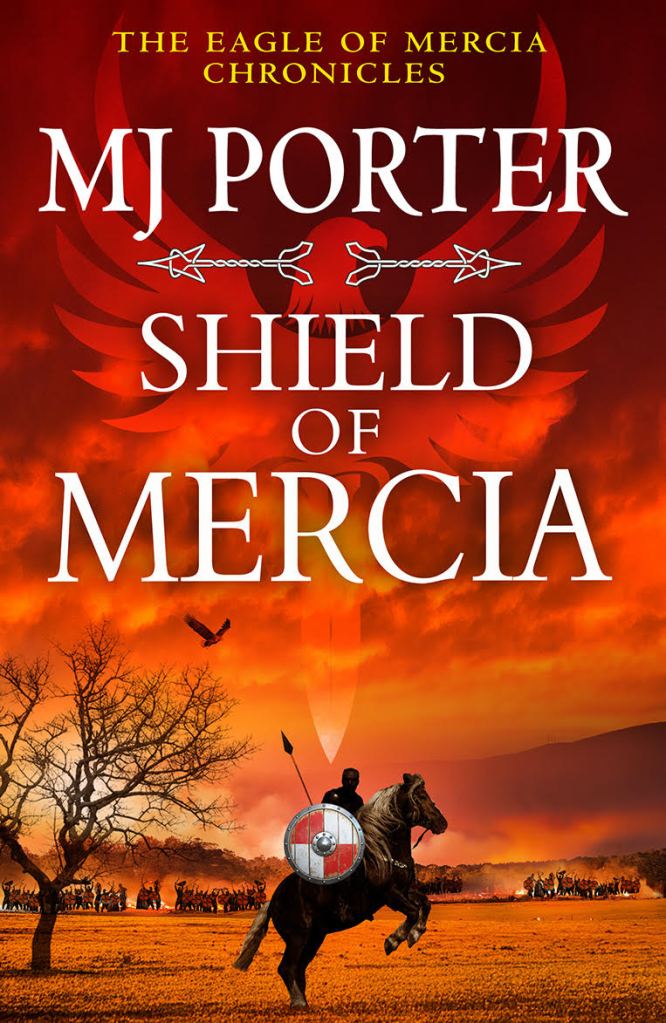
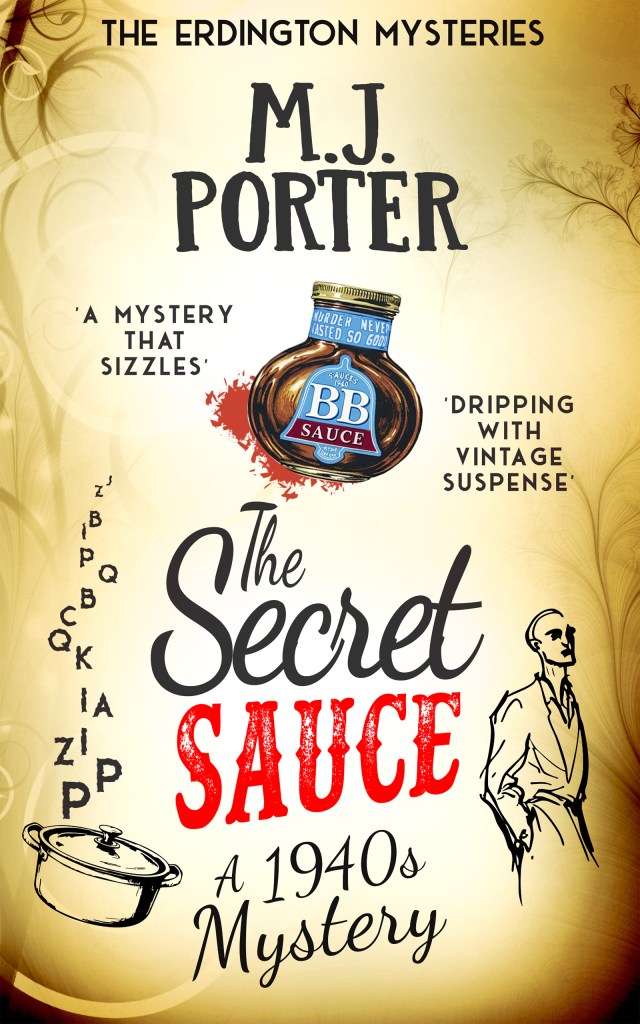
So, in 2025, I wrote five novels, give or take 20k or so on some of them, Shield of Mercia, Lords of Iron, Storm of Mercia, The Secret Sauce and The Barrage Body (I’m not counting the House of Mercia book, although perhaps I should, as it is over 70k). (Click the book covers for links to purchase/preorder).
As ever, a huge thank you to all my wonderful readers who allow me to spend my time with my characters. It is a privilege. That said, 2025 has been a tough year in terms of sales (as well as other life related items). Do support your favourite authors in anyway you can. It’s not nice in the publishing world right now and lots of people are worried about the future.
I’ve also been getting new covers for some of my older books throughout 2025, and some titles are now available from platforms other than Amazon. Enjoy.
If you want to follow my writing journey, join my newsletter. I update readers each month on what I’m doing, and it also gives you access to my Exclusive Subscriber page on the blog. And, you will also be able to download a copy of my title, Mercia, a compendium of all things related to the Tales of Mercia. There might be some short stories in there, too (as well as a sneak peek at my new project). And if you’d like a signed copy of one of my books, then visit my online store.
2025 has been a challenging reading year for me. I’ve failed to hit my reading target of 100 books (although I’m not worried about that because hey, it’s just a bit of fun to even set a target), and there have been a few months where I barely read anything at all because ‘life’ got in the way. I’ve also noticed this year that my reading preferences have changed, moving even more towards mysteries and away from my writing genre of action and adventure historical fiction. I have also, however, joined my local book club, and so I’m reading one book each month to discuss in the group, and this means I’m not necessarily always reading books I would usually choose. This has been a bit of an eye-opener. In our book club, we do read the books, and we do talk about them. If you can find a book club like that, then I highly recommend it. It’s a great experience.
Goodreads (and The Storygraph) tell me I’ve read 82 books this year (as a point of note, I don’t usually put my audiobooks on multiple times (I listen to the same few audiobooks at night to help me sleep and I am almost word perfect on some of them these days)). As last year, I’ve not included my own books in this, which get read repeatedly while writing and editing.
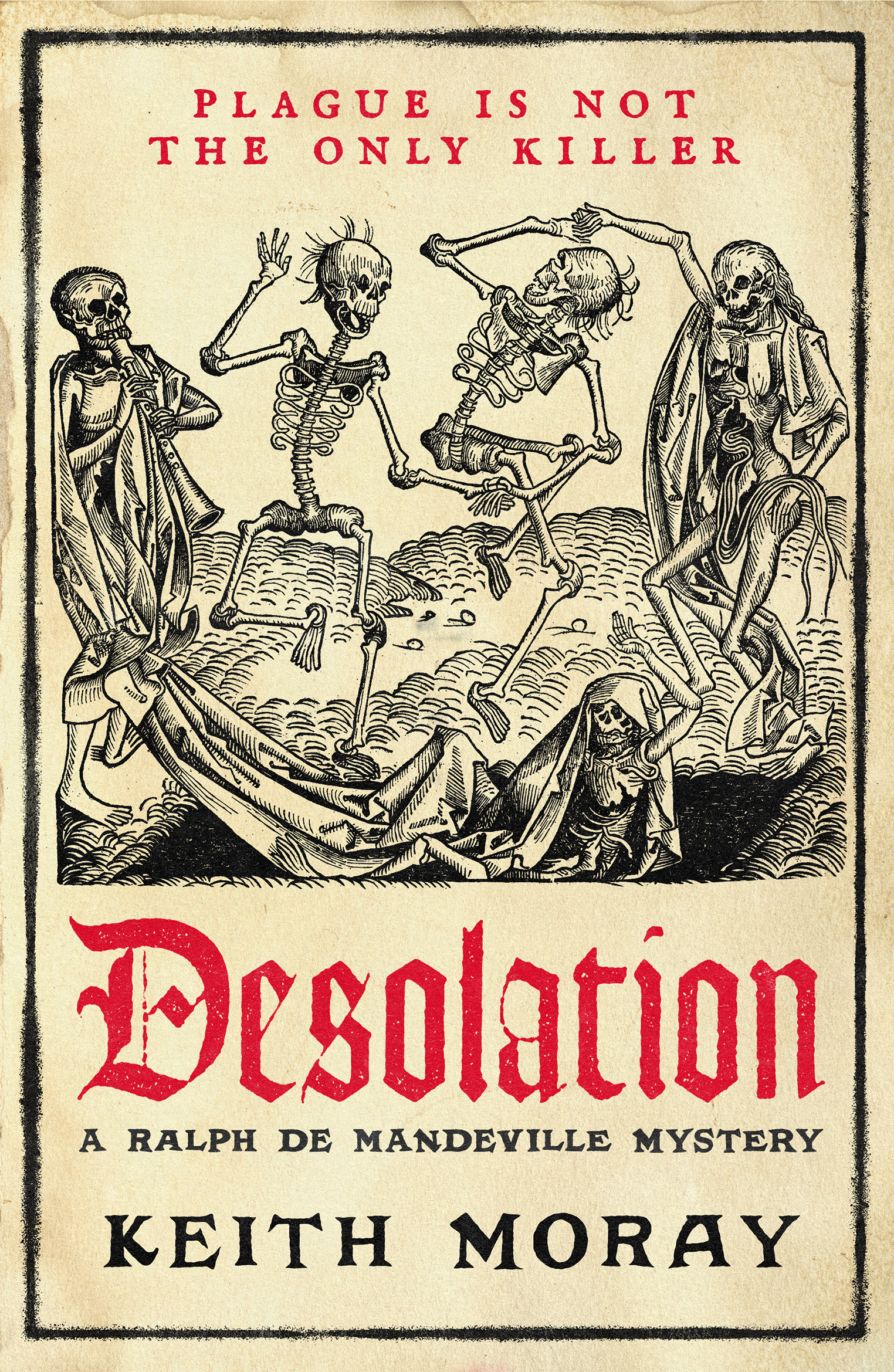
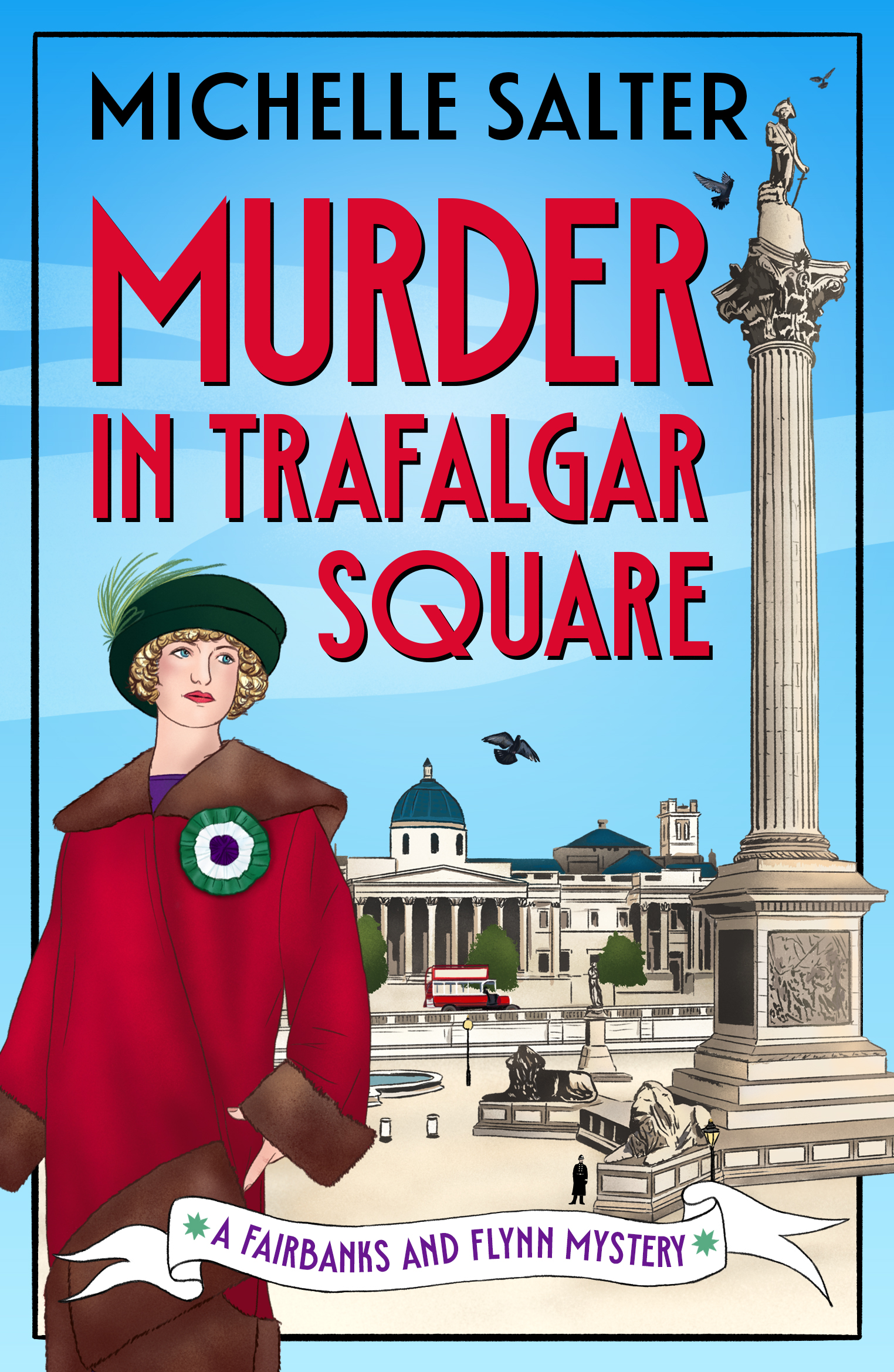
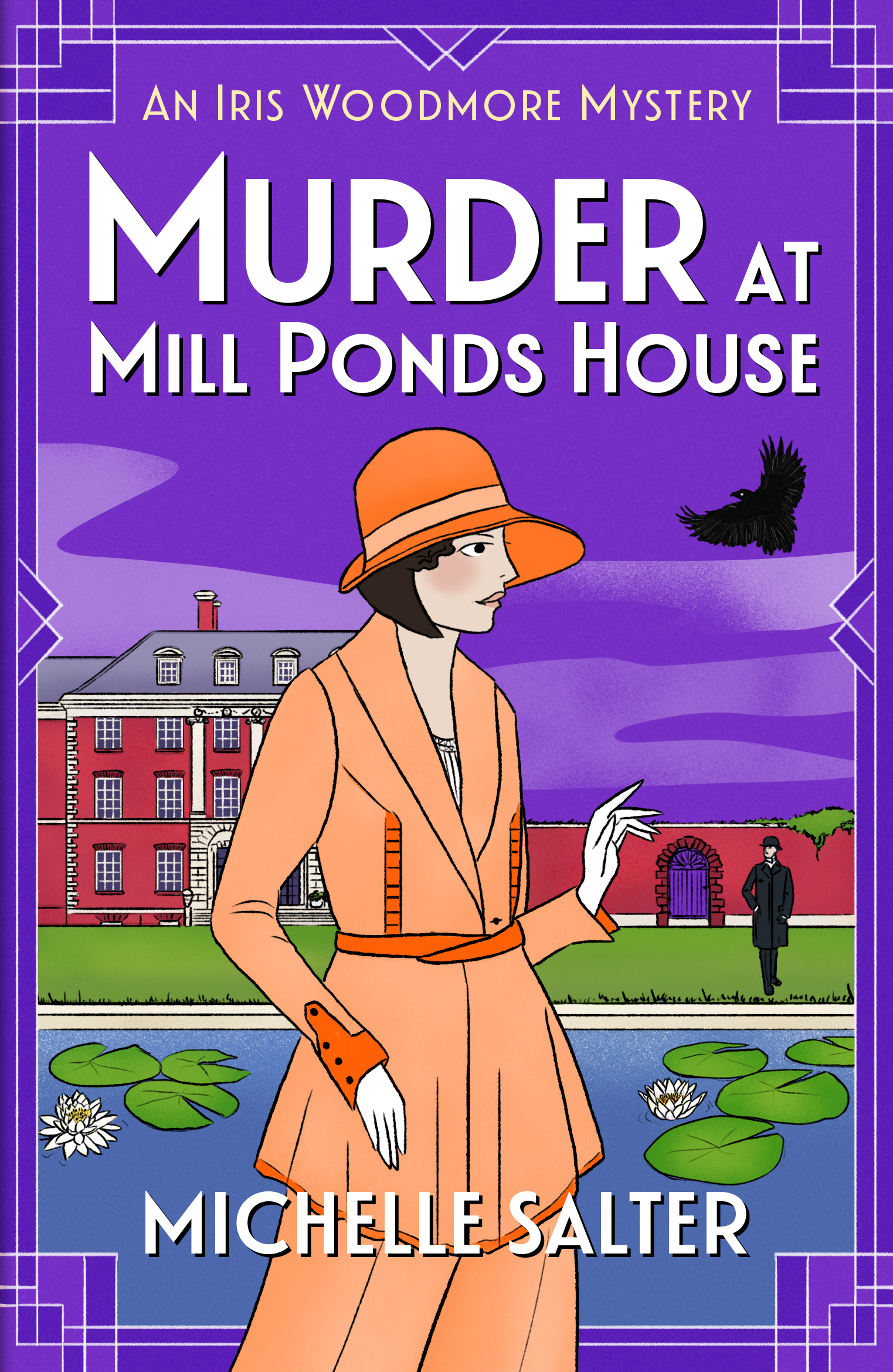
My most read category (a third of all books) has been historical mysteries – (some of these might also be classified as cosy). I’ve read anything from The Rush by Beth Lewis, about the dash to Dawson City to mine for gold at the end of the nineteenth century, to Desolation by Keith Moray (set in the 1300s) and Monstrous Murder by Elizabeth R Andersen (also set in the aftermath of the Black Death) to a huge collection of early twentieth century mysteries, including Michelle Salter’s new series, Murder in Trafalgar Square. I think my favourite (and most surprising read) was The Bookseller of Inverness by SG MacLean (our first book club read, and my recommendation (there were opinions about it – which was brilliant – and I would warn it certainly helps if you know something about the Battle of Culloden and its aftermath). Click on the images to visit the reviews (if I’ve reviewed on the blog).
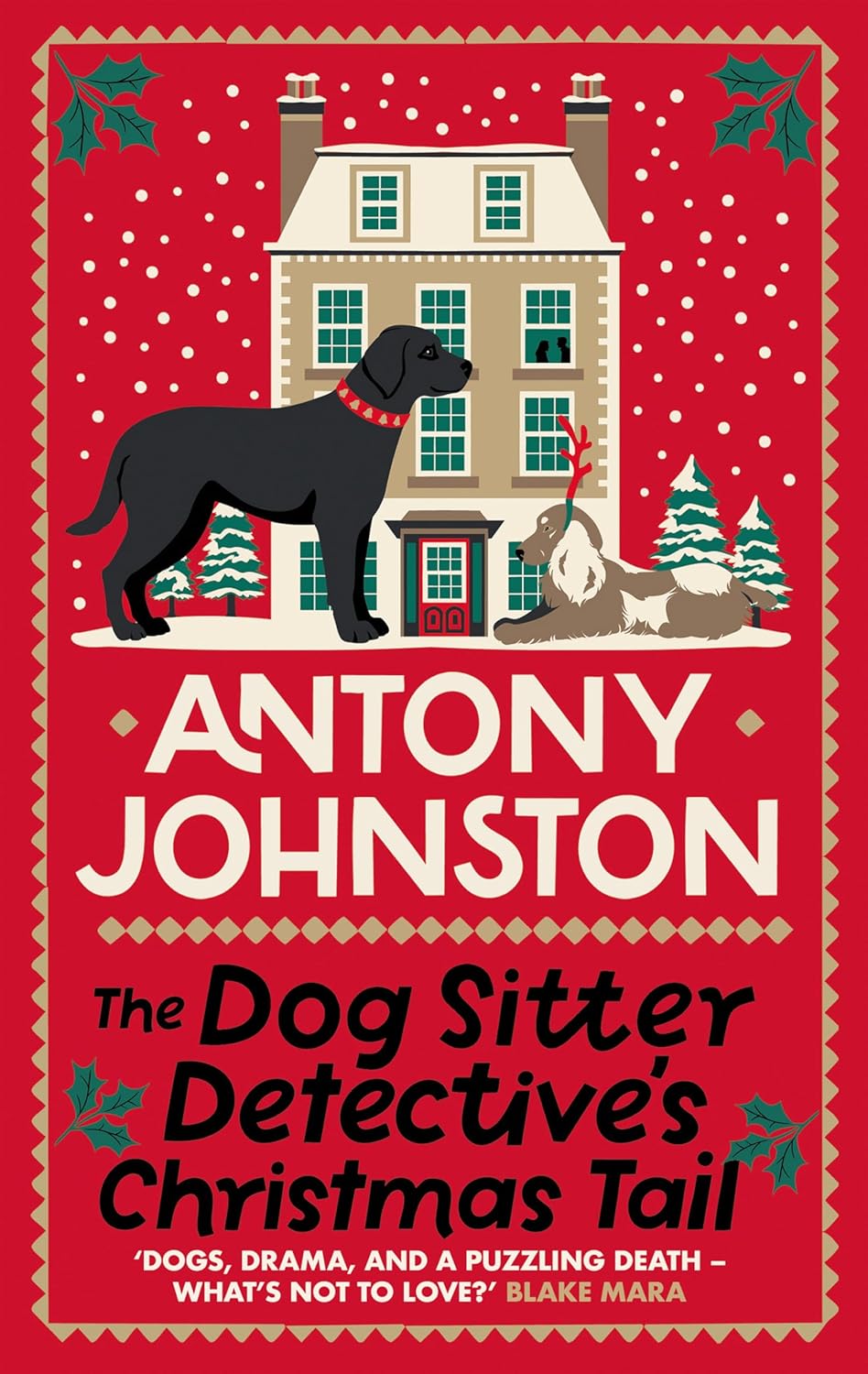
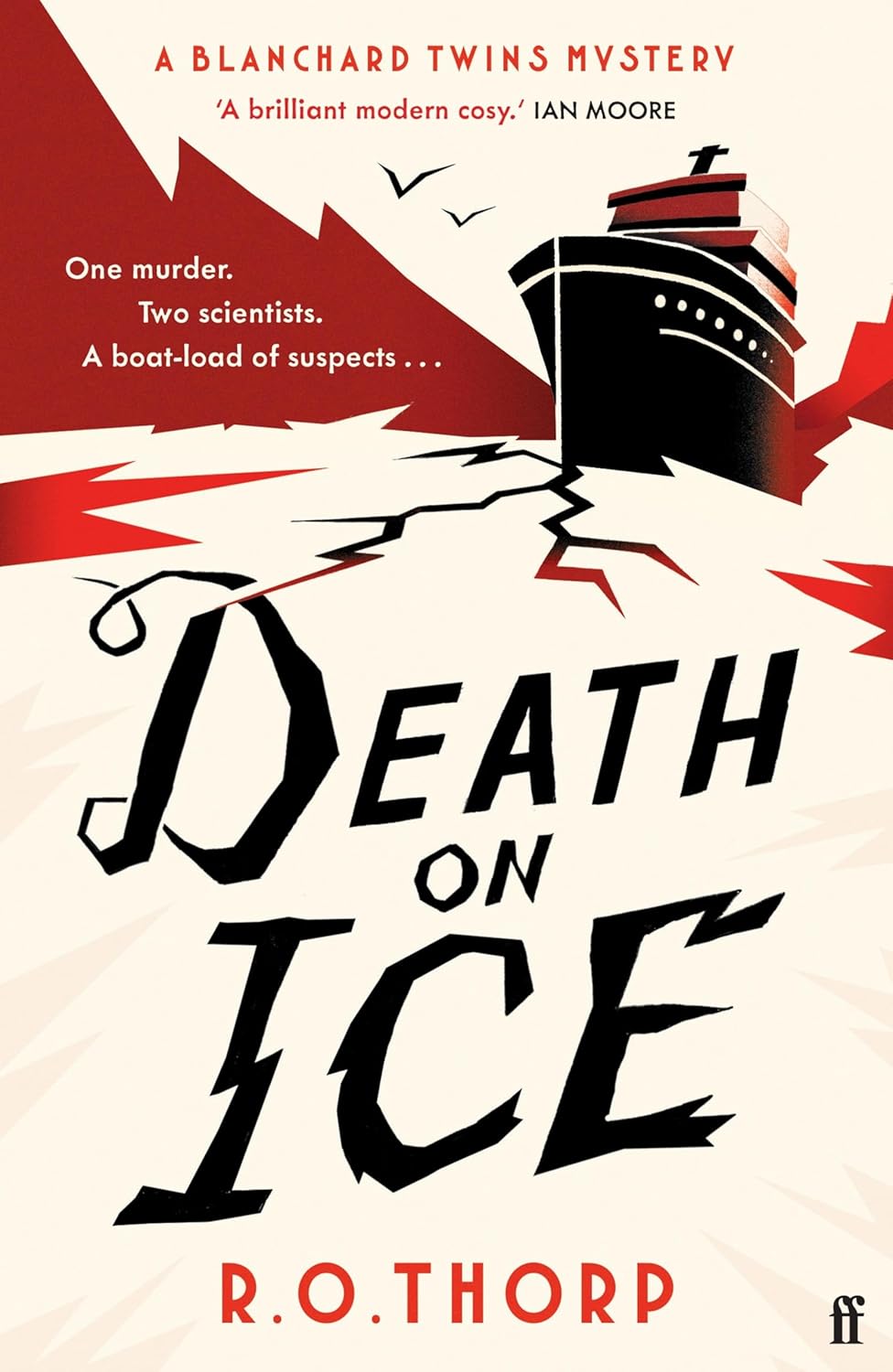
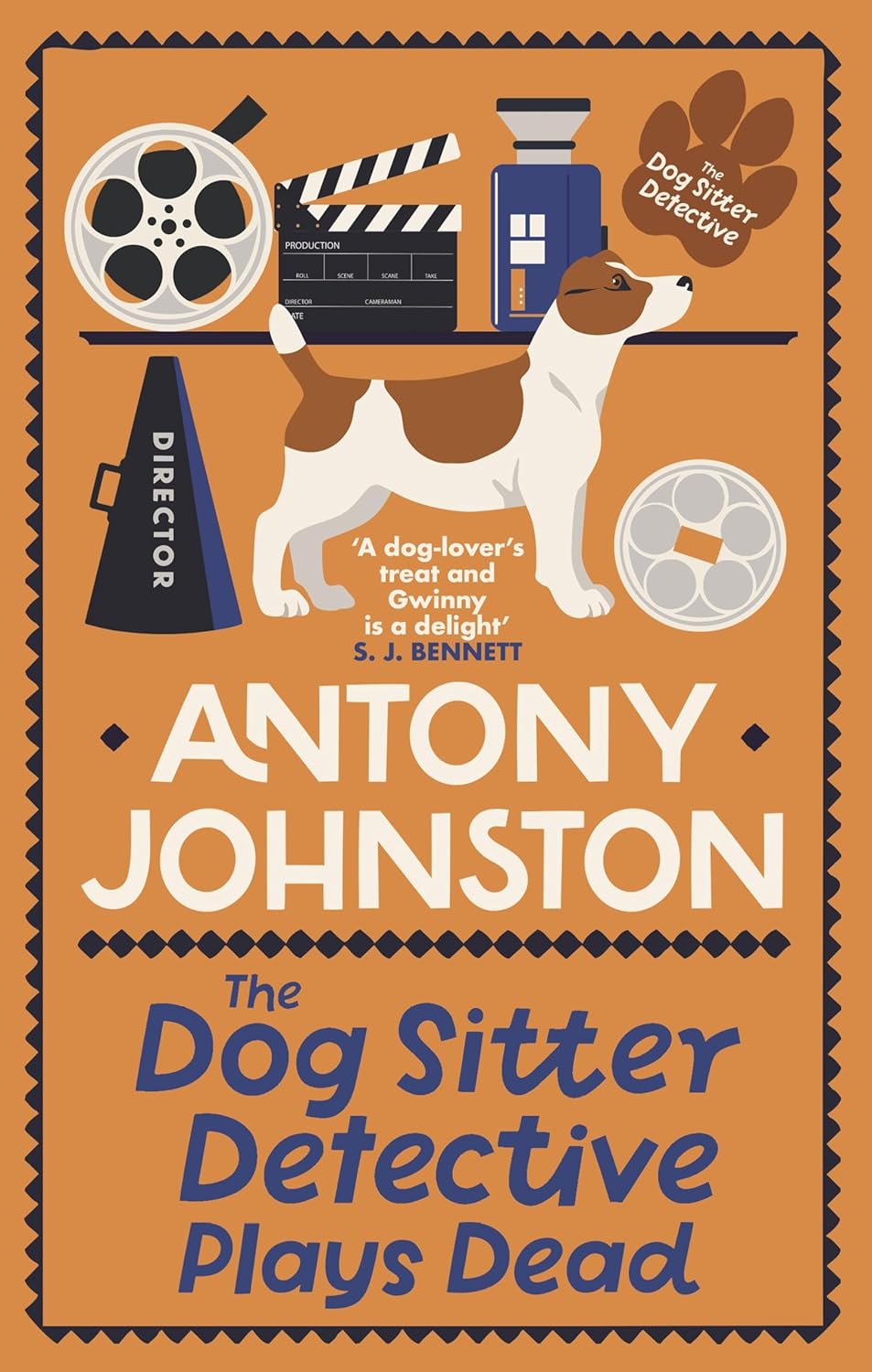
Behind historical mysteries in my reading year are just plain old contemporary mysteries. Again, some of these are also cozy reads. I don’t like my murder mysteries to be too graphic (when I was much younger, I read all the Scarpetta and Jonathan Kellerman novels and freaked myself out), and I’ve discovered that my preference is for a style known as ‘police procedural’ even when there are no police involved. I started the year with Death on Ice, which was a slow build but delightfully engaging, and ended with the equally brilliant The Retired Assassin’s Guide to Orchid Hunting – a fabulous New Zealand-based mystery (I’m going to read book 1 now), and Simon Whaley’s Flaming Murder (reviews to follow for these two books in Jan 2026). I also discovered Antony Johnston’s lovely Dog Sitter Detectives Series. These are such great books – quick reads but with compelling mysteries.
You can also check out my three favourite reads of 2025 over on Shepherd.
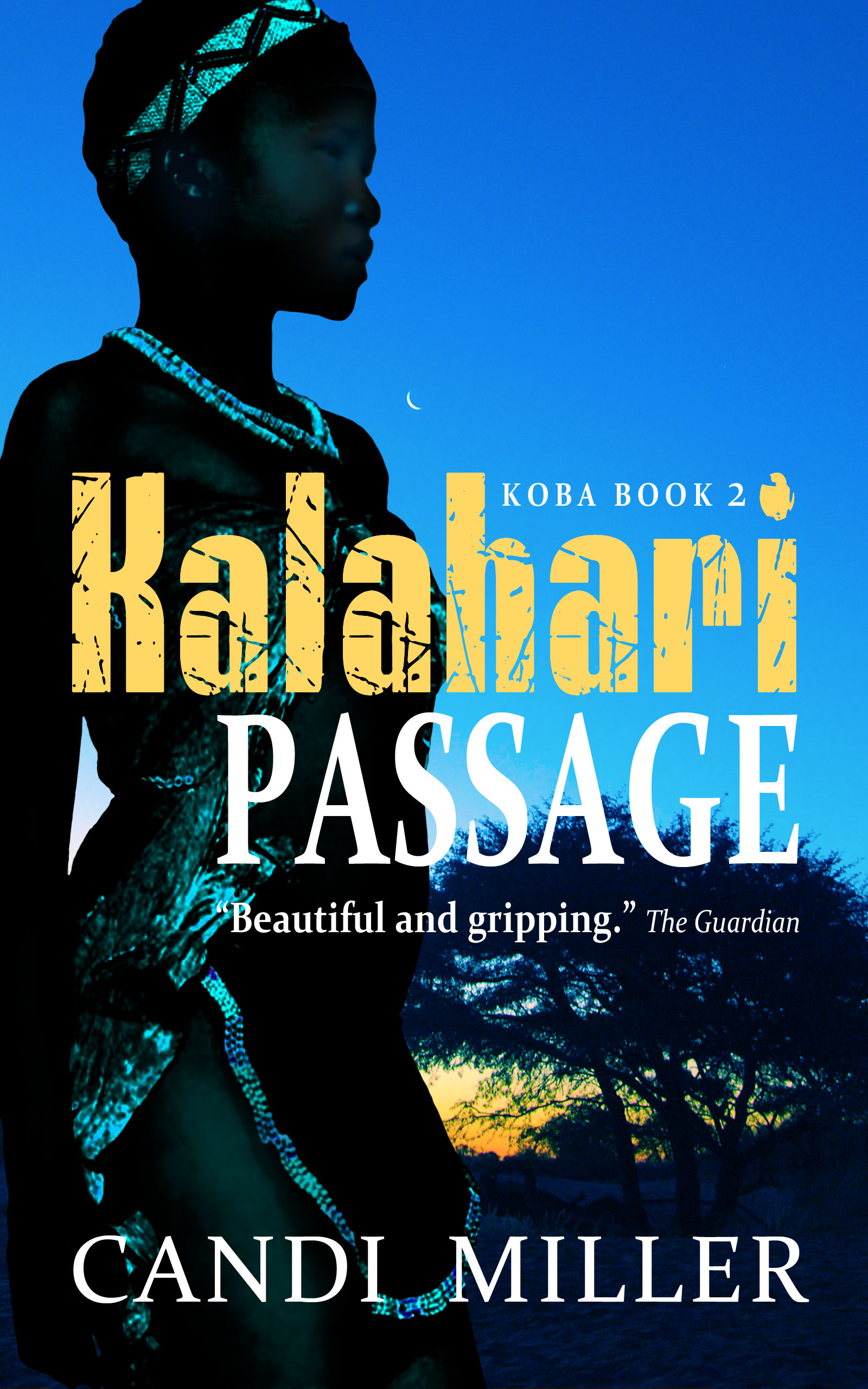
I do want to give a huge shout out to Kalahari Passage (which I’m classifying as historical fiction as its set in the 1960s (I think). This is a beautiful story, if sometimes a hard read. Do check it out.
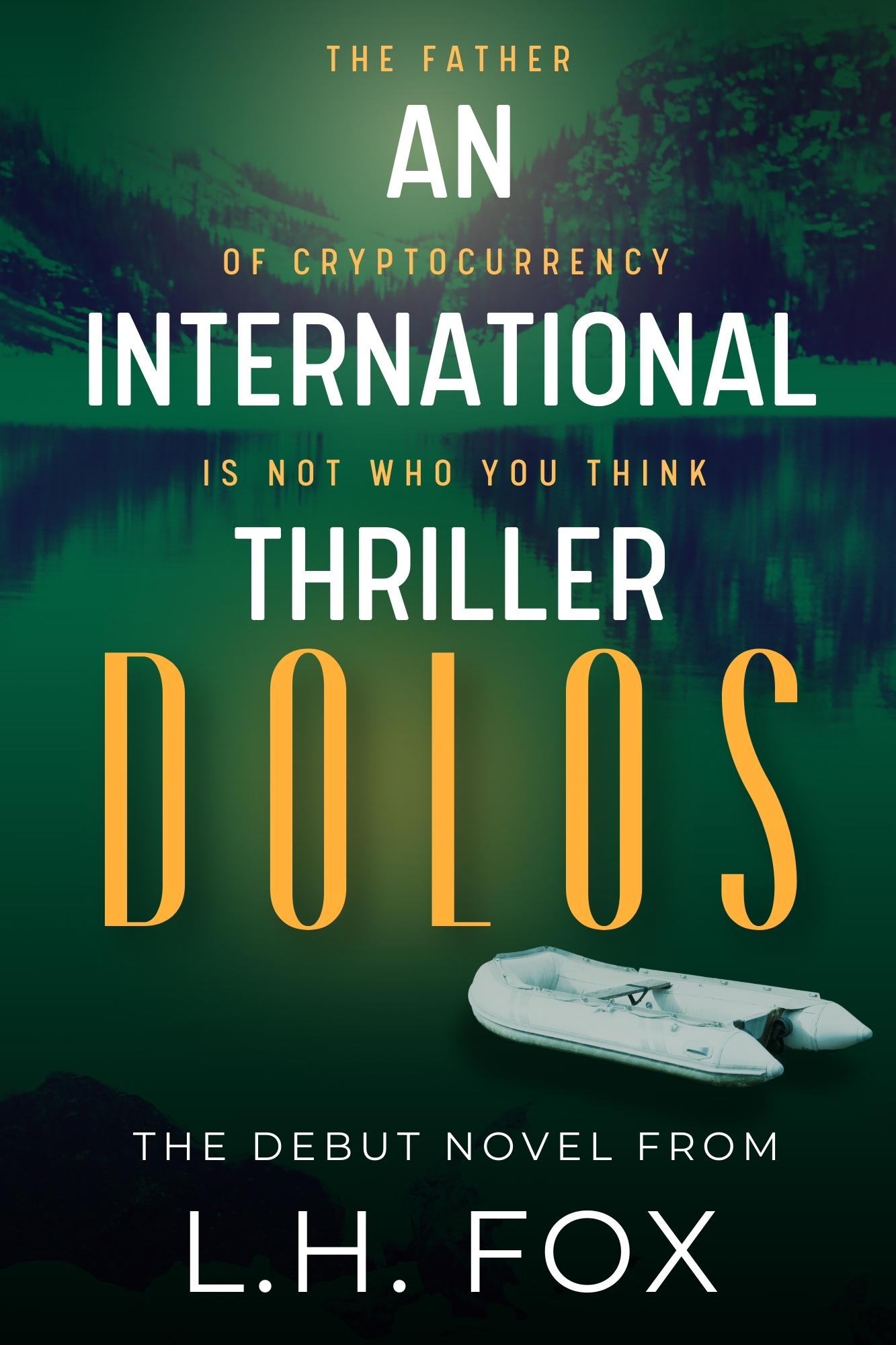
What I’m classifying as thrillers came next – from the new Harlan Coben to the rather brilliant Dolos by a debut author, LH Fox, which almost had me understanding how cryptocurrency works, and is also my most visited review on the blog.
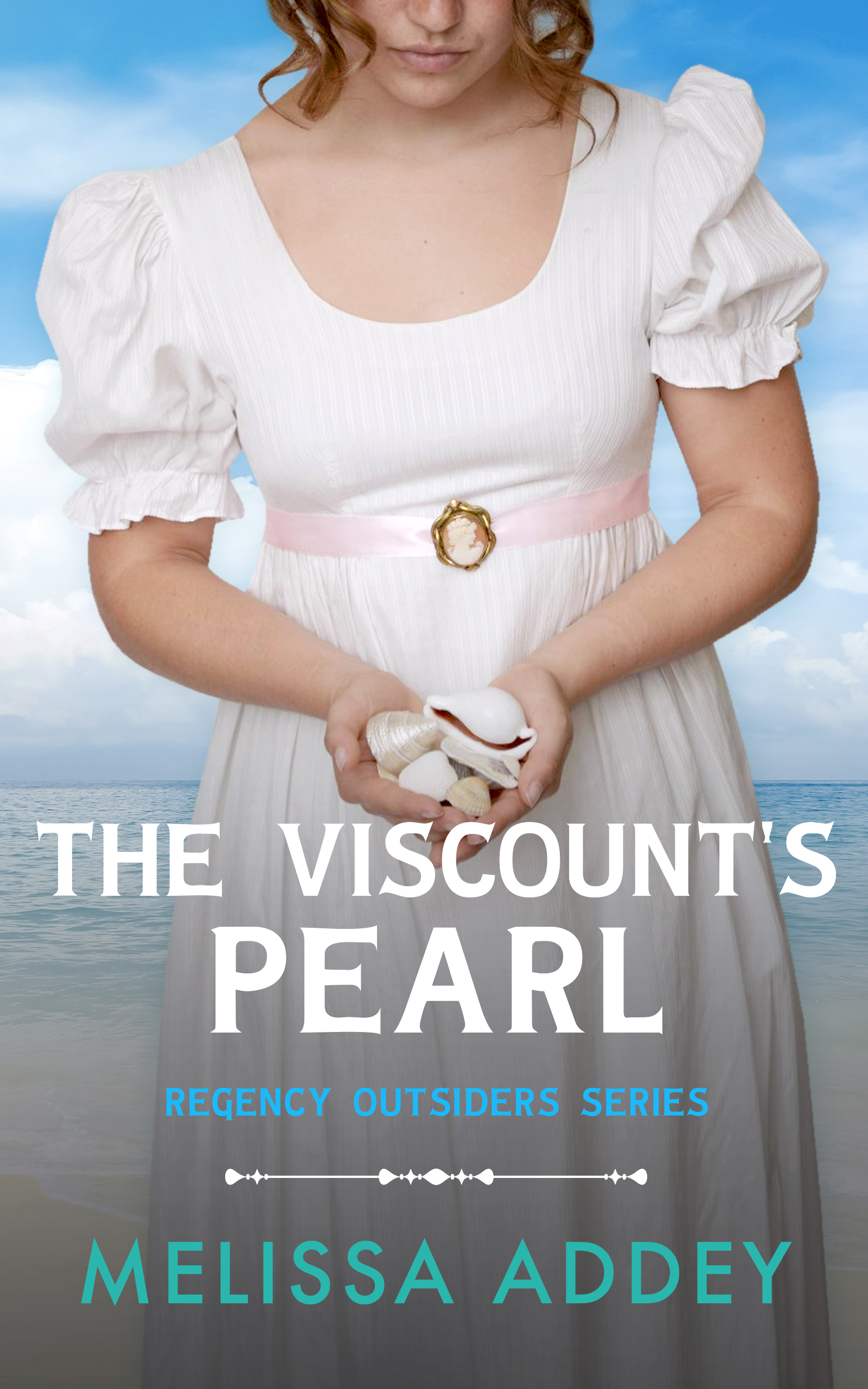
Six titles were historical romance. Jane Dunn, Melissa Addey and Susanna Dunlap all kept me entertained with their Regency romances, while The Ladies Road Guide to Utter Ruin could also be classified as a Regency romance, but I’ve popped it into the historical mystery category, as it certainly crosses over more into a mystery with the romance element in the background. (If you’ve not read Alison Goodman’s Dark Days Club books, then you’re missing a treat, my Regency fans – a hint of fantasy in the Regency era – what is not to love (still not convinced – I would compare it with Cassandra Claire’s Victorian trilogy).
I also read a couple of romance novels (one for Book Club) and certainly enjoyed some more than others:)
I didn’t read (or at least finish) many non-fiction titles in 2025 (I am still reading Max Adams’ Mercian Chronicles and I have his new title on Northumbria to read as well). My only complete historical non-fiction title for the year was that by Amy McElroy on Mary Tudor – a great depiction which I found very inspiring. Mary is so often overlooked.
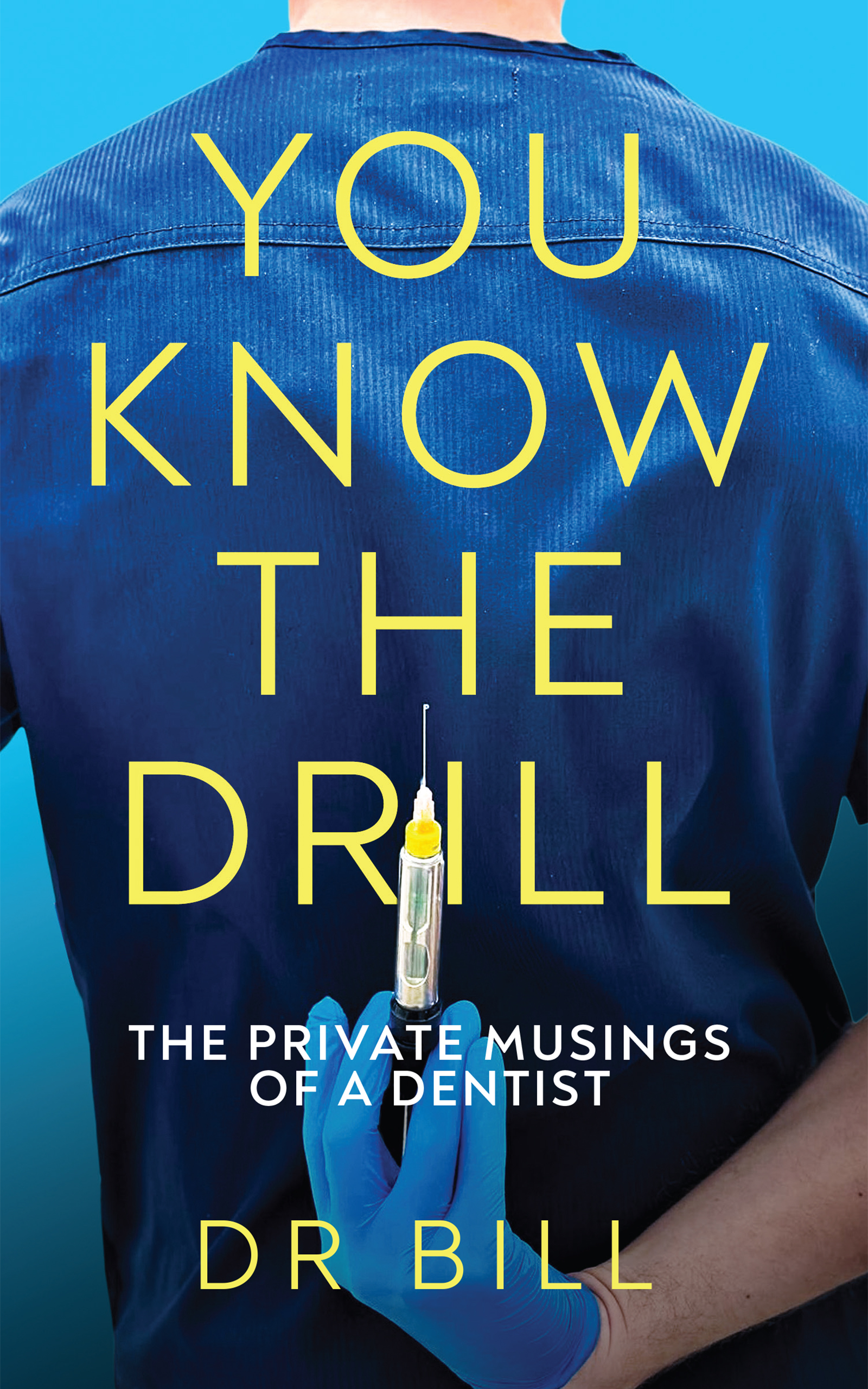
The title I enjoyed the most out of the other non-fiction reads was You Know the Drill, an account of a dentist’s life. I made myself read it because I’m so terrified of the dentist. Has it helped? Maybe.
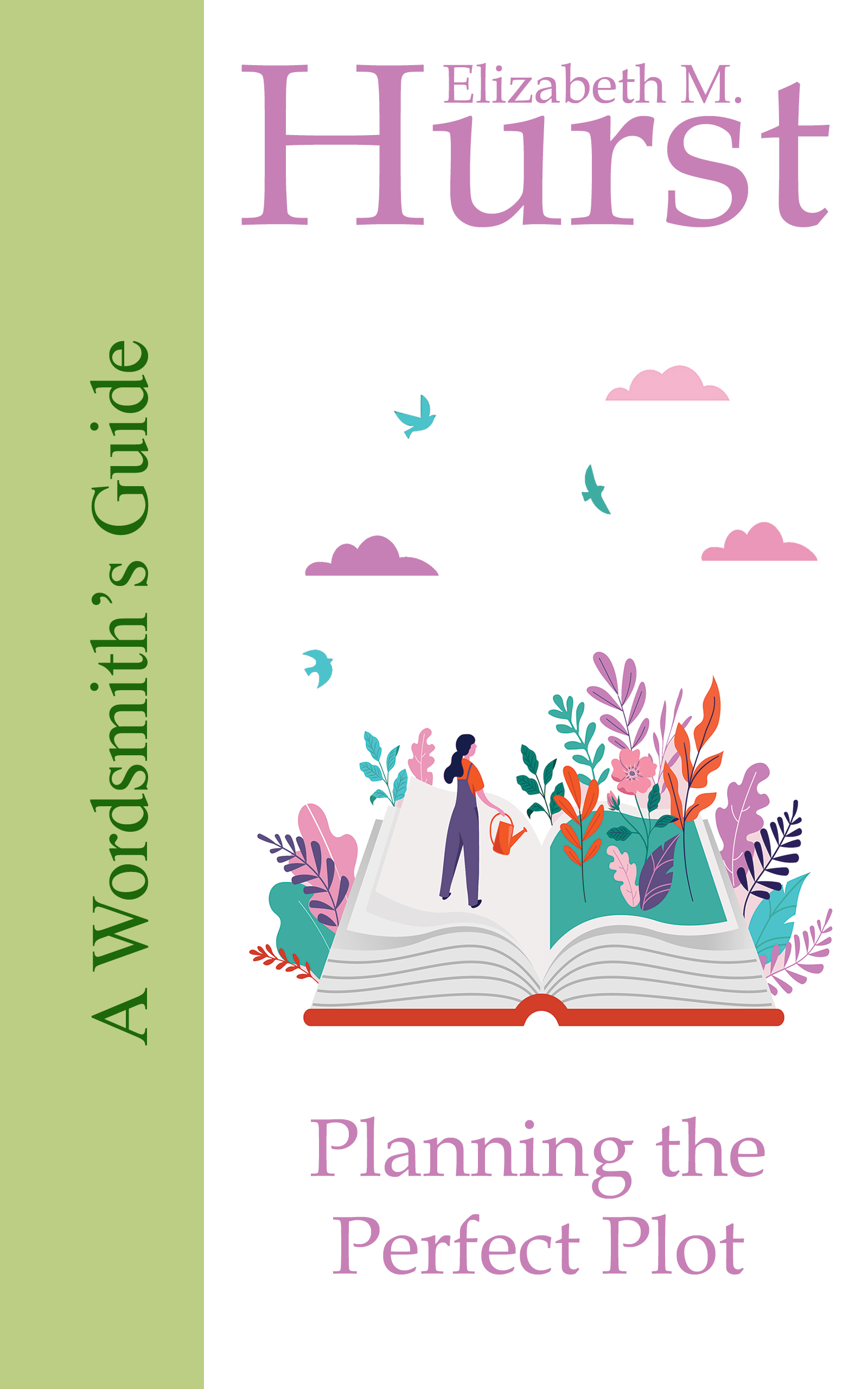
I also read a writing guide, which I enjoyed. It’s always intriguing to discover how other people write their stories. Check out Planning the Perfect Plot.
I’ve also half-read many other titles (apologies to those authors). Hopefully, I’ll get back to them when I have time in 2026. Every year I explain I’m a ‘mood’ reader, and if something isn’t working for me at that moment, it doesn’t mean I won’t come back to it when I fancy something different.
One genre I’ve really neglected is fantasy (aside from the Discworld audios), although I have managed a few short story collections (reviews to follow). I will need to get back to it. I have a few series I need to finish. Maybe the problem is, I don’t want to finish them. We shall see.
Our local book club started in August 2025, and so far we’ve read four very different titles. The Bookseller of Inverness was my choice, and I’m slowly gathering all of Shona’s other titles, including her new release for Feb 2026. Next, we tried Joanne Harris’ Five Quarters of the Orange (which I didn’t like for very different reasons to the ones I thought when I started reading). We then tried The Christmas Postcards by Karen Swan, and most agreed the one element of the story was much better than the other. We ended the year with Before I Go to Sleep by SJ Watson – a novel that was incredibly slow, with something of a predicatable ending (and no, I hadn’t seen the movie). I’m excited to see what we read in 2026. And as you can see, there’s a great variety of titles there. When it’s my turn to pick again I will be championing some of my fellow indie/Boldwood authors.
Here’s to 2026 and all the reading I hope to enjoy.
I read a lot of books by my fellow Boldwood authors, and I’m also a host for a couple of blog tour organisers. This means I often get to read books before everyone else. Yay.
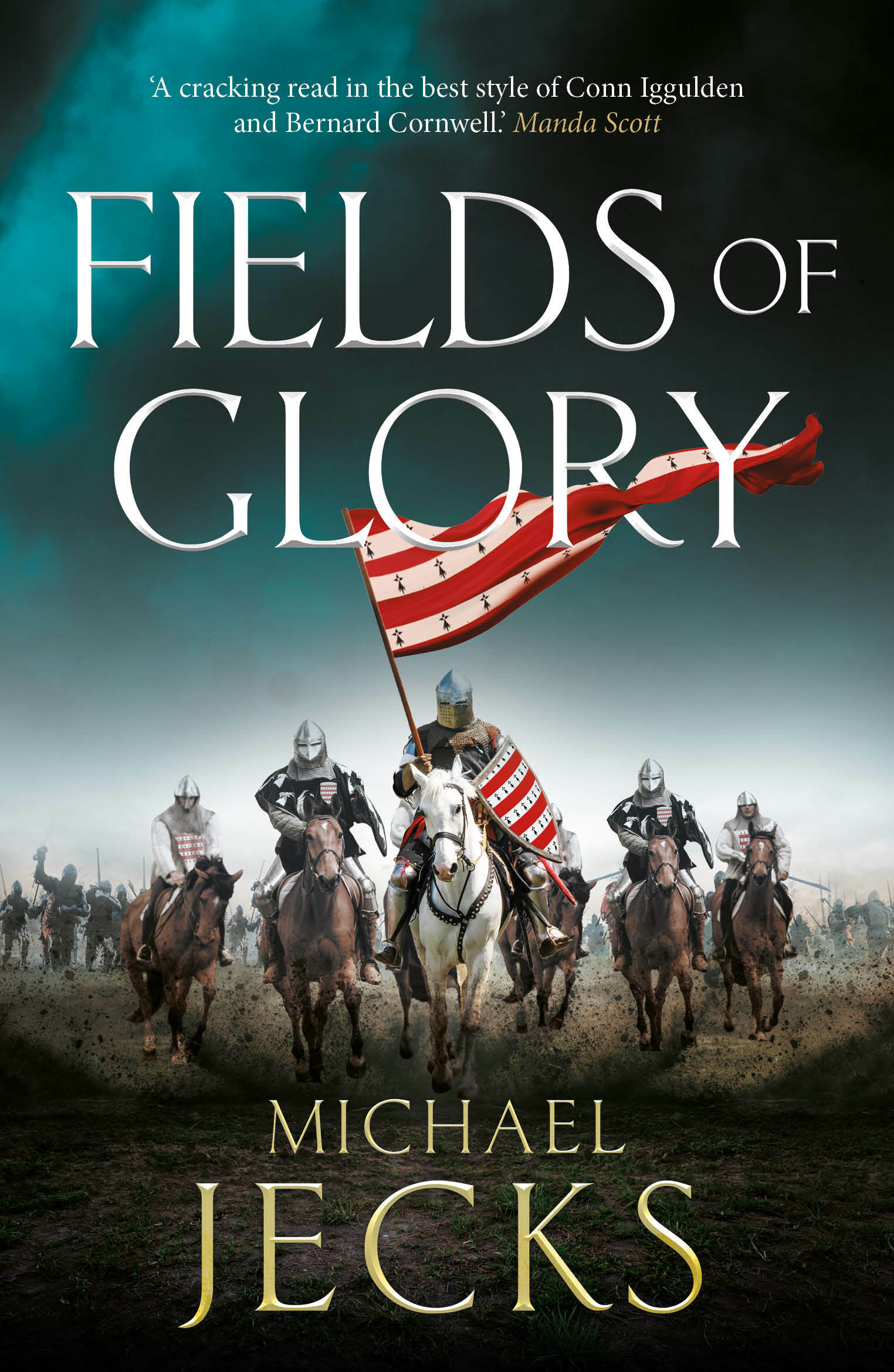
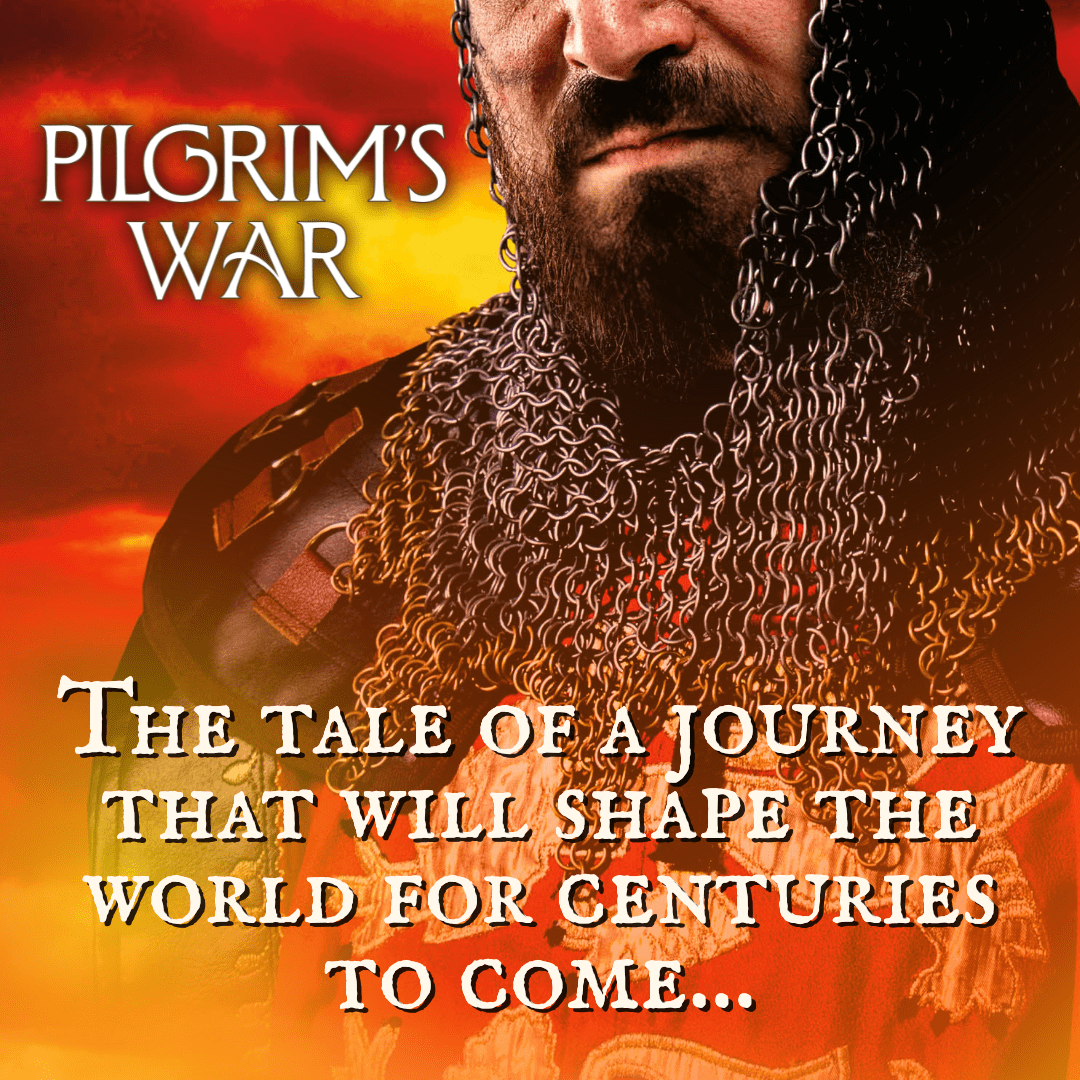
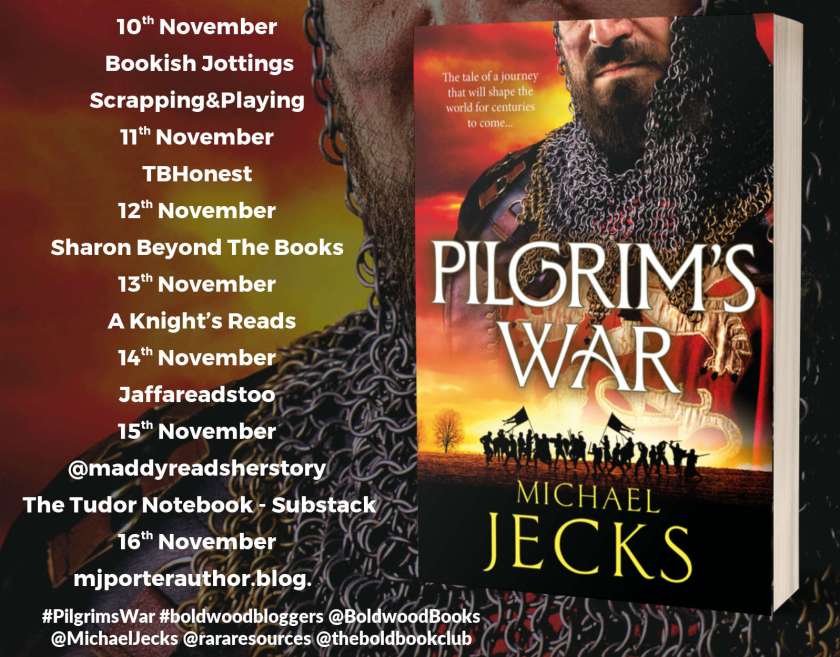
I’m sharing my review for Pilgrim’s War by Michael Jecks #newrelease #histfic #blogtour #bookreview
Here’s the blurb
The tale of a journey that will shape the world for centuries to come…
France, 1096. Crowds gather in Sens, Northern France, to hear the Hermit speak. He talks of a great pilgrimage to Jerusalem, a quest filled with promise for those Christian soldiers who march with him.
Sybill knows the perils of the road ahead, but follow it she must. Her husband is a reckless gambler, easily swayed by the Hermit’s words. For Odo, the pilgrimage provides the chance to demonstrate his unshakeable piety, while his brother Fulk craves adventure and excitement.
Jeanne and Guillemette have been mistreated by the men in their lives and are desperate for this chance of redemption and a brighter future – but for the two women alone on the journey, life on the road will be full of perils…
As the lines between love and hate, virtue and sin, good and evil become blurred, each must survive as best they can. Who will live to reach the holy city, and will the sacrifices they make to get there be worth the price they all must pay?
Pilgrim’s War is a multiple-character story of the First Crusade, told through the eyes of those seeking something on their journey to the Holy Land. Some are swept away with the promise of better things to come, some by the promise of redemption, others are simply leaves in the wind, taken on the way by events outside their control. Not many of them, admittedly, are actually ‘in it’ to serve their God. As a result of this, few of the characters are actually very ‘nice’. Indeed, quite a few of them are quite awful as the journey begins – but of course, if they’re to suffer any sort of epiphany, they need to be bad eggs from the beginning. The narrative doesn’t shy away from depicting the hatred between Christians and any other faith encountered on the journey to the Holy Land, and the hypocrisy of these seemingly ‘holy’ knights as they venture towards their destination.
Two main journeys are undertaken: one heading towards Rome, featuring a collection of knights, and another towards Byzantium, which follows Sybill, Odo, Jeanne, and Guillemette. That way lies peril. But so too is the route through Rome, where politics are once more at play. The cast is vast and from all reaches of society. It will not end well for them all.
The Crusades are far from an easy topic to cover, and the author is at pains to reveal the motivations behind the actions of those the story follows. It’s not always an easy read, or a particularly fast-flowing one with so many characters, but it shouldn’t be an easy read. I do appreciate the determination to show the event for what it was – a war perpetrated in the name of religion, but really, at the heart of it, something else altogether.
Meet the author
Michael Jecks is the author of over 50 novels inspired by history and legend. He is the founder of Medieval Murderers, and has served on the committees of the Historical Writers’ Association, the CWA and he Detection Club. He was International Guest of Honour at the Bloody Words festival in Toronto, and Grand Master of the first parade in the New Orleans Mardi Gras.
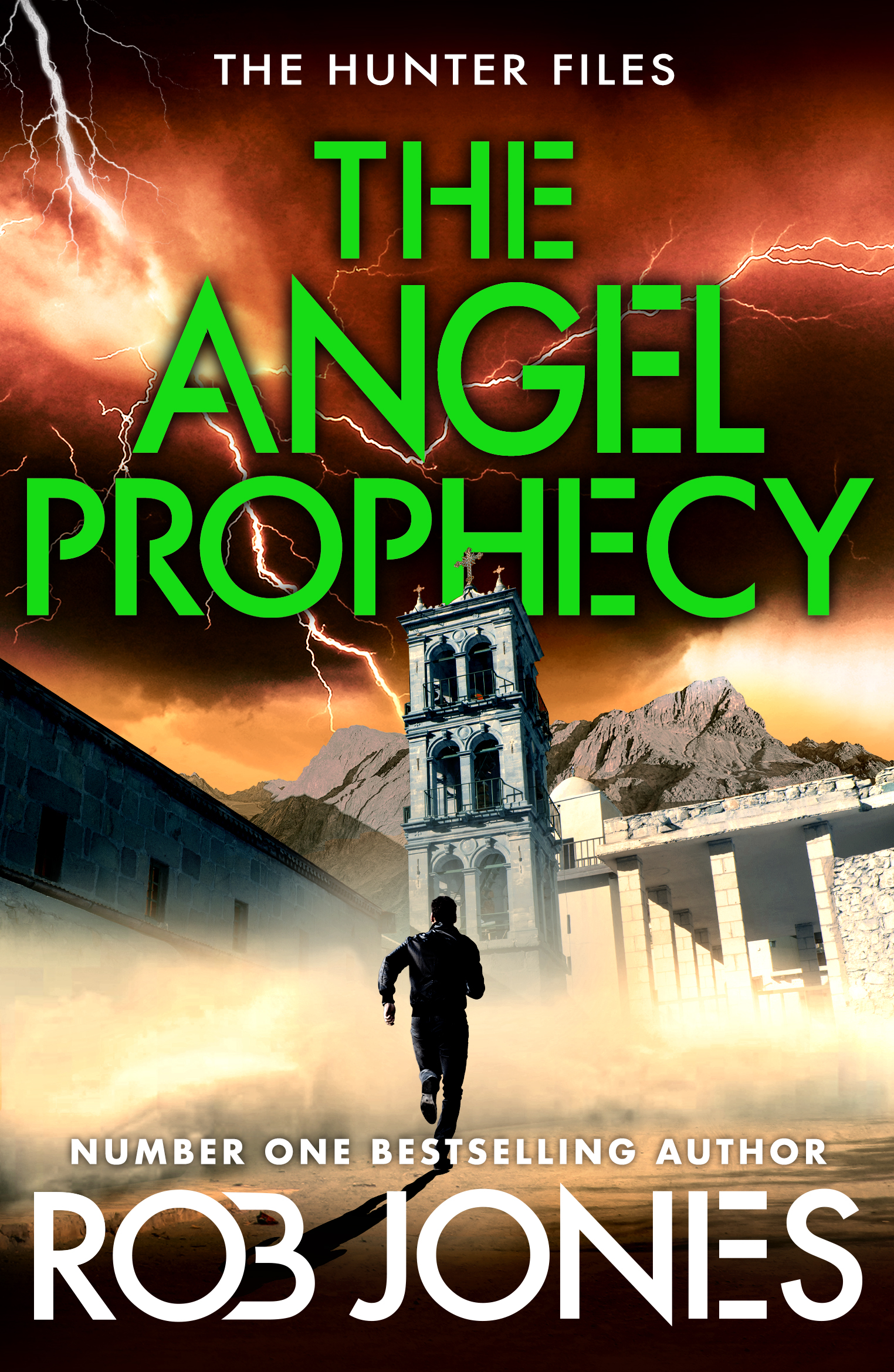
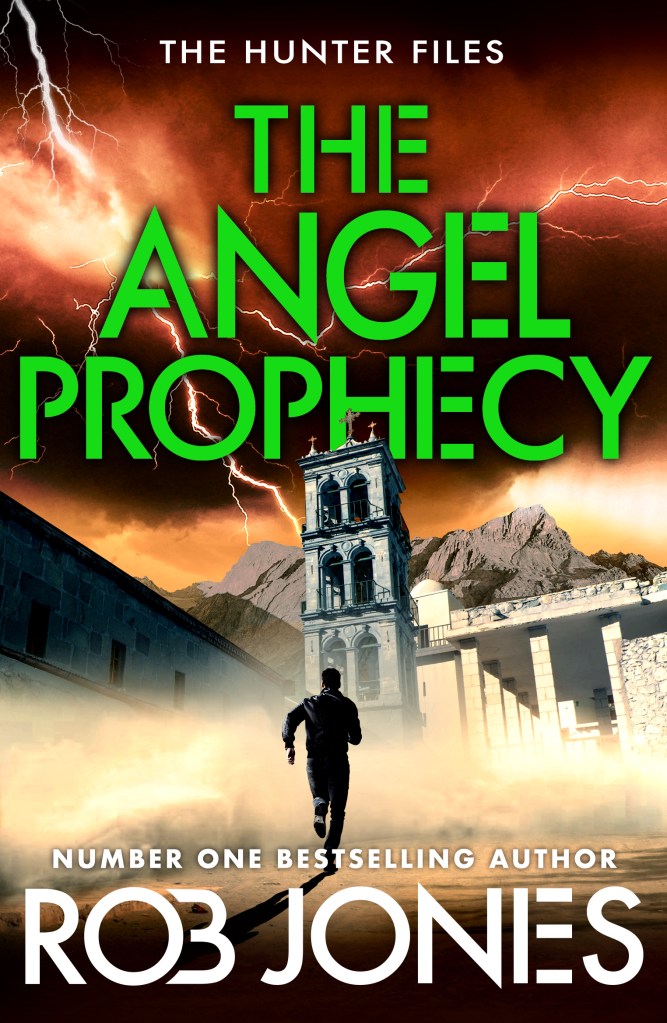
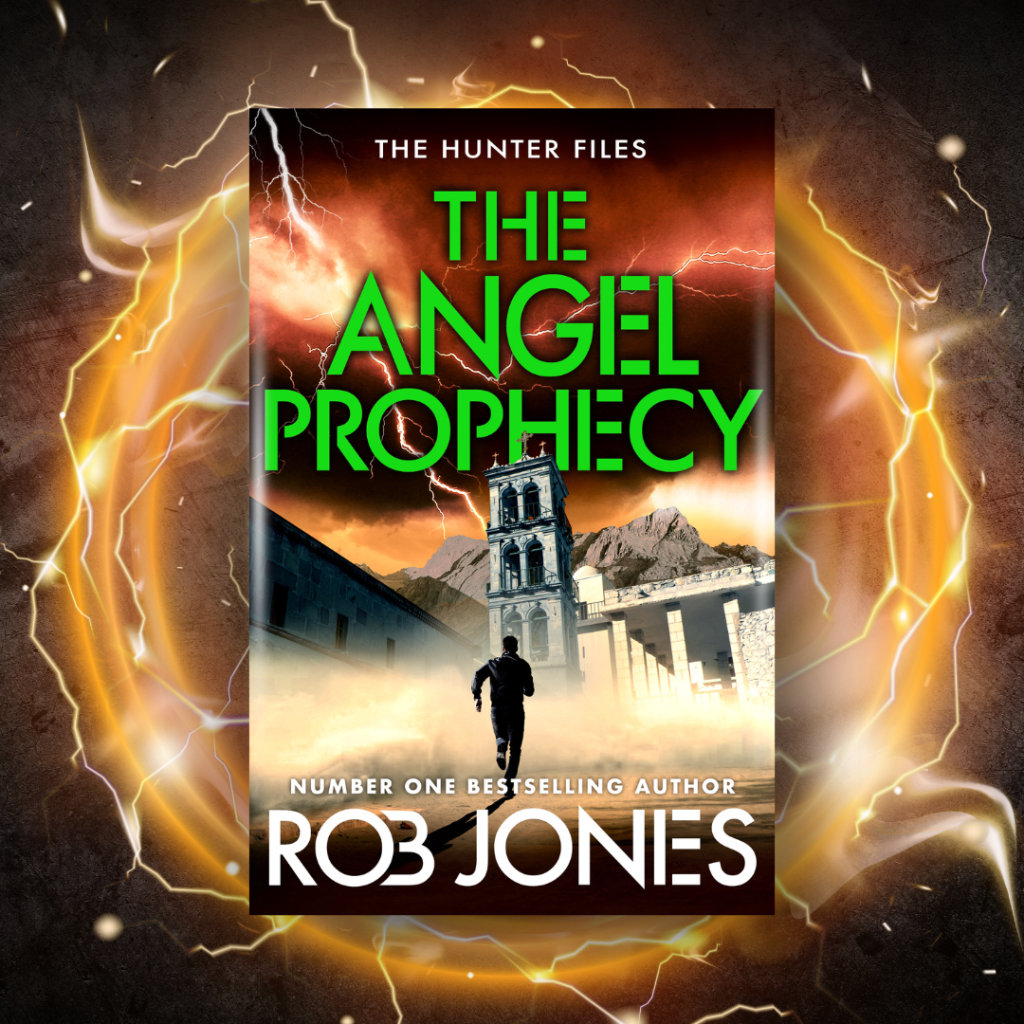
I’m sharing my review for The Atlantis Covenant by Rob Jones #actionandadventure #blogtour #bookreview
Here’s the blurb
A mission like no other, will test the team to the limit ⚠️
Dr Max Hunter, Special Agent Amy Fox and the rest of the HARPA Team are on the most important mission of their lives to rescue their teammate Quinn Mosley, HARPA Director Jim Gates and his wife Susanna, and Hunter’s UNESCO manager Professor Juliette Bonnaire who have all been kidnapped by a mysterious organisation claiming to be the Illuminati.
The group’s leader, Oriax, says he will trade their friends’ lives for the Sword of the Archangel Michael and gives them a 24 hour deadline to meet his demands. 🗡️
In a race against time, from Europe to Moscow and beyond, Hunter leads his small team on a high-speed rollercoaster ride, attempting to track down Oriax before the deadline expires and rescue Quinn and the others as well as keeping the ancient sword out of Oriax’s depraved hands, but will they succeed in this most lethal of challenges?
This new installment in the Hunter Files starts with a bang, and the reader is thrown straight into a worrying situation for the team (I’m not sure if this carries over from the previous book, but I suspect it might). This time, members of the team are in peril and Max Hunter and his fellow team members resolve to outwit the person holding them captive in exchange for St Michael’s sword, and with very little to go on in terms of leads.
Tracking down every potential lead, the team make their way from Cornwall to London, Paris and then beyond, their destination not quite where they think it will be, as the tension ramps up in this fun action and adventure story, where the ‘baddie’ is definitely quite bonkers, powerful, and seemingly, able to do anything he wants with his captives.
Like The Atlantis Covenant, the story is fast-paced and fun, the interactions between the characters flippant and somewhat light-hearted, considering the peril they’re in. The series will certainly appeal to those who like National Treasure (as I’ve said before) and their history with a little bit of conspiracy.
Rob Jones has published over forty books in the genres of action-adventure, action-thriller and crime. Many of his chart-topping titles have enjoyed number-one rankings and his Joe Hawke and Jed Mason series have been international bestsellers. Originally from England, today he lives in Australia with his wife and children.
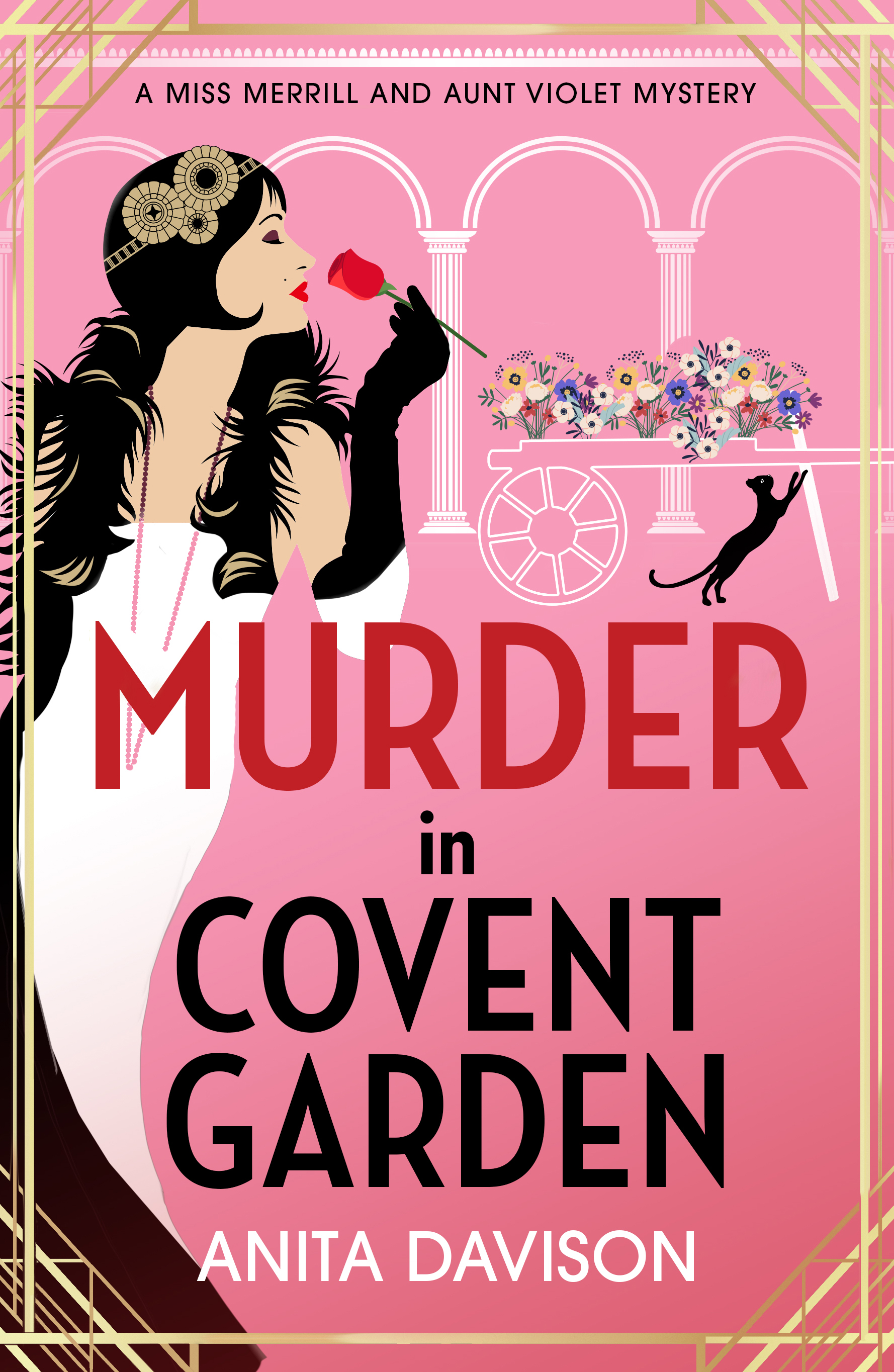
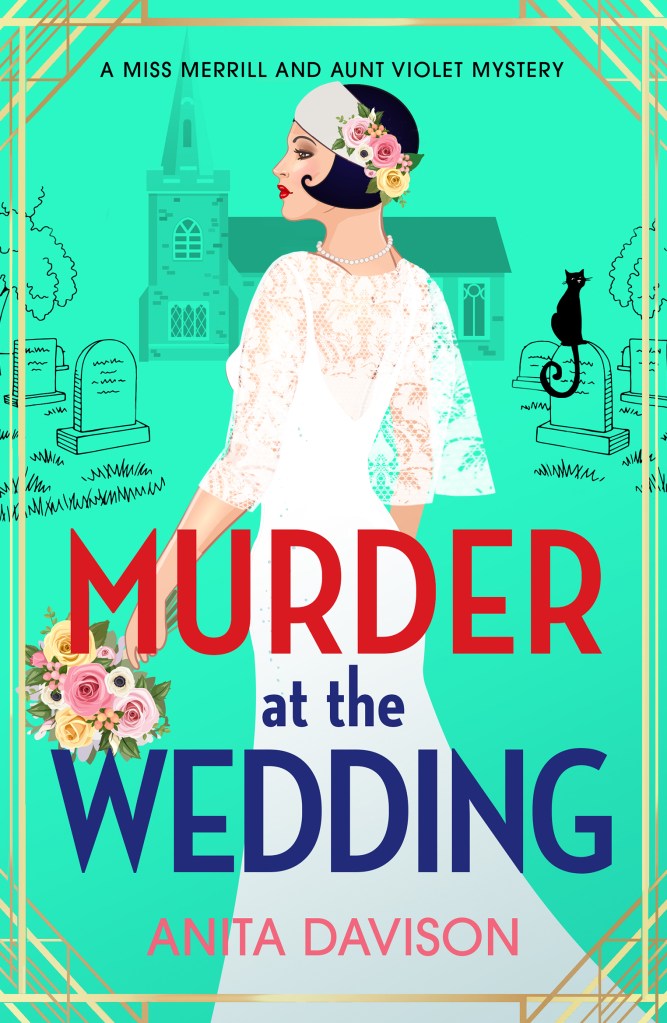
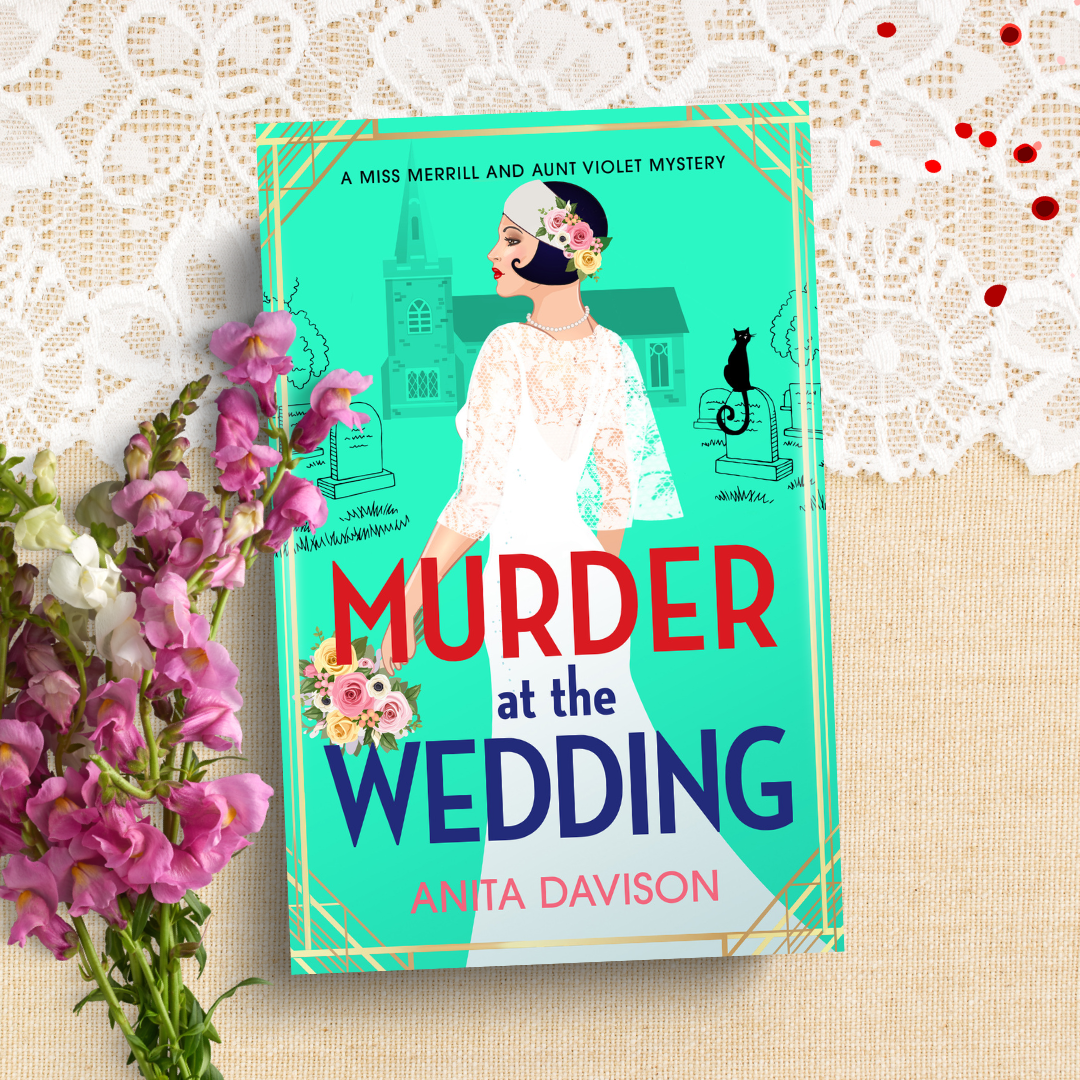
I’m delighted to share my review for Murder at the Wedding by Anita Davison #bookreview #blogtour #historicalmystery #newrelease
Here’s the blurb
Hannah Merrill is about to marry the love of her life…
The couple are determined their low-key celebration will go without a hitch, but there can’t be an ‘I do’ while the vicar is missing. And when he’s found dead – a victim of a poisoning – in the crypt behind the church, Hannah knows only she and Aunt Violet can find out who did it.
Hannah’s beloved thinks she shouldn’t interfere. But if he fails to remember that an independent woman in 1918 doesn’t do what she’s told to by a man, the dead vicar may be the least of his worries…
Then the vicar’s own fiancé appears on the scene, even though nobody knew he was engaged. And suddenly it becomes clear someone has a secret, one shocking enough to kill for.
Will the intrepid pair of amateur sleuths catch the murderer before they kill again? Or will it be til death parts them all?
Murder at the Wedding is a fabulous new mystery in the Miss Merill and Aunt Violet mystery series.
Hannah is finally married but no sooner has she said, ‘I do,’ than she finds a body. (What a horror on her wedding day). What they determine is a matter of suicide becomes something much worse as murder is soon suspected. Hannah and her aunt determine to find the solution because the new police inspector isn’t up to the task.
It’s good to see Hannah and Violet working together in this book. They’re a great team (I felt in the previous book that there wasn’t quite enough of Aunt Violet). The mystery is well structured, seemingly impossible to solve for much of the novel and I didn’t guess the resolution, which I always appreciate.
This is another enjoyable read in the on-going historical mystery series.
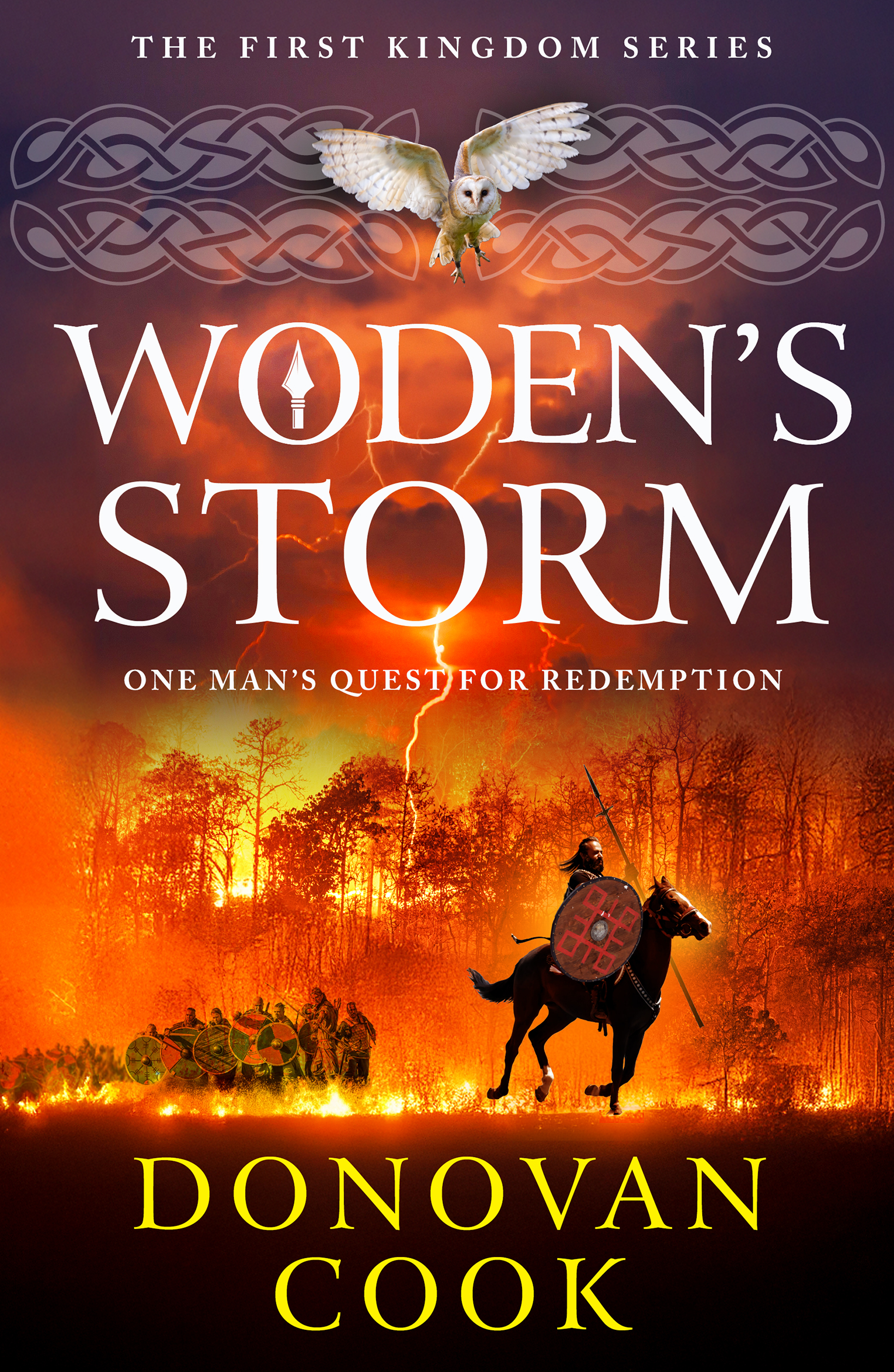
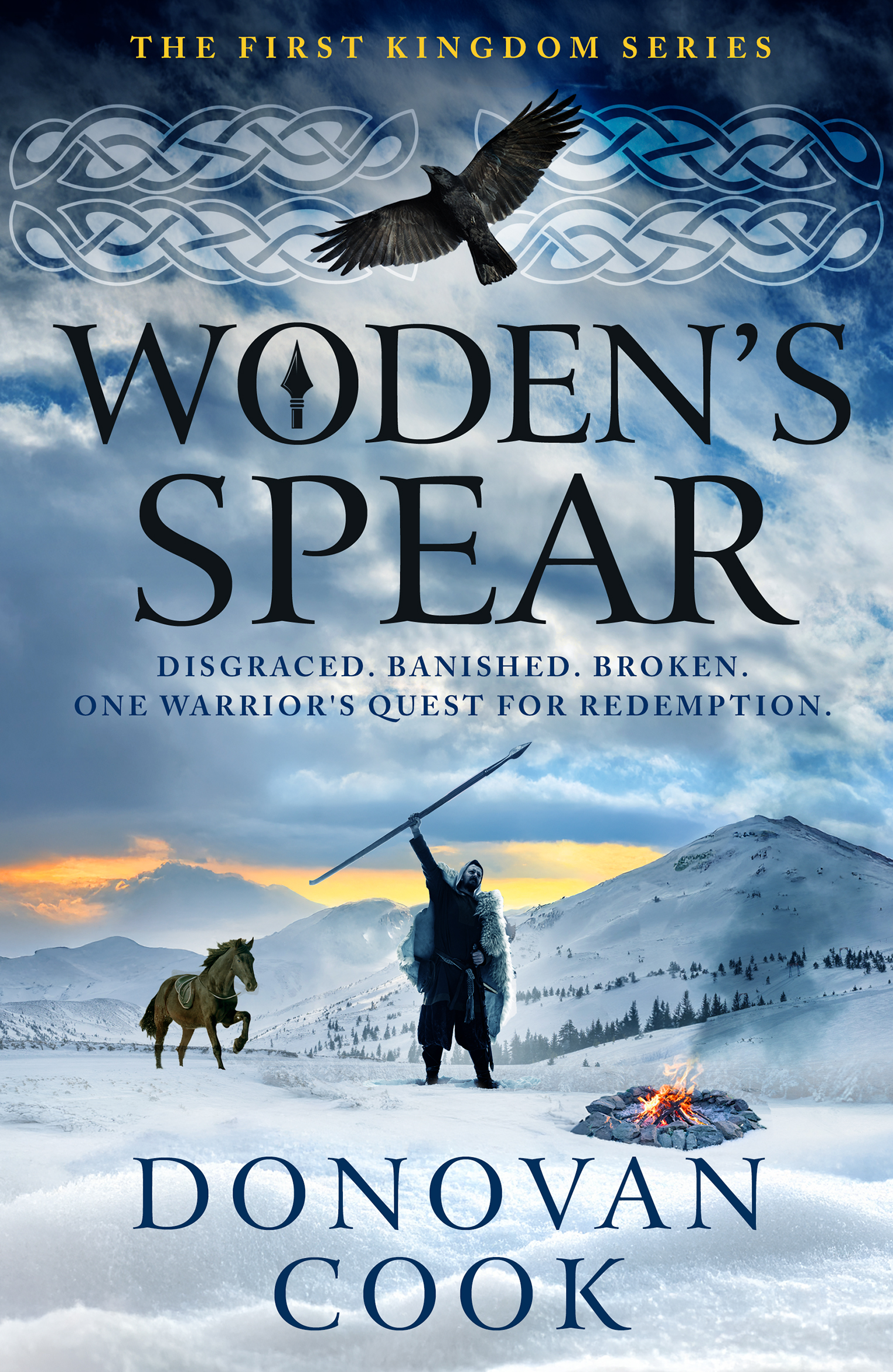
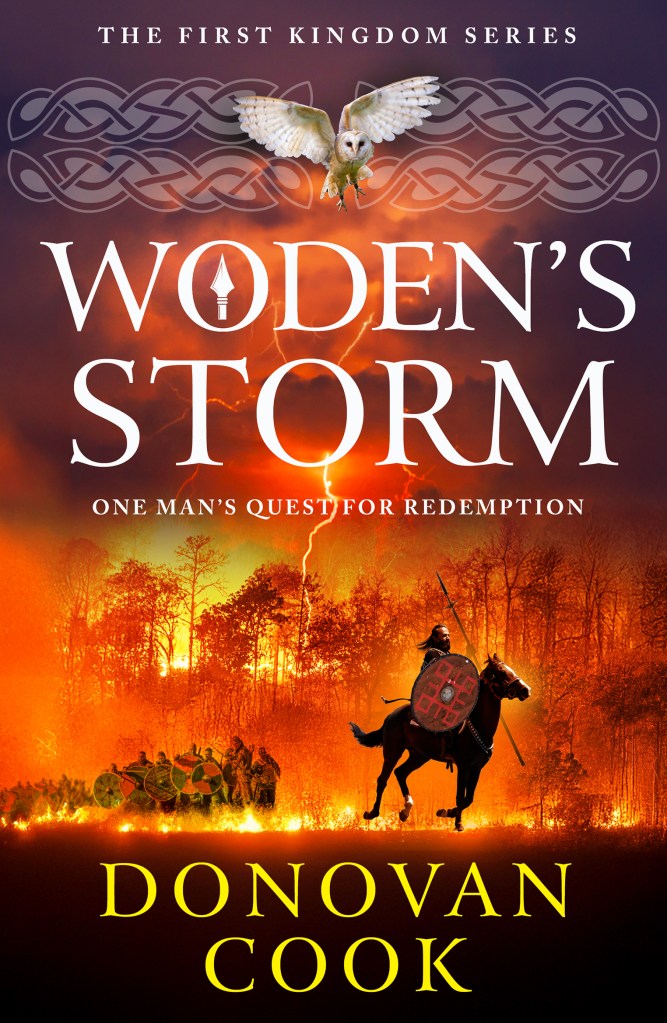
I’m reviewing Woden’s Storm by Donovan Cook #blogtour #newrelease #historicalfiction the second book in the First Kingdom series
Here’s the blurb
A storm is coming. A storm that will banish the old and deliver the new.
450AD Britain
Octa has the spear of Woden, but the redemption he sought is out of his grasp. With his banishment and the death of his father, he can no longer return to his Saxon homelands. His only salvation is to join forces with Hengist and Horsa, and their Jutish army that beaches itself on Brittania’s shores. But can he trust their motivation or are there greater plans afoot?
The Gods have their own plans, though, and Octa’s fate is not his own to control as Friga, the mother of the Saxon gods, battles to avoid a war with the gods of the Britons and Saxons using Octa as her weapon.
Prince Vortimer, the son of High King Vortigern, is angered by his father’s agreement with Hengist and Horsa as they remain unchecked and their numbers swell. He suspects treachery and encouraged by some well-placed words of a stranger, he rebels against his father and gathers his army to attack the unwelcome visitors.
War is coming to Britannia and as Octa struggles to understand his role and fate, he knows he has one question to answer. Will he run or will he stand and fight?
Woden’s Storm is the second book in The First Kingdom series by Donovan Cook. We’re once more in a recreated Britain of the middle fifth century, where everyone’s actions are guided by their Gods. And there are a lot of Gods who want to have a say in what’s happening, and not all of them, on the ‘same side’ as it were, hope to achieve the same ends. Octa, Vortimor, and the rest of the characters are constantly being tested by their deities, told half the story and left to work the rest out for themselves. Will they interpret their meetings with the Gods correctly, or will they make everything more chaotic by muddying these messages with their own intentions?
I do enjoy the element of the Gods walking amongst the characters and interfering in what’s happening. I mean, I doubt it would be peaceful without them, but with them, it certainly isn’t:) It adds a new dimension to this period and perhaps helps to account for some of the more eccentric decisions the characters make as they all endeavour to accomplish their goals. There is still much to play for and the series will continue.
An entertaining and intriguing series with a whole host of ‘named’ characters, people who love the era will recognise.
Donovan Cook is the author of the well-received Ormstunga Saga series which combines fast-paced narrative with meticulously researched history of the Viking world, and is inspired by his interest in Norse Mythology. He was born in South Africa and currently lives in Lancashire, UK.
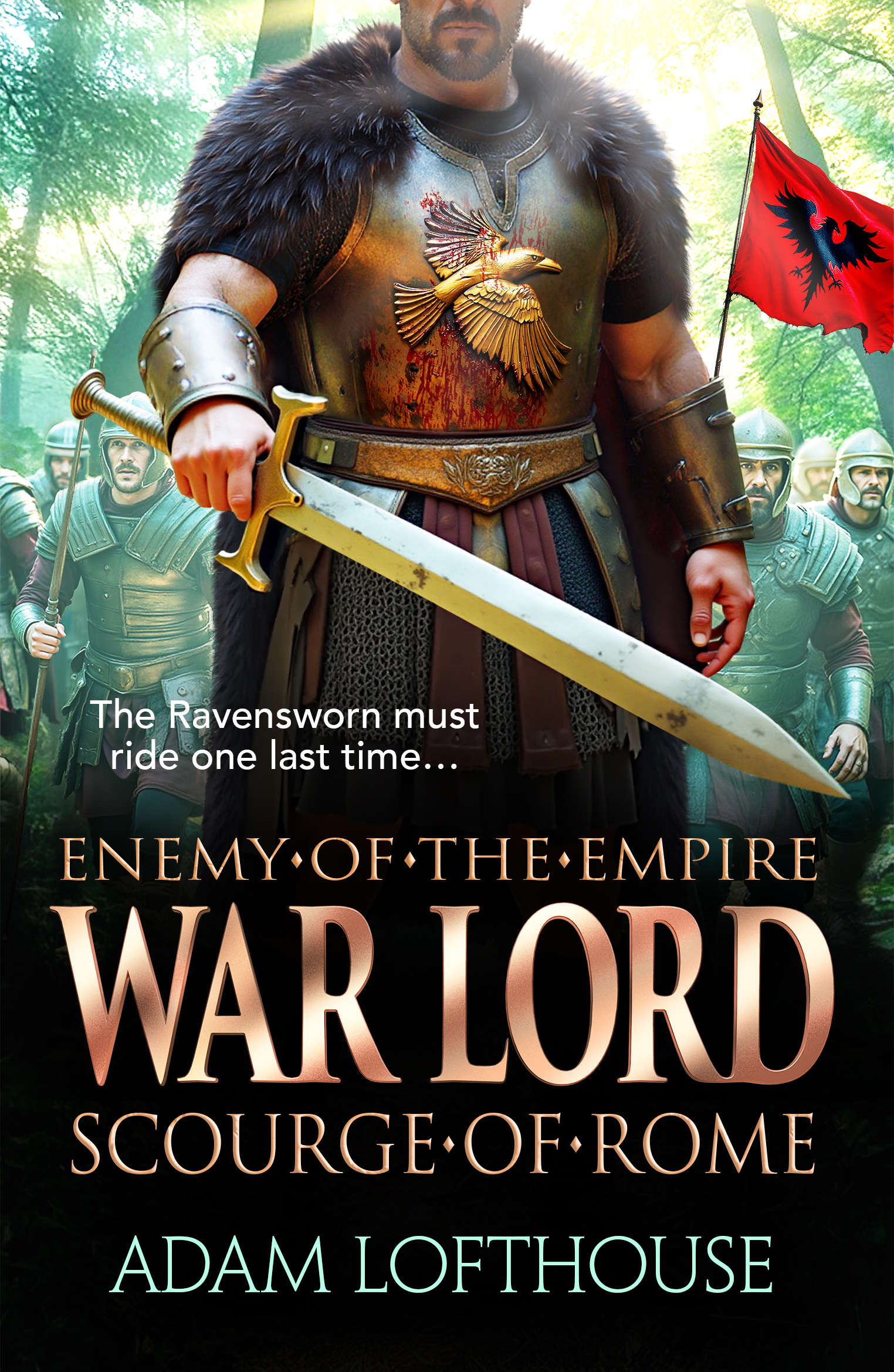
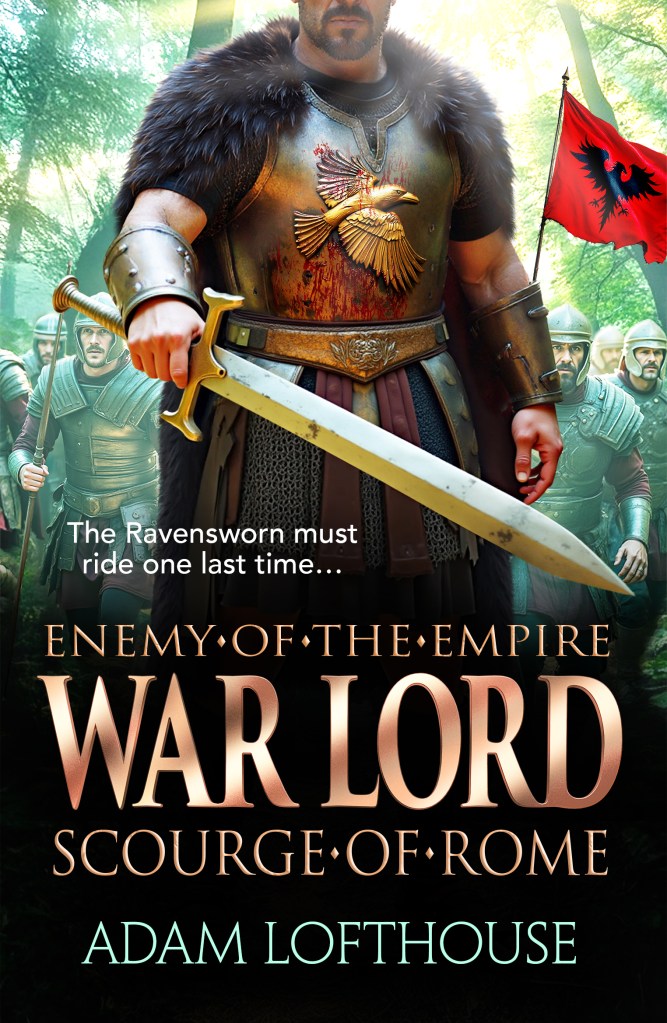
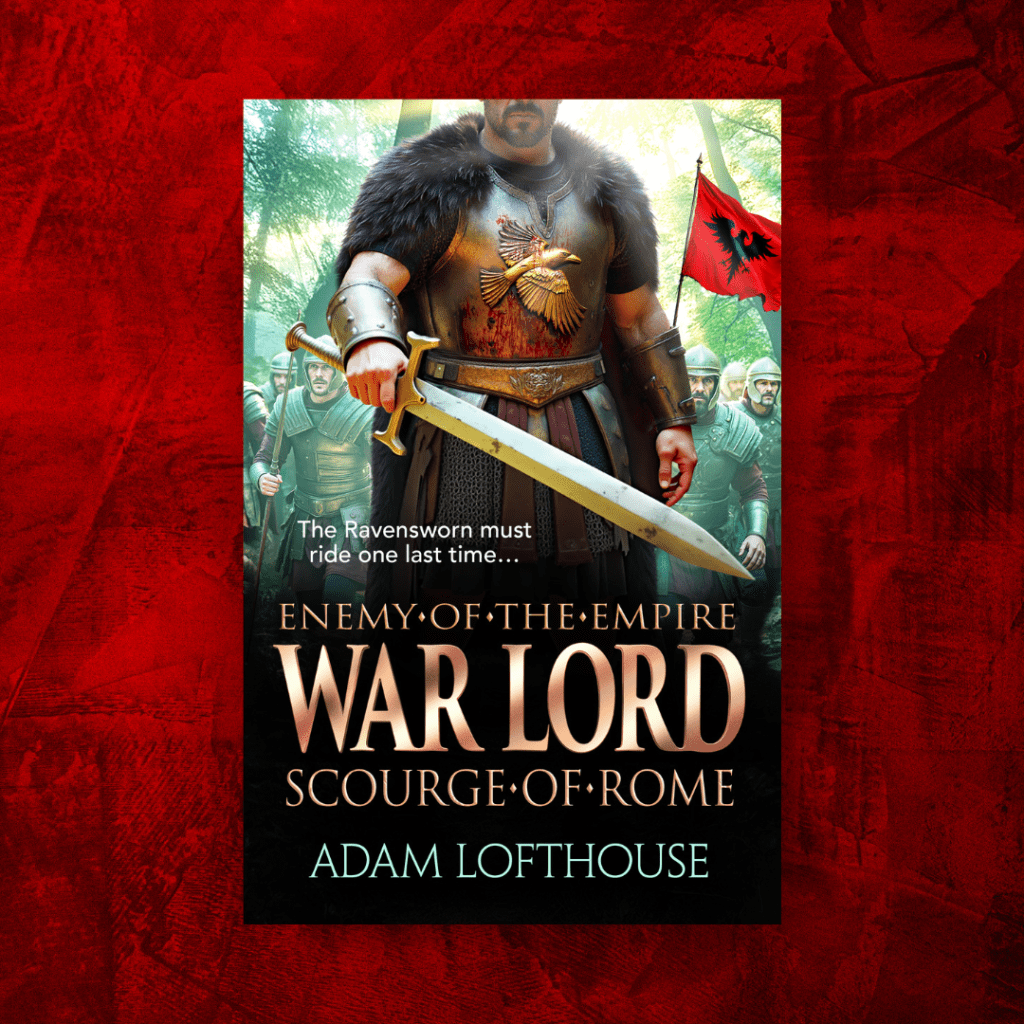
I’m delighted to share my review for Adam Lofthouse’s War Lord: Scourge of Rome #historicalfiction #blogtour #Roman
Here’s the blurb
And so we have reached the end of my tale. But what are endings if not new beginnings?
Alaric has been home for a year. He went north and saved the Cimbri, just as he said he would. But the cost has been higher than he ever thought. A shadow of the War Lord he once was, he now trades in amber and dotes on his children.
A simple life. And with it, contentment. But he knew this couldn’t last forever; peace isn’t for someone like him, and sure enough trouble finds him once again. A routine journey south turns into a new and unknown wave of danger as red-cloaked legionaries attack, causing confusion and carnage.
Warriors dressed as Romans have been scouring the country, slaughtering innocent people, and leaving Roman footprints wherever they march. But things are not what they seem, and it falls to Alaric to don his armour once more, and march his Ravensworn in pursuit of a mysterious enemy that could destabilise his world beyond repair.
War Lord, as the blurb states, is the end of Alaric, or is it a beginning for him?
Once more, we’re thrust straight back into the action, and Alaric, while accepting he’s an old man these days, does indeed not seem to have ‘grown up’ at all, as he’s so fond of reminding himself. From one hairbrained scheme to another, Alaric realises that perhaps, after all, there is a great deal at stake, and he is, of course, the man to solve everyone else’s problems, for all he likes to pretend he doesn’t care about anyone but himself, his children and his wife.
Adam writes fabulous books. I do love Alaric. He’s a bad egg, and yet, we all can’t help liking him, as indeed, does everyone who comes into contact with him. There’s no end of action and adventure, no end of peril, and through it all, Alaric sails with his usual charm and determination. But, is this one quest too much for our epic second-century hero, living on the outskirts of the Roman empire, but admiring them all the same? Has he finally found an enemy he can’t hope to beat, even if he unites the tribes? Or will he have to prove as quick-thinking as ever?
While all this is happening, there is also an intriguing backstory, reliving a moment in Alaric’s life when everything changed for him. It adds a certain poignancy to our character, making his wild ways more understandable.
This is a cracking finale for Alaric’s story. Enjoy it. I know I did.
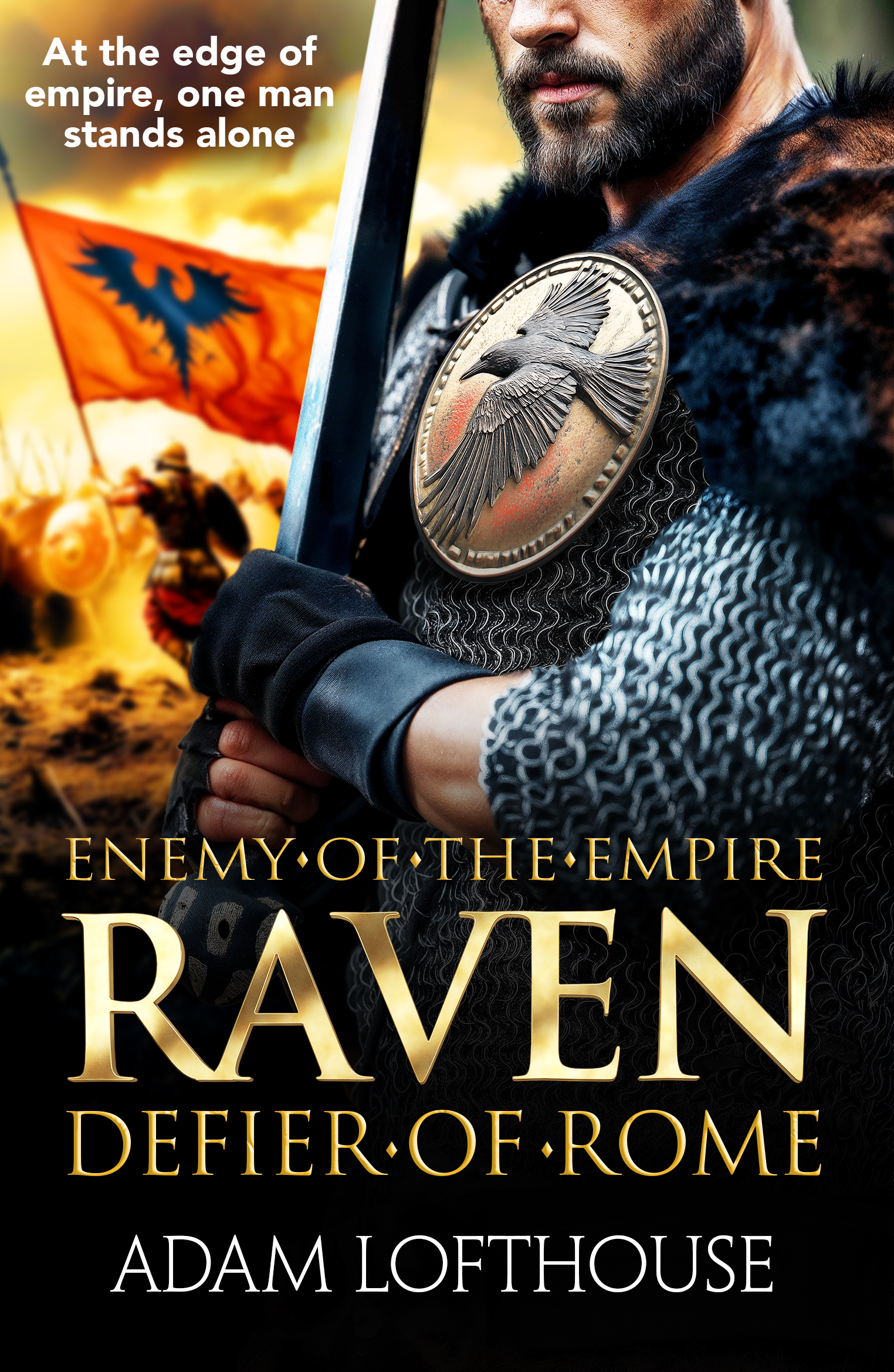
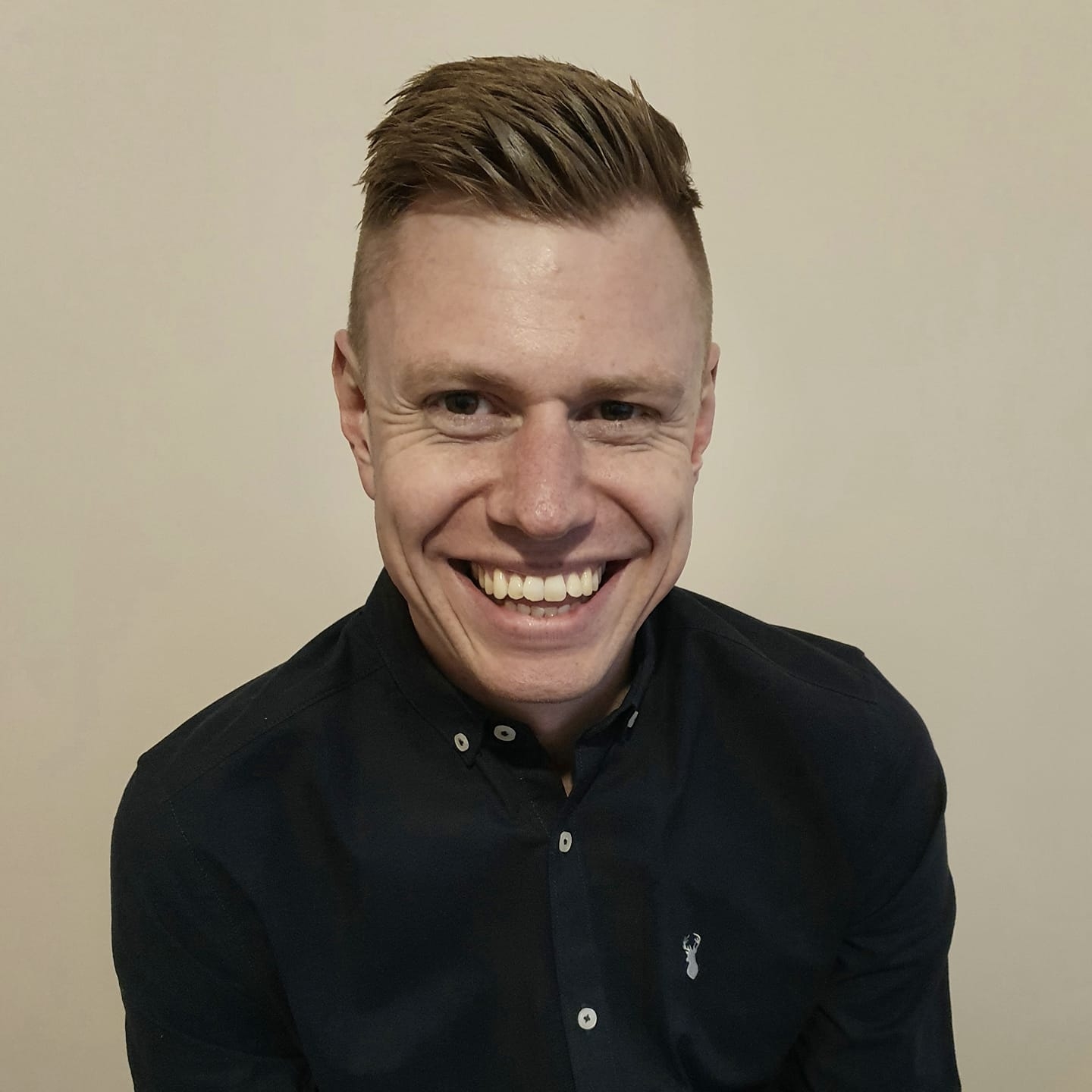
Adam Lofthouse is the author of action-packed historical thrillers. His brand new series for Boldwood, ‘Enemies of Rome’, will focus on the boundaries at the edge of the Roman Empire. The first book Raven, will be published in February 2025.














































 MJ Porter