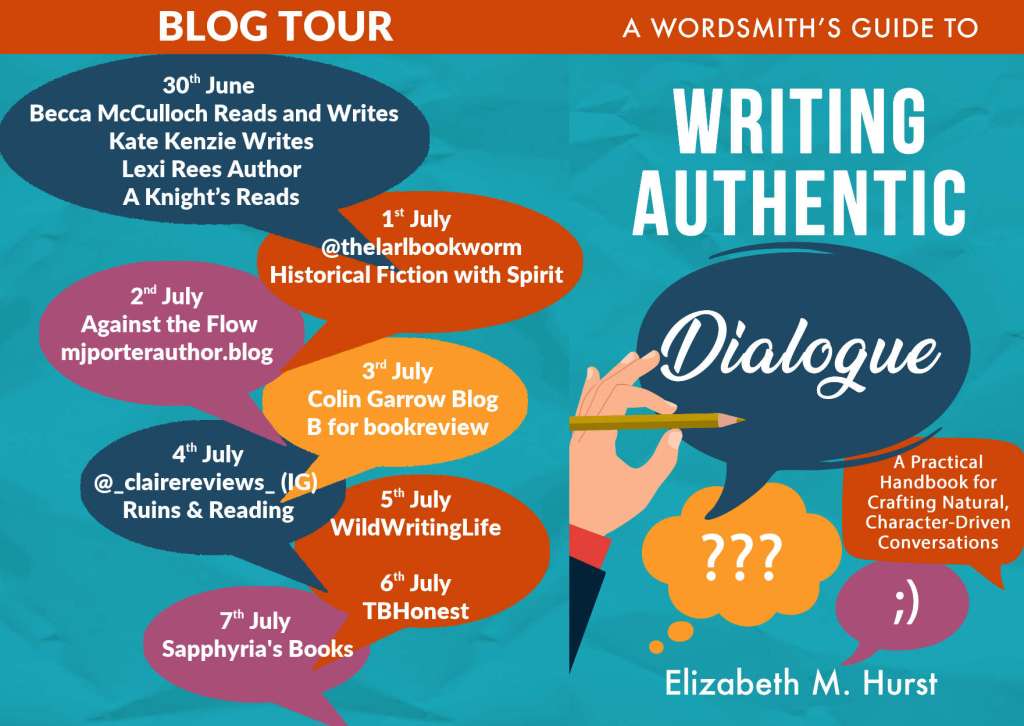
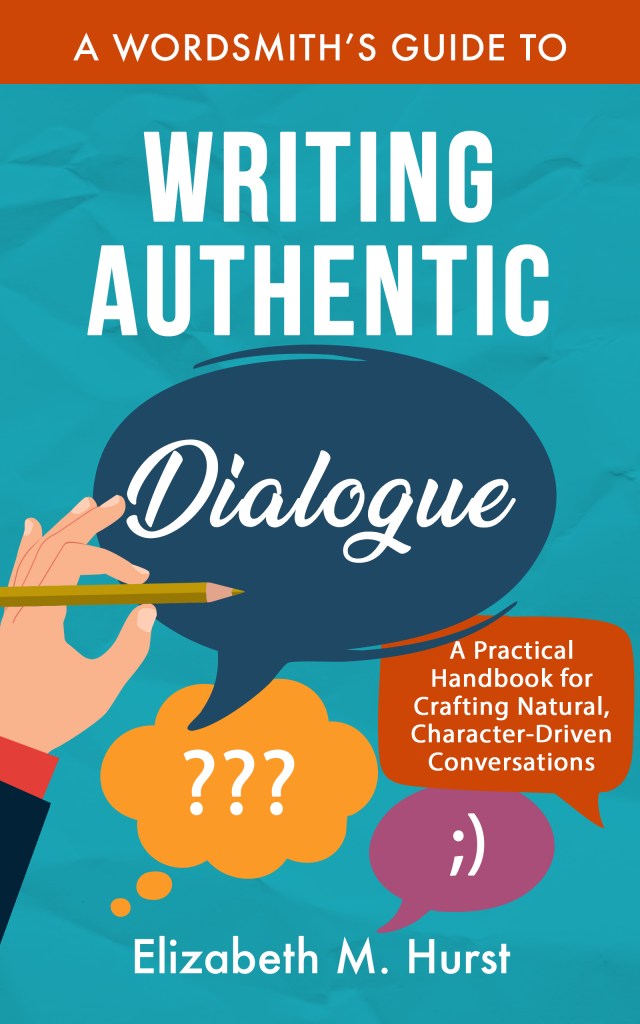
I’m welcoming the Wordsmith’s Guide to Writing Authentic Dialogue by Elizabeth M Hurst to the blog #blogtour #nonfiction #writingadvice

I’m welcoming the Wordsmith’s Guide to Writing Authentic Dialogue by Elizabeth M Hurst to the blog #blogtour #nonfiction #writingadvice

I’m welcoming the Wordsmith’s Guide to Writing Authentic Dialogue by Elizabeth M Hurst to the blog #blogtour #nonfiction #writingadvice

Why I Wrote A Wordsmith’s Guide to Writing Authentic Dialogue

I’ve been asked a few times why I chose to write A Wordsmith’s Guide to Writing Authentic Dialogue. The succinct answer is this: I asked my readers what they wanted me to cover next, and they told me they wanted something about character dialogue.

That made immediate sense to me. Dialogue is one of those areas of writing that looks deceptively simple. After all, we all talk. We all listen to conversations. We all know what speech sounds like – or at least we think we do. But putting convincing dialogue on the page is a very different skill from reproducing everyday speech exactly as it happens.

In real life, conversations are messy, repetitive, unfinished, and full of filler. People interrupt themselves, lose their train of thought, circle back, contradict themselves, and say “um” or “you know” far more often than any reader would willingly tolerate in a novel. If we wrote dialogue exactly as people speak, it would be tedious. Fictional dialogue has to have a purpose: it has to sound real while still being readable.

That is one of the reasons dialogue can be so challenging for writers. It has to feel natural, but also has to earn its place in the story. A good exchange between characters might reveal personality, create tension, deepen a relationship, move the plot forward, suggest conflict, or show us something the character does not want to admit. Often, the best dialogue does several of these at once.

I also think dialogue matters because it is one of the quickest ways readers decide whether they believe in a character. Description can tell us what someone looks like. Action can show us what they do. But dialogue lets us hear them. It gives us rhythm, attitude, hesitation, confidence, defensiveness, humour, fear, tenderness, and all the other subtle signals that make a fictional person feel alive.

One of the most useful lessons I’ve learned, both as a writer and an editor, is that dialogue is rarely only about the words being spoken. It is also about what is not said. People dodge difficult subjects. They hide behind jokes. They answer a different question from the one they were asked. They say “I’m fine” when they are anything but fine. That gap between what is said and what is meant is where the emotional energy of a scene lives and breathes.

Character voice is another important part of the puzzle. When every character speaks in the same rhythm, with the same vocabulary and the same level of confidence, the reader may struggle to tell them apart. But distinctive dialogue does not have to mean exaggerated slang, heavy dialect, or a string of catchphrases. It can be much more subtle than that. One character may speak in short, guarded sentences. Another may over-explain. One may use humour to deflect. Another may become very formal when upset. These choices tell us who people are, especially when they are under pressure.

That is why I wanted this book to be practical. Dialogue is not just decoration. It is one of the main ways writers create character, conflict, and connection. When it works well, readers believe in the people on the page.

And perhaps that is the real goal of authentic dialogue. Not to copy real speech word for word, but to create the illusion of it. To make readers feel that these characters existed before the scene began and will continue existing after it ends. To make every line sound as though it could only have been spoken by that person, in that moment, for that reason.

So when my readers asked for a guide to dialogue, I understood why. It is a subject that touches almost every part of storytelling. Whether you are writing a quiet emotional exchange, a heated argument, a romantic confession, a comic misunderstanding, or a scene full of things left unsaid, dialogue can transform the way readers experience your characters.

Used well, dialogue does not simply fill the silence. It brings the story to life.

Here’s the blurb

A Wordsmith’s Guide to Writing Authentic Dialogue

Do you lack confidence when writing dialogue for your fictional characters?
Do you want to learn how to make each person have a distinctive voice?


Real conversations wander. Fictional dialogue can’t afford to.

A Wordsmith’s Guide to Writing Authentic Dialogue is a practical, encouraging craft book for fiction writers who want dialogue that does more than fill the page. You’ll learn how to make every exchange purposeful, character-specific, and charged with subtext—without gimmicks, melodrama, or the dreaded “As you know…” exposition.


You will learn how to:

  • build distinct voices through rhythm, worldview, and verbal habits (not quirky spelling);
  • show status and power through questions, interruptions, silence, and topic control;
  • handle tags, beats, and action cleanly so dialogue moves instead of clogs;
  • write conflict that escalates and changes shape (without repeating itself);
  • approach trauma, consent, and emotionally heavy scenes without voyeurism or melodrama.


You’ll also find:

  • short, generic examples you can learn from immediately;
  • focused exercises you can complete in 10–20 minutes;
  • diagnose-and-rewrite case studies (where relevant);
  • checklists: quick bullet points to use while drafting and revising.

If your characters explain too much, sound the same, circle the point, or talk in a void—this guide will give you clear tools to diagnose the problem and rewrite with confidence.

Have the confidence to write dialogue that reflects the best of your characters, and the best of your writing. Pick up your copy today.

Purchase Link

 https://geni.us/AuthenticDialogue

Meet the author

Elizabeth was born and bred in the picturesque harbour town of Whitehaven in the northwest of England, where the long, wet winters moulded her into a voracious reader of fiction to escape the dismal weather.

In 2016, Elizabeth set up her freelance editing and proofreading business, EMH Editorial Services. In 2018, she quit the corporate world and concentrated her energy full-time towards her love of the written word.

Elizabeth has published timeslip novellas (the Lost Souls series) and a stand-alone novel, A Light Shines in Darkness, based on Blessed Angelina of Marsciano. She is also the author of The Wordsmith’s Guides, a series of nonfiction books on the craft of writing.

Elizabeth now lives with her husband in the warm and sunny south of France, where the wine is cheaper than the water, and the cats spend their days hunting lizards and dreaming of the birds that roost on the roof.

Author Elizabeth M hurst

Connect with the author

https://elizabethhurstauthor.com/

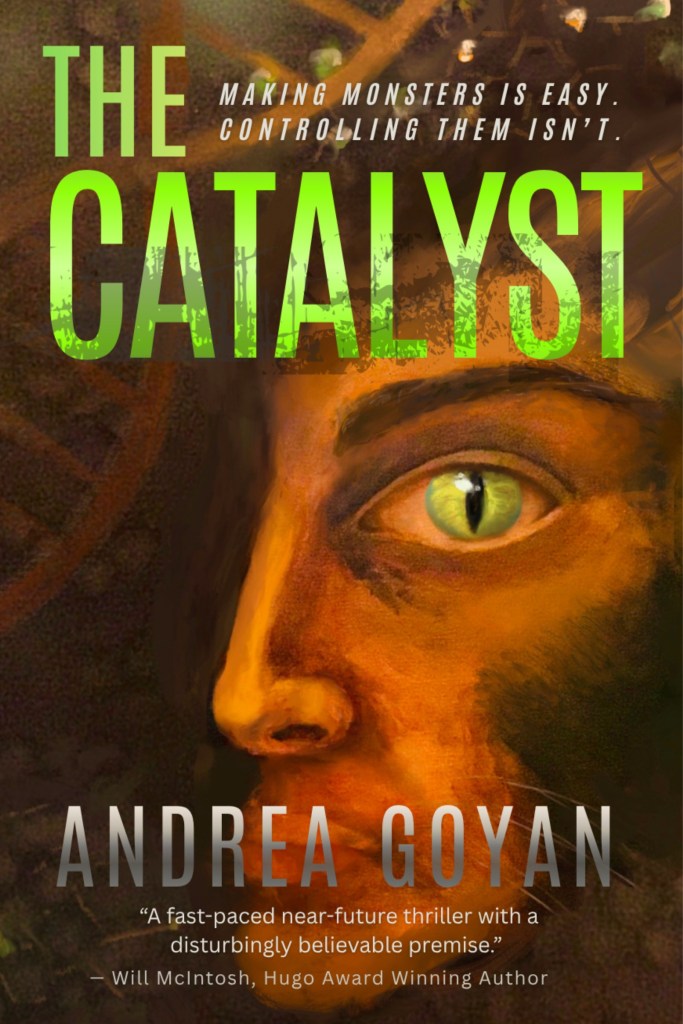
I’m welcoming Andrea Goyan and her new book, The Catalyst, to the blog, with an inspiring post for all those writers out there #blogtour #scifi #writersadvice

I’m welcoming Andrea Goyan and her new book, The Catalyst, to the blog, with an inspiring post for all those writers out there #blogtour #scifi #writersadvice

I’m welcoming Andrea Goyan and her new book, The Catalyst, to the blog, with an inspiring post for all those writers out there #blogtour #scifi #writersadvice

Thank you for inviting me to write a guest blog. I’m delighted to be here with you and your readers. 
My post today directly relates to writers, but I think anyone who navigates risks, rejections, or affirmations will relate on some level because I we all face similar angels and demons. 

“Thank You for Sharing Your Work with Us. Unfortunately…”  

—Random Editor

Ouch. These or similar words of rejection litter every writer’s email inbox. If you’re submitting work, receiving lots of them is part of the deal.  

I want to recognize that sending stories (or anything) out into the world is an act of courage. Opening ourselves up for criticism or rejection risks bruising souls and fragile egos. It is not easy. But the need to be seen and heard—read—keeps most of us in the game.

“Thank You for Sharing Your Work with Us. We’d be delighted to publish…” 

—Favorite Random Editor

 Yes! These are the emails we live for. But as fabulous as those acceptances, encouragement, and love are, those joyful feelings are fleeting. Fairy dust that blows away with the first breeze. The need for more, more, more feels akin to an addiction. 
“Can you help us out?”

—Magazine Editor 

When I started submitting short stories to small markets seriously, I was thrilled that the online process was loads easier than the old-fashioned, snail-mail way. Faster, easier, less wasteful, but as nerve-wracking as ever. And rejections…ugh. Each one stung like a blade slipped between my ribs, touching my heart. I commiserated with other fiction writers, weeping onto my keyboard. Wondered why or if I should continue. The game seemed impossible. But I did continue, and a funny thing happened. I met a ton of other writers, and my writing community grew. 

I watched how other writers managed their submissions, and found that the more I submitted, the less precious any one submission became, and its rejection hurt less when I had other pieces out for consideration. Every successful writer I know submits all the time. They look like they’re accepted and published by everyone, but they still get tons of rejections. It’s a numbers game. The more pieces out, the more potential, the more noes, and the more yeses. 

More visibility led editors to ask for my help. I accepted, and I learned some surprising things along the way. Some of my most valuable insights came from being a slush reader for a magazine and serving as a judge for a few contests. The positions were different, but the similarities showed me how random a lot of editorial decisions are. They aren’t only about if the story is good, tons of great stories are rejected—I’ve rejected some. There are ineffable lists of criteria beyond any writer’s control. I found a lot of peace in that knowledge, and it made the rejections less personal—of course, they’d never been personal. They simply felt that way.

 “Your work is more important than how you feel about it.” 

—Claudette Sutherland, Mentor

She’s retired now, but those words were like a mantra for Claudette. Her students oohed and ahhed whenever she said them, while I secretly wondered what the hell she meant. What I felt mattered to me and still does. It took me years to understand she wasn’t attacking my feelings. I believe she wanted us to get out of our own way. Stop whining about all the reasons we didn’t do and just do. Stop editing our work and push forward. Tell our egos to take a back seat for a while and set our creativity free. 

“I can do this.”

—Me, circa 2025-26

This past year, while I’ve been continually working on The Catalyst, I’ve been too busy to worry about rejections. Too busy to send out many submissions either. The novel’s deadlines were fast and unrelenting, and they forced me to move. To do. Always stepping forward and outside of my comfort zone. 

I met the challenges and learned that what really matters, what really heals my bruised ego and feeds my soul, is the work itself. Not how other people receive it. It’s the act of creating, the spark, the fire that burns until it’s consumed at its source, leading to words on the page. Creating the thing, whatever that thing is. That’s the only thing I can hold onto and call my own. What anyone else feels about it belongs to them. 

Thank you for sharing such a fab post:) And yes, rejection is part of the game, but the act of creating, and the joy it brings, is why we keep on keeping on!

Here’s the blurb

When human bodies are found with scales and tails, DNA specialist Kat Crocker is assigned to uncover the cause of the mutations and stop them before they spread. But her growing visibility makes her a target. As attacks escalate, the trail leads her to a newly released VR game powered by impossible genetics—and to one man: the mentor who taught her everything, the father she buried years ago.

Purchase Link

https://www.amazon.co.uk/Catalyst-Kat-Crocker-Book-ebook/dp/B0H67WYZ8N/

https://www.amazon.com/Catalyst-Kat-Crocker-Book-ebook/dp/B0H67WYZ8N/

Meet the author

Andrea Goyan is an award-winning author and an avid animal person who grew up being called Goat-Girl and Raccoon-Mama. She is a grateful part of a flock of collaborative Magpie Poets whose first collection, An Illegal Feast, was released in 2025. Andrea also co-hosts MetaStellar Magazine’s “Long-Lost Friends” and “Storytime.” In her spare time, she walks her dogs and loves to paint, especially animal portraits. 

Many of her stories are available for free on her website.

Author Andrea Goyan

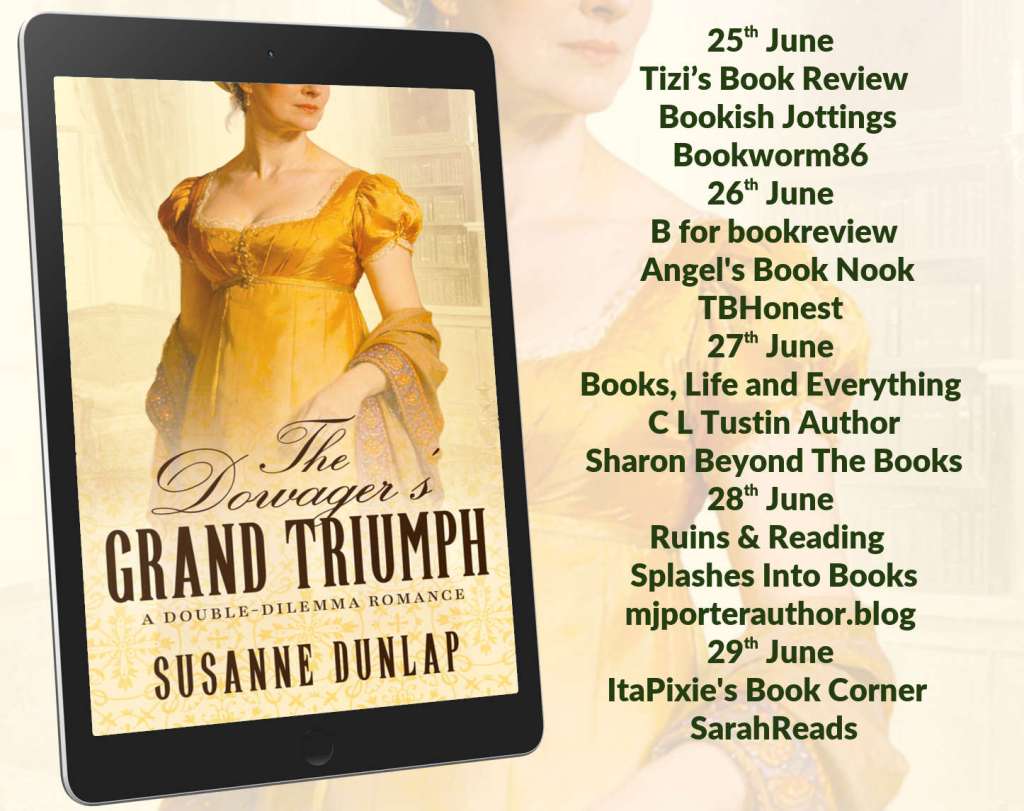
I’m welcoming The Dowager’s Grand Triumph by Susanne Dunlap to the blog #blogtour #RegencyRomance

I’m welcoming The Dowager’s Grand Triumph by Susanne Dunlap to the blog #blogtour #RegencyRomance @rararesources

I’m welcoming The Dowager’s Grand Triumph by Susanne Dunlap to the blog #blogtour #RegencyRomance

Here’s the blurb


Caroline, Dowager Marchioness of Lewiston, has long since made peace with the life she was given: a grand title, a comfortable house, and a heart carefully trained not to want what it cannot have.

Then Thomas Ashcombe returns.

Years ago, Thomas was the man she loved—and lost. Now he is a wealthy merchant newly arrived from India, bringing with him not only a fortune, but a daughter, Anjali, whose place in English society is as uncertain as her father’s safety. Thomas has come home with dangerous evidence of corruption connected to the East India Company, and powerful men will do anything to silence him.

When Thomas is falsely imprisoned under suspicion of treason, Caroline must decide whether she is willing to risk her reputation, her family, and her carefully ordered world for the man she never forgot.

Sir Julian Meredith has always preferred legal arguments to drawing-room conversation. Awkward, red-haired, and far too honest for his own comfort, he is no one’s idea of a romantic hero—least of all his own. But when Anjali Ashcombe’s courage draws him into a web of secrets, forged loyalties, and political danger, Julian discovers that love may require a bravery no courtroom ever demanded of him.

As Caroline and Thomas fight for a second chance, and Julian and Anjali reach for a future neither of them expected, one question remains: can love survive when truth itself has become a crime?

Purchase Link

Check out my review for The Dressmaker’s Secret Earl and The Soprano’s Daring Duke

Meet the author

Susanne Dunlap started out a historian, became an award-winning historical novelist with fourteen published novels for adults and teens, and is now the author of the Regency romance series, Double-Dilemma Romance. She lives and writes in a converted textile mill in Biddeford, Maine.

Author Susanne Dunlap

Connect with the author

https://susanne-dunlap.com

I’m welcoming Fables & Lies: A World War II Novel Based on a True Story by Elizabeth Storrs to the blog #FablesAndLies #HistoricalFiction #WW2Fiction #enemiestolovers #darkfamilysecrets #undercoveragent #truestory #BlogTour #TheCoffeePotBookClub 

I’m welcoming Fables & Lies: A World War II Novel Based on a True Story by Elizabeth Storrs to the blog #FablesAndLies #HistoricalFiction #WW2Fiction #enemiestolovers #darkfamilysecrets #undercoveragent #truestory #BlogTour #TheCoffeePotBookClub 

I’m welcoming Fables & Lies: A World War II Novel Based on a True Story by Elizabeth Storrs to the blog #FablesAndLies

Excerpt 4:

Chapter Eighteen

Klosterheide, December 1939

Freyja climbed the stairs behind the matron, peering into rooms where wintry sunlight poured through arched windows. Chubby toddlers and preschoolers sat on miniature railed wooden chairs at a bench. They ate from steel bowls, guarded by Brown Sisters pouring milk from pitchers into beakers.

Freyja inhaled the aroma of freshly baked bread, amazed to see steamed vegetables and jacket potatoes heaped on the platters. The abundance was startling. Berliners struggled to find fresh produce with the British blockade squeezing supply lines.

‘For all this, we must thank the Führer,’ said the matron. ‘And Reichsführer Himmler believes in the best nutrition for these children.’

‘Tante!’ Siggi waved from the far side of the room then ran towards her. Clipping a chair leg, he fell heavily. Blood spurted from his nose. Before she could reach him, a nurse yanked him to his feet, barking at him to stop whining.

Matrone Hildegarde gripped Freyja’s wrist with blunt fingers. ‘Leave him. We’re making soldiers here, not encouraging cry-babies.’

She tried to break from her, but the woman held firm and growled an order to take the child to the infirmary. Dismayed, Freyja watched her sobbing nephew dragged away.

Hildegarde glowered. ‘Siegfried has been coddled by his mother. Frankly, Hauptsturmführer von Erlbach and his wife should adopt him. Or he should be given to another deserving SS couple. It’s highly unusual to let a Lebensborn mother raise a child.’ She headed for another flight of stairs.

Freyja hesitated, unsure whether to search for Siggi but doubted she’d find him in the maze of corridors. She hurried up the stairs behind the retreating figure of the matron. She was sickened by the threat to Volla. Her sister’s greatest fear was Otto giving her sons to his wife. Freyja prayed von Erlbach would never betray her.

The air reeked of ether and ammonia on the next floor. Freyja saw a tiled operating theatre. The delivery bed looked forbidding, with a huge arc lamp suspended over it. A portable stand with two empty drips stood nearby. Poor Volla. Instead of giving birth with Mutti to assist her, she’d been tended by cold-hearted fanatics.

The mewling of a baby drew her attention to a nursery next door. Brown Sisters moved between dozens of cribs with lace valances and flowered blankets. Babies in identical knitted caps lay in each. Blue or pink name tags were attached to the infants’ wrists, illustrated with either a boy or girl baby holding the trident-shaped Lebensrune symbol.

Freyja stood aghast at the production line. ‘How many babies are here?’

‘There are one hundred beds available in this clinic,’ said the matron. ‘Modest compared to Home Steinhoring in Munich. Nine homes have been established across Germany and more are planned. Any valuable Aryan girl who finds herself in trouble to a good German soldier can be admitted to a Lebensborn home. Of course, a high racial standard is required. Every mother of good blood must be holy.’

A Brown Sister approached, carrying a baby. The infant was shrieking, tonsils and tongue ululating. ‘It’s time for him to be fed, Matrone.’

Hildegarde claimed the child. ‘I’ll drop him off.’

‘Where’s his mother?’ asked Freyja, aware she’d seen no women other than Brown Sisters.

‘In the maternity ward. It’s best to keep maternal contact to a minimum given the children will be adopted.’

Freyja imagined the girls’ distress. ‘It must be hard for them to give up their babies.’

The matron frowned. ‘Individual needs must be subordinated to the State, Fräulein. These women are doing their duty for the Vaterland. Reichsführer Himmler says eliminating abortions and saving unborn boys will lead to more than two hundred regiments of soldiers in twenty years’ time. Add girls, and in two decades we could have half a million additional decent Germans. We must outnumber the offspring of those vile Jewish refugees who’ve flooded in from the East.’

Freyja hid her disgust as she scanned the rows of bassinets. ‘Which one is my nephew?’

Here’s the blurb

Under a brutal regime, what price must be paid to preserve truth, treasure and love in a world built on lies?

WWII Berlin. Freyja Bremer, a patriotic museum assistant, marries Kaspar Voigt, an ambitious SS scholar, to protect her father. Yet she is unaware her husband is instrumental in Himmler’s twisted quest for Aryan supremacy.

As she strives to safeguard the priceless Priam’s Treasure from air raids, Freyja falls in love with Darien Lessing, an archaeologist who exposes the moral decay beneath the Regime’s myths. Her awakening drives her into perilous resistance — aiding a Jewish doctor and his wife, Darien’s sister — while uncovering Kaspar’s role in the SS’s darkest programs, which subvert history to justify invasion, abduction and murder.

As Berlin collapses into chaos and bloodshed, Freyja, caught between duty, deception and desire, must risk everything to preserve truth in a world built on lies.

A heartbreaking yet triumphant love story, Fables & Lies shines light on lesser-known aspects of the Nazi Regime. It gives voice to the complex moral struggles of German women, the forgotten resistance of Gentiles married to Jews, the dangers of contested history, the evils of Himmler’s racial studies program and the unsung bravery of German museum curators who saved their nation’s treasures.

Perfect for readers of Kelly Rimmer, Anthony Doer and Laura Morelli. 

Any Triggers: The book contains offensive Nazi ideology together with graphic war imagery (including rape) still birth and bereavement.

Praise for Fables & Lies:

A heartrending story of a young woman caught in the machinations of the Third Reich and in the web of a regime-compliant family. The novel is meticulously researched and emotionally resonant, sure to delight readers who love a hearty feast of history in their fiction.”~ Olivia Hawker, bestselling author of The Ragged Edge of Night

A powerful and heartbreaking story set in war-torn Berlin, FABLES & LIES charts the slow dawning horror of a young woman as she realises all she has been taught about Hitler and the Third Reich is a lie. Impeccably researched and sensitively rendered, Elisabeth Storrs has shone a light on little-known aspects of life in Germany under the Nazi regime.

~ Kate Forsyth, bestselling author of Bitter Greens

Written from the little explored German viewpoint, FABLES & LIES is a gripping account of the quest to save the world’s great antiquities during WW2 and an ode to those women and men who risked all for freedom. A beautifully written novel. I’ve never read anything like it.

~ Nicole Alexander, author of The Limestone Road

Elisabeth Storrs has indeed broken the mould by writing ‘from the other side’. Evocative, detailed and heart-rending as the heroine journeys through disillusion and danger in the Third Reich.

~ Alison Morton, author of the Roma Nova series

A chilling and meticulously researched journey into the shadow world of the Ahnenerbe. Blending historical rigor with gripping fiction, FABLES & LIES reminds us of the devastating consequences when history is twisted to serve power.

~ Leah Kaminsky, author of The Hollow Bones

Buy Link

 https://books2read.com/fablesandlies


* Goodreads Giveaway *

https://www.goodreads.com/giveaway/show/442105-fables-lies-a-wwii-novel-based-on-a-true-story

Meet the author

Elisabeth Storrs has a great love for history and myths. She is the award-winning author of A Tale of Ancient Rome trilogy which was endorsed by Ursula Le Guin, Kate Quinn and Ben Kane.

Now her obsession lies with Trojan treasure and twisted Germanic prehistory in her new release, Fables & Lies: A World War II Novel.

Elisabeth is also the founder of the Historical Novel Society Australasia and the $155,000 ARA Historical Novel Prize. She lives in Sydney with her husband in a house surrounded by jacarandas.

Author Elizabeth Storrs

https://www.elisabethstorrs.com

https://www.bookbub.com/authors/elisabeth-storrs


Follow the Fables & Lies by Elizabeth Storrs blog tour with The Coffee Pot Book Club

I’m welcoming Nicola Harris to the blog with her new novel, Infidel #InfidelTheDaughtersOfAragon #NicolaHarris #CatherineOfAragon #HistoricalFiction #TudorHistory #BookTour #BlogTour #YardeBookPromotions

I’m welcoming Nicola Harris to the blog with her new novel, Infidel #InfidelTheDaughtersOfAragon #NicolaHarris #CatherineOfAragon #HistoricalFiction #TudorHistory #BookTour #BlogTour #YardeBookPromotions

I’m welcoming Nicola Harris to the blog with her new novel, Infidel

Guest post by Nicola Harris

My research for Infidel began long before I ever thought of writing a novel about Catherine of Aragón. It began on a beach in Tenerife, years before tourism transformed the island. To a child, it felt like another world. The light, the heat, the colours, the food, the rhythm of life. 

I was fortunate enough to spend a great deal of time with a Spanish family who welcomed me into their home and their culture year after year. They taught me fragments of their language and, more importantly, the stories that shaped their history. Through them, I first encountered the world of Muslim Spain and the Catholic warrior monarchs who fought to reclaim it. It was impossible not to be fascinated.

Catalina’s mother, Isabella of Castile, stood out immediately. She was disciplined, relentless, and utterly convinced of her divine purpose. She was also a mother raising her children in a kingdom defined by conflict.

That tension between power and vulnerability became the foundation of my interest in Catalina’s early life. Before she was a queen, she was a child shaped by siege warfare, political ambition, and the expectations of a dynasty that demanded strength from its daughters.

As I began to research more deeply, I found myself drawn to the wider world that touched Catalina’s childhood. I have always been captivated by the fall of Constantinople and the Turkish Sultan Mehmed II’s audacious plan to take the city. 

On a trip to Turkey a few years ago, I spoke with a Turkish waiter about his view of the sultan. His pride and respect for Mehmed stayed with me. It reminded me that history is never simple. Every figure we study has another side, another story, another set of loyalties and beliefs. 

That conversation helped me approach the period with a wider lens, aware that the Christian and Muslim worlds were not simply enemies but complex civilisations with their own brilliance and contradictions.

Juana of Castile, Catalina’s older sister, became a vital part of the novel for this reason. She is often reduced to the label Juana the Mad, but she was far more than that. In Infidel, Juana allows me to explore the moral questions surrounding the Muslim wars and the Inquisition. 

She is outspoken, intelligent, and unwilling to accept cruelty as the natural cost of faith. Through her, I could give voice to the discomfort a modern reader might feel when confronted with the punishments and persecutions of the age. Without revealing too much, Juana’s own journey takes her far from home, and the emotional cost of that distance shapes her view of the world.

Her brother Juan was married to Margaret of Austria, who is frequently remembered for educating Anne Boleyn. What is less often acknowledged is that long before Anne ever entered Margaret’s household, Catalina was already connected to Margaret by family.

In Infidel, those family connections matter. It reminds us that Catalina did not exist only in relation to Henry VIII and Anne Boleyn. She belonged to a wider European network of women whose lives, loyalties, and alliances shaped the courts that Anne would later enter.

There is a great deal of sadness in this story, because there was a great deal of sadness in Catalina’s early life. She lost people she loved. She witnessed the brutality of war. She learned to read cyphers and how to read hearts. She watched her parents arguing over her father’s love affairs. She learned to stand firm even when everything around her was shifting. 

Her childhood was not soft or sheltered. It was an ordeal. She came face to face with native Americans who were snatched from their land and brought to the palace. I wanted to understand what forged her, what hardened her, and what gave her the strength she carried into England. Her resilience did not appear by magic. It was earned.

Infidel grew from all these threads: my early love of Spain, my fascination with the fall of Constantinople, my respect for the complexity of the period, my interest in the overlooked connections between women like Catalina and Margaret of Austria, and my desire to show Catalina not as a symbol but as a girl shaped by fire. 

She was fierce, vulnerable, determined, and unforgettable long before she became a Tudor queen. I wanted to bring that girl to life. I wanted to show the sisters who stood beside her, the world that formed her, and the dynasty that demanded so much from its daughters.

Here’s the blurb

Born in the glittering courts of Castile and Aragon and forged in the shadow of war, Catalina de Aragón grows up surrounded by queens, rebels, and explorers. She is her mother’s last daughter, the final jewel of a dynasty built on conquest and faith, and the one child Isabella of Castile cannot bear to lose.

But destiny has already claimed Catalina.

Promised to Prince Arthur of England since childhood, she is raised to bind kingdoms, soothe old wounds, and carry the hopes of an empire across the sea. Yet, Spain fractures under rebellion, grief, and the ruthless zeal of its own rulers.

From the burning streets of Granada to the storm‑lashed Bay of Biscay, Catalina and her sisters must navigate a treacherous path shaped by ambition, betrayal, and the dangerous love of men who fear the power of queens. She learns to read cyphers, to read hearts, and to stand unbroken even as her childhood is stripped from her piece by piece.

And when she finally sails for England armed with her mother’s lessons, her father’s steel, and the ghosts of the Alhambra at her back, Catalina steps into her fate not as a girl, but as a force.

A princess.

A survivor.

A daughter of Aragon.

Infidel is the story of a young woman raised for greatness and destined to reshape the fate of nations. This is Catalina, as she has never been seen before. She is fierce, vulnerable, and unforgettable.

A sweeping, intimate portrait of sisterhood, survival, and the making of a dynasty, Infidel reveals the hidden lives of a woman whose courage shaped the Tudor world.

Any Triggers: Grief, mild peril, the Spanish Inquisition, enslaved people, death in childbirth and miscarriage.

https://books2read.com/u/4AZDEJ

 Read with #KindleUnlimited

Meet the author

I’ve always been a writer, but it was only when illness forced me to stop everything that I finally had the time to write a novel. After decades of misdiagnosis, I learned I was born with a serious genetic condition, not rare, but profoundly misunderstood. The clues were there from birth, and suddenly, a lifetime of struggle made sense.

Writing became my lifeline: a way to step beyond my pain, to shape my experience into a story, and to find meaning where there had once been only endurance.

I have a lifelong love of children, Counselling, and Psychotherapy Theory and history.

Auhtor Nicola Harris

https://nicolaharrisauthor.com/

Follow the Infidel by Nicola Harris blog tour with Yarde Book Promotions

I’m reviewing Harbour of Thieves by Richard Cullen, a brand new 19th century tale of smugglers and North Yorkshire #historicalfiction #bookreview

I’m reviewing Harbour of Thieves by Richard Cullen, a brand new 19th century tale of smugglers and North Yorkshire #historicalfiction #bookreview @boldwoodbooks @wordhog

Here’s the blurb

An epic NEW historical crime story of treachery and bitter rivalry between Yorkshire’s tough smuggling gangs 💥 Perfect for the fans of Bernard Cornwell’s Sharpe series, House of Guinness and Peaky Blinders 🩸⚔️

Can one man forget his past, or will he be dragged back into the world of violence he worked hard to leave behind?

Yorkshire, 1840

Along this treacherous Yorkshire coastline, the cutthroat industry of smuggling thrives, and two rival gangs rule the night… the Stringers of Bay Town and the Lambs of Ravenscar. Waging a war for control of the contraband that flows through England’s northern cities.

After a lifetime of violence and bloodshed, Jim Hood returns to his hometown of Whitby with his friend Samuel Comus, their pockets heavy with prize money from their exploits along the African coast. They dream of respectability, of turning their backs on their past, but old friends and enemies await, and old habits die hard…

When tragedy strikes, and Jim’s well-laid plans turn to ash, Jim is forced to return to the brutal world he’d sworn to leave behind.

Now he must navigate the deadly currents that flow between rival smuggling empires, where childhood loyalties war with newfound enemies, and where the price of survival might be the very soul he’d fought so hard to reclaim.

Perfect for the fans of Bernard Cornwell, Ken Follett and Dan Jones.

Purchase Link

https://amzn.to/4n47Yrb

My Review

Harbour of Thieves is a rollicking good read set in the 1840s, in and around the coastline of Whitby and Scarborough (North Yorkshire) and focuses on the underbelly of smuggling as two rival bands face not one, but two enemies, and are riven with discord between each other as well.

We have multiple characters in this thrilling, fast-paced tale, and we also need to give a shout-out to the Yorkshire weather! There are many characters we simply despise, a few we quite like, and others we can perhaps admire, while being grateful never to be faced with the decisions they have to make. We have strong women, even stronger women and those we think we should pity but who, in their own way, are perhaps the strongest of all. We have villains aplenty, from the excise man to the leader of the Lambs, who is a nasty piece of work.

The story is fast and satisfying, as events wrap around our would-be heroes, forcing them to make hard decisions to survive. This is a thrilling adventure of high stakes and high seas, and I devoured it in only 24 hours!

Check out my review for Rebellion, the first book in the Chronicles of the Black Lion series.

Meet the author

Richard Cullen is a writer of historical adventure and epic fantasy. Previously published by Head of Zeus and Orbit Books, his new historical adventure series for Boldwood, Chronicles of the Black Lion, set in thirteenth-century England, will launch in October 2024.

Connect with the author

Newsletter Sign Up https://bit.ly/RichardCullenNews

I’m delighted to welcome Vicky Adin and her new book, Sarah’s Destiny, to the blog, #HistoricalFiction #VictorianWomen #workingclasswomen #enduringlove #Bristol #widows #BlogTour #TheCoffeePotBookClub 

I’m delighted to welcome Vicky Adin and her new book, Sarah’s Destiny, to the blog, #HistoricalFiction #VictorianWomen #workingclasswomen #enduringlove #Bristol #widows #BlogTour #TheCoffeePotBookClub @cathiedunn
@thecoffeepotbookclub.com

I’m delighted to welcome Vicky Adin and her new book, Sarah’s Destiny, to the blog,

Read about Vicky Adin’s inspiration for writing Sarah’s Destiny

My inspiration stretches back well into the seventeen hundreds as I hunted for my family history. Genealogy research always turns up interesting snippets of information. A name on one document, repeated on another and linked to another often leads to the discovery of the places, people, and occupations associated with their lives. I was in for a surprise as I abandoned the direct line and drifted along another branch to twigs and leaves.

Sarah’s story was one of those sideways leaps as I searched for extra details relating to my third and fourth great-grandparents. With a love of history and genealogy, such research can provide details beyond the facts, however, there are always gaps and to me that’s where the stories lie. I love filling in the gaps.

My third great-grandfather intrigued me. In those times, several branches of an extended family and generations of a direct line would live in that same area over long periods, with the sons often continuing the father’s occupation. In this case, a daughter maintained that tradition and in keeping with the naming patterns of the day, Sarah was the third daughter to be given that name in memory of two others. She must have carried a huge sense of responsibility. Such traditions are invaluable to a genealogist, but …. 

Sometimes, the information doesn’t quite add up. When my great-grandfather’s dates didn’t quite match and when his daughters broke tradition and moved away from the family, I researched the one who remained. A gut instinct told me she could well be the key to what I was searching for. And I was right. The more documents I found about her life, the more fascinated I became. 

Sarah lived her life in the Victorian era from 1834 to 1907. During that time, she was to have two husbands and eight children and lost three, but her marital status and the children’s names and dates were often confusing, suggesting more to the story than the hard facts provided.  She was literate and worked as a licenced victualler, a pub landlord, in her own right, just like her father. She was, without doubt, loyal, determined, and defied conventions. But what was she really like? That is the one question genealogy research will never answer, especially that far back. That is where a writer’s intuition takes over. 

Next came the historical research about Bristol, where she lived and worked her entire life. In its heyday Bristol was a progressive and prosperous city that sparked my curiosity. I’d never been to Bristol so I used Google Earth to ‘wander’ down the same streets that Sarah would have done. I found the pub, one among many, where she’d grown up beside the Welsh Back and where bars and restaurants still dot the landscape today, just as they were in her day. I love the fact that the core of England never changes. Some new buildings and some road realignments but in essence what Sarah knew, I could view.

A ‘back’ is a Bristolian word for a wharf and the Welsh Back is the cobblestone street running along the length of the famous floating harbour built in 1809. That is where the trows, (specially designed boats with folding masts to get under the low bridges) from Wales came across the notorious Bristol Channel and tied up to unload their wares. 

The more I looked into Bristol’s history, the more I realised the city itself had a story to tell. So too, her lover.

I took Sarah’s facts and the spirit of Bristol and recreated her life. I filled the gaps, taking into account Bristol’s unique words and dialect and all the numerous and wonderful Victorian revelations, the likes of Mrs Beeton’s Book of Household Management and the serialisation of Dickens novels, the completion of the Bristol Suspension Bridge and so much more. We can never know exactly what people said, how they behaved, or what they thought, but understanding the mores and laws of the time offers a likely premise.

Sarah’s Destiny is inspired by a true story, the facts guided her time frame, and the history embellished the storyline, but Sarah’s soul captured my imagination.  

Here’s the blurb

Young Sarah Daniels is the heart, soul and future of The White Hart Inn on the Welsh Back. Alongside the quay and wharves on Bristol’s floating harbour, she dreams of finding love, and a destiny where she can escape the drudgery and tragedy that life usually delivers Victorian women. But dreams are free, and few share her ideals. When reality strikes, and Sarah learns the hard way that life is unkind, one man offers her hope.

Through many decades of heart-aching loss, false promises and broken dreams, the young widow clings to that one hope. With six children to care for, she takes risks few others would consider. She breaks conventions and makes sacrifices to keep that hope alive.

Will her wishes come true, or is she destined to be another unfortunate in the sea of many?

Any Triggers: Grief, abuse, attempted rape (gentle)

https://books2read.com/u/3LPag7

This title is available to read on #KindleUnlimited. 

Meet the author

Like the characters in her books, Vicky has a passion for family history and a love of old photos, antiques, and treasures from the past. After researching the history of the time and place, and realising the hardships many people suffered, Vicky knew she wanted to write their stories. Tales of love and loss, and triumph over adversity. Her latest release, Sarah’s Destiny, Book 1 of The Ancestors series, is inspired by a true love story set in Bristol.

Vicky particularly enjoys writing inter-generational sagas, inspired by true stories of early immigrants to New Zealand, linked by journals, letters, photographs, and heirlooms.

She’s an avid reader of historical novels, family sagas and women’s stories and loves to travel when she can. She has a MA(Hons) in English and Education. Her story of Gwenna won gold in The Coffee Pot Book Club Women’s Historical Fiction Book of Year in 2022 and several of her books carry the gold B.R.A.G medallion.

www.vickyadin.co.nz

 https://www.bookbub.com/profile/vicky-adin

Follow the Sarah’s Destiny by Vicky Adin blog tour with The Coffee Pot Book Club

I’m reviewing the new book in the Armstrong and Oscar Cozy Italian Mysteries, Murder in Rome by TA Williams #BookReview #BlogTour #CosyCrime #ContemporaryCrime

I’m reviewing the new book in the Armstrong and Oscar Cozy Italian Mysteries, Murder in Rome by TA Williams #BookReview #BlogTour #CosyCrime #ContemporaryCrime

I’m reviewing the new book in the Armstrong and Oscar Cozy Italian Mysteries, Murder in Rome by TA Williams #BookReview #BlogTour #CosyCrime #ContemporaryCrime

Here’s the blurb

The BRAND NEW instalment in the bestselling, beloved Armstrong & Oscar Cozy Mystery series! 

A road leading to Rome

Former DCI Dan Armstrong has been living and working in Florence for nearly three years—yet somehow, Rome has always eluded him. That is, until glamorous TV celebrity Tamsin Goodfaith turns up with a request he can’t refuse: investigate her uncle’s suspicious death in the Eternal City.

Murder at the castle

Philip Hastings was a billionaire financier, found dead at his magnificent—if slightly spooky—medieval castle in the Roman hills. Dan and his faithful canine companion, Oscar, soon find themselves surrounded by luxury, secrets and more suspects than sightseeing opportunities.

This time it’s personal. But when a second murder follows close behind, the case turns dangerously personal. With whispers of ghosts and crumbling alibis, Dan and Oscar must sniff out the truth before he becomes the next victim. Harder to crack than castle walls—and harder still than stopping Oscar from stealing snacks—this Roman holiday is anything but relaxing. .

Purchase Link

https://mybook.to/MurderInRome

My Review

Murder in Rome is somehow the 15th book in the Armstrong and Oscar mysteries, and I’ve read them all (apart from 1, which I seem to have missed).

This latest outing sees Dan taking a trip to Rome, somewhere he’s not been before, with Oscar at his side. What he encounters is a palatial residence that seems to be hiding its own secrets, but his remit is simple, determine if Philip was murdered, or whether he really did commit suicide. As Dan begins to investigate there are strange goings-on in the dysfunctional, wealthy family.

Murder in Rome unfolds as earlier books in the series. The reader genuinely doesn’t know who can and can’t be trusted until there is a huge breakthrough. For this one, I loved the historical elements as it’s passed time Anna was able to help Dan solve his cases. Of course, Oscar has a starring role once more too.

Always a guaranteed good read, I didn’t guess who did it! I do love this series.

Check out my reviews for earlier books in the series, and be sure to start at book 1, Murder in Tuscany.

Meet the author

I’m a man. And a pretty old man as well. I studied languages at Nottingham University a long time ago and then lived and worked in France and Switzerland before going to work in Italy for seven years. My Italian wife and I then came back to the UK with our little daughter (now long-since grown up) where I ran a big English language school for many years. We now live in a sleepy little village in Devonshire. I’ve been writing almost all my life but it was only thirteen years ago that I finally managed to find a publisher who liked my work enough to offer me my first contract.

I started off writing romances but after 28 of them, I knew I wanted to try something different, and so the first of the Armstrong and Oscar cozy mysteries, Murder in Tuscany, was born three years ago. I’ve been having a lot of fun ever since getting to know the dynamic duo (and introducing them to people all over the world). These books are cosy crime [a genre I didn’t even know existed when I started writing them). They are murder mysteries, but not gory, over-violent stuff, but stories designed to exercise the brain of the reader and to put a smile on their face. Maybe it’s because there are so many horrible things happening in the world today that I feel I need to do my best to provide something to cheer my readers up. My books provide escapism to some gorgeous locations all over my beloved Italy.


Newsletter Sign Up https://bit.ly/TAWilliamsNews

Bookbub profile @trevorwilliams3

Author TA Williams

I’m delighted to welcome Deborah Swift and her new book, The Enemy’s Wife, to the blog #BlogTour #TheCoffeePotBookClub #TheEnemysWife #HistoricalFiction #WW2 #Shanghai

I’m delighted to welcome Deborah Swift and her new book, The Enemy’s Wife, to the blog #BlogTour #TheCoffeePotBookClub #TheEnemysWife #HistoricalFiction #WW2 #Shanghai @swiftstory @cathiedunn
@deborahswiftauthor @thecoffeepotbookclub

I’m delighted to welcome Deborah Swift and her new book, The Enemy’s Wife, to the blog #BlogTour #TheCoffeePotBookClub #TheEnemysWife #HistoricalFiction #WW2 #Shanghai

The Political Melting Pot of Shanghai  by Deborah Swift

My novel The Enemy’s Wife is set in Shanghai during the Attack on Pearl Harbor in December 1941. At this time, China was already deeply embroiled in turmoil—both from foreign invasion and internal political conflict. Understanding the situation requires looking at two overlapping struggles: the war against Japan and the civil war within China itself.

The External War with Japan

Pic of Japanese arrival in French concession

China had been fighting Japan since the Second Sino-Japanese War, which began years before Pearl Harbor. Japan had occupied major parts of eastern China, including key cities like Shanghai and Nanjing, so that the Chinese capital had moved inland to Chongqing. The war was brutal, with events like the Nanjing Massacre, where thousands of women were raped and murdered, still fresh in memory. Commanders at Nanjing were later found guilty of war crimes and executed. These barbaric crimes were not isolated incidents, so by 1941, China was exhausted but still resisting.

The Internal War – Two rival Chinese governments

China was politically divided between two main factions, firstly, the Nationalists (Kuomintang), the official government of China, led by Chiang Kai-shek, and supported by the United States and other Allies. 

On the other side were the Communists, led by Mao Zedong who controlled vast swathes of northern China. When the Japanese invaded, these rebel communist factions used guerrilla warfare against the Japanese. They were extremely influential amongst the workers and the lower classes in China.

To defeat the Japanese, The Nationalists and Communists agreed to a temporary alliance called the Second United Front to resist Japan. But in reality, cooperation was limited and mistrust remained high. Both sides were already positioning themselves for a future power struggle, so fierce clashes between them still occurred even during the anti-Japanese war. The civil war within China was still going on beneath the invasion of the Japanese.

Pic – Collapse of United Front Propaganda Poster

The Impact of Pearl Harbor

The attack on Pearl Harbor dramatically changed China’s situation. The United States officially entered the war and became a major ally of China, which meant China was now part of the broader Allied war effort against Japan.

In turn, this meant that American aid (military supplies, training, and financial support) began increasing, mainly to the Nationalists. This did not please the communists, who saw it as arming their enemy!

Corruption Rots the Government

Corruption created a sharp contrast between the ruling elite and ordinary people. Many officials lived soft lives of relative comfort, while ordinary civilians suffered deprivation and hardship. 

A large portion of foreign aid (especially from the U.S.) was lost to corruption. Supplies like weapons, fuel, and food were stolen, hoarded, or sold on the black market. Some officers in the Nationalist army inflated troop numbers known as ghost soldiers to collect extra pay. Even so, frontline soldiers were often under-equipped and underfed despite the incoming aid. Officials embezzled funds or mismanaged resources. The government printed large amounts of money to cover costs, contributing to hyperinflation, so that ordinary people saw their savings become nearly worthless. This resulted in more support for the communists, and growing anger toward the government.

Pic of Chinese army

The Chinese Communist Party, led by Mao Zedong, capitalized on this by promoting strict discipline and anti-corruption policies. Communist forces often treated peasants better and redistributed land in some areas, and their image as more egalitarian helped them gain grassroots support. By the end of World War II, these weaknesses contributed directly to the Nationalists’ defeat in the resumed Chinese Civil War.

So writing a novel including all these factions was interesting. Not only was corruption rife in government, but there was also prostitution, gambling, and drug wars to contend with! I have a character in the Japanese army, but also several who are part of the Communist rebel faction fighting against them. This is a book where women too play a major part, both in resisting the Japanese through distributing anti-Japanese propaganda, and more directly by helping prisoners of war held by the Japanese.

As a place to set a novel, Shanghai offers plenty of opportunity for tension, conflict and plot. I hope you will enjoy The Enemy’s Wife.

Here’s the Blurb

‘A fast-paced, beautifully written, and moving story. Refreshing to read a book set in a different theatre of war. Wartime Shanghai jumped off the page’ CLARE FLYNN

A poignant story of the impossible choices we make in the shadow of war, for fans of Daisy Wood and Marius Gabriel. 

1941. When Zofia’s beloved husband Haru is conscripted into the Imperial Japanese Army, she is left to navigate Japanese-occupied Shanghai alone.

Far from home and surrounded by a country at war, Zofia finds unexpected comfort in a bond with Hilly, a spirited young refugee escaping Nazi-occupied Austria.

As violence tightens its grip on the city, they seek shelter with Theo, Zofia’s American employer. But with every passing day, the horrors of war and Haru’s absence begin to reshape Zofia’s world – and her heart.

Can she still love someone who has become the enemy?

Readers love The Enemy’s Wife:

‘A gorgeous novel that will truly pull at your heartstrings‘ CARLY SCHABOWSKI

‘I loved The Enemy’s Wife – a gripping, fast-paced and evocative story about the Japanese occupation of Shanghai during WW2 – and really rooted for the brave and selfless central character, Zofia. Highly recommended’ ANN BENNETT

‘Such an emotional and moving read, grounded in immaculate research that never overshadows the heart of the story’ SUZANNE FORTIN

Buy Link

Universal Link

Meet the Author

Deborah used to be a costume designer for the BBC, before becoming a writer. Now she lives in an old English school house in a village full of 17th Century houses, near the glorious Lake District. Deborah has an award-winning historical fiction blog at her website www.deborahswift.com.

Deborah loves to write about how extraordinary events in history have transformed the lives of ordinary people, and how the events of the past can live on in her books and still resonate today.

Her WW2 novel Past Encounters was a BookViral Award winner, and The Poison Keeper was a winner of the Wishing Shelf Book of the Decade.

Author Deborah Swift

Connect with the Author

Follow The Enemy’s Wife blog tour with The Coffee Pot Book Club

I’m sharing my review for Sacrilege by Keith Moray, a brand new historical mystery set in 1361 #bookreview #blogtour #newrelease

I’m sharing my review for Sacrilege by Keith Moray, a brand new historical mystery set in 1361 #bookreview #blogtour #newrelease #boldwoodbloggers @BoldwoodBooks @KeithMorayTales @rararesources #Sacrilege

I’m sharing my review for Sacrilege by Keith Moray, a brand new historical mystery #bookreview #blogtour #newrelease

Here’s the blurb

A nun is found dead.

A priest is horribly attacked.

An evil older than sin is loose in Yorkshire…

Marske, 1361. Sir Ralph de Mandeville with his assistants Peter and Merek have recently come from Reeth to hold a court session in Marske but are pulled away at the news of a most heinous crime having been discovered further down the River Swale.

A boat has been found, floating down the river. Inside is a truly horrifying scene – the body of a nun, her wrists cut and her hands fixed in the sign of benediction… As Ralph uses his astute skills of inspection, his mind asks a most difficult question – is this self-murder or murder most foul? Were her last moments spent in benediction prayer… or malediction warning? With both Marrick Priory and Easby Abbey within a stone’s throw of Marske, it appears something is not quite right in the house of God…

When the body of a priest is found mutilated as if by a wild animal, the villagers fear the nun’s body has opened the gates and let loose a monster from Hell… but Ralph starts to wonder if something much more human is at the root of these evils.

As he follows the grim clues, he fears he knows where this miserable sacrilegious journey will end. The question is, can he catch the murderer and prevent more grisly deaths – his own included?

Purchase Link

https://mybook.to/SacrilegeBookSocial

Here’s my review

Sacrilege is the second book in the Ralph de Mandeville historical mysteries. I’ve read the first book, so you can check out my review down at the bottom.

Sacrilege starts quicker than the first book, and our first encounter is with Ralph and his two assistants, Merek and Peter, as Ralph holds court in Marske, but the day quickly takes a turn when the body of a nun is found on the river. And so begins another very grizzly, high-body-count mystery that involves both a priory and an abbey, a nobleman, a queen, and the local villages, and is deeply rooted in the area, with its iron smelting and fast-flowing river.

The mystery is tightly plotted and filled with increasing tension as Ralph finds himself butting heads with an uptight nobility who don’t want his interference, as well as a few jobs-worths along the way. And there are many people with secrets they don’t want Ralph to uncover, as well as a brief appearance from Queen Phillipa.

This is an engaging, if sometimes slightly gruesome, read, with no end of peril for our main characters. It is written in such a way that it feels ye-olde-worldly, and the characters embody the thoughts of the day. You can tell Keith has a great deal of medical knowledge! It will certainly appeal to fans of the genre (me), and I do think it can be easily read as a standalone for anyone keen to jump right in with this second book in the series.

Check out my review for Desolation, the first book in the series.

Meet the author

I was born in St Andrews and studied medicine at the University of Dundee in Scotland. I lived and worked in Wakefield in Yorkshire for 40 years, within arrow-shot of the ruins of a medieval castle, the base for a series of historical novels.

I am a retired GP, medical journalist and novelist, writing in several genres. As Keith Moray I write historical crime fiction in the medieval era and in ancient Egypt, The Inspector Torquil McKinnon crime novels set on the Outer Hebridean island of West Uist, and as Clay More I write westerns. Curiously, my medical background finds its way into most of my
fiction writing.

In my spare time I enjoy the movies, theatre and making bread. I play golf and I run at carthorse speed. As a frustrated actor I have found occasional solace as a supporting artist, but enough said about that!

I now live in Stratford-upon with my wife Rachel and whichever of our children and grandchildren who happen to pop in.

Connect with the author