
On this day in history, the anniversary of the battle of Maserfeld in either 641 or 642. I thought I’d share some photos and book recommendations
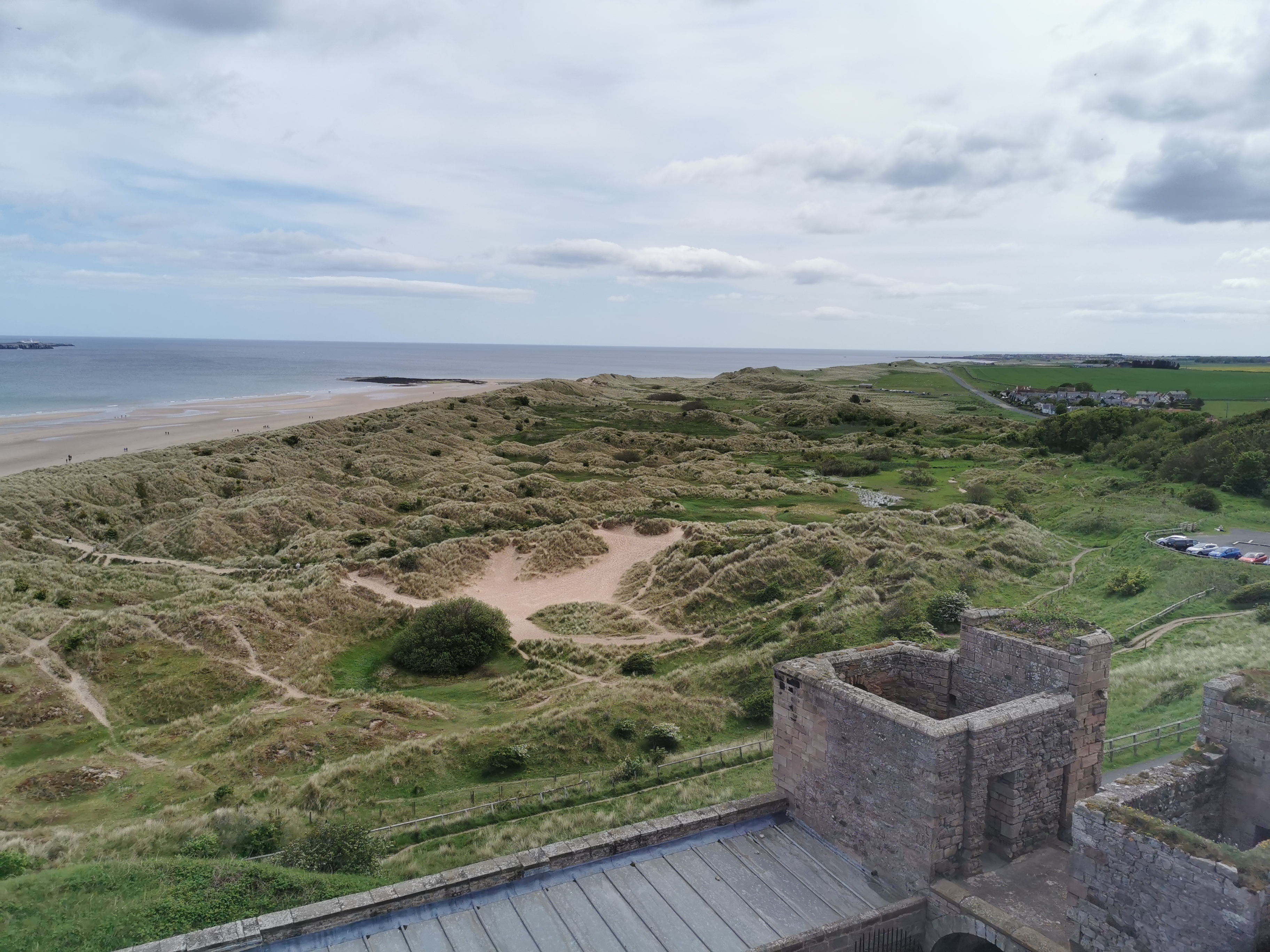
It’s the anniversary of the Battle of Maserfeld on August 5th (641 or 642), fought between Penda of Mercia (go Penda) and his allies, and Oswald of Northumbria and his allies, so I thought I’d reshare some photos I took while writing the Gods and Kings trilogy of Bamburgh Castle and Northumberland in general, which was the home of Oswald of Northumbria. Admittedly, the battle of Maserfeld is said to have taken place at Oswestry on the Welsh border with Mercia, but I didn’t go there, although I certainly visited as a child.
‘A.D. 641/642. This year Oswald, king of the Northumbrians, was slain by Penda, king of the Southumbrians, at Mirfield, on the fifth day of August; and his body was buried at Bardney. His holiness and miracles were afterwards displayed on manifold occasions throughout this island; and his hands remain still uncorrupted at Barnburgh. The same year in which Oswald was slain, Oswy his brother succeeded to the government of the Northumbrians, and reigned two less than thirty years.’
(Taken from the online version of the Anglo Saxon Chronicle, a ninth century creation so, not very contemporary).
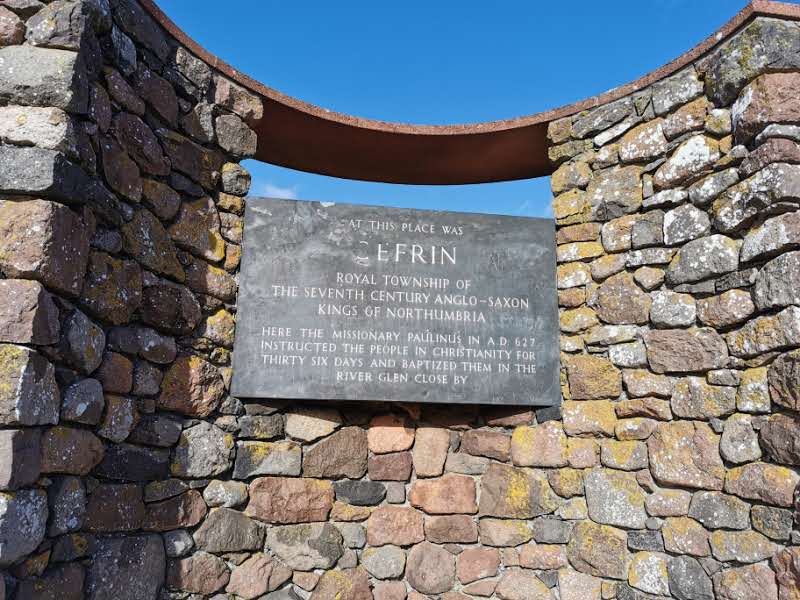
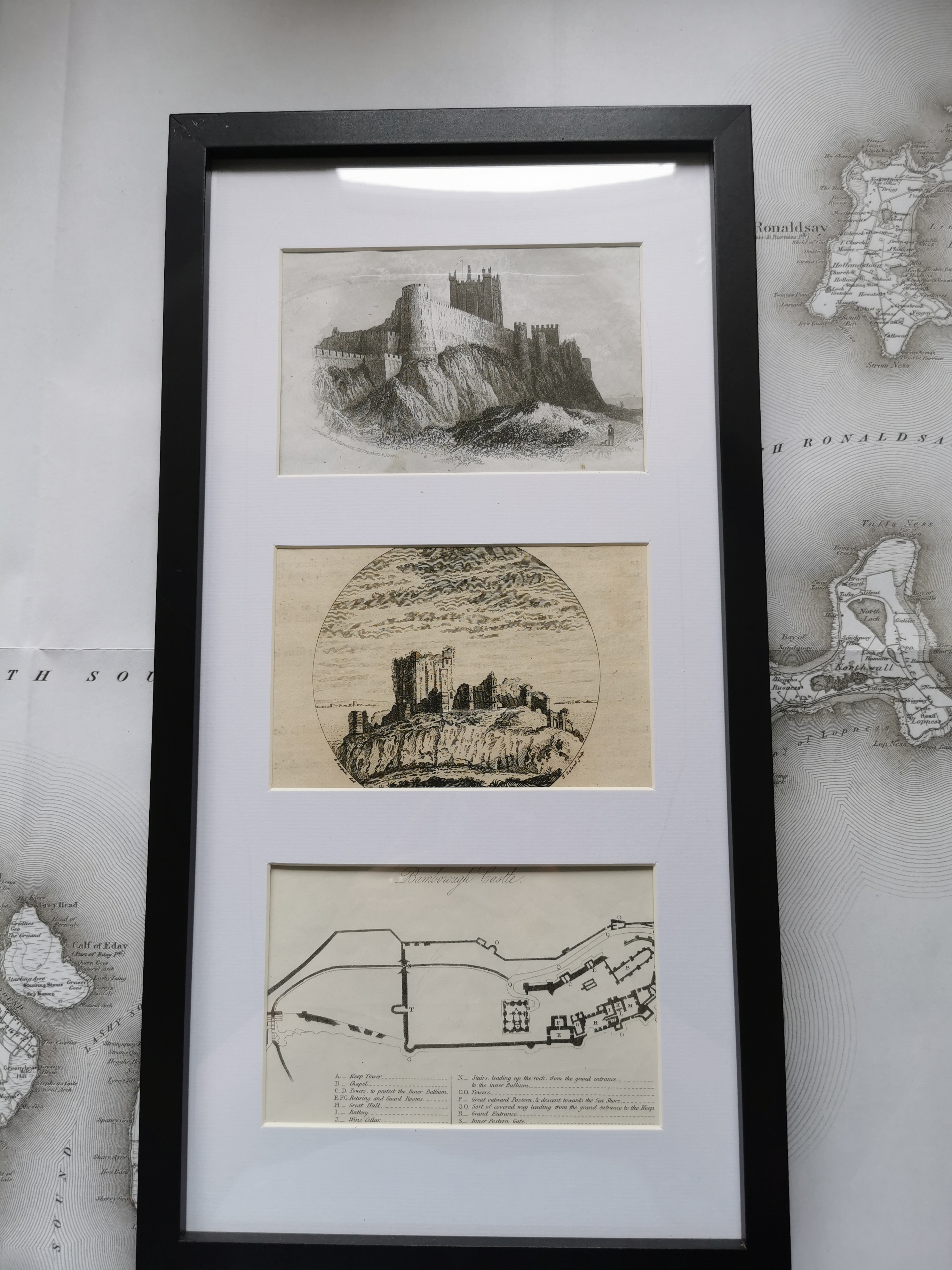
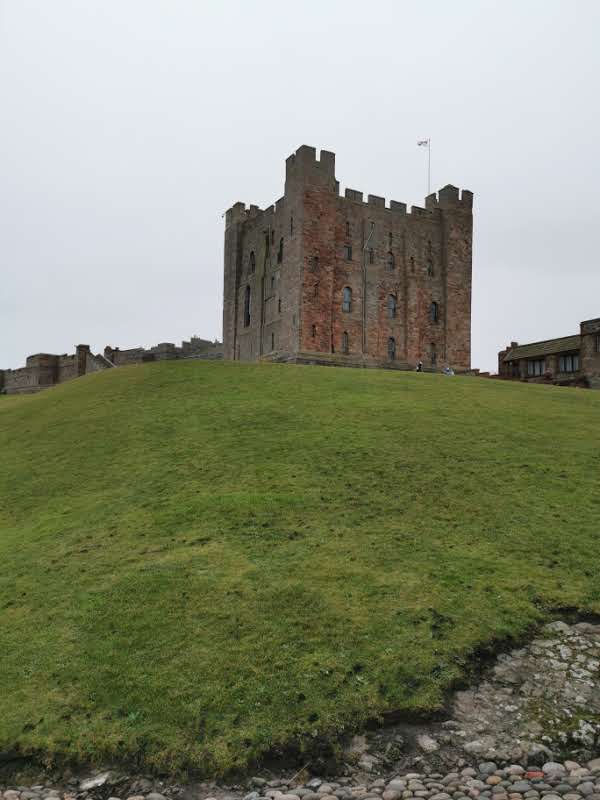
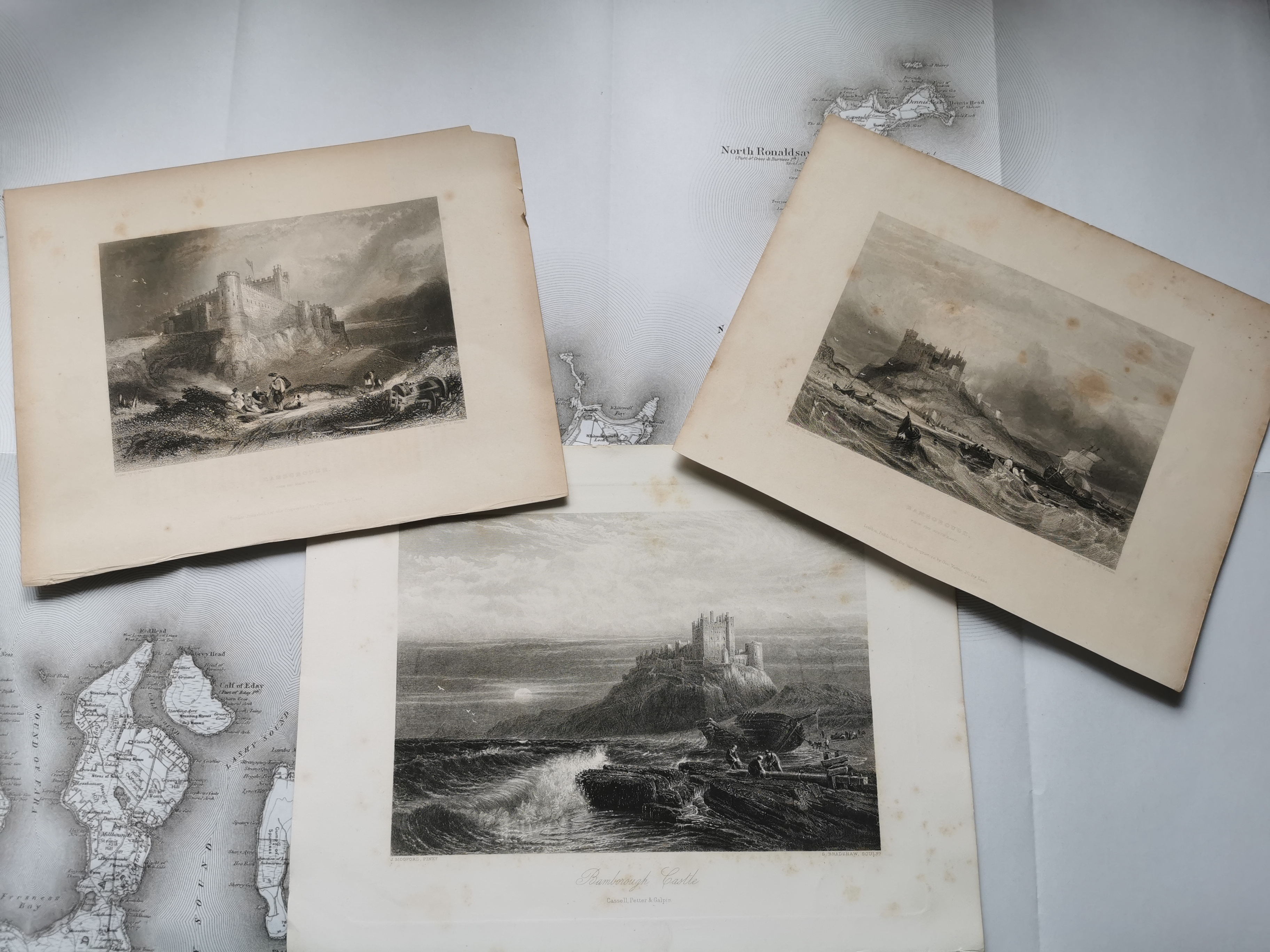
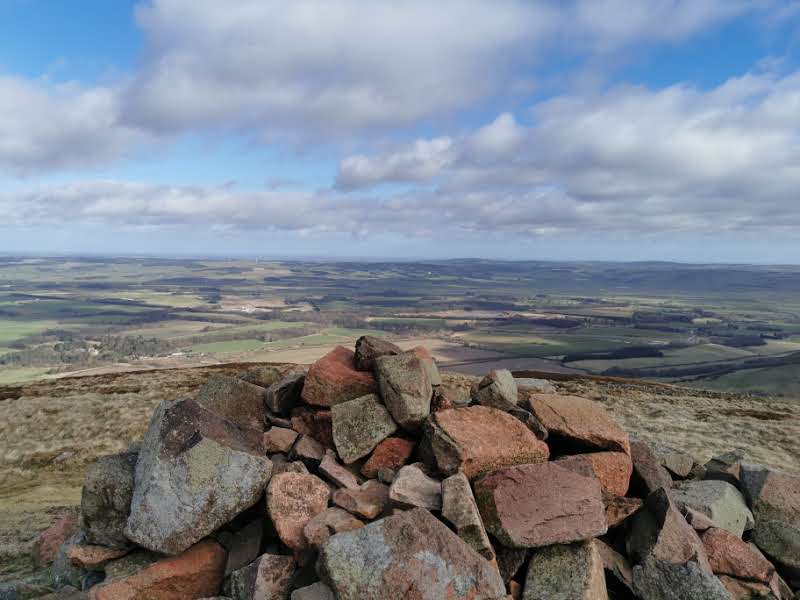
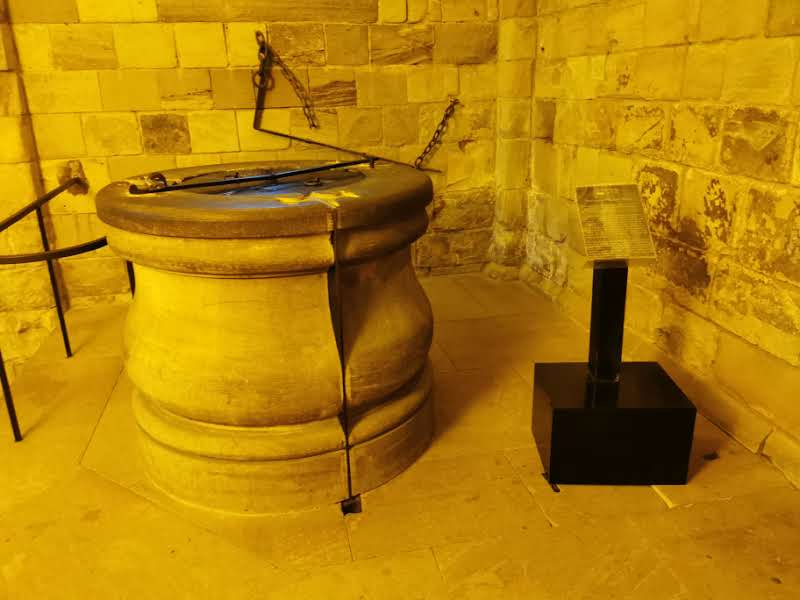
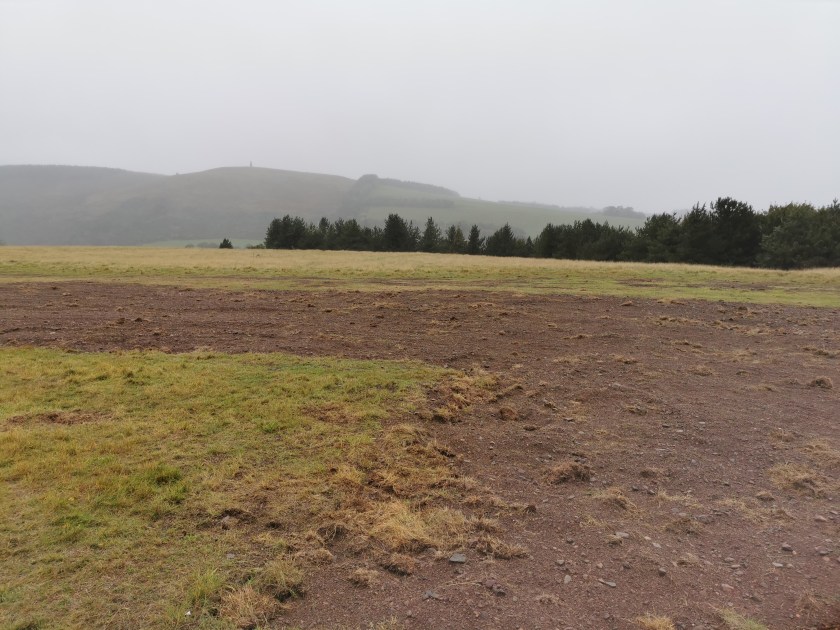
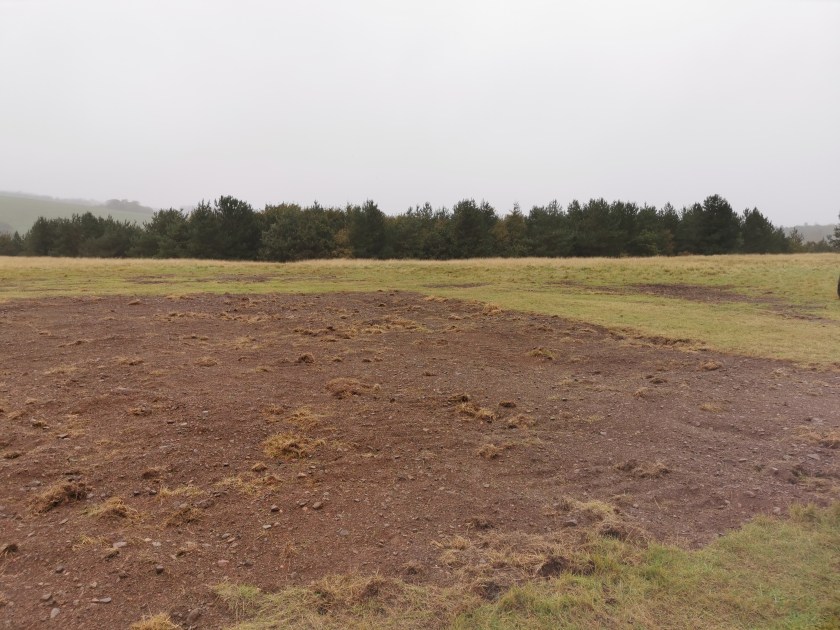
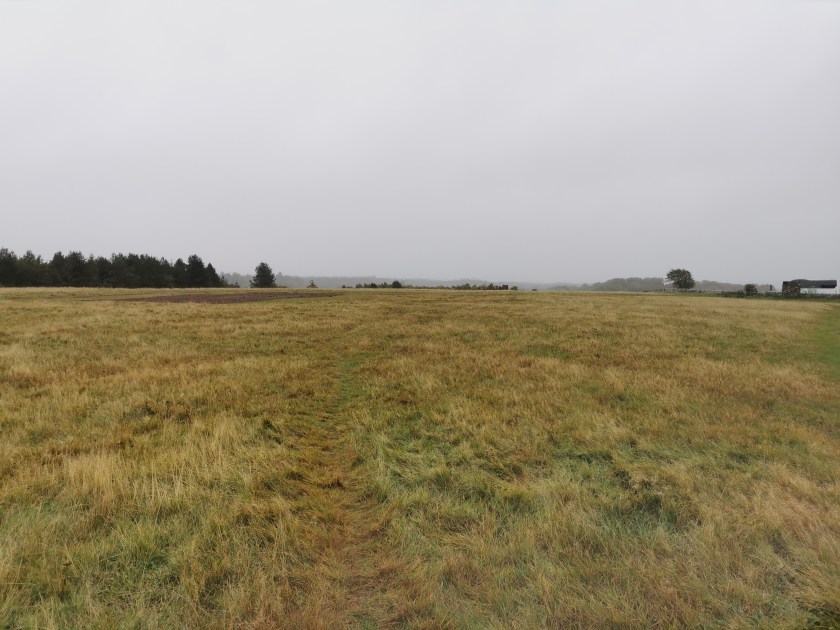
Ad Gefrin, a Northumbrian royal palace, although no longer visible above groundAntique images of Bamburgh CastleBamburgh Castle,or rather, the keep, in its depths is the oldest part of the castleMore antique prints of Bamburgh CastleThe view from Bamburgh CastleLooking towards the coast from Yeavering Bell, above Ad RefrainThe well and well cover at Bamburgh Castle in the keep – the oldest part of the castle
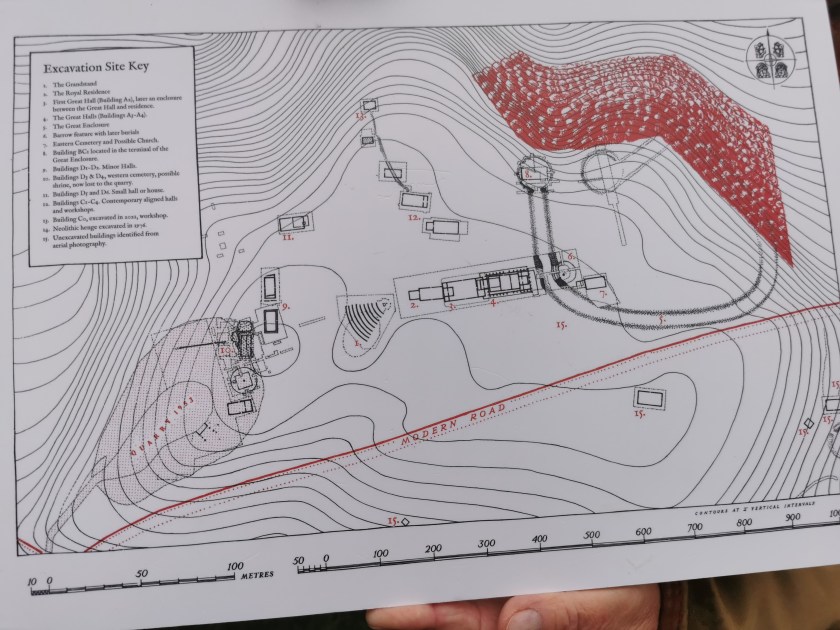
The original excavation map (I think)
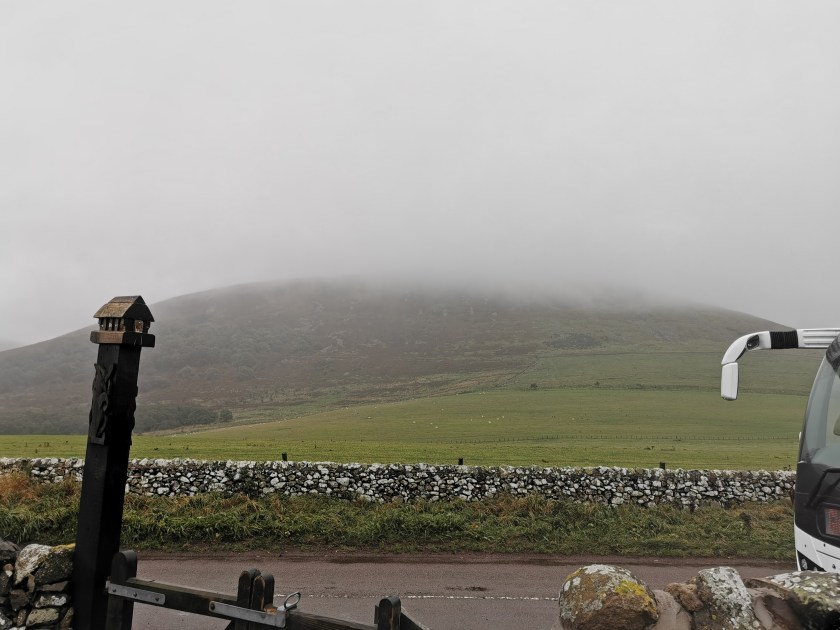
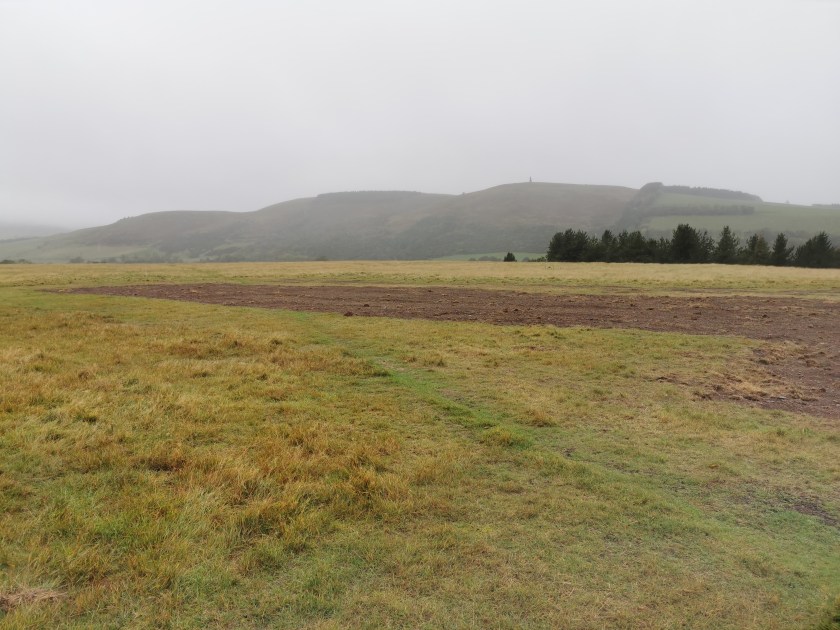
Looking towards Yeavering Bell (there’s a picture above of what the view looks like on a clear day)
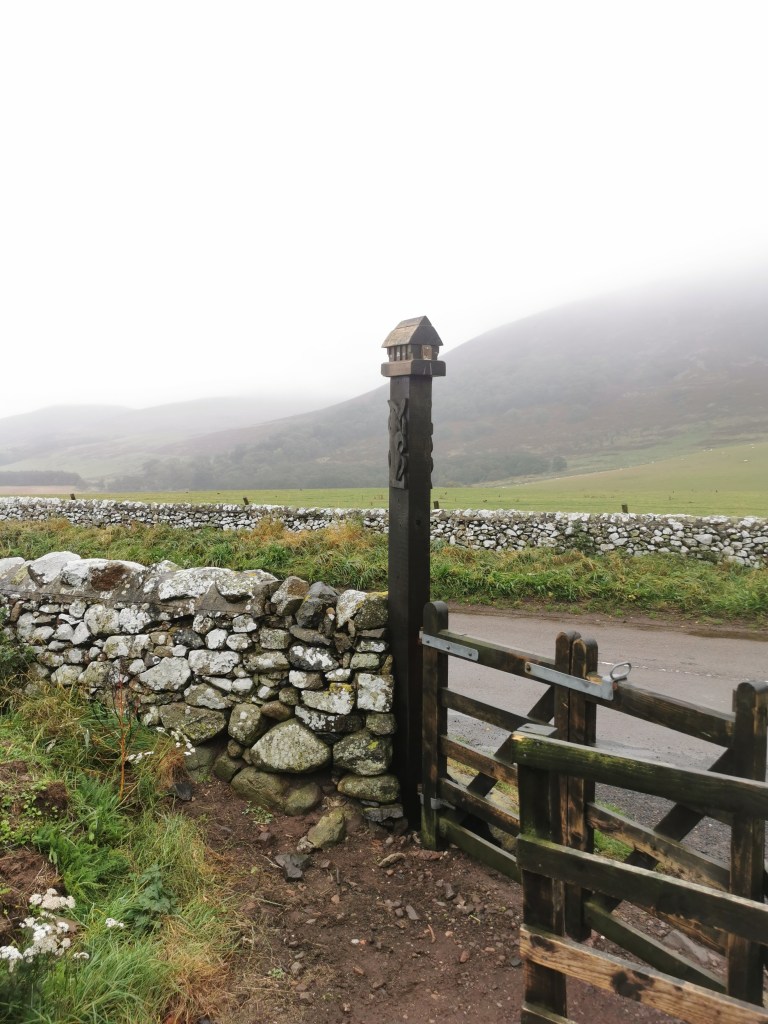
The entrance to Ad Gefrin
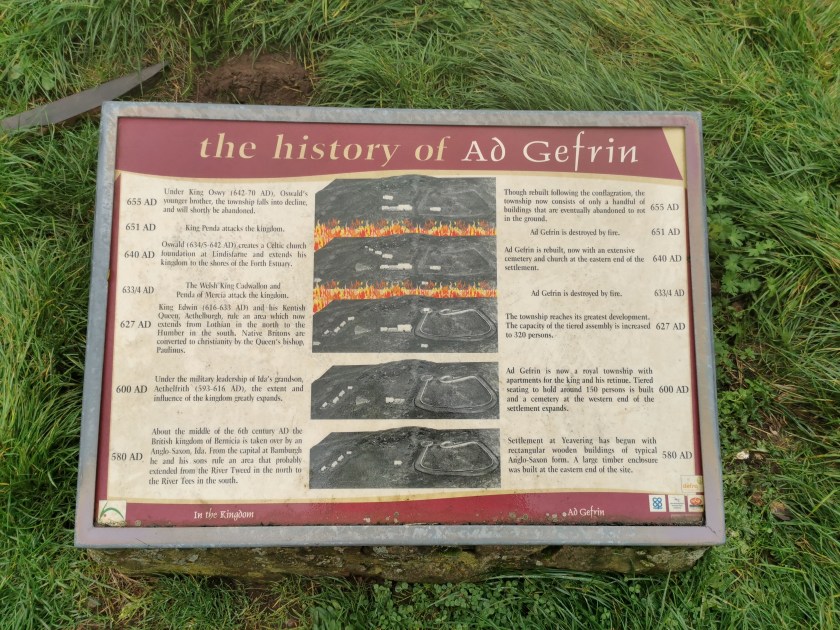
The history of Ad Gefrin board from the site
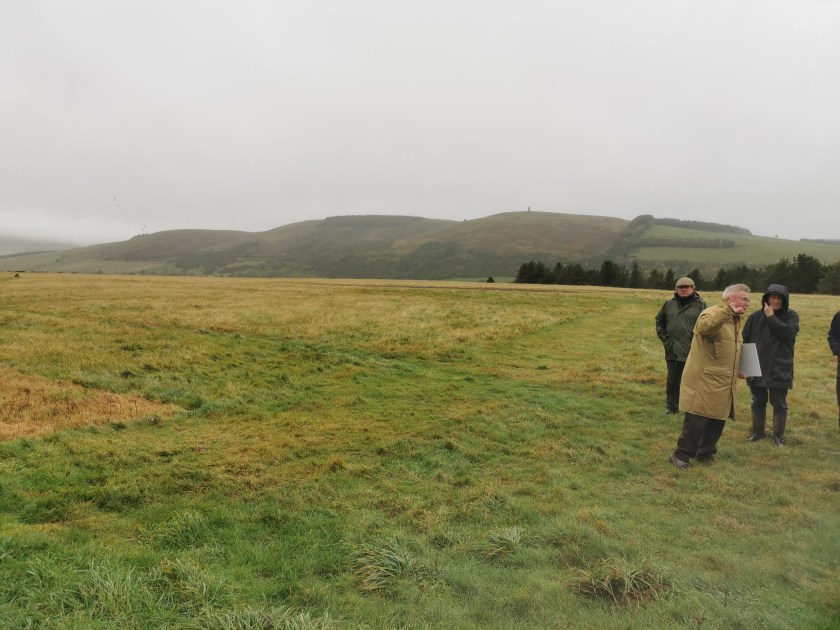
The remains of Ad Gefrin, explained to us by archaeologist Roger Miket
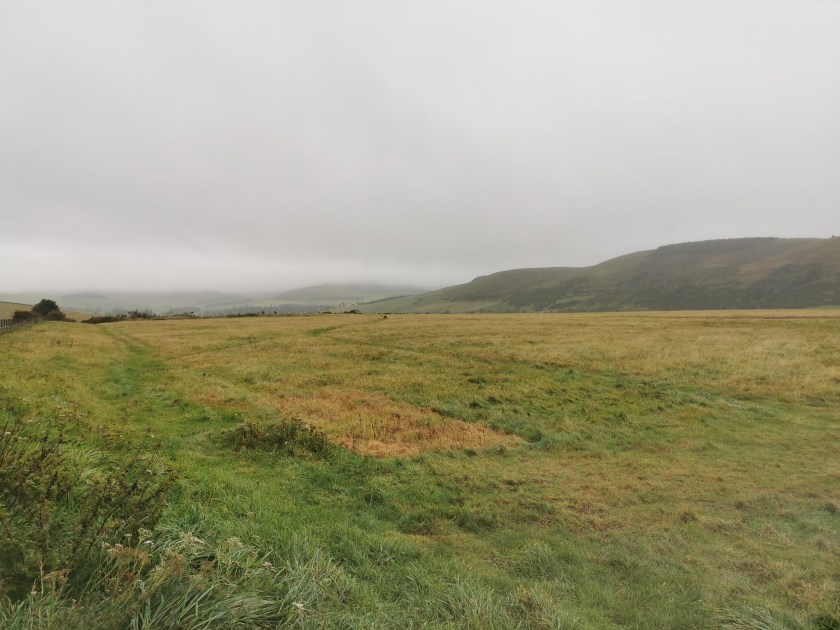
More damp Ad Gefrin
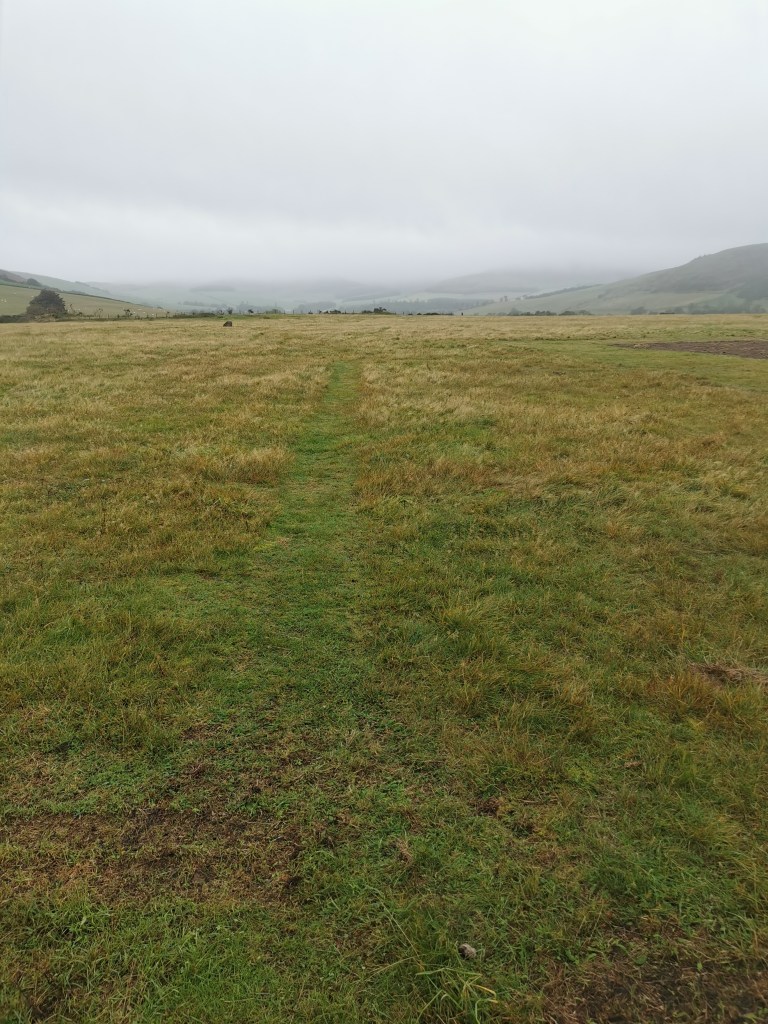
And more
And more
And more
And more
And more
The site of the 2023 excavation
And more
And more
And more
You can hear the archaeologist, Sarah Semple, talking about the recent excavations at Ad Gefrin in this Society of Antiquaries Lecture. https://www.youtube.com/watch?v=0A7eRTvajtA
You can also visit the Ad Gefrin trust website here.
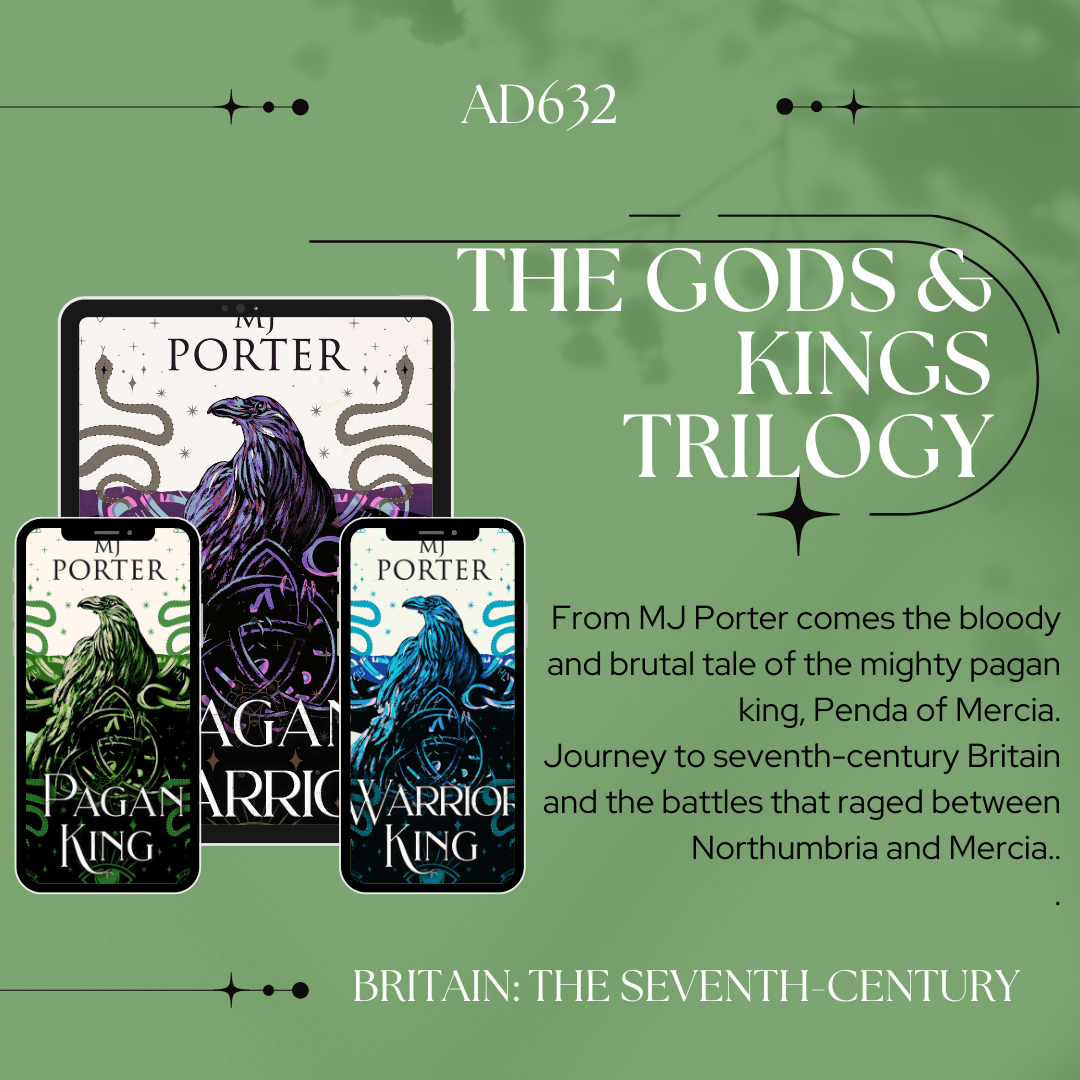
The battle of Maserfeld is the book Pagan King follows in my Gods and Kings Trilogy (the second book in the trilogy). I had a lot of fun writing it, making use of locations I visited as a child to make them come alive, and even setting one of the fictional battles in the lead up to the clash at Maserfeld, close to where I used to live.
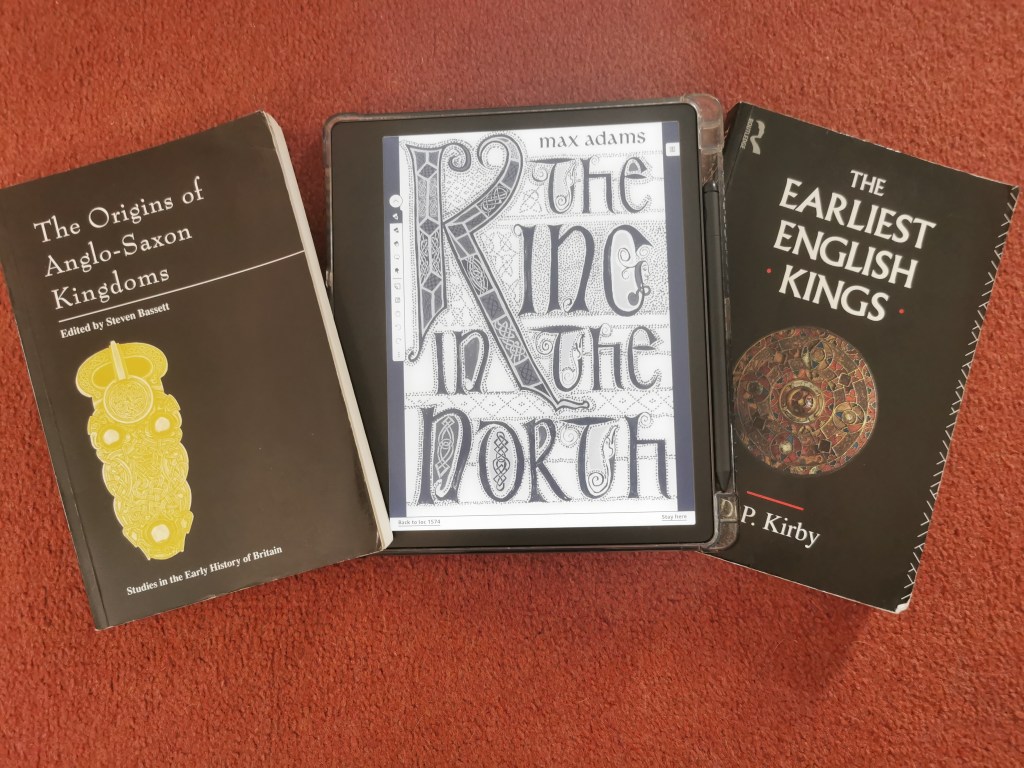
If you’re curious about the period, I highly recommend these non-fiction titles. Perhaps start with Max Adams’ The King in the North. It’s also the most modern of the three. The other two were texts I read while at university (so yes, decades ago:))
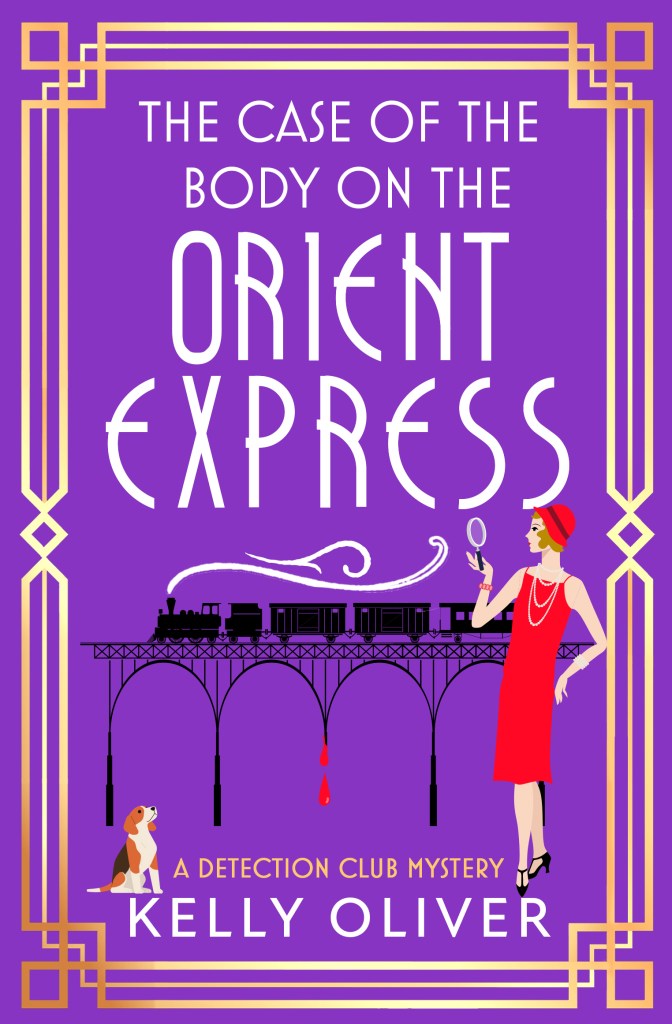
Paris, 1928: Agatha Christie and fellow writer Dorothy L Sayers board the Orient Express, bound for Constantinople. Christie in particular is looking forward to a break from recent dispiriting events in both her work and private life – the finalisation of her divorce from her philanderous husband Archie, and the miserly reception of her latest book.
But before the duo can settle in to enjoy the luxuries of their first-class journey, their journey is derailed when a fellow guest drops dead during the dinner service. And as the last person to speak to the victim, Dorothy finds herself a prime suspect in his murder.
As the train hurtles East, Sayers’ resourceful assistant Eliza and her friend Theo must navigate a maze of suspects. But with each passing mile, the stakes rise, and when another body is discovered, their search to find the killer before they reach their destination becomes increasingly complicated.
Can Eliza and Theo stay one step ahead, crack the mystery and clear Dorothy’s name? Or will this be one journey too far for the amateur sleuths?
The Case of the Body on the Orient Express is a fun murder mystery, reuniting us with outspoken and headstrong Eliza, and her fellow sleuth, Theo, who, in true ‘tormented writer’ guise, has spent the last two years in France, roughing it in an attempt to escape the object of his torment, Eliza. What could be better than throwing them together on the Orient Express, with a host of mystery writers on their way to a writers convention?
As their journey gets underway, Eliza is aware of undercurrents from Dorothy, her employer, and she’s alert to the other passengers as well. She’s not about to accept that Ivan died of a heart attack. And so begins her sleuthing, with the aid, sometimes unwillingly given, of Theo. And the case becomes curioser and curioser as the train finally reaches Istanbul/Constantinople.
Another fab addition to Kelly Oliver’s sleuthing mysteries. I do love the little connections between this series and the Fiona Figg books. But, of course, you don’t need to have read them. I also enjoy the addition of the real-life mystery writers. Fans of the genre will thoroughly enjoy Eliza and Theo’s new escapade.
Kelly Oliver is the award-winning, bestselling author of three mysteries series: The Jessica James Mysteries, The Pet Detective Mysteries, and the historical cozies The Fiona Figg Mysteries, set in WW1. She is also the Distinguished Professor of Philosophy at Vanderbilt University and lives in Nashville, Tennessee
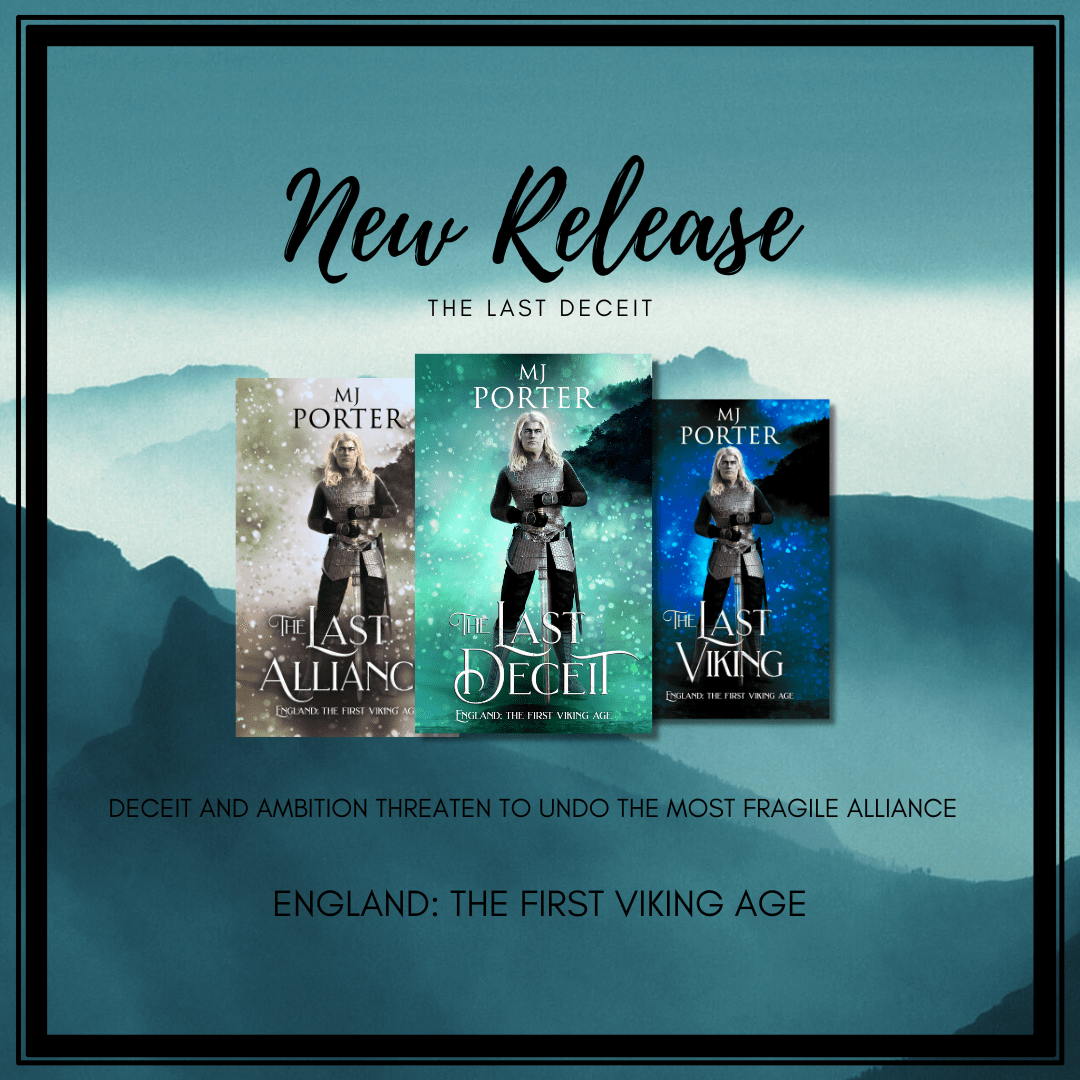
If you’ve been with Coelwulf, Rudolf, Icel, Edmund and Pybba since the beginning, then you’re probably with me in trying to work out how five years have gone by since the release of The Last Warrior, which from memory has a bit of a shocking ending (but no other spoilers here).
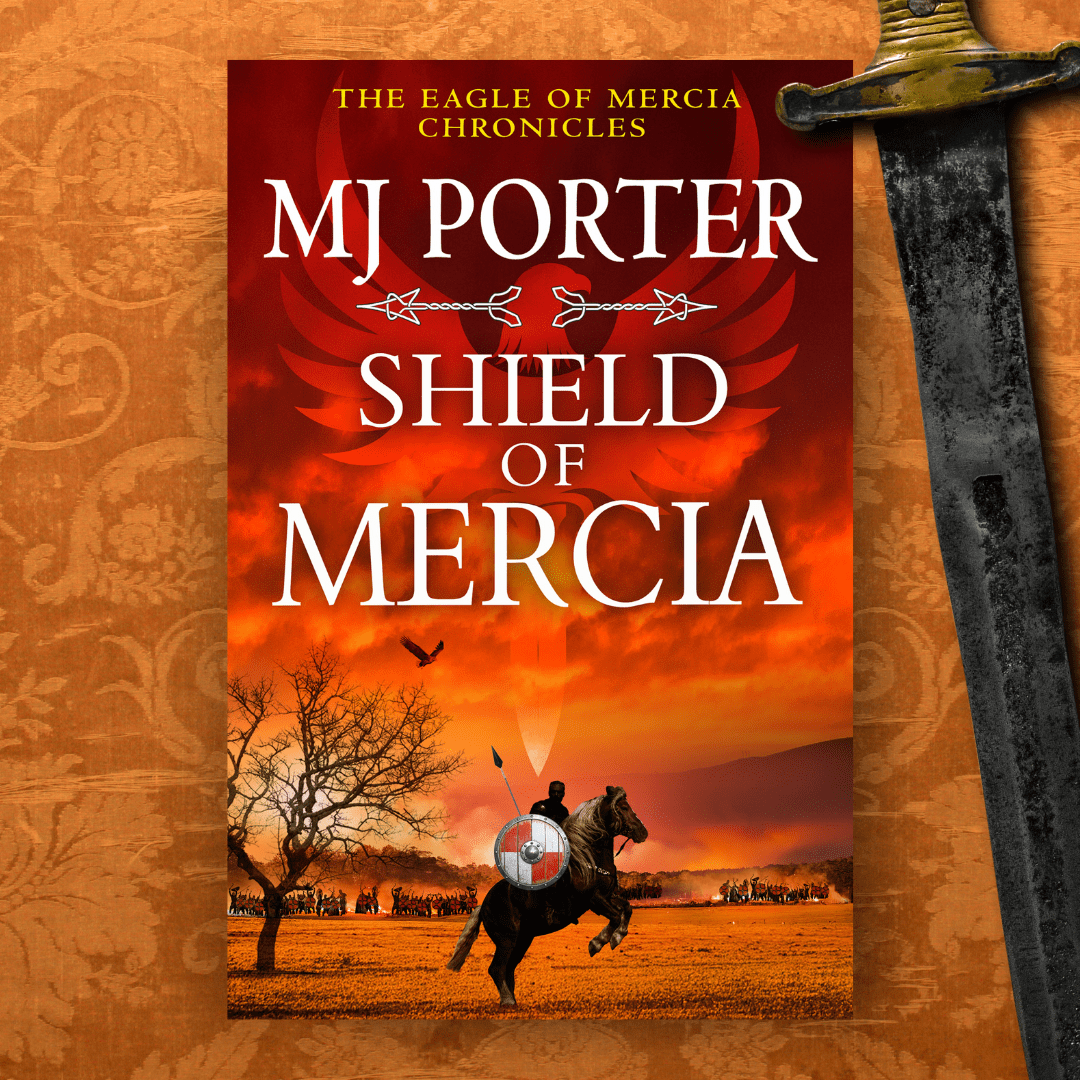
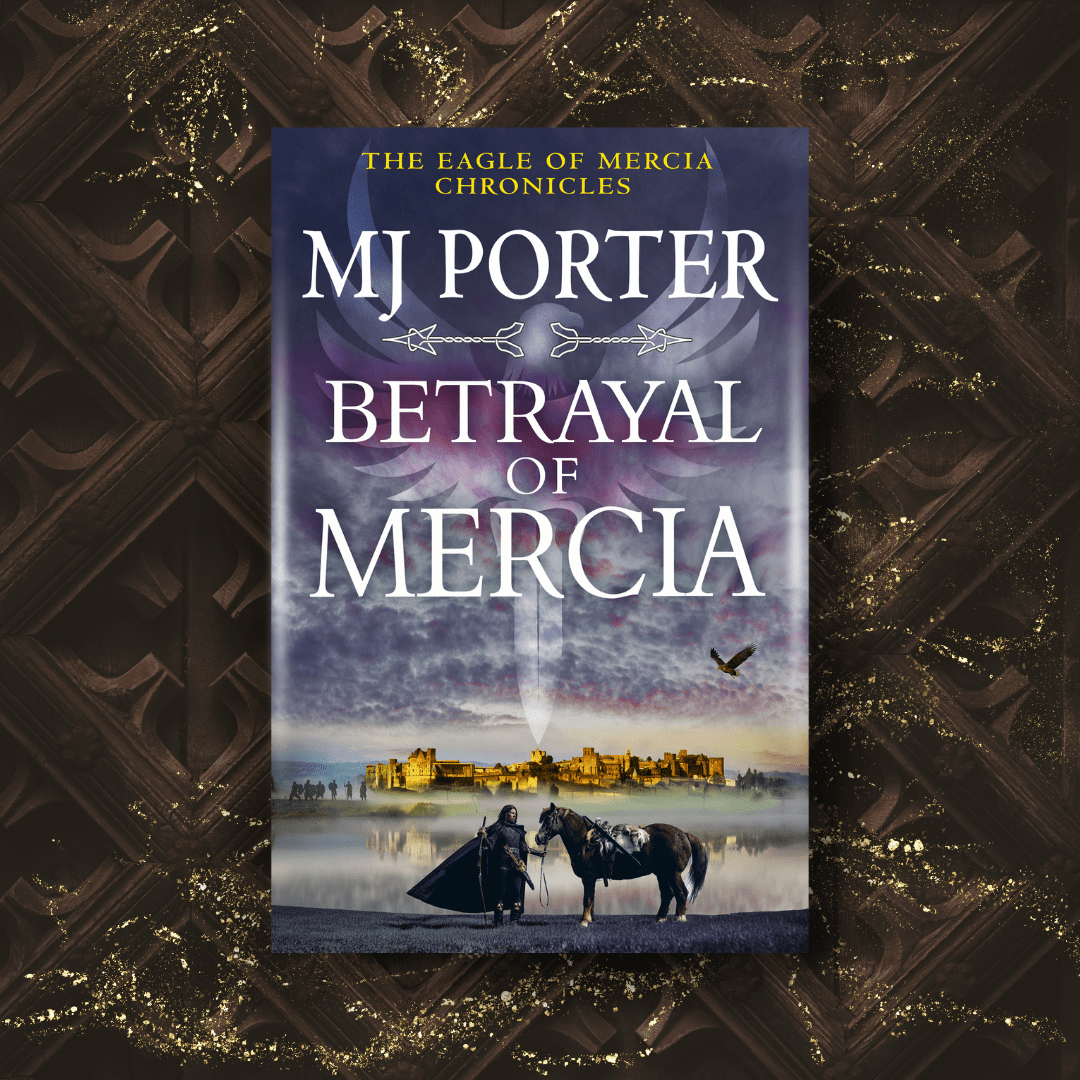
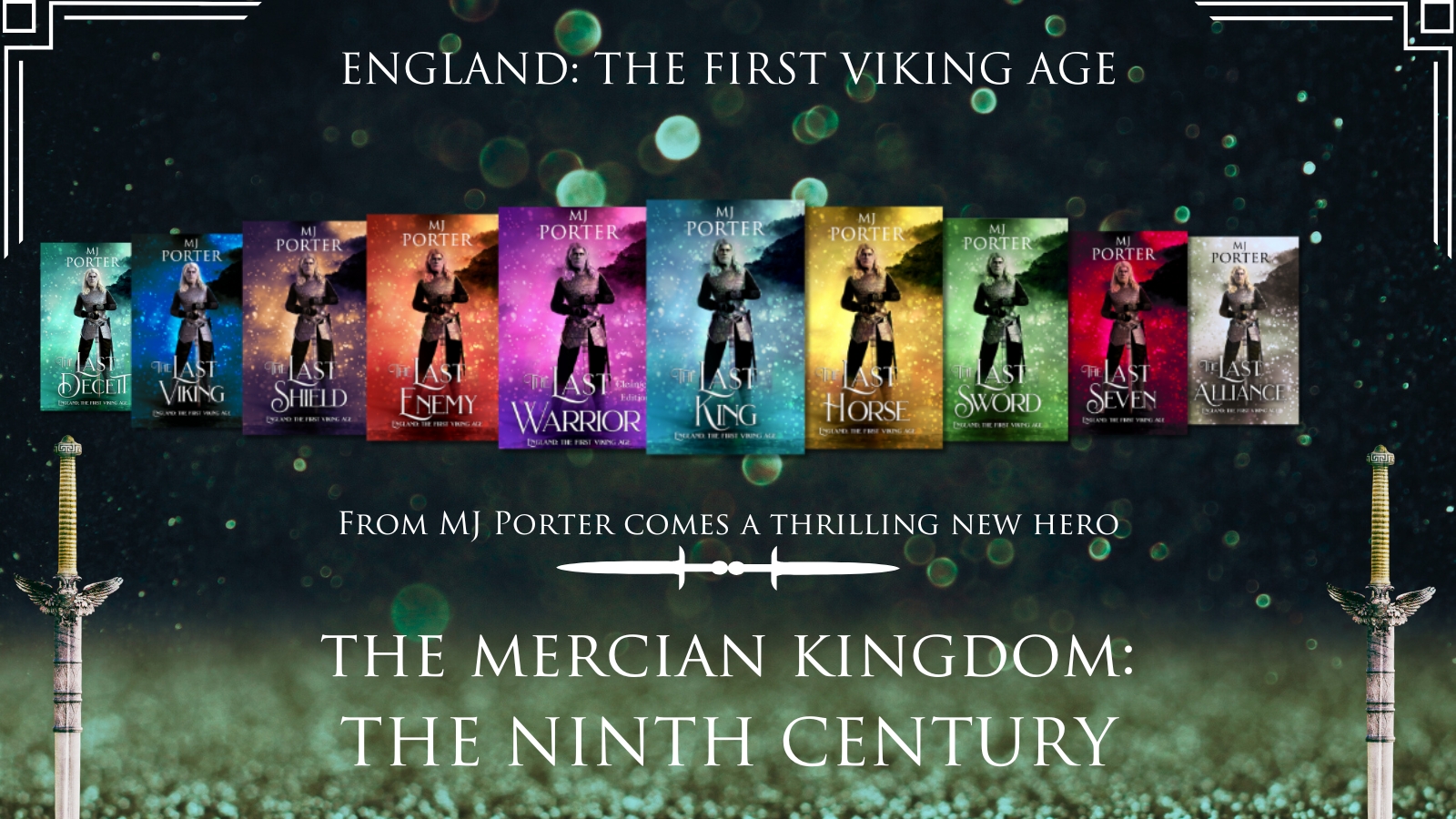
There are now ten books in all, as well as a short story collection, Coelwulf’s Company, and the prequel series featuring a young Icel, the Eagle of Mercia Chronicles (check out the stories featuring young Icel – if you know, you know, and if you don’t yet know, you’re going to want to find out.)
Fans of the series each have their own favourite, from the somewhat difficult Haden (Coelwulf’s horse), to Edmund, young Rudolf and the difficult-to-please Icel, as well as Pybba. I also think many love Edmund’s brother, Hereman, who is someone who thinks after the punches have been thrown:) The Viking raider enemy also have a few fans, and I did very much enjoy recreating these characters.
If you’ve not yet discovered The Mercian Kingdom: The Ninth Century series, then you’re in for a treat, as long as you’re not easily offended by foul language and violence – although if you are, there are Cleaner versions available without quite so much swearing. You’re never going to get away from the violence with this band of miscreants. Follow this link, as they can be a bit tricky to find on Amazon.
The Last King books are available in eBook, paperback, and hardback formats, and in eBook only for the version without the swearing. Or, check out the box set below, which also contains the versions with the language dialled down by a factor or about 450 (yes, I do run a check to ensure my characters have been as foul-mouthed as readers expect). You can hear me discussing the series and the swearing on the Rock, Paper, Swords podcast with Matthew Harffy and Steven A. McKay.
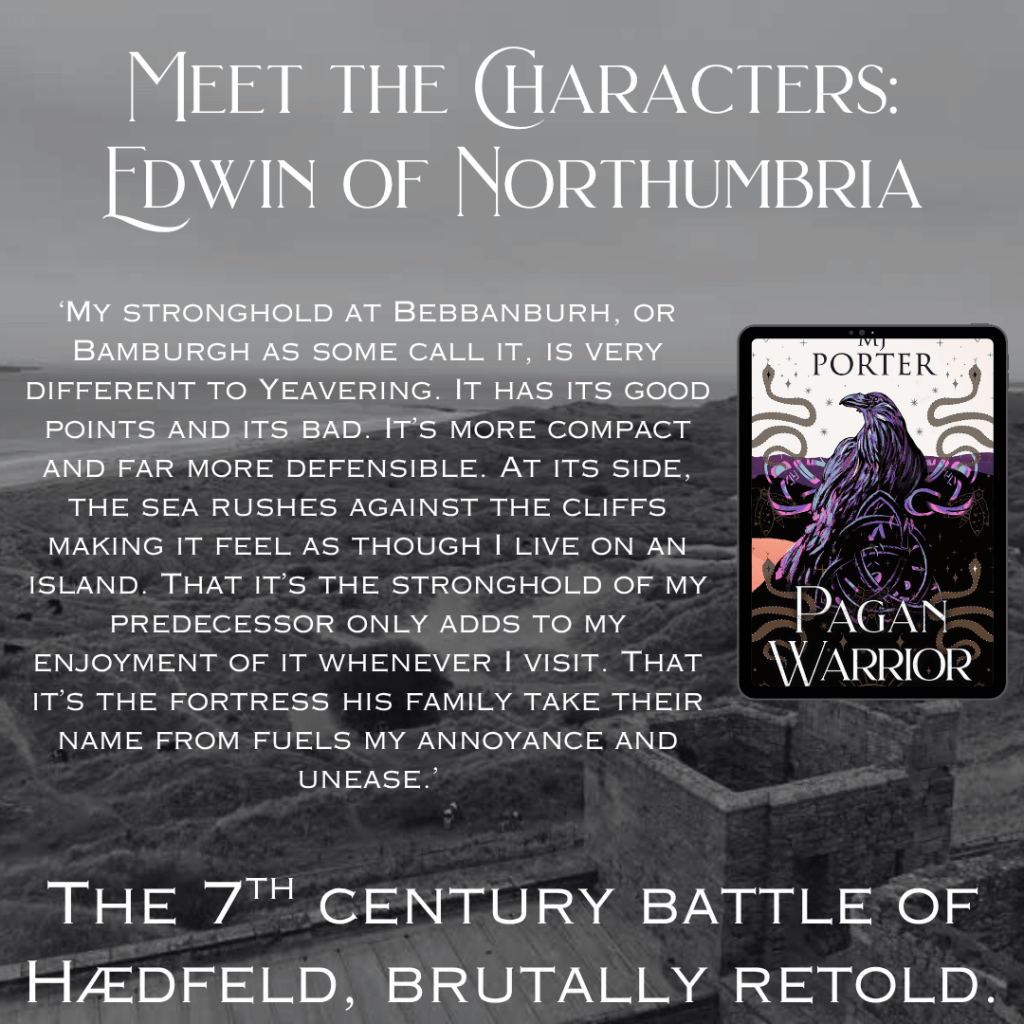
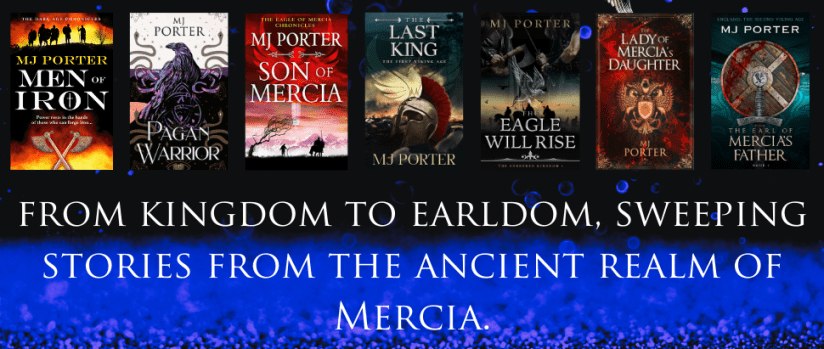
On this day in history….. Pagan Warrior, then titled Hædfeld first hit the ‘shelves,’ as it were. Until the release of Men of Iron earlier this year, Pagan Warrior had been the furthest back in time I’d written about. So, what prompted me to write about Penda, the mighty pagan king of Mercia?
Well, I think you all know by now that I’m a Mercian by birth. But my plans for Penda actually started with the desire to tell the story of the battle of Maserfeld, which is the second major battle Penda fought against the Northumbrians, nine years after Hædfeld. For the sake of my readers, and because it was too good an opportunity to miss, I decided to start with the earlier battle of Hædfeld.
And what a revelation it was. I’ve said before there are certain periods in the history of Saxon England that feel as though we know more about them – Pagan Warrior and the whole Gods and Kings Trilogy is one of those periods. We have the names of Penda’s many allies and his enemies. The island of Britain so often segregated into neat little kingdoms that too often fall into the now established England, Scotland and Wales (and Northern Ireland) feels alive with the earlier, smaller kingdoms stretching from Dumnonia all the way to the Pictish kingdom, taking in Wessex, Mercia and the Welsh kingdoms along the way. And of course the family dynamics between the Mercian brothers and the Northumbrian children also offered a fascinating angle to explore. On top of all that there was the pagan/Christian element as well. What a delight.
At the heart of it, Hædfeld is a story of a single battle, and the events that led to it, so often the case, years in the making. So, if you’ve not tried Pagan Warrior now is the perfect opportunity. The ebook is currenly 99p/99c on all good platforms (not just Amazon), and to celebrate, I’ve created a special edition matte covered hardback with foiled writing, (exclusively available sirectly from my SumUp store) AND a boxset of the whole trilogy. (It’s also available in audio but I can’t do any special offers for that).
Thanks to some spectacular archaeological finds, we can visualise how a Saxon warrior might have looked. The reconstructions of the Sutton Hoo helm, and that found with the Staffordshire Horde (as well as a few others), present us with elaborate helmets crested with dyed-horse hair in a way very reminiscent of the Roman era. They glitter, and they seem to be festooned in gold and silver work, but whether these were actually worn in battle or not is debatable. Firstly, they would have made the kings or noblemen very noticeable to their enemy. Secondly, they were so valuable it’s impossible to consider the loss of one of them should they fall and their goods be taken by their enemy. Bad enough for their king and leader to die in battle, but to also lose such precious wealth as well seems unlikely. That said, of course, the Sutton Hoo helm was buried, and the fragments of the Staffordshire Hoard helmet were buried and lost. An image of the Staffordshire Helmet can be found here: https://www.stokemuseums.org.uk/pmag/collections/archaeology/the-staffordshire-hoard/
But there is another reason why these helmets might have existed, and that’s because they were for ceremonial purposes. Kings, before the reign of Athelstan (925-937) are not known to have undergone consecration with a crown but rather with a helmet. After all, they were warrior kings. Perhaps then, these survivals are more akin to that worn by a warrior-king when appearing before his people or for ceremonial reasons.
The cheek guard from the Staffordshire Hoard. Attribution below. Flickr user “Portable Antiquities Scheme”, CC BY 2.0 <https://creativecommons.org/licenses/by/2.0>, via Wikimedia Commons
What then might have been the more usual garb for a warrior of the Saxon era, which at nearly six hundred years is bound to offer some variations? Shield, spear, seax, sword and byrnie. We get a feel for these items and how valuable they were from wills that survive from the later Saxon era, hundreds of years after the events of Pagan Warrior. Ealdormen had horses, both saddled and unsaddled, shields, spears, swords, helmets, byrnies, seax, scabbards and spears. The will of Æthelmær, an ealdorman in the later tenth century, records that he’s granting his king, ‘four swords and eight horses, four with trappings and four without, and four helmets and four coats of mail and eight spears and eight shields,’[1] as part of his heriot, a contentious term for something that some argue was an eleventh-century development, and others argue, is merely reflecting earlier practice on the death of a man.
There would also have been thegns and king thegns, who had their own weapons, as well as the men of the fyrd, the free-men who could be called upon to perform military service each year, as and when required. It’s often assumed they would have been less well-armed, although this begs the question of whether kings and their warrior nobility were prepared to sacrifice those they relied on to provide them with food to gain more wealth. They might have found themselves with the money to pay for food but without the opportunity to do so.
There are very few representations of warriors, but the surviving strands of the Gododdin, a sixth-century lament to the fallen of Catraeth gives an idea of how these warrior men thought of one another. There is much talk of killing many enemies, drinking mead, and being mourned by those they leave behind.
Battle tactics from the period are impossible to determine fully. Before writing my books which are blood-filled and violent, I read a fascinating account, by a military historian, on how he thought the Battle of Hastings might have been won or lost. The overwhelming sense I came away from the book with was that local features, hillocks, streams, field boundaries even perhaps the path of a sheep track might well be the very thing that won or lost a battle for these opposing sides. The land that kings chose to go to war on was incredibly important,
When trying to reconstruct the battlefield for the battle of Hædfeld, which concludes Pagan Warrior, I encountered a problem that will be familiar to writers of the Saxon era. The place where the battle is believed to have taken place, on the south bank of the River Don (although this has been disputed and work continues to discover whether the other location could be the correct one), has been much changed by later developments. It was drained in the 1600s and therefore, it doesn’t look today as it would have done when the battle took place.
I had very little information to work on. The River Don, the River Idle, the River Ouse, the belief that the ground would have been marshy, and that many men fell in the battle. And the words of Bede in his Ecclesiastical History, ‘A great battle being fought in the plain that is called Heathfield.’[2] Much of the rest is my imagination.
If you’ve been with Coelwulf, Rudolf, Icel, Edmund and Pybba since the beginning, then you’re probably with me in trying to work out how five years have gone by since the first book’s release. There are now ten books in all, as well as a short story collection, Coelwulf’s Company, and the prequel series featuring a young Icel, the Eagle of Mercia Chronicles (check out the stories featuring a young Icel – if you know, you know, and if you don’t yet know, you’re going to want to find out.)
If you’ve not yet discovered The Mercian Kingdom: The Ninth Century series, then you’re in for a treat, as long as you’re not easily offended by foul language and violence – although if you are, there are Cleaner versions available without quite so much swearing. Follow this link, as they can be a bit tricky to find on Amazon.
The Last King books are available in ebook, paperback and hardback, and The Last King (book 1 ) is also available in audio.
Competition Time
I’ve gained some of the best fans ever by running competitions to win signed copies of my books, and this year is no different, although the prize keeps getting BIGGER.
To enter the competition to win all 10 books signed by me, complete this Google form. (Competition is open until 30th April 2025).
Entries are open to UK-based people only (because postage is very expensive elsewhere), but people outside the UK can still submit their details and receive a FREE copy of a short story collection featuring stories set in The Last King’s world (and check out another fabulous deal below).
You can also grab the first 3 books in the series for 99p/99c and equivalent worldwide for a very limited time
These are the less sweary-versions (I am having a bit of moment with hyphenated words so I am going with it for this).
Back in 2020, I finally wrote a book I’d wanted to write for a long time – the story of Mercia’s last king, Coelwulf II (although, I think I should have spelt his name as Ceolwulf but hey ho). The book I eventually wrote has spawned my most successful series to date and has also given readers The Eagle of Mercia Chronicles, featuring a younger version of Coelwulf’s very outspoken fellow warrior Icel.
The book I wrote was also very different to how I thought it would be. Indeed, it’s not one book, but a series 10 books long, and featuring a cast of lovable, foul-mouthed rogues who are as loyal to one another as they are to the horses they ride. I’ve spoken before about why the characters are so sweary, and I know not everyone enjoys that element of the books, but hey, these men are who they are. But, thank goodness for Coelwulf’s aunt, who keeps a wary eye on them all and can occasionally make them a little more polite.
The Last King/The Mercian Ninth Century
I’ve long wanted to celebrate the occasion of five years since releasing the book, and I’ve had many thoughts about it over the last few years, but when it finally happened, it was very unexpected, and the cover design came from someone I’d asked to work on some sprayed edges to jazz the cover up a little. It is very understated, but I think that makes it all the more special. BookVault can incorporate sprayed edges, a design on the endpapers, super high-quality white printing paper, as well as a ribbon to keep track of your reading. There are also new chapter headings, but at heart, this is The Last King, as it was released on 23rd April 2020, at a time when we were all looking for the means to distract ourselves from the horrors of the Pandemic and distract us we all did, even me. I find writing Coelwulf and his allies (and enemies) enormous fun and also very comforting. I know these characters, and they do live in my head rent-free, and I really don’t mind at all.
So, let’s check out the designs for this special edition, which will only be available directly from me. I don’t plan on releasing it widely, and depending on demand, I will limit it to 100 printed copies.
The jacketThe jacket againMock-up of the front cover and sprayed edges designThe new chapter heading imagesThe amended map to fit the endpapers of the book
What it looks like in ‘real’ life
The front coverThe original coverThe inside jacketTitle pageOriginal mapThe prologue with chapter heading imagesThe sprayed edgesThe back coverThe inside back cover jacketThe original coverSide-by-side comparison with the original hardback version
Each book will be signed by me, and I’ll include some goodies with it as well. But to get a copy, you must order it via my SumUp shop. I will be offering discount codes to readers who order The Last King for The Last Warrior edition, too.
When murder hits close to home, Iris must fight to clear her name…
Spring, 1924. Reporter Iris Woodmore plans to move to London to avoid a shocking hometown scandal. Longtime enemy Archie Powell has been threatening to reveal her darkest secret – and she’s desperate to flee before he does.
But when he’s found murdered after a violent argument with her, there’s no escape. Iris must stay and clear her name even though the truth could ruin her reputation.
With the police closing in, Iris has to find the real killer if she’s to keep her secret. Can she prove her innocence without revealing the identity of the one man who can provide her with an alibi?
A gripping new mystery for fans of Verity Bright, Clara McKenna, and Helena Dixon.
Murder at Mill Ponds House is the sixth title in the Iris Woodmore mystery series. I’ve read and thoroughly enjoyed every title, and Murder at Mill Ponds House is just as fabulous.
To wax a little lyrical, I want to say how much I love these books. I thoroughly appreciate the tight plotting and the continuity between all the books in the series. They’re a joy to read because the author never drops the ball and misses out someone important, or forgets an event from an earlier book. They’re also delightful to read, well-paced, and have interesting and intriguing difficulties for our main character to resolve.
I read Murder at Mill Ponds House in just two sittings, and that’s only because I couldn’t stay up any longer to finish the story.
A fabulous mystery, well put together, well plotted, well resolved and thoroughly enjoyable. They are a true delight, and I always know I’m in safe hands with a Michelle Salter mystery.
Thanks for taking the time to stop by my author page. You’ll see all my books are classic murder mysteries – because golden age whodunnits are the stories I enjoy reading most.
I love to create memorable characters and devise intriguing plots with a focus on mystery rather than violence.
I live in Hampshire, England, and it’s the setting for many of my books. My standalone novel, Murder at Merewood Hospital, features Sister Helen Hopgood, the last nurse left in a military hospital in Hampshire at the end of the First World War.
I also have family connections to Devon, and the fourth Iris Woodmore Mystery, A Killing at Smugglers Cove, is set on the south coast of Devon in 1923. Iris is back in her native Hampshire for A Corpse in Christmas Close, set in Winchester over Christmas 1923, and Murder at Mill Ponds House, which begins on 1st May 1924.
You can read all of my books as standalone novels, even the Iris Woodmore Mysteries, as each is a separate story, although the characters develop as the series progresses.
I hope you enjoy reading or listening to my books.
Discover the delightfully gripping new historical mystery series that’s perfect for fans of Helena Dixon, Verity Bright and T E Kinsey.
Agatha Christie is about to embark on a new, gripping murder case. But this time, she’s not the author – she’s a suspect…
1926 – Christie is a darling of the literary circuit and the most desired guest in London’s glittering social scene. She can often be found at meetings of the Detection Club – where mystery writers come together to share ideas, swap secrets and drink copiously. But then a fellow author’s initiation ceremony takes a gruesome turn, and one of the group ends up dead. Now, Agatha is no longer just the creator of great mystery plots – she’s a player in one.
And when Agatha disappears the day after the murder, she’s widely assumed to be guilty. Only Eliza Baker, assistant to the Club’s enigmatic secretary, Dorothy Sayers, is interested in investigating the case. But in a world where murder is the ultimate plot device, can Eliza piece together the evidence and find the killer before it’s too late?
The Case of the Christie Conspiracy is an entertaining and well-plotted Golden Age crime mystery, with the addition of many of our favourite Golden Age Crime authors as suspects.
The set-up for the murder mystery is excellent, and our two main characters, Eliza and Theo, are both fierce chess players (thank goodness I learned a bit about chess last year, although it isn’t necessary) and love solving mysteries. Luckily, one such mystery occurs right before them: the murder of one of the Detection Club writers. Eliza, fiercely independent but with a real soft spot for Theo, determines he can help her solve the puzzle but that it must be a competition, the prize being that he will play her at chess.
What ensues is quite a wonderful tale set during the infamous period of Agatha Christie’s disappearance. Eliza and Theo battle to uncover what happened, employing all their detection skills and occasionally getting a little muddled along the way.
A fabulously entertaining novel. I enjoyed the references to the Fiona Figg series and imagine readers of Kelly Oliver’s books will devour this new endeavour with delight.
Kelly Oliver is the award-winning, bestselling author of three mysteries series: The Jessica James Mysteries, The Pet Detective Mysteries, and the historical cozies The Fiona Figg Mysteries, set in WW1. She is also the Distinguished Professor of Philosophy at Vanderbilt University and lives in Nashville, Tennessee