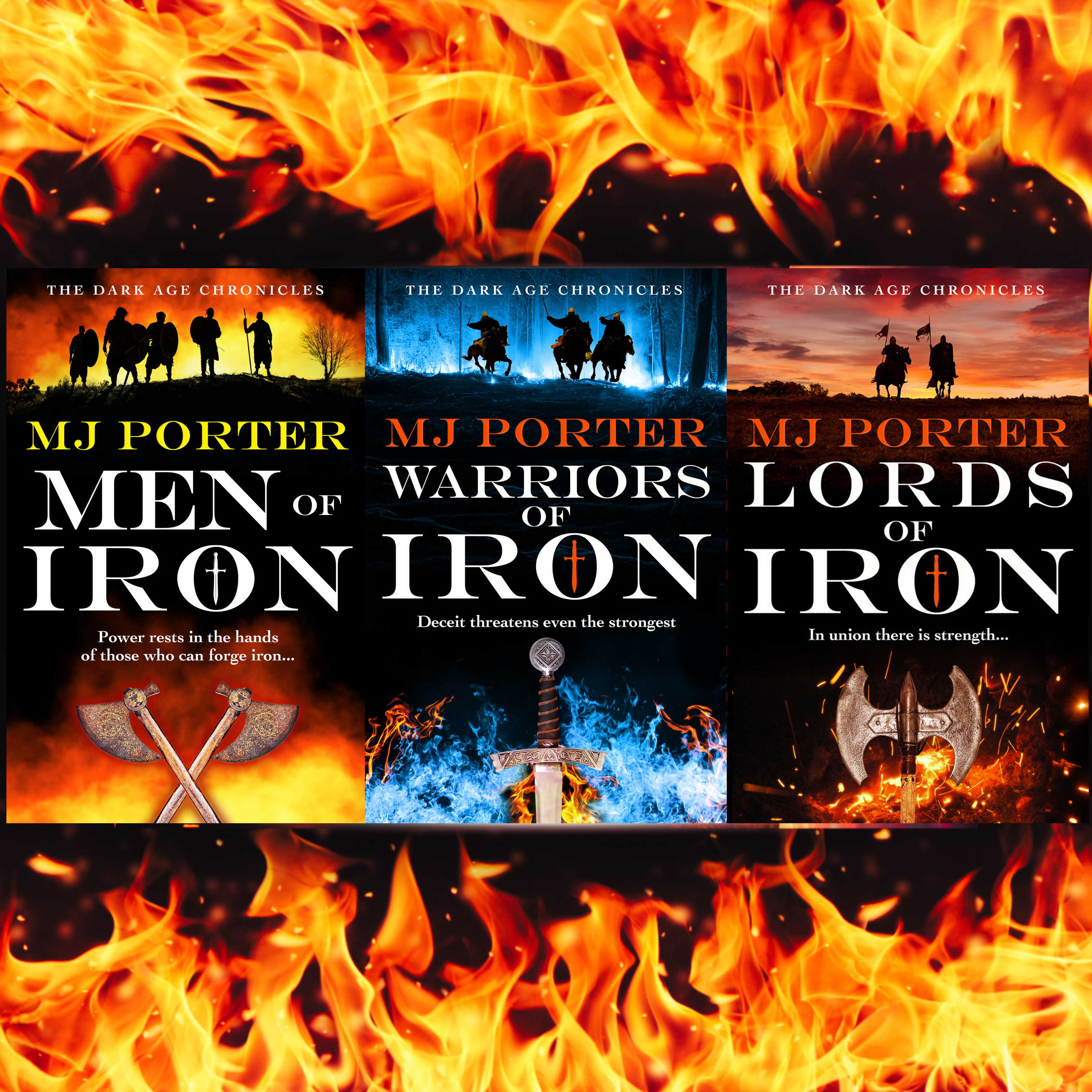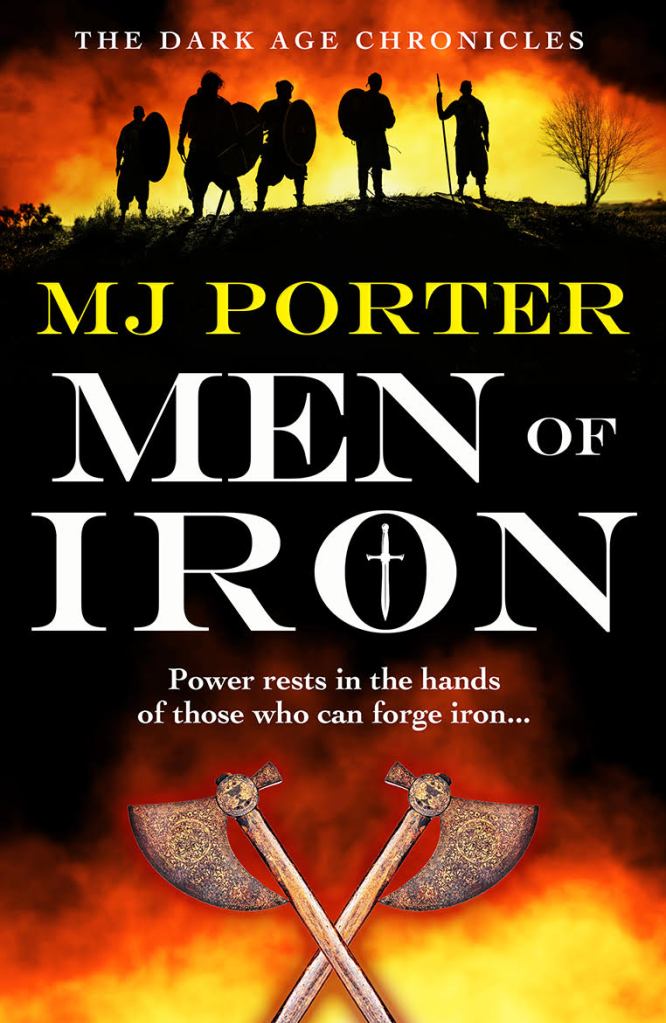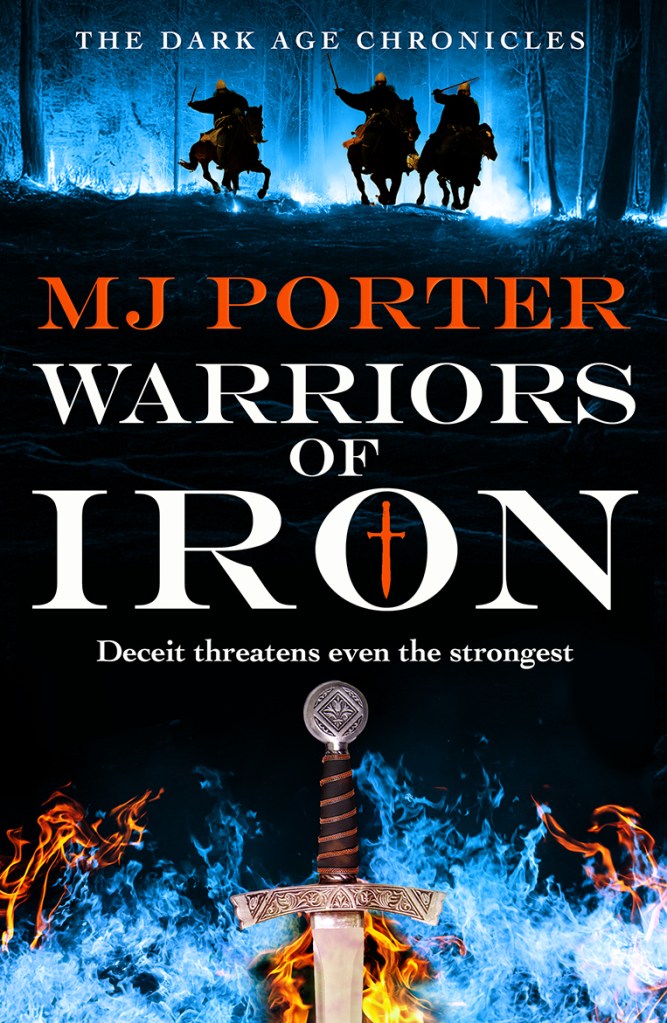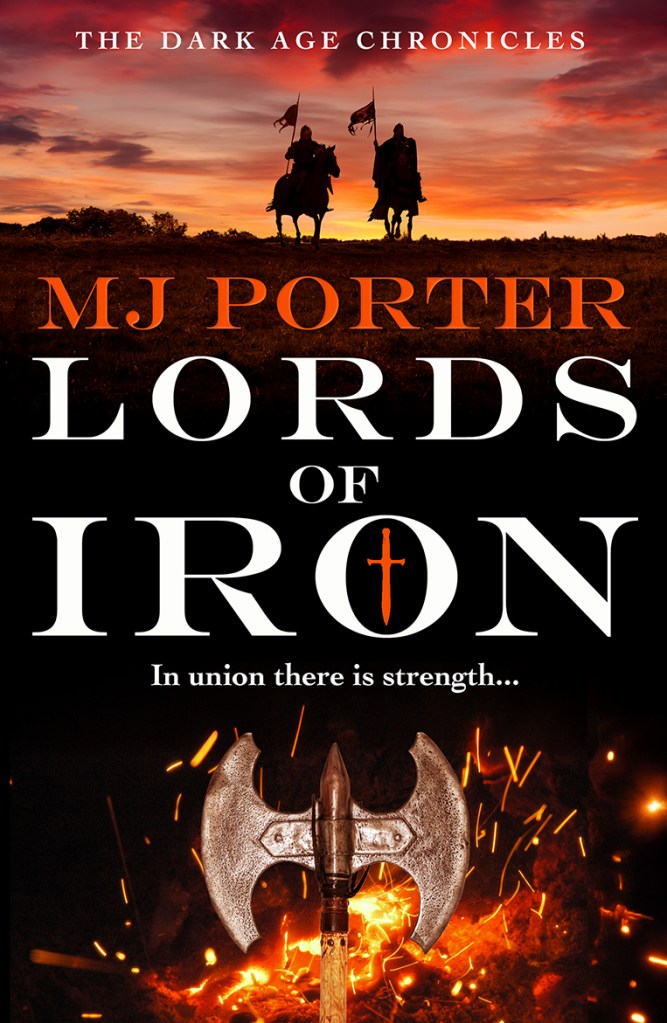

It’s happy release day to Lords of Iron, the third and concluding book in the Dark Age Chronicles Trilogy. Let’s talk about battle standards #newrelease #MenOfIron #WarriorsOfIron #LordsofIron #histfic

It’s happy release day to Lords of Iron, the third and concluding book in the Dark Age Chronicles Trilogy. Let’s talk about battle standards #newrelease #MenOfIron #WarriorsOfIron #LordsofIron #histfic

Battle standards

Well, here we are my friends, book 3 in the Dark Age Chronicles concludes this foray to the ‘Dark Ages’ (a term I don’t like but is correct for this time period). I thought I’d address the idea of battle standards.

As many stories as I’ve written about war, I’d never considered the battle standard. My editor mentioned to me that ‘they make for great cover ideas,’ and so I did a little bit of research and discovered some information about them, but it was actually in an ‘ask the historian’ section with Mike Everest hosted by the History Quill that I discovered battle standards might not have been fabric at all, but rather perhaps made from metal and more hollow depictions of whatever the battle standard was to be (so perhaps more similar to the Romans and their eagle standards).

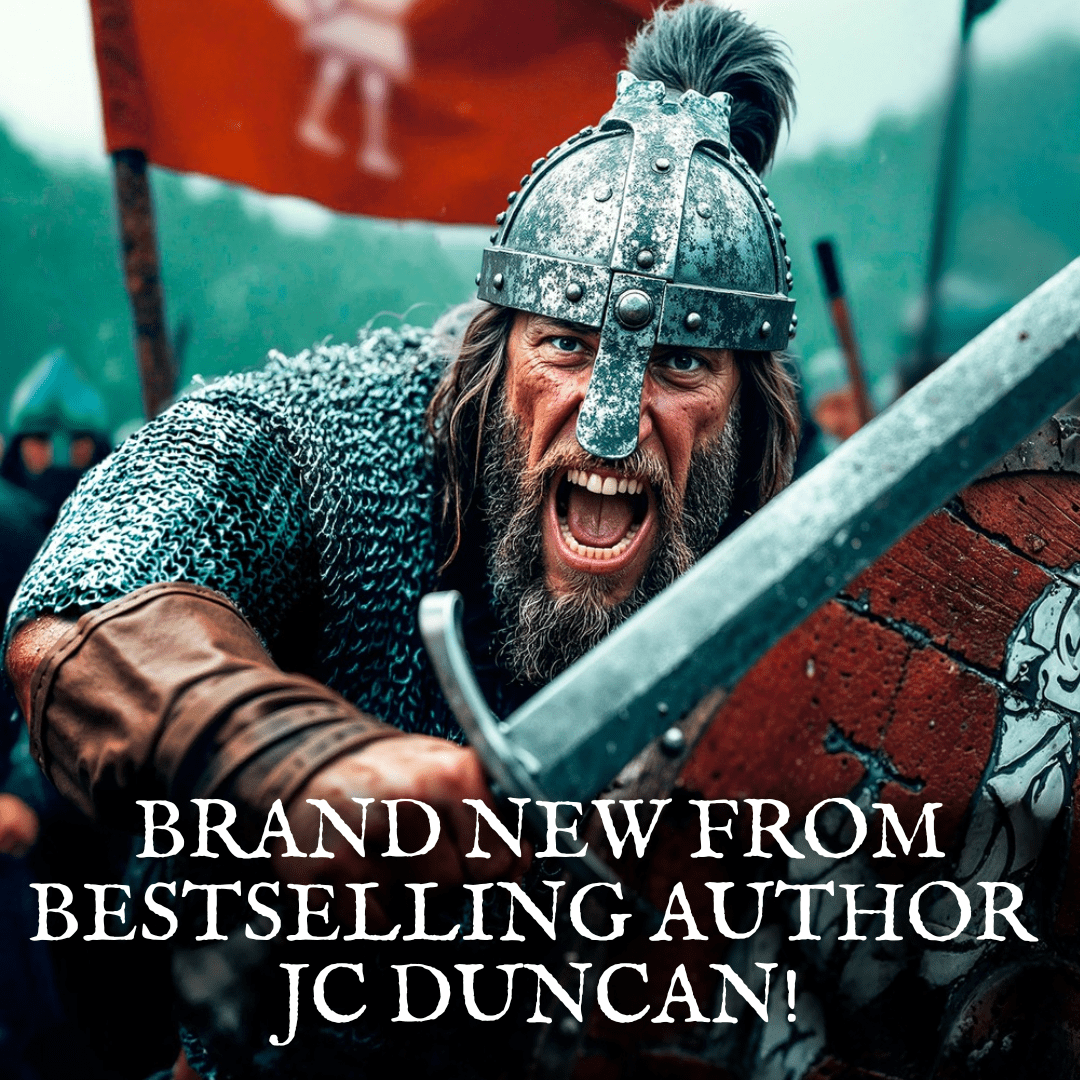
As such, I have touched on this idea in Lords of Iron. As often as I’ve tried to place myself in my characters’ boots, I’ve perhaps overlooked how difficult it might be to find your fellow warrior in the middle of a battle. Below are two images which might have served as an idea of what a battle standard might have looked liked. As you can see, these are very far from being huge banners made of fabric. They are much more intricate, or so it appears. In Warriors of Iron, Wærmund encounters such a battle standard and then hungers to have one constructed for himself. I can see why.

https://commons.wikimedia.org/wiki/File:Söderala_vane_recto_(HST_DIG25845).jpg

https://commons.wikimedia.org/wiki/File:The_Draco_standard_of_Niederbieber,_the_only_fully_preserved_draco,_found_in_the_Limes_fortress_of_Niederbieber,_Landesmuseum_Koblenz,_Germany_(50849293708).jpg

Check out my blog for more details about the Dark Age Chronicles

Blog links

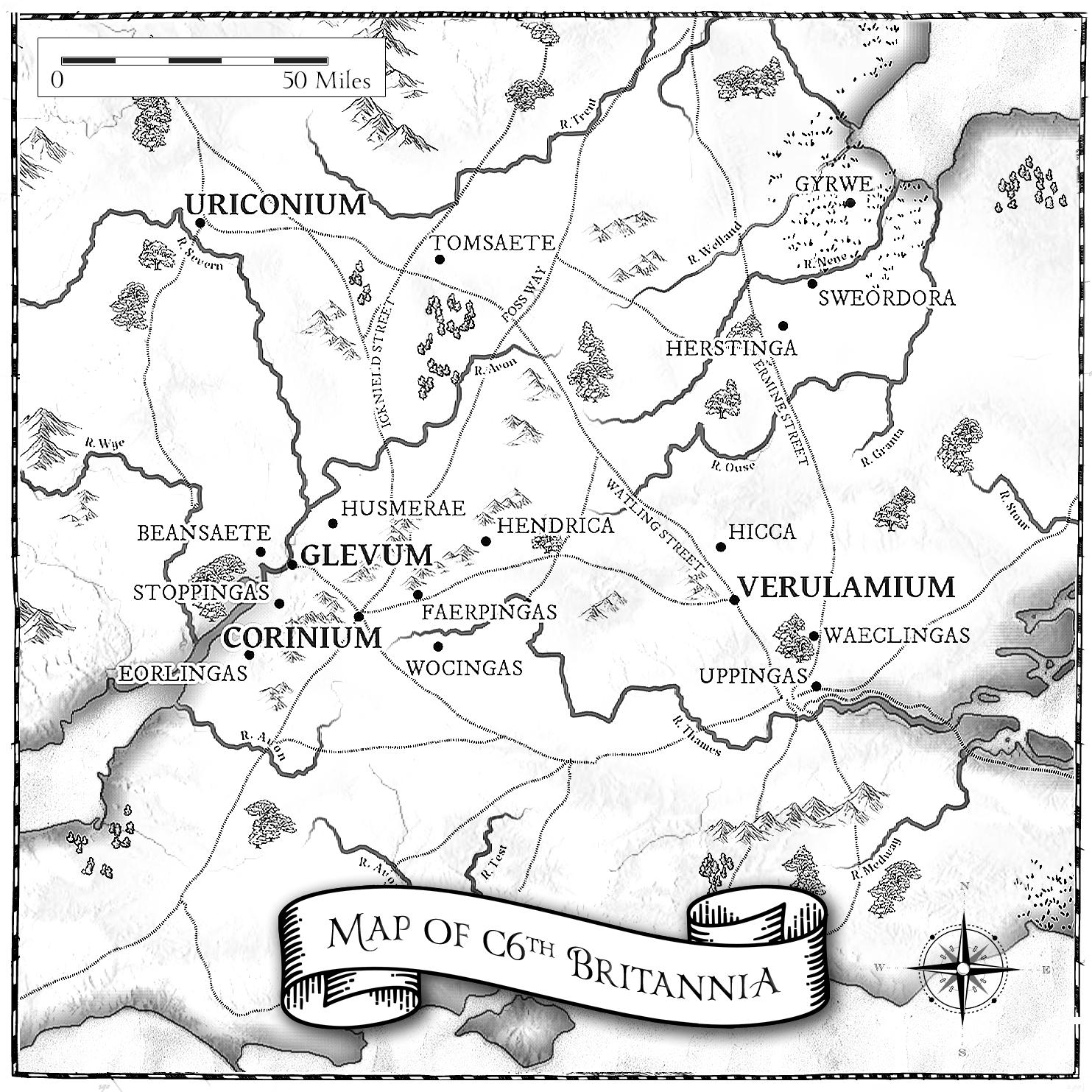
Image shows a map of Early England showing the places mentioned in the text of the book
The Dark Age Chronicles Map

Purchase Link

https://amzn.to/4qaRuy3


Posts

It’s happy release day to Lords of Iron, the third and concluding book in the Dark Age Chronicles Trilogy. Watch and listen to a short recording about the research books I used #newrelease #MenOfIron #WarriorsOfIron #LordsofIron #histfic

It’s happy release day to Lords of Iron, the third and concluding book in the Dark Age Chronicles Trilogy. Watch and listen to a short recording about the research books I used #newrelease #MenOfIron #WarriorsOfIron #LordsofIron #histfic

A whizz through the research books I used when writing the Dark Age Chronicles

Read the original author notes for Men of Iron.

Learn about Meddi, the seeress of the Eorlingas

Meet Wærmund, Saxon warrior from the east

Curious? Check out my blog for more details below

Blog links

Image shows a map of Early England showing the places mentioned in the text of the book
The Dark Age Chronicles Map

Purchase Link

https://amzn.to/3MZcLME

Join my newsletter to follow my writing journey, get access to my exclusive Subscriber area on the blog, and receive a copy of Mercia – A Companion Guide to the Tales of Mercia.


Posts

It’s nearly happy release day to Lords of Iron, the third and concluding book in the Dark Age Chronicles Trilogy. Let’s talk about Wærmund, warrior of the Gyrwe #newrelease #MenOfIron #WarriorsOfIron #LordsofIron #histfic

It’s nearly happy release day to Lords of Iron, the third and concluding book in the Dark Age Chronicles Trilogy. Let’s talk about Wærmund, warrior of the Gyrwe #newrelease #MenOfIron #WarriorsOfIron #LordsofIron #histfic

Wærmund, warrior of the Gyre

Wærmund, the lead male point of view in the Dark Age Chronicles, has come a long way since our first encounter with him, when he was young, angry, reckless and unable to assure himself of the loyalty of others. (I’m not saying he didn’t have cause to be angry).

While I’ve written novels in this era where the main male lead is strong and fiercesome (as well as treating everyone to young Icel), I’ve not really written a character like Wærmund before. One early reviewer complained he was ‘annoying’ and that was intentional. For him to become the character I needed him to become, he couldn’t start the novels ‘fully formed.’ I needed him to learn, grow, and become someone more thoughtful than his angry young self allowed.

Along the way, he’s had much cause to doubt himself, and really, it was Heafoc, his loyal warrior, who was the most fully formed of the warriors who pledged their often dubious loyalty to Wærmund. Heafoc, perhaps very much cast in the shadow of the rather wonderful Wulfstan from the Earls of Mercia series, and potentially, also the older Icel from The Last King books, was the epitome of a Saxon warrior, whereas Wærmund wasn’t. Indeed, in deciding to run away from his home, Wærmund hoped to outrun his past, which was never really going to be possible for him.

Now, as we turn to the concluding book in the trilogy, I feel Wærmund has come full circle. Is he, perhaps, now a better man than his father? Or, is he still driven by the desire to show his father he is the ‘better’ man? These are some of my favourite quotes from Wærmund in the final book.

You will need to read Lords of Iron (available from 5th January 2026) to discover whether Wærmund enacts his vengeance against his father. Enjoy.

Read about Meddi, Seeress of the Eorlingas

Read the original author notes for Men of Iron

Curious? Check out my blog for more details below

Blog links

Image shows a map of Early England showing the places mentioned in the text of the book
The Dark Age Chronicles Map

Purchase Link

https://amzn.to/4qaRuy3

Join my newsletter to follow my writing journey, get access to my exclusive Subscriber area on the blog, and receive a copy of Mercia – A Companion Guide to the Tales of Mercia.


Posts

It’s nearly happy release day to Lords of Iron, the third and concluding book in the Dark Age Chronicles Trilogy. Here are the original (very long) historical notes for Men of Iron #newrelease #MenOfIron #WarriorsOfIron #LordsofIron #histfic

It’s nearly happy release day to Lords of Iron, the third and concluding book in the Dark Age Chronicles Trilogy. Here are the original (very long) historical notes for Men of Iron #newrelease #MenOfIron #WarriorsOfIron #LordsofIron #histfic

The original historical notes for Men of Iron (they were so long I rewrote them)

This is not really a story of historical fiction, but rather archaeological fiction. Pick up any non-fiction history book on Britain at this time, and you’ll find very little written about what was happening, because we do not know what was going on, other than perhaps in the south and south-west (where there was more continuity from the earlier ‘Roman’ period). If it’s a book about Mercia, there’ll be even less until the seventh century. It’s impossible to write about the history of a kingdom when there are no written records. And so we must rely on archaeology.

The decision to write about these formative years in what would become Mercia has been a long time coming for me (and it is set mostly in what would become Mercia although the name never appears in the books).

All that can be said with any certainty about Mercia is that a narrative had formed by the eighth century which was an attempt by the rulers of that time to explain how they came to be in control of the heartland of Mercia. It also attempt to explain how they ruled the wider Mercian kingdom (which included many other tribal affiliations: from the North Mercians, South Mercians and Middle Mercians to the outlying areas – the kingdom of the Hwicce, alongside that of the Magonsæte, being two of the best known tribal areas which people have heard about, and the Hwicce the region where I’ve based the Eorlingas). Bede, writing his Ecclesiastical History of the English People, finished by 734, knew some of these details, although he really did not like Penda the pagan – one of the most powerful Mercians in the seventh century (who it’s believed may have been from the Hwiccan kingdom) – but did grudgingly admit that his contemporary ruler of Mercia, Æthelbald, was a powerful individual, eclipsing the kings in his homeland of Northumbria by the eighth century.

Barbara Yorke has written: 

The surviving sources allow us to say with confidence little more than that the kingdom of Mercia was in existence by the end of the sixth century. p. 102, Kings and Kingdoms of Early Anglo-Saxon England 

How that kingdom came about, we do not know. I’ve chosen the date of this series carefully. It falls between the Battle of Camlann, said to have taken place in 537 according to the Welsh Annals, a later written source, and a later battle between ‘kings’ which occurred in the 570s and is mentioned in the Anglo-Saxon Chronicle, written 300 years after these events.

It’s difficult to determine any cohesive narrative from what is truly the Dark Ages for the whole of Britain. Others might look to the stories of the legendary Arthur (no, I don’t believe he existed), and Hengist and Horsa and think that’s enough, but having read K. R. Dark’s fascinating look at Britain at this period, Civitas to Kingdom, many years ago, I realised that what happened elsewhere might not have happened in Mercia, and equally, that generalisations shouldn’t be used about what would become the Saxon kingdoms in any single part of it. It was an island of petty tribal chieftains. It was not a country or a kingdom. This is an attempt to make some sense of what archaeological findings have been made and devise something that ‘could’ have happened. These people did not exist as I have named them, although I have adopted tribal names that are recorded in a later document (see below).

Wærmund is a name taken from a Mercian genealogy found in the Welsh Annals. There are a number of different variants of a Mercian genealogy. This is the one I’ve used, below.

Woden begot Watholgeot, begot Waga, begot Wihtlæd begot Wæround, begot Offa, begot Angen[geot], begot Eomer, [begot Icel,begot Cnebba, begot Cynewald, begot Creoda], begot Pybba. Pybba had twelve sons, two of whom are better known to me than the others, namely Penda and Eobba. Aethelred was the son of Penda; Penda was the son of Pybba. Aethebald was son of Alweo, son of Eobba, [brother] of Penda, son of Pybba. Egferht son of Offa, son of Thingrith, son of Eanwulf, son of Osmond, son of Eobba, son of Pybba.

Other versions of a Mercian genealogy are found in the Anglo-Saxon Chronicle entry for the year 626 (A2 Version, also known as the G version) when discussing the later reign of Penda which lists many of the same names, but has Wihtlæd as the son of Woden. David Dumville has noted that this represents a West Saxon interpretation of Mercia (the ASC was conceived of and begun in Wessex) – as such, he stresses the ‘Anglian’ tradition of this source, i.e. possibly Mercians writing about Mercians.

I’ve chosen Wærmund’s name somewhat randomly, but with the idea that he wasn’t the first of his family – and that, indeed, he is originally from one of the Wash tribes for which we have details from the Tribal Hidage. Every time I write a new series, something clicks for me, and in this case it’s that whatever the genealogies represent, it needn’t be those who ruled Mercia as a kingdom as we recognise it, but those who ruled the ‘tribe’ beforehand. Yes, they did claim descent from the god, Woden, but most of the Saxon kingdoms did.

It’s believed that the kingdom of the Hwicce was perhaps a native British one and that they came to merge with the Saxons, or rather at this time, Anglian invaders, and then fell under the sway of the wider Mercian kingdom. (The terminology is complex to get right.)

The names of the tribes come from the problematic and difficult-to-date Tribal Hidage, which survives in an eleventh-century document, but is believed to be a copy of an eighth-century document. It lists thirty-five kingdoms, which comprise ninety-five different tribal names believed to have amalgamated to form these thirty-five kingdoms, which were then further merged to form the six main Saxon kingdoms of the Heptarchy (the seventh, Northumbria, is not included in the Tribal Hidage). Feel free to go and try and make sense of the Tribal Hidage. Every non-fiction writers seems to use slightly different spellings and because some are so similar, it is incredibly confusing. Some of my tribes changed names repeatedly as I endeavoured to make them ‘fit’ the narrative and the journey my characters make. All mistakes are mine.
There are a wealth of Roman villas surviving in Gloucestershire, perhaps most famously Chedworth Roman Villa, and also many Roman mosaics, some of which are not available for public viewing as they have been covered up beneath the soil that has preserved them to ensure that continues. The tribe of the Eorlingas is associated with Arlingham, just below Gloucester, to the east of the River Severn. As far as I can tell, Frocester is the closest Roman villa ruin to have been discovered from nearby to where I wanted to base the Eorlingas, but with so many of them, it almost feels as though they might have been falling over them – there are fifty-two known Roman villas in Gloucestershire alone.

The idea of an economy dependent on iron had not really resonated with me before, but Robin Fleming’s comment that mining, metallurgy and smithing stood at the heart of the Roman economy made me reconsider this. She points out that from the late fourth century (which is traditionally deemed to be the end of Roman Britain – well, 410 is) there is a scarcity of traditional, crucial and once common everyday items – nails, evident in the lack of hobnail books and also coffins. She does, however, stress that the Romans had a successful ‘recycling’ scheme and that forging iron objects from these recycled elements may well have continued. However, pattern-wielded blades (which had largely come to dominate what we believe early Saxon/Anglian kings wielded in their battles) could not be made from recycled iron or from a single type of iron alloy, with at least four different iron alloys needed. Therefore, an age ‘without’ iron almost ensued. It is possible that these skills were lost and then needed to be rediscovered. Equally, it is possible that the evidence for such occupations as smelting have disappeared from the archaeological record in many places because of the transient nature of the process. I find the lack of nails in the archaeological record, however, very intriguing. It certainly points to something being lacking.

Languages in this era are, of course, impossible to reconstruct. It’s believed that English, Latin, British, Pictish and Irish would have been spoken. It must also be assumed that those coming to this island from Scandinavia and Germany would also have brought their languages with them. I’ve decided to use the terms Latin, Saxon, British and Brythonic in the text. (I had to make myself a chart to ensure I didn’t have people speaking to other people who didn’t share a language – it wasn’t pretty). There would potentially have been a vast number of local dialects as well, just as there are today.

The small iron-cast horse which Meddi has is based on a bronze object uncovered at Frocester. It is a fabulous piece, described in the site report as ‘crudely designed, with wide open mouth and large upstanding ears’. It is quite small, less than two inches in length, if I’ve understood the dimensions correctly, and shows the horse having reins but no stirrups. The horse was controlled by a bridle alone, and the horses were smaller, at twelve to fourteen hands, the equivalent of a hackney pony, or forty-eight to fifty-six inches tall (according to the internet). Stirrups were introduced by the Saxons.

I have struggled to find references to the religions at this time. Ronald Hutton’s Pagan Britain contains some useful passages. This somewhat leads into burial rites, which are often much of what we know of our ancestors. It does appear confusing – the magnificent ship burials at Sutton Hoo were preceded by burials beneath what is now the visitor centre (and which I think are more fascinating than the ship burials – or rather, the process of how they went from the one to the other within a generation.) Cremation and interment were somewhat haphazardly applied throughout Britain. My own distinctions between peoples are merely an attempt to highlight the differences between them. The depiction of the burial of Meddi’s daughter beneath inhabited buildings is a known phenomenon from this period, and written about by Robin Fleming in her chapter Living with Little Corpses in The Material Fall of Roman Britain 300-525CE.

For anyone affected by this storyline, or concerned by it, as someone who has experienced the loss of a child, I’m perhaps too comfortable including such story elements. To those who have also endured it, I extend my heartfelt sympathies and assure you, it does get easier. Eventually. (what follows below has been added at the end of the proofread for Lords of Iron).

This passage leads somewhat well to a thought by Meddi as she nears the end of book three.

‘I’m Meddi, seeress of the Eorlingas. It’s been a long and troubled journey to reach this moment in my life when hatred has bled away to nothing but a dull ache where the life I thought I’d have has a child has failed to come to fruition. But I would change nothing, aside from the loss of my daughter.’

I think this is perhaps the most ‘me’ I’ve included in a novel (not that I’ve spent my lifetime filled with hatred, but I hope you understand the sentiment).

Perhaps, in the end, this trilogy has been as much for me, as it has been for my readers. Thank you.


Read about Meddi, the seeress of the Eorlingas


Join my newsletter to follow my writing journey, get access to my exclusive Subscriber area on the blog, and receive a copy of Mercia – A Companion Guide to the Tales of Mercia.

Curious? Check out my blog for more details below

Blog links

Image shows a map of Early England showing the places mentioned in the text of the book
The Dark Age Chronicles Map

Purchase Link

https://amzn.to/3MZcLME


It’s nearly happy release day to Lords of Iron, the third and concluding book in the Dark Age Chronicles Trilogy. Let’s talk about Meddi , the seeress of the Eorlingas #newrelease #MenOfIron #WarriorsOfIron #LordsofIron #histfic

It’s nearly happy release day to Lords of Iron, the third and concluding book in the Dark Age Chronicles Trilogy. Let’s talk about Meddi , the seeress of the Eorlingas #newrelease #MenOfIron #WarriorsOfIron #LordsofIron #histfic

Meddi, the seeress of the Eorlingas

When I was thinking about writing this trilogy, set in the undocumented and little-understood ‘true’ Dark Ages, it was Meddi’s character that came to me most forcefully. I had thought she appeared pretty fully formed, but I’ve actually found a very early attempt which doesn’t mention her (it was only about 250 words, admittedly). After that, she evidently developed quite quickly in my mind. Of the two main points of view characters, Meddi and Wærmund, she is the one who was the most different to what I’ve written before, so I was surprised by how strongly she manifested and became ‘real’ to me. I ran a few elements of her character passed a number of trusted early readers. I wanted her to be strong and determined, but also broken and healing from a terrible trauma, a terrible trauma even I can only imagine. But I also didn’t want her to be stereotypical. I needed to make her realistic and both a product of what had happened to her, and also not. Don’t worry, it was a confusing mix for me, too.

Making her a seeress allowed me to give her an influential position amongst her people. But of course, it brought some problems. What sort of seeress should she be? What magiks should she possess? And how to make those more ‘fantastical’ elements work in what was intended as a piece of archaeological fiction (yes, historical, but so much is based on archaeological finds, it seems wrong to misname it).

I am, and no doubt, will always be a ‘pantser’ (someone who doesn’t plan their stories but just writes them – perhaps in many wats somewhat similar to Meddi when she reaches out to communicate with her ‘god’ only I’m reaching out for my muse and a story that plays out on the page). As such, some elements of Meddi’s personality just appeared for me, and others had to be worked at. I was also conscious of not making her too similar to the wonderful Wynflæd in The Eagle of Mercia Chronicles, or indeed, the Wolf Lady, who also features (both of them healers). Yet, a seeress would possess the abilities to tend to the sick. It was tricky to get it just right. It was really only when I heard her words brought to life by her fabulous narrator, Antonia Breamish, that I truly appreciated that Meddi was a creation I could be very satisfied with (you can listen to her below). I believe, and I hope my readers will agree, that she’s fully rounded, entirely understandable, and if she does things we wouldn’t, then we can be sympathetic to what drives her.

The symbolic adorning of her face and hair with chalk or charcoal as she conducts her magiks was based on little more than my imagination, and yet the imagery is stark. She is sometimes cast from shadow, and sometimes from light. She is a character who loves and hates with equal fierceness, and sometimes, her love shows itself in ways that are perhaps more akin to hatred. But she is certainly most critical of herself. She is driven by ambition, and in this final book, I think we see her at her most vulnerable and also at her strongest. Enjoy.

Read the original author notes from Men of Iron (I rewrote them because they were too long)

Check out my blog for more details about the trilogy below

Blog links

Image shows a map of Early England showing the places mentioned in the text of the book
The Dark Age Chronicles Map

Purchase Link

https://amzn.to/4qaRuy3

Join my newsletter to follow my writing journey, get access to my exclusive Subscriber area on the blog, and receive a copy of Mercia – A Companion Guide to the Tales of Mercia.


Posts

I’m welcoming The Falconer’s Lost Baron by Susanne Dunlap to the blog #blogtour #RegencyRomance #bookreview

I’m welcoming The Falconer’s Lost Baron by Susanne Dunlap to the blog #blogtour #RegencyRomance #bookreview

Here’s the blurb


A sweeping Regency tale of identity, devotion, and unexpected romance.

Lady Antonella thought she knew who she was—until a shattering family secret strips her of her name, her place in society, and her future. Cast adrift in Cornwall, she finds an injured goshawk in a poacher’s net and begins to nurse it back to health. But the hawk belongs to the war-scarred Lord Atherleigh—a man haunted by loss, determined to dismantle his mews, and certainly not expecting a spirited young woman to upend his solitude.

In London, her twin sister Belinda—radiant, poised, and newly on the marriage market—has only one goal: to find a worthy match… for Antonella. But when Hector Gainesworth, a charming rogue with laughter in his eyes and secrets of his own, turns his attention to Belinda instead, her heart begins to spin in an altogether unexpected direction.

As the sisters navigate betrayal, desire, and the demands of their hearts, two men must decide whether to risk everything for love. And Antonella’s goshawk may be the wild, winged thread that binds their fates.

Purchase Link

https://www.amazon.co.uk/Falconers-Lost-Baron-Forgiveness-Double-Dilemma-ebook/dp/B0FPBG1P54

https://www.amazon.com/Falconers-Lost-Baron-Forgiveness-Double-Dilemma-ebook/dp/B0FPBG1P54

My Review

The Falconer’s Lost Baron is the third of Susanna Dunlap’s Regency romances I’ve read, and I’ve enjoyed all of them (see my reviews below for the previous two books). Every book offers something a little different, while still delivering on what we all expect from a Regency romance.

This new title will delight fans of the genre (there is no need to have read the previous two titles, although you will be missing a treat.)

Check out my review for The Dressmaker’s Secret Earl and The Soprano’s Daring Duke

Meet the author

Susanne Dunlap is the award-winning author of over a dozen historical novels, as well as an Author Accelerator Certified Book Coach in fiction, nonfiction, and memoir. Her love of history began in academia with a PhD in music history from Yale. Her novel THE PORTRAITIST won first prize in its category in the 2022 Eric Hoffer Book Awards, and was a finalist in the CIBA Goethe Awards and the Foreword Indies Awards. THE ADORED ONE: A NOVEL OF LILLIAN LORRAINE AND FLORENZ ZIEGFELD, won first place in its category in the 2023 CIBA Goethe Awards for Late Historical Fiction. Today, she lives, coaches, and writes in beautiful Biddeford, Maine.

Connect with the author

https://susanne-dunlap.com

I’m sharing my review for Death of a Billionaire by Tucker May #mystery #blogtour #bookreview

I’m sharing my review for Death of a Billionaire by Tucker May #mystery #blogtour #bookreview @tuckermaymysteries @rararesources @rachelsrandomresources

Here’s the blurb

Ever dream of killing your boss? Alan Benning knows how you feel. 

The problem: his billionaire boss actually winds up murdered. And the whole world thinks he did it.

When globetrotting tech billionaire Barron Fisk is found dead on the floor of his swanky Silicon Valley office, all evidence points to Alan. 

Alan must venture into the glitzy, treacherous world of tech billionaires to clear his name by sorting through a long list of suspects with motive aplenty. If he can’t find the real culprit, Alan’s going down. The clock is ticking.

Who killed Barron Fisk? The truth will shock— and change— the entire world.

Fans of Richard Osman’s The Thursday Murder Club series, Carl Hiaasen’s tales of high-stakes hijinx, or Ruth Ware’s page-turning mysteries will love Death of a Billionaire.

Purchase Links

https://www.amazon.com/Death-Billionaire-Murder-Mystery-Novel-ebook/dp/B0FRYHLBBZ

https://www.amazon.co.uk/Death-Billionaire-Murder-Mystery-Novel-ebook/dp/B0FRYHLBBZ

My Review

Death of a Billionaire is indeed a fun mystery, with a varied cast of characters, some of them not very nice, as they live their uber-rich lifestyles. It is a story told with irreverence and an eye to what’s currently happening in the world of tech. It is a very enjoyable, fast-paced mystery that you will power your way through.

I was drawn to the title by the mention of Carl Hiaasen, and while it’s been far too long since I read a Carl Hiaasen book that I can’t definitely make comparisons, the humour certainly reminded me of one of Carl’s books.

For a debut novel, Death of a Billionaire is very accomplished, and I do recommend it to fellow readers who love a good contemporary mystery (well, actually, it’s slightly futuristic) and like to have a little giggle along the way.

Meet the author

Tucker May was raised in southern Missouri. He attended Northwestern University where he was trained in acting and playwriting. He now lives in Pasadena, California with his wife Barbara and their cat Principal Spittle. He is an avid reader and longtime fan of the Los Angeles Rams and Geelong Cats. Death of a Billionaire is his debut novel.

I’m sharing a fab post from Robert Whanslaw to celebrate the release of his new novel today, Dark Orchid Affair (there’s a competition too) #blogtour #thriller #newrelease #blogpost

I’m sharing a fab post from Robert Whanslaw to celebrate the release of his new novel today, Dark Orchid Affair (there’s a competition too) #blogtour #thriller #newrelease #blogpost

Elizabeth Chadwick, historical fiction author, helped me craft my first sex scene…

There is nothing more satisfying than writing the final words of a book. Whatever the genre—crime, historical fiction, romance, or epic fantasy—anyone who reaches that moment has my full admiration. My advice to anyone planning to write a book is simple: begin, keep going, and finish. Ideas are wonderful, but persistence is what fills the pages.

It was fifteen years ago that I first conceived Dark Orchid Affair. Back then it had a different working title, and the concept was little more than a skeletal outline. During those intervening years, I completed creative writing courses, experimented with countless short stories, and wrote one-and-a-half novels that never saw the light of day. Those abandoned projects were not failures—they were apprenticeships. That, I think, is a truth shared by writers of every genre and every era. Even the chroniclers of medieval courts, whose works survive to this day, were honing their craft long before any parchment bore their name.

If I could offer any advice about improving your writing, it would be this: write, and write often. It sounds obvious, almost simplistic, but developing a voice takes time—just as a medieval scribe took years to perfect a steady hand and a beautifully flowing script. The second essential is to read widely. And I mean widely. I have a deep appreciation for historical fiction and tremendous respect for those brave enough to venture into its demanding terrain. It is a genre where the past must be honoured, and where readers often know their Plantagenets from their Picts. Get the century wrong, or describe a weapon not yet invented, and your reader will spot it instantly.

As a crime writer, I sometimes envy the historian’s burden of accuracy—while simultaneously being relieved that my stories are not tethered to real timelines. Noir and suspense allow more invention, more shadows in which to hide. But all writers, regardless of genre, learn from one another. The joy lies in borrowing the best techniques from across the literary spectrum and melding them into your own voice. Art, after all, has always been a dialogue with the past. Medieval poets borrowed from the troubadours; the noir writers of the 1930s borrowed from the classics; and contemporary authors continue the tradition of artistic inheritance.

I used to dread writing sex scenes. Not because they weren’t relevant to my stories, but because I knew most of my readers were women, and I was anxious about striking the right tone from a male perspective. Strangely enough, it was historical fiction that helped me overcome that fear. Elizabeth Chadwick—whose novels vividly bring the twelfth century to life—offered lessons in writing intimacy with subtlety, restraint, and emotional depth. Drawing inspiration from her approach, I crafted my first sex scene in a short story. To my astonishment (and relief), it went on to win a competition.

To Elizabeth Chadwick, should you ever read this: thank you for the early guidance. I promise I now have my own polished method, but you gave me the confidence to enter a terrain that once felt daunting.

Dark Orchid Affair will be published on 1 December 2025. Whether you are a writer yourself or a devoted reader of historical fiction, perhaps you might consider giving it a place on your reading list—if only to step momentarily from the medieval courts and battlefields into a contemporary world tinged with noir.

And who knows? One day I may gather the courage to test the waters of historical fiction myself. If that ever happens, I will be standing on the shoulders of the writers who have already illuminated the past with such skill.

Here’s the blurb

Ben Walker’s life shatters after one reckless night. Seduced by Maxine—a ruthless femme fatale—he wakes to a nightmare: compromising photos, blackmail, and the threat of losing everything—his marriage, career, and freedom.

Faced with impossible choices, Ben pays the price. But one payment is never enough.

Dragged deeper into a deadly web of lies and manipulation, the stakes escalate, and the noose tightens. What began as a desperate bid to protect his secrets becomes a desperate fight for survival.

With his world crumbling and prison on the horizon, Ben must confront a brutal truth—how far will he go to break free? And can anyone truly escape the sins of their past?

A gripping neo-noir thriller of betrayal, seduction, and deadly consequences.

Purchase Links

https://www.amazon.co.uk/Dark-Orchid-Affair-Love-Intrigue-ebook/dp/B0FVYFNJWG/

https://www.amazon.com/Dark-Orchid-Affair-Love-Intrigue-ebook/dp/B0FVYFNJWG/

Meet the author

Robert Whanslaw writes noir, dark crime fiction, and psychological thrillers, grounded in grit, flaws, and the messy business of being human.

He doesn’t write about perfect people. If he did, they’d be the kind you’d want to throw off a fast-moving train.

Raised on the likes of Raymond Chandler and James M. Cain, and the raw voices of mid-century noir, Whanslaw brings a classic noir fatalism into the modern world. His stories walk the fine line between justice and survival, where everyone has a secret and most people lie.

Author Robert Whanslaw

Giveaway to Win 10 x Paperback Copies of Dark Orchid Affair (Open to UK / US only)

https://gleam.io/TzcLu/win-10-x-paperback-copies-of-dark-orchid-affair-open-to-uk-us-only

*Terms and Conditions –UK & US entries welcome.  Please enter using the Gleam box below.  The winner will be selected at random via Gleam from all valid entries and will be notified by Twitter and/or email. If no response is received within 7 days then Rachel’s Random Resources reserves the right to select an alternative winner. Open to all entrants aged 18 or over.  Any personal data given as part of the competition entry is used for this purpose only and will not be shared with third parties, with the exception of the winners’ information. This will passed to the giveaway organiser and used only for fulfilment of the prize, after which time Rachel’s Random Resources will delete the data.  I am not responsible for despatch or delivery of the prize.

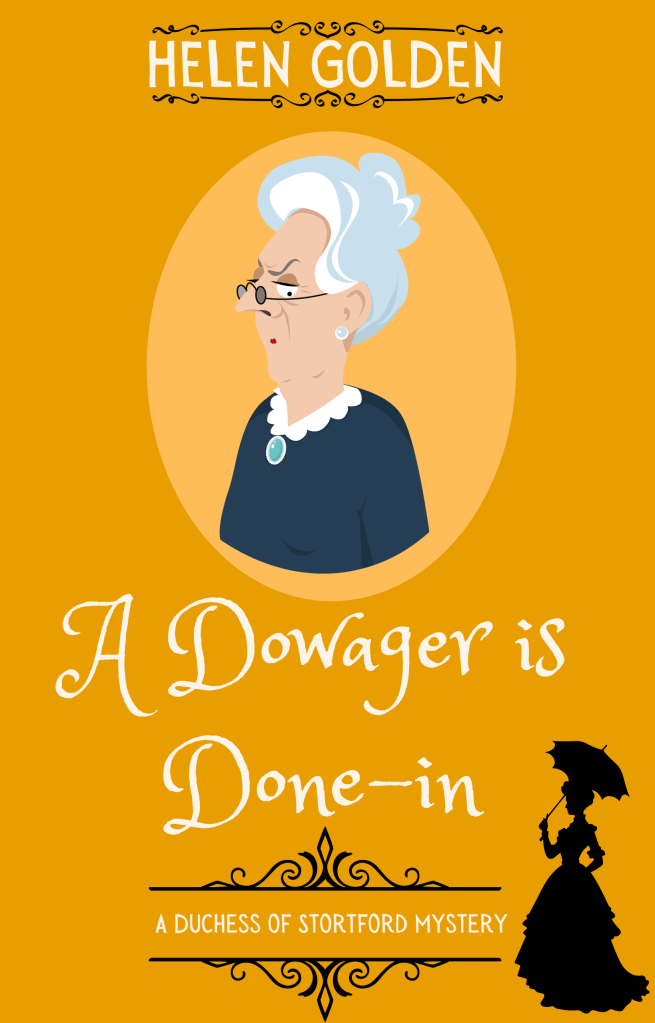
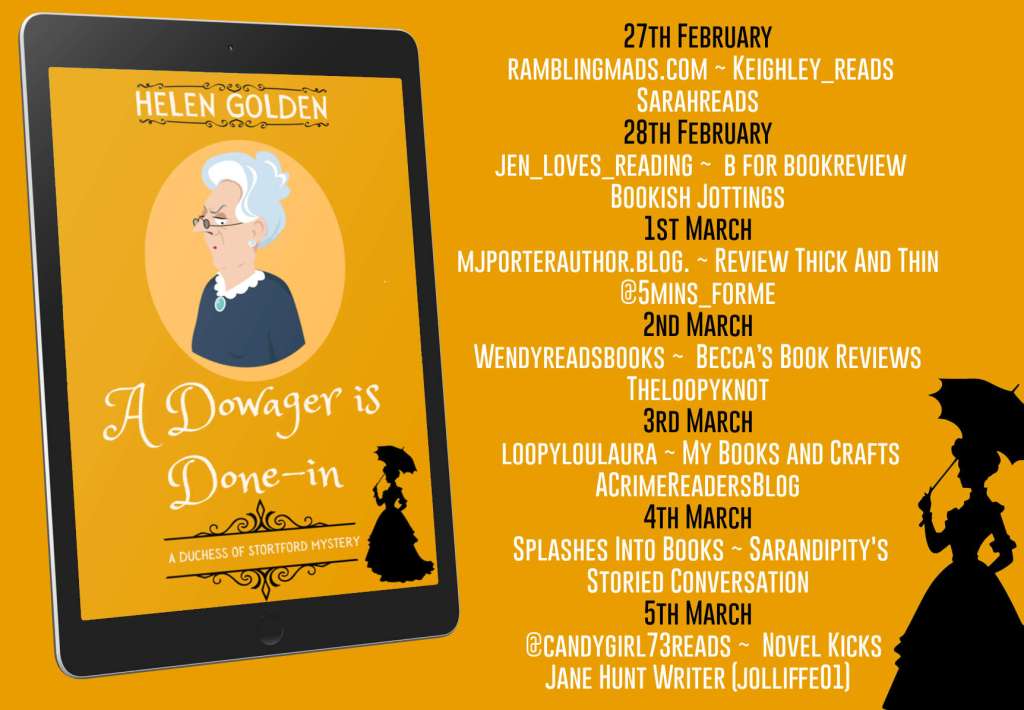
I’m delighted to welcome a returning Helen Golden to the blog with her new book, A Husband is Hushed Up #bookreview #historicalmystery #blogtour #avidreader

I’m delighted to welcome a returning Helen Golden to the blog with her new book, A Husband is Hushed Up #bookreview #historicalmystery #blogtour #avidreader @rararesources @rachelsrandomresources @helengoldenauthor

Here’s the blurb

A fatal fall. A duchess determined to uncover the truth. And barely any time for tea.

Fenshire, 1891. It was meant to be a birthday celebration weekend in the country—cucumber sandwiches, polite conversation, and maybe a waltz or two. But when the Duke of Stortford is found dead in a crumpled heap at the foot of the stairs everything goes dreadfully sideways. The police declare it a tragic accident. His wife, Alice, has her doubts. After all, only hours before, the Duke had promised to give up his mistress and make a go of their marriage. Now he’s inconveniently deceased. 

Driven by a need for answers, and helped by her fiercely loyal maid Maud, her observant footman George, and her childhood friend Lord Rushton, Alice sets about uncovering the truth. But as she navigates a house full of secrets, simmering tensions, and more than one guest with murderously bad manners, her suspect pool grows to include those closest to her. Can she piece together the truth? Or will her husband’s murderer get away with it after all?

The guests are leaving. The killer may be among them. Time is running out…

Purchase Link

https://www.amazon.co.uk/Husband-Hushed-Duchess-Stortford-Mystery-ebook/dp/B0FB916FDV

https://www.amazon.com/Husband-Hushed-Duchess-Stortford-Mystery-ebook/dp/B0FB916FDV

My Review

A Husband is Hushed Up is the first full-length novel in Helen Golden’s new historical mystery series (I have read the prequel).

The first book takes readers to a very familiar location, and alas, also quite a familiar tragedy as a body is discovered on the staircase early one morning. Alice determines to find the truth of what happened, even though everyone else is sure it’s simply a tragic accident. While she’s driven by the need to discover the truth, it is quite possible that she might regret her actions as the story unfolds.

This is another well-plotted mystery from Helen. I do love her mysteries. They’re always a sure-fire hit for me, and a treat because a bit of a curse of also writing mysteries is that I often realise the threads and clues along the way. For this one, my suspicions were leaning in the right direction, but I’m not going to say why. That’s a writer trick:)

Another excellent mystery, and I look forward to the series continuing.

Check out my reviews for the books in Helen Golden’s Right Royal Mystery series, featuring one of Lady Alice’s descendants.

Spruced Up For Murder

For Richer, For Deader

Not Mushroom For Death

A Dead Herring

A Cocktail to Die For

A Death of Fresh Air

I Kill Always Love You

A Murder Most Wilde

And my review for the prequel in the new historical mystery series.

An Heir is Misplaced

Meet the author

Helen Golden spins mysteries that are charmingly British, delightfully deadly, and served with a twist of humour.

With quirky characters, clever red herrings, and plots that keep the pages turning, she’s the author of the much-loved A Right Royal Cozy Investigation series, following Lady Beatrice and her friends—including one clever little dog—as they uncover secrets hidden in country houses and royal palaces. Her new historical mystery series, The Duchess of Stortford Mysteries, is set in Victorian England and introduces an equally curious sleuth from Lady Beatrice’s own family tree—where murders are solved over cups of tea, whispered gossip, and overheard conversations in drawing rooms and grand estates.

Helen lives in a quintessential English village in Lincolnshire with her husband, stepdaughter, and a menagerie of pets—including a dog, several cats, a tortoise, and far too many fish.

If you love clever puzzles, charming settings, and sleuths with spark, her books are waiting for you.

Author image for Helen Golden

Connect with the author

I’m sharing a fab post from crime novelist Ian McFadyen about writing ‘The Twist’ to celebrate the release of The Corpse Bell #blogtour #newrelease #mystery

I’m sharing a fab post from crime novelist Ian McFadyen about writing ‘The Twist’ to celebrate the release of The Corpse Bell #blogtour #newrelease #mystery

The Twist

Having a clever and enticing plot and introducing a range of vivid, life-like and interesting characters are paramount for any successful murder story. However, in my view, the kernel of all the best and most memorable whodunits has to be the twist. 

I read once that ‘plot twists can be a thrill for the reader, but they’re overwhelming for the writer’. I’d agree with that.   

If the novel is constructed in such a way that the reader has absolutely no inkling it’s coming, and when it’s revealed to the audience it is as plausible to them as it is surprising, then the twist will elevate the story to a new level. 

And why just have one twist, if the book has sub-plots or a series of red herrings, why not introduce a little twist with those, to add even more intrigue and, dare I say, confusion in the reader’s mind – particularly if your twist reveals that a character high on the reader’s list of suspects is, in fact, innocent of the main crime and there’s a credible reason why they have been behaving in a way you ( the reader) thought was suspicious.  

If you don’t agree with me, I’d ask you to just think of your favourite murder mystery books. I’m sure they all will have many, many truly wonderful elements – the setting, the use of language, the plot, the characters for example. However, I’d wager it’s the twist that you remember.

When thinking about a new Carmichael book it’s the twist that almost always comes first. Whether it’s a character who isn’t all they seem to be, a misunderstanding which only comes to light late on in the story, or a lie that’s not unearthed at first, the twist is my starting point. 

For my books, it’s only once the twist is fleshed out in my head that I feel I can then create a storyline. A plot that builds up to that twist being revealed to the reader. Then using my team of ever-present detectives and introducing new characters, I attempt to take the reader on a journey that leads to the twist.   

One of my favourite twists is in ‘The Death of Roger Ackroyd’ by Agatha Christie. I’ll not share the details here, for obvious reasons, but if you’ve not read that particular book, I’d recommend you give it a whirl. 

However, if pushed, I’d say my favourite twist was in the TV programme, Tales of the Unexpected in 1979. In an episode written by Roald DahI, called ‘Lamb to the Slaughter’; the twist is delicious!  If you haven’t seen it, look it up on YouTube.    

I’ll obviously not be sharing the twist in my latest book, ‘The Corpse Bell’, but I hope you enjoy it when it arrives. 

Here’s the blurb

The last thing Penny Carmichael expected when she joined the local bellringing group was for her debut to be thwarted by the discovery of a body just yards from the belfry door. As her husband and his loyal team painstakingly sift through the evidence and delve deep into the dead man’s past, it’s clear that solving Peter Mackenzie’s murder may prove a challenge, even for someone with DCI Carmichael’s renowned detective prowess.

What was a man who’d lived for decades in North London doing in Moulton Bank?  Was his chequered past a factor?

And what about the other members of Penny’s bellringing group. Did any of them have a reason to do Peter harm? 

As the case unfolds, DCI Carmicheal and his trusty team seek answers to a complex puzzle which leads them along various paths and, at times, way outside the comfort zone of their rural Lancashire surroundings. 

This fast-paced, cleverly crafted whodunit is the eleventh murder mystery in the gripping Carmichael series from the pen of Ian McFadyen.

Purchase Link

https://www.amazon.co.uk/Corpse-Bell-Ian-McFadyen-ebook/dp/B0FY34NBPK/

https://www.amazon.com/Corpse-Bell-Ian-McFadyen-ebook/dp/B0FY34NBPK/

Meet the author

IIan McFadyen was born in Liverpool and enjoyed a successful career in marketing before becoming a writer. Ian’s titles are available in Italian and Czech and, although the author isn’t totally convinced it’s true, he’s been favourably compared with Wilkie Collins and Colin Dexter. He lives in Hertfordshire with his wife but spends a great deal of his time writing in his bolthole retreat on the Norfolk / Suffolk border. The Corpse Bell is the eleventh in his series featuring DCI Carmichael.

Author image for Ian 
McFadyen

https://www.ianmcfadyenauthor.com/