
Today I’m reviewing Kelly Oliver’s fabulous new Golden-Age crime mystery, The Case of the Body on the Orient Express #newrelease #cosycrime #blogtour
Here’s the blurb

Paris, 1928: Agatha Christie and fellow writer Dorothy L Sayers board the Orient Express, bound for Constantinople. Christie in particular is looking forward to a break from recent dispiriting events in both her work and private life – the finalisation of her divorce from her philanderous husband Archie, and the miserly reception of her latest book.
But before the duo can settle in to enjoy the luxuries of their first-class journey, their journey is derailed when a fellow guest drops dead during the dinner service. And as the last person to speak to the victim, Dorothy finds herself a prime suspect in his murder.

As the train hurtles East, Sayers’ resourceful assistant Eliza and her friend Theo must navigate a maze of suspects. But with each passing mile, the stakes rise, and when another body is discovered, their search to find the killer before they reach their destination becomes increasingly complicated.

Can Eliza and Theo stay one step ahead, crack the mystery and clear Dorothy’s name? Or will this be one journey too far for the amateur sleuths?

Purchase Link

https://mybook.to/CaseBodyOrientExpress

My Review

The Case of the Body on the Orient Express is a fun murder mystery, reuniting us with outspoken and headstrong Eliza, and her fellow sleuth, Theo, who, in true ‘tormented writer’ guise, has spent the last two years in France, roughing it in an attempt to escape the object of his torment, Eliza. What could be better than throwing them together on the Orient Express, with a host of mystery writers on their way to a writers convention?

As their journey gets underway, Eliza is aware of undercurrents from Dorothy, her employer, and she’s alert to the other passengers as well. She’s not about to accept that Ivan died of a heart attack. And so begins her sleuthing, with the aid, sometimes unwillingly given, of Theo. And the case becomes curioser and curioser as the train finally reaches Istanbul/Constantinople.

Another fab addition to Kelly Oliver’s sleuthing mysteries. I do love the little connections between this series and the Fiona Figg books. But, of course, you don’t need to have read them. I also enjoy the addition of the real-life mystery writers. Fans of the genre will thoroughly enjoy Eliza and Theo’s new escapade.

Check out my review for The Case of the Christie Conspiracy.

Check out my reviews for the Fiona Figg and Kitty Lane Mystery books Chaos at Carnegie Hall, Covert in Cairo, Mayhem in the Mountains, Arsenic at Ascot and Murder in Moscow by the same author.

Meet the Author

Kelly Oliver is the award-winning, bestselling author of three mysteries series: The Jessica James Mysteries, The Pet Detective Mysteries, and the historical cozies The Fiona Figg Mysteries, set in WW1. She is also the Distinguished Professor of Philosophy at Vanderbilt University and lives in Nashville, Tennessee

Connect with Kelly

Bookbub profile: https://www.bookbub.com/authors/kelly-oliver

Newsletter Sign Up: https://bit.ly/KellyOlivernews

Posts

It’s happy release day to Warriors of Iron, the second book in the Dark Age Chronicles Trilogy. I’m sharing some photos from my visit to Sutton Hoo #newrelease #MenOfIron #WarriorsOfIron #histfic

It’s happy release day to Warriors of Iron, the second book in the Dark Age Chronicles Trilogy. I’m sharing some photos from my visit to Sutton Hoo #newrelease #MenOfIron #WarriorsOfIron #histfic

Sutton Hoo

As part of my research for the trilogy, I visited Sutton Hoo in July 2024. While it was a fascinating place to visit (see the images below of the surviving grave mounds), it was actually something else my Canadian guide told me that resonated with me for the series. It was that while this area gets a lot of interest, a further gravesite has also been found under where the car park for the visitor centre is now. This gravesite contained thirty-six graves (I think I’ve got the figures correct), twenty-nine of which were burials while the rest were cremations. The car park burials are believed to date to between 510 and c.600, and so before the Sutton Hoo burial of such fame. Fourteen of the graves were warrior graves, buried with shield and spear.

You might wonder why that intrigued me so much, and you’d be correct to do so. But, of course, I wanted to write the series before the advent of what we know as Saxon England, and this was therefore where I needed to be researching. The ‘shiny’ helmet and sword (reconstructions, I know), have a strange allure for us as we live in a time where we don’t need such things (hopefully), but did the earlier warriors have the same? This trip to Sutton Hoo certainly influenced the way I wrote about Wærmund and his fellow warriors. And the trip to the Norfolk Broads reminded me of how pesky bugs can be, and how much they like to nibble me. I came straight home and added that to the storyline. It always pays to remember the little elements that make characters feel very real to readers.

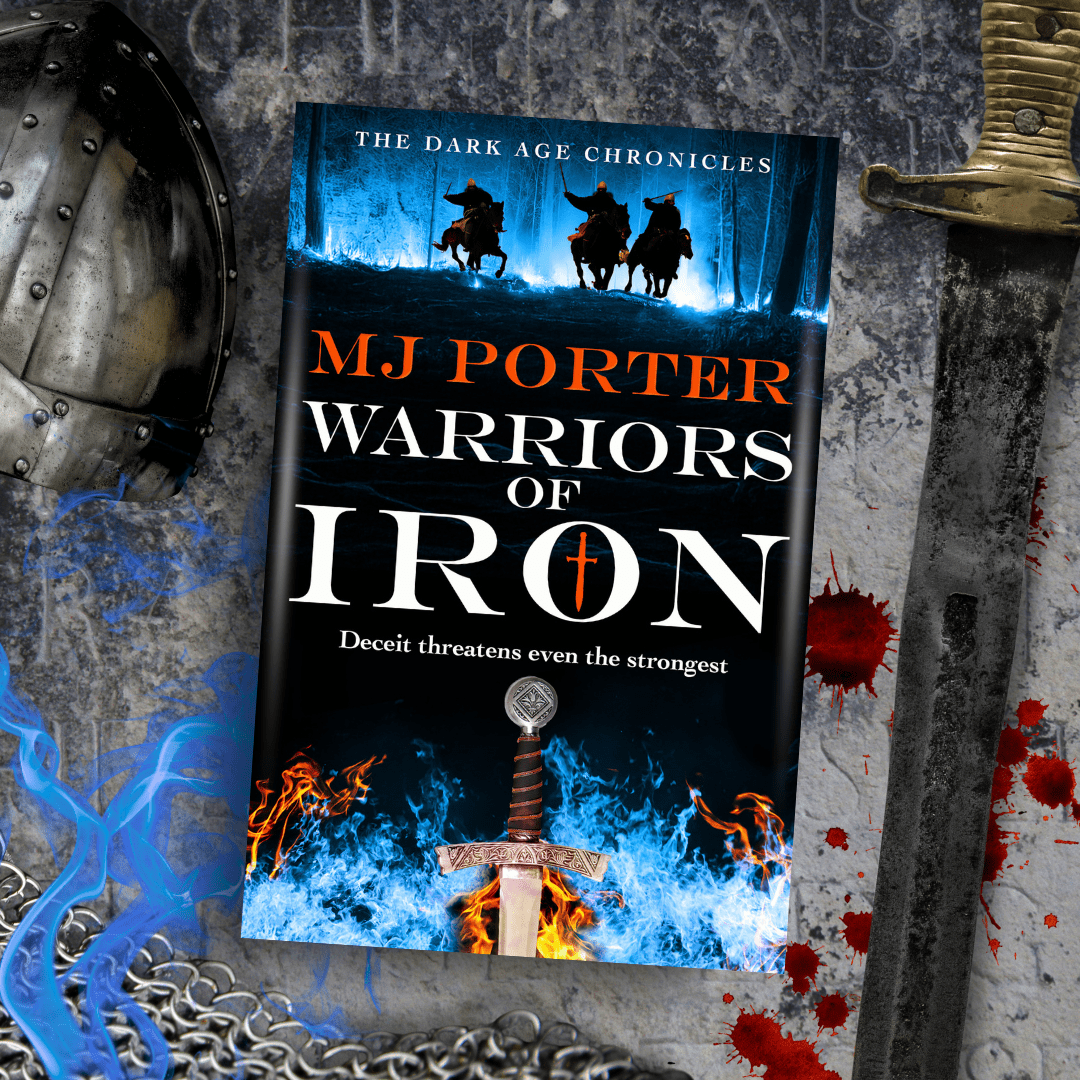
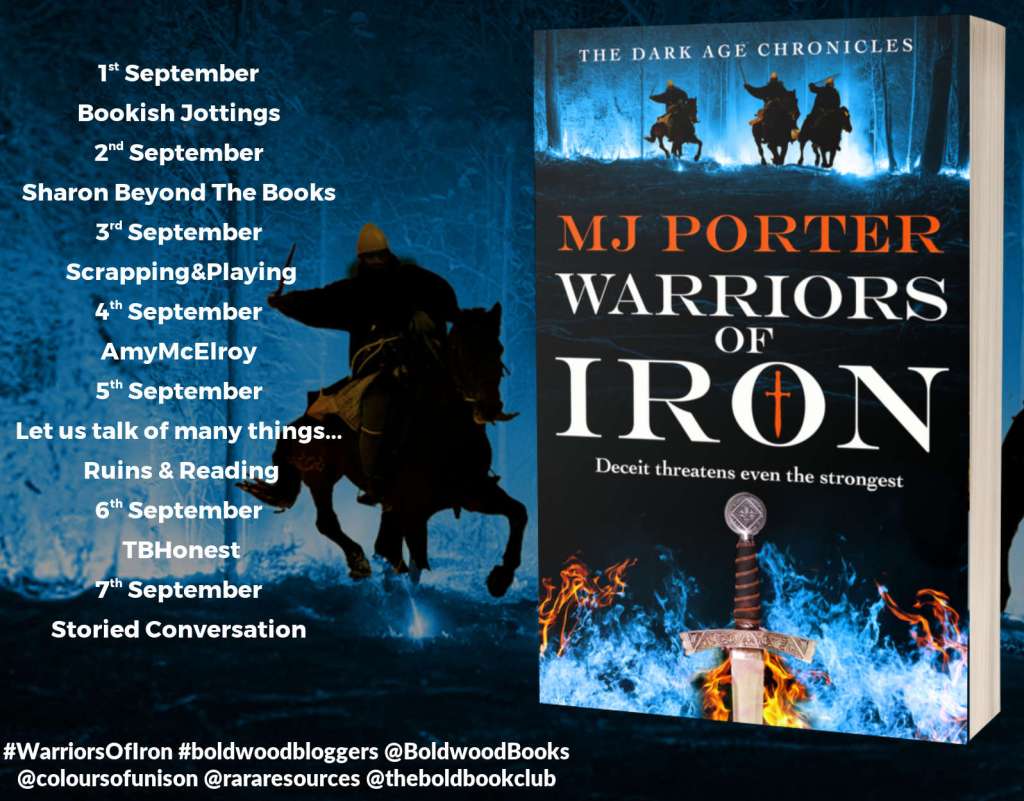
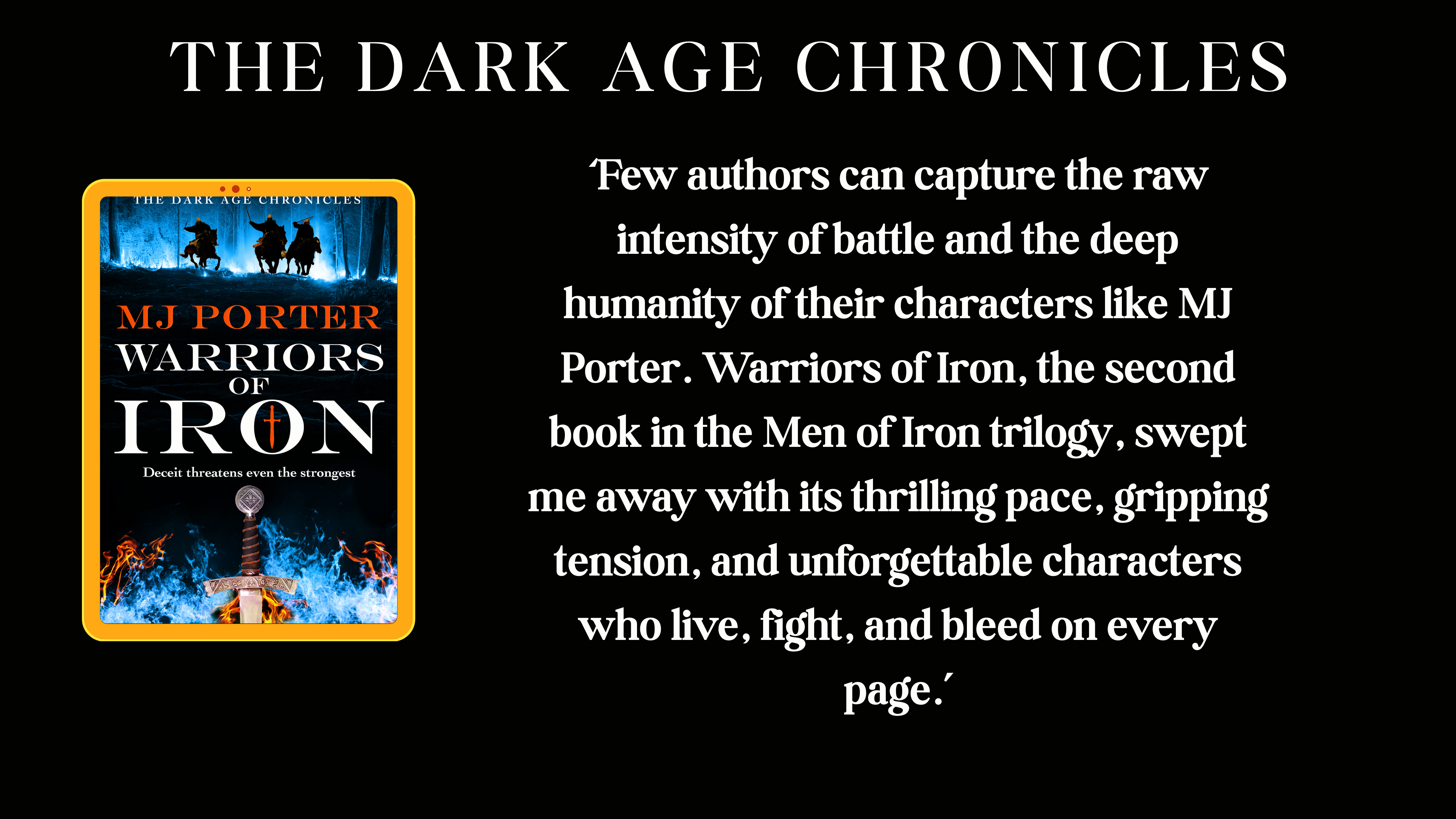
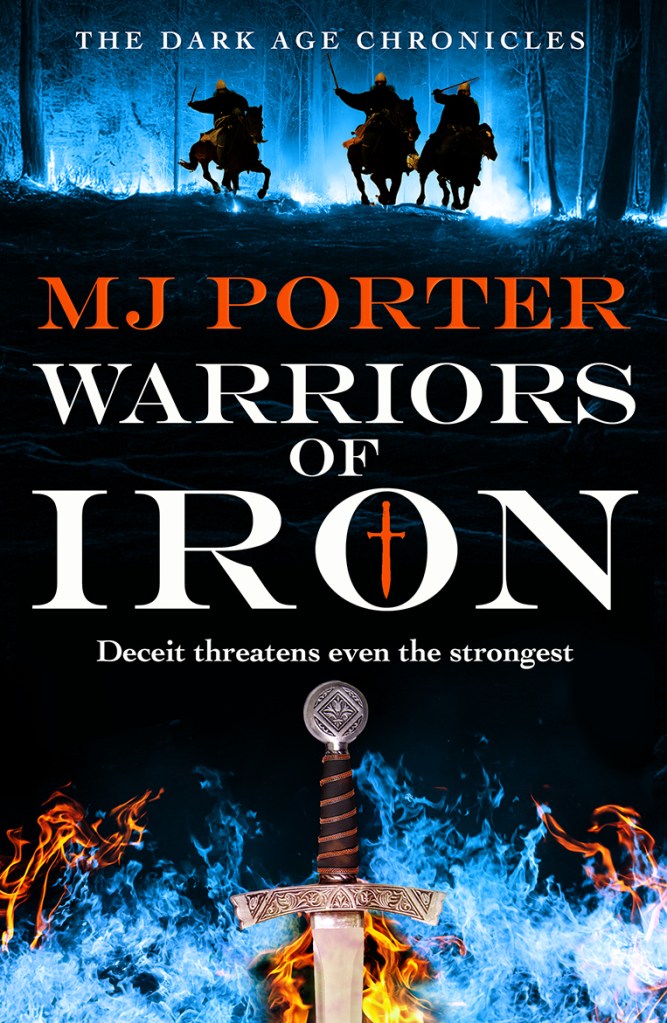
Image shows the book cover for Warriors of Iron by author MJ Porter. The cover shows three mounted warriors and also a sword, all with a blue fiery background. The tag line is 'deceit threatens even the strongest.'

Curious about the trilogy? Check out my blog for more details below

Blog links

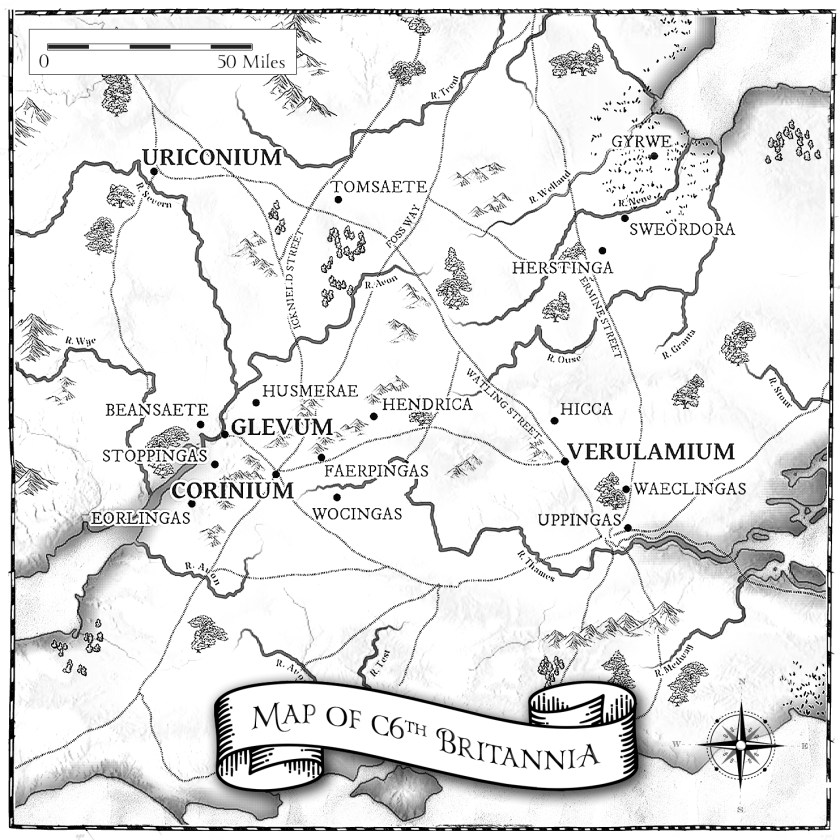
Image shows a map of Early England showing the places mentioned in the text of the book
The Dark Age Chronicles Map

Purchase Links

https://books2read.com/Men-of-Iron

https://books2read.com/WarriorsofIron


Posts

It’s happy release day to Warriors of Iron, the second book in the Dark Age Chronicles Trilogy #newrelease #MenOfIron #WarriorsOfIron #histfic

It’s happy release day to Warriors of Iron, the second book in the Dark Age Chronicles Trilogy #newrelease #MenOfIron #histfic

Listen to me waffle about it.

Listen to me read ‘The Story So Far’ from Warriors of Iron

Curious? Check out my blog for more details below

Blog links

Image shows a map of Early England showing the places mentioned in the text of the book
The Dark Age Chronicles Map

Purchase Link

https://books2read.com/Men-of-Iron

https://books2read.com/WarriorsofIron


Posts

I’m welcoming The Soprano’s Daring Duke by Susanne Dunlap to the blog #blogtour #RegencyRomance #bookreview

Here’s the blurb

A princess with a scandalous secret. A duke desperate for a wealthy bride. A debutante torn between duty and passion.

Newly widowed Princess Adelheid Kinsky thought she was free—until she learns of her abusive late husband’s final betrayal. The son she believed dead, the illegitimate child of a forbidden love, still lives. To secure his future, she must marry within a month—without revealing the truth. Her best prospect? The Duke of Hartland, a notorious rake drowning in debt.

Meanwhile, Hartland sets his sights on Olivia Fontenoy, an heiress whose fortune could solve all his problems. But innocent Olivia dreams of music, not marriage, and seizes the chance to perform in disguise at the King’s Theatre—unwittingly ensnaring everyone she knows in scandal.

As deception and desire collide, Olivia finds herself drawn to Hartland’s closest friend, the quiet yet passionate Marquess of Lewiston—a man who offers her something far more profound than mere security. And for Adelheid, an unexpected alliance may hold the key to her dreams.

With a surprising ending worthy of grand opera, The Soprano’s Daring Duke is a sweeping Regency tale of love, risk, and the courage to defy expectations.

Purchase Link

https://www.amazon.com/gp/product/B0DZHXZZ6H

https://www.amazon.co.uk/gp/product/B0DZHXZZ6H

My Review

The Soprano’s Daring Duke is a Regency romance with a difference. It starts with a bang as we’re introduced to Adelheid at her husband’s deathbed, where she reacts, not with grief, but rather delight, until the terms of his will reveal her dilemma.

Olivia is our second female lead, who, awkward and too tall, and not at all the Regency ideal wife, longs for something other than marriage, but is being pushed into the marriage market by her mother. The scene is set, and all the reader need do is wait for our male lead to appear with his own Regency problems and dilemmas.

This is the second of Susanna Dunlap’s Regency novels I’ve read and it will delight fans of the genre while placing our main players in situations a little different to those we might expect, and all with a delightful ring of authenticity and dilemma.

Check out my review for The Dressmaker’s Secret Earl

Meet the author

Susanne Dunlap is the award-winning author of over a dozen historical novels, as well as an Author Accelerator Certified Book Coach in fiction, nonfiction, and memoir. Her love of history began in academia with a PhD in music history from Yale. Her novel THE PORTRAITIST won first prize in its category in the 2022 Eric Hoffer Book Awards, and was a finalist in the CIBA Goethe Awards and the Foreword Indies Awards. THE ADORED ONE: A NOVEL OF LILLIAN LORRAINE AND FLORENZ ZIEGFELD, won first place in its category in the 2023 CIBA Goethe Awards for Late Historical Fiction. Today, she lives, coaches, and writes in beautiful Biddeford, Maine.

Connect with the author

https://susanne-dunlap.com

Posts

I’m delighted to welcome Allie Creswell and her new book, The Standing Stone on the Moor, to the blog #HistoricalRomance #HistoricalFiction #Yorkshire #BlogTour #TheCoffeePotBookClub

I’m delighted to welcome Allue Creswell and her new book, The Standing Stone on the Moor, with a blog post about the accurate representation of diversity in historical fiction.

The accurate representation of diversity in historical fiction – by Allie Creswell

In recent times I have been challenged to ensure that my historical novels accurately represent the diversity that would have existed in their eras, but which was often ignored by writers of the time. For instance, Jane Austen’s novels have no black or ethnic minority characters, neither are there any characters with disabilities of any kind. Perhaps Sanditon was an attempt to rectify this, with a spa town ready to “cure” and a character described as “mulatto”. Mrs Smith, in Persuasion is incapacitated in some way due to injury. It could be argued that Tom Bertram in Mansfield Park suffers a crisis in mental health as well as from alcoholism, but these examples are insignificant when we think of the casts of white, healthy, ambulant and neurotypical characters in her books.

While wishing very much to be accurately inclusive and to embrace differently-abled characters as well as ones of non-white heritage, I would not wish to fall into the trap of tokenism. It is Amory Balfour’s superlative and remarkable beauty—rather than his skin colour—which makes him the perfect foil for my veiled heroine Georgina in The Lady in the Veil. Olivia, a character with Down Syndrome in The Cottage on Winter Moss is pivotal to the plot because she is privy to the village’s secrets—and a bit of a gossip—not because she has Down Syndrome.

For The Standing Stone on the Moor I wanted to introduce a group of characters who would bring some sparkle and pizzazz to a remote, parochial and insular village in Yorkshire. I wanted to shake the inhabitants up, and I also wanted to challenge them, to provoke their bigotry, suspicion and superstition into life because I wanted—in an oblique, non-confrontational way—to equate the situation of today’s asylum seekers and refugees with those who came to the UK for succour in the mid-nineteenth century. My aim in this approach was to add as many facets to my theme—displacement—as possible, and it seemed to me that there could be no clearer illustration of it than the experience of people hounded from their homes and forced to establish themselves elsewhere.

The potato famine was at its peak in 1845, and thousands of Irish people made the trip to Britian in search of work and to escape the dreadful conditions at home. There was a kind of serendipity in this, in that the burgeoning industrial revolution in Britain had an insatiable requirement for workers in mills, factories, mines and to dig the canals—an activity which thousands of Irish undertook, giving rise to the characteristic designation of the “Irish navvy”.

Many British rural people had migrated to the towns for the improved wages these positions offered, but that left a deficit of labour in the countryside, which my Irish people seek to fill. The group is predominantly women and children. The few men in the group have conditions which ill-suit them to work in an industrial setting—one has asthma, another has suffered an amputation of the lower arm. They shear sheep and make hay, dig peat and move stones—anything at all that will pay. They get involved in the movement of contraband goods, and play shamelessly on their reputation for fortune-telling and mysticism, but this backfires on them. They establish themselves in a camp at a discreet distance from the village, next to an ancient standing stone. They bring their rich culture of music and dance, their entrepreneurship, their admirable work ethic, their predominantly Catholic religion and also of course their baggage—of suffering, loss and grief that prompted their journey, not to mention the trauma of that very displacement. 

And this group of Irish people also brings Dónall, a young man with an intellectual disability.

My research into the ways people with intellectual disabilities were viewed and treated in the 19th century unearthed some dreadful facts. They were often labelled as “idiots” or “lunatics” and faced significant stigma and marginalization. They were frequently confined to institutions like workhouses and asylums, sometimes under harsh and inhumane conditions. These institutions, initially intended for a few hundred people, grew to house over 100,000 by the end of the century. At this time mental health treatment had not been developed and so conditions which we recognise and treat today as mental illnesses were considered signs of madness. Those displaying symptoms were locked away from society. So it was safe to assume that people rarely encountered those with intellectual disabilities, and my character Dónall would therefore likely be the target of stares, pointing fingers and worse.

Dónall had been deprived of oxygen at birth and though a strapping young man physically, aged in his early twenties, he has the intellectual age of a young child. Physically and sexually he is mature, but he lacks the mental scope to understand or control the natural urges of his body. This essential conflict feeds into the overarching theme of the book—displacement. Dónall is a boy in a man’s body, a child in a man’s world. He has adult compulsions of attraction towards Aoife, his cousin, but he also looks to her for the kind of reassurance and guidance a mother or older sister might provide. 

Developing Dónall’s character was a delicate matter. I wanted him to be a character with a disability, rather than “a disabled character”, with a real role to play in the plot. I wanted to draw out the way the contradiction of his character affected him, to allow the reader to see his essential kindness and innocence but also his confusion, and the great passion in his soul.

Conn and Dónall lay in their makeshift beds beneath the wagon and watched the men depart on their clandestine business.

‘Where’re they going?’ Dónall asked.

‘They go to do some moonlight work,’ said Conn knowledgeably. ‘Poaching, perhaps.’ 

Dónall creased his brow. ‘Rabbits?’

‘Deer, more likely, or pheasant. Go to sleep, Dónall. We are to work alongside the men tomorrow.’

‘There is no market,’ said Dónall, yawning. And then, after such a pause that Conn thought he must be asleep, ‘Your mother has a baby in her belly.’

Conn sighed. ‘Yes.

‘How did it get there?’

Conn turned his head. Dónall’s pale eyes shone in the darkness. ‘I suppose my father put it there. Do you not know about such things?’

Dónall shook his head. His face creased this way and that as he tried to get his thoughts into a shape he could manage but in the end he only said, ‘Aoife would not say.’

‘You have seen the dogs do it often enough,’ said Conn. ‘It is like that, I suppose, but Father Fearghal says that people must wait until they are married, or it is a sin. I would not trouble yourself about it.’

‘Aoife is not married,’ Dónall said, partly comforted, party distressed, partly fascinated

‘Not yet, anyway.’ Conn yawned. ‘Good night, Dónall.’ He turned on his side, but Dónall rose up onto one elbow.

‘Aoife can’t … No. She mustn’t …’ 

Conn turned back to look at him. ‘Mustn’t get married?’

‘N… no.’ Dónall swallowed thickly. ‘And there mustn’t be … a baby,’ he said.

Conn settled himself back down. ‘I know what you mean. There isn’t enough to go around as it is. But babies do come once the vows are exchanged. They do not seem to be able to stop themselves.’

Dónall said, ‘My mother … she died …’

Conn sighed. ‘Yes, I know, Dónall. It sometimes happens. And sometimes the baby dies. Father Fearghal says it is God’s will. Is that why you don’t want Aoife to have a baby? Because you worry that she will die?’

Dónall thought about it for a while. ‘No,’ he said at last. ‘It is because … because … I do not want to share.’

When Dónall’s impulses get the better of him, he commits a crime for which there will be serious consequences. At best, a life in an asylum. At worst, hanging. It is not his disability per se which is the catalyst, but its manifestation within his character and the situation into which I placed him. Dónall’s perilous situation forces his Irish friends and Beth, my main character, to attempt a daring and dangerous trip across the moors in the dead of night, dodging the mounted guard.

One of the quite beautiful things that emerged as I wrote Dónall’s character was the way his Irish family love and care for him, and the ways they allow him to contribute to their communal well-being. At mealtimes he is placed among the children, where he soothes tiredness and squabbling with a timely tickle or cuddle. During the day he works alongside the men, having twice the strength of some, moving stones. His strengths are celebrated, his weaknesses compensated for and never ridiculed or criticised.

Dónall knuckled the tears from his eyes and leaned against Ruairi as a child would have done after being separated for even a few moments from a beloved parent’s affection, and allowed himself to be soothed and comforted before being led towards the circle and seated on the upturned barrel that would normally have been Ruairi’s own preserve. 

‘There now,’ said Ruairi. ‘You shall have a man’s seat and a man’s portion of supper and a glass of grog to wash it down with since you have done a man’s work today.’

Dónall nodded and tried a watery smile.

In developing Dónall’s character I was very lucky to have the support and incredible expertise of Deirdre O’Grady (https://www.abilitywise.ie/) who is my sensitivity reader. Deirdre has a H-Dip in Facilitating Inclusion, diplomas in psychology and disability studies and years of experience of raising awareness of the needs of those with disabilities within the workplace and the community. She is an ambassador for diversity, equality and inclusion who is also an expert in mental health, addiction and domestic abuse.

Here’s the blurb

Yorkshire, 1845.


Folklore whispers that they used to burn witches at the standing stone on the moor. When the wind is easterly, it wails a strange lament. History declares it was placed as a marker, visible for miles—a signpost for the lost, directing them towards home.

Forced from their homeland by the potato famine, a group of itinerant Irish refugees sets up camp by the stone. They are met with suspicion by the locals, branded as ‘thieves and ne’er-do-wells.’ Only Beth Harlish takes pity on them, and finds herself instantly attracted to Ruairi, their charismatic leader.


Beth is the steward of nearby manor Tall Chimneys—a thankless task as the owners never visit. An educated young woman, Beth feels restless, like she doesn’t belong. But somehow ‘home’—the old house, the moor and the standing stone—exerts an uncanny magnetism. Thus Ruairi’s great sacrifice—deserting his beloved Irish homestead to save his family—resonates strongly with her.


Could she leave her home to be with him? Will he even ask her to?


As she struggles with her feelings, things take a sinister turn. The peaceable village is threatened by shrouded men crossing the moor at night, smuggling contraband from the coast. Worse, the exotic dancing of a sultry-eyed Irishwoman has local men in a feverish grip. Their womenfolk begin to mutter about spells and witchcraft. And burning.


The Irish refugees must move on, and quickly. Will Beth choose an itinerant life with Ruairi? Or will the power of ‘home’ be too strong?

Buy Link

Universal Link:

Author’s Website:

Meet the Author

Allie has been writing fiction since she could hold a pencil. She has a BA and an MA in English Literature, specialising in the classics of the nineteenth century.

She has been a print-buyer, a pub landlady, a bookkeeper and the owner of a group of boutique holiday cottage but nowadays she writes full time.

She has two grownup children, five grandchildren and two cockapoos but just one husband, Tim. They live in the remote northwest of the UK.

The Standing Stone on the Moor is her sixteenth novel.

Connect with the Author

Follow The Standing Stone on the Moor blog tour with The Coffee Pot Book Club

I recorded myself introducing the Dark Age Chronicles Trilogy #newrelease #MenOfIron #WarriorsOfIron #histfic

It’s happy release day to Men of Iron, the first book in the Dark Age Chronicles Trilogy #newrelease #MenOfIron #histfic

Listen to me waffle about it.

Listen to me (almost competently) introduce you to the Dark Age Chronicles and my two main characters, Meddi and Wærmund, or Wærmund and Meddi (you’ll have to listen to find out:)

Curious about the trilogy? Check out my blog post for more details below (or the really nerdy one below that)

Purchase Link for Men of Iron

books2read.com/Men-of-Iron

Warriors of Iron (book 2) Coming 13th July

Image shows the book cover for Warriors of Iron by hstorical fiction author MJ Porter

Preorder Link (releases 13th July)

books2read.com/WarriorsofIron

Here’s the blurb

During Britannia’s tribal age only the strongest prevail…

Britain AD541

Seeress Meddi has been restored to her rightful position of influence within the Eorlingas tribe. But a heavy cloud hangs over the tribe’s survival with the escape of the treacherous Elen who seeks to exact a bloody vengeance following Meddi’s reinstatement and her downfall.

Meddi knows Elen will return to settle the blood feud and the tribe must be ready to face this deadly threat with iron. They must toil day and night to harness the power of the lost magiks to make the weapons needed to overpower Elen.

Meanwhile, Wærmund, a warrior of Saxon descent, has escaped his enforced captivity and vows vengeance against his captors. He too hungers for the promise of sharp blades and travels West to find those who can fashion iron into blades sharp enough to kill. But when a lone woman befriends the band of warriors, promising him even more than that, he’s beguiled by her tale of deceit amongst her own tribe, so reminiscent of his own.

Unbeknown, Meddi and Wærmund share a common enemy and one who is just as belligerent as they are…

The all important map for the series

Image shows a map of Early England showing the places mentioned in the text of the book
The Dark Age Chronicles Map

Posts

I’m delighted to welcome Heidi Eljarbo and her new book, The Dutch Muse, to the blog #HistoricalMystery #ArtHistory #DualTimeline #CozyMystery #BlogTour #TheCoffeePotBookClub

I’m delighted to welcome Heidi Eljarbo and her new book, The Dutch Muse, A Fabiola Bennett Mystery, to the blog.

Here’s the Blurb

A ruthless thief leaves a private Dutch gallery with a coveted seventeenth-century painting. The owner lies unconscious on the floor. Art historian Fabiola Bennett is on vacation in Holland and takes on the case.

Amsterdam, 1973.
It’s late summer, and Fabiola and Pippa join their friend, Cary, for a few days of sightseeing, museums, and riding bikes around the beautiful city.


For the first time in her life, Fabiola feels a pang of jealousy, and rude comments from a gallerist make her doubt her own abilities.

Then, unexpectedly, Cary’s Dutch client, Lennard van de Hoek, is brutally struck down and a baroque portrait by Ferdinand Bol is stolen. Fabiola pushes aside her problems and jumps into danger without hesitation. The list of suspects is long, and with a cold-blooded criminal at large, they must constantly be on the alert.

Amsterdam, 1641.
Ferdinand Bol has completed his five-year training with Master Rembrandt van Rijn and is ready to set up his own studio. The future looks bright, and Ferdinand sets a goal to become a widely sought-after and, hopefully, prosperous master portraitist.


Just when Ferdinand’s career starts to flourish—and patrons and customers discover his exceptional talent—one of his models confesses she’s in deep trouble, and he drops everything to help her.

This is a fast-paced and captivating who-done-it set in the Netherlands—the fourth installment and a spin-off from the Soli Hansen Mysteries.

Buy Link

Universal Link

This title is available to read on #KindleUnlimited

Meet the Author

HEIDI ELJARBO grew up in a home full of books, artwork, and happy creativity. She is the author of historical novels filled with courage, hope, mystery, adventure, and sweet romance during challenging times. She’s been named a master of dual timelines and often writes about strong-willed women of past centuries.

After living in Canada, six US states, Japan, Switzerland, and Austria, Heidi now calls Norway home. She lives with her husband on a charming island and enjoys walking in any kind of weather, hugging her grandchildren, and has a passion for art and history. 

Her family’s chosen retreat is a mountain cabin, where they hike in the summer and ski the vast white terrain during winter.

Heidi’s favorites are her family, God’s beautiful nature, and the word whimsical.

Connect with the Author

Website: Newsletter: BookBub:

Follow The Dutch Muse blog tour with The Coffee Pot Book Club

Check out The Paris Portrait.

Posts

I’m excited to share the cover for Warriors of Iron, the second book in the Dark Age Chronicles Trilogy #newrelease #WarriorsOfIron #histfic

It’s happy release day to Men of Iron, the first book in the Dark Age Chronicles Trilogy #newrelease #MenOfIron #histfic

Listen to me waffle about it.

Here’s the beauty

Image shows the book cover for Warriors of Iron by hstorical fiction author MJ Porter

Preorder Link (releases 13th July)

books2read.com/WarriorsofIron

Here’s the blurb

During Britannia’s tribal age only the strongest prevail…

Britain AD541

Seeress Meddi has been restored to her rightful position of influence within the Eorlingas tribe. But a heavy cloud hangs over the tribe’s survival with the escape of the treacherous Elen who seeks to exact a bloody vengeance following Meddi’s reinstatement and her downfall.

Meddi knows Elen will return to settle the blood feud and the tribe must be ready to face this deadly threat with iron. They must toil day and night to harness the power of the lost magiks to make the weapons needed to overpower Elen.

Meanwhile, Wærmund, a warrior of Saxon descent, has escaped his enforced captivity and vows vengeance against his captors. He too hungers for the promise of sharp blades and travels West to find those who can fashion iron into blades sharp enough to kill. But when a lone woman befriends the band of warriors, promising him even more than that, he’s beguiled by her tale of deceit amongst her own tribe, so reminiscent of his own.

Unbeknown, Meddi and Wærmund share a common enemy and one who is just as belligerent as they are…

Curious about the trilogy? Check out my blog post for more details below

Blog links

https://mjporterauthor.blog/2015/03/28/a-discussion-of-early-anglo-saxon-sources/

Image shows a map of Early England showing the places mentioned in the text of the book
The Dark Age Chronicles Map

Purchase Link for Men of Iron, the first book in the trilogy

books2read.com/Men-of-Iron


Posts

I’m delighted to spotlight Metropolis by Colin Garrow, a historical crime novel set in Edinburgh #blogtour #histfic

Here’s the blurb

Edinburgh, 1936. People are disappearing. The police are clueless. Can Finlay MacBeth track down the perpetrator before someone else goes missing?

Haunted by his recent past, Professor Finlay MacBeth returns to his home town to take up a new post at the university. Within hours, his reputation for solving the occasional murder prompts the police to ask for his help. Four men—seemingly unconnected—have vanished into thin air. MacBeth must find whatever it is that links the men before the kidnapper strikes again. 

But the police aren’t the only ones interested in MacBeth’s activities, and the amateur sleuth soon discovers that finding the missing men is the least of his problems…

In this thriller series set in Edinburgh, Metropolis is book #1 in the Finlay MacBeth Thriller series.

Book cover for Metropolis by Colin Garrow

Purchase Link

https://geni.us/ps3XiW

Meet the author

Colin Garrow grew up in a former mining town in Northumberland. He has worked in a plethora of professions including taxi driver, antiques dealer, drama facilitator, theatre director and fish processor, and has occasionally masqueraded as a pirate. 

He has published more than thirty books, and his short stories have appeared in several literary mags, most recently in Witcraft, and Flash Fiction North. Colin lives in a humble cottage in Northeast Scotland where he writes novels, stories, poems and the occasional song.

He also plays several musical instruments and makes rather nice vegan cakes.

Author Colin Garrow

Connect with Colin

Check out my reviews for Colin’s other books

Terminal Black

Crucial Black

The Watson Letters

Blood on the Tyne