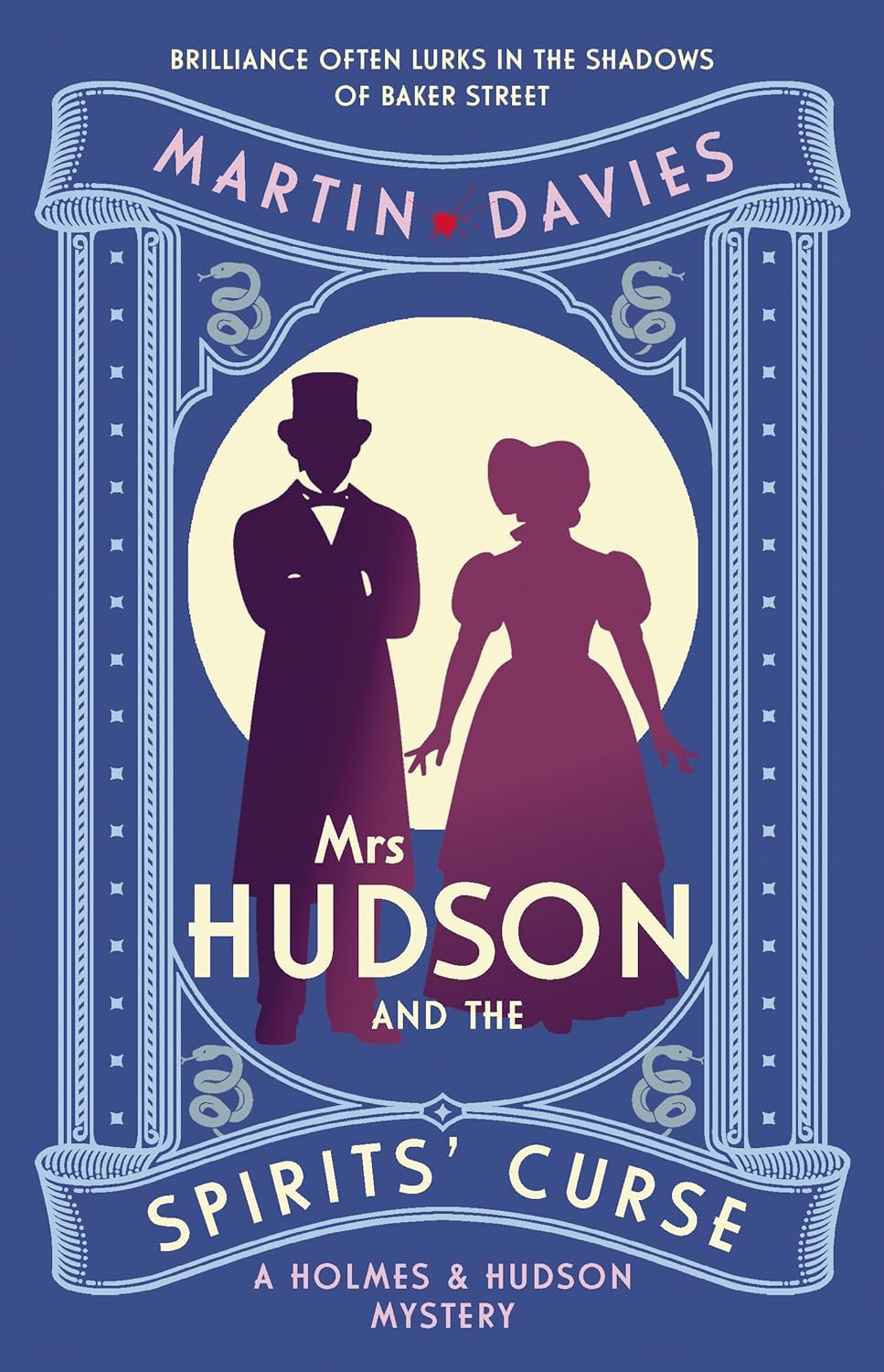
I’m delighted to share my review for Mrs Hudson and the Spirits’ Curse by Martin Davies, an intriguing Holmes-esque mystery #bookreview #mystery #HistoricalFiction
Here’s the blurb
An evil stalks London, blown in from the tropics. Stories of cursed giant rats and malign spirits haunt the garrets of the East London neighborhood of Limehouse. A group of merchants are dying one by one. The elementary choice to investigate these mysterious deaths is, of course, the team of Holmes and Dr. Watson. But the unique gifts of their housekeeper, Mrs. Hudson, and her orphaned assistant Flotsam, will also be needed to solve the case. Can she do it all under the nose of Sherlock himself?
Mrs Hudson and the Spirits’ Curse is an intriguing Holmes-esque tale where Sherlock Holmes is perhaps not the sharp observer of human nature we might expect, because that role goes to Mrs Hudson, his shadowy but exceedingly well-connected housekeeper. She has Flottie as her assistant, and Flottie has her own story running concurrently with the mystery brought to Holmes’ door.
I thoroughly enjoyed the book. It has a very Sherlock Holmes mystery to solve, and no end of obfuscation to contend with, while adding an ever greater element of grimy, Victorian London, and its denizens, to the mix through Mrs Hudson’s many connections with the mighty and the lowly..
That said, I did feel as though the resolution to all the mysteries were a little too elongated, although the final chapter, with Dr Watson bringing his accounting of the case to Mrs Hudson for her thoughts, did have me smiling once more.
A fine mystery, very Holmes-esque but with another side to it, that of Mrs Hudson.
Meet the author
Martin Davies is a writer and media consultant based in the UK.
He is the author of nine novels, including international bestseller ‘The Conjuror’s Bird’ which was a Richard and Judy Book Club selection, and which sold over 100,000 copies in the UK alone. ‘The Unicorn Road’ was chosen as one of The Times/WHSmith top paperbacks of the year, and ‘Havana Sleeping’ was shortlisted for an Historical Dagger award by the Crime Writers’ Association. Martin is also the author of a series of mystery stories about Sherlock Holmes’ housekeeper.
Martin Davies has travelled widely, including in the Middle East and India; substantial parts of ‘The Unicorn Road’ were written while travelling through Sicily, and his plan for ‘The Conjuror’s Bird’ was put together on a trekking holiday in Greenland.
When circumstances allow, he chooses to write in cafes or coffee shops, and often works in longhand on first drafts.
Martin Davies’ books have been translated into ten languages.
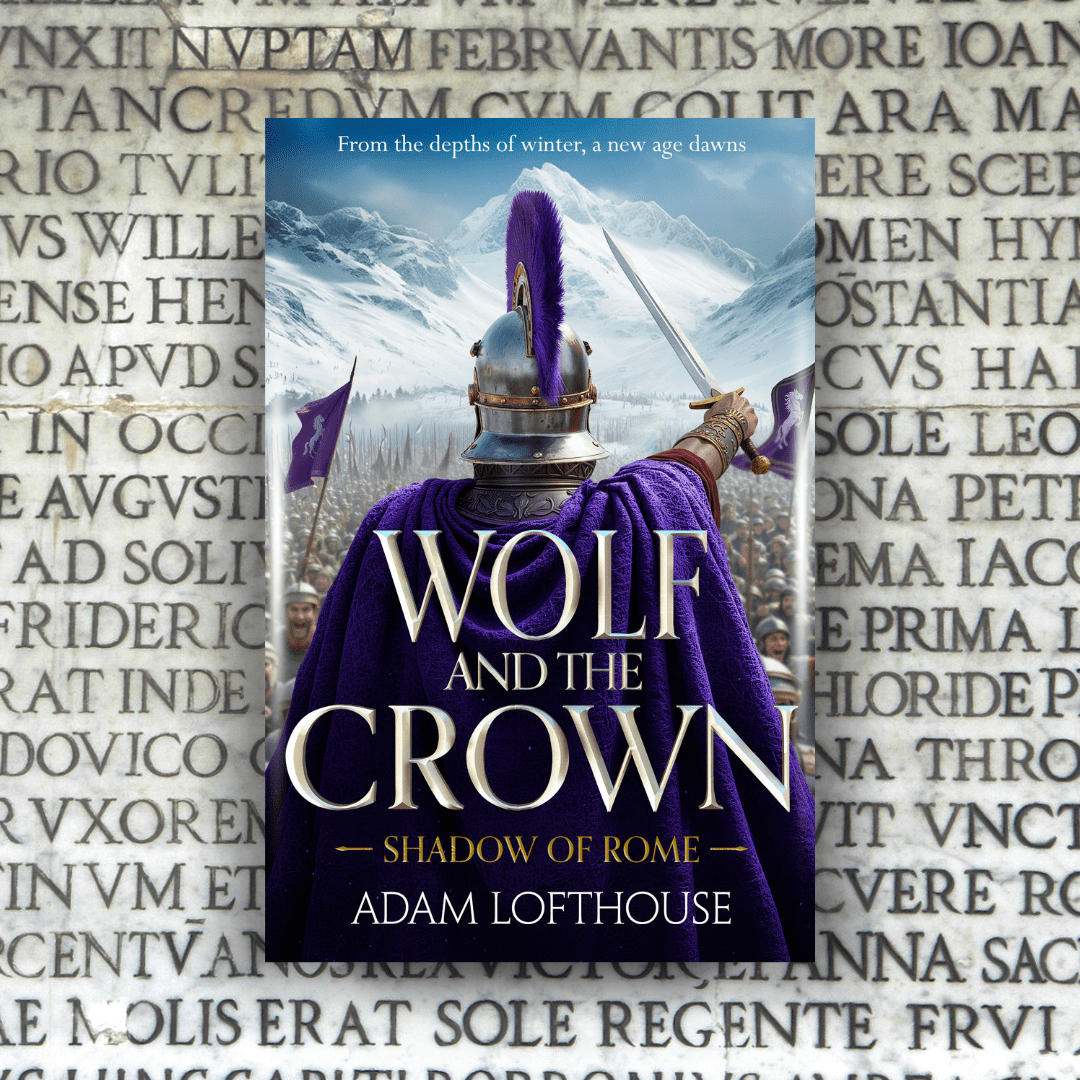
I’m delighted to share my review for Adam Lofthouse’s Wolf and The Crown, which is released today #historicalfiction #bookreview #RomanEra #WallOfHadrian
Here’s the blurb
Wall of Hadrian. Britannia, 382 AD. War is creeping back into the land. As silent as snowfall, as inevitable as winter. They’ve had sixteen years of peace, but all things must end.
Tribune Sixtus Victorinus has grown old, complacent. Blind to the truth that stares him in the face, he contents himself with what he has. He runs errands for the Dux Britanniarum Flavius Maximus and watches with joy as his boys grow to become men.
It is his friend, Prefect Gaius Felicius, who first spots the signs. Once more, the Caledonian tribes are rearing their heads in the north, but the greatest danger does not lie with them.
For there is a new pretender to the throne of the West. Another man who seeks to drape himself in purple. Caught up in a scheme they cannot comprehend, Victorinus and Felicius must navigate their way through both a war in the depths of winter, and a treasonous plot that will shake the Roman Empire to its core.
A new age dawns on the men of Britannia. For Victorinus, he must fight for the right to see the sun rise over it.
I’ve just been checking my review for book 1 in this series, and I see I also gave it five stars. Adam is a lucky author because I’m always told that I don’t often hand out a 5-star review. (Check out my review for Eagle and the Flame).
And he’ll be pleased to know he’s done it again with Wolf and the Crown.
I will say that this era – the coming end of Roman Britain fascinates me. Adam’s recreation of it speaks to me. We know what’s coming. The people in these books do not, although perhaps they suspect it.
Wolf and the Crown continues the story from Eagle and the Flame, but we move forward 16 years. Our two main characters remain Tribune Sixtus Victorinus and Felicius. Felicius is still a career Roman. Sixtus is not. They are both older, perhaps wiser, and contending with the results of their decisions as younger men.
Sixtus has finally given up the drink, but he is beset with heartache at the breakdown of his marriage and the long-ago death of his small son, which he missed because he was away fighting. Sixtus is a man trying to do his best in a world where the Roman influence of his younger days seems to have bled away. He’s still a friend and ally of Theodosius, the younger emperor, and indeed, they remain in contact via letter – a fabulous device ensuring the reader knows what’s happening beyond the shores of Britannia.
With all that said, this is an action-packed novel. There is barely a chapter that goes by without one fight or another. As we travel from Londinium to many locations on the Wall and even further north, Sixtus gets an absolute beating. Drost makes a welcome reappearance, and conspiracies abound. The set-up for book 3 in this trilogy is impeccably well-paced – I didn’t know how the book would end – although I had some suspicions. It didn’t do what I thought it would, and now I can’t wait for the concluding volume in the trilogy.
It is a fabulous Roman-era action and adventure story that rings with conviction and conspiracy, which readers of the genre will devour.
Meet the author
Adam has for many years held a passion for the ancient world. As a teenager he picked up Gates of Rome by Conn Iggulden, and has been obsessed with all things Rome ever since.
After ten years of immersing himself in stories of the Roman world, he decided to have a go at writing one for himself, and hasn’t stopped since. Check out the books on the website, or follow Adam on Social Media for regular updates.
Follow Adam on Twitter: @AdamPLofthouse Find him on Facebook: facebook.com/AdamPLofthouse Instagram: adamplofthouse
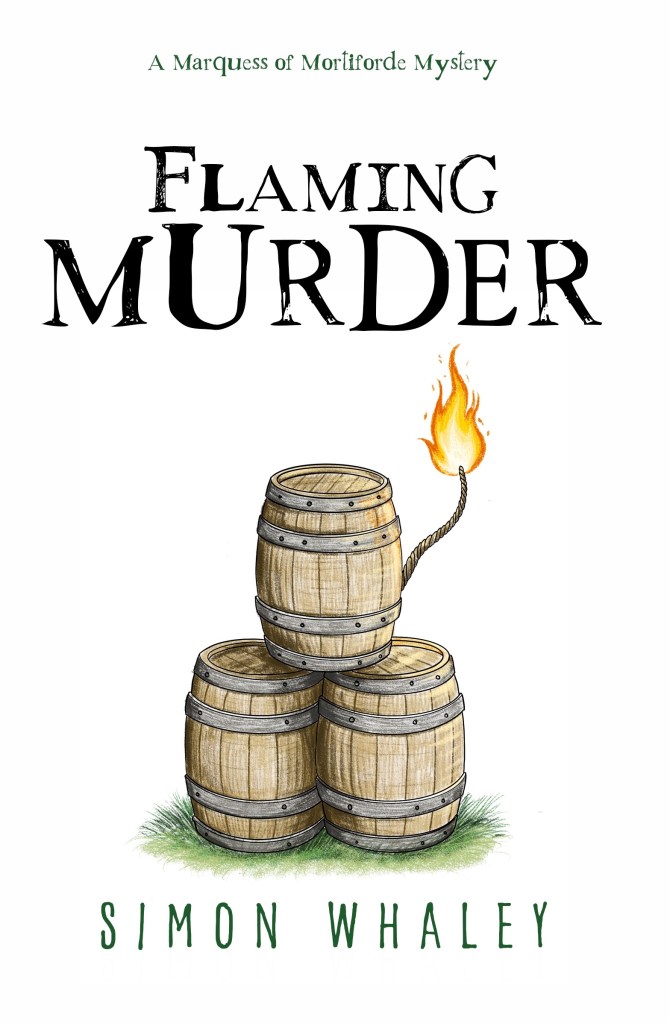
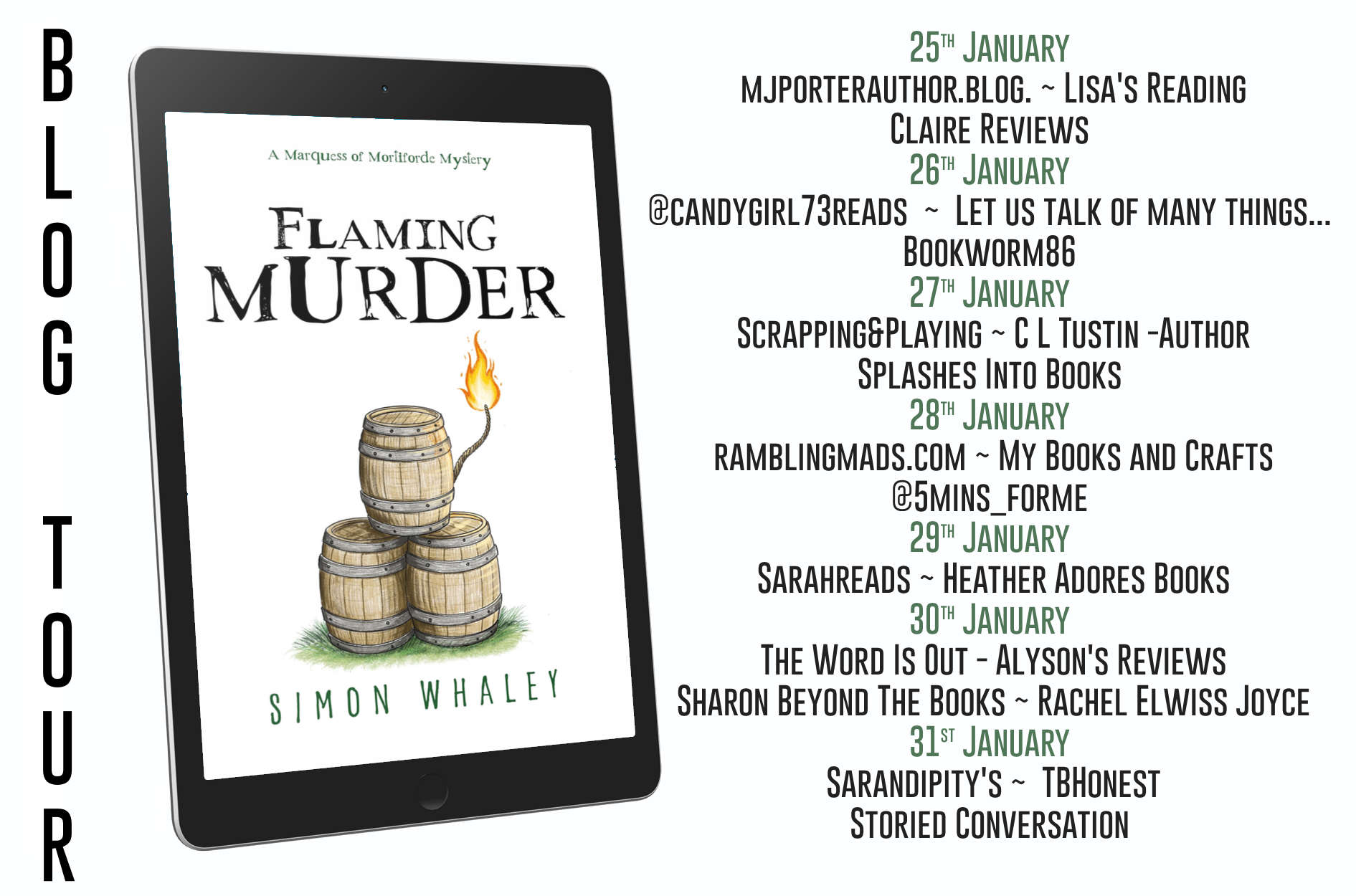
Today, I’m so excited to share my review for Flaming Murder by Simon Whaley (I loved this book) #cosycrime #humour #bookreview #blogtour
Here’s the blurb
Three dead bodies. Two murders. One missing Bonfire Night effigy.
With Bonfire Night looming, Aldermaston, the Eighth Marquess of Mortiforde, is feeling the heat.
Not only has someone stolen Mortiforde Millie—the town’s beloved fifteen-foot Bonfire Night effigy—just days before the town’s annual firework celebrations, but developer Rupert Rinde wants to torch Mortiforde’s heritage by building a waste incinerator on the historic Mortiforde Meadows. The locals are outraged, as is Rupert’s father, Sir Hugo, who owns the meadows. So when Sir Hugo is found dead, skewered by a medieval dagger, his widow begs Aldermaston to investigate.
Meanwhile, Sir Hugo had promised Aldermaston’s wife and her Ladies’ Legion the meadows for their new eco-friendly burial scheme. Now they’re desperate to plant their first body in the ground before the deal goes up in smoke.
So, when Aldermaston uncovers who stole Mortiforde Millie and why, he realises the waste incinerator project is designed to ignite some explosive repercussions.Can Aldermaston unmask a killer and save the Mortiforde Meadows before Bonfire Night erupts into chaos? Will the Ladies’ Legion bury a body before their dreams go up in flames? And can
Check out my review for Foraging for Murder (the second book in the series).
This review might be short and sweet. Don’t let that make you think I didn’t adore this book (and the previous two in the series as well).
Oh, how I love this series. I was very excited to discover the new release, and it doesn’t disappoint. Filled with the same delightful and irreverent humour and with a damn fine mystery to unravel in the background, it is joyful to spend time with these characters. It’s impossible to wax too lyrical about this series. The books are told with just the right amount of humour, the situations our characters find themselves in are hilarious without being stupid, and I simply love these books. Go read them. Now. (If you don’t snort at one particular element, then I don’t think you have my sense of humour. I’m just going to say it’s related to the burial.)
Meet the Author
Simon Whaley lives in rural Shropshire, having escaped from Greater London in the late 1990s. His first published piece was a word search puzzle, aged 17, and he’s since written over 1000 articles in publications as varied as BBC Countryfile, Country Walking, Cheshire Life, The People’s Friend, The Daily Express, The Observer, Outdoor Photography, Coast, The Simple Things and Writing Magazine. His first book, One Hundred Ways For A Dog To Train Its Human, was published by Hodder & Stoughton in September 2003, and spent three weeks on the UK’s Top Ten Non-Fiction paperback bestseller lists. (Lifetime sales now exceed over a quarter of a million copies.) He became a full-time writer in January 2004. He’s since written over a dozen non-fiction books, and recently published the third novel in his Marquess of Mortiforde cosy crime series.
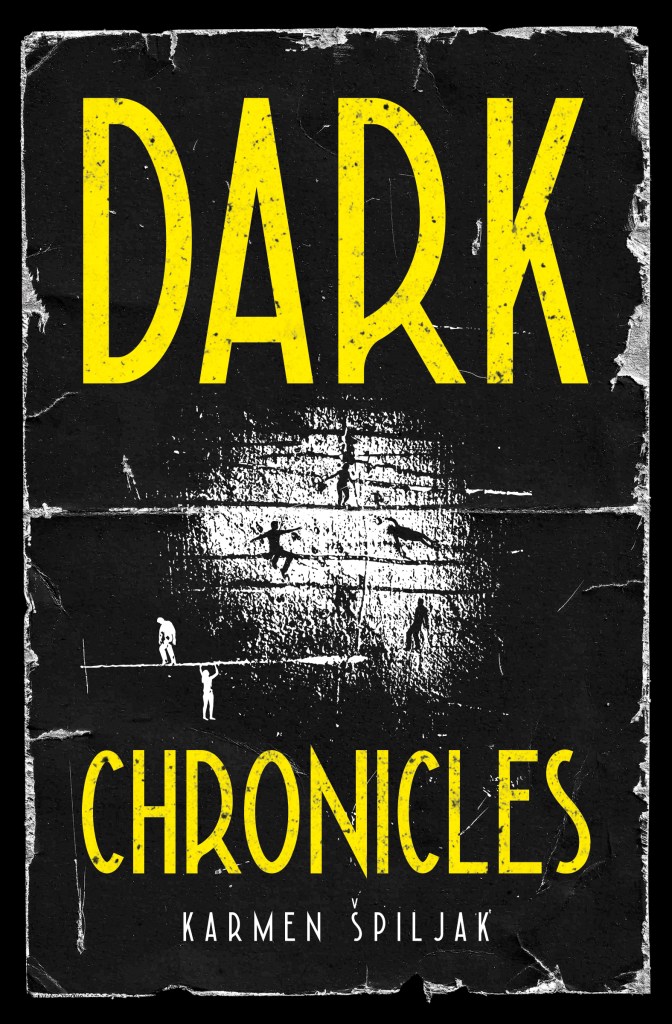
Careful what you wish for. In Dark Chronicles, wishes have teeth.
Ten speculative tales brimming with twisted humour and delicious menace: a pepper that lets you in on other people’s thoughts, a radio show that predicts your fate, and a blood-thirsty ghost who refuses to let go.
Award-winning author Karmen Spiljak delivers a chilling and razor-sharp mix of twists and dark suspense, perfect for readers who like their stories to unsettle and linger.
Ten dark tales. Ten twisted fates. One thrilling collection.
Some of the Dark Chronicles are indeed Dark Chronicles, but I did know what I was letting myself in for, as I’ve read Karmen’s Pass the Cyanide short story collection too.
Each of these short stories offers something a little different, from the Smart House which might be more ghostly than Dana would like, to the joy of getting your heart’s desire (or not), these tales are intriguing and often thought-provoking as well.
I don’t often read short story collections, but when I do, I remember the joy of them. Grab this collection of dark tales and scare yourself, just a little bit.
Karmen Spiljak is Slovenian-Belgian author of suspense, horror and speculative fiction, a developmental editor and a book coach. Her short fiction has been awarded and anthologised. Her short story collection, Add Cyanide to Taste, won the 2022 IndieReader Discovery award for best short stories/Fiction and Pass the Cyanide won the 2023 Wishing Shelf Book Awards Bronze.
She lives in Belgrade with her husband, two mischievous cats and an undefined number of literary characters. Find out more about her writing on www.karmenspiljak.com .
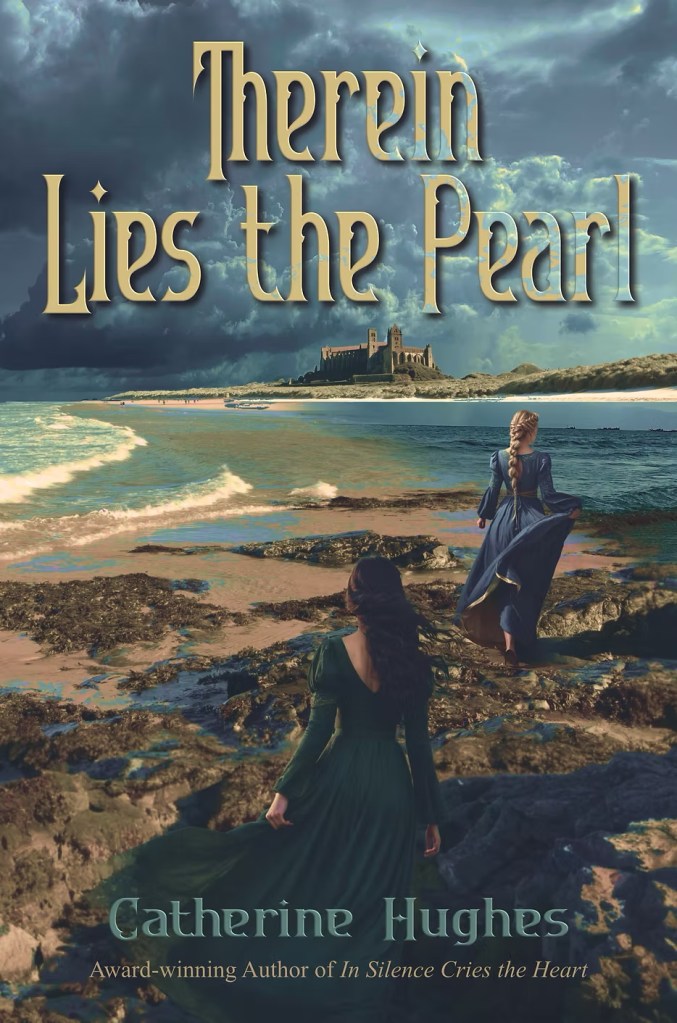
I’m delighted to welcome Catherine Hughes and her new book, Therin Lies the Pearl, to the blog with an excerpt.
Excerpt 3
Her voice lifted in confusion. “Father?”
Margaret had been breathing in the musky smell of the woodlands and the flowering anemone that lined their path when she saw her father’s body, as it was positioned in the saddle, tilt further and further toward the side.
That morning the family had left the inn and began traveling toward Favreshant, following a path made fragrant by the flowers and plants newly opened for spring. The weather did much to improve Margaret’s spirits as the sun shone brightly upon them from a clear, blue-domed sky. An occasional puffy cloud floated across the heavens but never did it linger long enough to diminish the warmth that embraced her. Walking with a bemused smile upon her face, Margaret surrendered to the charms of the countryside, relishing in the way the light accentuated the many shades of green that colored the leaves, the bushes, and the flower stems. A random look toward the front of the cavalcade snapped her pleasant daydream when she noticed the rider near the head of the train—her father—was about to fall.
Abandoning her usual sauntering walk, she broke into enormous strides trying to close the gap between her father and herself. The rapid turnover of her feet upon the soil alarmed the flock of yellowhammers who had been flitting about the blossoms. To escape the disruption, they rose higher and hovered above, waiting for the tumult to settle.
“Father!”
Her shout coincided with the loud thud of his body landing on solid ground, his head coming to rest in a patch of wildflowers.
Before Margaret reached him, she could see Gerhard was already there. He had carefully removed young Edgar from the saddle and then ran toward Edward, dropping to his knees for closer inspection.
Margaret skidded to a halt and took the same posture on the other side of her father’s fallen body. Hesitantly, she repeated again, “Father…?”
His lips parted but no sound issued forth.
After a quick glance in her direction, Gerhard moved closer to Edward, placing one hand beneath his master’s neck and bringing his own closer. “Edward! Edward, can you hear me?” Nothing. “Blink your eyes if you can hear me.” Gerhard’s voice cracked with worry, his usual composure gone. Because Gerhard had leaned so closely over her father’s head, Margaret had to slide further up toward his shoulder to be able to see whether or not her father had comprehended Gerhard’s words.
To her relief, she saw his eyelashes flutter—he understood! He was still there, he was still with them!
Gerhard continued. “Can you move your legs, my lord? Your arms? Just blink to let me know if you still have some control over your limbs.”
The words hung in the air as other people soon gathered around the group of three upon the ground. Margaret heard Edgar sniffling somewhere outside the circle and felt Harold, the priest, and his two brothers glaring down upon them from their seats. None of them had dismounted; instead, they surrounded the trio like a band of
highwaymen waiting to pounce on an unsuspecting victim. To Margaret’s dismay, her father’s eyelids did not flicker.
She studied Gerhard and watched the changing color of emotion move across his face—from confusion to concern, from fear to speculation, from suspicion to anger. When they both noticed the parting of her father’s lips, their hopes lifted. Together, she and Gerhard leaned in closer.
Her father’s eyes remained open but unfocused, and he whispered gently, more so to the air than to them. “No … feeling …my legs. My feet… cannot feel them… cannot move them… nothing there.”
Gerhard was about to respond but stopped when he saw Edward gather his breath once more. Unable to inhale deeply, he spoke in shallow exchanges. “Dizzy … since morn…could not get… legs…to keep hold … of the horse… chest feels … full… crushed.” He paused here for a lengthier break.
Margaret could feel her eyes welling up, her lashes wet with moisture.
“Cannot… take …. in … air.” With his gaze still focused at some point in the far distance, he whispered in a hushed tone, “Twas… foul… play.” Silence and he moved no more.
Margaret felt tears stinging her eyes. They burned her skin as they tumbled down her face until they left small, individual droplets of water on her father’s tunic. She watched as Gerhard placed his hand over Edward’s face, his fingers gently extending to close each eyelid.
Tiny bright-blue flowers with yellow centers formed a soft, decorative pillow where his sleeping head lay. Reminded of Jesus’ promise when he created these delicate blossoms, Margaret trusted that the Blessed Virgin would watch over her father’s soul. And she also knew that her father—like the flower itself—was urging her to “forget-me-not.”
Here’s the Blurb
Normandy, 1064
Celia Campion, a girl of humble background, finds herself caught in a web of intrigue when Duke William commands her to work as his spy, holding her younger sister hostage. Her mission: to sail across the sea to Wilton Abbey and convince Margaret, daughter of Edward the Exile, to take final vows rather than form a marriage alliance with the newly crowned king to the North, Malcolm III of Scotland. Preventing a union between the Saxons and Scots is critical to the success of the Duke’s plan to take England, and more importantly for Celia, it is the only way to keep her sister alive.
In this sweeping epic that spans the years before and after the Conquest, two women from opposite sides of the English Channel whisper across the chasm of time to tell their story of the tumultuous days that eventually changed the course of history. As they struggle to survive in a world marked by danger, loss, and betrayal, their lives intersect, and they soon come to realize they are both searching for the same thing–someone they can trust amidst the treachery that surrounds them.
Together, their voices form a narrative never before told.
Award winning writer, Catherine Hughes, is a first-time author who, from her earliest years, immersed herself in reading. Historical fiction is her genre of choice, and her bookshelves are stocked with selections from ancient, Medieval, and Renaissance Europe as well as those involving New England settlements and pioneer life in America. After double-majoring in English and business management on the undergraduate level, Catherine completed her Master’s degree in British literature at Drew University and then entered the classroom where she has been teaching American, British, and World Literature at the high school level for the last thirty years.
Aside from teaching and reading, Catherine can often be found outdoors, drawing beauty and inspiration from the world of nature. Taking the words of Thoreau to heart, “It is the marriage of the soul with nature that makes the intellect fruitful,” Catherine sets aside time every day to lace up her sneakers and run with her dog in pre-dawn or late afternoon hours on the beaches of Long Island. When her furry companion isn’t busy chasing seagulls or digging up remnants of dead fish, she soaks in the tranquility of the ocean setting, freeing her mind to tap into its deepest recesses where creativity and imagination preside.
In Silence Cries the Heart, Hughes’s first book, received the Gold Medal in Romance for the Feathered Quill 2024 Book of the Year contest, the Gold Medal for Fiction in the 2024 Literary Titan competition, and the 2024 International Impact Book Award for Historical Fiction. In addition, the Historical Fiction Company gave it a five star rating and a Silver Medal in the category of Historical Fiction Romance. The book was also featured in the February 2024 Issue 31 of the Historical Times magazine and was listed as one of the Best Historical Fiction Books of 2024 by the History Bards Podcast. Therein Lies the Pearl is her second venture into the world of historical fiction.
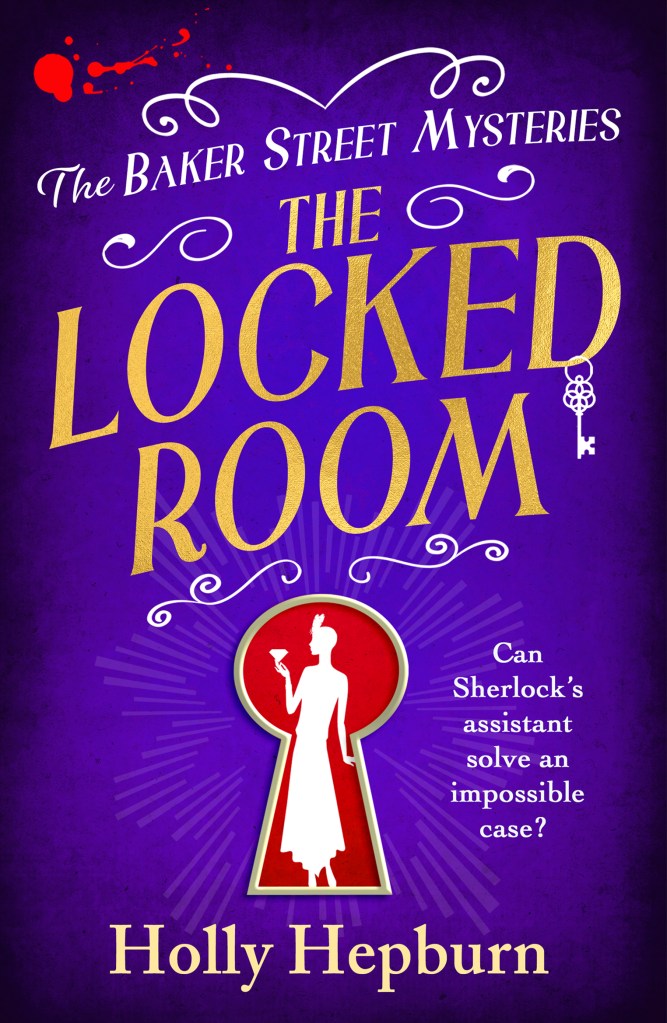
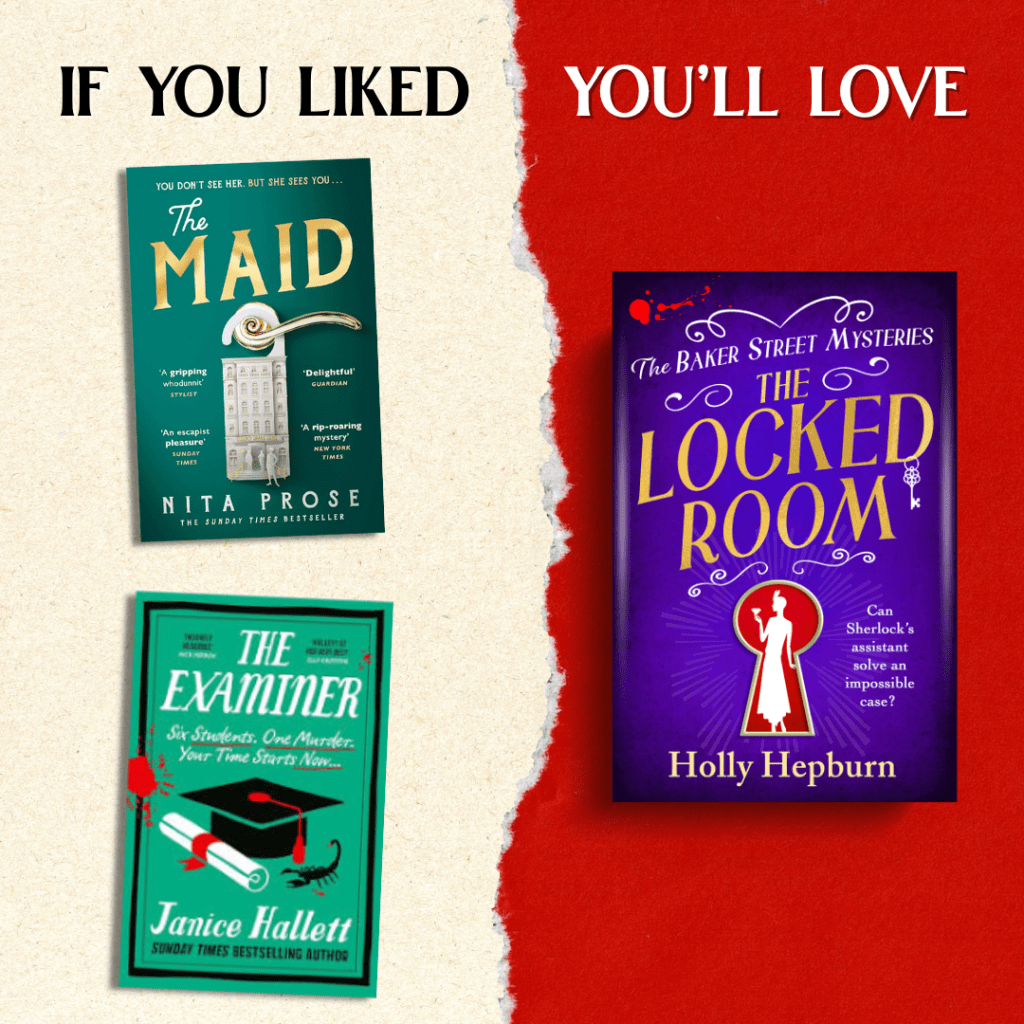
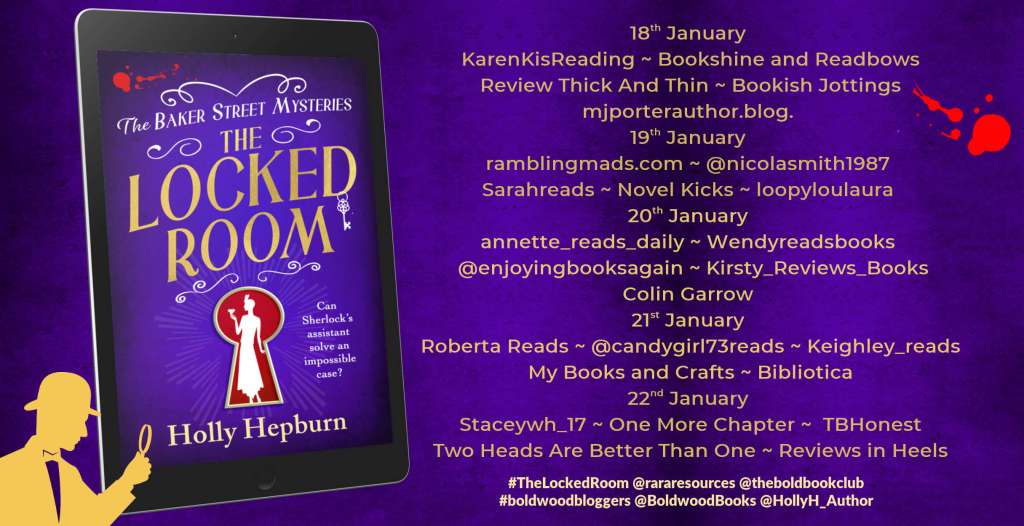
I’m delighted to be reviewing The Locked Room by Holly Hepburn #histfic #cosycrime #1930s #bookreview #BakerStreet @rararesources #TheLockedRoom @theboldookclub #boldwoodbloggers @BoldwoodBooks @HollyH_Author
Here’s the blurb
The BRAND NEW instalment in Holly Hepburn’s Baker Street Mystery series – for fans of Sherlock Holmes! Join Harriet White in 1930’s London for another glorious Sherlock Holmes-inspired mystery, for fans of Nita Prose and Janice Hallett.
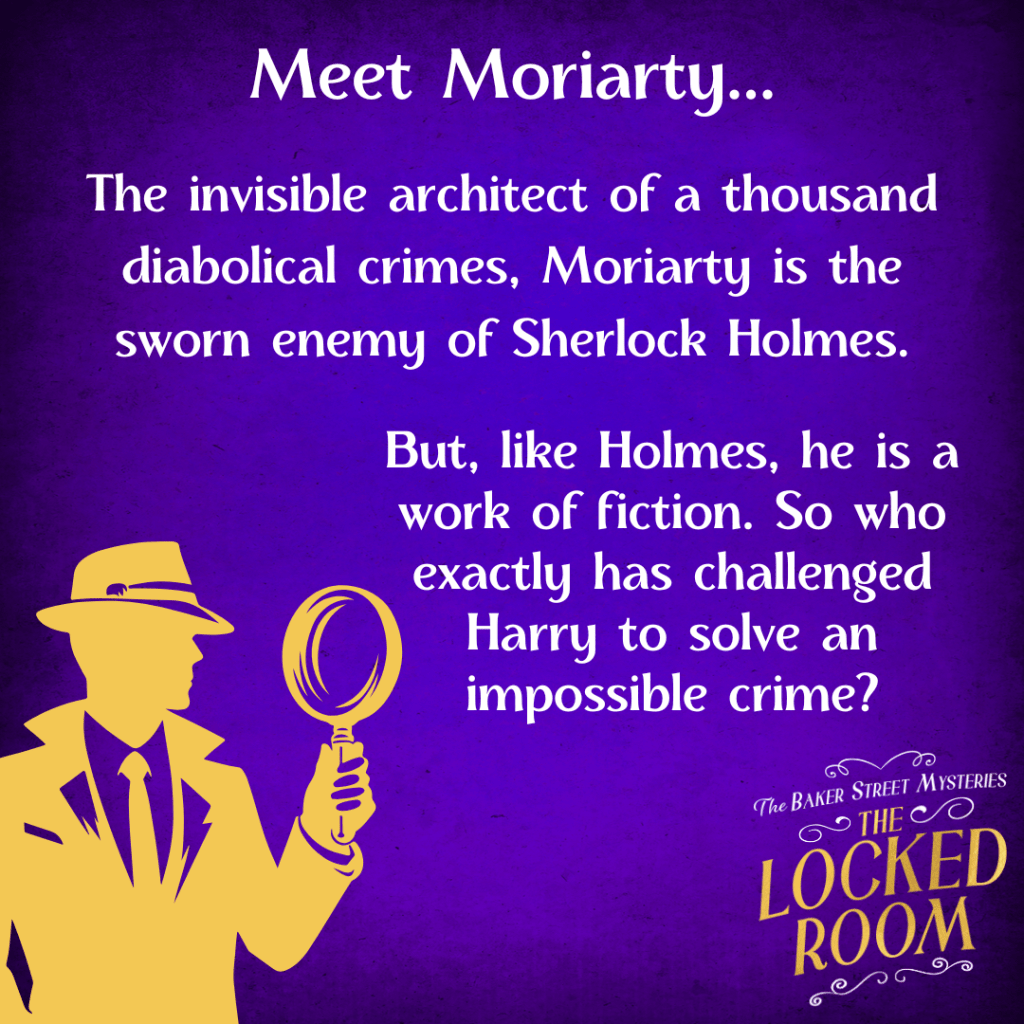
After a very close call on the Cambridgeshire Fens, Harriet White is about ready to hang up her deerstalker and settle back into her normal life, working in a bank on Baker Street. Until she discovers a letter in The Times newspaper challenging Sherlock Holmes to prove his status as the world’s greatest detective, by solving an impossible mystery. The letter, signed Professor James Moriarty, advises Holmes that the crime will be committed within the following seven days. There will be no further clues – Holmes himself must deduce which crime is the correct one to investigate.
Dismissing the letter as a prank, Harry goes about her business until news breaks of the theft of valuable jewel collection from a safe in an apparently locked room in a Mayfair townhouse.
Intrigued in spite of her misgivings, Harry dons a disguise and investigates. But as she begins to unpick the puzzle, a body is found. And now, a stranger, and far more deadly mystery begins to unfold around her…
The Locked Room is the third book in the Baker Street Mysteries. I’ve read books 1 and 2. Check out the review for The Missing Maid and The Cursed Writer.
The Locked Room is the third book in the Baker Street Mysteries, and I’ve read them all. While it is not necessary to have read the previous two books in the series, there are some threads that readers might miss if they begin with book 3 (and, of course, they will be missing out on the fun of reading the series from the beginning).
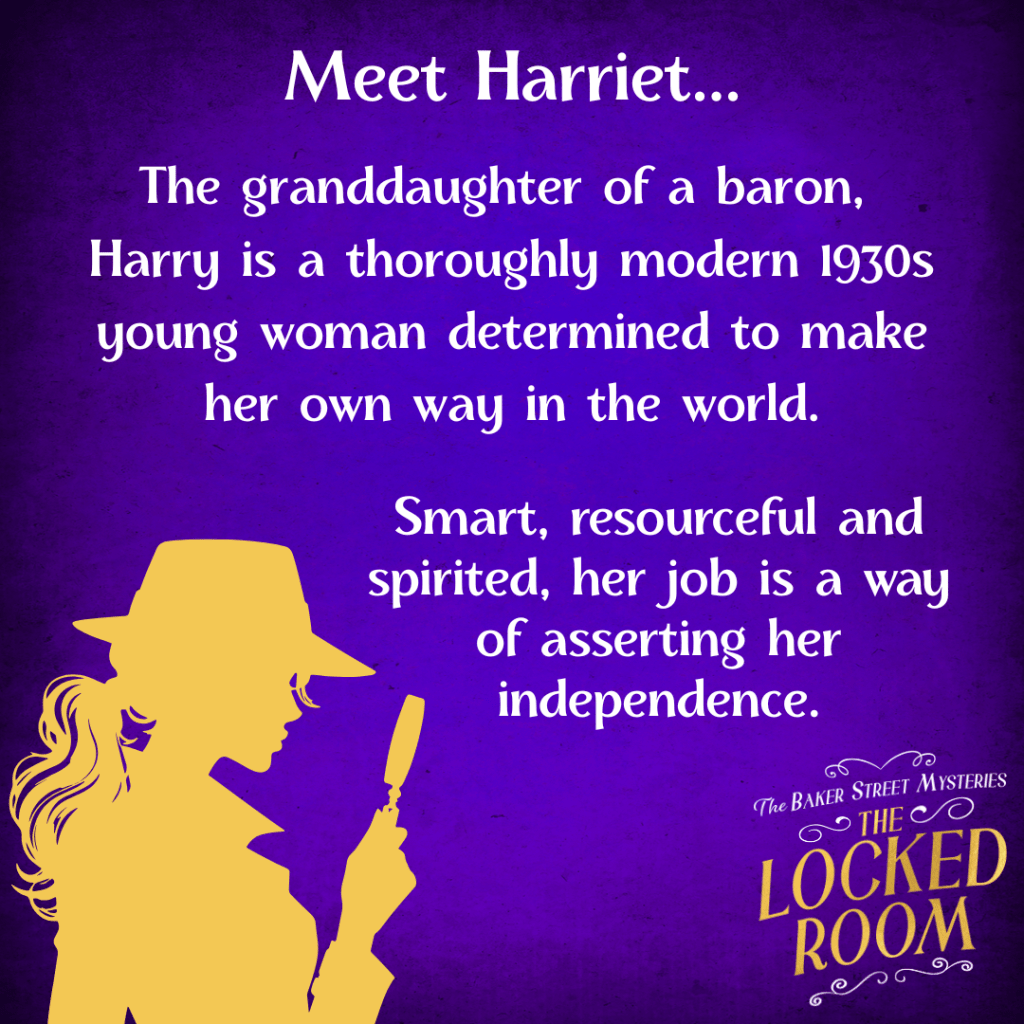
Our main character, Harriet, has two mysteries to solve in this latest book: determining the identity of her younger brother’s intended future wife and the theft of a priceless gem from a safe in a locked room. The twin mysteries unfold side by side and lead Harriet to some interesting locations.
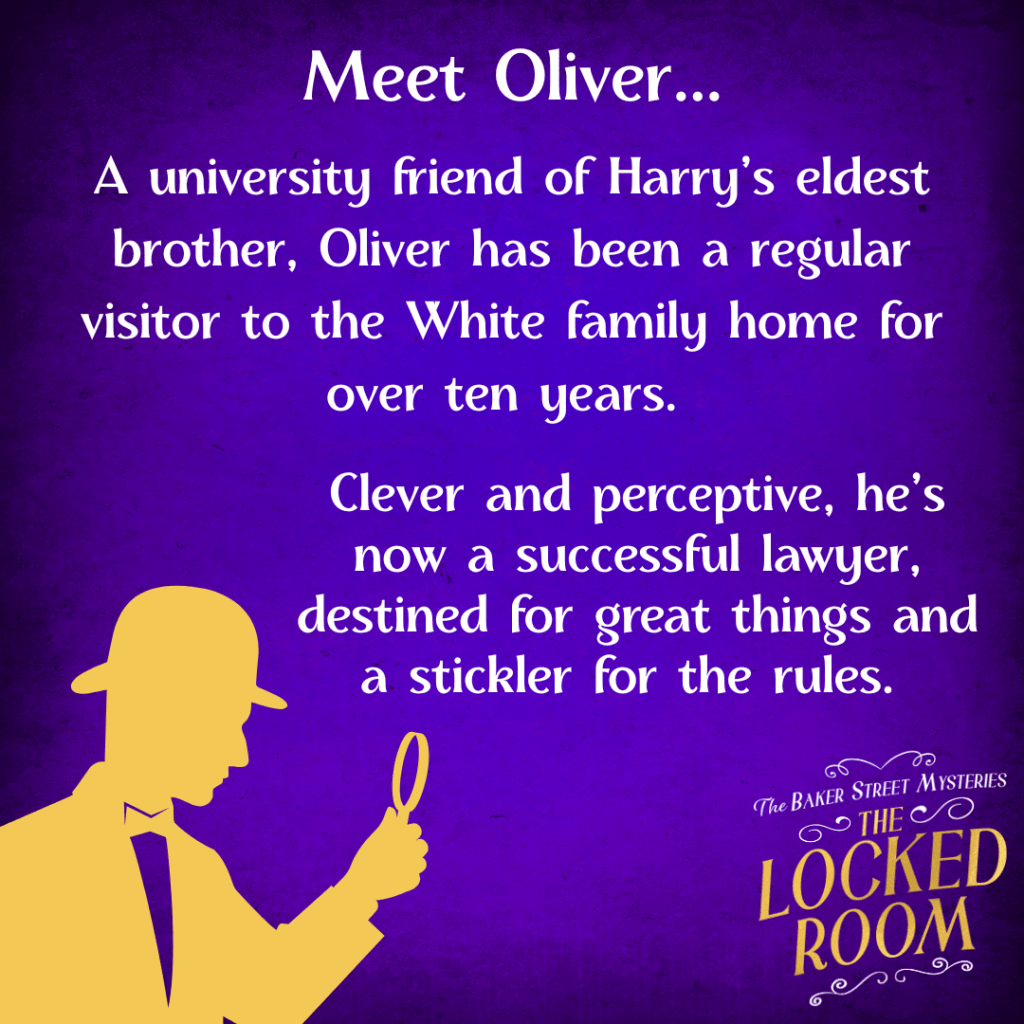
What I really adore about this series of books is just how ‘Sherlock Holmes’ like they are – even the mysteries ring with familiarity from the Holmes stories, and yet are firmly placed in the 1930s. Harriet also interacts with the other characters in a way that feels very true to the time period. As much as we might not like it, she does have to masquerade in men’s clothing, and she does need the help of her male friend to get into all the places she needs to visit. The Locked Room is also as twisty as the previous two books.
Another fab mystery, thoroughly enjoyable, ripe with the smell of 1930s London, and very Holmes-eque in its resolution as well as the mystery itself.
Meet the author
Holly Hepburn writes escapist, swoonsome fiction that sweeps her readers into idyllic locations, from her native Cornwall to the windswept beauty of Orkney. She has turned her hand to cosy crime inspired by Sherlock Holmes himself. Holly lives in leafy Hertfordshire with her adorable partner in crime, Luna the Labrador.
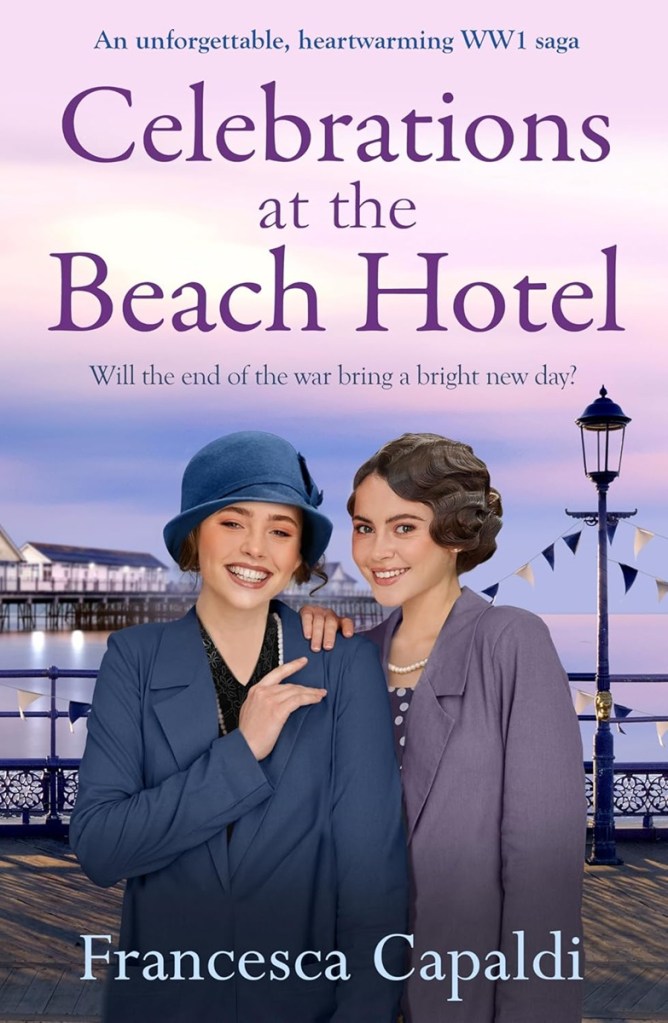
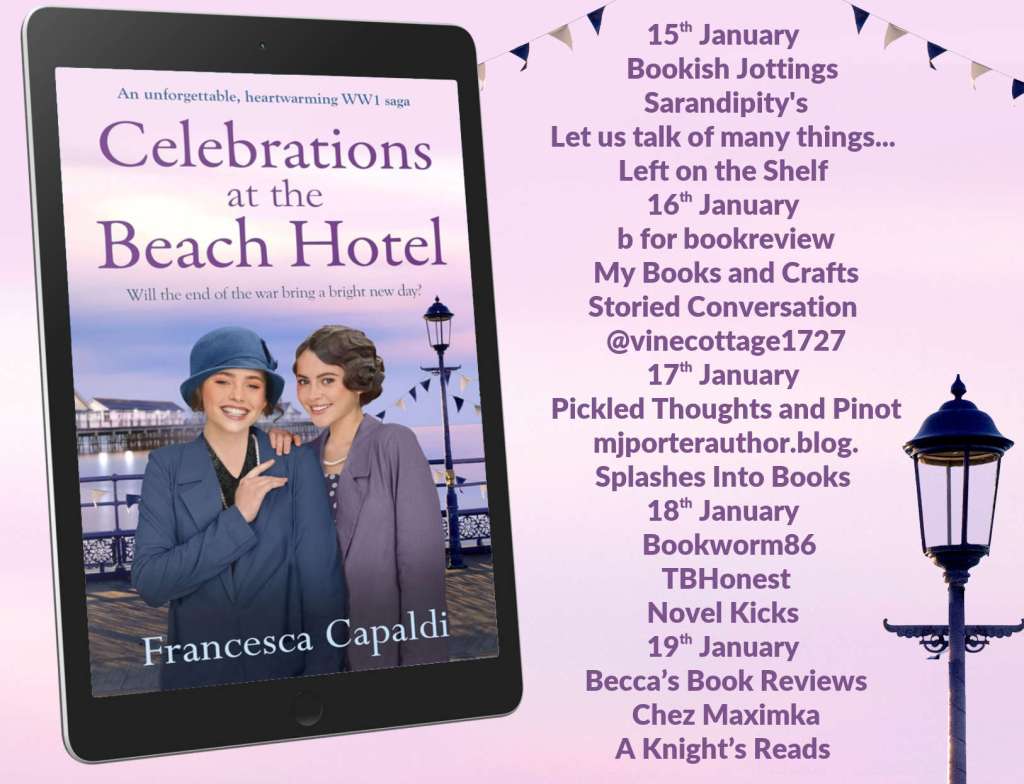
I’m delighted to welcome Francesca Capaldi and her new book, Celebrations at the Beach Hotel to the blog. Francesca is introducing us to the characters #blogtour #histfic #saga
Meet the Characters from Celebrations at the Beach Hotel
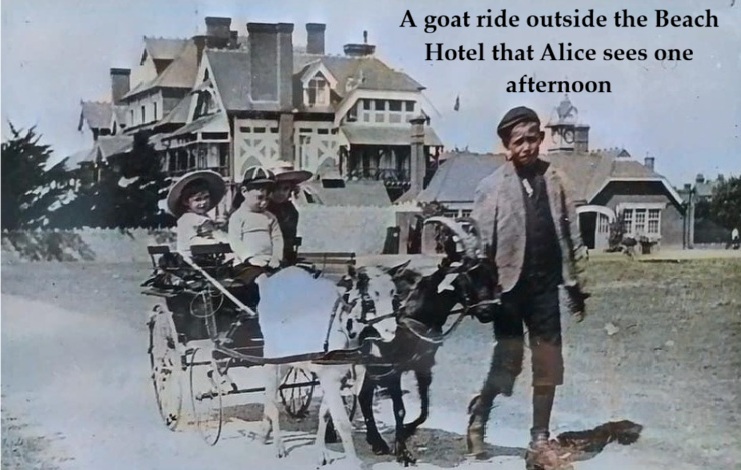
Annie and Alice Twine are sisters who work in the scullery at the Beach Hotel. They appeared in the first five novels about the place, but now, with the sixth book, they’ve landed a starring role each. They are twenty-three and twenty-two years old when Celebrations at the Beach Hotel begins.
As scullery maids, their jobs would have included washing up glassware, crockery, cutlery and pans, getting rid of waste food (most likely in a pig bin) and keeping the scullery and stillroom clean. They would have boiled hot water for various maids and even plucked and skinned animals, though we never see Annie and Alice do this.
Both of them started work at the hotel at 15, when they left school, so Annie started a year before Alice, and is now head scullery maid, something she is fond of reminding her younger sister about! Annie does have a tendency to glumness, whereas Alice has a happier personality. At least, that’s how it appears on the surface. Their father, Colin, is a farm manager at a farm in Wick, the village where the sisters live. Their three brothers, Cedric, Cecil and Cyril, who all worked as labourers on the farm before the war, have yet to be demobbed. Wick at the time was a village next to Littlehampton with extensive farmland, but it’s now part of the town. (Growing up, my house was a ten-minute walk away from where they supposedly lived.)
The sisters get on well, when Annie isn’t bossing Alice around. Their mother is keen for them to marry, but, as the sisters say, what opportunity do they have with most of the men still away? But when the men do start to return, that’s when romance comes between the two of them.
A lot of the characters from the previous books in the serious, including Edie, Lili, Helen, Hetty and Fanny, are part of the story, as the men who worked at the hotel before the war, and survived, slowly return. These include Lorcan, who Annie holds a torch for, and Jasper, who Alice is very fond of. Lorcan and Jasper both enlisted and joined Kitchener’s 7th Special Service Battalion in 1914, which eventually became part of the 12th (Eastern) Division. Although the war ended in November 1918, they spent another four months on salvage and clear up duties in France, so don’t return to the hotel until March 1919.
Lorcan’s from Ireland, a place he has difficulty visiting after he returns, due to the civil war brewing there. He walked out briefly with stillroom maid Hetty, who is now engaged to another, but Annie suspects that he hasn’t got over her. Jasper is from Bognor Regis and part of a once well-off middle-class family who owned several grocery stores, but has since had a fall in fortunes. The men’s jobs as porters would have included greeting guests at the hotel, carrying luggage and showing them to their rooms, advising on hotel facilities and that of the surrounding area, making travel arrangements, parking guests’ motorcars and running errands for them.
During the course of the story, there are several marriages. These are kicked off by the real wedding of Princess Patricia of Connaught (a granddaughter of Queen Victoria) to The Hon. Alexander Ramsay, incidentally the first royal wedding at Westminster Abbey since the 14th century. The female staff are reading about it in the newspaper and cooing over it as Lorcan and Jasper return from the war. Although Alice enjoys reading about the event, Annie is typically dismissive of the whole thing.
Either way, this event, and the subsequent weddings, don’t make either sister optimistic about their own prospects. Alice believes Jasper’s too high above her in social standing, even though he’s now just a porter. These beliefs only serve to help scupper their chances further, and they end up having a major fall-out with each other as a consequence, which isn’t helped by the appearance of a third man, adding to the romantic mix…
Here’s the blurb
Sisters Alice and Annie have always been close but will a man come between them?
Annie and Alice love their life working at the Beach Hotel together and each is thrilled to have finally found a sweetheart. Yet the path of true love never did run smooth, and they soon find themselves facing conflict and strife. Could love come between them and the bond they share?
Meanwhile, as men start to come home from the war, the women have to work out how to keep their jobs, although they are delighted to be back with their beaus. Soon, wedding bells ring out in Littlehampton.
Will everything be made right in time for Christmas?
Francesca Capaldi has enjoyed writing since she was a child, largely influenced by a Welsh mother who was good at improvised storytelling and an Italian father who loved history. She is the author of historical sagas, short stories and pocket novels.
The first novel in the Beach Hotel series, A New Start at the Beach Hotel, won the Romantic Saga Award at the Romantic Novelists’ Association Awards in 2024. The first novel in the Wartime in the Valleys series, Heartbreak in the Valleys, was shortlisted for the Historical Romantic Award in the RoNAs in 2021.
Francesca was born and brought up on the Sussex coast, went to London to do a history degree, but has lived for many years in Kent with her family and a cat called Lando Calrission.
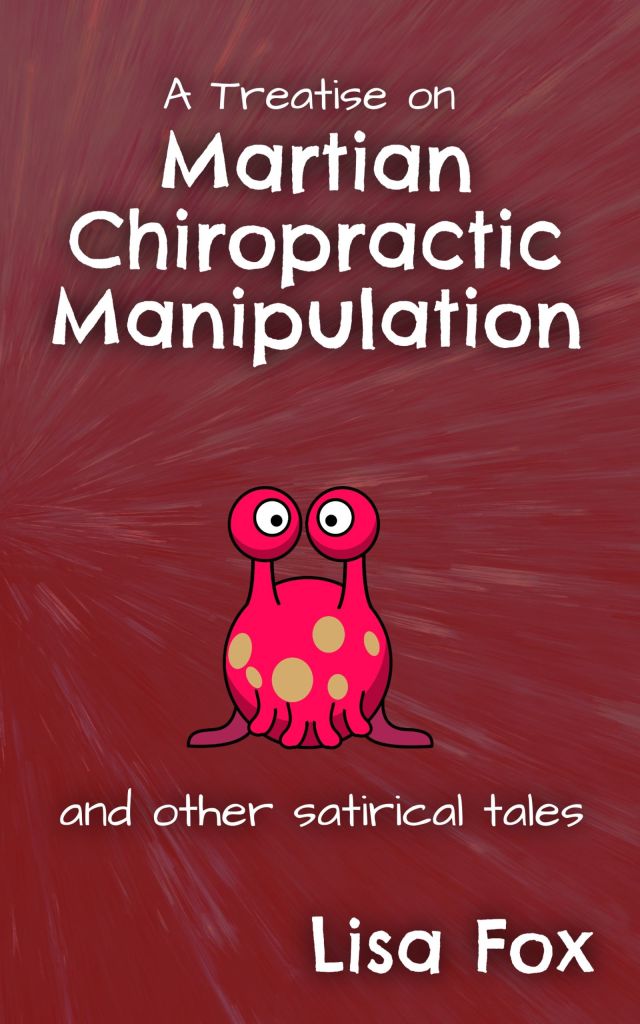
I’m delighted to share my review for A Treatise on Martian Chiropractic Manipulation and Other Satirical Tales by Lisa Fox #blogtour #bookreview #fantasy #shortstories
Here’s the blurb
Human beings are flawed creatures, and humor is the perfect means to exploit the endless fodder of our shortcomings. This multi-genre collection of twenty-one short satirical stories will leave you smirking, chuckling, scratching your head, and maybe even muttering to yourself “WTF is this?”
From the award-winning author of the acclaimed short story collections “Core Truths” and “Passageways: Short Speculative Fiction” comes something a little bit irreverent and a whole lot of weird.
Ketchup-covered chiropractors on Mars. Wealthy vigilante housewives battling coffee-addicted aliens. Cheerleaders protesting unrestricted access to cupcakes. Canine doulas. Hallucinating marine biologists. No one is immune from the absurdity.
This is an intriguing and often fun collection of short stories by Lisa Fox. Some of them are very short, and some are much longer, but they all offer something a little different. Readers will enjoy learning about Martian Chiropractic techniques as well as following the loyalty card storyline, which will have us all thinking about just how much information these companies do hold about us (hint, it’s a lot). If you love short story collections, do check this one out. It’s varied, thought-provoking and sometimes, just plain fun.
Meet the author
Lisa Fox loves to ask questions. By day, she’s a pharmaceutical market researcher. By night, she channels that same inquisitive spirit into writing short fiction, building worlds and characters that explore the meaning of life, the universe, and everything in between. She survives, and sometimes thrives, in the chaos of suburban New Jersey with her husband, two sons, and quirky Double-Doodle dog. Lisa is an award-winning author of two short story collections: Core Truths and Passageways: Short Speculative Fiction. Website: lisafoxiswriting.com Twitter/X: @iamlisafox10800 Facebook: lisafoxiswriting
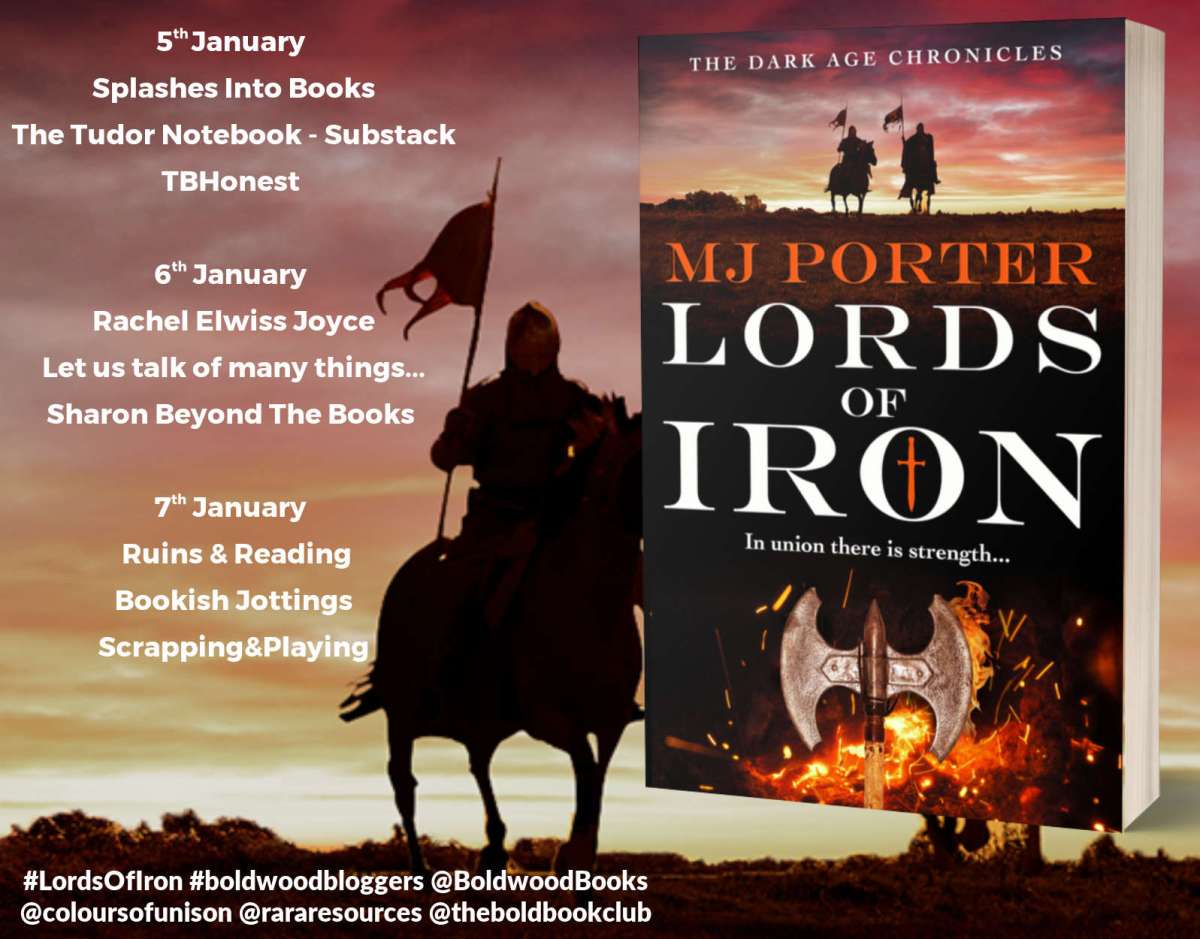
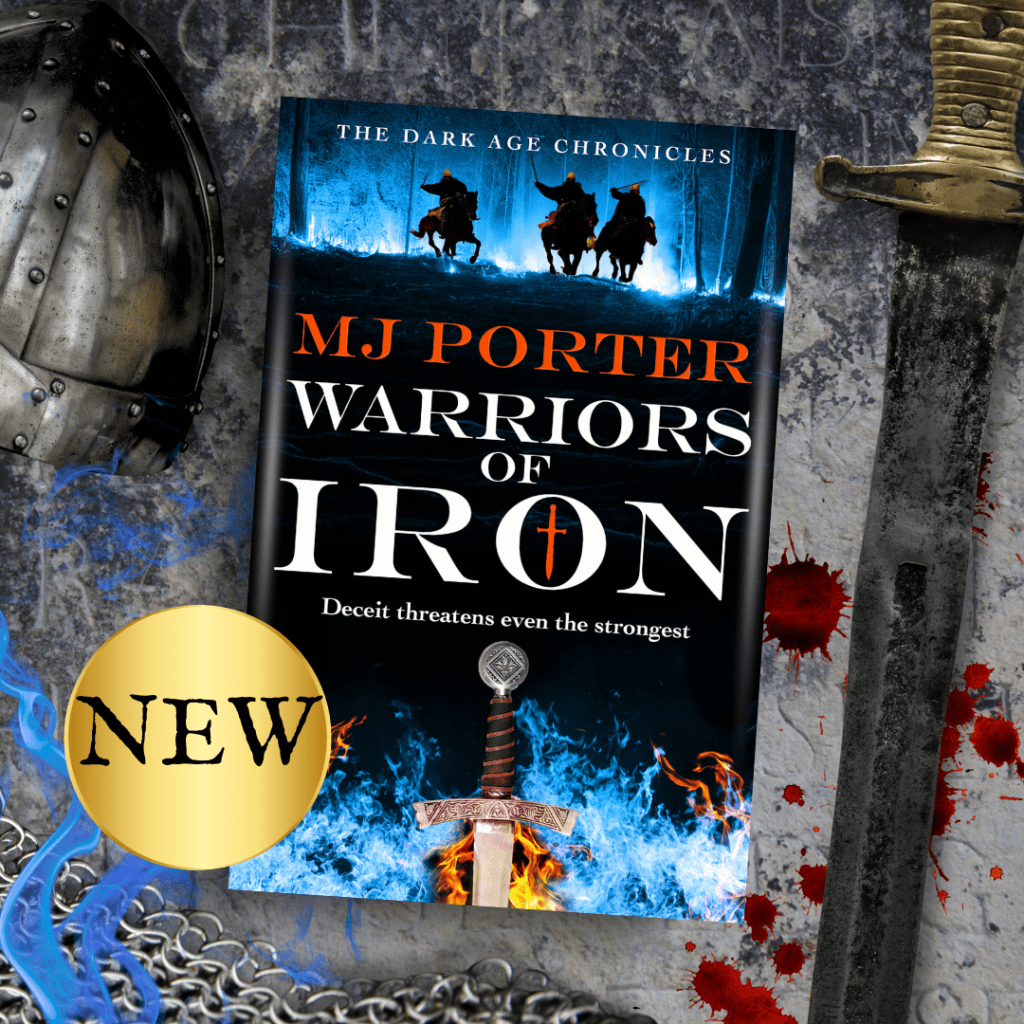
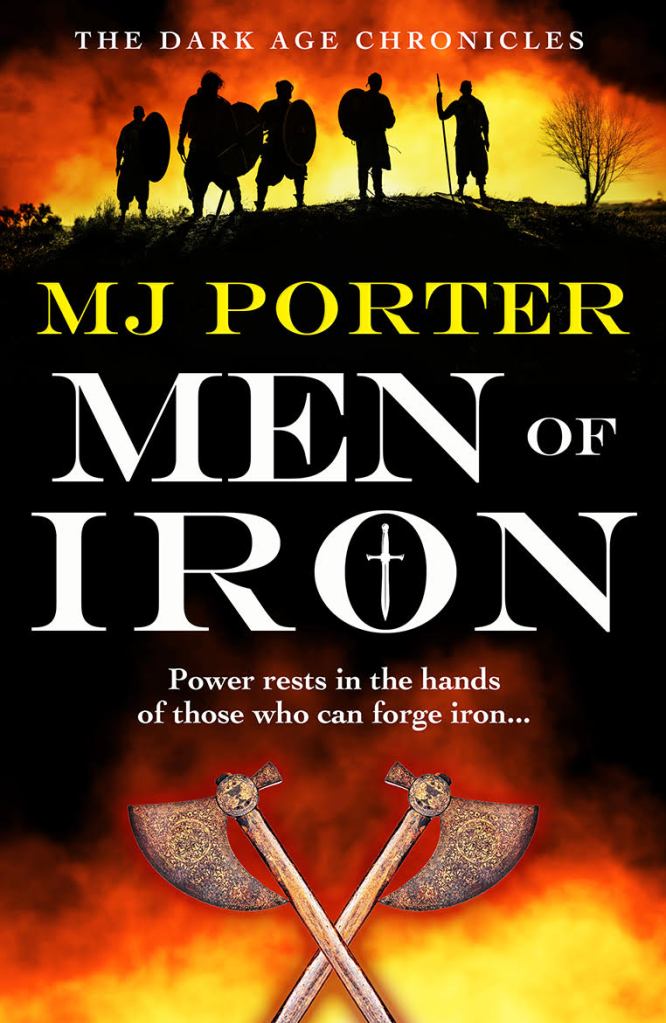
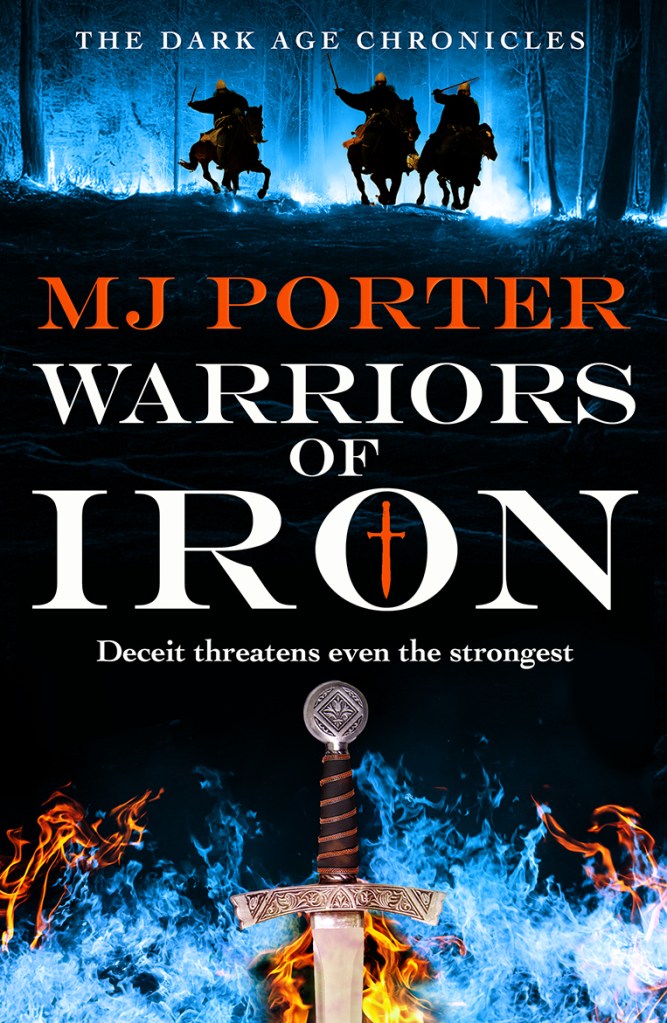
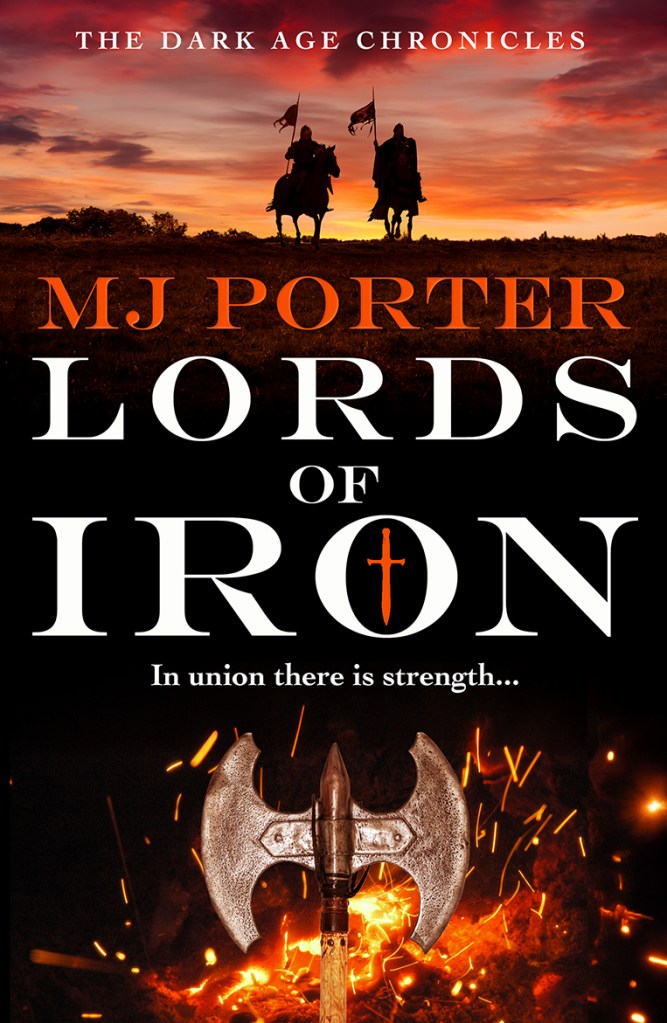
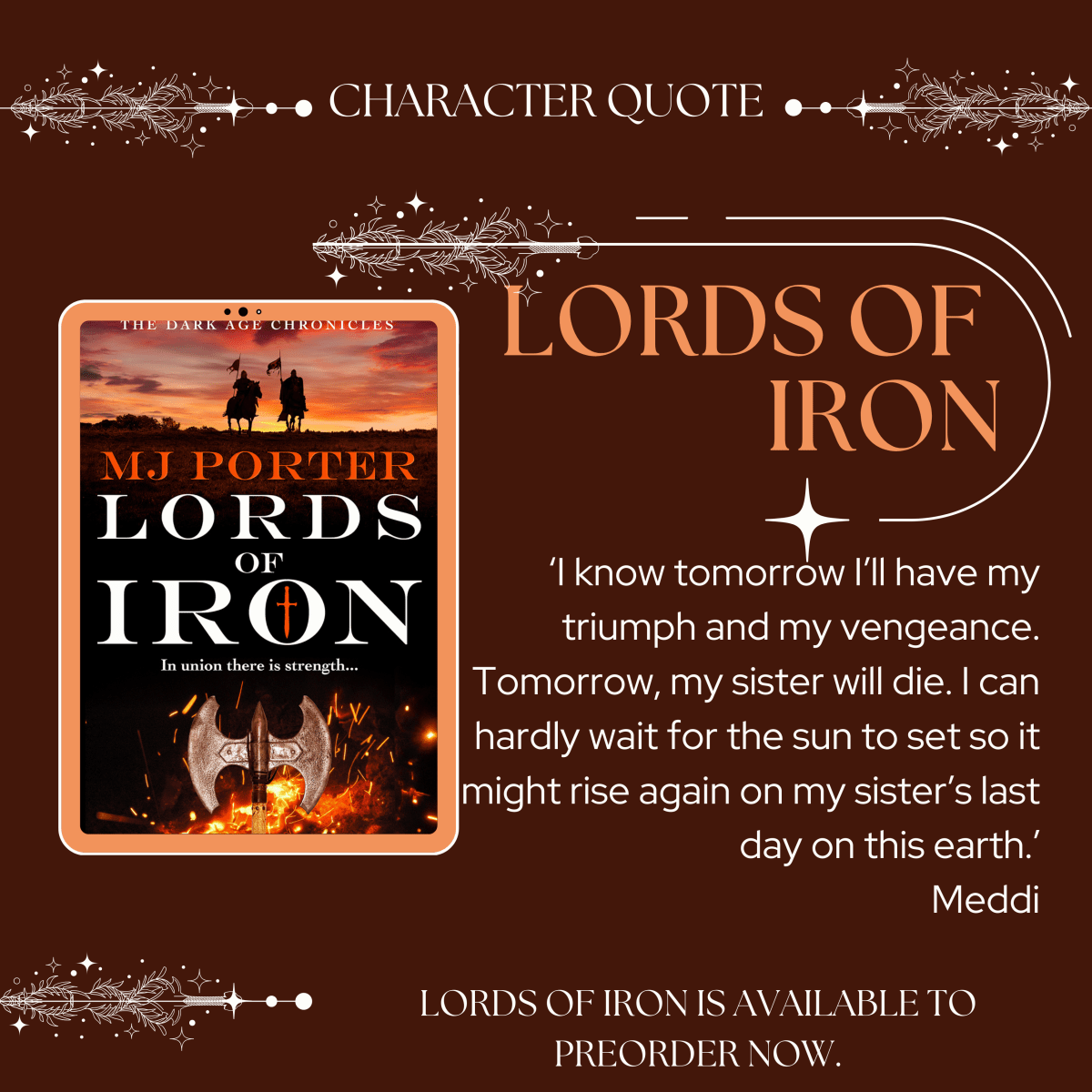
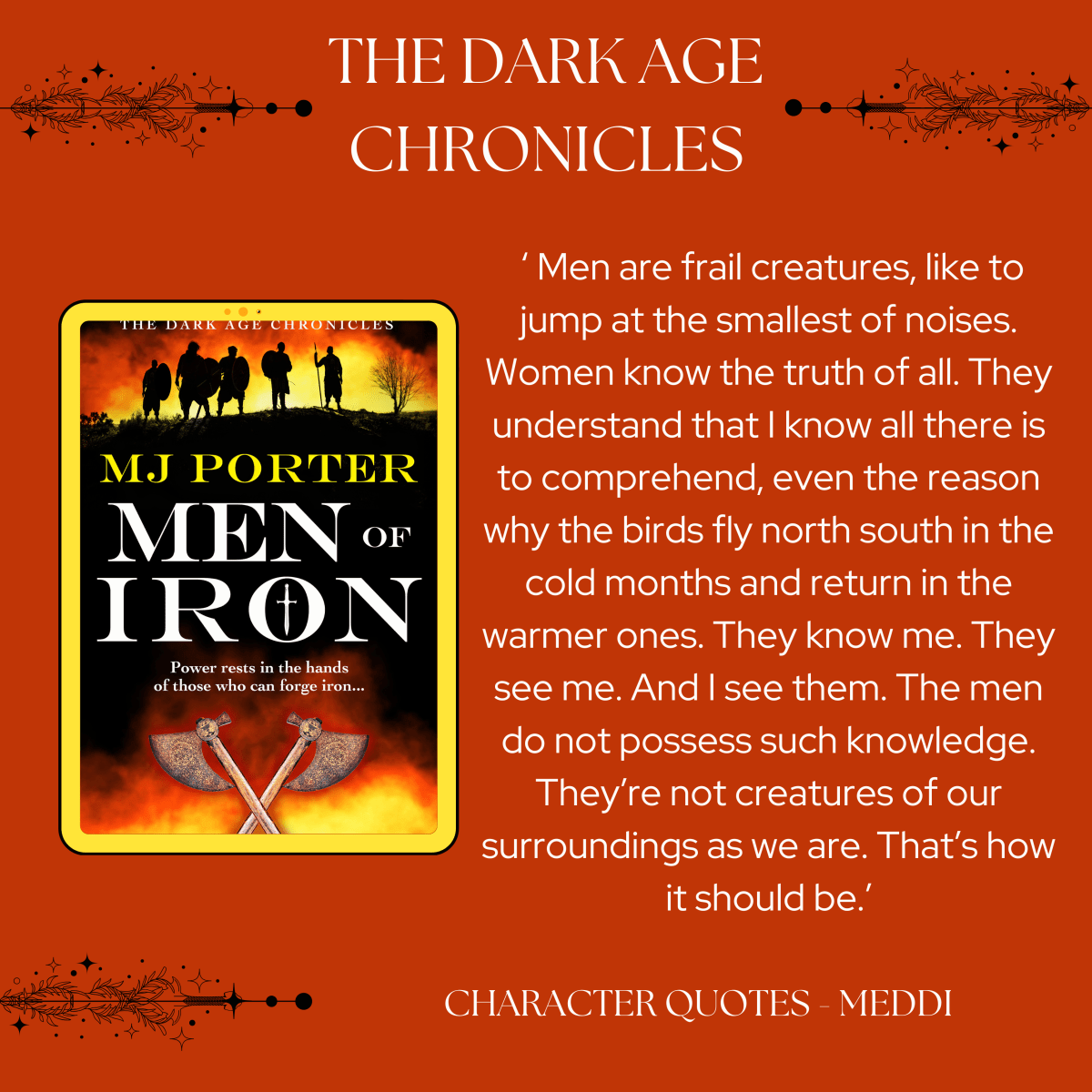
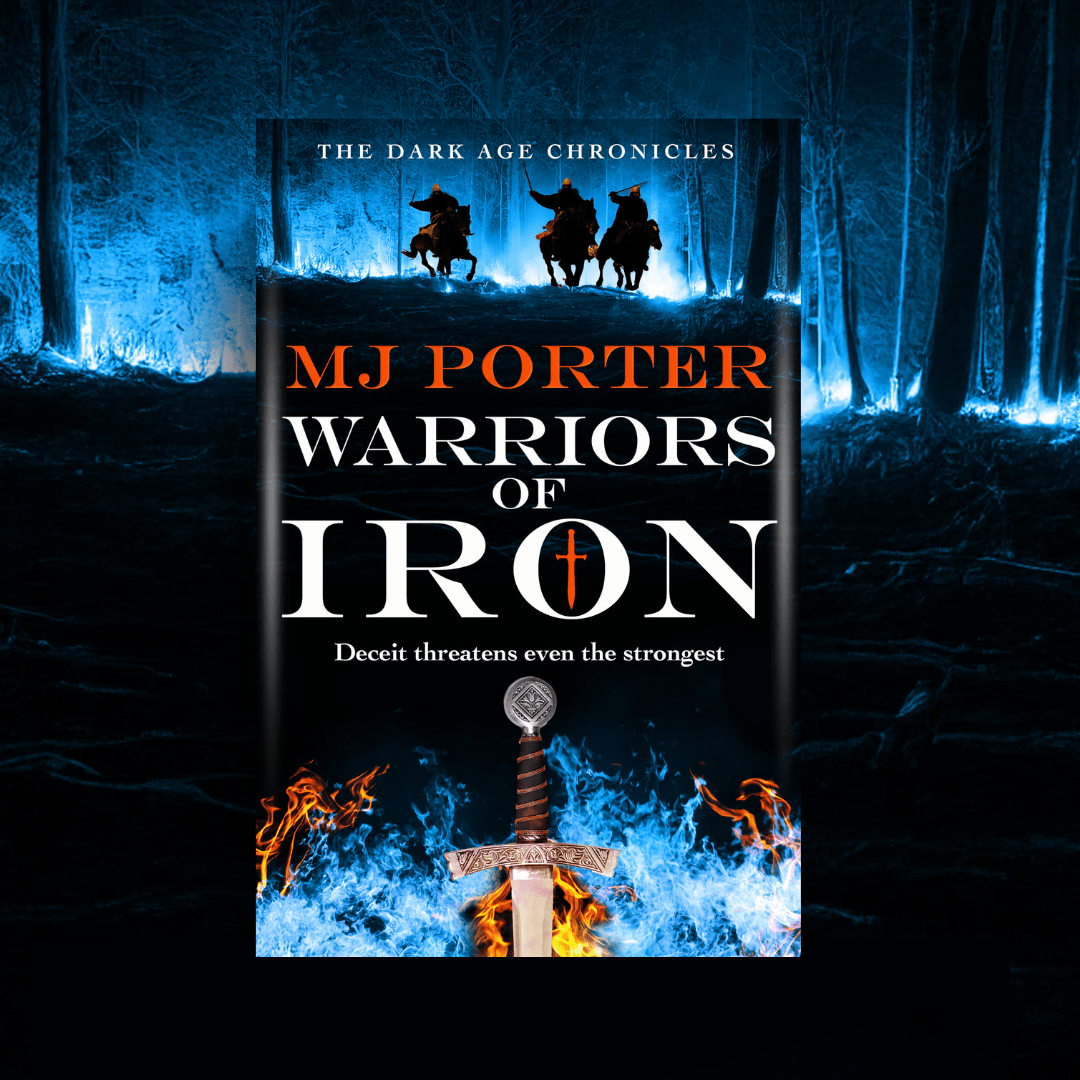
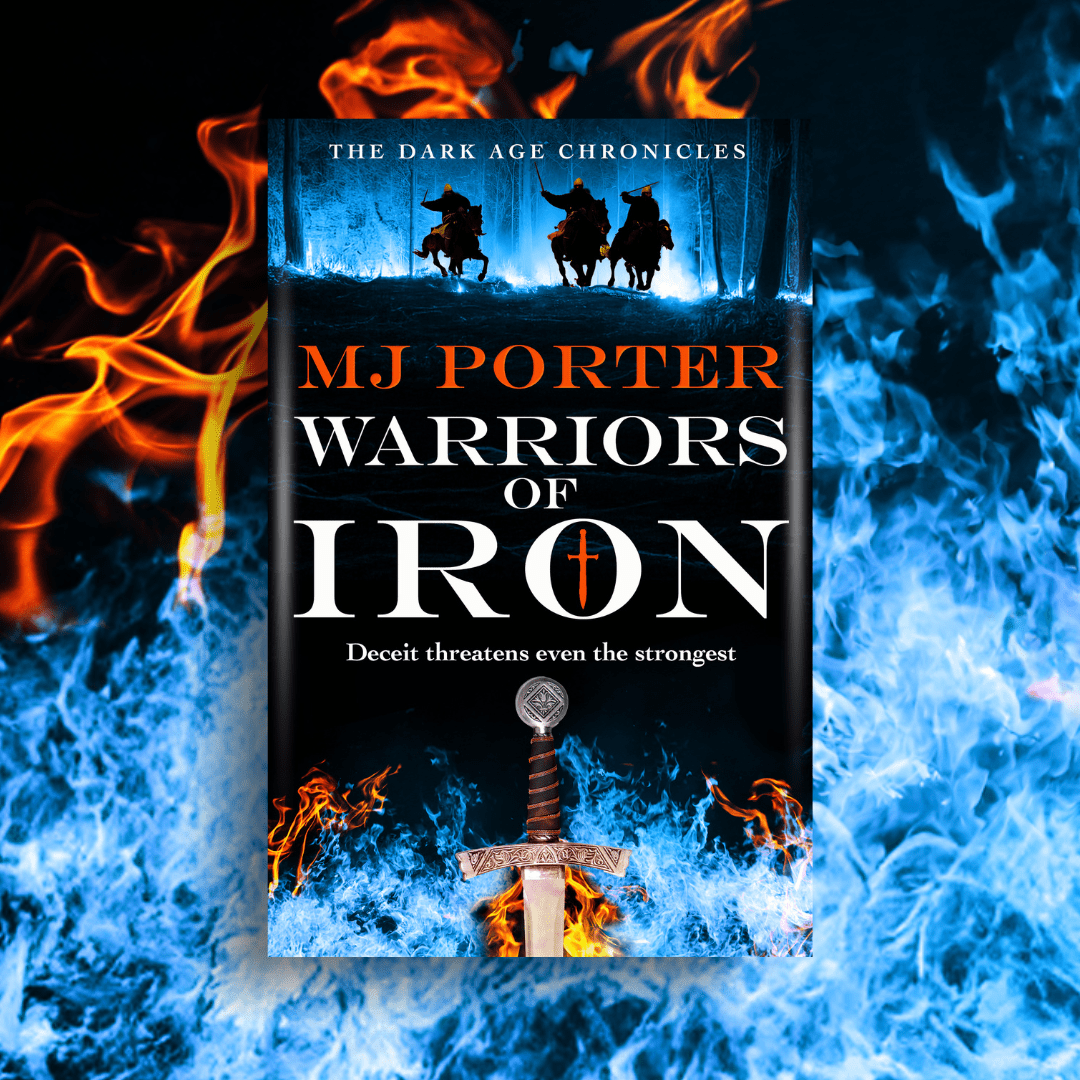
The blog tour for Lords of Iron has finished. A huge thank you to all the hosts. Here’s what they had to say about Lordsof Iron #newrelease #MenOfIron #WarriorsOfIron #LordsofIron #histfic
The Lords of Iron blog tour
Watch the little video I made to showcase the reviews from the fabulous reviewers. Thank you to them all. I know the majority have been with me since Men of Iron, and it’s amazing to realise how invested they’ve become in my characters. (The music is very dramatic).
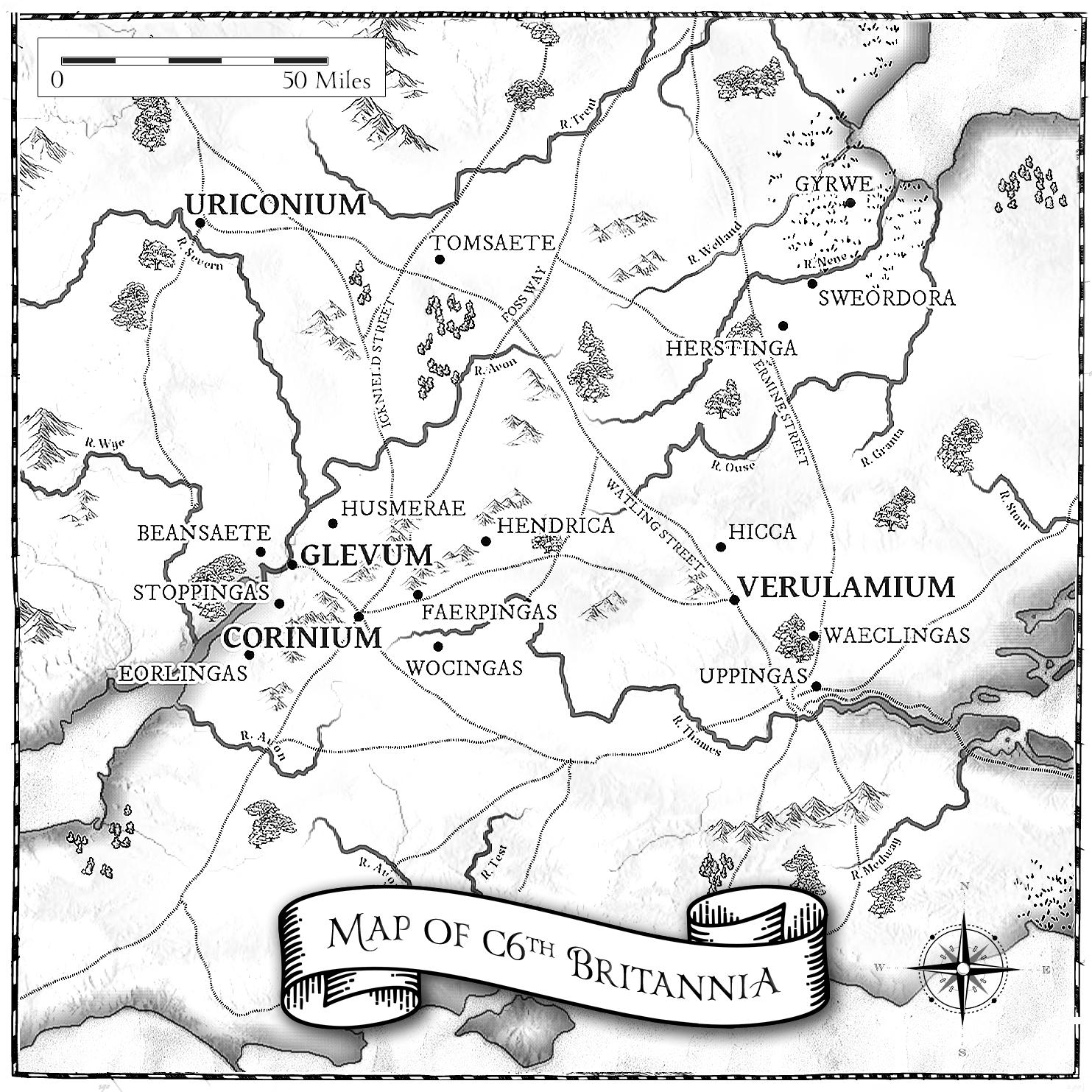
Check out my blog for more details about the Dark Age Chronicles
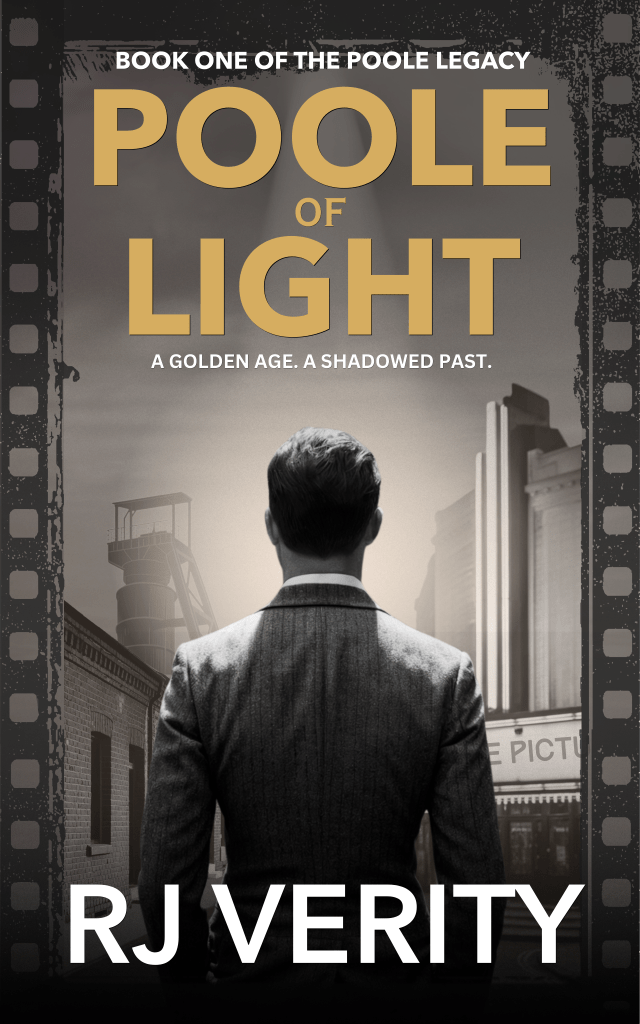
I’m excited to share an excerpt from RJ Verity’s new historical fiction novel, Poole of Light #blogtour #historicalfiction
INTRO In this scene, ten-year-old Jem Poole glimpses a world far beyond Spennymoor for the very first time. The newly built Grand Electric Hall has not yet opened to the public, but Jem and his friend Daisy slip inside, drawn by curiosity and the muffled sound of music. What Jem witnesses there – moving pictures – ushers in a moment of wonder that will quietly shape the rest of his life. This extract captures that first spark: the awe, the innocence, and the sense that something extraordinary has just entered his world.
EXTRACT
As they turn into Cheapside, an old rusty lorry rumbles to a stop outside a new brick building, where a group of workmen are fixing enormous block capitals above a clock. Daisy tilts her head to read, eyes squinting as if the letters might tell her something important. Jem watches on, but says nothing.
‘What does ARCA mean?’ she asks.
‘I don’t think it means anything.’
‘Oh.’
Below the clock, white lettering proudly displays the words “GRAND ELECTRIC HALL”.
‘What’s a grand electric hall?’
He sighs, keeping his eyes on the workmen. He’d overheard Pa talking to his colliery mates about a new theatre opening in town – something with moving photos, he’d said. Of course, Jem knows what a photo is – like the one of Ma on the mantelpiece – but how she could suddenly come to life is beyond him. He can’t picture her like that, not walking and talking like Pa or Daisy.
‘Come on,’ he says.
They slip past the workmen and into the foyer of the new building. Jem’s steps are deliberate and measured – he’s determined to take everything in. Daisy skips beside him, light on her feet.
Crates, half-unpacked, litter the space – paper and straw spilling in all directions. The warm smell of fresh wood hits first, then something sharper, chemical, that scratches the back of his throat. Wall sconces flicker with a quiet expectancy, casting lively patterns across the floor. Music drifts from somewhere beyond – muffled, unfamiliar, pulling at Jem’s chest like a thread. He follows the sound toward the back of the building and beckons for Daisy to come.
She stands looking at him, eyes wide, as if to say: This isn’t a good idea.
‘You don’t have to … if you don’t want to,’ he tells her.
She pouts but trails after him anyway.
As they draw closer, the music grows clearer – a dramatic piano tune with heavy bass and a scatter of quick, racing notes. Jem glances to his right and sees a bright shaft of light dancing across the passageway. He creeps forward, heart thumping, until his face and jacket are lit up. It feels like sunlight through the church window on a Sunday morning – only sharper, more vivid.
His shoulder brushes against a soft curtain, but his eyes stay fixed ahead, his breath deeper. For there, on a stage, is a beautiful young woman. Her face is white – like the colour of Pa’s eyeballs after a shift down the pit – only clean, and somehow otherworldly. Big curls of hair, piled high, fall to her shoulders. She’s wearing the fanciest frock he’s ever seen. A man walks beside her, and they cross the road together. Behind them, tall buildings rise, taller than any furnace chimney in all of County Durham. Jem’s heart beats faster as the music quickens. Then a passenger train rushes into view and vanishes just as quickly.
Jem doesn’t move. He hardly blinks. How can a train be on a road? How can buildings scrape the sky? How can people float across a screen like that?
Most of all – how can everything be black and white and still feel more alive than the world he knows?
‘Moving photos.’ He can’t help but say the words out loud.
Daisy tugs at his arm. ‘Jem!’ she cries.
But before he can turn, he feels a sudden blow to his temple.
‘What have we here?’ booms a voice behind him.
Jem stumbles sideways, hand to his pounding head. He’s looking down at a pair of black polished boots … dark overalls … then a round sweaty face, breathing loud, and steaming with anger.
‘Sorry, sir,’ says Jem, trying to steady himself. ‘We don’t mean no bother.’
‘No bother?’ the man sneers.
‘No, sir. We just want to see moving photos.’
The man gives a snort. ‘Moving pictures, boy. They’re called moving pictures.’ He crouches down, his small black eyes level with Jem’s. ‘And have you got thruppence between the two of you?’
Jem glances at Daisy, then back at the sweaty round face. ‘No, sir.’
‘Then you’ll have to go without, won’t you? Go awn.’ He stamps his foot. ‘Gan! Afore I call police!’
The children bolt down the passageway, back into the foyer, and past the workmen hauling a giant letter ‘D’ above their heads.
Outside, the street is already black with night.
‘The park!’ Jem shouts as they run.
They turn the corner onto Dundas Street, where lamplight is scarce, and shadows swallow the pavement. His feet slide on icy sludge as he dodges night soil boxes piled up like traps. Daisy’s steps are fainter now – she must be slowing down. He tries to stop, but it’s too late – too fast – and his footing falters. His chest jerks forward. Arms fling out for balance, too wide, too desperate, and his whole body launches through the air. In the half-second before Jem crashes down, he sees the jagged boxes, the filth inside them, and he twists every muscle to avoid them. His body slams into the ground, splinters flying and muck exploding in all directions.
Here’s the blurb
A coal-mining town. A flicker of light. A boy who dreams of more.
Spennymoor, 1913. When ten-year-old Jem Poole sees a moving picture for the first time, it ignites a spark. Raised in a northern coal-mining town marked by grief and hardship, he begins to dream of more than soot and survival. He dreams of light.
Through war, reinvention, and the golden age of British cinema, Jem rises to national success, building a legacy of silver screens and stories that define a generation. But when a figure from his past reappears, long-buried memories resurface, and he must confront the truth of the life he has built – and the memories that never let go.
Set against the backdrop of twentieth-century Britain, Poole of Light is a richly layered historical debut about ambition, identity, and the stories that shape us.
Perfect for readers who enjoy:
Character-driven historical fiction with emotional depth
Coming-of-age novels set in 20th-century England
Themes of legacy, reinvention, and quiet redemption
Authors like Jo Baker, Kristin Hannah, Amor Towles and Anthony Doerr
Book One in The Poole Legacy — a literary historical trilogy exploring ambition, identity, and legacy across generations.
Also available as an eBook: Bright Light, a companion short story set during the events of this novel.
RJ Verity grew up in Yorkshire and studied at King’s College London before spending more than twenty years in financial services across Asia. She now lives in Guernsey with her endlessly patient husband and their spirited ten-year-old Labradinger. When she’s not writing or reading, she can often be found exploring the island’s rugged coastline.
She is currently working on The Poole Legacy, her debut trilogy of historical novels. The first book in the series, Poole of Light, is out now.
*Terms and Conditions –UK entries welcome. Please enter using the Gleam box below. The winner will be selected at random via Gleam from all valid entries and will be notified by Twitter and/or email. If no response is received within 7 days then Rachel’s Random Resources reserves the right to select an alternative winner. Open to all entrants aged 18 or over. Any personal data given as part of the competition entry is used for this purpose only and will not be shared with third parties, with the exception of the winners’ information. This will passed to the giveaway organiser and used only for fulfilment of the prize, after which time Rachel’s Random Resources will delete the data. I am not responsible for despatch or delivery of the prize.























 MJ Porter