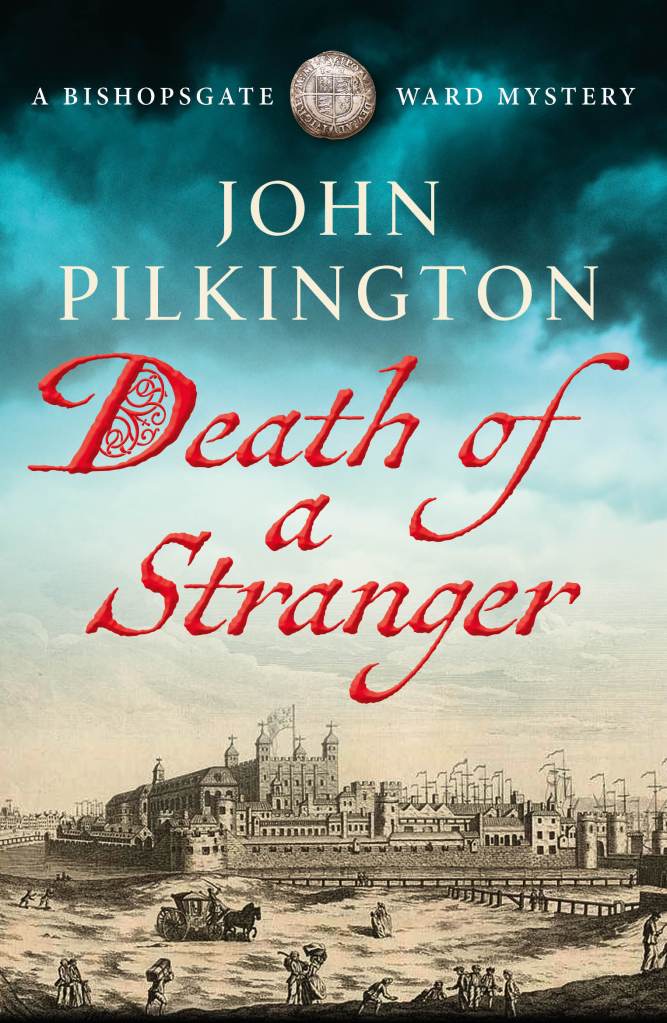
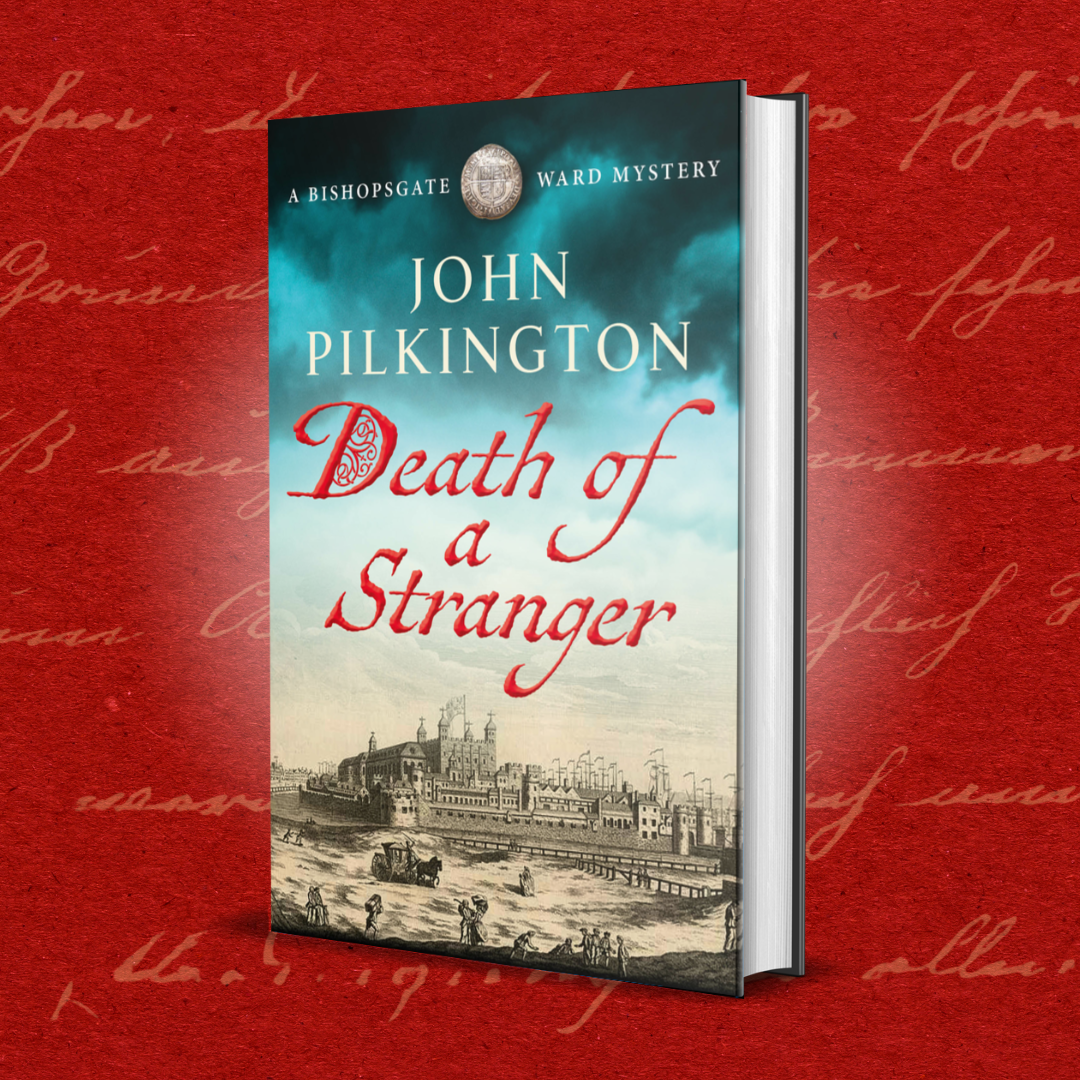
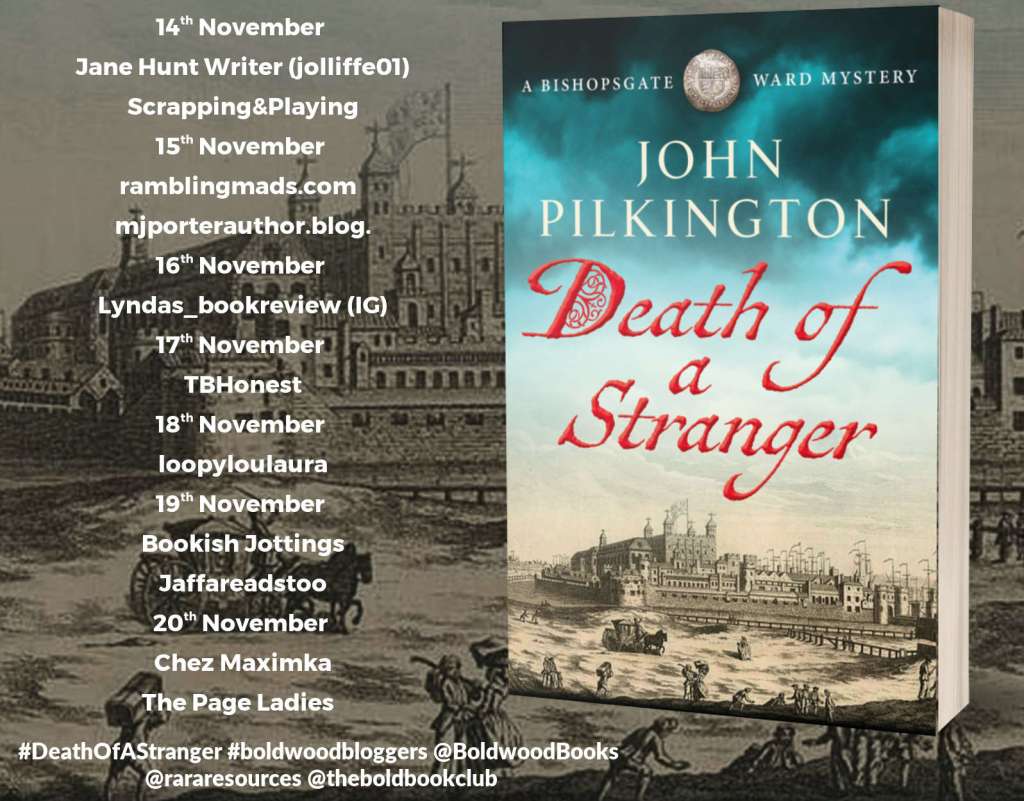
I’m sharing my review for Death of a Stranger, the first book in John Pilkington’s Elizabethan mysteries featuring Matthew Cutler #histfic #historicalmystery #bookreview #blogtour
Here’s the blurb
1594, Bishopsgate Ward, London. Within the walls and without, unease and uncertainty lurk beneath the noise and bustle of a smoky, teeming city.
Matthew Cutler, newly widowed and caring for two spirited daughters, takes his position as constable for the parish of Spitalfields very seriously. So when Paulo Brisco, a quiet Venetian perfumer is found brutally murdered in his own shop, Cutler throws himself into his first major crime, and one which threatens to set all Bishopsgate alight. 🔥
Being a humble parish constable, Matthew Cutler’s powers are slight – and yet he possesses a skill which most others do not. As a former actor he can employ disguise, to considerable effect and to his unique advantage…
Plunged into a treacherous world of notorious rakes, angry tradesmen and a community seething with anti-foreigner sentiment and suspicion, Cutler must decipher shattered clues and confront a killer whose motive remains a baffling mystery – until the very last.
Step into the dangerous world of Elizabethan London with this cracking murder mystery!🩸🔍
Death of a Stranger introduces the reader to Matthew Cutler, a former player and now a widower, working as a constable of his parish, under the guidance of his father-in-law. Matthew is a likeable character as he navigates Elizabethan London. He has to contend with some quite tricky situations too, as well as trying to solve the mystery of who our killer is.
We are treated to a depiction of Elizabethan London, after a resurgence of the pestilence, and with the memory of the Spanish Armada still fresh in everyone’s mind. This is a time of unease and suspicion, alongside the rigid social strictures of the era.
The attempt to solve the mystery takes the reader on quite the journey through the Elizabethan underworld, as well as into high society, a society Matthew is effectively barred from, although there is an intriguing solution to it. At points, it feels as though anyone could be the murderer, from the lowest to the highest, and then many others in between. Matthew does not lack for suspects, but he does struggle to find the killer, even when someone is sent to effectively stop his investigation.
There is no doubt that I don’t understand much about the Elizabethan justice system, and it’s possible that some of the nuances may have passed me by, but I did enjoy this historical mystery, which contains the elements I’d expect from a story set in the era. An enjoyable read, and I look forward to reading more by the author.
Meet the author
A writer for over forty years, John Pilkington was born in Lancashire and worked at many jobs including laboratory assistant, farm worker, weaver, shipping clerk, picture frame-maker and cabaret musician before taking a degree in Drama and English and finding his true 2 vocation. He has since written plays for radio and theatre, television scripts for a BBC soap, a short-lived children’s series and numerous works of historical fiction, concentrating now on the Tudor and Stuart eras. He also ventured into speculative fiction with his biography of Shakespeare’s famous jester, Yorick.
He now lives in a village on a tidal estuary in Devon with his long-term partner Elisabeth; they have a son who is a psychologist and musician. When not at the desk he walks, swims, listens to music and tinkers with d.i.y. projects, and is enjoying being a grandfather.
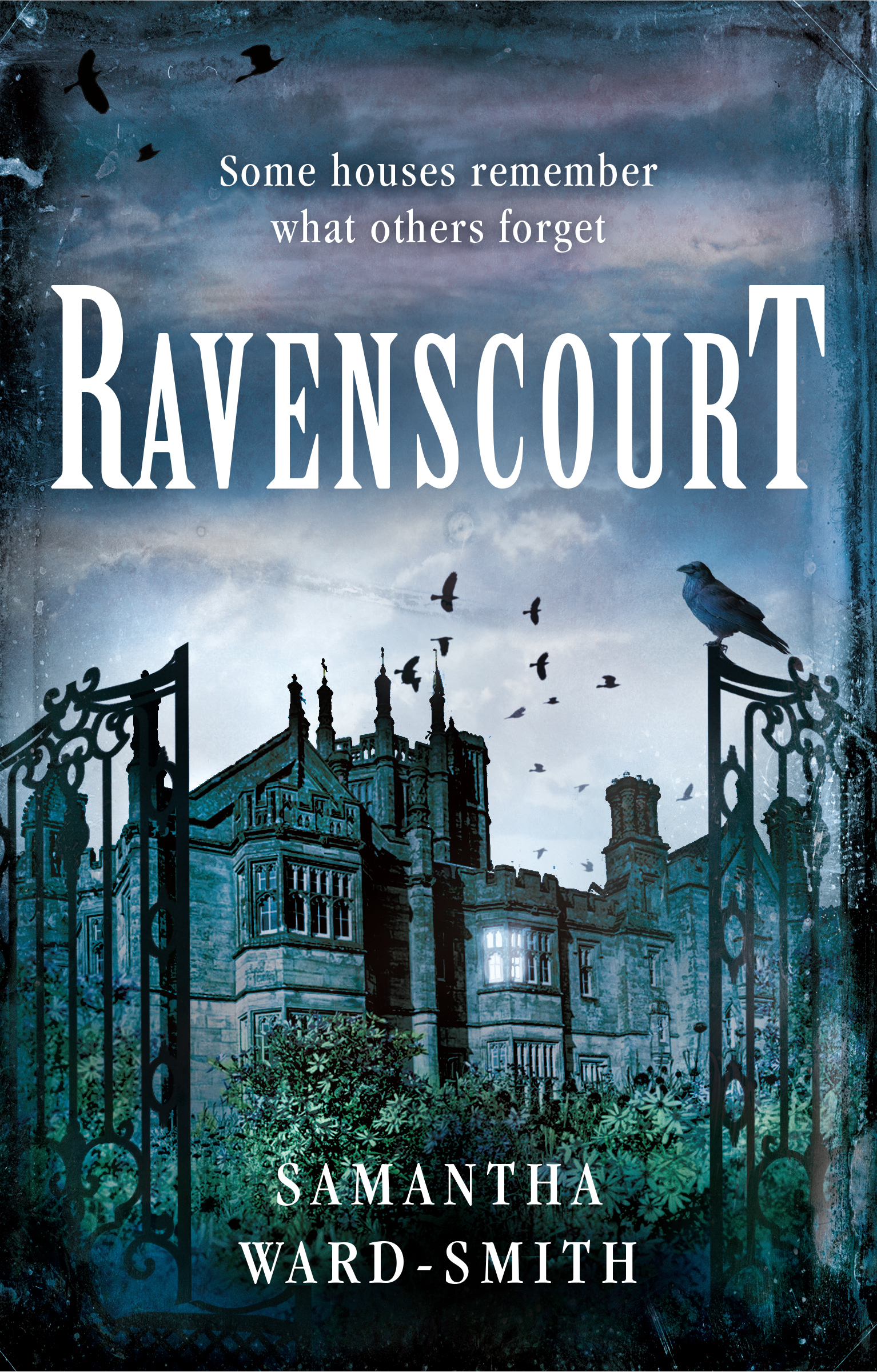
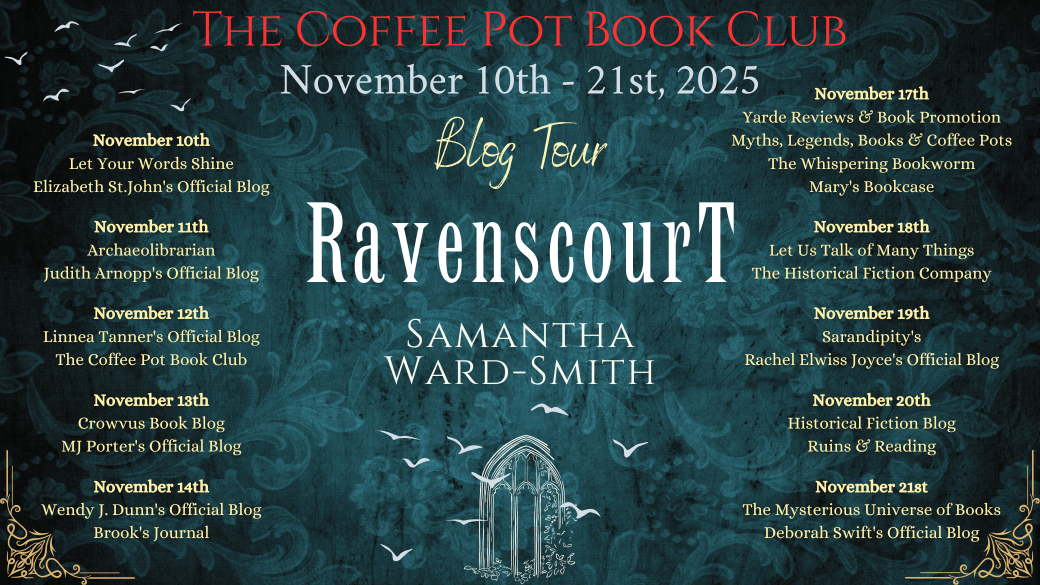
I’m delighted to welcome Samantha Ward-Smith and her new book, Ravenscoirt, to the blog with an excerpt.
Excerpt
Alex was left alone rattling around the large, quiet house – all clocks stopped, no other living soul. He examined the room. The dust covers had obviously been removed, and an attempt made to clean and air it. The window shutters however remained shut, making the room feel like a red tomb. He could already hear the rain that had threatened beginning to fall outside. But the fire was welcoming, as were the wine, bread, and cheese he had been left. He was glad to sate his hunger at least, and he readily did so before he began his search. Even now he was eager to be gone from the place, and the sooner he found the journal or any revealing papers Sir Charles had left the better.
The desk was clear, as if all traces of Sir Charles had been swept away, and he remembered Sir David’s account of it being like this in the aftermath of his friend’s death. Alex opened the drawers to find some papers, old invoices, some plain stationery, and an old appointment book. He wondered what had become of it all – his father’s desk in both London and the Abbey had been full of his father’s life, but this desk was bereft of any trace of its owner. He slumped down in the chair by the fire, worrying his trip would be futile, and closed his eyes. But of course, Sir Charles would have left nothing secret in so obvious a place.
The storm outside had intensified, and Alex was jolted awake by a clap of thunder overhead as the rain lashed at the shuttered windows. The fire was dying slowly in the grate, and the room was growing colder. There was a stillness to the room and his heart pounded as beads of sweat prickled on his back even though his body began to shiver from the cold.
A loud crash, followed by the sound of shattering glass within the house, made him jump and he gripped the chair. Alex’s breath came in short, shallow gasps as his eyes fixed on the study door, watching to see if the handle would turn. He sat there, waiting, but there was nothing. The house was quiet once again, with just the rain tormenting him, pushing as if to be let in the windows, rattling the shutters in denied fury. His heart rate slowed as he convinced his trembling body it was simply the storm which continued to crash around the house. There was no one there.
His pocket watch showed the hour to be two in the morning. He rose slowly from the chair, his body stiff and his nerves frayed. He left the study, ignoring the shadowy library with its vaulted ceiling, and gripping the lantern, he retraced his steps back to the hall to find the prepared bedroom.
His oil lamp afforded minimal light, and the hall was darker now as the night’s black mantle dulled the lantern window. Alex shivered as he gazed up at it, high above him, a sickly reminder of another ceiling from which had shone stars from a Venetian sky. As suddenly as it had come the storm had now passed so there was an eerie silence, and the shrouded furniture within the hall played tricks on the imagination. Alex grasped the first newel post of the stairs, glancing upwards once again at the shadows as if he expected to see the figures of Arabella and Mary waiting for him. He slowly climbed the stairs.
Once inside his own chilly room, he removed only his shoes, and pulling back the heavy damask cover, he climbed into the bed fully clothed as the coldness gripped him. Wrapped tightly in the cover, at first he thought sleep would evade him, his mind still full of turmoil, and his senses acutely on edge. But soon his eyes grew too heavy, and he could no longer fight his exhaustion even though he was not yet ready to sacrifice himself to the house.
Here’s the Blurb
He wanted to be gone from the dark enclosing room, with its mocking misery, to be gone from this house of nightmares, of shattered dreams, and discovered secrets which could not be put back in the box.
Venice, 1880.
Alexander, Viscount Dundarran, seeks refuge from scandal amidst the fading grandeur of crumbling palazzos during the infamous Carnival in the city. There he encounters the enigmatic Lady Arabella Pembrook—a young, beautiful widow. Both are scarred by their pasts but find solace in each other and a chance at redemption.
But when duty calls Alexander back to England upon his father’s death, a darker journey begins. Travelling to Ravenscourt, the decaying estate once belonging to Arabella’s late husband, Alexander must confront the house’s disturbing legacy which has echoed through the generations. Within its walls lie secrets that refuse to stay buried and will threaten everything he thought he knew. But can Alex uncover the truth in time?
This title is available to read on #KindleUnlimited
Meet the Author
Samantha Ward-Smith is the author of Tower of Vengeance, her debut historical novel set in the Tower of London during the 13th century, and the forthcoming Ravenscourt, a Victorian Gothic tale unfolding across Venice, London, and the windswept Lancashire moors. She lived in London for over three decades, building a career in investment banking while also pursuing a PhD in English at Birkbeck.
For the past 13 years she has volunteered at the Tower of London, an experience that provided invaluable historical insight and directly shaped her writing. Now based in Kent by the sea, Samantha continues to explore the intersections of history, place, and story, writing in the company of her two cats, Belle and Rudy.
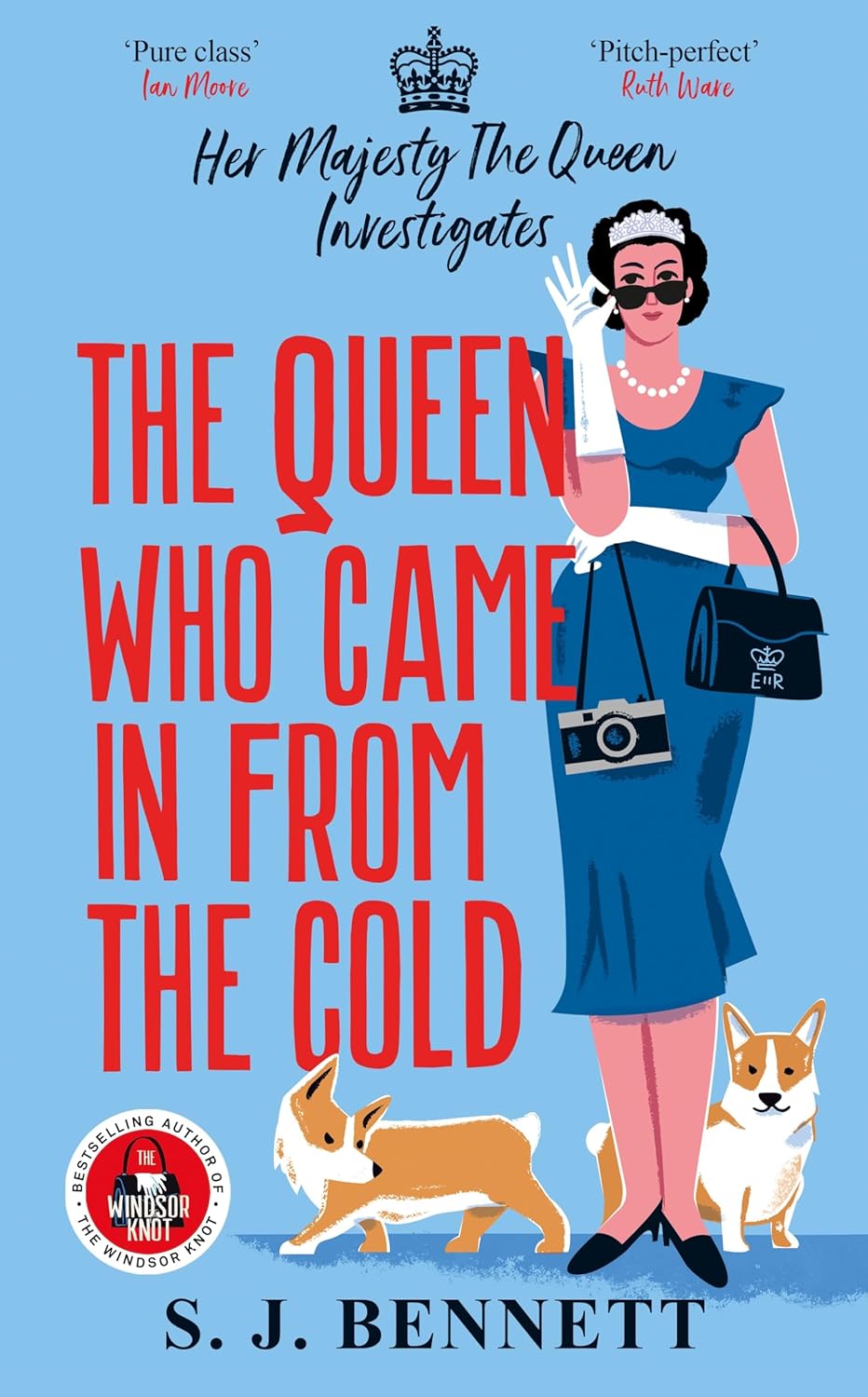
I’m sharing my review for The Queen Who Came in From the Cold by SJ Bennett, released today #bookreview #newrelease #mystery
Here’s the blurb
It’s 1961 and the Queen is planning her state visit to Italy aboard Britannia. But before she goes, an unreliable witness claims to have seen a brutal murder from the royal train. Did it really happen, and could the victim be a missing friend of Princess Margaret’s new husband, Tony Armstrong Jones?
The Queen and her assistant private secretary, Joan McGraw, get to work on their second joint investigation, little imagining that this time it will take them all the way to Venice in a tale of spies, lies and Cold War skulduggery.
The Queen Who Came in from the Cold is my second foray into the Queen mystery series.
I was intrigued by the set up for this one, the Cold War, the Queen, spies etc. And it is a very good mystery, with an unexpected couple of twists.
The story is told with wonderful humour and there are some fabulous characters (as well as a lot of men who say inappropraite but period-specific comments about women) that really made me chuckle, and the mystery is delightfully simple and complicated, all at the same time involving a lot of people who don’t really speak to other people, and who can’t be seen speaking with other people. If this is how MI5 and MI6 really worked in the 1960s then it’s unsurprising that they missed so much. I did love all the historical research elements as well.
A fun, well-crafted mystery with a high level of peril for those involved.
Check out my review for The Windsor Knot (the first book in the series, although our Queen character is in her 90s in this one).
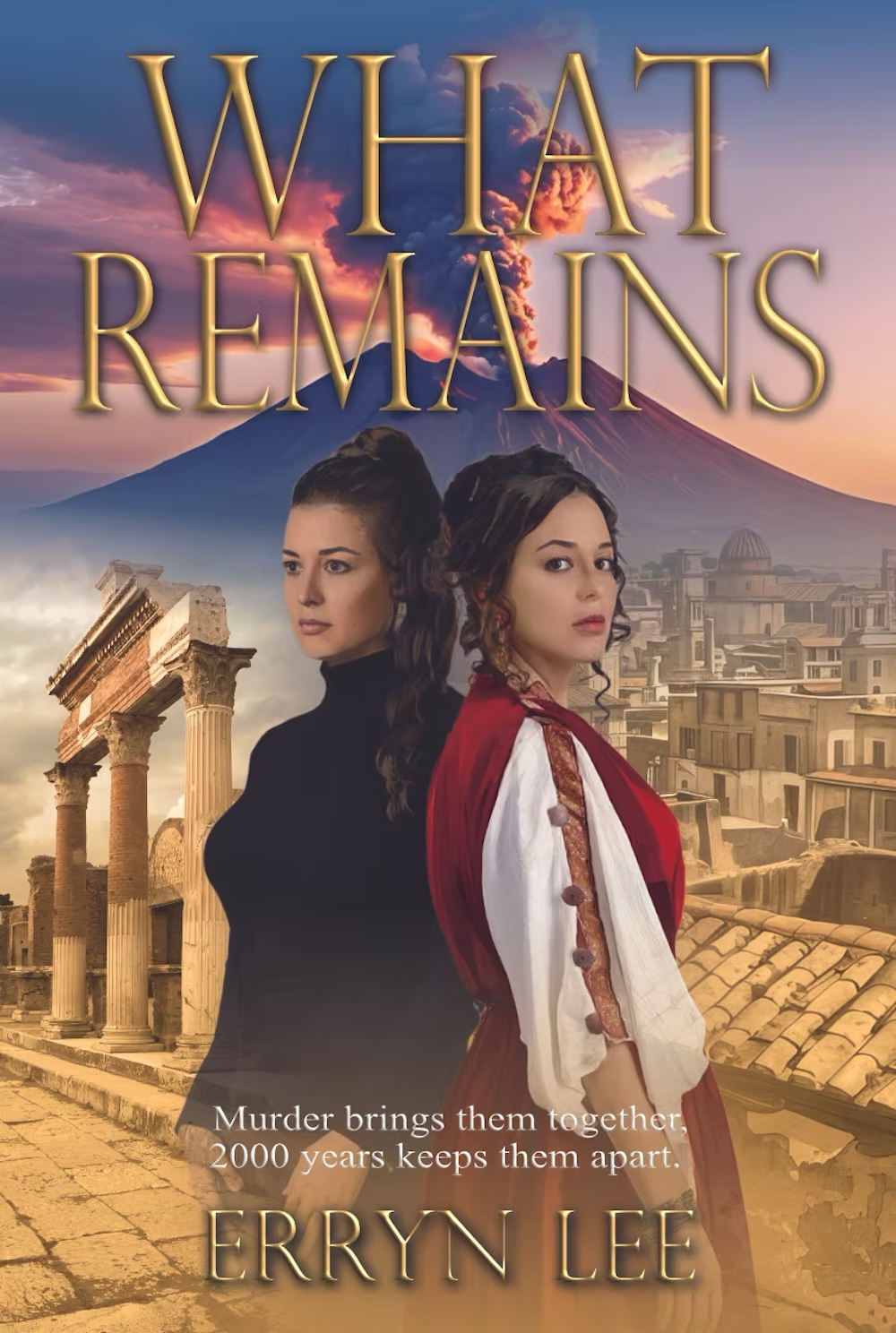
I’m delighted to welcome Erryn Lee and her book, What Remains, to the blog with an extract.
Extract
As I held the weapon in my right hand I imagined using my left to take hold of the Praetorian’s hair to pull it back towards me, leaning over the prone body as I had in my nightmare to press the pugio to the man’s throat and slice from left to right, digging the blade in so deeply at the right that it shaved the mandible and jarred against the bone of the mastoid process, almost sticking. In my mind, I could see the bright gush of blood and feel its heat as it washed over my fingers, while the body jerked beneath my left hand and then subsided.
I dropped the pugio on the bench beside the skull and had enough time to lean across the sink before the scalding burn in my throat became gut-wrenching spasms as all that was inside me poured outwards. When the heaving subsided I hung over the sink, a single trail of thick saliva dripping from my chin, making its way towards the mess at the bottom. My throat scalded and my eyes flooded with tears. It took two hands, one on each side of the sink to push me upright. When I did, the room swam as though underwater.
Here’s the Blurb
What Remains is a haunting dual-timeline mystery that bridges centuries-and secrets-between ancient Rome and the modern world.
Forensic anthropologist Tori Benino has just landed the opportunity of a lifetime: leading a dig at a long-buried Roman village lost to the eruption of Vesuvius. But when she uncovers the remains of a Praetorian guard hidden in an ancient latrine-clearly murdered-Tori realizes she’s stumbled onto something far more sinister than a routine excavation. As she digs deeper into the past, her own carefully ordered life begins to fall apart.
Nearly two thousand years earlier, Thalia, the daughter of a wealthy merchant, is desperate to escape an arranged marriage to a brutal and politically powerful senator. Her only hope lies with a Praetorian soldier assigned to guard her-but trusting him could cost her everything.
As past and present collide, What Remains asks: When history is buried, what truths refuse to stay hidden?
Perfect for fans of Kathy Reichs and Kate Quinn, this novel is inspired by true events and delivers a compelling blend of suspense, history, and heart.
Erryn Lee has spent most of her life between the covers of books, her love for historical fiction drew her to a career as an English and History teacher, where she enjoys sharing her passion for both language and the past with young adults (at least until she needs to give it up to write full time).
When not teaching or writing she is deeply immersed in research and studying her Masters in History. Erryn lives with her husband, a fluctuating number of horses and three bossy cavoodles on a horse farm in the picturesque central west of NSW, Australia.
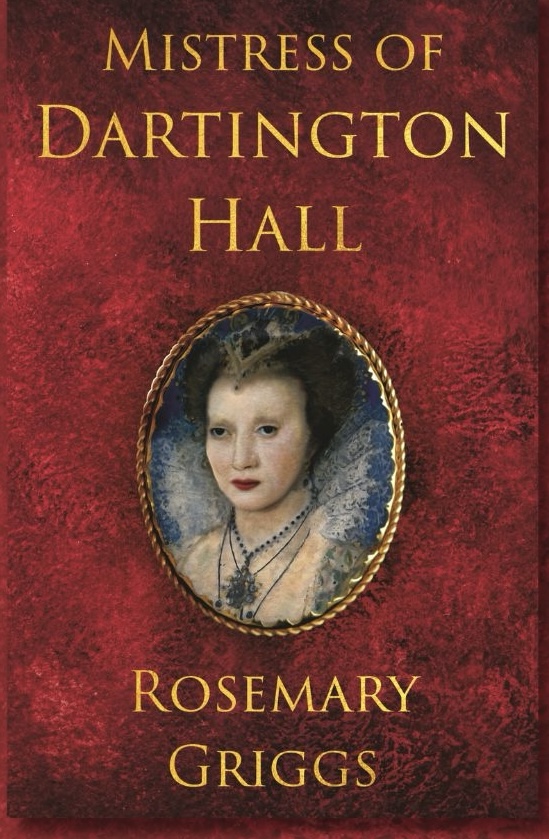
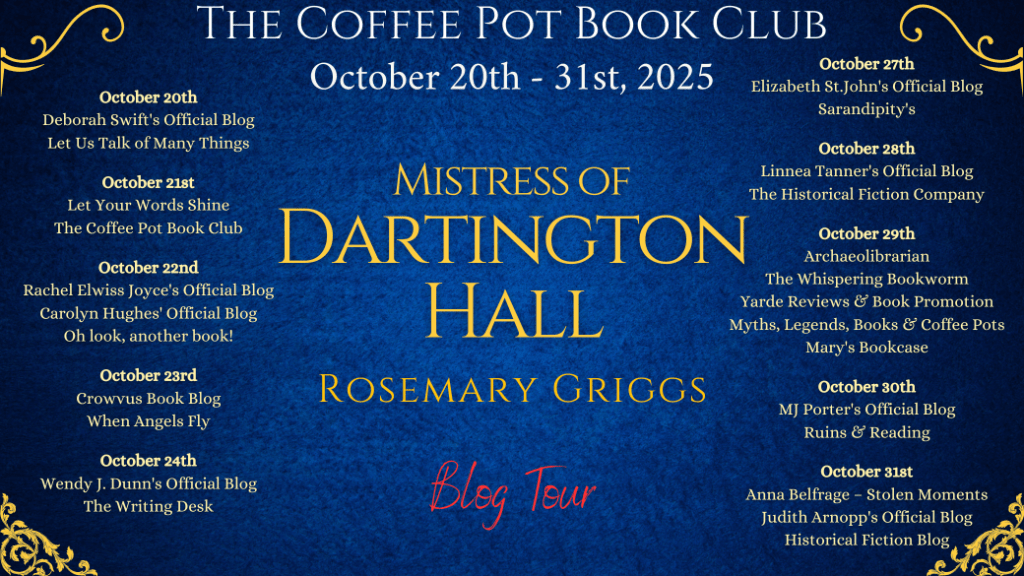
I’m delighted to welcome Rosemary Griggs and her book, Mistress of Dartington Hall, Book 3 in the Daughters of Devon series, to the blog with a guest post.
Guest Post – historical background
Mistress of Dartington Hall continues the story of a French Huguenot noblewoman, Lady Gabrielle Roberda Montgomery. Roberda’s father, Gabriel de Lorges, was a prominent Huguenot general. He gained notoriety as the man who accidentally killed King Henry II of France in a jousting accident.
Roberda married into one of Devon’s most prominent families. Her husband, Gawen Champernowne’s was the son of Sir Arthur Champernowne, a staunch Protestant. Sir Arthur was Queen Elizabeth’s Vice-Admiral of the Fleet of the West, and he had connections at court.
We followed Roberda’s traumatic childhood in war-torn France and her catastrophic marriage to Gawen in The Dartington Bride. In Mistress of Dartington Hall we join her in the autumn of 1587. Roberda has been managing Dartington Hall while her estranged husband, Gawen, has been away on the Queen’s business.
Dartington Hall, Devon, England
England has been at war with Spain for over two years. The Spanish king is preparing a formidable fleet of warships to launch an invasion. In 1587, everyone expected them to land at Falmouth, Plymouth or Dartmouth to establish a foothold on English soil. Thousands of Spanish soldiers would then disembark and rampage through the countryside. It must have been a terrifying time for the people of Dartington, only sixteen miles upriver from the port of Dartmouth. Many panic-inducing false alarms disturbed the people of Devon before the Spanish Armada’s arrival in July 1588.
Relations between England and Spain had been tense for a long time. After his wife, Queen Mary, died childless in 1558, Philip of Spain proposed to her sister, the new Queen Elizabeth. Elizabeth declined the offer, and Philip married elsewhere.
King Philip’s marriage to Elisabeth of Valois, the daughter of King Henry II of France, cemented the end of a long war between France and the Habsburgs. It was during the joust that accompanied the celebrations in Paris in the summer of 1559 that Roberda’s father’s lance shattered. His opponent, King Henry, had not put down his visor. A splinter of wood entered the king’s eye, and he died 11 days later. That accident changed the course of Gabriel’s life. It also set off the chain of events that brought Roberda to Dartington Hall.
After Queen Elizabeth I established a Protestant church in England, King Philip considered it his duty to return England to the Catholic faith. That, combined with political rivalry and economic competition, stoked his ambition to conquer England. He amassed a massive fleet of warships and gathered supplies.
In 1570, Pope Pius V excommunicated Elizabeth. The Pope supported Philip’s plan by promising forgiveness to those who took part in the invasion. Audacious English privateering raids on Spanish ships led by people like Sir Francis Drake made King Philip even more determined. The frequent attacks on Spanish ships and colonies disrupted Spanish trade and wealth. After the Treaty of Nonsuch, signed in 1585, confirmed England’s support for the Protestant Dutch rebels against Spanish rule, Philip put his plans in motion.
Sir Francis Drake’s audacious raid on Cadiz, known as ‘singeing the King of Spain’s beard’, destroyed around 30 Spanish ships and supplies, delaying the Armada’s launch by over a year. But everyone knew they would come.
England prepared, hoping the new English ships, faster and more manoeuvrable than the cumbersome Spanish galleons, would give them an advantage. However, Queen Elizabeth was notoriously parsimonious, leaving the English fleet short of powder and shot. Her reluctance to spend money frustrated her advisors, including the commander of the English fleet, Charles Howard.
Drake gathered ships at Plymouth, ready to meet the Spanish. However, many of his sailors fell ill and died from lack of food and cramped, unsanitary conditions on board. More men had to be conscripted from the surrounding area to replace them.
Sir Walter Raleigh’s network of warning beacons would signal the approach of the Spanish fleet. The Lord Lieutenant and his deputies mustered a militia — a sort of ‘Dad’s Army’ of poorly equipped, untrained militia-men. Roberda’s husband, Gawen Champernowne, was to lead cavalrymen drawn from the local nobility. These last-minute preparations would likely have proved inadequate had the invaders stuck to their initial plan.
Luckily, the Spanish commander decided to rendezvous with the Duke of Parma rather than first landing in the southwest. The Armada sailed on up the English Channel, pursued by Drake’s ships. At Gravelines, Drake sent in fire-ships to disrupt their formation. But it was bad weather that finally defeated King Philip’s attempt on England. The ‘Protestant Wind’ scattered them, driving them around the coast of Scotland. Some foundered on rocks; a few limped home to Spain. On land, Gawen Champernowne, who was to have led a cavalry troop against the expected attack, went home having seen no action.
The Armada failed in 1588, but the conflict continued for another sixteen years. In August 1595, the Spanish raided and burned villages in Cornwall. They attempted two more full-scale expeditions in 1596 and 1597. Roberda and the people of Devon continued to live with the threat of invasion. The war finally ended with the Treaty of London in 1604.
Meanwhile, in France, Roberda’s brothers sought to reclaim the estates they lost when their father died on the executioner’s block in Paris in 1574. The French Wars of Religion escalated into the War of the Three Henrys. Henry of Navarre became King Henry IV after both the Duke of Guise, leader of the Catholic League, and King Henry III, were assassinated.
During the 1590s Roberda’s brothers supported Henry IV in his campaigns to assert his authority. He faced opposition from the Catholic League, which Spain supported. Eventually, Henry IV publicly converted to Catholicism, and in 1594 he entered Paris, weakening the Catholic League. A year later. Henry IV formally declared war on Spain. The Edict of Nantes, issued in 1598, ended the religious wars in France. Catholicism became the state religion, but the Huguenots had substantial rights and religious freedoms. Roberda’s family reclaimed their lands. After her mother’s death, Roberda received her share, and her younger brother, Gabriel, eventually rebuilt the family home at Ducey.
Roberda’s life as Mistress of Dartington Hall, played out against an uncertain background. England was at war with Spain, and Devon was on the ‘front line’. Religion continued to divide her home country, France. Like many women of her time, she successfully managed a vast estate while Gawen was away. She overcame the hostility that met her in England as an incomer. Roberda gained the respect and trust of her estate workers, tenants and servants. Gawen’s return jeopardised her hard-won authority and put her in a difficult position. Should she trust him? Later, Roberda takes decisive action to secure her children’s inheritance. But can she eventually grasp the chance of happiness for herself?
Here’s the Blurb
1587. England is at war with Spain. The people of Devon wait in terror for King Philip of Spain’s mighty armada to unleash untold devastation on their land.
Roberda, daughter of a French Huguenot leader, has been managing the Dartington estate in her estranged husband Gawen’s absence. She has gained the respect of the staff and tenants who now look to her to lead them through these dark times.
Gawen’s unexpected return from Ireland, where he has been serving Queen Elizabeth, throws her world into turmoil. He joins the men of the west country, including his cousin, Sir Walter Raleigh, and his friend Sir Francis Drake, as they prepare to repel a Spanish invasion. Amidst musters and alarms, determined and resourceful Roberda rallies the women of Dartington. But, after their earlier differences, can she trust Gawen? Or should she heed the advice of her faithful French maid, Clotilde?
Later Roberda will have to fight if she is to remain Mistress of Dartington Hall, and secure her children’s inheritance. Can she ever truly find fulfilment for herself?
Author and speaker Rosemary Griggs has been researching Devon’s sixteenth-century history for years. She has discovered a cast of fascinating characters and an intriguing network of families whose influence stretched far beyond the West Country. She loves telling the stories of the forgotten women of history — the women beyond the royal court; wives, sisters, daughters and mothers who played their part during those tumultuous Tudor years: the Daughters of Devon.
Her novel,A Woman of Noble Wit, set in Tudor Devon, is the story of the life of Katherine Champernowne, Sir Walter Raleigh’s mother. The Dartington Bride, follows Lady Gabrielle Roberda Montgomery, a young Huguenot noblewoman, as she travels from war-torn France to Elizabethan England to marry into the prominent Champernowne family. Mistress of Dartington Hall, set in the time of the Spanish Armada, continues Roberda’s story.
Rosemary is currently working on her first work of non-fiction — a biography of Kate Astley, childhood governess to Queen Elizabeth I, due for publication in 2026.
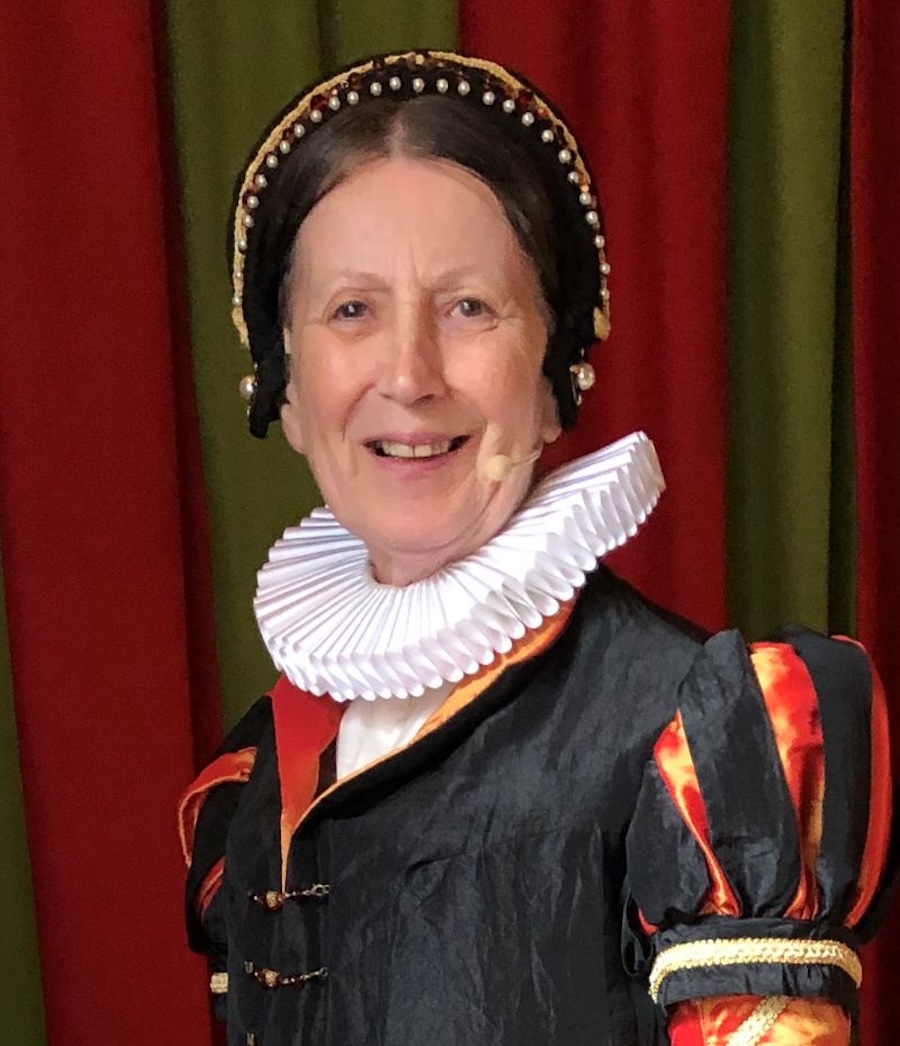
Rosemary creates and wears sixteenth-century clothing, and brings the past to life through a unique blend of theatre, history and re-enactment at events all over the West Country. Out of costume, Rosemary leads heritage tours at Dartington Hall, a fourteenth-century manor house that was home of the Champernowne family for 366 years.
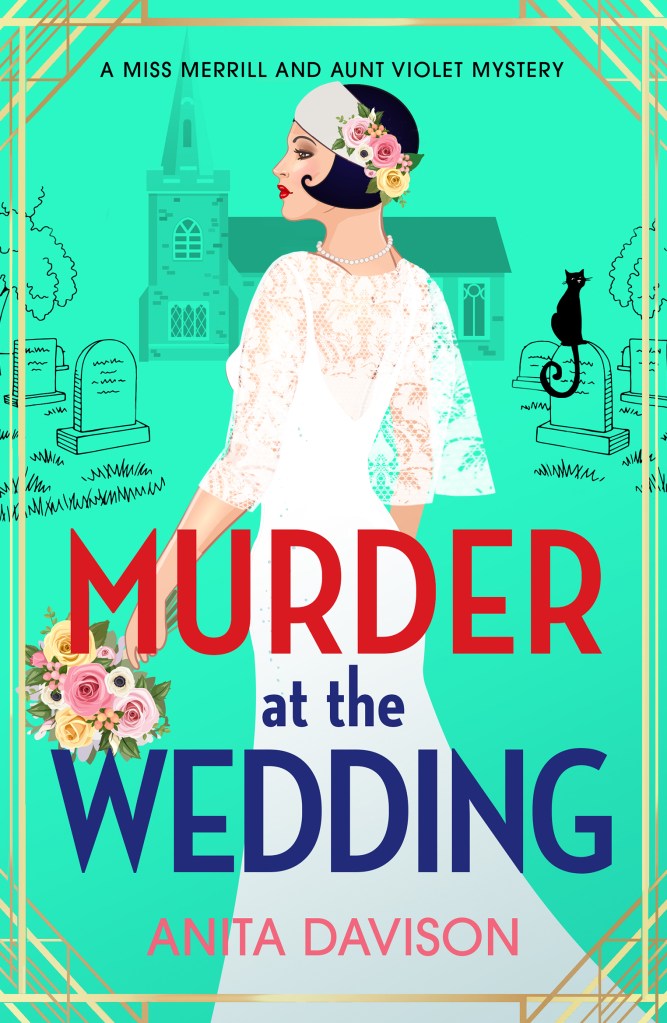
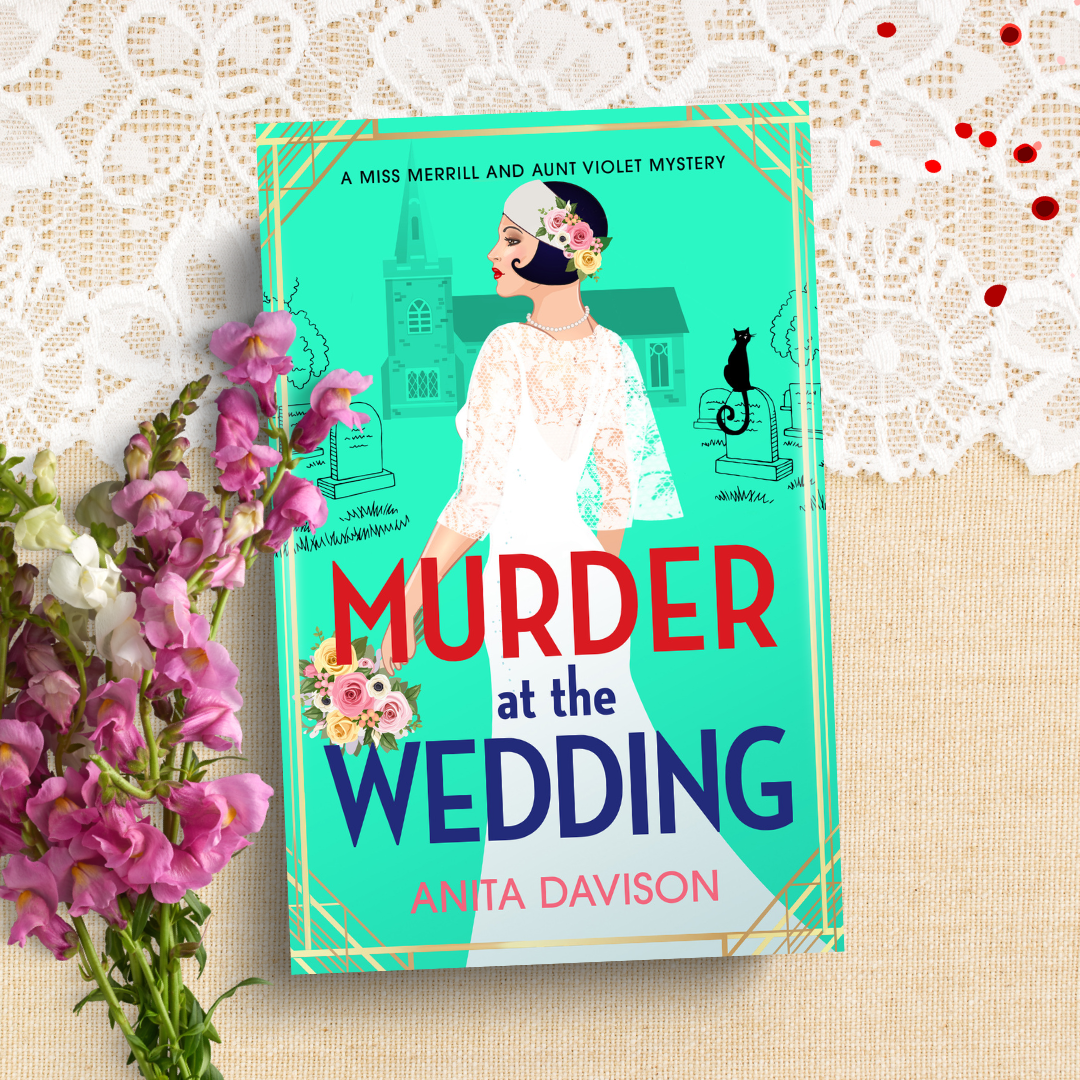
I’m delighted to share my review for Murder at the Wedding by Anita Davison #bookreview #blogtour #historicalmystery #newrelease
Here’s the blurb
Hannah Merrill is about to marry the love of her life…
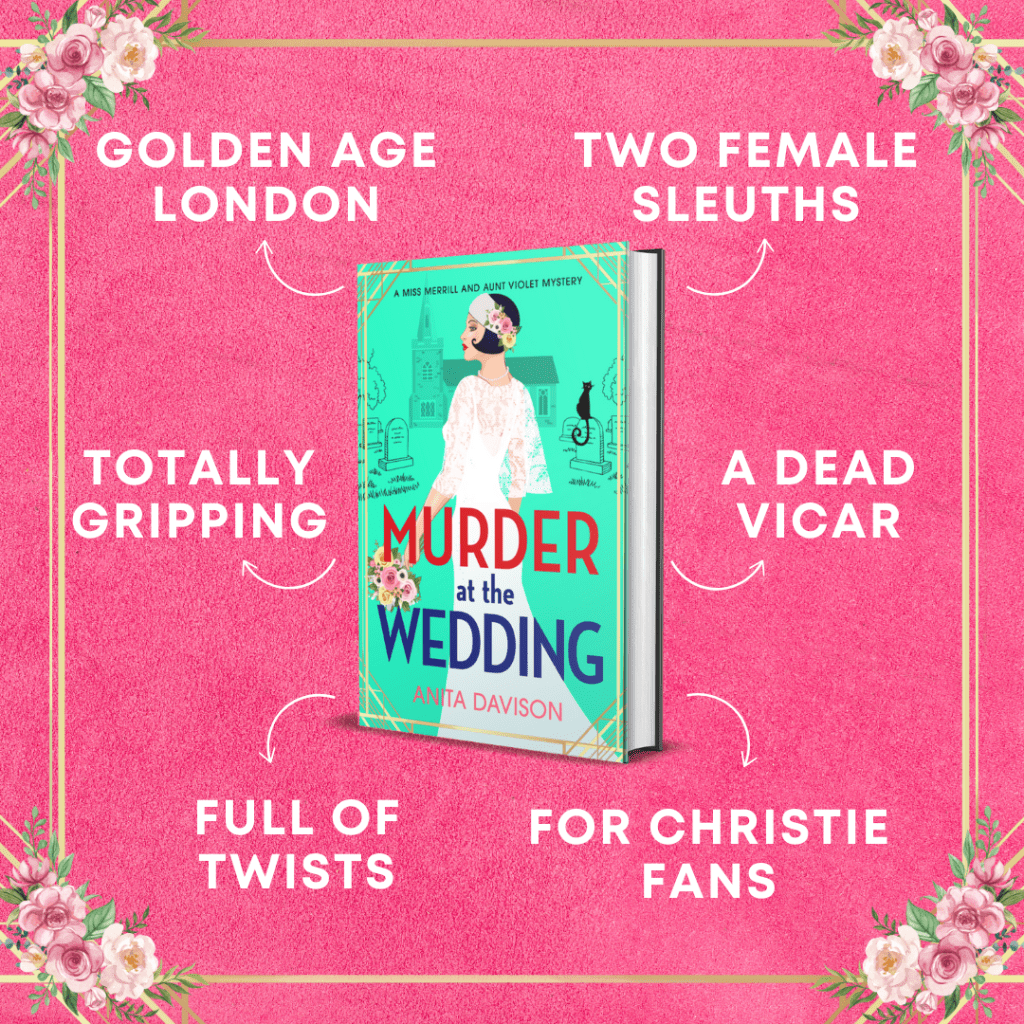
The couple are determined their low-key celebration will go without a hitch, but there can’t be an ‘I do’ while the vicar is missing. And when he’s found dead – a victim of a poisoning – in the crypt behind the church, Hannah knows only she and Aunt Violet can find out who did it.
Hannah’s beloved thinks she shouldn’t interfere. But if he fails to remember that an independent woman in 1918 doesn’t do what she’s told to by a man, the dead vicar may be the least of his worries…
Then the vicar’s own fiancé appears on the scene, even though nobody knew he was engaged. And suddenly it becomes clear someone has a secret, one shocking enough to kill for.
Will the intrepid pair of amateur sleuths catch the murderer before they kill again? Or will it be til death parts them all?
Murder at the Wedding is a fabulous new mystery in the Miss Merill and Aunt Violet mystery series.
Hannah is finally married but no sooner has she said, ‘I do,’ than she finds a body. (What a horror on her wedding day). What they determine is a matter of suicide becomes something much worse as murder is soon suspected. Hannah and her aunt determine to find the solution because the new police inspector isn’t up to the task.
It’s good to see Hannah and Violet working together in this book. They’re a great team (I felt in the previous book that there wasn’t quite enough of Aunt Violet). The mystery is well structured, seemingly impossible to solve for much of the novel and I didn’t guess the resolution, which I always appreciate.
This is another enjoyable read in the on-going historical mystery series.
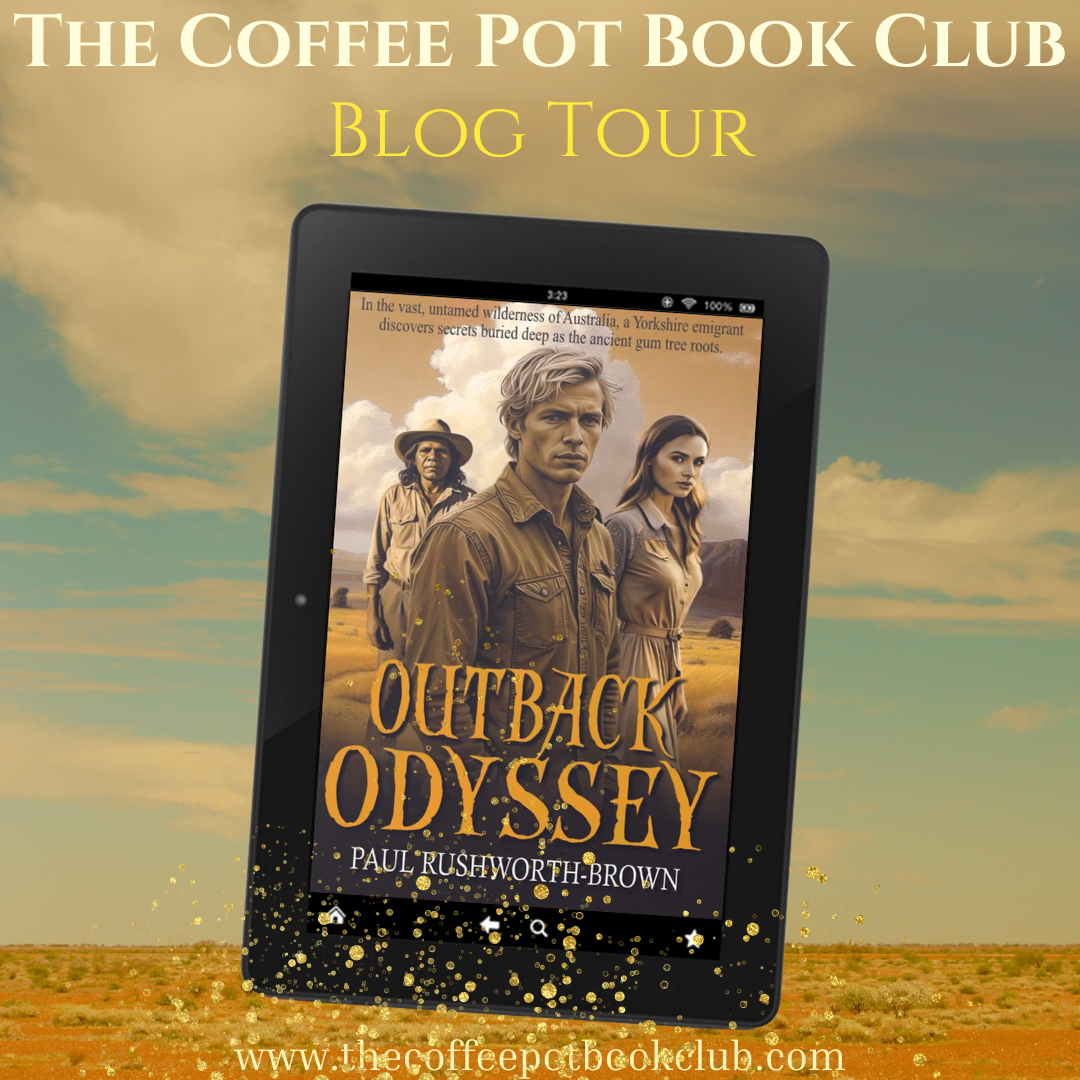
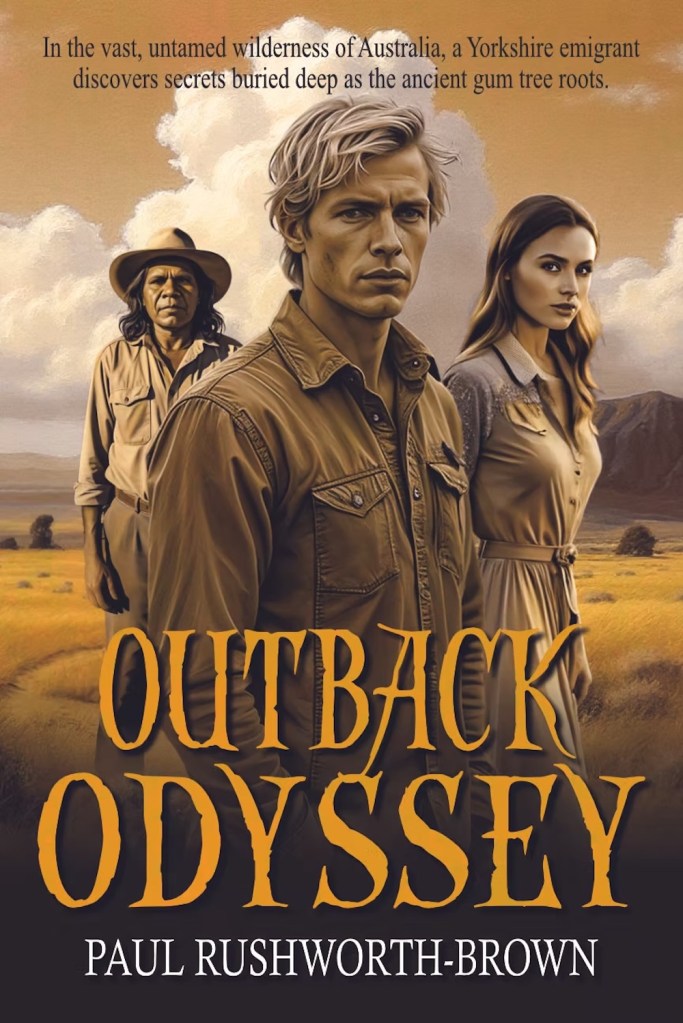
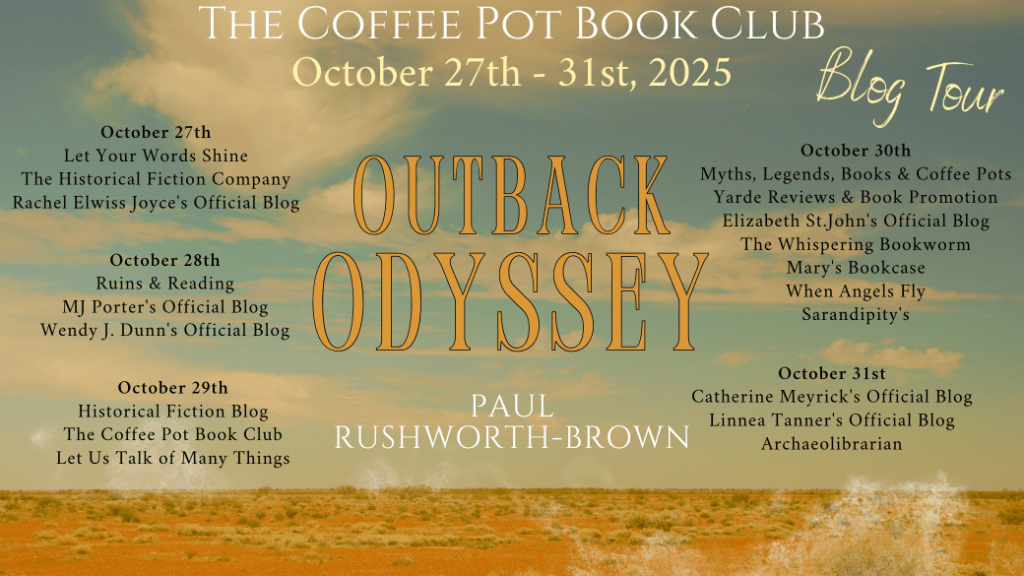
I’m delighted to welcome Paul Rushworth-Brown and his book, Outback Odyssey, to the blog with an excerpt.
Excerpt – Cultural Encounter with Jarrah
“I ask your permission to teach him our ways and show him our culture and Country.”
The Elders exchanged glances, the firelight catching the lines of their faces. The eldest of them, Jarrah, was the first to speak. His voice was deep, and his eyes carried the weight of generations.
“This is not a decision that should be made lightly.”
Kullindi leaned forward, her gaze unwavering. “What is it that you see in this whitefella? You think he is worthy of this — why?” Her words hung in the air, as heavy as the night.
Dhirrari’s reply came steady. “Jimmy has walked a hard road, not so different from my own. He has known loss and loneliness. He was raised without family or a place to call home, but he has chosen to connect, to understand, to belong. I have watched him — not for days, but for moons. He listens, not just with his ears, but with his heart. He doesn’t take from the Land without thought; he walks it with care.”
The silence stretched long, broken only by the crackle of the fire. Finally, Jarrah gave a slow nod. “Then let it be so. But remember — to walk this path is not to borrow. It is to carry. It will change him.”
Jimmy bowed his head, understanding without needing every word. For the first time in his life, he felt the weight of acceptance settle on his shoulders like a mantle he was willing to bear.
Here’s the Blurb
1950s Australia. In the wake of war and dislocation, young Yorkshireman Jimmy journeys to the outback, chasing escape but finding something far more dangerous: the truth of himself and the land he now calls home.
What begins as a story of survival becomes a profound allegory of belonging, silence, and identity. As Jimmy collides with love and betrayal, he also encounters the enduring wisdom of the First Peoples — knowledge that most outsiders are too frightened to face, let alone write about.Outback Odyssey is sweeping and cinematic, a novel of resilience threaded with unexpected twists and allegorical depth. Already under consideration for a screenplay adaptation, it peels back the myths of Australia’s past to reveal what lies beneath: the unspoken histories
Paul Rushworth-Brown was born in England and raised in Canada before emigrating to Australia at eighteen, where he became a citizen. By twenty, he had already travelled the world twice, hitchhiked across Australia, and worked as a navvy in outback Queensland — experiences that gave him an enduring respect for resilience, culture, and the landscapes that shape human character.
He later completed a Master’s degree at Charles Sturt University, honing the research skills that underpin his richly detailed novels. A high school teacher and former professional football coach, Paul draws on a lifetime of experience to bring authenticity and depth to his writing.
His novels are known for their cinematic sweep, allegorical undercurrents, and unexpected twists. Outback Odyssey, his fourth book, is a tale of survival and belonging set against the vast backdrop of 1950s Australia. Beneath its page-turning adventure lie questions of identity, silence, and reconciliation — themes that echo long after the final page.
Paul lives in Sydney, where he writes, teaches, and continues to explore the intersections of history and identity.
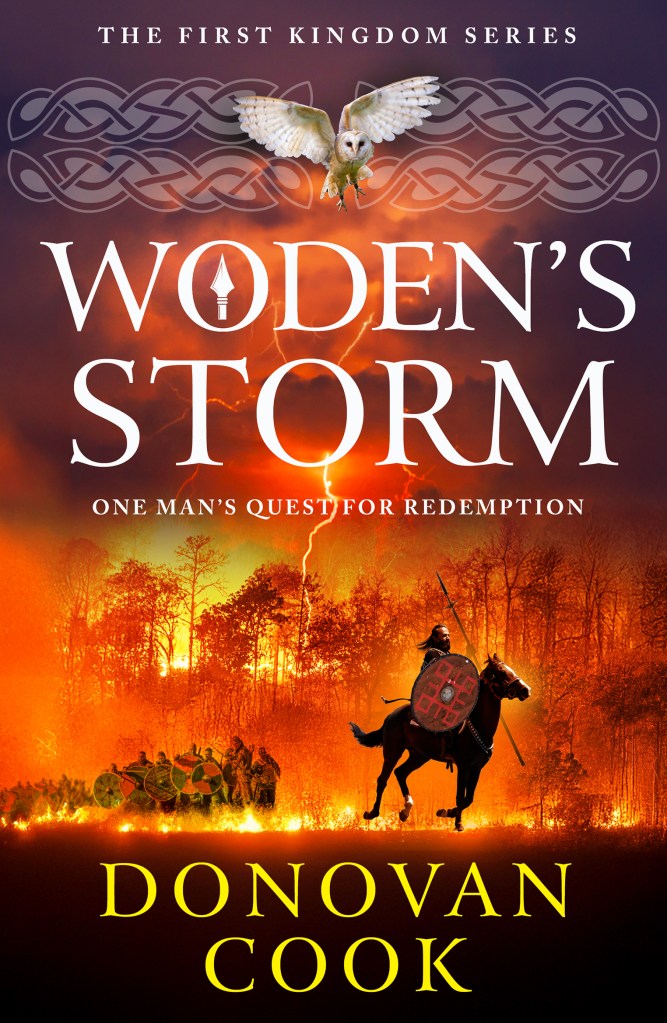
I’m reviewing Woden’s Storm by Donovan Cook #blogtour #newrelease #historicalfiction the second book in the First Kingdom series
Here’s the blurb
A storm is coming. A storm that will banish the old and deliver the new.
450AD Britain
Octa has the spear of Woden, but the redemption he sought is out of his grasp. With his banishment and the death of his father, he can no longer return to his Saxon homelands. His only salvation is to join forces with Hengist and Horsa, and their Jutish army that beaches itself on Brittania’s shores. But can he trust their motivation or are there greater plans afoot?
The Gods have their own plans, though, and Octa’s fate is not his own to control as Friga, the mother of the Saxon gods, battles to avoid a war with the gods of the Britons and Saxons using Octa as her weapon.
Prince Vortimer, the son of High King Vortigern, is angered by his father’s agreement with Hengist and Horsa as they remain unchecked and their numbers swell. He suspects treachery and encouraged by some well-placed words of a stranger, he rebels against his father and gathers his army to attack the unwelcome visitors.
War is coming to Britannia and as Octa struggles to understand his role and fate, he knows he has one question to answer. Will he run or will he stand and fight?
Woden’s Storm is the second book in The First Kingdom series by Donovan Cook. We’re once more in a recreated Britain of the middle fifth century, where everyone’s actions are guided by their Gods. And there are a lot of Gods who want to have a say in what’s happening, and not all of them, on the ‘same side’ as it were, hope to achieve the same ends. Octa, Vortimor, and the rest of the characters are constantly being tested by their deities, told half the story and left to work the rest out for themselves. Will they interpret their meetings with the Gods correctly, or will they make everything more chaotic by muddying these messages with their own intentions?
I do enjoy the element of the Gods walking amongst the characters and interfering in what’s happening. I mean, I doubt it would be peaceful without them, but with them, it certainly isn’t:) It adds a new dimension to this period and perhaps helps to account for some of the more eccentric decisions the characters make as they all endeavour to accomplish their goals. There is still much to play for and the series will continue.
An entertaining and intriguing series with a whole host of ‘named’ characters, people who love the era will recognise.
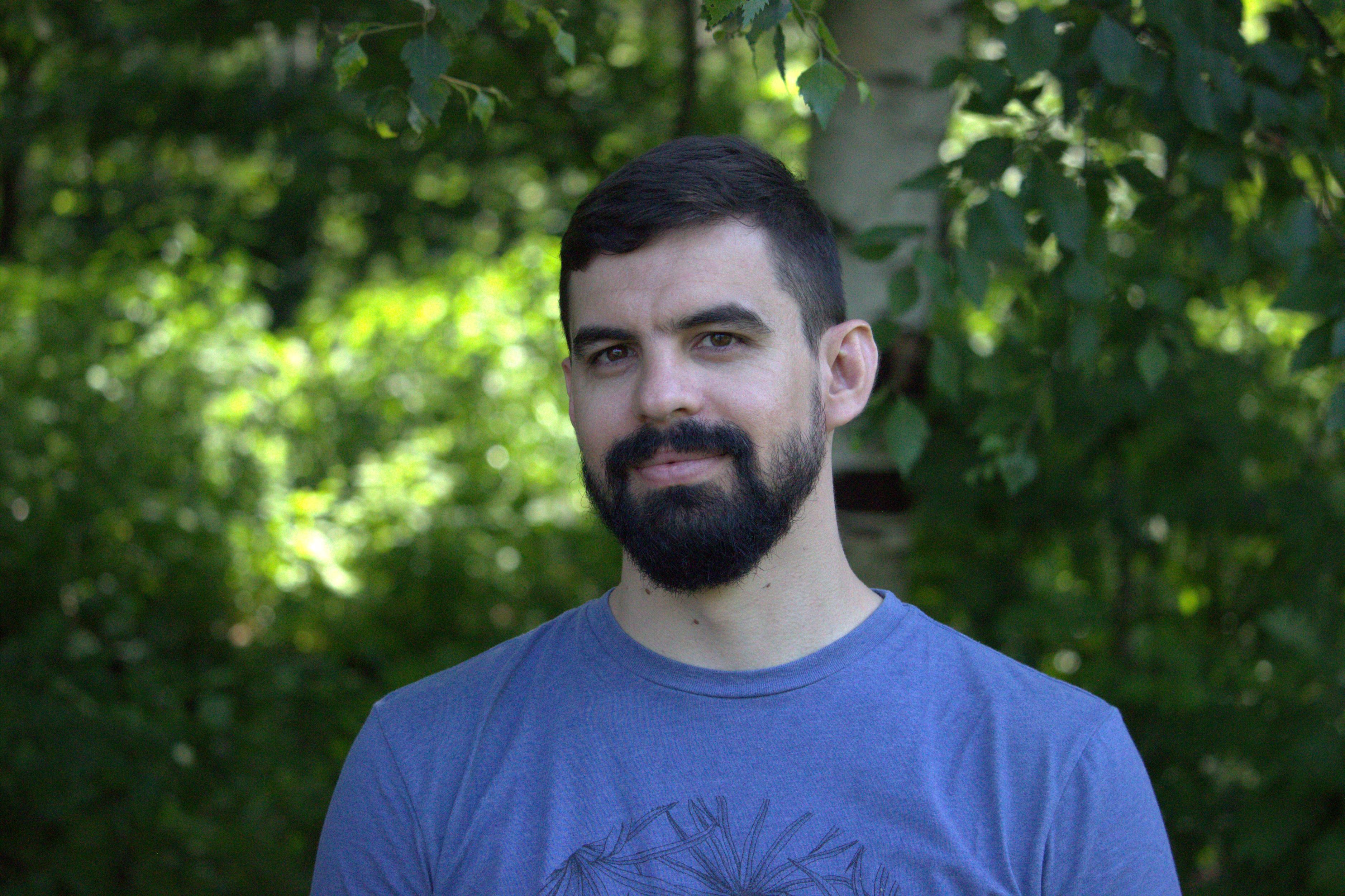
Donovan Cook is the author of the well-received Ormstunga Saga series which combines fast-paced narrative with meticulously researched history of the Viking world, and is inspired by his interest in Norse Mythology. He was born in South Africa and currently lives in Lancashire, UK.
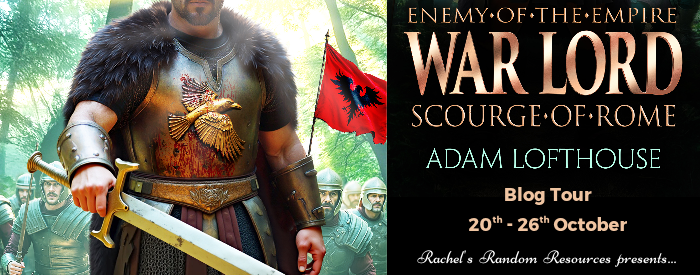
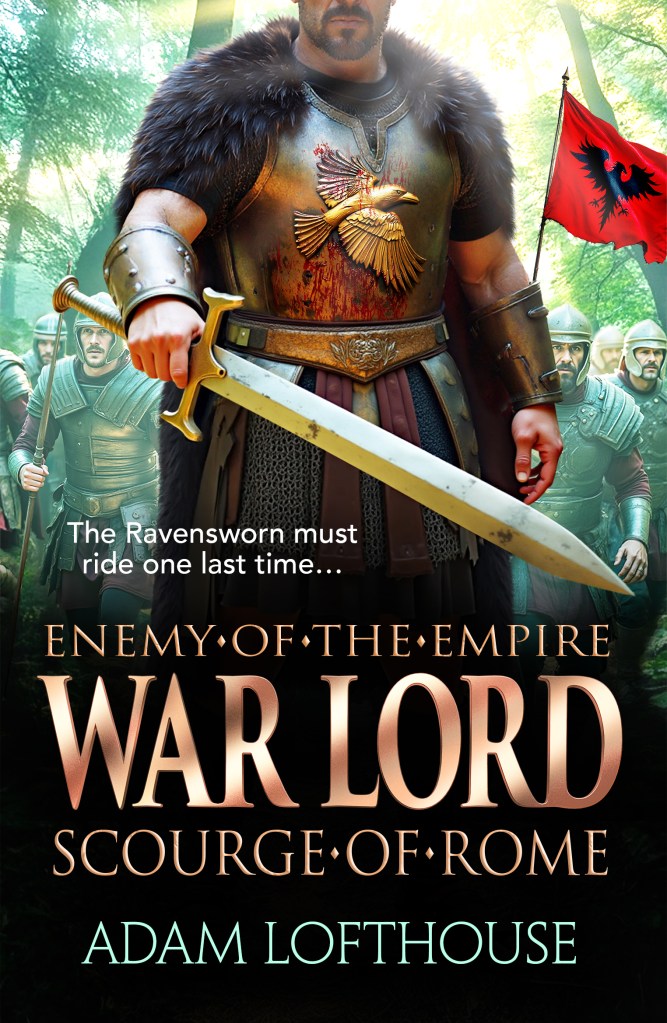
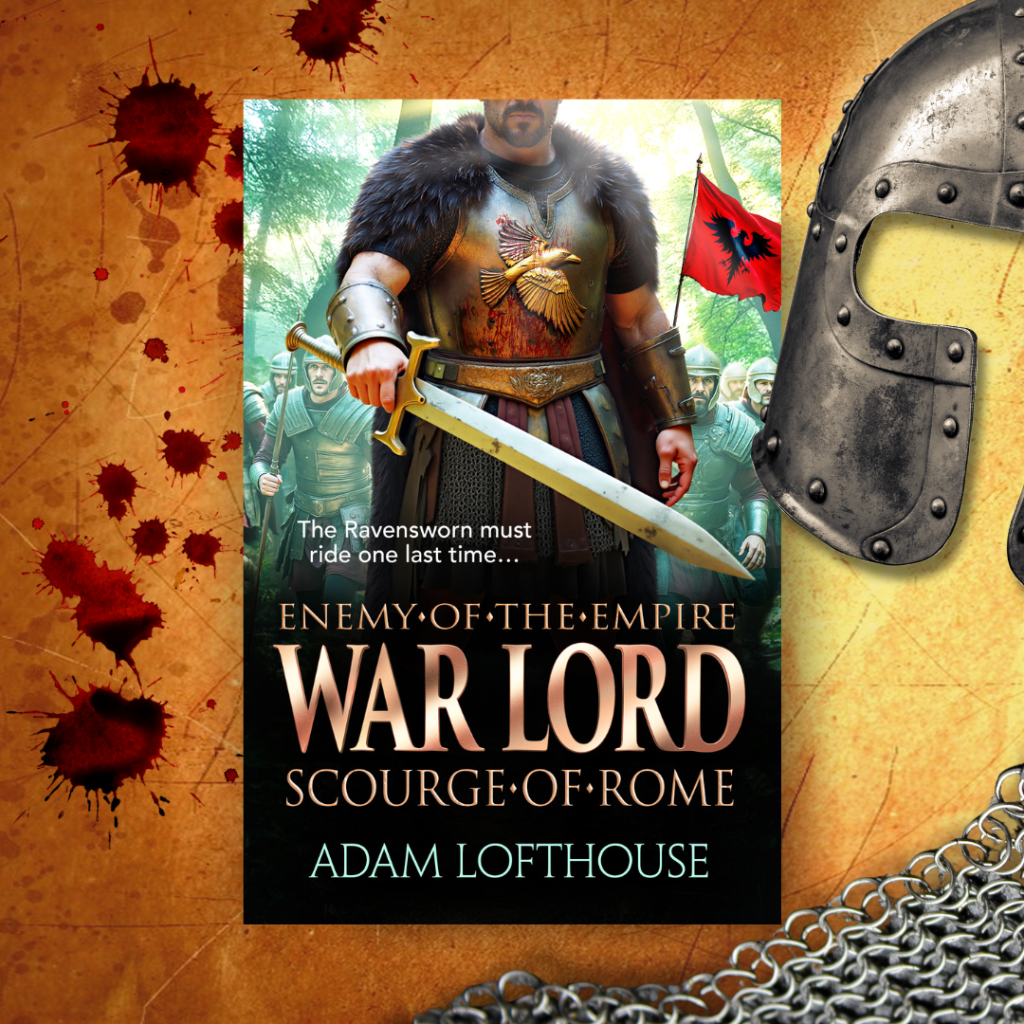
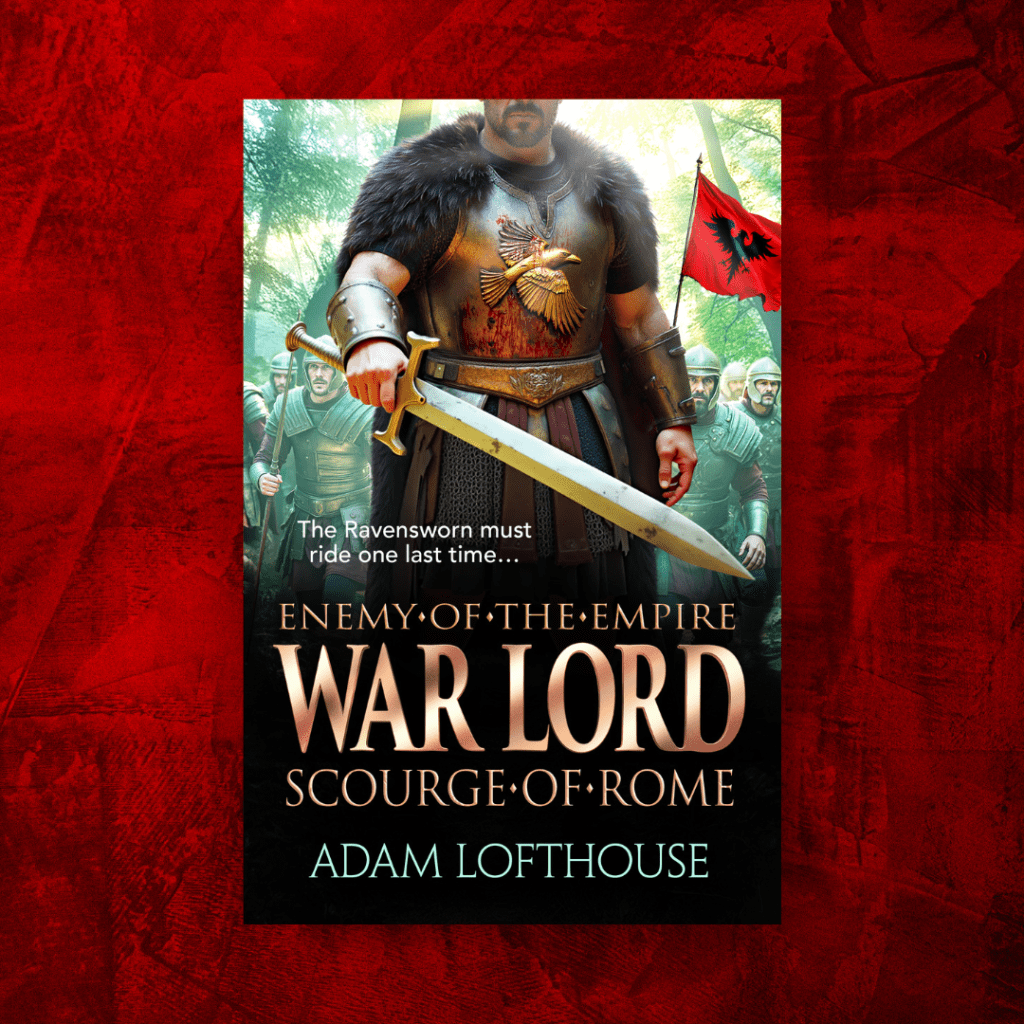
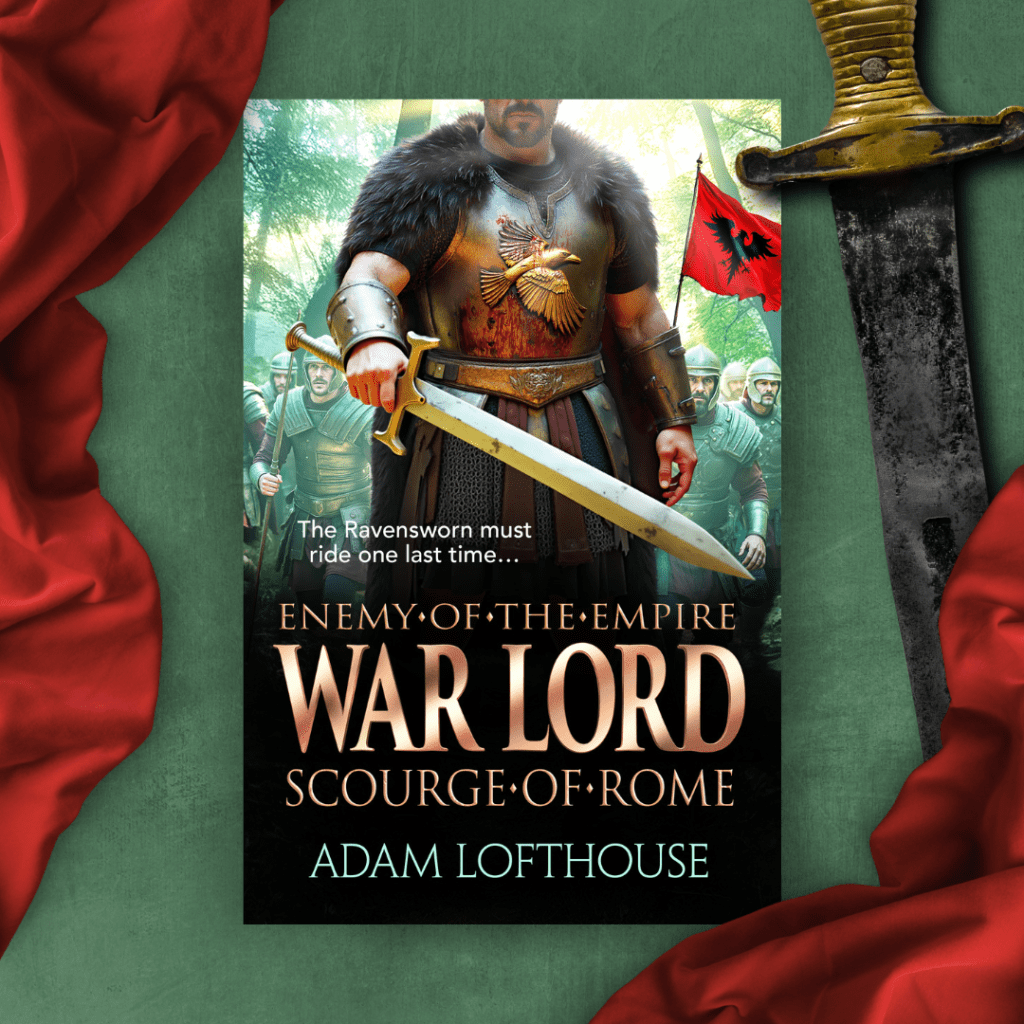
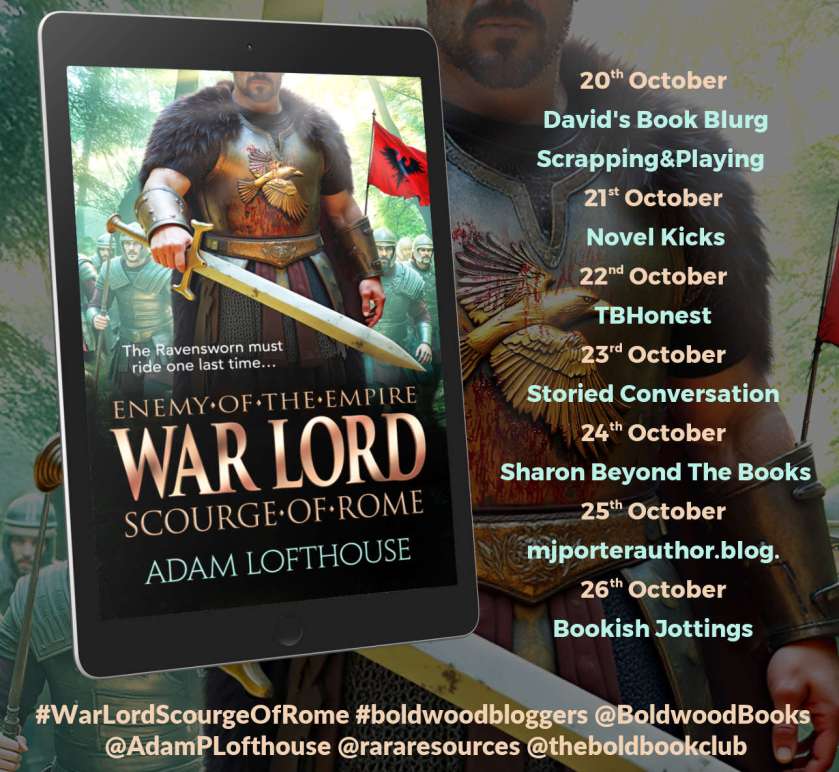
I’m delighted to share my review for Adam Lofthouse’s War Lord: Scourge of Rome #historicalfiction #blogtour #Roman
Here’s the blurb
And so we have reached the end of my tale. But what are endings if not new beginnings?
Alaric has been home for a year. He went north and saved the Cimbri, just as he said he would. But the cost has been higher than he ever thought. A shadow of the War Lord he once was, he now trades in amber and dotes on his children.
A simple life. And with it, contentment. But he knew this couldn’t last forever; peace isn’t for someone like him, and sure enough trouble finds him once again. A routine journey south turns into a new and unknown wave of danger as red-cloaked legionaries attack, causing confusion and carnage.
Warriors dressed as Romans have been scouring the country, slaughtering innocent people, and leaving Roman footprints wherever they march. But things are not what they seem, and it falls to Alaric to don his armour once more, and march his Ravensworn in pursuit of a mysterious enemy that could destabilise his world beyond repair.
War Lord, as the blurb states, is the end of Alaric, or is it a beginning for him?
Once more, we’re thrust straight back into the action, and Alaric, while accepting he’s an old man these days, does indeed not seem to have ‘grown up’ at all, as he’s so fond of reminding himself. From one hairbrained scheme to another, Alaric realises that perhaps, after all, there is a great deal at stake, and he is, of course, the man to solve everyone else’s problems, for all he likes to pretend he doesn’t care about anyone but himself, his children and his wife.
Adam writes fabulous books. I do love Alaric. He’s a bad egg, and yet, we all can’t help liking him, as indeed, does everyone who comes into contact with him. There’s no end of action and adventure, no end of peril, and through it all, Alaric sails with his usual charm and determination. But, is this one quest too much for our epic second-century hero, living on the outskirts of the Roman empire, but admiring them all the same? Has he finally found an enemy he can’t hope to beat, even if he unites the tribes? Or will he have to prove as quick-thinking as ever?
While all this is happening, there is also an intriguing backstory, reliving a moment in Alaric’s life when everything changed for him. It adds a certain poignancy to our character, making his wild ways more understandable.
This is a cracking finale for Alaric’s story. Enjoy it. I know I did.
Adam Lofthouse is the author of action-packed historical thrillers. His brand new series for Boldwood, ‘Enemies of Rome’, will focus on the boundaries at the edge of the Roman Empire. The first book Raven, will be published in February 2025.
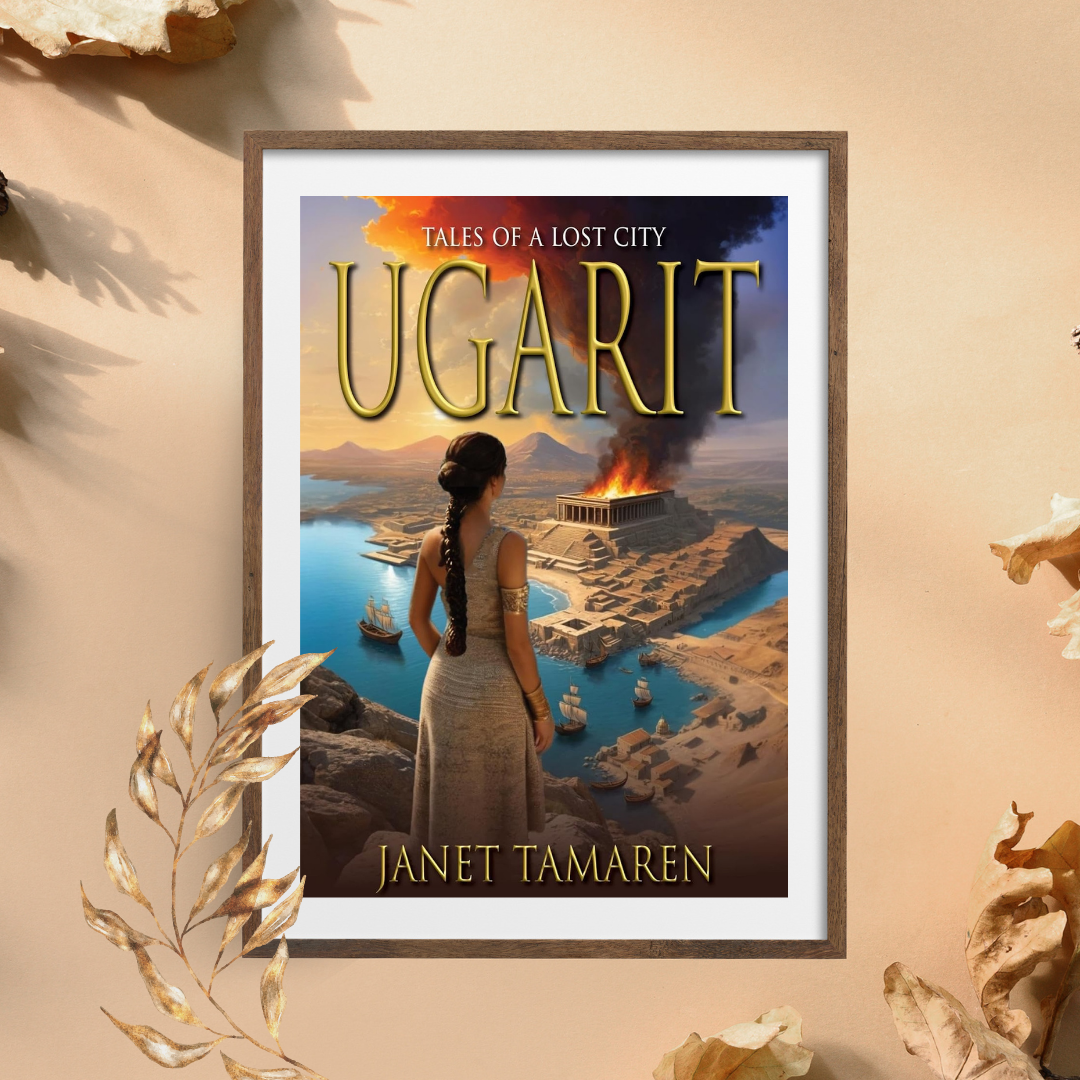
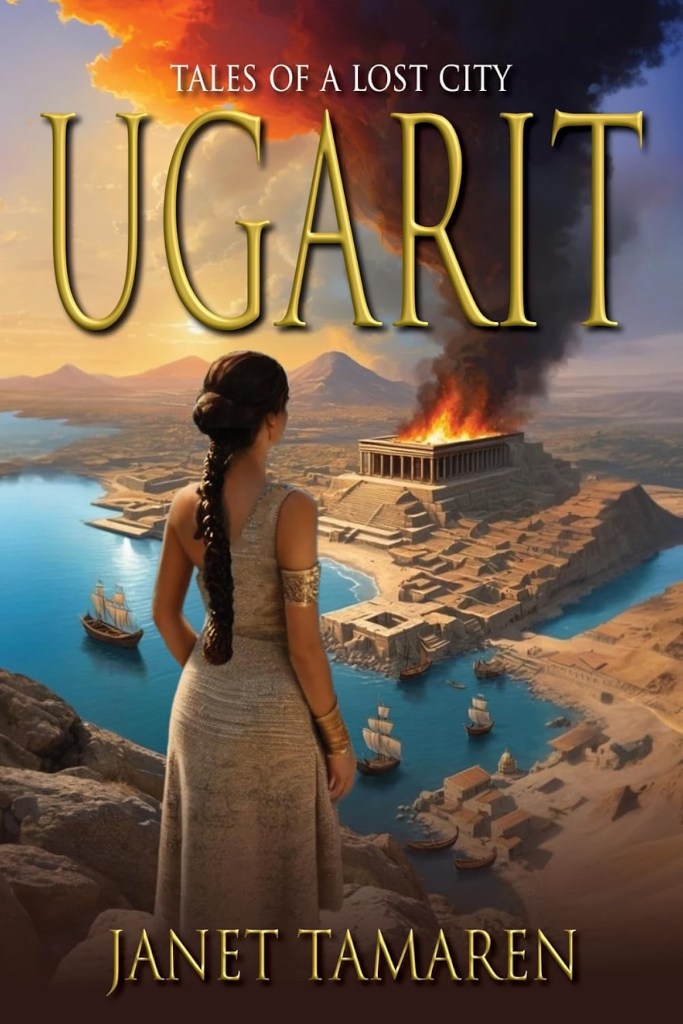
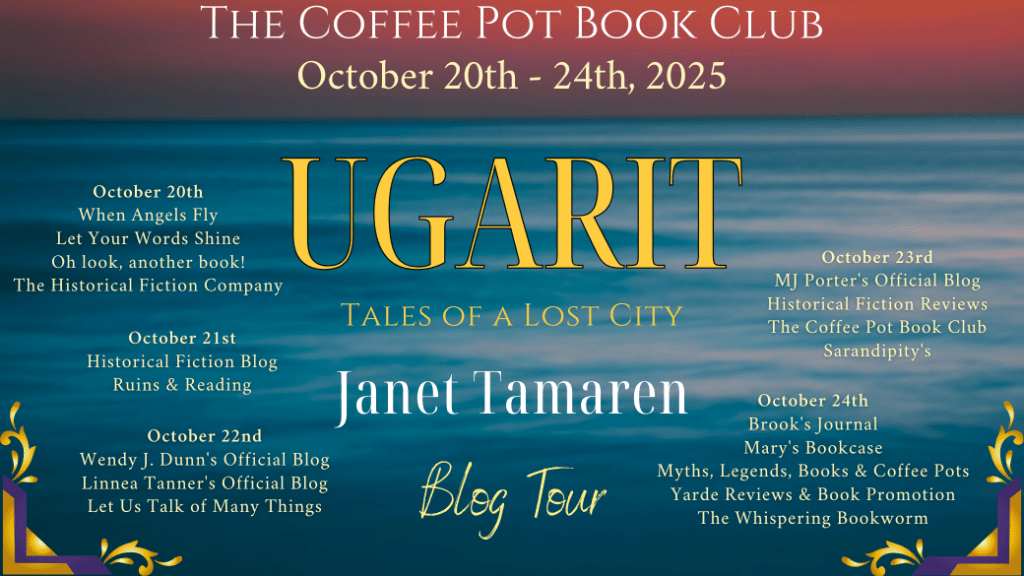
I’m delighted to welcome Janet Tamaren and her book, Ugarit: Tales of a Lost City, to the blog #HistoricalFiction #AncientNearEast #BronzeAge #Ugarit #BlogTour #TheCoffeePotBookClub
I’m delighted to welcome Janet Tamaren and her book, Ugarit: Tales of a Lost City, to the blog with an excerpt.
Excerpt
CHAPTER 4: AT THE HEALER’S SHOP
Yoninah’s house had the classic sign of the healer outside the door: a snake entwined around a pole.
Hearing a firm knock at the door from the street, Yoninah went to answer it. A middle-aged man stood there, nursing his left arm. The arm was clearly crooked.
“I broke my arm. Can you fix it?” he said with a slight accent.
“Yes, I can splint your arm for you,” she said. “And I have pain meds for you as well.”
“That would be most welcome.” He grimaced with the pain.
Showing him to the front room, where she kept her herbs and supplies, she got him situated on a comfortable bench. She was skilled at setting broken bones. Every month or so, someone from the docks appeared at her door with an injury to an arm or leg. The men did heavy work: unloading cargo from the ships.
“I have silver to pay you. I am told you are good at your work. I’ve broken bones before. I know it will lay me up for a while.” The man attempted a smile, but it didn’t quite work.
Looking more closely at him, she saw that he had the cheekbones, chin, and beard of the Aegean. His hair was black, mixed with a sprinkling of gray. The skin of his face and arms was heavily tanned, with creases across the face, courtesy of the harsh sun of the Great Sea. A handsome face except for the grimace.
Probably a refugee from the war in the north, from Troy, she thought. A war that had been over and done with for a good twenty years.
She picked up a salve of poppy seed extract and myrrh and returned to the bench where the Mycenean sat. She washed the area and applied the numbing ointment as a compress. As she worked, she made small talk to distract him from his pain: “I’m guessing you are Mycenaean. Not much accent there, but you look like you’re from the Aegean. How did you break your arm?”
“I was carrying wine jars on a cart drawn by an ox. The cursed animal took a tumble,” said the Mycenean. “I tried to catch the jars before they hit the ground. The jars survived but my arm broke. Heard the thing snap. Hurts like the sting of a thousand bees.”
“Well, let the compress work for a bit. Should feel better in a short time,” said Yoninah. “Let me find a splint to fit you.”
“And maybe a cup of honeyed wine to take the edge off?” he asked.
“Certainly,” she said. Yoninah called for her daughter Laylah to fetch a flask with honeyed wine.
“How did you end up in Ugarit?” asked Yoninah. “This is a distance from the Aegean Sea.”
“The war,” he said flatly. “I mean the Trojan War. I joined the fleet in Mycenae when I was seventeen because I thought it would be a grand adventure. They paid a good bonus as well. Ten stinking years later – most of it spent outside the grand walls of Troy, in a siege that was going nowhere –we somehow broke through the walls, looted the city, and burnt it.”
“I was sick of the whole adventure by then. And sick of the sea: too many storms, too many shipwrecks. Never wanted to go back across the Great Sea.” He paused for a beat and said, “Is my arm almost ready? I can’t feel the pain as much anymore.”
“Good,” she said. “Lay your arm flat on the table. And here is that wine for you.”
Taking a cup of wine from Laylah with his right arm, he drank it down in one fell swoop.
Yoninah had him lay his misshapen left arm on the table, and manipulated the broken bone back into position. She splinted it with a plank of cedar wood and wrapped it in clean cloths. “How does it feel?” she asked.
“Not bad,” the man said. The man’s attempt at a smile proved a bit more successful.
“You fought at Troy. That’s a goodly distance from Ugarit,” Yoninah said as she gathered up a sling. “How did you wind up here?”
“Never wanted to go back to the open sea. Took passage on a ship bound for Ugarit. As you know, these ships travel along the coast. That took a scant ten days, what with favorable winds and currents. Been here a good twenty tears now,” he said.
She gave him a sling, to keep his elbow bent and the arm held close against his chest. She tied the sling herself. As she bent over him, he stared at her chest.
“That’s a pretty necklace you are wearing.” His eyes were fixed on the pendant she wore, a painted terracotta figure of a naked woman.
Yoninah bit her lip as she tried to hold back a smile. Her patient was a bit tipsy now.
“Thank you. It is Asherah, the Queen of Heaven.” She was momentarily distracted by the intensity of his gaze. She reverted quickly to her healer persona.
“There you go. No using the arm! For at least four weeks. Do you have a wife or daughter to keep an eye on you?” Yoninah couldn’t meet his eyes as she asked this question.
“No,” he said. “My wife died. I have a friend who can help. I’ll be all right.”
“My husband died five years ago,” Yoninah said before she could catch herself. She didn’t really need to tell him this information. She turned away and busied herself for a moment.
“I’ll need you to come back in two weeks,” she said. I’ll need to make sure the arm is healing.”
“My name is Menelaus. And yours is?”
“You can call me Yoninah” she said.
Giving her a silver shekel for the arm repair, he swore he would be careful with the arm and agreed to return in two weeks. He gave her a lopsided grin at that point. Possibly due to the excess of wine, she thought.
After he left, she felt uplifted. That had been an unusually pleasant interaction. The bone had gone smoothly back into place.
Laylah had remained respectful while the Mycenean was there. After he left, she looked at her mother’s flushed face and laughed. “You like him.” she said.
Yoninah agreed: “He is handsome enough. He kept us amused.” She thought, “It is true, I am looking to forward to seeing him again.”
Here’s the Blurb
A captivating tale of bravery in the face of heartbreak and upheaval.
IN THE SPRING OF 1190 BC, on the sun-drenched shores of the eastern Mediterranean, the thriving city of Ugarit pulses with life, trade, and courtly intrigues. But danger brews beyond its walls.
Yoninah, a gifted healer, offers herbs and amulets to ease her neighbours’ suffering. When a Mycenaean – an ex-soldier from the Trojan War—stumbles into her life, he reawakens memories she thought long buried. Just as whispers of war echo ever closer.
Meanwhile, in the royal court, Thut-Moses is a scribe who was trained in the temples of Egypt. The king is paralyzed by ominous messages: foreign invaders are razing one coastal city after another. As the tide of destruction nears, Ugarit’s fate hangs in the balance.
Torn between loyalty and survival, love and duty, Yoninah and Thut-Moses must each decide: what will they risk to protect what the hold most dear?
Rich with historical detail and inspired by newly-translated cuneiform tablets unearthed form Ugarit’s ashes, UGARIT brings to life the final days of a cosmopolitan world on the brink of collapse – a sweeping tale of courage and resilience at the twilight of the Bronze Age.
Praise for Ugarit:
“A masterfully told tale-rich, riveting, and utterly transporting. I couldn’t put it down.”
Janet Tamaren is a retired physician who practiced for two decades in rural Kentucky. Now living in Denver with her husband, she enjoys writing and is the author of a medical memoir and a guide to Hebrew Bible stories. She began writing UGARIT during the COVID lockdown.





































 MJ Porter