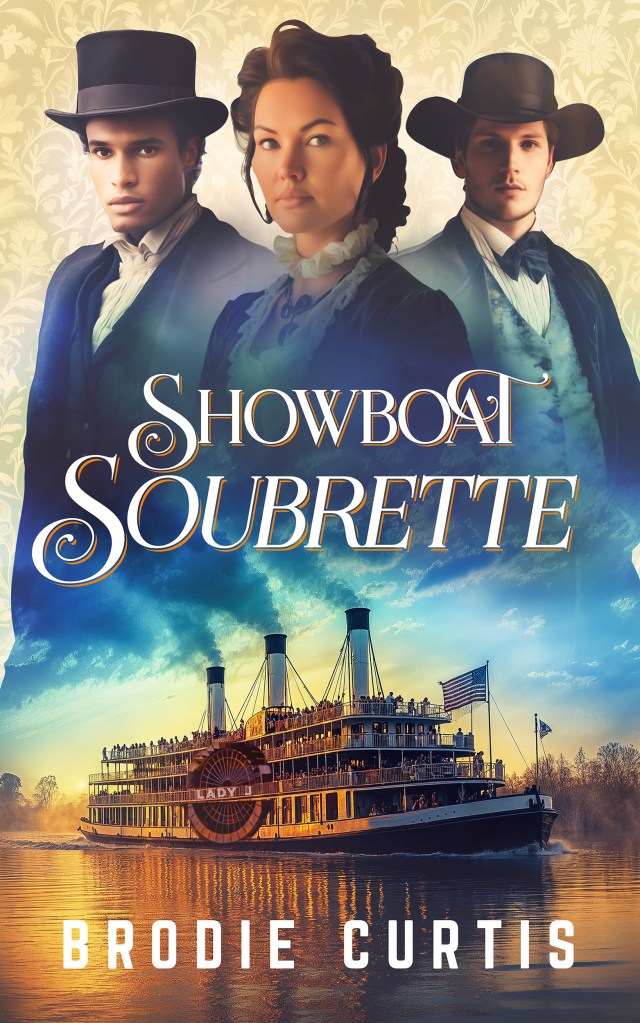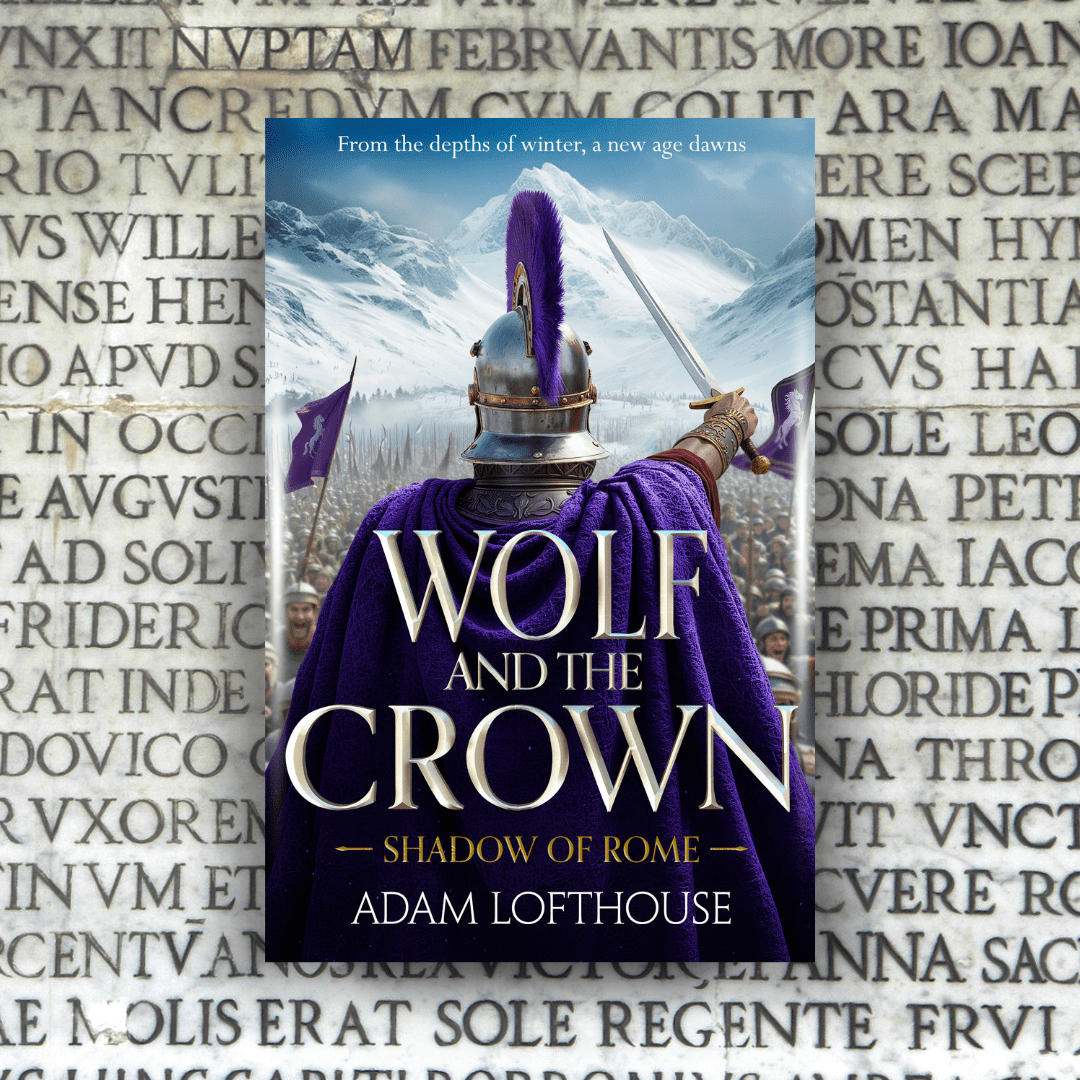

It’s happy release day to Shield of Mercia. Return to the world of young Icel. It’s going to get cold (and then rather hot). #newrelease #histfic #TheEagleofMerciaChornicles
This is my fourth attempt at the recording:) (Contains spoilers) (click on it to ‘pop’ it out)
Here’s the blurb
Mercia is triumphant. Her king is safe. But Wessex was never Mercia’s only enemy.
Tamworth, AD836
Following a brutally cold winter, King Wiglaf of Mercia is in the ascendancy. Even Wessex’s Archbishop of Canterbury extraordinarily ventures to Mercia to broker a religious accord. But, can the hard-won peace prevail?
Viking raiders threaten Wessex. These blood-thirsty warriors are fast, skilful and have no reticence about killing those who stand in their way. Their aim isn’t to rule but to overwhelm, slaughter and take ill-gotten wealth.
King Wiglaf is no fool. As the Vikings push to overwhelm Wessex, Mercia’s lands look insecure. King Wiglaf needs the shields of Mercia’s warriors to prevent the overwhelming advancement of their deadliest enemy yet.
To save Mercia, Icel must first prevail over the two men who mean to end his life; King Ecgberht of Wessex and his son, Æthelwulf of Kent and only then the marauding Viking army for whom boundaries have no meaning.

I’m delighted to welcome Nancy Jardine and her new book, Tailored Truths, Book 2 in the Silver Sampler Series, to the blog with a guest post.

Guest Post – Mill Owner Benevolence
My character, Margaret, has a variety of jobs in Tailored Truths. Two of them are in different areas of one of the larger mills in Dundee (Scotland). The time period covered in the book is between 1855 and 1868 when Dundee mills were, at times, highly profitable though the situation was also volatile, markets and sales being unpredictable. Workers were hired when high production was needed and they lost their jobs when things weren’t so rosy in the world markets. Margaret finds herself lucky to have a job when she desperately needs one, even if it pays a pittance!
During the earlier part of the 19th Century, linen was the prime mill product in the Dundee area. Coarse linen weave was highly sought after for sailcloth; for canvas sacks and bags for transporting goods; and a coarse linen weave named Osnaburg was produced for sending to the American plantations to be made into rough clothing for slaves. The main drawback, however, was that the flax (raw product) tended to come from Baltic states. When Britain became embroiled in the Crimean War, between 1853-1856, the flax supplies from the Russian Baltic states were deemed as potentially unreliable. The larger mill owners in Dundee tended to work on a ‘six months’ system where supplies were ordered well in advance, since shipping from the Baltic also relied on an annual short-window of weather good enough for sailing ships. Not having continuous raw supplies presented a huge problem since linen was highly sought after during the Crimean War. The war office bought lots of linen products, the British army and navy requiring constant supplies and replacements to sails; uniforms; sacks; tents etc. Market prices fluctuated but some of the Dundee mills profited very well during the Crimean War, though there were the much leaner years afterwards when the War Office requisitions dwindled.
To offset potential losses from a lack of flax, some of those larger mill owners in Dundee turned to producing jute weaves. Jute wasn’t a new product around Dundee, since some of the smaller weavers had already been producing jute products for decades, but the profit margin for them was low. Initially, the raw jute was grown in Bengal (India) and shipped to Dundee via local Indian dealers but when the larger mill owners saw jute as being profitable they organised the shipping themselves.
The tradition in Bengal had been for jute products to be hand-woven. There were no powered-looms nor any steam machinery in Bengal for spinning and weaving till later in the 1850s and 1860s, so there was no real competition when the big Dundee mills began jute mass production.
The raw jute needed to be softened first before carding and spinning could happen. Whale oil was already known to be a good product for that process and it was highly convenient that the quaysides at Dundee were regularly frequented by the huge whaling ships.
Some of the mill owners weathered the unpredictable markets very well and their bank accounts swelled enormously. Many of them chose to use their wealth to build new mansions for their families in the nearby coastal town of Broughty, or around the city of Dundee. In doing this, they provided much needed construction jobs, and then jobs for inside and outside staff. I used this situation in Tailored Truths, giving Margaret a taste of the high-life when she is taken on as a lady’s maid in one of the new mansions. The ‘family’ are naturally only on the periphery of high society, with Margaret experiencing it from the point of view as an elevated servant, but her situation means a glimpse into how the nouveaux riche of Dundee were living.
Some of the Dundee mill owners took opportunities to use some of their wealth for the benefit of the citizens of Dundee. Whether this was true altruism, or expected of them, could be debated at length but the facts are that some public buildings and facilities would not have been built so readily without hefty donations coming from the mill owners. Some of the still-existing public parks in Dundee came about from extensive donations, Baxter Park being a fine example. The land was acquired, planted up and turned into beautiful walkways for the working people of Dundee to enjoy when freed from their long hours of work. Baxter Park also has a very fine pavilion, currently used as a multi-purpose venue with a tiny daytime café. One of the marvellous aspects of the sandstone pavilion in Baxter Park, designed by Sir Joseph Paxton – a renowned architect and landscaper – is the grand rooftop balustrade. There is a fantastic view from there of the River Tay and the far bank of Fife. When the park was newly planted the view would have been much better than today. It’s still very good since the whole park site is ‘up-the-hill’ from the harbourside but today some of the original and very mature trees, and modern housing slightly obscure the views.
I couldn’t resist adding in a scene where Margaret meets some very handsome lads in my fictitious Baxton park. It didn’t feel authentic to give my Dundee mill family the genuine name of Baxter, but I chose something very close. My fictitious Mister Baxton is, in his own way, remotely instrumental in Margaret’s progress through her late teenage years and into her twenties. How?…Too many spoilers ruin the book (Shh.. I just made that up!)
Here’s the Blurb
An engrossing Victorian Scotland Saga (Silver Sampler Series Book 2)
Is self-supporting success enough for Margaret Law or will her future also include an adoring husband and children? She might secretly yearn for that though how can she avoid a repeat of relationship deceptions that disenchanted her so much during her teenage years?
Employment as a lady’s maid, and then as a private tutor in Liverpool in the 1860s bring thrilling opportunities Margaret could never have envisaged. Though when those posts end, her educational aspirations must be shelved again. Reliance on her sewing skills is paramount for survival when she returns to Dundee.
Meeting Sandy Watson means love, marriage and starting a family – though not necessarily in that order – are a striking development though it entails a move north to Peterhead. Yet, how can Margaret shed her fear of commitment and her independence and take the plunge?
Jessie, her sister-at-heart, is settled in Glasgow. Frequent letters are a life-line between them but when it all goes horribly wrong, the contents of Margaret’s correspondence don’t necessarily mirror her awful day-to-day realities.
This title is available to read on #KindleUnlimited
Meet the Author
Nancy Jardine writes historical adventure fiction, historical saga, time travel historical adventure and contemporary mysteries. Research, grandchildren, gardening fill up her day in the castle country of Aberdeenshire, Scotland, when not writing or promoting her writing. Interacting with readers is a joy at Book and Craft Fairs where she signs/sells paperback versions of her novels. She enjoys giving author presentations on her books and on Ancient Roman Scotland.
Memberships include: Historical Novel Society; Scottish Association of Writers, Federation of Writers Scotland, Romantic Novelists’ Association and the Alliance of Independent Authors. She’s self-published with Ocelot Press.
It’s happy release day to Shield of Mercia. Return to the world of young Icel. It’s going to get cold (and then rather hot). #newrelease #histfic #TheEagleofMerciaChornicles
I ‘attempted’ to recreate a Saxon poem about winter in Shield of Mercia. What do you think?
Many famous poems from Saxon England reveal a fascination with winter, almost a horror of its ravages, which we might not appreciate with our central heating, fleeces and ability to eat well.
The Menologium, a calendar poem from the period, states that winter ran from the 7th of November to the 6th of February, and I really love the imagery in The Menologium, as translated by Eleanor Parker, in her fascinating Winters of the World (the title really does say it all).
‘After [All Saints’ Day] comes Winter’s Day, far and wide
Six nights later, and seizes sun-bright autumn
With its army of ice and snow,
Fettered with frost by the Lord’s command,
So that the green fields may no longer stay with us,
The ornaments of the earth.’
p41 from E Parker’s translation of The Menologium in Winters of the World.
Check out reader reviews
Here’s the blurb
Mercia is triumphant. Her king is safe. But Wessex was never Mercia’s only enemy.
Tamworth, AD836
Following a brutally cold winter, King Wiglaf of Mercia is in the ascendancy. Even Wessex’s Archbishop of Canterbury extraordinarily ventures to Mercia to broker a religious accord. But, can the hard-won peace prevail?
Viking raiders threaten Wessex. These blood-thirsty warriors are fast, skilful and have no reticence about killing those who stand in their way. Their aim isn’t to rule but to overwhelm, slaughter and take ill-gotten wealth.
King Wiglaf is no fool. As the Vikings push to overwhelm Wessex, Mercia’s lands look insecure. King Wiglaf needs the shields of Mercia’s warriors to prevent the overwhelming advancement of their deadliest enemy yet.
To save Mercia, Icel must first prevail over the two men who mean to end his life; King Ecgberht of Wessex and his son, Æthelwulf of Kent and only then the marauding Viking army for whom boundaries have no meaning.
Why did I write about Lady Elfrida? Saxon England’s first crowned queen? #nonfiction #authorinspiration
Why did I write about Lady Elfrida?
Lady Elfrida could have been Anne Boleyn, marrying for love, only she outlived her husband. She could have been Eleanor of Aquitaine, only she only had one son who lived to adulthood. She could have been Isabella, the She-Wolf of France. No woman before her had ever held so must power in England, and lost it, at the hands of her son.
The delight in Lady Elfrida’s story is playing with the ‘what ifs’ and the ‘possibilities.’ This is why she is a perfect character to explore through fiction, because her life is long and varied, and there’s a great deal to untangle from the historical record.
Elfrida was, officially, the first crowned Queen of Saxon England. Of Saxon England. Before her, there had been queens of Wessex (not as many as you think), Mercia (more), Northumbria, Kent, East Anglia, and even of the Anglo-Saxons, but never of the English.
‘Twice a Queen’ Emma, who married Elfrida’s son, Æthelred II, and the Cnut, would have walked in only recently relinquished footsteps when she married. Equally, Elfrida replaced Lady Eadgifu, a woman not known to have been acknowledged queen, but who just might have known Elfrida before her death, and who had certainly played her own part as a kingmaker following the death of her husband, her stepsons, her sons, and then older grandson.
I confess, the idea of a married king falling passionately in love with Lady Elfrida was almost more than enough to want to write about her, and I did include this in the first novel, much more a romantic historical novel than the subsequent books, but it was what came after that struck me.
A woman of considerable power and influence
But Lady Elfrida was a woman of considerable power, not just a love interest for the king – take a look at the charters issued throughout her second husband’s and second son’s life, and she’s there, named. Not always at the top of the list of attestations, but clearly in evidence, apart from when she and her son seem to have fallen out in about 985 until 993, when she reappears until her death. Lady Elfrida was a ‘mover and shaker’ at the Saxon English Court.
She was the ‘queen’ alongside her husband as king, she was mother to his third and fourth children – two sons.
As queen, she was involved in the Benedictine Reformation, then sweeping England – alongside such political heavyweights as Archbishop Dunstan and Oswald and Bishop Æthelwold, and her husband gave her command over the nunneries of England (which meant their wealth and assets as well as their spiritual needs).
Under her step-son, Edmund the Martyr, Lady Elfrida, was absent from Court, no doubt plotting her son’s return, or, just acknowledging that she had no part to play as her son had been excluded from the succession.
Lady Elfrida returned to Court with her son’s accession. A regency council was formed, and of course Elfrida was included, and this seems to be where Elfrida reached her peak of influence.
It’s worthwhile pausing to consider this outcome. Æthelred was no more than ten, possibly eleven, when he came to the throne. He was a minor. He was a child. And yet he became king of England, his coronation taking place in April 978 or 979, either with unseemly haste after his half-brother’s murder, or with a year of ‘arm twisting’ in between.
He was a minor. He was not a warrior.
A hundred years before Æthelred’s reign, the Alfred-Guthrum treaty had been signed, dividing England between the Danes and the ‘English’ (as they weren’t yet really known). ‘England’ (still not a distinct entity) had nearly been overrun by the Vikings. Fast-forward a hundred years, and ‘England’ has formed and there’s a minor on the throne. This, in any eyes, must be hailed as the greatest victory for Lady Elfrida.
Examining Lady Elfrida’s life with a rational approach and half an eye to the charter evidence for the period, and half an eye on what would happen after her death to smear her image, it‘s difficult not to say that she was not the first truly influential and powerful queen to ever stand close to England’s throne – a queen as well as a wife, the king’s mother, and, in time, the grandmother to a future generation – she deserves much more than her attribution (which formed quite quickly after her death and only grew after the Norman Conquest) of ‘whore’ and ‘murderer’.
The First Queen Trilogy charts Lady Elfrida’s marriage.
The King’s Mother, the first in a second trilogy, charts Lady Elfrida’s role, as well, the King’s Mother. Her story can be read from here.
If you’d like to know more about the historical Elfrida, she features in my first non-fiction title, below (as does Lady Eadgifu).
I’m delighted to share my review for Murder in Trafalgar Square by Michelle Salter, the first book in a new historical mystery series #historicalmystery #cosycrime #highlyrecommended
#BoldwoodBloggers @BoldwoodBools #MurderInTragalgarSquare @rararesources @bookandtonic
Here’s the blurb
Discover a BRAND NEW page-turning cosy mystery series from Michelle Salter A murdered suffragette. A missing politician. A stolen artwork.
London, 1910
Coral Fairbanks is a contradiction. As well as a suffragette, she’s a bit-part actress and nude model, earning her the disapproval of her fellow suffragettes.
Guy Flynn is an artist. He’s also a detective inspector at Scotland Yard, who doesn’t always see eye to eye with fellow officers in the Metropolitan Police.
When Home Secretary Winston Churchill orders the police to terrorise the suffragettes during an afternoon of violence that becomes known as Black Friday, the battlelines are drawn – and Coral Fairbanks and Guy Flynn are on different sides.
But when a young suffragette is found murdered in the National Portrait Gallery and one of their paintings is stolen – Fairbanks and Flynn must put their differences aside and combine their knowledge to track down the killer.
Introducing an iconic detective duo in Fairbanks and Flynn, this is an exciting and gripping historical mystery, which will delight fans of Agatha Christie, Benedict Brown and T. E. Kinsey
Murder in Trafalgar Square is the first book in Michelle Salter’s new mystery series, set in 1910, and what a fabulous first entry into a series it is.
For this series we have two main characters, Cora, a young widow who is a suffragette, works in a gallery and has also been an actress but is currently deemed, at 36, to be too old to play the ingenue on stage, and too young to be a harridan. (I sense we’re still not really that far beyond that even now).
Guy Flynn, our detective inspector, is equally a many layered individual, also a widower with a daughter to raise alone, and he’s a painter too. The pair have some lovely facets to their characters and they make for an intriguing duo as we read chapters from alternative points of view. They’re flung together when a body is found at the National Gallery and it makes all the headlines, as opposed to the suffragette stunt with a most amusing painting (I’m not spoiling it).
The mystery unfolds at a good pace, as Cora and Guy endeavour to unpick the information they gain, while endeavouring to stay on the right side of the government.
This is such a fabulous new book, and I’m so excited to read more of Cora and Guy. I love the Iris Woodmore series by the author, but it’s possible I might love this one even more.
A Conspiracy of Kings – a little bit of history (may contain spoilers for my fictional recreation of Lady Ælfwynn
In the sequel to The Lady of Mercia’s Daughter, the story of Lady Ælfwynn continues. She is The Second Lady of Mercia, but everything isn’t as it seems. In the various recensions of The Anglo-Saxon Chronicles, an attempt can be made to piece together what befalls her.
The Anglo-Saxon Chronicle A version doesn’t mention Ælfwynn at all but instead has King Edward of Wessex/the Anglo-Saxons taking control of Tamworth as soon as his sister dies in June 918.
The Anglo-Saxon Chronicle E only mentions Lady Æthelflæd’s death in 918 and not what happens immediately after in Mercia. Lady Ælfwynn’s fate, however, is recorded in The Anglo-Saxon Chronicle C. We’re told that she was deprived of all power and ‘led into Wessex three weeks before Christmas.’ This entry is dated 919, although it’s normally taken to mean 918 due to a disparity between the dating in this part of The Anglo-Saxon Chronicle – known as the Mercian Register – where a new year starts in December as opposed to in the Winchester version of The Anglo-Saxon Chronicle where the new year starts in September.
These details are stark, offering nothing further. What then actually happened to Lady Ælfwynn? Was she deprived of her power? Was she deemed unsuitable to rule?
What adds to the confusion surrounding Lady Ælfwynn is that other than this reference in The Anglo-Saxon Chronicle, she doesn’t appear in any of the later sources. It’s as though she simply ceased to exist.
Two intriguing suggestions have been put forward to explain what happened to Lady Ælfwynn, both with some tenous corroboration.
Did she become a nun or, perhaps, a religious woman?
A later charter dated to 948 and promulgated by King Eadred is to an ‘Ælfwyn, a religious woman,’ and shows land being exchanged in Kent for two pounds of purest gold. (S535) There’s no indication that this Ælfwyn is related to our Ælfwynn or even to King Eadred. But, there remains the possibility that it might just have been the same woman, after all, Eadred would have been Ælfwynn’s cousin. Charter S535 survives in only one manuscript.
Alternatively, and based on a later source, Ramsey Abbey’s Book of Benefactors, we learn the following:
‘he [Athelstan Half-King] bestowed marriage upon a wife, one Ælfwynn by name, suitable for his marriage bed as much as by the nobility of her birth as by the grace of her unchurlish appearance. Afterwards she nursed and brought up with maternal devotion the glorious King Edgar, a tender boy as yet in the cradle. When Edgar afterwards attained the rule of all England, which was due to him by hereditary destiny, he was not ungrateful for the benefits he had received from his nurse. He bestowed on her, with regal munificence, the manor of Weston, which her son, the Ealdorman, afterwards granted to the church of Ramsey in perpetual alms for her soul, when his mother was taken from our midst in the natural course of events.’[i]
Which alternative is it?
There are only eight women named Ælfwynn listed in the Prosopography of Anglo-Saxon England (PASE), a fabulous online database. Of these, one is certainly Ælfwynn, the second lady of the Mercians, and one is undoubtedly the religious woman named in the charter from 948. (When the identification is not guaranteed, multiple entries are made in this invaluable online database). The other five women were alive much later than the known years Ælfwynn lived. One of the entries might possibly relate to her, but that’s all the information known about her.
And this is far from unusual for many of the women of the House of Wessex. Some women are ‘lost’ on the Continent. Some are ‘lost’ in England.
‘Were it not for the prologue to Æthelweard’s Latin translation of an Anglo-Saxon Chronicle, we would know of only six tenth-century royal daughters or sisters from early English sources and the names of only four of them. Three of these named ones are nuns or abbesses. Only Ælfwynn, the daughter of Æthelflæd and Æthelred of Mercia, and the two daughters of Edward/sisters of Athelstan who married Otto I and Sihtric of York, appear in the witness lists of charters, though Eadburh, daughter of Edward the Elder, is a grantee of a charter of her brother Athelstan.’[ii]
Reconstructing a ‘possible’ life for Lady Ælfwynn was the inspiration for both The Lady of Mercia’s Daughter and A Conspiracy of Kings, and the potential for family betrayal, politicking, and war with the Viking raiders was just too good an opportunity to miss.
[i] Edington, S and Others, Ramsey Abbey’s Book of Benefactors Part One: The Abbey’s Foundation, (Hakedes, 1998) pp.9-10
[ii] Stafford, P. Fathers and Daughters: The Case of Æthelred II in Writing, Kingship and Power in Anglo-Saxon England, (Cambridge University Press, 2018) p.142
I’m sharing my review for Murder in the Soho Graveyard, a Victorian mystery #histfic #bookreview (as well as reviews for the 1st two books in the series) #mystery
Here’s the blurb
A churchyard discovery. A shocking secret. A deadly confrontation.
London, 1890. When the body of a wealthy widow is found in the neglected graveyard of St Anne’s Church, Soho, Emma Langley and Penny Green soon discover her respectable façade concealed a web of bitter enemies.
From a disgraced doctor stripped of his livelihood to a governess whose reputation was destroyed by lies, the victim, Mrs Melbourne, left a trail of devastation in her wake.
Then Mrs Melbourne’s Belgravia mansion is consumed by a mysterious fire. Emma and Penny must race to decipher water-damaged papers salvaged from the ruins that could hold the key to the truth.
But as anonymous threatening letters arrive warning them to abandon their investigation, the friends realise they’re hunting someone who will kill again to protect their secret. In the shadow-filled streets of Victorian London, can Emma and Penny expose the murderer before they become the next victims?
An atmospheric Victorian mystery that takes you from the crumbling graveyards of Soho to the grand squares of Belgravia – and will keep you reading late into the night.
Murder in the Soho Graveyard is the third book in the Emma Langley Victorian Mystery series. I have read the previous two books in the series (see the reviews lower down the page).
Our two main characters once more find themselves involved in an unexpected mystery, while our cast of regular extras is expanding once more. When Emma comes upon the forlorn figure of a woman sitting on a bench she can’t help but ask if she’s well, and from then, Emma and Penny are determined to help her clear her name of any involvement in the murder of a rather nasty individual, masquerading as an unpright, wealthy Victorian lady while at heart, she’s manipulative and really quite horrible.
There are several suspects, all of them with their own particular axe to grind and the reveal, when it comes, wasn’t at all what I thought it would be.
Murder in the Soho Graveyard is another well-paced and well-plotted Victorian mystery featuring our two amateur sleuths.
If you want to start at the beginning of the series… (which you should!)
The Whitechapel Widow
London hunts the Ripper. A widow hunts her husband’s killer.
London, 1888. While Jack the Ripper’s reign of terror grips the city, Emma Langley’s world shatters when her husband is found murdered in Whitechapel. But grief is quickly overshadowed by a startling discovery: William Langley was not the man she thought she knew.
As panic fills London’s streets, Emma delves into her husband’s secret life, uncovering a web of lies that stretches from glittering society drawing rooms to the seedy gambling dens of the East End. Aided by Penny Green, a former reporter with a nose for trouble, Emma follows a trail of blackmail and corruption.
But exposing her husband’s killer could make her the next victim and in the shadows of gaslit streets, a murderer waits, ready to strike again…
The Whitechapel Widow is a very well-plotted historical mystery set at the time of the attacks by Jack the Ripper in London. The author does a fabulous job of weaving the narrative through known events, and I really enjoyed the mystery elements. Emma is a great new main character, but I also enjoyed the inclusion of Emily’s heroine, Penny Green.
I will certainly be reading more of the series.
The Poison Puzzle
A secret society. A suspicious death. A trail of deadly clues.
London, 1889. When Emma Langley discovers a mysterious symbol in her late husband’s diary, she uncovers a connection to a secretive treasure-hunting group with powerful members. Her investigation takes an unexpected turn when Lord Charles Harpole, a society member, is found dying in his hotel room.
The authorities rule it suicide, but Emma and her friend Penny Green aren’t convinced. As they follow a trail of cryptic clues leading from St. Paul’s Cathedral to Hampton Court, they find themselves caught in a deadly game.
With suspects ranging from the lord’s grieving fiancée to his ambitious brother, Emma must solve the puzzle before the killer claims another victim. But in the fog-shrouded streets of Victorian London, someone will stop at nothing to keep the society’s secrets buried…
Emma Langley returns in this gripping Victorian mystery that weaves historical detail with page-turning suspense.
I very much enjoyed The Poison Puzzle, the second book in the Emma Langley Historical Mystery series, but I must admit, I felt the buildup was somewhat better than the eventual resolution, which fell a little flat for me. That said, I will be continuing the series, as I do adore all the period detail for the books, and I certainly appreciated the research that went into making the treasure hunt feel very authentic.
Why did I write about Lady Eadgifu, the main character in Kingmaker? #histfic #authorinspiration
I don’t really know when I became a fan of historical fiction but I can take a good guess at who, and what, was to blame.
William Shakespeare and Macbeth.
When I was at school, we didn’t get ‘bogged’ down with grammar and spelling in English lessons, oh no, we studied stories, plays, words, and also the ‘motivation’ behind the use of those stories and those words. And it was Macbeth that first opened my eyes to the world of historical fiction.
Yes, Macbeth is a blood thirsty play, and it might be cursed, but more importantly, it’s based on Holinshed’s Chronicle of England, Scotland and Ireland.
Macbeth is nothing better than the first work of historical fiction that I truly read, and understood to be as such. And what a delight it was.
I remember less the story of Macbeth as presented by Shakespeare (aside from the three witches – “when shall we three meet again?” “well I can do next Wednesday,’ (thank you Terry Pratchett for that addition), than working out ‘fact’ from ‘fiction’ in his retelling of the story. And hence, my love of historical fiction was slowly born, and from that, stems my love of telling stories about ‘real’ people and the way that they lived their lives, looking at the wider events taking place, and trying to decide how these might, or might not, have influenced these people.
Shakespeare chose the story of a little-known ‘Scottish’ monarch for his historical fiction; my latest subject is the third wife of King Edward the Elder, again someone that few people have heard of, but whose relative, many years in the future, would have interacted with Macbeth, or rather with Mac Bethad mac Findlaích.
Lady Eadgifu, the Lady of Wessex, lived through a tumultuous time.
Many people studying Saxon England know of King Alfred (died AD899), and they know of his grandson, Æthelred II (born c.AD 968), known as ‘the unready’. But the intervening period is little known about, and that is a true shame.
Lady Eadgifu, just about singlehandedly fills this gap. Born sometime before c.AD903 (at the latest), her death occurred in c.AD964/6. As such, she probably missed Alfred by up to 4 years, and her grandson, King Æthelred by about the same margin.
But what she did witness was the emergence of ‘England’ and the ‘kingdom of the English’ as we know it. And it wasn’t a smooth process, and it was not always assured, and it was certainly never, at any point, guaranteed that England would emerge ‘whole’ from the First Viking Age.
And more importantly, rather than being one of the kings who ruled during this period, Lady Eadgifu was the king’s wife, the king’s mother, or even the king’s grandmother. She would have witnessed England as it expanded and contracted, she would have known what went before, and she would have hoped for what would come after her life. (I think in this, I was very much aware of my great-grandmother who lived throughout almost the entire twentieth century – just think what she would have witnessed).
Lady Eadgifu was simply too good a character to allow to lie dormant under the one event that might well be known about from the tenth century – the battle of Brunanburh. She does also appear in my Brunanburh Series.
So, for those fans of Bernard Cornwell’s ‘Uhtred’ and for those fans of Lady Elfrida at the end of the tenth century, I hope you will enjoy Lady Eadgifu. She was a woman, in a man’s world, and because she was a woman, she survived when men did not.
Come with me to Great Witcombe #newrelease #MenOfIron #WarriorsOfIron #histfic
Great Witcombe Roman Villa
Great Witcombe Roman Villa is no longer open to the public, but it is managed by English Heritage, and it’s possible to get a glimpse of it, although you do need to be careful. I think it’s currently closed due to safety concerns, so be mindful, and stay behind all the barriers, especially as the location is pretty remote.
From what I could see of the remains of Great Witcombe Roman Villa, it does seem to have been set in a beautiful place, and it quite appealed to me. I relied heavily on the idea of the location when devising the home for one of the tribes that features in the Dark Age Chronicles. (It probably helped that I visited on a lovely sunny day.)
Letter writing in the Eleventh Century, how I recreated Lady Estrid’s connections with her vast family. #non-fiction #histfic
In trying to bring together the narrative for Lady Estrid, I faced a bit of a problem: the vast distances involved. Lady Estrid had family in England, Denmark, Sweden and Norway, many of them she may never have met in person.
Today, we might pick up the phone, or have a quick look on the internet, but in the eleventh century, how would people have communicated?
And so to letter writing. There are two surviving letters from the eleventh-century that were sent by King Cnut, Estrid’s brother, to the English, when he was absent from his newly conquered country, in AD1020 and AD1027. I give a small example below.
;Be it known therefore to all of you, that I have humbly vowed to the Almighty God himself henceforward to amend my life in all respects, and to rule the kingdoms and the people subject to me with justice and clemency, giving equitable judgments in all matters; and if, through the intemperance of my youth or negligence, I have hitherto exceeded the bounds of justice in any of my acts, I intend by God’s aid to make an entire change for the better.’ From Cnut’s letter to the English from AD1027.
These might well have been an exercise for Cnut in asserting his authority over the English, and giving his regents a little bit of extra support, but they open up the possibility of just who else was busy writing and sending letters to one another.
There’s always the assumption that unless you were a holy man, you perhaps couldn’t read or write, and in fact, in one of the books I referenced for Lady Estrid, I found a fascinating chart detailing people who are known to have been used by the ruling family of Normandy as messengers, another way that messages could be sent between people. But surely, sometimes, it was just better to write everything down, that way nothing could be lost in translation.
Without the possibility of Lady Estrid ever meeting some members of her family, using letter writing allowed me to artificially create conversations between the characters, and while it might not have been the ‘norm’ it was certainly something that happened. Indeed, three centuries earlier, there’s a great wealth of information to be found in the letters of Alcuin of York (c735-804), so it wasn’t as though it was a new thing. With Denmark’s conversion to Christianity, there would have been a ready selection of scribes just waiting to note down Lady Estrid’s frustrations and complaints, even if she didn’t pen them herself.
Here’s an example of one of Estrid’s letters I create in the book.
Dearest Mother, Lady Sigrid. Queen of Denmark.’
‘This marriage doesn’t agree with me. How could you agree to it? I trusted you more than any other to understand how difficult it would be to be forced to live amongst strangers. I relied on you to argue with my father about the necessity of the union.’
And don’t tell me I will one day be the queen of the Rus, as my father planned. Prince Ilja is not a strong man. I don’t foresee him living long. Not at all. The poor man. He has barely been able to consummate our union. I hope I will not carry his child. It will be weak and feeble, and I will not tolerate such.’
My children will be strong and powerful. One day, it is they who will be kings and queens. But these children will not be shared with Prince Ilja. I am sure of it.’
And even if he were to survive, his brothers are a treasonous coven. None of them wishes the other to succeed at their expense. I foresee only bloodshed and paranoia when Ilja’s father is dead.’
Frida is my only friend and ally, reminding me of home. I hope to return to Denmark one day. I never imagined leaving her. I miss her. The kingdom of the Rus is not the same. Not at all.’
Send me news of my father and brothers. I wish to know if my father has finally triumphed in England over King Æthelred. I should like to know that he didn’t callously send me away without so much as seeing me in person for no good reason, because he was absent, in England, as so often the case. If he fails in England again, I will never forgive him for his actions towards me.’
Your despairing daughter, Lady Estrid Sweinsdottir, from Kiev.’