I’m sharing my review for The Queen Who Came in From the Cold by SJ Bennett, released today #bookreview #newrelease #mystery
Here’s the blurb
It’s 1961 and the Queen is planning her state visit to Italy aboard Britannia. But before she goes, an unreliable witness claims to have seen a brutal murder from the royal train. Did it really happen, and could the victim be a missing friend of Princess Margaret’s new husband, Tony Armstrong Jones?
The Queen and her assistant private secretary, Joan McGraw, get to work on their second joint investigation, little imagining that this time it will take them all the way to Venice in a tale of spies, lies and Cold War skulduggery.
The Queen Who Came in from the Cold is my second foray into the Queen mystery series.
I was intrigued by the set up for this one, the Cold War, the Queen, spies etc. And it is a very good mystery, with an unexpected couple of twists.
The story is told with wonderful humour and there are some fabulous characters (as well as a lot of men who say inappropraite but period-specific comments about women) that really made me chuckle, and the mystery is delightfully simple and complicated, all at the same time involving a lot of people who don’t really speak to other people, and who can’t be seen speaking with other people. If this is how MI5 and MI6 really worked in the 1960s then it’s unsurprising that they missed so much. I did love all the historical research elements as well.
A fun, well-crafted mystery with a high level of peril for those involved.
Check out my review for The Windsor Knot (the first book in the series, although our Queen character is in her 90s in this one).
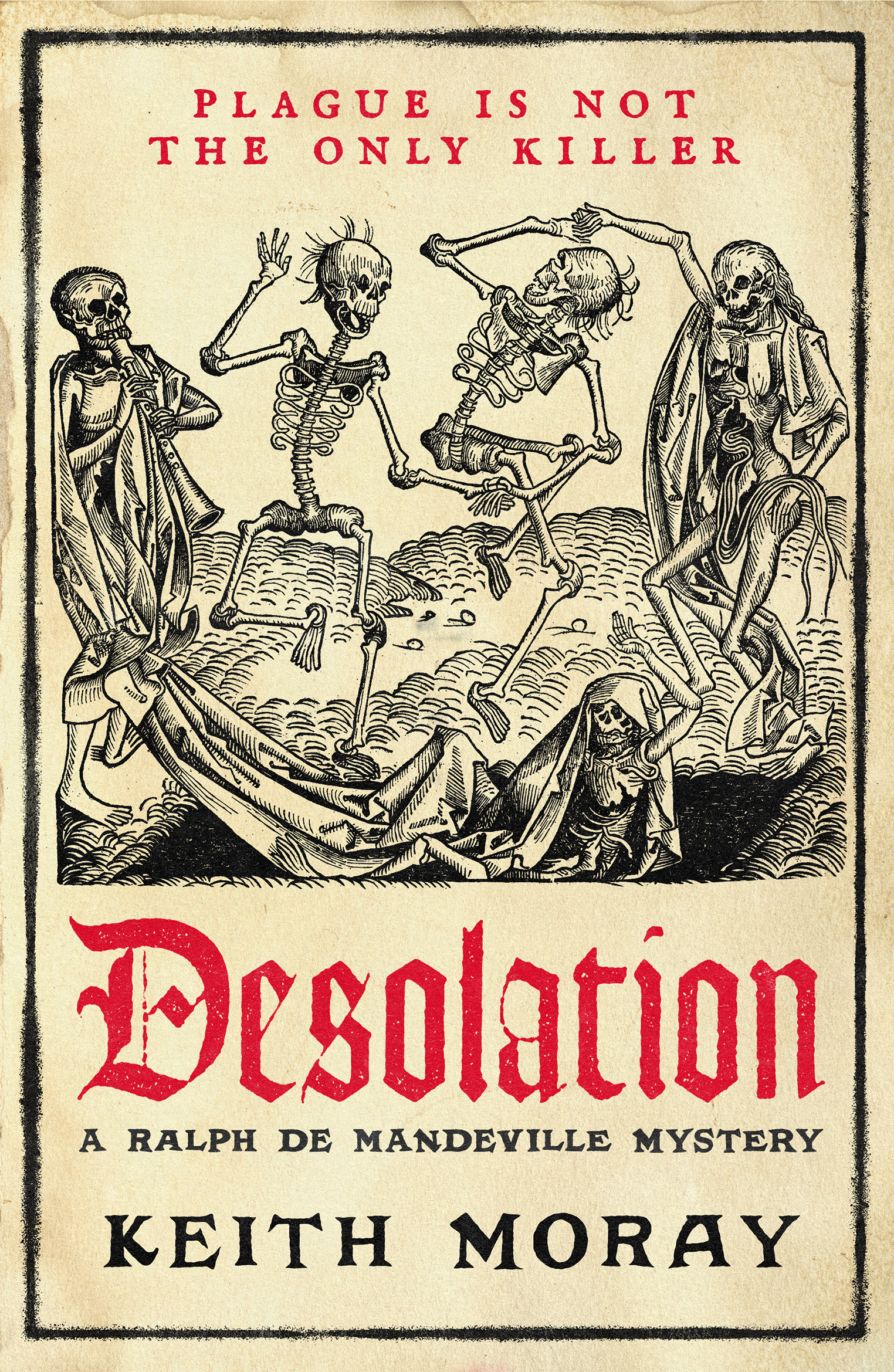
I’m sharing my review for Desolation by Keith Moray, a brand new historical mystery #bookreview #blogtour #newrelease
Here’s the blurb
A BRAND NEW wickedly dark medieval mystery from Keith Moray. If you like your murder truely gruesome – this series is for you! 🩸☠️🗡️
The Black Rood of Scotland, stolen.
A coroner of York, murdered
An evil worse than plague itself, at large…
1361, York. As the country recovers from the war with France, and whispers that the pestilence has returned to England grow louder, fear is in the heart of every nobleman and commoner alike. Sir Ralph de Mandeville, ex-solider and newly appointed Justice of the Peace is sent to Langbarugh, just outside York, to investigate the murder of Coroner Sir Boderick de Whitby.
More deaths quickly follow, and while these are swiftly dealt with as plague victims, Sir Ralph and his two assistants Merek and Peter soon uncover something altogether more horrifying… A greater evil is at large in the northern wapentakes.
As panic escalates and the lines between plague and murder blur, Sir Ralph is thrust into a desperate race against time. Every shadow hides a potential killer, every cough could be a death knell. Can he unmask a murderer lurking in the terrifying shadow of the Black Death before they’re all consumed by a terror more sinister than any plague?
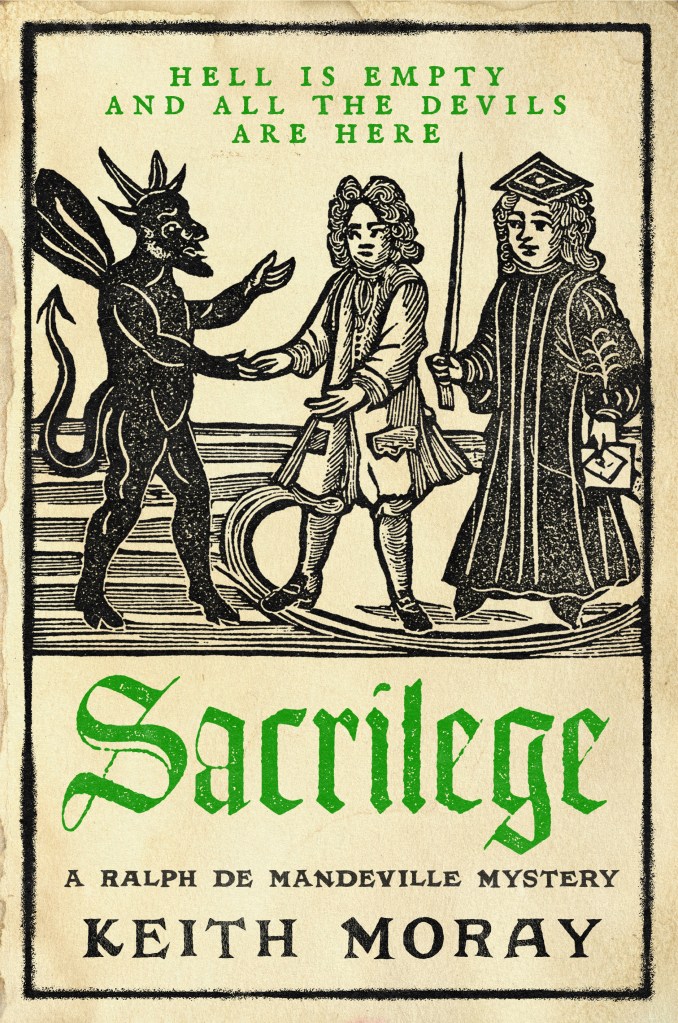
Desolation is the first book I’ve read by Keith Moray. I think the cover is fabulous and very evocative.
The story is intriguing, with a wide cast and it takes quite some time until we finally meet Ralph de Manville because there are so many other characters to meet first. I do hope that in later books in the series, Ralph will enter the narrative a little quicker.
It is quite a complex plot, because the narrative switches between characters so much. The reader does have to work to make sense of what’s happening. We are told certain things, but not others – so we know what’s happening but not necessarily who is doing it. The body count is HUGE!
When Ralph finally begins to make sense of what’s happening, the resolution comes quite quickly, and the ending is certainly satisfying.
I read a lot of mysteries. If I don’t work out ‘who did it’ I am always impressed, although with Desolation there are so many people implicated, it does feel as though there are a lot of people to guess. I worked out some elements, but not others, and I did very much enjoy the mystery element of the story.
Meet the author
Keith is a retired GP, medical journalist and novelist, writing in several genres. As Keith Moray he writes historical crime fiction in the medieval era and in ancient Egypt, The Inspector Torquil McKinnon crime novels set on the Outer Hebridean island of West Uist, and as Clay More he writes westerns. Curiously, his medical background finds its way into most of his fiction writing.
I’m sharing my review for A Mirror Murder, the first book in a delightful 1970s cozy mystery series by Helen Hollick #bookreview #mystery #blogtour
Here’s the blurb
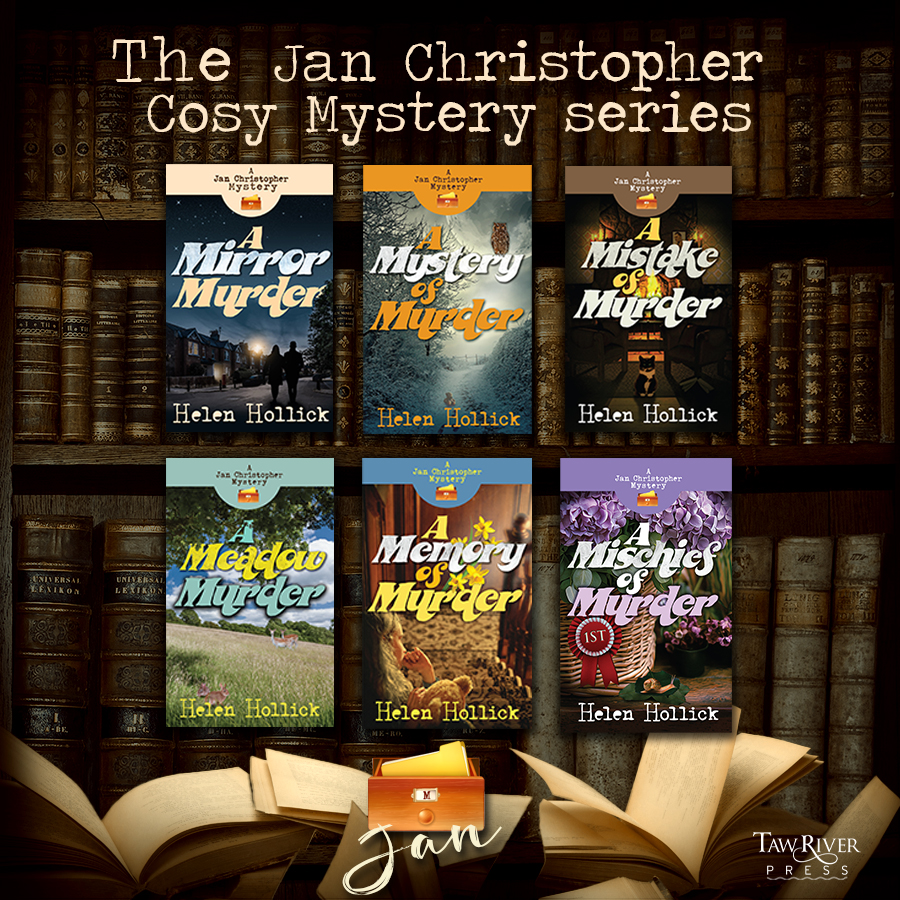
A Mirror Murder – First In The Jan Christopher Cozy Mystery Series
The first in a series of quick-read, cozy mysteries set during the 1970s in North East London and North Devon, featuring the characters of Jan Christopher, her Aunt Madge, her uncle, DCI Toby Christopher and romantic interest DC Lawrence Walker – plus several other endearing, regular characters.
The background of Jan’s career as a library assistant is based on the author’s own library years during the 1970s, using many borrowed (often hilarious!) anecdotes, her life in suburban north east London on the edge of Epping Forest, and her present life in rural North Devon…
July 1971 Eighteen-year-old library assistant Jan Christopher’s life is to change on a rainy evening, when her legal guardian and uncle, DCI Toby Christopher, gives her a lift home after work. Driving the car, is her uncle’s new Detective Constable, Lawrence Walker – and it is love at first sight for the young couple. But romance is soon to take a back seat when a baby boy is taken from his pram, a naked man is scaring young ladies in nearby Epping Forest, and an elderly lady is found, brutally murdered… Are the events related? How will they affect the staff and public of the local library where Jan works – will romance survive and blossom between library assistant Jan Christopher and DC Walker? Or will a brutal murder intervene?
“I sank into this gentle cosy mystery story with the same enthusiasm and relish as I approach a hot bubble bath, (in fact this would be a great book to relax in the bath with!), and really enjoyed getting to know the central character…” Debbie Young (bestselling cozy mystery author)
“Jan is a charming heroine. You feel you get to know her and her love of books and her interest in the people in the library where she works. She’s also funny, and her Aunt Madge bursts with character – the sort of aunt I would love to have had. I remember the 70s very well and Ms Hollick certainly gives a good flavour of the period.”Denise Barnes (bestselling romance author Molly Green)
“A delightful read about an unexpected murder in North East London. Told from the viewpoint of a young library assistant, the author draws on her own experience to weave an intriguing tale”Richard Ashen (South Chingford Community Library)
“Lots of nostalgic, well-researched, detail about life in the 1970s, which readers of a certain age will lap up; plus some wonderful, and occasionally hilarious, ‘behind the counter’ scenes of working in a public library, which any previous or present-day library assistant will recognise!”Reader’s Review
I do love a cozy crime series, and Helen Hollick’s Jan Christopher stories are fabulous.
As I so often do, I have read the series slightly out of order, and all you sensible people will start with A Mirror Murder, and you are in for a real treat as you read your way through the entire series.
The first book, A Mirror Murder, sets the scene for the series and introduces us to the cast. As someone who loves a really well-written and tightly plotted cosy mystery, I adored this book.
Perfectly evoking the early 1970s, with reference to newspaper events and Jackie magazine, including the cost of chocolate and a bus ticket, as well as some evocative pre-electronic library administration, I thoroughly enjoyed this mystery. It did bring back memories of my school days when I was forced to volunteer in the local library, and they sent us to the depths of the library and let us loose on the card filing system.
South Chingford Library Copyright A Morton.
Episode 2: A MYSTERY OF MURDER
set in rural Devon, Christmas 1971
Library Assistant Jan Christopher is to spend Christmas in Devon with her boyfriend, DS Laurie Walker and his family, but when a murder is discovered, followed by a not very accidental accident, the traditional Christmas spirit is somewhat marred…What happened to Laurie’s ex-girlfriend? Where is the vicar’s wife? Who took those old photographs? And will the farmer up the lane ever mend those broken fences?
“There are lots of things to enjoy in the second in the Jan Christopher cosy mystery series” Best-selling cozy mystery author Debbie Young
“A laid back sort of novel, the kind that you can relax while reading, and simply let the story happen. This author has a particularly unique style of writing… this book wasn’t simply a story, but an experience. You almost have the feeling that the author is reading the book to you, and is adding in her own little quips every now and again. I loved every second… The whole mystery is well thought out… utterly amazing!” Review: I Got Lost In A Book Blog
“The pace is gently cosy, despite the murder… Jan is a wonderful character; young, naïve, but also savvy when needed. And Laurie is a gem. All the characters and their foibles and actions stay true to the era… a lovely, warm story.” Review: Ruins & Reading
More in the series:
Episode 3 A MISTAKE OF MURDER
Was murder deliberate – or a tragic mistake?
Episode 4 A MEADOW MURDER
Make hay while the sun shines? But what happens when a murder is discovered, and country life is disrupted?
Episode 5 A MEMORY OF MURDER
A missing girl, annoying decorators, circus performers and a wanna-be rock star to deal with. But who remembers the brutal, cold case murder of a policeman?
Episode 6 A MISCHIEF OF MURDER
The village Flower and Veg Show should be a fun annual event – but who added mischief and murder to the traditional schedule?
Known for her captivating storytelling and rich attention to historical detail, Helen’s historical fiction, nautical adventure series, cosy mysteries – and her short stories – skilfully invite readers to step into worlds where the boundaries between fact and fiction blend together.
Helen started writing as a teenager, but after discovering a passion for history, was initially published in 1993 in the UK with her Arthurian Pendragon’s Banner Trilogy and two Anglo-Saxon novels about the events that led to the 1066 Battle of Hastings, one of which, The Forever Queen (USA title – A Hollow Crown in the UK) became a USA Today best-seller. Her Sea Witch Voyages are nautical-based adventures inspired by the Golden Age of Piracy. She also writes the Jan Christopher cosy mystery series set during the 1970s, and based around her, sometimes hilarious, years of working as a North London library assistant. Her 2025 release is Ghost Encounters, a book about the ghosts of North Devon – even if you don’t believe in ghosts you might enjoy the snippets of interesting history and the many location photograhs.
Helen and her family moved from London to Devon after a Lottery win on the opening night of the London Olympics, 2012. She spends her time glowering at the overgrown garden, fending off the geese, chasing the peacocks away from her roses, helping with the horses and wishing the friendly, resident ghosts would occasionally help with the housework…
I’m sharing my review for Death At the School of Translators, A Rebecca DeToledo Medieval Mystery by Esther Knight #bookreview #historicalmystery #histfic #blogtour
Here’s the blurb
Ivanhoe meets Phryne Fisher in this medieval adventure of a woman sleuth.
Toledo, 1193: A city of scholars, secrets, and simmering tensions. When Queen Eleanor of Aquitaine’s Jewish spy is found dead, whispers of treachery reach all the way to England.
Rebecca DeToledo, a gifted healer and wealthy Jewish heiress, arrives under royal orders to investigate at the School of Translators. Her mission quickly turns perilous as she faces threats to her life and a sudden battle over her inheritance.
Assigned to guard her is Sir John of Hampstead, a disillusioned crusader burdened with knowledge that could threaten King Richard’s release from captivity. Forced into this partnership, he must protect Rebecca while grappling with his own prejudices.
As they navigate Toledo’s complex alliances, where Christians, Jews, and Muslims coexist in fragile peace, they uncover a web of secrets reaching deep into the cathedral. Can Rebecca and John unearth the truth before they become the next targets?
For fans of historical sleuths, slow-burn tension, and secret missions cloaked in royal intrigue.
Death at the School of Translators is a medieval mystery told from two points of view: Rebecca, our Jewish heiress, and John, our disillusioned knight. They are thrust together in England by Queen Eleanor of Aquitaine, in somewhat confusing circumstances, and quickly embark on their journey to Toledo, where the real investigation quickly gets underway.
The author endeavours to bring together the many cultures within Toledo and the many interested parties at play. There is no end to the intrigue, as the appearance of Rebecca and John stirs up problems for those living in Toledo, while others have things they wish to keep hidden.
There are a few moments where the story falters slightly, but as it approaches the conclusion, it really excels, and I think the author finds her footing with these two characters, who will undoubtedly reveal more mysteries in the future. There are also one or two modernisms that detract from the depth of research the author must have undertaken to write the mystery, but they are only slight.
Overall, I found Death at the School of Translators to be a fine first story in this new mystery series, and I look forward to reading more of Rebecca and John’s mysteries.
Meet the author
Esther Knight writes historical mysteries featuring a bold heroine who challenges the norms of her time.
*Terms and Conditions –Worldwide entries welcome. Please enter using the Gleam box below. The winner will be selected at random via Gleam from all valid entries and will be notified by Twitter and/or email. If no response is received within 7 days then Rachel’s Random Resources reserves the right to select an alternative winner. Open to all entrants aged 18 or over. Any personal data given as part of the competition entry is used for this purpose only and will not be shared with third parties, with the exception of the winners’ information. This will passed to the giveaway organiser and used only for fulfilment of the prize, after which time Rachel’s Random Resources will delete the data. I am not responsible for despatch or delivery of the prize.
Winter, 1901. The Inner Temple is even quieter than usual under a blanket of snow and Gabriel Ward KC is hard at work on a thorny libel case. All is calm, all is bright – until the mummified hand arrives in the post…
While the hand’s recipient, Temple Treasurer Sir William Waring, is rightfully shaken, Gabriel is filled with curiosity. Who would want to send such a thing? And why? But as more parcels arrive – one with fatal consequences – Gabriel realises that it is not Sir William who is the target, but the Temple itself.
Someone is holding a grudge that has already led to at least one death. Now it’s up to Gabriel, and Constable Wright of the City of London Police, to find out who, before an old death leads to a new murder.
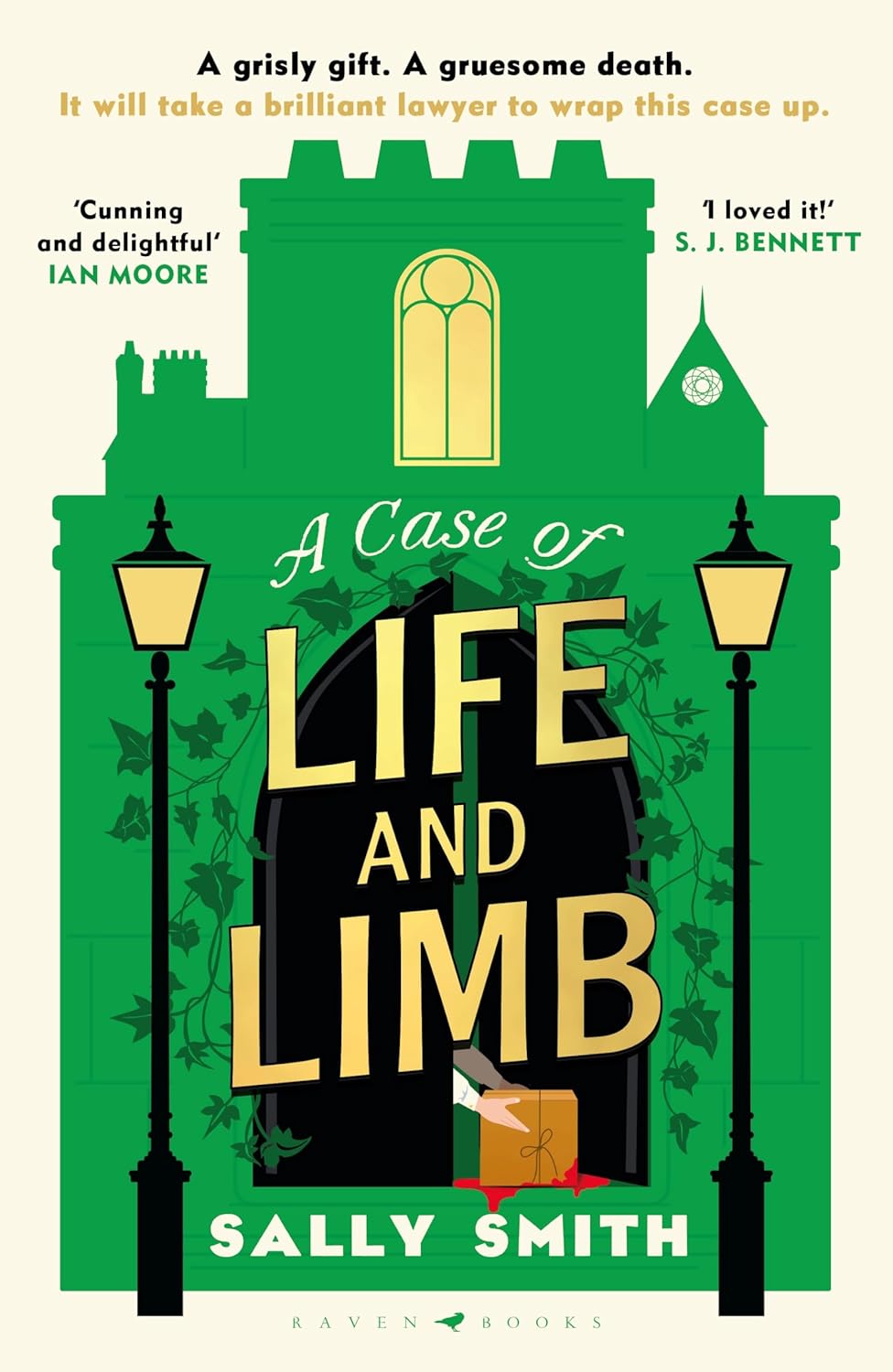
I’ve not encountered Gabriel Ward KC before, but I’m very pleased I took a chance on A Case of Life and Limb.
This is a delightfully quirky mystery, beginning in late 1901, and taking the reader on a journey through the social mores of the age, and the conflict between the upper and lower middle classes, all played out beautifully between Gabriel and Constable Wright, with a few others along the way. And most of it takes place within the Inner Temple, and its seeming separation from what happens beyond its garden and walls.
The novel is filled with gentle humour and Gabriel is a bit of a sweetie behind his stern facade. I especially loved his interactions with the cat.
The mystery itself was well resolved, and I will certainly go back and read book 1 in the series.
Here’s an exciting excerpt from Death and the Poet
Ovid gives a recital
July 2, or 6 days before the Nones
The recital took place in the late afternoon at the town’s main square on top of the hill overlooking the harbour. Entertainment in Tomis was infrequent and modest, with maybe a serious theatre performance in the spring in honour of Dionysus, and the occasional touring group performing comedies. There were rumours of a gladiator show, once they were a proper province, but for the moment, poetry was exciting enough to a Greek audience and Ovid was, after all, famous. People drifted into the square carrying chairs, stools and even cushions, unpacked their picnics and handed around pitchers of wine. Fabia was invited to sit in a roped-off area, where three rows of chairs had been laid out for special guests. In the central seat was Apollous, that year’s archon, and the members of the Town Council and their wives all lined up to express themselves thrilled to meet Fabia. Nobody was so indelicate as to mention the fact that Ovid was in Tomis because he had no choice.
Settled with an extra shawl because Flora had been certain that she would feel chilly even on a beautiful summer day, Fabia began to enjoy herself. She looked around the crowd, marking off people as Roman, Greek and Dacian, spotting several men with light coloured hair and beards and wearing leggings – surely they must be from the local tribes mentioned by her husband. It was harder to make any judgement on the female population, for every woman was wrapped up in a long dress, just as she was.
The poet first declaimed a well-known passage from his great poem on mythology, the Metamorphoses. He told the story of the god Apollo’s love of the nymph Daphne:
Just as when a careless dawn traveller has swept his torch too close to the stubble left in the field when the wheat is taken, setting the dry hedges on fire – so the god goes up in the flames of love.
Fabia saw the knowing nods as local landowners remembered threats to their own precious crops, and an audible murmur betrayed the audience’s opinion of firebugs.
Ovid then recited a poem Fabia had not heard before, one with a Tomis setting, but without the criticisms she had grown used to. She was pleased. There had been too many “Woe is me!” moments in Ovid’s poetry recently and he needed to acknowledge to this audience how grateful he was to them.
Ovid finished with a passage from the Fasti, an ambitious work which he planned would cover the major religious festivals of Rome. It was serious and noble and a little boring, though Fabia knew from her mother that Ovid’s work on this poem was considered skilful by those who knew about such things. She was amused to hear a young woman nearby whisper, “I thought he was a famous writer of love poetry?”
“Oh my dear,” thought Fabia, “Ovid will not be reciting any of his love poems here. They got him into enough trouble in Rome. I doubt your father would like you hearing about how a Roman lad goes on the prowl through the arcades of the city or lies wailing at the door of his beloved.”
Here’s the blurb
14 AD.
When Dokimos the vegetable seller is found bludgeoned to death in the Black Sea town of Tomis, it’s the most exciting thing to have happened in the region for years. Now reluctantly settled into life in exile, the disgraced Roman poet Ovid helps his friend Avitius to investigate the crime, with the evidence pointing straight at a cuckolded neighbour.
But Ovid is also on edge, waiting for the most momentous death of all. Augustus, the first Emperor of Rome, is nearing his end, and the future of the whole Roman world is uncertain.
Even as far away as Tomis, this political shadow creates tension as the pompous Roman legate Flaccus thinks more of his career than solving a local murder.
Avitius and Ovid become convinced that an injustice has been done in the case of the murdered vegetable seller. But Flaccus continues to turn a deaf ear.
When Ovid’s wife, Fabia, arrives unexpectedly, carrying a cryptic message from the Empress Livia, the poet becomes distracted – and another crime is committed.
Ovid hopes for a return to Rome – only to discover that he is under threat from an enemy much closer to home.
Triggers: murder, references to slavery, domestic abuse, alcohol, cancer
This title is available to read on #KindleUnlimited.
Meet the author
Fiona studied Classics at Oxford before teaching it for 25 years. A family move to Qatar gave her the opportunity to write about ancient Rome, and she is now back in the UK, working on her seventh novel.
Edinburgh, 1936. People are disappearing. The police are clueless. Can Finlay MacBeth track down the perpetrator before someone else goes missing?
Haunted by his recent past, Professor Finlay MacBeth returns to his home town to take up a new post at the university. Within hours, his reputation for solving the occasional murder prompts the police to ask for his help. Four men—seemingly unconnected—have vanished into thin air. MacBeth must find whatever it is that links the men before the kidnapper strikes again.
But the police aren’t the only ones interested in MacBeth’s activities, and the amateur sleuth soon discovers that finding the missing men is the least of his problems…
In this thriller series set in Edinburgh, Metropolis is book #1 in the Finlay MacBeth Thriller series.
Colin Garrow grew up in a former mining town in Northumberland. He has worked in a plethora of professions including taxi driver, antiques dealer, drama facilitator, theatre director and fish processor, and has occasionally masqueraded as a pirate.
He has published more than thirty books, and his short stories have appeared in several literary mags, most recently in Witcraft, and Flash Fiction North. Colin lives in a humble cottage in Northeast Scotland where he writes novels, stories, poems and the occasional song.
He also plays several musical instruments and makes rather nice vegan cakes.
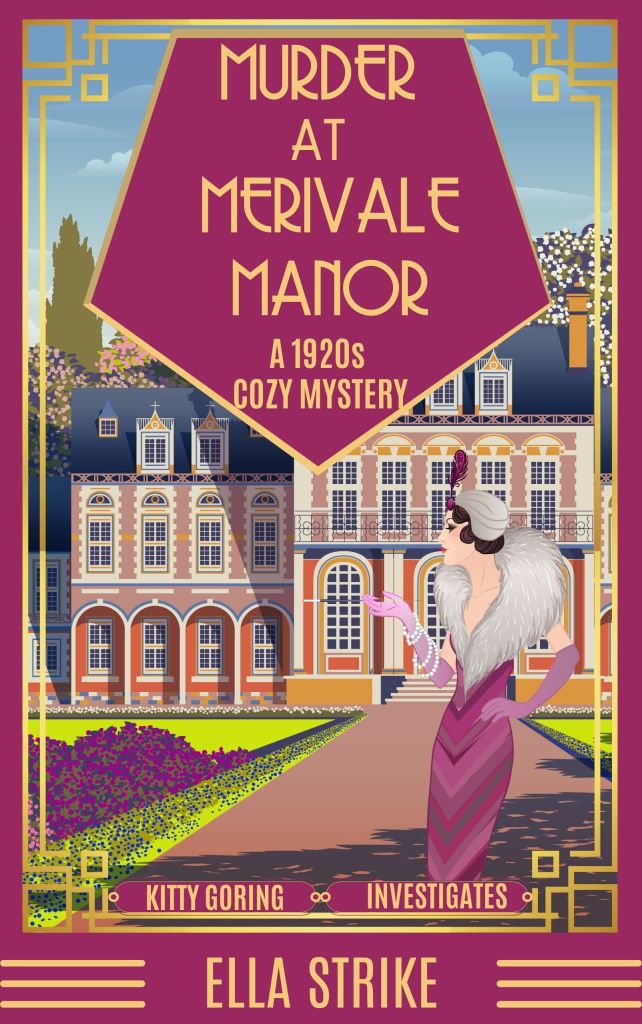
Kitty Goring seems to have it all—lavish nights at London’s finest clubs, elegant soirées, and a parade of charming bachelors vying for her hand. But despite the glamour, Kitty longs for something a little more… thrilling.
In a bid for excitement (and to avoid her mother’s constant reminders that she really ought to be searching for a husband), Kitty dreams up the perfect diversion. A playful mock robbery at her family’s grand estate, Merivale Manor. It’s all meant to be fun—until one of the guests turns up very much dead.
With a real killer on the loose in quaint little Hampstead Village, Kitty’s keen instincts kick in. Forget matchmaking—Kitty’s determined to unmask the culprit before anyone else falls victim. With a sharp wit and a flair for mischief, she dives headfirst into the investigation. But getting to the truth won’t be easy, especially with the brooding Detective Inspector Henry Burton underestimating her at every turn.
Murder, mystery, and a dash of romance—Kitty’s got her hands full in this charming whodunit!
Murder at Merivale Manor is the delightful first book in the Kitty Goring Investigates historical cozy mystery series.
Author’s note
London in the 1920s is a glamorous and exciting city, but danger and death are never too far behind. Join Kitty Goring and her group of Bright Young Things in the adventure of a lifetime, as they race to catch a killer who lurks amongst them. Each book in this series is a cozy period mystery that features our plucky heroine, aided in her investigations by a gang of eccentric and lovable characters.
MMurder at Merivale Manor is the first book in the Kitty Goring Investigations series of historical mysteries set in the 1920s.
This first book introduces us to Kitty, a headstrong woman with a varied collection of friends and associates and a somewhat overbearing mother. The family is somewhat down on its luck but still working to keep up appearances. One of those is the need for Kitty’s brother to marry well to recover the family fortunes.
But, as ever, all is not as it appears when a woman keen on Kitty’s brother is unexpectedly murdered at the local fete. Feeling guilty about a silly game Kitty initiated that seems to have led to Jane’s death, Kitty is determined to investigate and find the culprit.
This is a fun, quick read, and readers of the genre will enjoy discovering who the true culprit was.
Meet the author
Ella Strike, cat lover and author of historical cozy mysteries, lives in London with her husband and twins. When she’s not penning murder mysteries or drinking copious amounts of Earl Grey, you can find her with her nose buried in a book or listening to true crime podcasts as she cooks.
Her stories are a mix of history, a dash of intrigue, and a whole lot of cozy, old-world charm.
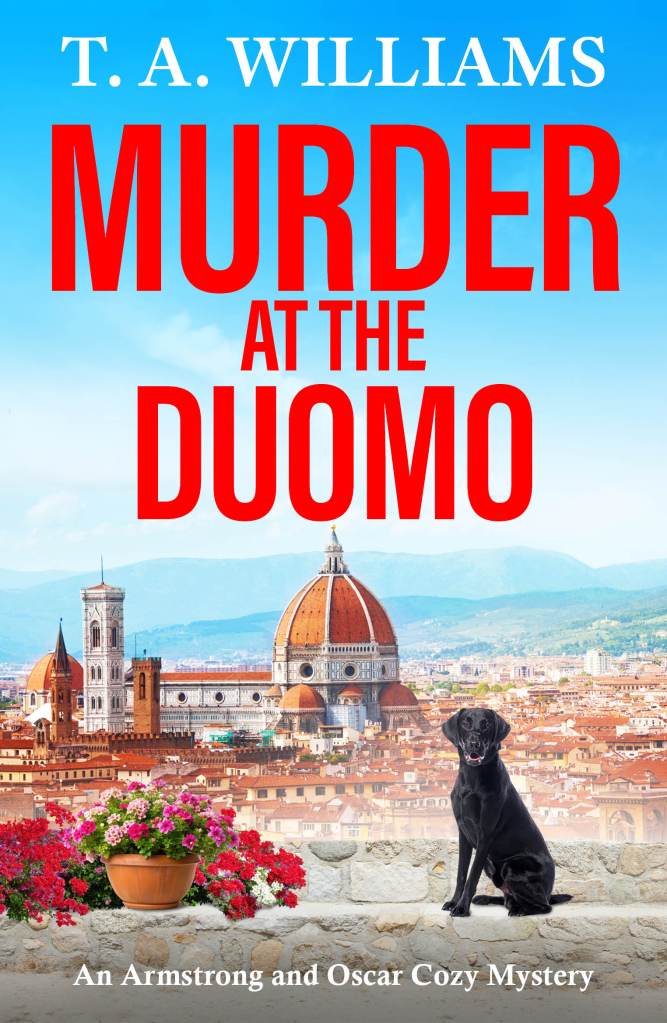
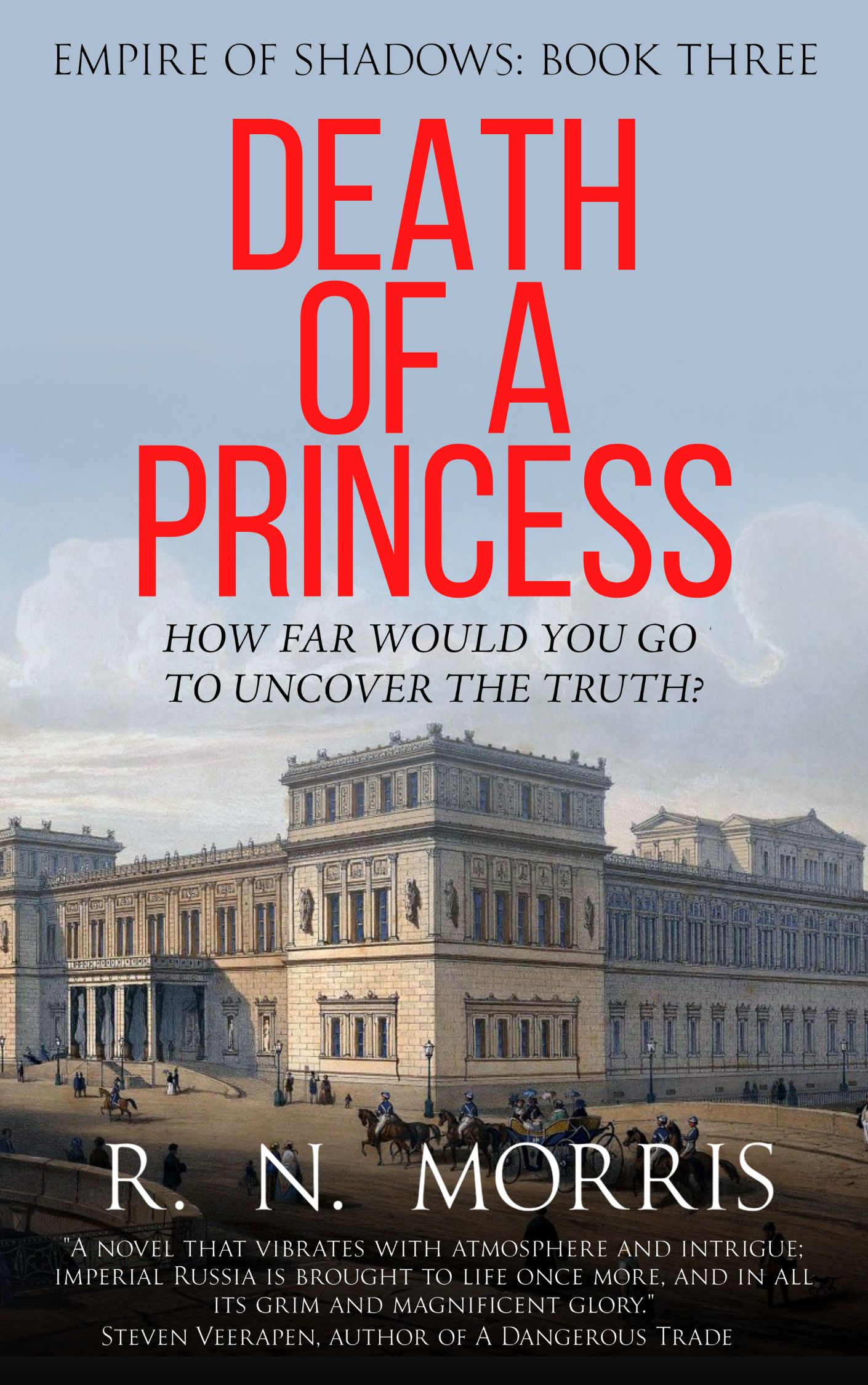
I’m delighted to welcome R.N. Morris and his book, Death of a Princess, Empire of Shadows Book 3, to the blog.

Here’s the blurb
Summer 1880.
Lipetsk, a spa town in Russia.
The elderly and cantankerous Princess Belskaya suffers a violent reaction while taking a mud bath at the famous Lipetsk Sanatorium. Soon after, she dies.
Dr Roldugin, the medical director of the sanatorium, is at a loss to explain the sudden and shocking death.
He points the finger at Anna Zhdanova, a medical assistant who was supervising the princess’s treatment.
Suspicion also falls on the princess’s nephew Belsky, who appears far from grief-stricken at his aunt’s death.
Meanwhile, investigating magistrate Pavel Pavlovich Virginsky arrives in Lipetsk from St Petersburg, seeking treatment after a nervous breakdown.
Against his better judgement, Virginsky is drawn in to the investigation. But is he getting closer to the truth or walking straight into a deadly trap?
This title is available to read on #KindleUnlimited
My Review
Death of a Princess is an intriguing and quite complex mystery set in the 1880s in Russia. It is the third book in the series, and I’ve not read the earlier two, but it didn’t diminish my enjoyment, and readers will easily be able to start with this title.
It has a wide cast of characters and follows them as they interact with one another and resolve other issues before fully resolving how the princess’s death came about.
It feels very ‘Russian.’ All the characters have delightful Russian names and attitudes, and the story well depicts the social structure of society. It’s an engaging read, pulling the reader along with some very tense moments until reaching the grand finale.
I very much enjoyed the mystery and look forward to reading more in the series.
Meet the Author
Roger (R.N) Morris is the author of 18 books, including a quartet of historical crime novels set in St Petersburg featuring Porfiry Petrovich, the investigating magistrate from Dostoevsky’s great novel Crime and Punishment. These were followed by the Silas Quinn series set in London in 1914. He has been shortlisted for the CWA Duncan Lawrie Gold Dagger and the CWA Historical Dagger.
A former advertising copywriter, Roger has written the libretto for an opera, modern retellings of Frankenstein and Macbeth for French school children. He’s also a scriptwriter for an award winning audio producer, working on true crime and history podcasts including The Curious History of your Home.
His work has been published in 16 countries.
Married with two grown-up children, Roger lives in Chichester where he keeps an eye out for seagulls.