I’m delighted to welcome Jennifer Wizbowski and her book, Poinsettia Girl, to the blog #PoinsettiaGirl #HistoricalFiction #RenaissanceFiction #TheCoffeePotBookClub #BlogTour

I’m delighted to welcome Jennifer Wizbowski and her book, Poinsettia Girl, to the blog with an excerpt.

Excerpt

Margarita closed the door to her bedroom and entered the hall with some of her spunk back in her step. She needed those afternoon naps more than she had in all her years in the Pietà. Every day, when early afternoon came, she’d feel her shoulders slumping and her patience waning, ready to shut out the worries around her and blow her bedside candle out.

She would never admit that to anyone. It would make her sound old, and then there would be all their fussing. While her schedule no longer consisted of classes, private lessons, or choral rehearsals, it was as full as the girls in new lace collars. She still had hers, that lacy shawl, a little more cream than stark white- one could never stop the cycle of aging. She would wear it when special occasions called for it: a full choir for a dignified guest or a celebration, but mostly, it hung in her closet, a trophy of her femininity, not the public image of virginal and ethereal but the honest image: persevering, unruffled and wise.

The Pietà took careful measures in recording the names, titles, entrances, and exits of every woman who spent any time behind its protective walls. Some listings were short, poor, sick babes that only lasted a night or diseased women who spent their final days cared for with the dignity society did not give them—others, like herself, whose decades were sub- marked by all her different roles in the Pietà. The path was different for everyone. Some women did not possess the musical predisposition to train for the Coro, which is why they tested every foundling’s aptitude by the age of eight.

The less musically inclined girls trained in textile arts or medicine, with the potential of working in the Pietà’s ground-floor ventures in their later years. The hospital administered vaccines and cared for the unwanted, while the textiles area had a successful laundering and hat-making business.

In her current assignment, she was listed as Discrete, a nice way of inferring: a retiree with no more obligations to the Coro—and as Margarita internally joked, whom they decided to keep around a bit longer instead of shipping off to a convent. Indeed, she was worth more than the average old woman slippering around.

Here’s the Blurb

Poinsettia Girl is based on the story of Agata de la Pieta, an orphan musician of the Ospedale de la Pieta.

Ten-year-old Agata’s world is shaken at the sudden death of her mother. Left only with her egregious father, a working musician in Venice, her ailing grandmother sends her to the well-known orphanage, hidden from everything she’s ever known.

Agata auditions for the conservatory style music school where music is both salvation and spectacle. Hidden behind ornate metal grates, adorned with poinsettias in their hair, the singers are veiled in mystery, their ethereal music drawing noble audiences, including gilded young men who see them as treasures-not only for their sound but as coveted marriage prizes.

Just as she reaches the height of her musical journey, a marriage proposal from someone outside the audience tempts her with the promise of a new life-a return to the old neighborhood she’s longed for and a home she barely remembers. 

Torn between the music that has defined her and the hope of belonging to a family, Agata must confront the most profound question of her life: is her purpose rooted in the music that shaped her, or in the love that might free her?

Buy Link

Universal Link

Meet the Author

Jennifer Wizbowski spent her childhood days lost among the spines of her favorite books. Inspired by the daffodil fields of Wordsworth and the babbling brooks of Shakespeare, she earned her bachelor’s in English literature, a minor in music, and a secondary teaching credential, then wrote freelance for local business journals, taught in classrooms, and authored a Teen and Tween column for a parent magazine—all while raising her family.

As those years ended, she knew it was the right time to pursue her lifelong aspiration of bringing her own books to life. She now devotes herself to illuminating everyday women’s stories often lost in the shadows of history, revealing how they became heroines of their own time and place.

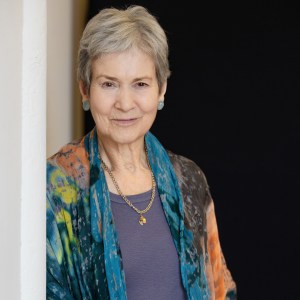
Portrait by Valentina Photography at Macardi Images

Connect with the Author

Follow the Poinsettia Girl blog tour with The Coffee Pot Book Club

It’s happy release day to Lords of Iron, the third and concluding book in the Dark Age Chronicles Trilogy. Let’s talk about battle standards #newrelease #MenOfIron #WarriorsOfIron #LordsofIron #histfic

It’s happy release day to Lords of Iron, the third and concluding book in the Dark Age Chronicles Trilogy. Let’s talk about battle standards #newrelease #MenOfIron #WarriorsOfIron #LordsofIron #histfic

Battle standards

Well, here we are my friends, book 3 in the Dark Age Chronicles concludes this foray to the ‘Dark Ages’ (a term I don’t like but is correct for this time period). I thought I’d address the idea of battle standards.

As many stories as I’ve written about war, I’d never considered the battle standard. My editor mentioned to me that ‘they make for great cover ideas,’ and so I did a little bit of research and discovered some information about them, but it was actually in an ‘ask the historian’ section with Mike Everest hosted by the History Quill that I discovered battle standards might not have been fabric at all, but rather perhaps made from metal and more hollow depictions of whatever the battle standard was to be (so perhaps more similar to the Romans and their eagle standards).

As such, I have touched on this idea in Lords of Iron. As often as I’ve tried to place myself in my characters’ boots, I’ve perhaps overlooked how difficult it might be to find your fellow warrior in the middle of a battle. Below are two images which might have served as an idea of what a battle standard might have looked liked. As you can see, these are very far from being huge banners made of fabric. They are much more intricate, or so it appears. In Warriors of Iron, Wærmund encounters such a battle standard and then hungers to have one constructed for himself. I can see why.

https://commons.wikimedia.org/wiki/File:Söderala_vane_recto_(HST_DIG25845).jpg

https://commons.wikimedia.org/wiki/File:The_Draco_standard_of_Niederbieber,_the_only_fully_preserved_draco,_found_in_the_Limes_fortress_of_Niederbieber,_Landesmuseum_Koblenz,_Germany_(50849293708).jpg

Check out my blog for more details about the Dark Age Chronicles

Blog links

Image shows a map of Early England showing the places mentioned in the text of the book
The Dark Age Chronicles Map

Purchase Link

https://amzn.to/4qaRuy3


Posts

It’s happy release day to Lords of Iron, the third and concluding book in the Dark Age Chronicles Trilogy. Watch and listen to a short recording about the research books I used #newrelease #MenOfIron #WarriorsOfIron #LordsofIron #histfic

It’s happy release day to Lords of Iron, the third and concluding book in the Dark Age Chronicles Trilogy. Watch and listen to a short recording about the research books I used #newrelease #MenOfIron #WarriorsOfIron #LordsofIron #histfic

A whizz through the research books I used when writing the Dark Age Chronicles

Read the original author notes for Men of Iron.

Learn about Meddi, the seeress of the Eorlingas

Meet Wærmund, Saxon warrior from the east

Curious? Check out my blog for more details below

Blog links

Image shows a map of Early England showing the places mentioned in the text of the book
The Dark Age Chronicles Map

Purchase Link

https://amzn.to/3MZcLME

Join my newsletter to follow my writing journey, get access to my exclusive Subscriber area on the blog, and receive a copy of Mercia – A Companion Guide to the Tales of Mercia.


Posts

It’s nearly happy release day to Lords of Iron, the third and concluding book in the Dark Age Chronicles Trilogy. Let’s talk about Wærmund, warrior of the Gyrwe #newrelease #MenOfIron #WarriorsOfIron #LordsofIron #histfic

It’s nearly happy release day to Lords of Iron, the third and concluding book in the Dark Age Chronicles Trilogy. Let’s talk about Wærmund, warrior of the Gyrwe #newrelease #MenOfIron #WarriorsOfIron #LordsofIron #histfic

Wærmund, warrior of the Gyre

Wærmund, the lead male point of view in the Dark Age Chronicles, has come a long way since our first encounter with him, when he was young, angry, reckless and unable to assure himself of the loyalty of others. (I’m not saying he didn’t have cause to be angry).

While I’ve written novels in this era where the main male lead is strong and fiercesome (as well as treating everyone to young Icel), I’ve not really written a character like Wærmund before. One early reviewer complained he was ‘annoying’ and that was intentional. For him to become the character I needed him to become, he couldn’t start the novels ‘fully formed.’ I needed him to learn, grow, and become someone more thoughtful than his angry young self allowed.

Along the way, he’s had much cause to doubt himself, and really, it was Heafoc, his loyal warrior, who was the most fully formed of the warriors who pledged their often dubious loyalty to Wærmund. Heafoc, perhaps very much cast in the shadow of the rather wonderful Wulfstan from the Earls of Mercia series, and potentially, also the older Icel from The Last King books, was the epitome of a Saxon warrior, whereas Wærmund wasn’t. Indeed, in deciding to run away from his home, Wærmund hoped to outrun his past, which was never really going to be possible for him.

Now, as we turn to the concluding book in the trilogy, I feel Wærmund has come full circle. Is he, perhaps, now a better man than his father? Or, is he still driven by the desire to show his father he is the ‘better’ man? These are some of my favourite quotes from Wærmund in the final book.

You will need to read Lords of Iron (available from 5th January 2026) to discover whether Wærmund enacts his vengeance against his father. Enjoy.

Read about Meddi, Seeress of the Eorlingas

Read the original author notes for Men of Iron

Curious? Check out my blog for more details below

Blog links

Image shows a map of Early England showing the places mentioned in the text of the book
The Dark Age Chronicles Map

Purchase Link

https://amzn.to/4qaRuy3

Join my newsletter to follow my writing journey, get access to my exclusive Subscriber area on the blog, and receive a copy of Mercia – A Companion Guide to the Tales of Mercia.


Posts

It’s nearly happy release day to Lords of Iron, the third and concluding book in the Dark Age Chronicles Trilogy. Here are the original (very long) historical notes for Men of Iron #newrelease #MenOfIron #WarriorsOfIron #LordsofIron #histfic

It’s nearly happy release day to Lords of Iron, the third and concluding book in the Dark Age Chronicles Trilogy. Here are the original (very long) historical notes for Men of Iron #newrelease #MenOfIron #WarriorsOfIron #LordsofIron #histfic

The original historical notes for Men of Iron (they were so long I rewrote them)

This is not really a story of historical fiction, but rather archaeological fiction. Pick up any non-fiction history book on Britain at this time, and you’ll find very little written about what was happening, because we do not know what was going on, other than perhaps in the south and south-west (where there was more continuity from the earlier ‘Roman’ period). If it’s a book about Mercia, there’ll be even less until the seventh century. It’s impossible to write about the history of a kingdom when there are no written records. And so we must rely on archaeology.

The decision to write about these formative years in what would become Mercia has been a long time coming for me (and it is set mostly in what would become Mercia although the name never appears in the books).

All that can be said with any certainty about Mercia is that a narrative had formed by the eighth century which was an attempt by the rulers of that time to explain how they came to be in control of the heartland of Mercia. It also attempt to explain how they ruled the wider Mercian kingdom (which included many other tribal affiliations: from the North Mercians, South Mercians and Middle Mercians to the outlying areas – the kingdom of the Hwicce, alongside that of the Magonsæte, being two of the best known tribal areas which people have heard about, and the Hwicce the region where I’ve based the Eorlingas). Bede, writing his Ecclesiastical History of the English People, finished by 734, knew some of these details, although he really did not like Penda the pagan – one of the most powerful Mercians in the seventh century (who it’s believed may have been from the Hwiccan kingdom) – but did grudgingly admit that his contemporary ruler of Mercia, Æthelbald, was a powerful individual, eclipsing the kings in his homeland of Northumbria by the eighth century.

Barbara Yorke has written: 

The surviving sources allow us to say with confidence little more than that the kingdom of Mercia was in existence by the end of the sixth century. p. 102, Kings and Kingdoms of Early Anglo-Saxon England 

How that kingdom came about, we do not know. I’ve chosen the date of this series carefully. It falls between the Battle of Camlann, said to have taken place in 537 according to the Welsh Annals, a later written source, and a later battle between ‘kings’ which occurred in the 570s and is mentioned in the Anglo-Saxon Chronicle, written 300 years after these events.

It’s difficult to determine any cohesive narrative from what is truly the Dark Ages for the whole of Britain. Others might look to the stories of the legendary Arthur (no, I don’t believe he existed), and Hengist and Horsa and think that’s enough, but having read K. R. Dark’s fascinating look at Britain at this period, Civitas to Kingdom, many years ago, I realised that what happened elsewhere might not have happened in Mercia, and equally, that generalisations shouldn’t be used about what would become the Saxon kingdoms in any single part of it. It was an island of petty tribal chieftains. It was not a country or a kingdom. This is an attempt to make some sense of what archaeological findings have been made and devise something that ‘could’ have happened. These people did not exist as I have named them, although I have adopted tribal names that are recorded in a later document (see below).

Wærmund is a name taken from a Mercian genealogy found in the Welsh Annals. There are a number of different variants of a Mercian genealogy. This is the one I’ve used, below.

Woden begot Watholgeot, begot Waga, begot Wihtlæd begot Wæround, begot Offa, begot Angen[geot], begot Eomer, [begot Icel,begot Cnebba, begot Cynewald, begot Creoda], begot Pybba. Pybba had twelve sons, two of whom are better known to me than the others, namely Penda and Eobba. Aethelred was the son of Penda; Penda was the son of Pybba. Aethebald was son of Alweo, son of Eobba, [brother] of Penda, son of Pybba. Egferht son of Offa, son of Thingrith, son of Eanwulf, son of Osmond, son of Eobba, son of Pybba.

Other versions of a Mercian genealogy are found in the Anglo-Saxon Chronicle entry for the year 626 (A2 Version, also known as the G version) when discussing the later reign of Penda which lists many of the same names, but has Wihtlæd as the son of Woden. David Dumville has noted that this represents a West Saxon interpretation of Mercia (the ASC was conceived of and begun in Wessex) – as such, he stresses the ‘Anglian’ tradition of this source, i.e. possibly Mercians writing about Mercians.

I’ve chosen Wærmund’s name somewhat randomly, but with the idea that he wasn’t the first of his family – and that, indeed, he is originally from one of the Wash tribes for which we have details from the Tribal Hidage. Every time I write a new series, something clicks for me, and in this case it’s that whatever the genealogies represent, it needn’t be those who ruled Mercia as a kingdom as we recognise it, but those who ruled the ‘tribe’ beforehand. Yes, they did claim descent from the god, Woden, but most of the Saxon kingdoms did.

It’s believed that the kingdom of the Hwicce was perhaps a native British one and that they came to merge with the Saxons, or rather at this time, Anglian invaders, and then fell under the sway of the wider Mercian kingdom. (The terminology is complex to get right.)

The names of the tribes come from the problematic and difficult-to-date Tribal Hidage, which survives in an eleventh-century document, but is believed to be a copy of an eighth-century document. It lists thirty-five kingdoms, which comprise ninety-five different tribal names believed to have amalgamated to form these thirty-five kingdoms, which were then further merged to form the six main Saxon kingdoms of the Heptarchy (the seventh, Northumbria, is not included in the Tribal Hidage). Feel free to go and try and make sense of the Tribal Hidage. Every non-fiction writers seems to use slightly different spellings and because some are so similar, it is incredibly confusing. Some of my tribes changed names repeatedly as I endeavoured to make them ‘fit’ the narrative and the journey my characters make. All mistakes are mine.

There are a wealth of Roman villas surviving in Gloucestershire, perhaps most famously Chedworth Roman Villa, and also many Roman mosaics, some of which are not available for public viewing as they have been covered up beneath the soil that has preserved them to ensure that continues. The tribe of the Eorlingas is associated with Arlingham, just below Gloucester, to the east of the River Severn. As far as I can tell, Frocester is the closest Roman villa ruin to have been discovered from nearby to where I wanted to base the Eorlingas, but with so many of them, it almost feels as though they might have been falling over them – there are fifty-two known Roman villas in Gloucestershire alone.

The idea of an economy dependent on iron had not really resonated with me before, but Robin Fleming’s comment that mining, metallurgy and smithing stood at the heart of the Roman economy made me reconsider this. She points out that from the late fourth century (which is traditionally deemed to be the end of Roman Britain – well, 410 is) there is a scarcity of traditional, crucial and once common everyday items – nails, evident in the lack of hobnail books and also coffins. She does, however, stress that the Romans had a successful ‘recycling’ scheme and that forging iron objects from these recycled elements may well have continued. However, pattern-wielded blades (which had largely come to dominate what we believe early Saxon/Anglian kings wielded in their battles) could not be made from recycled iron or from a single type of iron alloy, with at least four different iron alloys needed. Therefore, an age ‘without’ iron almost ensued. It is possible that these skills were lost and then needed to be rediscovered. Equally, it is possible that the evidence for such occupations as smelting have disappeared from the archaeological record in many places because of the transient nature of the process. I find the lack of nails in the archaeological record, however, very intriguing. It certainly points to something being lacking.

Languages in this era are, of course, impossible to reconstruct. It’s believed that English, Latin, British, Pictish and Irish would have been spoken. It must also be assumed that those coming to this island from Scandinavia and Germany would also have brought their languages with them. I’ve decided to use the terms Latin, Saxon, British and Brythonic in the text. (I had to make myself a chart to ensure I didn’t have people speaking to other people who didn’t share a language – it wasn’t pretty). There would potentially have been a vast number of local dialects as well, just as there are today.

The small iron-cast horse which Meddi has is based on a bronze object uncovered at Frocester. It is a fabulous piece, described in the site report as ‘crudely designed, with wide open mouth and large upstanding ears’. It is quite small, less than two inches in length, if I’ve understood the dimensions correctly, and shows the horse having reins but no stirrups. The horse was controlled by a bridle alone, and the horses were smaller, at twelve to fourteen hands, the equivalent of a hackney pony, or forty-eight to fifty-six inches tall (according to the internet). Stirrups were introduced by the Saxons.

I have struggled to find references to the religions at this time. Ronald Hutton’s Pagan Britain contains some useful passages. This somewhat leads into burial rites, which are often much of what we know of our ancestors. It does appear confusing – the magnificent ship burials at Sutton Hoo were preceded by burials beneath what is now the visitor centre (and which I think are more fascinating than the ship burials – or rather, the process of how they went from the one to the other within a generation.) Cremation and interment were somewhat haphazardly applied throughout Britain. My own distinctions between peoples are merely an attempt to highlight the differences between them. The depiction of the burial of Meddi’s daughter beneath inhabited buildings is a known phenomenon from this period, and written about by Robin Fleming in her chapter Living with Little Corpses in The Material Fall of Roman Britain 300-525CE.

For anyone affected by this storyline, or concerned by it, as someone who has experienced the loss of a child, I’m perhaps too comfortable including such story elements. To those who have also endured it, I extend my heartfelt sympathies and assure you, it does get easier. Eventually. (what follows below has been added at the end of the proofread for Lords of Iron).

This passage leads somewhat well to a thought by Meddi as she nears the end of book three.

‘I’m Meddi, seeress of the Eorlingas. It’s been a long and troubled journey to reach this moment in my life when hatred has bled away to nothing but a dull ache where the life I thought I’d have has a child has failed to come to fruition. But I would change nothing, aside from the loss of my daughter.’

I think this is perhaps the most ‘me’ I’ve included in a novel (not that I’ve spent my lifetime filled with hatred, but I hope you understand the sentiment).

Perhaps, in the end, this trilogy has been as much for me, as it has been for my readers. Thank you.


Read about Meddi, the seeress of the Eorlingas


Join my newsletter to follow my writing journey, get access to my exclusive Subscriber area on the blog, and receive a copy of Mercia – A Companion Guide to the Tales of Mercia.

Curious? Check out my blog for more details below

Blog links

Image shows a map of Early England showing the places mentioned in the text of the book
The Dark Age Chronicles Map

Purchase Link

https://amzn.to/3MZcLME


It’s nearly happy release day to Lords of Iron, the third and concluding book in the Dark Age Chronicles Trilogy. Let’s talk about Meddi , the seeress of the Eorlingas #newrelease #MenOfIron #WarriorsOfIron #LordsofIron #histfic

It’s nearly happy release day to Lords of Iron, the third and concluding book in the Dark Age Chronicles Trilogy. Let’s talk about Meddi , the seeress of the Eorlingas #newrelease #MenOfIron #WarriorsOfIron #LordsofIron #histfic

Meddi, the seeress of the Eorlingas

When I was thinking about writing this trilogy, set in the undocumented and little-understood ‘true’ Dark Ages, it was Meddi’s character that came to me most forcefully. I had thought she appeared pretty fully formed, but I’ve actually found a very early attempt which doesn’t mention her (it was only about 250 words, admittedly). After that, she evidently developed quite quickly in my mind. Of the two main points of view characters, Meddi and Wærmund, she is the one who was the most different to what I’ve written before, so I was surprised by how strongly she manifested and became ‘real’ to me. I ran a few elements of her character passed a number of trusted early readers. I wanted her to be strong and determined, but also broken and healing from a terrible trauma, a terrible trauma even I can only imagine. But I also didn’t want her to be stereotypical. I needed to make her realistic and both a product of what had happened to her, and also not. Don’t worry, it was a confusing mix for me, too.

Making her a seeress allowed me to give her an influential position amongst her people. But of course, it brought some problems. What sort of seeress should she be? What magiks should she possess? And how to make those more ‘fantastical’ elements work in what was intended as a piece of archaeological fiction (yes, historical, but so much is based on archaeological finds, it seems wrong to misname it).

I am, and no doubt, will always be a ‘pantser’ (someone who doesn’t plan their stories but just writes them – perhaps in many wats somewhat similar to Meddi when she reaches out to communicate with her ‘god’ only I’m reaching out for my muse and a story that plays out on the page). As such, some elements of Meddi’s personality just appeared for me, and others had to be worked at. I was also conscious of not making her too similar to the wonderful Wynflæd in The Eagle of Mercia Chronicles, or indeed, the Wolf Lady, who also features (both of them healers). Yet, a seeress would possess the abilities to tend to the sick. It was tricky to get it just right. It was really only when I heard her words brought to life by her fabulous narrator, Antonia Breamish, that I truly appreciated that Meddi was a creation I could be very satisfied with (you can listen to her below). I believe, and I hope my readers will agree, that she’s fully rounded, entirely understandable, and if she does things we wouldn’t, then we can be sympathetic to what drives her.

The symbolic adorning of her face and hair with chalk or charcoal as she conducts her magiks was based on little more than my imagination, and yet the imagery is stark. She is sometimes cast from shadow, and sometimes from light. She is a character who loves and hates with equal fierceness, and sometimes, her love shows itself in ways that are perhaps more akin to hatred. But she is certainly most critical of herself. She is driven by ambition, and in this final book, I think we see her at her most vulnerable and also at her strongest. Enjoy.

Read the original author notes from Men of Iron (I rewrote them because they were too long)

Check out my blog for more details about the trilogy below

Blog links

Image shows a map of Early England showing the places mentioned in the text of the book
The Dark Age Chronicles Map

Purchase Link

https://amzn.to/4qaRuy3

Join my newsletter to follow my writing journey, get access to my exclusive Subscriber area on the blog, and receive a copy of Mercia – A Companion Guide to the Tales of Mercia.


Posts

I’m welcoming Max Eastern and his new historical thriller, Red Snow in Winter, to the blog #RedSnowInWinter #HistoricalThriller #SpyThriller #HistoricalFiction #BlogTour #BookBlast #TheCoffeePotBookClub

Here’s the blurb

Haunted by the memory of a secret love affair in Nazi-occupied Prague, American intelligence officer Julius Orlinsky is caught in a deadly web of espionage when a routine assignment in Washington, D.C., disintegrates into murder, attempted murder, and blackmail.

Determined to uncover the truth, Orlinsky’s quest takes him from the halls of the Pentagon to a prisoner-of-war camp in Maryland, and, finally, to the city of Budapest under siege. It’s a shadow world where a lifetime of loyalty can be undone by one secret revealed. Orlinsky soon learns the personal stakes couldn’t be higher. His investigation threatens to expose a betrayal by the woman he believed was the love of his life.

But Orlinsky has no choice. Charged with an assignment critical to ensuring America’s safety, he must confront the ghosts of his past as he navigates a terrain of double agents, war-hardened German and Russian soldiers, and fanatics who will stop at nothing to silence him. 

I'm welcoming Max Eastern and his new historical thriller, Red Snow in Winter, to the blog #RedSnowInWinter #HistoricalThriller #SpyThriller #HistoricalFiction #BlogTour #BookBlast #TheCoffeePotBookClub @MaxeasternNYC @cathiedunn
@maxeastern @thecoffeepotbookclub

Praise for Red Snow in Winter:

Red Snow in Winter is a gripping, ingenious cat-and-mouse political thriller. A young U.S. Army Intelligence officer finds himself caught up in a deadly espionage battle involving Americans, Nazis, and Russians that he can only survive by finding out who to trust–and also by finally uncovering the truth about long-buried secrets from his own shadowy intelligence past. Smart writing, a high stakes plot, and fascinating historical background. Author Max Eastern really delivers the goods in this must-read page-turner of a novel.

— R.G. Belsky, author of the Clare Carlson mystery series

I found a great new-to-me author in Max Eastern. I love how he brought his characters to life and made the situations in this novel seem as though they were happening in front of me.”

— Terrie Farley Moran, national bestselling co-author of the Jessica Fletcher Murder She Wrote mystery series

Red Snow is a well-paced thriller capturing the paranoia and moral complexity of WWII’s twilight hours. This is spy fiction that respects its readers’ intelligence, offering a nuanced exploration of loyalty, betrayal, and a little romance.

–Emilya Naymark, author of Behind the Lie

A masterclass in espionage and moral ambiguity, it’s an atmospheric ride of a thriller with plot twists worthy of Hitchcock.

–Mally Becker, author of The Turncoat’s Widow

This is a fast-moving, page-turning espionage thriller set just after the war. Highly recommended for anyone who wants to be kept up at night!

–Deborah Swift, author of The Shadow Network

Max Eastern attacks his story with dry aplomb and a stripped-down journalistic surety, yet it’s got more switchbacks than San Francisco’s Lombard Street, and every curve is taken with his foot on the gas.

— Timothy Miller, author of The Strange Case of the Pharaoh’s Heart

Buy Link

https://books2read.com/u/3J1BXv

This title is available to read on #KindleUnlimited.

Meet the author

The stories his father told him about his time as an intelligence officer in World War II inspired Max Eastern to write Red Snow in Winter. He has written about history for several magazines and online publications, with subjects ranging from Ulysses Grant and Benedict Arnold to Attila the Hun.

His modern noir novel The Gods Who Walk Among Us won the Kindle Scout competition and was published by Kindle Press in 2017.

A lawyer specializing in publishing, he resides in New York State. To learn more, go to maxeastern.wordpress.com.

https://maxeastern.wordpress.com

Author Max Eastern
Follow the Red Snow in Winter by Max Eastern blog tour with The Coffee Pot Book Club

I’m delighted to welcome Marcia Clayton and her new book, Annie’s Secret, to the blog #Victorian #Historical Fiction #Romance #Saga #HistoricalRomance #BlogTour #TheCoffeePotBookClub 

I’m delighted to welcome Marcia Clayton and her new book, Annie’s Secret, to the blog #Victorian #Historical Fiction #Romance #Saga #HistoricalRomance #BlogTour #TheCoffeePotBookClub
@MarciaC89111861 @cathiedunn @marciaclayton97 @thecoffeepotbookclub

I’m delighted to welcome Marcia Clayton and her new book, Annie’s Secret, to the blog with an excerpt.

The Mazzard Tree

Sabina dried her hands and signalled Annie to do the same, and then they followed Hannah into her house. Chickens ran in and out, leaving a mess all over the floor. Tommy, the youngest child, was crawling around in all the filth, for although he was two, he had rickets and could not walk. His face was covered in sores, and his nose was running. Rachael, at four, was sitting by her sick sister’s bed, tugging her hand.

“Come an’ play with me, Mary.”

Annie picked up Rachael and settled her on her knee. Rachael loved the attention, and Tommy crawled up to sit on the other knee. Annie wiped his nose, brushed his brown curly hair out of his eyes, and gave them both a cuddle. She wondered if her own hair would be crawling with lice by the time she went home. Sabina put her hand on Mary’s forehead, which was hot, and the child was pale and listless. “What’s the matter, Mary?  Where does it hurt?”

Mary pointed to her throat and whispered hoarsely, “It hurts in there, and my head, and everywhere.”

“Never mind, we’ll soon have you better, don’t worry. Could you eat some stew?”

Mary shook her head miserably. She was six years old, but small for her age, and Sabina could see many clusters of nits stuck to her wispy brown hair.

“Sabina, I could eat some stew if you’ve any to spare, and I’ll bet Rachael and Tommy could manage some too.”

Hannah and her husband, John, were both fat and lazy, but the children were thin, dirty, and ill-kempt. Sabina’s eyes flashed with anger.

“I’ve plenty of food in my kitchen, Hannah, because I work hard. I’ll take Rachael and Tommy home with me to have some, and I’ll bathe them too because they’re filthy. I know you’re poor, but look at the state of this place. When was the last time you cleaned up or cooked? Or does all your money go on that bloody scrumpy?  I’m sorry, but it’s time someone told you a few home truths; you should be ashamed of yourself. Now, I could leave Annie here with you, if she’ll stay, to help you clean up. I’ll come back at teatime, and if the place is clean, I’ll bring rabbit stew for all of you. Just this once, though, for you have a man to provide for you, which is more than I have.”

“How dare you!  It’s none of your business how I keep my house. Things have got on top of me a bit, that’s all.”

“Please yourself then; it’s no odds to me. Mary certainly isn’t well, but it might just be a nasty cold. Now, do you want Annie’s help, or not?  It’s up to you.”

“Aye, I suppose the place could do with a bit of a clean, and you’ll bring enough supper for all of us?”

“Yes, I’ll bring some later and see how Mary is. Annie, would you mind helping Hannah?”

Annie, facing away from Hannah, pulled a face and screwed up her nose, but she nodded. Sabina grinned as she left with the two children. As she entered her own cottage, Sabina called to Liza.

“Liza, could you put a couple of pans of water on the fire, please? I want to bathe these two. I don’t suppose they’ve ever had a bath, so they may not think a lot of it, but they certainly need one.”

Sabina explained about Mary and how Annie was helping Hannah to clean up.

“She’s a lazy slut, that woman, and it will soon be like it again, you know. She’s too lazy to lift a finger to care for that family properly, and her mother was just the same. They don’t deserve to have children, and they don’t deserve your help either, Sabina. Goodness, you’ve enough to do to feed and look after your own.”

“Aye, you’re right, of course, but I felt so sorry for the children. It isn’t their fault, and Mary, poor little thing, was so poorly.”

Liza pulled the old tin bath in front of the fire and filled it with warm water. Rachael and Tommy sat wide-eyed, anxiously watching the activity around them. Sabina decided to start with Rachael and sat her on her knee.

“Now, Rachael, I’m going to take off these dirty clothes and bathe you. You’ll like it in that lovely warm water, and afterwards, you’ll feel much better. Then we’ll see if we can find you something clean to wear, while I wash your clothes.”

Sabina gently undressed the little girl, chatting all the time as she lowered her into the bath. Rachael went stiff with fright and kept her legs rigid. She started to thrash about and scream.

“No, no, don’t. I don’t wanna get wet. No, don’t. Let me go! Mummy, I want my mummy. Don’t.”

Sabina held her gently, but firmly. “Come on, Rachael, I want you to show Tommy what a big, brave girl you are. You’ll like it in the water when you sit down, and if you let me wash you, I’ll find you a bowl of rabbit stew, with a big slice of bread. Are you hungry?”

At the mention of food, Rachael immediately became more cooperative and sat down gingerly. She still seemed frightened, but as Sabina gently splashed warm water over her tiny body, she began to relax. It saddened Sabina to see that she was covered in flea bites, and her hair was crawling with lice. There were also a few suspicious bruises. Gently, Sabina soaped the grime from the child’s body, cut her hair short, and then washed what was left to get rid of the lice. Rachael began to enjoy herself and suddenly grinned at Sabina.

“This is nice, like you said. I like it in here. Can I stay a bit longer?”

Sabina let her stay a few minutes longer, then lifted her out and dried her. She reached for an old blue dress and popped it over Rachael’s head.

“There, you look beautiful now. Liza will give you some stew for being so brave. Right then, Tommy, it’s your turn now, but I think we’ll need some clean water first.”

Here’s the blurb

1887, North Devon, England

When Lady Eleanor Fellwood gave birth to a badly deformed baby, she insisted that the child be adopted as far away as possible. However, that proved difficult to accomplish, and so, in return for payment, Sabina Carter, an impoverished widow living locally, agreed to raise the little boy as a foundling. The child’s father, Lord Charles Fellwood of Hartford Manor, warned Sabina that the matter must be treated in the strictest confidence or her family would be evicted from their home. As far as Lady Eleanor was concerned, the child was being cared for miles away.

All was well for several years until fate took a hand and, against his parents’ wishes, Robert Fellwood, the heir to the Hartford Estate, married Sabina’s daughter, Annie. Robert arranged for his mother-in-law, Sabina, and her family to reside in the Lodge House, situated at the end of the Manor House driveway. A house that Lady Eleanor passed regularly, and it was not long before she spotted Danny’s dark curls among the Carter redheads. As she looked into the child’s eyes and noted his disabilities, she recognised her son.

Now, at seven years old, Danny has had numerous operations to correct his disabilities and is a happy, healthy child. However, his presence is a source of constant anguish for his birth mother as, day after day, she watches him play in the garden. Her husband, Charles, and son, Robert, are aghast when she announces that she wants him back! An impossible situation for all concerned, and a rift develops between Robert and Annie as he struggles to find a solution to suit everyone.

Over the years, Lady Eleanor has steadfastly refused to acknowledge her daughter-in-law, for she disapproves of Annie’s lower-class origins. When a freak accident forces the two women to spend time together, they inevitably find themselves drawn into conversation, and before long, the years of pent-up resentment and family secrets surface as home truths are aired. 

Will the two women be rescued from their precarious situation unscathed? And, if so, will the family survive the scandal that is about to be unleashed?

https://mybook.to/AnniesSecret

The Hartford Manor Series Links

Prequel – Betsey http://mybook.to/Betsey

Book 1 -The Mazzard Tree            http://mybook.to/TheMazzardTree

Book 2 – The Angel Maker                 http://mybook.to/TheAngelMaker

Book 3 – The Rabbit’s Foot                http://mybook.to/TheRabbitsFoot

Book 4 – Millie’s Escape                    https://mybook.to/MilliesEscape

Book 5 – A Woman Scorned              https://mybook.to/AWomanScorned

Book 6 – Annie’s Secret                     https://mybook.to/AnniesSecret

All books in The Hartford Manor Series are available to read on #KindleUnlimited, and print copies can be ordered from any bookshop.

Meet the Author

Marcia Clayton writes historical fiction with a sprinkling of romance and mystery in a heart-warming family saga that stretches from the Regency period through to Victorian times.

A farmer’s daughter, Marcia was born in North Devon, a rural and picturesque area in the far South West of England. When she left school at sixteen, Marcia worked in a bank for several years until she married her husband, Bryan, and then stayed at home for a few years to care for her three sons, Stuart, Paul and David.

As the children grew older, Marcia enrolled in a secretarial course, which led to an administrative post at the local college. Marcia progressed through various jobs at the college and, when working as a Transport Project Coordinator, was invited to 10 Downing Street to meet Tony Blair, the then Prime Minister. Marcia later worked for the local authority as the Education Transport Manager for Devon County Council and remained there until her retirement.

Now a grandmother, Marcia enjoys spending time with her family and friends. She’s a keen researcher of family history, and this hobby inspired some of the characters in her books. A keen gardener, Marcia grows many of her own vegetables. She is also an avid reader and enjoys historical fiction, romance, and crime books.

Marcia has written seven books in the historical family saga, The Hartford Manor Series. You can also read her free short story, Amelia, a spin-off tale from the first book, The Mazzard Tree. Amelia, a little orphan girl of 4, is abandoned in Victorian London with her brothers, Joseph and Matthew. To find out what happens to her, download the story here: https://marciaclayton.co.uk/amelia-free-download/  

In addition to writing books, Marcia produces blogs to share with her readers in a monthly newsletter. If you would like to join Marcia’s mailing list, you can subscribe here: https://marciaclayton.co.uk/

Author Marica Clayton

Connect with the Author

Website: Bluesky: BookBub:

Follow the Annie’s Secret blog tour with The Coffee Pot Book Club

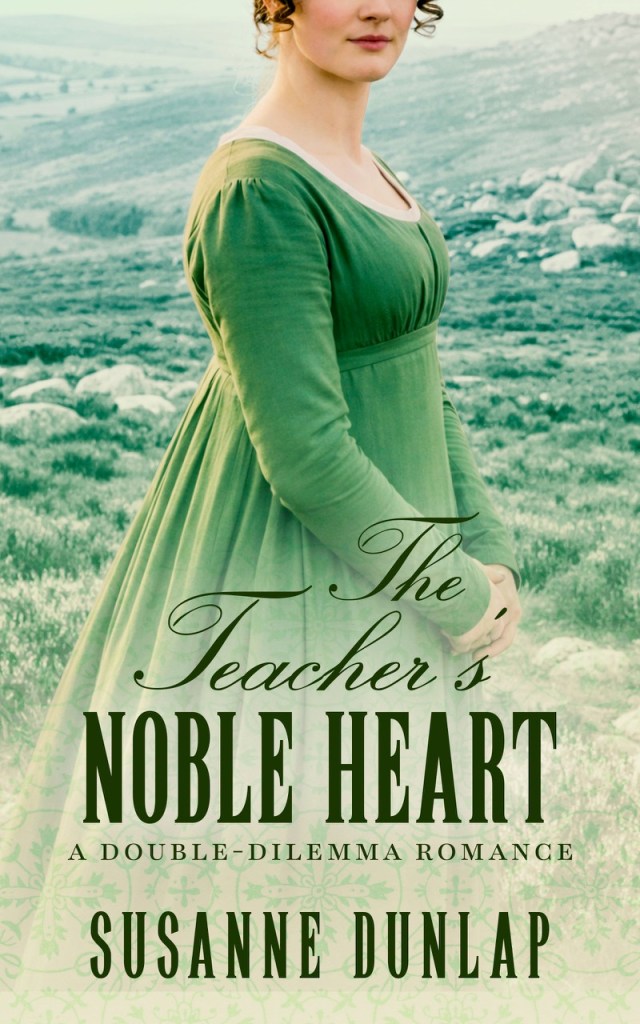
I’m welcoming The Falconer’s Lost Baron by Susanne Dunlap to the blog #blogtour #RegencyRomance #bookreview

I’m welcoming The Falconer’s Lost Baron by Susanne Dunlap to the blog #blogtour #RegencyRomance #bookreview

Here’s the blurb


A sweeping Regency tale of identity, devotion, and unexpected romance.

Lady Antonella thought she knew who she was—until a shattering family secret strips her of her name, her place in society, and her future. Cast adrift in Cornwall, she finds an injured goshawk in a poacher’s net and begins to nurse it back to health. But the hawk belongs to the war-scarred Lord Atherleigh—a man haunted by loss, determined to dismantle his mews, and certainly not expecting a spirited young woman to upend his solitude.

In London, her twin sister Belinda—radiant, poised, and newly on the marriage market—has only one goal: to find a worthy match… for Antonella. But when Hector Gainesworth, a charming rogue with laughter in his eyes and secrets of his own, turns his attention to Belinda instead, her heart begins to spin in an altogether unexpected direction.

As the sisters navigate betrayal, desire, and the demands of their hearts, two men must decide whether to risk everything for love. And Antonella’s goshawk may be the wild, winged thread that binds their fates.

Purchase Link

https://www.amazon.co.uk/Falconers-Lost-Baron-Forgiveness-Double-Dilemma-ebook/dp/B0FPBG1P54

https://www.amazon.com/Falconers-Lost-Baron-Forgiveness-Double-Dilemma-ebook/dp/B0FPBG1P54

My Review

The Falconer’s Lost Baron is the third of Susanna Dunlap’s Regency romances I’ve read, and I’ve enjoyed all of them (see my reviews below for the previous two books). Every book offers something a little different, while still delivering on what we all expect from a Regency romance.

This new title will delight fans of the genre (there is no need to have read the previous two titles, although you will be missing a treat.)

Check out my review for The Dressmaker’s Secret Earl and The Soprano’s Daring Duke

Meet the author

Susanne Dunlap is the award-winning author of over a dozen historical novels, as well as an Author Accelerator Certified Book Coach in fiction, nonfiction, and memoir. Her love of history began in academia with a PhD in music history from Yale. Her novel THE PORTRAITIST won first prize in its category in the 2022 Eric Hoffer Book Awards, and was a finalist in the CIBA Goethe Awards and the Foreword Indies Awards. THE ADORED ONE: A NOVEL OF LILLIAN LORRAINE AND FLORENZ ZIEGFELD, won first place in its category in the 2023 CIBA Goethe Awards for Late Historical Fiction. Today, she lives, coaches, and writes in beautiful Biddeford, Maine.

Connect with the author

https://susanne-dunlap.com

I’m delighted to welcome Apple Gidley and her new book, Annie’s Day, to the blog #WomensFiction #HistoricalFiction #LiteraryFiction #ArmyNurses #BlogTour #TheCoffeePotBookClub

I’m delighted to welcome Apple Gidley and her new book, Annie’s Day, to the blog with a guest post.

Guest Post

Keeping Out of the Rabbit Warrens

If, like me, you are fascinated by the minutia of past times and lives, then you too are in danger of getting lost in the gar hole of research. It is that interest that draws me to historical fiction as both a reader and a writer. To make a historical novel come alive even the smallest details are important. Or that’s what I tell myself after I have spent the better part of an afternoon tracing a snippet that might not even make it into the first draft.

The internet has without doubt made the writer’s life easier, but with ease come potholes filled with blind faith. AI can be a starting point, but it is up to the novelist to always dig deeper and wider.

After the publication of my first book way back in 2012, my husband gave me the coolest desk imaginable. Styled after a huge old steamer trunk, it is covered in studded leather and, even more appealing, has lots of drawers. Some are filled with maps, some with files full of random bits of information, such as yellowed and curling bus and train timetables from obscure places that might one day be useful—as are site visits.

The downside of writing historical fiction is that sometimes it is difficult to justify those site visits, as places do tend to change! It was fortunate that for Annie’s Day, I already knew the countries about which I would write, having been educated in Australia, lived in Singapore as a child and an adult, then in Papua New Guinea, and had visited Berlin before the wall came down. Towns might have grown and changed, but a visit still provides a sense of place—the smells, the sounds of the voices in the market, if not the sights.

Gleaned from my mother’s Australian Army Nursing Service records, courtesy of the Australian War Memorial Archives, Annie’s Day follows the timeline but not the story of Mum’s war years. I know she also spent time as a nanny in Berlin during the Blockade, but apart from the odd comment she did not speak about those years and I, to my regret, never pushed.

With some of the writing barely legible on Mum’s army records, I began Annie’s roadmap around those basic facts, and made up the rest, with the addition of actual people—Matron Drummond of the AANS; Captain Selwyn Capon of the Empire Star; Lieutenant Gail Halvorsen of the US Air Force, aka ‘the candy bomber’, who brought moments of joy to the starving children in Berlin by dropping chocolates from his plane window as he flew in to deliver desperately needed supplies. Real people who added depth to the fiction.

Even before becoming a writer, I loved maps, and maps underpin any book written about the war, particularly when the area in question might be off the usual travel path. In a pub quiz, with a little head scratching, most can come up with the five Normandy beaches in Operation Overlord, but names like Lae, or Scarlet Beach, where the Australians landed in the fight to retake the Huon Peninsula in New Guinea, are not so easy to place. And maps are vital in not just locating a spot, but showing the terrain—the rivers to be forded, the mountains climbed, the beaches waded onto. So, maps surround me not just in the research phase but when I’m writing.

One lovely surprise when Annie’s Day began to really bubble was an idle online search for Mum. Writing had been a slow churn—some days are like that—and so I typed in Ida Arundel Morse and up she popped. A number of times. Photos that were not in her papers or albums but that were, again, in the Australian War Memorial Archives. It sent me into a spin, and the rest of the day was lost in tears as I mulled over the mother whose early life I had known so little about. (Mum is #2).

The Imperial War Museum at RAF Duxford is just down the road from where I live and I spent many happy hours wandering around, and sometimes clambering into Lancasters, Dakotas, York Avros, all planes used during the Berlin Airlift.

And books. Lots of books. A few included Giles Milton’s Checkmate in Berlin which tells history in a wonderfully relatable way. Singapore Burning by Colin Smith put me on the island in 1942. For the Pacific theatre, Philip Bradley’s D-Day in New Guinea was invaluable. Patsy Adam-Smith, and Rupert Goodman have both written fascinating books about Australian women at war, the latter focusing on nurses. Peter Ryan’s Fear Drive My Feet is the classic memoir of an Australian operative behind enemy lines in the New Guinea mountains.

Unless you are fortunate enough to find letters in your research, it is impossible to get first-hand data for earlier historical fiction, but for background and general information, I have found that people are incredibly willing to answer questions. One of the characters in Annie’s Day is a former RAF padre. After asking our local vicar interminable theological questions, she put me onto a memoir, Life and Death in the Battle of Britain, written by Guy Mayfield who had been a padre at RAF Duxford during the war. It was a goldmine, and I shamelessly stole one of his anecdotes and gave it to my fictional character, naturally with an acknowledgement in the book.

Another character, Samira, is a Hindu woman destined for an arranged marriage. My friend, Pooja Vacchani, endured countless questions about Hindu culture—she too is thanked!

It truly takes a global village to research, write, then get the final draft into the publisher’s hands, where another village takes over. The author? Well, she moves onto to the next deep dive into research!

Here’s the Blurb

War took everything. Love never had a chance. Until now.

As an Australian Army nurse, Annie endures the brutalities of World War II in Singapore and New Guinea. Later, seeking a change, she accepts a job with a British diplomatic family in Berlin, only to find herself caught up in the upheaval of the Blockade. Through it all, and despite the support of friends, the death of a man she barely knew leaves a wound that refuses to heal, threatening her to a life without love.

Years later, Annie is still haunted by what she’d lost—and what might have been. Her days are quiet, but her memories are loud. When a dying man’s fear forces her to confront her own doubts, she forms an unexpected friendship that rekindles something she thought she’d lost: hope.Annie’s Day is a powerful story of love, war, and the quiet courage to start again—even when it seems far too late.

Buy Link

Universal Link:

Vine Leaves Press Paperback Buy Link:

Meet the Author

Anglo-Australian, Apple Gidley’s nomadic life has helped imbue her writing with rich, diverse cultures and experiences. Annie’s Day is her seventh book.

Gidley currently lives in Cambridgeshire, England with her husband, and rescue cat, Bella, aka assistant editor.

Connect with the Author

Follow Annie’s Day blog tour with The Coffee Pot Book Club