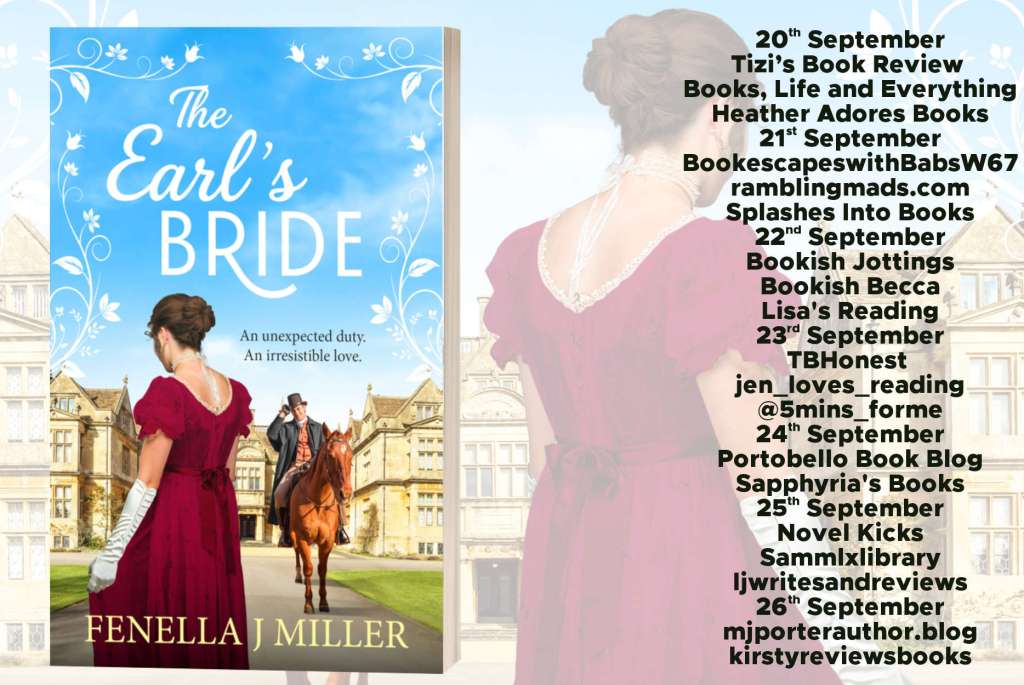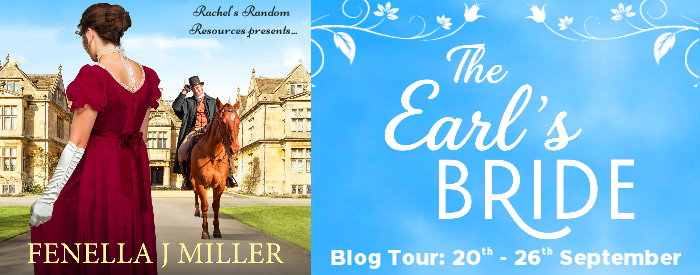
I’m welcoming The Earl’s Bride by Fenella J Miller to the blog with a fab post about Regency Bath #blogtour #historicalromance #RegencyEngland
Life in Regency Bath: Fashion, Society, and the Art of Being Seen
In the early decades of the nineteenth century, the elegant city of Bath became one of the most fashionable destinations in Britain. During the period now known as the Regency (roughly 1811–1820), when George IV ruled as Prince Regent for his incapacitated father George III, Bath flourished as a hub of health, leisure, and above all society. Visitors arrived not merely to take the waters but to see and be seen in one of the most vibrant social theatres of the age.
Bath’s distinctive honey-coloured Georgian architecture created a perfect stage for Regency society. Elegant terraces such as the Royal Crescent and the circular grandeur of The Circus reflected the city’s carefully designed sense of order and beauty. Wide streets and sweeping crescents allowed promenading visitors to display their fashionable attire while admiring the architecture and the company.
Many visitors stayed for the “season,” renting townhouses or lodging houses for weeks or months at a time. London’s elite often travelled to Bath during quieter periods of the capital’s social calendar, bringing with them the latest fashions, gossip, and ambitions.
Yet Bath was not reserved exclusively for the aristocracy. Wealthy merchants, naval officers on leave, widows with modest fortunes, and families hoping to introduce daughters into society also flocked to the city. Bath offered something unique: a social environment where rank mattered, but introductions and reputation could shape one’s fortunes just as strongly as birth.
The Healing Waters
Bath’s popularity originally grew from its natural hot springs, known since Roman times. By the Regency period, visiting the baths was still considered an important health practice. The famous Roman Baths remained a central attraction, though the ritual of “taking the waters” had evolved into a highly social activity.
Visitors drank mineral water in the elegant Pump Room each morning, often accompanied by live music. The water itself had a strong mineral taste—many found it unpleasant—but its supposed curative powers for ailments ranging from gout to digestive troubles made it widely popular.
The morning ritual also provided an ideal opportunity for polite conversation and discreet observation. Friendships were formed, introductions arranged, and reputations quietly assessed over glasses of warm mineral water.
Rules of Society
Regency Bath society operated under a complex web of etiquette. Social events such as balls, card parties, concerts, and public breakfasts structured the daily lives of visitors. The city’s social life was historically overseen by the Master of Ceremonies, a role once famously held by Richard ‘Beau’ Nash, whose influence helped establish the rules governing behaviour and introductions.
By the Regency period, these conventions were deeply embedded in Bath’s culture. Strangers could not simply approach one another at social events; proper introductions were essential. A person’s reputation could determine whether they were welcomed into fashionable gatherings or quietly excluded.
The grand centre of this social world was the Assembly Rooms, where elegant balls and concerts brought together hundreds of guests. These glittering events allowed young people to dance, families to negotiate advantageous marriages, and ambitious visitors to cultivate connections.
Leisure and Entertainment
Beyond balls and social calls, Bath offered a wide variety of amusements. Visitors attended theatre performances at the Theatre Royal Bath, one of the most respected provincial theatres in Britain. Concerts, lectures, circulating libraries, and pleasure gardens ensured that boredom was rarely a concern.
Promenading remained a daily pastime. In the afternoons, fashionable visitors would stroll along Great Pulteney Street or gather in the public gardens to exchange news and admire the latest styles.
Shopping was also an important activity. Milliners, dressmakers, and jewellers catered to the city’s fashionable clientele, ensuring that visitors could maintain the appearance required for Bath’s competitive social stage.
Bath in Literature and Legacy
Bath’s lively society and carefully structured etiquette made it an ideal setting for fiction. The city appears prominently in the works of Jane Austen, particularly in the novels Northanger Abbey and Persuasion. Austen herself lived in Bath for several years and observed its social rituals closely.
Through her writing—and through the preserved beauty of the city itself—we still glimpse the world of Regency Bath: a place where health cures mingled with ambition, romance blossomed in crowded ballrooms, and reputation could change with a single introduction.
Today, walking through Bath’s sweeping crescents and elegant streets, it is still possible to imagine the rustle of silk gowns, the rhythm of a quadrille, and the quiet calculations of those seeking their place in one of Britain’s most fashionable Regency playgrounds.
Here’s the blurb
Bath, 1810.
Lord James Brotherton, the charismatic Earl of Avon, is wealthy, intelligent—and marked for death. His own cousin believes him an imposter and has enlisted corrupt lawyers and treacherous servants to remove him permanently.
Enter Sofia Brotherton.
Unconventional, outspoken, and entirely irresistible, Sofia turns James’s ordered world upside down. He falls for her instantly. She follows a week later.
As danger closes in, their growing attraction becomes both a refuge and a risk. With enemies plotting murder and passions running high, James and Sofia must fight for love—and survival.
A witty, action-packed Regency romance filled with intrigue, danger, and deliciously sensuous tension.
Purchase Link
https://mybook.to/Earlsbride1
Meet the author
Fenella J. Miller is a bestselling historical fiction author, known for her emotionally rich World War II family sagas, sweeping Regency romances, and Jane Austen-inspired variations. With over 100 novels published, she continues to captivate readers who love strong heroines, resilient communities, and heartfelt historical storytelling.
Fenella currently writes for Boldwood Books, where she has launched several beloved WWII series, including:
• The Goodwill House series, beginning with The War Girls at Goodwill House
• The Army Girls series, starting with Army Girls – Reporting for Duty
• The Harbour House series, introduced with Wartime Arrivals at Harbour House
She is also the author of the popular six-book Regency romance series, The Duke’s Alliance, which begins with A Suitable Bride. Her novels are praised for their authentic period detail, compelling characters, and uplifting themes of courage and love during turbulent times.
Born on the Isle of Man to a Yorkshire father and a mother of Anglo-Indian descent, Fenella brings depth and diversity to her storytelling. She previously worked as a nanny, chef, hotelier, and teacher—experiences that inspire her vivid, grounded characters.
Now writing full-time, Fenella lives in a peaceful village in Essex with her British Shorthair cat. She enjoys a close relationship with her son, daughter-in-law, and grandson, and continues to share powerful stories of women facing challenges with strength and hope.
Social Media Links – Fenella J Miller facebook fenellajmiller.co.uk website.
Stay up to date with the latest from the blog.