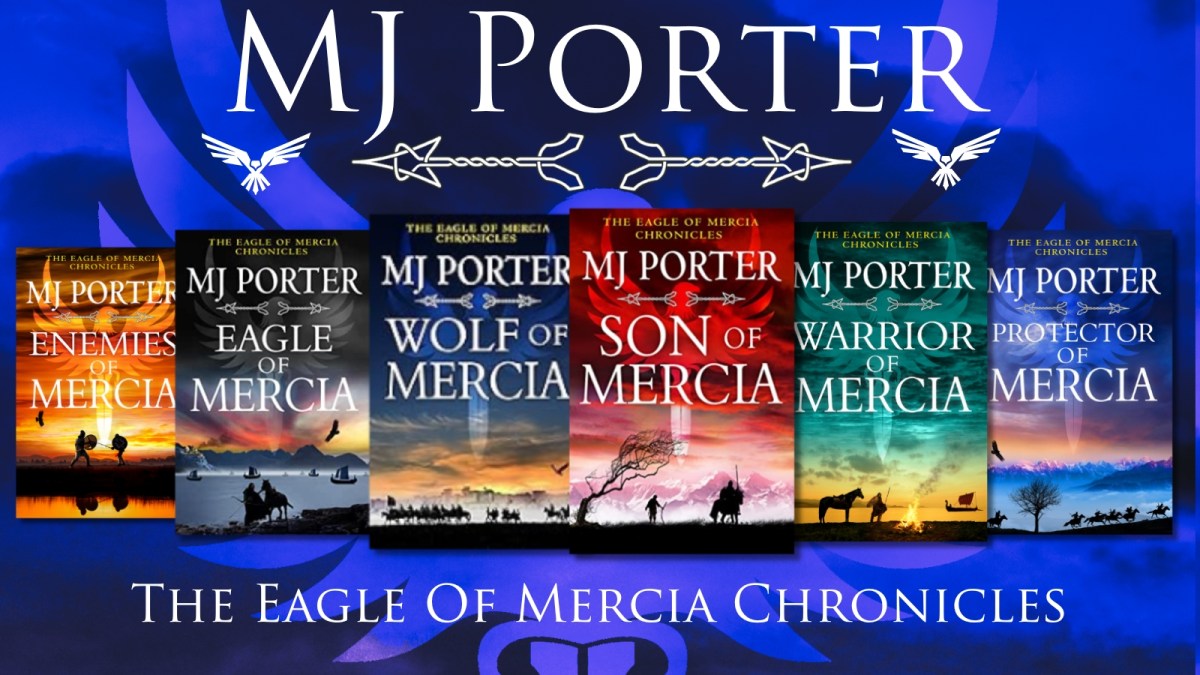
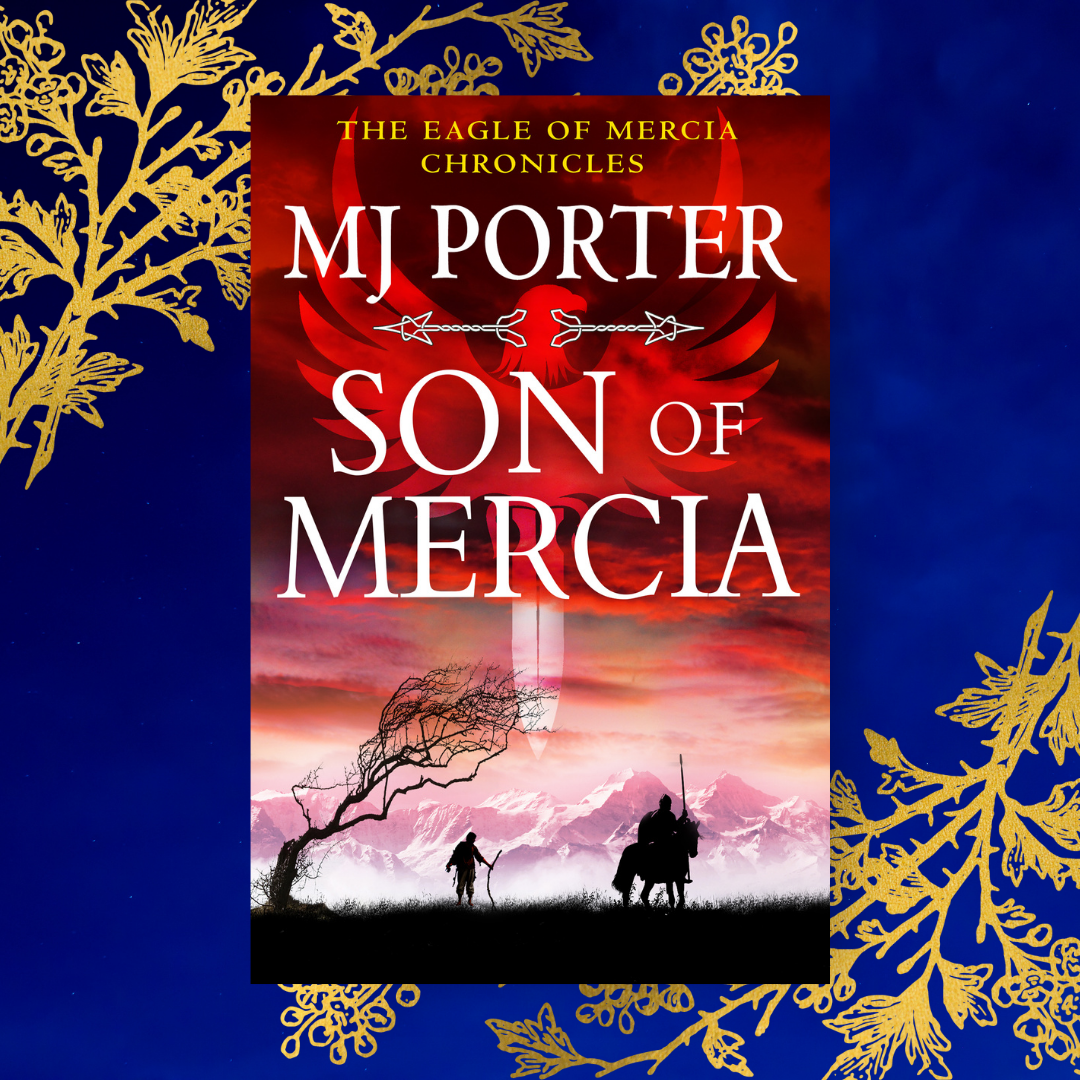
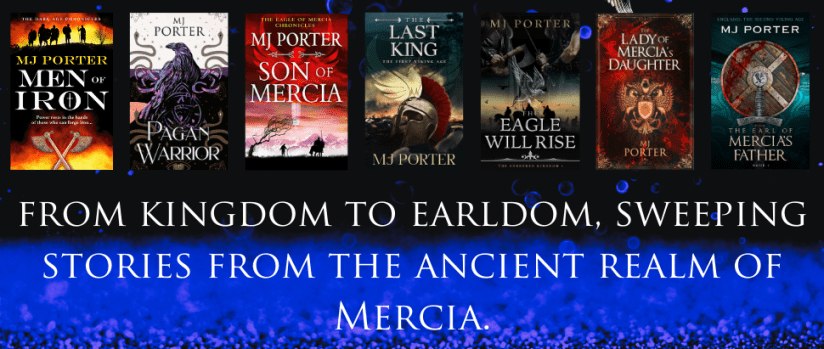
Happy 2nd Book Birthday to Son of Mercia. #bookbirthday #TheEagleOfMerciaChronicles

Happy book birthday to the wonderful Son of Mercia, the first book telling the story of young Icel in early ninth-century Mercia (fans of The Last King will have met Icel before, but it’s not necessary to have read the later series to enjoy Son of Mercia).

The series is now a massive six books long, and I’m busy working on book 7, which doesn’t have a title just yet (or does it?)

I thought today would be a great day to shine a light on all six books featuring young Icel. He’s endured a lot. He’s grown into a young man, but it’s good to remember how we first met Icel – scared, hungry and desperate to evade Lady Cynehild. How times have changed for him.

I love writing the stories of young Icel. He’s a fabulous character, and indeed, the more I write him, the better he becomes. And those with ‘eagle’ eyes (did you see what I did there), will have started to notice more and more Icel appearing in the later, The Last King books.

Tamworth, Mercia AD825.

The once-mighty kingdom of Mercia is in perilous danger.

Their King, Beornwulf lies dead and years of bitter in-fighting between the nobles, and cross border wars have left Mercia exposed to her enemies.

King Ecgberht of Wessex senses now is the time for his warriors to strike and exact his long-awaited bloody revenge on Mercia.

King Wiglaf, has claimed his right to rule Mercia, but can he unite a disparate Kingdom against the might of Wessex who are braying for blood and land?

Can King Wiglaf keep the dragons at bay or is Mercia doomed to disappear beneath the wings of the Wessex wyvern?

Can anyone save Mercia from destruction?

books2read.com/u/3R6x7x


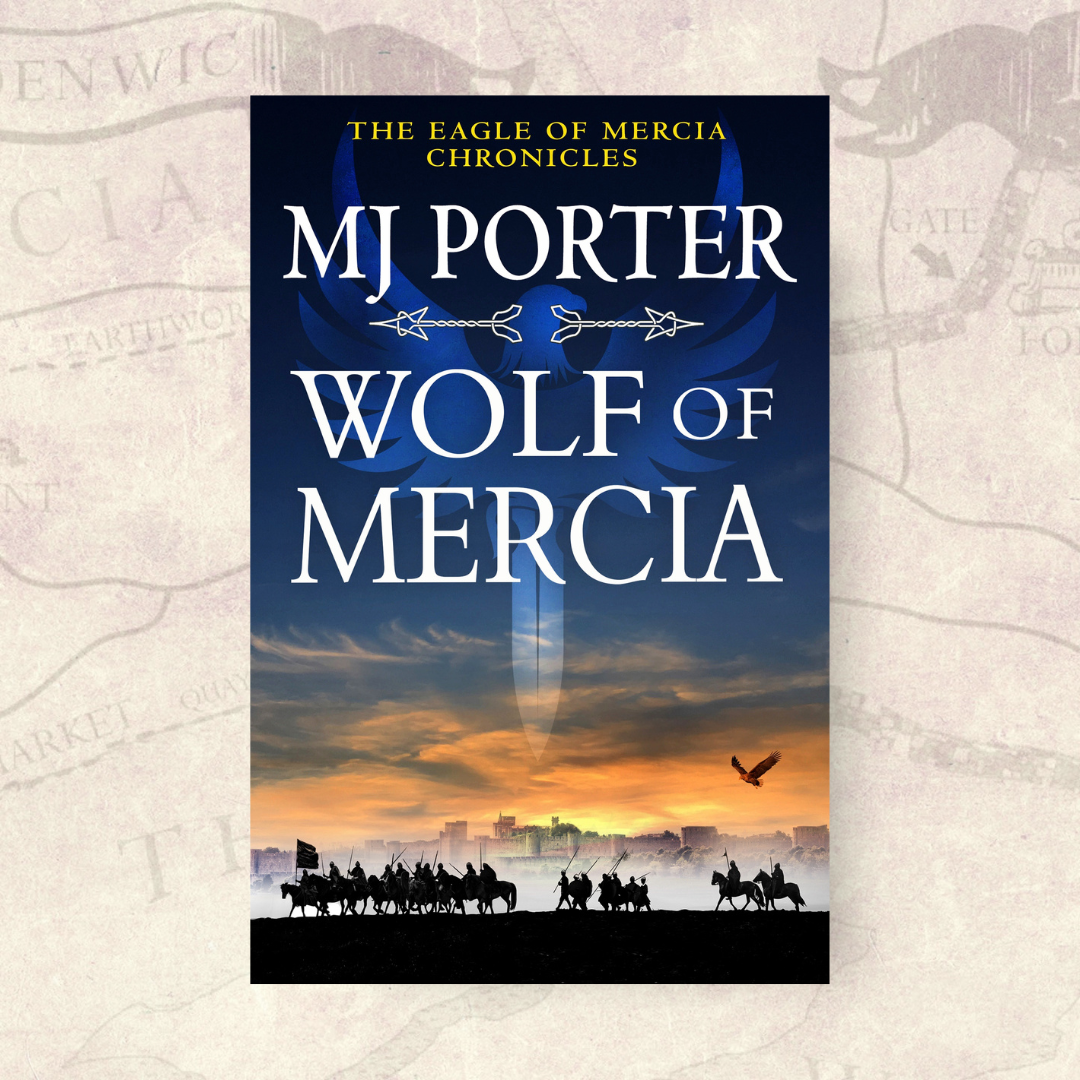
Icel is becoming a warrior of Mercia, but King Ecgberht of Wessex still holds the Mercian settlement of Londonia and its valuable mint.

King Wiglaf of Mercia is determined that the last bulwark be reclaimed from his sworn enemy to complete his rehabilitation as Mercia’s rightful ruler.

In the heart of the shield wall, Icel suddenly finds himself on the wrong side of the battle and thrust into the retreating enemy stronghold where he must take on the pretence of a Wessex warrior to survive and exact a cunning plan to bring down the Wessex force cowering behind the ancient walls.

His allegiances are tested and the temptation to make new allies is overwhelming but Icel must succeed if he’s ever to see Tamworth again and bring about King Wiglaf’s victory, or will he be forced to join the enemy?

books2read.com/Wolf-of-Mercia


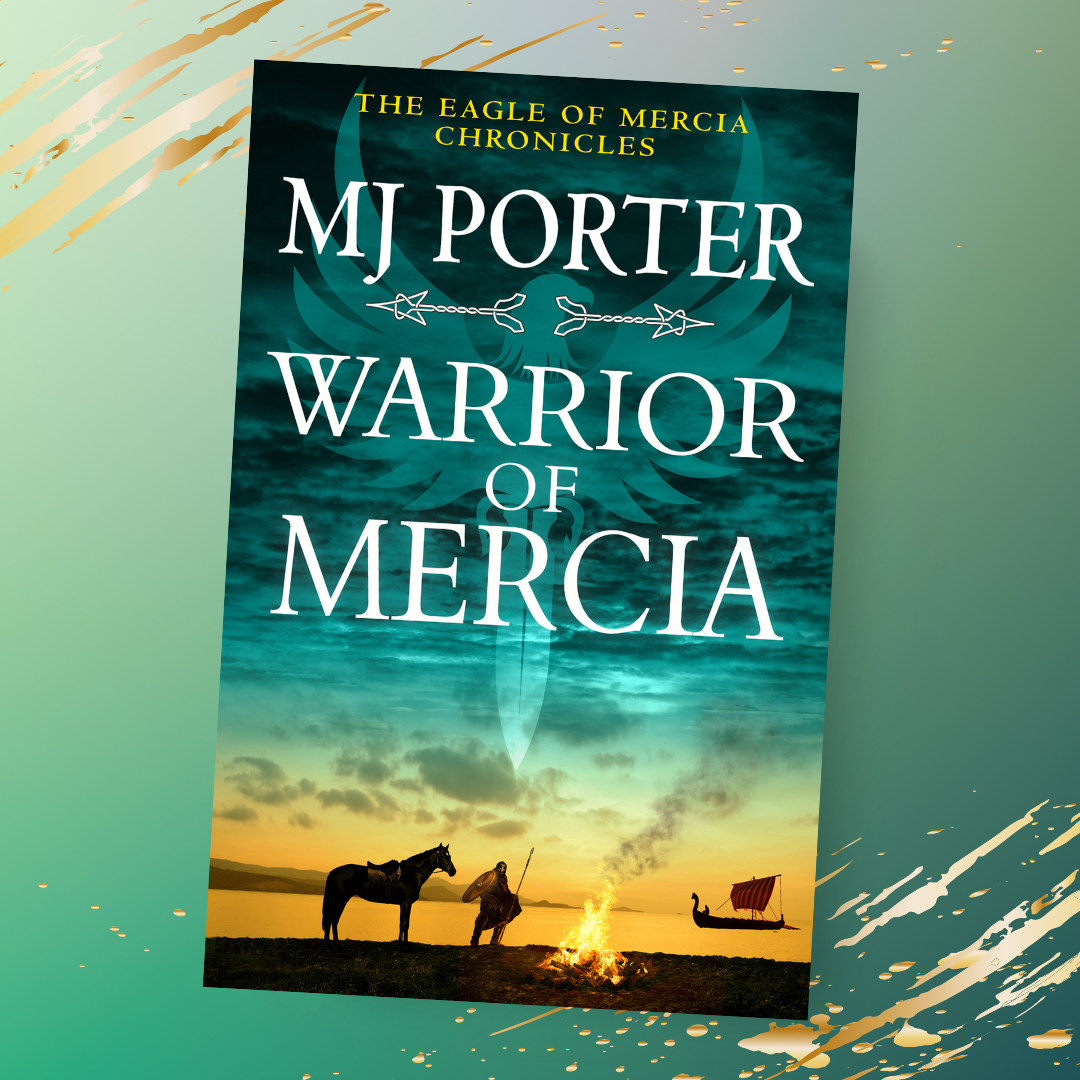
Icel is a lone wolf no more…

Oath sworn to Wiglaf, King of Mercia and acknowledged as a member of Ealdorman Ælfstan’s warrior band, Icel
continues to forge his own destiny on the path to becoming the Warrior of Mercia.

With King Ecgberht of Wessex defeated and Londonium back under Mercian control, the Wessex invasion of Mercia is over. 

But the Wessex king was never Mercia’s only enemy. An unknown danger lurks in the form of merciless Viking raiders, who set their sights on infiltrating the waterways of the traitorous breakaway kingdom of the East Angles, within touching distance of Mercia’s eastern borders.

Icel must journey to the kingdom of the East Angles and unite against a common enemy to ensure Mercia’s hard-won freedom prevails.

books2read.com/WarriorofMercia


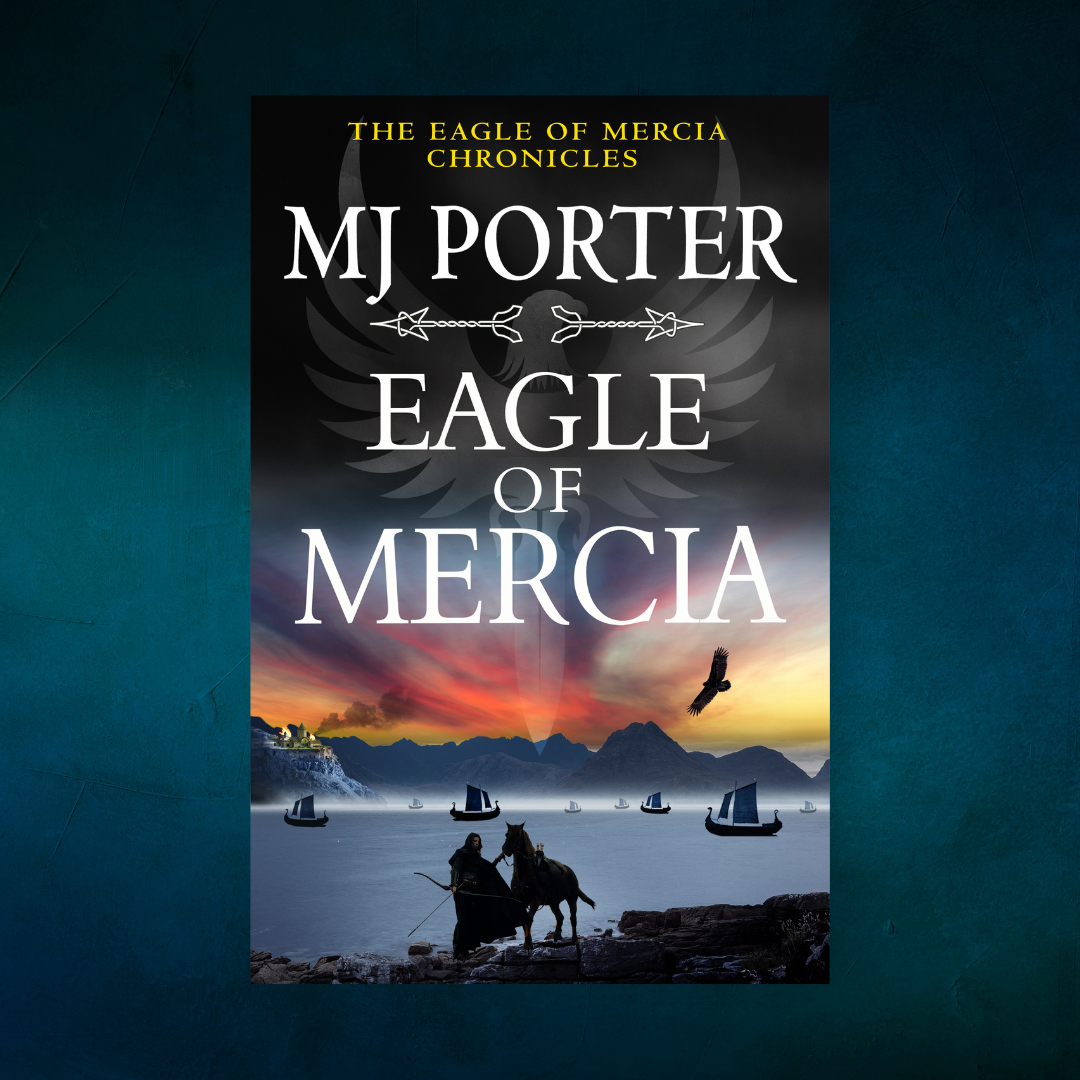
A mercy mission in the heart of Wessex is beset with deadly, bloody dangers.

Tamworth AD831

Icel’s profile continues to rise. Lord of Budworth and warrior of Mercia, he’s acknowledged by King Wiglaf and his comrades to keep Mercia safe from the ravages of Wessex, the king-slayer of the East Angles, and the Viking raiders.
But, danger looms.  Alongside Spring’s arrival comes the almost certain threat of the Viking raiders return. 

When Lord Coenwulf of Kingsholm is apprehended by a Viking and held captive on the Isle of Sheppey in Wessex held Kent, Icel is implored by Lady Cynehild to rescue her husband.

To rescue Lord Coenwulf, Icel and his fellow warriors must risk themselves twice over, for not only must they overpower the Viking raiders, they must also counter the threat of Mercia’s ancient enemy, the kingdom of Wessex as they travel through their lands.

Far from home and threatened on all sides, have Icel and his fellow warriors sworn to carry out an impossible duty

books2read.com/EagleofMercia


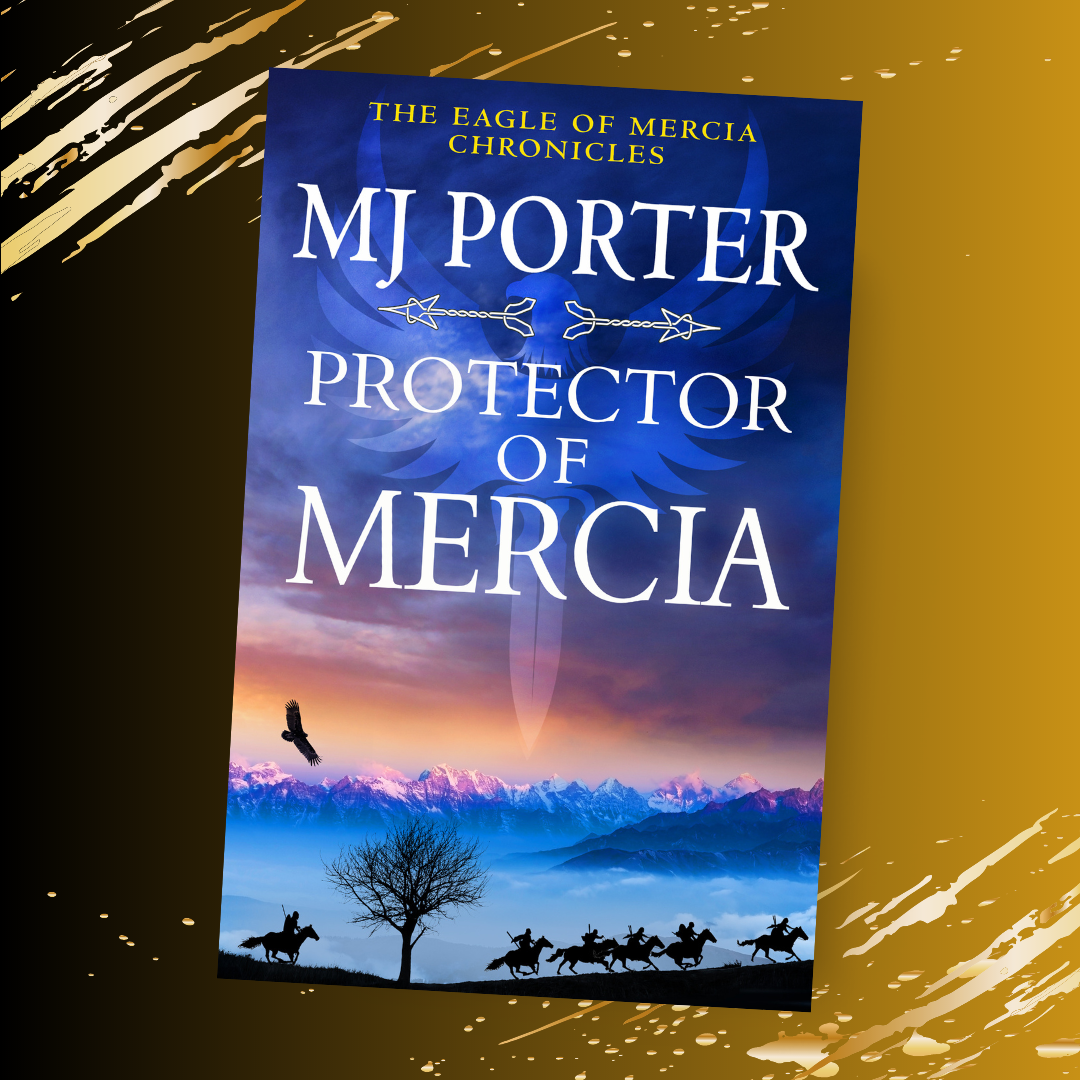
A deathbed oath leaves the lives of two infants hanging in the balance…
Tamworth AD833

After successfully rescuing her husband Lord Coenwulf from the Isle of Sheppey, Icel hears the deathbed confession of Lady Cynehild which leaves him questioning what he knows about his past, as well as his future.

In the unenviable position of being oath sworn to protect their two atheling sons when Lord Coenwulf is banished for his treason against the Mercian ruler, King Wiglaf, Icel is once more torn between his oaths and the life changing secret he now knows.

When the two children are kidnapped, Icel, good to his word, and fearing for their safety, pursues their abductors into the dangerous Northern lands.

He fears whose powerful and deadly royal gamesmanship is behind the audacious attempt on their young and innocent lives.

Alone in the Northern lands, Icel finds himself facing his worse fears.

Can he rescue the children from their captor, or will he fail and lose his own life in the process?

books2read.com/protectorofmercia


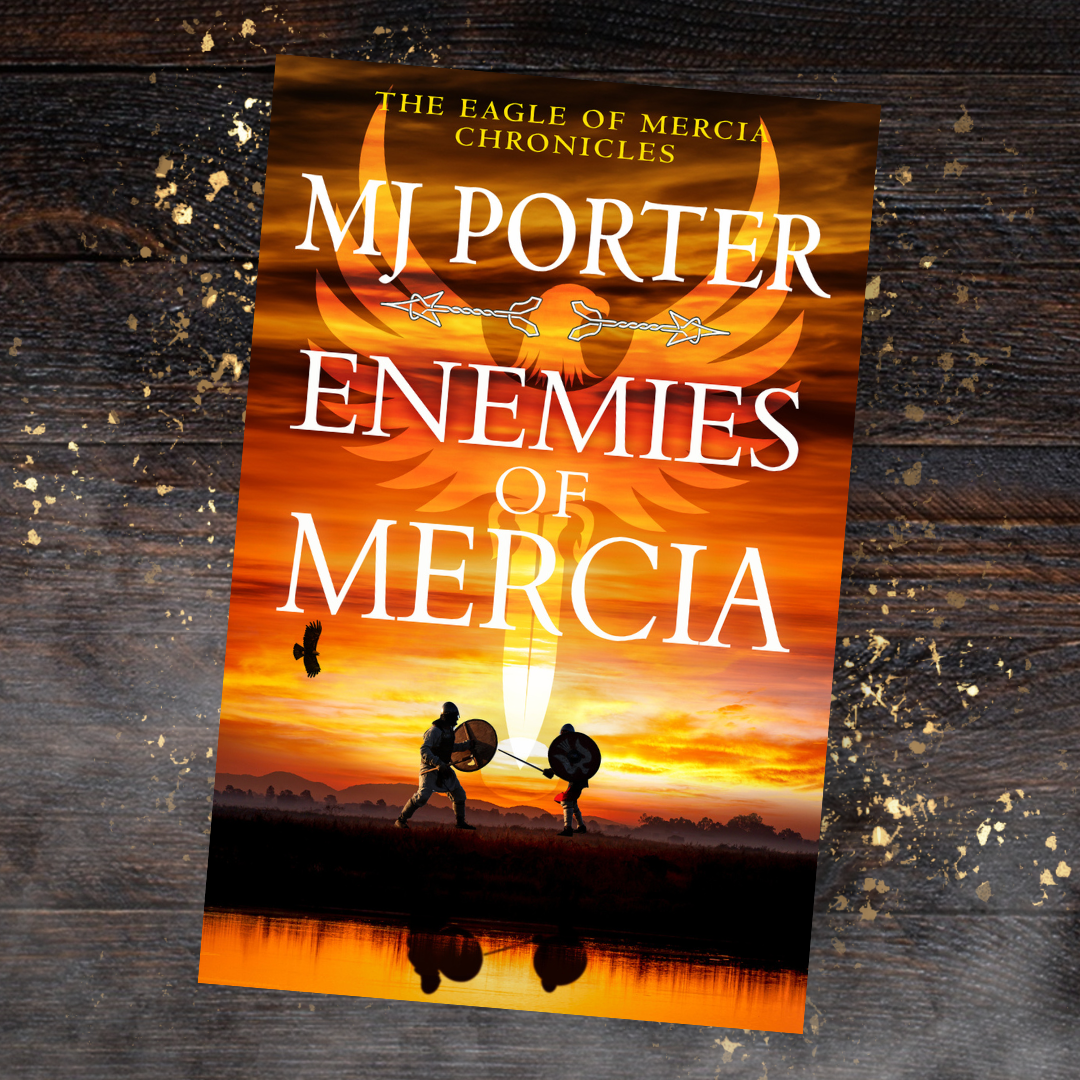
A King’s command. A warrior’s quest for the truth…
Tamworth AD835

Following Icel’s epic rescue of Lord Coenwulf’s children from their almost certain death, King Wiglaf is forced to call upon Icel’s loyal services once more.

Furious that the conspirators behind the audacious move to snatch the children have yet to face justice, he despatches Icel to hunt down the enemy of Mercia and discover who seeks to conspire against the throne.

The dangerous mission will take Icel into the heartland of enemy-held Wessex to Winchester and onto Canterbury. As the web of lies and deceit grows, Icel must battle to discover the truth whilst keeping himself and his allies safe.

But those who conspire against the King have much to lose and will stop at nothing to prevent Icel discovering the truth.
Once more, Icel’s life is endangered as he tries to protect Mercia from her enemies who threaten Mercia’s kingly line.

books2read.com/u/br650z


Set in the troubled years at the end of the Mercian supremacy, with the advent of the true First Viking Age just around the corner, The Eagle of Mercia Chronicles allow me to explore the kingdoms of Saxon England at the time, while ensuring my focus remains on Mercia, the kingdom in the’Midlands’ of England, with which I’m quite obsessed.

And choosing to write about a very strong character from my The Last King series, also allows me to play with my readers expectations. Icel is a fabulous creation, and one I’m incredibly proud of and pleased that my readers love so much.

Yes, these are bloody and brutal tales, but at the heart of them is a ‘coming of age’ story as young Icel learns about himself, as well as the truth of his heritage and birth.

If you’ve not yet tried The Eagle of Mercia Chronicles, then now is the perfect opportunity. Enjoy.

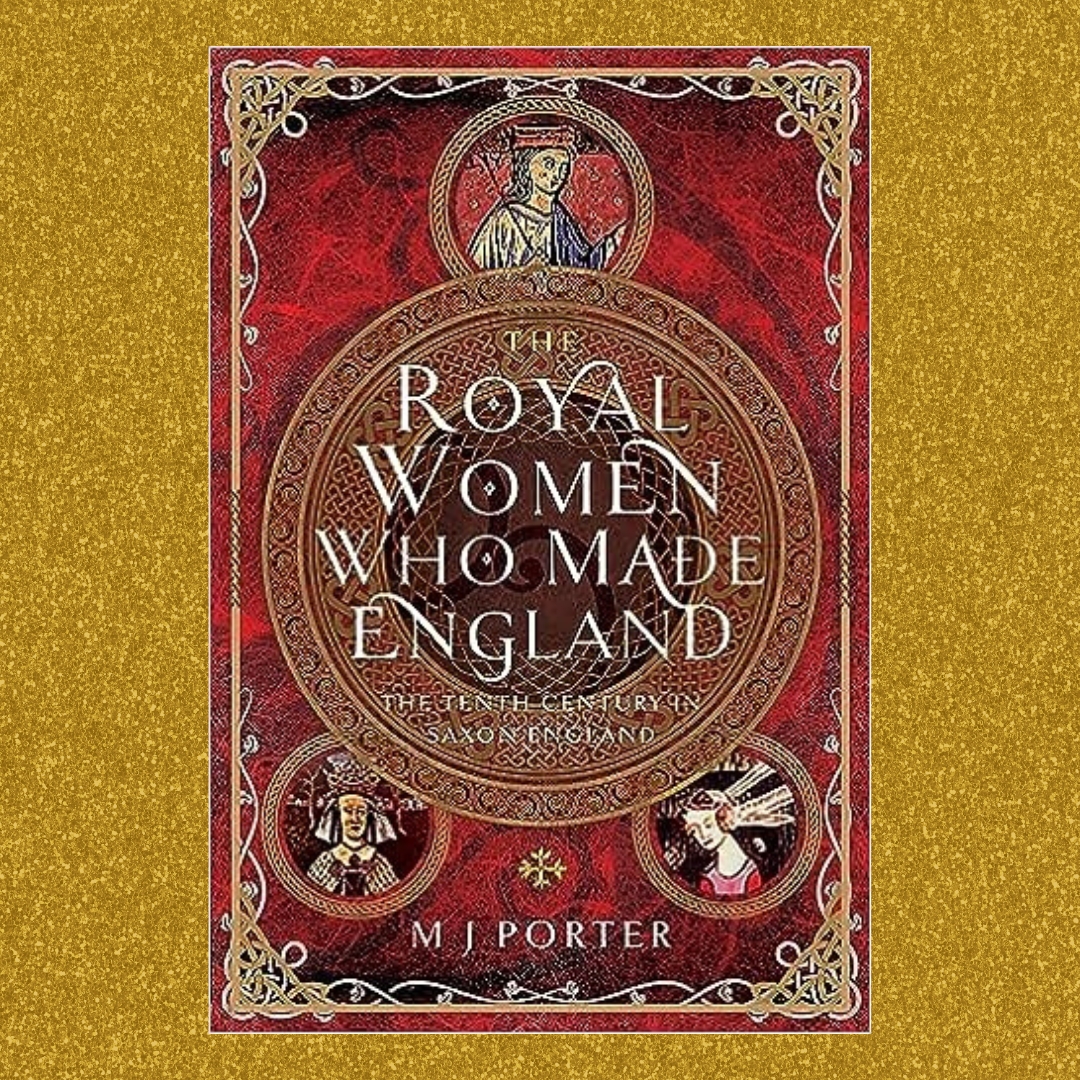
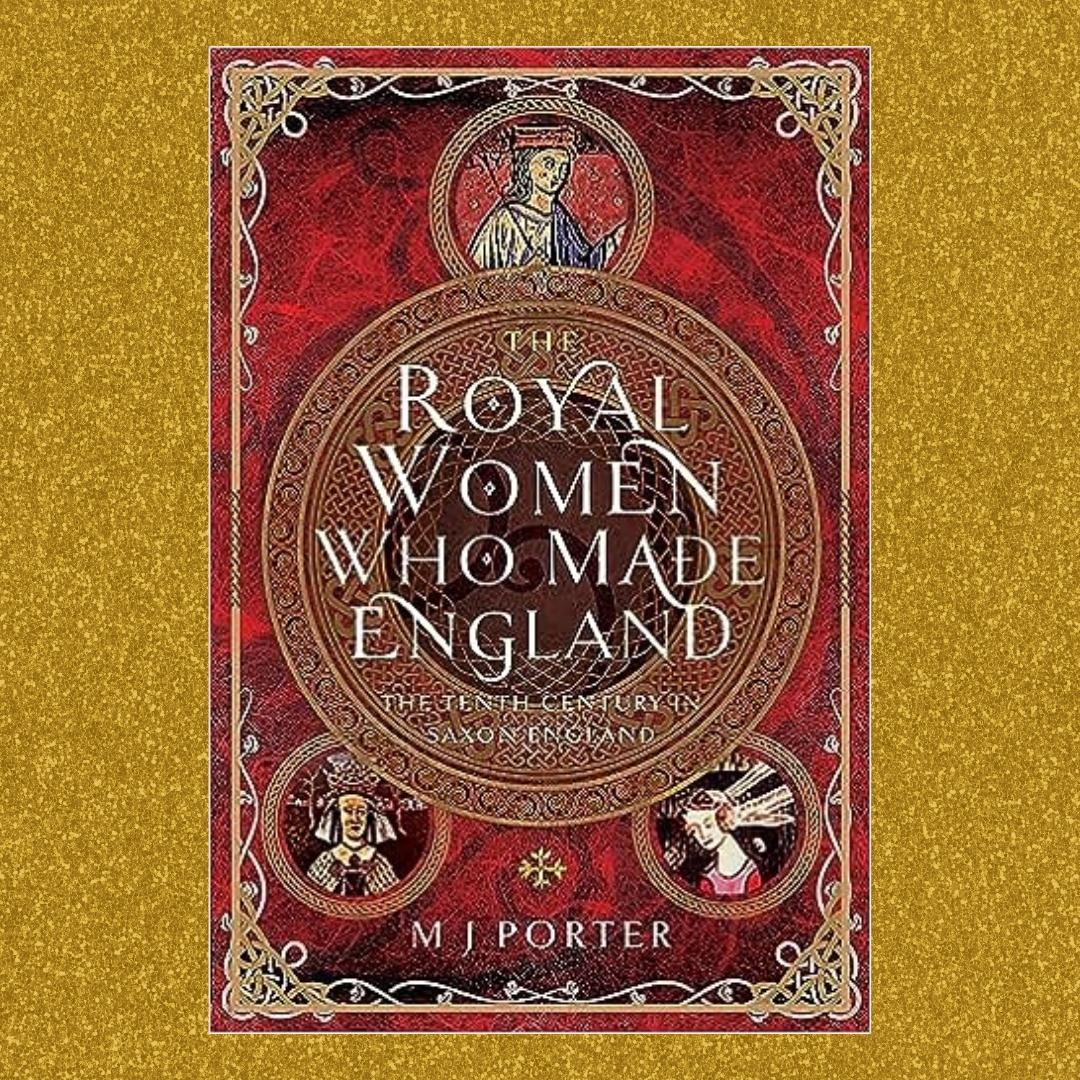
Happy (UK) Release Day to The Royal Women Who Made England, my first non-fiction book #newrelease #non-fiction

It feels like I’ve been talking about this book forever, but the day is finally upon us. The Royal Women Who Made England is available in hardback in the UK from today. It will be released in the US in March.
If you’ve been hiding from me for the last few months, you might be wondering what this is all about. So here goes.

Throughout the tenth century, England, as it would be recognised today, formed. No longer many Saxon kingdoms, but rather, just England. Yet, this development masks much in the century in which the Viking raiders were seemingly driven from England’s shores by Alfred, his children and grandchildren, only to return during the reign of his great, great-grandson, the much-maligned Æthelred II.

Not one but two kings would be murdered, others would die at a young age, and a child would be named king on four occasions. Two kings would never marry, and a third would be forcefully divorced from his wife. Yet, the development towards ‘England’ did not stop. At no point did it truly fracture back into its constituent parts. Who then ensured this stability? To whom did the witan turn when kings died, and children were raised to the kingship?

The royal woman of the House of Wessex came into prominence during the century, perhaps the most well-known being Æthelflæd, daughter of King Alfred. Perhaps the most maligned being Ælfthryth (Elfrida), accused of murdering her stepson to clear the path to the kingdom for her son, Æthelred II, but there were many more women, rich and powerful in their own right, where their names and landholdings can be traced in the scant historical record.

Using contemporary source material, The Royal Women Who Made England can be plucked from the obscurity that has seen their names and deeds lost, even within a generation of their own lives.

https://amzn.to/3OlRydn

https://ww…ck/p/24395

So, who were these royal women? While some of us will know Æthelflæd, the Lady of Mercia, either because I think she is one of THE most famous Saxon women, or because of The Last Kingdom TV series and books, but she is merely one of many.

I’ve fictionalised Elfrida and her contemporaries, Eadgifu, the third wife of Edward the Elder and also some of his daughters, as well as Ælfwynn, the daughter of Æthelflæd. My first non-fiction title is me sharing my research that these stories are based upon.

I’ve also ‘found’ many other women of the period who have left some sort of physical reminder, mostly in charters or because their wills have survived.

In total, I discuss over twenty women directly involved with the royal family, either by birth or marriage, and also a further forty, who appear in the sources. I also take a good look at what these sources are and how they perhaps aren’t always as reliable as we might hope. I make an attempt to ‘place’ these women in the known historical events of the period. And draw some conclusions, which surprised even me.

You can find some of my blog posts about these women below.

Æthelflæd

Lady Eadgifu

Ælfwynn

The daughters of Edward the Elder.

The other daughters of Edward the Elder

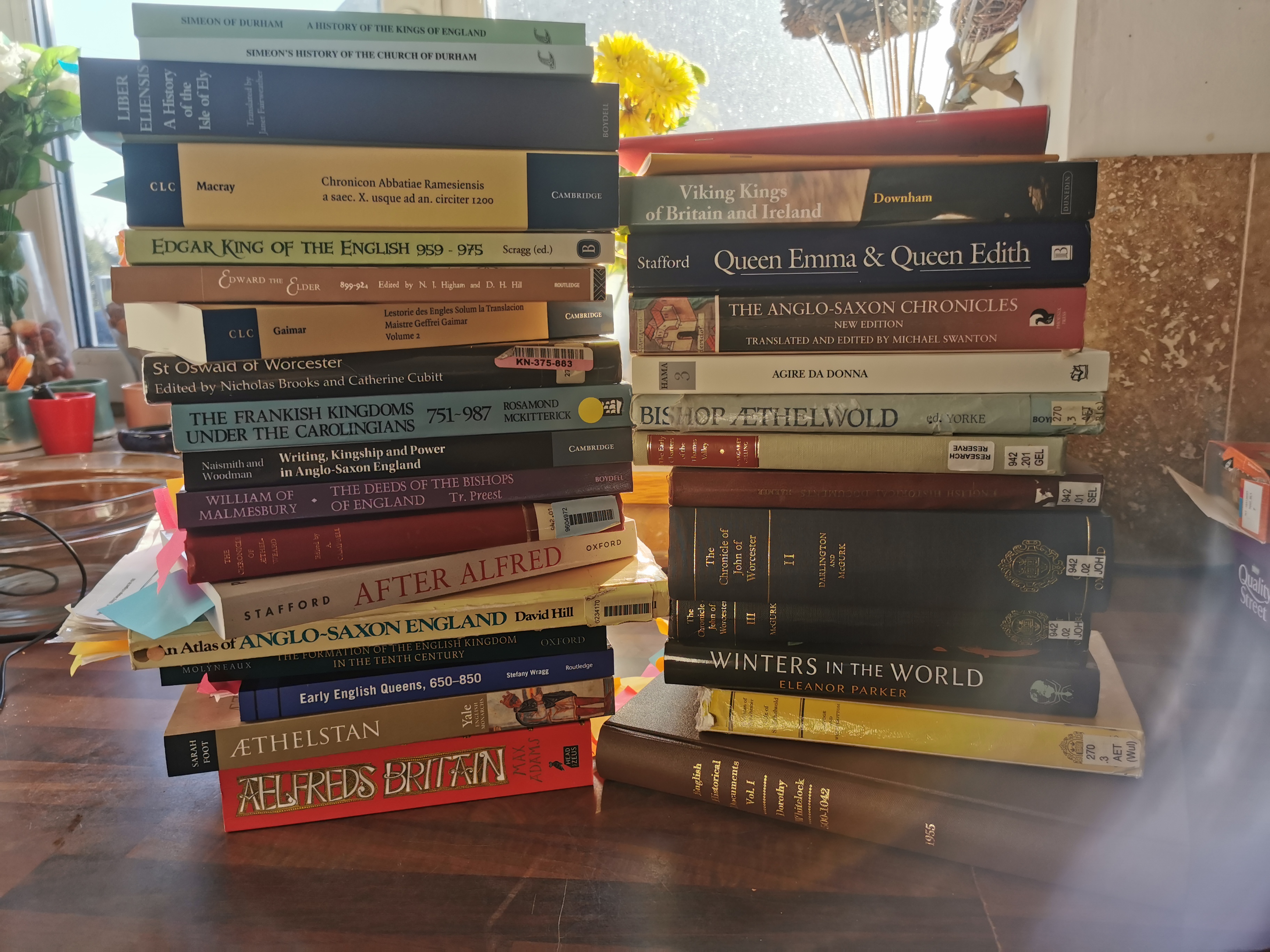
A collection of research books I used while writing The Royal Women Who Made England

Listen to me talk about the Chronicon of Æthelweard (about 6 minutes).

The Royal Women Who Made England: The Tenth Century in Saxon England. But who were these royal women?

In the online resource, The Prosopography of Anglo-Saxon England (PASE), a database of every known name from the Saxon period, 33,981 male names are listed. There are only 1,460 female names for the 600-year period of Saxon England. Only 4 per cent of entries are women (there are also many anonymous ones which may mask more women). Twenty-one (possibly twenty-two) of these belong to the royal women of the tenth century. So, who were they?

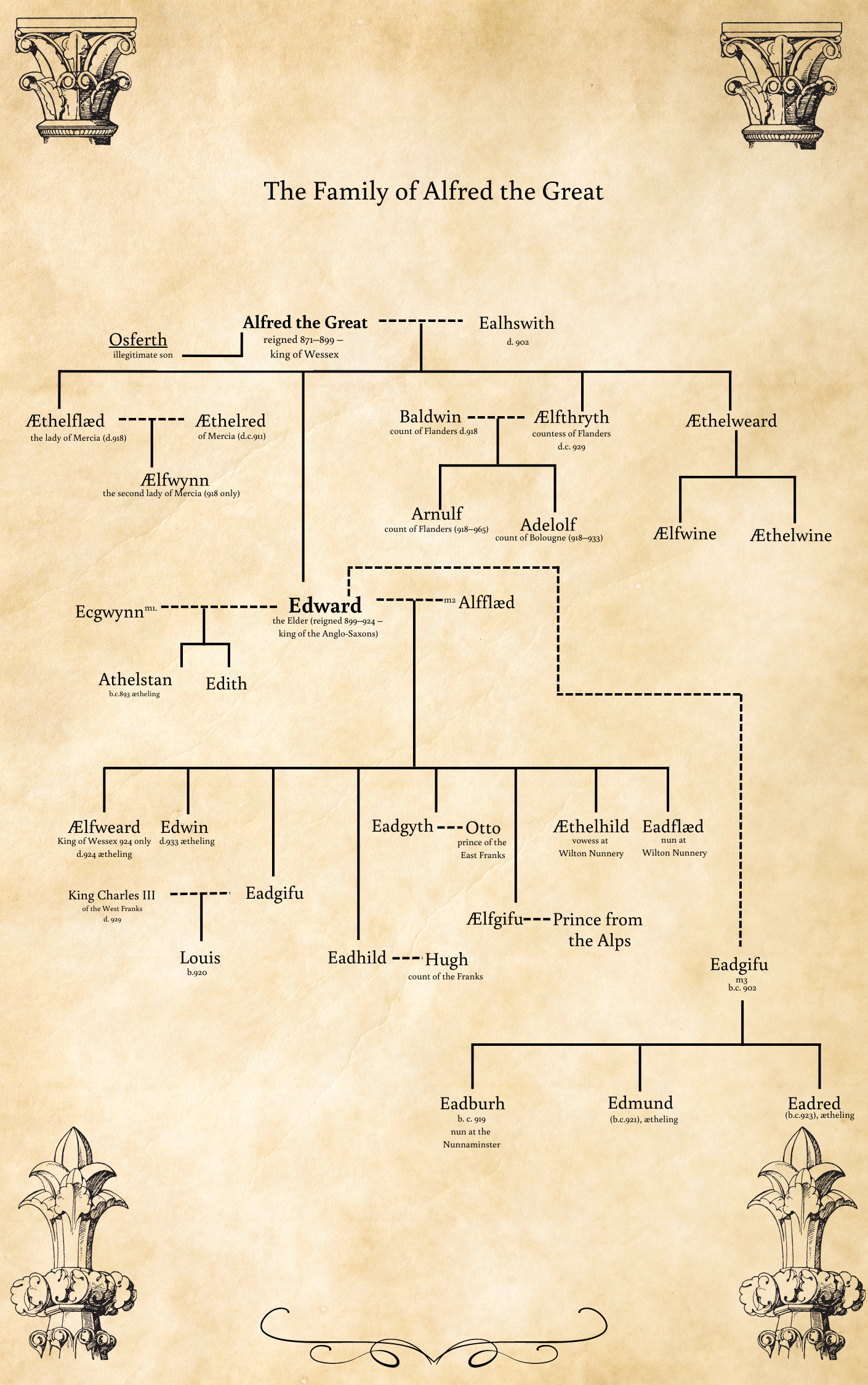
Lady Ealhswith, the wife of King Alfred.

Æthelflæd, Lady of the Mercians, presumed to be the oldest of Ealhswith daughters, and her daughter, Ælfwynn.

Æthelgifu, Alfred and Ealhswith’s second daughter, the abbess of Shaftesbury.

Ælfthryth, the Countess of Flanders, their third daughter.

Ecgwynn (if that was her name), mother to King Athelstan, and his unnamed sister, given the name of Ecgwynn/Edith in later sources

Lady Ælfflæd the second wife of Edward the Elder. They had many children. Six of them were daughters, Æthelhild, Eadgifu, Eadflæd, Eadhild, Eadgyth and Ælfgifu.

Edward’s third wife, Lady Eadgifu, certainly had one daughter, Eadburh. (There is the possibility that she had two.)

Ælfgifu of Shaftesbury, whose mother Wynflæd is named, was the first wife of Edmund. Æthelflæd of Damerham was Edmund’s second wife.

Edmund’s oldest son, Eadwig, married another Lady Ælfgifu.

Edmund’s youngest son, Edgar, would marry, or have children with no fewer than three women, Æthelflæd, Wulfthryth and Elfrida/Ælfthryth. From these three unions, one daughter was born, Edith/Eadgyth.

Another Ælfgifu was the first wife of Æthelred II. His second wife was Lady Emma of Normandy. At least four daughters were born to Ælfgifu, a daughter (also called Ælfgifu), Eadgyth, Wulfhild and Ælfthryth, while Lady Emma was the mother to Gode.

You can read all about these women in my non-fiction book, and there are also some links to blog posts I’ve written, which may be of interest.

Purchase links (Hardback)

https://amzn.to/3vVNjiw

https://www.pen-and-sword.co.uk/The-Royal-Women-Who-Made-England-Hardback/p/24395


Below you can hear me try and explain the importance of the marriages of some of these women into the West Frankish dynasty. I also forget the title of my non-fiction title, and generally make a bit of a mess of it. Enjoy:)

The Family of Charles III, the king of the West Franks (in my own words)

What to read after The Brunanburh Series #hisffic #TheTenthCentury

I do appreciate that it’s not exactly a bad problem to have, but I am sometimes concerned that readers are not altogether sure where to go after finishing one of my series and hopefully, enjoying it. Never fear, for I have put together a handy little guide, hopefully picking out the elements that readers might have enjoyed in one particular series, and applying them to other ones.

So, for readers interested in what happened before King of Kings, The Lady of Mercia’s Daughter and its sequel, A Conspiracy of Kings, offer a retelling of the Lady Ælfwynn’s life. The books also feature a younger Athelstan, and there may be a few other figures from the Brunanburh series in there as well.

For those interested in England before it was England, or rather the idea of Five kingdoms, then the Gods and Kings trilogy, starting with Pagan Warrior, is really where you want to be. Step back to the seventh century, a time before Viking raiders, but with just as many ambition and brutal warrior kings.

And if it is the conflict and band of warriors that interests you, then the Eagle of Mercia Chronicles might well be where you could go next. Follow young Icel as he realises he must become a warrior, not a healer if he is to protect Mercia from her enemies beginning with Son of Mercia, set nearly a hundred years before the events of Brunanburh.

If you want books with a very healthy dose of violence, (and swearing), then The Mercian Ninth Century is the series for you, beginning with The Last King. Also set before the events of Brunanburh, (in the 870s) this series is all about warriors, violence, and overcoming (hopefully) all the odds.

(The series is also available without the stronger language. Follow this link as otherwise, it’s quite hard to find).

I hope you find something you like, and don’t forget, to sign up for my mailing list to keep up to date with all things Saxon England and to receive a free ebook download via Bookfunnel.

Posts

Listen to me on the A Slice of Medieval Podcast with Derek Birds and Sharon Bennett Connelly

I’m delighted to share details of the A Slice of Medieval Podcast I’m featured on this week. I hope you enjoy the discussion about Brunanburh, King Athelstan and not forgetting, Olaf Scabbyhead.

I’ve added the map below so you can see where I’m talking about during the podcast.

Meet the characters from Clash of Kings, Idwal of Gwynedd.

Idwal of Gwynedd has long been a character in the Brunanburh series, but it appears I’ve been remiss in not writing a blog about him. So here goes.

I confess, I’ve had quite a lot of fun with Idwal, pitching him against Hywel. But, I’m not sure that’s actually very wide of the mark.

Idwal of Gwynedd and Hywel were cousins. Their fathers were both sons of perhaps the second most well-known king of Wales, Rhodri Mawr. Hywel being the first (at least in my mind). Rhodri Mawr had held much of Wales, and was accorded the title King of the Britons. On his death, at the hands of King Alfred of Wessex, the kingdoms fractured back into their constituent parts. Idwal’s father ruled in Gwynedd. Hywel’s in Seisyllwg. Hywel succeeded his father while very young and quickly grew his power base. Idwal became king of Gwynedd in 916.

We first met Idwal in King of Kings in 927. He was, unwillingly, signing the accord with Athelstan at Hereford after the one agreed with the northern kings at the treaty of Eamont. Idwal visited England on multiple occasions, according to the surviving charter evidence, where he’s shown attesting Athelstan’s charters in 928, 931, 934 and 935. (S400, S413, S416, S417, S425, S407, S1792 and S434 – see the Electronic Sawyer for more information about these charters).

In my interpretation of him, he’s a very unwilling participant, more likely to look to the Norse for an alliance than the English, or indeed, his cousin, Hywel.

When we return to him, in Clash of Kings, Idwal, is once more, a man aggrieved by the success of the English king. Read Clash of Kings to discover what fate has in store for Idwal.

He is perhaps one of the most fun characters in Brunanburh – a grouchy man who is happy to do all he can to disrupt the more staid approach of King Athelstan of the English, and who resents his cousin’s influence with the English.

books2read.com/King-of-Kings

books2read.com/kingsofwar

books2read.com/clashofkings


Read about all the characters in The Brunanburh Series.

Map design by Flintlock Covers

My new book, Clash of Kings, has a number of main characters. Meet Lady Eadgifu. #histfic #non-fiction #Brunanburh

Clash of Kings has a number of characters, and some might be surprised to find Lady Eadgifu amongst them, but she was an incredibly important historical character, and I couldn’t leave her out of the narrative set at the English court.

Lady Eadgifu was the third wife of Edward the Elder (r.899-924), king of the Anglo-Saxons. Edward the Elder was the father of King Athelstan, and a whole host of daughters, as well as five sons. Lady Eadgifu would, it seems, have been young when she married the aging Edward the Elder, and that meant that she long outlived him, and also, that her three children (possibly four, but I’ve opted for three) were young when their father died. And two of these children were sons, Edmund (born c.921) and Eadred (born c.923). Her daughter, Eadburh, is thought to have been the oldest of the three children, born c.919.

While Lady Eadgifu, from what’s known (and it isn’t much, as there are few surviving charters from the end of Edward’s reign) perhaps had little role to play while her husband lived, other than wife and mother to the king’s children, following his death, she became increasingly significant. She was the daughter of an ealdorman, who perhaps died just before her birth, and her family are said to have had connections with Kent. Indeed, it’s often stated that she brought her husband Kent with their union. By that, what’s often meant, is the loyalty of the Kentish people. Remember, at this time, we’re still just before the creation of ‘England’ as we would now recognise it.

Sadly, very little is known about Lady Eadgifu (and she’s not alone in this – many of the royal women ‘disappear’ at points in the historical record, and on occasion, are entirely lost.) We know about a land dispute she was involved in, and also much more information for after Athelstan’s reign.

Indeed, it has been said that during Athelstan’s reign,

‘Nor is it surprising that Eadgifu, as the consort of the previous king, served little role in her stepson’s court.[i]

[i] Firth, M. and Schilling, C. ‘The Lonely Afterlives of Early English Queens’, in Nephilologus September 2022, https://doi.org/10.1007/s11061-022-09739-4p.7

However, Barbara Yorke believes that,

‘the enhanced position [of Lady Eadgifu] may also have been developed specifically for the widowed Eadgifu as part of an alliance with her stepson Æthelstan [Athelstan] in which she supported his position and he recognised her sons as his heirs.’[i]


[i] Yorke, B. ‘The Women in Edgar’s Life,’ in Edgar, King of the English, 959-975 Scragg, D. ed (The Boydell Press, 2008), p.146


And it is this option that I’ve decided to explore in the Brunanburh series. Lady Eadgifu was wife to a king. She would have known her worth, even when faced with a stepson as the king of the English, and another stepson, and stepdaughters, who perhaps didn’t share any love for their, potentially, younger stepmother.

Read Clash of Kings to discover her role in the aftermath of the victory for the English at Brunanburh.

Map design by Shaun at Flintlock Covers

books2read.com/King-of-Kings

books2read.com/kingsofwar

books2read.com/clashofkings


Read about all the characters from the Brunanburh Series.

Posts

My new book, Clash of Kings, has a number of main characters. Meet Hywel, the king of the Welsh.

My new book, Clash of Kings, is a multi-viewpoint novel telling the story of events in Britain from 937-942. I thought it would be good to share details of the historical people my main characters are based on.

My portrayal of Hywel, better known as Hywel Dda (which autocorrect is determined should say Dad), and which means ‘good’ (a unique epithet in Wales), is of course, fictional, but who was the historical Hywel? Firstly, it should be noted that this epithet is a later invention, not assigned to Hywel until at least the twelfth century, and perhaps, as Dr. Kari Maund has commented in The Welsh Kings: Warriors, Warlords and Princes, a reflection of border events at that period rather than the earlier tenth century. (Dr Maund was one of my university lecturers, so she knows her stuff).

By Unknown author – This image is available from the National Library of WalesYou can view this image in its original context on the NLW Catalogue, CC0, https://commons.wikimedia.org/w/index.php?curid=41427788

Hywel has no date of birth recorded, and indeed, like Constantin of the Scots, he seems to have ruled for a long time providing much-needed consistency. Hywel ap Cadell was the grandson of the famous Rhodri Mawr, who’d united the kingdoms of the Welsh during his rule. But, this unity fragmented on Rhodri’s death.

To begin with, Hywel ruled Dehuebarth, probably with his brother, Clydog, (who may have been the younger brother) after the death of their father in c.911. He, his brother, and his cousin, Idwal of Gwynedd, submitted to the English king, Edward the Elder in the late 910s.

‘and the kings of Wales: Hywel and Clydog and Idwal and all the race of the Welsh, sought him as their lord [Edward]’. ASC A 922 corrected to 918 (Swanton, M. trans and edit The Anglo-Saxon Chronicles, (Orion Publishing Group, 2000)p.103-4)

Not long after, Clydog died, leaving Hywel as ruler of Dehuebarth. Hywel had also married Elen, the daughter of Llywarch and niece of Rhydderch, the last king of Dyfed, and he was able to use this alliance to eventually claim Dyfed as well.

Hywel’s believed to have been highly educated, and some historians suggest he was particularly fascinated with King Alfred, and all he’d achieved and was therefore keen to emulate many of his actions. This could also be why his name came to be associated with the codification of laws in later traditions. What fascinates me most about Hywel is his decision to ally closely with King Athelstan. Certainly, he’s a intriguing figure in early tenth-century Britain, and not just because we know he made a pilgrimage to Rome in 928, and still managed to return back to his kingdom and continue ruling it.

Hywel seems to have distanced himself from events which led to the battle of Brunanburh in 937, but in my portrayal of him, he still classifies himself as very much Athelstan’s ally. Events in Clash of Kings might well test that allegiance.

Map design by Shaun at Flintlock Covers

books2read.com/King-of-Kings

books2read.com/kingsofwar

books2read.com/clashofkings


Read about all the characters in the Brunanburh series.

Clash of Kings is released today. Meet Athelstan, the King of the English.

Today sees the release of Clash of Kings, the third book in the Brunanburh series. But who was Athelstan, king of the English?

Based on a historical person, my portrayal of him, is of course, fictitious, but there are many historical details known about him. However, we don’t know for sure who his mother was, it’s believed she might have been called Ecgwynn, and we don’t know, for certain, the name of his sister, but it’s believed she might have been named Edith. What is known is that his father was Edward, the son of King Alfred, and known to us today as Edward the Elder. Athelstan is also rare in that he is one of only two Saxon kings for who a contemporary image is available. (The other is Edgar, who would have been his nephew)

Edward the Elder
Edward the Elder – MS Royal 14 B VI.jpg
Miniature d’Édouard l’Ancien dans une généalogie royale du XIVe siècle. WikiCommons

It must be supposed that Athelstan was born sometime in the late 890s. And according to a later source, that written by William of Malmesbury in the 1100s (so over two hundred years later), Athelstan was raised at the court of his aunt, Æthelflæd of Mercia. The historian, David Dumville, has questioned the truth of this, but to many, this has simply become accepted as fact.

‘he [Alfred] arranged for the boy’s education at the court of his daughter, Æthelflæd and Æthelred his son in law, where he was brought up with great care by his aunt and the eminent ealdorman for the throne that seemed to await him.’[i]


[i] Mynors, R.A.B. ed and trans, completed by Thomson, R.M. and Winterbottom, M. Gesta Regvm AnglorvmThe History of the English Kings, William of Malmesbury, (Clarendon Press, 1998), p.211 Book II.133

Æthelflæd image
Æthelflæd as depicted in the cartulary of Abingdon Abbey (British Library Cotton MS Claudius B VI, f.14).
https://commons.wikimedia.org/wiki/File:Æthelflæd_as_depicted_in_the_cartulary_of_Abingdon_Abbey.png
AnonymousUnknown author, Public domain, via Wikimedia Commons

Why then might this have happened? Edward became king on the death of his father, Alfred, and either remarried at that time, or just before. Edward’s second wife (if indeed, he was actually married to Athelstan’s mother, which again, some doubt), Lady Ælfflæd is believed to have been the daughter of an ealdorman and produced a hefty number of children for Edward. Perhaps then, Athelstan and his unnamed sister, were an unwelcome reminder of the king’s first wife, or perhaps, as has been suggested, Alfred intended for Athelstan to succeed in Mercia after the death of Æthelflæd, and her husband, Æthelred, for that union produced one child, a daughter named Ælfwynn.

There is an acknowledged dearth of information surrounding King Edward the Elder’s rule of Wessex. He’s acknowledged as the king of the Anglo-Saxons. His father had been the king of Wessex. Historians normally use the surviving charters to unpick the political machinations of the Saxon kings, but for Edward, there’s a twenty year gap between the beginning and end of his reign, where almost no known genuine charters have survived. What isn’t known for sure, is how much control, if any, he had in Mercia. Was Mercia subservient to Wessex or was it ruled independently? It’s impossible to tell. And this makes it difficult to determine what Athelstan might have been doing, and also what his father’s intentions were towards him.

Frontispiece of Bede’s Life of St Cuthbert, showing King Æthelstan (924–39) presenting a copy of the book to the saint himself. 29.2 x 20cm (11 1/2 x 7 7/8″). Originally from MS 183, f.1v at Corpus Christi College, Cambridge. (Wikimedia Commons)

What is known is that following the death of King Edward in 924, Athelstan was acknowledged as the king of Mercia; his half-brother, Ælfweard was proclaimed king in Wessex. As with all events at this time, it shouldn’t be assumed that just because this is what happened, this is what was always intended.

‘Here King Edward died at Farndon in Mercia; and very soon, 16 days after, his son Ælfweard died at Oxford; and their bodies lie at Winchester. And Athelstan was chosen as king by the Mercians and consecrated at Kingston.’[i]


[i] Swanton, M. trans and edit The Anglo-Saxon Chronicles, (Orion Publishing Group, 2000), D text p.105

But, if Athelstan was raised in Mercia, it’s highly likely he was a warrior from a young age, helping the Mercians defeat the Viking raiders who still had control of the Danish Five Boroughs of Lincoln, Nottingham, Derby, Nottingham and Leicester.

Throughout King of Kings and Kings of War, my character, Athelstan, has proven himself to be amendable to peace as well as prepared to fight for his kingdom. He’s had to contend with some very unruly family members (it’s no wonder he never married), and also some aggressive neighbours. It’s perhaps his relationship with his brother, Edmund, and Hywel, king of the Welsh, that has revealed Athelstan as the man he might like to be remembered, but it is his victory at Brunanburh, against the Norse and the Scots, which he now has to contend with. Has Athelstan finally freed the English from the Viking raider/Norse menace?

Read Clash of Kings to discover.

Design by Boldwood Books

books2read.com/King-of-Kings

books2read.com/kingsofwar

books2read.com/clashofkings

Map design by Flintlock Covers

Check out the Brunanburh Series page to read about all the characters in the series.


Read my release day post for Boldwood Books.

https://www.boldwoodbooks.com/meet-edmund-i-king-of-the-english/


Follow the Clash of Kings blog tour with Rachel’s Random Resources and the following fabulous bloggers.

Bookish Jottings

Novel Kicks

David’s Book Blurg

Sharon Beyond the Books

Leanne Bookstagram

Ruins and Reading

Nik Reads Novels

Storied Conversation

Kimberli Reads

Meet the characters in Clash of Kings, Athelstan the Ealdorman

Confusingly, Athelstan the Ealdorman shares the same name as King Athelstan of the English, a fact I allow the pair to find amusing because of the uncertainty it causes.

Athelstan is the son of an ealdorman, and one of four brothers, although one has already died . Athelstan, Eadric and Æthelwald are held in high regard by King Athelstan and all become ealdormen.

In my version of events, Athelstan is married to Lady Ælfwynn, the cousin of King Athelstan and daughter of Æthelflæd, the lady of Mercia, a suggestion that isn’t widely accepted, but is certainly a possibility, thus making him a member of King Athelstan’s extended family. His epithet, the Half-King could have arisen because he was indeed married to the king’s cousin (under Athelstan, Edmund and Eadred).

Even if Athelstan Half King wasn’t married to the daughter of Lady Æthelflæd of Mercia, it seems he was married to an Ælfwynn. He was a powerful man, building a dynasty, and also part of a powerful dynasty. Between him and his brothers, they must often have been found at the court of the king in the tenth-century. Athelstan was the ealdorman of East Anglia, his older brother, Ælfstan, one of the ealdormen of Mercia (930-934) before his death, while Eadric was an ealdorman of Wessex (942-949), and Æthelwald was an ealdorman of Kent (940-946).

Athelstan the ealdorman seemed an obvious choice for me to develop as a character in the series. He’s closely bound to the ruling family, married into it, and he’s also a warrior who fought at the battle of Brunanburh. His influence continues to grow in Clash of Kings. His relationships with his brothers was also fun to explore. Powerful men, with warriors at their command, and fiercely invested in the future of the English kingdom.

Read Clash of Kings to continue their story.

books2read.com/King-of-Kings

books2read.com/kingsofwar

books2read.com/clashofkings

(13th January 2024)


Check out the Brunanburh Series page for more information about the historical characters featured in the Brunanburh series.