I’m delighted to be reviewing The Locked Room by Holly Hepburn #histfic #cosycrime #1930s #bookreview #BakerStreet @rararesources #TheLockedRoom @theboldookclub #boldwoodbloggers @BoldwoodBooks @HollyH_Author
Here’s the blurb
The BRAND NEW instalment in Holly Hepburn’s Baker Street Mystery series – for fans of Sherlock Holmes! Join Harriet White in 1930’s London for another glorious Sherlock Holmes-inspired mystery, for fans of Nita Prose and Janice Hallett.
After a very close call on the Cambridgeshire Fens, Harriet White is about ready to hang up her deerstalker and settle back into her normal life, working in a bank on Baker Street. Until she discovers a letter in The Times newspaper challenging Sherlock Holmes to prove his status as the world’s greatest detective, by solving an impossible mystery. The letter, signed Professor James Moriarty, advises Holmes that the crime will be committed within the following seven days. There will be no further clues – Holmes himself must deduce which crime is the correct one to investigate.
Dismissing the letter as a prank, Harry goes about her business until news breaks of the theft of valuable jewel collection from a safe in an apparently locked room in a Mayfair townhouse.
Intrigued in spite of her misgivings, Harry dons a disguise and investigates. But as she begins to unpick the puzzle, a body is found. And now, a stranger, and far more deadly mystery begins to unfold around her…
The Locked Room is the third book in the Baker Street Mysteries. I’ve read books 1 and 2. Check out the review for The Missing Maid and The Cursed Writer.
The Locked Room is the third book in the Baker Street Mysteries, and I’ve read them all. While it is not necessary to have read the previous two books in the series, there are some threads that readers might miss if they begin with book 3 (and, of course, they will be missing out on the fun of reading the series from the beginning).
Our main character, Harriet, has two mysteries to solve in this latest book: determining the identity of her younger brother’s intended future wife and the theft of a priceless gem from a safe in a locked room. The twin mysteries unfold side by side and lead Harriet to some interesting locations.
What I really adore about this series of books is just how ‘Sherlock Holmes’ like they are – even the mysteries ring with familiarity from the Holmes stories, and yet are firmly placed in the 1930s. Harriet also interacts with the other characters in a way that feels very true to the time period. As much as we might not like it, she does have to masquerade in men’s clothing, and she does need the help of her male friend to get into all the places she needs to visit. The Locked Room is also as twisty as the previous two books.
Another fab mystery, thoroughly enjoyable, ripe with the smell of 1930s London, and very Holmes-eque in its resolution as well as the mystery itself.
Meet the author
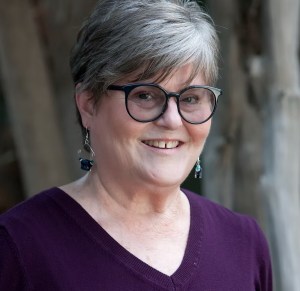
Holly Hepburn writes escapist, swoonsome fiction that sweeps her readers into idyllic locations, from her native Cornwall to the windswept beauty of Orkney. She has turned her hand to cosy crime inspired by Sherlock Holmes himself. Holly lives in leafy Hertfordshire with her adorable partner in crime, Luna the Labrador.
I’m delighted to welcome Francesca Capaldi and her new book, Celebrations at the Beach Hotel to the blog. Francesca is introducing us to the characters #blogtour #histfic #saga
Meet the Characters from Celebrations at the Beach Hotel
Annie and Alice Twine are sisters who work in the scullery at the Beach Hotel. They appeared in the first five novels about the place, but now, with the sixth book, they’ve landed a starring role each. They are twenty-three and twenty-two years old when Celebrations at the Beach Hotel begins.
As scullery maids, their jobs would have included washing up glassware, crockery, cutlery and pans, getting rid of waste food (most likely in a pig bin) and keeping the scullery and stillroom clean. They would have boiled hot water for various maids and even plucked and skinned animals, though we never see Annie and Alice do this.
Both of them started work at the hotel at 15, when they left school, so Annie started a year before Alice, and is now head scullery maid, something she is fond of reminding her younger sister about! Annie does have a tendency to glumness, whereas Alice has a happier personality. At least, that’s how it appears on the surface. Their father, Colin, is a farm manager at a farm in Wick, the village where the sisters live. Their three brothers, Cedric, Cecil and Cyril, who all worked as labourers on the farm before the war, have yet to be demobbed. Wick at the time was a village next to Littlehampton with extensive farmland, but it’s now part of the town. (Growing up, my house was a ten-minute walk away from where they supposedly lived.)
The sisters get on well, when Annie isn’t bossing Alice around. Their mother is keen for them to marry, but, as the sisters say, what opportunity do they have with most of the men still away? But when the men do start to return, that’s when romance comes between the two of them.
A lot of the characters from the previous books in the serious, including Edie, Lili, Helen, Hetty and Fanny, are part of the story, as the men who worked at the hotel before the war, and survived, slowly return. These include Lorcan, who Annie holds a torch for, and Jasper, who Alice is very fond of. Lorcan and Jasper both enlisted and joined Kitchener’s 7th Special Service Battalion in 1914, which eventually became part of the 12th (Eastern) Division. Although the war ended in November 1918, they spent another four months on salvage and clear up duties in France, so don’t return to the hotel until March 1919.
Lorcan’s from Ireland, a place he has difficulty visiting after he returns, due to the civil war brewing there. He walked out briefly with stillroom maid Hetty, who is now engaged to another, but Annie suspects that he hasn’t got over her. Jasper is from Bognor Regis and part of a once well-off middle-class family who owned several grocery stores, but has since had a fall in fortunes. The men’s jobs as porters would have included greeting guests at the hotel, carrying luggage and showing them to their rooms, advising on hotel facilities and that of the surrounding area, making travel arrangements, parking guests’ motorcars and running errands for them.
During the course of the story, there are several marriages. These are kicked off by the real wedding of Princess Patricia of Connaught (a granddaughter of Queen Victoria) to The Hon. Alexander Ramsay, incidentally the first royal wedding at Westminster Abbey since the 14th century. The female staff are reading about it in the newspaper and cooing over it as Lorcan and Jasper return from the war. Although Alice enjoys reading about the event, Annie is typically dismissive of the whole thing.
Either way, this event, and the subsequent weddings, don’t make either sister optimistic about their own prospects. Alice believes Jasper’s too high above her in social standing, even though he’s now just a porter. These beliefs only serve to help scupper their chances further, and they end up having a major fall-out with each other as a consequence, which isn’t helped by the appearance of a third man, adding to the romantic mix…
Here’s the blurb
Sisters Alice and Annie have always been close but will a man come between them?
Annie and Alice love their life working at the Beach Hotel together and each is thrilled to have finally found a sweetheart. Yet the path of true love never did run smooth, and they soon find themselves facing conflict and strife. Could love come between them and the bond they share?
Meanwhile, as men start to come home from the war, the women have to work out how to keep their jobs, although they are delighted to be back with their beaus. Soon, wedding bells ring out in Littlehampton.
Will everything be made right in time for Christmas?
Francesca Capaldi has enjoyed writing since she was a child, largely influenced by a Welsh mother who was good at improvised storytelling and an Italian father who loved history. She is the author of historical sagas, short stories and pocket novels.
The first novel in the Beach Hotel series, A New Start at the Beach Hotel, won the Romantic Saga Award at the Romantic Novelists’ Association Awards in 2024. The first novel in the Wartime in the Valleys series, Heartbreak in the Valleys, was shortlisted for the Historical Romantic Award in the RoNAs in 2021.
Francesca was born and brought up on the Sussex coast, went to London to do a history degree, but has lived for many years in Kent with her family and a cat called Lando Calrission.
I’m delighted to share my review for A Treatise on Martian Chiropractic Manipulation and Other Satirical Tales by Lisa Fox #blogtour #bookreview #fantasy #shortstories
Here’s the blurb
Human beings are flawed creatures, and humor is the perfect means to exploit the endless fodder of our shortcomings. This multi-genre collection of twenty-one short satirical stories will leave you smirking, chuckling, scratching your head, and maybe even muttering to yourself “WTF is this?”
From the award-winning author of the acclaimed short story collections “Core Truths” and “Passageways: Short Speculative Fiction” comes something a little bit irreverent and a whole lot of weird.
Ketchup-covered chiropractors on Mars. Wealthy vigilante housewives battling coffee-addicted aliens. Cheerleaders protesting unrestricted access to cupcakes. Canine doulas. Hallucinating marine biologists. No one is immune from the absurdity.
This is an intriguing and often fun collection of short stories by Lisa Fox. Some of them are very short, and some are much longer, but they all offer something a little different. Readers will enjoy learning about Martian Chiropractic techniques as well as following the loyalty card storyline, which will have us all thinking about just how much information these companies do hold about us (hint, it’s a lot). If you love short story collections, do check this one out. It’s varied, thought-provoking and sometimes, just plain fun.
Meet the author
Lisa Fox loves to ask questions. By day, she’s a pharmaceutical market researcher. By night, she channels that same inquisitive spirit into writing short fiction, building worlds and characters that explore the meaning of life, the universe, and everything in between. She survives, and sometimes thrives, in the chaos of suburban New Jersey with her husband, two sons, and quirky Double-Doodle dog. Lisa is an award-winning author of two short story collections: Core Truths and Passageways: Short Speculative Fiction. Website: lisafoxiswriting.com Twitter/X: @iamlisafox10800 Facebook: lisafoxiswriting
The blog tour for Lords of Iron has finished. A huge thank you to all the hosts. Here’s what they had to say about Lordsof Iron #newrelease #MenOfIron #WarriorsOfIron #LordsofIron #histfic
The Lords of Iron blog tour
Watch the little video I made to showcase the reviews from the fabulous reviewers. Thank you to them all. I know the majority have been with me since Men of Iron, and it’s amazing to realise how invested they’ve become in my characters. (The music is very dramatic).
Check out my blog for more details about the Dark Age Chronicles
I’m excited to share an excerpt from RJ Verity’s new historical fiction novel, Poole of Light #blogtour #historicalfiction
INTRO In this scene, ten-year-old Jem Poole glimpses a world far beyond Spennymoor for the very first time. The newly built Grand Electric Hall has not yet opened to the public, but Jem and his friend Daisy slip inside, drawn by curiosity and the muffled sound of music. What Jem witnesses there – moving pictures – ushers in a moment of wonder that will quietly shape the rest of his life. This extract captures that first spark: the awe, the innocence, and the sense that something extraordinary has just entered his world.
EXTRACT
As they turn into Cheapside, an old rusty lorry rumbles to a stop outside a new brick building, where a group of workmen are fixing enormous block capitals above a clock. Daisy tilts her head to read, eyes squinting as if the letters might tell her something important. Jem watches on, but says nothing.
‘What does ARCA mean?’ she asks.
‘I don’t think it means anything.’
‘Oh.’
Below the clock, white lettering proudly displays the words “GRAND ELECTRIC HALL”.
‘What’s a grand electric hall?’
He sighs, keeping his eyes on the workmen. He’d overheard Pa talking to his colliery mates about a new theatre opening in town – something with moving photos, he’d said. Of course, Jem knows what a photo is – like the one of Ma on the mantelpiece – but how she could suddenly come to life is beyond him. He can’t picture her like that, not walking and talking like Pa or Daisy.
‘Come on,’ he says.
They slip past the workmen and into the foyer of the new building. Jem’s steps are deliberate and measured – he’s determined to take everything in. Daisy skips beside him, light on her feet.
Crates, half-unpacked, litter the space – paper and straw spilling in all directions. The warm smell of fresh wood hits first, then something sharper, chemical, that scratches the back of his throat. Wall sconces flicker with a quiet expectancy, casting lively patterns across the floor. Music drifts from somewhere beyond – muffled, unfamiliar, pulling at Jem’s chest like a thread. He follows the sound toward the back of the building and beckons for Daisy to come.
She stands looking at him, eyes wide, as if to say: This isn’t a good idea.
‘You don’t have to … if you don’t want to,’ he tells her.
She pouts but trails after him anyway.
As they draw closer, the music grows clearer – a dramatic piano tune with heavy bass and a scatter of quick, racing notes. Jem glances to his right and sees a bright shaft of light dancing across the passageway. He creeps forward, heart thumping, until his face and jacket are lit up. It feels like sunlight through the church window on a Sunday morning – only sharper, more vivid.
His shoulder brushes against a soft curtain, but his eyes stay fixed ahead, his breath deeper. For there, on a stage, is a beautiful young woman. Her face is white – like the colour of Pa’s eyeballs after a shift down the pit – only clean, and somehow otherworldly. Big curls of hair, piled high, fall to her shoulders. She’s wearing the fanciest frock he’s ever seen. A man walks beside her, and they cross the road together. Behind them, tall buildings rise, taller than any furnace chimney in all of County Durham. Jem’s heart beats faster as the music quickens. Then a passenger train rushes into view and vanishes just as quickly.
Jem doesn’t move. He hardly blinks. How can a train be on a road? How can buildings scrape the sky? How can people float across a screen like that?
Most of all – how can everything be black and white and still feel more alive than the world he knows?
‘Moving photos.’ He can’t help but say the words out loud.
Daisy tugs at his arm. ‘Jem!’ she cries.
But before he can turn, he feels a sudden blow to his temple.
‘What have we here?’ booms a voice behind him.
Jem stumbles sideways, hand to his pounding head. He’s looking down at a pair of black polished boots … dark overalls … then a round sweaty face, breathing loud, and steaming with anger.
‘Sorry, sir,’ says Jem, trying to steady himself. ‘We don’t mean no bother.’
‘No bother?’ the man sneers.
‘No, sir. We just want to see moving photos.’
The man gives a snort. ‘Moving pictures, boy. They’re called moving pictures.’ He crouches down, his small black eyes level with Jem’s. ‘And have you got thruppence between the two of you?’
Jem glances at Daisy, then back at the sweaty round face. ‘No, sir.’
‘Then you’ll have to go without, won’t you? Go awn.’ He stamps his foot. ‘Gan! Afore I call police!’
The children bolt down the passageway, back into the foyer, and past the workmen hauling a giant letter ‘D’ above their heads.
Outside, the street is already black with night.
‘The park!’ Jem shouts as they run.
They turn the corner onto Dundas Street, where lamplight is scarce, and shadows swallow the pavement. His feet slide on icy sludge as he dodges night soil boxes piled up like traps. Daisy’s steps are fainter now – she must be slowing down. He tries to stop, but it’s too late – too fast – and his footing falters. His chest jerks forward. Arms fling out for balance, too wide, too desperate, and his whole body launches through the air. In the half-second before Jem crashes down, he sees the jagged boxes, the filth inside them, and he twists every muscle to avoid them. His body slams into the ground, splinters flying and muck exploding in all directions.
Here’s the blurb
A coal-mining town. A flicker of light. A boy who dreams of more.
Spennymoor, 1913. When ten-year-old Jem Poole sees a moving picture for the first time, it ignites a spark. Raised in a northern coal-mining town marked by grief and hardship, he begins to dream of more than soot and survival. He dreams of light.
Through war, reinvention, and the golden age of British cinema, Jem rises to national success, building a legacy of silver screens and stories that define a generation. But when a figure from his past reappears, long-buried memories resurface, and he must confront the truth of the life he has built – and the memories that never let go.
Set against the backdrop of twentieth-century Britain, Poole of Light is a richly layered historical debut about ambition, identity, and the stories that shape us.
Perfect for readers who enjoy:
Character-driven historical fiction with emotional depth
Coming-of-age novels set in 20th-century England
Themes of legacy, reinvention, and quiet redemption
Authors like Jo Baker, Kristin Hannah, Amor Towles and Anthony Doerr
Book One in The Poole Legacy — a literary historical trilogy exploring ambition, identity, and legacy across generations.
Also available as an eBook: Bright Light, a companion short story set during the events of this novel.
RJ Verity grew up in Yorkshire and studied at King’s College London before spending more than twenty years in financial services across Asia. She now lives in Guernsey with her endlessly patient husband and their spirited ten-year-old Labradinger. When she’s not writing or reading, she can often be found exploring the island’s rugged coastline.
She is currently working on The Poole Legacy, her debut trilogy of historical novels. The first book in the series, Poole of Light, is out now.
*Terms and Conditions –UK entries welcome. Please enter using the Gleam box below. The winner will be selected at random via Gleam from all valid entries and will be notified by Twitter and/or email. If no response is received within 7 days then Rachel’s Random Resources reserves the right to select an alternative winner. Open to all entrants aged 18 or over. Any personal data given as part of the competition entry is used for this purpose only and will not be shared with third parties, with the exception of the winners’ information. This will passed to the giveaway organiser and used only for fulfilment of the prize, after which time Rachel’s Random Resources will delete the data. I am not responsible for despatch or delivery of the prize.
It’s happy release day to Lords of Iron, the third and concluding book in the Dark Age Chronicles Trilogy. Let’s talk about battle standards #newrelease #MenOfIron #WarriorsOfIron #LordsofIron #histfic
Battle standards
Well, here we are my friends, book 3 in the Dark Age Chronicles concludes this foray to the ‘Dark Ages’ (a term I don’t like but is correct for this time period). I thought I’d address the idea of battle standards.
As many stories as I’ve written about war, I’d never considered the battle standard. My editor mentioned to me that ‘they make for great cover ideas,’ and so I did a little bit of research and discovered some information about them, but it was actually in an ‘ask the historian’ section with Mike Everest hosted by the History Quill that I discovered battle standards might not have been fabric at all, but rather perhaps made from metal and more hollow depictions of whatever the battle standard was to be (so perhaps more similar to the Romans and their eagle standards).
As such, I have touched on this idea in Lords of Iron. As often as I’ve tried to place myself in my characters’ boots, I’ve perhaps overlooked how difficult it might be to find your fellow warrior in the middle of a battle. Below are two images which might have served as an idea of what a battle standard might have looked liked. As you can see, these are very far from being huge banners made of fabric. They are much more intricate, or so it appears. In Warriors of Iron, Wærmund encounters such a battle standard and then hungers to have one constructed for himself. I can see why.
It’s happy release day to Lords of Iron, the third and concluding book in the Dark Age Chronicles Trilogy. Watch and listen to a short recording about the research books I used #newrelease #MenOfIron #WarriorsOfIron #LordsofIron #histfic
A whizz through the research books I used when writing the Dark Age Chronicles
Join my newsletter to follow my writing journey, get access to my exclusive Subscriber area on the blog, and receive a copy of Mercia – A Companion Guide to the Tales of Mercia.
It’s nearly happy release day to Lords of Iron, the third and concluding book in the Dark Age Chronicles Trilogy. Let’s talk about Wærmund, warrior of the Gyrwe #newrelease #MenOfIron #WarriorsOfIron #LordsofIron #histfic
Wærmund, warrior of the Gyre
Wærmund, the lead male point of view in the Dark Age Chronicles, has come a long way since our first encounter with him, when he was young, angry, reckless and unable to assure himself of the loyalty of others. (I’m not saying he didn’t have cause to be angry).
While I’ve written novels in this era where the main male lead is strong and fiercesome (as well as treating everyone to young Icel), I’ve not really written a character like Wærmund before. One early reviewer complained he was ‘annoying’ and that was intentional. For him to become the character I needed him to become, he couldn’t start the novels ‘fully formed.’ I needed him to learn, grow, and become someone more thoughtful than his angry young self allowed.
Along the way, he’s had much cause to doubt himself, and really, it was Heafoc, his loyal warrior, who was the most fully formed of the warriors who pledged their often dubious loyalty to Wærmund. Heafoc, perhaps very much cast in the shadow of the rather wonderful Wulfstan from the Earls of Mercia series, and potentially, also the older Icel from The Last King books, was the epitome of a Saxon warrior, whereas Wærmund wasn’t. Indeed, in deciding to run away from his home, Wærmund hoped to outrun his past, which was never really going to be possible for him.
Now, as we turn to the concluding book in the trilogy, I feel Wærmund has come full circle. Is he, perhaps, now a better man than his father? Or, is he still driven by the desire to show his father he is the ‘better’ man? These are some of my favourite quotes from Wærmund in the final book.
You will need to read Lords of Iron (available from 5th January 2026) to discover whether Wærmund enacts his vengeance against his father. Enjoy.
Join my newsletter to follow my writing journey, get access to my exclusive Subscriber area on the blog, and receive a copy of Mercia – A Companion Guide to the Tales of Mercia.
It’s nearly happy release day to Lords of Iron, the third and concluding book in the Dark Age Chronicles Trilogy. Here are the original (very long) historical notes for Men of Iron #newrelease #MenOfIron #WarriorsOfIron #LordsofIron #histfic
The original historical notes for Men of Iron (they were so long I rewrote them)
This is not really a story of historical fiction, but rather archaeological fiction. Pick up any non-fiction history book on Britain at this time, and you’ll find very little written about what was happening, because we do not know what was going on, other than perhaps in the south and south-west (where there was more continuity from the earlier ‘Roman’ period). If it’s a book about Mercia, there’ll be even less until the seventh century. It’s impossible to write about the history of a kingdom when there are no written records. And so we must rely on archaeology.
The decision to write about these formative years in what would become Mercia has been a long time coming for me (and it is set mostly in what would become Mercia although the name never appears in the books).
All that can be said with any certainty about Mercia is that a narrative had formed by the eighth century which was an attempt by the rulers of that time to explain how they came to be in control of the heartland of Mercia. It also attempt to explain how they ruled the wider Mercian kingdom (which included many other tribal affiliations: from the North Mercians, South Mercians and Middle Mercians to the outlying areas – the kingdom of the Hwicce, alongside that of the Magonsæte, being two of the best known tribal areas which people have heard about, and the Hwicce the region where I’ve based the Eorlingas). Bede, writing his Ecclesiastical History of the English People, finished by 734, knew some of these details, although he really did not like Penda the pagan – one of the most powerful Mercians in the seventh century (who it’s believed may have been from the Hwiccan kingdom) – but did grudgingly admit that his contemporary ruler of Mercia, Æthelbald, was a powerful individual, eclipsing the kings in his homeland of Northumbria by the eighth century.
Barbara Yorke has written:
The surviving sources allow us to say with confidence little more than that the kingdom of Mercia was in existence by the end of the sixth century. p. 102, Kings and Kingdoms of Early Anglo-Saxon England
How that kingdom came about, we do not know. I’ve chosen the date of this series carefully. It falls between the Battle of Camlann, said to have taken place in 537 according to the Welsh Annals, a later written source, and a later battle between ‘kings’ which occurred in the 570s and is mentioned in the Anglo-Saxon Chronicle, written 300 years after these events.
It’s difficult to determine any cohesive narrative from what is truly the Dark Ages for the whole of Britain. Others might look to the stories of the legendary Arthur (no, I don’t believe he existed), and Hengist and Horsa and think that’s enough, but having read K. R. Dark’s fascinating look at Britain at this period, Civitas to Kingdom, many years ago, I realised that what happened elsewhere might not have happened in Mercia, and equally, that generalisations shouldn’t be used about what would become the Saxon kingdoms in any single part of it. It was an island of petty tribal chieftains. It was not a country or a kingdom. This is an attempt to make some sense of what archaeological findings have been made and devise something that ‘could’ have happened. These people did not exist as I have named them, although I have adopted tribal names that are recorded in a later document (see below).
Wærmund is a name taken from a Mercian genealogy found in the Welsh Annals. There are a number of different variants of a Mercian genealogy. This is the one I’ve used, below.
Woden begot Watholgeot, begot Waga, begot Wihtlæd begot Wæround, begot Offa, begot Angen[geot], begot Eomer, [begot Icel,begot Cnebba, begot Cynewald, begot Creoda], begot Pybba. Pybba had twelve sons, two of whom are better known to me than the others, namely Penda and Eobba. Aethelred was the son of Penda; Penda was the son of Pybba. Aethebald was son of Alweo, son of Eobba, [brother] of Penda, son of Pybba. Egferht son of Offa, son of Thingrith, son of Eanwulf, son of Osmond, son of Eobba, son of Pybba.
Other versions of a Mercian genealogy are found in the Anglo-Saxon Chronicle entry for the year 626 (A2 Version, also known as the G version) when discussing the later reign of Penda which lists many of the same names, but has Wihtlæd as the son of Woden. David Dumville has noted that this represents a West Saxon interpretation of Mercia (the ASC was conceived of and begun in Wessex) – as such, he stresses the ‘Anglian’ tradition of this source, i.e. possibly Mercians writing about Mercians.
I’ve chosen Wærmund’s name somewhat randomly, but with the idea that he wasn’t the first of his family – and that, indeed, he is originally from one of the Wash tribes for which we have details from the Tribal Hidage. Every time I write a new series, something clicks for me, and in this case it’s that whatever the genealogies represent, it needn’t be those who ruled Mercia as a kingdom as we recognise it, but those who ruled the ‘tribe’ beforehand. Yes, they did claim descent from the god, Woden, but most of the Saxon kingdoms did.
It’s believed that the kingdom of the Hwicce was perhaps a native British one and that they came to merge with the Saxons, or rather at this time, Anglian invaders, and then fell under the sway of the wider Mercian kingdom. (The terminology is complex to get right.)
The names of the tribes come from the problematic and difficult-to-date Tribal Hidage, which survives in an eleventh-century document, but is believed to be a copy of an eighth-century document. It lists thirty-five kingdoms, which comprise ninety-five different tribal names believed to have amalgamated to form these thirty-five kingdoms, which were then further merged to form the six main Saxon kingdoms of the Heptarchy (the seventh, Northumbria, is not included in the Tribal Hidage). Feel free to go and try and make sense of the Tribal Hidage. Every non-fiction writers seems to use slightly different spellings and because some are so similar, it is incredibly confusing. Some of my tribes changed names repeatedly as I endeavoured to make them ‘fit’ the narrative and the journey my characters make. All mistakes are mine.
There are a wealth of Roman villas surviving in Gloucestershire, perhaps most famously Chedworth Roman Villa, and also many Roman mosaics, some of which are not available for public viewing as they have been covered up beneath the soil that has preserved them to ensure that continues. The tribe of the Eorlingas is associated with Arlingham, just below Gloucester, to the east of the River Severn. As far as I can tell, Frocester is the closest Roman villa ruin to have been discovered from nearby to where I wanted to base the Eorlingas, but with so many of them, it almost feels as though they might have been falling over them – there are fifty-two known Roman villas in Gloucestershire alone.
The idea of an economy dependent on iron had not really resonated with me before, but Robin Fleming’s comment that mining, metallurgy and smithing stood at the heart of the Roman economy made me reconsider this. She points out that from the late fourth century (which is traditionally deemed to be the end of Roman Britain – well, 410 is) there is a scarcity of traditional, crucial and once common everyday items – nails, evident in the lack of hobnail books and also coffins. She does, however, stress that the Romans had a successful ‘recycling’ scheme and that forging iron objects from these recycled elements may well have continued. However, pattern-wielded blades (which had largely come to dominate what we believe early Saxon/Anglian kings wielded in their battles) could not be made from recycled iron or from a single type of iron alloy, with at least four different iron alloys needed. Therefore, an age ‘without’ iron almost ensued. It is possible that these skills were lost and then needed to be rediscovered. Equally, it is possible that the evidence for such occupations as smelting have disappeared from the archaeological record in many places because of the transient nature of the process. I find the lack of nails in the archaeological record, however, very intriguing. It certainly points to something being lacking.
Languages in this era are, of course, impossible to reconstruct. It’s believed that English, Latin, British, Pictish and Irish would have been spoken. It must also be assumed that those coming to this island from Scandinavia and Germany would also have brought their languages with them. I’ve decided to use the terms Latin, Saxon, British and Brythonic in the text. (I had to make myself a chart to ensure I didn’t have people speaking to other people who didn’t share a language – it wasn’t pretty). There would potentially have been a vast number of local dialects as well, just as there are today.
The small iron-cast horse which Meddi has is based on a bronze object uncovered at Frocester. It is a fabulous piece, described in the site report as ‘crudely designed, with wide open mouth and large upstanding ears’. It is quite small, less than two inches in length, if I’ve understood the dimensions correctly, and shows the horse having reins but no stirrups. The horse was controlled by a bridle alone, and the horses were smaller, at twelve to fourteen hands, the equivalent of a hackney pony, or forty-eight to fifty-six inches tall (according to the internet). Stirrups were introduced by the Saxons.
I have struggled to find references to the religions at this time. Ronald Hutton’s Pagan Britain contains some useful passages. This somewhat leads into burial rites, which are often much of what we know of our ancestors. It does appear confusing – the magnificent ship burials at Sutton Hoo were preceded by burials beneath what is now the visitor centre (and which I think are more fascinating than the ship burials – or rather, the process of how they went from the one to the other within a generation.) Cremation and interment were somewhat haphazardly applied throughout Britain. My own distinctions between peoples are merely an attempt to highlight the differences between them. The depiction of the burial of Meddi’s daughter beneath inhabited buildings is a known phenomenon from this period, and written about by Robin Fleming in her chapter Living with Little Corpses in The Material Fall of Roman Britain 300-525CE.
For anyone affected by this storyline, or concerned by it, as someone who has experienced the loss of a child, I’m perhaps too comfortable including such story elements. To those who have also endured it, I extend my heartfelt sympathies and assure you, it does get easier. Eventually. (what follows below has been added at the end of the proofread for Lords of Iron).
This passage leads somewhat well to a thought by Meddi as she nears the end of book three.
‘I’m Meddi, seeress of the Eorlingas. It’s been a long and troubled journey to reach this moment in my life when hatred has bled away to nothing but a dull ache where the life I thought I’d have has a child has failed to come to fruition. But I would change nothing, aside from the loss of my daughter.’
I think this is perhaps the most ‘me’ I’ve included in a novel (not that I’ve spent my lifetime filled with hatred, but I hope you understand the sentiment).
Perhaps, in the end, this trilogy has been as much for me, as it has been for my readers. Thank you.
Join my newsletter to follow my writing journey, get access to my exclusive Subscriber area on the blog, and receive a copy of Mercia – A Companion Guide to the Tales of Mercia.
It’s nearly happy release day to Lords of Iron, the third and concluding book in the Dark Age Chronicles Trilogy. Let’s talk about Meddi , the seeress of the Eorlingas #newrelease #MenOfIron #WarriorsOfIron #LordsofIron #histfic
Meddi, the seeress of the Eorlingas
When I was thinking about writing this trilogy, set in the undocumented and little-understood ‘true’ Dark Ages, it was Meddi’s character that came to me most forcefully. I had thought she appeared pretty fully formed, but I’ve actually found a very early attempt which doesn’t mention her (it was only about 250 words, admittedly). After that, she evidently developed quite quickly in my mind. Of the two main points of view characters, Meddi and Wærmund, she is the one who was the most different to what I’ve written before, so I was surprised by how strongly she manifested and became ‘real’ to me. I ran a few elements of her character passed a number of trusted early readers. I wanted her to be strong and determined, but also broken and healing from a terrible trauma, a terrible trauma even I can only imagine. But I also didn’t want her to be stereotypical. I needed to make her realistic and both a product of what had happened to her, and also not. Don’t worry, it was a confusing mix for me, too.
Making her a seeress allowed me to give her an influential position amongst her people. But of course, it brought some problems. What sort of seeress should she be? What magiks should she possess? And how to make those more ‘fantastical’ elements work in what was intended as a piece of archaeological fiction (yes, historical, but so much is based on archaeological finds, it seems wrong to misname it).
I am, and no doubt, will always be a ‘pantser’ (someone who doesn’t plan their stories but just writes them – perhaps in many wats somewhat similar to Meddi when she reaches out to communicate with her ‘god’ only I’m reaching out for my muse and a story that plays out on the page). As such, some elements of Meddi’s personality just appeared for me, and others had to be worked at. I was also conscious of not making her too similar to the wonderful Wynflæd in The Eagle of Mercia Chronicles, or indeed, the Wolf Lady, who also features (both of them healers). Yet, a seeress would possess the abilities to tend to the sick. It was tricky to get it just right. It was really only when I heard her words brought to life by her fabulous narrator, Antonia Breamish, that I truly appreciated that Meddi was a creation I could be very satisfied with (you can listen to her below). I believe, and I hope my readers will agree, that she’s fully rounded, entirely understandable, and if she does things we wouldn’t, then we can be sympathetic to what drives her.
The symbolic adorning of her face and hair with chalk or charcoal as she conducts her magiks was based on little more than my imagination, and yet the imagery is stark. She is sometimes cast from shadow, and sometimes from light. She is a character who loves and hates with equal fierceness, and sometimes, her love shows itself in ways that are perhaps more akin to hatred. But she is certainly most critical of herself. She is driven by ambition, and in this final book, I think we see her at her most vulnerable and also at her strongest. Enjoy.
Join my newsletter to follow my writing journey, get access to my exclusive Subscriber area on the blog, and receive a copy of Mercia – A Companion Guide to the Tales of Mercia.