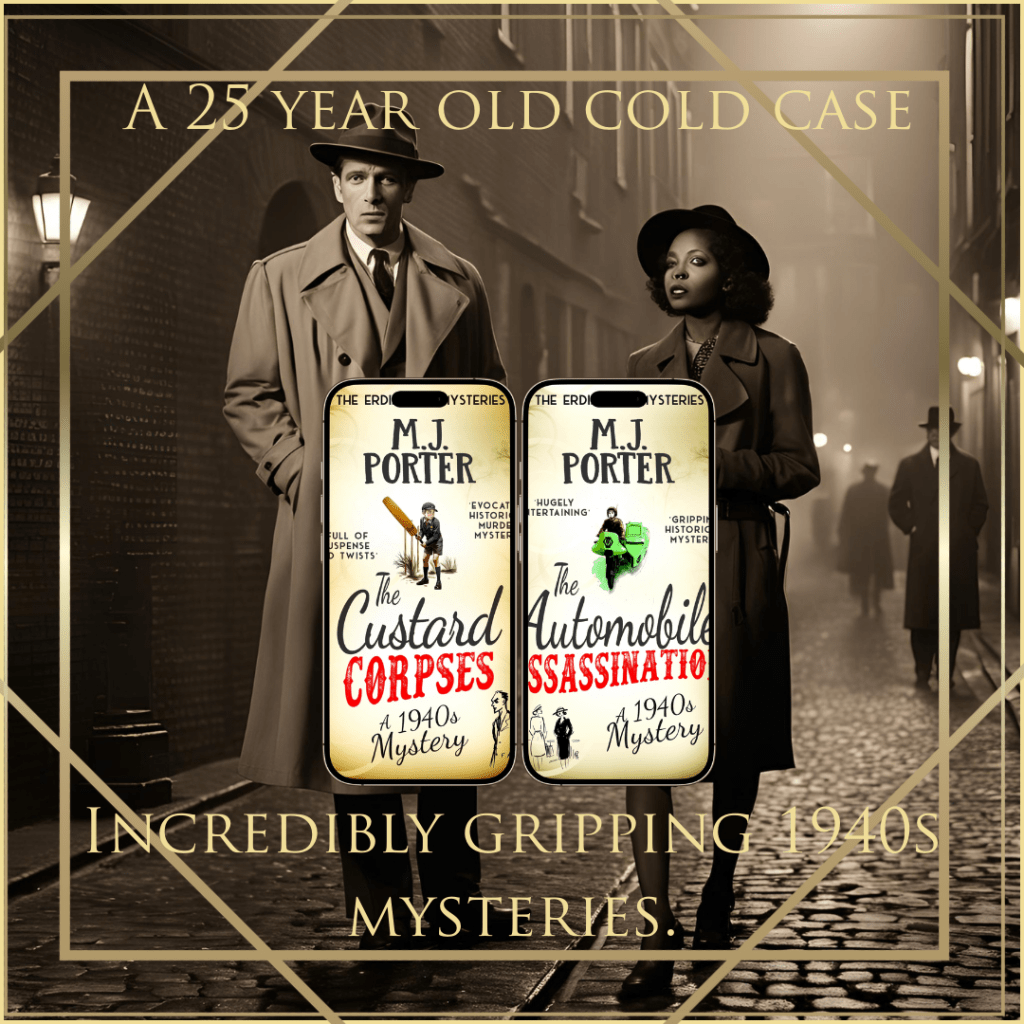
The inspiration behind The Custard Corpses #histfic #mystery

The inspiration behind The Custard Corpses #histfic #mystery

The inspiration behind The Custard Corpses is a bit weird, even I admit that

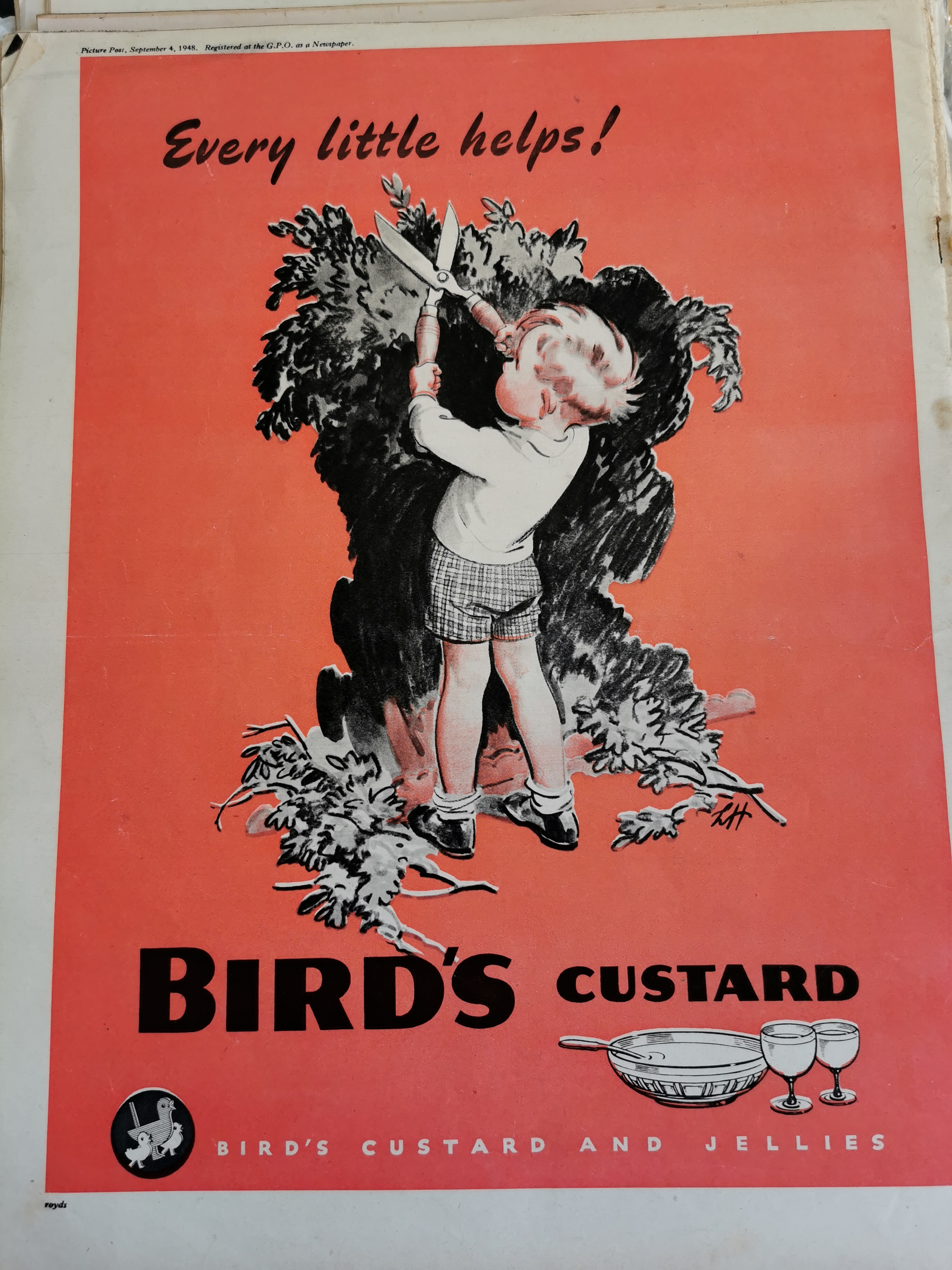
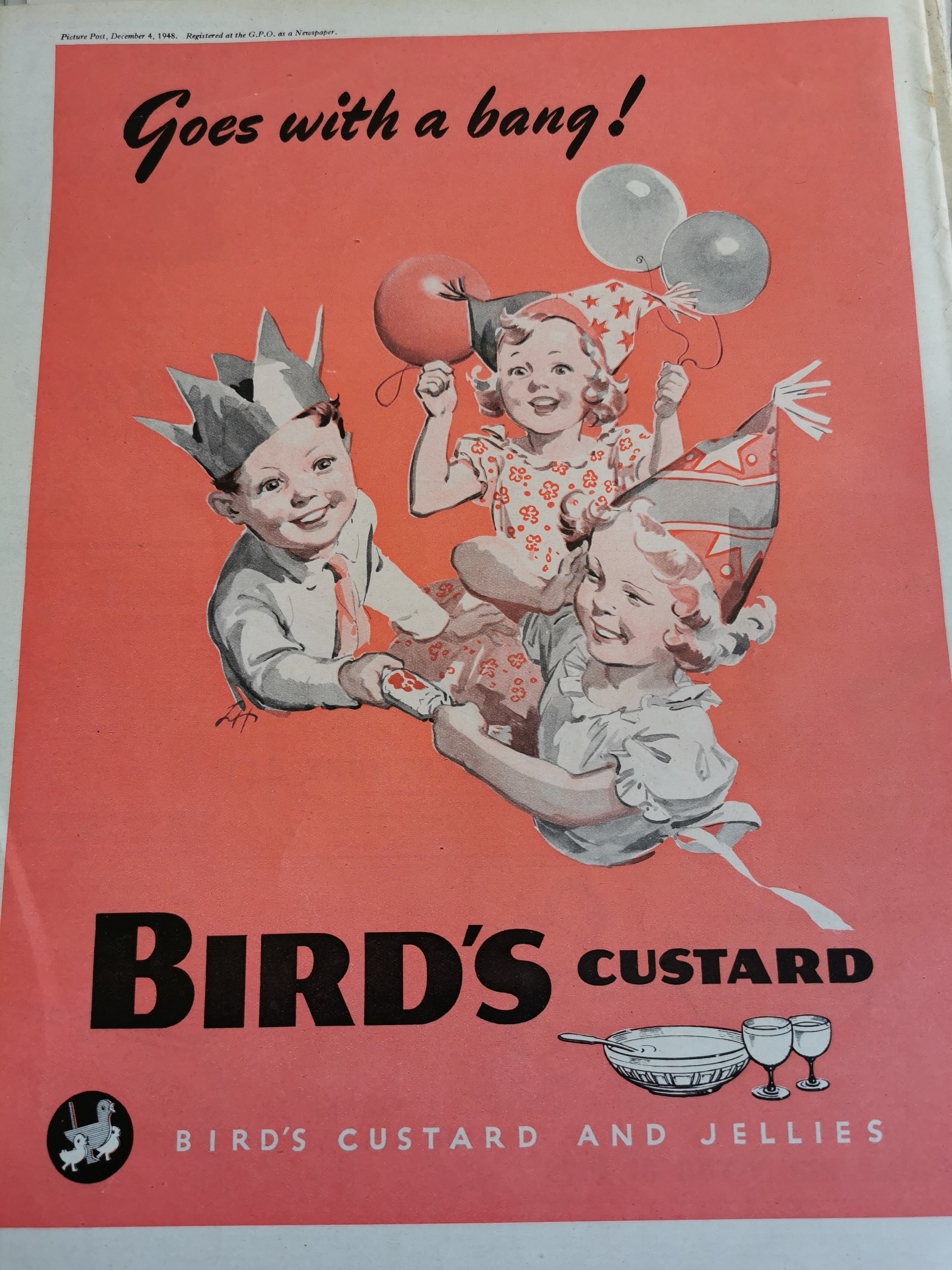
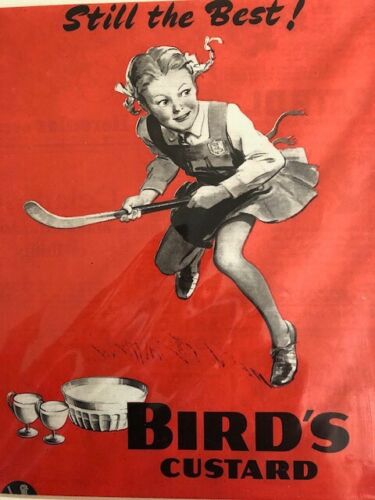
My father had, for many years, bought and sold antique paraphernalia, mostly maps, but also other items as well – books, stamps, old vellum deeds, postcards – you get the idea. With the restrictions during Lockdown, he wasn’t able to sell as normal at his antique fairs, and having put off having an online presence, he finally decided to open an eBay shop – but needed tech support. And so, as ‘tech support’, he started sending me all sorts of fascinating items to list, but the one that really got my attention were the advertisements that ran in the Picture Post magazines for Bird’s Custard.

They’re bright, they’re inviting, they are, to put it bluntly, before their time. They have lovely catchphrases, such as ‘every little helps’ which Tesco use now. The black and white images on the coloured background ensure the readers eye is drawn to the happy child, and they do make you want to eat custard.

I wanted to share them with as many people as possible so that they could catch a glimpse of these old campaigns. There were other advertisements as well in the magazines, ones for Pepsi and for Shell, to name a few, but it was the Bird’s Custard ones that really captured my imagination. But how could I share them with people?

Well, my mind works in strange ways, and I began to consider a mystery that would somehow be relevant to the advertisements, so it needed to be set during the period the Picture Post magazine was produced from 1938 to the 1950s. And so, The Custard Corpses.

I set The Custard Corpses during the Second World War, but that was really because it fit with the adverts I’d seen, the added bonus that I could then use the well-known events of the war was a secondary consideration.

Where I set the book was entirely based on the fact that I had family members who’d lived in Erdington at the time. I was able to pick the brains of my Dad for the little details that I didn’t know or couldn’t remember, not that he was born in 1943, but not long after. 

It was all quite random, in the end, and there was a swell of little details that I uncovered that just, through pure happenstance, fitted together. It helped that I wanted to try my hand at something more modern than the eleventh century, but still historical. But I’m not an expert on any other time period, so I suppose it was an easy choice to decide on a setting that was just within living memory of some. I couldn’t visit anywhere due to Lockdown, so familiar was best.

Is this the weirdest reason to have written a book?

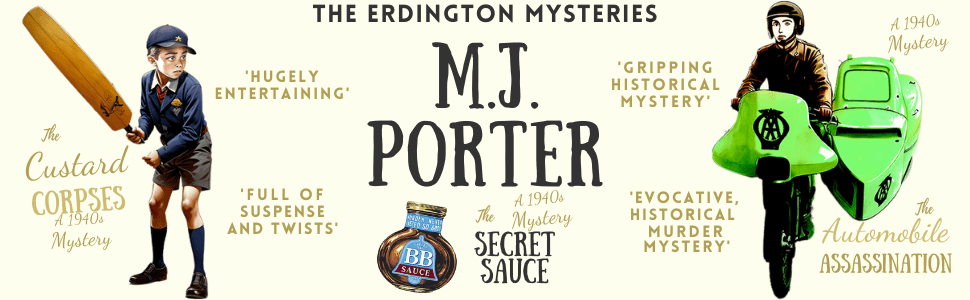
Check out The Erdington Mysteries page to discover more about the books.

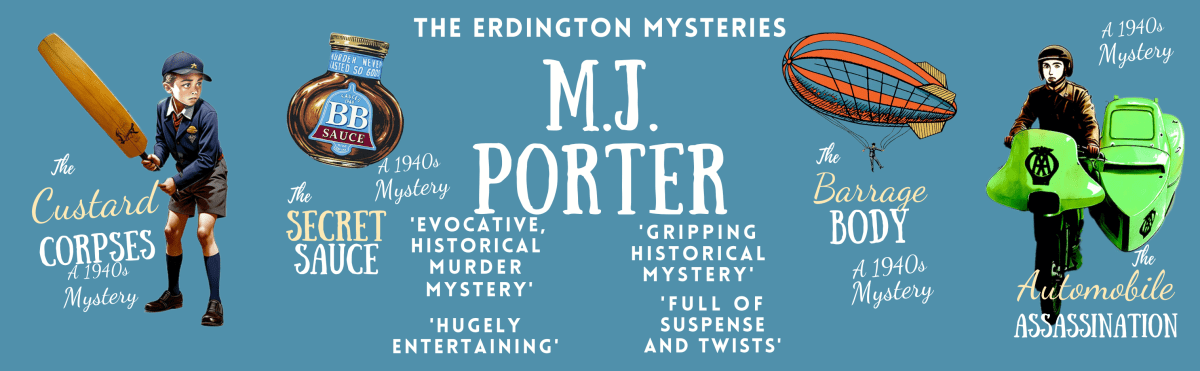
Buy The Custard Corpses here, available in ebook, paperback, hardback and audio. Or, check out the signed editions page to get a copy directly from me. Book 3, The Secret Sauce, is available now, (as is book 2, The Automobile Assassination), and the Barrage Body is coming very soon.

Posts

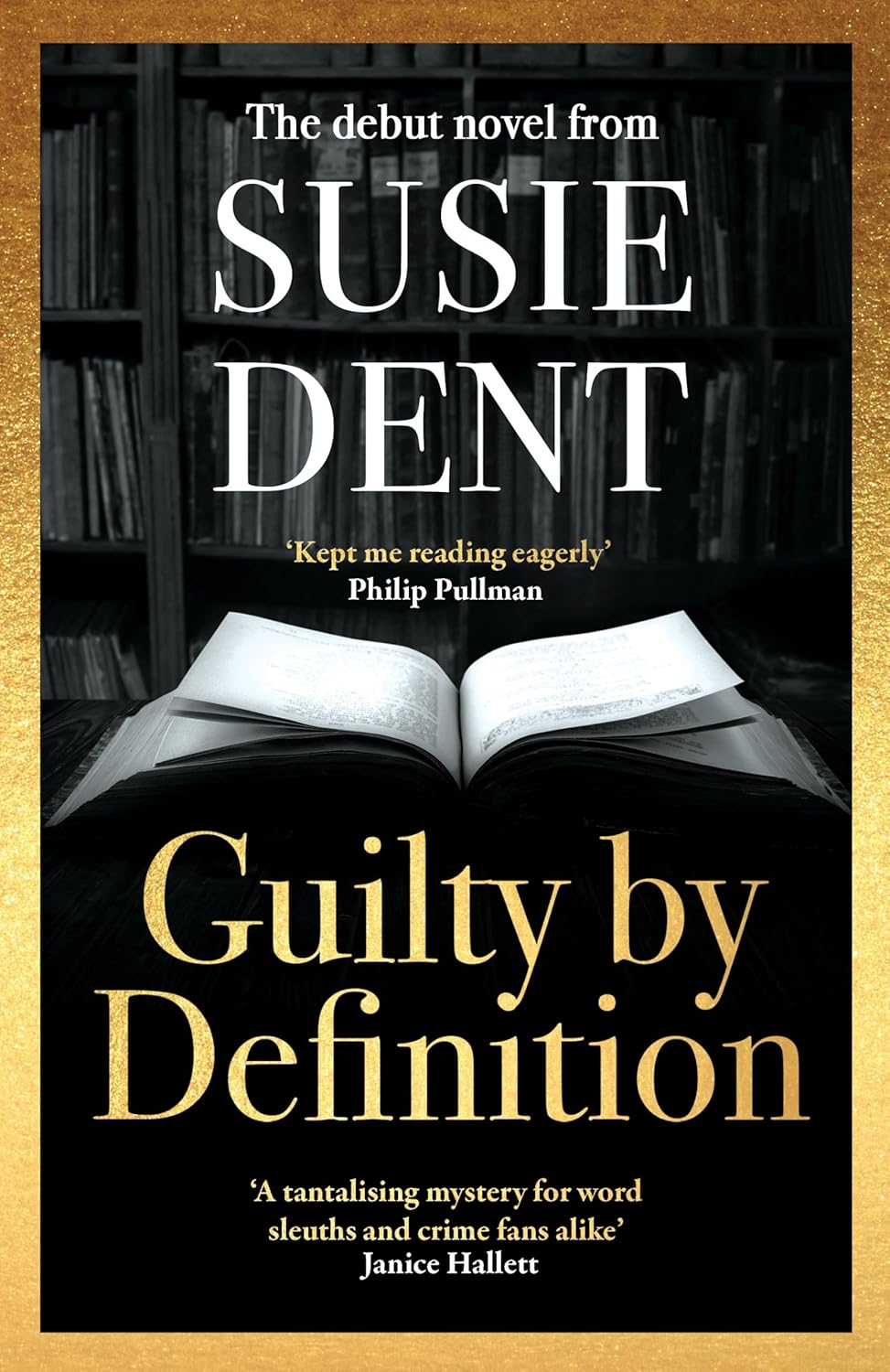
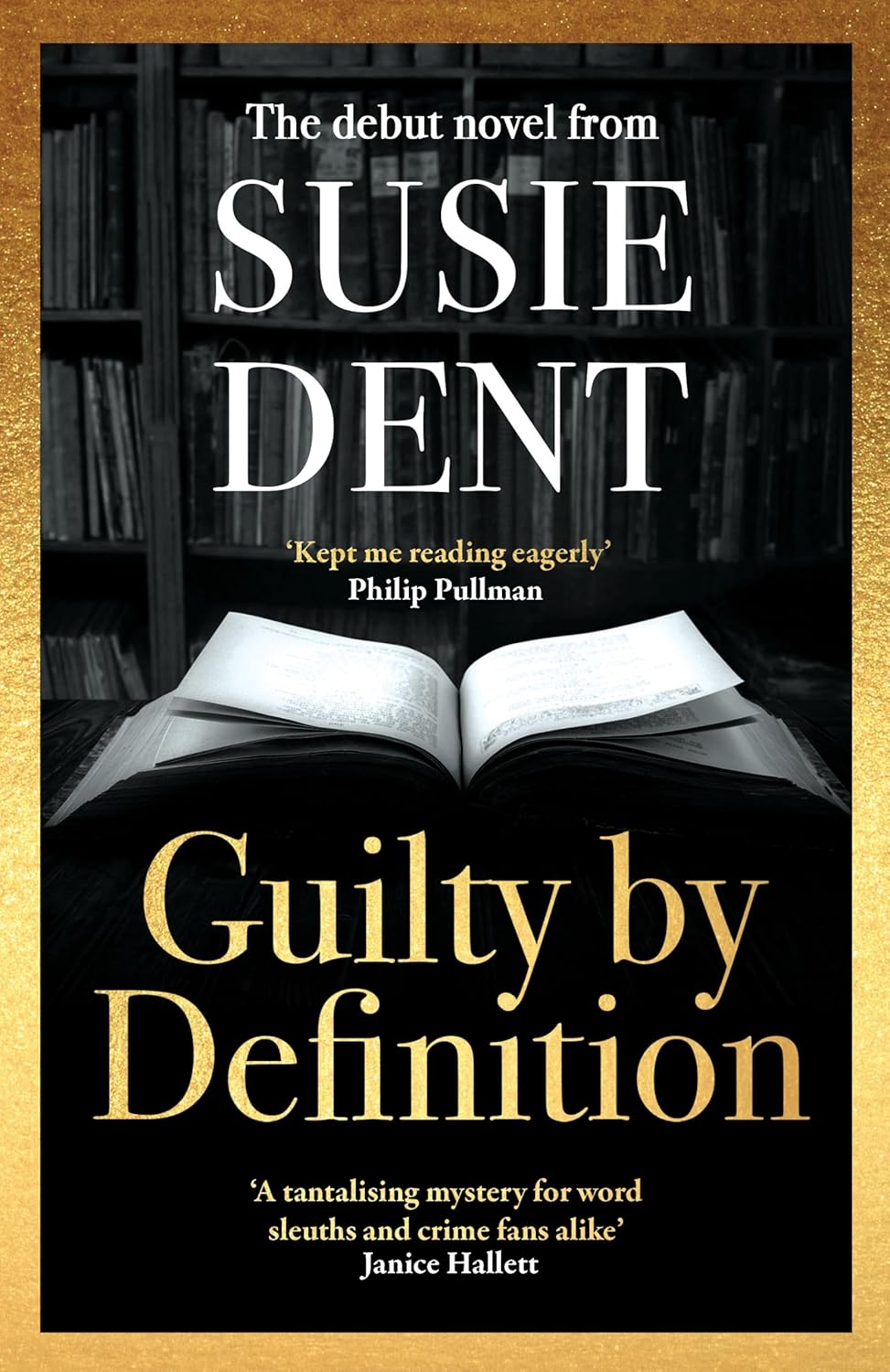
Today, I’m reviewing Susie Dent’s fabulous new mystery, Guilty By Definition #newrelease #mystery

Here’s the blurb

When an anonymous letter is delivered to the Clarendon English Dictionary, it is rapidly clear that this is not the usual lexicographical enquiry. Instead, the letter hints at secrets and lies linked to a particular year.

For Martha Thornhill, the new senior editor, the date can mean only one thing: the summer her brilliant older sister Charlie went missing. After a decade abroad, Martha has returned home to the city whose ancient institutions have long defined her family. Have the ghosts she left behind her been waiting for her return?

When more letters arrive, and Martha and her team pull apart the complex clues within them, the mystery becomes ever more insistent and troubling. It seems Charlie had been keeping a powerful secret, and someone is trying to lead the lexicographers towards the truth. But other forces are no less desperate to keep it well and truly buried.

Cover image for Susie Dent's Guilty by Definition.

Purchase Link

https://amzn.to/4cFDVQj

My Review

Guilty by Definition rises above other celebrity mysteries by being excellent.

This story is well-plotted and well-devised, delightfully intermingled with snippets about the Clarendon Dictionary and the little foibles of the English language, and has a great storyline. It also offers a lovely conjuring of Oxford and the surrounding location—as well as some special Oxford-specific events. 

Our four main characters are well-developed, and all have their secrets as they endeavour to solve the perplexing riddles and, in doing so, answer the questions surrounding Martha’s sister’s disappearance. 

It is a complex mystery that is sure to appeal to fans of the genre and the English language. I don’t want to give any spoilers, but I loved it:)

Mercia: Exploring the Heartland of Saxon England and Its Lasting Influence

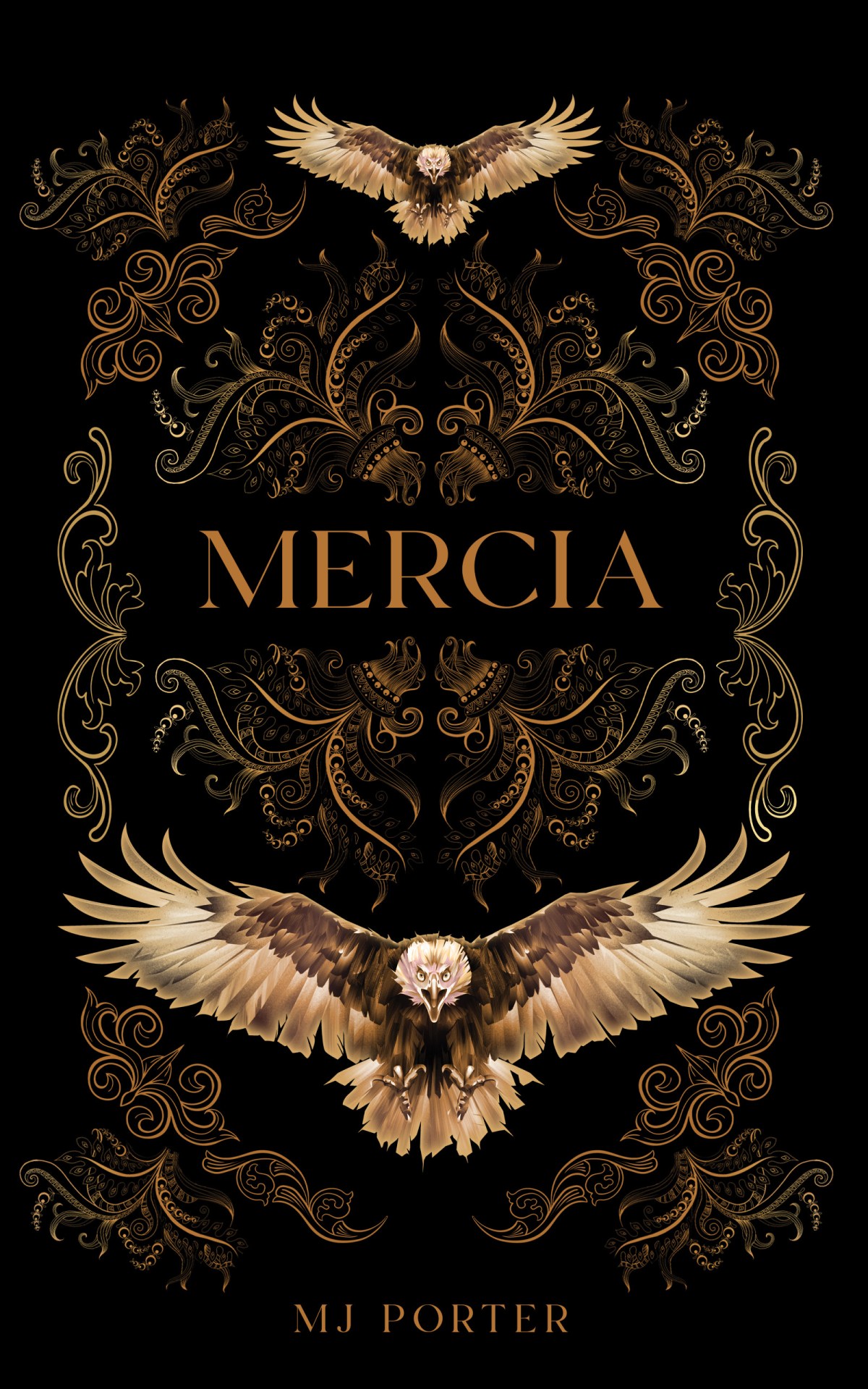
Having written more books than I probably should about the Saxon kingdom of Mercia, and with more planned, I’ve somewhat belatedly realised I’ve never explained what Mercia actually was. I’m going to correct that now.

Having grown up within the ancient kingdom of Mercia, still referenced today in such titles as the West Mercia Police, I feel I’ve always been aware of the heritage of the Midlands of England. But that doesn’t mean everyone else is.

Where was Mercia?

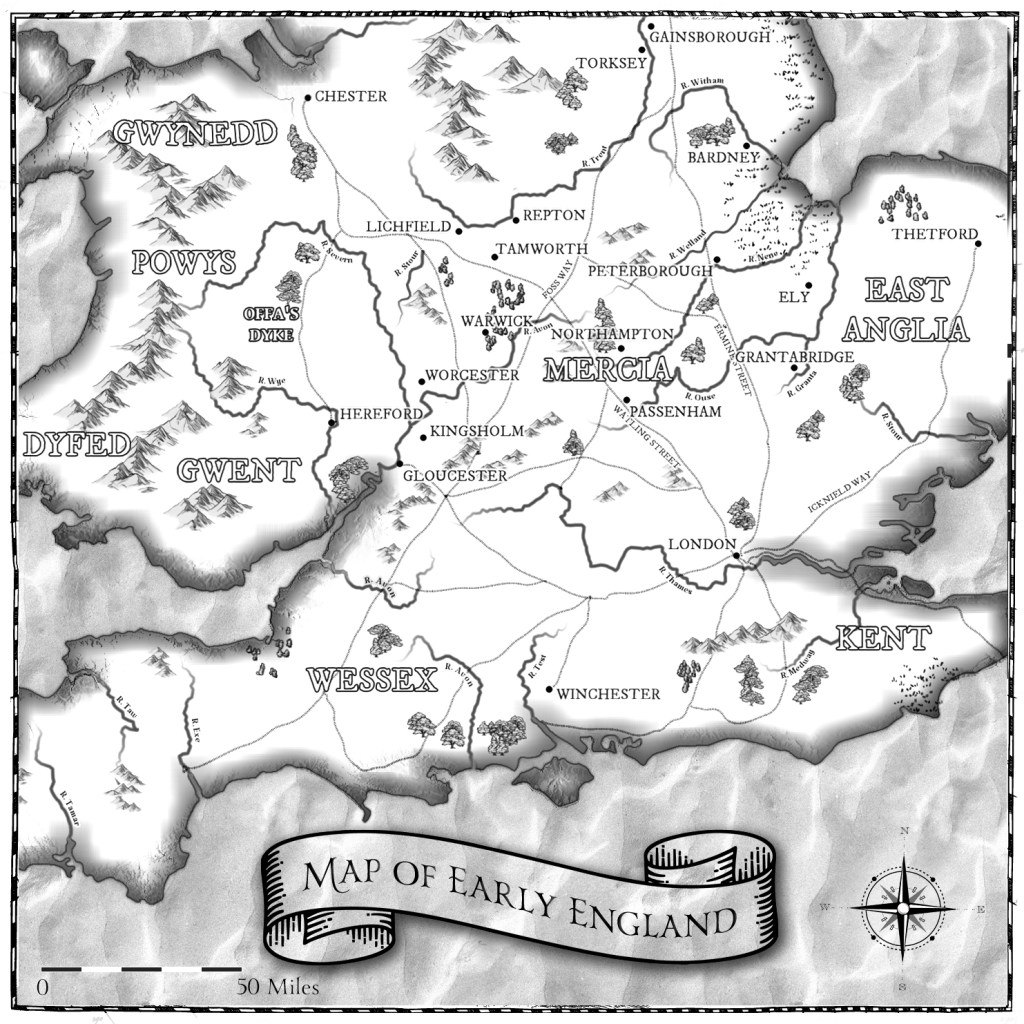
Simply put, the kingdom of Mercia, in existence from c.550 to about c.925 (and then continuing as an ealdordom, and then earldom) covered the area in the English Midlands, perhaps most easily described as the area north of the River Thames, and south of the Humber Estuary – indeed, nerdy historians, and Bede, call the area the kingdom of the Southumbrians, in contrast to the kingdom of the Northumbrians – do you see what Bede did there?

While it was not always that contained, and while it was not always that large, Mercia was essentially a land-locked state (if you ignore all the rivers that gave easy access to the sea), in the heartland of what we now know as England.

Map of Early England, showing the location of Mercia for the post What was the ancient kingdom of Mercia?

What was Mercia?

Mercia was one of the Heptarchy—the seven ancient kingdoms that came to dominate Saxon England – Mercia, Wessex (West Saxons), the East Angles, Essex (East Saxons), Sussex (South Saxons) and Kent.

Map showing the settlement of England in about the year 600, showing Mercians, Angles, Saxons and Kent
User:Hel-hama, CC BY-SA 3.0 <http://creativecommons.org/licenses/by-sa/3.0/&gt;, via Wikimedia Commons

In time, it would be one of only four to survive the infighting and amalgamation of the smaller kingdoms, alongside Northumbria, the kingdom of the East Angles, Mercia, and Wessex (the West Saxons).

The End of Mercia?

Subsequently, it has traditionally been said to have been subsumed by the kingdom of Wessex, which then grew to become all of ‘England’ as we know it.

This argument is subject to some current debate, especially as the king credited with doing this, Athelstan, the first and only of his name, might well have been born into the West Saxon dynasty but was potentially raised in Mercia, by his aunt, Lady Æthelflæd, and was, indeed, declared king of Mercia on the death of his father, King Edward the Elder in July 924, and only subsequently became king of Wessex, and eventually, king of all England.

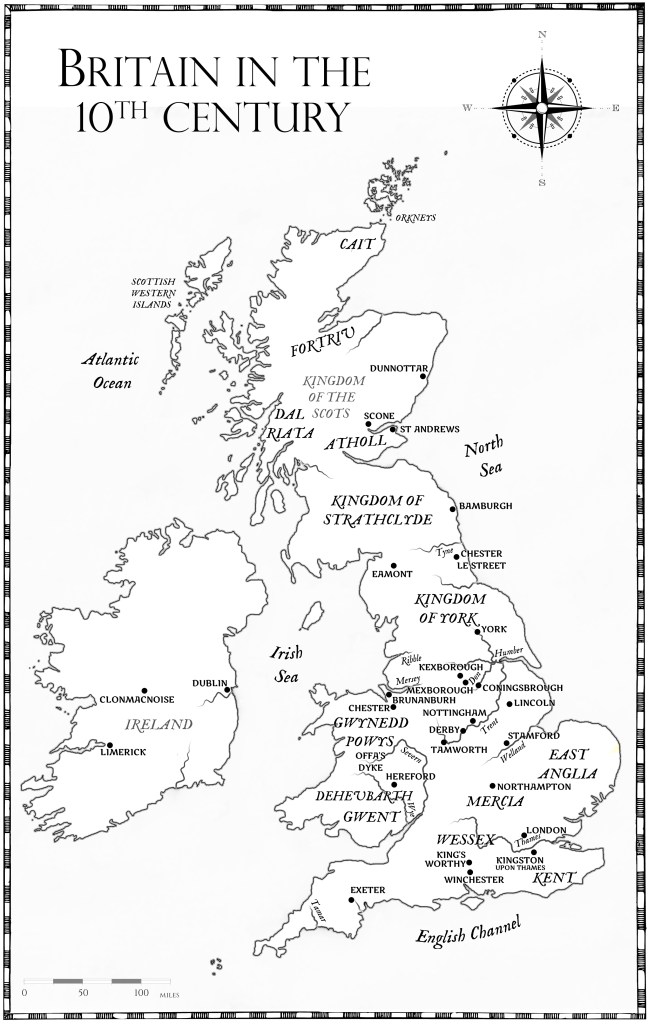
Map of Britain in the tenth century, showing Mercia, Wessex, Kent and the kingdom of York.

Mercia’s kings

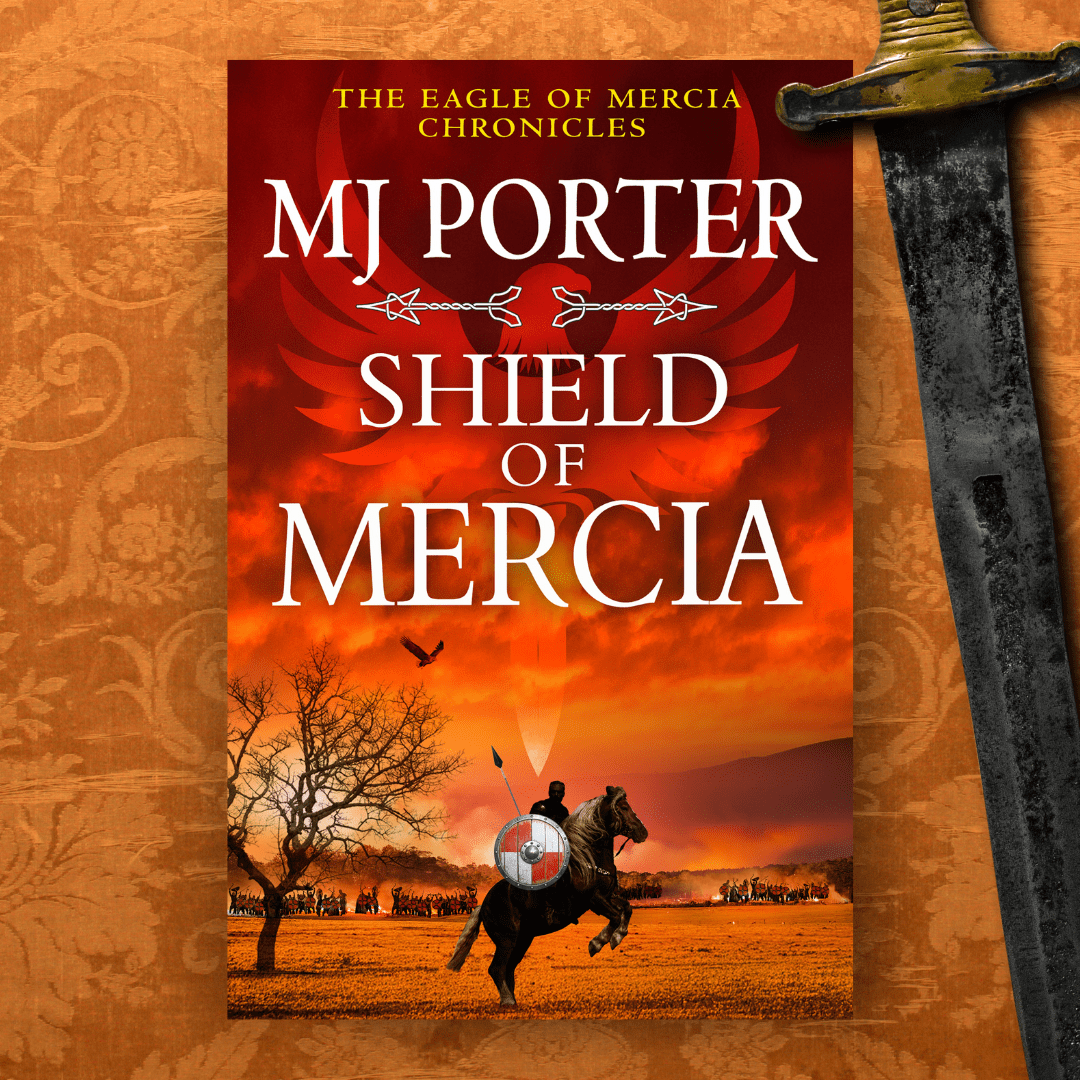
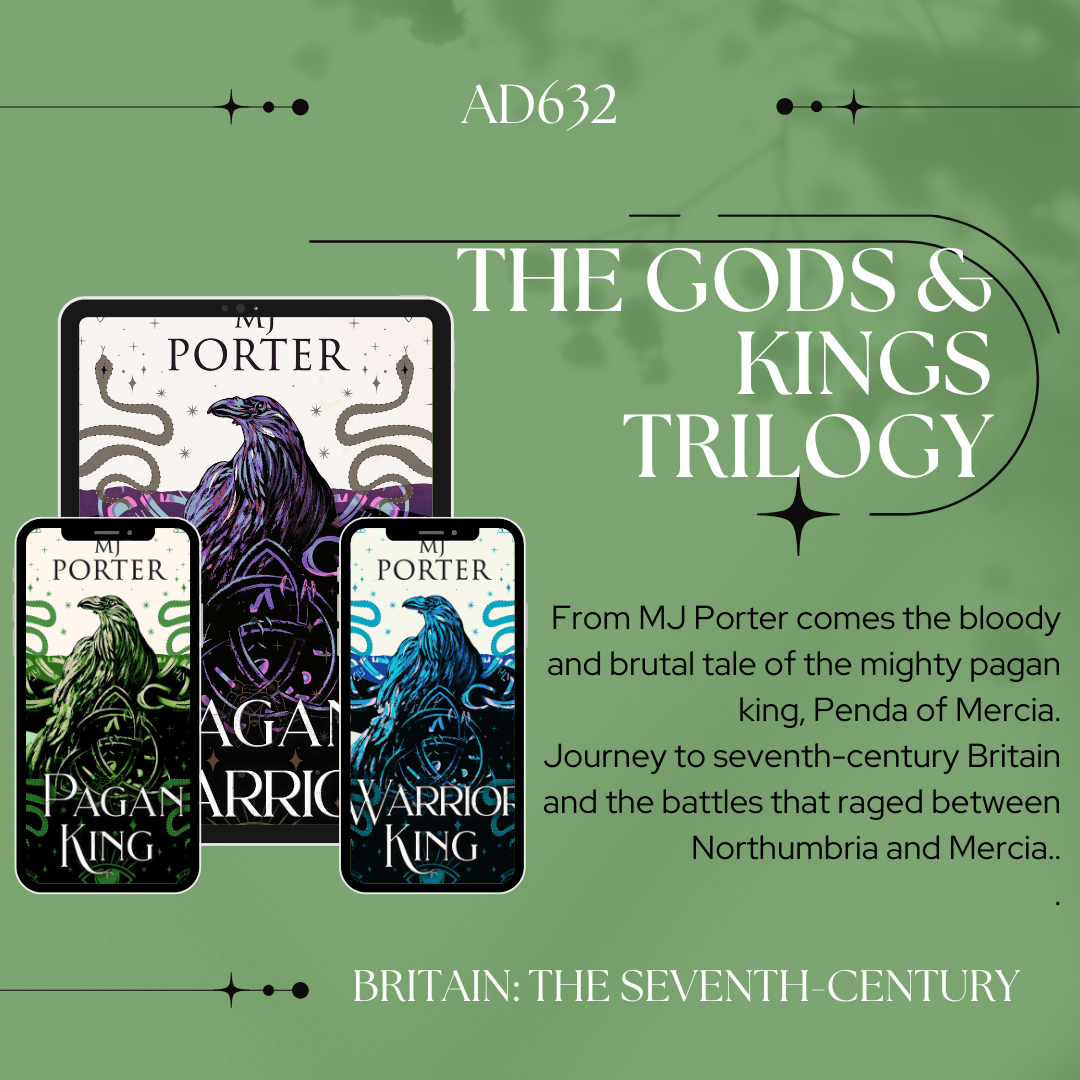
But, before all that, Mercia had its own kings. One of the earliest, and perhaps most well-known, was Penda, in the mid-7th century, the alleged last great pagan king. (Penda features in my Gods and Kings trilogy). Throughout the eighth century, Mercia had two more powerful kings, Æthelbald and Offa (of Offa’s Dyke fame), and then the ninth century saw kings Wiglaf and Coelwulf II (both of whom feature as characters in my later series, The Eagle of Mercia Chronicles and the Mercian Ninth Century), before the events of the last 800s saw Æthelflæd, one of the most famous rulers, leading the kingdom against the Viking raiders.

The Earldom of Mercia

And even when the kingdom itself ceased to exist, it persisted in the ealdordom and earldom of Mercia, (sometimes subdivided further), and I’ve also written about the House of Leofwine, who were ealdormen and then earls of Mercia throughout the final century of Saxon England, a steadfast family not outmatched by any other family, even the ruling line of the House of Wessex.

In fact, Mercia, as I said above, persists as an idea today even though it’s been many years since the end of Saxon England. And indeed, my two Erdington Mysteries, are also set in a place that would have been part of Mercia a thousand years before:) (I may be a little bit obsessed with the place).

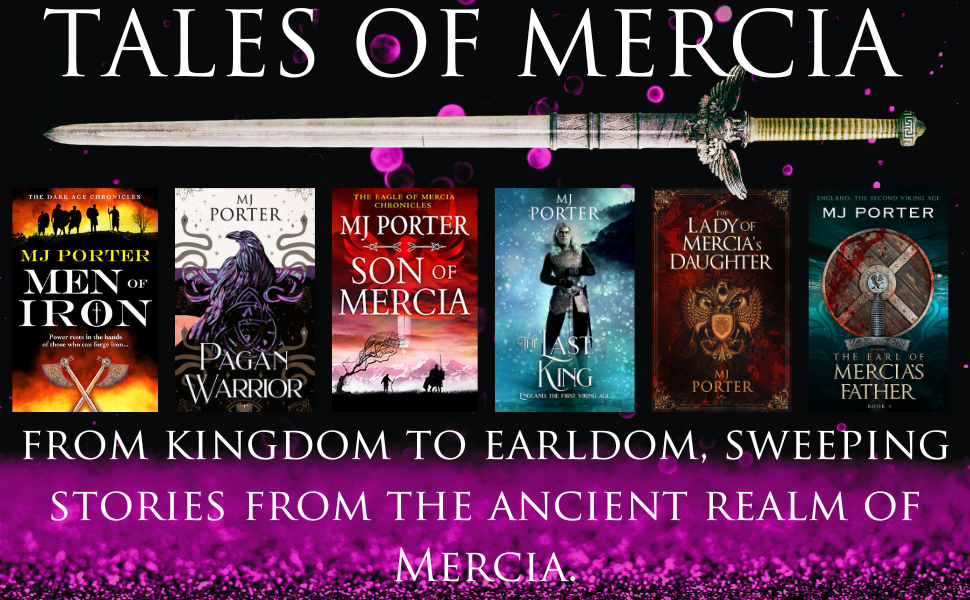
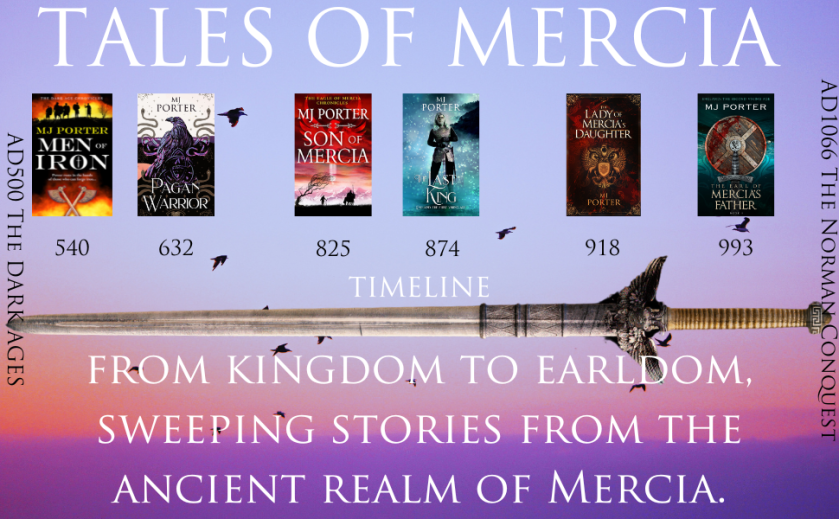
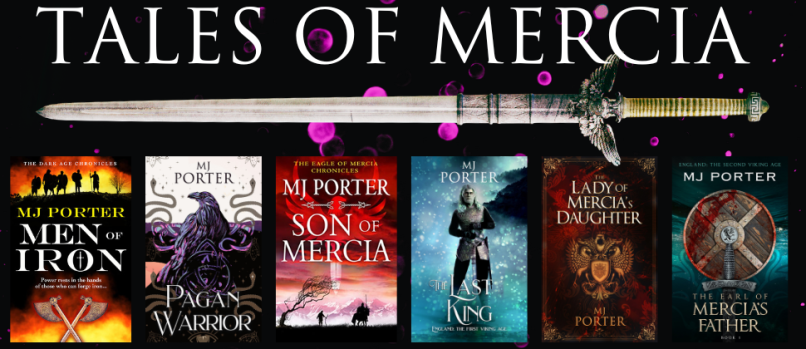
Image shows the 6 book cover titles in the Tales of Mercia series of interconnected tales by historical fiction author MJ Porter
The Tales of Mercia
Timeline of MJ Porter's Tales of Mercia series, starting with the Dark Age Chronicles and ending with The Earl of Mercia's Father

Posts

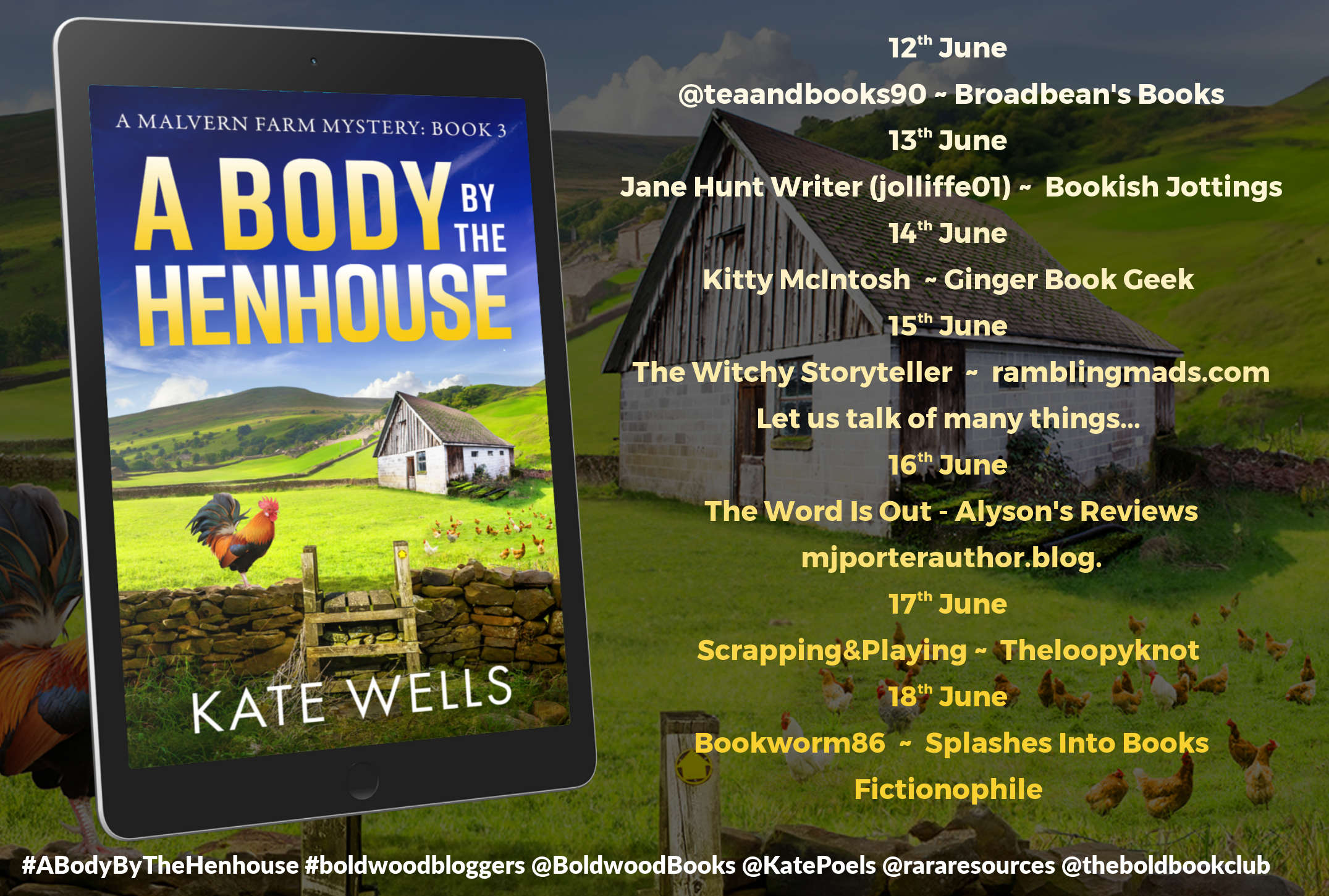
I’m reviewing A Body by the Henhouse by Kate Wells, a fabulous contemporary mystery set in the Malvern Hills #mystery #newrelease #blogtour

Here’s the blurb

The time for celebrations is over…

Jude Gray’s farm is going from strength to strength, and even though her grumpy neighbour has concerns about the new campsite in the lower field, she is undeterred.

When a hen party arrives for a weekend away, she does her best to cater for their celebrations. But with a sheep needing urgent care – an accidental mishap or something more nefarious? – she finds herself consulting the group, which coincidentally contains four vets.

When one of the hens goes missing, it becomes clear there are more sinister forces at play, and someone is targeting her farm. With the help of close friend Detective Inspector Binnie Khatri, Jude once again dons her amateur sleuthing hat.

They uncover a web of deceit, affairs and rivalries, but will they find the perpetrator before events turn murderous?

Purchase Link

https://mybook.to/bodyhenhousesocial

My Review

A Body by the Henhouse is the third book in the A Malvern Farm Mystery series. I’ve read book 1, and I really enjoyed it.

We return to Malvern Farm with summer on the horizon, and our main character, Jude, keen to make her camping site work, even while busy with the arable and pastoral aspects of her farm. But her current guests are not quite the bunch she’s expecting, and with tensions running high, it’s not long until Jude is trying to find out who’s been tampering with her sheep and why the group of Hens are so uneasy with one another.

This is a really well written mystery. I love a book where I don’t guess ‘who did it’ and this certainly falls into that category. There are lots of twists and turns in the storyline. There are many potential suspects, and the story is well woven together, between Jude’s daily life, and her determination to find answers to the problems she’s encountering, with the aid of her police friend.

An enjoyable contemporary mystery, easy to read and really engaging. I look forward to more in the series, and will be reading book 2 as well:)

Meet the author

Kate Wells is the author of a number of well-reviewed books for children, and is now writing a new cosy crime series set in the Malvern hills, inspired by the farm where she grew up. 

Connect with Kate

Twitter  Instagram  Newsletter Sign Up 

Facebook BookBub

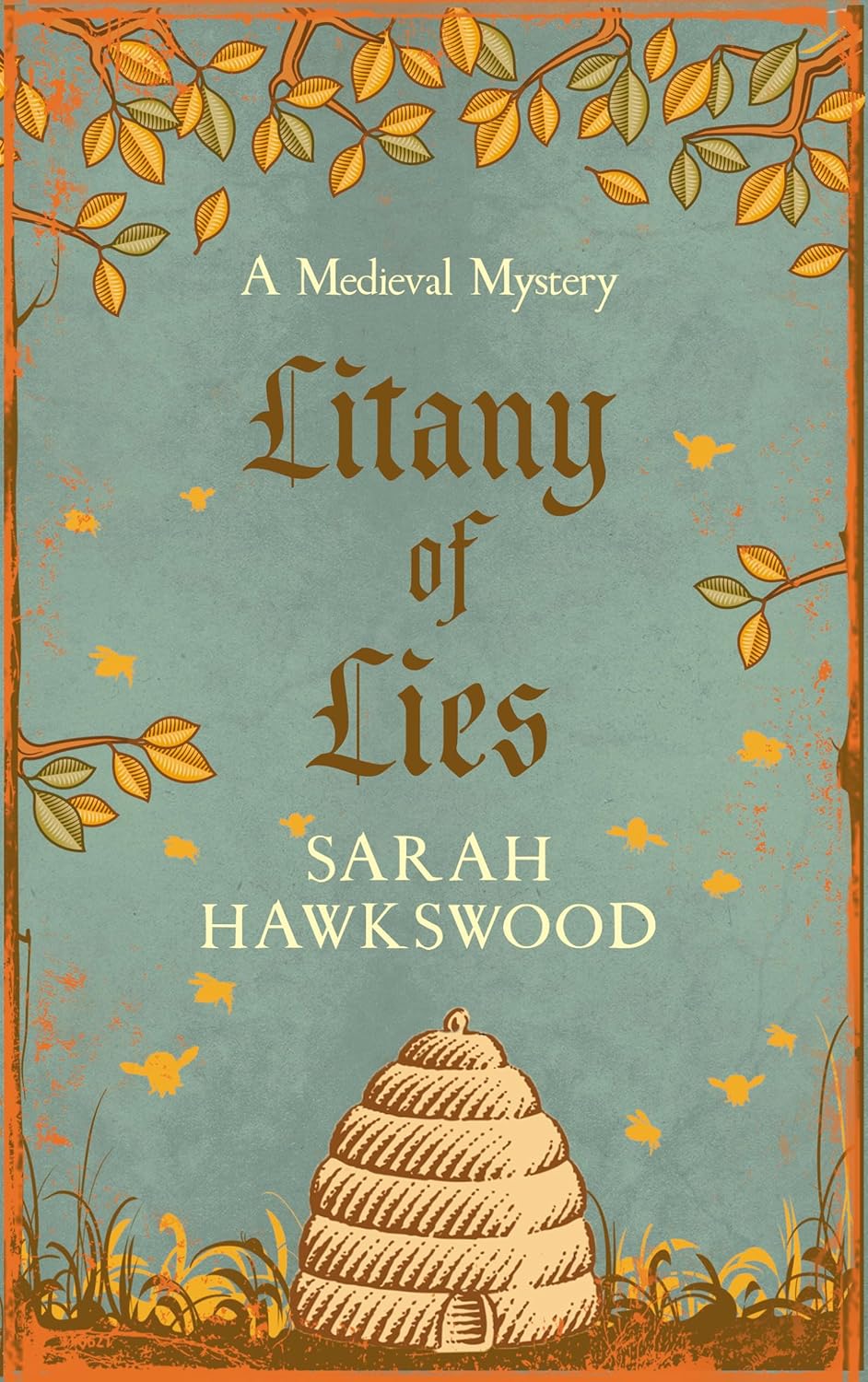
It’s time for a new Bradecote and Catchpoll historical mystery. I’m reviewing Litany of Lies by Sarah Hawkswood #historicalmystery

Here’s the blurb

Midsummer, 1145. Walter, the steward of Evesham Abbey, is found dead at the bottom of a well pit. The Abbot, whose relationship with the lord Sheriff of Worcestershire is strained at best, dislikes needing to call in help. However, as the death appears to have not been an accident, he grudgingly receives Undersheriff Hugh Bradecote, Serjeant Catchpoll and Underserjeant Walkelin.

The trio know to step carefully with the contentious undercurrents at play. As the sheriff ‘s men investigate the steward’s death, they discover that truth is in short supply. With the tensions between the Abbey and the local castle guard reaching boiling point, another killing will force the investigation down a dangerous path.

Purchase Link

My Review

It’s a joy to be back with our ‘boys’, Bradecote, Catchpoll and Walkelin.

Another murder needs solving, and we know Bradecote, Catchpoll and Walkelin won’t rest until they find the culprit. This is a particularly twisty tale of long-standing grievances and newer ones as well. I didn’t guess the culprit, and I always appreciate a mystery where I can’t work out who ‘did it.’

I love this series. I came to it late, and I’ve now taken myself back to the first books, and they are also a true delight. If you’re looking for a new historical mystery series, I highly recommend this one set in the mid-twelfth century in England. I always appreciate the maps at the beginning of the books.

Check out previous reviews for the series.

Too Good To Hang

A Taste For Killing

Wolf At The Door

Posts

I’m delighted to welcome KJ McGillick and her new book, Whispers Through The Canvas, to the blog #blogtour #newrelease #mystery

I always love to hear how authors research their historical characters and events. KJ McGillick shares how she researched for her new book, Whispers Through the Canvas.

Howard Dynasty 

To study the powerful Howard dynasty of Tudor England, I consulted a variety of digitized primary sources available online such as wills, letters, court records, and literary works from the era. Searching through these collections, I found references to key Howard figures like the poet Henry Howard, Earl of Surrey and his ill-fated relatives. Contemporary accounts provided glimpses into the scandals, romantic entanglements, and power dynamics playing out at the royal court and aristocratic estates. Family correspondence shed light on inheritance disputes among the duke’s children. Literary pieces like Surrey’s poems and writings by other Howards offered additional perspectives on their remarkable century – chronicling their ascent, arts patronage, and the perils their elite status invited.

Levina Teerlinc
To learn about Levina Teerlinc, one of the earliest professional female artists in Renaissance England, I turned to digitized primary sources and secondary analyses available online. High-resolution images of Teerlinc’s exquisite miniature portraits hosted by museums revealed her skill at capturing likenesses. I searched literature databases for any mentions of Teerlinc from writings of her era, finding scattered records confirming her lifelong court employment. While limited biographical details survive, historians have reconstructed some context about her Flemish origins and artistic training based on fragments of evidence. Scholarly articles also examined her pioneering role as an art tutor to noble pupils.

Witchcraft 16th Century

To investigate 16th century England’s witchcraft accusations and trials, I immersed myself in digitized primary sources and scholarly research available online. This allowed me to examine the social tensions, religious upheaval, and cultural forces behind the deadly persecution of alleged witches. I accessed sensationalized literature published during the witch-hunting frenzy, providing window into the paranoia around women supposedly consorting with the devil. Legal records and transcripts illuminated how flimsy the evidence used to condemn the accused often was – a person’s reputation, a death, or unexplained misfortune could prompt charges. Scholarly journal articles analyzed the complex sociopolitical tensions of the Reformation era that enabled witchcraft hysteria to take hold, from anxieties over female autonomy to ruling elite distrust of the peasantry.

16th century Occult Symbols 

To explore the fascinating world of occult symbols and their place in 16th century English society, I delved into a range of digitized primary source materials and secondary scholarship available online.

One key resource was literature databases containing published works from the era. I examined texts on astrology, alchemy, magic, and esoteric philosophies for insight into the symbolic languages and imagery employed by occult practitioners and their beliefs. Engravings and woodcuts accompanying these works provided a visual catalogue of seals, sigils, and emblems.

I also searched through digitized diaries, letters, and accounts of the time for references to the use of occult symbols and coded markings in both elite and folk traditions. Correspondence between royals, nobles, and scholars sometimes mentioned encrypted communications or arcane symbolic meanings.

Court records, witness depositions, and transcripts from witchcraft trials offered a window into societal suspicion surrounding the perceived nefarious use and misuse of symbols and markings associated with magic and the supernatural. The language and suspicions revealed in these documents shed light on prevailing attitudes.

Additionally, I consulted digitized archaeological reports, inventories of home goods, and material culture studies to trace actual artifacts and objects bearing occult symbols that survived from 16th century England – whether tools, talismans or architecture.

By synthesizing evidence from these various sources, I could begin mapping the complex cosmological, mystical, and coded symbolic vernacular of the Renaissance era and how it manifested in art, writings, personal practice, and dangerous accusations.

Intrigued? Here’s the blurb.

Here’s the blurb

Murder… Across The Fractured Corridors of Time.

Plunged into a centuries-old conspiracy, unconventional art historian Rowan Southeil must race against time to stop an ancient evil from rewriting history. When a young artist is murdered in a chilling echo of medieval violence, Rowan finds herself drawn to a seemingly unrelated clue – a 16th-century painting drenched in arcane symbols. Aided by the victim’s haunting presence, Rowan delves into the painting’s mysterious past, uncovering a dark conspiracy that stretches back generations.

Teaming up with the pragmatic Detective Lancaster, the intuitive Rowan follows a daring journey through time, from the storied halls of 16th-century Tudor London to the secretive 17th-century Vatican. As she awakens powerful elemental forces within herself, Rowan must decipher the painting’s secrets – and the connection to the medieval-style murder – before Lev Rubilov, a dark centuries-old occultist, can harness its magic to rewrite history and restore a twisted vision of the past.

For fans of genre-blending thrillers like A Discovery of Witches and Outlander, this captivating novel weaves together mystery, the supernatural, and high-stakes time travel in a race against the clock to stop an ancient evil. Whispers Through The Canvas is a crime story, filled with action and adventure, within a historical fantasy milieu. If you love kick-ass heroines who have a bit of life experience and walk on the wild side of magic, this book is for you.

Purchase Links

https://www.amazon.com/dp/B0CTHSC2H5/

https://www.amazon.co.uk/dp/B0CTHSC2H5/

Meet the author

From the bustling courtrooms of Atlanta to the vibrant tapestry of 16th-century England, Kathleen McGillick’s life and career have been a captivating blend of legal expertise, artistic passion, and a thirst for adventure.

Fueled by an undergraduate and graduate degree in nursing, Kathleen built a foundation of compassion and care. This dedication to service later led her to pursue a Juris Doctorate, allowing her to navigate the intricacies of the legal system for nearly three decades. Her courtroom experience now breathes life into the intricate details of her legal thrillers, ensuring every courtroom scene crackles with authenticity.

But Kathleen’s story doesn’t end there. A deep fascination with art history led her to delve into the world of renowned artists and captivating eras. Her particular passion for 16th-century British history allows her to transport readers to richly detailed historical settings, immersing them in the culture, politics, and societal nuances of the time.

Driven by an unwavering dedication to her craft, Kathleen has independently published eleven legal thrillers since 2018. Her commitment extends beyond solo creation, as she actively engages with the writing community, honing her skills through workshops and courses led by renowned authors.

And when she’s not crafting captivating narratives, Kathleen embarks on international journeys, soaking in diverse cultures and experiences that further enrich her writing. This global perspective adds another layer of depth and realism to her stories, allowing readers to connect with characters and settings that transcend geographical boundaries.

To delve deeper into Kathleen’s world and explore her captivating legal thrillers, visit her website at kjmcgillick.com.

Connect with the author

kjmcgillick.com 

https://www.goodreads.com/kmcgillick

https://www.facebook.com/KJMcGillickauthor/
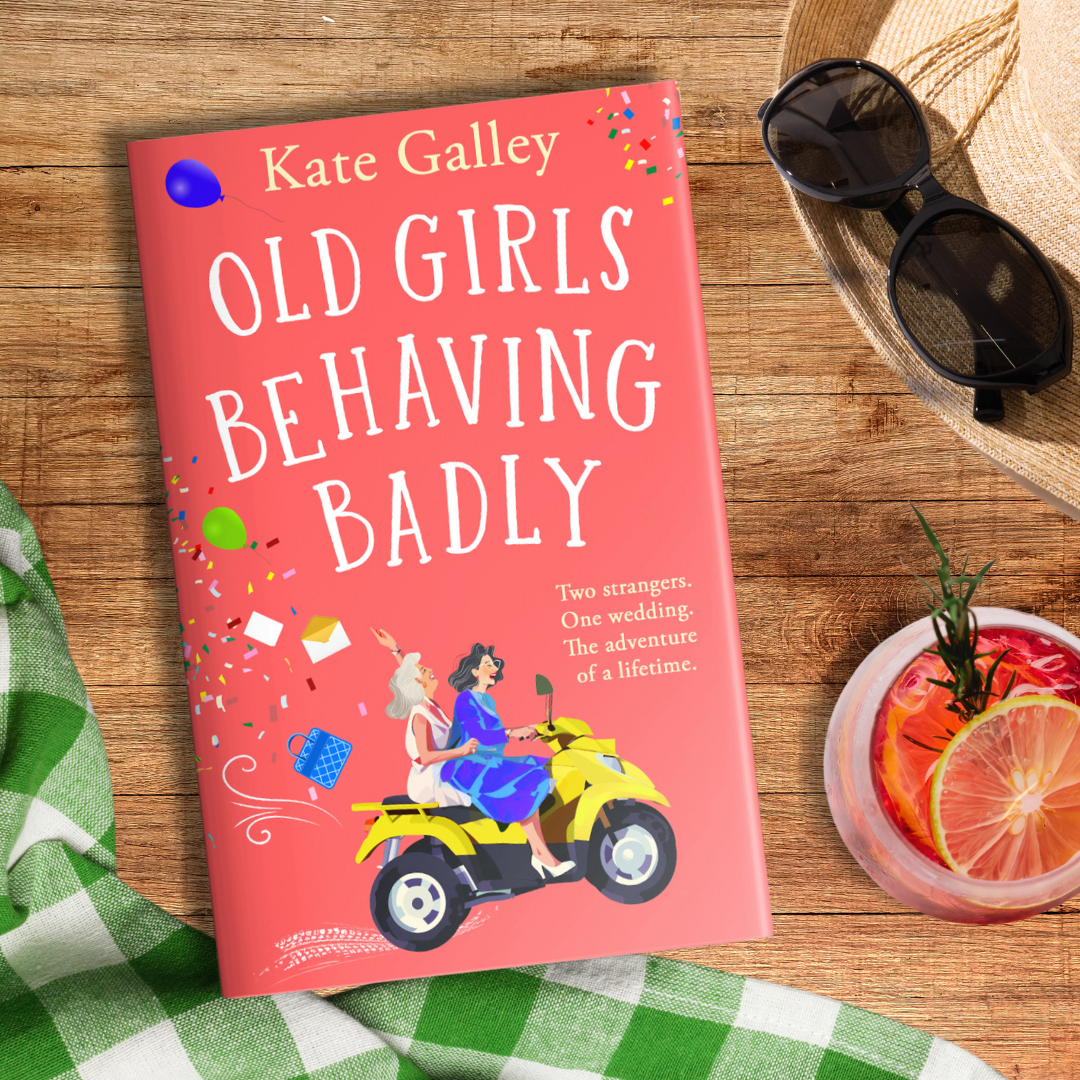
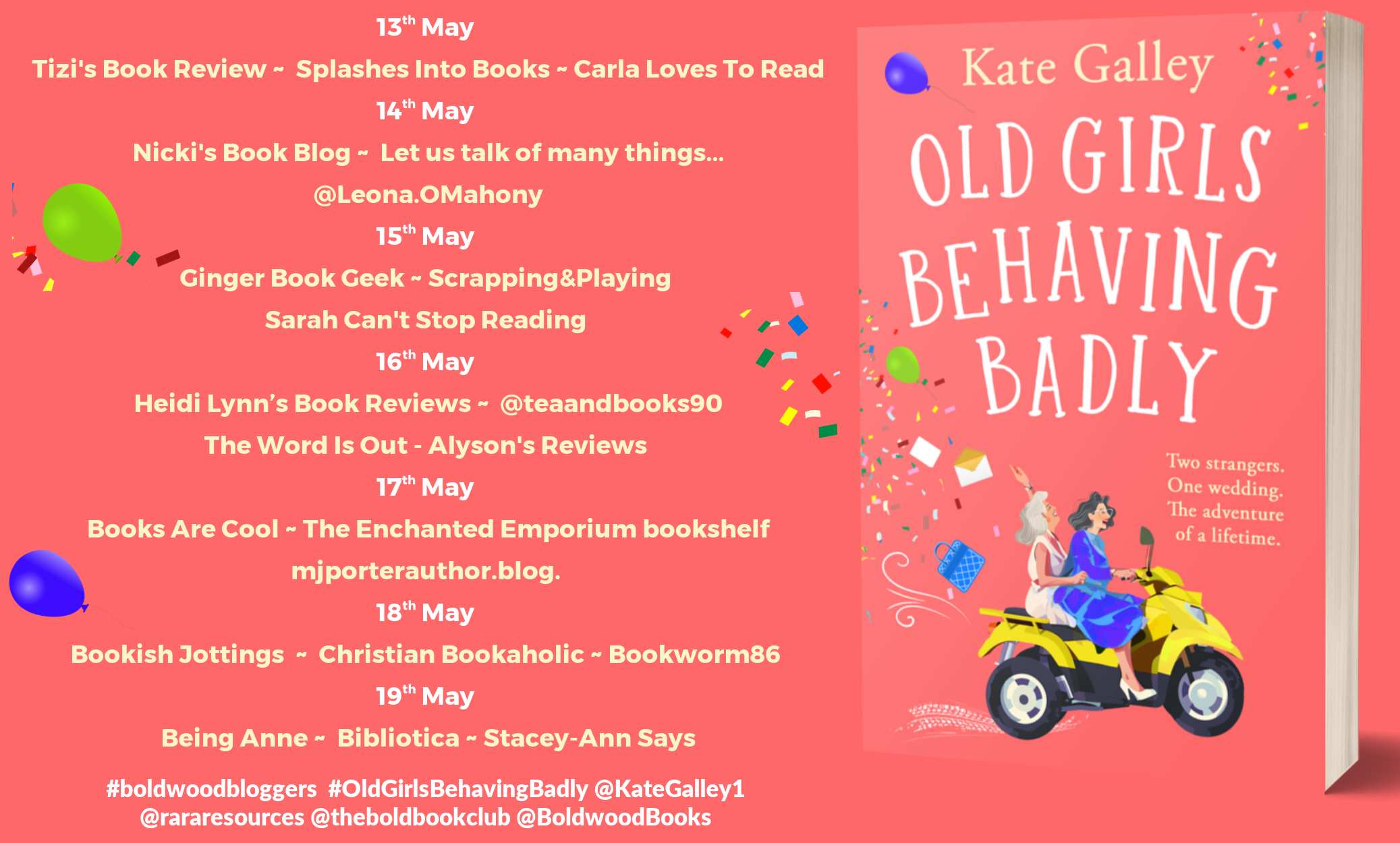
I’m delighted to be sharing my review for Old Girls Behaving Badly by Kate Galley #blogtour #newrelease #comedy

Here’s the blurb

A delightfully heartwarming and funny story that proves it’s never too late to change the habits of a lifetime, perfect for fans of Judy Leigh, Hazel Prior and Maddie Please.

Something old, something new, something stolen…?

Gina Knight is looking forward to the prospect of retirement with her husband of forty-three years. Until, to her surprise, said husband decides he needs to ‘find himself’ – alone – and disappears to Santa Fe, leaving divorce papers in his wake.

Now Gina needs a new role in life, not to mention somewhere to live, so she applies for the position of Companion to elderly Dorothy Reed. At eighty-three, ‘Dot’ needs someone to help her around the house – or at least, her family seems to think so. Her companion’s first role would be to accompany Dot for a week-long extravagant wedding party.

But when Georgina arrives at the large Norfolk estate where the wedding will take place, she quickly discovers Dot has an ulterior motive for hiring her. While the other guests are busy sipping champagne and playing croquet, Dot needs Georgina to help her solve a mystery – about a missing painting, which she believes is hidden somewhere in the house.

Because, after all, who would suspect two old ladies of getting up to mischief?

Purchase Link

https://mybook.to/oldgirlssocial

My Review

Old Girls Behaving Badly is a fun read with elements of mystery, which I wasn’t expecting and was very pleased to discover. 

Our two main characters (and we get both of their POVs), Gina and Dorothy, are coming to terms (or not) with recent changes in their lives. While neither of them thinks they necessarily need one another, they soon discover that, in fact, they do, and they also like one another.

As the events of Dorothy’s big family wedding swirl around them, Gina and Dorothy are somewhat distanced from it. Both are trying to uncover the truth surrounding Dorothy’s husband’s death about a year ago. With the addition of a more fleet-footed granddaughter, our duo pursues the matter to the bitter end, and yes, it does feature a quad bike ride.

This story is really enjoyable. I read it in two days:)

Meet the author

Kate Galley writes UpLit and Bookclub fiction full of heart and humour. The older generation are at the centre of her stories and are usually wrapped up in a mystery.

She lives with her family in Buckinghamshire and works part time as a mobile hairdresser in the surrounding Chiltern villages.

In her spare time she crochets blankets, knits jumpers and also disappears into her workshop to play with kiln formed glass.

Kate is the author of The Second Chance Holiday Club – which has been optioned for TV – and The Golden Girls’ Road Trip.

Connect with the author

Facebook: https://www.facebook.com/profile.php?id=100083291782773

Twitter: https://twitter.com/KateGalley1

Newsletter Sign Up: https://bit.ly/KateGalleyNews

Bookbub profile: https://www.bookbub.com/authors/kate-galley

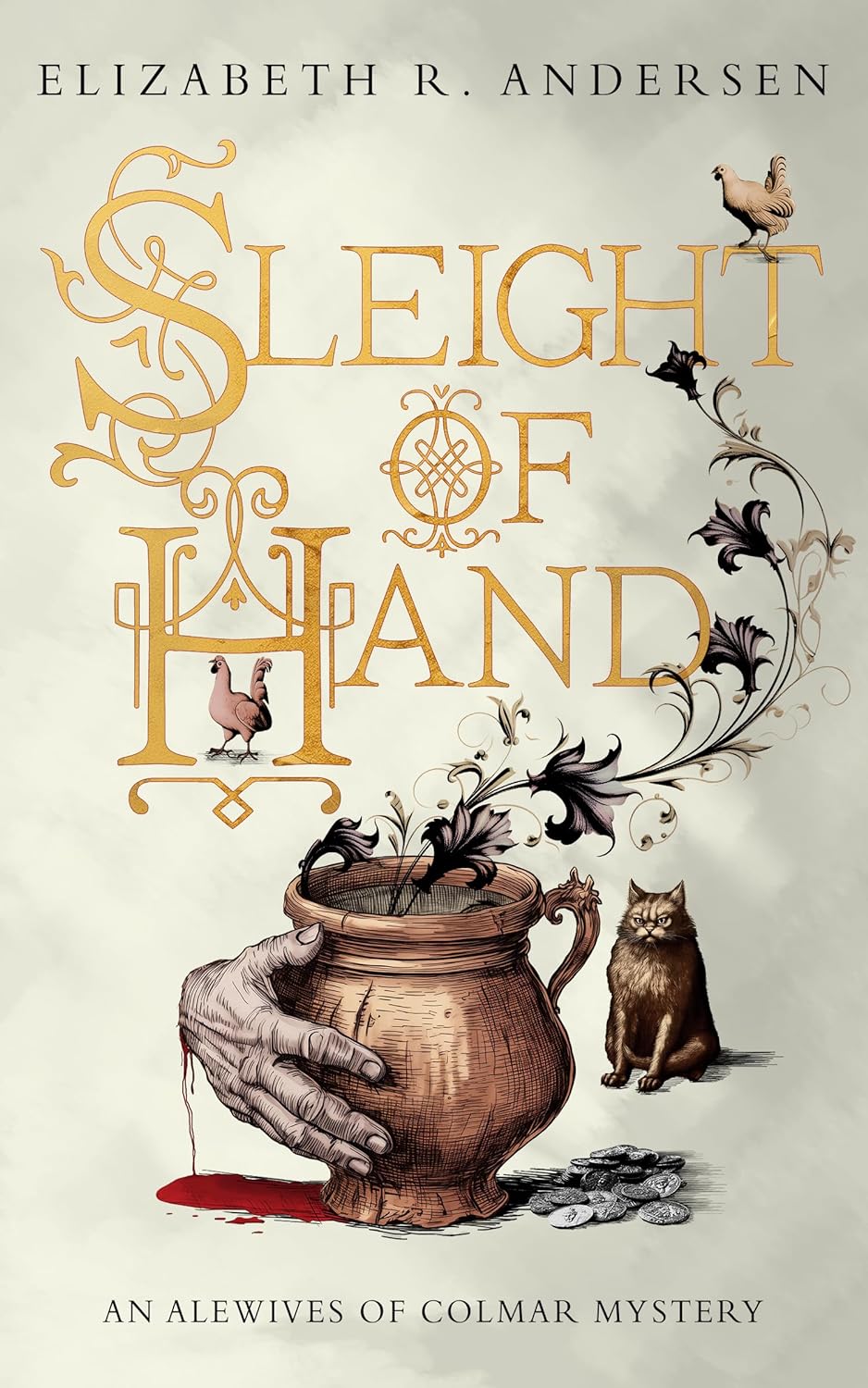
Happy Release Day to Sleight of Hand, the new book in The Alewives of Colmar historical mystery series by Elizabeth R Andersen #bookreview #newrelease

Here’s the blurb:

In the spring of 1354, all was well in the town of Colmar – until Efi Kleven discovered a hand in her pot of new ale…a hand that was not attached to a body. Now, Gritta, Appel, and Efi, the three alewives of Colmar, must solve the mystery of the severed hand before suspicion falls on them. While they attempt to keep their fledgling brewery afloat, more bodies turn up outside of town – along with more suspects.

With few allies and several powerful men working against them, the alewives find themselves flummoxed: How did the hand of a man from Vogelgrun end up in a cooking pot in Colmar? Why were none of the victims local? And would this most inconvenient ingredient get in the way of Efi’s plans to find herself a new husband?

Book 2 in The Alewives of Colmar mystery series, Sleight of Hand follows the three alewives as they confront life after the Black Death with bravery and wicked humor, showing resourcefulness and determination in the face of poverty, misogyny, and murder.

Purchase Link

https://amzn.to/3xKB49r

My Review

Sleight of Hand is a fabulous follow-up to book 1 in The Alewives of Colmar Series, The Alewives (you can find my review for that here).

In Sleight of Hand we return to our three fabulous characters of Efi, Gritta and Appel and find them once more in a bit of a pickle. The characters of our women, their sort of ‘guardian angel’ and the only one who takes them seriously, Friar Wikerus, and the ‘men’ in Colmar remain as firm as in book 1 – the men are still stupid (aside from Friar Wikerus, although he also causes himself some difficulties) while Appel, Gritta and Efi are fabulous as they circumnavigate the restrictions placed on them by men who think they know better. There is a great deal of gentle humour, and this combined with the strong characterisation ensues the reader is very firmly in favour of the women, and not the men.

The mystery itself is very well-constructed. Everything slowly reveals itself and there are any number of red herrings to keep the reader guessing.

It was so delightful to return to the world of our Alewives of Colmar. I really hope there will be a book 3, and indeed, many more stories for our main characters. If you’ve not yet had the joy of reading The Alewives, then yes, begin there, but only because if not, you’ll be missing out on your first encounter with Efi, Gritta and Appel.

Meet the author

Check out Elizabeth’s website, or click on the link for The Alewives review above, which has all her info.

https://www.elizabethrandersen.com

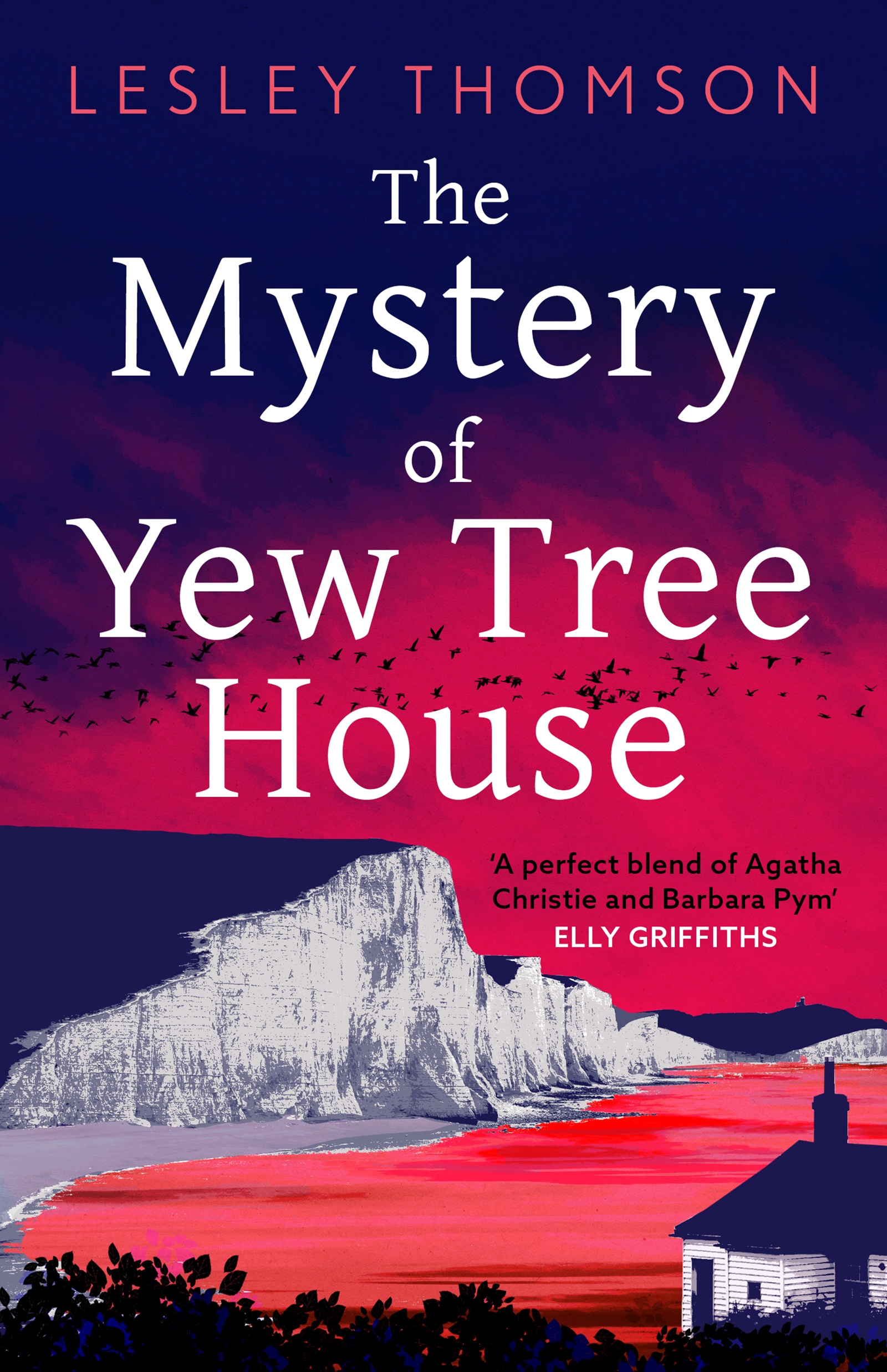
Happy publication day to The Mystery of Yew Tree House by Lesley Thomson #blogtour #newrelease

Here’s the blurb

EIGHTY YEARS OF SECRETS.
1940. At Yew Tree House, recently widowed Adelaide Stride is raising her two daughters alone – but it’s not just the threat of German invasion that keeps her up at night. She is surrounded by enemies posing
as allies and, while war rages, she grows sure that something terrible is about to happen.
A BODY THAT REVEALS THEM ALL.
2023. Soon after Stella Darnell begins her holiday at Yew Tree House, a skeleton is found in a pillbox at
the bottom of the garden. The bullet hole in the skull tells her that the person was murdered.
This triggers the unravelling of a mystery eighty years in the making. Stella will learn that Adelaide was right to worry – the fighting might have been happening abroad, but the true enemy was always much closer to home…

A unique take on the traditional murder mystery from critically acclaimed author, Lesley Thomson, for fans of Elly Griffiths, Val McDermid and Mari Hannah.

Purchase Link

https://geni.us/TMOYTHRRR

Meet the author

Lesley Thomson grew up in west London. Her first novel, A Kind of Vanishing, won the People’s Book Prize in 2010. Her second novel, The Detective’s Daughter, was a #1 bestseller and the resulting series has sold over 800,000 copies. Lesley divides her time between Sussex and Gloucestershire. She lives with her partner and her dog.

Connect with the author

Twitter: https://twitter.com/LesleyjmThomson

Facebook: https://www.facebook.com/LesleyThomsonNovelist

Instagram: https://www.instagram.com/lesleythomson

Connect with the publisher

Twitter: @AriesFiction

Facebook: Aries Fiction

Instagram: @headofzeus

Website: http://www.headofzeus.com

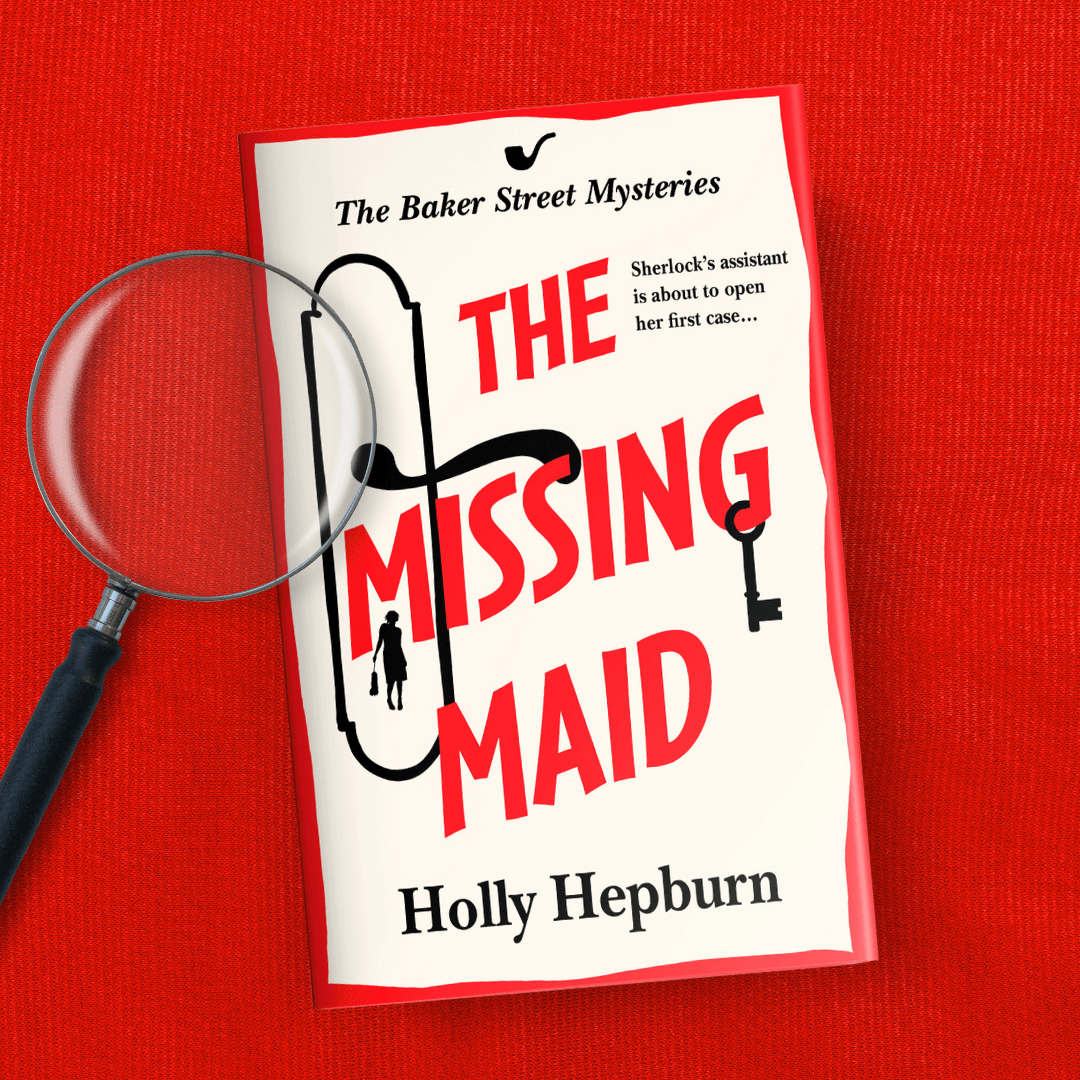
I’m delighted to be reviewing The Missing Maid by Holly Hepburn #histfic #cosycrime

A GLORIOUS SHERLOCK HOLMES-INSPIRED MYSTERY FOR FANS OF NITA PROSE AND JANICE HALLETT

London, 1932.

When Harriet White rebuffs the advances of her boss at the Baker Street building society where she works, she finds herself demoted to a new position… a very unusual position. Deep in the postal department beneath the bank, she is tasked with working her way through a mountain of correspondence addressed to Baker Street’s most famous resident: Mr Sherlock Holmes.

Seemingly undeterred by the fact that Sherlock Holmes doesn’t exist, letter after letter arrives, beseeching him to help solve mysteries, and Harry diligently replies to each writer with the same response: Mr Holmes has retired from detective work and now lives in Sussex, keeping bees.

Until one entreaty catches her eye. It’s from a village around five miles from Harry’s family estate, about a young woman who went to London to work as a domestic, then disappeared soon afterwards in strange circumstances. Intrigued, Harry decides, just this once, to take matters into her own hands.

And so, the case of the missing maid is opened…

Purchase Link

https://mybook.to/missingmaidsocial

My Review

The Missing Maid by Holly Hepburn is a cosy crime with a rather delightful premise involving 221B Baker Street and Sherlock Holmes.

When our heroine finds herself somewhat unceremoniously ejected from her plush office in the bank, she’s somewhat wary of being redirected to the post room, but once there, she discovers her job is, if anything, somewhat tedious. However, as she types standard replies to the requests asking Sherlock Holmes to resolve problems for those writing to him, she finds herself struck by one of the requests. She is determined to do all she can to help the family while pretending to be Mr Holmes’ secretary.

The mystery leads her to some rather dodgy places in 1930s London, and she gets involved with some rather shady characters as well. She also discovers that the talent for solving crimes is not as easy as she might have hoped.

Harriet, or Harry as she’s called throughout the book, is a fun character with the fiery determination to be expected from a well-to-do young lady trying to make her way in the world in the 1930s when most seem to think all she should do is settle down and marry someone who can keep her in the way she’s accustomed. And that includes her mother.

Her wealthy background both opens doors and precludes her from gaining entry to everywhere she might wish to go. She also has to rely on a family friend for legal advice. This feels quite true to the period.

The mystery’s resolution is well constructed, and I particularly liked that it’s not ‘easy’ for Harry to solve the crime. It takes determination and acknowledging that she can’t do everything herself. 

A delightful, cosy crime sure to appeal to fans of Sherlock Holmes and Golden-era crime novels.

Meet the author

Holly Hepburn has wanted to write books for as long she can remember but she was too scared to try. One day she decided to be brave and dipped a toe into the bubble bath of romantic fiction with her first novella, Cupidity, and she’s never looked back. She often tries to be funny to be funny, except for when faced with traffic wardens and border control staff. Her favourite things are making people smile and Aidan Turner.

She’s tried many jobs over the years, from barmaid to market researcher and she even had a brief flirtation with modelling. These days she is mostly found writing.

She lives near London with her grey tabby cat, Portia. They both have an unhealthy obsession with Marmite.

Connect with the author

https://twitter.com/HollyH_Author

https://www.instagram.com/hollyh_author