The Ælfflæd ‘stole’ from St Cuthbert’s tomb – The Royal Women Who Made England

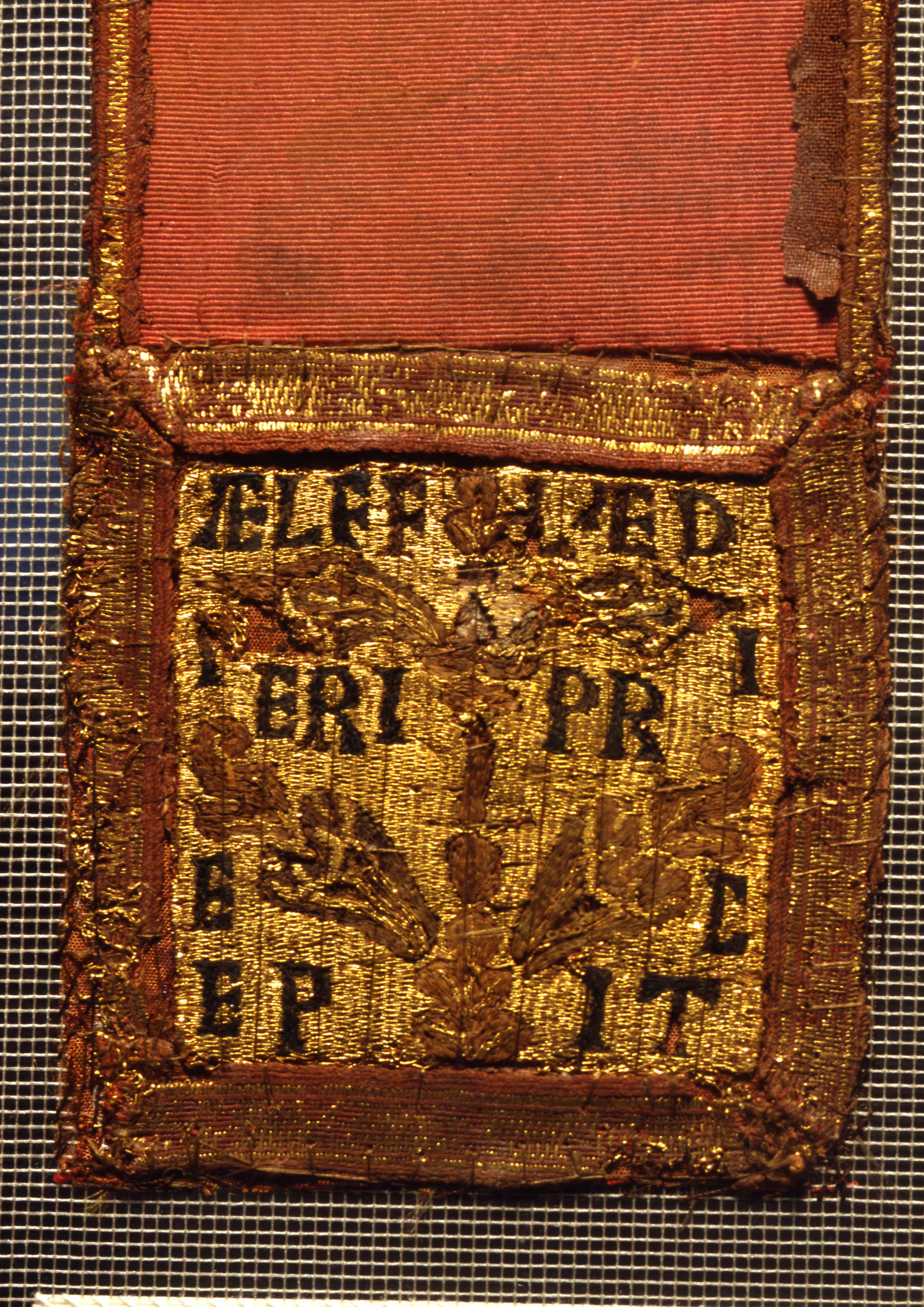
When I was writing The Royal Women Who Made England, I discovered that there is potentially one surviving item that could be associated with these royal women. While the identification is not certain, it seems highly likely that some religious items, discovered in the tomb of St Cuthbert in Durham, when it was opened in 1827, could have either been stitched by Ælfflæd herself, or commissioned at her request. The item has the following words stitched on it Ælfflæd Fiere Precepit (Ælfflæd had [this] made) – translation from E Coatsworth The Embroideries from the Tomb of St Cuthbert.

Ælfflæd was the second wife of Edward the Elder (899-924). It’s believed they probably married AFTER he became king of Wessex on the death of his father in 899. She was the mother to at least six daughters, and two sons, one of whom became king after his father’s death, for a brief 16 days. Her stepson, Athelstan, then became king of Wessex. Two of her daughters married into the ruling families of East and West Frankia. Another two daughters married into influential families in Europe. Two others spent their adult lives in a nunnery, one as a lay sister, and one as a nun.

The embroideries consist of a stole, a maniple and a possible girdle, and are believed to have been made for Bishop Frithestan – indeed, the other end of the embroidery reads Pio Episcopo Fri∂estano (for the pious bishop Frithestan). So, together it reads Ælfflæd had this made for the pious bishop Frithestan. Frithestan was the bishop of Winchester in the early tenth century. It’s likely he never received them, for why else would they have found their way to Durham and the tomb of St Cuthberht?
There are two possible reasons for this. Firstly, Ælfflæd may have either died, or no longer been married to the king when they were completed. Edward the Elder remarried Eadgifu, his third wife sometime between 917-919. We don’t know if this was because his second wife had died, or merely because he wished to take a new wife. Secondly, Bishop Frithestan fell out with the House of Wessex at about this time. Indeed, he played no part in King Athelstan’s coronation. The expensive commissions, with gold thread, therefore never came into the hands of Bishop Frithestan. Where they might have been for the intervening period, would be interesting to know.
When King Athelstan (924-939) made his famous trip to Chester Le Street in c.934, it’s written that he gifted the community of St Cuthbert with a stole, a maniple and a girdle. It’s believed that it’s these items, made by, or commissioned by his stepmother, that he gave. (The religious house from Chester Le Street moved to Durham in 1104). St Cuthbert was a north-east saint, who lived on Lindisfarne/Holy Island in the 600s, and while it’s believed the religious house fled from Lindisfarne in the wake of the Viking raider invasions and were essentially ‘on the move’ for over a hundred years, this interpretation is now being questioned by Dr David Petts and the excavations taking place on Lindisfarne. Whatever happened to the community in that period, they were extremely influential in the north of England, and did eventually settle at Chester Le Street.

The survival of these items is astounding. There are only, according to E Coatsworth, three such ‘large’ items from the Saxon era, the Bayeaux tapestry, the Durham embroideries and those of St Catherine in Maaseik, Belgium. If these items were truly made by Ælfflæd, then they are unique. I can think of no other item that survives from the era and which the royal women may themselves have touched. When I saw this image, I was astonished by the vibrancy of the gold thread. I imagine I’m not alone in that.

Reproduced by kind permission of the chapter of Durham Cathedral.

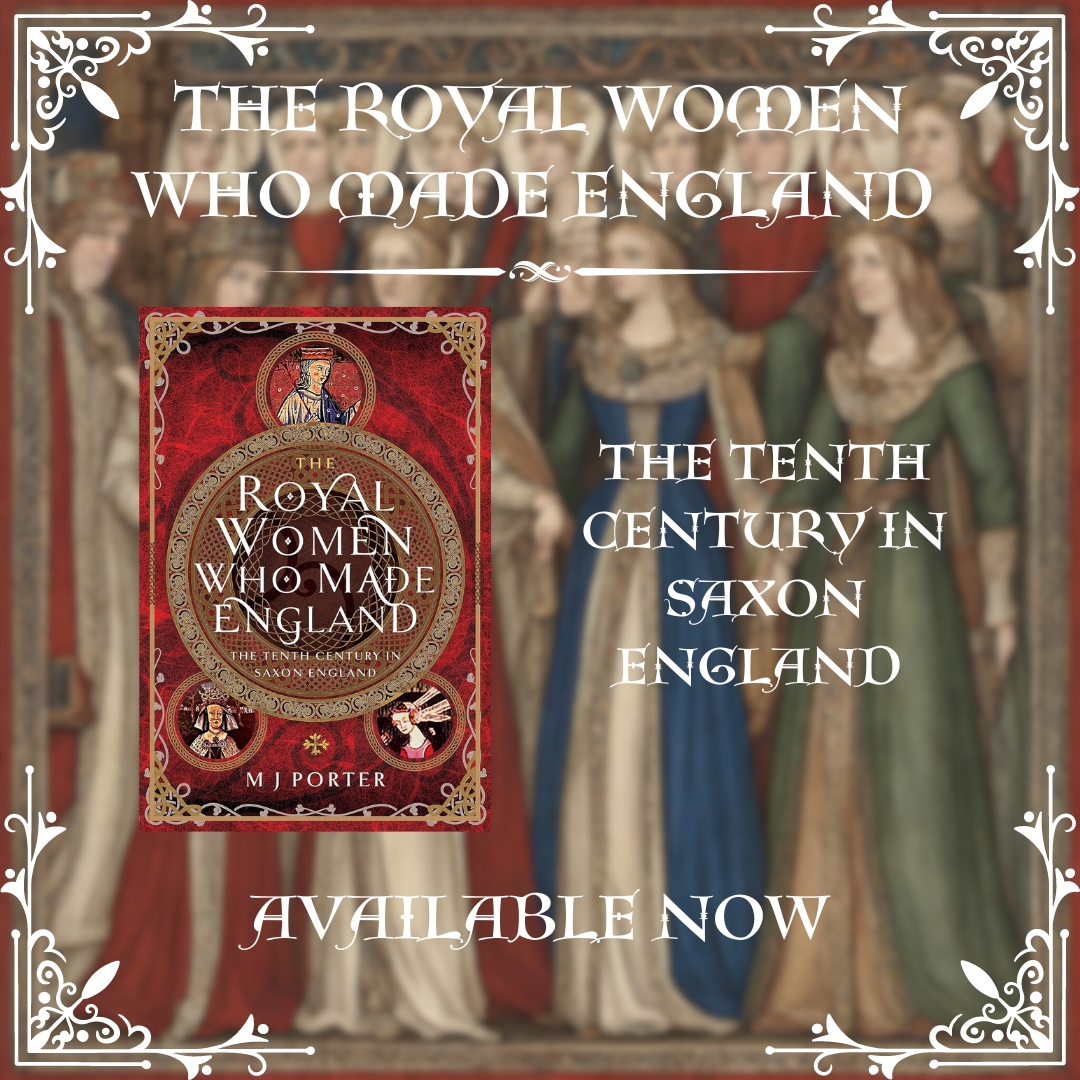
You can read The Royal Women Who Made England: The Tenth Century in Saxon England now if you’re in the UK, or from March if you’re in the US. It can also be purchased in epub version direct from Pen and Sword.

https://www.pen-and-sword.co.uk/The-Royal-Women-Who-Made-England-The-Tenth-Century-in-Saxon-England-Hardback/p/24395

https://books2read.com/TheRoyalWomenWhoMadeEngland

x

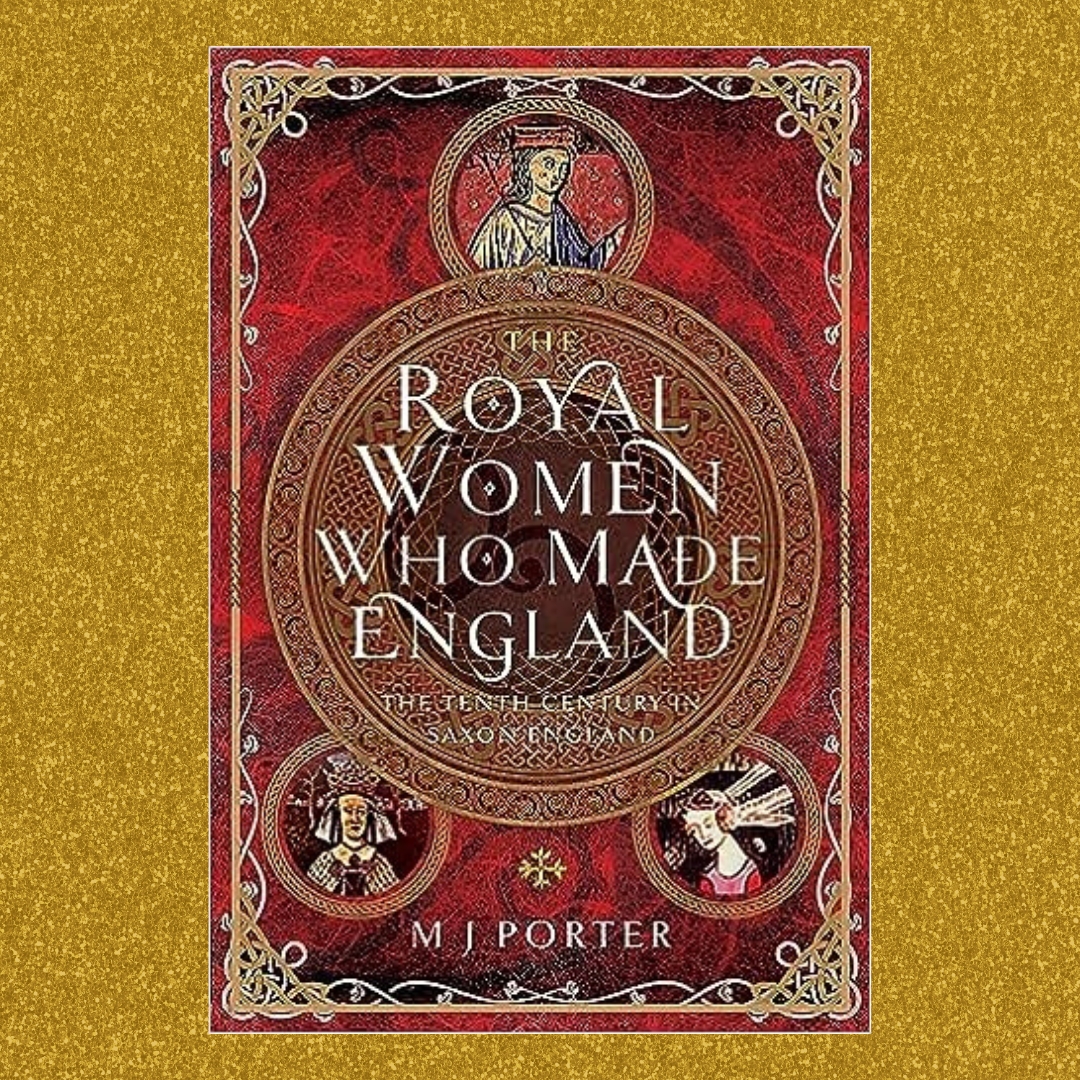
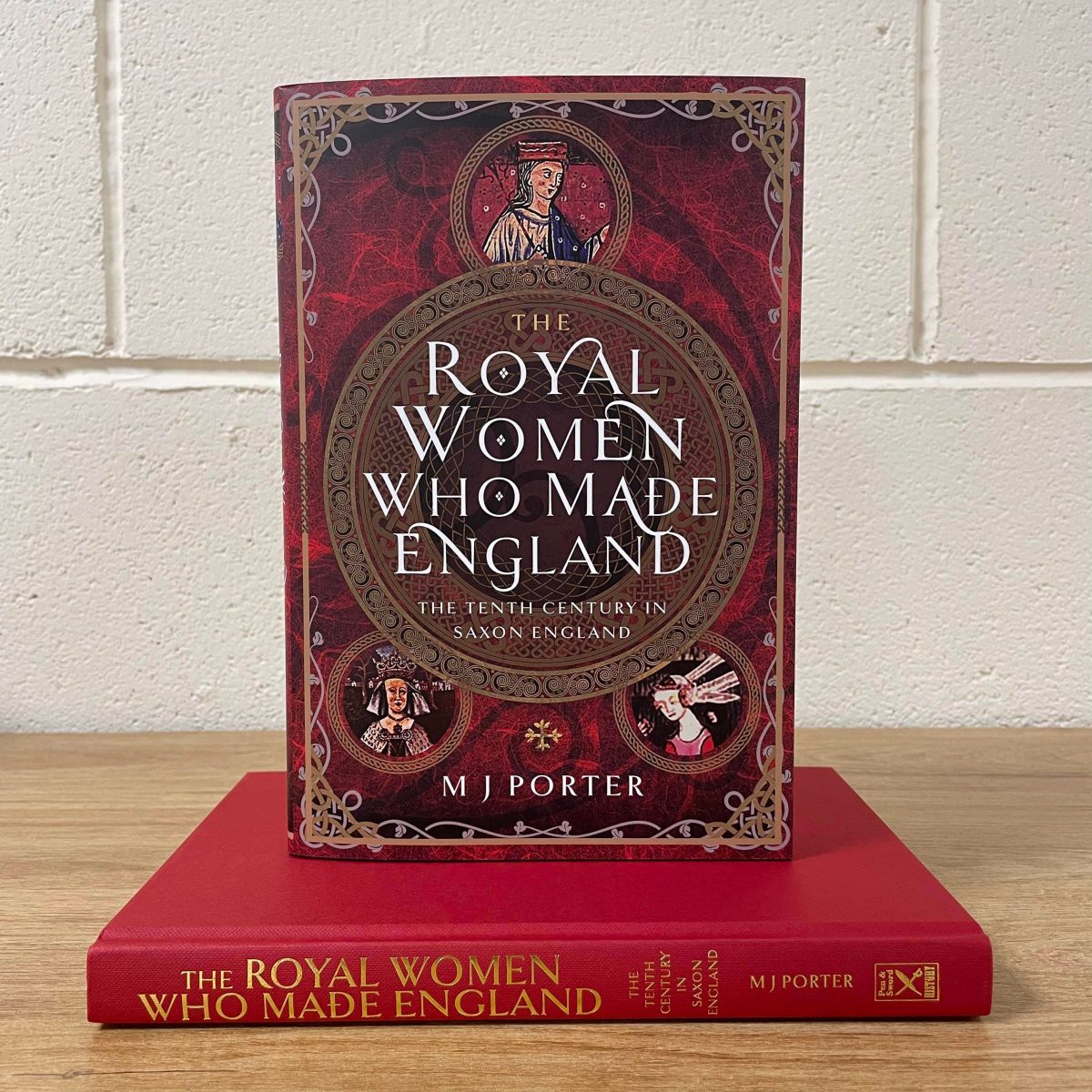
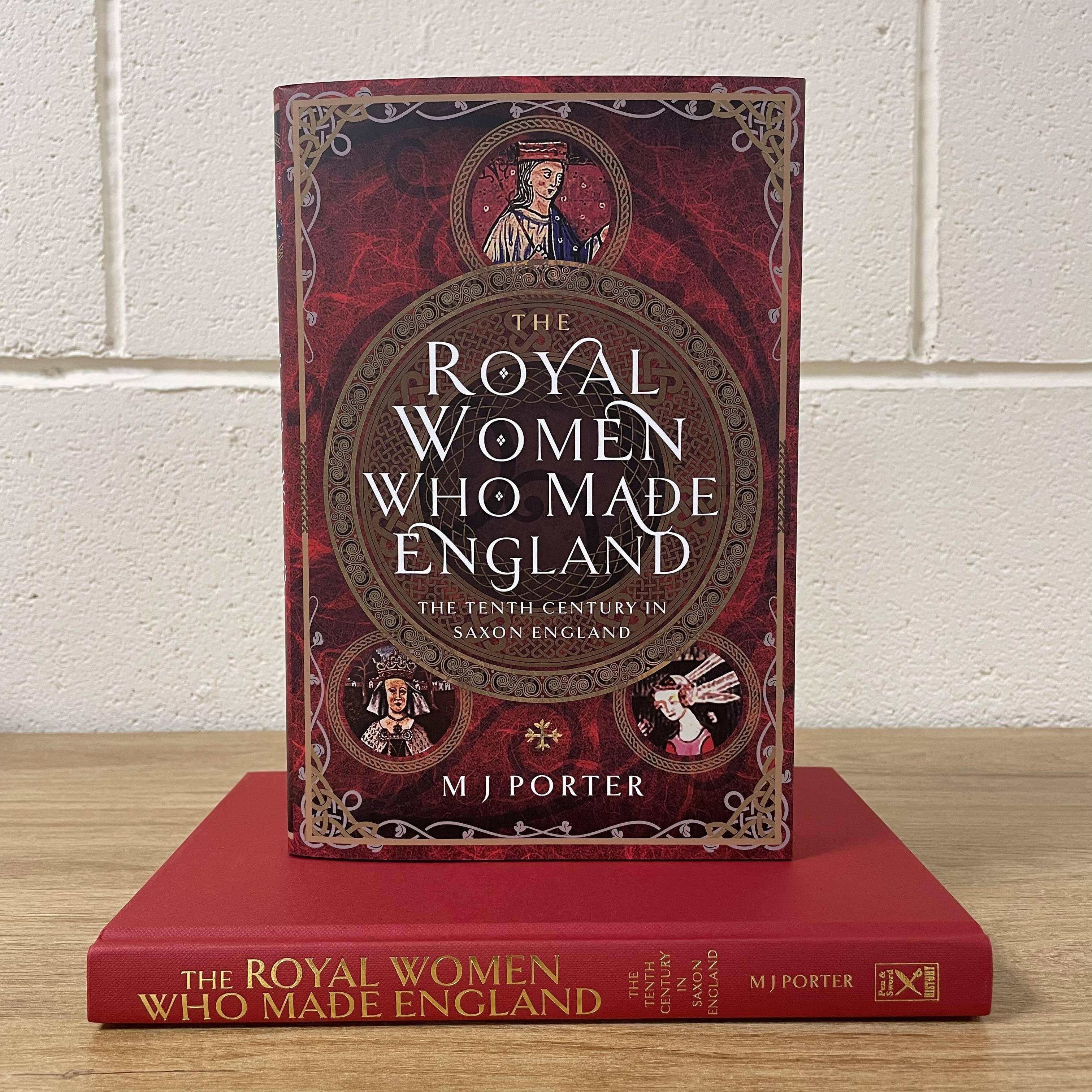
My first gold-lettered spine:) The Royal Women Who Made England

Here she is, and what a thing of beauty.

https://amzn.to/49iWurx

And the epub version is now saying it’s available direct from Pen and Sword using this link if you don’t want to wait for a hardback to be delivered.

https://www.pen-and-sword.co.uk/The-Royal-Women-Who-Made-England-ePub/p/50369

Reviews are starting to come in, and I’d like to thank all the reviewers for taking the time to have a look at The Royal Women Who Made England. You can check out the reviews over on the Pen and Sword website.

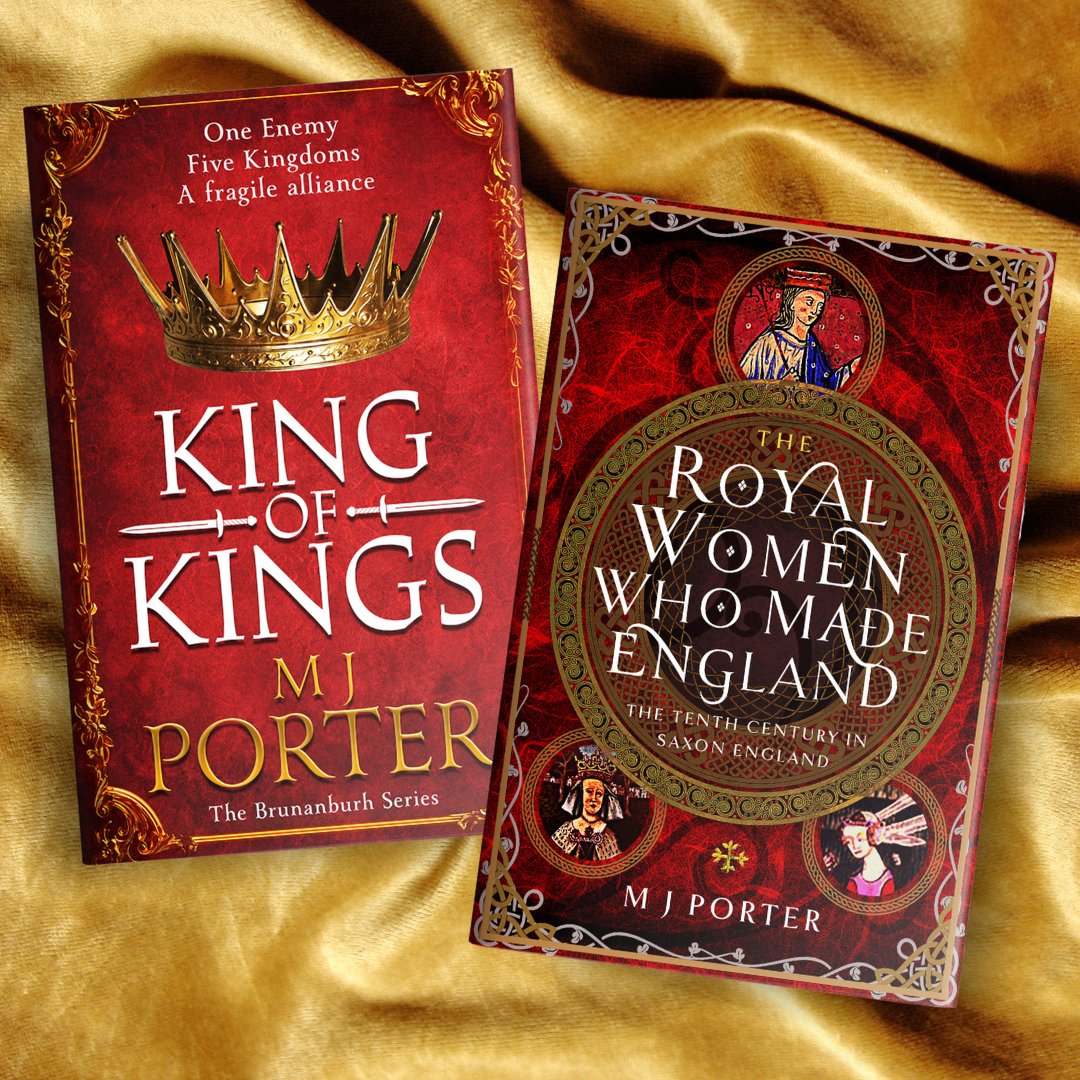
In the meantime, don’t forget to enter the combined competition between my two publishers for signed copies of The Royal Women and King of Kings (UK only. Closing date 6th Feb 2024). You can find the details here.

And, I have another little video to share with you below about one of the later Anglo-Norman sources I made use of while researching the book.

Competition time, and an update on the ebook version of The Royal Women Who Made England

My fabulous publishers are working together and offering a hardback edition of King of Kings and The Royal Women Who Made England (UK only). To enter you will need to access one of the original posts from Boldwood on Twitter, Facebook or Instagram. I will add links here. (Closing date 6th Feb 2024. T &Cs apply).

I can’t work out how to do the Facebook one:(

https://www.facebook.com/theboldbookclub You might have to hunt for it. Let me know if it’s a pain, or if you know how to do it!


I can also let you know that the ebook/kindle version is now available to preorder, and the US hardback release date is 30th March 2024.

https://books2read.com/TheRoyalWomenWhoMadeEngland

Or purchase directly from the publisher, Pen and Sword

https://www.pen-and-sword.co.uk/The-Royal-Women-Who-Made-England-Hardback/p/24395

Check out the Brunanburh Series page on my blog for my information about my fiction.


And, because I never tire of making a slight fool of myself, here’s me talking about some more of the research I undertook for the book and trying to explain the family tree of Otto I, King of the East Franks. Who knows how successful I’ve been.

Happy (UK) Release Day to The Royal Women Who Made England, my first non-fiction book #newrelease #non-fiction

It feels like I’ve been talking about this book forever, but the day is finally upon us. The Royal Women Who Made England is available in hardback in the UK from today. It will be released in the US in March.

If you’ve been hiding from me for the last few months, you might be wondering what this is all about. So here goes.

Throughout the tenth century, England, as it would be recognised today, formed. No longer many Saxon kingdoms, but rather, just England. Yet, this development masks much in the century in which the Viking raiders were seemingly driven from England’s shores by Alfred, his children and grandchildren, only to return during the reign of his great, great-grandson, the much-maligned Æthelred II.

Not one but two kings would be murdered, others would die at a young age, and a child would be named king on four occasions. Two kings would never marry, and a third would be forcefully divorced from his wife. Yet, the development towards ‘England’ did not stop. At no point did it truly fracture back into its constituent parts. Who then ensured this stability? To whom did the witan turn when kings died, and children were raised to the kingship?

The royal woman of the House of Wessex came into prominence during the century, perhaps the most well-known being Æthelflæd, daughter of King Alfred. Perhaps the most maligned being Ælfthryth (Elfrida), accused of murdering her stepson to clear the path to the kingdom for her son, Æthelred II, but there were many more women, rich and powerful in their own right, where their names and landholdings can be traced in the scant historical record.

Using contemporary source material, The Royal Women Who Made England can be plucked from the obscurity that has seen their names and deeds lost, even within a generation of their own lives.

https://amzn.to/3OlRydn

https://ww…ck/p/24395

So, who were these royal women? While some of us will know Æthelflæd, the Lady of Mercia, either because I think she is one of THE most famous Saxon women, or because of The Last Kingdom TV series and books, but she is merely one of many.

I’ve fictionalised Elfrida and her contemporaries, Eadgifu, the third wife of Edward the Elder and also some of his daughters, as well as Ælfwynn, the daughter of Æthelflæd. My first non-fiction title is me sharing my research that these stories are based upon.

I’ve also ‘found’ many other women of the period who have left some sort of physical reminder, mostly in charters or because their wills have survived.

In total, I discuss over twenty women directly involved with the royal family, either by birth or marriage, and also a further forty, who appear in the sources. I also take a good look at what these sources are and how they perhaps aren’t always as reliable as we might hope. I make an attempt to ‘place’ these women in the known historical events of the period. And draw some conclusions, which surprised even me.

You can find some of my blog posts about these women below.

Æthelflæd

Lady Eadgifu

Ælfwynn

The daughters of Edward the Elder.

The other daughters of Edward the Elder

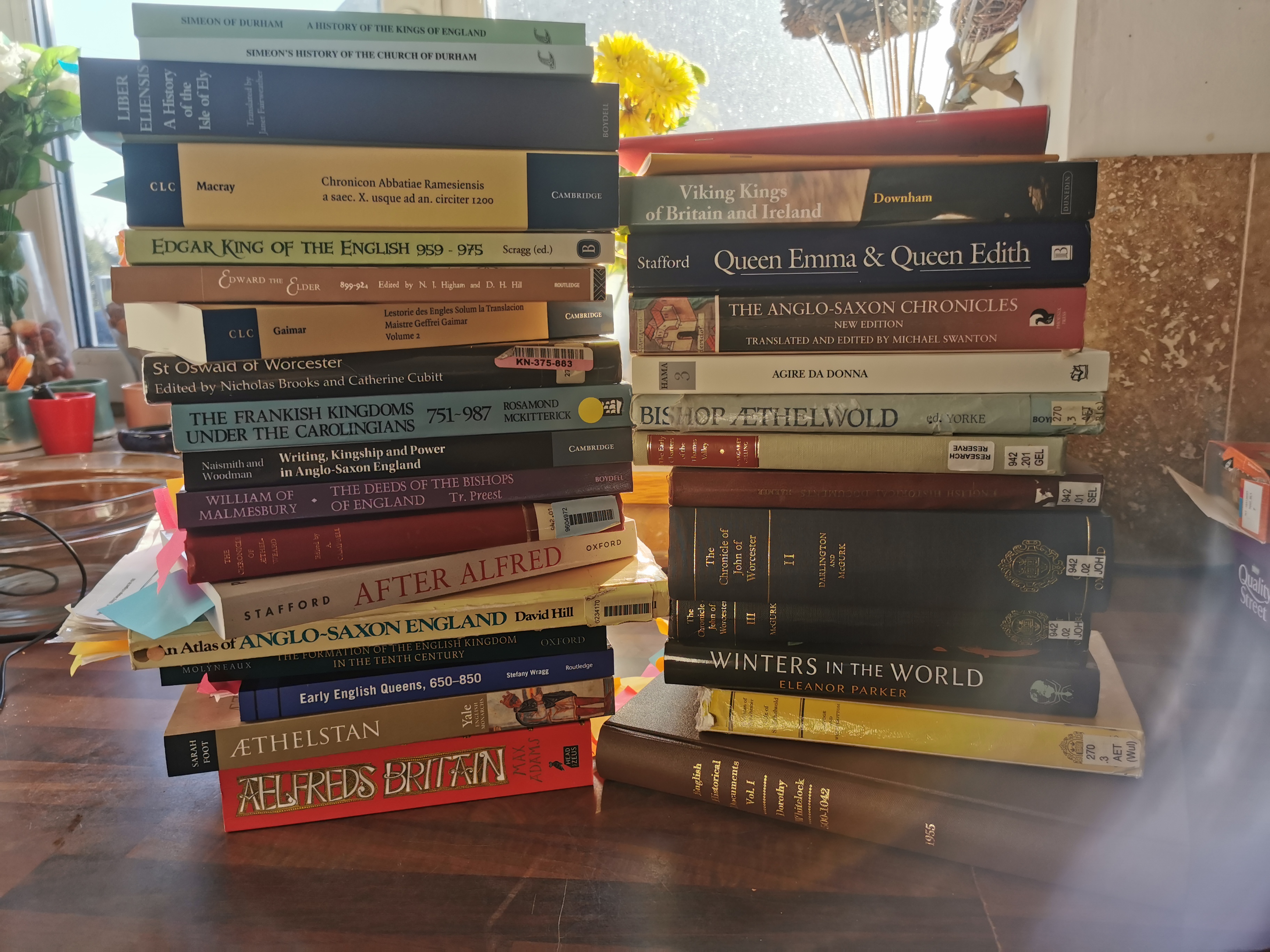
A collection of research books I used while writing The Royal Women Who Made England

Listen to me talk about the Chronicon of Æthelweard (about 6 minutes).

The Royal Women Who Made England: The Tenth Century in Saxon England. But who were these royal women?

In the online resource, The Prosopography of Anglo-Saxon England (PASE), a database of every known name from the Saxon period, 33,981 male names are listed. There are only 1,460 female names for the 600-year period of Saxon England. Only 4 per cent of entries are women (there are also many anonymous ones which may mask more women). Twenty-one (possibly twenty-two) of these belong to the royal women of the tenth century. So, who were they?

Lady Ealhswith, the wife of King Alfred.

Æthelflæd, Lady of the Mercians, presumed to be the oldest of Ealhswith daughters, and her daughter, Ælfwynn.

Æthelgifu, Alfred and Ealhswith’s second daughter, the abbess of Shaftesbury.

Ælfthryth, the Countess of Flanders, their third daughter.

Ecgwynn (if that was her name), mother to King Athelstan, and his unnamed sister, given the name of Ecgwynn/Edith in later sources

Lady Ælfflæd the second wife of Edward the Elder. They had many children. Six of them were daughters, Æthelhild, Eadgifu, Eadflæd, Eadhild, Eadgyth and Ælfgifu.

Edward’s third wife, Lady Eadgifu, certainly had one daughter, Eadburh. (There is the possibility that she had two.)

Ælfgifu of Shaftesbury, whose mother Wynflæd is named, was the first wife of Edmund. Æthelflæd of Damerham was Edmund’s second wife.

Edmund’s oldest son, Eadwig, married another Lady Ælfgifu.

Edmund’s youngest son, Edgar, would marry, or have children with no fewer than three women, Æthelflæd, Wulfthryth and Elfrida/Ælfthryth. From these three unions, one daughter was born, Edith/Eadgyth.

Another Ælfgifu was the first wife of Æthelred II. His second wife was Lady Emma of Normandy. At least four daughters were born to Ælfgifu, a daughter (also called Ælfgifu), Eadgyth, Wulfhild and Ælfthryth, while Lady Emma was the mother to Gode.

You can read all about these women in my non-fiction book, and there are also some links to blog posts I’ve written, which may be of interest.

Purchase links (Hardback)

https://amzn.to/3vVNjiw

https://www.pen-and-sword.co.uk/The-Royal-Women-Who-Made-England-Hardback/p/24395


Below you can hear me try and explain the importance of the marriages of some of these women into the West Frankish dynasty. I also forget the title of my non-fiction title, and generally make a bit of a mess of it. Enjoy:)

The Family of Charles III, the king of the West Franks (in my own words)

What to read after The Brunanburh Series #hisffic #TheTenthCentury

I do appreciate that it’s not exactly a bad problem to have, but I am sometimes concerned that readers are not altogether sure where to go after finishing one of my series and hopefully, enjoying it. Never fear, for I have put together a handy little guide, hopefully picking out the elements that readers might have enjoyed in one particular series, and applying them to other ones.

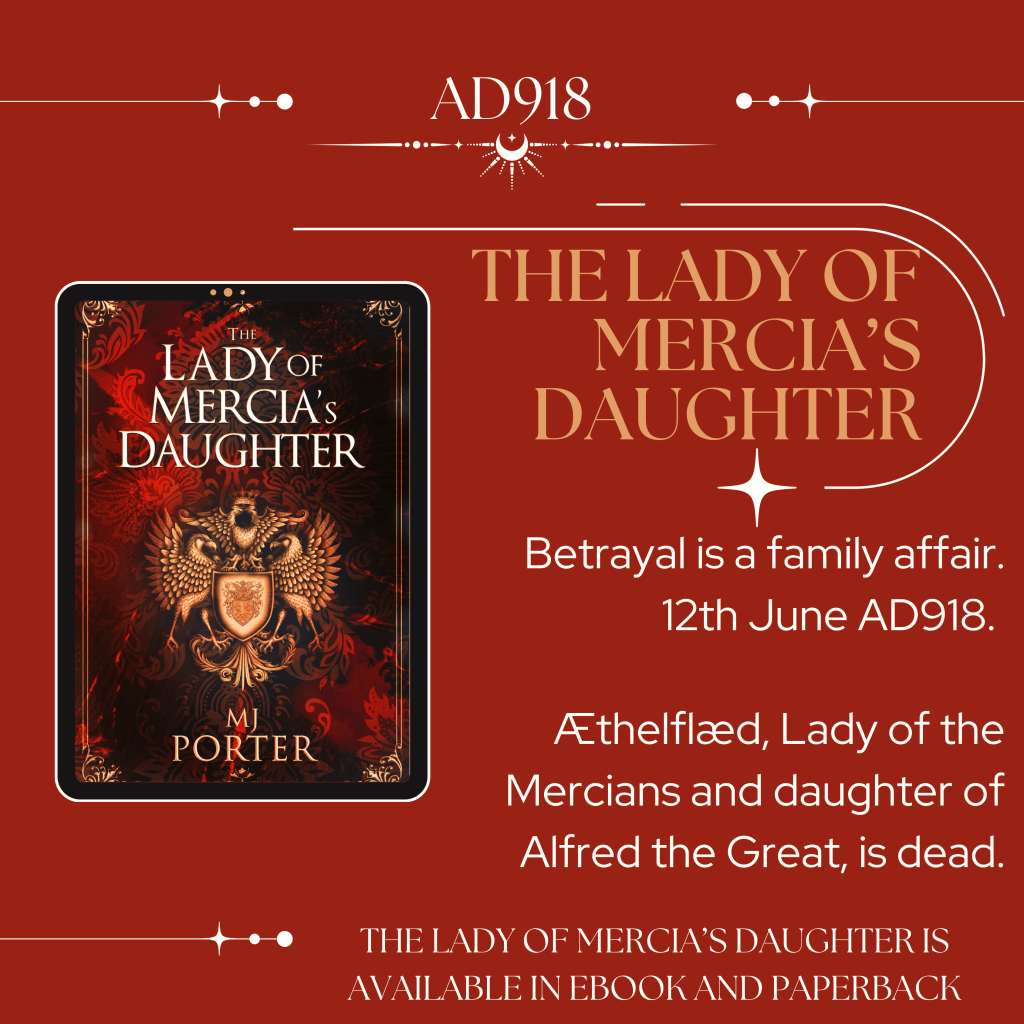
So, for readers interested in what happened before King of Kings, The Lady of Mercia’s Daughter and its sequel, A Conspiracy of Kings, offer a retelling of the Lady Ælfwynn’s life. The books also feature a younger Athelstan, and there may be a few other figures from the Brunanburh series in there as well.

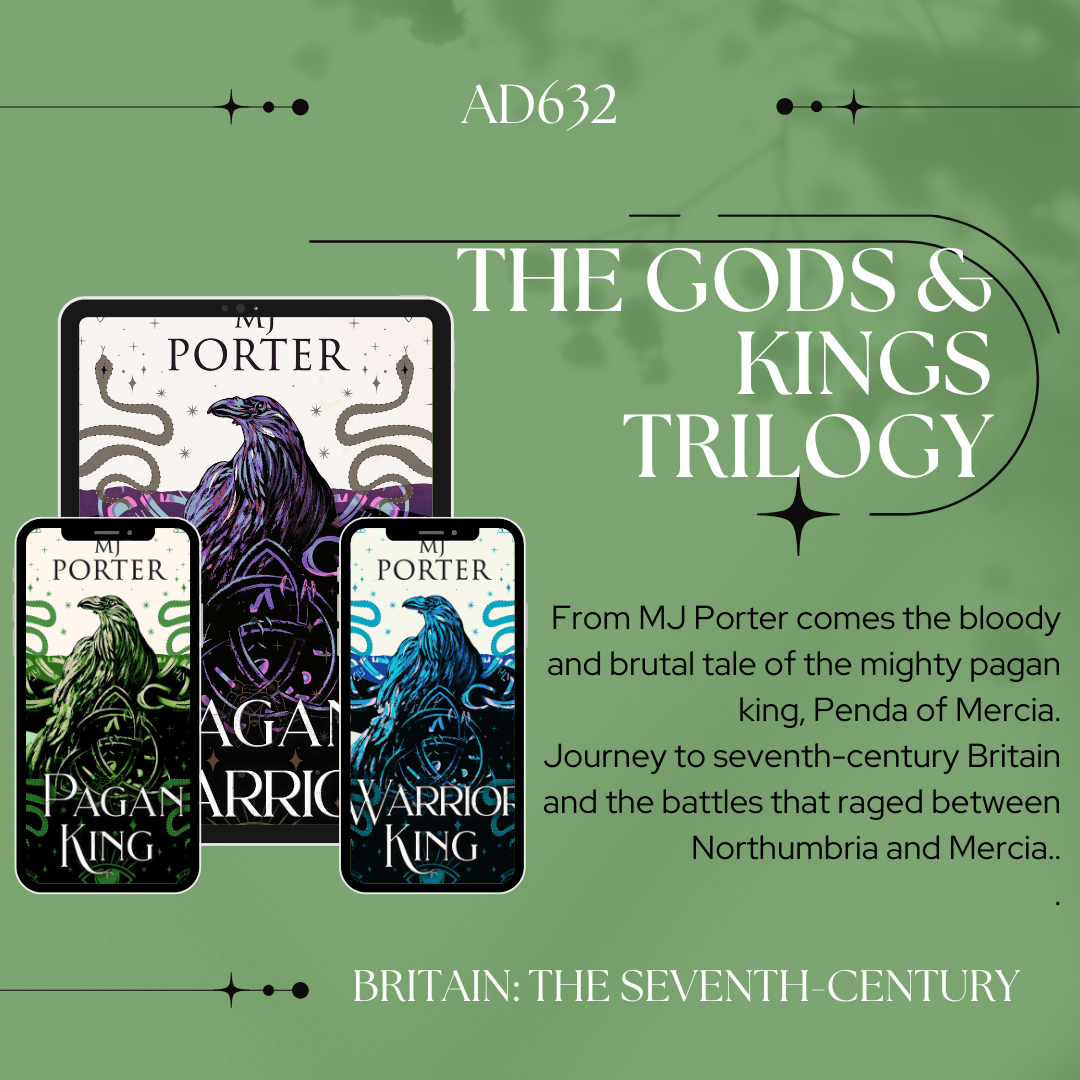
For those interested in England before it was England, or rather the idea of Five kingdoms, then the Gods and Kings trilogy, starting with Pagan Warrior, is really where you want to be. Step back to the seventh century, a time before Viking raiders, but with just as many ambition and brutal warrior kings.

And if it is the conflict and band of warriors that interests you, then the Eagle of Mercia Chronicles might well be where you could go next. Follow young Icel as he realises he must become a warrior, not a healer if he is to protect Mercia from her enemies beginning with Son of Mercia, set nearly a hundred years before the events of Brunanburh.

If you want books with a very healthy dose of violence, (and swearing), then The Mercian Ninth Century is the series for you, beginning with The Last King. Also set before the events of Brunanburh, (in the 870s) this series is all about warriors, violence, and overcoming (hopefully) all the odds.

(The series is also available without the stronger language. Follow this link as otherwise, it’s quite hard to find).

I hope you find something you like, and don’t forget, to sign up for my mailing list to keep up to date with all things Saxon England and to receive a free ebook download via Bookfunnel.

Posts

Listen to me on the A Slice of Medieval Podcast with Derek Birds and Sharon Bennett Connelly

I’m delighted to share details of the A Slice of Medieval Podcast I’m featured on this week. I hope you enjoy the discussion about Brunanburh, King Athelstan and not forgetting, Olaf Scabbyhead.

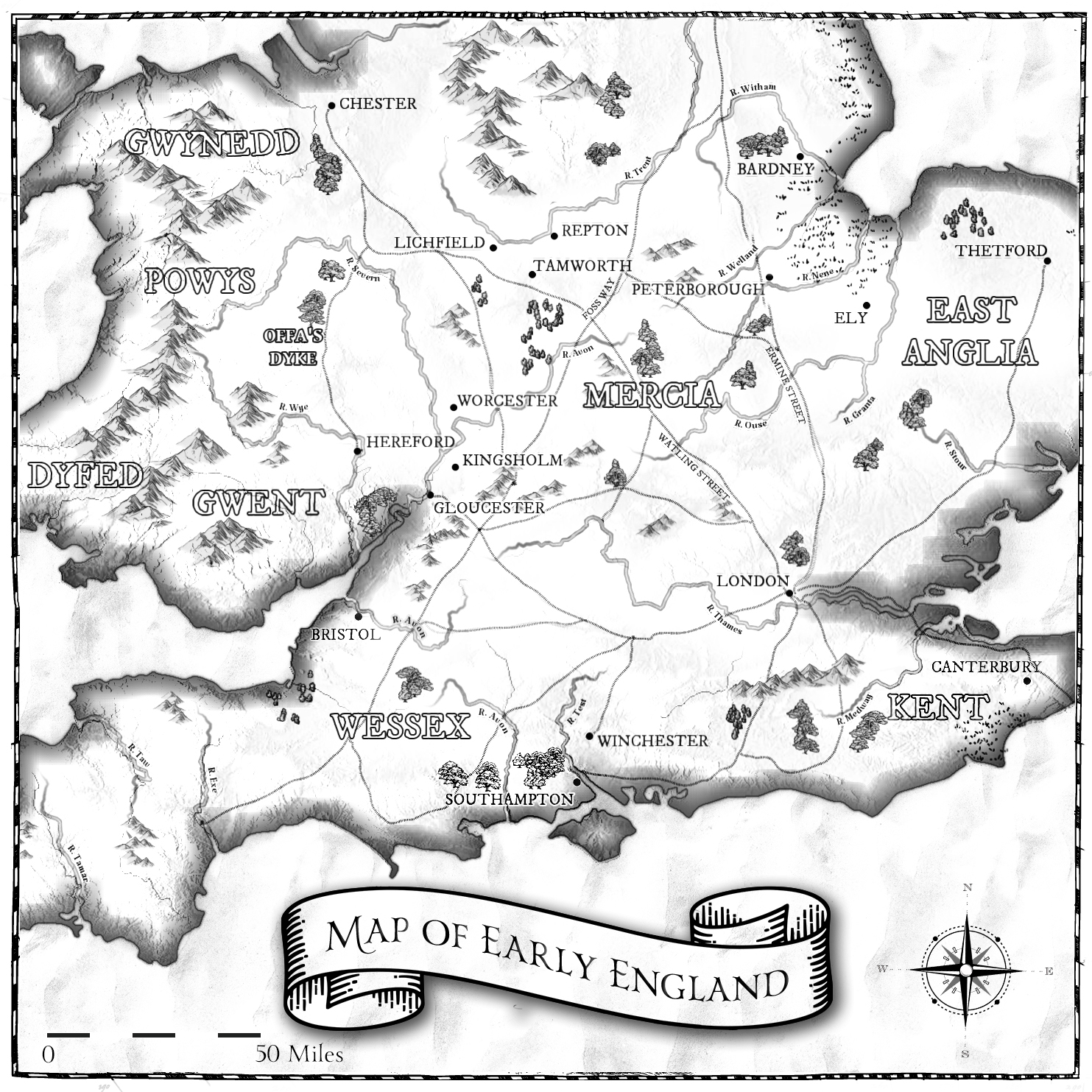
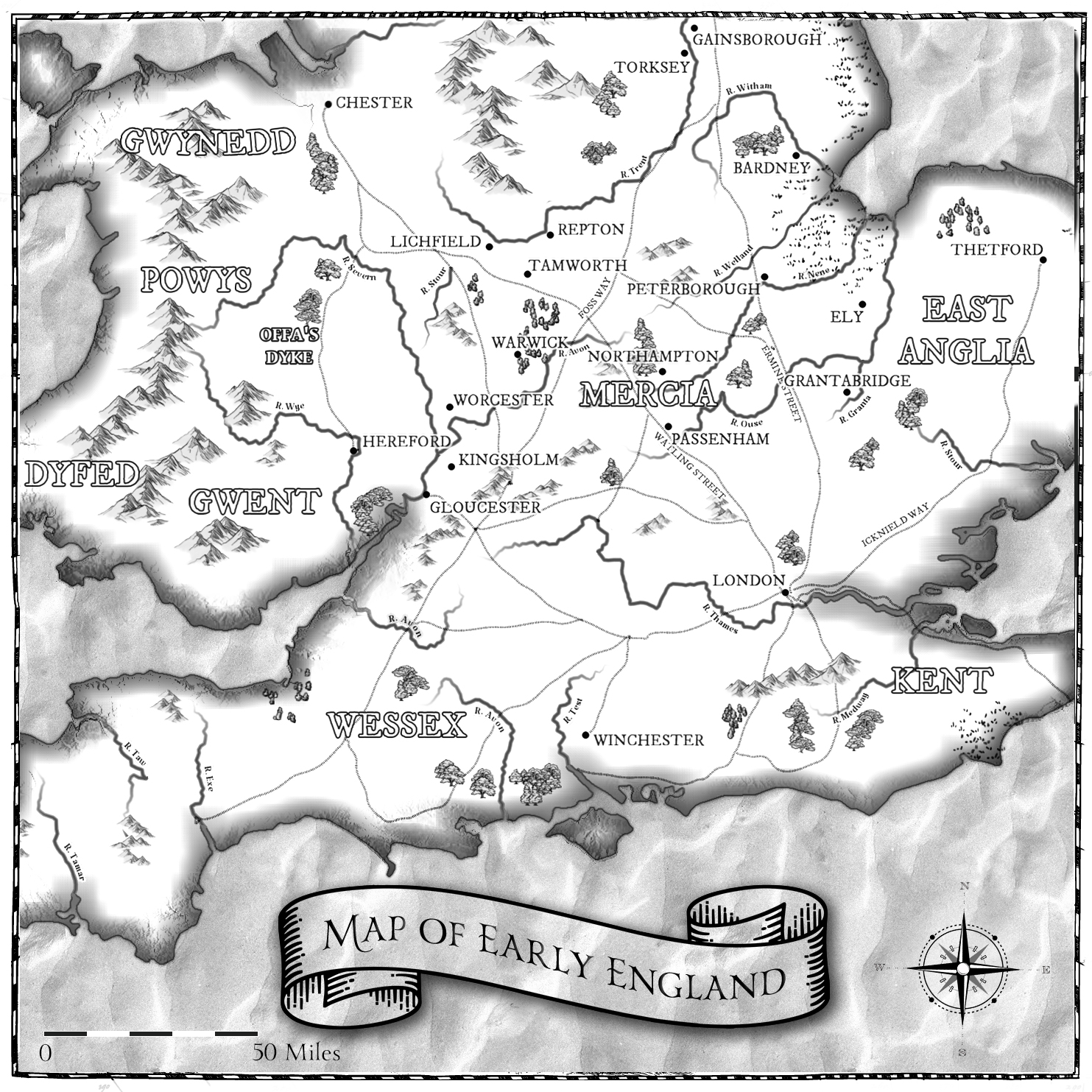
I’ve added the map below so you can see where I’m talking about during the podcast.

Meet the characters from Clash of Kings, Idwal of Gwynedd.

Idwal of Gwynedd has long been a character in the Brunanburh series, but it appears I’ve been remiss in not writing a blog about him. So here goes.

I confess, I’ve had quite a lot of fun with Idwal, pitching him against Hywel. But, I’m not sure that’s actually very wide of the mark.

Idwal of Gwynedd and Hywel were cousins. Their fathers were both sons of perhaps the second most well-known king of Wales, Rhodri Mawr. Hywel being the first (at least in my mind). Rhodri Mawr had held much of Wales, and was accorded the title King of the Britons. On his death, at the hands of King Alfred of Wessex, the kingdoms fractured back into their constituent parts. Idwal’s father ruled in Gwynedd. Hywel’s in Seisyllwg. Hywel succeeded his father while very young and quickly grew his power base. Idwal became king of Gwynedd in 916.

We first met Idwal in King of Kings in 927. He was, unwillingly, signing the accord with Athelstan at Hereford after the one agreed with the northern kings at the treaty of Eamont. Idwal visited England on multiple occasions, according to the surviving charter evidence, where he’s shown attesting Athelstan’s charters in 928, 931, 934 and 935. (S400, S413, S416, S417, S425, S407, S1792 and S434 – see the Electronic Sawyer for more information about these charters).

In my interpretation of him, he’s a very unwilling participant, more likely to look to the Norse for an alliance than the English, or indeed, his cousin, Hywel.

When we return to him, in Clash of Kings, Idwal, is once more, a man aggrieved by the success of the English king. Read Clash of Kings to discover what fate has in store for Idwal.

He is perhaps one of the most fun characters in Brunanburh – a grouchy man who is happy to do all he can to disrupt the more staid approach of King Athelstan of the English, and who resents his cousin’s influence with the English.

books2read.com/King-of-Kings

books2read.com/kingsofwar

books2read.com/clashofkings


Read about all the characters in The Brunanburh Series.

Map design by Flintlock Covers

My new book, Clash of Kings, has a number of main characters. Meet Lady Eadgifu. #histfic #non-fiction #Brunanburh

Clash of Kings has a number of characters, and some might be surprised to find Lady Eadgifu amongst them, but she was an incredibly important historical character, and I couldn’t leave her out of the narrative set at the English court.

Lady Eadgifu was the third wife of Edward the Elder (r.899-924), king of the Anglo-Saxons. Edward the Elder was the father of King Athelstan, and a whole host of daughters, as well as five sons. Lady Eadgifu would, it seems, have been young when she married the aging Edward the Elder, and that meant that she long outlived him, and also, that her three children (possibly four, but I’ve opted for three) were young when their father died. And two of these children were sons, Edmund (born c.921) and Eadred (born c.923). Her daughter, Eadburh, is thought to have been the oldest of the three children, born c.919.

While Lady Eadgifu, from what’s known (and it isn’t much, as there are few surviving charters from the end of Edward’s reign) perhaps had little role to play while her husband lived, other than wife and mother to the king’s children, following his death, she became increasingly significant. She was the daughter of an ealdorman, who perhaps died just before her birth, and her family are said to have had connections with Kent. Indeed, it’s often stated that she brought her husband Kent with their union. By that, what’s often meant, is the loyalty of the Kentish people. Remember, at this time, we’re still just before the creation of ‘England’ as we would now recognise it.

Sadly, very little is known about Lady Eadgifu (and she’s not alone in this – many of the royal women ‘disappear’ at points in the historical record, and on occasion, are entirely lost.) We know about a land dispute she was involved in, and also much more information for after Athelstan’s reign.

Indeed, it has been said that during Athelstan’s reign,

‘Nor is it surprising that Eadgifu, as the consort of the previous king, served little role in her stepson’s court.[i]

[i] Firth, M. and Schilling, C. ‘The Lonely Afterlives of Early English Queens’, in Nephilologus September 2022, https://doi.org/10.1007/s11061-022-09739-4p.7

However, Barbara Yorke believes that,

‘the enhanced position [of Lady Eadgifu] may also have been developed specifically for the widowed Eadgifu as part of an alliance with her stepson Æthelstan [Athelstan] in which she supported his position and he recognised her sons as his heirs.’[i]


[i] Yorke, B. ‘The Women in Edgar’s Life,’ in Edgar, King of the English, 959-975 Scragg, D. ed (The Boydell Press, 2008), p.146


And it is this option that I’ve decided to explore in the Brunanburh series. Lady Eadgifu was wife to a king. She would have known her worth, even when faced with a stepson as the king of the English, and another stepson, and stepdaughters, who perhaps didn’t share any love for their, potentially, younger stepmother.

Read Clash of Kings to discover her role in the aftermath of the victory for the English at Brunanburh.

Map design by Shaun at Flintlock Covers

books2read.com/King-of-Kings

books2read.com/kingsofwar

books2read.com/clashofkings


Read about all the characters from the Brunanburh Series.

Posts

My new book, Clash of Kings, has a number of main characters. Meet Hywel, the king of the Welsh.

My new book, Clash of Kings, is a multi-viewpoint novel telling the story of events in Britain from 937-942. I thought it would be good to share details of the historical people my main characters are based on.

My portrayal of Hywel, better known as Hywel Dda (which autocorrect is determined should say Dad), and which means ‘good’ (a unique epithet in Wales), is of course, fictional, but who was the historical Hywel? Firstly, it should be noted that this epithet is a later invention, not assigned to Hywel until at least the twelfth century, and perhaps, as Dr. Kari Maund has commented in The Welsh Kings: Warriors, Warlords and Princes, a reflection of border events at that period rather than the earlier tenth century. (Dr Maund was one of my university lecturers, so she knows her stuff).

By Unknown author – This image is available from the National Library of WalesYou can view this image in its original context on the NLW Catalogue, CC0, https://commons.wikimedia.org/w/index.php?curid=41427788

Hywel has no date of birth recorded, and indeed, like Constantin of the Scots, he seems to have ruled for a long time providing much-needed consistency. Hywel ap Cadell was the grandson of the famous Rhodri Mawr, who’d united the kingdoms of the Welsh during his rule. But, this unity fragmented on Rhodri’s death.

To begin with, Hywel ruled Dehuebarth, probably with his brother, Clydog, (who may have been the younger brother) after the death of their father in c.911. He, his brother, and his cousin, Idwal of Gwynedd, submitted to the English king, Edward the Elder in the late 910s.

‘and the kings of Wales: Hywel and Clydog and Idwal and all the race of the Welsh, sought him as their lord [Edward]’. ASC A 922 corrected to 918 (Swanton, M. trans and edit The Anglo-Saxon Chronicles, (Orion Publishing Group, 2000)p.103-4)

Not long after, Clydog died, leaving Hywel as ruler of Dehuebarth. Hywel had also married Elen, the daughter of Llywarch and niece of Rhydderch, the last king of Dyfed, and he was able to use this alliance to eventually claim Dyfed as well.

Hywel’s believed to have been highly educated, and some historians suggest he was particularly fascinated with King Alfred, and all he’d achieved and was therefore keen to emulate many of his actions. This could also be why his name came to be associated with the codification of laws in later traditions. What fascinates me most about Hywel is his decision to ally closely with King Athelstan. Certainly, he’s a intriguing figure in early tenth-century Britain, and not just because we know he made a pilgrimage to Rome in 928, and still managed to return back to his kingdom and continue ruling it.

Hywel seems to have distanced himself from events which led to the battle of Brunanburh in 937, but in my portrayal of him, he still classifies himself as very much Athelstan’s ally. Events in Clash of Kings might well test that allegiance.

Map design by Shaun at Flintlock Covers

books2read.com/King-of-Kings

books2read.com/kingsofwar

books2read.com/clashofkings


Read about all the characters in the Brunanburh series.