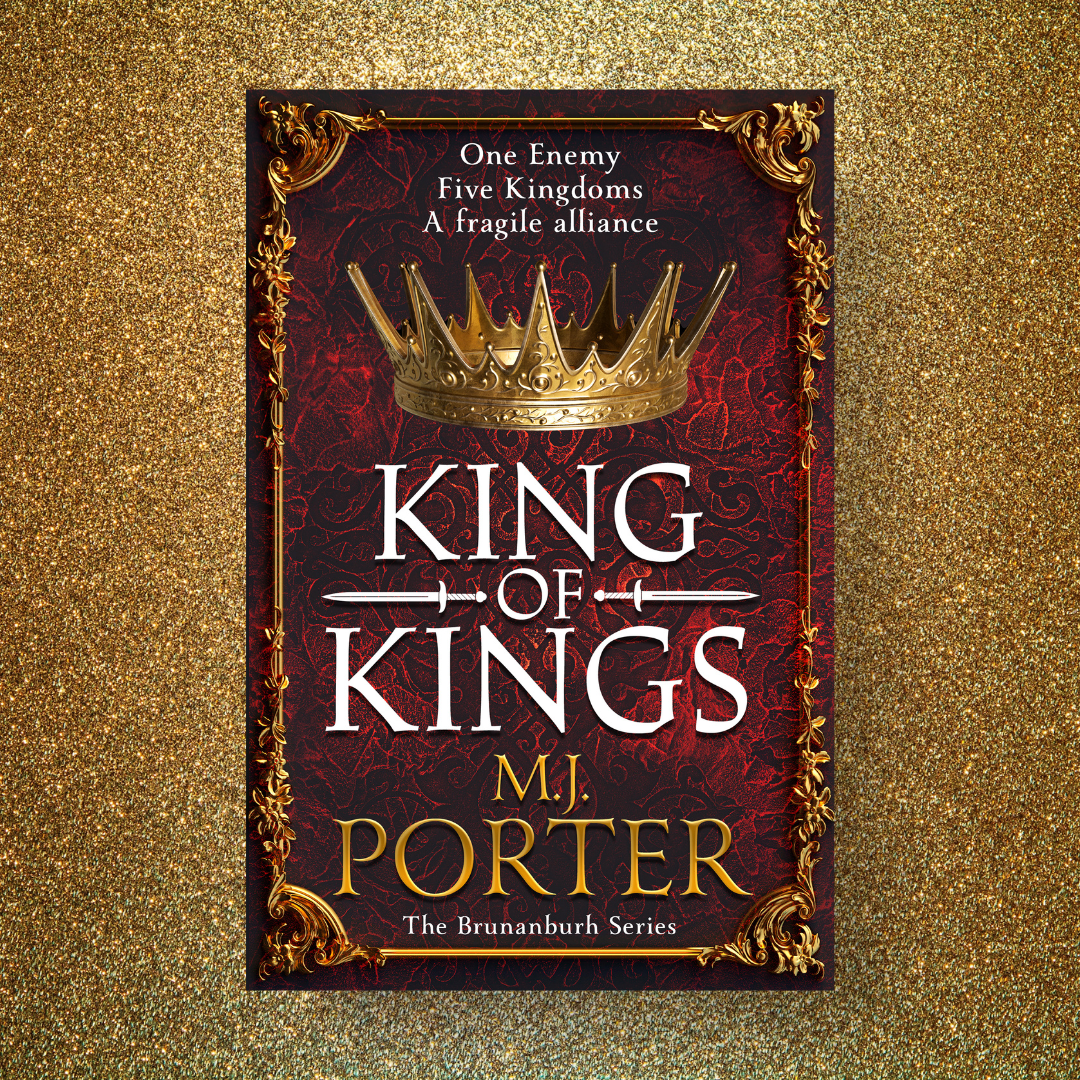
My new book, King of Kings, is a multi-viewpoint novel telling the story of events in Britain from 925-934. I thought it would be good to share details of the historical people my main characters are based on.
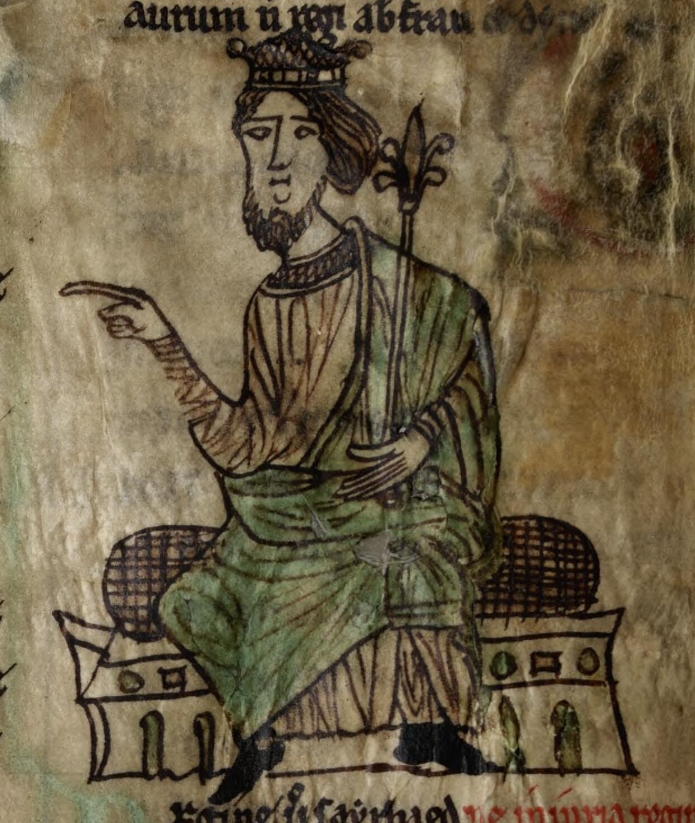
My portrayal of Hywel, better known as Hywel Dda (which autocorrect is determined should say Dad), and which means ‘good’ (a unique epithet in Wales), is of course, fictional, but who was the historical Hywel? Firstly, it should be noted that this epithet is a later invention, not assigned to Hywel until at least the twelfth century, and perhaps, as Dr. Kari Maund has commented in The Welsh Kings: Warriors, Warlords and Princes, a reflection of border events at that period rather than the earlier tenth century. (Dr Maund was one of my university lecturers, so she knows her stuff).
Hywel has no date of birth recorded, and indeed, like Constantin of the Scots, he seems to have ruled for a long time providing much-needed consistency. Hywel ap Cadell was the grandson of the famous Rhodri Mawr, who’d united the kingdoms of the Welsh during his rule. But, this unity fragmented on Rhodri’s death.
To begin with, Hywel ruled Dehuebarth, probably with his brother, Clydog, (who may have been the younger brother) after the death of their father in c.911. He, his brother, and his cousin, Idwal of Gwynedd, submitted to the English king, Edward the Elder in the late 910s.
‘and the kings of Wales: Hywel and Clydog and Idwal and all the race of the Welsh, sought him as their lord [Edward]’. ASC A 922 corrected to 918 (Swanton, M. trans and edit The Anglo-Saxon Chronicles, (Orion Publishing Group, 2000)p.103-4)
Not long after, Clydog died, leaving Hywel as ruler of Dehuebarth. Hywel had also married Elen, the daughter of Llywarch and niece of Rhydderch, the last king of Dyfed, and he was able to use this alliance to eventually claim Dyfed as well.
Hywel’s believed to have been highly educated, and some historians suggest he was particularly fascinated with King Alfred, and all he’d achieved and was therefore keen to emulate many of his actions. This could also be why his name came to be associated with the codification of laws in later traditions. What fascinates me most about Hywel is his decision to ally closely with King Athelstan which will be explored in King of Kings. Certainly, he is a intriguing figure in early tenth-century Britain, and not just because we know he made a pilgrimage to Rome in 928, and still managed to return back to his kingdom and continue ruling it.
My new book, King of Kings, is a multi-viewpoint novel telling the story of events in Britain from 925-934. I thought it would be good to share details of the historical people my character are based on.
My portrayal of Constantin, the king of the Scots, is of course fictional in King of Kings, but he is based on a historical individual, Constantin (e) II, so who exactly was he?
Constantin is a fascinating character. Again, and as with Athelstan, his exact date of birth is unknown, but it must have been, at the latest, by 877/8, when his short-reigned father died.
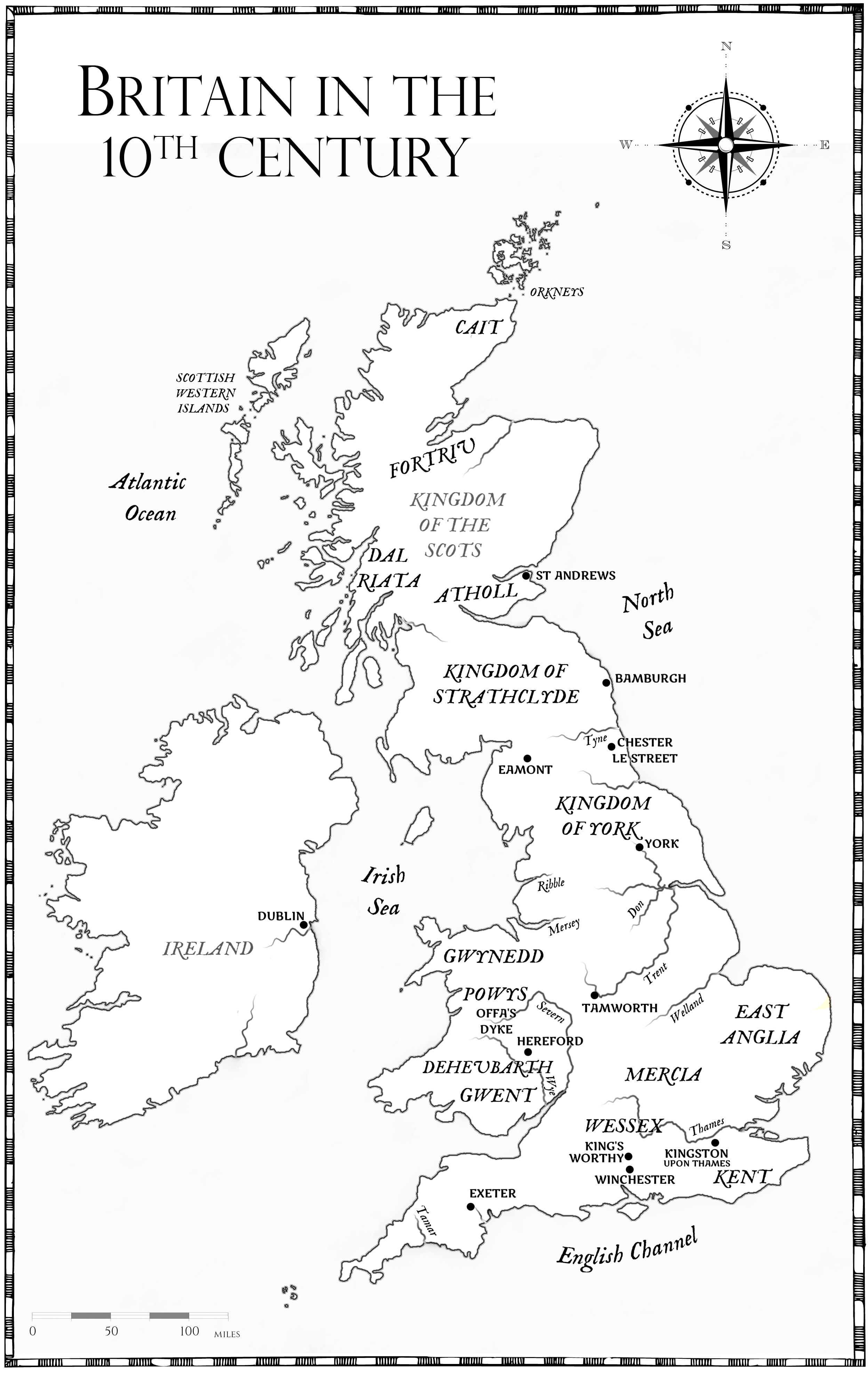
By 900, Constantin was the king of the Scots (we think – there is some confusion about this). This wasn’t yet quite Scotland, but it was getting there. The ancient kingdoms of Cait, Fortriu, Atholl and Dal Riata, were ruled by one king, Constantin. But, he hadn’t succeeded his father, Aed, but rather a man named Domnall II, his cousin. At this time there were two rival dynasties and they strictly alternated the kingship.
Affairs in the kingdom of the Scots often intermingled with those of the independent kingdom of Bamburgh, Strathclyde, and of course, the Norse, or Viking raiders, if you will. Indeed, the entry recording Constantin’s death in the Annals of Ulster, reads as though there was often strife.
‘Constantinus son of Ed held the kingdom for xl years in whose third year the Northmen plundered Dunkeld and all Albania. In the following year the Northmen were slain in Strath Erenn…And the battle of Tinemore happened in his xviii year between Constantin and Ragnall and the Scotti had the victory. And the battle of Dun Brunde in his xxxiiii year.’ (Alex Woolf, From Pictland to Scotland, 789-1070,p.126)
Constantin, ruling for decades, and I mean decades, seems to have brought much needed stability to the kingdom, as affairs there very much mirrored the emerging ‘England’ to the south.
‘Constantin’s reign has increasingly come to be see as one of the most significant in the history of Scotland. Not only was it very long, at least forty years, but it was also the period during which conflict and diplomatic relations between a kingdom recognisably ancestral to Scotland and one recognisably ancestral to England first occurred.’ (Alex Woolf, From Pictland to Scotland, 789-1070, p.128)
Constantin allied with the rulers of Bamburgh, and York, and also, on occasion, both Æthelflæd of Mercia and Edward the Elder, after her death. But, he seems to have been quite flexible in his thinking, and was prepared to pick and choice as he saw fit.
By the beginning of King of Kings, Constantin would have been in his mid-forties, and he was still to rule for many years to come, and he was certainly a more than adequate counterpart to Athelstan, king of the English, no doubt helped by his sons and grandsons, as his reign continued.
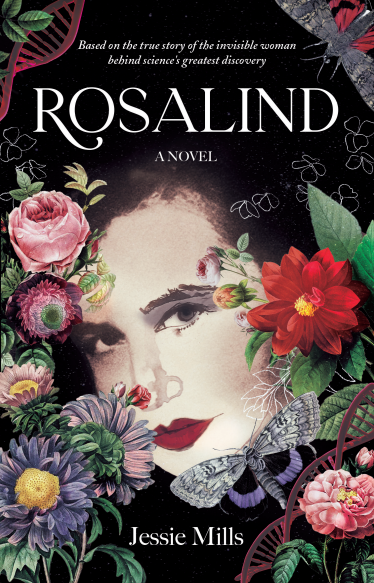
I’m delighted to welcome Jessie Mills to the blog, with an extract from her novel, Rosalind: DNA’s Invisible Woman
Extract from ROSALIND: DNA’s INVISIBLE WOMAN, Part I, chapter 1 (Exodus | Shemot)
Norway, August 1939
As I stand in line with the other passengers, a dour-faced policeman snatches my passport from my hands. He looks up to examine me from beneath a deeply etched brow.
‘English?’ he asks.
His menacing eyes follow me as I walk past him and up the steps to board the ocean liner. The port town of Bergen is dotted with wooden houses in vivid hues of red and yellow. It is a different sight from the sleepy fishing village on our inbound journey when the Sheriff’s office was closed. I wished then that we could have flown from Gressholmen Airport, in one of the new metallic Imperial Airways planes. They were as big and shiny as the Zeppelins on the banners in Paris. But Father insisted that we couldn’t get the family Austin on one.
On our return, queues into the port stretch for several miles. The jetty is crawling with uniformed police in visor caps, which shield their faces from the stark Norwegian sun. The police are checking passengers’ papers before boarding the boat.
The ship has cast a deep and foreboding shadow over the steps.
As my feet navigate each rung, the iron staircase creaks and yawns. The structure is gnawing at the bolts on the side of the ship.
The staircase sways in unison with the waves as they lap with force against the steel stern. My feet move in time with the structure, back and forth like a pendulum. I vault two steps at a time, levering my body from every other step until the sun’s rays warm the cloth on my back.
Standing on the ship’s bow, I long to stay there forever. The last of August’s sun is twinkling softly on the water’s peaks. The waves are undulating gently against the hull as the boat crosses the water.
The journey out of the port is smooth. With each ripple and swell of the water, my mind drifts, first to home and then to college. I am due to return to Cambridge in less than a month. Suddenly, a thought grips me. At first, it is fleeting, but the more I try to suppress it, the harder it resurfaces, with agonising intensity. I may never return.
Seconds later, a pummelling sensation rams my stomach. The ship swings to one side, and the rail jolts against my ribs.
‘Navy ships?’ my mother asks.
A Cimmerian mist quickly settles on the water’s surface. Through the haze, a large vessel is visible.
My father’s response is inaudible.
As we descend the poorly lit stairwell at the side of the ship, a tide of panic sweeps over me. My parents and brothers spend the rest of the journey in silence.
Perhaps it is selfish to want the bourgeois life of a scientist, a gentleman’s profession. I like Maths too, as well as Chemistry. Yet while the rest of the world is upended by ideology, science is the last bastion deserving of my faith. From the tiniest molecule to the whole of the universe, science pervades every inch. It is the only language we have to make sense of it.
When you lose everything you ever knew to be true, all you can do is drive forwards to keep the ghosts at bay. Our family holiday to Norway began much like our trip two years before. There were few signs of what would transpire, or how it would change the course of our lives. Sometimes it only takes one event, one meeting, one person, or one kiss, for a life to change forever. That August was to be one of those events.
Here’s the blurb
‘A luminous, pin-sharp portrait of a true trailblazer. Mills’s writing simply glows.’ Zoë Howe, Author, Artist and RLF Writing Fellow at Newnham College, University of Cambridge
Rosalind: DNA’s Invisible Woman tells the true story of the woman who discovered the structure of DNA, whose work was co-opted by three men who won a Nobel prize for the discovery.
Her story is one of hope, perseverance, love and betrayal.
Driven by her faith in science, Rosalind Franklin persisted with her education in the face of formidable obstacles, including the de-reservation of women from war science.
In Norway at the start of World War II, her place at Cambridge’s first women’s college was thrown into jeopardy.
A decade later, she fled Paris upon the news that the research director at the State Chemicals Lab was having an affair. They continued to write to each other in secret.
Rosalind knew when embarking on science, a gentleman’s profession, that the odds would be stacked against a woman’s success. But she did not foresee that her pay would later be cut on account of her age and gender, that she would be burned by the plagiarism rife among her male contemporaries or face her own battle with cancer.
When she took a research post at King’s College London, the head of the physics department switched her subject to DNA at the last minute.
She was tasked with discovering its structure using X-ray crystallography. Could she become the first scientist to map the DNA molecule and would the discovery ultimately be worth it?
When two researchers at Cambridge University, her alma mater, built a three-chain model of DNA weeks after seeing her lecture, she knew that it was wrong.
Scientists at each of the three labs competing in the race to find DNA’s structure had guessed that the molecule had three chains. Her evidence proved them wrong. But would anybody listen?
This is the story of DNA that you won’t find in the history books…
The woman behind science’s greatest discovery has been variously referred to as ‘an obsessive woman’, ‘difficult’, and ‘the dark lady of DNA’. Why was she called these names, and were they justified?
Written by journalist and former Wall Street Journal (PRO) editor Jessica Mills Davies, following nearly three years of intensive archival research, the novel aims to give Rosalind Franklin a voice for the first time in history. Her story is the most well-documented account of ‘the Matilda effect’ and its corollary ‘the Matthew Effect’, whereby women’s contributions to science and other professions are often ignored or misappropriated.
The Exeter Novel Prize-longlisted novel is peppered with copies of original correspondence between her and her contemporaries, illustrating how three men got away with the biggest heist in scientific history.
Jessica is a journalist and author. She has written for publications such as The Independent, The Wall Street Journal and Business Insider, where she investigated the use of flammable cladding in hospital intensive care units in 2020.
Before that she was a member of the steering committee for Women at Dow Jones, where she spent several years as an editor and led the team that uncovered the misuse of funds at Abraaj.
Her debut novel tells the true story of Rosalind Franklin, the invisible woman behind the discovery of DNA’s double helix. It was longlisted for the Exeter Novel Prize 2020.
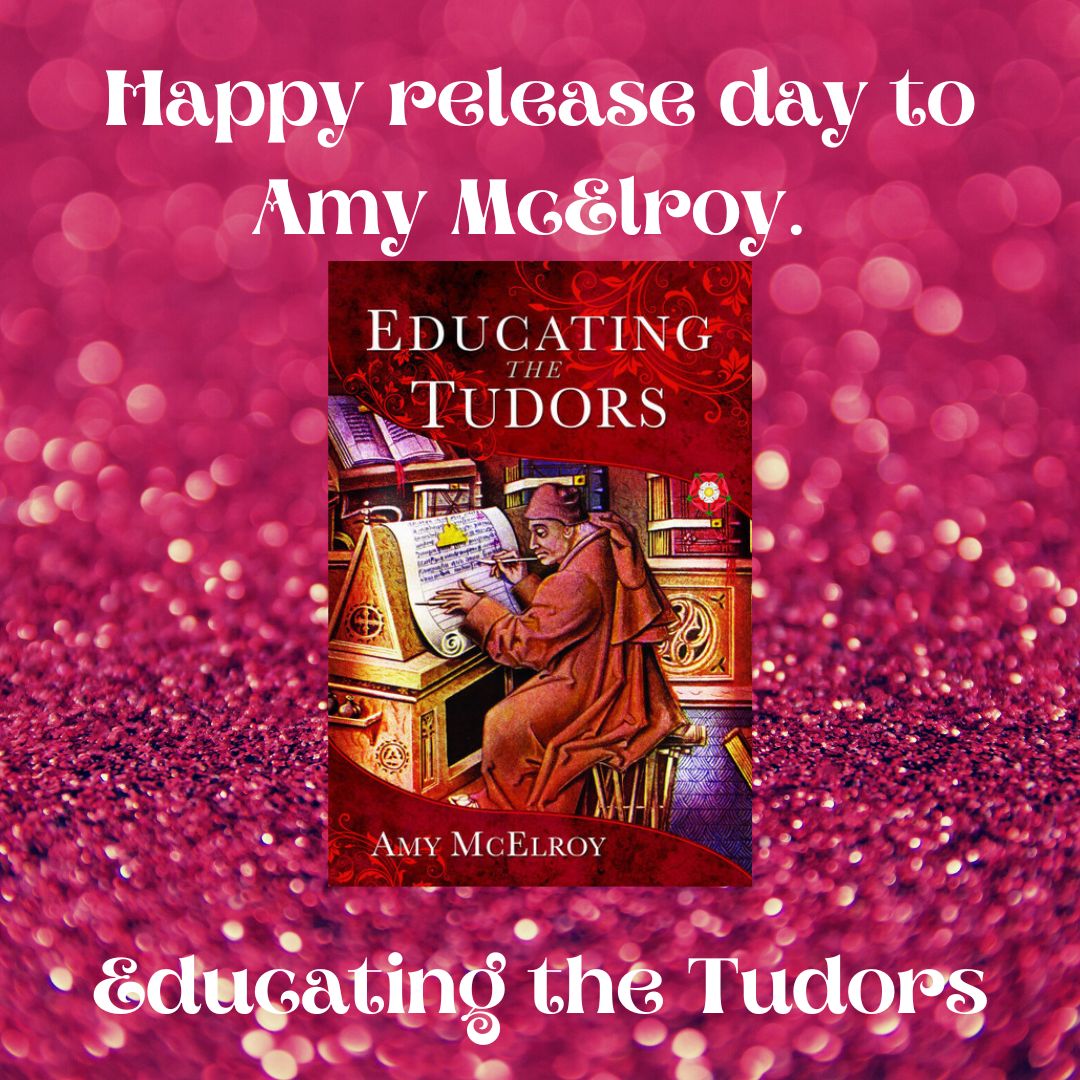
Education during the Tudor era was a privilege and took many forms including schools, colleges and apprenticeships. Those responsible for delivering education came from a variety of backgrounds from the humble parish priest to the most famed poet-laureates of the day. Curriculums varied according to wealth, gender and geography. The wealthy could afford the very best of tutors and could study as much or as little as they chose whilst the poorer members of society could only grasp at opportunities in the hopes of providing themselves with a better future.
The Tudors were educated during a time when the Renaissance was sweeping across Europe and Henry VIII became known as a Renaissance Prince but what did his education consist of? Who were his tutors? How did his education differ to that of his elder brother, Prince Arthur and how did Henry’s education change upon the death of his brother? There is no doubt Henry was provided with an excellent education, particularly in comparison to his sisters, Margaret and Mary. Henry’s own education would go on to influence his decisions of tutors for his own children. Who had the privilege of teaching Henry’s children and did they dare to use corporal punishment?
Educating the Tudors seeks to answer all of these questions, delving into the education of all classes, the subjects they studied, educational establishment and those who taught them.
Educating the Tudors by Amy McElroy is a fascinating and thorough examination of the state of education for all during the Tudor era, following developments due to the Renaissance and the Reformation, as well as the introduction of the printing press. Not content with researching the tutors of the royal children from Arthur to Edward, Amy has also examined education for all levels of society as well as what would have been taught. With an eye for the difference between class, sex and wealth, Amy has examined what education was, and how it was undertaken, as well as the titans who were making use of their interest in learning to advance learning for all, making use of the printing press, even as they sought to catch the eye of the reigning monarch.
And this isn’t just book-learning, but also the paths of apprenticeships, as well as how people became lawyers, and just what effect the Reformation did have on an education system that was so heavily reliant on priests and had to be radically rethought when the monasteries, and later, chantries were closed.
I was fascinated by the subject matter, and learned so much from reading this book – indeed, even things I’ve read about before suddenly made a lot more sense.
An absorbing and well-researched book, which is sure to fascinate all those interested in the Tudors, as well as the development of education in England.
(I found the subject matter absolutely fascinating, especially as I’ve personally been researching the education of the children of King Alfred. I was struck by the similarities, despite the six hundred plus year distance between the two eras. I’m sure I won’t be alone in that – I hope:) And there’s a another link between the Tudors and the Saxons, as it was the renewed interest in learning that is responsible for many of the surviving Saxon text we now have, including the Anglo-Saxon Chronicle.)
My thanks to the author, the publisher and Netgalley for my review copy, but my hardback is in the post as well:)
Meet the Author
Amy my was born and bred in Liverpool before moving to the Midlands to study Criminal Justice eventually becoming a civil servant. She has long been interested in history, reading as much and as often as she could. Her writing journey began with her blog, sharing thoughts on books she had read, before developing to writing reviews for Aspects of History magazine and culminating in her own book.
Wow! I think 2022 has been the year that I read (and listened) to the most books EVER! As I write this, I’m up to 99 titles. I have some ‘holiday’ reading I’m keen to do as well – fingers crossed I make it to the magic 100 for the year (I am including audiobooks in this, and also my own books as I have to read them A LOT, and I’ve also been refreshing a few throughout the year as well.) Even so, I’ve read many, many books, across a number of different genres, but the predominant one has certainly been historical mysteries/cozy crime. I’ve found that this is my ‘happy’ place when trying not to think about my own books. And luckily, Boldwood Books (who publish the Eagle of Mercia Chronicles) have a huge collection of mystery writers, and they’ve autoapproved me on Netgalley, so I’ll never struggle to find something to read in my favourite genre.
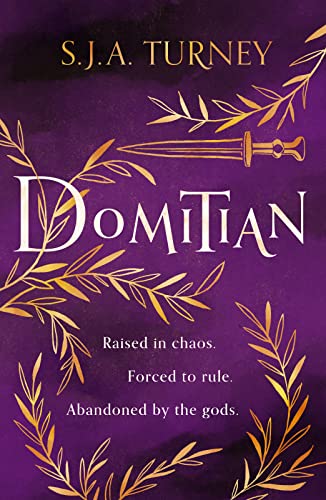
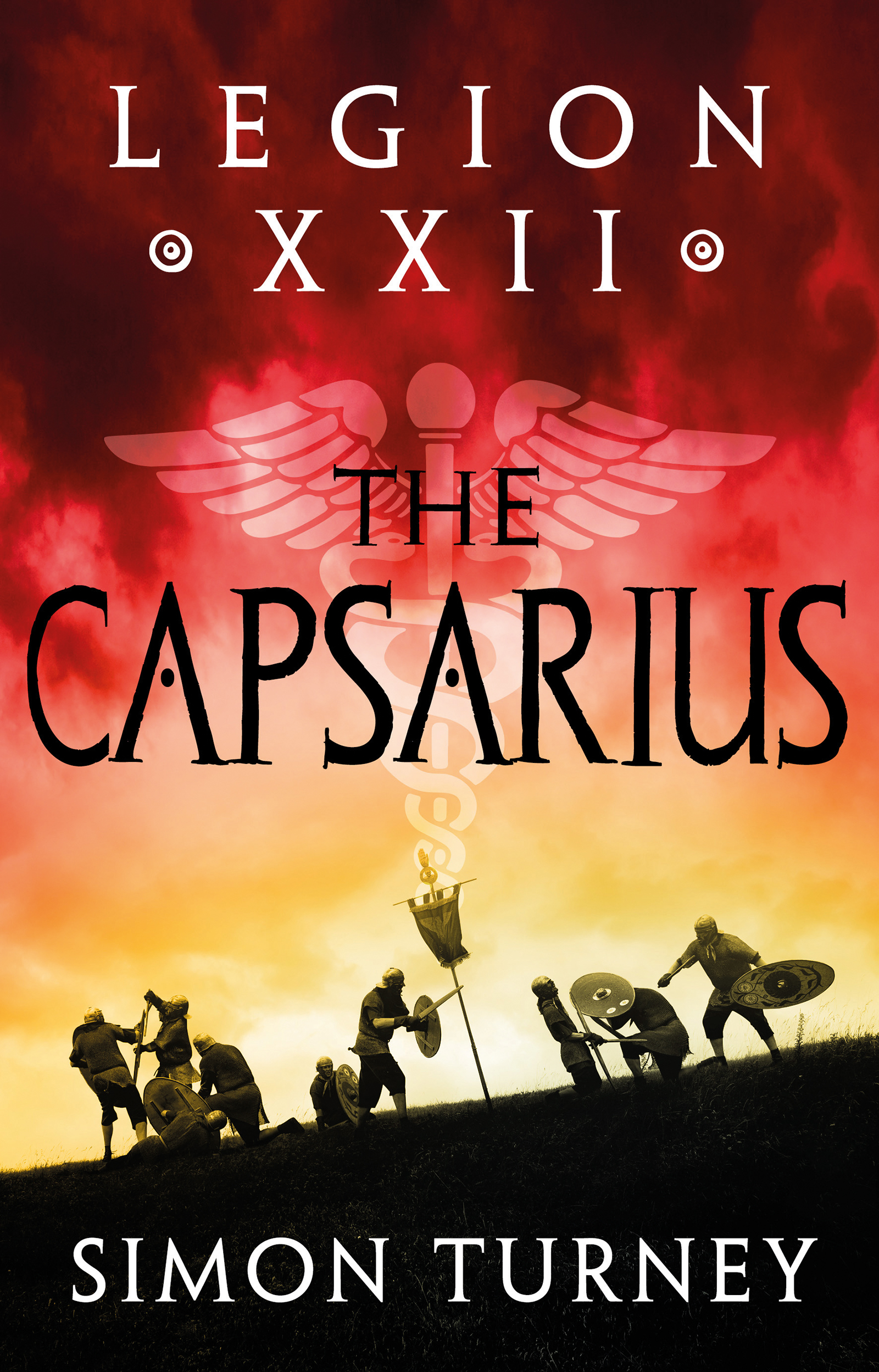
As has been pointed out to me by a fellow author, I don’t often award a five star review to books. Indeed, while I do rate and review on Amazon and Goodreads, on the blog, I don’t tend to give a rating – I’m just quirky like that. Those books that I have given a five star to, I’ve given a shout out in the Aspects of History Books of 2022. You can find the link here – (of course, these are all historical fiction books) and The Capsarius, Valentia, Twelve Nights and The Maids of Biddenden made it onto that list (and yes, these are all books I was lucky enough to be asked to review on the blog – but I never automatically give a 5 star review just because of that). I also want to add Domitian by SJA Turney as well. I couldn’t include two of his books on Aspecs of History but Domitian is wonderful, just my sort of Roman story with plenty of politics, intrigue, and some fabulous characters.
Three of these books are indie-published, and I can assure you all, that there’s a huge amount of amazing indie stuff out there. Don’t believe me, try one of these titles:)
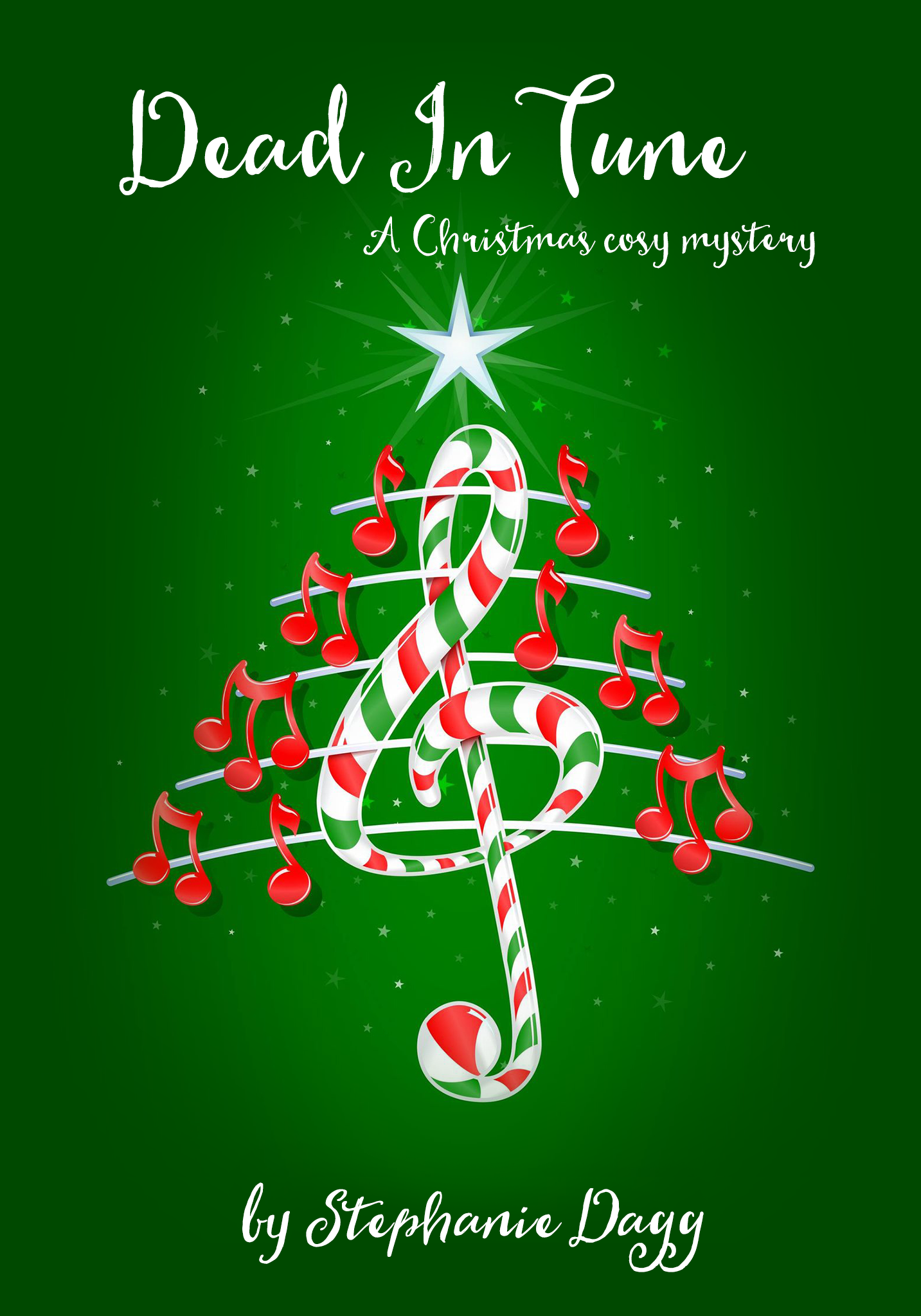
I’ve also treated myself to a bit of comedy this year. I’ve been listening to the Terry Pratchett Discworld audio books (the new and the original recordings – but not the abridged versions) and it’s reminded me of how much I love a funny book, and so, here are my favourite comedies of the year. Simon Whaley’s Foraging for Murder, Dead in Tune by Stephanie Dagg and Crazy for You by Domhnall O’Donoghue and Unseen Academicals by Terry Pratchett, which I’ve listened to twice!
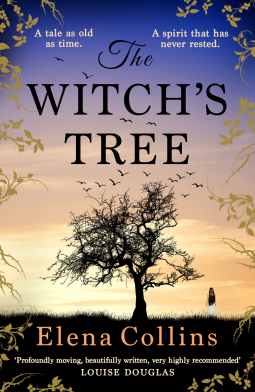
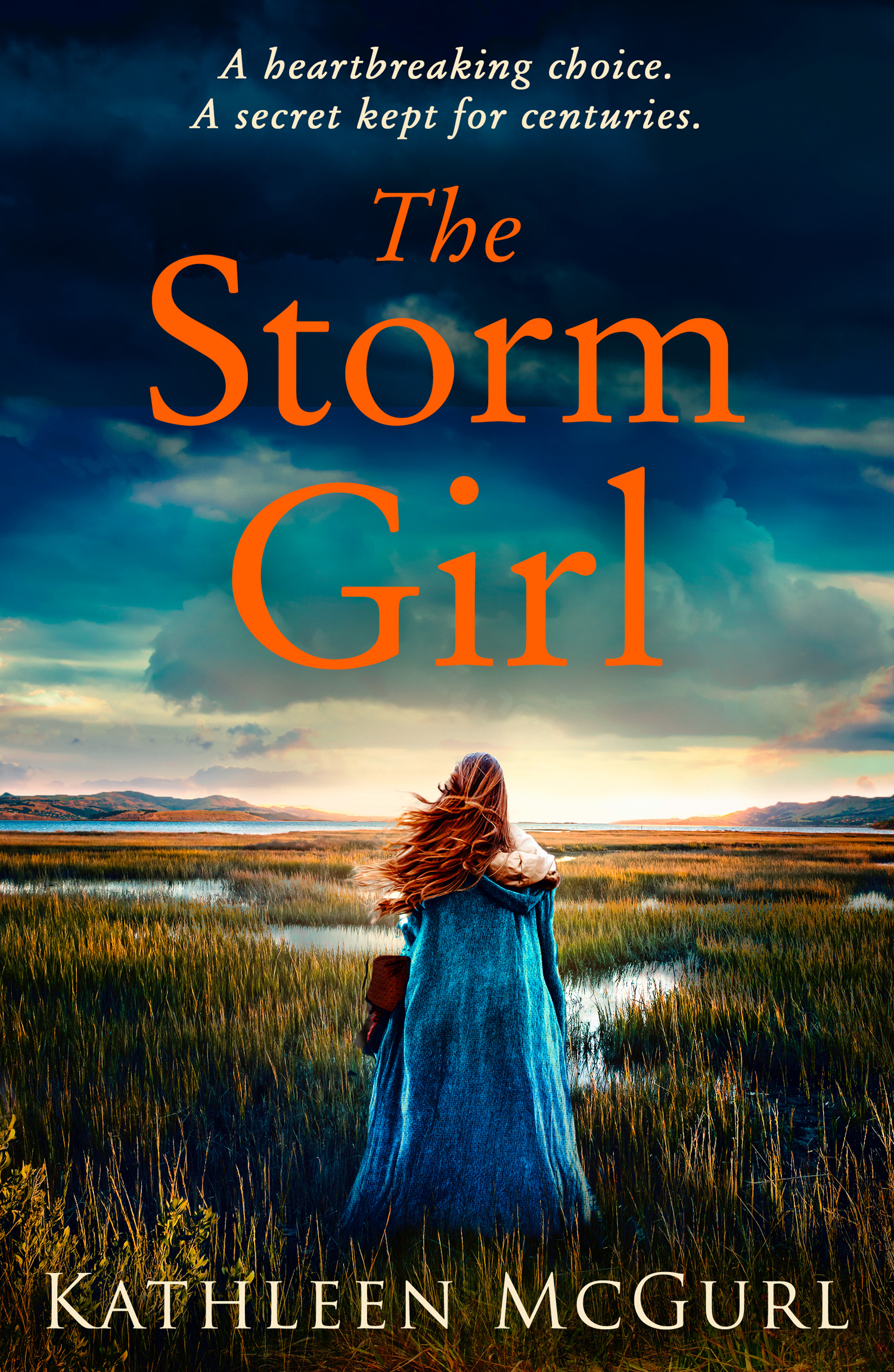
I’ve also dipped my toe into a few dual-timeline novels. As you might expect, my interest is always much more in the historical aspect of the story and not the modern settings, but they were a bit of fun when I was on holiday. The Witches Tree and The Storm Girl.
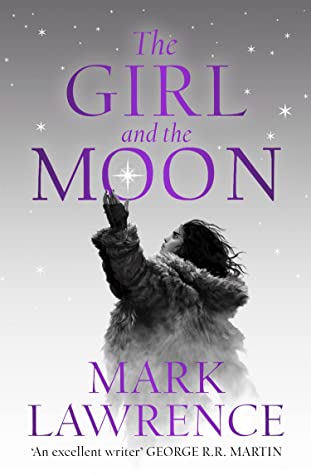
I’ve only read one fantasy book in 2022, which surprises me (aside from Discworld), but Mark Lawrence is one of my all-time favourite authors, and I will always read his books. The sneaky toad has a theme running through them all and I love it.
I’ve also read surprisingly few non-fiction books, in their entirety. I’ve been working on my non-fiction book and that’s meant a lot of dipping in and out of books I’ve already read. But, the non-fiction books I’ve read have been excellent, Michael Wood’s 40th anniversary of In Search of The Dark Ages, reviews for Aspects of History, Winter in the World by Eleanor Parker, also reviewed for Aspects of History and I also read my first ever writing guide.
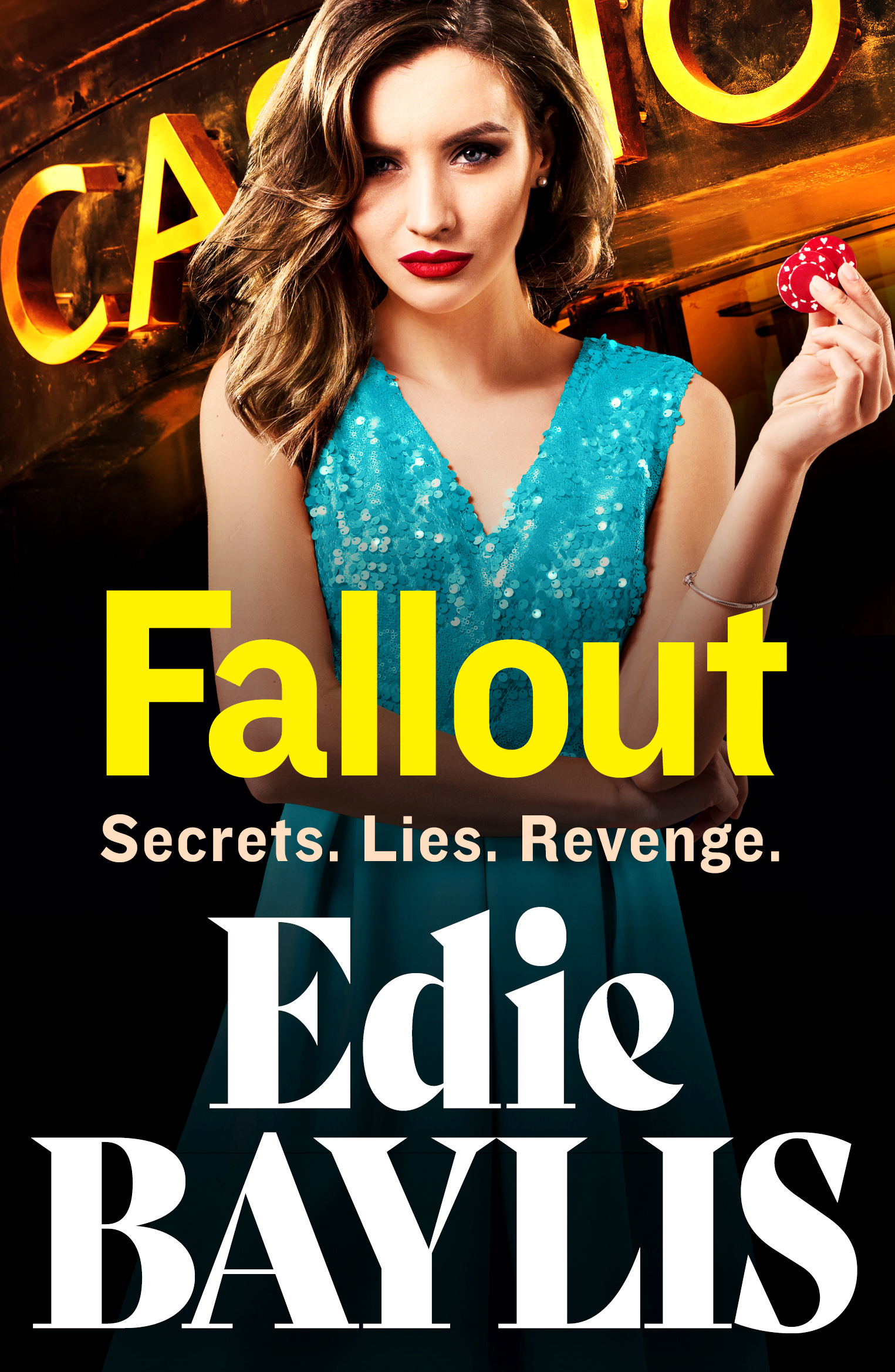
And an entirely new genre for me, but one I was strangely drawn to for the location, which is close to where I grew up – a bit of Gangland.
I hope you’ve enjoyed reading my reviews on the blog. And I’d like to that the publishers that let me read advanced copies, and also, all the writers I’ve mentioned who’ve taken the time to craft these novels so that I can devour them. Now, I need to get back to my reading to make sure I hit that magic 100!
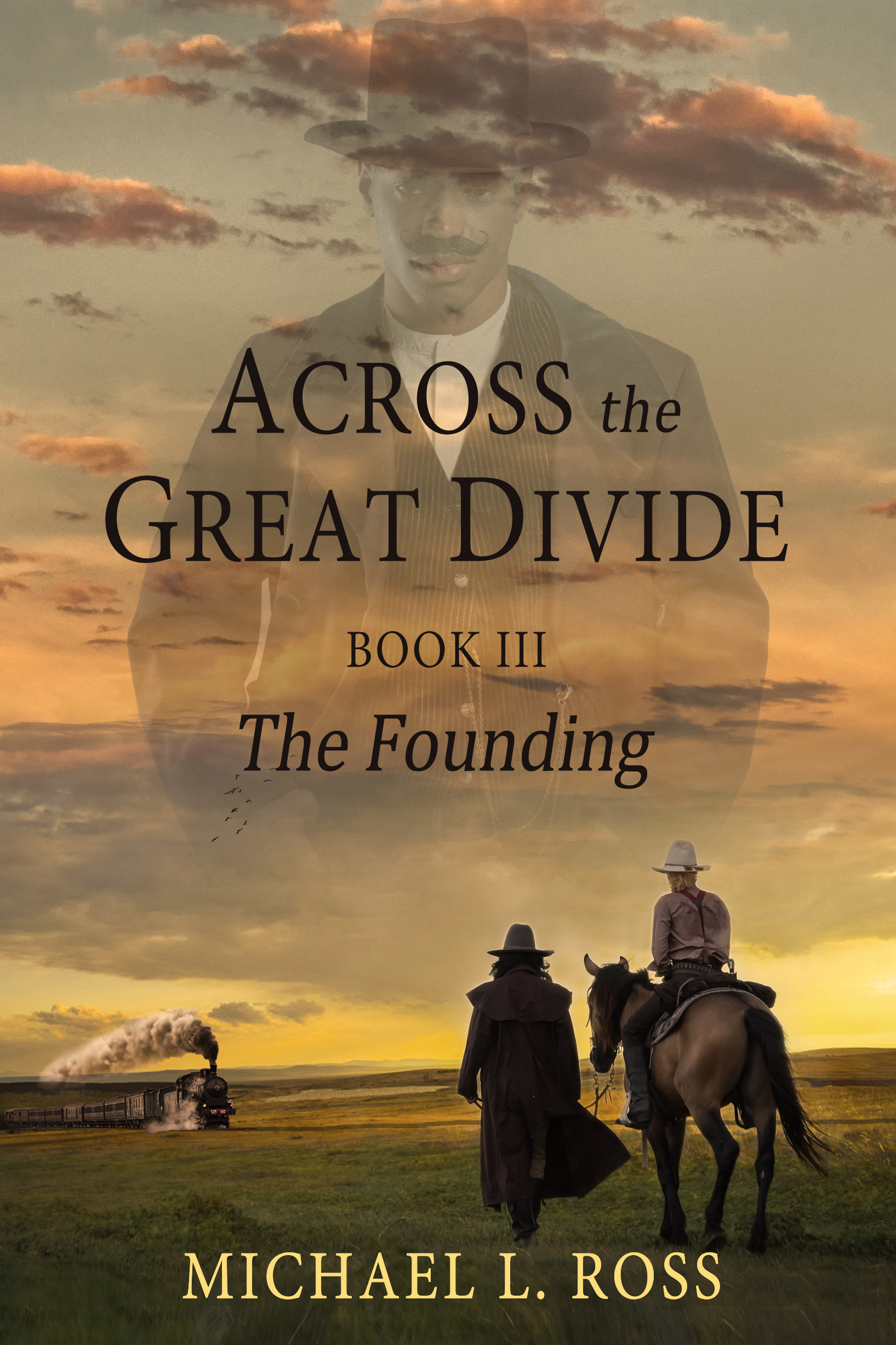
I’m delighted to welcome Michael L. Ross to the blog, with a post about his new book, The Founding.
The Founding follows the earthquake changes that the railroad made to American business and society during the latter half of the nineteenth century. Through the eyes of my fictional characters, Julia and Hiram Johannsen, the railroad itself almost becomes another major character. Julia is the sister of the main character, Will Crump. In order to do an effective job with telling the story of the railroad, I had to research and plot the timeline of the many different railroads that pushed south and west across America during the period 1868-1909.
The figure of robber baron Jason “Jay” Gould looms over the story, as he went from a tannery business to partner in the Erie Railroad to the major force behind the Union Pacific Railroad. The UP swallowed many other lines in its march to the Pacific Ocean.
Julia was a businesswoman at a time when it was uncommon, and shepherded the Johannsen steamship line through the Civil War, while Hiram fought for the Federal army in book 1 of the series, The Clouds of War. As The Founding opens, Julia and Hiram’s business is in danger from the encroaching railroads, financed from New York and Europe. They must adapt or perish.
The Atchison, Topeka, Santa Fe promised a new rail line that could save them. For my research, I delved into the railroad’s history, largely through Keith L. Bryant Jr.’s non-fiction account, History of the Atchison, Topeka, and Santa Fe Railway, and local records in the Newton, Kansas historical society. The ATSF and the Kansas Pacific railroads sought to go through Kansas from east to west, and south through Indian Territory (Oklahoma) to Santa Fe, and California. At every turn, Jay Gould bought up lines and pounced on the business, making it very tough indeed to compete. The Life and Legend of Jay Gould by Maury Klein follows Gould’s life in great detail, chronicling the schemes and deals that made Gould famous and feared.
The railroad story is a complex one, and many managers came and went. The road to success was complicated by the financial panic of 1873, where many railroads went bankrupt in the aftermath of the Franco-Prussian war. European countries had invested heavily in American railroads via bonds, and the end of the war with German victory brought the collapse of the Jay Cook Company, whose bonds financed railroad expansion.
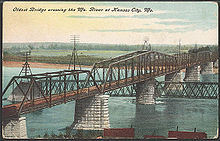
Two historical tidbits turned up in research that was of great interest and impacted the book. First, the famous joining of the railroads at Promontory Point, Utah to form the transcontinental railroad wasn’t truly transcontinental at first. It was thought that no one could build a bridge across the Missouri River, and at the time the Golden Spike was driven, the Union Pacific stopped at the river, and picked up on the other side. For a period of time, the locomotives had to be ferried across. Then the Kansas Pacific helped to build the Hannibal Bridge, a unique design that swung a bridge section sideways to allow steamboat river traffic, then back into a contiguous bridge across the river. Without electricity, and using only gravity, gears, and river power, it was a major engineering feat, truly uniting the east and western portions of the United States by rail.
Second, in Chicago, a man named George Hammond filed a patent for a refrigerated railroad car, in 1868. Within two years, Hammond was selling refrigerated meat to the tune of two million dollars annually. Railroad lines that had invested heavily in stockyards in Chicago and elsewhere were reluctant to adopt the new cars, but progress marched forward as demand for beef in the east increased. In The Founding, Hiram and Julia make use of both of these inventions to outsmart Gould, and in real life, Gould was slow to pick up on them. The refrigerated cars spawned a large meat packing business in Fort Worth, Texas, and with the expansion of the railroad, completely eliminated the need for the cattle drives of western movies. Within a decade, Hammond’s new plant in Omaha, Nebraska, was slaughtering over 100,000 cattle a year and moving a fleet of 800 refrigerator cars. Gustavus Swift improved the design of refrigerated cars.1 During the 1850s, when he was still a teenager, Gustavus F. Swift started to work in the beef business in Massachusetts. In 1875, Swift began buying cattle in Chicago to send to his family’s butcher operations back East. He quickly revolutionized the meat industry by using newly developed refrigerated railcars to ship fresh meat from Chicago to Eastern markets. The company soon set up a national network of branch offices, which allowed it to control the distribution of its meat across the country. By 1886, when the company slaughtered more than 400,000 cattle a year, Swift employed about 1,600 people. Between 1887 and 1892, new packing plants were opened in Kansas City, Omaha, and St. Louis. By the time the founder died in 1903, his company grossed $200 million in annual sales and employed about 23,000 people across the country.2[1]
These inventions allowed our fictional characters to gain capital to beat Gould, temporarily, at his own game.
As railroads advanced, many new towns were founded. Whether the railroad’s route included a particular town could mean the difference between death and survival for the town. Often towns paid handsome sums to the railroads to influence the route. Dallas paid a large cash bounty to gain three railroad lines running through it, cementing it as a center of Texas commerce. In 1860, Dallas only had 261 people. By 1900, it had 82,726.3
Often the town was required to pay for a depot, as well as show that there would be sufficient freight and passenger traffic to warrant choosing a route through the town. In Nicodemus, the citizens raised $16,000 for a depot, with great hopes. There was lots of politics and influence peddling.
Lubbock, Texas, the other town in this book, was initially unsuccessful in wooing the railroad. However, with persistence, growth, and the fact that it was racially white, the town fathers, including Will Crump, were successful in the end.
Thank you so much for sharing such a fascinating post.
Here’s the blurb:
Two men, two dreams, two new towns on the plains, and a railroad that will determine whether the towns—one black, one white—live or die.
Will Crump has survived the Civil War, Red Cloud’s War, and the loss of his love, but the search for peace and belonging still eludes him. From Colorado, famed Texas Ranger Charlie Goodnight lures Will to Texas, where he finds new love, but can a Civil War sharpshooter and a Quaker find a compromise to let their love survive? When Will has a chance to join in the founding of a new town, he risks everything—his savings, his family, and his life—but it will all be for nothing if the new railroad passes them by.
Luther has escaped slavery in Kentucky through Albinia, Will’s sister, only to find prejudice rearing its ugly head in Indiana. When the Black Codes are passed, he’s forced to leave and begin a new odyssey. Where can he and his family go to be truly free? Can they start a town owned by blacks, run by blacks, with no one to answer to? But their success will be dependent on the almighty railroad and overcoming bigotry to prove their town deserves the chance to thrive.
Will’s eldest sister, Julia, and her husband, Hiram, are watching the demise of their steamboat business and jump into railroads, but there’s a long black shadow in the form of Jay Gould, the robber baron who ruthlessly swallows any business he considers competition. Can Julia fight the rules against women in business, dodge Gould, and hold her marriage together?
The Founding tells the little-known story of the Exodusters and Nicodemus, the black town on the plains of Kansas, and the parallel story of Will’s founding of Lubbock, Texas, against the background of railroad expansion in America. A family reunited, new love discovered, the quest for freedom, the rise of two towns. In the end, can they reach Across the Great Divide? The Founding is the exciting conclusion to the series.
Praise for The Founding:
“Michael is an excellent storyteller and has done a wonderful job depicting Luther, and the other black characters in this book. He has done his homework and depicts many historical facts about Nicodemus in a most enlightening and creative way. It has been a pleasure working with someone who has made a concerted effort to get things right.
Michael Ross is a lover of history and great stories.
He’s a retired software engineer turned author, with three children, and five grandchildren, living in Newton, Kansas with his wife of 39 years. Michael graduated from Rice University and Portland State University with degrees in German and software engineering. He was part of an MBA program at Boston University.
Michael was born in Lubbock, Texas, and still loves Texas. He’s written short stories and technical articles in the past, as well as articles for the Texas Historical Society.
Across the Great Divide now has three novels in the series, “The Clouds of War”, and “The Search”, and the conclusion, “The Founding”. “The Clouds of War” was an honorable mention for Coffee Pot Book of the Year in 2019, and an Amazon #1 best seller in three categories, along with making the Amazon top 100 paid, reviewed in Publisher’s Weekly. “The Search” won Coffee Pot Cover of the Year in 2020, and Coffee Pot Silver Medal for Book of the Year in 2020, as well as short listed for the Chanticleer International Book Laramie Award.
It should be a dream come true to serve the Queen of England…
When Violet Parker is told she will be Queen Victoria’s personal housemaid, she cannot believe her good fortune. She finally has the chance to escape her overbearing mother, a servant to the Duchess of Kent.
Violet hopes to explore who she is and what the world has to offer without her mother’s schemes overshadowing her every thought and action.
Then she meets James Greene, assistant to the queen’s chief political adviser, Lord Melbourne. From entirely different backgrounds and social class, Violet and James should have neither need nor desire to speak to one another, yet through their service, their paths cross and their lives merge—as do their feelings.
Only Victoria’s court is not always the place for romance, but rather secrets, scandals, and conspiracies…
Victoria and Violet is a beautifully evoked story of Queen Victoria and her court, in the days before and during her marriage to Prince Albert. I won’t be alone in having read other books and watched film adaptations about the young Victoria, and Victoria and Violet really does capture the feel and mood of the royal court.
Violet is that most typical of women of the era, her life revolving around the will of another, only on this occasion, her mother, and her mother’s employer, Victoria’s mother, the Duchess of Kent. And we all know that’s not going to end well. Only, while she might be sent to spy on Queen Victoria, Victoria quickly strikes up a friendship with her maid and together, the two seem to be able to conquer just about anything the Duchess of Kent puts in their way.
James Greene too is not able to do what he wants, an expectant father, who was also a brutal father, expecting him home to run a prosperous estate, whereas James is keen to continue his work with Melbourne, the Prime Minister, and then Prince Albert himself.
This is a story filled with twists and turns. Will James and Violet fall in love? Will they be able to live their lives together? Or will his father, and her mother, force them apart?
This really is a delightful tale, well researched and very well grounded in the era and period. I’m really pleased I decided to read it:)
Meet the author
Rachel lives in a small town near Bath, England. She is the author of 29 published novels including the Ladies of Carson Street trilogy, the Shop Girl series (Aria Fiction) and the Templeton Cove Stories (Harlequin). Her latest novel, Victoria & Violet is the first book in her new Royal Maids series with the Wild Rose Press.
Rachel is a member of the Romantic Novelists Association as well as the Historical Novel Society and has thousands of social media followers all over the world.
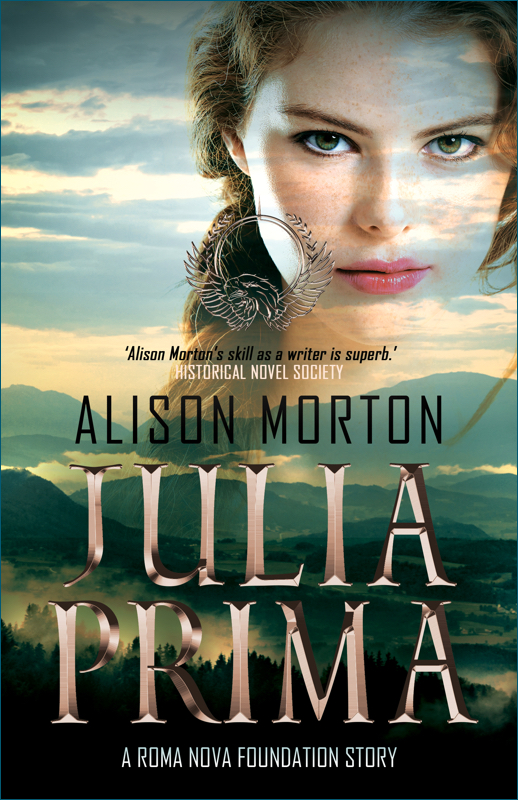
I’m delighted to feature JULIA PRIMA by Alison Morton, and she’s written a fabulous post about her book.
The dangers of travelling in the fourth century
Historical fiction at its best transports the reader into another time and place – the heat, fear and smell of battle, the celebration of a marriage where fire flickers nearby when the bride’s hair is arranged with a sharp spear point, or a voyage across a cold featureless sea where you feared might drop off the edge of the world into oblivion.
Style, tone and construction may be radically different, and the settings may be frightening or fascinating, but all good historical fiction conveys the impression of being an eyewitness to what is happening around them as well as how they are acting in that context.
One immediate way of anchoring a book in the past is thinking about how people travelled. We are so used to leaping into the car or catching a train or plane that we forget how completely different journeys were for pre-industrial people.
The concept of distance has changed radically over time. Over much of human history, it was measured in days or weeks taken rather than in land measurement such as miles. Depending on modes of transport available, whether imperial courier’s horse, an ox cart or simple trudging on foot, the perception of distance depended on the state of tracks, paths or roads.
JULIA PRIMA features a journey on horseback through mountains, transfer on a coastal barge, a voyage on a trading ship, crossing the Apennines on horseback and finally walking through the city of Rome. Each method presents challenges. Horses must be rested and fed regularly. Roman imperial couriers carrying urgent dispatches would change horses at official way stations every 8-10 miles for this reason. Only in Hollywood films and Netflix series can they gallop on and on all day. Saddles at that time had four horns – two back and two front – which held the rider in securely; there were no stirrups. Then there was the question of whether horses were shod or not . . .
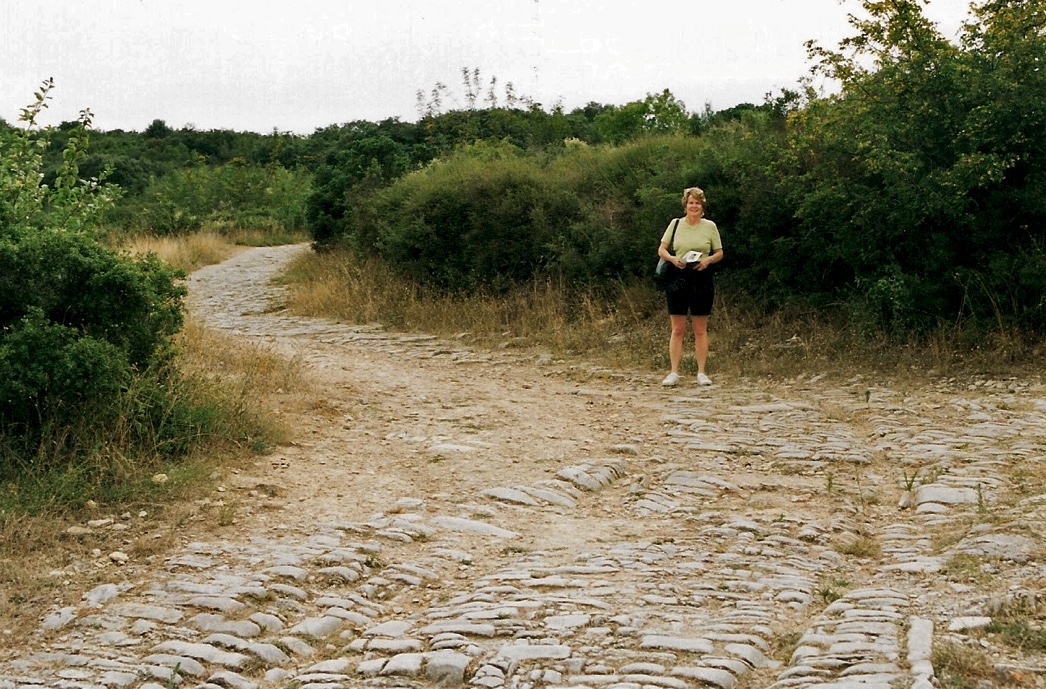
Not all Roman roads were hard metalled and impeccably paved and drained. Primarily, the roads had been built for military use as a quick and efficient means for overland movement of armies and officials. Altogether there were more than 400,000 kilometres (250,000 miles) of roads, of which over 80,500 km (50,000 miles) were stone paved. Many were gravelled, even in towns with some slabbed surfaces in the most important parts such as the forum. Added to these were private roads, rural roads, tracks and link roads. Much more detail here: https://www.alison-morton.com/2020/12/18/on-the-road-to-rome/
Taken together, they allowed the movement of people and goods, and connected isolated communities, helping them to absorb new ideas and influences, sell surplus goods, and buy what they could not produce locally. This trade resulted in an increase of wealth for everyone to a level not seen before and is suggested as a strong reason why many people strove to adopt the lifestyle of their conquerors.
But towards the end of the fourth century, there were potholes, missing slabs and invasive vegetation as local authorities could not afford their upkeep. Bridges built earlier, especially in the time of Augustus nearly two hundred years earlier, were failing, with parapets missing, holes in the surface and even collapsing completely.
Sailings, even for short passages such as across the Adriatic from Trieste to Ancona, were subject to season, usually May to October, and in the late fourth century, the most fearful danger: pirates. The imperial navy was mostly based in Constantinople by the time of JULIA PRIMA in AD 370 and the few ships still based in Ravenna would not offer comprehensive protection. Storms could bring all sea transport to a grinding halt as could a complete lack of wind. Nevertheless, traders still crossed the water, usually in convoys, and if fortunate escorted by a naval ship which gave an appearance, if not the reality, of protection.
Ferries today such as the cross-Channel ones offer cushioned seating, restaurants, shops and even cabins with ensuite bathrooms. Julia and her companions travel on the hard deck of a merchant ship with whatever shelter and comfort, such as light mattresses, they brought with them. The galley could provide hot water, but you brought your own washing bowl, cups and eating dishes and your own food. Once it set sail, a ship was a self-contained and vulnerable world that was lost to all human contact until it docked again. No ship’s radio, GPS, satellite tracking and communication meant that it could disappear without trace and nobody would know its fate. And news of events, e.g. death of an emperor, would only be available once the ship docked.
Many travellers stayed with friends, family or trade colleagues. In larger cities and ports, there was a range of possibilities from well-equipped rooms in top classinns to a bed in a shared dormitory, often also shared with travellers of the insect variety!
At the most simple were private houses offering a room in their property for a fee. They could include stabling for animals and supper for their riders. Perhaps an early form of B&B! Travellers would know these houses by a lamp lit over their entrance door. Often this was the only form of hospitality in rural or remote areas.
A mansio gave accommodation to official visitors and feeding, watering and stables for their animals. They had to produce a travel document/official chit to show their entitlement to gain access to these government-funded facilities or they were back on the road again.
Non-official travellers had a choice, depending on the size of their purse and their inclination. Cauponae were often sited near the mansions and performed the same functions at a lower level of comfort. However, they suffered from a bad reputation as they were frequented by thieves and prostitutes. Tabernae provided hospitality for the more discerning traveller. In early days, they were mere houses along the road, but as Rome grew, so did its tabernae, becoming more luxurious. Of course, some did not, but they were generally above the level of the scruffy cauponae. Many cities of today grew up around a taberna complex, such as Rheinzabern in the Rhineland.
A third system of way stations serviced vehicles and animals: the mutationes (changing stations). In these complexes, the driver could purchase the services of wheelwrights, cartwrights and equarii medici, or vets. Some hostelries had elements of each type above, so historical fiction writers can often use generic descriptions such as inns or lodgings and vary the description of the accommodation as it suits their story.
For travellers in the late imperial period, such as Julia in AD 370, the danger from bandits had increased markedly. Some were dispossessed agricultural workers, some escaped slaves, mercenaries for hire or just criminals. As systems dissolved, the military became less visible and finances to fund them ran out, thereby making travelling increasingly dangerous.
Here’s the blurb:
“You should have trusted me. You should have given me a choice.”
AD 370, Roman frontier province of Noricum. Neither wholly married nor wholly divorced, Julia Bacausa is trapped in the power struggle between the Christian church and her pagan ruler father.
Tribune Lucius Apulius’s career is blighted by his determination to stay faithful to the Roman gods in a Christian empire. Stripped of his command in Britannia, he’s demoted to the backwater of Noricum – and encounters Julia.
Unwittingly, he takes her for a whore. When confronted by who she is, he is overcome with remorse and fear. Despite this disaster, Julia and Lucius are drawn to one another by an irresistible attraction.
But their intensifying bond is broken when Lucius is banished to Rome. Distraught, Julia gambles everything to join him. But a vengeful presence from the past overshadows her perilous journey. Following her heart’s desire brings danger she could never have envisaged…
Alison Morton writes award-winning thrillers featuring tough but compassionate heroines. Her nine-book Roma Nova series is set in an imaginary European country where a remnant of the ancient Roman Empire has survived into the 21stcentury and is ruled by women who face conspiracy, revolution and heartache but with a sharp line in dialogue.
She blends her fascination for Ancient Rome with six years’ military service and a life of reading crime, historical and thriller fiction. On the way, she collected a BA in modern languages and an MA in history.
Alison now lives in Poitou in France, the home of Mélisende, the heroine of her latest two contemporary thrillers, Double Identity and Double Pursuit. Oh, and she’s writing the next Roma Nova story.
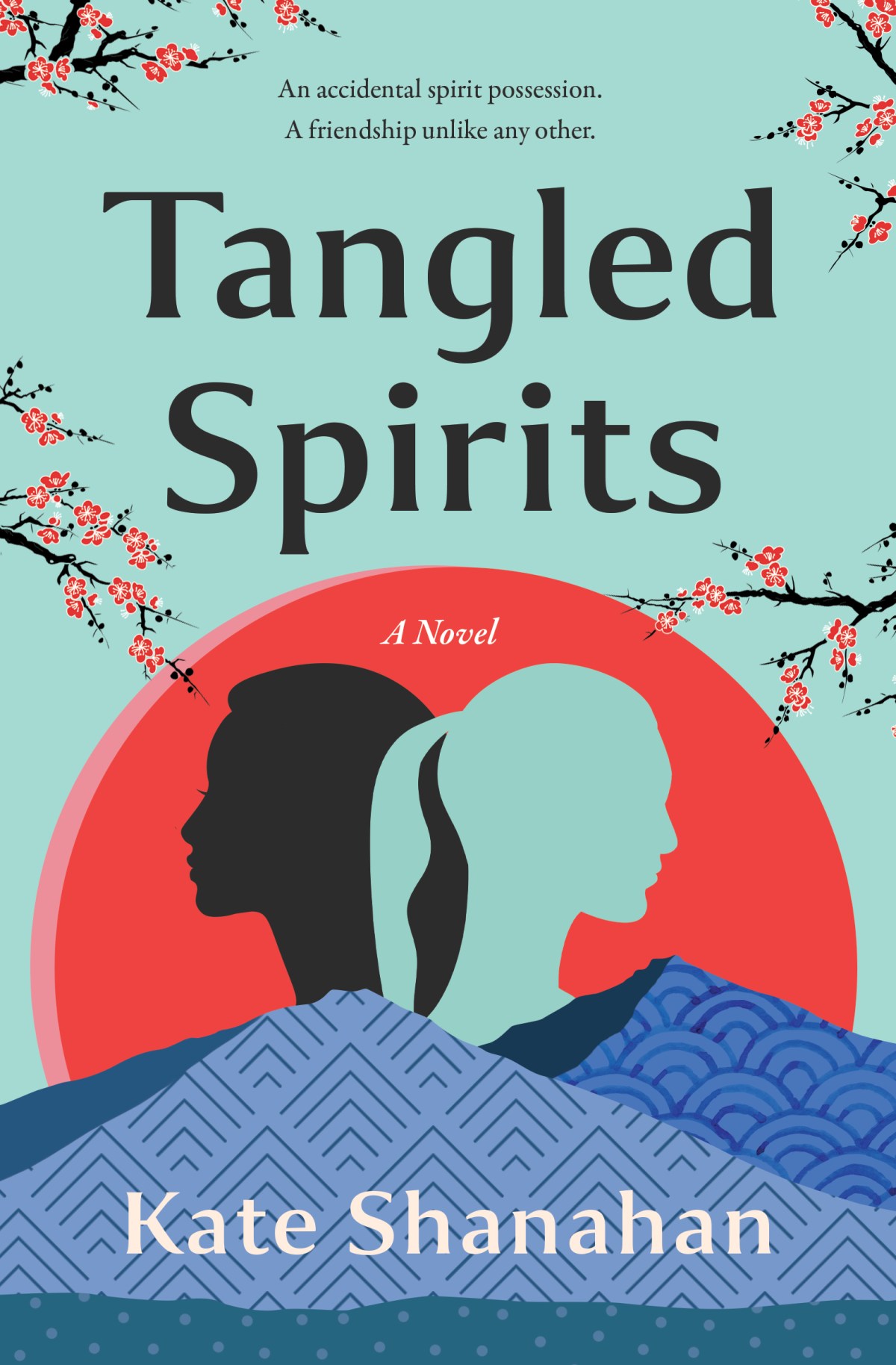
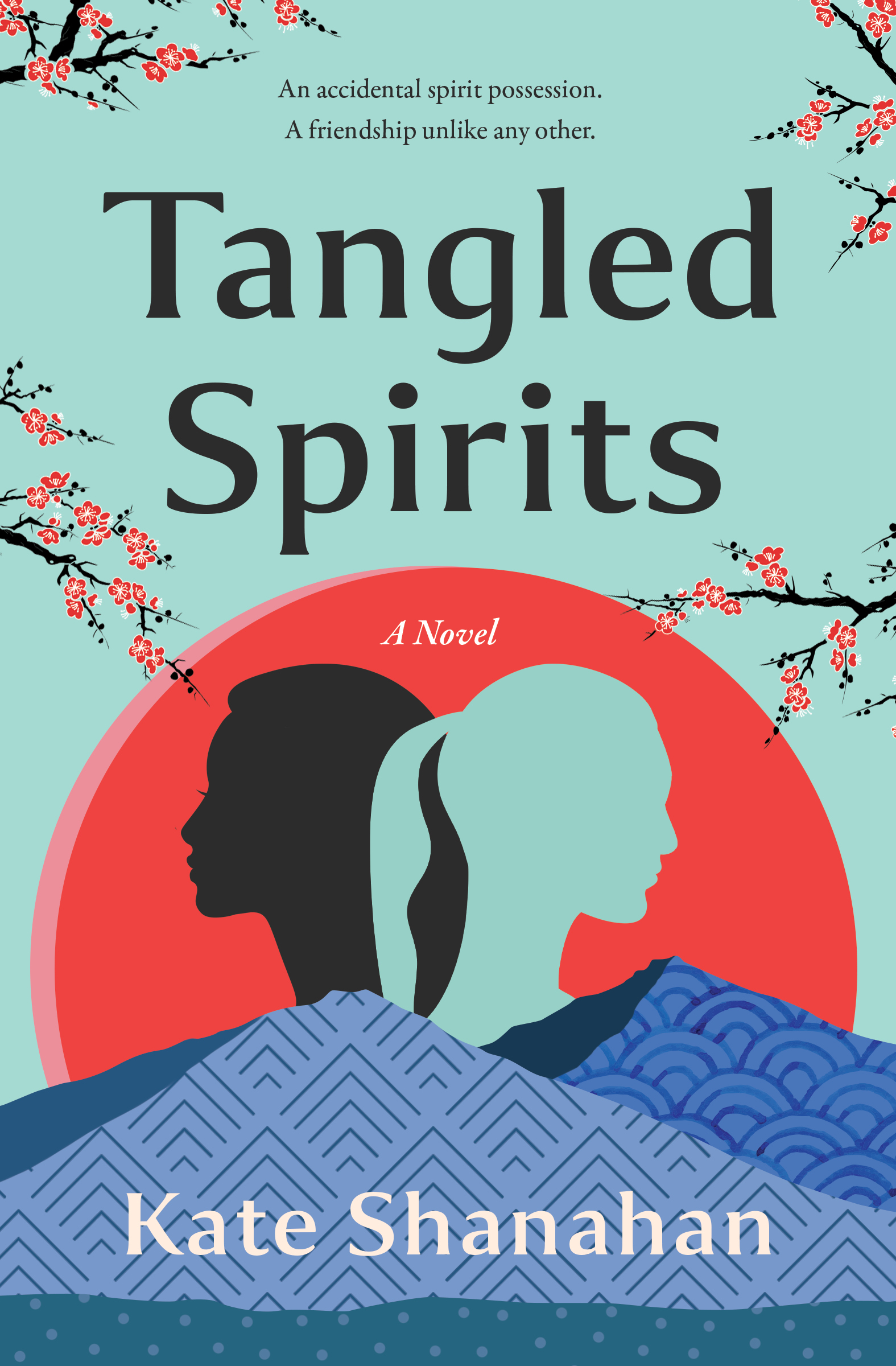
Hi, I’m Kate Shanahan, author of Tangled Spirits, a time-slip historical fantasy set in medieval Japan before shogun, samurai, and sushi were a thing. I’m blogging today about the cultural environment in 10th-11th centuries Japan that fostered the highest level of female literacy in the world at this time (among the aristocratic elite, that is.)
The world’s first full-length novel is usually considered to be Tale of Genji, written by Murasaki Shikubu, a lady-in-waiting at the imperial court of Japan at the beginning of the 11th century. She wrote this long, complex novel in an era when nearly all women everywhere in the world (and most men too) could neither read nor write. And not only did she write it, but enough people enjoyed reading it to ensure it was copied, shared, sold, borrowed, studied, illustrated, filmed, and gamified over the next 1000+ years.
I read Tale of Genji when I taught English in Japan. That same year, I read The Pillow Book, a journal written by lady-in-waiting Sei Shonagon, a contemporary of Murasaki’s. Sei invented a new form of journal called zuihitsu or ‘miscellany.’ In today’s terms, it’s more like the world’s first blog.
Both Sei and Murasaki were ladies-in-waiting in the court of Emperor Ichijo, and they both could read and write Chinese as well as Japanese, rare skills for women even in their erudite sphere. How is it that these two women in medieval Japan both managed to create new forms of literature that are still studied today?
In the course of my research, I learned that women held many positions of high rank and even power in Japan’s early history. In fact, eight of Japan’s emperors have been women, six of them before the year 770. The Heian Period (794 to 1185) is known as the ‘golden age of Japan’ for its flowering of the arts and literature, and much of this flowering came from girl-power.
(Before I go further, let me be clear that I’m only referring to the tiny elite at the top of the food chain who led a life of luxury and leisure far, far removed from the hardships of the unranked.)
I’ve noticed that Westerners are often surprised at some of the rights and privileges women enjoyed in this era in Japan. In the Heian Period, married noblewomen often continued to live with their parents after marriage, with the husband stopping by from time to time to see her. The wife’s father or uncles influenced the education and development of her children. This is called a ‘uxorial’ form of marriage, and it not only gave a woman more control and influence over raising her children, it also meant that if she weren’t happy with her husband’s behavior, she could send him away without seeing him. Women also could initiate a divorce and remarry. Men often had several wives and consorts, and women just one (at a time), but love affairs were not frowned upon as long as discreetly managed.
The most important element of the environment that eventually produced Tale of Genji and The Pillow Book was the Fujiwara Regency. The emperor’s role was a sacred one with a focus on the rituals and prayers needed to keep divinities happy, so the regent’s role was a political, secular one. There were 21 regents from the Fujiwara clan between 804 and 1238, and the most famous was Michinaga, who was regent during both Sei Shonagon and Murasaki Shikibu’s tenure at court. In the course of my research for Tangled Spirits, I learned this proverb: “if one must have a child, let it be a girl.” Fujiwara clan members gained power and access to the emperor by marrying their daughters to him. Those daughters produced children who often became Crown Prince and Emperor, and because of the uxorial tradition, Fujiwara regents kept their power by their influence over their imperial grandchildren. And that made daughters more valuable to a Fujiwara regent (or regent wanna-be) than a son.
And literacy comes into play because it was important for these Fujiwara daughters to be able to entice the emperor with their beautiful calligraphy, their skill with writing poetry, and with reading out loud to him. Beauty and elegance were of utmost importance at court in this era, and calligraphy could make or break a love affair. Thus a high priority was placed on the education of potential imperial consorts.
And then once a Fujiwara daughter was at court, whether as a concubine, an official consort, or a Royal Consort (Empress), it was important for that consort to have women around her with skills in calligraphy, poetry, witty repartee, and story-telling, both to make the salon attractive to the Emperor and to entertain the consort. Women in this elite class lived lives of comparative leisure, and they stayed indoors most of the time. Reading, writing, and story-telling flourished as entertainment.
And that created a sort of domino effect. Parents might not be of a high-enough rank for their daughters to be selected for the Emperor, but they educated their daughters to make them attractive to the consort’s salon, and that is how both Sei Shonagon and Murasaki Shikibu came to court.
It’s clear from the diaries of Sei Shonagon and Murasaki Shikibu that they both could read Chinese writing as well as the native ‘onnade’ and that such learning was considered masculine. Murasaki wrote that Sei was a show-off for not hiding her knowledge of Chinese, while Sei wrote that male courtiers sent poems in Chinese as a sort of prank, hoping to force her to reveal her knowledge (but she was too clever for that.) However, recent research indicates that a nobleman might teach his daughter to read and write Chinese as well as Japanese to improve her chance to obtain a position as an official in the Imperial Handmaid’s Office. Murasaki Shikibu writes in her diary that she learned Chinese by eavesdropping on her brother’s lessons, but it’s possible that both Murasaki and Sei Shonagon were taught Chinese reading and writing for that reason, as neither family was in the top ranks of nobility. Some high-ranking men even sought to marry women who could read Chinese as a skill that could help their own careers in government bureaucracy.
If you’d like to read more blog posts about Heian Japan or find out more about Tangled Spirits, you can find mine at kvshanahan.com.
If you’d like to read more about literacy in this era, here’s an interesting article that I found in jstor.org.
Heldt, G. (2005). Writing like a Man: Poetic Literacy, Textual Property, and Gender in the “Tosa Diary.” The Journal of Asian Studies, 64(1), 7–34. http://www.jstor.org/stable/25075675
Here’s the blurb for Tangled Spirits.
Journey to the imperial court of Japan as Kate Shanahan skillfully blends fictional and historical figures and events into a time-slip tale of intrigue, personal sacrifice, and a friendship that spans a thousand years.
Two spirits. One body. It’s harder than it looks.
2019: Anxious and insecure, Mina Cooper wants to change her life, to change herself, but she gets more change than she bargains for when her spirit is pulled into the past and into someone else’ body – in 10th century Japan. And now she has a lot more to be anxious about. Like exorcism. And bandits. And chaotic magic by an inexperienced shaman.
999: Desperately lonely after her mother and sister die in an epidemic, aspiring shaman Lady Masako attempts to call her mother back from the spirit world, but gets possessed by Mina instead.
After a struggle for control and a failed exorcism, the two spirits agree to cooperate long enough to get help from the Royal Astrologer, the only person powerful enough to send Mina home.
But his help comes at a cost, and Mina’s imperfect knowledge of history offers little to negotiate with. And the longer he waits to help her, the greater the risk her spirit will fuse with Masako’s, and she’ll never get home.
Meet the author
Kate grew up in Massachusetts, but spent 4th, 8th, and 11th grades living in England, and speaks both languages (British and American) fluently. After graduating from University of Michigan with a BA in Political Science (East Asia Concentration), Kate taught English in Sapporo, Japan for two years. She enjoyed the experience so much that she returned to U of M for an MA in Asian Studies (Japan Specialization), and while there, worked part-time for the Center for Japanese Studies. Fortunately for Kate, Honda was expanding operations in Ohio around the time she finished, and she spent an entire career at Honda in project, business, and people management, thrilled to be able to travel to Japan and speak Japanese for work. Then she retired to work on that book about Sei Shonagon that she always had in the back of her mind to write, and that book evolved into Tangled Spirits.
After all those years in northern latitudes, Kate and her husband recently moved to Florida’s Gulf Coast where the sunshine makes it difficult to focus on writing. But she’s determined to do it anyway. After a bike ride.
Tangled Spirits is on special offer until 19th July 2022, for 99p/99c on Amazon UK/US and is also included in a Kindle Unlimited Subscription
Good luck with the new book, Kate. Thank you so much for such an interesting post about Japan. I can see why you were drawn to the period.
Here’s my review
I was lucky enough to read an early version of Tangled Spirits, and I flew through it in two days. It’s a fantastic and really intriguing story.
I liked the whole story – the idea of a 21st-century woman’s mind in a 10th-century woman’s body, seeing everything through new eyes, putting both current interpretations on etiquette and prevailing thoughts, as well as the 10th-century justification for it all. It was just tongue in cheek, and court politics enough, to ensure the reader always wants to know what’s going to happen.
Masako and Mina are both intriguing characters. As the story is told through Mina we know more about her thoughts and more about Masako’s actions. I could understand both of their viewpoints well enough, even if like Masako, I found it a bit frustrating that Mina wouldn’t share more of her knowledge of the future. I enjoyed that as time went on, they acted more and more like one another.
A really enjoyable read and one I highly recommend.
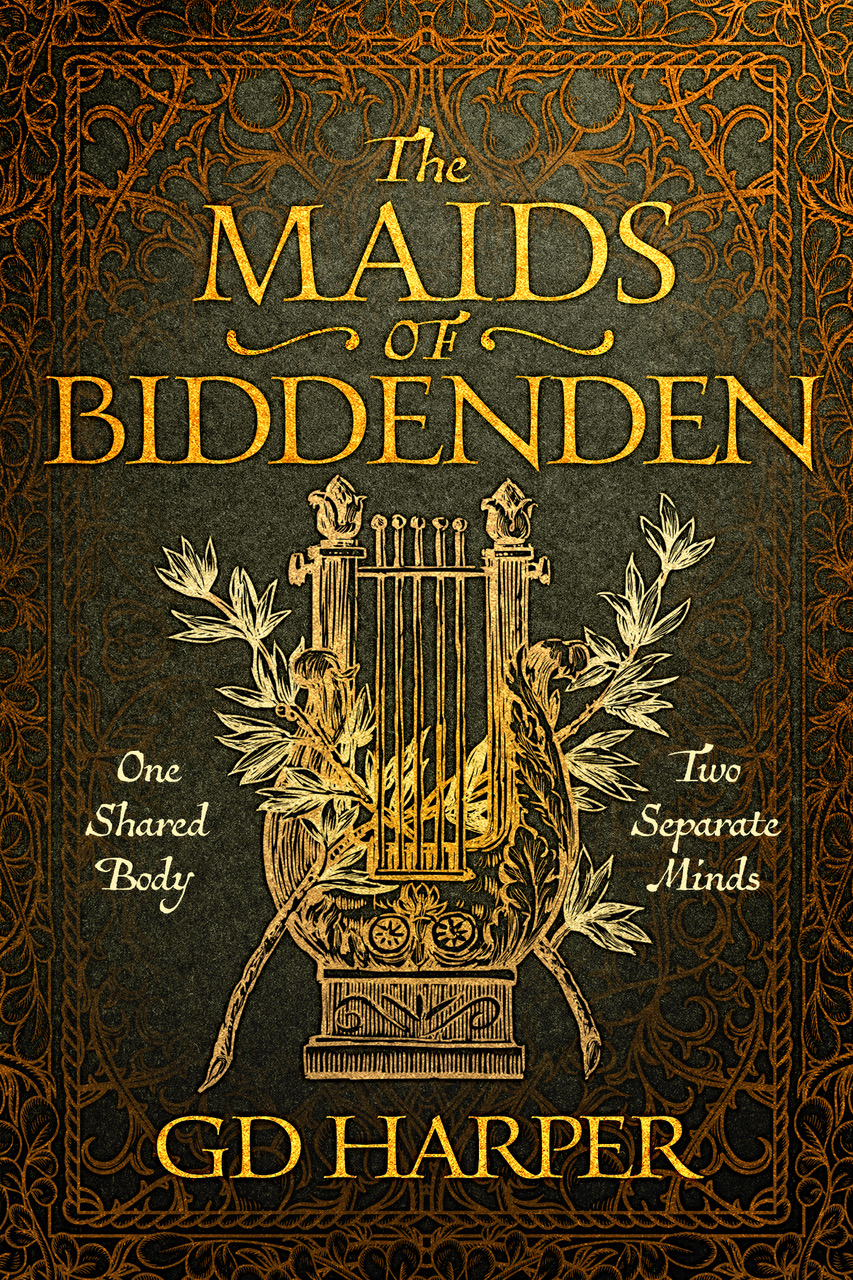
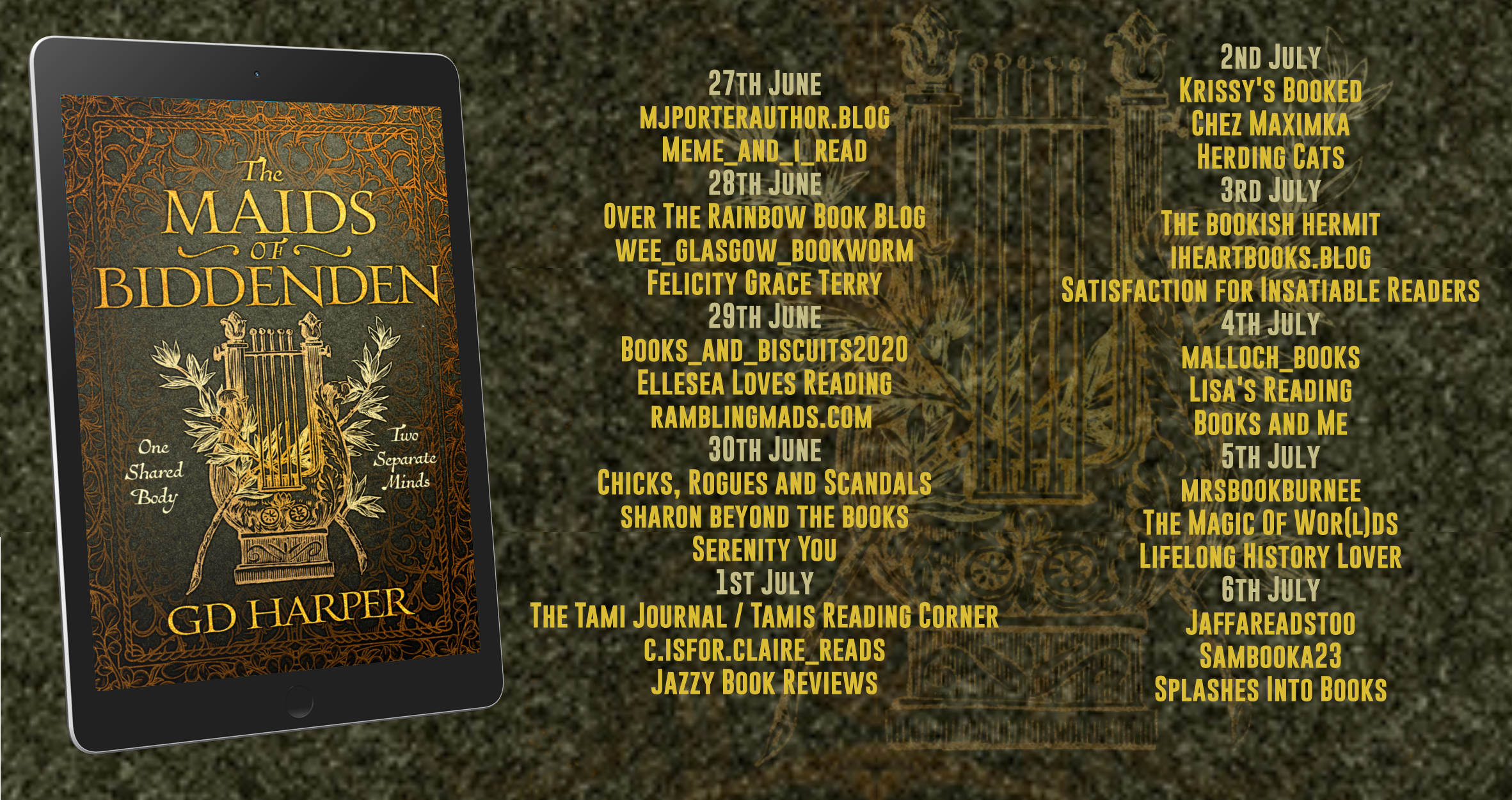
The Maids of Biddenden is inspired by the real-life story of conjoined twins Mary and Eliza Chulkhurst, born in 1100 into a wealthy family from a small Kent village.
Joined at the hip, the sisters overcome fear and hostility to grow into gifted and much-loved women – one a talented musician and song-writer, the other a caring healer and grower of medicinal plants. Entangled in the struggles for power and influence of the great Kent nobles of the time, they achieve much in their lifetimes and leave behind a legacy in Biddenden that survives to this day.
This is the heart-warming and inspirational story of two remarkable women leading one joint life, challenging adversity to become the best they can be.
Review
The Maids of Biddenden is that rare beast which entirely absorbs the reader from page one. Helped by a flowing style of writing, and the immediate and impending danger that the twins find themselves in as six-year-olds, the reader is entirely absorbed in the story, and their fate, so much so that it’s difficult to put the book down. That said, it is not just the twins themselves that drive the story – the people they interact with, those with their best and worst interests at heart – are all believable and well written, and there are occasions when the reader will be left frustrated and angered that some seem to face little punishment for their actions. The story has a number of points of view, and I found that they all worked very well – offering a view of the twins as they think of themselves, and also as others perceived them.
The story is effectively split in two; the first 45% tells the story of the Maids as young children. This element of the story is filled with a deep sense of foreboding that drives the story onward and makes the reader fearful for the future of the Maids. The narrative then moves forward a few years, and we see them as young women, trying to make a name for themselves and use their talents for good. At this point, the immediate landscape that the Maids encounter broadens considerably, and we move away from the nunnery and the settlement of Biddenden, into the politics and events of the early twelfth century, that almost consume the lives of the Maids for the remainder of their years – they lived during the time of the tragedy of the White Ship.
The story doesn’t so much lose focus here, but because the impending danger has passed, the reader is instead absorbed in how the twins accomplish all that they do. There is a great deal of attention to detail here – both medical knowledge and music – and it’s fascinating to see how the Maids’ lives interact with known events from the period.
This is a delightful story. I was entirely engrossed and found myself snatching what time I could to carry on reading it – something that doesn’t happen all that often. I highly, highly recommend The Maids of Biddenden for fans of historical fiction, and also for those who don’t normally read the genre. The challenges that the twins face are well told, and the reaction their appearance sparks are conveyed well, although as the reader you will be offended by the prevailing belief that they are Godless and a monstrosity, and the fact that they were a ‘sight to see’ as opposed to always being appreciated for who they were and what they could accomplish. The historical notes at the back of the novel are also fascinating.
I became a full-time author in 2016, publishing three novels under the pen name GD Harper. I have been both a Wishing Shelf Book Award finalist and Red Ribbon winner, been shortlisted for the Lightship Prize, longlisted for the UK Novel Writing Award and longlisted for the Page Turner Writer Award. The Maids of Biddenden was a finalist in this year’s Page Turner Book Award for unpublished manuscripts, longlisted for the Exeter Book Prize and the Flash 500 Novel Award, and shortlisted for the Impress Prize.


















 MJ Porter