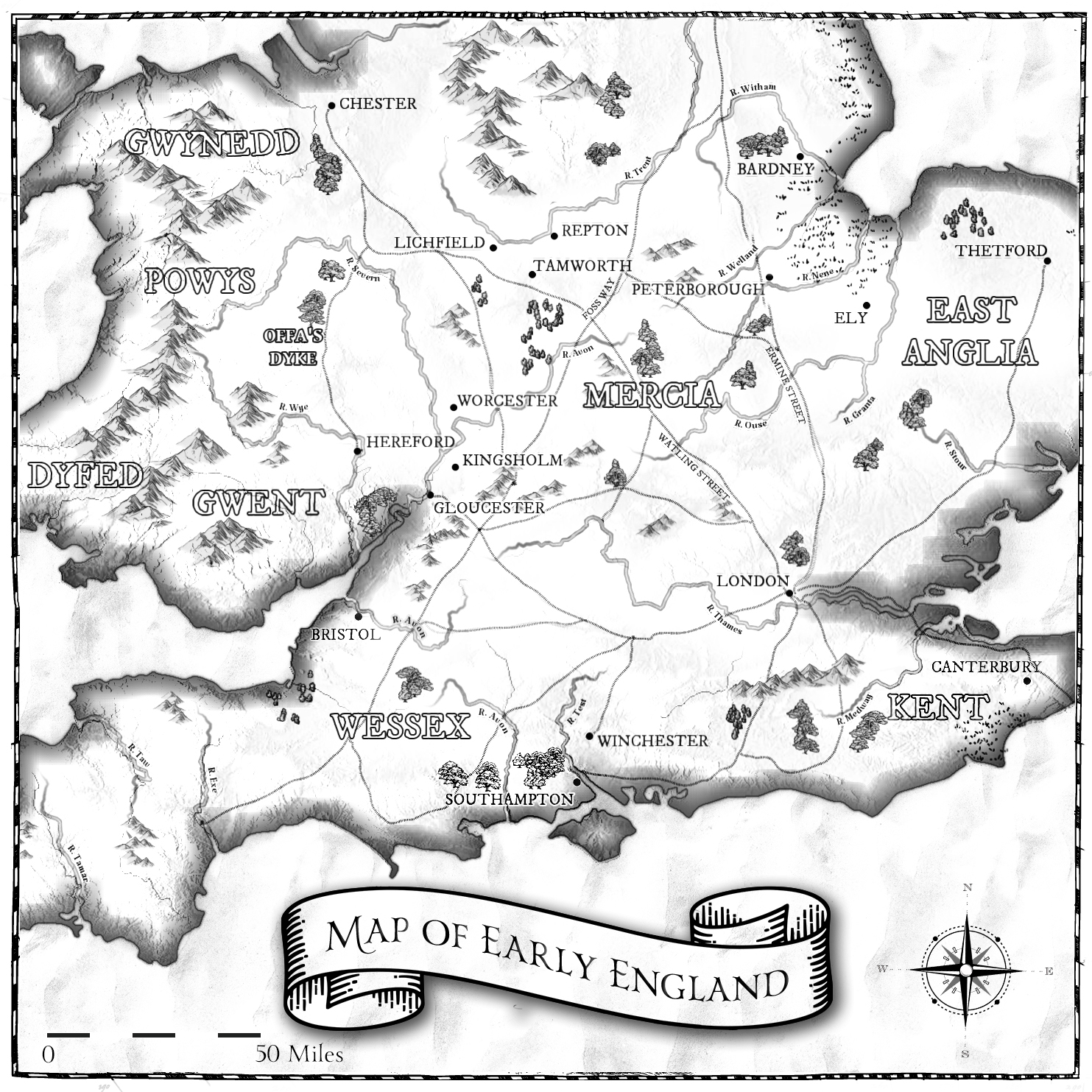
Author of Saxon historical fiction and non-fiction, 20th-century historical mysteries, and Norse-inspired historical romantasy. Book reviewer and blog host.
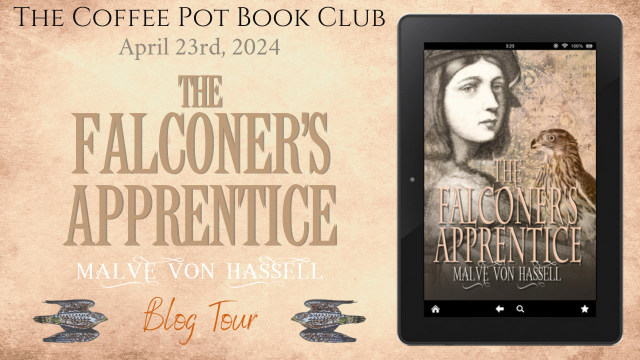
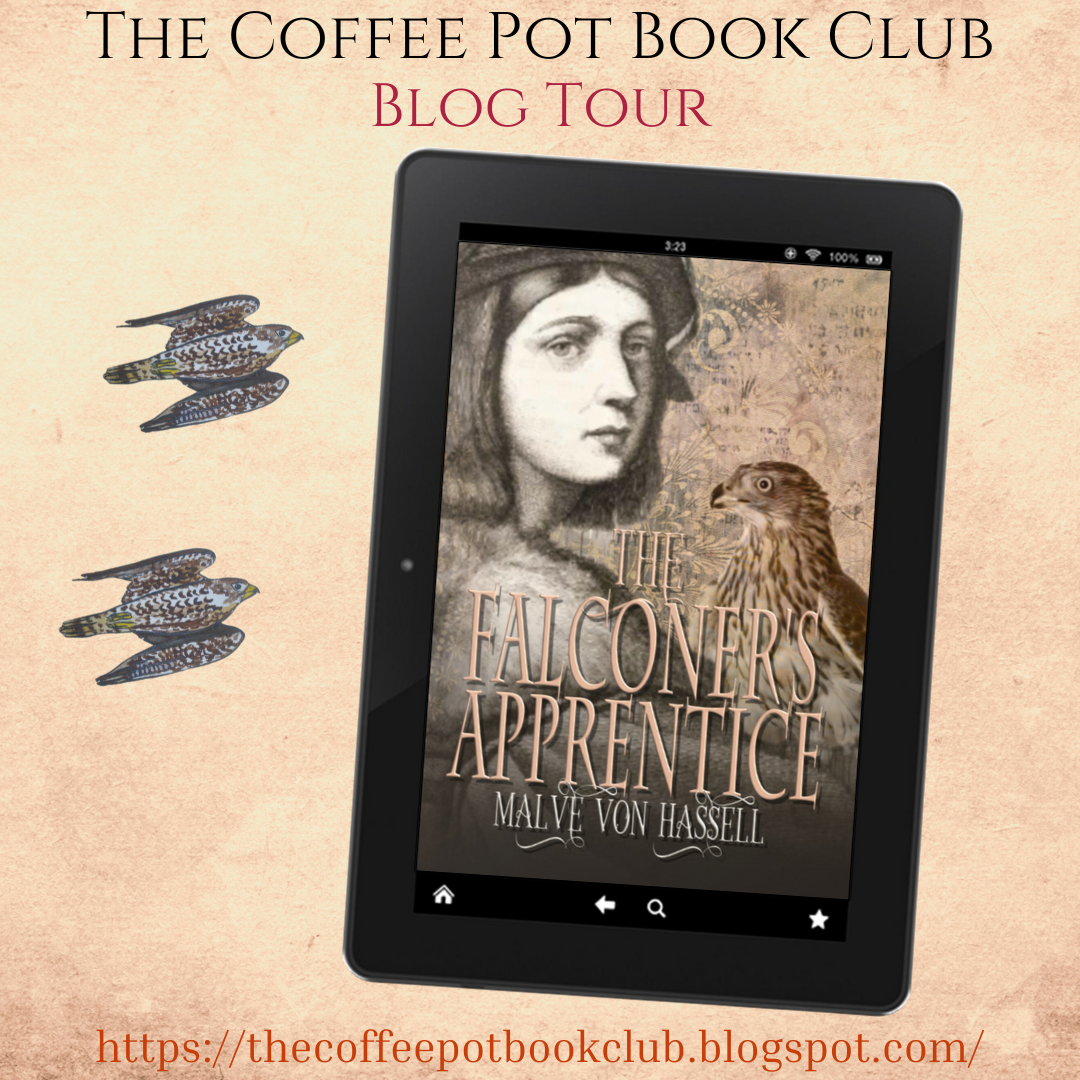
I’m delighted to welcome Malve von Hassel and her new book, The Falconer’s Apprentice, to the blog.
Here’s the blurb
THE FALCONER’S APPRENTICE is a story of adventure and intrigue set in the intense social and political unrest of the Holy Roman Empire in the thirteenth century.
“That bird should be destroyed!”
Andreas stared at Ethelbert in shock. Blood from an angry-looking gash on the young lord’s cheek dripped onto his embroidered tunic. Andreas clutched the handles of the basket containing the young peregrine. Perhaps this was a dream—
Andreas, an apprentice falconer at Castle Kragenberg, cannot bear the thought of killing the young female falcon and smuggles her out of the castle. Soon he realizes that his own time there has come to an end, and he stows away, with the bird, in the cart of an itinerant trader, Richard of Brugge.
So begins a series of adventures that lead him from an obscure castle in northern Germany to the farthest reaches of Frederick von Hohenstaufen’s Holy Roman Empire, following a path dictated by the wily trader’s mysterious mission. Andreas continues to improve his falconry skills, but he also learns to pay attention to what is happening around him as he travels through areas fraught with political unrest.
Eventually, Richard confides in Andreas, and they conspire to free Enzio, the eldest of the emperor’s illegitimate sons, from imprisonment in Bologna.
Malve von Hassell is a freelance writer, researcher, and translator. She holds a Ph.D. in anthropology from the New School for Social Research. Working as an independent scholar, she published The Struggle for Eden: Community Gardens in New York City (Bergin & Garvey 2002) and Homesteading in New York City 1978-1993: The Divided Heart of Loisaida (Bergin & Garvey 1996). She has also edited her grandfather Ulrich von Hassell’s memoirs written in prison in 1944, Der Kreis schließt sich – Aufzeichnungen aus der Haft 1944 (Propylaen Verlag 1994).
She has taught at Queens College, Baruch College, Pace University, and Suffolk County Community College, while continuing her work as a translator and writer.
Malve has published two children’s picture books, Tooth Fairy (Amazon KDP 2012/2020), and Turtle Crossing (Amazon KDP 2023), and her translation and annotation of a German children’s classic by Tamara Ramsay, Rennefarre: Dott’s Wonderful Travels and Adventures (Two Harbors Press, 2012).
The Falconer’s Apprentice (2015/KDP 2024) was her first historical fiction novel for young adults. She has published Alina: A Song for the Telling (BHC Press, 2020), set in Jerusalem in the time of the crusades, and The Amber Crane (Odyssey Books, 2021), set in Germany in 1645 and 1945, as well as a biographical work about a woman coming of age in Nazi Germany, Tapestryof My Mother’s Life: Stories, Fragments, and Silences (Next Chapter Publishing, 2021), also available in German, Bildteppich Eines Lebens: Erzählungen Meiner Mutter, Fragmente Und Schweigen (Next Chapter Publishing, 2022), and is working on a historical fiction trilogy featuring Adela of Blois.
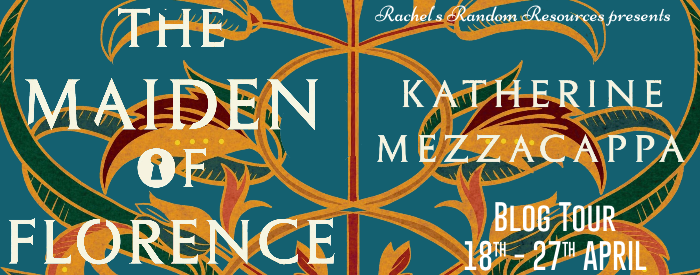
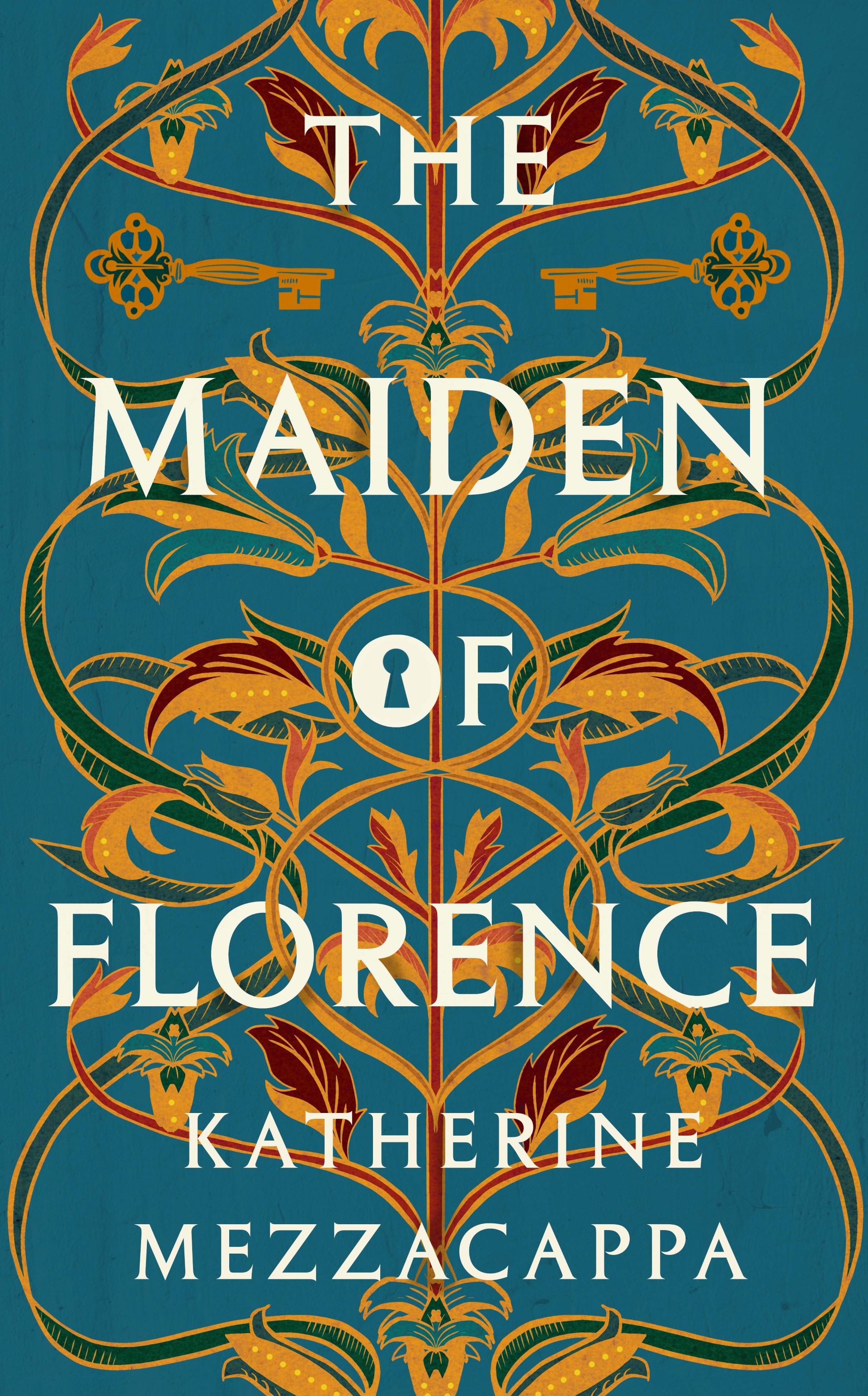
‘My defloration was talked about in all the courts of Europe. The Prince boasted of his prowess, even as preparations were being made for his wedding, as boldly as if he had ridden across that causeway with bloodstained sheet tied to his lance.’ 1584, Italy: Twenty-year-old Giulia expects she will live and die incarcerated as a silk weaver within the walls of her Florentine orphanage, where she has never so much as glimpsed her own face. This all changes with the visit of the Medici family’s most trusted advisor, promising her a generous dowry and a husband if she agrees to a small sacrifice that will bring honour and glory to her native city. Vincenzo Gonzaga, libertine heir to the dukedom of Mantua, wants to marry the Grand-Duke of Tuscany’s eldest daughter, but the rumours around his unconsummated first marriage must be silenced first. Eager for a dynastic alliance that will be a bulwark against the threat of Protestant heresy beyond the Alps, the Pope and his cardinals turn a blind eye to a mortal sin. A powerful #MeToo story of the Renaissance, based on true events.
Told with the benefit of hindsight by our maiden of Florence, Giulia, The Maiden of Florence is the story of this astounding event and the consequences of it for our fair maiden. The first third of the book is a retelling of what might have befallen Giulia, and events then move on to tell the story of what occurred afterwards, including her eventual marriage. However, the reach of the man behind her involvement is never very far away, despite her resentment of it.
The narrative allows Giulia to have her happily ever after ‘for now’, but events quickly move on, and she finds herself caught up in the battle to protect her oldest son, seeking aid where she would never have thought to do so until desperate.
The story is told with compassion and some insight from her husband. The recreation of Florence and Venice in the late 1500s/early 1600s is intriguing while also reflecting her restricted world view—we see only a small area of Florence and Venice. Giulia is rarely, if ever, not subject to some external force, whether it is the benign influence of her husband or other malevolent forces.
An engaging read, somewhat slower in pace, and sure to delight readers of this era and also narratives featuring strong women who are constrained by the society they live in.
Meet the author
Katherine Mezzacappa is an Irish writer of mainly historical fiction, currently living in Italy. She has published several novels under pen names with publishers Bonnier Zaffre and eXtasy. She works as a manuscript assessor for The Literary Consultancy. Katherine reviews for Historical Novel Society’s quarterly journal and is one of the organisers of the Society’s 2022 UK conference. In her spare time she volunteers with a used book charity of which she is a founder member.
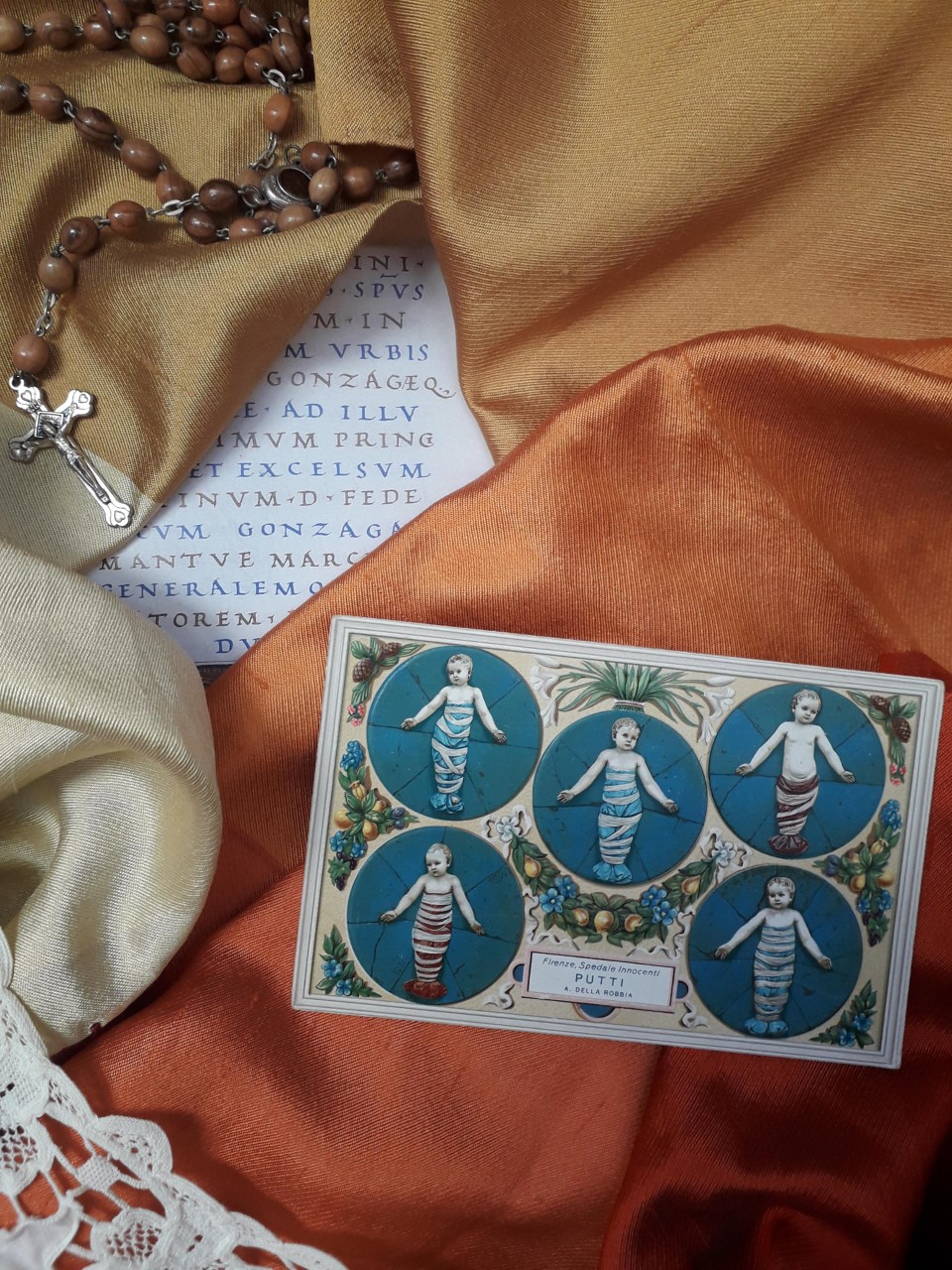
Giveaway to Win a vintage postcard, early 1900s, of the babies from the façade of the Innocenti orphanage. (Open INT)
*Terms and Conditions –Worldwide entries welcome. Please enter using the Rafflecopter box below. The winner will be selected at random via Rafflecopter from all valid entries and will be notified by Twitter and/or email. If no response is received within 7 days then Rachel’s Random Resources reserves the right to select an alternative winner. Open to all entrants aged 18 or over. Any personal data given as part of the competition entry is used for this purpose only and will not be shared with third parties, with the exception of the winners’ information. This will passed to the giveaway organiser and used only for fulfilment of the prize, after which time Rachel’s Random Resources will delete the data. I am not responsible for despatch or delivery of the prize.
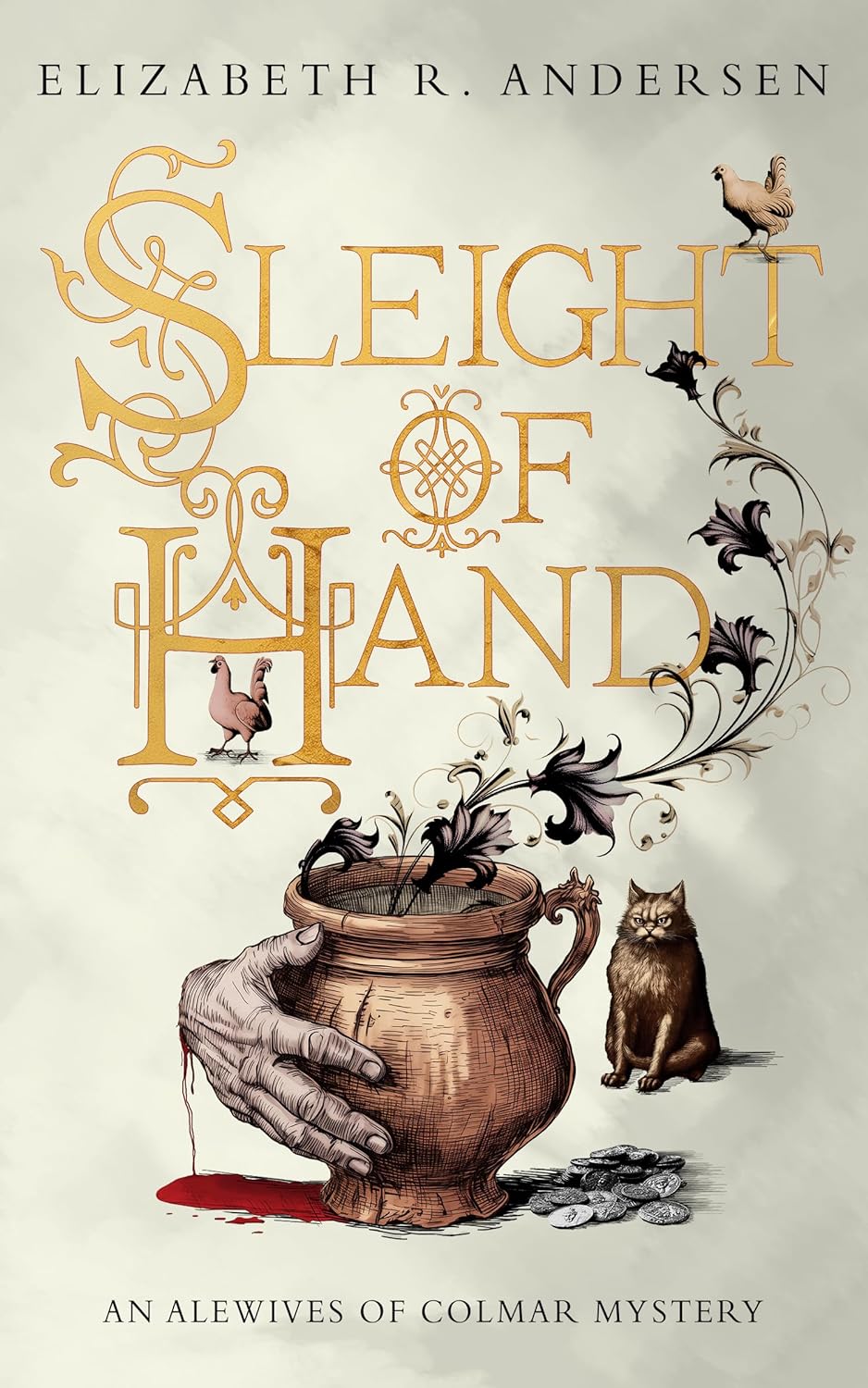
In the spring of 1354, all was well in the town of Colmar – until Efi Kleven discovered a hand in her pot of new ale…a hand that was not attached to a body. Now, Gritta, Appel, and Efi, the three alewives of Colmar, must solve the mystery of the severed hand before suspicion falls on them. While they attempt to keep their fledgling brewery afloat, more bodies turn up outside of town – along with more suspects.
With few allies and several powerful men working against them, the alewives find themselves flummoxed: How did the hand of a man from Vogelgrun end up in a cooking pot in Colmar? Why were none of the victims local? And would this most inconvenient ingredient get in the way of Efi’s plans to find herself a new husband?
Book 2 in The Alewives of Colmar mystery series, Sleight of Hand follows the three alewives as they confront life after the Black Death with bravery and wicked humor, showing resourcefulness and determination in the face of poverty, misogyny, and murder.
Sleight of Hand is a fabulous follow-up to book 1 in The Alewives of Colmar Series, The Alewives (you can find my review for that here).
In Sleight of Hand we return to our three fabulous characters of Efi, Gritta and Appel and find them once more in a bit of a pickle. The characters of our women, their sort of ‘guardian angel’ and the only one who takes them seriously, Friar Wikerus, and the ‘men’ in Colmar remain as firm as in book 1 – the men are still stupid (aside from Friar Wikerus, although he also causes himself some difficulties) while Appel, Gritta and Efi are fabulous as they circumnavigate the restrictions placed on them by men who think they know better. There is a great deal of gentle humour, and this combined with the strong characterisation ensues the reader is very firmly in favour of the women, and not the men.
The mystery itself is very well-constructed. Everything slowly reveals itself and there are any number of red herrings to keep the reader guessing.
It was so delightful to return to the world of our Alewives of Colmar. I really hope there will be a book 3, and indeed, many more stories for our main characters. If you’ve not yet had the joy of reading The Alewives, then yes, begin there, but only because if not, you’ll be missing out on your first encounter with Efi, Gritta and Appel.
Meet the author
Check out Elizabeth’s website, or click on the link for The Alewives review above, which has all her info.
I’m delighted to welcome Sheridan Brown and her new book, The Viola Factor, to the blog, with a book trailer.
The Viola Factor Book Trailer
The Viola Factor Book Trailer
Here’s the blurb
“The Viola Factor” takes place at a time when the country faced division and growth after the American Civil War. Viola Knapp Ruffner (1812-1903) struggled with what was just and fair, becoming a little-known confidant for a young black scholar from Virginia. But Viola was much more than a teacher; she was a mother, wife, game-changer, and friend. With her mother’s dying wish, a young woman alone, she left her New England roots. This is a story of trauma and love in the South while battling for justice and the rightful education of the enslaved and once enslaved. African American leader Booker T. Washington (1856-1915) called her his friend and model for life.
The Viola Factor is in many ways a journey of life done in baby steps, tentatively stumbling, until a galloping stride is achieved. Viola Knapp wears different shoes on different days. Heavy, mud-trekking boots to allow for aggressive steps, and daintier shoes for more rhythmic and assertive ones. She was a diligent daughter, an outspoken protector, and a progressive teacher.
Like many women in her situation, alone at seventeen, Viola must realize her own principles to fulfill her future goals. With every stride, Viola Knapp Ruffner marches around surprises, over potholes, and dodges folly after folly on her journey to be fulfilled. After ambling in one direction, plodding along in another, and wandering to find herself, a sudden halt pushes her forward until a factor of fate places her in the path of a newly freed slave with a desire to read and penchant to lead. After years of post-traumatic stress and mental uncoupling, she finds herself a woman who followed her mother’s dying wish to fight for what is fair and just.
Sheridan Brown holds advanced degrees in school leadership and is a certified teacher, principal, and educational leader. The arts have always been a central force in her life, since performing in piano recitals, school band, plays, and singing in choirs her whole life.
Ms. Brown was born in Tennessee and raised in small towns of southwest Virginia. She practiced her profession in Virginia, Massachusetts, and Florida. Upon retirement, she began volunteering, painting, writing, researching, and traveling with her husband, attorney John Crawford. She has one son, Tony Hume. She is GiGi to Aiden and Lucy. She has returned to the Blue Ridge to live and explore.
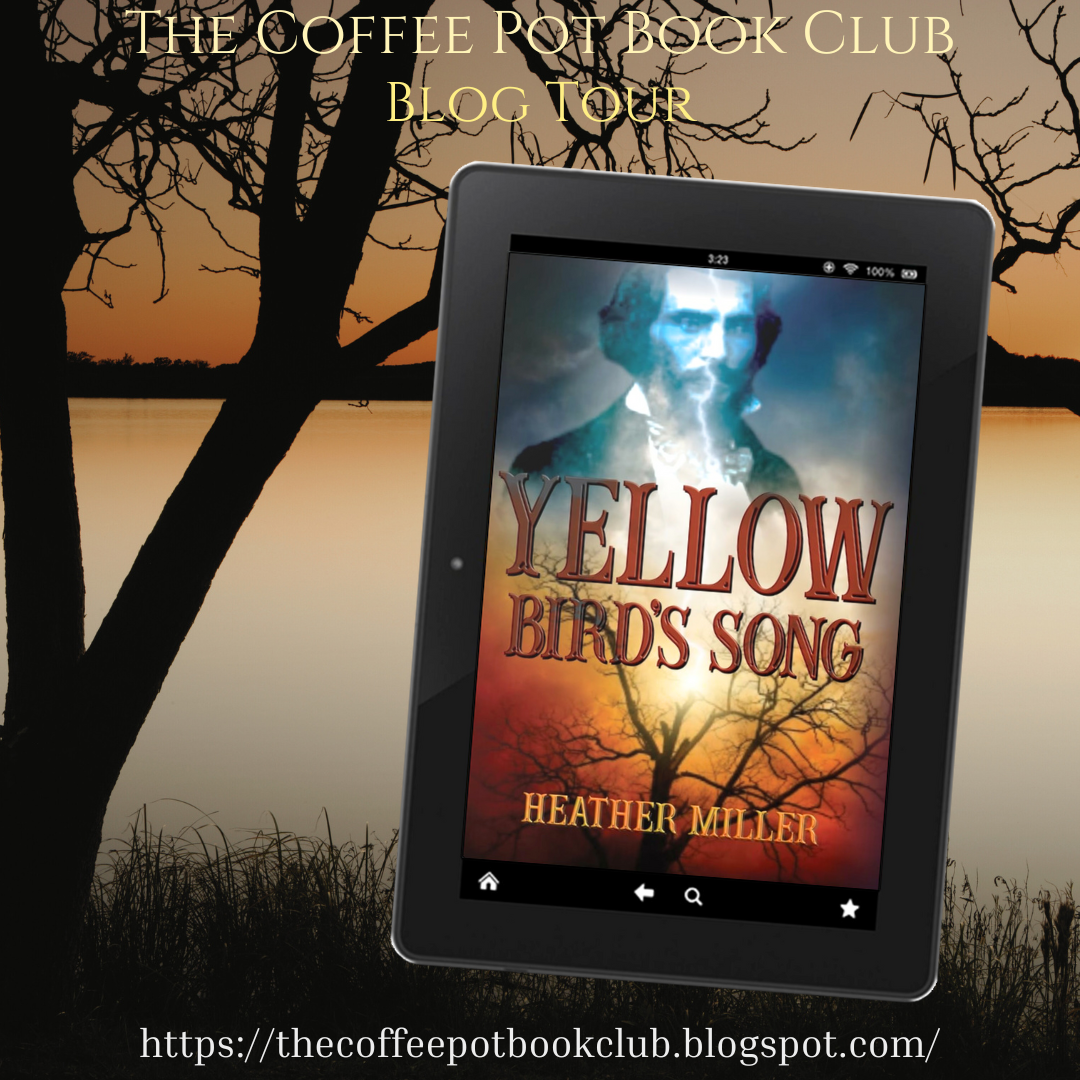
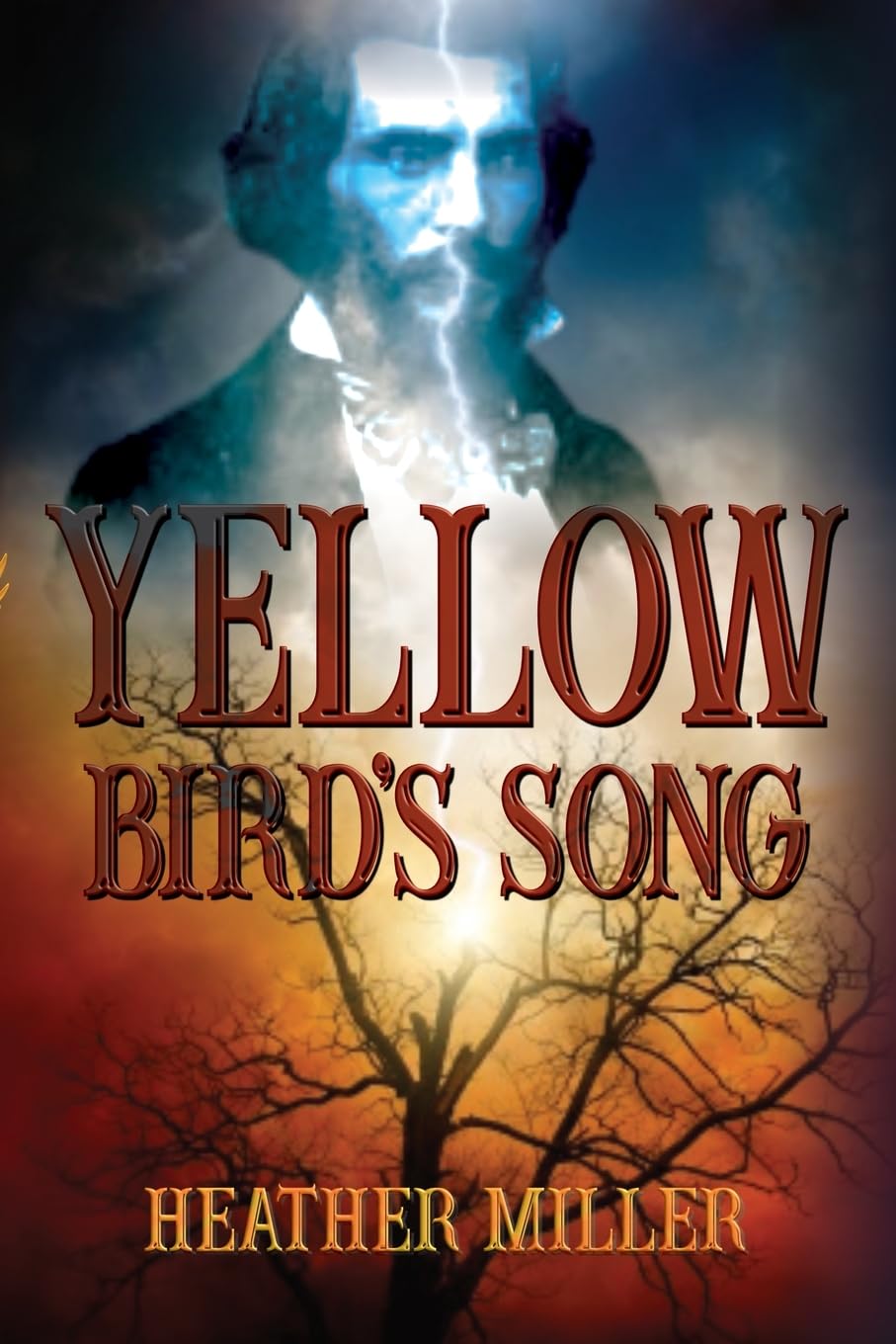
I’m delighted to welcome Heather Miller and her new book, Yellow Bird’s Song, to the blog with an excerpt.
Excerpt 1
John Rollin Ridge, Cherokee Nation West, 1850
The evening’s red sky horizon stretched its wide arms behind Judge Kell’s dogtrot, extending into the dust. A dead tree stood as an ineffectual sentry between his corn crib and smokehouse, visible through the open-framed breezeway. I salivated, smelling pork fat lingering in the air. No longer able to afford to slaughter hogs, my family could only recall bacon’s salty taste.
Inside the paddock, my appy lay on his side. Castration’s fresh blood tainted his coat of bronze and cream. Blood gathered under his hind quarters. If Kell had cut his femoral, he’d die from blood loss. That horse was Dick’s grandson, the pony I begged Papa to bring west from Running Waters.
The porch door squeaked, then slammed behind him. Kell expected me. He rolled tobacco in paper, sealing it closed with his tongue. His eyes squinted from the western prairie’s sunlight sliding low behind me.
He struck a phosphorus match against the porch post, lit the end of the rolled tobacco, held it in his lips, tilted his head to the side, and inhaled. Through smoke, he said, “Look at you, Rollin, standing on my land like some Mexican bandit. I believe your post is south of here.” Kell’s sarcasm snarled like poisoned saliva foaming from the jaw of a rabid dog.
“I’m in the right place,” I said, more confidently than I felt, flying on vindication’s wind alone.
“That is where you and I agree. Not much else, but that singular point.”
He sauntered, with spotless leather boots, to the edge of the steps extending into the western dirt, just dust over the granite under Indian land.
I nodded left toward his painted paddock fence. “Kell, you take my Appaloosa stallion? His markings are unmistakable.”
Kell gestured with his smoking hand, pointing the two fingers toward my injured animal. “You mean that gelding?”
“Who made him so?”3
“I did and am willing to stand by my deeds with my life.4Found him in pastureland. Horse bucked and rammed me. Without balls, he’ll settle right down.”
“As a judge, you should know Cherokee don’t own open tribal land. No reason he should be here.”
Judge Kell gripped his porch rail but remained atop its planks on the high ground. Then, his unoccupied, dominant hand recognized his bowie knife’s handle, sheathed, and slung low on his hip. He said, “Can testify to nothing.”
His lies didn’t dampen my resolve. I saw through him. We both knew the real reason I was there. I shouted, “My sister can.”
He leaned against his porch post with carefree nonchalance. “The deaf and dumb sister? I don’t know what that feeble-minded woman could mean.”
I touched the leather strap of Clarinda’s whistle around my neck. “She doesn’t need to speak to witness. She is a medicine woman.” Then I separated my boots, furthering my stance against the inevitable explosion of powder and ball from the iron under my palm.
Kell scoffed. “Thenremind me to stay well. That woman’s a witch.”
Wouldn’t be illness that killed him. I couldn’t allow Kell’s wit to move me to fire first, no matter what insults he hurled at my sister. To make justice legal, Kell must first try to take my life, although that didn’t mean I couldn’t provoke the inevitable.
I matched his sarcasm. “Now isn’t the time to insult my family. Come down off that porch. Clarinda and Skili followed you, saw what you did. You’ve cost me far more than future foals. That blade in your grip took my father’s life.”
I spoke the Cherokee words fast, having memorized their phrases from a thousand daydreams. Still, this time, the words echoed in the abandoned cave of my chest with heavier resonance—measuring the phrase’s increased weight by speech.
He spoke his smug reply through smoke. “Your father’s signature on that treaty stole nearly four thousand Cherokee souls. So, I believe, son, both that horse and your father,” he smiled before finishing his thought, “got what they deserved.”
“According to whom? Your justice? Chief Ross’? It’s his bloody hands you’re hiding.”
Kell pulled a rogue piece of tobacco off his tongue with his thumb and pointer finger. “See now, truth rests in each man’s perception. Your father knew that, at least.”
“Papa understood Cherokee sovereignty could not exist in the East. My family stood in the way of Chief Ross’ greed; Ross sent you to kill him for it.”
Kell’s searing sarcasm furthered his attempt at intimidation. He shook his head, clicking his tongue. “By accusing Chief Ross of such crimes, you make a steep accusation for a raven so young.” But then, his snide tone became more cynical. “Your family received lawful Cherokee blood vengeance. So’s I heard.”
It wasn’t only his voice; every crack of bare earth mocked me. But what he didn’t know, what the ground couldn’t predict, was that this time, his blood would run. Cherokee Nation’s rocky soil would soak in it, dilute him in its groundwater, and spit his remnants through every winding river and well.
Kell offered an aside, turning his face from me. “You’re still breathing.” He looked back, continuing his threat with closed-tooth menace. “When this knife reaches you, that’ll end. How ironic—” He stopped short, mid-thought, and exhaled a chuckle before inhaling again from his lit tobacco. His eyes looked at me from my worn boots to my mother’s pale eyes.
I finished the sentiment on his behalf, “That the same knife would assassinate a father and murder his son? Admit your part. You were there in ‘39; the same knife hangs at your side.”
Kell unsheathed and admired the blade in his hand as if he hadn’t seen his distorted reflection in it for years. “She’s a beautiful weapon, don’t you think? Buckhorn handle. Metal inside the bone. Streamlined and strong. Son, this weapon ended many a man’s life with its peaceful vengeance.”
I barked, “Vengeance is a fickle whore. She strains her rulings through a sieve she calls morality, leaving behind rocks and politics. Justice’s bullet is fair and fast. Even blindfolded, her shooter doesn’t have to stand close to hit where he’s aiming.”
Years ago, the image of Kell’s bowie knife forged in my mind. Its craftsman burned the bone handle with the image of an arrowhead—no shaft, no flight feathers—only a killing point. Kell’s knife required wind and aim, powered by his quick reach, and forged will. My twelve-year-old eyes remembered his blade. At twenty-two, my memory dripped in images of Papa’s blood.
Impatient and blinded by the reddening dusk, Kell spoke with vigorous staccato, hefting his significant weight down the stairs. “Take your thumb off that trigger, boy, before you start a war.” Then, with sight restored, he dirtied his spotless boots, kicking a wandering rat snake slithering between us, seaming a dividing line in prairie dust.
I shook my head in disgust. “War began ten years ago. Your whiskey breath is as rancid as your soul. I can smell it stronger now.” I studied his smirk, offering my own in exchange. “Stinks so bad,I thought someone died.”
Kell and I stood in paradox: I, in the shadow of a tree, him in the dying sunlight. His age to my youth, wealth to my poverty, appointment to my banishment, and vengeful intent opposing my righteous confidence.
He cocked his head and smirked, glanced over to my horse, and crushed the remnants of his smoke into the dust. “You think this will end with you? Cousin Stand leading your teenage brothers and Boudinot’s boy against my grown sons and Chief Ross’ men in some unsanctioned feud? The few against the many?”
“No, justice ends with me. If you approach, you will lose your life.”5I wouldn’t retreat from his taunts, knowing them for what they were. If Cousin Stand and I took down Chief Ross, it wouldn’t be a feud; it would escalate an already brewing Cherokee civil war.
Here’s the blurb
Rollin Ridge, a mercurial figure in this tribal tale, makes a fateful decision in 1850, leaving his family behind to escape the gallows after avenging his father and grandfather’s brutal assassinations. With sin and grief packed in his saddlebags, he and his brothers head west in pursuit of California gold, embarking on a journey marked by hardship and revelation. Through letters sent home, Rollin uncovers the unrelenting legacy of his father’s sins, an emotional odyssey that delves deep into his Cherokee history.
The narrative’s frame transports readers to the years 1827-1835, where Rollin’s parents, Cherokee John Ridge and his white wife, Sarah, stumble upon a web of illicit slave running, horse theft, and whiskey dealings across Cherokee territory. Driven by a desire to end these inhumane crimes and defy the powerful pressures of Georgia and President Andrew Jackson, John Ridge takes a bold step by running for the position of Principal Chief, challenging the incumbent, Chief John Ross. The Ridges face a heart-wrenching decision: to stand against discrimination, resist the forces of land greed, and remain on their people’s ancestral land, or to sign a treaty that would uproot an entire nation, along with their family.
As a veteran English teacher and college professor, Heather has spent nearly thirty years teaching her students the author’s craft. Now, with empty nest time on her hands, she’s writing herself, transcribing lost voices in American’s history.
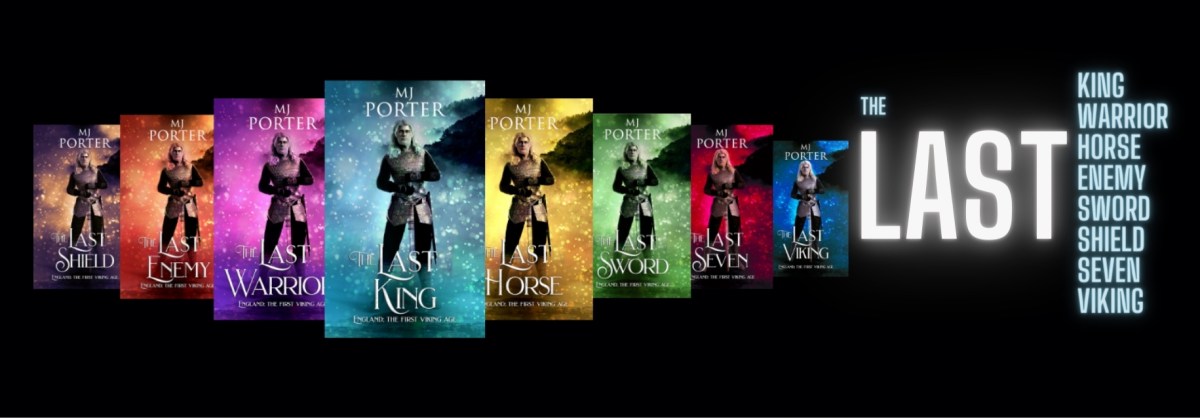
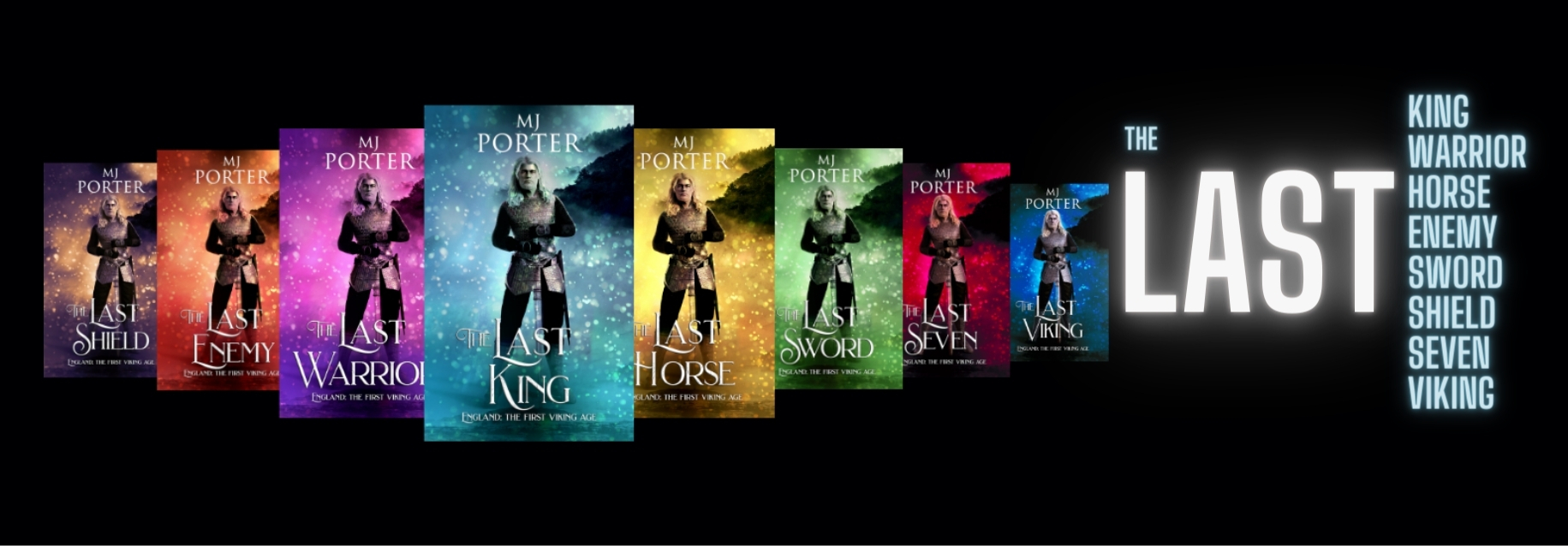
A huge thank you to everyone who has jumped back into the world of Coelwulf and his band of foul-mouthed warriors with The Last Viking.
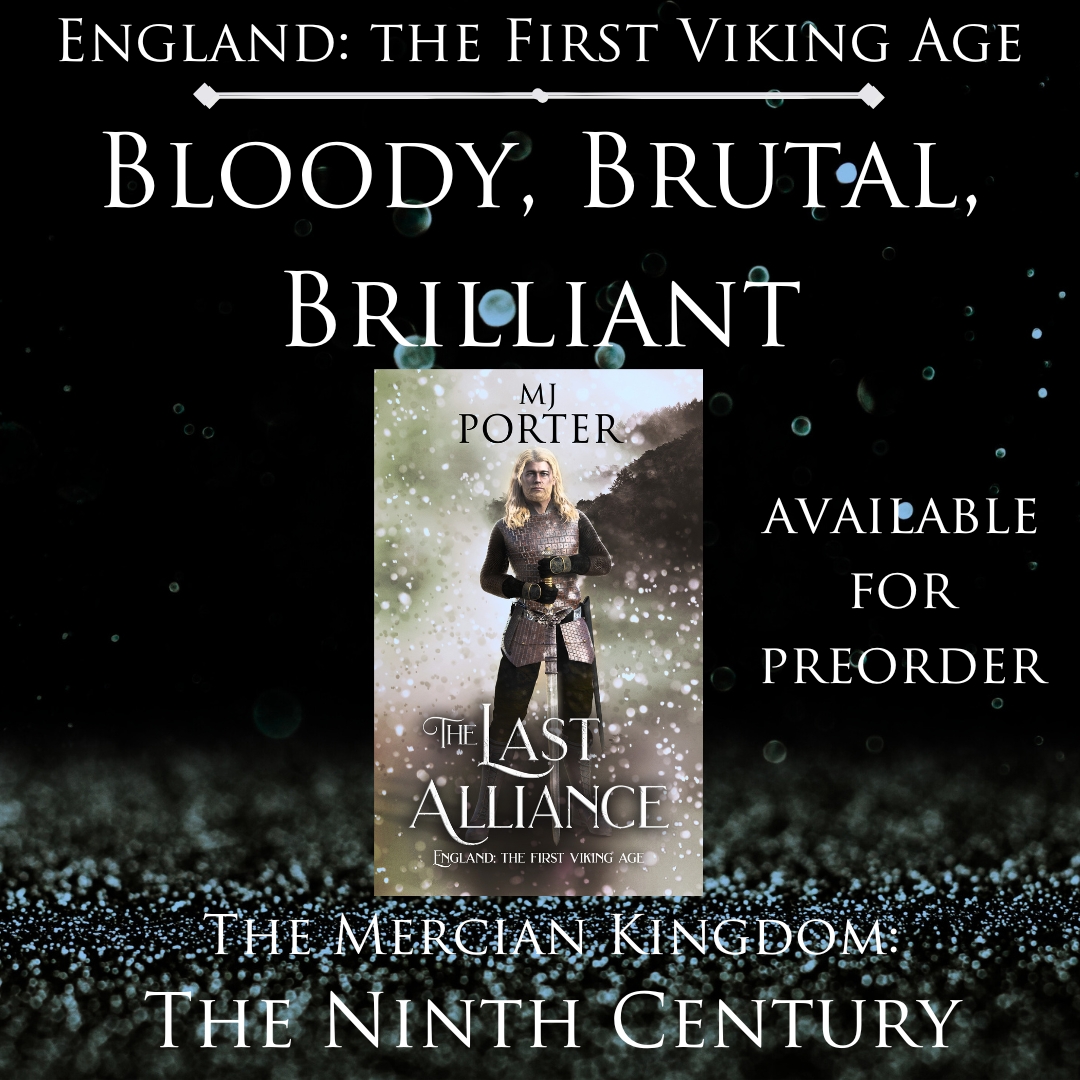
Having taken the step back into this series, I wasn’t about to let ‘the lads’ rest. Book 9 is far from complete, but it does have a delightfully messy first draft, and a release date in September 2024, although if I can, I will bring this forward.
So, below is the new cover – and you can preorder book 9 here:
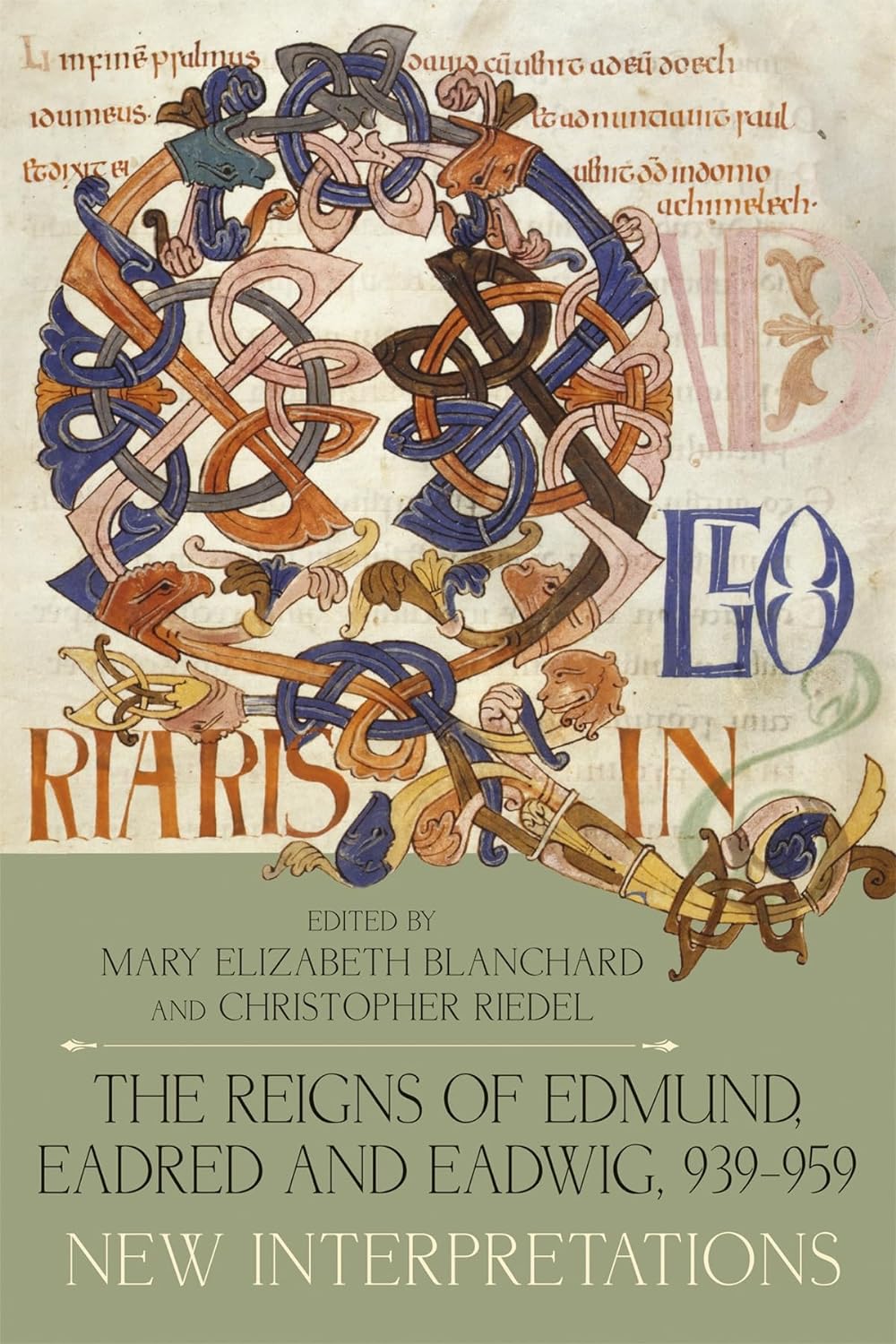
Essays highlighting the importance of three kings – Edmund, Eadred and Eadwig – in understanding England in the tenth century.
Much scholarly attention has been devoted to both the expanding kingdom of Alfred the Great, Edward the Elder, and Æthelstan, and to the larger and integrated realm of their more distant successors, Edgar and Æthelred II. However, the English kingdom in the 940s and 950s, and its three kings, Edmund (939-946), Eadred (946-955), and Eadwig (955-959), the men who inherited and held together the kingdom created by their immediate predecessors, have been somewhat neglected, with little research being dedicated to these men as kings, or the era in which they ruled.
This volume offers a variety of approaches to the period. Its contributors bring to light royal legal innovations to ecclesiastical law, oaths, heriot, complex factional politics, including the crucial role of queens, differing perspectives on the final era of an independent northern kingdom of York, and developments in literary culture outside the domineering trend of the later monastic reformers.
The Reigns of Edmund, Eadred and Eawig, 939-959: New Interpretations is a fascinating collection of essays reassessing this twenty-year period in 10th century England, which is so often overlooked while historians bicker about who was the ‘better’ king Alfred or Athelstan, while casting disdain on Æthelred II. A similar collection has also been written about Edward the Elder and Edgar, while Athelstan has recently received a new monograph written by Sarah Foot.
This collection consists of nine essays concerning our understanding of these three reigns and political developments and the reputations of those involved, including Archbishop Wulfstan I of York, Eadwig and his coronation-day story, Lady Eadgifu and her second son, Eadred, alongside Edmund’s Oath of Loyalty, finishing with a consideration of how one surviving manuscript could provide illumination into the ‘before and after’ effects of the Benedictine Reformation.
All nine essays are intriguing, presenting new arguments and interpretations for the scant written record of the period.
This is a timely accounting of Edmund, Eadred, and Eadwig, and it will hopefully spark much new debate about how these three brief reigns should be considered in the wider setting of the development of the tenth century within the new kingdom of England.
This is perhaps not intended for those who’ve not studied the period before – all historians do have a tendency to fixate on the minutiae which more casual readers may not appreciate, but with no monograph entirely devoted to any of these three kings, it provides a fascinating insight into what more can be known about them from what information is available. I particularly enjoyed the chapters concerned with how the Anglo-Saxon Chronicle entries for these years may have been manipulated, potentially quite close in time to when they were written, and also the chapter re-examining the often maligned Archbishop Wulfstan I of York, and Lady Eadgifu. I always find fresh insight from collections such as this, and I’m extremely pleased it was released as I was finishing my edits on the Brunanburh Series, which of course, features King Edmund, and his younger brother and mother.
His sons were ripped from his arms and he was sold into slavery… Now he has a terrible choice.
Cadwal, a widowed Celtic warrior is a dedicated father raising his children in his mountain stronghold. In these uncertain times, the tribe must be vigilant, as caught between the expanding Roman empire and power-hungry neighbours, treachery is rife.
When enemies infiltrate his hillfort his family are snatched away and he is dragged to the mines as a slave. Trapped in the dark depths, he has to decide whether to save his tribe from the onslaught of the Romans, or his sons. His only hope is to seek out the dreaded druids… but first he must escape the chains and tunnels.
Brethren is the gripping first novel in the Foundation of the Dragon series based in what is North Wales during the Roman invasion. If you’re a fan of page-turning historical fiction with twists and turns galore then you will love this book.
Brethren by Robb Pritchard is a thrilling tale of Britain during the first century of Roman occupation, twenty years after the devastation of the Druid stronghold on the Island of Mona. (Readers of my reviews will know I’ve just read Simon Turney’s new story about Agricola – the two stories dovetail in a most pleasing way)
Our two main characters, Cadwal and Brei, fight for what they believe in, even as treachery abounds from those determined to make alliances with the Romans to the detriment of other people.
Cadwal, a warrior, struggles to rescue his children from enslavement while himself facing enslavement, injury and death at the hands of the Romans. Brei, the king’s counsellor, must do all she can to protect her tribe from a weak king and power-hungry heirs. Combined, the two characters present a thrilling story of the era, which is very much non-stop.
It’s taken me a while to get to this story, for which I’d like to apologise to the author, but it is very well-written and engaging. I thoroughly enjoyed it, and my 5-star review is fully justified. I’m looking forward to reading more of Robb’s books.
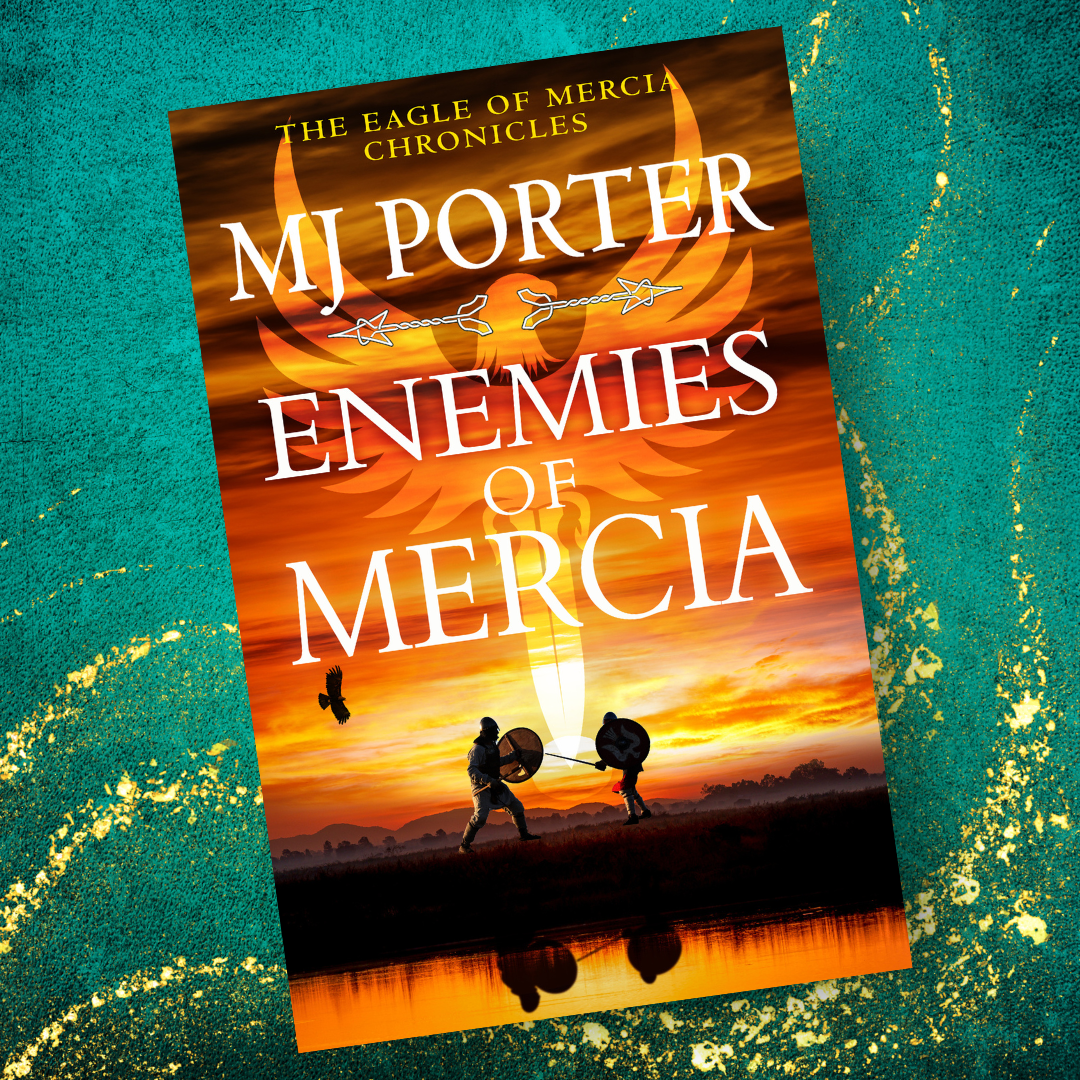
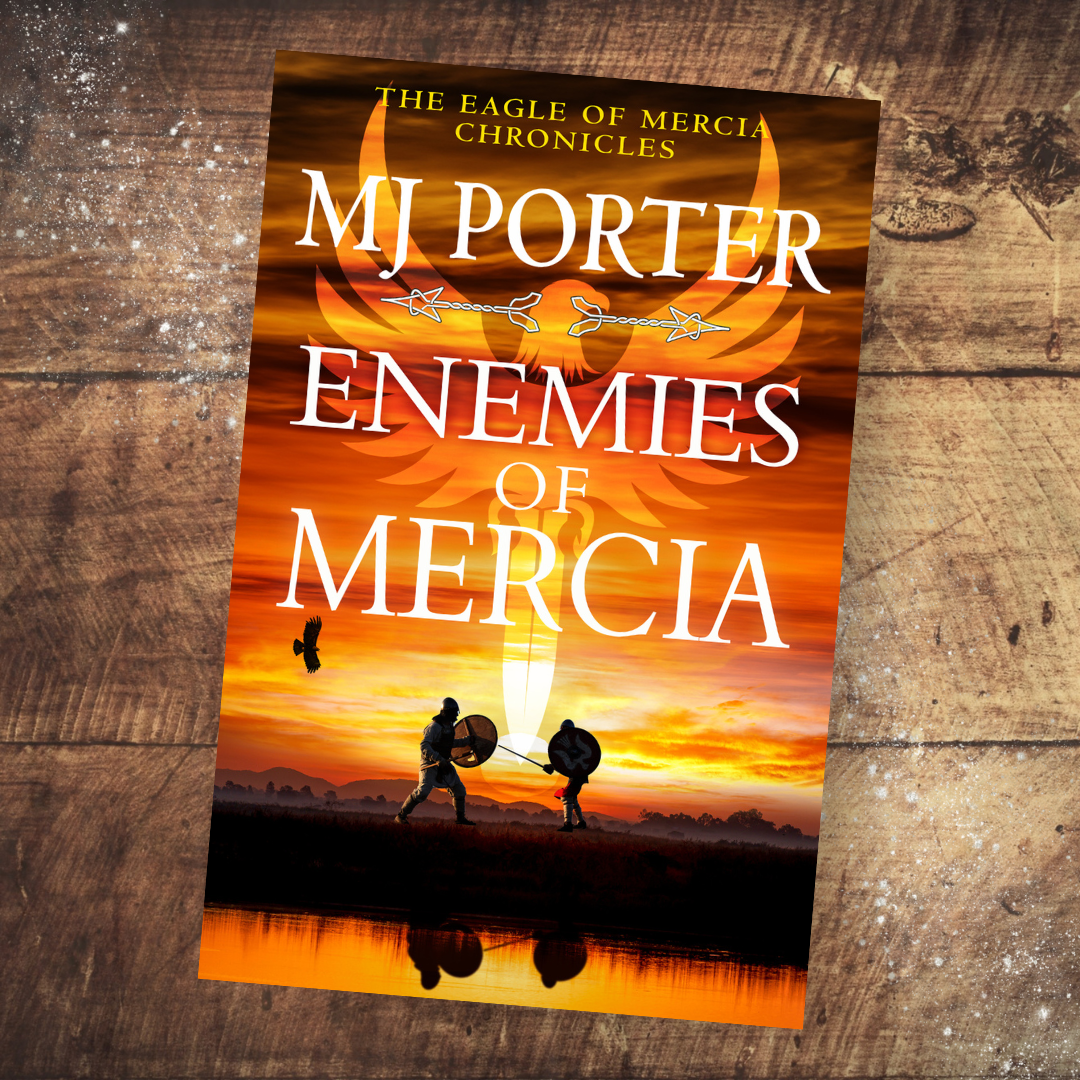
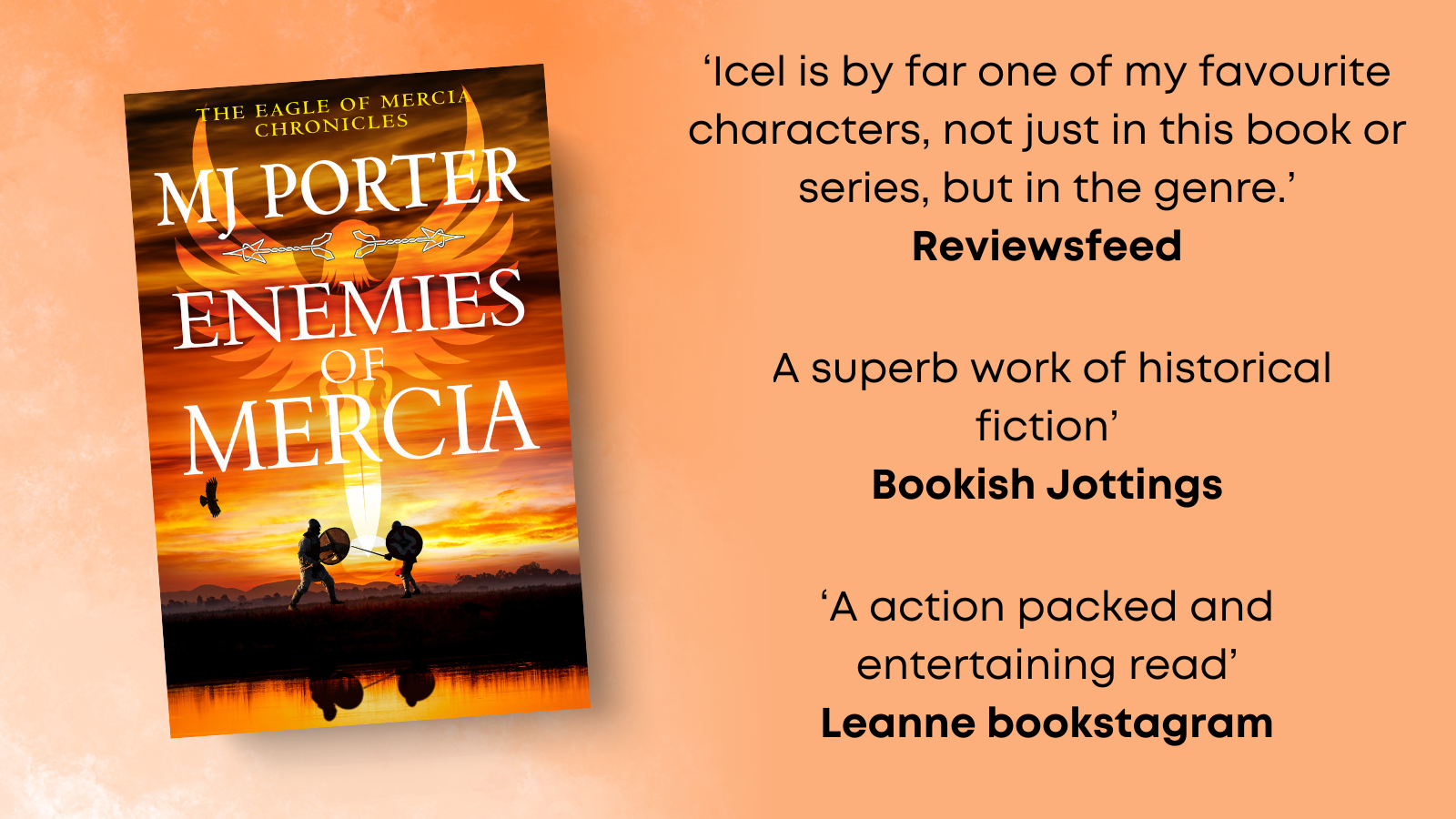
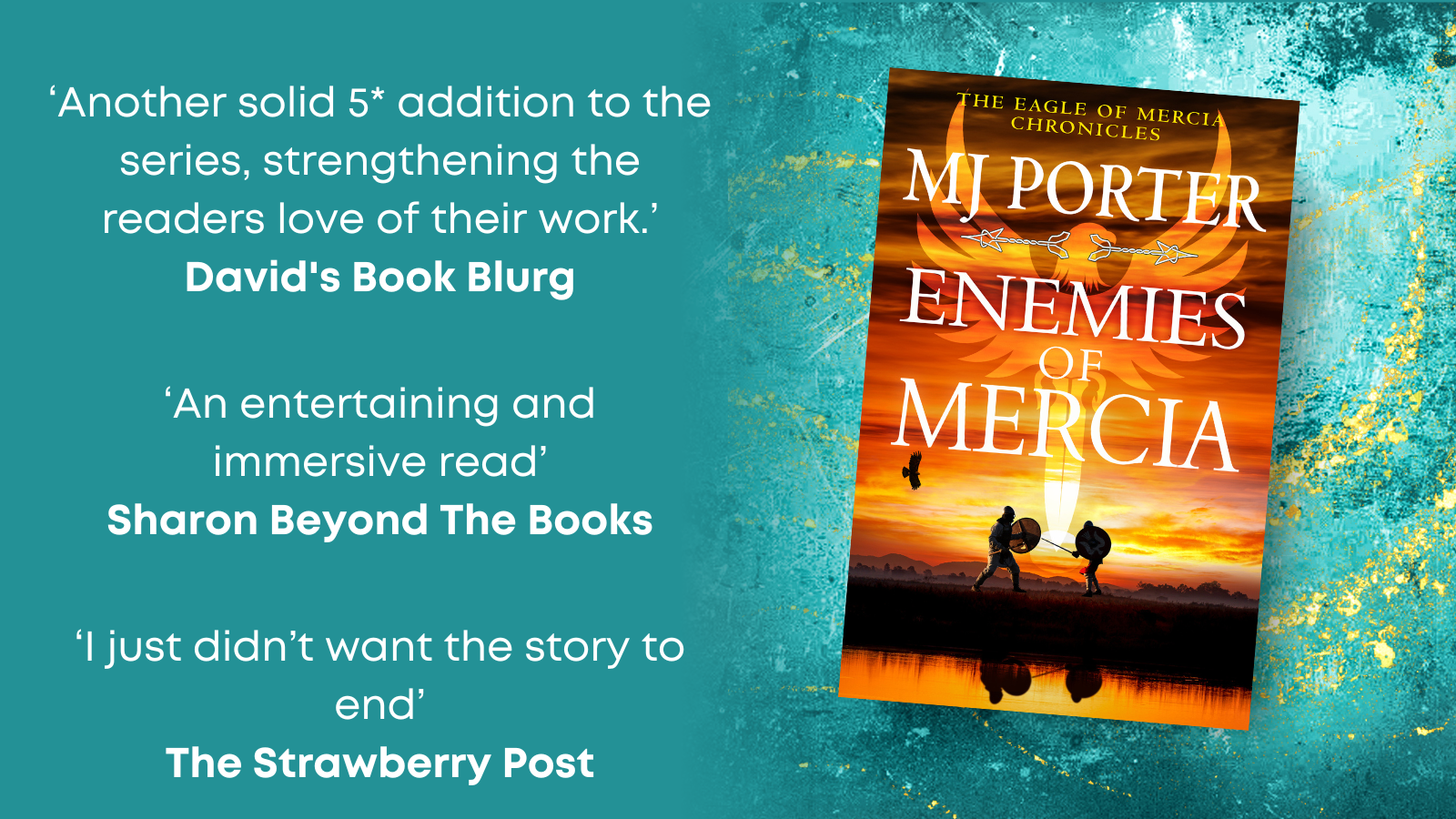
Well, here we are people. Book 6 in The Eagle of Mercia Chronicles is released today, and the most important thing I need to do, is not confuse my stories because Book 7 is written and in the hands of my editor:)
It’s hard to believe it’s only just over 2 years since the first book in the series was released. I’d like to thank all my readers for taking a chance on young Icel. And for anyone who still doesn’t know, Icel is a character from The Mercian Ninth Century series, set about 40 years later. Bringing him to life as a younger man has been a fabulous experience, and I hope that those who’ve come to Icel from the older perspective, or have jumped forward in time, appreciate the man he will become/or was. I know some have questioned Icel’s commitment to young Coenwulf and Coelwulf. I do hope everyone now realises why.
So, what’s happening in book 6, Enemies of Mercia? Here’s the blurb;
A King’s command. A warrior’s quest for the truth…
Tamworth AD835
Following Icel’s epic rescue of Lord Coenwulf’s children from their almost certain death, King Wiglaf is forced to call upon Icel’s loyal services once more.
Furious that the conspirators behind the audacious move to snatch the children have yet to face justice, he despatches Icel to hunt down the enemy of Mercia and discover who seeks to conspire against the throne.
The dangerous mission will take Icel into the heartland of enemy-held Wessex to Winchester and onto Canterbury. As the web of lies and deceit grows, Icel must battle to discover the truth whilst keeping himself and his allies safe.
But those who conspire against the King have much to lose and will stop at nothing to prevent Icel discovering the truth. Once more, Icel’s life is endangered as he tries to protect Mercia from her enemies who threaten Mercia’s kingly line.
Enemies of Mercia follows on from events in Book 5, Protector of Mercia. And, no spoilers here, but Book 7, as yet untitled other than in my head, will conclude this ‘mini’ story thread, as the first four books in the series also include a ‘mini’ story thread. But don’t let that stop you from reading Enemies right now – book 7 isn’t scheduled until early 2025 (I know – I’ve finally ‘caught’ up with my writing commitments, and it’s a great feeling).
Enemies of Mercia will take our young hero to the heart of Wessex, and there is a mystery element to the story (I was reading a lot of mysteries at the time, and you all know, I hope, that I’ve also written a few ‘more’ modern mysteries.) It was a lot of fun to mix my genres. I did enjoy ‘visiting’ Winchester and Canterbury in the 830s – as usual, I made the decision to take them there before I realised quite how complex it was to recreate the ancient settlements. You’ll also be pleased to know that after many of the events in Protector saw Icel alone, in Enemies he’s reunited with his allies. I really hope you’ll enjoy Enemies of Mercia.
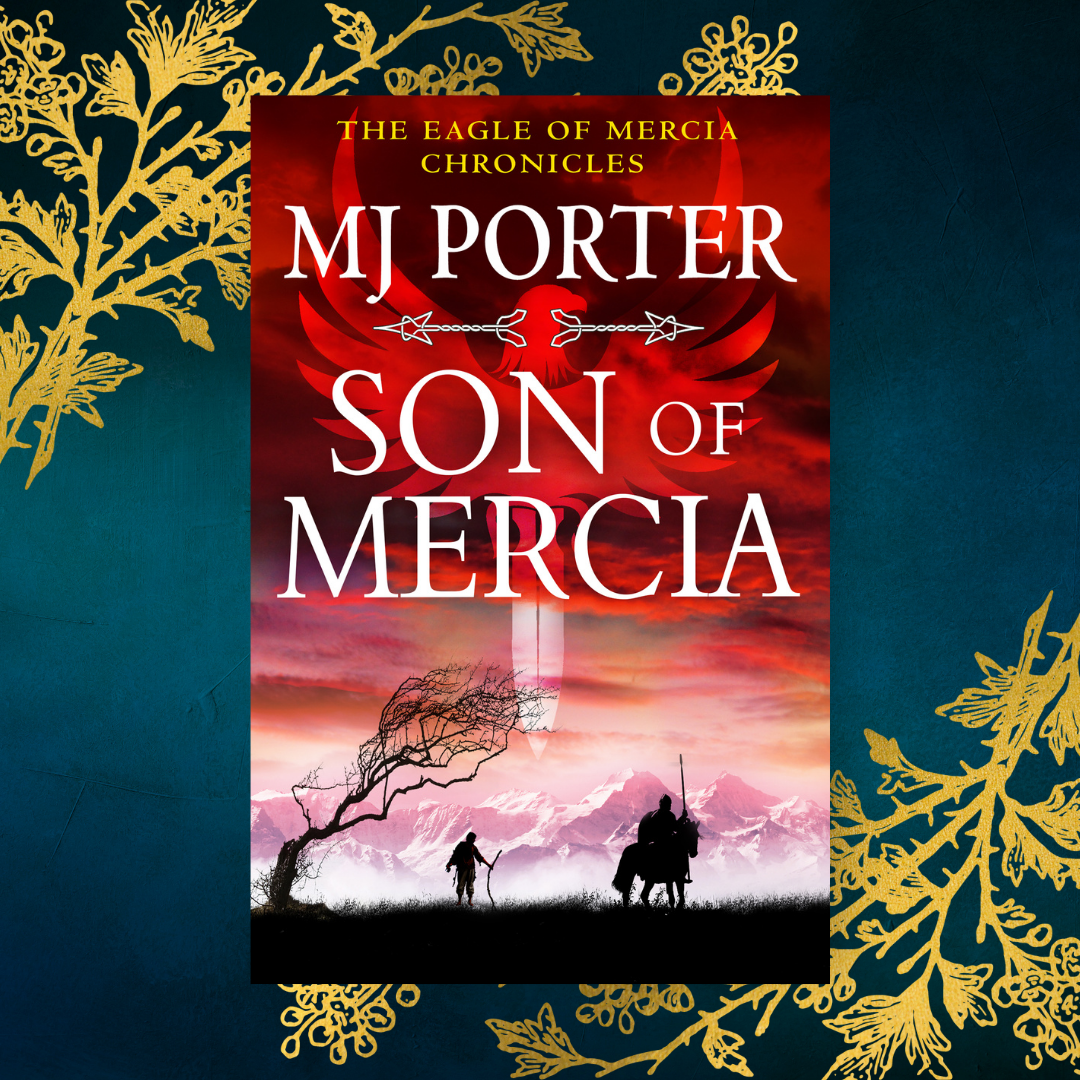
And, if you’ve not yet tried this series, then the first book, Son of Mercia, will be reduced in ebook format on Amazon UK and Australia throughout April 2024 (and is also available to read with Kindle Unlimited), so it’s the perfect opportunity to try out the series. You don’t need to have met old Icel, or young Icel, to enjoy The Eagle of Mercia Chronicles.
Follow the blog tour with Rachel’s Random Resources and the fabulous blog hosts. I will be sharing links throughout the next week. Thank you to everyone who’s already read the book.
These final paragraphs from the end of Chapter Two show main character Emma trying to escape a burning building and she’s made it to the flat roof. It’s 1911 and firemen have placed a wooden ladder across from the neighbouring building. She is thinking of her dead twin brother as she contemplates her own likely demise. This plot point was inspired by the true story of one woman’s survival from the real Triangle Shirtwaist factory fire in New York in March 1911…
Emma focused on the fireman’s face, beaded with adrenalin, kind yet full of urgency for her to succeed. She searched for strength in arms which raged with pain.
‘Keep looking at me. Slowly does it…’
Her breathing faltered and she shuddered. The wooden rungs gave a little and bounced when she moved. Her thighs started to wobble and she felt lightheaded.
‘Not far now, keep coming.’
The fireman’s hand was reaching out to her.
‘You’re nearly halfway, good girl.’
She focused on the soot-smudged fingers and inched herself closer. Clouds of smoke closed in, wrapping their warmth around her, not wanting to let her escape. Snapping and crackling behind found her digging deep for a final effort John would have been proud of.
‘Don’t look back. I’ve nearly got you.’
She saw the fireman’s sooty hands, the sweat on his own face, felt her lungs pulling life from the tiny breaths she was taking. It hurt, and she thought about giving up and letting her body fall.
‘Hey!’
She gritted her teeth and pulled her aching body once more along the ladder. When he could finally reach her, the fireman pulled her from the lifeline and wrapped her in a blanket, supporting her body when she collapsed. She turned in time to see the flames crackle towards them and watched the ladder as it fell away like a box of lit matches.
A few minutes later, she was led out of the building and onto the street. Her left arm had blistered, little weeping domes of red flesh. The slash on her right wrist where she’d forced her hand through the door had stopped bleeding, but splinters stuck out at crude angles, embedded in muscle. The pain was pulling her towards death, of that she was sure.
The policeman steered her past bodies, charred limbs twisted.
‘Oh, my God… I saw these people jump.’ Emma covered her mouth with her hand.
‘Don’t look.’ He was taking her to where the horse-drawn ambulances were queuing across the end of the alley, waiting to take the injured to hospital. ‘Poor things jumped, but some are from the fire escape.’
Emma stopped walking. ‘The fire escape?’
‘That mangled mess.’ He pointed to a skeleton of bent and twisted metal. Torn fabric pieces hung from spikes of broken steel. ‘It broke under the weight of too many people.’
Physicians and nurses were busy covering bodies with blankets as police tried to keep the crowds back. The cries and sobbing which filled the air were testament to the unfolding horror. Emma scanned the walking wounded, praying.
Then she stopped.
Strands of hair stuck to her face and she had to drag it away from her eyes three times before she could be sure that the skirt was that of Martina. It lay in ripples across unmoving legs, one of which no longer had a foot. Use the window! Emma had told her, convinced it was the safest route out of the fire.
They had a lifetime of shared memories yet to make: the vote to win, husbands to find, children to bring into the world.
How could this be the truth?
Emma slumped to her knees, but the policeman pulled her back to her feet. Even the nurse’s kind attentions could not console her or stop the howling sobs. Life wasn’t life without Martina in it. Her presence had made the loss of John more bearable – she couldn’t possibly have lost her too.
Here’s the blurb
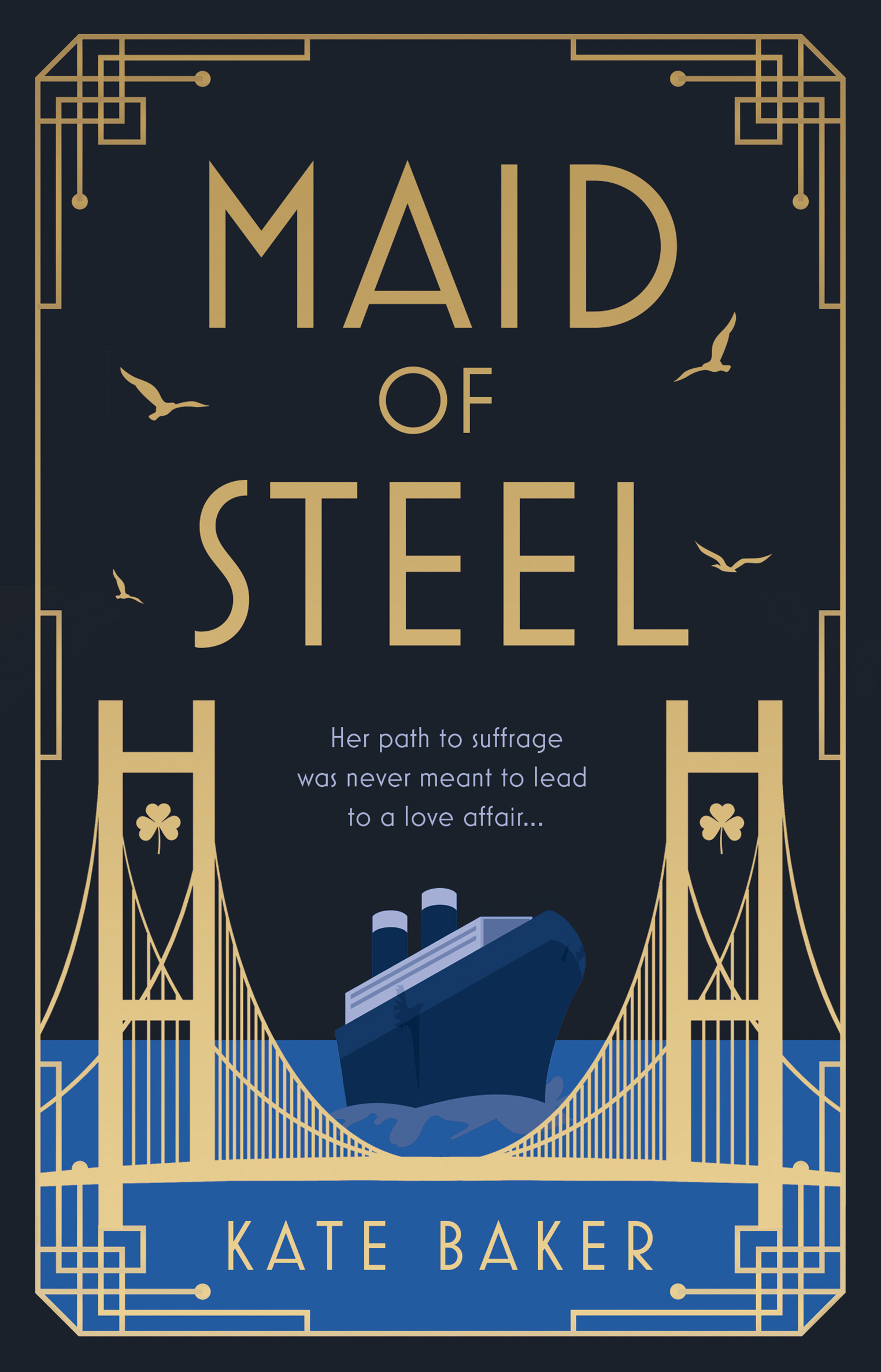
It’s 1911 and, against her mother’s wishes, quiet New Yorker Emma dreams of winning the right to vote. She is sent away by her parents in the hope distance will curb her desire to be involved with the growing suffrage movement and told to spend time learning about where her grandparents came from.
Across the Atlantic – Queenstown, southern Ireland – hotelier Thomas dreams of being loved, even noticed, by his actress wife, Alice. On their wedding day, Alice’s father had assured him that adoration comes with time. It’s been eight years. But Alice has plans of her own and they certainly don’t include the fight for equality or her dull husband.
Emma’s arrival in Ireland leads her to discover family secrets and become involved in the Irish Women’s Suffrage Society in Cork. However, Emma’s path to suffrage was never meant to lead to a forbidden love affair…
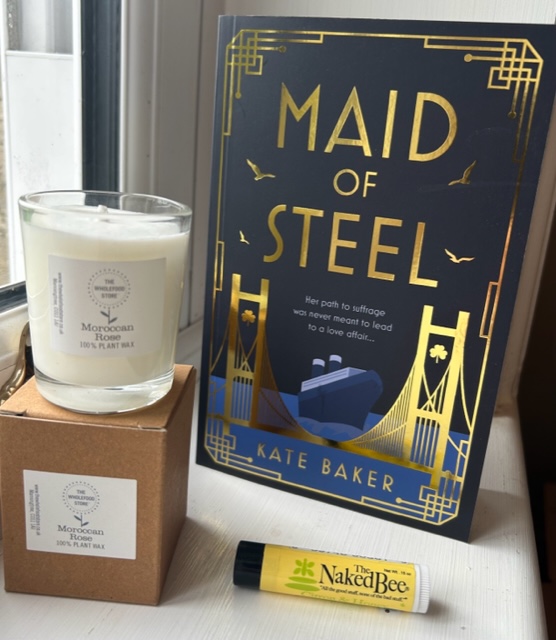
Giveaway to Win a signed copy of Maid of Steel, candle and lipsil (Open to UK Only)
*Terms and Conditions –UK entries welcome. Please enter using the Rafflecopter box below. The winner will be selected at random via Rafflecopter from all valid entries and will be notified by Twitter and/or email. If no response is received within 7 days then Rachel’s Random Resources reserves the right to select an alternative winner. Open to all entrants aged 18 or over. Any personal data given as part of the competition entry is used for this purpose only and will not be shared with third parties, with the exception of the winners’ information. This will passed to the giveaway organiser and used only for fulfilment of the prize, after which time Rachel’s Random Resources will delete the data. I am not responsible for despatch or delivery of the prize.