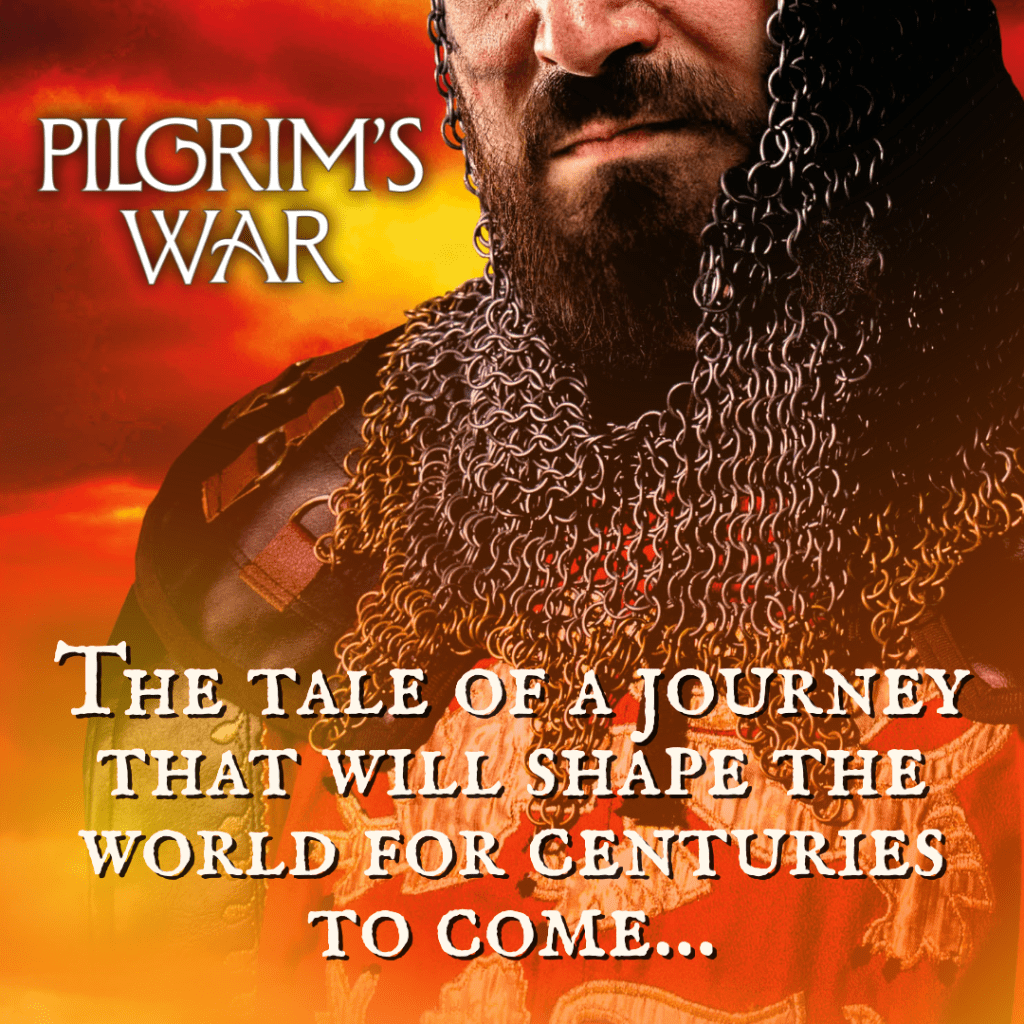
I’m delighted to welcome Julian de la Motte and his book, The Will of God, to the blog #TheWillOfGod #HistoricalFiction #Crusades #WilliamTheConqueror #BlogTour #TheCoffeePotBookClub

I’m delighted to welcome Julian de la Motte and his book, The Will of God, to the blog #TheWillOfGod #HistoricalFiction #Crusades #WilliamTheConqueror #BlogTour #TheCoffeePotBookClub

I’m delighted to welcome Julian de la Motte and his book, The Will of God, to the blog with an excerpt.

Excerpt

The courtyard of the Earl Warenne was the usual clutter and muddle of people and diverse objects scattered about. Men and women in the dun and green and grey of homespun cloth blended with the earth colours of the ground, the quagmire, the swamp of churned mud and excrement. They either strode purposefully through it all or else attempted to skirt delicately around the more obvious mounds of rubbish and ordure. The more colourfully attired, house servants and retainers for the most part, avoided the area when they could, preferring other entrances and exits to the Great Hall.

A cart with one wheel off for essential repairs was proving a major obstruction and people cursed as they edged around it and the blaspheming wheelwright and his apprentices with their heavy hammers working on a broken wheel. Across the way, over in the corner of the yard a large pig lay sprawled upon its back, slaughtered out of proper season. For some reason, it had survived the usual November cull. Scrubbed clean of bristles, a butcher was busily at work with his knife and axe, delving expertly for the liver and kidneys.

Despite the cold of the day and the earliness of the season there was a halo of flies circling the butcher and at his feet a coil of grey steaming intestines were attracting the interest of a trio of dogs. Wretched creatures, ribs showing like the staves of ruined boats, they sidled towards the pile of offal and retreated again from the slaughterer.

The butcher’s boy, no more than a child staggered away, burdened with a heavy bucket of blood that slopped over the sides as he moved. There would be blood pudding and sausages made of scraps of inferior meat stuffed within the intestines ready by the afternoon.

Here’s the Blurb

“Deus Lo Vult!”

Gilles is the natural son of the Earl Waltheof, executed by William the Conqueror for supposed treachery. Raised in Normandy by Queen Matilda of England, Gilles is a young servant of Robert, Duke of Normandy, when the first call for a Holy War against the infidel and for the liberation of Jerusalem is raised in Christendom. Along with thousands of others, inspired by a variety of motives, intense piety mixed with a sense of adventure and the prospects of richness, Gilles becomes a key and respected follower of the Duke of Normandy and travels through France and into Italy to the point of embarkation for Constantinople and the land of the Greeks.

In this epic first phase of a long and gruelling journey, Gilles begins to discover a sense of his own strengths and weaknesses, encounters for the first time the full might and strength of the Norman war machine and achieves his much coveted aim of knighthood, as well as a sense of responsibility to the men that he must now lead into battle.

The Will of God is the literal translation of the Latin phrase “Deus Lo Vult”; a ubiquitous war cry and a commonly offered explanation of all the horrors and iniquities unleashed by the First Crusade of 1096 to 1099, when thousands of Europeans made the dangerous and terrifying journey to the Holy Land and the liberation of Jerusalem. It is the first of two books on the subject.

Praise for The Will of God:

“De la Motte has superpowers as a writer of historical fiction; he’s a warhorse of a writer bred to stun and trample the literary senses. You won’t stop turning the pages of The Will of God.”

~ Charles McNair, Pulitzer Prize nominee and author of Land O’Goshen

Buy Link

Universal Link

Meet the Author

Julian de la Motte is a Londoner. He graduated from the University of Wales with a degree in Medieval History. He was further awarded a Master of Arts qualification in Medieval English Art from the University of York.

He studied and taught in Italy for nearly four years before returning to the U.K. and a career as a teacher, teacher trainer and materials designer before taking up a new role as a Director of Foreign Languages and of English as a Foreign Language.

Married and with two grown up children, He is now extensively involved in review writing and historical research, primarily on medieval history.

The Will of God” [the first of two books on the subject of the First Crusade] is his third novel.

Connect with the Author

Follow The Will of God blog tour with The Coffee Pot Book Club

Posts

I’m delighted to welcome Jann Alexander and her new book, Unspoken, to the blog #Unspoken #HistoricalFiction #DustBowl #WomensFiction #BlogTour #TheCoffeePotBookClub

I’m delighted to welcome Jann Alexander and her new book, Unspoken, to the blog #Unspoken #HistoricalFiction #DustBowl #WomensFiction #BlogTour #TheCoffeePotBookClub

I’m delighted to welcome Jann Alexander and her new book, Unspoken, The Dust Series, to the blog with The History Behind Unspoken.

The History Behind Unspoken

When the Biggest, Baddest, Blackest Dust Storm of Them All Struck the Texas Panhandle on April 14, 1935, It Set the Stage for the Opening of Unspoken (A Dust Novel).

That Sunday, April 14, 1935, would forever be known as Black Sunday. But it began quite differently, as the main character, Ruby Lee Becker, recalls at the outset of Unspoken:

“That Sunday in April 1935 in the Panhandle was an uncommon bright day which didn’t reflect our family’s desperation. What little breeze there was blew gentle, unlike the stinging winds we were accustomed to. The spring air was so clean you could almost inhale it deep without coughing up dirt. The sun was golden and hopeful. Our families who’d been farming this desert during the five long years of the drouth were well acquainted with hope, though it was a currency our town’s shuttered bank no longer accepted.”

The black blizzard on Sunday, April 14, 1935 was the most notable of hundreds over the decade that had already prompted mass migration from the Plains states. It became known as Black Sunday — because it was a rolling mass of tumbling black soil, over 1000 feet high, that blackened the sun, suffocated entire towns, and struck elders and children alike with the “brown plague”— the deadly dust pneumonia. 

The spot where Unspoken is set, a mythical town called Hartless in the Texas Panhandle, was then considered the epicenter of the Dust Bowl. The sudden drama of that bright clear day in 1935 inspired my story of scattered family, their lost mother, and the abandoned daughter who’ll stop at nothing to remake family and rebuild home.

We know those years now as The Dust Bowl era, caused by a land rush on overgrazed ranch land sold cheaply to unsuspecting farmers and speculators, abandoned when prices fell in the midst of drought. By 1935, the Southern Plains states had already experienced more than five years of drought and high winds.

The upshot? Over that decade known as the “Dirty Thirties,” over 2.5 million Americans migrated away from the Great Plains states, with more than half a million people left homeless. There were approximately 7,000 deaths from dust pneumonia and suffocation.

In 1935, that one Sunday in April was enough to show the rest of the country what the land made barren had cost its inhabitants. The Dust Bowl states deserved federal intervention. Within two weeks, Congress passed the Soil Conservation Act, which created a permanent agency to guide restoration in the hard-hit Plains states and maintain natural resources everywhere.

The agency familiarly known then to farmers and bankers as the Soil Conservation Service (SCS) has become the Natural Resources Conservation Service (NRCS) today. Its mission is the same: to work with land owners and users in all 50 states — to reduce soil erosion, improve forest and field land, improve farm yields with less-thirsty crops, and develop and protect natural resources.

But back in 1935, in Unspoken, Ruby Lee Becker can’t breathe. The Becker family has clung to its Texas Panhandle farm through years of drought, dying crops, and dust storms. The Black Sunday storm threatens ten-year-old Ruby with deadly dust pneumonia and requires a drastic choice—one her mother, Willa Mae, will forever regret.

“This brown plague was different,” Ruby thinks. “Nobody knew how you could fix air that wasn’t fit to breathe.”

To survive, Ruby’s must leave the only place she’s ever known. Far from home in Waco, and worried her mother’s abandoned her, she’s determined to get back. As she matures, wanting the one thing she cannot have—the family and home left behind—Ruby Lee becomes even more resolute.

Even after twelve years, Willa Mae still clings to memories of her daughter. Unable to reunite with Ruby, she’s broken by their separation and haunted by losses she couldn’t prevent.

Ruby Lee has lost everything—except pure grit. Through rollicking adventures and harrowing setbacks, the tenacious Ruby Lee embarks on her perilous quest for home—and faces her one unspoken fear.

Book Trailer

Here’s the Blurb

A farm devastated. A dream destroyed. A family scattered.

And one Texas girl determined to salvage the wreckage.

Ruby Lee Becker can’t breathe. It’s 1935 in the heart of the Dust Bowl, and the Becker family has clung to its Texas Panhandle farm through six years of drought, dying crops, and dust storms. On Black Sunday, the biggest blackest storm of them all threatens ten-year-old Ruby with deadly dust pneumonia and requires a drastic choice —one her mother, Willa Mae, will forever regret.

To survive, Ruby is forced to leave the only place she’s ever known. Far from home in Waco, and worried her mother has abandoned her, she’s determined to get back.

Even after twelve years, Willa Mae still clings to memories of her daughter. Unable to reunite with Ruby, she’s broken by their separation.

Through rollicking adventures and harrowing setbacks, the tenacious Ruby Lee embarks on her perilous quest for home —and faces her one unspoken fear.

Heart-wrenching and inspiring, the tale of Ruby Lee’s dogged perseverance and Willa Mae’s endless love for her daughter shines a light on women driven apart by disaster who bravely lean on one another, find comfort in remade families, and redefine what home means.

Buy Links

Universal Link

Book Funnel

Author’s Website

Meet the Author

Jann Alexander writes characters who face down their fears. Her novels are as close-to-true as fiction can get.

Jann is the author of the historical novel, UNSPOKEN, set in the Texas Panhandle during the Dust Bowl and Great Depression eras, and her first book in The Dust Series.

Jann writes on all things creative in her weekly blog, Pairings. She’s a 20-year resident of central Texas and creator of the Vanishing Austin photography series. As a former art director for ad agencies and magazines in the D.C. area, and a painter, photographer, and art gallery owner, creativity is her practice and passion.

Jann’s  lifelong storytelling habit and her more recent zeal for Texas history merged to become the historical Dust Series. When she is not reading, writing, or creating, she bikes, hikes, skis, and kayaks. She lives in central Texas with her own personal Texan (and biggest fan), Karl, and their Texas mutt, Ruby.

Jann always brakes for historical markers.

Connect with the Author

Follow the Unspoken blog tour with The Coffee Pot Book Club

Posts

I’m delighted to welcome Julia Ibbotson and her new book, A Shape on the Air, to the blog #Medieval #HistoricalFiction #AngloSaxon #TimeTravel #TimeSlip #Mystery #Romance #BlogTour #TheCoffeePotBookClub

I’m delighted to welcome Julia Ibbotson and her new book, A Shape on the Air, to the blog #Medieval #HistoricalFiction #AngloSaxon #TimeTravel #TimeSlip #Mystery #Romance #BlogTour #TheCoffeePotBookClub

I’m delighted to welcome Julia Ibbotson and her new book, A Shape on the Air, Dr DuLac Series, Book 1, to the blog.
Here’s the Blurb

Can echoes of the past threaten the present? They are 1500 years apart, but can they reach out to each other across the centuries? One woman faces a traumatic truth in the present day. The other is forced to marry the man she hates as the ‘dark ages’ unfold.

How can Dr Viv DuLac, medievalist and academic, unlock the secrets of the past?

Traumatised by betrayal, she slips into 499 AD and into the body of Lady Vivianne, who is also battling treachery. Viv must uncover the mystery of the key that she unwittingly brings back with her to the present day, as echoes of the past resonate through time. But little does Viv realise just how much both their lives across the centuries will become so intertwined. And in the end, how can they help each other across the ages without changing the course of history?


For fans of Barbara Erskine, Pamela Hartshorne, Susanna Kearsley, Christina Courtenay.

Buy Link

Universal Link

This title is available to read on #KindleUnlimited

Meet the Author

Julia Ibbotson is fascinated by the medieval world and the concept of time. She is the author of historical mysteries with a frisson of romance. Her books are evocative of time and place, well-researched and uplifting page-turners. Her current series focuses on early medieval time-slip/dual-time mysteries.

Julia read English at Keele University, England, specialising in medieval language / literature / history, and has a PhD in socio-linguistics. After a turbulent time in Ghana, West Africa, she became a school teacher, then a university academic and researcher. Her break as an author came soon after she joined the RNA’s New Writers’ Scheme in 2015, with a three-book deal from Lume Books for a trilogy (Drumbeats) set in Ghana in the 1960s.

She has published five other books, including A Shape on the Air, an Anglo-Saxon timeslip mystery, and its two sequels The Dragon Tree and The Rune Stone. Her latest novel is the first of a new series of Anglo-Saxon dual-time mysteries, Daughter of Mercia, where echoes of the past resonate across the centuries.

Her books will appeal to fans of Barbara Erskine, Pamela Hartshorne, Susanna Kearsley, and Christina Courtenay. Her readers say: ‘Julia’s books captured my imagination’, ‘beautiful story-telling’, ‘evocative and well-paced storylines’, ‘brilliant and fascinating’ and ‘I just couldn’t put it down’.

Connect with the Author

Follow A Shape on the Air blog tour with The Coffee Pot Book Club

Posts

Today I’m reviewing Kelly Oliver’s fabulous new Golden-Age crime mystery, The Case of the Body on the Orient Express #newrelease #cosycrime #blogtour

Here’s the blurb

Paris, 1928: Agatha Christie and fellow writer Dorothy L Sayers board the Orient Express, bound for Constantinople. Christie in particular is looking forward to a break from recent dispiriting events in both her work and private life – the finalisation of her divorce from her philanderous husband Archie, and the miserly reception of her latest book.

But before the duo can settle in to enjoy the luxuries of their first-class journey, their journey is derailed when a fellow guest drops dead during the dinner service. And as the last person to speak to the victim, Dorothy finds herself a prime suspect in his murder.

As the train hurtles East, Sayers’ resourceful assistant Eliza and her friend Theo must navigate a maze of suspects. But with each passing mile, the stakes rise, and when another body is discovered, their search to find the killer before they reach their destination becomes increasingly complicated.

Can Eliza and Theo stay one step ahead, crack the mystery and clear Dorothy’s name? Or will this be one journey too far for the amateur sleuths?

Purchase Link

https://mybook.to/CaseBodyOrientExpress

My Review

The Case of the Body on the Orient Express is a fun murder mystery, reuniting us with outspoken and headstrong Eliza, and her fellow sleuth, Theo, who, in true ‘tormented writer’ guise, has spent the last two years in France, roughing it in an attempt to escape the object of his torment, Eliza. What could be better than throwing them together on the Orient Express, with a host of mystery writers on their way to a writers convention?

As their journey gets underway, Eliza is aware of undercurrents from Dorothy, her employer, and she’s alert to the other passengers as well. She’s not about to accept that Ivan died of a heart attack. And so begins her sleuthing, with the aid, sometimes unwillingly given, of Theo. And the case becomes curioser and curioser as the train finally reaches Istanbul/Constantinople.

Another fab addition to Kelly Oliver’s sleuthing mysteries. I do love the little connections between this series and the Fiona Figg books. But, of course, you don’t need to have read them. I also enjoy the addition of the real-life mystery writers. Fans of the genre will thoroughly enjoy Eliza and Theo’s new escapade.

Check out my review for The Case of the Christie Conspiracy.

Check out my reviews for the Fiona Figg and Kitty Lane Mystery books Chaos at Carnegie Hall, Covert in Cairo, Mayhem in the Mountains, Arsenic at Ascot and Murder in Moscow by the same author.

Meet the Author

Kelly Oliver is the award-winning, bestselling author of three mysteries series: The Jessica James Mysteries, The Pet Detective Mysteries, and the historical cozies The Fiona Figg Mysteries, set in WW1. She is also the Distinguished Professor of Philosophy at Vanderbilt University and lives in Nashville, Tennessee

Connect with Kelly

Bookbub profile: https://www.bookbub.com/authors/kelly-oliver

Newsletter Sign Up: https://bit.ly/KellyOlivernews

Posts

The Saxon Settlement of Tamworth in the 800s

The Saxon Settlement of Tamworth in the 800s

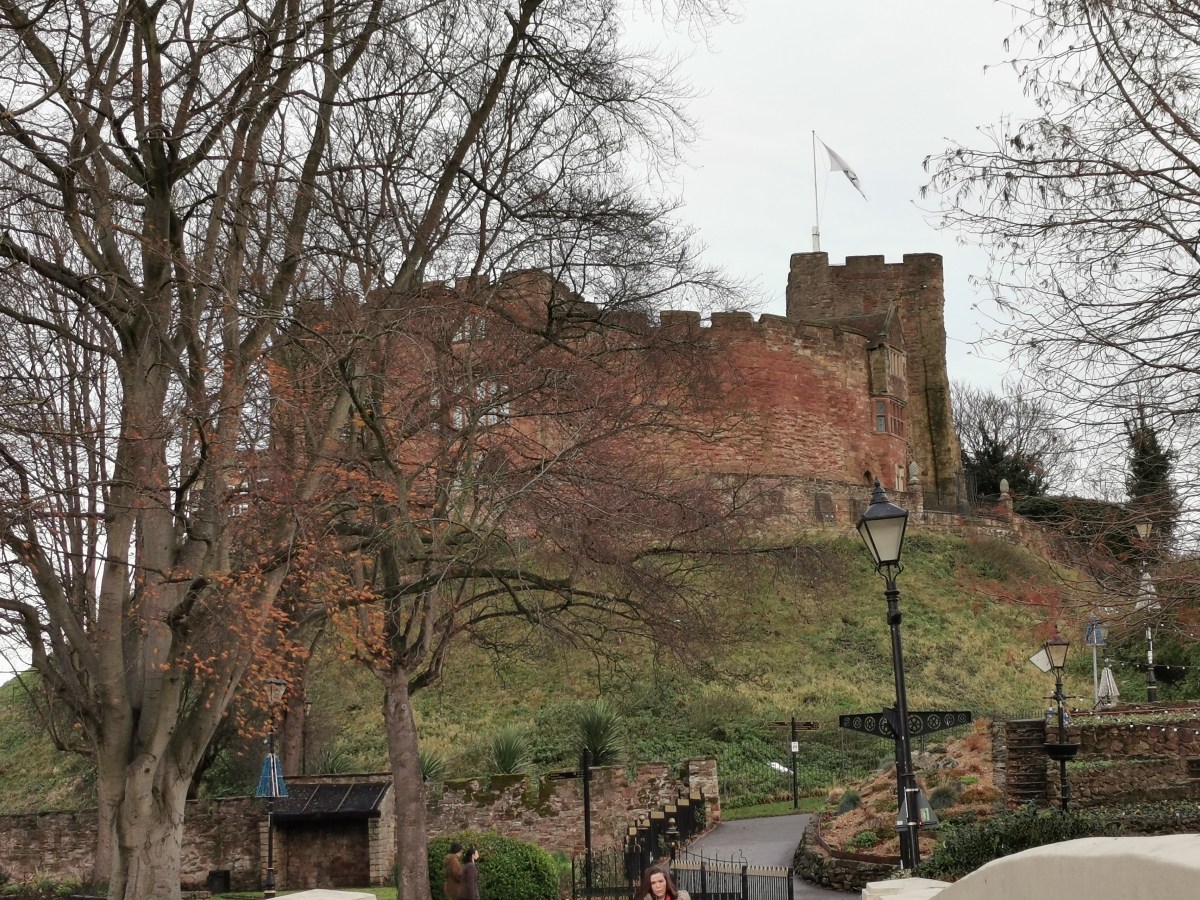
Like Lichfield and Repton, Tamworth has long been known to be a capital of the Saxon Mercian kingdom. Visitors today will find a more modern castle, which variously dates from the end of Saxon England up to the Victorian era, and one which is crammed with fascinating detail, from the herringbone wall beneath it to the beautiful Tudor windows of the great hall.

On a visit in 2021, I can also inform you that it currently had a third of the fabulous Staffordshire Hoard on display and an excellent museum filled with all things Saxon. (I believe it still holds some of the Staffordshire Hoard). Castles, if they were built in the late Saxon period, and some of them were, would have been constructed from wood. It was only later that they came to be built or rebuilt in stone, as we recognise them today.

A view of the oldest part of Tamworth Castle, dating to after the end of Saxon England

Today’s castle wouldn’t have existed in the 820s and 830s. Indeed, it’s proven to be very difficult for archaeologists to determine where the original settlement of Tamworth lay, no doubt, because much of it has been overbuilt, just as in most places where habitation has been almost continuous. A fire in 1345 might well have destroyed any remaining wooden dwellings, making the endeavour even more difficult.

Map showing the location of Tamworth, at the heart of the Saxon kingdom of Mercia. It is close to Lichfield, another important location, and to Repton where, for a period, the ruling family were buried.

It has been possible to reconstruct Tamworth in the 900s, when it was designated a ‘burh,’ a defensive settlement in which the local population could seek shelter from the Viking raiders behind its walls. (I can’t find the image at the moment).

But it is possible to imagine how Saxon Tamworth might well have looked in the 800s, when the Eagle of Mercia Chronicles takes place. The rivers, The Tame and the Anker, run in front of the current castle, and there’s a slight rise, on which I used to spend many happy hours running up and down the steps, with flowers blooming in the flower beds. From there, it would have been possible to see a reasonable distance south. The river would have been put to good use, and the remains of a water mill have been found and dated to the later Saxon period. Houses would have been built from wood, wattle and daub with thatched roofs, and there would have been workshops as well as residential dwellings. At the centre of the settlement would have been a lord’s hall. While this hasn’t been found in Tamworth, it could have measured upwards of 24 metres long by 6 metres wide. It’s believed it was also surrounded by a defensive ditch. Somewhat sheltered, as the road to Lichfield is uphill, it would have been a pleasant, and I assure you, on the right day, very warm, location for Mercian kings to have lived within. It was close to Watling Street too, allowing easy access to the rest of Mercia.

Check out the ‘offical’ Tamworth Castle website.

Read more about The Eagle of Mercia Chronicles.

Posts

I’m delighted to welcome Linnea Tanner and her audiobook, Dagger’s Destiny, to the blog #HistoricalFantasy #HistoricalFiction #Britannia #AncientRome #DaggersDestiny #CelticMyth #BlogTour #TheCoffeePotBookClub

I’m delighted to welcome Linnea Tanner and her audiobook, Apollo’s Raven, to the blog #HistoricalFantasy #HistoricalFiction #Rome #Britannia #CelticMyths #BlogTour #TheCoffeePotBookClub

I’m delighted to welcome Linnea Tanner and her audiobook, Dagger’s Destiny, Curse of Clansmen and Kings Series, to the blog with an audio snippet.

Here’s the Blurb

A Celtic warrior princess accused of treason for aiding her enemy lover must win back her father’s love and trust

In the rich and vibrant tale, author Linnea Tanner continues the story of Catrin and Marcellus that began with the award-winning novel APOLLO’S RAVEN in the Curse of Clansmen and Kings Series. Book 2: DAGGER’S DESTINY sweeps you into an epic tale of forbidden love, mythological adventure, and political intrigue in Ancient Rome and Britannia.

War looms over 24 AD Britannia where rival tribal rulers fight each other for power and the Romans threaten to invade to settle their political differences. King Amren accuses his daughter, Catrin, of treason for aiding the Roman enemy and her lover, Marcellus. The ultimate punishment is death unless she can redeem herself. She must prove loyalty to her father by forsaking Marcellus and defending their kingdom—even to the death. Forged into a warrior, she must overcome tribulations and make the right decisions on her quest to break the curse that foretells her banished half-brother and the Roman Empire will destroy their kingdom.

Yet, when Catrin again reunites with Marcellus, she is torn between her love for him and duty to King Amren. She must ultimately face her greatest challenger who could destroy her life, freedom, and humanity.

Will Catrin finally break the ancient prophecy that looms over her kingdom? Will she abandon her forbidden love for Marcellus to win back her father’s trust and love? Can King Amren balance his brutality to maintain power with the love he feels for Catrin?

Triggers: Sex, Violence, Sacrificial Rituals

Praise

“Tanner is a masterful wordsmith and storyteller. There were no plot holes, everything was believable, and her characters grew as did the plot.” ~ The Audiobook Reviewer

” For those with an interest in epic fantasy, the characters and their interactions, each with their personal goals and motivations, and often in conflict with each other, Dagger’s Destiny is a book sure to keep your interest.” ~ Geoff Habiger for Readers’ Favorite (GOLD MEDAL Fiction: Magic/Wizardry)

Book Trailer 

https://www.youtube.com/watch?v=h4dhAJmK56U

Buy Link

Universal Link

Audible US

Audible UK

Audiobook Giveaway (UK Only)

Linnea Tanner is giving away an audiobook copy of Dagger’s Destiny!

Visit the blog tour page and leave a comment to enter the giveaway: https://thecoffeepotbookclub.blogspot.com/2025/06/blog-tour-daggers-destiny-audiobook-by-linnea-tanner.html

A winner will be chosen at random and announced after the tour has finished.

Meet the Author

Award-winning author, Linnea Tanner, weaves Celtic tales of love, magical adventure, and political intrigue in Ancient Rome and Britannia. Since childhood, she has passionately read about ancient civilizations and mythology. She is particularly interested in the enigmatic Celts, who were reputed as fierce warriors and mystical Druids.

Linnea has extensively researched ancient and medieval history, mythology, and archaeology and has traveled to sites described within each of her books in the Curse of Clansmen and Kings series. Books released in her series include Apollo’s Raven (Book 1), Dagger’s Destiny (Book 2), Amulet’s Rapture (Book 3), and Skull’s Vengeance (Book 4). She has also released the historical fiction short story Two Faces of Janus.

A Colorado native, Linnea attended the University of Colorado and earned both her bachelor’s and master’s degrees in chemistry. She lives in Fort Collins with her husband and has two children and six grandchildren.

Connect with the Author

Follow the Dagger’s Destiny blog tour with The Coffee Pot Book Club

Posts

I’m delighted to welcome Fred Raymond Goldman and his book, A Prodigy in Auschwitz, to the blog #HistoricalFiction #WWII #Auschwitz #JewishSurvivorStory #BlogTour #TheCoffeePotBookClub

I’m delighted to welcome Fred Raymond Goldman and his book, A Prodigy in Auschwitz, A Holocaust Story, Book One: Simon, to the blog with an excerpt.

Excerpt

Excerpt from Chapter 55:

The winter of 1943 to 1944 passed slowly for Simon. During the colder months the orchestra didn’t play on Sundays as frequently for the entertainment of the SS officers, but he continued to visit Rachel regularly. He brought her slices of bread and sausages he’d been able to sneak from the kitchen for her to share with some of her friends who didn’t have as much access to extra food.

Although the musicians received larger portions of food than other prisoners, they were affected by the rationing. As members of the orchestra succumbed to the diseases and malnutrition that ran rampant through the camp, the influx of new prisoners made up for the labor needs. The commander saw to it the orchestra remained complete.
Simon became aware of prisoners from a camp in Terezin, Czechoslovakia who had arrived at Auschwitz-Birkenau in several transports. Large numbers of them, he learned, were exterminated upon arrival. The survivors lived in a separated area of Auschwitz-Birkenau called Terezin. They were unseen by other prisoners and received special privileges, he was led to believe, including not having their hair shaved and being allowed to wear their own clothes. Nevertheless, they were treated as prisoners.

Simon heard rumors that the International Red Cross had requested a visit with these prisoners at their former camp after hearing about their bad treatment there. Under pressure, the Germans conceded and allowed for such an appearance, but not before beautifying the camp by cleaning up the housing and grounds and providing nice clothing and healthy meals for the prisoners to make it look as though they were being treated well. As a result, the International Red Cross unintentionally but falsely projected to the public that the camp residents were receiving humane treatment

On a Sunday visit with Rachel, Simon told her about the rumor he’d heard. The following week, while they were walking hand in hand, Rachel said she had told Dr. Fridman about the rumor.

Simon stopped, let go of her hand, and faced Rachel. “What did he say?”

“He said he thought the only reason the Germans would have let the Red Cross come was to convince them there was no German plan to murder Jews.”

Simon frowned. “If that is true, the Germans’ strategy likely worked.” 

Here’s the blurb

When Nazi Germany troops enter Krakow, Poland on September 2, 1939, fourteen-year-old Simon Baron learns two truths that have been hidden from him.

One, the people who have raised him are not his biological parents. Two, his birth mother was Jewish. In the eyes of the Germans, although he has been raised Catholic, this makes Simon Jewish.

Simon’s dreams of becoming a concert violinist and composer are dashed when his school is forced to expel him, and he is no longer eligible to represent it at its annual Poland Independence Day Concert. There, he had hoped to draw the attention of representatives of a prestigious contest who might have helped him fulfill his dreams.

Simon vows to never forgive his birth father for abandoning him, an act resulting in unspeakable tragedies for his family and in his being forced to live the indignities of the ghetto and the horrors of Auschwitz and Sachsenhausen concentration camps.

Throughout his ordeals, Simon wavers between his intense anger toward his birth father and his dreams of being reunited with him. Through his relationships with Rabbi Rosenschtein and the rabbi’s daughter, Rachel, Simon comes to appreciate his Jewish heritage and find purpose in his life. Driven by devotion to family and friends and his passion for music, Simon holds on to hope. But can he survive the atrocities of the Nazi regime?

How do you reconcile a decision you made in the past when the world erupts in war, threatening the life of someone you love and believe you were protecting?

Buy Link

Universal Link

Meet the Author

Fred Raymond Goldman graduated from Western Maryland College in Westminster, MD (now named McDaniel College) in June 1962 with a BA in psychology. Two years later, in 1964, he earned an MSW degree from the University of Maryland School of Social Work.

Most of Fred’s career was spent in Jewish Communal Service. He served as the administrator of Northwest Drug Alert, a methadone maintenance program at Sinai Hospital in Baltimore. In this role, he also acted as a community resource, guiding individuals struggling with addiction toward Jewish services that supported abstinence, counseling, and job placement.

Following that, Fred was hired as the Assistant to the Director of Jewish Family Services in Baltimore.

His final professional role was with Har Sinai Congregation, a Jewish Reform Synagogue in Baltimore, where he served as Executive Director for 23 years, retiring in October 2005.

In retirement, Fred pursued his love of hiking with The Maryland Hiking Club and spent time volunteering at The Irvine Nature Center. There, he led schoolchildren on nature hikes and assisted in the center’s nature store.

Writing had always been a passion for Fred, dating back to childhood, but it wasn’t until retirement that he began to take it seriously. He started writing children’s books and became a member of the Children’s Book Writers and Illustrators Association. Among the titles he wrote are: Vera and the Blue Bear Go to the Zoo, Never Bite an Elephant (And Other Bits of Wisdom), The Day the School Bus Drivers Went on Strike, If You Count, and The Day the School Devices Went on Strike.

Though none of these books has been published, Fred remains hopeful that if the CONCERTO books gain recognition, opportunities for the earlier works may follow.

Fred’s journey of writing the CONCERTO companion books began when he saw a note on a local library bulletin board about a new writer’s group led by a local author. He joined and, along with nine other participants, learned the fundamentals of writing: staying in the protagonist’s point of view, building narrative tension, developing distinctive and flawed characters, and the process of writing and rewriting.

Over the course of more than four years, Fred dedicated time to writing, researching, rewriting, and submitting the manuscript. What began as a single book titled The Auschwitz Concerto was eventually split into two volumes and self-published. For a time, the manuscript was also titled The Box.
The encouragement from the group’s teacher and fellow members played a key role in shaping the novels, and Fred hopes his feedback was equally helpful to others in the group.

In the ‘Author’s Notes’ of the CONCERTO books, Fred outlines the goals behind sharing these stories. Prior to writing them, he had only a general understanding of the Holocaust—knowing that nine million lives were lost and that it was a horrific chapter in history. Through the writing process, he gained deeper insights into both historical events and human suffering, fostering a greater sensitivity to contemporary issues. He firmly believes that what affects one group can quickly impact everyone, and that such awareness is critical today.

Connect with the Author

Follow A Prodigy of Auschwitz blog tour with The Coffee Pot Book Club

Posts

It’s happy release day to Warriors of Iron, the second book in the Dark Age Chronicles Trilogy. I’m sharing some photos from my visit to Sutton Hoo #newrelease #MenOfIron #WarriorsOfIron #histfic

It’s happy release day to Warriors of Iron, the second book in the Dark Age Chronicles Trilogy. I’m sharing some photos from my visit to Sutton Hoo #newrelease #MenOfIron #WarriorsOfIron #histfic

Sutton Hoo

As part of my research for the trilogy, I visited Sutton Hoo in July 2024. While it was a fascinating place to visit (see the images below of the surviving grave mounds), it was actually something else my Canadian guide told me that resonated with me for the series. It was that while this area gets a lot of interest, a further gravesite has also been found under where the car park for the visitor centre is now. This gravesite contained thirty-six graves (I think I’ve got the figures correct), twenty-nine of which were burials while the rest were cremations. The car park burials are believed to date to between 510 and c.600, and so before the Sutton Hoo burial of such fame. Fourteen of the graves were warrior graves, buried with shield and spear.

You might wonder why that intrigued me so much, and you’d be correct to do so. But, of course, I wanted to write the series before the advent of what we know as Saxon England, and this was therefore where I needed to be researching. The ‘shiny’ helmet and sword (reconstructions, I know), have a strange allure for us as we live in a time where we don’t need such things (hopefully), but did the earlier warriors have the same? This trip to Sutton Hoo certainly influenced the way I wrote about Wærmund and his fellow warriors. And the trip to the Norfolk Broads reminded me of how pesky bugs can be, and how much they like to nibble me. I came straight home and added that to the storyline. It always pays to remember the little elements that make characters feel very real to readers.

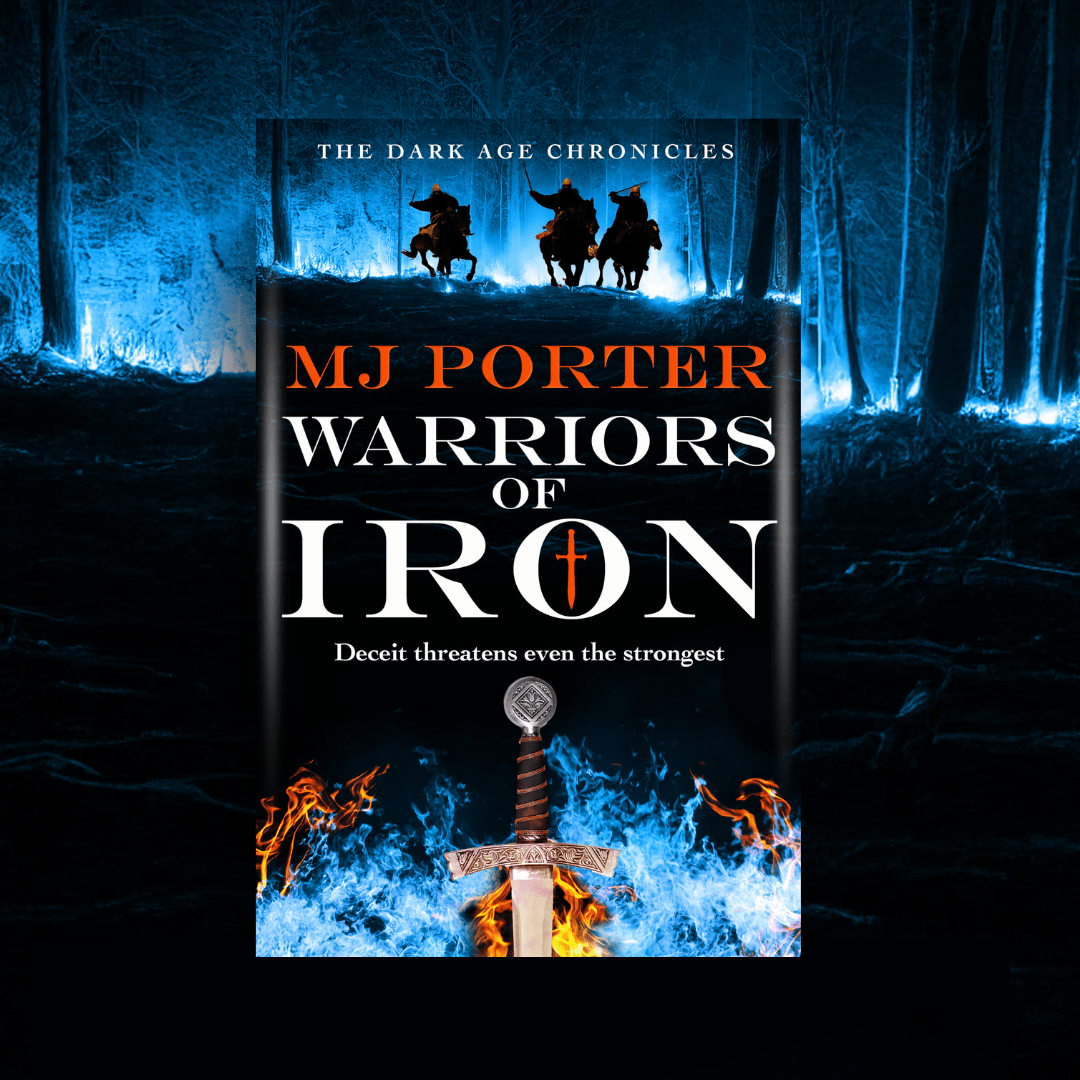
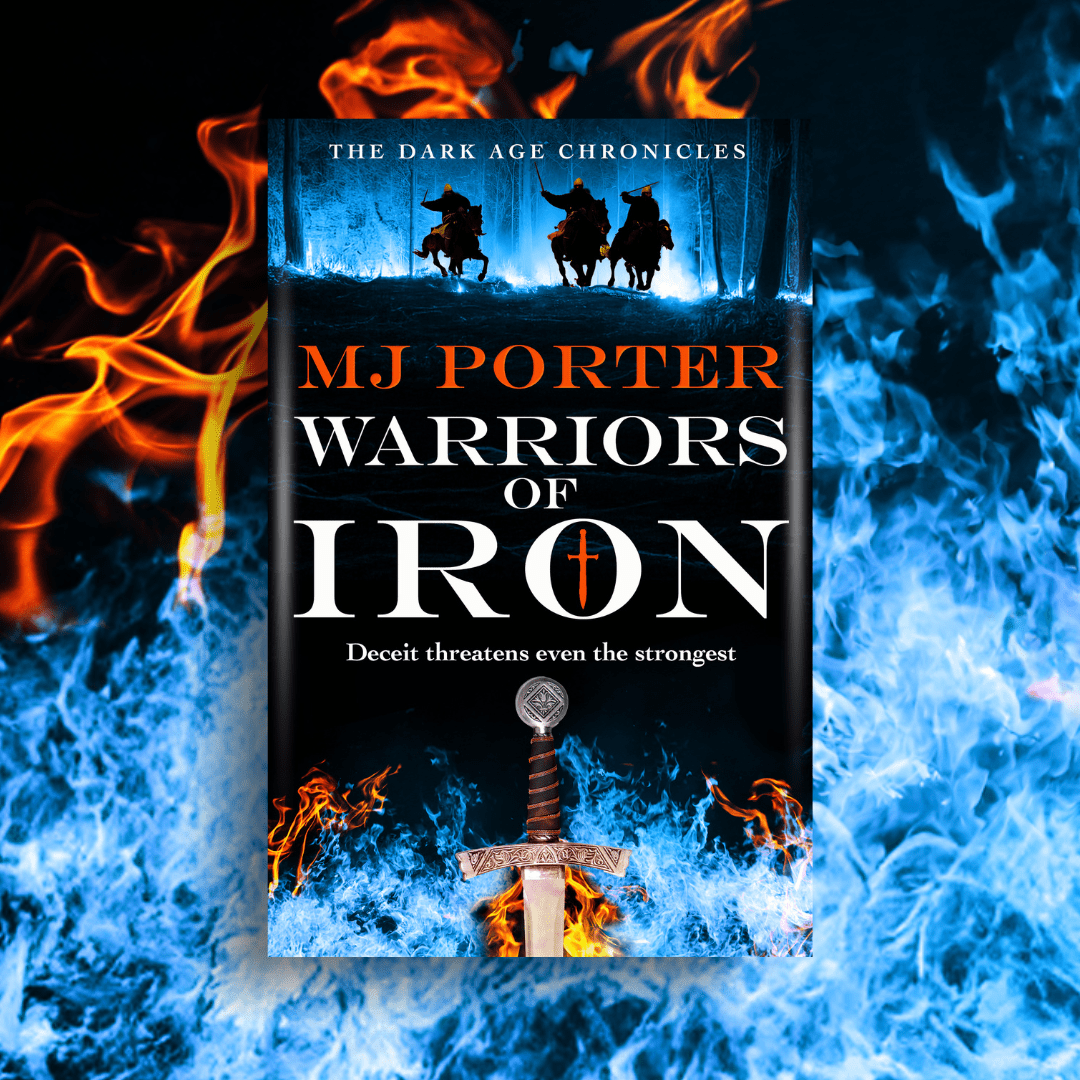
Image shows the book cover for Warriors of Iron by author MJ Porter. The cover shows three mounted warriors and also a sword, all with a blue fiery background. The tag line is 'deceit threatens even the strongest.'

Curious about the trilogy? Check out my blog for more details below

Blog links

Image shows a map of Early England showing the places mentioned in the text of the book
The Dark Age Chronicles Map

Purchase Links

https://books2read.com/Men-of-Iron

https://books2read.com/WarriorsofIron


Posts

It’s happy release day to Warriors of Iron, the second book in the Dark Age Chronicles Trilogy #newrelease #MenOfIron #WarriorsOfIron #histfic

It’s happy release day to Warriors of Iron, the second book in the Dark Age Chronicles Trilogy #newrelease #MenOfIron #histfic

Listen to me waffle about it.

Listen to me read ‘The Story So Far’ from Warriors of Iron

Curious? Check out my blog for more details below

Blog links

Image shows a map of Early England showing the places mentioned in the text of the book
The Dark Age Chronicles Map

Purchase Link

https://books2read.com/Men-of-Iron

https://books2read.com/WarriorsofIron


Posts

I’m welcoming The Soprano’s Daring Duke by Susanne Dunlap to the blog #blogtour #RegencyRomance #bookreview

Here’s the blurb

A princess with a scandalous secret. A duke desperate for a wealthy bride. A debutante torn between duty and passion.

Newly widowed Princess Adelheid Kinsky thought she was free—until she learns of her abusive late husband’s final betrayal. The son she believed dead, the illegitimate child of a forbidden love, still lives. To secure his future, she must marry within a month—without revealing the truth. Her best prospect? The Duke of Hartland, a notorious rake drowning in debt.

Meanwhile, Hartland sets his sights on Olivia Fontenoy, an heiress whose fortune could solve all his problems. But innocent Olivia dreams of music, not marriage, and seizes the chance to perform in disguise at the King’s Theatre—unwittingly ensnaring everyone she knows in scandal.

As deception and desire collide, Olivia finds herself drawn to Hartland’s closest friend, the quiet yet passionate Marquess of Lewiston—a man who offers her something far more profound than mere security. And for Adelheid, an unexpected alliance may hold the key to her dreams.

With a surprising ending worthy of grand opera, The Soprano’s Daring Duke is a sweeping Regency tale of love, risk, and the courage to defy expectations.

Purchase Link

https://www.amazon.com/gp/product/B0DZHXZZ6H

https://www.amazon.co.uk/gp/product/B0DZHXZZ6H

My Review

The Soprano’s Daring Duke is a Regency romance with a difference. It starts with a bang as we’re introduced to Adelheid at her husband’s deathbed, where she reacts, not with grief, but rather delight, until the terms of his will reveal her dilemma.

Olivia is our second female lead, who, awkward and too tall, and not at all the Regency ideal wife, longs for something other than marriage, but is being pushed into the marriage market by her mother. The scene is set, and all the reader need do is wait for our male lead to appear with his own Regency problems and dilemmas.

This is the second of Susanna Dunlap’s Regency novels I’ve read and it will delight fans of the genre while placing our main players in situations a little different to those we might expect, and all with a delightful ring of authenticity and dilemma.

Check out my review for The Dressmaker’s Secret Earl

Meet the author

Susanne Dunlap is the award-winning author of over a dozen historical novels, as well as an Author Accelerator Certified Book Coach in fiction, nonfiction, and memoir. Her love of history began in academia with a PhD in music history from Yale. Her novel THE PORTRAITIST won first prize in its category in the 2022 Eric Hoffer Book Awards, and was a finalist in the CIBA Goethe Awards and the Foreword Indies Awards. THE ADORED ONE: A NOVEL OF LILLIAN LORRAINE AND FLORENZ ZIEGFELD, won first place in its category in the 2023 CIBA Goethe Awards for Late Historical Fiction. Today, she lives, coaches, and writes in beautiful Biddeford, Maine.

Connect with the author

https://susanne-dunlap.com

Posts