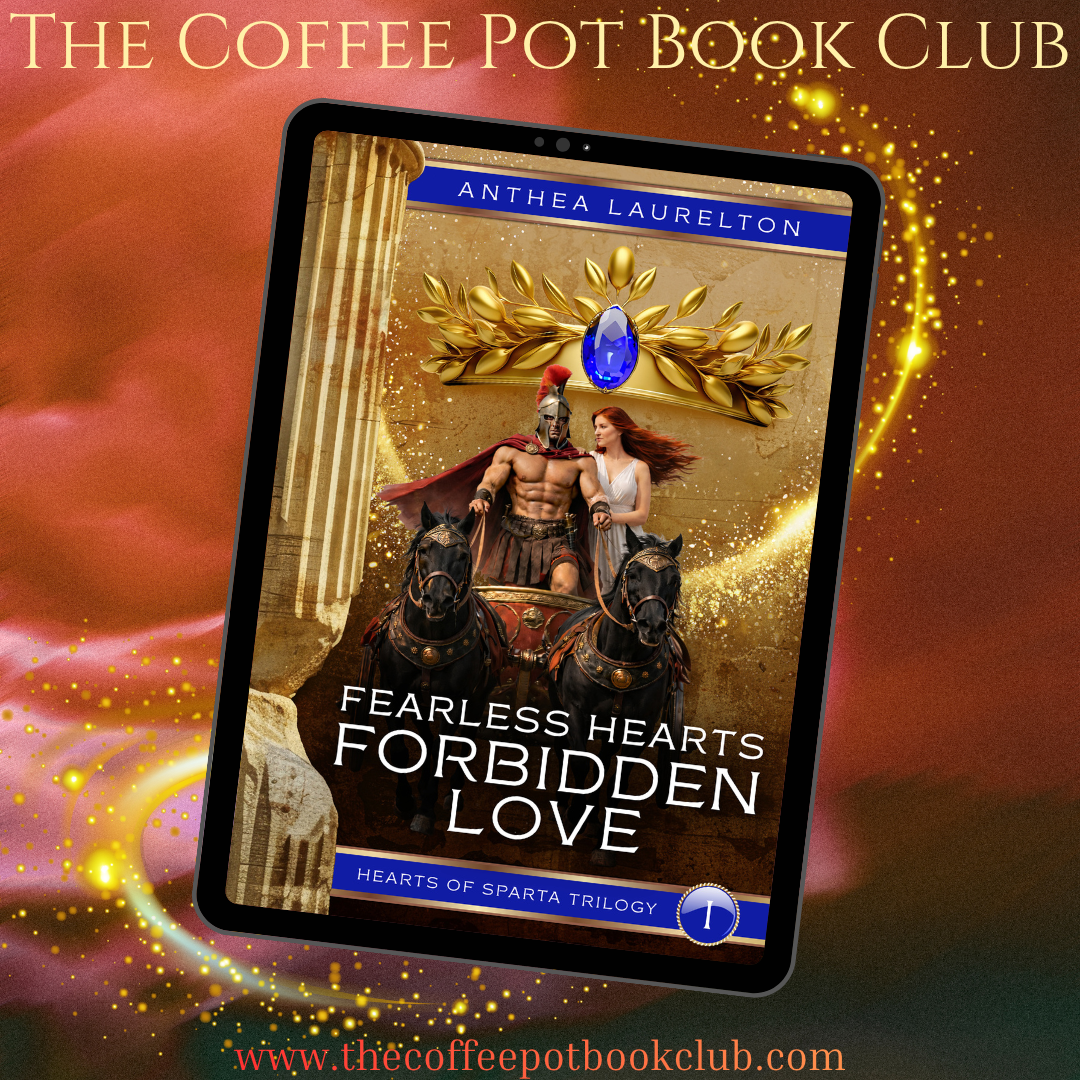
I’m delighted to welcome Francesca Capaldi and her new book, Celebrations at the Beach Hotel to the blog. Francesca is introducing us to the characters #blogtour #histfic #saga

I’m delighted to welcome Francesca Capaldi and her new book, Celebrations at the Beach Hotel to the blog. Francesca is introducing us to the characters #blogtour #histfic #saga

Meet the Characters from Celebrations at the Beach Hotel

Annie and Alice Twine are sisters who work in the scullery at the Beach Hotel. They appeared in the first five novels about the place, but now, with the sixth book, they’ve landed a starring role each. They are twenty-three and twenty-two years old when Celebrations at the Beach Hotel begins.

As scullery maids, their jobs would have included washing up glassware, crockery, cutlery and pans, getting rid of waste food (most likely in a pig bin) and keeping the scullery and stillroom clean. They would have boiled hot water for various maids and even plucked and skinned animals, though we never see Annie and Alice do this.

Both of them started work at the hotel at 15, when they left school, so Annie started a year before Alice, and is now head scullery maid, something she is fond of reminding her younger sister about! Annie does have a tendency to glumness, whereas Alice has a happier personality. At least, that’s how it appears on the surface. Their father, Colin, is a farm manager at a farm in Wick, the village where the sisters live. Their three brothers, Cedric, Cecil and Cyril, who all worked as labourers on the farm before the war, have yet to be demobbed. Wick at the time was a village next to Littlehampton with extensive farmland, but it’s now part of the town. (Growing up, my house was a ten-minute walk away from where they supposedly lived.)

The sisters get on well, when Annie isn’t bossing Alice around. Their mother is keen for them to marry, but, as the sisters say, what opportunity do they have with most of the men still away? But when the men do start to return, that’s when romance comes between the two of them.

A lot of the characters from the previous books in the serious, including Edie, Lili, Helen, Hetty and Fanny, are part of the story, as the men who worked at the hotel before the war, and survived, slowly return. These include Lorcan, who Annie holds a torch for, and Jasper, who Alice is very fond of. Lorcan and Jasper both enlisted and joined Kitchener’s 7th Special Service Battalion in 1914, which eventually became part of the 12th (Eastern) Division. Although the war ended in November 1918, they spent another four months on salvage and clear up duties in France, so don’t return to the hotel until March 1919. 

Lorcan’s from Ireland, a place he has difficulty visiting after he returns, due to the civil war brewing there. He walked out briefly with stillroom maid Hetty, who is now engaged to another, but Annie suspects that he hasn’t got over her. Jasper is from Bognor Regis and part of a once well-off middle-class family who owned several grocery stores, but has since had a fall in fortunes.  The men’s jobs as porters would have included greeting guests at the hotel, carrying luggage and showing them to their rooms, advising on hotel facilities and that of the surrounding area, making travel arrangements, parking guests’ motorcars and running errands for them. 

During the course of the story, there are several marriages. These are kicked off by the real wedding of Princess Patricia of Connaught (a granddaughter of Queen Victoria) to The Hon. Alexander Ramsay, incidentally the first royal wedding at Westminster Abbey since the 14th century. The female staff are reading about it in the newspaper and cooing over it as Lorcan and Jasper return from the war. Although Alice enjoys reading about the event, Annie is typically dismissive of the whole thing. 

Either way, this event, and the subsequent weddings, don’t make either sister optimistic about their own prospects. Alice believes Jasper’s too high above her in social standing, even though he’s now just a porter. These beliefs only serve to help scupper their chances further, and they end up having a major fall-out with each other as a consequence, which isn’t helped by the appearance of a third man, adding to the romantic mix…

Here’s the blurb

Sisters Alice and Annie have always been close but will a man come between them?

Annie and Alice love their life working at the Beach Hotel together and each is thrilled to have finally found a sweetheart. Yet the path of true love never did run smooth, and they soon find themselves facing conflict and strife. Could love come between them and the bond they share?

Meanwhile, as men start to come home from the war, the women have to work out how to keep their jobs, although they are delighted to be back with their beaus. Soon, wedding bells ring out in Littlehampton.

Will everything be made right in time for Christmas?

Purchase Links

Amazon https://amzn.to/4gTi5fj

Kobo: https://bit.ly/4765y3M

Meet the author

Francesca Capaldi has enjoyed writing since she was a child, largely influenced by a Welsh mother who was good at improvised storytelling and an Italian father who loved history. She is the author of historical sagas, short stories and pocket novels. 

The first novel in the Beach Hotel series, A New Start at the Beach Hotel, won the Romantic Saga Award at the Romantic Novelists’ Association Awards in 2024. The first novel in the Wartime in the Valleys series, Heartbreak in the Valleys, was shortlisted for the Historical Romantic Award in the RoNAs in 2021. 

Francesca was born and brought up on the Sussex coast, went to London to do a history degree, but has lived for many years in Kent with her family and a cat called Lando Calrission.

Author Francesca Capaldi

Website & Blog

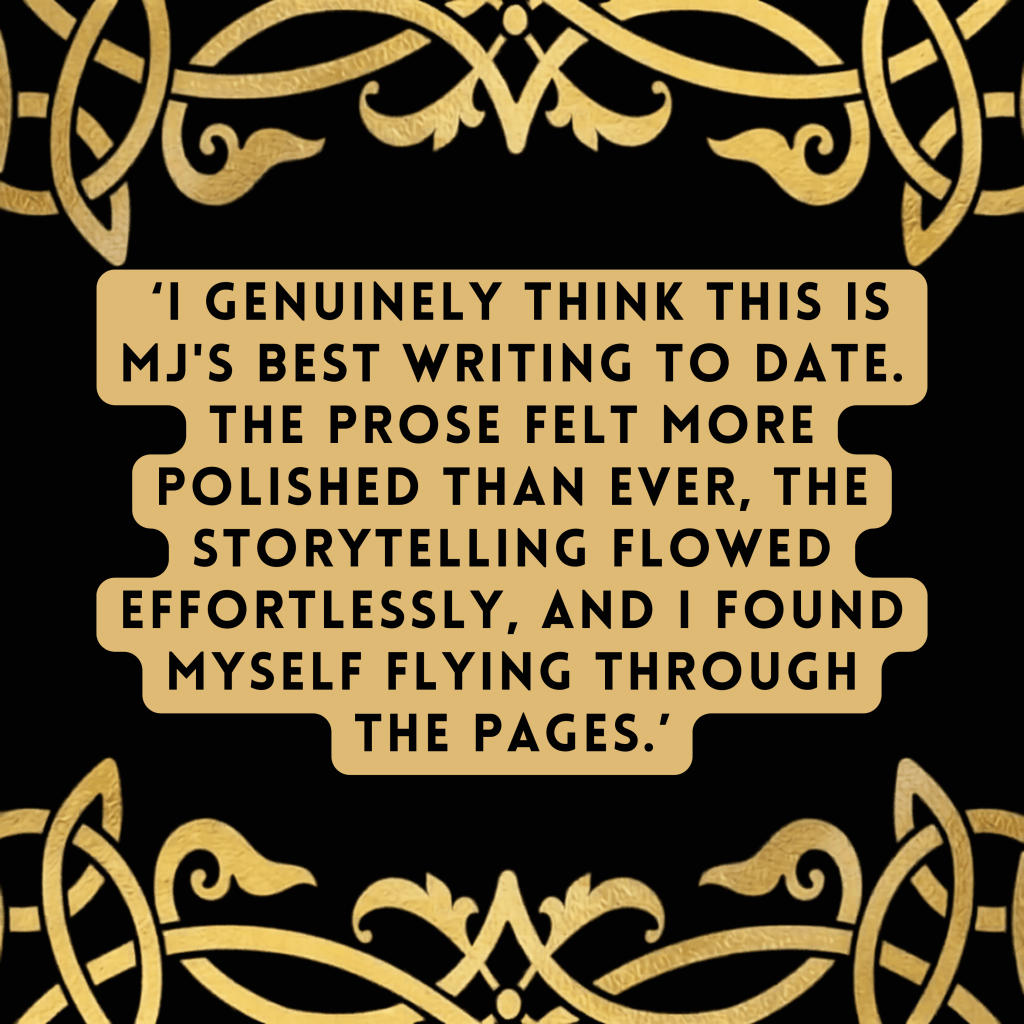
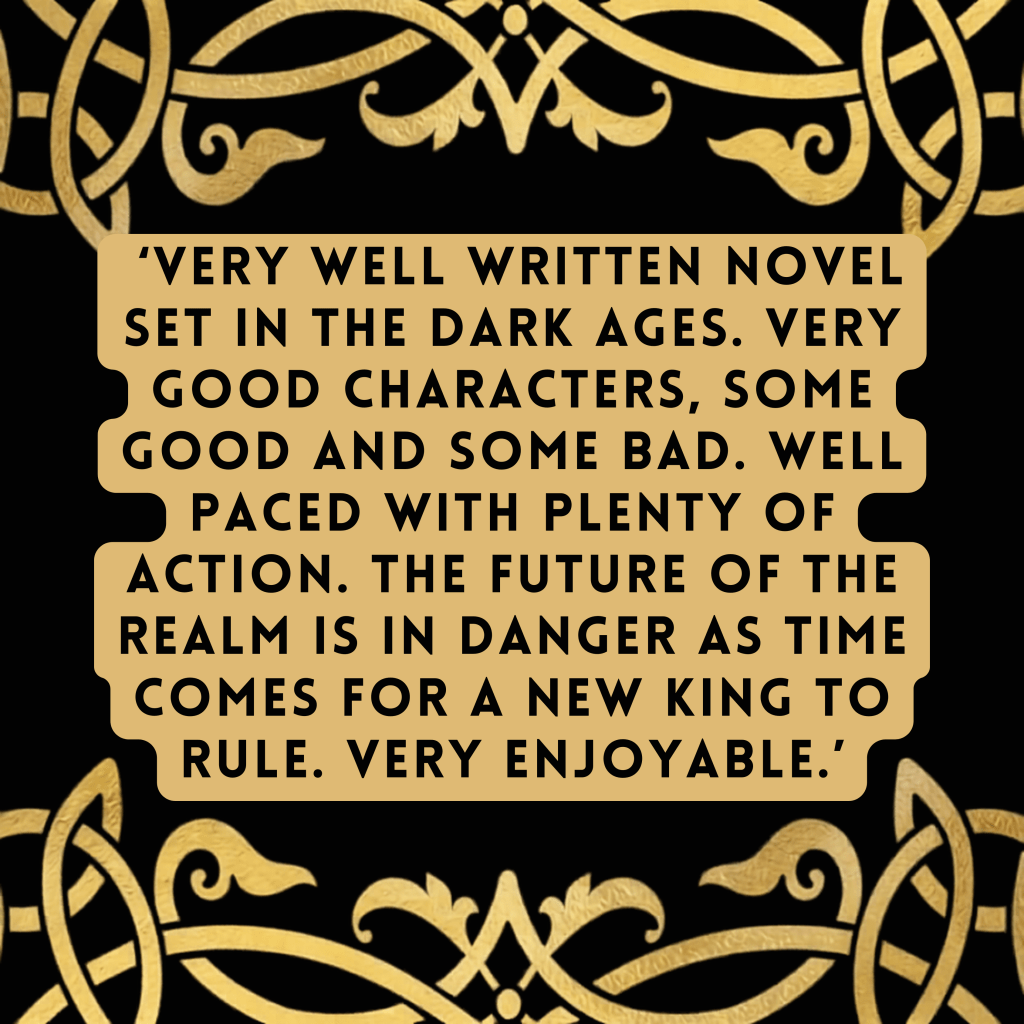
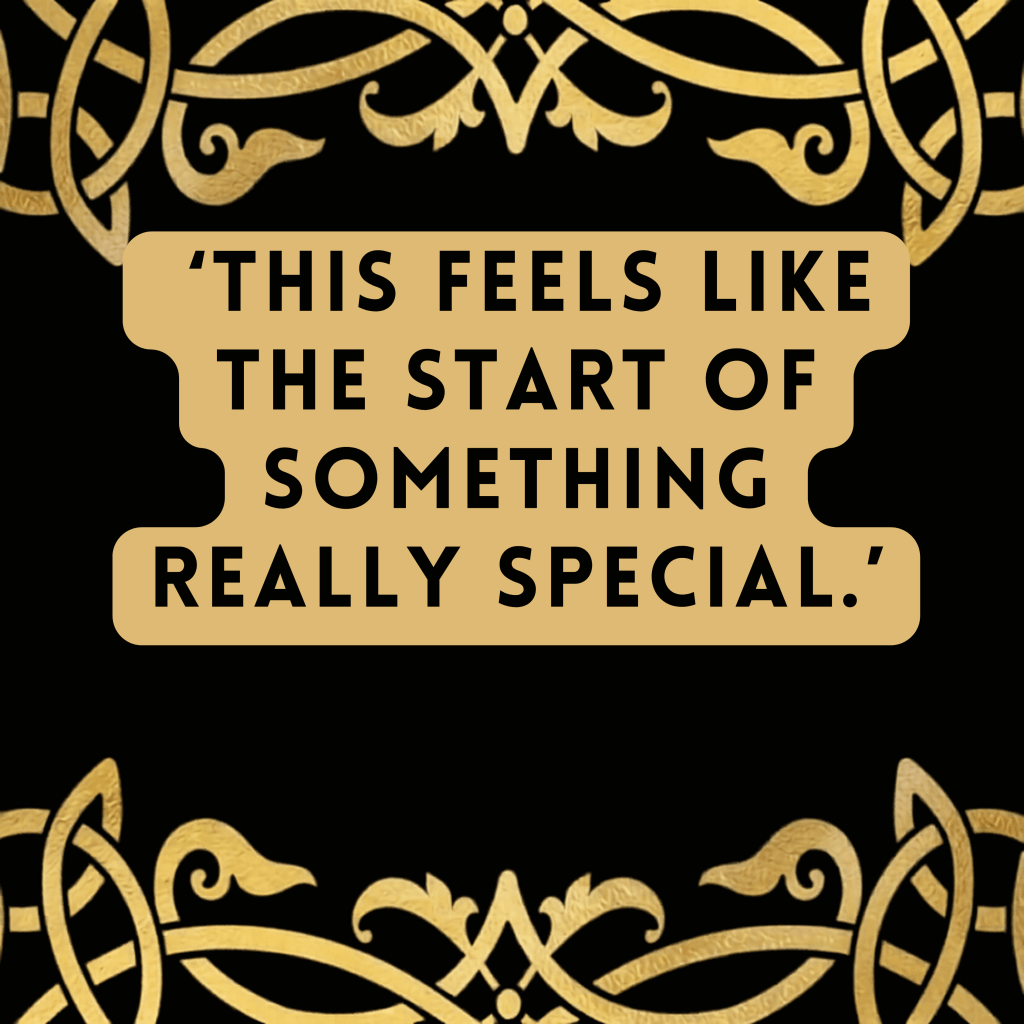
The blog tour for Lords of Iron has finished. A huge thank you to all the hosts. Here’s what they had to say about Lordsof Iron #newrelease #MenOfIron #WarriorsOfIron #LordsofIron #histfic

The blog tour for Lords of Iron has finished. A huge thank you to all the hosts. Here’s what they had to say about Lordsof Iron #newrelease #MenOfIron #WarriorsOfIron #LordsofIron #histfic

The Lords of Iron blog tour

Watch the little video I made to showcase the reviews from the fabulous reviewers. Thank you to them all. I know the majority have been with me since Men of Iron, and it’s amazing to realise how invested they’ve become in my characters. (The music is very dramatic).

Check out my blog for more details about the Dark Age Chronicles

Blog links

Image shows a map of Early England showing the places mentioned in the text of the book
The Dark Age Chronicles Map

Purchase Link

https://amzn.to/4qaRuy3


Posts

I’m welcoming Jill Bray, and her historical mystery, A Brotherly Devotion, to the blog with an extract #blogtour #historicalmystery

I’m welcoming Jill Bray, and her historical mystery, A Brotherly Devotion, to the blog with an extract #blogtour #historicalmystery @rararesources @JillBray67

This extract is taken from the start of Chapter 18 after Lord Fitzwarren has been found to be the killer of Brother Clement.

Katherine found it difficult to believe that, in a short space of time, her whole world had changed once again. She had known the facts and the evidence that was put against Lord Fitzwarren, but she hadn’t given much thought as to how it would end. It was only yesterday that she had started to suspect him, and then earlier today, when she had journeyed with her father to speak with Edward; she had known for certain that he was the one who had so viciously murdered Brother Clement.

The banquet in the hall now felt quite surreal. She looked around at the rest of the guests, who had gone back to feasting and drinking at their tables, as though nothing had just happened. Yet, for her, everything had changed once more. Just a couple of days ago, she had been expecting to run away with Alexander in order to avoid marrying Lord Fitzwarren; and, up until yesterday, she had intended to keep to that plan. She had come to terms with having to give up everything; to lose contact with her sister and to disobey her father, in order to be with the man she loved. After sitting back down at the table next to her sister, she felt quite light-headed and reached out to pour herself a goblet of wine. She needed to consider, just what she was going to do next.

“Well, that wasn’t what I expected!” Angharad exclaimed, leaning over to her sister. “You knew, didn’t you?” She questioned Katherine.

“Not everything, and not finally until earlier today,” she admitted. “But even then, I couldn’t tell you. I hope you understand. Father needed to keep everything quiet, so that Lord Fitzwarren wouldn’t get to know.”

“This explains why you have been so distant. I still can’t believe that the man you were due to marry was a murderer. That’s quite a revelation.” Angharad leaned back in her chair. “So, why did it happen here tonight, at the banquet?”

“We went to Lord Fitzwarren’s manor earlier today to get Edward to safety and for father to arrest Lord Fitzwarren; but he wasn’t there,” Katherine told her. “Father didn’t want to raise any suspicion. And, as he knew Lord Fitzwarren would be here tonight, he agreed with Sir Robert that this evening would be a good opportunity to present the case against him.”

“Did father know before then, that Lord Fitzwarren had killed the monk?”

Katherine thought about it carefully. “He had spoken with Peter Beaumont and found out about Lord Fitzwarren’s sister, so I think he had his suspicions. But he had no proof, and that was the main thing.” Katherine took a drink of wine and relaxed back into her chair with a sigh of relief. “None of us were certain, until yesterday when I met Edward, and he showed me the dagger. Up until then, it was just a story father had been told by Peter Beaumont, who was a close friend of Hughs. One about how William’s devotion to his sister had been so consuming; and how she had taken her own life rather than live without the man she loved. That man was Hugh de Glanville, who became Brother Clement when he took Holy Orders. In Lord Williams eyes, the church took away his adored sister and then denied her a burial in consecrated ground. His grief and anger must have festered away inside him ever since her death and become sort of twisted. Then last week, and quite by chance; he came upon the man who had been the cause of all his sadness.” She took another sip of wine before continuing. “It was an accidental encounter as, from what father has told me, I don’t believe Brother Clement left the walls of the Abbey much. Lord Fitzwarren must have thought it was divine intervention, and he was being given a chance to mete out his own kind of justice.” 

“So, he killed him?” Angharad stared at her.

“Yes, in order to avenge his sister.” Then, Katherine added more thoughtfully. “Such was his devotion to her.”

“And to think you were so nearly his wife.”

Here’s the blurb

YORK 1224: On a hot July night, Brother Clement is savagely murdered when returning from administering to Lady Maud de Mowbray.

Simon de Hale, Sheriff of Yorkshire, is in his office when Abbot Robert visits to inform him of the murder, and request that he take responsibility for investigating the killing.

Simon is unsure whether the murder is a crime against the Abbey, or if it is a more personal matter against the monk.

Commencing their investigation, Simon and his deputy, Adam, ride out to see Lady Maud de Mowbray at Overton – the last person to see Brother Clement alive. When they encounter her son, Roger de Mowbray, they both take an instant dislike to him.

Lady Mowbray reveals to Simon that she intends to leave her money to the Abbey, and Simon can see this being a motive for the monk’s murder, if her son was aware of this.

The investigation gathers pace and a murder weapon is found.

A banquet is held at the castle to honour the Royal Justice – during which, one of the guests is exposed as the murderer and apprehended. But that will not be the end of the story for Simon and his family.

Purchase Links

https://www.amazon.co.uk/Brotherly-Devotion-Murder-Most-Foul-ebook/dp/B0FH16K5F8/

https://www.amazon.com/Brotherly-Devotion-Murder-Most-Foul-ebook/dp/B0FH16K5F8/

Meet the author

Jill lives on the Island of Guernsey now, but is originally from Yorkshire. She has a love of early medieval history which led her to study the subject at Huddersfield College in the 1980’s. Working in Leeds at the time, meant that she had access to the Yorkshire Archaeological Society on their late night opening and following research, she wondered what the lives of the people she read about were actually like. This started a love of writing historical fiction, but her initial stories were never sent to a publisher. Life and work then intervened and writing was put to one side. It was only following a workshop held by the Guernsey Literary Festival in 2024 on writing historical fiction, that her love of writing was reignited. Her first novel ‘A Brotherly Devotion’ was published in July 2025.

Author Jill Bray

https://www.jillbray.co.uk

I’m delighted to welcome Carol Anne Dobson and her book, Storks in a Blue Sky, to the blog #HistoricalRomance #HistoricalFiction #Devon #Alsace #TheCoffeePotBookClub #BlogTour

I’m delighted to welcome Carol Anne Dobson and her book, Storks in a Blue Sky, to the blog with an excerpt.

Excerpt

He was introduced plainly as Jean Luc de Delacroix, a member of the Royal Society, whose studies were following in the path already trodden by Mark Catesby. She was aware of a ripple of anticipation going through the audience, which had become so numerous that people were having to stand at the back. She realised it was now too late to escape and sat in resignation, angry at her own recklessness. 

His voice was strong and clear and, in spite of her agitation, she felt herself drawn almost hypnotically into the world he was describing; his years of travelling distilled into an eagle’s eye view of a vast, river- scored land, lake-jewelled and mountain-ridged. A tree-quilted countryside; spruce, firs and pines, dark green against glittering ice and snow; woods of sweet gum, cedar, red oak, maple and walnut; red, white and black mangroves sinuously emerging from brackish, southern swamps; and everywhere embroidered with flowers, whose very names were colour-rich; black eyed Susans, purple fringed orchids and golden rod. 

She saw flocks of passenger pigeons, so numerous they blackened the sky, blotting out the sun, making oak tree boughs break under their weight. She saw the wood bison in the Appalachian forests and felt the earth shudder beneath migrating herds of caribou. Exotically plumed birds flew around her and she marvelled at the Carolina parakeet and the pintera, a wood pecker with a beak like ivory. Rattlesnakes, copperheads, water moccasins, scorpions and tarantulas made her shiver, and the sing-song quality of native words like ‘Cherokee,’ ‘Okeechobee’ and ‘Pahayokee,’ all added to the beauty and strangeness of the picture in her mind. He spoke quickly, almost without pausing for breath, often looking in her direction, and she noticed that his clothes appeared to have taken on a life of their own. His cravat was askew, his coat hung oddly, his hair had escaped from its tie and was hanging, dark and thick, onto his broad shoulders. She felt an over-riding urge to straighten his garments and present him, perfectly attired, to this gathering of sombrely dressed men, every one of whom was
wearing the customary wig.

 “And now may I show various specimens of plants to you from the New World, and one very special creature,” he concluded his talk and watched as footmen carried in plants in tubs of earth and a small crate. 

“Can I ask how many men died in your travels? Was it a very dangerous undertaking?” a man enquired. 

“We did have to take many risks in the wilderness, it’s true, but no one died as a result. Two men were killed in battle and another man died from the smallpox.” 

At the suggestion that he and his men had been engaged in fighting, she noticed that the room grew quiet. She could feel the hostility directed towards him that she had encountered at the Vinnicombe’s and suddenly understood her naivety. He had been fighting on the wrong side, she realised. He was partly French and had been fighting against the English. She was
horrified and her spirit was almost at one with the general sentiment in the room. He, however, completely ignored any undercurrent in the gathering and walked over to her.

“Madam, I hope I have entertained you. May I now reveal my surprise.” 

He held out his arm and she was forced to accompany him to the wooden crate. He carefully opened the side and she looked in amazement at the largest spider she had ever seen. Its eyes were protruding, its segmented legs were long and hairy and it could only be described as indescribably ugly. 

Speechless, she stared at the monster, which was about the size of a sparrow. 

“Do you like it?” he asked, smiling like a father at his new-born child. “I thought you might.” 

“Yes,” she murmured, unable to take her eyes off the fascinating creature. People crowded round, jostling and pushing. Gasps of astonishment could be heard, followed by a hushed silence. 

She had a vision of Miss Vinnicombe and the snake, and in a moment of premonition knew exactly what was going to happen. The next second, several ladies, and one gentleman, screamed so piercingly that the windows rattled. Pandemonium ensued. Handkerchiefs were frantically flapped to give air to the hysterically affected ones and in all the commotion she saw the black boy sidle up to the crate, then poke its occupant with a jewelled pin he
extracted from his turban. 

“No!” she shrieked, but it was too late, as the spider was propelled out of his home and landed awkwardly on the floor. People dashed out of its way, opening a path for it, somewhat in the manner of Moses and the Red Sea. Jean Luc lunged forwards, but it skittered sideways through peoples’ legs, making a clattering noise as it ran over the wood floor. 

She had never seen a room in such an uproar and she looked crossly at the black child, who had taken refuge behind his master. The obese lady had fallen to the ground and lay twitching, her canary-yellow stomach protruding like a mountain, high above the rest of her body. 

She ran to the door as that had seemed to be the direction in which the spider had been heading. The air was cool and fresh on her face and she gulped it in gratefully. A quick scrabbling movement of black by the sheep pen attracted her attention and she thought she could see the spider. Then, to her amazement, one of the blond horsemen who had accompanied them and who was standing by the wicker fence, gave a strong kick with his booted foot and sent the object flying among the sheep.

 She ran up to him. “What have you done!” she screamed, beside herself with anger.

“How dare you!” 

He looked insolently down at her and she realised that Jean Luc de Delacroix might well be the only person in his entourage who was happy to travel with snakes, spiders and raccoons. His iron-grey eyes looked familiar. His strong, large body blocked her view of the sheep pen and it suddenly came to her that she was looking at a younger version of Heinrich Scheyer. Her fear of him made her wary of challenging the man any further. She pushed past and with a complete disregard for her silk dress, plunged into the mud-caked, evil smelling flock of sheep who scattered in panic and huddled against the far side of the pen. 

In the earthen space now left bare, she could see the forlorn, trampled on body of the spider. It was clearly dead. Its legs were twisted oddly and it had lost an eye. She picked it up, cradling it in her hand and left the enclosure, glaring at the Alsatian soldier as she did so. 

Here’s the Blurb

A historical romance played out between the wild coast and moors of North Devon and the mountains and river-crossed plain of Alsace.

The beautiful, red-haired Sarah Durrant is an uneducated servant who takes the place of her mistress when she suddenly dies at Lynmouth as they are travelling across the remote wilderness of 18th century Exmoor. Her origins are a mystery. She only knows she is illegitimate and possesses a gold locket which contains a miniature of a woman who resembles her.

North Devon at first proves a sanctuary from the violence of her past but then the French aristocrat, Jean Luc de Delacroix, a soldier and a scientist, arrives from the New World; the local activities of smuggling and wrecking surface; her life becomes a tangle of love, deception and fear.

Buy Link

Universal Link

This title is available to read on #KindleUnlimited

Meet the Author


Carol Anne Dobson is a qualified teacher and librarian with a B.A. in English, French and Russian. She has lived in Devon for most of her life, and North Devon provides the setting for much of Storks in a Blue Sky

Alsace in France came to be a second home when her daughter lived there for six years and it is this Germanic region of France which also features in the novel.

In 2009 Storks in a Blue Sky won the David St John Thomas Fiction Award.

Connect with the Author

Follow the Storks in a Blue Sky blog tour with The Coffee Pot Book Club

I’m delighted to welcome Lisajoy Sachs and her book, Bright One, to the blog #BrightOne #HistoricalFiction #WWII #JewishHistoricalFiction #Holocaust #FamilyHistory #BlogTour #TheCoffeePotBookClub

I’m delighted to welcome Lisajoy Sachs and her book, Bright One, Book 1 in the Bright One Series, to the blog with an excerpt.

Excerpt

“You must remember this,” Yosef continued, his voice low and steady, his eyes holding theirs. “History doesn’t begin or end with one moment. It’s like a slow avalanche, with pressure building over time until it all comes crashing down. And when you look at the world around you now, with the current events happening right here in our town, look at the posters, the speeches, the violence that’s creeping into everyday life here in Romania… we can feel the ground shifting again. Even though it is a different time, it holds the same tensions.”

Here’s the Blurb

When desperate choices mean the difference between life and death.

Inspired by true events, Bright One tells the story of Jetti Finkelthal, Lisajoy Sachs’ great-grandmother. In Czernowitz, Romania, this young Jewish mother is forced to face impossible choices as the world begins to collapse around her. As antisemitism tightens its grip and war edges ever closer, Jetti holds fast to her daughter, Berta, with the fragile belief that love and courage might still carve a way through the darkness.

Heartened by her grandmother Berta’s letters, photographs, and family oral histories, Sachs revives a story both intimate and universal—stitched with the fabric of daily life, the pull of memory, and the quiet heroism of women who refused to yield to despair. Told with vivid, sensory detail, the novel unfolds as if you are walking beside the characters, witnessing what they see and sharing in what they feel.

Through Jetti’s resilience and sacrifices, Bright One reveals the enduring strength of family ties and the shadow of trauma that lingers across generations. It is a story of survival, of loss, and of the unbreakable connection between mother and child.

For readers captivated by historical fiction that lingers long after the final page, Bright One offers a profoundly human portrait of love tested by history’s darkest hours.

Buy Link

Universal Link

Meet the Author

Lisajoy Sachs is a dedicated writer and advocate for the preservation of history and culture through storytelling. Born and raised on Long Island and in the Catskills Mountain region of New York, Lisajoy’s early years were shaped by the picturesque landscapes of mountains and the sea. Growing up, she embraced her family’s deep connection to community and tradition.

Her professional journey is as dynamic as her personal interests. With a diverse career spanning Fine Arts, Interior Design, Metal Smithing, Lapidary, and the craft beer and hospitality industries, she has cultivated a deep and varied understanding of her many fields of interest.

Ms. Sachs holds several prestigious degrees and certifications, including a Master’s Degree in Fine Arts from the City University of New York, a Bachelor of Fine Arts from Alfred University, and an Accredited Jewelry Professional (AJP) certification from the Gemological Institute of America. She is also a graduate of the Hop and Brew School at Yakima Chief Hops and holds a CiceroneCertified Beer Server© credential, underscoring her expertise and passion for the craft beer industry.

As a writer, Lisajoy’s work spans a variety of themes, from beer culture and community engagement to her most prized projects in historical fiction. Her writing reflects a profound appreciation for history, particularly focusing on how personal stories intertwine with larger cultural narratives. She has published multiple articles celebrating the craft beer industry’s ability to foster diversity and unity and continues to explore new ways to inspire her readers through her storytelling.

A deep passion for history, coupled with a fascination with family ancestry and vivid storytelling, is reflected in Lisajoy’s creative projects. Her fiction often delves into richly detailed settings and explores characters navigating the complexities of their times. Whether writing about the harrowing journey of her family in pre-WWII Europe or capturing the resilience of individuals in the face of change, Lisajoy brings depth, authenticity, and emotional resonance to her narratives.

Outside of her professional life, Lisajoy is an avid cyclist and skier, often traveling in her camper van with her partner and standard poodle Hops exploring new adventures. She has recently relocated to the Catskills Mountains, a decision influenced by her desire to embrace a balanced, family and community-focused lifestyle.

Lisajoy’s dedication to her craft, her community, and her passions makes her a multifaceted creative force. Through her writing and professional endeavors, she continues to bridge the gap between history, culture, and the shared human experience.

Connect with the Author

Follow the Bright One blog tour with The Coffee Pot Book Club

Fellow writers, lets minimise the stress around getting those words on the page #writingadvice

Fellow writers, lets minimise the stress around getting those words on the page #writingadvice

As a writer, I’m often asked ‘what’s the one piece of advice you’d give,’ and similar questions. As I evolve as a writer, this does change, but I’ve long been working out ‘how’ I write, and what I need to ‘write’ and now I’ve discovered something else that I also think is valuable advice. To be a writer, you first must write, but that brings with it all kind of pressure. So, for the last two years, I’ve been actively ‘minimising’ the pressure to write. So, what do I mean, and how have I done it?

For the last five years (since people started to comment on how much I wrote), I’ve been keeping more active records of how and when I write. It allowed me to discover that I write in concerted bursts of about 20 minutes to an hour, and in that time, I write 1000 words (I like to write in chunks). I might then carry on writing, or I might stop for a bit. But, I now know I can write 1000 words in a minimum of 20 minutes (actually, I can be a bit quicker than that as my typing skills improve), and so, to hit my target of at least 2000 words on a writing day, I need only set aside a single hour to accomplish that goal (which is not a lot of time).

I find this knowledge incredibly empowering. I can plan my day, set aside the required time, and give myself the space to be creative. (This process does also include a few other things – I need the correct environment as well – music, a quiet house, no external annoyances – the summer months when everyone’s mowing their lawns at all hours of the day are very frustrating).

What’s changed throughout 2024 and 2025 is that I’ve purposefully started to split my projects up. I no longer start a project, write it all, edit it, reread it, send it to my editor (or to my beta readers), I write in the morning, and in the afternoon, I edit a different project, and not necessarily the one I wrote before the one I’m now writing.

Now I know I’m a developmental writer, working out the kinks in my story at every level of editing, I’m embracing those processes just as much as the creative elements of writing. I actually find, (if not the structural edits), the copyedits and proofread stages quite relaxing. (As a messy panster, the structural edits are still a bit of a slog). I’m enjoying the process of crafting the messy thoughts that spill from my mind when I’m in the writing ‘zone’ into the novel I want it to be. I don’t worry if I can’t remember the name of something, or if I need to research something in more detail (unless it will fundamentally change the story), I write with ? and highlighted sections, and I know these are the bits I need to work on when the flood of words has stopped, and the initial draft is complete. And this is also the process when I often add the incidentals – I can’t remember what all my characters look like but I know how they ‘sound’ when I write them. I have a spreadsheet and use it to add the other tangible features.

In this way, I’ve minimalised the writing process, and very much feel as though I have control over that element of my writing. (I’ve also changed my line spacing on Word to 1.15, just enough to give my eyes a bit of a rest, and work in a document formatted with Vellum after the initial drafts – again, changing the environment a little bit to make it more pleasurable for my eyes). I’m still a writer, and I’m still developing my craft, but for me, I’m never going to write a beautifully ‘clean’ first draft. It’s going to be a horror of misspelt names, misnamed characters and places, question marks and highlighted sections where I need to check something. But, it’s increasing my productivity and the pressure to write each day has slowly started to dissipate. It’s not always easy to be creative on demand, but, now I know I need at most an hour a day to hit my minimum writing targets, I’m empowering myself each and every day that I hit my target. (I am very aware not everyone is a developmental writer, but I urge you to take the time to work out your own processes. It might surprise you).

Check out my writing year reviews for 2024 and 2025 – you’ll see it doesn’t always work, but it’s a good routine to ‘hang’ on to when the going gets tough.

Curious about my writing processes? Check out my Patreon for some short masterclasses.

Posts

I’m delighted to welcome Jennifer Wizbowski and her book, Poinsettia Girl, to the blog #PoinsettiaGirl #HistoricalFiction #RenaissanceFiction #TheCoffeePotBookClub #BlogTour

I’m delighted to welcome Jennifer Wizbowski and her book, Poinsettia Girl, to the blog with an excerpt.

Excerpt

Margarita closed the door to her bedroom and entered the hall with some of her spunk back in her step. She needed those afternoon naps more than she had in all her years in the Pietà. Every day, when early afternoon came, she’d feel her shoulders slumping and her patience waning, ready to shut out the worries around her and blow her bedside candle out.

She would never admit that to anyone. It would make her sound old, and then there would be all their fussing. While her schedule no longer consisted of classes, private lessons, or choral rehearsals, it was as full as the girls in new lace collars. She still had hers, that lacy shawl, a little more cream than stark white- one could never stop the cycle of aging. She would wear it when special occasions called for it: a full choir for a dignified guest or a celebration, but mostly, it hung in her closet, a trophy of her femininity, not the public image of virginal and ethereal but the honest image: persevering, unruffled and wise.

The Pietà took careful measures in recording the names, titles, entrances, and exits of every woman who spent any time behind its protective walls. Some listings were short, poor, sick babes that only lasted a night or diseased women who spent their final days cared for with the dignity society did not give them—others, like herself, whose decades were sub- marked by all her different roles in the Pietà. The path was different for everyone. Some women did not possess the musical predisposition to train for the Coro, which is why they tested every foundling’s aptitude by the age of eight.

The less musically inclined girls trained in textile arts or medicine, with the potential of working in the Pietà’s ground-floor ventures in their later years. The hospital administered vaccines and cared for the unwanted, while the textiles area had a successful laundering and hat-making business.

In her current assignment, she was listed as Discrete, a nice way of inferring: a retiree with no more obligations to the Coro—and as Margarita internally joked, whom they decided to keep around a bit longer instead of shipping off to a convent. Indeed, she was worth more than the average old woman slippering around.

Here’s the Blurb

Poinsettia Girl is based on the story of Agata de la Pieta, an orphan musician of the Ospedale de la Pieta.

Ten-year-old Agata’s world is shaken at the sudden death of her mother. Left only with her egregious father, a working musician in Venice, her ailing grandmother sends her to the well-known orphanage, hidden from everything she’s ever known.

Agata auditions for the conservatory style music school where music is both salvation and spectacle. Hidden behind ornate metal grates, adorned with poinsettias in their hair, the singers are veiled in mystery, their ethereal music drawing noble audiences, including gilded young men who see them as treasures-not only for their sound but as coveted marriage prizes.

Just as she reaches the height of her musical journey, a marriage proposal from someone outside the audience tempts her with the promise of a new life-a return to the old neighborhood she’s longed for and a home she barely remembers. 

Torn between the music that has defined her and the hope of belonging to a family, Agata must confront the most profound question of her life: is her purpose rooted in the music that shaped her, or in the love that might free her?

Buy Link

Universal Link

Meet the Author

Jennifer Wizbowski spent her childhood days lost among the spines of her favorite books. Inspired by the daffodil fields of Wordsworth and the babbling brooks of Shakespeare, she earned her bachelor’s in English literature, a minor in music, and a secondary teaching credential, then wrote freelance for local business journals, taught in classrooms, and authored a Teen and Tween column for a parent magazine—all while raising her family.

As those years ended, she knew it was the right time to pursue her lifelong aspiration of bringing her own books to life. She now devotes herself to illuminating everyday women’s stories often lost in the shadows of history, revealing how they became heroines of their own time and place.

Portrait by Valentina Photography at Macardi Images

Connect with the Author

Follow the Poinsettia Girl blog tour with The Coffee Pot Book Club

It’s happy release day to Lords of Iron, the third and concluding book in the Dark Age Chronicles Trilogy. Let’s talk about battle standards #newrelease #MenOfIron #WarriorsOfIron #LordsofIron #histfic

It’s happy release day to Lords of Iron, the third and concluding book in the Dark Age Chronicles Trilogy. Let’s talk about battle standards #newrelease #MenOfIron #WarriorsOfIron #LordsofIron #histfic

Battle standards

Well, here we are my friends, book 3 in the Dark Age Chronicles concludes this foray to the ‘Dark Ages’ (a term I don’t like but is correct for this time period). I thought I’d address the idea of battle standards.

As many stories as I’ve written about war, I’d never considered the battle standard. My editor mentioned to me that ‘they make for great cover ideas,’ and so I did a little bit of research and discovered some information about them, but it was actually in an ‘ask the historian’ section with Mike Everest hosted by the History Quill that I discovered battle standards might not have been fabric at all, but rather perhaps made from metal and more hollow depictions of whatever the battle standard was to be (so perhaps more similar to the Romans and their eagle standards).

As such, I have touched on this idea in Lords of Iron. As often as I’ve tried to place myself in my characters’ boots, I’ve perhaps overlooked how difficult it might be to find your fellow warrior in the middle of a battle. Below are two images which might have served as an idea of what a battle standard might have looked liked. As you can see, these are very far from being huge banners made of fabric. They are much more intricate, or so it appears. In Warriors of Iron, Wærmund encounters such a battle standard and then hungers to have one constructed for himself. I can see why.

https://commons.wikimedia.org/wiki/File:Söderala_vane_recto_(HST_DIG25845).jpg

https://commons.wikimedia.org/wiki/File:The_Draco_standard_of_Niederbieber,_the_only_fully_preserved_draco,_found_in_the_Limes_fortress_of_Niederbieber,_Landesmuseum_Koblenz,_Germany_(50849293708).jpg

Check out my blog for more details about the Dark Age Chronicles

Blog links

Image shows a map of Early England showing the places mentioned in the text of the book
The Dark Age Chronicles Map

Purchase Link

https://amzn.to/4qaRuy3


Posts

It’s happy release day to Lords of Iron, the third and concluding book in the Dark Age Chronicles Trilogy. Watch and listen to a short recording about the research books I used #newrelease #MenOfIron #WarriorsOfIron #LordsofIron #histfic

It’s happy release day to Lords of Iron, the third and concluding book in the Dark Age Chronicles Trilogy. Watch and listen to a short recording about the research books I used #newrelease #MenOfIron #WarriorsOfIron #LordsofIron #histfic

A whizz through the research books I used when writing the Dark Age Chronicles

Read the original author notes for Men of Iron.

Learn about Meddi, the seeress of the Eorlingas

Meet Wærmund, Saxon warrior from the east

Curious? Check out my blog for more details below

Blog links

Image shows a map of Early England showing the places mentioned in the text of the book
The Dark Age Chronicles Map

Purchase Link

https://amzn.to/3MZcLME

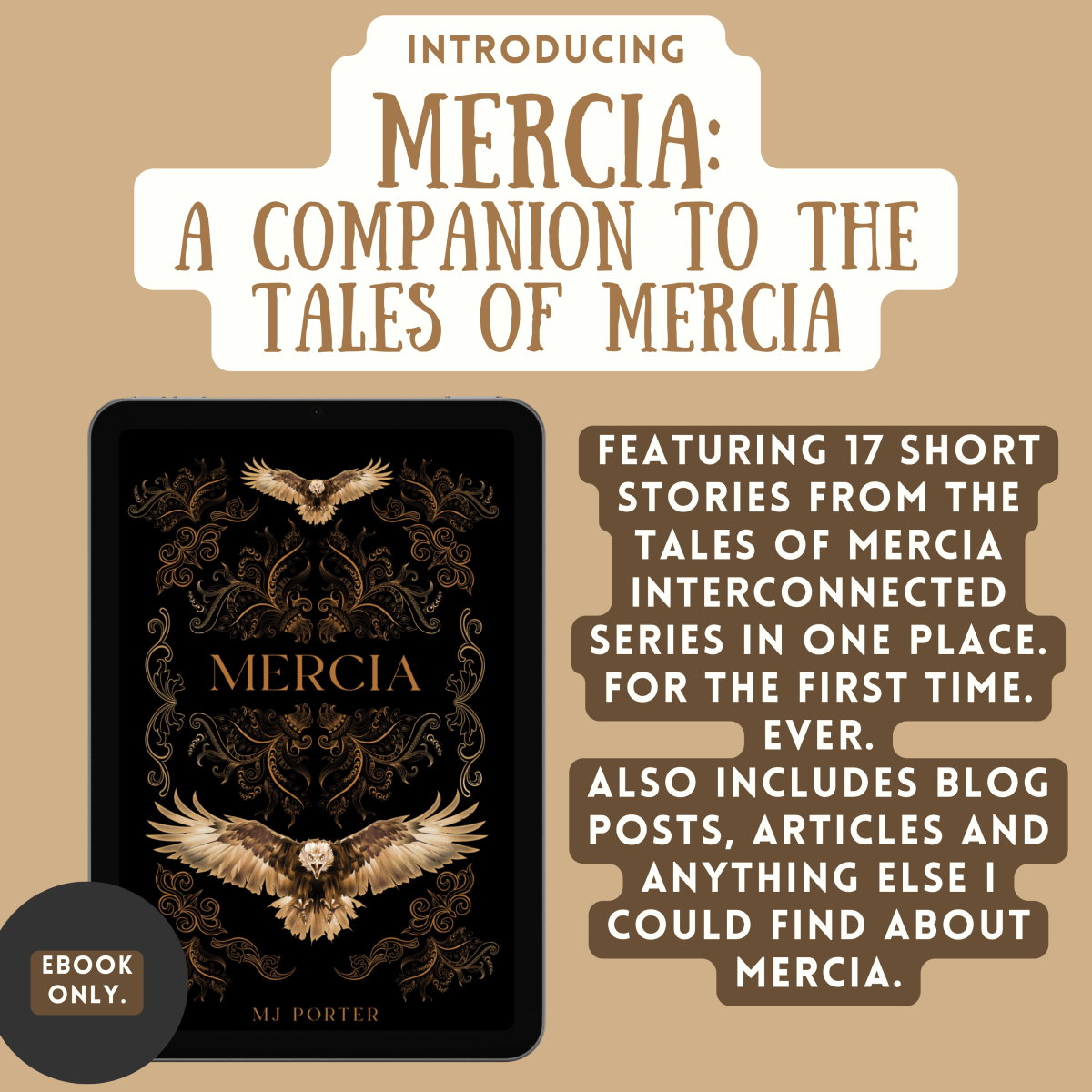
Join my newsletter to follow my writing journey, get access to my exclusive Subscriber area on the blog, and receive a copy of Mercia – A Companion Guide to the Tales of Mercia.


Posts

It’s nearly happy release day to Lords of Iron, the third and concluding book in the Dark Age Chronicles Trilogy. Let’s talk about Wærmund, warrior of the Gyrwe #newrelease #MenOfIron #WarriorsOfIron #LordsofIron #histfic

It’s nearly happy release day to Lords of Iron, the third and concluding book in the Dark Age Chronicles Trilogy. Let’s talk about Wærmund, warrior of the Gyrwe #newrelease #MenOfIron #WarriorsOfIron #LordsofIron #histfic

Wærmund, warrior of the Gyre

Wærmund, the lead male point of view in the Dark Age Chronicles, has come a long way since our first encounter with him, when he was young, angry, reckless and unable to assure himself of the loyalty of others. (I’m not saying he didn’t have cause to be angry).

While I’ve written novels in this era where the main male lead is strong and fiercesome (as well as treating everyone to young Icel), I’ve not really written a character like Wærmund before. One early reviewer complained he was ‘annoying’ and that was intentional. For him to become the character I needed him to become, he couldn’t start the novels ‘fully formed.’ I needed him to learn, grow, and become someone more thoughtful than his angry young self allowed.

Along the way, he’s had much cause to doubt himself, and really, it was Heafoc, his loyal warrior, who was the most fully formed of the warriors who pledged their often dubious loyalty to Wærmund. Heafoc, perhaps very much cast in the shadow of the rather wonderful Wulfstan from the Earls of Mercia series, and potentially, also the older Icel from The Last King books, was the epitome of a Saxon warrior, whereas Wærmund wasn’t. Indeed, in deciding to run away from his home, Wærmund hoped to outrun his past, which was never really going to be possible for him.

Now, as we turn to the concluding book in the trilogy, I feel Wærmund has come full circle. Is he, perhaps, now a better man than his father? Or, is he still driven by the desire to show his father he is the ‘better’ man? These are some of my favourite quotes from Wærmund in the final book.

You will need to read Lords of Iron (available from 5th January 2026) to discover whether Wærmund enacts his vengeance against his father. Enjoy.

Read about Meddi, Seeress of the Eorlingas

Read the original author notes for Men of Iron

Curious? Check out my blog for more details below

Blog links

Image shows a map of Early England showing the places mentioned in the text of the book
The Dark Age Chronicles Map

Purchase Link

https://amzn.to/4qaRuy3

Join my newsletter to follow my writing journey, get access to my exclusive Subscriber area on the blog, and receive a copy of Mercia – A Companion Guide to the Tales of Mercia.


Posts