I’m delighted to feature an extract from Francesca Capaldi’s new historical fiction novel, Dark Days at the Beach Hotel #histfic #blogtour

Extract

Helen Bygrove, manageress of the Beach Hotel since her bullying husband was conscripted, is called to the foyer on the arrival of Detective Inspector Toshack. There’s recently been some libellous letters sent, and accusations have been flying around as to who’s been sending them.

In the foyer, Helen was alarmed to see that Sergeant Gardener was with him. Standing behind him were WPC Amanda Lovelock, who used to be her bookkeeper, and Constable Twort, who’d retired originally a few years before the war. A feeling of dread crept up her body and she had a bitter taste in her mouth. Surely they hadn’t concluded that someone from the hotel had written the letters. Could it be one of the new chambermaids, as Edie had suggested? Did Miss Harvey know something, and that’s why she’d turned up at the carol concert?

‘Inspector,’ she greeted him. ‘How may I help you today?’

The inspector opened his mouth to respond but was cut short by both front doors being pushed open. Lady Blackmore was fussing as she entered, along with around a dozen people Helen recognised from the businesses in Beach Town. Cecelia was nowhere in sight. The looks on their faces suggested they weren’t here for pleasure.

Lady Blackmore opened with, ‘Well, that decides it. The hotel crest was on my latest letter. Now try and tell me the letters did not originate from this hotel.’

‘And on mine!’ cried Norah Johnson, who as Norah Daniels had once been a chambermaid at the hotel. Before the dairy farmer’s son had made her pregnant and they’d had to marry. ‘Just because I used to work ’ere and had to marry my Jim, don’t give you no permission to send me letters calling me names like trollop.’

‘That’s what I was about to tell you,’ Toshack told Helen. ‘More letters have been received, but this time on hotel notepaper.’

‘And what have I ever done to you?’ said Mrs Riddles, the postmistress from Norfolk Road. ‘Calling me a stinking cow of a liar, just because I took my last letter to the police station.’ She pointed towards Helen.

‘I’ve never done any such thing,’ said Helen, feeling a weight in her chest. ‘And why on earth would I send anonymous letters on hotel paper.’

‘But they’re not anonymous,’ said the landlord of the New Inn, also on Norfolk Road. ‘They’re signed H.B. That’s you innit?’

‘That’s even less likely then,’ said Edie, coming forward.

‘No, it’s to double bluff people, Miss Harvey here reckons,’ said Norah Johnson.  ‘And it makes sense. It’d be the best defence in a courtroom.’ 

‘That’s enough of that now,’ said Inspector Toshack. ‘If you’d all kindly leave me to carry out my job – ’

‘We want to make sure you do carry out your job,’ said Miss Harvey. ‘Not like last time.’

‘I used to think you were a decent sort,’ said Norah, ‘when I worked for you. Thought it was ya ’usband what was the silly bugger. I guess now ’e’s gone away you’ve taken over his meanness too.’

‘That’s enough of that, young woman,’ Sergeant Gardner warned.

‘And this accusation about her ladyship,’ said the landlord. ‘What proof have you got that her companion is her daughter.’

‘We don’t need to mention the details,’ Lady Blackmore whimpered, her hands covering her cheeks.

‘Mine had that ridiculous claim too,’ said Mrs Riddles. ‘I can quote it exactly, I can. ‘Lady Millicent Blackmore can’t keep her vile secret any more, it said. We can all see the likeness between her and Cecelia, and we know that she’s really her bastard child, born out of wedlock.

Lady Blackmore let out a strangled cry of anguish. ‘Of course that’s not true! I am only ten years older than Cecelia. How could she be my daughter? Whoever heard of anything so absurd?’

‘I agree,’ said Helen. ‘And I would never say such a thing.’

‘Not to our faces,’ said Norah. ‘Makes me wonder what you said be’ind our backs when I was working ’ere.’

‘I’m warning you,’ said the sergeant.

‘What, only me?’ said Norah. ‘What, ’cause I’m the trollop ’ere, eh?

It seemed to Helen that the scene before her was diminishing, and the sound fading. She had an acid taste at the back of her throat. Was she still in bed, dreaming?

The gathering mob started to talk over each other, provoking both Sergeant Gardner and Inspector Toshack to censure them. The sergeant went with, ‘Quiet now!’ while the inspector went with the more polite, ‘Would you all calm down now.’

The double instruction had the desired effect and the incensed chatter ceased immediately.

‘Now, unless you want to be arrested for disturbance of the peace, I suggest you all vacate the hotel,’ said the inspector, stretching up to his full height. ‘And if I receive any reports that you’ve returned to cause trouble, I will spare no time in sending one of my officers to your abodes. Is that clear?’

There were several mumbles of assent, before each of them turned to exit. Lady Blackmore charged out of the door first, almost knocking Norah Johnson over. The rest followed on, subdued, apart from Miss Harvey. She stood, defiant, for several seconds, glaring at Helen. She was the last of them to leave.

Helen was grateful that nobody had emerged from either dining room during this scene, though she had no doubt that the throng that had gathered today would soon pass around news of the latest letters.

‘Mrs Bygrove,’ said Toshack. ‘Mrs Bygrove?’

‘Hm?’ She came to. ‘Sorry, what did you say?’

‘I said, could we go somewhere more private.’

‘Of… of course. Edie, I’m leaving you in charge.’

‘Yes, madam.’

Helen took a deep breath, determined to pull herself together. But she was badly shaken. ‘Come this way.’ She led the four police officers to the staff area, stopping in the corridor. ‘We’ll go to my office.’

‘No, this will suffice,’ said the inspector. ‘WPC Lovelock, you know the building. Show Sergeant Gardner the way.’

‘Yes sir,’ she said with little enthusiasm. She opened the door to the stairs, that led to the staff living quarters. 

‘What are they doing?’ said Helen.

‘Carrying out a search.’

Here’s the blurb

Can Helen save the hotel… and her reputation?

Helen Bygrove is managing the hotel, now that her husband has been conscripted. Against all expectations, Helen and her team are doing marvellously, despite the shortages brought by war. Even the exacting Lady Blackmore agrees. But then the calm is shattered when poison pen letters are sent to prominent townsfolk and Helen finds herself the target of a police investigation. Is someone trying to ruin Helen, and the Beach Hotel? And can she rely on the handsome but taciturn Inspector Toshack to help her? When her husband, Douglas, is invalided out of the war he is determined to take back control of the hotel and things go from bad to worse.

How can she ever escape his bullying? Is she a fool to hope that she may have a second chance at love?

Purchase Link

 https://geni.us/bXV7C

Meet the author

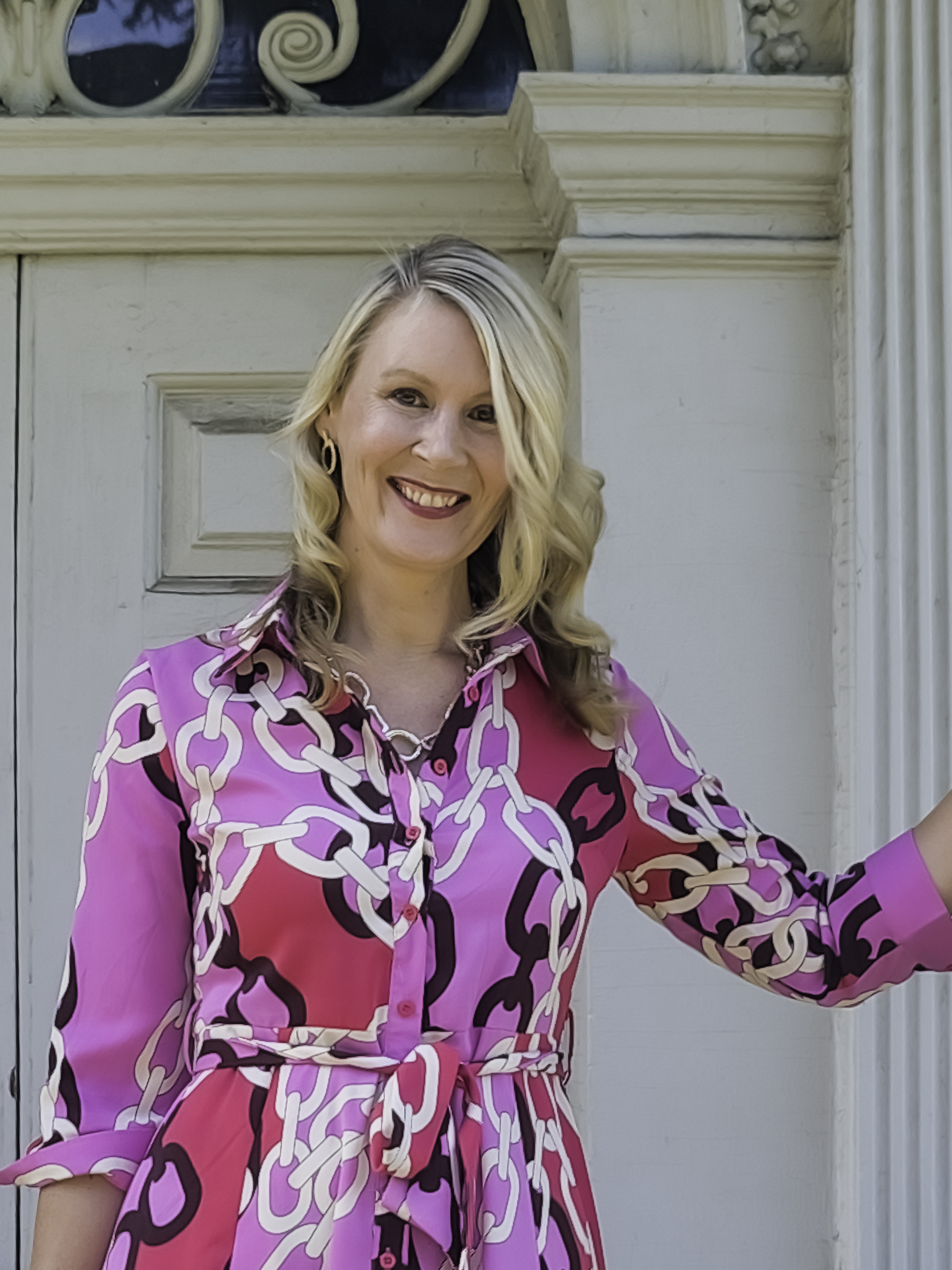
Francesca has enjoyed writing since she was a child, largely influenced by a Welsh mother who was good at improvised story telling. 

Writing under both her maiden name, Francesca Capaldi, and her married name, Francesca Burgess, she is the author of historical novels, short stories and several pocket novels. She is a member of the Romantic Novelists’ Association and the Society of Women Writers and Journalists. 
The first novel in the Wartime in the Valleys series, Heartbreak in the Valleys, was shortlisted for the Romantic Novelists’ Association Historical Award 2021. Both the Valleys series and the Beach Hotel series are published by Hera Books.

Francesca was born and brought up on the Sussex coast, but currently lives in Kent with her family and a cat called Lando Calrission.

Connect with Francesca

Facebook Author Page:   Website
TikTok:  Twitter:  Instagram

I’m delighted to welcome Michael Dunn, and his new book, Anywhere But Schuylkill, to the blog #MikeDoyle #AnywhereButSchuylkill #MollyMaguires #HistoricalFiction #BlogTour #TheCoffeePotBookClub

I’m delighted to welcome Michael Dunn, and his new book, Anywhere But Schuylkill to the blog, with What’s Love Got To Do With It?

What’s Love Got To Do With It?

As most readers know, a little romance always spices up a story, regardless of the genre. So, for my guest post today, I thought I’d write something about love and romance, in honor of Valentine’s Day.

In my recent historical novel, Anywhere But Schuylkill, my protagonist, Mike Doyle, is in love with a girl named Hannah, who happens to be his sister Tara’s best friend. This is troubling enough for him, since he cares deeply for his sister and doesn’t want to harm her friendship with Hannah. But Mike also works for Hannah’s father, who happens to be a gangster, and he has told Mike to keep his hands off his daughter. And to complicate matters further, Hannah’s mother is incredibly hot, and she likes to flirt with Mike when her husband isn’t around. At the same time, Tara is in love with Mike’s friend Johnny Morris, who their Uncle Sean thinks is a ne’er-do-well. And Uncle Sean is not someone you want to anger.

As a writer, I found these romantic minefields a lot of fun to create. But I also had to do a lot of research, because courtship rituals in the 1870s were so different than today. We’re talking about a small town, rural, and very traditional. There was, of course, a common trick I could exploit that transcends time period: Hannah could sneak away from her protective parents to be with Mike by pretending she was visiting her best friend, Tara. And Tara could sneak away from Uncle Sean, pretending to visit Hannah, but actually run off to meet with Johnny Morris.

This trick will only get you so far as a teen (the adults are usually sharp enough to catch on and will eventually tighten the reins). Likewise, it will only get me so far as a writer, since you modern readers are even sharper than a gilded-age parent. So, let’s talk about the research that helped me make these romances seem more authentic, and true to the era and setting.

One of the first things to consider is that none of these kids went to school. They were too poor and either had to stay home and help with the chores or go out and work for someone else to help support their families. Mike and Johnny Morris worked at the colliery. Tara and her mother worked for a neighborhood washer woman. And Hannah took care of her younger siblings, so her mother could help at the tavern. This left Sunday church as one of the only times and places where teens with strict parents could regularly meet, free of their usual burdens. While there wasn’t much courting that could occur in church, kids could chat before and after mass, and there were plenty of opportunities for lusty thoughts and teen imaginations to run wild.

There were also holidays, and community events, where teens might be able to sneak away from parents and chaperones long enough for a dance, or perhaps something a bit more illicit. Bonfire Night was one such holiday. Celebrated on the evening of June 23, Bonfire Night was historically connected to St. John’s Night, but, like many religious holidays, was likely an appropriation of an older pagan ritual. This would explain the date’s proximity to the summer solstice, and its May Day-like rituals, such as bonfires, which are lit at sunset, and kept going until long after midnight. Typically, there is food, alcohol, song and dance, creating a socially acceptable milieu for courtship. However, it is also a family-friendly event. The pious take embers home to ward off disease and evil spirits. Parents tell stories about the fairies, and kids get to stay up as late as they want because, if they fall asleep on Bonfire Night, the devil is sure to take them. Younger kids beat drums and blow tin whistles. They light sticks on fire and throw them into the air, while teens and young men challenge each other to leap across the fire. The flicker and spark of the flames tell whether they’ve been naughty, particularly in the romance department, and this can be a great source of amusement, or embarrassment.

Another popular holiday for young folks was Halloween. But an Irish-American Halloween in the 1870s was quite different than what most of us have experienced, particularly in terms of romance. The holiday often involved food, games and rituals to divine the future, particularly with regards to matrimony. For example, a traditional (and yummy) Halloween dish was colcannon, a casserole of mashed potatoes, milk, onion and kale, served with lots of butter, if one could afford it. The cook would hide prizes in the colcannon. The person who found a ring hidden in their serving was supposedly the next to get married. Alternatively, they might scoop the first and last spoonful of colcannon into a girl’s stocking, and hang that from a nail in the door, and her future husband would be the next person to enter through that door.

Another Halloween treat was barmbrack, a sweetbread filled with fruit, and sometimes hidden prizes. In this case, finding a hidden ring foretold of an impending romance, whereas a thimble meant you would never get married.

Supposedly, if a girl ate an apple while combing her hair in front of a mirror at midnight on All Hallows Eve, she would see her future husband gazing back at her. If she walked out into the night, blindfolded, and was led to a cabbage patch, she could predict the size and shape of her future husband by the size and shape of the first cabbage she picked. And if she peeled an apple and let the shavings fall to the ground, she might be able to discern her sweetheart’s initials.

Mumming, or guising, was another tradition that the Irish brought to the U.S., and that continues to be practiced in parts of Pennsylvania. Mumming involves dressing in costume and marching from door to door, performing rhyming plays, usually humorous, and often in exchange for food, treats, or even booze. It may have been the origin of the contemporary tradition of trick-or-treating. It was also common for mummers to dress in drag. One typical character was the darling Miss Funny, generally a man in drag, who demanded kisses or treats from audience members. And, instead of pumpkin Jack-o-lanterns, mummers carried hollowed out turnips, carved into grotesque faces, with lumps of burning coal inside to illuminate their way. For a fascinating history of Irish mumming, check out Henry Glassie’s, All Silver and No Brass (1975).

There are other kinds of love that are important in stories, too. For example, the desire to be loved, or the fear of being unlovable, can help explain a character’s motivations and actions. It can even help liven up a character that hasn’t been fully fleshed out yet, that feels too one-dimensional. This was initially the case with my villain, Uncle Sean, who felt like the epitome of a cruel, abusive parent. Indeed, Mike’s little brother, Bill, even says that the only two emotions Uncle Sean can feel are anger and rage. But when I added back story about Sean’s adoration of Aunt Mary, and his belief that she was the only one who could love him, “tetters and all,” he started to seem more like a real person, someone who felt pain and longing, and who struggled with his own insecurities.

This brings us back to my original premise, that a little love or romance helps spice up a story. Obviously, there is the salacious angle, like Hannah’s mom flirting with Mike. But much more important to the craft of writing is how love and romance can be exploited to enrich the side plots and add dimension to the characters. But what I find most interesting of all, is how both reading and writing about fictional love and romance can help us better understand our own real-life relationships with these emotions. What kinds of choices do we make in life to find love? To maintain love? To avoid being jilted or abandoned? And how do these choices affect our ongoing relationships with those we love, like friends and family members?

Here’s the blurb

In 1877, twenty Irish coal miners hanged for a terrorist conspiracy that never occurred. Anywhere But Schuylkill is the story of one who escaped, Mike Doyle, a teenager trying to keep his family alive during the worst depression the nation has ever faced. Banks and railroads are going under. Children are dying of hunger. The Reading Railroad has slashed wages and hired Pinkerton spies to infiltrate the miners’ union. And there is a sectarian war between rival gangs. But none of this compares with the threat at home.

Buy Link

Universal Link:

Historium Press:

Meet the Author
Michael Dunn writes Working-Class Fiction from the Not So Gilded Age. Anywhere But Schuylkill is the first in his Great Upheaval trilogy. A lifelong union activist, he has always been drawn to stories of the past, particularly those of regular working people, struggling to make a better life for themselves and their families.
Stories most people do not know, or have forgotten, because history is written by the victors, the robber barons and plutocrats, not the workers and immigrants. Yet their stories are among the most compelling in America. They resonate today because they are the stories of our own ancestors, because their passions and desires, struggles and tragedies, were so similar to our own.

When Michael Dunn is not writing historical fiction, he teaches high school, and writes about labor history and culture.

Meet the Author

Website:

Follow the Anywhere But Schuylkill blog tour with The Coffee Pot Book Club

I’m delighted to welcome Lela May Wight and her new novel, #TheKingSheShouldn’tCrave to the blog. I have a fabulous extract to share. #Romance #BlogTour

Thank you so very much for celebrating the release of, The King She Shouldn’t Crave, with me, on your lovely blog! ❤️

Introduction: In this scene, Natalia finds an inner strength to confront the king. Her husband.  It was a pleasure to watch this scene unfold, and to watch Natalia finally  demand to be seen, and heard. 

Extract:

Angelo’s pen halted mid-swipe, held between long fingers, balanced by a thick wrist cuffed in black. His eyes rose from the paper in front of him. 

Lashes, full and long, captured a sunset of liquid gold. 

A hypnotising swirl of heat locked on to her. A warmth spread through her fingers, through her arms, her chest, to pump into her stomach. Lower. 

Everything stopped—including time. 

He stared at her. 

She swallowed.

Natalia didn’t want to recognise him as a man. With this heat in her gut. Because whatever this womanly response was, she didn’t like it. It had no purpose here. In this room. With him. 

‘I need to speak with you,’ she said huskily, before her training could stop her. Before it demanded she stand silent and continue to live her life like a puppet. Her strings pulled by men. By tradition. By the rules that only served the King. Not the people. Not her

Angelo lowered his gaze. ‘Then make an appointment.’ His olive fingers flicked over the white paper. Dismissing her. 

‘Your Majesty…’ The aide she’d forgotten swept into the room. ‘I apologise—’ 

‘Leave us,’ he said, his eyes settling back on Natalia, and his look was as blatant as his actions since their wedding. He didn’t want her here. 

The door closed. Leaving them alone for the very first time.

‘Why are you here, Principessa?’ Honey-brown eyes latched on to hers. Her breath hitched. The words—all the words she’d held back—swarmed and clumped in her throat. 

She’d demanded his attention and here he was, giving it to her. 

He was waiting for her to respond.

 What was she waiting for? 

Her training told her she shouldn’t say a word. Should apologise for interrupting him and leave. Speak only when spoken to. But her obedience had been a facade. The long game. A cover-up.

 Uninvited, she reached for the chair opposite him and sat down. Placed her hands in her lap and straightened her back. 

Her fingers curled into her palms, her nails biting into her skin. This was the moment. Her moment. And it would hurt to let her underbelly show. To loosen her armour. But what choice did she have other than to tell the truth? To make this an unguarded moment of honesty?

She couldn’t do this alone. The gates were still locked against her, and the shackles of tradition were too tight for her to free them by herself. 

She swallowed, pushing down the instinct not to speak. Not to tell him the truth. But she had nothing to lose and everything to gain. 

‘I need your help.’ 

Her armour cracked. And it hurt. The confession in her mouth was heavy, but she made herself push it out. Set it free. 

Natalia reached into her pocket and withdrew her coronation speech. She unfolded it with careful precision, leaned forward and placed it before him. 

‘And I’m not leaving until I get it.’

Curious? Here are all the details.

Here’s the blurb

Will the king finally surrender to their tantalizing chemistry? Find out in the latest royalty romance by Lela May Wight!

Their royal marriage: Separate beds but shared temptation… 

Two months have passed since the world watched Natalia La Morte marry King Angelo Dizieno. But Natalia hasn’t seen or heard from him since their startlingly scorching kiss at the altar… 

Promoted from spare to heir after tragedy struck, Angelo can’t be distracted from his duty. Being within touching distance of the woman he has always craved—his brother’s intended queen—has him on the precipice of self-destruction. The last thing he needs is for Natalia to recognize their dangerous attraction. If she does, there’s nothing to stop it from becoming all-consuming…

From Harlequin Presents: Escape to exotic locations where passion knows no bounds. 

Purchase Links 

Amazon Australia: https://www.amazon.com.au/King-She-Shouldnt-Crave-ebook/dp/B0CQRNW7DH/

Amazon USA: https://www.amazon.com/King-She-Shouldnt-Crave-ebook/dp/B0CQRNW7DH/

Amazon UK: https://www.amazon.co.uk/King-Shouldnt-Crave-Mills-Modern-ebook/dp/B0C9XRBFC9

Meet the author

Lela May Wight grew up with seven brothers and sisters. Yes, it was noisy, and she often found escape in romance books. She still does, but now she gets to write them too! She hopes to offer readers the same escapism when the world is a little too loud.

Lela May lives in the UK with her sons and her very own hero, who never complains about her book addiction – he buys her more books! Check out what she’s up to at lelamaywight.com.

Connect with the author

Website: www.lelamaywight.com

Twitter: (X): https://www.twitter.com/LelaMayWight 

Facebookhttps://www.facebook.com/166383018829400 

Instagramhttps://www.instagram.com/lelamaywight 

I’m delighted to welcome Adrienne Vaughan to the blog to showcase her new books, Summer of Secrets #blogtour

Here’s the blurb

Mia Flanagan has never been told who her father is and, aged ten, stopped asking. Now she keeps her own secrets. But when the movie she’s working on ends in disaster, she flies home to discover her fiancé has a secret too; leaving her dreams crushed.

Broken-hearted, a lonely summer in London looms. Until family friend, Archie Fitzgerald, invites her to stay at his fading mansion on Ireland’s ancient east coast.

For Archie also has a secret, and the longer Mia stays, the more she wonders if Archie really is her father after all.

Summer of Secrets is a tale of how the ghost of love can blight many lives. And how Mia, realising the past cannot hurt her, must make way for new love and the promise of happiness waiting in the wings.

Purchase Link

 https://mybook.to/SummerofSecretsRBk1

Meet the author

Adrienne Vaughan writes spellbinding, page-turning romantic suspense.

Her Heartfelt Series − The Hollow Heart, A Change of Heart and Secrets of the Heart – is set on an island off Ireland’s west coast and features a feisty investigative journalist, and her irresistible West Highland terrier. Adrienne studied at the Dublin College of Journalism and loves animals, especially dogs.

Her collection of short stories and poetry, Fur Coat & No Knickers was shortlisted for the Irish Carousel Prize for Anthology and her WWII short story, Dodo’s Portrait, was shortlisted for the Colm Toíbín International Short Story Award at the Wexford Literary Festival.

Summer of Secrets is the first in a series of sweeping family dramas, each with a touch of Irish magic.

All her books are heart-warming, uplifting reads, featuring her trademark gripping style, and laugh out loud moments.

Adrienne, husband Jonathan, and two cocker spaniels divide their time between rural Leicestershire, the Wicklow mountains, and coastal South Devon. Agatha Christie – the cat – takes care of things while they are away.

PS: Adrienne’s keeping everything crossed there’s still time to realise her ambition to be a Bond girl.

Connect with the author

I do love a cover reveal, and what better than two from Louise Marley and her new copy crime series #AnEnglishVillageMurder #CoverReveal

Here’s the blurb

Murder at Raven’s Edge (An English Village Mystery Book 1)

When Milla Graham returns to her childhood home of Raven’s Edge after eighteen long years away, she finds the perfect English village looks much the same – all rose-covered cottages, nosy neighbours, and quaint teashops full of scones and gossip.

But her nostalgic visit takes a dark turn when the body of a local woman is discovered in an abandoned manor house on the edge of the forest. The murder scene is chillingly close to that of Milla’s own mother, whose death was never solved. As she begins to investigate the connection, Milla realises this adorable village is guarding some dark secrets.

Handsome, grumpy local police detective Ben Taylor doesn’t believe in coincidences, and he doesn’t think mysterious newcomer Milla Graham is as blameless as she seems. Why is she really here in Raven’s Edge, and how come she keeps turning up at his crime scenes, causing trouble? Can he solve this murder case without losing himself – or his heart – to the rather distracting Ms Graham?

When another body is found, everyone becomes a suspect – from the barmaid at the local pub to Milla Graham herself. It seems that in Raven’s Edge, not everybody is as friendly, or as innocent, as they first seem.

This picture-perfect English village is full of rumour, romance… and murder! A gripping, funny, absolutely unputdownable murder mystery, which is perfect for fans of Faith Martin, Fiona Leitch and M.C. Beaton.

Pre-order Links 

https://www.amazon.co.uk/gp/product/B0CV1CQ68Y

https://www.amazon.com/gp/product/B0CV1CQ68Y

Publication Date: 7th May 2024

Here’s the blurb for book 2

Murder at Ravenswood House (An English Village Mystery Book 2)

A gruesome murder in charming Raven’s Edge sends Milla Graham sleuthing to catch a killer, win back her detective ex, and dig up a decades-old secret along the way…

When a shocking murder rocks the picture-perfect English village of Raven’s Edge, erstwhile amateur detective Milla Graham finds herself right at the centre of the mystery. Still reeling from her recent breakup with local police officer Ben Taylor, Milla sets her sights on solving the case, hoping to win Ben back.

But when the evidence begins to point to Milla’s old friend and former paramour Lorcan Black, she must choose between her loyalties to the past and the possibilities of the future. Meanwhile, Ben is on a different trail – he’s begun to suspect that the murderer could be someone from his own family’s dark history.

Further complicating matters are Milla’s meddling grandmother, Ben’s no-nonsense police partner Harriet, and David the surprisingly young and sexy new vicar. With shocking twists around every cobblestone corner, the truth refuses to stay buried for long in this quaint village, whose picture-postcard façade hides decades of buried grudges, plots, and betrayal.

Will Milla solve the mystery in time to rescue her relationship with Ben? Can Ben face the skeletons in his family’s closet before one of his own relatives meets the same bloody end?

Brimming with drama, intrigue, romance and quirky characters, this addictive tale will have cosy mystery fans racing through the pages long into the night. Fans of M.C. Beaton, Faith Martin and Fiona Leitch will love this book!

Pre-order Links

https://www.amazon.co.uk/gp/product/B0CV249DZ1

https://www.amazon.com/gp/product/B0CV249DZ1

Publication Date: 7th May 2024

Meet the author

Louise Marley writes murder mysteries and romantic comedies. She is lucky enough to live in a village where there is a famous library and TWO ruined castles. (Her husband still thinks they moved there by accident.)

Her first published novel was Smoke Gets in Your Eyes, which was a finalist in Poolbeg’s ‘Write a Bestseller’ competition. She has also written articles for the Irish press and short stories for women’s magazines such as Take a Break and My Weekly. Previously, Louise worked as a civilian administrative officer for the police.

Connect with Louise

Website: https://www.louisemarley.co.uk/

Facebook: https://www.facebook.com/LouiseMarleyAuthor

Twitter: https://twitter.com/louisemarley

Instagram: https://www.instagram.com/louisemarleywrites/

Bluesky: https://bsky.app/profile/louisemarley.bsky.social

Threads: https://www.threads.net/@louisemarleywrites

Blog: https://louisemarleywrites.blogspot.com/

I’m delighted to welcome Katharine Quarmby and her new book, The Low Road, to the blog #WomensFiction #FeministFiction #HistoricalFiction #TheCoffeePotBookClub #BlogTour

I’m delighted to welcome Katharine Quarmby and her new book, The Low Road, to the blog, with searching for The Low Road in Historical Sources.

Searching for The Low Road in Historical Sources

Katharine Quarmby

The search for the story that became The Low Road started around seven years ago now, when I came across a description of one local area in my Norfolk, England, hometown. It mentioned in passing an area at the end of the town called Lush Bush, where a local woman, Mary Tyrell, had been buried on the parish boundary in 1813. I started to dig further, through local newspaper articles and found that the Norfolk Chronicle had reported in that year that she had taken poison and died after being investigated for infanticide. She was then staked through the heart after death in an archaic punishment called felo de se. A daughter, then only described by her initials, A.T., had survived and had been sent to a refuge in London.

It wasn’t a lot to go on, but I really wanted to know more, so I started by guessing that her first name was Ann and was lucky enough to find an Ann Tyrell, (called Hannah in my novel) who had lived at the Refuge for the Destitute in Hackney, East London. I then looked her up in the Hackney Archives, in East London, just a bike or bus ride away from my home, in the great Minute Books that noted in copperplate handwriting the history of the Refuge and of the lives of the young people, known as Objects, who lived there. No traces of the physical building exist now – all that is left is writing. There is just one painting that shows the Refuge as well, looming above some local almshouses.

I walked up and down the Hackney Road in search for it, and found the rough location of the institution where she had been admitted, after being banished from the hometown we shared and being found to have understood, or be ‘sensible’ that her mother had committed an “Iniquity”. It was near a scruffy car park, there were dark alleys nearby and I did my best to imagine Ann living there, using the brilliant Layers of London historical maps to go back in time.

In real life, just as in my novel, Hannah met another destitute there, Annie Simpkins. The girls forged a friendship that I imagined deepened into love and in December 1821 they took a risky decision which then dictated the course of their lives from then on. The Minute Books revealed that on a winter evening in 1821 the girls ran away with stolen goods from the Refuge – perhaps to make a life for themselves, who knows – and were apprehended by the Superintendent of the Refuge.

I traced Hannah and Annie onwards, to the National Archives at Kew, West London, and also through the Old Bailey Online Proceedings, which have been digitised and provide a unique insight into the British criminal justice system. The Old Bailey records show that the girls – just fifteen and eighteen at the time – stood trial for ‘grand larceny’, or thieving, on January 10, 1822. They were sentenced to seven years’ transportation.

But as I found, when I visited the National Archives in Kew, West London, they didn’t go immediately. It was six years later when our Ann was transported. So what happened in between? I kept looking. First of all, they went to the Millbank Penitentiary, now buried underneath the Tate Britain gallery. A stone buttress by the Thames nearby states: “Near this site stood Millbank Prison which was opened in 1816 and closed in 1880. This buttress stood at the head of the river steps from which until 1867, prisoners sentenced to transportation embarked on their journey to Australia.” There are few other traces, except some prison walls, unmarked, and a trench which had been dug around the prison which is now used to dry washing for nearby houses.

Later, the archives also revealed that the girls had even been sent to a prison hulk on the Thames. At the National Archives I was handed a document, done up with red ribbon, about their life on the hulks. Had anyone else ever untied this, I wondered, as I pulled on the ribbon, then unfolded the document. There were the names of my girls and others, resident on the prison ship on the Thames – and there was a signature at the bottom from the then Home Secretary, Robert Peel, pardoning them, and so it was that in 1825 the girls were set free and ended up working at the Ship Inn in Millbank, near the Houses of Parliament.

The last traces of my Ann, in UK history, were back in the Hackney Archives. She had asked for money so she could return to Harleston, Norfolk, but found that all her friends were dead; she had then been granted a stay in the temporary part of the Refuge…and then she vanished. All I knew was that the Superintendent of the Refuge had written back to a lawyer in my hometown to let him know that Ann had been transported to ‘Botany Bay’ in 1828.

I could find no record of her in Australian archives and so at this point I had to pivot and tell the story as fiction, rather than non-fiction. I novelised what happened to them in Australia, taking as my guide the history of other girls and women who were exiled, and was lucky enough to receive a grant from the UK Society of Authors so I could visit both the Hunter Valley and Tasmania, landscape into which I imagined the story of my two girls, exiled, as part of the 26,000 women who were transported to mainland Australia and Tasmania – the largest forced migration of English, Scots, Welsh and Irish people, numbering some 162,000 convicts in all, between 1767-1868. Telling that part of the story – part of the story of these islands, also meant paying attention to, and honouring, the Indigenous communities whose lives were desecrated by the British arriving.

From a trace of a story, then, The Low Road became a novel that uncovered lost histories: the stories of poor women from rural areas, the stories of convicts sent to penal colonies because of poverty and political activism, the stories of people who often left no records behind as a result of illiteracy and hardship, and the largely overlooked history of same sex relationships between convict women. This was a story from the bottom up, of how three generations of girls and women from one family were caught up in political times, from the fall-out of the Napoleonic wars and the poverty after, to the rise of the agricultural workers, the Swing Rioters, and other political dissidents and beyond the seas to Australia.

When I go back to Harleston to visit my family we go on a walk that takes us through the town, past the inn where a jury of men held an inquest on Mary’s body, past the green where the pond used to be where the baby was found, and all the way down to Lush Bush, where Mary is buried in an unmarked grave. I think of Mary and Hannah every time, and I hope I’ve done them justice.

Heres’s the blurb

In 1828, two young women were torn apart as they were sentenced to transportation to Botany Bay. Will they ever meet again?

Norfolk, 1813. In the quiet Waveney Valley, the body of a woman – Mary Tyrell – is staked through the heart after her death by suicide. She had been under arrest for the suspected murder of her newborn child. Mary leaves behind a young daughter, Hannah, who is later sent away to the Refuge for the Destitute in London, where she will be trained for a life of domestic service.

It is at the Refuge that Hannah meets Annie Simpkins, a fellow resident, and together they forge a friendship that deepens into passionate love. But the strength of this bond is put to the test when the girls are caught stealing from the Refuge’s laundry, and they are sentenced to transportation to Botany Bay, setting them on separate paths that may never cross again.

Drawing on real events, The Low Road is a gripping, atmospheric tale that brings to life the forgotten voices of the past – convicts, servants, the rural poor – as well as a moving evocation of love that blossomed in the face of prejudice and ill fortune.

Buy Link:

Universal Link:

Bookshop:

Meet the author

Katharine Quarmby has written non-fiction, short stories and books for children and her debut novel, The Low Road, is published by Unbound in 2023. Her non-fiction works include Scapegoat: Why We Are Failing Disabled People (Portobello Books, 2011) and No Place to Call Home: Inside the Real Lives of Gypsies and Travellers (Oneworld, 2013). She has also written picture books and shorter e-books.

She is an investigative journalist and editor, with particular interests in disability, the environment, race and ethnicity, and the care system. Her reporting has appeared in outlets including the Guardian, The Economist, The Atlantic, The Times of London, the Telegraph, New Statesman and The Spectator. Katharine lives in London.

Katharine also works as an editor for investigative journalism outlets, including Investigative Reporting Denmark and the Bureau of Investigative Journalism.

Meet the author

Website:

Follow The Low Road blog tour with The Coffee Pot Book Club

Today, I’m delighted to welcome Spellbound by Gretchen Rue to the blog, with a little bit of #witchy #cosycrime #blogtour #bookreview

Here’s the blurb

Since moving to Raven Creek, Phoebe Winchester has had a lot on her plate.

She’s renovating the Victorian manor she inherited from her Aunt Eudora, running a tea shop (and secret magical apothecary), and learning to be a witch. But when she discovers a dead body at an estate sale, and suspicion falls on her, even Phoebe wonders if this is simply too much.

Forced to take action to clear her name, Phoebe enlists Rich Lofting, handsome private detective and childhood friend, to assist with her investigation, all while sorting out her unresolved feelings for him.

Is there something more sinister lurking in the shadows of this small tight-knit town? And does Phoebe really want to find out?

Purchase Link

https://amzn.to/3veTT3

My Review

Spellbound is a cosy crime featuring our main character, Phoebe, who is a book-shop owner, bread-baker, owned by a cat, and a little bit of a modern-day witch. This isn’t spell-casting witchcraft, but rather a woman with some additional powers with which to imbue her teas and cakes.

When not baking, fixing up her house, being a general ‘good-egg’ and deciding whether or not to risk a romance with a new man, Phoebe manages to embroil herself in a crime, which somehow, finds her, and her cat implicated.

What ensues is a small-town, feel-good, crime busting episode, as Phoebe, determined to clear her name, gets into one or two scrapes before finally finding the true culprit.

This is an enjoyable, light-hearted read, with enough intrigue to keep the reader intrigued.

Meet the author

Gretchen Rue lives in the Canadian prairies, which affords her ample time to read during six months of winter. She plays cat mom to four mostly indifferent fur children, and plant mom to roughly 100 very demanding flora. When she isn’t sipping tea and working on her next novel, she enjoys swimming, hiking, and watching baseball.

Connect with the author

https://www.instagram.com/sierradeanauthor/

I’m delighted to share my review for Adam Lofthouse’s new Roman-era historical fiction novel, Usurper, which is released today

Here’s the blurb

Wall of Hadrian. Britannia, 382 AD

War is creeping back into the land. As silent as snowfall, as inevitable as winter. They’ve had sixteen years of peace, but all things must end.

Tribune Sixtus Victorinus has grown old, complacent. Blind to the truth that stares him in the face, he contents himself with what he has. He runs errands for the Dux Britanniarum Flavius Maximus and watches with joy as his boys grow to become men.

It is his friend, Prefect Gaius Felicius, who first spots the signs. Once more, the Caledonian tribes are rearing their heads in the north, but the greatest danger does not lie with them.

For there is a new pretender to the throne of the West. Another man who seeks to drape himself in purple. Caught up in a scheme they cannot comprehend, Victorinus and Felicius must navigate their way through both a war in the depths of winter, and a treasonous plot that will shake the Roman Empire to its core.

A new age dawns on the men of Britannia. For Victorinus, he must fight for the right to see the sun rise over it.

Purchase Link

https://amzn.to/3OfYAAn

My Review

I’ve just been checking my review for book 1 in this series, and I see I also gave it five stars. Adam is a lucky author because I’m always told that I don’t often hand out a 5-star review. (Check out my review for Valentia here).

And he’ll be pleased to know he’s done it again with Usurper.

I will say that this era – the coming end of Roman Britain fascinates me. Adam’s recreation of it speaks to me. We know what’s coming. The people in these books do not, although perhaps they suspect it.

Usurper continues the story from Valentia, but we move forward 16 years. Our two main characters remain Tribune Sixtus Victorinus and Felicius. Felicius is still a career Roman. Sixtus is not. They are both older, perhaps wiser, and contending with the results of their decisions as younger men.

Sixtus has finally given up the drink, but he is beset with heartache at the breakdown of his marriage and the long-ago death of his small son, which he missed because he was away fighting. Sixtus is a man trying to do his best in a world where the Roman influence of his younger days seems to have bled away. He’s still a friend and ally of Theodosius, the younger emperor, and indeed, they remain in contact via letter – a fabulous device ensuring the reader knows what’s happening beyond the shores of Britannia.

With all that said, this is an action-packed novel. There is barely a chapter that goes by without one fight or another. As we travel from Londinium to many locations on the Wall and even further north, Sixtus gets an absolute beating. Drost makes a welcome reappearance, and conspiracies abound. The set-up for book 3 in this trilogy is impeccably well-paced – I didn’t know how the book would end – although I had some suspicions. It didn’t do what I thought it would, and now I can’t wait for the concluding volume in the trilogy.

It is a fabulous Roman-era action and adventure story that rings with conviction and conspiracy, which readers of the genre will devour.

Meet the author

Adam has for many years held a passion for the ancient world.
As a teenager he picked up Gates of Rome by Conn Iggulden, and has been obsessed with all things Rome ever since.

After ten years of immersing himself in stories of the Roman world, he decided to have a go at writing one for himself, and hasn’t stopped since. Check out the books on the website, or follow Adam on Social Media for regular updates.

Follow Adam on Twitter: @AdamPLofthouse
Find him on Facebook: facebook.com/AdamPLofthouse
Instagram: adamplofthouse

https://www.adamlofthouse.com

Competition time, and an update on the ebook version of The Royal Women Who Made England

My fabulous publishers are working together and offering a hardback edition of King of Kings and The Royal Women Who Made England (UK only). To enter you will need to access one of the original posts from Boldwood on Twitter, Facebook or Instagram. I will add links here. (Closing date 6th Feb 2024. T &Cs apply).

I can’t work out how to do the Facebook one:(

https://www.facebook.com/theboldbookclub You might have to hunt for it. Let me know if it’s a pain, or if you know how to do it!


I can also let you know that the ebook/kindle version is now available to preorder, and the US hardback release date is 30th March 2024.

https://books2read.com/TheRoyalWomenWhoMadeEngland

Or purchase directly from the publisher, Pen and Sword

https://www.pen-and-sword.co.uk/The-Royal-Women-Who-Made-England-Hardback/p/24395

Check out the Brunanburh Series page on my blog for my information about my fiction.


And, because I never tire of making a slight fool of myself, here’s me talking about some more of the research I undertook for the book and trying to explain the family tree of Otto I, King of the East Franks. Who knows how successful I’ve been.