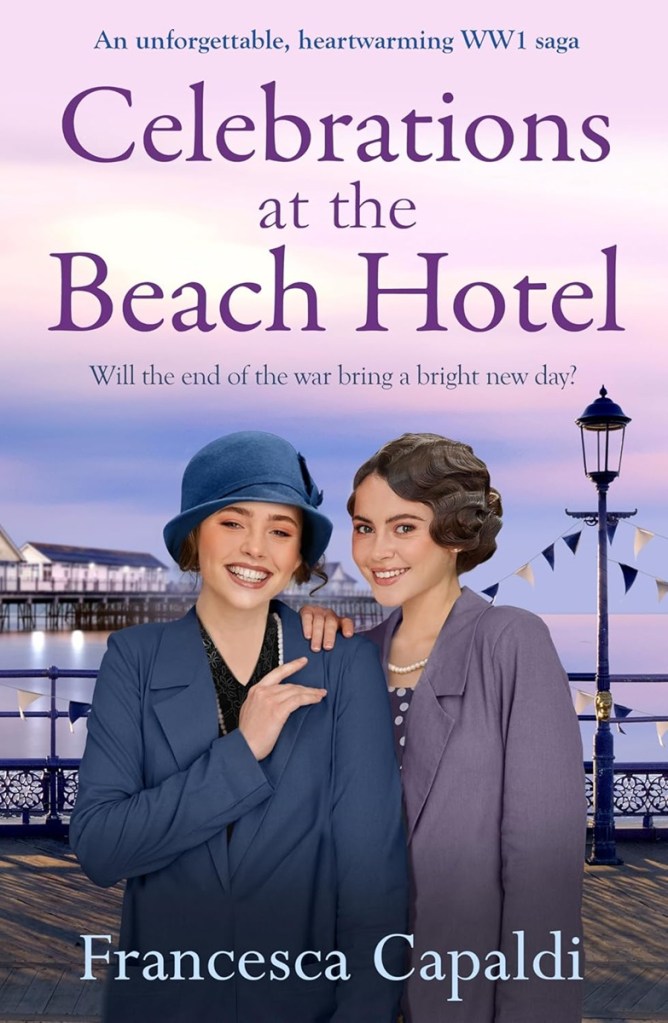
I’m delighted to welcome Francesca Capaldi and her new book, Celebrations at the Beach Hotel to the blog. Francesca is introducing us to the characters #blogtour #histfic #saga
Meet the Characters from Celebrations at the Beach Hotel
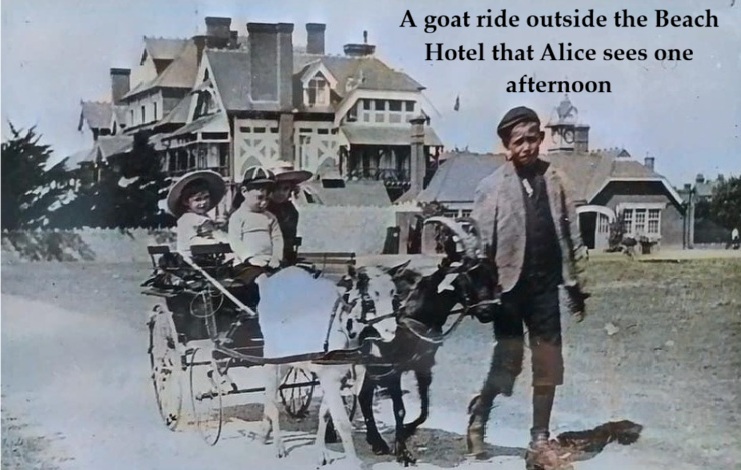
Annie and Alice Twine are sisters who work in the scullery at the Beach Hotel. They appeared in the first five novels about the place, but now, with the sixth book, they’ve landed a starring role each. They are twenty-three and twenty-two years old when Celebrations at the Beach Hotel begins.
As scullery maids, their jobs would have included washing up glassware, crockery, cutlery and pans, getting rid of waste food (most likely in a pig bin) and keeping the scullery and stillroom clean. They would have boiled hot water for various maids and even plucked and skinned animals, though we never see Annie and Alice do this.
Both of them started work at the hotel at 15, when they left school, so Annie started a year before Alice, and is now head scullery maid, something she is fond of reminding her younger sister about! Annie does have a tendency to glumness, whereas Alice has a happier personality. At least, that’s how it appears on the surface. Their father, Colin, is a farm manager at a farm in Wick, the village where the sisters live. Their three brothers, Cedric, Cecil and Cyril, who all worked as labourers on the farm before the war, have yet to be demobbed. Wick at the time was a village next to Littlehampton with extensive farmland, but it’s now part of the town. (Growing up, my house was a ten-minute walk away from where they supposedly lived.)
The sisters get on well, when Annie isn’t bossing Alice around. Their mother is keen for them to marry, but, as the sisters say, what opportunity do they have with most of the men still away? But when the men do start to return, that’s when romance comes between the two of them.
A lot of the characters from the previous books in the serious, including Edie, Lili, Helen, Hetty and Fanny, are part of the story, as the men who worked at the hotel before the war, and survived, slowly return. These include Lorcan, who Annie holds a torch for, and Jasper, who Alice is very fond of. Lorcan and Jasper both enlisted and joined Kitchener’s 7th Special Service Battalion in 1914, which eventually became part of the 12th (Eastern) Division. Although the war ended in November 1918, they spent another four months on salvage and clear up duties in France, so don’t return to the hotel until March 1919.
Lorcan’s from Ireland, a place he has difficulty visiting after he returns, due to the civil war brewing there. He walked out briefly with stillroom maid Hetty, who is now engaged to another, but Annie suspects that he hasn’t got over her. Jasper is from Bognor Regis and part of a once well-off middle-class family who owned several grocery stores, but has since had a fall in fortunes. The men’s jobs as porters would have included greeting guests at the hotel, carrying luggage and showing them to their rooms, advising on hotel facilities and that of the surrounding area, making travel arrangements, parking guests’ motorcars and running errands for them.
During the course of the story, there are several marriages. These are kicked off by the real wedding of Princess Patricia of Connaught (a granddaughter of Queen Victoria) to The Hon. Alexander Ramsay, incidentally the first royal wedding at Westminster Abbey since the 14th century. The female staff are reading about it in the newspaper and cooing over it as Lorcan and Jasper return from the war. Although Alice enjoys reading about the event, Annie is typically dismissive of the whole thing.
Either way, this event, and the subsequent weddings, don’t make either sister optimistic about their own prospects. Alice believes Jasper’s too high above her in social standing, even though he’s now just a porter. These beliefs only serve to help scupper their chances further, and they end up having a major fall-out with each other as a consequence, which isn’t helped by the appearance of a third man, adding to the romantic mix…
Here’s the blurb
Sisters Alice and Annie have always been close but will a man come between them?
Annie and Alice love their life working at the Beach Hotel together and each is thrilled to have finally found a sweetheart. Yet the path of true love never did run smooth, and they soon find themselves facing conflict and strife. Could love come between them and the bond they share?
Meanwhile, as men start to come home from the war, the women have to work out how to keep their jobs, although they are delighted to be back with their beaus. Soon, wedding bells ring out in Littlehampton.
Will everything be made right in time for Christmas?
Purchase Links
Amazon https://amzn.to/4gTi5fj
Kobo: https://bit.ly/4765y3M
Meet the author
Francesca Capaldi has enjoyed writing since she was a child, largely influenced by a Welsh mother who was good at improvised storytelling and an Italian father who loved history. She is the author of historical sagas, short stories and pocket novels.
The first novel in the Beach Hotel series, A New Start at the Beach Hotel, won the Romantic Saga Award at the Romantic Novelists’ Association Awards in 2024. The first novel in the Wartime in the Valleys series, Heartbreak in the Valleys, was shortlisted for the Historical Romantic Award in the RoNAs in 2021.
Francesca was born and brought up on the Sussex coast, went to London to do a history degree, but has lived for many years in Kent with her family and a cat called Lando Calrission.
Website & Blog
Stay up to date with the latest from the blog.







































































.jpg)
.jpg)