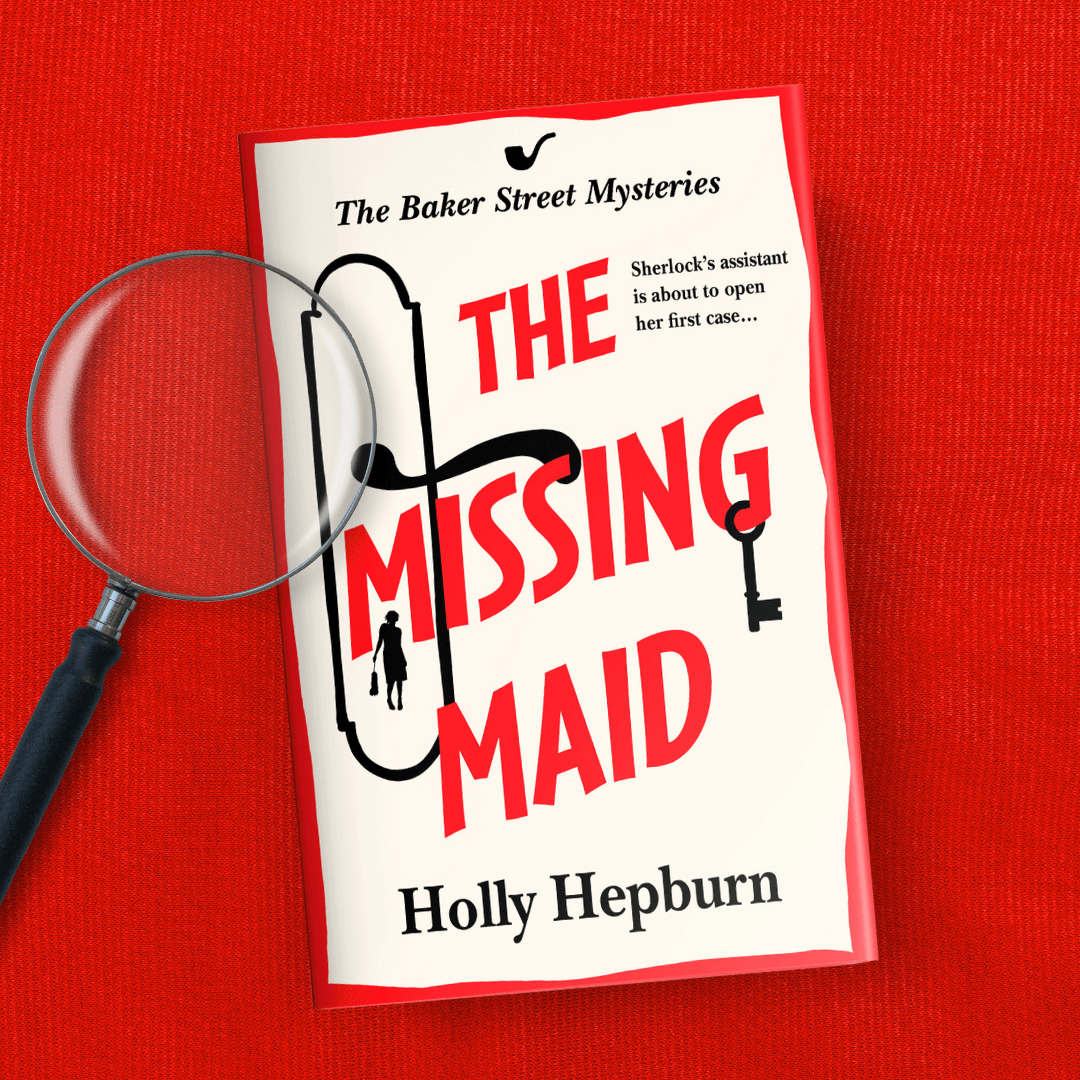
2023 – a year in reading

In 2023, I set myself the task of reading 52 books, or one book a week, but I smashed that, reading/listening to more than double that number. So, what have I been reading?

I’ve taken part in many blog tours, and I also read a lot of fellow Boldwood Books authors, but I also have my favourites that I return to time and time again. I don’t show star ratings on my blog, and that’s intentional. You can always see what I’ve been reading over on Goodreads, where I do tend to give star ratings.

Fantasy

Fantasy was one of my first loves, but I read surprisingly little of it now. Aside from my relisten of all the Terry Pratchett Discworld audiobooks (which I’m loving – I listened to 20 books in the series – and discovered the joy of slowing down the narrator as opposed to speeding them up), I also read the wonderful short story collection, A Stroke of the Pen. I’ve also read Mark Lawrence’s, The Book That Wouldn’t Burn, and indulged in the fabulous Advent of Winter, a short story a day throughout Advent. I think this might sway my reading for 2024, as well as Spread, another short story anthology which contained a host of fabulous writers. And, Steve Jones’ Call Time, which I really enjoyed. His main character is a real ass, but it’s intentional, although I think perhaps some people don’t realise that. It’s worth persisting with, and all those of a ‘certain’ age will love the retro mentions.

Historical Fantasy

I indulged in a little bit of historical fantasy, Theodore Brun’s new book, A Savage Moon, which was excellent, and the anthology, Alternate Endings, which I found really enjoyable.

Mystery

I’ve been reading more and more contemporary mysteries, 23 in total. I have a couple of favourite series, that by Helen Golden, and also a series set in contemporary Italy by TA Williams, as well as some other series I’ve discovered, most notably that by EV Hunter. I read the first book in Kate Wells farming mystery series, and How Not to Murder Your Ex by Katie Marsh. I also read Pass the Cyanide, a foodie short story collection. The Cozy Craft Mystery series by Mille Ravensworth has also been delightful – short, sharp and snappy. I’m also continuing to read Debbie Young’s series – both the Sophie Sayers series and the St Bride’s series.

What I’m really enjoying is working out how the authors ‘tell’ their stories – a good mystery is liberally interspersed with ‘tells’ which the reader only realises as the mystery resolves. There’s a lot to be learned from that for historical fiction, although I did find myself veering towards a bit of a mystery in one of the books I’ve written this year, entirely by accident:)

Historical Mystery

Historical mystery, both cozy and a little more not cozy, is one of my favourite genres. I’ve read 18 historical mysteries – The Alewives by Elizabeth R Andersen on audio which is fabulous, the Iris Woodmore series by Michelle Salter, the new Sarah Hawkswood – I do love this series, and the Fiona Figg and Kitty Lane Mysteries by Kelly Oliver. I’ve recently discovered Helen Hollick’s 1970s mystery series, which I’m adoring for all the little details she’s added which really place it in the early 1970s. The notes show that Helen has spent much time arguing with her former classmates over some of those details, and that shows a real desire to ‘get it right,’ which I appreciate. When I was writing my historical mysteries, my Dad was so helpful in offering advice including reminding me that there would have been steam trains in the 1940s. I also really enjoyed Colin Garrow’s historical mystery, Red Snow, set in and around the Newcastle area.

Historical

I read quite a bit of historical – 17 titles. I veered from Renaissance Italy, with Kelly Evans’, Turning The World to Stone to the Roman Empire in the BC years, with both Robert M Kidd and SJA Turney. I’ve already listed a couple of my books of the year over on the Aspects of History website, which included JC Duncan’s Warrior Prince, Donovan Cook’s Odin’s Betrayal and Jane Dunn’s The Marriage Season. I also discovered Melissa Addey’s Roman series, which I’m adoring – such a fabulous idea to tell the tale of the Colesseum when it was being used. And Robert Kidd’s To Kill A Consul, set in the third century BC. I’ve only managed one SJA Turney book this year, which I’m annoyed about. I’m desperate to read his latest Damned Emperor series, but need to find the time. I discovered Gordon Doherty‘s, Legionary series, which I want to read more of, as I started with book 9. I also read the new Dan Jones, and found it very bleak, hopefully, intentionally so, and fellow Boldwood author Peter Gibbons Saxon series. As well as Cathie Dunn’s Ascent. So, I read a fair bit set in and around my era, and also some more distant time periods.

Other Genres

I’ve read a little outside these genres, completing Evie Hunter’s gangland series set in Birmingham, and again, being inspired by the way she tells her story. It was extremely compelling, especially as every character was just horrible and self-involved. I read a couple of historical romances, the odd thriller, and also other tales I might not usually pick up. That is the joy of being a blog host. I can’t say I ever regret my decisions, and it is great to read so widely.

Audio Books

Aside from the new Discworld recordings, I also listened to a couple of other audiobooks. The Alewives by Elizabeth R Andersen is fabulous. I also listened to a historical romance, which I really enjoyed and a short story collection. I am growing my audiobook library and have loads to listen to but need to find the time. I did try an audiobook while on holiday in Scotland, but it was so bloody miserable and bleak, I never listened to the end. I also listened to my own audiobooks, and would like to thank Matt Coles and Sean Barrett for their endeavours this year.

Top Five (okay, Six) Books of the Yeara jumble of genres – the books I enjoyed the most – I’m quite surprised by my selections

I find that reading for me is very much a ‘mood’ thing. I love to find new series which I can devour, but equally, some of my most cherished authors might not get read in any given year if I’m just not feeling ‘it.’ I don’t want to ruin them by trying to read against where my enjoyment is taking me.

From the Ashes by Melissa Addey – such a fabulous idea and so cleverly woven with historical events in first century Rome.

The Marriage Season by Jane Dunn – a delightful Regency romance, but with a twist, which fans of Haden from The Last King series will appreciate.

How Not To Murder Your Ex by Katie Marsh – not my usual thing but very, very funny and a cleverly woven together tale/mystery. I devoured this title in a day and a half.

The Advent of Winter by various authors, organised by Dom McDermott – a really inspiring collection of fantasy short stories. I will be reading more from many of these authors. I’ve not yet reviewed this book but I highly rate it.

A Stroke of the Pen by Terry Pratchett – a delight to read some of his earliest tales, especially when I’ve spent much of the last two years listening to the two collections of audiobooks – the older recordings, and the new ones. I can see where many of his ideas came from. As someone who also writes short stories before embarking on longer tales, it was a real eye opener.

The Book That Wouldn’t Burn by Mark Lawrence – as usual, he blew my mind with his storytelling. It took me about a month to be able to write a coherent review for this fabulous story. I’m looking forward to book 2 in the trilogy in 2024.

Looking Forward

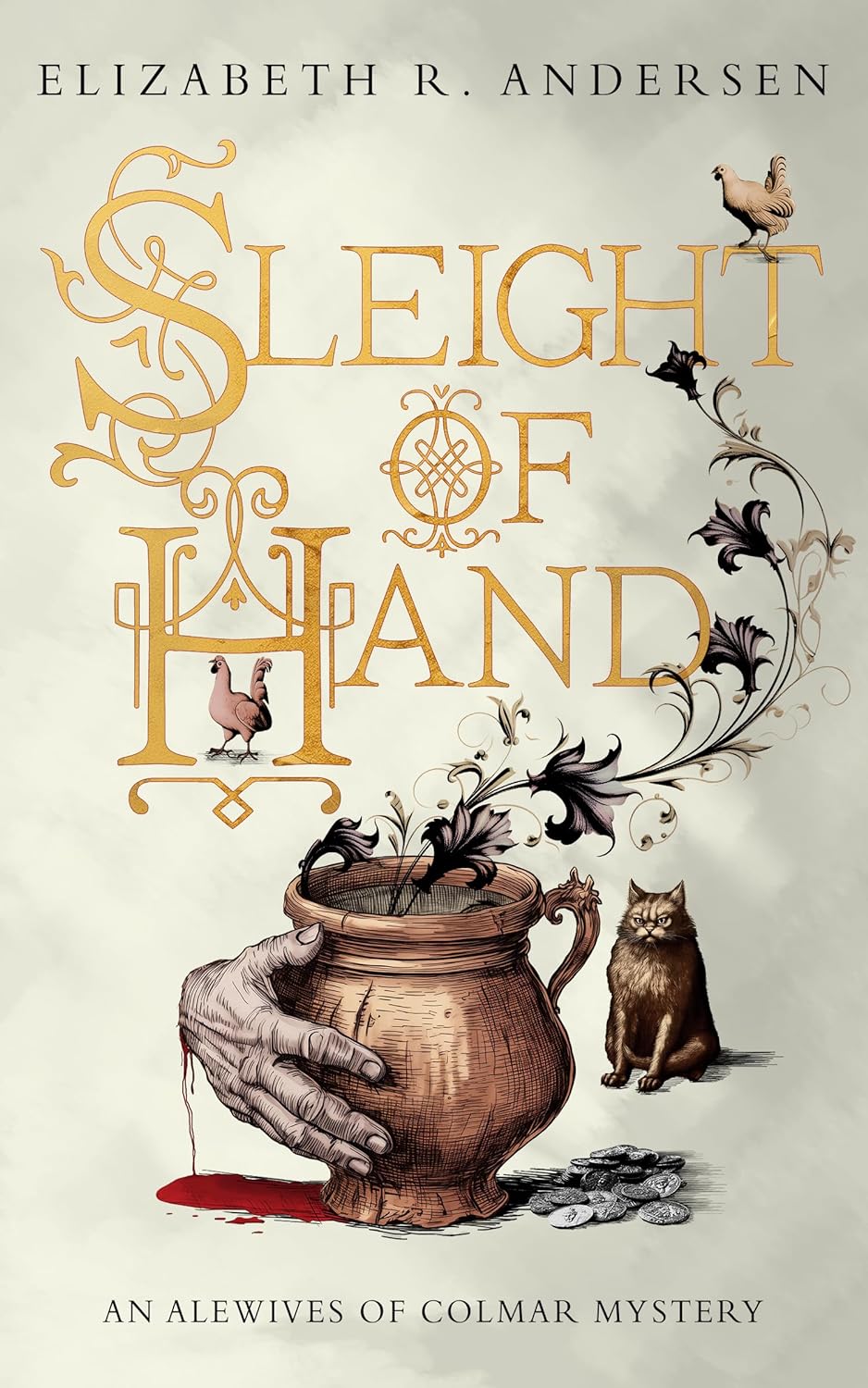
2024 will see the sequel to Mark Lawrence’s The Book That Wouldn’t Burn (image below – I know Mark wanted to do a ‘proper’ cover reveal, but it has snuck out, and as he seems okish with that, I have included it), as well as Elizabeth R Andersen’s The Alewives two, Sleight of Hand. I will also, at some point, run out of Discworld audiobooks. My plan then is to listen to the Deverry series by Katharine Kerr – I have read all the books but want to listen again – and also the PERN novels by Anne McCaffrey. I’m also looking forward to discovering new books through blogging, and keeping up with the historical and cosy mystery series I already read. And, finding time to read Caracalia by SJA Turney. (I’ve just looked it up and see he also has a new book out next year – Agricola:Invader – that will be going on my TBR as well.) I will set myself the same target of 52 books, and see how I get on with that. So, here’s to another great year of reading, and listening ahead.

The Alewives by Elizabeth R Andersen is reduced in the UK, Australia and Canada for a very limited time #mystery #historicalmystery #bookbargain #Highly Recommended

Hello readers. I had to share this because The Alewives is such a fantastic read. Do please snap it up. (Over night it’s been riding very high in the UK top 100 overall chart which is AMAZING). I’ve read the book and listened to the audio, and if you know me by now, that is very rare! So, yes, my love for this story is very genuine.

Here’s the blurb

Colmar, 1353 CE

Gritta, Appel, and Efi managed to survive the Black Death, only to find that they are in desperate need of money. With limited options and lots of obstacles, they band together to become alewives – brewing and selling ale in the free Alsatian town of Colmar. But when an elderly neighbor is discovered dead in her house, the alewives cannot convince the sheriff and the town council that her death wasn’t an accident, it was murder. As the body count piles up, the ale flows and mystery is afoot!

Set in the tumultuous years after the most devastating pandemic the world has ever experienced, The Alewives is a playful romp through a dark time, when society was reeling from loss and a grieving population attempted to return to normal, proving that with the bonds of love, friendship, and humor, the human spirit will always continue to shine.

Purchase Link

My Review

The Alewives is a fantastically well-written murder mystery set in the immediate aftermath of the Black Death, with delightful characters and a sinister murderer and thief, at the heart of all the problems. Set in the tannery area of Colmar, something smells bad.

The three main characters of Gritta, Appel, and Efi are all glorious creations – Grita with her useless husband and horde of children (she had 12, you see), Appel with her mysterious nighttime activities, and young Efi, who has the sense of a young kid goat at the beginning of the tale.

This story is immersive and filled with just enough tension and humour to make even a story about those who survived the Black Death an absolute delight to read. The humour is well constructed, the antics of the three women, acting a little outside the ‘law’ in a deeply patriarchal society that doesn’t allow women to brew their own ale for profit, artfully created, and even the Friar, Wikerus, is a sympathetic character, in the end. The three women are put upon. Society is against them, as is the sheriff (all the male characters are dismissive of the women, but they get on with it, doing all they can to circumnavigate the obstacles placed in their path), and the church, and just about everyone else, but they triumph.

The mystery itself is really well constructed, as are the red herrings. I didn’t know who the culprit(s) (no spoilers here) were until the big reveal.

A short, sharp, snappy, hugely entertaining, medieval mystery that portrays the realities of life at the time, with just the right amount of humour to make it thoroughly entertaining. A well-deserved 5/5 from me!

Meet the Author
Elizabeth R. Andersen’s debut novel, The Scribe, launched in July of 2021. Although she spent many years of her life as a journalist, independent fashion designer, and overworked tech employee, there have always been two consistent loves in her life: writing and history. She finally decided to do something about this and put them both together.

Elizabeth lives in the Seattle area with her long-suffering husband and young son. On the weekends she usually hikes in the stunning Cascade mountains to hide from people and dream up new plotlines and characters.

– Join Elizabeth’s monthly newsletter and receive the first two chapters of The Scribe for free. Sign up at https://www.elizabethrandersen.com

– Find photos of hikes and daily author life at Elizabeth’s Instagram: @elizabethrandersen 

– Follow Elizabeth on Twitter for nerdy medieval history facts: @E_R_A_writes 

– Watch Elizabeth try to explain the weird, wonderful world of Medieval life on her TikTok channel: https://www.tiktok.com/@elizabethrandersen

Elizabeth is a member of the Historical Novel Society and the Alliance of Independent Authors.

Find my previous blog posts here for The Scribe and here for The Two Daggers Series.

Today I’m delighted to be taking part in the blog tour for new historical mystery, Arsenic at Ascot by Kelly Oliver #blogtour #BoldwoodBooks

Here’s the blurb:

Saddle up for this first class historical mystery, perfect for fans of Helena Dixon and Verity Bright.

London, 1918

Fiona Figg finds herself back in Old Blighty saddled with shuffling papers for the war office. Then a mysterious card arrives, inviting her to a fancy house party at Mentmore Castle. This year’s Ascot-themed do will play host to a stable of animal defense advocates, and Fiona is tasked with infiltrating the activists and uncovering possible anti-war activity.

Disguised as the Lady Tabitha Kenworthy, Fiona is more than ready for the “mane” event, but the odds are against her when both her arch nemesis, dark-horse Fredrick Fredricks, and would-be fiancé Lieutenant Archie Somersby arrive unexpectedly and “stirrup” her plans. And when a horse doctor thuds to the floor in the next guest room, Fiona finds herself investigating a mysterious poisoning with some very hairy clues.

Can Fiona overcome the hurdles and solve both cases, or will she be pipped to the post and put out to pasture by the killer?

Purchase Link

https://mybook.to/arsenicascotsocial

My Review

This is the fourth book in the Fiona Figg and Kitty Lane Mystery Books I’ve read. I confess, what I really enjoyed about book 3, Mayhem in the Mountains, was Fiona’s lack of dressing up in costume and, therefore, no mention of her favourite fake moustache. So I was somewhat alarmed when, only a few chapters in, Fiona was once more masquerading in one of her many costumes. However, I needn’t have feared. Kitty has not forgotten about her costumes, and she certainly puts them to good use in Arsenic at Ascot, but much of the time, Fiona is either herself or Lady Tabitha. Not that I object to her masquerading, but I’d much rather hear about her favourite wig than her suitcase full of fake moustaches and beards.

Fiona has been grounded in Arsenic at Ascot. Somewhat depressed and out of sorts at finding herself once more a ‘mere’ file clerk, all is doom and gloom and complaints about washing up after the codebreakers when she’s summoned by none other than her boss and told to don one of her many costumes. What ensues is a, at times, somewhat uncomfortable look at the world of vivisectionists and antivivisectionists and the use animals were put to during the war. As Fiona has no clear idea about what she thinks about either side of the argument, the exploration into what we now think of as animal cruelty is somewhat distressing, although it’s never laboured. And readers will be quite astounded at some of the experiments, which, according to the end notes, are based on natural experiments of the time.

While all this is happening, Fiona is once more caught in the love triangle between Archie and Frederick Fredericks and has a hole to climb out of with Archie, thanks to Kitty Lane. It will not stop her from solving who killed the latest body she’s found at a country estate.

As with the Fiona Figg and Kitty Lane books, the mysteries and conspiracies are well thought out, and the conclusion is satisfying. I also enjoy knowing this is not the last of the series, as book 5 gets a great set-up in the final chapters.

If you enjoy historical mysteries with a dash of humour and a little frisson of romance, then the Fiona Figg and Kitty Lane books are sure to appeal to you, with their knowledge of the ‘of their time’ investigative techniques, all combined with the intrigue of our spies, Archie and Fredericks and dotted with either real historical characters or creations based on them—a delightful mystery.

Check out my review for books 1, 2 and 3 in the Fiona Figg and Kitty Lane Mystery books Chaos at Carnegie Hall, Covert in Cairo and Mayhem in the Mountains.

Meet the Author
Kelly Oliver is the award-winning, bestselling author of three mysteries series: The Jessica James Mysteries, The Pet Detective Mysteries, and the historical cozies The Fiona Figg Mysteries, set in WW1. She is also the Distinguished Professor of Philosophy at Vanderbilt University and lives in Nashville, Tennessee.

Connect with Kelly

Facebook: https://www.facebook.com/kellyoliverauthor  

Twitter: https://twitter.com/kellyoliverbook  

Bookbub profile: https://www.bookbub.com/authors/kelly-oliver

Newsletter Sign Up: https://bit.ly/KellyOlivernews

Today, I’m reviewing Spread: Tales of Deadly Flora, a collection of fabulous (and slightly disturbing) short stories) Highly recommended #blogtour

Here’s the blurb

Green thumbs beware. Plants are beautiful, peaceful, abundant, and life-sustaining. But what if something sinister took root in the soil, awakening to unleash slashing thorns, squeezing vines, or haunting greenery that lured you in? Perhaps blooms on distant planets could claim your heart, hitch a ride to Earth on a meteor, or simply poison you with their essence. Imagine a world where scientists produced our own demise in a lab, set spores free to infect, even bred ferns to be our friends only to witness the privilege perverted. When faced with botanical terror, will humanity fight to survive, or will they curl and wither like leaves in the fall? Read ten speculative tales ripe with dangerous flora to find out.

Purchase Link

https://www.amazon.com/dp/B0CKX9PGVY/

My Review

Spread is a collection of short stories all with a theme of deadly fauna. If this doesn’t sound like your sort of thing, then rest assured, it’s not really mine either, but these tales are all really good reads – I thoroughly enjoyed all of them even if some of them made me feel a bit itchy.

The tales are so well constructed, drawing you into a whole new world quickly, and packing a great deal of punch. Some of them are quite eerie. Some of them will have you shouting, ‘No, don’t do it,’ and others slowly reveal themselves and become creepy unexpectedly. They range from tales set on different planets to those set on an Earth slowly being consumed by deadly fauna, or being set upon by alien fauna, but not all of them can be quite so easily categorised. All of the tales are well worth reading.

In future, I will be eyeing up the plants around my house with a wary glance. Genuinely, it is an excellent collection of short stories, I’m so pleased I decided to read them.

Connect with the authors

Website: www.pageturnpress.com

Instagram & Twitter: @pageturnpress

Facebook: https://www.facebook.com/pageturnpress/

I’m reviewing What Happened at the Abbey, a gothic mystery by Isobel Blackthorn #blogtour #histfic #recommended

Here’s the blurb

When Ingrid flees a violent husband to become a housekeeper in the Scottish Highlands, she discovers the family she works for has a much darker history than her own.

Who haunts Strathbairn? Why are the adult McCleod children at each other’s throats? And why does the youngest sneak off at night? As Ingrid searches for answers, she grows ever more fearful that her husband will track her down.

Set in late 19th century Scottish Highlands, WHAT HAPPENED AT THE ABBEY is a gothic mystery brimming with intrigue, ghostly drama, and family secrets.

Purchase Links 

https://www.amazon.com/What-Happened-Abbey-Strathbairn-Trilogy-ebook/dp/B0CJBNCV8L/

https://www.amazon.co.uk/What-Happened-Abbey-Strathbairn-Trilogy-ebook/dp/B0CJBNCV8L/

https://www.barnesandnoble.com/w/what-happened-at-the-abbey-isobel-blackthorn/1144091893?

My Review

What Happened at the Abbey is an engaging and satisfying read. It has all the elements we would expect from a creepy gothic novel, a desolate location, a family under duress, a woman hiding from her past, unhappy servants, and must that is left unsaid.

It really grips the reader and drags them into the storyline. The sense of unease grows throughout the book, with our poor heroine, Ingrid, cast in an unlucky role, and one where the reader really feels empathy for her. The reader suspects much of what’s going on, although they can never be truly sure, which means we trust no one, unlike Ingrid, who needs someone to talk to about her own traumas.

I sped through this book in just over a day. As it builds towards the ending, it does become more and more complicated, perhaps too complicated, but all the same, I really enjoyed the resolution, and also the ending of the novel. There is a lot going on in this haunting gothic novel. Recommended if you enjoy this novel, or just fancy a bit of a scare.

Meet the author

Isobel Blackthorn is a prolific novelist of unique and engaging fiction. She writes across a range of genres, including gripping mysteries and dark psychological thrillers.

The Unlikely Occultist: A biographical novel of Alice A. Bailey received an Honorable Mention in the 2021 Reader’s Favorite book awards. A Prison in the Sun was shortlisted in the LGBTQ category of the 2021 International Book Awards and the 2020 Readers’ Favorite Book Awards. Her short story ‘Nothing to Declare’ was shortlisted for the Ada Cambridge Prose Prize 2019. Her dark thriller A Legacy of Old Gran Parks won a Raven Award in 2019. The Cabin Sessions was nominated for the Bram Stoker Award 2018 and the Ditmar Awards 2018.

Isobel holds a PhD in Western Esotericism from the University of Western Sydney for her ground-breaking study of the texts of Theosophist Alice A. Bailey. Her engagement with Alice Bailey’s life and works has culminated in the biographical novel The Unlikely Occultist and the full biography Alice A. Bailey: Life and Legacy.

Isobel carries a lifelong passion for the Canary Islands, Spain, her former home. Six of her novels are set on the islands of Lanzarote and Fuerteventura. These standalone mystery novels are setting rich and fall into the broad genre of travel fiction.

Isobel has led a rich and interesting life and her stories are as diverse as her experiences, the highs and lows, and the dramas. A life-long campaigner for social justice, Isobel has written, protested and leant her weight to a range of issues including asylum seekers and family violence. A Londoner originally, Isobel currently lives in the Canary Islands, Spain.

Connect with the author

https://isobelblackthorn.com/

https://www.facebook.com/Author.Isobel.Blackthorn/

https://www.goodreads.com/author/show/5768657.Isobel_Blackthorn

https://twitter.com/IBlackthorn

https://www.instagram.com/isobelblackthorn/

I’m delighted to welcome Karmen Špiljak and her new short story collection, Pass the Cyanide, to the blog #blogtour #culinarynoir

Here’s the blurb

A deadly feast, a mobster restaurant and a family get-together with fatal results.

Savour the spicy tang of dark and twisted tales in Pass the Cyanide, a follow-up to the award-winning collection of culinary mysteries, Add Cyanide to Taste.

From an old friend hiding a deadly secret to a ravenous house with an appetite for friends, Špiljak masterfully blends the allure of food and the thrill of mystery. Each story is a rich and satisfying serving of crime, with a twist that will leave you wanting more.

A must-read for fans of culinary noir and foodies who love a pinch of danger with their suspense. All recipes included are cyanide-free. 

Purchase Link

https://books2read.com/PassTheCyanide

My Review

Pass the Cyanide is a fabulous collection of short stories with a foodie twist. Some of them are very weird, some of them not so weird, all of them are enjoyable reads (even if murder is often on the mind). All of them involve food in one way or another. I particularly enjoyed Seventeen Minutes, the tale of a wife who is a little bit fed up with her husband, and The Secret Sauce, which grapples with that familiar problem of just what some chefs are desperate to keep hidden from their audience, while Sweet Darkness, with its PTA meeting vibes made me chuckle, as ‘revenge goes wrong.’

A really enjoyable collection of short stories sure to delight fans of mysteries.

Meet the author

Karmen Špiljak is a Slovenian-Belgian writer of suspense, horror and speculative fiction.Her short fiction has been awarded and anthologised. Her short story collection, Add Cyanide to Taste, won the 2022 IndieReader Discovery award for best short stories/Fiction. She lives in Belgrade with her husband, two mischievous cats and an undefined number of literary characters.
Find out more on http://www.karmenspiljak.com


Connect with the author

Instagram: https://instagram.com/karmenseeta

TikTok: tiktok.com/@karmenseeta

Goodreads: https://goodreads.com/karmens

I’m delighted to share my review for To Kill A Consul by Robert M Kidd #blogtour #histfic #Roman #Hannibal

Here’s the blurb:

217 BC. The Gauls are restless. Where is the wealth, plunder and lands they were promised? Hannibal’s army has become little more than a burden to be fed and quartered … as welcome as a plague of locusts. Assassination plots abound as Hannibal is driven to take desperate measures to evade the assassin’s knife.

If Hannibal is to appease the Gauls he must act fast. The invasion of Italia must not be delayed – his very life depends on it – but as that winter of winters fades into memory he is faced with a stark choice. Should he strike east towards the plains of Umbria and face consul Gnaeus Servilius Geminus’ legions holed up inside the unassailable walls of Ariminum? Or strike westwards into the plunder-rich lands of Etruria?

Consul Gaius Flaminius’ legions guard the western approaches. If any man can fire the bellies of Gauls with loathing it’s Flaminius. But there is one other whose blood runs cold at the mention of the name. Flaminius ordered the brutal murder of Sphax’s parents and Sphax has sworn a sacred oath to seek revenge. Can Hannibal trust the leader of his Numidian cavalry, or will this blood feud cloud his judgement? Sooner or later Sphax will have to face his inner demons.  

Purchase Links

UK US

My Review

This is my second adventure with Robert M Kidd and Sphax. As with book 3, this outing is action-packed, from wading through boggy ground to fighting Roman legionaries. The narrative takes us through Etruria alongside Sphax and his loyal warriors, and there is a great deal of death as Hannibal takes a huge risk with his army, one that Sphax is not at all happy with. Forced to encourage from the rear, there is very little that Sphax does not see. His ingenuity saves his life and those of his warriors.

But this book isn’t just about this crazy march through swamp lands. No, this is the story of the lead-up to a mighty battle between the Romans and those under Hannibal’s command, which sees Sphax not only riding through much of Etruria but also forced on board a ship as well. And all the time, burbling away in the background, are the events that have brought him to this moment in time where he’s desperate to avenge the deaths of his parents.

I really like Sphax. I enjoy the fact that he’s an intelligent character, but not one who knows everything. He’s often distant from the main fighting force, although he’s trusted by his uncle to undertake difficult tasks. The depiction of Hannibal, enigmatic and stubborn, but also wise and clever means that Sphax can never know everything his uncle is thinking. Perhaps it’s better that he doesn’t.

The final battle scene is well evoked. It’s a blood bath, but the reader doesn’t see all of it as it takes place beside a mist-shrouded lake.

Not knowing this period at all well, I couldn’t be sure of what the ending would bring, other than in a very vague way. Will Sphax triumph? Will he gain his vengeance? Will he live to fight another battle? The map was a great help.

A thrilling read, and trek, through a time and a place that I don’t know at all well, but which I found really well depicted and thoroughly enjoyable. (On a side note, thank you for explaining what ‘running with the wind’ means on board the ship).

Check out my review for Book 3 in the series here.

Meet the author

I’ve always read widely and been fascinated by ancient cultures – especially those of Greece, Phoenicia and Carthage. But my reason for writing the first novel in The Histories of Sphax series may sound strange to readers: I really wanted to set the record straight, to write about Hannibal’s war with Rome from Carthage’s perspective.

When Cato the Censor demanded that ‘Carthage must be destroyed,’ Rome did just that. In 146 BC, after a three year siege, Carthage was raised to the ground, its surviving citizens sold into slavery and the fields where this once magnificent city had stood, ploughed by oxen. Carthage was erased from history.

That’s why I’m a novelist on a mission! I want to set the historical record straight. Our entire history of Hannibal’s wars with Rome is nothing short of propaganda, written by Greeks and Romans for their Roman clients. It intrigues me that Hannibal took two Greek scholars and historians with him on campaign, yet their histories of Rome’s deadliest war have never seen the light of day. 

My hero, Sphax the Numidian, tells a different story!

When I’m not waging war with my pen, I like to indulge my passion for travel and hill walking, and like my hero, I too love horses. I live in Pembrokeshire, West Wales.

https://robertmkidd.com/

https://twitter.com/RobertMKidd1

https://www.facebook.com/profile.php?id=100064169594911

Giveaway to Win the next book in The Histories of Sphax series to be dedicated to you (Open INT)

The next book in The Histories of Sphax series will be dedicated to the winner, and will be acknowledged on the inside page book title. 

*Terms and Conditions –Worldwide entries welcome.  Please enter using the Rafflecopter box below.  The winner will be selected at random via Rafflecopter from all valid entries and will be notified by Twitter and/or email. If no response is received within 7 days then Rachel’s Random Resources reserves the right to select an alternative winner. Open to all entrants aged 18 or over.  Any personal data given as part of the competition entry is used for this purpose only and will not be shared with third parties, with the exception of the winners’ information. This will passed to the giveaway organiser and used only for fulfilment of the prize, after which time Rachel’s Random Resources will delete the data.  I am not responsible for despatch or delivery of the prize.

http://www.rafflecopter.com/rafl/display/33c69494576/?

I’m excited to welcome Penny Ingham and her novel, Twelve Nights, to the blog #HistoricalMystery #MurderMystery #BlogTour #TheCoffeePotBookClub

I’m excited to welcome Penny Ingham and her novel, Twelve Nights, to the blog. I adored this book. Check out the excerpt below, and you can find my review at the bottom of the post.

Excerpt

Magdalen was beginning to wish she had crept back to Silver Street. Her world had turned upside down and she had no idea how to set it right again. She put her head in her hands, and her obvious distress cast an even greater pall over the gathering. At length, William Kempe’s bulbous eyes slid to the landlord.

‘Perhaps Francis murdered John? He’s best placed to slip something in his beer.’ 

They all turned to look at Francis Johnson. He was dunking dirty cups into a bucket of equally dirty water before slamming them back onto the board. 

‘It’s possible,’ Burbage replied. ‘But I’ve never taken Johnson for a murderer. And what motive could he have?’

‘None that I can think of,’ Kempe admitted.

Magdalen remembered Richard Cowley’s rapier piercing John’s doublet. Could it have nicked John’s skin? If the tip was poisoned, could it have been enough to kill him? She looked up, into Richard’s eyes. 

‘Poison is a woman’s weapon,’ he repeated, seeming to have read her mind. ‘A coward’s game. There’s no honour in it.’

‘When is there ever honour in murder?’ she shot back but Richard had already turned away, gesturing to a serving girl for more Mad Dog.

The shadows lengthened. The landlord lit the fire, the serving girls laid out soggy saffron cakes, and the players’ spirits began to lift, warmed by the crackling fire, and by wine and cakes and ale. And with every cup of Rhenish she drank, Magdalen’s spirits lifted a little too. The tavern was starting to fill up. Word spread fast through Shoreditch, and now all the poets and playwrights who had ever felt envious of Burbage’s lauded band of brothers were crawling out of the woodwork to gloat over their misfortune.

Christopher Marlowe arrived, and the tavern lit up as if the stars had fallen through the thatch. He greeted them all in turn, embracing some, kissing others on the lips. But he offered no kiss to Will. Instead, they simply shook hands like two fencers before a bout. It seemed fitting, for they were presently engaged in an increasingly spectacular play-writing dual, lobbing masterpieces at each other across the Thames. When Marlowe attacked with the gore-fest Tamburlaine, Will struck back with blood-soaked Titus Andronicus. Marlowe lunged with his study of a weak king, Edward the Second, so Will parried with Richard the Second. All of London was waiting to see how Will would respond to Marlowe’s The Jew of Malta.

‘William.’ Marlowe released Will’s hand, and moved on.

‘Christopher,’ Will replied and turned back to his beer.

Magdalen found their relationship hard to fathom, but hidden beneath the jealousy and rivalry, she often suspected a lurking mutual respect. 

Stepping over Robert Greene, who had fallen asleep on the floor, Marlowe sat down beside her. ‘How now, Magdalen?’

She nodded absently. She had drunk a great deal of Rhenish, but she would never admit her inebriation, not even to Marlowe because it was not seemly. But he must have noticed her glazed expression because that familiar, half-smile was playing on his lips, as if he was enjoying his own private joke at the world’s expense. Although he was fast approaching thirty years of age, there was still a boyish charm to his features; the soft doe-eyes, the beard-less cheeks, the wisps of a moustache above full, generous lips.

‘I think you’ve had enough of this.’ He picked up her cup of Rhenish, and proceeded to drain it.

‘Hey!’ she exclaimed but it was a half-hearted protest, for her head was pounding like cannon fire.

‘You will have heard about the constable?’ she said quietly. 

‘Edmund Stow is highly fed and lowly taught. Pay no heed to him,’ Marlowe replied airily.

‘But what if the Puritans bribe the coroner to convict me? We all know they are looking for an excuse to close us down.’ 

He shook his head. ‘I won’t let that happen.’ 

She wished she could believe him, but Marlowe was the most unreliable man on earth. He had recently fought in a brawl which had resulted in an inn-keeper’s death. Although it was his friend, Thomas Watson, who had struck the fatal blow, they were both hauled off to Newgate prison to await trial. Marlowe had been released a month later, miraculously without charge. Perhaps he really did believe he was invincible now. In the history books in Will’s room the ancient Greeks had called it hubris, and no good had ever come of it.

‘You look like Christmas, Magdalen.’ 

‘Christmas?’ she repeated, bemused. 

‘Yes, your green kirtle, your red jacket.’ Marlowe broke into song, ‘the holly and the ivy, when they are both full grown.’ He had a beautiful baritone voice.

‘And you look -’ she eyed his tawny-orange doublet slashed to reveal yellow satin beneath; the wafer-soft, wide collar falling across his shoulders; the row of shiny buttons marching down his chest and belly. He had come into money recently, of that there was no doubt. ‘You look like a pageant, as always, Marlowe.’

‘Tawny is the colour of mourning, is it not?’ he asked with feigned innocence. 

Magdalen laughed, but it made her head hurt.

‘You remind me of my sister,’ he said, suddenly serious.

‘I didn’t know you had a sister,’ she said, taken aback.

‘Her laugh sounded just like yours. There was something so joyous about it.’ 

Magdalen noticed he was using the past tense. ‘Is she -’ she began cautiously, but Marlowe spoke over her.

‘She was married at twelve years old, and she died in childbirth at the age of thirteen.’ 

Magdalen’s heart lurched with pity. ‘Oh! I am so sorry…’ 

He was staring into the distance now, his eyes full of bitterness and remembered grief. Marlowe was a man of bluster and bravado; his every word designed to shock or offend. She had known him for ten years and in all that time, she had never seen his defences down. But now, the window to his soul was open wide and the view was so unexpected and so intimate, she felt obliged to hastily avert her eyes.

When Marlowe spoke again, he no longer sounded sad but angry. ‘Answer me this. How can you have faith in God when he allowed my sister to die in agony?’

Here’s the blurb

1592. The Theatre, London.

When a player is murdered, suspicion falls on the wardrobe mistress, Magdalen Bisset, because everyone knows poison is a woman’s weapon. The coroner is convinced of her guilt. The scandal-pamphlets demonize her.

Magdalen is innocent, although few are willing to help her prove it. Only handsome Matthew Hilliard offers his assistance, but dare she trust him when nothing about him rings true?

With just two weeks until the inquest, Magdalen ignores anonymous threats to ‘leave it be’, and delves into the dangerous underworld of a city seething with religious and racial tension. As time runs out, she must risk everything in her search for the true killer – for all other roads lead to the gallows.

Buy Links:

This title is available to read on #KindleUnlimited.

Universal Link: https://books2read.com/u/bpYRlk

Meet the author

Penny has a degree in Classics, and a passion for archaeology – during the summer months, you will often find her on her a ‘dig’ with a trowel in her hand. She has had a variety of jobs over the years, including ice-cream seller, theatre PR, BBC local radio, and TV critic for a British Forces newspaper. 

She has written four novels – ‘The King’s Daughter’ is the story of Aethelflaed, Lady of the Mercians. ‘The Saxon Wolves’ and ‘The Saxon Plague’ are set in the turbulent aftermath of Roman Britain. Her inspiration for Twelve Nights grew from her love of the theatre in general, and Shakespeare in particular. 

Penny has two grown up children and lives with her husband in Hampshire.

Connect with the author

Penny Ingham (wordpress.com)

Penny Ingham (@pennyingham) / Twitter

Penny Ingham Author Page | Facebook

Penny Ingham (@penny.ingham) • Instagram photos and videos

Amazon.co.uk: Penny Ingham: Books, Biography, Blogs, Audiobooks, Kindle

Penny Ingham (Author of The Saxon Wolves) | Goodreads

Follow the Twelve Nights Blog Tour with The Coffee Pot Book Club

I read Twelve Nights last year and it was one of my Books of 2022, check out the review here.

Today, I’m delighted to be reviewing Warrior Prince by JC Duncan #blogtour #historicalfiction

Here’s the blurb

Prince. Mercenary. Exile. The lost throne of Norway must be won in foreign lands. 

1030 AD

Some men are gifted a crown. Others have to fight to claim it.

Exiled from Norway, Harald Sigurdsson, brother to murdered King Olaf, must battle mercilessly for survival in the lands of the Kievan Rus.

His brother’s legacy gifts him a warband of hardened warriors and entry to the court of Prince Yaroslav the Wise. By his wits, sword and skill in battle, Harald must learn not just to survive but to triumph.

He fights for glory, for fame, and to regain his family’s battle-stolen throne. But his greatest challenge may not come from battlefield foes but from those who stand by his side.

The first instalment in a remarkable story of an exiled boy’s incredible journey to become Harald Hardrada; The Hard Ruler and The Last Viking.

Purchase Link

https://mybook.to/warriorprincesocial

My Review

Harald Sigurdsson, who we know more often as Harald Hardrada, is a historical individual who is ‘on my radar’ as it were for my The Earls of Mercia series. So far, he’s only had the odd mention because I’m still 20 years from the events of 1066 at Stamford Bridge, but never fear, for JC Duncan is telling Harald’s story from the events that see his half-brother, Olaf, later St Olaf, cut down at the Battle of Stiklestad in 1030. 

Adopting a narrator style for the book, we see Harald trying to regroup after his brother’s defeat and murder. He seeks somewhere for him and what remains of his brother’s warriors to retreat to, and the tale is told through the eyes of the fictional Eric, who has seen it all and now, as an old man, wants to share his stories of Harald with an appreciative audience back in Norway. 

This is very much a story of Harald’s time in the lands of the Rus and the overwhelming odds he often faces in battle as he rises through the ranks to serve Prince Yaraslov. We also see him struggling with the clash of cultures – the more sophisticated and complex ideals of the Rus flummoxing a man more used to seeing warriors have a bloody good fight.

Harald quickly earns himself an enemy, one who bedevils him at various points throughout the story and who I’m sure will continue to do so as the young man tries to discover who he is while learning to command his warriors.

This is an epic tale, with elements burbling away in the background that will continue to develop in later books. Using a narrator enables the tale to skip over some of the more mundane aspects of Harald’s story, ensuring the reader is constantly faced with some new dilemma for Harald to surmount or fail. However, failure is never really an option. After all, he is a Hard-ruler, and many of his decisions may stun the reader as the body count increases.

JC Duncan’s Harald is indeed a hard man, unhappy making mistakes or being embarrassed, determined to build his reputation, even while bidding his time, determined that one day he’ll claim back his brother’s lost kingdom of Norway. He is perhaps too naïve and a little too sure of himself on occasion, and these very real character traits lend themselves to an engaging retelling. However, this isn’t a quick read. There’s much to absorb as you, alongside the character, embark on a very real journey to the land of the Rus and encounter their enemies and allies, the knowledge that our narrator still lives, the only hope for Harald’s success.

An engrossing tale of Harald Hardrada’s early years, brimming with historical detail and brave daring do. This is the story of a man who will become a legend, told lovingly through the eyes of one of his loyal followers and sure to delight readers.

Meet the author

J. C. Duncan is a well-reviewed historical fiction author and amateur bladesmith, with a passion for Vikings.

Connect with JC Duncan

Facebook: https://www.facebook.com/JCDuncanAuthor

Twitter: https://twitter.com/JCDuncanauthor

Instagram: https://www.instagram.com/j.c.duncan/?hl=enn   

Bookbub profile: https://www.bookbub.com/authors/j-c-duncan

I’m excited to share my review for Death on Board by Anita Davison, the first book in a new cosy historical mystery series #newrelease

Here’s the blurb

NEW YORK,1900: A captivating cozy crime novel set on-board the maiden voyage of the S.S. Minneapolis, featuring series character Flora Maguire. Perfect for fans of Downton Abbey.

Young governess Flora Maguire is on her way home from America on the maiden voyage of the S.S. Minneapolis with her young charge Eddy, Viscount Trent, when she discovers a dead body.

Unconvinced when the death is pronounced an accident, Flora starts asking questions, but following threats, a near drowning and a second murder, the hunt is on for a killer. Time is running out as the Minneapolis approaches the English coast.

Will Flora be able to protect Eddy, as well as herself?

Is her burgeoning relationship with the handsome Bunny Harrington only a shipboard dalliance, or something more? And what secrets must Flora keep in order to stay safe?

Purchase Link

https://amzn.to/3PMHqui

My Review

Death on Board is a historical mystery set onboard a transatlantic crossing in the year 1900.

Our main character, Flora, is a governess escorting her young charge home to begin school. Unsure of herself, as her employer has purchased her a First Class ticket, Flora avoids meeting many of them until the unexpected death of a member of her table, whose body she’s unfortunate to discover early one morning.

What ensues is a twisted tale of secrets and half-truths as Flora finds herself drawn into the reason behind the man’s death, proclaimed as an accident, but which Flora sees in a very different light. She mingles with all those on board, from the snooty upper-class dam and her companion to the actress seeking a new life in England, as well as the handsome Bunny, and his motorcar, Matilda, as she attempts to get to the bottom of the mystery surrounding the murder.

Death on Board is stuffed with period details, and the mystery itself is well-constructed, with a very satisfying resolution. Fiona is a fantastic creation, as is Bunny, and while I’m not unconvinced they wouldn’t have sunk the ship with the quantity of tea consumed, I thoroughly enjoyed it, and look forward to reading more of the series.