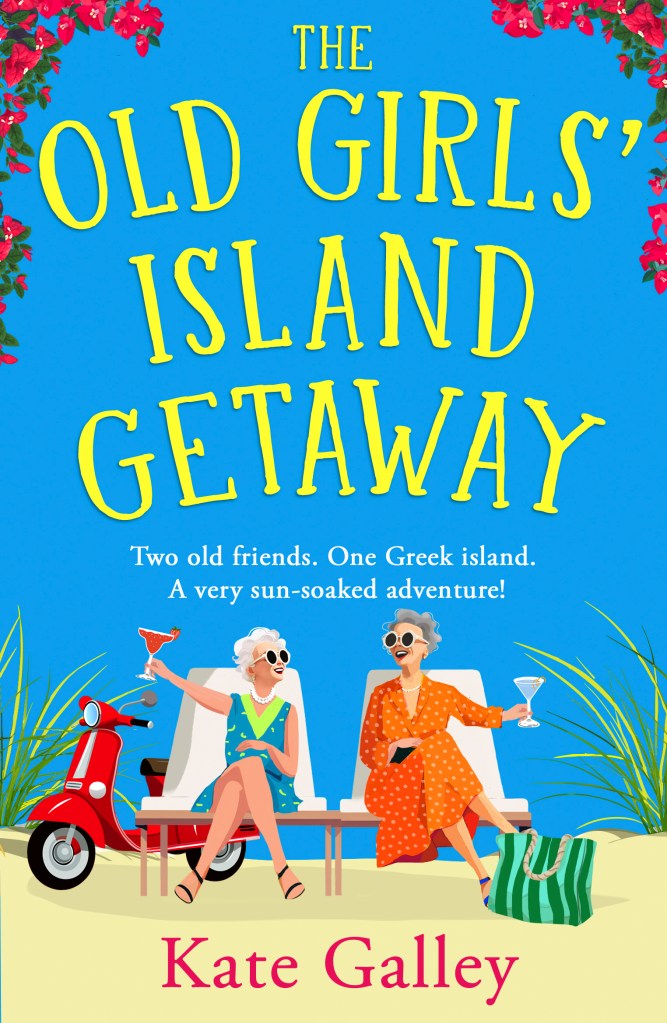
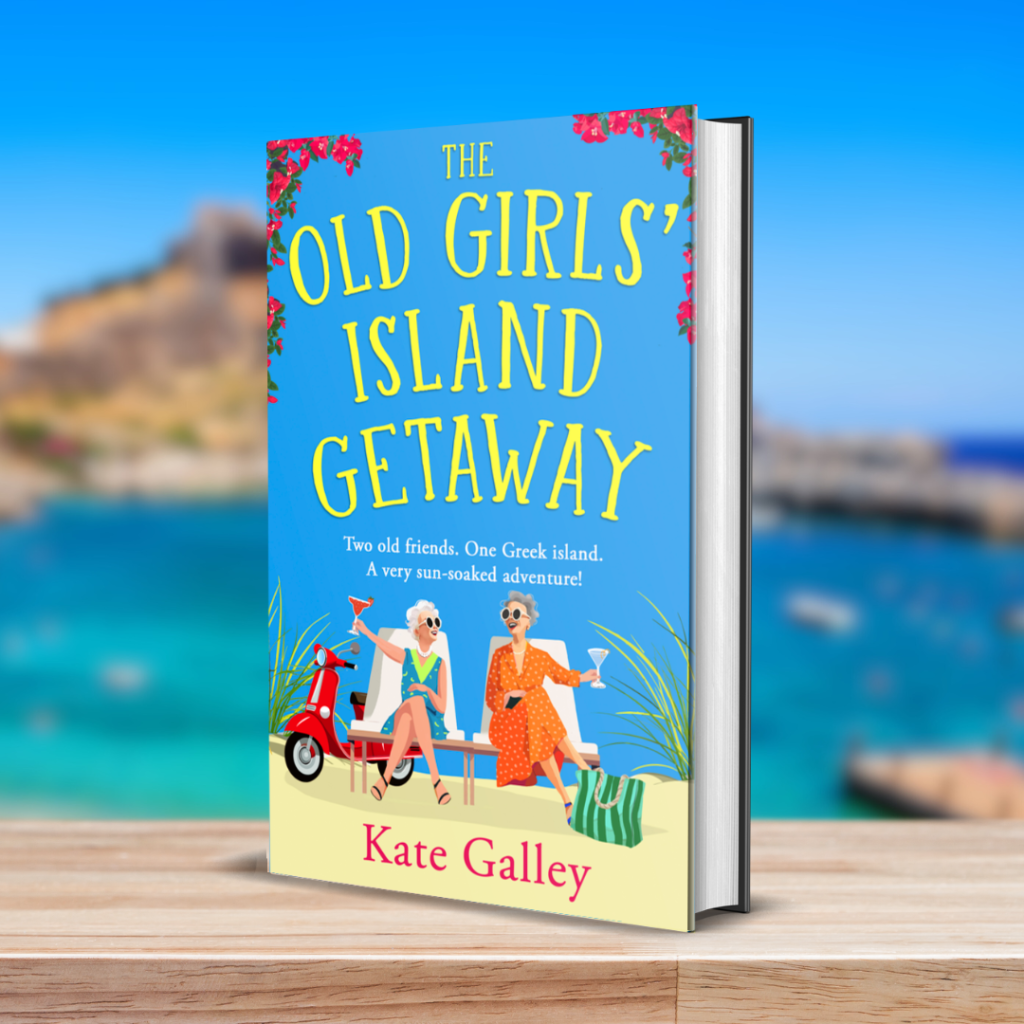
I’m delighted to be sharing my review for The Old Girls’ Island Getaway by Kate Galley #blogtour #newrelease #comedy
I’m delighted to be sharing my review for The Old Girls’ Island Getaway by Kate Galley
Here’s the blurb
Two old friends. One sun-soaked adventure.
Dorothy and Gina may be separated by twenty years, but their friendship is timeless. At seventy-one and nearly ninety, life’s too short not to have a little fun – especially in Corfu.
When Dorothy is invited to visit an old friend at his villa, she insists Gina comes along. They’re looking forward to sunshine, sea breezes, and perhaps a dash of ouzo. But their plans are upended by an unexpected guest: glamorous actress Florence Quinn, who’s taken up residence in the pool house.
Florence may sparkle on the surface, but she’s hiding something – and someone – from her past. Determined to help, Dorothy and Gina embark on a quest across the island, only to find that Corfu holds more secrets, scandals, and surprises than they ever imagined.
A warm, witty, and adventurous tale of friendship, mischief, and unexpected discoveries.
We’re back with the joyful ‘Old Girls,’ Gina and Dorothy as they jet off for yet another holiday, in the company of Dorothy’s granddaughter. This time, there’s a film star in their midst, threatening to disturb what Dorothy had hoped would be a reunion with a friend at the end of his life. But there are two minor mysteries for our ‘Old Girls’ and Dorothy’s granddaughter to solve – did Rupert play a part in stealing the priceless diamond decades ago – and why is Florence so determined on finding her holiday romance from thirty years ago?
These two mysteries provide the intrigue for the story as Gina is prevailed upon to drive a car around the twisty roads of Corfu and even hops onto a scooter, all in order to aid Florence. Juliet, Dorothy’s granddaughter, provides a welcome boost of humour with her cutting, if mostly true, comments.
As with the previous two books in the series, The Old Girls’ Island Getaway is a charming read, with some funny moments thrown in to remind us all that life doesn’t stop just because the birthdays start to rack up.
Kate Galley is the author of uplifting golden years fiction, including The Second Chance Holiday Club. She lives with her family in Buckinghamshire and works part time as a mobile hairdresser
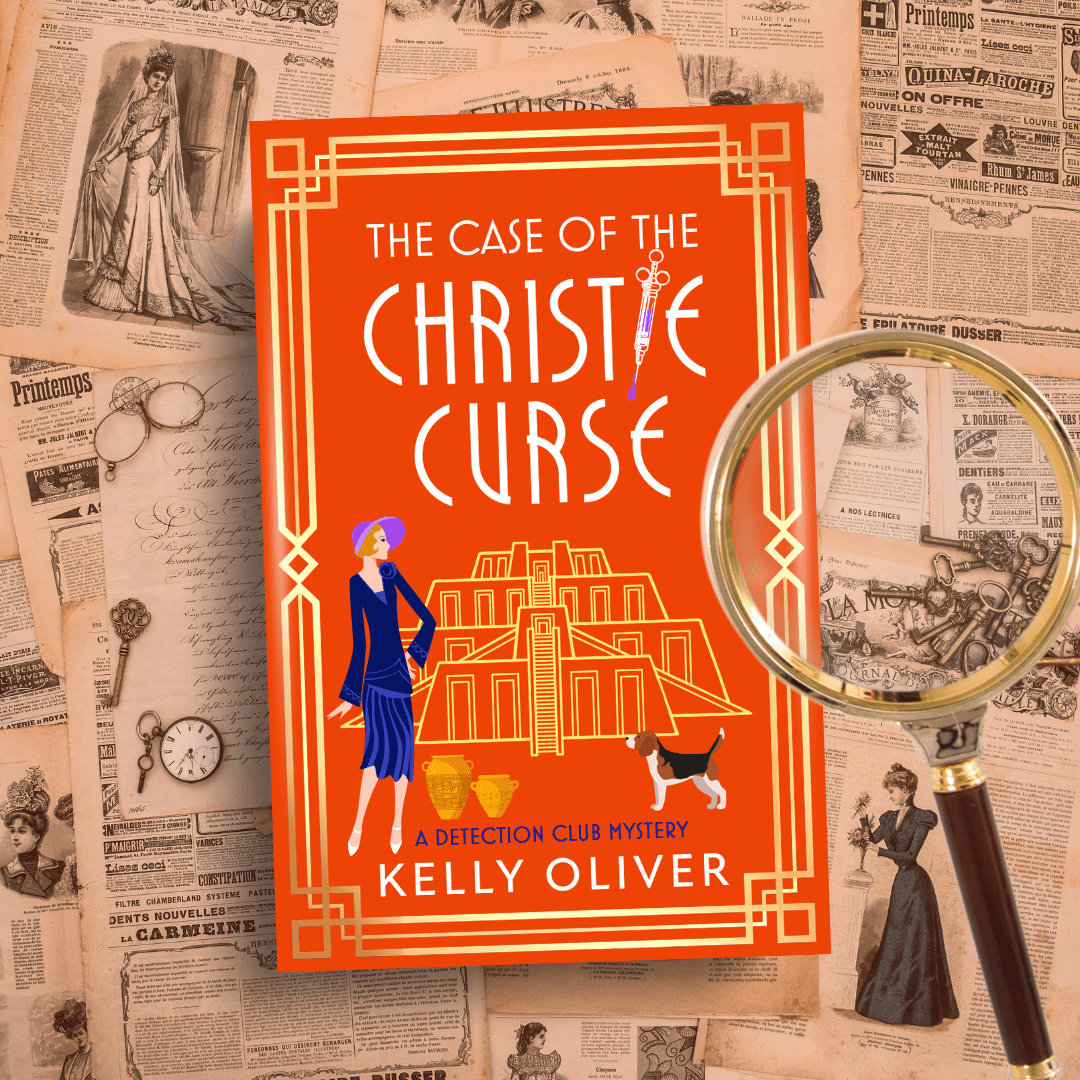
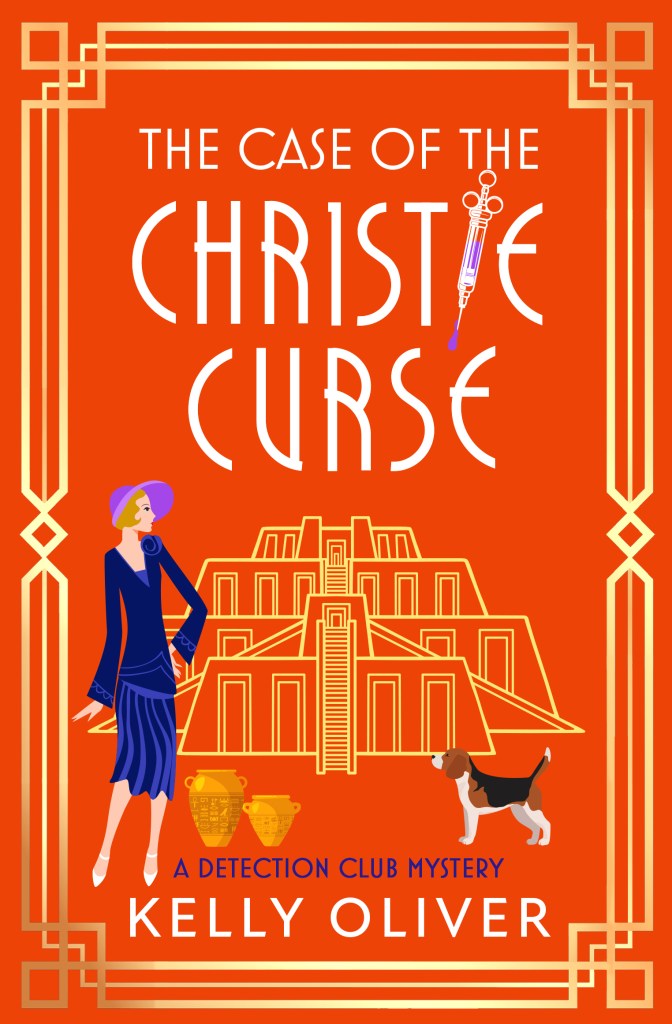
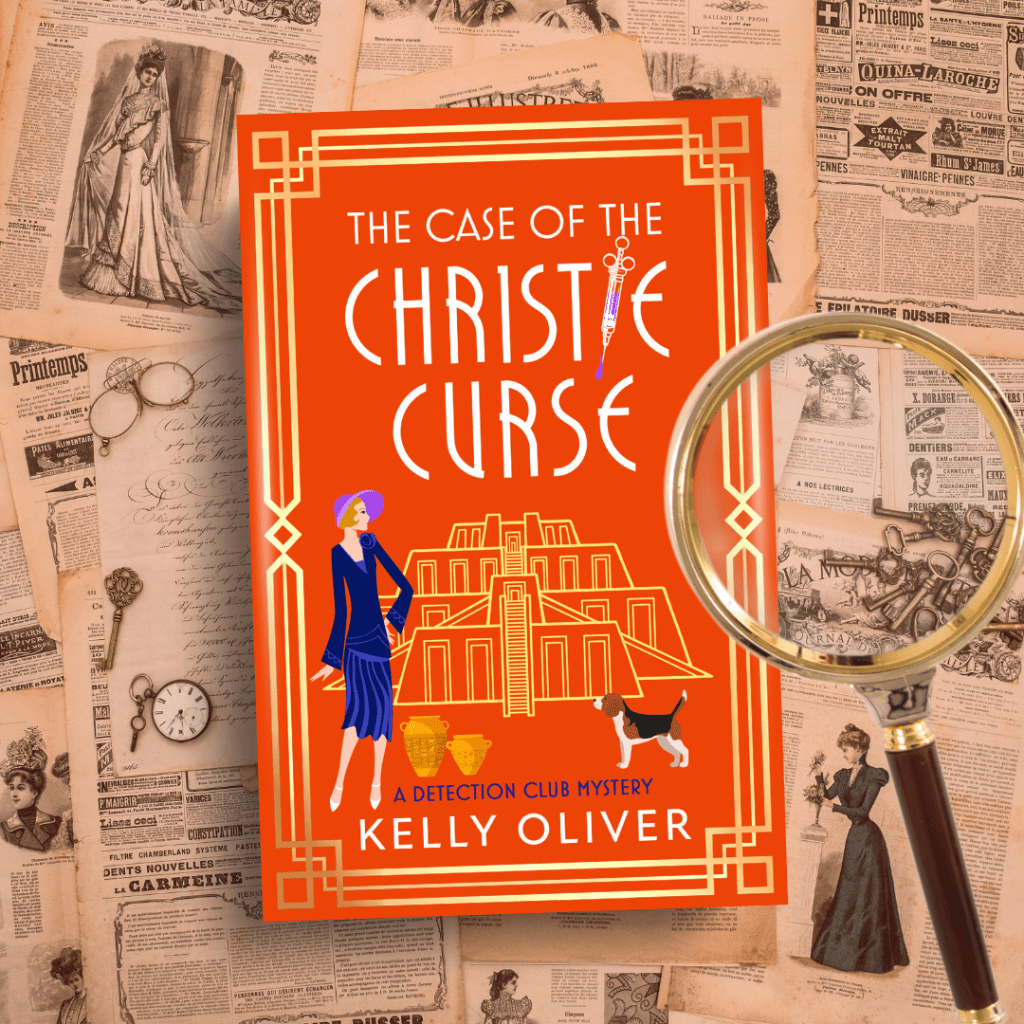
Today I’m reviewing Kelly Oliver’s fabulous new Golden-Age crime mystery, The Case of the Christie Curse #newrelease #cosycrime #blogtour #boldwoodbloggers @BoldwoodBooks #TheCaseofTheChristieCurse @KellyOliverBook @rararesources @theboldbookclub
Today I’m reviewing Kelly Oliver’s fabulous new Golden-Age crime mystery, The Case of the Christie Curse #newrelease #cosycrime #blogtour
Here’s the blurb
The BRAND NEW page-turning, historical cozy mystery series from Kelly Oliver 🏝️🏺☠️
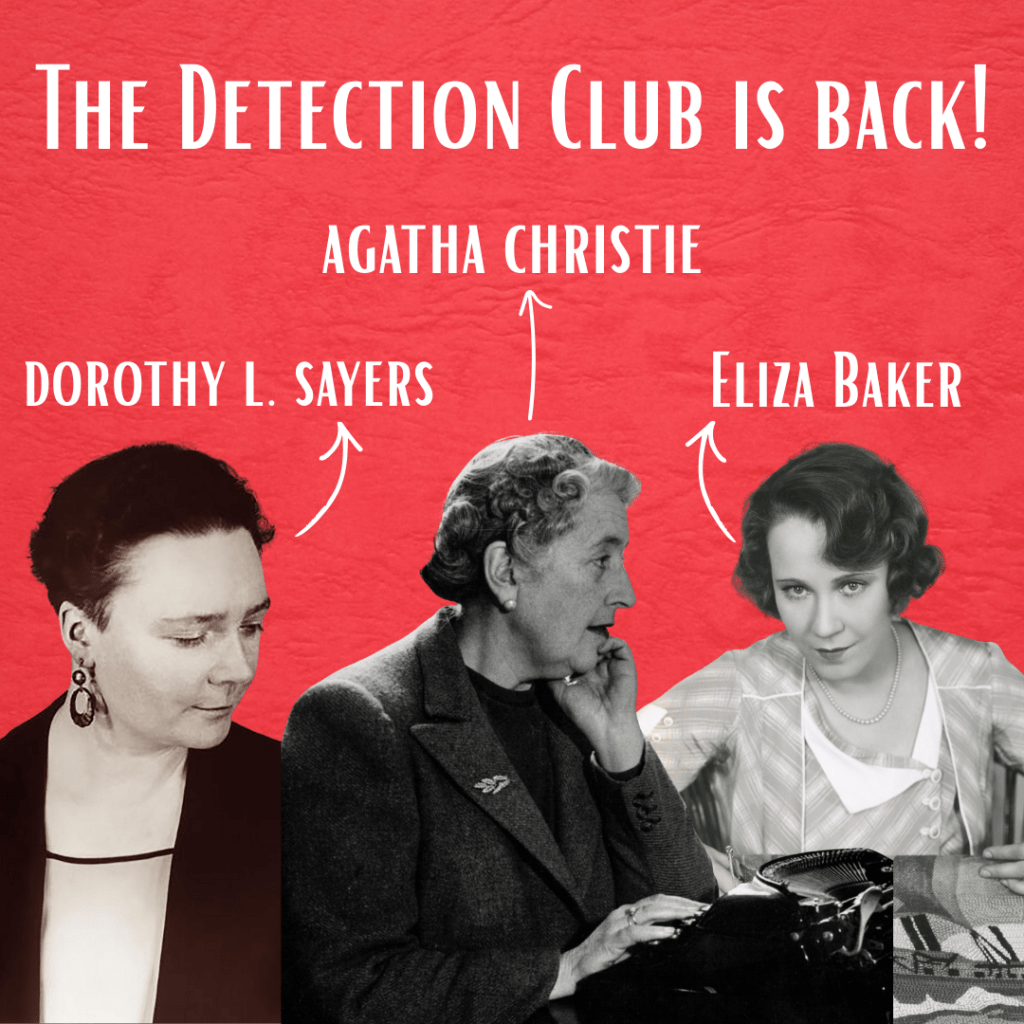
Mesopotamia, 1930: When Agatha Christie invites fellow members of the Detection Club to witness the famous excavations at the ruins of Ur, Dorothy L. Sayers, her quick-witted assistant Eliza Baker, and Theo Sharp expect ancient wonders – not fresh corpses.
But when an archaeologist is found dead in the sand, whispers of a deadly curse sweep through the camp. Eliza suspects something far more dangerous than superstition. Amid glittering artifacts and fragile alliances, every guest harbors the Woolleys, whose marriage is shadowed by tragedy; a journalist hungry for scandal; even academic Max Mallowan, whose loyalties are not what they seem.
As theft, forgery, and coded messages surface, the line between archaeology and espionage blurs. And when Eliza and Theo find themselves in danger, they must face not only the truth about the murder – but also the truths they’ve long denied about each other. Can they uncover the killer before the desert claims another victim? Or will this dig unearth secrets too dangerous to survive?
The Case of the Christie Curse is the third book in the Detection Club series of cosy historical crime novels, in which our beloved crime writers from the 1920s and 1930s feature as characters.
This time, we’re off to Mesopotamia to discover why Agatha Christie has summoned Dorothy, Eliza and Theo to assist her. And what they discover when they arrive is a tangled web of lies and conspiracy, which some suspect is really the Queen’s Curse from the excavation site.
I thought the mystery was trundling along at a reasonable rate to begin with, and I was enjoying it, but then, suddenly, the storyline really escalated in the second half of the book, and I just had to sit and read it until its conclusion.
The author often writes slightly flippant characters, but in this book, we do start to see something deeper from Theo and Eliza, which is a great change, and I do hope it might mean we get a little less ‘will they, won’t they’ and a whole lot more thrilling mystery to solve in future books.
A thrilling new addition to the series of historical, cosy mysteries. (I’ve also been rewatching all of the David Suchet Poirot series, and I must say, this reads very close to the episodes set in exotic locations – huzzah.)
Kelly Oliver is the award-winning, bestselling author of three mysteries series: The Jessica James Mysteries, The Pet Detective Mysteries, and the historical cozies The Fiona Figg Mysteries, set in WW1. She is also the Distinguished Professor of Philosophy at Vanderbilt University and lives in Nashville, Tennessee
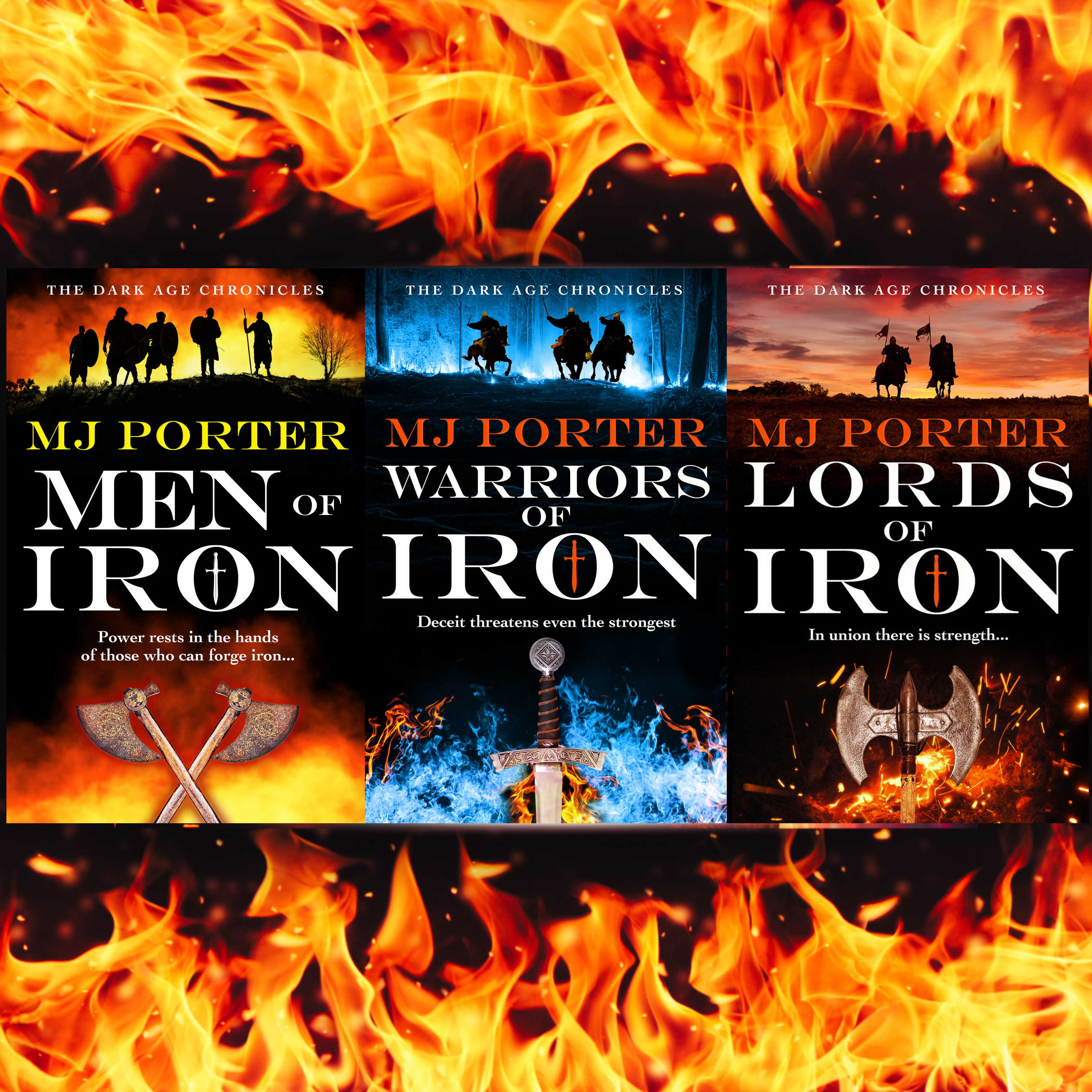
It’s happy release day to Lords of Iron, the third and concluding book in the Dark Age Chronicles Trilogy. Let’s talk about battle standards #newrelease #MenOfIron #WarriorsOfIron #LordsofIron #histfic
What comes after the events of the Dark Age Chronicles (as well as before)
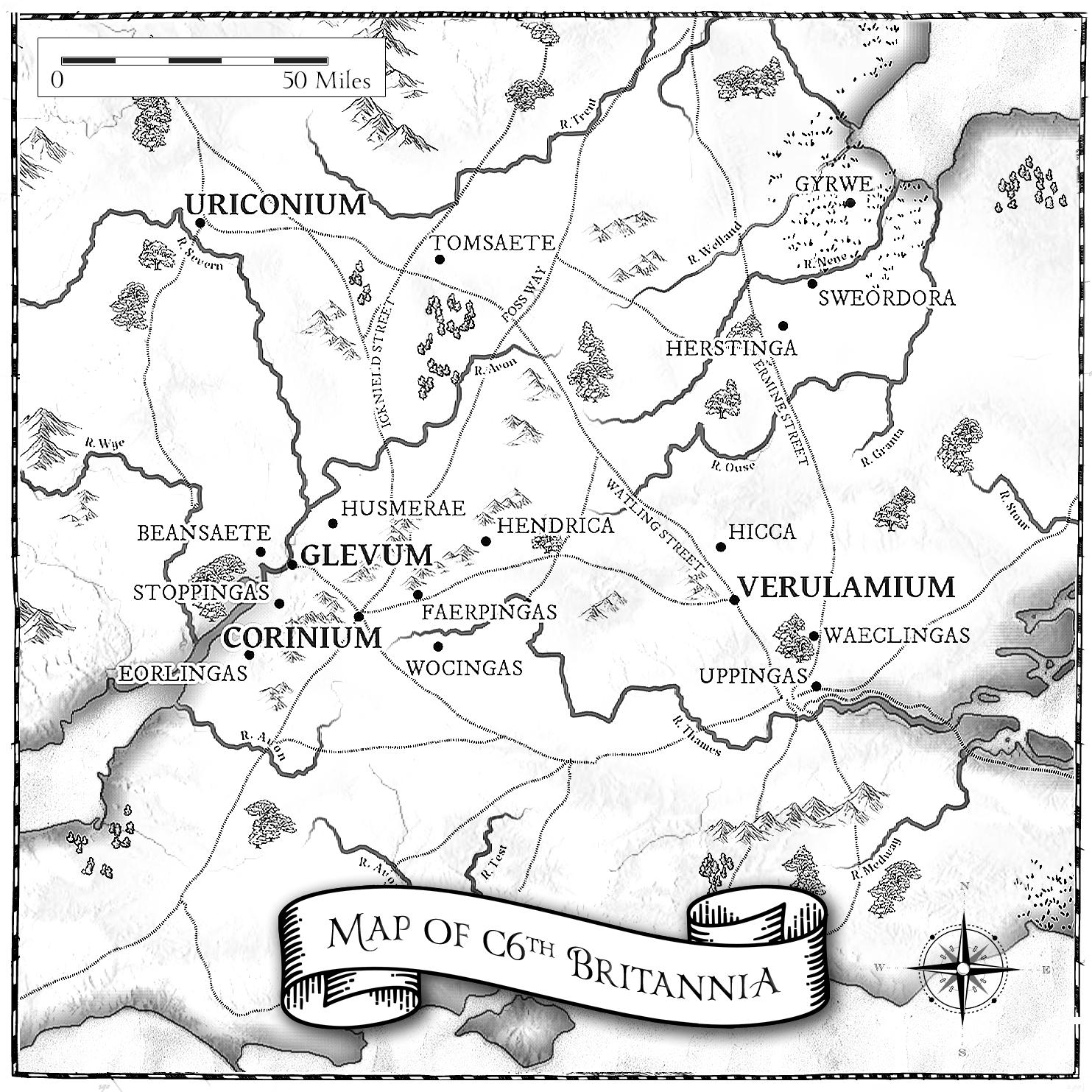
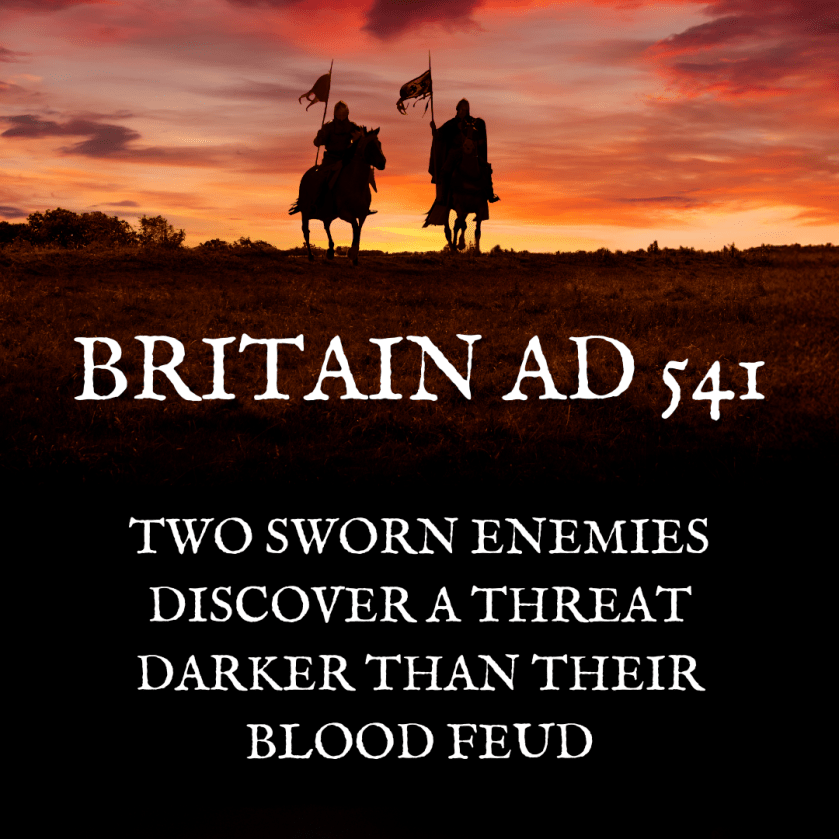
In deciding on a date to set the Dark Age Chronicles, I was quite careful. I wanted it to be after the era of the legendary Arthur (the battle of Camlann is dated to 537 in the Annals Cambriae (the Welsh Annals)), but also before written sources start to make some references to what was happening in what would become Saxon England in the later 500s anywhere that wasn’t in the south/south-east.
In the A version of the ASC there are 26 entries for the 500s. Eight are dated before AD540. These are mostly concerned with events in the south, Kent, the Isle of Wight, and Portsmouth, and their legendary Saxon founders. After 540, we’re treated to the genealogies for what would become Northumbria (547 and 560), Wessex (552 and 597) as well as having references to the religions in Britain at the time, through accounts of Columba and the missionary activities in Kent from Pope Gregory. There are any number of battles between those forging a foothold in their newly forming kingdoms and the native Britons.
Our first real reference for anything happening in what would become the kingdom of Mercia is under the year 577 when we’re told Gloucester, Cirencester and Bath were taken from the ‘Britons’ by Cuthwine and Ceawlin (of Wessex). Gloucester would certainly be within the later kingdom of Mercia. Cirencester and Bath weren’t.
While I’ll repeat that the Anglo-Saxon Chronicle wasn’t begun until the 890s (so over 300 years later) and Bede, which much of the ASC is based on at this time, was writing in the 730s (so nearly two hundred years later), I still wanted almost a clean slate for my characters to inhabit. There was also the matter of plague to try and avoid, as well as a series of bad harvests, that are referenced but don’t form more than a background detail in the books.
I felt that to truly gain a ‘feel’ and an ‘understanding’ for what might have been happening at this time, it was necessary to step aside from any historical account and to rely on the archaeological record. The years 540 and 541 felt as though they provided a good opportunity to do just that. However, it’s always important to have an eye to what was going to happen, as well as what had happened before. And, as I wrote, a number of elements seemed to become very clear to me. While there are reports of battles amongst the Saxon invaders and the native populations (six of them in those eight entries before 540, although some of them are quite small), and while they feel quite overwhelming when simply listed because they form so much of the narrative, there aren’t a lot of them mentioned before AD540. The impetus certainly seems to gather pace after that date (of the remaining 18 entries, eight reference what seem to be quite large battles). Why this might have been, began to make sense as I explored the idea of no new iron production after the end of Roman Britain, until the skill was ‘rediscovered.’ Without the ability to easily overwhelm an enemy through new blades that weren’t made from recycled metals, would people who’d endured famine and plague, really want to risk it all when there was no chance of success? It felt unlikely. Would you? The need to fight isn’t always taken when you know you’ll succeed, sometimes it’s also desperation, but if these settlements were doing reasonably well, why take the chance? Surely, they needed to rebuild and form alliances to survive.
And so, as I’ve written the trilogy, what would come after – the increasing battles, the desire of the invaders to establish ‘kingships’ in Wessex, Kent, Northumbria, Mercia and the kingdom of the East Angles, began to make a lot more sense – with the rediscovery of how to forge sharpened blades (or indeed, to import them when the ‘invaders’ arrived (whether to intermarry or to make war), because unlike in Britannia, the ability to forge blades didn’t become lost in the homelands of the Saxon invaders) there were suddenly people who could start to dominate, and who would want to dominate.
And yet, the archaeology couldn’t be forgotten either. There aren’t many battle sites known from this era. What can be said with more surety, is that there was a co-mingling – all sorts of crossovers are found in the burial record – and indeed, the burial rites of many changed during this undocumented sixth century. There was undoubtedly discord between peoples, but there was also accord. Until there wasn’t. So, something had to change to bring about the formation of the Saxon kingdoms. I’m not saying my ideas are correct, but they are intriguing, especially when played out in a fictional environment where I can endeavour to explain what might have been happening – both in terms of war, and peace. (And, some would argue not all iron production was lost – it certainly wasn’t – but it becomes much more difficult to ‘find’ – i.e. no nails to secure coffins in the burial record in the heartland of England – what was happening in Wales/Devon and Cornwall is very different).
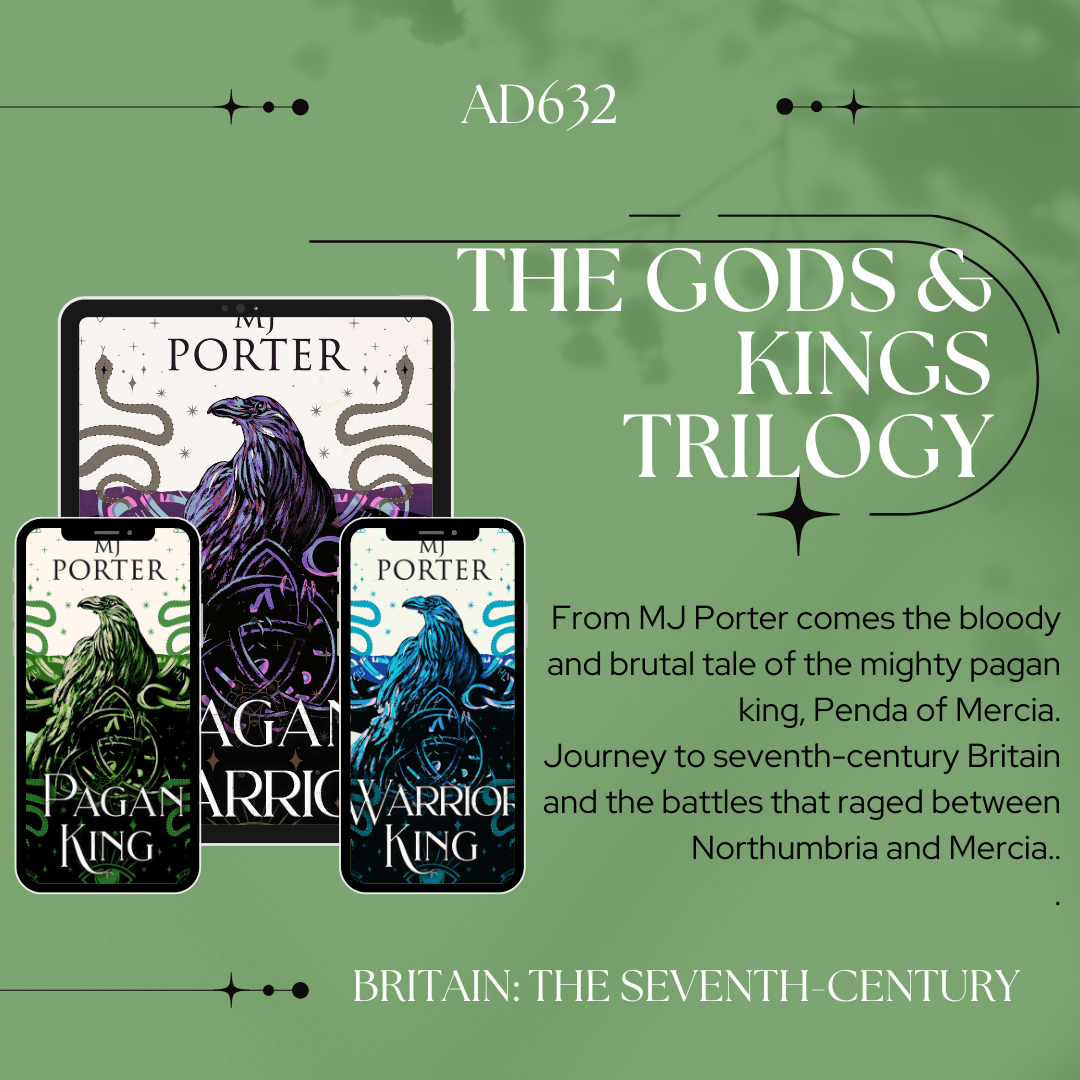
After the Dark Age Chronicles, we move into a period where identifiable kingships and kingdoms are forming – we’re moving into what would become Saxon England, and towards the events of the seventh century, which would be dominated by discord between Mercia and Northumbria, Wessex and the other kingdoms, and the reigns of the alleged ‘bretwaldas’ (wide rulers.) We’re moving towards what’s more immediately understood and known, but the sixth century is where these developments have their routes, as twisted, tangled, unexplainable and often, as baffling as they are. (And we don’t really need a legendary figure to explain what’s happening, do we, although the prevalence of Excalibur does perhaps answer to these questions as well?). We’re moving towards The Gods and Kings Trilogy.
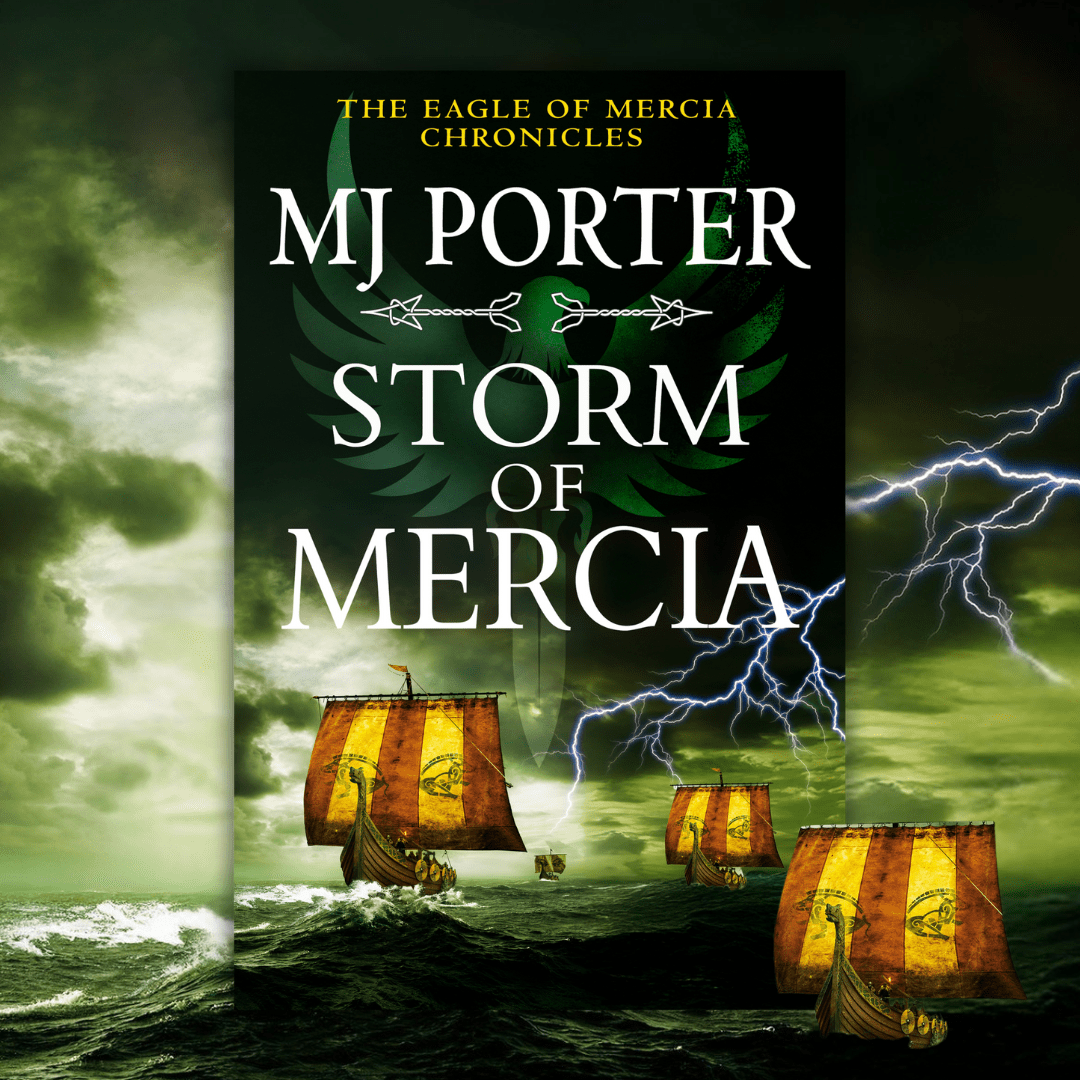
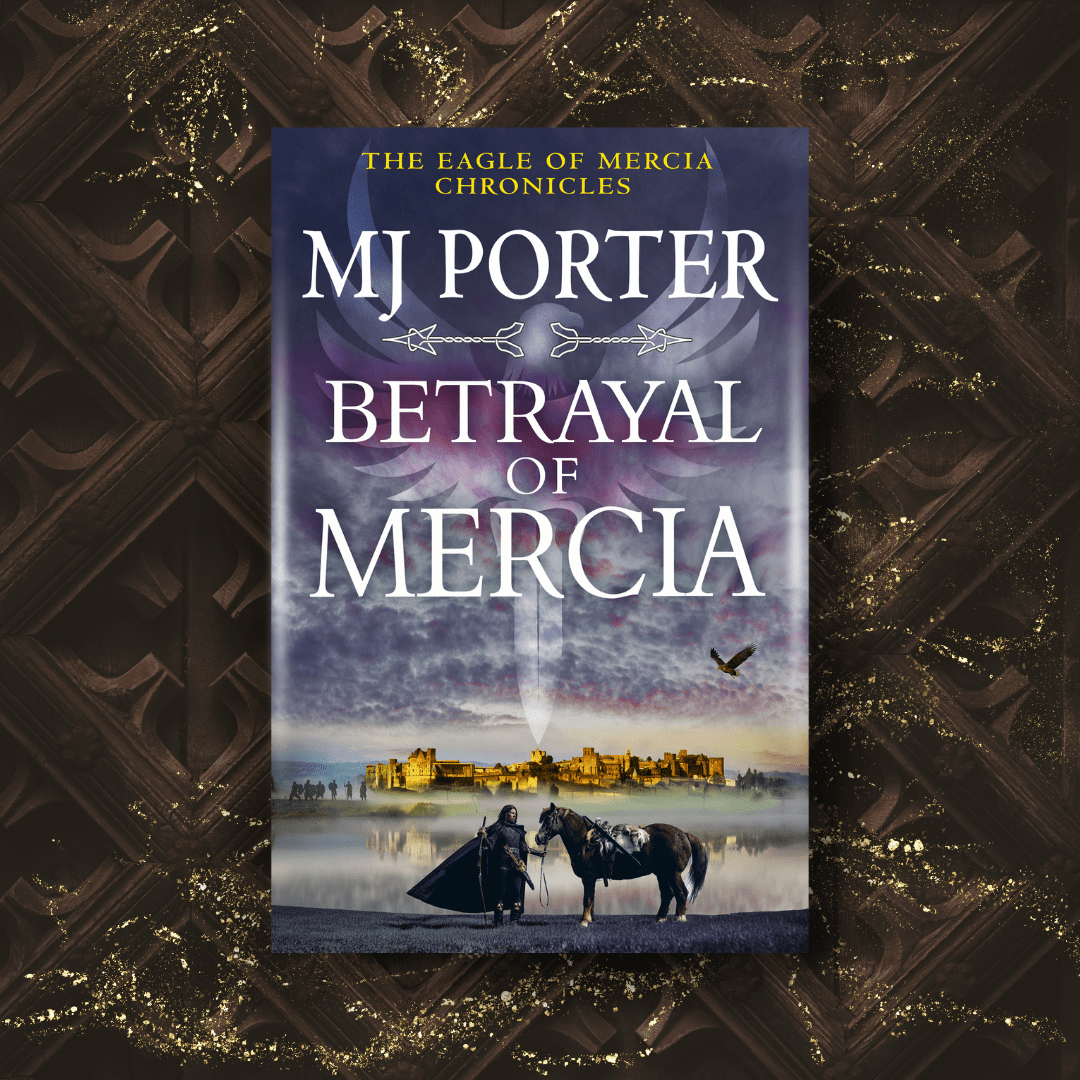
It’s cover reveal time for Storm of Mercia. Return to the world of young Icel in the ninth book in the Eagle of Mercia Series. #coverreveal #preorder #histficbook
Wessex has never been Mercia’s ally, neither has it been her only enemy.
Wessex, AD836
The Viking raiders’ devastation has been halted once more by the shields of Mercia as opposed to Wessex. But their whereabouts are unknown.
King Wiglaf of Mercia is keen to ensure the Viking raiders are swept from his shared border with Wessex but these Viking ships are quick and difficult to track and Icel is once more deployed with Ealdorman Ælfstan warriors to do his King’s bidding. However, Icel’s quest is beset with many more obstacles and it’s not all about the seax and shield.
Worrying news from home overshadows Icel’s every deadly encounter. Will the storms of war keep him away or has he time to make one more desperate journey back to Tamworth?
With raging seas driving him ever further from Mercia’s shores, and the threat of a new conspiracy against the Mercian kingship will Icel overpower the sands of time, or will he be defeated by his deadliest nemesis yet?
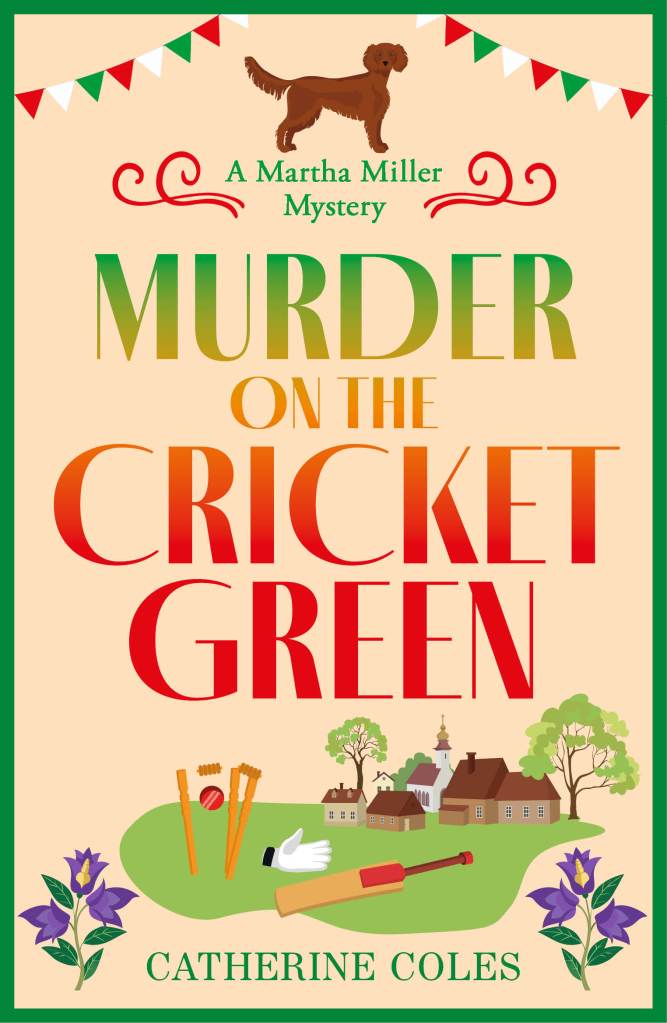
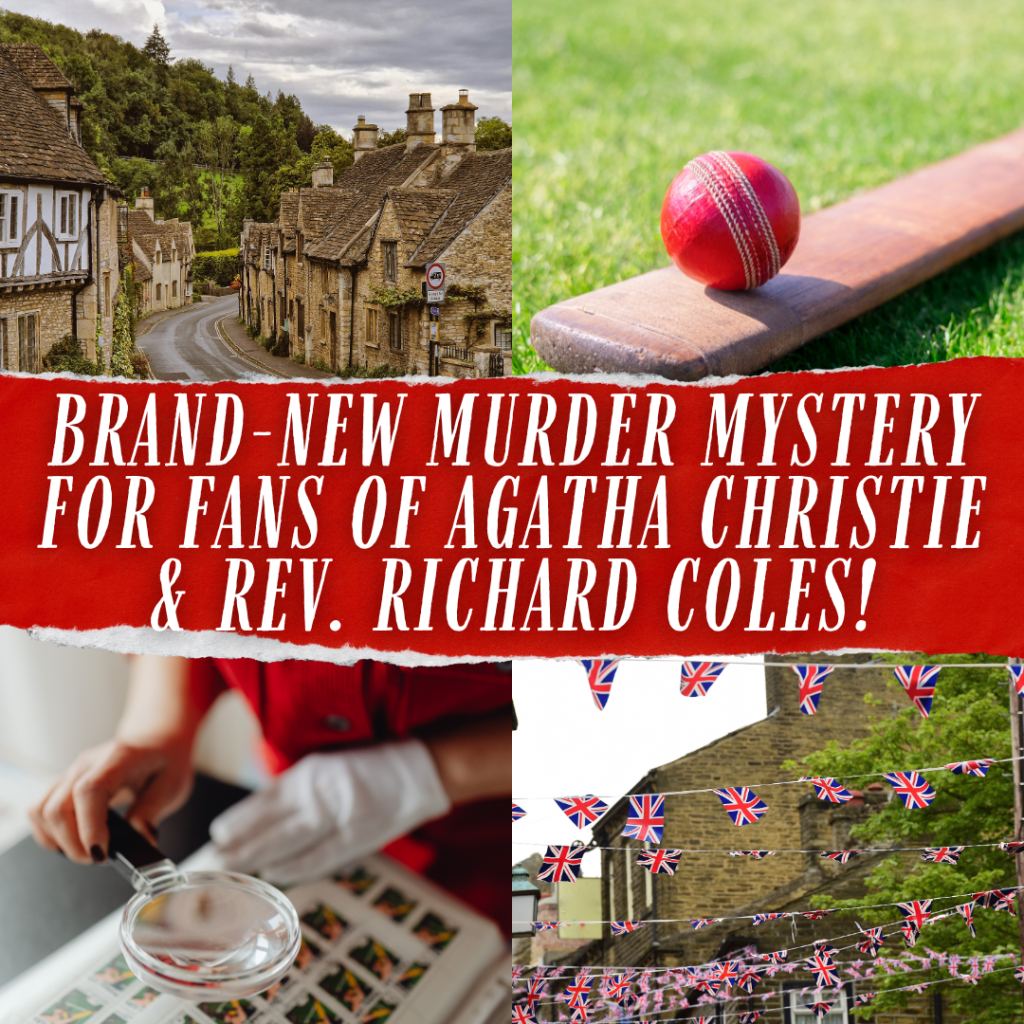
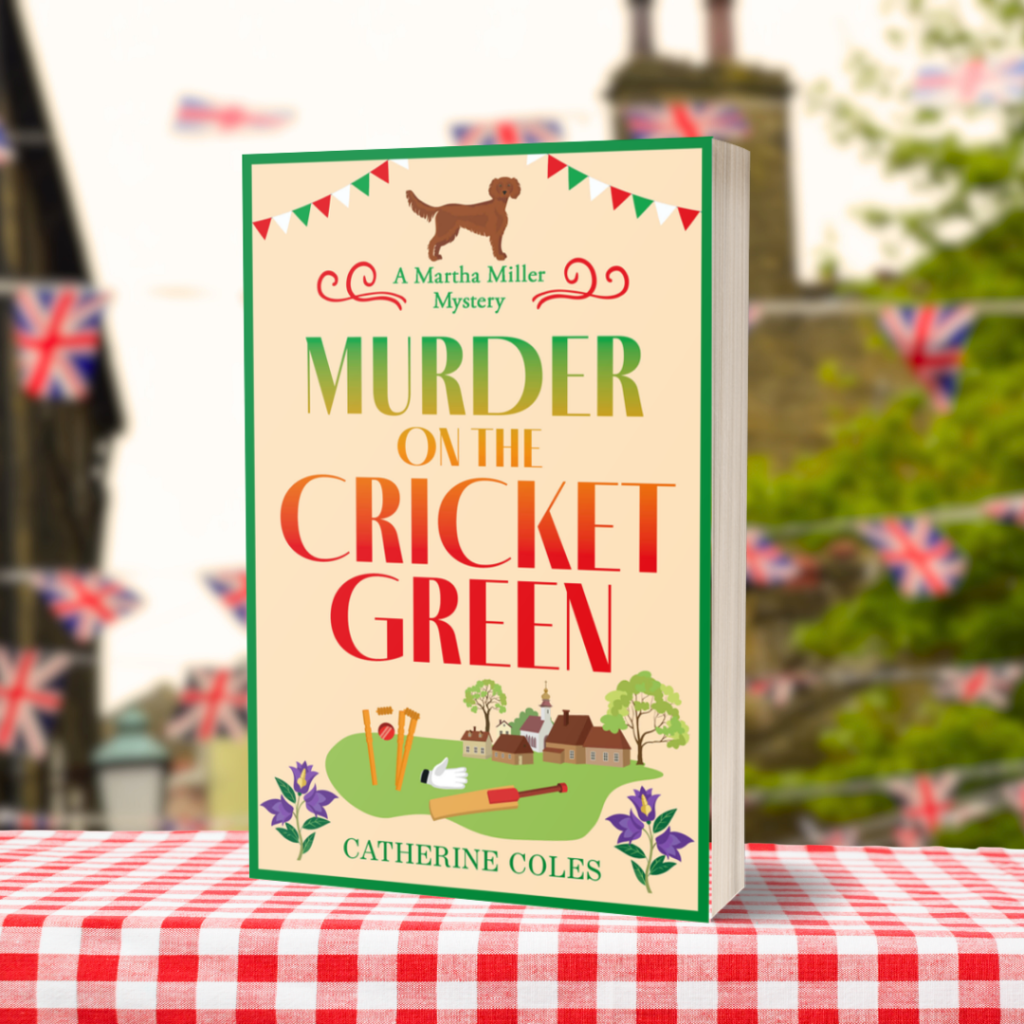
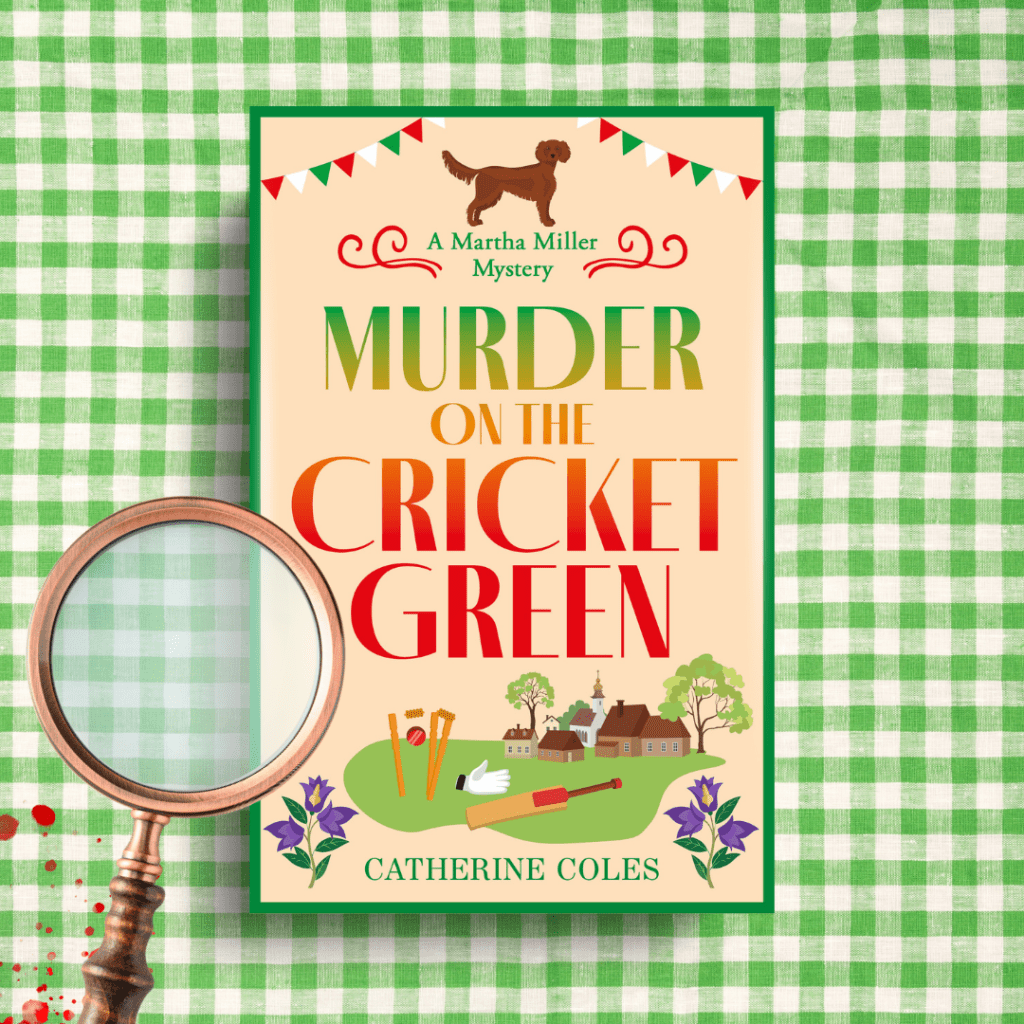
Today, I’m excited to share my review for Murder on the Cricket Green, the fourth book in Catherine Coles delightful 1940s cozy crime series #blogtour #MarthaMillerMystery
Here’s the blurb
Westleham Village, May 1948
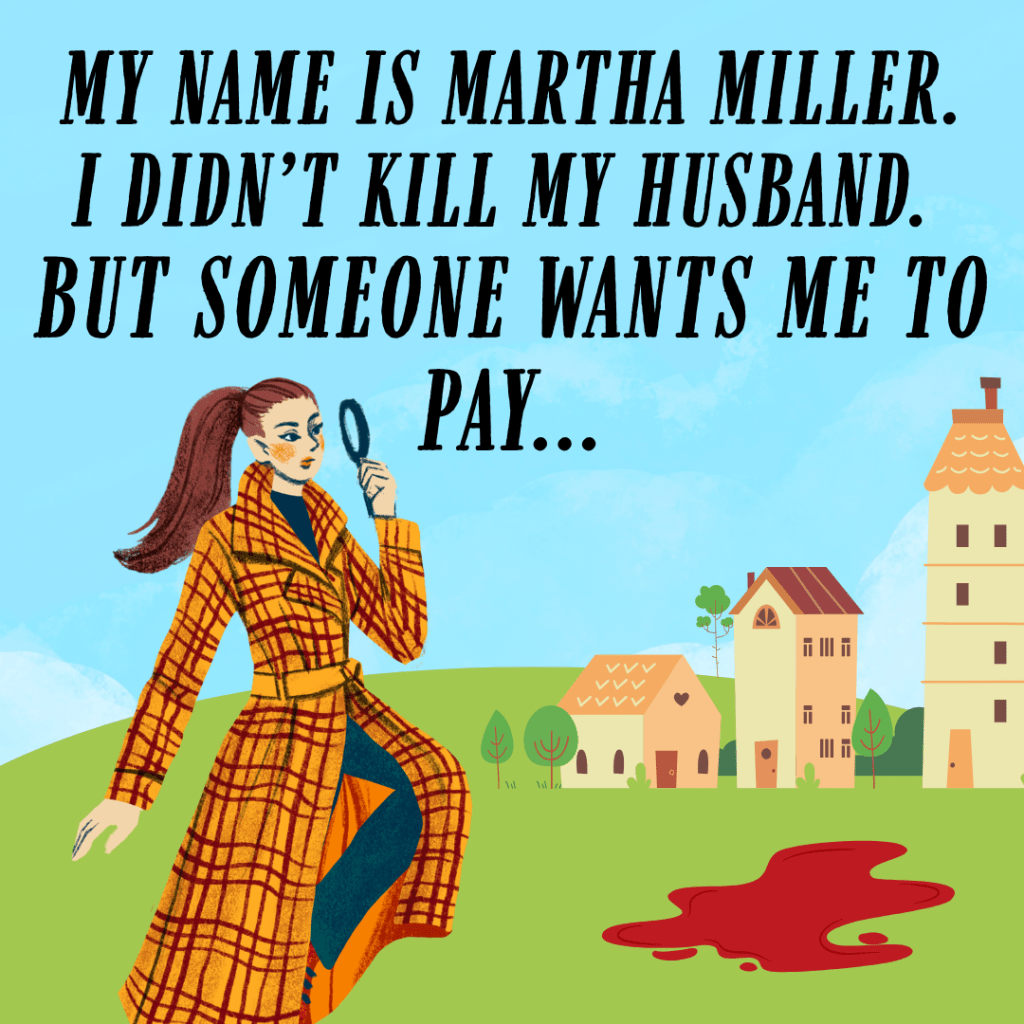
The villagers of Westleham are excited for the first village cricket match since the end of the war. But Martha Miller has more pressing concerns – namely, the sudden reappearance of her husband, Stan, missing for two years and acting as though nothing has happened.
Martha doesn’t know what to feel, especially now that his return threatens her growing fondness for the kind-hearted village vicar, Luke. Yet she’s not the only one unsettled by Stan’s return…
As the match begins and the crowd cheers, Stan suddenly collapses – dead before he hits the ground. And all eyes turn to Martha.
To clear her name, she must uncover the truth about Stan’s missing years and his sudden reappearance. But in a village this small, everyone has something to hide. Will Martha’s amateur sleuthing find the real killer or will she pay the price for someone else’s deadly deed?
Let the investigation commence!
Find out if Martha and Luke can catch the killer in a brand new Martha Miller mystery from bestselling author Catherine Coles, perfect for fans of Lee Strauss and Beth Byers!
Murder on the Cricket Green is the fourth book in the Martha Miller historical cosy mystery series. I’ve read the previous books in this series, but I don’t hink it’s necessarily necessary for those looking for a lovely cosy mystery to read (there will be some elements that might not be understood, but they will be quickly picked up).
It’s always lovely to spend time with Martha and her allies (and enemies) in this quaint village. This latest book is a delightful, quick read, where we can all play ‘guess the murderer’ as there are any number of suspects.
Always a sure hit, this story is a light-hearted, fun, quick read. Let’s hope it’s not too long until we’re back with Martha.
Catherine Coles writes bestselling cosy mysteries set in the English countryside. Her extremely popular Tommy & Evelyn Christie series is based in North Yorkshire in the 1920’s and Catherine herself lives in Hull with her family and two spoiled dogs.
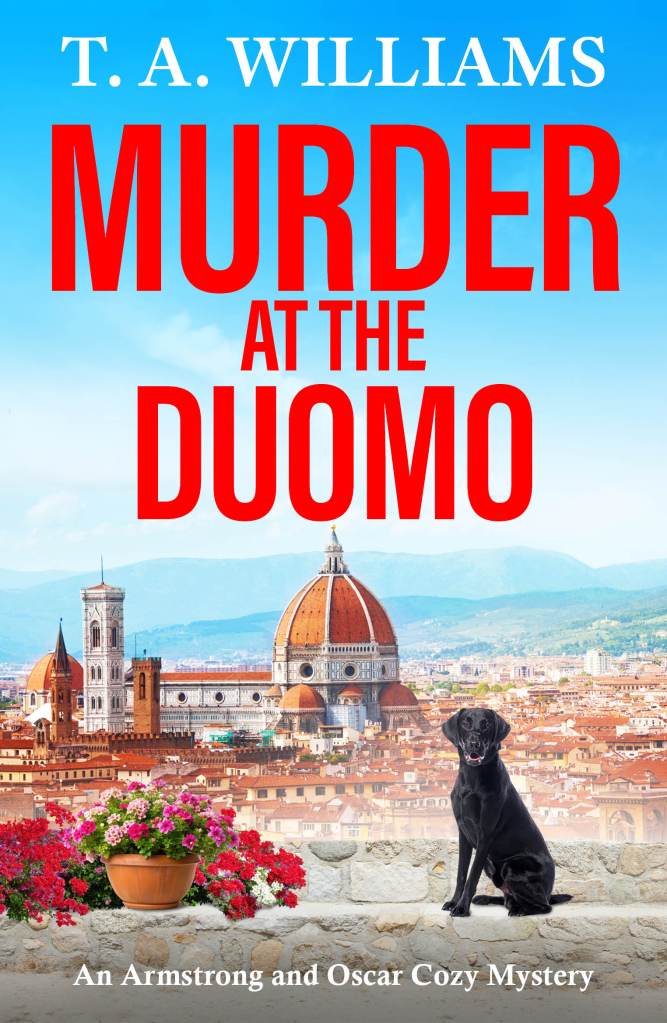
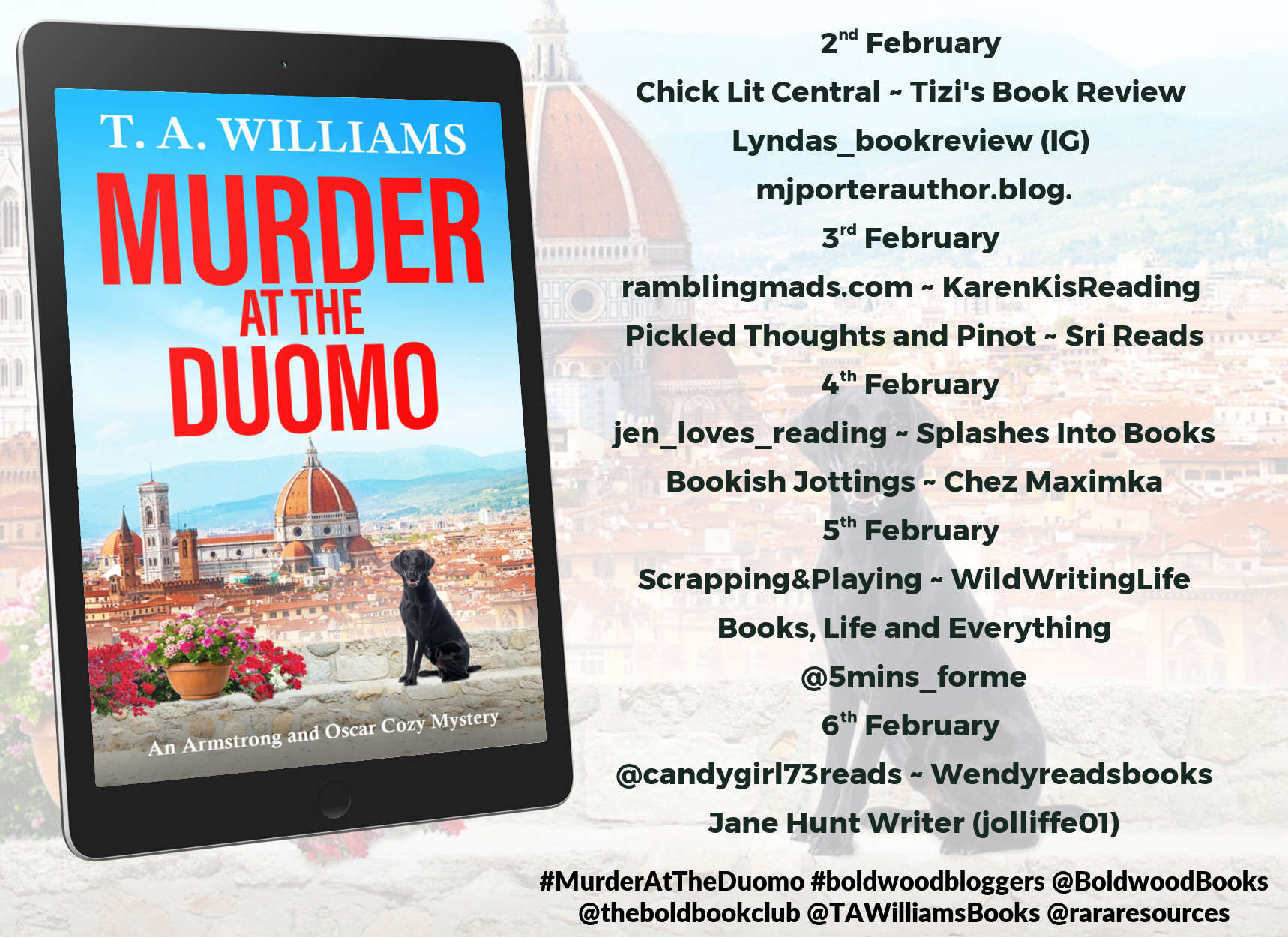
I’m reviewing the new book in the Armstrong and Oscar Cozy Italian Mysteries, Murder at the Duomo by TA Williams #BookReview #BlogTour #CosyCrime #ContemporaryCrime
Here’s the blurb
Even angels can have a dark side…
As the sticky heat of August settles over Florence, Dan Armstrong is ready for a well-earned break—sightseeing with fiancée Anna, daughter Tricia and her fiancé Shaun. But when a British man is found dead inside the city’s magnificent Duomo, Dan’s plans quickly change.
The victim, Tristan Angel, is a super-wealthy arms dealer with a saintly name and a devilish reputation. But what was he doing in the cathedral, and who decided to make it his final confession?
At Angel’s opulent villa in the hills of Fiesole, Dan and Commissario Virgilio encounter a colourful cast of suspects—each one hiding secrets and none too eager to talk. As tempers rise and the heat outside grows ever more intense, Dan and his four-legged sidekick, Oscar, must sniff out the truth before the killer strikes again.
Murder at the Duomo is somehow the 14th book in the Armstrong and Oscar mysteries, and I’ve read them all (apart from 1, which I seem to have missed).
This time, Dan and his friends in the Italian police force are faced with their most impossible case so far. Who killed Angel in the confessional at the Duomo, and how did they do it?
Often, these cases are very hard to solve until something becomes obvious to Dan or Oscar, and then they become quite clear-cut, but that’s not the case this time. It does make some aspects feel a little repetitive with such a small collection of suspects. However, when the solution finally becomes evident, the ending is quite exciting.
I do love these mysteries, even if they entirely put me off ever going to Tuscany, which is evidently too hot and too busy for my liking. I think I’ll let Dan and Oscar continue to enjoy it (or endure it) on my behalf.
Check out my reviews for earlier books in the series, and be sure to start at book 1, Murder in Tuscany.
Meet the author
T. A. Williams is the bestselling author of the Armstrong and Oscar cozy mystery series. Trevor studied languages at University and lived and worked in Italy for eight years, returning to England with his wife in 1972. Trevor and his wife now live in Devon.
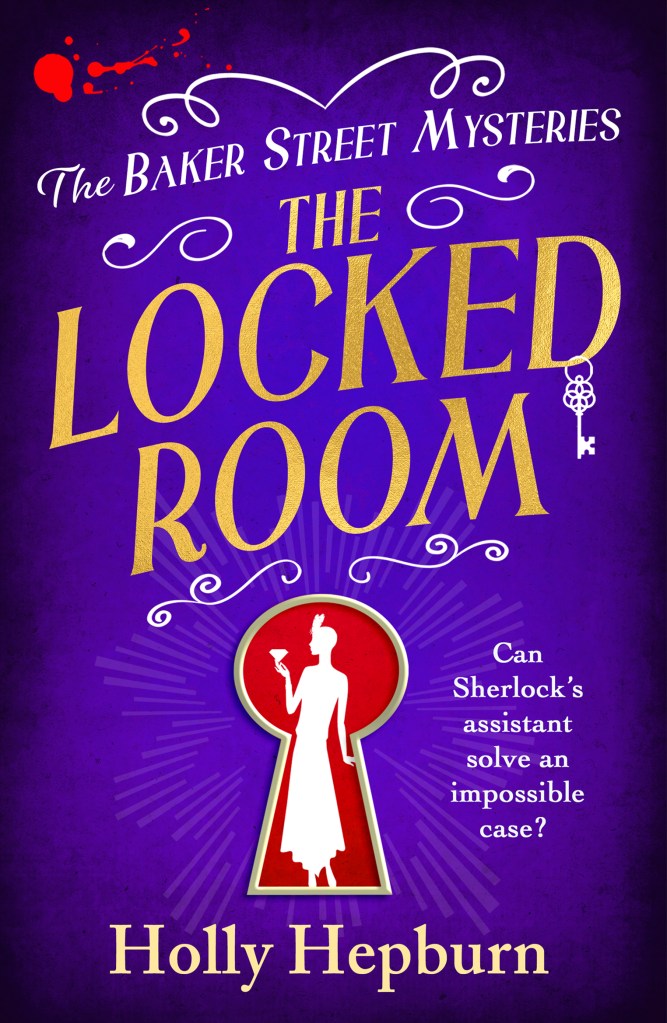
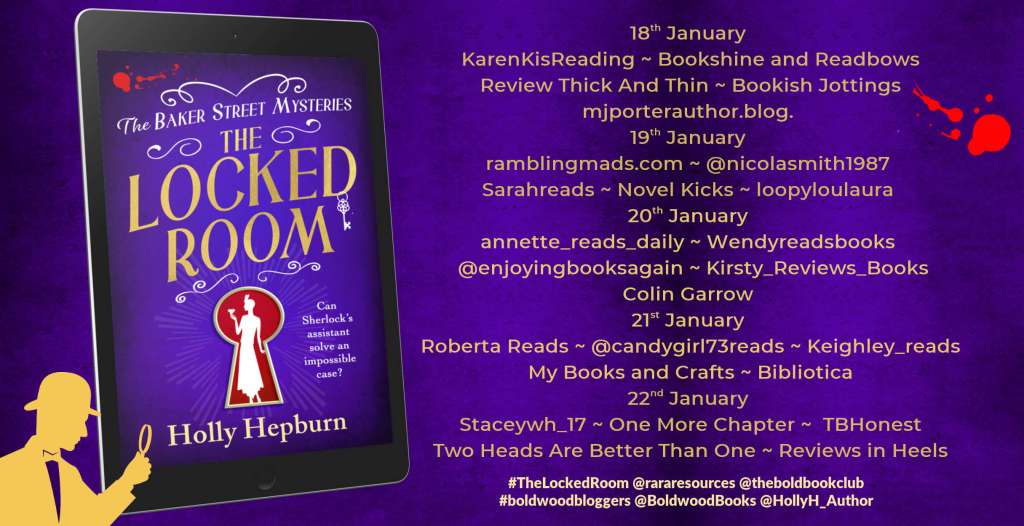
I’m delighted to be reviewing The Locked Room by Holly Hepburn #histfic #cosycrime #1930s #bookreview #BakerStreet @rararesources #TheLockedRoom @theboldookclub #boldwoodbloggers @BoldwoodBooks @HollyH_Author
Here’s the blurb
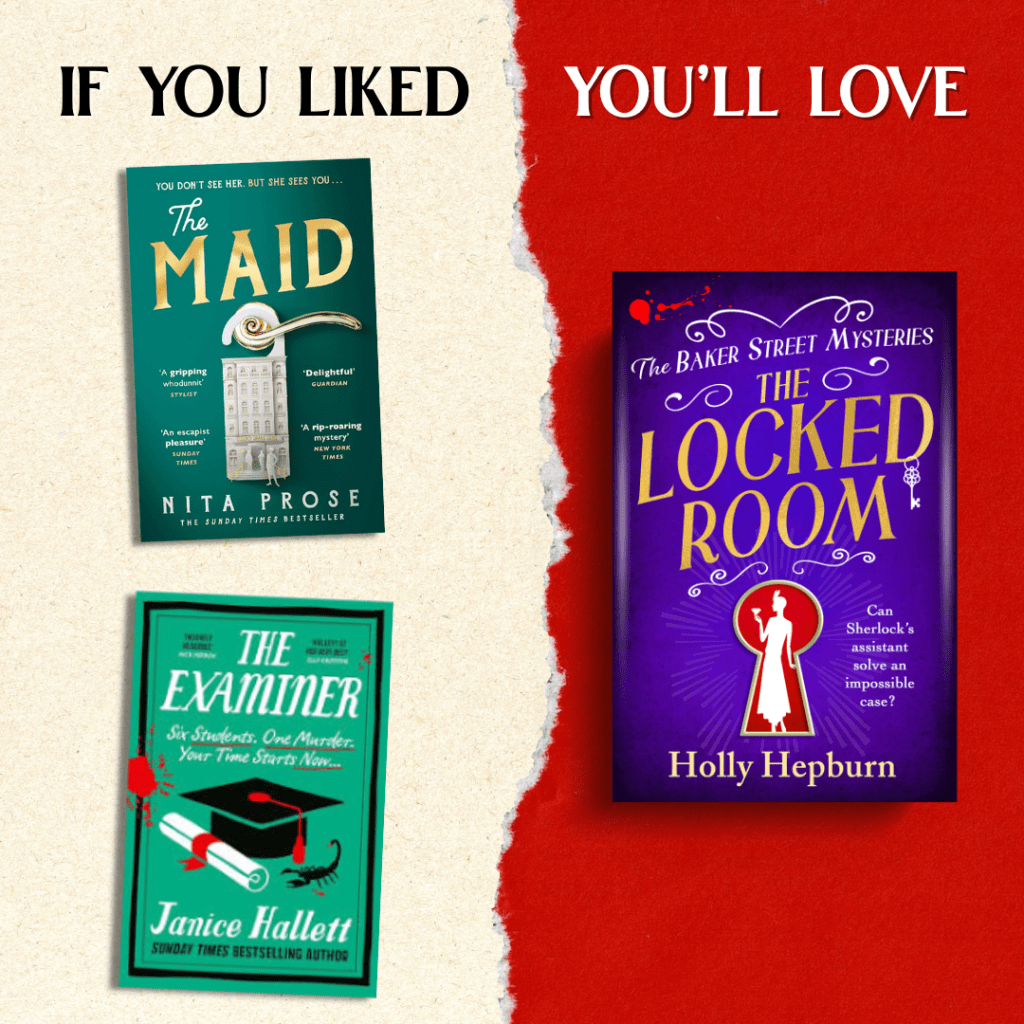
The BRAND NEW instalment in Holly Hepburn’s Baker Street Mystery series – for fans of Sherlock Holmes! Join Harriet White in 1930’s London for another glorious Sherlock Holmes-inspired mystery, for fans of Nita Prose and Janice Hallett.
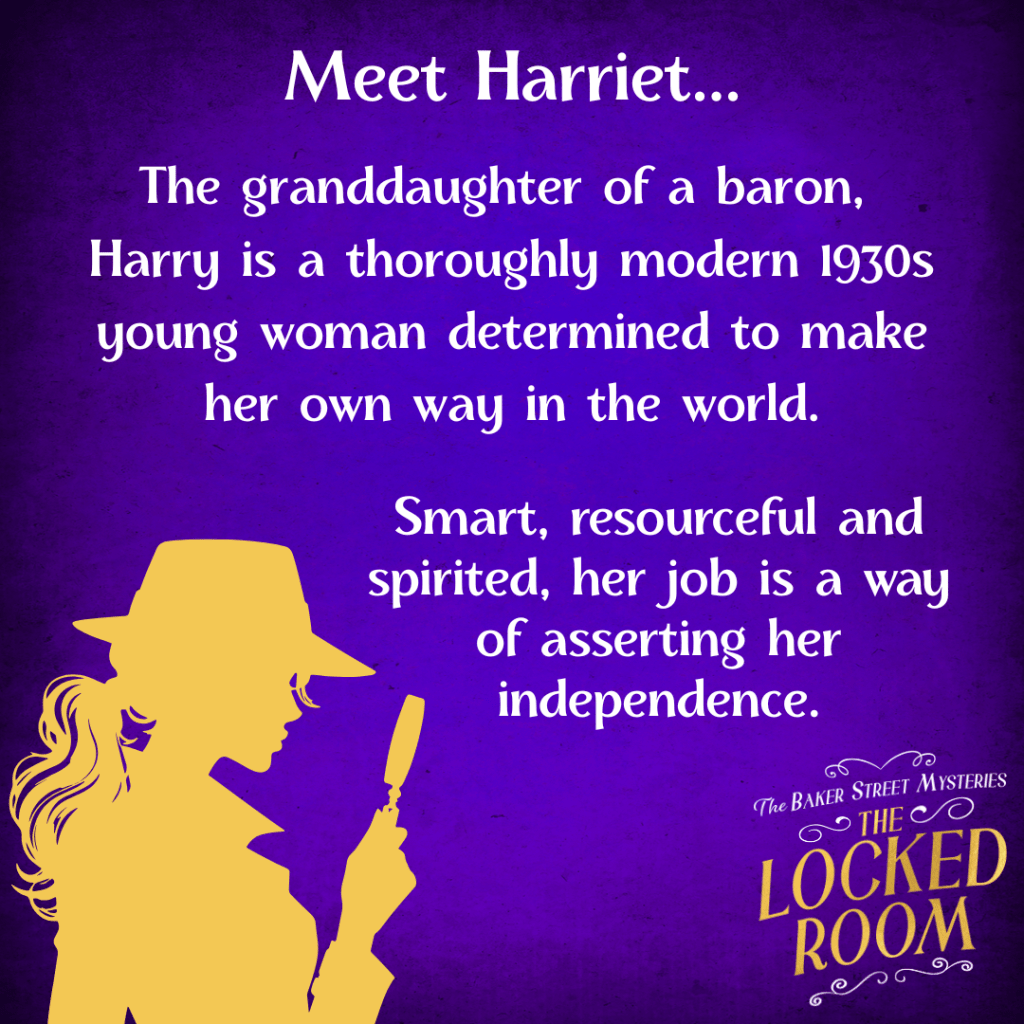
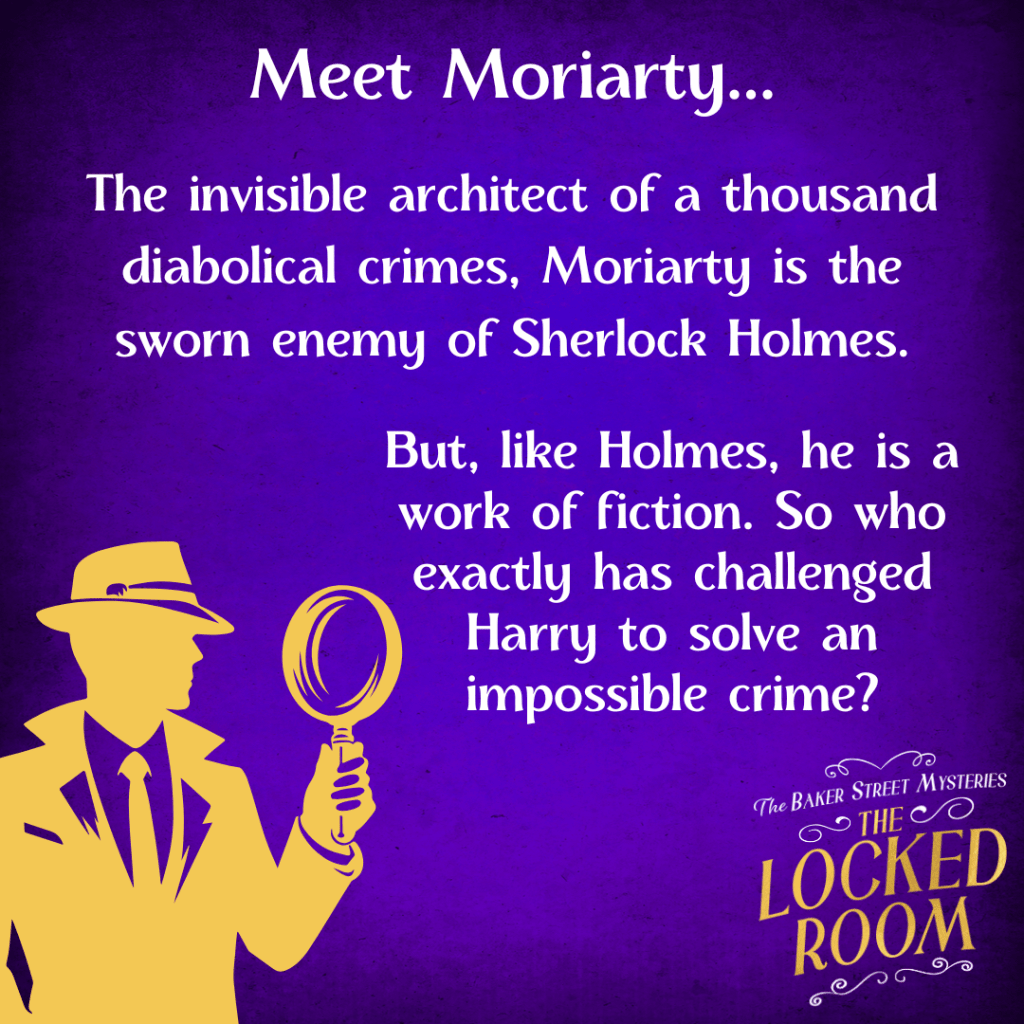
After a very close call on the Cambridgeshire Fens, Harriet White is about ready to hang up her deerstalker and settle back into her normal life, working in a bank on Baker Street. Until she discovers a letter in The Times newspaper challenging Sherlock Holmes to prove his status as the world’s greatest detective, by solving an impossible mystery. The letter, signed Professor James Moriarty, advises Holmes that the crime will be committed within the following seven days. There will be no further clues – Holmes himself must deduce which crime is the correct one to investigate.
Dismissing the letter as a prank, Harry goes about her business until news breaks of the theft of valuable jewel collection from a safe in an apparently locked room in a Mayfair townhouse.
Intrigued in spite of her misgivings, Harry dons a disguise and investigates. But as she begins to unpick the puzzle, a body is found. And now, a stranger, and far more deadly mystery begins to unfold around her…
The Locked Room is the third book in the Baker Street Mysteries. I’ve read books 1 and 2. Check out the review for The Missing Maid and The Cursed Writer.
The Locked Room is the third book in the Baker Street Mysteries, and I’ve read them all. While it is not necessary to have read the previous two books in the series, there are some threads that readers might miss if they begin with book 3 (and, of course, they will be missing out on the fun of reading the series from the beginning).
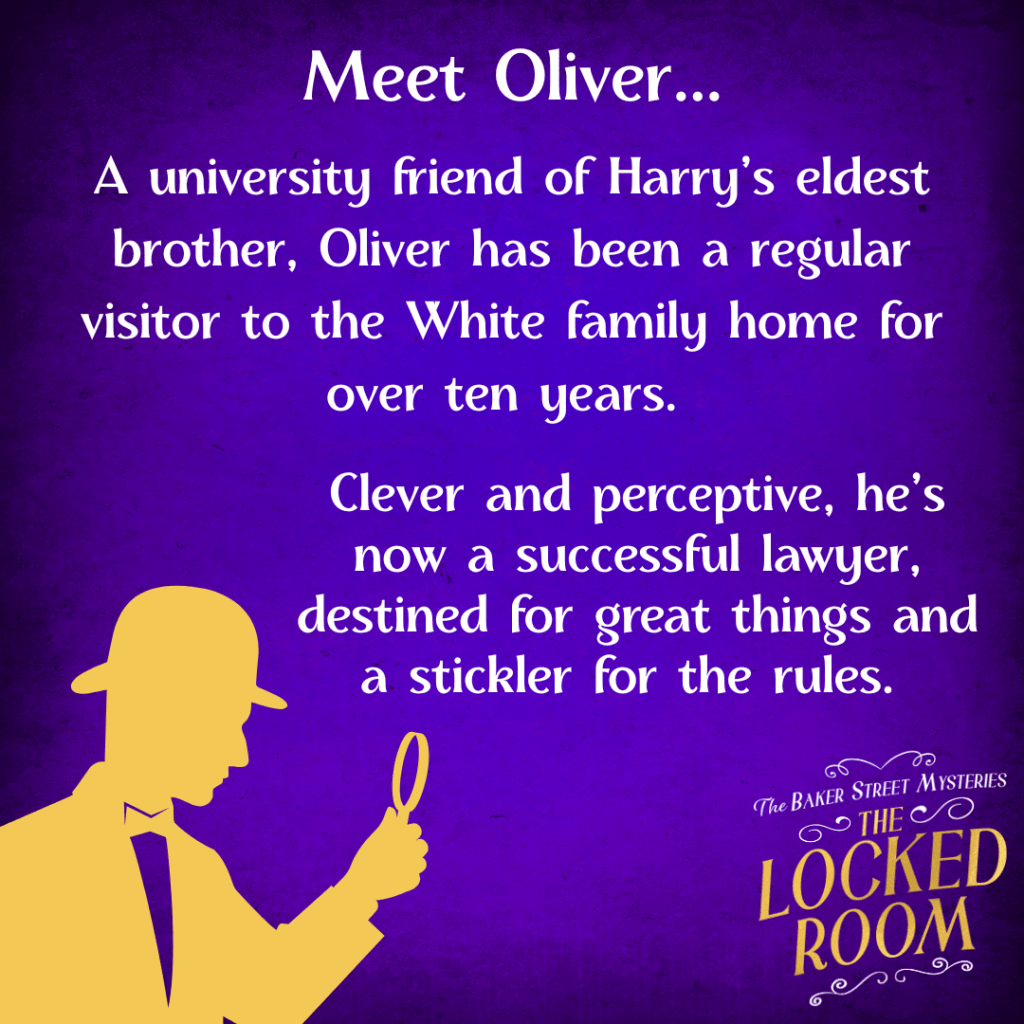
Our main character, Harriet, has two mysteries to solve in this latest book: determining the identity of her younger brother’s intended future wife and the theft of a priceless gem from a safe in a locked room. The twin mysteries unfold side by side and lead Harriet to some interesting locations.
What I really adore about this series of books is just how ‘Sherlock Holmes’ like they are – even the mysteries ring with familiarity from the Holmes stories, and yet are firmly placed in the 1930s. Harriet also interacts with the other characters in a way that feels very true to the time period. As much as we might not like it, she does have to masquerade in men’s clothing, and she does need the help of her male friend to get into all the places she needs to visit. The Locked Room is also as twisty as the previous two books.
Another fab mystery, thoroughly enjoyable, ripe with the smell of 1930s London, and very Holmes-eque in its resolution as well as the mystery itself.
Meet the author
Holly Hepburn writes escapist, swoonsome fiction that sweeps her readers into idyllic locations, from her native Cornwall to the windswept beauty of Orkney. She has turned her hand to cosy crime inspired by Sherlock Holmes himself. Holly lives in leafy Hertfordshire with her adorable partner in crime, Luna the Labrador.
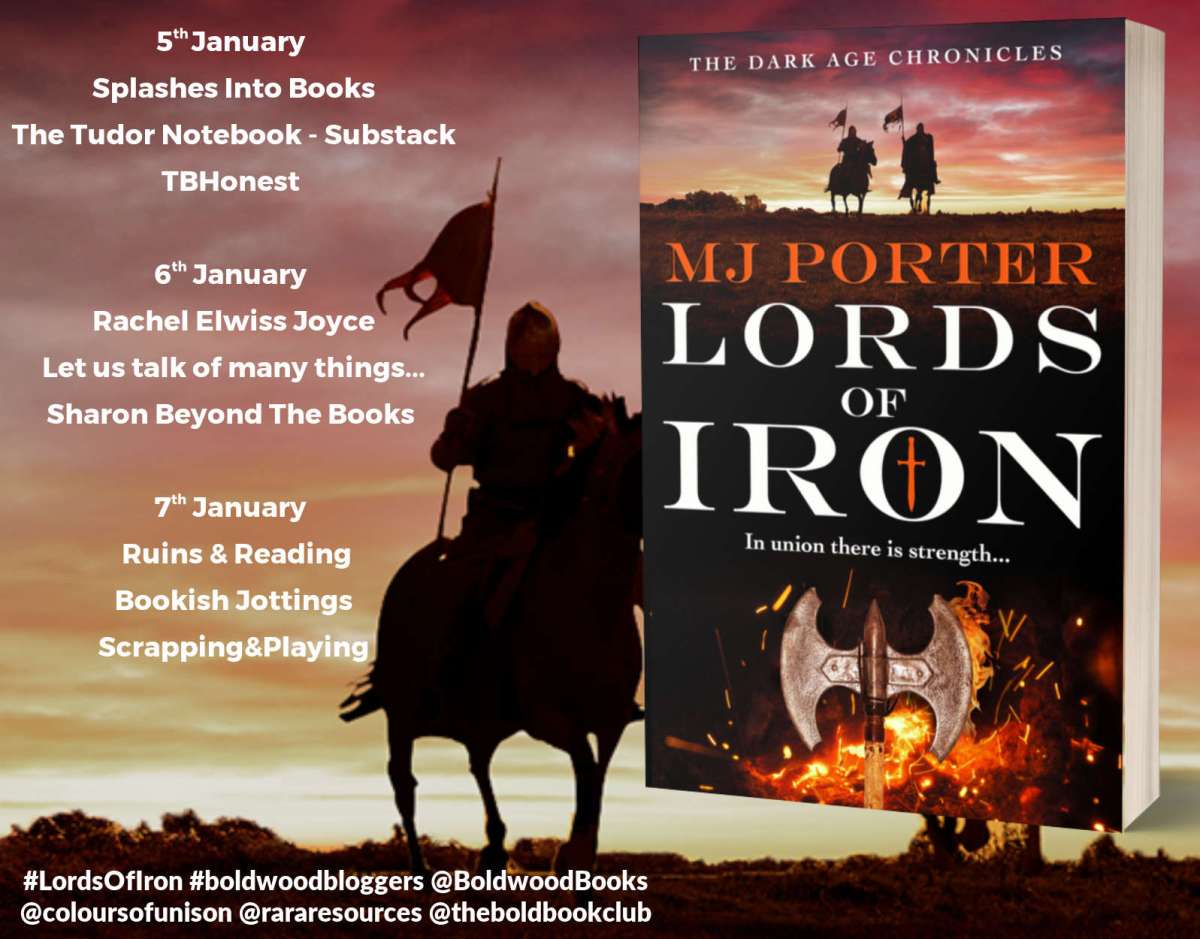
The blog tour for Lords of Iron has finished. A huge thank you to all the hosts. Here’s what they had to say about Lordsof Iron #newrelease #MenOfIron #WarriorsOfIron #LordsofIron #histfic
The Lords of Iron blog tour
Watch the little video I made to showcase the reviews from the fabulous reviewers. Thank you to them all. I know the majority have been with me since Men of Iron, and it’s amazing to realise how invested they’ve become in my characters. (The music is very dramatic).
Check out my blog for more details about the Dark Age Chronicles
It’s happy release day to Lords of Iron, the third and concluding book in the Dark Age Chronicles Trilogy. Let’s talk about battle standards #newrelease #MenOfIron #WarriorsOfIron #LordsofIron #histfic
Battle standards
Well, here we are my friends, book 3 in the Dark Age Chronicles concludes this foray to the ‘Dark Ages’ (a term I don’t like but is correct for this time period). I thought I’d address the idea of battle standards.
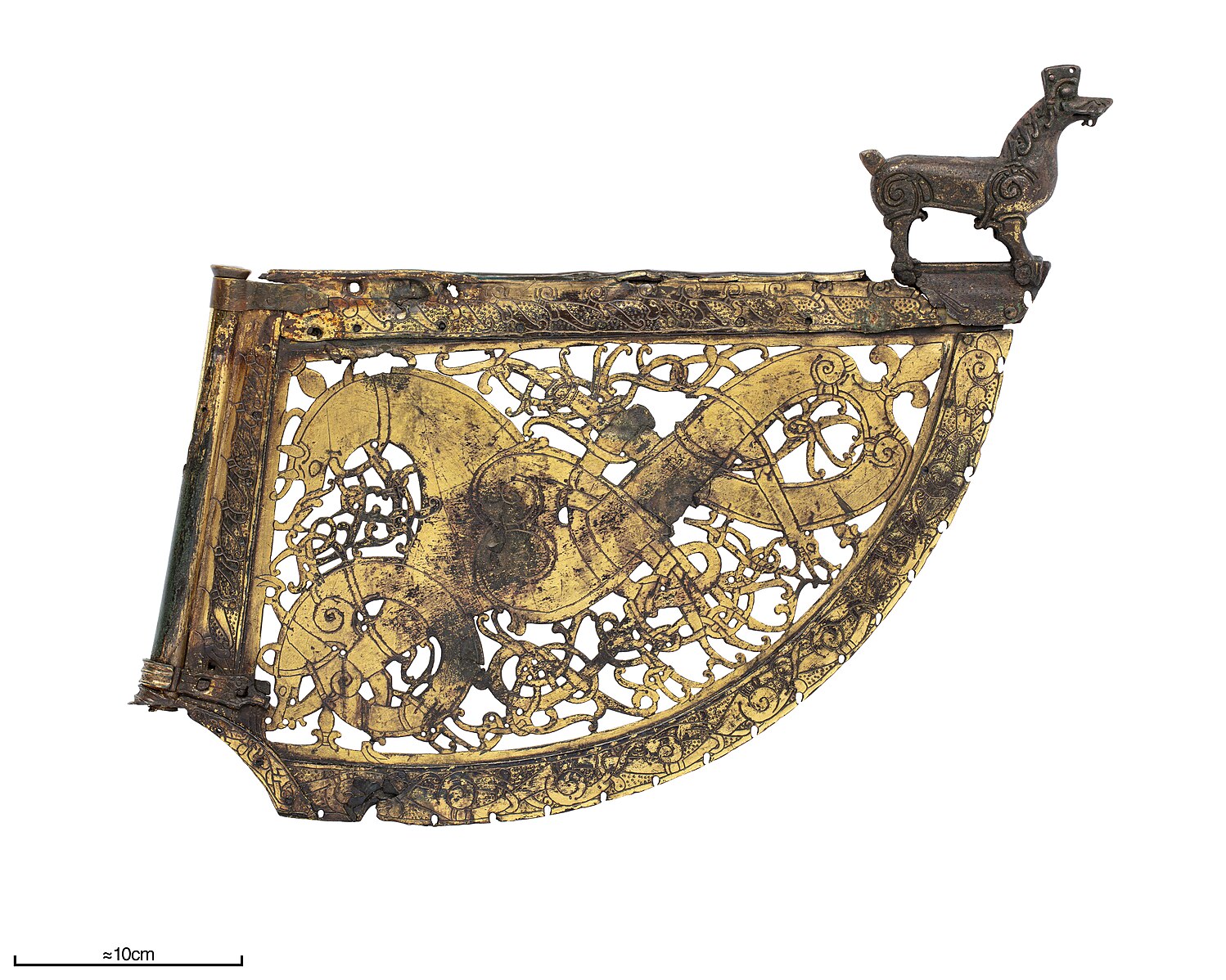
As many stories as I’ve written about war, I’d never considered the battle standard. My editor mentioned to me that ‘they make for great cover ideas,’ and so I did a little bit of research and discovered some information about them, but it was actually in an ‘ask the historian’ section with Mike Everest hosted by the History Quill that I discovered battle standards might not have been fabric at all, but rather perhaps made from metal and more hollow depictions of whatever the battle standard was to be (so perhaps more similar to the Romans and their eagle standards).
As such, I have touched on this idea in Lords of Iron. As often as I’ve tried to place myself in my characters’ boots, I’ve perhaps overlooked how difficult it might be to find your fellow warrior in the middle of a battle. Below are two images which might have served as an idea of what a battle standard might have looked liked. As you can see, these are very far from being huge banners made of fabric. They are much more intricate, or so it appears. In Warriors of Iron, Wærmund encounters such a battle standard and then hungers to have one constructed for himself. I can see why.
It’s happy release day to Lords of Iron, the third and concluding book in the Dark Age Chronicles Trilogy. Watch and listen to a short recording about the research books I used #newrelease #MenOfIron #WarriorsOfIron #LordsofIron #histfic
A whizz through the research books I used when writing the Dark Age Chronicles
Join my newsletter to follow my writing journey, get access to my exclusive Subscriber area on the blog, and receive a copy of Mercia – A Companion Guide to the Tales of Mercia.



















 MJ Porter
.jpg)
.jpg)