I’m welcoming Stephanie Cowell to the blog with a fascinating post about research for her new novel, The Man in the Stone Cottage: a novel of the Brontë sisters #Brontë #Yorkshire #Victorian #EnglishLiterature #WomenWriters #HistoricalFiction #TheCoffeePotBookClub #BlogTour 

I’m welcoming Stephanie Cowell to the blog with a fascinating post about research for her new novel, The Man in the Stone Cottage: a novel of the Brontë sisters #Brontë #Yorkshire #Victorian #EnglishLiterature #WomenWriters #HistoricalFiction @cathiedunn
@cowell.stephanie @thecoffeepotbookclub

Researching My Novel on the Brontë Sisters by Stephanie Cowell

I simply love research. The opportunity to know more about my beloved historical characters and their surroundings and daily world is thrilling. Researching Charlotte, Anne and Emily Brontë, I had a chance to go to their village in Yorkshire (Haworth) and to the Parsonage where they lived with their clergyman father and wrote their books and what is more thrilling than that?  I travelled there three times over many years.
In curated display cases, I could see the needles with which they sewed, the cup they drank from (imagine seeing Emily’s cup and knowing she might have paused in writing bits of Heathcliff to drink a sip of tea!), their clothing, their hand-written childhood magazines. I could walk around the house, climbing the steps they climbed every day. In the parlor/dining room, I marveled at the table where they wrote their books. (After a century or more of searching by scholars, the actual table was found in private hands and in 2015 it was brought back to the Parsonage. Someone has scratched “E” in the wood. Was it our Emily?) 

So, my first research was going to the Parsonage, but a great deal of research of course was from biographies and household advice books and letters which describes event and feelings and hopes and fears. They describe loneliness.

Letters are the best! Charlotte wrote the most. She wrote hundreds to her best friend Ellen, pouring out her frustration about working in a teaching job at a boarding school until exhausted. She wrote about her family. She wrote to her publisher’s reader about her sadness over her alcoholic brother who could not keep a job. She wrote her married Belgium professor of her adoration of him. We have these letters almost two hundred years. They are from the writer who penned Jane Eyre’s passionate words, “Do you think, because I am poor, obscure, plain and little, I am soulless and heartless?” 

Research! I have two bookshelves of biographies, literary analysis, life in Victorian England, books about the town of Haworth and the house, even a biography of the rather obscure man Charlotte eventually married. I just remembered that at one time my novel was not from the point of view of the two sisters, but only from his point of view. And like the larger part of stories I begin, it was not finished but eventually morphed into the final novel THE MAN IN THE STONE COTTAGE. 

I try to keep my research books together also in certain shelves but some wander over the house. When I was a beginning writer and rather poor, I used the library for everything. Now I am afraid I mostly use the internet to buy obscure second-hand books.

It was however in an actual bookshop one day that I glanced at a shelf and found THE book I wanted, THE book I must have. This was in the days before the internet. I gasped so that I am fortunate the salesperson did not come rushing over to see if I was okay. Perhaps he was used to having people gasp over discovered books. 

There is a problem with biographies. I went to a bookshop reading of one of Charlotte’s biographers, and someone asked her, “Have you written the definitive biography?” and she replied, “Oh no, I hope not. Every biographer sees her in a different way!” And that is true. Charlotte’s first biographer Mrs. Gaskell made Charlotte into a near saint.  Others have emphasized the prickly side of her personality. Who would not be prickly with all her losses and griefs and hardships? 

Emily and Anne have several biographies each, but less is known about them. These two sisters were more private and did not pour their heart out on paper, or perhaps fewer paper were kept.

Even when a novel is long finished and gone into the hands of readers, I love and long for the worlds where my beloved characters have walked. So, I go to wander in the streets of York or Paris or Florence, and if I wait, I will see one of my characters coming toward me. And likely he or she will smile and say, “There you are! Welcome back! We’ve been waiting for you!”

Here’s the blurb

“A haunting and atmospheric historical novel.” – Library Journal

In 1846 Yorkshire, the Brontë sisters— Charlotte, Anne, and Emily— navigate precarious lives marked by heartbreak and struggle.

Charlotte faces rejection from the man she loves, while their blind father and troubled brother add to their burdens. Despite their immense talent, no one will publish their poetry or novels. 

Amidst this turmoil, Emily encounters a charming shepherd during her solitary walks on the moors, yet he remains unseen by anyone else. 

After Emily’ s untimely death, Charlotte— now a successful author with Jane Eyre— stumbles upon hidden letters and a mysterious map. As she stands on the brink of her own marriage, Charlotte is determined to uncover the truth about her sister’ s secret relationship. 

The Man in the Stone Cottage is a poignant exploration of sisterly bonds and the complexities of perception, asking whether what feels real to one person can truly be real to another.

Praise for The Man in the Stone Cottage:

“A mesmerizing and heartrending novel of sisterhood, love, and loss in Victorian England.” – Heather Webb, USA Today bestselling author of Queens of London

“Stephanie Cowell has written a masterpiece.” – Anne Easter Smith, author of This Son of York

“With The Man in the Stone Cottage, Stephanie Cowell asks what is real and what is imagined and then masterfully guides her readers on a journey of deciding for themselves.” – Cathy Marie Buchanan, author of The Painted Girls

“The Brontës come alive in this beautiful, poignant, elegant and so very readable tale. Just exquisite.” – NYT bestseller, M.J. Rose

“Cowell’s ability to take readers to time and place is truly wonderful and absorbing.” – Stephanie H. (Netgalley)

“Such a lovely, lovely book!” – Books by Dorothea (Netgalley)

Purchase Link

https://books2read.com/u/mqLV2d

Meet the author

Stephanie Cowell has been an opera singer, balladeer, founder of Strawberry Opera and other arts venues including a Renaissance festival in NYC.

She is the author of seven novels including Marrying MozartClaude & Camille: a novel of Monet, The Boy in the Rain and The Man in the Stone Cottage. Her work has been translated into several languages and adapted into an opera. Stephanie is the recipient of an American Book Award. 

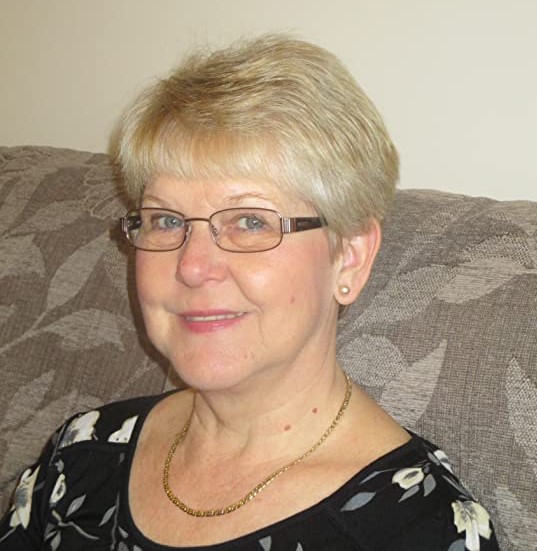
Author Stephanie Cowell

Connect with the author

Follow The Man in the Stone Cottage blog tour with The Coffee Pot Book Club

Posts

I’m delighted to share my review for Murder in Trafalgar Square by Michelle Salter, the first book in a new historical mystery series #historicalmystery #cosycrime #highlyrecommended

I’m delighted to share my review for Murder in Trafalgar Square by Michelle Salter, the first book in a new historical mystery series #historicalmystery #cosycrime #highlyrecommended
#BoldwoodBloggers @BoldwoodBools #MurderInTragalgarSquare @rararesources @bookandtonic

Here’s the blurb

Discover a BRAND NEW page-turning cosy mystery series from Michelle Salter A murdered suffragette. A missing politician. A stolen artwork.

London, 1910

Coral Fairbanks is a contradiction. As well as a suffragette, she’s a bit-part actress and nude model, earning her the disapproval of her fellow suffragettes.

Guy Flynn is an artist. He’s also a detective inspector at Scotland Yard, who doesn’t always see eye to eye with fellow officers in the Metropolitan Police.

When Home Secretary Winston Churchill orders the police to terrorise the suffragettes during an afternoon of violence that becomes known as Black Friday, the battlelines are drawn – and Coral Fairbanks and Guy Flynn are on different sides.

But when a young suffragette is found murdered in the National Portrait Gallery and one of their paintings is stolen – Fairbanks and Flynn must put their differences aside and combine their knowledge to track down the killer.

Introducing an iconic detective duo in Fairbanks and Flynn, this is an exciting and gripping historical mystery, which will delight fans of Agatha Christie, Benedict Brown and T. E. Kinsey

 Purchase Link

https://mybook.to/MurderTrafalgarSquare

My Review

Murder in Trafalgar Square is the first book in Michelle Salter’s new mystery series, set in 1910, and what a fabulous first entry into a series it is.

For this series we have two main characters, Cora, a young widow who is a suffragette, works in a gallery and has also been an actress but is currently deemed, at 36, to be too old to play the ingenue on stage, and too young to be a harridan. (I sense we’re still not really that far beyond that even now). 

Guy Flynn, our detective inspector, is equally a many layered individual, also a widower with a daughter to raise alone, and he’s a painter too. The pair have some lovely facets to their characters and they make for an intriguing duo as we read chapters from alternative points of view. They’re flung together when a body is found at the National Gallery and it makes all the headlines, as opposed to the suffragette stunt with a most amusing painting (I’m not spoiling it).

The mystery unfolds at a good pace, as Cora and Guy endeavour to unpick the information they gain, while endeavouring to stay on the right side of the government.

This is such a fabulous new book, and I’m so excited to read more of Cora and Guy. I love the Iris Woodmore series by the author, but it’s possible I might love this one even more.

Check out my reviews for Death at Crookham Hall, Murder at Waldenmere Lake, The Body at Carnival Bridge, A Killing At Smugglers Cove, A Corpse in Christmas Close, and Murder at Mill Ponds House.

Meet the author

Michelle Salter writes historical cosy crime set in Hampshire, where she lives, and inspired by real-life events in 1920s Britain. Her Iris Woodmore 

Connect with Michelle 

Bookbub profile

Newsletter Sign Up

Posts

I’m welcoming Then Came The Summer Snow by Trisha T Pritikin to the blog #HistoricalFiction #Downwinders #AtomicJustice #1950s #BlogTour #TheCoffeePotBookClub 

I’m welcoming Then Came The Summer Snow by Trisha T Pritikin to the blog #HistoricalFiction #Downwinders #AtomicJustice #1950s #BlogTour #TheCoffeePotBookClub 

Here’s the blurb

In 1958, Edith Higgenbothum, a housewife in Richland, Washington, downwind of the massive Hanford nuclear weapons production site, discovers that the milk her young son Herbie drinks contains radioactive iodine from Hanford’s secret fallout releases. Radioactive iodine can damage the thyroid, especially in children.

When Herbie is diagnosed with aggressive thyroid cancer, Edith allies with mothers of children with thyroid cancer and leukemia in communities blanketed by fallout from Nevada Test Site A-bomb tests on a true atomic age hero’s journey to save the children.

Praise for Then Came the Summer Snow:

“In Trisha Pritikin’s crisp and sweeping novel, the Cold War comes home to live with a family in Richland, Washington. Not the Cold War of ideologies, but the one that included 2,000+ nuclear tests, and the production of hundreds of tons of plutonium; that contaminated our homes, food and communities; that actually took family members.” 

~ Robert “Bo” Jacobs, Emeritus Professor of History at the Hiroshima Peace Institute and Hiroshima City University, author of Nuclear Bodies: The Global Hibakusha (Yale 2022).

Then Came the Summer Snow is like an unexpected gift in its surprise and freshness.  Absurdity informs its realism, its poignancy, and its humor. A troubling, hilarious, weird, and wonderful novel.”

~ Mark Spencer, author of An Untimely Frost

Triggers: misogynist culture of 1950s; no violence, but cancers in children are a focus, and thyroid cancer treatment.

Purchase Links

https://books2read.com/u/bOOqKE

This title is available to read on #KindleUnlimited.

Meet the author

Trisha is an internationally known advocate for fallout-exposed populations downwind of nuclear weapons production and testing sites. She is an attorney and former occupational therapist.

Trisha was born and raised in Richland, the government-owned atomic town closest to the Hanford nuclear weapons production facility in southeastern Washington State. Hanford manufactured the plutonium used in the Trinity Test, the world’s first test of an atomic bomb, detonated July 16,1945 at Alamogordo, NM, and for Fat Man, the plutonium bomb that decimated Nagasaki on August 9, 1945.  Beginning in late 1944, and for more than forty years thereafter, Hanford operators secretly released millions of curies of radioactive byproducts into the air and to the waters of the Columbia River, exposing civilians downwind and downriver. Hanford’s airborne radiation spread across eastern Washington, northern Oregon, Idaho, Western Montana, and entered British Columbia.

Trisha suffers from significant thyroid damage, hypoparathyroidism, and other disabling health issues caused by exposure to Hanford’s fallout in utero and during childhood. Infants and children are especially susceptible to the damaging effects of radiation exposure. 

Trisha’s first book, The Hanford Plaintiffs: Voices from the Fight for Atomic Justice,  published in 2020 by the University Press of Kansas, has won multiple awards, including San Francisco Book Festival, 1st place (history); Nautilus Silver award (journalism and investigative reporting); American Book Fest Book Awards Finalist (US History); Eric Hoffer Awards, Shortlist Grand Prize Finalist; and Chanticleer International Book Awards, 1st Place, (longform journalism). The Hanford Plaintiffs was released in Japanese in 2023 by Akashi Shoten Publishing House, Tokyo. 

Author photo for Trisha Pritikin

Connect with the author

Follow the Then Came The Summer Snow blog tour with The Coffee Pot Book Club

Posts

Come with me to Great Witcombe Roman Villa #locations #newrelease #MenOfIron #WarriorsOfIron #histfic #nonfiction

Come with me to Great Witcombe #newrelease #MenOfIron #WarriorsOfIron #histfic

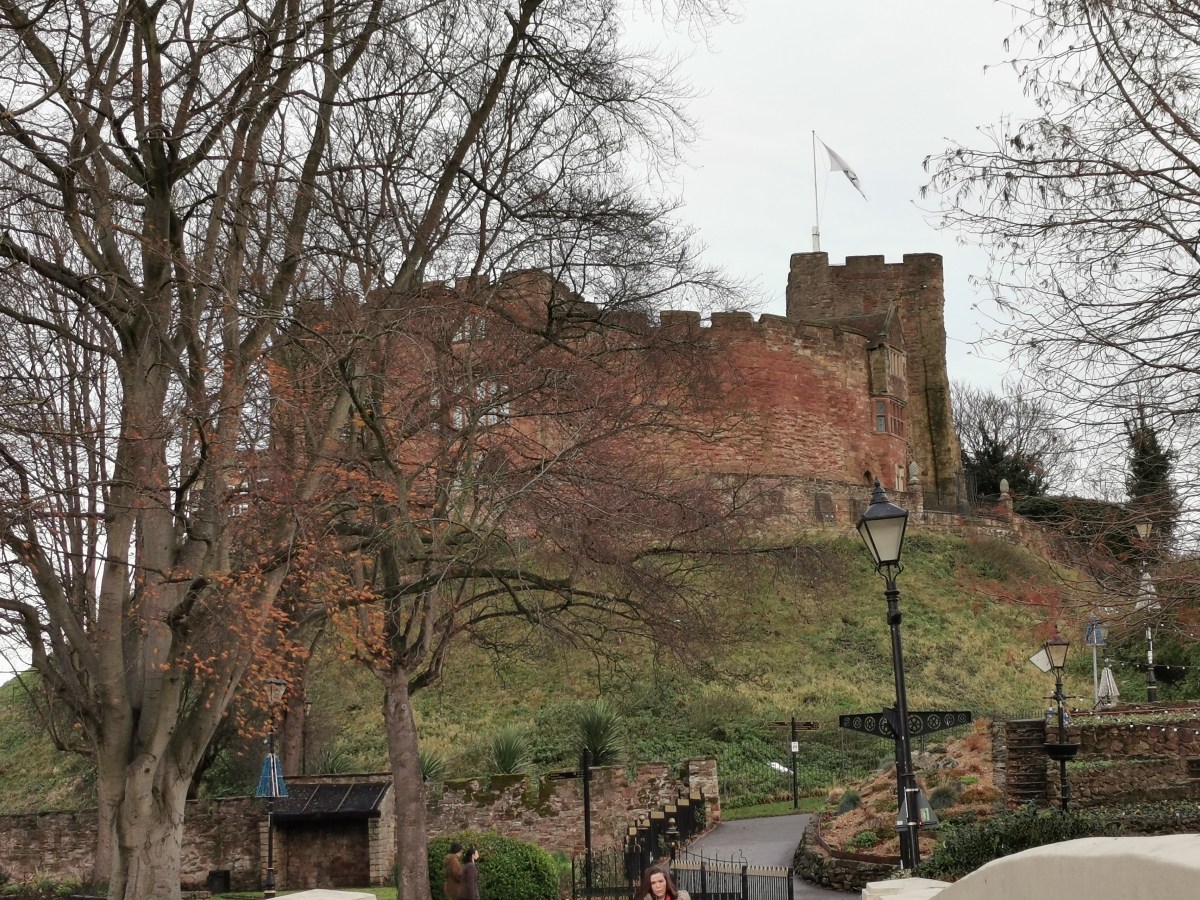
Great Witcombe Roman Villa

Great Witcombe Roman Villa is no longer open to the public, but it is managed by English Heritage, and it’s possible to get a glimpse of it, although you do need to be careful. I think it’s currently closed due to safety concerns, so be mindful, and stay behind all the barriers, especially as the location is pretty remote.

From what I could see of the remains of Great Witcombe Roman Villa, it does seem to have been set in a beautiful place, and it quite appealed to me. I relied heavily on the idea of the location when devising the home for one of the tribes that features in the Dark Age Chronicles. (It probably helped that I visited on a lovely sunny day.)

Listen to the beginning of Warriors of Iron

Curious about the trilogy? Check out the Dark Age Chronicles page or the blog posts below.

Blog links

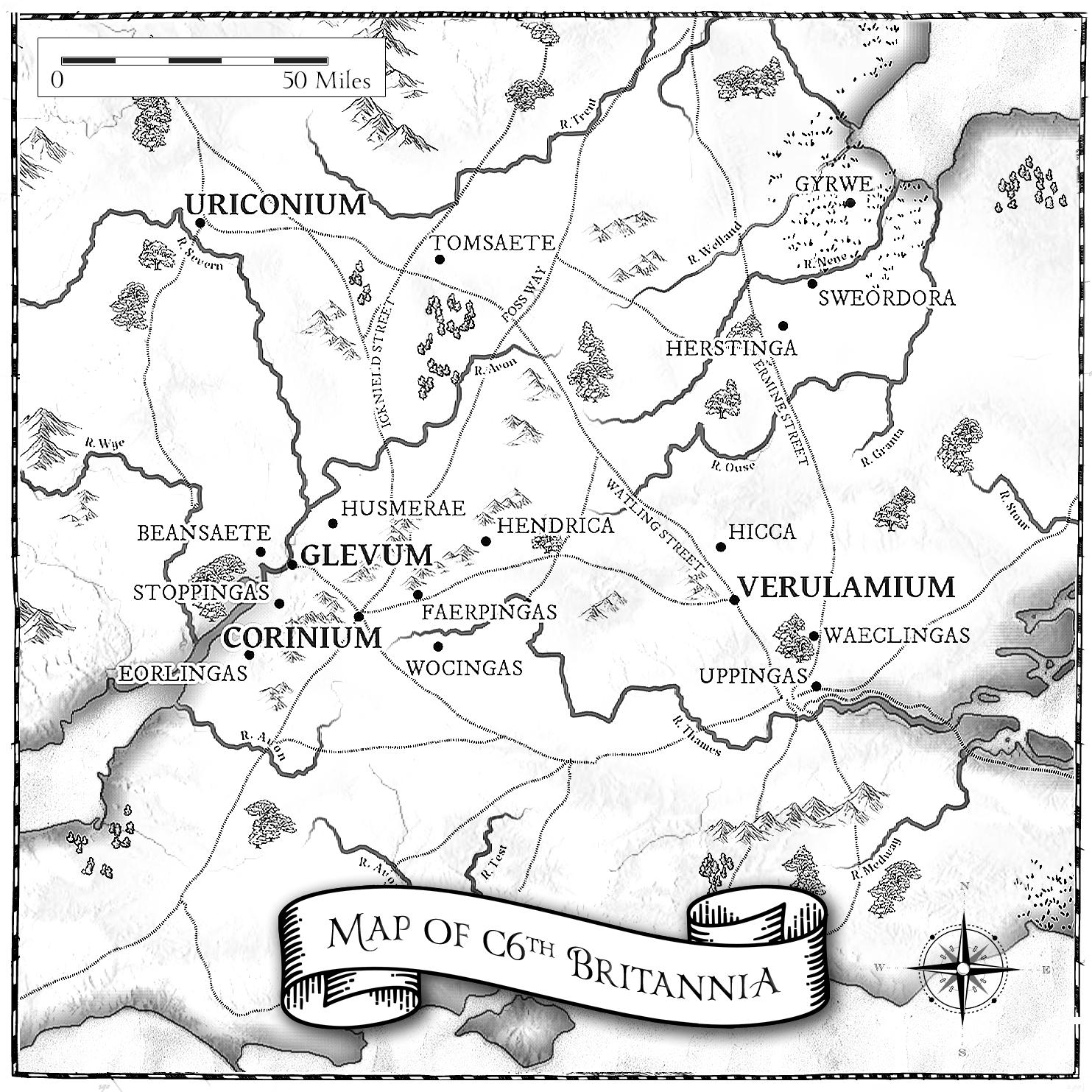
Image shows a map of Early England showing the places mentioned in the text of the book
The Dark Age Chronicles Map

Purchase Links (click on the images)


Posts

I’m delighted to welcome Malve von Hassell and her new book, The Price of Loyalty, to the blog #HistoricalFiction #medieval #France #crusades #AdelaofBlois #WilliamtheConqueror #StephenHenrydeBlois #BlogTour #TheCoffeePotBookClub

I’m delighted to welcome Malve von Hassell and her new book, The Price of Loyalty, to the blog #HistoricalFiction #medieval #France #crusades #AdelaofBlois #WilliamtheConqueror #StephenHenrydeBlois #BlogTour #TheCoffeePotBookClub

I’m delighted to welcome Malve Von Hassell and her new book, The Price of Loyalty: Serving Adela Bois, to the blog with an excerpt.

Excerpt

Caught In The Snare

1103 Caen

“But, my lady, any of your knights could do this.”

Cerdic had never yet been so frustrated and angry. Adela wanted him to take her son Theobald to her brother-in-law Hugh of Troyes. And she had mentioned another unspecified task. Certainly, she was a widow, and she needed friends around her whom she could trust. But she had other advisors, and for an errand like this, she surely could find someone else. Was he going to be at her back and call indefinitely?

“Theobald has known you all his life. It would be good for him to spend time with you. It has not been easy for him and his brothers.” Adela avoided his eyes. “My brother-in-law is a good man and the right person to take charge of a growing boy, especially now that he has lost his father. Moreover, Hugh and his wife Constance haven’t been blessed with children. Theobald is his heir designate. It is time that Theobald learns everything he needs to know for his future station and duties in life.”

Cerdic stared at her, at a loss for words.

“I can’t and don’t want to ask anybody else. I trust you.”

Cerdic bowed. In truth, he could hardly go on protesting.

Several weeks later, he was back on the road in the company of a surly twelve-year-old boy. For the first hour, they rode in silence. It was early December, and the first hoar frost had turned everything dull and brown. They had to ride north and west toward Troyes; Champagne was a large county, and it would take them about two days.

Theobald had bowed to his mother and ducked out of her embrace. He had mounted his horse without acknowledging Cerdic. He was slender and fine-boned; it didn’t look as if he would have his father’s sturdy build as an adult. His curly hair peeking out underneath his woolen cap was dark brown, not the reddish hue of his grandfather and his uncles. He rode with his head bent and his shoulders hunched.

Guisbert was ten, Cerdic thought with a pang, not much younger than this boy. Would he even recognize his father?

The first words they exchanged were when Cerdic’s horse started limping, and Cerdic had to stop to check the hooves. A stone had worked its way underneath one shoe. Fortunately, Cerdic could pick it out.

“Tell you what.” Cerdic straightened up. The boy’s expression was sullen and slightly hostile. “I don’t trust this shoe, and I don’t want the bay to go lame on me. Let’s walk for a bit. The next village isn’t too far from here, and we’ll find a blacksmith there.”

So they walked, leading the horses. “What are the roads like in the Holy Land?” Theobald asked after a while.

Cerdic didn’t think that the boy really cared about the roads, but it was an opening. “Would you believe it? Some are a lot better than the roads here. Others again are nothing but sand and rocks.”

Theobald was silent. They continued walking.

Then Theobald cleared his throat. “You were with my father, weren’t you?”

“Yes, I was,” Cerdic responded cautiously. “What did your mother tell you?”

“Nothing.” The boy jerked on his horse’s rein so that the surprised animal flung his head up and snorted. “Sorry,” Theobald whispered to the horse. “My mother told me nothing other than that he’s dead. I can’t talk to her about it.”

Cerdic frowned, inwardly cursing Adela. So, that’s why she sent him on this journey.

Here’s the Blurb

In a time of kingdoms and crusades, one man’s heart is the battlefield.

Cerdic, a Saxon knight, serves Count Stephen-Henry of Blois with unwavering loyalty-yet his soul remains divided. Haunted by memories of England, the land of his childhood, and bound by duty to King William, the conqueror who once showed him mercy, Cerdic walks a dangerous line between past and present, longing and loyalty.

At the center of his turmoil stands Adela-daughter of a king, wife of a count, and the first to offer him friendship in a foreign land. But when a political marriage binds him to the spirited and determined Giselle, Cerdic’s world turns again. Giselle, fiercely in love with her stoic husband, follows him across sea and sand to the holy land, hoping to win the heart that still lingers elsewhere.

As the clash of empires looms and a crusade threatens to tear everything apart, Cerdic must confront the deepest truth of all-where does his loyalty lie, and whom does his heart truly belong to?

Buy Link

Universal Link

Meet the Author

Malve von Hassell is a freelance writer, researcher, and translator. She holds a Ph.D. in anthropology from the New School for Social Research. Working as an independent scholar, she published The Struggle for Eden: Community Gardens in New York City (Bergin & Garvey 2002) and Homesteading in New York City 1978-1993: The Divided Heart of Loisaida (Bergin & Garvey 1996). She has also edited her grandfather Ulrich von Hassell’s memoirs written in prison in 1944, Der Kreis schließt sich – Aufzeichnungen aus der Haft 1944 (Propylaen Verlag 1994).

Malve has taught at Queens College, Baruch College, Pace University, and Suffolk County Community College, while continuing her work as a translator and writer. She has published two children’s picture books, Tooth Fairy (Amazon KDP 2012 / 2020), and Turtle Crossing (Amazon KDP 2023), and her translation and annotation of a German children’s classic by Tamara Ramsay, Rennefarre: Dott’s Wonderful Travels and Adventures (Two Harbors Press, 2012).

The Falconer’s Apprentice (namelos, 2015 / KDP 2024) was her first historical fiction novel for young adults. She has published Alina: A Song for the Telling (BHC Press, 2020), set in Jerusalem in the time of the crusades, and The Amber Crane (Odyssey Books, 2021), set in Germany in 1645 and 1945, as well as a biographical work about a woman coming of age in Nazi Germany, Tapestry of My Mother’s Life: Stories, Fragments, and Silences (Next Chapter Publishing, 2021), also available in German, Bildteppich Eines Lebens: Erzählungen Meiner Mutter, Fragmente Und Schweigen (Next Chapter Publishing, 2022).

Her latest publication is the historical fiction novel, The Price of Loyalty: Serving Adela of Blois (Historium Press, 2025).

Connect with the Author

Follow The Prince of Loyalty blog tour with The Coffee Pot Book Club

Posts

I’m sharing my review for A Mirror Murder, the first book in a delightful 1970s cozy mystery series by Helen Hollick #bookreview #mystery #blogtour

I’m sharing my review for A Mirror Murder, the first book in a delightful 1970s cozy mystery series by Helen Hollick #bookreview #mystery #blogtour

Here’s the blurb

A Mirror Murder – First In The  Jan Christopher Cozy Mystery Series

The first in a series of quick-read, cozy mysteries set during the 1970s in North East London and North Devon, featuring the characters of Jan Christopher, her Aunt Madge, her uncle, DCI Toby Christopher and romantic interest DC Lawrence Walker – plus several other endearing, regular characters. 

The background of Jan’s career as a library assistant is based on the author’s own library years during the 1970s, using many borrowed (often hilarious!) anecdotes, her life in suburban north east London on the edge of Epping Forest, and her present life in rural North Devon…


July 1971
Eighteen-year-old library assistant Jan Christopher’s life is to change on a rainy evening, when her legal guardian and uncle, DCI Toby Christopher, gives her a lift home after work. Driving the car, is her uncle’s new Detective Constable, Lawrence Walker – and it is love at first sight for the young couple. But romance is soon to take a back seat when a baby boy is taken from his pram, a naked man is scaring young ladies in nearby Epping Forest, and an elderly lady is found, brutally murdered… Are the events related? How will they affect the staff and public of the local library where Jan works – will romance survive and blossom between library assistant Jan Christopher and DC Walker? Or will a brutal murder intervene?

“I sank into this gentle cosy mystery story with the same enthusiasm and relish as I approach a hot bubble bath, (in fact this would be a great book to relax in the bath with!), and really enjoyed getting to know the central character…” Debbie Young (bestselling cozy mystery author)

“Jan is a charming heroine. You feel you get to know her and her love of books and her interest in the people in the library where she works. She’s also funny, and her Aunt Madge bursts with character – the sort of aunt I would love to have had. I remember the 70s very well and Ms Hollick certainly gives a good flavour of the period.” Denise Barnes (bestselling romance author Molly Green)

“A delightful read about an unexpected murder in North East London. Told from the viewpoint of a young library assistant, the author draws on her own experience to weave an intriguing tale” Richard Ashen (South Chingford Community Library)

“Lots of nostalgic, well-researched, detail about life in the 1970s, which readers of a certain age will lap up; plus some wonderful, and occasionally hilarious, ‘behind the counter’ scenes of working in a public library, which any previous or present-day library assistant will recognise!” Reader’s Review

AMAZON UNIVERSAL BUY LINK

https://getbook.at/MirrorMurder

My Review

I do love a cozy crime series, and Helen Hollick’s Jan Christopher stories are fabulous.

As I so often do, I have read the series slightly out of order, and all you sensible people will start with A Mirror Murder, and you are in for a real treat as you read your way through the entire series.

The first book, A Mirror Murder, sets the scene for the series and introduces us to the cast. As someone who loves a really well-written and tightly plotted cosy mystery, I adored this book.

Perfectly evoking the early 1970s, with reference to newspaper events and Jackie magazine, including the cost of chocolate and a bus ticket, as well as some evocative pre-electronic library administration, I thoroughly enjoyed this mystery. It did bring back memories of my school days when I was forced to volunteer in the local library, and they sent us to the depths of the library and let us loose on the card filing system.

South Chingford Library Copyright A Morton.

Episode 2: A MYSTERY OF MURDER

 set in rural Devon, Christmas 1971 

Library Assistant Jan Christopher is to spend Christmas in Devon with her boyfriend, DS Laurie Walker and his family, but when a murder is discovered, followed by a not very accidental accident, the traditional Christmas spirit is somewhat marred…What happened to Laurie’s ex-girlfriend? Where is the vicar’s wife? Who took those old photographs? And will the farmer up the lane ever mend those broken fences?

“There are lots of things to enjoy in the second in the Jan Christopher cosy mystery series” Best-selling cozy mystery author Debbie Young

“A laid back sort of novel, the kind that you can relax while reading, and simply let the story happen. This author has a particularly unique style of writing… this book wasn’t simply a story, but an experience. You almost have the feeling that the author is reading the book to you, and is adding in her own little quips every now and again. I loved every second… The whole mystery is well thought out… utterly amazing!” Review: I Got Lost In A Book Blog

“The pace is gently cosy, despite the murder… Jan is a wonderful character; young, naïve, but also savvy when needed. And Laurie is a gem. All the characters and their foibles and actions stay true to the era… a lovely, warm story.” Review: Ruins & Reading

More in the series:

Episode 3 A MISTAKE OF MURDER

Was murder deliberate – or a tragic mistake?

Episode 4 A MEADOW MURDER

Make hay while the sun shines? But what happens when a murder is discovered, and country life is disrupted?

Episode 5 A MEMORY OF MURDER

A missing girl, annoying decorators, circus performers and a wanna-be rock star to deal with. But who remembers the brutal, cold case murder of a policeman?

Episode 6 A MISCHIEF OF MURDER

The village Flower and Veg Show should be a fun annual event – but who added mischief and murder to the traditional schedule?

Purchase Links

A Mirror Murder Amazon Universal Link

Amazon Author Page Universal Link

Meet the author

Known for her captivating storytelling and rich attention to historical detail, Helen’s historical fiction, nautical adventure series, cosy mysteries – and her short stories – skilfully invite readers to step into worlds where the boundaries between fact and  fiction blend together.

Helen started writing as a teenager, but after discovering a passion for history, was initially published in 1993 in the UK with her Arthurian Pendragon’s Banner Trilogy and two Anglo-Saxon novels about the events that led to the 1066 Battle of Hastings, one of which, The Forever Queen (USA title – A Hollow Crown in the UK) became a USA Today best-seller. Her Sea Witch Voyages are nautical-based adventures inspired by the Golden Age of Piracy. She also writes the Jan Christopher cosy mystery series set during the 1970s, and based around her, sometimes hilarious, years of working as a North London library assistant. Her 2025 release is Ghost Encounters, a book about the ghosts of North Devon – even if you don’t believe in ghosts you might enjoy the snippets of interesting history and the many location photograhs.

Helen and her family moved from London to Devon after a Lottery win on the opening night of the London Olympics, 2012. She spends her time glowering at the overgrown garden, fending off the geese, chasing the peacocks away from her roses, helping with the horses and wishing the friendly, resident ghosts would occasionally help with the housework…

Author Helen Hollick

Connect with the author

Thoughts from a Devonshire Farmhouse.

Posts

What languages were being spoken in Post-Roman Britain? #newrelease #MenOfIron #WarriorsOfIron #histfic

What languages were being spoken in Post-Roman Britain? #newrelease #MenOfIron #WarriorsOfIron #histfic

What languages were being spoken in Post-Roman Britain?

As with everything to do with this period of the ‘Dark Ages,’ much was in flux. It’s believed that many languages were spoken by the inhabitants of the island of Britain. From the native Brythonic (also often termed British) who would have spoken a version of Welsh, to the Latin of the Christians, the Old Norse (or even older versions of Old Norse) being spoken by those emigrating to Britannia, as well as Pictish, and potentially other languages as well.

Our only written source commonly believed to be from this period, that of Gildas’ On The Ruin of Britain, was written in Latin, but then, he’s said to have been an educated Christian, raised in the ways of both Rome and Christianity. If he spoke Latin on a day to day basis, I’m unsure. I know scholars complain about his grasp of the written Latin language being somewhat convoluted, but whether that’s due to him, or the way his writings have been transmitted to us through the years, I’m unsure.

How then might these people have communicated with one another if so many different languages were being spoken? There must have been translators who could facilitate trade between the tribes. It would be amazing to discover one of these individuals in the archaeological record, but it seems unlikely.  

I’ve worked hard to find names for my characters which feel authentic for the period. The Eorlingas have Brythonic names, Meddi has been shortened from Meddiwysti for fear it was impossible to pronounce, whereas Wærmund and his warriors, while having names that feel very Saxon, are, I hope, ones I’ve not used before, and according to the resource I used, are deemed as ‘early’ Saxon names. Other characters also have Latin names, and some have slightly made-up Latinised names i.e. Terricus who was named after one of my readers, who wanted to be a warrior, but became a blacksmith instead. I think he’s still one of my readers:)

I’ve also used different names for the settlements, again to reflect the mix in language. The Eorlingas, Gyrwe and other tribal names are from the Tribal Hidage a contentious (later and difficult to date) source but one believed to document the very small tribal affiliations that might have existed at this time. Uriconium/Viriconium has its Latin name, although I used a version of the name I found that’s not the most commonly used one. Corinium (Cirencester), Glevum (Gloucester) and Verulamium (St Albans) have their Roman-era names. The River Severn, has its Old Welsh name, Habren, and so, as I was writing the trilogy I was being mindful of reflecting the hodgepodge of names and languages my characters might have known and heard being spoken. 

It also added to the drama to make it difficult for my characters to easily communicate with one another.

Listen to the beginning of Warriors of Iron

Curious about the trilogy? Check out the Dark Age Chronicles page or the blog posts below.

Blog links

Image shows a map of Early England showing the places mentioned in the text of the book
The Dark Age Chronicles Map

Purchase Links (click on the images)


Posts

I’m delighted to welcome Wendy J Dunn to the blog with her new book Shades of Yellow, and a guest post about the history behind the novel #ShadesOfYellow #Forgiveness #AmyRobsard #WomensFiction #DualTimeline #Romance #BlogTour #TheCoffeePotBookClub

I’m delighted to welcome Wendy J Dunn to the blog with her new book Shades of Yellow ShadesOfYellow #Forgiveness #AmyRobsard #WomensFiction #DualTimeline #Romance #BlogTour #TheCoffeePotBookClub

What is the history behind Shades of Yellow? 

There is a lot of history behind my novel — some of it expected and some of it more surprising. I always knew my character would be writing a novel about Amy Robsart. I love the Tudor period, so it made sense that my character would also share that love. It also made sense Lucy, as a breast cancer survivor, would also be drawn to the story of Amy Robsart. Some historians believe Amy Robsart had breast cancer, which led to the theory that her fall down a short flight of stairs resulted in a spontaneous spinal fracture because of bone metastasis. So, that meant I (and my character) had to research the life and times of Amy Robsart.

 Amy was the first wife of Robert Dudley, the man who came closest to marrying Elizabeth Tudor. Amy was born in 1532, and met Robert when he accompanied his father, John Dudley, then the Earl of Warwick to deal with the Kett rebellion in 1549. Amy came from a wealthy family with good bloodlines. More importantly, she was her father’s heir. She was also pretty, pretty enough to catch Robert Dudley’s eye. They were also almost the same age. Robert’s father probably wanted a better match for his son, but he also had other sons. Robert was also not his heir, so when Robert and Amy fell in love (and it appears they fell in love), their parents agreed to their marriage in 1550 when they were around eighteen. 

Amy married Robert while his father was solidifying his position as the actual power behind Edward VI’s throne. The first years of Robert and Amy’s marriage saw a fairly settled period for the Tudors. But then Edward VI died, and John Dudley failed to place Lady Jane Grey onto the throne. Mary Tudor claimed the crown, and Dudley soon lost his head at the Tower of London, and Mary imprisoned all his sons in the Tower. The following year, Lady Jane Grey and her husband Guildford were executed after another failed rebellion. For close to two years, Robert and his remaining brothers stayed in the Tower. His older brother died just days after their release. Another brother died while fighting in a war for Mary’s husband, Philip of Spain. By the time Elizabeth becomes Queen, Robert and Amy were living mostly separate lives. Robert and Elizabeth acted like lovers in the early years of Elizabeth’s reign – and caused a lot of scandal. The day after Elizabeth celebrated her twenty-seventh birthday, Amy was found dead at the bottom of a flight of stairs at Cumnor House, her neck broken. No one has ever solved the mystery of Amy Dudley’s death, and her husband Robert never escaped the suspicion that he organised her murder. 

 But most of my story takes place in 2010. While writing Shades of Yellow, I realised how long ago that now is. It was a different world in 2010. I ended up doing as much research about 2010 as I was doing about Amy’s life in Tudor times. I realised that Lucy’s life would have shaped her differently if she had been born around 1980 compared to 1996. She also would have had a few more life-changing options regarding her medical treatment if I had set the story in 2025.  

By the time I finished Shades of Yellow, I had realised, with surprise, that history informed the entirety of my novel.

Here’s the blurb

During her battle with illness, Lucy Ellis found solace in writing a novel about the mysterious death of Amy Robsart, the first wife of Robert Dudley, the man who came close to marrying Elizabeth I. As Lucy delves into Amy’s story, she also navigates the aftermath of her own experience that brought her close to death and the collapse of her marriage. 

After taking leave from her teaching job to complete her novel, Lucy falls ill again. Fearing she will die before she finishes her book, she flees to England to solve the mystery of Amy Robsart’s death. 

Can she find the strength to confront her past, forgive the man who broke her heart, and take control of her own destiny?

Who better to write about a betrayed woman than a woman betrayed?

Buy Link

https://books2read.com/u/mqPGgd

This title is available to read on #KindleUnlimited.

Meet the author

WENDY J. DUNN is a multi-award-winning Australian writer fascinated by Tudor history – so much so she was not surprised to discover a family connection to the Tudors, not long after the publication of Dear Heart, How Like You This, her first Anne Boleyn novel, which narrated the Anne Boleyn story through the eyes of Sir Thomas Wyatt, the elder. 

Her family tree reveals the intriguing fact that one of her ancestral families – possibly over three generations – had purchased land from both the Boleyn and Wyatt families to build up their holdings. It seems very likely Wendy’s ancestors knew the Wyatts and Boleyns personally.

Wendy gained her PhD in 2014 and tutors in writing at Swinburne University of Technology, Australia. She loves walking in the footsteps of the historical people she gives voice to in her books. 

Author image for Wendy J Dunn

Connect with the Author

Follow the Shades of Yellow Blog Tour with The Coffee Pot Book Club

Posts

I’m sharing my review for Death At the School of Translators,  A Rebecca DeToledo Medieval Mystery by Esther Knight #bookreview #historicalmystery #histfic #blogtour

I’m sharing my review for Death At the School of Translators,  A Rebecca DeToledo Medieval Mystery by Esther Knight #bookreview #historicalmystery #histfic #blogtour

Here’s the blurb

Ivanhoe meets Phryne Fisher in this medieval adventure of a woman sleuth.

Toledo, 1193: A city of scholars, secrets, and simmering tensions. When Queen Eleanor of Aquitaine’s Jewish spy is found dead, whispers of treachery reach all the way to England.

Rebecca DeToledo, a gifted healer and wealthy Jewish heiress, arrives under royal orders to investigate at the School of Translators. Her mission quickly turns perilous as she faces threats to her life and a sudden battle over her inheritance.

Assigned to guard her is Sir John of Hampstead, a disillusioned crusader burdened with knowledge that could threaten King Richard’s release from captivity. Forced into this partnership, he must protect Rebecca while grappling with his own prejudices.

As they navigate Toledo’s complex alliances, where Christians, Jews, and Muslims coexist in fragile peace, they uncover a web of secrets reaching deep into the cathedral. Can Rebecca and John unearth the truth before they become the next targets?

For fans of historical sleuths, slow-burn tension, and secret missions cloaked in royal intrigue.

Purchase Link

https://www.amazon.co.uk/Death-School-Translators-DeToledo-Medieval-ebook/dp/B0FBWW9XSR

https://www.amazon.com/dp/B0FBWW9XSR

My Review

Death at the School of Translators is a medieval mystery told from two points of view: Rebecca, our Jewish heiress, and John, our disillusioned knight. They are thrust together in England by Queen Eleanor of Aquitaine, in somewhat confusing circumstances, and quickly embark on their journey to Toledo, where the real investigation quickly gets underway.

The author endeavours to bring together the many cultures within Toledo and the many interested parties at play. There is no end to the intrigue, as the appearance of Rebecca and John stirs up problems for those living in Toledo, while others have things they wish to keep hidden.

There are a few moments where the story falters slightly, but as it approaches the conclusion, it really excels, and I think the author finds her footing with these two characters, who will undoubtedly reveal more mysteries in the future. There are also one or two modernisms that detract from the depth of research the author must have undertaken to write the mystery, but they are only slight.

Overall, I found Death at the School of Translators to be a fine first story in this new mystery series, and I look forward to reading more of Rebecca and John’s mysteries.

Meet the author

Esther Knight writes historical mysteries featuring a bold heroine who challenges the norms of her time.

Giveaway to Win a $15 Amazon Gift Card (Open INT)

*Terms and Conditions –Worldwide entries welcome.  Please enter using the Gleam box below.  The winner will be selected at random via Gleam from all valid entries and will be notified by Twitter and/or email. If no response is received within 7 days then Rachel’s Random Resources reserves the right to select an alternative winner. Open to all entrants aged 18 or over.  Any personal data given as part of the competition entry is used for this purpose only and will not be shared with third parties, with the exception of the winners’ information. This will passed to the giveaway organiser and used only for fulfilment of the prize, after which time Rachel’s Random Resources will delete the data.  I am not responsible for despatch or delivery of the prize.

https://gleam.io/rnFDL/win-a-15-amazon-gift-card-open-int

Posts

I’m delighted to share my review for Adam Lofthouse’s Eagle and the Flame #historicalfiction #blogtour #Roman #bookreview

I’m delighted to share my review for Adam Lofthouse’s Eagle and the Flame #historicalfiction #blogtour #Roman #bookreview

I’m reviewing Eagle and the Flame by Adam Lofthouse

Here’s the blurb

Rebellion is in the air at the far reaches of empire.

Wall of Hadrian, Britannia, AD 367. Tribune Sixtus Victorinus is scouting north of the Wall when he first sees the smoke. Riding south he finds a province in chaos, the local populace in flight, the soldiers absent.

Britannia is ablaze, overrun with barbarians and Valentia is the word on everyone’s lips. But no one seems to have the first clue what it means…

Victorinus may have let his life run to ruin and drunk his youth away, but now he must forge himself into the soldier he always wanted to be, the hero his children think he is.

Because his family are among the missing, and traitors lurk much closer than he could ever believe.

To save his family, he must first save an empire.

EAGLE AND THE FLAME will sweep you through the tumultuous years of the late Roman Empire.

Purchase Link

https://mybook.to/EagleandtheFlame

My Review

The Eagle and the Flame by Adam Lofthouse is a fascinating reimagining of Britannia during the late 360s. This then is Roman Britain, complete with Roman soldiers and senators, Roman weapons and, of course, Hadrian’s Wall. But, this is also a world of Germanic warriors, Saxon invaders, the tribes from beyond the Wall, and even some pirates. 

Historically, the end of Roman Britain might be a few years in the future, but this is a world on the brink, the reach of the Romans starting to fade, and the events in Eagle and the Flame tell of a people as yet unaware of the coming calamities, and, Adam describes it very well. We have abandoned Roman forts, discontented Roman soldiers who aren’t getting paid on time, and the tribes from across Hadrian’s Wall are more aware of what might be happening than the Romans. And the emperor is very far away in Rome.

Our two main characters, Tribune Sixtus Victorinus, and Felicius are opposites of the same coin; one jaded and drunk, the other, still a career Roman soldier. Between them, they must disentangle the unexplained events on the borderlands, and then they must rouse support from all that they can to defeat the coming rebellion.

Eagle and the Flame starts fantastically well, immediately sucking the reader into the world of the 360s. It’s really quite hard to put the book down as the tension ramps up. Tribune Sixtus is a sympathetic character; for all, he is perhaps to blame for many of his problems. The small group of warriors who make up his area of command are well-sketched, and there is tragedy in the offing. Felicius’ life is more regimented, and it is Felicius who gives us a glimpse of what it was to be a Roman in the waning years of the Empire.

I really enjoyed Eagle and the Flame. The book starts with a bang and builds nicely to its conclusion, introducing a great cast of characters along the way. If you’re a fan of stories set in Saxon England, then you’ll love this earlier glimpse of Britannia.

Check out my review for Ravensworn.

Meet the author

Adam has for many years held a passion for the ancient world. As a teenager he picked up Gates of Rome by Conn Iggulden, and has been obsessed with all things Rome ever since. After ten years of immersing himself in stories of the Roman world, he decided to have a go at writing one for himself. He lives in Kent, UK.

Author image of Adam Lofthouse

Connect with Adam

Posts