

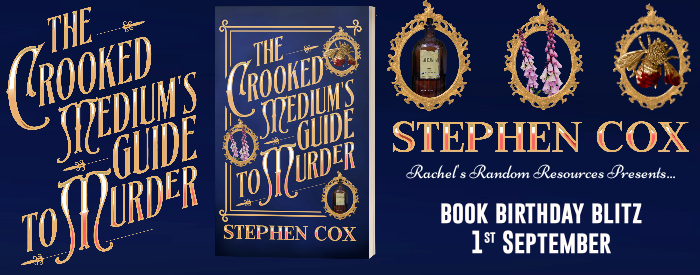
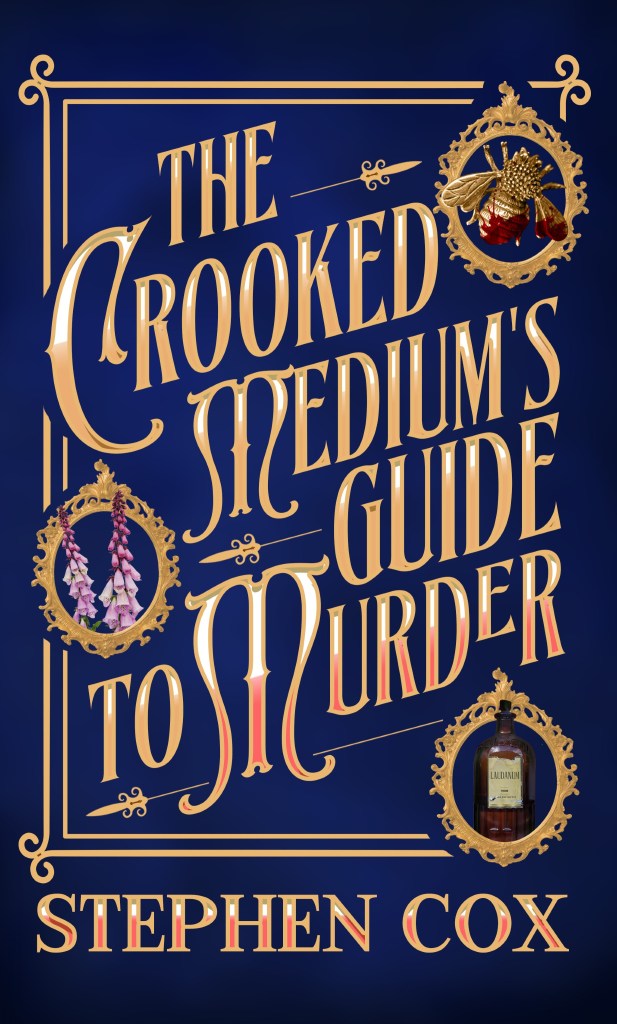
I’m reviewing The Crooked Medium’s Guide to Murder (The Crooked Medium 1) by Stephen Cox #blogtour #bookreview #historicalmystery
Here’s the blurb
London 1881. Can two crooked women stop a murder?
Extravagant medium Mrs Ashton and her lover, blunt working-class Mrs Bradshaw, run a spiritualist scam. Mrs Ashton secretly reads minds.
Believing that Mrs Ashton is genuine, grieving Lady Violet craves the truth behind her mother’s untimely death. But Lady Violet’s powerful husband Sir Charles hates spiritualists. Has he killed before?
Uncovering this MP’s wicked crimes will put all three women in terrible danger…
To solve a shocking murder, look both sides of the grave.
“I loved this book! Victorian murder mystery meets “ghost” story, with delicious sprinklings of compassion and mischief…”
Caroline Day, author of Sunday Times Bestseller Hope Nicely’s Lessons for Life
Purchase Links
https://www.amazon.co.uk/Crooked-Mediums-Guide-Murder-Victorian-ebook/dp/B0FLK68742/
https://www.amazon.com/Crooked-Mediums-Guide-Murder-Victorian-ebook/dp/B0FLK68742/
Exciting News: Book 2 in the Crooked Medium series is now available for pre-order!! – https://stephencox.co.uk/buy-terror/
My Review
The Crooked Medium’s Guide to Murder is an enthralling late nineteenth century set mystery, with all the trappings we would expect from a story set in this era, complete with a spiritualist (or is she?), an angry husband and a desperate wife, told with a flare for the language of the time, and some quite amusing insults to boot.
The setting is well depicted, and the mystery quickly reveals itself, as Mrs Ashton determines to aid poor Lady Violet, as she discovers the truth about her husband.
A rousing mystery, with plenty of pace and a sure fire hit for those who love stories set in the era.
Meet the author
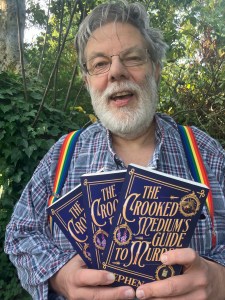
My grandmother told me I read too much. I remember walking in the garden when I was small, telling myself stories. It was over thirty years of wanting to be a novelist before I tried… and succeeded.
The Crooked Medium’s Guide to Murder arose because I wanted to write about Britishness and specifically about Englishness; about our complex relationship with the past; I wanted leads who were morally grayer but still capable of kindness. It was time for a novel with queer leads. And in quite desperate times, I needed to write something with some uplift. It’s the first book intended to start a series.
My first books, Our Child of the Stars and Our Child of Two Worlds are set in the 1960s USA. It’s about Gene and Molly, a childless couple, and Cory, the little boy from the stars that they adopt, under such challenging circumstances. The books got lovely reviews and are available on both sides of the Atlantic.
I spent nearly all my childhood in Bristol, and I’m now an adoptive Londoner. I live with my partner, and it’s the best thing our two adult children come back from time to time. Our garden rages wild.
https://stephens-newsletter-69af79.beehiiv.com
Giveaway to Win 4 x Signed Books by Stephen Cox (Open to UK Only)
https://gleam.io/gFE4O/win-4-x-signed-books-by-stephen-cox-open-to-uk-only
Prize includes – Our Child of the Stars, Our Child of Two Worlds, The Crooked Medium’s Guide to Murder and the Crooked Medium’s Guide to Terror.
*Terms and Conditions –UK entries welcome. Please enter using the Gleam box below. The winner will be selected at random via Gleam from all valid entries and will be notified by Twitter and/or email. If no response is received within 7 days then Rachel’s Random Resources reserves the right to select an alternative winner. Open to all entrants aged 18 or over. Any personal data given as part of the competition entry is used for this purpose only and will not be shared with third parties, with the exception of the winners’ information. This will passed to the giveaway organiser and used only for fulfilment of the prize, after which time Rachel’s Random Resources will delete the data. I am not responsible for despatch or delivery of the prize.
Posts
Stay up to date with the latest from the blog.




















 MJ Porter