I’m delighted to share my review for A Treatise on Martian Chiropractic Manipulation and Other Satirical Tales by Lisa Fox #blogtour #bookreview #fantasy #shortstories
Here’s the blurb
Human beings are flawed creatures, and humor is the perfect means to exploit the endless fodder of our shortcomings. This multi-genre collection of twenty-one short satirical stories will leave you smirking, chuckling, scratching your head, and maybe even muttering to yourself “WTF is this?”
From the award-winning author of the acclaimed short story collections “Core Truths” and “Passageways: Short Speculative Fiction” comes something a little bit irreverent and a whole lot of weird.
Ketchup-covered chiropractors on Mars. Wealthy vigilante housewives battling coffee-addicted aliens. Cheerleaders protesting unrestricted access to cupcakes. Canine doulas. Hallucinating marine biologists. No one is immune from the absurdity.
This is an intriguing and often fun collection of short stories by Lisa Fox. Some of them are very short, and some are much longer, but they all offer something a little different. Readers will enjoy learning about Martian Chiropractic techniques as well as following the loyalty card storyline, which will have us all thinking about just how much information these companies do hold about us (hint, it’s a lot). If you love short story collections, do check this one out. It’s varied, thought-provoking and sometimes, just plain fun.
Meet the author
Lisa Fox loves to ask questions. By day, she’s a pharmaceutical market researcher. By night, she channels that same inquisitive spirit into writing short fiction, building worlds and characters that explore the meaning of life, the universe, and everything in between. She survives, and sometimes thrives, in the chaos of suburban New Jersey with her husband, two sons, and quirky Double-Doodle dog. Lisa is an award-winning author of two short story collections: Core Truths and Passageways: Short Speculative Fiction. Website: lisafoxiswriting.com Twitter/X: @iamlisafox10800 Facebook: lisafoxiswriting
I’m welcoming Jill Bray, and her historical mystery, A Brotherly Devotion, to the blog with an extract #blogtour #historicalmystery @rararesources @JillBray67
This extract is taken from the start of Chapter 18 after Lord Fitzwarren has been found to be the killer of Brother Clement.
Katherine found it difficult to believe that, in a short space of time, her whole world had changed once again. She had known the facts and the evidence that was put against Lord Fitzwarren, but she hadn’t given much thought as to how it would end. It was only yesterday that she had started to suspect him, and then earlier today, when she had journeyed with her father to speak with Edward; she had known for certain that he was the one who had so viciously murdered Brother Clement.
The banquet in the hall now felt quite surreal. She looked around at the rest of the guests, who had gone back to feasting and drinking at their tables, as though nothing had just happened. Yet, for her, everything had changed once more. Just a couple of days ago, she had been expecting to run away with Alexander in order to avoid marrying Lord Fitzwarren; and, up until yesterday, she had intended to keep to that plan. She had come to terms with having to give up everything; to lose contact with her sister and to disobey her father, in order to be with the man she loved. After sitting back down at the table next to her sister, she felt quite light-headed and reached out to pour herself a goblet of wine. She needed to consider, just what she was going to do next.
“Well, that wasn’t what I expected!” Angharad exclaimed, leaning over to her sister. “You knew, didn’t you?” She questioned Katherine.
“Not everything, and not finally until earlier today,” she admitted. “But even then, I couldn’t tell you. I hope you understand. Father needed to keep everything quiet, so that Lord Fitzwarren wouldn’t get to know.”
“This explains why you have been so distant. I still can’t believe that the man you were due to marry was a murderer. That’s quite a revelation.” Angharad leaned back in her chair. “So, why did it happen here tonight, at the banquet?”
“We went to Lord Fitzwarren’s manor earlier today to get Edward to safety and for father to arrest Lord Fitzwarren; but he wasn’t there,” Katherine told her. “Father didn’t want to raise any suspicion. And, as he knew Lord Fitzwarren would be here tonight, he agreed with Sir Robert that this evening would be a good opportunity to present the case against him.”
“Did father know before then, that Lord Fitzwarren had killed the monk?”
Katherine thought about it carefully. “He had spoken with Peter Beaumont and found out about Lord Fitzwarren’s sister, so I think he had his suspicions. But he had no proof, and that was the main thing.” Katherine took a drink of wine and relaxed back into her chair with a sigh of relief. “None of us were certain, until yesterday when I met Edward, and he showed me the dagger. Up until then, it was just a story father had been told by Peter Beaumont, who was a close friend of Hughs. One about how William’s devotion to his sister had been so consuming; and how she had taken her own life rather than live without the man she loved. That man was Hugh de Glanville, who became Brother Clement when he took Holy Orders. In Lord Williams eyes, the church took away his adored sister and then denied her a burial in consecrated ground. His grief and anger must have festered away inside him ever since her death and become sort of twisted. Then last week, and quite by chance; he came upon the man who had been the cause of all his sadness.” She took another sip of wine before continuing. “It was an accidental encounter as, from what father has told me, I don’t believe Brother Clement left the walls of the Abbey much. Lord Fitzwarren must have thought it was divine intervention, and he was being given a chance to mete out his own kind of justice.”
“So, he killed him?” Angharad stared at her.
“Yes, in order to avenge his sister.” Then, Katherine added more thoughtfully. “Such was his devotion to her.”
“And to think you were so nearly his wife.”
Here’s the blurb
YORK 1224: On a hot July night, Brother Clement is savagely murdered when returning from administering to Lady Maud de Mowbray.
Simon de Hale, Sheriff of Yorkshire, is in his office when Abbot Robert visits to inform him of the murder, and request that he take responsibility for investigating the killing.
Simon is unsure whether the murder is a crime against the Abbey, or if it is a more personal matter against the monk.
Commencing their investigation, Simon and his deputy, Adam, ride out to see Lady Maud de Mowbray at Overton – the last person to see Brother Clement alive. When they encounter her son, Roger de Mowbray, they both take an instant dislike to him.
Lady Mowbray reveals to Simon that she intends to leave her money to the Abbey, and Simon can see this being a motive for the monk’s murder, if her son was aware of this.
The investigation gathers pace and a murder weapon is found.
A banquet is held at the castle to honour the Royal Justice – during which, one of the guests is exposed as the murderer and apprehended. But that will not be the end of the story for Simon and his family.
Jill lives on the Island of Guernsey now, but is originally from Yorkshire. She has a love of early medieval history which led her to study the subject at Huddersfield College in the 1980’s. Working in Leeds at the time, meant that she had access to the Yorkshire Archaeological Society on their late night opening and following research, she wondered what the lives of the people she read about were actually like. This started a love of writing historical fiction, but her initial stories were never sent to a publisher. Life and work then intervened and writing was put to one side. It was only following a workshop held by the Guernsey Literary Festival in 2024 on writing historical fiction, that her love of writing was reignited. Her first novel ‘A Brotherly Devotion’ was published in July 2025.
I’m excited to share an excerpt from RJ Verity’s new historical fiction novel, Poole of Light #blogtour #historicalfiction
INTRO In this scene, ten-year-old Jem Poole glimpses a world far beyond Spennymoor for the very first time. The newly built Grand Electric Hall has not yet opened to the public, but Jem and his friend Daisy slip inside, drawn by curiosity and the muffled sound of music. What Jem witnesses there – moving pictures – ushers in a moment of wonder that will quietly shape the rest of his life. This extract captures that first spark: the awe, the innocence, and the sense that something extraordinary has just entered his world.
EXTRACT
As they turn into Cheapside, an old rusty lorry rumbles to a stop outside a new brick building, where a group of workmen are fixing enormous block capitals above a clock. Daisy tilts her head to read, eyes squinting as if the letters might tell her something important. Jem watches on, but says nothing.
‘What does ARCA mean?’ she asks.
‘I don’t think it means anything.’
‘Oh.’
Below the clock, white lettering proudly displays the words “GRAND ELECTRIC HALL”.
‘What’s a grand electric hall?’
He sighs, keeping his eyes on the workmen. He’d overheard Pa talking to his colliery mates about a new theatre opening in town – something with moving photos, he’d said. Of course, Jem knows what a photo is – like the one of Ma on the mantelpiece – but how she could suddenly come to life is beyond him. He can’t picture her like that, not walking and talking like Pa or Daisy.
‘Come on,’ he says.
They slip past the workmen and into the foyer of the new building. Jem’s steps are deliberate and measured – he’s determined to take everything in. Daisy skips beside him, light on her feet.
Crates, half-unpacked, litter the space – paper and straw spilling in all directions. The warm smell of fresh wood hits first, then something sharper, chemical, that scratches the back of his throat. Wall sconces flicker with a quiet expectancy, casting lively patterns across the floor. Music drifts from somewhere beyond – muffled, unfamiliar, pulling at Jem’s chest like a thread. He follows the sound toward the back of the building and beckons for Daisy to come.
She stands looking at him, eyes wide, as if to say: This isn’t a good idea.
‘You don’t have to … if you don’t want to,’ he tells her.
She pouts but trails after him anyway.
As they draw closer, the music grows clearer – a dramatic piano tune with heavy bass and a scatter of quick, racing notes. Jem glances to his right and sees a bright shaft of light dancing across the passageway. He creeps forward, heart thumping, until his face and jacket are lit up. It feels like sunlight through the church window on a Sunday morning – only sharper, more vivid.
His shoulder brushes against a soft curtain, but his eyes stay fixed ahead, his breath deeper. For there, on a stage, is a beautiful young woman. Her face is white – like the colour of Pa’s eyeballs after a shift down the pit – only clean, and somehow otherworldly. Big curls of hair, piled high, fall to her shoulders. She’s wearing the fanciest frock he’s ever seen. A man walks beside her, and they cross the road together. Behind them, tall buildings rise, taller than any furnace chimney in all of County Durham. Jem’s heart beats faster as the music quickens. Then a passenger train rushes into view and vanishes just as quickly.
Jem doesn’t move. He hardly blinks. How can a train be on a road? How can buildings scrape the sky? How can people float across a screen like that?
Most of all – how can everything be black and white and still feel more alive than the world he knows?
‘Moving photos.’ He can’t help but say the words out loud.
Daisy tugs at his arm. ‘Jem!’ she cries.
But before he can turn, he feels a sudden blow to his temple.
‘What have we here?’ booms a voice behind him.
Jem stumbles sideways, hand to his pounding head. He’s looking down at a pair of black polished boots … dark overalls … then a round sweaty face, breathing loud, and steaming with anger.
‘Sorry, sir,’ says Jem, trying to steady himself. ‘We don’t mean no bother.’
‘No bother?’ the man sneers.
‘No, sir. We just want to see moving photos.’
The man gives a snort. ‘Moving pictures, boy. They’re called moving pictures.’ He crouches down, his small black eyes level with Jem’s. ‘And have you got thruppence between the two of you?’
Jem glances at Daisy, then back at the sweaty round face. ‘No, sir.’
‘Then you’ll have to go without, won’t you? Go awn.’ He stamps his foot. ‘Gan! Afore I call police!’
The children bolt down the passageway, back into the foyer, and past the workmen hauling a giant letter ‘D’ above their heads.
Outside, the street is already black with night.
‘The park!’ Jem shouts as they run.
They turn the corner onto Dundas Street, where lamplight is scarce, and shadows swallow the pavement. His feet slide on icy sludge as he dodges night soil boxes piled up like traps. Daisy’s steps are fainter now – she must be slowing down. He tries to stop, but it’s too late – too fast – and his footing falters. His chest jerks forward. Arms fling out for balance, too wide, too desperate, and his whole body launches through the air. In the half-second before Jem crashes down, he sees the jagged boxes, the filth inside them, and he twists every muscle to avoid them. His body slams into the ground, splinters flying and muck exploding in all directions.
Here’s the blurb
A coal-mining town. A flicker of light. A boy who dreams of more.
Spennymoor, 1913. When ten-year-old Jem Poole sees a moving picture for the first time, it ignites a spark. Raised in a northern coal-mining town marked by grief and hardship, he begins to dream of more than soot and survival. He dreams of light.
Through war, reinvention, and the golden age of British cinema, Jem rises to national success, building a legacy of silver screens and stories that define a generation. But when a figure from his past reappears, long-buried memories resurface, and he must confront the truth of the life he has built – and the memories that never let go.
Set against the backdrop of twentieth-century Britain, Poole of Light is a richly layered historical debut about ambition, identity, and the stories that shape us.
Perfect for readers who enjoy:
Character-driven historical fiction with emotional depth
Coming-of-age novels set in 20th-century England
Themes of legacy, reinvention, and quiet redemption
Authors like Jo Baker, Kristin Hannah, Amor Towles and Anthony Doerr
Book One in The Poole Legacy — a literary historical trilogy exploring ambition, identity, and legacy across generations.
Also available as an eBook: Bright Light, a companion short story set during the events of this novel.
RJ Verity grew up in Yorkshire and studied at King’s College London before spending more than twenty years in financial services across Asia. She now lives in Guernsey with her endlessly patient husband and their spirited ten-year-old Labradinger. When she’s not writing or reading, she can often be found exploring the island’s rugged coastline.
She is currently working on The Poole Legacy, her debut trilogy of historical novels. The first book in the series, Poole of Light, is out now.
*Terms and Conditions –UK entries welcome. Please enter using the Gleam box below. The winner will be selected at random via Gleam from all valid entries and will be notified by Twitter and/or email. If no response is received within 7 days then Rachel’s Random Resources reserves the right to select an alternative winner. Open to all entrants aged 18 or over. Any personal data given as part of the competition entry is used for this purpose only and will not be shared with third parties, with the exception of the winners’ information. This will passed to the giveaway organiser and used only for fulfilment of the prize, after which time Rachel’s Random Resources will delete the data. I am not responsible for despatch or delivery of the prize.
The Retired Assassin’s Guide to Orchid Hunting is a fabulous, extremely entertaining mystery, with a wealth of engaging, funny, and quite quirky main characters. This is the second book in the series. I have since gone back and read book one, where we first meet the characters. It is also very good, but I do think the characters are much more fully formed in this second book (which makes a lot of sense). That said, I would probably still advise you to start with book one, because if you read book two first, you’re going to know a lot about the first mystery they solve.
Dante, our retired assassin, is often unintentionally funny as he endeavours to live his life as ‘normal’ i.e. not as assassin’s do. I laughed out loud a few times. He is joined by Charlie, our gardener who also sees and can talk to ghosts (so the paranormal bit) and Eleanor a retired art thief, I think, she’s very mysterious.
And then on top of that we have our crime to be solved, all while the delightfully quirky orchid convention is taking place in the local town.
This mystery is a lot of fun, and very engaging. The storyline manages to do a great deal with our characters, with the beautiful New Zealand countryside, with quirky local town inhabitants, and all without ever feeling ‘overdone.’ If you love a quirky, funny mystery book, this is for you. If you love a small town mystery, this is for you. If you love a hint of the paranormal, then this is for you as well. I highly recommend it, but do yourself a favour, and read the first book first. It’s not quite as brilliant as this second offering, but it will certainly get you hooked on Dante, his cat, and his two friends, in this New Zealand setting.
Meet the author
Naomi is a writer living in New Zealand. When not busy writing or raising her twin son and daughter, she spends her free time (ha!) surfing, kitesurfing, and retrieving her shoes from Max the dog.
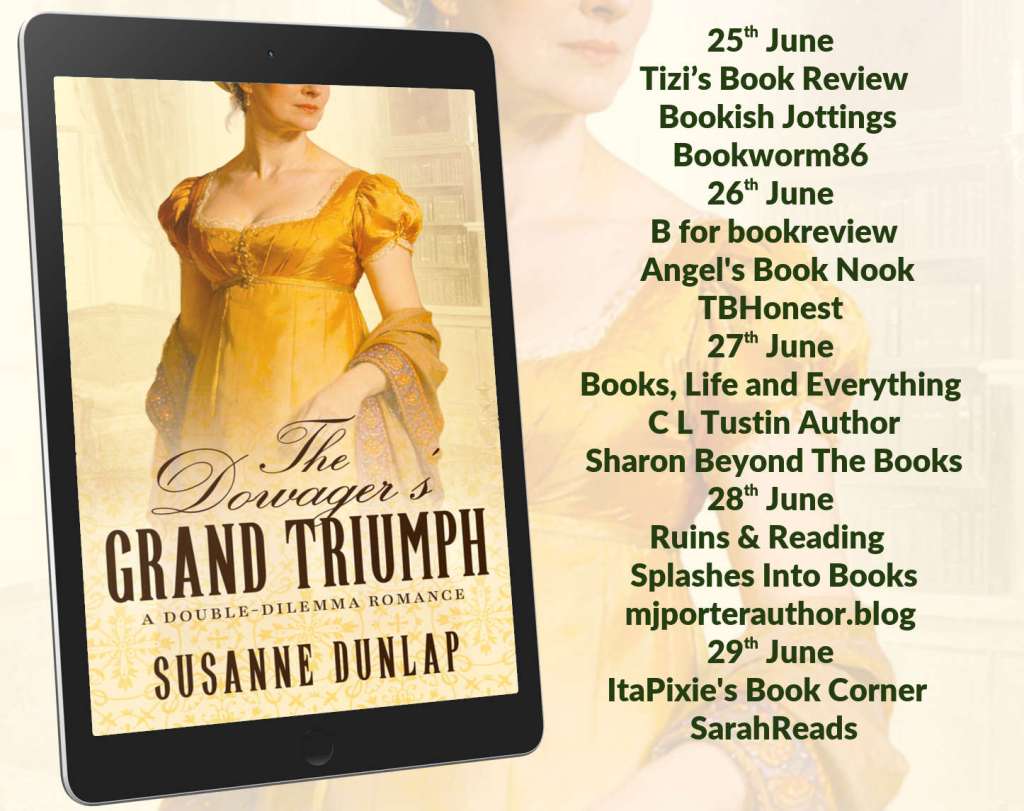
I’m welcoming The Falconer’s Lost Baron by Susanne Dunlap to the blog #blogtour #RegencyRomance #bookreview
Here’s the blurb
A sweeping Regency tale of identity, devotion, and unexpected romance.
Lady Antonella thought she knew who she was—until a shattering family secret strips her of her name, her place in society, and her future. Cast adrift in Cornwall, she finds an injured goshawk in a poacher’s net and begins to nurse it back to health. But the hawk belongs to the war-scarred Lord Atherleigh—a man haunted by loss, determined to dismantle his mews, and certainly not expecting a spirited young woman to upend his solitude.
In London, her twin sister Belinda—radiant, poised, and newly on the marriage market—has only one goal: to find a worthy match… for Antonella. But when Hector Gainesworth, a charming rogue with laughter in his eyes and secrets of his own, turns his attention to Belinda instead, her heart begins to spin in an altogether unexpected direction.
As the sisters navigate betrayal, desire, and the demands of their hearts, two men must decide whether to risk everything for love. And Antonella’s goshawk may be the wild, winged thread that binds their fates.
The Falconer’s Lost Baron is the third of Susanna Dunlap’s Regency romances I’ve read, and I’ve enjoyed all of them (see my reviews below for the previous two books). Every book offers something a little different, while still delivering on what we all expect from a Regency romance.
This new title will delight fans of the genre (there is no need to have read the previous two titles, although you will be missing a treat.)
Susanne Dunlap is the award-winning author of over a dozen historical novels, as well as an Author Accelerator Certified Book Coach in fiction, nonfiction, and memoir. Her love of history began in academia with a PhD in music history from Yale. Her novel THE PORTRAITIST won first prize in its category in the 2022 Eric Hoffer Book Awards, and was a finalist in the CIBA Goethe Awards and the Foreword Indies Awards. THE ADORED ONE: A NOVEL OF LILLIAN LORRAINE AND FLORENZ ZIEGFELD, won first place in its category in the 2023 CIBA Goethe Awards for Late Historical Fiction. Today, she lives, coaches, and writes in beautiful Biddeford, Maine.
I’m sharing a fab post from Robert Whanslaw to celebrate the release of his new novel today, Dark Orchid Affair (there’s a competition too) #blogtour #thriller #newrelease #blogpost
Elizabeth Chadwick, historical fiction author, helped me craft my first sex scene…
There is nothing more satisfying than writing the final words of a book. Whatever the genre—crime, historical fiction, romance, or epic fantasy—anyone who reaches that moment has my full admiration. My advice to anyone planning to write a book is simple: begin, keep going, and finish. Ideas are wonderful, but persistence is what fills the pages.
It was fifteen years ago that I first conceived Dark Orchid Affair. Back then it had a different working title, and the concept was little more than a skeletal outline. During those intervening years, I completed creative writing courses, experimented with countless short stories, and wrote one-and-a-half novels that never saw the light of day. Those abandoned projects were not failures—they were apprenticeships. That, I think, is a truth shared by writers of every genre and every era. Even the chroniclers of medieval courts, whose works survive to this day, were honing their craft long before any parchment bore their name.
If I could offer any advice about improving your writing, it would be this: write, and write often. It sounds obvious, almost simplistic, but developing a voice takes time—just as a medieval scribe took years to perfect a steady hand and a beautifully flowing script. The second essential is to read widely. And I mean widely. I have a deep appreciation for historical fiction and tremendous respect for those brave enough to venture into its demanding terrain. It is a genre where the past must be honoured, and where readers often know their Plantagenets from their Picts. Get the century wrong, or describe a weapon not yet invented, and your reader will spot it instantly.
As a crime writer, I sometimes envy the historian’s burden of accuracy—while simultaneously being relieved that my stories are not tethered to real timelines. Noir and suspense allow more invention, more shadows in which to hide. But all writers, regardless of genre, learn from one another. The joy lies in borrowing the best techniques from across the literary spectrum and melding them into your own voice. Art, after all, has always been a dialogue with the past. Medieval poets borrowed from the troubadours; the noir writers of the 1930s borrowed from the classics; and contemporary authors continue the tradition of artistic inheritance.
I used to dread writing sex scenes. Not because they weren’t relevant to my stories, but because I knew most of my readers were women, and I was anxious about striking the right tone from a male perspective. Strangely enough, it was historical fiction that helped me overcome that fear. Elizabeth Chadwick—whose novels vividly bring the twelfth century to life—offered lessons in writing intimacy with subtlety, restraint, and emotional depth. Drawing inspiration from her approach, I crafted my first sex scene in a short story. To my astonishment (and relief), it went on to win a competition.
To Elizabeth Chadwick, should you ever read this: thank you for the early guidance. I promise I now have my own polished method, but you gave me the confidence to enter a terrain that once felt daunting.
Dark Orchid Affair will be published on 1 December 2025. Whether you are a writer yourself or a devoted reader of historical fiction, perhaps you might consider giving it a place on your reading list—if only to step momentarily from the medieval courts and battlefields into a contemporary world tinged with noir.
And who knows? One day I may gather the courage to test the waters of historical fiction myself. If that ever happens, I will be standing on the shoulders of the writers who have already illuminated the past with such skill.
Here’s the blurb
Ben Walker’s life shatters after one reckless night. Seduced by Maxine—a ruthless femme fatale—he wakes to a nightmare: compromising photos, blackmail, and the threat of losing everything—his marriage, career, and freedom.
Faced with impossible choices, Ben pays the price. But one payment is never enough.
Dragged deeper into a deadly web of lies and manipulation, the stakes escalate, and the noose tightens. What began as a desperate bid to protect his secrets becomes a desperate fight for survival.
With his world crumbling and prison on the horizon, Ben must confront a brutal truth—how far will he go to break free? And can anyone truly escape the sins of their past?
A gripping neo-noir thriller of betrayal, seduction, and deadly consequences.
Robert Whanslaw writes noir, dark crime fiction, and psychological thrillers, grounded in grit, flaws, and the messy business of being human.
He doesn’t write about perfect people. If he did, they’d be the kind you’d want to throw off a fast-moving train.
Raised on the likes of Raymond Chandler and James M. Cain, and the raw voices of mid-century noir, Whanslaw brings a classic noir fatalism into the modern world. His stories walk the fine line between justice and survival, where everyone has a secret and most people lie.
*Terms and Conditions –UK & US entries welcome. Please enter using the Gleam box below. The winner will be selected at random via Gleam from all valid entries and will be notified by Twitter and/or email. If no response is received within 7 days then Rachel’s Random Resources reserves the right to select an alternative winner. Open to all entrants aged 18 or over. Any personal data given as part of the competition entry is used for this purpose only and will not be shared with third parties, with the exception of the winners’ information. This will passed to the giveaway organiser and used only for fulfilment of the prize, after which time Rachel’s Random Resources will delete the data. I am not responsible for despatch or delivery of the prize.
I’m delighted to welcome a returning Helen Golden to the blog with her new book, A Husband is Hushed Up #bookreview #historicalmystery #blogtour #avidreader @rararesources @rachelsrandomresources @helengoldenauthor
Here’s the blurb
A fatal fall. A duchess determined to uncover the truth. And barely any time for tea.
Fenshire, 1891. It was meant to be a birthday celebration weekend in the country—cucumber sandwiches, polite conversation, and maybe a waltz or two. But when the Duke of Stortford is found dead in a crumpled heap at the foot of the stairs everything goes dreadfully sideways. The police declare it a tragic accident. His wife, Alice, has her doubts. After all, only hours before, the Duke had promised to give up his mistress and make a go of their marriage. Now he’s inconveniently deceased.
Driven by a need for answers, and helped by her fiercely loyal maid Maud, her observant footman George, and her childhood friend Lord Rushton, Alice sets about uncovering the truth. But as she navigates a house full of secrets, simmering tensions, and more than one guest with murderously bad manners, her suspect pool grows to include those closest to her. Can she piece together the truth? Or will her husband’s murderer get away with it after all?
The guests are leaving. The killer may be among them. Time is running out…
A Husband is Hushed Up is the first full-length novel in Helen Golden’s new historical mystery series (I have read the prequel).
The first book takes readers to a very familiar location, and alas, also quite a familiar tragedy as a body is discovered on the staircase early one morning. Alice determines to find the truth of what happened, even though everyone else is sure it’s simply a tragic accident. While she’s driven by the need to discover the truth, it is quite possible that she might regret her actions as the story unfolds.
This is another well-plotted mystery from Helen. I do love her mysteries. They’re always a sure-fire hit for me, and a treat because a bit of a curse of also writing mysteries is that I often realise the threads and clues along the way. For this one, my suspicions were leaning in the right direction, but I’m not going to say why. That’s a writer trick:)
Another excellent mystery, and I look forward to the series continuing.
Check out my reviews for the books in Helen Golden’s Right Royal Mystery series, featuring one of Lady Alice’s descendants.
Helen Golden spins mysteries that are charmingly British, delightfully deadly, and served with a twist of humour.
With quirky characters, clever red herrings, and plots that keep the pages turning, she’s the author of the much-loved A Right Royal Cozy Investigation series, following Lady Beatrice and her friends—including one clever little dog—as they uncover secrets hidden in country houses and royal palaces. Her new historical mystery series, The Duchess of Stortford Mysteries, is set in Victorian England and introduces an equally curious sleuth from Lady Beatrice’s own family tree—where murders are solved over cups of tea, whispered gossip, and overheard conversations in drawing rooms and grand estates.
Helen lives in a quintessential English village in Lincolnshire with her husband, stepdaughter, and a menagerie of pets—including a dog, several cats, a tortoise, and far too many fish.
If you love clever puzzles, charming settings, and sleuths with spark, her books are waiting for you.
I’m sharing a fab post from crime novelist Ian McFadyen about writing ‘The Twist’ to celebrate the release of The Corpse Bell #blogtour #newrelease #mystery
The Twist
Having a clever and enticing plot and introducing a range of vivid, life-like and interesting characters are paramount for any successful murder story. However, in my view, the kernel of all the best and most memorable whodunits has to be the twist.
I read once that ‘plot twists can be a thrill for the reader, but they’re overwhelming for the writer’. I’d agree with that.
If the novel is constructed in such a way that the reader has absolutely no inkling it’s coming, and when it’s revealed to the audience it is as plausible to them as it is surprising, then the twist will elevate the story to a new level.
And why just have one twist, if the book has sub-plots or a series of red herrings, why not introduce a little twist with those, to add even more intrigue and, dare I say, confusion in the reader’s mind – particularly if your twist reveals that a character high on the reader’s list of suspects is, in fact, innocent of the main crime and there’s a credible reason why they have been behaving in a way you ( the reader) thought was suspicious.
If you don’t agree with me, I’d ask you to just think of your favourite murder mystery books. I’m sure they all will have many, many truly wonderful elements – the setting, the use of language, the plot, the characters for example. However, I’d wager it’s the twist that you remember.
When thinking about a new Carmichael book it’s the twist that almost always comes first. Whether it’s a character who isn’t all they seem to be, a misunderstanding which only comes to light late on in the story, or a lie that’s not unearthed at first, the twist is my starting point.
For my books, it’s only once the twist is fleshed out in my head that I feel I can then create a storyline. A plot that builds up to that twist being revealed to the reader. Then using my team of ever-present detectives and introducing new characters, I attempt to take the reader on a journey that leads to the twist.
One of my favourite twists is in ‘The Death of Roger Ackroyd’ by Agatha Christie. I’ll not share the details here, for obvious reasons, but if you’ve not read that particular book, I’d recommend you give it a whirl.
However, if pushed, I’d say my favourite twist was in the TV programme, Tales of the Unexpected in 1979. In an episode written by Roald DahI, called ‘Lamb to the Slaughter’; the twist is delicious! If you haven’t seen it, look it up on YouTube.
I’ll obviously not be sharing the twist in my latest book, ‘The Corpse Bell’, but I hope you enjoy it when it arrives.
Here’s the blurb
The last thing Penny Carmichael expected when she joined the local bellringing group was for her debut to be thwarted by the discovery of a body just yards from the belfry door. As her husband and his loyal team painstakingly sift through the evidence and delve deep into the dead man’s past, it’s clear that solving Peter Mackenzie’s murder may prove a challenge, even for someone with DCI Carmichael’s renowned detective prowess.
What was a man who’d lived for decades in North London doing in Moulton Bank? Was his chequered past a factor?
And what about the other members of Penny’s bellringing group. Did any of them have a reason to do Peter harm?
As the case unfolds, DCI Carmicheal and his trusty team seek answers to a complex puzzle which leads them along various paths and, at times, way outside the comfort zone of their rural Lancashire surroundings.
This fast-paced, cleverly crafted whodunit is the eleventh murder mystery in the gripping Carmichael series from the pen of Ian McFadyen.
IIan McFadyen was born in Liverpool and enjoyed a successful career in marketing before becoming a writer. Ian’s titles are available in Italian and Czech and, although the author isn’t totally convinced it’s true, he’s been favourably compared with Wilkie Collins and Colin Dexter. He lives in Hertfordshire with his wife but spends a great deal of his time writing in his bolthole retreat on the Norfolk / Suffolk border. The Corpse Bell is the eleventh in his series featuring DCI Carmichael.
I’m excited to share an extract from The Maid’s Masquerade by Catherine Tinley #blogtour #historicalfiction #historicalromance
Packet ship, mid-Atlantic, 1818
‘I wondered if I could perhaps…be you. Just for a short time.’
‘Be me, miss?’ Bewilderment flooded through Marguerite. ‘Whatever can you mean?’
‘I should like to work as a housemaid in Derbyshire—to fetch and carry, clean and mend. To do honest work with my hands and learn new things and not be a dashed heiress!’
‘But…but…’ Marguerite could not take it in. She herself had been forced by circumstances to give up her status as the daughter of a gentleman in order to become a servant. And now here was Miss Van Bergen, an heiress, choosing to do the same. It made no sense.
It was also impractical. ‘But Lord Linford will still expect you in London!’ Did Miss Van Bergen want a hunt for her all over England? For that was what Lord Linford would be forced to do, if she did not arrive. Even if she wrote to him, he would still do it, for young ladies were not permitted to have adventures.
‘Yes. This may sound nonsensical, but you look a little like me.’ She turned back to the mirror, meeting Marguerite’s eyes in the reflection.
Marguerite was confused. ‘We look very different, miss.’
‘Yes, but you have brown hair and blue eyes. You are a similar build to me too. The miniature that Lord Linford received was not very accurate.’
‘I…see…’ It was true. They were broadly similar and, while they could never be taken for twins, they might be sisters. And Miss Van Bergen’s accent was decidedly English, despite her having grown up in New York.
‘Besides, you will be in mourning for my—your—aunt. It is likely that you will see little of him—or anyone. You will simply rest, and not work, until I return.’
To rest, read and be a lady again, for just a few weeks…Lord! Am I actually considering this? Fear rushed through her at the very notion of attempting to carry off such an audacious scheme.
Would Linford recognise her? Marguerite thought not. She could barely remember his looks, and people generally saw what they expected to see. She would arrive as Miss Van Bergen, and it was likely he would simply accept her as Miss Van Bergen. As she imagined standing in front of him, anger coursed through her veins. What he had done was unforgivable. The least he deserved was a wealthy bride who did not want him.
Abruptly, she was fiercely glad that Miss Van Bergen was going to cause him trouble. She could only imagine his consternation when his heiress returned, and he realised he had been duped by a serving maid, a person of no consequence to him.
Revenge. The discomforts, worries and fears of the past four years abruptly came together in a fiery ball of rage within Marguerite. She had no desire to ruin him, as his callousness had ruined her. No, she was better than that. But here was an opportunity to cause him discomfort, at the very least. While she had no clear plan, there might be sport to be had, and perhaps it would lessen the grief within her. In some small way, Papa would be avenged for the man’s duplicity and callousness.
Here’s the blurb
An heiress and a maid swap places in brand-new duet The Heiress Switch
Undercover as the Earl’s fiancée
And to settle old scores…
Part of The Heiress Switch: On a transatlantic voyage, English maid Marguerite hatches a plan with an American heiress to temporarily trade places when they arrive in England. Forced into servitude, this is Marguerite’s chance to re-enter Society, and posing as the betrothed of Benedict, Earl of Linford—the man at fault for her circumstances—is the perfect opportunity for revenge! But her anger is soon replaced by an unsettling attraction. Still, Benedict caused her to lose everything once and she won’t lose her heart to him now—even when he reveals some unexpected truths…
Catherine Tinley is an award-winning writer from County Down. She writes witty, heart warming Regency historical romance novels. She has won a coveted Rita® Award, two RoNA Awards, and the HOLT Medallion, and her books have been translated into ten languages. Two of her books have also been published as manga graphic novels.
She also writes saga/women’s historical fiction as Seána Tinley.
After a career encompassing speech & language therapy, Sure Start, and managing a maternity hospital, she now works for a leading charity. She lives in County Down with her husband, children, cats, and dog, and can be reached via her website or on socials.
I’m delighted to welcome Nancy Jardine and her new book, Tailored Truths, Book 2 in the Silver Sampler Series, to the blog with a guest post. Guest Post – Mill Owner Benevolence My character, Margaret, has a variety of jobs in Tailored Truths. Two of them are in different areas of one of the larger…
It’s happy release day to Shield of Mercia. Return to the world of young Icel. It’s going to get cold (and then rather hot). #newrelease #histfic #TheEagleofMerciaChornicles
I’m welcoming Stephanie Cowell to the blog with a fascinating post about research for her new novel, The Man in the Stone Cottage: a novel of the Brontë sisters #Brontë #Yorkshire #Victorian #EnglishLiterature #WomenWriters #HistoricalFiction @cathiedunn @cowell.stephanie @thecoffeepotbookclub
The Secret Sauce is on blog tour with Rachel’s Random Resources hosts. Check out the reviews, blog posts and Q & As below #histfic #historicalmystery
Here’s the blurb
Birmingham, England, November 1944.
Chief Inspector Mason of Erdington Police Station is summoned to a suspicious death at the BB Sauce factory in Aston on a wet Monday morning in late November 1944.
Greeted by his enthusiastic sergeant, O’Rourke, Sam Mason finds himself plunged into a challenging investigation to discover how Harry Armstrong met his death in a vat containing BB Sauce – a scene that threatens to put him off BB Sauce on his bacon sandwiches for the rest of his life.
Together with Sergeant O’Rourke, Mason follows a trail of seemingly unrelated events until something becomes very clear. The death of Harry Armstrong was certainly murder, and might well be connected to the tragedy unfolding at nearby RAF Fauld. While the uncertainty of war continues, Mason and O’Rourke find themselves seeking answers from the War Office and the Admiralty, as they track down the person who murdered their victim in such an unlikely way.
Join Mason and O’Rourke for the third book in the quirky, historical mystery series, as they once more attempt to solve the impossible in 1940s Erdington.