I’m welcoming Stephanie Cowell to the blog with a fascinating post about research for her new novel, The Man in the Stone Cottage: a novel of the Brontë sisters #Brontë #Yorkshire #Victorian #EnglishLiterature #WomenWriters #HistoricalFiction #TheCoffeePotBookClub #BlogTour 

I’m welcoming Stephanie Cowell to the blog with a fascinating post about research for her new novel, The Man in the Stone Cottage: a novel of the Brontë sisters #Brontë #Yorkshire #Victorian #EnglishLiterature #WomenWriters #HistoricalFiction @cathiedunn
@cowell.stephanie @thecoffeepotbookclub

Researching My Novel on the Brontë Sisters by Stephanie Cowell

I simply love research. The opportunity to know more about my beloved historical characters and their surroundings and daily world is thrilling. Researching Charlotte, Anne and Emily Brontë, I had a chance to go to their village in Yorkshire (Haworth) and to the Parsonage where they lived with their clergyman father and wrote their books and what is more thrilling than that?  I travelled there three times over many years.
In curated display cases, I could see the needles with which they sewed, the cup they drank from (imagine seeing Emily’s cup and knowing she might have paused in writing bits of Heathcliff to drink a sip of tea!), their clothing, their hand-written childhood magazines. I could walk around the house, climbing the steps they climbed every day. In the parlor/dining room, I marveled at the table where they wrote their books. (After a century or more of searching by scholars, the actual table was found in private hands and in 2015 it was brought back to the Parsonage. Someone has scratched “E” in the wood. Was it our Emily?) 

So, my first research was going to the Parsonage, but a great deal of research of course was from biographies and household advice books and letters which describes event and feelings and hopes and fears. They describe loneliness.

Letters are the best! Charlotte wrote the most. She wrote hundreds to her best friend Ellen, pouring out her frustration about working in a teaching job at a boarding school until exhausted. She wrote about her family. She wrote to her publisher’s reader about her sadness over her alcoholic brother who could not keep a job. She wrote her married Belgium professor of her adoration of him. We have these letters almost two hundred years. They are from the writer who penned Jane Eyre’s passionate words, “Do you think, because I am poor, obscure, plain and little, I am soulless and heartless?” 

Research! I have two bookshelves of biographies, literary analysis, life in Victorian England, books about the town of Haworth and the house, even a biography of the rather obscure man Charlotte eventually married. I just remembered that at one time my novel was not from the point of view of the two sisters, but only from his point of view. And like the larger part of stories I begin, it was not finished but eventually morphed into the final novel THE MAN IN THE STONE COTTAGE. 

I try to keep my research books together also in certain shelves but some wander over the house. When I was a beginning writer and rather poor, I used the library for everything. Now I am afraid I mostly use the internet to buy obscure second-hand books.

It was however in an actual bookshop one day that I glanced at a shelf and found THE book I wanted, THE book I must have. This was in the days before the internet. I gasped so that I am fortunate the salesperson did not come rushing over to see if I was okay. Perhaps he was used to having people gasp over discovered books. 

There is a problem with biographies. I went to a bookshop reading of one of Charlotte’s biographers, and someone asked her, “Have you written the definitive biography?” and she replied, “Oh no, I hope not. Every biographer sees her in a different way!” And that is true. Charlotte’s first biographer Mrs. Gaskell made Charlotte into a near saint.  Others have emphasized the prickly side of her personality. Who would not be prickly with all her losses and griefs and hardships? 

Emily and Anne have several biographies each, but less is known about them. These two sisters were more private and did not pour their heart out on paper, or perhaps fewer paper were kept.

Even when a novel is long finished and gone into the hands of readers, I love and long for the worlds where my beloved characters have walked. So, I go to wander in the streets of York or Paris or Florence, and if I wait, I will see one of my characters coming toward me. And likely he or she will smile and say, “There you are! Welcome back! We’ve been waiting for you!”

Here’s the blurb

“A haunting and atmospheric historical novel.” – Library Journal

In 1846 Yorkshire, the Brontë sisters— Charlotte, Anne, and Emily— navigate precarious lives marked by heartbreak and struggle.

Charlotte faces rejection from the man she loves, while their blind father and troubled brother add to their burdens. Despite their immense talent, no one will publish their poetry or novels. 

Amidst this turmoil, Emily encounters a charming shepherd during her solitary walks on the moors, yet he remains unseen by anyone else. 

After Emily’ s untimely death, Charlotte— now a successful author with Jane Eyre— stumbles upon hidden letters and a mysterious map. As she stands on the brink of her own marriage, Charlotte is determined to uncover the truth about her sister’ s secret relationship. 

The Man in the Stone Cottage is a poignant exploration of sisterly bonds and the complexities of perception, asking whether what feels real to one person can truly be real to another.

Praise for The Man in the Stone Cottage:

“A mesmerizing and heartrending novel of sisterhood, love, and loss in Victorian England.” – Heather Webb, USA Today bestselling author of Queens of London

“Stephanie Cowell has written a masterpiece.” – Anne Easter Smith, author of This Son of York

“With The Man in the Stone Cottage, Stephanie Cowell asks what is real and what is imagined and then masterfully guides her readers on a journey of deciding for themselves.” – Cathy Marie Buchanan, author of The Painted Girls

“The Brontës come alive in this beautiful, poignant, elegant and so very readable tale. Just exquisite.” – NYT bestseller, M.J. Rose

“Cowell’s ability to take readers to time and place is truly wonderful and absorbing.” – Stephanie H. (Netgalley)

“Such a lovely, lovely book!” – Books by Dorothea (Netgalley)

Purchase Link

https://books2read.com/u/mqLV2d

Meet the author

Stephanie Cowell has been an opera singer, balladeer, founder of Strawberry Opera and other arts venues including a Renaissance festival in NYC.

She is the author of seven novels including Marrying MozartClaude & Camille: a novel of Monet, The Boy in the Rain and The Man in the Stone Cottage. Her work has been translated into several languages and adapted into an opera. Stephanie is the recipient of an American Book Award. 

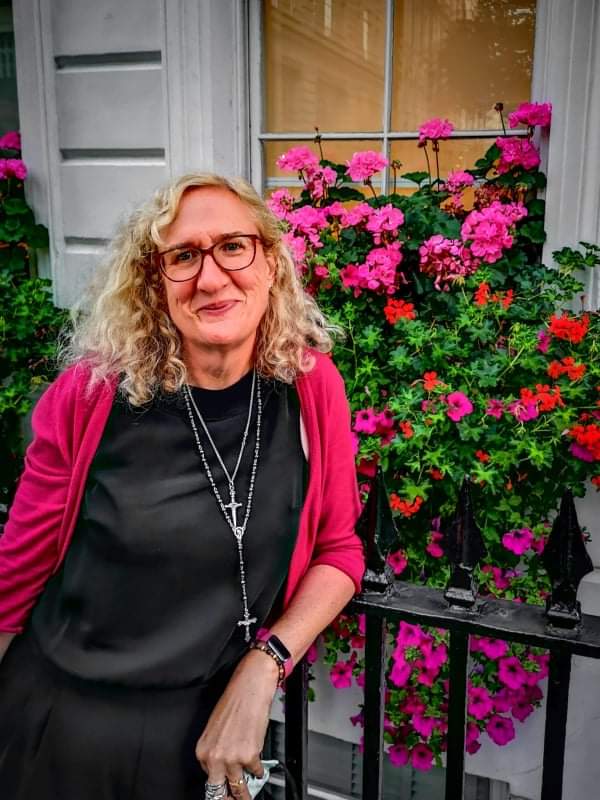
Author Stephanie Cowell

Connect with the author

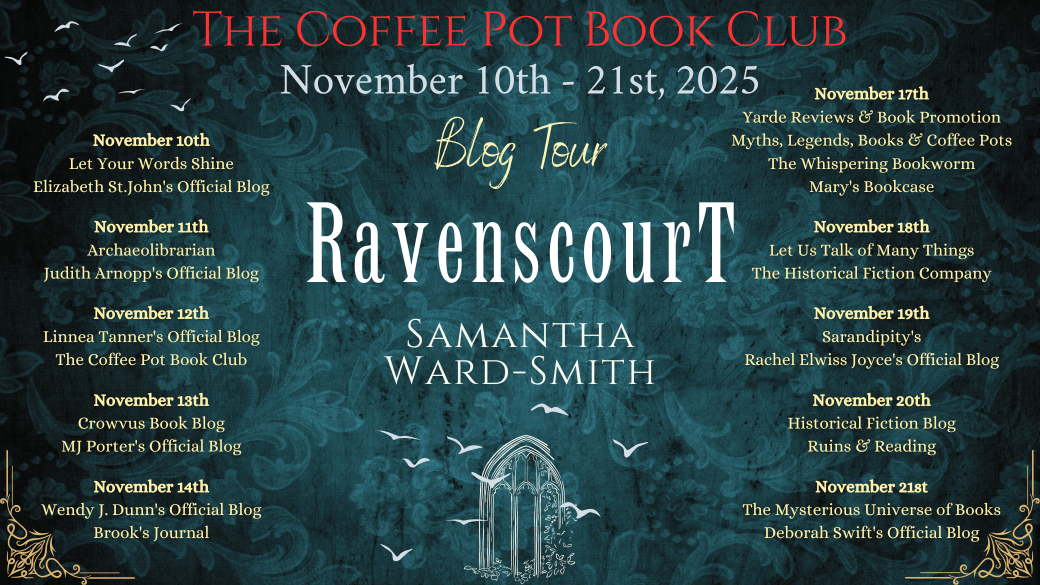
Follow The Man in the Stone Cottage blog tour with The Coffee Pot Book Club

Posts

I’m delighted to share my review for Murder in Trafalgar Square by Michelle Salter, the first book in a new historical mystery series #historicalmystery #cosycrime #highlyrecommended

I’m delighted to share my review for Murder in Trafalgar Square by Michelle Salter, the first book in a new historical mystery series #historicalmystery #cosycrime #highlyrecommended
#BoldwoodBloggers @BoldwoodBools #MurderInTragalgarSquare @rararesources @bookandtonic

Here’s the blurb

Discover a BRAND NEW page-turning cosy mystery series from Michelle Salter A murdered suffragette. A missing politician. A stolen artwork.

London, 1910

Coral Fairbanks is a contradiction. As well as a suffragette, she’s a bit-part actress and nude model, earning her the disapproval of her fellow suffragettes.

Guy Flynn is an artist. He’s also a detective inspector at Scotland Yard, who doesn’t always see eye to eye with fellow officers in the Metropolitan Police.

When Home Secretary Winston Churchill orders the police to terrorise the suffragettes during an afternoon of violence that becomes known as Black Friday, the battlelines are drawn – and Coral Fairbanks and Guy Flynn are on different sides.

But when a young suffragette is found murdered in the National Portrait Gallery and one of their paintings is stolen – Fairbanks and Flynn must put their differences aside and combine their knowledge to track down the killer.

Introducing an iconic detective duo in Fairbanks and Flynn, this is an exciting and gripping historical mystery, which will delight fans of Agatha Christie, Benedict Brown and T. E. Kinsey

 Purchase Link

https://mybook.to/MurderTrafalgarSquare

My Review

Murder in Trafalgar Square is the first book in Michelle Salter’s new mystery series, set in 1910, and what a fabulous first entry into a series it is.

For this series we have two main characters, Cora, a young widow who is a suffragette, works in a gallery and has also been an actress but is currently deemed, at 36, to be too old to play the ingenue on stage, and too young to be a harridan. (I sense we’re still not really that far beyond that even now). 

Guy Flynn, our detective inspector, is equally a many layered individual, also a widower with a daughter to raise alone, and he’s a painter too. The pair have some lovely facets to their characters and they make for an intriguing duo as we read chapters from alternative points of view. They’re flung together when a body is found at the National Gallery and it makes all the headlines, as opposed to the suffragette stunt with a most amusing painting (I’m not spoiling it).

The mystery unfolds at a good pace, as Cora and Guy endeavour to unpick the information they gain, while endeavouring to stay on the right side of the government.

This is such a fabulous new book, and I’m so excited to read more of Cora and Guy. I love the Iris Woodmore series by the author, but it’s possible I might love this one even more.

Check out my reviews for Death at Crookham Hall, Murder at Waldenmere Lake, The Body at Carnival Bridge, A Killing At Smugglers Cove, A Corpse in Christmas Close, and Murder at Mill Ponds House.

Meet the author

Michelle Salter writes historical cosy crime set in Hampshire, where she lives, and inspired by real-life events in 1920s Britain. Her Iris Woodmore 

Connect with Michelle 

Bookbub profile

Newsletter Sign Up

Posts

I’m welcoming Then Came The Summer Snow by Trisha T Pritikin to the blog #HistoricalFiction #Downwinders #AtomicJustice #1950s #BlogTour #TheCoffeePotBookClub 

I’m welcoming Then Came The Summer Snow by Trisha T Pritikin to the blog #HistoricalFiction #Downwinders #AtomicJustice #1950s #BlogTour #TheCoffeePotBookClub 

Here’s the blurb

In 1958, Edith Higgenbothum, a housewife in Richland, Washington, downwind of the massive Hanford nuclear weapons production site, discovers that the milk her young son Herbie drinks contains radioactive iodine from Hanford’s secret fallout releases. Radioactive iodine can damage the thyroid, especially in children.

When Herbie is diagnosed with aggressive thyroid cancer, Edith allies with mothers of children with thyroid cancer and leukemia in communities blanketed by fallout from Nevada Test Site A-bomb tests on a true atomic age hero’s journey to save the children.

Praise for Then Came the Summer Snow:

“In Trisha Pritikin’s crisp and sweeping novel, the Cold War comes home to live with a family in Richland, Washington. Not the Cold War of ideologies, but the one that included 2,000+ nuclear tests, and the production of hundreds of tons of plutonium; that contaminated our homes, food and communities; that actually took family members.” 

~ Robert “Bo” Jacobs, Emeritus Professor of History at the Hiroshima Peace Institute and Hiroshima City University, author of Nuclear Bodies: The Global Hibakusha (Yale 2022).

Then Came the Summer Snow is like an unexpected gift in its surprise and freshness.  Absurdity informs its realism, its poignancy, and its humor. A troubling, hilarious, weird, and wonderful novel.”

~ Mark Spencer, author of An Untimely Frost

Triggers: misogynist culture of 1950s; no violence, but cancers in children are a focus, and thyroid cancer treatment.

Purchase Links

https://books2read.com/u/bOOqKE

This title is available to read on #KindleUnlimited.

Meet the author

Trisha is an internationally known advocate for fallout-exposed populations downwind of nuclear weapons production and testing sites. She is an attorney and former occupational therapist.

Trisha was born and raised in Richland, the government-owned atomic town closest to the Hanford nuclear weapons production facility in southeastern Washington State. Hanford manufactured the plutonium used in the Trinity Test, the world’s first test of an atomic bomb, detonated July 16,1945 at Alamogordo, NM, and for Fat Man, the plutonium bomb that decimated Nagasaki on August 9, 1945.  Beginning in late 1944, and for more than forty years thereafter, Hanford operators secretly released millions of curies of radioactive byproducts into the air and to the waters of the Columbia River, exposing civilians downwind and downriver. Hanford’s airborne radiation spread across eastern Washington, northern Oregon, Idaho, Western Montana, and entered British Columbia.

Trisha suffers from significant thyroid damage, hypoparathyroidism, and other disabling health issues caused by exposure to Hanford’s fallout in utero and during childhood. Infants and children are especially susceptible to the damaging effects of radiation exposure. 

Trisha’s first book, The Hanford Plaintiffs: Voices from the Fight for Atomic Justice,  published in 2020 by the University Press of Kansas, has won multiple awards, including San Francisco Book Festival, 1st place (history); Nautilus Silver award (journalism and investigative reporting); American Book Fest Book Awards Finalist (US History); Eric Hoffer Awards, Shortlist Grand Prize Finalist; and Chanticleer International Book Awards, 1st Place, (longform journalism). The Hanford Plaintiffs was released in Japanese in 2023 by Akashi Shoten Publishing House, Tokyo. 

Author photo for Trisha Pritikin

Connect with the author

Follow the Then Came The Summer Snow blog tour with The Coffee Pot Book Club

Posts

I’m sharing my review for Murder in the Soho Graveyard, a Victorian mystery #histfic #bookreview (as well as reviews for the 1st two books in the series) #mystery

I’m sharing my review for Murder in the Soho Graveyard, a Victorian mystery #histfic #bookreview (as well as reviews for the 1st two books in the series) #mystery

Here’s the blurb

A churchyard discovery. A shocking secret. A deadly confrontation.

London, 1890. When the body of a wealthy widow is found in the neglected graveyard of St Anne’s Church, Soho, Emma Langley and Penny Green soon discover her respectable façade concealed a web of bitter enemies.

From a disgraced doctor stripped of his livelihood to a governess whose reputation was destroyed by lies, the victim, Mrs Melbourne, left a trail of devastation in her wake.

Then Mrs Melbourne’s Belgravia mansion is consumed by a mysterious fire. Emma and Penny must race to decipher water-damaged papers salvaged from the ruins that could hold the key to the truth.

But as anonymous threatening letters arrive warning them to abandon their investigation, the friends realise they’re hunting someone who will kill again to protect their secret. In the shadow-filled streets of Victorian London, can Emma and Penny expose the murderer before they become the next victims?

An atmospheric Victorian mystery that takes you from the crumbling graveyards of Soho to the grand squares of Belgravia – and will keep you reading late into the night.

Purchase Link

https://amzn.to/47YWZtt

My Review

Murder in the Soho Graveyard is the third book in the Emma Langley Victorian Mystery series. I have read the previous two books in the series (see the reviews lower down the page).

Our two main characters once more find themselves involved in an unexpected mystery, while our cast of regular extras is expanding once more.  When Emma comes upon the forlorn figure of a woman sitting on a bench she can’t help but ask if she’s well, and from then, Emma and Penny are determined to help her clear her name of any involvement in the murder of a rather nasty individual, masquerading as an unpright, wealthy Victorian lady while at heart, she’s manipulative and really quite horrible.

There are several suspects, all of them with their own particular axe to grind and the reveal, when it comes, wasn’t at all what I thought it would be.

Murder in the Soho Graveyard is another well-paced and well-plotted Victorian mystery featuring our two amateur sleuths.


If you want to start at the beginning of the series… (which you should!)

The Whitechapel Widow

London hunts the Ripper. A widow hunts her husband’s killer.

London, 1888. While Jack the Ripper’s reign of terror grips the city, Emma Langley’s world shatters when her husband is found murdered in Whitechapel. But grief is quickly overshadowed by a startling discovery: William Langley was not the man she thought she knew.

As panic fills London’s streets, Emma delves into her husband’s secret life, uncovering a web of lies that stretches from glittering society drawing rooms to the seedy gambling dens of the East End. Aided by Penny Green, a former reporter with a nose for trouble, Emma follows a trail of blackmail and corruption.

But exposing her husband’s killer could make her the next victim and in the shadows of gaslit streets, a murderer waits, ready to strike again…

Purchase Link

https://amzn.to/4gAtFvA

My Review

The Whitechapel Widow is a very well-plotted historical mystery set at the time of the attacks by Jack the Ripper in London. The author does a fabulous job of weaving the narrative through known events, and I really enjoyed the mystery elements. Emma is a great new main character, but I also enjoyed the inclusion of Emily’s heroine, Penny Green.

I will certainly be reading more of the series.


The Poison Puzzle

A secret society. A suspicious death. A trail of deadly clues.

London, 1889. When Emma Langley discovers a mysterious symbol in her late husband’s diary, she uncovers a connection to a secretive treasure-hunting group with powerful members. Her investigation takes an unexpected turn when Lord Charles Harpole, a society member, is found dying in his hotel room.

The authorities rule it suicide, but Emma and her friend Penny Green aren’t convinced. As they follow a trail of cryptic clues leading from St. Paul’s Cathedral to Hampton Court, they find themselves caught in a deadly game.

With suspects ranging from the lord’s grieving fiancée to his ambitious brother, Emma must solve the puzzle before the killer claims another victim. But in the fog-shrouded streets of Victorian London, someone will stop at nothing to keep the society’s secrets buried…

Emma Langley returns in this gripping Victorian mystery that weaves historical detail with page-turning suspense.

Purchase Link

https://amzn.to/46jQArD

My Review

I very much enjoyed The Poison Puzzle, the second book in the Emma Langley Historical Mystery series, but I must admit, I felt the buildup was somewhat better than the eventual resolution, which fell a little flat for me. That said, I will be continuing the series, as I do adore all the period detail for the books, and I certainly appreciated the research that went into making the treasure hunt feel very authentic.

Posts

I’m welcoming SR Perricone to the blog with Cobblestones #HistoricalFiction #NewOrleans #TrueEvents #TheCoffeePotBookClub #BlogTour

I’m welcoming SR Perricone to the blog with Cobblestones #HistoricalFiction #NewOrleans #TrueEvents #TheCoffeePotBookClub #BlogTour @cathiedunn
@thecoffeepotbookclub

Excerpt

An editorial from the newspaper introduced the letter. It read:

THE PROVENZANO-MATRANGA CASE.

We have very much pleasure in publishing the letter which here follows. In the first place, such a document, with such names attached to it, holds out a strong prospect that, as the frequent undetected assassinations among the Italian community in New Orleans find no manner of sympathy with a large portion of that community, they will in the course of a few years be stamped out altogether for want of moral support. And in the next place, the contents of the letter are calculated to strengthen the hands of the prosecution, and to stiffen the backbone of the witnesses who will be called to give evidence in the Provenzano-Matranga case, which opens today. This is the letter:

                                                            New Orleans, July 14, 1890

To the Editor of the Times-Democrat:

For a reason appreciated by the entire community we have heretofore been reticent with respect to the numerous assassinations charged to our countrymen. But we trust that, with the help of the intelligent and independent press of this city, we may be able to stamp out forever the horrible scenes of cold-blooded murder which are charged against our entire people, under the delusion that we all favor a settlement of troubles through the vendetta.

We desire to place ourselves on record as friends of peace and order, and without meaning to prejudice the case now on trial we trust sincerely that the witnesses will speak, and that those, whoever they many be, who have taken part in this midnight assassination may be tried and, after legal conviction, sternly punished.

Here’s the blurb

The turbulent history of Post-Reconstruction New Orleans collides with the plight of Sicilian immigrants seeking refuge in America.

Antonio, a young man fleeing Sicily after avenging his father’s murder, embarks on a harrowing journey to New Orleans with the help of Jesuit priests expelled from his homeland. However, the promise of a fresh start quickly sours as Antonio becomes entangled in a volatile clash of cultures, corruption, and crime.

In the late 19th century, Italian immigrants in New Orleans faced hostility, exploitation, and a brutal system of indentured servitude. Antonio becomes a witness to history as a bitter feud over the docks spirals into violence, culminating in the assassination of Irish police chief David C. Hennessy. The ensuing trial of nine Italians and the shocking lynching of eleven innocent men ignited international outrage, threatening to sever ties between the United States and Italy.

Caught in the crossfire of prejudice and power struggles, Antonio fights to survive while grappling with his own past and future. His journey weaves a gripping tale of resilience, betrayal, and the enduring hope for justice. Cobblestones: A New Orleans Tragedy is a poignant reminder of the human cost of intolerance and the courage it takes to rebuild a life from ashes.

“A phenomenal epic account of a forgotten slice of New Orleans history for fans of Scorsese / Coppola-type cinematic dramas such as Midnight Vendetta and The Godfather!”
~ HFC Reviews

Buy Link

https://books2read.com/u/mdOKMd

Meet the author

Sal Perricone, a graduate of Loyola University of New Orleans with a BA (1975) and JD (1979), has dedicated his career to law enforcement, legal practice, and public service. Beginning as a sergeant with the Jefferson Parish Sheriff’s Department, he progressed to detective with the New Orleans Police Department before practicing law privately in New Orleans. In 1985, he joined the Federal Bureau of Investigation as a Supervisory Special Agent, specializing in financial crime investigations and organized crime.

In 1991, Sal Perricone transitioned to the U.S. Attorney’s Office for the Eastern District of Louisiana, where he served as Chief of the Organized Crime Strike Force and Senior Litigation Counsel until retiring in 2012. Over his illustrious career, he prosecuted significant cases involving La Cosa Nostra, public corruption, and white-collar crime. He earned numerous accolades, including multiple Director’s Awards and the Attorney General’s Award for his role in establishing the Katrina Fraud Task Force.

An adjunct professor at Tulane University and the University of New Orleans, Sal Perricone has trained law enforcement professionals across the nation. Post-retirement, he has authored two novels with positive Catholic themes, Blue Steel Crucifix and The Shadows of Nazareth. A Brother Martin alumnus, he continues to inspire with his dedication to justice and ethics.

Connect with the author

Follow the Cobblestones blog tour with The Coffee Pot Book Club

Posts

Come with me to Great Witcombe Roman Villa #locations #newrelease #MenOfIron #WarriorsOfIron #histfic #nonfiction

Come with me to Great Witcombe #newrelease #MenOfIron #WarriorsOfIron #histfic

Great Witcombe Roman Villa

Great Witcombe Roman Villa is no longer open to the public, but it is managed by English Heritage, and it’s possible to get a glimpse of it, although you do need to be careful. I think it’s currently closed due to safety concerns, so be mindful, and stay behind all the barriers, especially as the location is pretty remote.

From what I could see of the remains of Great Witcombe Roman Villa, it does seem to have been set in a beautiful place, and it quite appealed to me. I relied heavily on the idea of the location when devising the home for one of the tribes that features in the Dark Age Chronicles. (It probably helped that I visited on a lovely sunny day.)

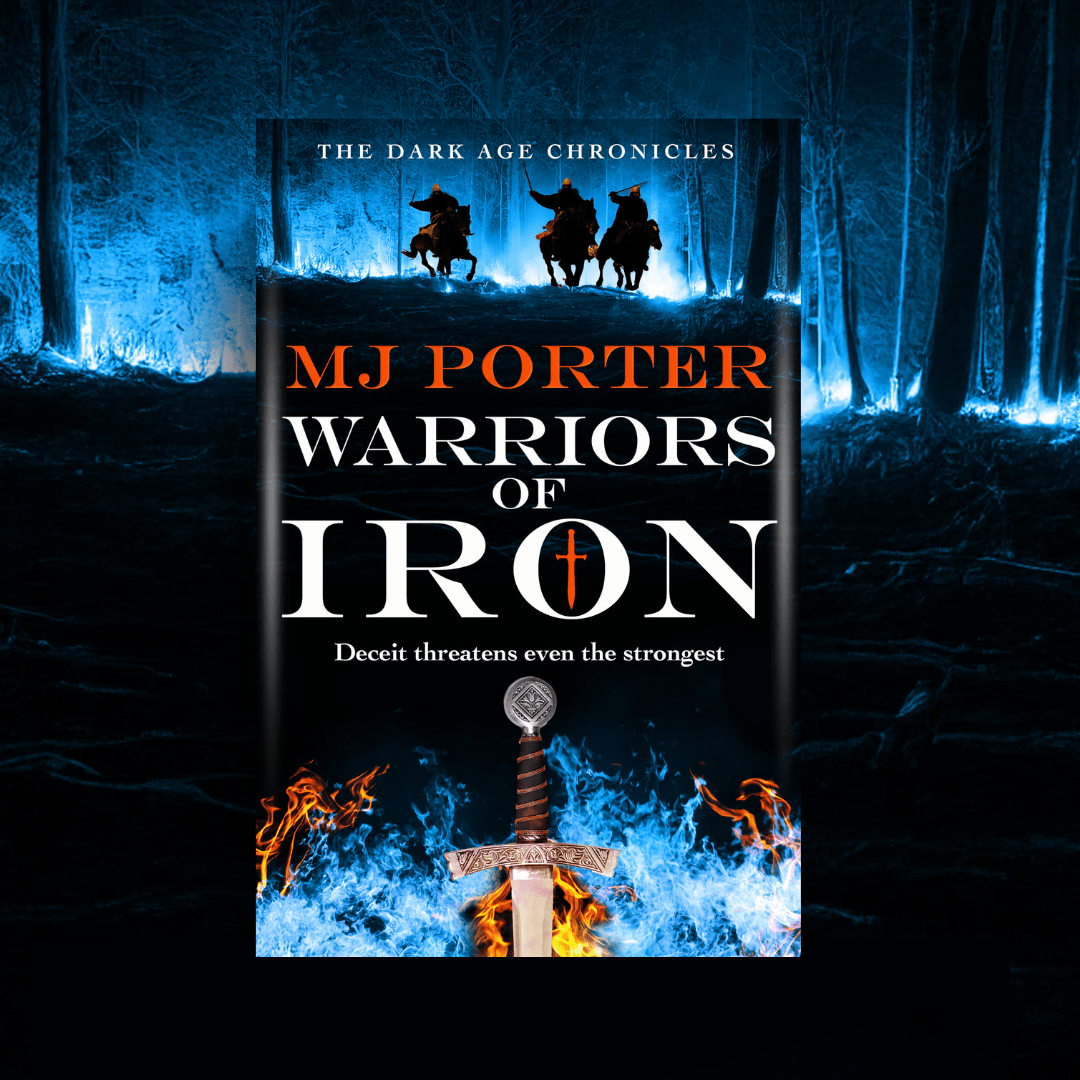
Listen to the beginning of Warriors of Iron

Curious about the trilogy? Check out the Dark Age Chronicles page or the blog posts below.

Blog links

Image shows a map of Early England showing the places mentioned in the text of the book
The Dark Age Chronicles Map

Purchase Links (click on the images)


Posts

I’m delighted to welcome Malve von Hassell and her new book, The Price of Loyalty, to the blog #HistoricalFiction #medieval #France #crusades #AdelaofBlois #WilliamtheConqueror #StephenHenrydeBlois #BlogTour #TheCoffeePotBookClub

I’m delighted to welcome Malve von Hassell and her new book, The Price of Loyalty, to the blog #HistoricalFiction #medieval #France #crusades #AdelaofBlois #WilliamtheConqueror #StephenHenrydeBlois #BlogTour #TheCoffeePotBookClub

I’m delighted to welcome Malve Von Hassell and her new book, The Price of Loyalty: Serving Adela Bois, to the blog with an excerpt.

Excerpt

Caught In The Snare

1103 Caen

“But, my lady, any of your knights could do this.”

Cerdic had never yet been so frustrated and angry. Adela wanted him to take her son Theobald to her brother-in-law Hugh of Troyes. And she had mentioned another unspecified task. Certainly, she was a widow, and she needed friends around her whom she could trust. But she had other advisors, and for an errand like this, she surely could find someone else. Was he going to be at her back and call indefinitely?

“Theobald has known you all his life. It would be good for him to spend time with you. It has not been easy for him and his brothers.” Adela avoided his eyes. “My brother-in-law is a good man and the right person to take charge of a growing boy, especially now that he has lost his father. Moreover, Hugh and his wife Constance haven’t been blessed with children. Theobald is his heir designate. It is time that Theobald learns everything he needs to know for his future station and duties in life.”

Cerdic stared at her, at a loss for words.

“I can’t and don’t want to ask anybody else. I trust you.”

Cerdic bowed. In truth, he could hardly go on protesting.

Several weeks later, he was back on the road in the company of a surly twelve-year-old boy. For the first hour, they rode in silence. It was early December, and the first hoar frost had turned everything dull and brown. They had to ride north and west toward Troyes; Champagne was a large county, and it would take them about two days.

Theobald had bowed to his mother and ducked out of her embrace. He had mounted his horse without acknowledging Cerdic. He was slender and fine-boned; it didn’t look as if he would have his father’s sturdy build as an adult. His curly hair peeking out underneath his woolen cap was dark brown, not the reddish hue of his grandfather and his uncles. He rode with his head bent and his shoulders hunched.

Guisbert was ten, Cerdic thought with a pang, not much younger than this boy. Would he even recognize his father?

The first words they exchanged were when Cerdic’s horse started limping, and Cerdic had to stop to check the hooves. A stone had worked its way underneath one shoe. Fortunately, Cerdic could pick it out.

“Tell you what.” Cerdic straightened up. The boy’s expression was sullen and slightly hostile. “I don’t trust this shoe, and I don’t want the bay to go lame on me. Let’s walk for a bit. The next village isn’t too far from here, and we’ll find a blacksmith there.”

So they walked, leading the horses. “What are the roads like in the Holy Land?” Theobald asked after a while.

Cerdic didn’t think that the boy really cared about the roads, but it was an opening. “Would you believe it? Some are a lot better than the roads here. Others again are nothing but sand and rocks.”

Theobald was silent. They continued walking.

Then Theobald cleared his throat. “You were with my father, weren’t you?”

“Yes, I was,” Cerdic responded cautiously. “What did your mother tell you?”

“Nothing.” The boy jerked on his horse’s rein so that the surprised animal flung his head up and snorted. “Sorry,” Theobald whispered to the horse. “My mother told me nothing other than that he’s dead. I can’t talk to her about it.”

Cerdic frowned, inwardly cursing Adela. So, that’s why she sent him on this journey.

Here’s the Blurb

In a time of kingdoms and crusades, one man’s heart is the battlefield.

Cerdic, a Saxon knight, serves Count Stephen-Henry of Blois with unwavering loyalty-yet his soul remains divided. Haunted by memories of England, the land of his childhood, and bound by duty to King William, the conqueror who once showed him mercy, Cerdic walks a dangerous line between past and present, longing and loyalty.

At the center of his turmoil stands Adela-daughter of a king, wife of a count, and the first to offer him friendship in a foreign land. But when a political marriage binds him to the spirited and determined Giselle, Cerdic’s world turns again. Giselle, fiercely in love with her stoic husband, follows him across sea and sand to the holy land, hoping to win the heart that still lingers elsewhere.

As the clash of empires looms and a crusade threatens to tear everything apart, Cerdic must confront the deepest truth of all-where does his loyalty lie, and whom does his heart truly belong to?

Buy Link

Universal Link

Meet the Author

Malve von Hassell is a freelance writer, researcher, and translator. She holds a Ph.D. in anthropology from the New School for Social Research. Working as an independent scholar, she published The Struggle for Eden: Community Gardens in New York City (Bergin & Garvey 2002) and Homesteading in New York City 1978-1993: The Divided Heart of Loisaida (Bergin & Garvey 1996). She has also edited her grandfather Ulrich von Hassell’s memoirs written in prison in 1944, Der Kreis schließt sich – Aufzeichnungen aus der Haft 1944 (Propylaen Verlag 1994).

Malve has taught at Queens College, Baruch College, Pace University, and Suffolk County Community College, while continuing her work as a translator and writer. She has published two children’s picture books, Tooth Fairy (Amazon KDP 2012 / 2020), and Turtle Crossing (Amazon KDP 2023), and her translation and annotation of a German children’s classic by Tamara Ramsay, Rennefarre: Dott’s Wonderful Travels and Adventures (Two Harbors Press, 2012).

The Falconer’s Apprentice (namelos, 2015 / KDP 2024) was her first historical fiction novel for young adults. She has published Alina: A Song for the Telling (BHC Press, 2020), set in Jerusalem in the time of the crusades, and The Amber Crane (Odyssey Books, 2021), set in Germany in 1645 and 1945, as well as a biographical work about a woman coming of age in Nazi Germany, Tapestry of My Mother’s Life: Stories, Fragments, and Silences (Next Chapter Publishing, 2021), also available in German, Bildteppich Eines Lebens: Erzählungen Meiner Mutter, Fragmente Und Schweigen (Next Chapter Publishing, 2022).

Her latest publication is the historical fiction novel, The Price of Loyalty: Serving Adela of Blois (Historium Press, 2025).

Connect with the Author

Follow The Prince of Loyalty blog tour with The Coffee Pot Book Club

Posts

It’s time for a new Bradecote and Catchpoll historical mystery. I’m reviewing Feast for the Ravens by Sarah Hawkswood #historicalmystery #bookreview

It’s time for a new Bradecote and Catchpoll historical mystery. I’m reviewing Feast for the Ravens by Sarah Hawkswood #historicalmystery #bookreview

Here’s the blurb

Worcestershire, September 1145: A Templar knight is found dead in the Forest of Wyre, clutching a bloodstained document naming a traitor. Undersheriff Hugh Bradecote, Serjeant Catchpoll, and Underserjeant Walkelin must uncover whether the killing was personal, political, or the work of outlaws. They are surprised to find that the locals believe the killer to be the Raven Woman, a mythical shape-shifter said to haunt the woods. Then the knight is identified as Ivo de Mitton – believed to have long ago murdered his own kin – and the mystery deepens.

As the trio dig through legend and lies, they must determine the truth and bring a cunning killer to justice.

Purchase Link

My Review

Sarah Hawkswood’s medieval mysteries are some of my favourite books. I wish I could savour them when they’re released once a year, but I find myself reading far too quickly.

Her main characters, Bradecote, Catchpoll and Wakelin are determined and intrepid in their desire to solve each mystery presented to them, and the same applies for Feast for the Ravens.

When our dead man is found in the woodlands, it seems impossible that any will recognise him, but slowly a devastating tale of treachery, revenge and cunning is revealed as our intrepid investigative trio work hard to determine who is being truthful, and who less so. The tale quickly turns quite dark and is filled with peril, although not, thankfully, for our sleuthing threesome. All the usual characters benefit from a brief mention, and this tale is firmly grounded in the political conspiracy of the reign of King Stephen and Empress Matilda. A great deal is at stake if the truth is not discovered.

I adore this series. I have long grown used to the author’s decision to have her characters speak and think in ‘ye olde worlde’ way, and it enhances the atmosphere of these books.

If you’ve not started the series, then you can start with this book, but I would highly recommend stepping back a few titles, if not to the very beginning of the series (which I think you can enjoy when you know the characters better) to fully immerse yourself in this twisty, dark and perilous medieval mystery.

Check out my reviews for other books in the series (I have read them all)

Too Good To Hang

A Taste For Killing

Wolf At The Door

Litany of Lies

Posts

What languages were being spoken in Post-Roman Britain? #newrelease #MenOfIron #WarriorsOfIron #histfic

What languages were being spoken in Post-Roman Britain? #newrelease #MenOfIron #WarriorsOfIron #histfic

What languages were being spoken in Post-Roman Britain?

As with everything to do with this period of the ‘Dark Ages,’ much was in flux. It’s believed that many languages were spoken by the inhabitants of the island of Britain. From the native Brythonic (also often termed British) who would have spoken a version of Welsh, to the Latin of the Christians, the Old Norse (or even older versions of Old Norse) being spoken by those emigrating to Britannia, as well as Pictish, and potentially other languages as well.

Our only written source commonly believed to be from this period, that of Gildas’ On The Ruin of Britain, was written in Latin, but then, he’s said to have been an educated Christian, raised in the ways of both Rome and Christianity. If he spoke Latin on a day to day basis, I’m unsure. I know scholars complain about his grasp of the written Latin language being somewhat convoluted, but whether that’s due to him, or the way his writings have been transmitted to us through the years, I’m unsure.

How then might these people have communicated with one another if so many different languages were being spoken? There must have been translators who could facilitate trade between the tribes. It would be amazing to discover one of these individuals in the archaeological record, but it seems unlikely.  

I’ve worked hard to find names for my characters which feel authentic for the period. The Eorlingas have Brythonic names, Meddi has been shortened from Meddiwysti for fear it was impossible to pronounce, whereas Wærmund and his warriors, while having names that feel very Saxon, are, I hope, ones I’ve not used before, and according to the resource I used, are deemed as ‘early’ Saxon names. Other characters also have Latin names, and some have slightly made-up Latinised names i.e. Terricus who was named after one of my readers, who wanted to be a warrior, but became a blacksmith instead. I think he’s still one of my readers:)

I’ve also used different names for the settlements, again to reflect the mix in language. The Eorlingas, Gyrwe and other tribal names are from the Tribal Hidage a contentious (later and difficult to date) source but one believed to document the very small tribal affiliations that might have existed at this time. Uriconium/Viriconium has its Latin name, although I used a version of the name I found that’s not the most commonly used one. Corinium (Cirencester), Glevum (Gloucester) and Verulamium (St Albans) have their Roman-era names. The River Severn, has its Old Welsh name, Habren, and so, as I was writing the trilogy I was being mindful of reflecting the hodgepodge of names and languages my characters might have known and heard being spoken. 

It also added to the drama to make it difficult for my characters to easily communicate with one another.

Listen to the beginning of Warriors of Iron

Curious about the trilogy? Check out the Dark Age Chronicles page or the blog posts below.

Blog links

Image shows a map of Early England showing the places mentioned in the text of the book
The Dark Age Chronicles Map

Purchase Links (click on the images)


Posts

I’m delighted to welcome Wendy J Dunn to the blog with her new book Shades of Yellow, and a guest post about the history behind the novel #ShadesOfYellow #Forgiveness #AmyRobsard #WomensFiction #DualTimeline #Romance #BlogTour #TheCoffeePotBookClub

I’m delighted to welcome Wendy J Dunn to the blog with her new book Shades of Yellow ShadesOfYellow #Forgiveness #AmyRobsard #WomensFiction #DualTimeline #Romance #BlogTour #TheCoffeePotBookClub

What is the history behind Shades of Yellow? 

There is a lot of history behind my novel — some of it expected and some of it more surprising. I always knew my character would be writing a novel about Amy Robsart. I love the Tudor period, so it made sense that my character would also share that love. It also made sense Lucy, as a breast cancer survivor, would also be drawn to the story of Amy Robsart. Some historians believe Amy Robsart had breast cancer, which led to the theory that her fall down a short flight of stairs resulted in a spontaneous spinal fracture because of bone metastasis. So, that meant I (and my character) had to research the life and times of Amy Robsart.

 Amy was the first wife of Robert Dudley, the man who came closest to marrying Elizabeth Tudor. Amy was born in 1532, and met Robert when he accompanied his father, John Dudley, then the Earl of Warwick to deal with the Kett rebellion in 1549. Amy came from a wealthy family with good bloodlines. More importantly, she was her father’s heir. She was also pretty, pretty enough to catch Robert Dudley’s eye. They were also almost the same age. Robert’s father probably wanted a better match for his son, but he also had other sons. Robert was also not his heir, so when Robert and Amy fell in love (and it appears they fell in love), their parents agreed to their marriage in 1550 when they were around eighteen. 

Amy married Robert while his father was solidifying his position as the actual power behind Edward VI’s throne. The first years of Robert and Amy’s marriage saw a fairly settled period for the Tudors. But then Edward VI died, and John Dudley failed to place Lady Jane Grey onto the throne. Mary Tudor claimed the crown, and Dudley soon lost his head at the Tower of London, and Mary imprisoned all his sons in the Tower. The following year, Lady Jane Grey and her husband Guildford were executed after another failed rebellion. For close to two years, Robert and his remaining brothers stayed in the Tower. His older brother died just days after their release. Another brother died while fighting in a war for Mary’s husband, Philip of Spain. By the time Elizabeth becomes Queen, Robert and Amy were living mostly separate lives. Robert and Elizabeth acted like lovers in the early years of Elizabeth’s reign – and caused a lot of scandal. The day after Elizabeth celebrated her twenty-seventh birthday, Amy was found dead at the bottom of a flight of stairs at Cumnor House, her neck broken. No one has ever solved the mystery of Amy Dudley’s death, and her husband Robert never escaped the suspicion that he organised her murder. 

 But most of my story takes place in 2010. While writing Shades of Yellow, I realised how long ago that now is. It was a different world in 2010. I ended up doing as much research about 2010 as I was doing about Amy’s life in Tudor times. I realised that Lucy’s life would have shaped her differently if she had been born around 1980 compared to 1996. She also would have had a few more life-changing options regarding her medical treatment if I had set the story in 2025.  

By the time I finished Shades of Yellow, I had realised, with surprise, that history informed the entirety of my novel.

Here’s the blurb

During her battle with illness, Lucy Ellis found solace in writing a novel about the mysterious death of Amy Robsart, the first wife of Robert Dudley, the man who came close to marrying Elizabeth I. As Lucy delves into Amy’s story, she also navigates the aftermath of her own experience that brought her close to death and the collapse of her marriage. 

After taking leave from her teaching job to complete her novel, Lucy falls ill again. Fearing she will die before she finishes her book, she flees to England to solve the mystery of Amy Robsart’s death. 

Can she find the strength to confront her past, forgive the man who broke her heart, and take control of her own destiny?

Who better to write about a betrayed woman than a woman betrayed?

Buy Link

https://books2read.com/u/mqPGgd

This title is available to read on #KindleUnlimited.

Meet the author

WENDY J. DUNN is a multi-award-winning Australian writer fascinated by Tudor history – so much so she was not surprised to discover a family connection to the Tudors, not long after the publication of Dear Heart, How Like You This, her first Anne Boleyn novel, which narrated the Anne Boleyn story through the eyes of Sir Thomas Wyatt, the elder. 

Her family tree reveals the intriguing fact that one of her ancestral families – possibly over three generations – had purchased land from both the Boleyn and Wyatt families to build up their holdings. It seems very likely Wendy’s ancestors knew the Wyatts and Boleyns personally.

Wendy gained her PhD in 2014 and tutors in writing at Swinburne University of Technology, Australia. She loves walking in the footsteps of the historical people she gives voice to in her books. 

Author image for Wendy J Dunn

Connect with the Author

Follow the Shades of Yellow Blog Tour with The Coffee Pot Book Club

Posts