

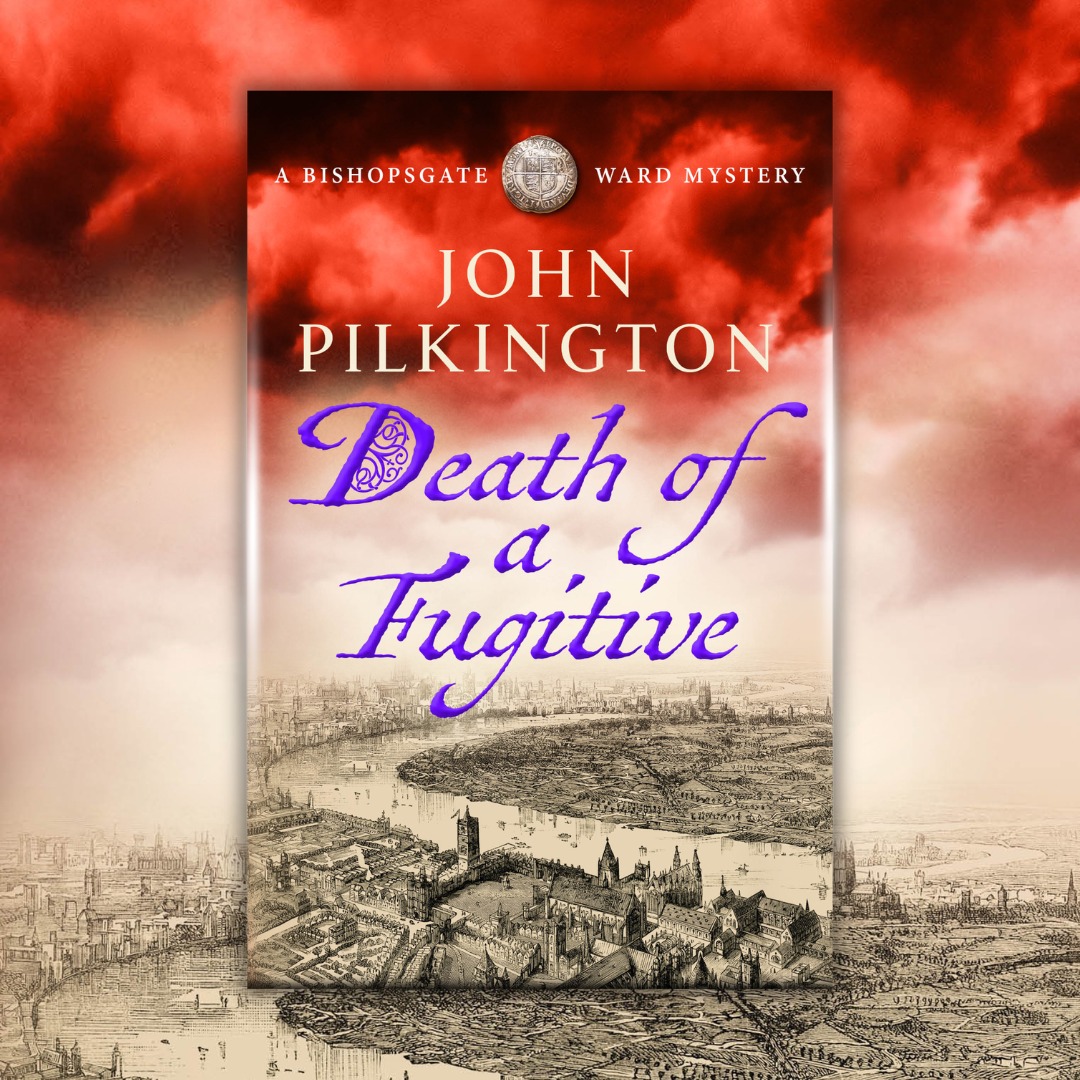
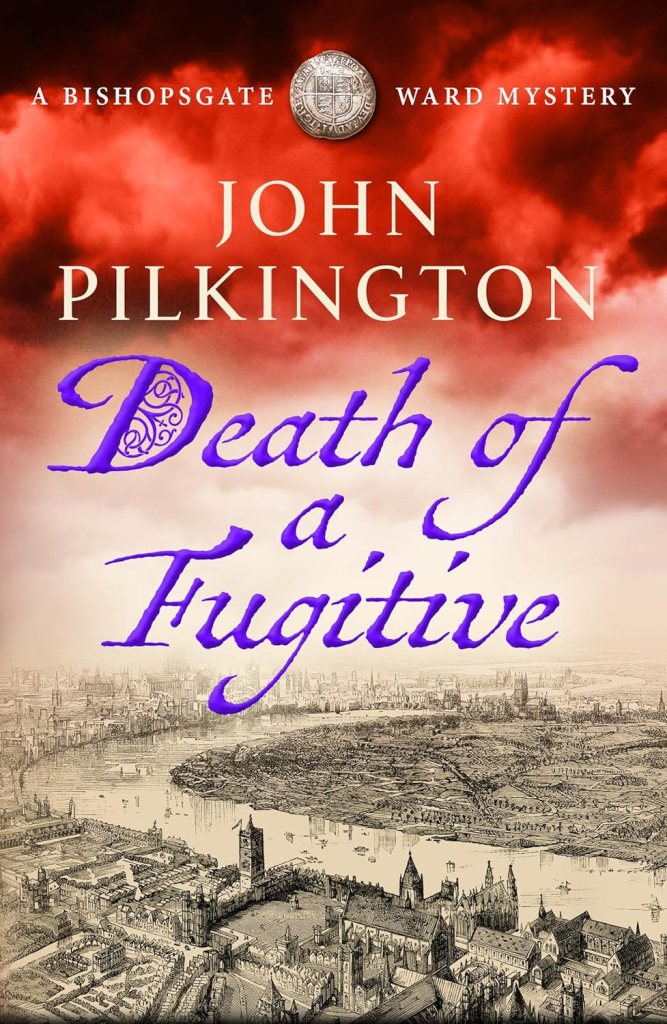
I’m sharing my review for Death of a Fugitive, the second book in John Pilkington’s Elizabethan mysteries featuring Matthew Cutler #histfic #historicalmystery #bookreview
Here’s the blurb
A BRAND NEW instalment in a gripping Tudor mystery from bestselling author John Pilkington. Perfect for fans of Andrew Taylor and S. J. Parris.
This Ward, Cutler… it seethes, does it not?
1595, Bishopsgate Ward, London. Matthew Cutler, constable for the parish of Spitalfields, prides himself on always being on the side of justice. So when a young man on the run, whose only ‘crime’ was protesting about high prices and corruption, hides out in Bishopsgate, not for the first time Cutler finds his duties as constable at odds with his gut feeling. He feels compelled to help him, and not just because his daughter Jane is smitten with the plucky lad…
Meanwhile there is trouble in Bishopsgate as fake coins keep turning up, convincing enough to fool many. Tensions rise and people are in fear of a brutal yet shadowy figure: the ‘coiner’ Thomas Gunnell, who seems to have eyes everywhere. Cutler must once again fall back on his skills of disguise, and risk his own life to root out Gunnell’s gang before they bring chaos to Bishopsgate Ward – and danger to everything he holds dear.
Purchase Link
My Review
Death of a Fugitive is the secod book in the Bishopsgate Ward Mysteries, and I have read book 1.
Like the first book, our main character is Matthew Cutler, although he is assisted by a number of collegues (if such they could be called). The story unfolds mostly through his eyes, as he pieces together events that have occured during a short absence from the ward. Quite a lot of time has elapsed since the first book – his oldest daughter is married, and his wife’s aunt is being pursued by a suitor, while his own fledgling love affair is largely absent in this book, aside from a few odd mentions.
No sooner has he settled in the local tavern, than the mystery begins to unravel. Is there someone passing off fake coins in the area and how are they doing it? Cutler is resolved to finding out.
Like the first book, Death of a Fugitive is filled with information about the late Tudor era. It is also written in a slightly archaic way, (purposefully), but once you get used to it, it doesn’t distract from the story, which rumbles along at a decent enough pace, although I found some elements a little slow.
That said, this was a very enjoyable mystery and Cutler does once more, place himself in terrible danger in order to bring the enemy to justice, making some rather tricky decisions along the way.
Check out my review for book 1 in the series, Death of a Stranger.
Meet the author
A writer for over forty years, John Pilkington was born in Lancashire and worked at many jobs including laboratory assistant, farm worker, weaver, shipping clerk, picture frame-maker and cabaret musician before taking a degree in Drama and English and finding his true 2 vocation. He has since written plays for radio and theatre, television scripts for a BBC soap, a short-lived children’s series and numerous works of historical fiction, concentrating now on the Tudor and Stuart eras. He also ventured into speculative fiction with his biography of Shakespeare’s famous jester, Yorick.
He now lives in a village on a tidal estuary in Devon with his long-term partner Elisabeth; they have a son who is a psychologist and musician. When not at the desk he walks, swims, listens to music and tinkers with d.i.y. projects, and is enjoying being a grandfather.
Connect with the author
Bookbub profile: @jpscript
Posts
Stay up to date with the latest from our blog.
















































 MJ Porter