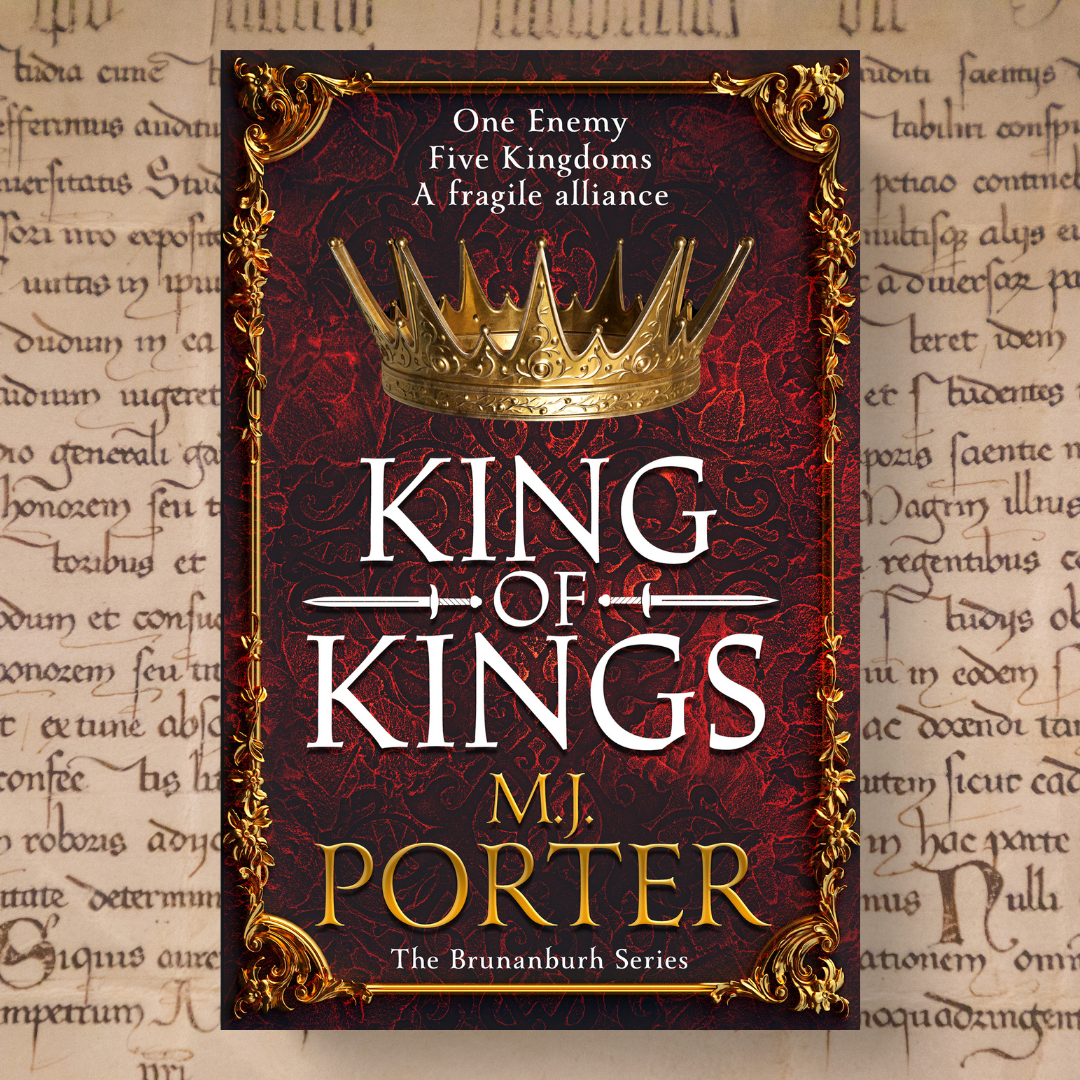
Athelstan is one of the main characters in my new book, King of Kings, a multiple point of view story, recounting affairs in Britain from 925-934.
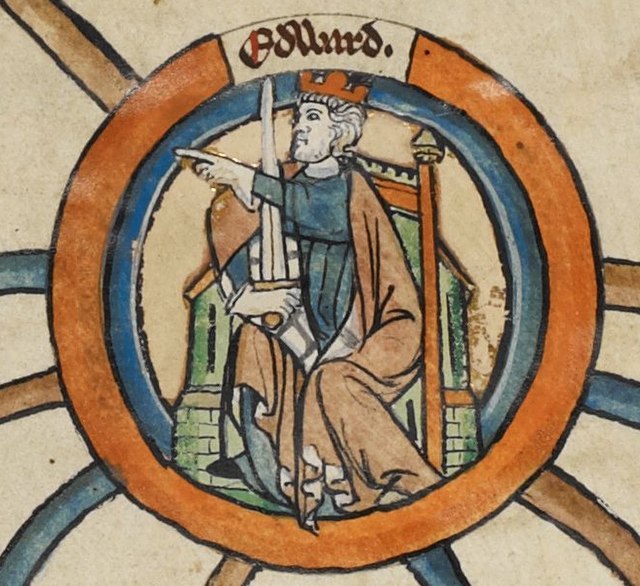
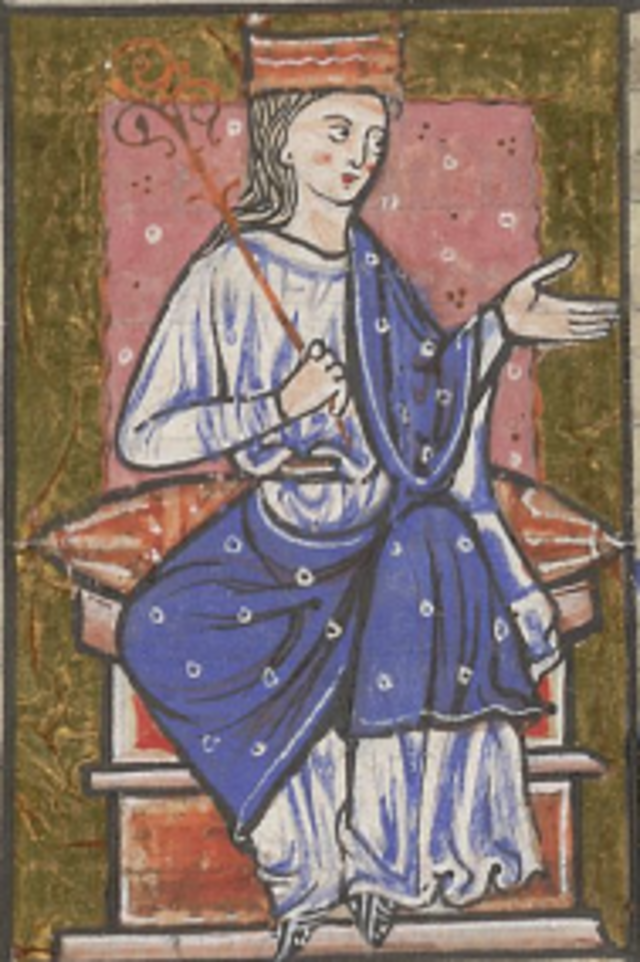
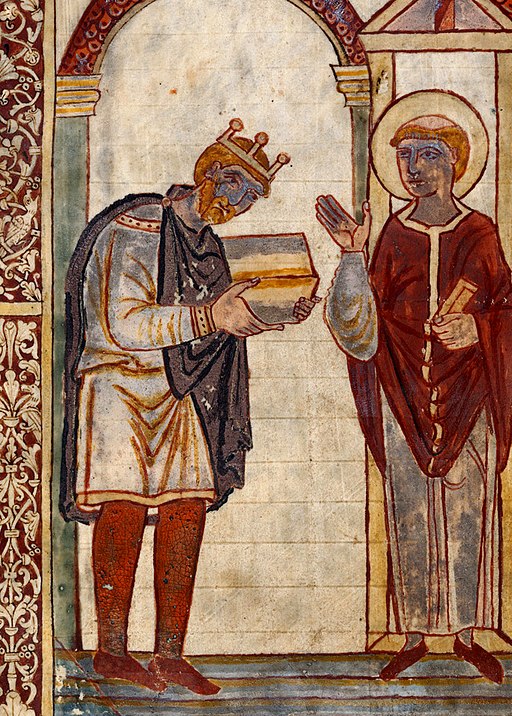
Based on a historical person, my portrayal of him, is of course, fictitious, but there are many details known about him. However, we don’t know for sure who his mother was, it’s believed she might have been called Ecgwynn, and we don’t know, for certain, the name of his sister, but it’s believed she might have been named Edith. What is known is that his father was Edward, the son of King Alfred, and known to us today as Edward the Elder. Athelstan is also rare in that he is one of only two Saxon kings for who a contemporary image is available. (The other is Edgar, who would have been his step-nephew)
It must be supposed that Athelstan was born sometime in the late 890s. And according to a later source, that written by William of Malmesbury in the 1100s (so over two hundred years later), Athelstan was raised at the court of his aunt, Æthelflæd of Mercia. David Dumville has questioned the truth of this, but to many, this has simply become accepted as fact.
‘he [Alfred] arranged for the boy’s education at the court of his daughter, Æthelflæd and Æthelred his son in law, where he was brought up with great care by his aunt and the eminent ealdorman for the throne that seemed to await him.’[i]
[i] Mynors, R.A.B. ed and trans, completed by Thomson, R.M. and Winterbottom, M. Gesta Regvm Anglorvm, The History of the English Kings, William of Malmesbury, (Clarendon Press, 1998), p.211 Book II.133
Why then might this have happened? Edward became king on the death of his father, Alfred, and either remarried at that time, or just before. Edward’s second wife (if indeed, he was actually married to Athelstan’s mother, which again, some doubt), Lady Ælfflæd is believed to have been the daughter of an ealdorman and produced a hefty number of children for Edward. Perhaps then, Athelstan and his unnamed sister, were an unwelcome reminder of the king’s first wife, or perhaps, as has been suggested, Alfred intended for Athelstan to succeed in Mercia after the death of Æthelflæd, and her husband, Æthelred, for that union produced one child, a daughter named Ælfwynn.
There is an acknowledged dearth of information surrounding King Edward the Elder’s rule of Wessex. He’s acknowledged as the king of the Anglo-Saxons. His father had been the king of Wessex. Historians normally use the surviving charters to unpick the political machinations of the Saxon kings, but for Edward, there’s a twenty year gap between the beginning and end of his reign, where almost no known genuine charters have survived. What isn’t known for sure, is how much control, if any, he had in Mercia. Was Mercia subservient to Wessex or was it ruled independently? It’s impossible to tell. And this makes it difficult to determine what Athelstan might have been doing, and also what his father’s intentions were towards him.
Frontispiece of Bede’s Life of St Cuthbert, showing King Æthelstan (924–39) presenting a copy of the book to the saint himself. 29.2 x 20cm (11 1/2 x 7 7/8″). Originally from MS 183, f.1v at Corpus Christi College, Cambridge. (Wikimedia Commons)
What is known is that following the death of King Edward in 924, Athelstan was acknowledged as the king of Mercia; his stepbrother, Ælfweard was proclaimed king in Wessex. As with all events at this time, it shouldn’t be assumed that just because this is what happened, this is what was always intended.
‘Here King Edward died at Farndon in Mercia; and very soon, 16 days after, his son Ælfweard died at Oxford; and their bodies lie at Winchester. And Athelstan was chosen as king by the Mercians and consecrated at Kingston.’[i]
[i] Swanton, M. trans and edit The Anglo-Saxon Chronicles, (Orion Publishing Group, 2000), D text p.105
But, if Athelstan was raised in Mercia, it’s highly likely he was a warrior from a young age, helping the Mercians defeat the Viking raiders who still had control of the Danish Five Boroughs of Lincoln, Nottingham, Derby, Nottingham and Leicester.
And the events of 924 are where King of Kings begins, and so I will leave him there. By now, he would have been perhaps thirty years old, give or take a few years. What sort of man was he? What sort of king might he be? Do please read King of Kings to find out. And, if this intrigues you, then do please have a look at Sarah Foot’s wonderful monograph on him, Athelstan, from Yale Publishing.
Education during the Tudor era was a privilege and took many forms including schools, colleges and apprenticeships. Those responsible for delivering education came from a variety of backgrounds from the humble parish priest to the most famed poet-laureates of the day. Curriculums varied according to wealth, gender and geography. The wealthy could afford the very best of tutors and could study as much or as little as they chose whilst the poorer members of society could only grasp at opportunities in the hopes of providing themselves with a better future.
The Tudors were educated during a time when the Renaissance was sweeping across Europe and Henry VIII became known as a Renaissance Prince but what did his education consist of? Who were his tutors? How did his education differ to that of his elder brother, Prince Arthur and how did Henry’s education change upon the death of his brother? There is no doubt Henry was provided with an excellent education, particularly in comparison to his sisters, Margaret and Mary. Henry’s own education would go on to influence his decisions of tutors for his own children. Who had the privilege of teaching Henry’s children and did they dare to use corporal punishment?
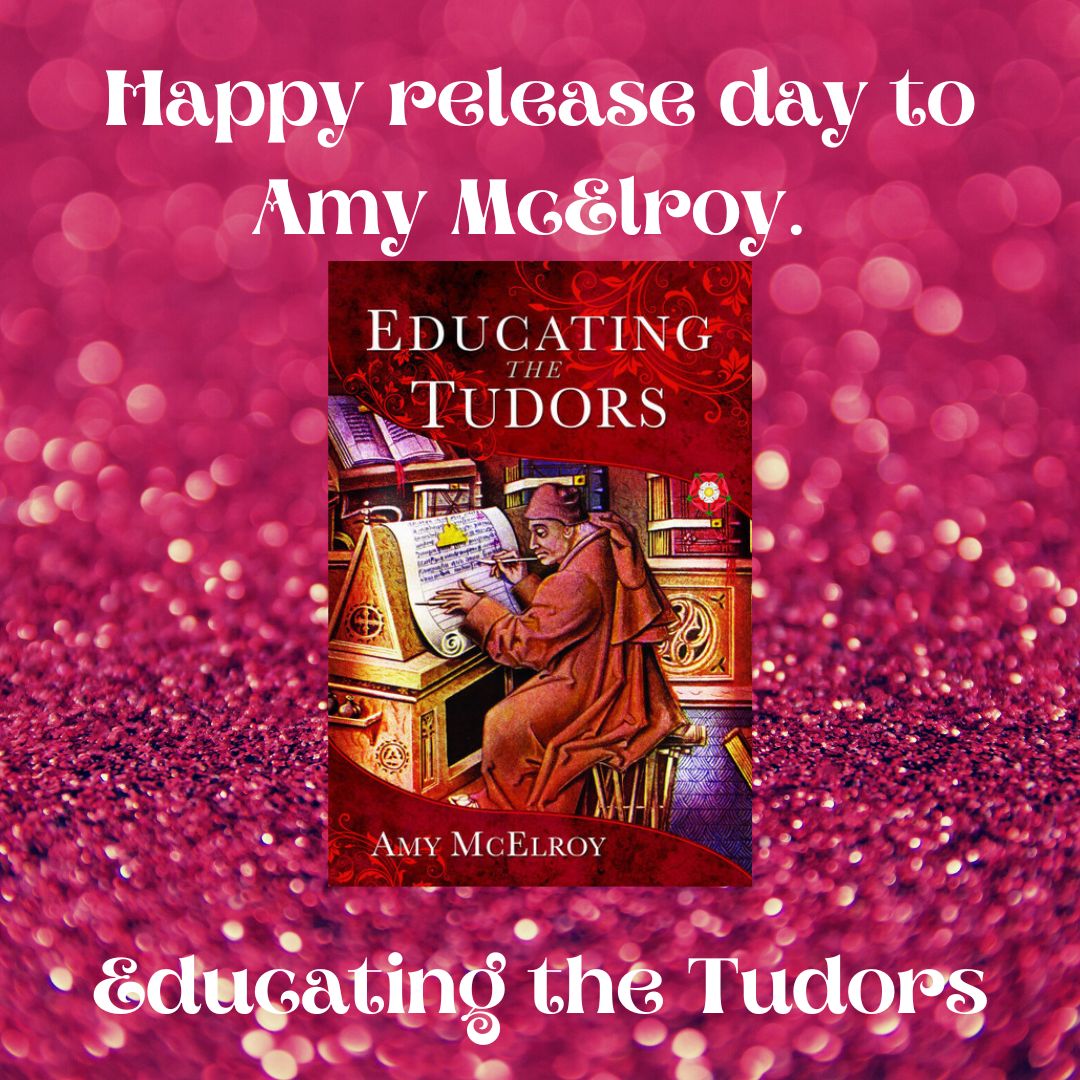
Educating the Tudors seeks to answer all of these questions, delving into the education of all classes, the subjects they studied, educational establishment and those who taught them.
Educating the Tudors by Amy McElroy is a fascinating and thorough examination of the state of education for all during the Tudor era, following developments due to the Renaissance and the Reformation, as well as the introduction of the printing press. Not content with researching the tutors of the royal children from Arthur to Edward, Amy has also examined education for all levels of society as well as what would have been taught. With an eye for the difference between class, sex and wealth, Amy has examined what education was, and how it was undertaken, as well as the titans who were making use of their interest in learning to advance learning for all, making use of the printing press, even as they sought to catch the eye of the reigning monarch.
And this isn’t just book-learning, but also the paths of apprenticeships, as well as how people became lawyers, and just what effect the Reformation did have on an education system that was so heavily reliant on priests and had to be radically rethought when the monasteries, and later, chantries were closed.
I was fascinated by the subject matter, and learned so much from reading this book – indeed, even things I’ve read about before suddenly made a lot more sense.
An absorbing and well-researched book, which is sure to fascinate all those interested in the Tudors, as well as the development of education in England.
(I found the subject matter absolutely fascinating, especially as I’ve personally been researching the education of the children of King Alfred. I was struck by the similarities, despite the six hundred plus year distance between the two eras. I’m sure I won’t be alone in that – I hope:) And there’s a another link between the Tudors and the Saxons, as it was the renewed interest in learning that is responsible for many of the surviving Saxon text we now have, including the Anglo-Saxon Chronicle.)
My thanks to the author, the publisher and Netgalley for my review copy, but my hardback is in the post as well:)
Meet the Author
Amy my was born and bred in Liverpool before moving to the Midlands to study Criminal Justice eventually becoming a civil servant. She has long been interested in history, reading as much and as often as she could. Her writing journey began with her blog, sharing thoughts on books she had read, before developing to writing reviews for Aspects of History magazine and culminating in her own book.
Wow! I think 2022 has been the year that I read (and listened) to the most books EVER! As I write this, I’m up to 99 titles. I have some ‘holiday’ reading I’m keen to do as well – fingers crossed I make it to the magic 100 for the year (I am including audiobooks in this, and also my own books as I have to read them A LOT, and I’ve also been refreshing a few throughout the year as well.) Even so, I’ve read many, many books, across a number of different genres, but the predominant one has certainly been historical mysteries/cozy crime. I’ve found that this is my ‘happy’ place when trying not to think about my own books. And luckily, Boldwood Books (who publish the Eagle of Mercia Chronicles) have a huge collection of mystery writers, and they’ve autoapproved me on Netgalley, so I’ll never struggle to find something to read in my favourite genre.
As has been pointed out to me by a fellow author, I don’t often award a five star review to books. Indeed, while I do rate and review on Amazon and Goodreads, on the blog, I don’t tend to give a rating – I’m just quirky like that. Those books that I have given a five star to, I’ve given a shout out in the Aspects of History Books of 2022. You can find the link here – (of course, these are all historical fiction books) and The Capsarius, Valentia, Twelve Nights and The Maids of Biddenden made it onto that list (and yes, these are all books I was lucky enough to be asked to review on the blog – but I never automatically give a 5 star review just because of that). I also want to add Domitian by SJA Turney as well. I couldn’t include two of his books on Aspecs of History but Domitian is wonderful, just my sort of Roman story with plenty of politics, intrigue, and some fabulous characters.
Three of these books are indie-published, and I can assure you all, that there’s a huge amount of amazing indie stuff out there. Don’t believe me, try one of these titles:)
I’ve also treated myself to a bit of comedy this year. I’ve been listening to the Terry Pratchett Discworld audio books (the new and the original recordings – but not the abridged versions) and it’s reminded me of how much I love a funny book, and so, here are my favourite comedies of the year. Simon Whaley’s Foraging for Murder, Dead in Tune by Stephanie Dagg and Crazy for You by Domhnall O’Donoghue and Unseen Academicals by Terry Pratchett, which I’ve listened to twice!
I’ve also dipped my toe into a few dual-timeline novels. As you might expect, my interest is always much more in the historical aspect of the story and not the modern settings, but they were a bit of fun when I was on holiday. The Witches Tree and The Storm Girl.
I’ve only read one fantasy book in 2022, which surprises me (aside from Discworld), but Mark Lawrence is one of my all-time favourite authors, and I will always read his books. The sneaky toad has a theme running through them all and I love it.
I’ve also read surprisingly few non-fiction books, in their entirety. I’ve been working on my non-fiction book and that’s meant a lot of dipping in and out of books I’ve already read. But, the non-fiction books I’ve read have been excellent, Michael Wood’s 40th anniversary of In Search of The Dark Ages, reviews for Aspects of History, Winter in the World by Eleanor Parker, also reviewed for Aspects of History and I also read my first ever writing guide.
And an entirely new genre for me, but one I was strangely drawn to for the location, which is close to where I grew up – a bit of Gangland.
I hope you’ve enjoyed reading my reviews on the blog. And I’d like to that the publishers that let me read advanced copies, and also, all the writers I’ve mentioned who’ve taken the time to craft these novels so that I can devour them. Now, I need to get back to my reading to make sure I hit that magic 100!
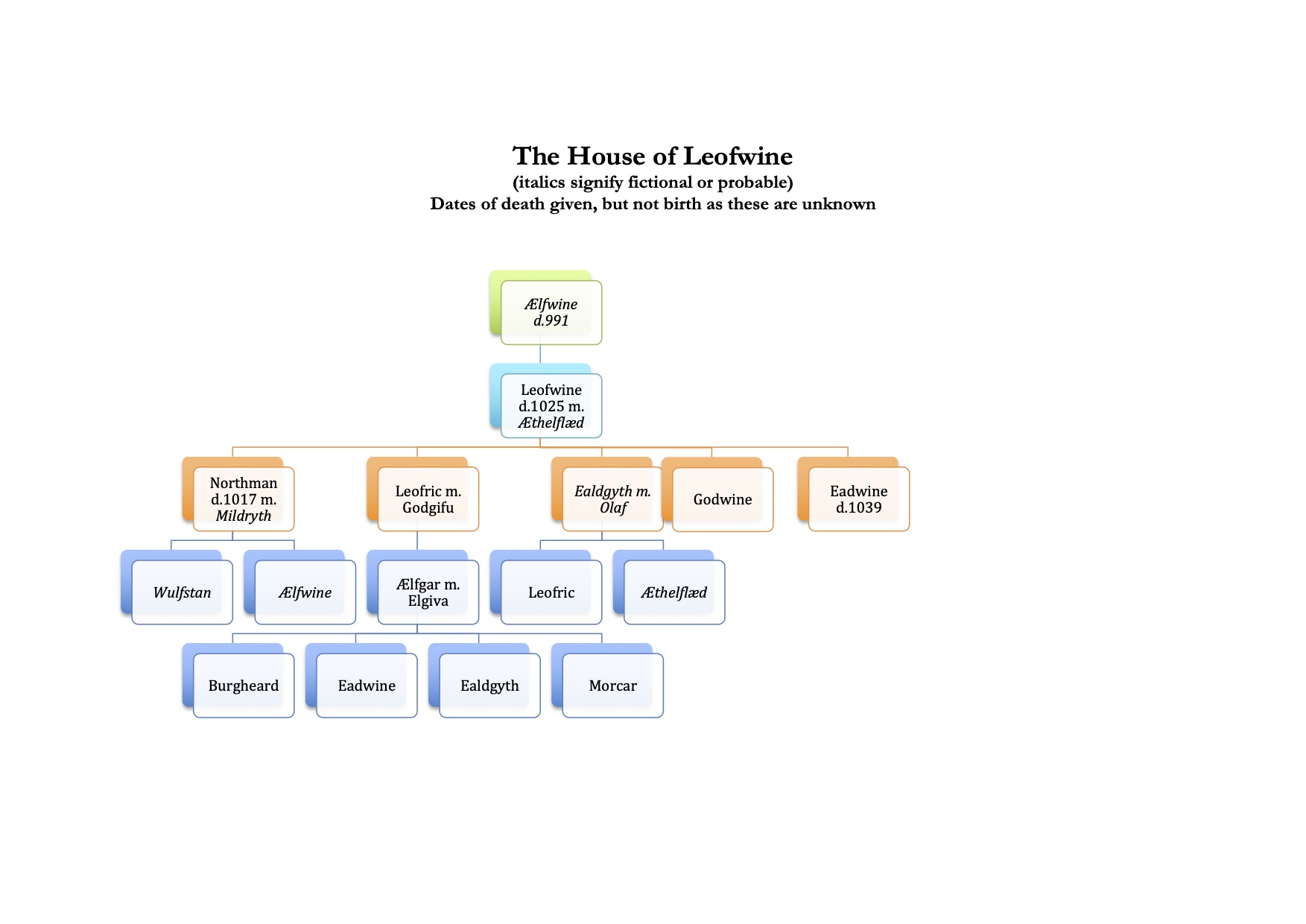
Ealdorman Leofwine , was the ealdorman of the Hwicce (c.994-1023), one of the ancient tribal regions in Mercia, which was a part of England, at the time the story begins. It is possible he may have been related to Ælfwine, who is named, and dies at the Battle of Maldon (more below).
Ealdorman Leofwine and his descendants, who would hold positions of power until the Norman Conquest of 1066, are a unique family in this tumultuous period. No other family, apart from the ruling family of Wessex (and even then there was a minor hiccup caused by those pesky Danish kings) held a position of such power and influence and for such a long period of time, as far as is currently known. The position of ealdorman was not hereditary. It was a position in the gift of the king, and Saxon kings ruled with a varying number of ealdormen. To understand Leofwine’s significance, it’s important to understand this. Unlike an earl – a term we are all perhaps far more familiar with – but specifically a medieval earl in this regard – that position was both more often than not hereditary AND meant that the person involved ‘owned’ significant properties in the area they were earls over. This is not how the ealdormanic system worked in Saxon England, as it’s currently understood.
It is difficult to track many of the ealdormanic families of this period, and the previous century, but there are a few notable individuals, all who bucked the usual trend, which no doubt accounts for why we know who they are.
Perhaps most well-known is Ealdorman Athelstan Half-King, who was the ealdorman of East Anglia from about 934 to 955/6 when he fell from favour at court during the reign of King Eadwig and retired to Glastonbury Abbey. Before he did so, he ensured that his son, Æthelwald, was elevated to the position of ealdorman in his place. This was most unusual, but then, he came from a powerful family, fiercely loyal to the ruling House of Wessex, if not actually a member of them. Athelstan Half-King is believed to have been the son of Ealdorman Æthelfrith, a Mercian ealdorman when Lady Æthelflæd was the Lady of Mercia. Athelstan was one of four brothers. His older brother seems to have either briefly retained the ealdordom after their father’s death in Mercia, or been accorded it a few years later, but when he died, Athelstan Half-King didn’t become ealdorman of Mercia in his place. No, he remained in East Anglia while his two brothers, Eahric and Æthelwald, held ealdordoms in Wessex (Eahric) and Kent (Æthelwald). They didn’t become the ealdorman of Mercia either. The ealdordom passed to a different individual.
When Ealdorman Æthelwald of the East Angles died a few short years later (Athelstan Half-King’s son), his place was taken by Ealdorman Æthelwine, the youngest of Athelstan Half-King’s children. But, the family failed to hold on to the position, despite Ealdorman Æthelwine being married three times, and fathering three sons, one of whom died at the battle of Assandun in 1016. The next to hold the ealdordom of the East Angles after the death of Æthelwine was Leofsige, who was the ealdorman until he fell foul of the king in 1002. In the early 1000s Ulfcytel emerges and may have been married to one of the king’s daughters, but is never officially accorded the title of ealdorman.
Another famous ealdorman was Byrhtnoth of Essex, who died at the Battle of Maldon in 991. But Byrhtnoth was not the son of the previous ealdorman, and indeed, he married the daughter of a very wealthy man and in turn was raised to an ealdordom in Essex at exactly the same time that Ealdorman Athelstan Half-King was being forced to retire from his position in East Anglia. (Byrhtnoth’s wife’s sister had briefly been married to King Edmund (939-946, before his murder). While there are some arguments that Byrhtnoth was from a well regarded family, his appointment was not because of an hereditary claim. It’s known that he was father to a daughter, but not to a son. As such his family did not retain the ealdordom on his death. Indeed, it seems as though Essex and the East Anglian earlordoms were united for a time under Leofsige.
The argument has been put forth that the position of ealdorman may have come with properties that were the king’s to gift to the individual to enable them to carry out their duties in a particular area. The Saxons had a number of types of land tenure, bookland, was land of which the ‘owners’ held the ‘book’ or ‘the title deed.’ (There are some wonderful charters where landed people had to ask for the king to reissue a charter as theirs was lost, often in a fire. There is a wonderful example where King Edgar has to reissue a charter for his grandmother, as he’d lost it while it was in his care). Other land tenure was ‘loan land,’ that is land that could be loaned out, often for a set number of ‘lives.’ Ealdormen might then have held bookland that was hereditary, and not in the area they were ealdorman of, and loan land that was in the king’s to gift to them within the area that they were the appointed ealdorman.
Many will be familiar with the family of Earl Godwin and his sons (thanks to the influence of the Danes, the term ealdorman was replaced by earl, which was the anglicised version of jarl). Much work has been done on the land that the Godwin family held when the great Domesday survey was undertaken during the reign of William the Conqueror. It will quickly become apparent that while they had areas where they held a great deal of land, these were not necessarily the areas over which first Godwin and then his sons Tostig, Harold, Gyrth, Leofwine and Sweyn held the position of earl. Most notably, Tostig was earl of Northumbria from 1055-1065, and yet the family had almost no landed possessions there.
And this is where we return to Ealdorman Leofwine and his family. While everyone knows about Earl Godwin and his sons, they didn’t hold their position for as long as Ealdorman Leofwine and his family. Earl Godwine is first named as an earl in charter S951 dated to 1018. By that period, Leofwine of the Twice had already held a position of importance since 994. The families of both men would converge as the events of 1066 drew nearer, and indeed, Godwine’s son, Harold, was married to Ealdorman Leofwine’s great-granddaughter when he was briefly king of England.
When Ealdorman Leofwine died, his son, Leofric, didn’t become ealdorman in his place. Leofric was a sheriff during the period between his father’s death and his own appointment. And indeed, Leofric’s son, Ælfgar was elevated to an earldom before his father’s death, and so was not initially the earl of Mercia. However, on this occasion, and because of a political situation that was rife with intrigue, Ælfgar did become the earl of Mercia after his father’s death, and after Ælfgar’s death, his young son also took the earldom of Mercia. The family survived the events of 1066, but they didn’t retain their hold on the earldom. The House of Leofwine were a family to not only rival that of Earl Godwine’s, as far as it’s known, but they were also the ONLY family to retain a position as an ealdorman/earl for over seventy years. And yet, very few know about them, and indeed, in many non-fiction books, they’re not even mentioned. And that was the perfect opportunity for me to write about the fabulous family, largely inspired by a non-fiction book, The Earls of Mercia: Lordship and Power in Late Anglo-Saxon England by Stephen Baxter.
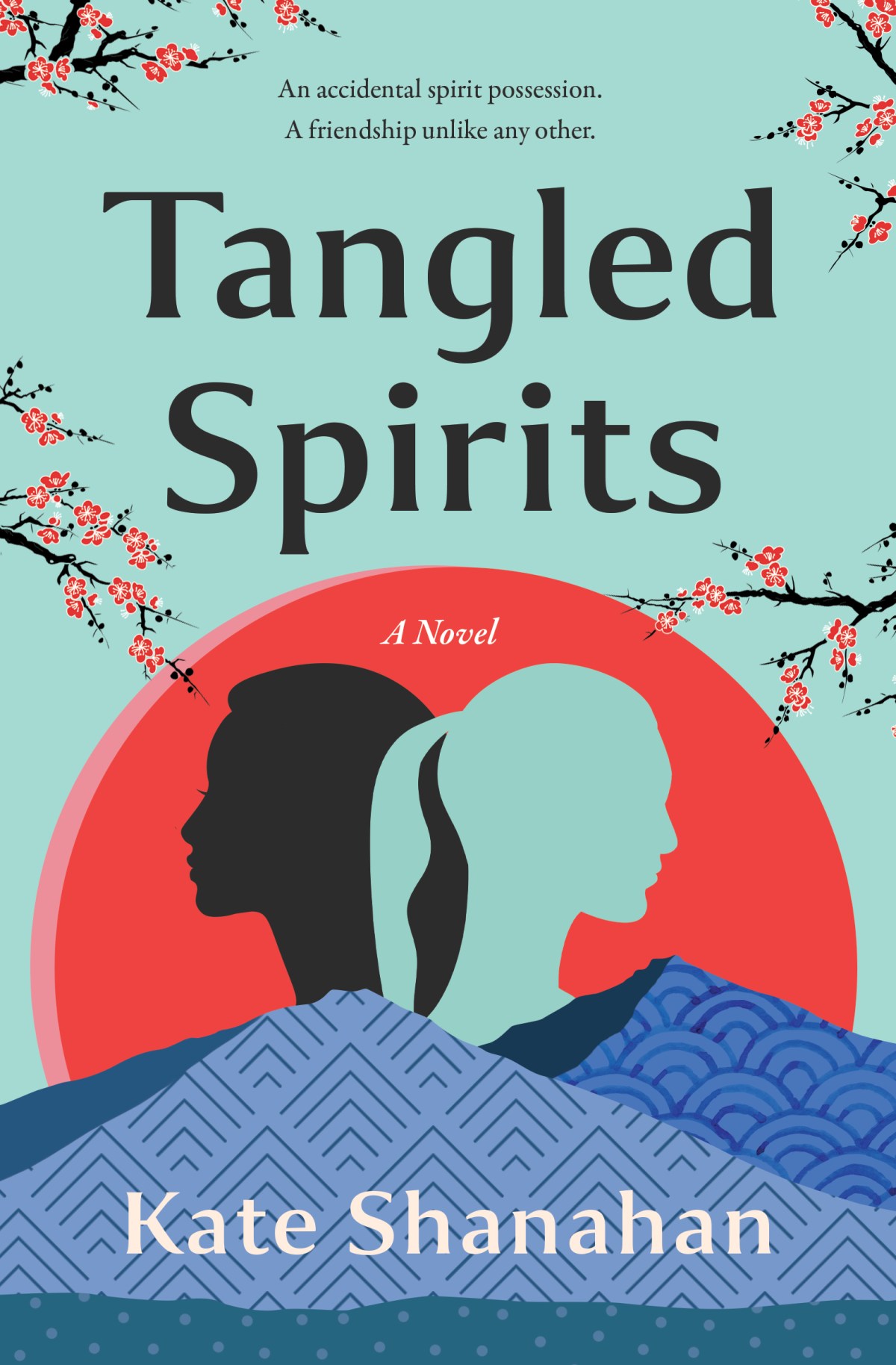
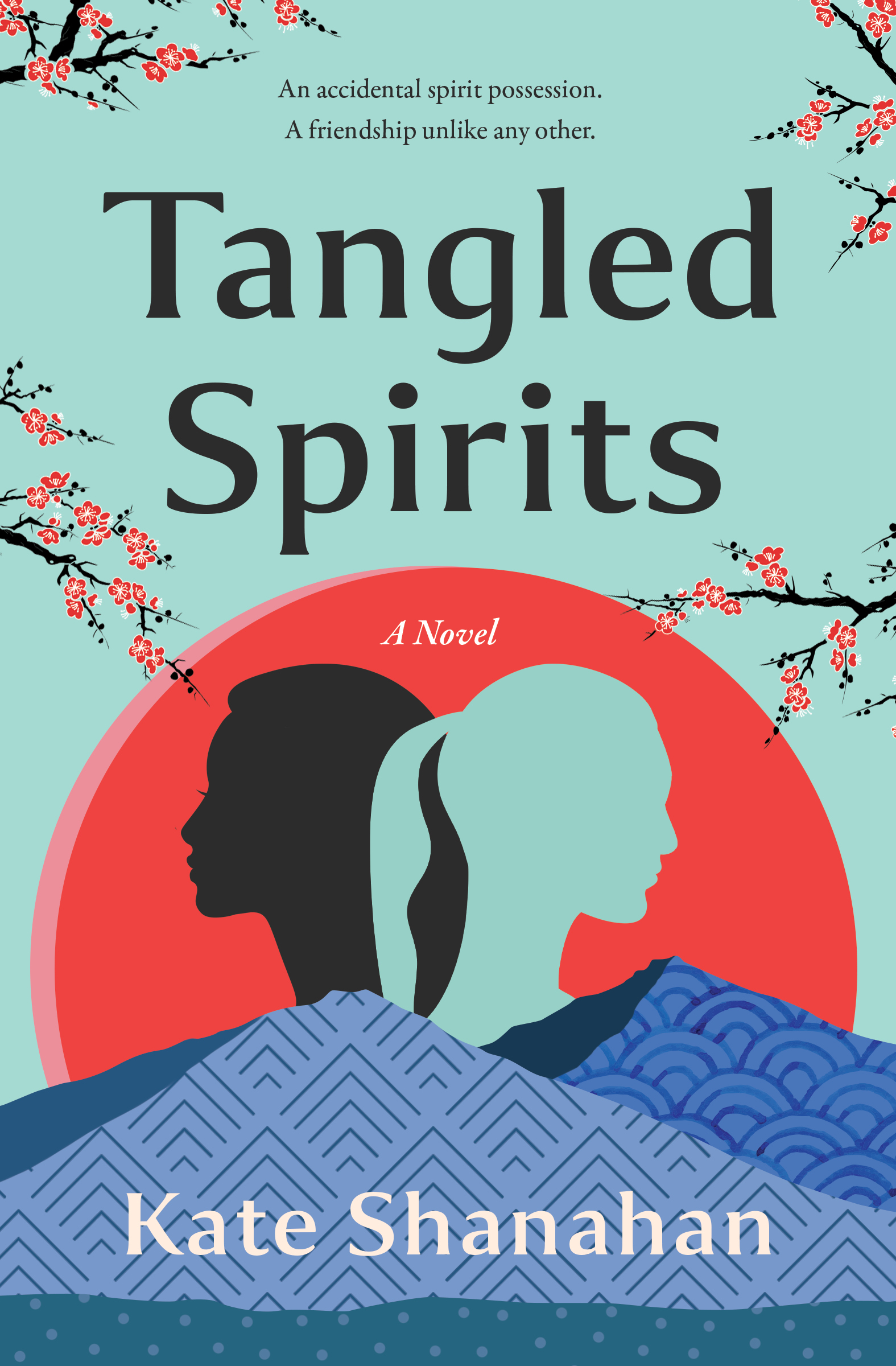
Hi, I’m Kate Shanahan, author of Tangled Spirits, a time-slip historical fantasy set in medieval Japan before shogun, samurai, and sushi were a thing. I’m blogging today about the cultural environment in 10th-11th centuries Japan that fostered the highest level of female literacy in the world at this time (among the aristocratic elite, that is.)
The world’s first full-length novel is usually considered to be Tale of Genji, written by Murasaki Shikubu, a lady-in-waiting at the imperial court of Japan at the beginning of the 11th century. She wrote this long, complex novel in an era when nearly all women everywhere in the world (and most men too) could neither read nor write. And not only did she write it, but enough people enjoyed reading it to ensure it was copied, shared, sold, borrowed, studied, illustrated, filmed, and gamified over the next 1000+ years.
I read Tale of Genji when I taught English in Japan. That same year, I read The Pillow Book, a journal written by lady-in-waiting Sei Shonagon, a contemporary of Murasaki’s. Sei invented a new form of journal called zuihitsu or ‘miscellany.’ In today’s terms, it’s more like the world’s first blog.
Both Sei and Murasaki were ladies-in-waiting in the court of Emperor Ichijo, and they both could read and write Chinese as well as Japanese, rare skills for women even in their erudite sphere. How is it that these two women in medieval Japan both managed to create new forms of literature that are still studied today?
In the course of my research, I learned that women held many positions of high rank and even power in Japan’s early history. In fact, eight of Japan’s emperors have been women, six of them before the year 770. The Heian Period (794 to 1185) is known as the ‘golden age of Japan’ for its flowering of the arts and literature, and much of this flowering came from girl-power.
(Before I go further, let me be clear that I’m only referring to the tiny elite at the top of the food chain who led a life of luxury and leisure far, far removed from the hardships of the unranked.)
I’ve noticed that Westerners are often surprised at some of the rights and privileges women enjoyed in this era in Japan. In the Heian Period, married noblewomen often continued to live with their parents after marriage, with the husband stopping by from time to time to see her. The wife’s father or uncles influenced the education and development of her children. This is called a ‘uxorial’ form of marriage, and it not only gave a woman more control and influence over raising her children, it also meant that if she weren’t happy with her husband’s behavior, she could send him away without seeing him. Women also could initiate a divorce and remarry. Men often had several wives and consorts, and women just one (at a time), but love affairs were not frowned upon as long as discreetly managed.
The most important element of the environment that eventually produced Tale of Genji and The Pillow Book was the Fujiwara Regency. The emperor’s role was a sacred one with a focus on the rituals and prayers needed to keep divinities happy, so the regent’s role was a political, secular one. There were 21 regents from the Fujiwara clan between 804 and 1238, and the most famous was Michinaga, who was regent during both Sei Shonagon and Murasaki Shikibu’s tenure at court. In the course of my research for Tangled Spirits, I learned this proverb: “if one must have a child, let it be a girl.” Fujiwara clan members gained power and access to the emperor by marrying their daughters to him. Those daughters produced children who often became Crown Prince and Emperor, and because of the uxorial tradition, Fujiwara regents kept their power by their influence over their imperial grandchildren. And that made daughters more valuable to a Fujiwara regent (or regent wanna-be) than a son.
And literacy comes into play because it was important for these Fujiwara daughters to be able to entice the emperor with their beautiful calligraphy, their skill with writing poetry, and with reading out loud to him. Beauty and elegance were of utmost importance at court in this era, and calligraphy could make or break a love affair. Thus a high priority was placed on the education of potential imperial consorts.
And then once a Fujiwara daughter was at court, whether as a concubine, an official consort, or a Royal Consort (Empress), it was important for that consort to have women around her with skills in calligraphy, poetry, witty repartee, and story-telling, both to make the salon attractive to the Emperor and to entertain the consort. Women in this elite class lived lives of comparative leisure, and they stayed indoors most of the time. Reading, writing, and story-telling flourished as entertainment.
And that created a sort of domino effect. Parents might not be of a high-enough rank for their daughters to be selected for the Emperor, but they educated their daughters to make them attractive to the consort’s salon, and that is how both Sei Shonagon and Murasaki Shikibu came to court.
It’s clear from the diaries of Sei Shonagon and Murasaki Shikibu that they both could read Chinese writing as well as the native ‘onnade’ and that such learning was considered masculine. Murasaki wrote that Sei was a show-off for not hiding her knowledge of Chinese, while Sei wrote that male courtiers sent poems in Chinese as a sort of prank, hoping to force her to reveal her knowledge (but she was too clever for that.) However, recent research indicates that a nobleman might teach his daughter to read and write Chinese as well as Japanese to improve her chance to obtain a position as an official in the Imperial Handmaid’s Office. Murasaki Shikibu writes in her diary that she learned Chinese by eavesdropping on her brother’s lessons, but it’s possible that both Murasaki and Sei Shonagon were taught Chinese reading and writing for that reason, as neither family was in the top ranks of nobility. Some high-ranking men even sought to marry women who could read Chinese as a skill that could help their own careers in government bureaucracy.
If you’d like to read more blog posts about Heian Japan or find out more about Tangled Spirits, you can find mine at kvshanahan.com.
If you’d like to read more about literacy in this era, here’s an interesting article that I found in jstor.org.
Heldt, G. (2005). Writing like a Man: Poetic Literacy, Textual Property, and Gender in the “Tosa Diary.” The Journal of Asian Studies, 64(1), 7–34. http://www.jstor.org/stable/25075675
Here’s the blurb for Tangled Spirits.
Journey to the imperial court of Japan as Kate Shanahan skillfully blends fictional and historical figures and events into a time-slip tale of intrigue, personal sacrifice, and a friendship that spans a thousand years.
Two spirits. One body. It’s harder than it looks.
2019: Anxious and insecure, Mina Cooper wants to change her life, to change herself, but she gets more change than she bargains for when her spirit is pulled into the past and into someone else’ body – in 10th century Japan. And now she has a lot more to be anxious about. Like exorcism. And bandits. And chaotic magic by an inexperienced shaman.
999: Desperately lonely after her mother and sister die in an epidemic, aspiring shaman Lady Masako attempts to call her mother back from the spirit world, but gets possessed by Mina instead.
After a struggle for control and a failed exorcism, the two spirits agree to cooperate long enough to get help from the Royal Astrologer, the only person powerful enough to send Mina home.
But his help comes at a cost, and Mina’s imperfect knowledge of history offers little to negotiate with. And the longer he waits to help her, the greater the risk her spirit will fuse with Masako’s, and she’ll never get home.
Meet the author
Kate grew up in Massachusetts, but spent 4th, 8th, and 11th grades living in England, and speaks both languages (British and American) fluently. After graduating from University of Michigan with a BA in Political Science (East Asia Concentration), Kate taught English in Sapporo, Japan for two years. She enjoyed the experience so much that she returned to U of M for an MA in Asian Studies (Japan Specialization), and while there, worked part-time for the Center for Japanese Studies. Fortunately for Kate, Honda was expanding operations in Ohio around the time she finished, and she spent an entire career at Honda in project, business, and people management, thrilled to be able to travel to Japan and speak Japanese for work. Then she retired to work on that book about Sei Shonagon that she always had in the back of her mind to write, and that book evolved into Tangled Spirits.
After all those years in northern latitudes, Kate and her husband recently moved to Florida’s Gulf Coast where the sunshine makes it difficult to focus on writing. But she’s determined to do it anyway. After a bike ride.
Tangled Spirits is on special offer until 19th July 2022, for 99p/99c on Amazon UK/US and is also included in a Kindle Unlimited Subscription
Good luck with the new book, Kate. Thank you so much for such an interesting post about Japan. I can see why you were drawn to the period.
Here’s my review
I was lucky enough to read an early version of Tangled Spirits, and I flew through it in two days. It’s a fantastic and really intriguing story.
I liked the whole story – the idea of a 21st-century woman’s mind in a 10th-century woman’s body, seeing everything through new eyes, putting both current interpretations on etiquette and prevailing thoughts, as well as the 10th-century justification for it all. It was just tongue in cheek, and court politics enough, to ensure the reader always wants to know what’s going to happen.
Masako and Mina are both intriguing characters. As the story is told through Mina we know more about her thoughts and more about Masako’s actions. I could understand both of their viewpoints well enough, even if like Masako, I found it a bit frustrating that Mina wouldn’t share more of her knowledge of the future. I enjoyed that as time went on, they acted more and more like one another.
A really enjoyable read and one I highly recommend.
I’m delighted to share with you an excerpt and my review for Penny Ingham’s new novel, Twelve Nights, set in the theatres of late Tudor London. Please read all the way to the end because there’s a lot going on in this blog post:)
Here’s the blurb:
The Theatre
London, 1592
When a player is murdered, suspicion falls on the wardrobe mistress, Magdalen Bisset, because everyone knows poison is a woman’s weapon. The scandal-pamphlets vilify her. The coroner is convinced of her guilt.
Magdalen is innocent, although few are willing to help her prove it. Her much-loved grandmother is too old and sick. Will Shakespeare is benignly detached, and her friend Christopher Marlowe is wholly unreliable. Only one man offers his assistance, but dare she trust him when nothing about him rings true?
With just two weeks until the inquest, Magdalen ignores anonymous threats to ‘leave it be’, and delves into the dangerous underworld of a city seething with religious and racial tension. As time runs out, she must risk everything in her search for the true killer – for all other roads lead to the gallows.
Thank you so much to MJ at mjporterauthor.blog for letting me share my latest novel.
Twelve Nights is set in 1592, at the imaginatively named The Theatre in Shoreditch, London. The players are the celebrities of their day, but one by one they begin to die in mysterious circumstances. Suspicion instantly falls on the wardrobe mistress, Magdalen Bisset, because everyone knows poison is a woman’s weapon.
Magdalen is innocent, although few are willing to help her prove it. With just two weeks until the inquest, she ignores anonymous threats to ‘leave it be’, and delves into the dangerous underworld of a city seething with religious and racial tension. As time runs out, she must risk everything in her search for the true killer – for all other roads lead to the gallows.
Here’s an excerpt from the book. To set the scene: The player John Wood has died a horrible death on stage during the first act of Twelve Nights. The constable, Edmund Stow, has told Magdalen he is convinced she is responsible for his murder, and is determined to prove her guilt. In shock, Magdalen and the players decamp to their favourite tavern to raise a cup to John’s memory.
The shadows lengthened. The landlord lit the fire, the serving girls laid out soggy saffron cakes, and the players’ spirits began to lift, warmed by the crackling fire, and by wine and cakes and ale. And with every cup of Rhenish she drank, Magdalen’s spirits lifted a little too. The tavern was starting to fill up. Word spread fast through Shoreditch, and now all the poets and playwrights who had ever felt envious of Burbage’s lauded band of brothers were crawling out of the woodwork to gloat over their misfortune. Robert Greene was first to arrive, his distinctive quiff of long, red hair waxed upright like a cockerel’s comb. He made straight for their table, and addressed Burbage.
‘I see you’re still paying that country-bumpkin to write speeches stuffed with far-fetched metaphors.’ Turning to Will Shakespeare, he announced mockingly, ‘If it isn’t the upstart crow, beautified by my feathers.’
Magdalen winced. Will had borrowed the plot of Greene’s Pandosto for The Winter’s Tale. In truth, the playwrights and poets all stole from each other, but Will took their ideas and made them a thousand times better, filling the Theatre and its coffers day after day, whilst Greene lived in back-street poverty.
‘The pot is calling the kettle black, or Greene, in your case,’ Will replied lightly, but Magdalen could see tension in his eyes.
Greene spat something brown and glistening onto the floor. Magdalen hoped it was tobacco. Sitting down on the bench beside her, he attempted to manhandle her onto his knee. ‘Weep not, darling, smile upon my knee, when thou art old, there’s grief enough for thee,’ he crooned.
Magdalen recognised the song. It was Greene’s own. Extricating herself from his arms, she shoved him hard. He fell off the bench and landed on his back, legs in the air like a deceased fly. Everyone cheered loudly and raised their glasses. Greene mumbled something. It sounded like ‘misshapen dick’.
Christopher Marlowe arrived next, and the tavern lit up as if the stars had fallen through the thatch. He greeted them all in turn, embracing some, kissing others on the lips. But he offered no kiss to Will. Instead, they simply shook hands like two fencers before a bout. It seemed fitting, for they were presently engaged in an increasingly spectacular play-writing dual, lobbing masterpieces at each other across the Thames. When Marlowe attacked with the gore-fest Tamburlaine, Will struck back with blood-soaked Titus Andronicus. Marlowe lunged with his study of a weak king, Edward the Second, so Will parried with Richard the Second. All of London was waiting to see how Will would respond to Marlowe’s The Jew of Malta.
‘William.’ Marlowe released Will’s hand, and moved on.
‘Christopher,’ Will replied and turned back to his beer.
Magdalen found their relationship hard to fathom, but hidden beneath the jealousy and rivalry, she often suspected a lurking mutual respect.
Stepping over Robert Greene, who had fallen asleep on the floor, Marlowe sat down beside her. ‘How now, Magdalen?’
She nodded absently. She had drunk a great deal of Rhenish, but she would never admit her inebriation, not even to Marlowe because it was not seemly. But he must have noticed her glazed expression because that familiar, half-smile was playing on his lips, as if he was enjoying his own private joke at the world’s expense. Although he was fast approaching thirty years of age, there was still a boyish charm to his features; the soft doe-eyes, the beard-less cheeks, the wisps of a moustache above full, generous lips.
‘I think you’ve had enough of this.’ He picked up her cup of Rhenish, and proceeded to drain it.
‘Hey!’ she exclaimed but it was a half-hearted protest, for her head was pounding like cannon fire.
‘You will have heard about the constable?’ she said quietly.
‘Edmund Stow is highly fed and lowly taught. Pay no heed to him,’ Marlowe replied airily.
‘But what if the Puritans bribe the coroner to convict me? We all know they are looking for an excuse to close us down.’
He shook his head. ‘I won’t let that happen.’
She wished she could believe him, but Marlowe was the most unreliable man on earth.
My Review
Wow! I love it when this happens. I was really keen to feature this book on my blog, but as I’ve severely over-committed myself of late, I wasn’t sure I’d have time to read the book first. But, I did, and just wow.
Sometimes a book is just an absolute delight to read, and this is one of those. Penny Ingham has written both a delightful murder mystery, but also an immersive story set in Tudor London. The smells, the sights, the political unrest, the politics, the religion, problems with the Scots, the theatre, Shakespeare, Marlowe and the underbelly of Tudor London. It is, somehow, all crammed into this novel, and none of it feels forced on the reader. This is total immersion into the London of late Tudor England, and given how I’ve grown weary of all the ‘Tudor’ stuff, this just reassures me that authors are still out there, conjuring up something new and fresh to delight the reader.
I can’t deny that my love of the BBC comedy, Upstart Crow, definitely played into the joy of reading the novel – a strong female lead being one of the most appealing features – but this isn’t a comedy, this is serious business, and it is such a well-told story with a motley cast of all levels of society, from the servants to the Tudor nobility, featuring all any of us could ever want to know about what it was truly like to live at such a time.
And the story doesn’t shy away from the harsh realities of the day, and our main character is sorely tested time and time again. I really don’t want to give any spoilers, but this novel nicely ties with all the bits of Tudor England that draws readers to it, the scandal and the dark underbelly, the glitz and glamour and the high echelon of society.
Twelve Nights is a veritable tour de force; a wonderful tale, deeply grounded in Tudor London, and quite frankly, absolutely brilliant!
Meet the author
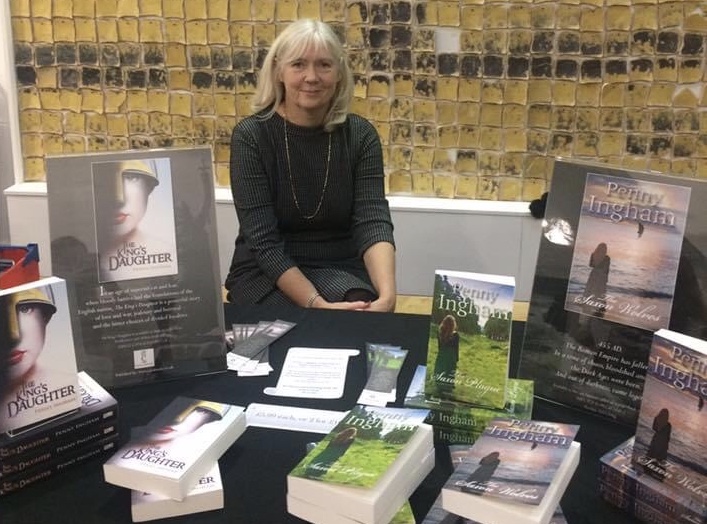
I was born and raised in Yorkshire where my father inspired my love of history from an early age. He is a born story teller and would take us to the top of Iron Age hillforts, often as dusk was falling, and regale us with stirring tales of battles lost and won. Not surprisingly, I went on to study Classics at university, and still love spending my summers on archaeological digs. For me, there is nothing more thrilling than finding an artefact that has not seen the light of day for thousands of years. I find so much inspiration for my novels from archaeology.
I have had a variety of jobs over the years, including working for the British Forces newspaper in Germany, and at the BBC. When our family was little, the only available space for me to write was a small walk-in wardrobe. The children used to say, ‘oh, mum’s in the cupboard again’.
I have written four historical novels: The King’s Daughter explores the story of Aethelflaed, the Lady of the Mercians. The Saxon Wolves and the Saxon Plague are both set in fifth century AD, a time of enormous upheaval and uncertainty in Britain as the Romans departed and the Saxon era began. My latest is something a bit different. Twelve Nights is a crime thriller set in sixteenth century London, and features William Shakespeare and Christopher Marlowe.
I now live with my husband in the Hampshire countryside. Like many others during the pandemic, we decided to try growing our own fruit and vegetables – with mixed results! We can only get better!
Giveaway to Win a PB copy of Twelve Nights (Open to UK Only)
*Terms and Conditions –Worldwide entries welcome. Please enter using the Rafflecopter box below. The winner will be selected at random via Rafflecopter from all valid entries and will be notified by Twitter and/or email. If no response is received within 7 days then Rachel’s Random Resources reserves the right to select an alternative winner. Open to all entrants aged 18 or over. Any personal data given as part of the competition entry is used for this purpose only and will not be shared with third parties, with the exception of the winners’ information. This will passed to the giveaway organiser and used only for fulfilment of the prize, after which time Rachel’s Random Resources will delete the data. I am not responsible for despatch or delivery of the prize.
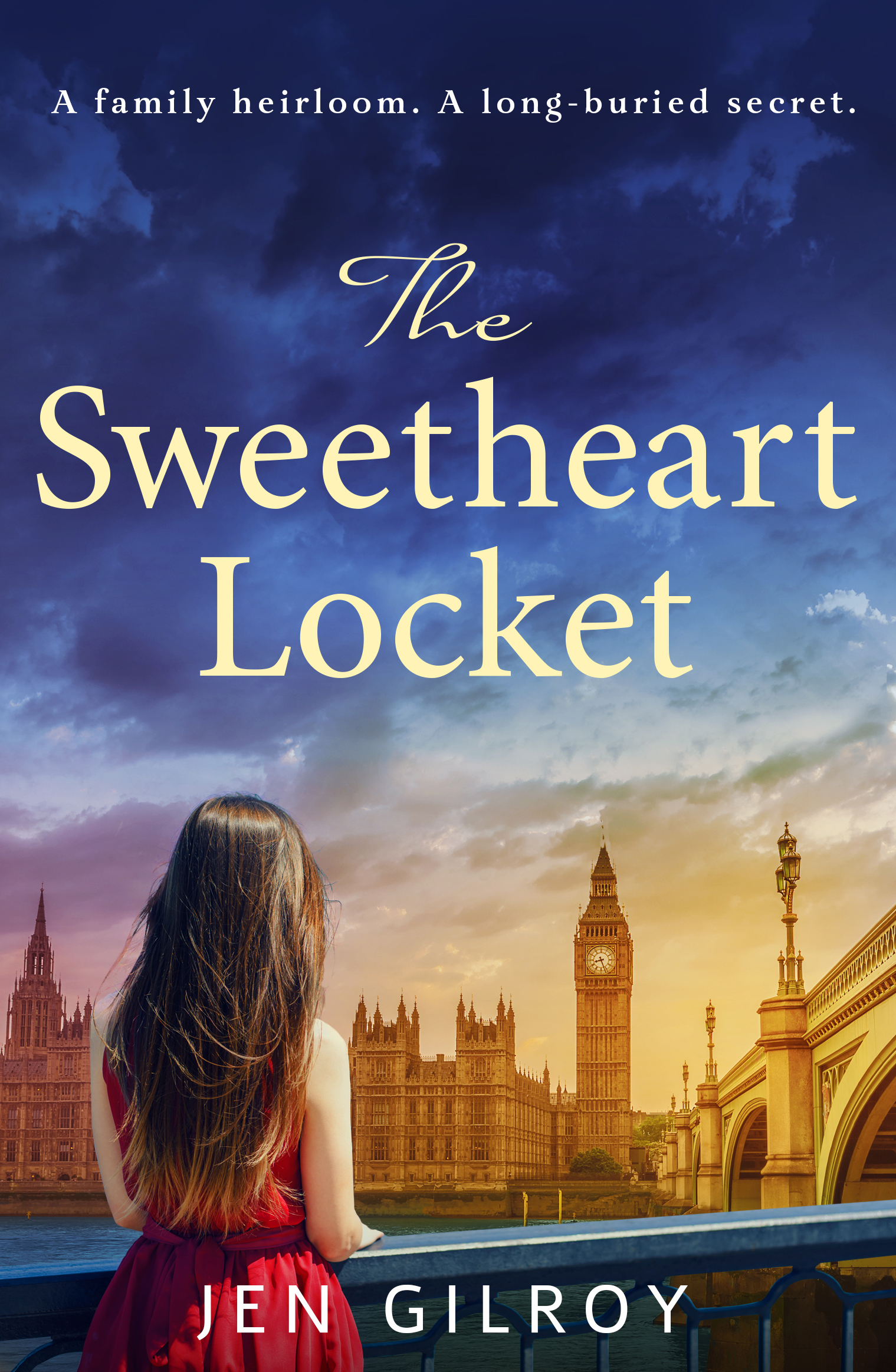
London, 1939 On the eve of the Second World War, Canadian Maggie Wyndham defies her family and stays in England to do her bit for the war effort. Torn between two countries, two men and living a life of lies working for the Special Operations Executive (SOE), Maggie’s RAF sweetheart locket is part of who she is…and who she isn’t.
San Francisco, 2019 Over twenty years after Maggie’s death, her daughter Millie and granddaughter Willow take a DNA test that’s supposed to be a bit of fun but instead yields unexpected results. Willow has always treasured her grandmother’s sweetheart locket, both family heirloom and a symbol of her grandparents’ love story. But now she doesn’t know what to believe. She embarks on a search for the truth, one she doesn’t know will reveal far more about herself…
A gripping and heart-breaking dual timeline novel about love, loss and buried secrets, The Sweetheart Locket is perfect for fans of Lorna Cook, Rachel Hore and Suzanne Kelman.
The Sweetheart Locket is a dual timeline story following the lives of 1939 Maggie in London, and 2019 Willow, her granddaughter, who has made her life in California.
The story of Maggie is intriguing, and covers the years of the Second World War, while Willow’s story is mainly told throughout a five week holiday in London. There are epilogues concluding the stories of all of the cast.
The focus of Maggie’s story is not truly her work during the Second World War, but rather on the men in her life, and how the Second World War impacted on those relationships, and then how she kept much of this secret from her daughter, who also had her own struggles as a young woman.
Willow’s story focuses on her need to understand some DNA results she receives just before travelling to London on a research trip. It is this that drives much of the narrative surrounding Willow, although it is not the only element to the story. Willow too is trying to find true love.
The twin narratives weave together quite well, although Maggie is by far the stronger of the two storylines. It is her story that engrossed me, and although I did work out much of the plot in advance, The Sweetheart Locket is still an entertaining read, especially for those looking for the surety of happy endings. Willow’s story is perhaps a little overly complicated, and also too filled with happenstance for my liking. It is Maggie who by far shines as the stronger of the two women, although the juxtaposition between the two characters is quite nicely portrayed.
If you’re a fan of dual timeline novels set in both a contemporary and World War 2 setting, and with a strong element of romance, The Sweetheart Locket will be a perfect read.
Meet the Author
Jen Gilroy writes sweet contemporary romance and dual timeline historical women’s fiction—warm, feel-good stories to bring readers’ hearts home.
A Romance Writers of America® Golden Heart® finalist and shortlisted for the Romantic Novelists’ Association Joan Hessayon award, Amazon named her third book, ‘Back Home at Firefly Lake,’ a ‘Best Book of the Month: Romance’ in December 2017.
A dual British-Canadian citizen, Jen lived in England for many years and earned a doctorate (with a focus on British cultural studies and social history) from University College London. Returning to where her Irish family roots run deep, she now lives with her husband, teenage daughter and floppy-eared rescue hound in small-town Eastern Ontario, Canada.
When not writing, she enjoys reading, ice cream, ballet and paddling her purple kayak.
Giveaway to Win 2 x Kindle copies of The Sweetheart Locket (Open to UK / Canada)
*Terms and Conditions –UK & Canada entries welcome. Please enter using the Rafflecopter box below. The winner will be selected at random via Rafflecopter from all valid entries and will be notified by Twitter and/or email. If no response is received within 7 days then Rachel’s Random Resources reserves the right to select an alternative winner. Open to all entrants aged 18 or over. Any personal data given as part of the competition entry is used for this purpose only and will not be shared with third parties, with the exception of the winners’ information. This will passed to the giveaway organiser and used only for fulfilment of the prize, after which time Rachel’s Random Resources will delete the data. I am not responsible for despatch or delivery of the prize.
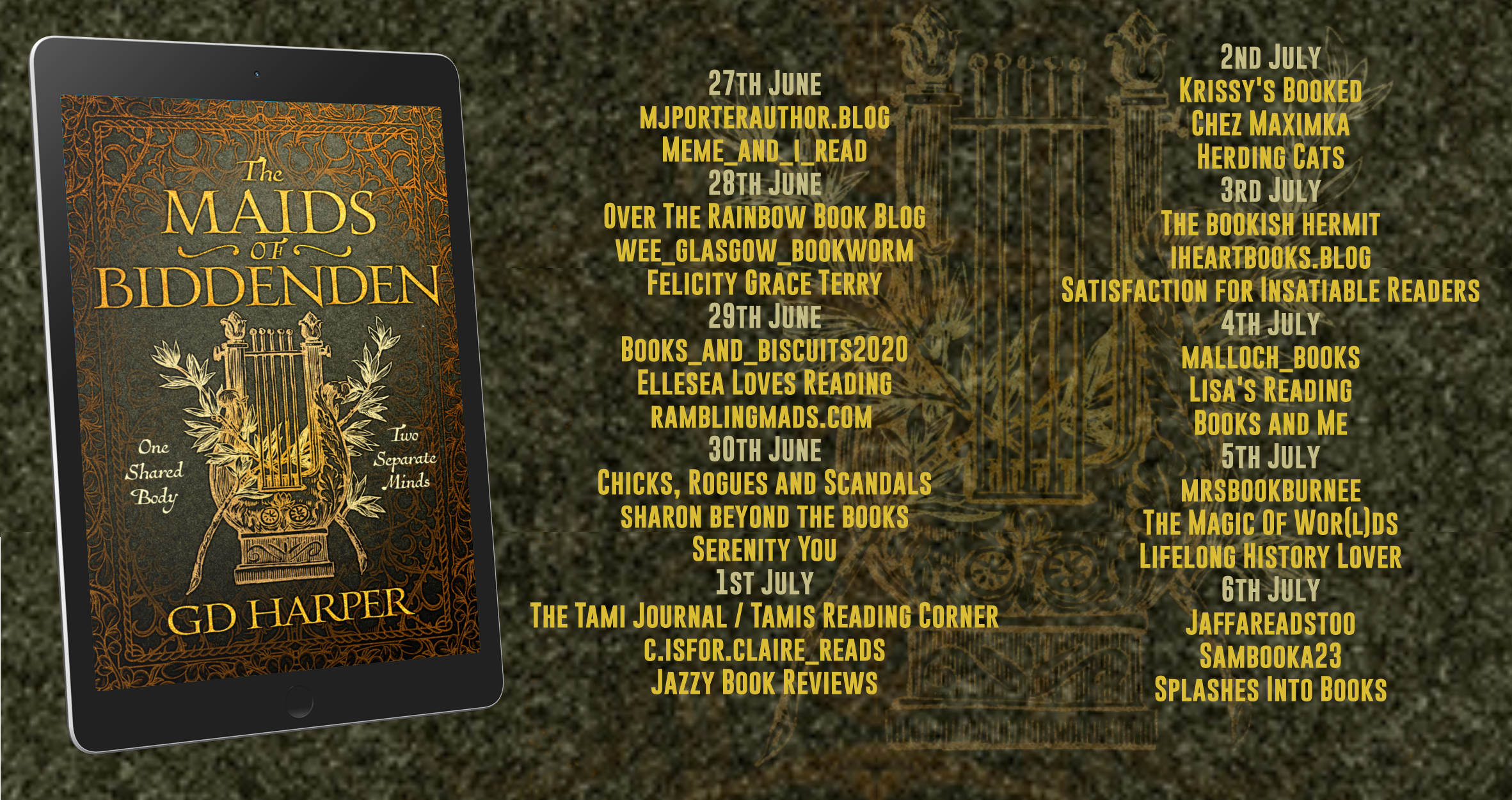
The Maids of Biddenden is inspired by the real-life story of conjoined twins Mary and Eliza Chulkhurst, born in 1100 into a wealthy family from a small Kent village.
Joined at the hip, the sisters overcome fear and hostility to grow into gifted and much-loved women – one a talented musician and song-writer, the other a caring healer and grower of medicinal plants. Entangled in the struggles for power and influence of the great Kent nobles of the time, they achieve much in their lifetimes and leave behind a legacy in Biddenden that survives to this day.
This is the heart-warming and inspirational story of two remarkable women leading one joint life, challenging adversity to become the best they can be.
Review
The Maids of Biddenden is that rare beast which entirely absorbs the reader from page one. Helped by a flowing style of writing, and the immediate and impending danger that the twins find themselves in as six-year-olds, the reader is entirely absorbed in the story, and their fate, so much so that it’s difficult to put the book down. That said, it is not just the twins themselves that drive the story – the people they interact with, those with their best and worst interests at heart – are all believable and well written, and there are occasions when the reader will be left frustrated and angered that some seem to face little punishment for their actions. The story has a number of points of view, and I found that they all worked very well – offering a view of the twins as they think of themselves, and also as others perceived them.
The story is effectively split in two; the first 45% tells the story of the Maids as young children. This element of the story is filled with a deep sense of foreboding that drives the story onward and makes the reader fearful for the future of the Maids. The narrative then moves forward a few years, and we see them as young women, trying to make a name for themselves and use their talents for good. At this point, the immediate landscape that the Maids encounter broadens considerably, and we move away from the nunnery and the settlement of Biddenden, into the politics and events of the early twelfth century, that almost consume the lives of the Maids for the remainder of their years – they lived during the time of the tragedy of the White Ship.
The story doesn’t so much lose focus here, but because the impending danger has passed, the reader is instead absorbed in how the twins accomplish all that they do. There is a great deal of attention to detail here – both medical knowledge and music – and it’s fascinating to see how the Maids’ lives interact with known events from the period.
This is a delightful story. I was entirely engrossed and found myself snatching what time I could to carry on reading it – something that doesn’t happen all that often. I highly, highly recommend The Maids of Biddenden for fans of historical fiction, and also for those who don’t normally read the genre. The challenges that the twins face are well told, and the reaction their appearance sparks are conveyed well, although as the reader you will be offended by the prevailing belief that they are Godless and a monstrosity, and the fact that they were a ‘sight to see’ as opposed to always being appreciated for who they were and what they could accomplish. The historical notes at the back of the novel are also fascinating.
I became a full-time author in 2016, publishing three novels under the pen name GD Harper. I have been both a Wishing Shelf Book Award finalist and Red Ribbon winner, been shortlisted for the Lightship Prize, longlisted for the UK Novel Writing Award and longlisted for the Page Turner Writer Award. The Maids of Biddenden was a finalist in this year’s Page Turner Book Award for unpublished manuscripts, longlisted for the Exeter Book Prize and the Flash 500 Novel Award, and shortlisted for the Impress Prize.
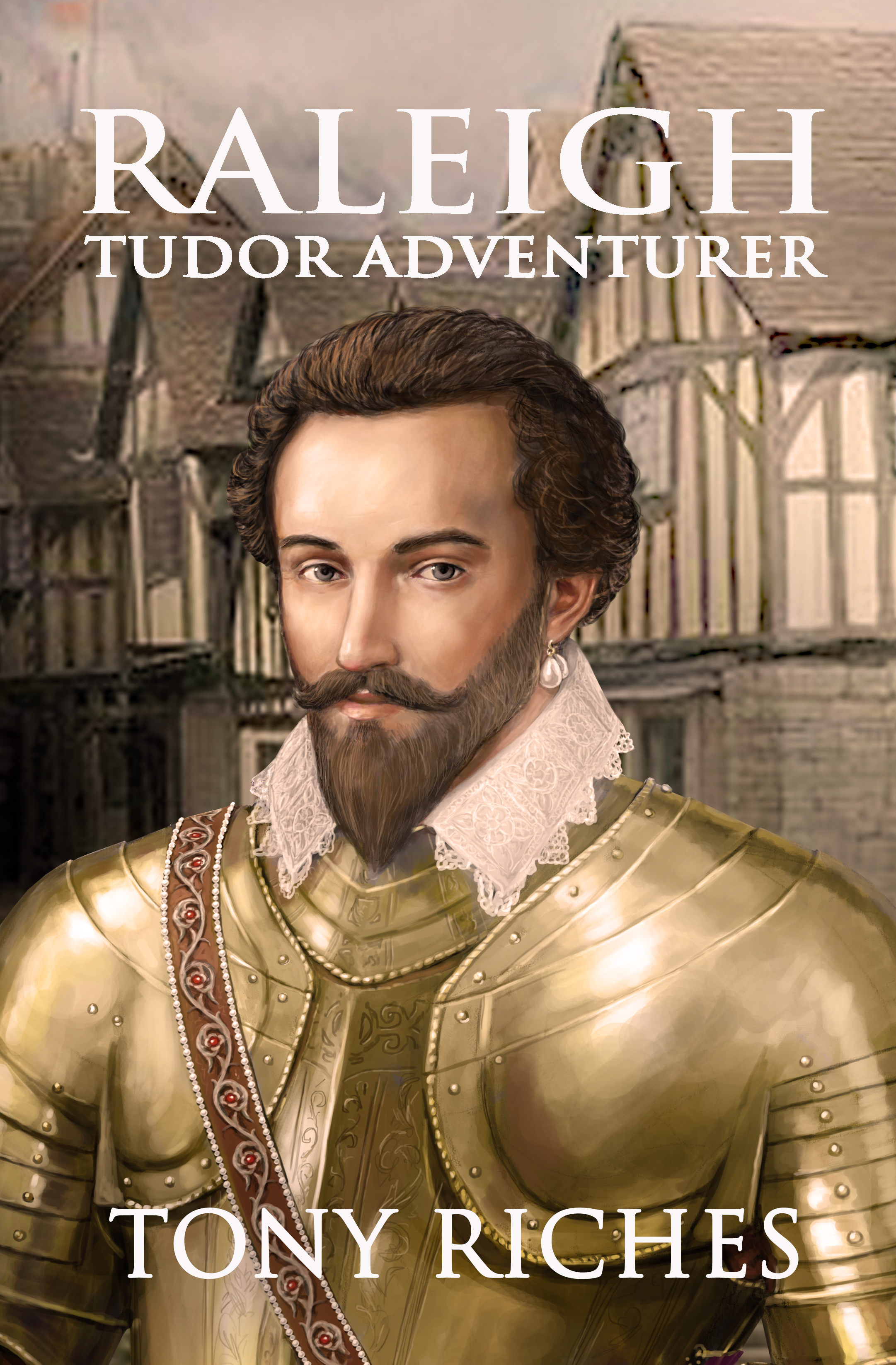
Tudor adventurer, courtier, explorer and poet, Sir Walter Raleigh has beencalled the last true Elizabethan.
This journey began when I was researching for an historical novel about Henry Tudor, who like me was born in the town of Pembroke, Wales. I eventually uncovered enough original material to write three books, with Henry being born in the first, coming of age in the second and becoming King of England in the third.
The result was my best-selling Tudor Trilogy, and I decided to continue the stories of the Tudors in a continuous line. I also made a conscious decision to tell the stories through those surrounding King Henry VIII and Queen Elizabeth I, so we see different facets of these complex rulers through the eyes of others.
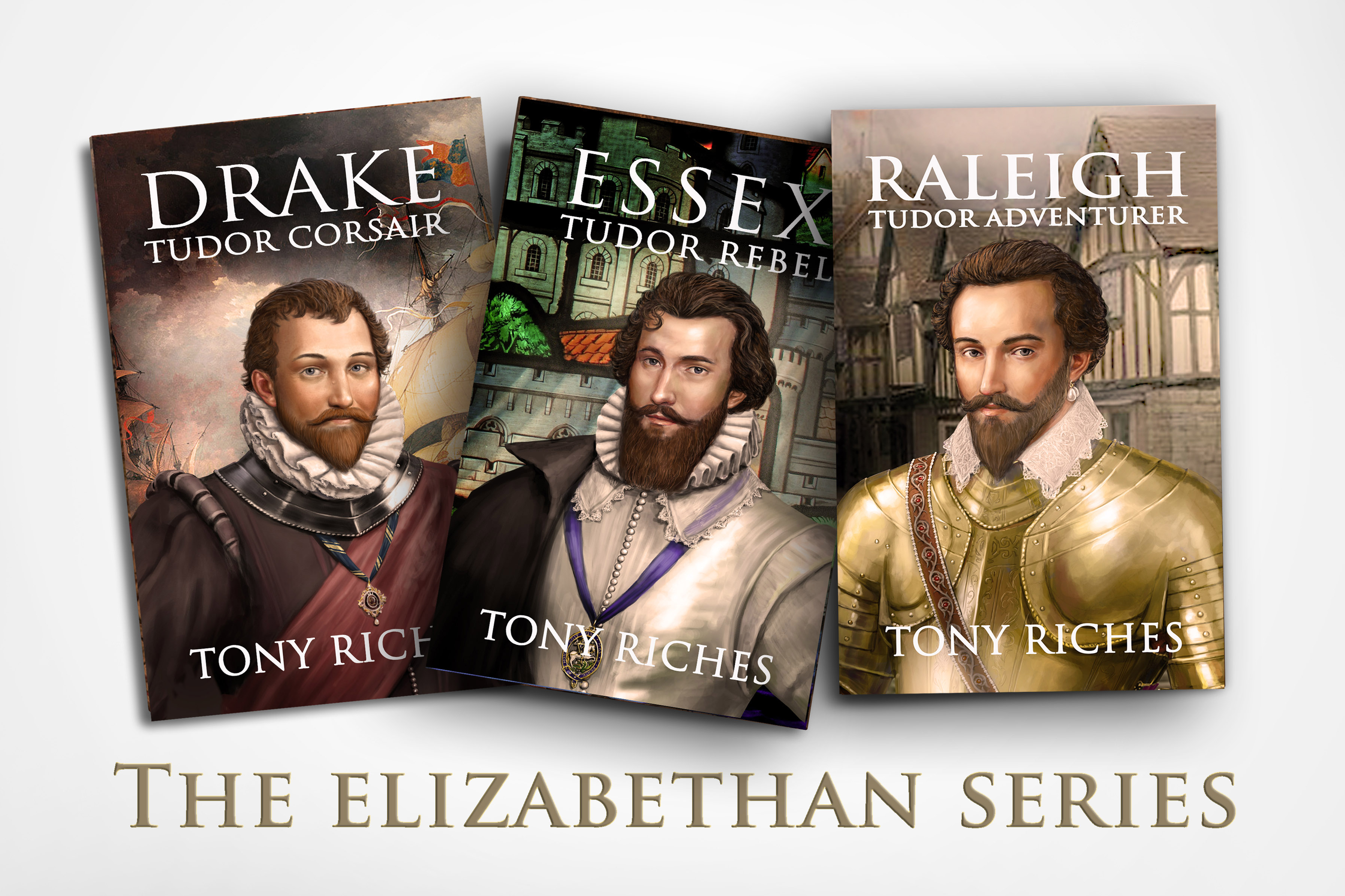
For my Elizabethan series I chose three very different favourites of the queen, who each saw different sides of her personality. Sir Francis Drake showered her with gold and jewels, stolen from the Spanish, in return for the status he longed for. The Earl of Essex was like the errant son she never had, but Raleigh became her protector, Captain of the Guard, and lived to see the last days of the Tudor dynasty.
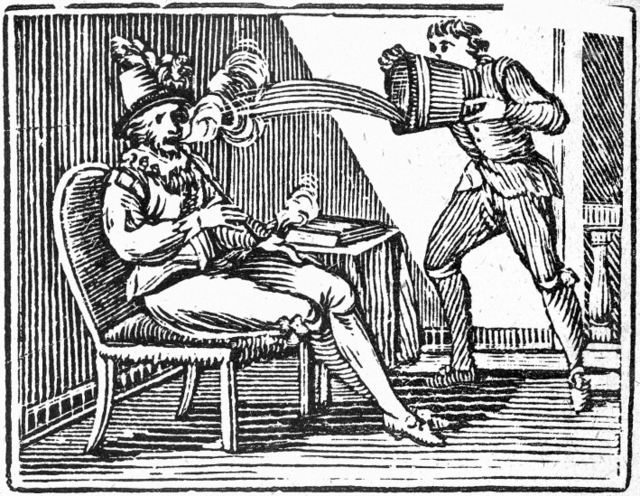
Many of the things I thought I knew about Walter Raleigh proved to be wrong. Raleigh is credited with introducing the potato and tobacco to Britain, but I’ve seen no evidence for either, or for the popular tale of a servant throwing water over him when he mistook the smoke from Raleigh’s pipe for a fire!
Sir_Walter_Raleigh_being_doused
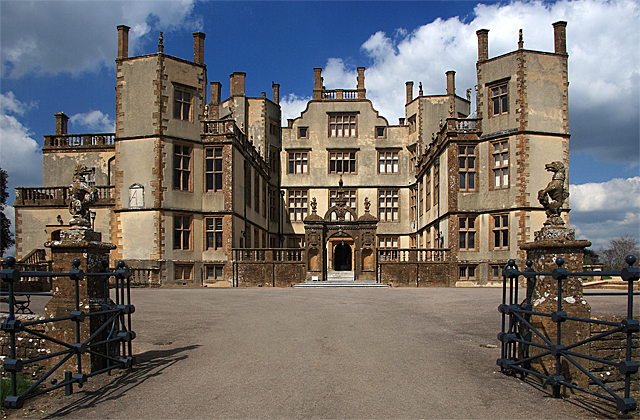
I followed Raleigh across the Irish Sea to the sleepy harbour at Youghal, where he had a house and became Mayor, as well as to the bustling city of Cork, where he served in the English Army of occupation. I also visited Raleigh’s house at Sherborne in Dorset, which still has many original features.
Sherborne Castle
My research uncovered a comprehensive collection of original letters and poetry written by Raleigh. As well as helping me understand his motivation, and the timeline of complex events, they also gave me a sense of his ‘voice’, and how he spoke to the queen and others of her court.
I relied on the comprehensive records of the Elizabethan Court, which set out events in fascinating detail. I was also lucky to read ‘A Woman of Noble Wit’, a new novel by Rosemary Griggs, about Raleigh’s mother. This led me to explore Walter Raleigh’s relationship with his father, as well as his mother, an aspect of him largely ignored by historical biographers.
My hope is that Raleigh – Tudor Adventurer will help readers see beyond the myths and half-truths, and have a better understanding of the man who has been called the last true Elizabethan.
Thank you so much for sharing. Your research sounds fabulous, and I too am reading A Woman of Noble Wit. Good luck with the new release.
Here’s the blurb:
Tudor adventurer, courtier, explorer and poet, Sir Walter Raleigh has been called the last true Elizabethan.
He didn’t dance or joust, didn’t come from a noble family, or marry into one. So how did an impoverished law student become a favourite of the queen, and Captain of the Guard?
The story which began with the best-selling Tudor trilogy follows Walter Raleigh from his first days at the Elizabethan Court to the end of the Tudor dynasty.
Tony Riches is a full-time UK author of best-selling historical fiction. He lives in Pembrokeshire, West Wales and is a specialist in the lives of the Tudors. He also runs the popular ‘Stories of the Tudors’ podcast, and posts book reviews, author interviews and guest posts at his blog, The Writing Desk. For more information about Tony’s books please visit his website tonyriches.com and find him on Facebook and Twitter @tonyriches
Maintaining order in Roman Britannia’s vast militarised zone
The original vision for my ‘Edge of Empire’ series of novels was to write stories that focussed on the lives and adventures of two protagonists from a single Roman auxiliary infantry unit. It was to be set in the north of the province of Britannia and in the wilder, unconquered lands beyond its boundaries. But as I buried myself in the research phase I was continually surprised by what I discovered. Ultimately I gained a greater understanding of the Roman way of doing things and quite fundamentally changed the approach to my stories.
For much of its first 300 years of use Hadrian’s Wall marked the north-west frontier of the Roman Empire. In movies such as The Eagle or Centurion we see Roman foot soldiers astride its battlements looking north, spear and shield in hand. But the Wall was not the-be-all-and-end-all of the north’s defence. What is less understood, at least to me, is that the Wall was really a focal point for a much larger militarised zone that stretched from Lancaster in the south to forts like Blatobulgium and Trimontium well into what is now modern day southern Scotland (I’m ignoring the period of the Antonine wall for simplicity).
It seems evident that the lands both north and south of Hadrian’s Wall were at times restive, if not in down right conflict, with the Roman administration. Whilst auxiliary infantry troops had an important role in keeping the peace, their deployment became increasingly localised in nature, especially in the later centuries of the empire. It was the mounted troops that had the pivotal role in commanding the north.
When researching for my historical adventure novel ‘Siege’, that focuses on the lives of the men of a Germanic cohort, a real life regiment with a mixture of infantry and cavalry. I was surprised by the amount of detail we now have on the everyday life of a Roman cavalryman. In the story I have worked hard to be faithful to that knowledge and attempted to bring it to life for the present day reader.
Most forts in the militarised zone included a cavalry force within their garrisons.
It has been calculated that sustaining a cavalryman with his kit and horse cost 5 times that of an infantryman. Why would the Romans invest so much if they were not an important and valuable asset? The answer surely must, at least in part, lie in both its symbolic and strategic roles.
Cavalry could move at a rapid pace and cover great distances quickly. They were highly mobile, making them effective on patrols and as scouts both north and south of the Wall. They made speedy messengers, giving warning of sudden threats and incursions. They also ensured food security, protecting local farmland and guarding supply trains to the Wall’s outlying forts. But, probably as importantly, they projected the image of power and renown of Rome and its imperial might. If you have ever seen the Household Cavalry in London or mounted police outside of a football (soccer) stadium you will get an idea of what a Roman turma must have looked like to an Iron Age population.
Outlying forts, north of the Wall, such as at Birrens and Netherby housed specialist, double strength, mixed infantry and cavalry cohorts (milliaria equitata) as well as specialist scouts (exploratores) enabling them to command a significant geographic area and suppress any uprising of local tribes. The effect on the populace must have been as much psychological as physical.
But who were these cavalrymen? Well they certainly weren’t drawn from the Roman aristocracy as they often were in the time of the Republic. No, the names of their units give a clear indication that the Romans recruited from all over the empire from the homelands of its conquered peoples. Germanic and celtic Gaulish units were prevalent, such as the I Nervana Germanorum and the cohors II Tungrorum that garrisoned the fort of Birrens at different times. But regiments from as far away as Spain and modern day Bulgaria and Croatia have also been identified. But as the needs of the empire changed over time individual units would mainly have recruited from the local populations. With sons moving into the family business by joining the cohorts of their fathers and grandfathers.
So what was life like for the cavalryman? Well each troop, known as a turma (typically 30 men), were housed in a single barrack block. Trios of men lived at the back of the building with their horses stabled at the front. There were surely few nights that troopers fell asleep without the sound of the snorts of their mounts accompanied by the smell of hay and dung. Each room had a hearth set against the stable-side wall for warmth and cooking. The decurion, who commanded the turma, lived in rooms at the end of the block along with his family.Troopers ate, slept and kept their weapons and tack in these small rooms. It is also thought that grooms and slaves may have slept in the roof space above.
Training for cavalrymen and their mounts was extensive and intense. If you have seen horses being drilled for modern day dressage you will get the idea, with each trained initially on a long rein to teach the horse basic skills as well as special steps. It is likely that horses were broken and prepared by specialists before being assigned to its rider. They learned to overcome their instinct to flee when startled and to cope in the noise and fervour of combat. The early instruction of the cavalryman would have focussed on the basic skills of controlling and riding the horse whilst holding a sword or spear in the right hand and the shield and rein in the left. From there they would have progressed to training to fight as a turma, with unit drills enabling large numbers of men to manoeuvre in battle.
The average cavalryman was well armed and armoured. He typically wore chainmail armour that allows greater movement whilst on horseback. Their weapons consisted of the long cavalry sword often referred to as the spatha. They also had a fighting lance and two shorter throwing javelins. Their shields were a variety of shapes including square and oval, but were usually flat with a steel rim and a rounded metal boss to enable it to be used as a weapon.
It is not hard to imagine the damage the charge of even a small unit of auxiliary cavalry could inflict on the largely unprotected bodies of the tribal warriors of the north of Britain.
Alistair lived in the Dumfriesshire countryside for most of his childhood. A region of Scotland filled with ancient place names such as Torthorwald and Caerlaverock. But it was his history teacher’s telling of the tale of Burnswark and the Roman siege of the Iron Age hillfort that fired his love of Roman and Dark Ages history. From there the kernel of the stories for the Edge of Empire series took root.
On leaving school he began a 35-year communications career, firstly with the Royal Navy, that included covert riverine and seaborne operations during the height of ‘The Troubles’ in Northern Ireland, before moving into the corporate world. Military life is unique, and Alistair aims to reflect an authentic view of that experience and its language in his stories. When not writing or spending time with family, Alistair, his wife Jenny and Hurley the cockerpoo love to walk in the hills of both the UK and Andalucia.
Thank you for such a fabulous guest post. Good luck with the new book.


















 MJ Porter

