Today, I’m delighted to welcome NL Holmes and her new book, A Taste of Honey to the blog, with an excerpt #AncientHistoricalFiction #AncientEgyptianMystery #CozyHistorical #BlogTour #TheCoffeePotBookClub

Today, I’m delighted to welcome NL Holmes and her new book, A Taste of Honey to the blog, with an excerpt #AncientHistoricalFiction #AncientEgyptianMystery #CozyHistorical #BlogTour #TheCoffeePotBookClub

Today, I’m delighted to welcome NL Holmes and her new book, A Taste of Honey to the blog, with an excerpt

Excerpt from A Taste of Honey by NL Holmes

They leashed the puppies with a nub of rope the steward brought them and led the dogs, tumbling and frolicking, down the road toward the River from which they had come. The steward accompanied them to the bank, where a low, utilitarian-looking vessel of modest size had drawn up and lay rocking in the green water.

“Thank Lord Amen-nakhte for this,” said Neferet gratefully. “It saves us a long wait in the sun.”

“I’m sure he’s happy to do it for his old friend, my lady. My lord.” The steward bowed repeatedly as the little party clattered up the gangplank, puppies in their arms.

After the usual ritual of casting off anchors and pushing into the flow, the crew struck up their paddling rhythm, and the boat surged downstream toward the city. It was early afternoon, and there was little traffic on the River. Instead of standing at the gunwales, watching the scene unspool past them on the banks, the travelers crouched on the deck and played with the puppies. Just like human toddlers, the young dogs were uncoordinated, hyperactive, and prone to chewing on everything. They were an endless cause for merry laughter. As for Brute, he observed them with paternal tolerance.

All at once, a thud, a screech—and the boat gave a sideways lurch that threw everyone to the deck, reeling. Neferet, caught completely off-balance, fell flat on her face. Bener-ib screamed as she toppled over a coil of rope, and one of the puppies slid on its back across the deck, stopped only by the wickerwork of the gunwales. Mut-tuy scuttled after it and hugged the wildly squirming creature to her chest.

“What was that?” cried Neferet as she struggled to her hands and knees.

“I think we’ve struck something.” From his seat on the planking, Grandfather had fallen sideways, feet in the air, one sandal flying. He picked himself up gingerly and groped for his shoe.

“Mut the mother of us all!” Mut-tuy shouted. “That boat hit us!” She pointed, round-eyed, to starboard, where an elegant yacht crowded against the side of their own craft. They could hear the squeal of wet wood as the two hulls ground against one another. 

Amen-nakhte’s captain ran to the gunwales, screaming and gesticulating at the other boat. It drew away a bit but maintained a parallel course. No one came to the side to shout excuses or see if there had been injuries aboard their victim. Neferet added her own imprecations to those of the captain, while the others secured the puppies.

“What were they thinking?” she exploded as Grandfather joined her at the rail. “They have all the room in the world. Why are they coming so close to us? We’re going to collide again.”

“I think that’s what they intend,” he murmured. “Look. They’re leaning into us.” 

He hastily pulled Neferet away from the gunwales as the tall mass of the yacht bore down once more upon the slow little farm transport. The big boat’s long, carved prow slid over its victim with a shudder of boards and the sound of splintering. The smaller boat rose in the water and sank back with a splash. Screams of rowers caught between the hulls sent chills up Neferet’s neck.

“The turds are trying to sink us!”

“Are they pirates?” Bener-ib clutched at Neferet’s arm.

“So close to the city? I can hardly imagine it.” But what else could they be? Her stomach was in her throat. They were all going to have to jump ship and swim for shore. And what about the puppies?

Their boat was struggling to pull away from its aggressive fellow traveler. The steersman hung desperately upon one of the tall oars with all his weight while the captain stalked up and down in a frenzy, yelling orders, but the larger vessel crowded after it.

“Stay on the other side, girls, and be prepared to evacuate,” Grandfather said uneasily. “I think you’re right, Neferet. They’re trying to take us down.”

Bener-ib whimpered at Neferet’s side, her fingers digging into her partner’s arm, but she never released her grip on the cream-colored puppy pressed to her side with the other elbow. Another teeth-gritting screech resounded as the vessels collided once more. The cargo boat listed wildly, throwing everyone against the gunwales. One of the stone anchors skidded over the deck with bone-crushing momentum and crashed through the wickerwork barrier on the other side. The empty mast almost slapped the River before rising again abruptly. Water sloshed across the planking. The passengers slid and staggered. One of the sailors ran to cut the rope that held the anchor, which was weighing the boat down at a tilt.

“Don’t let go of the puppies!” Neferet shouted, grabbing at Brute’s collar. If we go under, they’ll drown, she thought in anguish. We’ll all probably drown.

The yacht drew forward, raking the side of the boat again as it passed. More ominous splintering resounded—and strangely, a distant yapping and baying. A couple of men had gathered at the rail of the yacht and stared down at the terrified passengers below them. Their expressions were grim. 

Who, by all that’s holy, are these people who want to kill us?

Welcome to the blog. Can you tell me about your new novel.
Although much of it was done a long time ago, when I began teaching a course that involved a cultural and historical look at Ugarit, tackling a series of books set in an obscure city state in the Late Bronze Age did require some academic snooping. Times and places about which we know relatively little are a mixed blessing: one always wishes one had more clues to hang fiction upon, but in those gaps where we know nothing, plausible imagination is OK for the novelist. Still, I didn’t want to contradict anything we knew for sure to be true, so there was a lot to learn. I bought a lot of books.
To me, a person with a soft spot for words, one of the most interesting things I began to find out about was the literary tradition of Ugarit. Fortunately for us—and unfortunately for the inhabitants of the city in about 1190 BCE, when the city fell never to rise again—Ugarit was put to the torch, baking and preserving the clay tablets upon which information was recorded. A whole private library of texts was among the tablets discovered, opening to modern scholars a wonderful new world of mythological epic. 

The author of some of the most complete of these was a certain scribe named Ili-milku, born in the near-by kingdom of Shiyannu. He eventually held the post of chief scribe of Ugarit but evidently still had time to write. It’s likely that, rather than composing the Cycle from scratch, he compiled and wrote down a definitive edition of a slew of tales that had been recited orally for a long time, much like Homer. He is the third point-of-view character in The Moon That Fell from Heaven. More about him in a moment.

Since their discovery in the 1930s, we have been exposed to Ugaritic narratives about Kirta, a Job-like figure of patience in suffering. About Aqhat, the long-prayed-for son of a childless couple. About Ba’al, the storm god, and various lesser divine figures like the Gracious Gods or Horon. Biblical scholars immediately noticed not only themes similar to those of the Hebrew Bible, but also literary forms that occur in the Bible. This shouldn’t surprise us, as the entire world of the eastern Mediterranean, which we may generalize as Canaanite, shared a closely related culture and languages. The Ugaritic high god Ilu, for example, is the same as El and means simply “god.” Ba’al is “the lord,” the rider of the clouds. But the gods of Ugarit were not omnipotent, by any means. They were closely associated with the phenomena of nature, and like nature, they did a lot of dying and resurrecting. Other parallels—with the Greek world—are striking too. Anat the Maiden is a virgin warrior goddess like Athena, for example. The Bronze Age was a world of global interconnection!

When the fictional Ili-milku is held hostage, he finds himself forced to critique endless poems his captor has written. This activity is possible because scholars have worked out that all the mythological stories that have come down to us from Ugarit are actually in verse. Their idea of poetry—like that of the Biblical authors—didn’t require rhyme or even meter. It was free verse, you might say. But it used very definite patterns of language, repetitions, build-ups, parallels. In short, it was constructed pretty much the same way modern Near Eastern poetry is, an interesting continuity of more than 3000 years.

How were these poetic narratives used? Some seem as if they might have been liturgical drama, with choral parts. Others were perhaps sung or chanted in temples or even around the campfire. Unfortunately, there’s no way to know until someone finds some stage directions. But even so, they shed a lot of light on how the people of Ugarit viewed their world, what they valued, how their society was structured. I’m glad to have studied them, because they bring a whole population closer and make them more human. I hope I’ve accomplished a little of that myself by turning a bit of their human drama into fiction.

Here’s the blurb

EIn Tutankhamen’s Egypt, the vizier’s head cook dies suspiciously, and it looks like murder to Neferet and Bener-ib. Only, who would want to kill a cook, a man admired by all?

Perhaps he has professional rivals or a jealous wife. But she is the longtime cook of Neferet’s family, a dear retainer above reproach. Was her husband the good man he seemed to be, or did he have the shady past our two sleuths begin to suspect?

They’d better find out soon before the waters of foreign conspiracy rise around Neferet and her diplomat father. If they can’t find the killer, it could mean war with Egypt’s enemy, Kheta — and someone else could die. Maybe one of our nosy sleuths…  

Buy Links

Ebook

Paperback

Meet the author

N.L. Holmes is the pen name of a professional archaeologist who received her doctorate from Bryn Mawr College. She has excavated in Greece and in Israel and taught ancient history and humanities at the university level for many years. She has always had a passion for books, and in childhood, she and her cousin used to write stories for fun.

These days she lives in France with her husband, two cats, geese, and chickens, where she gardens, weaves, dances, and plays the violin

Connect with N L Holmes

Website

Book Bub

AllAuthor

Follow the A Taste of Eveil by NL Holmes blog tour with The Coffee Pot Book Club

I’m delighted to share my review for Murder at Big Ben by Michelle Salter, the second book in a new historical mystery series #historicalmystery #cosycrime #highlyrecommended

I’m delighted to share my review for Murder at Big Ben by Michelle Salter, the second book in a new historical mystery series #historicalmystery #cosycrime #highlyrecommended #historicalmystery #cosycrime #highlyrecommended
#BoldwoodBloggers @BoldwoodBooks

I’m delighted to share my review for Murder at Big Ben by Michelle Salter, the second book in a new historical mystery series #historicalmystery #cosycrime #highlyrecommended

Here’s the blurb

🇬🇧 You won’t be able to put down this latest instalment in the Fairbanks and Flynn Mysteries, perfect for fans of Agatha Christie, Benedict Brown and T. E. Kinsey 🔎 🔪 

Three women hide in Big Ben, only two come out alive…

2 April 1911 is census night, when suffragettes hide overnight in parliament to force census takers to record it as their address – the only way women can have a place in government.

Coral Fairbanks, suffragette, actress, and artist’s muse, is among the women who break into parliament. What she doesn’t know is that Guy Flynn, artist and Scotland Yard detective, has been ordered to guard it that night.

When a suffragette hiding in Big Ben is poisoned, suspicion falls on the residents of two grand houses in Mayfair. The Kesbys are avant-garde artists, the Ashcourts are aristocrats fallen on hard times.

Once again, Fairbanks and Flynn put aside their differences to investigate an astonishing case of deception and murder.

A new historical mystery set in Edwardian London featuring the iconic detective duo Fairbanks and Flynn.

While this novel has the same detective duo as the other books in the Fairbanks and Flynn Mystery series, it can be read as a STANDALONE

 Purchase Link

https://amzn.to/4dGK2as

My Review

Murder at Big Ben is the second book in the Fairbanks and Flynn Mystery series, and it’s another fabulous mystery.

I adore how these books are so deeply rooted in the events of the day, making use of historical events to provide a vivid and very satisfying mystery for the reader to devour (or attempt to solve). The red herrings are placed extremely well. The eventual resolution of the mystery unfolds very smoothly, and when you do know the resolution, you can appreciate how well the author dropped snippets here and there, while ensuring there was never enough to give the mystery away.

Coral and Guy are such great characters. The mystery is top-notch and there are any number of suspects who could be the culprit..

Another fabulous installment in the series which I devoured in just a few sittings.

Check out my reviews for Murder in Trafalgar Square, the first book in the Fairbanks and Flynn Mystery series, and also my reviews for the Iris Woodmore series of historical mysteries Death at Crookham Hall, Murder at Waldenmere Lake, The Body at Carnival Bridge, A Killing At Smugglers Cove, A Corpse in Christmas Close, and Murder at Mill Ponds House.

Meet the author

Michelle Salter is a bestselling author of Edwardian and 1920s murder mysteries featuring female amateur sleuths, suffragettes and Scotland Yard detectives. She combines colourful characters, fascinating British history, and will-they-won’t-they romance in classic golden-age whodunnits.

Each book can be read as a STANDALONE even if it’s part of a series.

Michelle’s cozy crime novels have gained a dedicated following of readers who love her compelling characters and page-turning plot twists.

When she’s not writing books, Michelle enjoys exploring the backstreets of London and sharing fascinating facts from the Edwardian era and Roaring Twenties on her blog and social media.

She lives in Hampshire, England, and loves walking in the countryside and reading crime novels.

Connect with Michelle 

Bookbub profile

Newsletter Sign Up

Posts

I’m reviewing Collateral Damage by Sam Cogley #thriller #bookreview #blogtour #CollateralDamage

I’m reviewing Collateral Damage by Sam Cogley #thriller #bookreview #blogtour #CollateralDamage #boldwoodbloggers @BoldwoodBooks @rararesources

I’m reviewing Collateral Damage by Sam Cogley #thriller #bookreview #blogtour

Here’s the blurb

Winter came for the pancakes. Hollowvale fed him the dead.

Dane Winter is unemployed and on a lonely road to nowhere. Riding his motorcycle west from New York, he spots a sign on the Interstate: Hollowvale, Pennsylvania. A place he hasn’t visited since his Redwind Security days. Back then, the town was known for its coal mines and the best pancakes he ever tasted.

A chance encounter with a distraught local woman pulls him into investigating her friend’s disappearance. When Jacob Rhodes’ body is found at the bottom of an abandoned mine shaft, the local authorities are quick to label it an accident. Winter isn’t convinced…

Between the death of Jacob and the unexplained illnesses spreading through the local population, it’s clear that nothing is as it seems in the town of Hollowvale. Worse still, Winter thinks it might have something to do with his time there two years earlier.

What starts as a quest for answers becomes a fight to expose a conspiracy that reaches far beyond the small town.

But Winter is never one to give up, and he’s willing to burn it all down in order to uncover the horrific truth.

Purchase Link

https://mybook.to/CollateralDamageSocial

My Review

This is the first book in the Dane Winter series that I’ve read, although it’s the second book in the series.

Our tale takes us to a small town, Hollowvale, in the US, with a man and his motorbike, and the next few pages feel very Reacher-esque as Dane eats in the diner and then heads out on the road once more. Only then does everything change, and Dane finds himself thrust into a mystery he wasn’t expecting.

There are small-town politics, some nasty bad-guys, a cover-up of something very dodgy, a distressed woman, all coupled with Dane’s desire to uncover the truth about a company he’s worked for in the past (2 years ago).

The story moves fast, and while it might have taken me a while to get into the new character and situation, I was soon flying through the book as the tension and the stakes built.

This is a fun, if sometimes tense tale, with its fair share of jeopardy and ‘fight’ scenes. It is sure to appeal to fans of Jack Reacher.

Meet the author

Sam Cogley is the author of popular action thrillers, melding suspense-laden espionage plots with the mesmerising world of high-tech innovations. He writes the high-octane Dane Winter thrillers for Boldwood Books.

Sam lives in Victoria, Australia with his wife and children.

Author Sam Cogley

Newsletter Sign Up: https://bit.ly/SamCogleyNews

Bookbub profile: @samcogley

I’m welcoming The Teacher’s Noble Heart by Susanne Dunlap to the blog #blogtour #RegencyRomance #bookreview

I’m welcoming The Teacher’s Noble Heart by Susanne Dunlap to the blog #blogtour #RegencyRomance #bookreview

I’m welcoming The Teacher’s Noble Heart by Susanne Dunlap to the blog #blogtour #RegencyRomance #bookreview

Here’s the blurb


In Regency Cornwall, governess Miss Wilkins has always survived by being sensible, capable, and self-reliant. When she dares to take a bold step toward independence, she has no intention of complicating her life—or her heart.

Her encounters with James Pentarrant, the steadfast captain of the Delabole slate quarry, are marked less by romance than by spirited disagreement. Self-contained and disciplined, James challenges her views at every turn, even as he respects her resolve. What begins as wary sparring and mutual resistance gradually deepens into an understanding neither expected nor sought.

Alongside their unfolding story, a young heiress newly returned to Cornwall hides a calling that defies convention. When a moment of danger on the moor—and the inevitable gossip that follows—forces her into an unintended engagement, assumptions harden and emotions become dangerously entangled. Her growing affection for her own sparring partner, a gentle country doctor with the manners of a true gentleman and a secret of his own, only further unsettles what society is determined to set in place.

Set against the rugged beauty of Cornwall’s coast, quarries, and windswept moors, The Teacher’s Noble Heart is a tender Regency romance of intertwined lives, mistaken conclusions, and love discovered in spite of every sensible intention.

Purchase Link

My Review

The Teacher’s Noble Heart is the fourth of Susanne Dunlap’s Regency romances I’ve read, and I’ve enjoyed all of them (see my reviews below for the previous books). Every book offers something a little different, while still delivering on what we all expect from a Regency romance.

In this story, we are transported to Cornwall, where society is a little different to that of London and yet mostly governed by the same conventions, even if some elements are a little less refined. The addition of our working nobleman and the mystery of the new local doctor adds a delightful element to the story of our two heroines,as does our less-than-typical professions of the two women.

A charming Regency Romance, offering something a little different to stories of London and the Ton and sure to delight fans of the genre.

Check out my review for The Dressmaker’s Secret Earl and The Soprano’s Daring Duke

Meet the author

Susanne Dunlap started out a historian, became an award-winning historical novelist with fourteen published novels for adults and teens, and is now the author of the Regency romance series, Double-Dilemma Romance. She lives and writes in a converted textile mill in Biddeford, Maine.

Author Susanne Dunlap

Connect with the author

https://susanne-dunlap.com

I’m sharing my review for The Old Girls’ Island Getaway by Kate Galley, the third book featuring Dorothy and Gina #blogtour #newrelease #comedy

I’m delighted to be sharing my review for The Old Girls’ Island Getaway by Kate Galley #blogtour #newrelease #comedy

I’m delighted to be sharing my review for The Old Girls’ Island Getaway by Kate Galley

Here’s the blurb

Two old friends. One sun-soaked adventure.

Dorothy and Gina may be separated by twenty years, but their friendship is timeless. At seventy-one and nearly ninety, life’s too short not to have a little fun – especially in Corfu.

When Dorothy is invited to visit an old friend at his villa, she insists Gina comes along. They’re looking forward to sunshine, sea breezes, and perhaps a dash of ouzo. But their plans are upended by an unexpected guest: glamorous actress Florence Quinn, who’s taken up residence in the pool house.

Florence may sparkle on the surface, but she’s hiding something – and someone – from her past. Determined to help, Dorothy and Gina embark on a quest across the island, only to find that Corfu holds more secrets, scandals, and surprises than they ever imagined.

A warm, witty, and adventurous tale of friendship, mischief, and unexpected discoveries.

Purchase Link

https://mybook.to/OldGirlsIslandGetaway

My Review

We’re back with the joyful ‘Old Girls,’ Gina and Dorothy as they jet off for yet another holiday, in the company of Dorothy’s granddaughter. This time, there’s a film star in their midst, threatening to disturb what Dorothy had hoped would be a reunion with a friend at the end of his life. But there are two minor mysteries for our ‘Old Girls’ and Dorothy’s granddaughter to solve – did Rupert play a part in stealing the priceless diamond decades ago – and why is Florence so determined on finding her holiday romance from thirty years ago?

These two mysteries provide the intrigue for the story as Gina is prevailed upon to drive a car around the twisty roads of Corfu and even hops onto a scooter, all in order to aid Florence. Juliet, Dorothy’s granddaughter, provides a welcome boost of humour with her cutting, if mostly true, comments.

As with the previous two books in the series, The Old Girls’ Island Getaway is a charming read, with some funny moments thrown in to remind us all that life doesn’t stop just because the birthdays start to rack up.

Check out my reviews for the previous two books featuring Dorothy and Gina Old Girls Behaving Badly and The Old Girls’ Chateau Escape.

Meet the author

Kate Galley is the author of uplifting golden years fiction, including The Second Chance Holiday Club. She lives with her family in Buckinghamshire and works part time as a mobile hairdresser

Connect with the author

Newsletter Sign Up: https://bit.ly/KateGalleyNews

Bookbub profile: https://www.bookbub.com/authors/kate-galley

Today, I’m delighted to be reviewing Love Lost in Time by Cathie Dunn, a dual timeline novel #LoveLostInTime #CathieDunn #DualTimeline #WomenAcrossTime#BlogTour #YardeBookPromotions

Today, I’m delighted to be reviewing Love Lost in Time by Cathie Dunn, a dual timeline novel #LoveLostInTime #CathieDunn #DualTimeline #WomenAcrossTime#BlogTour #YardeBookPromotions

Today, I’m delighted to be reviewing Love Lost in Time by Cathie Dunn, a dual timeline novel

Here’s the blurb

A reluctant daughter. A dutiful wife. A mystery of the ages.

Languedoc, France, 2018

Historian Madeleine Winters would rather research her next project than rehash the strained relationship she had with her late mother. However, to claim her inheritance, she reluctantly agrees to stay the one year required in her late mother’s French home and begins renovations. But when she’s haunted by a female voice inside the house and tremors emanating from beneath her kitchen floorboards, she’s shocked to discover ancient human bones.

The Mediterranean coast, AD 777

Seventeen-year-old Nanthild is wise enough to know her place. Hiding her Pagan wisdom and dutifully accepting her political marriage, she’s surprised when she falls for her Christian husband, the Count of Carcassonne. But she struggles to keep her forbidden religious beliefs and her healing skills secret while her spouse goes off to fight in a terrible, bloody war.

As Maddie settles into her rustic village life, she becomes obsessed with unraveling the mysterious history buried in her new home. And when Nanthild is caught in the snare of an envious man, she’s terrified she’ll never embrace her beloved again.

Can two women torn apart by centuries help each other finally find peace?

Love Lost in Time is a vivid standalone historical fiction novel for fans of epoch-spanning enigmas. If you like dark mysteries, romantic connections, and hints of the paranormal, then you’ll adore Cathie Dunn’s tale of redemption and self-discovery. 

Any Triggers: Implied attack on a female character. Some minor fighting scenes.

Praise

“From the richness of Charlemagne’s court and the regret of a daughter, as she stands over her mother’s grave, to the realisation of an enemy and a skeleton under the kitchen floor, Love Lost in Time: A Tale of Love, Death and Redemption by Cathie Dunn is the unforgettable story that traverses two very different times.”


The Coffee Pot Book Club, 5* Editorial Review

“The narrative is ripe with emotions as two independent women are pulled in unexpected directions… Both landscapes are beautifully penned for readers to easily get lost in. Additionally, the storylines are engaging, and each helped bring a satisfying conclusion to the other. An enjoyable tale about love, sacrifice, and self-discovery.”

Historical Novel Society

“The historical details are beautiful, and a book which could easily feel oppressively sad is cleverly lightened with the use of romance and a satisfying ending. Well written and easy to read, the historical side may be a little more compelling, but the contemporary details add a layer that cannot be ignored!” 

In’DTale Magazine

“In Love Lost in Time, Ms Dunn creates a fascinating balance between a tragic love story set in the Visigoth empire of the eighth century, and a very modern historian on a quest to find her own personal history in picturesque Languedoc…

Thoroughly researched and beautifully told, both stories complement each other in narrative power and colourful scene-setting; and in the dual narrative the main characters are compelling – each a product of destiny and following their fate, regardless of the cost.
Fans of Kate Mosse will relish this book…”

Discovering Diamonds Reviews

https://books2read.com/u/mq7DM9

https://mybook.to/LoveLostTime

This book is available on #KindleUnlimited

My Review

Love Lost in Time is an engaging dual time line novel, set in almost contemporary France, and also in the late 700s, a time not many authors dare to write about because it’s so confusing for the reader (and complex). Cathie manages to evoke this period fabulously by making her main character, Nanthild, a woman of her time, while allowing events to take place largely externally to her. We know there’s war but we don’t have to get bogged down in all the politics of the era. We simply know it is a perilous time. A few main players drive the narrative and drive it very well indeed.

I also found the near-contemporary element of the novel satisfying (as a whole I don’t like dual timelines) and I was as caught up in what was happening to Maddie as I was with Nanthild’s storyline, even though as the two storylines started to converge, it became clear not all was going to go well for Nanthild.

A thoroughly engrossing novel and one I’m so pleased I decided to read.

Check out my review for Ascent by the author.

Meet the author

Cathie is an Amazon-bestselling author of historical fiction, dual-timeline, mystery, and romance. She loves to infuse her stories with a strong sense of place and time, combined with a dark secret or mystery – and a touch of romance. Often, you can find her deep down the rabbit hole of historical research…

In addition, she is also a historical fiction book promoter with The Coffee Pot Book Club, a novel-writing tutor, and a keen reviewer on her blog, Ruins & Reading.

After having lived in Scotland for almost two decades, Cathie is now enjoying the sunshine in the south of France with her husband, and her rescued pets, Ellie Dog & Charlie Cat. 

She is a member of the Historical Novel Society, the Richard III Society, the Alliance of Independent Authors, and the Romantic Novelists’ Association.

https://www.cathiedunn.com

https://www.bookbub.com/authors/cathie-dunn

Author Cathie Dunn
Follow the Love Lost in Time by Cathie Dunn blog tour with Yarde Book Promotion

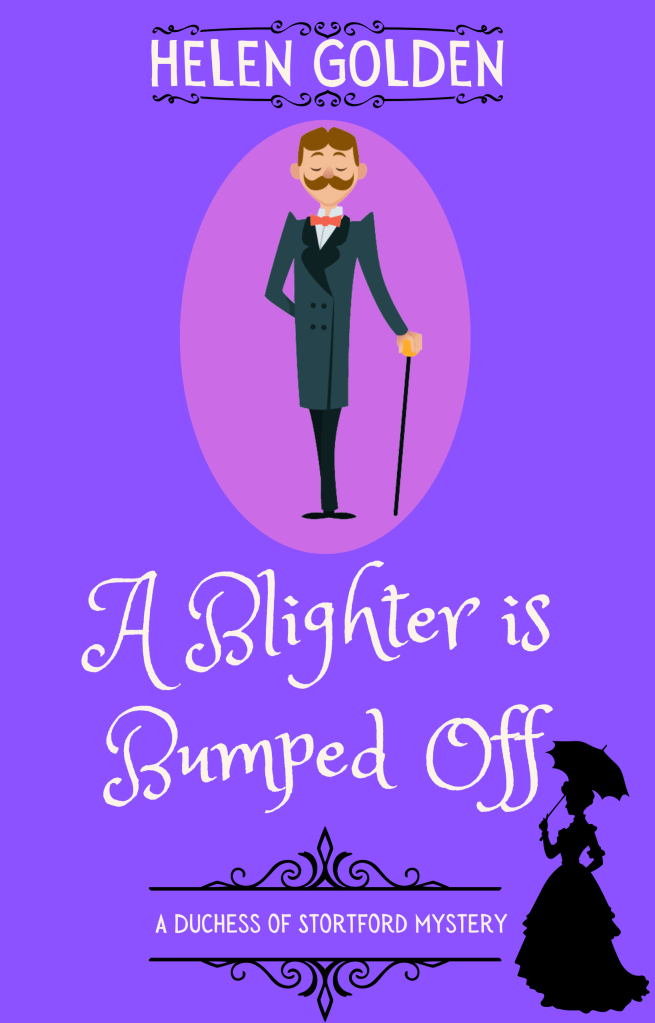
I’m delighted to welcome a returning Helen Golden to the blog with her new book, A Dowager is Done-in #bookreview #historicalmystery #blogtour #avidreader

I’m delighted to welcome a returning Helen Golden to the blog with her new book, A Husband is Hushed Up #bookreview #historicalmystery #blogtour #avidreader @rararesources @rachelsrandomresources @helengoldenauthor

Here’s the blurb

A mysterious summons. A fatal hot chocolate. And a duchess who never expected mourning to be this dreadfully dull.

Hampshire, 1891. Six months into widowhood, Alice, Duchess of Stortford, is restless. Black gowns and seclusion in the country have their limits, so when Clarissa, Dowager Countess of Romley, sends a personal summons asking for her discreet assistance with a troubling matter at Lawrence House, Alice seizes the excuse for a change of scene.

But what begins as a family gathering to welcome home the Dowager’s once-disgraced son ends in shock. Clarissa is discovered dead, her passing swiftly dismissed as a heart attack. Alice knows better. The Dowager had been afraid — and had trusted her to uncover the truth. Someone silenced her, but why? Was it to do with the announcement she made over dinner, or something even more dangerous?

Now everyone in the house is a suspect: the resentful heir, the returning prodigal, the mysterious guest with a too-familiar face. With her sharp-witted maid Maud, steadfast footman George, and her reluctant ally Lord Rushton at her side, Alice must act quickly. If the Dowager was murdered to keep her secrets buried, the killer will not hesitate to strike again.

The Dowager is dead. The clock is ticking. And the duchess is about to discover that country house parties can be murder.

Full of clever twists and a heroine who won’t give up until she finds out the truth, A Dowager is Done-in is the perfect escape for fans of historical mysteries wrapped in wit and warmth.

Purchase Link

https://www.amazon.co.uk/Dowager-Done-Duchess-Stortford-Mystery-ebook/dp/B0FNR838B8/

https://www.amazon.com/Dowager-Done-Duchess-Stortford-Mystery-ebook/dp/B0FNR838B8/

My Review

A Dowager is Done-in is the second full length novel in the Duchess of Stortford cosy historical mystery series.

Some time has gone by since the events of book 1, but Alice is still deemed to be in mourning, so her summons to attend upon Clarissa is met with some uncertainty. Would it be appropriate for her to attend? I think we all know she’ll find her way there, one way or another.

The mystery then unfolds at a fair pace. Who killed Clarissa and why? Alice and her helpers are determined to find out, especially as no one else truly suspects a murder has been committed.

This has all the feels of a classic country house murder mystery, with the rowing family and others with a keen eye to profit from the dowager countess’s will, if only the new will can be found. Alice manages to just about avoid scandal with her investigation, and this was another enjoyable cosy historical mystery.

Check out my reviews for the books in Helen Golden’s Right Royal Mystery series, featuring one of Lady Alice’s descendants.

Spruced Up For Murder

For Richer, For Deader

Not Mushroom For Death

A Dead Herring

A Cocktail to Die For

A Death of Fresh Air

I Kill Always Love You

A Murder Most Wilde

And my review for the prequel in the new historical mystery series, as well as the first full length novel.

An Heir is Misplaced

A Husband is Hushed Up

Meet the author

Helen Golden spins mysteries that are charmingly British, delightfully deadly, and served with a twist of humour.

With quirky characters, clever red herrings, and plots that keep the pages turning, she’s the author of the much-loved A Right Royal Cozy Investigation series, following Lady Beatrice and her friends—including one clever little dog—as they uncover secrets hidden in country houses and royal palaces. Her new historical mystery series, The Duchess of Stortford Mysteries, is set in Victorian England and introduces an equally curious sleuth from Lady Beatrice’s own family tree—where murders are solved over cups of tea, whispered gossip, and overheard conversations in drawing rooms and grand estates.

Helen lives in a quintessential English village in Lincolnshire with her husband, stepdaughter, and a menagerie of pets—including a dog, several cats, a tortoise, and far too many fish.

If you love clever puzzles, charming settings, and sleuths with spark, her books are waiting for you.

Author image for Helen Golden

Connect with the author

Today I’m reviewing Kelly Oliver’s fabulous new Golden-Age crime mystery, The Case of the Christie Curse #newrelease #cosycrime #blogtour

Today I’m reviewing Kelly Oliver’s fabulous new Golden-Age crime mystery, The Case of the Christie Curse #newrelease #cosycrime #blogtour #boldwoodbloggers @BoldwoodBooks #TheCaseofTheChristieCurse @KellyOliverBook @rararesources @theboldbookclub

Today I’m reviewing Kelly Oliver’s fabulous new Golden-Age crime mystery, The Case of the Christie Curse #newrelease #cosycrime #blogtour

Here’s the blurb

The BRAND NEW page-turning, historical cozy mystery series from Kelly Oliver 🏝️🏺☠️ 

Mesopotamia, 1930: When Agatha Christie invites fellow members of the Detection Club to witness the famous excavations at the ruins of Ur, Dorothy L. Sayers, her quick-witted assistant Eliza Baker, and Theo Sharp expect ancient wonders – not fresh corpses.

But when an archaeologist is found dead in the sand, whispers of a deadly curse sweep through the camp. Eliza suspects something far more dangerous than superstition. Amid glittering artifacts and fragile alliances, every guest harbors the Woolleys, whose marriage is shadowed by tragedy; a journalist hungry for scandal; even academic Max Mallowan, whose loyalties are not what they seem.

As theft, forgery, and coded messages surface, the line between archaeology and espionage blurs. And when Eliza and Theo find themselves in danger, they must face not only the truth about the murder – but also the truths they’ve long denied about each other. Can they uncover the killer before the desert claims another victim? Or will this dig unearth secrets too dangerous to survive?

Purchase Link

https://mybook.to/CaseChristieCurse

My Review

The Case of the Christie Curse is the third book in the Detection Club series of cosy historical crime novels, in which our beloved crime writers from the 1920s and 1930s feature as characters.

This time, we’re off to Mesopotamia to discover why Agatha Christie has summoned Dorothy, Eliza and Theo to assist her. And what they discover when they arrive is a tangled web of lies and conspiracy, which some suspect is really the Queen’s Curse from the excavation site.

I thought the mystery was trundling along at a reasonable rate to begin with, and I was enjoying it, but then, suddenly, the storyline really escalated in the second half of the book, and I just had to sit and read it until its conclusion.

The author often writes slightly flippant characters, but in this book, we do start to see something deeper from Theo and Eliza, which is a great change, and I do hope it might mean we get a little less ‘will they, won’t they’ and a whole lot more thrilling mystery to solve in future books.

A thrilling new addition to the series of historical, cosy mysteries. (I’ve also been rewatching all of the David Suchet Poirot series, and I must say, this reads very close to the episodes set in exotic locations – huzzah.)

Check out my review for The Case of the Christie Conspiracy and The Case of the Body on the Orient Express.

Check out my reviews for the Fiona Figg and Kitty Lane Mystery books Chaos at Carnegie Hall, Covert in Cairo, Mayhem in the Mountains, Arsenic at Ascot and Murder in Moscow by the same author.

Meet the Author

Kelly Oliver is the award-winning, bestselling author of three mysteries series: The Jessica James Mysteries, The Pet Detective Mysteries, and the historical cozies The Fiona Figg Mysteries, set in WW1. She is also the Distinguished Professor of Philosophy at Vanderbilt University and lives in Nashville, Tennessee

Connect with Kelly

Bookbub profile: https://www.bookbub.com/authors/kelly-oliver

Newsletter Sign Up: https://bit.ly/KellyOlivernews

I’m reviewing The Secrets of Morgarten by LS Mangos #historicalfiction #bookreview #blogtour #fourteenthcentury

I’m reviewing the Secrets of Morgarten by LS Mangos #historicalfiction #bookreview #blogtour #fourteenthcentury

Here’s the blurb

A young nation in peril.
A web of deception.
A triangle of forbidden love.


The year is 1315. The fledgling nation of Switzerland – the Helvetic Confederation – is under threat from the Habsburgs. In France, the Knights Templar have been disbanded and declared heretics by the king.

Magda, a beautiful weaver living near the alpine village of Morgarten, befriends Walter, a messenger who is the son of the legendary Wilhelm Tell. Walter and Magda’s budding romance is threatened by the arrival of Sébastien, a French fugitive.

What secrets is this foreigner hiding? Can Walter solve the mystery of a murder and a stolen religious artefact before a mighty battle with the Habsburgs ensues? And who will be the victors in their turbulent triangle of love?

https://amzn.to/46Gxr2G

My Review

The Secrets of Morgarten is a historical fiction/romance novel set in the early 1300s, following three main characters through about a year of their lives. The characters of Magda, Wilhelm and Sebastian all offer different, if not strictly, opposing, viewpoints of events as they unfold.

It is a story of conflict and love against a backdrop of intrigue and approaching war, and the narrative moves quickly between the twin storylines, so that the conflict occurs between the characters as well as in the wider world.

It is a slower-paced novel, rich in detail and complex political machinations that builds towards its conclusion (the theft not occuring until quite late in the book) which thrusts our three main characters into the midst of the unevitable conflict where decisions must be made that will have far-reaching consequences. It’s an intriguing novel, depicting events I’ve not previously read about before.

Meet the author


Louise Mangos grew up in the UK but has spent more than half her life in Switzerland. Her debut psychological suspense Strangers on a Bridge was a finalist in the Exeter Novel Prize and long listed for the Bath Novel Award. She has published four further psychological suspense novels – The Art of Deception, The Beaten Track, Four Fatal Flaws and The Girl in the Doorway.

She lives in the foothills of the Alps, a stone’s throw from the site of the Battle of Morgarten, with her Kiwi husband and two sons. When she’s not writing you can find her on the cross-country ski trails or wild swimming in the lake by
her home, depending on the season. Louise also writes short fiction which has won prizes and been published in more than twenty print anthologies. She holds a Masters in Crime Writing from the University of East Anglia.

Find her on Twitter, Instagram or BlueSky
@LouiseMangos and Facebook @LouiseMangosBooks

Author LS Mangos

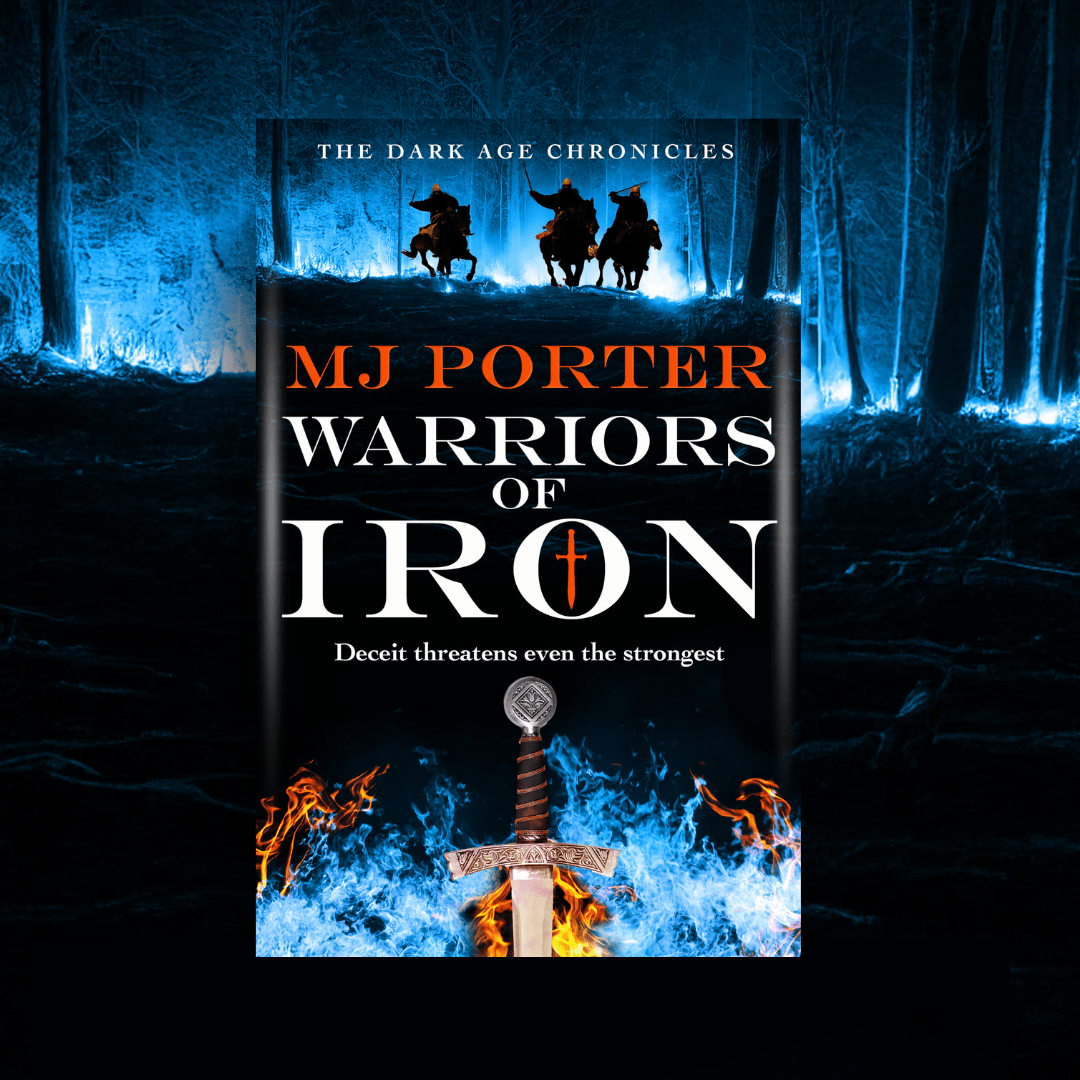
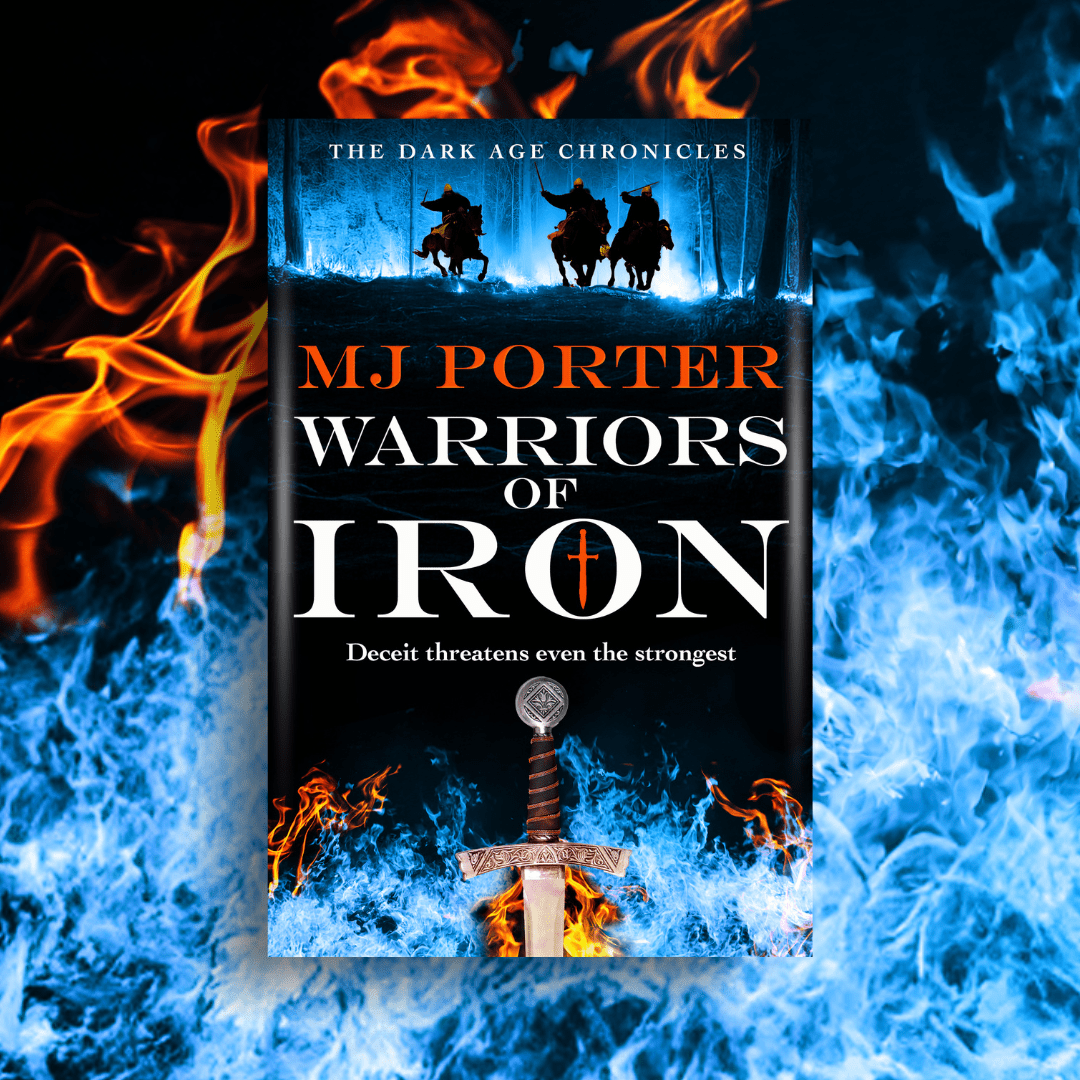
The Dark Age Chronicles might be complete, but I imagine my readers still have questions. Check out this blog post about what comes before (and what came after) #TheDarkAgeChronicles#MenOfIron #WarriorsOfIron #LordsofIron #histfic

It’s happy release day to Lords of Iron, the third and concluding book in the Dark Age Chronicles Trilogy. Let’s talk about battle standards #newrelease #MenOfIron #WarriorsOfIron #LordsofIron #histfic

What comes after the events of the Dark Age Chronicles (as well as before)

In deciding on a date to set the Dark Age Chronicles, I was quite careful. I wanted it to be after the era of the legendary Arthur (the battle of Camlann is dated to 537 in the Annals Cambriae (the Welsh Annals)), but also before written sources start to make some references to what was happening in what would become Saxon England in the later 500s anywhere that wasn’t in the south/south-east. 

In the A version of the ASC there are 26 entries for the 500s. Eight are dated before AD540. These are mostly concerned with events in the south, Kent, the Isle of Wight, and Portsmouth, and their legendary Saxon founders. After 540, we’re treated to the genealogies for what would become Northumbria (547 and 560), Wessex  (552 and 597) as well as having references to the religions in Britain at the time, through accounts of Columba and the missionary activities in Kent from Pope Gregory. There are any number of battles between those forging a foothold in their newly forming kingdoms and the native Britons.

Our first real reference for anything happening in what would become the kingdom of Mercia is under the year 577 when we’re told Gloucester, Cirencester and Bath were taken from the ‘Britons’ by Cuthwine and Ceawlin (of Wessex). Gloucester would certainly be within the later kingdom of Mercia. Cirencester and Bath weren’t.

While I’ll repeat that the Anglo-Saxon Chronicle wasn’t begun until the 890s (so over 300 years later) and Bede, which much of the ASC is based on at this time, was writing in the 730s (so nearly two hundred years later), I still wanted almost a clean slate for my characters to inhabit. There was also the matter of plague to try and avoid, as well as a series of bad harvests, that are referenced but don’t form more than a background detail in the books.

I felt that to truly gain a ‘feel’ and an ‘understanding’ for what might have been happening at this time, it was necessary to step aside from any historical account and to rely on the archaeological record. The years 540 and 541 felt as though they provided a good opportunity to do just that. However, it’s always important to have an eye to what was going to happen, as well as what had happened before. And, as I wrote, a number of elements seemed to become very clear to me. While there are reports of battles amongst the Saxon invaders and the native populations (six of them in those eight entries before 540, although some of them are quite small), and while they feel quite overwhelming when simply listed because they form so much of the narrative, there aren’t a lot of them mentioned before AD540. The impetus certainly seems to gather pace after that date (of the remaining 18 entries, eight reference what seem to be quite large battles). Why this might have been, began to make sense as I explored the idea of no new iron production after the end of Roman Britain, until the skill was ‘rediscovered.’ Without the ability to easily overwhelm an enemy through new blades that weren’t made from recycled metals, would people who’d endured famine and plague, really want to risk it all when there was no chance of success? It felt unlikely. Would you? The need to fight isn’t always taken when you know you’ll succeed, sometimes it’s also desperation, but if these settlements were doing reasonably well, why take the chance? Surely, they needed to rebuild and form alliances to survive.

And so, as I’ve written the trilogy, what would come after – the increasing battles, the desire of the invaders to establish ‘kingships’ in Wessex, Kent, Northumbria, Mercia and the kingdom of the East Angles, began to make a lot more sense – with the rediscovery of how to forge sharpened blades (or indeed, to import them when the ‘invaders’ arrived (whether to intermarry or to make war), because unlike in Britannia, the ability to forge blades didn’t become lost in the homelands of the Saxon invaders) there were suddenly people who could start to dominate, and who would want to dominate. 

And yet, the archaeology couldn’t be forgotten either. There aren’t many battle sites known from this era. What can be said with more surety, is that there was a co-mingling – all sorts of crossovers are found in the burial record – and indeed, the burial rites of many changed during this undocumented sixth century. There was undoubtedly discord between peoples, but there was also accord. Until there wasn’t. So, something had to change to bring about the formation of the Saxon kingdoms. I’m not saying my ideas are correct, but they are intriguing, especially when played out in a fictional environment where I can endeavour to explain what might have been happening – both in terms of war, and peace. (And, some would argue not all iron production was lost – it certainly wasn’t – but it becomes much more difficult to ‘find’ – i.e. no nails to secure coffins in the burial record in the heartland of England – what was happening in Wales/Devon and Cornwall is very different). 

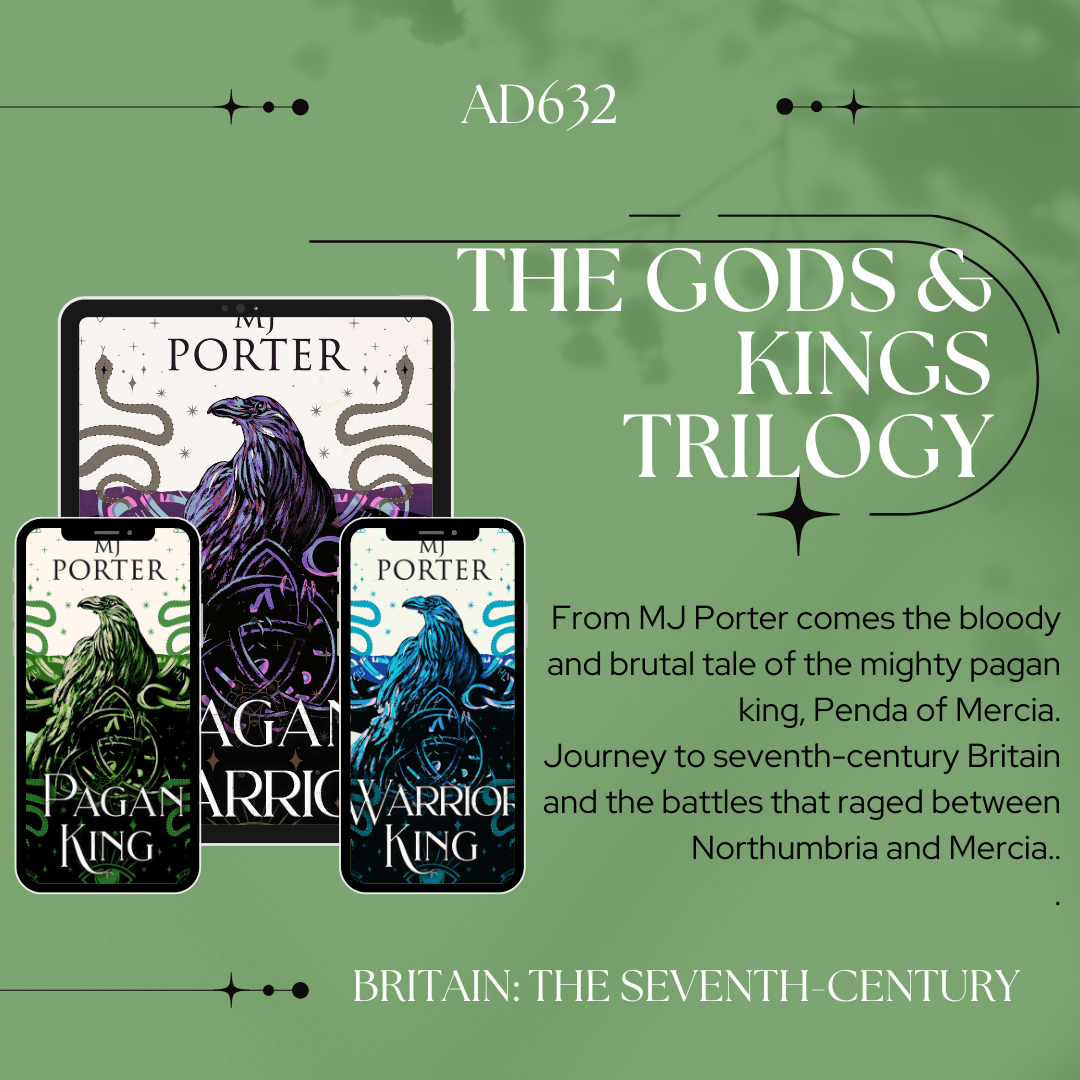
After the Dark Age Chronicles, we move into a period where identifiable kingships and kingdoms are forming – we’re moving into what would become Saxon England, and towards the events of the seventh century, which would be dominated by discord between Mercia and Northumbria, Wessex and the other kingdoms, and the reigns of the alleged ‘bretwaldas’ (wide rulers.) We’re moving towards what’s more immediately understood and known, but the sixth century is where these developments have their routes, as twisted, tangled, unexplainable and often, as baffling as they are. (And we don’t really need a legendary figure to explain what’s happening, do we, although the prevalence of Excalibur does perhaps answer to these questions as well?). We’re moving towards The Gods and Kings Trilogy.

Purchase Link

https://amzn.to/4qaRuy3

Check out the Dark Age Chronicles page for more information about the trilogy

Blog links

Image shows a map of Early England showing the places mentioned in the text of the book
The Dark Age Chronicles Map