It’s often forgotten, in the great swirl of events throughout the eleventh century, that England wasn’t conquered once, but instead three times, by King Swein in 1013, by his son in 1016, and then by William the Conqueror in 1066.
England only reclaimed its English king with the death of King Swein shortly after he claimed the kingship, when Æthelred II, the much-maligned, king of England was restored, it’s said, by his nobility, provided he did ‘a better job’ of it (I paraphrase). At this time, Cnut, Swein’s son, wasn’t deemed as suitable to replace his father, while Æthelred II had many sons who could succeed him. Æthelred was deemed ‘an old man’ by now (born probably in about 966-8), but he had surviving sons from his marriage to his first wife, named as Ælfgifu, and also from the better known Lady Emma. The oldest of these sons,Athelstan, died in 1014, having made a name for himself as an honourable man. His will survives. His next youngest brother had also perished a decade ago, meaning Edmund was the oldest surviving son. In the great swirl of events, people forget Edmund was proclaimed king on his father’s death in April 1016, and that he ruled for a good sixth months, before his own death in November.
The relationship between Edmund and his father is difficult to unpick. It doesn’t seem to have been congenial. Æthelred II is most often accused of having overmighty subjects (somewhat ironic when they invited him back to England after Swein’s death), and there was a particular thorny problem of Eadric Streona, married, it’s said, to one of Æthelred’s daughters, and a tricky character. Eadric is associated with Mercia. To counter his reach, Edmund, married into a Mercian family in 1015, the story being that he rescued the woman from captivity and then married her. As romantic as that might sound, this was sound political expediency. In the tenth century, King Athelstan was strongly associated with Mercia, being declared king of Mercia before becoming king of Wessex. Edgar, in the 950s, seems to have done something similar, being declared king of Mercia while his brother, Eadwig, was king of England, or perhaps only Wessex – there is much uncertainty about this. Eadwig would die young, allowing Edgar to build on his Mercian powerbase and claim England for himself.
As such, Edmund was following known precedent when he looked to Mercia for support when he must have feared that the eyes of the witan would favour his younger half-brother, Edward, for the kingship. No doubt, Edmund actually gained support because while England was at war with Cnut throughout 1016, he was a man grown and could fight for the English. Edward, much younger, would have been unable to do so.
And so to 1016. On the death of his father, Edmund was declared king, but Cnut also took the same title. Many battles later, Cnut and Edmund reached an accord, it’s said, after the English defeat at the unallocated battle of Assandun. England was ‘split,’ Edmund became king of Wessex, Cnut held the remainder and it could have possibly remained split if not for Edmund’s untimely death, perhaps from wounds taken in battle fighting against Cnut and his warriors, and in which, Eadric Streona had played his new king false, defecting to King Cnut’s side.
Edmund II, known as Ironside, left two children, perhaps twins, and these children were raised in exile, away from England and the reach of the Danish conquering force. They did still have a part to play in the future of England, and Edmund’s granddaughter became queen of Scotland in 1070, while his grandson was briefly declared king of England in the tumultuous events of 1066.
You can read the story of Cnut and Edmund in The Earls of Mercia series side story, Cnut: The Conqueror.
Here’s the blurb:
To gain what he wanted, what he felt he was owed, he would do anything, even if it meant breaking oaths to a woman he loved and the mother of his son.
Swein, King of Denmark, and briefly England, lies dead, his son ousted from England as King Æthelred returns from his exile in Normandy at the behest of his witan and the bishops. Æthelred might have relinquished his kingdom to Swein, the Danish conqueror, but with Swein dead, the men have no interest in supporting an untried youth whose name resounds with the murder of one of England’s greatest bishops. A youth known only for his savagery and joy of battle. A true Norseman who utilizes his weapons without thought.
But Cnut wants a kingdom and will do anything to gain one. As England’s ravaged by a civil war between the sons of two former kings, Edmund, son of King Æthelred, and Cnut, son of Swein, the men must make personal decisions in the heat of battle as they strive to reclaim their birthrights whilst doing all they can to stay alive.
Cnut is a side story in the Earls of Mercia series, retelling the story of the last century of Saxon England through the eyes of the powerful Earls of Mercia, the only noble family, apart from the House of Wessex, to hold their position for nearly a century.
Green thumbs beware. Plants are beautiful, peaceful, abundant, and life-sustaining. But what if something sinister took root in the soil, awakening to unleash slashing thorns, squeezing vines, or haunting greenery that lured you in? Perhaps blooms on distant planets could claim your heart, hitch a ride to Earth on a meteor, or simply poison you with their essence. Imagine a world where scientists produced our own demise in a lab, set spores free to infect, even bred ferns to be our friends only to witness the privilege perverted. When faced with botanical terror, will humanity fight to survive, or will they curl and wither like leaves in the fall? Read ten speculative tales ripe with dangerous flora to find out.
Spread is a collection of short stories all with a theme of deadly fauna. If this doesn’t sound like your sort of thing, then rest assured, it’s not really mine either, but these tales are all really good reads – I thoroughly enjoyed all of them even if some of them made me feel a bit itchy.
The tales are so well constructed, drawing you into a whole new world quickly, and packing a great deal of punch. Some of them are quite eerie. Some of them will have you shouting, ‘No, don’t do it,’ and others slowly reveal themselves and become creepy unexpectedly. They range from tales set on different planets to those set on an Earth slowly being consumed by deadly fauna, or being set upon by alien fauna, but not all of them can be quite so easily categorised. All of the tales are well worth reading.
In future, I will be eyeing up the plants around my house with a wary glance. Genuinely, it is an excellent collection of short stories, I’m so pleased I decided to read them.
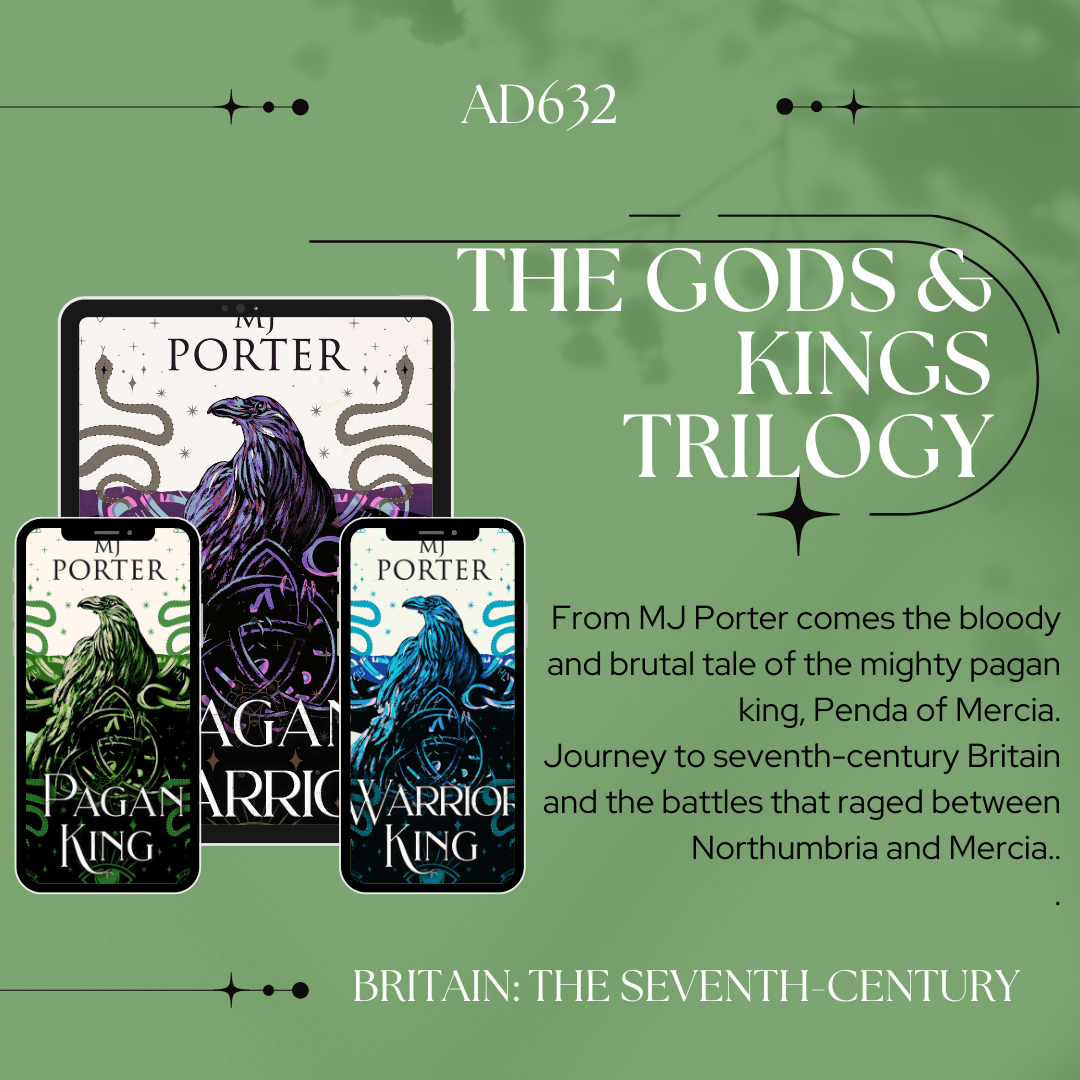
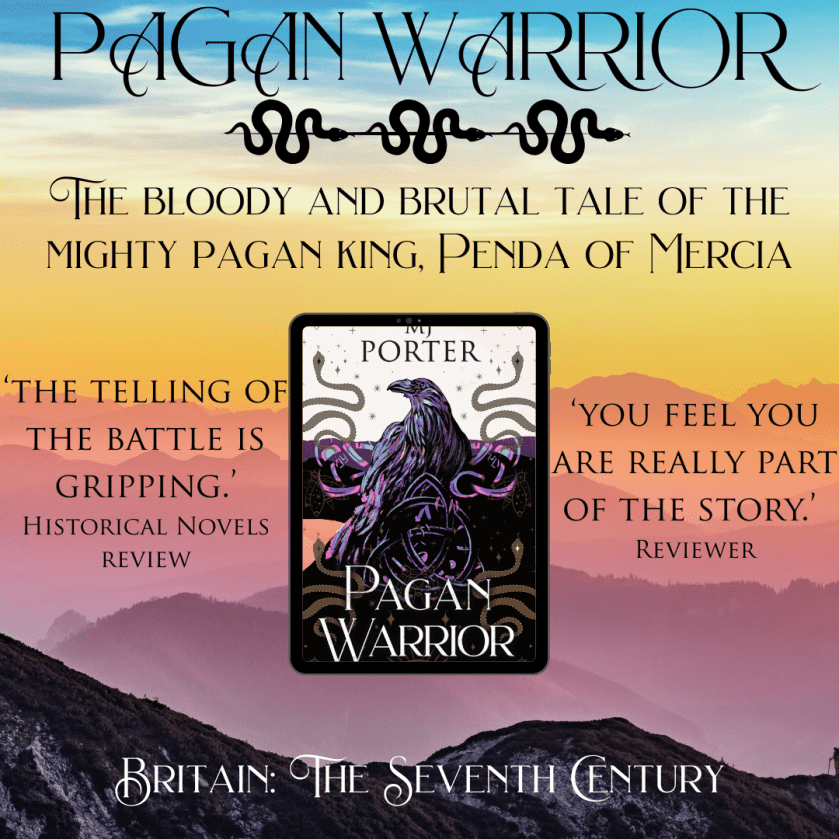
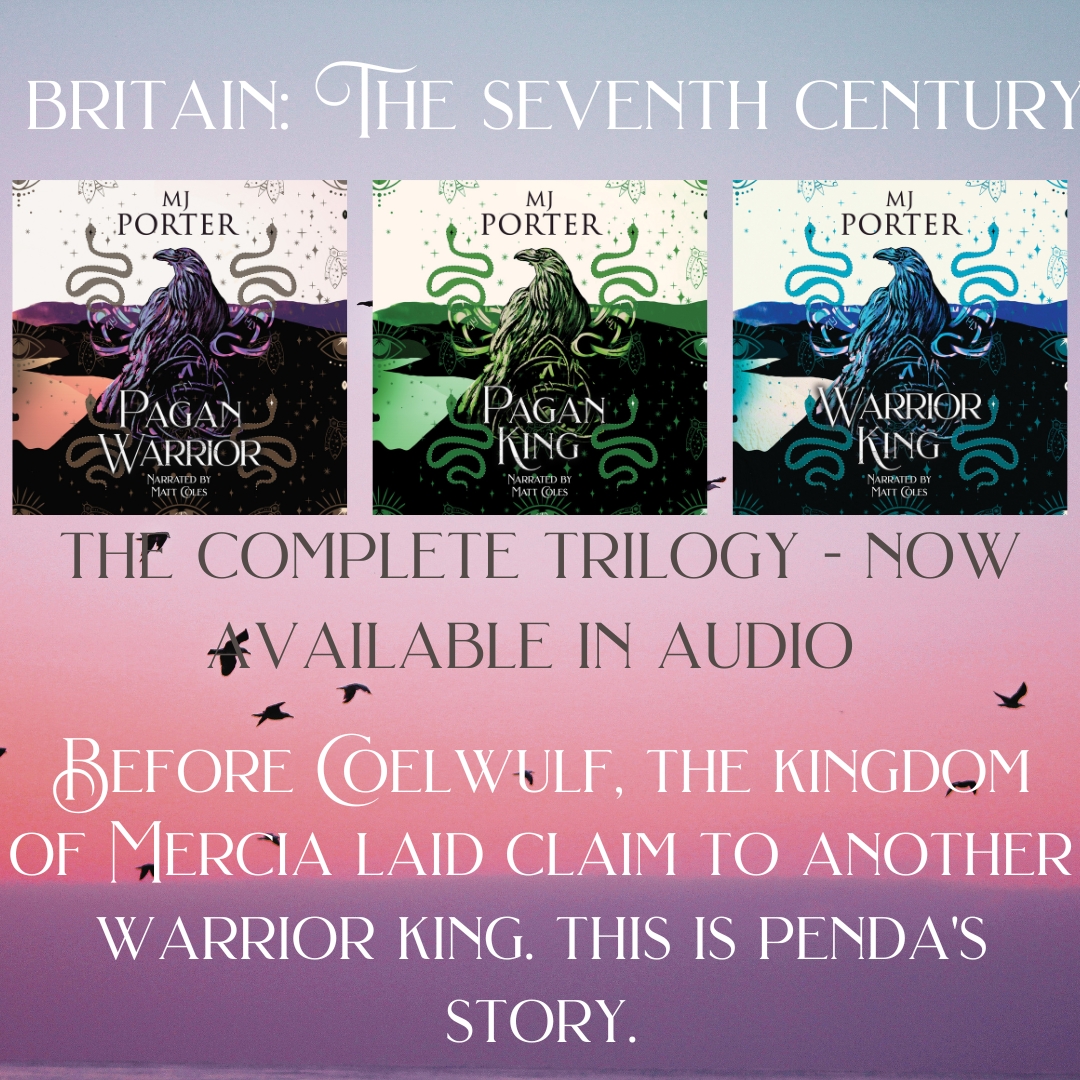
Penda, a warrior of immense renown, has much to prove if he is to rule the Mercian kingdom of his dead father and prevent the neighbouring king of Northumbria from claiming it.
Unexpectedly allying with the British kings, Penda races to battle the alliance of the Northumbrian king, unsure if his brother stands with him or against him as they seek battle glory for themselves, and the right to rule gained through bloody conquest.
There will be a victor and a bloody loser, and a king will rise from the ashes of the great and terrible battle of Hædfeld.
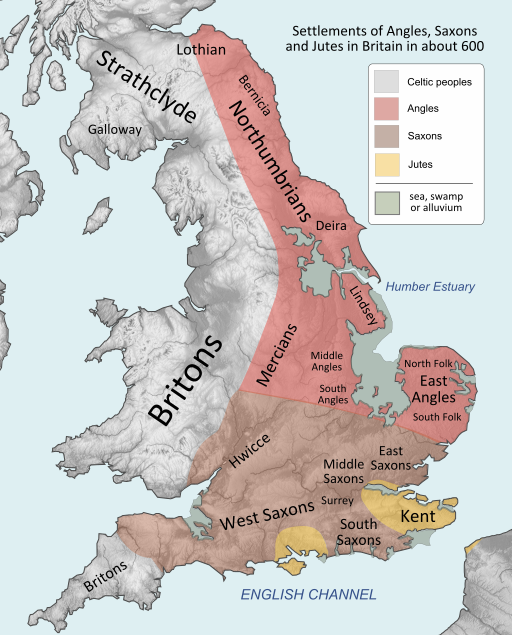
Britain in the Seventh Century – a patchwork of kingdoms
One of the hardest processes when writing about this very early period of Britain is to get an idea of what the kingdoms might have looked like and to explain this to the reader. The seventh century is often seen as the period when the Heptarchy, the seven very well-known kingdoms of the Saxon period, emerged and formed, ultimately derived from potentially very many much smaller kingdoms, the names of which are only rarely still known.
The Heptarchy consisted of the kingdoms of Northumbria (itself derived from the uniting of Deira and Bernicia), Mercia, the kingdom of the East Angles, Wessex, Sussex, Kent, and Essex. In later centuries, these kingdoms would merge until only four main kingdoms remained, and then, from the early middle of the tenth century, England emerged. But the battle of Hædfeld with which Pagan Warrior concludes was a British-wide battle set as this process was formalising in the seventh century, and there are yet more kingdoms that must be mentioned which didn’t form part of Saxon England.
Scotland didn’t yet exist, but Dal Riata, Pictland and Alt Clut (sometimes called Strathclyde) did. Wales didn’t exist, although the kingdoms of Gwynedd, Deheubarth, Ceredigion and Powys did, The kingdom of Dumnonia (modern-day Cornwall), was also in existence and very much not part of Saxon England. Indeed, these kingdoms are often termed British, as opposed to Saxon. As someone woeful at geography – I purposefully don’t adopt the names of places from this period because it confuses me – I’m only too well aware of how much I’m asking from my reader as it is without adding weird place names to already strange sounding personal names, and yet it was necessary to add a whole host of strange names, which often, have no relation to the current names of counties, let alone kingdoms.
All of these different kingdoms, we’re told, were involved in some way in the battle of Hædfeld. Some of the kingdoms joined the alliance, spear-headed by Cadwallon of Gwynedd, Edwin’s foster-brother. Others joined that of Edwin of Northumbria. Almost all of them took one side or another in the mighty battle of Hædfeld fought in 632 or 633 (there is some confusion about the exact date) between the two sides. To ensure my readers have some idea of who’s who, I’ve termed all of the character’s as being ‘of’ their kingdom, although I’m unsure if that’s actually how they might have been named.
I was surprised by how many individuals could be named from the seventh century, particularly for the build-up to the battle of Hædfeld. The cast is not Game of Thrones huge, but it was larger than I expected. Not just Penda of the Hwicce, only later could he be termed of Mercia, and Cadwallon of Gwynedd in the British ‘alliance’, but also Cloten of Deheubarth, Clydog of Ceredigion, Eiludd of Powys, Clemen of Dumnonia, Domnall Brecc of Dal Riata, Beli of Alt Clut and Eanfrith of Bernicia. While on the Northumbrian led alliance were Edwin of Northumbria, alongside his children, Osfrith and Eadfrith, as well as Eowa of the Hwicce, Osric of Deira – Edwin’s cousin, Cynegils of Wessex, Sigeberht of the East Angles and Oswald of Bernicia – Edwin’s nephew. At least, that’s how I stack the two sides as the battle is about to commence. In later periods, it is sometimes a struggle to find who was king of where and when that might have been, so to find so many characters, even if it can seem a little overwhelming, was fantastic and ensured that the British-wide battle of Hædfeld could be retold in Pagan Warrior with a nod to each of these kings, and the part they might, or might not, have played in the events that played out on that fateful day in October 632 or 633.
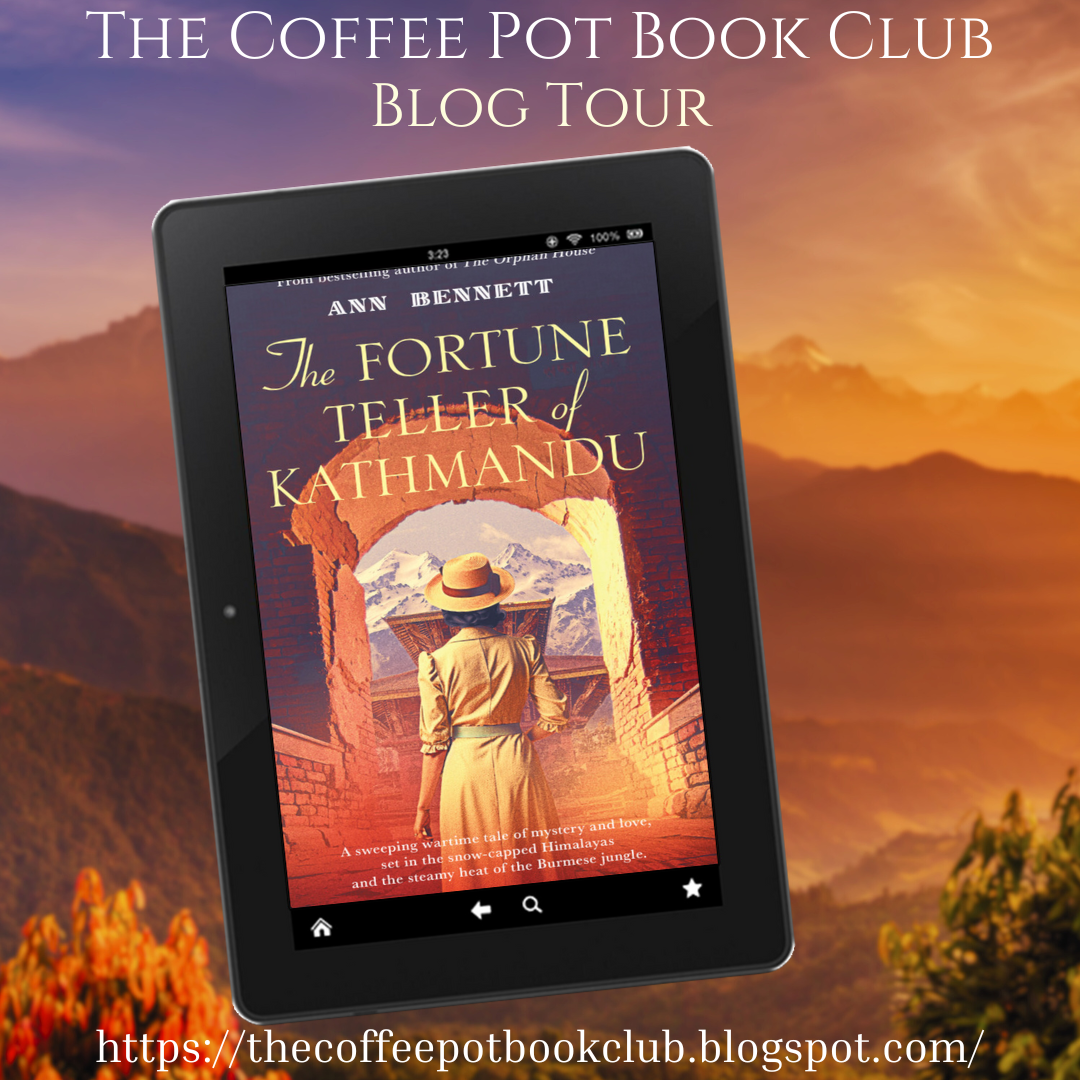
I’m welcoming Ann Bennett and her new book, The Fortune Teller of Kathmandu to the blog, and she’s sharing a fabulous post about the historical research she undertook for the book.
Historical Research for The Fortune Teller of Kathmandu
There are several different strands to my latest historical novel, The Fortune Teller of Kathmandu, all of which needed to be researched. But I ended up using a variety of sources for each and approaching the research in many different ways.
The story is about Lena, a young Eurasian (or Anglo-Indian) woman working as a teacher in a boarding school in Darjeeling in the early 1940s. It is the same school that she grew up in having been sent there at the age of three. All the girls at the school are the product of liaisons between British officers or civil servants and Indian women and whose presence the British in India would have preferred to forget. This was inspired by an article I read some years ago by a British journalist who had discovered a previously unknown relative who had been a Eurasian and brought up in such an establishment. That story really struck a chord with me, although I’ve been unable to track the article down again. However, I did find some really useful sources of research about the way Eurasians in India were seen as a problem by the British. For example, a thesis entitled The Eurasian Problem in Nineteenth Century India by Valerie Anderson of the School of African and Oriental Studies, London University which is available online.
I visited Darjeeling in 2019 as part of my research (I have set another novel there too as I found it an atmospheric place in an incredible setting. That book is The Lake Pavilion). I found the old villas and hotels that remain from British India, as well as the austere Victorian boarding schools there a fascinating glimpse into the past). I also studied old Youtube footage of old Darjeeling and photographs from the period. I found an interesting article by blogger Vikram Karve called Institutions of the British Raj, which outlines how Darjeeling developed as a place to send British children to school. Eurasian, or Anglo-Indian children were not welcome at the same establishments and separate establishments were developed for them. This underlines the discrimination Eurasians encountered in British India, which is one of the themes of the novel.
Secondly, I wanted to find out about the Nepalese Gurkhas and how soldiers were recruited from Nepal during the second world war by the British Army. I read as much as I could about this online, but my main source of information was a visit to the Gurkha museum in Pokhara. There I read details of how British recruitment officers would go into the hills and recruit young men from the villages. That museum also contains many first-hand stories of incredible bravery and loyalty of the Gurkha soldiers.
As part of that research, I trekked into the hills of the Annapurna range to experience the landscape and communities there first hand. The village life is timeless and I suspect has changed little since the era the novel was set. However, there are probably more people living in the mountains now because of the increase in foreign visitors and wealth. When my characters Lena and George visited in the early 1940s, I suspect those hill villages such as Ghorepani were sparsely populated.
Thirdly, I needed to research the Burma campaign during the second world war, in which the Allies attempted to retake Burma from the Japanese and to prevent them from invading India, “the Jewel in the Crown”. I read about the incredible Chindit regiments commanded by Colonel Orde Wingate, who flew in gliders behind enemy lines to set up strongholds there to disrupt enemy operations. I’d researched the Burma Campaign for a previous book , The Lake Palace about a young English woman who volunteers to follow General Slim’s 14th Army as an auxiliary nurse to run a field hospital. For both books, I read extensively about the Burma Campaign, in which men on both sides fought courageously in the toughest of jungle conditions. It is often overlooked, so much so that the 14th Army is sometimes called The Forgotten Army.
Lastly, I researched the Wasbies – The Women’s Auxiliary Service (Burma) whose story is also little known. Lena, my main character volunteers to join the service in 1943. I stumbled across the Wasbies’ story when I was researching The Lake Palace. I came across a photograph of a group of women, operating a mobile canteen out of an old, converted Chevrolet lorry near the battle lines during the Burma campaign.
My main source of information about the Wasbies was a fabulous book, Front Line and Fortitude, by EJ Lockhart-Mure. It is the diary of a real-life Wasbie, Maria Pilbrow, and really brings home hardships those brave women went through. I read Chinthe Women – Women’s Auxiliary Service Burma 1942-1946 – Char and Wads on the frontline. The Chinthe is a mythical Burmese lion, which became the symbol of the Wasbies. This book contains a wealth of information and was written by Sally and Lucy Jaffe, granddaughters of Major Ninian Taylor, the leader of the Wasbies.
So my research for The Fortune Teller of Kathmandu involved reading history books, researching online sources and travelling to the region and experiencing the places I was writing about first hand.
Thank you so much for sharing your research with my readers. Such a fascinating story.
Here’s the blurb
A sweeping wartime tale of secrets and love, mystery and redemption, moving from the snow-capped Himalayas to the steamy heat of battle in the Burmese jungle.
Perfect for fans of Dinah Jeffries, Victoria Hislop and Rosie Thomas.
Hampshire, UK, 2015. When Chloe Harper’s beloved grandmother, Lena dies, a stranger hands her Lena’s wartime diary. Chloe sets out to uncover deep family secrets that Lena guarded to her grave.
Darjeeling, India, 1943, Lena Chatterjee leaves the confines of a strict boarding school to work as assistant to Lieutenant George Harper, an officer in the British Indian Army. She accompanies him to Nepal and deep into the Himalayas to recruit Gurkhas for the failing Burma Campaign. There, she discovers that Lieutenant Harper has a secret, which she vows never to reveal.
In Kathmandu, the prophesy of a mysterious fortune teller sets Lena on a dangerous course. She joins the Women’s Auxiliary Service Burma (the Wasbies), risking her life to follow the man she loves to the front line. What happens there changes the course of her life.
On her quest to uncover her grandmother’s hidden past, Chloe herself encounters mystery and romance. Helped by young Nepalese tour guide, Kiran Rai, she finds history repeating itself when she is swept up in events that spiral out of control…
“A great read” Advance Reader.
” Thank you so much for allowing me to read the advance copy. I could barely put it down!” Advance Reader,
“What a wonderful book… I loved it. The dual time lines were delineated to perfection… the settings were perfectly rendered..” Advance Reader.
Buy Links:
This title is available to read with #KindleUnlimited.
Ann Bennett is a British author of historical fiction. She was born in Pury End, a small village in Northamptonshire, UK and now lives in Surrey. Her first book, Bamboo Heart: A Daughter’s Quest, was inspired by researching her father’s experience as a prisoner of war on the Thai-Burma Railway. Bamboo Island: The Planter’s Wife, A Daughter’s Promise and Bamboo Road:The Homecoming, The Tea Panter’s Club and The Amulet are also about the war in South East Asia, which together with The Fortune Teller of Kathmandu make up the Echoes of Empire Collection.
Ann is also author of The Runaway Sisters, bestselling The Orphan House, The Forgotten Children and The Child Without a Home, published by Bookouture.
The Lake Pavilion, The Lake Palace, both set in British India in the 1930s and WW2, and The Lake Pagoda and The Lake Villa, set in French Indochina during WW2, make up The Oriental Lake Collection.
Ann is married with three grown up sons and a granddaughter and works as a lawyer. For more details please visit www.annbennettauthor.com.
I’m delighted to welcome The Bastard Prince of Versailles by Will Bashor to the blog. Check out the snippet below.
On the way to his new chambers, Elizabeth introduced Louis to several courtiers in the galleries. Gentlemen bowed and ladies curtseyed, all the while eyeing his charming smile. Many commented that he had his mother’s dainty features. When Elizabeth and Louis happened upon a clutter of mignons in one of the galleries, Elizabeth took hold of Louis’ hand.
“Junger Louis, these are the Italian chevaliers,” she said in a tense tone. “Ignore them.”
The young men stopped conversing upon seeing the newcomer. Elizabeth whispered, “And you’ll soon learn why they are called Italian.”
Louis had never seen young men dressed so frivolously. The sleeves of their shiny, short satin jackets were open from the shoulder to the laced cuffs at the wrist, showing the billowy sleeves of their silk shirts. Their short breeches were elaborately tied with bands of ribbon above the knee, and their red-heeled boots were topped with ruffles or lace garters.
When Elizabeth caught the minions gawking at Louis, she barked, “Pathetic dolts!” and the mignons vanished from the salon.
As she escorted Louis down the long corridors, she passed an enormous wind. He looked up at her in disbelief.
“This is not Versailles, mein lieber Louis,” she bellowed.
They both chuckled, and Louis knew they were off to a great start. For the next few days, Elizabeth kept him busy settling in, meeting her husband’s bizarre followers, and learning the few rules of court etiquette. It wasn’t Sceaux. And it certainly wasn’t Versailles.
Here’s the blurb:
A historical novel inspired by real events, The Bastard Prince of Versailles,narrates the escapades of a misborn “prince” during the reign of Louis XIV in seventeenth-century France. Louis de Bourbon wasn’t a real prince-even though his father was King Louis XIV.
The illegitimate son of the King and his mistress, Louise de La Vallière, young Louis has been kept far from the court’s eyes until summoned to bid adieu to his mother. To atone for her adultery, she joins a convent, abandoning Louis to an uncertain future.
When Louis is humiliated by his father for his role in a secret gay society, he struggles to redeem himself through heroism and self-sacrifice in the king’s army on the battlefield.
Praise for The Bastard Prince of Versailles:
“Will Bashor effortlessly weaves together the threads of fact and fiction, transporting us back to the opulence and intrigue of 17th century France. The author’s research and attention to detail are evident and well applied, never seeming like a dry history lesson but always a hook keeping you turning the pages.
Louis is brought to life with such authenticity that you can’t help but empathize with his journey. As he navigates the treacherous waters of courtly politics and yearns for his father’s approval, you’ll feel a gripping connection to his struggles and triumphs. The rest of the characters are well-crafted as well, each contributing to the rich tapestry of the story.
If you are looking for a unique historical novel that will transport you to another time and leave a lasting impression, this book is an absolute must-read.”
From Columbus, Ohio, Will earned his Ph.D. from the American Graduate School of Paris. In his spare time, he reads memoirs and researches the lives of royals and their courtiers. He hopes to share his fascination with the Bourbon dynasty and its quirky inhabitants and, at the same time, weave the historical record with creative fiction. He has written articles for the Huffington Post, Age of Revolutions, BBC History Magazine, and Carine Roitfeld’s CR Fashion Book.
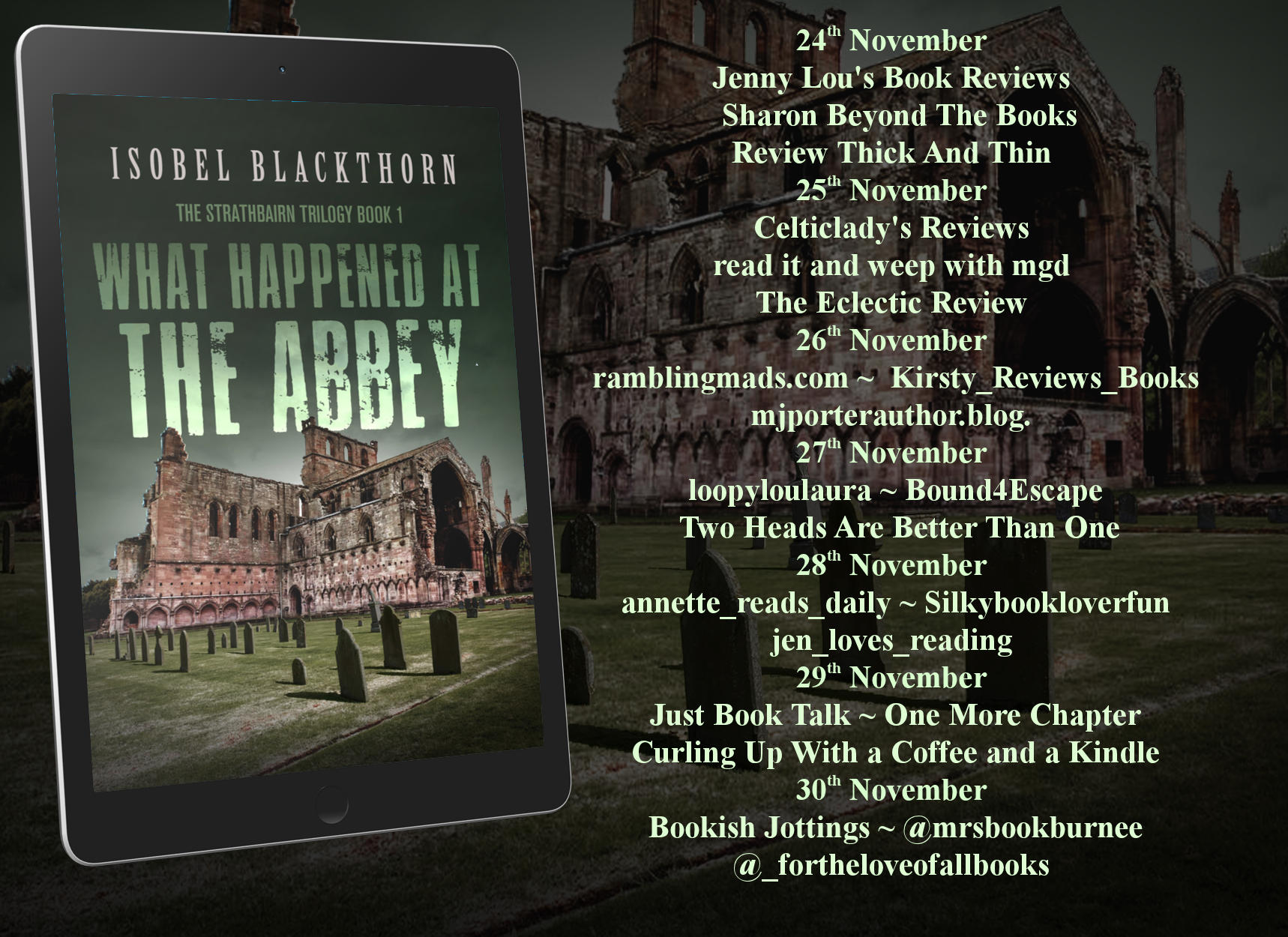
When Ingrid flees a violent husband to become a housekeeper in the Scottish Highlands, she discovers the family she works for has a much darker history than her own.
Who haunts Strathbairn? Why are the adult McCleod children at each other’s throats? And why does the youngest sneak off at night? As Ingrid searches for answers, she grows ever more fearful that her husband will track her down.
Set in late 19th century Scottish Highlands, WHAT HAPPENED AT THE ABBEY is a gothic mystery brimming with intrigue, ghostly drama, and family secrets.
What Happened at the Abbey is an engaging and satisfying read. It has all the elements we would expect from a creepy gothic novel, a desolate location, a family under duress, a woman hiding from her past, unhappy servants, and must that is left unsaid.
It really grips the reader and drags them into the storyline. The sense of unease grows throughout the book, with our poor heroine, Ingrid, cast in an unlucky role, and one where the reader really feels empathy for her. The reader suspects much of what’s going on, although they can never be truly sure, which means we trust no one, unlike Ingrid, who needs someone to talk to about her own traumas.
I sped through this book in just over a day. As it builds towards the ending, it does become more and more complicated, perhaps too complicated, but all the same, I really enjoyed the resolution, and also the ending of the novel. There is a lot going on in this haunting gothic novel. Recommended if you enjoy this novel, or just fancy a bit of a scare.
Meet the author
Isobel Blackthorn is a prolific novelist of unique and engaging fiction. She writes across a range of genres, including gripping mysteries and dark psychological thrillers.
The Unlikely Occultist: A biographical novel of Alice A. Bailey received an Honorable Mention in the 2021 Reader’s Favorite book awards. A Prison in the Sun was shortlisted in the LGBTQ category of the 2021 International Book Awards and the 2020 Readers’ Favorite Book Awards. Her short story ‘Nothing to Declare’ was shortlisted for the Ada Cambridge Prose Prize 2019. Her dark thriller A Legacy of Old Gran Parks won a Raven Award in 2019. The Cabin Sessions was nominated for the Bram Stoker Award 2018 and the Ditmar Awards 2018.
Isobel holds a PhD in Western Esotericism from the University of Western Sydney for her ground-breaking study of the texts of Theosophist Alice A. Bailey. Her engagement with Alice Bailey’s life and works has culminated in the biographical novel The Unlikely Occultist and the full biography Alice A. Bailey: Life and Legacy.
Isobel carries a lifelong passion for the Canary Islands, Spain, her former home. Six of her novels are set on the islands of Lanzarote and Fuerteventura. These standalone mystery novels are setting rich and fall into the broad genre of travel fiction.
Isobel has led a rich and interesting life and her stories are as diverse as her experiences, the highs and lows, and the dramas. A life-long campaigner for social justice, Isobel has written, protested and leant her weight to a range of issues including asylum seekers and family violence. A Londoner originally, Isobel currently lives in the Canary Islands, Spain.
I’m delighted to welcome Tim Walker to the blog to share two extracts from his new short story collection, London Tales, which feature the River Thames.
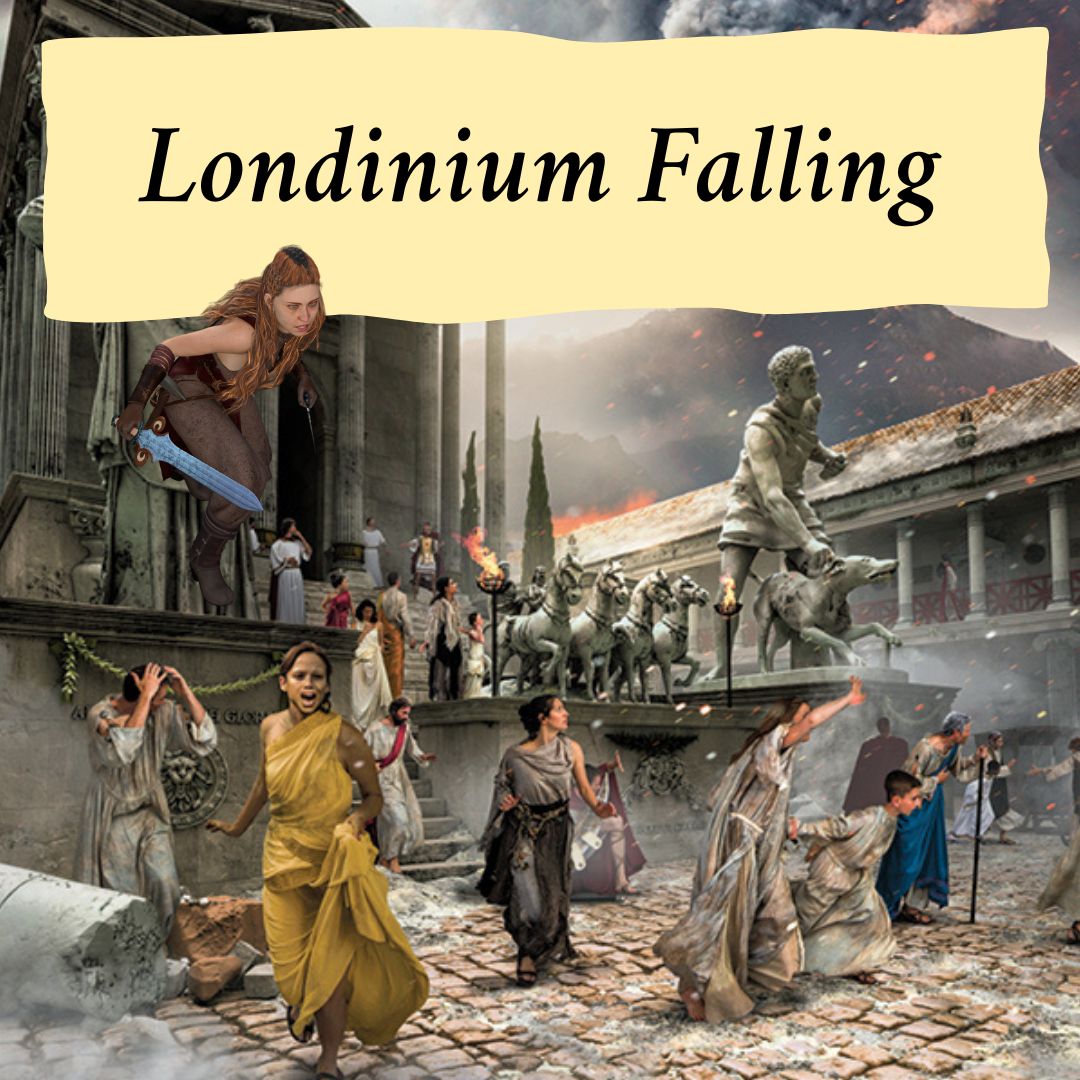
Londinium Falling
This story is set in the year 60 CE, at the time of the Boudican Revolt, when the settlement was barely 15 years old. Historians speculate that a bridge across the Thames was constructed around the year 50 CE. This wooden structure was situated next to the modern London Bridge, where solid rock on both banks made it possible for Roman bridge builders to lay the foundations. It is thought that there was a drawbridge in the central span to allow tall-masted galleys to row upstream of the bridge to moor in a natural pool that became the port. It is thought that a settlement on the south bank that would in time become Southwark, sprang up once the bridge was complete.
The Romans adopted the name of the tribal river god, Father Tamesis, as the name for the river. Over time, ‘Tamesis’ became ‘Thames’. Father Tamesis was a feared, spiteful entity who dwelt in the depths of the river, feeding on the bodies of the drowned. Would the ancient Britons have made human sacrifice to appease this feared god?
In this extract, Roman soldiers Marcellus and Septimus join a flotilla of small boats fleeing Boudica’s murderous tribal warriors who killed everyone they found, cutting off many heads that were tossed into the Walbrook (to be discovered in recent times by archaeologists), and burning the settlement to the ground…
The battle was lost and the galley carrying the procurator, centurion and several hundred men had cast off. It was still upstream of the bridge, heading for the wider centre span where a drawbridge was being opened for the high central mast to pass through. Marcellus and his comrades watched the drama unfold as a desperate defence of the raised bridge was put up by a band of plucky legionaries as screaming warriors poured onto the shaking structure. The warriors overpowered and killed the few remaining guards and some terrified civilians and cut away the ropes that held up their leaf of the raised bridge, sending it crashing down, but too late to prevent the galley passing through. There was little they could do apart from shout abuse and hurl what few weapons and objects came to hand. The Romans shielded themselves and shouted abuse back, passing safely into the widening river estuary.
Septimus pointed to a boat ahead of them as the general melee started to fade behind them. “That’s your friend, Lupus, and the brute, Brutus.” The six oarsmen rowed them alongside the smaller boat and Septimus shouted a friendly, “Hail fellow legionaries of the Ninth!” The other boat returned the welcome and threw a rope so the two boats could join…
They followed in the wake of the galley, going with the brown-grey flow of the impassive river, occasionally looking back to see Londinium burning, all red and orange flames, grey smoke spiralling to the skies. It was a funeral pyre for their fallen comrades, a show of utter contempt for the Roman invaders, exposing their weaknesses. It was an indication of the worthlessness of the settlement and all things Roman to the bold Britons who would soon wipe off their paint and melt away into the dark, foreboding forests or salty marshes.
“Are their gods stronger than ours?” Marcellus groaned at the sight of a legionary slipping under the brown, choppy flow as two tribal warriors up to their knees in muddy slime pointed their spears and shouted curses.
“Their flesh-eating god, Tamesis, will grow fat feeding on our brothers,” Septimus sourly replied. “But our generals will return with a greater force to subdue this stubborn island for the lumps of lead and silver in their rocks.”
Marcellus grunted and pulled on an oar, joining a flotilla of boats that followed in the wake of the galley. “Then, I hope they rebuild their towns with high stone walls, as these painted devils have had the taste of victory.”
Burning Shadows
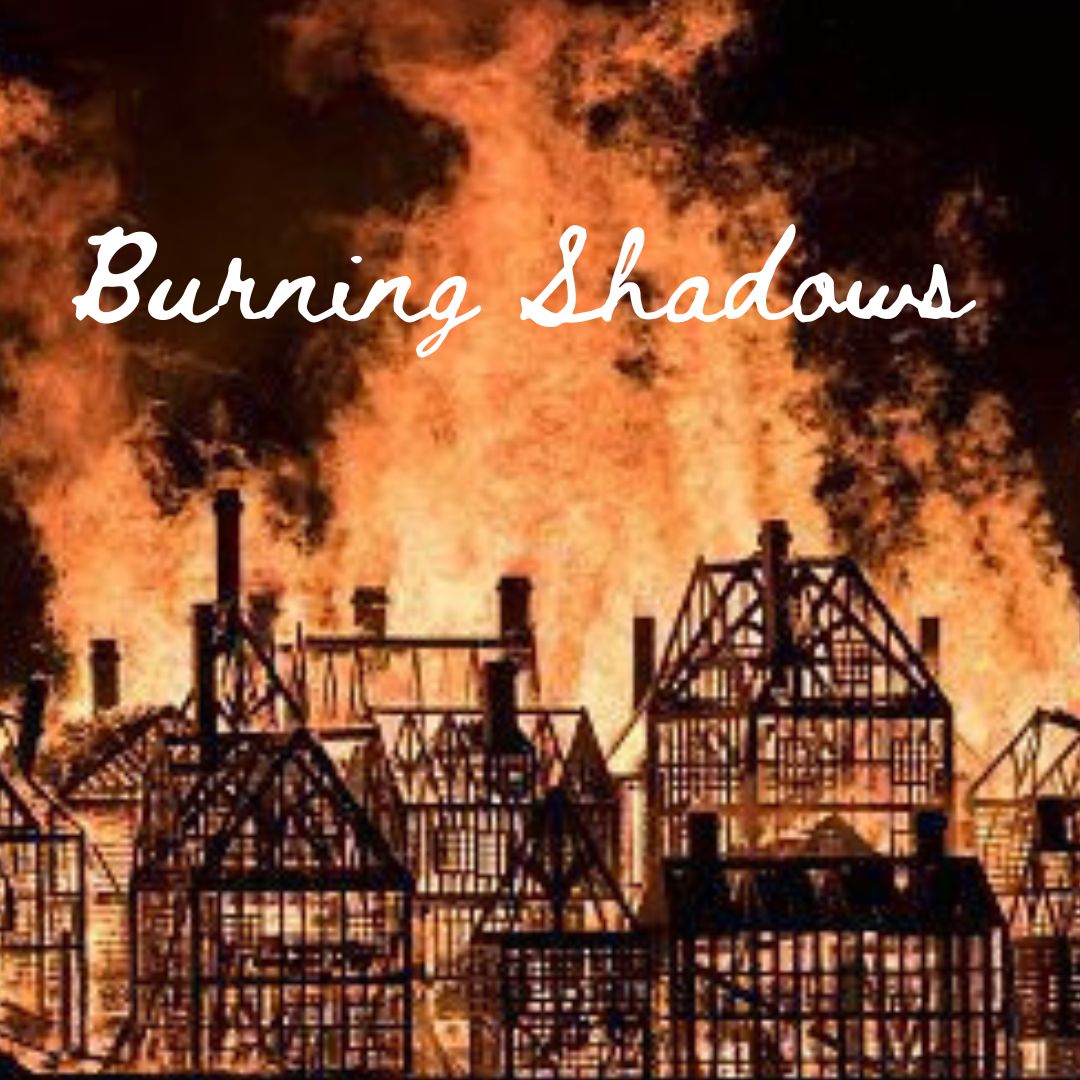
Fast forward to 1666 and the Great Fire of London. In the story Burning Shadows, fugitive and notorious regicide, William Say, enlists the help of a friend to escape the sheriff’s men…
Half an hour later, they were on the raised deck of an elongated skiff with six oarsmen on each side. A family begged for deliverance, but Rook shook his head and ordered his men to cast off.
“I am relieved to be on the river, my friend, as the sheriff’s men nearly had me at the meeting house,” Say explained whilst scanning the shore for sight of his pursuers. “I have also learned that you can find friends in the most unexpected of places.”
“Then it’s God’s will that you are saved, William. To hunt you still for your part in Cromwell’s obsession is unjust, in my view. The Indemnity and Oblivion Act was intended to bring reconciliation and put the past to bed, but the new king uses it only to pursue his vengeance. I warrant we’ll be safe at Richmond.”
“Aye. My thanks again, Sebastian. My old bones cannot take much more of this. But we must spend our time in prayer to the Lord of Hosts to ready our souls for a sterner judgement.” The sight before them was one never to be forgotten, for however many days that remained of the world of Men. The river was a bustle of boats, mainly ferries taking distressed families from the north bank to the south, whilst the sight of St Paul’s burning brightly beneath a sombre, darkened sky, framed a scene of utter devastation. Warehouses along the river burnt fiercely, as did the first three houses on London Bridge in the distance. A warehouse exploded, sending white and blue sparks mixed with yellow high over the river in an unnatural rage, causing a wherry to capsize and the two friends to shudder.
“This has the whiff of God’s judgement, alright,” Rook muttered, gripping the rail as the boat rocked in a gentle swell.
William’s feet were planted wide apart, as he had learned from his Channel crossings. He linked his plump fingers in the act of prayer. “May God our Father watch over my daughter and her family, until such a time as they meet our maker on Judgement Day, whether this be it, or it is yet to be.”
The birds had fled the skies and the only sound was that of oars splashing in the opaque, brown flow of the river as the skiff moved upstream. They rounded a bend so that all that could be seen on the horizon was a column of black smoke rising to the heavens.
“There is meaning in this, but what is the lesson?” Rook asked.
“Either a divine rebuke, the wicked tongue of Satan, or the opening act of Doomsday?” William’s thoughts turned to little Ruth and a tear welled.
“An eye for an eye, ‘til we’re all blinded,” he muttered, wiping his face with a kerchief.
“What’s that, William?” Rook enquired.
“If I gave myself up to the king’s justice, would his revenge be satisfied, and my family be saved from persecution?”
“The king would have your head on a spike, but his thirst for revenge will not be slaked until the last of you is dead,” Rook replied. “This is a man who had Cromwell’s body dug up to display his rotting head on a pole. He would soon find another cause for his vengeful spirit to feast on. Do not doubt the importance of removing his father, the tyrant Charles Stuart, William, and ending the age of absolute monarchy. We shall bide our time, whatever time there is, and if the world doesn’t end, then we shall be here to curb the excesses of this arrogant, restored king. Parliament will rise again.”
William nodded at his friend’s soothing words, but his eyes remained fixed on the foul, black spew issuing from Satan’s gaping maw. All was not well in the world of Men; on that, all could agree.
Here’s the blurb
This collection of eleven tales offers dramatic pinpricks in the rich tapestry of London’s timeline, a city with two thousand years of history. They are glimpses of imagined lives at key moments, starting with a prologue in verse from the point of view of a native Briton tribeswoman absorbing the shock of Roman invasion. The first story is a tense historical adventure set in Roman Londinium in 60 CE from the perspective of terrified legionaries and townsfolk facing the vengeful Iceni queen, Boudica, whose army burnt the fledgling city to the ground.
Further historical dramas take place in 1381 during the Peasant’s Revolt, the Great Fire of London in 1666 and the last ice fair on the frozen Thames in 1814. These are followed by a romance set during the Blitz in 1941, then the swinging Sixties and wide-flared seventies are remembered in the life story of fictional policeman, Brian Smith. Moving on, an East End family get a fright from copycat killings that are a throwback to the 1888 Jack the Ripper murders.
There’s a series of contemporary stories that reference recent events, including the London terrorist bombings of 2005, a literary pub crawl and a daring prison break, building to the imagined death throes of London in a chilling, dystopian vision. These stories are loosely inspired by the author’s personal experiences and reflections on his time living and working in London in the 1980’s and 90’s. Adaptability, resilience, conformity and resolve are recurring themes.
London Tales evokes the city’s rich history and the qualities that were needed by Londoners at various times to survive and prosper – from the base and brutal, devious and inspired, to the refined and civilized.
Available from Amazon in e-book, paperback, Kindle Unlimited and audiobook formats, London Tales is a companion volume to Thames Valley Tales.
Book cover designed by Sean McClean, shows elements from stories.
Buy Link:
This title is available to read on #KindleUnlimited.
Tim Walker is an independent author living near Windsor in the UK. Although born in Hong Kong in the sixties, he grew up in Liverpool where he began his working life as a trainee reporter on a local newspaper. After attaining a degree in Communication Studies he moved to London where he worked in the newspaper publishing industry for ten years before relocating to Zambia where, following a period of voluntary work with VSO, he set up his own marketing and publishing business. He returned to the UK in 2009.
His creative writing journey began in earnest in 2013, as a therapeutic activity whilst recovering from cancer treatment. He began writing an historical fiction series, A Light in the Dark Ages, in 2014, inspired by a visit to the part-excavated site of former Roman town Calleva Atrebatum at Silchester in Hampshire. The series connects the end of Roman Britain to elements of the Arthurian legend and is inspired by historical source material, presenting an imagined historical fiction of Britain in the fifth and early sixth centuries.
The last book in the series, Arthur, Rex Brittonum, was published in June 2020. This is a re-imagining of the story of King Arthur and follows on from 2019’s Arthur Dux Bellorum. Both titles are Coffee Pot Book Club recommended reads. The series starts with Abandoned (second edition, 2018); followed by Ambrosius: Last of the Romans (2017); and book three, Uther’s Destiny (2018). Series book covers are designed by Canadian graphic artist, Cathy Walker.
Tim has also written two books of short stories, Thames Valley Tales (second edition 2023), London Tales (2023); a book of verse, Perverse (2020); a dystopian thriller, Devil Gate Dawn (2016); and three children’s books, co-authored with his daughter, Cathy – The Adventures of Charly Holmes (2017), Charly & the Superheroes (2018) and Charly in Space (2020).
Tim took early retirement on medical grounds and now divides his time between writing and helping out at a Berkshire-based charity, Men’s Matters.
“The Emperor authorized me to make the following proposal to your government,” the Baron de Tuyll, Russia’s minister, said, “though I request you inform me in advance of declination. In that case, it shall remain informal.” A dark figure, wearing black with a red collar and gold tassels on his shoulders, the medals won fighting Napoleon’s Grande Armée pinned to his uniform. His accent was a baritone deeper than any I’d ever heard, the croak of a man broken from lifelong service to his sire. Other voices modified via emotion—happiness, tenderness, hatred, vexation, and so on.
Not the Baron’s. His was the voice of a man who hated the world and everyone in it, including his master.
“What proposal? I asked. We spoke in English.
“He wants the United States to ratify the Holy Alliance Treaty.”
A moment. “He’s sincere?”
“Yes. The Alliance is a league of peace. The United States would strengthen their ties to its members by joining.”
“But the treaty is a collection of sovereigns’ autographs. It excludes republics.”
“The Swiss cantons were invited and acceded.”
“I thought the Alliance was hostile to the United States.”
“The Alliance is hostile to anarchy.”
“We’re not responsible for the French Revolution. The President and I interpret the Alliance as promoting the divine right of kings to rule over humanity. Our constitution is incompatible with such a view.”
“Will you communicate his proposal to the President?”
“Yes. Though two-thirds of the Senate must vote for our joining.”
“I see,” he said. “Do you believe they will?”
“No.”
“That is unfortunate. The Emperor wishes for your country and for Britain to join.”
“He invited Britain?” I asked. He nodded. “The same problem, King George can’t sign it without Parliament. I don’t grasp why the Alliance invites our countries. Britain has a monarchy but elects her legislature. The Alliance recently crushed republican efforts in Naples and the Piedmont. Why would we join such an entity?”
“The Emperor is optimistic that Britain will join. It will be to the world’s benefit if London and Washington adhere to the Alliance’s influence. The treaty contains no specific points but sets an ideal for global peace.”
“A peace built on despotism.”
“You’ll communicate his proposal to the President?”
“Yes. Is that all?”
“No. We must discuss the South American war.”
“Why? Last year’s armistice is stable and peace talks are ongoing. Royalist rebels harass the republics like gnats do elephants, but I expect the war to end by 1822.”
“That cannot happen under current conditions. The continent’s revolution insults Europe’s monarchs and threatens her security. The guilty continent must return, through peaceful means or through arms, into the Alliance’s protection.”
Lines so wide that Noah’s animals could walk through them with not just their mate but their whole menagerie. “The Alliance wants to conquer South America?”
“The Alliance will restore Spain’s dominion. South America will receive greater autonomy than it did previously and will have open trade with all nations.” A pause. “American independence caused the French Revolution. South American independence cannot bring a similar catastrophe to Europe.”
“So your invitation to join the Alliance is meant to nullify objection to aggression toward this hemisphere?”
“To cooperate for the good of the world. The Emperor is anxious that a general peace be built. Embers burn in Europe that must not flame again.”
“Embers of men and women who yearn for freedom. His route toward peace involves destroying an entire hemisphere. You must know we’ll never agree to this and neither will Britain. She’s invested enormous resources into supporting the South American rebels.”
“We have ways of persuading her.”
“Why alert us to your intent?”
“To reduce your government’s anxiety so it will not attempt to stop what it cannot.”
“What cannot be stopped is the inevitable doom of Europe’s masters,” I said. “Its people have been taught to inquire why certain men possess enjoyment at their expense. Civil wars shall rage in Europe until the total ruin of feudal constitutions has been achieved.”
“The Emperor bears no hostility toward the United States or their institutions. You know this because you worked with him as a minister. I’m saddened to learn you do not reciprocate his respect. He views South American independence as a coming apocalypse that threatens man’s connection to Christ through divine rulers. Your country will lose much and gain nothing by resisting what is necessary for a lasting peace. I pray your government takes his proposal seriously.”
“I’ll confer what we’ve discussed to the President.”
“Thank you.”
I escorted him from my office and Maury led him out of the building. Then I returned to my desk and analyzed his words. I’d feared the Holy Alliance’s intentions for six years and finally its intervention was upon us. America had no choice but to resist and we had no hope of defeating Europe’s combined might.
Here’s the blurb
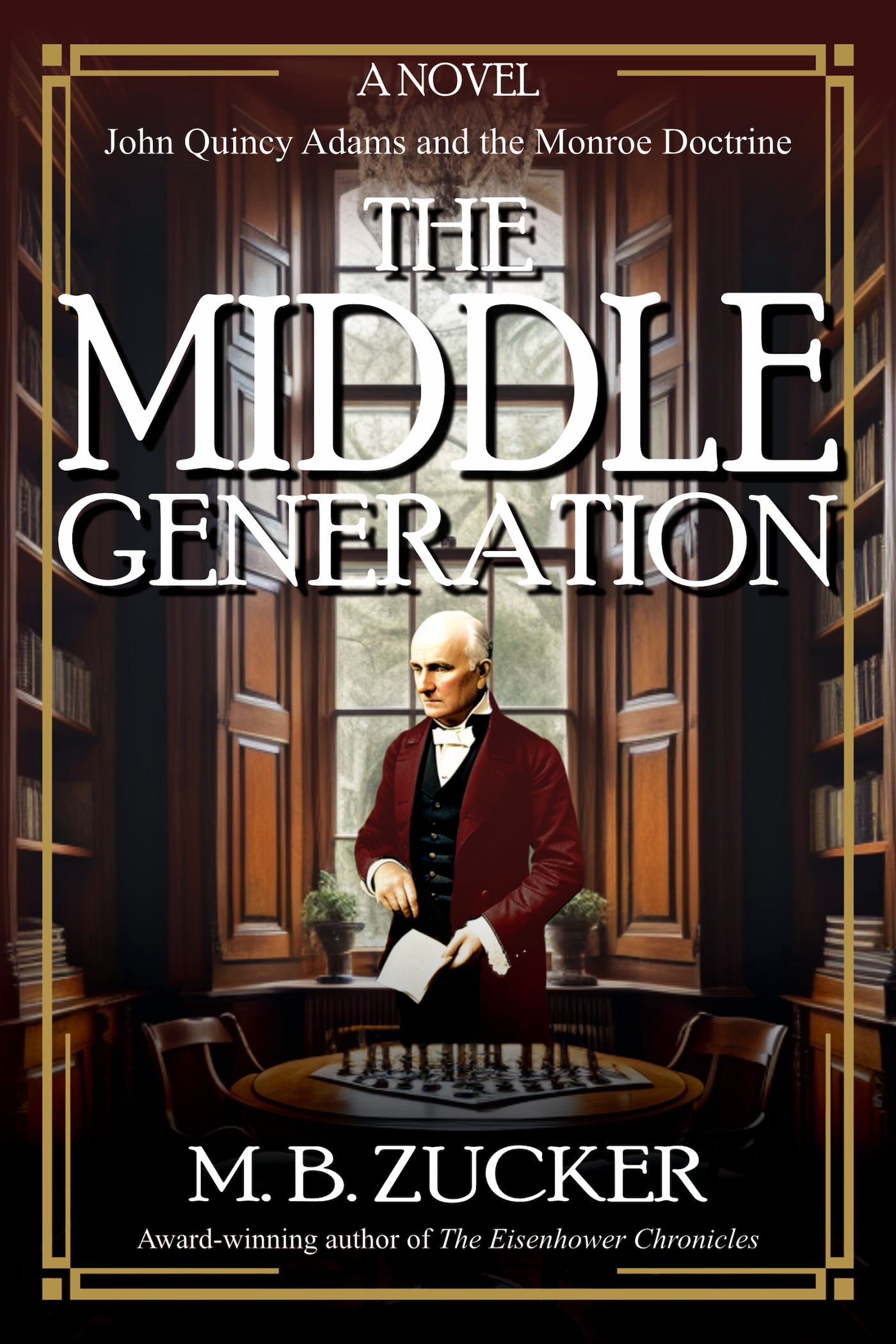
The classical era of American history began with the Revolution and ended with emancipation. Between these bookends lies the absorbing yet overshadowed epic of a new nation spearheading liberty’s cause in a world skeptical of freedom arriving at all, much less in slaver’s garb. M. B. Zucker takes readers back to that adolescent country in the care of an enigmatic guide, John Quincy Adams, heir to one president by blood and another, Washington, by ideology. Adams is the missing link between the founders and Abraham Lincoln, and is nigh unanimously regarded as America’s foremost Secretary of State. Through Adams’ eyes, readers will experience one of history’s greatest and most forgotten crises: his showdown with Europe over South American independence, the conflict which prefigured the Monroe Doctrine.
With his signature dialogue and his close study of Adams’ 51 volume diary, M. B. Zucker’s The Middle Generation is a political thriller and character piece that surpasses his achievement in The Eisenhower Chronicles and ascends to the cinematic heights of the historical epics of David Lean and Steven Spielberg. It is an unforgettable portrait and a leap forward for one of our rising historical fiction novelists.
The title will be available in several Barnes and Noble stores in the DC / Northern Virginia area.
Meet the author
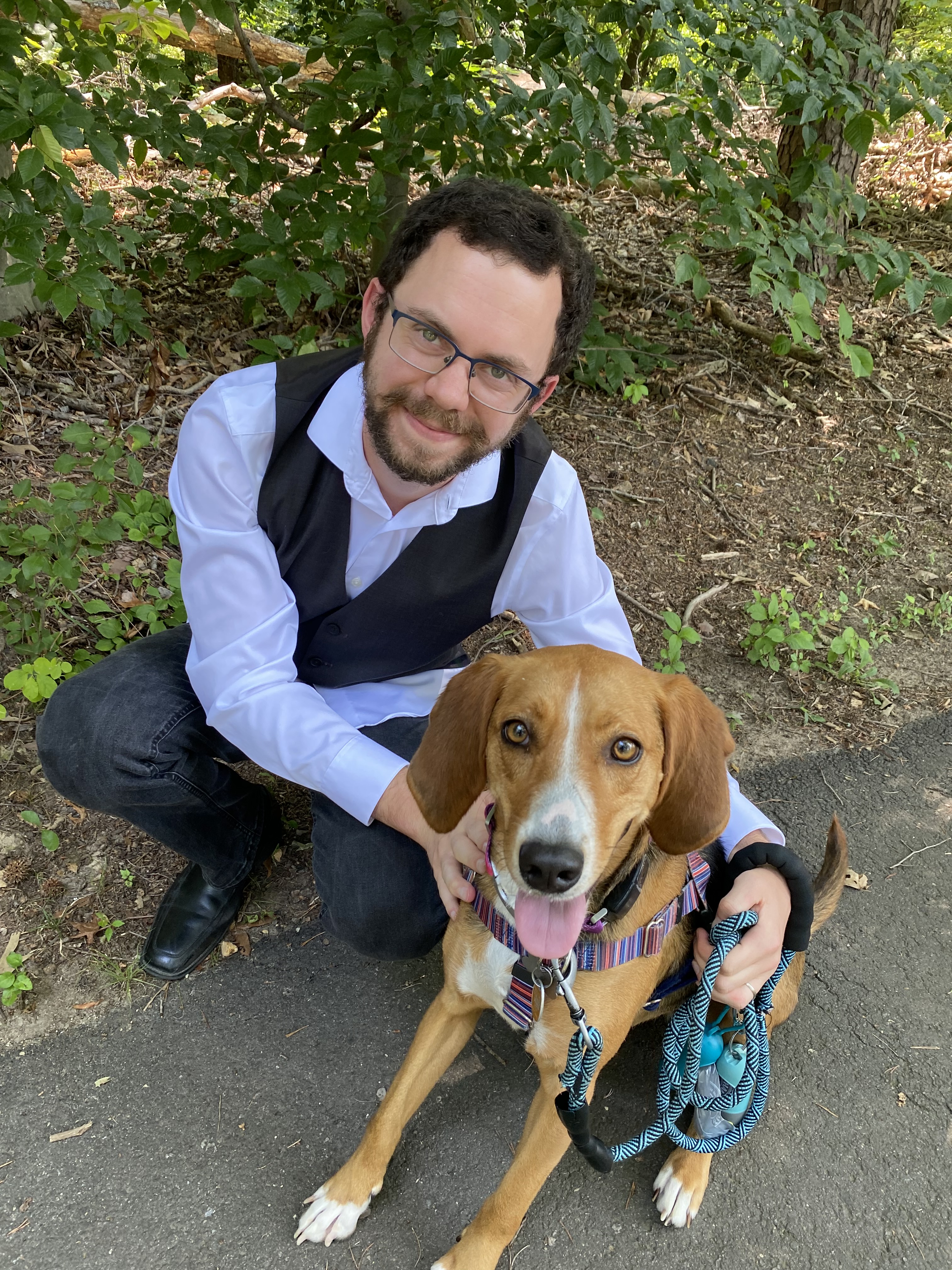
M. B. Zucker has been interested in storytelling for as long as he can remember. He devoted himself to historical fiction at fifteen and earned his B.A. at Occidental College and his J.D. at Case Western Reserve University School of Law. He lives in Virginia with his family. He is the author of three other novels. Among his honors is the Best Fictional Biography Award at the 2023 BookFest.
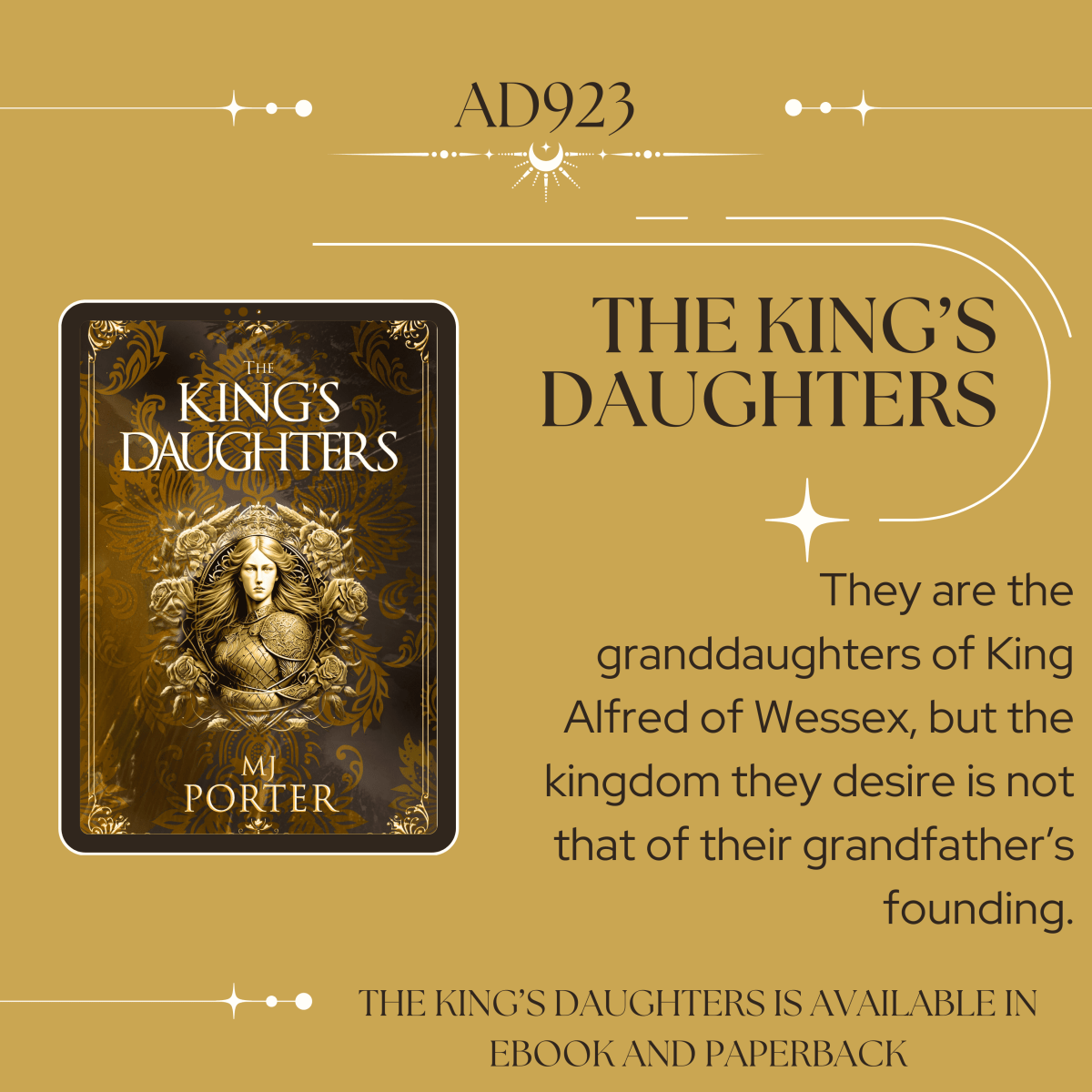
The King’s Daughters is available with Kindle Unlimited, and is a novel of the many daughters of Edward the Elder who married into the ruling families in East and West Frankia, or who became holy women, or lived within a nunnery.
So, who were these daughters?
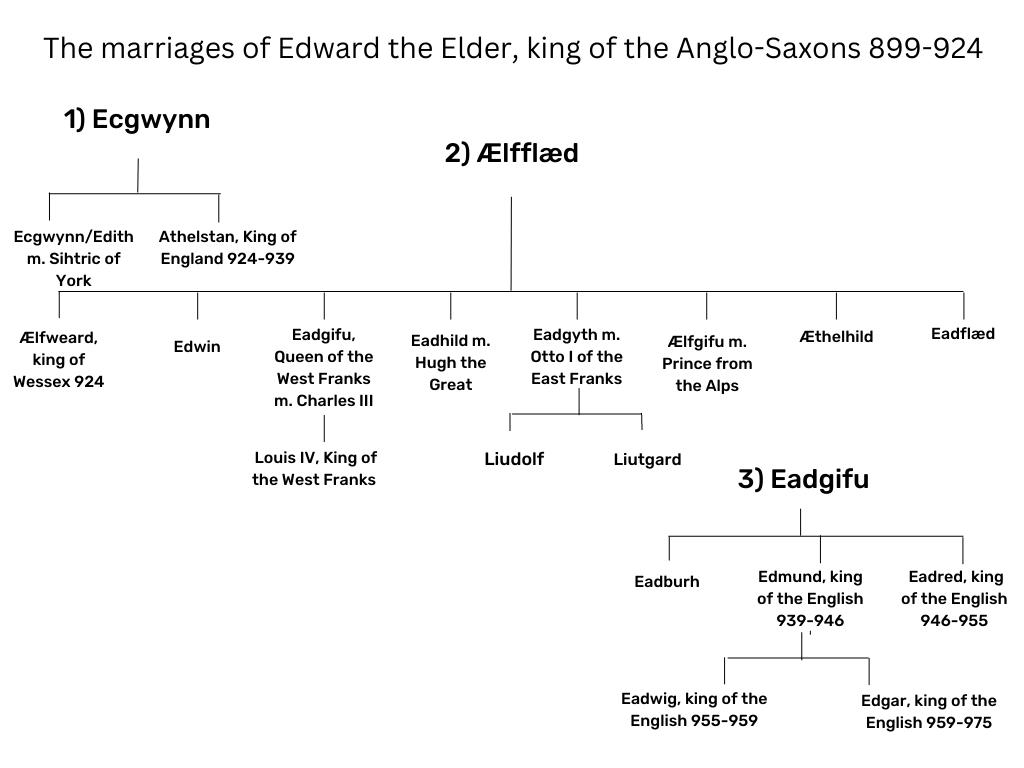
Edward the Elder was married three times, to an unknown woman- who was the mother of the future King Athelstan, to Lady Ælfflæd – who was the mother of the future, and short-lived King Ælfweard, and finally to Lady Eadgifu – who was the mother of the future kings Edmund and Eadred. But, while each woman was mother to a future kings, this story focuses on the daughters. And there were a lot of them, and their lives were either spent in making prestigious marriages, or as veiled women – whether professed religious, or merely lay women living in a nunnery or an isolated estate.
The story of The King’s Daughters is very much about the daughters of Edward and his second wife, and the marriages they made in Continental Europe, into the powerful families in East and West Frankia. And I’ve written a lengthy post about them which you can find here. But there were other daughters/sisters, and while their lives might be almost lost to us, it is interesting to discover what little is known of them.
Edith/Eadgyth/Ecgwynn/unnamed daughter of Edward the Elder, and his unnamed first wife (Ecgwynn?) c.890s–937?
m. Sihtric, king of York in 925, repudiated by 927 when Sihtric died
Edith[i] is believed to be the biological sister of the future King Athelstan, and, therefore, the daughter of King Edward and his first wife, possibly named Ecgwynn. Edith is unnamed in the Anglo-Saxon Chronicle, but her marriage is mentioned in both the D and the C texts.
The C text records that in 924, ‘Athelstan was chosen as king by the Mercians, and consecrated at Kingston, and he gave his sister.’[ii] And here the text, rather enigmatically, comes to a halt until 954.
The D text, is rather more helpful, under 925 stating that, ‘Here Athelstan and Sihtric, king of Northumbria, assembled at Tamworth on 30th January, and Athelstan gave him his sister.’[iii]
This, therefore, refers to the union between Athelstan’s sister and Sihtric, a Norse king of Jorvik or York. The union is intriguing. It does seem to be the only occasion that a marriage union was enacted between the Viking raiders and the Wessex royal family.
There is the suggestion that Edith may have become a nun on her return to Mercia. She is associated with the nunnery at Polesworth by traditions recorded at Bury in the twelfth century. Following the death of her husband, she is said to have returned to Mercia and ‘founded a nunnery at Polesworth, near the Mercian royal centre at Tamworth. There she remained a virgin, practising fastings and vigils, offering prayers and alms to the end of her life, and dying on July 15.’[iv]
However, Thacker goes on to state that, ‘it must be admitted that it [the cult] was not a very successful one. Her feast day (15 July) occurs in only three relatively late (i.e. post-Conquest) calendars, and it is impossible to identify her in any of the surviving Anglo-Saxon litanies.’[v]
[i] Edith may be Anonymous (594) or Eadgyth (12) on PASE, in which case her death was c.937
[ii] Swanton, M. ed. and trans. The Anglo-Saxon Chronicles, (Orion Publishing Group, 2000), p.105
[iv] Thacker, A. ‘Dynastic Monasteries and Family Cults’, in Edward the Elder, 899–924, ed. Higham & Hill (Routledge, 2001), p.257
[v] Thacker, A. ‘Dynastic Monasteries and Family Cults’, in Edward the Elder, 899–924, ed. Higham & Hill (Routledge, 2001), p.258
Æthelhild, daughter of Edward the Elder, and his second wife, Lady Ælfflæd
The birth order of Edward the Elder’s children is unknown. Therefore, we do not know why Æthelhild[i] became a lay sister at Wilton Abbey. Could it be because it was her choice, her father’s, or mother’s, or that of her half-brother, Athelstan?
Wilton Abbey was strongly associated with the Wessex royal family. Her sister Eadflæd became a nun, and the two sisters were joined, not only by their mother but also by their much younger half-sister, Eadburh. Nothing further is known of Æthelhild. She’s not mentioned in the Anglo-Saxon Chronicle, or in any of the surviving charter evidence. We don’t know her date of birth, or her date of death.
William of Malmesbury’s Gesta Regum Anglorum tells us more.
He also had by the same wife six daughters; Eadflæd, Eadgifu, Æthelhild, Eadhild, Eadgyth, Ælfgifu. The first and third took a vow of virginity and spurned the pleasures of earthly marriage, Eadflæd took the veil and Æthelhild in lay attire; both lie at Wilton, buried next to their mother. Eadburh became a nun and lies at Winchester; Eadgifu was a famous beauty, and was given in marriage by her brother Æthelstan to Louis prince of Aquitaine.[i]
[i] Mynors, R.A.B. ed. and trans. completed by Thomson, R.M. and Winterbottom, M. Gesta Regvm Anglorvm, The History of the English Kings, William of Malmesbury, (Clarendon Press, 1998) p.199–201
Eadflæd, daughter of Edward the Elder, and his second wife, Lady Ælfflæd
Eadflæd[iii] became a nun at Wilton Abbey. And she is named in a charter issued by Athelstan (S438, surviving in one manuscript) granting land to St Mary’s, Wilton dated 937, the year of the battle of Brunanburh. Provided the dating is secure, and the charter is authentic, this points to Eadflæd still being alive at this date. The absence of her sister’s name, Æthelhild, may mean she had predeceased her sister. Note should be made here of the distinction between the two types of religious women. It is believed that there were lay sisters and also those who wore the veil. Both could have been attached to a nunnery, although, aside from the Nunnaminster, no religious establishment is specifically termed as a monastery for women.
Eadburh, c.919–952 daughter of Edward the Elder and his third wife, Eadgifu
William of Malmesbury in his Gesta Pontificum Anglorum tells the story of Edward the Elder’s youngest daughter, Eadburh,[v] being consigned to the Nunnaminster in infancy as she showed such signs of devotion:[vi]
There had been a convent on this spot before, in which Eadburg [Eadburh], daughter of king Edward the Elder, had lived and died, but by then it was almost in ruins. When she was barely three, Eadburg had given a remarkable proof of her future holiness. Her father had wanted to find out whether his little girl would turn towards God or the world. He set out in the dining room the adornments of the different ways of life, on this side a chalice and the Gospels, on the other bangles and necklaces. The little girl was brought in by the nurse and sat on her father’s knees. He told her to choose which she wanted. With a fierce look she spat out the things of the world, and immediately crawling on hands and knees towards the Gospels and chalice adored them in girlish innocence … Her father honoured his offspring with more restrained kisses and said, ‘Go where heaven calls you, follow the bridegroom you have chosen and a blessing be upon your going.’ … Countless miracles during her life and after her death bear witness to the devotion of her heart and the integrity of her body.[vii]
William later adds that ‘Some of the bones of Eadburg the happy are buried’,[viii] at Pershore.
Aside from the later William of Malmesbury, Eadburh is the recipient to land in one charter, that of S446, dated to 939 and surviving in one manuscript. ‘King Athelstan to Eadburh, his sister; grant of 17 hides (mansae) at Droxford, Hants.’[ix] Perhaps, Athelstan was ensuring his sister’s future with this charter. Maybe he knew he was dying. Perhaps this was a means of guaranteeing the survival of the religious establishment in which she lived.
[ii] Mynors, R.A.B. ed. and trans. completed by Thomson, R.M. and Winterbottom, M. Gesta Regvm Anglorvm, The History of the English Kings, William of Malmesbury, (Clarendon Press, 1998), pp.199–201
[iv] Mynors, R.A.B. ed. and trans. completed by Thomson, R.M. and Winterbottom, M. Gesta Regvm Anglorvm, The History of the English Kings, William of Malmesbury, (Clarendon Press, 1998), pp.199–201
[vi] Foot, S. Athelstan (Yale University Press, 2011), p.45 Priest, D. trans. Gesta Pontificum Anglorum, The Deeds of the Bishops of England, (The Boydell Press, 2002)
[vii] Priest, D. trans. Gesta Pontificum Anglorum, The Deeds of the Bishops of England, (The Boydell Press, 2002), pp115–16
[ix] Sawyer, P.H. (ed.), Anglo-Saxon charters: An annotated list and bibliography, rev. Kelly, S.E., Rushforth, R., (2022). http://www.esawyer.org.uk/ S446
You can read about the many daughters of Edward the Elder in The King’s Daughter.
My first non-fiction title, The Royal Women Who Made England, is also now available in ebook and hardback and features these women and what we know about them.
Paul Bennett is a fellow indie-author and a super-supportive one at that. I often find we’re reading the same books on Goodreads, and I love his reviews, so I’m delighted to feature him on the blog to tell us all about his series, The Mallory Saga, which has been steadily growing, and now stands at 7 books.
The inspiration to write was, in the beginning, merely to see if I could do it. I had written short pieces over the years but to tackle a full-blown novel was a daunting prospect. Once the seed was planted I came up with a rough idea of telling the story of three siblings living somewhere in colonial America. Choosing that general locale was a natural fit for me as I’ve been a lifelong student of American history and I felt that if I was going to write a historical fiction novel, it might be prudent to choose a subject I knew a little about. I picked The French and Indian War as the starting point for what was now becoming a possible series of books that would follow the Mallory clan through the years. That war intrigued me and I saw a chance to tell the story through the eyes of the Mallory family. It also provided me with the opportunity to tell the plight of the Native Americans caught up in this conflict. The French and Indian War paved the way for the colonies to push further west into the Ohio River area. It also set the stage for the events of the 1770’s. Britain incurred a huge debt winning that war and looked to the colonies for reimbursement in the form of new taxes and tariffs. Well, we all know how those ungrateful colonists responded.
As to the name Mallory – I have a photo hanging on my living room wall of my great-grandfather, Harry Mallory. I got to know him when I was a young boy and was always glad when we visited him. He lived a good portion of his life in western Pennsylvania which is where much of Clash of Empires takes place. So, as a gesture to my forebears, Mallory became the name of the family.
Clash of Empires
In 1756, Britain and France are on a collision course for control of the North American continent that will turn into what can be described as the 1st world war, known as The Seven Year’s War in Europe and The French and Indian War in the colonies. The Mallory family uproots from eastern PA moves to the western frontier and finds themselves in the middle of the war. It is a tale of the three Mallory siblings, Daniel. Liza and Liam and their involvement in the conflict; the emotional trauma of lost loved ones, the bravery they exhibit in battle situations. The story focuses on historical events, such as, the two expeditions to seize Fort Duquesne from the French and the fighting around Forts Carillon and William Henry and includes the historical characters George Washington, Generals Braddock, Forbes and Amherst. The book also includes the event known as Pontiac’s Rebellion in which the protagonists play important roles. Clash of Empires is an exciting look at the precursor to the events of July 1776; events that will be chronicled in the second book, Paths to Freedom, as I follow the exploits and fate of the Mallory clan. Clash is also available as an audiobook.
Paths to Freedom
In Paths to Freedom the children of the three Mallory siblings begin to make their presence known, especially Thomas, the oldest child of Liza and Henry Clarke (see right there, already another family line to follow), but Jack and Caleb, the twin sons of Liam and Rebecca along with Bowie, the son of Daniel and Deborah are beginning to get involved as well. The French and Indian War, the historical setting for book 1, was over, and the Mallory/Clarke clan is looking forward to settling and expanding their trading post village, Mallory Town, now that the frontier is at peace. And for a time they had peace, but the increasing discontent in the East, not so much toward the increasing rise in taxes, but the fact that Parliament was making these decisions without any input from the colonies, slowly made its way west to the frontier. Once again the Mallory/Clarke clan would be embroiled in another conflict.
Another facet of my saga is that the main characters are not always together in the same place or even the same event. In Paths my characters are spread out; some have gone East, some have gone West, some are sticking close to Mallory Town, so in effect there are three stories being told, and that means more plots, subplots, twists and surprises.
One of the aspects of the lead up to The Revolutionary War was the attempt by the British to ensure cooperation with the Native Americans, especially the Iroquois Confederation. The British had proclaimed that they would keep the colonies from encroaching on tribal lands, a strong inducement indeed. However, some tribes, like The Oneida, had established a good relationship with the colonists. I knew right away when I started book 2 that the relationship between the Mallory’s and the tribes would be part of it. Among the historical Native Americans who take part in Paths are the Shawnee Chiefs; Catecahassa (Black Hoof), Hokoleskwa (Cornstalk), Pucksinwah (father of Tecumseh), and the Mingo leader Soyechtowa (Logan).
I also realized that I needed to get someone to Boston, and the Sons of Liberty. Thomas Clarke, the eighteen year old son of Liza and Henry, was the perfect choice for the assignment (mainly because he was the only child old enough at the time). Through him we meet the luminaries of the Boston contingent of rebels, Paul Revere, Dr. Joseph Warren, John Hancock, and the firebrand of the bunch, Sam Adams. Plenty of history fodder to be had…British raid in Salem…Tea Party…the famous midnight rides…culminating with the Battle of Lexington and Concord. Oh yes, plenty of opportunities for Thomas.
An untenable situation arises in Mallory Town resulting in Liam and his two companions, Wahta and Mulhern, finding themselves on a journey to the shores of Lake Michigan and beyond. Driven by his restless buffalo spirit, Liam has his share of adventures; encountering a duplicitous British commander, meeting many new native tribes, some friendly, some not so much. A spiritual journey in a land not seen by many white men.
I ended Paths with the Battle of Lexington and Concord, the first shots of The Revolutionary War. The flint has been struck; the tinder has taken the spark. Soon the flames of war will engulf the land, and the Mallory clan will feel the heat in the third book, Crucible of Rebellion.
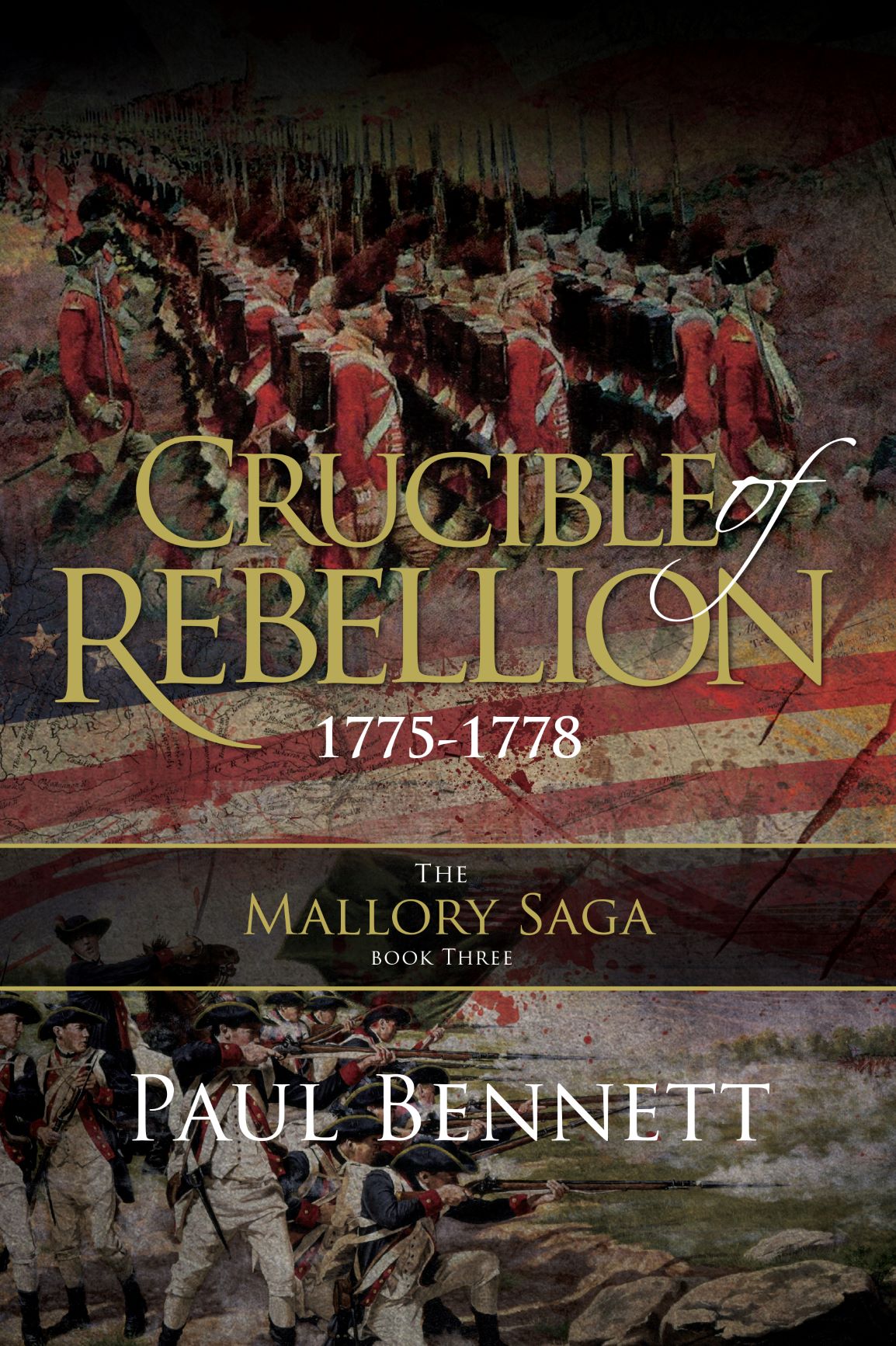
Crucible of Rebellion
The timeline for Crucible is 1775 – 1778. I decided to split the Revolutionary War into two books, mainly because there is so much more action as opposed to The French & Indian War…and because as I was writing, my characters insisted on some scenes I hadn’t previously thought of.
The three Mallory siblings, Daniel, Liza, and Liam play important parts in CoR, but it is their children who begin to make their marks on the saga. Their youngest son, Ethan, and their daughter Abigail, of Daniel and Deborah travel with their parents to Boonesborough, and reside there with Daniel Boone. The war reaches even this remote frontier, prompting Daniel and Deborah to move further west in search of peace. However, the banks of The Wabash River prove not to be immune to conflict.
Their eldest son, Bo accompanies Liam’s twins, Jack and Cal, first to Fort Ticonderoga, then to Boston with a load of cannon for General Washington’s siege of Boston (the Noble Train of Artillery with Colonel/General Henry Knox). In Boston they meet up with Liza and Henry’s son Thomas, who is no longer a prisoner (can’t say more than that) , Marguerite, and Samuel Webb.
General Washington has plans for the Mallory boys…plans which see some of them in a few of the more important battles of the war… the escape from Long Island, the surprise attack at Trenton, the turning point battles at Saratoga NY, as well as taking part in numerous guerilla type skirmishes.
A long ways away from the conflict Liam, with Wahta, are living with the Crow along the Bighorn River. Liza and Henry made the trip to Boonesborough with Daniel and Deborah, but do not go with them to The Wabash….they have their own adventures.
A Nation Is Born – book 4 of the saga covers 1779-1781
As the Revolutionary War shifts south, and west, so too, the Mallory’s find themselves right in the thick of it. On the banks of the Congaree River in South Carolina, and on the Wabash in the Northwest Territory, war is not the only problem they face. Revenge stirs among the embers of war. At the battles of Cowpens and Guilford Court House in South Carolina, and the retaking of Fort Sackville on the Wabash River, the Mallory’s are tried and tested. Emotions run high in this tale of revolution and self-determination.
Although I write fiction tales, the historical aspect of the saga provides the backdrop. History is often overlooked, or is taught with a certain amount of nationalistic pride, whitewashing controversial events, much to the detriment of humankind. So I hope that what I write might help broaden the reader’s horizon a bit, that what they learned in school isn’t necessarily the whole story. Two main historical topics in the story of America that frequent The Mallory Saga are slavery, and the plight of the indigenous people who have lived here since before the founding of Rome; two historical topics that linger still in America’s story. Entertainment and elucidation; lofty goals for a humble scribe telling a tale.
A Turbulent Beginning
A Turbulent Beginning – book 5 – 1788-1795
The Revolution is over, and a new nation has emerged from the ashes of war. The new government, leery of a powerful central government, learns quite quickly the folly of state legislatures controlling military operations, abandoning The Articles of Confederation to write The Constitution.
More lessons are learned by this second attempt when they discover that the indigenous tribes along the Ohio were more than a match for militia troops. It is time for President Washington and his War Secretary Henry Knox to come up with a better plan to pacify the warring tribes.
The Mallory clan is spread out from the Congaree River in South Carolina to the Wabash River in the Northwest Territory. The desire to be together again is stronger than the fear of traveling through a war zone. They are once again in the middle of the storm…can they survive…can they make a difference?
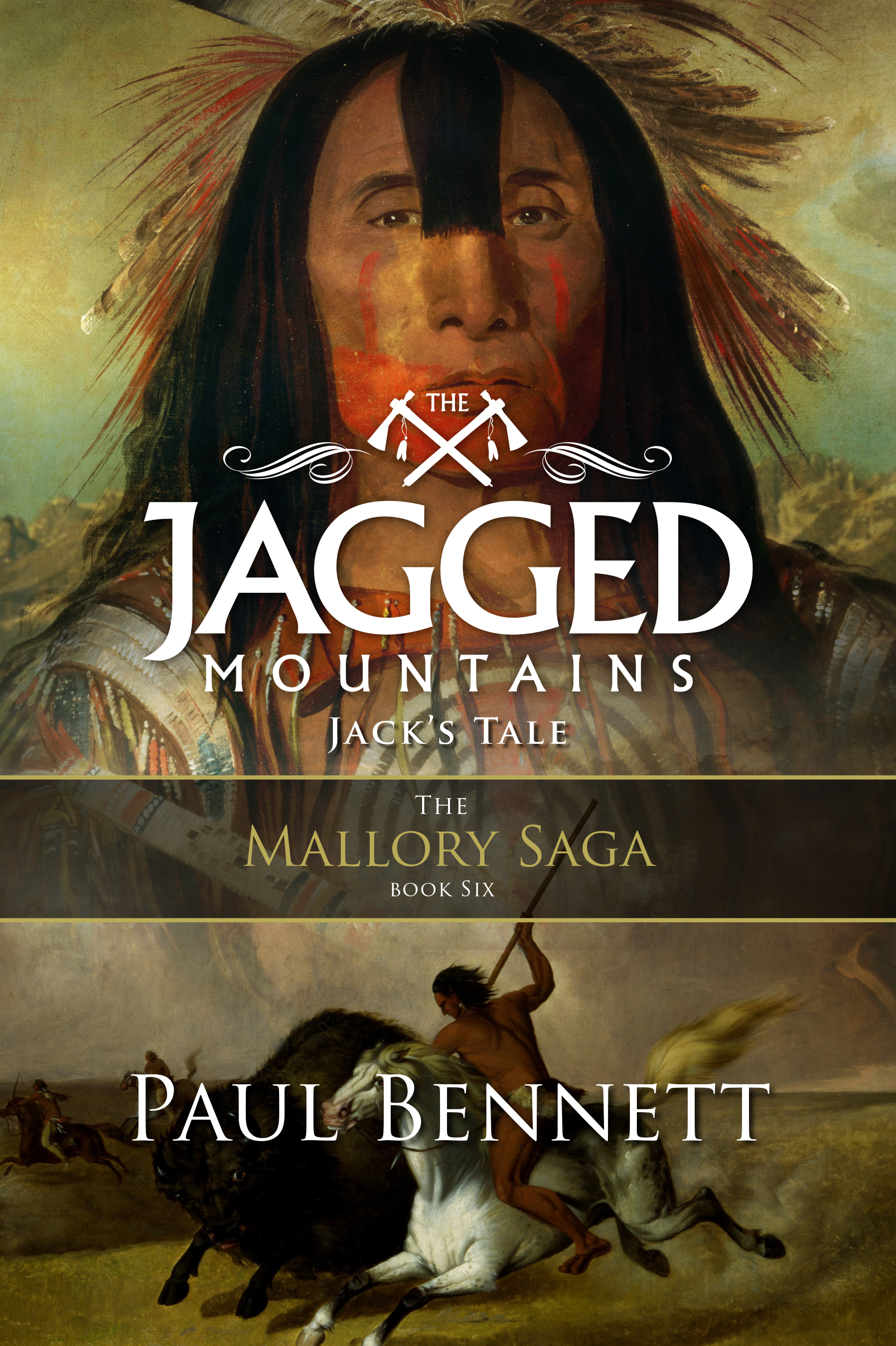
The Jagged Mountains – Jack’s Tale
The Jagged Mountains – book 6 – 1783-1808
In The Jagged Mountains, I took a slightly different approach to this entry into The Mallory Saga. Not only is it partly in first-person it is also a tale with very little historical content. When I started thinking about how to present Jack’s quest, I decided to make it as personal as possible. Using a first-person narrative for Jack gave my Muse free rein to delve into how Jack responds to the challenges he faces; his thoughts, his fears, and his joys. As for the historical aspect, or lack thereof, that really excited my Muse. She loves to color outside the lines so to speak, so in this tale, she had a blank page to fill with her imaginative whims. Obviously, there was no Raven Army that rampaged through the plains and mountains, but the idea of a pan-Indian alliance is not a farfetched one. Indeed, as you’ll learn in book 7, one of the more formidable confederations of tribes arises under Tecumseh. Then of course in 1874 another tribal alliance destroys the 7th Cavalry.
Weathering the Storm
The War of 1812 provides the backdrop to Weathering, but it also allowed me to further explore the relationship between Ethan Mallory and the Shawnee brothers Tecumseh, and Tenskwatawa…especially the almost lifelong link to Tecumseh. As the book progressed, it became a vehicle to tie up any loose ends; to bring to a close this series in the year 1839 alongside the shore of Lake Michigan. It was not an easy thing to do to say goodbye to the characters who have been a part of my life for 10 years now. So, the Saga is done, at least in full novel mode. There will be at least one anthology of short tales involving the main characters of The Mallory Saga…perhaps even a few that take place after 1839…so stay tuned my peeps and fellow travelers along the Mallory road, and thanks for being a part of the journey.
The Humble Scribe
I am a retired data center professional. Not that I started out thinking I would spend nearly 50 years working in mainframe computer environments. My major interests, scholastically, in high school, and college were history and anthropology. The Cuban missile crisis, Bay of Pigs, assassinations, Vietnam, Watergate, etc., were some of the events that shaped me, forming the basis for my cynical view of government. One of the results of this “hippie attitude” was that I quit school, and my job, taking a year and a half off to travel a bit and enjoy life. During that period I began composing the odd poem or song lyric, but I knew in my heart, and from experience writing school term papers, final exams, and the like, that I was a prose writer. My favorite fantasy for my future at the time was to become a forest ranger sitting in some fire watch tower writing the great American novel. Life intervened, however, and I put that dream aside to marry and raise a family, which meant I needed to be employed, thus decades of staring at computer screens ensued. As time went on, I began writing about the golf trips I took with my buddies. At first, they were humor-laced travelogues, but now they are fictional tales of my friends; the golf becoming a vehicle for creating a story. Then in 2013, I started writing book reviews and communicating with authors about the process of writing a novel. My dream to write the great American novel returned.
Well I hope I’ve piqued your interest in American historical fiction, and in particular The Mallory Saga. If so moved, the buy links are below. Follow the progress of The Mallory Saga here:


























 MJ Porter
