I thought I’d share some of my frustrations with writing about the lives of the ‘lost women’ of the tenth century.

I thought I’d share some of my frustrations with writing about the lives of the ‘lost women’ of the tenth century.

The Tenth Century in Saxon England is often seen as heralding the triumph of Wessex to form England and to drive the Viking raiders far from England’s shores. That is both right and wrong, but it does mean that the names of the kings of the House of Wessex are well-known (comparatively speaking). The same can’t be said for the women who were wives, daughters and mothers of these kings. We can debate why this is but it doesn’t solve the problem of who these women were. For some of them, we don’t even know their names. We don’t know the name of King Athelstan’s mother, which astounds me. Equally, some of his half-sisters are quickly ‘lost’ in Continental Europe. Much of this is because they didn’t create huge dynasties to revere them after their death (apart from perhaps Eadgyth, who married Otto of the East Franks and whose sudden death deeply affected her husband). Of course, this problem is also compounded by the few surviving contemporary records.

Even those sources which do survive are not easy to access. Language barriers are a huge problem. The Anglo-Saxon Chronicles have been studied and translated into easily accessible volumes, but alas, only Ealhswith, wife of King Alfred, Æthelflæd of Mercia, her daughter Ælfwynn, and two unnamed sisters of Athelstan are actually mentioned in the ASC. We can find more names in Æthelweard’s Latin translation of the ASC known as the Chronicon but it is still not an exhaustive list of his own relatives. Æthelweard claimed descent from King Alfred’s brother, Æthelred I.

This situation doesn’t just apply to the tenth-century. The online resource, The Prosopography of Anglo-Saxon England (PASE), has a database of 33,981 male names listed for the entire period of Saxon England. Only 1460 female names are listed. As such, we know much more about the male members of Saxon England, than we do the females.

And, these women have received very little study. While there are academic books about the much better known eleventh-century queens, Emma of Normandy and Edith, the wife of Edward the Confessor, it’s not been possible to pick up a single title and learn about these lost women, aside from Elizabeth Norton’s monograph on Lady Elfrdia.

To begin with, I wished to fictionalise the life of Lady Elfrida, wife of King Edgar, thanks to the work by Elizabeth Norton. I then turned my mind to other women of the tenth century and, indeed, even to Lady Estrid, the sister of King Cnut. Time and again, I found that so little information had survived, the majority of it only a reference in relation to male members of the family, that much of their lives had to be reconstructed based on what is documented as happening at the time. There was certainly no tangible way to connect with these women, other than a possible surviving piece of embroidery which might have been stitched by King Edward the Elder’s second wife, and if not by her hand, then at her command, and which was found inside the tomb of St Cuthbert when it was opened in the early nineteenth century (1827).

I can’t help feeling this is how Æthelweard felt when he wrote his Chronicon. The passage of time has not made it any easier to uncover the names of the women, let alone their personalities.

https://amzn.to/421prHt

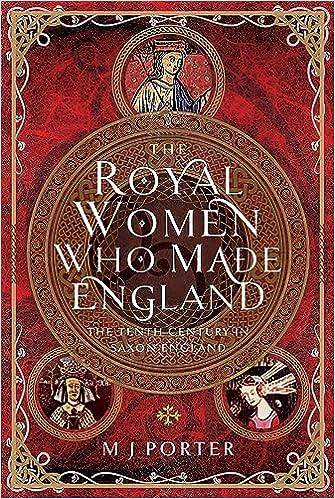
I have now written a non-fiction account of this period, and it is now available from Pen and Sword books – The Royal Women Who Made England. I hope, alongside the fictionalised accounts of their lives, that this will inspire more interest in them.

The Royal Women Who Made England cover image.

Posts

I’m delighted to welcome Heidi Eljarbo and her new book The Warmth of Snow to the blog ChristmasRomance #SweetRomance #RegencyRomance #BlogTour #TheCoffeePotBookClub

Here’s a snippet

She flung the long-strapped bag on her back and helped the stableboy saddle the gray horse. Soon, she was on her way to town. The first seven cards were meant for elderly widows, gentle women Erica visited from time to time. Most of them had known her mother, and Erica gladly sat and listened to these women repeat their memories of how her sweet mother had spent time with them.

The last cottage she visited belonged to her elderly friend Ingela.

“I have one card left,” Erica said.

“Say, why don’t you ride to Castle Linborg? I heard the count returned from soldiering a while back. He used to be out and about all the time, talking to people and helping them settle disputes. He even showed up unannounced if someone was in need. But since he returned from war down in Europe, hardly anyone has seen him. His reputation as a fair and good nobleman has dwindled since he’s been away from the public eye. Now, rumors say he keeps to himself and has become both grumpy and of little use to people in our area.”

Castle Linborg? Twice Erica had received advice to go there. Although she had considered going there to spite Aunt Brita, here was the same suggestion from dear, old Ingela. The woman had been more family to her than the foursome at Holst Manor had ever been. Erica pulled the inkbottle and quill out of her bag and placed them next to the last card on the table.

“I’ll go see him then.”

“Do you dare? Will you knock on the door of an aristocrat who has the power to make your life miserable if things don’t go his way.”

Erica smiled back. “You just said the count used to be fair and good. My guess is that he still is… And although perhaps these traits are now hidden, there must be a reason for it.” She wrote his name on the back of the last card.

Count August Brandell of Linborg.

Why not try?

Here’s the blurb

There must be a way to thaw a heart long frozen. Can she help him, or does he have other plans?

Sweden 1810.
August Brandell, the count of Linborg, has returned home after four years of war against the French Empire under the direction of Napoléon Bonaparte. Wounded and downtrodden, he is a meager shadow of the man he used to be.
One day, a lovely young woman comes calling. She’s strong and bright and, unlike the rest, seems unaffected by his wealth and unfortunate disability. He soon discovers he wants more than a sweet friendship, but a life of caring for him would not be fair to such a beautiful soul. Oh, how dearly, deeply he loves her and secretly wants her to stay, but he cannot and will not ask such a sacrifice from her…especially not when it’s out of pity for him.

Erica Gustava Ebbesdotter has primarily been left to herself since she was orphaned at an early age. Although grateful to her aunt and uncle for taking her in, they pay her no attention and even keep her in the dark about her parents.
Hearing about Count Brandell’s unfortunate fate on the battlefield, she knocks on the door at Castle Linborg to leave him a card of encouragement.
Meeting Count Brandell changes Erica’s entire world. Falling for him is utterly unexpected. Soon, he fills her heart, but he is far above her station. How can a man like him see beyond her less refined clothes and past? Worst of all, he is already betrothed.

This is a sweet and wholesome historical romance—a hauntingly beautiful tale of two hearts meant to be together.

Buy Links:

This title is available to read with #KindleUnlimited.

Universal Link

Meet the author

HEIDI ELJARBO grew up in a home full of books, artwork, and happy creativity. She is the author of award-winning historical novels filled with courage, hope, mystery, adventure, and sweet romance in the midst of challenging times. She’s been named a master of dual timelines and often writes about strong-willed women of past centuries.

After living in Canada, six US states, Japan, Switzerland, and Austria, Heidi now calls Norway home. She lives with her husband on a charming island and enjoys walking their Wheaten Terrier in any kind of weather, hugging her grandchildren, and has a passion for art and history. 

Her family’s chosen retreat is a mountain cabin, where they hike in the summer and ski the vast white terrain during winter.

Heidi’s favorites are her family, God’s beautiful nature, and the word whimsical.

Connect with the author

WebsiteTwitter

FacebookInstagramPinterest

Book BubAmazon Author PageGoodreads

Follow The Warmth of Snow blog tour with The Coffee Pot Book Club

I’m delighted to welcome Anna Belfrage to the blog with a guest post about her new book, Times of Turmoil #AmericanColonialHistory #timetravel #historicalfiction #historicalromance

I’m delighted to welcome Anna Belfrage to the blog with a post about her main characters.

When loving came with severe restrictions – of anti-miscegenation laws in Colonial America

In 1967, the Supreme Court of the United States unanimously concluded that state laws forbidding interracial relations were in breach of the 14th amendment to the Constitution. Mildred and Richard Loving no longer needed to worry they’d be fined or incarcerated for loving each other. 1967. Not that long ago, is it?

Anti-miscegenation laws were adopted by several of the British American Colonies. First in Maryland, then in Virginia, and subsequently in several others. The laws were harsh and had as their purpose to ensure the races were kept “separate”—well, beyond the obvious intermingling that occurred when a white slave owner decided to sleep with his black slave. Not that much of a problem according to the legislators, as any child born to a slave was automatically defined as a slave. Initially, the laws forbade marriage between a white person and an enslaved or indentured person of colour – probably because this would cause confusion as to the legal status of the unfree person and encroach on the property rights of said unfree person’s “owner”. Over time, the laws were expanded to include any person of colour, free or not. In some states, the laws were extremely detailed, forbidding not only relations between white and black, white and coloured, but also between black and Native American.

Obviously, these laws reflect the biases of a slave-based economy. If, on the one hand, you were arguing that people of colour were less equal than a white person—so much less equal, in fact, that it was perfectly okay to enslave them—it would be difficult to, on the other hand, welcome a person of colour as your equal in the salons of society. Not even a free person of colour could/should be treated as an equal. Yes, they were no longer slaves, but they were definitely “lesser”. 

I had never fully immersed myself in researching this dark side of history until I ended up with a woman of colour as my protagonist. Initially, I didn’t even reflect on the fact that Erin Barnes was of mixed race. Yes, I’d given her a half Afghani, half British grandmother, and yes, said lady was very much in love with her black US Army  veteran, but I found that aspect of Erin relatively unimportant. I was far more interested in her pursuit of justice for her murdered grandmother and her determination to use all her investigative skills to achieve this, despite the obvious risks to herself. 

“You did not notice how beautiful she is?” Duncan asks, sounding shocked. “You didn’t see that her skin is like molten syrup, her hair a cloud of darkest gold?” 
Umm . . . No, I didn’t. Not really. And obviously, Duncan is biased—he has been since he first saw Erin. 

Frankly, it wasn’t until Duncan and Erin ended up in 1715 that it struck me just how difficult life would be for her in this new time. Duncan, of course, immediately realised this, and did what he could to protect her—namely marry her. Fortunately for him, at the time they were in London, where there were no legal prohibitions to wedding someone of a different colour. There were, however, societal reservations, but Duncan didn’t much care. 

After a sequence of adventures, my couple returned to Maryland—briefly. Soon enough, Duncan realised that even with the protection of his name and wealth—and that of his powerful friends—Annapolis would never tolerate this union between a white man and a woman of colour. So they moved north, to Pennsylvania.

What exactly was a white man risking by marrying a woman of colour? Well, if a white man had sexual relations with a free woman of colour (note that it was okay for a slave owner to have sexual relations with an enslaved woman of colour) and chose to live with her, they could both be indentured for decades. Should he be foolish enough to marry her, indentureship converted to enslavement—for both of them. And not necessarily together. 

Despite these frightening consequences, there are documented cases of people still choosing to marry the person they loved, no matter the colour of their skin. In one of the more well-known cases, an Irish girl named Nell Butler fell in love with and married a black slave, known only as Negro Charles. She thereby became the property of her hubby’s owner, as did all their future children. 

As made obvious already in the opening paragraph, anti-miscegenation laws were to remain in existence in many of the US states well into the twentieth century. And throughout all those years of prohibition, as regular as clockwork, cases would crop up where people loved so hard they were willing to face the consequences. It if wasn’t so very, very sad, it would almost be romantic. 

Moving Erin and Duncan to Pennsylvania only bought them a few years of grace: in 1725 the colony of Pennsylvania pushed through their own anti-miscegenation laws. My imaginary couple must now find a new home, but sadly I suspect that wherever they go in the early 18th century they will be met by gasps and avid curiosity. A woman of colour—no matter how beautiful—did not belong with a successful white man. Not, at least, as his wife. 

“Pah!” Duncan says, drawing Erin close enough to give her a resounding kiss. “What do I care what others think?”

It is not quite as easy for Erin to be dismissive of the opprobrium she so often faces. But she tries, putting on a brave face while swallowing whispered insults and insinuations. But now and then, the independent, modern Erin just can’t hold back—which at times leads to very, very difficult situations! 

Thank you for sharing such an interesting post. I imagine your characters have a few tough moments to survive.

Here’s the blurb:

It is 1718 and Duncan Melville and his time traveller wife, Erin, are concentrating on building a peaceful existence for themselves and their twin daughters. Difficult to do, when they are beleaguered by enemies.

Erin Melville is not about to stand to the side and watch as a child is abused—which is how she makes deadly enemies of Hyland Nelson and his family.

Then there’s that ghost from their past, Armand Joseph Chardon, a person they were certain was dead. Apparently not. Monsieur Chardon wants revenge and his sons are tasked with making Duncan—and his wife—pay. 

Things aren’t helped by the arrival of Duncan’s cousin, fleeing her abusive husband. Or the reappearance of Nicholas Farrell in their lives, as much of a warped bully now as he was when he almost beat Duncan to death years ago. Plus, their safety is constantly threatened as Erin is a woman of colour in a time and place where that could mean ostracism, enslavement or even death.

Will Duncan and Erin ever achieve their simple wish – to live and love free from fear of those who wish to destroy them?

Buy Links: 

This title is available on #KindleUnlimited.

Universal link: 

Amazon USAmazon UKAmazon CAAmazon AU: 

Meet the author

Had Anna been allowed to choose, she’d have become a time-traveller. As this was impossible, she became a financial professional with two absorbing interests: history and writing. Anna has authored the acclaimed time travelling series The Graham Saga, set in 17th century Scotland and Maryland, as well as the equally acclaimed medieval series The King’s Greatest Enemy which is set in 14th century England.  

Anna has also published The Wanderer, a fast-paced contemporary romantic suspense trilogy with paranormal and time-slip ingredients. 

More recently, Anna has been hard at work with her Castilian series. The first book, His Castilian Hawk, published in 2020, is set against the complications of Edward I’s invasion of Wales, His Castilian Hawk is a story of loyalty, integrity—and love. In the second instalment, The Castilian Pomegranate, we travel with the protagonists to the complex political world of medieval Spain, while the third, Her Castilian Heart, finds our protagonists back in England—not necessarily any safer than the wilds of Spain! The fourth book, Their Castilian Orphan, is scheduled for early 2024.

Anna has recently released Times of Turmoil, the sequel to her 2021 release, The Whirlpools of Time. Here she returns to the world of time travel. Where The Whirlpools of Time had Duncan and the somewhat reluctant time-traveller Erin navigating the complexities of the first Jacobean rebellion in Scotland, in Times of Turmoil our protagonists are in Colonial Pennsylvania, hoping for a peaceful existence. Not about to happen—not in one of Anna’s books!  

All of Anna’s books have been awarded the IndieBRAG Medallion, she has several Historical Novel Society Editor’s Choices, and one of her books won the HNS Indie Award in 2015. She is also the proud recipient of various Reader’s Favorite medals as well as having won various Gold, Silver and Bronze Coffee Pot Book Club awards.

Find out more about Anna, her books and enjoy her eclectic historical blog on her website, www.annabelfrage.com  

Connect with the author

WebsiteTwitterFacebook

InstagramBook Bub

Amazon Author Page:   or  http://amazon.com/author/anna_belfrage 

Goodreads

Follow the Times of Turmoil blog tour with The Coffee Pot Book Club

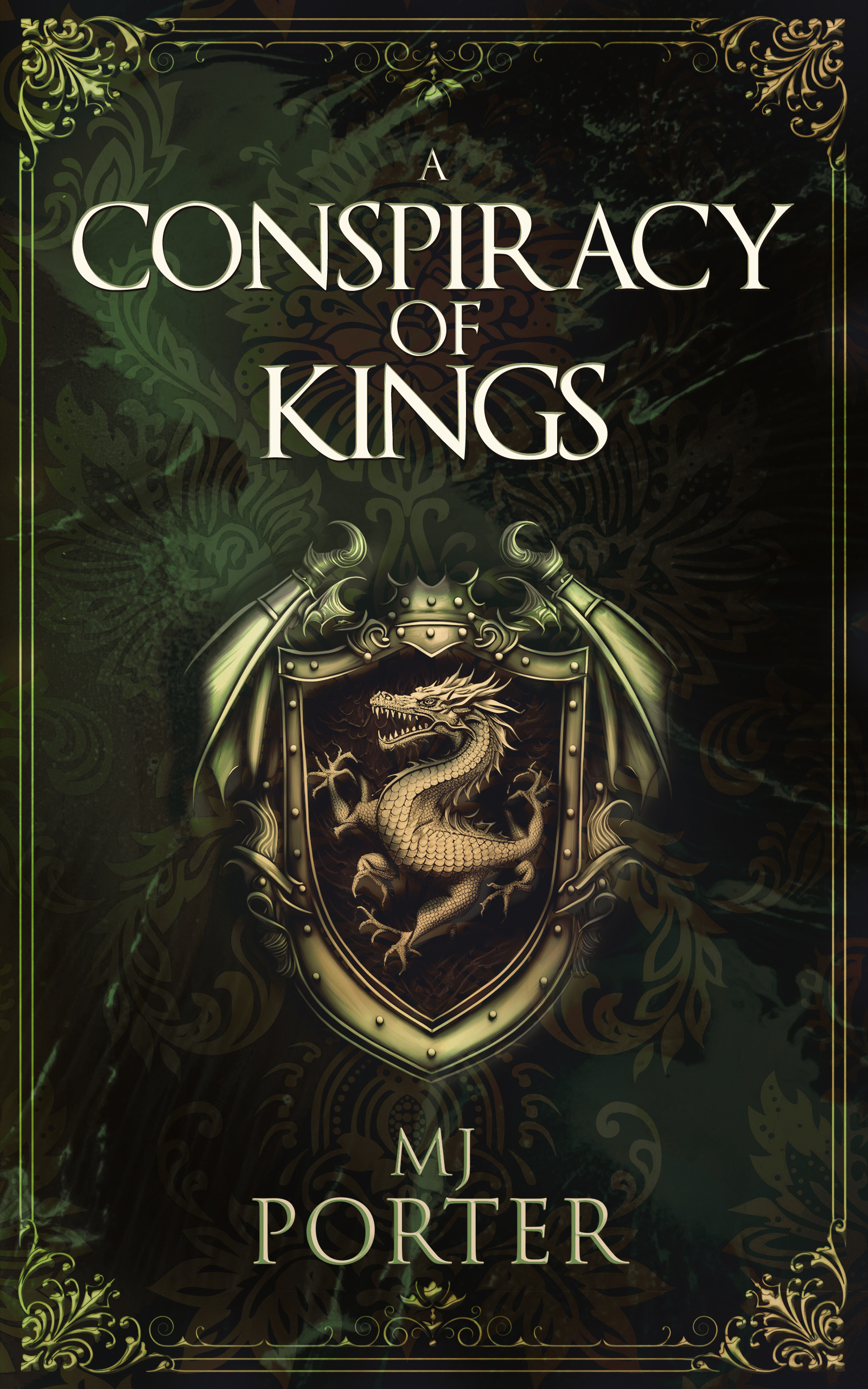
I’m reading the beginning of A Conspiracy of Kings #LadyÆlfwynn

I’m reading the beginning from A Conspiracy of Kings. Hopefully, you’ll enjoy listening below. Just click on the image. This does contain spoilers if you’ve not yet read book 1, The Lady of Mercia’s Daughter.

Find out who the historical Ælfwynn was here.

Buy A Conspiracy of Kings here.

(Also available with Kindle Unlimited.)

Posts

Who was the Lady of Mercia, Æthelflæd? #non-fiction #Mercia

Who was Lady Æthelflæd, and what do we know about her from the contemporary sources?

Æthelflæd,[i] said to be the oldest of the children of King Alfred, and his wife, Lady Eahlswith, was born around 866, the exact details are unknown, although the date of her death is well attested as 12 June 918.[ii]

She was married to Lord Æthelred of the Mercians at some point during the 880s, although an exact date cannot be given. The first mention of this union occurs in a charter dated to 887,[iii] although the date may not be reliable. There is also little information about who Lord Æthelred might have been, and his subsequent military successes should not be dismissed, as they often are. Lord Æthelred is assumed to have been a nobleman from Mercia, and one with enough of a reputation to secure the marriage alliance with the Wessex royal family (and it must be assumed, unrelated to her mother’s birth family, and also her father’s family through his sister’s union to Burgred). 

Their marriage was a success, and yet there was only one child, a daughter, Ælfwynn, born to the union, perhaps quite soon after the marriage occurred.

During her lifetime, Æthelflæd’s name appears on fifteen surviving charters. These are a real collection, some promulgated by her father, her brother, her husband and then, in her name alone. The earliest to feature her name is S223 dated to 884×9, so between 884 and 889, which survives in two manuscripts, and discussed the building of the burh at Worcester.  In her final charters, she’s the sole promulgator, her husband no doubt having already died. It is believed he died in 911. S224 and S225 date to 914 and 915. S225 names Æthelflæd as the ruler of Mercia, something which The Anglo-Saxon Chronicle mirrors in some versions. 

In 912, the C text records, ‘Here, on the eve of the Invention of the Holy Cross, Æthelflæd, Lady of the Mercians came to Scergeat and built a stronghold there, and the same year, that at Bridgnorth.’[xxvii]

In 913, the C text further records, ‘Here, God helping, Æthelflæd, Lady of the Mercians, went with all the Mercians to Tamworth, and then built the stronghold there early in the summer, and afterwards before Lammas that at Stafford.’[xxviii]

In 917, the C text writes, ‘Here, before Lammas, God helping, Æthelflæd, Lady of the Mercians took possession of the stronghold which is called Derby, together with all that belonged to it.’[xxxi]

Æthelflæd’s death is recorded in the A and C editions of the Anglo-Saxon Chronicle and also in the E version of the Anglo-Saxon Chronicle, even if only in passing. ‘Here Æthelflæd, Lady of the Mercians, passed away.’[xxxii]

A text states: ‘and then when he (Edward) was settled in the seat there, his sister Æthelflæd at Tamworth, died 12 days before midsummer … and all the nation of the land of Mercia which was earlier subject to Æthelflæd turned to him.’

The C text of 918 offers:

Here in the early part of this year, with God’s help, she [Æthelflæd] peaceably got in her control the stronghold at Leicester and the most part of the raiding-armies that belonged to it were subjected. And also the York-folk had promised her – and some of them granted so by pledge, some confirmed with oaths – that they would be at her disposition. But very quickly after they had done that, she departed, twelve days before midsummer, inside Tamworth, the eighth year that she held control of Mercia, with rightful lordship; and her body lies inside Gloucester in the east side-chapel of St Peter’s Church.[xxxiii]

It seems highly probable that Æthelflæd’s death, when it came, was unexpected, occurring in the middle of an advance into the Danelaw and the Five Boroughs (Derby, Nottingham, Lincoln, Stamford, Leicester). It was left to her daughter, and also her brother, to continue her work, and you can read their story in The Lady of Mercia’s Daughter and A Conspiracy of Kings.

Or you can read about the historical women in my non-fiction title, The Royal Women Who Made England.


You can can read all about her daughter, the historical Ælfwynn here.

https://amzn.to/3JnZoDC

[i] PASE Æthelflæd (4)

[ii] Swanton, M. ed. and trans. The Anglo-Saxon Chronicles, (Orion Publishing Group, 2000), AD 918

[iii] S217, surviving in two manuscripts

[xviii] Baker, N. and Holt, R. ‘The city of Worcester in the tenth century’, in St Oswald of Worcester: Life and InfluenceBrooks, N. and Cubitt, C. ed, (Leicester University Press, 1996), pp.134–5

[xix] Sawyer, P.H. (ed.), Anglo-Saxon charters: An annotated list and bibliography, rev. Kelly, S.E., Rushforth, R., (2022). http://www.esawyer.org.uk/, S1446

[xxi] Sawyer, P.H. (ed.), Anglo-Saxon charters: An annotated list and bibliography, rev. Kelly, S.E., Rushforth, R., (2022). http://www.esawyer.org.uk/, S1282

[xxii] Hart, C.R. The Early Charters of Northern England and the North Midlands (Leicester University Press, 1975), p.102 (100)

[xxvi] Swanton, M. ed. and trans. The Anglo-Saxon Chronicles, (Orion Publishing Group, 2000) Ibid., p.94

[xxvii] Ibid., p.96

[xxviii] Ibid., p.96

[xxix] Ibid., p.97

[xxx] Ibid., p.100

[xxxi] Ibid., p.101

[xxxii] Ibid., p.103

[xxxiii] Ibid., p.105

[xxxv] See Stafford, P. After Alfred. Anglo-Saxon Chronicles and Chroniclers 900–1150, (Oxford University Press, 2020), for a full discussion of the Æthelflæd and Edward Chronicles.

Posts

I’m delighted to be sharing an excerpt from Victoria Atamian Waterman’s new novel, Who She Left Behind. HistoricalFiction #ArmenianFiction #WomensFiction #WhoSheLeftBehind #BlogTour #TheCoffeePotBookClub 

I’m delighted to be sharing an excerpt from Victoria Atamian Waterman’s new novel, Who She Left Behind.

“Marta tells me your needlelace is very lovely, and you’re a good teacher.”

“Thank you, Miss Jeppe,” Victoria said. 

“It’s important to me that my girls leave here with dignity, knowing their value and confident in their abilities.” 

Victoria nodded. 

“It’s not enough to churn out girls who can work a loom or stitch a hem, you see. Your people, your culture, they must be preserved even as you scatter into the world. We send girls back to their families when we can. We find them marriages, but most of all we give them the gift of self-sufficiency.”

“It’s a great gift,” Victoria said. “It’s a terrible thing to feel powerless.”

Miss Jeppe dipped her chin in acknowledgment. “Authenticity and quality,” Miss Jeppe continued. “These make your products desirable, they command the best prices in the market. Fine lace and beautiful weavings bring your beautiful history to the eyes of the world and ensure your people aren’t forgotten.” 

Victoria nodded again, unsure why she was singled out for this conversation. It was a speech Miss Jeppe and her volunteers made often. “Marta tells me you want to help us with our work.”

“Yes, I do.”

Victoria’s pulse skipped. This was why.

Here’s the blurb

Who She Left Behind” is a captivating historical fiction novel that spans generations and delves into the emotional lives of its characters. Set in various time periods, from the declining days of the Ottoman Empire in Turkey in 1915 to the Armenian neighborhoods of Rhode Island and Massachusetts in the 1990s, the novel completely immerses its reader in a lesser-known era and the untold stories of the brave and resilient women who became the pillars of reconstructed communities after the Armenian Genocide.

It is a story of survival, motherhood, love, and redemption based on the recounted stories from the author’s own family history. The narrative is framed by a mysterious discovery made almost six decades later of a pair of Armenian dolls left at a gravesite.  

Buy Links

Universal links: 

Hardcover:       Ebook

Other links: 

Amazon UKAmazon USAmazon CAAmazon AU

Barnes and NobleKoboHistorium Press

Meet the author

Victoria Atamian Waterman is an Armenian American storyteller and speaker who draws inspiration from the quirky multigenerational, multilingual home in which she was raised with her grandparents, survivors of the Armenian Genocide.

Her empowerment of today’s women and girls makes her voice ideal for telling the little-known stories of yesterday’s women leaders. Her TED Talk, “Today’s Girls are Tomorrow’s Leaders” has been seen by thousands of viewers. When she is not writing and speaking, she is reading, puzzle-making and volunteering.

Victoria lives in Rhode Island and is enjoying this next chapter of life with her husband, children, and grandchildren. “Who She Left Behind” is her first novel. 

Connect with the author

WebsiteFacebookFacebook Author Page
LinkedInLinkedIn Author PageInstagram:  

Follow the Who She Left Behind blog tour with The Coffee Pot Book Club

I’m delighted to welcome Rebecca Rosenberg and The Champagne Widows to the blog today ChampagneHistory #FrenchHistory #ChampagneWidows #BlogTour #TheCoffeePotBookClub #CPBC

I’m delighted to welcome Rebecca Rosenberg and The Champagne Widows to the blog today.

Join in on Rebecca Rosenberg’s

TREASURE HUNT!

(or, digging for research nuggets that lead to Gold!)

Did you ever make a treasure hunt or hide eggs for children? I’ve done more hunts than I can possibly remember. But, everyday I find myself digging for treasure when I’m writing a novel. I’ll use examples from my novels to explain. 

Add your own examples below in comments! We’ll choose a lucky winner for a paperback of Madame Pommery, Creator of Brut Champagne!

  1. The Chatelaine: Have you seen a Chatelaine in a Museum? A Chatelaine, means “mistress of a castle”, and is a chain holding various and sundry household tools like sand timers, needles, thimbles, scissors, magnifying glass. Madame Pommery received a Châtelaine from her husband for her birthday, much like getting a mop or set of deluxe sponges. What does it say about their relationship and her life? 

Each novel has many “props” that speak volumes about a character. It can be a personal item like a locket, or a vanity mirror with a large crack in it, or a wine-tasting cup, like Veuve Clicquot received from her great-grandmother. I also consider transportation, the environment, where the character lives, and what she wears (or doesn’t wear, as in my upcoming novel, SILVER DOLLAR) All of these can be intriguing symbols of the character and her plight.

  • Curse or Gift? In Champagne Widows, Barbe Nicole-Clicquot is told she has Le Nez, the Nose, an extraordinary sense of smell that makes her a great wine maker. It also makes her particular, persnickety, and difficult. Her parents say Le Nez is a curse. Her grandmother says it is a gift that will change her life by making her an extraordinary wine maker.

Character traits form a character’s personality and also sets a course for her future. An ironic character trait makes for controversial and delectable conflict and soul-searching.

  • Unrequited Love: I write Biographical Historical Fiction about real women who lived in our past. Inevitably there’s a love that did not work out. These are gold nuggets! Why didn’t they work out? Who was hurt? What are the consequences? Could they ever get together? And if not, how do they feel about it? All of these aspects of unrequited love add such emotion to a story. 

In Madame Pommery, Creator of Brut Champagne, she hires a young intern, fifteen years younger than her, and his intelligence and helpfulness make her slowly fall in love with him, though it is quite inappropriate. She cannot marry him, or by law he’d own Pommery Champagne House. Ah, unrequited love.

  • Family squabbles: Families are usually an unresolved dilemma. Madame Pommery has trouble with her son who wants to run the champagne house without knowing what to do. She has trouble with her daughter because the toddler is always underfoot. Her mother is cold and unloving. Ouch! Family differences make good reading, especially when they create havoc for the protagonist. To research information about these family squabbles, I look at the available facts and extrapolate what they could mean. For example, Madame Pommery’s son is 17 when she starts the winery, and he doesn’t join the business for 5 years. Even then, he was not given an important position. And, when Madame Pommery dies, she makes her assistant the head of Pommery, not her son.  Those facts add up to a gold nugget for the story.
  • Friend or Foe? Who can you trust? Who has an ulterior motive? In research, I look for clues about who were Madame Pommery’s business associates, friends, and foes. Then, I look for ways that their relationships can change during the book. For example, Madame Pommery’s banker helps her when her husband dies, but his ulterior motive is that he wants to be her partner.
  • Habits and Hobbies. I love to research quirky habits and hobbies characters can have. In Champagne Widows, Barbe-Nicole Clicquot’s father has a secret room that he works on constantly, because he doesn’t have the money to hire it done.  Barbe-Nicole’s mother loves outrageous fashion and falls deathly ill from the arsenic dye. Both of these are facts that I researched about those real people!
  • Trials & Tribulations. What are the events of history that affect the characters? For example, in GOLD DIGGER, the Remarkable Baby Doe Tabor is about the Gold and Silver Rush in the nineteenth century, women’s right to vote, and the politics of the day, the Chinese workers imported to build the railroads and mines, then they were hated and killed. All these aspects add texture and context to the story. To research this information, I use libraries, buy books, internet searches, interview historians. 
  • Location, Location, Location! I visit the towns or area I’m writing about and visit every home, winery, mine and theater in search of clues about the person I am writing about so I can breathe life into them on the page.
  • Skeletons: Everyone has skeletons in their closets, and if you can’t find them for your character, you didn’t look hard enough. The Skeleton can be a human condition like: mental illness, poverty, alcoholism. Or it can be a horrible wound the character suffered, like rape, or losing a child or an affair gone terribly wrong. Character skeletons need to be found and written on the page to make characters feel, hurt, and heal, or not.
  1. She said What? Since I write about real people, I search for real quotes, letters and stories about them to use in building her character. Madame Pommery’s quote informed the entire book, setting the stage from where she came, what she wanted and why, and what her success would look like.
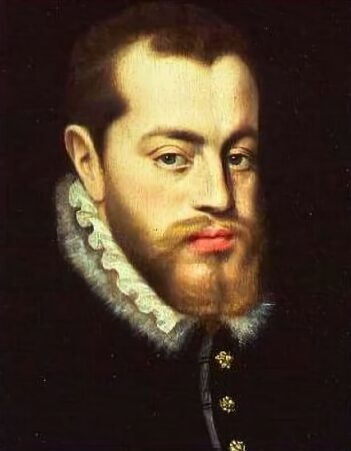
“Inevitably, I find myself in a predicament where the rules do not apply, or worse, they contradict each other.”  ~Jeanne Alexandrine Pommery

~Rebecca Rosenberg, #1 Amazon Best Seller, Madame Pommery, Creator of Brut Champagne

Here’s the blurbs

EDITORS CHOICE HISTORICAL NOVEL SOCIETY

“A-Tour-de-Force” Publisher’s Weekly BookLife Prize

MADAME POMMERY, Creator of Brut Champagne

“A tour-de-force of historical fiction, Madame Pommery is a deeply fascinating work that blends true-to-life details with artfully crafted elements.” –Publishers Weekly BookLife Prize

Madame Pommery is a story of a woman’s indomitable spirit in the face of insurmountable odds. Set in Champagne, France in 1860, Madame Pommery is a forty-year-old widow and etiquette teacher whose husband has passed away. Now she must find a way to support her family. With no experience, she decides to make champagne, but no champagne makers will teach her their craft. Undeterred, Madame Pommery begins to secretly excavate champagne caves under the Reims city dump and faces numerous obstacles to achieve her dream. From the Franco-Prussian war that conscripts her son and crew to the Prussian General Frederick Franz occupying her home, Madame Pommery perseveres. She even must choose between her champagne dreams and a marriage proposal from her former lover, a Scottish Baron. Inspired by a true story, Madame Pommery is a heroic tale of a woman’s strength and determination to create a champagne legacy. If you enjoyed the novel Sarah’s Key, you will enjoy Madame Pommery. 

~~

CHAMPAGNE WIDOWS, the First Woman of Champagne

EDITORS CHOICE HISTORICAL NOVEL SOCIETY This engrossing historical novel by Rebecca Rosenberg follows Veuve Clicquot, a strong-minded woman determined to defy the Napoleon Code and become a master champagne maker. In 1800 France, twenty-year-old Barbe-Nicole inherits her great-grandfather’s uncanny sense of smell and uses it to make great champagne, despite the Code prohibiting women from owning a business. When tragedy strikes and she becomes a Veuve (widow), she must grapple with a domineering partner, the complexities of making champagne, and the aftermath of six Napoleon wars. When she falls in love with her sales manager, Louis Bohne, she must choose between losing her winery to her husband to obey the Napoleon Code, or losing Louis. In the ultimate showdown, Veuve Clicquot defies Napoleon himself, risking prison and even death. If you enjoyed books like ‘The Widow of the South’ by Robert Hicks or ‘The Paris Seamstress’ by Natasha Lester, you’ll love ‘Veuve Clicquot’.

Buy Links:

These titles are available to read on #KindleUnlimited.

Madame Pommery

Champagne Widows:  

Champagne Widows Series Links:

Amazon UKAmazon USAmazon CAAmazon AU

Meet the author

Rebecca Rosenberg is an award-winning novelist, champagne geek, and lavender farmer. Rebecca first fell in love with methode champenoise in Sonoma Valley, California. Over decades of delicious research, she has explored the wine cellars of France, Spain, Italy, and California in search of fine champagne. When Rebecca discovered the real-life stories of the Champagne Widows of France, she knew she’d dedicate years to telling the stories of these remarkable women who made champagne the worldwide phenomenon it is today. 

Rebecca is a champagne historian, tour guide, and champagne cocktail expert for Breathless Wines. Other award-winning novels include The Secret Life of Mrs. London and Gold Digger, the Remarkable Baby Doe Tabor.

Connect with the author

WebsiteFacebookLinkedInInstagram

Book BubAmazon Author PageGoodreads

Follow the Champagne Widows blog tour with The Coffee Pot Book Club

Today, I’m delighted to be reviewing Warrior Prince by JC Duncan #blogtour #historicalfiction

Here’s the blurb

Prince. Mercenary. Exile. The lost throne of Norway must be won in foreign lands. 

1030 AD

Some men are gifted a crown. Others have to fight to claim it.

Exiled from Norway, Harald Sigurdsson, brother to murdered King Olaf, must battle mercilessly for survival in the lands of the Kievan Rus.

His brother’s legacy gifts him a warband of hardened warriors and entry to the court of Prince Yaroslav the Wise. By his wits, sword and skill in battle, Harald must learn not just to survive but to triumph.

He fights for glory, for fame, and to regain his family’s battle-stolen throne. But his greatest challenge may not come from battlefield foes but from those who stand by his side.

The first instalment in a remarkable story of an exiled boy’s incredible journey to become Harald Hardrada; The Hard Ruler and The Last Viking.

Purchase Link

https://mybook.to/warriorprincesocial

My Review

Harald Sigurdsson, who we know more often as Harald Hardrada, is a historical individual who is ‘on my radar’ as it were for my The Earls of Mercia series. So far, he’s only had the odd mention because I’m still 20 years from the events of 1066 at Stamford Bridge, but never fear, for JC Duncan is telling Harald’s story from the events that see his half-brother, Olaf, later St Olaf, cut down at the Battle of Stiklestad in 1030. 

Adopting a narrator style for the book, we see Harald trying to regroup after his brother’s defeat and murder. He seeks somewhere for him and what remains of his brother’s warriors to retreat to, and the tale is told through the eyes of the fictional Eric, who has seen it all and now, as an old man, wants to share his stories of Harald with an appreciative audience back in Norway. 

This is very much a story of Harald’s time in the lands of the Rus and the overwhelming odds he often faces in battle as he rises through the ranks to serve Prince Yaraslov. We also see him struggling with the clash of cultures – the more sophisticated and complex ideals of the Rus flummoxing a man more used to seeing warriors have a bloody good fight.

Harald quickly earns himself an enemy, one who bedevils him at various points throughout the story and who I’m sure will continue to do so as the young man tries to discover who he is while learning to command his warriors.

This is an epic tale, with elements burbling away in the background that will continue to develop in later books. Using a narrator enables the tale to skip over some of the more mundane aspects of Harald’s story, ensuring the reader is constantly faced with some new dilemma for Harald to surmount or fail. However, failure is never really an option. After all, he is a Hard-ruler, and many of his decisions may stun the reader as the body count increases.

JC Duncan’s Harald is indeed a hard man, unhappy making mistakes or being embarrassed, determined to build his reputation, even while bidding his time, determined that one day he’ll claim back his brother’s lost kingdom of Norway. He is perhaps too naïve and a little too sure of himself on occasion, and these very real character traits lend themselves to an engaging retelling. However, this isn’t a quick read. There’s much to absorb as you, alongside the character, embark on a very real journey to the land of the Rus and encounter their enemies and allies, the knowledge that our narrator still lives, the only hope for Harald’s success.

An engrossing tale of Harald Hardrada’s early years, brimming with historical detail and brave daring do. This is the story of a man who will become a legend, told lovingly through the eyes of one of his loyal followers and sure to delight readers.

Meet the author

J. C. Duncan is a well-reviewed historical fiction author and amateur bladesmith, with a passion for Vikings.

Connect with JC Duncan

Facebook: https://www.facebook.com/JCDuncanAuthor

Twitter: https://twitter.com/JCDuncanauthor

Instagram: https://www.instagram.com/j.c.duncan/?hl=enn   

Bookbub profile: https://www.bookbub.com/authors/j-c-duncan

I’m excited to share my review for Death on Board by Anita Davison, the first book in a new cosy historical mystery series #newrelease

Here’s the blurb

NEW YORK,1900: A captivating cozy crime novel set on-board the maiden voyage of the S.S. Minneapolis, featuring series character Flora Maguire. Perfect for fans of Downton Abbey.

Young governess Flora Maguire is on her way home from America on the maiden voyage of the S.S. Minneapolis with her young charge Eddy, Viscount Trent, when she discovers a dead body.

Unconvinced when the death is pronounced an accident, Flora starts asking questions, but following threats, a near drowning and a second murder, the hunt is on for a killer. Time is running out as the Minneapolis approaches the English coast.

Will Flora be able to protect Eddy, as well as herself?

Is her burgeoning relationship with the handsome Bunny Harrington only a shipboard dalliance, or something more? And what secrets must Flora keep in order to stay safe?

Purchase Link

https://amzn.to/3PMHqui

My Review

Death on Board is a historical mystery set onboard a transatlantic crossing in the year 1900.

Our main character, Flora, is a governess escorting her young charge home to begin school. Unsure of herself, as her employer has purchased her a First Class ticket, Flora avoids meeting many of them until the unexpected death of a member of her table, whose body she’s unfortunate to discover early one morning.

What ensues is a twisted tale of secrets and half-truths as Flora finds herself drawn into the reason behind the man’s death, proclaimed as an accident, but which Flora sees in a very different light. She mingles with all those on board, from the snooty upper-class dam and her companion to the actress seeking a new life in England, as well as the handsome Bunny, and his motorcar, Matilda, as she attempts to get to the bottom of the mystery surrounding the murder.

Death on Board is stuffed with period details, and the mystery itself is well-constructed, with a very satisfying resolution. Fiona is a fantastic creation, as is Bunny, and while I’m not unconvinced they wouldn’t have sunk the ship with the quantity of tea consumed, I thoroughly enjoyed it, and look forward to reading more of the series.

I’m delighted to welcome Joan Fallon and her new book, The Winds of Change, to the blog historicalfiction #adventure #Andalusia #SpanishCivilWar #BlogTour #TheCoffeePotBookClub

Here’s the blurb

The Winds of Change is a story of love, loyalty and betrayal on the eve of the Spanish Civil War, when the country is political turmoil with strikes and demonstrations, unemployment is high and the people are starving. 

In this complicated love triangle we meet Ramon, a member of the Republican Left, who has accidentally killed a policeman and is on the run from the Guardia Civil and Hugo, the son of the wealthy owner of a local sherry bodega. Both men are in love with Clementina, the beautiful daughter of a well-known gypsy horse trader but there are obstacles in both their paths.

Hugo finds that when he tries to see Clementina again, both his parents and hers do everything they can to stop him.

Meanwhile Ramon’s brother, Pedro, is arrested and imprisoned because he will not reveal his brother’s whereabouts to the Guardia Civil. Now Ramon has to choose between his brother and the woman he loves.

This fast moving historical novel is a story of love, politics, class prejudice, intrigue and betrayal in the year leading up to the Spanish Civil War.

Buy Links:

This title is available to read on #KindleUnlimited.

Universal Link:    

Amazon UK:    Amazon USAmazon AUAmazon CA

Meet the author

Teacher, management trainer and business woman, the Scottish-born novelist, Joan Fallon moved from the UK to Spain in 1998 and dedicated herself to full-time writing. She is now the self-published author of eighteen books, many of which are historical novels set in southern Spain, and focus on two distinct periods in the country’s history, the Spanish Civil War and Moorish Spain. 

More recently she had turned her attention to writing contemporary crime fiction, with a series of novels entitled The Jacaranda Dunne Mysteries but her love of historical fiction has lured her back to writing about Spain in the 20th century in her latest novel The Winds of Change.

Connect with the author

WebsiteFacebookLinkedIn

InstagramAmazon Author PageGoodreads

Follow The Winds of Change by Joan Fallon blog tour with The Coffee Pot Book Club