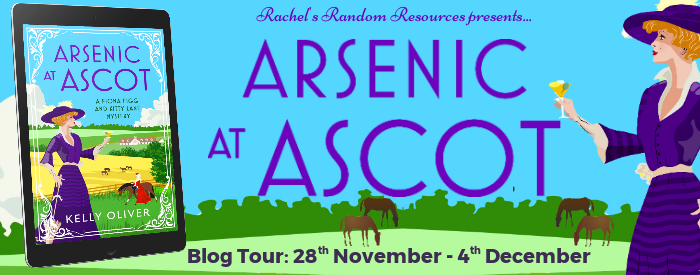
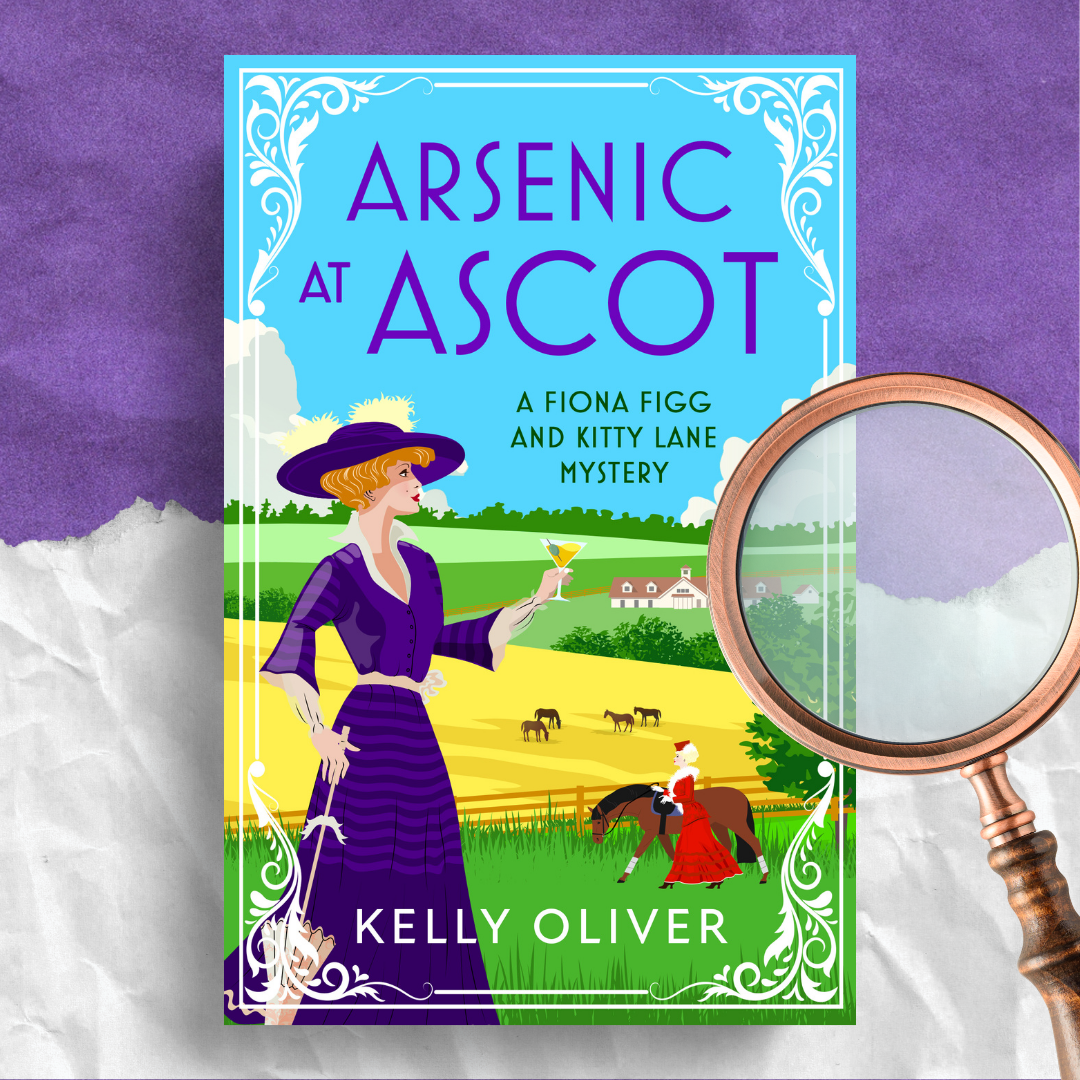
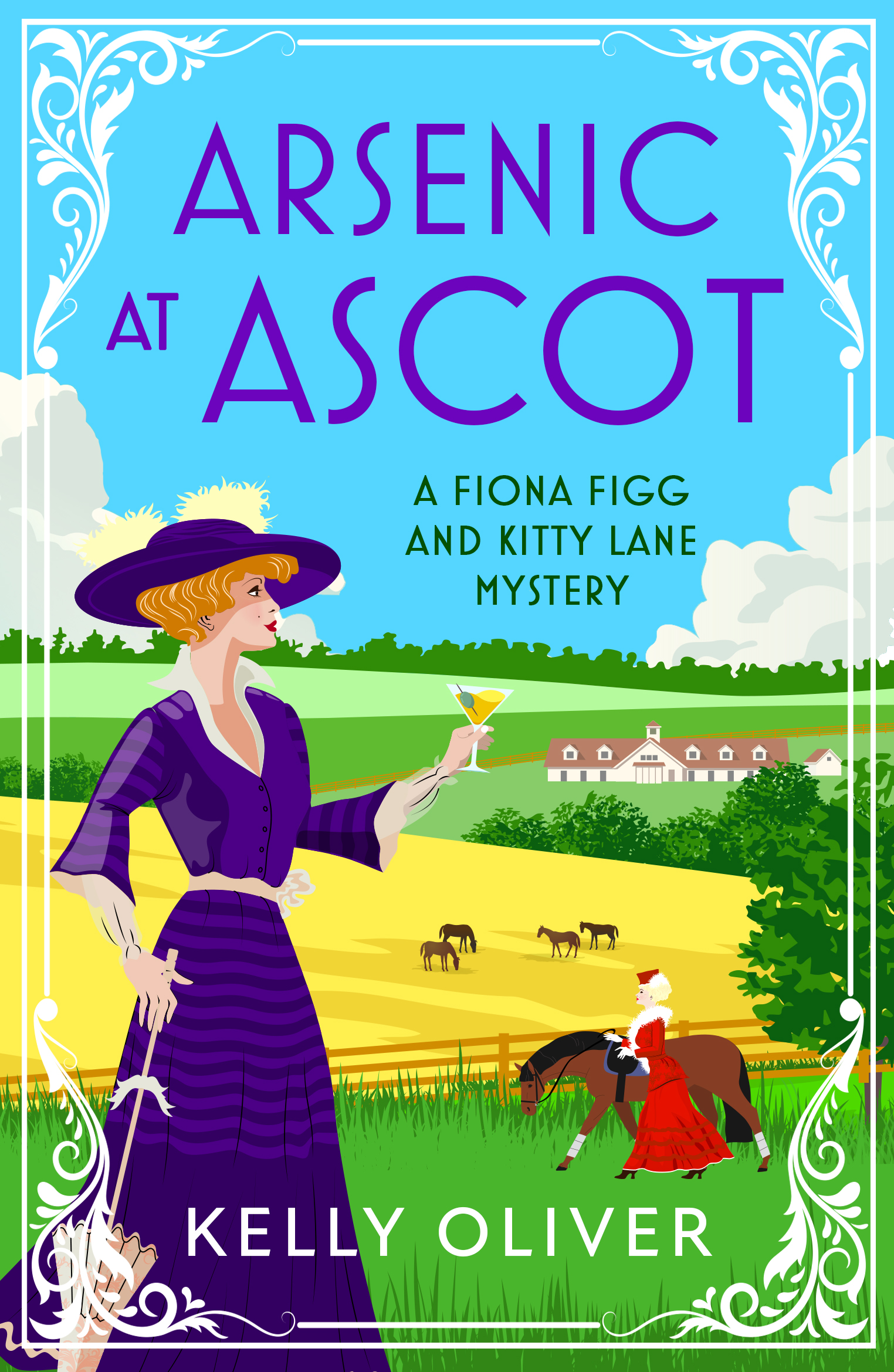
Today I’m delighted to be taking part in the blog tour for new historical mystery, Arsenic at Ascot by Kelly Oliver #blogtour #BoldwoodBooks

Here’s the blurb:

Saddle up for this first class historical mystery, perfect for fans of Helena Dixon and Verity Bright.

London, 1918

Fiona Figg finds herself back in Old Blighty saddled with shuffling papers for the war office. Then a mysterious card arrives, inviting her to a fancy house party at Mentmore Castle. This year’s Ascot-themed do will play host to a stable of animal defense advocates, and Fiona is tasked with infiltrating the activists and uncovering possible anti-war activity.

Disguised as the Lady Tabitha Kenworthy, Fiona is more than ready for the “mane” event, but the odds are against her when both her arch nemesis, dark-horse Fredrick Fredricks, and would-be fiancé Lieutenant Archie Somersby arrive unexpectedly and “stirrup” her plans. And when a horse doctor thuds to the floor in the next guest room, Fiona finds herself investigating a mysterious poisoning with some very hairy clues.

Can Fiona overcome the hurdles and solve both cases, or will she be pipped to the post and put out to pasture by the killer?

Purchase Link

https://mybook.to/arsenicascotsocial

My Review

This is the fourth book in the Fiona Figg and Kitty Lane Mystery Books I’ve read. I confess, what I really enjoyed about book 3, Mayhem in the Mountains, was Fiona’s lack of dressing up in costume and, therefore, no mention of her favourite fake moustache. So I was somewhat alarmed when, only a few chapters in, Fiona was once more masquerading in one of her many costumes. However, I needn’t have feared. Kitty has not forgotten about her costumes, and she certainly puts them to good use in Arsenic at Ascot, but much of the time, Fiona is either herself or Lady Tabitha. Not that I object to her masquerading, but I’d much rather hear about her favourite wig than her suitcase full of fake moustaches and beards.

Fiona has been grounded in Arsenic at Ascot. Somewhat depressed and out of sorts at finding herself once more a ‘mere’ file clerk, all is doom and gloom and complaints about washing up after the codebreakers when she’s summoned by none other than her boss and told to don one of her many costumes. What ensues is a, at times, somewhat uncomfortable look at the world of vivisectionists and antivivisectionists and the use animals were put to during the war. As Fiona has no clear idea about what she thinks about either side of the argument, the exploration into what we now think of as animal cruelty is somewhat distressing, although it’s never laboured. And readers will be quite astounded at some of the experiments, which, according to the end notes, are based on natural experiments of the time.

While all this is happening, Fiona is once more caught in the love triangle between Archie and Frederick Fredericks and has a hole to climb out of with Archie, thanks to Kitty Lane. It will not stop her from solving who killed the latest body she’s found at a country estate.

As with the Fiona Figg and Kitty Lane books, the mysteries and conspiracies are well thought out, and the conclusion is satisfying. I also enjoy knowing this is not the last of the series, as book 5 gets a great set-up in the final chapters.

If you enjoy historical mysteries with a dash of humour and a little frisson of romance, then the Fiona Figg and Kitty Lane books are sure to appeal to you, with their knowledge of the ‘of their time’ investigative techniques, all combined with the intrigue of our spies, Archie and Fredericks and dotted with either real historical characters or creations based on them—a delightful mystery.

Check out my review for books 1, 2 and 3 in the Fiona Figg and Kitty Lane Mystery books Chaos at Carnegie Hall, Covert in Cairo and Mayhem in the Mountains.

Meet the Author

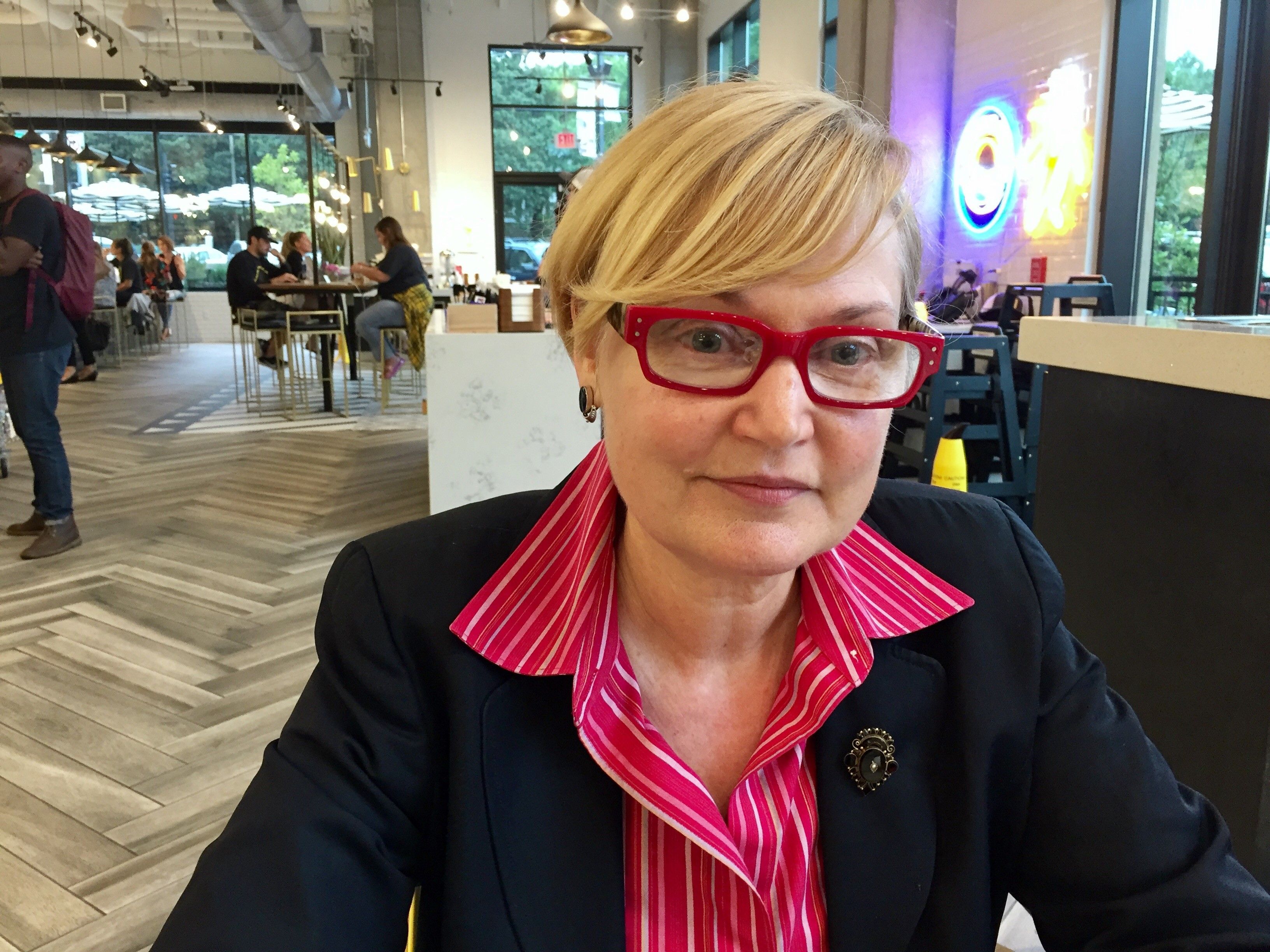
Kelly Oliver is the award-winning, bestselling author of three mysteries series: The Jessica James Mysteries, The Pet Detective Mysteries, and the historical cozies The Fiona Figg Mysteries, set in WW1. She is also the Distinguished Professor of Philosophy at Vanderbilt University and lives in Nashville, Tennessee.

Connect with Kelly

Facebook: https://www.facebook.com/kellyoliverauthor  

Twitter: https://twitter.com/kellyoliverbook  

Bookbub profile: https://www.bookbub.com/authors/kelly-oliver

Newsletter Sign Up: https://bit.ly/KellyOlivernews

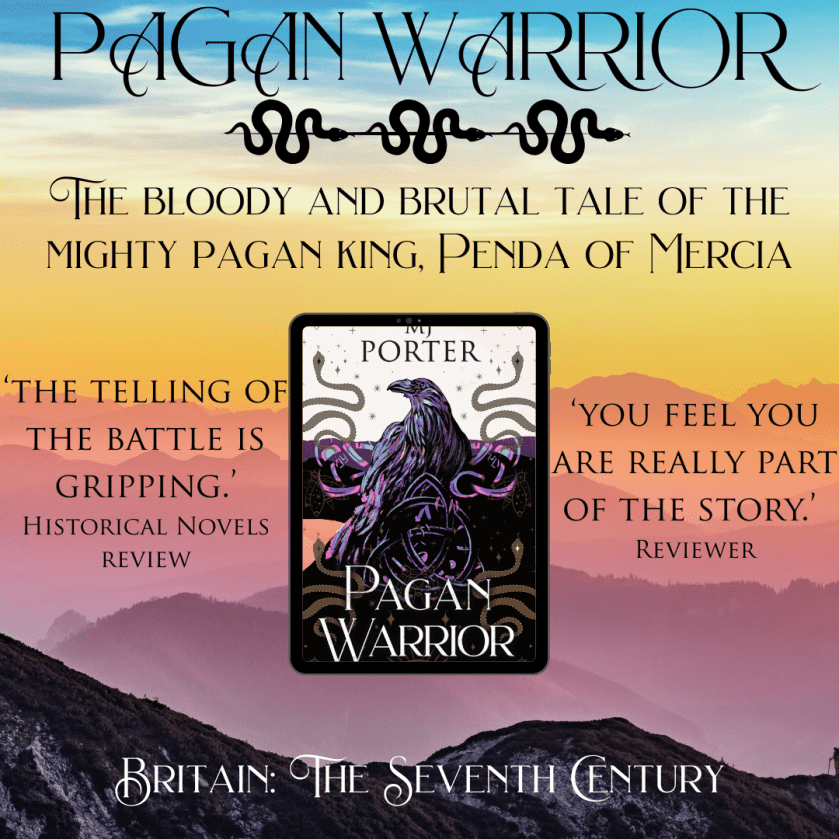
I’m sharing a post about Britain in the Seventh Century, the setting for #PaganWarrior, the first book in the #GodsAndKings trilogy #histfic #PendaThePagan

Here’s the blurb

Britain. AD632.

Penda, a warrior of immense renown, has much to prove if he is to rule the Mercian kingdom of his dead father and prevent the neighbouring king of Northumbria from claiming it.

Unexpectedly allying with the British kings, Penda races to battle the alliance of the Northumbrian king, unsure if his brother stands with him or against him as they seek battle glory for themselves, and the right to rule gained through bloody conquest.

There will be a victor and a bloody loser, and a king will rise from the ashes of the great and terrible battle of Hædfeld.

books2read.com/PaganWarrior

Britain in the Seventh Century – a patchwork of kingdoms

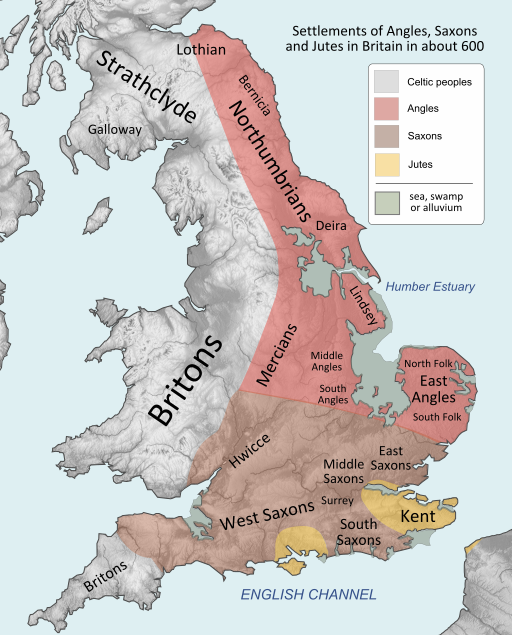
One of the hardest processes when writing about this very early period of Britain is to get an idea of what the kingdoms might have looked like and to explain this to the reader. The seventh century is often seen as the period when the Heptarchy, the seven very well-known kingdoms of the Saxon period, emerged and formed, ultimately derived from potentially very many much smaller kingdoms, the names of which are only rarely still known.

The Heptarchy consisted of the kingdoms of Northumbria (itself derived from the uniting of Deira and Bernicia), Mercia, the kingdom of the East Angles, Wessex, Sussex, Kent, and Essex. In later centuries, these kingdoms would merge until only four main kingdoms remained, and then, from the early middle of the tenth century, England emerged. But the battle of Hædfeld with which Pagan Warrior concludes was a British-wide battle set as this process was formalising in the seventh century, and there are yet more kingdoms that must be mentioned which didn’t form part of Saxon England.

Scotland didn’t yet exist, but Dal Riata, Pictland and Alt Clut (sometimes called Strathclyde) did. Wales didn’t exist, although the kingdoms of Gwynedd, Deheubarth, Ceredigion and Powys did, The kingdom of Dumnonia (modern-day Cornwall), was also in existence and very much not part of Saxon England. Indeed, these kingdoms are often termed British, as opposed to Saxon. As someone woeful at geography – I purposefully don’t adopt the names of places from this period because it confuses me – I’m only too well aware of how much I’m asking from my reader as it is without adding weird place names to already strange sounding personal names, and yet it was necessary to add a whole host of strange names, which often, have no relation to the current names of counties, let alone kingdoms.

All of these different kingdoms, we’re told, were involved in some way in the battle of Hædfeld. Some of the kingdoms joined the alliance, spear-headed by Cadwallon of Gwynedd, Edwin’s foster-brother. Others joined that of Edwin of Northumbria. Almost all of them took one side or another in the mighty battle of Hædfeld fought in 632 or 633 (there is some confusion about the exact date) between the two sides. To ensure my readers have some idea of who’s who, I’ve termed all of the character’s as being ‘of’ their kingdom, although I’m unsure if that’s actually how they might have been named.

I was surprised by how many individuals could be named from the seventh century, particularly for the build-up to the battle of Hædfeld. The cast is not Game of Thrones huge, but it was larger than I expected. Not just Penda of the Hwicce, only later could he be termed of Mercia, and Cadwallon of Gwynedd in the British ‘alliance’, but also Cloten of Deheubarth, Clydog of Ceredigion, Eiludd of Powys, Clemen of Dumnonia, Domnall Brecc of Dal Riata, Beli of Alt Clut and Eanfrith of Bernicia. While on the Northumbrian led alliance were Edwin of Northumbria, alongside his children, Osfrith and Eadfrith, as well as Eowa of the Hwicce, Osric of Deira – Edwin’s cousin, Cynegils of Wessex, Sigeberht of the East Angles and Oswald of Bernicia – Edwin’s nephew. At least, that’s how I stack the two sides as the battle is about to commence. In later periods, it is sometimes a struggle to find who was king of where and when that might have been, so to find so many characters, even if it can seem a little overwhelming, was fantastic and ensured that the British-wide battle of Hædfeld could be retold in Pagan Warrior with a nod to each of these kings, and the part they might, or might not, have played in the events that played out on that fateful day in October 632 or 633. 

Map of Britain in the 600s, User:Hel-hama, CC BY-SA 3.0 <http://creativecommons.org/licenses/by-sa/3.0/&gt;, via Wikimedia Commons


Posts

Who were the family of Lady Estrid? #HistFic #non-fiction

Lady Estrid was born into a large and illustrious family with far-reaching influence over Denmark, Sweden, Norway and England.

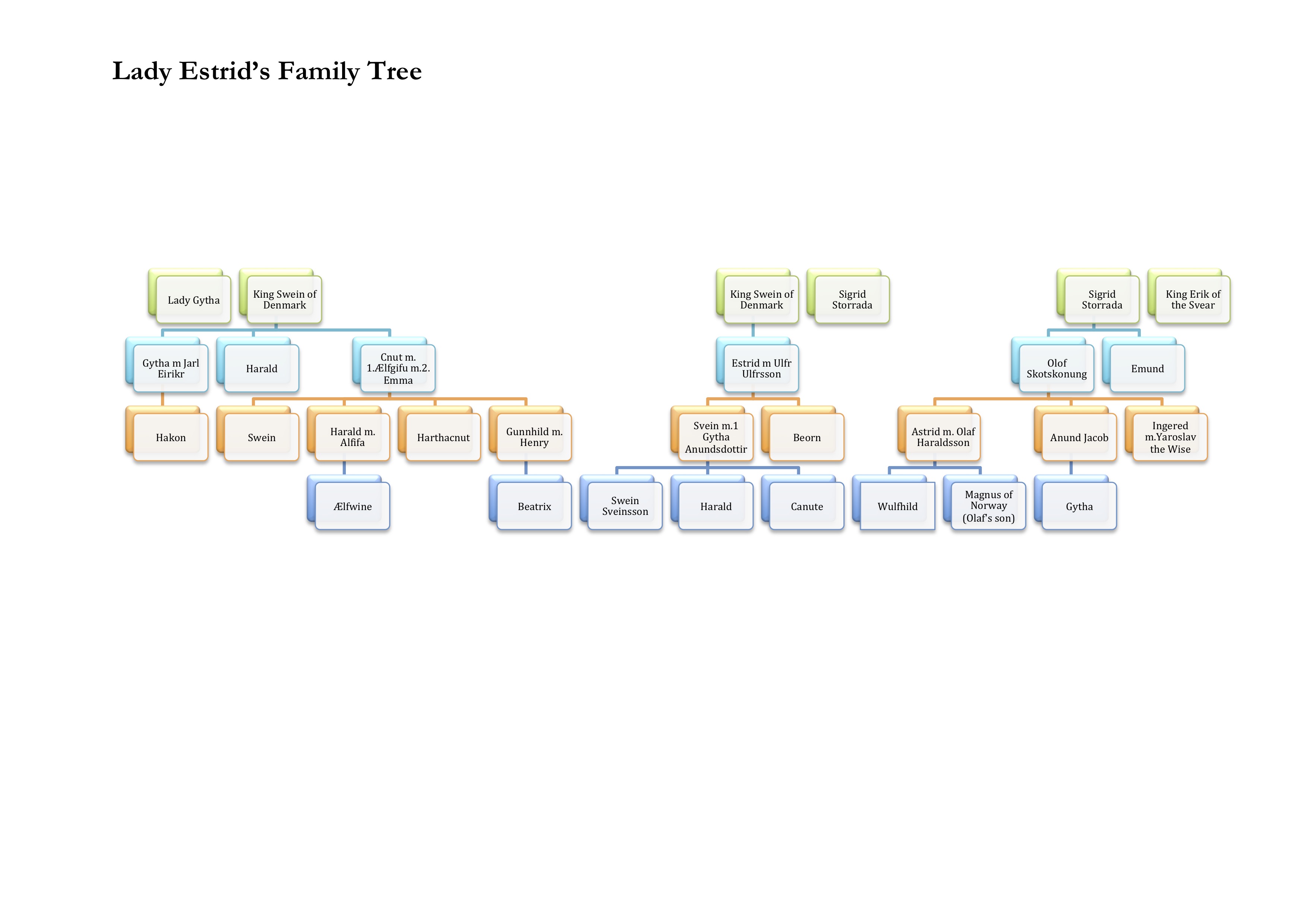
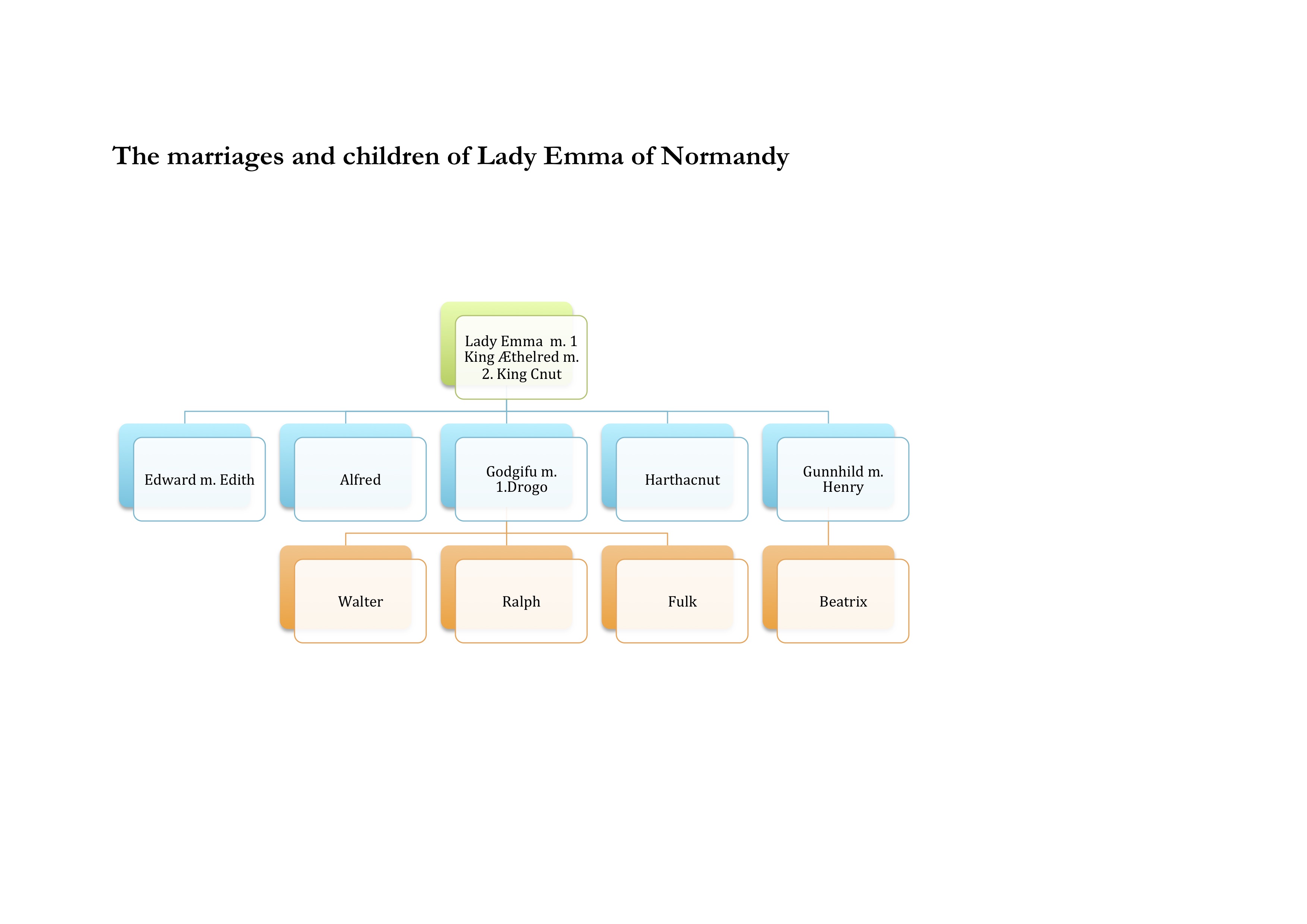
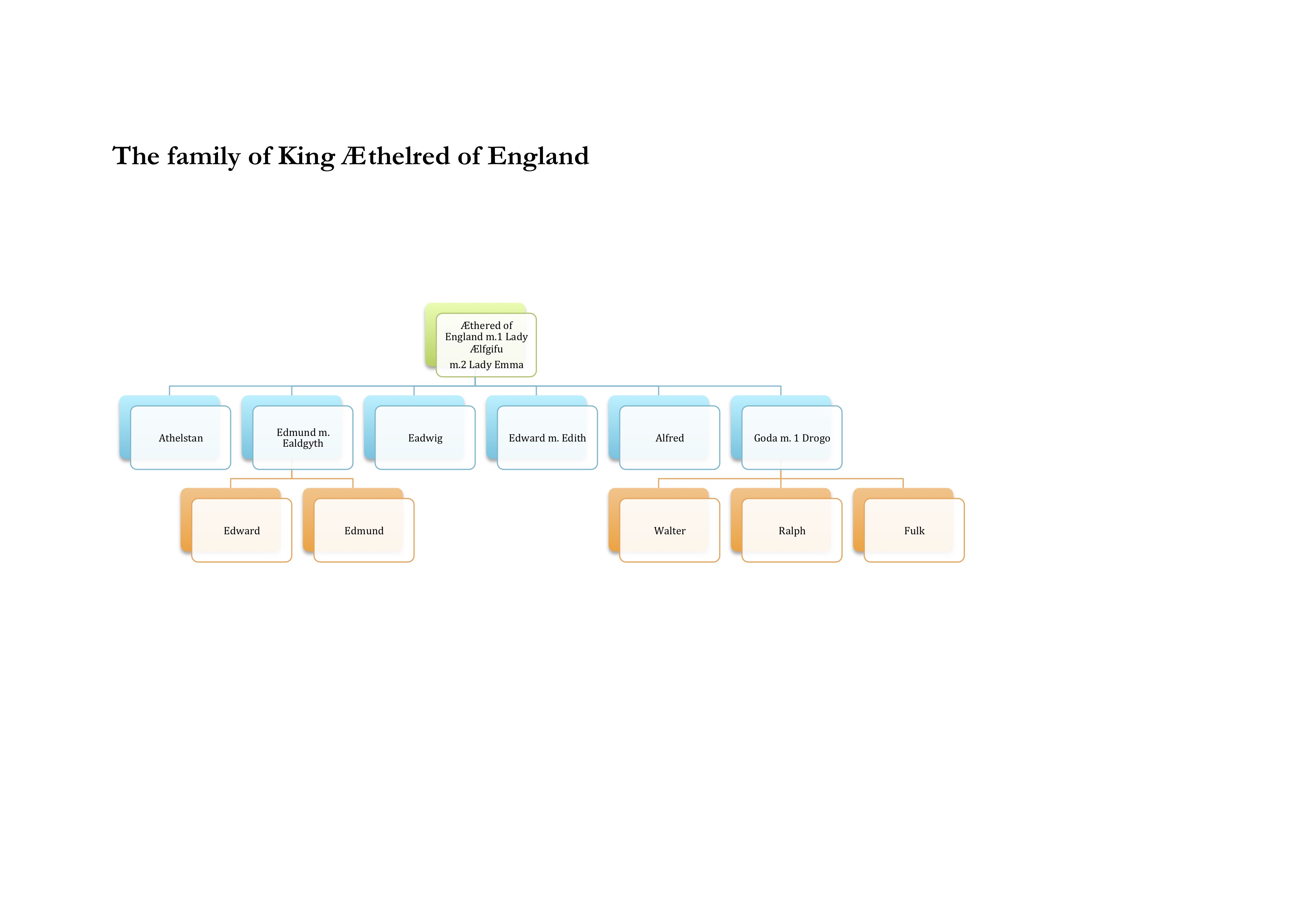
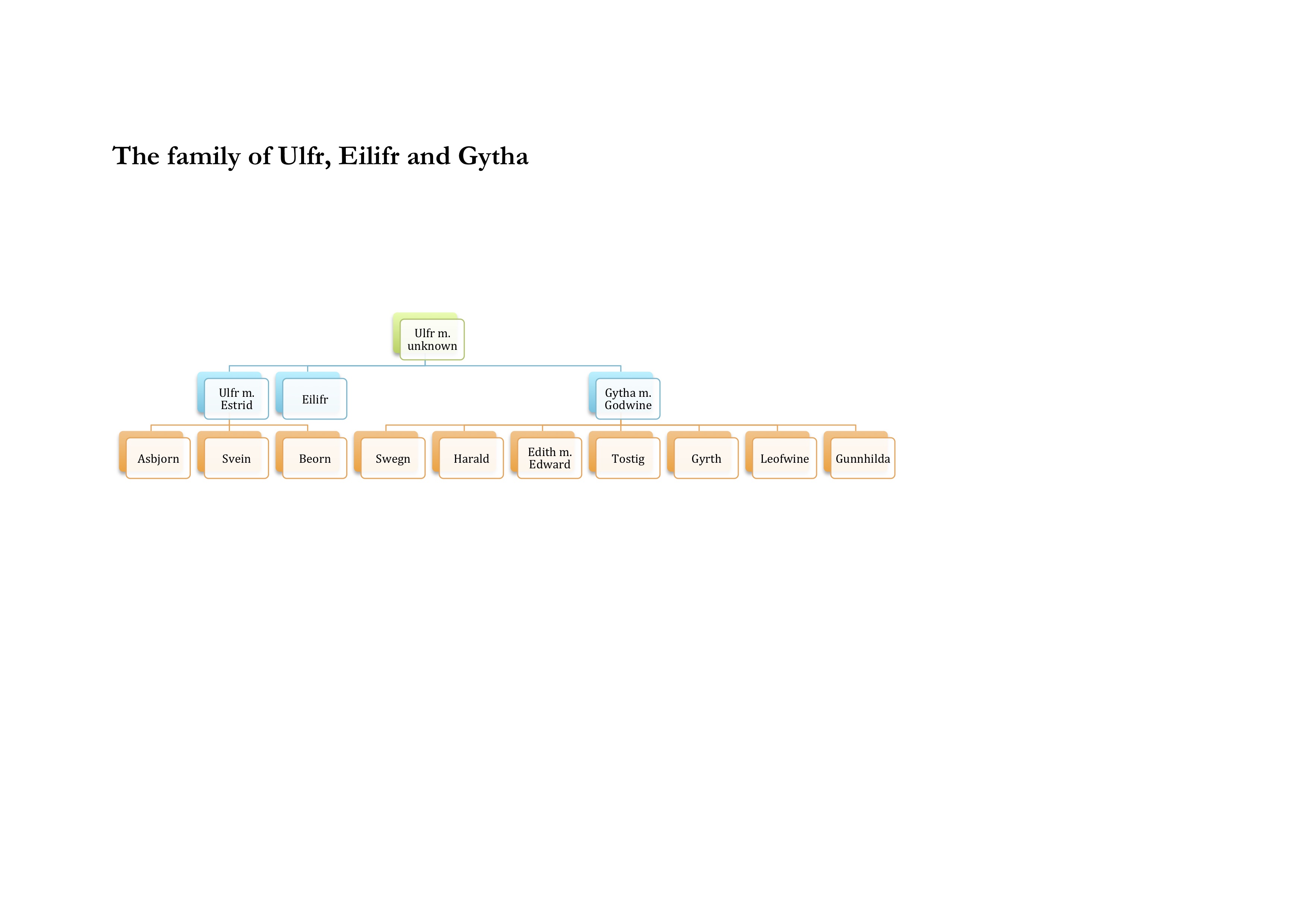
I’ve put together some genealogical tables of the main families to make easier to work out how everyone connected. (You can click on the images to make them bigger).

Due to a lack of information, I have made little mention of the rest of Estrid’s half-sisters, of which she had three or four. I feel it perhaps also helped the story a little – it was complicated enough as it was without giving them the capacity to meddle in affairs in Denmark.

To break it down into more palatable chunks, Lady Estrid’s mother was married twice, once to King Swein of Denmark (second) and also to King Erik of the Svear (first). King Swein was also married twice (in my story at least – as it is debated), to Lady Gytha (who I take to be his first wife) and then to Lady Sigrid (who I take to be his second wife.) Swein was king of Denmark, Erik, king of the Svear (which would become Sweden), and so Sigrid was twice a queen, and she would have expected her children to rule as well, and her grandchildren after her. Sigrid was truly the matriarch of a vast dynasty.

She would have grandchildren who lived their lives in the kingdom of the Rus, in Norway, in England, and Denmark.

And Sigrid wasn’t the only ‘double queen.’ Lady Emma, twice queen of England, was first married to King Æthelred and then to King Cnut, Estrid’s brother.

Not that it’s possible to speak of Lady Emma’s children from her two marriages, without considering the children of her first husband’s first marriage. King Æthelred had many children with his first wife, perhaps as many as nine (again, a matter for debate), the below only shows the children mentioned in Lady Estrid. Readers of The Earls of Mercia series, and the Lady Elfrida books, will have encountered the many daughters, as well as sons.

One of the other family’s that had the most impact on Lady Estrid, was that of her third husband, and father of her two sons, Jarl Ulfr.

Ulfr had a brother and a sister, and while little is known about the brother, it is his sister who birthed an extremely illustrious family, through her marriage to Earl Godwine of Wessex. (The family tree doesn’t include all of her children.)

Four such powerful families, all intermarried, make for a heady mix.

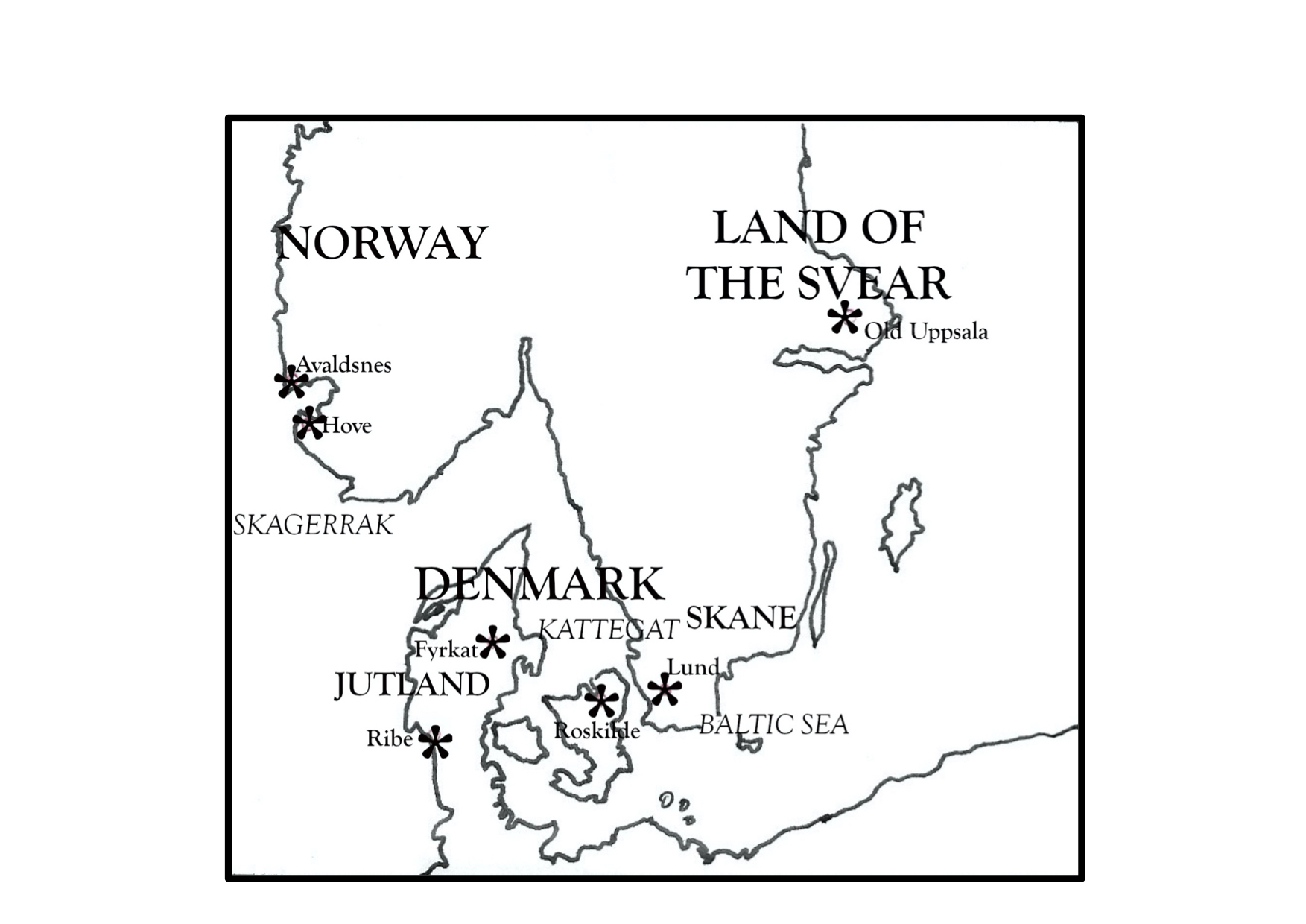
For the modern reader, not only are the family dynamics complicated to understand, but so too is the geography. Sweden was not Sweden as it is today, and the reason I’ve insisted on calling it the Land of the Svear. But equally, Denmark was larger than it’s current geographical extent, covering Skåne, (in modern day Sweden) as well. The map below attempts to make it a little clearer. Norway is perhaps the most recognisable to a modern reader, but even there, there are important difference. King Swein claimed rulership over parts of Norway during his rule, and so too did King Cnut. But, Denmark isn’t the only aggressor, there were rulers in all three kingdoms who wished to increase the land they could control, King Cnut of Denmark, England, Skåne and part of Norway, is merely the most well-known (to an English-speaking historian.)

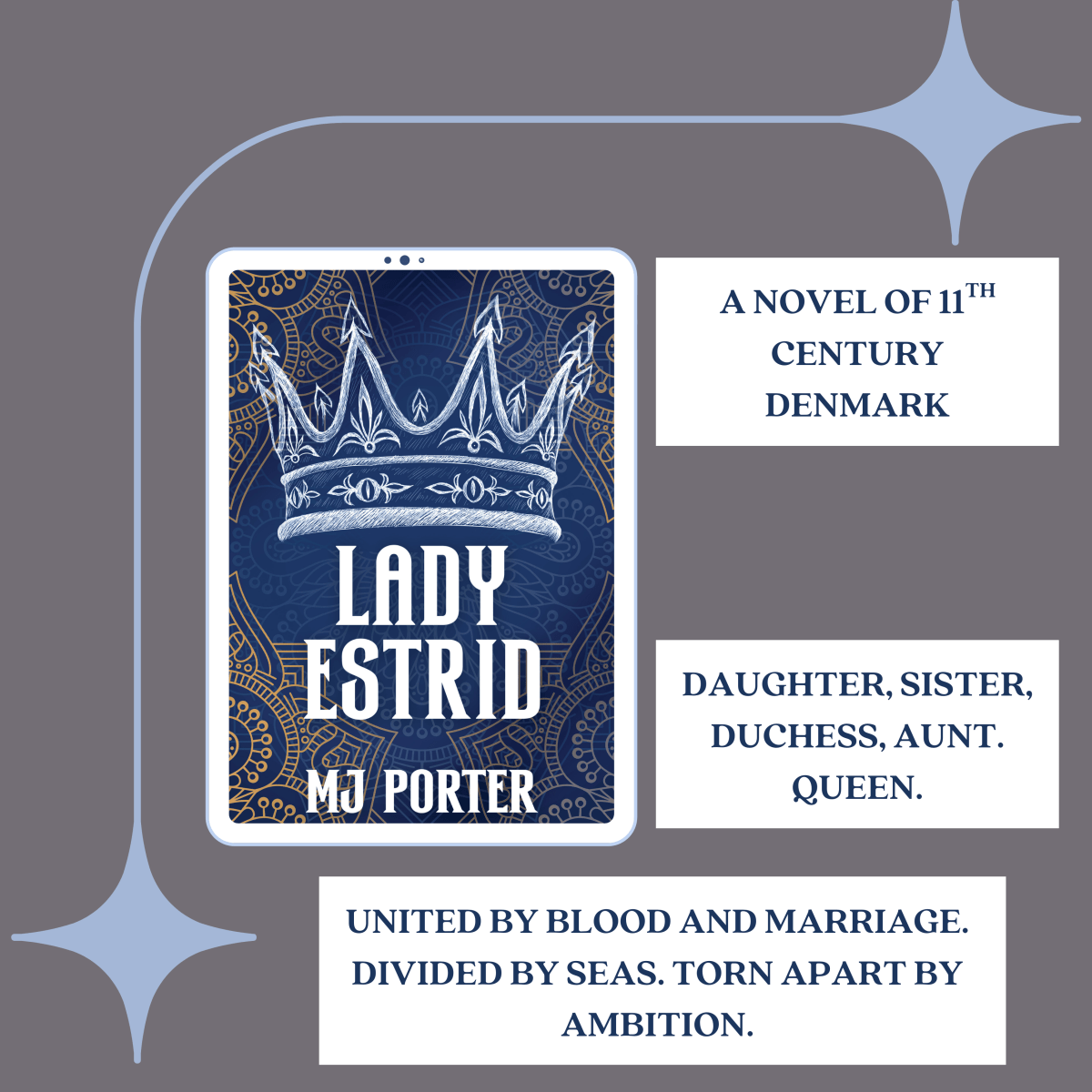
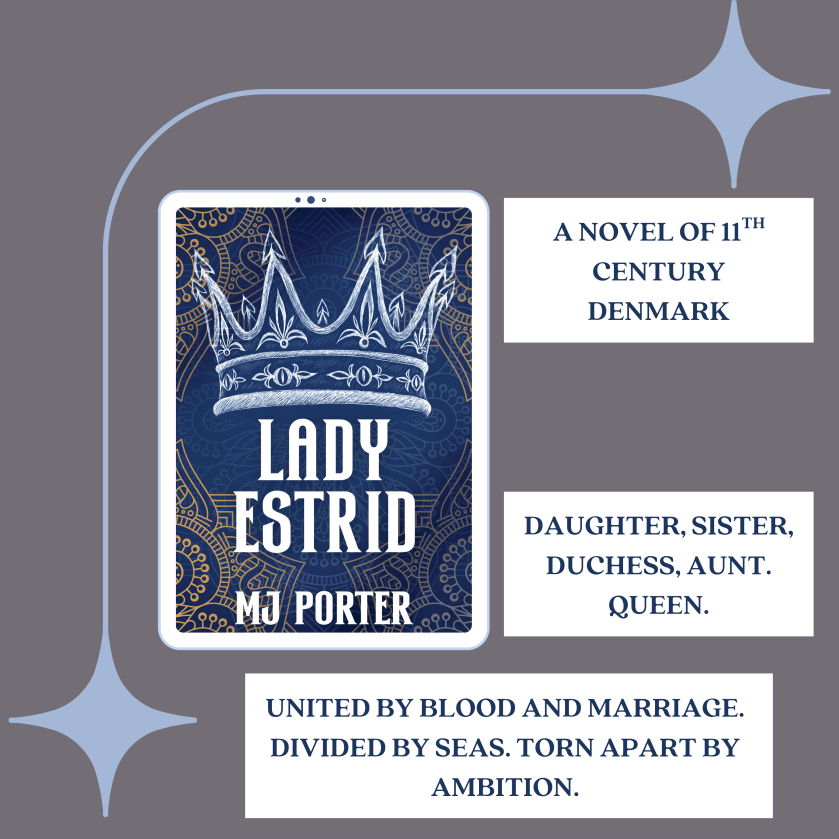
Lady Estrid is available now

Lady Estrid is a standalone novel, but it does incorporate characters and events from The Earls of Mercia series. So, if you’ve not yet read The King’s Brother, it might contain some spoilers, and vice versa.
I have also written about Lady Estrid’s brother, Cnut, and her father, Swein. I classify the books as side stories to the main Earls of Mercia series, but they can all be read as standalones, or as a trilogy about the powerful family.


Interested in the unknown women of the tenth and the eleventh century? I’ve written about quite a few of them now. Check out The Tenth Century Series, featuring Lady Ælfwynn, Lady Eadgifu and the daughters of Edward the Elder, and the stories of Lady Elfrida as well as The Royal Women Who Made England.

Posts

Who were the religious daughters of Edward the Elder?

The King’s Daughters is available with Kindle Unlimited, and is a novel of the many daughters of Edward the Elder who married into the ruling families in East and West Frankia, or who became holy women, or lived within a nunnery.

So, who were these daughters?

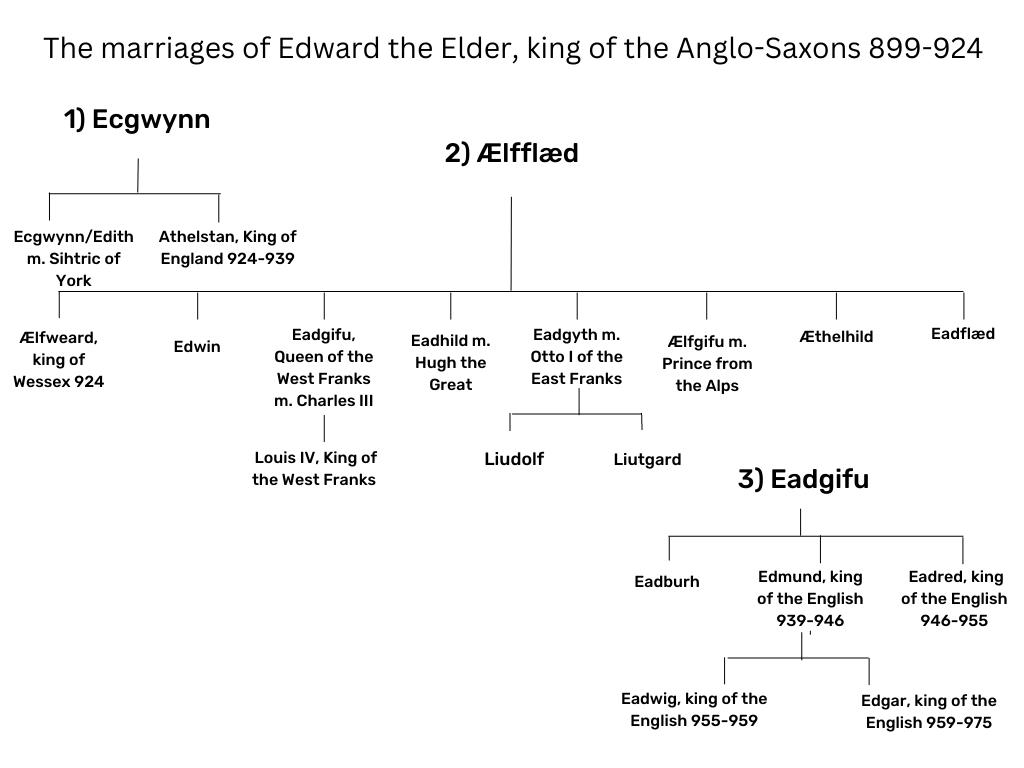
Edward the Elder was married three times, to an unknown woman- who was the mother of the future King Athelstan, to Lady Ælfflæd – who was the mother of the future, and short-lived King Ælfweard, and finally to Lady Eadgifu – who was the mother of the future kings Edmund and Eadred. But, while each woman was mother to a future kings, this story focuses on the daughters. And there were a lot of them, and their lives were either spent in making prestigious marriages, or as veiled women – whether professed religious, or merely lay women living in a nunnery or an isolated estate.

The story of The King’s Daughters is very much about the daughters of Edward and his second wife, and the marriages they made in Continental Europe, into the powerful families in East and West Frankia. And I’ve written a lengthy post about them which you can find here. But there were other daughters/sisters, and while their lives might be almost lost to us, it is interesting to discover what little is known of them.


Edith/Eadgyth/Ecgwynn/unnamed daughter of Edward the Elder, and his unnamed first wife (Ecgwynn?) c.890s–937?

m. Sihtric, king of York in 925, repudiated by 927 when Sihtric died

Edith[i] is believed to be the biological sister of the future King Athelstan, and, therefore, the daughter of King Edward and his first wife, possibly named Ecgwynn. Edith is unnamed in the Anglo-Saxon Chronicle, but her marriage is mentioned in both the D and the C texts.

The C text records that in 924, ‘Athelstan was chosen as king by the Mercians, and consecrated at Kingston, and he gave his sister.’[ii] And here the text, rather enigmatically, comes to a halt until 954.

The D text, is rather more helpful, under 925 stating that, ‘Here Athelstan and Sihtric, king of Northumbria, assembled at Tamworth on 30th January, and Athelstan gave him his sister.’[iii]

This, therefore, refers to the union between Athelstan’s sister and Sihtric, a Norse king of Jorvik or York. The union is intriguing. It does seem to be the only occasion that a marriage union was enacted between the Viking raiders and the Wessex royal family.

There is the suggestion that Edith may have become a nun on her return to Mercia. She is associated with the nunnery at Polesworth by traditions recorded at Bury in the twelfth century. Following the death of her husband, she is said to have returned to Mercia and ‘founded a nunnery at Polesworth, near the Mercian royal centre at Tamworth. There she remained a virgin, practising fastings and vigils, offering prayers and alms to the end of her life, and dying on July 15.’[iv]

However, Thacker goes on to state that, ‘it must be admitted that it [the cult] was not a very successful one. Her feast day (15 July) occurs in only three relatively late (i.e. post-Conquest) calendars, and it is impossible to identify her in any of the surviving Anglo-Saxon litanies.’[v]


[i] Edith may be Anonymous (594) or Eadgyth (12) on PASE, in which case her death was c.937

[ii] Swanton, M. ed. and trans. The Anglo-Saxon Chronicles, (Orion Publishing Group, 2000), p.105

[iii] Ibid., p.105

[iv] ThackerA‘Dynastic Monasteries and Family Cults’in Edward the Elder, 899–924, ed. Higham & Hill (Routledge, 2001), p.257

[v] ThackerA‘Dynastic Monasteries and Family Cults’in Edward the Elder, 899–924, ed. Higham & Hill (Routledge, 2001), p.258

Æthelhild, daughter of Edward the Elder, and his second wife, Lady Ælfflæd

The birth order of Edward the Elder’s children is unknown. Therefore, we do not know why Æthelhild[i] became a lay sister at Wilton Abbey. Could it be because it was her choice, her father’s, or mother’s, or that of her half-brother, Athelstan?

Wilton Abbey was strongly associated with the Wessex royal family. Her sister Eadflæd became a nun, and the two sisters were joined, not only by their mother but also by their much younger half-sister, Eadburh. Nothing further is known of Æthelhild. She’s not mentioned in the Anglo-Saxon Chronicle, or in any of the surviving charter evidence. We don’t know her date of birth, or her date of death. 

William of Malmesbury’s Gesta Regum Anglorum tells us more.

He also had by the same wife six daughters; Eadflæd, Eadgifu, Æthelhild, Eadhild, Eadgyth, Ælfgifu. The first and third took a vow of virginity and spurned the pleasures of earthly marriage, Eadflæd took the veil and Æthelhild in lay attire; both lie at Wilton, buried next to their mother. Eadburh became a nun and lies at Winchester; Eadgifu was a famous beauty, and was given in marriage by her brother Æthelstan to Louis prince of Aquitaine.[i]


[i] Mynors, R.A.B. ed. and trans. completed by Thomson, R.M. and Winterbottom, M. Gesta Regvm AnglorvmThe History of the English Kings, William of Malmesbury, (Clarendon Press, 1998) p.199–201

Eadflæd, daughter of Edward the Elder, and his second wife, Lady Ælfflæd

Eadflæd[iii] became a nun at Wilton Abbey. And she is named in a charter issued by Athelstan (S438, surviving in one manuscript) granting land to St Mary’s, Wilton dated 937, the year of the battle of Brunanburh. Provided the dating is secure, and the charter is authentic, this points to Eadflæd still being alive at this date. The absence of her sister’s name, Æthelhild, may mean she had predeceased her sister. Note should be made here of the distinction between the two types of religious women. It is believed that there were lay sisters and also those who wore the veil. Both could have been attached to a nunnery, although, aside from the Nunnaminster, no religious establishment is specifically termed as a monastery for women.

Eadburh, c.919–952 daughter of Edward the Elder and his third wife, Eadgifu

William of Malmesbury in his Gesta Pontificum Anglorum tells the story of Edward the Elder’s youngest daughter, Eadburh,[v] being consigned to the Nunnaminster in infancy as she showed such signs of devotion:[vi]

There had been a convent on this spot before, in which Eadburg [Eadburh], daughter of king Edward the Elder, had lived and died, but by then it was almost in ruins. When she was barely three, Eadburg had given a remarkable proof of her future holiness. Her father had wanted to find out whether his little girl would turn towards God or the world. He set out in the dining room the adornments of the different ways of life, on this side a chalice and the Gospels, on the other bangles and necklaces. The little girl was brought in by the nurse and sat on her father’s knees. He told her to choose which she wanted. With a fierce look she spat out the things of the world, and immediately crawling on hands and knees towards the Gospels and chalice adored them in girlish innocence … Her father honoured his offspring with more restrained kisses and said, ‘Go where heaven calls you, follow the bridegroom you have chosen and a blessing be upon your going.’ … Countless miracles during her life and after her death bear witness to the devotion of her heart and the integrity of her body.[vii]

William later adds that ‘Some of the bones of Eadburg the happy are buried’,[viii] at Pershore.

Aside from the later William of Malmesbury, Eadburh is the recipient to land in one charter, that of S446, dated to 939 and surviving in one manuscript. ‘King Athelstan to Eadburh, his sister; grant of 17 hides (mansae) at Droxford, Hants.’[ix] Perhaps, Athelstan was ensuring his sister’s future with this charter. Maybe he knew he was dying. Perhaps this was a means of guaranteeing the survival of the religious establishment in which she lived.


[i] I can find no reference to Æthelhild on PASE

[ii] Mynors, R.A.B. ed. and trans. completed by Thomson, R.M. and Winterbottom, M. Gesta Regvm AnglorvmThe History of the English Kings, William of Malmesbury, (Clarendon Press, 1998), pp.199–201

[iii] PASE Eadflæd (4) 

[iv] Mynors, R.A.B. ed. and trans. completed by Thomson, R.M. and Winterbottom, M. Gesta Regvm AnglorvmThe History of the English Kings, William of Malmesbury, (Clarendon Press, 1998), pp.199–201

[v] Believed to be Eadburgh (8) on PASE

[vi] Foot, S. Athelstan (Yale University Press, 2011), p.45 Priest, D. trans. Gesta Pontificum Anglorum, The Deeds of the Bishops of England, (The Boydell Press, 2002)

[vii] Priest, D. trans. Gesta Pontificum Anglorum, The Deeds of the Bishops of England, (The Boydell Press, 2002), pp115–16

[viii] Ibid., p.202

[ix] Sawyer, P.H. (ed.), Anglo-Saxon charters: An annotated list and bibliography, rev. Kelly, S.E., Rushforth, R., (2022). http://www.esawyer.org.uk/ S446


https://amzn.to/4gyxeCn

You can read about the many daughters of Edward the Elder in The King’s Daughter.

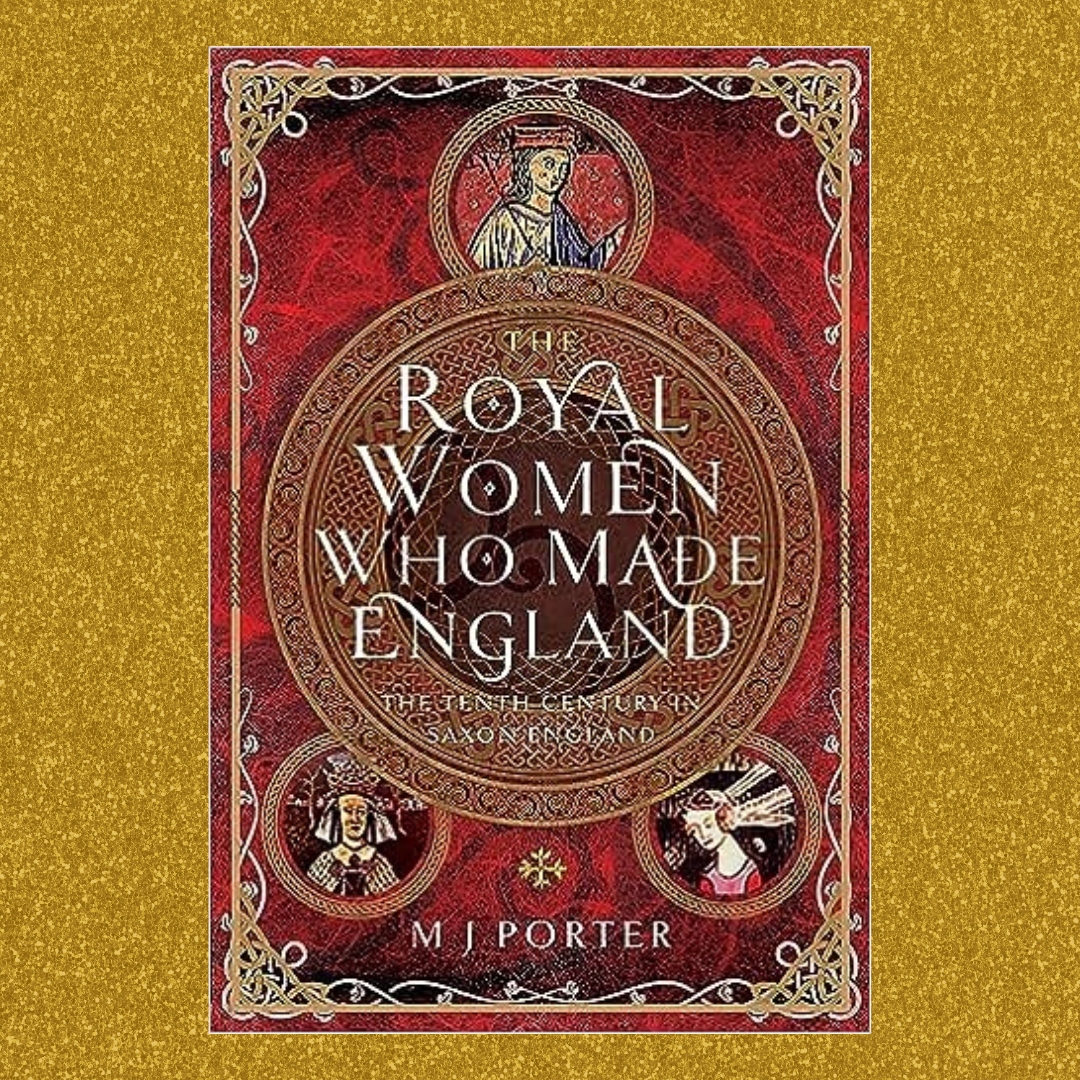
My first non-fiction title, The Royal Women Who Made England, is also now available in ebook and hardback and features these women and what we know about them.

Posts

I’m delighted to share my review for To Kill A Consul by Robert M Kidd #blogtour #histfic #Roman #Hannibal

Here’s the blurb:

217 BC. The Gauls are restless. Where is the wealth, plunder and lands they were promised? Hannibal’s army has become little more than a burden to be fed and quartered … as welcome as a plague of locusts. Assassination plots abound as Hannibal is driven to take desperate measures to evade the assassin’s knife.

If Hannibal is to appease the Gauls he must act fast. The invasion of Italia must not be delayed – his very life depends on it – but as that winter of winters fades into memory he is faced with a stark choice. Should he strike east towards the plains of Umbria and face consul Gnaeus Servilius Geminus’ legions holed up inside the unassailable walls of Ariminum? Or strike westwards into the plunder-rich lands of Etruria?

Consul Gaius Flaminius’ legions guard the western approaches. If any man can fire the bellies of Gauls with loathing it’s Flaminius. But there is one other whose blood runs cold at the mention of the name. Flaminius ordered the brutal murder of Sphax’s parents and Sphax has sworn a sacred oath to seek revenge. Can Hannibal trust the leader of his Numidian cavalry, or will this blood feud cloud his judgement? Sooner or later Sphax will have to face his inner demons.  

Purchase Links

UK US

My Review

This is my second adventure with Robert M Kidd and Sphax. As with book 3, this outing is action-packed, from wading through boggy ground to fighting Roman legionaries. The narrative takes us through Etruria alongside Sphax and his loyal warriors, and there is a great deal of death as Hannibal takes a huge risk with his army, one that Sphax is not at all happy with. Forced to encourage from the rear, there is very little that Sphax does not see. His ingenuity saves his life and those of his warriors.
But this book isn’t just about this crazy march through swamp lands. No, this is the story of the lead-up to a mighty battle between the Romans and those under Hannibal’s command, which sees Sphax not only riding through much of Etruria but also forced on board a ship as well. And all the time, burbling away in the background, are the events that have brought him to this moment in time where he’s desperate to avenge the deaths of his parents.

I really like Sphax. I enjoy the fact that he’s an intelligent character, but not one who knows everything. He’s often distant from the main fighting force, although he’s trusted by his uncle to undertake difficult tasks. The depiction of Hannibal, enigmatic and stubborn, but also wise and clever means that Sphax can never know everything his uncle is thinking. Perhaps it’s better that he doesn’t.

The final battle scene is well evoked. It’s a blood bath, but the reader doesn’t see all of it as it takes place beside a mist-shrouded lake.

Not knowing this period at all well, I couldn’t be sure of what the ending would bring, other than in a very vague way. Will Sphax triumph? Will he gain his vengeance? Will he live to fight another battle? The map was a great help.

A thrilling read, and trek, through a time and a place that I don’t know at all well, but which I found really well depicted and thoroughly enjoyable. (On a side note, thank you for explaining what ‘running with the wind’ means on board the ship).

Check out my review for Book 3 in the series here.

Meet the author

I’ve always read widely and been fascinated by ancient cultures – especially those of Greece, Phoenicia and Carthage. But my reason for writing the first novel in The Histories of Sphax series may sound strange to readers: I really wanted to set the record straight, to write about Hannibal’s war with Rome from Carthage’s perspective.

When Cato the Censor demanded that ‘Carthage must be destroyed,’ Rome did just that. In 146 BC, after a three year siege, Carthage was raised to the ground, its surviving citizens sold into slavery and the fields where this once magnificent city had stood, ploughed by oxen. Carthage was erased from history.

That’s why I’m a novelist on a mission! I want to set the historical record straight. Our entire history of Hannibal’s wars with Rome is nothing short of propaganda, written by Greeks and Romans for their Roman clients. It intrigues me that Hannibal took two Greek scholars and historians with him on campaign, yet their histories of Rome’s deadliest war have never seen the light of day. 

My hero, Sphax the Numidian, tells a different story!

When I’m not waging war with my pen, I like to indulge my passion for travel and hill walking, and like my hero, I too love horses. I live in Pembrokeshire, West Wales.

https://robertmkidd.com/

https://twitter.com/RobertMKidd1

https://www.facebook.com/profile.php?id=100064169594911

Giveaway to Win the next book in The Histories of Sphax series to be dedicated to you (Open INT)

The next book in The Histories of Sphax series will be dedicated to the winner, and will be acknowledged on the inside page book title. 

*Terms and Conditions –Worldwide entries welcome.  Please enter using the Rafflecopter box below.  The winner will be selected at random via Rafflecopter from all valid entries and will be notified by Twitter and/or email. If no response is received within 7 days then Rachel’s Random Resources reserves the right to select an alternative winner. Open to all entrants aged 18 or over.  Any personal data given as part of the competition entry is used for this purpose only and will not be shared with third parties, with the exception of the winners’ information. This will passed to the giveaway organiser and used only for fulfilment of the prize, after which time Rachel’s Random Resources will delete the data.  I am not responsible for despatch or delivery of the prize.

http://www.rafflecopter.com/rafl/display/33c69494576/?

On this day in history, the Battle of Winwæd in 655 between the Mercians and the Northumbrians

The Battle of Winwæd, fought on 15th November 655, is the backdrop for the final book in the Gods and Kings trilogy, which follows three very famous battles, Hædfeld in 632/3, Maserfield in 642 and Winwæd in 655, only one of the battles being fought in the summer – which always surprises me. These three pitched battles saw Mercia and Northumbria vying for supremacy over the Saxon kingdoms of Britain, a narrative that has been interpreted as leading to Northumbria’s triumph, and indeed, its Golden Age.

But much of what happened from Hæ∂feld to Winwæd was a matter of family politics, muddled by the many marriages these kings may have made, and the horde of children they fathered who had opinions and aspirations of their own. Just as the War of the Roses many centuries later, this was a time when family loyalty meant little or nothing to some people, and everything to others.

The Mercian king, Penda, most famously known for being a pagan when the Saxon kingdoms were being converted to Christianity, achieved a great deal throughout his lifetime, regardless of the debate about how long he reigned for and when he can officially be known as King of Mercia, and he is the constant throughout these three battles. The bias of Bede, our main source for this period (even though he wrote in the following century) and his famous list of bretwaldas (wide-rulers) ignores Penda. In doing so people cast their eyes only on events in Northumbria, seeing Penda in the same light as Bede would have us do, as a pagan who continually thwarted the advances of the Christian doctrine either from the north (Celtic Christianity) or the south (Roman Christianity). In fact, Penda could reasonably be said to have achieved far more than the Northumbrian kings, Edwin, Oswald or Oswiu ever did – the men he battled against at Hædfeld, Maserfeld and Winwæd. It’s a great pity that he met his death in the way he did, allowing Bede to skewer his narrative even further, to make Oswiu, the Christian, the victor over Penda the pagan.

History can be cruel.

Yet recent historians cast Penda in a more complimentary light. D.P. Kirby calls him ‘without question the most powerful Mercian ruler so far to have emerged in the Midlands.’ Frank Stenton has gone further, ‘the most formidable king in England.’ Whilst N J Higham accords him ‘a pre-eminent reputation as a god-protected, warrior king.’ These aren’t hastily given words from men who’ve studied Saxon England to a much greater degree than I have.

The wording of Bede is vague when detailing this third and final battle of Penda’s against the Northumbrians. Bede could speak directly when he wanted to, or so it seems, but for some events, he applied a little haze of Northumbrian drizzle to obscure the facts, but on the fact that more men died in the flood waters than on the battlefield, he is clear.

Bede’s Ecclesiastical History of the English People

http://legacy.fordham.edu/halsall/basis/bede-book2.asp

CHAPTER XXIV
KING PENDA BEING SLAIN, THE MERCIANS RECEIVED THE FAITH OF CHRIST, AND OSWY GAVE POSSESSIONS AND TERRITORIES TO GOD, FOR BUILDING MONASTERIES, IN ACKNOWLEDGMENT FOR THE VICTORY OBTAINED. [A.D. 655.] 
AT this time, King Oswy was exposed to the fierce and intolerable irruptions of Penda, king of the Mercians, whom we have so often mentioned, and who had slain his brother; …….After this he gave battle with a very small army against superior forces: indeed, it is reported that the pagans had three times the number of men; for they had thirty legions, led on by most noted commanders. King Oswy and his son Aifrid met them with a very small army, as has been said, but confiding in the conduct of Christ; his other son, Egfrid, was then kept an hostage at the court of Queen Cynwise, in the province of the Mercians. King Oswald’s son Etheiwald, who ought to have assisted them, was on the enemy’s side, and led them on to fight against his country and uncle; though, during the battle, he withdrew, and awaited the event in a place of safety. The engagement beginning, the pagans were defeated, the thirty commanders, and those who had come to his assistance were put to flight, and almost all of them slain; among whom was Ethelbere, brother and successor to Anna, king of the East Angles, who had been the occasion of the war, and who was now killed, with all his soldiers. The battle was fought near the river Vinwed, which then, with the great rains, had not only filled its channel, hut overflowed its banks, so that many more were drowned in the flight than destroyed by the sword. 

This narrative is largely copied in the other surviving sources, all much later than the events they describe.

Historia Brittonum

 http://legacy.fordham.edu/halsall/basis/nennius-full.asp

Penda, son of Pybba, reigned ten years; he first separated the kingdom of Mercia from that of the North-men, and slew by treachery Anna, king of the East Anglians, and St. Oswald, king of the North-men. He fought the battle of Cocboy, in which fell Eawa, son of Pybba, his brother, king of the Mercians, and Oswald, king of the North-men, and he gained the victory by diabolical agency. He was not baptized, and never believed in God.

The Anglo-Saxon Chronicle (first written from the late 890s).

A.D. 655.  This year Penda was slain at Wingfield, and thirty royal personages with him, some of whom were kings.  One of them was Ethelhere, brother of Anna, king of the East-Angles.  The Mercians after this became Christians.  From the beginning of the world had now elapsed five thousand eight hundred and fifty winters, when Paeda, the son of Penda, assumed the government of the Mercians.  

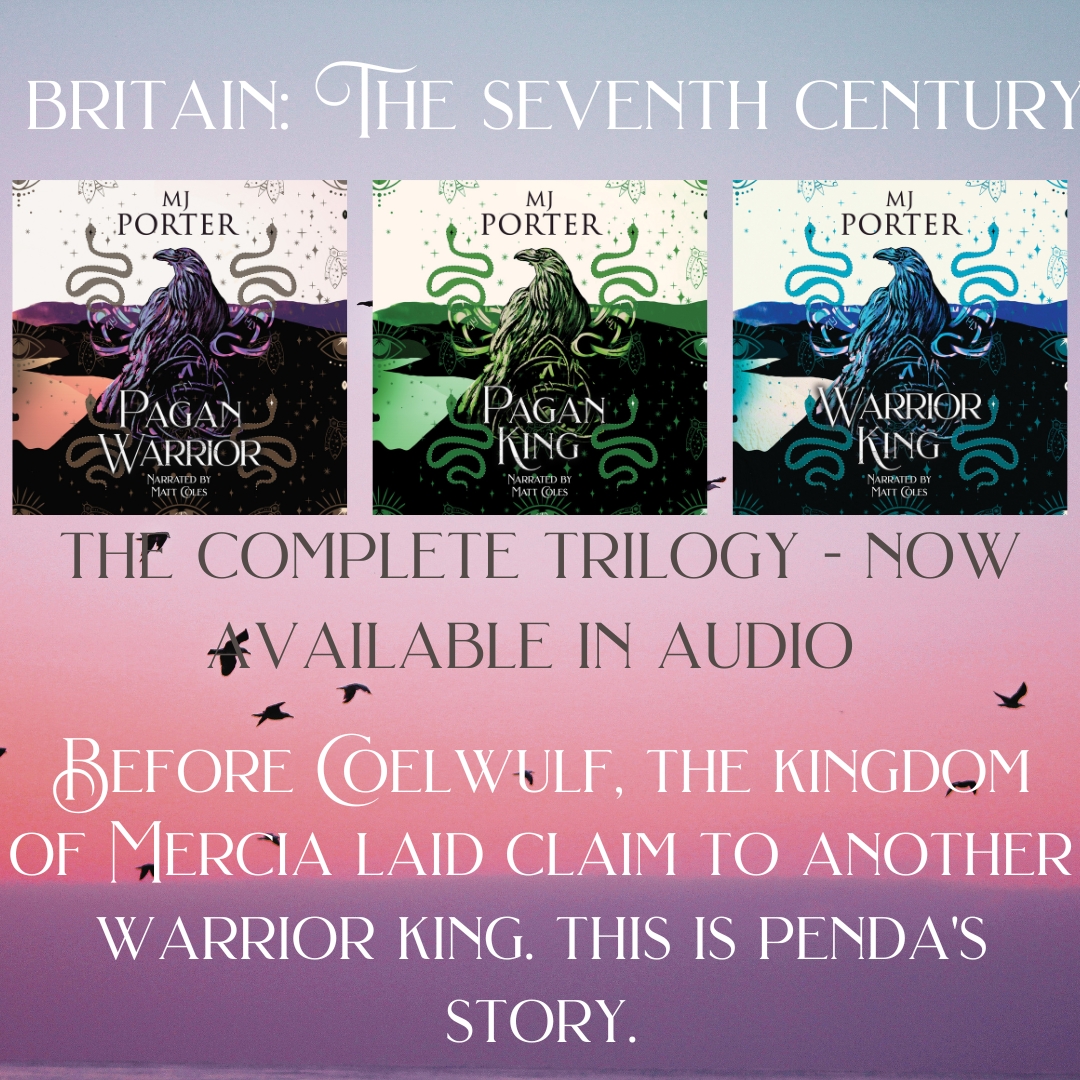
You can read ‘my’ interpretation of the Battle of Winwæd in Warrior King, and you can also allow the fabulous Matt Coles to narrate it for you. Check out The Gods and Kings Trilogy page for more information.

Posts

I thought I’d share some of my frustrations with writing about the lives of the ‘lost women’ of the tenth century.

I thought I’d share some of my frustrations with writing about the lives of the ‘lost women’ of the tenth century.

The Tenth Century in Saxon England is often seen as heralding the triumph of Wessex to form England and to drive the Viking raiders far from England’s shores. That is both right and wrong, but it does mean that the names of the kings of the House of Wessex are well-known (comparatively speaking). The same can’t be said for the women who were wives, daughters and mothers of these kings. We can debate why this is but it doesn’t solve the problem of who these women were. For some of them, we don’t even know their names. We don’t know the name of King Athelstan’s mother, which astounds me. Equally, some of his half-sisters are quickly ‘lost’ in Continental Europe. Much of this is because they didn’t create huge dynasties to revere them after their death (apart from perhaps Eadgyth, who married Otto of the East Franks and whose sudden death deeply affected her husband). Of course, this problem is also compounded by the few surviving contemporary records.

Even those sources which do survive are not easy to access. Language barriers are a huge problem. The Anglo-Saxon Chronicles have been studied and translated into easily accessible volumes, but alas, only Ealhswith, wife of King Alfred, Æthelflæd of Mercia, her daughter Ælfwynn, and two unnamed sisters of Athelstan are actually mentioned in the ASC. We can find more names in Æthelweard’s Latin translation of the ASC known as the Chronicon but it is still not an exhaustive list of his own relatives. Æthelweard claimed descent from King Alfred’s brother, Æthelred I.

This situation doesn’t just apply to the tenth-century. The online resource, The Prosopography of Anglo-Saxon England (PASE), has a database of 33,981 male names listed for the entire period of Saxon England. Only 1460 female names are listed. As such, we know much more about the male members of Saxon England, than we do the females.

And, these women have received very little study. While there are academic books about the much better known eleventh-century queens, Emma of Normandy and Edith, the wife of Edward the Confessor, it’s not been possible to pick up a single title and learn about these lost women, aside from Elizabeth Norton’s monograph on Lady Elfrdia.

To begin with, I wished to fictionalise the life of Lady Elfrida, wife of King Edgar, thanks to the work by Elizabeth Norton. I then turned my mind to other women of the tenth century and, indeed, even to Lady Estrid, the sister of King Cnut. Time and again, I found that so little information had survived, the majority of it only a reference in relation to male members of the family, that much of their lives had to be reconstructed based on what is documented as happening at the time. There was certainly no tangible way to connect with these women, other than a possible surviving piece of embroidery which might have been stitched by King Edward the Elder’s second wife, and if not by her hand, then at her command, and which was found inside the tomb of St Cuthbert when it was opened in the early nineteenth century (1827).

I can’t help feeling this is how Æthelweard felt when he wrote his Chronicon. The passage of time has not made it any easier to uncover the names of the women, let alone their personalities.

https://amzn.to/421prHt

I have now written a non-fiction account of this period, and it is now available from Pen and Sword books – The Royal Women Who Made England. I hope, alongside the fictionalised accounts of their lives, that this will inspire more interest in them.

The Royal Women Who Made England cover image.

Posts

I’m delighted to welcome Anna Belfrage to the blog with a guest post about her new book, Times of Turmoil #AmericanColonialHistory #timetravel #historicalfiction #historicalromance

I’m delighted to welcome Anna Belfrage to the blog with a post about her main characters.

When loving came with severe restrictions – of anti-miscegenation laws in Colonial America

In 1967, the Supreme Court of the United States unanimously concluded that state laws forbidding interracial relations were in breach of the 14th amendment to the Constitution. Mildred and Richard Loving no longer needed to worry they’d be fined or incarcerated for loving each other. 1967. Not that long ago, is it?

Anti-miscegenation laws were adopted by several of the British American Colonies. First in Maryland, then in Virginia, and subsequently in several others. The laws were harsh and had as their purpose to ensure the races were kept “separate”—well, beyond the obvious intermingling that occurred when a white slave owner decided to sleep with his black slave. Not that much of a problem according to the legislators, as any child born to a slave was automatically defined as a slave. Initially, the laws forbade marriage between a white person and an enslaved or indentured person of colour – probably because this would cause confusion as to the legal status of the unfree person and encroach on the property rights of said unfree person’s “owner”. Over time, the laws were expanded to include any person of colour, free or not. In some states, the laws were extremely detailed, forbidding not only relations between white and black, white and coloured, but also between black and Native American.


Obviously, these laws reflect the biases of a slave-based economy. If, on the one hand, you were arguing that people of colour were less equal than a white person—so much less equal, in fact, that it was perfectly okay to enslave them—it would be difficult to, on the other hand, welcome a person of colour as your equal in the salons of society. Not even a free person of colour could/should be treated as an equal. Yes, they were no longer slaves, but they were definitely “lesser”. 

I had never fully immersed myself in researching this dark side of history until I ended up with a woman of colour as my protagonist. Initially, I didn’t even reflect on the fact that Erin Barnes was of mixed race. Yes, I’d given her a half Afghani, half British grandmother, and yes, said lady was very much in love with her black US Army  veteran, but I found that aspect of Erin relatively unimportant. I was far more interested in her pursuit of justice for her murdered grandmother and her determination to use all her investigative skills to achieve this, despite the obvious risks to herself. 

“You did not notice how beautiful she is?” Duncan asks, sounding shocked. “You didn’t see that her skin is like molten syrup, her hair a cloud of darkest gold?” 
Umm . . . No, I didn’t. Not really. And obviously, Duncan is biased—he has been since he first saw Erin. 

Frankly, it wasn’t until Duncan and Erin ended up in 1715 that it struck me just how difficult life would be for her in this new time. Duncan, of course, immediately realised this, and did what he could to protect her—namely marry her. Fortunately for him, at the time they were in London, where there were no legal prohibitions to wedding someone of a different colour. There were, however, societal reservations, but Duncan didn’t much care. 

After a sequence of adventures, my couple returned to Maryland—briefly. Soon enough, Duncan realised that even with the protection of his name and wealth—and that of his powerful friends—Annapolis would never tolerate this union between a white man and a woman of colour. So they moved north, to Pennsylvania.

What exactly was a white man risking by marrying a woman of colour? Well, if a white man had sexual relations with a free woman of colour (note that it was okay for a slave owner to have sexual relations with an enslaved woman of colour) and chose to live with her, they could both be indentured for decades. Should he be foolish enough to marry her, indentureship converted to enslavement—for both of them. And not necessarily together. 

Despite these frightening consequences, there are documented cases of people still choosing to marry the person they loved, no matter the colour of their skin. In one of the more well-known cases, an Irish girl named Nell Butler fell in love with and married a black slave, known only as Negro Charles. She thereby became the property of her hubby’s owner, as did all their future children. 

As made obvious already in the opening paragraph, anti-miscegenation laws were to remain in existence in many of the US states well into the twentieth century. And throughout all those years of prohibition, as regular as clockwork, cases would crop up where people loved so hard they were willing to face the consequences. It if wasn’t so very, very sad, it would almost be romantic. 

Moving Erin and Duncan to Pennsylvania only bought them a few years of grace: in 1725 the colony of Pennsylvania pushed through their own anti-miscegenation laws. My imaginary couple must now find a new home, but sadly I suspect that wherever they go in the early 18th century they will be met by gasps and avid curiosity. A woman of colour—no matter how beautiful—did not belong with a successful white man. Not, at least, as his wife. 

“Pah!” Duncan says, drawing Erin close enough to give her a resounding kiss. “What do I care what others think?”

It is not quite as easy for Erin to be dismissive of the opprobrium she so often faces. But she tries, putting on a brave face while swallowing whispered insults and insinuations. But now and then, the independent, modern Erin just can’t hold back—which at times leads to very, very difficult situations! 

Thank you for sharing such an interesting post. I imagine your characters have a few tough moments to survive.

Here’s the blurb:

It is 1718 and Duncan Melville and his time traveller wife, Erin, are concentrating on building a peaceful existence for themselves and their twin daughters. Difficult to do, when they are beleaguered by enemies.

Erin Melville is not about to stand to the side and watch as a child is abused—which is how she makes deadly enemies of Hyland Nelson and his family.

Then there’s that ghost from their past, Armand Joseph Chardon, a person they were certain was dead. Apparently not. Monsieur Chardon wants revenge and his sons are tasked with making Duncan—and his wife—pay. 

Things aren’t helped by the arrival of Duncan’s cousin, fleeing her abusive husband. Or the reappearance of Nicholas Farrell in their lives, as much of a warped bully now as he was when he almost beat Duncan to death years ago. Plus, their safety is constantly threatened as Erin is a woman of colour in a time and place where that could mean ostracism, enslavement or even death.

Will Duncan and Erin ever achieve their simple wish – to live and love free from fear of those who wish to destroy them?

Buy Links: 

This title is available on #KindleUnlimited.

Universal link: 

Amazon USAmazon UKAmazon CAAmazon AU: 

Meet the author

Had Anna been allowed to choose, she’d have become a time-traveller. As this was impossible, she became a financial professional with two absorbing interests: history and writing. Anna has authored the acclaimed time travelling series The Graham Saga, set in 17th century Scotland and Maryland, as well as the equally acclaimed medieval series The King’s Greatest Enemy which is set in 14th century England.  

Anna has also published The Wanderer, a fast-paced contemporary romantic suspense trilogy with paranormal and time-slip ingredients. 

More recently, Anna has been hard at work with her Castilian series. The first book, His Castilian Hawk, published in 2020, is set against the complications of Edward I’s invasion of Wales, His Castilian Hawk is a story of loyalty, integrity—and love. In the second instalment, The Castilian Pomegranate, we travel with the protagonists to the complex political world of medieval Spain, while the third, Her Castilian Heart, finds our protagonists back in England—not necessarily any safer than the wilds of Spain! The fourth book, Their Castilian Orphan, is scheduled for early 2024.

Anna has recently released Times of Turmoil, the sequel to her 2021 release, The Whirlpools of Time. Here she returns to the world of time travel. Where The Whirlpools of Time had Duncan and the somewhat reluctant time-traveller Erin navigating the complexities of the first Jacobean rebellion in Scotland, in Times of Turmoil our protagonists are in Colonial Pennsylvania, hoping for a peaceful existence. Not about to happen—not in one of Anna’s books!  

All of Anna’s books have been awarded the IndieBRAG Medallion, she has several Historical Novel Society Editor’s Choices, and one of her books won the HNS Indie Award in 2015. She is also the proud recipient of various Reader’s Favorite medals as well as having won various Gold, Silver and Bronze Coffee Pot Book Club awards.

Find out more about Anna, her books and enjoy her eclectic historical blog on her website, www.annabelfrage.com  

Connect with the author

WebsiteTwitterFacebook

InstagramBook Bub

Amazon Author Page:   or  http://amazon.com/author/anna_belfrage 

Goodreads

Follow the Times of Turmoil blog tour with The Coffee Pot Book Club

I’m reading the beginning of A Conspiracy of Kings #LadyÆlfwynn

I’m reading the beginning from A Conspiracy of Kings. Hopefully, you’ll enjoy listening below. Just click on the image. This does contain spoilers if you’ve not yet read book 1, The Lady of Mercia’s Daughter.

Find out who the historical Ælfwynn was here.

Buy A Conspiracy of Kings here.

(Also available with Kindle Unlimited.)

Posts

#TheLastKing, the first book in The Mercian Ninth Century, #excerpt

Here’s the blurb

They sent three hundred warriors to kill one man. It wasn’t enough.

Mercia lies broken but not beaten, her alliance with Wessex in tatters. Coelwulf, a fierce and bloody warrior, hears whispers that Mercia has been betrayed from his home in the west. He fears no man, especially not the Vikings sent to hunt him down.

To discover the truth of the rumours he hears, Coelwulf must travel to the heart of Mercia, and what he finds there will determine the fate of Mercia, as well as his own.

Here’s an excerpt

AD874

I taste it on my lips, and over the salt of my sweat.

And I scowl. It’s not a flavour I wish to get used to. All the same, I know what it is without a second thought.

My seax glistens slickly in the dull light, the gleaming claret reminding me more of an exotic wine from the south than the lifeblood it truly is. The double headed-eagle impeccably depicted on the handle seems to wink at me, as the eyes fill with the ruby mixture.

Not that I focus on it for more than the time it takes me to blink. 

This horde feels as though it’ll never stop, and I’m determined to end the lives of as many of them as possible. Such slaughter doesn’t bring me joy, but this is my skill. I wield it because I must. 

My weapon, so sharp it cuts through byrnies as though they’re no more than spider webs, is busy today.

They come against my force, as small as it is, and they mean to annihilate us. But we will not go without making our sacrifices to their god of war.

My seax sweeps effortlessly along the abruptly exposed throat of my enemy, the realisation of what’s befallen him only reaching his eyes as he falls to the ground. I step over him, already sighting my next enemy.

This one swirls an axe in his left hand, as I reveal my bloodied teeth. His entire body recoils, almost a backward step. Before he can consider his move, I’ve sliced through his belly, the gut threatening to spill at my feet. I dismiss him and move onto the next man.

The ground beneath my feet squelches with each step, slick, more like a flooded river than the solid ground it should be.

It’s awash with the dead and wounded, the long shield wall that tried to defeat us long since disintegrated to small spots of desperate one to one fighting. This is my favourite part of any battle.

I turn, noting the angle of the sun, the brush of the breeze against my slick body, breathing deeply through my nose. This is not my first battle. Far from it.

I hear the cries of those boys who thought themselves men, and equally of those men who’ve found they are but boys when their lives are threatened.

I scorn them. They’re not worthy of my attention.

Quickly, I reach for my weapons belt, keen to know that all is where it should be. My hand brushes over the sharpened edges and deadly blades that make a home there. For now.

Satisfied, I pick my next target, a tight knot of men fighting not five steps away, and move forward.

I don’t hurry. Not this time. Neither, as I’ve seen others do, do I check the weight of my weapon, or test the strength of my arm as I consider my next move. Instinctively I know that all is well.

They’ll not fail me. They haven’t before.


If you’ve not yet discovered The Mercian Kingdom: The Ninth Century series, then you’ve in for a treat, as long as you’re not easily offended by foul language and violence – and if you are, there are Cleaner versions available on Amazon Kindle.

If you’ve been reading the Icel books, then you will find a friend in this series, set in the 870s in a Mercia under assault by the Viking raiders.

And don’t forget to check out the short story collection, Coelwulf’s Company, tales from before The Last King.

The Last King books are available in ebook, paperback and hardback, and The Last King (book 1 ) is also available in audio.

Check out all the details for The Mercian Kingdom: The Ninth Century.

Sign up to my monthly newsletter to learn more about my writing journey, new releases and special offers, and receive a short story collection.