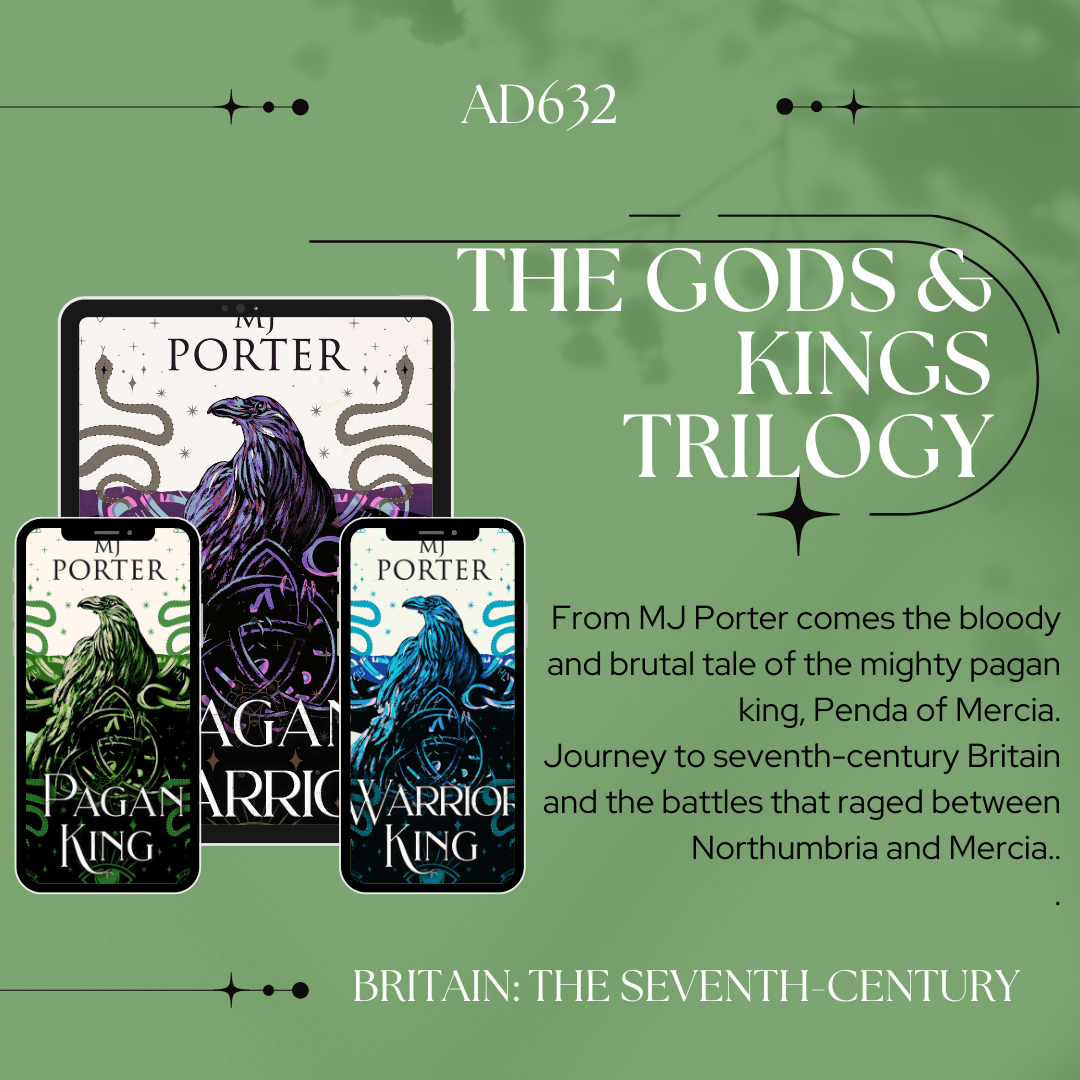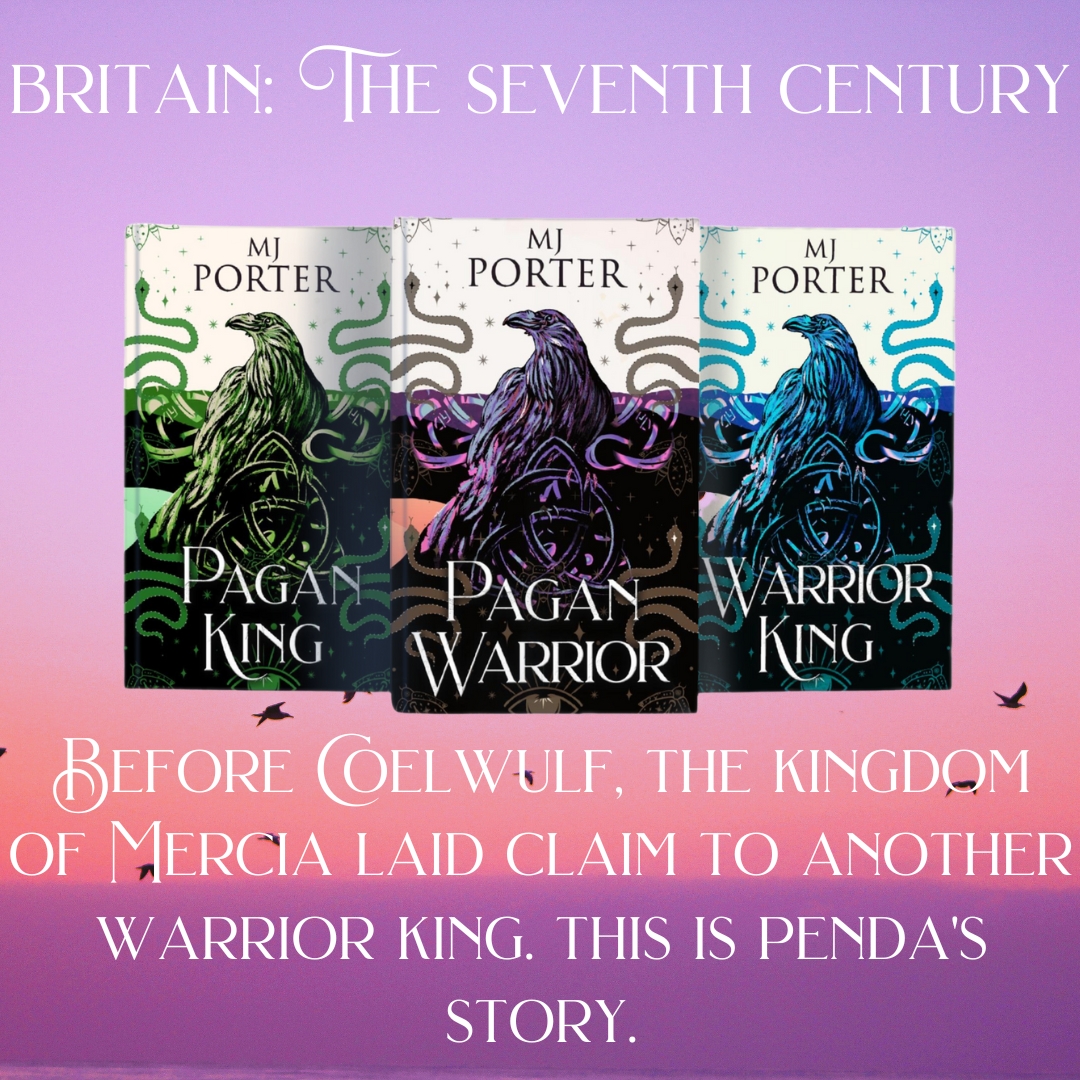
I’m sharing a blog post about what we do and don’t know about warfare in the Saxon era. #GodsAndKingsTrilogy #histfic #PaganKing

I’m sharing a blog post about what we do and don’t know about warfare in the Saxon era. #GodsAndKingsTrilogy #histfic #PaganKing

Here’s the blurb for Pagan King

Britain. AD641.

The year is AD641, and the great Oswald of Northumbria, bretwalda over England, must battle against an alliance of the old Britons and the Saxons led by Penda of the Hwicce, the victor of Hæ∂feld nine years before, the only Saxon leader seemingly immune to Oswald’s beguiling talk of the new Christianity spreading through England from both the north and the south.

Alliances will be made and broken, and the victory will go to the man most skilled in warcraft and statecraft.

The ebb and flow of battle will once more redraw the lines of the petty kingdoms stretching across the British Isles.

There will be another victor and another bloody loser.

books2read.com/PaganKing

Warfare during the Saxon period. What we know and what we don’t know about the battle of Hædfeld.

Thanks to some spectacular archaeological finds, we can visualise how a Saxon warrior might have looked. The reconstructions of the Sutton Hoo helm, and that found with the Staffordshire Horde (as well as a few others), present us with elaborate helmets crested with dyed-horse hair in a way very reminiscent of the Roman era. They glitter, and they seem to be festooned in gold and silver work, but whether these were actually worn in battle or not is debatable. Firstly, they would have made the kings or noblemen very noticeable to their enemy. Secondly, they were so valuable it’s impossible to consider the loss of one of them should they fall and their goods be taken by their enemy. Bad enough for their king and leader to die in battle, but to also lose such precious wealth as well seems unlikely. That said, of course, the Sutton Hoo helm was buried, and the fragments of the Staffordshire Hoard helmet were buried and lost. An image of the Staffordshire Helmet can be found here: https://www.stokemuseums.org.uk/pmag/collections/archaeology/the-staffordshire-hoard/

The monograph on the Staffordshire Hoard is also available for free download from https://library.oapen.org/handle/20.500.12657/39941

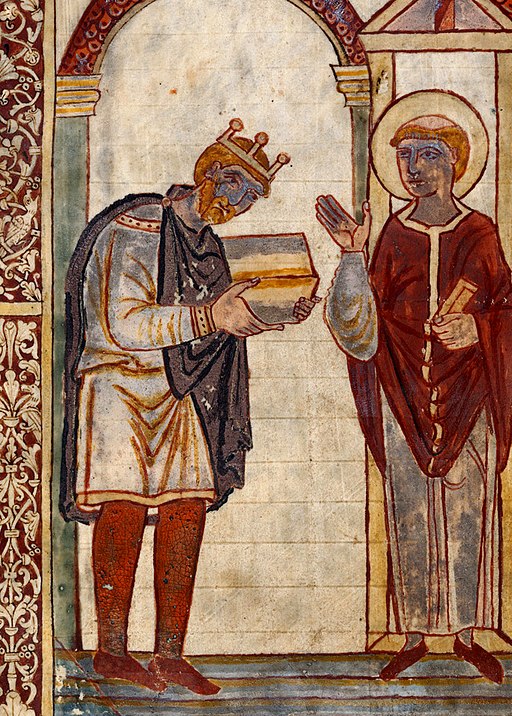
But there is another reason why these helmets might have existed, and that’s because they were for ceremonial purposes. Kings, before the reign of Athelstan (925-937) are not known to have undergone consecration with a crown but rather with a helmet. After all, they were warrior kings. Perhaps then, these survivals are more akin to that worn by a warrior-king when appearing before his people or for ceremonial reasons.

What then might have been the more usual garb for a warrior of the Saxon era, which at nearly six hundred years is bound to offer some variations? Shield, spear, seax, sword and byrnie. We get a feel for these items and how valuable they were from wills that survive from the later Saxon era, hundreds of years after the events of Pagan Warrior. Ealdormen had horses, both saddled and unsaddled, shields, spears, swords, helmets, byrnies, seax, scabbards and spears. The will of Æthelmær, an ealdorman in the later tenth century, records that he’s granting his king, ‘four swords and eight horses, four with trappings and four without, and four helmets and four coats of mail and eight spears and eight shields,’[1] as part of his heriot, a contentious term for something that some argue was an eleventh-century development, and others argue, is merely reflecting earlier practice on the death of a man.
There would also have been thegns and king thegns, who had their own weapons, as well as the men of the fyrd, the free-men who could be called upon to perform military service each year, as and when required. It’s often assumed they would have been less well-armed, although this begs the question of whether kings and their warrior nobility were prepared to sacrifice those they relied on to provide them with food to gain more wealth. They might have found themselves with the money to pay for food but without the opportunity to do so.

There are very few representations of warriors, but the surviving strands of the Gododdin, a sixth-century lament to the fallen of Catraeth gives an idea of how these warrior men thought of one another. There is much talk of killing many enemies, drinking mead, and being mourned by those they leave behind.

Flickr user “Portable Antiquities Scheme”, CC BY 2.0 <https://creativecommons.org/licenses/by/2.0&gt;, via Wikimedia Commons

Battle tactics from the period are impossible to determine fully. Before writing my books which are blood-filled and violent, I read a fascinating account, by a military historian, on how he thought the Battle of Hastings might have been won or lost. The overwhelming sense I came away from the book with was that local features, hillocks, streams, field boundaries even perhaps the path of a sheep track might well be the very thing that won or lost a battle for these opposing sides. The land that kings chose to go to war on was incredibly important,

When trying to reconstruct the battlefield for the battle of Hædfeld, which concludes Pagan Warrior, I encountered a problem that will be familiar to writers of the Saxon era. The place where the battle is believed to have taken place, on the south bank of the River Don (although this has been disputed and work continues to discover whether the other location could be the correct one), has been much changed by later developments. It was drained in the 1600s and therefore, it doesn’t look today as it would have done when the battle took place. 

I had very little information to work on. The River Don, the River Idle, the River Ouse, the belief that the ground would have been marshy, and that many men fell in the battle. And the words of Bede in his Ecclesiastical History, ‘A great battle being fought in the plain that is called Heathfield.’[2] Much of the rest is my imagination.


[1] Dorothy Whitelock, Anglo-Saxon Wills 1930, reprinted edition. Cambridge University Press. p27

[2] http://legacy.fordham.edu/halsall/basis/bede-book2.asp


Posts

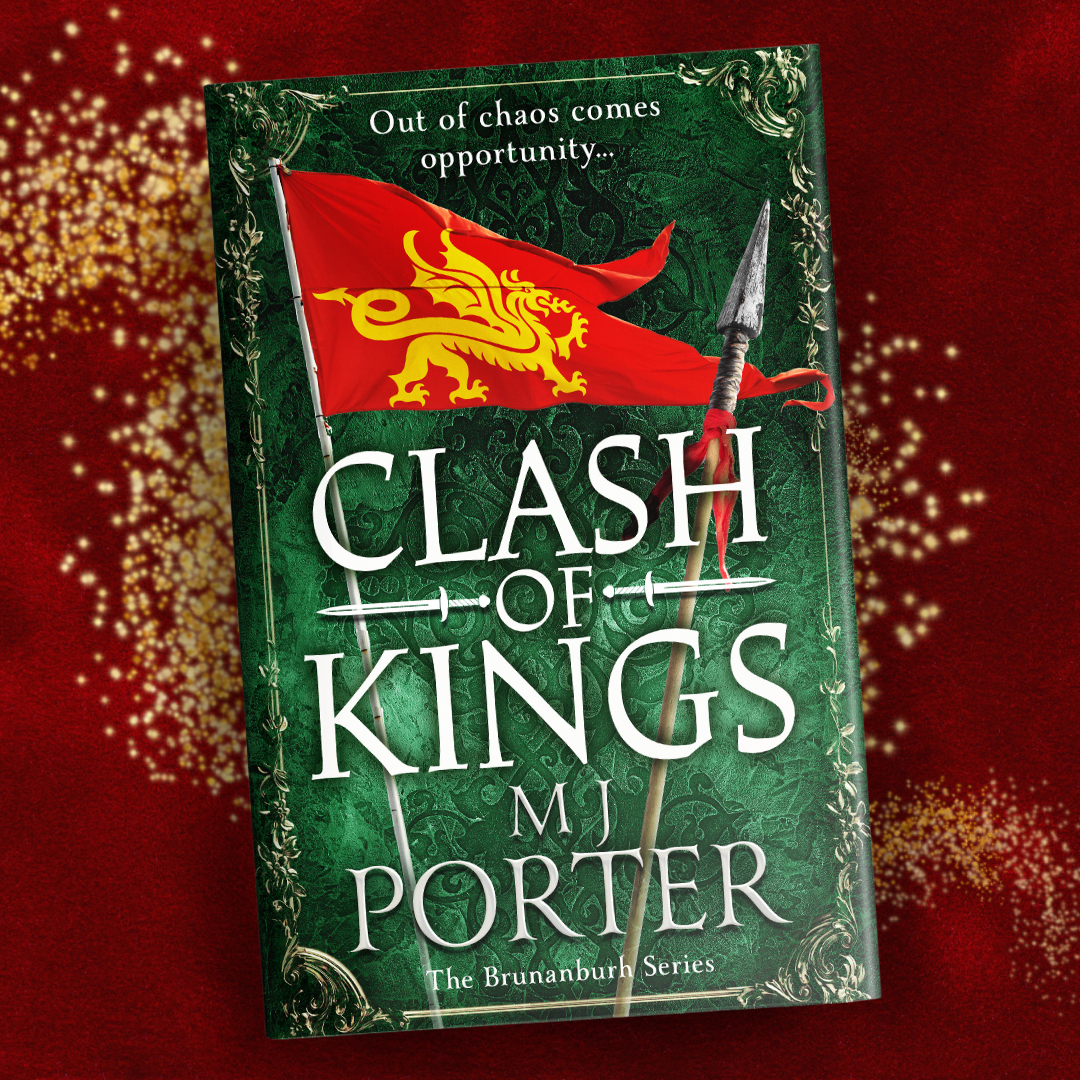
It’s cover reveal day for Clash of Kings, book 3 in the Bruanburh Series

Here’s the blurb

Can the Norse and the Scots exact their revenge over the mighty King Athelstan of the English?

AD937

After the slaughter field of Brunanburh, a defeated Olaf Gothfrithson of the Dublin Norse and Constantin of the Scots narrowly escaped with their lives. In their kingdoms, failure has left them demoralised and weak.

Olaf licks his wounds in Dublin, whilst Constantin and the Welsh kingdoms who defied King Athelstan, are once more forced to bend the knee. As Athelstan’s reputation grows stronger day by day, their need to exact revenge on the overmighty and triumphant Athelstan has never been greater. 

Olaf sets his sights on reclaiming the lost kingdom of Jorvik only for tragedy to strike at the heart of England and a reluctant new King, Edmund steps in the fray.

While England mourns the death of their warrior King, her enemies gather on her borders and England stands alone against the might of the Norse, Welsh and Scots. 

Can the new King be victorious and banish her enemies once and for all or will England, and its king lose all that’s been gained and succumb to a new pretender? 

Preorder Link

books2read.com/clashofkings

Check out the first two books in the series, King of Kings and Kings of War

I’m really excited to share my review for the audio version of The Alewives, written by Elizabeth R Andersen and read by Ella Lynch #blogtour #historicalmystery

Here’s the blurb

Colmar, 1353 CE

Gritta, Appel, and Efi managed to survive the Black Death, only to find that they are in desperate need of money. With limited options and lots of obstacles, they band together to become alewives – brewing and selling ale in the free Alsatian town of Colmar. But when an elderly neighbor is discovered dead in her house, the alewives cannot convince the sheriff and the town council that her death wasn’t an accident, it was murder. As the body count piles up, the ale flows and mystery is afoot!

Set in the tumultuous years after the most devastating pandemic the world has ever experienced, The Alewives is a playful romp through a dark time, when society was reeling from loss and a grieving population attempted to return to normal, proving that with the bonds of love, friendship, and humor, the human spirit will always continue to shine.

* * * * * A short, sharp, snappy, hugely entertaining, medieval mystery that portrays the realities of life at the time, with just the right amount of humour to make it thoroughly entertaining. A well-deserved 5/5 from me! – MJ Porter, author of Cragside and The Erdington Mysteries

* * * *.* ‘The Alewives’ is laid out with great compassion, insight and humour and the reader comes to care for these people! The strong and growing working relationship and friendship of the three ale wives in question and
round which the action evolves is moving and profound. we are left hoping that good times – and further adventures – are just around the corner! – 
The Historical Fiction Company

Purchase Links

Audible

Spotify

Chirp

Kobo

Google Play

Libro.fm 

Nook/Barnes & Noble

BingeBooks

StoryTel

My Review

You can see above that I’ve already read and reviewed The Alewives. (You can find my original review here) You’ll also see that I adored it! What you won’t know is that of late, I’m growing my interest in audio books, and I couldn’t resist this one.

While the storyline is amazing, told with just the right amount of humour, historical detail, intrigue, and the reality of the era, the narration adds a whole new dimension to the tale. Ella Lynch is fabulous in bringing the wonderful ‘real’ characters of Grita, Efi and Appel to life, as well as Colmar, and the collection of bumbling and ineffectual male characters.

This story will make you chuckle, make you grimace, make you growl at the unfairness of their lives, and also entirely draw you in to the mystery.

A fabulous mystery. I’ve read it, and I’ve listened to, and I recommend you do the same.

Meet the author

Although she spent many years of her life as a journalist, independent fashion designer, and overworked tech employee, there have always been two consistent loves in Elizabeth R. Andersen’s life: writing and history. She finally decided to put them both together and discovered her true love.

Elizabeth lives in the Seattle area with her young son and energetic husky. On the weekends she usually hikes in the stunning Cascade mountains to hide from people and dream up new plotlines and characters.

– Join Elizabeth’s monthly newsletter and receive the first two chapters of The Scribe for free. Sign up at https://www.elizabethrandersen.com

– Find photos of hikes and daily author life at Elizabeth’s Instagram: @elizabethrandersen 

– Follow Elizabeth on Twitter for nerdy medieval history facts: @E_R_A_writes 

– Watch Elizabeth try to explain the weird, wonderful world of Medieval life on her TikTok channel: https://www.tiktok.com/@elizabethrandersen

Elizabeth is a member of the Historical Novel Society and the Alliance of Independent Authors.

Connect with the author

elizabethrandersen.com. Instagram. Facebook

Threads. Twitter (X). TikTok

Meet the narrator

My name is Ella Lynch, I am an experienced British audiobook narrator and nature-loving treasure seeker on an ever-evolving journey of connection and expansion through the art of storytelling.

I am an empathetic, married mum of 1, a member of the LGBTQIA+ community and a mental health advocate.  My lived experiences inform my art, helping me deeply connect with the intentions behind words and relay them intuitively to the listener. 

I gained a triple distinction in my (BTEC) National Diploma in Performing Arts from Truro College, and have been working as a professional audiobook narrator since 2018.  In this time I have narrated over 100 audiobooks, voiced numerous healthcare explainer videos for the NHS, provided VO for children’s animated audiobooks and even dubbed a Russian commercial!


I have a particular passion and flair for Magical Realism, Literary Fiction and LGBTQIA+ Romance and Comedy, and as a voracious reader myself I absolutely thrive on bringing all words, across multiple genres, to life for listeners.

When I’m not in my booth you will likely find me walking my dog on the beach, paddleboarding an estuary, exploring the UK in my self-built campervan, playing boardgames and cooking up delicious plant-based feasts for my family.  A vegan of over 20 years,  I love crochet, painting, fires, swimming and hoola-hooping as well as meditating, practicing Reiki and EFT tapping and deep, heart-felt connection.

Connect with Ella Lynch

Ella Lynch (@narrator.ella) • Instagram photos and videos

Ella Lynch (@narrator_ella) / X (twitter.com)

Check out more of Elizabeth R Andersen’s books here.

The Scribe

It’s the anniversary of the battle of Hædfeld, and I’m sharing a post about Britain in the Seventh Century

Here’s the blurb

Britain. AD632.

Penda, a warrior of immense renown, has much to prove if he is to rule the Mercian kingdom of his dead father and prevent the neighbouring king of Northumbria from claiming it.

Unexpectedly allying with the British kings, Penda races to battle the alliance of the Northumbrian king, unsure if his brother stands with him or against him as they seek battle glory for themselves, and the right to rule gained through bloody conquest.

There will be a victor and a bloody loser, and a king will rise from the ashes of the great and terrible battle of Hædfeld.

books2read.com/PaganWarrior

(Nook readers, use code BNPWARRIOR75 to get 75% off the ebook cost)

Britain in the Seventh Century – a patchwork of kingdoms

One of the hardest processes when writing about this very early period of Britain is to get an idea of what the kingdoms might have looked like and to explain this to the reader. The seventh century is often seen as the period when the Heptarchy, the seven very well-known kingdoms of the Saxon period, emerged and formed, ultimately derived from potentially very many much smaller kingdoms, the names of which are only rarely still known.

The Heptarchy consisted of the kingdoms of Northumbria (itself derived from the uniting of Deira and Bernicia), Mercia, the kingdom of the East Angles, Wessex, Sussex, Kent, and Essex. In later centuries, these kingdoms would merge until only four main kingdoms remained, and then, from the early middle of the tenth century, England emerged. But the battle of Hædfeld with which Pagan Warrior concludes was a British-wide battle set as this process was formalising in the seventh century, and there are yet more kingdoms that must be mentioned which didn’t form part of Saxon England.

Scotland didn’t yet exist, but Dal Riata, Pictland and Alt Clut (sometimes called Strathclyde) did. Wales didn’t exist, although the kingdoms of Gwynedd, Deheubarth, Ceredigion and Powys did, The kingdom of Dumnonia (modern-day Cornwall), was also in existence and very much not part of Saxon England. Indeed, these kingdoms are often termed British, as opposed to Saxon. As someone woeful at geography – I purposefully don’t adopt the names of places from this period because it confuses me – I’m only too well aware of how much I’m asking from my reader as it is without adding weird place names to already strange sounding personal names, and yet it was necessary to add a whole host of strange names, which often, have no relation to the current names of counties, let alone kingdoms.

All of these different kingdoms, we’re told, were involved in some way in the battle of Hædfeld. Some of the kingdoms joined the alliance, spear-headed by Cadwallon of Gwynedd, Edwin’s foster-brother. Others joined that of Edwin of Northumbria. Almost all of them took one side or another in the mighty battle of Hædfeld fought in 632 or 633 (there is some confusion about the exact date) between the two sides. To ensure my readers have some idea of who’s who, I’ve termed all of the character’s as being ‘of’ their kingdom, although I’m unsure if that’s actually how they might have been named.

I was surprised by how many individuals could be named from the seventh century, particularly for the build-up to the battle of Hædfeld. The cast is not Game of Thrones huge, but it was larger than I expected. Not just Penda of the Hwicce, only later could he be termed of Mercia, and Cadwallon of Gwynedd in the British ‘alliance’, but also Cloten of Deheubarth, Clydog of Ceredigion, Eiludd of Powys, Clemen of Dumnonia, Domnall Brecc of Dal Riata, Beli of Alt Clut and Eanfrith of Bernicia. While on the Northumbrian led alliance were Edwin of Northumbria, alongside his children, Osfrith and Eadfrith, as well as Eowa of the Hwicce, Osric of Deira – Edwin’s cousin, Cynegils of Wessex, Sigeberht of the East Angles and Oswald of Bernicia – Edwin’s nephew. At least, that’s how I stack the two sides as the battle is about to commence. In later periods, it is sometimes a struggle to find who was king of where and when that might have been, so to find so many characters, even if it can seem a little overwhelming, was fantastic and ensured that the British-wide battle of Hædfeld could be retold in Pagan Warrior with a nod to each of these kings, and the part they might, or might not, have played in the events that played out on that fateful day in October 632 or 633. 

Map of Britain in the 600s, User:Hel-hama, CC BY-SA 3.0 <http://creativecommons.org/licenses/by-sa/3.0/&gt;, via Wikimedia Commons


Sign up to my monthly newsletter to learn more about my writing journey, new releases and special offers, and receive a free short story collection featuring many stories of Saxon England.

I’m delighted to be reviewing A Savage Moon by Theodore Brun #historicalfantasy #NewRelease

Here’s the blurb

Byzantium, 718AD
The great siege is over.
Crippled warrior, Erlan Aurvandil, is weary of war. But he must rally his strength to lead a band of misfit adventurers back to the North, to reclaim the stolen kingdom of his lover, Lilla Sviggarsdottir. For this, they need an army. To raise an army, they need gold.
Together they plot a daring heist to steal the Emperor’s tribute to his ally. Barely escaping with their lives, they voyage north, ready for the fight. But when fate strands them in a foreign land already riven by war, Erlan and Lilla are drawn inexorably into the web of a dark and gruesome foe.
As blades fall and shadows close in, only one thing for them is certain; a savage moon is rising. And it demands an ocean of blood.

Purchase Link

https://amzn.to/3PqH1NY

My Review

A Savage Moon is the fourth book in The Wanderer Chronicles. I’ve read book 1 (You can find the review here), but it was a while ago (2017), and so I can remember some elements of it, but not all of them. I do remember the character of Erlan, or Hakon as I knew him.

A Savage Moon feels very different from how I remember the first book – but this might be more to do with the complete culture shift – we’re no longer in Scandinavia, but Byzantium, and clearly Erlan has been put through the ringer since I last read about him. So I’m going to review this with no reference to the first book.

I love a story of the early eighth century, which takes the reader to complex times and places, all in great flux. 

Byzantium always feels extremely exotic and also well documented. The stories I’ve read set in Byzantium have a familiar feel, and A Savage Moon is as well-researched. The events that befall our collection of characters – there are three main POVs, Erlan, Lilla and Kataros – are really well portrayed. The first part of the book is very exciting for Erlan and Lilla, while Kataros finds his way to another major location, that of Rome, on the cusp of being claimed by the Lombards and increasingly becoming a Christian centre. Again, Rome is well documented, and I loved the recreation of it for this story. 

The author doesn’t stop there but takes us to Austrasia and Neustria, place names that might perplex but which are again enduring significant change as they become the kingdom known by the more familiar name of Frankia. Our characters’ journey is enormous, from Byzantium to Austrasia – a grand tour of Europe at this time.

Not just the locations are varied, but our three characters are all grappling with major life decisions. I really enjoyed the way the stories wound around one another and that there are many incidental characters encountered along the way who all add essential details to the narrative. The climactic reunion between the three, when it comes, because we all know IT IS coming, feels very natural. And I think the scene has been set for a fabulous book 5.

There are still some more fantastical elements to this story – it’s not all history, although we do encounter many ‘real’ historical figures – and the final encounter – A Savage Moon – builds towards a crescendo where the reader is never truly sure who will triumph in the dark woodlands. While the first action scene builds slowly, and as readers, we all wonder how they’ll triumph, the final action scene is the opposite, almost too sudden, too spur of the moment, and the reader can’t help but expect our stranded characters to fail. 

A Savage Moon is vast in scope, but the ending is personal and climactic, a tale of friendship, love, trust and, for one of the characters, renewal, set against a backdrop of almost indescribable savagery. It’s sure to appeal to fans of historical fiction and historical fantasy. 

Meet the author

Theodore Brun is author of the critically-acclaimed historical fiction series, THE WANDERER CHRONICLES.

He studied Dark Age archaeology at Cambridge and afterwards worked for several years in international arbitration law – first in London, then Moscow, Paris, and finally Hong Kong.

In 2010, with the germ of an idea for a novel in his head, he quit his legal job in Hong Kong, jumped on a bicycle and pedalled 10,685 miles across Asia and Europe to his home in Norfolk. There, he sat down in a spider-infested cottage to write the first volume in his epic historical fiction series, THE WANDERER CHRONICLES. Four years later, Corvus Atlantic published his debut novel, A Mighty Dawn. The sequel, A Sacred Storm, was released in June 2018.​ The third book in the series, A Burning Sea, was out in September 2020.


Theo is a third generation Viking immigrant, his Danish grandfather having settled in England in 1932. You might say Viking stories are in his blood. Yet it was only through the unlikely portal of Wagner’s Ring Cycle that he discovered the hoard of ancient Scandinavian and Germanic stories which underlie the works of authors like Tolkein, CS Lewis, George RR Martin, Neil Gaiman, Giles Kristian and Bernard Cornwell to name a few. It was this material that provided the inspiration for THE WANDERER CHRONICLES.​

Theo is married to Natasha. They live in London, together with their girls, Ella, Talitha & Colette, and a wild dog named Wilmo.

https://www.theodorebrun.com

I’m delighted to welcome Susan E Sage and her new novel, Dancing in the Ring, to the blog #HistoricalFiction #HistoricalBiographicalFiction #Historical Romance #BlogTour #TheCoffeePotBookClub

I’m sharing a snippet from Susan E Sage’s new novel, Dancing in the Ring.

Catherine stared at an oak tree outside the classroom window without seeing the young man on the branch staring back in at her. 

That humid early September afternoon, she was preoccupied with the fact that in less than a year, at age twenty-five, she’d be one of only four women in her graduating class. That is, if she passed all her remaining classes at the Detroit College of Law. She’d done well until this point, but anything could happen. Her single hope: to someday soon wear the cap and gown.

Then Catherine noticed the most handsome man she’d ever seen smiling at her from a tree branch. The oak tree was right outside the window, so she could see his brown wavy hair, the cleft in his chin, and even a dimple on his cheek. He wore a straw boater hat and tipped it her way when he caught her noticing him. She knew he was a fellow student as she’d noticed him before in the hallways, and at a few lectures. 

He almost took her breath away, not because he was there on the branch, but because he was so darn handsome. “Only Valentino could compare,” she’d later confide to Molly, her sister. She fanned her face when he persisted to stare at her. Throughout college, she’d prided herself on not having been much distracted by young men, but now she’d become a silly schoolgirl.

Somehow she knew he expected her to avoid his stare. Instead, she returned it. Five minutes left of class, so why not have a little fun? It was also the last day of classes for the term.

As Catherine predicted, he found it unnerving. He imitated an ape and began scratching his underarm. At this, she nudged a friend sitting next to her. “Joan, get a load of what’s outside on the tree branch!” Enjoying even more attention, he began making loud ape-like noises. Then he almost lost his footing. 

Here’s the blurb:

Detroit in the 1920s proved to be the Paris of the West for many – including Catherine McIntosh and Robert Sage. These two law school students become as passionate about each other as they are their dreams.

From a poor family in the Detroit neighborhood of Corktown, Catherine learned early on, the necessity of being resilient. She becomes one of the first women in Detroit to obtain a law degree. Bob, the ‘battling barrister,’ boxes in order to pay for law school. Despite his gruff and tough-boy personality, my great uncle Bob was a friend to all:  judges, cops, and even a couple members of the notorious Purple Gang. The couple becomes legendary in legal circles for their commitment to social justice causes – as well as notorious in the local speakeasies and dancehalls.

At first, their optimism seems boundless, as it had for so many following an era of trauma and challenges that include the 1918 flu pandemic. It isn’t long before their passionate courtship turns into a tempestuous marriage. Then the Great Depression hits and their lives are forever changed. 

Buy Links:

This title is available to read on #KindleUnlimited.

Universal Link:  

Amazon UKAmazon USAmazon AUAmazon CA

Barnes and NobleWaterstonesBlack Rose Writing

Meet the author

Susan Sage has published three novels: Insominy (2015), A Mentor and Her Muse (2017), and Dancing in the Ring (2023). Her writing has appeared in various literary magazines and journals. She received her English degree from Wayne State University where she was a recipient of the Tompkins Award in creative writing. 

Although a Detroit native, she has resided most of her adult life in Flushing, Michigan with her husband and two cats.  

Connect with the author

Website:  Twitter

Facebook: InstagramPinterest

Book BubAmazon Author PageGoodreads

Follow the Dancing in the Ring blog tour with The Coffee Pot Book Club

I’m welcoming The London Forgery by Heidi Eljarbo to the blog #TheLondonForgery #fabiolabennett #DualTimelineMystery #BlogTour #TheCoffeePotBookClub

I’m delighted to welcome Heidi back to the blog with a post about her new novel, The London Forgery.

They say a historical novel takes place at least fifty years back in time. It has its setting in a certain period in history, and the author paints a picture with words of what it was like to live back then. That author must love research, must love history, must love delving into the sight, sounds, and smells of that time.

And what’s not to love about that? I have days when I probably spend more time on research than I do on the actual writing process. Because historical accuracy is important, right? It would be an anachronism to read about a cell phone in a 1960’s novel.

To make things even more complicated, I love dual-timeline novels. And I enjoy writing them. The London Forgery is such a novel. The main character, an art historian named Fabiola Bennett, has been asked to help solve an art mystery…a serious one…and there’s a problem at the National Gallery in London.

The year is 1973. Phew! Just enough years back in time to call it historical fiction. But back up a minute. I was in my early teens in 1973. I’ve lived a while, but don’t feel like I’m historical quite yet. But, oh, how fun it was to check the facts about everything from blue and white police cars to what year chocolate digestives came on the market. I went into my own memory bank when I did research for the main storyand I looked at old pictures. My sister was several years older than me and ruled the fashion of that decade. I can remember the long skirts and dresses I wore, my orange platform shoes, and listening to my favorite music. Back then, my bedroom had green walls and sported a bright-orange plastic lampshade. A small transistor radio tuned to Radio Luxembourg sat on the windowsill.

In The London Forgery, Fabiola rushes off to London. A mysterious note has been delivered anonymously at the door of the National Gallery, and the director needs her help. The message is confusing, but it seems one of her favorite eighteenth-century portraits is in trouble. As always, Fabiola will take too many risks as she tries to solve the mystery involving the British artist Thomas Gainsborough and his 1750 portrait called Mr. and Mrs. Andrews.

But what about the other story? I mentioned The London Forgery is a dual-timeline novel. Each of the books in this series will have a secondary story about a famous artist—a story that blends in with the main theme of the book.

Writing about Gainsborough and his love for his wife, the process of painting the famous masterpiece, and the young sitters Robert and Frances Andrews was pure joy. There’s much information about these two couples. I listened to lectures about them, read umpteen articles, and studied the beautiful painting.

Mr. and Mrs. Andrews now hangs upstairs in room thirty-five in the National Gallery on Trafalgar Square in London. Go see it if you can. It’s worth the trip.

Take care, Heidi Eljarbo 

Here’s the blurb

1973. Art historian Fabiola Bennett sees herself as a prudently observant deer who becomes a daring and even mischievous lioness if the situation calls for it. And that’s exactly what’s required when greedy criminals steal, forge, and tamper with treasured artwork. When the crooks add murder to their list of crimes, the chaos is complete.

A mysterious note is delivered anonymously at the door of the National Gallery in London, and the director immediately calls Fabiola’s office in Oslo and pleads with her to come without delay. The message is confusing, but it seems one of her favorite eighteenth-century portraits is in trouble.

Fabiola hops on the first plane and meets up with her vibrant side-kick Pippa Yates and the ever-loyal Detective Inspector Cary Green from New Scotland Yard. But she is not naïve enough to think untangling the purpose and meaning of the mysterious note will be as simple as a walk in Hyde Park. These things never are.

1750. Newly married Robert and Frances Andrews, members of the landed gentry of Suffolk, England, hire young and talented Thomas Gainsborough to paint their wedding portrait. Their desire is a lovely conversation piece showing their wealth and class, an artwork to remember them by for generations to come.

Little do they know the gifted artist portrays their personalities exactly how he perceives them, and the artistic symbolism is not as flattering as they’d hoped for. Even the looming clouds in the distance promise a troublesome future.

This is the first book in a new dual timeline series by Heidi Eljarbo—an intriguing spin-off from the much-loved Soli Hansen Mysteries.

Fans of Lucinda Riley, Rhys Bowen, Kathleen McGurl, Kate Morton, and Katherine Neville will love this cozy historical art mystery, which takes the readers back to the nostalgia of the groovy seventies and the classical Georgian era of the eighteenth century.

Buy Links:

Available on #KindleUnlimited 

Universal Link

Amazon UKAmazon US

Amazon CAAmazon AU

Meet the author:

Heidi Eljarbo is the bestselling author of historical fiction and mysteries filled with courageous and good characters that are easy to love and others you don’t want to go near.

Heidi grew up in a home filled with books and artwork and she never truly imagined she would do anything other than write and paint. She studied art, languages, and history, all of which have come in handy when working as an author, magazine journalist, and painter. 

After living in Canada, six US states, Japan, Switzerland, and Austria, Heidi now calls Norway home. She and her husband have fifteen grandchildren—so far—in addition to a bouncy Wheaten Terrier.

Their favorite retreat is a mountain cabin, where they hike in the summertime and ski the vast, white terrain during winter.

Heidi’s favorites are family, God’s beautiful nature, and the word whimsical.

Connect with Heidi

Website: 

TwitterFacebook

Instagram: Pinterest

Book BubAmazon Author PageGoodreads

Follow The London Forgery by Heidi Eljarbo blog tour with The Coffee Pot Book Club

Check out Heidi’s previous visits to the blog.

Brushstrokes from the Past

I’m delighted to welcome The King’s Command by Rosemary Hayes to the blog #HistoricalFiction #Huguenots #LouisXIV #BlogTour #TheCoffeePotBookClub

I’m delighted to welcome Rosemary Hayes and her new novel, The King’s Command to the blog.

INSPIRATION AND RESEARCH FOR MY NOVEL ‘THE KING’S COMMAND’

Carving above French Church in London 

I’d always known that I had Huguenot ancestors but had not given it much thought until a cousin mentioned that they had been driven out of France for their religious beliefs. This sparked my interest and I decided to find out more. 

My ancestors – the facts

Many of those who try to trace their Huguenot roots find the process laborious and frustrating, coming across contradictions and going down blind alleys, but I was lucky. A lot is known about my Huguenot forebears, Lydia and Samuel La Fargue. They feature in the Annals of the Huguenot Society and some meticulous research was done on them by an Edwardian ancestor of mine, so I had a head start. 

I knew where they lived in France; in a small town in Gascony, not far from Bordeaux, originally called Castillon-sur-Dordogne and now called Castillon-la-Bataillie. I knew what they did (they were predominately lawyers, physicians and minor nobles) and that they were friends with other prominent Protestant families in the region with whom they inter married and socialised. In the baptism records of the time, it can also be seen that they were godparents to one another’s children. The Edwardian ancestor states that they lived just outside the town centre in ‘the pleasant faubourg’ and, although I found no evidence of this, it seems likely to be true. They also owned land in the plains South of the town.

So, they came from the bourgeoisie, were committed Huguenots, following the teachings of Calvin, and their own ancestors had fought against the Catholics in the sixteenth century Wars of Religion. 

I also knew that Lydia, Samuel, their surviving children and Lydia’s widowed mother left Castillon and fled to Geneva in 1690. And also, intriguingly, that Samuel returned alone to Castillon in 1692 where he died, aged 32, on the very day on which he converted to Catholicism.  He may, of course, have died from natural causes, but these were turbulent times, so who knows? I did discover from local documents that he had returned to try and reclaim forfeited property.

After his death Lydia, her children and her mother then left Geneva for London and settled in the pleasant village of Hammersmith where there was a small Huguenot community. Lydia’s only surviving child, Elias, became a Church of England vicar in Lincolnshire and is my direct ancestor.

Why did the Huguenots flee France? A brief background

The wars of religion between Protestants and Catholics raged in France during the second half of the 16th century where hatred ran deep, armies were raised and atrocities committed by both sides. These wars were finally brought to an end through the actions of King Henry IV. Henry, originally a Protestant, was a pragmatist. In a bid to unite the country he converted to Catholicism, reportedly saying “Paris is well worth a mass” and promulgated the Edict of Nantes (1598) which granted official tolerance to Protestantism,  and for eighty years or so the Huguenots thrived. 

Henry’s successors, however, were far less tolerant of the Huguenots, destroying their strongholds and breaking up their military organisation and when the young Louis XIV  finally took control of his throne in 1661, he vowed to make France a wholly Catholic country and wipe out the ‘false religion’ of Protestantism once and for all. During his reign, the Edict of Nantes, which had protected Huguenots for so long, was revoked and their lives became impossible.

Unless they denied their faith, they would forfeit their property, be unable to practise their professions or trades and their children would be forcibly removed from them to be brought up as Catholics. They were banned from holding gatherings, even in private, and their temples were destroyed. Yet they were not allowed to leave the country; the King did not want to lose the skills of these hardworking and successful people.

here destruction of Huguenot temple 

Hardly surprising then, that many converted and many fled despite the penalties if they were caught.

Huguenot women in prison 

The fiction

It has been an intriguing journey finding out about my ancestors and, more generally, about the circumstances which forced Huguenots like them to flee France. My book ‘The King’s Command’ is based, very loosely, on their experience. I have set the story in Castillon, called the main character Lydia (or Lidie, as she was known by her family) and her husband Samuel, but a lot of the other characters are fictional, as is the account of Samuel’s death and Lidie’s escape. I know nothing of the family’s actual escape to Geneva but night travelling was common. There were ‘Huguenot Trails’ known only to those within a trusted network, safe houses along the escape routes, false identities adopted and bribes paid. There were also plenty of financial rewards offered to those betraying Huguenots and to soldiers finding stowaways, with spies and informers everywhere, so any escape would have been fraught with danger.

In my story, I have made Lidie stay in Castillon and then escape not from nearby Bordeaux, which was heavily guarded, but from a little port called La Tremblade a good way up the West coast. Many Huguenots did escape from here and I used, as background, a contemporary account of one such escape, cranking up the tension as the family tried to avoid detection. 

To add to the tension, I made the King’s dragoons visit Castillon to try and force unconverted Huguenot households to abjure. I don’t know if this is true, but certainly there were plenty of reports of this happening in the region.

dragoon forcing Huguenot to sign abduration papers 

I also made Samuel die a violent death as a direct result of his association with Claude Brousson, a Protestant lawyer and preacher who fought tirelessly for justice for the Huguenots. Brousson had to flee for his life to Switzerland and then, very bravely, returned in secret to become part of the Church of the Desert, in the wild and mountainous region of the Cevennes, where he preached and gave succour to his fellow Protestants. He died a martyr and hero but he is largely forgotten now and I felt he merited some recognition.

In reality, once Lidie reached London, it seems that she led a very quiet and worthy life, centred on the French church in Hammersmith, but I decided to make her lively and vivacious with a strong character and a love of fashion and of the new silks being made in Spitalfields. I also invented for her a naughty surviving daughter, a new romance and another child from a (fictitious) second marriage. 

In her will, Lidie left the bulk of her estate to her son Elias and the rest to the French church in Hammersmith and the French poor of London. It seems that she was still relatively well off and it is known that she brought with her from France some family portraits (presumably taken out of their frames and rolled up), some small pieces of family silver and the La Fargue seal.

The Huguenots were hardworking and talented people and they integrated so seamlessly into their adopted countries that, generations on, it is easy to forget the circumstances which forced them to flee their native France in the 17thcentury. 

Thank you so much for sharing your fabulous post.

Here’s the blurb

16 year old Lidie Brunier has everything; looks, wealth, health and a charming suitor but there are dark clouds on the horizon. Lidie  and her family are committed Huguenots and Louis XIV has sworn to stamp out this ‘false religion’ and make France a wholly Catholic country. Gradually Lidie’s comfortable life starts to disintegrate as Huguenots are stripped of all rights and the King sends his brutal soldiers into their homes to force them to become Catholics. Others around her break under pressure but Lidie and her family refuse to convert. With spies everywhere and the ever present threat of violence, they struggle on. Then a shocking betrayal forces Lidie’s hand and her only option is to try and flee the country. A decision that brings unimaginable hardship, terror and tragedy and changes her life for ever.

‘One of the very best historical novels I have ever read’

Sandra Robinson, Huguenot Ancestry Expert

Buy Links: 

This title is available to read with #KindleUnlimited.

Universal Link

Amazon UKAmazon US

Amazon AUAmazon CA

Meet the author

Rosemary Hayes has written over fifty books for children and young adults. She writes  in different genres, from edgy teenage fiction (The Mark), historical fiction (The Blue Eyed Aborigine and Forgotten Footprints), middle grade fantasy (Loose Connections, The Stonekeeper’s Child and Break Out)  to chapter books for early readers and texts for picture books. Many of her books have won or been shortlisted for awards and several have been translated into different languages.

Rosemary has travelled widely but now lives in South Cambridgeshire. She has a background in publishing, having worked for Cambridge University Press before setting up her own company Anglia Young Books which she ran for some years. She has been a reader for a well-known authors’ advisory service and runs creative writing workshops for both children and adults.

Rosemary has recently turned her hand to adult fiction and her historical novel ‘The King’s Command’ is about the terror and tragedy suffered by the French Huguenots during the reign of Louis XIV.

Connect with the author

Website Twitter Amazon Author Page Goodreads 

Follow The King’s Command blog tour with The Coffee Pot Book Club

I’m on The Joys of Binge Reading Podcast this week

For the first time ever, I’m on a podcast. Come and listen to me talk to the fabulous Jenny Wheeler about all things Saxon, and just what I really think of the term ‘the Dark Ages.’

Listen on The Joys of Binge Reading website, where you can also find links and a transcript of the podcast, or via Spotify below, and be sure to check out the other fab authors Jenny has featured on the podcast.

The setting for Protector of Mercia

If you’ve read a few of my books, you’ll know that I don’t very often venture into the Saxon lands on the north-west coast of England. (I know that Ealdorman Leofwine visits there in his second book, but I didn’t know better then). There’s a very good reason for this. I am, quite frankly, a bit scared to do so. Mainly because I don’t feel as though I can get a firm understanding of what was happening there during the Saxon era. (I would say the same about Cornwall/Devon – and that’s because there are various references to the area coming under Saxon control – only to be repeated a later period, so it clearly didn’t happen when some of the sources say it did).

Some research will highlight the Norse element of the area, and others will call it Cumbria, or Northumberland. And in the 830s, before the main ravages of the Viking raiders, it feels very unknown to me.

But, in Protector of Mercia, I do take young Icel to the north-west – no doubt to test myself and to see if I could do it.

I think we can start with Chester, which admittedly, would probably have been classified as being in Mercia. Chester, a former roman site, is well-known, even now there are standing Roman ruins. Admittedly, what Chester might have been like in the 830s is more difficult to pin point – so I had a bit of fun with that.

And after Chester? What then? I like to make use of old maps when I’m trying to reconstruct the past (the one above is a road map, so looks a bit unusual). Yes, they’re still positively modern but I find it easier than using Googlemaps where there’s too much ‘modern’ to look at. The starkness of antique maps isn’t always quite as extreme as on the map below of Cheshire from 1835 which shows the voting hundreds but there’s always something of value in them, even if its just revealing where the rivers are in relation to settlements – if you use Googlemaps you might become distracted by canals and other, much later, attempts to control rivers.

Indeed, we almost go from one extreme to another when looking at the map for Cumbria or Cumberland as the map calls it. This is from 1895 so is much more modern.

But it’s the map below that should put the problems into context. This is a snippet from Britain in the Dark Ages, an Ordnance Survey map from 1966, which shows just how stark the landscape might have been (I don’t doubt that we should, hopefully, know a bit more in the intervening 50+ years).

So, there’s not a lot to go on, and I’m sending poor Icel north-west, so it’ll be interesting to see what he discovers.

Protector of Mercia is released today, 5th September, in ebook, audio and paperback. The hardback will be ready soon.

books2read.com/protectorofmercia

Check out the release day blog and the Eagle of Mercia Chronicles page on my blog.


Sign up to my monthly newsletter to learn more about my writing journey, new releases and special offers, and receive a free short story collection.