On this day in history (nearly), the death of Athelstan, the King of the English.

On the 27th October 939, the death of Athelstan, the first king of the English, at Gloucester. The symmetry of the death of King Athelstan and King Alfred, his grandfather, is noted in the Anglo-Saxon Chronicle A text, ‘40 years all but a day after King Alfred passed away’.[i] 


[i] Swanton, M. ed. and trans. The Anglo-Saxon Chronicles, (Orion Publishing Group, 2000), p.110

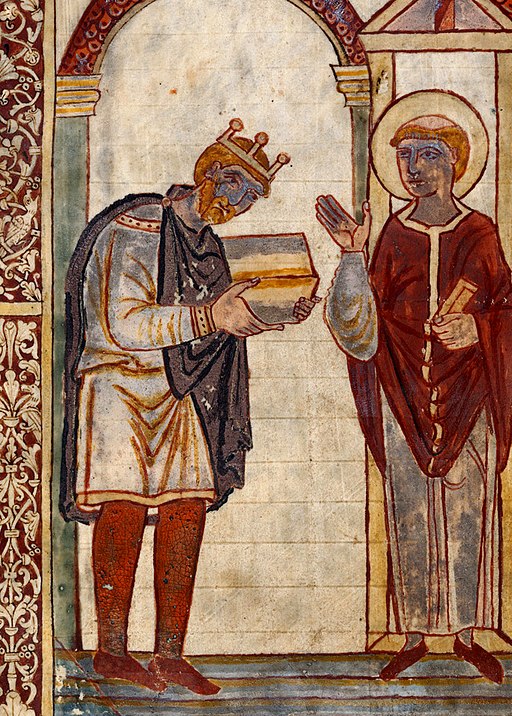
We don’t know for sure who Athelstan’s mother was, it’s believed she might have been called Ecgwynn. We don’t know, for certain, the name of his full sister, but it’s believed she might have been named Edith or Ecgwynn after her mother. What is known is that his father was Edward, the son of King Alfred, and known to us today as Edward the Elder. Athelstan is rare in that he is one of only two Saxon kings for whom a contemporary image is available. (The other is Edgar, who would have been his nephew)

It must be supposed that Athelstan was born sometime in the late 890s. And according to a later source written by William of Malmesbury in the 1100s (so over two hundred years later), was raised at the court of his aunt, Æthelflæd of Mercia. David Dumville has questioned the truth of this, but to many, this has simply become accepted as fact.

‘he [Alfred] arranged for the boy’s education at the court of his daughter, Æthelflæd and Æthelred his son in law, where he was brought up with great care by his aunt and the eminent ealdorman for the throne that seemed to await him.’[i]


[i] Mynors, R.A.B. ed and trans, completed by Thomson, R.M. and Winterbottom, M. Gesta Regvm AnglorvmThe History of the English Kings, William of Malmesbury, (Clarendon Press, 1998), p.211 Book II.133

Why then might this have happened? Edward became king on the death of his father, Alfred, and either remarried at that time, or just before. Edward’s second wife (if indeed, he was actually married to Athelstan’s mother, which again, some doubt), Lady Ælfflæd is believed to have been the daughter of an ealdorman and produced a hefty number of children for Edward. Perhaps then, Athelstan and his unnamed sister, were an unwelcome reminder of the king’s first wife, or perhaps, as has been suggested, Alfred intended for Athelstan to succeed in Mercia after the death of Æthelflæd, and her husband, Æthelred, for that union produced one child, a daughter named Ælfwynn.
Frontispiece of Bede’s Life of St Cuthbert, showing King Æthelstan (924–39) presenting a copy of the book to the saint himself. 29.2 x 20cm (11 1/2 x 7 7/8″). Originally from MS 183, f.1v at Corpus Christi College, Cambridge. (Wikimedia Commons)

What is known is that following the death of King Edward in 924, Athelstan was acknowledged as the king of Mercia; his half-brother, Ælfweard was proclaimed king in Wessex for a very short period.

‘Here King Edward died at Farndon in Mercia; and very soon, 16 days after, his son Ælfweard died at Oxford; and their bodies lie at Winchester. And Athelstan was chosen as king by the Mercians and consecrated at Kingston.’[i]


[i] Swanton, M. trans and edit The Anglo-Saxon Chronicles, (Orion Publishing Group, 2000), D text p.105

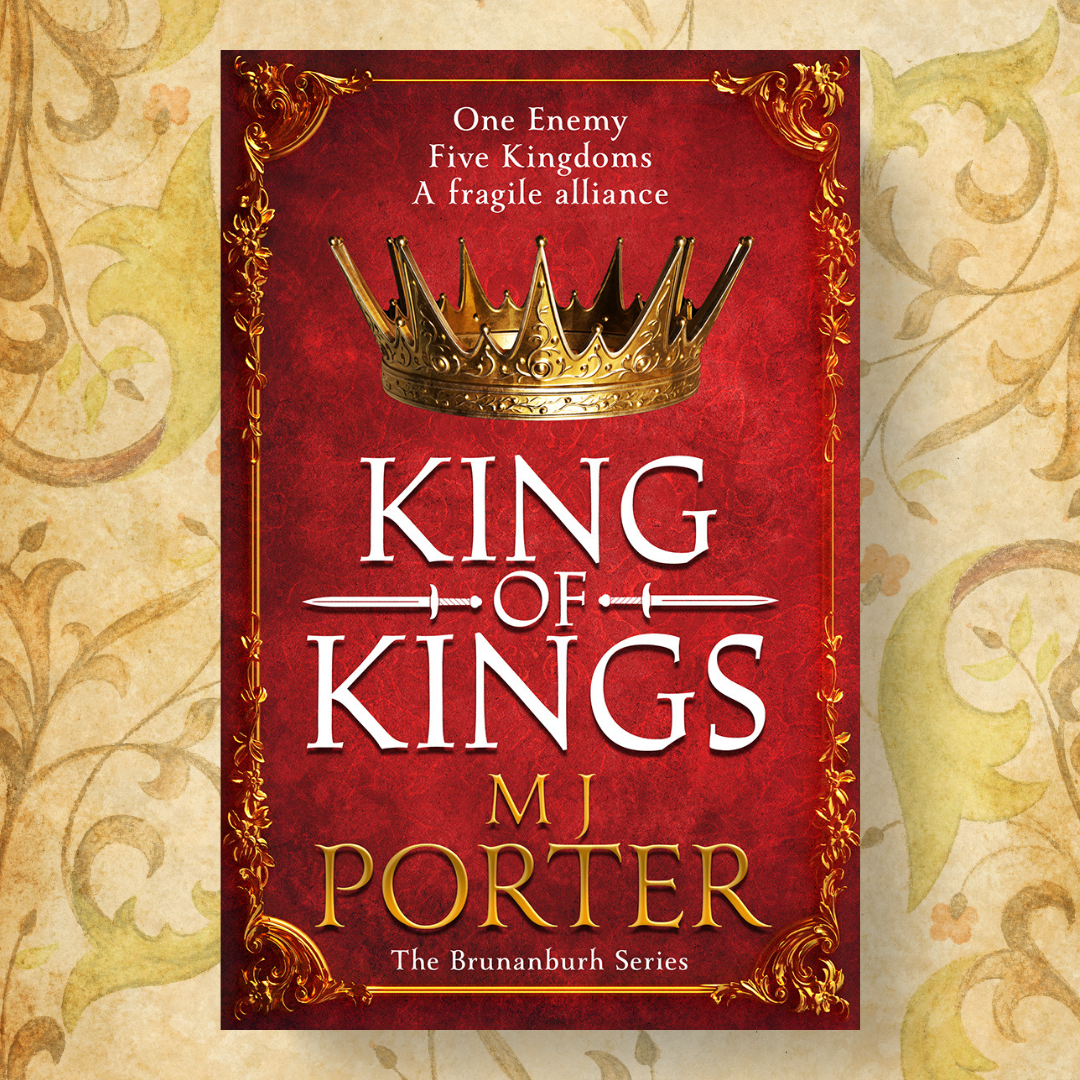
Design by Boldwood Books

But Ælfweard’s reign was short-lived and Athelstan was eventually proclaimed king of Wessex, as well as Mercia, and then, in time, as the king of the English, although his acceptance by the Wessex witan has been seen as very grudgingly given.

Whatever the exact details of the beginning of his kingship, Athelstan was consecrated in September 925, and the words of the ceremony are believed to survive (there is an argument as to whether the ceremony was written for his father or for him), and during the ceremony Athelstan was proclaimed as king not with the placement of a warrior helm on his head, but instead, with a crown, the first known occurrence of this in England.

Here’s my reimagining of the ceremony in King of Kings,

Athelstan, Kingston upon Thames, September AD925

‘This means that only a year after my father’s untimely death, the kingdoms of Mercia, those parts of the East Anglian kingdom that my father lately reclaimed, Wessex and Kent, are reunited again under one ruler. The Saxons, or rather, the English, have just one king. And this is my moment of divine glory, when, before the men and women of the Mercian and Wessex witan, I’ll be proclaimed as king over all.

A prayer is intoned by the archbishop of Canterbury, Athelm, appealing to God to endow me with the qualities of the Old Testament kings: Abraham, Moses, Joshua, David and Solomon. As such, I must be faithful, meek, and full of fortitude and humility while also possessing wisdom. I hope I’ll live up to these lofty expectations.

I’m anointed with the holy oil and then given a thick gold ring with a flashing ruby to prove that I accept my role as protector of the one true faith. A finely balanced sword is placed in my hands, the work of a master blacksmith, with which I’m to defend widows and orphans and through which I can restore things left desolated by my foes, and my foes are the Norse.

Further, I’m given a golden sceptre, fashioned from gold as mellow as the sunset, with which to protect the Holy Church, and a silver rod to help me understand how to soothe the righteous and terrify the reprobate, help any who stray from the Church’s teachings and welcome back any who have fallen outside the laws of the Church.

With each item added to my person, I feel the weight of kingship settle on me more fully. I may have been the king of Mercia for over a year now, the king of Wessex and Kent for slightly less time, but this is the confirmation of all I’ve done before and all I’ll be in the future.

It’s a responsibility I’m gratified to take, but a responsibility all the same. From this day forward, every decision I make, no matter how trivial, will impact someone I now rule over.

*******

And I? I’m the king, as my archbishop, Athelm of Canterbury, proclaims to rousing cheers from all within the heavily decorated church at Kingston upon Thames, a place just inside the boundaries of Wessex but not far from Mercia. It’s festooned with bright flowers and all the wealth this church owns. Gold and silver glitter from every recess, reflecting the glow of the hundreds of candles.

I’m more than my father, Edward, was and I’m more than my grandfather, Alfred, was. I’m the king of a people, not a petty kingdom, or two petty kingdoms, with Kent and the kingdom of the East Angles attached.

It’s done. I’m the anointed king of the English, the first to own such a title. I’ll protect my united kingdom, and with God’s wishes, I’ll extend its boundaries yet further, clawing back the land from the Five Boroughs and bringing the kingdom of the Northumbrians, and even the independent realm of Bamburgh, under my command.’


And Athelstan’s life is one of vast events. His reach extended far beyond the confines of England, or even the British Isles, his step-sisters making political unions in East and West Frankia, and his nephew becoming king of the West Franks. But he is perhaps best known for his victory at Brunanburh, over a coalition of the Scots and the Dublin Norse, and it is the tale of this great battle, and the events both before and afterwards, that I retell in the Brunanburh Series.

His death, on 27th October 939, can arguably be stated to have reset the gains made after Brunanburh, and set the creation of ‘England’ back, as his much younger step-brother battled to hold onto his brother’s gains, but for now, it is Athelstan and his triumphs which much be remembered, and not what happened after his untimely death.

books2read.com/King-of-Kings

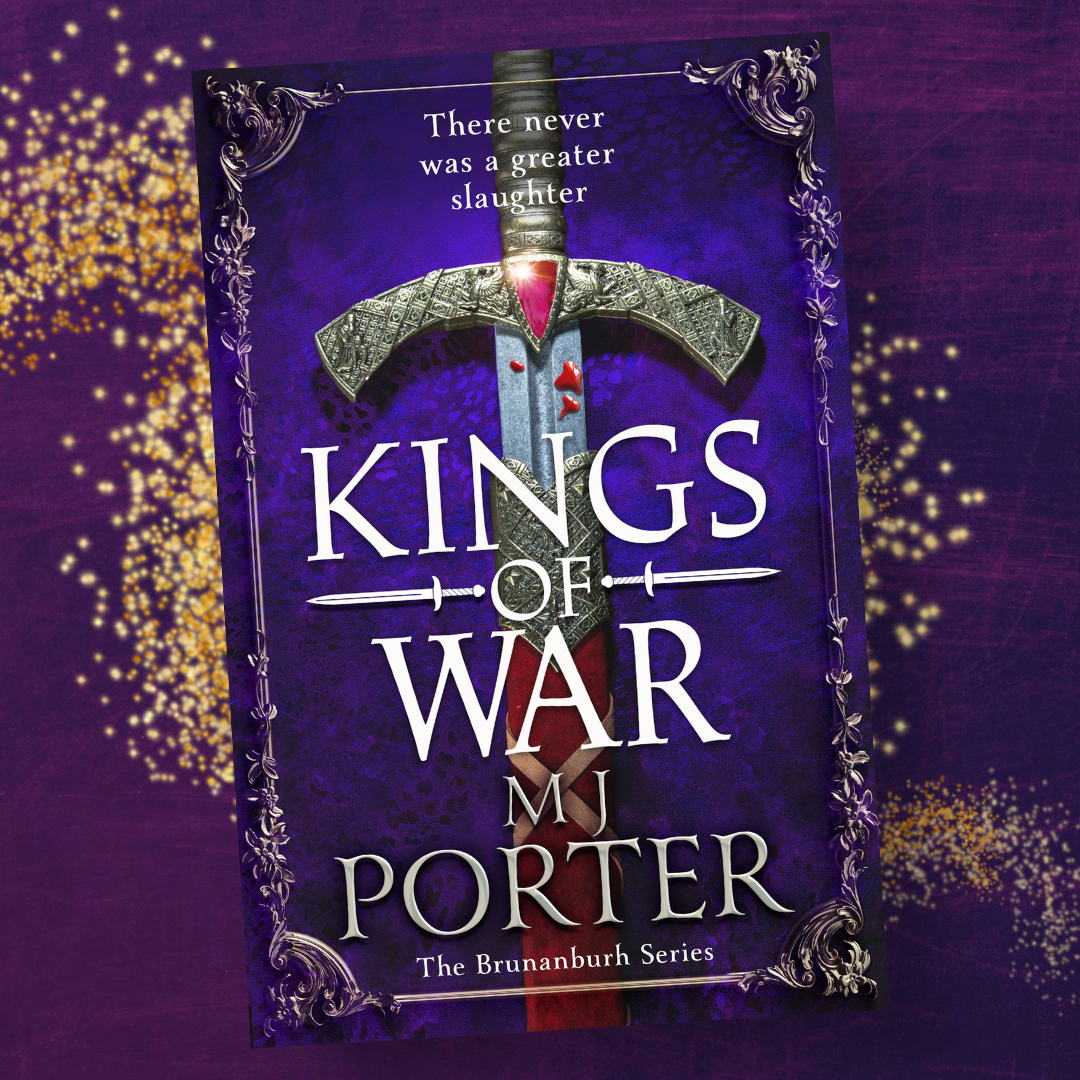
books2read.com/kingsofwar


Check out my Brunanburh series page for more information about Athelstan, and his fellow kings.

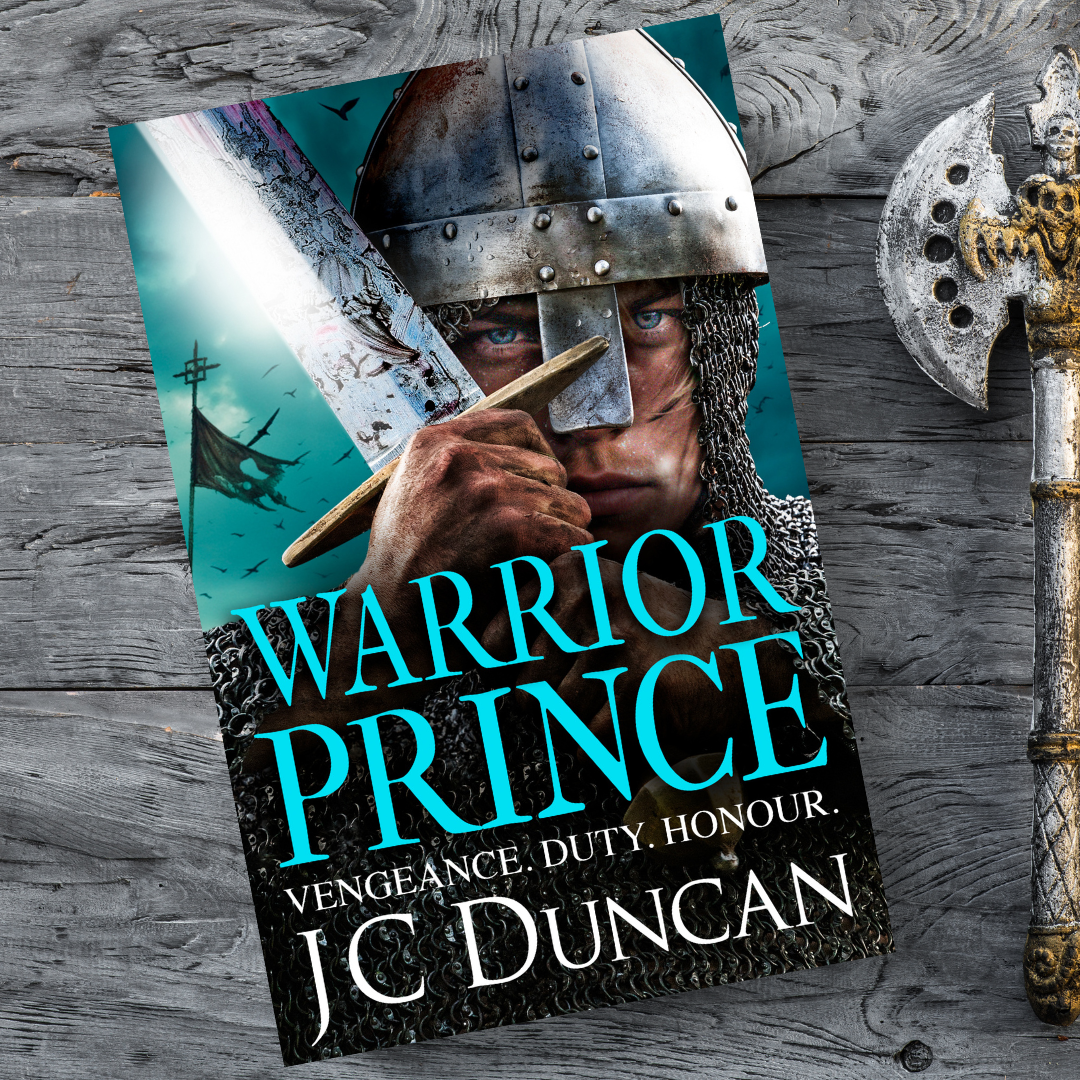
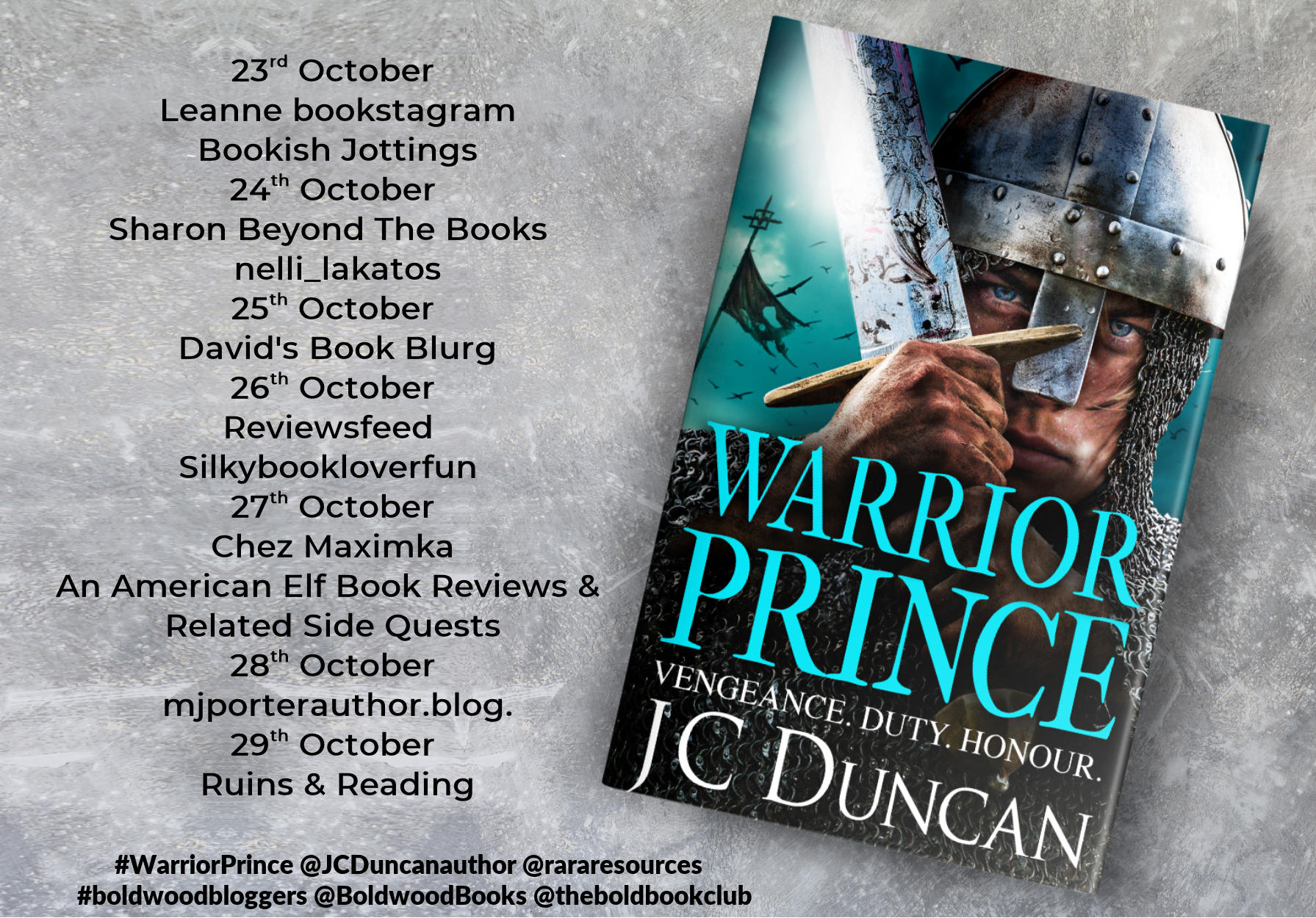
Today, I’m delighted to be reviewing Warrior Prince by JC Duncan #blogtour #historicalfiction

Here’s the blurb

Prince. Mercenary. Exile. The lost throne of Norway must be won in foreign lands. 

1030 AD

Some men are gifted a crown. Others have to fight to claim it.

Exiled from Norway, Harald Sigurdsson, brother to murdered King Olaf, must battle mercilessly for survival in the lands of the Kievan Rus.

His brother’s legacy gifts him a warband of hardened warriors and entry to the court of Prince Yaroslav the Wise. By his wits, sword and skill in battle, Harald must learn not just to survive but to triumph.

He fights for glory, for fame, and to regain his family’s battle-stolen throne. But his greatest challenge may not come from battlefield foes but from those who stand by his side.

The first instalment in a remarkable story of an exiled boy’s incredible journey to become Harald Hardrada; The Hard Ruler and The Last Viking.

Purchase Link

https://mybook.to/warriorprincesocial

My Review

Harald Sigurdsson, who we know more often as Harald Hardrada, is a historical individual who is ‘on my radar’ as it were for my The Earls of Mercia series. So far, he’s only had the odd mention because I’m still 20 years from the events of 1066 at Stamford Bridge, but never fear, for JC Duncan is telling Harald’s story from the events that see his half-brother, Olaf, later St Olaf, cut down at the Battle of Stiklestad in 1030. 

Adopting a narrator style for the book, we see Harald trying to regroup after his brother’s defeat and murder. He seeks somewhere for him and what remains of his brother’s warriors to retreat to, and the tale is told through the eyes of the fictional Eric, who has seen it all and now, as an old man, wants to share his stories of Harald with an appreciative audience back in Norway. 

This is very much a story of Harald’s time in the lands of the Rus and the overwhelming odds he often faces in battle as he rises through the ranks to serve Prince Yaraslov. We also see him struggling with the clash of cultures – the more sophisticated and complex ideals of the Rus flummoxing a man more used to seeing warriors have a bloody good fight.

Harald quickly earns himself an enemy, one who bedevils him at various points throughout the story and who I’m sure will continue to do so as the young man tries to discover who he is while learning to command his warriors.

This is an epic tale, with elements burbling away in the background that will continue to develop in later books. Using a narrator enables the tale to skip over some of the more mundane aspects of Harald’s story, ensuring the reader is constantly faced with some new dilemma for Harald to surmount or fail. However, failure is never really an option. After all, he is a Hard-ruler, and many of his decisions may stun the reader as the body count increases.

JC Duncan’s Harald is indeed a hard man, unhappy making mistakes or being embarrassed, determined to build his reputation, even while bidding his time, determined that one day he’ll claim back his brother’s lost kingdom of Norway. He is perhaps too naïve and a little too sure of himself on occasion, and these very real character traits lend themselves to an engaging retelling. However, this isn’t a quick read. There’s much to absorb as you, alongside the character, embark on a very real journey to the land of the Rus and encounter their enemies and allies, the knowledge that our narrator still lives, the only hope for Harald’s success.

An engrossing tale of Harald Hardrada’s early years, brimming with historical detail and brave daring do. This is the story of a man who will become a legend, told lovingly through the eyes of one of his loyal followers and sure to delight readers.

Meet the author

J. C. Duncan is a well-reviewed historical fiction author and amateur bladesmith, with a passion for Vikings.

Connect with JC Duncan

Facebook: https://www.facebook.com/JCDuncanAuthor

Twitter: https://twitter.com/JCDuncanauthor

Instagram: https://www.instagram.com/j.c.duncan/?hl=enn   

Bookbub profile: https://www.bookbub.com/authors/j-c-duncan

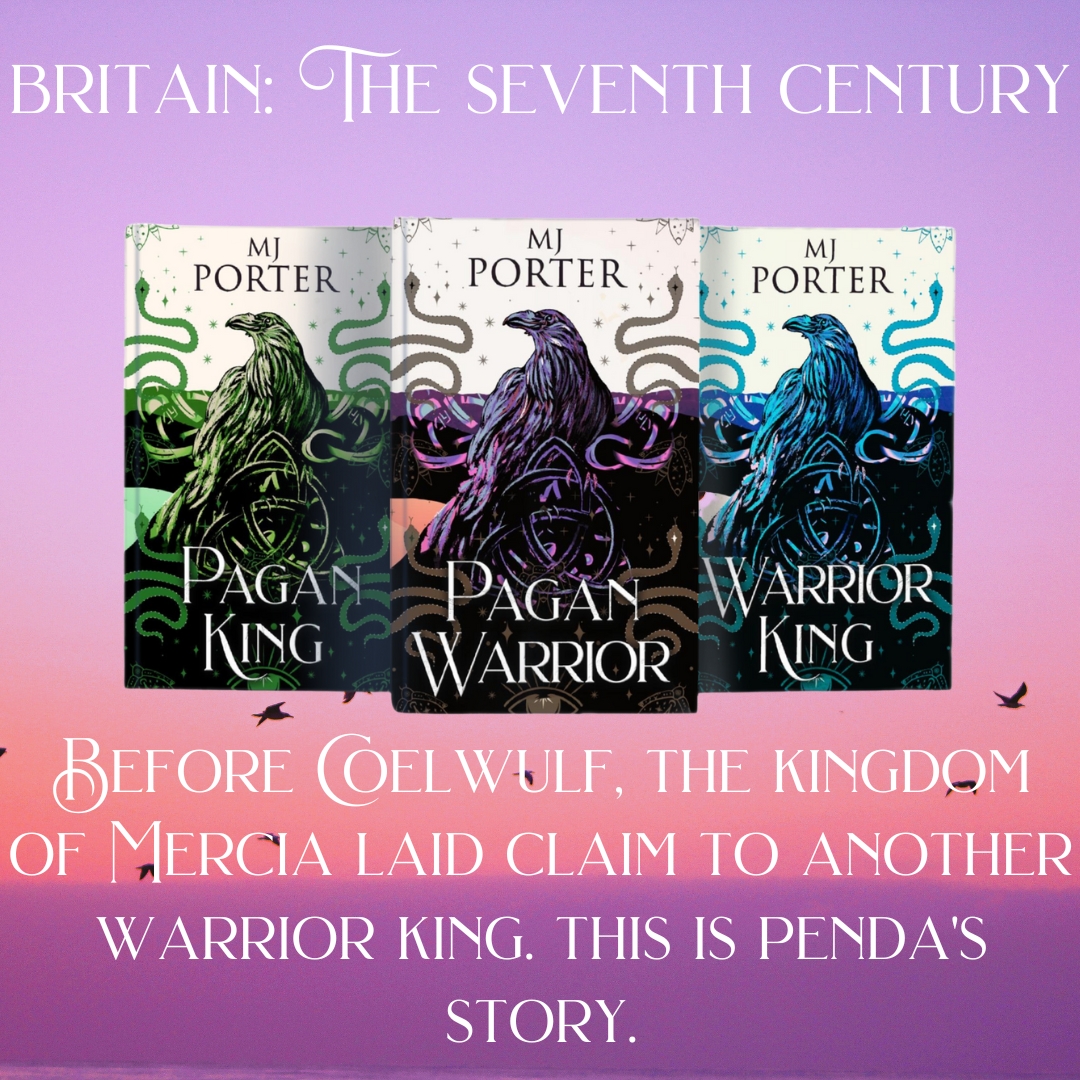
I’m sharing a blog post about Penda, king of the Mercians.

Penda of Mercia

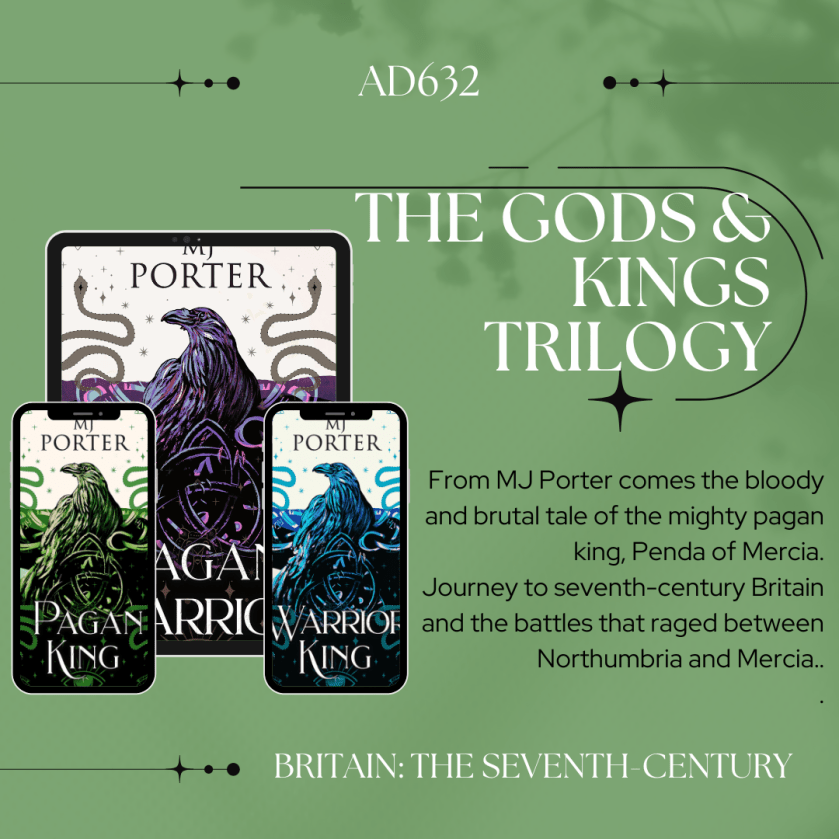
Penda of Mercia is famous for many things, including killing two Northumbrian kings throughout his life. He’s also famous for being a pagan at a time when Roman Christianity was asserting itself from the southern kingdom of Kent. But who was he?

Who was Penda of Mercia?

Penda’s origins are unclear. We don’t know when he was born or where he came from, although it must be assumed he was a member of a family from which the growing kingdom of Mercia might look for its kings. He’s often associated with the subkingdom of the Hwicce, centered around Gloucester. The later source, the Anglo-Saxon Chronicle, written at least two hundred and fifty years after his life records,

626 ‘And Penda had the kingdom for 30 years; and he was 50 years old when he succeeded to the kingdom.’ ASC A p24

626 ‘And here Penda succeeded to the kingdom, and ruled 30 years.’ ASC E p25

Knowing, as we do, that he died in 655, this would have made Penda over eighty years old at his death, a fact that is much debated. Was his age just part of the allure of the legend? A mighty pagan warrior, fighting well into his eighties? Sadly, we may never know the truth of that, but it is disputed, and there are intricate problems with the sources that boggle the brain.

Hædfeld, Maserfeld and Winwæd

Suffice it to say, we don’t know Penda’s age or origins clearly, but we do know that he was involved in three very famous battles throughout the middle years of the seventh century, that at Hædfeld in 632/33 fought somewhere close to the River Don, in which King Edwin of Northumbria was killed. That of Maserfeld, in 641/2 in which King Oswald of Northumbria was killed, close to Oswestry, not far from today’s Welsh border. And Penda’s final battle, that of Winwæd in 655 in which he was killed while fighting in the north, perhaps close to Leeds. While these are the battles we know a great deal about, thanks to the writings of Bede and his Ecclesiastical History of the English People, a Northumbrian monk, with an interest in Northumbria’s religious conversion, who completed his work in 731, Penda was a warrior through and through. He fought the kingdoms to the south, the West Saxons, or Wessex as we might know it. He fought in the kingdom of the East Angles. He allied with Welsh kings. He meddled in affairs in Northumbria, and had he not died in 655, it is possible that Northumbria’s Golden Age would have ended much sooner than it did. His son married a Northumbrian princess. His daughter married a Northumbrian prince. Penda was either brokering an alliance with Northumbria or perhaps using marriage as a means of assimilating a kingdom that he was clear to overrun. 

Bede

Our narrator of Penda’s reign, is sadly a Christian monk writing up to seventy years after his death. His commentary is biased, and his story is focused on the triumph of religion and Northumbria, probably in that order. And yet, as Bede’s work was coming to its conclusion, even he understood that the Golden Age of Northumbria was coming to an end. A later king, Æthelbald, related not to Penda, but to his brother, Eowa, killed at the battle of Maserfeld, although whether fighting beside his brother or for the enemy is unknown, was the force in Saxon England at the time. How those words must have burned to write when Bede couldn’t skewer the contemporary narrative as he might have liked.

But while Penda’s reign is so closely tied to the words of Bede, our only real source from the period in Saxon England, although there are sources that exist from Wales and Ireland, Penda’s achievements aren’t to be ignored.

Penda’s reputation

Recent historians cast Penda in a complimentary light. D.P. Kirby calls him ‘without question the most powerful Mercian ruler so far to have emerged in the Midlands.’ Frank Stenton has gone further, ‘the most formidable king in England.’ While N J Higham accords him ‘a pre-eminent reputation as a god-protected, warrior king.’ These aren’t hastily given words from men who’ve studied Saxon England to a much greater degree than I have. Penda and his reputation need a thorough reassessment.

After his death, his children ruled after him, but in time, it was to his brother’s side of the family that later kings claimed their descent, both King Æthelbald and King Offa of the eighth-century Mercian supremacy are said to have descended from Eowa.


Check out the Gods and Kings page for more information.

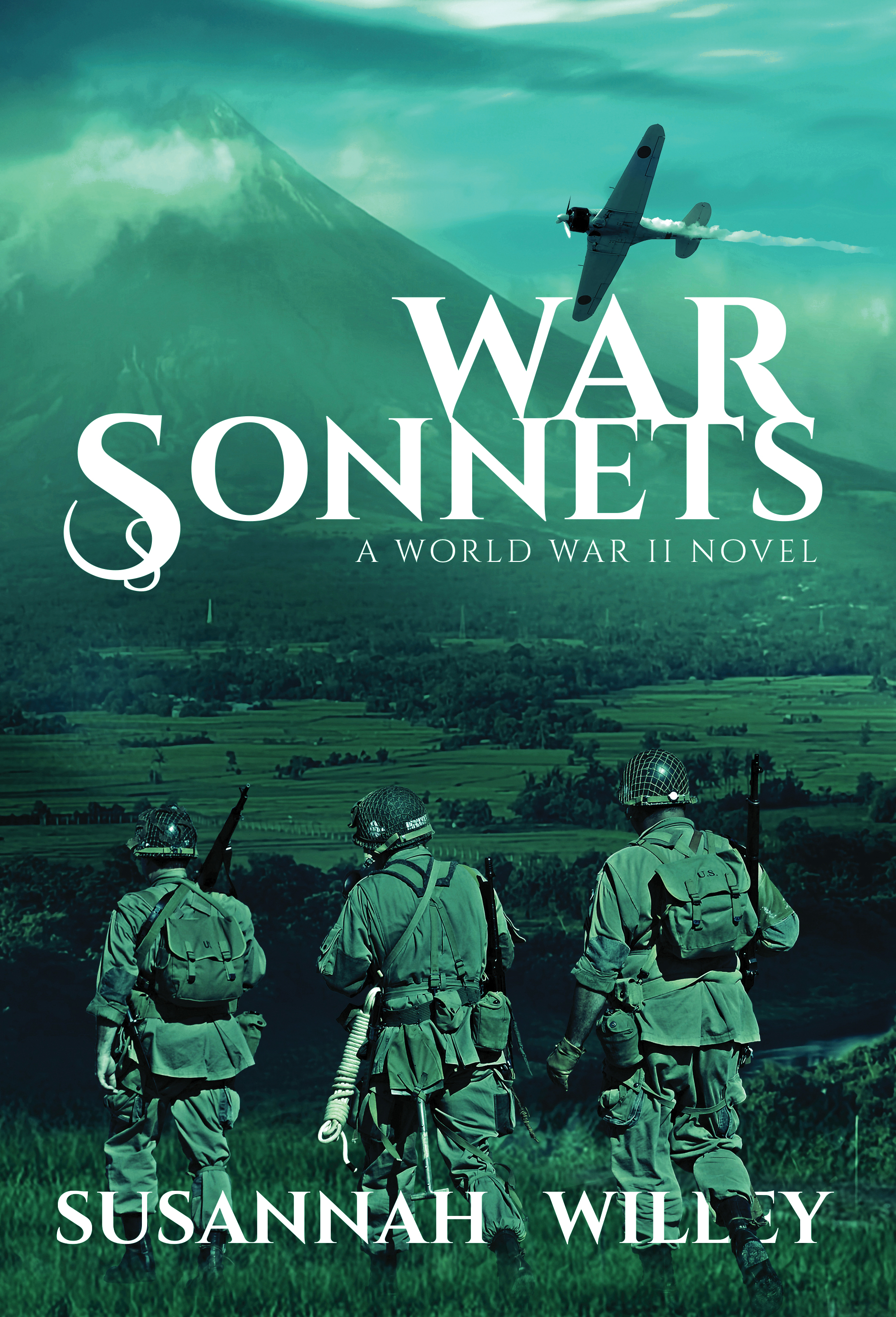
I’m delighted to be sharing an excerpt from Susannah Willey’s new book, War Sonnets HistoricalFiction #WWII #Pacific #BlogTour #CPBC #TheCoffeePotBookClub

I’m delighted to be sharing an excerpt from War Sonnets by Susannah Willey.

ASSAULT FORCE

The sea is calm; upon its boundless deep

Our troopship glides, lost in infinity.

Beneath her decks two thousand soldiers sleep,

Or, waking, wonder what their fate will be.

From my assigned position here on high

I peer ahead, and in the east I see

The dawn’s pale fingers clawing at the sky,

And then, a speck of land. The enemy

Will not be sleeping. 

Now the troops are out

And stand in little groups beside each boat.

The gunship’s roar drowns out the sergeant’s shout.

Rope ladders fall, the LCIs, afloat,

Receive two thousand men in war array.

Each boat, full loaded, quickly moves away.

CHAPTER 18

PHILIPPINE SEA—JANUARY 31, 1945

Leo sat against a pile of life rafts, his knees bent to support the letter he was writing. Dooley perched on a pile of rafts next to him with a handful of Aussie sailors. Their ship, the Australian transport Westralia, was part of a large convoy escorted by agile destroyers. …

“I could spend the rest of the war right here.” Dooley patted the life raft. “Whatcha think, Yankee boy?” Ever since they’d left New Guinea, Dooley had acted like his outburst at Leo’s promotion had never happened.

Leo set down his pen and took a moment to stretch his arms. “I think I’d rather be almost anywhere but on a ship.” 

Dooley took a last, deep drag on his cigarette. “With our luck,” he said, exhaling smoke through his nostrils, “we’ll get sunk by a submarine before we get to Luzon.” He flicked his cigarette into the water.

“Not funny.” Leo growled.

“More likely some crazy kamikaze,” an Aussie sailor said, “locked into a bomb-loaded plane they call an Okha. But Baka is more like it: a bloody fool.” His fellow seamen snickered.

“Those mates are crazy.” The sailor propped himself up on one elbow. “One of ’em nearly sent us to kingdom come a couple months ago.” He glanced at his fellow Aussies. “Ain’t that right, mates?” 

“Yeah, up in Leyte,” said another. “Missed us by a wallaby’s tail.” He held up his thumb and forefinger, an inch apart.

“About eight of them just dropped from the clouds.” The Aussie launched into his story. “Before you could blink, one of them crashed head-on into one of our carriers. Our mates couldn’t do anything but watch.”

Sitting on the open deck, Leo felt exposed. He subconsciously scanned the sky for enemy planes, strained to hear their engines. His brain struggled with an indistinct image of planes impacting with ships—something he’d really rather not imagine.

“Instead of cats and dogs, it was raining planes and bodies, machine-gun fire and bombs. Seemed like those bloody bastards were hell-bent on dying.”

One of his mates picked up the story. “The ship next to us got clobbered. Bloody Baka took out half the crew. Men flyin’ through the air like rag dolls, others stuck with shrapnel. They said the deck was covered with Jap guts and brains, all kinds of body parts and plane wreckage.”

That was something Leo couldn’t begin to imagine, and he was grateful for that. He dang sure didn’t want to get obsessed about being split into pieces by a kamikaze. “Sitting ducks” was a perfect description of their situation out here in the middle of the ocean. Except a duck was a lot harder to hit than a troopship. 

The Aussie storyteller looked at Dooley. “You should’ve seen it, Yank. Helluva mess.”

Dooley bristled at that last remark. “Don’t call me a Yank.”

One of the Australian soldiers snickered. “Well, that accent of yours sure ain’t Brit.”

Dooley jumped to the deck, fists clenched at his sides. “You can call Sergeant Baldwin here a Yank cause he’s a northerner. But I’m from Loo-siana, and where I come from, calling a southern boy a Yank is fightin’ words.” 

The Aussie held up a hand. “Don’t go getting your civvies wrinkled, mate. It’s just what we call Americans.”

“American’s full of goddamned mongrels, and I ain’t one of them,” Dooley growled. “We got Russkies and Polacks, Wops—and Yankees.” He spat out the word as if it was the sourest bit of vomit. “We got so many Nips they had to build prison camps to keep ’em outta our hair. And that don’t even count the spics and ni—”

Leo had about enough of Dooley’s bragging and bigotry. He held his hand out for Dooley to stop. “Yeah, we get it. You southern boys are some kind of special all right.” 

Dooley glared at Leo and started pacing. “All’s I’m sayin’”—his deep southern drawl thickened as he stopped and pointed an accusing finger at the Aussie—”is don’t put me in the same kennel with the mutts.” 

The sailor put up his hands in a defensive gesture. “Slow down and speak English, mate. Whatever language you’re talkin’ sounds more like Chinese.”

“Ain’t no goddamned Chink, mate. Dooley put up his fists, took a step toward the rafts. 

The Aussie jumped off the raft, ready to fight. “You ain’t winnin’ this fight, Yank.”

Dooley snarled and lunged toward the Aussie sailor, who raised his fists and took a step toward Dooley.

 “Come on, fellas.” Leo didn’t want any part of this fight. Dooley was being a jerk, and it embarrassed Leo. He stepped between the two men, cautiously put a hand on Dooley’s chest. “You’re making this a bigger deal than it oughta be. Step back and cool off a minute.”

Dooley glared, but what Leo noticed was beyond Dooley: a cloud of smoke bursting from a destroyer escort in the near distance. In seconds, the air boomed with the report of multiple firing K-guns. 

The harsh tones of the General Quarters alarm sent the men on the life rafts scrambling. As troops en route to the front lines, they weren’t much more than cargo—there was nothing for them to do but hide.

Adrenaline surged through Leo’s body as his brain went to work. K-guns fired depth charges. Depth charges meant enemy subs. Enemy subs meant torpedoes—likely the ones the Japs called kaitens, manned suicide bombs not unlike the kamikaze planes. They were notoriously inaccurate, but how accurate did a danged torpedo have to be? His mind was spinning out of control even as he fought to stay calm. 

“Leo!” Dooley shouted from under the pile of life rafts and gestured for Leo to join him.

Dooley’s shout got his attention. 

Leo’s instincts took over. He looked across the ship’s deck, crowded with frantic soldiers trying to find their way, being pushed and shoved by the ship’s crew trying to do their jobs.

“Come on, Yank.” Dooley’s voice was strained and insistent. “Get in here.”

Leo scrambled under the life rafts, pushing his way well back into the pile.

All sound was muffled now, the incessant alarm, the boom of exploding missiles, the shouts of men who hadn’t yet found cover. The skirmish sounded deceptively far away.

Leo’s heart pounded. Every breath took effort in the suffocating enclosure created by the life rafts. Was that a plane he’d heard? He struggled to shut out the noise and concentrate. His body tensed, waiting for the explosion that would collapse the deck underneath him. He struggled to breathe.

This was too soon. They weren’t supposed to fight until Luzon. 

Leo thought about his future, his belief that hard work and ethics were all it took to be a success. He hadn’t counted on random things like kamikaze and kaiten. He hadn’t faced the fact that life and death didn’t take sides. He wiped the sweat from his forehead, forced himself to slow his breathing. 

I’m not ready to die. Not yet.

At last, the battleships went quiet, the General Quarters alarm stilled, and the order came to stand down. 

Leo pulled himself from his hiding place, watching as soldiers slowly emerged from where they had taken cover. Many of them had merely lain prone on deck with their hands covering their head. 

“Holy shit.” Dooley slipped out from under the life rafts. “What in hell was that?”

Leo’s hands still trembled as he brushed off his fatigues. “Too close is what that was.” He scanned the ships in the convoy. “Doesn’t look like anyone took any damage.”

Dooley stood and turned in a slow circle as he surveyed the ships. Leo noticed that Dooley’s hands trembled almost as much as his own. The sea was quiet now, the sun bright on the water as each ship sailed on its own reflection. Neither Leo nor Dooley felt compelled to disrupt the calm. 

At last, Dooley completed his rounds and turned to Leo. “Yankee boy, I think we’re at war.”

Here’s the blurb

1942: In the war-torn jungles of Luzon, two soldiers scout the landscape. Under ordinary circumstances they might be friends, but in the hostile environment of World War II, they are mortal enemies.

Leal Baldwin, a US Army sergeant, writes sonnets. His sights are set on serving his country honorably and returning home in one piece. But the enemy is not always Japanese…Dooley wants Leo’s job, and he’ll do whatever it takes to get it…Leo finds himself fighting for his reputation and freedom.

Lieutenant Tadashi Abukara prefers haiku. He has vowed to serve his emperor honorably, but finds himself fighting a losing battle. Through combat, starvation, and the threat of cannibalism, Tadashi’s only thought is of survival and return to his beloved wife and son. As Leo and Tadashi discover the humanity of the other side and the questionable moral acts committed by their own, they begin to ask themselves why they are here at all. When they at last meet in the jungles of Luzon, only one will survive, but their poetry will live forever.

Buy Links:

Universal Link

Amazon UKAmazon USAmazon AUAmazon CA

Barnes & Noble

Meet the author

Susannah Willey is a baby boomer, mother of four, grandmother of three, and a recovering nerd. To facilitate her healing, she writes novels. In past lives, she has been an office assistant, stay-at-home-mom, Special Education Teaching Assistant, School Technology Coordinator, and Emergency Medical Technician. She holds a Bachelor’s Degree in Instructional Computing from S.U.N.Y. Empire State College, and a Master’s Degree in Instructional Design from Boise State University. 

Susannah grew up in the New York boondocks and currently lives in Central New York with her companion, Charlie, their dogs, Magenta and Georgie, and Jelly Bean the cat.

Connect with the author

Website:   FacebookInstagramPinterest

ThreadsAmazon Author PageGoodreads

Alliance of Independent Authors

Historical Fiction Company

Follow the War Sonnets blog tour with The Coffee Pot Book Club

I’m delighted to welcome RJ Lloyd to the blog with a guest post about his new book, Burning Secret.

I’m delighted to welcome RJ Lloyd to the blog with a guest post about his new book, Burning Secret.

Burning Secret is a true story. Well, almost. The novel blurs the lines between fact and fiction as it reconstructs the real life of Enoch Price, my great-great-grandfather, and is a story many can relate to through their ancestors and family histories. 

Set at the end of the nineteenth century, it spans the ocean from the squalor of Victorian London to the frontier town of Jacksonville, Florida, where civic life struggled to recover from the American Civil War and the end of slavery.

The novel operates on several levels: as a fast-paced thriller with plenty of derring-do, a morality tale of good vs. greed, and how life can easily corrupt the pursuit of happiness. Some have even suggested that underneath it all lies a tragic love story.

Burning Secret took eleven years to research and write, and the more I researched, the more I realised how much more I needed to explore. In 1881, Enoch was listed in the London Gazette as a bankrupt and destined for two years in the debtors’ prison, from which few emerged unscathed. Abandoning his wife and three young daughters, he made for Florida. It was here, in Jacksonville, with his newly created identity of Harry Mason, that he carved out his future, and, by hook or by crook, he amassed a fortune and became a powerful politician. While all of this time, his wife and daughters in England, entirely ignorant of his new persona, languished in poverty.

Researching Harry Mason in Florida required patience and persistent work. Some basic information came from the public records in Jacksonville and Tallahassee, where the librarians and archivists were exceptionally helpful. 

Sixteen years after stepping ashore, homeless and destitute, Harry was elected on 15 June 1897 to the Jacksonville City Council, representing the eighth ward of Ortega, Venetia and Avondale, and in 1903, was elected to the Florida State House of Representatives, where the only surviving photograph of him is archived. 

From his arrival in 1881, the Jacksonville annual trade directories trace Harry as a bartender at The European House, a bar in the Dutch style run by Nicky Arend at 80– 82 West Bay. 

Several academic records held by Florida’s universities mention his involvement in Jacksonville’s 1888 deadly outbreak of Yellow Fever. He again appears in 1901, when the city was razed to the ground by the Great Fire of Jacksonville. 

There are several public records and court transcripts, some held in the United States Library of Congress, which cite Harry as the promoter who, against fierce public opposition, brought the 1894 World Heavyweight Boxing Championship fight between Gentleman Jim Corbett and Charlie Mitchell to Jacksonville. 

His most outstanding achievement was building the Hotel Mason, at the junction of Bay and Julia Streets, Jacksonville, which opened on 31 December 1913. The largest and most opulent hotel in Florida (demolished in 1978).

Harry, aged 75 years, died on 5 November 1919 at his home, the Villa Alexandria, near the junction of River Road and Arbor Lane in the district of San Marco. The Mitchell family originally built the extensive, almost palatial, villa in the 1870s, which came into Harry’s ownership in somewhat opaque circumstances. Long after his death, the Florida Supreme Court recorded several legal challenges to his ownership. 

Indeed, based on his bigamous marriage in Jacksonville in April 1883 to Bessie Nolan, his three English daughters from his first marriage to Eliza challenged his last will in the American courts.

What an amazing story.Thank you so much for sharing.

Here’s the blurb

Inspired by actual events, Burning Secret is a dramatic and compelling tale of ambition, lies and betrayal. 

Born in the slums of Bristol in 1844, Enoch Price seems destined for a life of poverty and hardship-but he’s determined not to accept his lot. 

Enoch becomes a bare-knuckle fighter in London’s criminal underworld. But in a city where there’s no place for honest dealing, a cruel loan shark cheats him, leaving Enoch penniless and facing imprisonment. 

Undaunted, he escapes to a new life in America and embarks on a series of audacious exploits. But even as he helps shape history, Enoch is not content. Tormented by his past and the life he left behind, Enoch soon becomes entangled in a web of lies and secrets. 

Will he ever break free and find the happiness he craves? 

Influenced by real people and events, Enoch’s remarkable story is one of adventure, daring, political power, deceit and, in the end, the search for redemption and forgiveness. 

Buy Links
Universal Buy Link

Amazon UK  Amazon US Amazon CA Amazon AU

Meet the author

After retiring as a senior police officer, R J Lloyd turned his detective skills to genealogy, tracing his family history to the 16th century. However, after 15 years of extensive research, he couldn’t track down his great-great-grandfather, Enoch Price, whose wife, Eliza, had, in living memory, helped raise his mother.
It was his cousin Gillian who, after several more dead-ends, called one day to say that she had found him through a fluke encounter. Susan Sperry from California, who had recently retired, decided to explore the box of documents given to her thirty years before by her mother, which she had never opened. In the box, she found some references to her great grandfather, Harry Mason, a wealthy hotel owner from Florida who had died in 1919. It soon transpired that Susan’s great grandfather, Harry Mason, was, in fact, Enoch Price.

From this single thread, the extraordinary story of Harry Mason began to unravel, leading R J Lloyd to visit the States to meet his newly discovered American cousins, and it was Susan Sperry and Kimberly Mason, direct descendants, who persuaded R J Lloyd to write the extraordinary story of their ancestor. 

R J Lloyd graduated from the University of Warwick with a degree in Philosophy and Psychology and a Masters in Marketing from UWE. Since leaving a thirty-year career in policing, he’s been a non-executive director with the NHS, social housing, and other charities. He lives with his wife in Bristol, spending his time travelling, writing and producing delicious plum jam from the trees on his award-winning allotment. 

Connect with the author

Website Twitter Facebook

Instagram Amazon Author Page   Goodreads 

Follow the Burning Secret blog tour with The Coffee Pot Book Club

I’m sharing a blog post about what we do and don’t know about warfare in the Saxon era. #GodsAndKingsTrilogy #histfic #PaganKing

I’m sharing a blog post about what we do and don’t know about warfare in the Saxon era. #GodsAndKingsTrilogy #histfic #PaganKing

Here’s the blurb for Pagan King

Britain. AD641.

The year is AD641, and the great Oswald of Northumbria, bretwalda over England, must battle against an alliance of the old Britons and the Saxons led by Penda of the Hwicce, the victor of Hæ∂feld nine years before, the only Saxon leader seemingly immune to Oswald’s beguiling talk of the new Christianity spreading through England from both the north and the south.

Alliances will be made and broken, and the victory will go to the man most skilled in warcraft and statecraft.

The ebb and flow of battle will once more redraw the lines of the petty kingdoms stretching across the British Isles.

There will be another victor and another bloody loser.

books2read.com/PaganKing

Warfare during the Saxon period. What we know and what we don’t know about the battle of Hædfeld.

Thanks to some spectacular archaeological finds, we can visualise how a Saxon warrior might have looked. The reconstructions of the Sutton Hoo helm, and that found with the Staffordshire Horde (as well as a few others), present us with elaborate helmets crested with dyed-horse hair in a way very reminiscent of the Roman era. They glitter, and they seem to be festooned in gold and silver work, but whether these were actually worn in battle or not is debatable. Firstly, they would have made the kings or noblemen very noticeable to their enemy. Secondly, they were so valuable it’s impossible to consider the loss of one of them should they fall and their goods be taken by their enemy. Bad enough for their king and leader to die in battle, but to also lose such precious wealth as well seems unlikely. That said, of course, the Sutton Hoo helm was buried, and the fragments of the Staffordshire Hoard helmet were buried and lost. An image of the Staffordshire Helmet can be found here: https://www.stokemuseums.org.uk/pmag/collections/archaeology/the-staffordshire-hoard/

The monograph on the Staffordshire Hoard is also available for free download from https://library.oapen.org/handle/20.500.12657/39941

But there is another reason why these helmets might have existed, and that’s because they were for ceremonial purposes. Kings, before the reign of Athelstan (925-937) are not known to have undergone consecration with a crown but rather with a helmet. After all, they were warrior kings. Perhaps then, these survivals are more akin to that worn by a warrior-king when appearing before his people or for ceremonial reasons.

What then might have been the more usual garb for a warrior of the Saxon era, which at nearly six hundred years is bound to offer some variations? Shield, spear, seax, sword and byrnie. We get a feel for these items and how valuable they were from wills that survive from the later Saxon era, hundreds of years after the events of Pagan Warrior. Ealdormen had horses, both saddled and unsaddled, shields, spears, swords, helmets, byrnies, seax, scabbards and spears. The will of Æthelmær, an ealdorman in the later tenth century, records that he’s granting his king, ‘four swords and eight horses, four with trappings and four without, and four helmets and four coats of mail and eight spears and eight shields,’[1] as part of his heriot, a contentious term for something that some argue was an eleventh-century development, and others argue, is merely reflecting earlier practice on the death of a man.

There would also have been thegns and king thegns, who had their own weapons, as well as the men of the fyrd, the free-men who could be called upon to perform military service each year, as and when required. It’s often assumed they would have been less well-armed, although this begs the question of whether kings and their warrior nobility were prepared to sacrifice those they relied on to provide them with food to gain more wealth. They might have found themselves with the money to pay for food but without the opportunity to do so.

There are very few representations of warriors, but the surviving strands of the Gododdin, a sixth-century lament to the fallen of Catraeth gives an idea of how these warrior men thought of one another. There is much talk of killing many enemies, drinking mead, and being mourned by those they leave behind.

Flickr user “Portable Antiquities Scheme”, CC BY 2.0 <https://creativecommons.org/licenses/by/2.0&gt;, via Wikimedia Commons

Battle tactics from the period are impossible to determine fully. Before writing my books which are blood-filled and violent, I read a fascinating account, by a military historian, on how he thought the Battle of Hastings might have been won or lost. The overwhelming sense I came away from the book with was that local features, hillocks, streams, field boundaries even perhaps the path of a sheep track might well be the very thing that won or lost a battle for these opposing sides. The land that kings chose to go to war on was incredibly important,

When trying to reconstruct the battlefield for the battle of Hædfeld, which concludes Pagan Warrior, I encountered a problem that will be familiar to writers of the Saxon era. The place where the battle is believed to have taken place, on the south bank of the River Don (although this has been disputed and work continues to discover whether the other location could be the correct one), has been much changed by later developments. It was drained in the 1600s and therefore, it doesn’t look today as it would have done when the battle took place. 

I had very little information to work on. The River Don, the River Idle, the River Ouse, the belief that the ground would have been marshy, and that many men fell in the battle. And the words of Bede in his Ecclesiastical History, ‘A great battle being fought in the plain that is called Heathfield.’[2] Much of the rest is my imagination.


[1] Dorothy Whitelock, Anglo-Saxon Wills 1930, reprinted edition. Cambridge University Press. p27

[2] http://legacy.fordham.edu/halsall/basis/bede-book2.asp


Posts

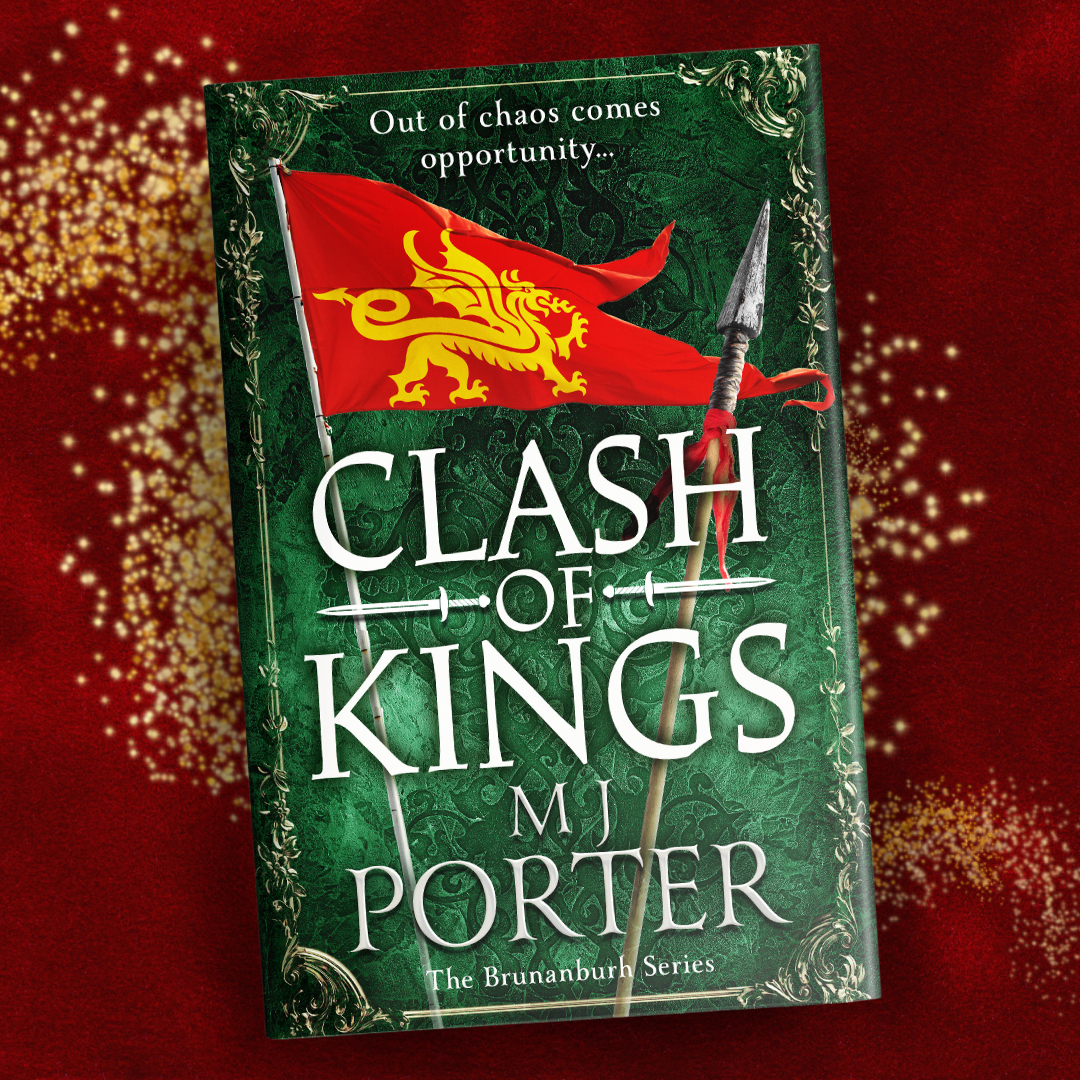
It’s cover reveal day for Clash of Kings, book 3 in the Bruanburh Series

Here’s the blurb

Can the Norse and the Scots exact their revenge over the mighty King Athelstan of the English?

AD937

After the slaughter field of Brunanburh, a defeated Olaf Gothfrithson of the Dublin Norse and Constantin of the Scots narrowly escaped with their lives. In their kingdoms, failure has left them demoralised and weak.

Olaf licks his wounds in Dublin, whilst Constantin and the Welsh kingdoms who defied King Athelstan, are once more forced to bend the knee. As Athelstan’s reputation grows stronger day by day, their need to exact revenge on the overmighty and triumphant Athelstan has never been greater. 

Olaf sets his sights on reclaiming the lost kingdom of Jorvik only for tragedy to strike at the heart of England and a reluctant new King, Edmund steps in the fray.

While England mourns the death of their warrior King, her enemies gather on her borders and England stands alone against the might of the Norse, Welsh and Scots. 

Can the new King be victorious and banish her enemies once and for all or will England, and its king lose all that’s been gained and succumb to a new pretender? 

Preorder Link

books2read.com/clashofkings

Check out the first two books in the series, King of Kings and Kings of War

I’m really excited to share my review for the audio version of The Alewives, written by Elizabeth R Andersen and read by Ella Lynch #blogtour #historicalmystery

Here’s the blurb

Colmar, 1353 CE

Gritta, Appel, and Efi managed to survive the Black Death, only to find that they are in desperate need of money. With limited options and lots of obstacles, they band together to become alewives – brewing and selling ale in the free Alsatian town of Colmar. But when an elderly neighbor is discovered dead in her house, the alewives cannot convince the sheriff and the town council that her death wasn’t an accident, it was murder. As the body count piles up, the ale flows and mystery is afoot!

Set in the tumultuous years after the most devastating pandemic the world has ever experienced, The Alewives is a playful romp through a dark time, when society was reeling from loss and a grieving population attempted to return to normal, proving that with the bonds of love, friendship, and humor, the human spirit will always continue to shine.

* * * * * A short, sharp, snappy, hugely entertaining, medieval mystery that portrays the realities of life at the time, with just the right amount of humour to make it thoroughly entertaining. A well-deserved 5/5 from me! – MJ Porter, author of Cragside and The Erdington Mysteries

* * * *.* ‘The Alewives’ is laid out with great compassion, insight and humour and the reader comes to care for these people! The strong and growing working relationship and friendship of the three ale wives in question and
round which the action evolves is moving and profound. we are left hoping that good times – and further adventures – are just around the corner! – 
The Historical Fiction Company

Purchase Links

Audible

Spotify

Chirp

Kobo

Google Play

Libro.fm 

Nook/Barnes & Noble

BingeBooks

StoryTel

My Review

You can see above that I’ve already read and reviewed The Alewives. (You can find my original review here) You’ll also see that I adored it! What you won’t know is that of late, I’m growing my interest in audio books, and I couldn’t resist this one.

While the storyline is amazing, told with just the right amount of humour, historical detail, intrigue, and the reality of the era, the narration adds a whole new dimension to the tale. Ella Lynch is fabulous in bringing the wonderful ‘real’ characters of Grita, Efi and Appel to life, as well as Colmar, and the collection of bumbling and ineffectual male characters.

This story will make you chuckle, make you grimace, make you growl at the unfairness of their lives, and also entirely draw you in to the mystery.

A fabulous mystery. I’ve read it, and I’ve listened to, and I recommend you do the same.

Meet the author

Although she spent many years of her life as a journalist, independent fashion designer, and overworked tech employee, there have always been two consistent loves in Elizabeth R. Andersen’s life: writing and history. She finally decided to put them both together and discovered her true love.

Elizabeth lives in the Seattle area with her young son and energetic husky. On the weekends she usually hikes in the stunning Cascade mountains to hide from people and dream up new plotlines and characters.

– Join Elizabeth’s monthly newsletter and receive the first two chapters of The Scribe for free. Sign up at https://www.elizabethrandersen.com

– Find photos of hikes and daily author life at Elizabeth’s Instagram: @elizabethrandersen 

– Follow Elizabeth on Twitter for nerdy medieval history facts: @E_R_A_writes 

– Watch Elizabeth try to explain the weird, wonderful world of Medieval life on her TikTok channel: https://www.tiktok.com/@elizabethrandersen

Elizabeth is a member of the Historical Novel Society and the Alliance of Independent Authors.

Connect with the author

elizabethrandersen.com. Instagram. Facebook

Threads. Twitter (X). TikTok

Meet the narrator

My name is Ella Lynch, I am an experienced British audiobook narrator and nature-loving treasure seeker on an ever-evolving journey of connection and expansion through the art of storytelling.

I am an empathetic, married mum of 1, a member of the LGBTQIA+ community and a mental health advocate.  My lived experiences inform my art, helping me deeply connect with the intentions behind words and relay them intuitively to the listener. 

I gained a triple distinction in my (BTEC) National Diploma in Performing Arts from Truro College, and have been working as a professional audiobook narrator since 2018.  In this time I have narrated over 100 audiobooks, voiced numerous healthcare explainer videos for the NHS, provided VO for children’s animated audiobooks and even dubbed a Russian commercial!


I have a particular passion and flair for Magical Realism, Literary Fiction and LGBTQIA+ Romance and Comedy, and as a voracious reader myself I absolutely thrive on bringing all words, across multiple genres, to life for listeners.

When I’m not in my booth you will likely find me walking my dog on the beach, paddleboarding an estuary, exploring the UK in my self-built campervan, playing boardgames and cooking up delicious plant-based feasts for my family.  A vegan of over 20 years,  I love crochet, painting, fires, swimming and hoola-hooping as well as meditating, practicing Reiki and EFT tapping and deep, heart-felt connection.

Connect with Ella Lynch

Ella Lynch (@narrator.ella) • Instagram photos and videos

Ella Lynch (@narrator_ella) / X (twitter.com)

Check out more of Elizabeth R Andersen’s books here.

The Scribe

It’s the anniversary of the battle of Hædfeld, and I’m sharing a post about Britain in the Seventh Century

Here’s the blurb

Britain. AD632.

Penda, a warrior of immense renown, has much to prove if he is to rule the Mercian kingdom of his dead father and prevent the neighbouring king of Northumbria from claiming it.

Unexpectedly allying with the British kings, Penda races to battle the alliance of the Northumbrian king, unsure if his brother stands with him or against him as they seek battle glory for themselves, and the right to rule gained through bloody conquest.

There will be a victor and a bloody loser, and a king will rise from the ashes of the great and terrible battle of Hædfeld.

books2read.com/PaganWarrior

(Nook readers, use code BNPWARRIOR75 to get 75% off the ebook cost)

Britain in the Seventh Century – a patchwork of kingdoms

One of the hardest processes when writing about this very early period of Britain is to get an idea of what the kingdoms might have looked like and to explain this to the reader. The seventh century is often seen as the period when the Heptarchy, the seven very well-known kingdoms of the Saxon period, emerged and formed, ultimately derived from potentially very many much smaller kingdoms, the names of which are only rarely still known.

The Heptarchy consisted of the kingdoms of Northumbria (itself derived from the uniting of Deira and Bernicia), Mercia, the kingdom of the East Angles, Wessex, Sussex, Kent, and Essex. In later centuries, these kingdoms would merge until only four main kingdoms remained, and then, from the early middle of the tenth century, England emerged. But the battle of Hædfeld with which Pagan Warrior concludes was a British-wide battle set as this process was formalising in the seventh century, and there are yet more kingdoms that must be mentioned which didn’t form part of Saxon England.

Scotland didn’t yet exist, but Dal Riata, Pictland and Alt Clut (sometimes called Strathclyde) did. Wales didn’t exist, although the kingdoms of Gwynedd, Deheubarth, Ceredigion and Powys did, The kingdom of Dumnonia (modern-day Cornwall), was also in existence and very much not part of Saxon England. Indeed, these kingdoms are often termed British, as opposed to Saxon. As someone woeful at geography – I purposefully don’t adopt the names of places from this period because it confuses me – I’m only too well aware of how much I’m asking from my reader as it is without adding weird place names to already strange sounding personal names, and yet it was necessary to add a whole host of strange names, which often, have no relation to the current names of counties, let alone kingdoms.

All of these different kingdoms, we’re told, were involved in some way in the battle of Hædfeld. Some of the kingdoms joined the alliance, spear-headed by Cadwallon of Gwynedd, Edwin’s foster-brother. Others joined that of Edwin of Northumbria. Almost all of them took one side or another in the mighty battle of Hædfeld fought in 632 or 633 (there is some confusion about the exact date) between the two sides. To ensure my readers have some idea of who’s who, I’ve termed all of the character’s as being ‘of’ their kingdom, although I’m unsure if that’s actually how they might have been named.

I was surprised by how many individuals could be named from the seventh century, particularly for the build-up to the battle of Hædfeld. The cast is not Game of Thrones huge, but it was larger than I expected. Not just Penda of the Hwicce, only later could he be termed of Mercia, and Cadwallon of Gwynedd in the British ‘alliance’, but also Cloten of Deheubarth, Clydog of Ceredigion, Eiludd of Powys, Clemen of Dumnonia, Domnall Brecc of Dal Riata, Beli of Alt Clut and Eanfrith of Bernicia. While on the Northumbrian led alliance were Edwin of Northumbria, alongside his children, Osfrith and Eadfrith, as well as Eowa of the Hwicce, Osric of Deira – Edwin’s cousin, Cynegils of Wessex, Sigeberht of the East Angles and Oswald of Bernicia – Edwin’s nephew. At least, that’s how I stack the two sides as the battle is about to commence. In later periods, it is sometimes a struggle to find who was king of where and when that might have been, so to find so many characters, even if it can seem a little overwhelming, was fantastic and ensured that the British-wide battle of Hædfeld could be retold in Pagan Warrior with a nod to each of these kings, and the part they might, or might not, have played in the events that played out on that fateful day in October 632 or 633. 

Map of Britain in the 600s, User:Hel-hama, CC BY-SA 3.0 <http://creativecommons.org/licenses/by-sa/3.0/&gt;, via Wikimedia Commons


Sign up to my monthly newsletter to learn more about my writing journey, new releases and special offers, and receive a free short story collection featuring many stories of Saxon England.

I’m delighted to be reviewing A Savage Moon by Theodore Brun #historicalfantasy #NewRelease

Here’s the blurb

Byzantium, 718AD
The great siege is over.
Crippled warrior, Erlan Aurvandil, is weary of war. But he must rally his strength to lead a band of misfit adventurers back to the North, to reclaim the stolen kingdom of his lover, Lilla Sviggarsdottir. For this, they need an army. To raise an army, they need gold.
Together they plot a daring heist to steal the Emperor’s tribute to his ally. Barely escaping with their lives, they voyage north, ready for the fight. But when fate strands them in a foreign land already riven by war, Erlan and Lilla are drawn inexorably into the web of a dark and gruesome foe.
As blades fall and shadows close in, only one thing for them is certain; a savage moon is rising. And it demands an ocean of blood.

Purchase Link

https://amzn.to/3PqH1NY

My Review

A Savage Moon is the fourth book in The Wanderer Chronicles. I’ve read book 1 (You can find the review here), but it was a while ago (2017), and so I can remember some elements of it, but not all of them. I do remember the character of Erlan, or Hakon as I knew him.

A Savage Moon feels very different from how I remember the first book – but this might be more to do with the complete culture shift – we’re no longer in Scandinavia, but Byzantium, and clearly Erlan has been put through the ringer since I last read about him. So I’m going to review this with no reference to the first book.

I love a story of the early eighth century, which takes the reader to complex times and places, all in great flux. 

Byzantium always feels extremely exotic and also well documented. The stories I’ve read set in Byzantium have a familiar feel, and A Savage Moon is as well-researched. The events that befall our collection of characters – there are three main POVs, Erlan, Lilla and Kataros – are really well portrayed. The first part of the book is very exciting for Erlan and Lilla, while Kataros finds his way to another major location, that of Rome, on the cusp of being claimed by the Lombards and increasingly becoming a Christian centre. Again, Rome is well documented, and I loved the recreation of it for this story. 

The author doesn’t stop there but takes us to Austrasia and Neustria, place names that might perplex but which are again enduring significant change as they become the kingdom known by the more familiar name of Frankia. Our characters’ journey is enormous, from Byzantium to Austrasia – a grand tour of Europe at this time.

Not just the locations are varied, but our three characters are all grappling with major life decisions. I really enjoyed the way the stories wound around one another and that there are many incidental characters encountered along the way who all add essential details to the narrative. The climactic reunion between the three, when it comes, because we all know IT IS coming, feels very natural. And I think the scene has been set for a fabulous book 5.

There are still some more fantastical elements to this story – it’s not all history, although we do encounter many ‘real’ historical figures – and the final encounter – A Savage Moon – builds towards a crescendo where the reader is never truly sure who will triumph in the dark woodlands. While the first action scene builds slowly, and as readers, we all wonder how they’ll triumph, the final action scene is the opposite, almost too sudden, too spur of the moment, and the reader can’t help but expect our stranded characters to fail. 

A Savage Moon is vast in scope, but the ending is personal and climactic, a tale of friendship, love, trust and, for one of the characters, renewal, set against a backdrop of almost indescribable savagery. It’s sure to appeal to fans of historical fiction and historical fantasy. 

Meet the author

Theodore Brun is author of the critically-acclaimed historical fiction series, THE WANDERER CHRONICLES.

He studied Dark Age archaeology at Cambridge and afterwards worked for several years in international arbitration law – first in London, then Moscow, Paris, and finally Hong Kong.

In 2010, with the germ of an idea for a novel in his head, he quit his legal job in Hong Kong, jumped on a bicycle and pedalled 10,685 miles across Asia and Europe to his home in Norfolk. There, he sat down in a spider-infested cottage to write the first volume in his epic historical fiction series, THE WANDERER CHRONICLES. Four years later, Corvus Atlantic published his debut novel, A Mighty Dawn. The sequel, A Sacred Storm, was released in June 2018.​ The third book in the series, A Burning Sea, was out in September 2020.


Theo is a third generation Viking immigrant, his Danish grandfather having settled in England in 1932. You might say Viking stories are in his blood. Yet it was only through the unlikely portal of Wagner’s Ring Cycle that he discovered the hoard of ancient Scandinavian and Germanic stories which underlie the works of authors like Tolkein, CS Lewis, George RR Martin, Neil Gaiman, Giles Kristian and Bernard Cornwell to name a few. It was this material that provided the inspiration for THE WANDERER CHRONICLES.​

Theo is married to Natasha. They live in London, together with their girls, Ella, Talitha & Colette, and a wild dog named Wilmo.

https://www.theodorebrun.com