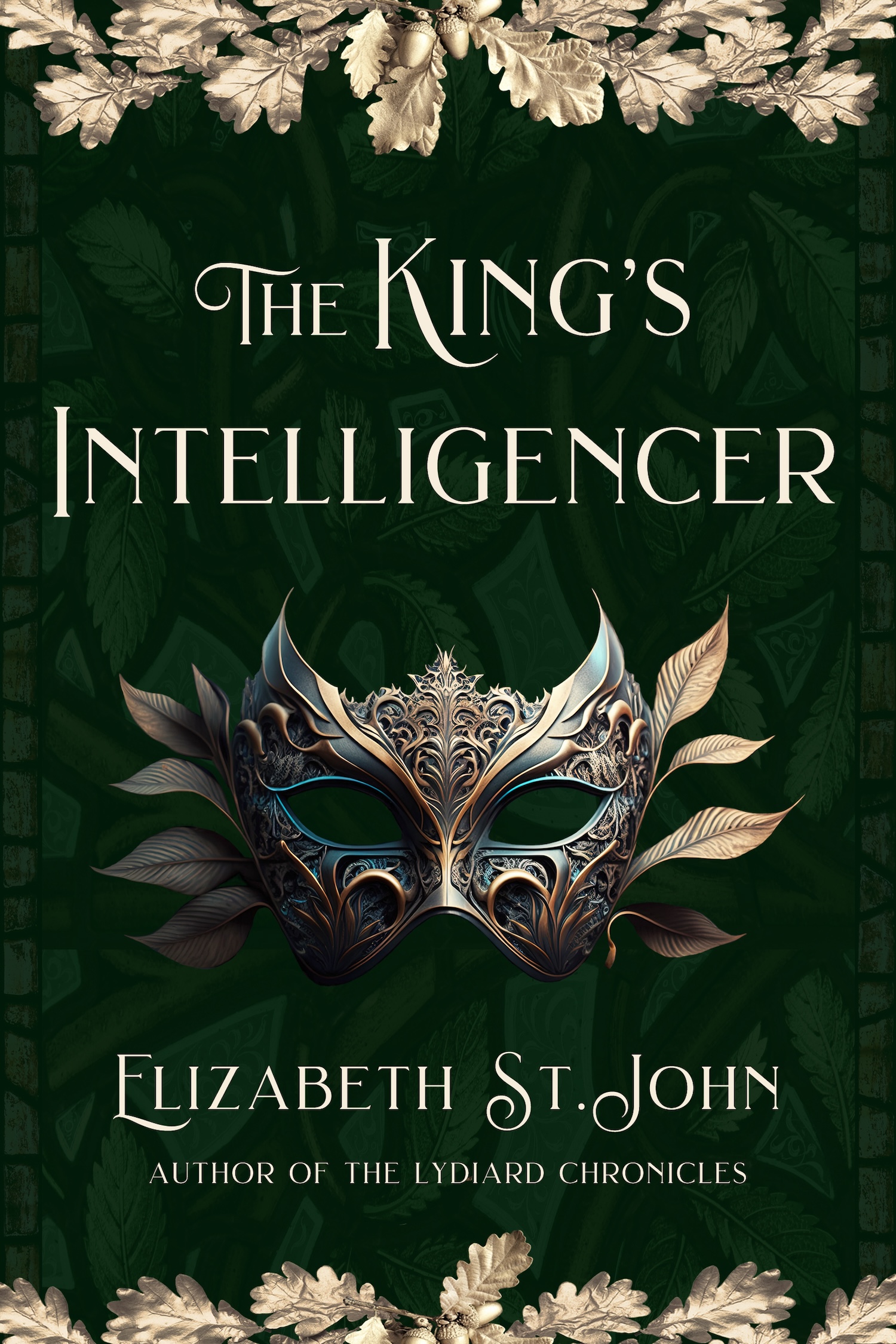
I’m delighted to welcome Elizabeth St.John and her new book, The King’s Intelligencer, to the blog with an excerpt.
Excerpt
Chapter 10
As he spoke, from the copse before them broke a mob of burly and ill-dressed men, twenty or thirty strong, led by several drummers. They were fierce and defiant, waving their fists, clutching clubs and sticks, and shouting chants in knavish accents in time with the pounding. Franny and Mary scrambled to their feet. Nicholas was rigid, his fists clenched at his sides.
“They are Protestants from the City,” he said grimly, “demonstrating against the Catholic influence at court. I had heard London was seeing mobs like this daily. But I did not think they would venture as far as St. James’s.”
“What do they want?” Franny whispered. Mary was trembling, her tall frame shaking like a poplar in the breeze. The pages, little more than children, had run into the bushes, leaving them alone. Why had she not thought to bring guards? She answered her own question. Because it was the duke’s park. Who would dare—
“To tell the king England will not welcome Catholics,” Nicholas muttered between clenched teeth. “And those who support them are enemies of the people.”
Franny fell silent, conscious of his raised emotion. When she had seen Nicholas Jameson on the night of the sedan race, Rochester had called him a red-letter man, a Catholic. In all their times together, they had not discussed religion. He came and went to Mary’s lessons, kept his opinions private. Even during their growing intimacy through Calysto, they never mentioned their religions. And yet at this moment, Franny could tell Nicholas was fully aware of the danger associated with being a Catholic.
The leaders of the gang stepped aside, and two youths broke from the crowd carrying aloft the effigy of a priest on their shoulders. With a shout, they tied a rope around its neck and slung it over the branch of an oak not a hundred feet from where Franny stood.
Mary clung to Franny. “What are they doing? Why are they hanging the priest?” she cried.
“Hush.” Nicholas turned to her. “Hush, Lady Mary, we do not want to be identified.” He pushed her behind the tree Franny had just been dozing against.
“The Lady Mary is Protestant,” Franny protested.
“With a Catholic father and a Catholic stepmother,” Nicholas snapped back. “This mob will not stop to ask.”
There was no mistaking Mary’s breeding, her expensive clothes, her ornate hair. And her height. Franny was tall, but Mary carried the Stuart loftiness in her bones, impossible to hide. The mob may not immediately have recognised her as the heir-to-the-heir, but they would tell she was noble. And here, at St. James’s Park, likely to be of the Catholic duke’s court. Franny snatched a handful of dirt from the tree roots, rubbed it on Mary’s face, pulled out her hairpins, and swiftly ruffled her powdered hair until it was dingy with earth and hung lank around her face. She took her own shawl and wrapped it around Mary’s shoulders.
“Bend your knees,” Franny hissed. “Disguise your height.”
Nicholas put his arm across her in warning, held her back against the rough bark. In other circumstances, Franny would have welcomed his touch. Right now, she could think of nothing but keeping Mary safe. The page boys had long gone. Guards. They needed guards. How could she have been so thoughtless not to bring guards?
The shouts of the mob grew louder as they yanked the effigy into the air, now swinging as realistically as if a real man were dangling within the priest’s clothes. They were no more than fifty yards from Franny, and their voices rang clear.
“The Catholic curs would sell us back to Rome!”
“The king will give the pope England’s throne!”
“The Duke of York is a bloody papist. Hang him for his treachery!”
Nicholas was white. Franny did not know him well enough to recognise fear or anger.
“We have to get Lady Mary back to the palace.” She shook his arm. “Nicholas, we cannot stay hiding here.”
Blurb
London, 1674: When children’s bones are unexpectedly unearthed in the Tower of London, England’s most haunting mystery—the fate of the missing princes—is reignited.
Franny Apsley, trusted confidante to Charles II’s beloved niece and heir, Lady Mary Stuart, is caught up in the court’s excitement surrounding the find. Yet, as a dark family secret comes to light, Franny realises the truth behind the missing princes is far more complex—and dangerous—than anyone suspects. Recruited by her formidable cousin Nan Wilmot, Dowager Countess of Rochester, to discover the truth behind the bones, Franny is thrust into the shadowy world of intelligencers. But her quest is complicated by an attraction to the charismatic court artist Nicholas Jameson, a recent arrival from Paris who harbours secrets of his own.
Pursued by Nicholas, Franny searches for evidence hidden in secret family letters and paintings, and uncovers a startling diplomatic plot involving Lady Mary, which causes Franny to question her own judgment, threatens the throne, and sets England on a course for war. With only her courage and the guidance of an enigmatic spy within the royal household, Franny must decide how far she will go to expose the truth—and whether that truth will lead to England’s salvation or her own heartbreak.
In a glittering and debauched society where love is treacherous and loyalty masked, Franny must navigate a world where a woman’s voice is often silenced and confront the ultimate question: What is she willing to risk for the sake of her country, her happiness, and her family’s safety?
A captivating historical novel of conspiracy, passion, and courage, The King’s Intelligencer is one woman’s quest for a truth that could change the fate of a nation. A companion to the critically acclaimed best-selling novels The Godmother’s Secret and The Lydiard Chronicles, The King’s Intelligencer weaves together beloved characters and actual events to bring a suspenseful mystery to life.
Buy Links
Universal Link:
This title is available to read on #KindleUnlimited
Meet the Author
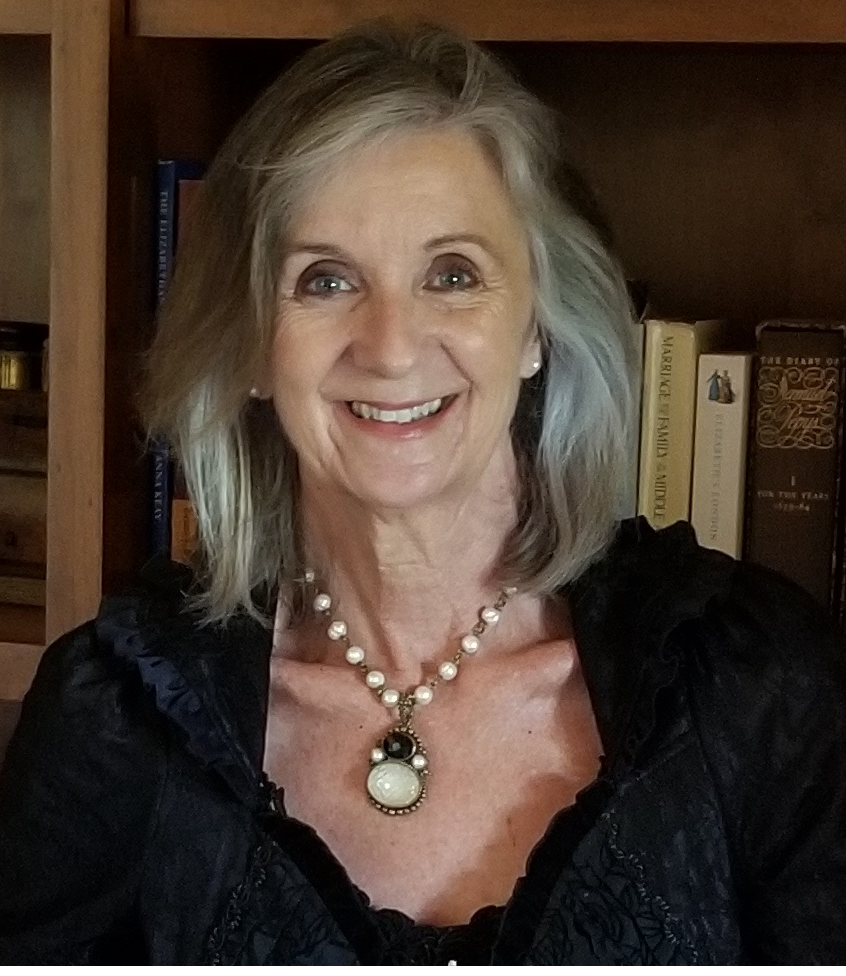
Elizabeth St.John’s critically acclaimed historical fiction novels tell the stories of her ancestors: extraordinary women whose intriguing kinship with England’s kings and queens brings an intimately unique perspective to Medieval, Tudor, and Stuart times.
Inspired by family archives and residences from Lydiard Park to the Tower of London, Elizabeth spends much of her time exploring ancestral portraits, diaries, and lost gardens. And encountering the occasional ghost. But that’s another story.
Living between California, England, and the past, Elizabeth is the International Ambassador for The Friends of Lydiard Park, an English charity dedicated to conserving and enhancing this beautiful centuries-old country house and park. As a curator for The Lydiard Archives, she is constantly looking for an undiscovered treasure to inspire her next novel.
Elizabeth’s works include The Lydiard Chronicles, a trilogy set in 17th-century England during the Civil War, and The Godmother’s Secret, which unravels the medieval mystery of the missing princes in the Tower of London. Her latest release, The King’s Intelligencer, follows Franny Apsley’s perilous quest to uncover the truth behind the sudden discovery of the princes’ bones. In Charles II’s court of intrigue and deceit, Franny must decide what she’ll risk—for England’s salvation, her family’s safety, and her own happiness.
Connect with the Author
Website: Bluesky: BookBub:





































 MJ Porter