I’m sharing my review for Pilgrim’s War by Michael Jecks #newrelease #histfic #blogtour #bookreview

I’m sharing my review for Pilgrim’s War by Michael Jecks #newrelease #histfic #blogtour #bookreview

Here’s the blurb

The tale of a journey that will shape the world for centuries to come…

France, 1096. Crowds gather in Sens, Northern France, to hear the Hermit speak. He talks of a great pilgrimage to Jerusalem, a quest filled with promise for those Christian soldiers who march with him.

Sybill knows the perils of the road ahead, but follow it she must. Her husband is a reckless gambler, easily swayed by the Hermit’s words. For Odo, the pilgrimage provides the chance to demonstrate his unshakeable piety, while his brother Fulk craves adventure and excitement.

Jeanne and Guillemette have been mistreated by the men in their lives and are desperate for this chance of redemption and a brighter future – but for the two women alone on the journey, life on the road will be full of perils…

As the lines between love and hate, virtue and sin, good and evil become blurred, each must survive as best they can. Who will live to reach the holy city, and will the sacrifices they make to get there be worth the price they all must pay?

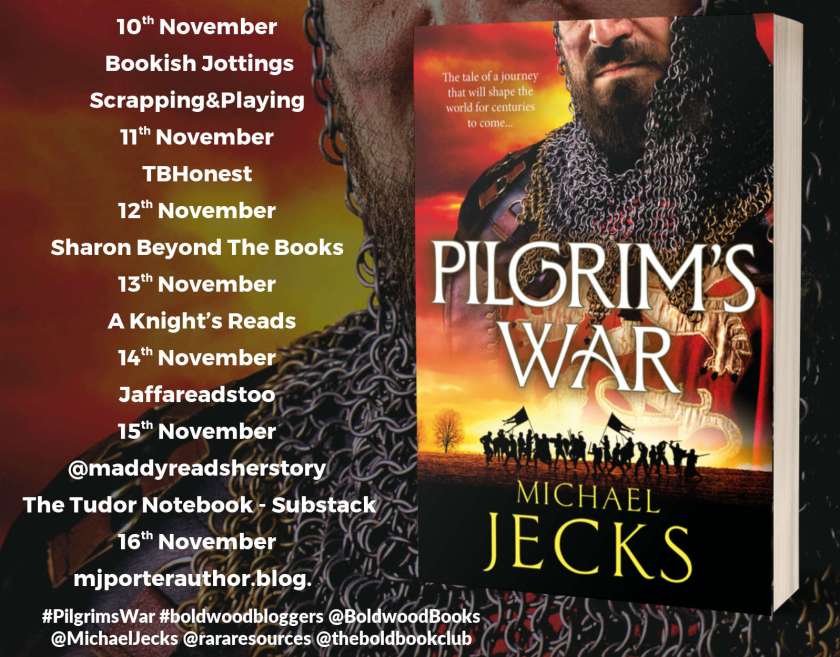
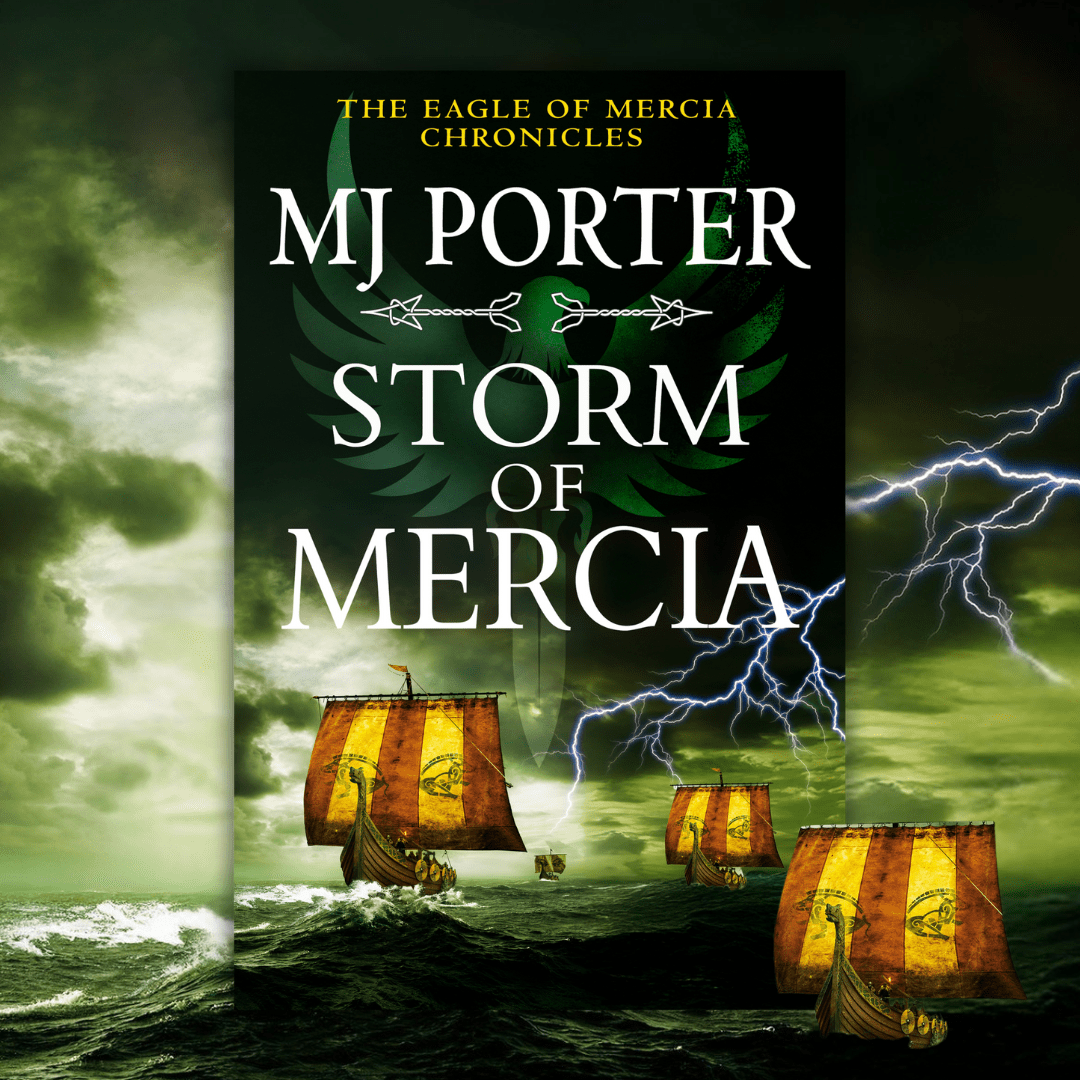
Book cover for Pilgrim's War by Michael Jecks

Purchase Link

 https://mybook.to/PilgrimsWarBook

My Review

Pilgrim’s War is a multiple-character story of the First Crusade, told through the eyes of those seeking something on their journey to the Holy Land. Some are swept away with the promise of better things to come, some by the promise of redemption, others are simply leaves in the wind, taken on the way by events outside their control. Not many of them, admittedly, are actually ‘in it’ to serve their God. As a result of this, few of the characters are actually very ‘nice’. Indeed, quite a few of them are quite awful as the journey begins – but of course, if they’re to suffer any sort of epiphany, they need to be bad eggs from the beginning. The narrative doesn’t shy away from depicting the hatred between Christians and any other faith encountered on the journey to the Holy Land, and the hypocrisy of these seemingly ‘holy’ knights as they venture towards their destination.

Two main journeys are undertaken: one heading towards Rome, featuring a collection of knights, and another towards Byzantium, which follows Sybill, Odo, Jeanne, and Guillemette. That way lies peril. But so too is the route through Rome, where politics are once more at play. The cast is vast and from all reaches of society. It will not end well for them all.

The Crusades are far from an easy topic to cover, and the author is at pains to reveal the motivations behind the actions of those the story follows. It’s not always an easy read, or a particularly fast-flowing one with so many characters, but it shouldn’t be an easy read. I do appreciate the determination to show the event for what it was – a war perpetrated in the name of religion, but really, at the heart of it, something else altogether.

Meet the author

Michael Jecks is the author of over 50 novels inspired by history and legend. He is the founder of Medieval Murderers, and has served on the committees of the Historical Writers’ Association, the CWA and he Detection Club. He was International Guest of Honour at the Bloody Words festival in Toronto, and Grand Master of the first parade in the New Orleans Mardi Gras.

Newsletter Sign Up: https://bit.ly/MichaelJecksNews

Bookbub profile: @michaeljecks

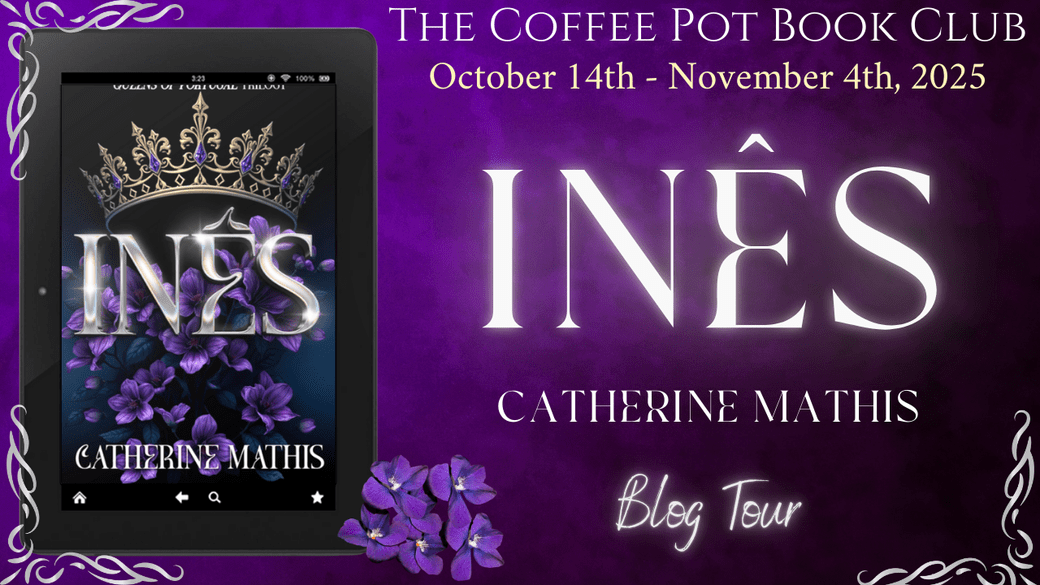
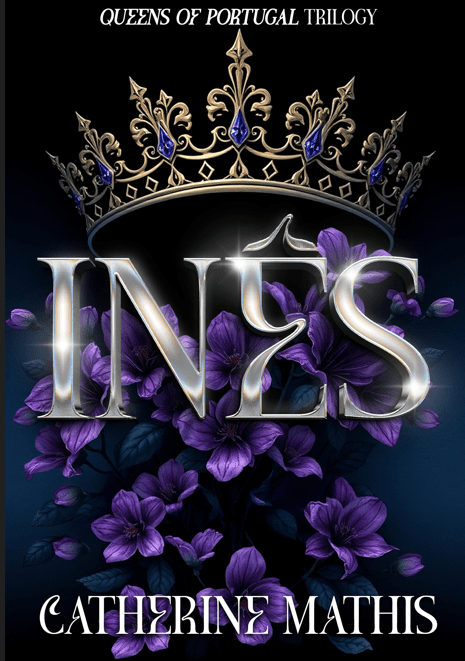
I’m delighted to welcome Catherine Mathis and her new book Inês to the blog, with a fascinating guest post #HistoricalFiction #MedievalFiction #BlogTour #TheCoffeePotBookClub 

I’m delighted to welcome Catherine Mathis and her new book Inês to the blog, with a fascinating guest post #HistoricalFiction #MedievalFiction #BlogTour #TheCoffeePotBookClub @cathiedunn
@thecoffeepotbookclub @cmathisauthor

In Candide Voltaire describes the great earthquake of All Saints Day 1755 which hit during Sunday church services resulting in the destruction of most of Lisboa and surrounding villages for miles and miles. Then Lisboa burned and was hit by a tsunami. Records and documents not destroyed in 1755 were ravaged by Napoleon’s troops. Records for the early fourteenth century were never as plentiful for Portugal as they are for France or England, and these two seminal events did not help. The larger hurdle is I do not speak or read Portuguese or the earlier spellings of medieval Portuguese, nor Spanish for that matter. 

Most histories of Portugal will mention the Pedro and Inês affair in passing, not depth. The prominent chronicle surviving to this day was written by Fernão Lopes in the early fifteenth century. The extant Lopes work starts with the reign of King Pedro. Lopes’s chronicles for earlier kings are lost. Lopes proclaims an intent for historical accuracy and does a good job of balancing characters and events despite writing for the Avis dynasty. These chronicles were not available in English until 2023, and I did not trip across them until mid-2024 when my novel was already with the publisher.

There are references to other documents long lost to time. There are some records in archives and other Portuguese and Spanish cities. Professor Rita Costa Gomes wrote The Making of Court Society, a scholarly Portuguese book translated into English, though it provides some information only in Portuguese. Other useful books include: de Oliveira Marques’s Daily Life in Portugal in the Late Middle Ages, A.R. Disney’s History of Portugal and the Portuguese Empire, and Oliver Sacks’s Hallucinations

For good or ill, my primary source was Edward McMurdo’s The History of Portugal, Volume II published in 1889. McMurdo takes a bit of getting used to; his opinions are well stirred into the history presented. Likely Portuguese/Spanish documents of recent years have updated information.

I found this legend on a trip to Portugal. Then several years later I returned to Portugal, specifically to visit the locations central to the story along with visiting museums. There is little extant material in museums from this period. I walked the grounds of a convent now in ruins in Coimbra that is central to the story. While geography changes with time, walking narrow streets and the buildings that remain from the fourteenth century helped when creating scenes.

It is in the gaps of written documents that novels unfold. It does not mean that accuracy is not important. It absolutely is. Did Pedro marry Inês? Not in the legal sense of marriage arranged for an heir to the throne. Did Pedro believe he wed her? Did Inês believe she was married? I chose to answer yes to both questions. Inês – from what we believe we know – exhibited loyalty to her friend Constanza, Pedro’s wife, and cared deeply for all of Pedro’s children. Inês did not have a child until at least a year after the death of Pedro’s first wife. Then she bears Pedro children regularly. Others suppose the love affair began before Pedro was widowed. Pedro refused to marry suitable women his father proposed after his first wife’s death. He had clergy attest to the marriage with Inês. And he never marries again, though he has a consequential affair.

There are lots of technical practices in the lives of medieval royals that are not common in our world. Technically Pedro was married before he wed Constanza. It was a marriage never consummated before it was dissolved. Often marriage agreements are bargaining tools of a king in managing relationships with other countries or inside his own country. The key is what is important to the story being told, what is critical in the history of the time, yet not a turning point for the story being told. For example, the Battle of Salado was huge in Pedro’s lifetime as was the Great Pestilence. Neither of these events is a driving factor in the legend. They are included but not critical.

The other key issue is names. Men named Pedro or João or women named Maria litter the landscape. I made a decision to use a name per person and not confuse the reader by overly focusing on titles or full proper names. It is easier if there is one central Pedro not to be confused with Pedro’s in the nobility or neighboring countries. The point is the story. For the novel, this means a Pedro in a neighboring country becomes Peter or more plainly Castile’s king. All readers know Portugal existed in the medieval period. Their likely earliest recollection is of Prince Henry the Navigator, still a century away from Pedro. Those seeking a good story are less concerned with the rabbit holes and details of history some of us find fascinating. This is the writer’s balancing act.

Let’s close with a final thought on sources and information. For many dates there is not an agreement as different sources will offer different dates for the same event. And between then and now, the calendar changed. Many birth dates and thus ages were not recorded in sources, especially for women and also children who die young. Often this is not critical to the story, the legend.  

The fun part of research is falling down the rabbit holes. As I chase a fact or information about a location I can get sidetracked into reading articles on the nature of queenship, the trade between Portugal and England or the Netherlands, life on board a ship, etc. Most of the research is never used, and always worth the time to study.

Here’s the blurb

An heir to the throne, a gorgeous blonde lady-in-waiting, the king’s trusted advisor. When a father and son don’t understand each other, the son pays an outrageous price.

Love, jealousy, loyalty, and revenge roil the court of 14th century Portugal.

In this engrossing launch to the Queens of Portugal trilogy, Catherine Mathis gives a fresh take on the tale of Pedro and Inês, Portugal’s real-life Romeo and Juliet. Pedro’s father would not have been king if not for his trusted advisor, Gonçalves. Once king, he wants no part in neighboring Castile’s royal convulsions though his son, Pedro, befriends powerful Castilians.

The all-consuming drive of the king is to ensure his line rules Portugal for centuries to come. He needs legitimate, strong heirs. The Infante Pedro loves a woman not deemed worthy to wear the crown as queen. Between father and son is Gonçalves, the king’s powerful, unquestioned counselor who is mentor to the son. Both Gonçalves and Pedro seek the attention of Inês.

There is a horrific cost to winning the love of Inês. She will not release her grip on Pedro until he keeps the two sworn oaths he made to her. Can Pedro do the impossible to satisfy Inês?

Inês is based on real people and events, exploring a cultural touchstone of Portuguese history.

Praise for Inês:

Mathis masterfully weaves emotional depth into the narrative, creating a deeply engaging experience that leaves a lasting impression and invites readers on an unforgettable journey through the grandeur and intrigue of Portugal’s past.
~ Mary Anne Yarde, The Coffee Pot Book Club 5* Review

This exciting start to the Queens of Portugal trilogy describes the legendary love story of Pedro and Inês, and I was amazed at the excellent storytelling and how the author brings the courts to life. There is a lot of drama and intrigue, and the characters’ emotions are beautifully captured in this engrossing tale.
~ Readers Favorite 5* Review

Purchase Link

https://books2read.com/u/br8OBY

Meet the author

Catherine Mathis was born in Berlin, the daughter of an American spy. As she grew up in Washington, D.C., her spy father turned into a drug enforcement agent. His career change wrecked any chance at high school popularity. She graduated from Sewanee | The University of the South with a degree in history focused on the medieval period. After a career in finance, she returned to her first love of medieval history to ‘Share Iberian Tales.’ Outside of writing, spare time joys are family, friends, reading, collecting folk/outsider art, and travel.

Author Catherine Mathis

Connect with the author

www.catherinemathis.com

Follow the Ines by Catherine Mathis blog tour with The Coffee Pot Book Club


Posts

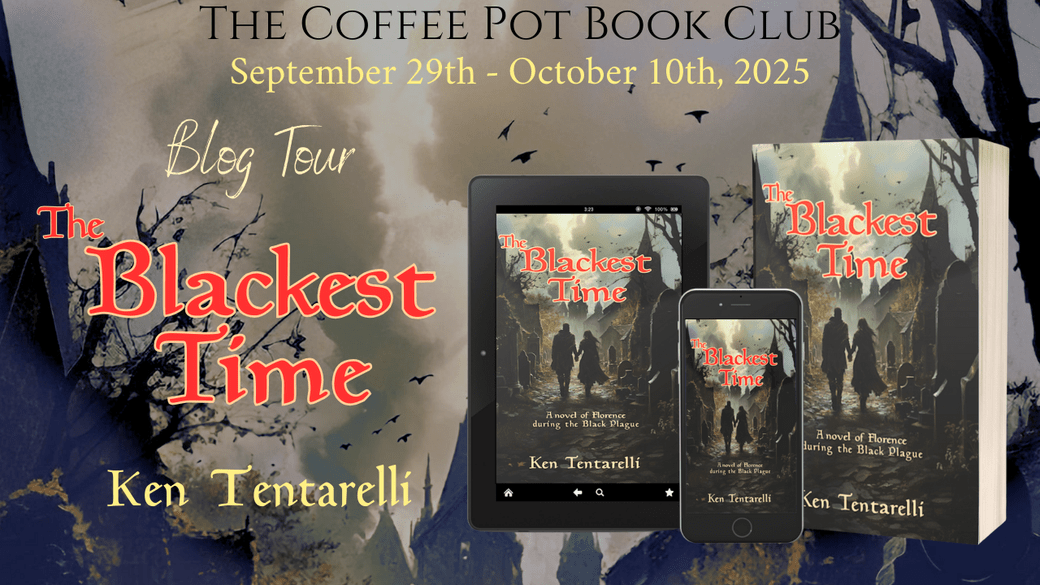
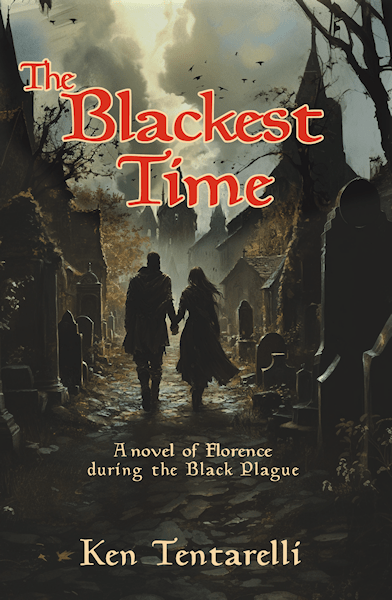
I’m delighted to welcome Ken Tentarelli and his new book, The Blackest Time, to the blog #HistoricalFiction #Medieval #ItalianHistoricalFiction #Plague #BlackDeath #BlogTour #TheCoffeePotBookClub

I’m delighted to welcome Ken Tentarelli and his new book, The Blackest Time, to the blog with an excerpt.

Excerpt

Parishioners rise up in anger when a priest declares the Black Plague a divine punishment fortheir sins

.Those attending the morning mass included families living in the parish, lumbermen who had been logging forests in the nearby hills, The lumbermen clustered together near the front of the church, close to the altar. They formed the single largest group. Everyone, Gino included, studied the people nearby, fearful someone close by might show symptoms of the sickness: flushed faces, lumps, or darkened areas on the neck or arms.

While waiting for mass to begin, Gino listened to snatches of conversation. Men raised their voices enough to speak with other men, probably neighbors with whom they had sat elbow-to-elbow in a crowded tavern months ago, and now wouldn’t get within an arm’s length of each other. Women felt it imprudent to speak above a whisper in church, so they merely smiled at each other across the void.

Gino heard some families were absent from mass because they were mourning the death of family members. In one family, it was said, both the mother and father had succumbed, leaving behind three youngsters. No one knew what had become of those children. Stories circulated of entire families having been claimed by the sickness. Most surprising were reports of families fleeing the city to escape the pestilence. For the past two years, people had streamed into Florence from the countryside to seek salvation from the famine. Did the departure of these families mark a turnaround, the beginning of an exodus?

Although the lumbermen were far from him, he sensed hostility in their guttural outbursts. Many had left wives and children in the city while they logged in the hills, so death rampaging unchecked though the city threatened their families and they reacted with anger. They wanted something more tangible than bad air—possibly someone—to blame for the misery.

A small bell sounded when the sacristy door opened, and a priest emerged, followed by two altarboys. When they reached the altar, the priest spread his upraised arms and delivered the opening blessing. Near the midpoint of the service, the priest stepped to the pulpit to deliver his sermon.“We are all God’s children,” he began. “God loves us … all of us. He wants us to love Him, to heed His word, and to obey Him. Our Lord would not cause His children to suffer without reason.” Shifting from a tempered tone, the priest boomed, “This pestilence has been inflicted upon us because we have offended Him. There can be no other explanation.”

Shaken by the indictment, people glanced furtively at those around them as if they were all co-conspirators in a plot against God. “What could we have done to deserve this punishment?” they asked themselves.

Pleased his words had stunned his flock as he had intended, he continued, “We have sinned against God, and only by ending our sinful ways can we expect Him to end this scourge. You may not be an adulterer or a fornicator, but ask yourself, are you committing the sins of envy and pride?”

One lumberman’s face reddened. He bellowed, “My wife was a good, holy, God-fearing woman. She committed no sin worthy of this damnation; yet she suffered a horrible death. She cannot beheld to account for this misery.”

The outcry froze everyone. The priest gripped the lectern so tightly his knuckles turned white; his fingernails dug into the wood. Another lumberman shouted, “My son was barely old enough to walk. He was an innocent child. What sin could he have committed? But he was struck down.”

Family groups moved farther away from the bellicose woodsmen, who began grumbling in support of their comrades. A third man called out, “I wear my best smock when I come to church.” He pointed to its threadbare sleeve and its soiled shoulder. “This is my best! Look at it !It’s frayed and spotted. How could anyone who dresses like this be accused of being prideful?

“Do you know who is prideful?” he asked and raised an arm angled toward the priest. “Thepriests! Look at them. They don’t wear frayed vestments. Before the new bishop came, the priests in this diocese wore plain linen vestments. But now, linen isn’t good enough for them. They all wear expensive silk.” The eyes of all the parishioners shifted to the priest.

The man continued, “The bishop refused to serve communion from a pewter chalice. Now all chalices in the diocese are silver … all except the one used by the bishop. His is gold.” He spread his arms wide. “My wife spends nights in the dark to preserve her lone candle, while this church and others are lit up like brothels.”

He swept his gaze around the church to make eye contact with everyone. “For two years, when rain destroyed the crops, we all struggled to find food for our families. Beggars starved in the streets. But do you know of any priest who went hungry? None of them went to sleep with pangs of hunger. They made sure their bellies were filled.”

“If this terrible disease has been unleashed upon us by the sin of pride, it is the bishop and his minions who brought it upon us.” He ended his tirade in a booming voice, saying, “We need to make the bishop stop his prideful ways and walk in the humble shoes of Saint Francis. I say we go to him now.” He strode the length of the nave and out the door, followed by the other lumbermen.

Here’s the Blurb

Set in the 1300s during the devastating black plague, The Blackest Time is a powerful tale of compassion, love, and the human spirit’s ability to endure immense adversity.

Gino, the central character, is a young man who leaves his family’s farm to find work in a pharmacy in Florence. His experiences show us how people coped in the most horrific time in history.

Shortly after Gino arrived in the city, two years of incessant rain destroyed crops in the countryside, leading to famine and despair in the city. Gino offers hope and help to the suffering— he secures shelter for a woman forced to leave her flooded farm, rescues a young girl orphaned by the plague, and aids others who have lost everything.

The rains had barely ended when the plague hit the city, exposing the true character of its people. While some blamed others for the devastation, the story focuses on the compassionate acts of neighbors helping each other overcome fear and suffering. Doctors bravely risk infection to care for their patients. A woman healer, wrongly accused of witchcraft and driven from the city, finds a new beginning in a village where her skills were appreciated.

Despite the hardships, love blossoms between Gino and a young woman he met at the apothecary. Together they survive, finding strength in each other and hope in a world teetering on the edge.

The Blackest Time is a testament to the strength of the human spirit in overcoming unimaginable tragedy.

Buy Link

Universal Link

Meet the Author

Ken Tentarelli is a frequent visitor to Italy. In travels from the Alps to the southern coast of Sicily, he developed a love for its history and its people.

He has studied Italian culture and language in Rome and Perugia, background he used in his award-winning series of historical thrillers set in the Italian Renaissance. He has taught courses in Italian history spanning time from the Etruscans to the Renaissance, and he’s a strong advocate of libraries and has served as a trustee of his local library and officer of the library foundation.

When not traveling, Ken and his wife live in beautiful New Hampshire.

Connect with the Author

Follow The Blackest Time blog tour with The Coffee Pot Book Club

Posts

Letter writing in the Eleventh Century, how I recreated Lady Estrid’s connections with her vast family. #non-fiction #histfic

Letter writing in the Eleventh Century, how I recreated Lady Estrid’s connections with her vast family. #non-fiction #histfic

In trying to bring together the narrative for Lady Estrid, I faced a bit of a problem: the vast distances involved. Lady Estrid had family in England, Denmark, Sweden and Norway, many of them she may never have met in person.

Today, we might pick up the phone, or have a quick look on the internet, but in the eleventh century, how would people have communicated?

And so to letter writing. There are two surviving letters from the eleventh-century that were sent by King Cnut, Estrid’s brother, to the English, when he was absent from his newly conquered country, in AD1020 and AD1027. I give a small example below. 

;Be it known therefore to all of you, that I have humbly vowed to the Almighty God himself henceforward to amend my life in all respects, and to rule the kingdoms and the people subject to me with justice and clemency, giving equitable judgments in all matters; and if, through the intemperance of my youth or negligence, I have hitherto exceeded the bounds of justice in any of my acts, I intend by God’s aid to make an entire change for the better.’  From Cnut’s letter to the English from AD1027.

These might well have been an exercise for Cnut in asserting his authority over the English, and giving his regents a little bit of extra support, but they open up the possibility of just who else was busy writing and sending letters to one another. 

There’s always the assumption that unless you were a holy man, you perhaps couldn’t read or write, and in fact, in one of the books I referenced for Lady Estrid, I found a fascinating chart detailing people who are known to have been used by the ruling family of Normandy as messengers, another way that messages could be sent between people. But surely, sometimes, it was just better to write everything down, that way nothing could be lost in translation. 

Without the possibility of Lady Estrid ever meeting some members of her family, using letter writing allowed me to artificially create conversations between the characters, and while it might not have been the ‘norm’ it was certainly something that happened. Indeed, three centuries earlier, there’s a great wealth of information to be found in the letters of Alcuin of York (c735-804), so it wasn’t as though it was a new thing. With Denmark’s conversion to Christianity, there would have been a ready selection of scribes just waiting to note down Lady Estrid’s frustrations and complaints, even if she didn’t pen them herself.

Here’s an example of one of Estrid’s letters I create in the book.

Dearest Mother, Lady Sigrid. Queen of Denmark.’

‘This marriage doesn’t agree with me. How could you agree to it? I trusted you more than any other to understand how difficult it would be to be forced to live amongst strangers. I relied on you to argue with my father about the necessity of the union.’ 

And don’t tell me I will one day be the queen of the Rus, as my father planned. Prince Ilja is not a strong man. I don’t foresee him living long. Not at all. The poor man. He has barely been able to consummate our union. I hope I will not carry his child. It will be weak and feeble, and I will not tolerate such.’ 

My children will be strong and powerful. One day, it is they who will be kings and queens. But these children will not be shared with Prince Ilja. I am sure of it.’

And even if he were to survive, his brothers are a treasonous coven. None of them wishes the other to succeed at their expense. I foresee only bloodshed and paranoia when Ilja’s father is dead.’

Frida is my only friend and ally, reminding me of home. I hope to return to Denmark one day. I never imagined leaving her. I miss her. The kingdom of the Rus is not the same. Not at all.’

Send me news of my father and brothers. I wish to know if my father has finally triumphed in England over King Æthelred. I should like to know that he didn’t callously send me away without so much as seeing me in person for no good reason, because he was absent, in England, as so often the case. If he fails in England again, I will never forgive him for his actions towards me.’

Your despairing daughter, Lady Estrid Sweinsdottir, from Kiev.’

Grab Lady Estrid now to read on.

Check out the Lady Estrid page on the blog for more information.

Click on the image to check out Lady Estrid.

Posts

I’m delighted to welcome Malve von Hassell and her new book, The Price of Loyalty, to the blog #HistoricalFiction #medieval #France #crusades #AdelaofBlois #WilliamtheConqueror #StephenHenrydeBlois #BlogTour #TheCoffeePotBookClub

I’m delighted to welcome Malve von Hassell and her new book, The Price of Loyalty, to the blog #HistoricalFiction #medieval #France #crusades #AdelaofBlois #WilliamtheConqueror #StephenHenrydeBlois #BlogTour #TheCoffeePotBookClub

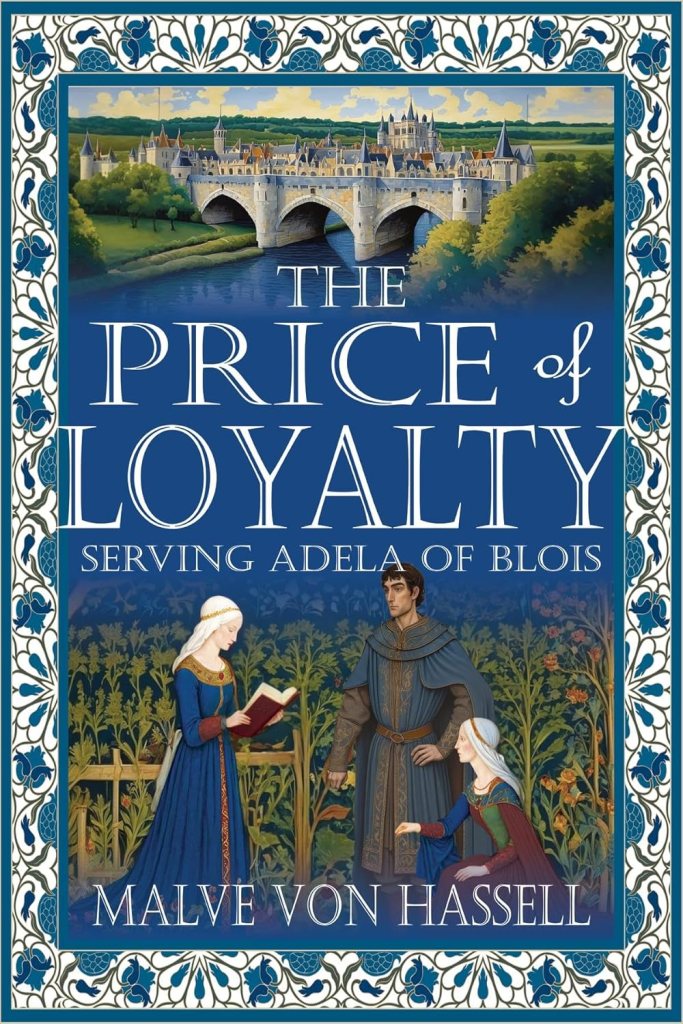
I’m delighted to welcome Malve Von Hassell and her new book, The Price of Loyalty: Serving Adela Bois, to the blog with an excerpt.

Excerpt

Caught In The Snare

1103 Caen

“But, my lady, any of your knights could do this.”

Cerdic had never yet been so frustrated and angry. Adela wanted him to take her son Theobald to her brother-in-law Hugh of Troyes. And she had mentioned another unspecified task. Certainly, she was a widow, and she needed friends around her whom she could trust. But she had other advisors, and for an errand like this, she surely could find someone else. Was he going to be at her back and call indefinitely?

“Theobald has known you all his life. It would be good for him to spend time with you. It has not been easy for him and his brothers.” Adela avoided his eyes. “My brother-in-law is a good man and the right person to take charge of a growing boy, especially now that he has lost his father. Moreover, Hugh and his wife Constance haven’t been blessed with children. Theobald is his heir designate. It is time that Theobald learns everything he needs to know for his future station and duties in life.”

Cerdic stared at her, at a loss for words.

“I can’t and don’t want to ask anybody else. I trust you.”

Cerdic bowed. In truth, he could hardly go on protesting.

Several weeks later, he was back on the road in the company of a surly twelve-year-old boy. For the first hour, they rode in silence. It was early December, and the first hoar frost had turned everything dull and brown. They had to ride north and west toward Troyes; Champagne was a large county, and it would take them about two days.

Theobald had bowed to his mother and ducked out of her embrace. He had mounted his horse without acknowledging Cerdic. He was slender and fine-boned; it didn’t look as if he would have his father’s sturdy build as an adult. His curly hair peeking out underneath his woolen cap was dark brown, not the reddish hue of his grandfather and his uncles. He rode with his head bent and his shoulders hunched.

Guisbert was ten, Cerdic thought with a pang, not much younger than this boy. Would he even recognize his father?

The first words they exchanged were when Cerdic’s horse started limping, and Cerdic had to stop to check the hooves. A stone had worked its way underneath one shoe. Fortunately, Cerdic could pick it out.

“Tell you what.” Cerdic straightened up. The boy’s expression was sullen and slightly hostile. “I don’t trust this shoe, and I don’t want the bay to go lame on me. Let’s walk for a bit. The next village isn’t too far from here, and we’ll find a blacksmith there.”

So they walked, leading the horses. “What are the roads like in the Holy Land?” Theobald asked after a while.

Cerdic didn’t think that the boy really cared about the roads, but it was an opening. “Would you believe it? Some are a lot better than the roads here. Others again are nothing but sand and rocks.”

Theobald was silent. They continued walking.

Then Theobald cleared his throat. “You were with my father, weren’t you?”

“Yes, I was,” Cerdic responded cautiously. “What did your mother tell you?”

“Nothing.” The boy jerked on his horse’s rein so that the surprised animal flung his head up and snorted. “Sorry,” Theobald whispered to the horse. “My mother told me nothing other than that he’s dead. I can’t talk to her about it.”

Cerdic frowned, inwardly cursing Adela. So, that’s why she sent him on this journey.

Here’s the Blurb

In a time of kingdoms and crusades, one man’s heart is the battlefield.

Cerdic, a Saxon knight, serves Count Stephen-Henry of Blois with unwavering loyalty-yet his soul remains divided. Haunted by memories of England, the land of his childhood, and bound by duty to King William, the conqueror who once showed him mercy, Cerdic walks a dangerous line between past and present, longing and loyalty.

At the center of his turmoil stands Adela-daughter of a king, wife of a count, and the first to offer him friendship in a foreign land. But when a political marriage binds him to the spirited and determined Giselle, Cerdic’s world turns again. Giselle, fiercely in love with her stoic husband, follows him across sea and sand to the holy land, hoping to win the heart that still lingers elsewhere.

As the clash of empires looms and a crusade threatens to tear everything apart, Cerdic must confront the deepest truth of all-where does his loyalty lie, and whom does his heart truly belong to?

Buy Link

Universal Link

Meet the Author

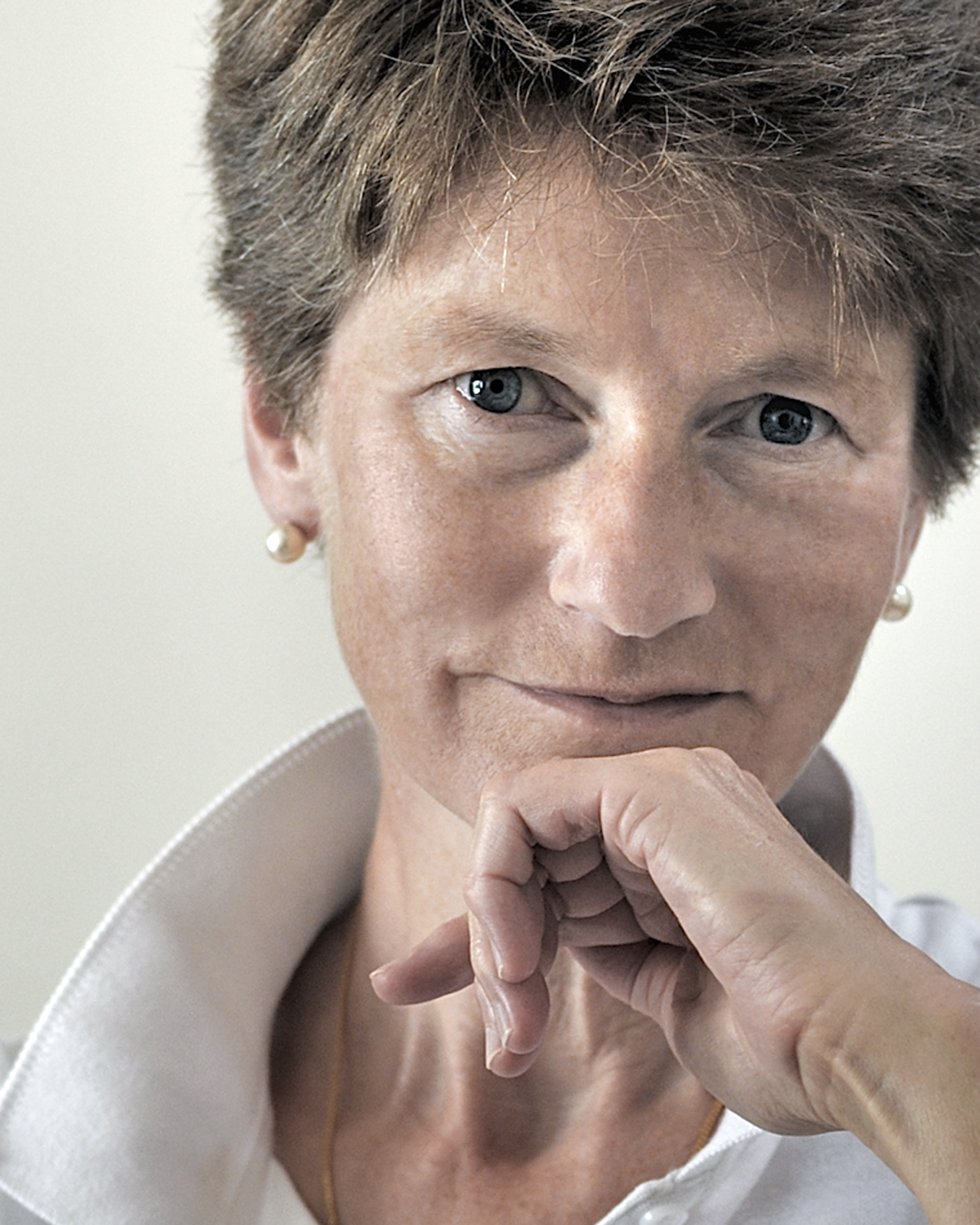
Malve von Hassell is a freelance writer, researcher, and translator. She holds a Ph.D. in anthropology from the New School for Social Research. Working as an independent scholar, she published The Struggle for Eden: Community Gardens in New York City (Bergin & Garvey 2002) and Homesteading in New York City 1978-1993: The Divided Heart of Loisaida (Bergin & Garvey 1996). She has also edited her grandfather Ulrich von Hassell’s memoirs written in prison in 1944, Der Kreis schließt sich – Aufzeichnungen aus der Haft 1944 (Propylaen Verlag 1994).

Malve has taught at Queens College, Baruch College, Pace University, and Suffolk County Community College, while continuing her work as a translator and writer. She has published two children’s picture books, Tooth Fairy (Amazon KDP 2012 / 2020), and Turtle Crossing (Amazon KDP 2023), and her translation and annotation of a German children’s classic by Tamara Ramsay, Rennefarre: Dott’s Wonderful Travels and Adventures (Two Harbors Press, 2012).

The Falconer’s Apprentice (namelos, 2015 / KDP 2024) was her first historical fiction novel for young adults. She has published Alina: A Song for the Telling (BHC Press, 2020), set in Jerusalem in the time of the crusades, and The Amber Crane (Odyssey Books, 2021), set in Germany in 1645 and 1945, as well as a biographical work about a woman coming of age in Nazi Germany, Tapestry of My Mother’s Life: Stories, Fragments, and Silences (Next Chapter Publishing, 2021), also available in German, Bildteppich Eines Lebens: Erzählungen Meiner Mutter, Fragmente Und Schweigen (Next Chapter Publishing, 2022).

Her latest publication is the historical fiction novel, The Price of Loyalty: Serving Adela of Blois (Historium Press, 2025).

Connect with the Author

Follow The Prince of Loyalty blog tour with The Coffee Pot Book Club

Posts

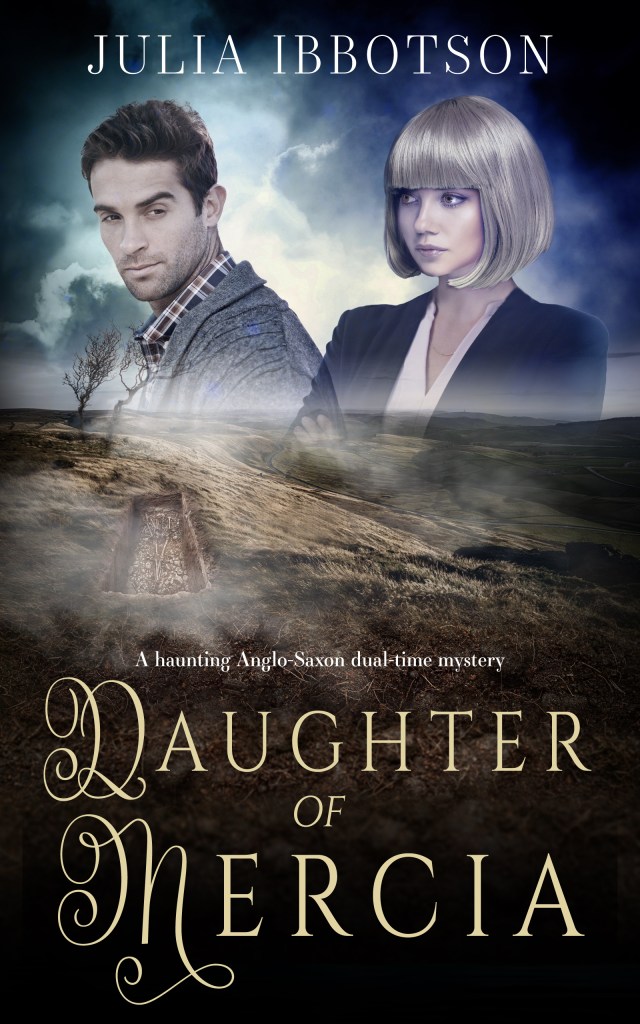
I’m delighted to welcome Julia Ibbotson and her book, Daughter of Mercia, to the blog #DaughterOfMercia #JuliaIbbotson #medieval #anglosaxon #dualtime #timeslip #timetravel #mystery #romance #BlogTour #TheCoffeePotBookClub

I’m delighted to welcome Julia Ibbotson and her book, Daughter of Mercia, to the blog with a guest post.

Lady Mildryth of Mercia

It might surprise us to know that women in the Anglo-Saxon period, even early in their history, were regarded as equal in importance to their male counterparts. Women could hold their own wealth, land, possessions; they could inherit from their fathers or mothers on their own account and they could bequeath it to their children. They were not regarded as the property of their husbands or fathers. Their rights were protected in law and it seems that this applied across the social spectrum, from high-status families presumably to ealdormen to thegns to freedmen ceorls and grant-bearer geburs.

High-status women could be leaders of settlements / regions in the years following the immigration and settling of even the early tribes of Anglo-Saxons. They could be strategists and negotiators. Later, for example, Lady Ǣthelflaed of Mercia, the 10th century daughter of King Alfred, strategized battles to take Derby, Leicester, York, and of whom it is said that she was a “man in valour, a woman in name”. The Anglo-Saxon word cūning (king)applies to either male or female leaders, while the word queen (cwene) applies only to the wife of a king. The historical significance of strong female leaders goes right back to Boudicca of the Iceni in the first century AD. Post-Roman Britain was composed of many small kingdoms, and kingdoms fought to take over other kingdoms and thus wield greater power over a larger region. But our theories of this time of great change are beginning to recognise the way that stable everyday life and the quest for peace were also significant.

Lady Mildryth is a fictional character but is bred of such strong female leaders as these. I have based her on other Anglo-Saxon women who have a place in the history of Britain and I wanted her to represent an idea of the powerful yet peace-loving early settlers who wanted to create stable, secure communities, from the chaos and blood-shed of previous generations. Clearly, I have taken liberties with historical characters and events for the sake of my novel and it is not intended to be an accurate academic analysis of the time, but since archaeological excavation is only just gaining a clearer picture of the early Anglo-Saxon period and its domestic and cultural signigifance, maybe my imagination is not so far out!

Recent archaeological excavation and research has demonstrated that even back to the 5th century, high status ladies were buried with signifiers of their wealth in their grave goods: rich jewellery, gold artefacts, precious glass, beautiful fabrics.

Lady Mildryth, as the leader of a region, would have worn fabrics that were richly dyed and decorated: a chemise or shift, a long-sleeved kirtle (under-gown) often of expensive linen or wool, an over-gown trimmed with fur or braid, and an embroidered mantle(cloak). As a high-status woman, she would have eaten well, with home-grown meat, fish, dairy, vegetables, fruit (hedgerow berries but also imported dates, figs, almonds), and she would have drunk honeyed mead and imported wine, during her mead hall feastings.

Although her antecedents are pagan, and she accepts the duality of her people, she finds herself on the cusp of Christianity, yet still drifting to some of the pagan beliefs of her upbringing. Her late mother was from the Cornovii tribe from the people of Pengwern / Powys, Celtic-Brythonic pagans. She was hand-fasted to Mildryth’s father and died when Mildryth was young. Lady M’s character takes after her mother’s strength of will and determination to be on a par with her brothers (Crydda and Cynewald) – although she knows that she must earn this.

Her antecedents are historical (well, possibly legendary!) characters. Her grandfather is Icel, son of Eomer, of the Icinglas (or Iclingas), an Angle from across the seas in Jutland. He is said to have led his people across the North Sea in around 515 AD to the region we now call East Anglia, and is said to have moved westwards across the country, founding the kingdom of Mercia in the 520s AD. His son, Lady Mildryth’s father, is Cnebba who ruled after Icel from possibly around 535 AD.

We speak of the archetypes ‘Peace-weavers’ and ‘Shield-maidens’ in Anglo Saxon society and I see Lady Mildryth as a Peace-weaver. She is a strategist and commander of men, like Lady Æthelflæd of Mercia generations later. But she is also a negotiator and does not wish to conquer other lands or fight to subdue other tribes. She is dedicated to her settlement, her community, and my novel is more about domestic history than that of battles and high kings.

Lady Mildryth strives to make her settlement run smoothly and to encourage the cultural enrichment of her people: a culture taken from her Angeln ancestors as shown in her use of the scōp, the poet story-teller who regales the thegns of the mead-hall with tales of tradition, of warriors, family and legendary heroism. Peace-weavers were often encouraged, or chose, to make expedient marriages with other kingdoms to avert potential strife. There is evidence to suggest that there were battles for lands, yes, but also deals and negotiations so that tribes could coexist. In Daughter of Mercia, Lady Mildryth is certainly aware of this.

If you’d like to read more of life in Anglo-Saxon times, you may like to look at my blog on my website and the 7-part series ‘Living with the Anglo-Saxons’ at https://juliaibbotsonauthor.com where there are also some reference texts.

Here’s the Blurb

Echoes of the past resonate across the centuries as Dr Anna Petersen, a medievalist and runologist, is struggling with past trauma and allowing herself to trust again. When archaeologist (and Anna’s old adversary) Professor Matt Beacham unearths a 6th century seax with a mysterious runic inscription, and reluctantly approaches Anna for help, a chain of events brings the past firmly back into her present. And why does the burial site also contain two sets of bones, one 6th century and the other modern?

As the past and present intermingle alarmingly, Anna and Matt need to work together to solve the mystery of the seax runes and the seemingly impossible burial, and to discover the truth about the past. Tensions rise and sparks fly between Anna and Matt. But how is 6th century Lady Mildryth of Mercia connected to Anna? Can they both be the Daughter of Mercia?

For fans of Barbara Erskine, Elena Collins, Pamela Hartshorne, Susanna Kearsley and Christina Courtenay.

Buy Link

Universal Link

This title is available to read on #KindleUnlimited

Meet the Author

Julia Ibbotson is fascinated by the medieval world and the concept of time. She is the author of historical mysteries with a frisson of romance. Her books are evocative of time and place, well-researched and uplifting page-turners. Her current series focuses on early medieval time-slip/dual-time mysteries.

Julia read English at Keele University, England, specialising in medieval language / literature / history, and has a PhD in socio-linguistics. After a turbulent time in Ghana, West Africa, she became a school teacher, then a university academic and researcher. Her break as an author came soon after she joined the RNA’s New Writers’ Scheme in 2015, with a three-book deal from Lume Books for a trilogy (Drumbeats) set in Ghana in the 1960s.

She has published five other books, including A Shape on the Air, an Anglo-Saxon timeslip mystery, and its two sequels The Dragon Tree and The Rune Stone. Her latest novel is the first of a new series of Anglo-Saxon dual-time mysteries, Daughter of Mercia, where echoes of the past resonate across the centuries.

Her books will appeal to fans of Barbara Erskine, Pamela Hartshorne, Susanna Kearsley, and Christina Courtenay. Her readers say: ‘Julia’s books captured my imagination’, ‘beautiful story-telling’, ‘evocative and well-paced storylines’, ‘brilliant and fascinating’ and ‘I just couldn’t put it down’.

Connect with the Author

Follow the Daughter of Mercia blog tour with The Coffee Pot Book Club

Posts

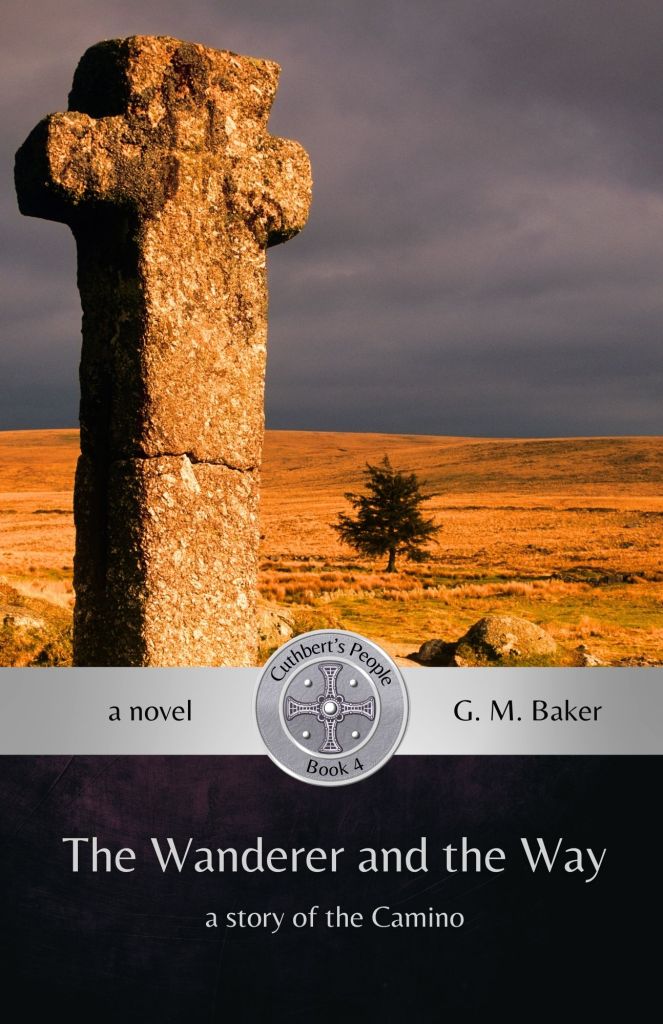
I’m delighted to welcome G.M. Baker and his book, The Wanderer and the Way, to the blog #HistoricalFiction #MedievalFiction #SantiagoDeCompostela #BlogTour #TheCoffeePotBookClub

I’m delighted to welcome G.M. Baker and his book, The Wanderer and the Way, to the blog #HistoricalFiction #MedievalFiction #SantiagoDeCompostela #BlogTour #TheCoffeePotBookClub

I’m delighted to welcome G.M. Baker and his book, The Wanderer and the Way, to the blog with a guest post.

Guest Post

Religion has always been a problem for historical fiction. It’s not just that many readers today are not religious and tend to shy away from religious characters or religious ideas. Readers who are religious tend not to recognize their own beliefs or their way of believing in the religious habits and practices of the past. And yet, if we want our historical fiction to be anything more than modern people in fancy dress, we have to deal with the religious lives of historical characters, almost all of whom would have professed one faith or another.

But I think that the religious opinions and practices of people in the past were not as different in character from the opinions and practices of modern people as they might seem at first. I think religious belief in, for example, the early medieval period in which my novel, The Wanderer and the Way, is set, was different in character from religious belief today, and in some ways closer in character, if not in content, to the beliefs of modern non-religious people.

What I mean is that there are certain beliefs that we hold unselfconsciously. These are the beliefs that we grew up with, the beliefs of our friends and our community. We learn these beliefs growing up and adopt them not because we have subjected them to rigorous philosophical examination, but because they are the beliefs shared by our community. We are a mimetic species, and so we tend to believe what everyone around us believes. This ensures that we are accepted by our society, by our tribe.

For most of the development of modern humans we lived in small bands of hunter-gatherers. Those members of the band held in the highest esteem earned a place close to the fire and the best cuts of the latest kill. Those who were quarrelsome and disruptive of the tribe were dangerous to its harmony and safety. If they were too disruptive, they were likely to be exiled from the tribe, which was tantamount to a sentence of death. Today, teenagers sometimes take their own lives because they have been bullied online by their peers. Though they have suffered no physical harm, the ostracism of the tribe is so traumatic that it can drive some to suicide. In our bones and in our genes we still have a profound fear of ostracism.

Thus humans of all periods, including our own, are strongly driven to believe what the tribe believes, including its religious beliefs, or its rejection of religious belief. Historically we can note that during the Reformation, when a prince became protestant, his people tended to become Protestant with him. If he remained Catholic, his people tended to remain Catholic with him. In each case, there were martyrs, people like Thomas More and Bishop Fisher, people who clung to their beliefs on principle and would not change them to go along with the tribe. People of this kind hold their beliefs in a self-conscious manner. They know that their beliefs are at odds with those of the tribe, and while they may not all be martyrs, the nature of their beliefs is very different from that of most people who hold a belief unselfconsciously.

In the late 8th century Europe, in which my Cuthbert’s People series is set, most people were Christians, but most of them would have been unselfconscious believers. They were Christian because their tribe was Christian. I don’t mean that their beliefs were insincere, any more than modern people are insincere in their unselfconscious beliefs. In some ways, unselfconscious beliefs can be fiercely held, since they are one of the threads that bind us to our tribe and earn us their fellowship and protection. What I do mean is that their method of belief was different from that of the modern religious believer, whose beliefs are almost always self-consciously held. The modern believer knows that their belief sets them apart from society at large. Thus modern religious fiction tends to be fiercely self-conscious in a way that appeals to the believer but repels the non-believer.

What I have tried to do in my Cuthbert’s People series, and in The Wanderer and the Way particularly, is to create a believable portrait of people who are unselfconsciously Christian. This is very different from modern books such as Brideshead Revisited or The Power and the Glory, where the characters are painfully self-conscious about their Catholic faith and how it sets them apart from their society.

Unselfconscious beliefs are not held lightly. They are the beliefs that we grew up with, things we have simply assumed to be true, and thus we hold to them very strongly and behave in accordance with them as far as we can. But they are not held defiantly or obstreperously by most people, who assume that all of the people around them believe as they do.

In The City of God, St. Augustine wrote that when the barbarians sacked Rome, those who fled to pagan temples were not spared, but those who fled to Christian churches were spared the wrath of the barbarians. It was therefore a bewildering shock to the people of Northumbria, and to the people of Europe, when the great Christian monastery of Lindisfarne was not spared in the great Viking raid of AD 793, the event that set in motion the wanderings of Elswyth of Twyford, the main character of my Cuthbert’s People series. The great scholar Alcuin, himself a son of Northumbria and a minister of Charlemagne, wrote a letter to the Christian people of Northumbria trying to reconcile this event with their belief that they were under the protection of God. That letter figures in The Wanderer and the Way.

Human beings tend not to trust people who do not share, and therefore challenge, their unselfconscious beliefs. Thus it is now, as it was in the 8th century, a fundamental element of diplomacy to demonstrate one’s orthodoxy on the issues of the day. In the period covered by The Wanderer and the Way, the Kingdom of Asturias in Northern Spain was the last major holdout against the Moorish invasion of the Iberian Peninsula. Alonso the Chaste, King of Asturias, sent several embassies to Charlemagne asking for recognition and aid against the Moors. I send my main character, Theodemir of Iria Flavia, as one of his ambassadors. There was at that time a controversy over the heresy of Adoptionism, originated by a Spanish bishop, which held that Christ acquired his divinity by adoption rather than being divine by nature. Thus I have Theodemir carefully instructed by Alonzo and Bishop Quendulf to demonstrate to Alcuin his knowledge of the controversy and his orthodoxy on the question.

In a book set today, I might have used a modern heresy, such as the rejection of vaccines or the denial of global warming, as an ideological purity test for an ambassador in the same way. Our fundamental tribalism and our insistence on adherence to orthodoxy as the basis for trusting one another has not changed much over the centuries, only what subjects we demand orthodoxy on.

This, I believe, is how historical fiction ought to treat religious belief in characters from the past, not by mocking it, nor by making an exemplary virtue of it, but by portraying it as the core unselfconscious belief that people of the past used to bind themselves together and explain themselves to themselves, in just the same way our unselfconscious beliefs bind us and help us explain ourselves to ourselves today. Whether such beliefs are true or false is, from an historical and fictional point of view, an entirely orthogonal question.

Here’s the Blurb

The Camino de Santiago de Compostela, now the most famous pilgrimage route in the world, was founded in the early ninth century, largely due to the efforts of Bishop Theodemir of Iria

Flavia. As with most people of this period, nothing seems to be known of his early years.

What follows, therefore, is pure invention.

Theodemir returns footsore and disillusioned to his uncle’s villa in Iria Flavia, where he meets Agnes, his uncle’s gatekeeper, a woman of extraordinary beauty. He falls immediately in love. But Agnes has a fierce, though absent, husband; a secret past; another name, Elswyth; and a broken heart.

Witteric, Theodemir’s cruel and lascivious uncle, has his own plans for Agnes. When the king of Asturias asks Theodemir to undertake an embassy on his behalf to Charles, King of the Franks, the future Charlemagne, Theodemir plans to take Agnes with him to keep her out of Witteric’s clutches.

But though Agnes understands her danger as well as anyone, she refuses to go. And Theodemir dares not leave without her.

Buy Link

Universal Link

Meet the Author

Born in England to a teamster’s son and a coal miner’s daughter, G. M. (Mark) Baker now lives in Nova Scotia with his wife, no dogs, no horses, and no chickens. He prefers driving to flying, desert vistas to pointy trees, and quiet towns to bustling cities.

As a reader and as a writer, he does not believe in confining himself to one genre. He writes about kind abbesses and melancholy kings, about elf maidens and ship wreckers and shy falconers, about great beauties and their plain sisters, about sinners and saints and ordinary eccentrics. In his newsletter Stories All the Way Down, he discusses history, literature, the nature of story, and how not to market a novel.

Connect with the Author

Follow The Wanderer and the Way blog tour with The Coffee Pot Book Club

Posts

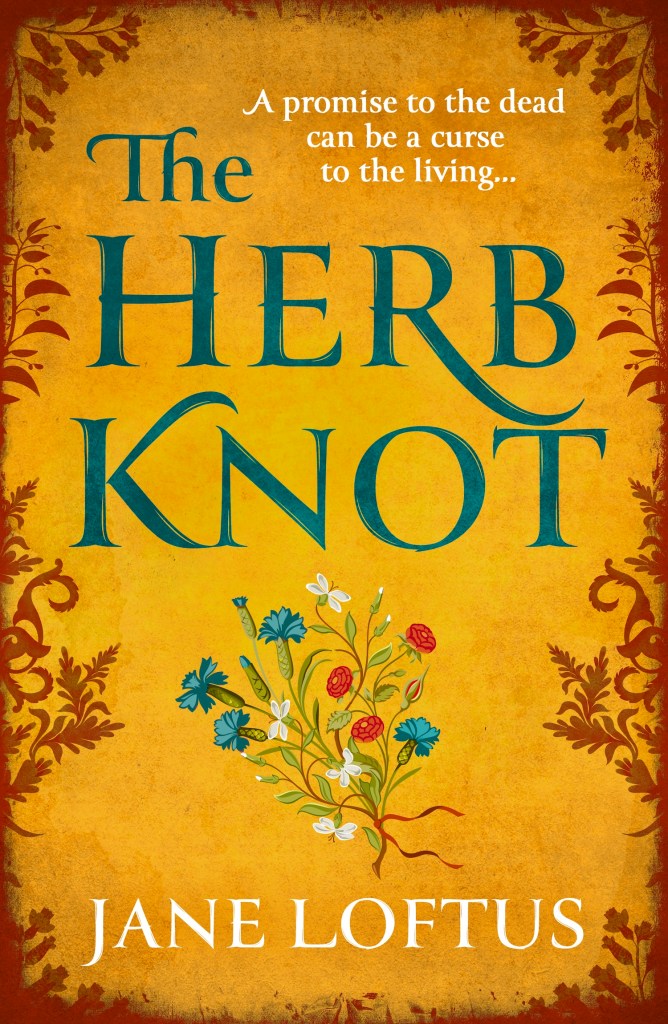
I’m delighted to welcome Jane Loftus and her book, The Herb Knot, to the blog #HistoricalFiction #medieval #Winchester #BlogTour #TheCoffeePotBookClub

I’m delighted to welcome Jane Loftus and her book, The Herb Knot, to the blog with some historical research behind The Herb Knot.

The Herb Knot Historical Research

This story was a dream to research because Winchester Library held the Holy Grail of information, otherwise known as The Survey of Medieval Winchester by Derek Keene.

The detail contained in the study is beyond meticulous and was based on innumerable deeds and rolls held in the British Library and Winchester archives. Not only is every single house documented – both inside the city and also covering the suburbs – but each tenant within each document is recorded, right down to the amount of rent they paid and to whom.

And the maps – oh, the maps! Having established who lives where and what they did, the author reconstructed the streets where they lived too. If you live in Winchester and suddenly see streets you know described and drawn as they would have been in the Middle Ages, it does send a shiver down the spine. I can walk past various shops on the High Street now knowing there used to be an Inn there, or a silversmith there and oh, the chandler was here.

Want to know what made up the bulk of industry in the city? This survey will tell you. Which industries were in decline, that too.

It didn’t even stop there. After gorging on this amazing detail, the final part of the survey is full of biographical information of many of the citizens. This was where the novel really started to take shape. Family trees, wealthy merchants marrying into other wealthy merchant families, their names and dates. Also interesting to see, even at a time when English was overtaking French as the language of the court, how many citizens (usually wealthy ones it has to be said) who still had a ‘le’ or ‘de’ in their names, like Hugh le Cran. His wife did not, and that’s only just struck me now as I write this.

The survey very kindly gave me Serlo, a butcher, and Thurstin, a clerk. I feel like a cheat in many ways for borrowing so many lovely names and professions, but I hope I did them justice.

Speaking of names, I came across many, many women called Petronilla, I’d had no idea how popular it was in 1350. I would have picked on that had it not been the name of the main character in The Miniaturist.

The other part of the research involved actually going into town and paying more attention. How long would it take for Edith to walk from Tanner Street to Knights Meadow? Getting into St John’s church and looking at the frieze over the door – properly looking at it, not just noting that it was there and was remarkable, but really paying attention.

There was also the local museum, of course, with the beautiful little misericorde which I promptly gave to Rafi. The records office also holds many treasures – including a deep dive into deeds and letters concerning Le Cran and his properties, and also money he owed or loaned to people, hence the £200 to the Earl of Arundel which I used as a plot point. The crowning moment came when the records office emailed me a photocopy of the seal of Hugh Le Cran. I remember opening it and literally gasping out loud. It is exactly as described, three rather chunky birds in triangle formation with a tree behind them. Rafi was quite right – they don’t look like cranes, they look like ducks, and thus his confusion over what they might be was born.

After that there were the endless videos about how to use egg white to bind paint, and making ink out of oak gall in your own kitchen, neither of which I tried.

 Can’t say I wasn’t tempted, though. Plenty of meringue opportunities with the leftovers.

Here’s the Blurb

The Hundred Years’ War comes to life in this spellbinding tale of love, betrayal and conspiracy … 

A quest born on the battlefield will change a young boy’s destiny… 

Rafi Dubois is five years old when his mother is murdered after the Battle of Crecy in 1346. Alone and lost, Rafi is given a token by the dying Englishman who tried to save his mother’s life: a half-broken family seal which he urges Rafi to return one day to Winchester. 

Years later, when Rafi saves a wealthy merchant’s wife from a brutal robbery, he is rewarded with the chance to travel to England, taking the seal with him. 

But when he reaches Winchester, Rafi finds himself in a turbulent world full of long-held allegiances, secrets and treachery. His path is fraught with danger and with powerful enemies working against him, Rafi falls in love with Edith, a market apothecary. But in doing so, Rafi unleashes a deadly chain of events which threatens to overwhelm them both… 

The Herb Knot is a sweeping and passionate novel set in one of the most tumultuous times in English history, from a powerful new voice.

Buy Link

Universal Link

Meet the Author

Jane Loftus gained a degree in 16th Century European and British history from Surrey before taking a postgraduate degree in modern political history. As a lone parent, she worked in Winchester Waterstones before returning to IT once her son was older.

Hugely passionate about the Middle Ages, she drew inspiration for this novel from the medieval layout of Winchester which has been painstakingly documented.

Jane is originally from London but has lived in Winchester for over twenty years. When not writing, she is usually out walking or watching costume dramas on Netflix – the more medieval the better. She also plays far too many rpgs.

Connect with the Author

Follow The Herb Knot blog tour with The Coffee Pot Book Club

Posts

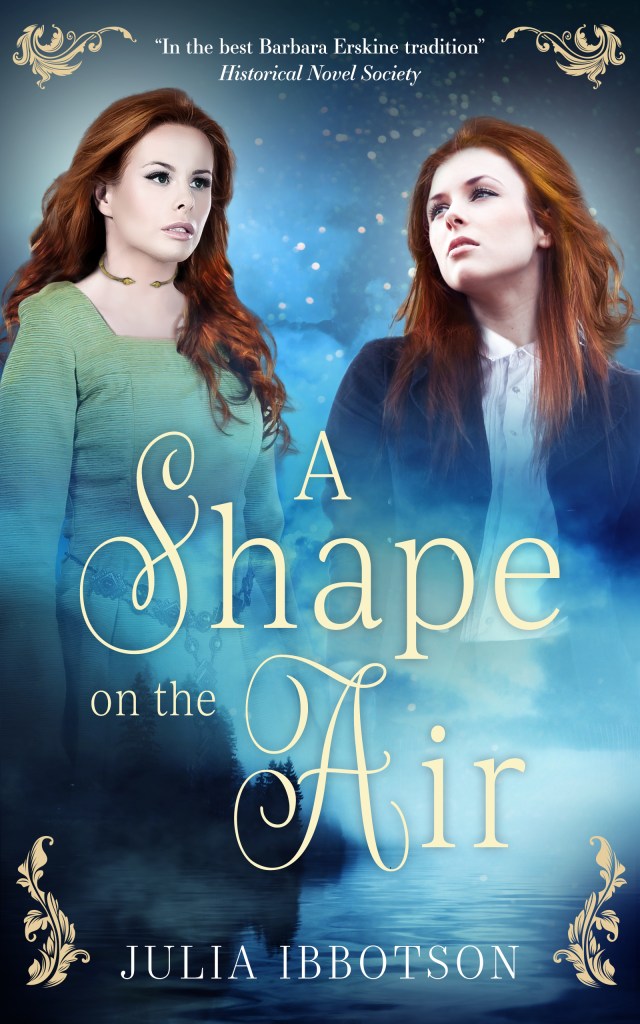
I’m delighted to welcome Julia Ibbotson and her new book, A Shape on the Air, to the blog #Medieval #HistoricalFiction #AngloSaxon #TimeTravel #TimeSlip #Mystery #Romance #BlogTour #TheCoffeePotBookClub

I’m delighted to welcome Julia Ibbotson and her new book, A Shape on the Air, to the blog #Medieval #HistoricalFiction #AngloSaxon #TimeTravel #TimeSlip #Mystery #Romance #BlogTour #TheCoffeePotBookClub

I’m delighted to welcome Julia Ibbotson and her new book, A Shape on the Air, Dr DuLac Series, Book 1, to the blog.

Here’s the Blurb

Can echoes of the past threaten the present? They are 1500 years apart, but can they reach out to each other across the centuries? One woman faces a traumatic truth in the present day. The other is forced to marry the man she hates as the ‘dark ages’ unfold.

How can Dr Viv DuLac, medievalist and academic, unlock the secrets of the past?

Traumatised by betrayal, she slips into 499 AD and into the body of Lady Vivianne, who is also battling treachery. Viv must uncover the mystery of the key that she unwittingly brings back with her to the present day, as echoes of the past resonate through time. But little does Viv realise just how much both their lives across the centuries will become so intertwined. And in the end, how can they help each other across the ages without changing the course of history?


For fans of Barbara Erskine, Pamela Hartshorne, Susanna Kearsley, Christina Courtenay.

Buy Link

Universal Link

This title is available to read on #KindleUnlimited

Meet the Author

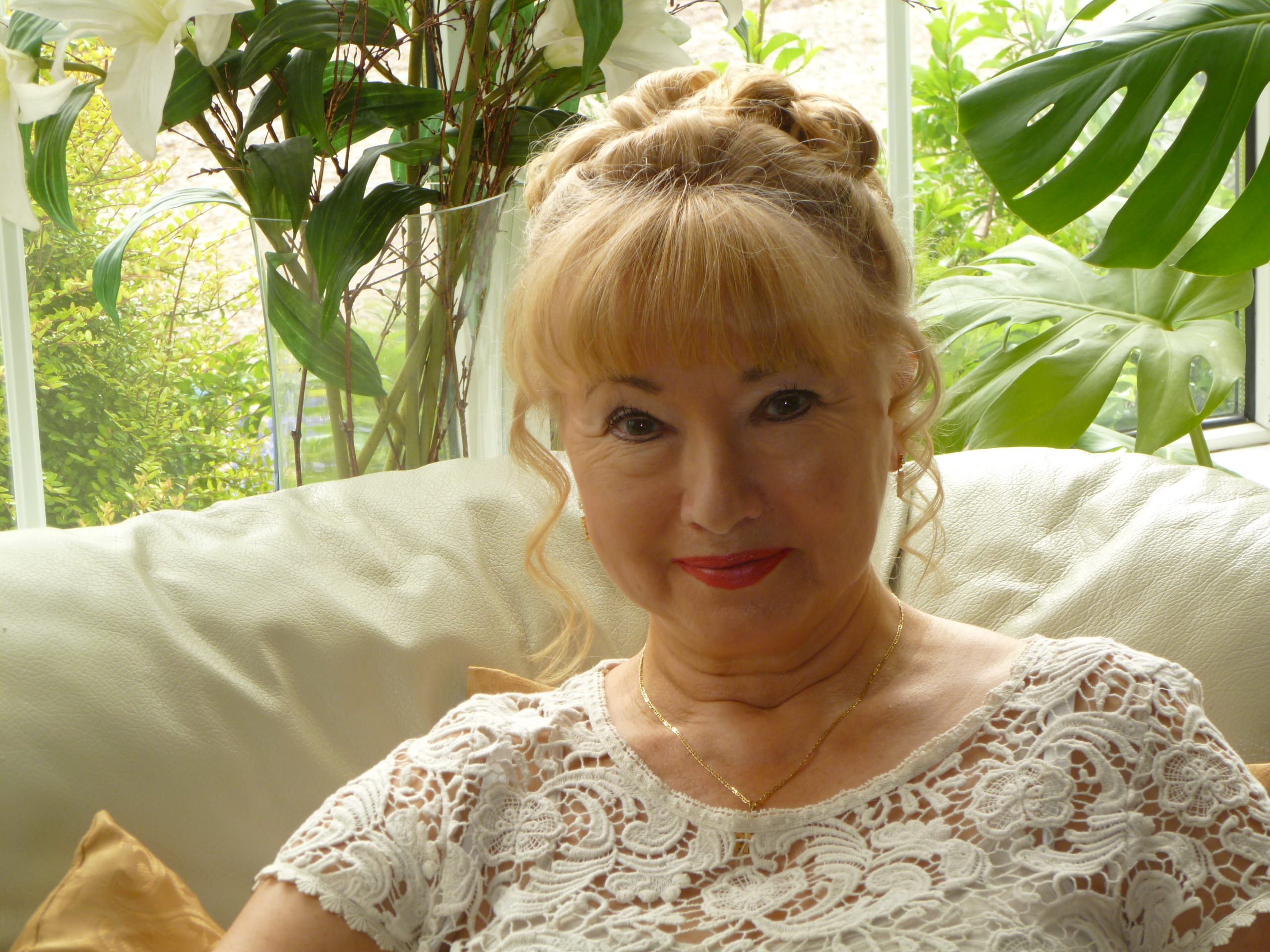
Julia Ibbotson is fascinated by the medieval world and the concept of time. She is the author of historical mysteries with a frisson of romance. Her books are evocative of time and place, well-researched and uplifting page-turners. Her current series focuses on early medieval time-slip/dual-time mysteries.

Julia read English at Keele University, England, specialising in medieval language / literature / history, and has a PhD in socio-linguistics. After a turbulent time in Ghana, West Africa, she became a school teacher, then a university academic and researcher. Her break as an author came soon after she joined the RNA’s New Writers’ Scheme in 2015, with a three-book deal from Lume Books for a trilogy (Drumbeats) set in Ghana in the 1960s.

She has published five other books, including A Shape on the Air, an Anglo-Saxon timeslip mystery, and its two sequels The Dragon Tree and The Rune Stone. Her latest novel is the first of a new series of Anglo-Saxon dual-time mysteries, Daughter of Mercia, where echoes of the past resonate across the centuries.

Her books will appeal to fans of Barbara Erskine, Pamela Hartshorne, Susanna Kearsley, and Christina Courtenay. Her readers say: ‘Julia’s books captured my imagination’, ‘beautiful story-telling’, ‘evocative and well-paced storylines’, ‘brilliant and fascinating’ and ‘I just couldn’t put it down’.

Connect with the Author

Follow A Shape on the Air blog tour with The Coffee Pot Book Club

Posts

I’m sharing my review for Fields of Glory by Michael Jecks #newrelease #histfic #blogtour

Here’s the blurb

1346. France. King Edward III is restless. Despite earlier victories the French crown remains intact. Determined to bring France under his own rule, Edward has devised a new plan of attack – one which he believes will finally bring the French army to its knees: a final, cataclysmic battle …

Berenger Fripper, Vintener of a pox-ridden mob of sixteen who make up the Vintaine of Sir John de Sully, storms the beaches of Normandy to bring victory to their king. But the French are nowhere to be seen…
And so Berenger leads his Vintaine through France and onward to battle – the Battle of Crécy – one which will both bond and break his men and be a decisive turning point in the Hundred Years’ War.

Image shows the book cover for Fieldsof Glory by author Michael Jecks. The image shows 5 mounted medieval warriors, one holding a banner, hurrying towards the viewer with a battlescene image behind them

Purchase Link

 https://mybook.to/Fieldsof

My Review

Fields of Glory by Michael Jecks is a novel about the Hundred Years’ War in all its bloody glory. Featuring an ensemble cast of characters, every person has their own story to tell, hidden behind the veneer of bloody war, and the demands of an intolerant king, who appears to preach reconciliation with the French but finds every excuse to change his mind.

I can’t say any of this ragtag collection of men is particularly endearing. Sir John cares more for his horse than his men, while King Edward and the Prince of Wales are just as thoughtless regarding the lives they’re destroying. This makes it a very realistic portrayal, if not for the faint-hearted. Indeed, if seeking some semblance of empathy between the characters, we must look to the men of the Vintaine, and not those who command them.

A blood-drenched traipse through France will bring our characters the opportunity to earn battle booty, if only they can live through it. Fields of Glory is a must-read for fans of the genre and those interested in the Hundred Years’ War.

Meet the author

Studied actuarial science, then became a computer salesman for 13 years- after the 13th company folded, he turned to writing.

He’s the author of 50 novels, 6 novellas, 4 collaborative books and short stories. His tales are inspired by history and legends, but are all grounded in real life and real people, what motivates them, and why they turn to violence. 

Founder of Medieval Murderers, he has served on the committees of: Historical Writers’ Association, CWA and Detection Club. He has judged the Debut Dagger, Ian Fleming Steel Dagger and other prizes, as well as serving as Dagger liaison officer and CWA Chair. He has taught writing at Swanwick and Evesham, and tutored for the Royal Literary Fund. He now runs South West Writers in Devon. 

His work has been celebrated by Visconti and Conway Stewart pens; 2014 he was International Guest of Honour at the Bloody Words festival in Toronto, and Grand Master of the first parade in the New Orleans Mardi Gras.

Newsletter Sign Up: https://bit.ly/MichaelJecksNews

Bookbub profile: @michaeljecks

Posts