Author of Saxon historical fiction and non-fiction, 20th-century historical mysteries, and Norse-inspired historical romantasy. Book reviewer and blog host.
Mary Tudor, Henry VIII’s sister, lived a remarkable life. A princess, duchess and queen, she was known as the English Rose for her beauty. Mary Tudor, Queen of France, aims to explore the life of one of the few who stood up to Henry VIII and lived to tell the tale.
Henry VIII is well known, but his larger-than-life character often overshadows that of his sisters. Mary Tudor was born a princess, married a king and then a duke, and lived an extraordinary life. This book focuses on Mary’s life, her childhood, her relationship with Henry, her marriages and her relationship with her husbands.
Mary grew up in close proximity to Henry, becoming his favourite sister, and later, after her marriage to the French king, she married his best friend, Charles Brandon, 1st Duke of Suffolk. The events impacting the siblings will be reviewed to examine how they may have changed and shaped their relationship.
Mary Tudor by Amy McElroy is a fascinating biographical account of the life of Mary, Henry VIII’s sister, and not to be confused with his daughter.
The story is quite remarkable, and while I knew something about her, I didn’t know everything. The chapters, which follow her through the 3 marriage proposals she receives, which result in 2 marriages, are quite astounding. So much time and effort went into trying to wed her to Prince Charles (later Emperor Charles), and then all of a sudden, she married Louis XII of France. I found it most fascinating. If anything, her 2nd marriage seems almost anticlimatic, even though it evidently wasn’t at the time. And, with all we know about Henry and his marital difficulties, Mary appears to have been somewhat serene about everything. I imagine she perhaps had a happier life, if one often troubled by the terrible debt her brother placed upon her (families!).
I really appreciated the author’s desire to keep this narrative to Mary and not to her children and grandchildren. It seems fitting to have a title devoted exclusively to her.
A fine portrayal of Mary’s eventful, if short life, with a lovely writing style.
Meet the author
Amy was born and bred in Liverpool before moving to the Midlands to study criminal justice and eventually becoming a civil servant. She has long been interested in history, reading as much and as often as she could. Her writing journey began with her blog, sharing thoughts on books she had read before developing to writing reviews for Aspects of History. The Lives of Women in the Tudor Era is Amy’s second book. Her first, Educating the Tudors, focused on the educational opportunities of all classes, those who taught them and the pastimes enjoyed by all.
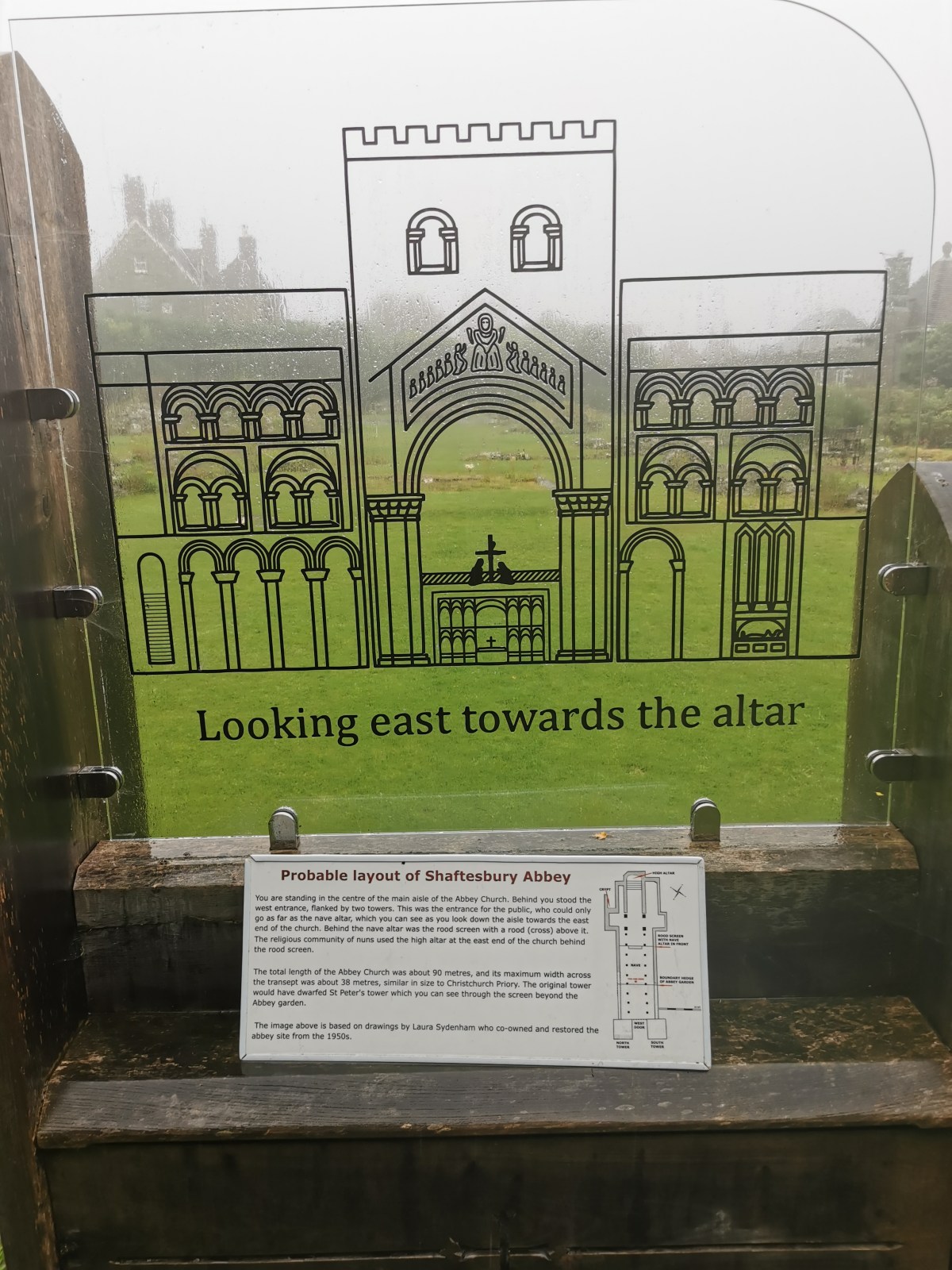
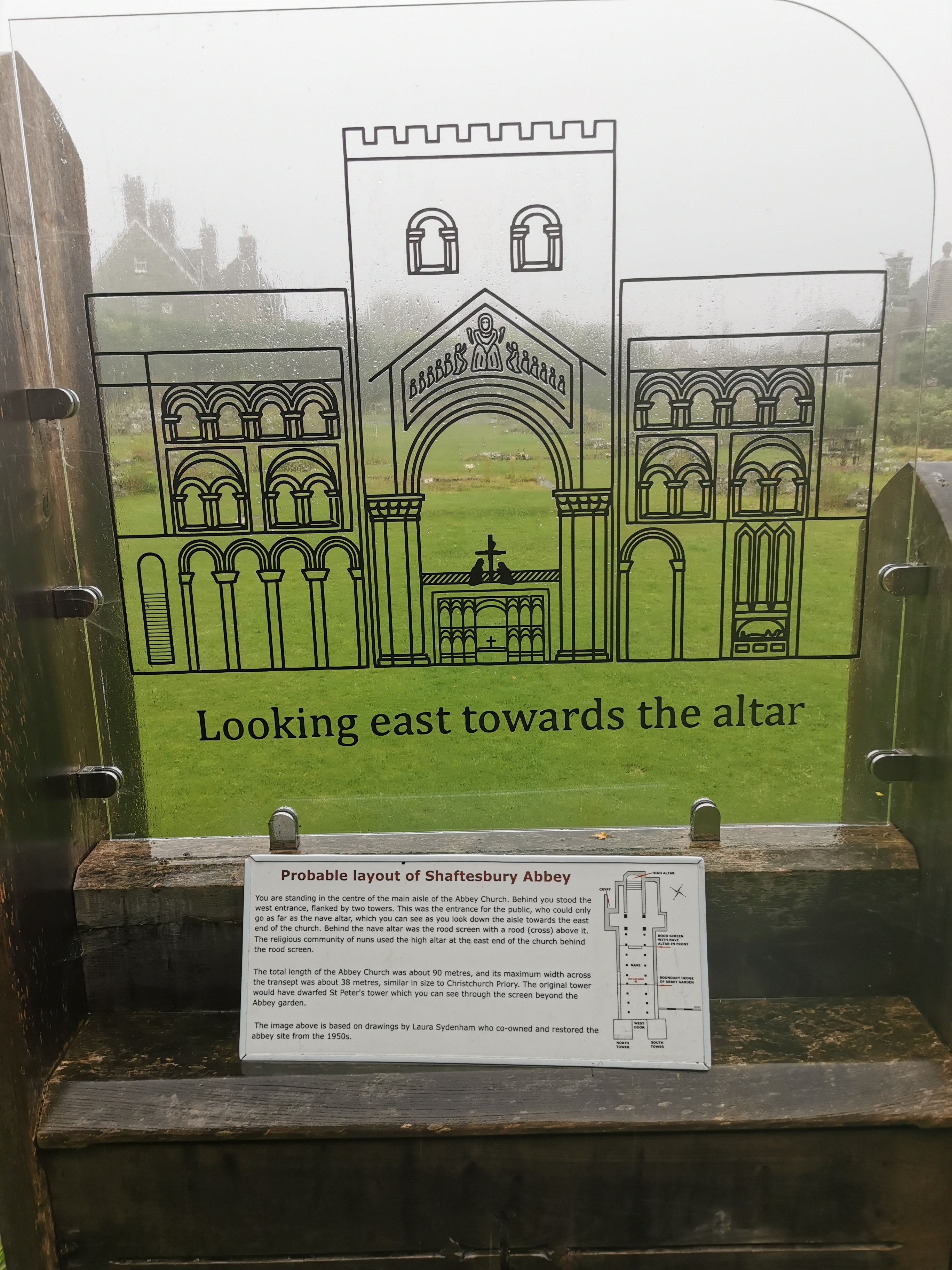
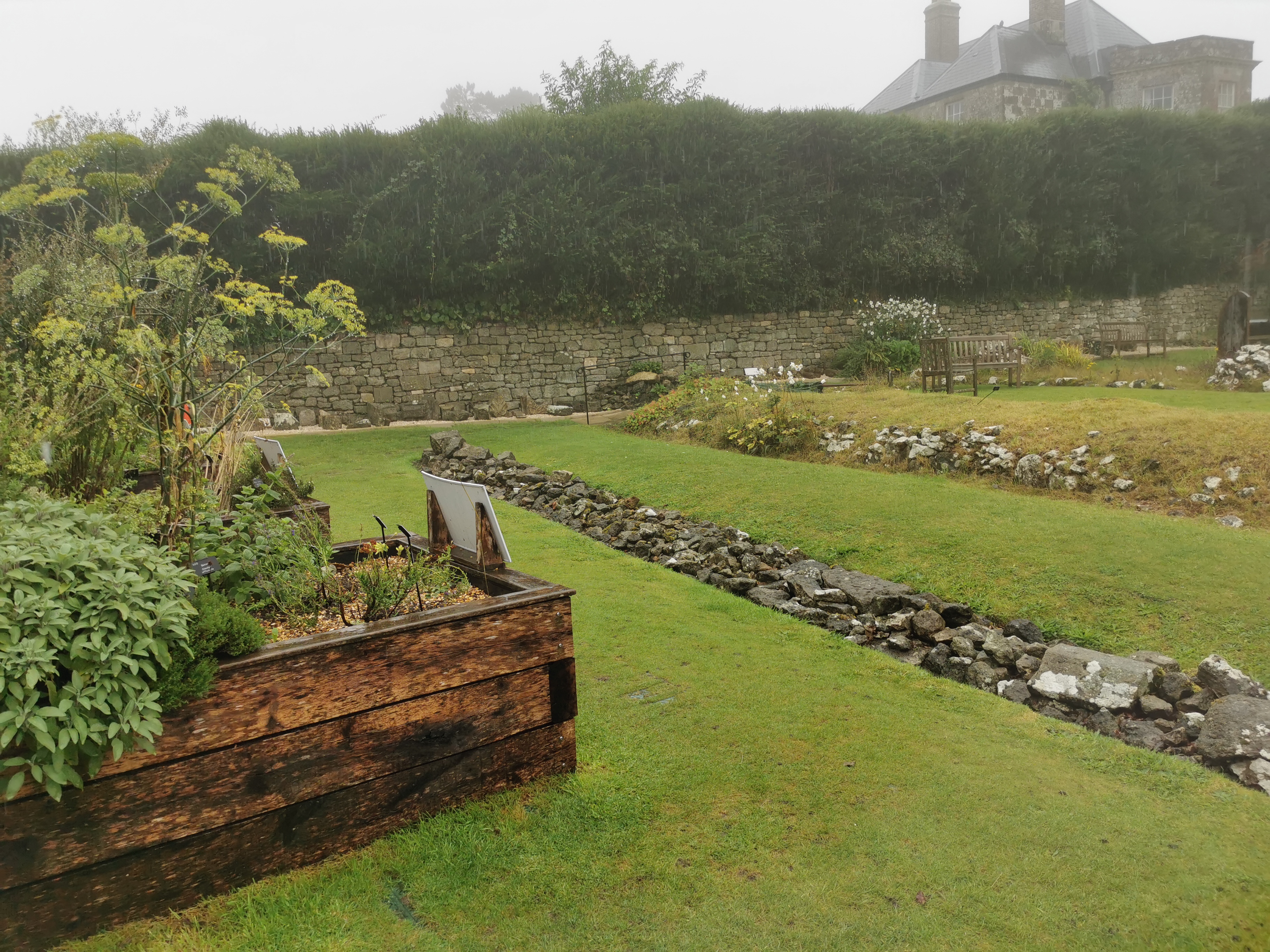
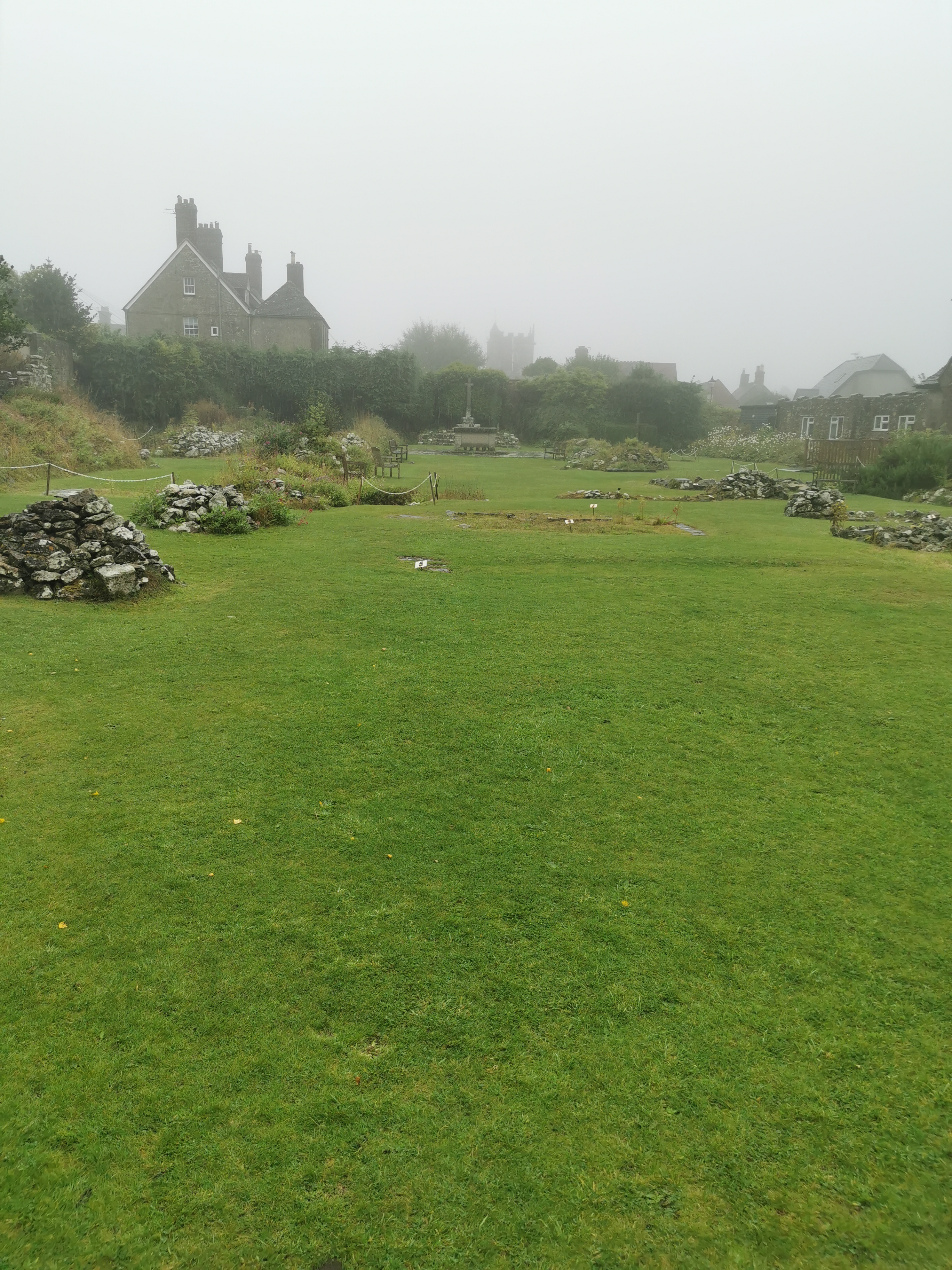
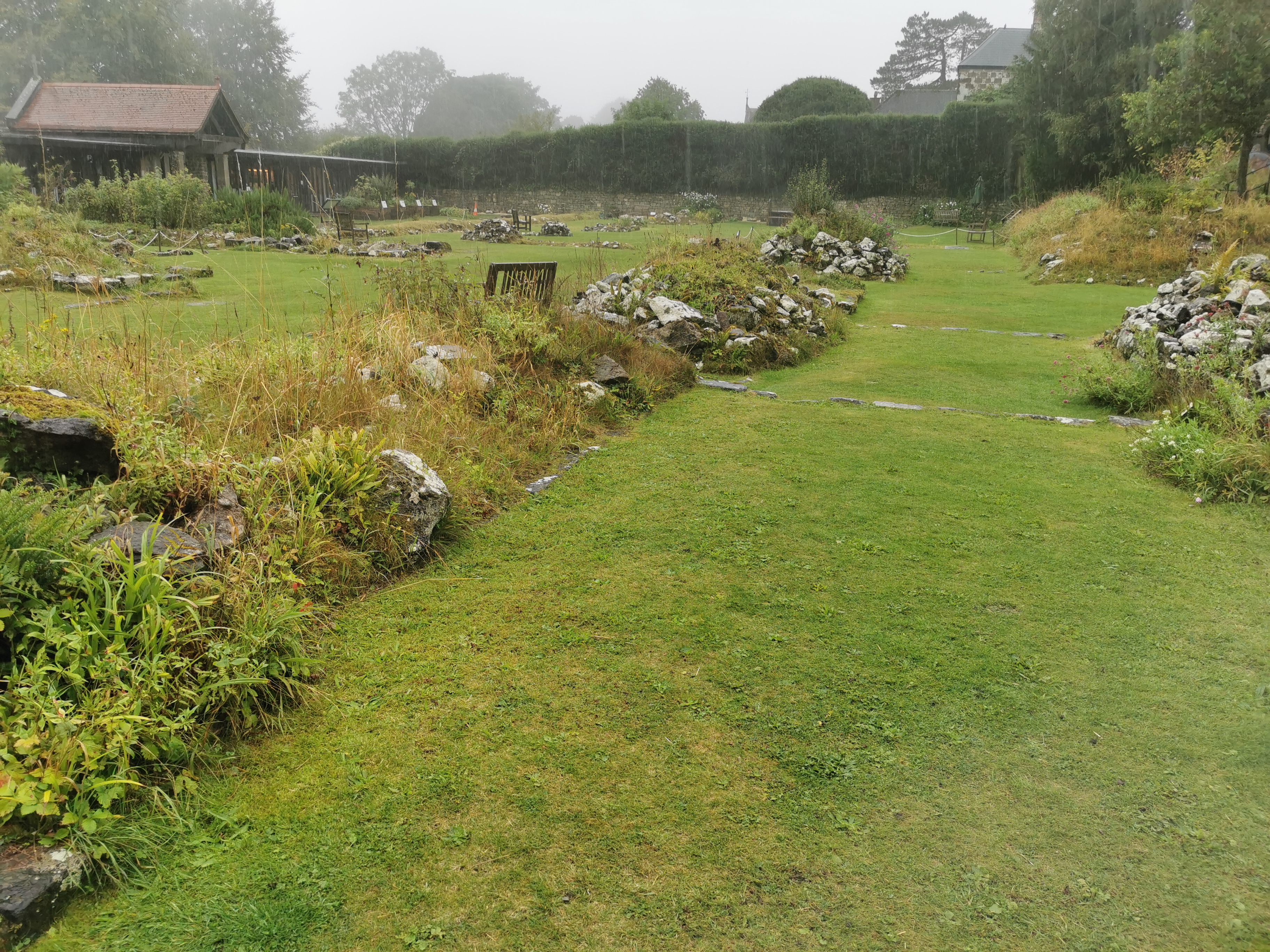
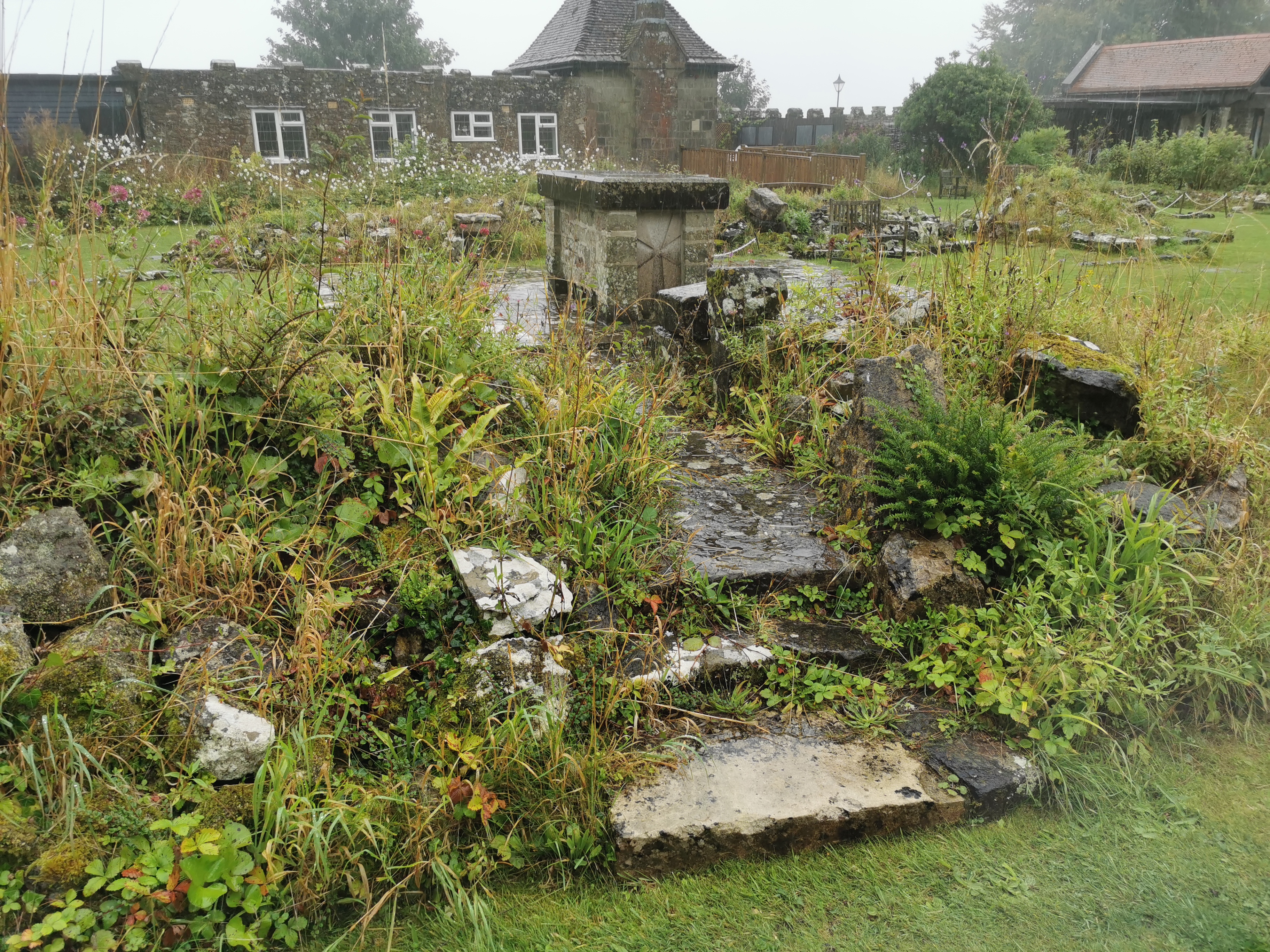
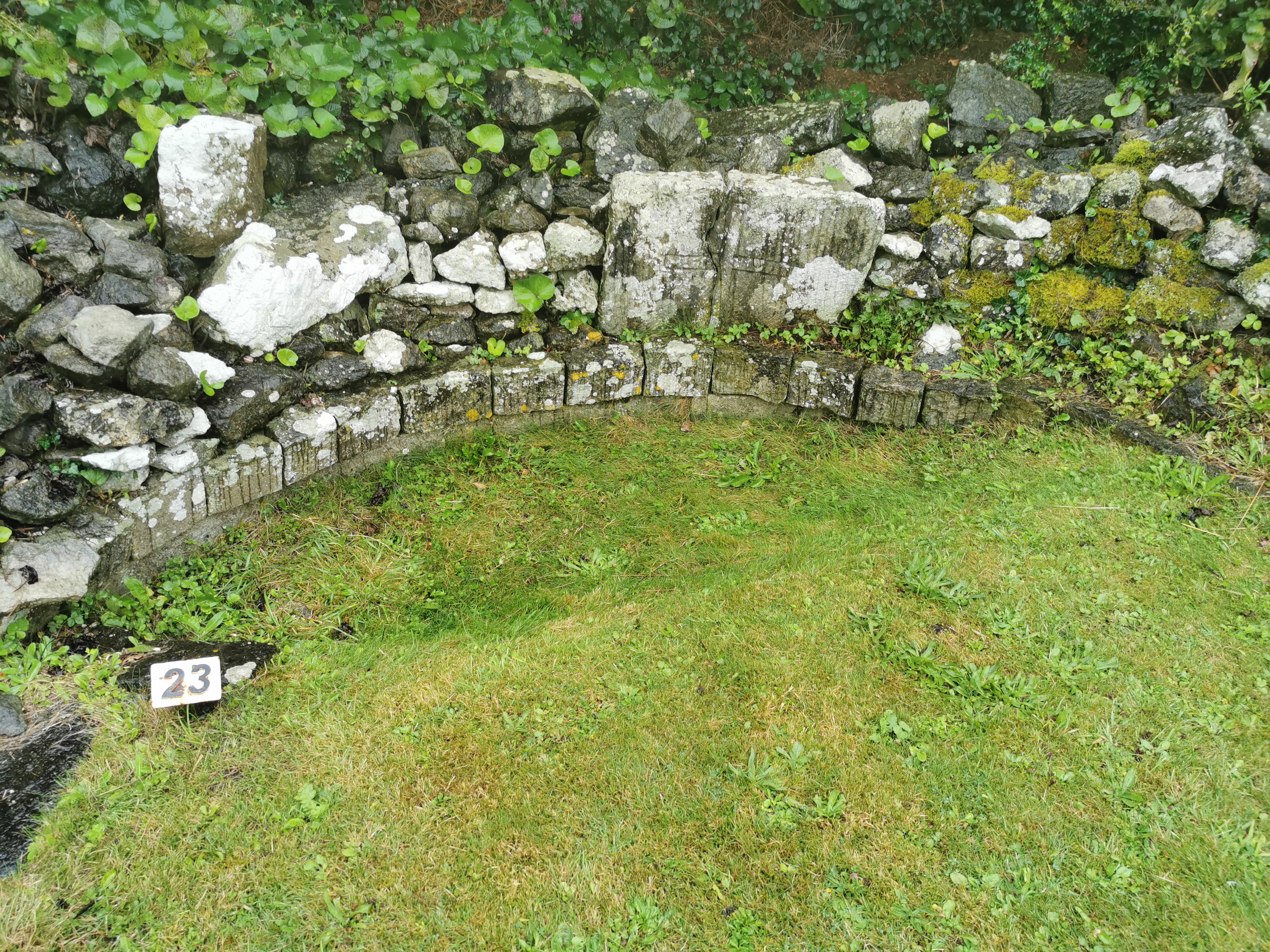
Shaftebury Abbey is a ruin, in private hands and run by a charity, and I was desperate to visit because it’s where King Alfred’s daughter, Æthelgifu, was an abbess, and where King Edmund’s first wife, Ælfgifu, was buried, (the mother of Eadwig and Eadgar/Edgar) and where the body of King Edward the Martyr was moved to after his murder (the oldest son of Eadgar/Edgar). You can read about these women in my The Royal Women Who Made England non-fiction title. And I’ve fictionalised many of them as well, especially Lady Elfrida, accused of murdering her stepston.
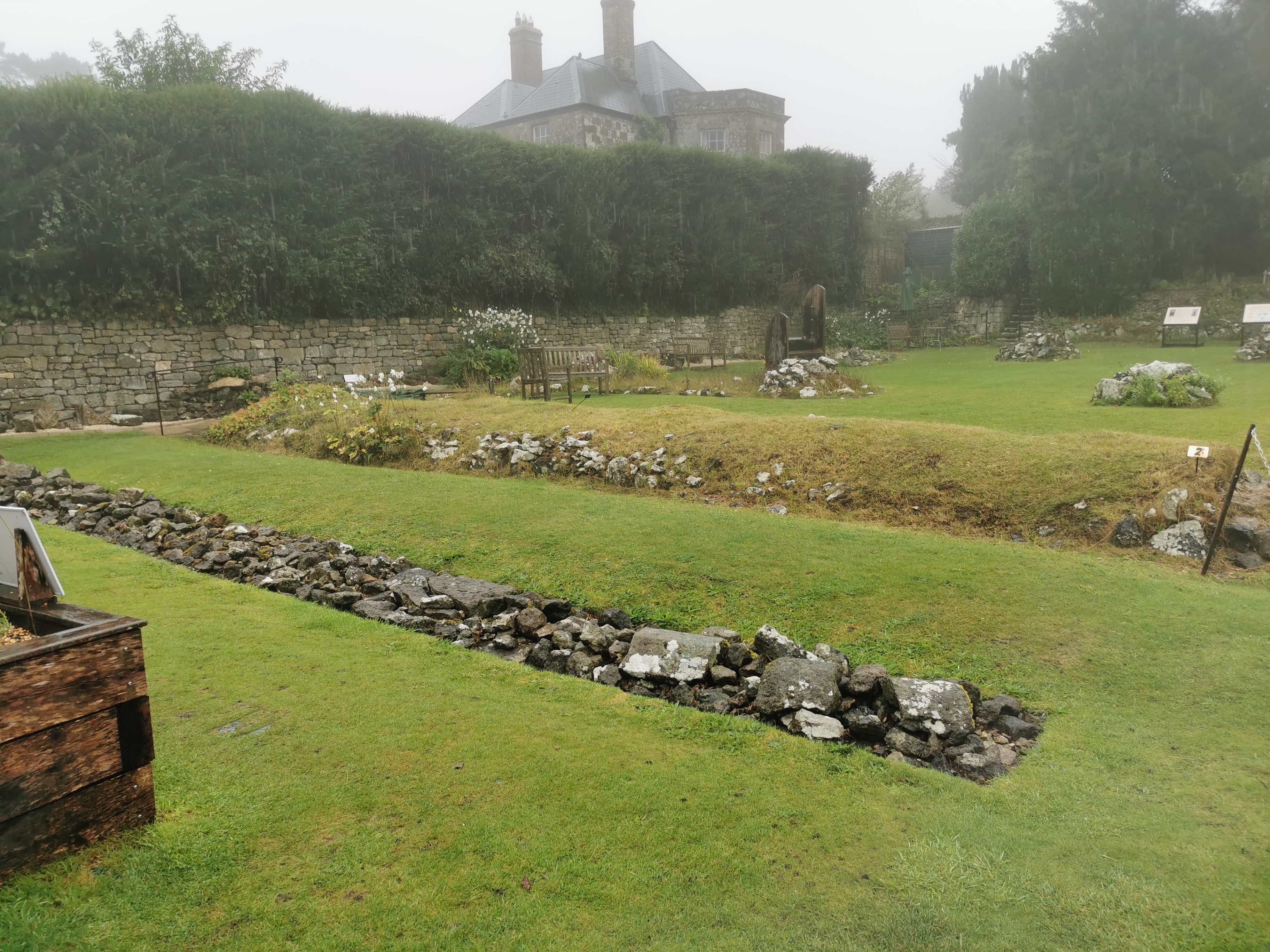
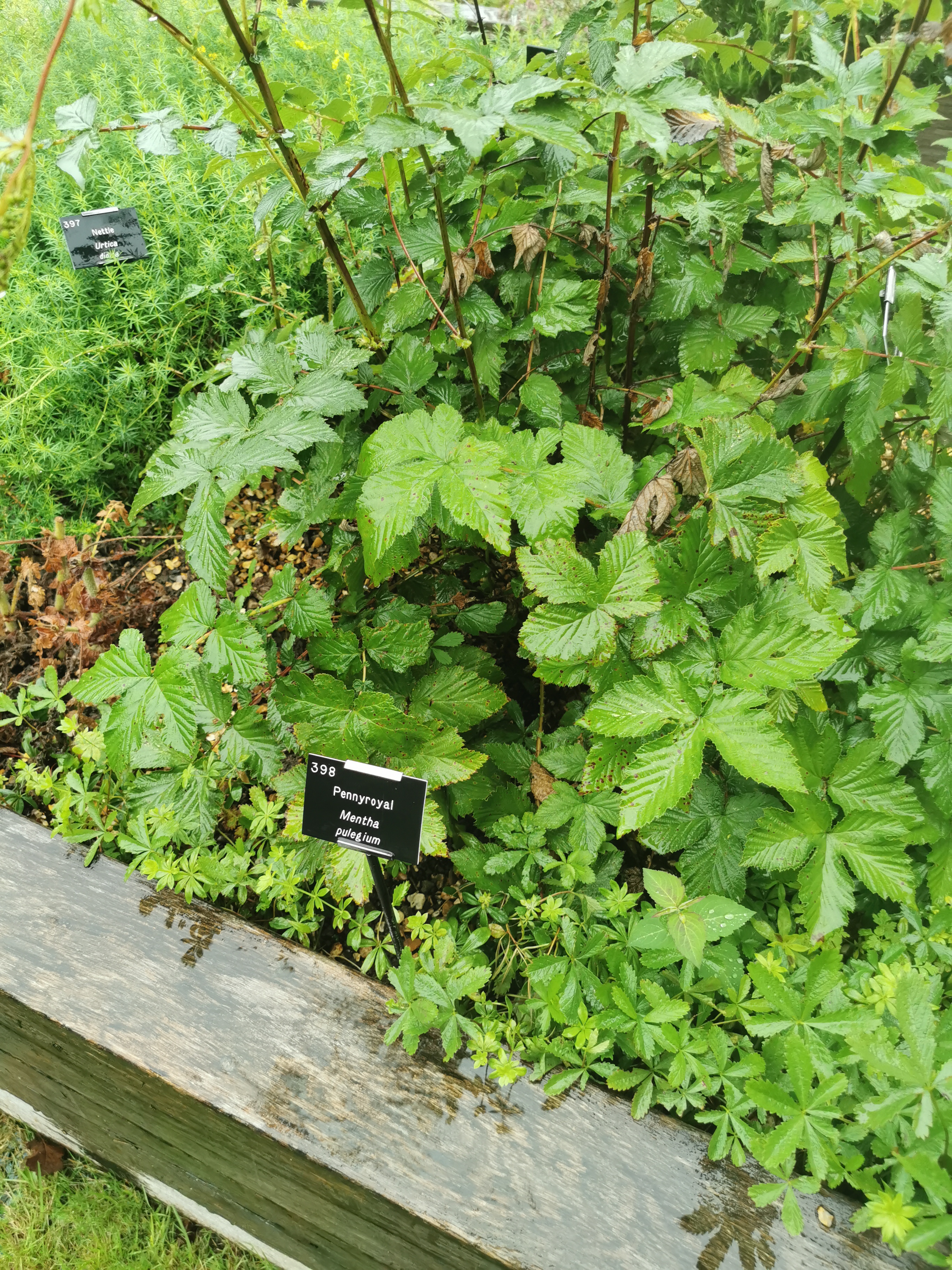
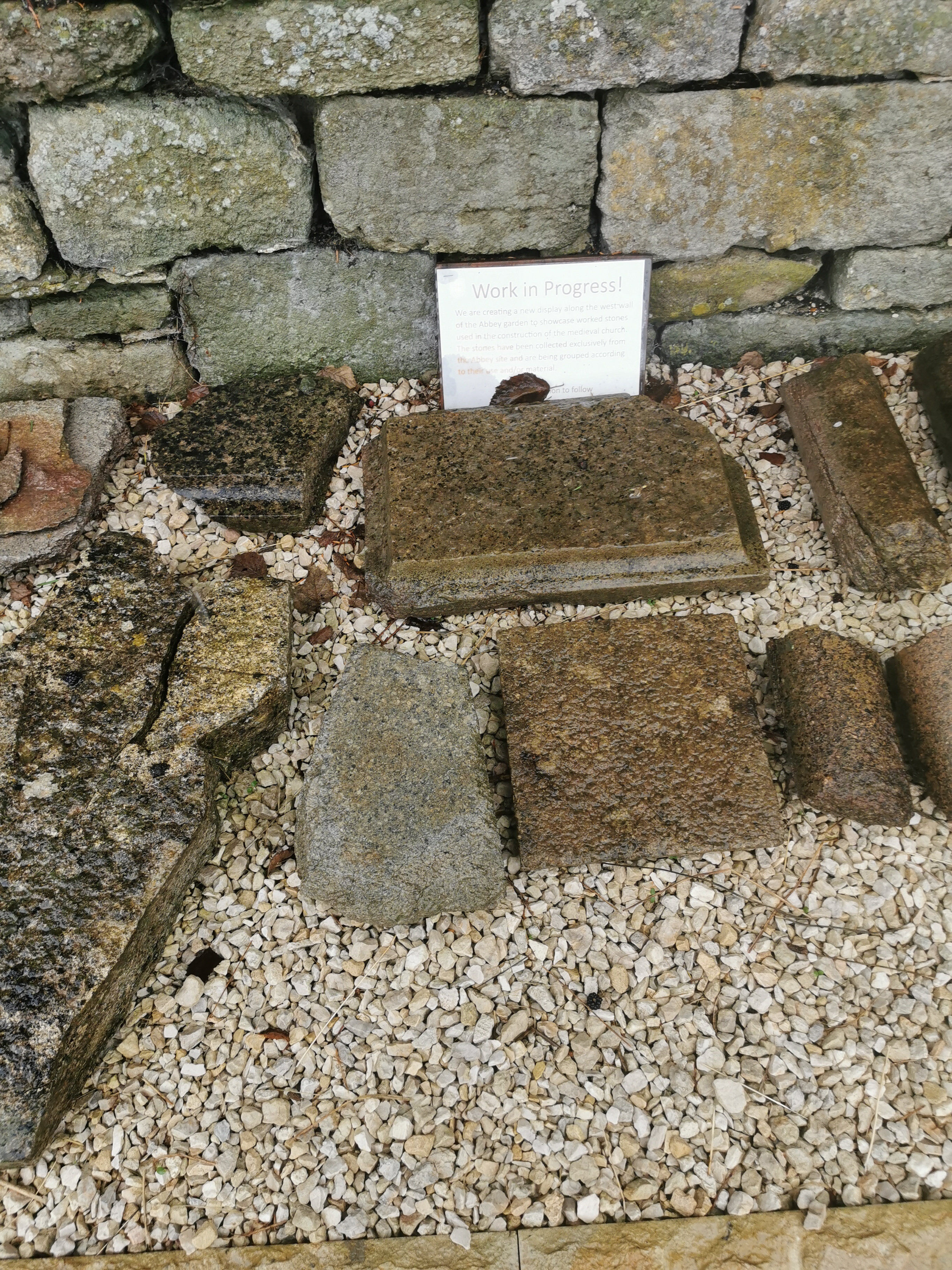
However, I was there on a day so biblically wet a few weeks ago, that sadly, they had to close (i.e. this is the first time I’ve been kicked out of a historical monument), but the volunteers were absolutely lovely and I’m grateful they let me look for as long as possible before making sure they got home safely on roads that were very, very wet. And, it made the whole experience very atmospheric. If you pop over to their website, there are fab images of it being sunny. https://www.shaftesburyabbey.org.uk I hope to be able to return on day when it’s not raining.
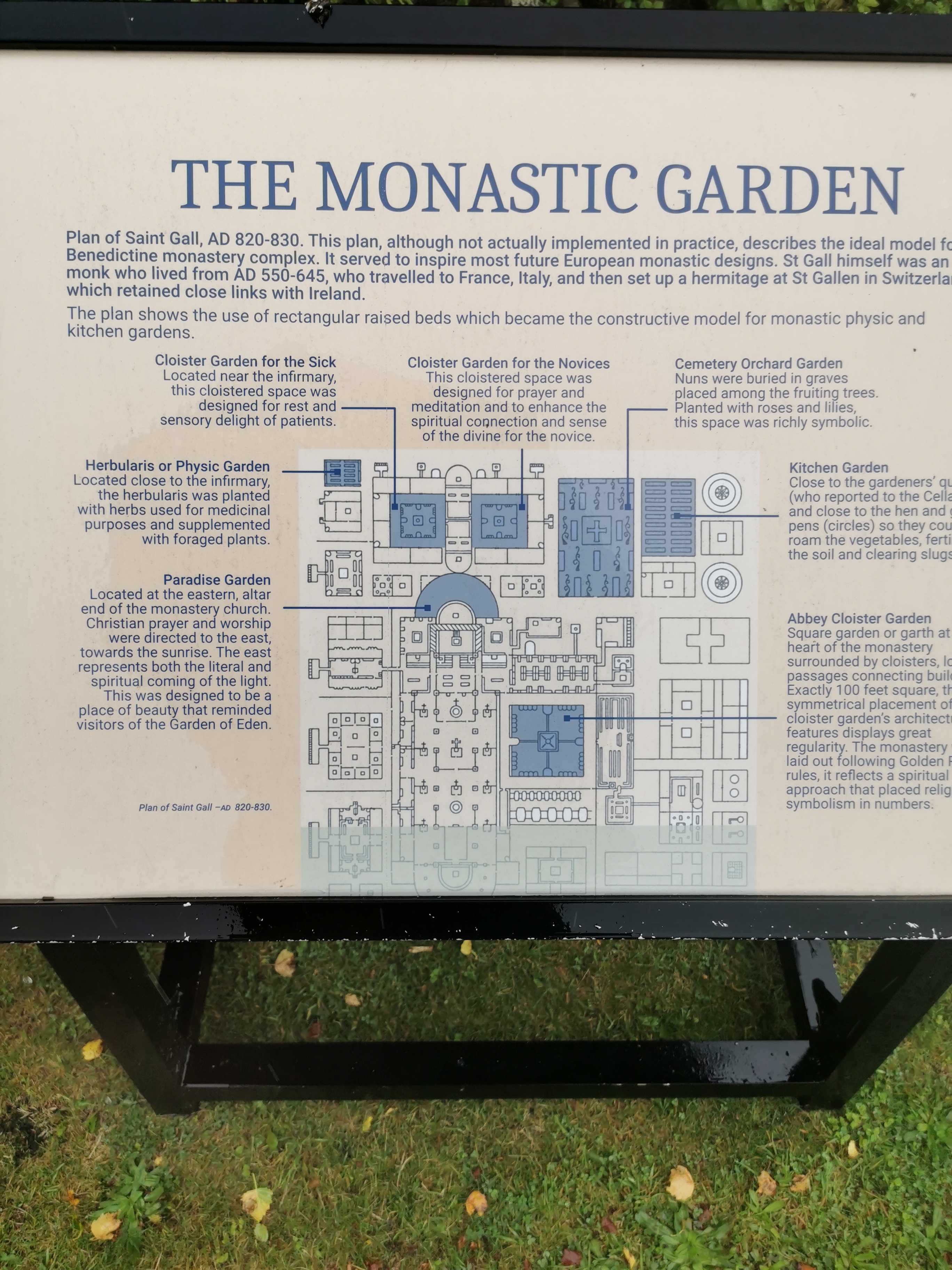
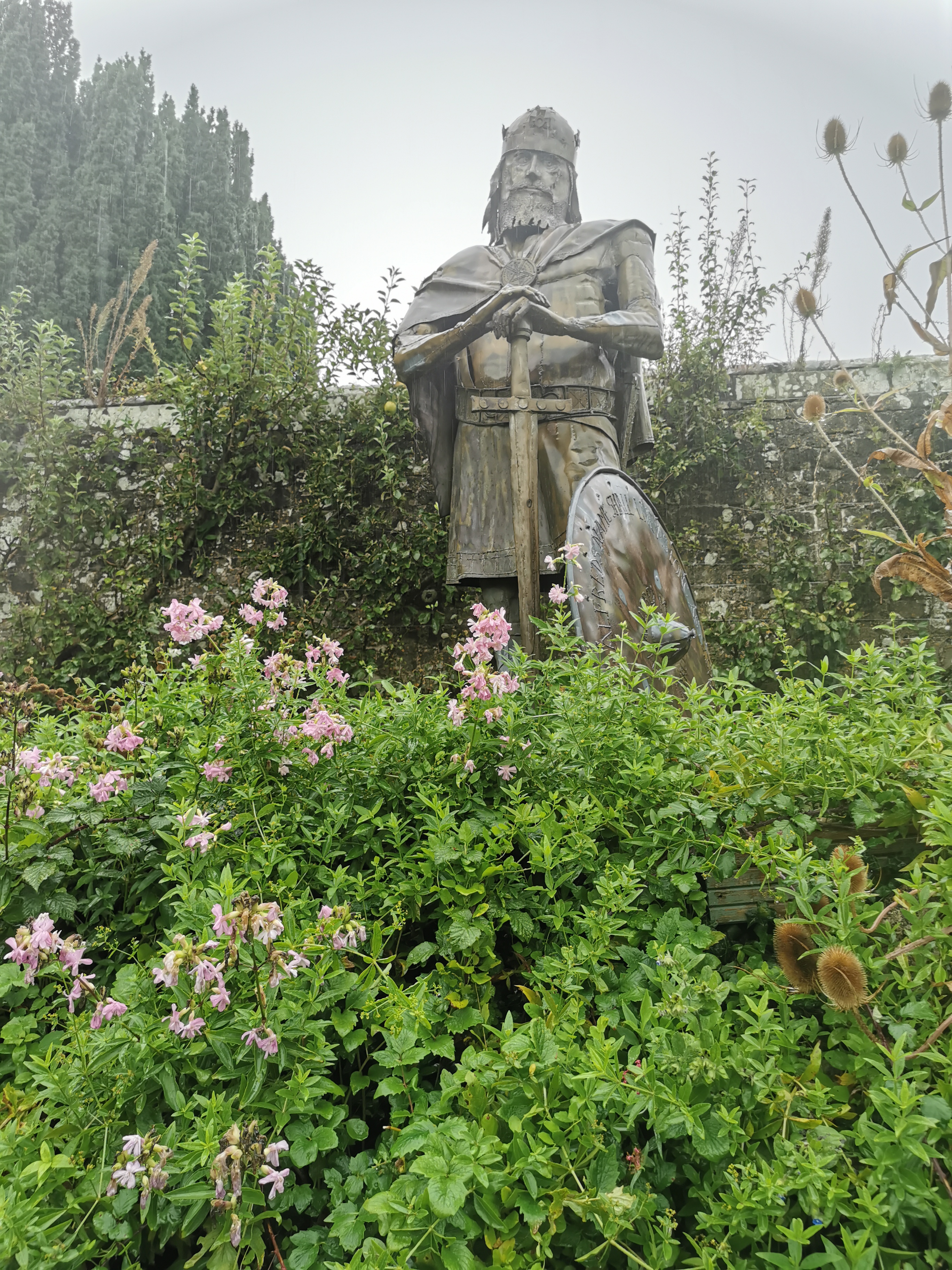
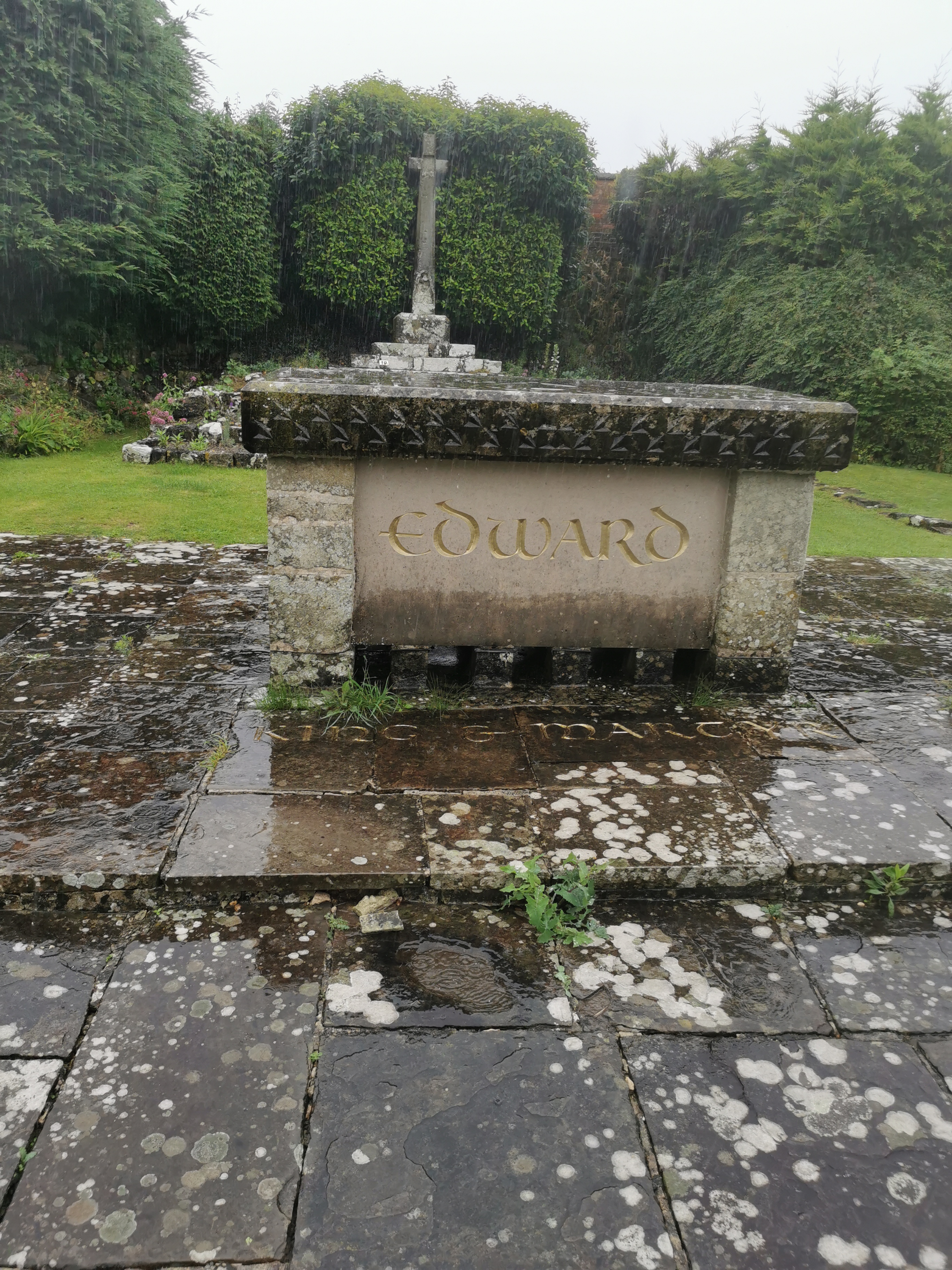
Taking photos of all the plants in the herbal gardenI was standing under my umbrella the whole timeA statue of King AlfredThe memorial for Edward the MartyrA side on view of Edward the Martyr’s memorial
The lettering by the monument to Edward the Martyr
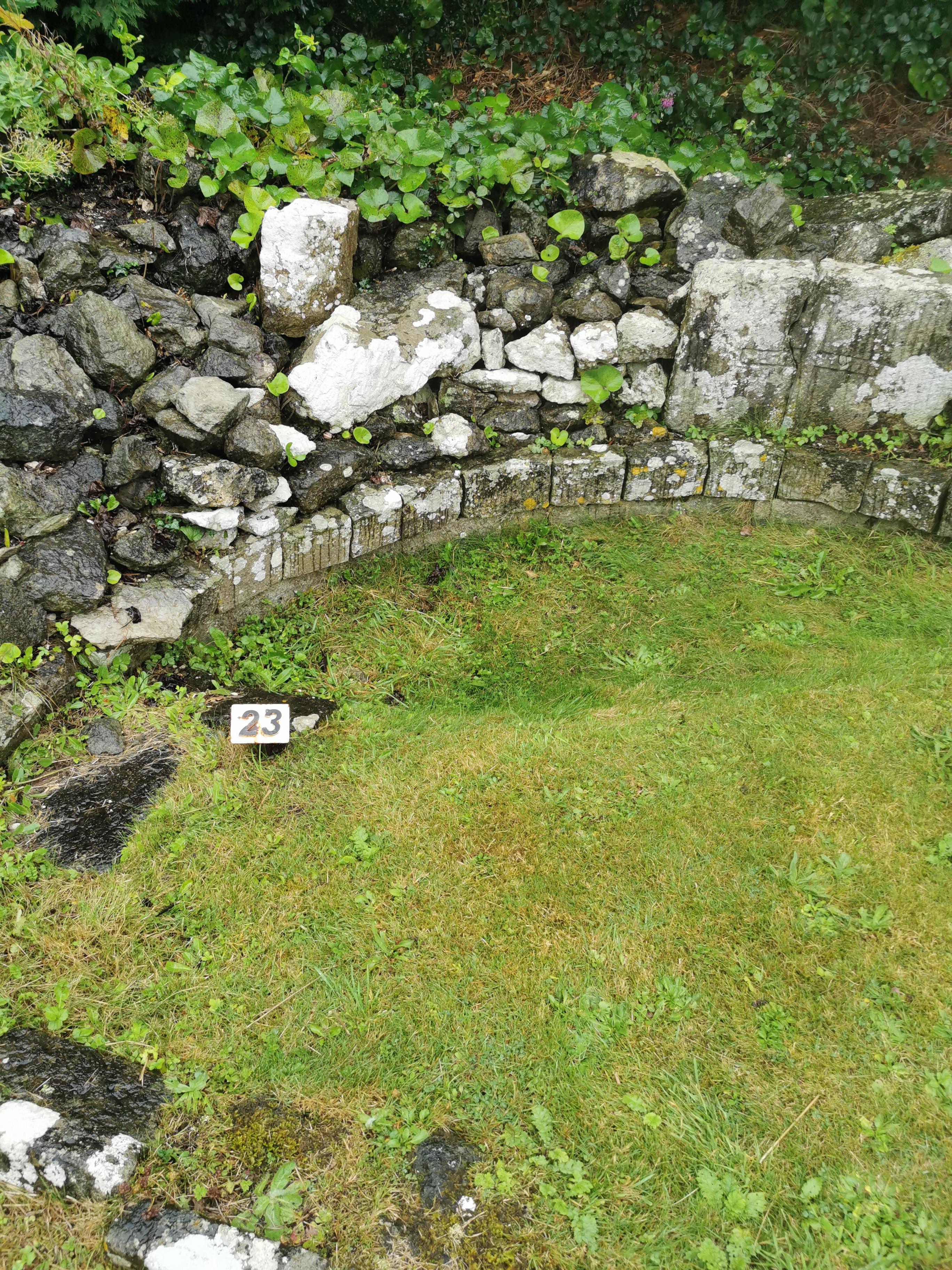
From memory, this is where it’s believed Edward the Martyr was originally buried when the abbey was in use
Back in the summer of 2011 (I think), I spent every evening when my children were in bed, trying to plot the possessions of the Earls of Mercia as revealed by the entries in Domesday Book (which I think is a totally normal thing to do).
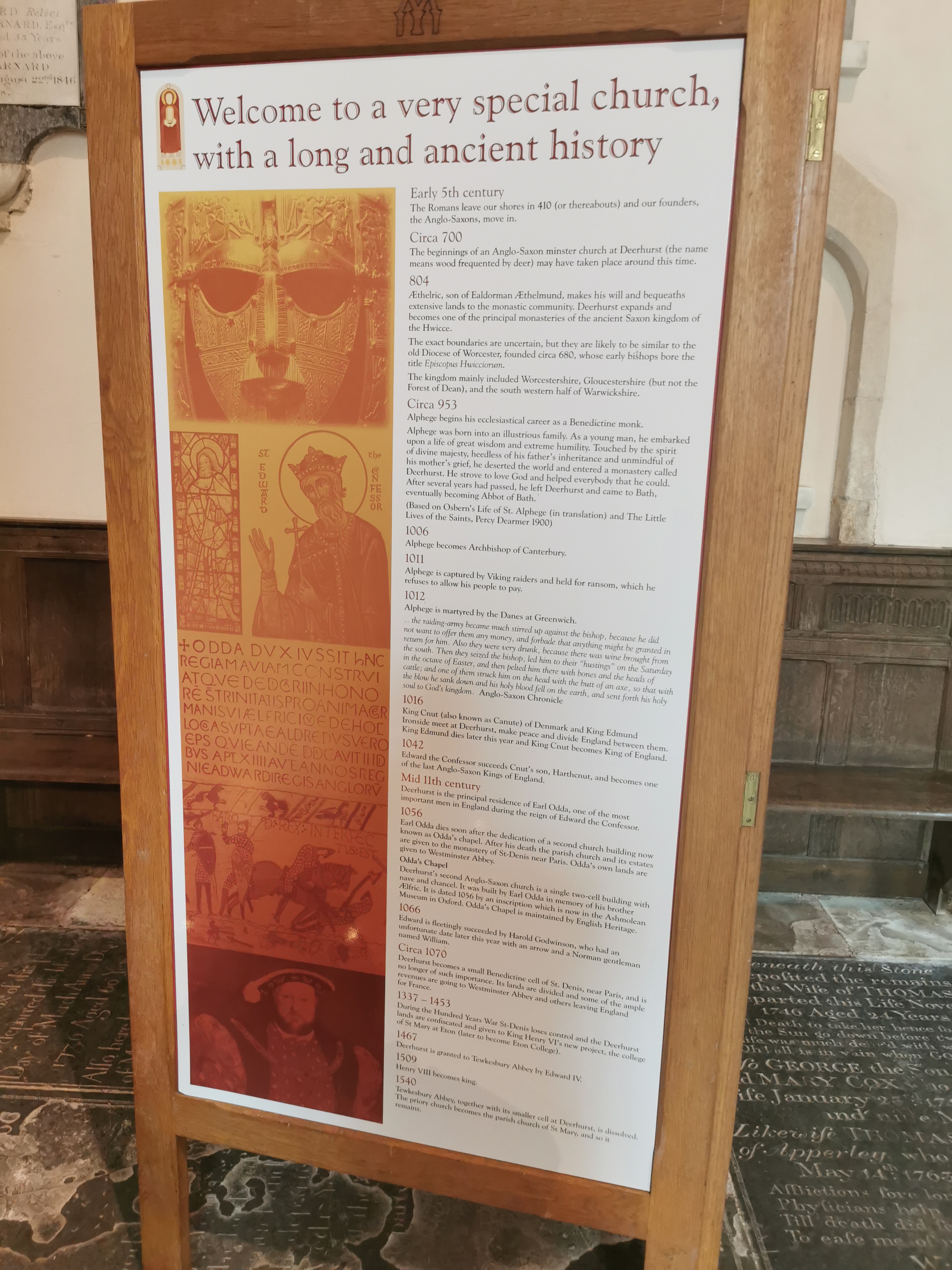
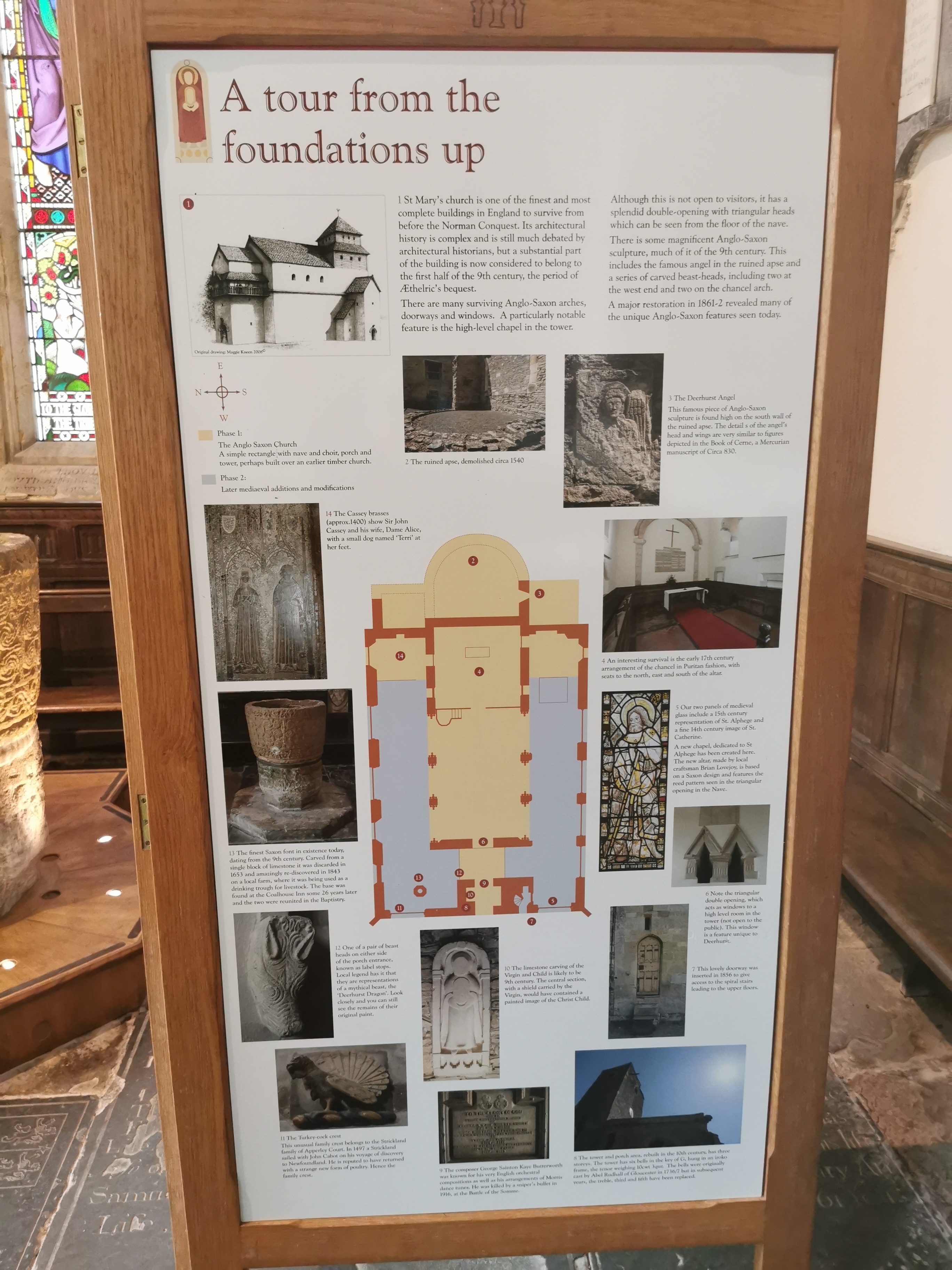
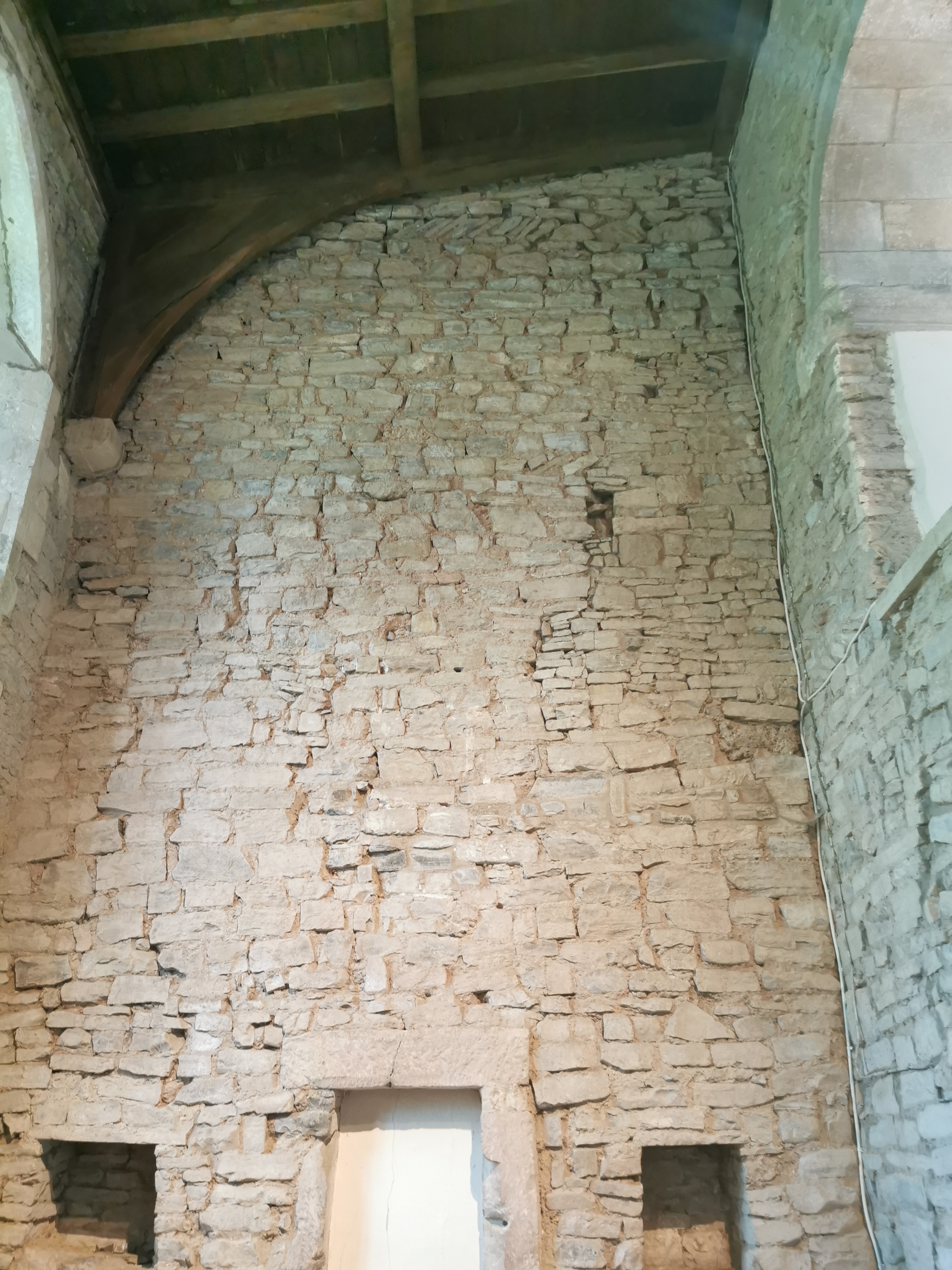
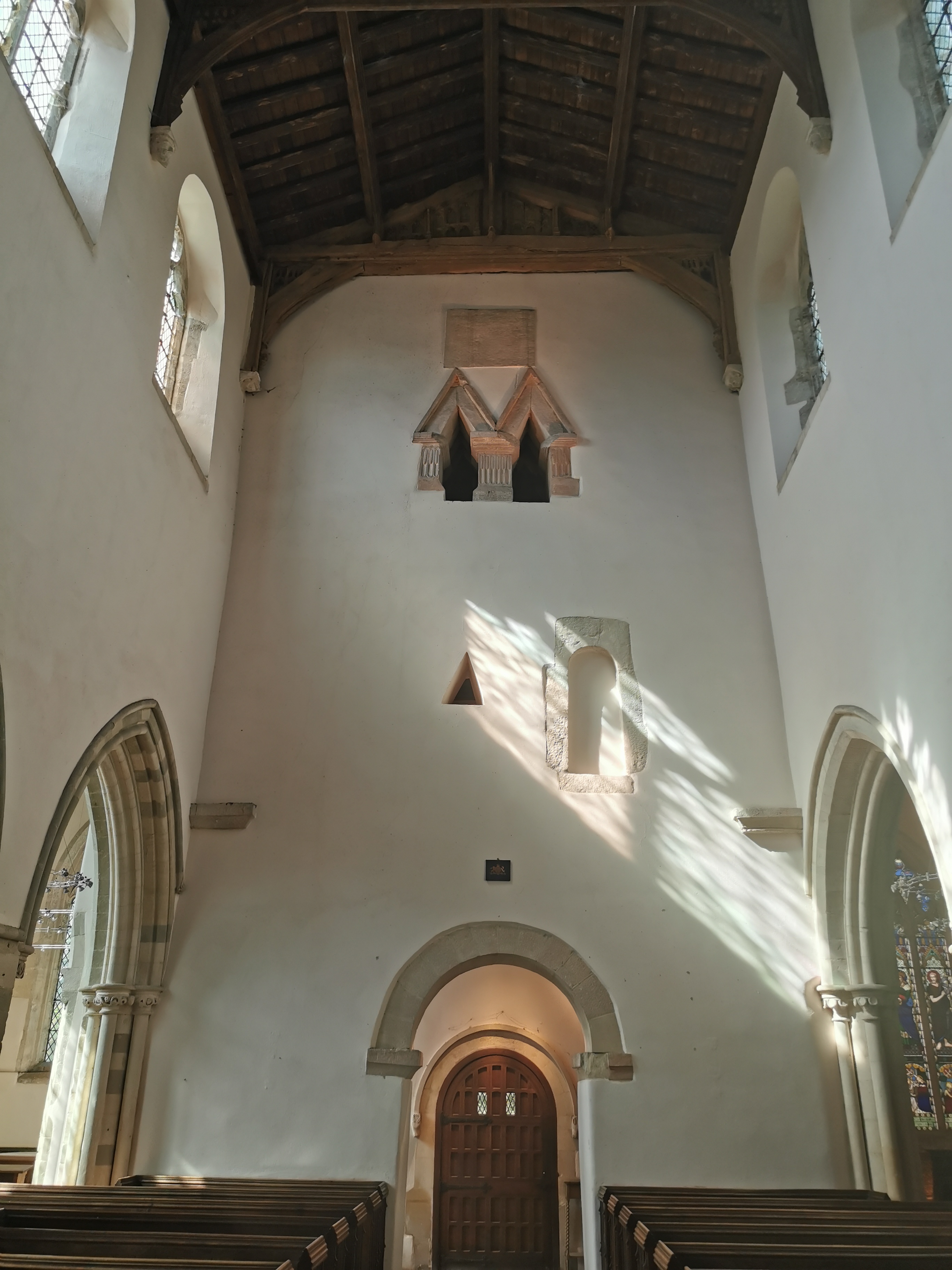
It was a tedious process, which could be achieved much more quickly these days with Google Maps, but it was what I had available to me. Somewhat frustrated with the process because by that period many of the possessions of the Earls of Mercia and their family were not located in the original area of the Hwicce (roughly Gloucestershire), and aware that Deerhurst (which is in Gloucestershire) has a long history back to the Saxon period, I eventually plonked by ealdorman, Leofwine, (of the Hwicce) close to that location, and indeed, readers of the books will know that I have his family burials there. But, I’d never actually visisted Deerhurst before. Until now.
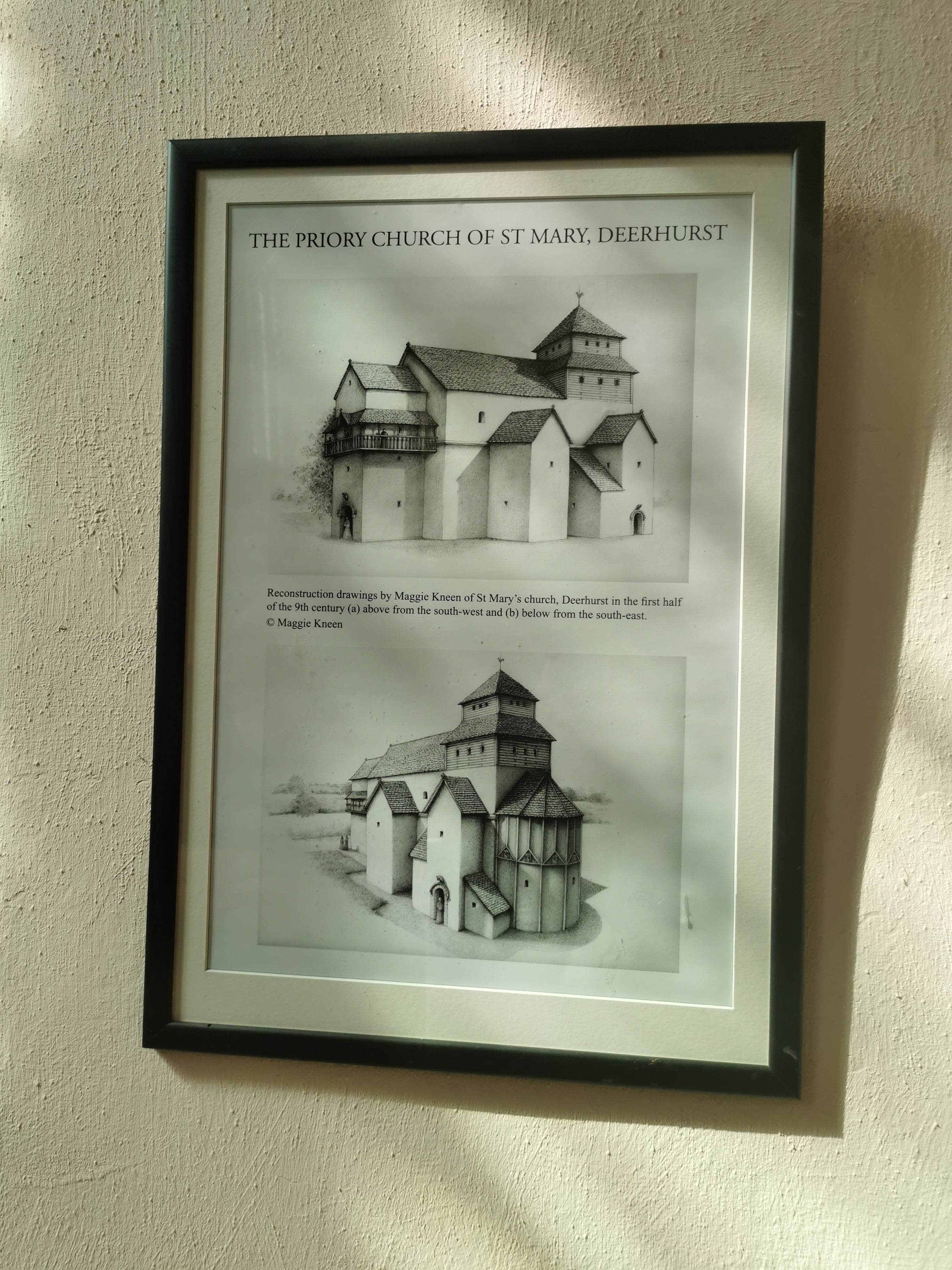
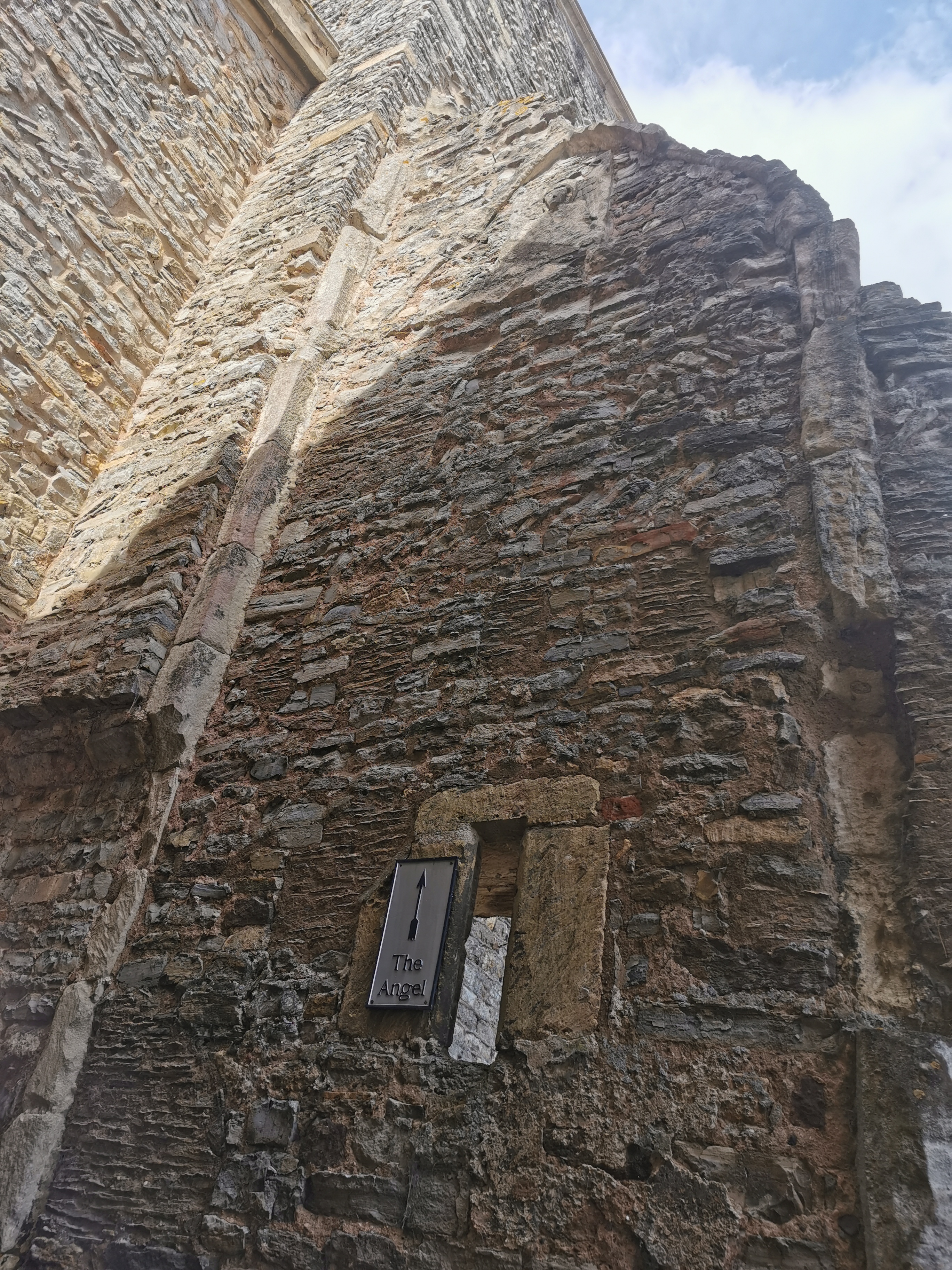
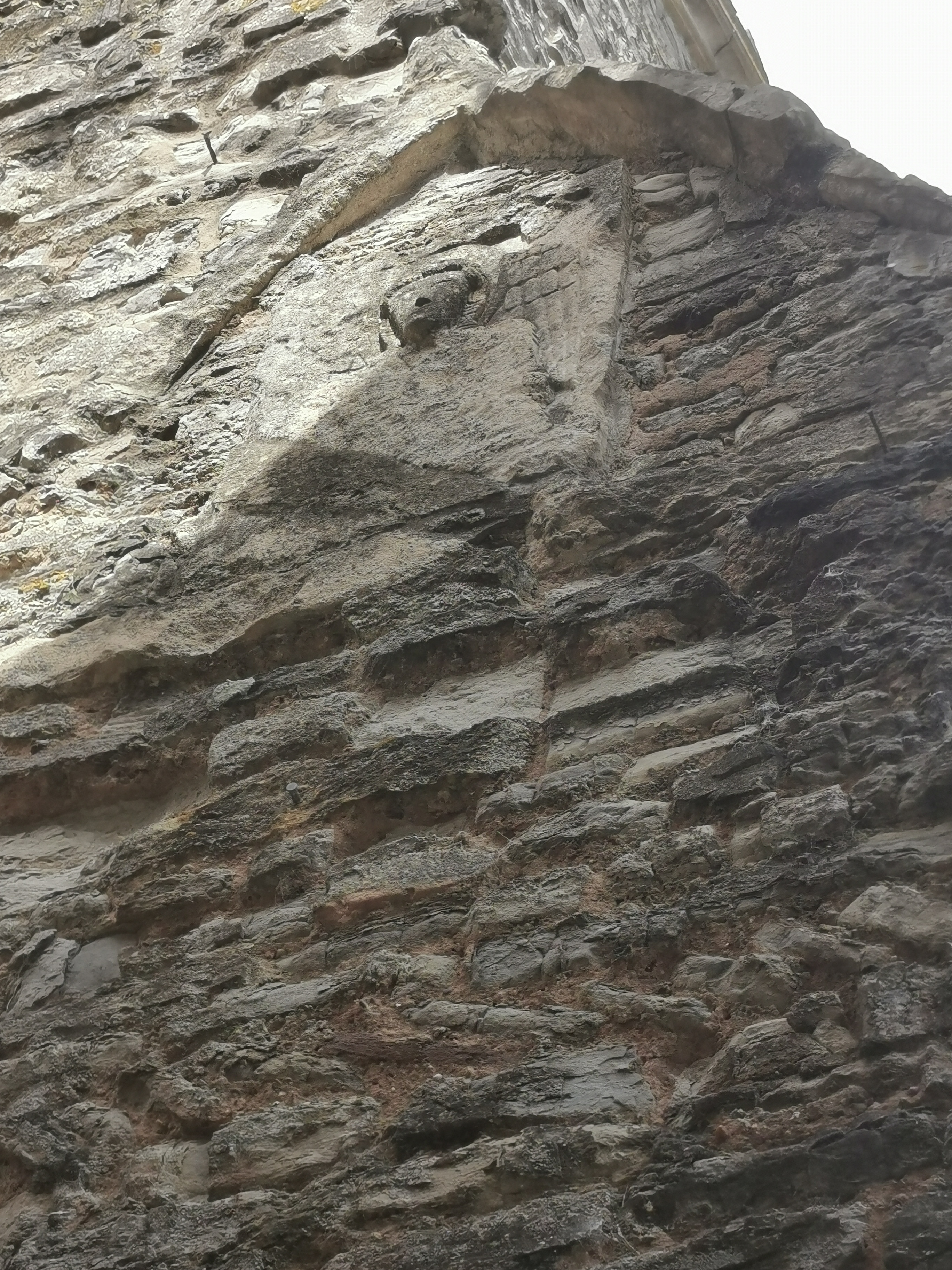
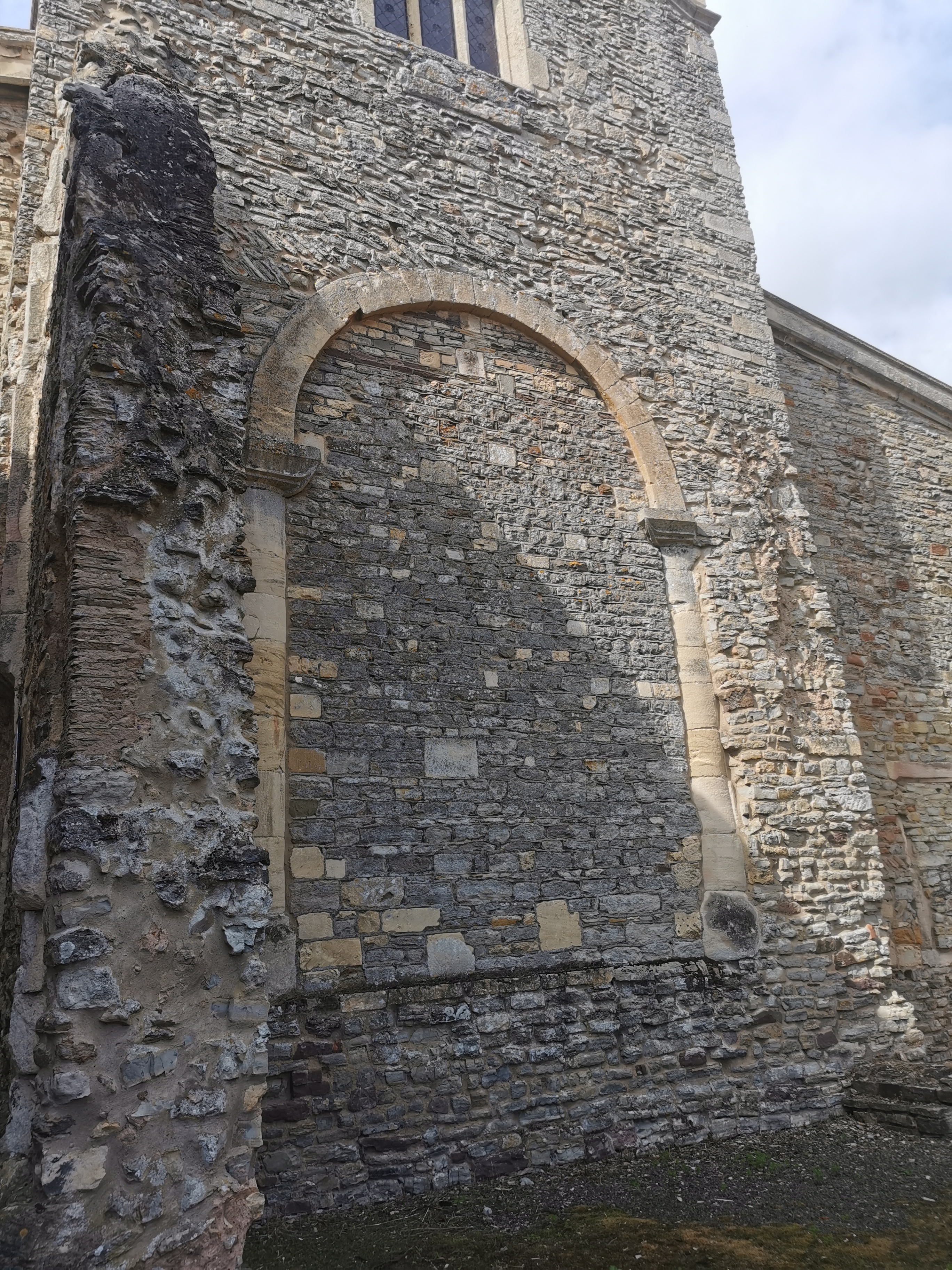
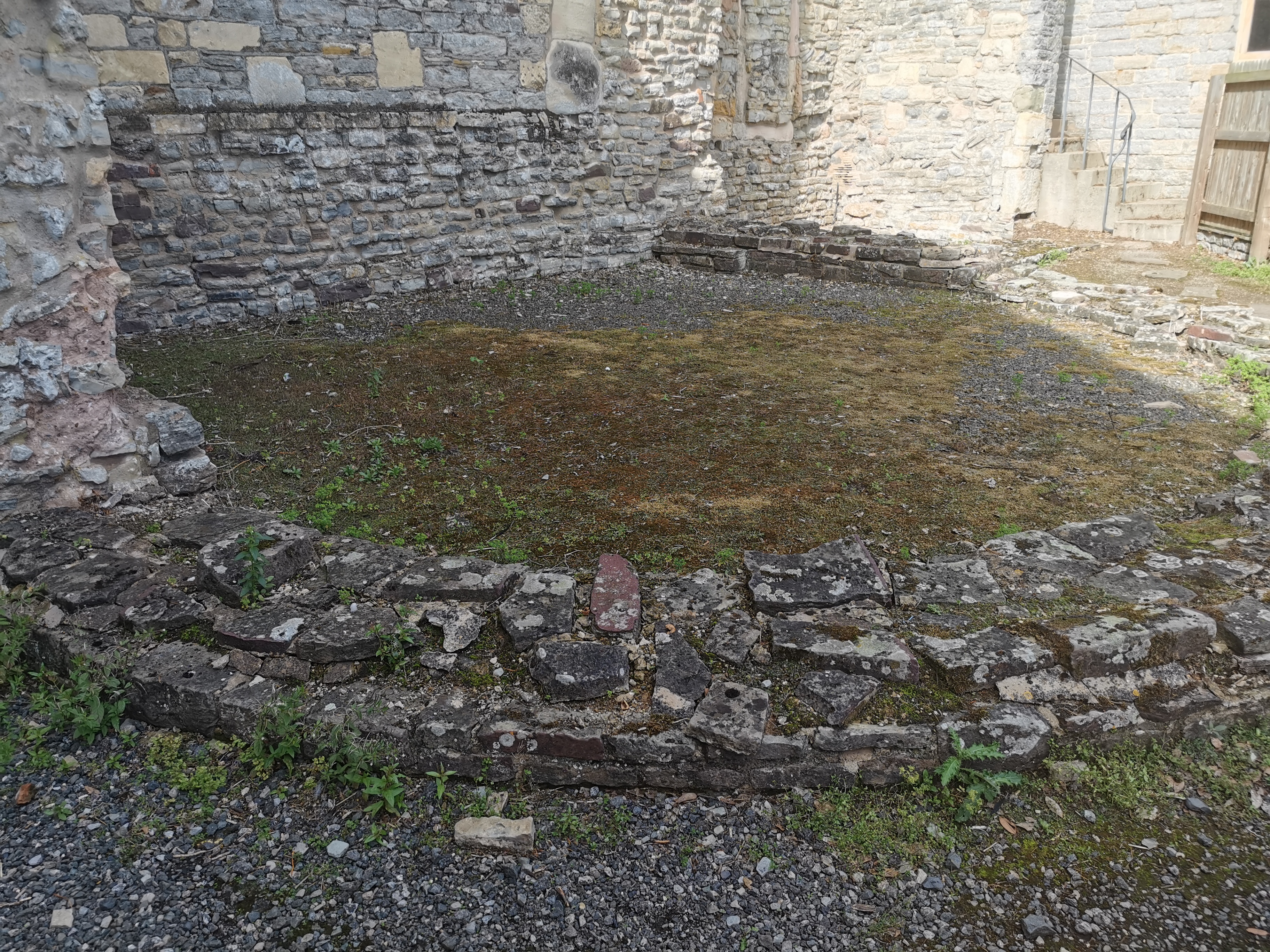
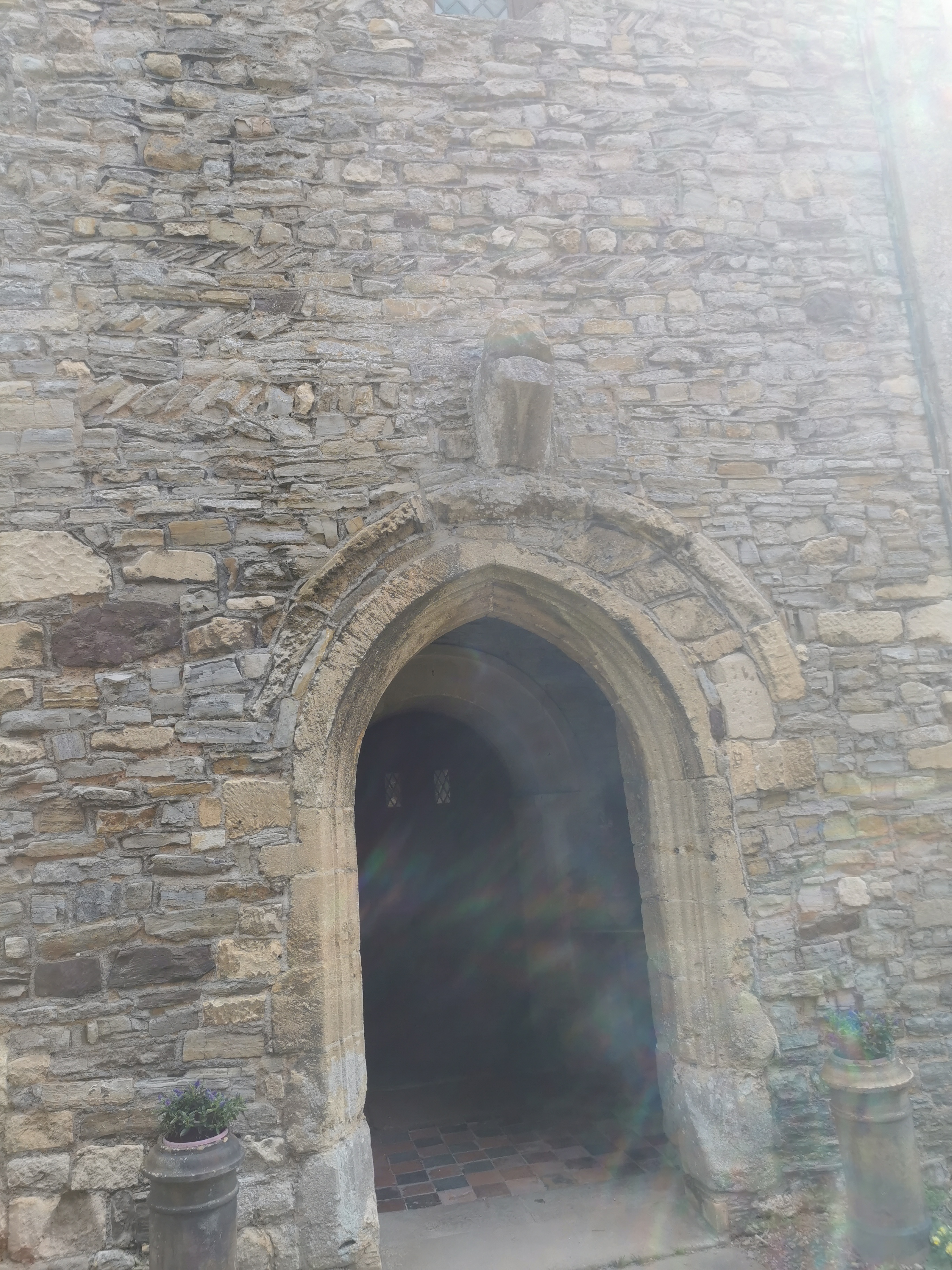
It is a beautiful location, and I’m sharing some photos from my visit, including The Angel, a surviving piece of Saxon sculpture, outside on the walls (my photos aren’t the best but it’s at a very awkward angle and quite high up the side of the building. You can find a much clearer image here https://www.flickr.com/photos/paulodykes/41119170111).
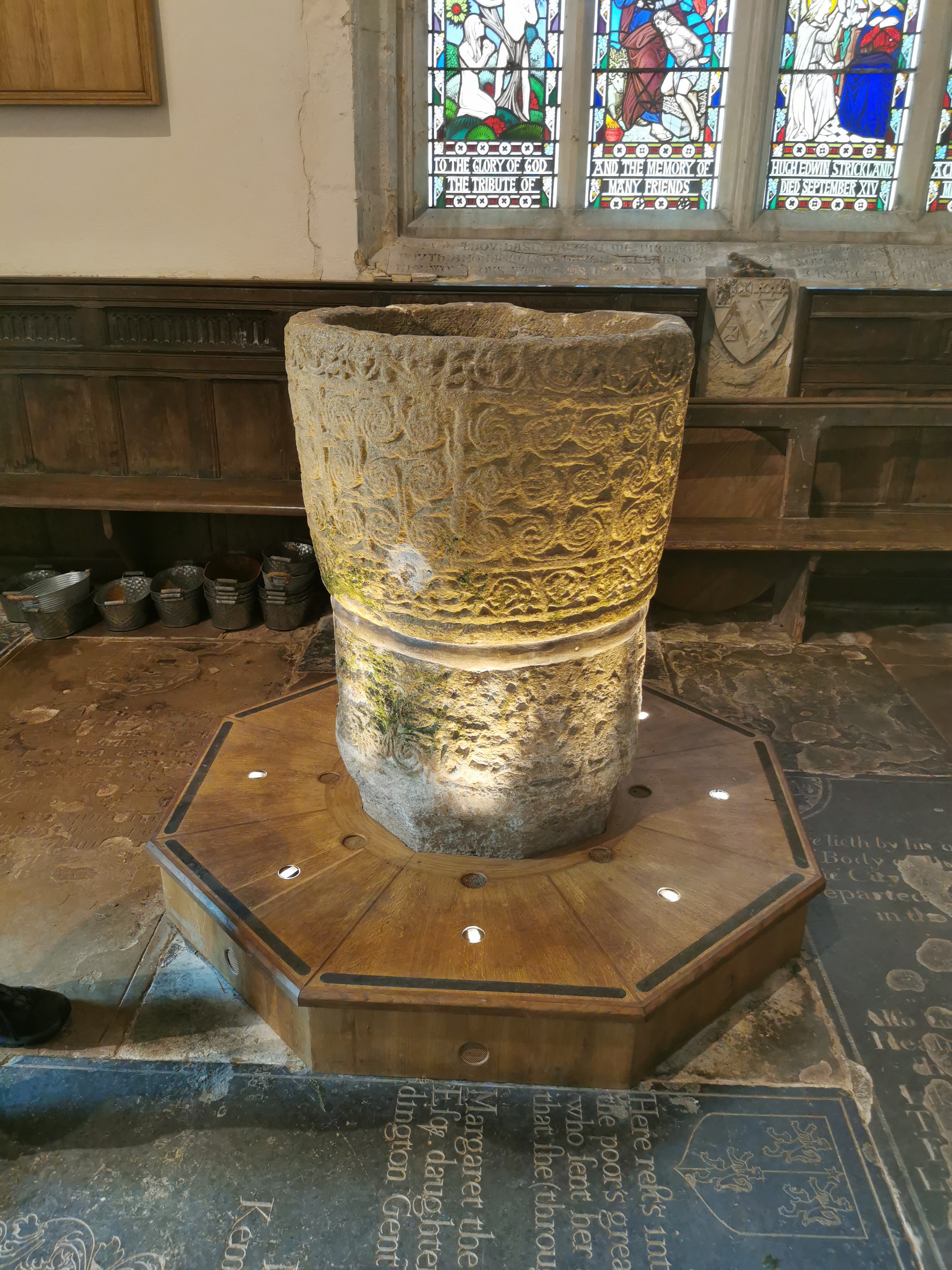
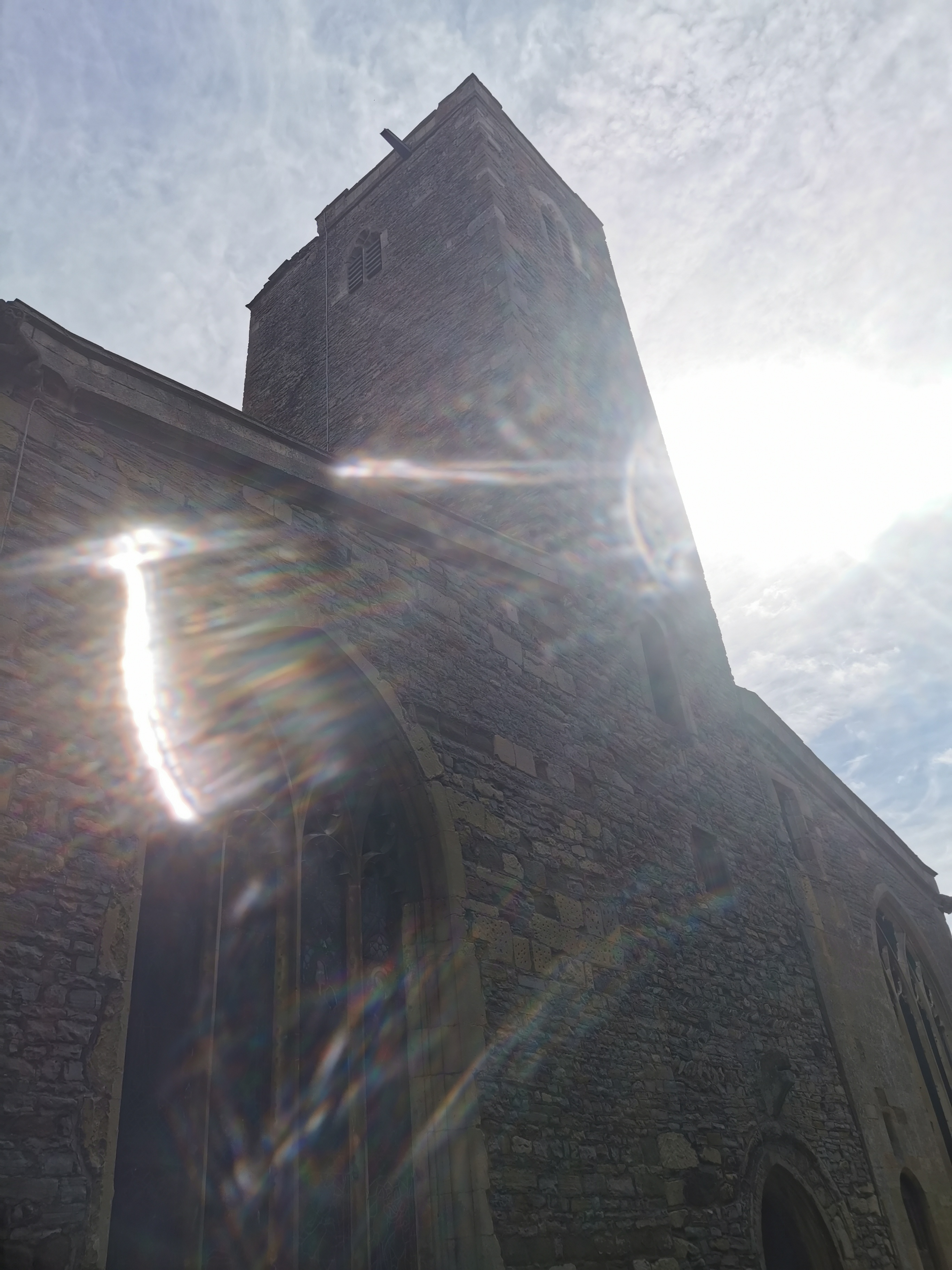
The font – not original to the church – but found in the 19th century and placed there. It is stunning.The AngelThe Angel (again)My camera lens is slightly smashed, and it’s usually fine unless it catches the sun – but sometimes the images are quite cool
Deerhurst hosts an annual lecture each year (indeed, it’s on 21st September 2024 this year), and is also open for visitors, for anyone else who fancies visiting. If you can’t make it, you can visit their website, and also order printed copies of the lectures, which I’ve done before now. https://deerhurstfriends.co.uk
And, just around the corner is Odda’s Chapel, another Saxon survivor. I will also share photos from Odda’s Chapel in a few days.
When I first wrote Kings of Conflict, I had very little idea what Jorvik at the time (the 930s/940s) might have looked like. I wrote an entire battle scene and then realised some of my assumptions were very, very wrong (I do this all the time. Don’t feel sorry for me. I should just do the research first instead of giving free rein to my imagination.) I got the fact the settlement was split in two by the River Ouse wrong (and who knew about the Foss). But, most tellingly, what I failed to understand was the true nature of York, from its Roman origins as Eboracum to the age of Jorvik, and most importantly by that I mean its Roman walls and what might, or might not have still been standing at this period.
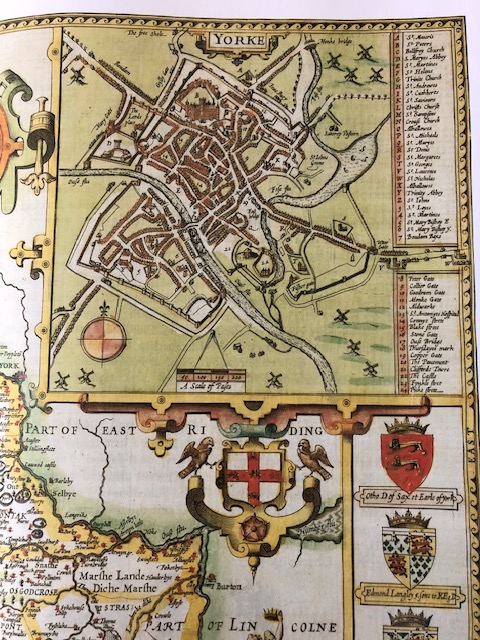
We don’t (yet) have time machines. We can’t visit York in the 940s, but if there is one thing York is famous for it’s the archaeology, and the Jorvik Viking Centre, which offers a recreation of what those streets on Coppergate might once have looked like, and also much else. And because Jorvik/York has benefitted from so much archaeological work, there are also a series of maps showing York at various times in its lifetime, alas out of print at this time, but which can be accessed via a good library (my thanks to the Great Northern Library at the Hancock museum in Newcastle – if you want to see it then let them know so they can have it ready for you, and make note of their opening hours) or the amalgamation of this work available in An Historical Map of York, available from all good book sellers. And if not, then my favourite ‘go-to’ for recreating this time period, the antiquarian maps by John Speed (which are also much prettier) can also offer some information.
York, from John Speed’s West Riding of Yorkshire map (own photo)
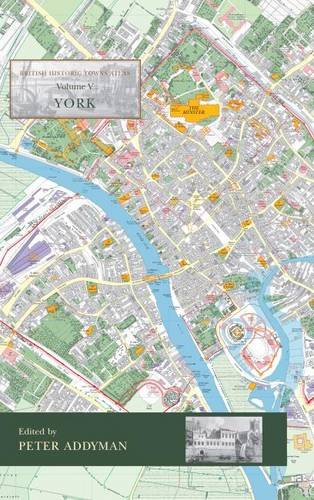
This is readily available and amalgamates the information from the actual Atlas.This is currently out of print – check out your local library or antiquarian library for a copy
Roman York
The British Historic Towns Atlas Volume V, York ed. Peter Addyman provides the following information about Eboracum-Roman York.
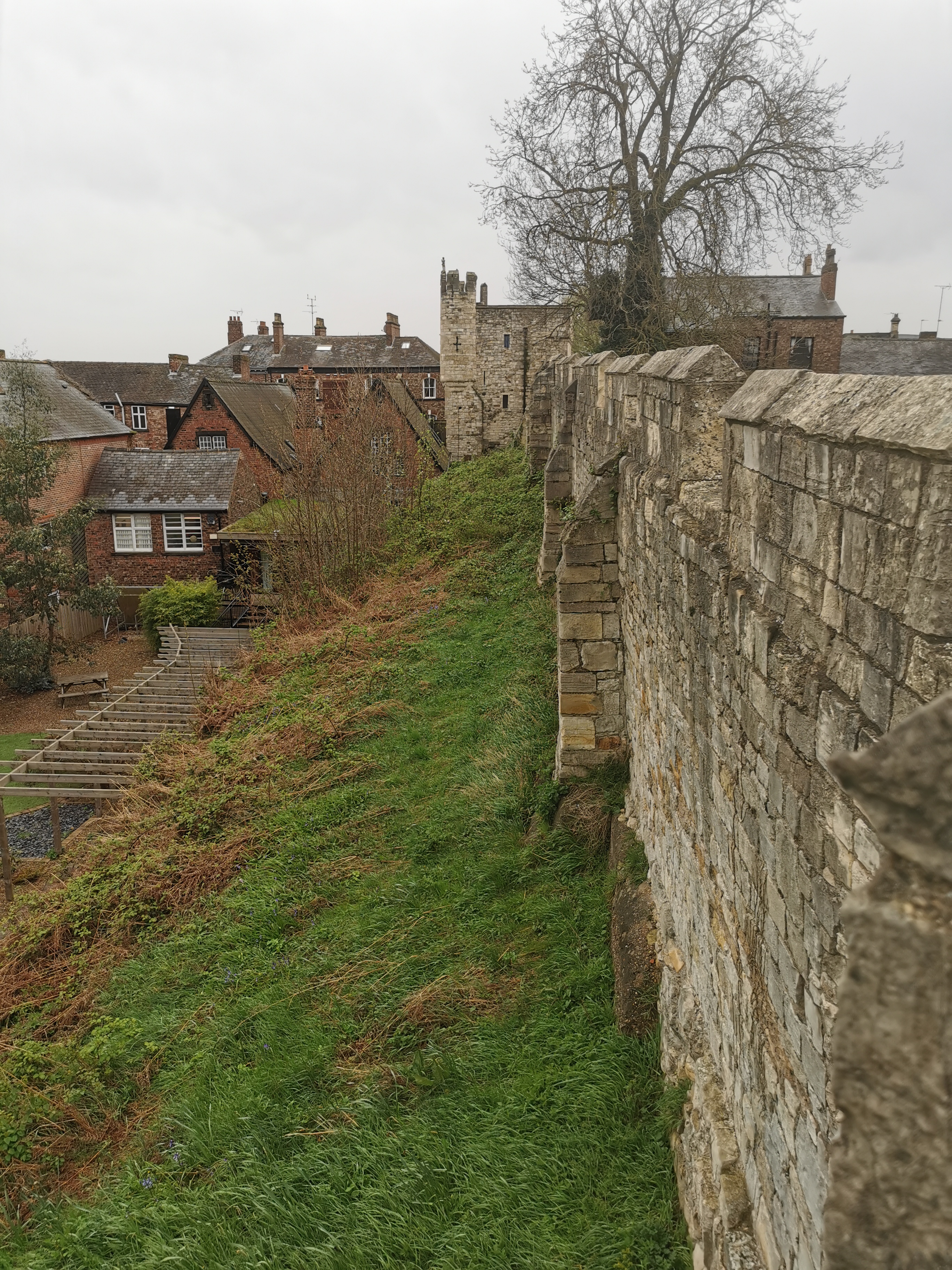
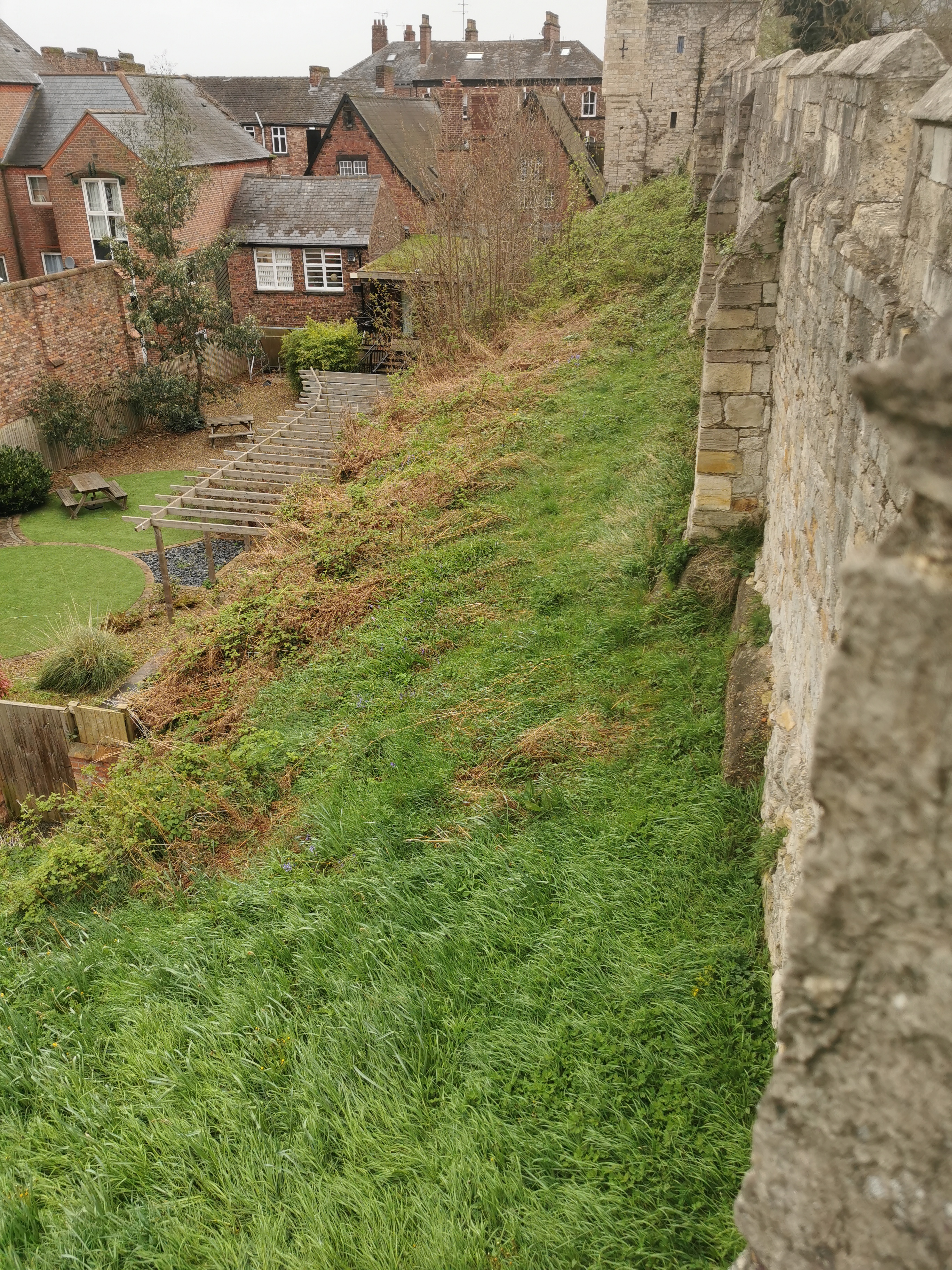
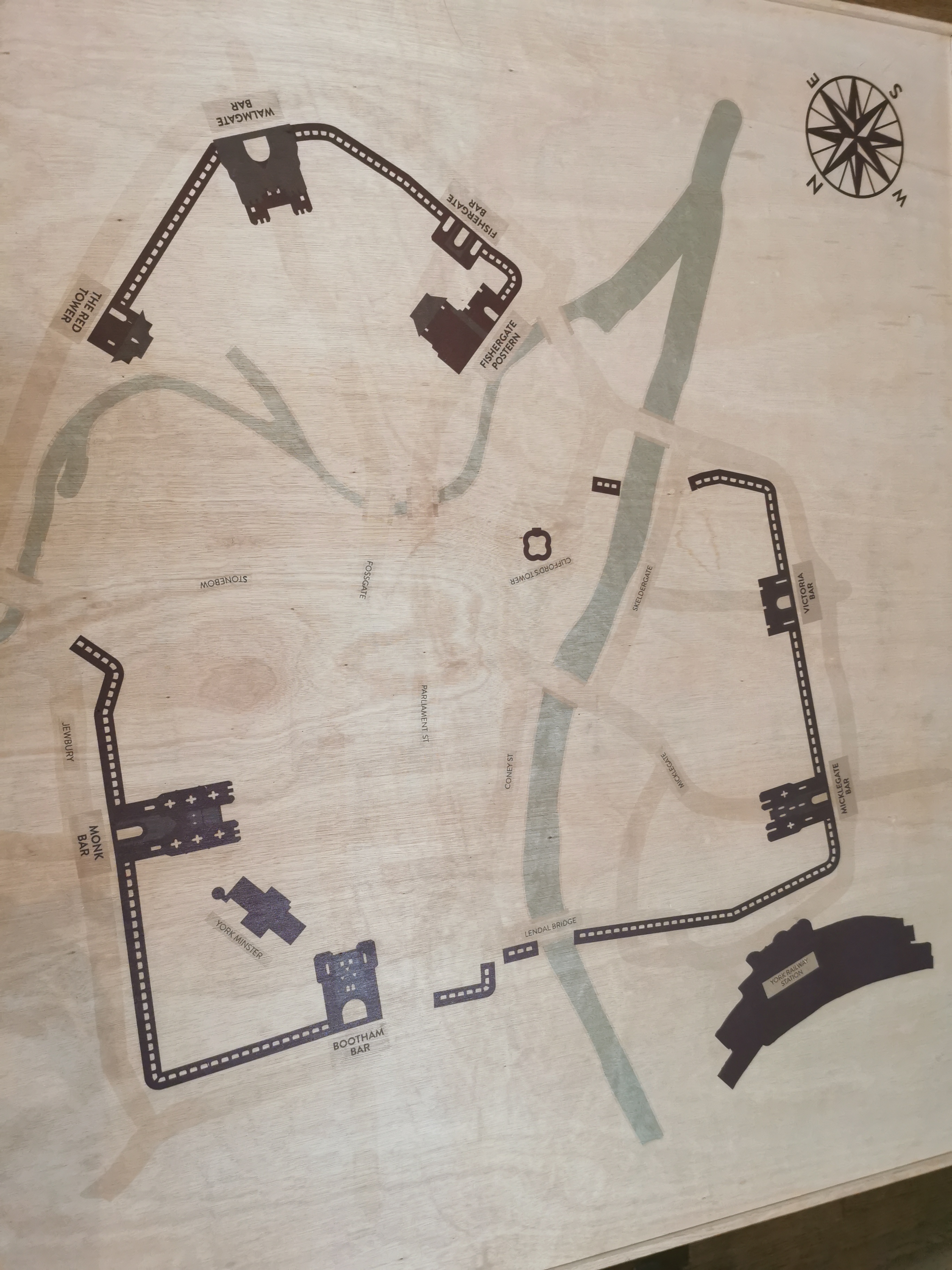
York’s surviving walls, not far from MicklegateI planned to take many more photos but my phone went flat and it was a suitably biblically wet day in York – which seems to happen every time I visit:)
It might have been occupied under Vettius Bolanus (69-71) but was truly founded under Emperor Vespasian (69-79). However, the ridge of the River Ouse was a routeway from the Neolithic onwards. This was in the territory of the Brigantes although the East Riding of Yorkshire was that of the Parisi. It is possible that Eboracum means ‘the place of the yew trees.’
The stone used in constructing the fortress was Magnesian Limestone from Tadcaster and Millstone Grit from Bramham Park (I love that they know this). To begin with the fortress had a ditch, rampart and timber structures and four gates, with the original towers up to 15 metres high. And here, there is the suggestion that to begin with, crossing the River Ouse (to get to the civilian settlement) was via ferry. The bridge can only be confirmed from the second century onwards. The Foss River was also tidal at this time and the banks sloped sharply. The rampart was widened from 20feet to about 42 feet during a second phase of occupation.
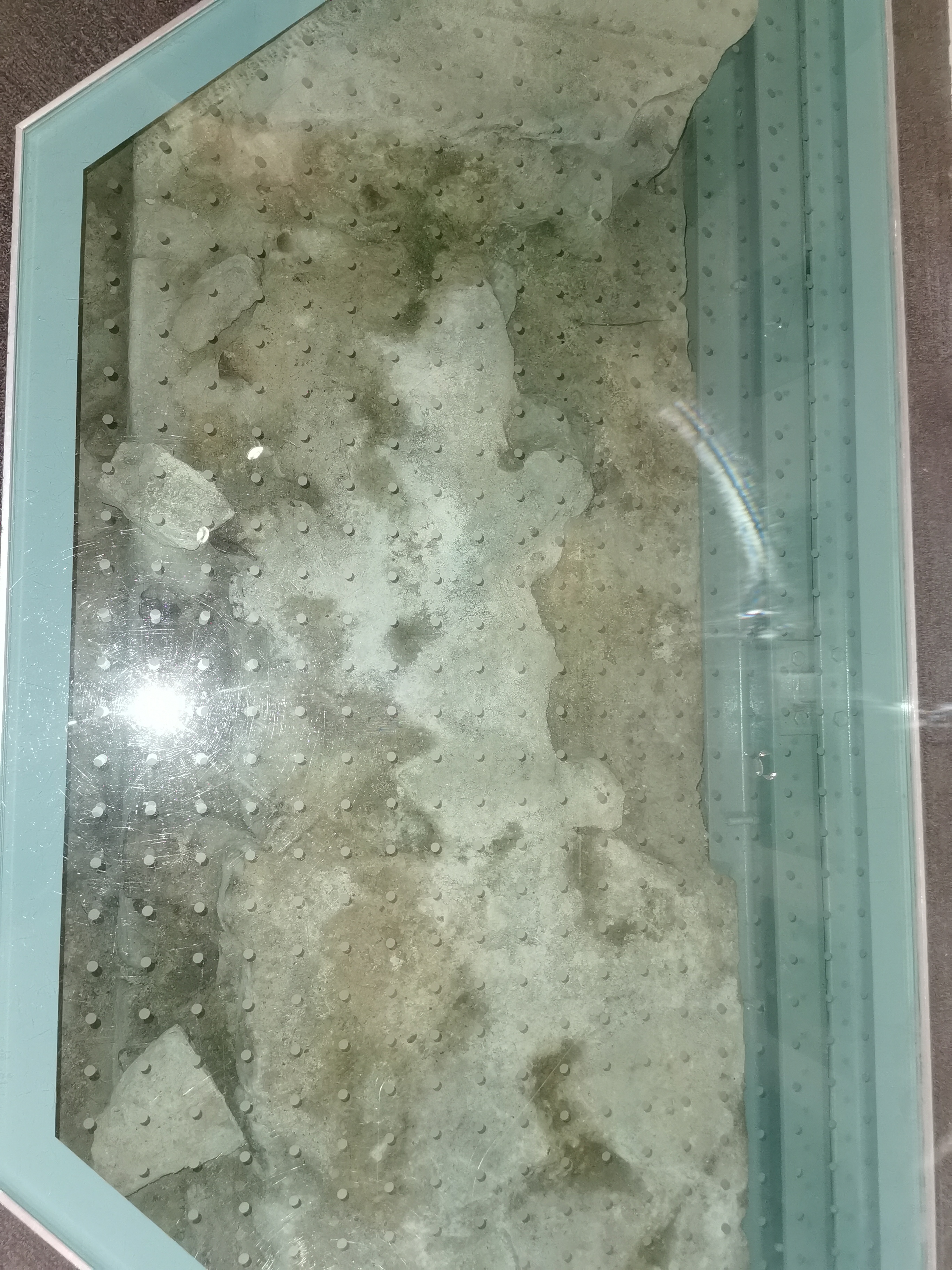
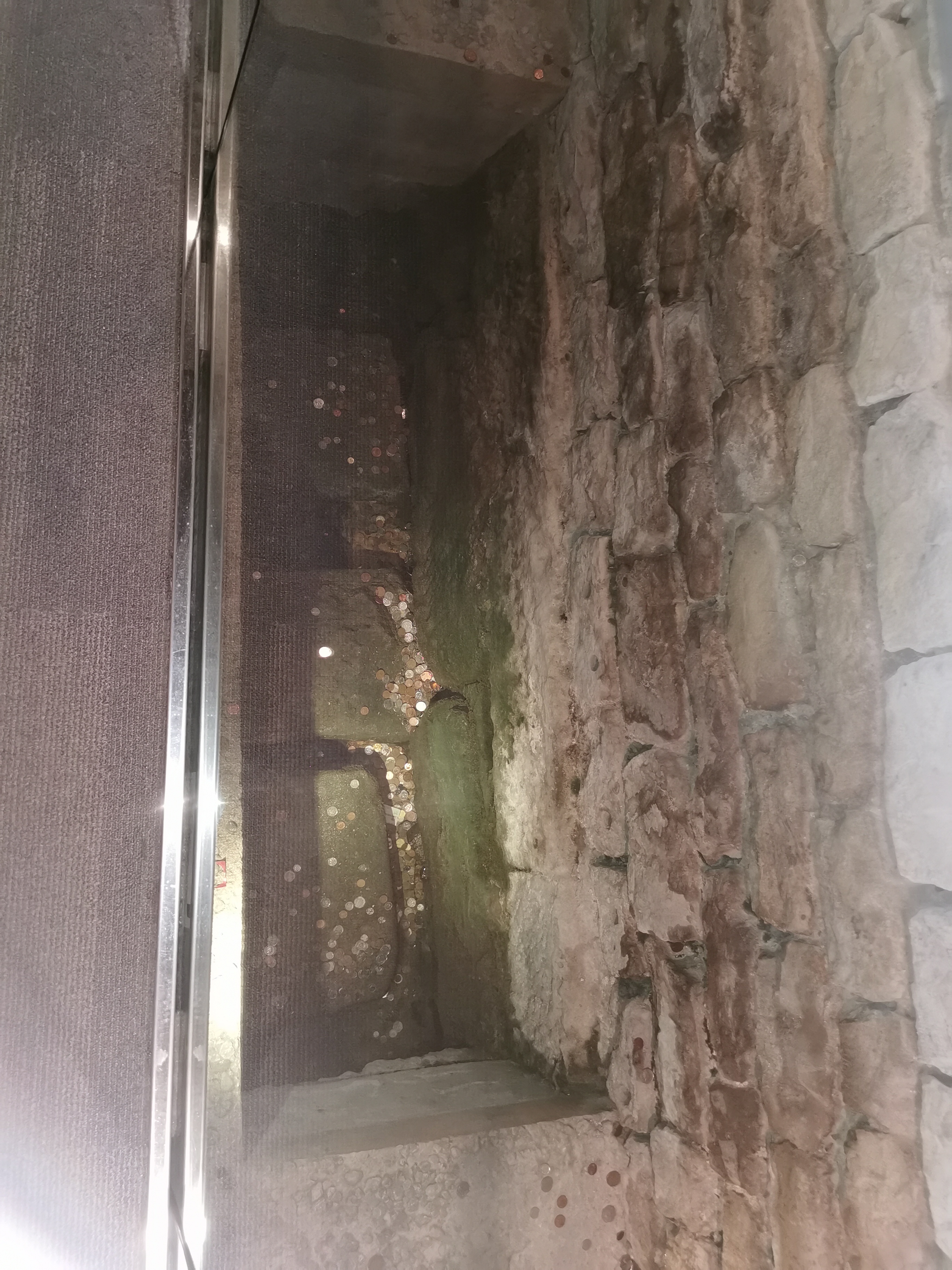
Some ‘old’ bits of Roman York (I think), from the museum in York Minster
The end of Roman York is impossible to pinpoint. Did it cease to exist? Certainly, the last documentary reference was in 314 when York’s bishop, Eborus, attended the Council of Arles, but as with so many of these Roman settlements in Britannia, what happened afterwards is more difficult to determine and we must turn to archaeology and not written records.
I think this is from the exhibition at Micklegate Bar but I could be wrong. It very clearly shows the two ‘halves’ of the walls.
I must admit, all of this information about Roman York makes me somewhat desperate to write a book about it:) (Don’t all groan).
Anglian York – Eoforwic
The creators of this series of maps make the point that this is the most speculative of the series. Put simply, they really don’t know what was happening.
What can be said is that the walls were renovated on the north west side of the fortress with a dry stone wall and cobbled sentry walk while the eastern ramparts were topped with a timble palisade wider than the Roman wall (if I’ve understood that correctly).
Eoforwic first enters the historical record as the place of baptism for Edwin in 627, the king of Northumbria (Deira and Bernicia combined).
‘…the king was baptised at Easter with all his chief men; that Easter was on 12 April. This was done in York, where earlier he had ordered a church to be built of wood.’ ASC E 626 p.25
The archbishopric began from 735, but Eoforwic was not densely settled at this period, although it does seem to have had many, many churches. This includes the Minster, St Michael-Le-Belfrey, Holy Trinity, St Peter the Little, St Martin, St Michael, and many more, all probably founded by 850.
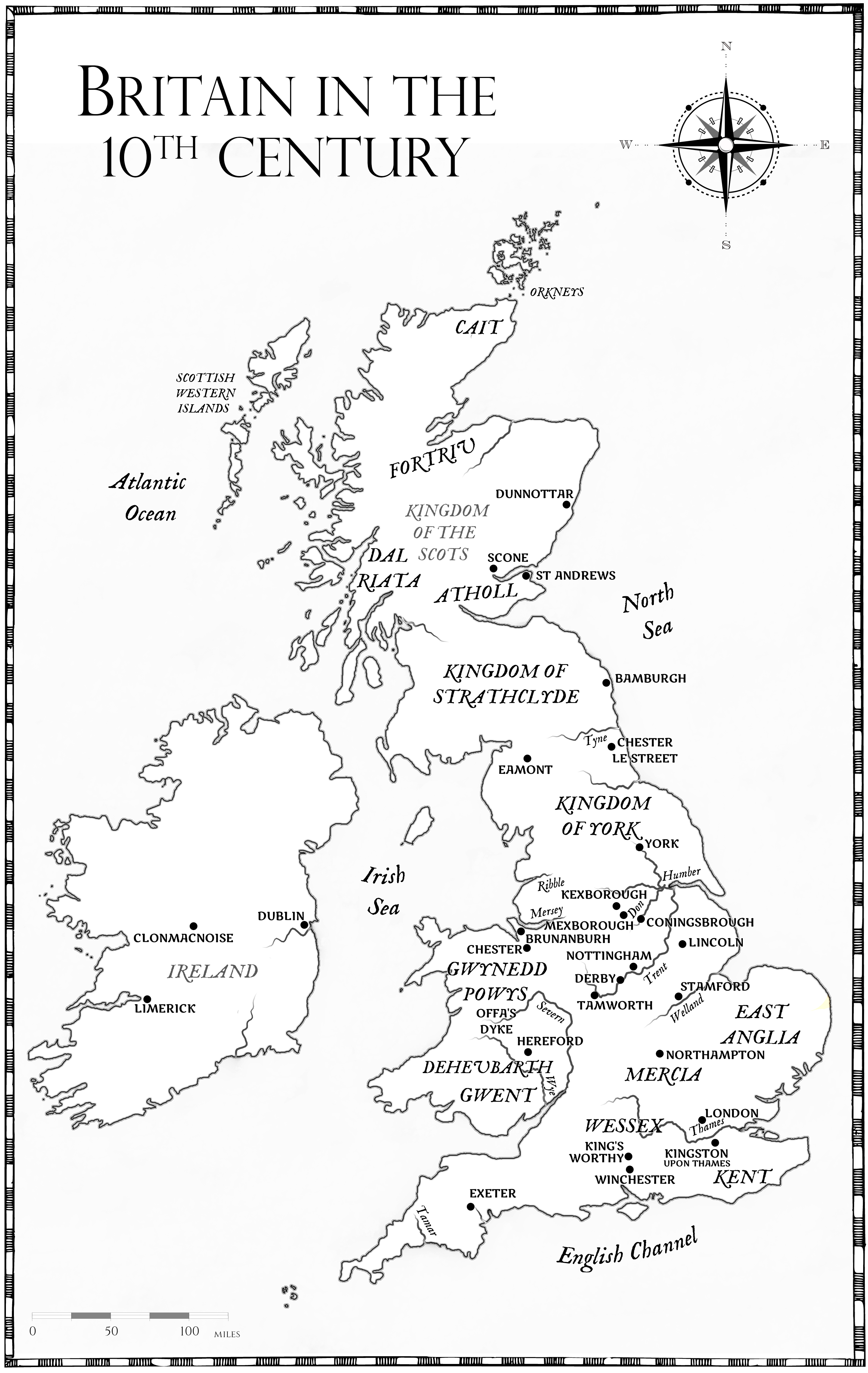
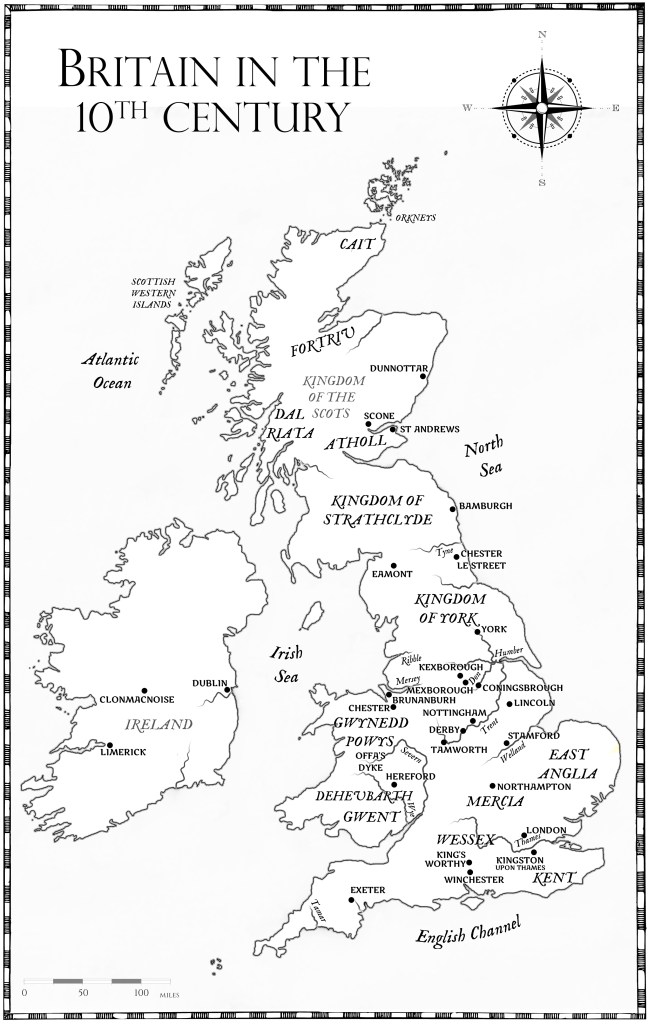
Map of Britain in the tenth century, showing York (map design by Flintlock Covers).
Viking York – Jorvik
It’s record that the first attack Viking attack on York occured on 1st November 866. The Northumbrians counter-attacked in 867 but this left York under Viking control.
‘Here the raiding-army went from East Anglia over the mouth of the Humber to York city in Northumbria;’ ASC A 867 corrected to 866 p.68 (from my preferred edition edited by Michael Swanton).
And here is where my notes become a little muddled between time periods. The British Historic Towns Atlas Volume V informs that the River Ouse at the time would have been tidal, and much wider than it is now and also with much steeper banks .
The late-eighth-century scholar Alcuin describes York as having high walls and lofty towers (he spent time in York). Asser (Alfred’s late-tenth-century biographer – although I’m curious as to how he’d know as I’m sure he was from one of the Welsh kingdoms and York was not under Alfred’s control) suggests that York’s walls were insecure and there is a suggestion that the Vikings restored the walls. Considering what we know about Asser and his ability to be less than honest, we might suspect this statement. Certainly, the remains of the walls were visible but whether they were defensible is unknown.
The walls survive to this day. To paraphrase from the Atlas, from the western corner of the Roman fortress to fifty metres along its south-west front, parallel to the river, the Roman wall is still visible above ground. Beyond this point, its six projecting interval towers and the Roman south/west gateway leading to the bridge over the Ouse have either been demolished to foundation level or been covered by organic-rich debris of post-Conquest date. The fortress’s south corner tower at Freasgate survives to fifteen foot. It is suggested that the south-west section of the civilian settlement might not have been included in the walled defences.
On the northern banks of the River Ouse, there were plots about 5.5m wide occupied by one or more structures (Coppergate/Ousegate/Pavement) with backyards running downslope towards the River Foss. Hungate also had similar plots. There might have been crossings over the rivers below St Mary Castlegate and Hungate. These rectangular structures of post and wattle had entrances front and back, with centrally arranged hearths and roofs made of turf, reeds or straw. Most settlement was below Coppergate, Ousegate, Pavement, Hungate and Walmgate areas.
Recreating Jorvik?
But what does all this mean when trying to recreate the time period? (Some will know that I’ve already ‘visited’ York earlier in the Brunanburh series, and without all this angst). It is frustrating that some aspects are so clearly defined and others aren’t. Where were the people living – especially the high status people? Where were the kings living? In King’s Square/Kuningesgard? And what’s this about the civilian defences never being completed to the south?
My overwhelming impression is that the remains of the actual Roman encampment (to the north of the Ouse) were in better condition than those to the south of the Ouse surrounding the civilian settlement (there are ‘proper’ terms for this – I’m not using them). But, these remains of the Roman wall at the fort seem to have largely been surrounding the religious centre under the control of the Archbishop of York, Wulfstan I. Were they any use to those in control of Jorvik? And what about the rivers? How navigable were they? Could they be easily blocked? How tidal is tidal? Did it raise and lower the water level by metres or centimetres?
Was there even a bridge over the River Ouse or did they need to use a boat to get across? Perhaps there was only one bridge over the Ouse, and only one over the River Foss.
Having this information to hand and making sense of it are two very different things. How would someone have gone about attacking York? Would they have taken ships, come on foot or tried to steal their way inside through the never completed walls? Who would have protected it? What would our erstwhile holy man, Archbishop Wulfstan have done? If the walls were standing, how many warriors would have needed to protect it?
You’ll have to read Conflict of Kings to see just what I did, and you can from 6th August 2024:)
The death of King Ælfweard of Wessex, 2nd August 924
Today sees the 1100th anniversary of the death of King Ælfweard of Wessex, a king most people have never heard of as his reign was just sixteen days in summer 924, and we know almost nothing about him. (According to one source, the Textus Roffensis he is credited with a reign of 4 weeks, which would have made him king before his father’s death. You can see a digital copy of this source here). There are surely many ‘might have beens’ about his reign, and as much as I admire Athelstan, his older halfbrother, I felt it only right to shed what light there is on Ælfweard.
Who was Ælfweard?
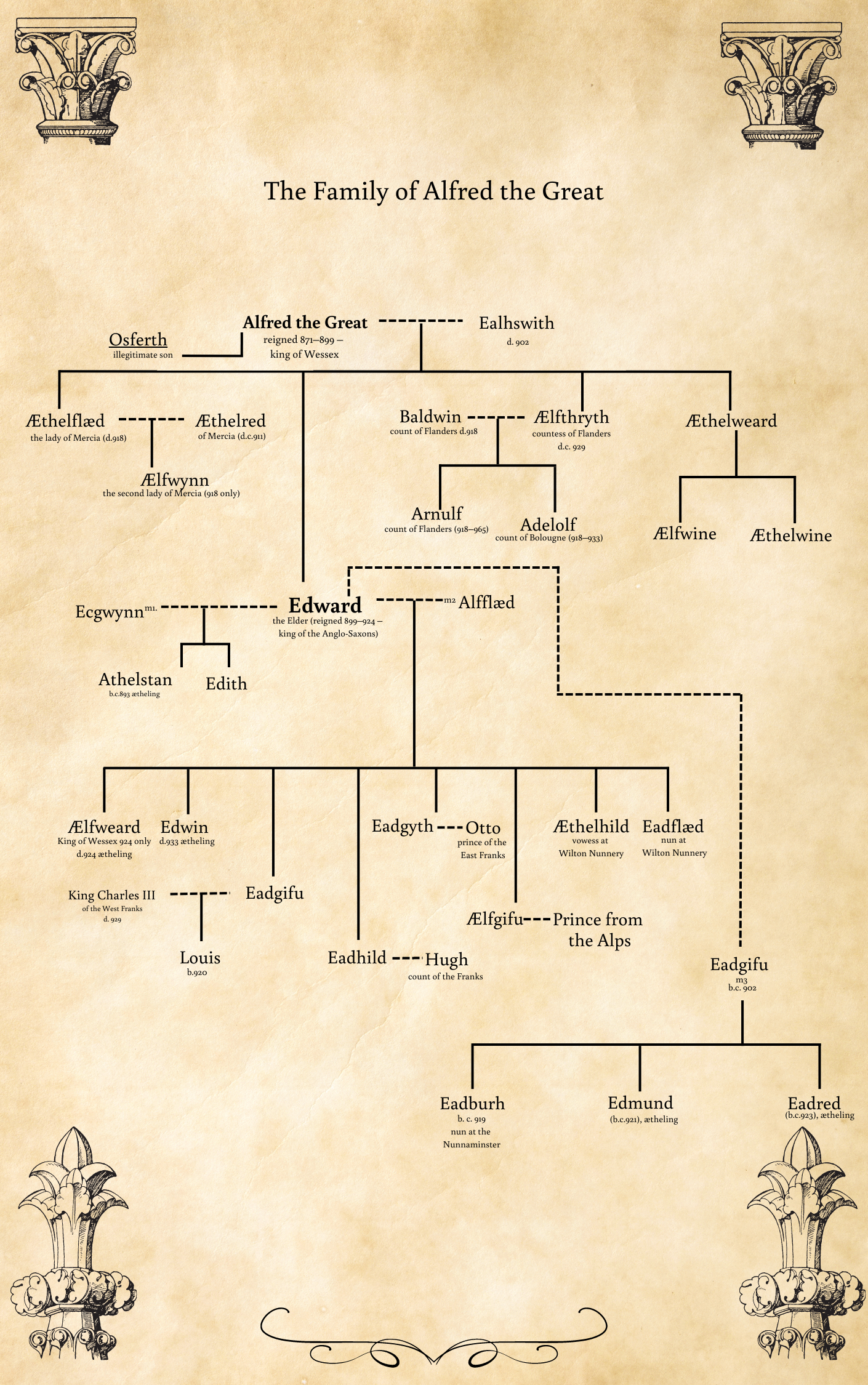
He was the son of Edward the Elder (who had died 16 days earlier) and his second wife, Ælfflæd. He was, presumably, the oldest born son with Edward’s second wife, and from a very young age, he can be seen attesting to his father’s charters. We don’t know his exact date of birth because we don’t know when Edward remarried, and whether it was before or after his father’s death in 899.
What do we know about Ælfweard?
Ælfweard begins to attest charters in 901 as filius regis, alongside his famous older halfbrother, Athelstan, although Ælfweard is given precedence and named before him. This precedence for the oldest son from a second marriage would also be mirrored in later years by King Edgar, who presented his oldest son with his third wife, Elfrida, as the legitimate ætheling while acknowledging his oldest son with his first wife.
Ælfweard attests eight of his father’s charters (S365, S375, S376, S377, S378, S381, S382 and S383). The number is small and may not be representative. There’s a lack of surviving charter evidence from the reign of Edward the Elder and none from Ælfweard’s short reign. Indeed, his full brother, Edwin, doesn’t attest any of his father’s charters, although he is named in one of Athelstan’s charters (S1417). This is something that needs explaining and examining in more depth.
Ælfweard’s death ‘allowed’ Athelstan to become king of Wessex
Despite the survival of his full brother, Edwin, Athelstan was, eventually, proclaimed king of Wessex as well as Mercia on the death of Ælfweard, although his coronation was delayed until September 925 (Read about Athelstan here). We must consider what led to Ælfweard’s death at Oxford. Had he been with his father at Farndon in Mercia putting down a revolt or fighting the Norse enemy? Was there some sort of illness? Was he murdered by those loyal to Athelstan to allow him to become king of Wessex as well as Mercia? We do not know. The situation is presented as a fait accompli in the sources.
Edwin, Ælfweard’s younger full brother, would die far from England’s shores, if the information we do have about his death, is correct. It is possible he did rise in rebellion against Athelstan, but alas, we do not know any details.
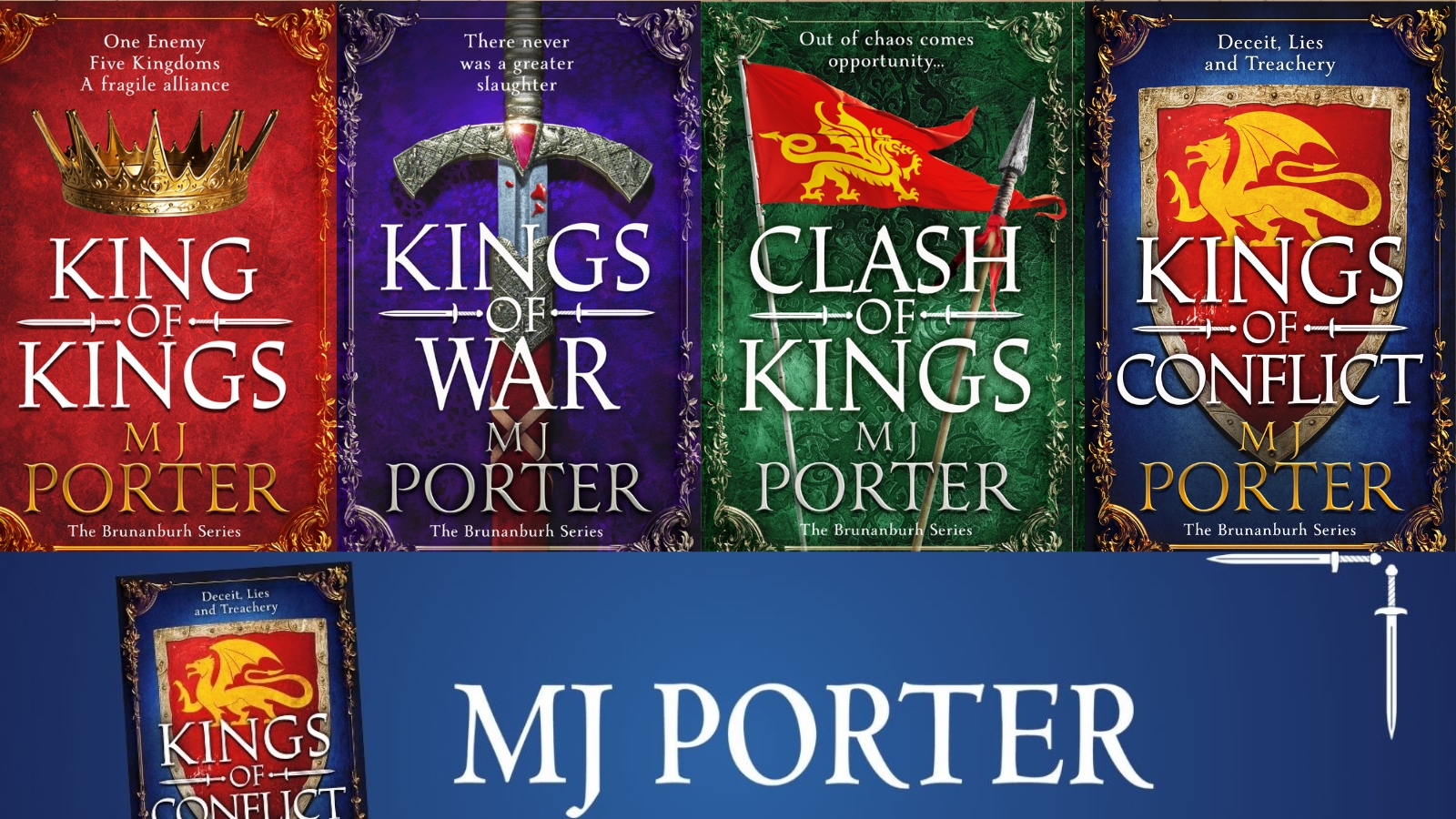
For more suggestions, and my fictional recreation of how Athelstan became king of Mercia, Wessex and the English, do check out my books, Kingmaker (the story of Lady Eadgifu, Edward the Elder’s third wife), and King of Kings (which begins with the coronation of King Athelstan in September 925). I’ve also written a post about Athelstan becoming king of Mercia which can be accessed here.
And for more information about the tenth century as a whole, do check out my nonfiction title about the Royal Women of the Tenth Century, which also includes information about the royal men.
Anglo-Saxon Chronicle quotations from M Swanton, The Anglo-Saxon Chronicles.
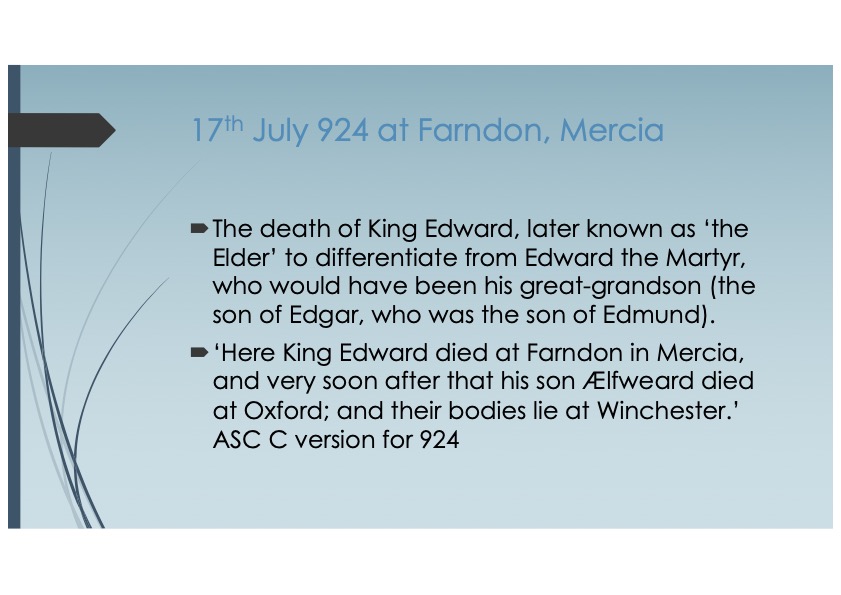
The death of King Edward (the Elder), 17th July 924
17th July saw the anniversary of the death of Edward the Elder, who was Athelstan’s father.
We don’t know why Edward was in Mercia at the time of his death, although this is only recorded in the C and D versions of the Anglo Saxon Chronicles, always deemed to be more Mercian in their outlook by scholars of the era than other surviving versions. I highly recommend Pauline Stafford’s book on the writing of the ASC, and you can read more about the ASC recensions here.
We don’t know why Edward died, although it was potentially quite sudden. Was he wounded in battle? Was he unwell – the fact his oldest son with his second wife dies only 16 days later (the 16 days is provided by the D version of the ASC) at Oxford might suggest a contagion. Admittedly, it might also suggest that Ælfweard was murdered by those loyal to Athelstan, to enable him to also claim Wessex but there is no mention of this in any surviving source material. Alternatively, it might point to a deadly war with ‘someone.’
Who was Edward the Elder (899-924)
So, who was Edward the Elder? He was the younger brother of Æthelflæd, famously known as the Lady of Mercia, as well as the son of King Alfred. He seems to have ‘stolen’ the kingdom of Mercia from his niece Ælfwynn, who was intended to rule there after her mother’s death in June 918. Perhaps Edward was an unwelcome presence in Mercia. It’s been suggested he might have been putting down either a Mercian rebellion, perhaps orchestrated by Athelstan, or that Edward was fighting the enemies of the Saxons – no doubt the Viking raiders – at the time of his death.
King of the Mercians
We are then told by the D version of the ASC that Athelstan was chosen as king by the Mercians.
So, a few important things to highlight – he was chosen as king, but only by the Mercians even though his father was ruling Wessex and Mercia.
Despite very popular portrayals of England at this time, we are still very much looking at the kingdoms of Mercia, Wessex and Northumbria, (and of course Jorvik), so not ‘England’ at all. Edward the Elder did try to rule both Mercia and Wessex at the same time after his sister’s death. How successful he was at that is very much open to debate. Certainly, he has been very much relegated behind the achievements of his father and his son (and his sister). It’s not always that easy to study his reign in depth due to the lack of surviving charter evidence. There is also a debate about how ‘much’ ruling Æthelflæd and Æthelred did in Mercia? Was their kingship under a Wessex banner?
But to return to Athelstan. Was he immediately declared king of Mercia on 18th July 924 or did it take longer? We don’t know the answer to this.
A beguiling suggestion by historian Jayakumar is that Athelstan might have been marked to succeed by his grandfather King Alfred in Mercia, not in Wessex. This is intriguing – prior to this we see fathers and sons ‘sharing’ the kingship of Wessex and then Kent, when it was taken back from the Mercians in the 820s/830s. And indeed, while Mercian, Kent was often ruled by an offshoot member of the Mercian ruling family as well.
Who was Athelstan?
So, who was this Athelstan, who became king of Mercia in 924?
The oldest son of Edward the Elder, but who was his mother?
It’s been suggested his mother might have been Mercian, and this also made him acceptable for the Mercians to declare him as king- but it’s impossible to determine more about her. We don’t even know her name, although it’s suggested that it was Ecgwynn. She was soon replaced, either because of her death or because Edward, on becoming king of Wessex, needed to cement his position through marriage with a powerful ealdormanic family. Lady Ælfflæd was Edward’s second wife.
Later discussions abound about Athelstan’s suitability to become king of Wessex, with many casting doubt on the union, but it is evident that Alfred believed the union was a lawful one, and his grandson would one day become king, although of where, we don’t know.
Equally, we don’t actually know when Edward’s second marriage occurred, was it before or after his father’s death?
Athelstan’s early life
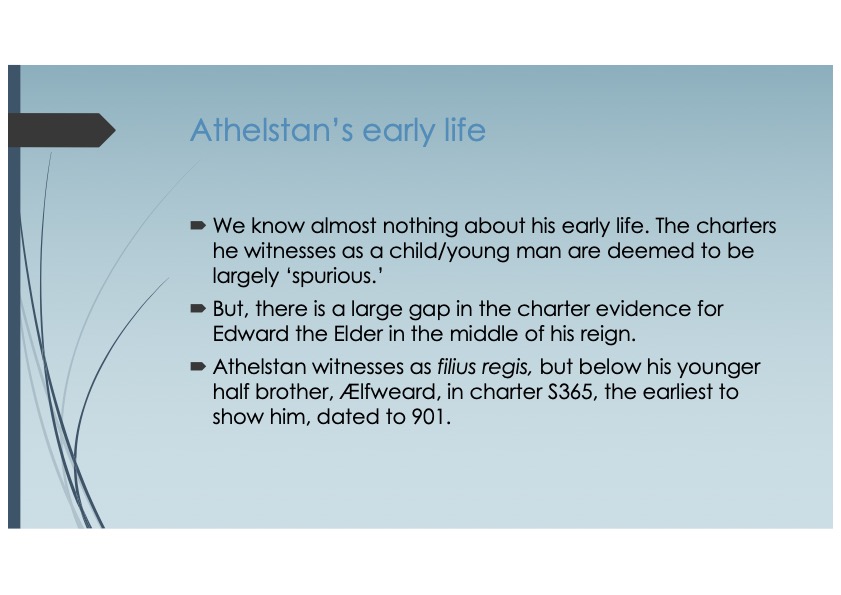
Athelstan and his younger half-brother, Ælfweard, who we must assume was the oldest son born to Edward and his second wife, begin to attest charters in 901 both as filius regis although Ælfweard is named above Athelstan despite being younger.
Athelstan attests eleven of his father’s charters (Sawyer, P.H. (ed.), Anglo-Saxon charters: An annotated list and bibliography, rev. Kelly, S.E., Rushforth, R., (2022). http://www.esawyer.org.uk/ S365, S366, S371, S375, S376, S377, S378, S379, S381, S382, S383), Ælfweard only eight, but again, the number is still small and so may not be representative – in 901, Athelstan witnesses 2 charters, but Ælfweard only one.
Only three of the eleven charters that Athelstan witnesses under his father are deemed to be authentic, and only one of those witnessed by Ælfweard and Athelstan together which is dated to 901, when they were both young children. This would have been very early in Edward’s reign, when his cousin, Æthelwold, was still alive and contesting the rulership of Wessex, something that wasn’t resolved until the decisive Battle of the Holme, in either 901 or 902. Edward may have wanted to labour the point that he was the father to two potential male heirs, or æthelings. (His brother, Æthelweard is also termed filius regis, and so Edward might have been highlighting that if something did befall him, he had a brother who could also succeed him, as opposed to two young children.)
However, there is a large gap in the charter evidence for Edward the Elder in the middle of his reign, and so it is difficult to track any developments.
But with all that said, I don’t find Athelstan’s charter witnessing very helpful when trying to determine his place at the Wessex royal court at this time, his position as a young man or even how he got on with his father’s second wife (as well as his third wife) and her many, many children, who would bedevil him when he became king.
Was Athelstan raised in Mercia by his aunt and uncle?
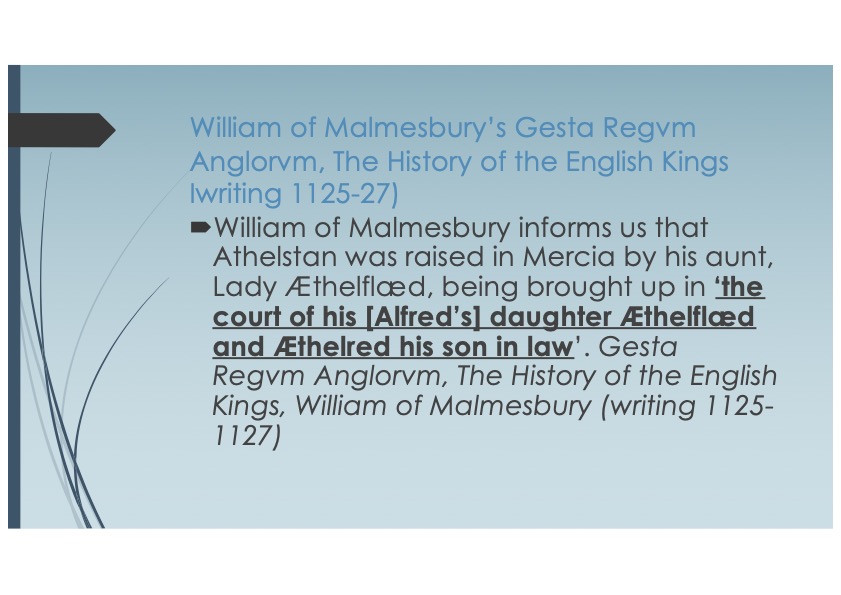
The fact Athelstan was declared king of Mercia does seem to corroborate a statement made by William of Malmesbury, in the later Gesta Regum Anglorum, or The History of the English Kings, that Athelstan was raised in Mercia by his aunt and uncle, alongside his full birth sister, who may have been called Edith.
Or, it could be that his mother was Mercian. It’s frustratingly difficult to find explanations when events are merely told us as supposed ‘fact,’ and William of Malmesbury’s assertion has been little questioned, other than by historian David Dumville, even though it dates to two centuries after the events. It seems to be the ‘easy’ explanation as to why Athelstan became king of Mercia after his father’s death.
What was happening in Wessex?
Ælfweard, his younger half-brother, was declared king, until his death, 16 days after his father.
How did Athelstan become king of Wessex?
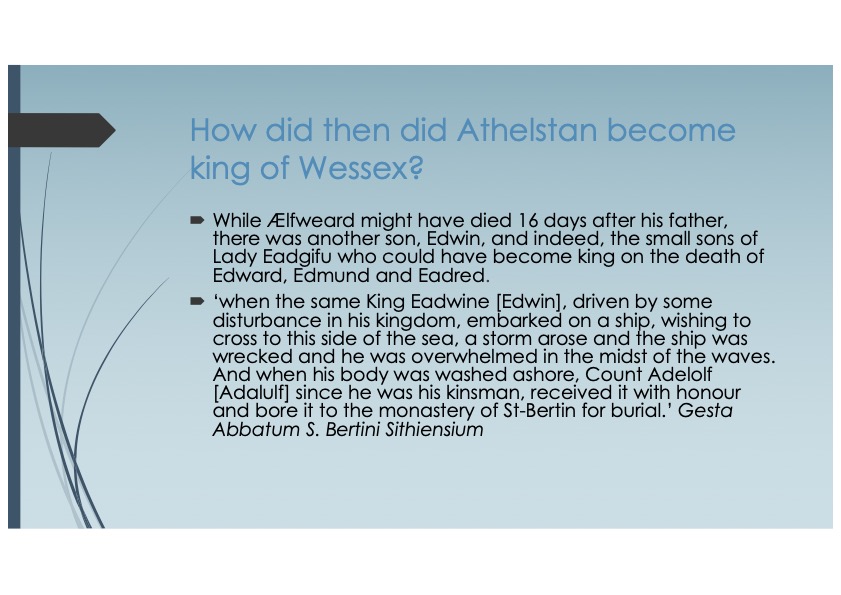
So, once he was chosen as Mercia’s king, how did he then become king of Wessex on the death of Ælfweard so soon after that of Edward?
This period is as equally hazy as what happened to make Athelstan king of Mercia.
But, after Ælfweard’s death, there is another son of Edward’s second marriage who could have become king, Edwin. As could the sons of Edward’s third wife, Lady Eadgifu, who were very young at the time, perhaps no more than one and three years old.
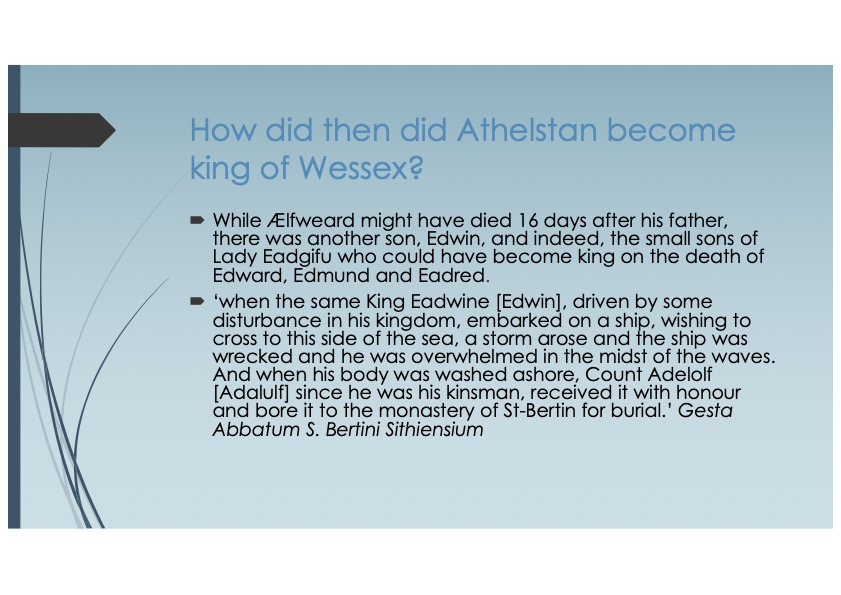
Why Athelstan was chosen is difficult to rationalise, especially if the Wessex witan were so uneasy with him. Some suggest he reached an agreement with Lady Eadgifu (his father’s third wife) that her sons would be his heirs. Others think there was a period of unease where Wessex was kingless. We have no explanation for Edwin being overlooked, and certainly, it seems he went on to cause his older half-brother problems. We have reports of Edwin’s death in 933 – apparently from drowning, but it seems likely, it was some sort of rebellion against his half brother, the king. The Gesta Abbatum S. Bertini Sithiensium, reports his burial by his cousin in Flanders.
I find this period quite interesting as by now, another Eadgifu, a half sister of Athelstan, who had been married to King Charles III of the West Franks, might have been in Wessex. She had a young son, Louis, but Charles had been usurped and imprisoned and certainly Louis was at the Wessex court when his grandfather died. It’s possible Eadgifu was as well. Would she not have supported her full brother against Athelstan claiming the kingship? Equally, we don’t know if Edwin’s mother was still alive. It is all very perplexing.
What we do know is that Athelstan underwent his coronation in September 925, so over a year after his father’s and half-brother’s death. The coronation took place at Kingston upon Thames. This delay has been interpreted as showing he met resistance in Wessex to his rule, but it might not have been that unusual. His father’s coronation was not immediate, although, admittedly, his father was faced with the rebellion of Æthelwold, his cousin and the surviving son of Alfred’s older brother, Æthelred I. Alfred and his brother seem to have reached an accord about the succession before Æthelred I’s death, and Alfred then rode roughshod over it.
A coronation with a crown?
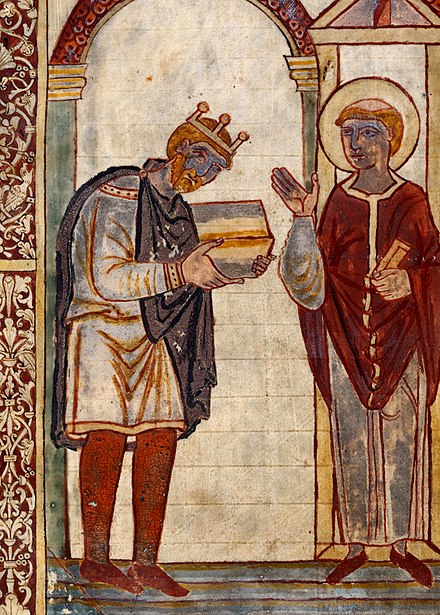
There is some discussion about whether the surviving Coronation ordo (ceremony) was devised for Athelstan or not, but he was crowned with a crown and not a helmet, as earlier kings had been. We have a famous image of Athelstan, (we only have two contemporary/near-contemporary images of the tenth century kings) presenting a book to St Cuthbert, and in this image, he is shown wearing a crown. This was a departure from earlier ceremonies.
Frontispiece of Bede’s Life of St Cuthbert, showing King Æthelstan (924–39) presenting a copy of the book to the saint himself. Public domain, via Wikimedia Commons
For more suggestions, and my fictional recreation of how Athelstan became king of Mercia, Wessex and the English, do check out my books, Kingmaker (the story of Lady Eadgifu), and King of Kings (which begins with the coronation of King Athelstan).
Anglo-Saxon Chronicle quotations from M Swanton, The Anglo-Saxon Chronicles.
Having written more books than I probably should about the Saxon kingdom of Mercia, and with more planned, I’ve somewhat belatedly realised I’ve never explained what Mercia actually was. I’m going to correct that now.
Having grown up within the ancient kingdom of Mercia, still referenced today in such titles as the West Mercia Police, I feel I’ve always been aware of the heritage of the Midlands of England. But that doesn’t mean everyone else is.
Where was Mercia?
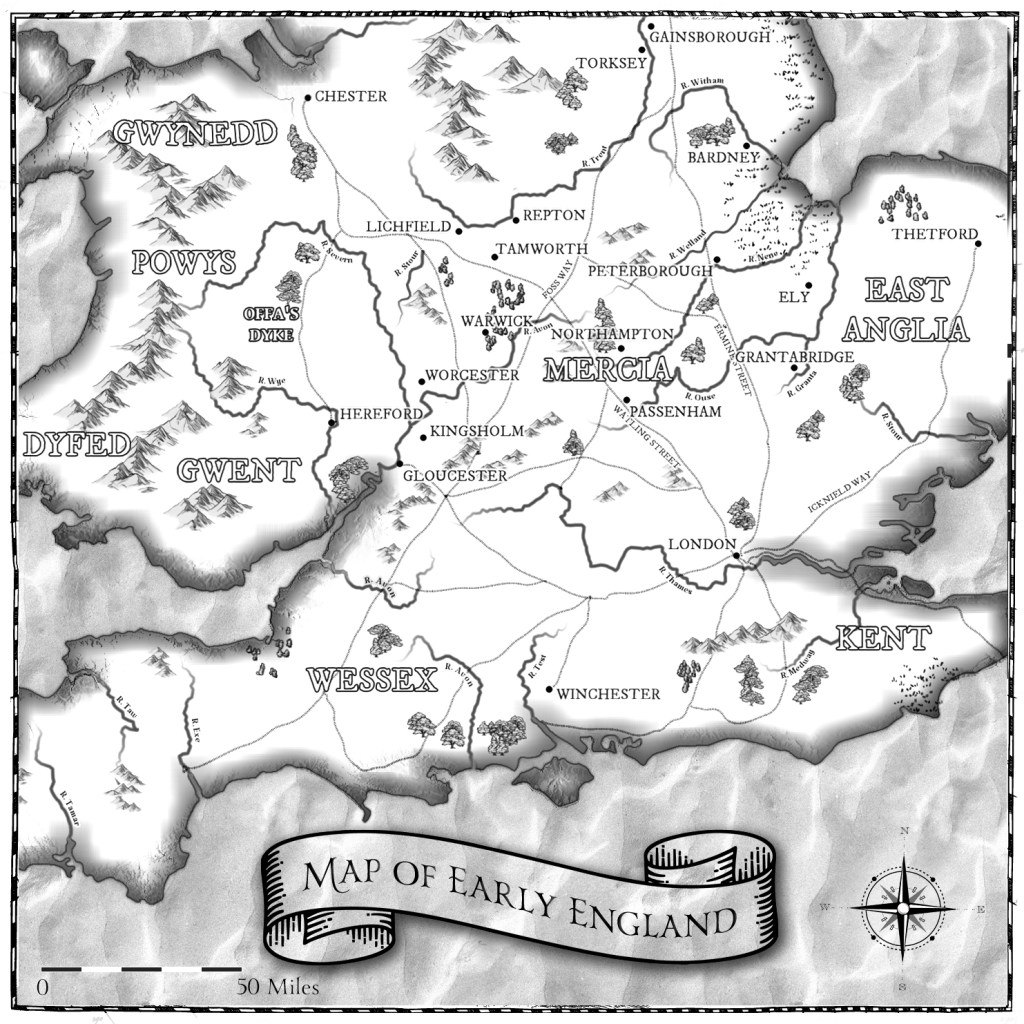
Simply put, the kingdom of Mercia, in existence from c.550 to about c.925 (and then continuing as an ealdordom, and then earldom) covered the area in the English Midlands, perhaps most easily described as the area north of the River Thames, and south of the Humber Estuary – indeed, nerdy historians, and Bede, call the area the kingdom of the Southumbrians, in contrast to the kingdom of the Northumbrians – do you see what Bede did there?
While it was not always that contained, and while it was not always that large, Mercia was essentially a land-locked state (if you ignore all the rivers that gave easy access to the sea), in the heartland of what we now know as England.
What was Mercia?
Mercia was one of the Heptarchy—the seven ancient kingdoms that came to dominate Saxon England – Mercia, Wessex (West Saxons), the East Angles, Essex (East Saxons), Sussex (South Saxons) and Kent.
In time, it would be one of only four to survive the infighting and amalgamation of the smaller kingdoms, alongside Northumbria, the kingdom of the East Angles, Mercia, and Wessex (the West Saxons).
The End of Mercia?
Subsequently, it has traditionally been said to have been subsumed by the kingdom of Wessex, which then grew to become all of ‘England’ as we know it.
This argument is subject to some current debate, especially as the king credited with doing this, Athelstan, the first and only of his name, might well have been born into the West Saxon dynasty but was potentially raised in Mercia, by his aunt, Lady Æthelflæd, and was, indeed, declared king of Mercia on the death of his father, King Edward the Elder in July 924, and only subsequently became king of Wessex, and eventually, king of all England.
Mercia’s kings
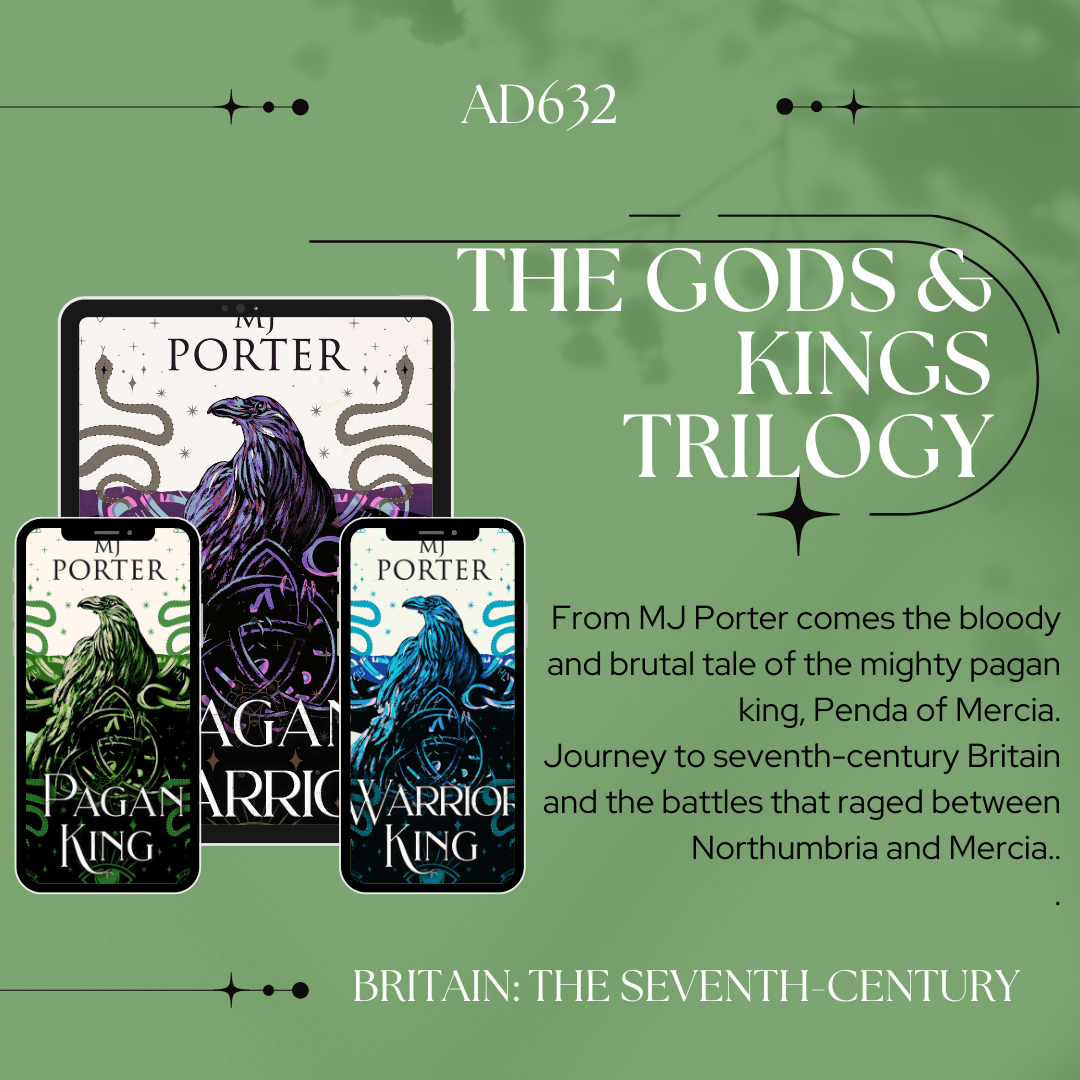
But, before all that, Mercia had its own kings. One of the earliest, and perhaps most well-known, was Penda, in the mid-7th century, the alleged last great pagan king. (Penda features in my Gods and Kings trilogy). Throughout the eighth century, Mercia had two more powerful kings, Æthelbald and Offa (of Offa’s Dyke fame), and then the ninth century saw kings Wiglaf and Coelwulf II (both of whom feature as characters in my later series, The Eagle of Mercia Chronicles and the Mercian Ninth Century), before the events of the last 800s saw Æthelflæd, one of the most famous rulers, leading the kingdom against the Viking raiders.
The Earldom of Mercia
And even when the kingdom itself ceased to exist, it persisted in the ealdordom and earldom of Mercia, (sometimes subdivided further), and I’ve also written about the House of Leofwine, who were ealdormen and then earls of Mercia throughout the final century of Saxon England, a steadfast family not outmatched by any other family, even the ruling line of the House of Wessex.
In fact, Mercia, as I said above, persists as an idea today even though it’s been many years since the end of Saxon England. And indeed, my two Erdington Mysteries, are also set in a place that would have been part of Mercia a thousand years before:) (I may be a little bit obsessed with the place).
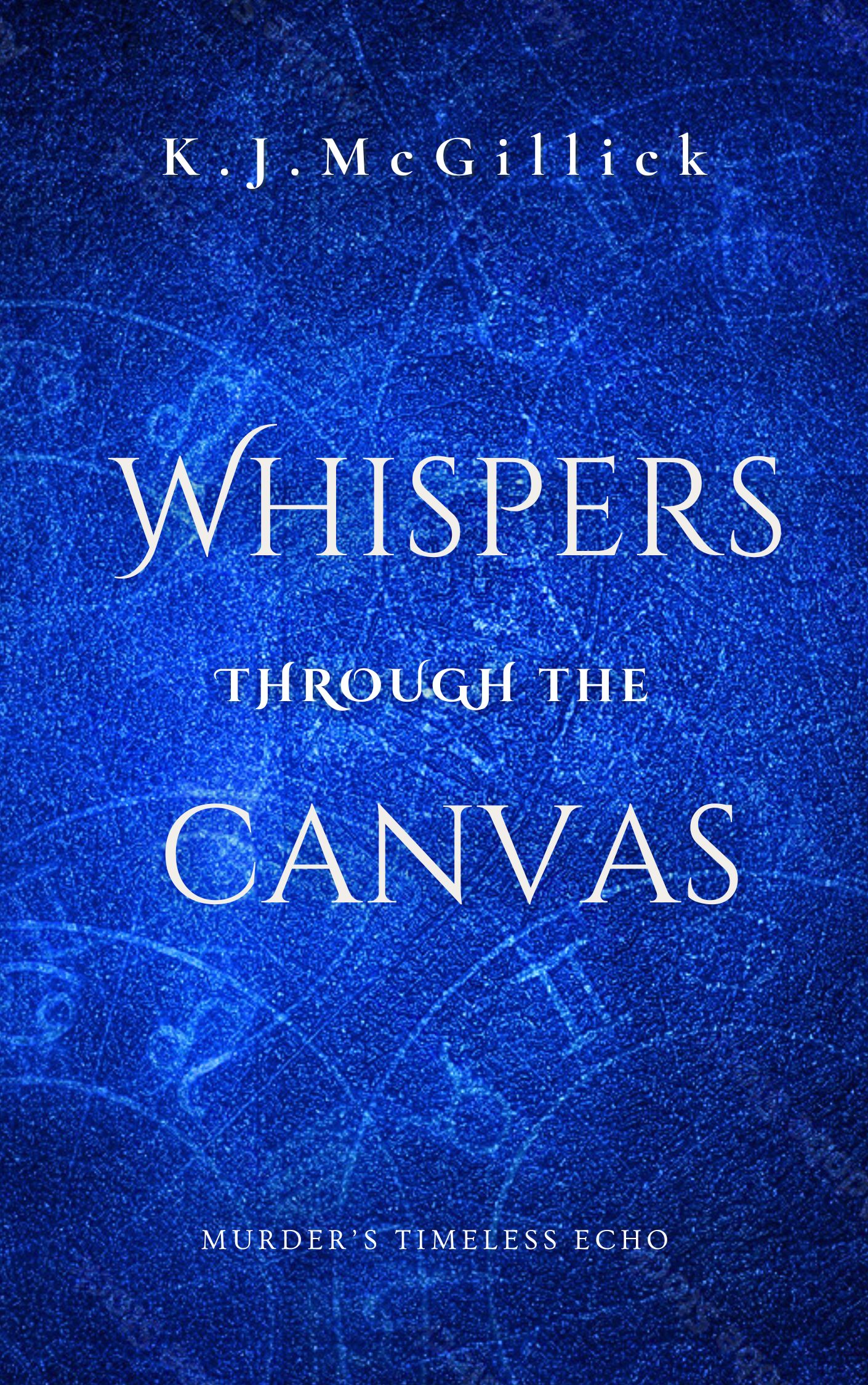
I always love to hear how authors research their historical characters and events. KJ McGillick shares how she researched for her new book, Whispers Through the Canvas.
Howard Dynasty
To study the powerful Howard dynasty of Tudor England, I consulted a variety of digitized primary sources available online such as wills, letters, court records, and literary works from the era. Searching through these collections, I found references to key Howard figures like the poet Henry Howard, Earl of Surrey and his ill-fated relatives. Contemporary accounts provided glimpses into the scandals, romantic entanglements, and power dynamics playing out at the royal court and aristocratic estates. Family correspondence shed light on inheritance disputes among the duke’s children. Literary pieces like Surrey’s poems and writings by other Howards offered additional perspectives on their remarkable century – chronicling their ascent, arts patronage, and the perils their elite status invited.
Levina Teerlinc To learn about Levina Teerlinc, one of the earliest professional female artists in Renaissance England, I turned to digitized primary sources and secondary analyses available online. High-resolution images of Teerlinc’s exquisite miniature portraits hosted by museums revealed her skill at capturing likenesses. I searched literature databases for any mentions of Teerlinc from writings of her era, finding scattered records confirming her lifelong court employment. While limited biographical details survive, historians have reconstructed some context about her Flemish origins and artistic training based on fragments of evidence. Scholarly articles also examined her pioneering role as an art tutor to noble pupils.
Witchcraft 16th Century
To investigate 16th century England’s witchcraft accusations and trials, I immersed myself in digitized primary sources and scholarly research available online. This allowed me to examine the social tensions, religious upheaval, and cultural forces behind the deadly persecution of alleged witches. I accessed sensationalized literature published during the witch-hunting frenzy, providing window into the paranoia around women supposedly consorting with the devil. Legal records and transcripts illuminated how flimsy the evidence used to condemn the accused often was – a person’s reputation, a death, or unexplained misfortune could prompt charges. Scholarly journal articles analyzed the complex sociopolitical tensions of the Reformation era that enabled witchcraft hysteria to take hold, from anxieties over female autonomy to ruling elite distrust of the peasantry.
16th century Occult Symbols
To explore the fascinating world of occult symbols and their place in 16th century English society, I delved into a range of digitized primary source materials and secondary scholarship available online.
One key resource was literature databases containing published works from the era. I examined texts on astrology, alchemy, magic, and esoteric philosophies for insight into the symbolic languages and imagery employed by occult practitioners and their beliefs. Engravings and woodcuts accompanying these works provided a visual catalogue of seals, sigils, and emblems.
I also searched through digitized diaries, letters, and accounts of the time for references to the use of occult symbols and coded markings in both elite and folk traditions. Correspondence between royals, nobles, and scholars sometimes mentioned encrypted communications or arcane symbolic meanings.
Court records, witness depositions, and transcripts from witchcraft trials offered a window into societal suspicion surrounding the perceived nefarious use and misuse of symbols and markings associated with magic and the supernatural. The language and suspicions revealed in these documents shed light on prevailing attitudes.
Additionally, I consulted digitized archaeological reports, inventories of home goods, and material culture studies to trace actual artifacts and objects bearing occult symbols that survived from 16th century England – whether tools, talismans or architecture.
By synthesizing evidence from these various sources, I could begin mapping the complex cosmological, mystical, and coded symbolic vernacular of the Renaissance era and how it manifested in art, writings, personal practice, and dangerous accusations.
Intrigued? Here’s the blurb.
Here’s the blurb
Murder… Across The Fractured Corridors of Time.
Plunged into a centuries-old conspiracy, unconventional art historian Rowan Southeil must race against time to stop an ancient evil from rewriting history. When a young artist is murdered in a chilling echo of medieval violence, Rowan finds herself drawn to a seemingly unrelated clue – a 16th-century painting drenched in arcane symbols. Aided by the victim’s haunting presence, Rowan delves into the painting’s mysterious past, uncovering a dark conspiracy that stretches back generations.
Teaming up with the pragmatic Detective Lancaster, the intuitive Rowan follows a daring journey through time, from the storied halls of 16th-century Tudor London to the secretive 17th-century Vatican. As she awakens powerful elemental forces within herself, Rowan must decipher the painting’s secrets – and the connection to the medieval-style murder – before Lev Rubilov, a dark centuries-old occultist, can harness its magic to rewrite history and restore a twisted vision of the past.
For fans of genre-blending thrillers like A Discovery of Witches and Outlander, this captivating novel weaves together mystery, the supernatural, and high-stakes time travel in a race against the clock to stop an ancient evil. Whispers Through The Canvas is a crime story, filled with action and adventure, within a historical fantasy milieu. If you love kick-ass heroines who have a bit of life experience and walk on the wild side of magic, this book is for you.
From the bustling courtrooms of Atlanta to the vibrant tapestry of 16th-century England, Kathleen McGillick’s life and career have been a captivating blend of legal expertise, artistic passion, and a thirst for adventure.
Fueled by an undergraduate and graduate degree in nursing, Kathleen built a foundation of compassion and care. This dedication to service later led her to pursue a Juris Doctorate, allowing her to navigate the intricacies of the legal system for nearly three decades. Her courtroom experience now breathes life into the intricate details of her legal thrillers, ensuring every courtroom scene crackles with authenticity.
But Kathleen’s story doesn’t end there. A deep fascination with art history led her to delve into the world of renowned artists and captivating eras. Her particular passion for 16th-century British history allows her to transport readers to richly detailed historical settings, immersing them in the culture, politics, and societal nuances of the time.
Driven by an unwavering dedication to her craft, Kathleen has independently published eleven legal thrillers since 2018. Her commitment extends beyond solo creation, as she actively engages with the writing community, honing her skills through workshops and courses led by renowned authors.
And when she’s not crafting captivating narratives, Kathleen embarks on international journeys, soaking in diverse cultures and experiences that further enrich her writing. This global perspective adds another layer of depth and realism to her stories, allowing readers to connect with characters and settings that transcend geographical boundaries.
To delve deeper into Kathleen’s world and explore her captivating legal thrillers, visit her website at kjmcgillick.com.
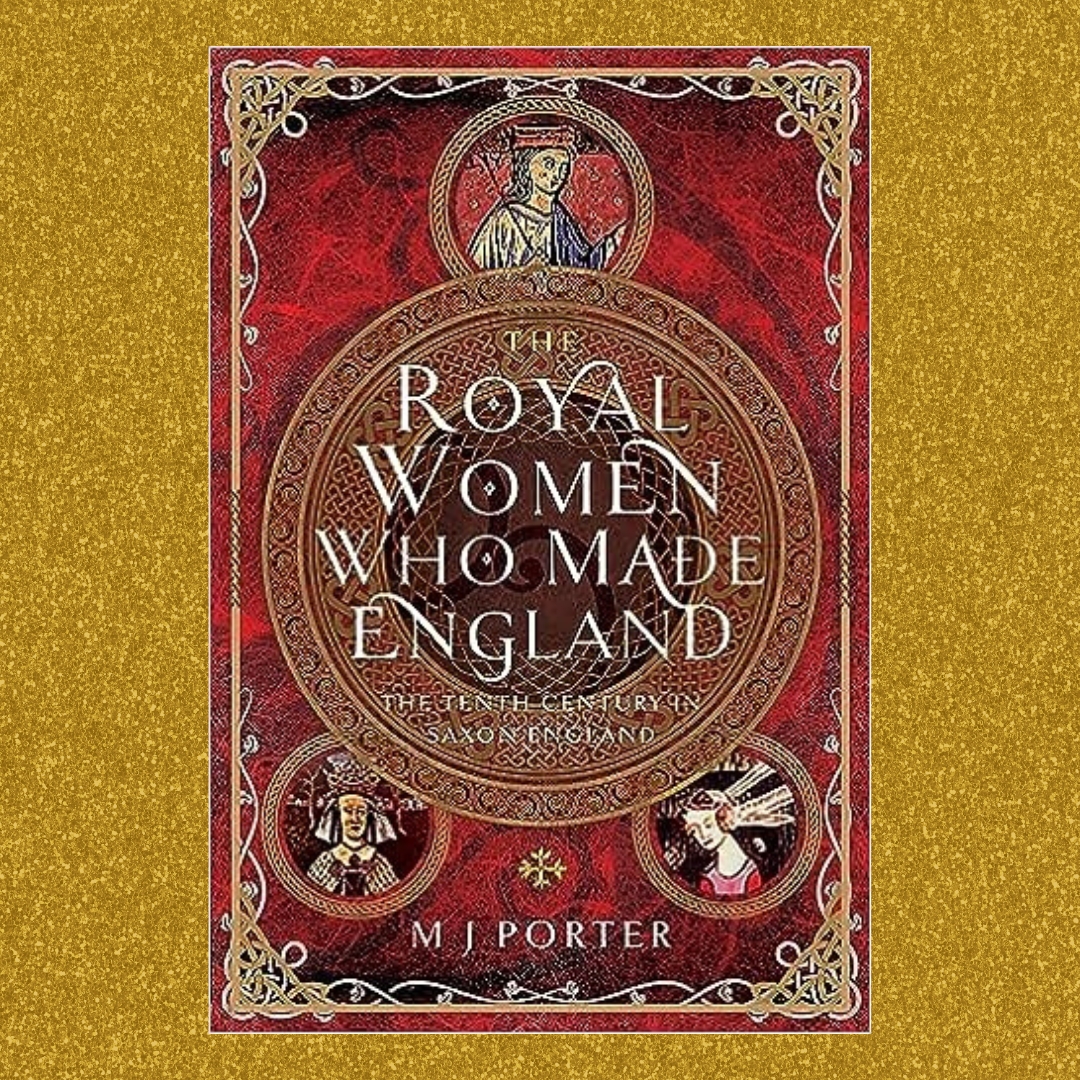
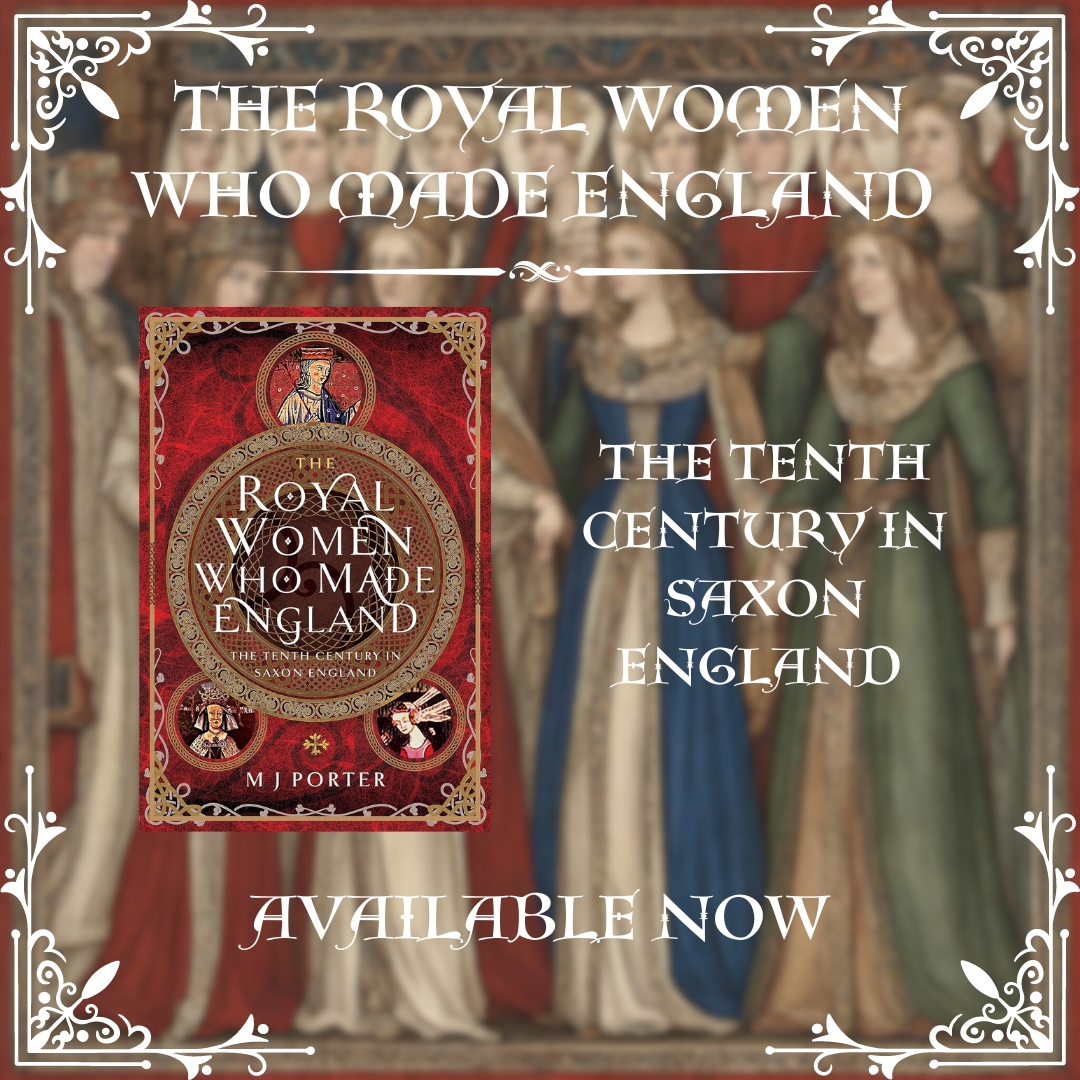
It feels like I’ve been talking about this book forever, but the day is finally upon us. The Royal Women Who Made England is available in hardback in the UK and US from today, and also in Kind
If you’ve been hiding from me for the last few months, you might be wondering what this is all about. So here goes.
Throughout the tenth century, England, as it would be recognised today, formed. No longer many Saxon kingdoms, but rather, just England. Yet, this development masks much in the century in which the Viking raiders were seemingly driven from England’s shores by Alfred, his children and grandchildren, only to return during the reign of his great, great-grandson, the much-maligned Æthelred II.
Not one but two kings would be murdered, others would die at a young age, and a child would be named king on four occasions. Two kings would never marry, and a third would be forcefully divorced from his wife. Yet, the development towards ‘England’ did not stop. At no point did it truly fracture back into its constituent parts. Who then ensured this stability? To whom did the witan turn when kings died, and children were raised to the kingship?
The royal woman of the House of Wessex came into prominence during the century, perhaps the most well-known being Æthelflæd, daughter of King Alfred. Perhaps the most maligned being Ælfthryth (Elfrida), accused of murdering her stepson to clear the path to the kingdom for her son, Æthelred II, but there were many more women, rich and powerful in their own right, where their names and landholdings can be traced in the scant historical record.
Using contemporary source material, The Royal Women Who Made England can be plucked from the obscurity that has seen their names and deeds lost, even within a generation of their own lives.
So, who were these royal women? While some of us will know Æthelflæd, the Lady of Mercia, either because I think she is one of THE most famous Saxon women, or because of The Last Kingdom TV series and books, but she is merely one of many.
I’ve fictionalised Elfrida and her contemporaries, Eadgifu, the third wife of Edward the Elder and also some of his daughters, as well as Ælfwynn, the daughter of Æthelflæd. My first non-fiction title is me sharing my research that these stories are based upon.
I’ve also ‘found’ many other women of the period who have left some sort of physical reminder, mostly in charters or because their wills have survived.
In total, I discuss over twenty women directly involved with the royal family, either by birth or marriage, and also a further forty, who appear in the sources. I also take a good look at what these sources are and how they perhaps aren’t always as reliable as we might hope. I make an attempt to ‘place’ these women in the known historical events of the period. And draw some conclusions, which surprised even me.
You can find some of my blog posts about these women below.
I’ve made it somewhat of a passion to study the royal women of the tenth century. What drew me to them was a realisation that while much focus has rested on the eleventh century women, most notably Queen Emma and Queen Edith, their position rests very much on growing developments throughout the tenth century. It also helps that there is a surprising concurrence of women in the tenth century, the early years of Queen Elfrida, England’s first acknowledged crowned queen, find the ‘old guard’ from previous reigns, mixing with the ‘new guard’ – a delightful mix – it must be thought – of those experienced women trying to teach the younger, less experienced women, how to make their way at the royal court, perhaps with some unease from all involved.
Lady Elfrida, or Ælfthryth (I find it easier to name her as Elfrida) was the first of these women to catch my eye. Her story, which can be interpreted as a love story if you consult the ‘right’ sources, fascinated me. The wife of a king, mother of another king, and in time, grandmother, posthumously, to two more. But, it was her possible interactions with her husband’s paternal grandmother, the aging but long-lived Lady Eadgifu, and maternal grandmother, Lady Wynflæd, as well as probable unease with her second husband’s cast-off second wife, that really sparked my imagination. I could well imagine the conversations they might share, and the dismay they might feel around one another. Lady Elfrida replaced a wife who was not crowned as queen, and also replaced a grandmother who had never been crowned as queen but had long held a position of influence for over forty years at the Wessex court.
Equally, Elfrida’s husband had been surrounded by women from his earliest days. His mother had died, perhaps birthing him, but he had two grandmothers, a step-mother, a foster-mother and his (slightly) older brother’s wife, who would have been instrumental in his life, not to mention his first two wives. As such, it was the personal interactions of the women that called to me, and the tragedy and triumphs of their lives, and, I confess, an image of Dame Maggie Smith holding sway in Downton Abbey that drew me to the women of this period.
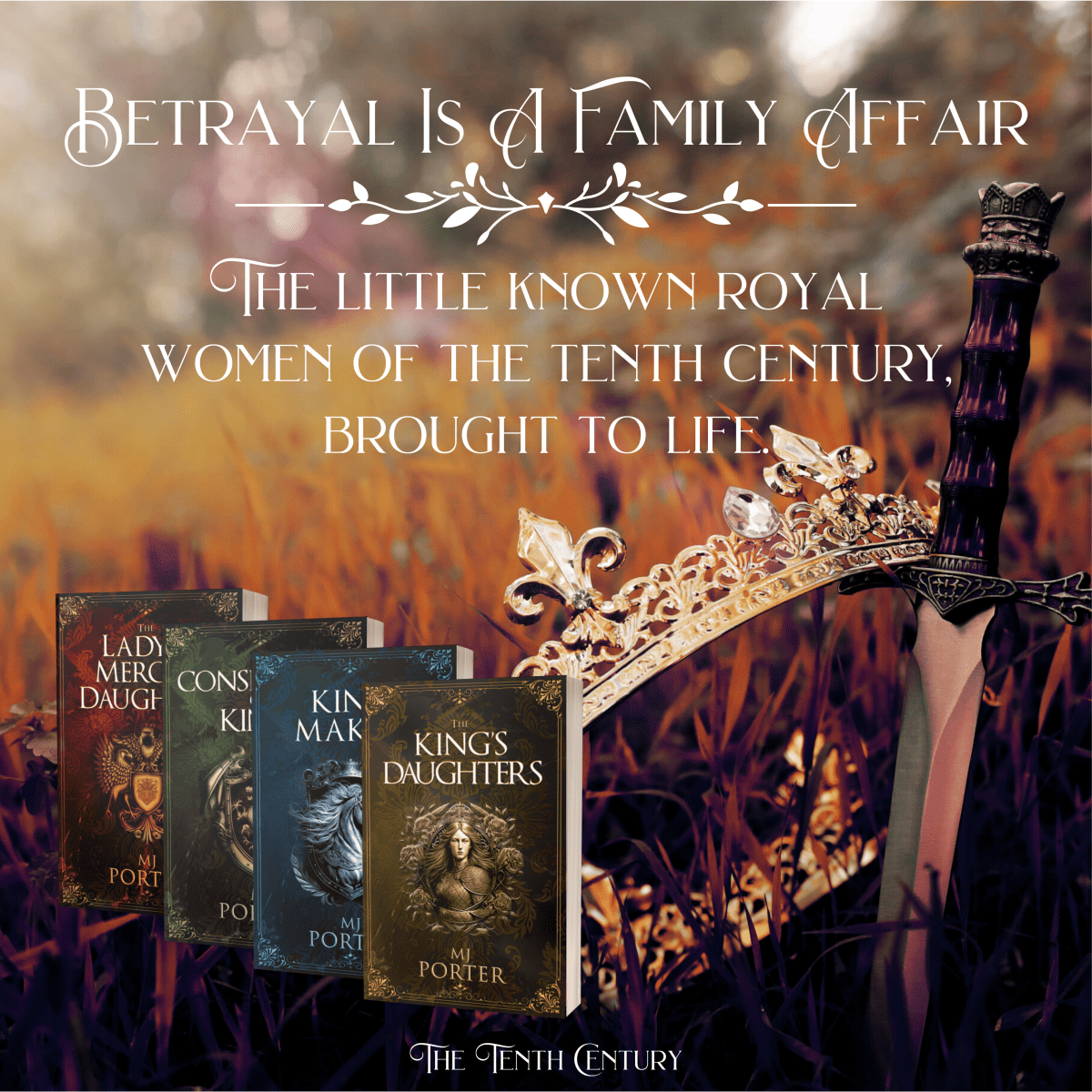
I’ve gone on to write fictionalised accounts of many of these women, and then, frustrated by the lack of a cohesive non-fiction account, I’ve also written a non-fiction guide detailing the scant information available for these women.