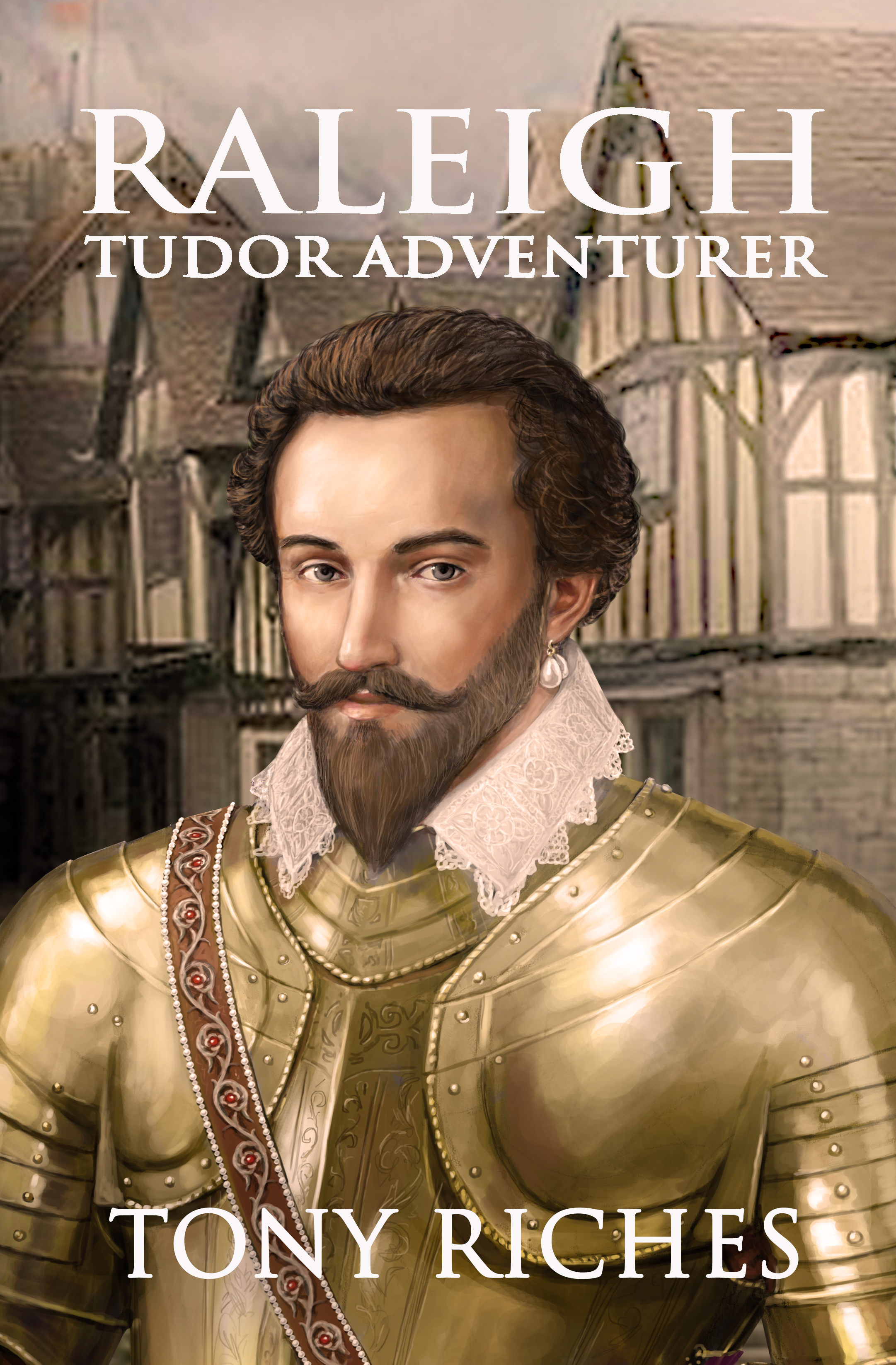
Tudor adventurer, courtier, explorer and poet, Sir Walter Raleigh has beencalled the last true Elizabethan.
This journey began when I was researching for an historical novel about Henry Tudor, who like me was born in the town of Pembroke, Wales. I eventually uncovered enough original material to write three books, with Henry being born in the first, coming of age in the second and becoming King of England in the third.
The result was my best-selling Tudor Trilogy, and I decided to continue the stories of the Tudors in a continuous line. I also made a conscious decision to tell the stories through those surrounding King Henry VIII and Queen Elizabeth I, so we see different facets of these complex rulers through the eyes of others.
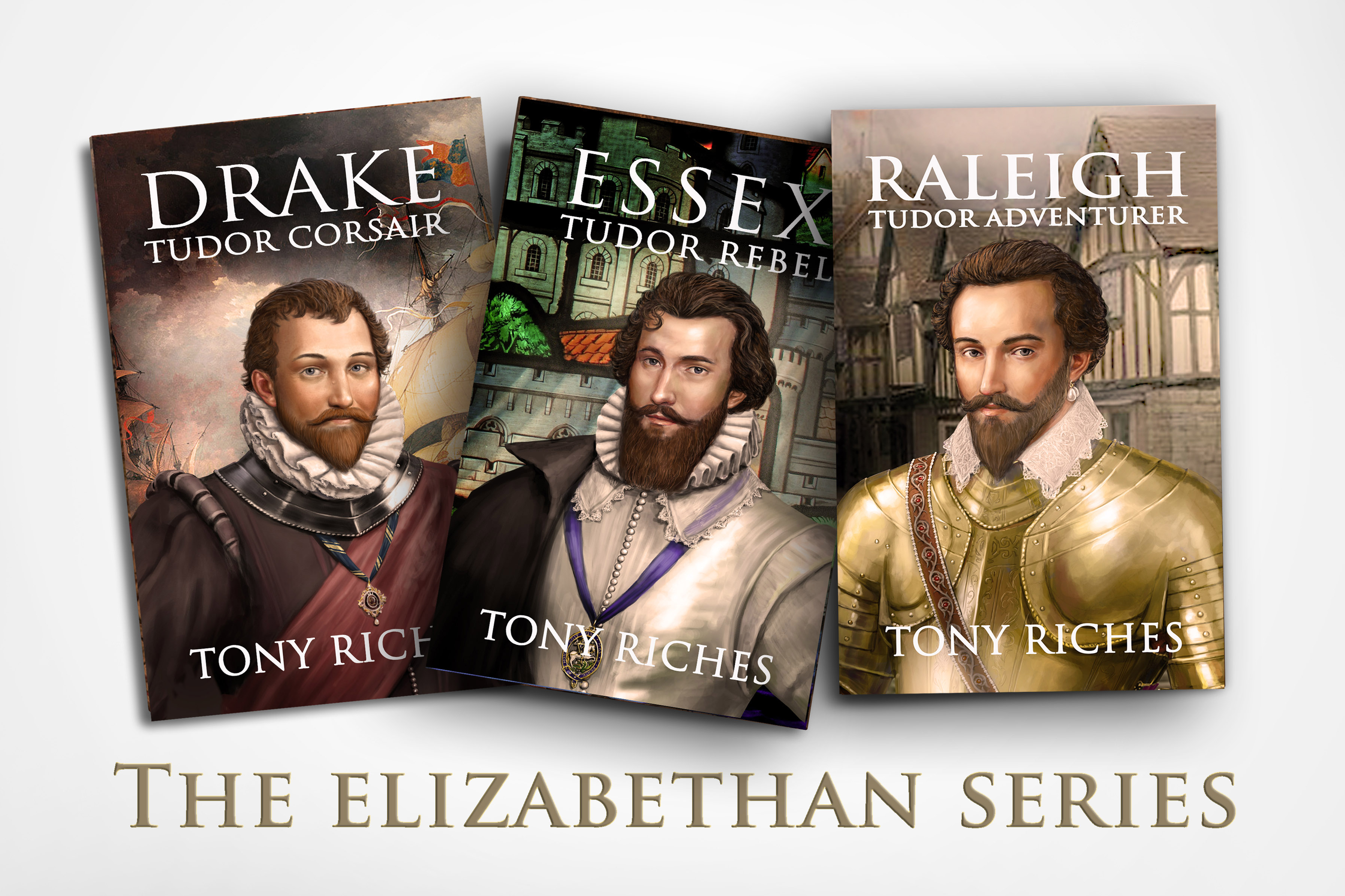
For my Elizabethan series I chose three very different favourites of the queen, who each saw different sides of her personality. Sir Francis Drake showered her with gold and jewels, stolen from the Spanish, in return for the status he longed for. The Earl of Essex was like the errant son she never had, but Raleigh became her protector, Captain of the Guard, and lived to see the last days of the Tudor dynasty.
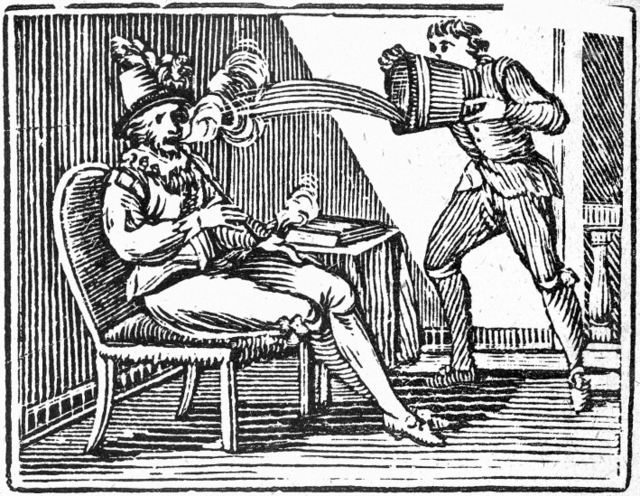
Many of the things I thought I knew about Walter Raleigh proved to be wrong. Raleigh is credited with introducing the potato and tobacco to Britain, but I’ve seen no evidence for either, or for the popular tale of a servant throwing water over him when he mistook the smoke from Raleigh’s pipe for a fire!
Sir_Walter_Raleigh_being_doused
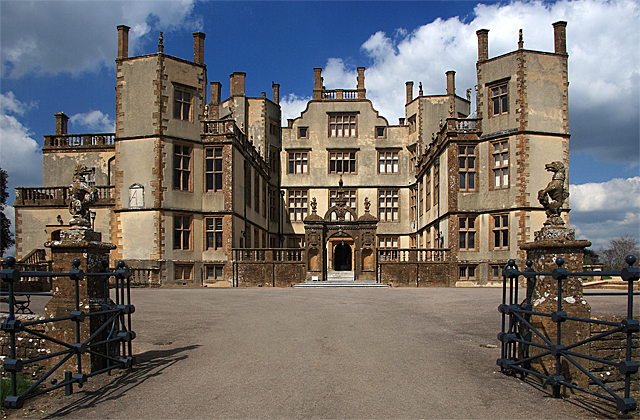
I followed Raleigh across the Irish Sea to the sleepy harbour at Youghal, where he had a house and became Mayor, as well as to the bustling city of Cork, where he served in the English Army of occupation. I also visited Raleigh’s house at Sherborne in Dorset, which still has many original features.
Sherborne Castle
My research uncovered a comprehensive collection of original letters and poetry written by Raleigh. As well as helping me understand his motivation, and the timeline of complex events, they also gave me a sense of his ‘voice’, and how he spoke to the queen and others of her court.
I relied on the comprehensive records of the Elizabethan Court, which set out events in fascinating detail. I was also lucky to read ‘A Woman of Noble Wit’, a new novel by Rosemary Griggs, about Raleigh’s mother. This led me to explore Walter Raleigh’s relationship with his father, as well as his mother, an aspect of him largely ignored by historical biographers.
My hope is that Raleigh – Tudor Adventurer will help readers see beyond the myths and half-truths, and have a better understanding of the man who has been called the last true Elizabethan.
Thank you so much for sharing. Your research sounds fabulous, and I too am reading A Woman of Noble Wit. Good luck with the new release.
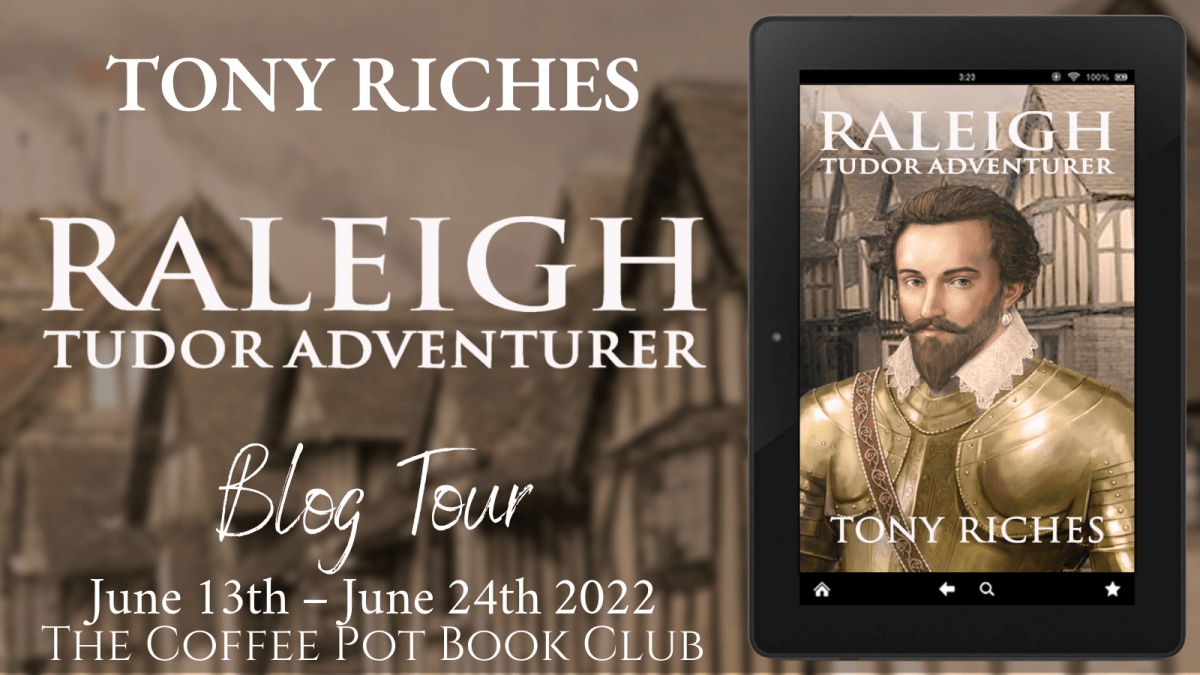
Here’s the blurb:
Tudor adventurer, courtier, explorer and poet, Sir Walter Raleigh has been called the last true Elizabethan.
He didn’t dance or joust, didn’t come from a noble family, or marry into one. So how did an impoverished law student become a favourite of the queen, and Captain of the Guard?
The story which began with the best-selling Tudor trilogy follows Walter Raleigh from his first days at the Elizabethan Court to the end of the Tudor dynasty.
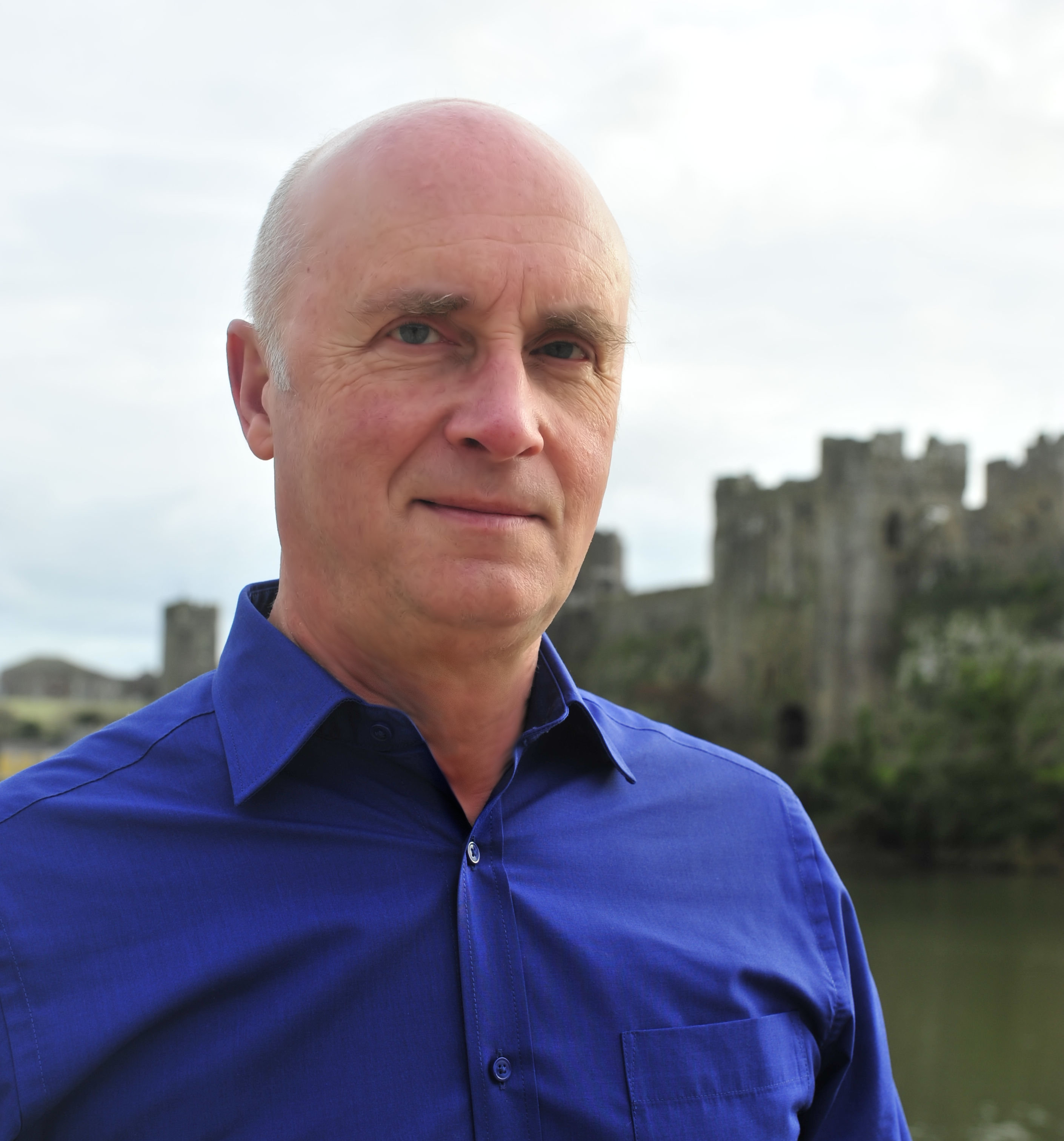
Tony Riches is a full-time UK author of best-selling historical fiction. He lives in Pembrokeshire, West Wales and is a specialist in the lives of the Tudors. He also runs the popular ‘Stories of the Tudors’ podcast, and posts book reviews, author interviews and guest posts at his blog, The Writing Desk. For more information about Tony’s books please visit his website tonyriches.com and find him on Facebook and Twitter @tonyriches
Maintaining order in Roman Britannia’s vast militarised zone
The original vision for my ‘Edge of Empire’ series of novels was to write stories that focussed on the lives and adventures of two protagonists from a single Roman auxiliary infantry unit. It was to be set in the north of the province of Britannia and in the wilder, unconquered lands beyond its boundaries. But as I buried myself in the research phase I was continually surprised by what I discovered. Ultimately I gained a greater understanding of the Roman way of doing things and quite fundamentally changed the approach to my stories.
For much of its first 300 years of use Hadrian’s Wall marked the north-west frontier of the Roman Empire. In movies such as The Eagle or Centurion we see Roman foot soldiers astride its battlements looking north, spear and shield in hand. But the Wall was not the-be-all-and-end-all of the north’s defence. What is less understood, at least to me, is that the Wall was really a focal point for a much larger militarised zone that stretched from Lancaster in the south to forts like Blatobulgium and Trimontium well into what is now modern day southern Scotland (I’m ignoring the period of the Antonine wall for simplicity).
It seems evident that the lands both north and south of Hadrian’s Wall were at times restive, if not in down right conflict, with the Roman administration. Whilst auxiliary infantry troops had an important role in keeping the peace, their deployment became increasingly localised in nature, especially in the later centuries of the empire. It was the mounted troops that had the pivotal role in commanding the north.
When researching for my historical adventure novel ‘Siege’, that focuses on the lives of the men of a Germanic cohort, a real life regiment with a mixture of infantry and cavalry. I was surprised by the amount of detail we now have on the everyday life of a Roman cavalryman. In the story I have worked hard to be faithful to that knowledge and attempted to bring it to life for the present day reader.
Most forts in the militarised zone included a cavalry force within their garrisons.
It has been calculated that sustaining a cavalryman with his kit and horse cost 5 times that of an infantryman. Why would the Romans invest so much if they were not an important and valuable asset? The answer surely must, at least in part, lie in both its symbolic and strategic roles.
Cavalry could move at a rapid pace and cover great distances quickly. They were highly mobile, making them effective on patrols and as scouts both north and south of the Wall. They made speedy messengers, giving warning of sudden threats and incursions. They also ensured food security, protecting local farmland and guarding supply trains to the Wall’s outlying forts. But, probably as importantly, they projected the image of power and renown of Rome and its imperial might. If you have ever seen the Household Cavalry in London or mounted police outside of a football (soccer) stadium you will get an idea of what a Roman turma must have looked like to an Iron Age population.
Outlying forts, north of the Wall, such as at Birrens and Netherby housed specialist, double strength, mixed infantry and cavalry cohorts (milliaria equitata) as well as specialist scouts (exploratores) enabling them to command a significant geographic area and suppress any uprising of local tribes. The effect on the populace must have been as much psychological as physical.
But who were these cavalrymen? Well they certainly weren’t drawn from the Roman aristocracy as they often were in the time of the Republic. No, the names of their units give a clear indication that the Romans recruited from all over the empire from the homelands of its conquered peoples. Germanic and celtic Gaulish units were prevalent, such as the I Nervana Germanorum and the cohors II Tungrorum that garrisoned the fort of Birrens at different times. But regiments from as far away as Spain and modern day Bulgaria and Croatia have also been identified. But as the needs of the empire changed over time individual units would mainly have recruited from the local populations. With sons moving into the family business by joining the cohorts of their fathers and grandfathers.
So what was life like for the cavalryman? Well each troop, known as a turma (typically 30 men), were housed in a single barrack block. Trios of men lived at the back of the building with their horses stabled at the front. There were surely few nights that troopers fell asleep without the sound of the snorts of their mounts accompanied by the smell of hay and dung. Each room had a hearth set against the stable-side wall for warmth and cooking. The decurion, who commanded the turma, lived in rooms at the end of the block along with his family.Troopers ate, slept and kept their weapons and tack in these small rooms. It is also thought that grooms and slaves may have slept in the roof space above.
Training for cavalrymen and their mounts was extensive and intense. If you have seen horses being drilled for modern day dressage you will get the idea, with each trained initially on a long rein to teach the horse basic skills as well as special steps. It is likely that horses were broken and prepared by specialists before being assigned to its rider. They learned to overcome their instinct to flee when startled and to cope in the noise and fervour of combat. The early instruction of the cavalryman would have focussed on the basic skills of controlling and riding the horse whilst holding a sword or spear in the right hand and the shield and rein in the left. From there they would have progressed to training to fight as a turma, with unit drills enabling large numbers of men to manoeuvre in battle.
The average cavalryman was well armed and armoured. He typically wore chainmail armour that allows greater movement whilst on horseback. Their weapons consisted of the long cavalry sword often referred to as the spatha. They also had a fighting lance and two shorter throwing javelins. Their shields were a variety of shapes including square and oval, but were usually flat with a steel rim and a rounded metal boss to enable it to be used as a weapon.
It is not hard to imagine the damage the charge of even a small unit of auxiliary cavalry could inflict on the largely unprotected bodies of the tribal warriors of the north of Britain.
Alistair lived in the Dumfriesshire countryside for most of his childhood. A region of Scotland filled with ancient place names such as Torthorwald and Caerlaverock. But it was his history teacher’s telling of the tale of Burnswark and the Roman siege of the Iron Age hillfort that fired his love of Roman and Dark Ages history. From there the kernel of the stories for the Edge of Empire series took root.
On leaving school he began a 35-year communications career, firstly with the Royal Navy, that included covert riverine and seaborne operations during the height of ‘The Troubles’ in Northern Ireland, before moving into the corporate world. Military life is unique, and Alistair aims to reflect an authentic view of that experience and its language in his stories. When not writing or spending time with family, Alistair, his wife Jenny and Hurley the cockerpoo love to walk in the hills of both the UK and Andalucia.
Thank you for such a fabulous guest post. Good luck with the new book.
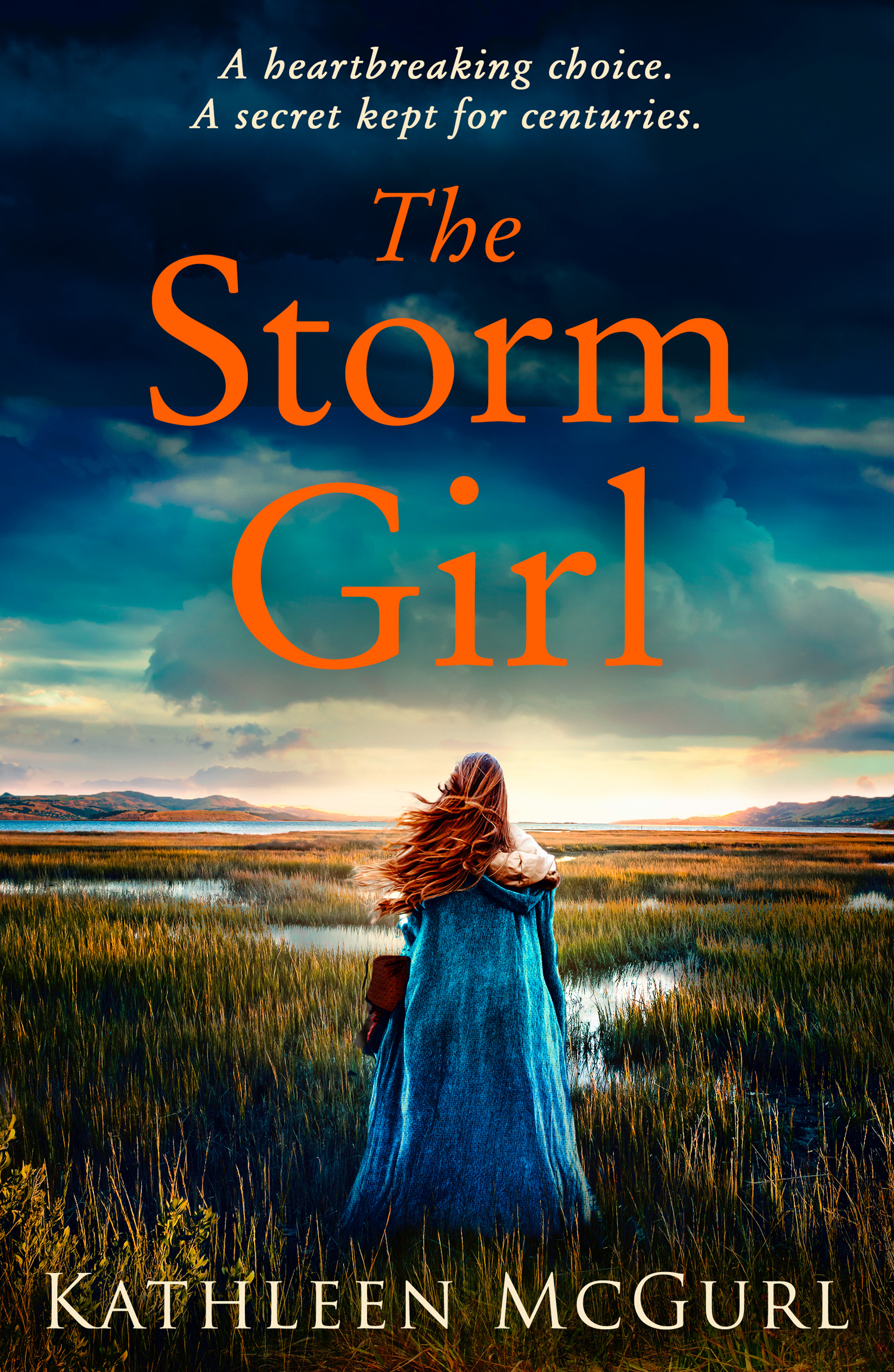
Today, I’m taking part in The Storm Girl by Kathleen McGurl blog tour with Rachel’s Random Resources.
Here’s the blurb:
The gripping new historical novel from the USA Today bestselling author of The Girl from Bletchley Park and The Forgotten Secret.
A heartbreaking choice. A secret kept for centuries.
1784. When Esther Harris’s father hurts his back, she takes over his role helping smugglers hide contraband in the secret cellar in their pub. But when the free traders’ ships are trapped in the harbour, a battle between the smugglers and the revenue officers leads to murder and betrayal – and Esther is forced to choose between the love of her life and protecting her family…
Present day. Fresh from her divorce, Millie Galton moves into a former inn overlooking the harbour in Mudeford and plans to create her dream home. When a chance discovery behind an old fireplace reveals the house’s secret history as a haven for smugglers and the devastating story of its former residents, could the mystery of a disappearance from centuries ago finally be solved?
Sweeping historical fiction perfect for fans of Lucinda Riley, Kathryn Hughes and Tracy Rees.
My review
The Storm Girl is a dual timeline novel, and as a reader and writer of historical fiction, it was the historical storyline that captivated me far more than the modern-day tale of divorce and starting afresh.
Coming at this from a ‘newb’ point of view, I expected both storylines to have some connection, other than the most tenuous one, of them simply taking place in the same space although at different times. That wasn’t what happened, and I did encounter some problems, whereby the one storyline gave away events in the other – which was a little frustrating.
With all that said, I did enjoy this book. The historical storyline, while a little too wholesome for me, did capture my imagination and The Storm Girl is very much a competent and go-getting type of gal that a modern audience will thrill to discover.
Will I try a dual timeline novel again, that remains to be seen? I confess I would have been happy to have the story revolve only around the historical elements, and not worry about the modern-day setting at all, but I more than understand that a dual timeline narrative is extremely popular, and I’m sure fans of this genre will be captivated by this tale of a place in two different timelines, over two hundred years apart, and will, hopefully, consider learning more about their own local history as a result of reading the book.
A firm 4/5 from me – I did appreciate the historical notes at the back of the novel.
Kathleen McGurl lives near the coast in Christchurch, England. She writes dual timeline novels in which a historical mystery is uncovered and resolved in the present day. She is married to an Irishman and has two adult sons. She enjoys travelling, especially in her motorhome around Europe but home is Mudeford, where this novel is set.
The historical setting of the Gods and Kings trilogy
It’s often assumed that we know very little about the men and women of seventh century Britain, and that’s not wrong, however, what is known makes for a compelling narrative.
The Golden Age of Northumbria
The seventh century in Britain is more often than not, lauded as the Golden Age of Northumbria, the northernmost Saxon kingdom of England. Many will have heard of the magnificent fortress on Northumberland’s coast, Bamburgh, or as some will know it Bebbanburg (even though must of what stands to this day is a late nineteenth century addition). Many may have heard of the names Edwin, Oswald Whiteblade, and his brother, Oswiu. Many may know of their Celtic Christianity, of Bishop Aidan from Iona beginning his monastery on Lindisfarne and the explosion in art which seems to come to natural fruition with the works of Bede in the later eighth century. But there is much, much more than that.
The Anglo-Saxon Chronicle tells us of a series of great battles fought on the island of Britain during the seventh century, most, if not all of them, great victories for Northumbria’s royal family, or if not victories, then terrible tragedies. Edwin, the uncle of Oswald Whiteblade, slew his nephew’s father, and Oswald was forced to flee into exile, where he was introduced to Celtic Christianity. And yet, this was only a mirror of Edwin’s own life, when he too had been forced to flee into exile when Oswald’s father claimed the kingdom of Northumbria. And all of this is fascinating, but what of the other kingdoms, and their leaders?
Penda of Mercia
And here, we encounter, Penda of Mercia, a pagan king, at a time when the Saxon kingdoms were slowly becoming converted to Christianity, either from the north and Iona (Bishop Aidan), or from Rome, with Bishop Paulinus. These two religions were to set up their own conflict for supremacy but for the three battles I’ve written about, it’s Penda and his paganism that creates the conflict.
Penda and his brother, Eowa, were to claim Mercia as there’s to rule. They seem to have originated from a royal family with their power base in the kingdom of the Hwicce, a part of Mercia centred around Gloucester and they were not happy with events in Northumbria.
Not once, not twice, but three times, Penda took on the might of Northumbria, in battles taking place at Hædfeld, Maserfeld and Winwæd, spanning a twenty year period.
Hædfeld, Maserfeld and Winwæd
It’s these three battles I offer a retelling of in the Gods and Kings series, and not just because there are these two kingdoms at loggerheads, Mercia and Northumbria, but because these battles brought into play every kingdom within Britain at the time; from Dal Riata and the kingdom of the Picts to the North, to that of the West Saxons and Dumnonia to the south and south-west. These battles were monumental. Great swathes of warriors facing one another with everything to play for, much to lose and even more to gain.
The drive leads past the gate house and through the trees towards the big house, visible through the winter-bared branches. Its windows stare down at Harkin and the sea beyond . . .
January 1921. Though the Great War is over, in Ireland a new, civil war is raging. The once-grand Kilcolgan House, a crumbling bastion shrouded in sea-mist, lies half empty and filled with ghosts – both real and imagined – the Prendevilles, the noble family within, co-existing only as the balance of their secrets is kept.
Then, when an IRA ambush goes terribly wrong, Maud Prendeville, eldest daughter of Lord Kilcolgan, is killed, leaving the family reeling. Yet the IRA column insist they left her alive, that someone else must have been responsible for her terrible fate. Captain Tom Harkin, an IRA intelligence officer and Maud’s former fiancé, is sent to investigate, becoming an unwelcome guest in this strange, gloomy household.
Working undercover, Harkin must delve into the house’s secrets – and discover where, in this fractured, embattled town, each family member’s allegiances truly lie. But Harkin too is haunted by the ghosts of the past and by his terrible experiences on the battlefields. Can he find out the truth about Maud’s death before the past – and his strange, unnerving surroundings – overwhelm him?
A haunting, atmospheric mystery set against the raw Irish landscape in a country divided, The Winter Guest is the perfect chilling read.
The Winter Guest is my first W C Ryan book, but it won’t be my last.
The Winter Guest is a little awkward to get into. The first chapter could perhaps be better placed elsewhere or left out altogether, but once past that point, and as the reader meets Harkin, we’re quickly drawn into his world. A man suffering from PTSD following the Great War and involving himself in the IRA, is a man on the edge, inhabiting a world filled with suspicion and shadows, where things that seem real, are simply not.
He is a sympathetic character and the reader feels. a great deal of empathy for him.
The landscape he walks into is one bedevilled by atmospheric weather conditions – there is a great deal of attention spent on creating the image of a house on the cusp of ruin, a family in the midst of ruin and the weather conditions prevalent at the coastline. On occasion, it feels a little too much but the lack of electricity, the reliance on candles, ensures that the slightly other-worldly elements can never be forgotten. The flashback descriptions of life in the trenches of the Great War haunt the reader as well as Harkin,
You may have noticed that I thoroughly enjoyed this novel. I would put it on a par with last year’s The Glass Woman and The Quickening. A haunting story not to be missed. My thanks to Netgalley and the publisher for my review copy
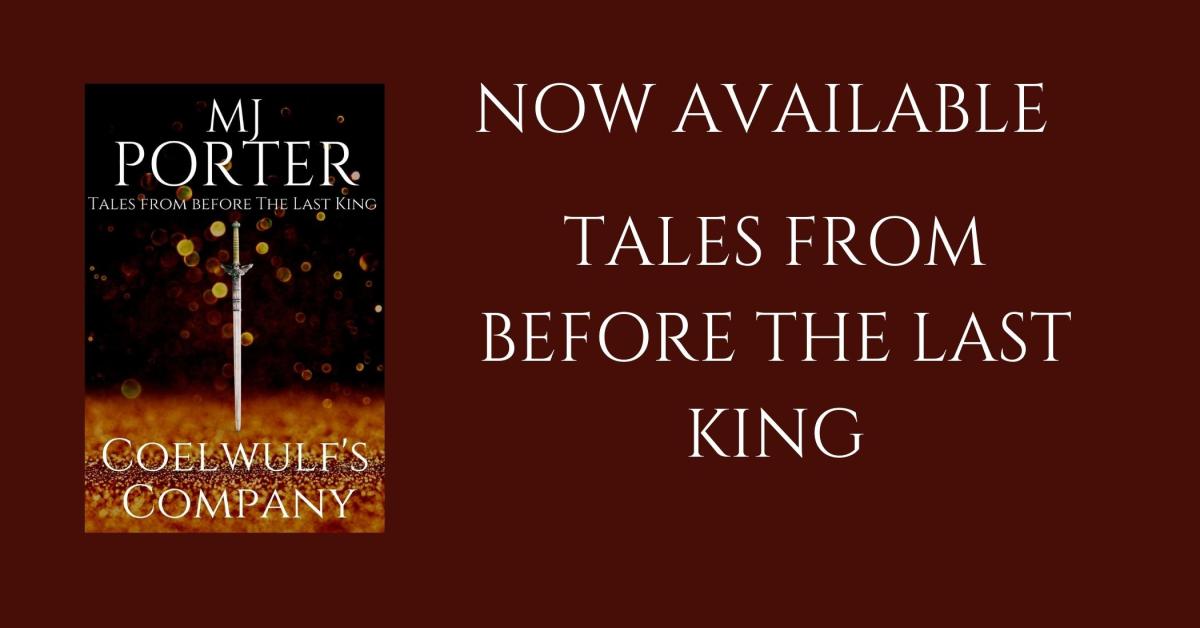
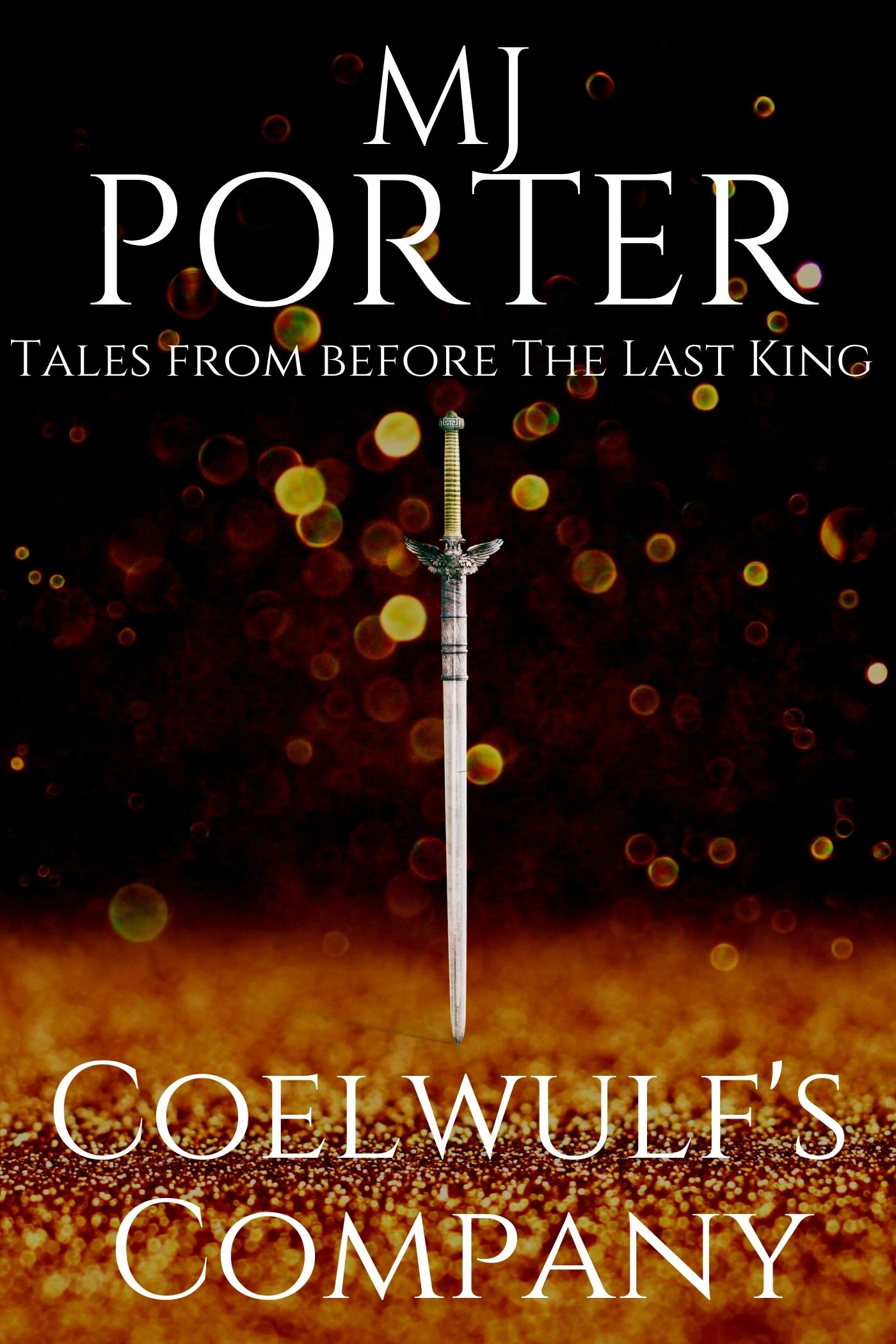
Here it is – a little treat for fans of Coelwulf and his warriors.
Having given many hints as to how the motley crew got together, I decided to write some short stories, from different points of view, to see just what Icel, Edmund, Coelwulf, Pybba and of course, Rudolf, think of one another and how they came to be battling the Raiders in AD874.
The collection consists of 5 short stories, and also another short story which laid the foundation for Coelwulf and his warriors. (This short story is freely available on the Aspects of History website, but I added it just so readers who haven’t discovered it yet could see it. Do please check out my author platform on Aspects of History and all the other excellent authors on there as well.)
I hope you’ll enjoy it, and if you do, I can press on with writing more short stories, because it’s been a great deal of fun! And you know me, I do like to tell a story backwards:)
Coelwulf’s Company is available as an ebook from Kindle and can be read with Kindle Unlimited.
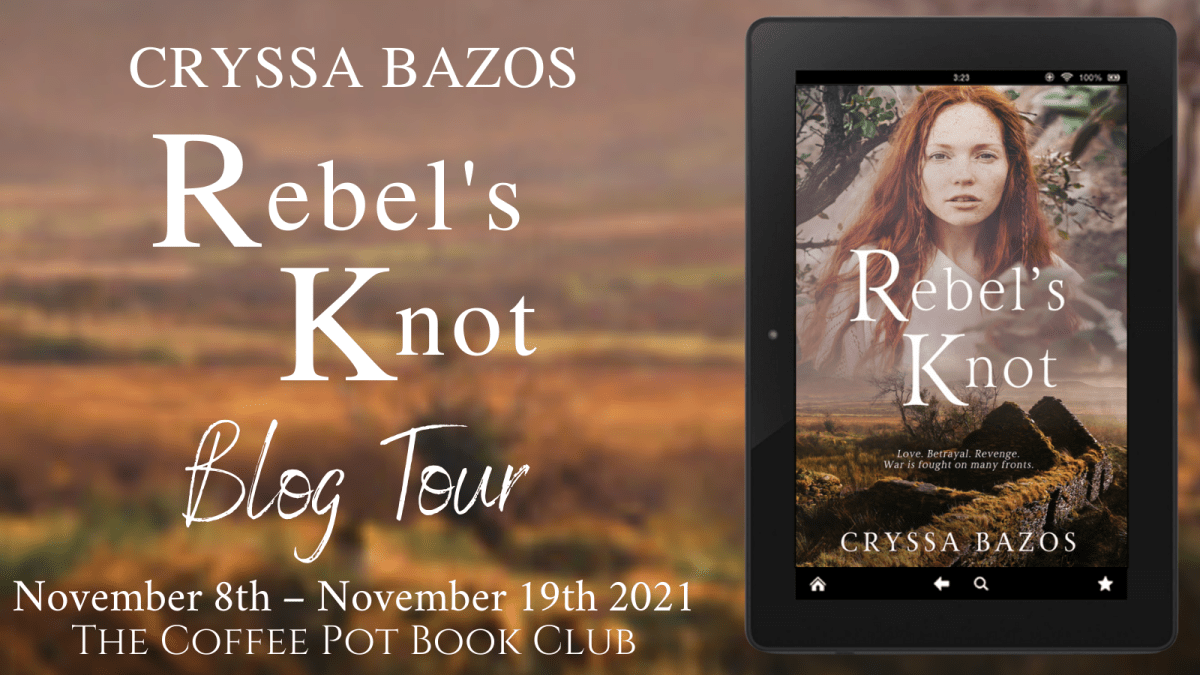
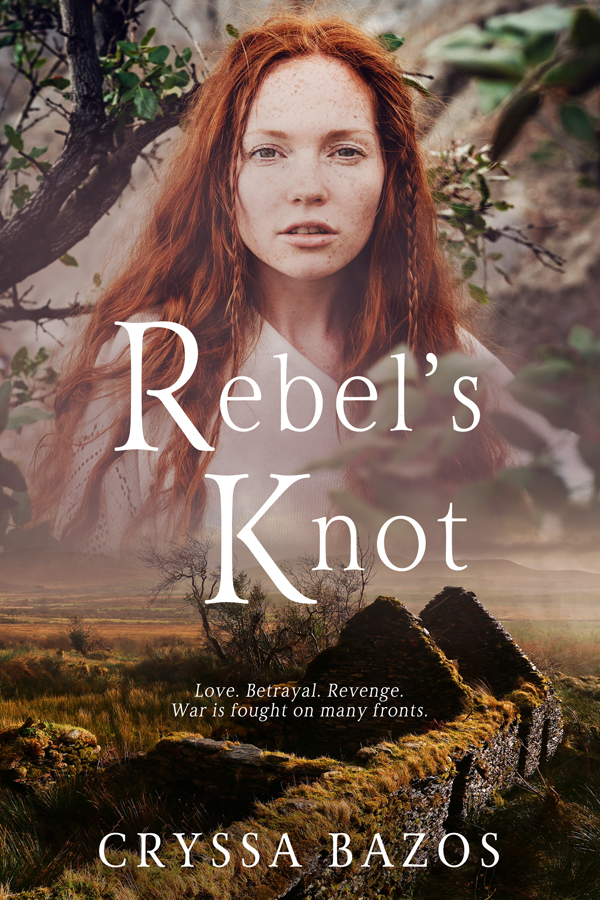
Today, I’m delighted to welcome Cryssa Bazos to the blog with a post about her new book, Rebel’s Knot.
Your book, Rebel’s Knot, is set during the seventeenth century in Ireland, a period I know very little about. As a historian first and foremost, and then a writer, I’m always interested in how people research their historical stories.
Can you explain your research process to me, and give an idea of the resources that you rely on the most (other than your imagination, of course) to bring your historical landscape to life?
Thank you for having me on your blog! Research can be an obsession. While only a small percentage ends up in the final copy, all those hours of research still colour between the lines.
I usually research in three major waves. The first is at the early stage before I write anything. I read historical non-fiction to give me an understanding of the era and subject. This is a general survey to determine where my story will sit within the history, and I look for signposts where I can lay my foundation.
When I feel that I have a good understanding, I start writing. I’m eager to get a taste for the characters and the story. By the time I hit the end of the first act, I often realize I need far more information about the setting and everyday details than I have. This leads me to my second wave of research, where I gather a hundred historical details that will be boiled down to only a few that stay in the text. I search out first-hand contemporary accounts, in letters or diaries, and try to get a sense of the world that my characters inhabit. This is where the characters lift off the page for me, and I can walk around in their shoes and understand what’s important in their life.
The last wave of research is my way of getting out of the dreaded middle slump. At this stage, the characters are walking around aimlessly, waiting for the events that will sweep them to the end. This is the rabbit hole stage of the process. Some might call it procrastination, and while it appears to be, what I’m actually doing is searching for inspiration from history. Where I often find the gold is in the footnotes. The list of goods stolen from a captured ship, for example, can be the lynchpin of a new subplot.
Research – Depositphotos Licence #33252823
Do you have a ‘go’ to book/resource that you couldn’t write without having to hand, and if so, what is it (if you don’t mind sharing)?
I have several favourite online resources. British History Online (https://www.british-history.ac.uk) is one welcome rabbit hole, and it’s easy to get seriously lost going through the transcribed content they have in there. British Civil Wars Project (http://bcw-project.org) is a great resource for anything to do with the War of the Three Kingdoms. I often pop in when I want to check on a date or a fact, and they have sections organized for Scotland and Ireland. I also love the articles available on JSTOR, and will usually head there to get more in-depth understanding on a topic.
When I was researching Rebel’s Knot, I relied on God’s Executioner by Micheál Ó Siochrú. It’s an insightful and balanced view of the Cromwellian Conquest of Ireland, including the events leading up to it. My copy is now dogeared and marked up.
One of the historical figures that I feature in Rebel’s Knot is Edmund O’Dwyer, Commander-in-Chief of the Irish forces in Tipperary and Waterford. He’s mentioned only several times in the historical record and yet he played an important role in the defence of Tipperary. There’s very little known about him. I managed to find an old history of the O’Dwyers called The O’Dwyers of Kilnamanagh by Sir Michael O’Dwyer (1933), which not only compiled the scant information on Edmund O’Dwyer, but gave more information on his family and heritage.
Another major source of information was A Contemporary History of Affairs in Ireland, from 1641 to 1652 by Sir John Thomas Gilbert. This was a compilation of letters, diary entries and the record of the treaties in one volume. While the English Parliamentarians wrote most of the accounts, the information was still invaluable. I learned about the range of the English forces in Tipperary, and their favourable perspective on commanders such as O’Dwyer spoke volumes about his character.
I also tracked down a first-hand account of an English bookseller travelling through Ireland in the latter seventeenth-century called Teague Land or A Merry Ramble to the Wild Irish (1698) by John Dunton. It’s rare to find contemporary accounts of common people, so this was quite the find that the traveller captured his experiences with his Irish hosts. He seemed to be a bit of a foodie, because he left detailed information about what they offered him to eat and how they prepared his meals.
There were a myriad of other sources and old maps that I found helpful (let’s not get started on the maps), but the above resources were the material I kept returning to throughout writing my novel.
I’d like to thank you for the opportunity to chat about research! It’s a topic near to my heart.
Cryssa
Thank you so much for sharing your research with me. Good luck with the new book.
Here’s the blurb
Ireland 1652: In the desperate, final days of the English invasion of Ireland . . .
A fey young woman, Áine Callaghan, is the sole survivor of an attack by English marauders. When Irish soldier Niall O’Coneill discovers his own kin slaughtered in the same massacre, he vows to hunt down the men responsible. He takes Áine under his protection and together they reach the safety of an encampment held by the Irish forces in Tipperary.
Hardly a safe haven, the camp is rife with danger and intrigue. Áine is a stranger with the old stories stirring on her tongue and rumours follow her everywhere. The English cut off support to the brigade, and a traitor undermines the Irish cause, turning Niall from hunter to hunted.
When someone from Áine’s past arrives, her secrets boil to the surface—and she must slay her demons once and for all.
As the web of violence and treachery grows, Áine and Niall find solace in each other’s arms—but can their love survive long-buried secrets and the darkness of vengeance?
Cryssa Bazos is an award-winning historical fiction author and a seventeenth century enthusiast. Her debut novel, Traitor’s Knot is the Medalist winner of the 2017 New Apple Award for Historical Fiction, a finalist for the 2018 EPIC eBook Awards for Historical Romance. Her second novel, Severed Knot, is a B.R.A.G Medallion Honoree and a finalist for the 2019 Chaucer Award. A forthcoming third book in the standalone series, Rebel’s Knot, was published November 2021.
Cor, I’ve loved all three of these books. But before I get to the nitty gritty of the review for book 3, here’s the blurb:
For one to rule, the other must die.
312 AD is a year of horrific and brutal warfare. Constantine’s northern army is a small force, plagued by religious rivalries, but seemingly unstoppable as they invade Maxentius’ Italian heartlands. These relentless clashes, incidents of treachery and twists of fortune see Maxentius’ armies driven back to Rome.
Constantine has his prize in sight, yet his army is diminished and on the verge of revolt. Maxentius meanwhile works to calm a restive and dissenting Roman populace. When the two forces clash in the Battle of the Milvian Bridge, there are factors at work beyond their control and soon they are left with carnage.
There is only one way Constantine and Maxentius’ rivalry will end. With one on a bloodied sword and the other the sole ruler of Rome . . .
My Review
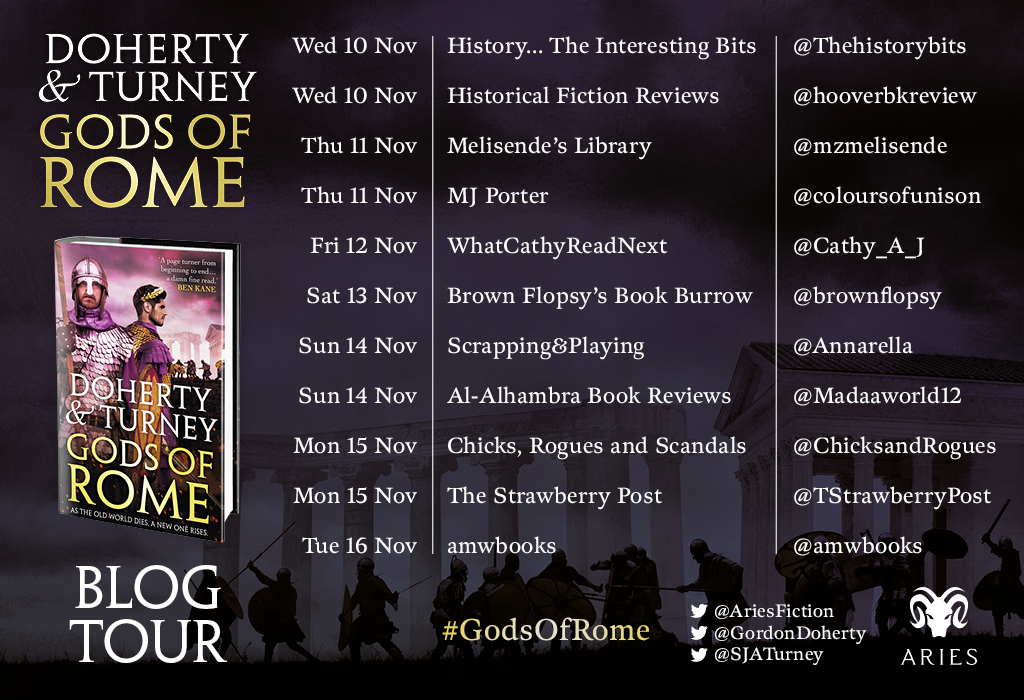
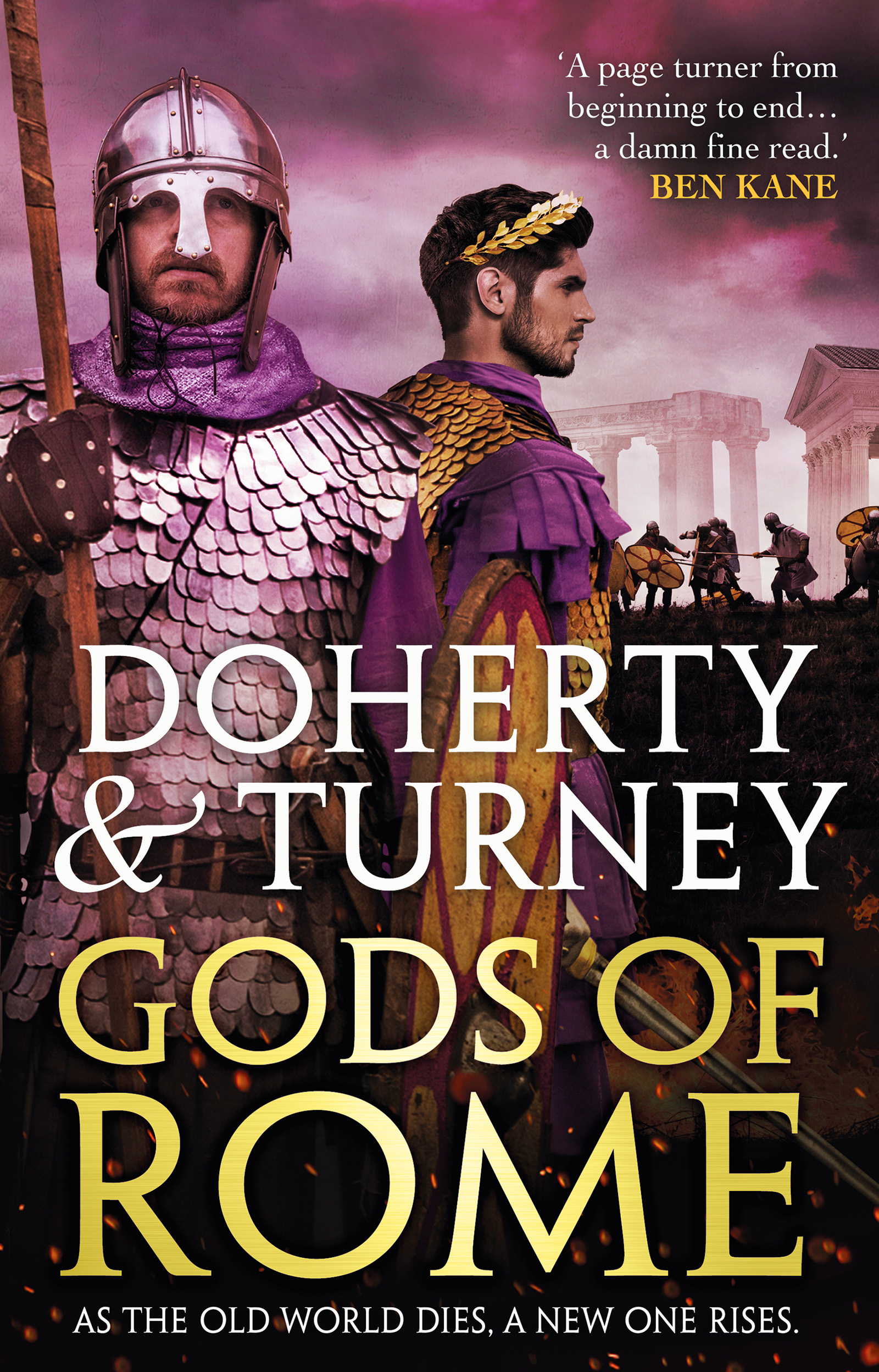
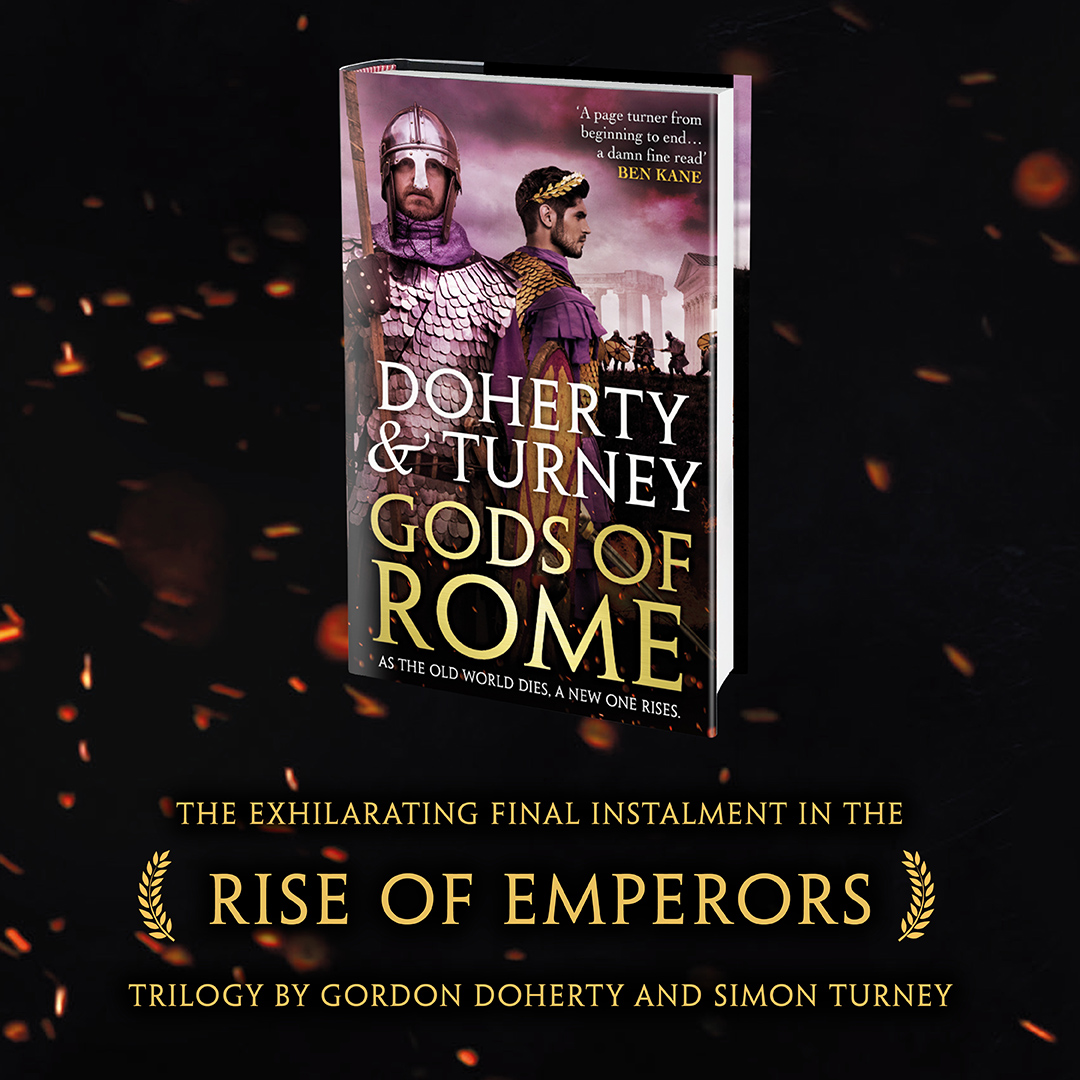
Gods of Rome is a stunning climax to the Rise of Emperors trilogy. The reader has followed the lives of Maxentius and Constantine in the two previous books, through their childhood friendship and adult rivalries, which have resulted in them being firm enemies. In this non-stop and thrilling climax, there is all to play for, and don’t Doherty and Turney manage to ramp up the tension to unbearable heights.
I’m no expert on Roman history, and certainly not on the period leading up to AD312, but the authors manage to convey the chaos of the ruling elite without ever getting bogged down in the minutiae of all the internal power struggles. It’s a light touch that I certainly appreciate. The focus is on Constantine and Maxentius, and the men and women who stand at their side. And this is a particular strength of the book. It would be quite easy to forget about the men’s wives as the book focuses so much on warfare but Fausta and Valeria are given their own storylines, standing firm beside their men, even if they don’t always approve of what they’re doing, and not above some treachery themselves.
Maxentius and Constantine are two very different characters, grappling for the same thing, and the reader never tires of their internal monologues as they goad themselves onwards.
From about 50% through the book, I had to force myself not to turn to the back to read the historical notes, and to find out what ‘truth’ this story was based on.
I have adored this trilogy of books. It is my type of historical fiction – people who lived and breathed, brought to life and made to live their lives as opposed to authors focusing on the inevitability of what would happen, and presenting it as a fait accompli.
I can only hope that Simon Turney and Gordon Doherty are able to collaborate once more. After all, they have a lot of Roman era history they could delve into. (Hint, hint, nudge, nudge).
About the authors
Simon Turney is the author of the Marius’ Mules and Praetorian series, as well as The Damned Emperor series for Orion and Tales of the Empire series for Canelo. He is based in Yorkshire.
Gordon Doherty is the author of the Legionary and Strategos series, and wrote the Assassin’s Creed tie-in novel Odyssey. He is based in Scotland.
1 CONSTANTINE The Cottian Alpes, 27th January 312 ad
We moved through the mountains like winter wolves. The ferocious blizzard sped southwards with us, carried on the famous bora winds, singing a dire song. For days we marched through that driving snow, seeing nothing but great white-clad peaks either side of us; rugged, inhospitable highlands which in these frozen months soldiers were not meant to cross. All around me the gale screamed, boots crunched endlessly through the successively deeper drifts of white, men’s teeth chattered violently, mules brayed, exhausted. It felt at times as if we were wandering, snow-blind, to our deaths, but I knew what lay ahead… so close now.
I called upon my chosen men and a handful of their best soldiers – a group of thirty – and we roved ahead of the army like advance scouts. The blizzard raked through my bear cloak, the snow rattling like slingshot against my gemmed ridge helm and bronze scales as I scoured the valley route. Yet I refused to blink. When the speeding hail of white slowed and the murky grey ahead thinned a little, I saw them: a pair of stone and timber watchtowers, northern faces plastered in snow. Gateposts watching this passage between two realms. I dropped to my haunches behind the brow of a snowdrift and my chosen men hunkered down with me. I gazed over the drift’s brow, regarding the narrow gap between the towers and the valley route beyond, on through the winter-veined mountains. Thinking of the land that lay beyond these heights, my frozen lips moved soundlessly.
Italia…
Land of Roman forefathers. Home of the man I had once considered my friend… but that territory was rightfully mine. Mine! My surging anger scattered when I spotted movement atop one of the two towers: a freezing Maxentian scout blowing into his hands, oblivious to our presence. Then the blizzard fell treacherously slack, and the speeding veil of white cleared for a trice. I saw his ice-crusted eyebrows rise as he leaned forward, peering into the momentary clarity, right at us. His eyes bulged, mouth agog.
‘He is here!’ he screamed to be heard over the sudden return of the storm’s wrath. ‘Constantine is h—’
With a wet punch, an arrow whacked into the man’s chest and shuddered there. He spasmed then folded over the edge of the timber parapet and fell like a sack of gravel, crunching into a pillowy snowdrift at the turret’s foot. I glanced to my right, seeing my archer nock and draw again, shifting his bow to the heights of the other tower, his eyes narrowing within the shadow of his helm brow. He loosed, but the dark-skinned sentry up there ducked behind the parapet, screaming and tolling a warning bell. At once, three more Maxentians spilled from the door at the base of that rightmost tower, rushing south towards a simple, snow-topped stable twenty paces away, in the lee of a rocky overhang. This was one of the few gateways through the mountains – albeit the least favoured and most treacherous – and it was guarded by just five men? Instantly, suspicion and elation clashed like swords in my mind. We had no time to rake over the facts. These watchmen could not be allowed to ride south and warn the legions of Italia. They had to die.
Check out my other reviews for Simon Turney/SJA Turney’s books
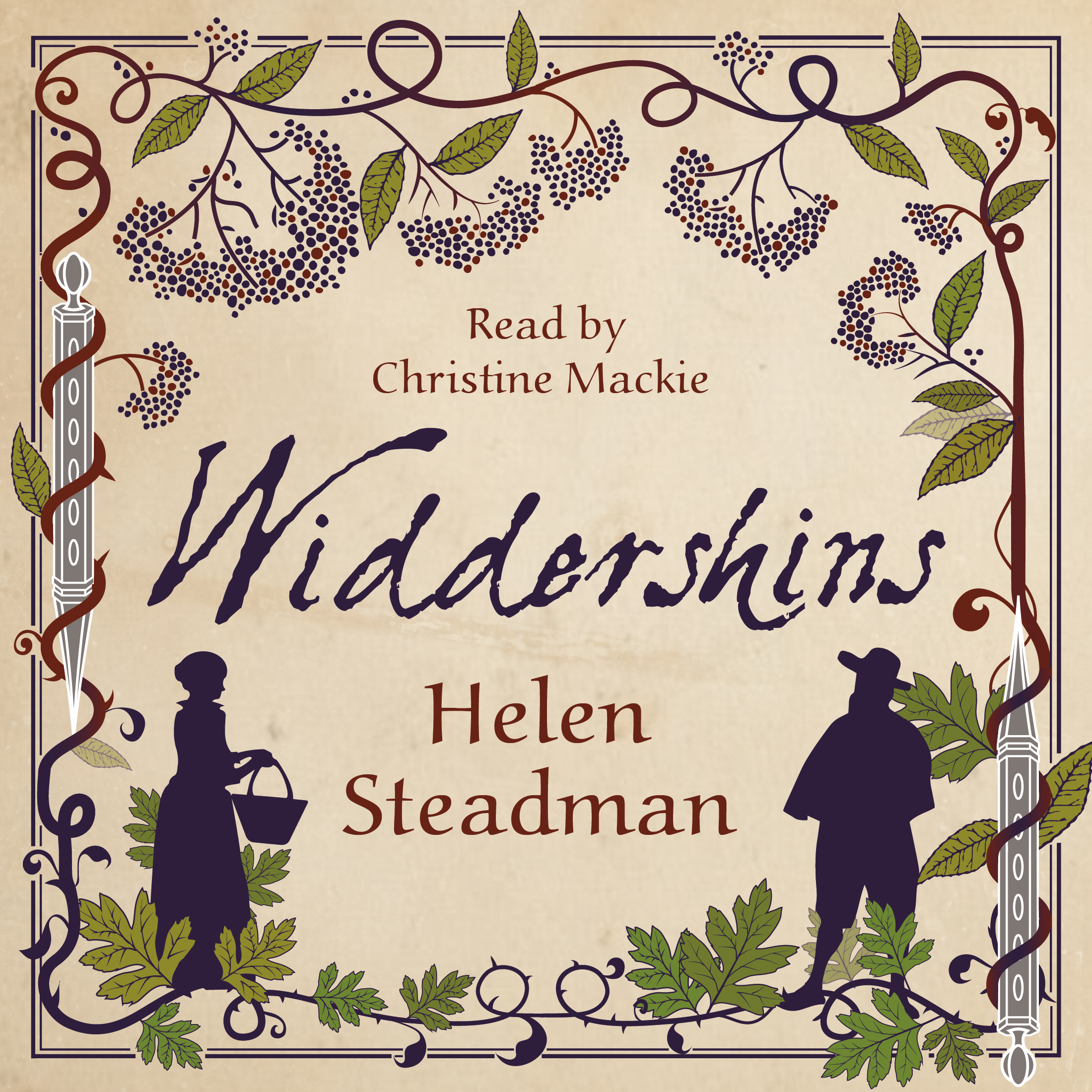
Your audiobook, Widdershins, is deeply steeped in historical knowledge. As a historian first and foremost, and then a writer, I’m always interested in how people research their historical stories.
Thanks very much for having me along on your blog today, MJ, and I see we share a common interest in swords, as well as in writing and history! The research for Widdershins took several years, and I must say, if I’d realised at the outset how much research was involved, I probably wouldn’t have written a historical novel. That said, it was a fascinating process and I enjoyed it so much, I went on to do a PhD at the University of Aberdeen.
Can you explain your research process to me, and give an idea of the resources that you rely on the most (other than your imagination, of course) to bring your historical landscape to life?
First, I did an enormous amount of reading about witches, witchfinders and witch trials, and I’m reasonably certain that if I piled all the books I read on top of each other, they’d be taller than me (and I’m pretty tall). I also did a lot of online research and spent time vanishing down some very interesting rabbit holes.
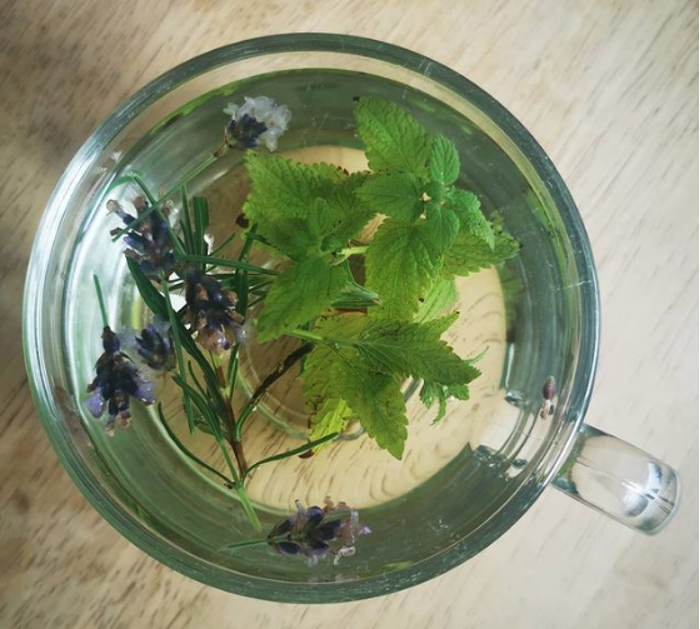
At the outset, when I thought I’d be writing something rather more magical, I joined a paranormal group and went on regular ghost-hunting expeditions. (Sadly, I never experienced any supernatural activity.) When I decided that my witches were going to be healers, I went to Dilston Physic Garden and trained in tree medicine. This helped me get under my characters’ skins and also equipped me with accurate knowledge about identifying, growing, harvesting and making herbal remedies. Back at home, I created a tea garden with a dozen or so plants that are handy to have at the kitchen door, and I still enjoy making my own herbal tea and elder linctus from garden herbs, or hedgerow pickings.
Image 1 insert lavender and lemon balm tea andCaption/ Warning (Please seek medical advice before using herbs if you’re pregnant, breastfeeding, on any medications or have any health conditions. Also, lemon balm can act as a euphoric if you overdo it – so, all things in moderation.)
As well as all the witch-related research, I needed to make sure the book was accurate in terms of language, politics, religion, social mores, war, crime, punishment, health, medicine, childbirth, midwifery, food, clothing, etc. And I needed to do this for both England and Scotland. Widdershins and its sequel, Sunwise are both threaded through with folklore, which also required a good deal of research. All this detective work was so fascinating and enjoyable, it was almost a shame when I had to stop researching and start writing.
What was less enjoyable was my research into witchfinders and their techniques. I read lots of first-hand accounts from witchfinders (including the self-styled witchfinder general, Matthew Hopkins and his sidekick, John Stearne, as well as a range of Scottish witchfinders). It was appalling to read about the torture and injustice they inflicted on the flimsiest of grounds, such as women giving pets odd names. There was a troubling theme of witchfinders sexually humiliating women in public during some trials, which led me down some very unsettling research pathways to help me create my own witchfinder, John Sharpe.
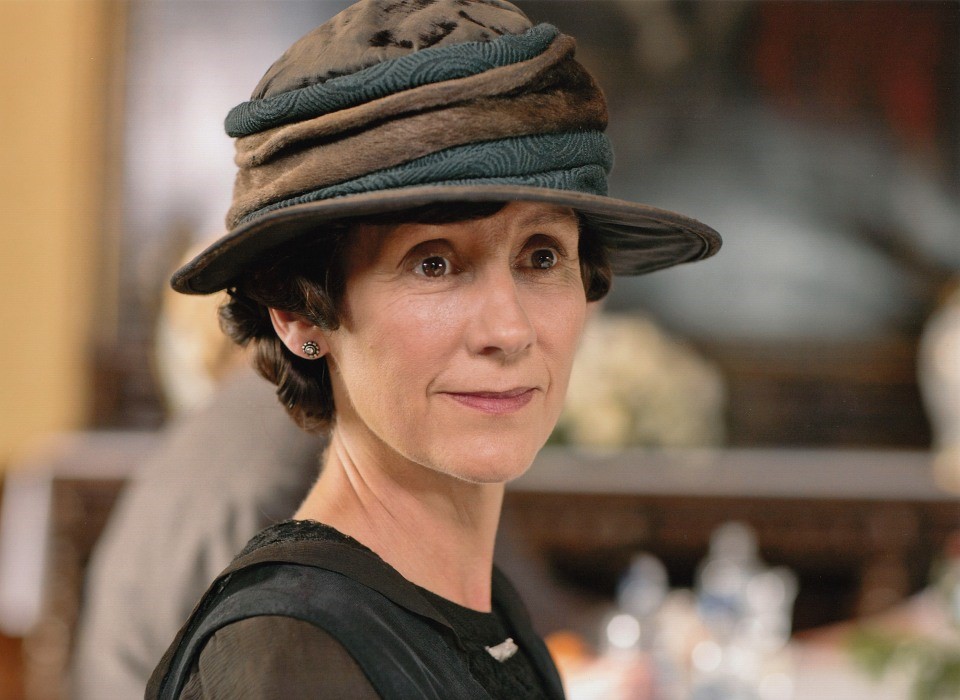
John Sharpe lived in my head from 2011 when I started researching until 2019 when Sunwise came out. It was quite a relief to be rid of him, but now, as I’m working with Christine Mackie on the audiobooks, he’s back in my head again. So hopefully, once Sunwise has been recorded, I can clear him from my mind once and for all. Christine has done a fantastic job of bringing this evil man to life. (If you’d like to hear a short excerpt of her narrating Widdershins, please visit Audible, where you can hear five minutes of a Scottish girl on trial, early on in the witchfinder’s career when he’s still a boy.)
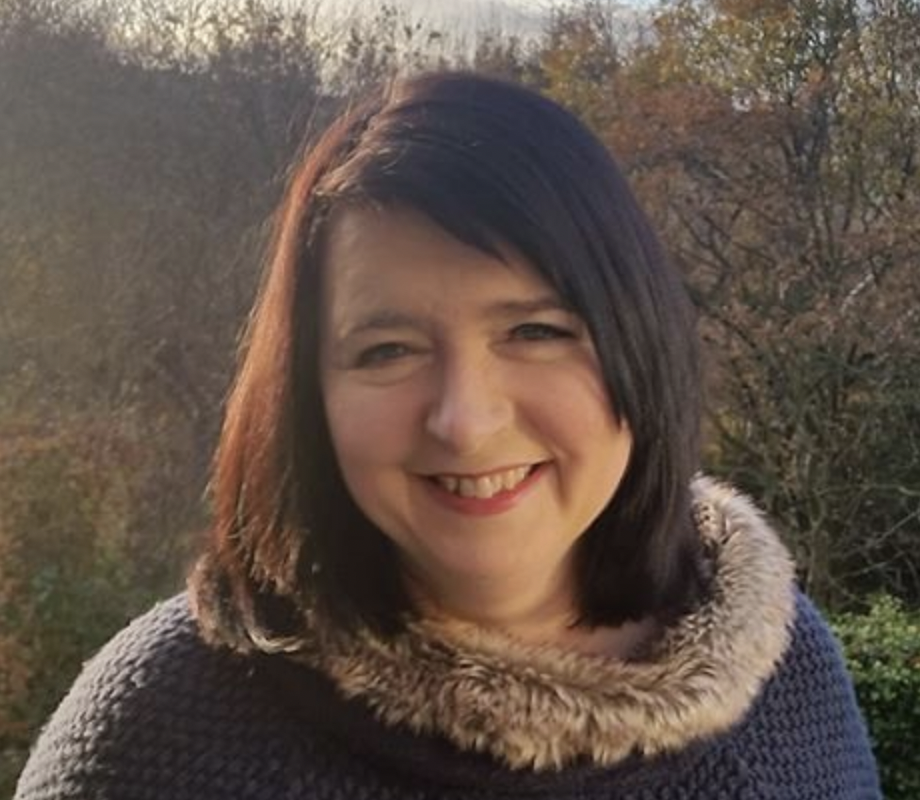
photo of Christine Mackie Caption: Christine Mackie (narrator of the Widdershins audiobook) in her role as Daphne Bryant in Downton Abbey
Do you have a ‘go’ to book/resource that you couldn’t write without having to hand, and if so, what is it (if you don’t mind sharing)?
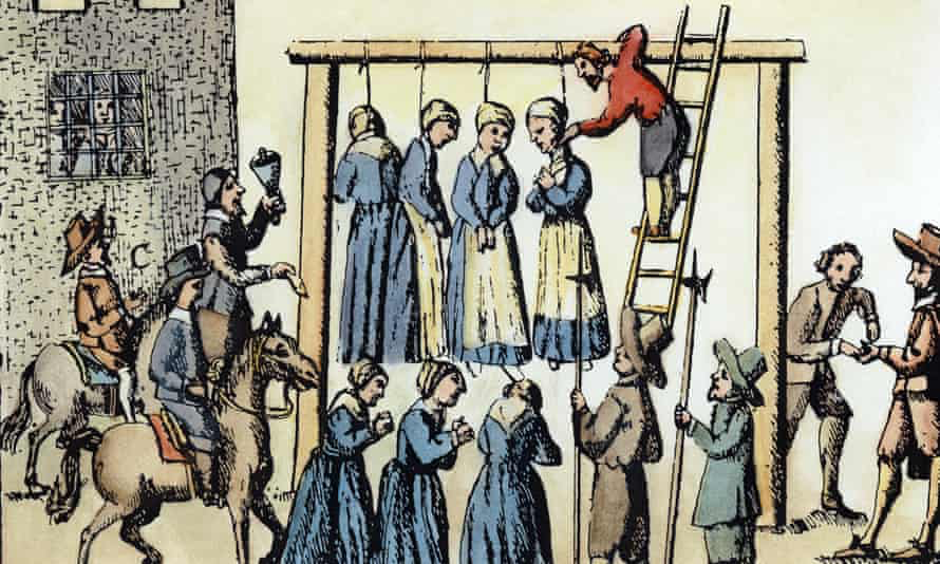
I suppose the book that ultimately gave me the idea for my story was Ralph Gardiner’s England’s Grievance Discovered. This was published in 1655 and contains eyewitness accounts of the trials and executions. It also contains the well-known picture often used to illustrate articles about witch trials, showing the witchfinder receiving his pay. However, far from being all about witches, this book only contains a page or so on the witch trials and is mostly about the coal trade in North East England.
Picture from Ralph Gardiner’s, England’s Grievance Discovered, showing the witchfinder (right) receiving his pay, with the Castle Keep in Newcastle on the left.
Otherwise, I don’t think I could possibly pin down one book, but on my blog, there’s a short list of online sources and non-fiction books (as well as a few novels) that are a good place to start. Of particular interest on that list is the University of Edinburgh database of Scottish witches. This contains information about age, location and occupation. I’d also strongly recommend visiting archives – whether the National Archives at Kew Gardens or local ones – and also looking through parish burial records.
It was really informative reading trial records. As well as the Newcastle witch trials on my doorstep, there was also a later set of trials nearby in the Derwent/Tyne Valley. The transcripts from the trials can be viewed online via my blog, and they include tall tales ranging from fortune telling to demonic goings on. Many of the confessions also pick up well-known folklore and fairy tale themes (such as the devil presiding over a table that continually replenishes with food). On the face of it, they seem almost amusing, but like other witch trial confessions, these would most likely have been obtained under duress, which is always sobering.
Thank you so much for sharing all your fascinating research. Good luck with the audiobook!
Here’s the blurb:
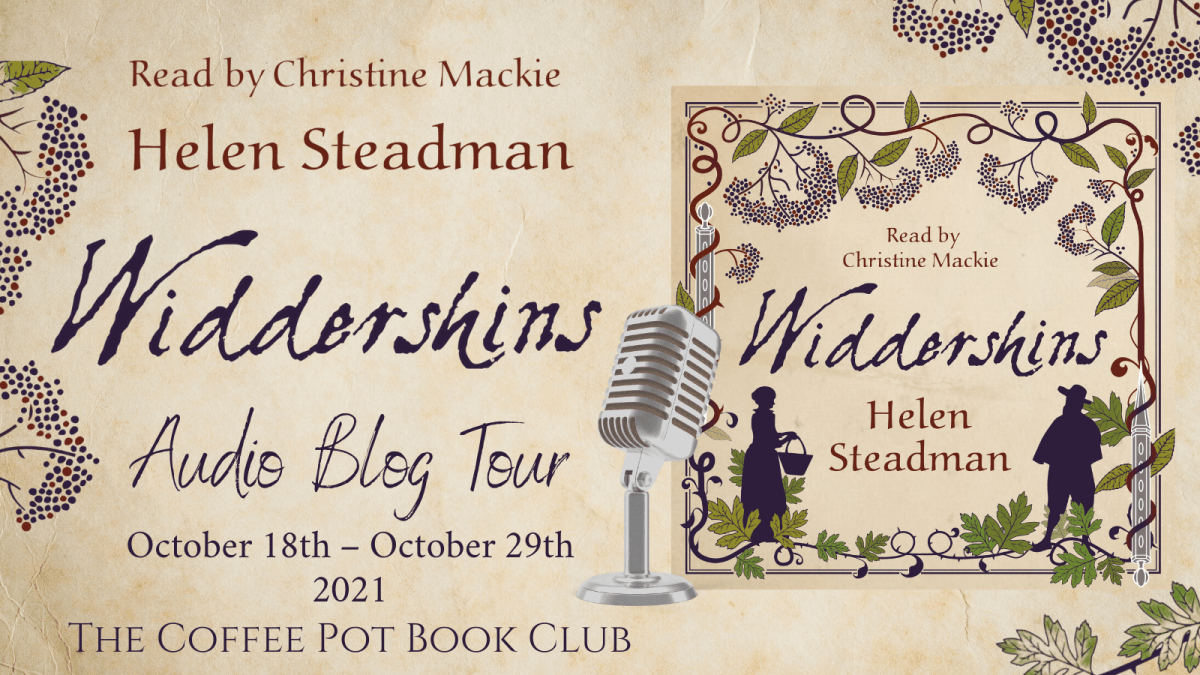
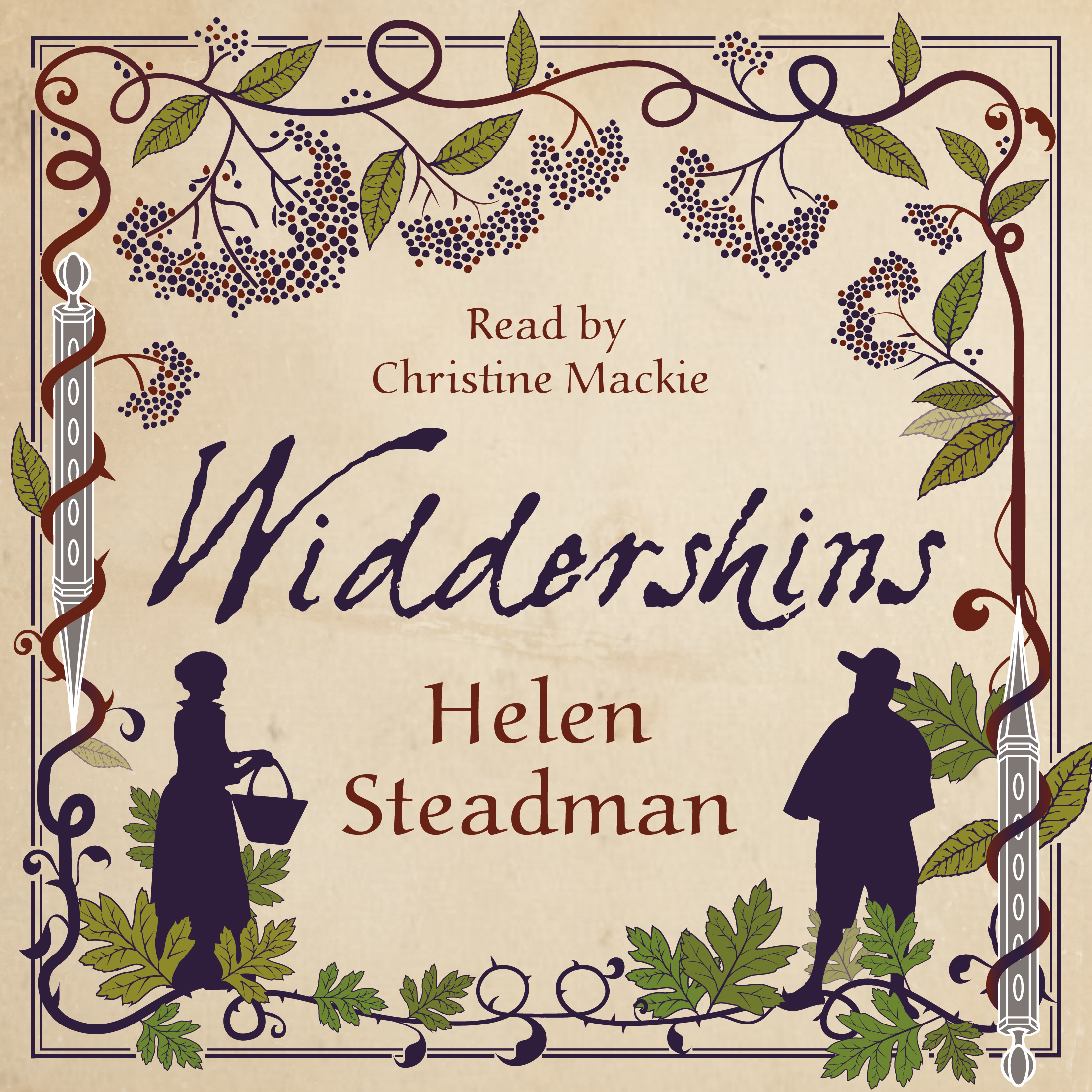
The new audio book of Widdershins is narrated brilliantly by talented actor, Christine Mackie, from Downton Abbey, Coronation Street, Wire in the Blood, and so on.
The first part of a two-part series, Widdershins is inspired by the Newcastle witch trials, where 16 people were hanged. Despite being the largest mass execution of witches on a single day in England, these trials are not widely known about. In August 1650, 15 women and one man were hanged as witches after a Scottish witchfinder found them guilty of consorting with the devil. This notorious man was hired by the Puritan authorities in response to a petition from the Newcastle townsfolk who wanted to be rid of their witches.
Widdershins is told through the eyes of Jane Chandler, a young woman accused of witchcraft, and John Sharpe, the witchfinder who condemns her to death. Jane Chandler is an apprentice healer. From childhood, she and her mother have used herbs to cure the sick. But Jane soon learns that her sheltered life in a small village is not safe from the troubles of the wider world. From his father’s beatings to his uncle’s raging sermons, John Sharpe is beset by bad fortune. Fighting through personal tragedy, he finds his purpose: to become a witchfinder and save innocents from the scourge of witchcraft.
Praise for Widdershins:
The Historical Novel Society said of Widdershins: “Impeccably written, full of herbal lore and the clash of ignorance and prejudice against common sense, as well as the abounding beauty of nature, it made for a great read. There are plenty of books, both fact and fiction, available about the witch-trial era, but not only did I not know about such trials in Newcastle, I have not read a novel that so painstakingly and vividly evokes both the fear and joy of living at that time.”
Trigger Warnings:
Domestic abuse, rape, torture, execution, child abuse, animal abuse, miscarriage, death in childbirth.
Dr Helen Steadman is a historical novelist. Her first novel, Widdershins and its sequel, Sunwise were inspired by the Newcastle witch trials. Her third novel, The Running Wolf was inspired by a group of Lutheran swordmakers who defected from Germany to England in 1687.
Despite the Newcastle witch trials being the largest mass execution of witches on a single day in England, they are not widely known about. Helen is particularly interested in revealing hidden histories and she is a thorough researcher who goes to great lengths in pursuit of historical accuracy. To get under the skin of the cunning women in Widdershins and Sunwise, Helen trained in herbalism and learned how to identify, grow and harvest plants and then made herbal medicines from bark, seeds, flowers and berries.
The Running Wolf is the story of a group of master swordmakers who left Solingen, Germany and moved to Shotley Bridge, England in 1687. As well as carrying out in-depth archive research and visiting forges in Solingen to bring her story to life, Helen also undertook blacksmith training, which culminated in making her own sword. During her archive research, Helen uncovered a lot of new material and she published her findings in the Northern History journal.
Christine Mackie has worked extensively in TV over the last thirty years in well-known TV series such as Downton Abbey, Wire in the Blood, Coronation Street, French & Saunders and The Grand. Theatre work includes numerous productions in new writing as well as classics, such as A Midsummer Night’s Dream, Comedy of Errors, Richard III, An Inspector Calls, and the Railway Children. In a recent all women version of Whisky Galore, Christine played three men, three women and a Red Setter dog!
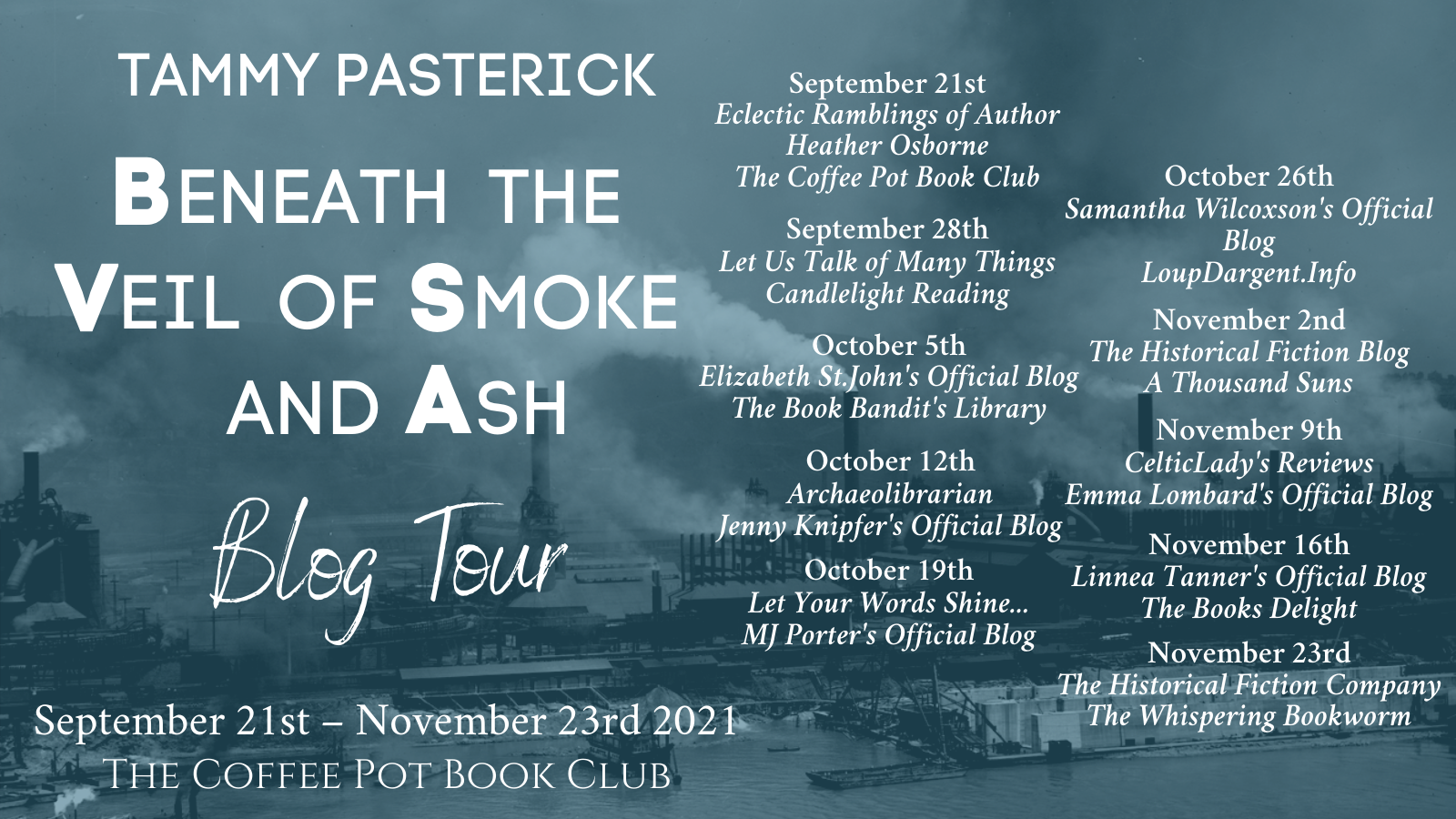
Today, I’m delighted to welcome Tammy Pasterick to the blog with a post about her new book, Veil of Smoke and Ash.
Researching Pittsburgh’s Golden Age of Steel
Writing a novel is never easy, but historical fiction presents its own set of challenges. While all authors strive to make their books entertaining and thought-provoking, historical novelists must also focus on accuracy. The worlds they create should be well-researched and detailed, and the characters should sound like people who actually live during medieval times, colonial times, or in 1910s Pittsburgh, as is the case in my novel, Beneath the Veil of Smoke and Ash. Transporting readers to the past is a daunting process, and I relied on a wide variety of resources to bring Pittsburgh’s golden age of steel to life.
My book started out as a genealogy project, so my research began on Ancestry.com. In the spring of 2012, I couldn’t find my mom’s recipe for stuffed cabbages—a favorite dish in my Slovak family—so I turned to Google for some alternatives. I ended up on several Slovak and Hungarian cultural websites as well as a few genealogy sites. I then joined Ancestry.com on a whim and began a months-long search for information about my great-grandparents, who immigrated to America at the turn of the twentieth century.
I found so many fascinating documents on Ancestry.com and quickly became addicted to the site. I located the ship manifesto for my Slovak great-grandparents who traveled to Ellis Island from Austria-Hungary in 1905 as well as a World War II draft registration card for my Lithuanian great-grandfather who was in his early fifties at the time he signed it. I was in awe of his bravery, as his advanced age exempted him from the draft. These discoveries led to a fascinating conversation with my ninety-year-old grandmother, who rarely spoke of her childhood. I asked her several questions about her family and her in-laws, and she responded in the most unexpected way. She presented me with a scrapbook and a shoebox of old family photos.
I’m not sure why Grandma Pearl had never shown me these treasures until the final months of her life, but I am grateful nonetheless. She opened up to me that day about her childhood and showed me pictures of her Lithuanian parents as well as her Slovak in-laws. She explained that they immigrated to America at the turn of the twentieth century to work in the steel mills of Pittsburgh. She shared as many details as she could about their immigrant experience, but I wanted to know more. My curiosity inspired me to turn my genealogy project into a novel.
While the characters in my novel are fictional, the world they live in is not. My conversation with Grandma Pearl sparked my imagination and gave me a starting point, but I still had much to learn. I read several books about Pennsylvania’s steel and coal mining industries in the early twentieth century such as The Shadow of the Mills: Working-Class Families in Pittsburgh, 1870-1907 by S.J. Kleinberg and Growing Up in Coal Country by Susan Campbell Bartoletti. I also read The Steel Workers by John A. Fitch, which was part of The Pittsburgh Survey, a sociological study conducted from 1907-1908, which chronicled the living conditions of immigrant families. These books provided insight into the daily routines of immigrants as well as the risks they faced in the mills and mines.
In order to better understand the hazardous work steelworkers and coal miners performed in the 1910s and 1920s, I watched silent films on YouTube. Still curious, I visited the Tour-Ed Mine and Museum in Tarentum, Pennsylvania with my father, who shared memories of his thirty years of coal mining with me. I’ll never forget what it was like to stumble through cool, dark tunnels 160 feet below ground and feel the jagged walls of exposed coal beneath my fingertips.
Lisa A. Alzo’s books, Slovak Pittsburgh and Pittsburgh’s Immigrants, contain so many incredible photographs and gave me a deeper understanding of Slovak culture and customs. They even helped me pick out authentic names for my Slovak and Polish characters. The Social Security Administration’s website was also a great source for character names, as it tracks the popularity of baby names as far back as the 1880s.
As for the mental illness and mysterious medical condition featured in my book, I obtained most of my facts from various medical websites suggested by Google. I relied on information from webmd.com, mayoclinic.org, psychiatry.org, and several other sites focusing on women’s health. The Internet and Google make writing historical fiction so much easier than I imagine it was just a few decades ago. The answers to my questions are usually only a few keystrokes away, and the only challenge is determining the reliability of sources. Google is also particularly useful for tracking word usage over time. I learned very quickly that it would not be appropriate for my young character, Sofie, to go to the “movies” with her “boyfriend.” She would instead see a film at the “nickelodeon” with her “sweetheart.”
Historical fiction is definitely challenging to write, but I enjoy the research just as much as the writing. I never know where an Internet rabbit hole will lead and whether it will spark an unexpected plot twist. My modest genealogy project was not supposed to take on a life of its own and become a novel, but I am happy that it did. My deep dive into Pittsburgh’s golden age of steel revealed many fascinating facts about my family’s history, but it also taught me about the labor movement, social inequality, anti-immigration sentiment, and mental illness at the turn of the twentieth century. I am a much smarter and more empathetic person as a result of writing this novel, and I can’t wait to find out what the next one will teach me.
Thank you so much for sharing such a fascinating insight into your new book. Good luck with it.
Here’s the blurb
It’s Pittsburgh, 1910—the golden age of steel in the land of opportunity. Eastern European immigrants Janos and Karina Kovac should be prospering, but their American dream is fading faster than the colors on the sun-drenched flag of their adopted country. Janos is exhausted from a decade of twelve-hour shifts, seven days per week, at the local mill. Karina, meanwhile, thinks she has found an escape from their run-down ethnic neighborhood in the modern home of a mill manager—until she discovers she is expected to perform the duties of both housekeeper and mistress. Though she resents her employer’s advances, they are more tolerable than being groped by drunks at the town’s boarding house.
When Janos witnesses a gruesome accident at his furnace on the same day Karina learns she will lose her job, the Kovac family begins to unravel. Janos learns there are people at the mill who pose a greater risk to his life than the work itself, while Karina—panicked by the thought of returning to work at the boarding house—becomes unhinged and wreaks a path of destruction so wide that her children are swept up in the storm. In the aftermath, Janos must rebuild his shattered family—with the help of an unlikely ally.
Impeccably researched and deeply human, Beneath the Veil of Smoke and Ash delivers a timeless message about mental illness while paying tribute to the sacrifices America’s immigrant ancestors made.
A native of Western Pennsylvania, Tammy Pasterick grew up in a family of steelworkers, coal miners, and Eastern European immigrants. She began her career as an investigator with the National Labor Relations Board and later worked as a paralegal and German teacher. She holds degrees in labor and industrial relations from Penn State University and German language and literature from the University of Delaware. She currently lives on Maryland’s Eastern Shore with her husband, two children, and chocolate Labrador retriever.








 MJ Porter