Heather Miller is sharing some historical research from ‘Tho I Be Mute #blogtour #historicalresearch #histfic

Today I’m delighted to welcome Heather Miller to the blog with an article about her new book ‘Tho I Be Mute.

Your book, ‘Tho I Be Mute, sounds absolutely fascinating. As a historian first and foremost, and then a writer, I’m always interested in how people research their historical stories.

Can you explain your research process to me and give an idea of the resources that you rely on the most (other than your imagination, of course) to bring your historical landscape to life? 

Thank you for saying so. Honesty, some people believe that it is not my story to tell because I am not Cherokee. It is something that weighs heavily on my heart. 

I have tried to write with sensitivity, research, persistence, perspective, and due consideration. Two “sensitivity” editors read the novel before and during the publication process. I asked myself whether I could construct this narrative through the eyes of both Cherokee, John Ridge, and his Caucasian wife, Sarah, with honesty and researched integrity. I followed the history as closely as possible. I kept the narrative’s theme very human, not singularly defined by ethnicity or identity.

David Marion Wilkinson, the author of Oblivion’s Altar (John’s father, Major Ridge’s story), said when I interviewed him, “This isn’t only a Cherokee story. It is one of courage. The Ridge family’s story is a human one, surrounded by corruption, evil, and greed.” He’s right. Although, the story is also one of love, not defined by race or cultural background. John and Sarah found a connection to one another’s character, not one another’s culture. 

So, to tell the tale, I research and continue to uncover new texts to illuminate the story from multiple perspectives. History advised each event within the novel’s pages. When there was little evidence, I worked backward from laws John Ridge submitted to the Cherokee Legislative Council. I asked myself what could have prompted him to present such and created a plausible event leading to the facts, working backward from effect to cause.  

My research began in a Special Collections Library on our local university campus during a “field trip” for a Researched Fiction course. I knew the character I wanted to begin with: an archetype of American Southern Fiction, the woman who lives alone in the hills offering medicine and life lessons to anyone who crosses her path. She is reminiscent of the “goat woman” from Charles Frazier’s Cold Mountain. She became Clarinda Ridge, John and Sarah’s daughter. 

Why was she alone? What could have happened to her to leave her with so much to teach and no one around her to share her wisdom? What kind of life could she have lived to gain such knowledge? So, I began to dig for gems and found her and her family on the pages of Thurman Wilkin’s text Cherokee Tragedy: The Ridge Family and the Decimation of a People. 

From there, I obsessed, as most historical fiction authors tend to do. I scoured the Internet and libraries for biographies, Ph.D. dissertations, archaeological reports, and historical texts on the political climate surrounding Cherokee’s removal from their ancestral lands. Several books were pivotal to plotting the manuscript: Thurman’s Cherokee TragedyCherokee Cavaliers by James Parins, John Rollin Ridge also by James Parins, Tiya Miles’ Ties That Bind: The Story of an Afro-Cherokee Family in Slavery and FreedomLiving Stories of the Cherokee, collected and edited by Barbara R. Duncan, An American Betrayal by Daniel Blake Smith, Blood Moon by John Sedgwick, To Marry an Indian: The Marriage of Harriett Gold and Elias Boudinot, 1823-1839 edited by Theresa Strouth Gaul, The Heathen School by John Demos, Sovereignty: A Play by Mary Katharyn Nagle (a Ridge descendant), and Toward the Setting Sun by Brian Hicks. My latest read is Steve Inskeeps’ Jacksonland. I have also read extensively from Theda Purdue’s body of work. In all these texts, John Ridge’s own words, primary source documents filled my ears with his voice. The manuscript contains excerpts that are his exact words.

Legend and Myth also influence the narrative, so I have read and listened to many oral stories from Cherokee Treasured Members and listened to Cherokee Native Speakers and read from a pivotal primary source, Sacred Formulas of the Cherokee by James Moody. 
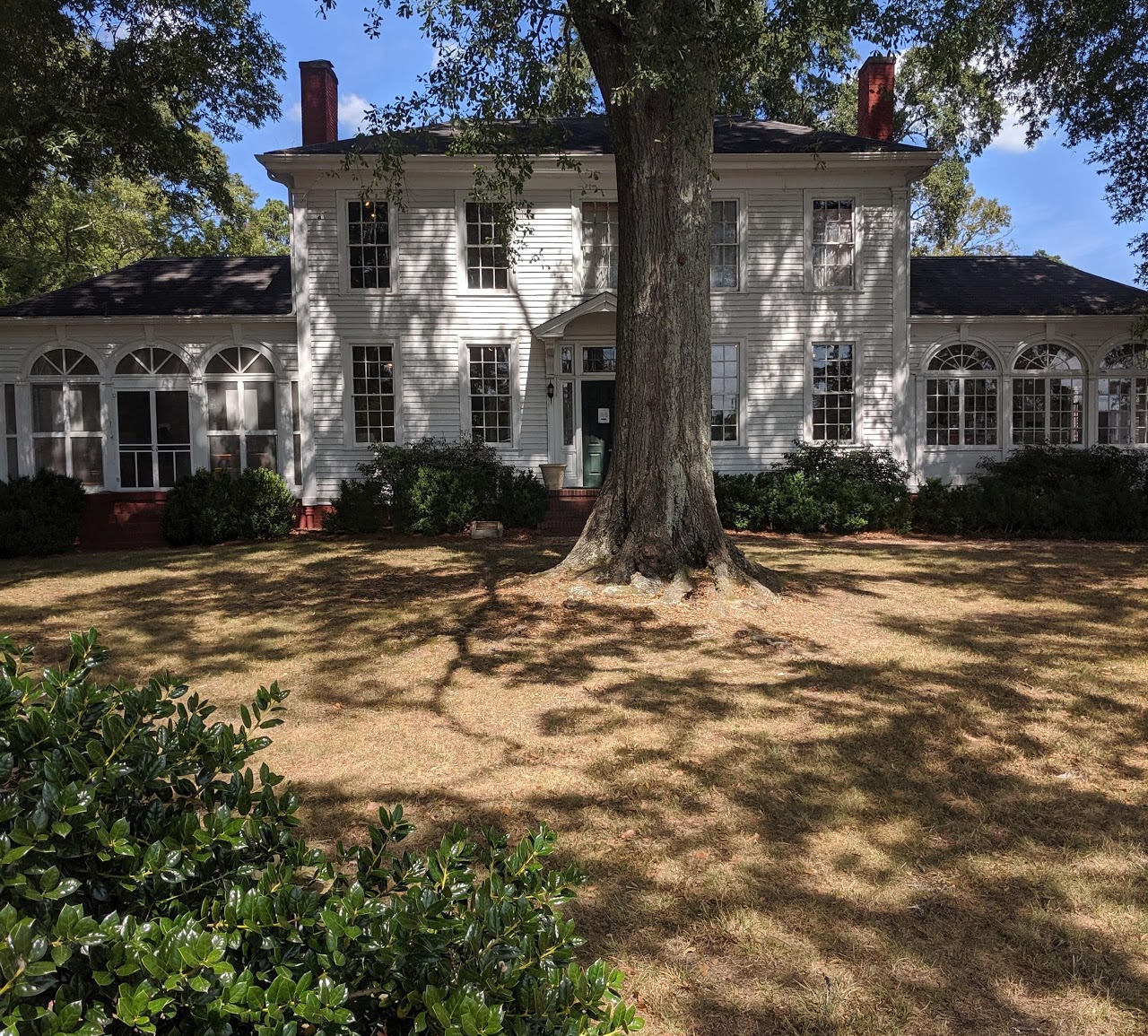
Chieftain’s Museum/Major Ridge Home Picture

Field trips are exceedingly fun and widen my circle of knowledge, not only of the people but of the era (and get me away from my computer screen). My first field trip was in September of 2019 to the Chieftain’s Museum/Major Ridge Home near Rome, Georgia. The visit made it all real. To stand where these very real people lived and worked, farmed and raised children was beautiful to my soul. I used my imagination to take in the landscape, to unwind time, to shrink the massive tree trunks on the property next to the Oostanaula River. Inside the museum, there are scale models of what renovations the home underwent through its lifetime and glass covering removed walls that reveal its original log structure.
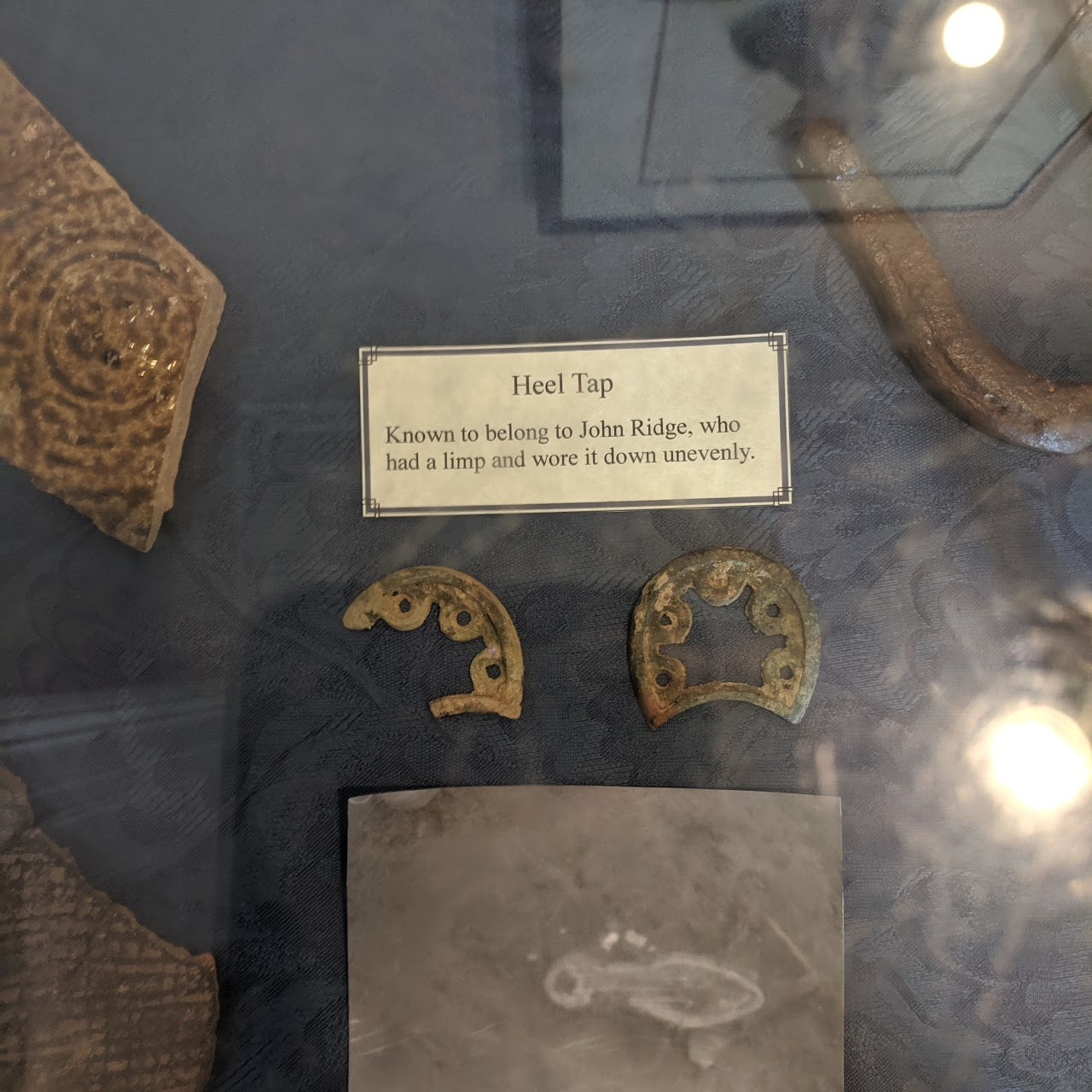
One archeologic gem made me hold my breath. John Ridge’s shoe taps lay under glass, worn on one side from his persistent limp from hip scrofula. So taken aback by their presence, I wrote a scene where he leaves his shoes in a nearby field so they could be discovered by archaeologists nearly two centuries later. 

After uncovering so much that influenced the manuscript at Chieftain’s, I widened my field trip circle, visiting: New Echota, the once Cherokee Capital, the Vann House, Red Clay, Tennessee, Ft. Mitchell, Alabama, Horseshoe Bend, Alabama, the McIntosh Reserve in Whitesburg, Georgia, and the OconalufteeVillage and the Museum of the Cherokee Indian in Cherokee, North Carolina. I have learned many historical facts from each adventure, uncovered human anecdotes, and built visions of landscapes from the past. Each of these enriching experiences makes writing this world more realistic. 
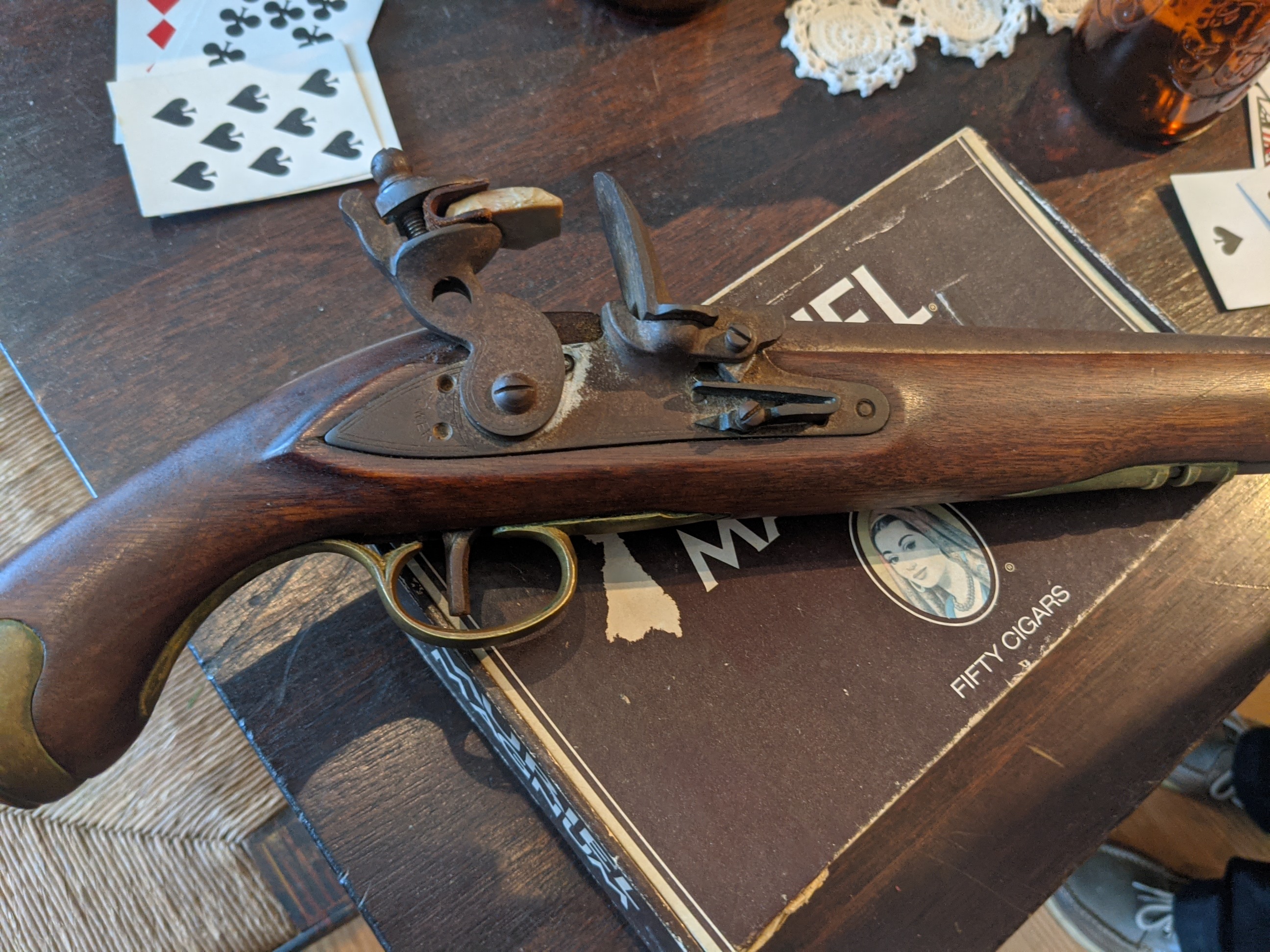
On May 29th, 2021, I travelled to Indian Springs, home to Creek Chief McIntosh’s Tavern, where he signed the Treaty of Indian Springs, selling Creek land to the American Government. His signature on that document brought his assassination. During the tour, I was able to hold a flint-lock pistol. As I am sure your readers know, rarely do these guns shoot accurately. After firing the lead ball and likely missing its target, a shooter could hold the barrel in their hand and use the stock as a club. They are exceedingly heavy. 

With permission from Ridge descendants, each purchase of ‘Tho I Be Mute will fund a future scholarship for Cherokee students planning to pursue a law degree. My husband and I plan to travel to Cherokee Nation in Oklahoma this summer to celebrate the novel’s launch. Also, the trip is to continue research for Mute’s sequel, Yellow Bird’s Song. The Ridge family saga continues. 

Thank you so much for sharing your research with me. Good luck with the new book.
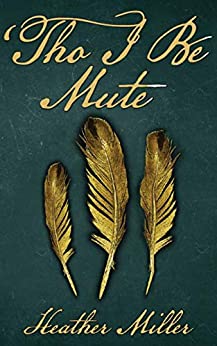
Here’s the blurb:

Home. Heritage. Legacy. Legend.

In 1818, Cherokee John Ridge seeks a young man’s education at the Foreign Mission School in Cornwall, Connecticut. While there, he is overcome with sickness yet finds solace and love with Sarah, the steward’s quiet daughter. Despite a two-year separation, family disapproval, defamatory editorials, and angry mobs, the couple marries in 1824.

Sarah reconciles her new family’s spirituality and her foundational Christianity. Although, Sarah’s nature defies her new family’s indifference to slavery. She befriends Honey, half-Cherokee and half-African, who becomes Sarah’s voice during John’s extended absences.

Once arriving on Cherokee land, John argues to hold the land of the Cherokees and that of his Creek neighbors from encroaching Georgian settlers. His success hinges upon his ability to temper his Cherokee pride with his knowledge of American law. Justice is not guaranteed.

Rich with allusions to Cherokee legends, ‘Tho I Be Mute speaks aloud; some voices are heard, some are ignored, some do not speak at all, compelling readers to listen to the story of a couple who heard the pleas of the Cherokee.

Buy Links:

Universal Amazon Link:

Amazon UKAmazon USAmazon CAAmazon AU

Meet the Author

As an English educator, Heather Miller has spent twenty-three years teaching her students the author’s craft. Now, she is writing it herself, hearing voices from the past. 

Miller’s foundation began in the theatre, through performance storytelling. She can tap dance, stage-slap someone, and sing every note from Les Misérables. Her favorite role is that of a fireman’s wife and mom to three: a trumpet player, a future civil engineer, and a future RN. There is only one English major in her house. 

While researching, writing, and teaching, she is also working towards her M FA in Creative Writing. Heather’s corndog-shaped dachshund, Sadie, deserves an honorary degree.
Connecting with the author

WebsiteTwitter:  Facebook

LinkedInInstagramPinterestBookBub

Don’t forget to check out the other stop on the blog tour for ‘Tho I Be Mute with The Coffee Pot Book Club.

Check out my book review for Daughters of Sparta by Claire Heywood #histfic #bookreview

Here’s the blurb

Two sisters parted. Two women blamed. Two stories reclaimed.

For millennia, two women have been blamed for the fall of a mighty civilisation – but now it’s time to hear their side of the story . . .

As princesses of Sparta, Helen and Klytemnestra have known nothing but luxury and plenty. With their high birth and unrivalled beauty, they are the envy of all of Greece.

Such privilege comes at a high price, though, and their destinies are not theirs to command. While still only girls they are separated and married off to legendary foreign kings Agamemnon and Menelaos, never to meet again. Their duty is now to give birth to the heirs society demands and be the meek, submissive queens their men expect.

But when the weight of their husbands’ neglect, cruelty and ambition becomes too heavy to bear, they must push against the constraints of their sex to carve new lives for themselves – and in doing so make waves that will ripple throughout the next three thousand years.

My Review

Daughters of Sparta is that most wonderful of books – one that draws you in from the very first pages and won’t let go of you until the end. I read it in just over a day. I didn’t want to put it down.

The storytelling is engaging, the characters of Helen and her sister, beautifully sketched while everyone around them, apart from their mother, stays very much in the background. This is their story.

At times the reader will hate either or both of the sisters, at other times, the reader will understand their pain, their desire to be more than their birthright.

A beautifully evocative story that speaks of the loneliness of royal marriage, of the heavy and life-threatening expectations placed on young women to become mothers, and you will be swept along by a tale you think you know but might not.

5 stars from me.

Tracey Warr is sharing some historical research from The Anarchy #historicalresearch #blogtour #histfic

Welcome to the blog. Your book, The Anarchy, is set in a time period that I thoroughly enjoy and sounds absolutely fascinating. As a historian first and foremost, and then a writer, I’m always interested in how people research their historical stories.

Can you explain your research process to me, and give an idea of the resources that you rely on the most (other than your imagination, of course) to bring your historical landscape to life? 

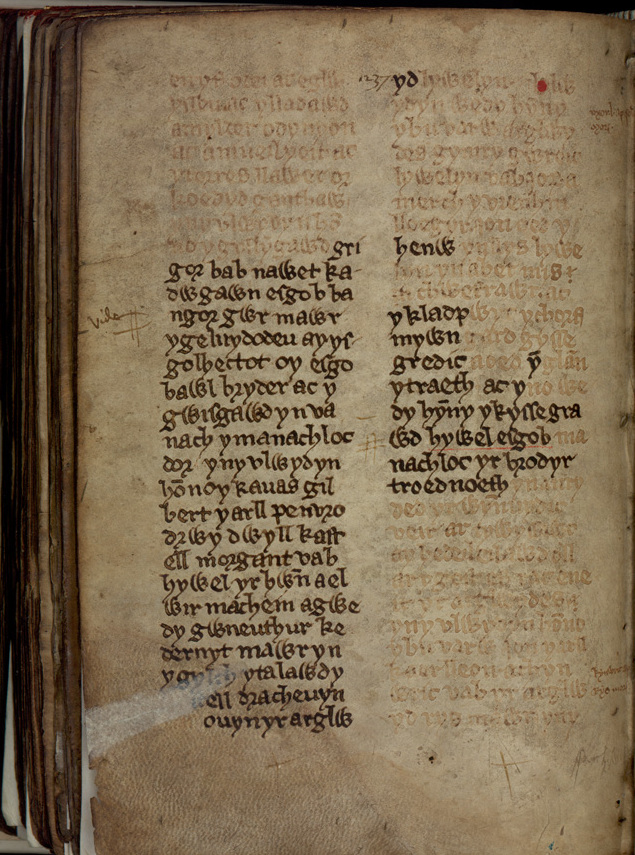
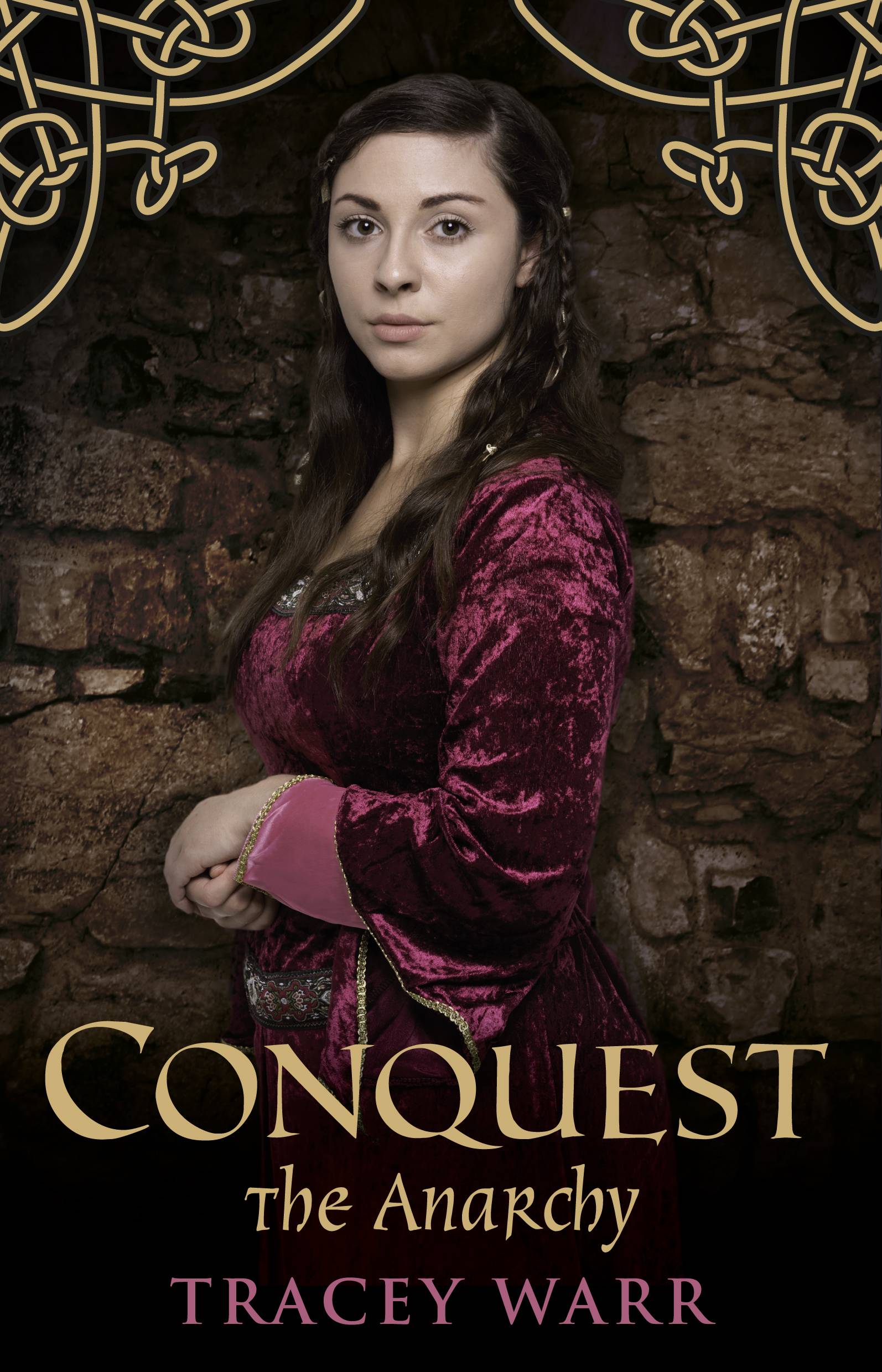
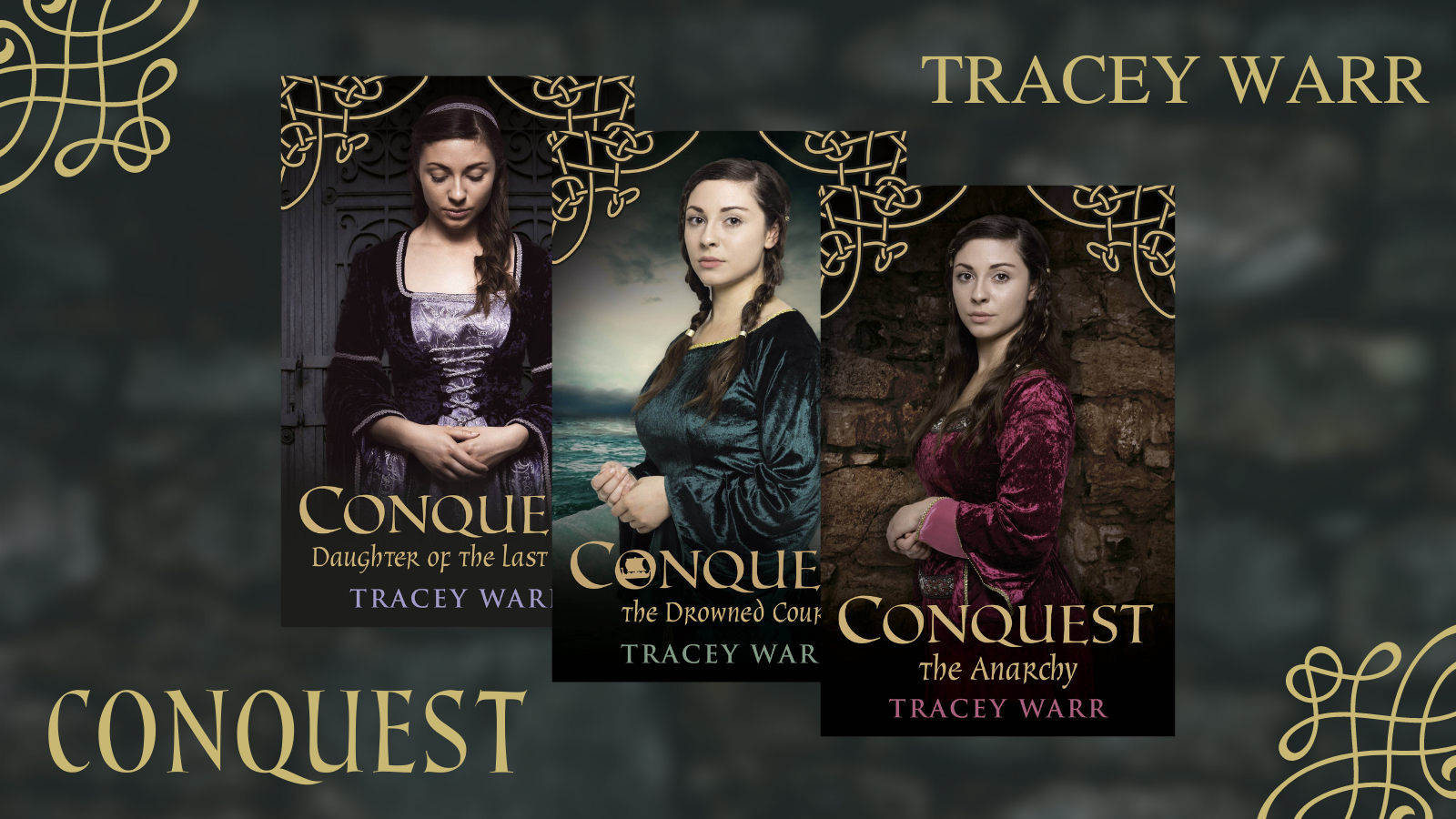
The Anarchy is set 1121–1139 and focuses on the later life of the Welsh noblewoman, Nest ferch Rhys. It is the final book in my Conquest trilogy telling the story of Nest’s turbulent life. Gwyneth Richards has argued that historiography has had a male bias ‘which has hitherto rendered women more invisible than is warranted by the available sources’ (2009, p. 24). Near-invisible women in the early middle ages are the territory of my historical fiction. I take the often very slight references to them in medieval chronicles and charters and imagine into the gaps. My first novel on an 11thcentury countess of Toulouse and Barcelona, Almodis de la Marche, came from a few sentences in the Chronicle of Ademar de Chabannes. My second novel came from a few more sentences in the same medieval chronicle on a different woman who was kidnapped by vikings. The Conquest trilogy derives from a couple of paragraphs on Nest ferch Rhys in Brut y Tywysogion (The Chronicle of the Princes

1 Brut y Twysogion (Chronicle of the Princes)
https://commons.wikimedia.org/wiki/File:Chronical_of_the_Princes_(f.260).jpg Attribution: National Library of Wales, CC0, via Wikimedia Commons

Nest ferch Rhys was the daughter of the last independent king in Wales, Rhys ap Tewdwr. Her father and three of her brothers were killed by invading Normans and she was probably raised in the Norman court. She became the mistress of the Norman king, Henry I, and had a son with him. She was married to Gerald FitzWalter, the Norman steward of Pembroke Castle, which had been part of her father’s kingdom. The Welsh prince, Owain of Powys, abducted her from Gerald for a few years. After Gerald died, she was married to Stephen de Marais, the Norman constable of Cardigan Castle. The character Haith in my novel is based on Hait who is documented as the sheriff of Pembroke in the 1130 pipe roll, the records of the court (Green, 1986). Hait is presumed, from his name, to have been Flemish. It is my invention to make him a close friend of King Henry. According to Nest’s grandson, Gerald of Wales, Hait was the father of one of Nest’s sons. 

Once I have a spark from a primary source such as the Brut y Tywysogion to set me off, I pursue several lines of enquiry to find out everything I can about my characters, their relationships with one another, and the contexts they lived in. The lines of enquiry I pursue are further primary sources, genealogical research, biographies, the literature and art of the time, objects in museums, maps, site research at places associated with the characters, and contextual research—finding out, for example what people in those times and places wore and ate, what games they played and what books they read. I do as much research as I can online and buy key books and then I spend days in the British Library poring over the more inaccessible sources.

Other primary sources I drew on for The Anarchy included William FitzStephen’s account of Norman London and the books written by Nest’s grandson, Gerald of Wales. The genealogical research gives me a sense of the relationships between people and, for instance, an idea of how many children my heroine had and when. One key resource I use for genealogical research is Charles Cawley’s Medieval Lands, which can be searched online (2014). Genealogies are often set out following the patriarchal line. I make an effort to perceive the matriarchal line too, as far as possible. Family and kin—on both sides—were extremely significant for medieval people.

Despite sometimes being described as the most famous early medieval Welsh woman, the historical record of Nest is slender. Her kidnap from her husband Gerald FitzWalter by Prince Owain Cadwgan, which probably occurred at Cilgerran Castle, is briefly described in Brut y Tywysogion (The Chronicle of the Princes). Nest is credited with advising Gerald to escape down the castle toilet chute, which let out onto the dungheap below, outside the castle walls. (See my earlier blogpost on the wily Gerald: https://englishhistoryauthors.blogspot.com/2016/11/a-norman-frontiersman-in-wales.html.) 

Kari Maund and Susan Johns have both written important studies on Nest ferch Rhys. I also research the people around her and try to get a sense of the atmosphere of the Norman court that Nest found herself in. C. Warren Hollister and Judith Green’s biographies of King Henry I were invaluable and writing the character of the king in my novels was one of the most enjoyable parts of composing them. I also drew on David Crouch’s book on the Beaumont twins to think about the personalities and factions at court. Reading journal articles, such as Eleanor Searle’s study of the marriages of Norman conquerors to Welsh and Anglo-Saxon heiresses, often gives me key information or details to use. 

My research on the literature of the time, such as The Mabinogion and the poems of the Welsh bards, helps me find fragments of the authentic voice of that period that I can use. In The Anarchy, Breri the Welsh bard is a double agent, spying for both the Welsh and the Normans. Amanda Jane Hingst’s book on the medieval writer, Orderic Vitalis, also gave me valuable material. Vivid details of daily life can be drawn from manuscript illustrations and objects in museums, and I often use particular objects, such as goblet or a ring, as a significant motif in the story. 

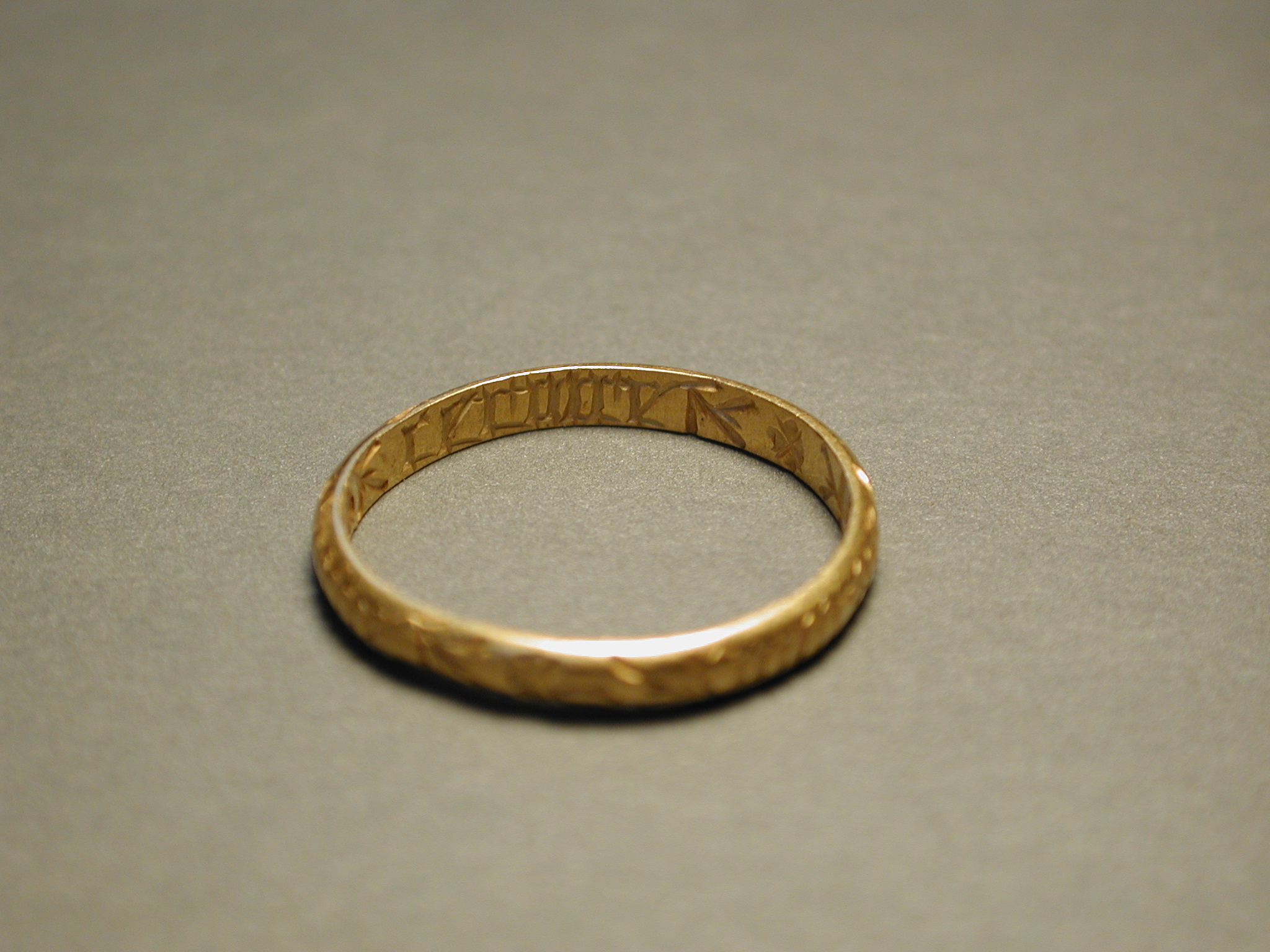
In the opening chapter of The Anarchy, Nest, has been widowed from one Norman and is married unwillingly to another, Stephen de Marais. After the ceremony, she absconds, leaving her wedding ring on the table in the great hall. 

Fourteenth-century medieval finger-ring, probably a wedding ring. The inscription probably reads ‘I will serve you until I die’. https://commons.wikimedia.org/wiki/File:Medieval_finger_ring_(showing_internal_inscription)_(FindID_199291).jpgAttribution: The Portable Antiquities Scheme/ The Trustees of the British Museum, CC BY-SA 4.0 <https://creativecommons.org/licenses/by-sa/4.0&gt;, via Wikimedia Commons

I walk the sites of the novel, visiting castle ruins. Even though there is rarely much to see surviving from the 12thcentury, site research gives me atmosphere, weather, birdsong, the lay of the land. I draw up my own chronology, genealogies, and maps to help me flesh out the fictional world of my characters so that it is imagined, but credible, built on a structure of recorded history.

(Historical references are listed below).

Brut y Tywysogion (Chronicle of the Princes). Written 681–1282. Thomas Jones transl. (1953) Caerdydd: Gwasg Prifysgol Cymru.

Ademar de Chabannes, Chronique, 3 vols., translated by Yves Chauvin and Georges Pon (2003) Turnhout: Brepols.

Cawley, Charles (2014) Medieval Lands, http://fmg.ac/Projects/MedLands/Search.htm.

Crouch, David (2008) The Beaumont Twins: The Roots and Branches of Power in the Twelfth Century, Cambridge: Cambridge University Press.

FitzStephen, William, Norman London. Written around 1183. Essay by Sir Frank Stenton & Introduction by F. Donald Logan (1990) New York: Italica Press. 

Gerald of Wales, The Itinerary Through Wales and the Description of Wales. Written 1191 and 1194. Lewis Thorpe, transl. (1978), Harmondsworth: Penguin.

Green, Judith A. (2009) Henry I King of England and Duke of Normandy, Cambridge: Cambridge University Press.

Hingst, Amanda Jane (2009) The Written World: Past and Place in the Work of Orderic Vitalis, Notre Dame, Indiana: University of Indiana Press.

Hollister, C. Warren (2001) Henry I, New Haven/London: Yale University Press.

Johns, Susan M. (2013) Gender, Nation and Conquest in the High Middle Ages: Nest of Deheubarth, Manchester: Manchester University Press.

Maund, Kari (2007) Princess Nest of Wales: Seductress of the English, Stroud: Tempus.

Richards, Gwyneth (2009) Welsh Noblewomen in the 13th Century, Lewiston, N.Y.: Edwin Mellen Press.

Searle, Eleanor (1980) ‘Women and the legitimization of succession’ in Brown, R. Allen, ed., (1981) Anglo-Norman Studies III: Proceedings of the Battle Conference, pp. 159-170.

Thank you so much for sharing your research with. It’s great to see all the resources you used. I also smiled because Kari Maund was one of my lecturers at university. Her books on the early Welsh period are wonderful.

Here’s the blurb:

Unhappily married to Stephen de Marais, the Welsh princess, Nest, becomes increasingly embroiled in her countrymen’s resistance to the Norman occupation of her family lands. She plans to visit King Henry in the hope of securing a life away from her unwanted husband, but grieving for the loss of his son, the King is obsessed with relics and prophecies.

Meanwhile, Haith tries to avoid the reality that Nest is married to another man by distracting himself with the mystery of the shipwreck in which the King’s heir drowned. As Haith pieces together fragments of the tragedy, he discovers a chest full of secrets, but will the revelations bring a culprit to light and aid the grieving King?

Will the two lovers be united as Nest fights for independence and Haith struggles to protect King Henry?

Universal Links: 

The Daughter of the Last King (Book 1)

The Drowned Court (Book 2)

The Anarchy (Book 3)

Amazon UKAmazon USAmazon CAAmazon AU

Barnes and NobleWaterstonesKoboBookShop.org

Meet the Author

Tracey Warr (1958- ) was born in London and lives in the UK and France. Her first historical novel, Almodis the Peaceweaver (Impress, 2011) is set in 11th century France and Spain and is a fictionalised account of the true story of the Occitan female lord, Almodis de la Marche, who was Countess of Toulouse and Barcelona. It was shortlisted for the Impress Prize for New Fiction and the Rome Film Festival Books Initiative and won a Santander Research Award. Her second novel, The Viking Hostage, set in 10th century France and Wales, was published by Impress Books in 2014 and topped the Amazon Australia charts. Her Conquest trilogy, Daughter of the Last King, The Drowned Court, and The Anarchy recount the story of a Welsh noblewoman caught up in the struggle between the Welsh and the Normans in the 12th century. She was awarded a Literature Wales Writers Bursary. Her writing is a weave of researched history and imagined stories in the gaps in history.

Tracey Warr studied English at University of Hull and Oxford University, gaining a BA (Hons) and MPhil. She worked at the Arts Council, Institute of Contemporary Arts, Chatto & Windus Publishers, and edited Poetry Review magazine with Mick Imlah. She also publishes art writing on contemporary artists, and in 2016 she published a future fiction novella, Meanda, in English and French, as part of the art project, Exoplanet Lot. She recently published a series of three books, The Water Age, which are future fiction and art and writing workshop books – one for adults and one for children – on the topic of water in the future. She gained a PhD in Art History in 2007 and was Guest Professor at Bauhaus University and Senior Lecturer at Oxford Brookes University and Dartington College of Arts. Her published books on contemporary art include The Artist’s Body (Phaidon, 2000), Remote Performances in Nature and Architecture (Routledge, 2015) and The Midden (Garret, 2018). She gained an MA in Creative Writing at University of Wales Trinity St David in 2011. She is Head of Research at Dartington Trust and teaches on MA Poetics of Imagination for Dartington Arts School.

Connect with Tracey Warr

WebsiteTwitterFacebook

LinkedInInstagramAmazon Author PageGoodreads

Don’t forget to check out the other stops on The Anarchy Blog Tour with The Coffee Pot Book Club

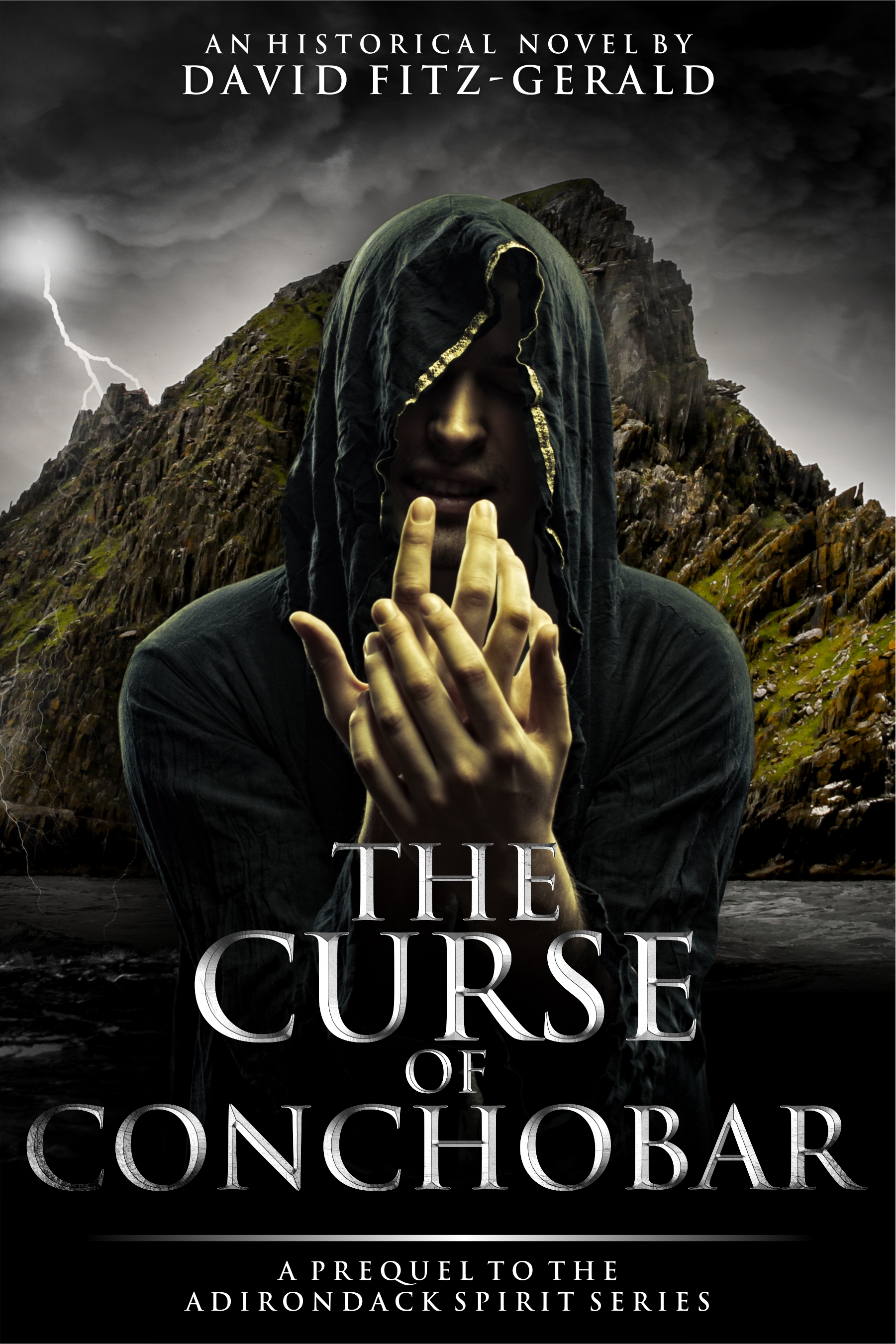
David Fitz-Gerald is sharing some historical research from The Curse of Conchobar #historicalresearch #blogtour

Today, I’m delighted to welcome David Fitz-Gerald to the blog. I asked him about the historical research he undertook to write his new book.

Research is my rabbit hole and full immersion is my favorite form. Sometimes, that’s easier said than done, especially during a worldwide pandemic, when travel is restricted and museums are closed. For some eras, there’s almost too much information available, whereas artifacts from distant historical periods are often scarce.

The Curse of Conchobar is set in New York State, long before written history reflects the “discovery” of North America. It is now more commonly believed that European people explored North America hundreds of years earlier than 1492. With each new scientific discovery, it seems, earlier new firsts become accepted.

My main character needed a rich back story. The one I invented for him was inspired by our family’s visit to Ireland in 2019. If we had known what was coming, I’ll bet we would have stayed much longer. My favorite part of our visit was the day that we spent at the Cliffs of Moher. I would love to have visited Skellig Michael, where Conchobar grew up among monks and learned to be a mason. As a hiker and mountain climber, I would love to have climbed the steps to see the ancient structures. Fortunately, I found this stunningly beautiful drone footage, by Peter Cox Photography, on youtube at: https://www.youtube.com/watch?v=SxU6kk24mho

I’ve also had the pleasure of visiting Stonehenge in England and I’ve always been fascinated by megalithic stone structures. There are many smaller stone structures in New York, New England, and Canada that make you wonder, who built this, when did they build it, and what motivated them to do so? When Conchobar returns to masonry in my book, he creates just such a structure. As I was writing the book, the image of a stone chamber in Leverett, Massachusetts, from The New England Historical Society’s (NEHS) website inspired me to imagine what Conchobar could build in his new home in Northern New York State. According to NEHS, “Speculation now runs rampant about the origins of the mysterious stone structures. Did medieval Irish monks, American Indians or Vikings build them? Or did the English colonists just build them as root cellars?” I choose to believe the first theory presented. Don’t miss the other pictures on this website, but the one I’m referring to is the first picture. https://www.newenglandhistoricalsociety.com/6-mysterious-stone-structures-new-england/

The civilization that Conchobar encounters along the banks of what will later be known as the Hudson River is a precursor to the Haudenosaunee, also known as Iroquois. I placed my fictional village for the people in my book, Wanders Far, featuring Conchobar’s descendants, on Garoga Creek, a tributary of the Mohawk River, based on archaeology. If you’d like to spend some time in my research rabbit hole, may I recommend this report, Three Sixteenth-Century Mohawk Iroquois Village Sites, from The University of the State of New York:  https://exhibitions.nysm.nysed.gov/publications/bulletin/503-14603.pdf

There is some debate about whether Native Americans inhabited the Adirondacks. I’m confident that they did and I think that science is proving it. If you’re curious about the evidence, you might be interested in this. The First Adirondackers: Part One and Part Two, from Curiously Adirondack.

The characters in The Curse of Conchobar and Wanders Far travel great distances and survive extreme situations in the wild. I have spent countless hours trying to make sure that the creatures I write about are indigenous. For example, I was tempted to write about honey bees, only to discover that they are not native and didn’t arrive in North America until the 17th century. Crisis averted! It is amazing how many bodies of water would not exist if it weren’t for dams built by modern man, and it is hard to find accurate maps from prehistoric times, so I tried to prove that each waterway existed in ancient times before I wrote about them. And I’ve spent countless hours researching what ancient foragers might have found in New York’s primeval forests. Are you curious about how Native Americans built canoes from materials found in the woods? Check out this historic video from 1946.

As for the wanderlust, on May 5, 2018, I set out from Plattsburgh, New York, and walked to Lake Placid, home of the 1932 and 1980 Winter Olympics. I made the 50-mile journey to commemorate the historic 1963 trek of Lake Placid postman, Denny Miller, and also to make sure that the great distances my characters travel are realistic. I set out at midnight and limped into Lake Placid at dark, almost twenty hours later. The next day, I could barely walk. I’m older than most of the distance hikers I have written about, so I figure they can handle 30-miles a day when they need to.

You know the kind of person that takes pictures of historical mile markers so they can reread them later? How about the guy that has to read every placard in the museum―the one that has to be kicked out at closing time because there’s too much to see in just one day? Or the one that irritates the family by going miles out of the way to see something that nobody else is interested in? That’s me!

Thank you for spending a few minutes with me in my rabbit hole.

Thank you so much for sharing your research with me. Good luck with the new book.

Here’s the blurb:

Banished by one tribe. Condemned by another. Will an outcast’s supernatural strengths be enough to keep him alive?

549 AD. Raised by monks, Conchobar is committed to a life of obedience and peace. But when his fishing vessel is blown off-course, the young man’s relief over surviving the sea’s storms is swamped by the terrors of harsh new shores. And after capture by violent natives puts him at death’s door, he’s stunned when he develops strange telepathic abilities.

Learning his new family’s language through the mind of his mentor, Conchobar soon falls for the war chief’s ferocious daughter. But when she trains him to follow in her path as a fighter, he’s horrified when his uncanny misfortune twists reality, causing more disastrous deaths and making him a pariah.

Can Conchobar defeat the darkness painting his steps with blood?

The Curse of Conchobar is the richly detailed prequel to the mystical Adirondack Spirit Series of historical fiction. If you like inspiring heroes, unsettling powers, and lasting legacies, then you’ll love David Fitz-Gerald’s captivating tale.

Buy The Curse of Conchobar to break free from the fates today!

Trigger Warnings: Violence

Get your copy.

Universal Link

Amazon UKAmazon US:  Amazon CA: Amazon AU: 

Barnes and Noble:  iBooks:  Book Chain: 

Meet the Author

David Fitz-Gerald writes fiction that is grounded in history and soars with the spirits. Dave enjoys getting lost in the settings he imagines and spending time with the characters he creates. Writing historical fiction is like making paintings of the past. He loves to weave fact and fiction together, stirring in action, adventure, romance, and a heavy dose of the supernatural with the hope of transporting the reader to another time and place. He is an Adirondack 46-er, which means he has hiked all of the highest peaks in New York State, so it should not be surprising when Dave attempts to glorify hikers as swashbuckling superheroes in his writing.

Connect with the author

Website:  Twitter:  Facebook:  Instagram

Pinterest: Book BubAmazon Author PageGoodreads: 

The Curse of Conchobar is available for free in exchange for signing up for David’s email list via BookFunnel: https://dl.bookfunnel.com/iwczowhp8q

Tour Schedule Page Don’t forget to check out the other stops on The Curse of Conchobar blog tour with The Coffee Pot Book Club

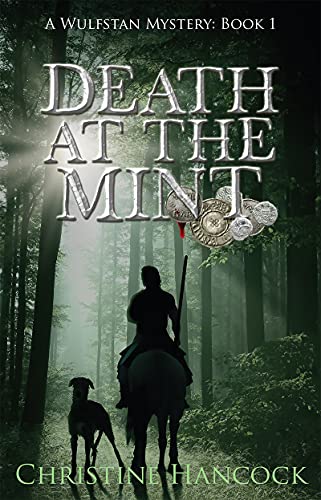
Check out my review for Death at the Mint by Christine Hancock #historicalmystery #bookreview

I’m really excited to review Death at the Mint by Christine Hancock. Christine writes the Byrhtnoth Chronicles set in the middle of the tenth century, but in Death at the Mint, she’s taken one of our favourite characters and allowed him to solve an intriguing mystery.

Here’s the blurb

“When Wulfstan swore revenge on his enemy, he expected to die. Now that man is dead.
Far to the south, another body is found in an Essex wood.
Abbot Dunstan of Glastonbury is concerned. The victim ran the mint. Is the king’s coinage in danger of corruption?
Dunstan sends Wulfstan to Maldon to investigate.
Can Wulfstan discover the truth? Is there a connection with his own past?
Having lost everything he held dear; can he learn to live again?”

“Finally, Wulfstan – my favourite character in the Byrhtnoth Chronicles – has been given his own story. Read and enjoy!”
Ruth Downie, author of the Gaius Petreius Ruso Mysteries.

My Review

I was lucky enough to get to read an early draft of Death at the Mint, and also the finished product. Firstly, an assurance, yes, Wulfstan is a character from the previous books but if you haven’t read them (which you might want to do after this one) it won’t detract from your enjoyment. Not at all. This is an excellent standalone Saxon mystery.

Wulfstan, his hound and his horse make an intriguing team, and what I particularly enjoyed was the reimagining of life in a Saxon settlement. This is something I’ve always been a bit terrified of doing in my own books, and Christine Hancock does it incredibly well. Added to which, the mystery will really draw you in.

This was a wonderful book, the mystery has a satisfying ending, which I don’t think readers will guess.

Eric Schumacher is sharing some historical details for Sigurd’s Swords #blogtour #historicalresearch

Today I’m delighted to welcome Eric Schumacher to the blog with a fantastic post about his new book (available for preorder now) Sigurd’s Swords.

Your book, Sigurd’s Sword, is set in a time period I love, but I don’t know as much about events in the land of the Rus as I’d like, or about Olaf Tryggvason’s early years. As a historian first and foremost, and then a writer, I’m always interested in how people research their historical stories.

Can you explain your research process to me, and give an idea of the resources that you rely on the most (other than your imagination, of course) to bring your historical landscape to life? 

First of all, thank you for having me on your wonderful blog and for your interest in Sigurd’s Swords

My research isn’t as much of a process as it is a series of rabbit holes that I tend to climb down to gather information that I then convert to notes. I keep those notes in the writing program I use so that I can refer to them often as I write. That said, I often go back to the original sources for more information or for clarity. 

It is a bit tricky writing about Vikings, because they did not chronicle their events in writing. There’s was an oral culture. So what information we have comes from outside sources, and usually from sources who wrote their works decades or even centuries after the people lived and the events occurred. Thanks to the Byzantines, Sigurd’s Swords is the only book I have written that actually had a contemporary writer who chronicled some of the events in the book.

Do you have a ‘go’ to book/resource that you couldn’t write without having to hand, and if so, what is it (if you don’t mind sharing)?

Yes! I usually start in the same place for all of my books. That place is the sagas, and in particular, Snorre Sturlason’s Heimskringla, or “The Lives of the Norse Kings.” That provides me with the guardrails and the general outline of the story. However, Snorre wrote his series of tales centuries after my character Olaf lived, so I cannot rely on him 100% for the details of my books. Nor does he get into the minutiae that help add flavour and depth to the story, such as weaponry, fighting styles, flora and fauna, food and beverages, the types of dwellings that existed, and so on. For those things, I rely more on individual books or research papers I find online. 

In the case of Olaf and his time in Kievan Rus’, I also turned to other sources that I found. The Russian Primary Chronicle, to which I found a reference on Wikipedia, was a tremendous help. Like the Anglo-Saxon Chronicle, it is broken down by year, so it provided me with a better sense of the timing of events and what events my characters may have experienced during their time in that kingdom. That, in turn, led me to other sources for more detailed descriptions of those events. The Byznatines were a great help for this. Civil servant John Sylitzes wrote his “A Synopsis of Byzantine History” in AD 1081, which covered the Siege of Drastar I have in my novel. Leo the Deacon, who was at the siege, also wrote about it in his Historia. The foreign policy of the Byzantines is described in The Grand Strategy of the Byzantine Empire, and was also helpful to provide larger context for why certain events might have unfolded the way they did, such as the Siege of Kyiv in AD 968. Having these sources also provided a secondary verification of the timing of things. 

All that said, there was still much I could not unearth about the Rus or Olaf during that time. So I tried to fill in the gaps with plausible plotlines and information based on the research I could find. I hope it all comes together in an enjoyable story for your readers!

Thank you so much for sharing your research with me. It sounds fascinating, and I will have to hunt some of it down. Good luck with the new book.

Here’s the blurb;

From best-selling historical fiction novelist, Eric Schumacher, comes the second volume in Olaf’s Saga: the adrenaline-charged story of Olaf Tryggvason and his adventures in the kingdom of the Rus.

AD 968. It has been ten summers since the noble sons of the North, Olaf and Torgil, were driven from their homeland by the treachery of the Norse king, Harald Eriksson. Having then escaped the horrors of slavery in Estland, they now fight among the Rus in the company of Olaf’s uncle, Sigurd. 

It will be some of the bloodiest years in Rus history. The Grand Prince, Sviatoslav, is hungry for land, riches, and power, but his unending campaigns are leaving the corpses of thousands in their wakes. From the siege of Konugard to the battlefields of ancient Bulgaria, Olaf and Torgil struggle to stay alive in Sigurd’s Swords, the riveting sequel to Forged by Iron

Pre-order link

Meet the Author

Eric Schumacher (1968 – ) is an American historical novelist who currently resides in Santa Barbara, California, with his wife and two children. He was born and raised in Los Angeles and attended college at the University of San Diego.

At a very early age, Schumacher discovered his love for writing and medieval European history, as well as authors like J.R.R. Tolkien and C.S. Lewis. Those discoveries continue to fuel his imagination and influence the stories he tells. His first novel, God’s Hammer, was published in 2005.

Connect with Eric

Website:  Twitter

FacebookLinkedInBookBub:

Amazon Author PageGoodreads:

Don’t forget to check out the other stops on the Sigurd’s Swords blog tour with The Coffee Pot Book Club.

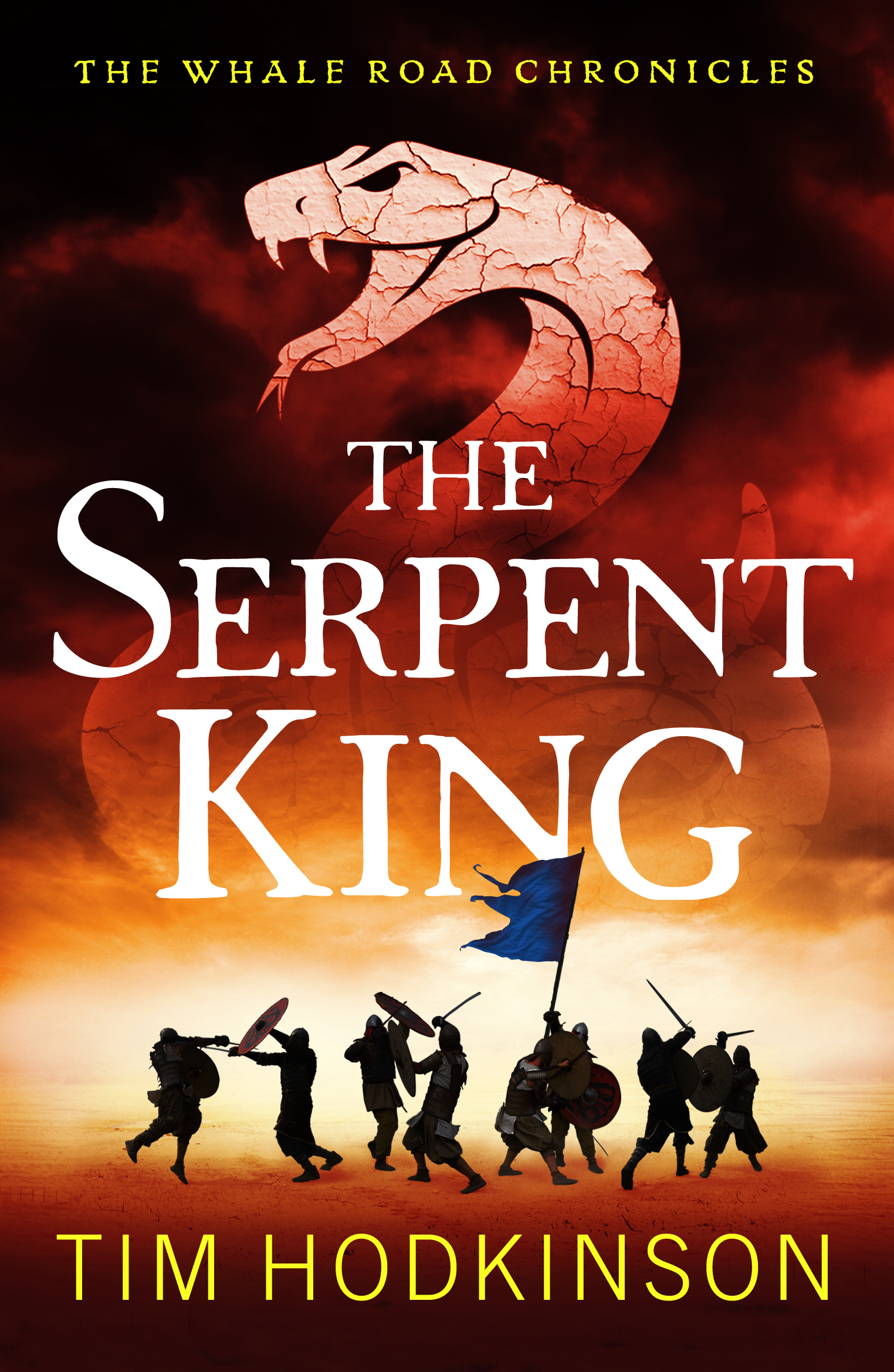
Check out my review for The Serpent King by Tim Hodkinson #blogtour #bookreview #histfic

Here’s the blurb:

The fight for vengeance has no victors…

AD 936

The great warrior, Einar Unnsson, wants revenge. His mother’s assassin has stolen her severed head and Einar is hungry for his blood. Only one thing holds him back. He is a newly sworn in Wolf Coat, and must accompany them on their latest quest.

The Wolf Coats are a band of fearsome bloodthirsty warriors, who roam the seas, killing any enemies who get in their way. Now they’re determined to destroy their biggest enemy, King Eirik, as he attempts to take the throne of Norway.

Yet, for Einar, the urge to return to Iceland is growing every day. Only there, in his homeland, can he avenge his mother and salve his grief. But what Einar doesn’t know is that this is where an old enemy lurks, and his thirst for vengeance equals Einar’s…

Read Tim Hodkinson’s newest epic Viking adventure.

Here’s my review

The Serpent King by Tim Hodkinson is the fourth instalment in The Whale Road Chronicles, reuniting readers with Einar and the rest of the Wolf Coats.

It is an energetic and fast-paced jaunt through the sea kingdoms of Norway, the Scottish islands, and Iceland, and although we don’t go to Ireland, it’s never far from the characters’ thoughts.

I love this series because the author twists his story through the ‘known facts’ of the time period. I know what’s coming, and many others will also know what’s coming in future books, but the joy is in how we get there.

About the author

Tim Hodkinson was born in 1971 in Northern Ireland. He studied Medieval English and Old Norse Literature at University with a subsidiary in Medieval European History. He has been writing all his life and has a strong interest in the historical, the mystical and the mysterious. After spending several happy years living in New Hampshire, USA, he has now returned to life in Northern Ireland with his wife Trudy and three lovely daughters in a village called Moira.

Tim is currently working on a series of viking novels for Ares Fiction, an imprint of Head of Zeus.

Buy links:
AmazonKoboGoogle Play: iBooks:

Follow Tim:

Twitter: 

Follow Aries:

Twitter: @AriesFiction  Facebook: @AriesFiction. Website:

Don’t forget to stop by the other stops on The Serpent King Blog Tour.

Check out my review for The Fort by Adrian Goldsworthy (Roman historical fiction) #blogtour #histfic #Romanhistfic

Here’s the blurb:

AD 105: DACIA

The Dacian kingdom and Rome are at peace, but no one thinks that it will last. Sent to command an isolated fort beyond the Danube, centurion Flavius Ferox can sense that war is coming, but also knows that enemies may be closer to home.

Many of the Brigantes under his command are former rebels and convicts, as likely to kill him as obey an order. And then there is Hadrian, the emperor’s cousin, and a man with plans of his own…

Gritty, gripping and profoundly authentic, The Fort is the first book in a brand new trilogy set in the Roman empire from bestselling historian Adrian Goldsworthy.

The Fort by Adrian Goldsworthy is good ‘Roman’ era fiction.

Set in Dacia in AD105, it is the story of ‘The Fort’ under the command of Flavius Ferox, a character some will know from Goldsworthy’s previous trilogy that began with Vindolanda.

Mistakenly thinking this was an entirely new trilogy with all new characters, it took me a while to get into the story. Everyone seemed to know everyone else apart from me. But Ferox is a good character, and he grounded me to what was happening in the immediate vicinity of the Fort, and apart from once or twice, it didn’t really matter what had gone before.

This is a story of suspicions, ambition and lies, and it rumbles along at a good old pace. This isn’t the story of one battle, but rather many, a slow attrition against the Romans by the Dacians.

Overall, this was an enjoyable novel, and some of the fighting scenes were especially exciting. Those with an interest in Roman war craft will especially enjoy it, although, I confess, I don’t know my spatha from my pilum (there is a glossary, fellow readers, so do not fear.)

About the author

Adrian Goldsworthy has a doctorate from Oxford University. His first book, THE ROMAN ARMY AT WAR was recognised by John Keegan as an exceptionally impressive work, original in treatment and impressive in style. He has gone on to write several other books, including THE FALL OF THE WEST, CAESAR, IN THE NAME OF ROME, CANNAE and ROMAN WARFARE, which have sold more than a quarter of a million copies and been translated into more than a dozen languages. A full-time author, he regularly contributes to TV documentaries on Roman themes.

Adrian Goldsworthy , Author , Broadcaster , Historical consultant .

Follow Head of Zeus:

Twitter: Instagram: Facebook: Website:

Buy the book.

AmazonKobo: Google Play:

iBooks: Waterstones: Bookshop.org:

Don’t forget to drop by the other stops on The Fort Blog Tour.

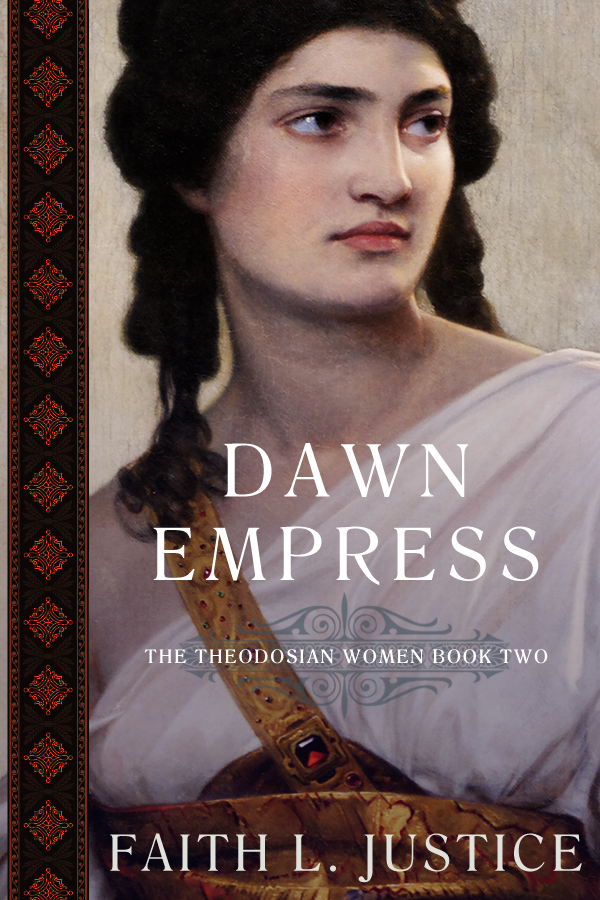
Faith L Justice is sharing some historical research from Dawn Empress #blogtour #historicalresearch

Today I’m delighted to welcome Faith L Justice to the blog with a post about the way she researched in order to write Dawn Empress.

Q. How Far Could a Roman Army March in a Day and Did They Wear Socks with Their Sandals?

A: 37 miles and “Yes”—Details in the post!

My mission is to tell interesting stories about little-known, but important women, while entertaining the reader. Because I write biographical historical fiction, historical accuracy is extremely important to me. For every novel, I must answer hundreds of questions like those posed in the title, so I do a tremendous amount of research beyond the facts of births, deaths, wars, etc. The sights, smells, sounds, and descriptions of clothes, food, housing, and transportation helps the reader experience a kind of time travel as they immerse themselves in a past culture. Personally, I find research the most fun part of writing my books. I get to learn new stuff, visit interesting places, and share my passions with readers. 

I ran across the empresses who are the subjects of my three-book series The Theodosian Women when I researched my first novel set in the early fifth century. Pulcheria (Dawn Empress) took over the Eastern Roman court at the tender age of fifteen and ruled as regent for her under-age brother Theodosius II. Placidia (Twilight Empress) ruled over the fading Western Empire for her under-age son Valentinian III. Athenais (work in progress), a pagan philosopher/poet married the “Most Christian Emperor” Theodosius II. These women fascinated me. I wanted to tell their stories, but I had a lot of research work to do.

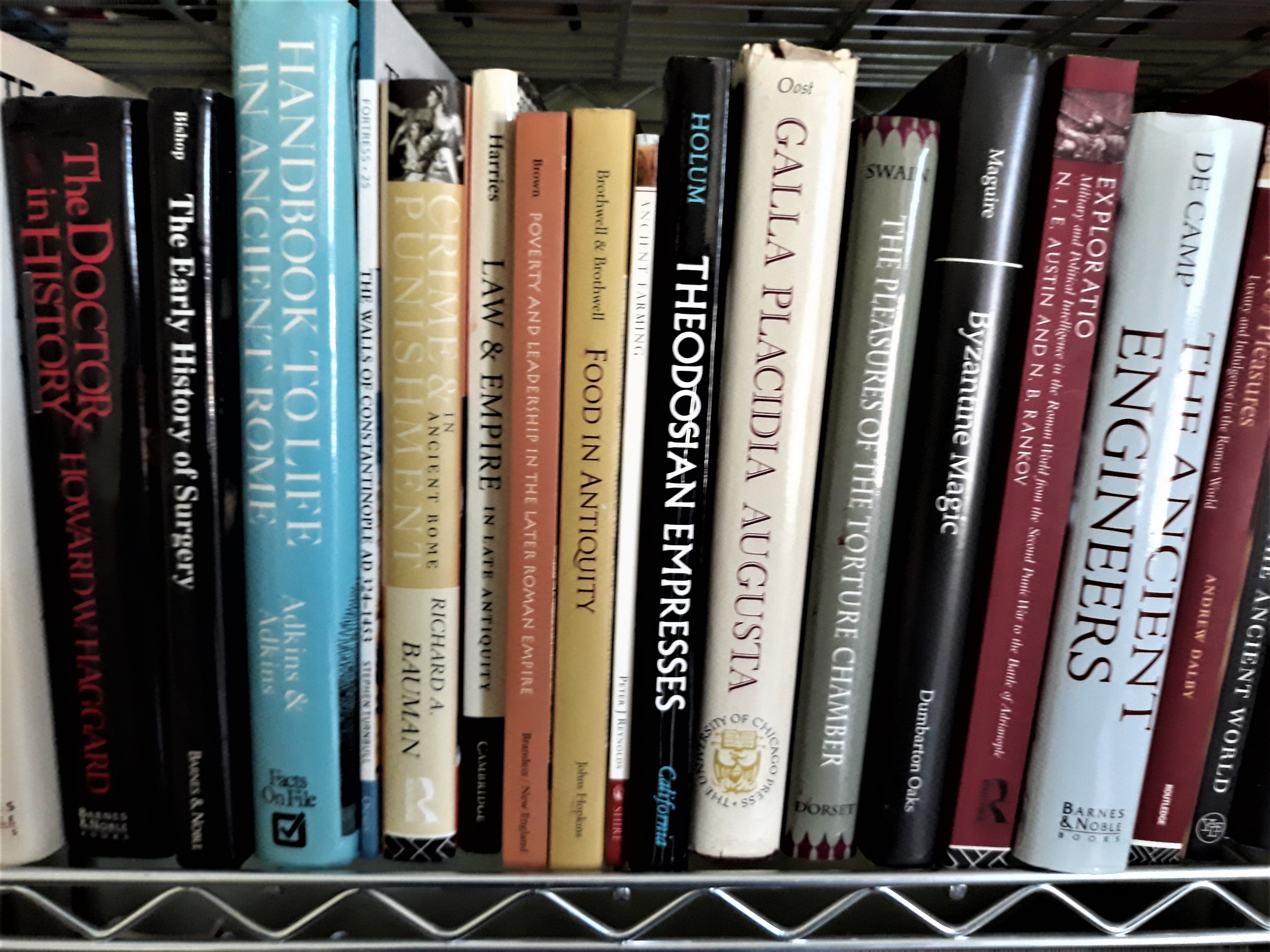
This was hampered by the times. The fifth century experienced great turmoil as barbarians invaded the Roman Empire sacking cities, disrupting education and culture, and destroying records. This left only fragments of primary sources for future historians to ponder. Archaeology filled in some of the blanks, but there was lots of room for my imagination. My print resources consisted of translated copies of primary sources, general histories by well-respected historians, and a couple of obscure biographies. I still remember the unmitigated joy I felt when I found a used copy of Galla Placidia Augusta: A Biographical Essay by Stewart Irvin Oost and plunked down my money. I wrote Pulcheria’s story later when Kenneth G. Holum’s Theodosian Empresses: Women and Imperial Dominion in Late Antiquity was generally available. I’ve provided research bibliographies for each of my novels on my website but here’s a visual sample of my research book shelves. 

My first drafts are usually “white room” versions concentrating on the plot derived from the histories. I spend my second draft answering pesky questions about food, clothing, health, religion, architecture, art, technology, trade, and natural disasters—anything that adds color and context to my character’s lives. These details mostly come from specialized books and academic articles. The Handbook to Life in Ancient Rome (part of the Oxford Facts on File series) is a good place to start, but I couldn’t write with confidence without the academic articles I find at JSTOR (free with a library card) and Academia.edu.

Research has changed enormously in the past twenty-five years, making it much easier for the casual scholar. For my first two novels, I had to haunt the research branch of the New York Public Library looking up academic articles in dusty indices. About half of the journals seemed to be missing when I searched for them in the stacks. Now with a library card and a computer, anyone can access thousands of academic journals and presentations. I have over 300 titles in my miscellaneous research file alone.

The coolest new tool I’ve found is an interactive website called Orbis the Stanford Geospatial Network Model of the Roman World. Created and maintained by Stanford University, Orbis provides travel data in the Roman Empire. I fill in the details and it tells me how long it would take an army to march from Constantinople to Aquileia in January: 26.5 days, covering 1588 km (987 miles) at 60 km (37 miles) per day. Do I have a post rider carrying an important message from Rome to Toulouse in October? How about a trader moving exotic animals from Alexandria to Rome during the summer? No more looking up obscure modes of transportation, determining distance on Google Maps, and hand calculating. Magic!

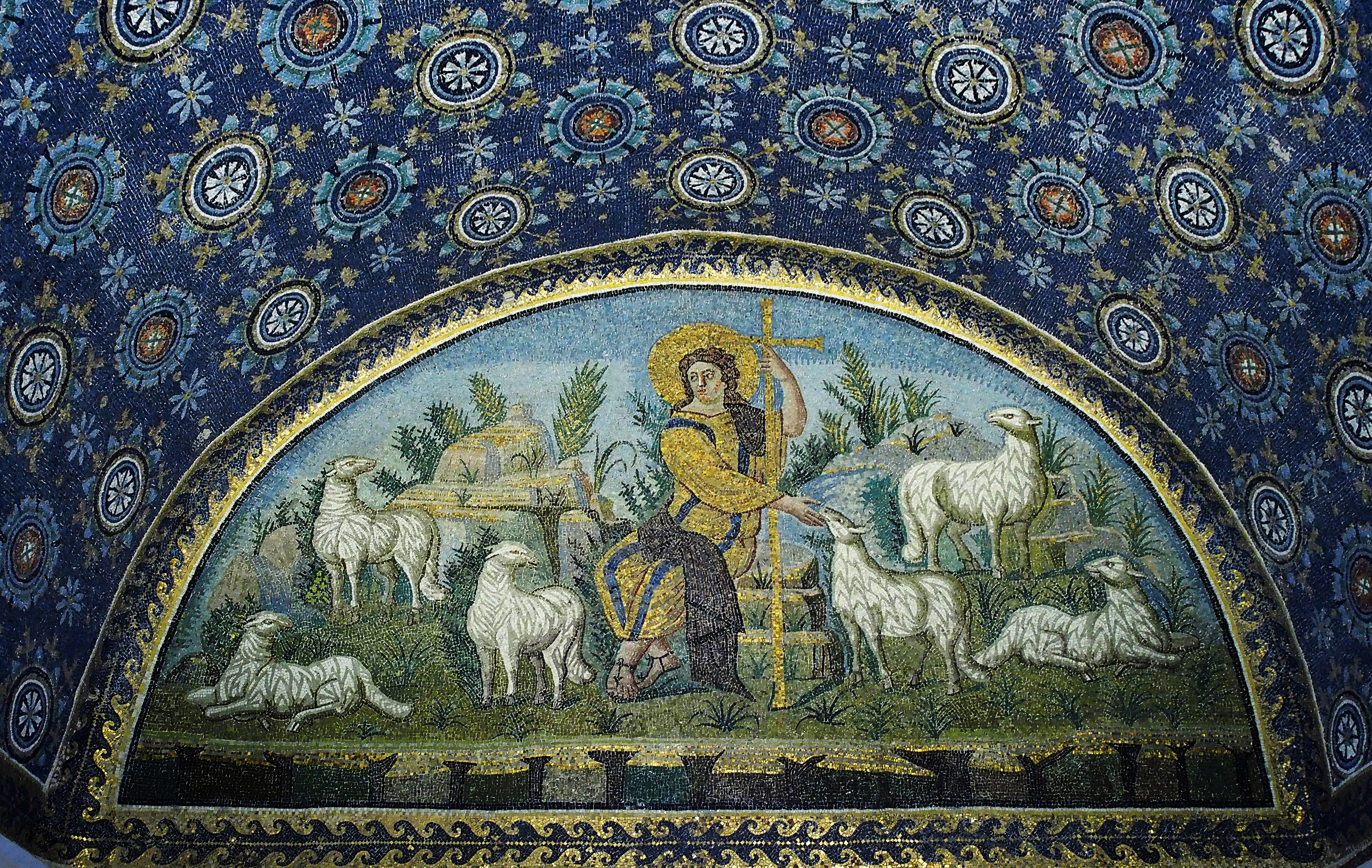
My all-time favorite research technique is the site visit. I have a dozen books on Constantinople and Ravenna with gorgeous pictures and incredible diagrams, but nothing beats walking the famed walls that lasted a thousand years, feeling the weather change when a storm blows in across the Black Sea, or seeing surviving frescoes and mosaics in fifth century buildings. I took the picture of this stunning mosaic in the Mausoleum of Galla Placidia in Ravenna, Italy. 

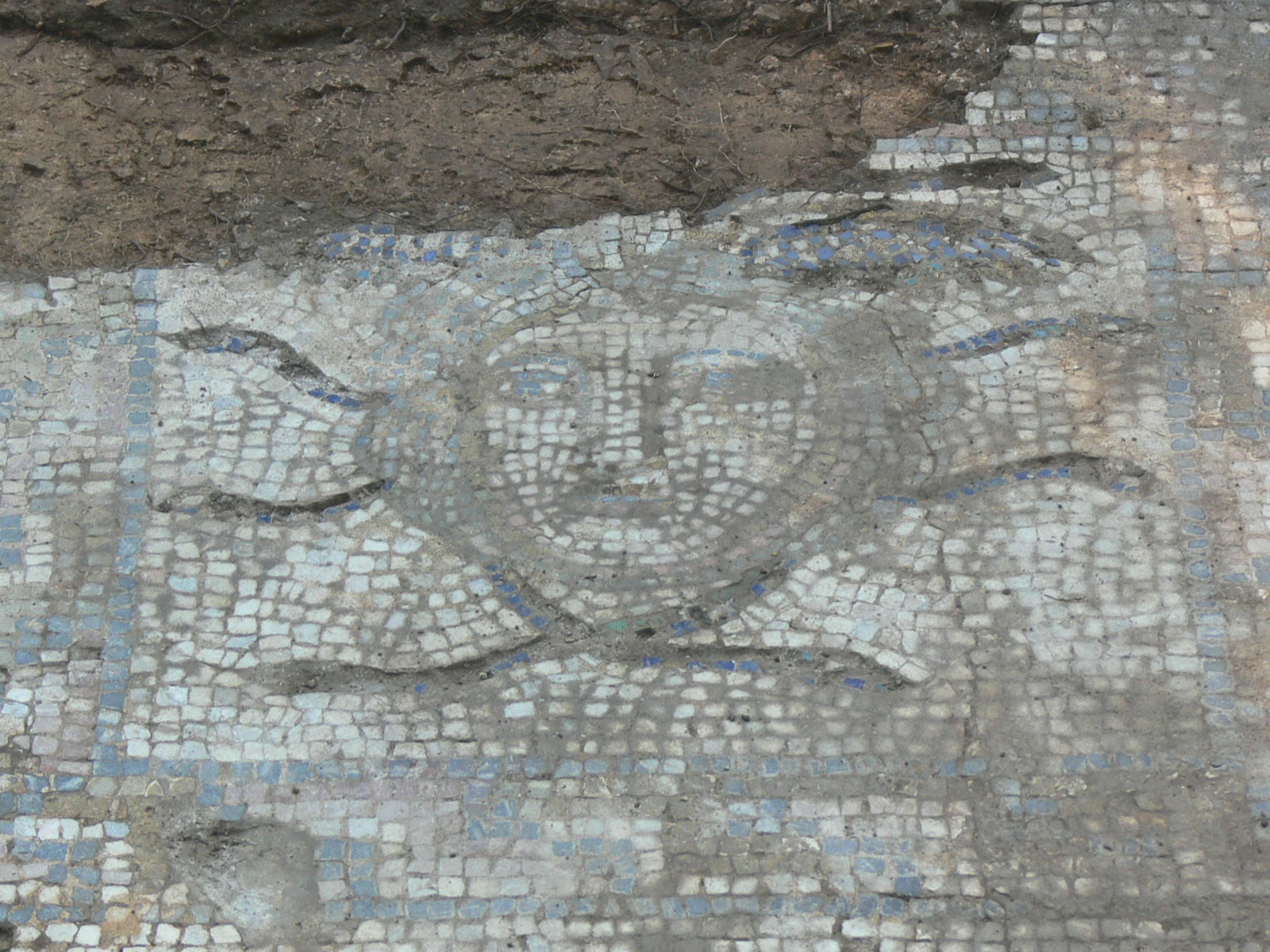
I also do hands-on history by volunteering at archaeological digs. While working on Hadrian’s Wall in the UK, I got to visit the Vindolanda Roman Fort and see rare correspondence of a young Roman soldier asking his mother to send him knitted socks for the winter, among many other everyday artifacts, such as a doll, grocery lists, and a birthday party invitation written by the wife of the commander. In Tuscany, I helped uncover and preserve a mosaic of Medusa (pictured below) at a dig of a first century Roman villa. All this fuels a sense of awe and respect for these ordinary people who are long gone, but still very human in their needs, which I hope comes through in my writing. 

Museums come in a close second for favorite personal research. We have world-class ones here in New York. I studied 5C Roman clothing, coins, art, and jewelry at the Metropolitan Museum of Art, giving me a motherlode of detail to enrich my stories. If this pandemic we’re living through has any upside, it’s that museums around the world have made their collections available online. We can now virtually visit special exhibitions, search collections, and order previously inaccessible images and books. But I’m looking forward to going back in person.

So that’s my research process—lots of reading and note taking, punctuated with museum trips, site visits, and archaeology digs (a.k.a. vacations). After living vicariously in the fifth century for twenty-five years, I have an extensive personal library, but I want to give a hearty shout out to all the research librarians who helped me over the years. For accuracy, I trust “Ask A Librarian” over a chat room on the internet any day. Support your local libraries. They are national treasures!

On a final note, my sincere thanks to MJ Porter for hosting me on this blog tour. It’s always a privilege to meet new readers. If any of you have questions about my research process or my books, feel free to get in touch through my website or other social media. I love to hear from people. Stay safe out there!

© Faith L. Justice 2021

Thank you so much for sharing. A pleasure to have you on the blog. Note for UK readers, JSTOR offers some free articles, and others can be purchased with a subscription package:)

Here’s the blurb;

As Rome reels under barbarian assaults, a young girl must step up.

After the Emperor’s unexpected death, ambitious men eye the Eastern Roman throne occupied by seven-year-old Theodosius II. His older sister Pulcheria faces a stark choice: she must find allies and take control of the Eastern court or doom the imperial children to a life of obscurity—or worse. Beloved by the people and respected by the Church, Pulcheria forges her own path to power. Can her piety and steely will protect her brother from military assassins, heretic bishops, scheming eunuchs and—most insidious of all—a beautiful, intelligent bride? Or will she lose all in the trying?

Dawn Empress tells the little-known and remarkable story of Pulcheria Augusta, 5th century Empress of Eastern Rome. Her accomplishments rival those of Elizabeth I and Catherine the Great as she sets the stage for the dawn of the Byzantine Empire. Don’t miss this “gripping tale” (Kirkus Reviews); a “deftly written and impressively entertaining historical novel” (Midwest Book Reviews). Historical Novel Reviews calls Dawn Empress an “outstanding novel…highly recommended” and awarded it the coveted Editor’s Choice.

Ebook/Paperback

Amazon UKAmazon USAmazon CAAmazon AU

Barnes & NobleWaterstonesKobo:  Apple Books

SmashwordsBooks A MillionScribd: 

Audiobook

AudibleiTunes

Nook AudiobookGoogle Play:  Kobo Audio

BingeBooksChirp: Scribd

Meet the Author

Faith L. Justice writes award-winning historical novels, short stories, and articles in Brooklyn, New York where she lives with her family and the requisite gaggle of cats. Her work has appeared in Salon.com, Writer’s Digest, The Copperfield Review, and many more publications. She is Chair of the New York City chapter of the Historical Novel Society, and Associate Editor for Space and Time Magazine. She co-founded a writer’s workshop many more years ago than she likes to admit. For fun, she digs in the dirt—her garden and various archaeological sites.

WebsiteTwitter:   Facebook:  

LinkedInInstagramAmazon Author Page:  

Goodreads:  

Don’t forget to check out the other stops on the Dawn Empress blog tour with The Coffee Pot Book Club.

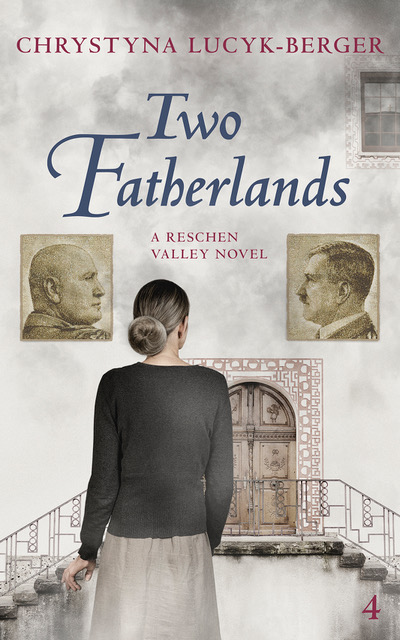
Welcome to today’s stop on the blog tour for Two Fatherlands by Chrystyna Lucyk-Berger

Today I’m delighted to welcome Chrystyna Lucyk-Berger and her new book, Two Fatherlands, to my blog, to answer a few questions about the research that went into writing her series.

This sounds like a wonderful book, merging historical fact with a compelling narrative. Can you explain your research process to me, and give an idea of the resources that you rely on the most (other than your imagination, of course) to bring the historical characters/or events to life? 

The research for this series was a journey unlike anything I will ever be able to share in the space available here. It was simply amazing. And daunting.

First, the process. I made the grave mistake of spending almost a decade researching my first novel on Ukraine in WW2, which ended being as much a novel as a documentary is a blockbuster action movie. I was trying to get a grasp on the sheer complexity of a world at war and I lost focus. So, after learning my lesson, I tackled the Reschen Valley series differently. I got the big picture, and had a rough idea of the lay of the land, so to speak, before I started writing. But even that took nearly five years before I could really get started because the majority of my resources were in German, and many more in Italian.

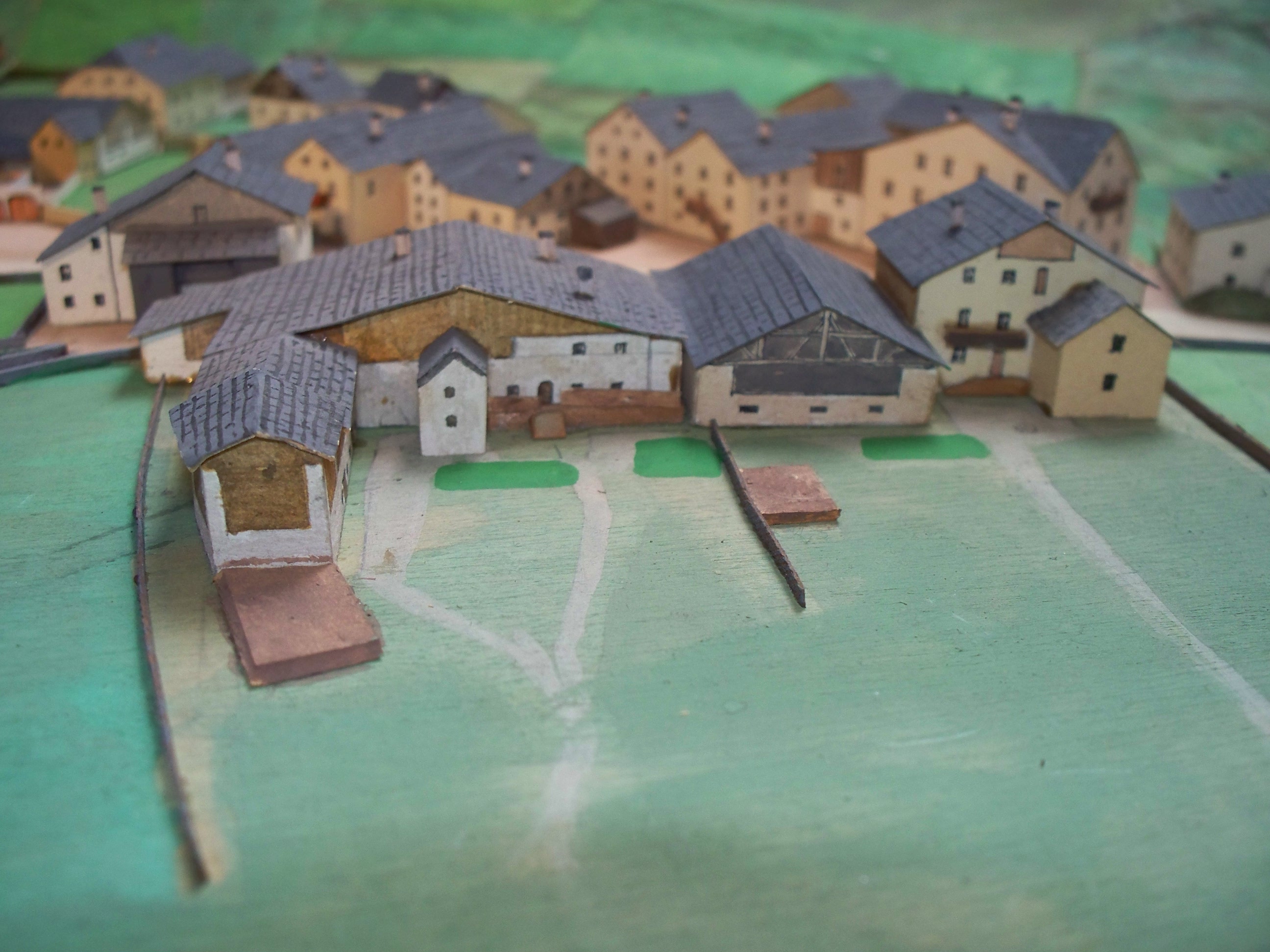
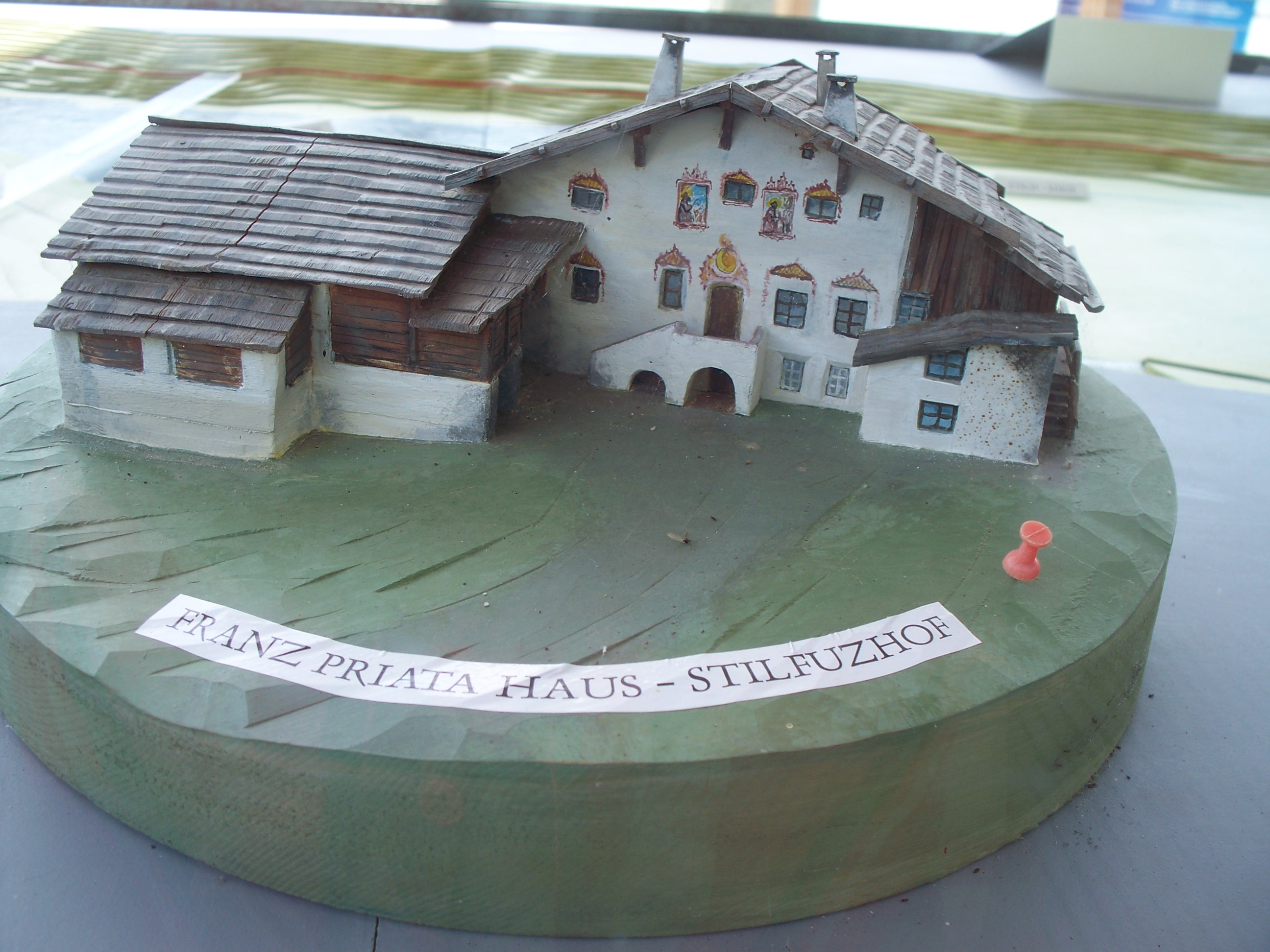
Model of the valley

The other extra challenge I made for myself was that I was a pantser. I did not outline and plot out my books in advance. It wasn’t until I was at Bolzano that I had learned to appreciate outlining and I have never looked back. By the time I started Two Fatherlands, which is the fourth book in the main series (excluding the prequel), writing was all about “what happens to my characters next and how do I get them all to meet up again?”. The historical events take a firm background in the series but they are integral to the plot. I chose specific “drivers” for the different parts of the story. From the beginning, Angelo’s father—Colonel Nicolo Grimani—was my Mussolini rep, steering the Fascist agenda that makes up the main conflict in the series. Therefore, it is Angelo’s story that serves as the catalyst for bringing the historical mile markers to the forefront.

Model of Reschensee Flooding

As I said, the main resources for my research were in German and Italian. I had the idea back in 2005 to write one book about the reservoir before I even started researching. That was before I had any idea how much was involved in the flooding of that valley! And nobody had really written about South Tyrol’s tragic history in English, except for one professor in Innsbruck whose work happened to have been translated thanks to an exchange program with an American university. The other was a Hungarian diplomat from the Sixties, who had written his memoirs about the South Tyrolean conflict in English. That was it! I had to learn German if I wanted to write this story. At the very least. Because the Italians had their own version…

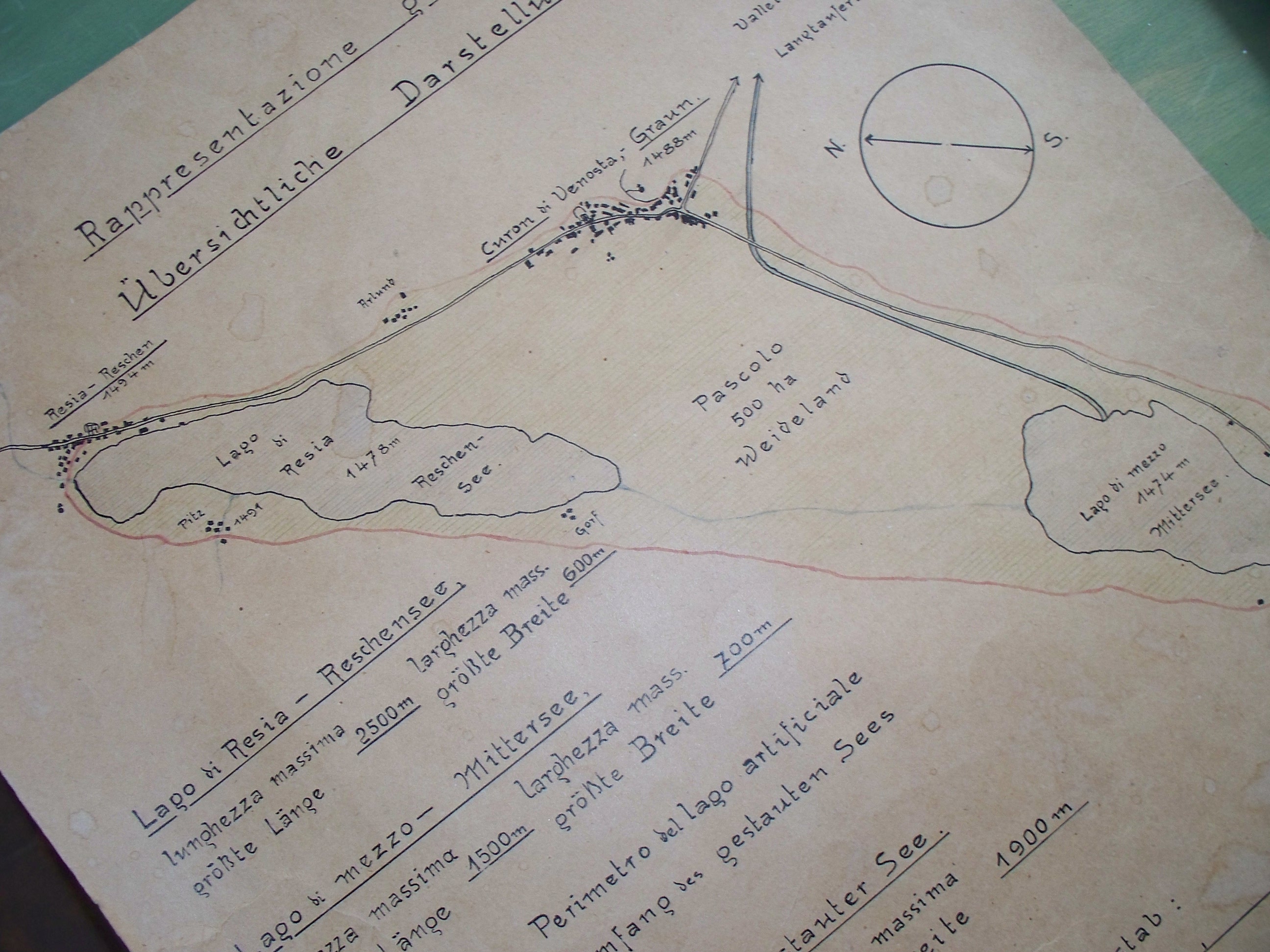
drawing of lakes area that was flooded

I live in Austria. I am one of those language learners who learns by doing. I was immersed in German, I visited South Tyrol at least three times a year (I live half-a-day’s drive away), I pulled up all my Latin language knowledge for the Italian and dug in, trying to interpret the foreign information. It took me over 10 years from the first idea to really getting a grasp on the materials. This was long before Google translator, long before DeepL. I was going with what I could and it was like putting together a million-piece jigsaw puzzle. I didn’t get to work until 2010 and gave myself exactly two weeks to plan my characters and timeline. By the end of the two weeks, I had a three-book series planned. NOT plotted, which eventually put me back quite a bit as well.

the Post Inn in the series Gasthof Trauben in real life

My greatest sources were a museum in Graun and the eye-witnesses whose accounts I recorded about the valley and the flooding in 1950. That was fantastic. One of them gave me three books: someone had gone through all the trouble of recording every single family, every house, drawing out every piece of equipment they used for farming and cooking and cleaning and living, getting down the heritage, culture and lifestyle of the valley into one book. That was amazing. I use a lot of photos when I do research. I also try to travel to the places I write about. It brings so much to life for me. Other than books and books and books, I got copies of the original letters written from the civil engineering department and the offers sent to the landowners with the ridiculous prices. I had logs of how many cows, sheep, goats, pigs, horses, acres, etc., each farmer had. I got images of the aerial maps. I used the models built by those in the Obervinschgau Valley (the real name of the Reschen Valley) who wanted to demonstrate the absolute annihilation of the valley. I panned the huge model of the towns and villages with a video camera like a filmmaker would. That does not mean I stayed true to all the facts. I put, for example, one of the rivers near Katharina’s farm because I loved the sound that river made and I felt it was important to have her near it. I adjusted the lay of the land and even made her farm up higher than it would have been, because I wanted her to have a bird’s eye view of the valley. There’s plenty I fictionalized, but much, much more that I did not and where I stayed authentic.

Eye witnesses to the flooding at the Gasthof Trauben the inspiration for Jutta Hannys Post Inn

Do you have a ‘go’ to book/resource that you couldn’t write without having to hand, and if so, what is it (if you don’t mind sharing)?

Yes, Felix Mitterer’s TV mini-series Verkaufte Heimat (Sold Homeland) was absolutely integral to my research. It provided me with plenty of inspiration and brought so much to life for me including clothing, colors, signage, how the rooms and buildings look, the feel and atmosphere, the body language differences when communicating. I study and train cross cultural communication, and so I am fascinated by how different cultures and personalities communicate; what we understand and what we meant to say, or not. I use these to concoct conflicts. By the time I’d seen the series though, I was already into the second book, The Breach, and had very similar storylines already happening based on anecdotes and eye-witness accounts from other research. 

South Tyrol in the 20th Century by Prof. Rolf Steininger and Schöne Welt, Böse Leut (Beautiful World, Evil People) by Claus Gatterer also provided me tons of material. Only about four years ago, I managed to get my hands on a doctoral thesis by Brigitte Mari Pircher specifically related to the Reschensee reservoir and the building of it. Suddenly I had all those pieces about the lake in one very compact, succinct and accessible book. She used a lot of the same resources as I had, but she because she is bilingual, she had suddenly given me access to the Italian materials as well in German, which I am fluent in now. So that was exceptionally helpful. But I’ll tell you one thing, if I hadn’t at least mastered German, this would have been a difficult story to get down.

Typical South Tyrolean Hof

A couple of years ago, a South Tyrolean publisher expressed interest in translating the series. I got a ten-page questionnaire about the research and got corrected on five or six things that I had in the books (which I changed immediately) but 95% of what I confirmed and explained was spot on. It turned out that the translation costs were too high for them. Which is sad, because since then a lot of interest has been drummed up about the reservoir by both German and Italian authors, documentary filmmakers and even a Netflix series has been filmed on the Reschensee.

On a personal note, as a child I read all of the Chalet School books (they were old then), and this sounds like it follows some similar threads. I was enthralled when they had to escape from the Tyrol.

I just looked that up. That’s amazing. Sounds like the kind of series I would have devoured when I was younger!

Thank you so much for sharing your research with me. It’s fascinating.

Intrigued?

Here’s the blurb;

It’s a dangerous time to be a dissident…

1938. Northern Italy. Since saving Angelo Grimani’s life 18 years earlier, Katharina is grappling with how their lives have since been entwined. Construction on the Reschen Lake reservoir begins and the Reschen Valley community is torn apart into two fronts – those who want to stay no matter what comes, and those who hold out hope that Hitler will bring Tyrol back into the fold.

Back in Bolzano, Angelo finds one fascist politician who may have the power to help Katharina and her community, but there is a group of corrupt players eager to have a piece of him. When they realise that Angelo and Katharina are joining forces, they turn to a strategy of conquering and dividing to weaken both the community and Angelo’s efforts.

Meanwhile, the daughter Angelo shares with Katharina – Annamarie – has fled to Austria to pursue her acting career but the past she is running away from lands her directly into the arms of a new adversary: the Nazis. She goes as far as Berlin, and as far as Goebbels, to pursue her dreams, only to realise that Germany is darker than any place she’s been before.

Angelo puts aside his prejudices and seeks alliances with old enemies; Katharina finds ingenious ways to preserve what is left of her community, and Annamarie wrests herself from the black forces of Nazism with plans to return home. But when Hitler and Mussolini present the Tyroleans with “The Option”, the residents are forced to choose between Italian and German nationhood with no guarantee that they will be able to stay in Tyrol at all!

Out of the ruins of war, will they be able to find their way back to one another and pick up the pieces?

This blockbuster finale will keep readers glued to the pages. Early readers are calling it, “…engrossing”, “…enlightening” and “…both a heartbreaking and uplifting end to this incredible series!”

Universal Link Amazon Barnes and Noble 

Indigo Kobo iBooks  Mondadori  Angus & Robertson

Meet the Author

Chrystyna Lucyk-Berger is an American author living in Austria. Her focus is on historical fiction. She has been a managing editor for a magazine publishing house, has worked as an editor, and has won several awards for her travel narrative, flash fiction and short stories. She lives with her husband in a “Grizzly Adams” hut in the Alps, just as she’d always dreamt she would when she was a child.

Website • Facebook • Twitter • Instagram • LinkedIn • Goodreads • Amazon Author Page • BookBub

Don’t forget to check out the other stops on the Two Fatherlands blog tour from The Coffee Pot Book Club