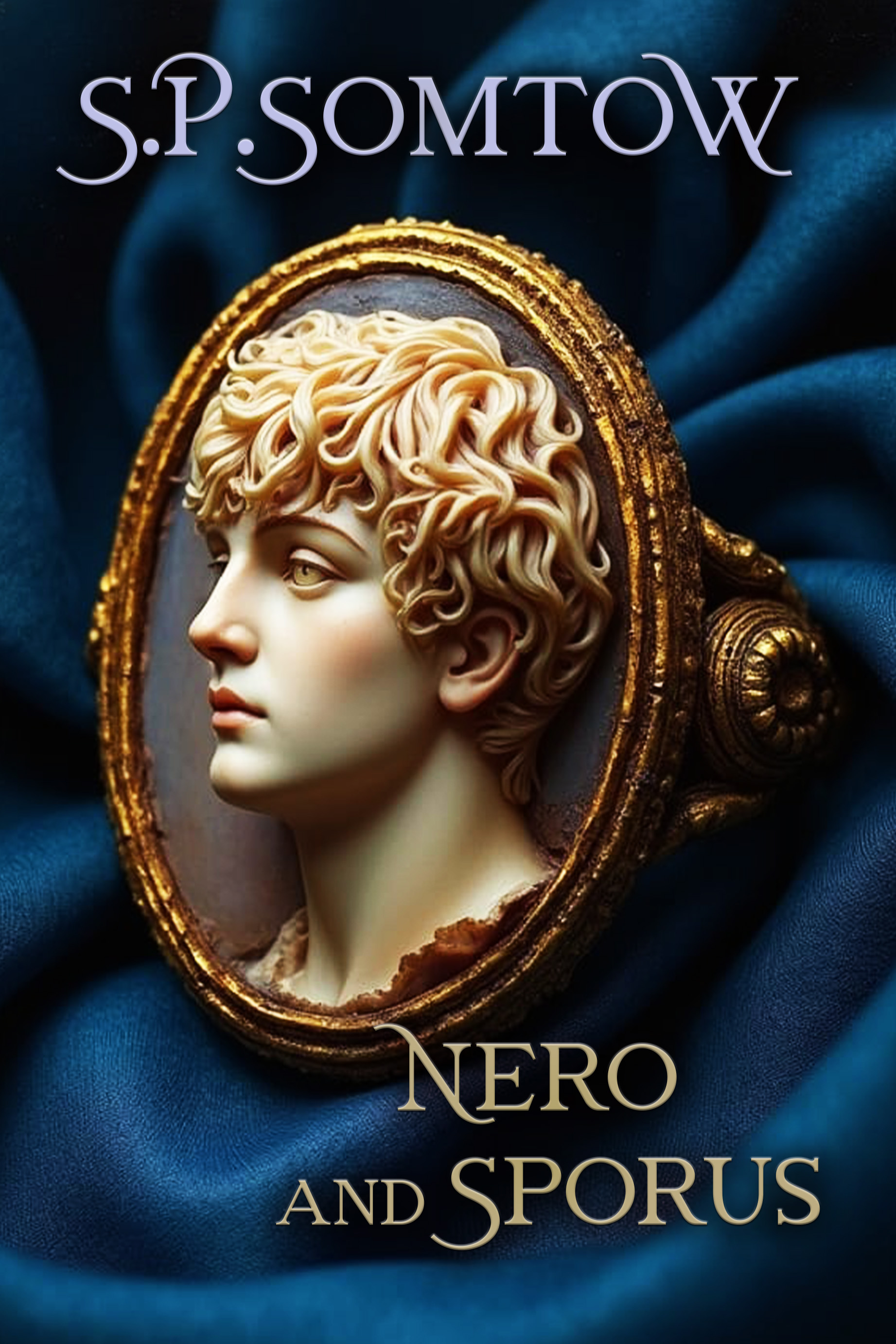
It’s happy release day to Betrayal of Mercia, so I’m sharing a post about Crime and Punishment in Saxon England

Here’s the blurb

A King in crisis, a Queen on trial, a Kingdom’s survival hangs in the balance.

Londonia, AD835
The deadly conspiracy against the children of Ealdorman Coenwulf is to be resolved. Those involved have been unmasked and arrested. But will justice prevail?

While the court convenes to determine the conspirator’s fate, King Wiglaf’s position is precarious. His wife, Queen Cynethryth, has been implicated in the plot and while Wiglaf must remain impartial, enemies of the Mercia still conspire to prevent the full truth from ever being known.

As Merica weeps from the betrayal of those close to the King, the greedy eyes of Lord Æthelwulf, King Ecgberht of Wessex’s son, pivot once more towards Mercia. He will stop at nothing to accomplish his goal of ending Mercia’s ruling bloodline.

Mercia once more stands poised to be invaded, but this time not by the Viking raiders they so fear.

Can Icel and his fellow warriors’ triumph as Mercia once more faces betrayal from within?

An action packed, thrilling historical adventure perfect for the fans of Bernard Cornwell and Matthew Harffy

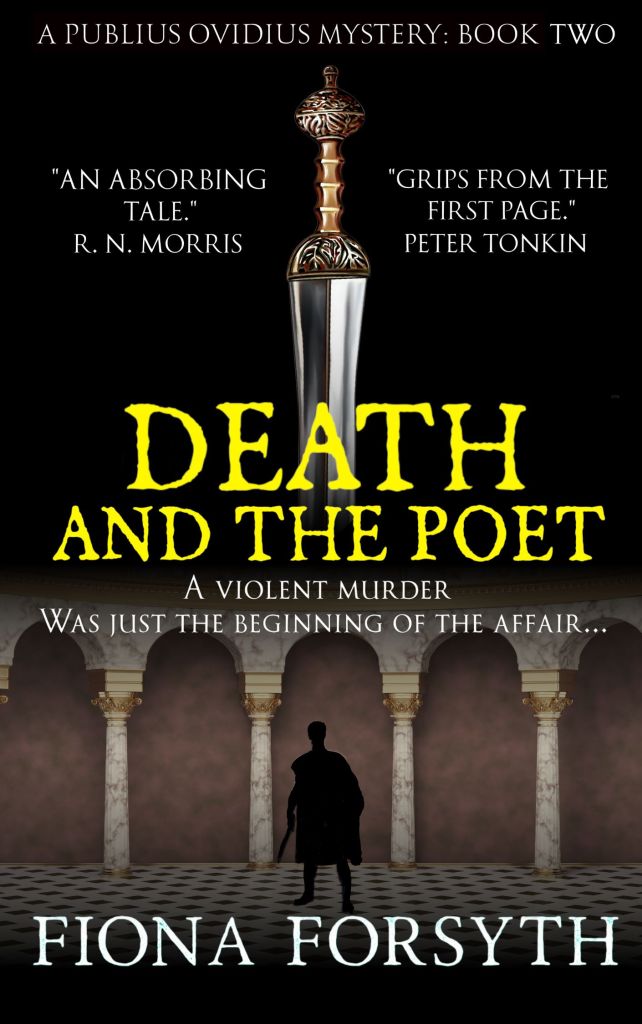
Image showing the cover for Betrayal of Mercia with a sword in the background

Here’s the purchase link (ebook, paperback, hardback and audio)

books2read.com/BetrayalofMercia

Crime and Punishment in Saxon England

In Betrayal of Mercia, the seventh book in the Eagle of Mercia Chronicles featuring young Icel, I’ve done something that I don’t ‘think’ anyone else has done before. I’ve staged a criminal trial, making Betrayal part court-room drama and part action-thriller (you know Icel is always going to end up in a fight at some point). However, there are odd things about Saxon England that we have no information about – one of them is how often people actually went to church once Christianised, another is exactly how the law was enacted.

This might seem like an odd thing to say. Everyone knows there are surviving law codes from the era, especially from the eleventh century, with the inspiring names of Æthelred I or Cnut II, and indeed, the earliest law code dates back to Ine, in the seventh century, from which we can glean such titles as Wealas or foreigner, but applied to the Welsh, who had different wergild payments and punishment from the Saxons. But, there has long been an argument about how much these law codes reflect practise as opposed to an ideal. And some of the elements we ‘think we know’ turn out to be on much less steady ground. And, at the heart of all this is a problem with our current perceptions of ‘right,’ ‘wrong,’ and ‘justice.’ We ‘appear’ to look at these elements of our current legal system in a way very different to the era. 

When studying what records we do have, we’re greeted with some interesting terms. ‘Thereafter there would be no friendship,’ appears in a charter detailing a land dispute in the later tenth century – between Wynflæd and Leofwine (S1454 from 990 to 992). In this, despite whoever was in the wrong or the right, the decision was made which was something of a compromise – both injured parties had to make concessions. No one truly ‘won’, even though Wynflæd had many who would speak on her behalf, including the king’s mother, and the Archbishop of York, and had appealed directly to the king, Æthelred II, for assistance, only for Leofwine to refuse to attend his summons saying that royal appeals couldn’t precede a regional judgement on the matter.

In the famous case of Lady Eadgifu of Wessex (recorded in charter S1211), the mother of Kings Edmund and Eadwig (who features in the Brunanburh series), her landholdings at Cooling required the intervention of her husband, stepson, son and grandson, in a long-running debacle which was never really resolved until her grandson intervened close to the end of her life. Even though she appears to have held the ‘landboc’ – the title deed for the land – and was a highly regarded member of the royal family, this wasn’t enough to stop counterclaims. In the end, she assigned the land to the Christ Church religious community, and that way, no one actually benefitted apart from the church.

These cases both refer to land disputes, which are one of the larger areas of document survival, along with wills. But what about crimes visited against the king’s mund (both his physical person and his physical kingdom)? Here, we’re again confronted with little knowledge. We know of ealdormen being banished (under Æthelred II) and this attests to another element of the practise of law which is perhaps surprising. There does seem to have been an aversion to capital punishment (as Rabin details in his book mentioned below). And there was also a concern that the right sentence was handed to individuals – it was as bad to incorrectly punish as it was to have committed the crime.

In trying to stage a trial set in the Saxon period (which I now realise was a bit bonkers), I’ve relied heavily on a very short book, Crime and Punishment in Anglo-Saxon England by Andrew Rabin, and also his translations of the Old English Legal Writings by (Archbishop) Wulfstan (from the 1000s), from which I’ve determined how many oath-helpers people must have based on the Mercian Wergild listed within the source documents. This suggests the value placed on individuals – the king, of course, being at the top. Each individual had a wergild value and equally, each individual had a required value for the number of oath-helpers who would stand as surety for them if asked to detail what they had ‘seen and heard’ in a trial situation. The implication being that those who needed the least oath-helpers were more trustworthy than those who needed many – so a king might need no one, after all, he was the king, whereas a warrior might need a few, and a ‘normal’ person might need many.

This feels like a very different world to the one we ‘know,’ where transgressions are punished by custodial sentences and fines and where the burden of proof rests on the shoulders of those prosecuting the alleged offenders.

It has certainly been an interesting experiment, and one I hope readers will enjoy, and more importantly, one which I’ve managed to convey largely ‘correctly.’


I’ll also be sharing more posts, including one on Mercia’s ‘Bad Queens,’ and one on the maps in the books.


Not started the series yet? Check out the series page on my blog.


Check out the blog tour for Betrayal of Mercia

A huge thank you to all the book bloggers and Rachel at Rachel’s Random Resources for organising.

It’s happy release day to Betrayal of Mercia, so I’m sharing a post about Mercia’s alleged ‘Bad Queens.’

Here’s the blurb

A King in crisis, a Queen on trial, a Kingdom’s survival hangs in the balance.

Londonia, AD835
The deadly conspiracy against the children of Ealdorman Coenwulf is to be resolved. Those involved have been unmasked and arrested. But will justice prevail?

While the court convenes to determine the conspirator’s fate, King Wiglaf’s position is precarious. His wife, Queen Cynethryth, has been implicated in the plot and while Wiglaf must remain impartial, enemies of the Mercia still conspire to prevent the full truth from ever being known.

As Merica weeps from the betrayal of those close to the King, the greedy eyes of Lord Æthelwulf, King Ecgberht of Wessex’s son, pivot once more towards Mercia. He will stop at nothing to accomplish his goal of ending Mercia’s ruling bloodline.

Mercia once more stands poised to be invaded, but this time not by the Viking raiders they so fear.

Can Icel and his fellow warriors’ triumph as Mercia once more faces betrayal from within?

An action packed, thrilling historical adventure perfect for the fans of Bernard Cornwell and Matthew Harffy

Image showing the cover for Betrayal of Mercia with a sword in the background

Here’s the purchase link (ebook, paperback, large print, hardback and audio)

books2read.com/BetrayalofMercia

Mercia’s ‘Bad Queens’

There is a scene in Betrayal of Mercia where our favourite healer, Wynflæd, speaks to young Icel about her experiences of ‘bad queens,’ referencing three women in almost living memory deemed as ‘bad’, certainly many years after their deaths, if not quite by the 830s, when the scene takes place. These women were the wife of King Offa, his daughter, Eadburh, and the daughter of King Coenwulf (796-821), Cwenthryth. Indeed, this collection of bad queens, especially the sister of Queen Cynethryth, have been cited as the reason why Wessex was so slow to adopt the term. But, was everything as it appears, or are these reputations a later tradition?

The daughter of King Offa (757-796), Eadburh was married to the king of the West Saxons, Beorhtric. In the words of the later Asser, who wrote at the end of the 890s, she’s accused of poisoning her husband to death while trying to actually poison one of his disloyal followers. Interestingly, the man who became king after Beorhtric was King Ecgberht of Wessex, who features in the Icel stories, and in turn, it was his grandson who commissioned Asser to write his life which tarnishes the reputation of Eadburh. 

Cynethryth, the wife of King Offa, was a powerful woman in her own right, and the only preconquest queen known to have minted coin showing her own name. In later centuries, her name became associated with the murder of a king of the East Angles, and she was involved in a long-running land dispute with the archbishop of Canterbury.

A penny depicting Cynethryth, the wife of King Offa
Classical Numismatic Group, Inc. http://www.cngcoins.com, CC BY-SA 3.0 http://creativecommons.org/licenses/by-sa/3.0/, via Wikimedia Commons

Cwenthryth, the daughter of King Coenwulf, became associated with the murder of her brother, Cynehelm/Kenelm. The later, Anglo-Norman histories inform that.

‘At Winchcombe you will read of the secret martyrdom of Kenelm. He was the son of Cenwulf, [Coenwulf] the Mercia king, who died in the year of grace 819, having reigned for twenty-four years. The martyrdom of his son Kenelm was revealed from heaven to Pope Silvester II at Rome.’p691 Henry, Archdeacon of Huntingdon, Historia Anglorum, The History of the English People

While The Chronicle of John of Worcester extends this recording for  the year, ‘[819] St Cenwulf, king of the Mercians, after a life devoted to good deeds, passed over to the eternal blessedness which is in heaven, and left his 7-year-old son St Kenelm heir of his realm. But when a few months had passed, by the treachery of his own sister Cwenthryth, whose cruel spirit had been roused by an awful lust for power, he was secretly done to death with cruel outrage by Æscberht, his most bloodthirsty tutor, in the shade of a thorn tree in a deserted wood.’ P239-241

Winchcombe Nunnery was founded by Cwenthryth’s father, and the family were therefore invested in the religious establishment, although whether enough to kill one of their own to have him venerated as a saint, does seem doubtful. The identity of St Kenelm is very much contested, although it is believed that Cynehelm did live, and died before his father, which led to Coelwulf, the first of his name, and Coenwulf’s brother, becoming King of Mercia when his brother died..

This is the scene from Betrayal, where Wynflæd shares the gory knowledge she knows, and perhaps, hints at her approval for such strong-minded women that they could become associated with such dark deeds. 

‘Mercia hasn’t fared well with the women wed to their kings.’ A soft cackle. ‘Or the children born between a king and a queen. Wigmund’s merely the most current of many disappointments. Lord Coenwulf there, his father became king because his brother’s daughter killed her brother.’

‘I thought that was a lie,’ I countered.

‘That’s how King Coenwulf had it reported. It was all true though. I didn’t witness it, but I know of others who did.’

‘What, watched her kill her brother?’

‘No, witnessed the king speak of it, to a select few. And before her, Offa’s wife also had blood on her hands, as did Offa’s sister.’

I shuddered at the thought. ‘Why?’

‘A woman must live by her wits, and safeguard her future, for fear she’ll be locked up tight in a nunnery, with no means of engaging with the world at large. Think of Lady Cynehild.’ Wynflæd met my searching gaze then. ‘She remarried, and meddled where she shouldn’t have done. Admittedly, she stopped far short of murdering anyone.’

‘So, the king should have expected this then?’ I was astounded.

‘Maybe. He married her.’ Wynflæd cackled softly. ‘A man may wed a woman for her title, and lands. A woman may divorce a man. But better to have him dead, and then take his place. A grieving woman will have the sympathy of others. A widow has more freedom than a wife.’

‘You almost sound like you approve.’

‘I do not,’ she countered, but her eyes glittered.


Wynflæd is a stalwart of the series, and I was recently inspired to write a short story from her point of view regarding Mercia’s alleged ‘bad queens.’ If you’d like to read it, sign up for my newsletter and I’ll send you a link to download the story. And, you automatically receive a free short story collection as well.


I’ll also be sharing more posts, including one on Saxon Crime and Punishment and one on the maps in the books.


Check out the blog tour for Betrayal of Mercia

A huge thank you to all the book bloggers and Rachel at Rachel’s Random Resources for organising. Some of these amazing people have been with Young Icel throughout the entire series, and I am so grateful they are so keen to read, they sign up for the blog tour:)

Check out the reviews for Betrayal of Mercia

Bookish Jottings

Sharon Beyond the Books

Storied Conversation

David’s Book Blurg

Banner showing3 blogger review quotes from the Betrayal of Mercia blog tour.

Novel Kicks

Ruins & Reading

The Strawberry Post

Aibibyreads

Book banner showing review quotes from the blog tour for Betrayal of Mercia organised by Rachel's Random Resources.

Listen to the audiobook, narrated by Sean Barrett.

Posts

2024 – A Reading Year in Review

I did attempt to share my reading each month on Instagram, but it was a lot of work, and so it fell somewhat by the by as the year progressed. So, let’s get into the nitty gritty details of what I did read in 2024.

Goodreads tells me I’ve read 105 books this year. Unlike other years, I’ve not included my own books in this, which get read repeatedly while writing and editing.

Eleven of these titles were audio books. Now, these are all the Terry Pratchett Discword audios (the new ones), and in fact, I’ve listened to most of them repeatedly, but I stopped popping them on Goodreads because otherwise, everyone would see how often I relisten to them. My favourites are The Witches books which Indira Varma has narrated. Of those, my favourites are Wyrd Sisters, Masquerade and Lords and Ladies. Indira Varma makes these characters sparkle and they really come alive for the listener. Check them out if you’ve not tried them before. Admittedly, to read them in order you start with Equal Rites, which isn’t my favourite but it does introduce the reader to Granny Weatherwax.

I have two most-read categories, which probably won’t surprise anyone, cosy mysteries, coming in with twenty-three titles, and historical fiction with twenty-two titles. The cosy mysteries are often series, which I read as they’re released. Top authors in my ‘most-read’ for the year are TA Williams and his Armstrong and Oscar cosy crime series set in contemporary Italy, Helen Golden’s Right Royal Cosy Mystery series, Judy Leigh’s Morwenna Mutton mysteries and EV Hunter’s Hopgood Murder Mystery series.

The historical fiction tends to be a litte more varied. I have favourite authors that I will always try and read including JC Duncan, Simon Turney (and all his variations), Donovan Cook, Adam Lofthouse and Anne O’Brien.

Historical mysteries comes third on the list, with fifteen titles. My favourite authors here have been Sarah Hawkswood (I read six titles by her this year. It’s always good to get time to catch up on titles I’ve missed), Elizabeth R Andersen, Michelle Salter, Anita Davison, Holly Hepburn and Kelly Oliver. I adore a good historical mystery, and hope to read more by Emily Organ, who I’ve only just discovered, and who has written a few series now.

There are ten titles I’m classifying as ‘action’ although some of them weren’t and some of them might also fit in other categories. I’ve included the new Harlan Coben Myron Bolitar book in this category. My review for this book has been my most visited blog page this year, which made me chuckle. But, it’s good to know I’m not the only one demanding more titles featuring Myron and Wyn.

Eight titles were historical romance, with Jane Dunn and her Regency Romances taking the ‘most read author’ spotlight for that category. I do love a good Regency romance.

There were also six romance titles, five nonfiction titles, three sci fi titles and two fantasies (I’ve not included the Discword audios as they’re in my audio count). Hopefully, that all adds up to 105 titles.

For nonfiction, I’ve been reading about the Tudors, diving into Eating with The Tudors, and How to Dress Like a Tudor – both fascinating insights into areas I rarely consider because I’m always thinking about historical events and not as much about how people lived but the ‘lived’ experience is just as important and I’ve been endeavouring to explore this for my Saxon stories – visiting places, learning Saxon embroidery and taking part in a Roots herbal day.

The final non-fiction title was Sarah Gristwood’s Secret Voices: A Year of Women’s Voices which was fascinating, and quite addictive reading. I highly recommend it if only to discover the fab little diary entry about the curse of zips:) I reviewed the title for Aspects of History so you should be able to find my review over there.

I’ve also half-read many other titles (apologies to those authors), and I’m always dipping a toe into nonfiction titles. One of my favourites this year has been After Rome by Robin Fleming, which is fabulous and I must finish, but is sadly only available as a paperback, and my Kindle version of The Reigns of Edmund, Eadred and Eadwig is essentially ALL highlighted. It was such a timely release as I was concluding the Brunanburh Series.

I’ve been sharing some of my favourite reads of the year with Aspects of History and also Shepherd books, but do I have an absolute favourite? I’m not sure, but there were a few books I devoured in as few sittings as possible, and this is often a sign of a book that entirely draws you in. For me that was The Portrait Artist by Dani Heywood-Lonsdale due for release in February 2025 (I don’t like the cover so don’t be put off by it), and also Susie Dent’s Guilty by Definition. I also adored Arden by GD Harper, which wasn’t always an easy read, but certainly engrossed me.

I’m very much a ‘mood’ reader. Sometimes I pick up titles outside my usual genres just for a change and sometimes I don’t always enjoy books in my usual genre at first and so pop them down with the hope I’ll return to them at some point in the future. I find there’s nothing better than reading a really fun book over the weekend when I can devote more time to reading than writing. So, sometimes my choices can seem a bit wayward, but then, everyone has their own tastes, and it’s good to read outside your favourite genres from time to time.

For 2025, I’m looking forward to the new Max Adams book about Mercia, due for release in Feb 2025, and I must find time to finally finish the Uhtred books by Bernard Cornwell (I refused to read it while I was working on the Brunanburh series), and I also need to catch up with Mark Lawrence’s Library Trilogy, of which I have three copies of the second title but still haven’t read it. I will continue to read historical fiction, historical mysteries and cosy crime, and anything else that takes my fancy. In doing so, I will support my fellow Boldwood authors, my author buddies (which is a growing list of must-reads) and those authors whose books I’ve been reading for years and keep returning to, time and time again, including the Discworld titles. At this point, I am thinking I should write some fan fiction but I won’t risk it:)

Here’s to 2025 and all the reading I hope to enjoy. And a thank you to all my readers too and those who visit the blog to follow my reviews.

It’s happy release day to The Last Deceit, book 10 in The Last King series, so I’m sharing a blog post about my decision to include a fictional character

Here’s the blurb

Deceit and ambition threaten to undo the most fragile alliance.

King Coelwulf of Mercia has unwillingly accepted the need to ally with the kingdom of Wessex under the command of King Alfred. But King Alfred of Wessex must still prove himself, and Coelwulf can’t remain absent from Mercia indefinitely.

Returning to London, a place holding more fascination for the West Saxons and the Viking raiders than Coelwulf and his fellow Mercians, Coelwulf sets about reinforcing the walled settlement so long abandoned by all but the most determined traders. But Coelwulf knows Jarl Guthrum has set his eyes on Canterbury, and he must protect the archbishop in Kent, nominally under the control of the West Saxon king, even if King Alfred is no warrior.

But deceit and lies run rife through the West Saxon camp and when Coelwulf believes he’s held to his oaths and alliances, an unexpected enemy might just sneak their way into Mercia. The future of Mercia remains at stake.

Purchase Link

https://www.amazon.co.uk/Last-Deceit-England-action-packed-historical-ebook/dp/B0DK3J8JVK

Available in ebook, paperback, hardback and the Clean(er) Editions, with much of the swearing removed.

The Last Deceit also includes a new short story.


If you’ve not discovered The Last King/The Mercian Ninth Century Series, then please check out the Series page on the blog.


Ealdorman Sigehelm and Cooling

In The Last Deceit, I’ve included a fictional character called Ealdorman Sigehelm, who is based on a later individual that we know existed, the father of Lady Eadgifu, third wife of Edward the Elder. (By based I mean I borrowed his name and landholding).

I’ve done this because it’s fun to play around with the information I’ve learned about later in the era. It’s often one of the biggest problems in writing historical fiction. You need to know what happens before the events you’re writing about, as well as what comes after, as well as the actual events you’re depicting. And Cooling, in Kent, has an incredibly detailed history throughout the later tenth century, which we know about because of a remarkable charter. The text of which is below (it’s quite long.)

‘Eadgifu declares to the archbishop and the community of Christ Church how her estate at Cooling came [to her]. That is, that her father left her the estate and the [land]book, just as he legally acquired them and his ancestors had bequeathed to him. It happened that her father borrowed thirty pounds from Goda, and entrusted the estate to him as security for the money. And [Goda] held it for seven ‘winters’. When it came about, at around this time, that all the men of Kent were summoned to the battle at the Holme, Sighelm [Sigehelm], her father, did not want to go to the battle with any man’s account unpaid, and he repaid Goda the thirty pounds and he bequeathed the estate to his daughter Eadgifu and gave her the [land]book. After he had fallen in the battle, Goda denied the repayment of the money, and withheld the estate until six years later. Then Byrhsige Dyrincg claimed it unceasingly for so long, until the Witan of that time commanded Eadgifu that she should purge her father’s possession by [an oath equivalent to] that amount of the money. And she produced the oath in the witness of all the people at Aylesford, and there purged her father’s repayment by an oath of thirty pounds. Then she was still not able to possess the estate until her friends obtained from King Edward [the Elder] that he prohibited him [Goda] the estate, if he wanted to possess any [at all]; and so he gave it up. Then it happened in the first place that the king so strongly blamed Goda that he was deprived of all the [land] books and property, all that he owned. And the king then granted him and all his property, with [land] books and estates, to Eadgifu to dispose of as she wished. Then she said that she did not dare before God to pay him back as he had deserved of her, and she restored to him all his land except the two sulungs at Osterland, and she refused to give back the [land] books until she knew how loyally he would treat her in respect of the estates. Then, King Edward died and Æthelstan [Athelstan] succeeded to the kingdom. When Goda thought it an opportune time, he sought out King Æthelstan and begged that he would intercede on his behalf with Eadgifu, for the return of his [land] books. And the king did so. And she gave back to him all except the [land] book for Osterland. And he willingly allowed her that [land] book and humbly thanked her for the others. And, on top of that as one of twelve he swore to her an oath, on behalf of those born and [yet] unborn, that this suit was for ever settled. And this was done in the presence of King Æthelstan and his Witan at Hamsey near Lewes [Sussex]. And Eadgifu held the land with the landbooks for the days of the two kings, her sons [i.e., Edmund and Eadred]. When Eadred died and Eadgifu was deprived of all her property, then two of Goda’s sons, Leofstan and Leofric, took from Eadgifu the two afore-mentioned estates at Cooling and Osterland, and said to the young prince Eadwig who was then chosen [king] that they had more right to them than she. That then remained so until Edgar came of age and he [and] his Witan judged that they had done criminal robbery, and they adjudged and restored the property to her. Then Eadgifu, with the permission and witness of the king and all his bishops, took the [land] books and entrusted the estates to Christ Church [and] with her own hands laid them upon the altar, as the property of the community for ever, and for the repose of her soul. And she declared that Christ himself with all the heavenly host would curse for ever anyone who should ever divert or diminish this gift. In this way this property came to the Christ Church community.’ S1211[i]

To explain:

Dating to around 959, the document provides the ownership history of an estate at Cooling in Kent. Eadgifu had inherited this land from her father, who had mortgaged it for a loan of £30, which he repaid before going on the campaign on which he died. However, Goda, the man who had made the loan, claimed not to have received payment and proceeded to take practical ownership of the estate. While Eadgifu retained the landbook, or freehold record, and tried various means of asserting her ownership, it was not until Edward the Elder intervened, presumably after their marriage, that the matter was resolved to some degree. Edward seized not only the estate in question but all Goda’s lands, handing their ownership and administration over to Eadgifu. The charter indicates that Eadgifu acted magnanimously, giving almost all of these back to Goda, though her primary consideration was likely to avoid creating a powerful political enemy. Sensibly, however, she retained possessions of the landbooks to ensure Goda’s loyalty, as well as a small estate at Osterland, in addition to her hereditary holdings at Cooling. The matter was fully resolved in Æthelstan’s [Athelstan] reign when the king interceded with Eadgifu on Goda’s behalf. Eadgifu returned the landbooks, but retained the estates at Osterland and Cooling, while Goda swore an oath in Æthelstan’s presence declaring that he considered the matter to be closed … Eadwig seized his grandmother’s landholdings and, in the case of the Cooling and Osterland estates, turned them over to Goda’s sons … After Eadwig’s death in 959, Edgar restored his aging grandmother’s possessions.[ii]

It’s unusual to have so much detail about a landed estate, and so, when I took Coelwulf and his allies to Kent in The Last Deceit, I couldn’t resist embroidering this character into the tale. I imagine you can see why. To read more about Lady Eadgifu, check out The Royal Women Who Made England.


[i] Sawyer, P.H. (ed.), Anglo-Saxon charters: An annotated list and bibliography, rev. Kelly, S.E., Rushforth, R., (2022). http://www.esawyer.org.uk/ S1211

[ii] Firth, M. and Schilling, C. ‘The Lonely Afterlives of Early English Queens’, in Nephilologus September 2022, https://doi.org/10.1007/s11061-022-09739-4, pp.8–9

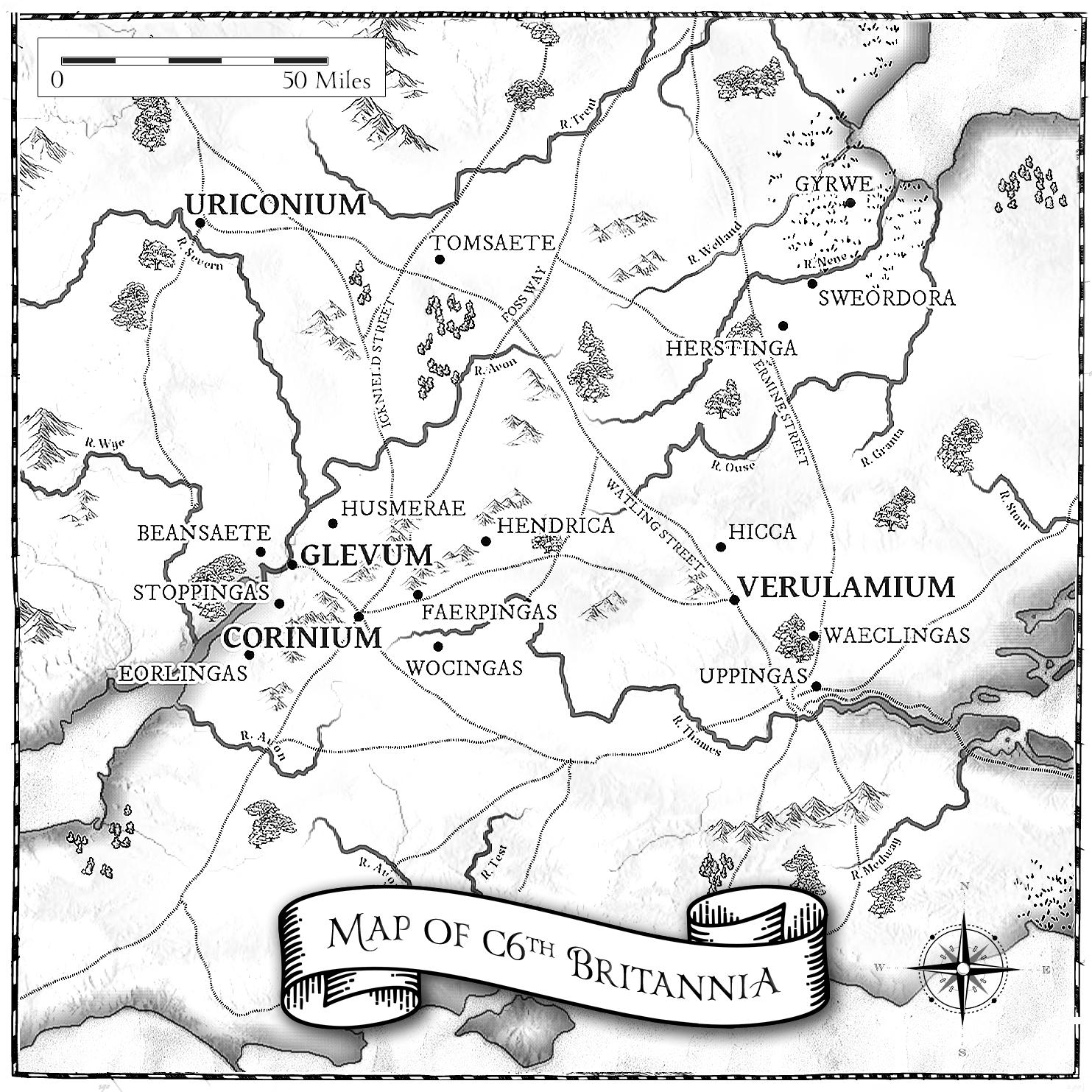
Map of Early England taken from The Mercian Ninth Century Series.

It’s happy release day to The Last Deceit, book 10 in The Last King series, so I’m sharing a blog post about the Gaini

Here’s the blurb

Deceit and ambition threaten to undo the most fragile alliance.

King Coelwulf of Mercia has unwillingly accepted the need to ally with the kingdom of Wessex under the command of King Alfred. But King Alfred of Wessex must still prove himself, and Coelwulf can’t remain absent from Mercia indefinitely.

Returning to London, a place holding more fascination for the West Saxons and the Viking raiders than Coelwulf and his fellow Mercians, Coelwulf sets about reinforcing the walled settlement so long abandoned by all but the most determined traders. But Coelwulf knows Jarl Guthrum has set his eyes on Canterbury, and he must protect the archbishop in Kent, nominally under the control of the West Saxon king, even if King Alfred is no warrior.

But deceit and lies run rife through the West Saxon camp and when Coelwulf believes he’s held to his oaths and alliances, an unexpected enemy might just sneak their way into Mercia. The future of Mercia remains at stake.

Purchase Link

https://www.amazon.co.uk/Last-Deceit-England-action-packed-historical-ebook/dp/B0DK3J8JVK

Available in ebook, paperback, hardback and the Clean(er) Editions, with much of the swearing removed.

The Last Deceit also includes a new short story.


If you’ve not discovered The Last King/The Mercian Ninth Century Series, then please check out the Series page on the blog.


The who now? Who were the Gaini?

In The Last Deceit, reference is explicity made to a Mercian tribe known as the Gaini. It is from this obscure royal line that it’s said King Alfred’s wife, Lady Ealhswith, claimed descent. So, who were the Gaini?

The simple answer is that we don’t know. We don’t know where they were based. We don’t know any other known members of this tribe, but it’s certainly a name that survives from a period-specific resource, The Life of Alfred written by Asser in about 893, and so, some years after the events in The Last Deceit, in which he claims King Alfred’s wife was a descendant of this ruling family. Here are the details from The Royal Women Who Made England.

‘We are told by Asser, that Alfred ‘married a wife from Mercia, of noble family, namely the daughter of Æthelred “who was known as Mucil [Mucel]”, ealdorman of the Gaini. The woman’s mother was called Eadburh, from the royal stock of the king of the Mercians.’ It is possible, but cannot be confirmed that Ealhswith’s father was ealdorman in Mercia from the 820s onward when a man named Mucel is listed as attesting the surviving charters. The location of the tribal region of the Gaini has yet to be ascertained. Mercia was composed of many tribal regions; the most familiar being the Hwicce and the Mægonsate, both on the western borders with the Welsh kingdoms.

Whether Eahlswith’s mother was actually a member of the Mercian ruling family is difficult to conclude. Barbara Yorke determines she was related to King Coenwulf (796–821) and Coelwulf (821–823), two brother kings who ruled in the first quarter of the ninth century. It is impossible to confirm this either way due to a lack of available information. Mercia endured a string of kings throughout the ninth century, some more successful than others, and none of them able to offer the consistency and longevity that had been prevalent in the earlier eighth century during the long reigns of Æthelbald (716–757) and Offa (757–796).

Her possible father, Æthelred Mucel, witnesses two charters in the year of the marriage, S340, surviving in one manuscript, and S1201, surviving in two manuscripts, as well as S337, surviving in four manuscripts, in 867 and S349, surviving in two manuscripts, but deemed spurious, in 895.
What is known is that the union between Lady Eahlswith and Alfred was part of an arrangement with Mercia whereby Alfred’s sister, Æthelswith, married the then king, Burgred, and Ealhswith married Alfred. Little is known of Mercia’s King Burgred (852–74), other than that he fled from Mercia in the wake of sustained Viking raider aggression in the year 874.’

Why then might this royal connection to the Gaini onle be mentioned here? I’m not sure I need to labour the point, but Asser, writing our earliest life of a pre-conquest king, had a remit to follow, and no doubt that was to make much of King Alfred, and his wife. It would have looked a little odd if King Alfred had been married to a lesser woman of Mercia, when he was desperately trying to grow his repuation by having a ‘life’ written about him.

And Mercia is certainly a rich tapestry to either foist a previously unknown tribe upon, or to ‘borrow’ one for the intention of making more of someone. Mercia, ‘the kingdom on the border’ (although we don’t for sure which border this applies to), consisted of many smaller tribal areas, the names of which, if not often the location, have survived in the Tribal Hidage, an eighth-century source (which doesn’t mention the Gaini). More familiar names to travellers to the era are the Hwicce (around Gloucester), the Magonsæte (close to the Welsh border), the Tomsæte (close to Tamworth), to name but a few, have survived in charter documentation which names these distinctive areas and we often have ealdormen of these places, most famously my first historical recreation, Ealdorman Leofwine of the Hwicce of the Earls of Mercia Series.

And so, in The Last Deceit, it is Ealhswith brother, Lord Æthelwulf, who makes mention of the Gaini, as no doubt, he too would have made much of this alleged royal connection.

Map of Early England taken from The Mercian Ninth Century Series.

It’s happy release day to The Last Deceit, book 10 in The Last King series, so I’m sharing some photos of Old Sarum and Stonehenge

Here’s the blurb

Deceit and ambition threaten to undo the most fragile alliance.

King Coelwulf of Mercia has unwillingly accepted the need to ally with the kingdom of Wessex under the command of King Alfred. But King Alfred of Wessex must still prove himself, and Coelwulf can’t remain absent from Mercia indefinitely.

Returning to London, a place holding more fascination for the West Saxons and the Viking raiders than Coelwulf and his fellow Mercians, Coelwulf sets about reinforcing the walled settlement so long abandoned by all but the most determined traders. But Coelwulf knows Jarl Guthrum has set his eyes on Canterbury, and he must protect the archbishop in Kent, nominally under the control of the West Saxon king, even if King Alfred is no warrior.

But deceit and lies run rife through the West Saxon camp and when Coelwulf believes he’s held to his oaths and alliances, an unexpected enemy might just sneak their way into Mercia. The future of Mercia remains at stake.

Purchase Link

https://www.amazon.co.uk/Last-Deceit-England-action-packed-historical-ebook/dp/B0DK3J8JVK

Available in ebook, paperback, hardback and the Clean(er) Editions, with much of the swearing removed.

The Last Deceit also includes a new short story.


If you’ve not yet started The Mercian Ninth Century Series, then check out the series page on the blog.


A trip to Old Sarum

Earlier this year, I attended a virtual talk about Old Sarum which really inspired me. As such, I immediately decided I needed to take Coelwulf and his warriors there. I was really pleased to be able to visit the location on my way home from Devon earlier in the year, and it was even better than I’d imagined it. I hope the photos below will reveal it’s fabulous location and the height and width of the encircling embankments, as well as just how close it is to Salisbury, which was built to replace it.

The English Heritage information board from Old Sarum.

Old Sarum is an old Iron age hillfort, but it was repeatedly used until it was abandoned, and most people know of it because under the early Norman rulers a castle and a church were built there. But my interest is in the earlier period. Under the Romans it was called Sorviodonum, and was in use at points during the Saxon era. It did have one fatal flaw however, it relied on a single water source inside the two embankments.

As I can’t fly, and therefore couldn’t take a photo of the extent of Old Sarum, do check out the English Heritage website to see it in all its glory. https://www.english-heritage.org.uk/visit/places/old-sarum

You can also find the talk I attended on YouTube here.

A trip to Stonehenge

I’ve also taken Coelwulf to Stonehenge in The Last Alliance and The Last Deceit, and so I went to visit as well. I’ve had some fun deciding what my warriors think of the strange arrangement of stones. Personally, I much prefer the Ring of Brodgar and the Stones of Stenness on Mainland Orkney but that might be because you can get much closer to the stones there.

2024 – A Writing Year in Review

Check out my 2022 and 2023 posts.

So, what have I been writing/editing in 2024? As ever, it’s time to turn to my trusty diary to find out, but I’ve also been keeping a spreadsheet this year so it’s much easier to work out exactly what I’ve been writing, and when I was writing it. So here goes:

In January, I instigated my ‘new approach’ to writing, following a disappointing writing year in 2023. Was I harsh on myself with my assessment of 2023 ? I don’t think so, and certainly my new approach has ensured I wrote a lot more in 2024 than in 2023. So, my new approach is simple, I write at least 2000 words a day, every day. Did I manage every day? I certainly did not, but when I wasn’t working at my very seasonal job in the local school (or I must admit, on holiday), I managed to write at least 2000 words a day almost every day. This might sound a little crazy, but writing for me is a bit of a necessity. If I don’t exercise my creative mind, I am plagued (yes, plagued) by rather weird dreams. If I wasn’t writing, I would be really stuck.

In January, I began my new writing routine by finishing off the first draft for The Last Viking, and then swiftly moved onto the next Icel story. Somewhat bizarelly, it’s this book, Betrayal of Mercia, which is being released on 5th January 2025. I was very ahead of the game. I also spent a bit of time working on edits for Enemies of Mercia and Conflict of Kings. It was my sixth most productive month. Not a bad start. It was also the month that Clash of Kings was released, the third book in the Brunanburh series, as well as my first non fiction title, The Royal Women Who Made England.

Cover image for Clash of Kings

At this point, I’m also going to wax a little lyrical about another lifestyle change I made which was to start exercising every morning. This, I’ve found, wakes me up much better than caffeine and sets me up really well for the rest of the day. It can be anything from 10 minutes up to about half an hour, and I use an online app to decide what I’m going to do each day. I don’t complicate matters by trying to get to the gym, and my equipment is steadily growing at him. It’s made me much stronger, and now, like writing, I struggle if I don’t take the time to do a little bit each day.

The Royal Women Who Made England cover

In February, my fifth most productive writing month, I was working on six different projects – which is kind of crazy. I finished my first draft of Betrayal of Mercia, scooted back to the next Coelwulf book, The Last Alliance, and also started work on my Dark Ages series, the first book of which, Men of Iron, will be releasing in April 2025. Aside from that, I also had some work to do on The Last Viking, Protector of Mercia and Kings of Conflict. So, by now I was in the swing of things. I write in the morning and then in the afternoon I work on edits, either structural, copy or proofreads. It means my creative side gets all excited in the morning, and then I can buckle down in the afternoons and get on with the other very important processes for a self-confessed pantser (I plan very little about my writing).

March was my third most productive writing month. I wrote the vast majority of the first draft of what would become The Last Alliance, and also did some editing for Betrayal of Mercia and Kings of Conflict. March also saw the welcome release of The Last Viking, the first Coelwulf book for a few years. It was so much fun to be back with Coelwulf and his friends. He is my most favourite character to write because it’s just like releasing all the tension and stress through his language and general attitude to life. I wish I could be ‘more’ Coelwulf all the time.

Cover image for The Last Viking.

April was my seventh most productive writing month, with much of it taken up with work on Men of Iron, although I did start the month with the first 10,000 words of what became The Last Deceit. I didn’t realise I’d been playing with that book for quite so long. At this point, I was largely adhering to my 2000 words a day endeavour, although with a holiday and my time in school on the horizon, it was all about to come to a bit of a halt. It also saw the release of Enemies of Mercia, book 6 in the stories of young Icel.

Cover image for Enemies of Mercia by MJ Porter

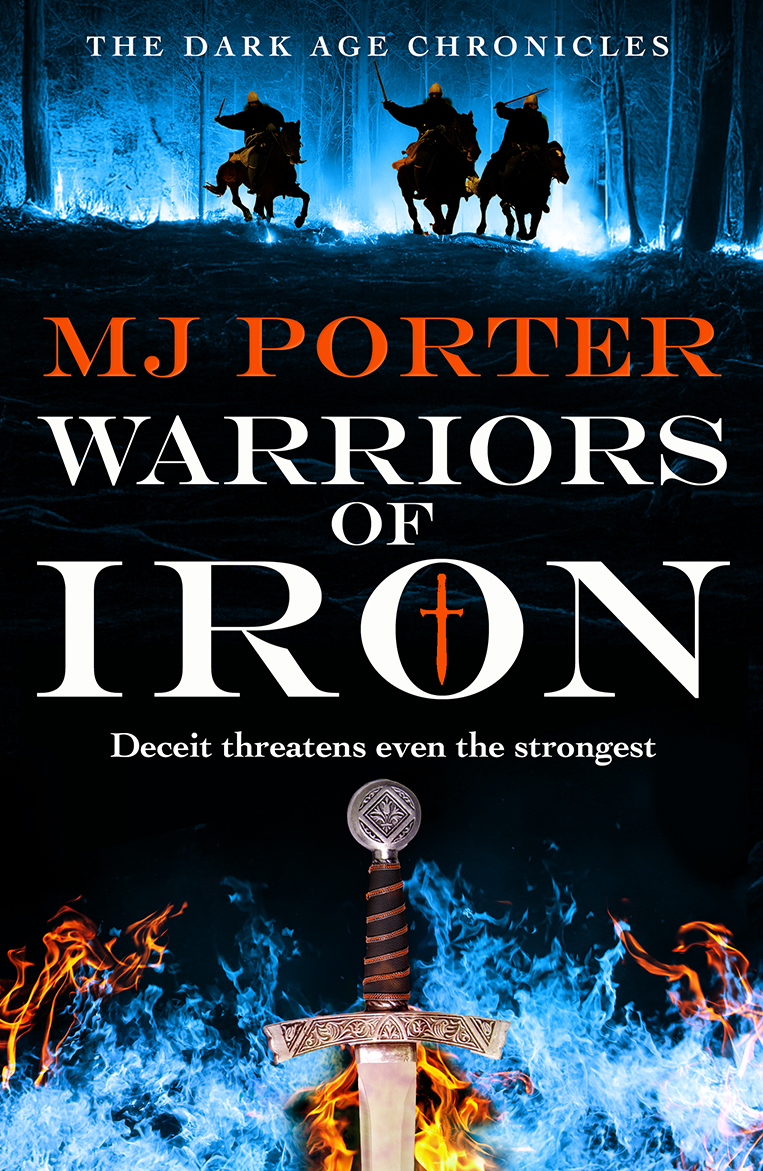
May was my eighth most productive month of 2024, coming in at 29,000 words for the month, so very much below my intended target of 2,000 words a day. But, I was on holiday and busy with exams at the local school, and I was ahead of my schedule that I’d written at the start of the year, so I didn’t mind too much. I was finishing the first draft of Men of Iron, and I also started work on the sequel to Men of Iron, which should be called Warriors of Iron when it’s released in August 2025.

June was a write-off (literally). I managed a massive 1000 words all month. Not only was I just back from holiday and busy in school, but I ended up with my first official bout of ‘Covid’ which was a most odd experience. However, I was able to release The Last Alliance at the end of June, which I was very pleased about.

Cover image for The Last Alliance by MJ Porter

July was a muddled month with a holiday to Norfolk (yes, I made it to Suffolk and Sutton Hoo), but it was my tenth most productive month, so not very productive at all, as I reworked some of Men of Iron.

For August, I was back to it. It was my most productive month, coming in at just under 85,000 words written on a variety of projects, I had to make up for lost time. I was writing Warriors of Iron and The Last Deceit, and editing Betrayal of Mercia as well as Men of Iron. I don’t want you feeling sorry for me because September, I knew, was going to be a difficult writing month with my long-awaited trip to Devon and slow journey there and back to take in A LOT of historical sites I needed to visit for Men of Iron and other projects. 6th August saw the release of Kings of Conflict, the final book in the Brunanburh series.

Cover image for Kings of Conflict by MJ Porter

September was my eleventh most productive month, or second from last:) I worked on structural edits for Men of Iron, endeavouring to weave into the narrative some of the places I’d visited on my travels to and from Devon.

October was my fourth most productive month. My main tasks for the month were working on initial drafts for Warriors of Iron and The Last Deceit. I also worked on copyedits for Men of Iron and Betrayal of Mercia. This was the first time I managed to keep track of how many words I removed from the edited copy during the proofread. It was not that many words, but I faithfully recorded all of them, which gave me a net minus 3.

November is the month every year when I allow myself to write absolutely anything I want. This year saw me returning to a project from 2018 and starting to ‘fix’ many of the problems with it – the biggest one being there was simply too much story to fit into one book. I now intend to make it a trilogy, and using about 20,000 words from the first draft, I added a further 59,000 to it as well as working on some editing and structural edits of other projects. It was a busy month, but November is always really important to me. Deadlines and editing can really drain me of my creativity. November allows me to be excited about something entirely new and without deadlines (although, not so new this time as it was an older project). Watch this space to find out what I’m going to do with it.

For December, I was once more busy in the local school, and travelling to meet fellow Viking authors, and other authors more local to me. All the same, I’ve been busy writing, finally getting back to Icel, who I’ve neglected of late. That said, I’ve known where this new story would go ever since I finished working on the first draft Betrayal back in January. At the moment, my working title is Icel of Mercia, but I’m sure that won’t be the published title. December has been my ninth most productive writing month, but even as I write this, I know I have a few more writing days to go, so it will increase. December will also see the release of The Last Deceit. I’ve just managed to get the 3 Coelwulf books in, as promised.

All in all, I’ve enjoyed my writing in 2024. There are always moments when it’s an effort, and moments when it feels easy, but my new writing routine, or what I now call ‘minimising the stress around first drafts’ has really helped me. Ensuring I’m working on something while editing another project ensures I have time for my stories to settle before I edit them, and also allows me to plant all those lovely Easter Eggs I love to scatter through the many different series. I pity the person who tries to work out which book I was writing when in the future.

I have two newish projects under way, my November project, and also the beginnings of another nonfiction title. I also have two of my three Boldwood titles complete bar some of the editing, and Icel 8 is shaping up nicely as well. For next year, I want to continue my current practice of writing at least 2000 words each morning, and editing in the afternoon. It works really well with my writing style. Everyone has different styles. It’s important to determine what works, and when it stops working, to find something else. 2024 was the year I revamped what had been working for me for many years. It’s also allowed me to methodically plan, even if I didn’t always keep to the plan.

In terms of words written this year, it comes in at about 570k. It’s not my best year, which was 2019, but it’s so much better than in 2023, I’m really pleased.

Forthcoming releases for 2025 will be Betrayal of Mercia, Men of Iron, Warriors of Iron in August, Icel 8 in October and hopefully, a new Erdington Mystery (I have a title, which is a good sign for that series) and my November 2024 project which I need to finish but which will probably be released under a different author name. I also hope to return to Coelwulf, but I’m not promising 3 titles in the series as I did in 2024. That was almost too much for me. In terms of writing, I need to finish the Dark Age Chronicles (I’ve stated it will be a trilogy – I have too many characters as it is,) and continue with the lovely Icel.

A huge thank you to all my wonderful readers who allow me to spend my time with my characters. It is a privilege.

If you want to follow my writing journey, join my newsletter. I update readers each month.

I will be sharing my reading year in review soon.

To fellow writers, remember, to be a writer you first must write, but you also have to write the way that works for you. Good luck.

I’m delighted to welcome Peggy Joque Williams and her book, Courting the Sun, to the blog #HistoricalFiction #Versailles #LouisXIV #BlogTour #TheCoffeePotBookClub

I’m delighted to welcome Peggy Joque Williams and her book, Courting the Sun: A Novel of Versailles, to the blog with some research.

Research and Background

Peggy Joque Williams

Researching Dining Traditions in 17th Century France

As I was writing Courting the Sun: A Novel of Versailles, I found myself researching the dining traditions of 17th century France to know what my characters would eat, when, and how. Two of my favorite go-to sources were A Revolution in Taste: The Rise of French Cuisine by Susan Pinkard (Cambridge University Press, 2010) and the website en.chateauversailles.fr/.

Courting the Sun takes place in 1670. My character, fifteen-year-old Sylvienne, lives with her mother in a cottage outside Amiens about 145 km (90 miles) north of Paris. They maintain a “potage garden” in which they grow vegetables—carrots, cabbage, onions, peas, spinach, squash, turnips. cauliflower, asparagus, and radish—enough to occasionally share with neighbors. They purchase their bread from the boulangerie (bakery) in town. Boulangeries were quite popular at the time, because bread baking required a brick oven, an expensive and dangerous piece of equipment not found in most homes.

Sylvienne and her family eat simple but savory soups and stews made with vegetables from the garden and rabbit, chicken, or fish purchased from the open-air market. At Christmas after Midnight Mass, her family enjoys a petit réveillon, a platter of meat and cheeses. On New Year’s Day, Sylvienne’s Maman receives gifts of candied chestnuts, sugar-coated almonds, and other sweets. She serves mulled wine to her guests. At the Mardi Gras celebration in February, Sylvienne encounters outdoor vendors selling food.

We were drawn to a row of vendors by the aroma of freshly made crepes and honey-sweetened waffles. I fished coins from my pocket to buy a serving to share of beignets, deep-fried dough pillows dipped in honey that were a specialty of Mardi Gras. The little pastries melted in my mouth—pure bliss.

At Easter, after the long, meatless fast of Lent, the family dines on a lamb shank garnished with mint and roasted on a spit over the kitchen fireplace.

When Sylvienne attends the court of King Louis XIV at Versailles, she encounters dining habits vastly different from that in Amiens. The meal most astonishingly different for Sylvienne is the grand couvert, a publicly observed late night dinner, most often served in the queen’s antechamber. As cousin to the king, Sylvienne finds herself seated at the royal table. Here is an excerpt from the book describing her first experience with the grand couvert.

To my astonishment, crowded at the far end of the room stood a throng of nobles gawking at the royal table.

“Pay no attention to the flock,” Monsieur said in an undertone. “One of the disadvantages of royal life.”

“Why are they here?”

“A dividend granted to devotees of the monarchy. Annoying, but unavoidable.”

A semi-circle of elegantly dressed dowagers perched on brocade-cushioned ottomans served as a barrier between those standing and the royal diners.

“The duchesses,” Monsieur whispered before handing me off to a page. “Oodles of money. Never turned away.”

The page escorted me to my seat—a cushioned stool at the farthest end of one of the linen-draped tables set to form the arms of a U-shape. Philippe strutted to the head table and stood behind an exquisitely carved straight-back chair to the left of the red velvet, royal armchairs. Other members of the royal family, who I would eventually learn were princes and princesses of the blood, drifted in and stood behind their assigned seats.

Before long, Madame de Montespan entered. A momentary hush descended as the courtiers in the gallery bowed and curtsied. King Louis’s favorite took her place behind a chair next to what would be the King’s.

Moments later the banging of halberds on the floor preceded a guard who called out, “Le Roi! Le Roi!” The dowager duchesses rose. A hush fell again.

King Louis and Queen Marie-Thérèse entered followed by the two spaniels. Along with the others, I dipped in obeisance. The royal couple sat, a signal to the rest of us diners to sit as well.

The majordomo marched in leading a parade of uniformed footmen with tureens of soup. When the footmen exited, a servant stepped forward and dipped a spoon into the King’s tureen, brought it to his own mouth, and swallowed. He waited a moment then—not having keeled over from poisoning—bowed to his Majesty.

Another servant ladled the soup into the royal bowls. And then the rest of us were served. The aroma was heavenly. I dipped my spoon into the creamy broth and brought it to my lips. It had an earthy yet sweet taste but with a hint of sage and thyme.

Before I had even finished my soup, platters of fish were set on the tables. A footman offered me a plate of shells. In a panic, I realized they were oysters. The market in Amiens sold oysters, but they were very expensive, and I had never tried them. To be honest, I didn’t know how. I watched the others loosen the meat with their spoons then slurp it out of the shell. I poked at mine. The slimy look of it made me cringe.

The Marquise de Montespan smirked across the expanse of the table. “Your little country cousin appears to be unfamiliar with Parisian cuisine, Sire.”

My spoon stopped half-way to my mouth as I realized everyone had turned to look at me. I set the spoon down and put my hands in my lap again, willing myself to disappear.

“Eat, cousine! Eat! Like this.” King Louis lifted a shell to his lips and slurped noisily.

Philippe offered me an encouraging smile, lifted his oyster shell as if to toast me with it, then poured the meat down his throat in one quick elegant motion. No noise, no slurping.

My hand trembled as I brought the oyster shell to my lips. Tilting it, I let the meat slide into my mouth and down my throat, worried I would gag at the slippery texture. I didn’t. Rather, the salty, almost buttery taste was surprisingly pleasurable.

The nobles in the gallery broke into applause. I stopped breathing for a moment, wishing to die on the spot.

But King Louis only laughed. “There is much more to come.!”

And indeed, another course was delivered to the table, silver platters heaped with roasted meats, vegetables, and breads.

King Louis XIV was known for his immense appetite. At another grand couvert Sylvienne eats poached cod spread with a butter glaze, asparagus in a silky cream sauce, and egg halves filled with an artichoke paste—just one of many courses at that dinner.

The dining implements used at the time were generally limited to spoons and knives. Forks had only recently been introduced into Europe. In one scene, the king’s mistress, Athénaïs, decides she prefers to eat with a fork.

The first course was served…an array of cheeses. Mimolette. Brie de Meaux. The pungent Livarot. And the nutty goat cheese they called Crottin de Chavignol.

The second course was lamb stew. “Most delectable,” King Louis said as he scooped chunks of the tender meat with his fingers.

The Queen used a spoon to lift bits of carrots and turnips to her lips.

Athénaïs studied her bowl, a look of consternation clouding her face. She held up a hand to summon the majordomo hovering nearby. “I wish to have a fork.”

All conversation stopped. Spoons halted in mid-air. The lamb between the King’s fingers dripped sauce midway to his mouth. The majordomo, disconcerted, looked to him for guidance. Without even glancing in Athénaïs’s direction, King Louis sighed and nodded. The majordomo hurried to the door where he whispered to a waiting footman who hustled off.

Disgruntled, Louis returned the meat to his bowl, wiped his fingers on a napkin, then folded his hands in his lap. The rest of us did the same, sitting with our hands folded, saying nothing until the footman returned holding aloft a gilded platter. He handed the platter with great ceremony to the majordomo, and themajordomo with even more ceremony presented it to Athénaïs. She took the small silver fork from the platter and held it up for all to see, its pearl handle glimmering in the candlelight.

With a smile, Athénaïs poked the fork into her stew, picked out a chunk of lamb and brought it to her lips.

“Satisfactory?” the King asked.

“Oui. Merci.” Athénaïs offered her most alluring smile then dipped her fork again.

Louis nodded, then scooped the almost certainly cold meat from his bowl with his fingers.

The next day, Sylvienne is amazed to learn all the courtiers have rushed out to purchase forks to use at their own meals.

Blurb

“A rich journey through 17th century France in all its aspects—its bucolic countryside, the still-unmatched splendor of the court of Louis XIV, and the struggling French colony in Canada.”
~ Margaret George, New York Times bestselling author of Elizabeth I, The Autobiography of Henry VIII & The Memoirs of Cleopatra

France, 1670. On her sixteenth birthday, Sylvienne d’Aubert thinks her dream has come true. She holds in her hands an invitation from King Louis XIV to attend his royal court. However, her mother harbors a longtime secret she’s kept from both her daughter and the monarch, a secret that could upend Sylvienne’s life.

In Paris, Sylvienne is quickly swept up in the romance, opulence, and excitement of royal life. Assigned to serve King Louis’s favorite mistress, she is absorbed into the monarch’s most intimate circle. But the naïve country girl soon finds herself ill-prepared for the world of intrigue, illicit affairs, and power-mongering that takes place behind the shiny façade of Versailles.

This debut historical novel from Peggy Joque Williams captures the vibrancy and quandaries of 17th century life for a village girl seeking love and excitement during the dangerous reign of the Sun King.

Buy Link

Universal Link:

Barnes & Noble:

Bookshop.org:

Black Rose Writing:

This title is available to read on #KindleUnlimited

Meet the Author

Peggy Joque Williams is the author of Courting the Sun: A Novel of Versailles and co-author of two mystery novels, On the Road to Death’s Door and On the Road to Where the Bells Toll, written under the penname M. J. Williams. She is an alumnus of Michigan State University and the University of Wisconsin-Madison.

A retired elementary school teacher and avid researcher, Peggy’s fascination with genealogy and her French-Canadian, European, and Native American ancestry inspires her historical fiction. She lives in Madison, Wisconsin.

Connect with the Author
Website: BookBub:

Follow the Courting the Sun blog tour with The Coffee Pot Book Club

I’m delighted to welcome JR Tomlin and her new book, On a Sword’s Edge, to the blog #OnASwordsEdge #HistoricalFiction #ScottishHistoricalFiction #BlogTour #TheCoffeePotBookClub

I’m delighted to welcome JR Tomlin and her new book, On a Sword’s Edge, The Swords of Scotland book, to the blog with a guest post.

Guest Post

Research for a historical novel tends to have a thousand parts, a few looming large and others twinkling bagatelles. Those large parts, of course, you must get right, in my opinion anyway. But never underestimate the importance of bagatelles, though. They are often the pieces that give a novel its verisimilitude.

One of the very large looming pieces in ‘One a Sword’s Edge’ is the Battle of Largs in October 1263 between the Norse, led by King Haakon of Norway, and the army of Scotland. This battle is an important one in the development of Scotland as it is today, but there are amazing differences of opinion on the nature and outcome of the battle. Some historians claim it was not a battle, merely a skirmish. Many claim the result was indecisive, with no clear winner. Many state with absolute certitude that King Haakon was doing nothing more with his vast fleet of more an a hundred Norse longboats than defending Shetland and the Hebrides from Scottish invasion.

I admit I had a problem with some of these historians’ opinions. If Haakon was defending the Hebrides, why was he doing it more than 400 miles south of the Hebrides in the Firth of Clyde? And why had he gathered one of the largest fleets the Norse ever assembled when there had been no invasion by Scotland? Scotland had not ever gathered an army to invade.

This is where research comes in and after a lot of looking, I found a fairly obscure article by a professor of Medieval Studies at the University of Edinburgh that brought out some facts from the Saga of King Haakon. One of the many isles claimed by the King of Norway in the waters surrounding Scotland was the Isle of Bute near the mouth of the Firth of Clyde. Its importance lies in that it is in a position to control shipping lanes. A few years earlier, rather quietly, Sir Alexander Stewart of Dundonald, Lord High Steward of Scotland, subjugated the Isle of Bute and established Rothesay Castle as a power base there.

It took a while for the former Lord of Bute to reach King Haakon and bring this serious matter to the king’s attention. King Haakon was a formidable man who had, among other things, subjugated both Greenland and Iceland.

The King of Scots had opened negotiations with Haakon to buy the Hebrides and all the Scottish Isles. This news was what caused those negotiations to totally break down. Haakon immediately assembled his fleet. So it was not some nonexistent defense of the Hebrides but a very definite loss of the Isle of Bute that took him so far south.

King Haakon sailed his fleet around the Cape of Wrath and proceeded hundreds of miles south to attack and retake Bute and Rothesay Castle. He then had his fleet ravage a large area around Loch Lomond. Life being full of surprises, he did not expect a severe storm or to face the same Alexander Stewart leading a large Scottish army.

So much for large, looming battles, but the novel also needed research for some amusing bagatelles. My main character and his family celebrated Christmas that year at Fawdon Tower. How to show them celebrating? You can’t have a Christmas celebration without a carol.

Oh, dearie me. That is easier said than done. If the ordinary people of the Middle Ages sang carols, and I am pretty convinced they did, there are no records of them. However, after quite a bit of searching, I found a delightful carol with an irresistible title: “The Boar’s Head Carol”.

To be honest, it is dated two hundred years after the events of the novel. I tend to think that it had probably been around for a while and simply had not been written down. Like most ‘folk music’, it may well have gone through various permutations.  I rewrote it slightly but felt I had a bagatelle that was very close to what they might have merrily danced to on that Christmas of the year 1263.

It sometimes feels a bit like a jigsaw puzzle, but investigating the large pieces and those tiny gems is what makes writing historical fiction so enjoyable and satisfying.

Blurb

Scotland. 1263. The scent of rain mingles with the smoke of campfires as word spreads: the Norse are coming…

As tempers rise between King Alexander and the Norse King Haakon, at the center of it all is sixteen-year-old William Douglas, a squire in service to Sir John Stewart, Lord High Steward of Scotland.

When Haakon’s fearsome fleet is espied approaching Scotland’s shores, carrying the greatest invasion force the Norse have ever mustered, the dread of battle settles over the land. Summoned to Ayr Castle, William joins the Scottish forces in a desperate defense. Now tasked with serving his newly knighted brother, Hugh, William has little time to dwell on the fear – or thrill – of his first real taste of war.

And once the Norse’s menacing line of ships finally touches shore, Scotland’s fate may rest on more than noble titles and knightly deeds— it’ll take the mettle of every soul on the ground for them to triumph.

Set against the wind-swept coast of medieval Scotland, On a Sword’s Edge takes you right into the center of The Battle of Largs alongside a mere – yet fearless – squire.

Buy Link

Universal Link:

Meet the Author

J. R. Tomlin is the author of more than twenty historical novels, set for the most part in Scotland. Her love of that nation is traced from the stories of King Robert the Bruce and the Good Sir James her grandmother read to her when she was small to hillwalking through the Cairngorms where the granite hills have a gorgeous red glow under the setting sun. Later, her writing was influenced by the work of authors such as Alexander Dumas, Victor Hugo, and of course, Sir Walter Scott.

When JR isn’t writing, she enjoys spending time hiking, playing with her Westie, and killing monsters in computer games. In addition to having lived in Scotland, she has traveled in the US, Europe and the Pacific Rim. She now lives in Oregon in the beautiful Pacific Northwest.

Connect with the Author
Website: BookBub:

Follow the On a Sword’s Edge blog tour with The Coffee Pot Book Club

I’m delighted to welcome Rosemary Hayes and her book, Traitor’s Game, to the blog #HistoricalFiction #Spies #NapoleonicWars #BlogTour #TheCoffeePotBookClub

I’m delighted to welcome Rosemary Hayes and her book, Traitor’s Game, book 1, Soldier Spy series, to the blog with some background and research.

Background and Research

When I was asked to write a series of novellas set during the Napoleonic Wars, I knew I would find it a daunting task. The wars took place from about 1800 to 1815 and were a continuation of the French Revolutionary wars, which ran from 1792 to 1799. Together these conflicts represented 23 years of nearly uninterrupted war in Europe. I say nearly uninterrupted because there was a short period of peace when the Treaty of Amiens (March 27, 1802) was signed by Britain, France, Spain and the Netherlands.  However, it only achieved peace in Europe for a mere 14 months.

The Napoleonic Wars spanned so many years, were fought at sea and on land in so many different countries and involved so many combatants that it would have been impossible to cover the full extent of them in three short historical novellas, so I chose to concentrate on a short timeframe – from 1808-1811. 

I decided not to describe battles in any detail. I’m not an historian and I felt that the complexities of regiments, formations and tactics should not be described by an amateur. So I chose to concentrate more on the human story of my main protagonists.

What particularly interested me was the secret war against Napoleon. That underbelly of every war where agents pass information to their handlers through secret channels, where things are not always what they seem, where the most unlikely people turn out to be working for the enemy. So, the work of spies is the main focus of my stories.

There was a network of Royalist spies in France collaborating with the British Government and which organised uprisings against the Republic which were brutally suppressed by the Minister of Police, Joseph Fouché. There were several attempts to assassinate Napoleon, one of which very nearly succeeded.  It was the world’s first car bomb (or cart bomb). Britain was closely involved in the plot, which was almost certainly controlled from London.

Although there was high level espionage, there were also many ordinary French citizens, including fishing families, shopkeepers and others who wished to undermine Napoleon’s rule. They were working for the British and provided shelter for British spies – and girls and women often dressed as men to avoid detection. There was a respected French priest (with a beautiful mistress) who was an agent for the British – and a schoolmaster on the Normandy coast who passed on French naval signals to the British so that their ships would be let through as French.

Then there were those who regularly crossed the Channel, legally, spying for their country’s enemies in plain sight. And, of course, there were double agents, too, one of whom is the mysterious traitor mentioned in my story.

Spies were active in every theatre of war but this first story of my trilogy is set only in France and England. Inevitably, both smugglers and fishermen (often one and the same) were involved in helping spies. At one point there was a spying headquarters in Jersey and one Jersey fisherman made nearly 200 trips over to France delivering spies, letters and money; he was eventually caught and executed but never revealed the names of his contacts.

Smuggling had always taken place along the South coast of England, too, and it was rife during the Napoleonic wars when contraband was taken both ways across the Channel as were spies and escaped prisoners of war. Hastings had a long tradition of smuggling and many of the fishing families augmented their incomes with smuggling activities. As part of my research I visited St Clement’s Caves, a large network of caves in Hastings where contraband was concealed and from where boats set off across to France.

St Clements Caves in Hastings

The Alien Office, based in London, was the first comprehensive British secret service in the modern sense, and therefore the forerunner of not only the Special Operations Executive (S.O.E.) but also of MI5 and MI6. Although ostensibly part of the Home Office, the wider remit of The Alien Office included the domestic and external surveillance of foreign people of interest. John Reeves (one of the real people who appears in my story) was head of the Alien Office from 1803-1814 and had a network of agents who sent information back to their handlers. Messages were often written in code and/or in special inks to try and ensure that their contents would not be revealed should they be intercepted. Each intelligence agency had its own ciphers and ink composition.

Major George Scovell was one of Wellington’s staff who successfully cracked a number of French codes. He had no background in intelligence and was a self-taught code breaker. He established himself as Wellington’s cipher expert when he cracked the Army of Portugal code in two days. He also broke enough of the Great Paris Cipher to provide Wellington with valuable information that facilitated the British victory at Vitoria.

My main protagonist, Captain Will Fraser, is sent home from the Peninsular War in disgrace.  I have imagined that Will was wrongly accused of insubordination and cowardice. In this first story we don’t learn much about the circumstances of his dismissal; details of this come out in a later book, but I am careful not to say that he was cashiered.

It was extremely rare for an officer to be cashiered from the military in the 19th century and would only happen following imprisonment and a trial. If found guilty he could be publicly humiliated which could involve a parade-ground ceremony in front of assembled troops with the destruction of his symbols of status. His epaulettes would be ripped off his shoulders, his badges and insignia stripped, his sword broken, his cap knocked away and his medals torn off and dashed to the ground. Italso meant that the amount he had paid for his commission was lost, as he could not sell it on.

So that is the background to the first book in the Soldier Spy stories, Traitor’s Game, and in it we meet Will Fraser, bitter, disgraced and desperate to clear his name. In London he seeks out his brother, Jack, only to find that Jack has vanished and, in order to track him down, Will reluctantly becomes  entangled in the murky world of espionage.

For information on the spies and their networks, among other sources, I consulted Tim Clayton’s excellent and extensively researched book ‘This Dark Business – The Secret War Against Napoleon. And, of course, Tom Williams’ series – the James Burke books. I also crawled around the caves in Hastings and visited Portugal where I saw the site of Napoleon’s headquarters and that of Wellington’s, staring at each other across the River Douro.

Blurb

‘Right from page one you know you are in the hands of a talented storyteller… An exciting tale of espionage and adventure in the classic mould.’

~ R.N. Morris, author of The Gentle Axe

1808.

Captain Will Fraser has just returned from the Front in the Peninsular War. He is disgraced and penniless, the victim of a conspiracy led by a jealous and influential officer. Fraser has been falsely accused of insubordination and cowardice and dismissed from his regiment.

Fraser and Duncan Armstrong, his wounded Sergeant, arrive in London to seek out Will’s brother, Jack, who works for King George’s Government.

But Jack has disappeared. He vanished from his lodgings a week ago and no one has seen him since. Friends and colleagues are baffled by his disappearance as is the young woman, Clara, who claims to be his wife.

Then Will is viciously attacked, seemingly mistaken for his brother, and only just escapes with his life. When news of this reaches Jack’s colleagues in Government, Will is recruited to find his brother and he and Armstrong set out to follow a trail littered with half-truths and misinformation.

For their task is not quite what it seems.

Will closely resembles his brother and it becomes evident that he is being used as a decoy to flush out Jack’s enemies. These are enemies of the State, for Jack Fraser is a spy and his colleagues believe he has uncovered evidence which will lead to the identity of a French spymaster embedded in the British Government.

Will’s search leads him to France but in this murky world of espionage, nothing is straightforward.

The soldier turned spy must unmask a traitor, before it’s too late.

Buy Link

Universal Link:

This title is available to read on #KindleUnlimited

Meet the Author

Rosemary Hayes has written over fifty books for children and young adults. She writes in different genres, from edgy teenage fiction (The Mark), historical fiction (The Blue Eyed Aborigine and Forgotten Footprints), middle grade fantasy (Loose Connections, The Stonekeeper’s Child and Break Out)  to chapter books for early readers and texts for picture books. Many of her books have won or been shortlisted for awards and several have been translated into different languages.

Rosemary has travelled widely but now lives in South Cambridgeshire. She has a background in publishing, having worked for Cambridge University Press before setting up her own company Anglia Young Books which she ran for some years. She has been a reader for a well-known authors’ advisory service and runs creative writing workshops for both children and adults.

Rosemary has now turned her hand to adult fiction and her historical novel ‘The King’s Command’ is about the terror and tragedy suffered by a French Huguenot family during the reign of Louis XIV.

And Traitor’s Gamethe first book in the Soldier Spy trilogy, set during the Napoleonic Wars, has recently been published.

Connect with the Author

Website:

Follow the Traitor’s Game blog tour with The Coffee Pot Book Club