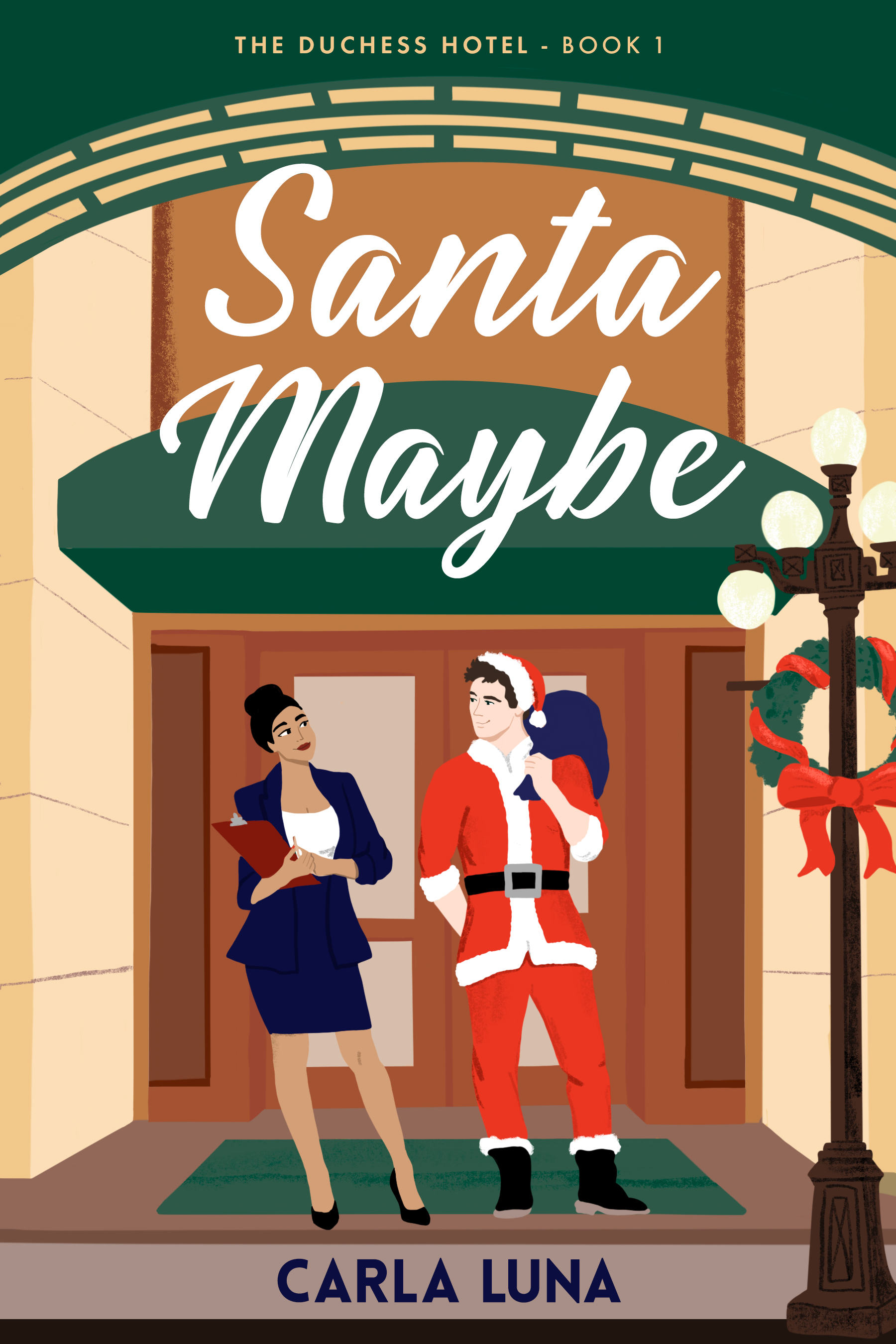
Have yourself a merry little fauxmance—with a dashing Santa who just might make it real.
Rosie Gonzalez isn’t having a wonderful Christmas time. Not when she’s at risk of losing her job as assistant manager of the Duchess—Victoria’s oldest boutique hotel. If she and her team can’t bring in more guests by the end of December, she’ll be let go. Adding to her stress is a calendar filled with family gatherings where her mom will inevitably nag her for still being single.
Drew Richardson isn’t faring much better. As if working alongside his ex at Northlife Fitness wasn’t bad enough, now she’s invited him to her December wedding. And since all his coworkers will be there, bailing isn’t an option. To get through it, he’ll need a plus-one for moral support.
So, when Rosie recruits him to play Santa for her hotel’s activities, he also proposes a fake-dating scheme to benefit them both. Just for the holidays—nothing more. But as things between them turn from nice to naughty, they’ll have to decide whether a real relationship could be the best Christmas gift of all.
Carla Luna writes contemporary romance with a dollop of humor and a pinch of spice. A former archaeologist, she still dreams of traveling to far-off places and channels that wanderlust into the settings of her stories. Her books have been called “escape reads,” ideal for perusing during a beachside vacation, a long flight, or a relaxing weekend at the lake. When she’s not writing, she spends her time reading, baking, and taking long walks while listening to pop culture podcasts. Though she has roots in Los Angeles and Vancouver Island, she currently resides in Wisconsin with her family and her feisty Siberian cat.
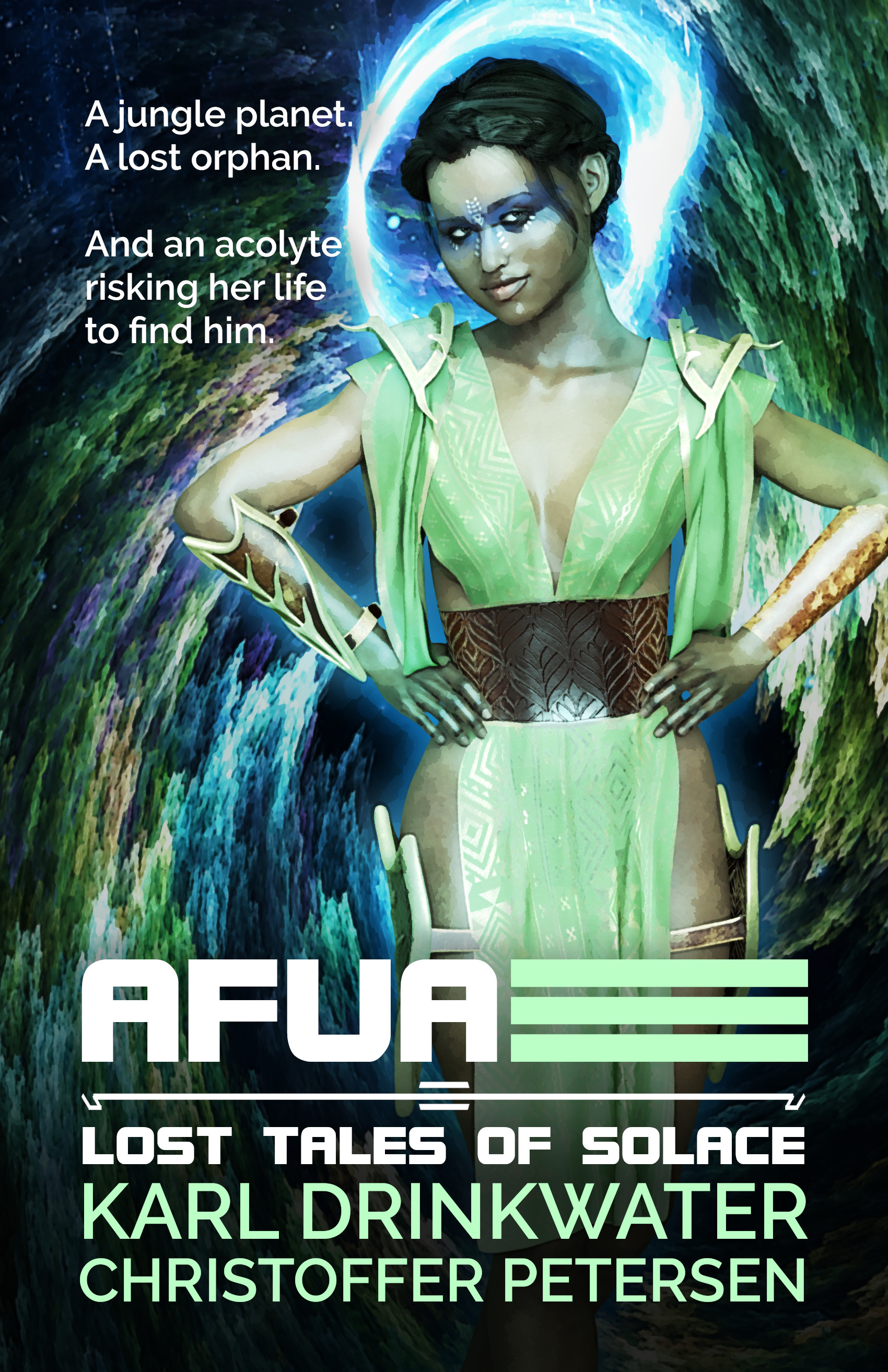
Afua is a promising acolyte of the Shanta Order, on the densely forested planet of Nuafri.
She volunteers to educate orphans – her lively ophanti – every ninth day. When one of her wards goes missing in a dangerous area full of sinkholes and deadly fauna, Afua knows the authorities won’t do anything about a single lost child.
Luckily for the orphan, Afua will.
She is armed only with her knowledge of wildlife, and implanted augmentations that can sometimes deter attacks. But she is not alone. The sentient, insect-like Dooga she has bonded with, named Akalie, will follow her anywhere, despite being heavily pregnant.
An unforgettable Amazofuturist adventure about compassion, courage, and finding your way in life.
Afua is a fabulous sci fi tale set in the Lost Solace universe. The reader is treated to a strange new world in dazzling glory, and to a strong-willed and determined main character in Afua.
While a novella length story, this is deeply engrossing and I was disappointed to reach the end. It certainly made me want to know more about the Lost Solace universe (I’ve read the first book. Check out my review here). Much is hinted at, and some things are made very clear to the reader. It really does feel as though I’ve stepped into a fully-formed and functioning location. It is enthralling, and not a little ‘weird.’
I thoroughly enjoyed Afua and look forward to reading more of the Lost Solace books.
About Karl Drinkwater
Karl Drinkwater writes dystopian space opera, dark suspense and diverse social fiction. If you want compelling stories and characters worth caring about, then you’re in the right place.
Karl lives in Scotland and owns two kilts. He has degrees in librarianship, literature and classics, but also studied astronomy and philosophy. Dolly the cat helps him finish books by sleeping on his lap so he can’t leave the desk. When he isn’t writing he loves music, nature, games and vegan cake.
Christoffer Petersen lives in a small forest in Jutland, in southern Denmark. He hasn’t always been Danish; in fact, he borrowed his pseudonym surname from his Danish wife, Jane. Chris writes all kinds of stories in different genres, but is best known for his crime books and thrillers set in Greenland.
While living in Greenland, Chris studied for a Master of Arts in Professional Writing from Falmouth University. Chris graduated with a distinction in 2015. He has been writing full-time since January 2018.
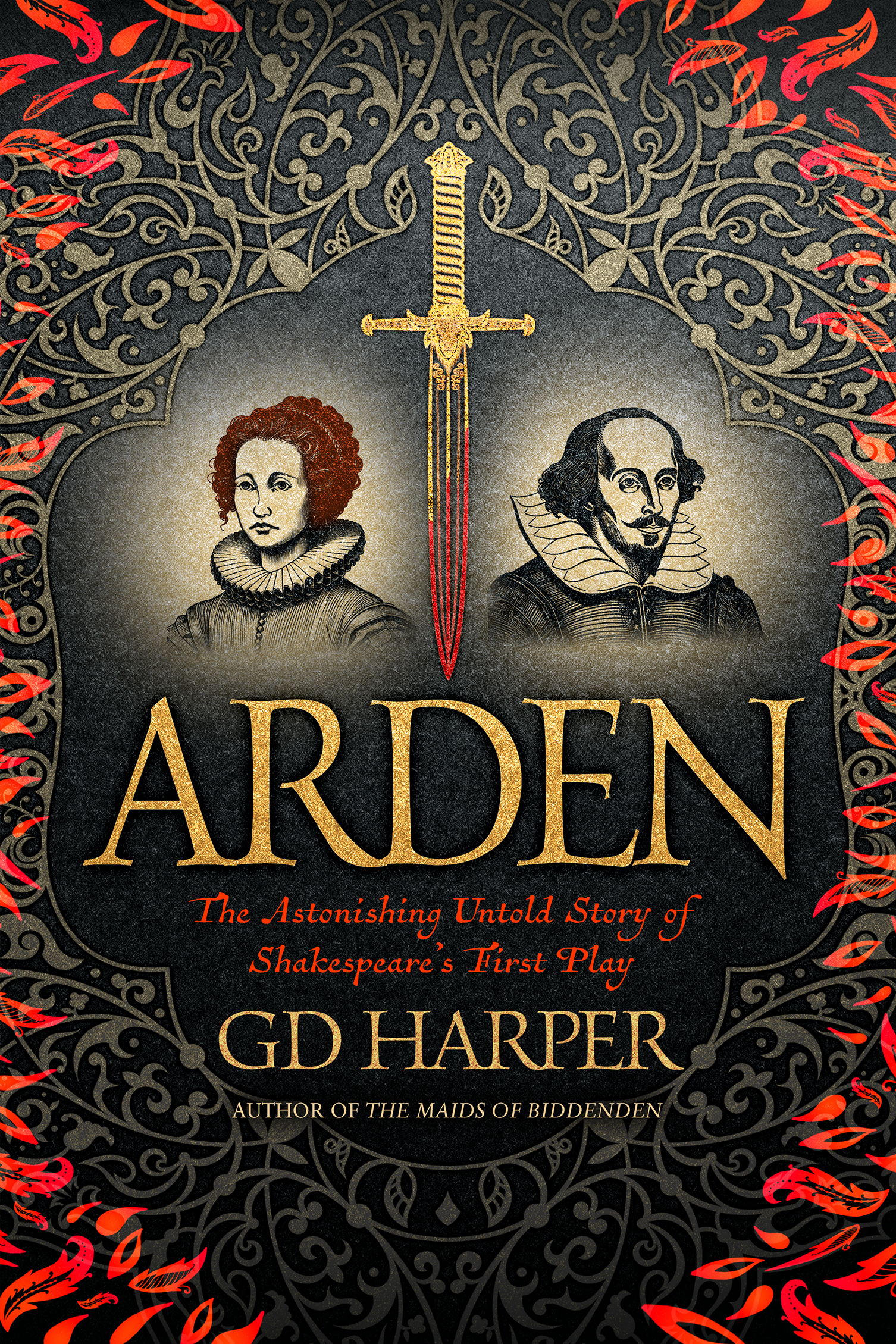
Alice Arden, idealistic and wealthy beauty, burnt at the stake for killing her husband, the former mayor of Faversham in Kent. But was she really the one responsible for the most scandalous murder of the sixteenth century?
William Shakespeare, England’s greatest playwright, born thirteen years after Alice’s execution. Why does his first-ever play, written about this murder, not bear his name?
This is a story of two people – one reviled, one revered – whose fates become linked in a tale of corruption, collusion and conspiracy. Based on historical documents and recently published academic research, Arden unveils shocking new evidence about the murder of Thomas Arden and reveals, for the first time, a remarkable new theory about Shakespeare’s early years.
Arden by GD Harper is a beautifully crafted tale of two individuals, separated by forty years, with the one entirely unaware of the other, that reimagines the hows, whats and ifs of Shakespeare’s earliest efforts to become a playwright and the story that ‘called’ to him to enable him to do so.
Offering us two points of view, that of Alice Arden, and Shakespeare himself, we travel through the years that lead to Alice’s crisis and see how Shakespeare was himself plagued by her story. To begin with, Alice is the most likeable character. Young, bright, and vivacious, she pulls the reader along through the years when Shakespeare is not at all the man we might expect him to be. His life is difficult (perhaps because he makes it so, to be honest), but soon his dreams of being an actor and writing plays becomes his driving force. At the same time, Alice’s life is blighted by her marriage to a man of ambition but no regard for the life of his wife, who is deeply unhappy. Shakespeare’s life improves as events rumble towards their awful conclusion for Alice. But he is still somewhat haunted by the tale of Alice Arden, and I adored how her final narrative is teased from those who have knowledge of it that isn’t known by all. It is horrific.
This was such an engaging narrative. I liked neither character at points, but they both had endearing qualities that made it a joy to read this fictionalised account of what might have been.
I have written four novels in the last eight years under the penname GD Harper.
My last novel, The Maids of Biddenden, the imagined biography of real-life conjoined twins born in 12th-century Kent, was featured on BBC TV News and was the winner of the Next Generation Indie Book Awards in the historical fiction category, shortlisted for the 2022 Selfie Award at the London Book Fair, and shortlisted or longlisted for five other awards.
It has over a thousand ratings on Amazon UK and Goodreads, with an average score of 4.3. Across the major Amazon markets, it reached number sixteen in overall paid-for e-book sales, number two in historical fiction and number one in medieval historical fiction.
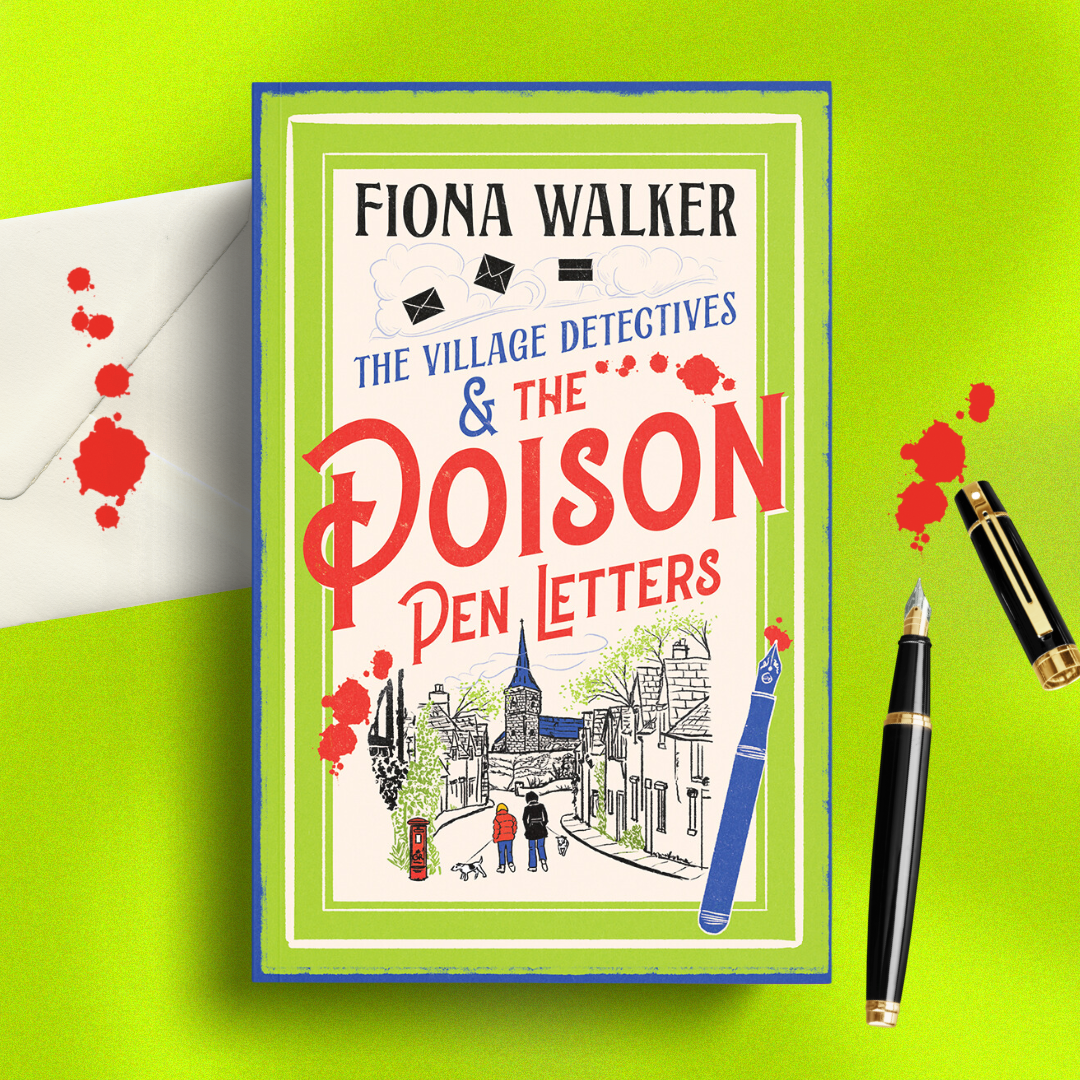
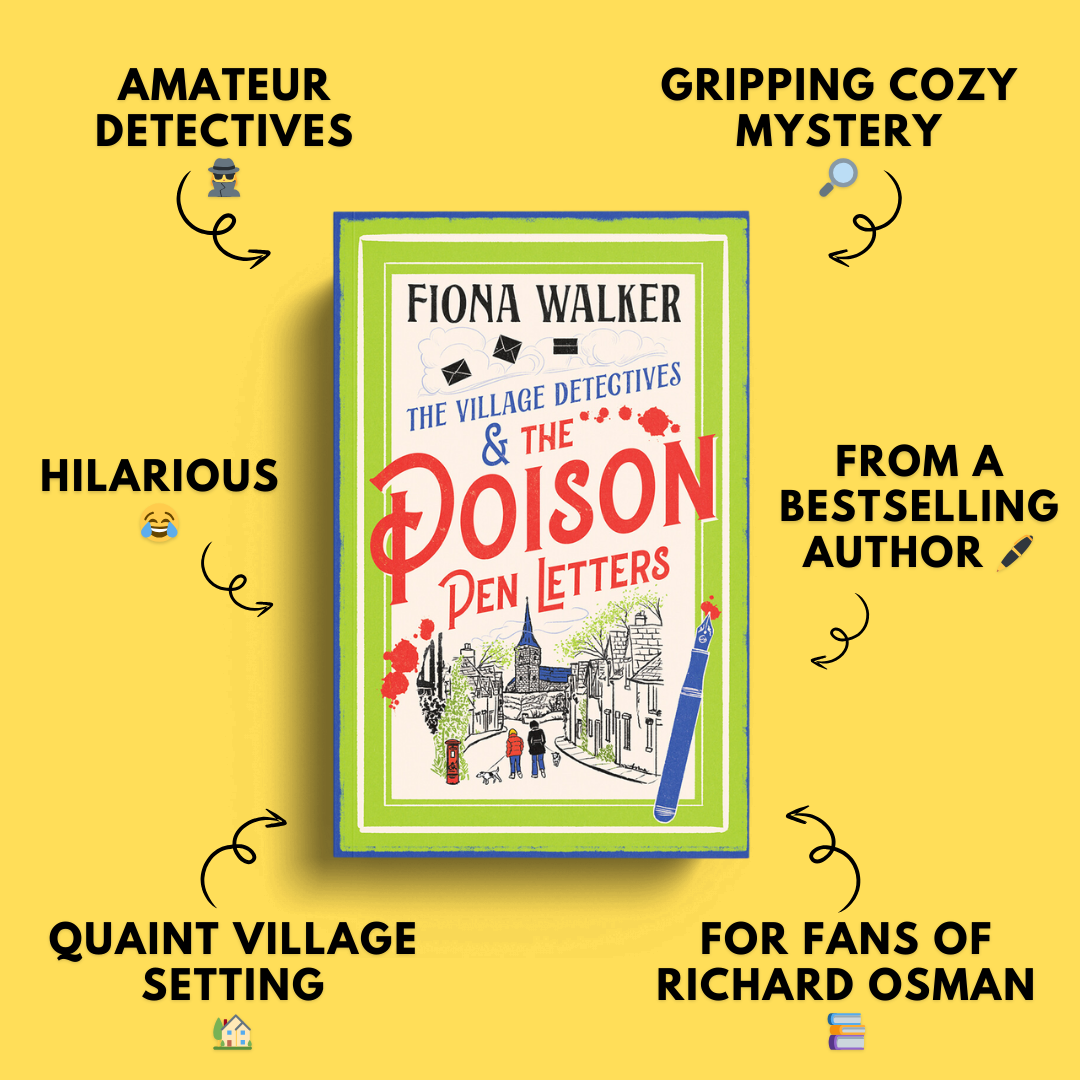
We regret to announce the tragic death of Phoebe Fredericks…
When crime novelist Phoebe opens the post and receives an invitation to her own funeral, she’s horrified. Not least because the date of her death is marked as tomorrow.
Deciding it’s nothing more than a prank from an enemy from her past, she determines to put it to the back of her mind.
But the next morning, when her completely infuriating postman (who likes to think himself her no.1 literary critic) rings her doorbell, a parcel of poisoned pen-nibs explodes in his face. Forced to confront the fact her correspondence is more RIP than RSVP, Phoeve realises someone must want her dead.
Together with the newly-formed Village Detectives – Juno, Mil and Felix – Phoebe resolves to find out who is behind the poison pen letters before they strike again and her fate is signed, sealed and delivered!
An totally hilarious, modern cozy crime mystery, from million-copy bestselling author Fiona Walker, perfect for fans of Richard Osman, Janet Evanovich and Janice Hallett.
The Poison Pen Letters is the second book in The Village Detective Series (or the VDs, as Juno somewhat unwittingly terms them). I’ve read book one and really enjoyed it. Book two is even stronger, perhaps because I know the characters, but also, I think because the plotting is even more secure. I genuinely had no idea who the real culprit was, which was fabulous.
Book 2 sees our intrepid foursome tackling the problem of who murdered the local postie on Phoebe’s doorstep with the use of a poison pen letter – a crime that, even though you know it’s coming at some point, is still quite shocking. While Pheobe’s husband is determined it’s someone outside the village from their past, Pheobe has other ideas. But of course, she is once more penning one of her crime novels (the little additions of that novel are delicious) and has no real time to focus on what’s happening. Juno is as outrageous as ever, and her mother is such a fun character as she dips in and out of the narrative, as does her creaky car.
The personalities of a small village are lovingly brought to life, and I appreciated all the N gauge model railway comments, as I once spent some time selling off a set. It was also good to see @VeryBritishProblems mentioned as part of the social media universe that makes up a large part of the novel.
The Poison Pen Letters is brimming with fabulous characters and a perplexing crime, and I thoroughly enjoyed it.
Meet the author
Fiona Walker is the million copy bestselling author of joyously funny romantic comedies. Most recently published by Head of Zeus, she will be turning to cozy crime for Boldwood. The first in her new Village Detectives series, The Art of Murder, will be published in May 2024.
Lottie should be on top of the world – her boutique has just opened in the quaint little village of Lily Vale and her designs are already delighting the locals. But just nine months ago, she was fired from her dream job and forced to move in with her dad, all because of one big mistake and a betrayal from someone she thought was her friend.
During a fitting appointment, Lottie meets groom-to-be Kit Brooks. Her first impression? Arrogant, rude, and a downright snob. However, as they work together to create the perfect bridesmaid’s dress for his little sister, Lottie begins to view Kit in a whole new light.
Suddenly, she’s battling to keep her heart under control – after all, Kit is getting married. But nothing could prepare her for the identity of his bride…
Wedding Cake and Big Mistakes in Lily Vale Village is the eighth story in the Lily Vale Village book series, a charming set of novellas revolving around the lives of the ordinary people who reside in the beautiful countryside community. It can be read as a standalone story, or as part of the series.
Imogen Payne lives in the British countryside with three stuck-up cats, one mad dog and a very well-trained husband. There she writes the romantic, dramatic and always uplifting Lily Vale Village and Sunny Shore Bay series.
When she’s not writing, she’s cooking up a storm in the kitchen, taking long walks through the nearby woods or snuggling up on the couch with a good book.
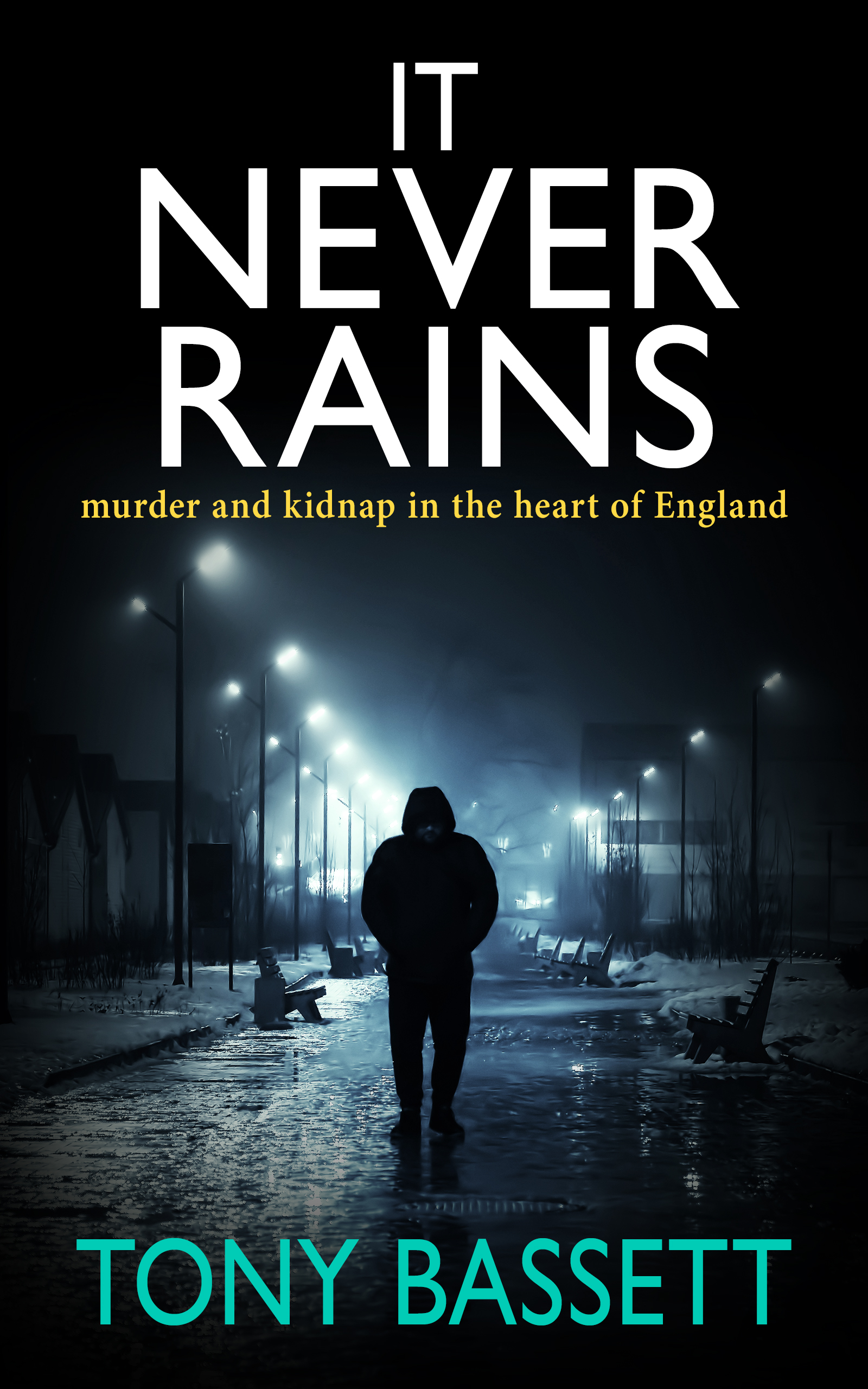
Here’s an extract from Chapter 4 of It Never Rains
Detective Sergeant Sunita Roy has just arrived at a footballer’s mansion near Worcester after it was raided by burglars. The player’s stepson and bodyguard are missing.
As she parked her white Peugeot 208 next to the BMW and climbed out, an amiable uniformed constable approached.
‘All right, Sarge?’ asked PC Derek Underhill. ‘You’ve missed a bit of excitement.’
‘How do you mean?’
‘They’ve just taken the housekeeper away in an ambulance.’
‘I saw an ambulance travelling down the lane.’
‘That was her,’ he said. ‘They’re taking her to Queensbridge General.’
‘What happened?’
‘The poor woman was in the house on her own when she spotted three men in ski-masks. One of them threatened her with a gun and tied her up.’
Sunita was concerned. ‘Is she all right?’
‘I think so. They just roughed her up a bit.’
Sunita shook her head. ‘Must have been a hell of an ordeal for her.’
‘Yes, poor soul,’ said Underhill. ’They’ve taken her away for a check-up. Her husband’s here, but he didn’t see anything. He was out at the time, walking the dog.’
Sunita found the chief inspector talking to Dr Ling beside the main doorway to the house. A police photographer was taking pictures of a pool of blood on the block-paved forecourt. Three forensic staff in white coats were examining the entrance area. A fourth was inspecting possible tyremarks left among leaves, still damp following that morning’s light rain. Rubber anti-contamination plates had been placed at certain points along the ground so that detectives and forensic staff could walk around without the risk of damaging potential evidence. The scene was bathed in the white glow of arc lights.
Sunita stepped across carefully to join her boss.
‘Ah, Sergeant,’ said Roscoe sternly, ‘I’m glad you’re here. I don’t know how much you know but around four o’clock a gang of burglars appear to have disabled the alarm, cut the landline and disconnected the CCTV. Then they got in through the first-floor bathroom window on the other side of the house using a ladder and stole valuables and designer goods.’
‘Do we have any idea how many were in the gang?’ asked Sunita.
‘Not at the moment,’ he said. ‘The housekeeper, Mrs Willis, believes there were three, but there may have been more.’
‘What happened to Mrs Willis, sir?’
‘She was tied up and threatened with a gun.’
‘You’ve managed to speak to her, sir?’
‘Yes, I just grabbed a few words. She’s still in a state, of course. Underhill and another constable from Queensbridge were the first here and called an ambulance. She’s not badly hurt – just bruised wrists. It’s more the shock than anything else. Anyway, about ten minutes later she heard a bit of conversation, a car engine and soon after that two gunshots. Bear in mind she was strapped to a chair with her hands and feet tied and her mouth gagged.’
Sunita frowned. ‘Terrible, sir.’
‘After that, she heard what sounded like two cars driving away. Roughly twenty minutes later, our officers from Queensbridge arrived and untied her. The husband came back half an hour later.’
‘Where’s the husband now?’ she asked.
‘In their staff quarters just behind us. Police were alerted by a firm called Top Rank Protection in Wiltshire. One of their operatives, a guy called Danny Jukes, has been hired by the family as a bodyguard. He called the company’s boss, Ken Woodman, at around ten minutes past four. He’d been given charge of the footballer’s sixteen-year-old stepson, Marcel, for the afternoon. Jukes told his boss they’d arrived at the house to find a guy with a balaclava loading gear into a Range Rover.’
‘Have we got the registration?’ Sunita asked.
‘Yes, but you know what these people are like,’ said Roscoe. ‘Chances are they were false plates and may have been replaced by now in any case. Anyway, Danny Jukes’ last words to Ken were, “Can you call the cops and alert the family? I’m going in.” And since then he and the boy have vanished off the face of the earth.’
Sunita shook her head and stared across at the blood stains on the ground and at the hedge beyond.
‘We know two shots were fired by someone,’ her boss continued. ‘As you can see, there are traces of blood on the forecourt here but we don’t know what the outcome of that was – although someone was obviously harmed.’
Sunita cast her eyes towards the hedge and trees on the far side of the forecourt.
‘What about the family, sir?’ she asked.
‘Jean-Jacques and his wife Camille are on their way back from watching the team play in Newcastle and should be here in a few hours,’ he said. ‘We obviously need to speak to them. In the meantime, I suggest you have a chat with the gardener, David Willis, and see if he can add anything to what we know.’
He handed her a scrap of paper with a phone number scribbled on it.
‘Maybe you could also have a word with Woodman. Here’s his number. Whatever you do, don’t go into the house right now. The forensic team are up to their eyes.’
‘Sir, do we have any idea at all what might have happened to Danny Jukes and Marcel?’ she said.
The chief inspector shook his head. ‘No. But it’s not beyond the realms of possibility that they’ve both fallen victim to foul play.’
Here’s the blurb
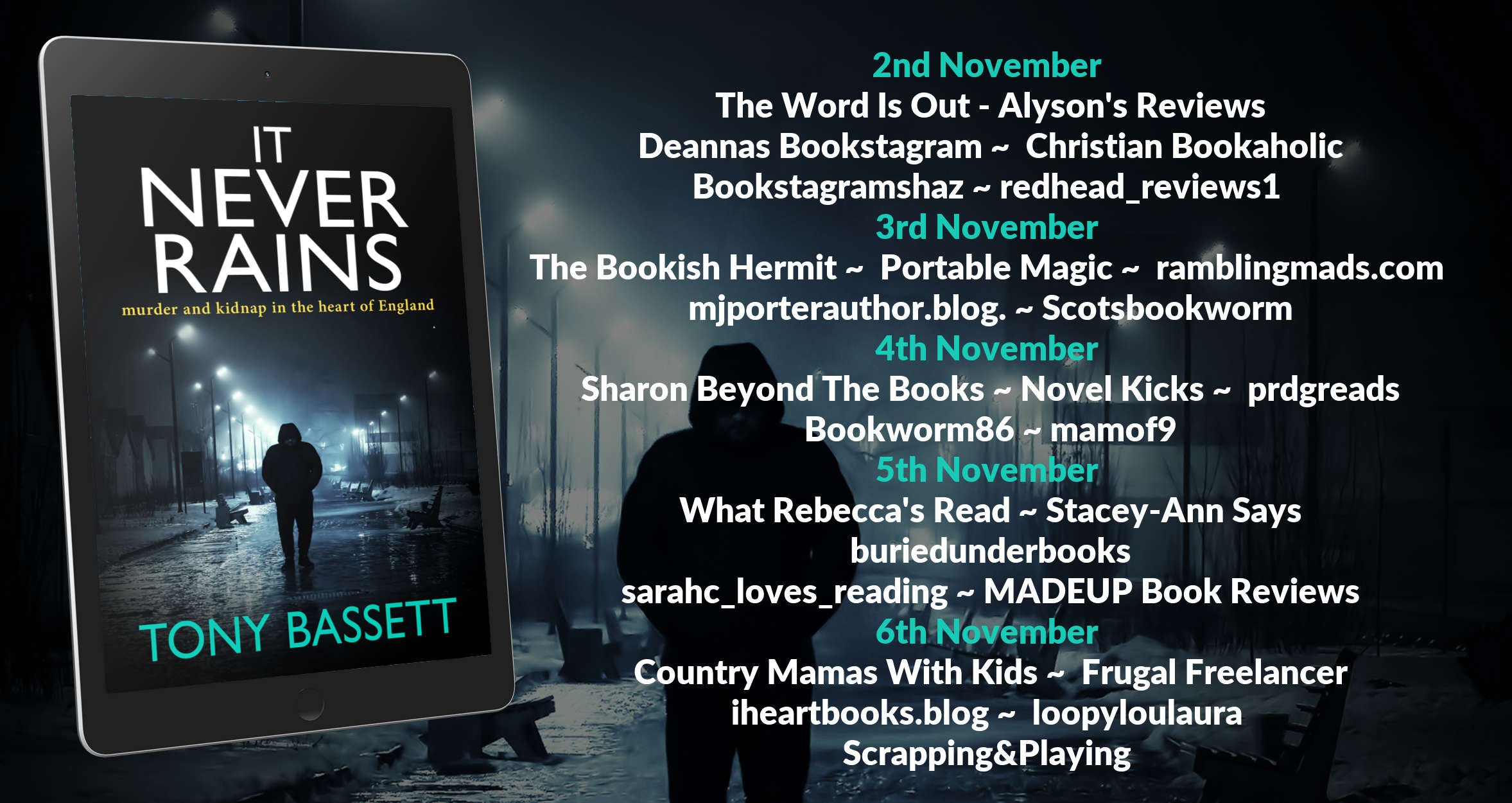
It never rains but it pours . . . When a ruthless gang burgles the home of a Premier League football player, DCI Gavin Roscoe and DS Sunita Roy suddenly have a murder and a kidnap on their hands. The footballer’s stepson, Marcel, is taken from the palatial property whilst it is being ransacked, and his bodyguard is shot, stone cold dead. To help them with their task, DI Parkes from the National Crime Agency’s Kidnap Unit joins the investigation but he has very different ideas about how the operation should be run. While rain lashes the surrounding countryside, tempers rise, as do the flood waters. Can the police track down this dangerous gang, unmask its malevolent ringleader, and reunite the boy with his family before it’s too late? IT NEVER RAINS is the sixth book in the detectives Roy and Roscoe crime fiction series by Tony Bassett.
Tony Bassett is a former journalist who worked on regional and national newspapers in Britain for more than 40 years. He mainly reported on crime, show business, human interest and consumer topics. Now retired, he writes crime fiction. Tony is best known for his series of novels set in the West Midlands. They feature Detective Chief Inspector Gavin Roscoe, an experienced detective and family man, and his sergeant, law graduate and resourceful problem-solver Sunita Roy. The fifth book in the series, Heir To Murder, was judged first in the Mystery and Suspense (Police Procedurals) category in the American Fiction Awards in June 2024. The novel concerns a peer of the realm’s son found axed to death after a row over loud music. Two years earlier, his older brother mysteriously disappeared while hiking in Spain. Here is the Amazon link: https://www.amazon.co.uk/dp/B0CPFNJNQJ The series is published by The Book Folks, an independent London publisher specialising in crime fiction. Other books in the series (in order) are: Murder On Oxford Lane, The Crossbow Stalker, Murder Of A Doctor and Out for Revenge. His stand-alone thriller Seat 97, about a man shot dead at a London concert hall, has also been published by The Book Folks. Two further works (the crime novel Smile Of The Stowaway and the spy novel The Lazarus Charter) were published by The Conrad Press. Tony first developed a love of writing at the age of nine when he produced a junior school magazine. A few years later, his local vicar in Tunbridge Wells staged his play about the Biblical story of Naboth’s Vineyard. At Hull University, Tony was judged Time-Life Magazine student journalist of the year in 1971. Tony, who has five grown-up children, is a Life Member of the National Union of Journalists. He lives in South-East London with his partner Lin.
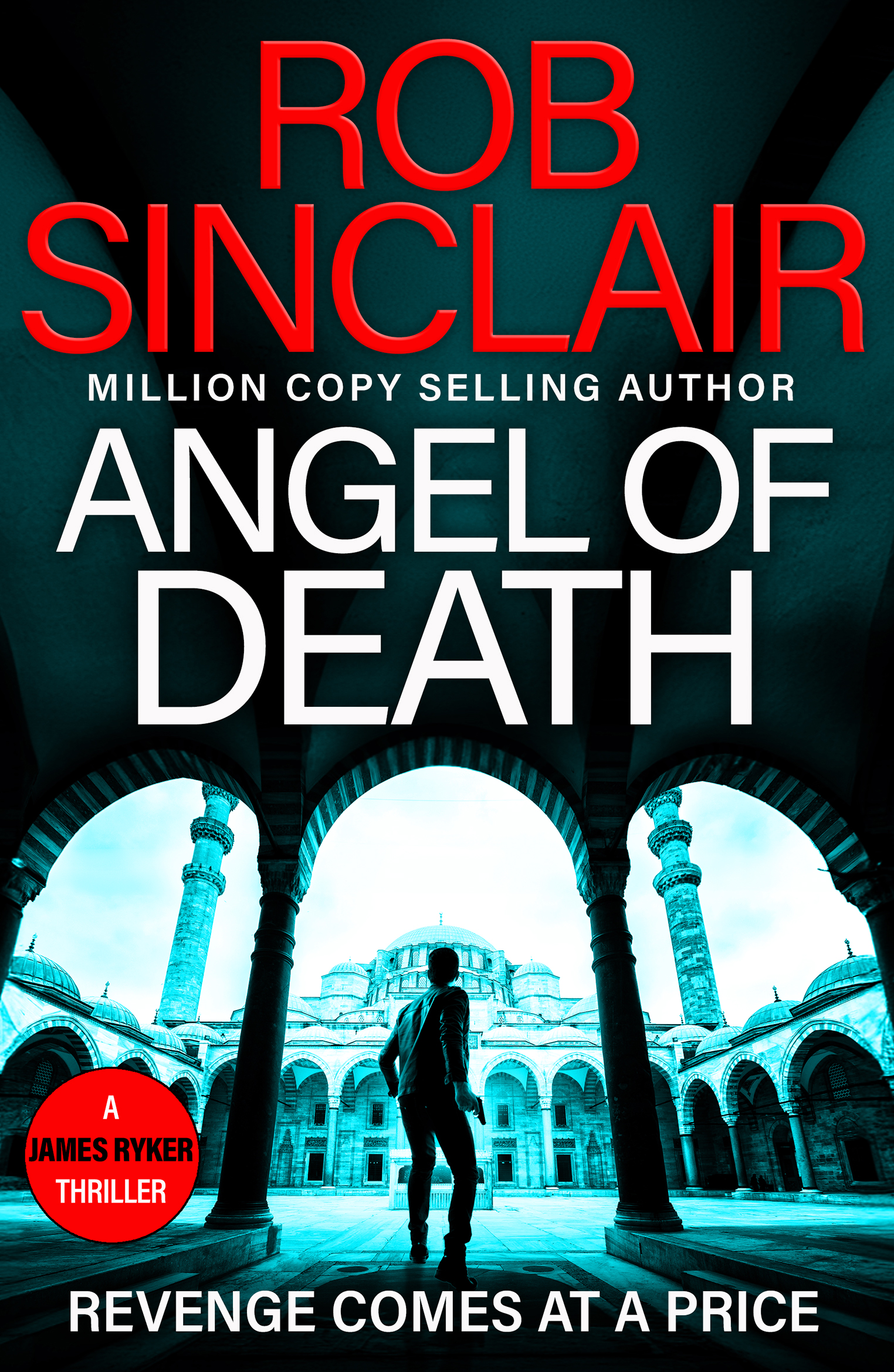
Ismail Karaman is one of the deadliest terrorists in recent history. So why is he free to float around the Persian Gulf on his luxury yacht? Ex intelligence agent James Ryker thinks he knows why, and the answer lies at the corrupt heart of the SIS. Ryker isn’t one to let the bad guys get away with murder, but Karaman has many enemies, and one in particular will make all their lives much more complicated… They call her the Angel of Death – a former agent whose last encounter with Karaman cost her everything, and left her in a Lebanese prison cell. Now she’s free, and with nothing else to lose, she’s determined to get her revenge… whatever it takes. Ryker and the Angel may have the same target, but that doesn’t mean they’re on the same side. Who will reach Karaman first? And who will still be standing when the bodies pile up?
Angel of Death is the 12th book in the James Ryker series and a very entertaining read.
I’ve only read one previous book in the series, and I found this one to be a much slicker and more engaging read with our two main characters, Ryker and Angel, alternating points of view. It’s quite a globe-trotter, although much of the action takes place in the UK, but a UK told very much through American eyes (and with US spelling)- including gas stations and quite a few handguns. That said, the narrative is good enough for these things to pass me by with only a slight chuckle as the action ramps up.
Ryker is as violent as in the previous book, but he might just have met his match in Angel of Death.
This is a really solid read, sure to appeal to fans of the genre and those looking for an action-packed thriller.
Rob Sinclair is the million copy bestseller of over twenty thrillers, including the James Ryker series. Rob previously studied Biochemistry at Nottingham University. He also worked for a global accounting firm for 13 years, specialising in global fraud investigations.
Welcome to Cosy Cove, where love burns brighter than any candle!
Beth Williams thought her dreams had melted away after a devastating breakup, but she finds a flicker of hope at Harbour Lights, her artisan candle shop nestled in the heart of Cosy Cove. But just when Beth thinks she’s content with her quiet life, a ruggedly handsome stranger threatens to reignite her carefully guarded heart.
Enter Jacob Lawson, a charming journalist whose assignment in the quaint seaside town quickly becomes more than just another story. As Beth introduces him to the town’s hidden gems—from the bustling summer fair to sunset walks on the beach—Jacob finds himself captivated by more than the scenery.
But as their attraction simmers, both Beth and Jacob must confront their deepest fears. Can Beth trust her heart to love again? And will Jacob choose the comfort of Cosy Cove over the call of his career?
Join Beth and Jacob on a journey of second chances, sweet moments, and the kind of love that makes every day feel like a summer holiday. Will they find the courage to embrace a future together, or will their fears extinguish the flame before it truly ignites?
Get ready to fall head over heels for Cosy Cove, where every page promises a warm hug for your heart. Perfect for fans of seaside romances, charming small towns, and love stories that sparkle brighter than the sea at sunset!
Abbey Hicks writes sweet, feel-good romance filled with dashing heroes, quirky heroines, and those heart-melting happily ever afters. Whether it’s contemporary romance or paranormal love stories, she brings her signature charm and a sprinkle of magic to every page.
Writing as Abbey MacMunn, her debut paranormal romance was shortlisted for the prestigious Joan Hessayon Award for new writers. Since then, Abbey has written eleven more books, including the bestselling steamy paranormal romcom series, Love Bites: A Dating Agency for Paranormals.
When she’s not dreaming up her next romantic hero, you’ll find her on walks with her mischievous but lovable labradoodle, Brody, or binge-watching anything from romcoms to fantasy/sci-fi. If it has romance, adventure, and a dash of humour, she’s there!
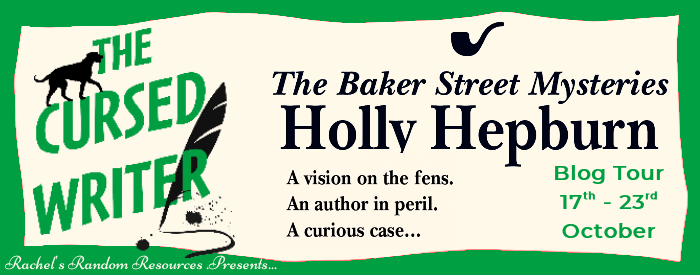
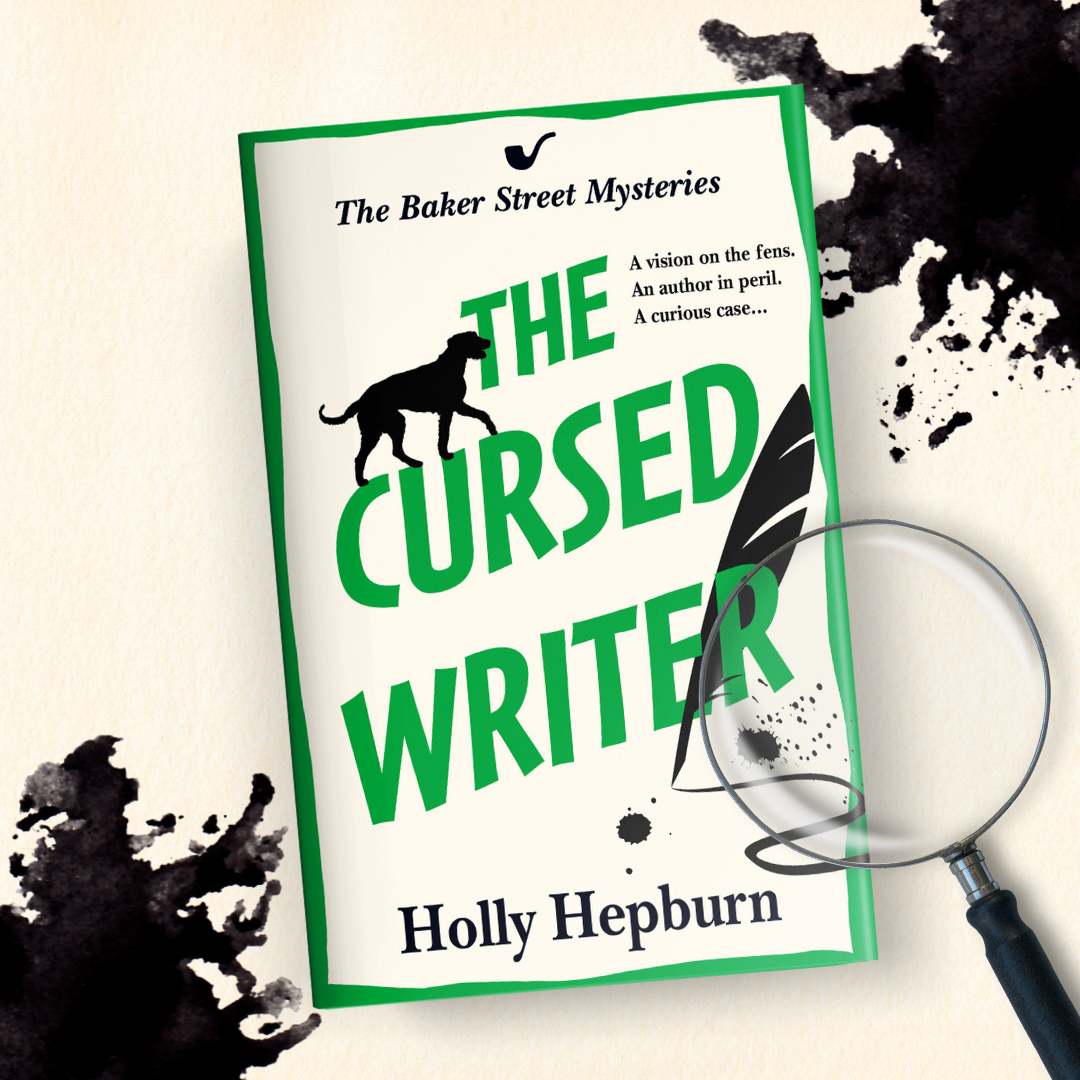
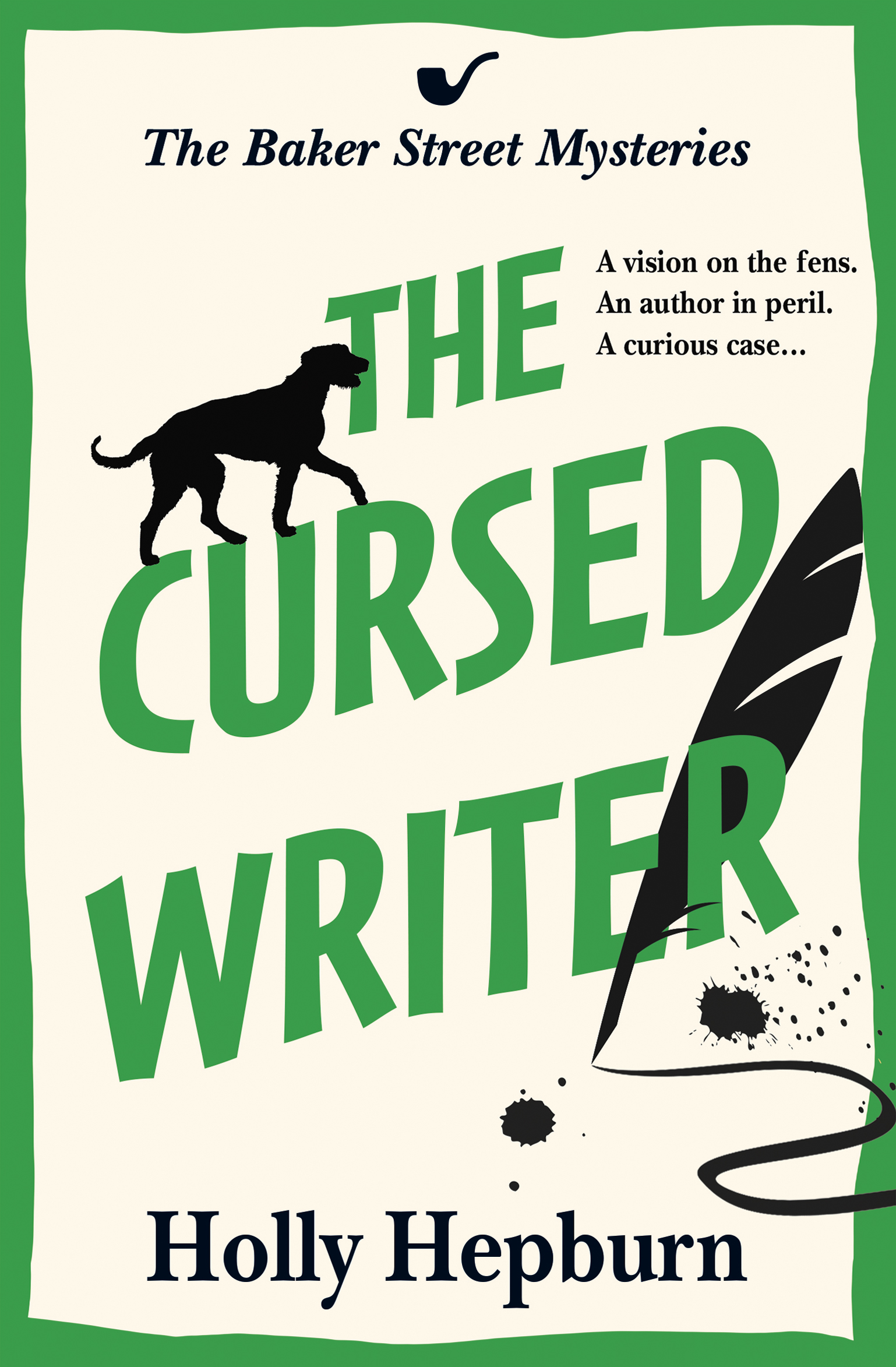
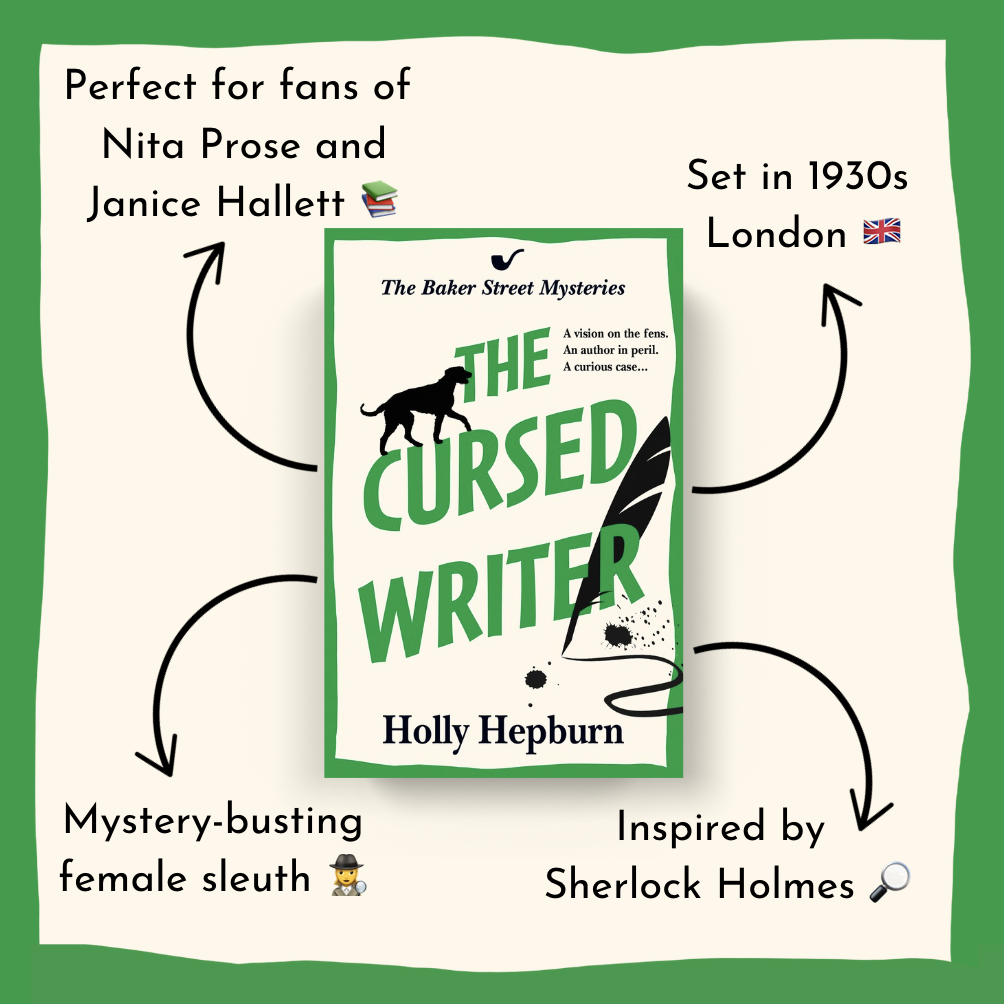
Harriet White is no stranger to odd correspondence. Ensconced in the basement of the Baker Street building society, her job is to reply to the mail they receive on behalf of Sherlock Holmes.
But while letters to the fictional sleuth may be plentiful, telegrams are rare, and so when she receives one describing the grave situation of celebrated author Philip St John, her interest is piqued. The writer describes St John as being consumed by terror, seeing ghostly apparitions on the fens, and only at ease in the company of his loyal wolfhound.
Before long, Harry finds herself in Cambridgeshire under the guise of being Holmes’ assistant. The residents of Thurmwell Manor believe their master is cursed. Harry is sure there must be a logical explanation, but inside the echoey halls of the grand gothic house, her confidence in science and reason begin to crumble…
Can Harry solve the mystery before the fens claim their next victim?
Join Harriet White in 1930’s London for another glorious Sherlock Holmes-inspired mystery, for fans of Nita Prose and Janice Hallett.
The Cursed Writer is the second book in the Baker Street Mysteries. I’ve read book 1. Check out the review for The Missing Maid.
Events start immediately after the end of book 1, with our detective Harry returning to her poky office after the thrilling ending to her first mystery. She could be forgiven for being a little glum when she finds herself typing the same reply to every message she receives, but never fear—an urgent telegram soon lifts her from her melancholy. It has her adopting her detecting hat once more.
This time, we’re taken to the Fens in Cambridgeshire to investigate a strange mystery surrounding the sudden change in author Philip St John’s demeanour. His nephew desperately seeks the aid of celebrated detective Sherlock Holmes at 221B Baker Street. So desperately, he’s prepared to spend the money to send a telegram and not just a letter. And not just one, but two! While Harry tries to determine how she can uncover more about the telegram without revealing that Holmes is, of course, a fictional character, she is also embroiled in a few other little mysteries, which, for some time, appear irrelevant but offer excellent continuity from book one until they become increasingly relevant.
Harry’s two trips to the Fens are very Holmesesque, providing us with an eerie atmosphere in the depths of winter, and it felt very true to form.
The mystery elements themselves are very well strung together, and while I might have guessed part of the solution, the eventual conclusion was even better than I could have hoped.
This was a thrilling continuation of the Baker Street Mysteries. I was entirely hooked and devoured the story in a few sittings.
Meet the author
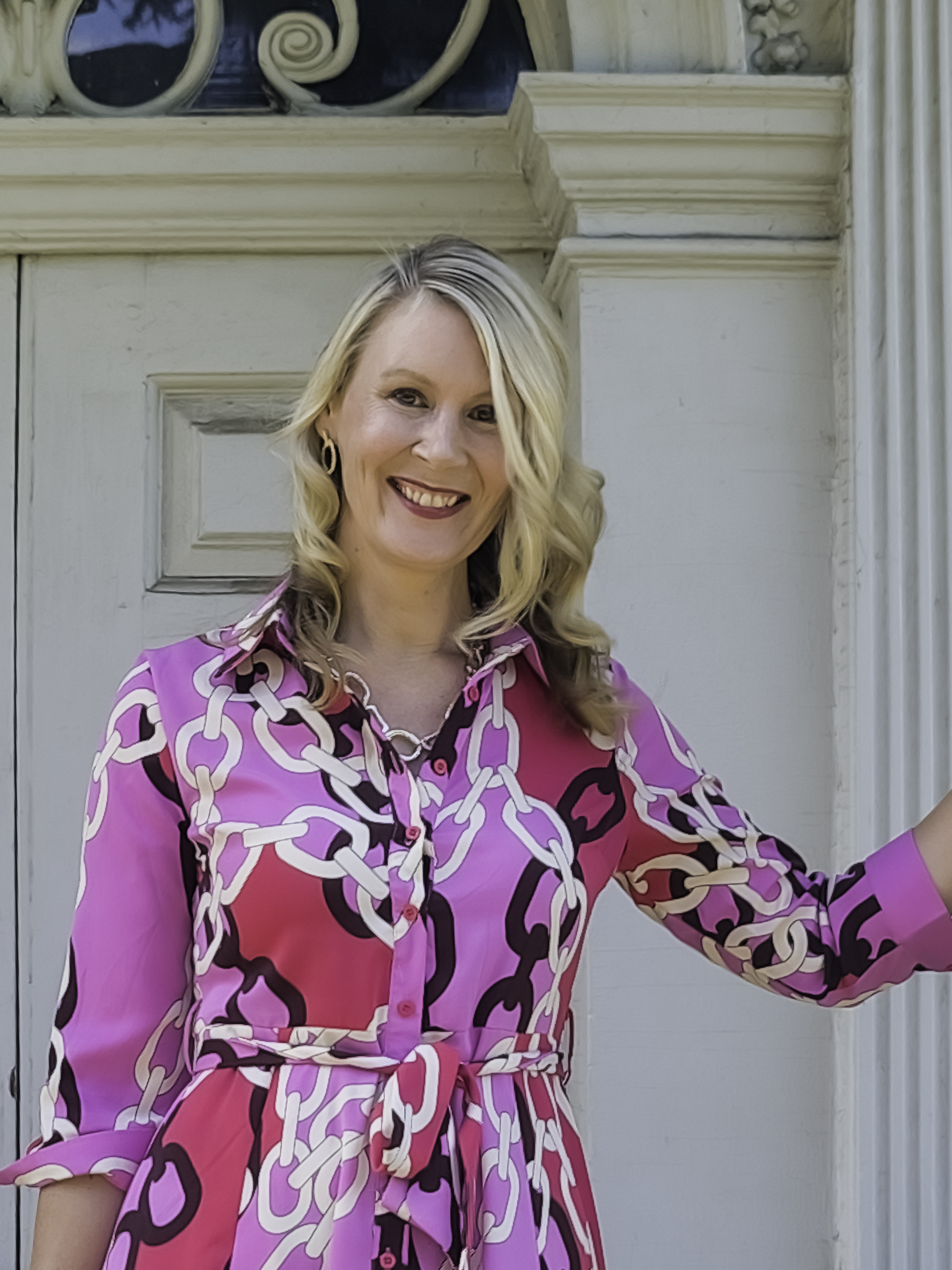
Holly Hepburn writes escapist, swoonsome fiction that sweeps her readers into idyllic locations, from her native Cornwall to the windswept beauty of Orkney. She has turned her hand to cosy crime inspired by Sherlock Holmes himself. Holly lives in leafy Hertfordshire with her adorable partner in crime, Luna the Labrador.
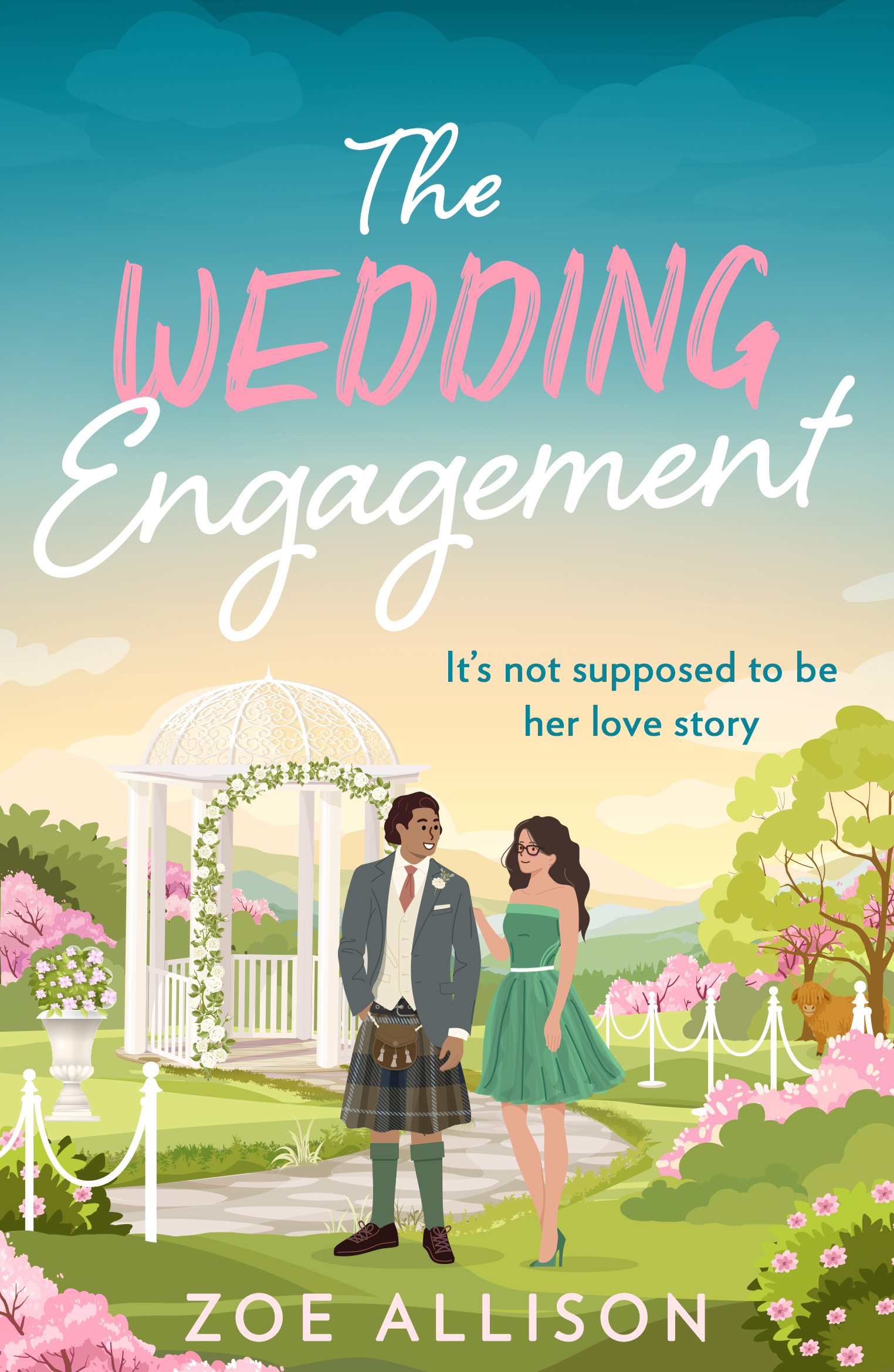
Planning a wedding with the man you’re secretly in love with… what could go wrong?
Liv Holland has a secret: she’s been crushing on Arran Adebayo, her brother’s best friend, for years. They’re ‘just friends’ but she can’t help the butterflies in her stomach whenever she’s around him.
When they’re asked to help plan festivities for Liv’s brother’s wedding, Liv and Arran can no longer deny the sparks between them. But with both having their own chequered romantic history, risking everything for love could mean losing each other forever…
As the wedding bells ring, will Liv and Arran finally find their own happy ever after?
Zoe Allison lives in Scotland with her husband and two children, having been brought up in a mixed-race family in Yorkshire.
Growing up, Zoe enjoyed stories about falling in love. But rather than daydreaming of being rescued by a knight in shining armour, she imagined herself fighting dragons alongside him, battling supervillains as heroic allies, or teaming up to dive into perilous waters and save the day.
As an adult, Zoe became a doctor. However as time passed, she craved a creative outlet to counter the soul-sapping burnout that her career inflicted upon her, and also to achieve the happy endings that were so often lacking in the real world. She wanted to create heroines who represent her and her values, as well as heroes who truly love women—men who find their true loves inspiring, want to connect with them as soulmates, and fully open themselves to their partners on an emotional level. And so, Zoe began to write romance.
























 MJ Porter