
I’m delighted to welcome Alison Morton and her new book, EXSILIUM, to the blog #RomaNovaSeries #EXSILIUM #AlternativeHistoricalFiction #HistoricalFiction #BlogTour #TheCoffeePotBookClub

I’m delighted to welcome Alison Morton and her new book, EXSILIUM, part of the Roma Nova series, to the blog with a guest post.

Guest Post

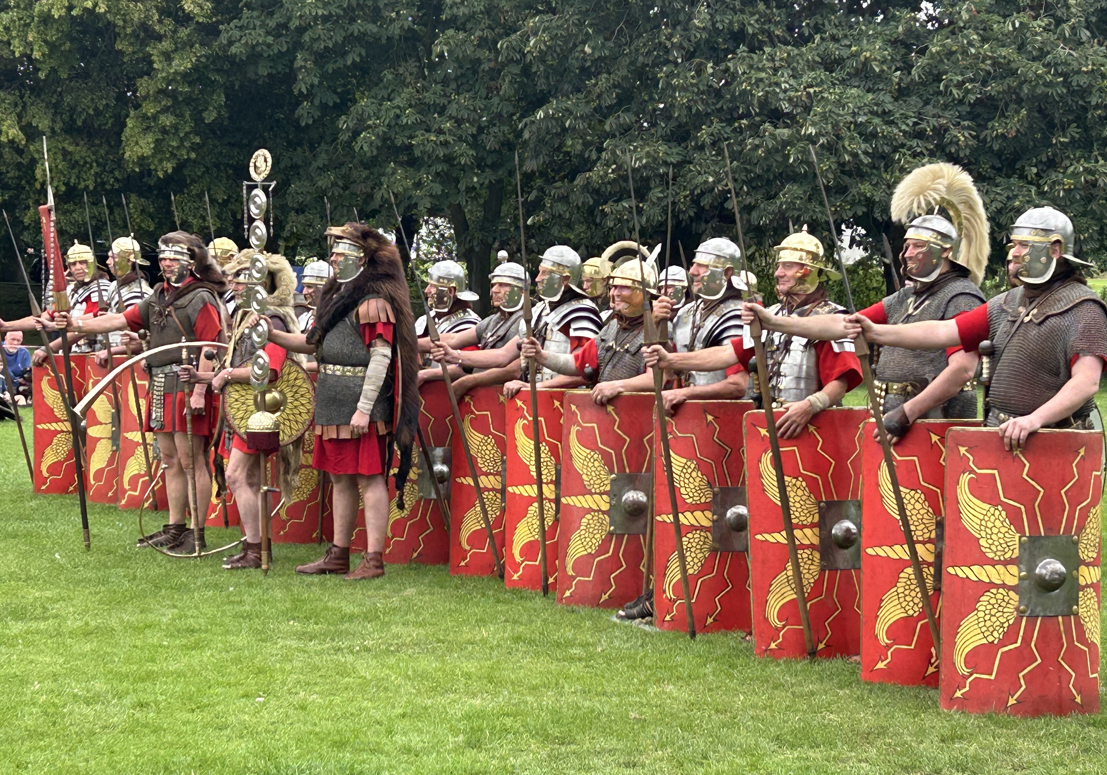
When we think of Romans, two images immediately spring to mind. The first is a fierce helmeted solder wearing iron bands of segmented armour across his torso over a red tunic that only just covers his knees and with hobnail marching boots on his feet. He carries a spear, gladius ad dagger as weapons and a large rectangular shield which he uses in clever formations with his comrades.

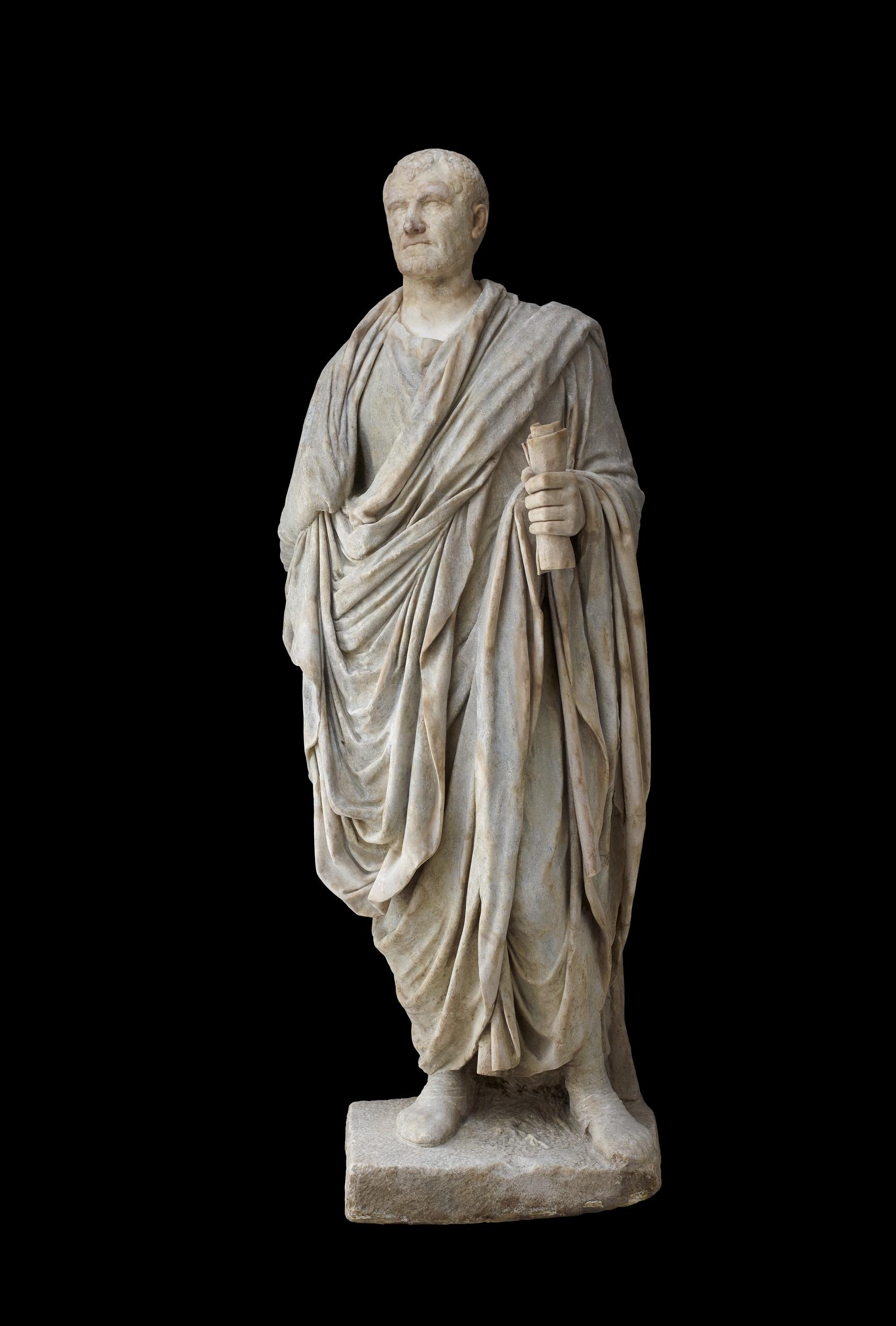
The second is a man draped in a splendid toga making a clever speech in the Senate. His ‘womenfolk’ would be demurely dressed in tunic and mantle, often accompanied by a slave in a simple tunic.

Well, yes and no.

Let’s look at the military

The earliest proven use of this segmented armour is in 9 BC with a suggestion of possibly as early as 53 BC; the latest in the last quarter of the third century AD. In some later depictions, such as on the Arch of Constantine (AD 315), segmented armour is seen, but scholars seem to think it was more for ceremonial show rather than reflecting what was used at the time by soldiers in the field.

Rome had become a republic in 509 BC after throwing out its kings who had ­– according to legend – reigned for two hundred and fifty years before that. So for the first seven centuries of its history, there was no ‘typically Roman’ segmented armour. The very early republican soldiers would probably have worn bronze helmets, breastplate and greaves and carried a round leather or large circular bronze-plated wooden shield, and fought with a spear, sword and dagger.

According to the ancient Greek historian Polybius, whose Histories written around the 140s BC are the earliest substantial account still existing of the Republic, Roman cavalry was originally unarmoured; the soldiers only wore a tunic and were armed with a light spear and ox-hide shield which were of low quality and quickly deteriorated in action.

In contrast to the lorica segmentata beloved by Hollywood, the more pedestrian and expensive chain mail (lorica hamata) was in use for over 600 years (3rd century BC to 4th century AD) and scale armour (lorica squamata) during the Roman Republic and in later periods. The latter was made from small metal scales sewn to a fabric backing and is typically seen on depictions of signiferes (standard bearers), centurions, cavalry troops, and auxiliary infantry, as well as ordinary legionaries. On occasion, even the emperor would be depicted wearing the lorica squamata. It’s not known exactly when the Romans adopted this type of armour, but it remained in use for about eight centuries.

Fast forward to the fourth century… In contrast to the earlier segmentata plate armour, which afforded no protection for the arms or below the hips, some pictorial and sculptural representations of Late Roman soldiers show mail or scale armour giving more extensive protection. These types of armour had full-length sleeves and were long enough to protect the thighs and other essential parts of the body(!).

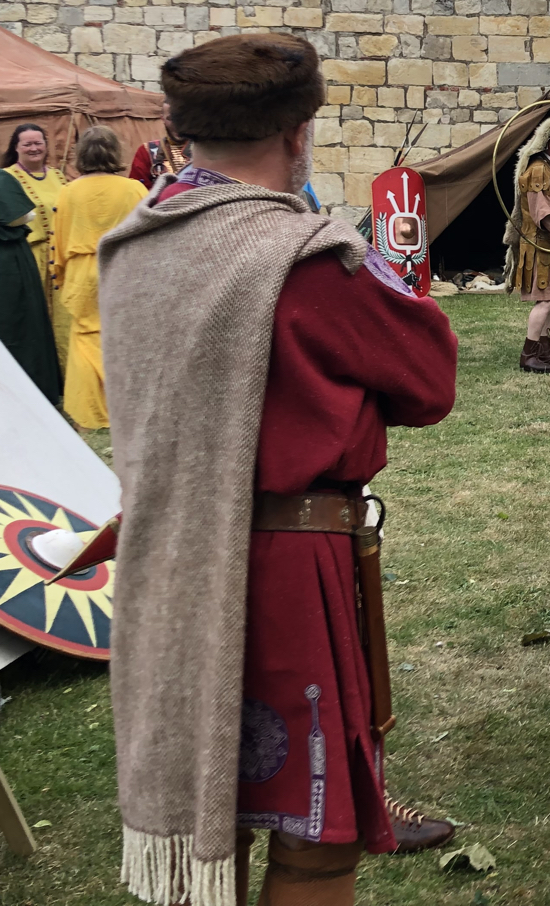
In northern Europe, long-sleeved tunics, trousers (bracae), socks (worn inside the caligae) and laced boots had been commonly worn in winter from the 1st century onwards. During the 3rd century, these became much more widespread, with the alternative of leggings, even in Mediterranean provinces also. By the late fourth century, both were standard wear. Apart from more colourful and decorated clothing generally, a distinctive part of a soldier’s fourth century costume was a type of round, brimless hat known as the pannonian cap (pileus pannonicus).
All change for civilian men

In the Republican and early imperial periods, Roman men typically wore short-sleeved or sleeveless, knee-length tunics.  On formal occasions, adult male citizens could wear a woollen toga draped over their tunic. But from at least the late Republic onward, the upper classes favoured ever longer and larger togas, increasingly unsuited to manual work or physically active leisure. Togas were expensive, heavy, hot and sweaty, hard to keep clean, costly to launder and challenging to wear correctly. They were best suited to stately processions, oratory, sitting in the theatre or circus, and self-display among peers and inferiors. The vast majority of citizens had to work for a living, and avoided wearing the toga whenever possible. Several emperors tried to compel its use as the public dress of true Romanitas but none were particularly successful. The aristocracy clung to it as a mark of their prestige, but eventually abandoned it for the more comfortable and practical pallium.

By the end of the fourth century, clothing looked radically different and didn’t conform to our idea of ‘typically Roman’. In such a diverse empire, the adoption of provincial fashions perceived was viewed as attractively exotic, or simply more practical than traditional Italian Roman forms of dress. Clothing worn by soldiers and non-military government bureaucrats became highly decorated, with woven or embellished strips, clavi, and circular roundels, orbiculi, added to tunics and cloaks. These decorative elements usually comprised geometrical patterns and stylised plant motifs, but could include human or animal figures. The use of silk also increased steadily and most courtiers in late antiquity wore elaborate silk robes. Court officials as well as soldiers wore heavy military-style belts, revealing the increased militarisation of late Roman government. Trousers and leggings – considered barbarous garments worn by Germans and Persians – became more more common for civilian men in the latter days of the empire, although regarded by conservatives as a sign of cultural decay.

The toga, traditionally seen as the sign of a proper Roman, had never in reality been popular or practical. Most likely, its replacement in the East by the more comfortable pallium or paenula (a wool cloak) was a simple acknowledgement that the toga was generally no longer worn. However, it remained the official formal costume of the Roman senatorial elite. A law issued by co-emperors Gratian, Valentinian II and Theodosius I in 382 AD stated that while senators in the city of Rome may wear the paenula in daily life, they must wear the toga when attending their official duties. Failure to do so would result in the senator being stripped of rank and authority, and of the right to enter the Senate House. But it’s worth noting that in early medieval Europe, kings and aristocrats who dressed like the late Roman generals they sought to emulate, did not display themselves draped in togas.
And the women?

In early Republican Rome, both men and women wore togas but in mid-Republican times, the toga became a male-only garment. Only prostitutes wore a toga as a sign of their ‘infamy’. Typically, women and girls wore a longer, usually sleeved tunic for and married citizen women wore a mantle, usually wool, known as a palla, over a stola, a simple, long-sleeved, voluminous garment fastened at the shoulders that fell to cover the feet.  In the early Roman Republic, the stola was reserved for patrician, i.e. aristocratic women as a sign of their status.  Shortly before the Second Punic War (218-201 BC), the right to wear it was extended to plebeian matrons, and to freedwomen who had acquired the status of matron through marriage to a citizen. 

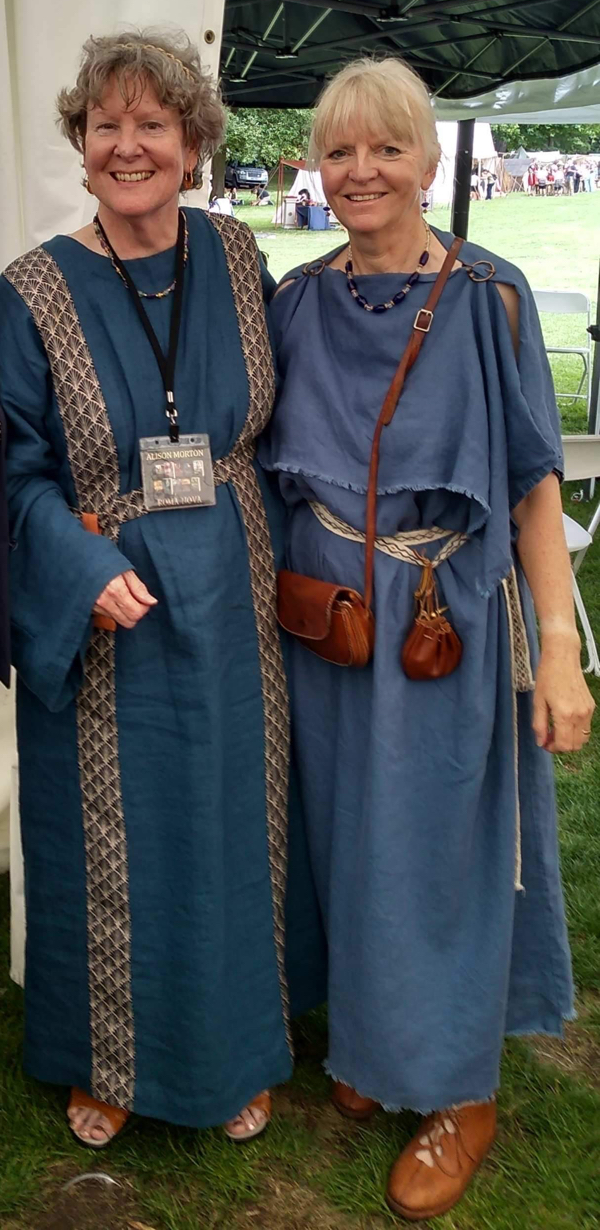
But things had changed dramatically by the end of the fourth century. Women of that time wore belted long tunics decorated with full-length contrasting stripes – clavi – and braiding, with generous sleeves and, in cooler climates, narrow-sleeved underdresses. That Late Roman tunic, or dalmatica, was a generously cut T-shaped tunic with a slit neck, typically falling in (hopefully) graceful folds. Sleeves could be short, three-quarter or long and rectangular, which could be fairly narrow or quite wide. Wide sleeves were sometimes tied back, presumably for work, giving a butterfly’s wing effect.

The belt, worn under the bust, was often just a tied cord, or could be of plain or decoratively woven cloth and could have a central jewel, perhaps a brooch. As weather protection and ornament, ladies would, like their Republican predecessors, wear various sizes of mantle (palla or the smaller palliola), a rectangular piece of material cast elegantly over the shoulder like a scarf or draped around the body.

Some literature suggests both traditional pagan and Christian respectable ladies would cover their hair in the street but this was not universal.

Ladies would prefer mantles for travel rather than sagum style cloaks, but rural women and athletes were known to wear practical gear for weather protection and presumably camp followers might wear spare military cloaks. The expensive birrus britannicus, mentioned in Diocletian’s edict on maximum prices, was probably a heavy, long semi-circular hooded cape with front opening.

Clothing depended on the wearer’s wealth or poverty, their social status, on the ability to find or make fabric and on personal preference. Sometimes you took what was given when cast off by an older sibling. But over twelve centuries, while some things like tunics performed the same function, how Romans looked changed much more than we might imagine.

Here’s the Blurb

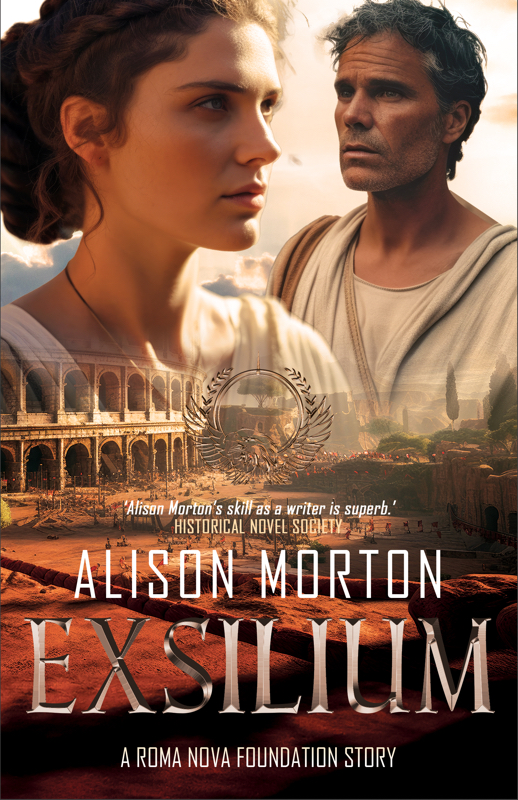
Exile – Living death to a Roman

AD 395. In a Christian Roman Empire, the penalty for holding true to the traditional gods is execution.

Maelia Mitela, her dead husband condemned as a pagan traitor, leaving her on the brink of ruin, grieves for her son lost to the Christians and is fearful of committing to another man.

Lucius Apulius, ex-military tribune, faithful to the old gods and fixed on his memories of his wife Julia’s homeland of Noricum, will risk everything to protect his children’s future.

Galla Apulia, loyal to her father and only too aware of not being the desired son, is desperate to escape Rome after the humiliation of betrayal by her feckless husband.

For all of them, the only way to survive is exile.
Buy Link

Universal Link:

Meet the Author

Alison Morton writes award-winning thrillers featuring tough but compassionate heroines. Her ten-book Roma Nova series is set in an imaginary European country where a remnant of the Roman Empire has survived into the 21st century and is ruled by women who face conspiracy, revolution and heartache but use a sharp line in dialogue. The latest, EXSILIUM, plunges us back to the late 4th century, to the very foundation of Roma Nova.

She blends her fascination for Ancient Rome with six years’ military service and a life of reading crime, historical and thriller fiction. On the way, she collected a BA in modern languages and an MA in history. 

Alison now lives in Poitou in France, the home of Mélisende, the heroine of her two contemporary thrillers, Double Identity and Double Pursuit.

Connect with the Author

Website: Blog: BlueSky: Newsletter:

Follow the EXSILIUM blog tour with The Coffee Pot Book Club

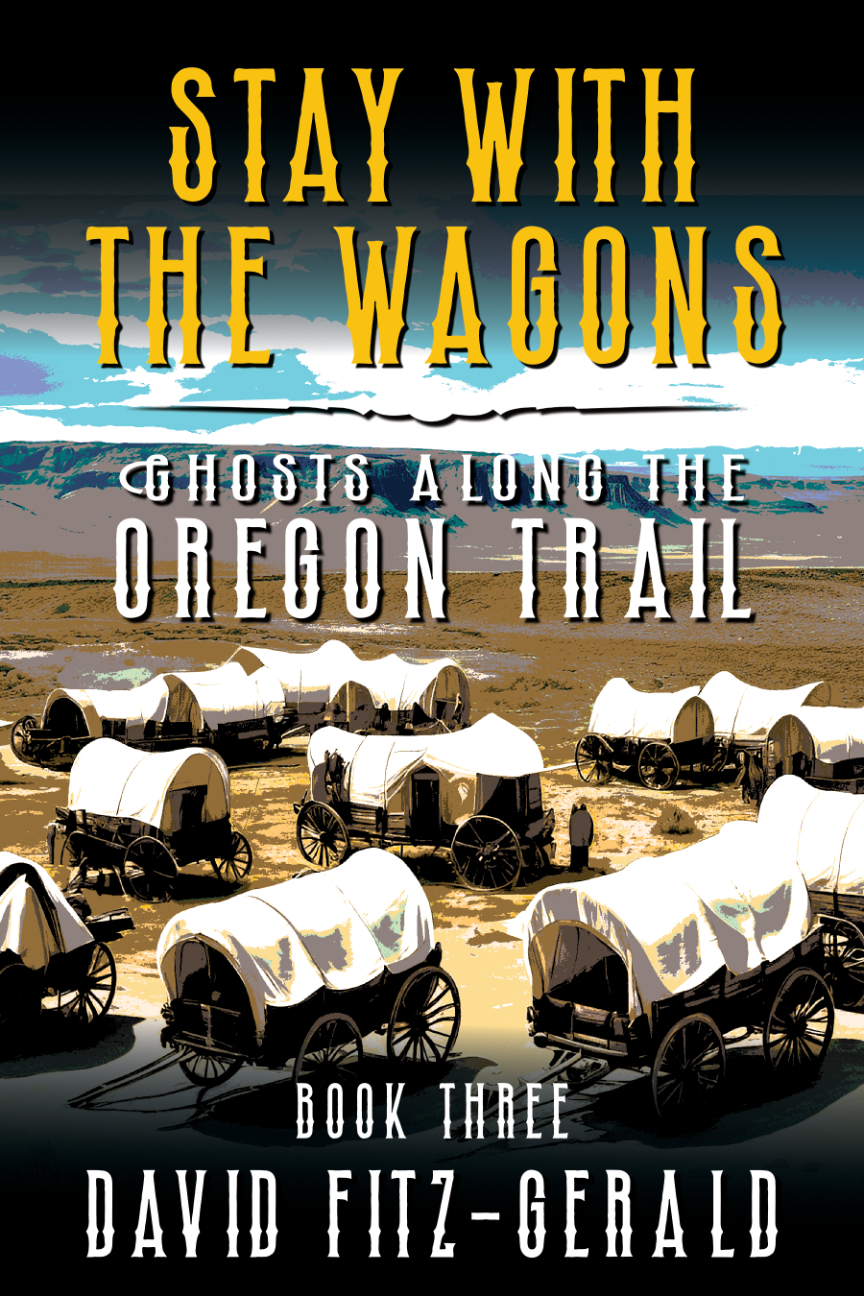
I’m delighted to welcome back David Fitz-Gerald and his new book, Stay with the Wagons, to the blog #HistoricalFiction #WesternAdventure #AmericanWest #Pioneers #BlogTour

I’m delighted to welcome back David Fitz-Gerald and his new book, Stay with the Wagons: A Pioneer Western Adventure, Ghosts Along the Oregon Trail, to the blog with a series trailer.

Series Trailer

Ghosts Along the Oregon Trail Series Trailer

Here’s the blurb

Venture deep into the uncharted wilderness and crest the continental divide.

Stay with the Wagons is the enthralling third chapter in the Ghosts Along the Oregon Trail series. Dorcas Moon has discarded her mourning dress and yearns for freedom and independence amidst the vast frontier. But a perilous world and a commanding wagon master keep her tethered. Ultimately, it’s a brutal bout of fever and ague that confine her to camp.

Relentless disasters and beguiling challenges unfold in this installment. A young man is crushed beneath a wagon wheel. Dorcas’ son breaks an arm, a grizzly bear attacks the wagon train, and the looming threat of attacking outlaws whips the emigrants into a worried frenzy. How many must perish before they reach the end of the trail?

As chaos reigns, her troubled daughter, Rose, disappears once again, leading Dorcas on a perilous quest. Tracking Rose to a sacred site, they encounter a blind seer and a legendary leader, Chief Washakie. Rose’s enchantment with Native American adornments sparks Dorcas’ concern about an unexpected suitor and raises worries about Rose’s age.

Stay with the Wagons is bursting with action, adventure, and survival. It is a story of resilience and empowerment on the Oregon Trail. Claim your copy now and re-immerse yourself in a tale of high-stakes survival, unexpected alliances, and the indomitable spirit of Dorcas Moon.

Buy Link

Universal Link:

This title/series is available to read on#KindleUnlimited

Meet the Author

David Fitz-Gerald writes westerns and historical fiction. He is the author of twelve books, including the brand-new series, Ghosts Along the Oregon Trail set in 1850. Dave is a multiple Laramie Award, first place, best in category winner; a Blue Ribbon Chanticleerian; a member of Western Writers of America; and a member of the Historical Novel Society.

Alpine landscapes and flashy horses always catch Dave’s eye and turn his head. He is also an Adirondack 46-er, which means that he has hiked to the summit of the range’s highest peaks. As a mountaineer, he’s happiest at an elevation of over four thousand feet above sea level.

Dave is a lifelong fan of western fiction, landscapes, movies, and music. It should be no surprise that Dave delights in placing memorable characters on treacherous trails, mountain tops, and on the backs of wild horses.

Connect with the Author

Website: BookBub: Linktree:

Follow the Stay With the Wagons blog tour with The Coffee Pot Book Club

I’m delighted to welcome Debra Borchert and her series, Chateau de Verzat, to the blog #ChateauDeVerzatSeries #HerOwnLegacy #HerOwnRevolution #DebraBorchertAuthor #BlogTour #CoffeePotBookClub

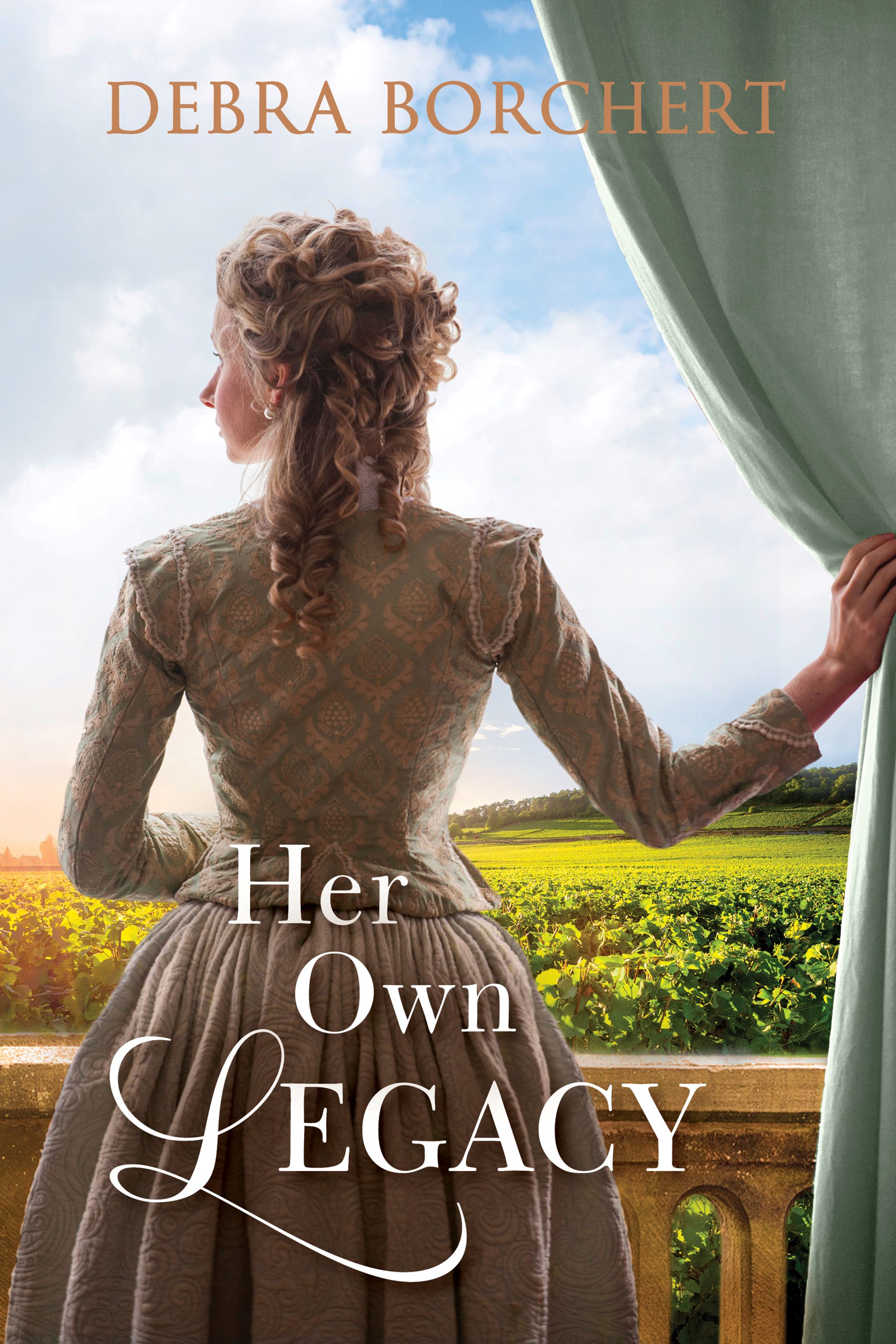
I’m delighted to welcome Debra Borchert and her book, Her Own Legacy, Book 1, the Chateau de Verzat series, to the blog.

Here’s the blurb

A Woman Fights for Her Legacy as the French Revolution Erupts

Determined to inherit her family’s vineyard, Countess Joliette de Verzat defies society’s rules, only to learn of her illegitimate half-brother, the rightful heir.

Buy Link

Just 0.99 in the UK, CA and AU from 5th March – 15th March

Universal Link:

Series Buy Links

UK: US:

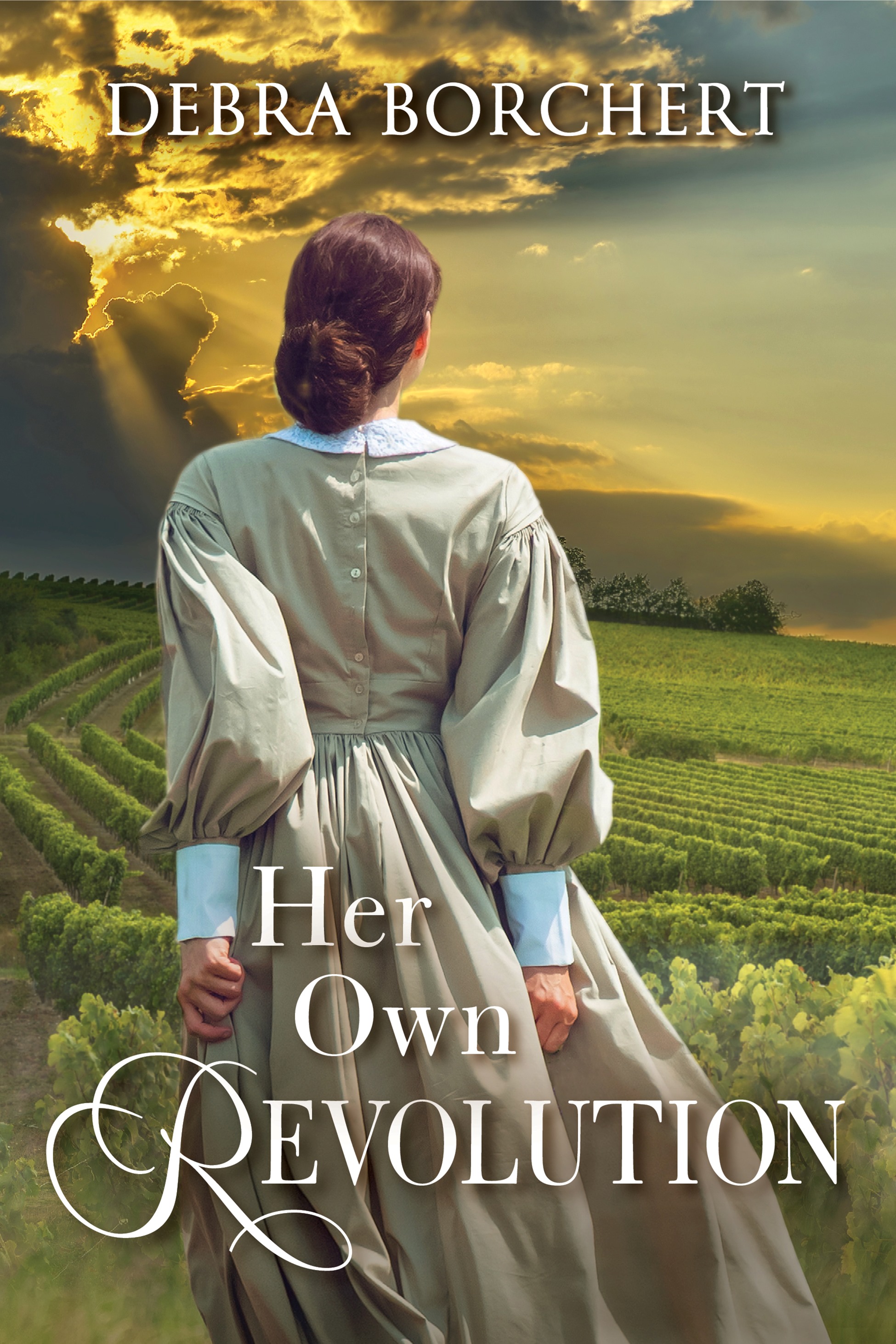
And for book 2, Her Own Revolution, the Chateau de Verzat series, there’s also an excerpt.

Excerpt

Her Own Revolution, Paris, July 30, 1794

Geneviève attempts to escape arrest

At dawn, I brushed the white dust from my skirts and peeked out from the cellar. I ran through alleys to the back entrance of the Châtelet, crept up the servants’ steps, crossed the hall to the clerk chamber, and stopped to gather my wits. Please, God, help me find the papers I copied. If I could present them to the Tribunal, they would be forced to release Papa.

I edged myself around the doorway and stepped back to see the clerks already at work. Instead of copying, they were sorting documents into piles lining a table before the fireplace where Imberton stood, straight as a pike.

Armand held up a paper. “Roland?” He lifted another. “And Delignon?”

Imberton indicated two piles. Armand deposited the papers and returned to his desk where a stack of documents teetered. I wished Armand had already sailed for America.

Denis, holding folders, called out, “Widow Capet.” Imberton pointed at the tallest pile. Denis deposited the folders and hurried to my father’s office. Denis’s twins were four now, and his wife with child. I hoped he would be safe.

Imberton noticed me. His face reddened as he pointed and shouted, “Guards! Arrest her!

My heartbeat thundered.

“Guards!” Imberton shouted.

I ran for the servants’ stairs. My legs shook so hard, I careened off the walls as I clambered down the steps. Where could I go that was safe? The château, but I’d be stopped at the city barrier. I could no longer use my father’s name—the day I’d dreaded since the first time I used it as protection had arrived. The only way past the barriers was through the tunnels. My skin felt too tight, like it was suffocating me.

I stood panting at the side door. Once I opened it, I’d be exposed. But if I went through the side exit, I could make it to the square and blend in with the market people. I would have to walk past the morgue. The tunnel was dark, lit only by holes in the ceiling protected by metal grates embedded in the streets above, which I had stepped over a hundred times. I’d never traveled the passage, but I’d no better choice.

I wrapped my shawl around my face, took a deep breath, and ran. The moans from prisoners in the dungeon echoed along the stone passage. The air was thick with the stench of blood and death. I shoved open the wooden door, not caring who was on the other side. Stopping in the alley scattered with rags stained with blood, I wrapped my shawl around my shoulders and forced myself to walk calmly. I peered around the corner.

The square wasn’t much longer than the copying room. I inhaled, stood tall, and headed for the biggest knot in the crowd.

Rioters swarmed the arched entrance, raising pikes and screaming. Men and women wearing red caps charged across the square. A woman pounded the closed main doors. “Give me back my husband!”

I tottered and pressed my feet to the cobbles.

“Join your victims, you man-eater!” yelled a man, wielding a sword.

A rotund man, his beard and hair wiry and disheveled, bellowed, “Send Tinville to hell! Let him wallow in the blood he has shed!”

I fell back. They were screaming revenge against my father. I bent over, nauseated and dizzy. Clutching the building, I forced myself to stand straight.

A guard came out of the entryway and yelled, “He’s at la Conciergerie!”

The crowd of red-capped sans-culottes turned and flowed like a stream of blood across the square and over the bridge toward the prison. I could get Papa out, like LaGarde. I just needed men’s clothing, a place to hide, and a plan.

I forced myself to breathe calmly, descend the steps, and intermingle with the crowd, while trying to remember the tunnel entrance nearest the prison. The flower seller stood at the edge of the market. I headed straight for her and hoped I could make it without anyone recognizing me.

A powerful hand grabbed my arm, pulled me to the bulk of a man, his warmth penetrating my sleeve. I opened my mouth, but his other hand covered it. The square spun around me.

Here’s the blurb

A Woman Forges a Treacherous Path to Save Hundreds from the Guillotine

If Geneviève Fouquier-Tinville had the same rights as a man, she wouldn’t have to dress like one. A suspenseful page-turner led by a renegade heroine whose compassion for innocent people leads to both loss and love.

Buy Link

Universal Link:

Series Buy Links

UK: US:

Meet the author

Debra’s the author of the Château de Verzat series that follows headstrong and independent women and the four-hundred loyal families who protect a Loire Valley château and vineyard, and its legacy of producing the finest wines in France during the French Revolution. Her Own Legacy published 2022, Her Own Revolution published 2023, and Her Own War will be published in 2024. A passionate cook, she also wrote a companion cookbook to the series: Soups of Château de Verzat, A Culinary Tribute to the French Revolution, 2023.

A graduate of the Fashion Institute of Technology, she weaves her knowledge of textiles and clothing design throughout her historical fiction. She lives in the Pacific Northwest with her family and standard poodle, named after a fine French Champagne.

Connect with the author

Website: BookBub:

Follow the Chateau de Verzat blog tour with The Coffee Pot Book Club

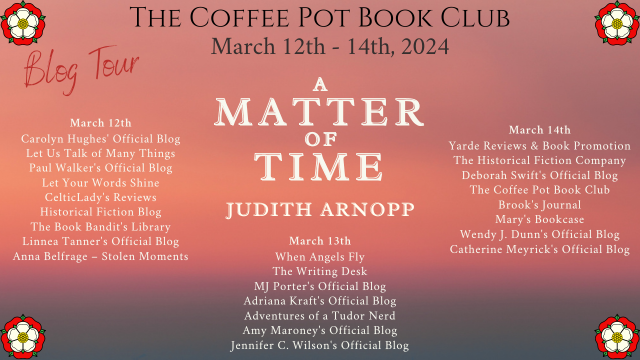
I’m delighted to welcome Judith Arnopp and her new book, A Matter of Time, to the blog #HistoricalFiction #Tudor #HenryVIII #NewRelease #BlogTour #CoffeePotBookClub

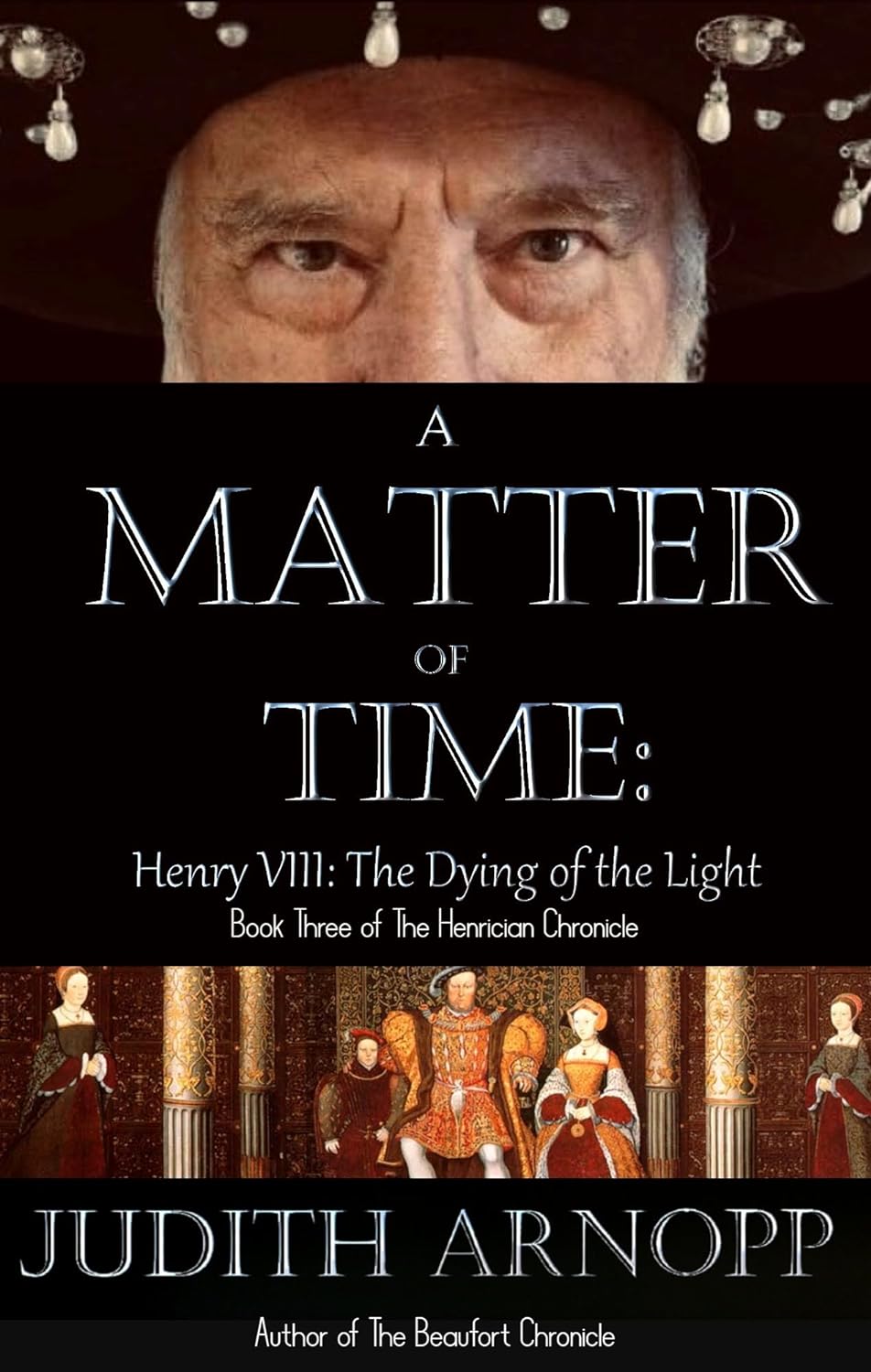
I’m delighted to welcome Judith Arnopp and her new book, A Matter of Time: Henry VIII, the Dying of the Light (Book Three), to the blog with a snippet.

Snippet: November 1541 Henry prepares for mass

It is good to be home, and my spirits remain high. I jest with my gentlemen as my beard, greyer now than gold, is trimmed, my nails clipped. I select a doublet of black with silver thread embellishing the cuffs, the slashes across the sleeves and chest revealing a fine silk shirt beneath.

My looking glass reflects a king, a man in his prime, a wise and honest man. As my dress sword is arranged at my hip, I take the gloves Denny is offering and tuck them into my girdle.

“Where is my psalter?” I ask, and it is instantly produced. I tuck it beneath my arm and make my way to the chapel, wondering as I go if Katherine will make it to Mass so early.

My mind is not on prayer this morning. I am feeling spry enough to go for a ride. Brandon has returned to court this week, perhaps we can ride out together as we used to, if he is feeling up to it. I often forget that he too grows old.

The sound of the choir greets me, their voices ascending to the dizzy heights of the blue and gold ceiling. Immediately, I feel contrition that my mind had strayed to sport rather than giving thanks to God for another day. Before I enter and take my seat, I rearrange my face into a pious expression. But as I sit down, I notice a folded slip of paper. I pick it up, look about the chapel to discover the author of the note, but when no man meets my eye, I unfold the message and … the world around me crumbles.

Here’s the blurb

With youth now far behind him, King Henry VIII has only produced one infant son and two bastard daughters. More sons are essential to secure the Tudor line and with his third wife, Jane Seymour dead, Henry hunts for a suitable replacement.

After the break from Rome, trouble is brewing with France and Scotland. Thomas Cromwell arranges a diplomatic marriage with the sister of the Duke of Cleves but when it comes to women, Henry is fastidious, and the new bride does not please him. The increasingly unpredictable king sets his sights instead upon Katherine Howard and instructs Cromwell to free him from the match with Cleves.

Failure to rid the king of his unloved wife could cost Cromwell his head.

Henry, now ailing and ageing, is invigorated by his flighty new bride but despite the favours he heaps upon her, he cannot win Katherine’s heart. A little over a year later, broken by her infidelity, she becomes the second of his wives to die on the scaffold, leaving Henry friendless and alone.

But his stout heart will not surrender and leaving his sixth wife, Katheryn Parr, installed as regent over England, Henry embarks on a final war to win back territories lost to the French more than a century before. Hungry for glory, the king is determined that the name Henry VIII will shine brighter and longer than that of his hero, Henry V.

Told from the king’s perspective, A Matter of Time: Henry VIII: the Dying of the Light shines a torch into the heart and mind of England’s most tyrannical king.

Buy Links

Meet the Author

A lifelong history enthusiast and avid reader, Judith holds a BA in English/Creative writing and an MA in Medieval Studies. She lives on the coast of West Wales where she writes both fiction and non-fiction. She is best known for her novels set in the Medieval and Tudor period, focusing on the perspective of historical women but recently she has been writing from the perspective of Henry VIII himself.

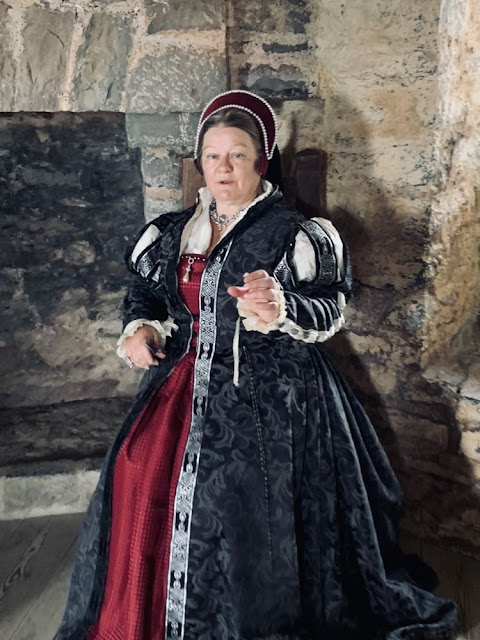
Judith is also a founder member of a re-enactment group called The Fyne Companye of Cambria which is when she began to experiment with sewing historical garments. She now makes clothes and accessories both for the group and others. She is not a professionally trained sewer but through trial, error and determination has learned how to make authentic looking, if not strictly historically accurate clothing. Her non-fiction book, How to Dress like a Tudor was published by Pen and Sword in 2023.

Her novels include:

  • A Song of Sixpence: the story of Elizabeth of York
  • The Beaufort Chronicle : the life of Lady Margaret Beaufort (three book series)
  • A Matter of Conscience: Henry VIII, the Aragon Years (Book One of The Henrician Chronicle)
  • A Matter of Faith: Henry VIII, the Days of the Phoenix (Book Two of The Henrician chronicle)
  • A Matter of Time: Henry VIII, the Dying of the Light (Book Three, Coming soon)
  • The Kiss of the Concubine: a story of Anne Boleyn
  • The Winchester Goose: at the court of Henry VIII
  • Intractable Heart: the story of Katheryn Parr
  • Sisters of Arden: on the Pilgrimage of Grace
  • The Heretic Wind: the life of Mary Tudor, Queen of England
  • Peaceweaver
  • The Forest Dwellers
  • The Song of Heledd

Previously published under the pen name – J M Ruddock.

  • The Book of Thornhold
  • A Daughter of Warwick: the story of Anne Neville, Queen of Richard III

Connect with the Author

Website: Blog: Bluesky: BookBub:

Follow the A Matter of Time blog tour with The Coffee Pot Book Club

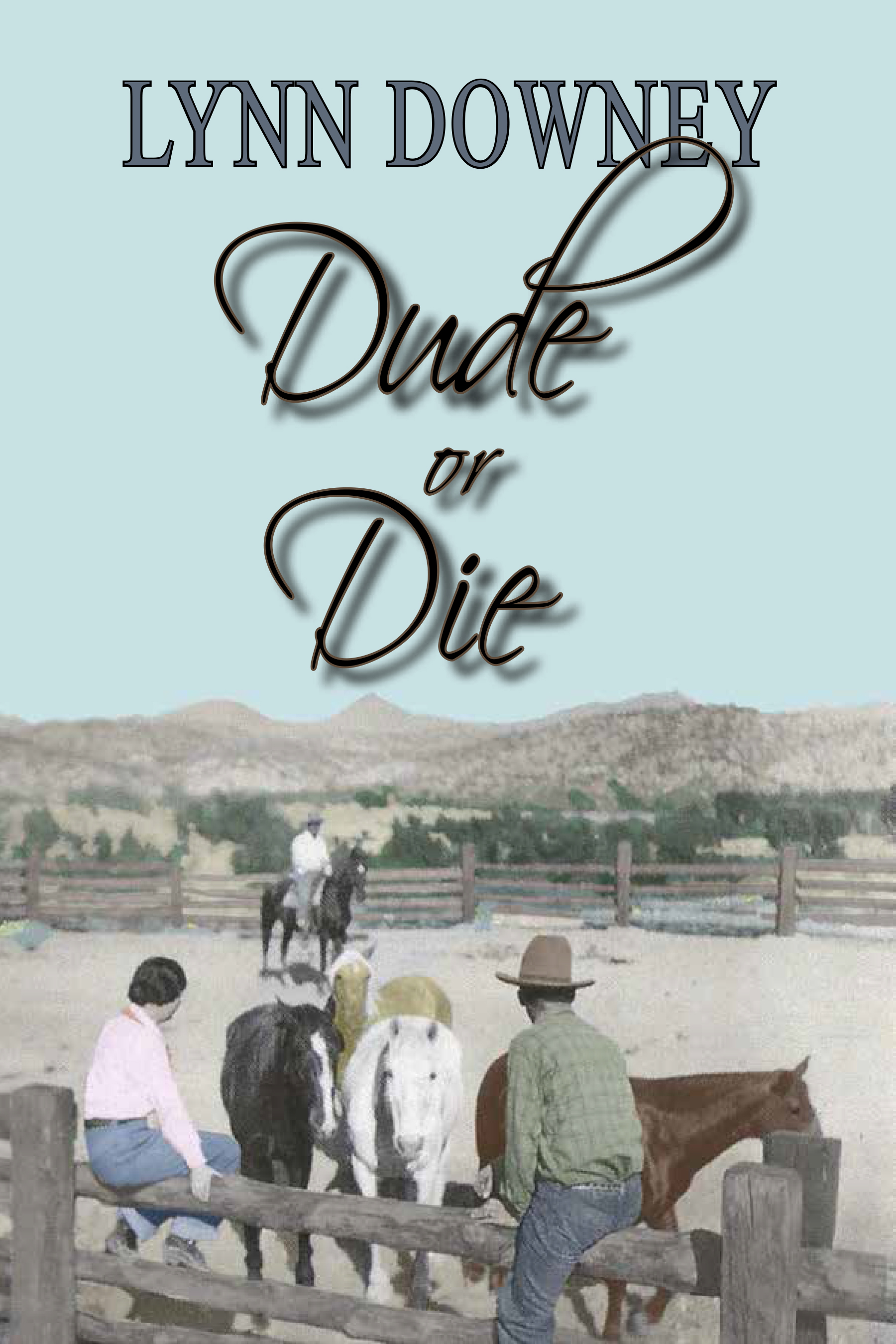
I’m delighted to welcome Lynn Downey and her new book, Dude or Die, to the blog #DudeRanch #HistoricalFiction #WomensFiction #WesternWomen #BlogTour #TheCoffeePotBookClub

I’m delighted to welcome Lynn Downey and her new book, Dude or Die, to the blog with a guest post.

Lynn Downey

I’ve been writing about the American dude ranch for the last few years. My novels, Dudes Rush In and the new sequel, Dude or Die, are set on a fictional Arizona dude ranch in the 1950s. My last nonfiction book tackled the same theme, American Dude Ranch: A Touch of the Cowboy and the Thrill of the West.

Dude ranches began in the Rocky Mountain West in the 1880s. They were originally the kind of place where men from the eastern states could go to hunt or just live like cowboys for a few weeks. It didn’t take long for women and families to start visiting these places, which opened up throughout Montana and Wyoming, and then in California and the Southwest around the time of World War I. People had experiences at dude ranches they couldn’t get anywhere else, and ranching is thriving throughout the western states today.

I first got interested in dude ranches when I was working as the company historian for Levi Strauss & Co. in San Francisco. There was a catalog in the archives called Dude Ranch Duds, featuring clothing specifically to be worn on dude ranches. Not just the denim jeans and jackets, but western shirts, satin shirts with embroidery, gabardine riding pants, everything that real cowboys wouldn’t actually wear. But that was the point. The guests were dudes and dudines, they came from somewhere else to immerse themselves in the cowboy West.

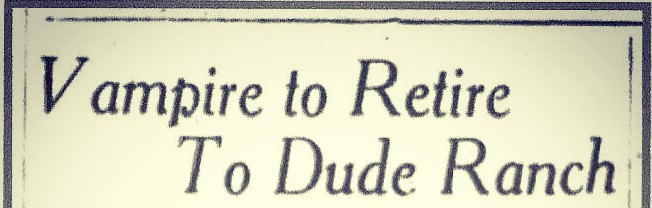
Writing about dude ranching for so many years has yielded stories I never thought I would find, and they went beyond tales of cowboys and dudes. Doing research included perusing a lot of historical newspapers, which are available and searchable online. One day I found what is probably my favorite headline of all time. It was in a number of papers in July of 1935:

“Vampire to Retire to Dude Ranch”

It seems actor Bela Lugosi, most famous for playing Count Dracula in the 1931 film Dracula, had just finished making a new movie called Murder By Television (believe it or not). The Cameo Pictures Corporation was running publicity for the film, and told Lugosi to fill out a questionnaire for readers of various movie magazines. One of the questions asked what his “Present Ambition” was. His answer: “Dude Ranch.”
Of course, I had to read that article.

This just tickled newspaper reporters. One writer for the Brooklyn Times tracked down what he thought were a few more details about Lugosi’s interesting statement.

While the second leading fiend in the United States does not find his lot an unhappy one, he would rather be a cowboy…he has no intention of retiring to a haunted castle in the mountains of his native Hungary when his days of screen acting are over. His desires are for a home on the range, preferably a dude ranch, where all the midnight shrieks, if any, will be from guests whose digestive systems have disagreed with the ranch fodder.

Well, I didn’t believe that for a minute. So, I did what any good historian would do: I tracked down Bela Lugosi’s granddaughter.

She was lovely, and intrigued by the story, which she’d never heard before. She talked to her father, Bela Lugosi, Jr. and a few days later wrote me an email. “My grandfather was an interesting person and I believe he could have thought a dude ranch was a good idea. He really loved the outdoors and especially enjoyed hiking and taking walks.”

I think Lugosi also had a great sense of humor. Because I believe he told the PR people about his dude ranch ambition purely as a joke. Perhaps he was tired of talking to the publicity folks, and wanted to have a little fun.

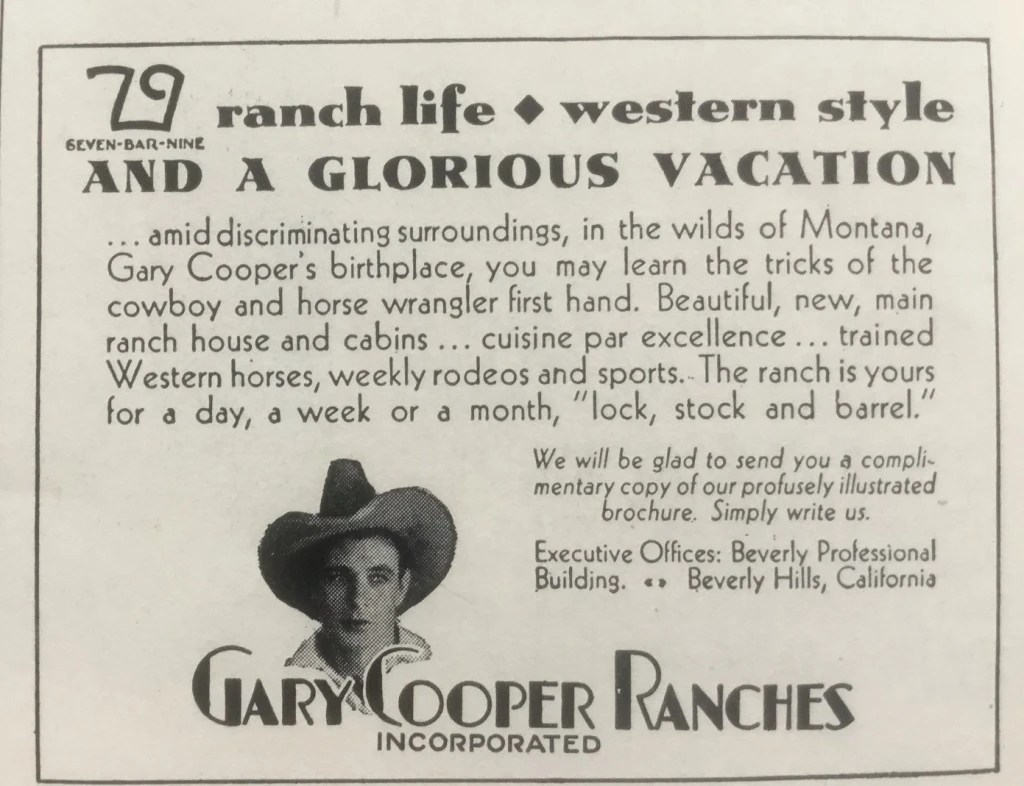
This reflects how popular dude ranches had become by the 1930s. Movie stars like Errol Flynn and Joel McCrea told reporters they planned to open ranches of their own, but they never did. Gary Cooper did have a dude ranch during this decade on the property where he grew up in Helena, Montana, but it didn’t last long. That was probably because people expected to see the movie star when they arrived, but he was rarely if ever there.

Bela Lugosi could have made up anything when the Cameo Pictures Corporation people asked him about his ambitions for the future. But he chose the dude ranch, which was deeply embedded in American culture. It was also the absolute opposite of his character, both on and off screen. And he knew it.

Here’s the blurb

It’s 1954, and San Francisco writer Phoebe Kelley is enjoying the success of her first novel, Lady in the Desert. When Phoebe’s sister-in-law asks her to return to Tribulation, Arizona to help run the H Double Bar Dude Ranch, she doesn’t hesitate. There’s competition from a new dude ranch this year, so the H Double Bar puts on a rodeo featuring a trick rider with a mysterious past. When accidents begin to happen around the ranch, Phoebe jumps in to figure out why, and confronts an unexpected foe. And a man from her own past forces her to confront feelings long buried. Dude or Die is the second book in the award-winning H Double Bar Dude Ranch series.

Buy Link

Universal Link:

This title is available to read on #KindleUnlimited

Meet the Author

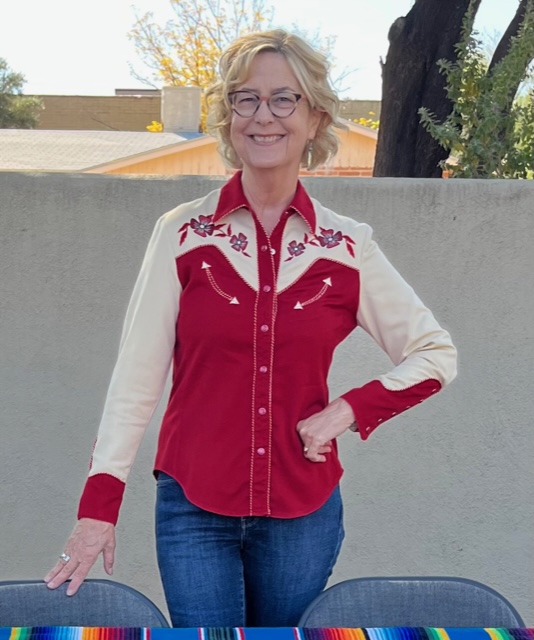
Lynn Downey is an award-winning novelist, short story writer, historian of the West, and native Californian.

She was the Historian for Levi Strauss & Co. in San Francisco for 25 years. Her adventures as ambassador for company history took her around the world, where she spoke to television audiences, magazine editors, and university students, appeared in numerous documentaries, and on The Oprah Winfrey Show. She wrote many books and articles about the history of the company and the jeans, and her biography, Levi Strauss: The Man Who Gave Blue Jeans to the World, won the Foreword Reviews silver INDIE award.

Lynn got interested in dude ranches during her time at Levi’s. Her debut historical novel, Dudes Rush In, is set on an Arizona dude ranch in the 1950s; Arizona because she’s a desert rat at heart, and the 1950s because the clothes were fabulous.

Dudes Rush In won a Will Rogers Medallion Award, and placed first in Arizona Historical Fiction at the New Mexico-Arizona book awards. The next book in this series, Dude or Die, was released in 2023. And just for fun, Lynn wrote a screenplay based on Dudes Rush In, which is currently making the rounds of reviewers and competitions.

She pens short stories, as well. “The Wind and the Widow” took Honorable Mention in the History Through Fiction story contest, and “Incident at the Circle H” was a Finalist for the Longhorn Prize from Saddlebag Dispatches. The story “Goldie Hawn at the Good Karma Café,” won second place in The LAURA Short Fiction contest from Women Writing the West, and is based on her experiences in a San Francisco religious cult in the 1970s. (That will be another book one of these days.)  

Lynn’s latest nonfiction book is American Dude Ranch: A Touch of the Cowboy and the Thrill of the West, a cultural history of the dude ranch. It was reviewed in The Wall Street Journal, True West, Cowgirl, and The Denver Post, and was a Finalist for the Next Generation INDIE Award in Nonfiction. Kirkus Reviews said the book is “…deeply engaging and balances accessible writing style with solid research.”

When she’s not writing, Lynn works as a consulting archivist and historian for museums, libraries, cultural institutions, and businesses. She is the past president of Women Writing the West, a member of the Western Writers of America, and is on numerous boards devoted to archives and historic preservation.

Lynn lives in Sonoma, California, where she sometimes makes wine from the Pinot Noir grapes in her back yard vineyard.

Connect with the Author

Website: BlueSky:

Follow the Dude or Die blog tour with The Coffee Pot Book Club

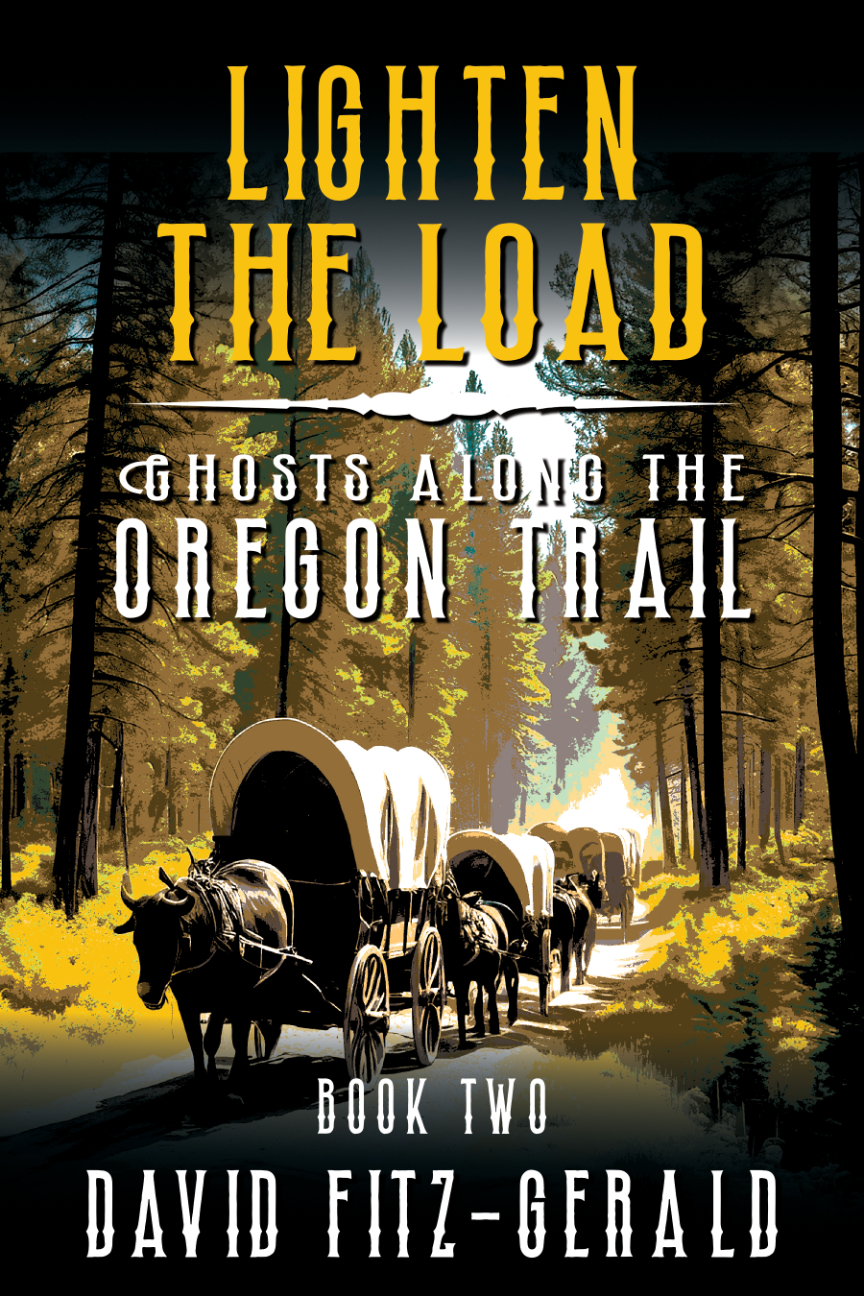
I’m delighted to welcome David Fitz-Gerald and his new book, Lighten the Load, to the blog #HistoricalWestern #WesternAdventure #AmericanWest #Pioneers #BlogTour #TheCoffeePotBookClub

I’m delighted to welcome David Fitz-Gerald and his new book, Lighten the Load, Ghosts Along the Oregon Trail (book 2), to the blog, with a series trailer.

Lighten the Load, Ghosts Along the Oregon Trail Series Trailer

Here’s the blurb

After a devastating tragedy, Dorcas Moon faces brutal choices in the unforgiving wilderness.

An unsolved hometown murder casts a foreboding shadow over the journey. Mounting responsibilities weigh heavy on Dorcas’ shoulders while navigating the trail along the Platte River. Family, friends, and neighbors can’t seem to get along without her help.

The gruesome trail exacts a heavy toll. A sweeping grass fire blazes across the prairie. A doomed wagon careens down a treacherous hill. A fellow traveler is gored to death while hunting buffalo. Each disaster pushes the pioneers to the brink. Amidst the chaos, Dorcas grapples with the realization that she must dump her precious cook stove and her husband’s massive safe. The oxen can no longer haul the heavy weight of unnecessary cargo.

When her daughter mysteriously disappears while the wagons are at Fort Laramie, Dorcas Despairs. She is desperate to help her daughter when the troubled youth is found in the arms of a Brulé man in Spotted Tail’s village.

Secure your copy of Lighten the Load and delve into an unforgettable saga of empowerment, sacrifice, and the haunting echoes of the American frontier. Rejoin Dorcas Moon on the adventure of a lifetime as she confronts the challenges that shape her destiny.

Buy Link

Universal Link:

This title is available to read on #KindleUnlimited

Meet the Author

David Fitz-Gerald writes westerns and historical fiction. He is the author of twelve books, including the brand-new series, Ghosts Along the Oregon Trail set in 1850. Dave is a multiple Laramie Award, first place, best in category winner; a Blue Ribbon Chanticleerian; a member of Western Writers of America; and a member of the Historical Novel Society.

Alpine landscapes and flashy horses always catch Dave’s eye and turn his head. He is also an Adirondack 46-er, which means that he has hiked to the summit of the range’s highest peaks. As a mountaineer, he’s happiest at an elevation of over four thousand feet above sea level.

Dave is a lifelong fan of western fiction, landscapes, movies, and music. It should be no surprise that Dave delights in placing memorable characters on treacherous trails, mountain tops, and on the backs of wild horses.

Connect with the Author

Website: BookBub: Linktree:

Follow the Lighten The Load blog tour with The Coffee Pot Book Club

I’m delighted to welcome Trish MacEnulty and her new book, Cinnamon Girl, to the blog #HistoricalYA #ComingOfAge #HistoricalFiction #YAFiction

I’m delighted to welcome Trish MacEnulty and her new book, Cinnamon Girl, to the blog with a guest post, ‘My Historical Research’.

My Historical Research – Trish MacEnulty

Cinnamon Girl was first published in 2009 under a different title and with a different cover. When I contacted the publisher and told him I wanted to re-issue the book with a new title and a new cover, he agreed. I also decided that this time I would use what I’d learned from writing four historical mysteries: how to incorporate historically accurate details to make the narrative richer.

When a story takes place during your lifetime, it’s easy to think that you don’t need research. I found that, in fact, I did need to do research and lots of it. And actually for me, research is part of the fun.

For Cinnamon Girl, I needed to do research about the rock concerts in 1970 that my protagonist would have gone to; I needed to research the cultural changes wrought by FM radio; and I needed to do research about the anti-war movement, the Black Panthers, and the Weatherman Underground Organization.

I also needed to research the highway system in 1970. We take for granted our Interstate Highway System, but it wasn’t completely built in 1970, and when Eli Burnes, the protagonist, travels across country I needed to figure out what highways existed and which still needed to be built. Fortunately, I have a brother who actually remembers some of the main roads in St. Louis from 1970 and that helped. In fact, he also helped me to understand the anti-war movement of the time and the police brutality that existed because he was there and he witnessed it.

Researching the rock concerts was, of course, lots of fun. I definitely misremembered some things. For example I was sure Joe Cocker had played in St. Louis in 1970 or ’71 but he wasn’t in the country at the time. I found out that the Grateful Dead was arrested in New Orleans the night before my character sees them at Kiel Auditorium and they barely made it to the concert. I also was able to find the playlist for the Moody Blues Concert and the name of the opening band for the Jethro Tull Concert. Yes, I had been to those concerts when I was a teenager living in St. Louis, but those details I found on the Internet helped recreate the era. I’m a big believer in specificity.

The change over from AM radio to FM was also something I didn’t really understand until I did some research. In the book my protagonist’s father goes from being a “Howling Wolf” sort of AM DJ to a mellow FM DJ. This worked well with my plot because being a DJ at an FM radio station meant he could answer the hotline at night and this would be a good way to communicate with fugitives. FM radio station hotlines would not have been tapped and often did help people learn about where protests would be held. He could also have his own slant on the news of the day unlike at an AM station where they were instructed to read the news straight off the wire and not offer any commentary. Of course, the music was better on the FM stations.

Finally I needed to learn about what was going on socially and politically. Even though I remembered the riots from that era, I was stunned to discover that one had taken place in Augusta, Georgia, in which six Black men were killed by law enforcement. I used this as a moment of awakening for my protagonist, Eli Burnes. She has grown up in the South with the belief that everything was fine between the races — only to witness the result of years of oppression explode. This led to Eli’s learning about the Black Panthers and their work, serving breakfast to children as well as the ambush and murder of activist Freddy Hampton.

Here’s the blurb

Winner of the Gold Medal in YA Fiction from The Historical Fiction Company!

When her beloved step-grandmother, a semi-retired opera singer, dies of cancer in 1970, 15-year-old Eli Burnes runs away with a draft-dodger, thinking she’s on the road to adventure and romance. What she finds instead is a world of underground Weathermen, Black Power revolutionaries, snitches and shoot-first police.

Eventually Eli is rescued by her father, who turns out both more responsible and more revolutionary than she’d imagined. But when he gets in trouble with the law, she finds herself on the road again, searching for the allies who will help her learn how to save herself.

“The book is a fantastic read: fast-moving, full of smoothly woven historical detail and rich characterizations, all told in Eli’s appealing voice.” — Sarah Johnson, Reading the Past

Buy Link

Universal Link:

Meet the Author

Trish MacEnulty is the author of a historical novel series, literary novels, memoirs, a short story collection, children’s plays, and most recently, the historical coming-of-age novel, Cinnamon Girl (Livingston Press, Sept. 2023). She has a Ph.D. in English from the Florida State University and graduated Magna Cum Laude from the University of Florida. She currently writes book reviews and features for the Historical Novel Society.

She lives in Florida with her husband Joe and her two tubby critters, Franco and Tumbleweed. More info at her website: trishmacenulty.com.

Connect with the Author

Website: BookBub:

Follow the Cinnamon Girl blog tour with The Coffee Pot Book Club

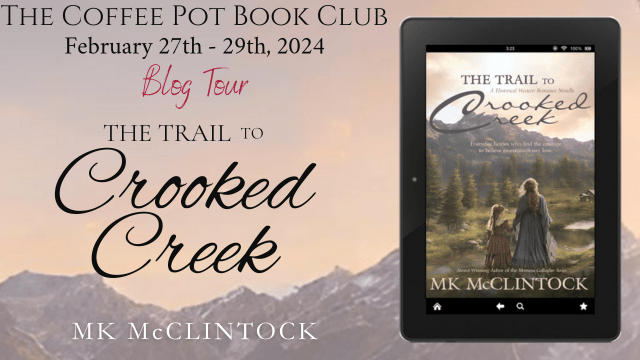
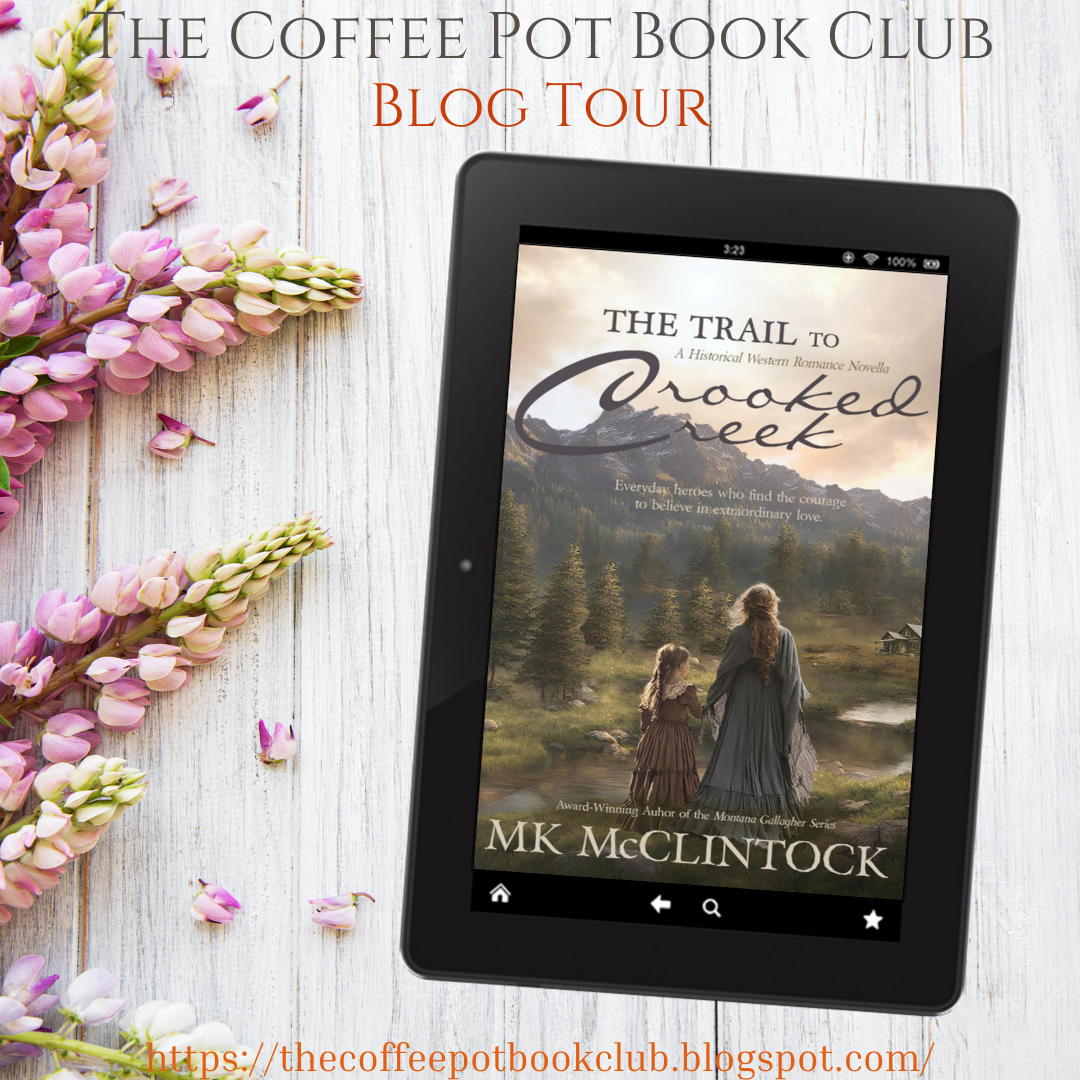
I’m delighted to welcome MK McClintock and her new book, The Trail to Crooked Creek, to the blog #HistoricalWesternRomance #AmericanRomance #TheTrailtoCrookedCreek #BlogTour #TheCoffeePotBookClub

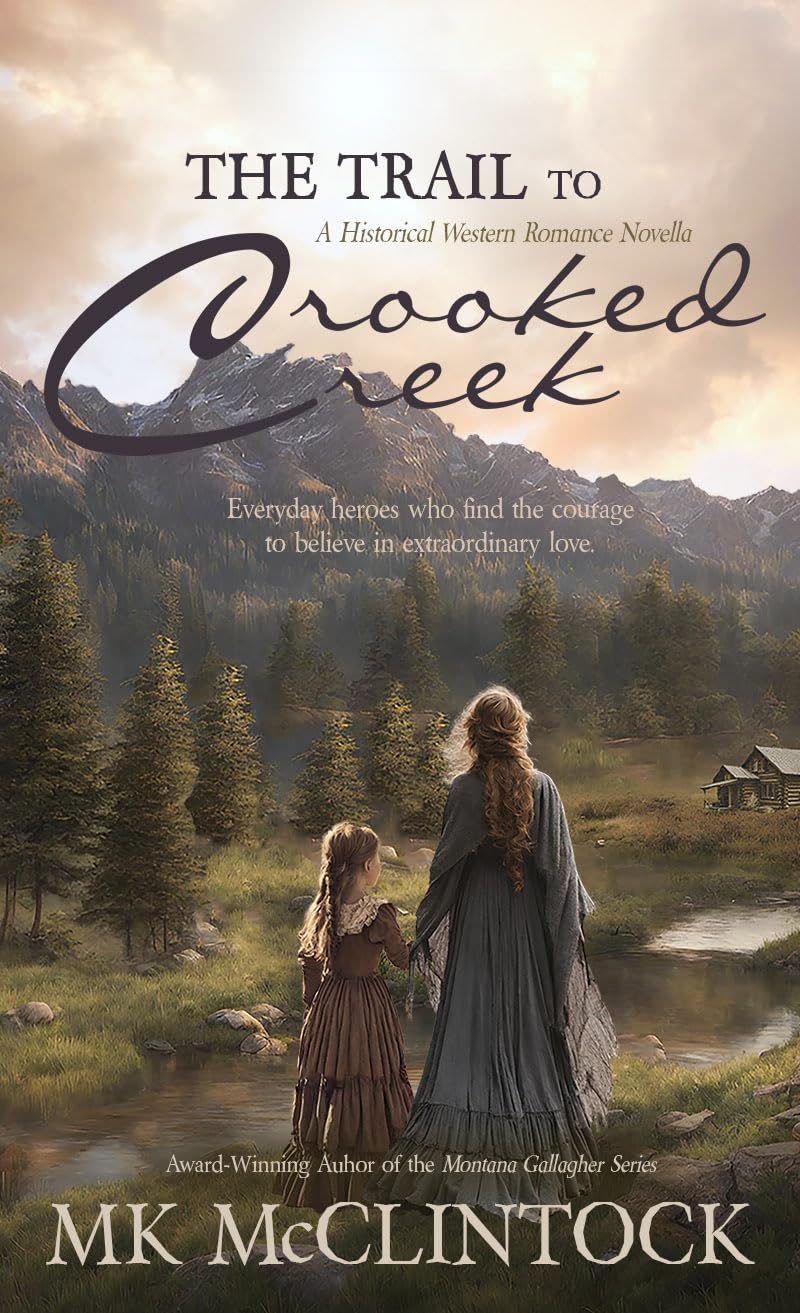
I’m delighted to welcome MK McClintock and her new book, The Trail to Crooked Creek, Crooked Creek series, book 3, to the blog with, About the Crooked Creek Series.

About the Crooked Creek Series

“MK McClintock knows what readers want.” ~ Readers’ Favorite

Set in post-Civil War Montana Territory, in the small town of Crooked Creek, it all started with Emma. Her story was written for a contest, but I soon realized there were more women whose tales needed to be written. The war is over between the North and the South, but the battles at home are just beginning. If you love stories of bravery and courage with unforgettable women and the men they love, you’ll enjoy the Crooked Creek series. 


Also Available:

  • The Women of Crooked Creek
  • Christmas in Crooked Creek

Here’s the blurb

Everyday heroes who find the courage to believe in extraordinary love.

Two years after the devastations of war left their mark on a country torn apart, Wesley Davenport, a former soldier haunted by his experiences on the battlefield crosses paths with Leah Tennyson, a teacher who helps him heal his emotional wounds—and discovers unexpected love in the most unlikely place.

The Trail to Crooked Creek, a novella, is a tale of resilience, compassion, and the triumph of the human spirit set in the breathtaking and sometimes unforgiving landscape of post-Civil War Montana Territory.

Buy Link

Universal Link:

This title is available to read in #KindleUnlimited, and also in paperback and large print

Meet the Author

MK McClintock is an award-winning author who writes historical romantic fiction about chivalrous men and strong women who appreciate chivalry. Her stories of romance, mystery, and adventure sweep across the American West to the Victorian British Isles with places and times between and beyond. 

Her works include the following series: Montana Gallaghers, Crooked Creek, British Agents, Whitcomb Springs, and the stand-alone collection, A Home for Christmas. She is also the co-author of the McKenzie Sisters Mysteries.

MK enjoys a quiet life in the northern Rocky Mountains. Visit her at www.mkmcclintock.com, where you can learn more about her books, explore extras, view her blog, and subscribe to receive news. 

Connect with the Auhtor

Website: BookBub:

Follow The Trail To Crooked Creek blog tour with The Coffee Pot Book Club

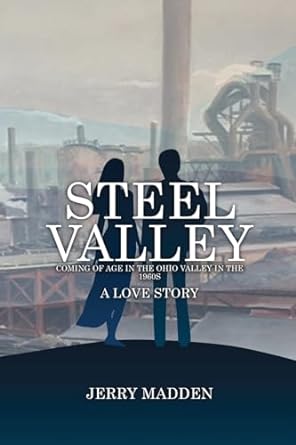
I’m delighted to welcome Jerry Madden, and his new book, Steel Valley, to the blog #HistoricalFiction #SteelValley #ComingOfAge #BlogTour #TheCoffeePotBookClub

I’m delighted to welcome Jerry Madden, and his new book, Steel Valley: Coming Of Age in the Ohio Valley in the 1960s, to the blog.

Here’s the blurb

For readers of The World Played Chess by Robert Dugoni and Last Summer Boys by Bill Rivers

Love is never easy…even in easier times, like the 1950s and 1960s in the Ohio Valley with the steel industry booming.

Second-generation immigrant families were reaching for the American middle class. And Catholic schools-made feasible by selfless Catholic nuns-promised bigger lives for everyone, including Jack Clark and Laurie Carmine. As they spent years searching for their separate futures, though, they were also stumbling toward love just as their world came crashing down.

Steel Valley depicts a story of love longed for, lost, and perhaps still within reach, just as our nation’s mythic yesterday became our troubled today, our last summer of innocence.

Buy Link

Universal Link:

Meet the Author

Jerry Madden grew up in the Upper Ohio Valley in the 1960s. He holds a B.A. from the College of Steubenville and law degrees from the University of Dayton School of Law and the Georgetown University Law Center. After law school, Jerry served as the sole law clerk to the Chief Justice of the Supreme Court of Ohio, C. William O’Neill. He served in the United States Marine Corps (R) between 1970 and 1976.

Jerry has practiced law in Washington, D.C., since 1979, including fourteen years at the Department of Justice as a trial and appellate attorney. He is the principal of The Madden Law Group PLLC in Washington, D.C.

He lives in Northern Virginia with his wife, Cyndi, a retired educator. They have two children, Kelsey and Jack, both of whom hold M.Ed. degrees. They have one grandchild, Jamie Maclennan.

Meet the Author

Website:

Follow the Steel Valley blog tour with The Coffee Pot Book Club

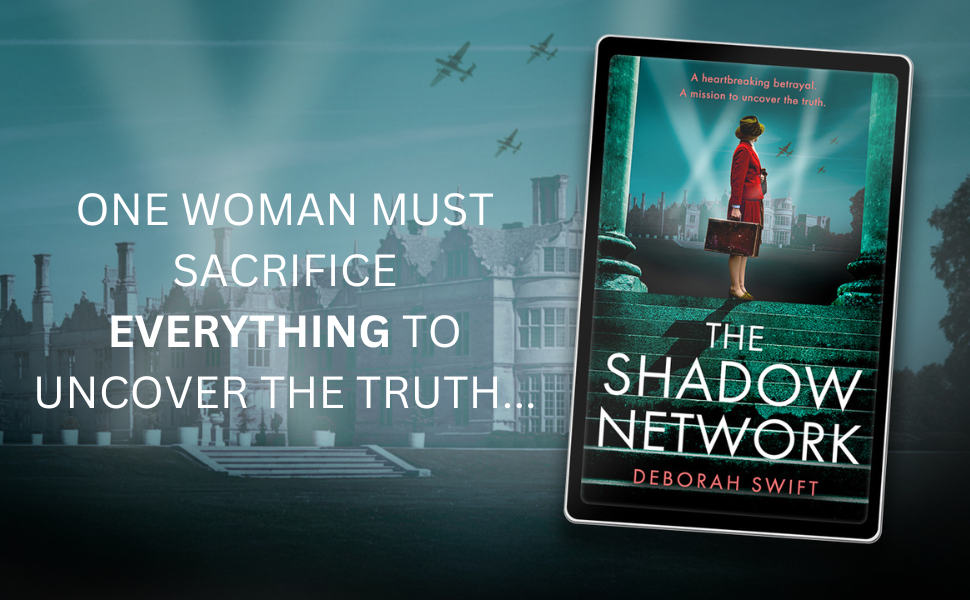
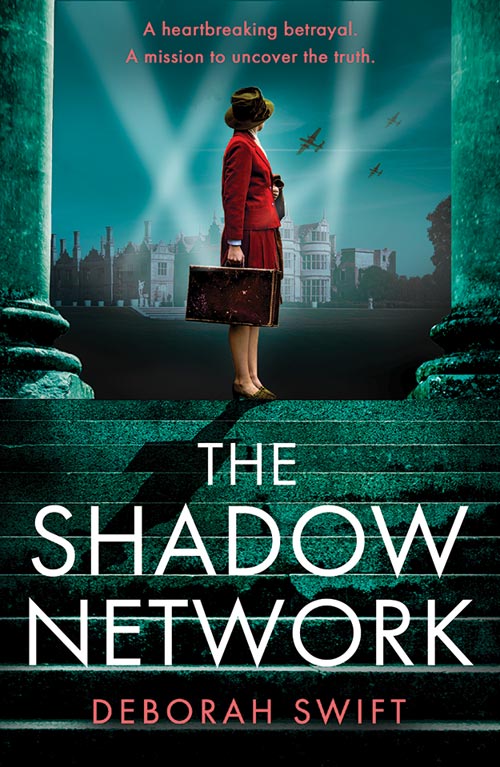
I’m delighted to welcome Deborah Swift and her new book, The Shadow Network, to the blog #WW2 #Thriller #BlogTour #TheCoffeePotBookClub

I’m delighted to welcome Deborah Swift and her new book, The Shadow Network, to the blog, with WW2 German and Irish Saboteurs.

The Shadow Network: WW2 German and Irish Saboteurs

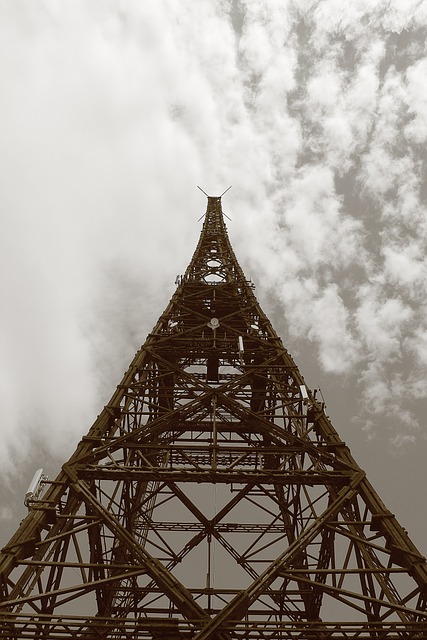
The radio signal for the ‘fake news’ radio stations that feature in The Shadow Network needed to be strong enough to appear as though it came from Germany, and had to be more powerful than anything that was then available.

By coincidence, the Radio Corporation of America (RCA) had created two high-powered radio transmitters which could not be used in the US, because of a change in American law. The RCA were eager to sell them to Britain. So Harold Robin, a Foreign Office radio engineer, saw their potential, and travelled to America to examine them, and then worked to improve them. He adapted a transmitter so it was able to move frequency in a fraction of a second, at the flick of a switch.

The powerful ex-RCA transmitter, eventually installed in Sussex, England, was named Aspidistra, referencing the popular Gracie Fields song ‘The Biggest Aspidistra in the World’, in which an Aspidistra houseplant grows until it ‘nearly reached the sky’.

In fact, most of the technology was buried underground at the site at Crowborough in Sussex, though its antennae were visible – three guyed masts, each 110 metres tall, directing the signal broadly to the east. The Art Deco–style transmitter building was housed in an underground shelter which had to be excavated by the Canadian army troops who were stationed nearby.

As far as I know there was never any attempt to sabotage or bomb the Aspidistratransmitter, though I enjoyed making it a possible target for a German agent and saboteur. However, German agents were sent into Britain to sabotage British targets – mainly military, industrial, and transport facilities. Their aim was to create maximum disruption, and to lower the morale of British civilians.

Inefficient Saboteurs

In reality, the German spies were less efficient than my fictional Brendan – the German spies had poor English-language skills and little knowledge of British customs. One German spy was arrested after trying to order a pint of cider at ten in the morning, as he didn’t know that landlords weren’t allowed to serve alcohol before lunchtime. Two other agents were stopped because they were cycling on the wrong side of the road. The twelve spies we know of who landed in Britain as part of the so-called Operation Lena in September 1940 were nearly all captured.

The German war machine was generally very efficient, so it remains a mystery why these men were not better trained. For this reason, I chose to link my saboteur to the Irish Republican Army (IRA), and the Coventry IRA bomb. It is a little-known fact that the IRA and the Nazi regime were in collaboration during the war.

Irish Saboteurs

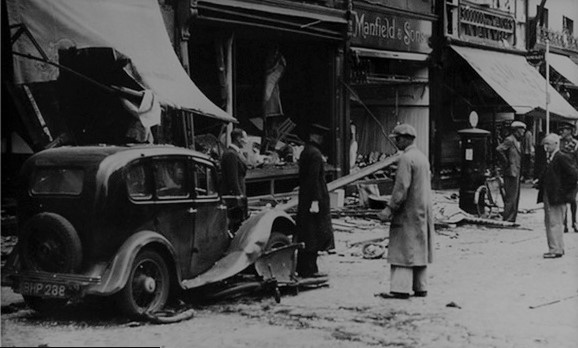
At lunchtime on 25 August 1939 an unknown bomb-maker cycled into the city of Coventry in England with a five-pound bomb in his bicycle basket. The device, wrapped in brown paper and with an alarm clock timer, was left outside Astley’s shop where it exploded fifty minutes later, killing five people and injuring seventy, and causing devastation to the surrounding buildings. For a while, the authorities and the public were wary of anyone Irish, but because of close ties to Ireland this vigilance soon waned.

The Coventry plot was linked to three other ‘bicycle bomb’ plots in London which were part of a concerted campaign by the IRA. The S-Plan (Sabotage Campaign or England Campaign) was a campaign conducted by members of the IRA to protest against control of Northern Ireland by the British.

Nazi links to the IRA

The Nazis made links with the IRA as far back as 1936, when IRA member Sean Russell sought German support for IRA activities and engaged in talks with the German Foreign Office, regarding IRA–German cooperation. When war was declared, the Germans saw the IRA as a useful ally should the Wehrmacht invade Britain. However the IRA saw Germany only as a stepping stone to a united Ireland, and these two motivations were not easily aligned. The IRA’s collaboration with the Nazis against Great Britain made the ideal background for me to construct the character of Brendan Murphy, the agent charged with sabotaging the Aspidistra radio mast.

Listen to a podcast about German agents trying to blow up Britain.

Here’s the blurb

One woman must sacrifice everything to uncover the truth in this enthralling historical novel, inspired by the true World War Two campaign Radio Aspidistra…

England, 1942: Having fled Germany after her father was captured by the Nazis, Lilli Bergen is desperate to do something pro-active for the Allies. So when she’s approached by the Political Warfare Executive, Lilli jumps at the chance. She’s recruited as a singer for a radio station broadcasting propaganda to German soldiers – a shadow network.

But Lilli’s world is flipped upside down when her ex-boyfriend, Bren Murphy, appears at her workplace; the very man she thinks betrayed her father to the Nazis. Lilli always thought Bren was a Nazi sympathiser – so what is he doing in England supposedly working against the Germans?

Lilli knows Bren is up to something, and must put aside a blossoming new relationship in order to discover the truth. Can Lilli expose him, before it’s too late? Set in the fascinating world of wartime radio, don’t miss The Shadow Network, a heart-stopping novel of betrayal, treachery, and courage against the odds.

Buy Link

Universal Link:

Bookshop:

Meet the Author

Deborah Swift is the English author of eighteen historical novels, including Millennium Award winner Past Encounters, and The Lady’s Slipper, shortlisted for the Impress Prize.

Her most recent books are the Renaissance trilogy based around the life of the poisoner Giulia Tofana, The Poison Keeper and its sequels, one of which won the Coffee Pot Book Club Gold Medal. Recently she has completed a secret agent series set in WW2, the first in the series being The Silk Code. Deborah used to work as a set and costume designer for theatre and TV and enjoys the research aspect of creating historical fiction, something she loved doing as a scenographer. She likes to write about extraordinary characters set against the background of real historical events. Deborah lives in North Lancashire on the edge of the Lake District, an area made famous by the Romantic Poets such as Wordsworth and Coleridge.

Connect with the Author

Website: BookBub:

Follow The Shadow Network blog tour with The Coffee Pot Book Club