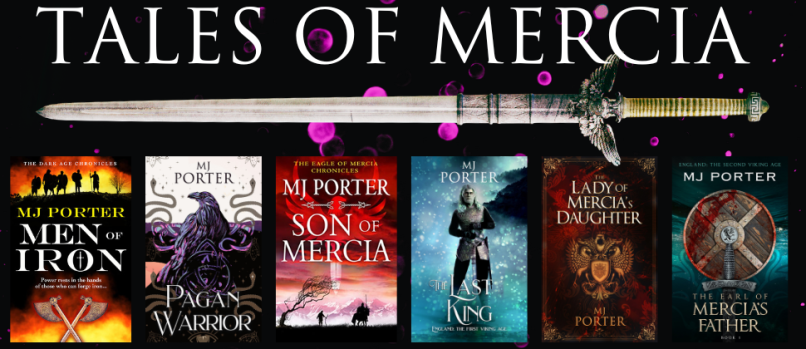
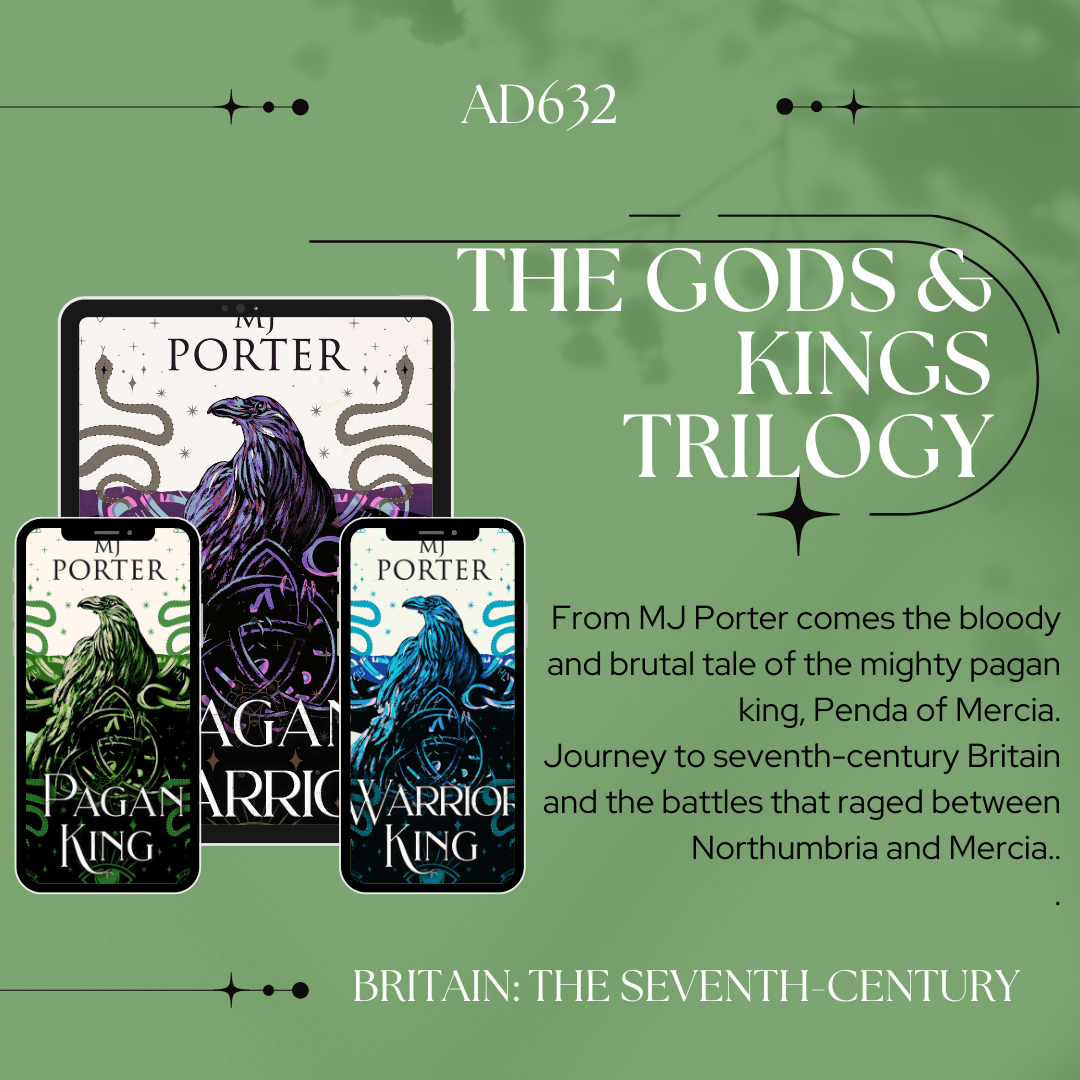
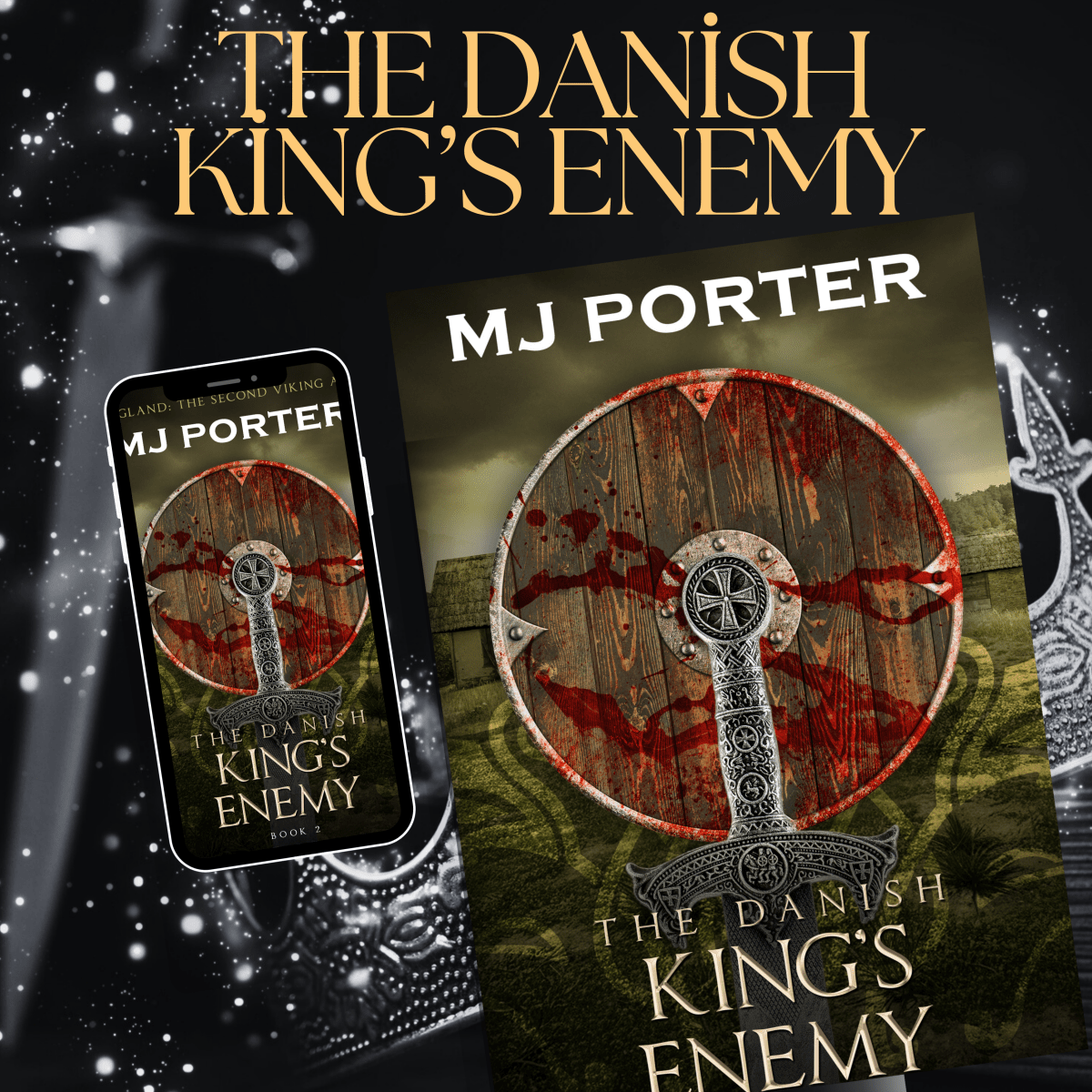
I’m really excited to share the details of the Pagan Warrior blog tour with The Coffee Pot Book Club.
Pagan Warrior is the story of the battle of Hædfeld, fought in the seventh century between the Northumbrians, and you got it, the Mercians – or rather, Cadwallon of Gwynedd but with Penda of Mercia as his firm ally. You can find more details here.
I might have written this book many years ago, but it’s had a refresh, and is now available in audio, narrated by the fabulous, Matt Coles, as is the second book, Pagan King. Warrior King will be coming later this year in audio. For this third week, 27th March-2nd April, the ebook of Warrior King (book 3) is reduced globally to 99p/99c and equivalent. Follow the link below.
And, if you read on Nook, I’ve created a special discount code just for Nook readers. Using code BNPPAGAN at checkout will get you 50% off all three titles, for a limited time.
You can follow the blog tour, and I’ll be sharing posts here as well. A quick shout out to thank all the blog hosts and Cathie at The Coffee Pot Book Club for organising.
For today, March 28th, check out a fabulous review on
And, the post that perhaps gave me the most fear to begin will but which was fun when I remembered all the little details, five fun facts about writing the trilogy.
For March 21st check out a post about two of the royal residences of Bernicia at the time, Bamburgh and Ad Gefrin (Yeavering). (There are lots of photos, thank you to Helen Hollick for uploading them all).
I’m delighted to share an excerpt from The Mazzard Tree by Marcia Clayton.
Excerpt
The matron marched Amelia and her twin brothers down the long corridor and into a washroom, where she handed them over to a large woman.
“Here you go then, Nellie, three new arrivals for you to see to.”
Nellie took in their foreign appearance with a disapproving glance. Pursing her lips, she mumbled something to herself, about there being enough poor in the country already, without half-castes adding to the problem.
“Now, I have to cut your hair, and give you a wash, and then you’ll put on some new clothes. Don’t give me any trouble, because I haven’t the time for it. Come here, lad, you can be first.”
She sat Joe firmly on a chair and began cutting off his long curls. Tears shone brightly in his eyes, but he did not complain. When most of his hair was on the floor, Nellie took a razor and shaved his head. Matthew and Amelia stood close together and watched in horror. Their mother had loved their thick curly hair. Nellie then beckoned Matthew.
“Come on then, lad, you next. Show your little sister there’s nothing to be frightened about.”
She pulled Matthew onto the chair and he received the same treatment as his brother. By this time, Amelia’s eyes were round with fear.
“Please don’t cut off my hair. I’m a little girl, and girls don’t have short hair. Please don’t cut off my hair. My daddy loved my curly hair.”
“Now, it’s no use you making a fuss. Your daddy’s gone, and you must do as you’re told. Your hair will soon grow again, but this is the only way I can be sure you don’t have nits. We have enough trouble with them as it is, so sit still, and be a good girl.”
“I don’t have nits! I don’t have nits! My hair is clean.”
Amelia had no intention of being a good girl, and she struggled and refused to sit on the chair. Nellie smacked her legs and tried to sit her on the chair, but Amelia was having none of it and she kicked Nellie hard in the shins and bit her hand.
“Ouch, now look what you’ve done, you little devil; you’ve drawn blood.”
Nellie slapped Amelia hard across the side of the head, and she fell to the floor, stunned.
At this, Matthew and Joe leapt up and ran to her.
“Come on, Meely. It will be all right. Let her cut your hair off, then you’ll look just like us. It’s not so bad.”
Nellie was furious. She dragged the dazed child to the chair and tied her to it with a bandage.
“Right then, madam, now you just sit still and let me cut your hair, or I’ll give you such a hiding you won’t sit down for a week.”
Amelia sat still, tears rolling down her face, and decided she would hate this woman for as long as she lived. When their hair was cut, the children were taken to the pump and made to stand underneath the stream of cold water. By the time Nellie allowed Amelia to get dried, she was shaking with the cold and fright. The new clothes that their daddy had bought them were taken away, and in their place, the boys were given rough grey tweed shorts and a coarse shirt and jersey. Amelia was given a grey woollen dress with a white apron to put on. Amelia’s doll lay on the floor next to her clothes, and she eyed it wistfully, debating whether to risk picking it up. Just as she was plucking up the courage to grab the doll, another maid appeared.
“Ah, there you are, Lizzie, just in time. Take these three to the refectory will you; though this little madam is not to have any tea. Bit me, she did. She’s lucky I don’t have her beaten. Put their clothes in the storeroom; fine quality they are and should fetch a few bob. That doll too.”
Lizzie gathered up their clothes and the doll and led the children away. Amelia pulled at Lizzie’s arm.
“Please, may I have my dolly? I always sleep with her. Please, may I have my dolly? My aunty made her for me.”
Lizzie looked down at the small, tear-stained face, the bright red finger marks still vivid across her bald head and cheek, and could see what had happened.
“Well, now, little girl. You won’t be able to keep your dolly. Even if I let you keep her, the bigger girls would take her off you in no time, and you’d never see her again. I’ll tell you what though, how about if I keep her for you, and maybe, just maybe, I might be able to let you see her sometimes?”
Sadly, Amelia nodded. “Yes, please, she’s called Evie after my aunty who made her.”
“All right, now, if I do that, will you behave yourself for me? It’s not easy living here, but you’ll get on better if you do as you’re told. Here, give your dolly one last cuddle, and say goodbye.”
They entered a large room, with long tables surrounded by seemingly hundreds of children, all dressed in the same clothes as themselves. The children were sitting silently, waiting for permission to start their meal of bread and dripping with a mug of water. A few looked up when Matthew, Joe, and Amelia were shepherded to the nearest table, but most showed little interest, for they were too intent on the food in front of them.
“Sit here for today, but tomorrow you boys will sit on that side of the room, and you, young lady, will sit with the girls.”
Amelia, miserable and hungry, reached for her thin slice of bread, but Lizzie swiftly took the plate away.
“There’s none for you today, little girl. Nellie will check I don’t give you anything, so you’ll have to go hungry. The sooner you learn not to cross Nellie, the better, and don’t you two even think of giving your little sister any of yours, or you’ll be in trouble too.”
Here’s the blurb
1880 North Devon, England
Annie Carter is a farm labourer’s daughter, and life is a continual struggle for survival. When her father dies of consumption, her mother, Sabina, is left with seven hungry mouths to feed and another child on the way. To save them from the workhouse or starvation, Annie steals vegetables from the Manor House garden, risking jail or transportation. Unknown to her, she is watched by Robert, the wealthy heir to the Hartford Estate, but far from turning her in, he befriends her.
Despite their different social backgrounds, Annie and Robert develop feelings they know can have no future. Harry Rudd, the village blacksmith, has long admired Annie, and when he proposes, her mother urges her to accept. She reminds Annie, that as a kitchen maid, she will never be allowed to marry Robert. Harry is a good man, and Annie is fond of him. Her head knows what she should do, but will her heart listen?
Set against the harsh background of the rough, class-divided society of Victorian England, this heart-warming and captivating novel portrays a young woman who uses her determination and willpower to defy the circumstances of her birth in her search for happiness.
Buy Links
This title is available to read on #KindleUnlimited
All the books in The Hartford Manor Series can be ordered from any bookshop.
Meet the Author
Marcia Clayton was born in North Devon, a rural and picturesque area in the far South West of England. She is a farmer’s daughter and often helped to milk the cows and clean out the shippens in her younger days.
When Marcia left school she worked in a bank for several years until she married her husband, Bryan, and then stayed at home for a few years to care for her three sons, Stuart, Paul and David. As the children grew older, Marcia worked as a Marie Curie nurse caring for the terminally ill, and later for the local authority managing school transport.
Now a grandmother, Marcia enjoys spending time with her family and friends. She’s a keen researcher of family history, and it was this hobby that inspired some of the characters in her books. A keen gardener, Marcia grows many of her own vegetables. She is also an avid reader and mainly enjoys historical fiction, romance and crime books.
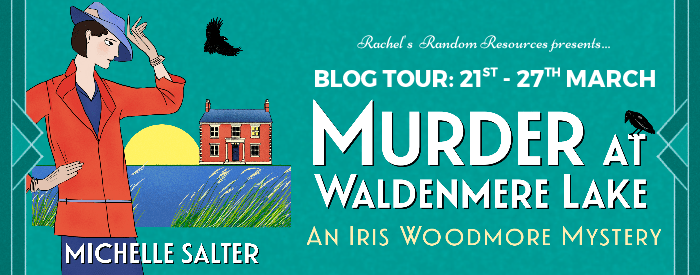
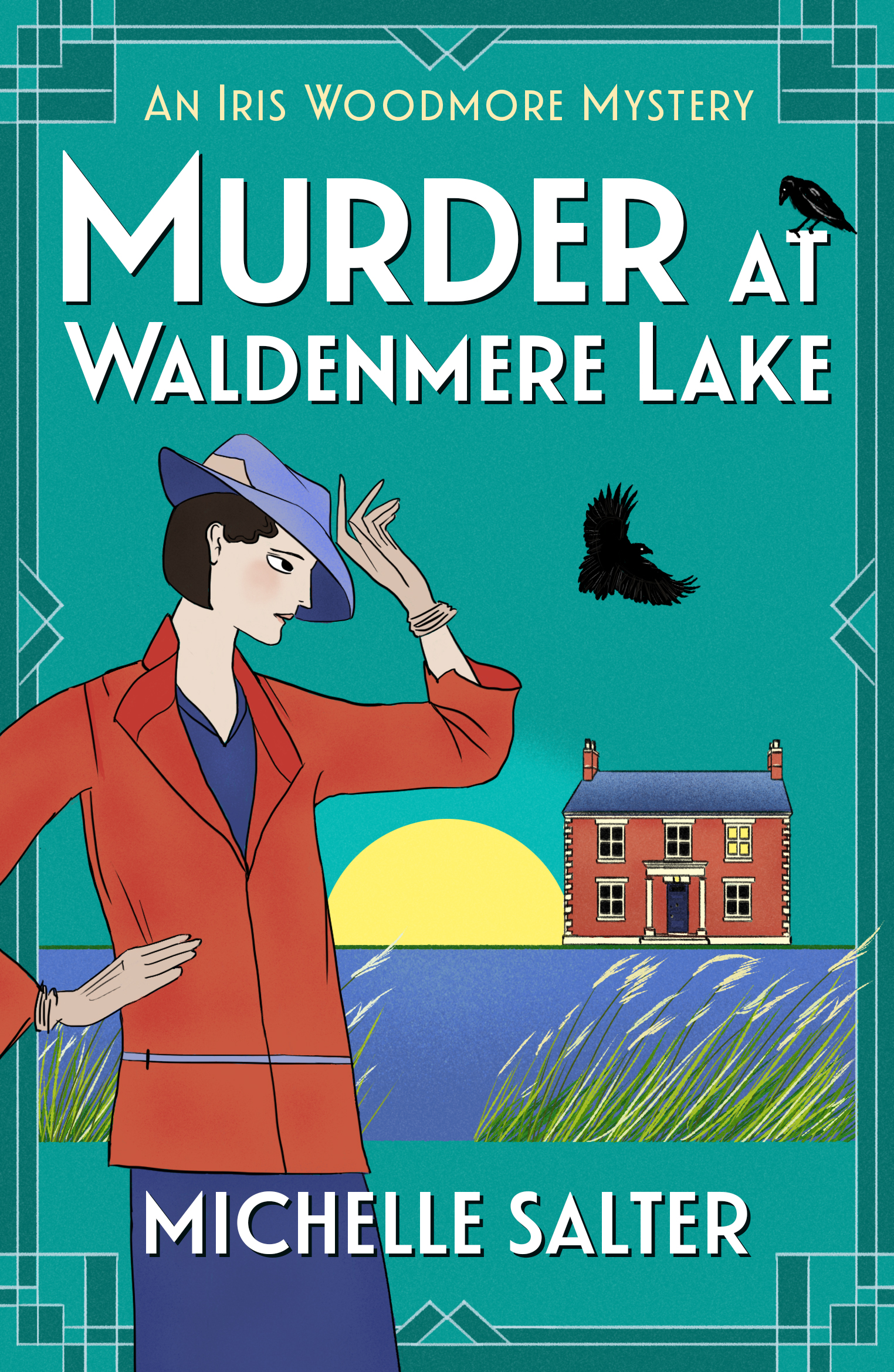
A murder shocks the small town of Walden. And it’s only the beginning…
Walden, 1921. Local reporter Iris Woodmore is determined to save her beloved lake, Waldenmere, from destruction.
After a bloody and expensive war, the British Army can’t afford to keep the lake and build a convalescent home on its shores yet they still battle with Walden Council and a railway company for ownership. But an old mansion used as an officer training academy stands where the railway company plans to build a lakeside hotel. It belongs to General Cheverton – and he won’t leave his home.
When the General is found murdered, it appears someone will stop at nothing to win the fight for Waldenmere. Iris thinks she can take on the might of the railway company and find the killer. But nothing prepares her for the devastation that’s to come…
Murder at Waldenmere Lake is book two in the Iris Woodmore Mystery series set in the very early 1920s onwards. Check out my review for Death at Crookham Hall here.
Book 2, Murder at Waldenmere Lake, begins not soon after the events of the first book, and it’s good to see some familiar characters return to Walden. As with book 1, the mystery is firmly rooted in the concerns of the period, recovering from the events of World War 1 while contending with changes in society. I really love how well-researched the two novels are. I love a cosy mystery, but I adore it even more when the author goes that one step further and adds so much more authentic settings to the novel.
As with book 1, there’s a murder fairly early on in the novel, which seems impossible to solve, and events more quite sedately until there is another murder and events really begin to move at pace. And yet, even with the devastation Iris feels at the murder, she can’t seem to work out who was responsible, and indeed, some personal betrayal strikes her low as well.
The mystery, when it is eventually solved, is delightfully nuanced. Looking back, there might have been some hints I should have read more into, but I didn’t, and so, as with book 1, the big reveal is a surprise but a really well-constructed one. I adored this book. Iris is a great character, as is Percy and the people she interacts with.
A fabulously well-researched historical cosy mystery, and I can’t wait for the next book in the series.
Meet the author
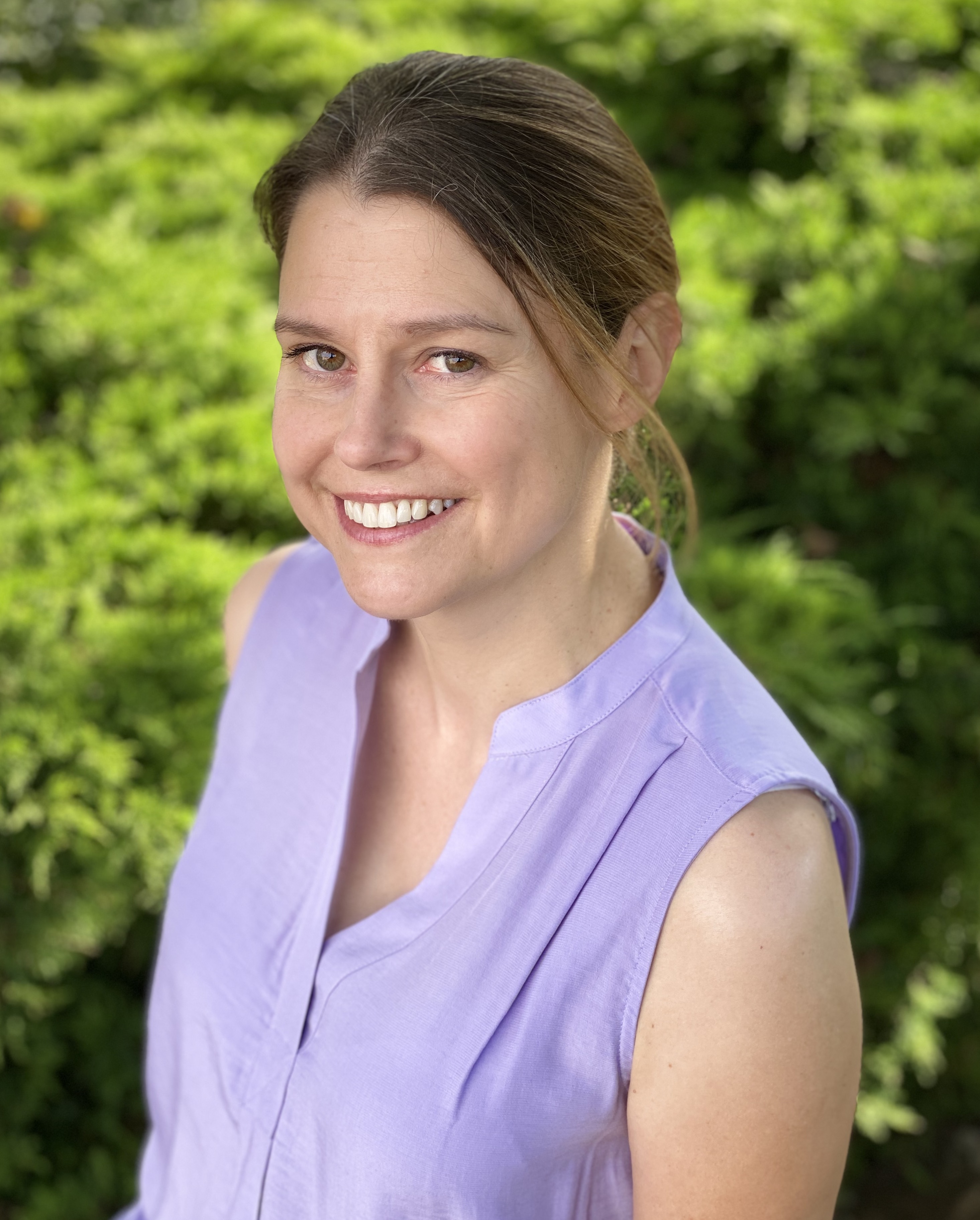
Michelle Salter is a historical crime fiction writer based in northeast Hampshire. Many local locations appear in her mystery novels. She’s also a copywriter and has written features for national magazines. When she’s not writing, Michelle can be found knee-deep in mud at her local nature reserve. She enjoys working with a team of volunteers undertaking conservation activities.
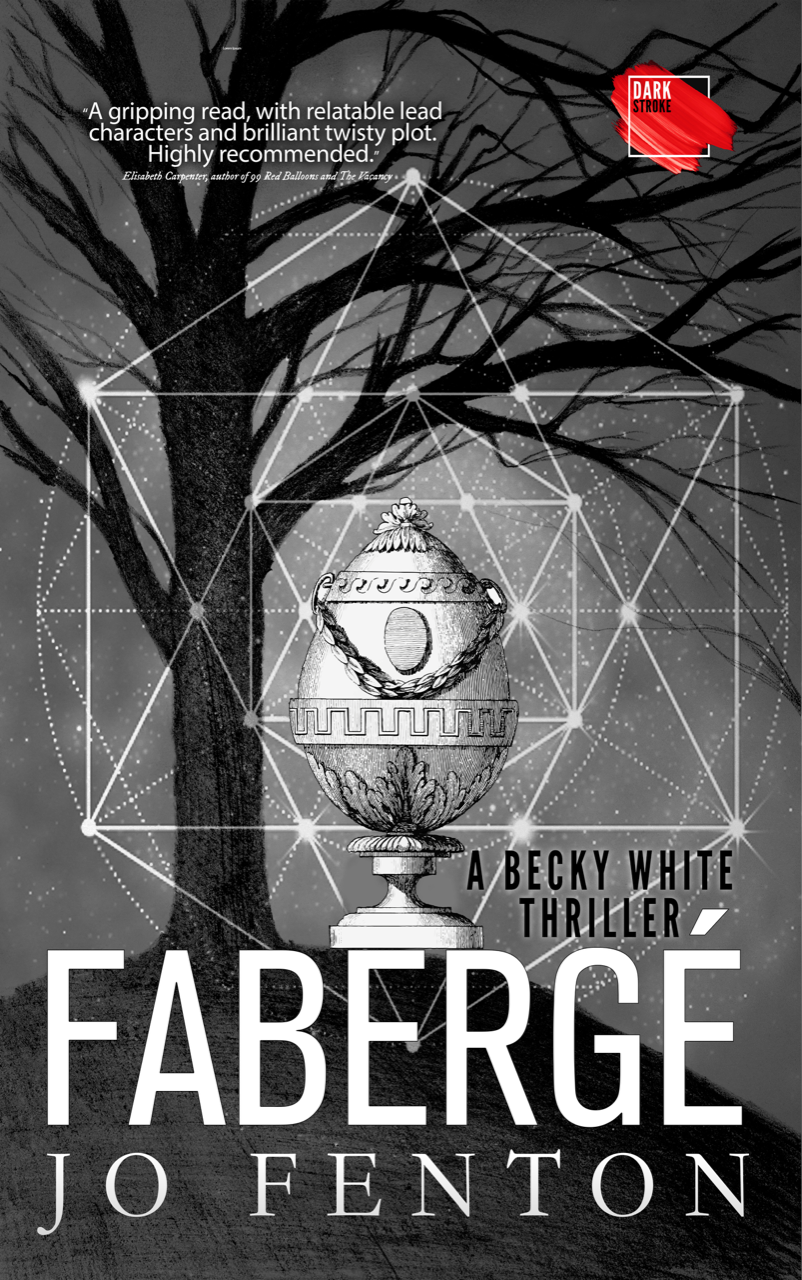
Manchester detective Becky White and her friends at the White Knight Detective Agency take on a case involving the theft of a multi-million-pound Fabergé egg.
Events quickly escalate, and they find themselves dealing with unscrupulous villains who will stop at nothing – not even at kidnapping or murder – to achieve their goals.
Can Becky solve the mystery before her hidden enemies catch up with her?
Faberge is the third book in the Becky White thrillers series. I was compelled to read it by the title. Faberge eggs are certainly something to conjure an image in my mind.
As it’s the first book in the series that I’ve read, it’s taken me a little while to get to know the characters and to work out what’s happening. That said, it’s well worth the effort, for this is a very twisty and tightly woven thriller set in the UK, in the cities of Manchester and Preston, with a brief trip to London.
All three of our main characters, Becky, Will and Joanne, have their backstories, which we could be forgiven for thinking were irrelevant, but they’re not. What seems to be a seemingly random chain of events begins to have more and more relevance. The tension ramps up in the book as it tumbles toward its conclusion. This does have a tight and twisty plot.
A novel that was worth sticking with, and I would recommend that new readers perhaps start with the first book in the series just to give them a firm grounding for the events in Faberge, although the book works very well on its own – once you’ve worked out who all the characters are.
A thrilling thriller.
Meet the Author
Jo Fenton grew up in Hertfordshire, UK. She devoured books from an early age, particularly enjoying adventure books, school stories and fantasy. She wanted to be a scientist from aged six after being given a wonderful book titled “Science Can Be Fun”. At eleven, she discovered Agatha Christie and Georgette Heyer, and now has an eclectic and much loved book collection cluttering her home office.
Jo combines an exciting career in Clinical Research with an equally exciting but very different career as a writer of psychological thrillers.
When not working, she runs (very slowly), and chats to lots of people. She lives in Manchester with her husband, youngest son, a Golden Retriever/Husky cross and a tankful of tropical fish. She is an active and enthusiastic member of two writing groups and a reading group.
Connect with Jo
I can be found at my website www.jofenton137.com or on Facebook, Twitter, Instagram and Pinterest (links below):
Giveaway to Win a Faberge mouse mat and notebook (Open to UK Only)
*Terms and Conditions –UK entries welcome. Please enter using the Rafflecopter box below. The winner will be selected at random via Rafflecopter from all valid entries and will be notified by Twitter and/or email. If no response is received within 7 days then Rachel’s Random Resources reserves the right to select an alternative winner. Open to all entrants aged 18 or over. Any personal data given as part of the competition entry is used for this purpose only and will not be shared with third parties, with the exception of the winners’ information. This will passed to the giveaway organiser and used only for fulfilment of the prize, after which time Rachel’s Random Resources will delete the data. I am not responsible for despatch or delivery of the prize.
I’m really excited to share the details of the Pagan Warrior blog tour with The Coffee Pot Book Club.
Pagan Warrior is the story of the battle of Hædfeld, fought in the seventh century between the Northumbrians, and you got it, the Mercians – or rather, Cadwallon of Gwynedd but with Penda of Mercia as his firm ally. You can find more details here.
I might have written this book many years ago, but it’s had a refresh, and is now available in audio, narrated by the fabulous, Matt Coles, as is the second book, Pagan King. Warrior King will be coming later this year in audio. For this second week, 20th March-25th March, the ebook of Pagan King (book 2) is reduced globally to 99p/99c and equivalent. Follow the link below.
I’ve also, finally, managed to get book three, Warrior King, uploaded to all good ebook platforms, and they will be going live during this week. Kobo have so far won the competition. Use this link, which I will be updating, or try the one above, and hopefully, Warrior King will be linked to Pagan King as well. It means Warrior King is also available in hardcover from Amazon.
You can follow the blog tour, and I’ll be sharing posts here as well. A quick shout out to thank all the blog hosts and Cathie at The Coffee Pot Book Club for organising.
For today (March 21st) check out a post about two of the royal residences of Bernicia at the time, Bamburgh and Ad Gefrin (Yeavering). (There are lots of photos, thank you to Helen Hollick for uploading them all).
For Sophie it’s a trip home and for Hector it’s time to meet Sophie’s parents… Though their trip has village tongues wagging about a stop at Scotland’s notorious elopement spot, Gretna Green.
No matter what, it’ll make a nice break from the murder and mayhem that has been plaguing their beautiful Cotswolds village. But Sophie and Hector are barely on the road before they’re being hassled by reckless drivers and at their first rest stop a body is discovered.
Then comes a series of ‘accidents’ that leave poor Hector a little worse for wear. Is someone after Hector? Who could even know he was in the Highlands?
Accidents or not, can they find some way to keep Hector safe?
Murder in the Highlands is the latest book in the Sophie Sayers cosy crime series, usually set in a small Cotswold village, but not on this occasion. Sophie and Hector (who isn’t Scottish) are off to Inverness for a well-deserved holiday with her mother and father.
But as ever, dark going-ons and strange occurrences follow them on the long journey north, and Sophie is left feeling that there’s a mystery to solve, but unsure what it can be about, and even worse, that it somehow involves Hector.
I really enjoy this series of books – Sophie is a fun character, if troubled with an overactive imagination – as a writer, and her character is a writer, I’m right there with her. Hector is usually the more grounded of the two, but this time, even he’s starting to worry about what’s happening.
While there is no sighting of the Loch Ness monster, this is a fun mystery firmly rooted in Inverness, which the author has visited extensively, and the mystery is one of the stronger ones in the series that plays out, perhaps, in a more conventional way to earlier books in the series.
A great addition to the cosy crime series, which is going from strength to strength.
Meet the Author
Debbie Young is the much-loved author of the Sophie Sayers and St Brides cosy crime mysteries. She lives in a Cotswold village where she runs the local literary festival, and has worked at Westonbirt School, both of which provide inspiration for her writing. She is bringing both her series to Boldwood in a 13-book contract. They will be publishing several new titles in each series and republishing the backlist, starting in September 2022.
Love, Loss and Life In Between is a really lovely collection of short stories focusing on acceptance, moving on and recovery. I confess, I feared the stories might be upsetting, but they really weren’t. I was lucky enough to read the ebook last year, but now I’ve listened to the brand new audio as well. I really enjoy the option to listen as well as read books, especially ones I’ve read before.
Garden Therapy, with its slight otherworldliness was delightful, and A Mermaid’s Tale was a beautiful account of a young girl coming to terms with the loss of her mother, whereas Catalyst was quite edgy. Not Just for Christmas is a tale many pet owners with feel resonates with them.
This really was a delightful collection of short stories. The author has a lovely turn of phrase and manages to evoke strong feelings in her characters which make them believable, so that in only a few words the reader is already rooting for them.
Highly recommended, as was the author’s previous short story collection, of which you can find the review here.
The audio adds a delightful new dimension to these short stories. The narrator, Sandie Keane, has a lovely warm tone, and manages these uplifting and sorrowful tales with real compassion and understanding. Highly enjoyable.
Meet the author
Suzanne lives in Middlesex, England with her husband, two teenagers, a crazy cocker spaniel and an adopted cat that thinks she’s the boss.
Suzanne’s writing journey began at the age of twelve when she completed her first novel. She discovered the fantasy genre in her late teens and has never looked back. Giving up work to raise a family gave her the impetus to take her attempts at novel writing beyond the first draft, and she is lucky enough to have a husband who supports her dream – even if he does occasionally hint that she might think about getting a proper job one day.
Now an author of four novels including the Silent Sea Chronicles trilogy and her debut, Visions of Zarua, Suzanne hopes the dreaded ‘W’ word will never rear its ugly head again!
She loves gardening and has a Hebe (shrub) fetish. She enjoys cooking with ingredients from the garden and regularly feeds unsuspecting guests vegetable-based cakes.
She collects books, is interested in history and enjoys wandering around castles and old ruins whilst being immersed in the past. She likes to combine her love of nature and photography on family walks, but most of all she loves to escape with a great film, binge watch TV shows, or soak in a hot bubble bath with an ice cream and a book.
Having attended Drama school in Liverpool as a teenager Sandie moved into a variety of jobs varying from Hotel Management/Merseyside Police/Motherhood to name just a few but for 25 years she taught worldwide as a Pilates Tutor Trainer.
During lockdown Sandie’s interest turned to Audiobooks and it was from there she embarked on her own journey as an Audiobook Narrator.
I’m sharing an excerpt from Run with the Hare, Hunt with the Hound by Paul Duffy.
Underworld
I was still young when the fulcrum began its pitch. Fortune’s wheel clanking around in its inscrutable way. It was the year that the sky ships were seen in Ard Macha. A silver host, spectral and gold illuminated the heavens, emerging from the cloud with their glistening sails and their ghostly hosts peering down, blazing with light on the men below who shrank from them in terror. And in that year also, the crozier of the bishop of Cluin Ioraird spoke to its owner, words of radiance and doom setting the kingdom alight.
Though we saw no such miracles to presage coming things, the Tiarna had a dream. He saw a great light rise from the mound on Cnuc Bán. A sídhemound guarding the high pass over the valley and below – a stag belling, a wild dog of two colours devouring a heron’s nest and above, a sun rising in the west, spreading brightness over a darkened east. A weapon shining at the heart of the mound. A weapon of immense power.
The Tiarna ignored the words of his wife and councillors, he disregarded his ollamh, he closed his house to the monk and chewed his thumb long into the night. Night after night ruminating beside ashen fires, forging his resolve. Until, one darkening day, he sat on his horse commanding the unthinkable. Watching us scrabble and shift moss-thick stones from the ancient cairn. We worked in silence, frantic in our task, working to quieten the dread that rang out in each of our heads. To stave off the flesh-creep as hour after hour, we watched the sun pass its peak and begin to drop away westwards over the shoulder of the cairn. The mound’s passive bulk thrumming with threat, and the geis-breaking sound of stones rolling free, rising to swallow everything else. Swallowing the champ of the standing horses, the rare lilts of the wind through the woodland below, the keening of buzzards circling. We cast the stones out beyond the kerbing into the heather, hoping they would land soft. Flinching at each cracking strike as they collided with hidden rock among the furze. Dread and skeletal hands clenching slowly within our skulls as the darkness thickened in the east.
‘Ho,’ Lochru cried out – the first human sound in hours and he came around the curve of the mound, his palsied face white, his hands trembling. He motioned to the Tiarna who urged his horse onwards. Tuar, his ollamh and the monk, Milesius cantering on also. We all followed to where the youth Fiacra stood, unnaturally still, his eyes fixed upon something in the scree. With great reluctance, he raised his hand and pointed at an opening which showed amongst the loose stone. Two rough pillars leaning towards each other, forming a narrow doorway as wide as the span between fist and elbow.
We stood steaming in the cold. Shudders passed among us and Milesius, hand on the psalter hanging in a satchel at his side, mumbled Latin incantations. The Tiarna gazed coldly. He looked to where his son, Conn stood by, leaning on a spear. I saw the subtle question in the Tiarna’s eye. I saw Conn’s face lowering to the ground, refusing the wordless request and, to disguise Conn’s refusal, the Tiarna’s voice came sudden and barking.
‘Send in the Sasanach,’ he said without looking in my direction and my bowels dropped within me. I stared ahead at the terrible and absolute blackness, a blackness that inhaled the failing light, and did not move. Lochru came towards me, grabbing my arm and pulling me past him with a blow that cupped the back of my skull. I staggered forward, feet twisting among the stones, and fell to my knees before the doorway, backing instantly, as if from a wild beast. I looked to the Tiarna on his horse and Milesius at his side. Their faces as hard as the stone of the hill. I breathed through my nose, a forceful breath. Another. And another. I made the sign of the cross, rose, commending myself to God and the Saints Patricius, Féichin, Lasair and stepped forward.
I moved towards the dragging blackness. Towards the mouth of the underworld. Towards the realm of the sídhe. I approached as if approaching cold water, step by step, clenching something deep within. My hand reached out to touch a pillar and its frigid surface drew the warmth from me. I turned side-on, a welling panic, though I did not stop. I slid my shoulder into the gap and pushed my chest through, feeling the pillars scrape at once along my spine and breastbone. I dipped my head, without looking back and entered the dark.
The space within forced me to crawl and I advanced blindly, my bulk blocking the light from the opening. The stones pressed in all around so that I could neither stand nor turn. Pools of water splashed beneath me, a dead air, stale in my lungs. My eyes moved wildly around, though nothing changed in the depthless dark. Hands slipped and scraped and I struck my head frequently on the uneven roof. Yet I moved, and in moving there was hope.
Here’s the blurb
On a remote Gaelic farmstead in medieval Ireland, word reaches Alberic of conquering Norman knights arriving from England. Oppressed by the social order that enslaved his Norman father, he yearns for the reckoning he believes the invaders will bring—but his world is about to burn. Captured by the Norman knight Hugo de Lacy and installed at Dublin Castle as a translator, Alberic’s confused loyalties are tested at every turn. When de Lacy marches inland, Alberic is set on a collision course with his former masters amidst rumours of a great Gaelic army rising in the west. Can Alberic navigate safely through revenge, lust and betrayal to find his place amidst the birth of a kingdom in a land of war?
Paul Duffy, author of Run with the Hare, Hunt with the Hound (2022), is one of Ireland’s leading field archaeologists and has directed numerous landmark excavations in Dublin as well as leading projects in Australia, France and the United Kingdom.
He has published and lectured widely on this work, and his books include From Carrickfergus to Carcassonne—the Epic Deeds of Hugh de Lacy during the Cathar Crusade (2018) and Ireland and the Crusades (2021). He has given many talks and interviews on national and international television and radio (RTÉ, BBC, NPR, EuroNews).
Paul has also published several works of short fiction (Irish Times, Causeway/Cathsair, Outburst, Birkbeck Writer’s Hub) and in 2015 won the Over the Edge New Writer of the Year Award. He has been shortlisted for numerous Irish and international writing prizes and was awarded a writing bursary in 2017–2018 by Words Ireland.
I’m really excited to share the details of the Pagan Warrior blog tour with The Coffee Pot Book Club.
Pagan Warrior is the story of the battle of Hædfeld, fought in the seventh century between the Northumbrians, and you got it, the Mercians – or rather, Cadwallon of Gwynedd but with Penda of Mercia as his firm ally. You can find more details here.
I might have written this book many years ago, but it’s had a refresh, and is now available in audio, narrated by the fabulous, Matt Coles, as is the second book, Pagan King. Warrior King will be coming later this year in audio. For this first week, 13th March-19th March, the ebook of Pagan Warrior is reduced globally. Follow the link below.
You can follow the blog tour, and I’ll be sharing posts here as well. A quick shout out to thank all the blog hosts and Cathie at The Coffee Pot Book Club for organising.
For today, March 14th, check out my author interview over on Archaeolibrarian.
The Scots of Dalriada takes place in 5th century Ireland and Scotland and tells the fictional story of the legendary king Fergus Mór. Recorded Irish history begins with the introduction of Christianity and Latin literacy, beginning in the 5th century. Most of my research however, relied on sources written much later. First and foremost, Studies in the History of Dalriada by John Bannerman.
Published in 1974 this book is no longer in print but can be purchased second-hand.
My research of the Dalriada began fifteen years ago when I discovered that my ancestors descended from the Dalriada. History is compelling, especially when your own ancestors are involved, and the stories around the Dalriada didn’t let me go. I had to wait three years to obtain a copy of this book but it was definitely worth it, as it is much more comprehensive and detailed than anything to be found on the net.
It amazed me that St. Patrick was kidnapped as a teenager and sold to the Dalriada. He stayed with them, working as a shepherd on the exposed hills of Slemish until he miraculously escaped. When he returned to Ireland in his role as missionary, his first self-imposed duty was to convert the Dalriadians, despite bitter opposition from the druids.
See my first book from this period about the life of St.Patrick, Patron Saint of Ireland.
The Missionary
Although both books take place in 5th century Ireland, they are entirely independent of each other.
5th century Ireland and Scotland is at the end of the Iron Age and beginning of the early Medieval Age. This period includes an expansion of the Dalriada clan to Western Scotland. Ireland, at the time, was divided into many small baronies, each ruled by an underking. Life was dominated by a myriad of petty wars, neighbouring clans were constantly under attack from each other, stealing cattle and crop and encroaching upon each other’s land.
The Dalriada was situated in the utmost North East of Ireland, composed of much that is presently known as Antrim. To the North and East their territory was bordered by the North Channel and the Irish Sea. To the South and West, by the aggressive tribes of the Northern Uí Néill, the Dál Fiatach and the Dál nAraide, who continually attacked the Dalriada. So it was only natural that the Dalriada sought to expand their kingdom across the North Channel.
These background facts form the setting for my, mainly fictional, novel about Fergus. The book covers his life from roughly 440 to 501 AD, when his ship is sea wrecked, and he is succeeded by his son Domangart.
By that time the Dalriada have conquered Argyll (“Coast of the Gaels”) and built their chief stronghold and trading centre at Dunadd. The hillfort of Dunadd is believed to have been their capital. Other royal forts included Dunollie, Dunaverty and Dunseverick. Within Dalriada was the important monastery of Iona, which played a key role in the spread of Celtic Christianity throughout northern Britain, and in the development of insular art. Iona was a centre of learning and produced many important manuscripts. Dalriada had a strong seafaring culture and a large naval fleet.
Scotland is said to have been founded by the legendary king Fergus Mór (Fergus the Great) in the 5th century. Heavy onslaughts from the Picts checked the Dalriada on the Scottish mainland. In the 8th century the Dalriada gradually declined; and after the Viking invasions early in the 9th century, it lost all political identity. In the mid-9th century its king Kenneth I MacAlpin brought the Picts and Scoti (the Roman name for the Irish Gaels) permanently together, and thereafter the whole country was known as Scotland.
More books that I read to complement my research:
A Brief History of Ireland by Richard Killeen
Ireland’s Forgotten Past: A History of the Overlooked and Disremembered by Turtle Bunbury
A History of Scotland by Neil Oliver
Scotland: History of a Nation by David Ross
The Book of Celtic Myths: From the Mystic Might of the Celtic Warriors to the Magic of the Fey Folk, the Storied History and Folklore of Ireland, Scotland, Brittany, and Wales by Adams Media
Satellite image of Scotland and Northern Ireland showing the approximate greatest extent of Dál Riata (shaded). The mountainous spine which separates the east and west coasts of Scotland can be seen.
Ancient hill fort at Dunadd
Here’s the blurb
THREE BROTHERS Fergus, Loarn and Angus, Princes of the Dalriada, are forced into exile by their scheming half-brother and the druidess Birga One-tooth.
THREE FATES Fergus conceals himself as a stable lad on Aran and falls helplessly in love with a Scottish princess, already promised to someone else. Loarn crosses swords against the Picts. Angus designs longboats.
TOGETHER A MIGHTY POWER Always on the run the brothers must attempt to outride their adversaries by gaining power themselves. Together they achieve more than they could possibly dream of. Fergus Mór (The Great) is widely recognised as the first King of Scotland, giving Scotland its name and its language. Rulers of Scotland and England from Kenneth mac Alpín until the present time claim descent from Fergus Mór.
Full of unexpected twists and turns, this is a tale of heart-breaking love amidst treachery, deceit and murder.
Rowena Kinread grew up in Ripon, Yorkshire with her large family and a horde of pets. Keen on travelling, her first job was with Lufthansa in Germany.
She began writing in the nineties. Her special area of interest is history. After researching her ancestry and finding family roots in Ireland with the Dalriada clan, particularly this era.
Her debut fiction novel titled “The Missionary” is a historical novel about the dramatic life of St. Patrick. It was published by Pegasus Publishers on Apr.29th, 2021 and has been highly appraised by The Scotsman, The Yorkshire Post and the Irish Times.
Her second novel “The Scots of Dalriada” centres around Fergus Mór, the founder father of Scotland and takes place in 5th century Ireland and Scotland. It is due to be published by Pegasus Publishers on Jan.26th, 2023.
The author lives with her husband in Bodman-Ludwigshafen, Lake Constance, Germany. They have three children and six grandchildren.





















 MJ Porter