Author of Saxon historical fiction and non-fiction, 20th-century historical mysteries, and Norse-inspired historical romantasy. Book reviewer and blog host.
I’m delighted to welcome back R.W. Meek and his new book, The Dream Collector “Sabrine and Vincent van Gogh”, to the blog with an excerpt.
The Dream Collector Excerpt 3
“The Mermaid Palace”
MAP IN HAND, I followed Theo’s route to the brothel district. At Place Victor Hugo, I stopped and thought this square might be where Vincent confronted Gauguin with a straight razor. According to Gauguin, his stare alone stopped Vincent in his tracks, causing him to run back to the Yellow House and use the razor on himself. The suspicion I brought to Arles was that the two artists, who held each other in high regard, would not reach such a violent juncture, unless there was a woman involved. Would the prostitute Rachel talk with me?
I reached Place du Calvaire, a three-quarter circle of tall, dreary houses except for the three Maisons de Tolerance,each brazenly painted a different primary colour. I kept a safe distance from House #1, Vincent’s brothel of choice, where his favorite Rachel worked. I lingered and wondered if Sundays were a busy day for brothels?
House of Tolerance #1 was painted a lurid purple-blue which I thought could have only been attractive to the coarsest eye. Gauguin mentioned that the brothel was ruled by a Madame Virginie. I knocked, but no one answered, every window shuttered, and the front door latch locked.
I noticed narrow alleyways separated the houses around the circle. The gated alleyway
next to the brothel was unlocked. Creaking open, I ventured into a dark, dank, and urine smelling passageway, coming to separate wooden gates.’ I pushed open the one leading to the back of the brothel. The scene before me defied immediate comprehension.
Here’s the blurb
Sabrine, hospitalized for five years at the infamous Salpêtrière Asylum for Women, gains her release due to intervention of her sister Julie Forette and a young Sigmund Freud. The reunited sisters are introduced to the dazzling art milieu of 1886 Paris, and soon become close friends to the leading Impressionists. Sabrine attracts a cult following as a poetess, the enigmatic “Haiku Princess.” Seemingly cured by Freud of her Grand Hysteria, Sabrine soon enters into a tumultuous relationship with Vincent van Gogh.
Julie and Sigmund Freud, alarmed by the eerie parallels between the emotionally volatile couple and their self-destructive impulses, begin an urgent search to discover the root causes for Sabrine and Vincent’s growing psychoses. Julie, ‘The Dream Collector’ seeks their most unforgettable dream for Freud’s interpretation and revelations occur.
The Dream Collectoris an exploration of the psychological consequences of betrayal, abandonment–and the redemptive power of art.
R.w. Meek has a Master’s degree in Art History from the American University in Washington, D.C., his areas of expertise are Impressionism and Post-Impressionism, with a particular interest in Vincent van Gogh.
His first novel The Dream Collector “Sabrine & Sigmund Freud” was voted runner-up by the Historical Fiction Company for best novel of 2022.
Born in Baltimore, he currently resides with his wife Pamela in Santa Clarita, California. He’s passionate about art, cinema, literature and jazz. His two dogs, Reve and Banjo, were awarded angelic status in heaven.
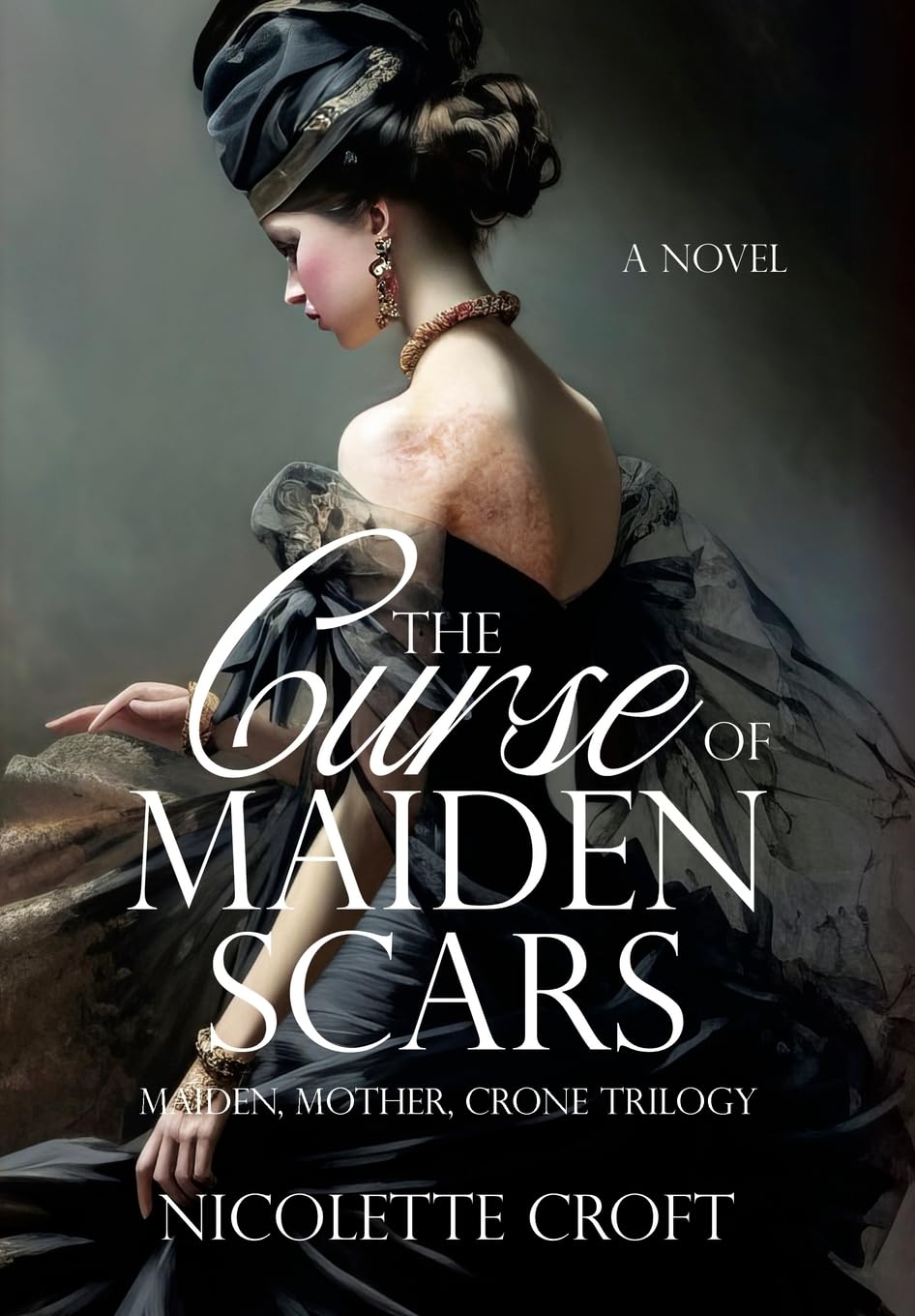
I’m delighted to welcome Nicolette Croft and her new book, The Curse of Maiden Scars, from the Maiden, Mother, Crone series, to the blog with an excerpt.
Excerpt
The Curse of Maiden Scars—Excerpt 1:
My story must have begun before life as a stray waif, but I didn’t know the tale. The cotton house takes in children as little as three—the unwanted offspring of criminals, crazies, and the contagious. By sixteen, we were expected to make room for younger sprogs and pursue meaningful work. It was weeks until my sixteenth birthday, and I didn’t have a plan. Choices for a girl like me were limited, so Camilla told me. I had some learning and hoped I might find a maid’s position. Whatever I was to become, I didn’t want it to include lurking about the seedy, dank Yorkshire streets like a wet cur.
A cackle of laughter echoed from inside the Inn that stood open behind me. A woman’s mound of blond hair tied in red, pink, blue, and black ribbons appeared in the window’s waving candlelight. She tossed her head back and let out a bright, spirited laugh as a burly man with a beard kissed her neck. I envied their intimacy. I longed to know such love and care.
Deep shivers tightened my sodden dress over my back, and a cough rattled through me. I was prone to illness. My lungs had never been strong. And the wetness only made things worse. I stuffed my head between my knees and swooned in lightheadedness. I closed my eyes and wished myself someplace warm and safe, dreaming of a small bed in a quiet room free of mold, surrounded by soft blankets, the amber light of candles, and a stack of leather-bound books with stories waiting for me to discover. Such a wish was only a fantasy to me—nothing in my real life resembled it.
Boot heels sounded beside me, ripping me out of my daydream. I lifted my head too quickly, and my vision faded darkly. Panic grew from the depths of my belly. Had I missed the opportunity to signal the workhouse strumpets, giving them time to sell their comfort for a copper?
A passerby kicked me and shot, “street rat.” He poured ale over my head and rolled with laughter. There was always laughter. I’d have kicked his feet out from under him if I hadn’t felt weakened from illness. I was accustomed to this sort of abuse, having scouted for culls since the age of eight, and wasn’t afraid to fight back if needed.
Here’s the blurb
Sixteen-year-old Renna Covert toils away in the shadows of a Yorkshire workhouse, her days filled with the mundane task of shelling cotton and the dangerous duty of scouting for punters. One fateful night, she crosses paths with two sailors and finds herself thrust into the heart of a chilling encounter at the local asylum.
These harrowing experiences catalyze Renna’s journey, promising newfound opportunities and revealing long-buried family secrets. Yet, at every turn, powerful forces conspire to thwart her quest for truth, forcing her to abandon her scullery work and embark on a daring escape to Venice alongside her steadfast companions.
In the labyrinthine alleys of Venice, Renna’s fate takes yet another twist. She is ensnared by a cunning Madam who trains her as a Venetian courtesan. But beneath the veneer of luxury lies a world fraught with danger, where Renna must rely on her withs and resilience to navigate the treacherous waters of deceit and betrayal.
Set against the backdrop of Venice’s tumultuous Napoleonic invasion of 1797, this is a tale of a girl’s struggle for survival. It is a story of resilience, defiance in the face of adversity, and, ultimately, one young woman’s determination to reclaim her identity.
Nicolette Croft can’t remember a time when she was not creating imaginary worlds inspired by her Hungarian and American ancestors. As a neuro-divergent learner, however, putting those stories to paper proved more challenging than imagining them. Because her determination would not allow her to settle, she pursued an English B.A. to improve her writing.
Young motherhood also brought unexpected challenges, which motivated her to pursue graduate work in twice-exceptional learners and education. She would later add an M.A. degree in Clinical Mental Health Counseling, specializing in neurodivergent people, trauma, and grief. Nicolette uses her natural gift of storytelling as an exploratory method for her clients.
The Curse of Maiden Scars is also an outgrowth of her personal journey and marks her first publication as a novelist, having previously published short fiction. When not at her counseling practice or researching historical facts for her latest story, Nicolette shares treasured time with family, friends, and her husband. Whether writing, cooking, traveling, or learning, the act of creation is always at the center of her colorful life.
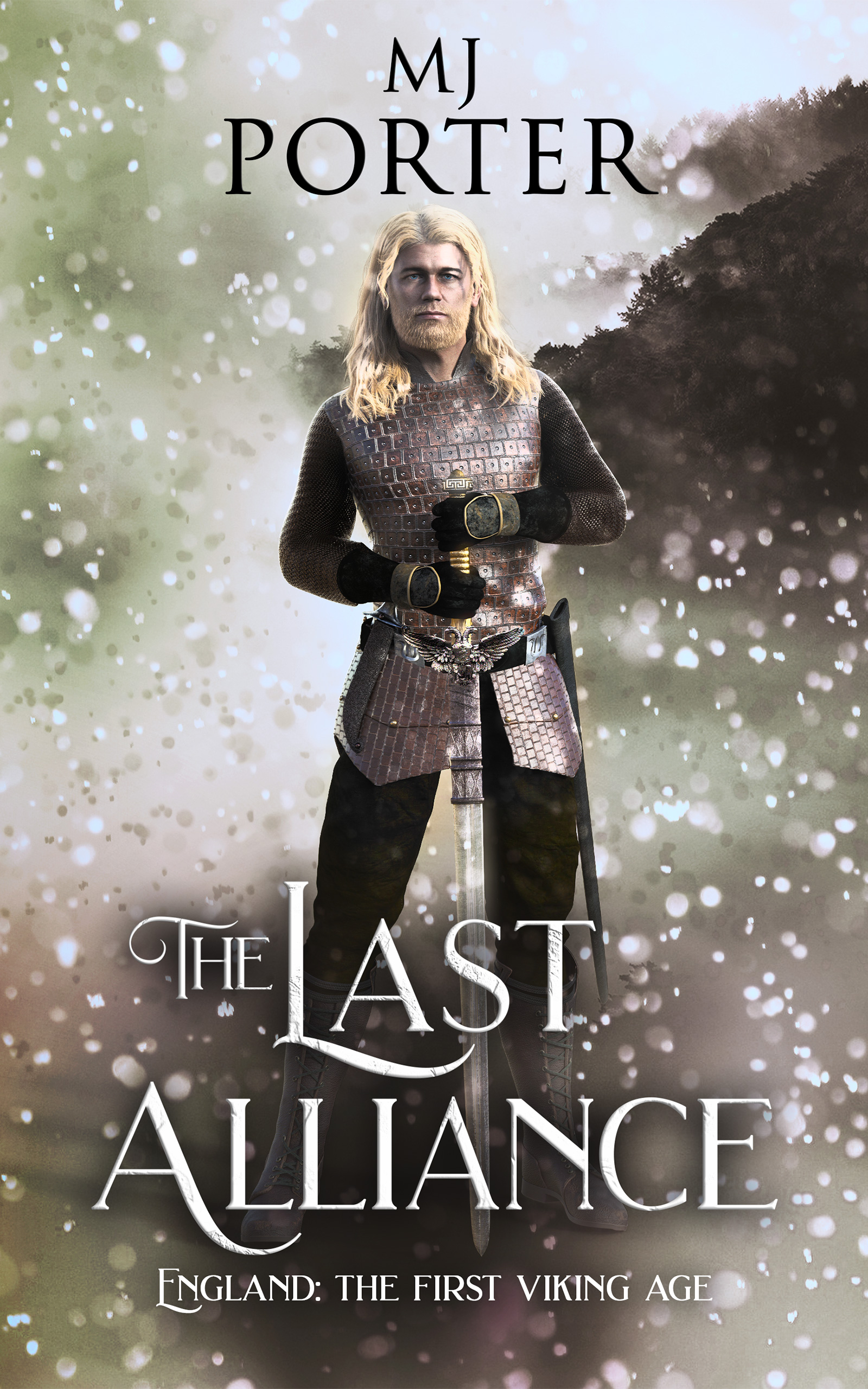
With the release of a new title in The Last King series, The Last Alliance, I thought it time to address the ‘elephant’ in the room – all that d*** swearing, and not just swearing, but the heavy almost grotesque use of one particular swear word which some will bend over backwards to assure you was used no earlier than the sixteenth century (in the written records), 700 years after the books are set. (Check out Holy Sh*t by Melissa Mohr for a history of swearing.)
I’m not writing in Old English
Well, first things first, lovely people, aside from the names of the characters in these books, and perhaps the word ‘witan,’ every word in these books is modern-English. I’ve not attempted to have my characters sound ‘ye olde worldy’ and that was very intentional. Although, it seems, that s*** is, indeed, Old English. So, forget that, there is another word in there that is also Old English. (Check out the will of King Alfred, and Eadred for some Old English https://blogs.bl.uk/digitisedmanuscripts/2013/07/the-last-will-and-testament-of-alfred-the-great.html)
The UK/US divide around swearing
I wanted my characters to swear. There, I’ve said it. I wanted them to swear and to shock with their language, but I also wanted them to sound like people today. Not everyone swears, admittedly, but most people do. In the UK, we have no problem with the F-word, although US audiences are horrified by it. In the UK, we don’t like the C-word, which in the US, is just fine and dandy – apparently. We swear and we curse and we’re not even (most of us) fighting for our lives against a deadly enemy, which my characters are forced to do.
Am I a potty-mouth?
I’ve had reviewers decry the swearing. I’ve even had reviewers decide the swearing in the books is because I somehow lack the intelligence to write a novel without swearing. Perhaps, most amusingly, a close friend was astounded by the language in the books – I am not, it seems, a potty-mouth in ‘real life’ (although, I can be pushed to it).
‘Oh dear me, that smarts.’
My characters face a life-and-death situation almost every day of their lives. I don’t think they’ll be sitting there saying, ‘oh dear me, that smarts,’ when they’re wounded, or even, ‘oh goodness me, I’ve killed that man.’ They are lethal, bloody and violent, and for all that, they are very relatable to a modern-audience perhaps struggling to truly comprehend what life ‘might’ have been like in Saxon England as the Viking raiders threatened the safety of all.
There are Cleaner Version
That said, I have no intention of forcing people to cast the books aside if they don’t like the swearing. There are also ‘Cleaner Versions‘, without much of the foul language. It tones it down a little, but the violence is not diminished.
Enjoy the fast-paced action
So, whether you love the swearing or not, you can still enjoy the tales of Coelwulf II, and book 9, The Last Alliance is available now in ebook, paperback, hardback and the Cleaner Version on kindle as well. And remember, allowing my characters to swear was done purposefully, indeed, on initial feedback, I actually added a lot more:)
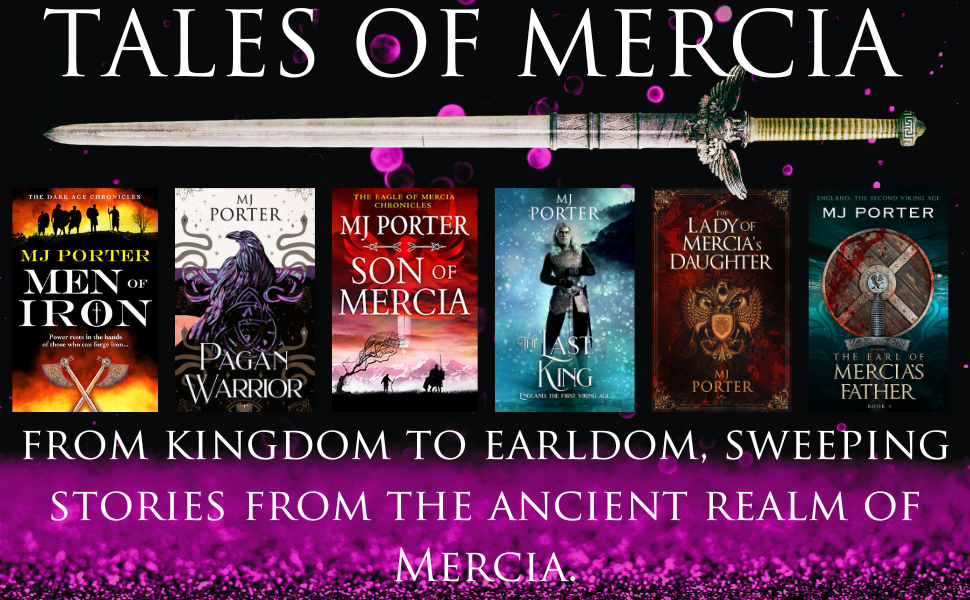
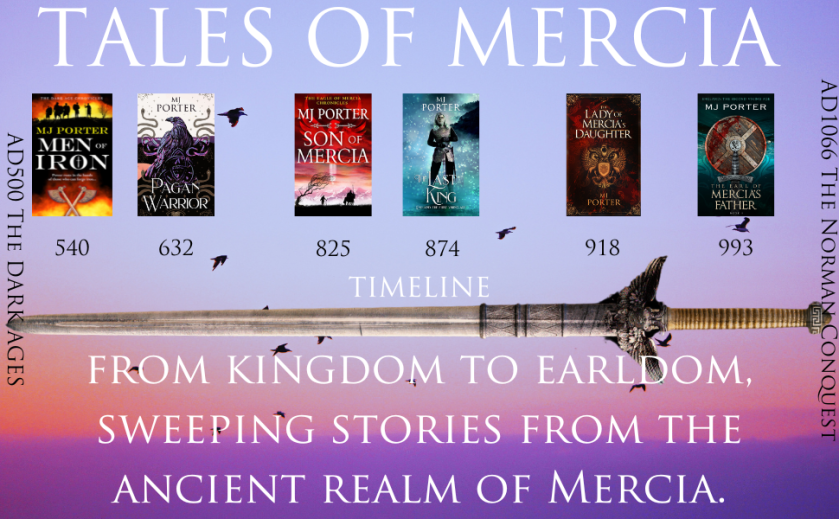
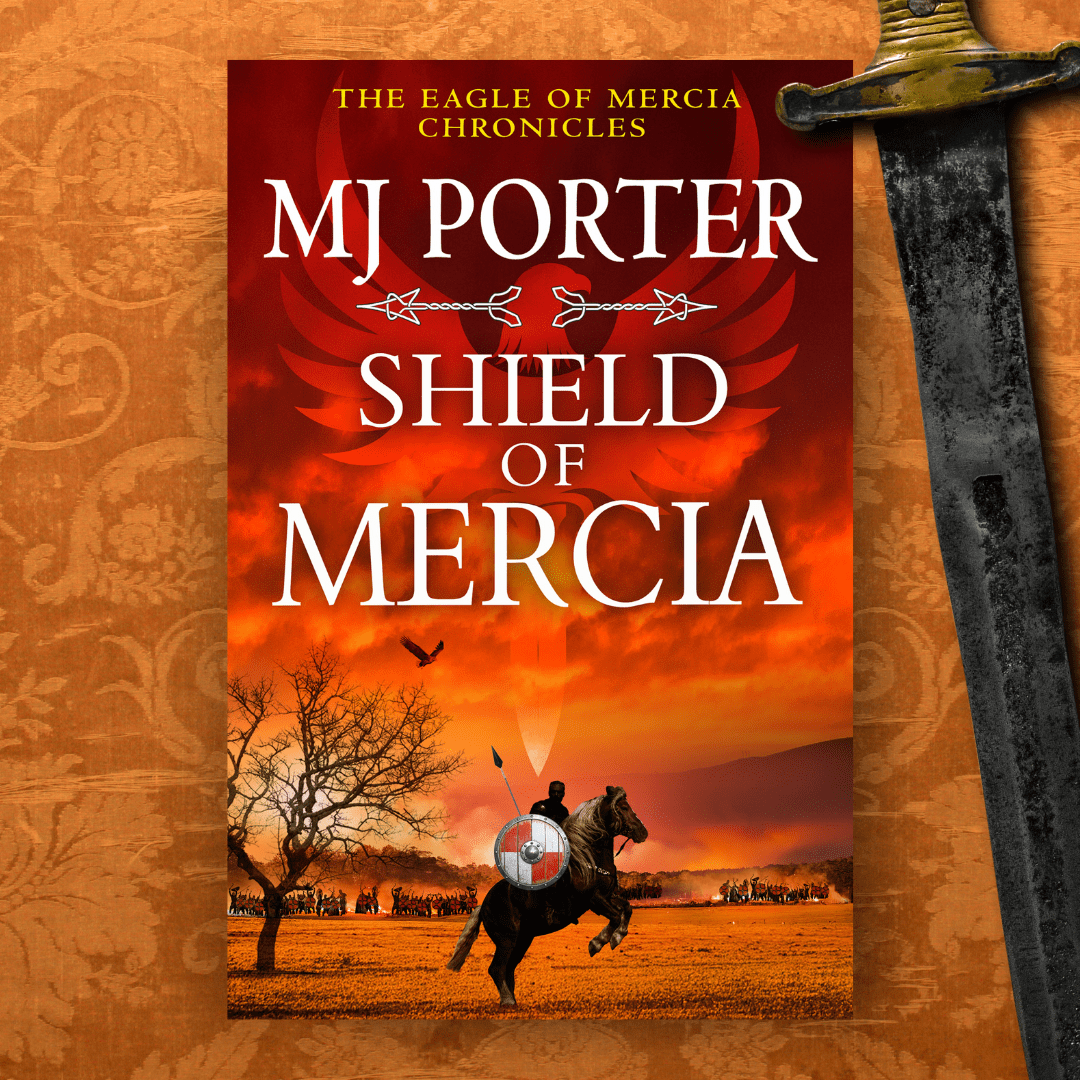
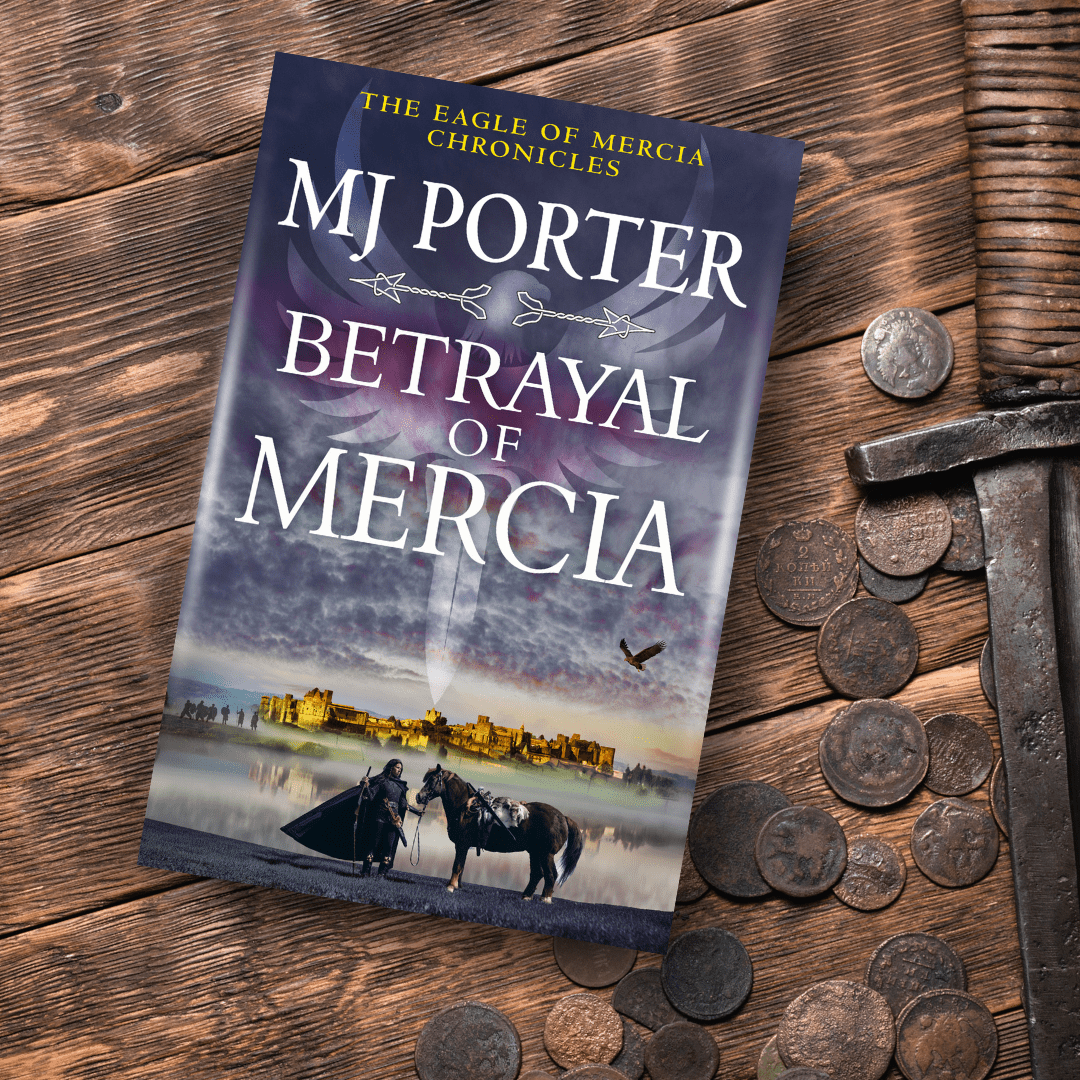
Having written more books than I probably should about the Saxon kingdom of Mercia, and with more planned, I’ve somewhat belatedly realised I’ve never explained what Mercia actually was. I’m going to correct that now.
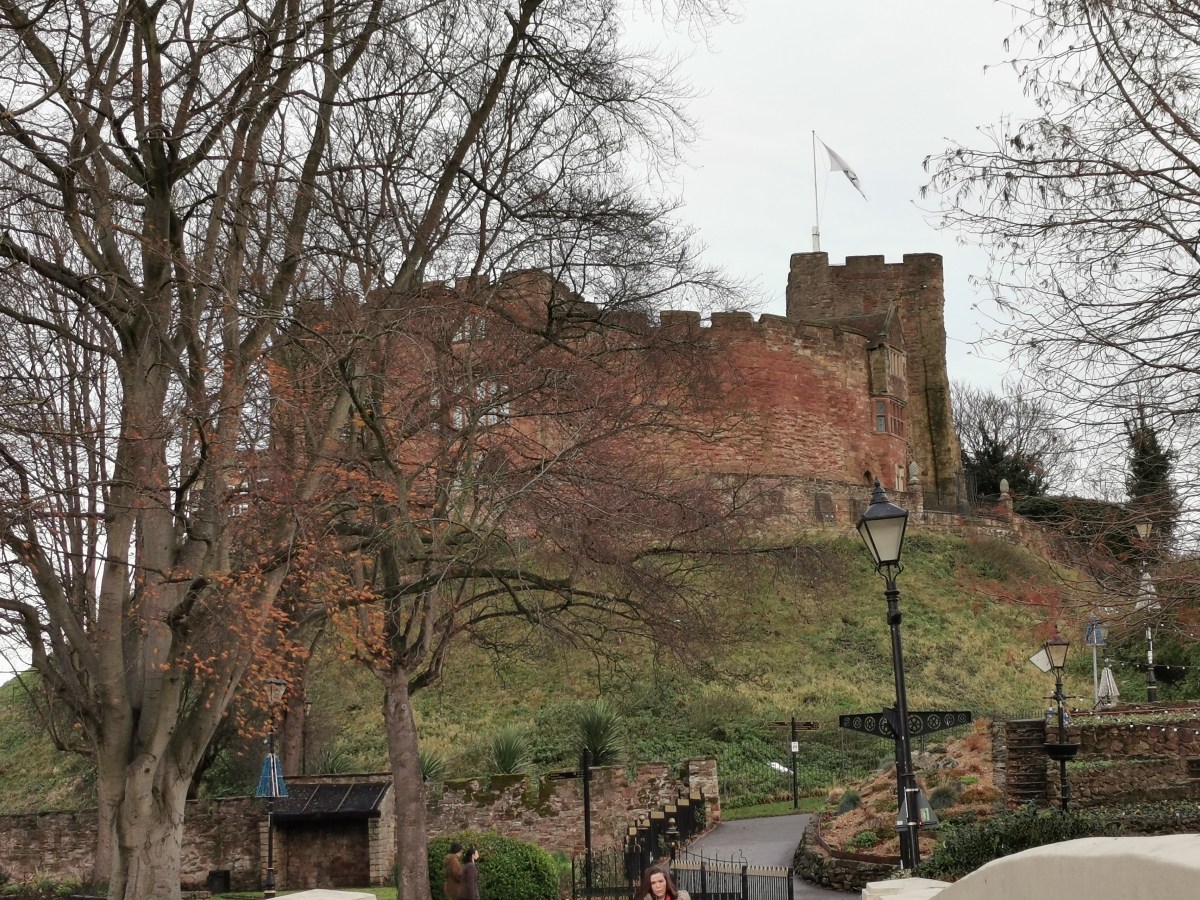
Having grown up within the ancient kingdom of Mercia, still referenced today in such titles as the West Mercia Police, I feel I’ve always been aware of the heritage of the Midlands of England. But that doesn’t mean everyone else is.
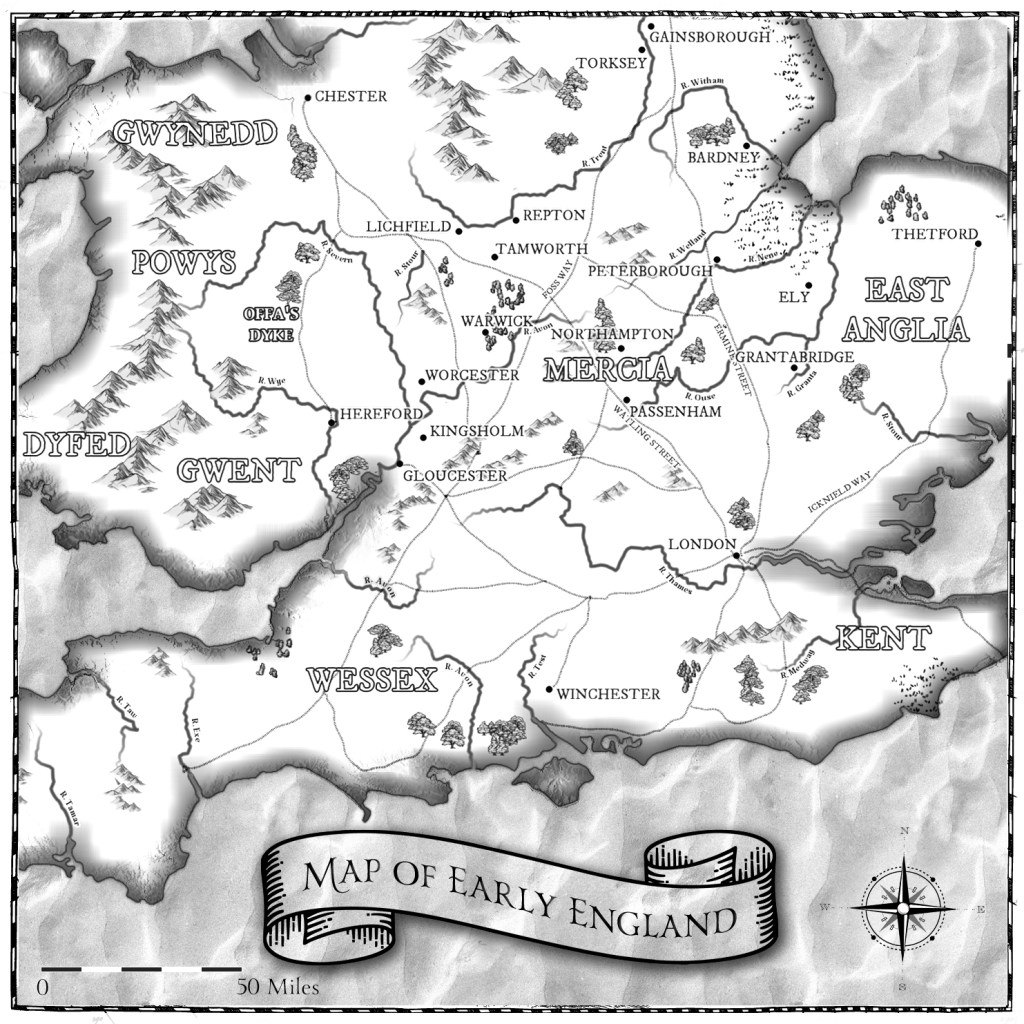
Where was Mercia?
Simply put, the kingdom of Mercia, in existence from c.550 to about c.925 (and then continuing as an ealdordom, and then earldom) covered the area in the English Midlands, perhaps most easily described as the area north of the River Thames, and south of the Humber Estuary – indeed, nerdy historians, and Bede, call the area the kingdom of the Southumbrians, in contrast to the kingdom of the Northumbrians – do you see what Bede did there?
While it was not always that contained, and while it was not always that large, Mercia was essentially a land-locked state (if you ignore all the rivers that gave easy access to the sea), in the heartland of what we now know as England.
What was Mercia?
Mercia was one of the Heptarchy—the seven ancient kingdoms that came to dominate Saxon England – Mercia, Wessex (West Saxons), the East Angles, Essex (East Saxons), Sussex (South Saxons) and Kent.
In time, it would be one of only four to survive the infighting and amalgamation of the smaller kingdoms, alongside Northumbria, the kingdom of the East Angles, Mercia, and Wessex (the West Saxons).
The End of Mercia?
Subsequently, it has traditionally been said to have been subsumed by the kingdom of Wessex, which then grew to become all of ‘England’ as we know it.
This argument is subject to some current debate, especially as the king credited with doing this, Athelstan, the first and only of his name, might well have been born into the West Saxon dynasty but was potentially raised in Mercia, by his aunt, Lady Æthelflæd, and was, indeed, declared king of Mercia on the death of his father, King Edward the Elder in July 924, and only subsequently became king of Wessex, and eventually, king of all England.
Mercia’s kings
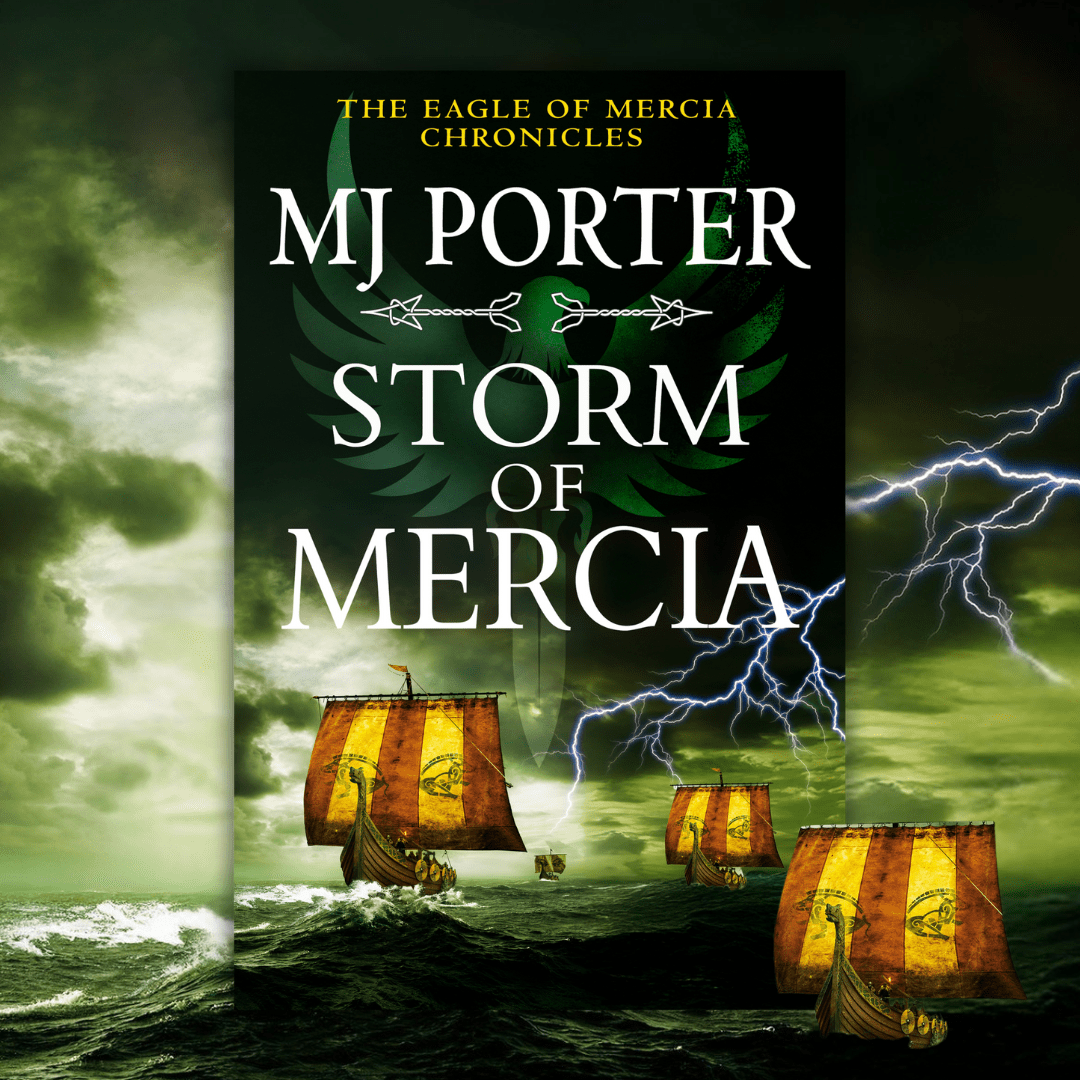
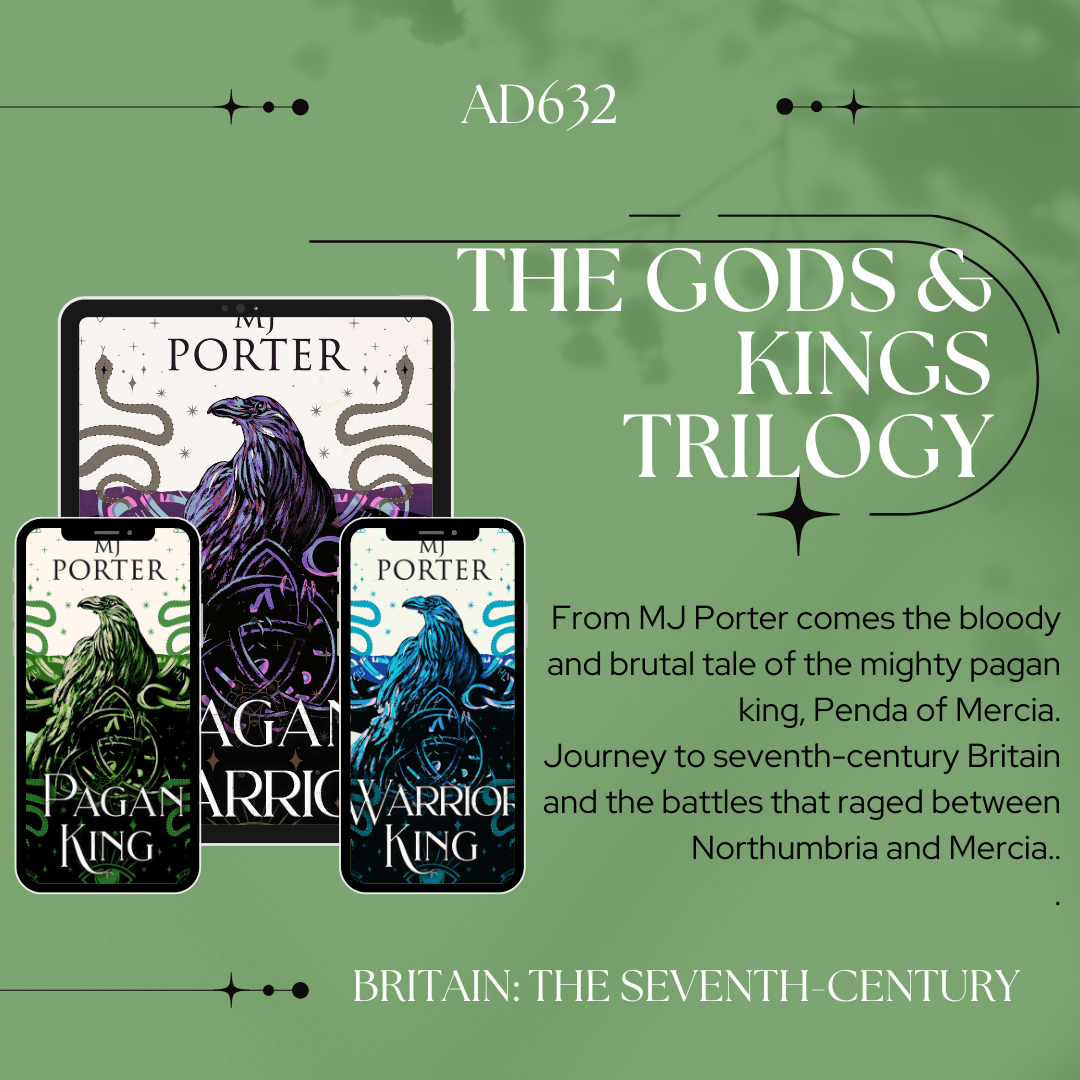
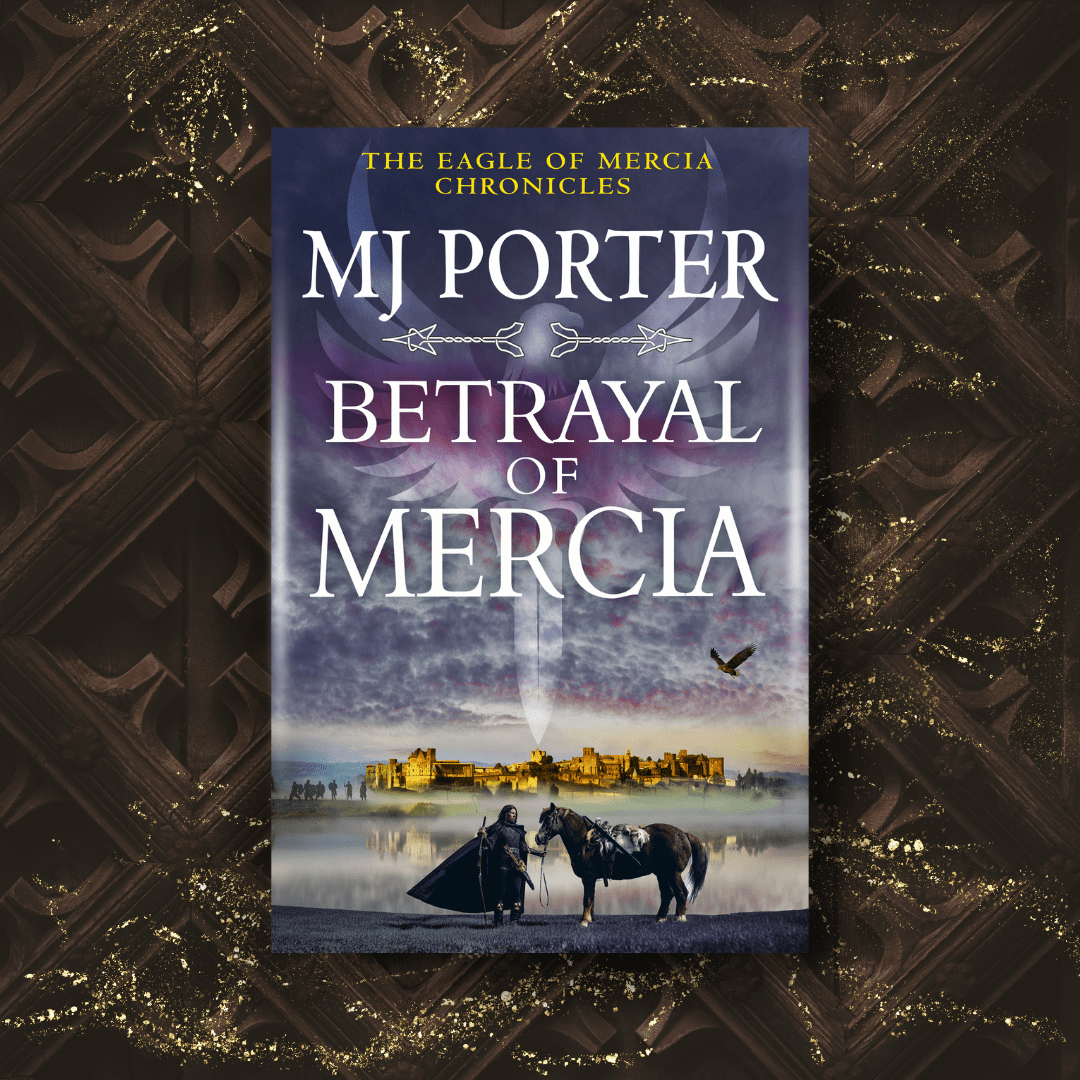
But, before all that, Mercia had its own kings. One of the earliest, and perhaps most well-known, was Penda, in the mid-7th century, the alleged last great pagan king. (Penda features in my Gods and Kings trilogy). Throughout the eighth century, Mercia had two more powerful kings, Æthelbald and Offa (of Offa’s Dyke fame), and then the ninth century saw kings Wiglaf and Coelwulf II (both of whom feature as characters in my later series, The Eagle of Mercia Chronicles and the Mercian Ninth Century), before the events of the last 800s saw Æthelflæd, one of the most famous rulers, leading the kingdom against the Viking raiders.
The Earldom of Mercia
And even when the kingdom itself ceased to exist, it persisted in the ealdordom and earldom of Mercia, (sometimes subdivided further), and I’ve also written about the House of Leofwine, who were ealdormen and then earls of Mercia throughout the final century of Saxon England, a steadfast family not outmatched by any other family, even the ruling line of the House of Wessex.
In fact, Mercia, as I said above, persists as an idea today even though it’s been many years since the end of Saxon England. And indeed, my two Erdington Mysteries, are also set in a place that would have been part of Mercia a thousand years before:) (I may be a little bit obsessed with the place).
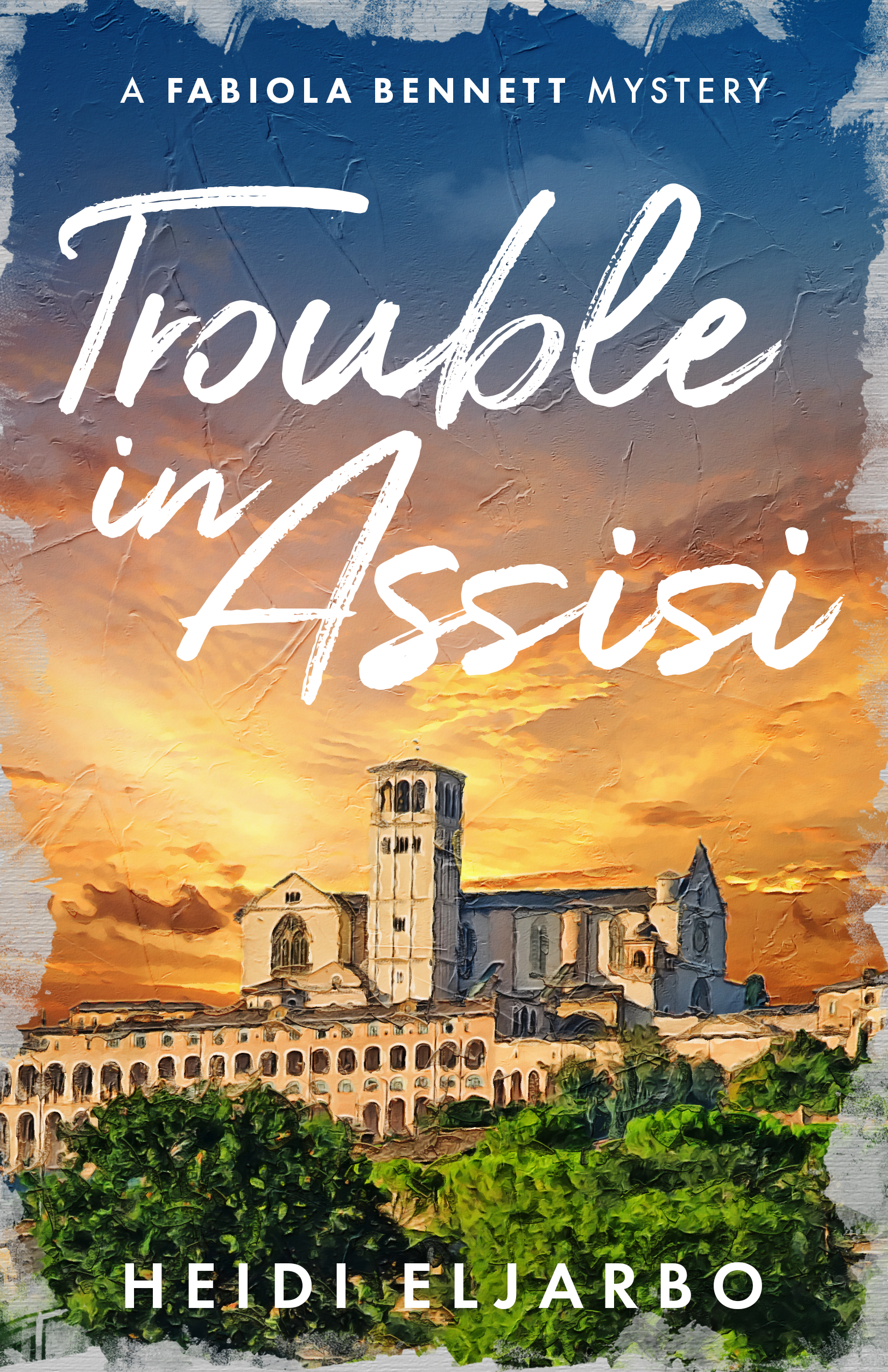
I’m delighted to welcome Heidi Eljarbo and her new book, Trouble in Assisi, to the blog.
Here’s the blurb
Assisi, 1973.
On art historian Fabiola Bennett’s first day in Assisi, a local gentleman takes her aside to ask for advice about a painting that has wondrously appeared in the basilica’s bell tower.
So much for enjoying relaxing days filled with dining on pasta and gelato.
Soon, Fabiola and her besties, Pippa and Cary, are thrown into a shrouded mystery and caught up in a whirlwind of intrigue, theft, lies, and attempted murder, all of which overshadows the postcard-like charm of the small, historic town.
Rome, 1511.
Life is going well for Teodoro Nicoletti. Since he was a young man in Florence, he has worked and learned alongside the most-favored artist Raphael.
When Pope Julius II commissions Raphael to paint several frescos in the reception rooms of the Vatican Palace, Teodoro follows his master to Rome and discovers firsthand the admiration and rivalry between Raphael and two other reigning artists: Michelangelo and Leonardo da Vinci.
But the prickliest thorn in Teodoro’s side is his beloved Elisabetta’s father. The old man is determined to keep his youngest daughter from becoming Teodoro’s wife.
Heidi Eljarbo grew up in a home full of books, artwork, and happy creativity. She is the author of historical novels filled with courage, hope, mystery, adventure, and sweet romance during challenging times. She’s been named a master of dual timelines and often writes about strong-willed women of past centuries.
After living in Canada, six US states, Japan, Switzerland, and Austria, Heidi now calls Norway home. She lives with her husband on a charming island and enjoys walking in any kind of weather, hugging her grandchildren, and has a passion for art and history.
Her family’s chosen retreat is a mountain cabin, where they hike in the summer and ski the vast white terrain during winter.
Heidi’s favorites are her family, God’s beautiful nature, and the word whimsical.
Team Spirit: a humorous take on tennis club turmoil
Everything seems straightforward enough with agreement reached for the tennis club to hold social events at the nearby Dream Café while the clubhouse is being rebuilt.
When Oliver Kilroy is forced to resign as club chairman after taking a bribe from the builder, Laurie, his young and inexperienced deputy, is left in charge of running the club. He accepts the post on condition that the attractive Helen is prepared to support him as the new deputy.
The pair are faced with an unprecedented run of challenges. The builder is failing to deliver on time. A player’s dubious line calls are infuriating opponents. The WhatsApp group has become a hotbed of slanderous gossip. A middle-aged flirt is antagonising the female members. And poor behaviour at the Dream Café is threatening the agreement.
Helen and Laurie are struggling to cope, though tennis club problems are a distant second for Helen as she attempts to start a relationship with Laurie. She’s sure he also wants that but something major is going on in his life to prevent progress. What is that something and can it be overcome?
R J Gould writes contemporary fiction about relationships using a mix of wry humour and pathos to describe the tragi-comic life journeys of his protagonists. Team Spirit is his tenth novel and the fourth in the stand-alone ‘at the Dream Café’ series. He has been published by Headline Accent and Lume Books and also self-publishes. Before becoming a full-time author he worked in the education and charity sectors. In addition to his addiction to telling stories, he has somewhat milder addictions to playing tennis, watching film noir cinema, completing Wordle and eating dried mango slices. He is a member of Cambridge Writers, Society of Authors and the Romantic Novelists’ Association UK. He lives in Cambridge, England.
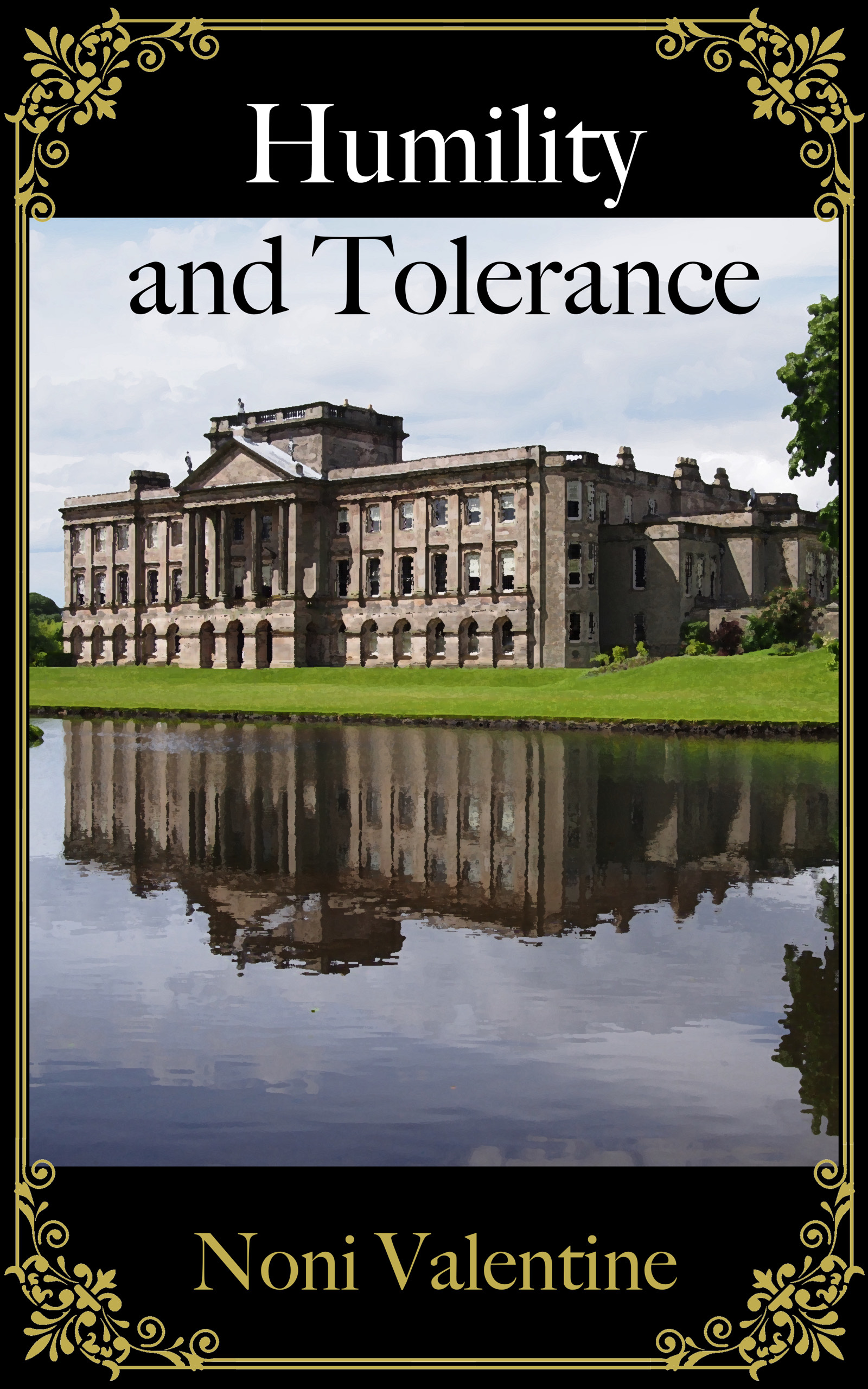
Seven years after Elizabeth Bennett married Fitzwilliam Darcy, they are still deeply in love, with two small children. But paradise is showing cracks now that Darcy’s aged housekeeper has died and Elizabeth must take up her duties. It’s more than one woman, even one as capable as Elizabeth, can manage.
Her sister Kitty, with Elizabeth and Jane’s help and a heroic effort on Kitty’s part, has outgrown her silly youth and matured into a sensible young woman—who, being sensible, spends as much time away from her parents and visiting her sisters as possible. Darcy’s sister Georgiana, with perhaps more influence from Elizabeth than is good for her, has become a confident, independent woman who is nevertheless ripe for romance. Charlotte Collins, newly widowed, is searching for a way out of the household of her husband’s crabbed patron, Lady Catherine, that doesn’t involve returning to her parents’ house.
Elizabeth sees a way to restore order to Pemberley and give herself a chance to to breathe: she offers Kitty a job as housekeeper of the estate, and Charlotte a job as governess of her adored children.
With these four women under one roof, chaos and the unexpected are inevitable. Both Kitty and Georgiana meet and begin falling in love with honorable, interesting men, neither of whom are gentlemen and therefore not considered eligible matches for them. Charlotte has the opposite problem: a childhood acquaintance who is now a Lord has become fixated on her and begins diligently wooing her, when all she wants is a quiet life and a chance to recover from eight years of marriage to a man she never loved.
When Elizabeth and Darcy learn of their sisters’ budding romances, each has the same reaction: delight at their sister-in-law’s choice and outrage at that of their sister. Now throw a ball into the mix, with Elizabeth’s mother bringing up forbidden topics from the past and her father hiding from the noise, Jane and Bingley attempting to calm the waters, Elizabeth trying to set up all three of the younger women, and Charlotte’s Lord pursuing her all over the dance floor—and an explosion is sure to happen.
This charming romance will delight all lovers of Jane Austen’s masterpiece who have ever wondered, “What happened next?”
Noni Valentine grew up in the north central part of the U.S., but moved away after graduating from high school, and never again stayed in one place for long. She has been writing for most of her life, but discovered Jane Austen as an adult and fell in love all over again.
She lives with a small menagerie of feathered and furry companions. Oh, almost forgot—there’s a human in that collection as well.
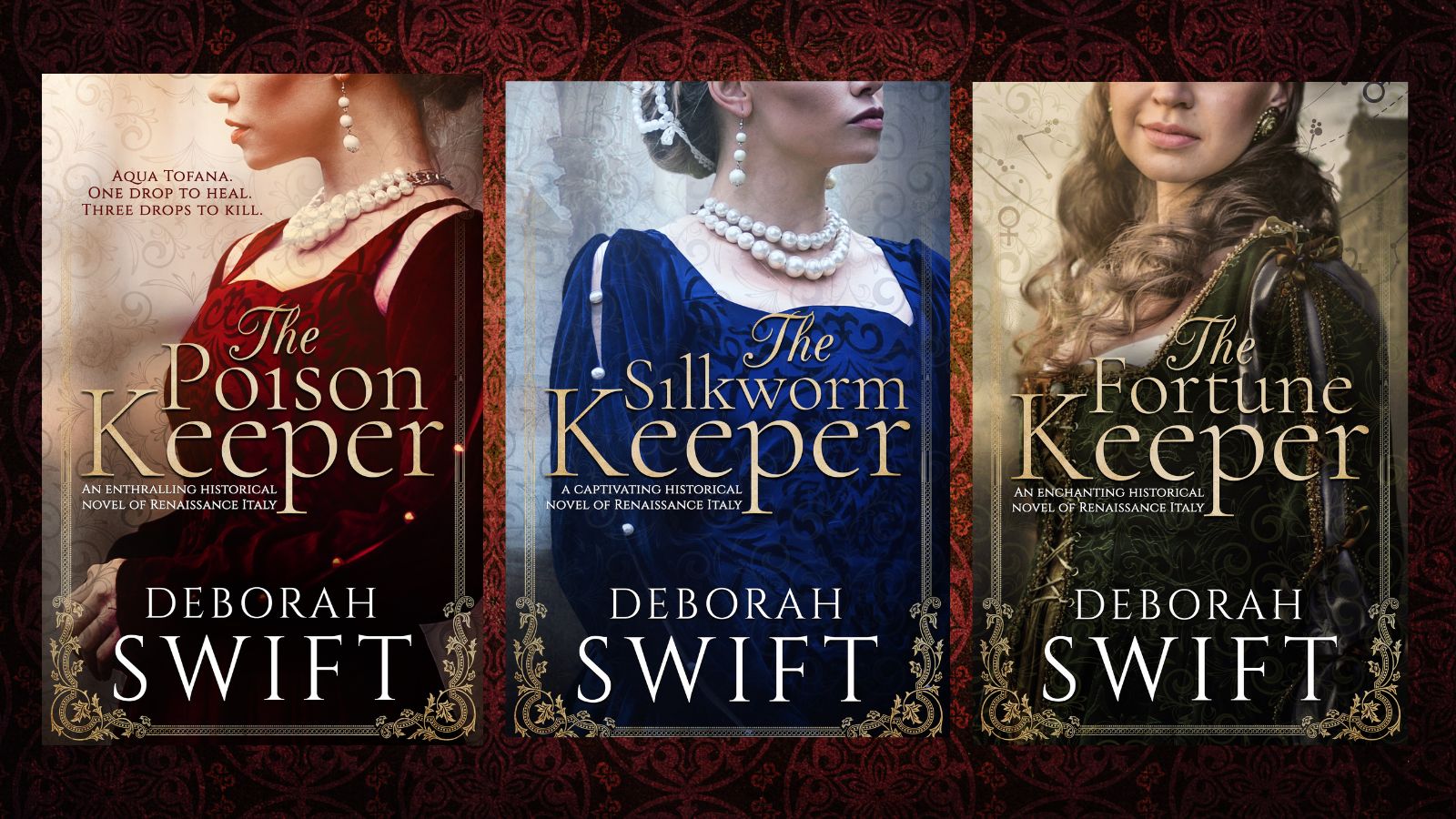
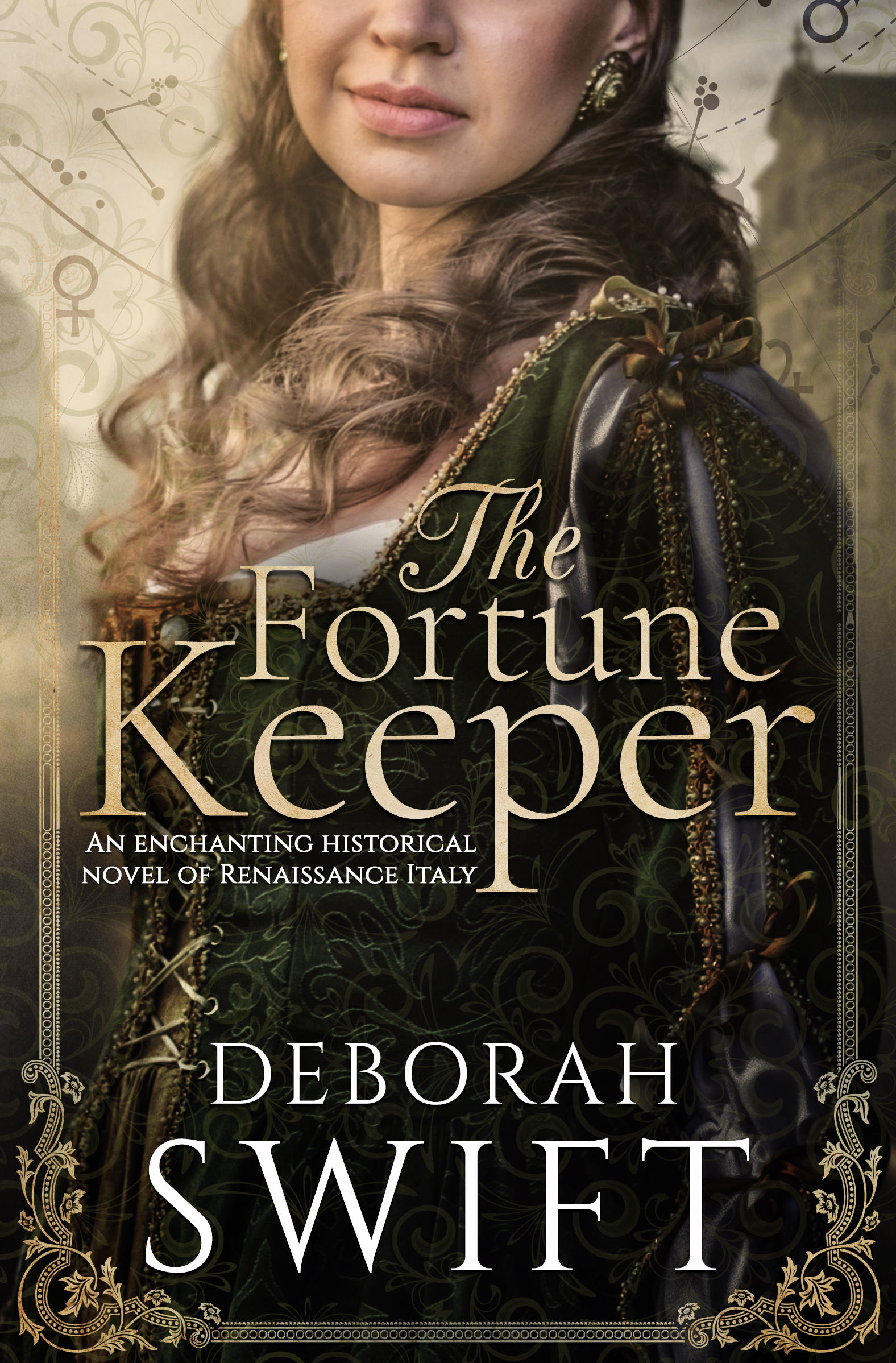
I’m delighted to welcome Deborah Swift and her new book, The Fortune Keeper, to the blog with some backstory behind The Fortune Keeper.
The Fortune Keeper
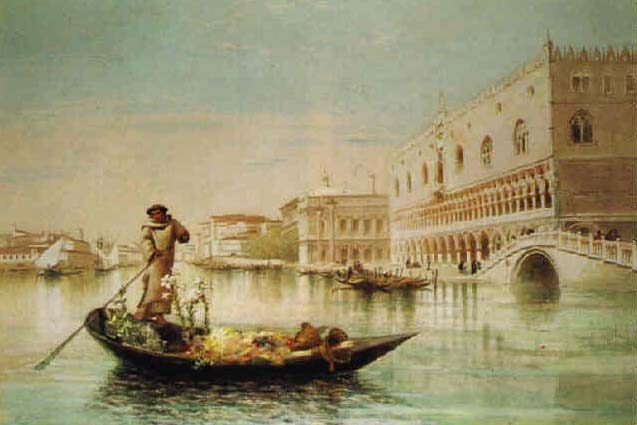
I’ve always been fascinated by Renaissance art and science and its effect on cultural life. In these novels I explore the artist Bernini and the legacy of Galileo Galilei as well as the influence of major cities such as Rome and Venice and their unique religious and architectural heritage. For a fiction writer you are looking for a period that can immerse people quickly into a recognisable setting, but one that is also different from today, and the Renaissance has a visual appeal that is both familiar, in that people do already have some visual ideas about it, but also with much left to uncover to tempt and enthral the reader. The grandeur of the Vatican or the shimmering canals of Venice offer opportunities for writing scenes that few locations can match. In the end though, it was the people and the characters that drew me, and one person in particular – Giulia Tofana.
I knew very little, except what was available in books and online. Despite this, her name had lived on and she was credited with the poisoning of more than six hundred men. That seemed to be an extreme number, and led to my interest in uncovering more about her and in particular to explore her motives through fiction. Why did she do it, and why was she never caught?
It soon became apparent why. I learnt from researching her that we were in fact talking about three women rather than one. The three women were Giulia’s mother Theofania, Giulia herself and her daughter Girolama (later discovered to be a step-daughter). This idea helped to make sense of the conflicting evidence from the different sources. Or so I thought. Later, as I was researching the third book, lost documents emerged from an Italian archive that threw all the existing knowledge about her into question. The daughter Girolama is the main character in The Fortune Keeper, and I enjoyed exploring how she came to live with Giulia, and how it shaped her life.
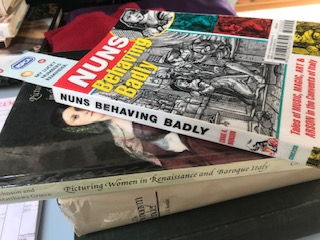
In fact there are some excellent books which chronicle women’s lives in the Renaissance. I was particularly grateful to the book ‘Women in Italy 1550 – 1650’ by Mary Rogers and Paola Tinagli, here is ‘how to bring up a daughter’, a passage from that book written in 1547,
‘as soon as the girl reaches the right age to learn to read and writer; I want the father to have two aims for her; one is religion, the other the management of the household.’
This seems to have been a common view, with the priority for girls being to remain ‘chaste’ for the marriage market, and also to have good practical skills in running a household or ordering servants. In Italy marriage then was a contract, with young women as young as twelve married off to older men whose previous partners had died in childbirth or from disease. Of course every society has the rebels who refuse to conform, and the more oppressive the society, the more underground the rebellion has to be. In a patriarchal society where women’s rights are few, the drastic action of poisoning an abusive partner was often the last recourse of a woman at the end of her tether.
xr:d:DAEbig1CmJo:257,j:33693903820,t:22082511
For me the story comes first. I’m in the business of entertaining through fiction. Of course this doesn’t mean to throw out the history, but to use it intelligently, to choose eras where the story would naturally fit, and use the history to support the story, or particular version of events you are trying to tell. A novelist always makes choices about how to use the known facts at their disposal. I could have made Giulia a monster and turned it into a horror story, but instead I chose to focus on the ambiguity of women’s role as both prostitute and saint, how the Catholic religion both supported and undermined women, and to make the narrative a bigger exploration of the way women fight back when they have few options left to them.
A book I thoroughly enjoyed reading was The Ceremonial City by Iain Fenlon, which gives a sense of the myths and rituals that drive life in Venice. Not only is it lavishly illustrated (always a bonus for a fiction writer) but I appreciated the way he explored the way religious and secular life intertwined Monica Chojnacka’s book ‘Working Women of Early Modern Venice’ was a wonderful book that made me consider life outside the grand palazzi that readers often associate with Venice, and which gave an good insight into the working class.
I really enjoy the early modern period, and have set novels in the period not only in Italy, but here in England, and also in Spain. I think what appeals to me about the period is that it was a period of massive expansion in trade. And by trade, I mean not only commodities and goods, but also trade in ideas. It was a time when the world was incredibly outward-looking and open to encountering ‘the new.’ I hope to immerse people in this world through my trilogy of books set in Italy at that time.
Here’s the blurb
Count your nights by stars, not shadows ~ Italian Proverb
Winter in Renaissance Venice
Mia Caiozzi is determined to discover her destiny by studying the science of astronomy. But her stepmother Giulia forbids her to engage in this occupation, fearing it will lead her into danger. The ideas of Galileo are banned by the Inquisition, so Mia must study in secret.
Giulia’s real name is Giulia Tofana, renowned for her poison Aqua Tofana, and she is in hiding from the Duke de Verdi’s family who are intent on revenge for the death of their brother. Giulia insists Mia should live quietly out of public view. If not, it could threaten them all. But Mia doesn’t understand this, and rebels against Giulia, determined to go her own way.
When the two secret lives collide, it has far-reaching and fatal consequences that will change Mia’s life forever.
Set amongst opulent palazzos and shimmering canals, The Fortune Keeper is the third novel of adventure and romance based on the life and legend of Giulia Tofana, the famous poisoner.
‘Her characters are so real they linger in the mind long after the book is back on the shelf’
~ Historical Novel Society
NB This is the third in a series but can stand alone as it features a new protagonist. Other two books are available if reviewers want them.
Deborah Swift is a USA TODAY bestselling author who is passionate about the past. Deborah used to be a costume designer for the BBC, before becoming a writer. Now she lives in an old English school house in a village full of 17th Century houses, near the glorious Lake District. Deborah has an award-winning historical fiction blog at her website http://www.deborahswift.com.
Deborah loves to write about how extraordinary events in history have transformed the lives of ordinary people, and how the events of the past can live on in her books and still resonate today.
The first in her series about the Renaissance poisoner Giulia Tofana, The Poison Keeper, was a winner of the Wishing Shelf Book of the Decade, and a Coffee Pot Book Club Gold Medal, and the latest in her WW2 Secret Agent series, Operation Tulip, is coming soon.
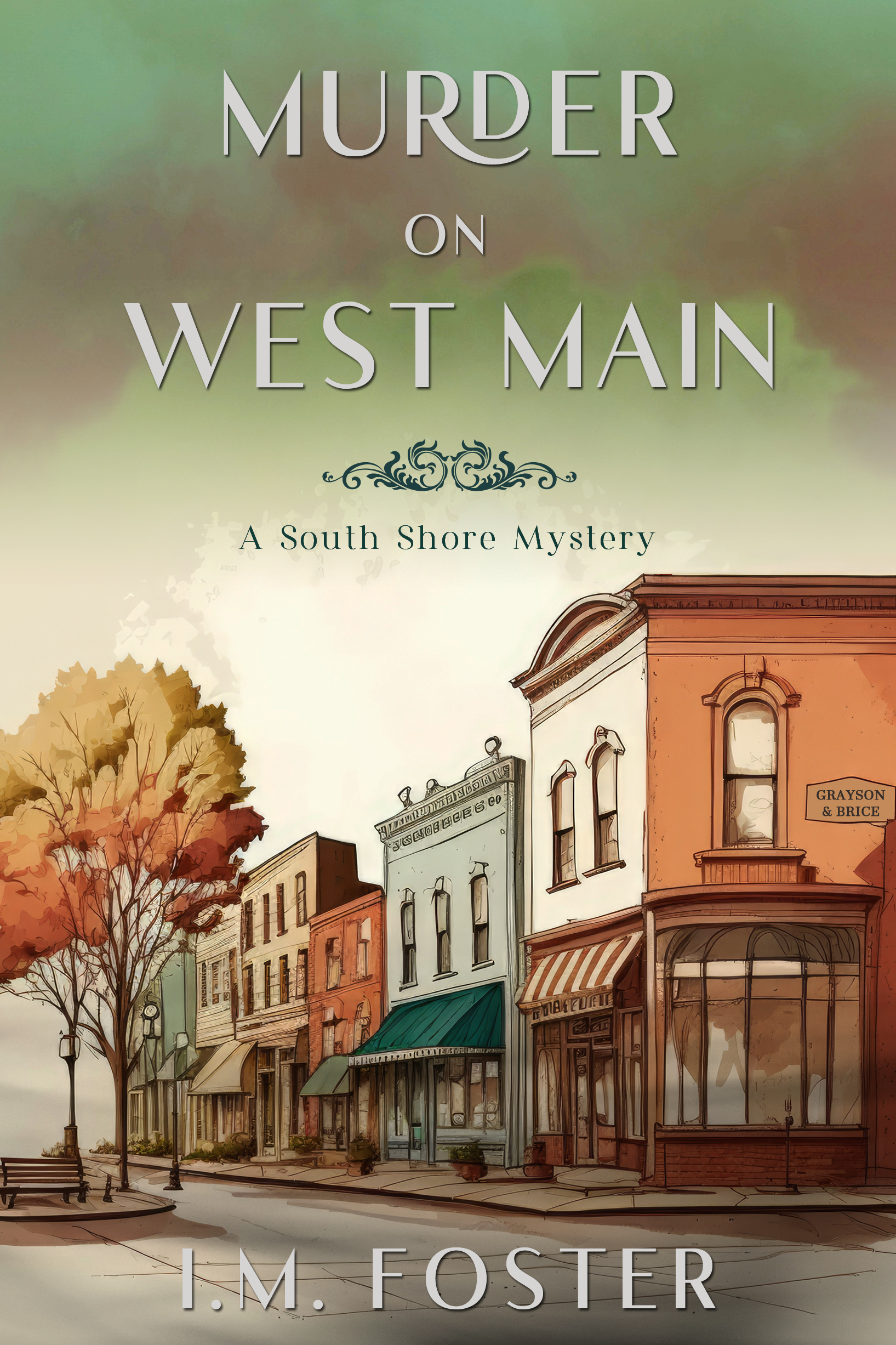
I’m delighted to welcome I.M. Foster and her new book, Murder on West Main, to the blog with a snippet.
Snippet
A knot tightened in his stomach, for it wasn’t like her to seek him out in this manner.
Here’s the blurb
When Colin Brissedon arrives at work one summer morning to find his new boss murdered, all eyes turn to him. After all, the man had threatened to fire him just a few days before, and his colleagues are more than happy to tell the tale. Kathleen admits her brother is no angel, but she can’t believe he would sink this low. Fortunately for them, neither does Daniel O’Halleran, the village’s new coroner’s assistant. Of course, he needs more than his gut feeling to prove it.
But that’s not going to be an easy task, considering the victim does not appear to have been held in high regard. In fact, Daniel is hard-pressed to find anyone who did like him, though there are more than a few who had reason to wish the man dead. To make matters worse, Kathleen is intent on conducting her own investigation despite his wishes, and he fears the consequences could be deadly.
And yet, with the pieces of the puzzle laid before him, he can’t shake the feeling that something is missing, an integral clue that will tie everything else together. Will Daniel be able to find the elusive detail and discover the reason behind the gruesome murder of the prominent attorney? Or will the guilty party live to kill again?
I. M. Foster is the pen name author Inez Foster uses to write her South Shore Mystery series, set on Edwardian Long Island. Inez also writes historical romances under the pseudonym Andrea Matthews, and has so far published two series in that genre: the Thunder on the Moor series, a time-travel romance set on the 16th century Anglo-Scottish Borders, and the Cross of Ciaran series, which follows the adventures of a fifth century Celt who finds himself in love with a twentieth century archaeologist.
Inez is a historian and librarian, who love to read and write and search around for her roots, genealogically speaking. She has a BA in History and an MLS in Library Science and enjoys the research almost as much as she does writing the story. In fact, many of her ideas come to her while doing casual research or digging into her family history. Inez is a member of the Long Island Romance Writers, and the Historical Novel Society.
I’m delighted to welcome back David Fitz-Gerald and his new book, Rolling Home from the Ghosts Along the Oregon Trail series, to the blog with a series trailer.
Ghosts Along the Oregon Trail Series Trailer
Ghosts Along the Oregon Trail Series Trailer
Here’s the blurb
Climb aboard! Don’t miss the heart-pounding climax of the Ghosts Along the Oregon Trail series. Rolling Home is the final installment.
In the heart of the rolling village, dissent brews as the stubbornest naysayer refuses to continue the journey. With an ominous early snowfall and memories of the ill-fated Donner Party haunting the pioneers, Dorcas Moon faces a new wave of challenges. Just when she believes things can’t get worse, a disastrous river crossing claims their wagon and submerges their belongings.
As the rolling village approaches the final leg of the journey, the looming threat of outlaws intensifies. The notorious bandit known as The Viper and his ruthless brothers are determined to rob the greenhorns, sell their stock, and kill every last one of them. The pioneers had heard tales of their brutality, but now, with Dorcas’ daughter kidnapped and Dorcas captured, everyone is in danger.
What will become of Dorcas Moon, her family, and their friends? Will anyone survive the perilous journey?
Rejoin the expedition and witness the thrilling end to a gripping saga.
This title is available to read on #KindleUnlimited
Meet the author
David Fitz-Gerald writes westerns and historical fiction. He is the author of twelve books, including the brand-new series, Ghosts Along the Oregon Trail set in 1850. Dave is a multiple Laramie Award, first place, best in category winner; a Blue Ribbon Chanticleerian; a member of Western Writers of America; and a member of the Historical Novel Society.
Alpine landscapes and flashy horses always catch Dave’s eye and turn his head. He is also an Adirondack 46-er, which means that he has hiked to the summit of the range’s highest peaks. As a mountaineer, he’s happiest at an elevation of over four thousand feet above sea level.
Dave is a lifelong fan of western fiction, landscapes, movies, and music. It should be no surprise that Dave delights in placing memorable characters on treacherous trails, mountain tops, and on the backs of wild horses.